March 26 – Noodle Day

Noodle Magic by Roseanne Greenfield Thong and Meilo So Picture Book Review

About the Holiday

Noodle on this: what’s the difference between noodles and most other dry pastas? Noodles contain eggs! It’s just this kind of fascinating fact you can learn during noodle month. Whether you like spinning the long strands around your fork or slurping them right from the bowl, noodles make the perfect comfort food whether they’re mixed with sauce, pesto, or meat and veggies. People make some pretty awesome crafts from them too! Did you know that 13th century bakers made their dough into birds, stars, words, and other shapes? Too bad Pinterest wasn’t around then! So boil up some water and get cookin’ on a delicious day!

Noodle Magic

Written by Roseanne Greenfield Thong | Illustrated by Meilo So


The emperor’s birthday is coming, and everywhere excitement fills the air. Mei’s Grandpa Tu will no doubt be making his famous noodles for the celebration. Mei loves to watch her grandfather work, slapping and kneading the dough and pulling the strands of noodles. He is so creative with his cooking that everyone marvels, even the Moon Goddess. In fact, Grandpa Tu is such an extraordinary artist that he makes noodle jump ropes and kite strings for Mei and her friends. They are as “simple as a sunflower” and as “easy as a sea breeze” to make, says Grandpa Tu.
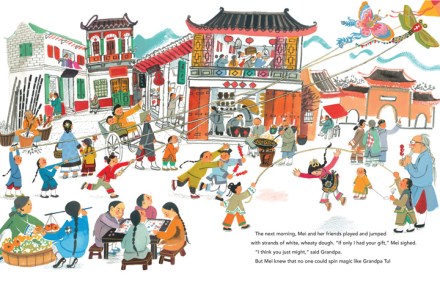
celebrate-picture-books-picture-book-review-noodle-magic-playing-with-noodles

Image copyright Meilo So, text copyright Roseanne Thong. Courtesy of meiloso.com

But Mei thinks there is more to his talent and wishes that she had his magic. Her grandfather believes she does possess it. One afternoon the pair watch animal-shaped clouds fill the sky, and Mei asks if her grandpa can catch them with noodles. That night he makes a batch of noodles, and in the morning the two collect clouds as the sun appears.

On the day before the emperor’s birthday, everyone is busy making something special—everyone except Grandpa Tu. The villagers are perplexed. On such an important day, they will all want to enjoy noodles—and what about the special long-life noodles for the emperor? It is time, Grandpa Tu tells Mei, for her to make the noodles.

Mei is surprised and terrified. She slaps and kneads the dough as she has seen her grandfather do, but it remains ordinary. Where is the magic? “‘Trust in yourself,’” Grandpa Tu tells her, but Mei is doubtful. She decides that perhaps if she gives the Moon Goddess a gift, she will get magic in return. “‘You have all the magic you need,’” her grandfather assures her. Still, he helps Mei make enough dough to form an enormous ball of noodles.

celebrate-picture-books-picture-book-review-noodle-magic-making-noodles

Image copyright Meilo So, text copyright Roseanne Thong. Courtesy of meiloso.com

Mei throws the ball to the Moon Goddess and calls out for the Goddess to give her magic. Wisely, the Goddess reminds Mei that magic must come from inside. Mei closes her eyes and thinks very hard. She tussles with the Moon Goddess in a noodle tug-of-war, and suddenly…Snap!…the noodles break. The sky rains noodles of all shapes and sizes, Mei has discovered the magic that was in her all along!

With the charm of a Chinese folktale, Roseanne Greenfield Thong tells the universal tale of self-discovery. Her lyrical language adds a magic of its own to the tale, as when Mei watches her grandfather make dough: “she loved the powdery flakes that hung in the air and freckled the morning light.” The relationship between the little girl and her grandfather is lovingly portrayed, offering a gentle depiction of the wisdom and reassurance provided by extended family members.

Meilo So brings the story to vibrant life with her colorful paintings of village life, Mei and Grandpa Tu’s home, and the Moon Goddess. The magic of Grandpa Tu’s noodles is cleverly shown in the transparent animals, dragons, and birds outlined in noodles that frolic across the pages. The two-page spreads of Mei’s village are particularly captivating, as packed with interesting scenes and details as any bustling town.

Ages 4 – 8

Orchard Books, 2014 | ISBN 978-0545521673

Noodle Day Activity
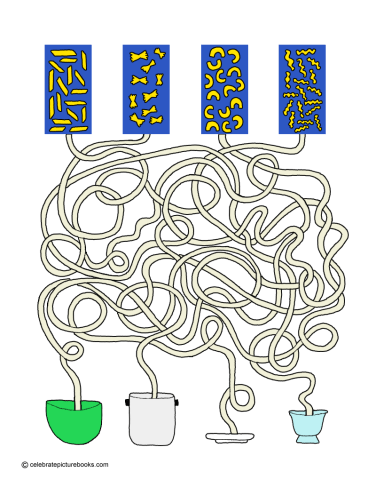
CPB - Noodle Puzzle

Noodle on This Puzzle


Everyone has their favorite kind of noodles! Help these noodles get to the right plate, bowl, or pot in this printable Noodle on This puzzle that’s as wiggly as a wet noodle!

Picture Book Review

March 11 – Johnny Appleseed Day

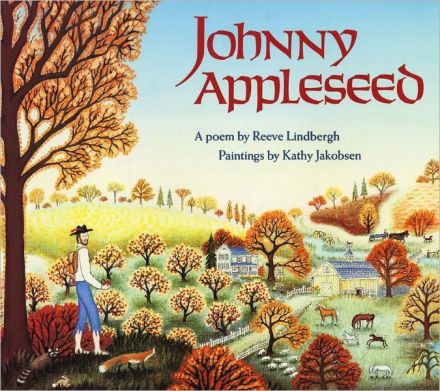
celebrate-picture-books-picture-book-review-johnny-appleseed-cover

About the Holiday

If you love apples, apple pie, applesauce, and all things apple, you probably have John Chapman to thank. John Chapman was a remarkable man who lived his values of kindness and generosity as he journeyed across the newly opened American frontier in the early 1800s. He is most commonly known as Johnny Appleseed for the apple seeds he planted and nurseries he founded across the country. Apples were a welcome crop—easily grown and stored for consumption throughout the year. He was well loved by the people he met on his travels, respected by the Native Americans, and gentle with all animals. Today we remember his contributions to the growth of America and his inclusive beliefs.

Johnny Appleseed

Written by Reeve Lindbergh | Illustrated by Kathy Jakobsen


As the poem opens, John Chapman approaches the simple Goodwin cabin in the woods. “Young Hannah Goodwin saw him first, / A stranger lean and lorn, / His face was thin, his feet were bare, / His clothing old and worn.”

Hannah first meets Johnny Appleseed when she is a little girl and he accepts the family’s invitation to dinner. He is an engaging source of entertainment, news, and stories about the American frontier, but he cannot stay long as he must continue his mission to plant apple trees across the country. Although John Chapman’s work takes him far away, Young Hannah heard the tales of him / All through her growing years / As he brought apples, sharp and sweet, / To other pioneers.

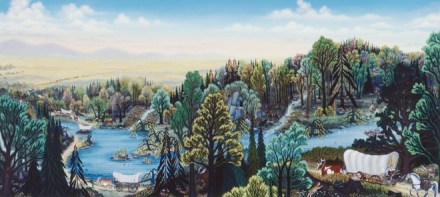
celebrate-picture-books-picture-book-review-johnny-appleseed-kathy-jakobsen-across-the-wild-frontier

Image copyright Kathy Jakobsen, courtesy of kathyjakobsen.com

The stories are exciting and comforting. Johnny Appleseed walks through any weather, is trusted by Native Americans, and lives peacefully with all animals, all the while scattering seeds along his path.

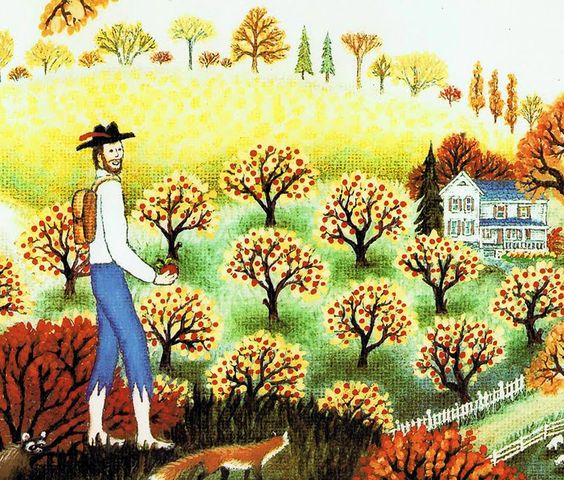
As an old man John Chapman returns to the Goodwin house, now nestled among a mature apple orchard. “Old Hannah Goodwin saw him last / when many years had gone. / He came in by the orchard gate / A quiet hour past dawn.”

Again, he regales Hannah with stories of his adventures and how the trees he had planted helped families thrive and make America strong. “There was spicy apple cider now / Out on the western plain. / There was applesauce in Iowa / and apple pie in Maine.

Although Hannah never sees John Chapman again, she passes down his legacy to her children, just as we still do today.

celebrate-picture-books-picture-book-review-johnny-appleseed-kathy-jakobsen-in-an-apple-orchard

Image copyright Kathy Jakobsen, courtesy of kathyjakobsen.com

The format of Reeve Lindbergh’s rhythmic and rhyming poem is a fitting tribute to the life of Johnny Appleseed. The lyrical lines flow as smoothly as the reader might imagine John Chapman tread across the Midwest plains and rugged West. With evocative language and a straightforward delivery, Lindbergh echoes the philosophy of simplicity and steadfastness that guided John Chapman’s life.

Kathy Jakobsen, one of America’s premiere folk artists, has embraced the story of Johnny Appleseed in stunning paintings of an America at her beginning. Depictions of rolling hills dotted with farms and trees, stone mills, horse-drawn carts loaded with apples, families at home and on the move in Conestoga wagons, as well as lush scenes of John Chapman interacting with nature and Native Americans portray the grandeur of America and the singularity of Johnny Appleseed. A quilt of small paneled scenes surround the text on each left-hand page, while the right page is fully dedicated to Jakobsen’s work.

Ages 5 – 8

Little Brown Books for Young Readers, 1998 | ISBN 978-0316526340

Johnny Appleseed Day Activity

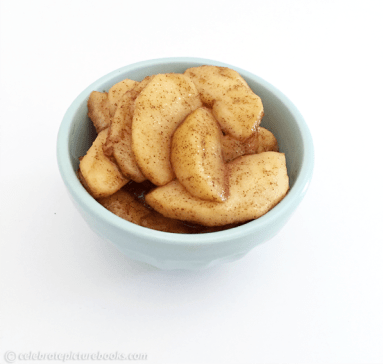
CPB - Cinnamon Apples (2)

Cinnamon Apples Recipe


Cinnamon apples are a delicious side dish to any meal! This tasty recipe is fun for kids and adults to make together.

Ingredients

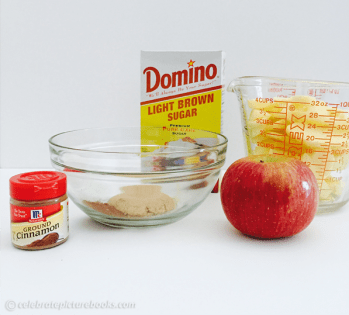
  • 4 cups of apples, Macintosh or Granny Smith apples are good choices
  • 2 tablespoons brown sugar
  • 1 teaspoon cinnamon
  • 1/4 teaspoon lemon juice

CPB - Cinnamon Apples ingredients (2)

Directions

  1. Mix brown sugar and cinnamon
  2. Peel and core 2 large apples
  3. Thinly slice apples
  4. Combine apples and cinnamon sugar/brown sugar mixture
  5. Stir until well combined
  6. Drizzle with lemon juice and stir again
  7. Cook apples on the stove at medium heat for 8 to 10 minutes or until desired texture


February 23 – National Dog Biscuit Day

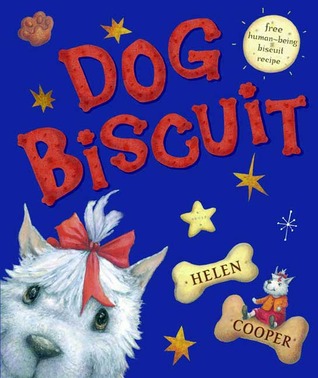
CPB - Dog Biscuit

About the Holiday

People have holidays celebrating their favorite treats—like Cherry Pie Day and Chocolate Chip Cookie Day—so dogs should have a food holiday of their own, right? Well, today is it! Today we remember that our best furry friends like to be rewarded with a special treat or just shown a little extra love with a tasty morsel.

Before anyone thought about what dogs ate, dog “treats” included some pretty awful stuff—moldy bread, rotten leftovers…but an American named James Spratt was struck by an idea when he saw stray, hungry dogs looking for food on one of his travels in England in the 1800s. He created the first dog biscuit, which was more like cake, made of fresh ingredients such as meat, grain, and vegetables. The first commercial dog biscuit was developed in 1908 by the F. H. Bennett Biscuit Co. It was hard and made with meat products, milk, and important minerals.

Dog Biscuit

By Helen Cooper


In Helen Cooper’s delightfully evocative Dog Biscuit, Bridget can’t resist eating a treat from the enticing bag she finds in Mrs. Blair’s shed. The biscuit looks like a people cookie; it even tastes good—salty and sweet—but really it’s meant for a dog, not a little girl! Mrs. Blair shakes her head when she recognizes the crumbs around Bridget’s mouth and teases that now Bridget will turn into a dog. As children often do with adults’ jokes, Bridget takes this notion literally, setting in motion a day-long flight of fancy—with a bit of trepidation.

Bridget’s imagination runs as wild as a pack of dogs—does that itch behind her ears mean they’re growing? How is it possible she’s wagging goodbye? And did Mrs. Blair’s dog really just say it used to be a real boy? She begins to regret eating that biscuit but is determined not to tell her mother, especially since she doesn’t seem to notice any difference in her daughter.

As she and her mother walk home from Mrs. Blair’s, Bridget suddenly finds herself awakened to a new world. She identifies with every dog she meets, savors the aroma of the butcher shop, and forgets her people manners at the dinner table. Still, her mother doesn’t notice. Before finally curling up and falling asleep, Bridget again wishes she hadn’t eaten that biscuit.

In sleep Bridget unleashes her full imagination, romping with a pack of new friends through familiar sites now transformed into a mystical doggy paradise that makes her very glad she ate that biscuit—that is until she thinks of her family and howls. At last her mom, who was indeed aware of her daughter’s turmoil, can comfort her. In her mother’s arms Bridget reveals her fears and allows herself to be reassured.

The next day Bridget visits Mrs. Blair, who explains that she was joking and apologizes for worrying her. Over tea and “human being treats” Bridget happily leaves puppyhood behind.

Author-illustrator Helen Cooper beautifully captures Bridget’s imagination, turmoil, and joyous abandon through her vibrant illustrations that are awash in color, swirling lines, clever details, and the use of various type sizes and fonts. Wide-eyed Bridget, her family, Mrs. Blair, and the many dogs that populate this book are exquisitely drawn. Kids will love sniffing out the hidden dogs on every page.

A recipe for Human-Being Treats is included.

Ages 4 – 8

Farrar Straus and Giroux, New York, 2009 | ISBN 978-0374318123

National Dog Biscuit Day Activity

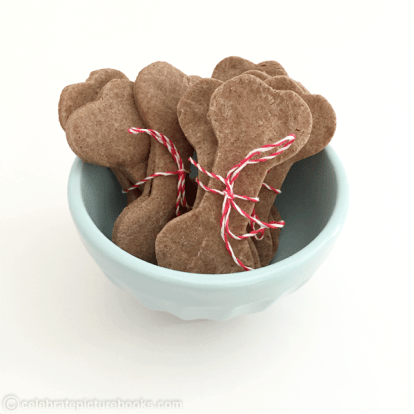
CPB - Dog Biscuits

Homemade Dog Treats

Making homemade dog biscuits is a fun way to spend time together and benefit furry friends. These biscuits make tasty treats for your own pet or consider making a batch to donate to your local animal shelter. This recipe is easy and proven to be a favorite.

Children should get help from an adult when using the oven.

Supplies:

  • 1 large bowl
  • Large spoon or whisk
  • Cookie cutters – shaped like traditional dog biscuits or any favorite shape

Ingredients

  • 3 cups Buckwheat flour
  • ½ cup powdered milk
  • 1 teaspoon salt
  • ¾ cup water
  • 1/3 cup margarine or butter, melted
  • 1 egg beaten

Directions

  1. Preheat oven to 325 degrees
  2. Add buckwheat flour to bowl
  3. Add powdered milk to bowl
  4. Add salt to bowl
  5. Stir to mix dry ingredients
  6. Add water
  7. Add melted margarine or butter
  8. Add egg
  9. Stir until liquid is absorbed
  10. Knead for a few minutes to form a dough
  11. If the dough is too dry, add a little more water, 1 Tablespoon at a time
  12. Place the dough on a board
  13. Roll dough to ½ inch thickness
  14. Cut into shapes with cookie cutters
  15. Bake at 325 degrees for 35 minutes
  16. Biscuits will be hard when cool.

Makes about 40 biscuits

February 20 – National Cherry Pie Day

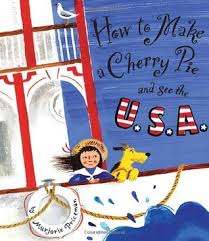
How to Make a Cherry Pie and See the U.S.A. picture book review

About the Holiday

Today we celebrate a most delicious day! It’s hard not to love pie with its flaky crust and sweet filling. Pies have been served since ancient days, originating with the Romans who, like our own English and American ancestors, discarded the crust before eating it (didn’t they know what they were missing?).

Here are a few rather surprising facts about pie

  • Early pies were mostly made of meat, poultry in particular. The legs of the bird were often left to hang over the side of the dish and used as handles (is this what’s called “getting a leg up”?).
  • Fruit pies probably originated in England in the 1500s.
  • We have the bakers for Queen Elizabeth I to thanks for the first cherry pie.
  • Pie was introduced to America by the first English settlers. It was baked in long narrow pans that the settlers called “coffyns” after pie crusts in their native country.
  • During the American Revolution the term coffyn was changed to “crust” (“Those pesky Redcoats! We don’t want our words to be like theirs!”)

To celebrate today’s holiday, enjoy a slice of cherry pie, read this book, and have fun with the puzzle!

How to Make a Cherry Pie and See the U.S.A.

By Marjorie Priceman


In this clever recipe/travelogue combination, Marjorie Priceman takes children on a tour of the United States as they gather the materials to make the tools needed to bake a cherry pie. Sure, it’s easy to buy the bowls, spoons, pie pan, baking sheet, pot holders, and other items required, but where do these things really come from?

With each page kids will vicariously travel across the country with the young baker as she visits Pennsylvania and Ohio for coal to make baking sheets, Mississippi for the cotton needed to sew pot holders, New Mexico for potting clay, and Washington, Hawaii, New Hampshire, Texas, and other states in her pursuit of materials. Along the way, they will learn fun facts about the states and what makes each one special.

The girl joins people playing and working at all kinds of job as she journeys by boat, plane, car, and bus in Priceman’s vibrant and engaging illustrations. Each state is depicted with its unique characteristics, and Priceman has included so many details that kids will love lingering over each page. Curious kids may want to explore more about the subjects they discover in this creative picture book.

Ages 5 – 8

Dragonfly Books, 2013 | ISBN 978-0385752930

Cherry Pie Day Activity

CPB - Cherry Pie Match

Mixed Up Cherry Pies Matching Game

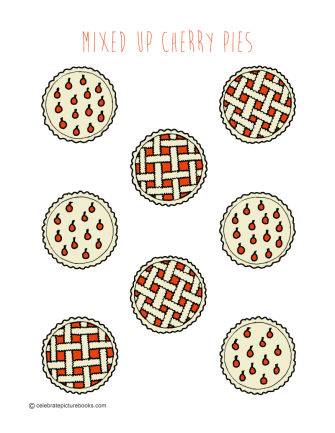
You baked 8 cherry pies for the Cherry Pie Day Festival – 2 of each crust pattern. But they got mixed up! Can you connect the matching cherry pies? Print the Mixed Up Cherry Pies Matching Game Template and draw a line between the matching pies. 

February 9 – Pizza Day

celebrate-picture-books-picture-book-review-the-princess-and-the-pizza-cover

About the Holiday

Every day could be pizza day, but today’s holiday gives us a special reason to enjoy one of the world’s favorite foods! Since ancient times, people have been making pizzas of all kinds from flatbread to deep dish, but they all have one thing in common—they’re delicious! Here are just a few interesting facts about this most delectable of foods:

  • The very first pizzeria opened in Italy in 1738
  • The first pizzeria in America was opened in New York in 1895
  • Pepperoni is the most popular topping
  • Over 3 billion freshly made pizzas and 1 billion frozen pizzas are sold in the U.S. every year

The Princess and the Pizza

 By Mary Jane and Herm Auch


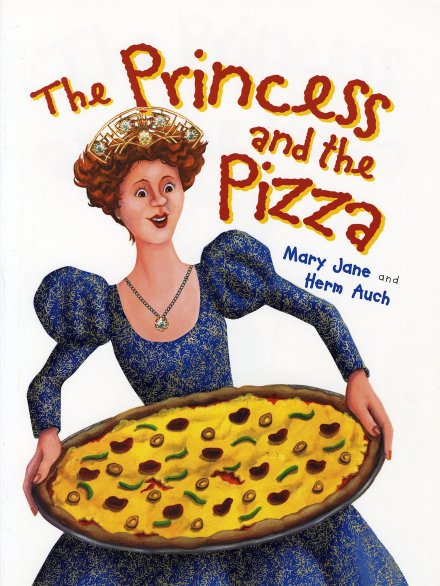
Paulina loves being a princess. But when her father, the king, gives up his throne, Paulina needs a job! Things don’t go so smoothly, however, so when she hears that Queen Zelda is looking for a bride for her son, Drupert, she springs into action. Armed with her best ball gown, a tiara, garlic for good luck, and herbs to mask the garlic smell, Paulina is off to Blom to win a prince and her old life back.

Twelve women show up to woo Prince Drupert, and Queen Zelda has plans to find him the perfect wife. She pits the women against each other in three competitions—the pea-under-the-mattress test, the glass slipper fitting, and a feast-preparation contest. Paulina easily passes the first two but is thwarted in the third by the shenanigans of the remaining contestants.

By the time Paulina reaches the table that holds the ingredients for the feasts, the only items left are tomatoes, cheese, and the makings of a dough. Paulina throws them together then decides to take a nap (after first removing the sleep-depriving pea from the bed). Rudely awakened from slumber and given a threat she can’t ignore, Paulina tosses her creation on the fire and sprinkles it with her garlic for good luck and the herbs to mask the smell.

The time for tasting arrives and Paulina presents her tray, hoping for the best. Although the concoction may look a mess, it smells scrumptious and with one taste Prince Drupert proclaims it the winner. And so in one fell swoop our intrepid heroine has invented pizza and won the heart of Prince Drupert. But the whole experience has given Paulina a better idea. She dumps Drupert and opens a Pizza Palace. And while she may not actually be royalty anymore, the townspeople are so thrilled they treat her like a queen. Life again is good, but could her father be falling for Queen Zelda?

Paulina is an appealing modern princess—she’s loaded with self-confidence, never gives up, and knows how to play the game. Kids will love recognizing the references to other favorite fairy tales, and the humorous illustrations of the unflappable Paulina will have them giggling with every page.

Ages: 4 and up

Holiday House, New York 2003 / ISBN 978-0823417988

Pizza Day Activity

CPB - Pizza Day Toppings

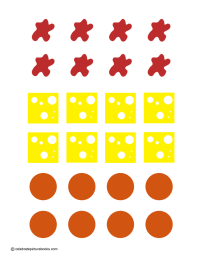
Create Your Pizza Game

Play this fun game to build your pizza ingredient by ingredient before the others!          For 2 – 8 players.

Supplies

Directions

February 7 – Popcorn Day

CPB - Popcorn Astronauts

About the Holiday

While National Popcorn Day is often celebrated in January, some people believe that Superbowl Sunday is the perfect day to celebrate this tasty treat. I say why not celebrate it on both days! The history of popcorn goes back to the Aztecs and beyond. Early explorers of the 1500s wrote about native peoples roasting corn until it popped and described it as looking like a “white flower.” The natives ate it and strung it to use for decoration.

Most people now eat popcorn with salt and butter, but can you imagine having it with milk? Way before Corn Flakes and Cheerios came on the scene people ate it as cereal! And popcorn really became popular during the Great Depression, when it was one of the only inexpensive treats people could afford. Why not pop up a batch and snuggle in to read today’s reviewed  picture book. For more interesting Popcorn Facts visit www.popcorn.org.

The Popcorn Astronauts and Other Biteable Rhymes

Written by Deborah Ruddell | Illustrated by Joan Rankin


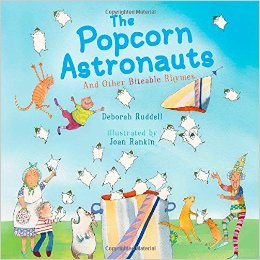
Deborah Ruddell’s rollicking poems celebrate the delicacies each season offers, and they are as fresh and surprising as that first luscious taste of strawberries after a cold winter. For National Popcorn Day, and Ruddell and Rankin offer a unique take on those fluffy nuggets which, like floating astronauts, are as light as air.

In these rhymes that are as fun to say as they are to hear, kids will meet a strawberry queen, a picky ogre, and peaches with “flannelpajamaty” skin. They will also learn the ingredients for an impromptu picnic and wonder what ingredient creates that indescribable taste of the smoothie supreme. And if you’d like to know how a poet orders a milkshake or if Dracula ever gets tired of his nightly routine, you’ll find the clever answers here.

Joan Rankin’s vivid illustrations enhance each poem with plenty of action, humor, and expressive characters to keep kids giggling and lingering over each page.

Ages 4 – 8

Simon & Schuster, New York, 2015 | ISBN 978-1442465558

Popcorn Day Activity

CPB - popcorn1

Popcorn Blast-Off Game

The popcorn is flying! Can you catch it? This is a fun game to celebrate this most delicious day! And if you keep the popcorn socks, it will make a great quick activity for those times when you want to get up and move but just don’t know what to do.

Supplies

  • 6 pairs of girls socks – white
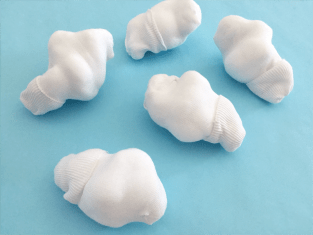
  • A large bag of cotton ballsCPB - popcorn2
  • Towel or small blanket

Instructions

  1. Stuff the socks with a large handful of cotton balls (about 25)
  2. Knot the sock as you would a balloon and fold down the remaining sock
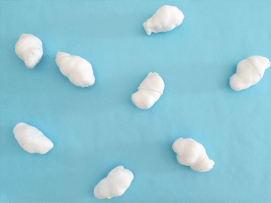
  3. Squish the sock to move the cotton balls until your sock looks like a piece of popcorn
  4. Players hold each end of the towel or side of the blanket so it sags
  5. Place popcorn in the middle of the towel or blanket
  6. On the count of 3, players pull tight on the towel or blanket
  7. Try to catch as many flying popcorn pieces in the towel or blanket as you can


February 4 – Homemade Soup Day


celebrate-picture-books-picture-book-review-soup-day-cover

About the Holiday

On a cold February day (or even a warm one if you live in a southern climate!), there’s nothing more satisfying than a steaming-hot bowl of your favorite soup! While there are many tasty canned soups, in honor of today you may want to try creating your own concoction. Why not check out recipes from your heritage, geographic location, or even your favorite book? Bon appétit!

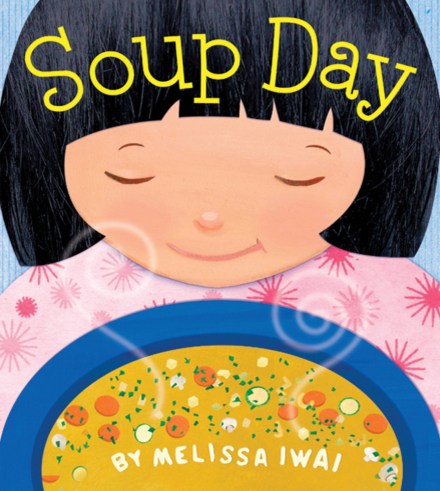
Soup Day

By Melissa Iwai


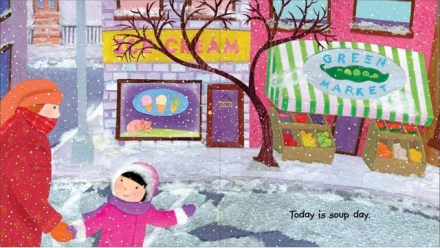
This is the perfect book for a cold winter day that celebrates the warmth and deliciousness of soup! In author-illustrator Melissa Iwai’s delightful book, the white flakes are falling and the sidewalks are piled high with snow as a little girl and her mother make their way to the market to buy ingredients for their homemade soup. At the store they fill their basket with celery, potatoes, mushrooms, carrots, onions, and more.

celebrate-picture-books-picture-book-review-soup-day-today-2

Copyright Melissa Iwai, courtesy of us.macmillan.com

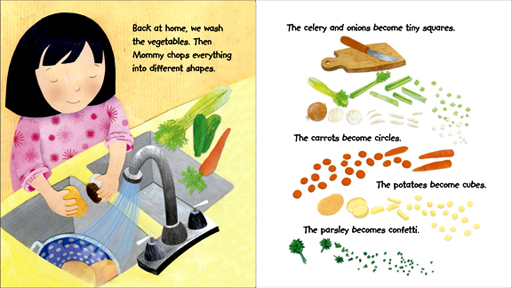
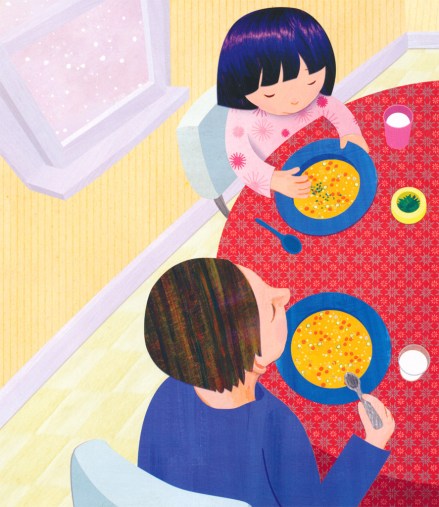
Back at home the little girl and her mom chop the vegetables, put the ingredients in a pot, and simmer the soup until its steamy. While they wait they play games and read together. Later the girl and her mother add spices and alphabet pasta to the bubbling soup. When Daddy comes home they enjoy the delicious meal.

celebrate-picture-books-picture-book-review-soup-day-cutting-veggies

Copyright Melissa Iwai, courtesy of us.macmillan.com

Smoothly integrated into the story are lessons in counting and shapes, which makes the book one that would be fun to replicate with older children—in fact there is a recipe for soup on the last page!

celebrate-picture-books-picture-book-review-soup-day-eating-soup

Copyright Melissa Iwai, courtesy of us.macmillan.com

Iwai’s bold, vivid images are tantalizing. As you turn through the pages you can almost taste the fresh vegetables and wish you could grab some of that produce for yourself. The sweet expressions of the girl and her mother show how much they enjoy spending time together making this special meal.

Ages 2 – 6

Henry Holt, Christy Ottaviano Books, New York, 2010 | ISBN 978-0805090048

Homemade Soup Day Activity

Make Silly Soup


You can create Silly Soup from anything but the kitchen sink in the kitchen sink! Just gather a bunch of fun “ingredients” and stir them together to make soup fit for a…monster? Ogre? Fairy? Your favorite stuffed animal? Who would you like to feed?

Note for Parents: This can be a fun way to teach your child about different foods and kitchen tools. Let your child see and smell different spices as they add them to their soup. Explain the different shapes of pasta. You can even teach about color by combining food colorings to see what happens. Add a science-based experiment by letting your child watch what happens to butter, sugar, or salt when they are placed in warm water.

When all the ingredients are added, use a variety of kitchen tools to stir it up! Show your child a big serving spoon, slotted spoon, whisk, spatula, ladle, teaspoons, and whatever other tool they may like to use.

*Remember, Silly Soup is just for making, not for eating!

Supplies

  • Big pot or bowl
  • Food coloring
  • Sprinkles
  • Glitter
  • Spices
  • Small pasta pieces
  • Butter
  • Sugar
  • Anything of your choice

Directions

  1. Add water to pot or bowl
  2. Add ingredients
  3. Stir
  4. Make up a story about who will eat your soup!