September 19 – It’s Self-Care Awareness Month

celebrate-picture-books-picture-book-review-the-curious-cares-of-bears-cover

About the Holiday

We hear a lot about caring for and taking care of others, but caring for yourself is important too. Making sure you are happy and healthy physically and emotionally goes a long way in determining your quality of life and how you can relate to others. Taking care of yourself comes in many forms. Eating well, getting enough exercise, finding time to relax and have fun, and even saying “no” instead of always “yes” are just a few of the ways that you can ensure you’re looking out for yourself. Today, take a pledge to be good to yourself—not just one day a year, but every day.

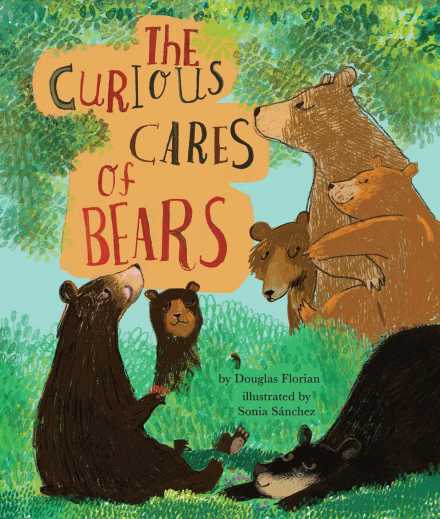
The Curious Cares of Bears

Written by Douglas Florian | Illustrated by Sonia Sánchez


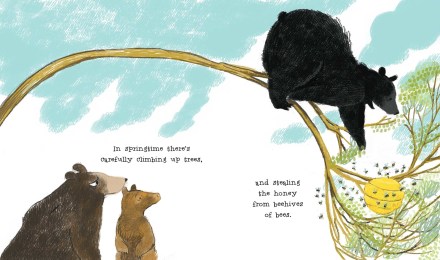
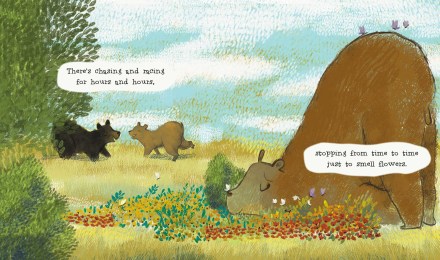
If you’re out in the woods and you come upon bears, you might find that they have some “curious cares.” During spring, bears are careful when “climbing up trees and stealing the honey from beehives of bees.” After being well fed, bears like to run and play and stop along the way to smell the flowers. For cub brothers and sisters some teasing and wrestling fill out the day.

celebrate-picture-books-picture-book-review-the-curious-cares-of-bears-honey

Image copyright Sonia Sánchez, 2017, text copyright, 2017. Courtesy of simonandschuster.com.

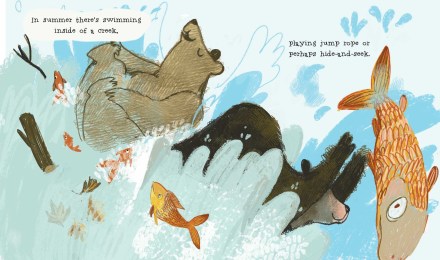
Summer brings new cares, such as “swimming inside of a creek, playing jump rope or perhaps hide-and-seek.” Vacation time means visits from family far and near, including bear hugs, delicious feasts, and dancing till dawn. Bears are also fond of exploring the mountains by hiking and biking, and on hot, hazy days they relax in the lake, drying off later with “great big bear shakes.”

celebrate-picture-books-picture-book-review-the-curious-cares-of-bears-swimming

Image copyright Sonia Sánchez, 2017, text copyright, 2017. Courtesy of simonandschuster.com.

In autumn, bear cares become cozy and warm as they play in leaf piles and sing campfire songs. When the winter chill comes, they hibernate in their dens, “where deeply they sleep till the springtime and then…they slowly emerge as the frozen grounds thaw and start to explore the wide world with awe.”

celebrate-picture-books-picture-book-review-the-curious-cares-of-bears-smelling flowers

Image copyright Sonia Sánchez, 2017, text copyright, 2017. Courtesy of simonandschuster.com.

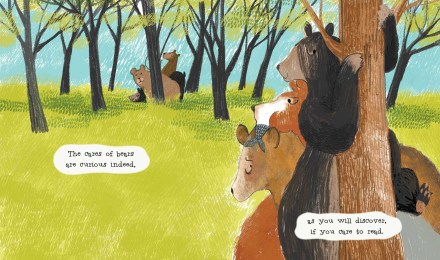
Douglas Florian guides little ones through a year of shenanigans and contentment with a group of bears that are more carefree than careful. These adorable bears know how to take care of themselves and enjoy being together—just like children do. Florian’s gentle rhymes will charm readers and remind them of the good times they have throughout the year.

celebrate-picture-books-picture-book-review-the-curious-cares-of-bears-cares

Image copyright Sonia Sánchez, 2017, text copyright, 2017. Courtesy of simonandschuster.com.

Sonia Sánchez’s sweet bear families know how to spend a year, taking care to appreciate every moment. From the precarious maneuvers to reach honey on a thin, bendy sapling to tumbling and splashing in a creek, to dancing in a conga line, these bears understand how to have a good time. Little readers will giggle at the shower of water droplets (and a few ants) that spray from a bear drying off and snuggle closer as the bears gather around a glowing campfire. As the bears emerge from their winter sleep, children will also be ready to look at their world with awe.

Ages 4 – 8

little bee books, 2017 | ISBN 978-1499804621

Self-Care Awareness Month Activity

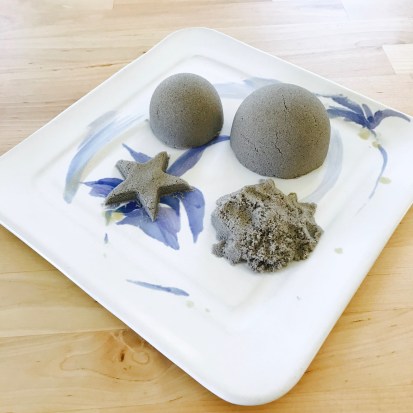
celebrate-picture-books-picture-book-review-kinetic-sand-craft

Relaxation Sand


Sometimes you just need to zone out and relax, but it’s hard to ignore all the sights and sounds around you and the thoughts that swirl through your mind. Playing with this kinetic sand can help you take it easy and let the world slip away like the sand slipping through your fingers.

Supplies

  • 1 cup of play sand
  • ½ tablespoon cornstarch
  • 1 teaspoon dish soap
  • About ¾ cup of water—or as much as needed
  • Bin or large bowl
  • Small bowl

Directions

The amount of water you use will depend on the consistency of the sand

  1. In a bin or bowl, combine the sand and cornstarch and mix well
  2. In the small bowl combine the dish soap and water and stir until the water is bubbly
  3. Slowly pour some of the water/dish soap mixture into the sand/cornstarch mixture and mix well.
  4. Continue mixing, adding a little water at a time until the desired consistency is reached

Picture Book Review

September 18 – National Respect Day

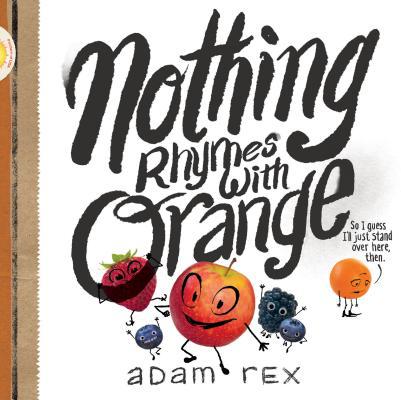
celebrate-picture-books-picture-book-review-nothing-rhymes-with-orange-cover

About the Holiday

Today’s holiday was established to help people focus on how they can be more respectful of others—family, friends, and strangers. It’s also a day to think about yourself. Do you respect yourself and your abilities? Self-respect is crucial for achieving your goals, both personal and professional. There are many ways to show respect. Good manners, listening to others, acknowledging others with a “thank you” or “great job,” and inclusion are only a few of the ways that people can start building the kinds of respectful relationships that lead to success.

Nothing Rhymes with Orange

By Adam Rex


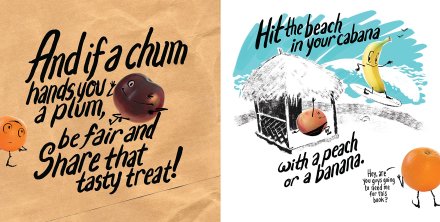
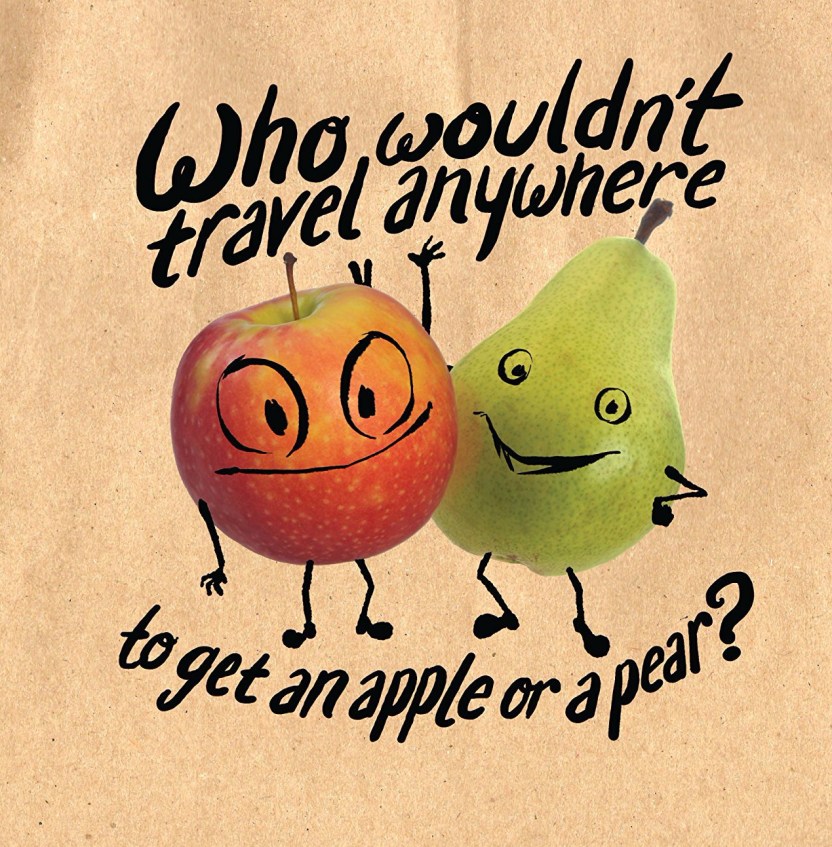
As the book opens, readers meet two smiling friends—an apple and a pear who ask the jaunty and rhyming question: “Who wouldn’t travel anywhere to get an apple or a pear?” A little purple fruit joins the fun with “And if a chum hands you a plum, be fair and share that tasty treat!” From the sidelines an orange watches in anticipation like a child waiting to leap into a twirling jump rope. When the banana and peach arrive, enjoying a beachside cabana, the orange takes the initiative and calls out, “Hey, are you guys going to need me for this book?”

celebrate-picture-books-picture-book-review-nothing-rhymes-with-orange-plum

Copyright Adam Rex, 2017, courtesy of Chronicle Books

But the action continues with caped grapes and a kind of high-fiving dance party where all the cute fruit are cheering themselves on. The persistent orange peeks out from the background just to remind them that he’s there. As the fig admits that she’s not very big, the orange begins to catch on to the pattern of invitations, and his once-present grin begins to fade. With a shrug he acknowledges that “nothing rhymes with me, but…” he’d still like to be included.

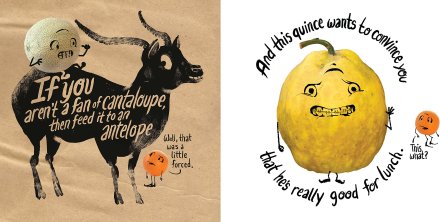
If nearly getting sucker punched by a “peewee” kiwi’s “pucker punch” counts as being included, then the orange is front and center. But then a cantaloupe riding an antelope enters the scene with a dietary suggestion.”If you aren’t a fan of cantaloupe, then feed it to an antelope.” Not a fan of that rhyme? Well…the orange agrees with you, and he’s a little unsure about the quince on the next page too. But…back to the dance party, where all the newly introduced “cute fruit” are now cutting the rug.

celebrate-picture-books-picture-book-review-nothing-rhymes-with-orange-cantaloupe

Copyright Adam Rex, 2017, courtesy of Chronicle Books

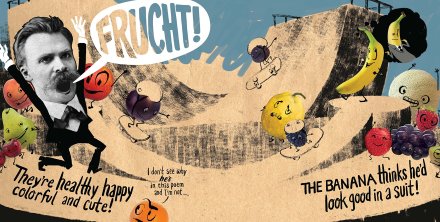
The produce seem to be losing control as they reach for rhymes. I mean, “you can keep them in a bowl or in a boot—fruit!” Really? Is it actually a good idea to eat out of a shoe? Poor Orange doesn’t “even know what that is.” Want a little philosophy with your fruit? Then try this on for size: “I think cherries are ‘the berries’ and a lychee is just peachy. Thus Spoke Zarathustra is a book by Friedrich Nietzsche.” Impressive!

That bit of nonsense just makes Orange mad, though. As Nietzsche throws his hands in the air and joins the festivities, Orange is nonplussed: “I don’t see why he’s in this poem and I’m not.” Good question! And now the banana again?! Didn’t he already have his turn? And the pear? Didn’t she get to lead the whole thing off? Maybe this is one of those circular plots…. Whoa! Here’s a twist—a wolf wants to take a bite of Pear. 

celebrate-picture-books-picture-book-review-nothing-rhymes-with-orange-frucht

Copyright Adam Rex, 2017, courtesy of Chronicle Books

But suddenly a transformation takes place that brings up some pretty deep questions: “then does that pear become a pearwolf when the moon is full and bright? Will the apple have to grapple with this pear with fangs and hair?” Now that the story has gone to the dark side, the orange decides he’s “glad he’s not part of it.” Yet, wait! A caped grape comes to the rescue, and Orange realizes that “this book is amazing.”

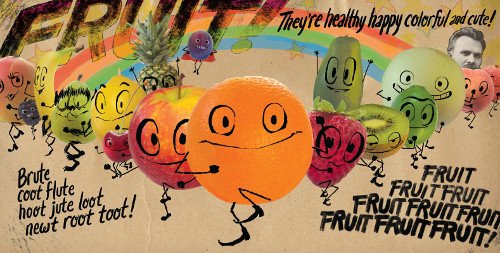
The cute fruit party is in full swing with a band, a singer, and a whole lot of dancing. The rhymes are coming fast and furious—some a bit better than others, according to Orange—and he decides to just hang out on the next page. There, though, as he stands alone and dejected and surrounded by lots of white space, Orange hears a cheery sound. It’s Apple with a welcoming rhyme: “But the fruit are feeling rotten, ‘cause there’s someone they’ve forgotten.” And while what Apple says next might not technically be a real word, it does the job with a little hip-hop beat: “It’s the orange. He’s really smorange. There’s no one quite as smorange as orange.”

This, of course, could go either way, so Orange asks for a little clarification and discovers that “smorange” means “totally awesome in every way.” And with that, the jam continues, with Smorange Orange out in front.

celebrate-picture-books-picture-book-review-nothing-rhymes-with-orange-smorange

Copyright Adam Rex, 2017, courtesy of Chronicle Books

Adam Rex’s cool, funny, and sophisticated riff uses the fact that the word orange has no rhyme to explore the ideas of exclusion and inclusion and show readers that there’s always a way to embrace others and make them feel good and part of the group. 

Rex has created very appealing characters in Orange and the others. Without a mean seed in their bodies, they’re just having fun and being a bit silly. In a very welcome plot turn, Apple and the other fruit recognize that Orange feels left out and come to him with a solution. Rex’s vivacious fruit are as cute as they think they are, and little Orange is endearing with his alternately easy smile and sad eyes. The addition of a dancing Friedrich Nietzsche is genius and will have both kids and adults laughing.

celebrate-picture-books-picture-book-review-nothing-rhymes-with-orange-apple-and-pear

Copyright Adam Rex, 2017, courtesy of Chronicle Books

Nothing Rhymes with Orange is a fantastic read-aloud for home and classroom story times. The book would be a much-asked-for favorite and would make a perfect gift or addition to home libraries.

Ages 5 – 8

Chronicle Books, 2017 | ISBN 978-1452154435

You’ll have a blast exploring the world of Adam Rex on his website!

National Respect Day Activity

celebrate-picture-books-picture-book-review-initial-letter-craft

Initial Respect Craft


Here’s an easy craft that you can make for yourself or as a gift for someone else. This Initial Respect Craft can be used as a decoration or as a bookend while it reveals all the qualities that you respect in yourself, a family member, or a friend.

Supplies

  • Wooden letter
  • Chalkboard paint
  • Chalk

celebrate-picture-books-picture-book-review-initial-letter-craft

Directions

  1. Paint the letter with the chalkboard paint, let dry
  2. On the letter, write words that reflect the qualities that you respect in yourself, in a family member, or in a friend
  3. Display your letter to remind yourself that you should always be treated and treat yourself and others with respect.

Picture Book Review

September 17 – It’s Better Breakfast Month

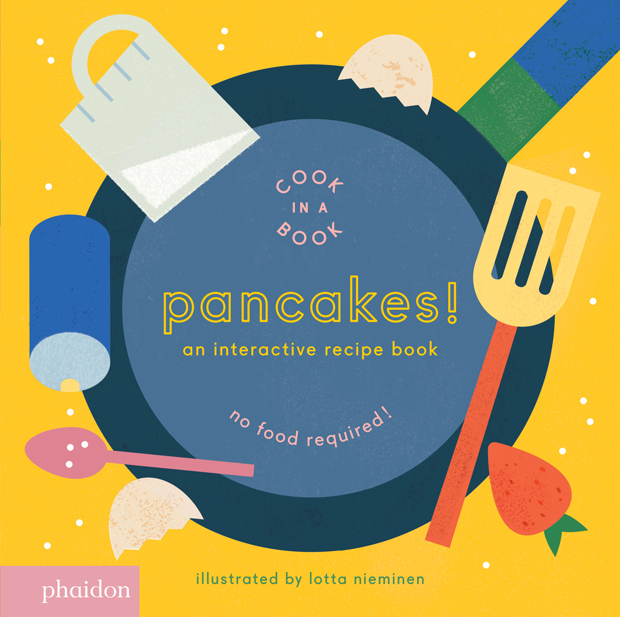
celebrate-picture-books-picture-book-review-pancakes-cover

About the Holiday

What makes a better breakfast than a tall stack of pancakes? With so many varieties—from buttermilk to buckwheat to chocolate chip—and so many toppings, such as syrup, fruit, and jam, you could have a different breakfast nearly every day of the year!

Pancakes! An Interactive Recipe Book

Illustrated by Lotta Nieminen


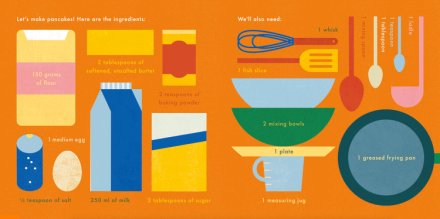
Sometimes a novelty book comes along that transcends the “kid” category and provides fun and “Ooooh!’ moments for readers of all ages. Pancakes! An Interactive Recipe Book offers just this kind of delicious excitement. Opening the cover is like walking into a cozy kitchen, finding your favorite recipe and gathering all the necessary ingredients. The first two-page spread presents in visuals and words the recipe and the utensils and other cooking items needed to make pancakes.

celebrate-picture-books-picture-book-review-pancakes-an-interactive-recipe-book-ingredients

Image copyright Lotta Neiminen, 2016, courtesy of phaidon.com

With the second two-page spread, cooking begins! A scoop of baking powder, two tablespoons of sugar, and half a teaspoon of salt are added to the bowl. But what about the cup of flour? Readers get to add that themselves with a pull tab that simulates the flour joining the other ingredients in the green mixing bowl. The clever cut of the opening and the mottled and powdery appearance of the illustrated flour gives the sensation of actual pouring.

celebrate-picture-books-picture-book-review-pancakes-an-interactive-recipe-book-measuring-milk

Image copyright Lotta Neiminen, 2016, courtesy of phaidon.com

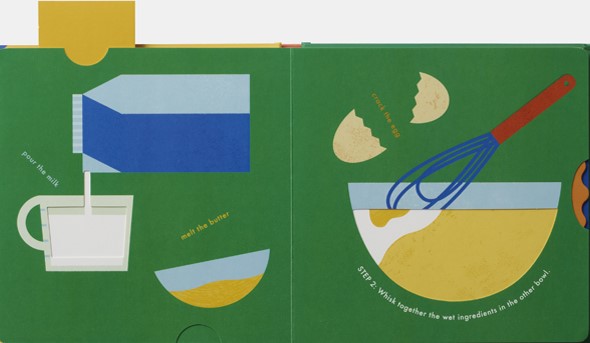
Next, readers get to measure out the cup of milk with the help of a pull tab that gives kids control over the amount being served. Four marks on the side of the measuring cup provide an opportunity to talk about fractions and the ¼, ½, and ¾ lines that are also incorporated into real glass measuring cups or the separate cups that come as part of a set. Once the milk is ready, it goes into the mixing bowl with the melted butter and the egg.

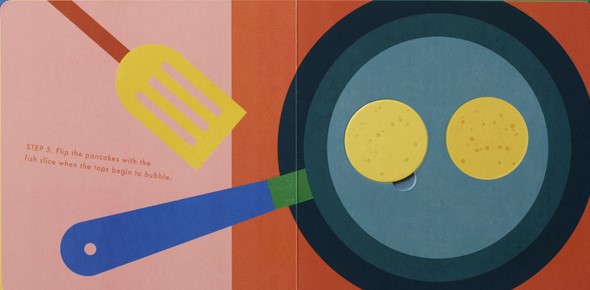
Grab your whisk and get stirring! A wheel on the side of the page lets kids “combine” these wet ingredients from their individual parts into a cohesive yellow batter. Now that the batter is ready, it’s time for “STEP 4: Ladle the batter into separate circles in the hot, buttered frying pan.” Readers will love pulling the tab that releases the batter into the pan—leaving just a drop of batter to sizzle on its own (and you know how good those crispy drops can be!)

celebrate-picture-books-picture-book-review-pancakes-an-interactive-recipe-book-flipping-pancakes

Image copyright Lotta Neiminen, 2016, courtesy of phaidon.com

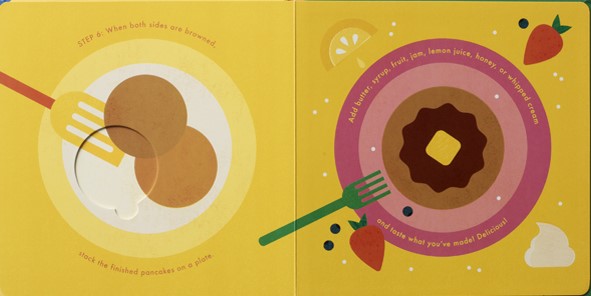
The batter is bubbling—which means it’s time to flip the flap jacks! As the spatula appears from the top of the page, kids can lift one of the little round yellow pancakes from the fry pan and turn it over. Ingeniously, the reverse side is delectably browned. A turn of the page invites by-now-hungry readers to follow “STEP 6: When both sides are browned, stack the finished pancakes on a plate.”

celebrate-picture-books-picture-book-review-pancakes-an-interactive-recipe-book-on-plate

Image copyright Lotta Neiminen, 2016, courtesy of phaidon.com

A pancake-sized round indentation on the plate just begs to be filled with the browned pancake from the previous page. Adding the pancake to the sunny plate, kids will feel as if they are holding the spatula and carefully slipping it atop a stack ready to be eaten.  The last page encourages readers to “add butter, syrup, fruit, jam, lemon juice, honey, or whipped cream and taste what you’ve made! Delicious!”

Lotta Nieminen’s Pancakes! is so wonderfully conceived in its bold vibrant images and simple recitation of a pancake recipe. The crisp lines and absence of labels on the ingredients’ packages, puts the focus on the shapes, providing a chance for discussion of concepts such as rectangle, circle, half-circle, cylinder, oval, and triangle; flat and round; and bigger and smaller. Ideas such as hot and cold, measuring, pouring, mixing, stacking and others can also be introduced. The brilliant interactive elements invite kids and adults alike to play with this book over and over.

The sturdy board pages and convenient size make this a perfect take-along for trips to the market, picnics, appointments, sibilings’ activities, or other outings where waiting is required. For kids and adults who like to help out in the kitchen, love to cook, or are attracted by all things culinary, Pancakes! An Interactive Recipe Book makes a terrific gift and must have for home bookshelves. 

Ages 2 and up

Phaidon Press, 2016 | ISBN 978-0714872834

To view a gallery of graphic design and illustration work by Lotta Nieminen, visit her website!

Better Breakfast Month Activity

celebrate-picture-books-picture-book-review-pancake-game

Pancake Flip-Out


Pancakes are served in a stack because they’re so delicious each one doesn’t last long! This game gives you the chance to see how many pancakes you can flip onto a plate! You can play this game several ways:

To Play Pancake Toss

  1. Give each player the same number of pancakes and see how many they can toss onto the plate during their turn
  2. Make a target with the plate in the middle and draw 3 concentric circles around it. Hitting the target can earn you 20 points. Getting your pancake in the first circle around the plate earns you 15 point, the second circle is worth 10 points, and the third is worth 5 points. Rotate through the players as many times as you like and add up the points at the end. The player with the most points wins!
  3. Instead of tossing the pancakes with your hands, try throwing them with a spatula!
  4. Make up your own rules—and have fun!

To Play With Dice

  1. Choose a number of pancakes that each player must add to their plate—say, maybe, a baker’s dozen.
  2. Take turns rolling the dice and adding the number of pancakes rolled to the plate. The first player to reach the agreed-upon number is the winner.

Supplies

Directions

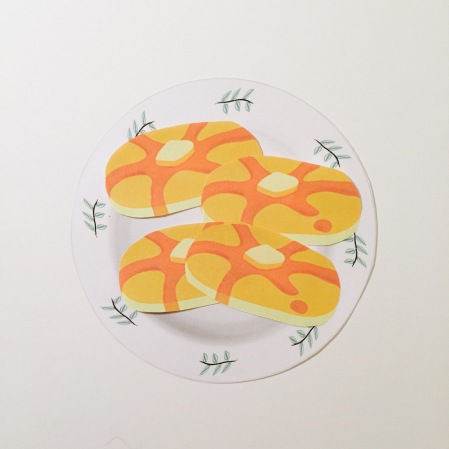
  1. Print enough copies of the Pancakes and Breakfast Plates for the game you choose and cut them out. Playing pieces can be printed on card stock or on paper. 
  2. If printing on paper, you can glue the pancakes and plate to poster board, or cardboard to give the pancakes more weight for throwing and the plate more support
  3. Once dry, the game pieces are ready for fun!

Picture Book Review

September 14 – Live Creative Day

celebrate-picture-books-picture-book-review-crocodali-cover

About the Holiday

Today, let your inner artist out! There are as many ways to be creative as there are people—that’s what makes today such a special event! Everyone sees, hears, and experiences the world in a different way. How do you? Grab the creative tool or instrument of your choice and let your friends, family, and even strangers see the creative genius inside you!

Crocodali

By Lucy Volpin


You open the book, expecting to be welcomed with open arms by the characters inside. Instead, who do you meet but a very busy crocodile. With not a little braggadocio he reveals that he is “Crocodali, the most talented painter in the whole wide world.” It seems you’ve stumbled into his studio, and he’s setting up to create a new masterpiece, leaving him no time to stop for a chat or even to give you an autograph.

celebrate-picture-books-picture-book-review-crocodali-in-the-studio

Copyright Lucy Volpin, 2017, courtesy of simonandschuster.com

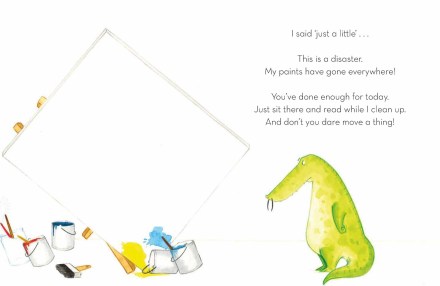
But after he’s given you the brush off, so to speak, he suddenly needs your help. Crocodali just can’t get the canvas to sit straight on the easel. He asks if you wouldn’t mind tilting the book just a little to the right. Oh, no! Now it needs to go a little to the left. Can you tilt it back just a wee bit? Oh dear! Now the canvas and the easel have toppled over! Even the paint cans tipped on their sides, and some blue and yellow has splashed onto the clean, white canvas.

celebrate-picture-books-picture-book-review-crocodali-tilt

Copyright Lucy Volpin, 2017, courtesy of simonandschuster.com

Well! Crocodali is a little miffed! He wants you to just go on reading and leave the cleaning up to him. Wait, wait, wait! Did you turn the page? (Isn’t that part of reading, though?) Now the canvas is completely on its side and there are some splotches of red on it too. Crocodali is in a huff because now he’ll have to start all over. But he takes a second look and in the next moment has had a change of heart. Now he thinks “that looks quite nice. Maybe you’re onto something.”

celebrate-picture-books-picture-book-review-crocodali-tilt-the-other-way

Copyright Lucy Volpin, 2017, courtesy of simonandschuster.com

He even invites you to “give the book a shake and see what happens.” What happens is that the paints, brushes, canvas, and even Crocodali himself are now rattling around the pages all topsy-turvy. When things settle down, the room and the great artist are covered in paint. Crocodali sets the painting back on the easel and steps back to take a look. Hmmmm…. He likes it! But maybe it’s upside down? He’s going to turn it over and add a few more details.

celebrate-picture-books-picture-book-review-crocodali-tipped-over

Copyright Lucy Volpin, 2017, courtesy of simonandschuster.com

With a very dexterous tail and his right hand, he dabs on purple, brushes on yellow and red, and is then ready to “mix it all up.” Here’s where you come in again. Can you give the canvas a good rub? Wow! The painting looks amazing! Crocodali exclaims, “It’s a masterpiece! I really am the greatest painter in the world.” He’s the greatest painter in the world? Who did all the work? Whatever…. The painting now needs to dry, and Crocodali wants you to blow on it to speed up the process.

One…two…three…Blow! Huh! You have some power! You blew all the paint off the canvas and onto the wall! It looks incredible, through—and leaves the canvas blank to start all over again!

celebrate-picture-books-picture-book-review-crocodali-on-its-side

Copyright Lucy Volpin, 2017, courtesy of simonandschuster.com

Kids will love Lucy Volpin’s feisty, boastful crocodile who comes to see that even mishaps can spark creativity. The giggles will begin on the first page as Crocodali (an inspired character and name) strolls into the studio sporting a Salvador Dali mustache and dismissing readers away with a wave of his hand. As children begin interacting with the pages, they’ll look forward to what comes next. Large images of the canvas allow children to really see the effects of their actions, and the two-page “shaken” spread is a delight of mayhem and color.

Kids will also enjoy turning the book around to see the various perspectives of the painting they’re creating throughout the story. Volpin gives readers lots of opportunities to discuss art, color, painting, and even teamwork, making Crocodali a joyful and inviting introduction to the creative process.

Crocodali would be a lively, playful opening to arts and crafts sessions in schools, libraries, and at home. For art lovers or energetic kids who like interaction with their reading, Crocodali is a wonderful choice.

Ages 3 – 8

little bee books, 2017 | ISBN 978-1499806335

Live Creative Day Activity

celebrate-picture-books-picture-book-review-supply-jar-craft

Make Your Own Creative Supply Jars


When inspiration hits, you want to have all of your supplies close at hand! With this easy craft you can use your creativity to make a one-of-a-kind jar to keep all of your favorite things neat, tidy, and within reach! These make great gifts for friends too!

Supplies

  • A wide-mouth plastic jar, such as a peanut butter jar
  • Paint or markers for plastic
  • Multi-surface chalkboard paint (optional)
  • Paint brush
  • Chalk (optional)

Directions

  1. Design your jar
  2. If you are planning to use chalkboard paint, paint that section first
  3. Paint or decorate with markers
  4. Let dry
  5. Fill with your art of other creative supplies

Picture Book Review

September 13 – National Quiet Day

celebrate-picture-books-picture-book-review-charlotte-and-the-quiet-place-cover

About the Holiday

We’re surrounded by noise every day. Cars whoosh by on the street, TVs drone on, and voices fill the air in the office and at school. Sometimes it seems as if you don’t hear the constant din, but you do. Quiet Day was established to give people an opportunity to experience the benefits found in silence. Not only did the founders envision a day in which you sought out quiet places, they suggest that you don’t speak at all for the day. Reconnecting with yourself and your thoughts can make you feel more relaxed and give you new perspectives that can stimulate creativity and better communications.

Charlotte and the Quiet Place

Written by Deborah Sosin | Illustrated by Sara Woolley


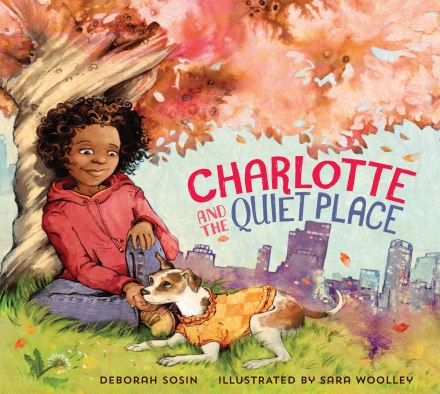
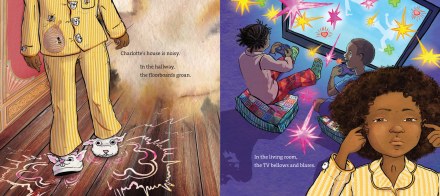
Charlotte is a girl who likes quiet, but she lives in a noisy world. Everywhere she goes, it seems, it’s impossible to escape from sounds that disturb her peace. At home the hallway creaks where “the floorboards groan,” the living room is like an arcade where the “TV bellows and blares,” and the kitchen is filled with Otto’s barks for his dinner. Even in Charlotte’s bedroom, “which is supposed to be a quiet place, the old steam radiator hisses, whistles, and whines. Where can Charlotte find a quiet place?”

celebrate-picture-books-picture-book-review-charlotte-and-the-quiet-place-noisy-home

Image copyright Sara Woolley, text copyright Deborah Sosin, courtesy of sarawoolley.com

When Charlotte goes to school, things are no better. In the classroom kids are boisterous and bells ring; the lunchroom echoes with clattering trays and scuffing chairs; and the playground blares with big voices and stomping feet and also with little squeaks and rattle of the swings. “Even in the library, which is supposed to be a quiet place, the children giggle, yammer, and yell. Where can Charlotte find a quiet place?”

celebrate-picture-books-picture-book-review-charlotte-and-the-quiet-place-noisy-subway

Image copyright Sara Woolley, text copyright Deborah Sosin, courtesy of sarawoolley.com

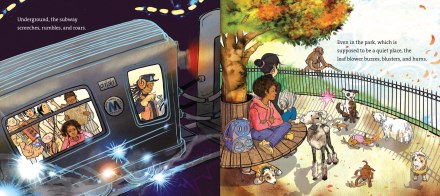
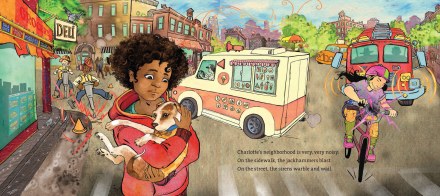
The outside world resounds with the din of jackhammers, horns, sirens, shouts, cars, music, and the “screeches, rumbles, and roars” of the subway. “Even in the park, which is supposed to be a quiet place, the leaf blower buzzes, blusters, and hums.” Charlotte puts her hands to her ears. “‘Nooo!’” she cries, “‘I have to find a quiet place!’”

celebrate-picture-books-picture-book-review-charlotte-and-the-quiet-place-nooo!-charlotte-cries

Image copyright Sara Woolley, text copyright Deborah Sosin, Courtesy of sarawoolley.com

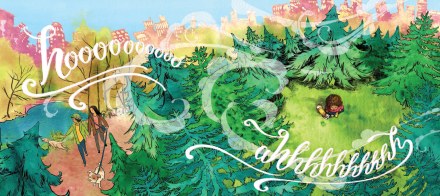
On Saturday Charlotte takes her dog for a walk in the park. Suddenly, Otto spies a squirrel and takes off running, wrenching his leash out of Charlotte’s hand. She chases after him down a hill, over a bridge, and into the middle of a grove of trees. Out of breath, Charlotte and Otto sit beneath a tree. Gasping, Charlotte’s “belly rises up and down, up and down. Her breath goes in and out, in and out. Hooooo ahhhhh. Hooo ahhh.”

Slowly, Charlotte’s breath comes easier and “her mind slows down.” In this state, she discovers another, even quieter place. It is a place deep inside where her breath is soft and her “thoughts are hushed and low.” It is “a place as quiet as the small silence on the very last page of her favorite book, the silence right after ‘The End.’”

celebrate-picture-books-picture-book-review-charlotte-and-the-quiet-place-quiet-woods

Image copyright Sara Woolley, text copyright Deborah Sosin, Courtesy of sarawoolley.com

In a little while, Charlotte and Otto leave the grove, but now whenever home or school or the neighborhood is too loud, Charlotte remembers where she can find a quiet place. She simply closes her eyes and pays attention to that place deep in her belly and deep in her mind—“that quiet place inside.”

For so many children the world is a blaring, clattering place where their thoughts are drowned out by the noises around them. Deborah Sosin’s award-winning Charlotte and the Quiet Place validates these feelings and offers children a way to discover inner peace wherever they are. As a tonic to today’s hyper-stimulated environment, kids and adults alike will benefit from the method of mindful reflection Sosin presents. Sosin’s combination of evocative verbs and repetition makes the story fresh and an excellent read-aloud while also mirroring the sounds that are a part of our everyday life.

celebrate-picture-books-picture-book-review-charlotte-and-the-quiet-place-noisy-neighborhood

Image copyright Sara Woolley, text copyright Deborah Sosin, Courtesy of sarawoolley.com

Sara Woolley’s beautiful watercolor illustrations vividly depict not only Charlotte’s world but the sounds that disturb her peace. Amid the fully realized home, school, and neighborhood environments, complete with realistic details kids will recognize, sharp cracks of equipment, blaring bells and whistles, high-pitched voices, and other noises spark the page. Portrayals of Charlotte, her hands over her ears and her eyes sad, express her distress in a way kids will understand. When Charlotte finds the grove of trees in which she first experiences inner peace, Woolley’s color palette turns softer, with peaceful tones of green, blue, and yellow where, previously, “louder” purples, reds, and golds predominated.

Charlotte and the Quiet Place is a very welcomed book for those times when peace seems elusive and will give comfort to children who prefer quiet places and have more introverted natures. The book would make a wonderful addition to all children’s book shelves as well as to school and public library collections.

Ages 4 – 8

Parallax Press, 2015 | ISBN 978-1941529027

Visit Charlotte and the Quiet Place on her own webstite! You’ll find resources, images and videos, news about events, and more!

Discover more about Deborah Sosin, her writing for children and adults, writing workshops, mindfulness services, and more on her website!

View a gallery of artwork for books, comics,  and other illustration work by Sara Woolley on her website!

Quiet Day Activity

celebrate-picture-books-picture-book-review-smile-cards-craft

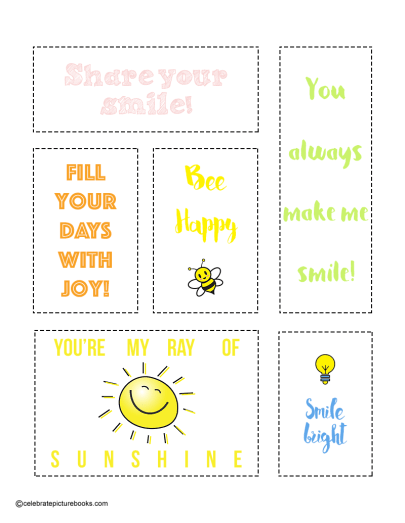
Share a Smile Cards


If you’re taking a quiet day, but still want to communicate with others, print these Share a Smile Cards and give them to your friends, family, and others. Why not slip one into your dad’s pocket or your mom’s purse, put one in your friend’s backpack, or sneak one onto your teacher’s desk? You can even leave one somewhere for a stranger to find! Have fun sharing your smiles, and see how much better you and the others around you feel!

Click here to print your Share a Smile Cards.

September 12 – It’s Read a New Book Month

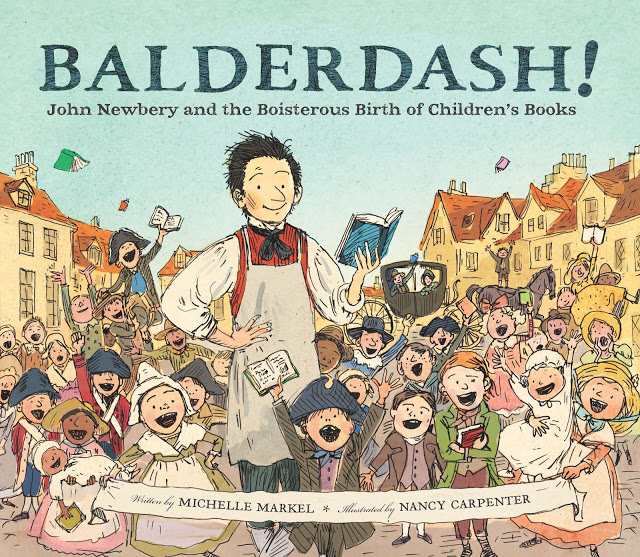
celebrate-picture-books-picture-book-review-balderdash!-john-newbery-and-the-boisterous-birth-of-children's-books-cover

About the Holiday

Discovering a new book is one of the joys of life! Right now bookstores everywhere are filled with books waiting for you to take them home, open the cover, and start reading. Whether you find a new book published just this year or one that’s older but new to you, take the opportunity of this month’s holiday to add to your home library. Children especially benefit from reading new and classic books—and thanks to the subject of today’s book, they have plenty to choose from!

Balderdash! John Newbery and the Boisterous Birth of Children’s Books

Written by Michelle Markel | Illustrated by Nancy Carpenter


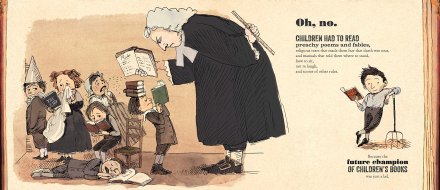
With a hearty “Welcome!” readers are invited to explore—and appreciate—the pages, pictures, words, and even individual letters that make up the book they’re holding. Back in time, a book like this didn’t exist. How far back? Well, let’s return to 1726…. “In those days of powdered wigs and petticoats, England was brimming with books.” There were exciting tales about imaginary places, sailing voyages, mysterious happenings, “pirates, monsters and miniature people”—for adults. What did kids read? Their books were all about teaching them how to have good manners and how to live a good life because death was always near. Scary stuff and not much fun at all!

celebrate-picture-books-picture-book-review-balderdash!-john-newbery-and-the-boisterous-birth-of-children's-books-old-style-books

Image copyright Nancy Carpenter, 2017, text copyright Michelle Markel, 2017. Courtesy of Chronicle Books.

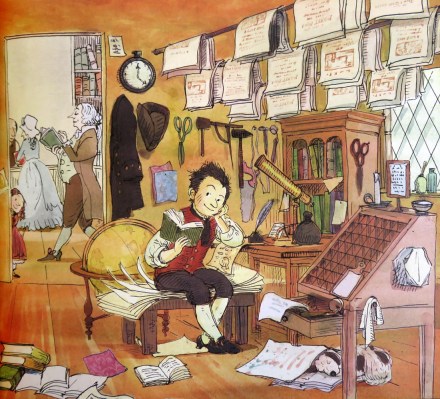
One of the children reading these books was John Newbery who, despite the dreariness, loved to read more than he liked to do his chores. When he grew up, he left the family farm and went to work for a printer. After he learned the business, he became a publisher himself. He moved from his small town to “London, center of the bookselling trade.”

Soon, he found the perfect storefront on a busy street and opened his shop. He had a dream of publishing books for every taste—and for children too. “He knew the youngsters were hungry for stories. Many boys and girls handed coppers to street hawkers for ugly chapbooks of fairy tales, or for chopped-up versions of grown-up books.” When John Newbery tried to offer good books for children, however, the adults balked. They were afraid “that if their little nippers read fun books, they’d turn wild as beasts!”

celebrate-picture-books-picture-book-review-balderdash!-john-newbery-and-the-boisterous-birth-of-children's-books-going-to-london

Image copyright Nancy Carpenter, 2017, text copyright Michelle Markel, 2017. Courtesy of Chronicle Books.

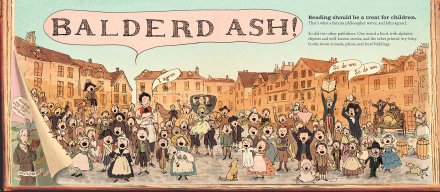
“Balderdash!” John Newbery said. And others agreed. Two publishers issued books of alphabet rhymes and stories, and another published some books of nonfiction. But “John wanted his first book for children to be irresistible.” The books he created included pictures of fun children’s games, enjoyable ways to learn ABCs and other subjects, and fantasy stories. He even wrote a note to moms and dads to alleviate any fears.

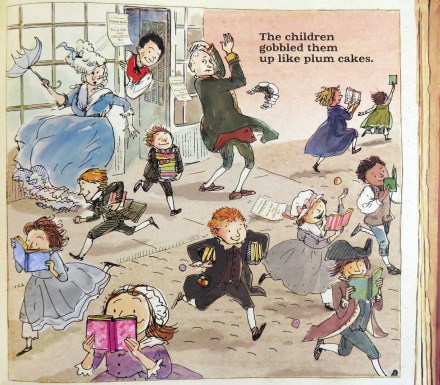
The covers of his books were colorful and attractive and carried the title “A Pretty Little Pocket-Book.” To further entice kids and their parents, John offered to sell books along with a toy for a very good price. John wondered if his books would look “too cheerful,” but “the children gobbled them up like plum cakes.”

celebrate-picture-books-picture-book-review-balderdash!-john-newbery-and-the-boisterous-birth-of-children's-books-kids-with-books

Image copyright Nancy Carpenter, 2017, text copyright Michelle Markel, 2017. Courtesy of Chronicle Books.

As customers bought books in the front of his shop, John created new books in the back. In addition to fiction books, he began printing books on math, science, and other subjects. With the books a success, John Newbery turned his thoughts and his press towards creating a magazine for children, and, finally, a novel. The novel was titled The History of Little Goody Two-Shoes and was a rags-to-riches story about a little girl who succeeded through “study, hard work, and kindness.” It showed children that they too could achieve their dreams. The History of Little Goody Two-Shoes was a hit in England and America.

While the authors of John Newbery’s books were all anonymous or had “silly, made-up names,” it wasn’t hard for people to figure out who was really creating the books that brought their children so much joy and made their lives better.

celebrate-picture-books-picture-book-review-balderdash!-john-newbery-and-the-boisterous-birth-of-children's-books-newbery's-shop

Image copyright Nancy Carpenter, 2017. text copyright Michelle Markel, 2017. Courtesy of Chronicle Books.

An Author’s Note about John Newbery as well as a resources page follow the text.

Kids will love Michelle Markel’s entertainingly informative book that takes them back to a time when the unthinkable was reality. Markel’s charming text is as infectious as John Newbery’s love of books, and readers will laugh at how kids’ books were once perceived. Her conversational tone and bemusement at the state of publishing at the time creates a warm reading experience—like a secret shared between friends.

celebrate-picture-books-picture-book-review-balderdash!-john-newbery-and-the-boisterous-birth-of-children's-books-kids

Image copyright Nancy Carpenter, 2017. text copyright Michelle Markel, 2017. Courtesy of Chronicle Books.

Nancy Carpenter infuses Balderdash! with the sights, dress, activities, and flavor of the time period in her pen-and-ink illustrations. Humor abounds, from the little boy overflowing with tears in the corner of the first page to a young John Newbery relishing the feel and smell of newly printed pages to parents pulling their children away from “dangerous” books. Along the way, kids will want to scope out all the details on each page. A variety of typefaces and sizes further enhances the humor and ambience of the book.

Balderdash! John Newbery and the Boisterous Birth of Children’s Books would make a great addition to home libraries for kids interested in books, history, and innovation. Teachers will also find the book to be a perfect beginning for language arts or history units.

Ages 4 – 8

Chronicle Books, 2017 | ISBN 978-0811879224

Discover more about Michelle Markel and her books on her website!

Read a New Book Month Activity

I Have the Reading Bug! Bookplate and Bookmark


Do you have the reading bug like John Newbery? If so, here’s a bookplate and bookmark for you to print to show your love of books!

I Have the Reading Bug Bookmark | I Have the Reading Bug Bookplate

Picture Book Review

September 7 – Buy a Book Day and Interview with Sara Levine

celebrate-picture-books-picture-book-review-bone-by-bone-cover

About the Holiday

Today is one of the best days of the year! Anyone who loves books will want to take the opportunity of the holiday to visit their favorite bookstore and buy one of those books you’ve been hearing and reading about. And why stop at just one? Winter is coming—that time when there’s nothing more cozy than snuggling in with a cup of tea or hot chocolate and reading late into the night. As the school year begins, children benefit from having new books in their home libraries that reflect their changing interests and maturing thoughts. Take a little time to look through the children’s or tween sections of the bookstore and let your kids pick out some new favorites! Yes, today is a wonderful day, no bones about it! 

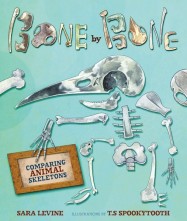
Bone by Bone: Comparing Animal Skeletons

Written by Sara Levine | Illustrated by T.S Spookytooth


Can you imagine if we sloshed through life like soup without a bowl? What would we set our hats on? Where would we carry our phones? How could we sit in class or the office or perform our favorite activities? And what would happen to our organs, our hair, our homes? It’s all a little disturbing! Fortunately, we don’t have to worry about that scenario because “we’re vertebrates, animals with bones. Our bones hold us up.” Phew!

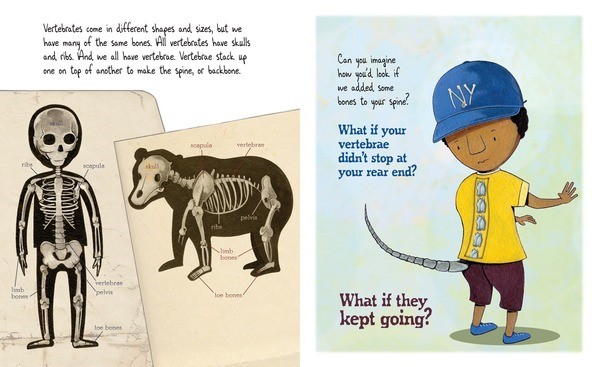
There are different kinds of vertebrates—mammals, reptiles, fish, and more—but many of our bones are similar. For example, “all vertebrates have skulls and ribs. And we all have vertebrae. Vertebrae stack up one on top of another to make the spine, or backbone.” Humans have vertebrae that end…well…you know where, but imagine for a minute if your vertebra kept on going. What if they poked a hole right through your shorts? Yes! You’re right—you’d have a tail. Tails are pretty helpful for some animals. They help them swim, communicate, even keep their balance.
celebrate-picture-books-picture-book-review-bone-by-bone-tailbone

Image copyright T. S Spookytooth, text copyright Sara Levine. Courtesy of Lerner Publishing

Good job! Let’s try again…how about if you only had a skull, vertebrae, and ribs. No arm bones; no leg bones. You’ve got it! A slithery snake! Nah…really…you’d look great! Okay, maybe you’d prefer if you had a skull, vertebrae, and arm bones—but no leg bones—and your nose was transferred to the top of your head. Sounds fishy? Maybe, but not quite. Oh! Did I give it away? Yep, you’d be a whale or a dolphin, and you’d use those powerful vertebrae to propel yourself to the ocean’s surface to grab a breath.

Imagine what kind of gloves and shoes you’d need if your “middle fingers and middle toes were so thick that they supported your whole body.” Hey, you’re good at this! It was a trick question. You wouldn’t need gloves, but you’d wear horse shoes (or no shoes if you’re a less domesticated animal like a zebra). Now, let’s take a trip through a room full of fun-house mirrors. What kind of animal would you be if your neck was reeeaally long and each vertebrae was “as big as your head?” Or if your legs were muuuuuch longer than your arms? Or your “finger bones grew so long that they reached your feet? Seeing those transformations is definitely worth the price of admission, right?

celebrate-picture-books-picture-book-review-bone-by-bone-bat

Image copyright T. S Spookytooth, text copyright Sara Levine. Courtesy of Lerner Publishing

But getting back to the bowl of soup: “Could you be an animal if you didn’t have any bones at all?” Sure! Some insects and sea creatures “have their hard parts on the outside,” and some are just “mushy.” Think of worms, slugs, and jellyfish, just to name a few. But bones make life more fun, don’t ya think? So if all vertebrates have bones, what makes humans different? Well, for one thing we (as well as some apes and monkeys) have opposable thumbs, which means that “we can move our thumbs in a special way that allows us to do many things, including turning the pages of a book,” using tools, and picking up objects. “Did you get that one? If so, give yourself a thumbs-up!”

An Author’s Note including more about bones, the types of vertebrates, a glossary, and resources for further reading follow the text.

With humor and a kid’s sensibility of the bizarre, Sara Levine presents an anatomy lesson that young readers will respond to. Juxtaposing individual bony features of humans and animals is a brilliant idea to give children perspective on the differences in animal skeletons and the uses of each unique trait. Levine’s quiz-like format engages readers, encouraging independent thought and active participation as well as building suspense for what transformation comes next. Kids will laugh and learn and be on the lookout for other ways human and animal skeletons differ as they become more aware of the natural world around them.

With illustrations of tailbones sticking out of pants, empty socks, two fingered hands and two toed feet, a neck that needs two scarves, and more, T. S Spookytooth illuminates what it means to be human in an animal world or an animal in a human world. Kids will laugh imagining themselves as Spookytooth depicts them with animal features and “Ewww” when their portrayal dissolves into a muddy mess. The accurate drawings of human and animal skeletons educate readers on the names and placement of particular bones.

The unique approach to the study of human and animal skeletons, the wide range of animals presented, and the enticing writing and illustrations make Bone by Bone: Comparing Animal Skeletons a wonderful choice for libraries and home bookshelves of budding scientists and nature lovers.

Ages 5 – 10

Millbrook Press, 2014 | ISBN 978-0761384649

To learn more about Sara Levine and her books, visit her website! You’ll also discover fun Bone by Bone activities to enhance your reading!

View a gallery of artwork by T. S Spookytooth, plus videos and more on his website!

Buy a Book Day Activity

celebrate-picture-books-picture-book-review-x-ray-craft-dog-paw

Dog Paw and Human Hand X-Ray Craft


X-rays are cool to look at, but they always stay at the doctor’s office! With this craft you can simulate an X-ray of a dog’s paw and a human hand!

Supplies

  • Printable skeleton templates: Human Hand Template | Dog Paw Template
  • Black chalkboard drawing paper, 8 ½ inches by 11 inches
  • White colored pencil
  • White chalk
  • Clear Plastic Report Sheet Protectors
  • Magnetic clip to hang your x-ray on the refrigerator or other metal surface (optional) OR
  • String or wire, adhesive squares, and clothes pins to hang x-ray on the wall (optional)
  • Scissors

Directions

  1. Print the Human Hand and Dog Paw Templates (you may want to print two—one to cut and one to follow when transferring the bones to the black paper)
  2. Cut the bones apart
  3. Lay the bones on the black chalkboard paper
  4. Trace the bones with the white colored pencil
  5. Color in the bones with the white chalk
  6. Slip the black paper into the plastic report sheet protector
  7. If desired, hang the x-ray on the refrigerator with the magnetic clip or on the wall using string, adhesive squares and clothespins


Q & A with Author Sara Levine
celebrate-picture-books-picture-book-review-author-sara-levine

Today, I’m thrilled to talk to Sara Levine about her writing as well as to learn about her early experiences with animals and to discover a kid’s-eye-view of women in science.

Your writing for kids is so infused with humor that really captures their attention. What were some of the books that you liked best as a child?

When I was younger, one of my favorite picture books was Katerine and the Box by Patricia Lee Gauch. I’ve noticed that this book has gone back into print; I was so happy to find it online. It’s basically about creativity. A girl and her friend keep finding new uses for a large cardboard box—a house, a car, a dance platform. I can still recall my feeling of excitement when hearing it read to me—it made me want to go make something. It’s actually a feeling very similar to what I have today when I think of a new idea for a book. There was also a book called Wisher, which was about difference—about a cat who dreamt he was really a fish. I remember that the illustrations were beautiful and somewhat scary—just done in blues, browns and yellows.  As an older child, I loved Charlotte’s Web by E.B White, Lizard Music by Daniel Pinkwater and pretty much everything by Judy Blume.

I don’t suppose any of these books are like the books I write. I used to tell people that I liked my science and my books separate. I just wanted to go outside to learn about science. But, I wanted stories in my books. I don’t think there were any of the sorts of books I write about science out for kids when I was young. At least I didn’t find them. But if I had, I think I would have enjoyed them—the fact that they were funny and interactive. But here’s a picture book I LOVE that I found as an adult that is certainly infused with humor and captures a kid’s (and a grown-up’s) attention: Bark, George, by Jules Feiffer. I think this is currently my favorite picture book.

You grew up on a farm in Guilford, Connecticut. Can you tell me a little about the farm and how or if it influenced your current work?

Calling it a “farm” might be a bit of a stretch. My parents were two kids who grew up in Brooklyn and then moved to CT and decided to get some animals, cheered on by their enthusiastic offspring. First there was a goat, who got lonely. So then there was another goat. And they had a baby. And there was a chicken at school who needed a place to go for the summer. And then never went back to school… And so on. We ended up having over 100 named animals—a horse, a cow, peacocks, geese, a donkey and more. I loved taking care of the animals, with my siblings. It was a wonderful experience, one that I’m very grateful for. But it wasn’t at all lucrative. I think the only money made was by my brother who would sell extra eggs to his teachers.

How did it influence my current work? I’m not sure. Certainly my interest in animals is a lifelong one. I think the stories about the animals actually show up more in my writing for adults than in my picture books. The ideas for the books for children come more from teaching ideas that I think will translate well into a picture book format.

You have a doctorate in veterinary medicine and a masters in fine art. When and how did the two merge into your work as an author?

What a great question. I have always had this science side and this humanities side. A lot of my life, I’ve been struggling with how to balance and feed both sides of myself. It’s taken me a long time to find a way to merge the two interests, and it’s been very satisfying to do so in writing about science, especially for kids.

You offer four different school and library programs, all of which sound fascinating. Do you have any anecdotes from a presentation you’d like to share?

In one of my workshops, the one for Bone by Bone: Comparing Animal Skeletons, I bring in an articulated skeleton for the kids to see and a disarticulated skeleton in a box. The kids learn the bones, and I then hand them each a bone which they take up to the standing skeleton to figure out which bone it is, and then work together to put together the second skeleton on the floor. Inevitably, someone asks if the skeletons are real. They are. I literally found them in the closets, when I started my teaching at Wheelock. There are all sorts of questions about that, generated by the kids, and then, often, someone will ask if the skeletons are “boys or girls.” Recently, at a school near Boston, I was explaining to a group of second graders that both were female, that we could tell by the shape of the hips, and I heard one girl, going, “YES!” and pumping her arm up and down, in victory. The boy next to her says, “Why are you so happy? That means a girl died.” To which she responds, “That’s true. But it also means one more girl in science!”

celebrate-picture-books-picture-book-review-bone-by-bone-workshop

Sara Levine leads a workshop at Cold Spring School

What’s the best thing about writing for kids?

I enjoy trying to think of engaging and interactive ways to teach something that hasn’t been taught before. I like the creativity involved. And, of course, reading it to the kids when I’m done and seeing them respond!

celebrate-picture-books-picture-book-review-bone-by-bone-students-at-al-hamra-school

Students at Al Hamra Academy examine a skeleton

You also write articles for adults and were nominated for a Pushcart Prize in 2007. Can you tell me more about your writing for adults?

I write science related essays for adults. The writing comes more from my own experiences.  I do have a handful of essays published. I think the one that was nominated for the Pushcart, “What Hands Can Do” is still available to read online. Here’s a link to it on Fictionaut. It’s about spaying a dog. And more, of course. I think my most successful essay is “The Body of a Cow” which originally appeared in the Massachusetts Review. It’s also on Fictionaut, if anyone wants to have a look. Eventually, I hope to work the essays into a memoir for adults.

What’s up next for you?

I have a book on dinosaur bones which will be published by Lerner next year. I also have three children’s books written which I’m trying to find homes for at the moment—one on animal classification (but interactive, written like a “do your own adventure” story), one on how plants communicate with animals, and one very funny one (if I can say so myself) called “Breakfast at the Omnivore Café,” which is about what animals eat. This one might never get published because it falls into the cracks between nonfiction and narrative fiction, but I haven’t given up on it yet. The book I’m currently working on is an attempt to explain climate change through stories of the carbon cycle. Doesn’t sound very interesting when put that way, but it’s written as an interactive story, and is also actually quite funny in parts, so I think kids will like it.

Since Celebrate Picture Books is a holiday-themed blog, I can’t let you get away without asking you what your favorite holiday is…

Passover. You get to tell a story to children in a way that is interactive and engaging for kids, AND it involves food. What could be better?

Thanks so much for chatting and sharing your unique perspective on the natural world, Sara! I, for one, would love to read Breakfast at the Omnivore Café—that would be one interesting menu, I bet! I wish you the best with all of your books!

You can connect with Sara Levine on:

Her Website | FacebookTwitter

celebrate-picture-books-picture-book-review-bone-by-bone-cover

Bone by Bone: Comparing Animal Skeletons and Sara’s other books can be found at:

Amazon | Barnes & Noble | Books-a-Million | Lerner Publishing

About Sara Levine

Sara Levine is an assistant professor of biology at Wheelock College and a veterinarian.  Her science books for children include Bone by Bone: Comparing Animal Skeletons (2013) and Tooth by Tooth: Comparing Fangs, Tusks and Chompers (2016).  Her third book, Fossil by Fossil: Comparing Dinosaur Bones will be published in 2018.  Bone by Bone: Comparing Animal Skeletons has received much recognition, including the Utah Beehive Book Award, selection as a Bank Street College Best Children’s Book of the Year, and finalist for the Cook Prize for best STEM picture book.

Sara also writes science-related essays for adults, one of which was nominated for a Pushcart Prize in 2007.  Her writing has appeared in the Boston Globe, the Massachusetts Review, Bayou, and in the anthology And Baby Makes More. In addition to teaching college students, she has taught children’s environmental education classes for the Massachusetts Audubon Society and other nature centers in Massachusetts and Connecticut for over 15 years. 

Sara holds a doctorate in veterinary medicine (DVM) from Tufts University, a master of fine arts degree (MFA) in creative nonfiction writing from Lesley University and a bachelor of arts degree (BA) in English from Haverford College.  She is a native New Englander and lives with her daughter and their dogs and cat in Cambridge, Massachusetts.  
Picture Book Review