September 7 – Buy a Book Day and Interview with Sara Levine

celebrate-picture-books-picture-book-review-bone-by-bone-cover

About the Holiday

Today is one of the best days of the year! Anyone who loves books will want to take the opportunity of the holiday to visit their favorite bookstore and buy one of those books you’ve been hearing and reading about. And why stop at just one? Winter is coming—that time when there’s nothing more cozy than snuggling in with a cup of tea or hot chocolate and reading late into the night. As the school year begins, children benefit from having new books in their home libraries that reflect their changing interests and maturing thoughts. Take a little time to look through the children’s or tween sections of the bookstore and let your kids pick out some new favorites! Yes, today is a wonderful day, no bones about it! 

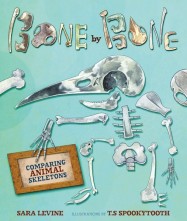
Bone by Bone: Comparing Animal Skeletons

Written by Sara Levine | Illustrated by T.S Spookytooth


Can you imagine if we sloshed through life like soup without a bowl? What would we set our hats on? Where would we carry our phones? How could we sit in class or the office or perform our favorite activities? And what would happen to our organs, our hair, our homes? It’s all a little disturbing! Fortunately, we don’t have to worry about that scenario because “we’re vertebrates, animals with bones. Our bones hold us up.” Phew!

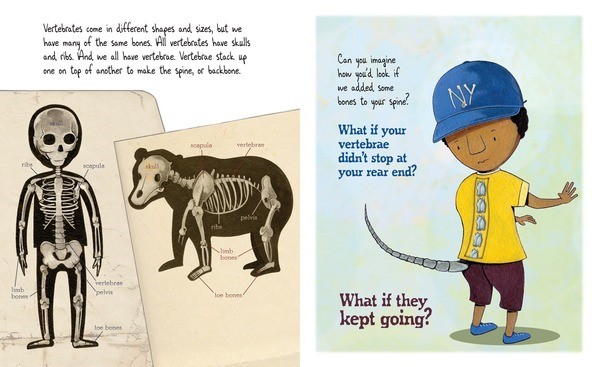
There are different kinds of vertebrates—mammals, reptiles, fish, and more—but many of our bones are similar. For example, “all vertebrates have skulls and ribs. And we all have vertebrae. Vertebrae stack up one on top of another to make the spine, or backbone.” Humans have vertebrae that end…well…you know where, but imagine for a minute if your vertebra kept on going. What if they poked a hole right through your shorts? Yes! You’re right—you’d have a tail. Tails are pretty helpful for some animals. They help them swim, communicate, even keep their balance.
celebrate-picture-books-picture-book-review-bone-by-bone-tailbone

Image copyright T. S Spookytooth, text copyright Sara Levine. Courtesy of Lerner Publishing

Good job! Let’s try again…how about if you only had a skull, vertebrae, and ribs. No arm bones; no leg bones. You’ve got it! A slithery snake! Nah…really…you’d look great! Okay, maybe you’d prefer if you had a skull, vertebrae, and arm bones—but no leg bones—and your nose was transferred to the top of your head. Sounds fishy? Maybe, but not quite. Oh! Did I give it away? Yep, you’d be a whale or a dolphin, and you’d use those powerful vertebrae to propel yourself to the ocean’s surface to grab a breath.

Imagine what kind of gloves and shoes you’d need if your “middle fingers and middle toes were so thick that they supported your whole body.” Hey, you’re good at this! It was a trick question. You wouldn’t need gloves, but you’d wear horse shoes (or no shoes if you’re a less domesticated animal like a zebra). Now, let’s take a trip through a room full of fun-house mirrors. What kind of animal would you be if your neck was reeeaally long and each vertebrae was “as big as your head?” Or if your legs were muuuuuch longer than your arms? Or your “finger bones grew so long that they reached your feet? Seeing those transformations is definitely worth the price of admission, right?

celebrate-picture-books-picture-book-review-bone-by-bone-bat

Image copyright T. S Spookytooth, text copyright Sara Levine. Courtesy of Lerner Publishing

But getting back to the bowl of soup: “Could you be an animal if you didn’t have any bones at all?” Sure! Some insects and sea creatures “have their hard parts on the outside,” and some are just “mushy.” Think of worms, slugs, and jellyfish, just to name a few. But bones make life more fun, don’t ya think? So if all vertebrates have bones, what makes humans different? Well, for one thing we (as well as some apes and monkeys) have opposable thumbs, which means that “we can move our thumbs in a special way that allows us to do many things, including turning the pages of a book,” using tools, and picking up objects. “Did you get that one? If so, give yourself a thumbs-up!”

An Author’s Note including more about bones, the types of vertebrates, a glossary, and resources for further reading follow the text.

With humor and a kid’s sensibility of the bizarre, Sara Levine presents an anatomy lesson that young readers will respond to. Juxtaposing individual bony features of humans and animals is a brilliant idea to give children perspective on the differences in animal skeletons and the uses of each unique trait. Levine’s quiz-like format engages readers, encouraging independent thought and active participation as well as building suspense for what transformation comes next. Kids will laugh and learn and be on the lookout for other ways human and animal skeletons differ as they become more aware of the natural world around them.

With illustrations of tailbones sticking out of pants, empty socks, two fingered hands and two toed feet, a neck that needs two scarves, and more, T. S Spookytooth illuminates what it means to be human in an animal world or an animal in a human world. Kids will laugh imagining themselves as Spookytooth depicts them with animal features and “Ewww” when their portrayal dissolves into a muddy mess. The accurate drawings of human and animal skeletons educate readers on the names and placement of particular bones.

The unique approach to the study of human and animal skeletons, the wide range of animals presented, and the enticing writing and illustrations make Bone by Bone: Comparing Animal Skeletons a wonderful choice for libraries and home bookshelves of budding scientists and nature lovers.

Ages 5 – 10

Millbrook Press, 2014 | ISBN 978-0761384649

To learn more about Sara Levine and her books, visit her website! You’ll also discover fun Bone by Bone activities to enhance your reading!

View a gallery of artwork by T. S Spookytooth, plus videos and more on his website!

Buy a Book Day Activity

celebrate-picture-books-picture-book-review-x-ray-craft-dog-paw

Dog Paw and Human Hand X-Ray Craft


X-rays are cool to look at, but they always stay at the doctor’s office! With this craft you can simulate an X-ray of a dog’s paw and a human hand!

Supplies

  • Printable skeleton templates: Human Hand Template | Dog Paw Template
  • Black chalkboard drawing paper, 8 ½ inches by 11 inches
  • White colored pencil
  • White chalk
  • Clear Plastic Report Sheet Protectors
  • Magnetic clip to hang your x-ray on the refrigerator or other metal surface (optional) OR
  • String or wire, adhesive squares, and clothes pins to hang x-ray on the wall (optional)
  • Scissors

Directions

  1. Print the Human Hand and Dog Paw Templates (you may want to print two—one to cut and one to follow when transferring the bones to the black paper)
  2. Cut the bones apart
  3. Lay the bones on the black chalkboard paper
  4. Trace the bones with the white colored pencil
  5. Color in the bones with the white chalk
  6. Slip the black paper into the plastic report sheet protector
  7. If desired, hang the x-ray on the refrigerator with the magnetic clip or on the wall using string, adhesive squares and clothespins


Q & A with Author Sara Levine
celebrate-picture-books-picture-book-review-author-sara-levine

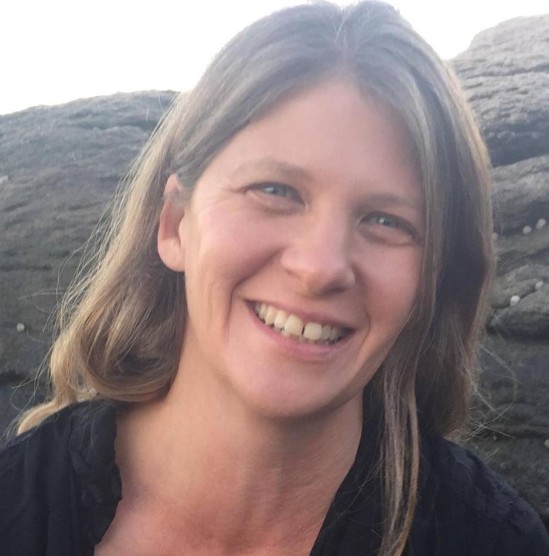
Today, I’m thrilled to talk to Sara Levine about her writing as well as to learn about her early experiences with animals and to discover a kid’s-eye-view of women in science.

Your writing for kids is so infused with humor that really captures their attention. What were some of the books that you liked best as a child?

When I was younger, one of my favorite picture books was Katerine and the Box by Patricia Lee Gauch. I’ve noticed that this book has gone back into print; I was so happy to find it online. It’s basically about creativity. A girl and her friend keep finding new uses for a large cardboard box—a house, a car, a dance platform. I can still recall my feeling of excitement when hearing it read to me—it made me want to go make something. It’s actually a feeling very similar to what I have today when I think of a new idea for a book. There was also a book called Wisher, which was about difference—about a cat who dreamt he was really a fish. I remember that the illustrations were beautiful and somewhat scary—just done in blues, browns and yellows.  As an older child, I loved Charlotte’s Web by E.B White, Lizard Music by Daniel Pinkwater and pretty much everything by Judy Blume.

I don’t suppose any of these books are like the books I write. I used to tell people that I liked my science and my books separate. I just wanted to go outside to learn about science. But, I wanted stories in my books. I don’t think there were any of the sorts of books I write about science out for kids when I was young. At least I didn’t find them. But if I had, I think I would have enjoyed them—the fact that they were funny and interactive. But here’s a picture book I LOVE that I found as an adult that is certainly infused with humor and captures a kid’s (and a grown-up’s) attention: Bark, George, by Jules Feiffer. I think this is currently my favorite picture book.

You grew up on a farm in Guilford, Connecticut. Can you tell me a little about the farm and how or if it influenced your current work?

Calling it a “farm” might be a bit of a stretch. My parents were two kids who grew up in Brooklyn and then moved to CT and decided to get some animals, cheered on by their enthusiastic offspring. First there was a goat, who got lonely. So then there was another goat. And they had a baby. And there was a chicken at school who needed a place to go for the summer. And then never went back to school… And so on. We ended up having over 100 named animals—a horse, a cow, peacocks, geese, a donkey and more. I loved taking care of the animals, with my siblings. It was a wonderful experience, one that I’m very grateful for. But it wasn’t at all lucrative. I think the only money made was by my brother who would sell extra eggs to his teachers.

How did it influence my current work? I’m not sure. Certainly my interest in animals is a lifelong one. I think the stories about the animals actually show up more in my writing for adults than in my picture books. The ideas for the books for children come more from teaching ideas that I think will translate well into a picture book format.

You have a doctorate in veterinary medicine and a masters in fine art. When and how did the two merge into your work as an author?

What a great question. I have always had this science side and this humanities side. A lot of my life, I’ve been struggling with how to balance and feed both sides of myself. It’s taken me a long time to find a way to merge the two interests, and it’s been very satisfying to do so in writing about science, especially for kids.

You offer four different school and library programs, all of which sound fascinating. Do you have any anecdotes from a presentation you’d like to share?

In one of my workshops, the one for Bone by Bone: Comparing Animal Skeletons, I bring in an articulated skeleton for the kids to see and a disarticulated skeleton in a box. The kids learn the bones, and I then hand them each a bone which they take up to the standing skeleton to figure out which bone it is, and then work together to put together the second skeleton on the floor. Inevitably, someone asks if the skeletons are real. They are. I literally found them in the closets, when I started my teaching at Wheelock. There are all sorts of questions about that, generated by the kids, and then, often, someone will ask if the skeletons are “boys or girls.” Recently, at a school near Boston, I was explaining to a group of second graders that both were female, that we could tell by the shape of the hips, and I heard one girl, going, “YES!” and pumping her arm up and down, in victory. The boy next to her says, “Why are you so happy? That means a girl died.” To which she responds, “That’s true. But it also means one more girl in science!”

celebrate-picture-books-picture-book-review-bone-by-bone-workshop

Sara Levine leads a workshop at Cold Spring School

What’s the best thing about writing for kids?

I enjoy trying to think of engaging and interactive ways to teach something that hasn’t been taught before. I like the creativity involved. And, of course, reading it to the kids when I’m done and seeing them respond!

celebrate-picture-books-picture-book-review-bone-by-bone-students-at-al-hamra-school

Students at Al Hamra Academy examine a skeleton

You also write articles for adults and were nominated for a Pushcart Prize in 2007. Can you tell me more about your writing for adults?

I write science related essays for adults. The writing comes more from my own experiences.  I do have a handful of essays published. I think the one that was nominated for the Pushcart, “What Hands Can Do” is still available to read online. Here’s a link to it on Fictionaut. It’s about spaying a dog. And more, of course. I think my most successful essay is “The Body of a Cow” which originally appeared in the Massachusetts Review. It’s also on Fictionaut, if anyone wants to have a look. Eventually, I hope to work the essays into a memoir for adults.

What’s up next for you?

I have a book on dinosaur bones which will be published by Lerner next year. I also have three children’s books written which I’m trying to find homes for at the moment—one on animal classification (but interactive, written like a “do your own adventure” story), one on how plants communicate with animals, and one very funny one (if I can say so myself) called “Breakfast at the Omnivore Café,” which is about what animals eat. This one might never get published because it falls into the cracks between nonfiction and narrative fiction, but I haven’t given up on it yet. The book I’m currently working on is an attempt to explain climate change through stories of the carbon cycle. Doesn’t sound very interesting when put that way, but it’s written as an interactive story, and is also actually quite funny in parts, so I think kids will like it.

Since Celebrate Picture Books is a holiday-themed blog, I can’t let you get away without asking you what your favorite holiday is…

Passover. You get to tell a story to children in a way that is interactive and engaging for kids, AND it involves food. What could be better?

Thanks so much for chatting and sharing your unique perspective on the natural world, Sara! I, for one, would love to read Breakfast at the Omnivore Café—that would be one interesting menu, I bet! I wish you the best with all of your books!

You can connect with Sara Levine on:

Her Website | FacebookTwitter

celebrate-picture-books-picture-book-review-bone-by-bone-cover

Bone by Bone: Comparing Animal Skeletons and Sara’s other books can be found at:

Amazon | Barnes & Noble | Books-a-Million | Lerner Publishing

About Sara Levine

Sara Levine is an assistant professor of biology at Wheelock College and a veterinarian.  Her science books for children include Bone by Bone: Comparing Animal Skeletons (2013) and Tooth by Tooth: Comparing Fangs, Tusks and Chompers (2016).  Her third book, Fossil by Fossil: Comparing Dinosaur Bones will be published in 2018.  Bone by Bone: Comparing Animal Skeletons has received much recognition, including the Utah Beehive Book Award, selection as a Bank Street College Best Children’s Book of the Year, and finalist for the Cook Prize for best STEM picture book.

Sara also writes science-related essays for adults, one of which was nominated for a Pushcart Prize in 2007.  Her writing has appeared in the Boston Globe, the Massachusetts Review, Bayou, and in the anthology And Baby Makes More. In addition to teaching college students, she has taught children’s environmental education classes for the Massachusetts Audubon Society and other nature centers in Massachusetts and Connecticut for over 15 years. 

Sara holds a doctorate in veterinary medicine (DVM) from Tufts University, a master of fine arts degree (MFA) in creative nonfiction writing from Lesley University and a bachelor of arts degree (BA) in English from Haverford College.  She is a native New Englander and lives with her daughter and their dogs and cat in Cambridge, Massachusetts.  

Picture Book Review

September 6 – Read a Book Day

celebrate-picture-books-picture-book-review-we-forgot-brock

About the Holiday

No, I didn’t forget what holiday it is today—the day is I Forgot Day! Today is the day to make up for all those missed opportunities and make amends for forgetting special events. Of course it may also be the perfect day to trot out that most-used excuse for not doing something—and get away with it! One thing you should not forget is to read today’s book!

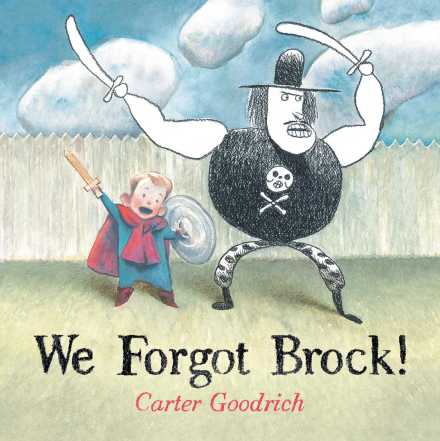
We Forgot Brock!

By Carter Goodrich


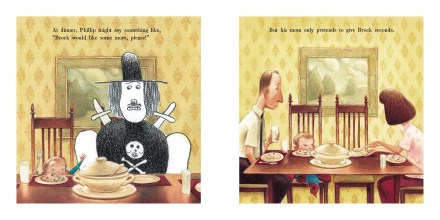
Phillip and Brock are best friends. They have a wonderful time goofing around together, but other people just can’t understand. They call Brock Phillip’s “imaginary friend.” As if!… For example, at dinner when Phillip says Brock wants seconds, Phillip’s mom only pretends to put food on Brock’s plate, and often Phillip’s dad almost backs over Brock’s motorcycle in the driveway. Philip’s parents also just don’t see how funny Brock can be.

celebrate-picture-books-picture-book-review-interior-art-dinner

Image copyright Carter Goodrich, 2015, courtesy of Simon & Schuster

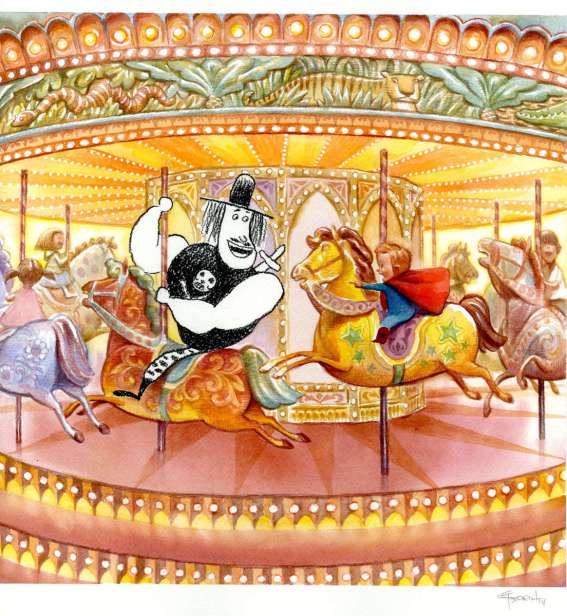
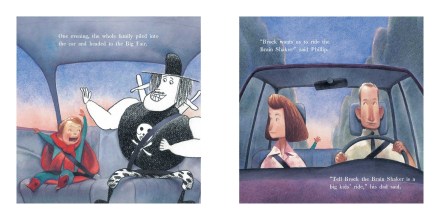
One evening the whole family goes to the Big Fair. “‘Brock wants us to ride the Brain Shaker!’” says Phillip. But his parents won’t listen. “‘Tell Brock the Brain Shaker is a big kids’ ride,’” his dad says. At the fair Phillip and Brock ride the merry-go-round, the bumper cars, and the Tilt-A-Whirl. Phillip has cotton candy, but there are no beans and spaghetti snacks for Brock. Finally, Phillip begins to feel sleepy. But Brock? He’s riding the Brain Shaker!

celebrate-picture-books-picture-book-review-we-forgot-brock-merry-go-round

Image copyright Carter Goodrich, 2015, courtesy of Simon & Schuster

As the car pulls into the driveway, Phillip wakes up. “‘Where’s Brock?!’” he yells. Phillip runs into the house. No Brock. “‘We forgot Brock!’” Phillip sobs. “‘We Forgot Brock!’” Back at the fair Brock searches for Phillip from atop the Ferris wheel. Suddenly, a little girl asks him if he is okay. When Brock tells her he’s lost, she invites him to come home with her and her friend Princess Sparkle Dust.

Being at home with Anne and Princess Sparkle Dust is okay, but Brock misses Phillip. To cheer him up Anne and the Princess do magic tricks, and they all play games and tell each other stories. Meanwhile, Phillip is looking all over the neighborhood for Brock, but he’s nowhere to be found.

celebrate-picture-books-picture-book-review-interior-art-car

Image copyright Carter Goodrich, 2015, courtesy of Simon & Schuster

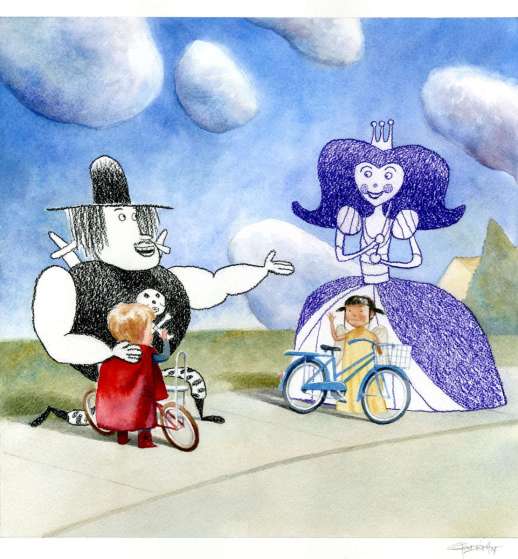
Both Brock and Phillip have almost given up hope of reuniting when… “‘BROCK!!!’” Phillip bumps into his friend on the street. Brock introduces Phillip to Anne and Princess Sparkle Dust and they all become fast friends. From then on “they spent all their time goofing around together. And everything was even better than before.”

Carter Goodrich’s story of friendship and imagination bursts with charm and heart and will enchant both kids and adults. Written in a conversational manner, Goodrich immediately engages with a child’s perspective while offering plenty for adults to appreciate in his adorable and hilarious illustrations. Brock, depicted as a black-and-white crayon drawing, is Phillip’s foil—tall, muscular, a little mysterious, a little fierce—while incorporating a child’s sweetness and silliness. Princess Sparkle Dust is similarly drawn in purple and white, complete with a heart-shaped face and a crown.

celebrate-picture-books-picture-book-review-we-forgot-brock-princess

Image copyright Carter Goodrich, 2015, courtesy of Simon & Schuster


Phillip, sporting a Superman costume and red cowboy boots, and Anne, wearing an angel dress complete with wings, everywhere they go are the embodiments of unselfconscious fantasy. Phillip’s parents share amused-but-loving glances even as they accept their son’s imaginary friend. Adults may laugh out loud at the illustration of Phillip rolling on the floor laughing at Brock’s funny antics while his parents watch the television news with a Keith Morrison look-alike anchorman. The softly lit and welcoming home environments as well as the vibrant, glowing Big Fair are everything a kid would dream them to be.

We Forgot Brock! is a book that will be remembered and asked for again and again, and is a must addition to any child’s library.

Ages 4 – 8

Simon & Schuster Books for Young Readers, 2015 | ISBN 978-1442480902

Visit Carter Goodrich’s Website to view a gallery of his work for other picture books and movies, such as Ratatouille, Despicable Me, and Brave, as well as cover art for “The New Yorker” and other publications.

Read a Book Day Activity

celebrate-picture-books-picture-book-review-dog-bookmark


Cute Puppy Bookmark


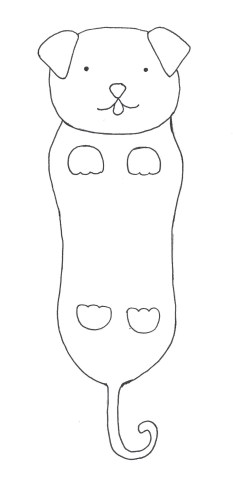
When you want to save your place or remember a favorite picture, it’s fun to have a friend to come back to. With this printable Cute Puppy Bookmark you’ll always have a 

August 31 – We Love Memoirs Day

celebrate-picture-books-picture-book-review-a-song-about-myself-cover

About the Holiday

In 2013 two authors of memoirs, Victoria Twead and Alan Parks, established today’s holiday to foster a warm and welcoming community for readers and writers of memoirs. The idea took off and now We Love Memoirs Day brings the art and heart of this personal form of writing to people across the world. If you like to read memoirs, grab one from the shelf and enjoy! If you’ve ever thought of penning the story of your own life and/or family, today’s the perfect opportunity to start!

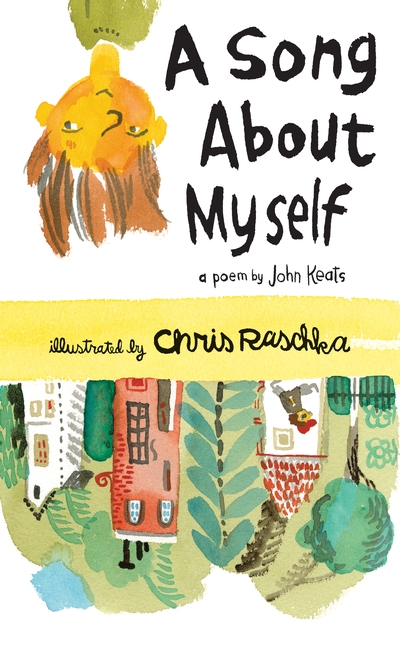
A Song About Myself: A Poem by John Keats

Written by John Keats | Illustrated by Chris Raschka


1

“There was a naughty Boy, / A naughty boy was he, / He would not stop at home, / He could not quiet be—” So this adventurous boy packed his knapsack with “a Book / Full of vowels / And a shirt / With some towels—” He added a comb and a brush, a cap to protect himself both day and night, and an extra pair of stockings for when the old ones got threadbare. With his knapsack buckled on tight, the little boy headed North

celebrate-picture-books-picture-book-review-a-song-about-myself-writing

Copyright Chris Raschka, courtesy of Candlewick, 2017

2

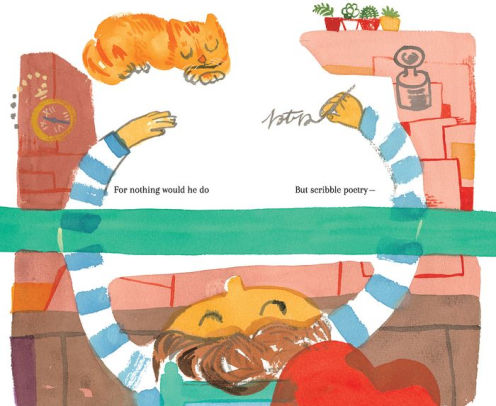
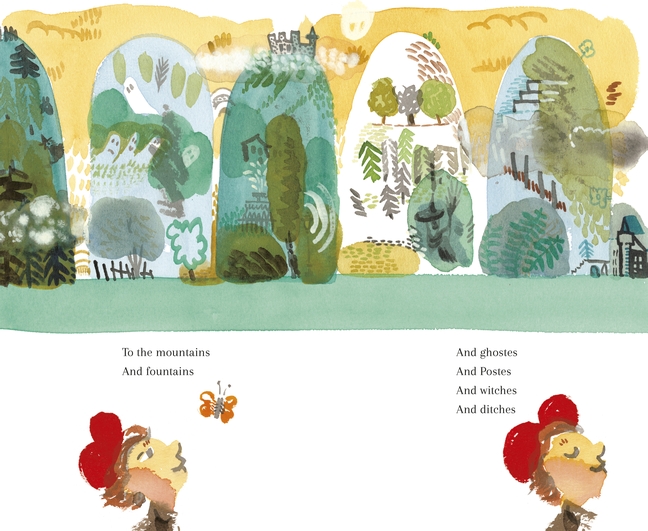
“There was a naughty Boy, / A naughty boy was he, / For nothing would he do / But scribble poetry—” With ink stand and pen he ran away “to the mountains / And fountains / And ghostes / And Postes / And witches / And ditches.” In the winter he wrote with his coat on, not fearing contracting gout; and when the weather was warm, he abandoned his coat while he captured the charm of the North.

3

“There was a naughty Boy, / A naughty boy was he, / He kept little fishes / In washing tubs three.” Not fearing the maid’s or his granny’s displeasure, this mischievous boy would rise with the sun and head for the brook to catch minnows that he liked to watch darting around in his bucket—“A Kettle / Of Fish a pretty Kettle / A Kettle!”

celebrate-picture-books-picture-book-review-a-song-about-myself-to-the-mountains

Copyright Chris Raschka, courtesy of Candlewick, 2017

4

“There was a naughty Boy, / A naughty boy was he, / He ran away to Scotland / The people for to see— .” But what he discovered was that the building, people, things and emotions were the same there as in England. This revelation make him think about his world, “so he stood in his shoes / And he wonder’d, / He wonder’d / He stood in his shoes / And he wonder’d.”

In an Illustrator’s Note, Chris Raschka reveals that John Keats—one of the greatest romantic poets—wrote this poem in a letter to his sister, Fanny, while he was walking through Scotland on a tour that he imagined would inspire “the grand poetry that he knew was inside him.”

This quirky poem that follows the travails and travels of a little boy filled with wanderlust, a gift for writing, and insight beyond his years is a perfect match for Chris Raschka’s art. Topsy-turvy perspectives, vivid colors, and evocative and action-packed vignettes beautifully represent the boy’s “naughtiness” and precocious imagination. As he dashes across the yard, his house—red capped and with a mustache-shaped lintel over the door—seems to watch through window eyes; the boy’s mighty pen stands taller than he is; and ghosts, witches, castles, and fountains are framed in the hills that he passes on his journey. Bold swatches of yellow, green, and red that split the pages in half serve as directional arrows, roads, and verse dividers while also leading readers to the book’s final wisdom.

Kids will find it fun to explore the endpapers that present a bird’s-eye-view of the expanse from Scotland to New York over “Much Water.”

A Song About Myself: A Poem by John Keats is a joyous treat that celebrates the whimsy of childhood and the wonders of the imagination. For poetry lovers or those who enjoy a good story, this book would make a charming gift or addition to home bookshelves.

Ages 6 – 10

Candlewick, 2017 | ISBN 978-0763650902

You can view a gallery of artwork by Chris Raschka on tumblr!

We Love Memoirs Day Activity

celebrate-picture-books-picture-book-review-reading-bug-bookmark

I Have the Reading Bug Bookmark


If you love reading, then print out this I Have the Reading Bug Bookmark that can mark your page with style! For a sturdier bookmark, print on card stock or heavy paper.

celebrate-picture-books-picture-book-review-a-song-about-myself-cover

You can find A Song About Myself at these booksellers

Amazon | Barnes & Noble | Books-a-Million | IndieBound

Picture Book Review
 

August 29 – It’s American Artist Appreciation Month

celebrate-picture-books-picture-book-review-maya-lin-artist-architect-of-light-and-lines-cover

About the Holiday

This month we celebrate the artists who interpret the unique history, culture, and people of America in ways that bring new meaning and insight to those who interact with it. To celebrate, visit your local art museum or take a trip to another city to view pieces you’ve never seen before. The dynamics of seeing art up close provides new perspectives and appreciation.

Maya Lin: Artist-Architect of Light and Lines

Written by Jeanne Walker Harvey | Illustrated by Dow Phumiruk


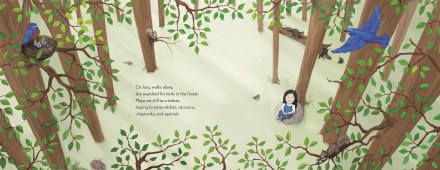
As a child, Maya Lin loved playing and interacting with nature near her home. She and her brother liked to run over what Maya had named “the Lizard’s Back”—a hill behind her house—and into the woods. Sometimes Maya went into the woods alone and “sat as still as a statue, hoping to tame rabbits, raccoons, chipmunks, and squirrels.” She liked to play chess with her brother and build towns from scraps of paper, boxes, books, and other things she found around the house.

celebrate-picture-books-picture-book-review-maya-lin-artist-architect-of-light-and-lines-in-forest

Image copyright Dow Phumiruk, 2017, text copyright Jeanne Walker Harvey, 2017. Courtesy of us.macmillan.com.

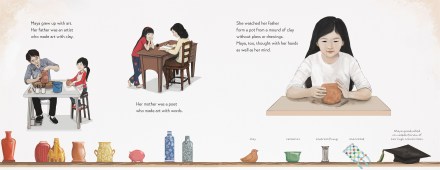
Maya’s “parents had fled China at a time when people were told what to be and how to think.” They did not want the same for their children and always encouraged Maya to be and think what she wanted. Maya grew up surrounded by art. Her father worked with clay, and her mother was a poet. Maya also liked to make things with her hands. The beautiful library where she went to college inspired Maya to become an architect.

To learn about different buildings, Maya traveled all over the world. When she was only a senior in college, “Maya entered a contest to design a memorial to honor soldiers who died during the Vietnam War.” The contest stated two rules: the memorial had to fit in with a park-like setting, and it had to include the 58,000 names of the soldiers who had died in the war. These rules resonated with Maya. She “believed that a name brings back all the memories of a person, more than a photo of a moment in time.”

celebrate-picture-books-picture-book-review-maya-lin-artist-architect-of-light-and-lines-as-young-girl

Image copyright Dow Phumiruk, 2017, text copyright Jeanne Walker Harvey, 2017. Courtesy of us.macmillan.com.

Maya visited the site where the memorial would be built. As she looked at the gently rolling hill, she envisioned a simple cut in the earth that would support a polished wall covered in names. Not only would the wall reflect those who died, but also those who came to visit and the surrounding nature. At school, Maya worked with mashed potatoes and then with clay to help her create the perfect monument. When she had finished her drawings and plans, she wrote an essay to accompany them. She wrote that her monument would be “a place to be experienced by walking down, then up past names that seemed to go on forever.”

celebrate-picture-books-picture-book-review-maya-lin-artist-architect-of-light-and-lines-with-parents

Image copyright Dow Phumiruk, 2017, text copyright Jeanne Walker Harvey, 2017. Courtesy of us.macmillan.com.

More than 1,400 artists and architects—many of them famous—entered the contest. The designs were hung in an airplane hangar anonymously for judging. Finally, the day came for the announcement of the winner. When the judges called out Maya Lin’s name and she came forward, they were surprised to find that she was so young. Maya was excited to have won, but then some people began to object to her design. Some said her “design looked like a bat, a boomerang, a black gash of shame.”

celebrate-picture-books-picture-book-review-maya-lin-artist-architect-of-light-and-lines-library

Image copyright Dow Phumiruk, 2017, text copyright Jeanne Walker Harvey, 2017. Courtesy of us.macmillan.com.

Maya was hurt by these comments, but she defended her design and, finally, it was approved. Maya worked with the architects and engineers who excavated the land and built the wall. As each granite panel was polished, engraved with the soldiers’ names, and set in place, Maya looked on. The memorial opened on Veterans Day in 1982. Thousands of people came to see it and to find the names of loved ones they had lost. As Maya approached the wall, “she searched for the name of the father of a friend. When she touched the name, she cried, just as she knew others would.” Every day since then visitors come to the wall to remember.

Maya Lin has gone on to design many more works of art and architecture that can be seen inside and outside. Each piece has a name and a particular vision. Maya wants people to interact with her art—to touch it; read, walk, or sit near it; or think about it. After each piece is finished, Maya thinks about her next work and how she can inspire the people who will see it.

celebrate-picture-books-picture-book-review-maya-lin-artist-architect-of-light-and-lines-Vietnam-War-Memorial

Image copyright Dow Phumiruk, 2017, text copyright Jeanne Walker Harvey, 2017. Courtesy of us.macmillan.com.

An Author’s Note about Maya Lin and the Vietnam War Memorial follows the text.

Jeanne Walker Harvey has written an inspiring biography of Maya Lin that reveals not only her creativity but the importance of creative freedom for children. Lin’s confidence that led her to enter the contest and then defend her winning design will encourage readers to pursue their dreams. Harvey’s lyrical storytelling reflects Maya Lin’s quiet, introspective nature, the influences that nurtured her creative spirit, and her dedication to inviting others to be part of her art.

Dow Phumiruk’s graceful, soft-hued illustrations allow children to follow Maya Lin as she grows from a girl discovering nature, constructing cardboard cities, and learning the arts from her parents to a young woman who draws inspiration from the world’s buildings and relies on her own sensitivity to guide her. Back-to-back pages of the landscape of Vietnam and the site of the memorial connect the two places for children’s better understanding. Phumiruk’s depictions of the Vietnam War Memorial also give children an excellent view of this moving monument. Her images of Lin’s other architectural work will entice young readers to learn more about her and to explore where each of these pieces can be found.

Ages 4 – 8

Henry Holt & Company Books for Young Readers, 2017 | ISBN 978-1250112491

Discover more about Jeanne Walker Harvey and her books on her website!

Learn more about Dow Phumiruk, her art, and her books on her website!

American Artist Appreciation Month Activity

 celebrate-picture-books-picture-book-review-picture-frame

Fantastic Frame


Every great work of art deserves the perfect frame to display it. With a frame ready to decorate from a craft store and a few materials, you can create a Fantastic Frame for any of your drawings or photos!

Ideas for Decorating

  • Stickers
  • Decorative buttons
  • Small objects
  • Shells
  • Markers, crayons, or paint
  • Stencils
  • Washi Tape

Picture Book Review
August 21 – Poet’s Day

celebrate-picture-books-picture-book-review-a-river-of-words-cover

About the Holiday

Today we celebrate poets—both those who are professionally published and those who compose poetry in their secret hearts. Poets bring clarity and new perspectives to life—like a little pinprick of light in a dark room. Whether you like long, epic poems, short, evocative verse, humorous poetry, or poetry set to music, take the opportunity today to enjoy some poetry—or write a bit of your own.

A River of Words: The Story of William Carlos Williams

Written by Jen Bryant | Illustrated by Melissa Sweet


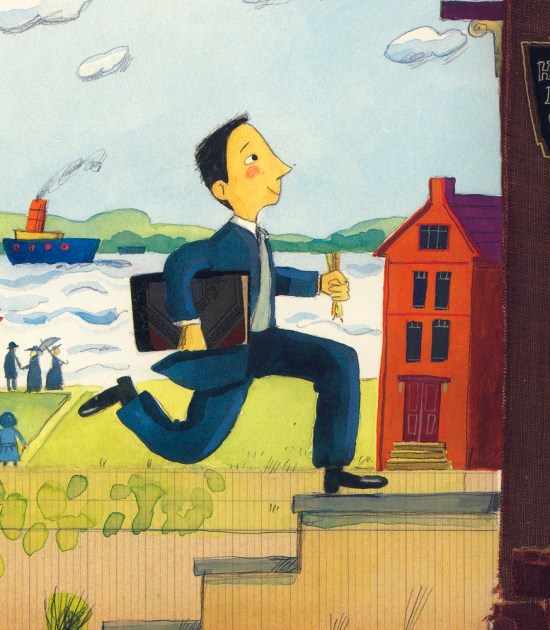
Willie Williams was just like the other boys in his neighborhood—well, almost. When the other boys went home after a day of playing, Willie took off for the woods and fields behind his house. “As he walked through the high grasses and along the soft dirt paths, Willie watched everything.” He liked to sit next to the Passaic River and listen to the rhythm of the water as it “went slipping and sliding over the smooth rocks, then poured in a torrent over the falls, then quieted again below.”

celebrate-picture-books-picture-book-review-a-river-of-words-high-school

Image copyright Melissa Sweet, 2008, courtesy of Eerdmans Books for Young Readers.

But as Willie grew older, he didn’t have time for these leisurely pursuits. In high school, he was on the track team, attended lots of classes, and had even more homework. His was a rushed and hurried life. Except for in English class. There, when his teacher read poetry, he was taken back to the flow of the river. Each line created pictures in Willie’s mind.

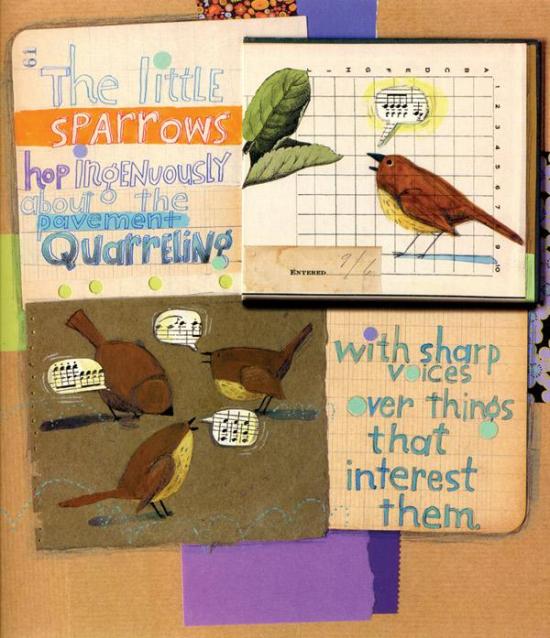
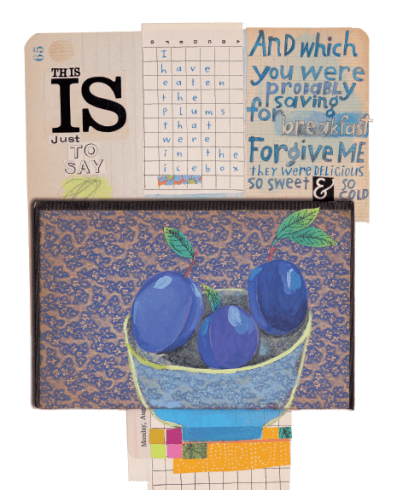
One night, Willie began writing his own poems. He copied the English poets he had learned about in school, using structured beats and rhyming endings. But soon these rules began to frustrate Willie; they didn’t give him the freedom to fully express his thoughts. He wanted to write about what he saw nearby, the things he was familiar with. Things, he said, like “plums, wheelbarrows, and weeds, / fire engines, children, and trees— / things I see when I walk down my street / or look out my window.”

celebrate-picture-books-picture-book-review-a-river-of-words-sparrows

Image copyright Melissa Sweet, 2008, courtesy of Eerdmans Books for Young Readers.

Willie began writing poems the way they came to him, with their own shape and sound. Writing this way made Willie feel free, and he filled notebook after notebook with poems. While Willie wished he could make a living as a poet, writing did not pay much, and he needed to be self-sufficient. Willie’s uncle had been a doctor, and Willie liked the idea of healing people. He wondered, though, if he could be a doctor and still write poetry.

When Willie graduated from high school, he went off to the university to study medicine. There he met the writers Ezra Pound and Hilda Doolittle and the artist Charles Demuth. Spending time with his new friends made his difficult studying easier. After college, Willie returned to his home town of Rutherford and opened his practice. He had so many patients that some people said he was “the busiest man in town.”

celebrate-picture-books-picture-book-review-a-river-of-words-attic-room

Image copyright Melissa Sweet, 2008, courtesy of Eerdmans Books for Young Readers.

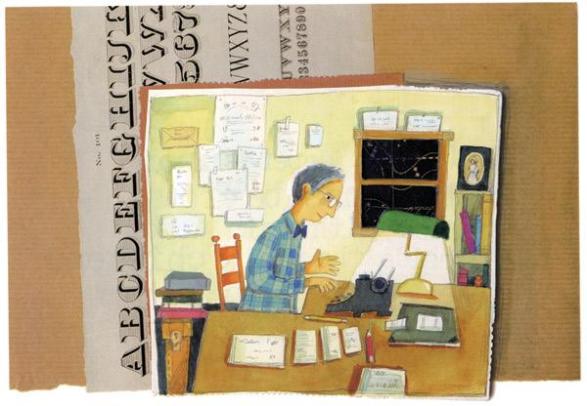
No matter how busy he was, however, he found time to write. Sometimes he jotted lines and ideas on his prescription pads. Then, after his long days at work, Willie climbed to his attic room where he studied the notes he’d made and wrote poems late into the night.

A Timeline, Author’s Note, and Illustrators Note about William Carlos Williams follow the text. The endpapers present a selection of Williams’ poetry.

A River of Words is an inspirational book for children who have creative ideas of their own and would make an excellent addition to classroom and home libraries.

From the title through to the end of her lyrical biography, Jen Bryant captures the flow of William Carlos Williams’ creative and scientific life, which was as purposeful and free as the river that inspired him. Young readers and would-be writers will find much encouragement and insight in Bryant’s story, which reveals that talent and day-to-day life not only can co-exist but can enrich each other. By showing how Williams broke free from the structures of the poetry he copied, Bryant also motivates children to find their own voice.

celebrate-picture-books-picture-book-review-a-river-of-words-plums

Image copyright Melissa Sweet, 2008, courtesy of Eerdmans Books for Young Readers.

Melissa Sweet lends her distinctive collage style of illustration to this story, bringing to life the lines of and natural world reflected in Williams’ poetry. The busy-ness and business of Williams’ days are depicted in vibrant images of winding streets, classrooms, offices, and the outside world where he composed his uniquely revealing poems.

Ages 6 and up

Eerdmans Books for Young Readers, 2008 | ISBN 978-0802853028

Learn more about Jen Bryant and her books on her website!

Discover more about Melissa Sweet, her books, and her art on her website!

Poet’s Day Activity

celebrate-picture-books-picture-book-review-grow-a-poem-craft

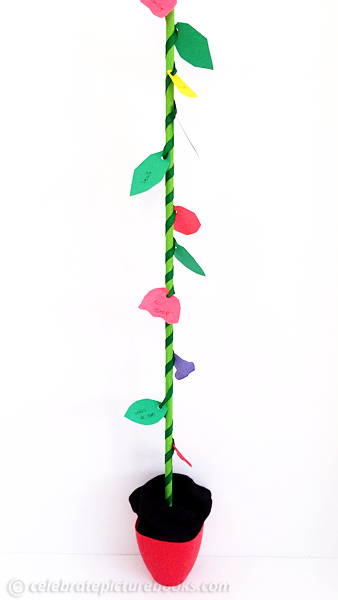
Grow Your Own Poem


A poem often grows in your imagination like a beautiful plant—starting from the seed of an idea, breaking through your consciousness, and growing and blooming into full form. With this craft you can create a unique poem that is also a piece of art!

Supplies

  • Printable Leaves Template
  • Printable Flower Template
  • Wooden dowel, 36-inch-long, ½-inch diameter, available in craft or hardware stores
  • Green ribbon, 48 inches long
  • Green craft paint
  • Green paper for printing leaves (white paper if children would like to color the leaves)
  • Colored paper for printing flowers (white paper if children would like to color the flowers)
  • Flower pot or box
  • Oasis, clay, or dirt
  • Hole punch
  • Glue
  • Markers or pens for writing words
  • Crayons or colored pencils if children are to color leaves and flowers

Directions

  1. Paint the dowel green, let dry
  2. Print the leaves and flower templates
  3. Cut out the leaves and flowers
  4. Punch a hole in the bottom of the leaves or flowers
  5. Write words, phrases, or full sentences of your poem on the leaf and flower templates
  6. String the leaves and flowers onto the green ribbon (if you want the poem to read from top to bottom string the words onto the ribbon in order from first to last)
  7. Attach the ribbon to the bottom of the pole with glue or tape
  8. Wrap the ribbon around the pole, leaving spaces between the ribbon
  9. Move the leaves and flowers so they stick out from the pole or look the way you want them to.
  10. Put oasis or clay in the flower pot or box
  11. Stick your poem pole in the pot
  12. Display your poem!

Picture Book Review

August 18 – National Men’s Grooming Day

celebrate-picture-books-picture-book-review-beard-in-a-box-cover

About the Holiday

If men need a special day to be reminded of this, I’m glad it’s on the calendar!

Beard in a Box

By Bill Cotter


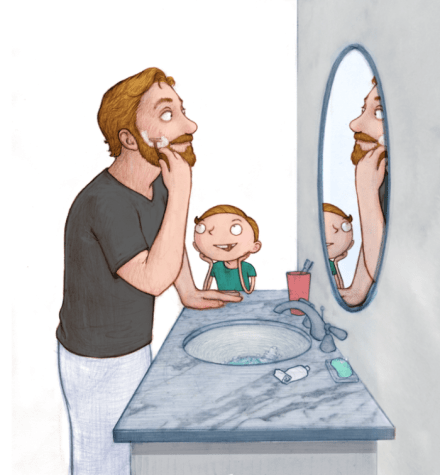
A little boy is so proud of his dad. He thinks his dad is “the coolest…the tallest, the fastest, the strongest. The awesomest!” The boy has done a little research and can boil all this greatness down into one quality: his dad’s beard. In fact, he’s found that the length of a beard has a direct connection to the awesomeness factor. Knowing this, the little boy wants to grow a beard of his own.

He tries everything. He scribbles one on with markers, attaches hairy patches from his pet cat to his cheeks with glue, and smudges on chocolate syrup (but that disappears with a few licks by the cat). Then he hears “an amazing offer” on TV. “SCAM-O! Makers of the Talking Toupee and the Baby Barber Kit” have created “Beard in a Box.”

celebrate-picture-books-picture-book-review-beard-in-a-box-shaving

Copyright Bill Cotter, 2016, courtesy of cotterillustration.squarespace.com.

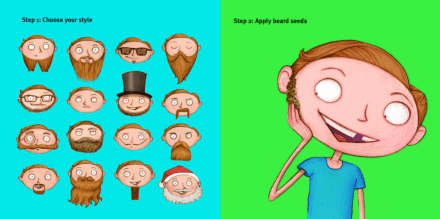
This great kit promises that in just 5 easy steps anyone can “grow a beard (almost) instantly” With such a fabulous face of hair, in no time you’ll have the life of a lumberjack, a pirate, or a rock star. What’s in the box? Glad you asked! Each kit comes complete with “beard seeds, mirror, step-by-step instruction manual, style guide, comb, trimming scissors, and  mustache mousse.”

The boy rushes to the phone and orders one. Every day he sits by the mailbox waiting for his kit to come in. Finally, “6 – 8 weeks later” it arrives. The boy opens the package and starts his treatment. First up, is choosing a style. There are so many to pick from! Does he want the hippie look? The wizard? Maybe, the hipster, the tycoon, or the beatnik. The Octopus may be a little too tentacle, the King Tut a little too ancient, and the Double-Beard a little too…two.

celebrate-picture-books-picture-book-review-beard-in-a-box-water-seeds

Copyright Bill Cotter, 2016, courtesy of cotterillustration.squarespace.com.

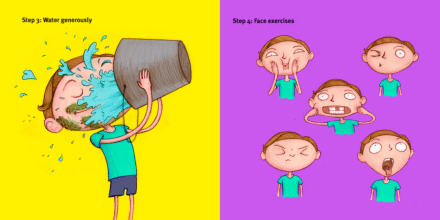
But that can all be decided later. The boy slathers on the seeds, waters them, does the prescribed facial exercises, and repeats “steps 1 – 4 for 10 – 15 years.” Wait? What?! The boy is incensed. “AHHHHHH!!! Stupid Beard in a Box!…Who would have thought SCAM-O would be a dishonest company?” Dad comes on the scene just then and wonders what all the fuss is about.

His son begins to tell him, but…wait a second…something’s different. What is it? His dad has shaved his beard! Well, this is the last straw! How will the boy be awesome like his dad now? But Dad puts his arm around his son and tells him, “Awesomeness doesn’t have anything to do with beards. It’s about the kind of person you are.” And then he shows his boy what he means. They play basketball together, ride bikes together, and jam together. And as they head out to the fishing hole, what’s the cat up to? “Beep, boop, beep.” He’s ordering “SCAM-O’s new Fur-Ever Spray-On Fur.”

celebrate-picture-books-picture-book-review-beard-in-a-box-different-beards

Copyright Bill Cotter, 2016, courtesy of cotterillustration.squarespace.com.

Bill Cotter’s unique, multi-level story revels in visual humor that will get kids laughing and thinking about issues of growing up. Through SCAM-O’s Beard-in-a-Box come-on, Cotter addresses the consumerism that tells kids and adults that outer appearances are more important than what’s inside. With gentle understanding and active participation, the boy’s father demonstrates the kinds of qualities that makes a thoughtful and caring person. Cotter knows how much children look to their parents and other adults in developing their own personalities and behavior. By juxtaposing the two influences in the boy’s life, Cotter nudges young readers to recognize and reject the artificial.

Cotter’s little boy, enthusiastic to be like his awesome dad, will charm children. Young readers will also have fun choosing their favorites from among the suggested beards in SCAM-O’s kit. The boy’s pet cat makes a funny sidekick, and the final scene of the loving dad and son heading out on another adventure is heartwarming.

Ages 4 – 8

Alfred A. Knopf Books for Young Readers, 2016 | ISBN 978-0553508352

To discover more about Bill Cotter, his picture books, chapter books, and art, visit his website!

National Men’s Grooming Day Activity

celebrate-picture-books-picture-book-review-moustache-template

Marvelous Moustaches


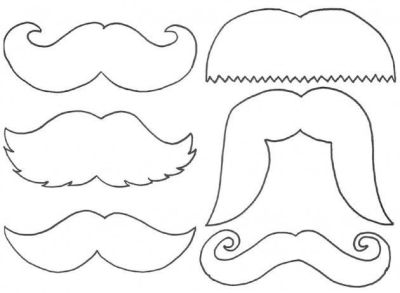
Moustaches can look distinguished or madcap! Here are some printable Marvelous Moustaches that you can use to make yourself look whacky, wild, and wonderful! Just color them, glue or tape each to a thin wooden craft stick and hold them to your face for fun!

Picture Book Review

August 15 – Relaxation Day

celebrate-picture-books-picture-book-review-be-quiet-cover

About the Holiday

Don’tcha wish every day could be relaxation day? Of course, if it were, though, we wouldn’t be celebrating this special occasion. Everyone has their own version of what’s relaxing, so if you’re a beach person, a reader, a binge watcher, a laze around the house person, or even if you find work relaxing, take the opportunity to indulge yourself today! Sometimes, as today’s book reveals, a relaxing day may not turn out as quiet as you might like. But a good laugh can set it right again.

BE QUIET!

By Ryan T. Higgins


Rupert, a scholarly little mouse is so excited to be writing a book in which he will be the starring character. It’s going to be great—a wordless book that is “very artistic.” But just as he gets started his friend Nibbs, pops over and wonders what Rupert is doing. Rupert tells him, “Shhh. Be QUIET. This book does not have words.” When Nibbs hears this, he wants to help, but there’s supposed to be no talking and he’s talking. In fact, he’s “talking about talking.”

celebrate-picture-books-picture-book-review-be-quiet-wordless-book-beginning

Copyright Ryan T. Higgins, 2017, courtesy of Disney-Hyperion.

Rupert wants to throw his friend out of the book, but Nibbs begs and pleads to be included. He’ll even be “extra wordless” if he can just stay. Rupert is beside himself. “I said BE QUIET. This book is wordless!” Just then their friend Thistle drops by wondering what all the shouting is about. Nibbs tells him in some detail what’s going on and why he can’t talk about it.

celebrate-picture-books-picture-book-review-be-quiet-thistle

Copyright Ryan T. Higgins, 2017, courtesy of Disney-Hyperion.

Thistle thinks a wordless book sounds perfect and also wants to be included. Nibbs says sure, but says they won’t tell Rupert because they’re not supposed to be talking. Rupert, though, is keeping count of all these words, and there are too many of them. Thistle rubs his hands in glee: it’s going to be such fun. But Rupert takes him to task. His book is going “to be more than FUN. It will be visually stimulating.” Nibbs isn’t sure what that means, so Thistle explains that it means they’re going to “poke our readers in the eyeballs with pictures.”

After a bit of strong-man silliness, Nibbs and Thistle buckle down to find “strong-but-silent types.” Nibbs suggests a very familiar bear, but Thistle thinks he looks too grumpy. Rupert thinks a cute kitten would be a good addition, but those claws? And those teeth? On second thought perhaps a cucumber would be better. With just a squiggly smile and some googly eyes, the cucumber makes a great vegetarian character. Thistle tries to explain about vegetarians, and Rupert is in a fury over all this nonsense clogging up his “brilliant piece of wordless literature.”

celebrate-picture-books-picture-book-review-be-quiet-visually-stimulating

Copyright Ryan T. Higgins, 2017, courtesy of Disney-Hyperion.

Oh! Well, if “serious” is what Rupert wants, how about a portrait of Vincent van Mouse? Too esoteric? Then maybe the three mice should be converted into three potatoes. Rupert yells that he doesn’t even like potatoes. Action is what’s needed, says Thistle. A silent superhero, like “Captain Quiet the Vocabulary Vigilante. Bam! Pow! Kaboom!” No, no, no! Rupert is hopping mad. “No superheroes and no onomatopoeia either.” Say what? “I’m-a-gonna-pee-a?” asks Nibbs “What’s that mean?” Thistle thinks Rupert “should have gone to the bathroom before the book started.”

Really, Thistle and Nibbs just want to help. What about mimes? Nibbs comes up with a great routine, flapping arms and all. Thistle tries to guess what he is, and Rupert can’t understand how they don’t know what “quiet” means. Oh!, say Nibbs and Thistle. Like that saying about the tree in the forest. Is that what quiet is? With a chain saw and a nearby tree, they try it. But Rupert is screaming so much they can’t hear if it makes a sound or not.

celebrate-picture-books-picture-book-review-be-quiet-cutting-down-tree

Copyright Ryan T. Higgins, 2017, courtesy of Disney-Hyperion.

Poor Rupert! All he wants is for them to “be quiet for just one page!” He can’t hold his frustration in any longer. He goes on a tirade of words. Nibbs quietly interrupts him. “WHAT?!” yells Rupert. “Shhh. Be Quiet. This book does not have words,” Nibbs reminds him just as the book ends. Now that the book is finished, Thistle and Nibbs think it came out pretty good and hope they can do another one.

Ryan T. Higgins’ laugh-out-loud book about best intentions gone awry is a definite day brightener. Kids and adults will recognize the zany truth of control lost to the unexpected or the oblivious. While we may often feel Rupert’s frustration in real-life situations, Higgins reminds us that it’s good to step back and see the humor in it all. Higgins’ action-packed illustrations and rakish mice ramp up the fun. Kids will enjoy seeing a glimpse of their favorite grumpy bear, Bruce, and discovering what the three mice have been up to since they transformed Bruce’s home into a hotel.

Clever wordplay, realistic dialogue, and sweet characters make BE QUIET! a perfect read-aloud book that kids will want to hear again and again. It would be a funny and fun addition to any child’s bookshelf.

Ages 3 – 6

Disney-Hyperion, 2017 | ISBN 978-1484731628

Discover more about Ryan T. Higgins and his books on his website!

Relaxation Day Activity

celebrate-picture-books-picture-book-review-bathtub-clings-Conor-separate-with-fish

Homemade Bath Clings


Taking a nice long soak—or playing in the bathtub—can be a nice change of pace. With these homemade bath clings, kids can make up their own stories—wordless or not—right on the bathtub wall!

Supplies

  • Craft foam in various colors
  • Scissors
  • Cookie cutters for creating shapes (optional)

Directions

  1. Trace cookie cutters on the craft foam (optional)
  2. Cut out cookie cutter shapes or hand-drawn shapes from the craft foam
  3. With a little bit of  water, the clings will hang on the wall

Picture Book Review