July 13 – International Rock Day

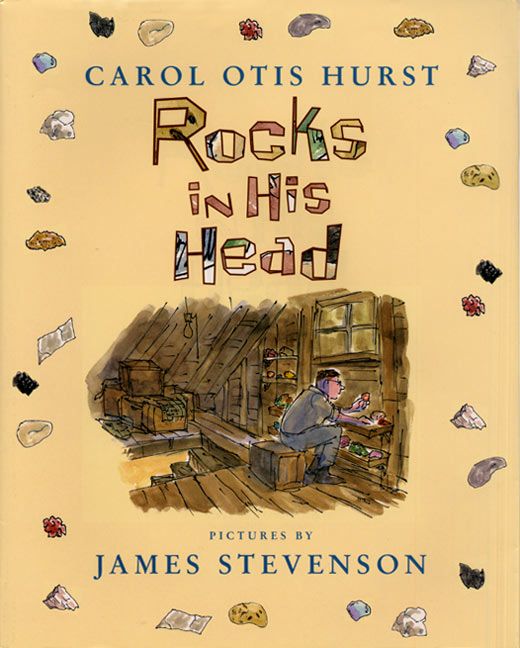
celebrate-picture-books-picture-book-review-rocks-in-his-head-cover

About the Holiday

Today’s holiday recognizes the importance and beauty of the rock that forms solid ground under our feet and soars majestically to meet the sky. From earliest times, rock has been used as building material—and even the tools to build with—and has provided us with valuable gemstones that beautify our lives. Geology and archaeology are just two of the sciences that explore the wonders of stone—what it is composed of and what secrets it keeps. Today, be more mindful of the rocks around you and take a closer look at the intricate patterns that lie within them.

Rocks in His Head

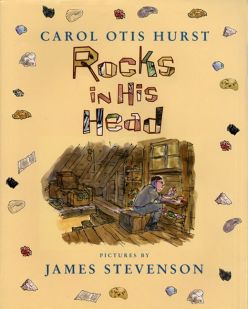
Written by Carol Otis Hurst | Illustrated by James Stevenson


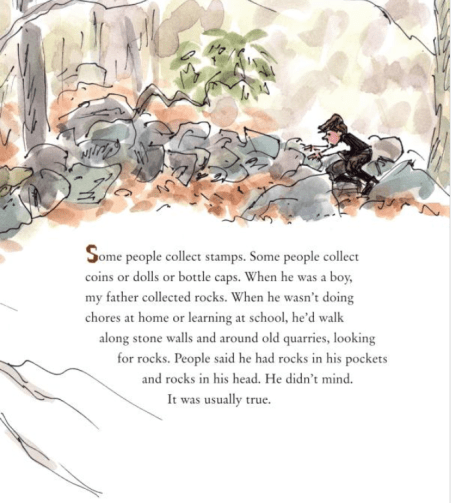
Carol Otis Hurst tells the story of her father, who—even when he was a boy—loved everything to do with rocks. He collected them and in his spare time walked “along stone walls and around old quarries, looking for rocks.” Everyone said “he had rocks in his pockets and rocks in his head,” and he had to agree. When he thought about what he wanted to do when he grew up, he imagined it would have something to do with rocks, and when he was told “‘There’s no money in rocks,’” he was okay with that. In the end, though, he opened a gas station in Springfield, Massachusetts with his father’s help. He called it the Antler Filling Station.

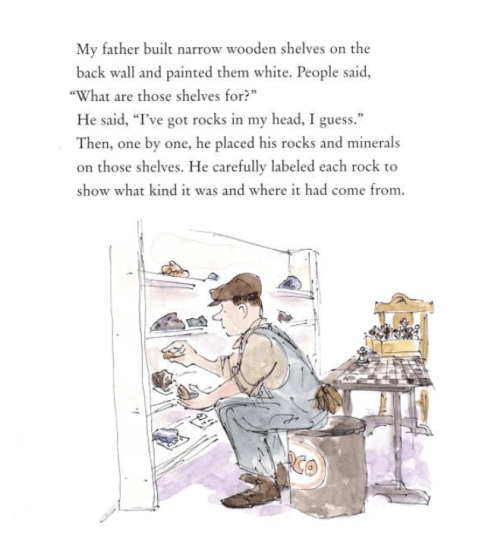
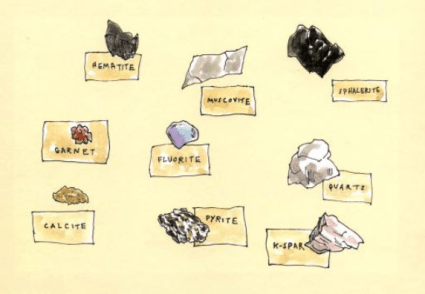
In the back of the filling station, Carol’s father displayed his rock and mineral collection. “He carefully labeled each rock to show what kind it was and where it had come from.” When the Model T automobile came out, more people could afford to buy a car. Carol’s father learned every inch of the Model T by taking it apart and reassembling it many times. He thought that someone who could repair the car and sell spare parts would have a good business, so he began collecting parts for the Model T—so many that “the pile of parts was bigger than the filling station.”
celebrate-picture-books-picture-book-review-rocks-in-his-head-stone-wall

Image copyright James Stevenson, 2001, text copyright Carol Otis Hurst, 2001. Courtesy of Greenwillow Books.

Most people in town said he “had rocks in his head” if he thought he would sell all those parts, but pretty soon drivers were flocking to the Antler Filling Station for gas and fixes to their cars. They also came inside to see the rocks, ask questions, and hear the stories of each rock and gemstone. Then the stock market crashed and people didn’t have the money for gas or to fix their cars. Things slowed down at the Antler, and when things were really slow, Carol, her father, and her friends would pile into their Model T and go searching for more rocks.

But while the collection at the filling station grew, people stopped coming because they were all out looking for jobs. Soon the Antler Filling Station closed and the family had to move to a new house. The house was falling apart, but Carol’s father began repairing it—after building shelves in the attic for his rock collection. When he wasn’t repairing the house, he was studying more about rocks. Along the way, he looked for work, taking any job he could even if they only lasted a day or two.

celebrate-picture-books-picture-book-review-rocks-in-his-head-antler-filling-station

Image copyright James Stevenson, 2001, text copyright Carol Otis Hurst, 2001. Courtesy of Greenwillow Books.

On days when he had no work, Carol’s father went to the Springfield Science Museum, where “they had a whole room full of glass cases containing many rocks. Sometimes he’d spend the whole day in that room.” One day, he met a woman who asked him what he was looking for. He answered “‘I’m looking for rocks that are better than mine.’” Out of the hundreds of rocks in that room, he told her, he’d only found ten, “‘maybe eleven,’” that were better. They smiled at each other.

Then the lady introduced herself as Grace Johnson, the director of the museum. “‘These rocks have come from all over the world,’” she told him, and he said that his had too. She wanted to see his collection, and so they drove out in her big car. Carol’s father showed her up to the attic. After looking around, she told him that while the board of directors wouldn’t allow her to hire him as a mineralogist because he lacked a college degree, she did need a night janitor. When he heard that the job sometimes included cleaning rocks, he took it.

One day, Mrs. Johnson discovered him correcting a label on one of the rocks. She smiled and told him that she had told the board of directors that she needed “‘somebody with rocks in his head and rocks in his pockets.’” Then she asked, “‘Are you it?’ Maybe I am,’” Carol’s father answered. “‘Maybe I am.’” And he was!
celebrate-picture-books-picture-book-review-rocks-in-his-head-antler-filling-station-shelves

Image copyright James Stevenson, 2001, text copyright Carol Otis Hurst, 2001. Courtesy of Greenwillow Books.

Carol Otis Hurst’s lovely and affectionate memoir of her father offers young readers a snapshot of history while introducing them to a man who stayed true to himself and his life-long love of rocks despite obstacles and good-natured jibes by those around him. Hurst’s easy-going, conversational storytelling represents her father well, allowing children to get a feel for his personality and steady outlook on life. His acceptance as a mineralogist (and ultimate position as director of the Springfield Science Museum as told in the author’s bio on the jacket flap) will satisfy readers.
celebrate-picture-books-picture-book-review-rocks-in-his-head-rock-samples

James Stevenson’s familiar watercolor-and-ink illustrations are infused with charm, taking children beside an old stone wall that meanders through the woods, back to old-style filling stations and Model-T cars, and into the heart of a true collector. Images of the author’s father attentively setting up his collection in the filling station and later in the attic will resonate with any young collectors reading the book, and the full-page illustration of Grace Johnson and the author’s father talking and smiling together is happy validation that kindred spirits do cross paths in life.

For children who love collecting, history, museums, and biographies, Rocks in His Head is a delightful choice for home libraries and would make am appealing lead in to science lessons or museum field trips for elementary classrooms.

Ages 4 – 8

Greenwillow Books, 2001 | ISBN 978-0060294038

International Rock Day Activity
CPB - Nasty Bugs magnet II (2)

Rock This Craft!


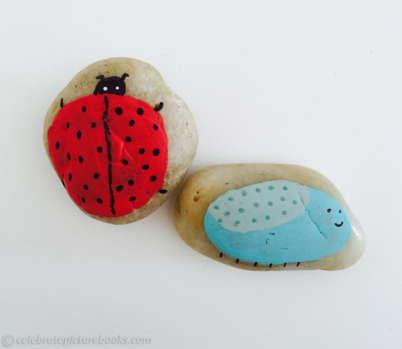
Smooth stones can give you a natural canvas for your creativity! With a little bit of paint, pins or magnets, and some imagination, you can make refrigerator magnets, jewelry, paper weights, and more!

Supplies

  • Smooth stones in various sizes
  • Paint or markers
  • Small magnets, available at craft stores
  • Jewelry pins, available at craft stores
  • Paint brush
  • Strong glue

Directions

To make magnets

  1. Design and paint an image on the stone
  2. Attach a magnet to the back with strong glue, let dry
  3. Use to hang pictures, notes, or other bits of important stuff on your refrigerator or magnetic board

To make jewelry

  1. Using a smaller, flatter stone, design and paint an image on the stone
  2. Attach a jewelry pin to the back with the strong glue, let dry
  3. Wear your pin proudly

To make a paper weight

  1. Using a large stone, design and paint an image on the stone
  2. Let dry
  3. Display and use on your desk to keep those papers in place
celebrate-picture-books-picture-book-review-rocks-in-his-head-cover

You can find Rocks in His Head at these booksellers

Amazon | Barnes & Noble | Books-a-Million | IndieBound

Picture Book Review

July 11 – National Cheer Up the Lonely Day

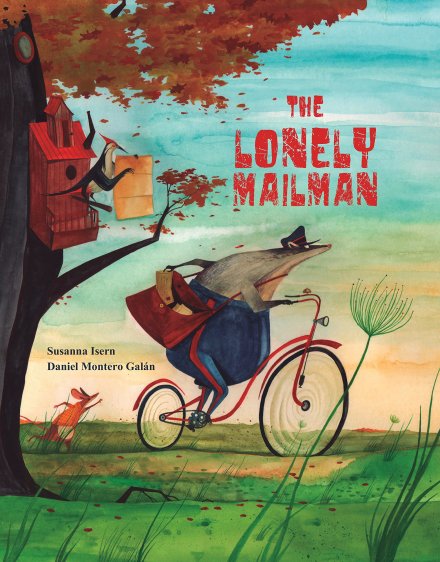
celebrate-picture-books-picture-book-review-the-lonely-mailman-cover

About the Holiday

There are many people who, due to age, health, lack of transportation, distance from family and friends, and other factors, feel lonely. Today’s holiday was established to bring awareness to this problem and to encourage people to reach out to those who are alone. There are many ways to cheer up someone who’s feeling lonely, including visiting, taking them for an outing, calling, and taking food, treats, or something else you know they would like.

The Lonely Mailman

Written by Susanna Isern | Illustrated by Daniel Montero Galán


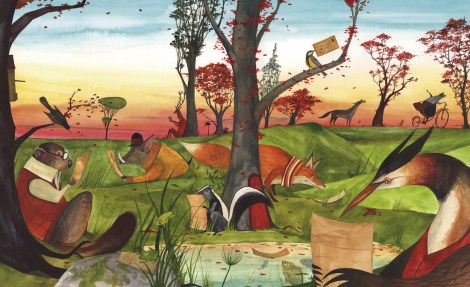
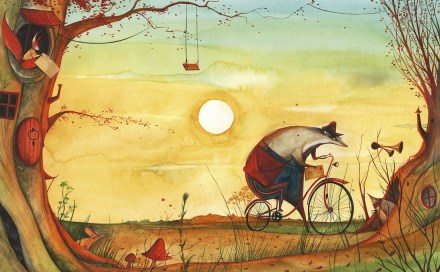
The mailman sets off on his bicycle at the crack of dawn to deliver letters all around the forest. “The mailman goes to each door, rings the bell, and only says four words: ‘Squirrel! Letter for you!’” Squirrel’s letter is from Hedgehog, who accidentally pricked him while at the market. He’s inviting Squirrel for dinner to make up for it. Next the mailman delivers a letter from Squirrel to Hedgehog. “He whispers so quietly that even he can hardly hear the words. “‘Hedgehog! Letter for you!’” Squirrel says all will be forgotten if Hedgehog invites him to dinner.

celebrate-picture-books-picture-book-review-the-lonely-mailman-squirrel-letter

Image copyright Daniel Montero Galán, 2016, text copyright Susanna Isern, 2016. Courtesy of danielmonterogalan.com.

Sometimes the animals invite the mailman in for a cup of coffee, but he never accepts. In fact, “he never gets off his bicycle” as he makes his rounds. Today, that includes letters between Dormouse and Woodpecker, who are resolving a loud tapping issue. Even though the animals see the mailman every day, they don’t really know him or anything about him. It doesn’t occur to some of them to wonder about the mailman as he, say, tosses a letter to Turtle from the Butterflies, who want to visit “to flutter around and keep you cool, and sit awhile on your lovely shell, listening to your tales while we enjoy the sun” and delivers an invitation from Turtle to the Butterflies to “sunbathe in peace and quiet” on his shell and have a cup of tea inside if it rains.

celebrate-picture-books-picture-book-review-the-lonely-mailman-dormouse

Image copyright Daniel Montero Galán, 2016, text copyright Susanna Isern, 2016. Courtesy of danielmonterogalan.com.

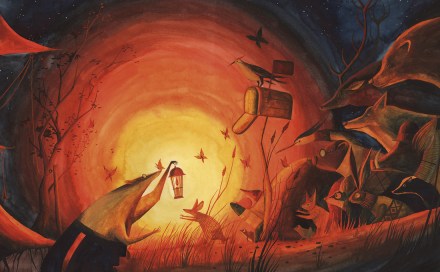
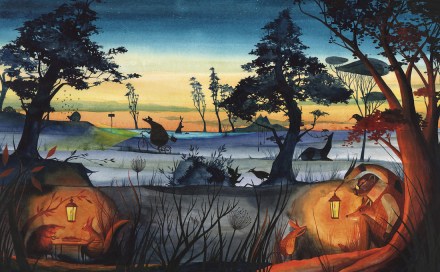
Other animals, though, do think about the mailman. Some think he doesn’t say much because he’s sad. But as Bear reads his letter from Rabbit and Rabbit reads a letter from Bear, they don’t take time to ask the mailman how he’s feeling. At the end of the day, with “no more letters in his bag,” the mailman goes home feeling weary. But he still has much to do. In the flickering light of his candle, he sits down at an old typewriter and writes letters. “They are the letters he’ll be delivering the next day: invitations, apologies, plans, and messages full of love.”

celebrate-picture-books-picture-book-review-the-lonely-mailman-going-home

Image copyright Daniel Montero Galán, 2016, text copyright Susanna Isern, 2016. Courtesy of danielmonterogalan.com.

One day, as the sun is going down and the mailman is heading home, he sees that the last letter in his bag is addressed to him. He rushes home excited by the letter—the first he’s ever gotten. At home, he puts the letter in his own mailbox, “whispers four words: ‘Mailman, letter for you!’” then retrieves it and goes inside. As he reads the letter, a lump forms in his throat. The forest animals have discovered his secret and want to thank him.

Just then the doorbell rings—for the very first time. When he opens the door, he sees all the forest animals waiting for him. They surround him with cheers and hugs, and as the “old mailman smiles and blushes” he’s already composing the letters he will write tonight.

celebrate-picture-books-picture-book-review-the-lonely-mailman-embraced

Image copyright Daniel Montero Galán, 2016, text copyright Susanna Isern, 2016. Courtesy of danielmonterogalan.com.

The Lonely Mailman is a mesmerizing book in every way. Susanna Isern’s storytelling is straightforward, honest, and lyrical as she follows the mailman on his rounds, whispering those four words everyone wants to hear. Peeking into the letters that the animals exchange shows a world where mistakes happen, fears niggle, and grievances are expressed. It is also a world full of kindness, consideration, generosity, and love. The discovery that the mailman himself is the sower of this network of friendship will tug at readers’ hearts as they wish the same for him. The forest animals’ final response to one sharp-eyed mouse’s suggestion is touching and satisfying

celebrate-picture-books-picture-book-review-the-lonely-mailman-animals

Image copyright Daniel Montero Galán, 2016, text copyright Susanna Isern, 2016. Courtesy of danielmonterogalan.com.

Daniel Montero Galán washes the soft, velum-like pages with gorgeous earth tones from the warm, golden light of dawn to the soft blues and greens of a summer day to the fiery reds of sunset. The dens, knotholes, and burrows of the forest creatures are cozy with homey details, and the letters each animal receives are called out in parchment-colored rectangles that add to the vintage feel. Alert readers will be intrigued to follow the little mouse who chases here and there, spying on the rotund mailman—who is shaped like half an inverted heart just waiting to be completed—and will be cheered when the animals embrace him, filling out his life with love.

Captivating and moving, The Lonely Mailman is a beautiful story that touches on themes of friendship, empathy, loneliness, kindness, and the power of the individual to create change. The book would be a superb choice for home and classroom libraries.

Ages 5 – 8

Cuento de Luz, 2017 Hardcover: ISBN 978-8416147984 | Paperback, 2018: 978-8416147977

Discover more about Susanna Isern and her books on her website.

To learn more about Daniel Montero Galán, his books, and his art, visit his website.

Cheer Up the Lonely Day Activity

CPB - Paper Flowers

Paper Flower Bouquet


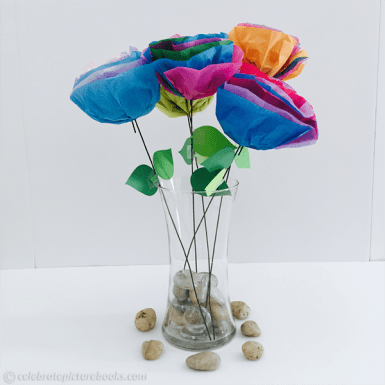
These paper flowers will brighten anyone’s day and come in a rainbow of colors. Make a bouquet to share them with a new friend.

Supplies

  • Tissue paper in many colors
  • Green paper
  • Green wire for stems
  • Scissors
  • Tape or glue
  • Pliers

CPB - Paper Flowers II

Directions

To make the stem

  1. Bend a 1 ½ -inch loop in the top of the wire
  2. Squeeze the wire together so it will fit tightly over the tissue paper

To make a flower

  1. Cut 6 or more 7-inch squares from tissue paper, mixing colors (you can make various sizes of flowers by making the squares larger or smaller and adding more squares)
  2. Gather all the squares together and fold them together accordion-style in 1-inch folds
  3. Slide the folded tissue paper under the wire loop, and tighten the wire
  4. Gently fan the tissue paper out on each side
  5. Beginning on one side, gently pull each sheet of tissue paper up toward the center
  6. Repeat step 5 on the other side

To make leaves

  1. Cut leaves from green paper, leaving a stem to wrap around the wire flower stem
  2. Fold the leaf stem around the wire and tape or glue

celebrate-picture-books-picture-book-review-the-lonely-mailman-cover

The Lonely Mailman can be found at these booksellers

Amazon | Barnes & Noble | Books-a-Million | IndieBound

Picture Book Review
July 10 – Cow Appreciation Day

celebrate-picture-books-picture-book-review-the-cow-who-climbed-a-tree

About the Holiday

The brainstorm of the Chik-Fil-A Company as a clever advertising ploy to herd customers to the chicken side of things, Cow Appreciation Day, also gives us an opportunity to really think about the importance of cattle to the world as a food source and source of material from earliest times. Cows have also long been beloved characters in children’s books, inspiring laughs, empathy, and imagination – as in today’s book!

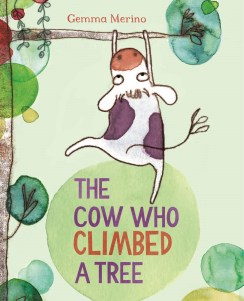
The Cow Who Climbed a Tree

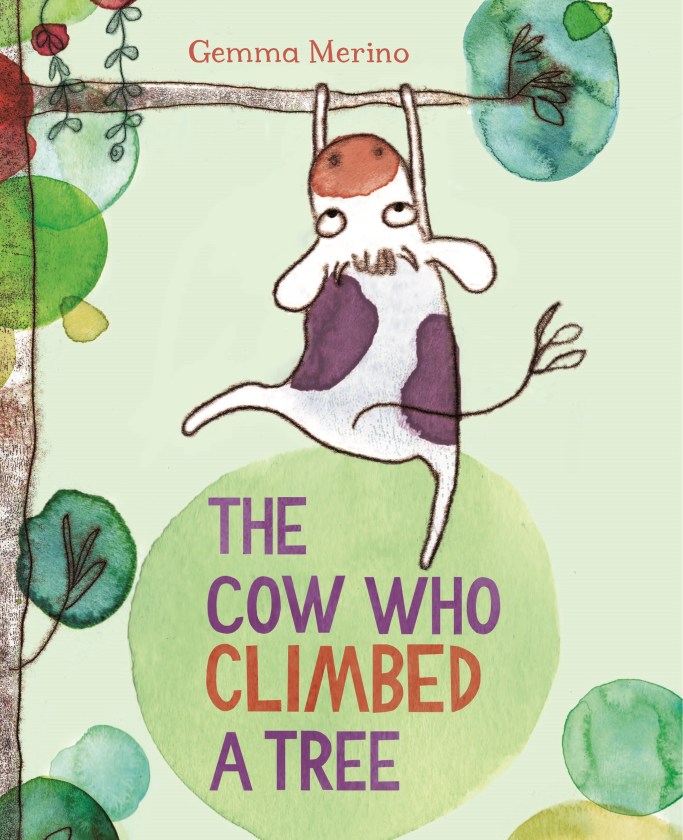
By Gemma Merino


Tina is a very unique cow. Unlike her sisters who are only interested in “fresh and juicy grass,” Tina is very curious and always inventing new ideas. Her sisters proclaim her notions “‘Impossible! Ridiculous! And Nonsense!’” One day while exploring the woods, Tina decides to climb a tree. Branch by branch she swings herself to the top. Up there among the owls and squirrels Tina discovers a dragon—a friendly one, and a vegetarian to boot!

celebrate-picture-books-picture-book-review-the-cow-who-climbed-a-tree-tina

Copyright Gemma Merino, 2016, courtesy of Albert Whitman & Company.

“All afternoon they talked about wonderful dreams and incredible stories.” Tina is excited to tell her sisters, but when she gets home they aren’t impressed. The whole idea of cows climbing trees and dragons is “‘Impossible! Ridiculous! And Nonsense!’” The next morning Tina never shows up for breakfast. Her sisters find a note that reads “Gone flying with the Dragon of the Woods.”

celebrate-picture-books-picture-book-review-the-cow-who-climbed-a-tree-dragon

Copyright Gemma Merino, 2016, courtesy of Albert Whitman & Company.

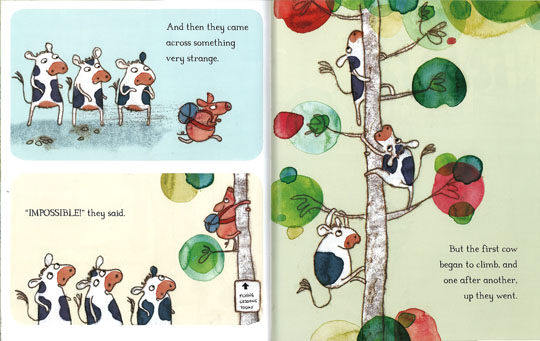
Her sisters decided this nonsense has to stop, so they head out to find her. As they leave behind their familiar farmland and enter the forest, they can’t believe how beautiful it is. Suddenly a pig wearing a backpack dashes past them and shimmies up a tree. Even though they consider this “impossible,” one sister follows the pig. The others join her. From a treetop branch the three find that “the world beyond the fields was extraordinary.”

celebrate-picture-books-picture-book-review-the-cow-who-climbed-a-tree-something-strange

Copyright Gemma Merino, 2016, courtesy of Albert Whitman & Company.

Still, Tina is nowhere to be found. The sisters look left, right, down, and up. Up! “It was impossible. It was ridiculous. It was nonsense. But it was true! Tina was flying!” She and other animals are taking flying lessons from the dragon, and while they don’t have wings, they soar just fine with a little help. From her lofty place, Tina asks her sisters to join her, and they say something she has never heard before: “Yes, why not?” They float, drift, and glide in the sunlit sky, and ever afterward find that nothing is “impossible, ridiculous, or nonsense.” Now all four sisters can’t wait to see what else is possible.

celebrate-picture-books-picture-book-review-the-cow-who-climbed-a-tree-interior-art-telescope

Copyright Gemma Merino, 2016, courtesy of Albert Whitman & Company.

Gemma Merino’s mooving tribute to people who live and dream large will inspire young children to reach for the treetops and beyond. The plucky heroine who doesn’t cower under her sisters’ reproach is a confident and likable role model, happy to include her sisters when they finally see the light. Merino’s sweet, soft-hued illustrations humorously depict the dichotomy between the sisters’ grass-focused existence and Tina’s vivid imagination. The cows’ home has sage green walls, furniture, and floors.

The pictures on the walls, the flowerpot on the windowsill, and the planter are all full of various types of vegetation, and the jars in the pantry contain such ingredients as Pickled Leaves, Meadow Mix, Dried Petals, and Herbal Tea. But Tina’s imagination and the forest she loves to visit are infused with reds, ambers, blues, and teals; even the greens are more brilliant. For anyone contemplating the unknown, The Cow Who Climbed a Tree is rousing fun!

Ages 4 – 7

Albert Whitman & Company, 2016 | ISBN 978-0807512982

To learn more about Gemma Merino and her books visit her website!

Cow Appreciation Day Activity

celebrate-picture-books-picture-book-review-cow-mug-craft

Moo Cow Mug

Milk—regular or chocolate!—will taste so much better in a Moo Cow Mug  you make yourself! 

Supplies

  • White ceramic mug, available at craft stores
  • Black permanent marker or paint for ceramics
  • Pink permanent marker or paint for ceramics
  • Brown permanent marker or paint for ceramics

celebrate-picture-books-picture-book-review-cow-mug-craft-back

Directions

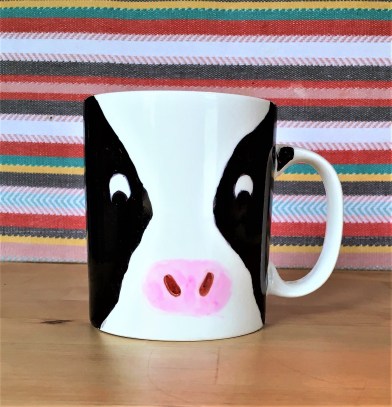
  1. With the pink marker or paint, draw an oval shape for the nose near the bottom of the mug. Let dry.
  2. With the brown marker or paint, draw two angled nostrils inside the pink oval and color them in. Let dry.
  3. Color in the nose with the pink marker or paint.
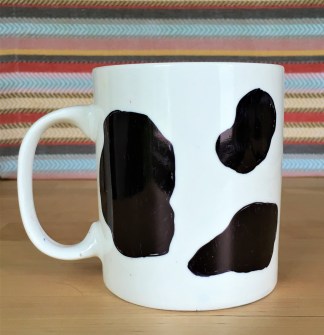
  4. With the black marker, color the top tip of the handle where it meets the mug to make the tail.
  5. With the black marker or paint, draw two wavy lines on either side of the face starting at the top, angling toward the middle and returning to the bottom of the mug. Leave white space between the lines.
  6. Draw circles for eyes within the black lines. Add black pupils at the bottom of the eyes.
  7. Color inside the black lines and around the eyes to make the face markings.
  8. With the black marker or paint, make two or three splotches on the back of the mug.
  9. Let the mug dry and follow the directions for the markers or paint to set the color.
  10. Pour yourself a mug of milk and enjoy!

celebrate-picture-books-picture-book-review-the-cow-who-climbed-a-tree

You can find The Cow Who Climbed a Tree at these booksellers

Amazon | Barnes & Noble | Books-a-Million | IndieBound

Picture Book Review
 

July 5 – It’s National Culinary Arts Month

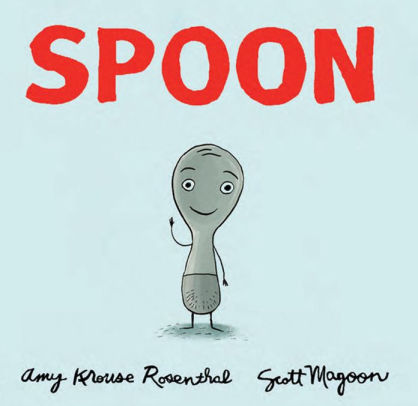
celebrate-picture-books-picture-book-review-spoon-cover

About the Holiday

There’s a real art to putting together a delicious meal from a bunch of seemingly disparate parts, and this month’s holiday honors those with a talent for combining tastes, flavors, and textures. While we celebrate food and those who make it, though, we might also take a moment to think about the utensils that help us cook and eat. Without the proper kitchen tools and tableware, those perfectly planned dishes just would not be the same. To make your Culinary Arts Month a little more cutting edge, why not research the history of cutlery and—of course—enjoy a dip into today’s adorable book!

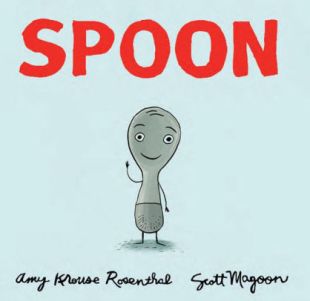
Spoon

Written by Amy Krouse Rosenthal | Illustrated by Scott Magoon


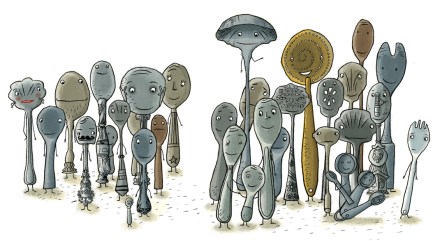
Spoon comes from a large, diverse family. He enjoys visiting his Aunt Silver, who is “very fancy and proper” and says things like “‘Good-bye, darling!’” and “‘Ta-ta!’” He also likes to hear the story of how his great-grandmother “fell in love with a dish and ran off to a distant land.” But one day Spoon’s mother noticed that he was looking “‘a bit bent out of shape.’”

celebrate-picture-books-picture-book-review-spoon-family-portrait

Copyright Scott Magoon, 2009, courtesy of scottmagoon.com.

Spoon confessed that he thought his friends had it better than he did. Spoon thought Knife was lucky because he got to cut and spread, and his mother had to agree that Knife was “pretty spiffy.” “‘And Fork, Fork is so lucky!’” Spoon exclaimed. Fork got to go all sorts of places, like hot barbecues, leafy salads, and spongy cakes. She even got to twirl spaghetti like a lasso. And then there were Chopsticks. They were so “cool and exotic.” Again Spoon’s mom had to concede that Fork and Chopsticks were rather special.

celebrate-picture-books-picture-book-review-spoon-family-chopsticks

Copyright Scott Magoon, 2009, courtesy of scottmagoon.com.

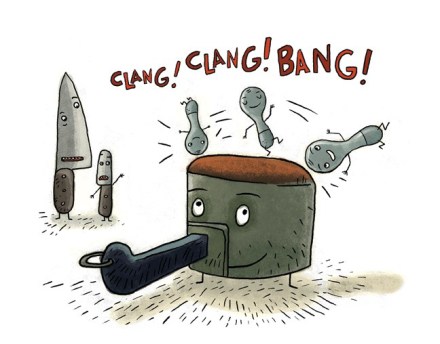
But Spoon may have been interested to know what his friends thought about him. Just then, Knife was telling his dad that Spoon was so lucky because he got to have fun and be silly, like when people used him to drum on a pot. Fork thought it was really neat that Spoon got “‘to measure stuff. No one ever does that with me,’” she said. And Chopsticks? They wished that something they could do things alone.

celebrate-picture-books-picture-book-review-spoon-family-drumming

Copyright Scott Magoon, 2009, courtesy of scottmagoon.com.

That night as Spoon’s mom tucked him into bed, she said, “‘You know, Spoon—I wonder if you realize just how lucky you are.’” She reminded him of the fun he had “diving headfirst into a bowl of ice cream,’” how he made a musical clink against the side of a bowl, and how cozy it was to “‘relax in a hot cup of tea.’” His mom’s words cheered him and kept him awake thinking of all the things he could do. He popped out of bed and told his mom and dad that he couldn’t sleep. For which they had the perfect snuggley solution….

celebrate-picture-books-picture-book-review-spoon-family-measuring

Copyright Scott Magoon, 2009, courtesy of scottmagoon.com.

This classic tale from Amy Krause Rosenthal is the perfect recipe for those times when kids feel others have it better, show more talent, or are luckier than they are. Written with a combination of wistfulness and humor, the story acknowledges the doubt everyone feels as some time or another while also presenting food for thought about ones place in the world, individual talents, and the simple pleasures of life that leads to self-realization and higher self-esteem for the story’s young audience.

From the Silverware family portrait to the dancing chopsticks to the final, sweet image of Dad, Mom, and little Spoon snuggling together on their sugar packet pillows, Scott Magoon’s clever take on the lives of tableware will charm kids and adults alike.  Endearing touches—like the utensils’ thread-thin arms and legs and the drawer-divider bedrooms—will capture the imagination of little readers, reinforcing the story’s gentle message each time them dive into their favorite meal.

Ages 2 – 6

Disney Hyperion, 2009 |ISBN 978-1423106852

To learn more about Amy Krause Rosenthal’s books for children and adults, her videos, and foundation, visit her official website.

Discover more about Scott Magoon, his books, and his art on his website.

National Culinary Arts Month Activity

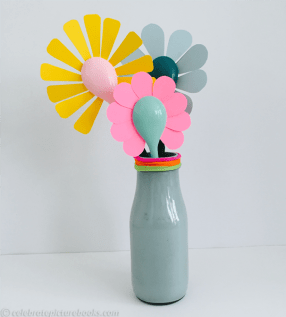
 celebrate-picture-books-picture-book-spoon-flowers

Spoon Flowers Craft


Plastic spoons aren’t just for enjoying yummy treats, they make cute flowers too! With this easy and quick craft, you can give everyone you love a bouquet!

Supplies

  • Colorful plastic spoons
  • Heavy stock paper or construction paper in various colors, including green for leaves
  • Multi-surface glue or hot glue gun

Directions

  1. Cut petals from the heavy stock paper or construction paper
  2. Glue the petals to the bowl of the spoon
  3. Cut leaves from the green paper (optional)
  4. Glue leaves to the handle of the spoon (optional)

celebrate-picture-books-picture-book-review-spoon-cover

You can find Spoon at these booksellers

Amazon | Barnes & Noble | Books-a-Million | IndieBound

Picture Book Review

June 29 – It’s Adopt a Cat Month

celebrate-picture-books-picture-book-review-vincent-comes-home-cover

About the Holiday

Adopt a Cat Month is all about bringing a kitten or older cat into your home to provide love and a forever family for these sweet animals who make terrific companions. If you’re considering sharing your life with a pet, check with your local animal shelter. There are many cats and kittens who would make the perfect addition to your family.

Vincent Comes Home

By Jessixa Bagley and Aaron Bagley


“Vincent lived on a cargo ship. His paws had never touched land.” He liked living onboard the ship—there was plenty of fish to eat, seagulls to chase, and freedom to roam. At night he loved to gaze at the twinkling stars. His home, the Domus sailed to ports all over the world picking up and delivering goods. The ship was “always coming and going. Never staying.”

celebrate-picture-books-picture-book-review-vincent-comes-home-cargo-ship

Copyright Jessixa Bagley and Aaron Bagley, 2018. Courtesy of us.macmillan.com.

Although Vincent loved seeing all of the new and exciting places, he could only experience them from afar. He also enjoyed looking at all of the souvenirs in the captain’s cabin. “They seemed to have visited every place imaginable. Every place except one.” Vincent heard the crew talking about a place called Home. It sounded amazing, and the little cat wanted to go there some day.

celebrate-picture-books-picture-book-review-vincent-comes-home-cargo-galley

Copyright Jessixa Bagley and Aaron Bagley, 2018. Courtesy of us.macmillan.com.

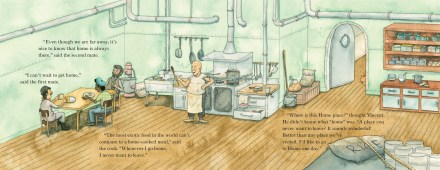
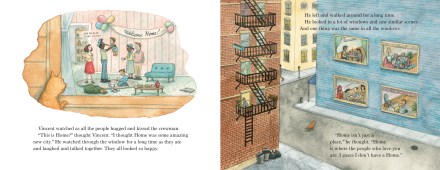
When the ship docked the next day, “Vincent heard the first mate shout, ‘We’re HOME!!!’” Vincent couldn’t wait to see this exciting place. When he looked over the ship’s rail, though, this city looked like many others. He couldn’t see why it was so special. Vincent decided to follow one of the crew to find out. As soon as the “crewman opened the door, a bunch of people yelled ‘WELCOME HOME!’” Everyone inside hugged and kissed the crewman.

celebrate-picture-books-picture-book-review-vincent-comes-home-cargo-crewman's-home

Copyright Jessixa Bagley and Aaron Bagley, 2018. Courtesy of us.macmillan.com.

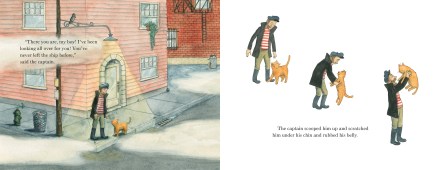
Vincent looked in other windows and saw the same things there. He decided that Home wasn’t really a place but where the people who loved you lived. “I guess I don’t have a Home,” he thought. He wandered around town and gazed at the familiar stars. Just then he heard a voice he knew. It was the captain. “‘I’ve been looking all over for you!’” he said. He picked Vincent up and scratched his chin and belly. “‘Let’s go home,’” he told Vincent.

celebrate-picture-books-picture-book-review-vincent-comes-home-cargo-captain-finds-vincent

Copyright Jessixa Bagley and Aaron Bagley, 2018. Courtesy of us.macmillan.com.

Jessixa and Aaron Bagley’s endearing story about the meaning of Home will charm young readers who are beginning to navigate their own way in the world, leaving home for school and activities. Their lyrical storytelling offers tender comfort and heartwarming reassurance that Home is rich with those who love you and is always there waiting for your return. 

Beautiful watercolors bring to life the unique cargo ship setting, with its vibrant containers and world port-to-port schedule as well as the homey galley, staterooms, and common areas that make Domus a well-chosen name. Seen from afar, the European city, tropical island, and arctic vista—as well as the captain’s cabin filled with posters and souvenirs from the Domus’s trips—will entice young readers to do a bit of armchair traveling themselves. But, like Vincent, they will embrace their own home as the most wonderful place in the world.

A thoughtful book for children just entering school or other new situations or to share the warmth of home, Vincent Comes Home would be a welcome addition to personal or classroom libraries.

Ages 4 – 7

Roaring Brook Press, 2018 | ISBN 978-1626727809

Discover more about Jessixa Bagley, her books, and her art on her website.

To learn more about Aaron Bagley, his books, and his art, visit his website.

Adopt a Cat Month Activity

celebrate-picture-books-picture-book-review-wooden-bead-cat-craft

A Little Ball of Love Craft


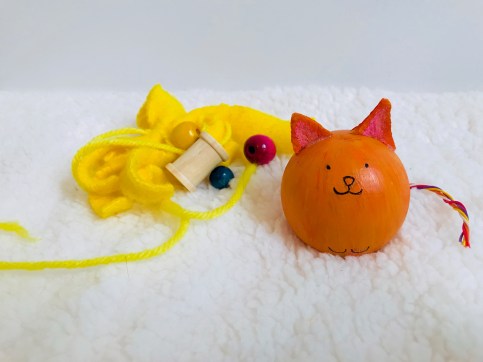
This sweet little kitten is easy to make and can keep you company on your desk or shelf! Since every kitten is different, you can make yours to look just the way you want. Here’s how I made mine:

Supplies

  • Wooden ball with a flat bottom, available in craft stores and in different sizes
  • Craft paint in any color kitten you’d like (I used red and yellow and mixed it to make a mottled orange)
  • Craft paint in pink or white for the inner ear
  • Scrap of fleece for the ears. Fleece is easily shaped to the rounded ball and when painted is stiff enough to stand up on its own.
  • Thin, colored wire in several colors for the tail (string or twine, wrapped wire, fleece, stiff paper, and other materials could also be used)
  • Paint brush
  • Permanent marker for making the face
  • Hot glue gun or strong glue

Directions

  1. Paint the wooden ball and let dry
  2. Paint the scrap of fleece to match the wooden ball, let dry
  3. Cut out small triangular shapes for the ears. Round the bottom of the ears slightly so they fit the shape of the ball
  4. If making a tail from several colors of thin wire, twist them together, leaving one end untwisted
  5. With the glue gun or strong glue attach the ears to the top of the head
  6. With the glue gun attach the tail to the back of the wooden ball in the center near the base
  7. With the marker, draw eyes, nose, and mouth for the face and semicircles near the bottom for the paws

celebrate-picture-books-picture-book-review-vincent-comes-home-cover

You can find Vincent Comes Home at these booksellers

Amazon | Barnes & Noble | Books-a-Million | IndieBound | Powells

Picture Book Review

June 23 – It’s National Dairy Month

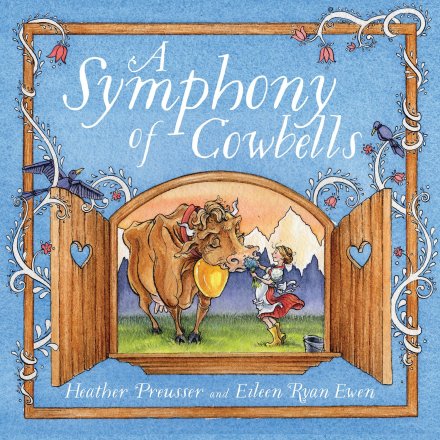
celebrate-picture-books-picture-book-review-a-symphony-of-cowbells-cover

About the Holiday

Today’s holiday was established in 1937 as National Milk Month to encourage people to drink more milk to stabilize the dairy industry during a time of surplus. The event grew to celebrate all the benefits provided by the dairy industry around the world. The name was changed when the National Dairy Council took over promotion of the holiday. 

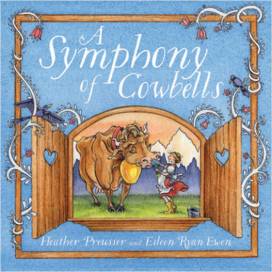
A Symphony of Cowbells

Written by Heather Preusser | Illustrated by Eileen Ryan Ewen


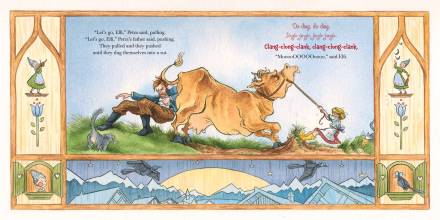
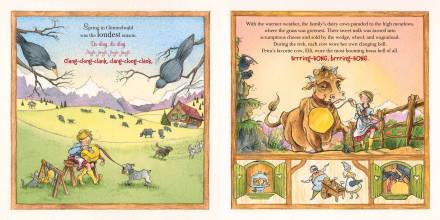
With the dawning of spring, Gimmelwald came alive with the “Da-ding, da-ding. Jingle-jangle, jingle-jangle. Clang-clong-clank, clang-clong-clank” of bells as the cows were led to the sweet, green grass in the high meadows. The cows’ milk would become “scrumptious cheese…sold by the wedge, wheel, and wagonload.” As Petra walked with her family’s herd, she led her favorite cow, Elfi, who “wore the most booming brass bell of all.”

celebrate-picture-books-picture-book-review-a-symphony-of-cowbells-no-bell

Image copyright Eileen Ryan Ewen, text copyright Heather Preusser. Courtesy of Sleeping Bear Press.

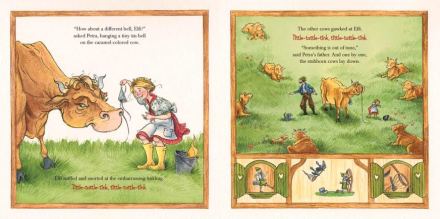
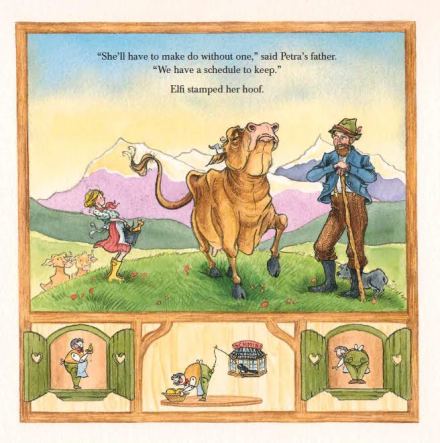
But one day Elfi’s bell was missing. Petra’s father told her they had a schedule to keep and that Elfi would have to go without her bell, but Elfi wouldn’t hear of it. She stomped her hoof and stood her ground. No amount of pushing, pulling or prodding could move Elfi from her spot. Petra ran and retrieved a tiny tin bell to hang around Elfi’s neck, but Elfi only “sniffed and snorted at the embarrassing tinkling. Tittle-tattle-tink, tittle-tattle, tink.”

celebrate-picture-books-picture-book-review-a-symphony-of-cowbells-stubborn-elfi

Image copyright Eileen Ryan Ewen, text copyright Heather Preusser. Courtesy of Sleeping Bear Press.

Without Elfi to lead them, Petra’s other cows lay down in the meadow and refused to move as well. “‘No milk? No cheese? What’ll we do?’ Petra gulped.” She begged Elfi to get up, but Elfi simply gazed at Petra with “eyes wide as milk saucers.” Petra knew she had to find Elfi’s bell. She searched the house, looked in the barn, and combed the field, but didn’t find the bell. The sun went down, and “the stubborn cows remained rooted among the bellflowers.”

celebrate-picture-books-picture-book-review-a-symphony-of-cowbells-tiny-bell

Image copyright Eileen Ryan Ewen, text copyright Heather Preusser. Courtesy of Sleeping Bear Press.

In the morning, Petra spied a crow with something shiny in its beak. She ran after it and discovered the bird’s huge nest high on a cliff. She was much too small to reach it, so she called her father, her mother, and a couple of neighbors. They piled on top of one another, and as Petra teetered on her mother’s shoulders, she reached into the nest and pulled out…Mr. Schmid’s pocket watch, Miss Baumann’s reading glasses, Farmer Felber’s wrench, Mother’s bracelet, Father’s keys, and…Elfi’s brass bell!

Petra skipped all the way to where Elfi and the other cows were keeping their protest, the brass bell announcing “Brrring-BONG, brrring-BONG. Brrring-BONG, brrring-BONG” all the way. When Elfi saw her bell, she danced with joy. Petra placed the bell over Elfi’s head and kissed her velvety nose. The other cows took notice. “On cue, they stood and moseyed up the mountainside….The symphony of cowbells was harmonious again—and LOUD. It was springtime in Gimmelwald after all.”

celebrate-picture-books-picture-book-review-a-symphony-of-cowbells-clanging-bells

Image copyright Eileen Ryan Ewen, text copyright Heather Preusser. Courtesy of Sleeping Bear Press.

Heather Preusser’s enchanting Swiss tale of tenderhearted but stubborn Elfi will delight readers with its musical mystery and gentle humor. Kids will love hearing and reading along with the melodic verses of jingling cowbells sprinkled throughout the text. Preusser’s lyrical phrasing is as fresh as the mountain air and will transport children to the beautiful Swiss countryside.

A Symphony of Cowbells is a perfect example of text and illustrations working together to present the story and add layered details that elevate the reading experience. Eileen Ryan Ewen’s gorgeously detailed and charming paintings take readers to the heart of Gimmelwald, with its glorious mountain backdrop, quaint village architecture, and cozy homes decorated with Alpen cuckoo clocks, dainty curtains, and window boxes overflowing with flowers.

Along the way Ewen frames a consecutive story along the bottom of most pages. Through these panels, eagle-eyed readers will notice a curious happenstance occurring in Gimmelwald which just may explain a few things…. It’s not until the end, however, that kids discover the answer to the story’s mystery.

A Symphony of Cowbells is a captivating and humorous look at country life with a little science sprinkled in. Readers may be enticed to do a little more research into the animal behaviors that influenced the story. The book would make a lovely addition to any child’s home library.

Ages 5 – 8

Sleeping Bear Press, 2017 | ISBN 978-1585369683

To learn more about Heather Preusser and her book as well as see a video about the real Gimmelwald, visit her website!

Discover more about Eileen Ryan Ewen and view a portfolio of her illustration work on her website!

National Dairy Month Activity

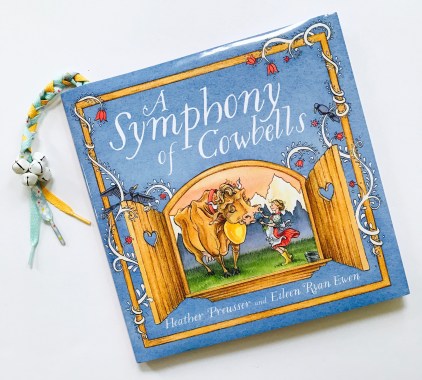
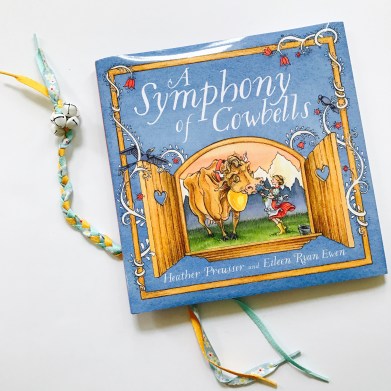
celebrate-picture-books-picture-book-review-bell-bookmark-a-symphony-of-cowbells

Ring a Bell for Reading Bookmark


It’s easy to make a stylish bookmark that can ring out your love of reading while marking your page!

Supplies

  • 3 shoelaces or ribbon of different designs
  • Small “sleigh” bells or other bellscelebrate-picture-books-picture-book-review-bell-bookmark-a-symphony-of-cowbells

Directions

  1. Hold three shoelaces together and knot them together at the top
  2. Braid the shoelaces together as long as you want your bookmark to be
  3. At the end, string three or more bells onto the ends of the shoelaces and knot the shoelaces together to hold the braid closed.
  4. Alternately, you can knot the braid at the end and tie a group of bells to the end.
  5. The end with the bells becomes the top of the bookmark.

celebrate-picture-books-picture-book-review-a-symphony-of-cowbells-cover

You can find A Symphony of Cowbells at these booksellers

Amazon | Barnes & Noble | Books-a-Millon | IndieBound

Picture Book Review
June 21 – It’s National Oceans Month

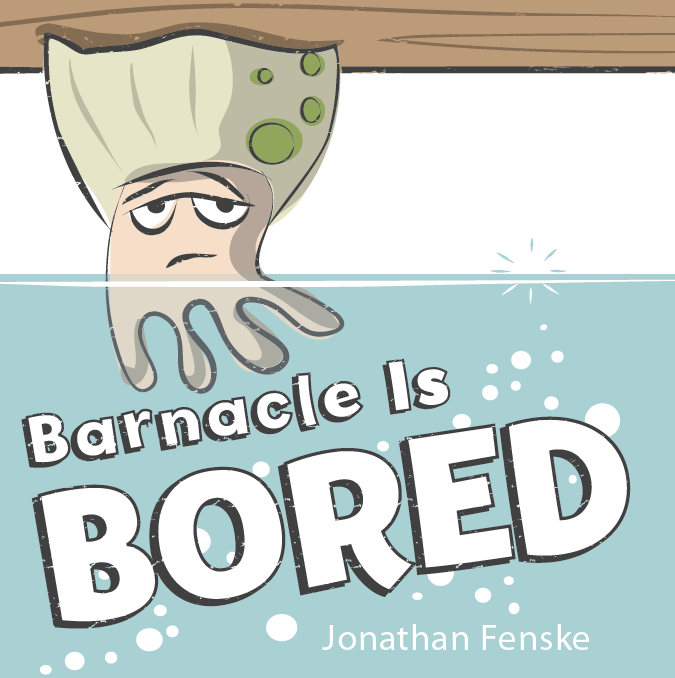
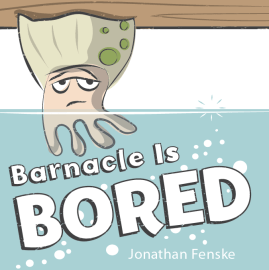
celebrate-picture-books-picture-book-review-barnacle-is-bored-cover

About the Holiday

This month, as kids get out of school and families head for the beach, we celebrate the amazing diversity of life in the ocean. A majority of the earth’s surface is covered in water and yet we know only a fraction of what the sea has to teach us. With new technology scientists are diving deeper and deeper and discovering never-before-seen (or even imagined) creatures. To join in on this month’s holiday, explore the beach, visit an aquarium, or learn more about the animals and resources of the sea. 
Barnacle is Bored

By Jonathan Fenske


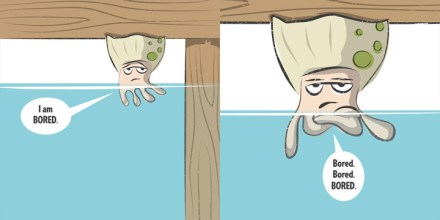
Even before Barnacle’s story truly begins he’s just hanging around the dock sighing. The trouble is Barnacle is “Bored. Bored. Bored.” Every day is the same old routine. When the tide is high, Barnacle is “wet and cold,” and when it goes out, he’s “dry and hot.” The sun rises; the sun sets. The waves “roll under” him or give him a good dousing of the briny deep, but no matter what’s going on Barnacle is stuck in place.

celebrate-picture-books-picture-book-review-barnacle-is-bored-under-dock

Copyright Jonathan Fenske, 2016, courtesy of jonathanfenske.com.

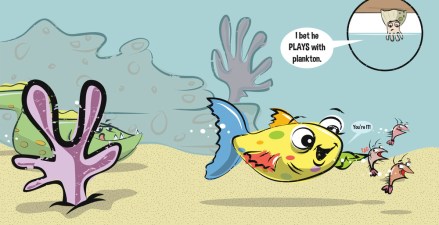
If only he were like the little polka dotted fish swimming by. Barnacle imagines what exciting days he must have. “I bet he dives with the dolphins” and “soars with the sailfish,” Barnacle muses. He dreams of the fun the fish has with flounder, finbacks, plankton, and…that eel doesn’t look like it wants to play with polka dot fish. Oh, no! Barnacle can’t look.

celebrate-picture-books-picture-book-review-barnacle-is-bored-polka-dot-fish

Copyright Jonathan Fenske, 2016, courtesy of jonathanfenske.com.

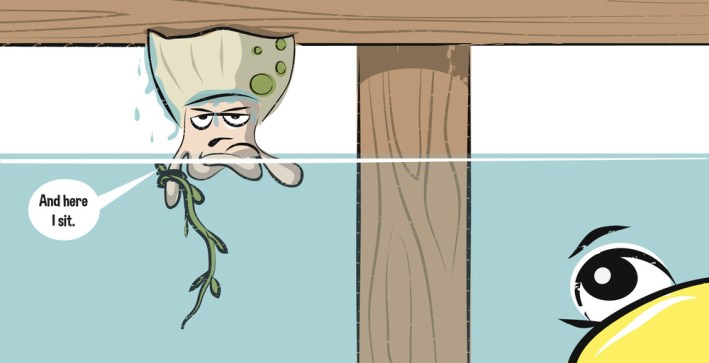
Yikes! Barnacle grimaces as eel swims away, full and satisfied. He retreats into his shell to reconsider and decides, “I am not bored.” But polka dot fish floating around inside eel? Yeah, he’s bored.

Jonathan Fenske takes the proverbial (shell)fish story to new, minimalistic lengths in his laugh-out-loud Barnacle is Bored. Fenske’s use of repetitive phrasing and funny alliteration highlights Barnacle’s tedium as well as his conviction that the sea is greener on the other side of the dock. When reality comes calling close to home, though, Barnacle—and young readers—discover that sometimes excitement isn’t all it’s cracked up to be.

celebrate-picture-books-picture-book-review-barnacle-is-bored-here-I-sit

Copyright Jonathan Fenske, 2016, courtesy of jonathanfenske.com.

Fenske’s jaded Barnacle is an adorable dreamer even as he grumbles about his sticky situation. His expressive eyes and tiny tentacles that sway with the tides will make little ones giggle. With a soothing palette of ocean colors, Fenske creates fresh, crisp backdrops that emphasize both Barnacle’s feelings of monotony and his vivid imagination.

Barnacle is Bored is a perfect summertime treat that will elicit waves of requests for repeat readings. A great choice to take to the beach and on vacation, the book will not spend its time stuck on the shelf.

Ages 3 – 5

Scholastic Press, 2016 | ISBN 978-0545865043

Discover a gallery of books and illustration by Jonathan Fenske on his website!

National Oceans Month Activity

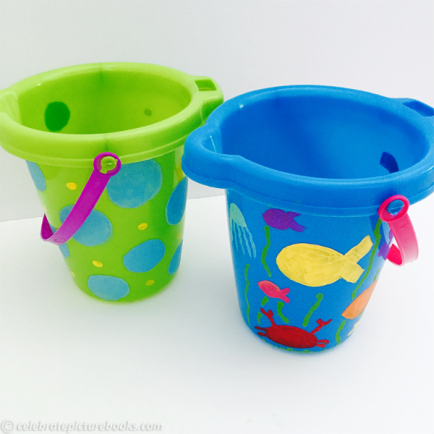
celebrate-picture-books-picture-book-review-painted-pails

Playful Plastic Pail


With a colorful plastic pail, some paint, and a little sealant, you can make a pail for the beach or sandbox that is as unique as you are!

Supplies

  • Plastic Pail
  • Paint that will adhere to plastic
  • Sealant for plastics
  • Paint brushes

Directions

  1. Create your design
  2. Paint your pail, let dry
  3. When the paint is dry, spray with sealant. Apply sealant in a well-ventilated place
  4. Let sealant dry
  5. Enjoy your pail!

celebrate-picture-books-picture-book-review-barnacle-is-bored-cover

You can find Barnacle is Bored at these booksellers

Amazon | Barnes & Noble | Books-a-Million | IndieBound

Picture Book Review