May 1 – It’s Children’s Book Week & Interview with Jodi McKay

celebrate-picture-books-picture-book-review-pencil's-perfect-picture-cover

About the Holiday

Children’s Book Week, a celebration of reading and books, turns 100 this year! Founded in 1919, this longest-running literacy initiative in the US, was a collaborative effort by Franklin K. Matthiews, the librarian of the Boy Scouts of America, Frederic G. Melcher, the editor of Publishers Weekly, and Anne Carroll Moore, the Superintendent of Children’s Works at the New York Public Library. In 1916, the American Booksellers Association and the American Library Association, in conjunction with the Boy Scouts, sponsored the first Good Book Week.

When the Children’s Book Council was established in 1944, they assumed responsibility of running this important initiative. The holiday is celebrated with special events in schools, libraries, bookstores, and communities across the country with the participation of authors, illustrators, publishers, librarians, teachers, and booksellers. This year the theme of the week is Read Now, Read Forever. To find out more about the week as well as activities to download and locations of events in your area, visit Every Child a Reader.

I received a copy of Pencil’s Perfect Picture from Albert Whitman & Company for review consideration. All opinions are my own. I’m thrilled to be partnering with Albert Whitman & Company in a giveaway of the book. See details below.

Pencil’s Perfect Picture

Written by Jodi McKay | Illustrated by Juliana Motzko


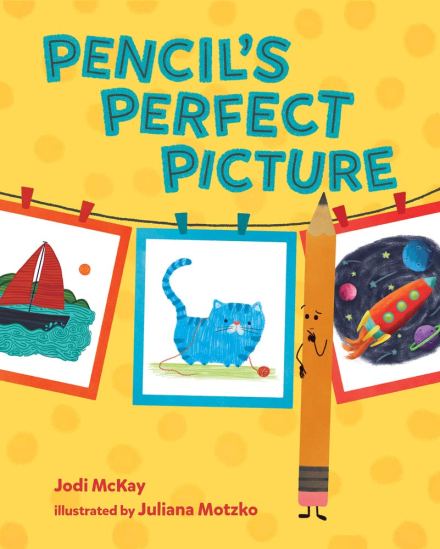
Pencil loves his dad so much that he wants to do something special for him. He thinks about baking him a cupcake or giving him a bouquet of flowers, but then he hits on just the right thing. Pencil decides “I’ll draw him the greatest, the best, the most perfect picture he has ever seen!” But there’s a hitch, Pencil doesn’t really know what that is. He heads off to the Art School to find out.

celebrate-picture-books-picture-book-review-pencil's-perfect-picture-dad

Image copyright Juliana Motzko, 2019, text copyright Jodi McKay, 2019. Courtesy of Albert Whitman & Company.

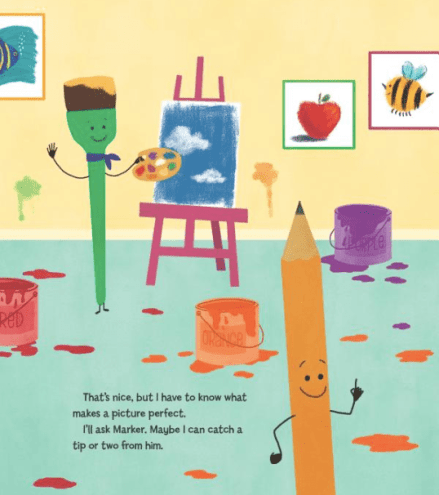
He finds Brush doing a headstand in a paint can, and after Brush adds a golden swoop to a sunset painting, Pencil asks if that’s what makes the picture perfect. “Perfection?” Brush answers. “Pah! I paint for pleasure.” This answer doesn’t really help, so Pencil goes in search of Marker.

Marker shows Pencil all the fancy moves he uses when drawing. Pencil loves the action in Marker’s work and wonders if that’s what makes it perfect. Marker’s not that interested in perfection though, just in doing his best. Pencil then thinks he’ll go ask Pastel for her opinion. He finds Pastel practicing yoga before she creates. Then she faces her blank paper and in a few minutes has a picture that makes Pencil “feel happy.” Could this be the secret to perfection? Pastel says peace is her aim, but Pencil counters, “I don’t think I’ll find peace until I know how to draw a perfect picture” and walks off to find the crayons.

celebrate-picture-books-picture-book-review-pencil's-perfect-picture-dipping

Image copyright Juliana Motzko, 2019, text copyright Jodi McKay, 2019. Courtesy of Albert Whitman & Company.

The little crayons have all been working hard on their drawings and are proud to show them off. Pencil thinks they’re all perfect and asks how they achieved it, but their teacher reveals that they just “draw because it’s fun.” Pencil’s still no wiser when he meets up with Chalk, but in describing his frustrations, Pencil has a brainstorm.

He hurries home to try a little bit of everything he’s learned. He stands back to take a look at his drawing just as his dad comes in. Pencil explains that he wanted to make a special drawing for him, but he’s just not sure it’s…. His dad studies the drawing and says, “Wow, this picture is PERFECT!” Pencil is excited and wants to know why. As they gaze at the drawing in which Pencil and his dad are smiling and have their arms around each other, Pencil’s dad says, “It’s perfect because YOU drew it for me.”
celebrate-picture-books-picture-book-review-pencil's-perfect-picture-paint-brush

Image copyright Juliana Motzko, 2019, text copyright Jodi McKay, 2019. Courtesy of Albert Whitman & Company.

Jodi McKay so sweetly taps into the desire of little ones to show their parents, grandparents, or other caregivers how much they love them while including that lump-in-the-throat moment adults experience when it happens. Through Pencil’s unwavering determination to find the answer, kids are introduced to all their favorite drawing tools and lots of ways to look at art or any pursuit. Pencil’s enthusiasm is infectious and charming, and readers will be happy to take the journey with him. When Pencil puts his own spin on what he’s learned and creates the drawing for his dad, little ones will see that they too have great creative ideas. The reaction of Pencil’s dad is reassuring and teaches an important lesson about anything children pursue—that “perfection” is personal and in the eye of the beholder.

celebrate-picture-books-picture-book-review-pencil's-perfect-picture-crayons

Opening the cover of Pencil’s Perfect Picture is like stepping into a classroom full of color and joyful kids eager for fun. Juliana Motzko’s adorable Pencil with his stick arms and legs and expressive smile and eyebrows is just the kind of friend readers would love to spend time with. Cleverly, Motzko depicts the other drawing tools as other influences that children meet along their way in life—teachers, coaches, and classmates. Readers will love seeing all of the drawings these artists create and may even want to try drawing some of them themselves (in their own style, of course!). Every page will make kids and adults smile, and the final spreads in which Pencil and his dad stand with their arms around in real life and in the portrait make for the perfect ending.

Sprinkled with humor, Pencil’s Perfect Picture is an adorable and endearing read that would quickly become a favorite on home, classroom, and public library bookshelves.

Ages 3 – 5

Albert Whitman & Company, 2019 | ISBN 978-0807564769

Discover more about Jodi McKay and her books on her website.

To learn more about Juliana Motzko, her books, and her art, visit her website.

Meet Jodi McKay

celebrate-picture-books-picture-book-review-jodi-mckay-headshot

Jodi McKay lives in Michigan with her husband, son, and two furry friends. She is the PAL coordinator for SCBWI-MI, and is active in several online writing groups. She has two books published by Albert Whitman & Co., WHERE ARE THE WORDS? (2016) and PENCIL’S PERFECT PICTURE (May, 2019). Jodi is represented by Linda Epstein of Emerald City Literary Agency.

Today, I’m excited to chat with Jodi McKay about Pencil’s origin, how adults can help kids develop and keep their own style, and some of the best parts of book events.

What inspired you to write Pencil’s Perfect Picture?

I actually wrote Pencil’s Perfect Picture thinking that it would be a companion book to my first book, Where Are The Words? That story ends with the characters asking Pencil to draw them pictures for the story they just wrote. I figured book number two would show Pencil trying to draw pictures for them, but not just any pictures, they had to be perfect. That idea came from watching my son struggle with drawing something “just right.” He had developed a sense of perfection when it came to his art and that broke my heart a little. I realize that kids start to compare themselves to their peers or others as they grow up, but I didn’t want that to affect how he approached his creativity. I had to make sure the story addressed that idea of perfection especially when it comes to art. My editor suggested that I change who Pencil draws his picture for to include more of a family theme which I loved. It adds a layer of heart that is relatable to kids as they often draw pictures for their parents or loved ones.

I love the message of Pencil’s Perfect Picture. As you say, children seem to learn so quickly to compare their work and themselves to others. What are a couple of ways that adults can help them appreciate and embrace their unique view of the world.

Yes, agreed! I know it has to do with some developmental stage where the self becomes less important and peer opinions more important, but it’s imperative not to lose that sense of self. We have to celebrate our individuality, explore what makes us unique, and find ways to express ourselves with our imaginations. Parents have a special job when it comes to fostering all of that, and for me it really comes down to creating a judgement-free zone not just with art, but with all aspects of life. For the sake of time let’s stick with art here.

  • Provide your child with different types of art supplies: markers, crayons, paint, fabrics, clay, etc. Let them pick what they want to use and how they want to use it (watch where those small pieces go!).
  • When your child is finished, talk to him or her about what they made, how it made them feel, what is their favorite part about their art project. Keep it positive.
  • Remember, art is never wrong. Emphasize that to your child. It is awesome because they imagined it and brought it to life. No one else can make that same picture.
  • Consider creating with your child. I think kids love to see their parents use their imaginations so grab a marker or a crayon and draw together! Need a fun idea? Try to draw a perfect picture together.

Here’s what you will need:

  • Paper
  • Pencil, crayon, marker, whatever is fun to draw with

Instructions:

One person starts by drawing something simple, a shape, a line, etc. Take turns adding elements to the picture until you both decide it’s perfect. Enjoy your masterpiece!

Another wonderful aspect of your book is that you include so many different personalities in Brush, Marker, Pastel, and the Crayons. Which do you identify with most and why?

I really like this question! It’s taken me a minute to think about it and the one I have chosen is not an obvious answer if you know me. I think I’m most like Marker. I’m not particularly sporty or a fan of sweat bands, but I am organized like him. He’s a “First, Next, Last” kind of guy which is how I can be when it comes to tackling a project. Also, his motto, “Do your best” resonates with me.

When my son was young, he and his friends took to sharpening old pencils down to the eraser to see how small they could get them. We loved those cute nubbins! Your first book, the very clever Where Are the Words? also has a pencil character. Do you have a special place in your heart for pencils, a favorite pencil or a special memory involving pencils or writing instruments?

I know, it must seem like I have a thing for pencils, but I’m sorry to say that I don’t. I used to draw a ton with pencils, color and plain. Lots of doodles in the margins of notebooks, drawing pads full of patterns, cartoons, likenesses. I never write with pencils though, I use pens for the most part which makes one wonder why I didn’t include a pen in the story, right? I do have a favorite pen—it has a sloth on it, which makes me very happy.

On your website you mention that The Story of Ferdinand was your favorite book as a child. Me too! In fact, I just found a boxed edition for $3.00 at my wonderful local used book store and snapped it up. I really identified with Ferdinand, but there’s also so much sage advice in that book. What is about that book that made it a favorite for you?

There is so much to love about that book—the sense of calm I feel when I read it, the way pacing is used to create both tension and ease, the words Leaf chose that paint beautiful pictures (smelling flowers under a cork tree), and how Ferdinand stayed true to himself. LOVE it!

One fun part of being a children’s author must be visiting schools and holding other events. What do you like best about meeting your readers? Do you have any anecdote you’d like to share?

Yes! I love meeting readers and chatting with them about books—what they like, what they don’t like, and listening to their story ideas. It’s such a great feeling to see kids get excited about writing and reading, it makes me think that I’ve done my job as an author.

Some of my favorite moments happen when I see a young reader connect with the humor in my books. I love the laughs and the, “aha!” moment of understanding the joke. Some of my funnier experiences have happened during school visits. There’s always the question, “How old are you?” and the follow up comment, “My mom is that old!” or the looks I receive when the kids walk into the room and say, “That’s her!” and “She’s the author!” I’ve never seen myself as that person and hearing their whispers is funny to me. Of course, there are also sweet moments filled with hugs and thank you’s from the students.

What’s up next for you?

At the moment I am busy preparing for upcoming book-signing events as well as a few future events for the Michigan SCBWI members. Otherwise, I am still writing, writing, and writing some more. I have a couple of stories ready to send to my agent, one ready for submission to editors (fingers crossed!), and a bunch waiting for revisions or reworking.

What’s your favorite holiday?

Christmas all the way. I love the joy of the holiday, the shared excitement, the smells and sounds, and the colorful, glittery décor. It’s all about family, love, and giving. There’s not much better than that!

Has a holiday ever influenced your work?

Christmas definitely has inspired some stories (surprise!), however I was informed that holiday, Christmas specifically, stories are really hard to sell. I’m not giving up hope though, I will just need to find the right spin on a holiday theme and maybe it will become one of those few that are chosen.

Thanks so much Jodi! This was fun! I wish you all the best with Pencil’s Perfect Picture, Where Are the Words, and all of your future projects!

You can connect with Jodi on

Her website | Facebook | Twitter | You can email her at Jodi@JodiMcKayBooks.com

Children’s Book Week Activities
celebrate-picture-books-picture-book-review-jodi-mckay-drawing-page

Pencil’s Draw Your Own Picture Page


Are you eager artist? Then Jodi McKay and Pencil have a treat for you—a page where you can create their own “perfect picture!” Download it here and get drawing!
Draw Your Own Picture Page

celebrate-picture-books-picture-book-review-fish-craft-whack

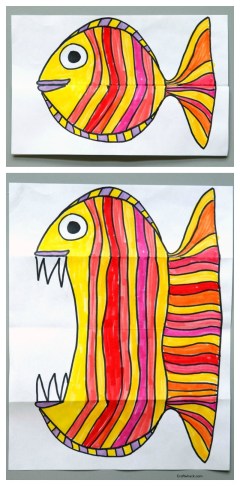
Surprise Ferocious Beings Paper Project


Today, Jodi’s also sharing one of her favorite craft ideas courtesy of Janette Nyberg’s Craft Whack website. If you love to draw—and add an element of surprise to your work—you’ll love this clever idea! After your kids do this one, they’ll want to take a look at all of the fun ideas on this fantastic site!

Surprise Ferocious Beings Paper Project

celebrate-picture-books-picture-book-review-pencil's-perfect-picture-cover

You can find Pencil’s Perfect Picture at these booksellers

Albert Whitman & Co. | Amazon | Barnes & Noble | Books-a-Million | IndieBound

Picture Book Review


April 22 – Earth Day

celebrate-picture-books-picture-book-review-soar-high-dragonfly-cover

About the Holiday

By 1970 awareness was growing worldwide about the damage that industrialization, pollution, and pesticides were causing people and the environment. On April 22, 1970, millions of people demonstrated for change. In response, in July President Nixon and the US Congress created the Environmental Protections Agency and enacted laws such as the Clean Water Act and the Endangered Species Act among others. Earth Day is now celebrated around the globe as a day for political action and civic participation.

Today, it’s more important than ever for citizens to participate in the protection of the environment so that the advances we have made are not rolled back or lost. This year the theme of Earth Day is Protect Our Species. To learn more about endangered and threatened species—from plants to animals to insects, including the Hines emerald dragonfly, and how you can help, visit the Earth Day Network. To celebrate today’s holiday, join an action group in your community dedicated to protecting natural resources.

I received a copy of Soar High, Dragonfly! from Sleeping Bear Press for review consideration. All opinions are my own. I’m happy to be teaming with Sleeping Bear Press for a giveaway of the book. See details below.

Soar High, Dragonfly!

Written by Sheri Mabry Bestor | Illustrated by Jonny Lambert


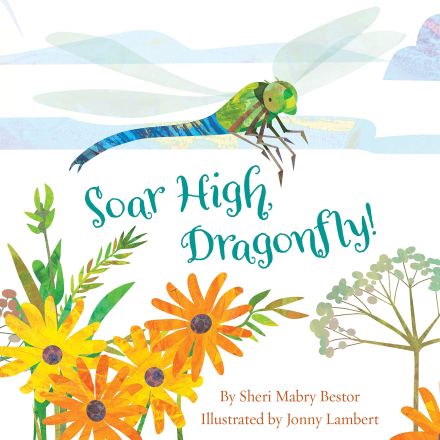
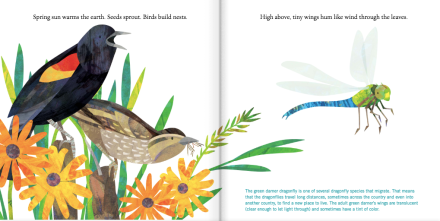
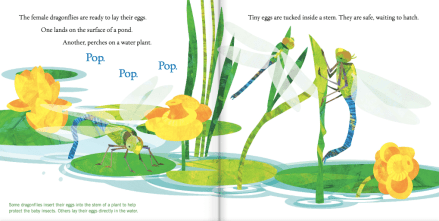
As winter turns to spring, flowers bloom, baby birds hatch, and “high above, tiny wings hum like wind through the leaves.” The sound comes from dragonflies. In the warm air, the females are looking for places to lay their eggs. They find a pond, where they can lay eggs in the water or within the stem of a plant. While some eggs are eaten, many others hatch into nymphs. Underwater, the nymphs have a special way of swimming that propels them to find food to eat.

celebrate-picture-books-picture-book-review-birds

Image copyright Jonny Lambert, 2019, text copyright Sheri Mabry Bestor, 2019. Courtesy of Sleeping Bear Press.

As a nymph “he eats, he grows. As he grows, he sheds his casing. Squirt. Gulp! Squirt. Gulp!” At last the nymph is ready to leave the water. During the night, he climbs the stem of a water reed and waits for daylight. The nymph has undergone many casing changes, but finally, his last casing grows too tight. “It cracks. He wiggles and squiggles. Out he crawls!” Although his wings are free, he is too tired to fly.

celebrate-picture-books-picture-book-review-soar-high-dragonfly-nymph

Image copyright Jonny Lambert, 2019, text copyright Sheri Mabry Bestor, 2019. Courtesy of Sleeping Bear Press.

In the warmth of the sun, the dragonfly’s wings dry. “They hum in the morning light.” When he is ready, he takes off into the sky… “he’s flying! Soar high, dragonfly!” Without practice, the dragonfly can fly forward, backward, and even hover. Using his large eyes, he scans for predators, darting away at the last moment.

The dragonfly is a marvel, moving his wings and changing his body to keep warm day and night. Summer brings mating season, and with the autumn the dragonflies migrate to warmer climates to lay their eggs and begin their life cycle again.

celebrate-picture-books-picture-book-review-soar-high-dragonfly-laying-eggs

Image copyright Jonny Lambert, 2019, text copyright Sheri Mabry Bestor, 2019. Courtesy of Sleeping Bear Press.

Sheri Mabry Bestor’s lyrical text is accompanied by equally engaging factual information about dragonflies, and the green darner dragonfly in particular. Each page contains a sentence or two of fascinating description about egg laying, life stages, feeding customs, movement (“Nymphs squirt water out of their back ends to propel themselves forward.”), body regulation (“Dragonflies have special ways to keep warm. They can capture the heat of the sun by adjusting their four wings just right.”), and migratory habits of these favorite insects.

For young readers interested in insects and nature, Bestor’s captivating storytelling, which uses short sentences that echo the quick, darting movement of dragonflies, will keep them absorbed as they learn about this most intriguing creature.

celebrate-picture-books-picture-book-review-soar-high-dragonfly-pond

Image copyright Jonny Lambert, 2019, text copyright Sheri Mabry Bestor, 2019. Courtesy of Sleeping Bear Press.

Jonny Lambert brings his talent as a paper engineer to the vibrant, collage-style illustrations that will wow kids with their beauty. The iridescent brilliance of the green darner dragonfly is represented through a green and yellow-mottled head and thorax that gives way to a blue striped abdomen. Light-sage-colored wings mirror the dragonfly’s delicate appearance. A stunning palette of greens and blues usher children into the underwater world of the pond where the nymphs grow among fish, frogs, snails, and other creatures. Each stage and change the dragonfly experiences is clearly shown and enhances learning.

A superb book for general story times as well as STEM learning, Soar High, Dragonfly! would find eager readers at home as well as in classroom and public libraries. Check out the first gorgeous collaboration between Sheri Mabry Bestor and Jonny Lambert, Good Trick, Walking Stick!, too! You can read my review of that book here.

Ages 5 – 8

Sleeping Bear Press, 2019 | ISBN 978-1585364107

Discover more about Sheri Mabry Bestor and her books on her website.

Earth Day Activity

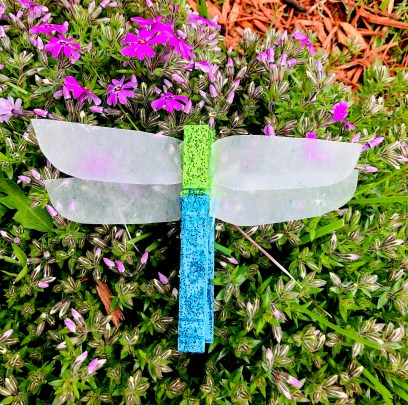
celebrate-picture-books-picture-book-review-dragonfly-craft-3

Dragonfly Decoration


Your kids can bring the beauty of nature inside with this easy-to-make dragonfly craft.

Supplies

  • Wooden clothespin
  • Wax paper
  • Bright green craft paint
  • Bright blue craft paint
  • Green glitter
  • Blue glitter
  • Paint brush
  • Thread or fishing line (optional)
  • Adhesive magnet (optional)

celebrate-picture-books-picture-book-review-dragonfly-craft

Directions

To Make the Body

  1. Paint the top part of the clothespin (to the point where the metal hinge crosses the wood) green
  2. Sprinkle green glitter on the wet paint, let dry
  3. Paint the bottom part of the clothespin blue
  4. Sprinkle blue glitter on the wet paint, let dry
  5. If the glitter doesn’t completely stick, apply a thin layer of glue with a toothpick and add more glitter

To Make the Wings

  1. Cut two 5-inch-by-3/4-inch strips from the wax paper
  2. Cut a curved edge at each end of the wax paper strips, cutting straight down from the top and curving around the bottom corner
  3. Cut curved notches in the center, top and bottom, of each wing to allow the wings to fit into the clothespin
  4. Open the clothespin and slip the wings in, curved edge down and allowing the top wing to overlap the bottom wing slightly

Attach the thread or fishing line to the dragonfly to hang, or to make a refrigerator magnet, attach an adhesive magnetic strip to the back.

celebrate-picture-books-picture-book-review-soar-high-dragonfly-cover

You can find Soar High, Dragonfly! at these booksellers

Amazon | Barnes & Noble | Books-a-Million | IndieBound

Picture Book Review


April 18 – It’s National Garden Month

celebrate-picture-books-picture-book-review-growing-season-cover

About the Holiday

April is the month when the earth comes alive again after a long winter! Flowers bloom in brilliant colors, trees bud and blossom with pale, green leaves, and the birds and animals prepare for new life to come. Today, enjoy the warmer weather, plan a garden or flower bed, or visit a nursery or park and take in the sights and smells of spring!

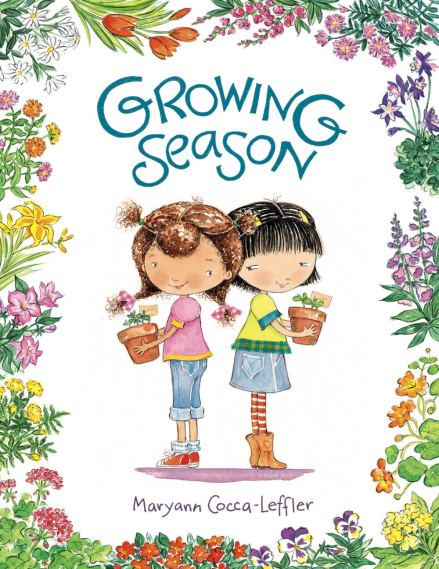
Growing Season

By Maryann Cocca-Leffler


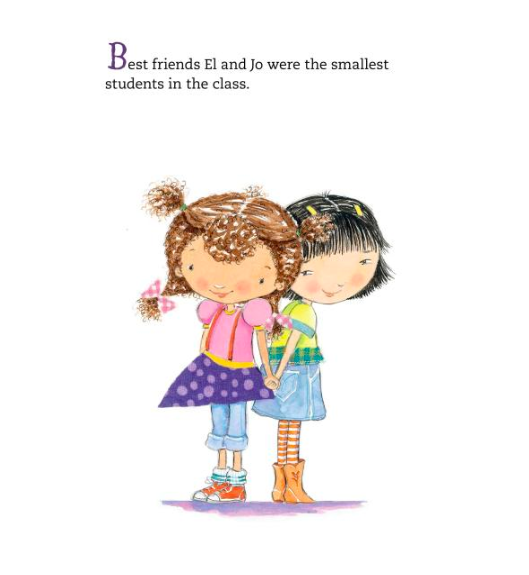
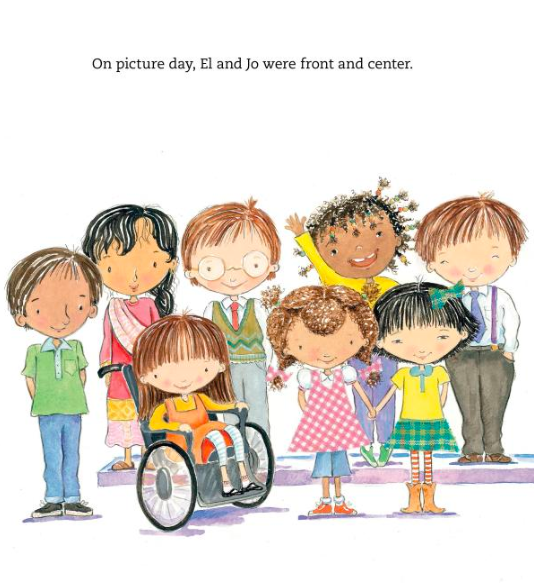
El and Jo weren’t only best friends, they were the smallest kids in their class. They did everything together, even helping “each other reach the unreachable.” On picture day, Jo and El always got to be in front, and during reading time they could both fit into the comfy reading chair. “But in springtime, something BIG happened.” Jo began to grow. Their teacher, Mr. Diaz, said she was “growing like a weed.”

celebrate-picture-books-picture-book-review-growing-season-best-friends

Copyright Maryann Cocca-Leffler, 2019, courtesy of Sterling Children’s Books.

She no longer needed El’s help to water the plants on the windowsill, and she had graduated to needing a bigger desk. On the last day of school, when Mr. Diaz told everyone they could take a plant home for the summer, El was overlooked and reached over as the other kids took all the colorful flowers. By the time El got to the windowsill, the only plant left was an aster, with no blooms at all.

Mr. Diaz told her that “aster means ‘star.’” El didn’t think her plant was a star, but Mr. Diaz encouraged her to wait and see. “Jo looked over at El’s sad plant, and then at her own” and offered to let El have her zinnia since she was going to be away all summer anyway. El said she’d plant them side by side, and Jo said they could be best friends.

celebrate-picture-books-picture-book-review-growing-season-desks

Copyright Maryann Cocca-Leffler, 2019, courtesy of Sterling Children’s Books.

At home, El planted her aster and Jo’s zinnia. She cared for them and waited. They grew bigger, but while the zinnia had many colorful flowers, El’s aster still had none. All summer long, El and Jo wrote letters to each other. El sent a photograph of her zinnia to Jo and told her that waiting for aster was hard. Finally, Jo came home. It was the last day of summer, and the two girls ran to the garden. There, they saw that “something BIG had happened. Aster had finally bloomed…and so had El!”

An Author’s Note on plant life cycles describes the differences between annual, perennial, biennial, and tender perennial flowers and includes fun facts about peonies, dahlias, marigolds, and foxgloves.

celebrate-picture-books-picture-book-review-growing-season-picture-day

Copyright Maryann Cocca-Leffler, 2019, courtesy of Sterling Children’s Books.

With her signature warmth and attention to children’s feelings, Maryann Cocca-Leffler offers a sweet story about growth and how each child’s experience is as varied as garden flowers. El and Jo, as the smallest kids in the class, are natural best friends—a relationship which, in a welcome demonstration of steadfastness, remains strong even when Jo begins to grow. As summer comes, El’s focus is not on herself but on caring for the aster and zinnia and staying in touch with Jo.

When Jo returns, readers will see that something more has happened over the summer too. As the two girls hug, excited to see each other again, children will notice that they are now the same height—a surprise that El and Jo also seem to share with smiles and sidelong glances at each other. The purple asters that greet the reunited pair, remind kids that growth in many forms follows the natural path for each individual.

Cocca-Leffler’s fresh and cheerful gouache, colored pencil, and collage illustrations present a diverse classroom and school details that will be familiar to readers, making this a highly relatable story. Mr. Diaz shows kindness and understanding as he crouches down to talk with El about the aster and offer encouragement.

A gentle, reassuring story, Growing Season would make an excellent story to pair with plant or garden lessons as well as to remind children that everyone grows and develops at their own pace for home, classroom, and library story times.

Ages 4 – 8

Sterling Children’s Books, 2019 | ISBN 978-1454927044

Discover more about Maryann Cocca-Leffler, her books, and her art on her website.

National Garden Month Activity

celebrate-picture-books-picture-book-review-flip-flop-craft

Flip-Flop Plant Holder


Starting to dig out the flip-flops for warmer weather and finding they’re a little too small? Don’t get rid of them! Make them into this sandal-ightful way to hang succulents and other light plants on walls or even windows!

Supplies

  • Child’s flip-flops with elastic heel straps
  • Buttons or charms
  • Small plastic solid-bottom pot
  • Hot glue gun
  • Heavy duty mounting strips
  • Small plant
  • Dirt
  • Small shovel or spoon

Directions

  1. Place the flip-flop toe down on your work surface. With the hot glue gun, attach the buttons to the plastic toe straps of the flip-flops.
  2. Add dirt to the pot
  3. Add plant to the pot
  4. Slip the pot into the elastic strap and gently push down so it is also supported by the plastic toe straps
  5. To hang, use appropriate-weight mountable strips.
  6. To make an interesting and attractive arrangement, use various sizes of flip-flops

celebrate-picture-books-picture-book-review-growing-season-cover

You can find Growing Season at these booksellers

Amazon | Barnes & Noble | Books-a-Million | IndieBound

Picture Book Review
April 17 – Month of the Young Child

celebrate-picture-books-picture-book-review-the-very-first-easter-cover

About the Holiday

During the month of April, we celebrate families and their young children. The aim of the holiday is to raise awareness of all the ways people can support and advance children’s happiness and wellbeing. One way families do this is by celebrating meaningful holidays together and passing on beliefs,  history, and traditions. Easter, which falls on April 21 this year, celebrates the biblical resurrection of Jesus and the fulfillment of God’s promise of salvation. The day is also one for fun family Easter egg hunts and a visit from the Easter Bunny, who brings candy and other treats. 

Today, I’m reviewing two Berenstain Bears Easter books. The first is a bit simpler for younger readers while the second contains more details of the biblical story and how secular traditions fit into the day. I received copies of both books for review consideration. All opinions are my own.

The Berenstain Bears: The Very First Easter

Written by Jan and Mike Berenstain


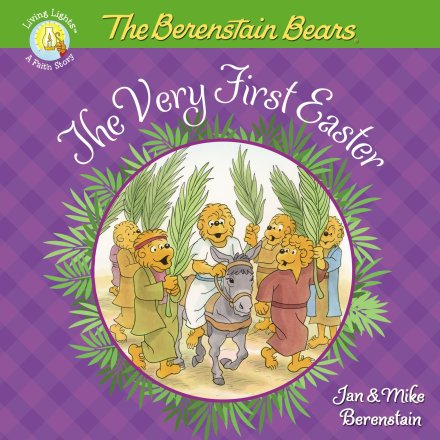
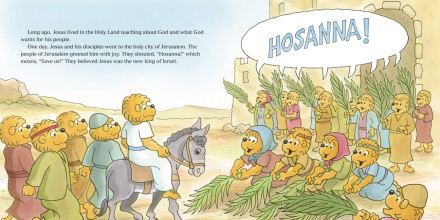
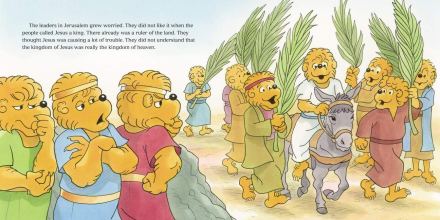
On the night before Easter, Papa Bear gathered Sister, Brother, and Honey together to read a bedtime story. Brother wants to hear one from their storybook Bible, and Papa finds one about the very first Easter. The story begins when Jesus and his disciples come to Jerusalem and are greeted with “Hosannas” and a crowd waving palm branches. “They believed Jesus was the new king of Israel.” The officials in Jerusalem thought Jesus was stirring up trouble. “They did not understand that the kingdom of Jesus was really the kingdom of heaven.”

The day was Passover, and Jesus and his disciples gathered for a special Passover dinner. During the supper, Jesus told his followers that he loved them. They ate bread and drank wine, which Jesus said were like his body and blood. He told them that he would be leaving them soon, but they did not understand what he meant.

celebrate-picture-books-picture-book-review-the-very-first-easter-hosanna

Copyright Jan and Mike Berenstain, 2019, courtesy of Zonderkidz.

Later, Jesus went to a garden to pray. The followers that went along with him soon fell asleep. Another disciple, Judas, had “decided to help the angry city leaders put Jesus in prison.” He showed the soldiers where Jesus was praying. The leaders of Jerusalem brought Jesus to their Roman ruler, Pilate. He ordered that Jesus be put to death by hanging on a wooden cross.

On the day Jesus died, the sky turned black and a wind whipped across the land. People were afraid; some prayed and some hid. Jesus was buried in a tomb, and the opening was covered by a huge, heavy stone. Roman guards were placed in front of the tomb.

Three days after Jesus died, an angel appeared. The angel rolled away the stone and frightened the guards away. When three women came to visit the tomb, the angel told them that Jesus had risen. The women hurried away to tell all of Jesus’ friends. Later, Jesus visited his followers in the room where they had been fearfully staying together.

They were amazed to see him. “‘Peace be with you,’ Jesus said.” He then told them to “spread the good news about what had happened.” Forty days later, Jesus rose into heaven “to be with God, his father.” Jesus’ friends and followers “rejoiced and praised God.” As Papa closed the Bible, he saw that Brother, Sister, and Honey were asleep. “‘Good night,’ Papa whispers, ‘and God bless.’”

celebrate-picture-books-picture-book-review-the-very-first-easter-angry-leaders

Copyright Jan and Mike Berenstain, 2019, courtesy of Zonderkidz.

Jan and Mike Berenstain’s The Very First Easter is a traditional telling of the biblical Easter story for young readers. Composed of the important events in the days surrounding Jesus’ death and resurrection, the story reinforces the miracle of Jesus’ rising from the dead and his directive that his followers should spread the good news. Children will enjoy learning the Easter story along with Sister, Brother, and Honey as their own parent or caregiver joins Papa Bear in sharing this highlight of the church calendar. The book makes a good companion to personal discussions about the holiday and can grow with the child as they age and learn more details of the story.

An Easter word search puzzle is included on the inside back cover.

Ages 4 – 8

Zonderkidz, 2019 | ISBN 978-0310762188

celebrate-picture-books-picture-book-review-the-berenstain-bears-and-the-easter-story-cover

About the Holiday

The definition of spiritual wellness is unique to each person. When you think deep down about what gives your life purpose, meaning, and happiness, what do you find? This month encourages people to discover if their beliefs, activities, work, family relationships and friendships are all in harmony. It’s also important to take care of you, by taking time to reflect each day and to plan fun and relaxing activities. Springtime and Easter are opportunities for renewal, making March a great time to consider your spiritual wellness.

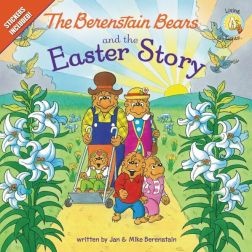
The Berenstain Bears and the Easter Story

Written by Jan and Mike Berenstain


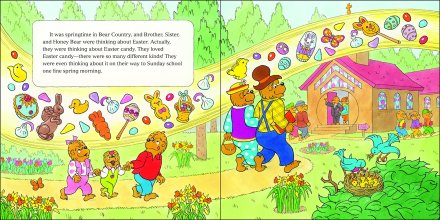
On the way to Sunday school one spring morning, all Brother, Sister, and Honey Bear could think about was Easter candy. As they entered their classroom, Brother said his favorite Easter candy was chocolate bunnies, Sister said hers was marshmallow chicks, and Honey Bear cried “‘Jelly beans!’” Then Missus Ursula revealed that her favorite was black jelly beans, but also that Easter is about more than candy.

Brother and Sister said they knew that. Easter was about “‘stuff in the Bible,’” Brother told Missus Ursula. “‘Yeah,’ agreed Sister. ‘Bible stuff.’” And Honey Bear added, “‘Stuff!’” Missus Ursula thought the cubs’ understanding could use a little more rounding out, so she took them into the next classroom, where the older bear cubs were putting on a play.

celebrate-picture-books-picture-book-review-the-berenstain-bears-and-the-easter-story-candy

Copyright Jan and Mike Berenstain, 2012, courtesy of Zondervan.

The stage was set with props of the Holy Land, and cubs were dressed in costumes. One of the performers began telling the Easter story. “‘Long ago, in the Holy Land, there was a man named Jesus. He traveled the countryside teaching about God and what God wanted for his people.’” The narrator went on to tell about Jesus’s miracles and how “‘he could do these wonderful things because he was the Son of God.’”

Government officials and others were angry. They were afraid that Jesus wanted to become the king. One day Jesus rode into the city of Jerusalem and crowds greeted him with shouts of “‘Hosanna!’” The leaders believed Jesus was becoming too powerful. One night while Jesus was praying in a garden, “‘soldiers were sent to arrest him.’” He was questioned by a “‘wicked judge…who wanted to show everyone that Jesus was not a king. He ordered for Jesus to be put to death by hanging on a wooden cross.’” 

After Jesus died, he was put in a tomb. A huge stone was rolled in front of the entrance. “‘On the morning of the third day after Jesus died, some women who knew Jesus came to weep at his tomb.’” They saw that the stone had been rolled away. Jesus was no longer in the tomb. “‘An angel told the women…that Jesus was alive once more.’”

celebrate-picture-books-picture-book-review-the-berenstain-bears-and-the-easter-story-missus-ursula

Copyright Jan and Mike Berenstain, 2012, courtesy of Zondervan.

In the days and weeks after Jesus rose, he visited his friends. “‘Jesus told them they should spread the good news about what had happened.’” After visiting with his friends, “‘Jesus rose up to heaven to be with God, his Father.’” Following the play, the cubs understood that Easter is about more than candy. But “‘does this mean we shouldn’t eat any Easter candy?’” Brother asked.

“‘Certainly not!’ Missus Ursula laughed” and confessed that she’d miss her jelly beans too. But she reminded the cubs that they should go to church after they got their Easter baskets. “‘Hooray!’ the cubs said. ‘And Hosanna!’ added Missus Ursula. ‘He is risen!’”

A page of colorful stickers depicting images from the story are included, and discussion questions and fun activities related to the book follow the text. 

Since the early 1960s, the Berenstain Bears have been delighting readers with their shenanigans, wit, and always-close family relationships. In The Berenstain Bears: The Very First Easter The Berenstain Bears and the Easter Story, part of the Living Lights series, these beloved characters talk about and reveal to children the deeper meaning of Easter, with a focus on Jesus’s resurrection. The dialogue-rich structure lends a personal touch to any reading, letting the adult sound as if they are telling the story themselves.

The illustrations of Bear Country are bathed in the warm glow of spring as the sun rises over the Bear’s tidy treehouse home. Brother’s, Sister’s, and Honey Bear’s dreams of candy will enchant little ones as will the familiar scene of walking into church on Easter morning. Depictions of the play are vibrant and detailed but with a homey and childlike feeling to the props and acting.

For adults looking for a traditional, Bible-centered telling of the Easter story with engaging  characters that children will respond to, The Berenstain Bears: The Very First Easter and The Berenstain Bears and the Easter Story is a superb choice for home and church libraries.

Ages 4 – 7

Zonderkidz, 2012 | ISBN 978-0310720874

To learn more about Bear Country and all of The Berenstain Bears books as well as to find fun activities visit the Berenstain Bears’ website.

Month of the Young Child Activity

celebrate-picture-books-picture-book-review-sweet-bunny-candy-jar

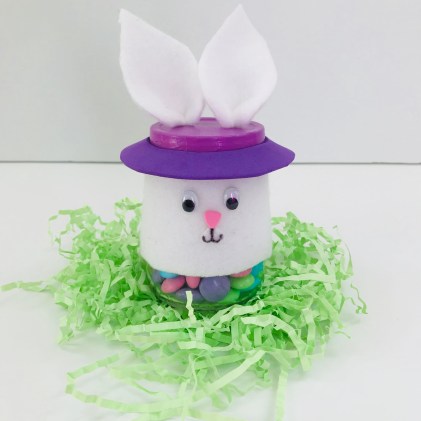
Sweet Bunny Candy Jar


A little bit of candy makes Easter or any spring day sweeter! With this Sweet Bunny Candy Jar, you can give a child, a friend, or even yourself a special treat that will make you hoppy!

Supplies

  • Printable Hat Rim and Bunny Ears Template
  • Baby food jar (I used a Beech-Nut Naturals jar)
  • White fleece, 8 ½ inches by 11 inches
  • 1 piece of purple foam (Or any color you’d like to make the hat)
  • Small piece of pink foam or felt for nose
  • Googly eyes (I used oval)
  • Medium pom-pom
  • Multi-surface paint, purple (or whatever color you’d like to make the hat)
  • Fabric glue (I used Fabric-Tac)
  • Black ultra-fine or fine tip permanent marker
  • Large nail or ice pick
  • Hammer
  • Scissors

IMG-2614

Directions

  1. Remove label from baby food jar
  2. Clean and dry jar and lid
  3. Trace the hat rim template onto the purple foam
  4. Cut out the rim of the hat and remove the center
  5. Trace the ears template onto the white fleece and cut out

To Make the Body and Face

  1. Cut a 2-inch wide by 7-inch long strip of white fleece
  2. Glue the strip of fleece to the jar under the lip and leaving about ½ inch of glass showing at the bottom
  3. Glue on the googly eyes
  4. Cut a little nose from the pink foam and glue to the face
  5. Make the mouth with the permanent marker on a little piece of fleece, cut out and glue under the nose

To Make the Hat

  1. Paint the lid with the purple paint. Let dry.
  2. With the nail or ice pick and hammer, make a hole on either side of the lid to insert the ears. You can make the hole a little bigger with a phillips head screwdriver
  3. Flip the lid over and hammer the edges of the hole flat
  4. Trace the hat rim template onto the purple foam

To Insert the Ears

  1. Pinch the end of one ear together and push it through one hole in the lid.
  2. Pull it through the hole a bit to form the ear
  3. Repeat with the other ear

Finish the Bunny

  1. Add the foam rim to the lid
  2. Glue the pom-pom to the back of the jar for the tail
  3. Add M&Ms, jelly beans, or other small candy

celebrate-picture-books-picture-book-review-the-berenstain-bears-and-the-easter-story-cover

You can find The Berenstain Bears and the Easter Story at these booksellers

Amazon | Barnes & Noble | Books-a-Million | IndieBound

celebrate-picture-books-picture-book-review-the-very-first-easter-cover

You can find The Berenstain Bears: The Very First Easter at these booksellers

Amazon | Barnes & Noble | Books-a-Million | IndieBound

Picture Book Review

Picture Book Review


April 11 – National Pet Day

celebrate-picture-books-picture-book-review-my-funny-bunny-cover

About the Holiday

Pets are often our best friends—they love us unconditionally, are always there for us, and make us laugh. Today we celebrate pets—whether they’re as small as a goldfish or as large as a horse. National Pet Day also raises awareness of the number of animals available for adoption and encourages people to donate to animal shelters or consider taking a dog, cat, bird, or other pet into their family. If you already have a pet, observe the day by giving them an extra pat, offering a special treat, or spending more time with them.

I received a copy of My Funny Bunny from Abrams Books for Young Readers for review consideration. All opinions are my own. I’m happy to be partnering with Abrams in a giveaway of the book. See details below.

My Funny Bunny

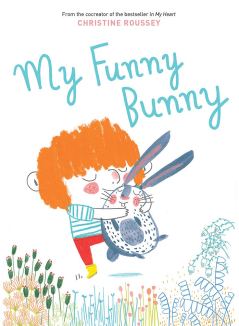
By Christine Roussey


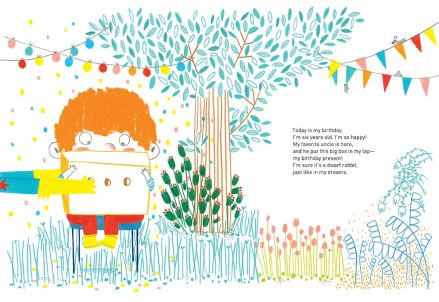
A boy has been dreaming of having a dwarf rabbit as a pet “since forever.” Finally, on his sixth birthday, his uncle hands him a box with holes in it, and the boy just knows it’s the pet of his dreams—a “mini dwarf rabbit as big as a kiwi…. A rabbit that I would love with all my heart.” But when he opens the box, it is not a tiny rabbit that he sees but “a big potato with patchy, yucky fur and whiskers that looked like wires.”

celebrate-picture-books-picture-book-review-my-funny-bunny-birthday-present

Copyright Christine Roussey, 2019, courtesy of Abrams Books for Young Readers.

The boy is beyond disappointed and runs to his room to yell and cry it out. He throws a temper tantrum and tells the rabbit he ruined his birthday and that he’ll never love him. But then something unexpected happens. While the boy is crying, the bunny jumps out of the box and comes to cuddle up next to him. His soft fur and tickly whiskers make the boy feel better.

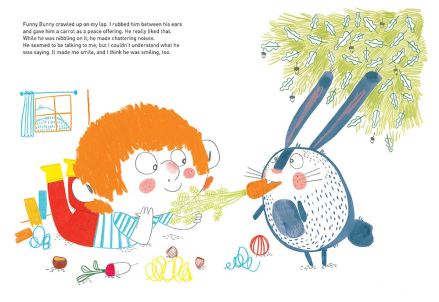
celebrate-picture-books-picture-book-review-my-funny-bunny-carrot

Copyright Christine Roussey, 2019, courtesy of Abrams Books for Young Readers.

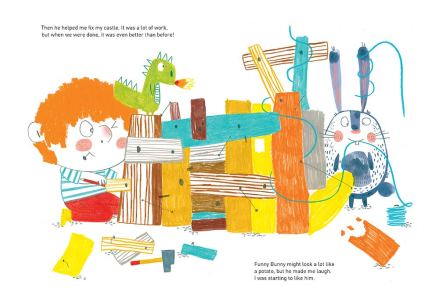
The boy gives him a carrot and they share some smiles. Then the two fix the castle that was broken during the tantrum, and the boy began to have a different perspective on his rabbit: “Funny Bunny might look a lot like a potato, but he made me laugh. I was starting to like him.” The child confides in his bunny that his anger sometimes comes on like a storm. The funny bunny says nothing but having him there makes the boy happy.

The boy even wants to be friends. He apologizes “for being so mean” and thanks “him for forgiving [him].” And that’s how the little boy and the “funny bunny…became friends for life” on his sixth birthday.  

A photo of Hector, Christine Roussey’s own “funny bunny” graces the inside back cover and will delight readers.

celebrate-picture-books-picture-book-review-my-funny-bunny-castle

Copyright Christine Roussey, 2019, courtesy of Abrams Books for Young Readers.

Christine Roussey’s honest look at disappointments and the resulting reactions some children display offers a fresh and humor-tinted way for adults and children to discuss these strong emotions. The funny-looking bunny presents not only an example of how something unexpected can turn out to be just what is needed but also the role pets—with their quiet acceptance and unconditional love—can play in soothing an upset child. Roussey’s child is self-aware, giving adults and children the words for describing the emotions that can sometimes be overwhelming and frightening.

Roussey’s stylish illustrations replicate a child’s drawings and begin with depictions of the dwarf bunny the child has been dreaming of. A turn of the page brings readers face to face with reality—one that will send into giggles. The boy’s tantrum takes the form of gray and colored squiggles that frame the page and usher from his mouth, blowing the bunny’s ears. As the tantrum plays itself out, the boy’s confession is portrayed with child-like stormy clouds, lightning, rain, and a wave that carries them away. Their bond of friendship is built as they play in the boy’s treehouse, give hugs, and spend time together.

An excellent book to share when discussing emotions and how to deal with them, My Funny Bunny would be a valuable addition to home, classroom, and public library collections.

Ages 3 – 7

Abrams Books for Young Readers, 2019 | ISBN 978-1419736186

To learn more about Christine Roussey, her books, and her art, visit her website.

National Pet Day Activity

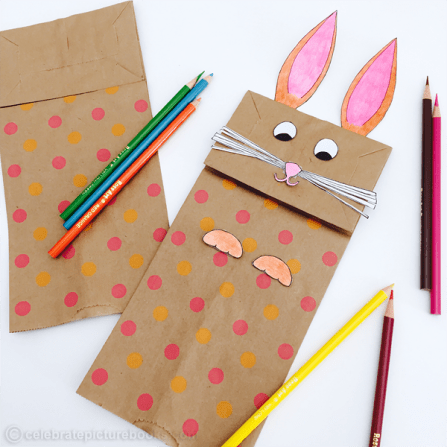
celebrate-picture-books-picture-book-review-bunny-puppet

Story Buddy Puppet


Hop to it! Children and adults can tell stories or talk about your hopes, dreams, and even fears with this Story Buddy Puppet!

Supplies

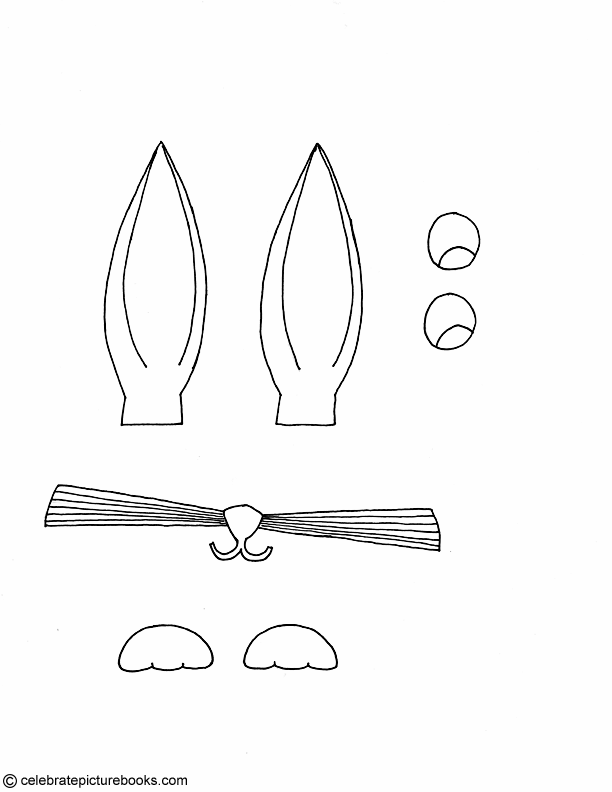
  • Printable Bunny Template
  • Paper sandwich bag
  • Colored pencils, crayons, or markers
  • Scissors
  • Glue

Directions

  1. Print out the Bunny Template
  2. Color the Bunny Template
  3. Cut out the bunny’s features
  4. Glue the bunny’s features to the sandwich bag

celebrate-picture-books-picture-book-review-my-funny-bunny-cover

You can find My Funny Bunny at these booksellers

Amazon | Barnes & Noble | Books-a-Million | IndieBound

Picture Book Review
March 21 – Absolutely Incredible Kid Day

celebrate-picture-books-picture-book-review-the-amazing-idea-of-you-cover

About the Holiday

Every kid is incredible! This special day, established by Camp Fire USA in 1997, gives adults an opportunity to tell the kids in their life how much they mean to them. Whether you write your special young person a letter or just sit down and have a heart-to-heart talk, your words of encouragement and appreciation will make a difference.

The Amazing Idea of You

Written by Charlotte Sullivan Wild | Illustrated by Mary Lundquist


Have you ever thought that a tiny apple seed holds “the idea of a tree?” And that if planted it “might take root / sprout / shoot up / into the blue?” Beginnings always contain the promise of a future filled with the excitement of more, the way “the caterpillar / creeping through grass / carries inside / the color and flutter / of a butterfly.”

celebrate-picture-books-picture-book-review-the-amazing-idea-of-you-blue-bird

Image copyright Mary Lundquist, 2019, text copyright Charlotte Sullivan Wild,, 2019. Courtesy of Bloomsbury Children’s Books.

You began that way too. First as an idea and then, much loved and anticipated, as a promise growing and changing until you were born. “And look at you! What ideas are hidden inside of you?” Will you be musical? Love dancing or painting or adventure? Or perhaps you will create something brand new “for the whole world to share.”

You know what to do! Plant your ideas and tend them carefully as they grow and develop while you experience life with its sunny days and rainy days, warm days and cold. When you grow up, you’ll be amazed at what you’ve accomplished and the fruit your ideas have borne—for yourself and the world.

celebrate-picture-books-picture-book-review-the-amazing-idea-of-you-plant-seed

Image copyright Mary Lundquist, 2019, text copyright Charlotte Sullivan Wild,, 2019. Courtesy of Bloomsbury Children’s Books.

Charlotte Sullivan Wild inspires children to find the promise that’s waiting inside each of them as they experiment with life and discover their special talents. Her cheerful, lyrical text uses examples kids will readily recognize. The lilting rhythm will mesmerize young readers as they take the message to heart. As they go out into the world, they’ll remember and reflect when they see an apple, a butterfly, a bird, and all the promise of nature.

Mary Lundquist’s tranquil and bucolic illustrations give a little girl free reign to play, strum, run, learn, and think as she grows from a curious baby and toddler to a creative and motivated teen to a mother herself who shares the abundant fruits of her labor with friends, neighbors, and others while continuing the natural cycle and her natural talents with her own children. Soft greens highlighted with vivid apple reds, rain-slicker yellows, and spring-sky blues make this a perfect book for quiet, contemplative story times.

An inspiring story that adults will love sharing with the children in their life, The Amazing Idea of You makes a wonderful gift for new babies, teachers, and anyone with a young child. The book is sure to be a favorite addition to home, classroom, and public library bookshelves.

Ages 3 – 6

Bloomsbury Children’s Books, 2019 | ISBN 978-1681191836

Discover more about Charlotte Sullivan Wild and her books on her website.

To learn more about Mary Lundquist, her books, and her art, visit her website.

Absolutely Incredible Kid Day Activity

celebrate-picture-books-picture-book-review-beanstalk-craft-with-top


Incredible You! Measuring Stick Craft


Looking for a unique way to measure your growth? This nature-inspired measuring stick can keep track of small and big growth spurts. You can even use it to record an idea or two as you age! 

Supplies

  • 50-inch wooden stake, available at craft stores
  • Dark and light green foam sheets or 45 – 50 small wooden leaves, available at craft stores
  • Green paint, light and dark
  • Black marker
  • Paint brush
  • Strong glue
  • Flower pot
  • Oasis or clay
  • Ruler
  • Pencil

celebrate-picture-books-picture-book-review-beanstalk-craft-closeup

Directions

  1. Paint the wooden stake with the green paint, let dry
  2. With the ruler mark the stake in 1-inch increments along the edge of the stake

How to Make the Leaves

  1. If using wooden leaves, paint half light green and half dark green
  2. If using foam, cut 1 3/4-inch-long tear-drop shaped leaves (half from light green foam, half from dark green foam), 45 – 50 or as needed
  3. Cut two larger leaves, one from each color to decorate the top of the stake
  4. Draw a line down the center of each leaf

For Measuring Growth: Write the inch 1 through 45 or higher on each leaf with the black marker, alternating colors

For Recording Ideas: You can write favorite ideas, hobbies, or hopes on the leaves too and measure your growth that way!

How to Attach the Leaves

  1. Glue the leaves to the stake, attaching the odd-numbered inch leaves to the left side of the stake and the even-numbered leaves to the right side of the stake.
  2. Attach half of the leaf to the stake, letting the tip stick out from the side
  3. Glue the two larger leaves to the top of the stake

How to Store Your Yardstick

  1. Put the oasis or clay in the flower pot
  2. Stick the stake into the flower pot to keep it handy

celebrate-picture-books-picture-book-review-the-amazing-idea-of-you-cover

You can find The Amazing Idea of You at these booksellers

Amazon | Barnes & Noble | Books-a-Million | IndieBound

Picture Book Review

March 12 – National Plant a Flower Day

celebrate-picture-books-picture-book-review-flower-talk-cover

About the Holiday

Spring is right around the corner and with it the beautiful blooms that color our yards, neighborhoods, and communities. In some places the flowers are already blossoming, while in others, people are eagerly waiting for the snow to melt so seeds and plants can grow again. If you’re looking forward to flower gardening—indoors or out—today’s the perfect day to start planning. Why not take a trip to your local nursery or garden supply store and stock up?

I received a copy of Flower Talk: How Plants Use Color to Communicate from Millbrook Press to check out. All opinions are my own. I’m happy to be partnering with Millbrook Press in a giveaway of the book. See details below.

Flower Talk: How Plants Use Color to Communicate

Written by Sara Levine | Illustrated by Masha D’yans


Do you hear something? Yeah, me too. Oh! It’s the little purple prickly pear down there with all the other cacti. It seems it has something to say about plants. Okay, we’re listening.

“I want to clear up some of your crazy ideas about what the colors of our flowers mean.” You’ve got it all wrong if you think “red roses stand for love and white ones are good for weddings.” While that may be how you interpret the colors, that’s not what they’re really for.

celebrate-picture-books-picture-book-review-flower-talk-cactu

Image copyright Masha D’yans, 2019, text copyright Sara Levine, 2019. Courtesy of Millbrook Press.

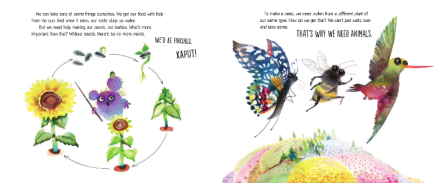
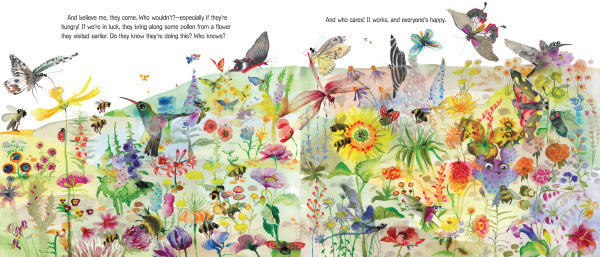
“We use our flowers to talk to the animals” so that we can make seeds and more plants. To do that each plant needs pollen from another plant that’s the same kind. Our flowers are like big ads that attract just the right birds, bees, or butterflies to help us out. Lots of times if they’re hungry they fly from flower to flower and bring pollen along with them.

How does each bird or butterfly or bee know which flowers to visit? That’s where our colors come in! And it’s pretty fascinating. Birds can see a color that insects can’t, and they don’t have a good sense of smell. Can you guess which flowers they’re attracted to? How about bees? Which colors do you think they like the best? I’ll give you a hint: “scientists just figured out that bees have three favorite colors.” Of course, we flowers “have known this for ages. That’s why so many of us make flowers in these colors. We like the reliable help.” This is fun, right?

celebrate-picture-books-picture-book-review-flower-talk-insects

Image copyright Masha D’yans, 2019, text copyright Sara Levine, 2019. Courtesy of Millbrook Press.

How about moths and bats—which flowers do you think they visit? The flowers even assist them in finding their way by putting “out perfume as an extra guide.” You may not like flies buzzing around you, but these color flowers love it. They put out a smell too, but I wouldn’t call it perfume—I don’t think you would either. There’s even a certain color flower that doesn’t talk to animals or insects at all. Go on, try to guess….

Colors aren’t the only trick flowers have either. Some are just the right shape—like mine. In fact, I’ve got to get going. “I’m making a new flower” and “I’m just about done with it.” Oh—what are the answers to the game we were playing? You’ll have to read my book and see!

Back matter includes an illustrated discussion about pollination, information on how to protect pollinators, and a list of other books for further reading.

celebrate-picture-books-picture-book-review-flower-talk-field

Image copyright Masha D’yans, 2019, text copyright Sara Levine, 2019. Courtesy of Millbrook Press.

With appropriate attitude, Sara Levine’s hilarious and knowledgeable prickly pear narrator engages kids in witty banter while taking them on a colorful garden tour. As the cactus explains a plant’s growing cycle and the need for pollinators, the information it imparts is eye-opening for children and adults. Why and how each flower’s color and scent attract just the right pollinator is clearly described in conversational language that kids will laugh along with and learn from. Every page contains an “ah-ha” moment that will spark discussion and an excitement to plant a garden and watch nature at work.

Like a riotous field of wildflowers, Masha D’yan’s dazzling illustrations put colors on glorious display as the flowers lure insects and animals to them. D’yan’s detailed images provide a great place for young naturalists to start researching the various plants introduced. Depictions of the prickly pear, birds, and bees match the humor of Levine’s text . Kids will love lingering over the two-page spreads to point out the various animals and insects and how they interact with the plants. They’ll also like following the growth of the prickly pear’s bud as it grows bigger and blossoms.

A superb book for teaching children about this fascinating feature of flowers and plants as well as providing a guide for gardeners interested in attracting a variety of pollinators, Flower Talk: How Plants Use Color to Communicate would be an outstanding addition to home, classroom, and public libraries.

Ages 7 – 11

Millbrook Press, 2019 | ISBN 978-1541519282

Discover more about Sara Levine and her books on her website.

To learn more about Masha D’yans, her books, and her art, visit her website.

National Plant a Flower Day Activity

celebrate-picture-books-picture-book-review-flower-pot-stake-craft

Flower Garden Stakes


It’s fun to start a garden from seeds, but how do you remember what you’ve planted where? With these easy to make garden stakes, you can mark your pots with style! 

Supplies

  • Wide craft sticks
  • Chalkboard paint in various colors
  • Colorful chalk
  • Paint brush

Directions

  1. Paint the stakes with the chalkboard paint, let dry
  2. With the chalk, write the name of the different flowers or plants
  3. After planting your seeds, stick the stake in the pot 
  4. Wait for your seeds to grow!

celebrate-picture-books-picture-book-review-flower-talk-cover

You can find Flower Talk: How Plants Use Color to Communicate at these booksellers

Amazon | Barnes & Noble | Books-a-Million | IndieBound

Picture Book Review