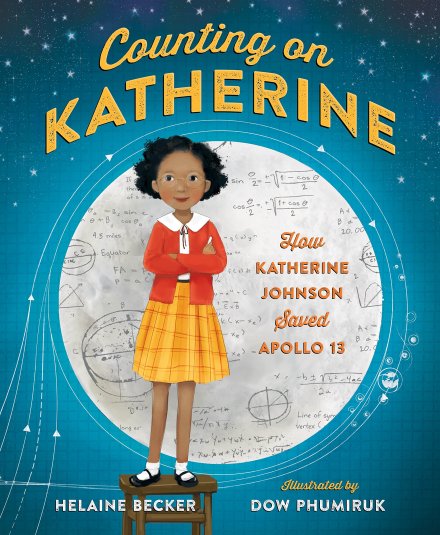
February 7 – National Bubble Gum Day

celebrate-picture-books-picture-book-review-Pop!-the-invention-of-bubble-gum-cover

About the Holiday

In 2006, Ruth Spiro, a children’s author and mother, established National Bubble Gum Day as a way for children to raise funds for their school and the charities it supports while having a little fun in the process. For this one day a year, students can earn permission to chew gum in class by donating 50 cents to the cause. Another fun and educational way to celebrate the day is by reading today’s book that tells the story of Walter Diemer and how he came up with the formula for bubble gum.

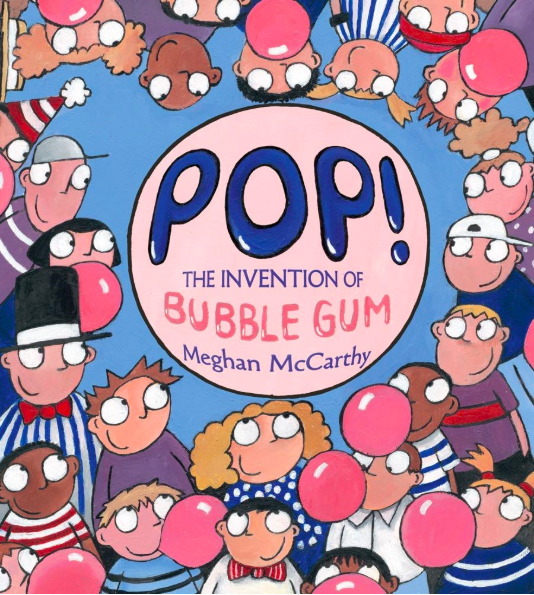
POP! The Invention of Bubble Gum

By Meghan McCarthy

In the 1920s, the Fleer family of Philadelphia was known for their factory where candy and gum were made. In an office upstairs the company’s accountant, Walter Diemer worked on the books and balanced the budgets. “He knew lots about math but not much about gum.” As the company outgrew its laboratory space downstairs, a new, experimental laboratory was set up in a room next to Walter’s office. Walter watched with curiosity as beakers, tubes, pots, and other equipment were moved into the lab.

Soon he learned that “the company was trying to make a new kind of chewing gum.” Chewing gum had been around in various forms for centuries and used for fun and also for medicinal purposes. Gum, the Fleers thought had become kind of boring. “But what if gum chewers could blow bubbles?”

celebrate-picture-books-picture-book-review-Pop!-the-invention-of-bubble-gum-candy

Copyright Meghan McCarthy, 2010, courtesy of Simon and Schuster.

In the experimental laboratory, Walter watched as the scientists tinkered and tested. Not much progress was made. Then one day Walter’s boss asked him to watch one of the experimental batches. Walter became so intrigued that he began experimenting with it himself, adding this and that. Still nothing happened. Finally, Walter’s boss gave up.

Walter, however, kept trying. Months later he had a bubbling concoction. All it needed, Walter thought, was some flavor. He “added a bit of cinnamon, a dash of wintergreen, a drop of vanilla…” and wondered if this could be bubble gum at last. He “put a wad into his mouth and began to chew.” Then “he blew a magnificent bubble!” He gave some to his coworkers, and as Walter remembered it, “‘We were blowing bubbles and prancing all over the place!’”

celebrate-picture-books-picture-book-review-Pop!-the-invention-of-bubble-gum-walter

Copyright Meghan McCarthy, 2010, courtesy of Simon and Schuster.

But the next day when Walter came to work, his batch of bubble gum was as hard as a rock. Walter went back to work on his invention. Months—and some top-secret ingredients—later, Walter had just the consistency he wanted. The gum now needed some color. Pink was the only food coloring he had, so he poured it in.

On the day after Christmas, a batch of the bubble gum was cut into pieces and delivered to a small candy store. The people who came in were given a piece to chew and became “the first people in the world to try a bubble gum that worked.” Walter even “gave lessons on how to blow bubbles.” Soon, truckloads of Walter’s Double Bubble were being delivered to stores, big and small, all over.

celebrate-picture-books-picture-book-review-Pop!-the-invention-of-bubble-gum-lab

Copyright Meghan McCarthy, 2010, courtesy of Simon and Schuster.

Walter went on to become the vice president of the Fleer company. When he retired, Walter spent his time riding his giant tricycle and engaging the neighborhood kids in bubble gum blowing contests. Walter didn’t get rich from his invention, but knowing that he had made kids all over the world happy was enough reward for him.

Extensive back matter includes more information on Walter Diemer, facts about gum, and resources on the quotes found in the story.

celebrate-picture-books-picture-book-review-Pop!-the-invention-of-bubble-gum-pink

Copyright Meghan McCarthy, 2010, courtesy of Simon and Schuster.

Kids who love bubble gum and inventing will find lots of information to chew on as they follow Walter’s journey from accountant to inventor. His stick-to-itivness in the face of defeat and even after the scientists and his boss had given up offers inspiration and a good lesson that sometimes success takes longer than you think. The included bits of history may spur readers to learn more about how gum was used by our ancestors and other cultures, and chemists in the making may want to investigate and compare Walter’s flavor and color ingredients against today’s bubble gum.

Meghan McCarthy’s storytelling is delightfully conversational and sprinkled with quotes from Walter Diemer, creating a personal narrative that will resonate with kids.McCarthy’s cartoon-inspired illustrations match the light-hearted tone of her story, and the laboratory scenes froth and bubble mysteriously as Walter adds and stirs up the secret ingredients that finally succeeded in bringing the world this long-favorite treat.

A charming, quick-paced look at the creation of a best-loved treat, POP! The Invention of Bubble Gum will engage kids in history and inspire them to keep trying even when everyone else has given up. The book would also make an entertaining and accessible lead in to chemistry lessons in the classroom.

Ages 4 – 8

Simon and Schuster, 2010 | ISBN 978-1416979708

To learn more about Meghan McCarthy, her books, and her art, visit her website

National Bubble Gum Day Activity

celebrate-picture-books-picture-book-review-gumball-machine-coloring-page

Gumball Machine Coloring Page

Where’s a great place to get some bubble gum? A gumball machine, of course! Have fun adding all of your favorite colors to this printable Gumball Machine Coloring Page.

celebrate-picture-books-picture-book-review-Pop!-the-invention-of-bubble-gum-cover

You can find POP! The Invention of Bubble Gum at these booksellers

Amazon | Barnes & Noble | Books-a-Million | IndieBound

Picture Book Review

January 31 – Inspire Your Heart with Art Day

celebrate-picture-books-picture-book-review-nature's-friend-cover-2

About the Holiday

Today we celebrate the feeling you get inside when you create or experience art. Art can inspire, gladden, sadden, anger, teach, and compel action. It can also provide joy and inspiration when you need it most. Celebrate today’s holiday by visiting a museum, bookstore, library, concert, or gallery.

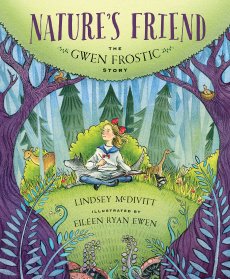
Nature’s Friend: The Gwen Frostic Story

Written by Lindsey McDivitt | Illustrated by Eileen Ryan Ewen


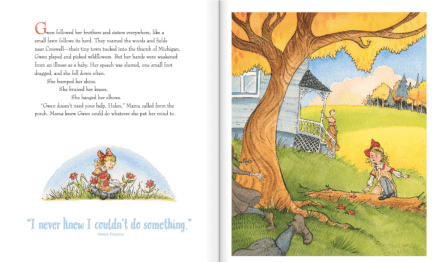
“Gwen followed her brothers and sisters everywhere, like a small fawn follows its herd.” Even though an illness in babyhood had left her hands and one foot weak and her speech slurred, Gwen grew up confident that she could do anything. Born in 1906, Gwen, as a child with disabilities, would normally have stayed home instead of attending school. But her mother had been a teacher, so she sent her to school and “pushed her to learn.”

celebrate-picture-books-picture-book-review-nature's-friend-the-gwen-frostic-story-young-gwen

Image copyright Eileen Ryan Ewen, 2018, text copyright Lindsey McDivitt, 2018. Courtesy of Sleeping Bear Press.

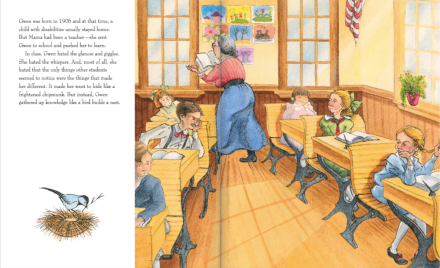
The other kids giggled and whispered behind her back, and while she wanted to hide, she instead “gathered up knowledge like a bird builds a nest.” Her teachers thought she would never be able to write. To strengthen her hands, her mother encouraged her to draw, keeping a drawer full of supplies within reach. As Gwen sketched, her grip grew firmer.”

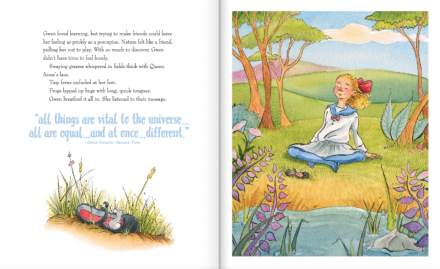
While making friends was difficult, Gwen found companionship in nature. She loved to spend time outdoors watching the unfurling ferns and frogs that “lapped up bugs with long, quick tongues.” From nature, Gwen learned, “‘all things are vital to the universe…all are equal…and at one…different.’”

celebrate-picture-books-picture-book-review-nature's-friend-the-gwen-frostic-story-school

Image copyright Eileen Ryan Ewen, 2018, text copyright Lindsey McDivitt, 2018. Courtesy of Sleeping Bear Press.

A move to Detroit when she was twelve introduced Gwen to the buildings and people of a big city. In high school, Gwen, now stronger, took mechanical drawing and shop class. Later, in art school, Gwen was introduced to linoleum, in which she carved intricate images for printmaking. Gwen’s dream was to be an artist, but she also knew she needed to earn money to pay expenses.

She started a business making objects from hammered metal. Word of her art spread quickly. It was bought by leading Detroit families, and Gwen was invited to exhibit her art at the 1939 World’s Fair in New York. When World War II broke out, Gwen went to work building bombers. She even designed tools for building the planes. Contributing to the war effort was important, but Gwen still “longed to create art.” She bought a printing press and opened “Presscraft Papers stationery company.”

celebrate-picture-books-picture-book-review-nature's-friend-the-gwen-frostic-story-gwen-in-nature

Image copyright Eileen Ryan Ewen, 2018, text copyright Lindsey McDivitt, 2018. Courtesy of Sleeping Bear Press.

Gwen began to miss the nature she loved so much, so she packed up and moved back to Michigan. There, “she walked deep into the wetlands” and began carving linoleum blocks, recreating nature as she saw it. “She wanted others to see nature as she did, to recognize the value of plants, trees, and animals.” She made prints from her linoleum blocks and created greeting cards on her press. Her beautiful artwork reminded people of nature’s bounty at a time when the environment was threatened with pollution. People came from all over to her shop in the Michigan woods to buy her art that spoke to them: “‘Love this earth, / Love it’s waters… / Care enough to keep it clear.’”

An Author’s Note reveals more about Gwen Frostic’s life and provides a sketching craft for readers.

celebrate-picture-books-picture-book-review-nature's-friend-the-gwen-frostic-story-drawing

Image copyright Eileen Ryan Ewen, 2018, text copyright Lindsey McDivitt, 2018. Courtesy of Sleeping Bear Press.

Lindsey McDivitt’s superb biography of Gwen Frostic—an artist, inspiration, and pioneer for career women and the disabled—introduces children to a woman who, through persistence and confidence, lived life on her own terms. McDivitt’s lyrical prose infuses the story with the poetry of nature that Gwen internalized and translated into the art that people continue to admire and seek out. McDivitt’s thorough storytelling and excellent pacing allow for a full understanding of Gwen Frostic’s achievements. Young readers will be fascinated by the life work of this talented and determined artist.

Screen Shot 2018-08-21 at 6.54.39 PM

Eileen Ryan Ewen captures Gwen Frostic’s strength of character, can-do attitude, and love of nature in her stunning artwork. Full-page illustrations follow Gwen from her beloved Michigan woodlands to Detroit to art school and through her life as an artist and business woman. Images of Gwen carving a linoleum block, sketching designs for new tools as she sits next to a fighter plane and the woman installing rivets, working an old printing press, and greeting visitors at her shop broaden readers’ understanding of the times and Gwen’s work.

An exceptional picture book that provides encouragement and inspiration, Nature’s Friend: The Gwen Frostic Story is a must for classroom libraries and would make a positive impact on young readers as part of their home library.

Ages 6 – 10

Sleeping Bear Press, 2018 | ISBN 978-1585364053

Discover more about Lindsey McDivitt and her books on her website.

To learn more about Eileen Ryan Ewen, her art, and her books, visit her website.

American Artist Appreciation Month

celebrate-picture-books-picture-book-review-nature-coloring-page

Nature Coloring Pages


If you love nature like Gwen Frostic did, you’ll enjoy these printable Nature Coloring Pages.

Meadow Coloring PageOcean Coloring Page

celebrate-picture-books-picture-book-review-nature's-friend-cover-2

You can find Nature’s Friend: The Gwen Frostic Story at these booksellers

Amazon | Barnes & Noble | Books-a-Million | IndieBound

Picture Book Review
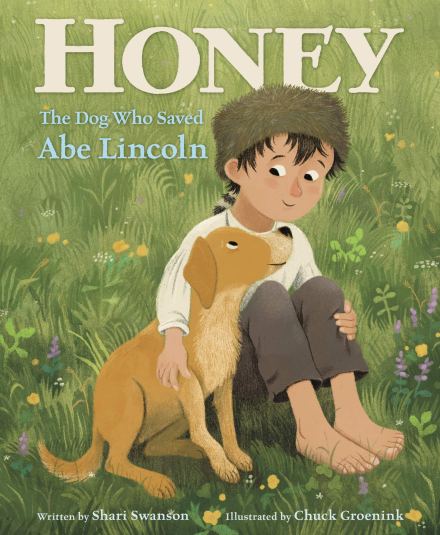
 

January 17 – Kid Inventors’ Day

celebrate-picture-books-picture-books-review-the-hole-story-of-the-doughnut

About the Holiday

Today’s holiday celebrates all those ingenious kids who have improved the world with their inventions. This date was chosen to commemorate another child inventor—Benjamin Franklin—who designed the first swim fins when he was just 12 years old! (Seriously, is there nothing this man didn’t or couldn’t do?) With their supple minds and can-do attitudes, kids have changed the ways things are done in the fields of medicine, technology, communications, and even food—as today’s book shows! To learn more about the day and find resources for young inventors, visit the K.I.D website.

The Hole Story of the Doughnut

Written by Pat Miller | Illustrated by Vincent X. Kirsch


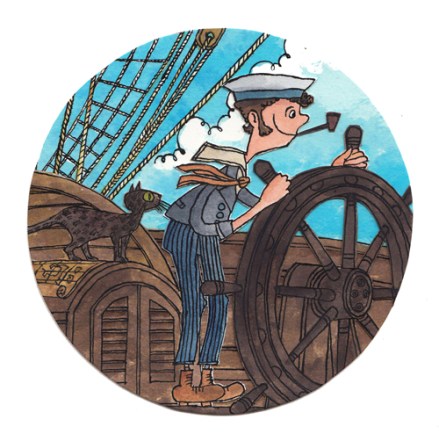
In 1844 at the tender age of 13, Hanson Gregory left the family farm and went to sea as a cabin boy on the schooner Isaac Achorn. He quickly became the cook’s assistant and also learned how to rig the sails and “steer a ship over trackless waves by sun and stars.” By the age of 19 Gregory had become the captain of the schooner Hardscrabble, and within a few more years was racing “his cargo from Maine to California as commander of a clipper, the fastest ship on any ocean.”

celebrate-picture-books-picture-book-review-hole-story-of-the-doughnut

Image copyright Vincent X. Kirsch, courtesy of vincentxkirsch.com

Hanson Gregory may have been one of the best captains to sail the seas—once awarded a medal for heroism for rescuing seven shipwrecked Spanish sailors even though his own ship and crew were endangered. But his greatest achievement was not attained because of his seafaring skills—it was his ingenuity in the galley that people remember.

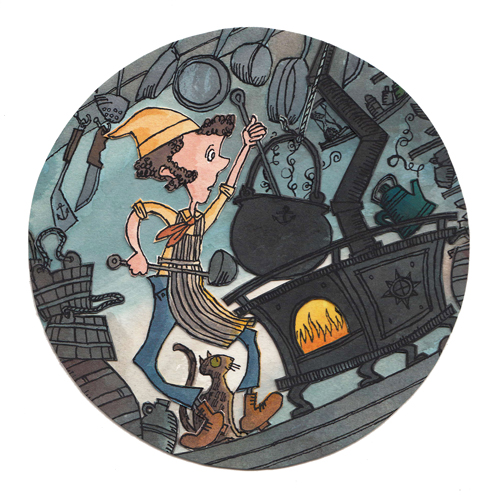
On June 22, 1847 as a 16-year-old cook’s assistant, Hanson was rustling up the crew’s breakfast—coffee and fried cakes, the same as every morning. While the pot of lard bubbled on the stove, Gregory formed balls of sweetened dough and dropped them in. They sizzled and crisped—at least around the edges. The centers were raw, heavy with grease, and they dropped like cannonballs in the stomach. “Sailors called them Sinkers.” But this morning Gregory had an idea. He removed the lid from the pepper can and cut out the center of the balls. “Then he tossed the rings into the bubbling lard.”

celebrate-picture-books-picture-book-review-hole-story-of-the-doughnut

Image copyright Vincent X. Kirsch, courtesy of vincentxkirsch.com

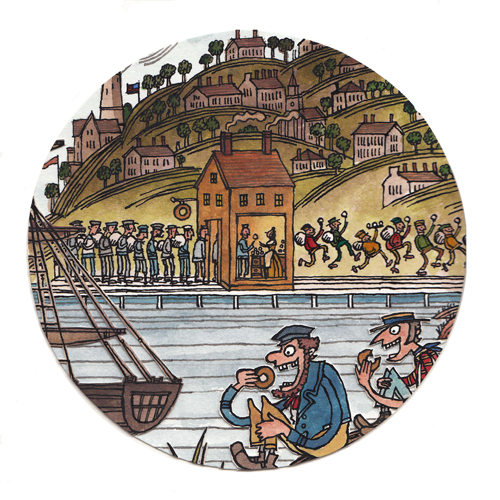
The cook and the sailors took one look at this odd concoction and…ate them up! “The cakes were brown, and sweet, and fully cooked. Sighs of delight rose above the noisy sea. A new breakfast tradition was born.” Gregory told his mom about his invention, and she fried up large batches of these ‘holey cakes’ that became a sensation at a friend’s store and on the docks.

You might think this is a pretty interesting tale in itself, “but sailors like their stories bold” and so they “spun legends worthy of such a delicious treat.” One tale had Captain Gregory inventing the doughnut while he saved his ship from disaster. Another told how Gregory, distraught over the drowning of five sailors pulled to the ocean floor by their “sinker” breakfast, punched holes in every cake to make them look like life rings and vowed, “‘Never again!’”

Captain Gregory had a sense of humor about his accomplishment. During an interview he once stated that “he had invented ‘the first hole ever seen by mortal eyes.’” Gregory lived to be 89 and is buried “overlooking the sea where stormy weather can be spotted as readily as it once was from the quarterdeck of the Hardscrabble.”

An author’s note expanding on the story of Captain Gregory, the doughnut, doughnut shops, a timeline, and a selected bibliography follow the text.

celebrate-picture-books-picture-book-review-hole-story-of-the-doughnut

Image copyright Vincent X. Kirsch, courtesy of vincentxkirsch.com

Doughnuts have never been so evocative! In Pat Miller’s humorous, informative history of this favorite pastry treat, readers can smell the salt air, feel the ocean swell and roll under their feet, and even ache a little for those poor sailors forced to eat “sinkers.” Seamlessly interwoven into this foodography is a fascinating look at the early days of sail. Miller’s language is immediately stirring: the Ivanhoe bucks and plunges, the sea becomes a monster, and Captain Gregory spears a sinker on the wheel spoke. Kids will marvel at a 13-year-old going off to sea and becoming an inventor at 16.

Vincent X. Kirsch provides just the right touch to this captivating true story with his cartoon-inspired watercolor and cut paper artwork. Ingeniously incorporating Hanson Gregory’s innovation of removing the center of the fried cakes, Kirsch’s illustrations are “cored” to allow for text, while the extracted section appears on the facing page as a glimpse through a porthole. The maritime atmosphere—from ship to shore—of the mid-1800s is beautifully represented in the folk-style sketches, and the humor that is so intrinsic to this story is wonderfully embraced.

The Hole Story of the Doughnut will delight foodies and history buffs alike and would make a fun gift and a delectable addition to personal libraries for all ages.

Ages 5 – 12

Houghton Mifflin Harcourt, 2016 | ISBN 978-0544319615

Vincent X. Kirsch’s website is full of illustrations from his books for children—take a look at his portfolio!

Spend some time with Pat Miller on her website that offers activities, tips, resources and many more books!

Kid Inventors’ Day Activity

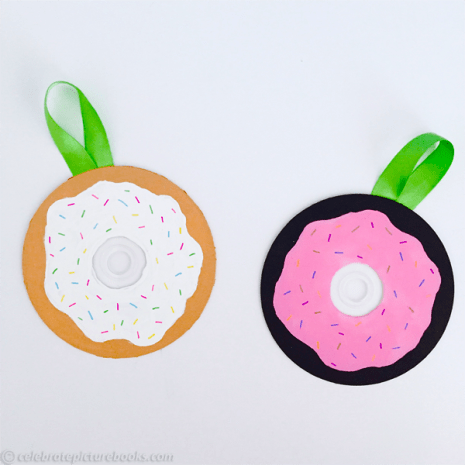
celebrate-picture-books-picture-book-review-cd-doughnut-craft

CD (Compact Doughnuts) Decoration


Are some of  your CDs a little passé? Not if you can turn them into cute décor like this doughnut hanging.

Supplies

  • Unused CDs
  • Craft paint in tan, black, pink, yellow, white (or any colors you want for the doughnut and the icing)
  • Ribbon, any color and length you want
  • Fine-tip markers in bright colors
  • Glue
  • Glue dots (optional)
  • Paint brush

Directions

  1. Paint a wavy edge around the CD, let dry
  2. Paint the center of the CD, leaving the clear circle unpainted
  3. When the icing paint is dry, draw sprinkles on the icing with the markers
  4. With the ribbon make a loop hanger and attach it to the back of the CD with glue or glue dots
  5. Hang your decoration

celebrate-picture-books-picture-books-review-the-hole-story-of-the-doughnut

You can find The Hole Story of the Doughnut at these booksellers

Amazon | Barnes & Noble | Books-a-Million | IndieBound

Picture Book Review
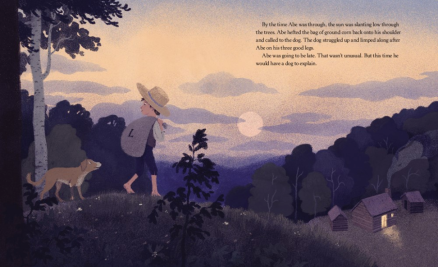
January 13 – It’s International Creativity Month

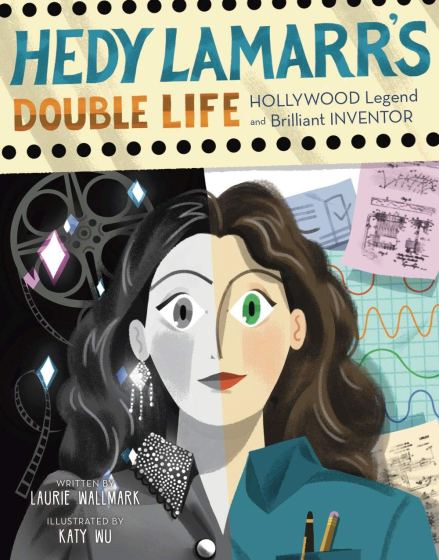
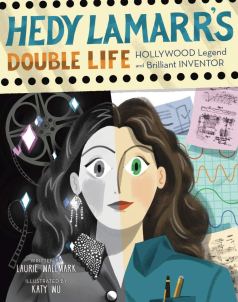
celebrate-picture-books-picture-book-review-hedy-lamarr's-double-life-cover

About the Holiday

Are you an artist, a writer, a decorator, a chef? How about a floral arranger, a woodworker, a fashion designer, or a gardener? Inside almost every heart lies a desire to create. Whether you use your ingenuity in your job or as an escape from the routine, this month celebrates all that is innovative. Sometimes this comes not only in making something you can see or touch but in a new thought or a novel way of solving a problem—as seen in today’s book!

I received a copy of Hedy Lamarr’s Double Life for review consideration. All opinions are my own.

Hedy Lamarr’s Double Life: Hollywood Legend and Brilliant Inventor

Written by Laurie Wallmark | Illustrated by Katy Wu


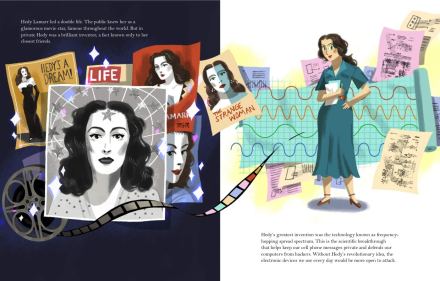
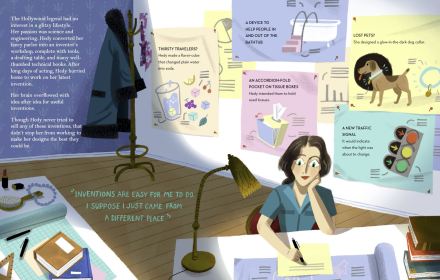
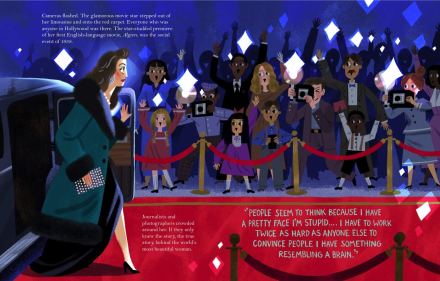
In 1938 people were lining up to see Hedy Lamarr in her first English-language movie Algiers. Hedy was the talk of Hollywood, and journalists and photographers captured her every move—almost. What movie-goers and the press didn’t know was that Hedy Lamarr was also a brilliant inventor. Instead of attending fancy celebrity parties, after a long day on the set, “Hedy hurried home to work on her latest invention. Her brain overflowed with idea after idea for useful inventions.” While she never tried to sell her ideas—like the collar to help find lost pets or the “flavor cube that changed plain water into soda”—she designed and redesigned them to perfection.

celebrate-picture-books-picture-book-review-hedy-lamarr's-double-life-magazines

Image copyright Katy Wu, 2019, text copyright Laurie Wallmark, 2019. Courtesy of Sterling Children’s Books.

But how did Hedy get her start? She was born in Austria and as a child took apart mechanical objects just to see how they worked. Hedy’s father also loved science, and he encouraged his daughter to hold onto her dreams. In addition to science, Hedy loved movies and would use her dolls to reenact the scenes she saw.

When she got older, Hedy got a job as a script girl and then worked as an extra in a movie. She loved acting and once said, “‘I acted all the time…. I was a little living copybook. I wrote people down on me.’” While playing the lead in a stage play, the Hollywood producer Louis B. Mayer saw her and offered her movie contract. Hedy moved to America. It only took her six months to land a starring role in Algiers. After that she starred in many movies with some of the most famous actors and actresses. 

By now, the world was at war. One day, Hedy met George Antheil, a former weapons inspector who now composed music. Hedy remembered a “discussion she had overheard back in Europe about a problem with the guidance system for torpedoes. The guidance system couldn’t prevent the enemy from jamming the weapon’s radio signals” and sending it off course. She learned from George Antheil that the US Navy had the same problem.

They decided to team up to see if they could figure out a solution. Hedy was also an accomplished pianist, and she and George often played musical games on the piano. Once, while they played the same song in different octaves, Hedy had a brainstorm for building “a secure torpedo guidance system.” At the time, torpedo guidance systems only worked if the ship launching a torpedo and the torpedo were on the same frequency.

celebrate-picture-books-picture-book-review-hedy-lamarr's-double-life-home

Image copyright Katy Wu, 2019, text copyright Laurie Wallmark, 2019. Courtesy of Sterling Children’s Books.

Hedy thought that if the ship and the torpedo could switch between a series of different frequencies, the enemy would be foiled. “Hedy called her discovery ‘the hopping of frequencies.” Working together, she and George devised a way to implement Hedy’s idea. When they presented their idea to the National Inventors Council, they were told the “idea had ‘great potential value.’”

There were still some issues to overcome to make the system automated, but Hedy and George answered those too. They applied for a patent, and a year later on August 11, 1942 it was granted. When they gave the idea to the United States Navy, “Hedy was proud her frequency-hopping idea might help America win the war.” But embroiled in the middle of the conflict, the Navy didn’t have “the time or money to implement a new system….”

Hedy, who still wanted to help America defeat the Nazis, was undaunted. She helped raise 25 million dollars by selling war bonds and volunteered at the Hollywood Canteen, where servicemen soon to be deployed gathered. Hedy went on to make more than twenty movies and continued to work on her inventions.

In the 1980s, the US Navy declassified Hedy’s frequency-hopping technology, meaning anyone could use it. Because the patent had long-ago expired, no one needed to give Hedy and George credit for the idea. “Companies raced to include frequency hopping in their own devices.” In 1997, Hedy and George were finally recognized when they “received the Pioneer Award from the Electronic Frontier Foundation for their significant contribution to computers.”

A timeline of Hedy Lamarr’s life, a description of how Hedy and George’s frequency-hopping technology worked, additional resources for further reading, and a list of Hedy’s movies follow the text.

celebrate-picture-books-picture-book-review-hedy-lamarr's-double-life-red-carpet

Image copyright Katy Wu, 2019, text copyright Laurie Wallmark, 2019. Courtesy of Sterling Children’s Books.

Laurie Wallmark knows how to weave a riveting tale that draws readers in to the lives of fascinating and scientifically minded women throughout history. Her detailed biography of Hedy Lamarr will wow kids with the twists and turns of how a vital feature of the electronics they use every day came to be. A history not only of this famous woman but of the times and policies that denied Hedy Lamarr the recognition and profits she deserved, the story is sure to spark plenty of discussion. The inclusion of a few of Hedy’s ingenious ideas as well as quotes on acting, inventing, and her views on life give children a glimpse into the mind of this unique woman.

Katy Wu takes readers back to the 1940s with her stylish illustrations reminiscent of magazine images of the time that depict both Hedy’s glamourous and inventive sides. Even as Hedy steps out of a limo to the glare of flashbulbs, acts under stage lights, and watches movies thrown by a projector’s beam, she’s dreaming of going home to work on her inventions in the light of a desk lamp. When the story turns to Hedy’s frequency-hopping idea, Wu clearly portrays the problems with the torpedo guidance system and the way single-frequency and multiple-frequency communications work. The way player pianos were controlled and how Hedy and George Antheil used this idea is also well portrayed. The final images of people using Hedy’s technology today lets kids fully understand the impact that Hedy Lamarr has had on their lives.

An important story about an extraordinary woman, Hedy Lamarr’s Double Life: Hollywood Legend and Brilliant Inventor will inspire children to follow and accomplish all of their dreams. The book will spur creative thought across subject matter and would be a motivational addition to home, classroom, and public libraries.

Ages 5 and up

Sterling Children’s Books, 2019 | ISBN 978-1454926917

Discover more about Laurie Wallmark and her books on her website.

To learn more about Katy Wu, and view a gallery of her book and art, visit her tumblr.

International Creativity Month Activity

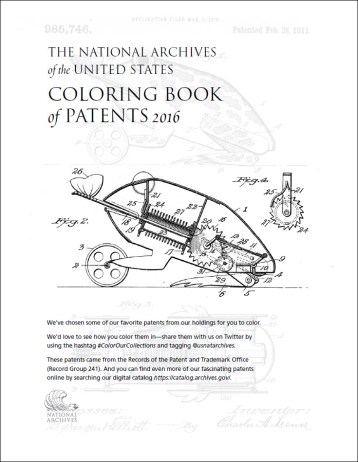
celebrate-picture-books-picture-book-review-national-archives-coloring-book-of-patents

National Archives Coloring Book of Patents


The people at the National Archives of the United States in Washington DC chose some of their favorite patents from the past to share with you as a coloring book. As you have fun coloring these pages full of ideas, let yours fly too!

Click here to get your printable National Archives Coloring Book of Patents

celebrate-picture-books-picture-book-review-hedy-lamarr's-double-life-cover

You can find Hedy Lamarr’s Double Life: Hollywood Legend and Brilliant Inventor at these booksellers

Amazon | Barnes & Noble | Books-a-Million | IndieBound

Picture Book Review
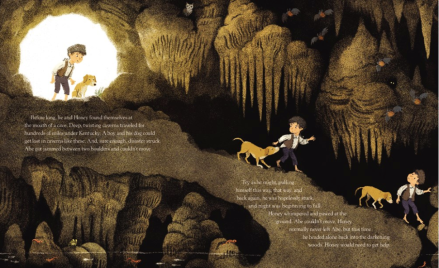
November 21 – It’s National Aviation History Month

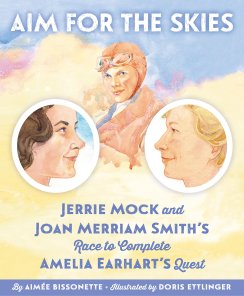
celebrate-picture-books-picture-book-review-aim-for-the-skies-cover

About the Holiday

It seems that people have always been fascinated with flight. The first kite was invented in 1000 BCE in China; around 400 BCE Archytas of Tarentum developed a steam-powered pigeon; and most people are familiar with the designs of flying machines that Leonardo de Vinci created in the late 1400s. It wasn’t until 1680 that actual human flight was abandoned when an Italian mathematician determined that human muscles were incompatible with flight.

Zip ahead about 100 years and the first hot-air balloon took flight, which led to more complex technology, resulting in Wilbur and Orville Wright’s flight in 1903. From there, it seemed, the sky was the limit. Amelia Earhart became the first woman to complete a trans-Atlantic Ocean solo flight in 1932, and in 1947 Charles Yeager broke the sound barrier. Given this long history, it’s astounding to think that only 58 years span the time from that modest 12-second flight by the Wright Brothers to the first manned space mission by Soviet cosmonaut Yuri Gagarin! To celebrate the month, visit a local museum or read up on some of the pioneers of early flight—like the courageous women in today’s book.

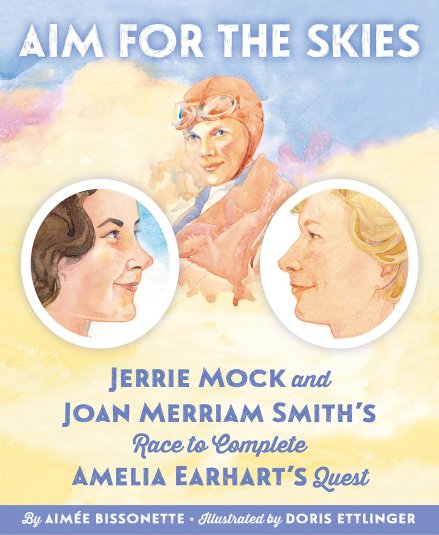
Aim for the Skies: Jerrie Mock and Joan Merriam Smith’s Race to Complete Amelia Earhart’s Quest

Written by Aimée Bissonette | Illustrated by Doris Ettlinger


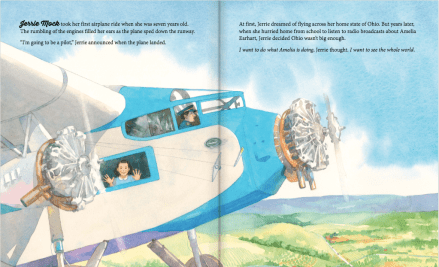
Jerrie Mock was only seven when her first airplane ride convinced her she wanted to be a pilot when she grew up. At first she only dreamed of flying across Ohio, but later, when she followed reports of Amelia Earhart’s daring flights, she decided she too wanted to see the whole world.

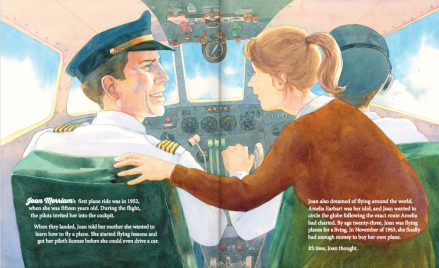
In 1952, Joan Merriam was fifteen years old when she took her first airplane ride and was invited by the pilots to see the cockpit. That’s all it took for Joan to know she wanted to be a pilot too. She began flying lessons and was in the air before she even got her drivers license. By 1963, Joan was working as a professional pilot and bought a plane of her own. One of Joan’s goals was to “circle the globe following the exact route” her idol Amelia Earhart had charted.

celebrate-picture-books-picture-book-review-aim-for-the-skies-Jerrie-Mock

Image copyright Doris Ettlinger, 2018, text copyright Aimée Bissonette, 2018. Courtesy of Sleeping Bear Press.

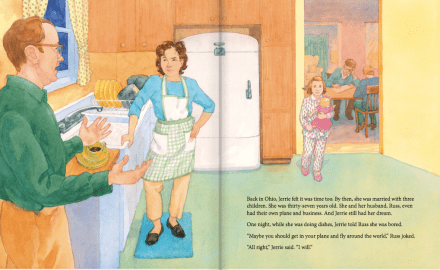
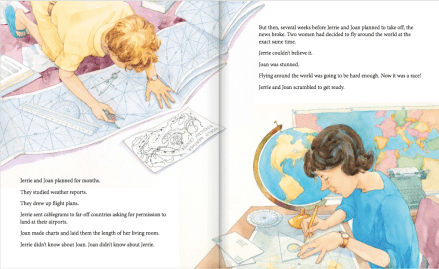
By the time Jerrie was thirty-seven, she had three children and ran a flight business with her husband, Russ. One night when she told Russ that she was bored, he joked, “‘Maybe you should get in your plane and fly around the world.’” Jerrie took him up on that. Both women spent months planning and charting their flights. Neither one knew that the other was getting ready for the same flight until their plans hit the media. Suddenly, what they had both thought was a solitary pursuit became a race to the finish.

Joan took off on March 17, 1964 from an airstrip in Oakland, California accompanied only by two stuffed bears. Two days later, surrounded by reporters asking if she thought she could beat Joan, Jerrie climbed into her tiny plane and took off too.

celebrate-picture-books-picture-book-review-aim-for-the-skies-Joan-Merriam

Image copyright Doris Ettlinger, 2018, text copyright Aimée Bissonette, 2018. Courtesy of Sleeping Bear Press.

Jerrie’s troubles began right away. First, her radio didn’t work then bad weather kept her grounded for six days. “Where was Joan?” she wondered. While Joan’s flight began smoothly, a gas leak brought her down to earth for a week while the tank was repaired. Back in the air, Jerrie seemed to suffer problems every day. “She battled dangerous ice buildup, burning radio wires, and bad weather. She flew into a sandstorm over the Arabian Desert and couldn’t see.” But she encouraged herself to stay calm and use her instruments. Joan was having it no easier. “Heavy rains pounded her pane. Her windshield leaked. Water puddled at her feet. When she finally made it to Brazil, she was delayed again. This time by a government revolution!”

Day by day both women battled the elements and equipment failures but kept flying. Everyone around the world seemed to be watching the race. Russ told Jerrie she had to fly faster—that Joan was winning. In Pakistan, people told Joan that Jerrie had landed there five days earlier. Finally, on April 17, twenty-nine days after she had left, Jerrie returned to Ohio to a hero’s welcome. Reporters and crowds pushed to see her. “Jerry’s heart pounded. She had done it. She had flown around the world. She had won the race.”

celebrate-picture-books-picture-book-review-aim-for-the-skies-Jerrie-bored

Image copyright Doris Ettlinger, 2018, text copyright Aimée Bissonette, 2018. Courtesy of Sleeping Bear Press.

Where was Joan? She “was in Lae, New Guinea—the last place Amelia Earhart was seen alive—when she heard the race was over.” Even though she knew she was behind Jerrie, “the news was still hard to take.” She sent Jerrie a congratulations telegram, and then left for Guam. There, she walked and “thought about her childhood dream. She thought about the race and she thought about losing.”  Then she thought about why she had undertaken the flight. She had done it to honor Amelia Earhart. Even though Jerrie had won the race, Joan thought that didn’t make her a loser. She “could still do what she set out to do.”

Joan landed back in Oakland, California on May 12, 1964. Her plane was in such bad shape that the Coast Guard had to dispatch a plane to guide her in. Joan was also welcomed by cheering crowds and reporters. Both Jerrie and Joan had accomplished incredible feats. Jerrie “became the first woman to fly around the world,” and Joan—”following Amelia’s exact route along the equator”—was the first “pilot—man or woman”—to fly that distance solo. And both women received thanks from Amelia’s sister, Muriel, for honoring Amelia—”a pilot who, like them, chose to follow her dreams.”

An Author’s Note describing the differences in Joan and Jerrie’s routes and aircraft as well as a bit more about their lives after the historic flight and a map outlining each woman’s flight pattern follow the text. Resources for further reading are also included.

celebrate-picture-books-picture-book-review-aim-for-the-skies-planning-routes

Image copyright Doris Ettlinger, 2018, text copyright Aimée Bissonette, 2018. Courtesy of Sleeping Bear Press.

Aimée Bissonette’s thrilling biography of two women, two flights, and one race will keep young readers on the edge of their seats. Riveting details reveal the staggering dangers the women faced as well as their astonishing courage, dedication, and persistence. Bissonette’s fast-paced, electric storytelling puts kids in the cockpit as Joan and Jerrie cross the globe. As Jerrie wins the race and Joan reevaluates her goal, Bissonette makes important and welcome points about the nature of competition, keeping one’s eyes and heart on an original goal without getting caught up in distracting hype, and having the self-confidence to believe in oneself and recognize one’s accomplishments.

In her realistic, richly colored watercolors, Doris Ettlinger follows Jerrie and Joan as they experience their first airplane rides that determine their futures, plot their flights around the world, and take off. The obstacles each woman dealt with are dramatically portrayed as winds whip trees, blinding rain and sand storms thwart progress, and mechanical failures keep the women grounded. Children get a look at landscapes from Bermuda, the Philippines, Africa, and Pakistan as Joan and Jerrie complete their flights. Expressive depictions of Jerrie’s and Joan’s emotions show readers the determination, pressures, and ultimate joy each woman felt during these historic months of 1964.

An exhilarating biography and adventure story rolled into one, Aim for the Skies is a book that will inspire young readers to keep their eyes on their goals despite obstacles and setbacks while reassuring them that winning is accomplished by being true to yourself. Children who love history, flight, biographies, and adventure will find this a compelling book to add to their home bookshelf. Classroom, school, and public libraries will want to include Aim for the Skies in their collections for story times and lessons.

Ages 6 – 9

Sleeping Bear Press, 2018 | ISBN 978-1585363810

Discover more about Aimée Bissonette and her books on her website.

National Aviation History Month Activity

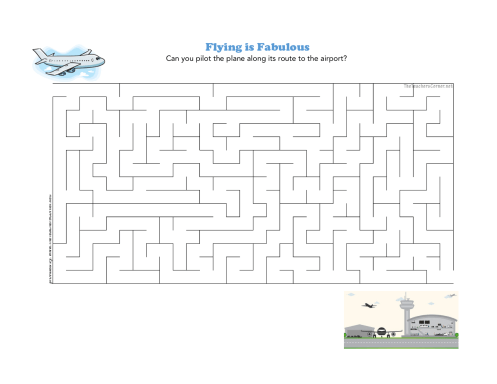
celebrate-picture-books-picture-book-review-Flying-is-Fabulous-Maze

Flying is Fabulous! Maze


Can you pilot the airplane along its route to the airport in this printable Flying is Fabulous! Maze?

Flying is Fabulous! MazeFlying is Fabulous! Maze Solution

celebrate-picture-books-picture-book-review-aim-for-the-skies-cover

You can find Aim for the Skies at these booksellers

Amazon | Barnes & Noble | Books-a-Million  

To support your local independent bookstore, order from

Bookshop | IndieBound

Picture Book Review


November 14 – Anniversary of The Race Around the World

celebrate-picture-books-picture-book-review-the-race-around-the-world-cover

About the Holiday

On this date 130 years ago, an incredible race began between investigative reporter Nellie Bly and Cosmopolitan magazine writer Elizabeth Bisland to beat the fictional voyage of Phileas Fogg, a character in Jules Verne’s novel Around the World in Eighty Days. I’m excited to be reviewing Caroline Starr Rose and Alexandra Bye’s book on the anniversary of this historic feat.

A Race Around the World: The True Story of Nellie Bly & Elizabeth Bisland

Written by Caroline Starr Rose | Illustrated by Alexandra Bye


In 1889 the world was changing in incredible ways through inventions such as the telegraph, electricity, the telephone, and express trains and fast steamships. People thrilled to the idea of circumnavigating the globe faster and faster. Previous attempts had seen a voyage by a travel writer that took a year and a half and a trip by a baseball team that took six months. But the goal that was so enticing came in Jules Verne’s novel Around the World in Eighty Days. “A reporter named Nellie Bly believed she could be even faster.”

celebrate-picture-books-picture-book-review-the-race-around-the-world-nellie-bly

Image copyright Alexandra Bye, 2019, text copyright Caroline Starr Rose, 2019. Courtesy of Albert Whitman & Company.

Nellie Bly studied steamer and train schedules and thought she could make the trip in seventy-five days. “Her boss at the New York World said only a man could manage such a trip.” With only three days to prepare, Nellie boarded the Augusta Victoria in New Jersey on November 14, 1889. Meanwhile, in New York, Elizabeth Bisland was called to her office at Cosmopolitan magazine. Her publisher wanted her to leave immediately to begin her own journey around the world to beat Nellie Bly. In five hours she was boarding a train. As Elizabeth made her way across country, Nellie was on a steamer, fighting seasickness, unaware “that her one-woman dash was now a contest of two.”

When Nellie docked in England, she learned that Jules Verne wanted to meet her. Their meeting meant a mad dash to France and back before she boarded a ship for the next leg of her trip. In San Francisco Elizabeth was excited to be leaving the United States for the first time. Nellie arrived in Ceylon two days ahead of schedule, but her advantage faded as her ship was delayed. While Nellie stewed, in Japan Elizabeth “marveled at sloping hills and mist-filled valleys. She wandered temples and tombs as elegant as poetry.”

Nellie stopped in Singapore, while Elizabeth laid over in Hong Kong; Nellie’s ship was rocked by a monsoon, while Elizabeth’s ship suffered a broken propeller. “During the third week of December, in the South China Sea, two steamers passed. One carried Nellie. One Elizabeth. Who was winning the race? No one knew.

celebrate-picture-books-picture-book-review-the-race-around-the-world-elizabeth-bisland

Image copyright Alexandra Bye, 2019, text copyright Caroline Starr Rose, 2019. Courtesy of Albert Whitman & Company.

When Nellie arrived in Hong Kong, she learned that she was in a race that the whole world was watching—and that she was probably losing. Nellie and Elizabeth made their way on the last legs of their respective trips in fits and starts; weather and timing slowing them down, beautiful scenery and their own strength keeping them going. As Nellie skirted blizzard conditions affecting the Central Pacific Railroad by taking a southern train, Elizabeth was crossing the Atlantic on “one of the slowest ships in the fleet.”

When Nellie stepped from the train car onto the platform on January 25, 1890, she was met with three official timekeepers, a ten-cannon salute, and adoring crowds. What’s more, she had bested herself by nearly three days. A disappointed Elizabeth sailed into New York Harbor on January 30 and was met by a small gathering. As the winner of the race, Nellie Bly was famous, her name known around the world. For Elizabeth the experience was just the beginning of a lifetime of travel and writing. But “both took on the world and triumphed, each on her own terms.”

An Author’s Note relating more about Nellie Bly and Elizabeth Bisland and how their story affected the author follows the text. The endpapers contain a map with Nellie’s and Elizabeth’s routes depicted.

celebrate-picture-books-picture-book-review-the-race-around-the-world-singapore

Image copyright Alexandra Bye, 2019, text copyright Caroline Starr Rose, 2019. Courtesy of Albert Whitman & Company.

In her compelling and lyrical recounting of this historic contest, Caroline Starr Rose brings to life the magnitude of two women’s achievement in conquering the elements, technical setbacks, and the prevailing misconceptions about women’s abilities. Like any great travelogue, Rose’s story is peppered with scintillating details of narrow escapes, late and missed connections, and the sights, sounds, and tastes of the countries Nellie and Elizabeth traversed. Used to information that is relayed around the world in the blink of an eye and transportation that takes mere hours to travel across the globe, Children will be awed by this competition set in motion by the forerunners of these technologies and the precociousness of a fictional character. In Rose’s final pages, readers will find universal truths about the personal dynamics of winning and losing, the benefits of leaving their comfort zone, and meeting challenges on their own terms.

Alexandra Bye’s rich illustrations take readers from Nellie Bly’s newsroom and Elizabeth’s apartment to ship staterooms, luxury train compartments, and exotic locales. Along the way they see sweeping vistas, experience roiling storms, and even meet a monkey that Nellie bought. Bye’s intricate images depict the time period with a fresh sensibility that conveys the universality of the emotions and drive involved in daring adventures of all kinds and for all times.

An excellent book for children interested in history and travel as well as an inspiring spark for cross-curricular lessons, A Race Around the World: The True Story of Nellie Bly & Elizabeth Bisland would make a stirring addition to home, school, and public library collections.

Ages 5 – 9

Albert Whitman & Company, 2019 | ISBN 978-0807500101

Discover more about Caroline Starr Rose and her books on her website.

To learn more about Alexandra Bye, her books, and her art, visit her website.

Anniversary of the Race Around the World Activity

celebrate-picture-books-picture-book-review-nellie-bly-coloring-page

Nellie Bly Coloring Page


Nellie Bly was an amazing woman! Not only did she set a record for fastest trip around the world but she was one of the first women journalists in the country and pioneered investigative reporting. She was also an inventor and industrialist.

Nellie Bly Coloring Page

celebrate-picture-books-picture-book-review-the-race-around-the-world-cover

You can find A Race Around the World: The True Story of Nellie Bly & Elizabeth Bisland at these booksellers

Amazon | Barnes & Noble | Books-a-Million | IndieBound

Picture Book Review
October 14 – It’s Black Cat Awareness Month

celebrate-picture-books-picture-book-review-bambino-and-mr-twain-cover

About the Holiday

If you look at an annual calendar of pet holidays, you’ll see that cats reign supreme. This month, though, we celebrate one particular kind of feline: the black cat. While black cats are just as cuddly and sweet as any other cat, the superstition that they bring bad luck make them the least adopted of all cats. If you’re considering adopting a cat or kitten, think about giving a black cat a forever home.

Bambino and Mr. Twain

Written by P. I. Maltbie | Illustrated by Daniel Miyares


On a particular November day in 1904, a crowd gathered outside the brownstone where Samuel Clemens, known to readers as Mark Twain, had recently come to live. Reporters, readers, and neighbors had come to wish Sam a happy birthday. But they were shooed away by his housekeeper, Katy. Since his wife, Livy, had died five months earlier, Samuel had not felt happy; he didn’t want to see anyone or even leave the house.

“From an upstairs window an old man with wild white hair and a black cat watched the crowd walk away. ‘Everyone wants to meet witty Mark Twain,’ the man said. ‘But tell me, Bambino, would they want to meet sad, old Samuel Clemens?’” Soon his daughter Jean entered the room and persuaded her father to come downstairs for cake and ice cream with the promise that Bambino, their black cat, could have some too.

celebrate-picture-books-picture-book-review-bambino-and-mr-twain-brownstone

Image copyright Daniel Muyares, 2012. Courtesy of Charlesbridge.

In the middle of the cake stood a single candle—a tradition that Livy had started so that Samuel would “‘never grow old.’” With a dish of ice-cream to himself, Bambino took the place of Sam’s older daughter, Clara, who couldn’t be with them that night. Friends had invited Sam for dinner, but he did not want to go. As winter settle in, so did Samuel. He rarely left his bed, littering the covers with papers and books—so many “that the cat had difficulty finding a soft place to sleep.”

As Christmas approached, instead of attending the parties he was invited to, Samuel wandered around his big house, gazing at pictures of Livy and playing games—like billiards—with Bambino. When spring arrived, Katy rushed around opening windows to air out the house. In a sunlit upstairs room, “Bambino attacked the sunbeam dancing on the wardrobe door. Sam opened the door. The sunbeam shone on a white suit. Bambino swatted at it.” Sam lifted the suit from the closet and looked at it fondly. While Livy was alive he had worn that suit every summer. “‘Those were happy days,’” he recalled.

celebrate-picture-books-picture-book-review-bambino-and-mr-twain-window

Image copyright Daniel Muyares, 2012, text copyright P. I. Maltbie, 2012. Courtesy of Charlesbridge.

Just then, outside the open window, Bambino saw a squirrel that had been chattering at him for days. With a leap Bambino was chasing the squirrel down the street. “‘Bamb-i-i-i-n-o-o-o!’ Sam’s voice echoed over the city noises.” Sam and Jean put up Lost Cat posters offering a $5.00 reward (a week’s wages) for Bambino’s return. Sam didn’t know how he would tell Clara that Bambino was gone, but Jean reassured him that someone would find their cat.

“Soon a steady stream of people appeared on Sam’s doorstep with cats and kittens of every size, color, and breed.” Seeing the crowd, Sam came out onto his stoop. One little girl offered to let Sam borrow their family’s cat until Bambino returned, and others brought him cats they thought would comfort him. But Sam thought Bambino would not “‘take kindly to finding a foreign cat in his kingdom.’” Reporters wanted to talk to this beloved author about Bambino too, “and this time Sam talked to them.”

celebrate-picture-books-picture-book-review-bambino-and-mr-twain-grieving

Image copyright Daniel Muyares, 2012. Courtesy of Charlesbridge.

Four days later, Katy found Bambino on the doorstep as if nothing had happened. Sam was overjoyed. “‘To celebrate, we’ll feast on the fatted salmon,’” he said. Sam’s experience with his kindly friends, neighbors, and readers had given him a new perspective. He was ready to rejoin the world and enjoy what it had to offer. An announcement in the newspaper let people know that Bambino had returned, but they continued to drop by to wish Sam well. Now, Sam smiled and talked with them.
Sam had several white suits made, and they became his trademark. At his home in Connecticut, he held a musical gala and talked and joked the way he used to. Jean and Clara had not seen their father this happy in a long time. And Bambino? He just “blinked his eyes and purred.”

celebrate-picture-books-picture-book-review-bambino-and-mr-twain-musical-gala

Image copyright Daniel Muyares, 2012. Courtesy of Charlesbridge.

P. I. Maltbie’s focus on a particular year in Samuel Clemens’ life provides a deeper portrait of this author known for his wit, wisdom, and social commentary. Maltbie’s detailed and compassionate storytelling reveals the stages and effects of grief and the way a pet or a good friend can help in a way that is accessible and understandable for children. His tracing of the passage of time from fall to summer allows readers to see that recovery from sadness or other events is a personal journey, but one that is made easier with the enduring love and reassurance of family and friends. Readers who love the stories and novels of Mark Twain will appreciate this touching glimpse into Samuel Clemens’ life.

celebrate-picture-books-picture-book-review-bambino-and-mr-twain

Daniel Miyares’ crisp, mixed-media and digital illustrations resonate with muted, yet saturated colors that reflect Samuel Clemens’ mourning. Perky Bambino is a constant presence, celebrating Sam’s birthday, playing billiards with Sam, and curled up on Sam’s bed. Bambino’s dramatic leap out the window will wow kids, and they will empathize with Sam as pages without the black cat reflect Sam’s feeling of loss. Young readers will be inspired by the little girl who offers her own family cat to comfort Sam and be cheered to see the positive effect Bambino’s return has on Sam as he again embraces the world dressed in the iconic white suit, which signals Sam’s lightening mood and regained good humor.

Bambino and Mr. Twain is an excellent biography to share with children at home and school to show that everyone undergoes good and bad times, but with faithful and loving family and friends, problems can be resolved and happiness restored.

Ages 5 – 8

Charlesbridge, 2012 | ISBN 978-1580892728 (Hardcover) | ISBN 978-1580892735 (Paperback)

To learn more about Daniel Miyares, his books, and his art on his website

Black Cat Awareness Month Activity

celebrate-picture-books-picture-book-review-match-the-kittens-puzzle

Match the Kittens Puzzle


These kittens all have a twin, but they got mixed up while playing! Can you find the pairs again in this printable Match the Kittens Puzzle?

celebrate-picture-books-picture-book-review-bambino-and-mr-twain-cover

You can find Bambino and Mr. Twain at these booksellers

Amazon | Barnes & Noble | Books-a-Million | IndieBound

Picture Book Review