April 30 – International Jazz Day

celebrate-picture-books-picture-book-review-birth-of-the-cool-cover

About the Holiday

International Jazz Day was instituted in November 2011 by the United Nations Educational, Scientific and Cultural Organization (UNESCO) to spotlight jazz and it’s role in uniting people worldwide. The holiday is celebrated by communities, musicians, students, teachers, historians, and especially jazz enthusiasts as a way to learn about jazz, its roots, and its influence. Every year, jazz is recognized for its part in promoting a dialogue among cultures, diversity, freedom, and respect for human rights. 

While the celebration was originally planned to take place in Cape Town, South Africa and in other cities around the world, this year International Jazz Day 2020 will take place online and be hosted by Herbie Hancock. The day’s centerpiece will be a Virtual Global Concert featuring artists from across the globe, streamed live on jazzday.com. The concert will begin at 3:00 p.m. US eastern time. This spectacular musical event is a great opportunity to introduce kids to jazz and to enjoy the masters of the form with jazz lovers around the globe.

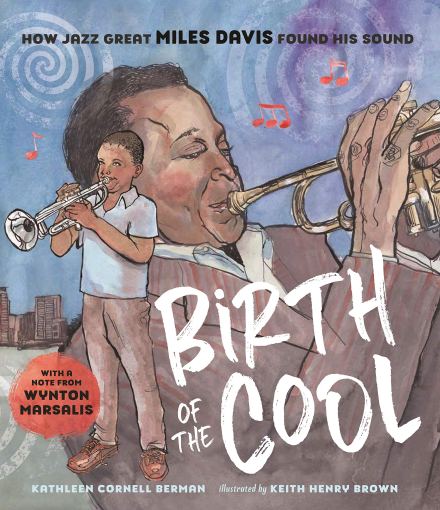
Birth of the Cool: How Jazz Great Miles Davis Found His Sound

Written by Kathleen Cornell Berman | Illustrated by Keith Henry Brown

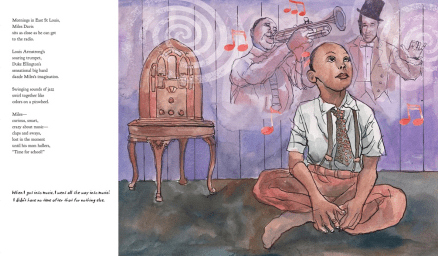
As a child, Miles Davis listens to the radio before school, clapping and swaying along to “Louis Armstrong’s soaring trumpet” and “Duke Ellington’s sensational big band.” The “swinging sounds of jazz / swirl together like / colors on a pinwheel.” When he’s older, Miles watches the riverboats on the Mississippi as they bring musicians from New Orleans to play in the East St. Louis clubs. At night he listens as “melodies drift down the street. / Some croon country, / some cry the blues. / Sassy saxophones wail / through the night.”
celebrate-picture-books-picture-book-review-birth-of-the-cool-growing-up

Image copyright Keith Henry Brown, 2019, text copyright Kathleen Cornell Berman, 2019. Courtesy of Page Street Books.

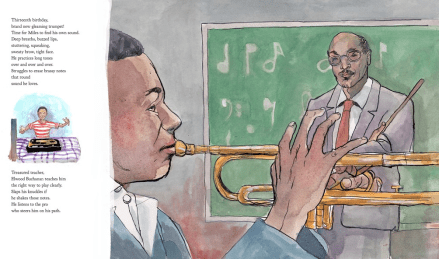
During the summer, Miles visits his grandfather’s farm in Arkansas. Here, he hears the music of horses’ hooves. On his walks through town, he listens to the sounds of guitars and singing, and at church he learns the notes of “soulful singing.” For his thirteenth birthday, Miles receives a trumpet. He takes lessons and practices again and again.

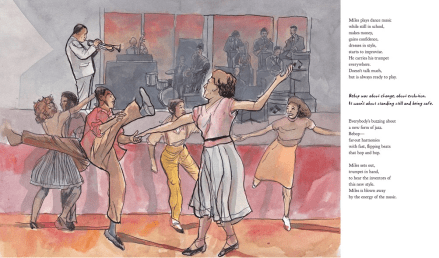
While he’s still in high school, Miles begins being paid to play at dance halls. His confidence grows and he begins to develop his own sound. A new form of jazz is attracting attention—Bebop: “far-out harmonies / with fast, flipping beats / that hop and bop.” He goes to clubs to listen to Charlie “Bird” Parker and Dizzy Gillespie play. He’s “blown away / by the energy of the music.”
celebrate-picture-books-picture-book-review-birth-of-the-cool-thirteen

Image copyright Keith Henry Brown, 2019, text copyright Kathleen Cornell Berman, 2019. Courtesy of Page Street Books.

Then one night, one of the band members doesn’t show up, and Miles—who always has his trumpet with him—is asked to fill the spot. In awe and a little intimidated in the presence of his idols, Miles’s playing “doesn’t shine.” But he knows that “jazz / is all he wants to play.” Miles moves to New York to go to school at Juilliard, but, really, to learn from Bird, Dizzy, and all of his idols. In the morning he goes to class, practicing between classes. At night he plays clubs throughout the city.

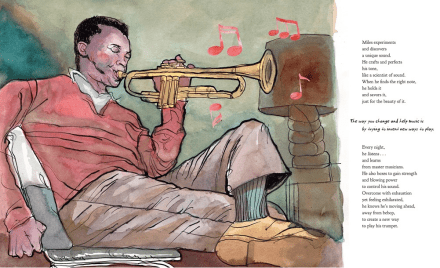
Soon, he leaves Juilliard to concentrate on playing and learning from the greats. His father advises him: “Don’t be like the mockingbird / that copies others. / Be your own man. / Be your own sound.” When Dizzy leaves Bird’s band, Miles takes his place. But he plays differently than Dizzy. “Some listeners put him down— / they want Dizzy’s rippling trumpet.” The criticism make Miles lose confidence and want to quit. But Bird encourages him.
celebrate-picture-books-picture-book-review-birth-of-the-cool-new-sound

Image copyright Keith Henry Brown, 2019, text copyright Kathleen Cornell Berman, 2019. Courtesy of Page Street Books.

With practice and patience, he discovers his own sound, holding and savoring perfect notes “just for the beauty of it.” He forms his own group with talented musicians who want to create new sounds. The nine musicians play “slowly and mysteriously…. Cool— / relaxed, / with a lighter, / lyrical feel.” Miles’s solos enchant audiences.

But the endless work takes its toll. He begins to lose gigs; his health declines. Miles doesn’t give up. “He climbs out / of his dark days / by playing his horn again.” Then in 1955 he takes the stage at the Newport Jazz Festival and begins to play. “…His mystical voice hangs / like a cloud, / leaving space / for each listener’s / imagination to wander.” The crowd cheers and applauds. Miles is back with his unmistakable sound and new ideas for the future of the music he loves.

Notes about Miles Davis from Wynton Marsalis, Kathleen Cornell Berman, and Keith Henry Brown as well as a selected discography and bibliography follow the text.
celebrate-picture-books-picture-book-review-birth-of-the-cool-dancing

Image copyright Keith Henry Brown, 2019, text copyright Kathleen Cornell Berman, 2019. Courtesy of Page Street Books.

Kathleen Cornell Berman’s lyrical passages reveal a boy, a teenager, and a man who embodied music, listening to and absorbing the various sounds around him and incorporating them into his own unique sound. Her evocative vocabulary (swirl, rollicking, croon, rumbling, far-out, rippling, blizzard of notes, itching to play) and phrasing that blends short staccato lines with longer sentences echoes the rhythm of jazz and will keep readers riveted to the story. Berman emphasizes the listening, practice, and experimentation that informed Miles Davis’s original sound, showing children that innovation is built on hard work, dedication, and even history. Her inclusion of Davis’s setbacks also demonstrates that perseverance is part of the success of any endeavor.

Keith Henry Brown’s gorgeous, detailed pen-and-ink and watercolor illustrations take readers from Miles Davis’s living room, where he listens to the radio as images of Louis Armstrong and Duke Ellington swirl through his imagination to an overlook on the Mississippi River and its paddlewheel steam ships to the clubs and jam sessions of New York and, finally, to the Newport Jazz Festival. Brown’s color palette of cool blues, greens, purples, and browns, punctuated with Davis’s ever-present gleaming brass trumpet, brings Davis’s country and city experiences to life while mirroring the tone and feel of his unique sound. Quotes from Miles Davis are sprinkled throughout the story and set apart with type that looks handwritten, giving his words a personal touch.

Sure to inspire readers to learn more about Miles Davis and listen to his music, Birth of the Cool: How Jazz Great Miles Davis Found His Sound would be an excellent accompaniment to school music programs, an inspiring book for biography lovers and young musicians of all types, and a beautiful addition to home, school, and public library collections.

Ages 8 – 12

Page Street Kids, 2019 | ISBN 978-1624146909

Discover more about Kathleen Cornell Berman and her books on her website.

To learn more about Keith Henry Brown, his books, and his art, visit his website.

Meet Kathleen Cornell Berman

celebrate-picture-books-picture-book-review-kathleen-cornell-berman-headshot

In your author’s bio you say that you fell in love with Miles’s Davis’ music when you were 10 years old. Was there a particular spark that made you love his music?

As a kid I loved all kinds of music. When I first heard Miles’s trumpet sound, I fell in love. His trumpet sound was different. It wasn’t flashy, it was slow, haunting and very beautiful. I longed to hear it again.

Can you take readers on your journey of writing Birth of the Cool and having it published? What kind of research did you do? What was the most surprising thing you learned about Miles Davis?

I was thrilled when I got the email from Charlotte Wenger from Page Street. It’s beyond exciting when you find someone who loves your story as much as you do. And Charlotte was a dream editor to work with.

I read Miles’s autobiography and many other books about him, as well as journal and magazine articles. I listened to countless interviews and researched players in his band. And I listened to his music a lot. He went through many changes in his musical career. I realized I had to keep my focus on his early career. 

I was surprised to learn he had slave ancestors who played music in the main house on a plantation. It was interesting to discover that Miles loved rural life (from his visits to his relatives’ farms). When he first moved to NYC, he visited the stables and asked to ride their horses. He had fond memories of riding them on his grandfather’s farm.

Keith Henry Brown’s pen-and-ink and watercolor illustrations are gorgeous and full of expression. Can you talk about your reaction to seeing the illustrations for the first time. Do you have a favorite spread?  
celebrate-picture-books-picture-book-review-kathleen-cornell-berman-and-keith-henry-brown

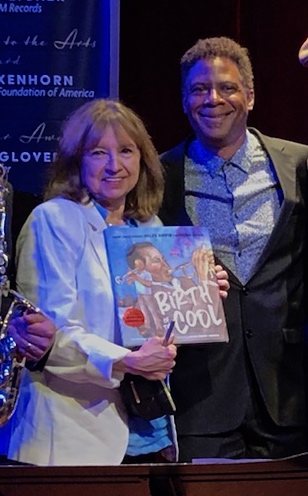
Kathleen Cornell Berman and Keith Henry Brown at the book launch for Birth of the Cool and the Jazz Gallery in New York City.

My first reaction to Keith’s illustrations was like an “out of the body” experience. To see my words come to life was a wonderful feeling. His art illuminated Miles’s journey in a jazz-inspired way. I was very happy when he accepted the job. I already knew he was a jazz fan, so he was a good choice.

Keith’s goal was to create drawings that weren’t too tight or realistic. He wanted to create a loose, abstract feeling. I think Keith achieved that beautifully. Kudos to his courage in creating illustrations in watercolor, a very unpredictable medium. It’s difficult for me to pick a favorite illustration, I really love them all.

Your inspirational biography highlights the ups—and downs—of Miles Davis’s early career. What message would you like readers to take away from the story?

Miles is a great example of how hard work pays off. Some kids today think it’s easy to play an instrument. For some it might be, but inventing your own sound, is extremely difficult. It takes perseverance and dedication to create your own voice on the instrument. That goes for anything you attempt, whether you become an architect, a visual artist, writer, or a singer. Unfortunately, many jobs don’t allow individuality, but finding something—anything—that you’re good at can boost happiness.

I hope this story inspires kids to reach for the stars, to find their own voice, and never give up. I also hope kids will take time to listen to jazz; it’s America’s classical music. Listening to music has so many benefits, intellectually as well as emotionally.

I saw on your website that you like to collect words. Can you tell me five of your favorites and what you love about them? Do you remember where they first caught your eye—or ear?

I’m usually attracted to words that tickle the tongue and have a unique sound, like mesmerizing, prickly, crumpled, nuzzle, etc. There are so many. I love alliteration. When words are paired with another, they sing and make the text come alive. I usually have my wordbook at my side as I read any kind of book. I also use my phone memo to jot words as I hear them in daily life.  

Besides writing, you paint, and create assemblages from found objects. Your sculptures are gorgeous and have so much personality! Which came first—writing or art? When creating an assemblage, do you start with one object or do you see how several of the materials you have can fit together?

Thank you very much. Creating found art sculptures is like therapy. I’ve always been into creating something out of ordinary things. The art and writing coincided with a strong desire to break out of the box of being a teacher.

I collect a lot of wood as well as words. When I find a piece that inspires me, I visualize what it might become and I begin the search for a complimentary piece. It’s kind of like doing puzzles.

Is there a similarity for you in constructing a sculpture and creating text for a picture book?

Yes, there is. I look for a seed of an idea that touches my senses or emotions. And in art I choose a piece of wood that inspires me visually. Then it all comes down to layering and adding details that make the story or art shine in a new way. Finally, adding the “just right” color or details can be compared to the continual revisions to discover perfect words that fit my story.

Birth of the Cool is your debut picture book. What are you looking forward to most as a picture book author?

Reading the book to children and getting them to reflect about their feelings. And, of course, introducing them to jazz.

I love writing picture book biographies. I also enjoy writing books that will amuse kids, as well challenge their thoughts about nature.

What’s up next for you?

I have a new picture book bio about another musician that I just started submitting. And I’ve started research on another interesting, relatively unknown musician that had a big impact on many.                   

What is your favorite holiday?

My favorite holiday is Thanksgiving. I love the traditions and the history. Holidays are so important in bringing busy families together. As a former teacher, Thanksgiving gave me the opportunity to discuss the importance of the Native American people. They taught us so much. At the Thanksgiving table, we as a family celebrate the Native American contributions to our country. I wish more people did the same.

You can connect with Kathleen Cornell Berman on

Her website | Facebook | Instagram | Twitter

Jazz Appreciation Month Activity
celebrate-picture-books-picture-book-review-jazz-trumpet-word-search-puzzle

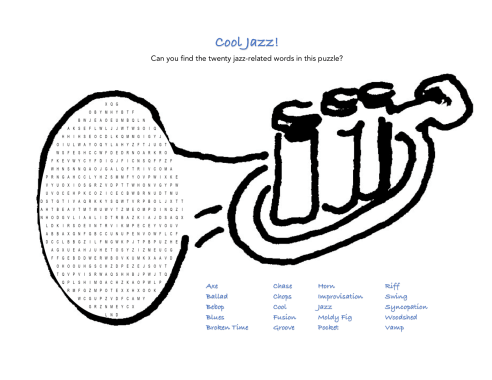
Cool Jazz! Word Search Puzzle

Jazz has a sound and vocabulary all it’s own! Can you find the twenty jazz-related words in this printable puzzle? Then have fun coloring it!

Cool Jazz! Word Search Puzzle | Cool Jazz! Word Search Solution

celebrate-picture-books-picture-book-review-birth-of-the-cool-cover

You can find Birth of the Cool: How Jazz Great Miles Davis Found His Sound at these booksellers

Amazon | Barnes & Noble | Books-a-Million

To support your local independent bookstore, order from

Bookshop | IndieBound

Picture Book Review
April 7 – It’s National Poetry Month

celebrate-picture-books-picture-book-review-exquisite-cover

About the Holiday

This month we celebrate poets and the poetry they create to illuminate our lives in new and often surprising ways. National Poetry Month is a world-wide event, bringing together tens of millions of poets, readers, teachers, librarians, booksellers, publishers, and other poetry lovers in readings, school visits, and special events. To celebrate, check out some events in your area and enjoy reading the work of your favorite—or a new—poet. You might even try writing your own poetry! Get inspired with today’s book!

I received a copy of Exquisite: The Poetry and Life of Gwendolyn Brooks from Abrams Books for Young Readers for review consideration. All opinions about the book are my own.

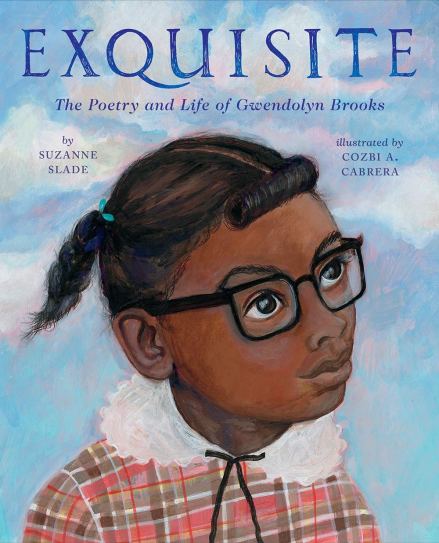
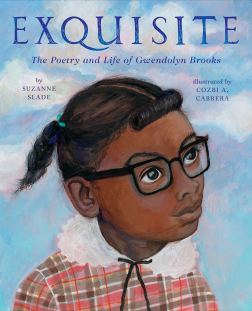
Exquisite: The Poetry and Life of Gwendolyn Brooks

Written by Suzanne Slade | Illustrated by Cozbi A. Cabrera


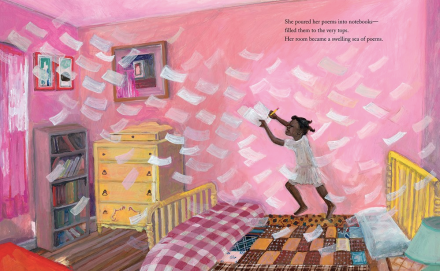
Growing up in Chicago, Gwendolyn Brooks’ family didn’t have a lot of money but they did own “great treasure—a bookcase filled with precious poems.” Every night Gwendolyn’s father read aloud from those books, and, mesmerized, Gwendolyn memorized poems to recite for her visiting aunts. “When she was seven, Gwendolyn began arranging words into poems of her own.” One day, her mother read her poems and declared that one day she would be as great as Paul Laurence Dunbar—Gwendolyn’s favorite poet.

celebrate-picture-books-picture-book-review-exquisite-library

Image copyright Cozbi A. Cabrera, 2020, text copyright Suzanne Slade, 2020. Courtesy of Abrams Books for Young Readers.

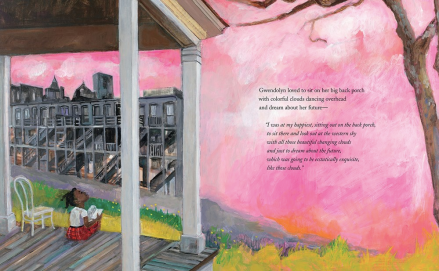
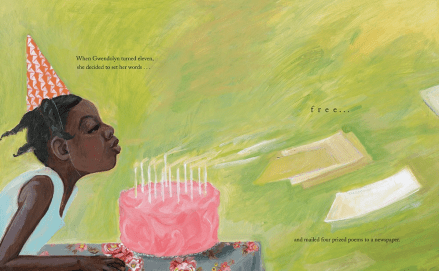
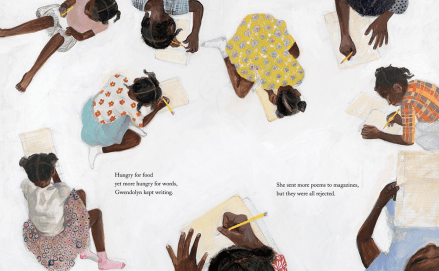
Gwendolyn loved to sit on her porch and watch the clouds float by. She filled notebooks about them and about her “paper dolls, ticktock clocks, raindrops, sunsets, and climbing rocks.” When Gwendolyn was eleven, she sent four of her poems to a newspaper, and, much to her delight, they were printed. A poem she sent to a national magazine also appeared in print.

Gwendolyn was looking forward to a bright future when the Great Depression hit. But Gwendolyn kept writing. In high school she was an outsider, never seeming to fit in despite trying several schools. “Gwendolyn felt invisible. But when words flowed from her pen, she became invincible.” After college she took whatever jobs she could find and continued writing. She got married and had a baby boy. Even though she was busy, she took poetry classes about modern poems and wrote in a new style herself.

celebrate-picture-books-picture-book-review-exquisite-chicago

Image copyright Cozbi A. Cabrera, 2020, text copyright Suzanne Slade, 2020. Courtesy of Abrams Books for Young Readers.

She wrote about what and who she saw in her South Side Chicago neighborhood, Bronzeville. She began to win poetry contests and had some poems published in a well-known poetry journal. She and her family were still poor, but that didn’t stop her from writing “‘what she saw and heard in the street’” even when there was no electricity. Just as when she was a little girl, Gwendolyn “kept dreaming about a future that was going to be exquisite.”

celebrate-picture-books-picture-book-review-exquisite-notebooks

Image copyright Cozbi A. Cabrera, 2020, text copyright Suzanne Slade, 2020. Courtesy of Abrams Books for Young Readers.

One day, she gathered her best poems and submitted them to a book publisher in New York. Soon after, they wrote asking for more. She wrote and wrote until she had enough to send. With the next letter from the publisher, she learned that they “loved her poems!” They were published with the title A Street in Bronzeville. After that book, came a second, Annie Allen. Her poems were now read all over the world. They “helped people better understand others” and “changed the way some people thought and acted.”

celebrate-picture-books-picture-book-review-exquisite-eleven

Image copyright Cozbi A. Cabrera, 2020, text copyright Suzanne Slade, 2020. Courtesy of Abrams Books for Young Readers.

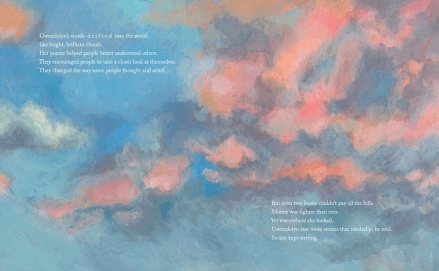
Even with two books published, money was scarce. And yet she kept writing because “everywhere she looked, Gwendolyn saw more stories that needed to be told.” One day two things happened in Gwendolyn’s apartment: the electricity was turned off—again. And the phone rang. The reporter on the phone had one question for her: “‘Do you know that you have won the Pulitzer Prize?’” She and her young son danced around the apartment as “outside, exquisite clouds exploded in the sunset sky, because Gwendolyn had won the greatest prize in poetry!”

“Clouds,” a poem written by Gwendolyn Brooks when she was fifteen, follows the story. An Author’s Note giving more information about Brooks’ work, a timeline of her life, and resources are also included.

celebrate-picture-books-picture-book-review-exquisite-writing

Image copyright Cozbi A. Cabrera, 2020, text copyright Suzanne Slade, 2020. Courtesy of Abrams Books for Young Readers.

In her outstanding biography, Suzanne Slade highlights the prodigious talent of Gwendolyn Brooks, illuminating the influences, continual study, and inborn voice that informed and created her poetry. Gwendolyn’s self-confidence, unique perspective, and the support she received throughout her youth and career are strong themes that will inspire readers. Slade focuses on the awe Brooks found in her subjects, demonstrating her singular vision and how poetry is found in the everyday aspects of life. Beginning with Gwendolyn’s childhood, Slade links the events of Brooks’ life with beautiful imagery of the clouds she once likened to her exquisite future. Quotes are sprinkled throughout Slade’s lyrical text, allowing children to hear Brooks’ own voice and the dreams and pride had for her work.

celebrate-picture-books-picture-book-review-exquisite-clouds

Image copyright Cozbi A. Cabrera, 2020, text copyright Suzanne Slade, 2020. Courtesy of Abrams Books for Young Readers.

Cozbi A. Cabrera’s acrylic paintings are stunning representations of Gwendolyn’s life. Her family life with her well-read and supportive family comes alive with images of their home, where the large glass bookcase has pride of place, portraits hang on the walls, Gwendolyn practices the piano while her mother exclaims over her poetry, and the family gathers for a meager dinner during hard times. For young readers, Cabrera visualizes the parts of Gwendolyn’s life that fed her imagination and work and the copious amounts of poetry that she created—even as a child. Images of Gwendolyn’s early publishing successes give way to the changes brought by the Depression, school, marriage, and motherhood, but a pen, paper, and books are still her constant companions. Scenes from Chicago give children a look at the city that inspired Gwendolyn’s poetry, and intermittent views of the pastel clouds let readers dream along with her.

A stirring biography to inspire the dreams of any child, Exquisite: The Poetry and Life of Gwendolyn Brooks is a story that children will want to hear again and again. On its own or paired with Gwendolyn Brooks’ poetry, the book also makes an impactful lesson for homeschooling. The book is highly recommended for home, school, and public library collections.

Ages 6 – 9

Abrams Books for Young Readers, 2020 | ISBN 978-1419734113

Discover more about Suzanne Slade and her books on her website.

To learn more about Cozbi A. Cabrera, her books, and her art on her website.

Watch the Exquisite: The Poetry and Life of Gwendolyn Brooks book trailer

National Poetry Month Activity

celebrate-picture-books-picture-book-review-poetry-word-search

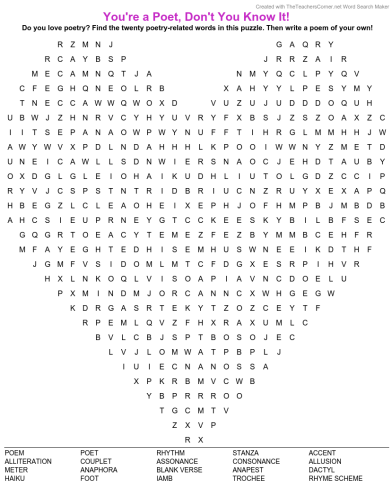
You’re a Poet, Don’t You Know It! Word Search Puzzle


Find the twenty poetry-related words in this printable puzzle then write a poem of your own!

You’re a Poet, Don’t You Know It! Puzzle | You’re a Poet, Don’t You Know It! Solution

celebrate-picture-books-picture-book-review-exquisite-cover

You can find Exquisite: The Poetry and Life of Gwendolyn Brooks at these booksellers

Amazon | Barnes & Noble | Books-a-Million | IndieBound

April 6 – 19th Amendment Centennial Interview with Author Elisa Boxer & “The Voice that Won the Vote” Review

celebrate-picture-books-picture-book-review-Elisa-Boxer-headshot

Elisa Boxer is an Emmy-winning journalist and columnist whose work has appeared in publications including The New York Times, Inc., and Fast Company. She has always been passionate about children’s literature, and finds herself especially drawn to stories of unsung heroes like Febb and Harry Burn. The Voice That Won the Vote is her first book, and she hopes it inspires children to give voice to what matters to them. Elisa lives in Maine with her family.

Today, I’m excited to chat with Elisa Boxer about her timely The Voice Who Won the Vote, her work as a journalist, and the themes woven through all of her stories. Elisa also gives kids an intriguing writing prompt. And my blogging partner Jakki’s sons, Steve and Jack, are back with their questions too!

 Steve asked: How did you find the letter Febb Burn wrote to her son?

Hi Steve! So glad you liked the book. The story of how I found the letter goes back to a couple of years ago when my agent, Steven Chudney, let me know that 2020 would be the 100th Anniversary of women getting the right to vote. He asked if I could come up with a picture book about it. I’ve always been drawn to stories of unsung heroes, so I scoured the internet for little-known figures in the suffrage movement. When I stumbled across the story of Febb Burn and learned that she was the mom who saved suffrage, I knew this was a story I wanted to tell! More digging led me to the online archives at the Knox County Library in Tennessee. These archives included the letter.

By the way, in case you haven’t seen it, here’s a photo of the actual letter: http://cmdc.knoxlib.org/cdm/ref/collection/p265301coll8/id/699

I think it’s so cool to see the original papers that Harry received and read that day in the legislature back in 1920.  And to see Febb’s actual handwriting! Aaah! I tend to geek out over historical documents like this.

Jack wondered: How much research did you have to do?

Hi Jack! The short answer is: Lots. After I found Febb’s story on the internet, I read as many articles online as I could find. I also read several books about the women’s suffrage movement. I wanted more background information to put the story in context, and I also wanted to know more about the legislative session in Tennessee that led to Harry Burn tipping the scales and giving women the right to vote. I also enlisted the help of the Special Collections department at the University of Tennessee Libraries. One of the most exciting things they shared with me was a scanned version of Harry Burn’s personal scrapbook from 1920, containing newspaper clippings and headlines from his historic vote!

Jack and Steve would like to know: Is voting important to you?

Definitely. I started the book with the line: “A vote is a voice,” because I believe that voting is one of the most powerful ways we can have our say in society.

Hi Elisa! I read in your bio that even as a child you loved to write. In fact, if readers look on your website they’ll see a picture of quite a large group of books with covers written in crayon. I’m sure kids would love to know what some of those stories were about. Can you share a few of the ideas you wrote about as a child?

Sure! It’s fun to look back on those and see some common themes, like defying authority (You Can’t Catch Me, for example, about a girl outrunning her parents) and grief (I wrote The Kitten and the Puppy after losing my beloved dog). And then, there was a book about a dinosaur making friends with a little girl and moving into her house, which I think I wrote because I had just learned how to draw dinosaurs ;).

With your early interest in writing books, did you ever consider becoming a children’s writer or novelist before going into journalism? What was it about journalism that attracted you?

Even though I’ve loved reading and writing children’s books for as long as I can remember, I never really considered making a career of it. I wish I had followed that passion earlier. I’m 49 and my first book was just published. So if you have any interest in creating children’s books, don’t wait as long as I did! Although, having said that, I really do love print and broadcast journalism. My specialty has always been long-form journalism, which involves in-depth research, multiple interviews, and spending time crafting a story. A lot like writing nonfiction picture books, actually. A couple of years ago, I got sidelined with a severe case of Lyme disease. It hurt to move and breathe and I was basically housebound. So that’s when I decided to re-visit my childhood passion. I began dusting off old picture book manuscripts, revising them, and querying agents.

Your stories in print for newspapers and for television news have garnered many awards. What aspects of story do you infuse into each of your pieces? What do you like best about each medium?

(Blushing). I am always looking for the soul of the story. Even with straight news pieces, I want to find people and circumstances to bring those stories to life in a way that readers or viewers can relate to. The thing I like best is the same for each medium, and that is finding the point of emotional resonance, the subtext, the theme that will stick with the audience long after they put down the paper or the magazine or turn off the TV. In fact, that’s one of the reasons I love books so much: people pick them up again and again. Sure, you can save a newspaper or magazine article that resonates with you. But it’s not the same as that feeling of finishing a book, internalizing its message, holding it in your hands and knowing it’s yours to return to whenever you want.

It seems very fitting that your first published book is a picture book. What is it about Febb Burn’s story that you think is most important for kids to know?

I really want kids to know how much their voices matter. It’s so easy to feel powerless, especially given the state of the world right now. But I hope kids come away from the book realizing that one small act of courage, in the form of giving voice to what matters to them, really can change the world.

Vivien Mildenberger’s illustrations are so evocative of 1920. What was your first reaction to seeing your story illustrated? Do you have a favorite spread?

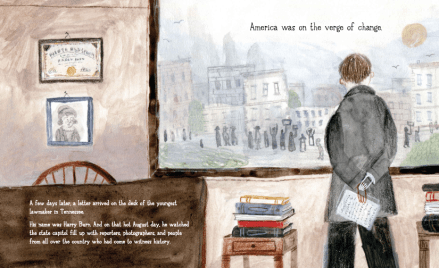
Aren’t Vivien’s illustrations amazing? I’m still blown away by them every time I see the book. When I first saw her work on her website, even before I saw her illustrations for the book, I knew that her old-world style would be a perfect fit for this story. And then when I first saw her preliminary sketches, I thought, WHOA, this is going to be even better than I could have imagined. Hmmm, it’s tough to pick a favorite spread. But I’d have to say the one where Harry Burn is looking out the window of the state capitol, watching the throngs of people arrive to witness history. She really captures the mood here. “America was on the verge of change,” the text reads. You can’t even see Harry’s face, but Vivien somehow managed to convey so much tension and anticipation in this spread. You can feel his inner struggle to do what’s right and follow his heart in the face of opposition.

What’s up next for you?

I’m super excited to say that I have several more picture books on the way during the next couple of years, all nonfiction. I’m also working on a chapter book and two middle grade books, one nonfiction and the other historical fiction.

As kids stay home and are schooled at home, it’s wonderful to see them interacting with the kidlit community. Would you like to give readers a writing prompt?

It really is so wonderful to be interacting with kids, their parents and their teachers. As for a prompt, I’d ask kids: With the world the way it is, what are the words, the scenes, the images, and the messages that would touch your heart? In other words, what is the book you need right now? Take one small step to start creating it. And then another…

Thanks, Elisa! It’s been wonderful talking with you! I wish you all the best with The Voice Who Won the Vote, and I can’t wait to read your upcoming books. I hope we’ll have a chance to chat again!

You can connect with Elisa on

Her website | Facebook | Twitter 

To order a signed, personalized copy of The Voice that Won the Vote, visit Print: A Bookstore.

19th Amendment Centennial Review

celebrate-picture-books-picture-book-review-the-vote-that-won-the-vote-cover

About the Holiday

This year we celebrate the ratification of the 19th Amendment, which guaranteed a woman’s right to vote. The victory was long fought and hard won and still informs issues of democracy and equal rights today. For more information on the history of suffrage and to learn more about the brave women on the front lines of progress, visit the 2020 Women’s Vote Centennial Initiative website and Women’s Vote Centennial. You’ll find extensive resources, curriculum for middle school and high school students, as well as online exhibits, videos, and so much more.

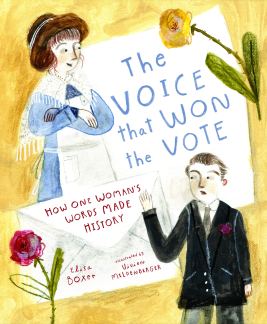
The Voice that Won the Vote: How One Woman’s Words Made History

Written by Elisa Boxer | Illustrated by Vivien Mildenberger

The year was 1920 and women were demanding the right to vote, just as they had been for the last seventy-five years. But all of their meetings, shouting, and signs were silenced. Men called the women “troublemakers” and “uncivilized.” Some men said it would “cause chaos” if women could vote, and others said “‘the only vote a woman needs is the vote to choose her husband.” There were even other women who thought women shouldn’t vote.

celebrate-picture-books-picture-book-review-the-vote-that-won-the-vote-silenced

Image copyright Vivien Mildenberger, 2020, text copyright Elisa Boxer, 2020. Courtesy of Sleeping Bear Press.

But then there was Febb Burn from East Tennessee who had gone to college, become a teacher, and loved to keep learning. She was especially interested in laws and how they were made, and every year as she watched her farmhands head off to vote on election day, she wanted to be able to go too. Finally, she grew so tired of being “shut out of the process” that she wrote a letter to her son.

Who was her son? His name was Harry Burn, and he was the “youngest lawmaker in Tennessee.” As he read his mother’s letter, he watched out his window as people from across the country gathered to decide the fate of women’s suffrage. One round of voting had already taken place, and it had resulted in a tie. Thirty-five states had voted yes on the issue, but thirty-six were needed to make it a law. Harry Burn for Tennessee had been one of the “no” votes in the first round. Now in the second round, Harry Burn would be the deciding vote. A “no” would deny women the vote, while a “yes” would change elections forever.

celebrate-picture-books-picture-book-review-the-vote-that-won-the-vote-letter

Image copyright Vivien Mildenberger, 2020, text copyright Elisa Boxer, 2020. Courtesy of Sleeping Bear Press.

“He knew that most of the people who had elected him hated the idea of women voting.” Many of them were even in the audience and were counting on him. He was, after all, wearing a red rose—”the symbol of keeping women in the home, and out of the voting booth”—in his pocket. When it came time for Harry to vote, all eyes were on him as he said “‘Yes.’” The officials thought he’d “made a mistake” or “gotten confused,” but he hadn’t. The suffragettes cheered and hugged.

Everyone wanted to know why Harry Burn had changed his mind. In answer, he pulled from his pocket the letter his mother had written urging him to vote for suffrage. Harry constituents were shocked and angry. They vowed to vote against him in the next election. The headlines in the newspapers said that Harry had ruined his career. But Harry already knew that. He knew that his vote would mean “giving up his seat in the Tennessee House of Representatives.”

celebrate-picture-books-picture-book-review-the-vote-that-won-the-vote-Harry

Image copyright Vivien Mildenberger, 2020, text copyright Elisa Boxer, 2020. Courtesy of Sleeping Bear Press.

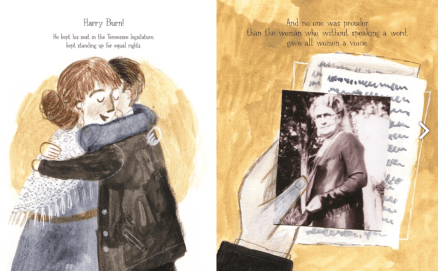
When interviewed for newspaper articles, Harry said that he had followed his conscience that all people should have the right to vote. At last the election was held, and Harry awaited his fate as all the votes were counted. Who would be the next Tennessee Representative? Harry Burn! “And no one was prouder than the woman who, without speaking a word, gave all women a vote.”

In an Author’s Note, Elisa Boxer talks more about the women’s suffrage movement, the courage to stand up for what you believe in, and the power of using the vote to voice your opinion. A timeline of significant events in the women’s suffrage movement is also included.

celebrate-picture-books-picture-book-review-the-vote-that-won-the-vote-Harry-Burn

Image copyright Vivien Mildenberger, 2020, text copyright Elisa Boxer, 2020. Courtesy of Sleeping Bear Press.

For anyone wondering about the power of one vote, Elisa Boxer puts all doubts to rest with her engaging recounting of this little-known true story. While Harry Burn’s vote took place 100 years ago, the courage he showed in standing up for his own conscience and in opposition to what was expected of him reverberates today. Boxer opens the story with a clear and meaningful definition of how a vote equals one’s voice, instilling in children who are learning to speak up for themselves in classrooms, on social media, and elsewhere the importance of voting when they come of age.

Her inclusion of quotes revealing the reasons behind opposition to women’s suffrage will be eye-opening. Her well-paced building of suspense going into the second vote and the aftermath will have kids on the edge of their seat and offers many opportunities to discuss the mechanisms of politics, expectations, and courage. Through her straightforward yet multilayered storytelling, Boxer presents two heroes for children to look up to: Harry, who put the good of the country and women ahead of his own career and Febb, who used her voice to make lasting change.

celebrate-picture-books-picture-book-review-the-vote-that-won-the-vote-suffragettes

Image copyright Vivien Mildenberger, 2020. Courtesy of Sleeping Bear Press.

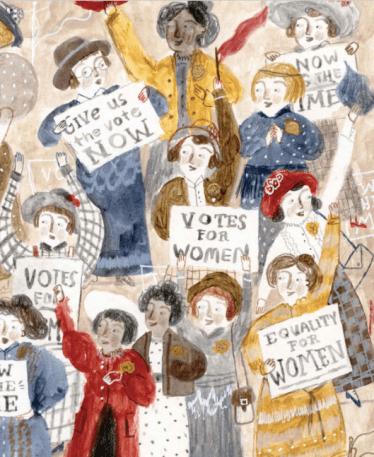
Vivien Mildenberger’s lovely, textured illustrations take readers back to the pivotal year of 1920, when vocal suffragettes faced their equally vocal opposition and Febb Burn, sitting on her front porch decided to write her life-changing letter. Images of politicians sporting yellow and red roses reveal the long tradition of color as an identifying symbol. An especially powerful spread comes after Harry’s vote as he walks among his angry constituents, all of whom shun him behind newspapers full of articles about the historic vote. The inclusion of the actual Febb Burn’s letter to Harry and a photograph of Febb give readers see and hear from this influential woman.

A stirring true story about the power of one person to make a difference, The Voice that Won the Vote is highly recommended for home, school, and public library collections.

Ages 7 – 10

Sleeping Bear Press, 2020 | ISBN 978-1534110496

You can download a The Voice that Won the Vote Teaching Guide from Sleeping Bear Press here.

Discover more about Elisa Boxer, her book, journalism, and other work on her website.

To learn more about Vivien Mildenberger, her books, and her art on her website.

Women’s History Month Activity

celebrate-picture-books-picture-book-review-get-out-and-vote-maze

Get Out and Vote! Maze

Help the girl find her way through the maze to the ballot box so she can cast her vote in this printable maze.

Get Out and Vote! Maze | Get Out and Vote! Maze Solution

celebrate-picture-books-picture-book-review-the-vote-that-won-the-vote-cover

You can find The Voice the Won the Vote at these booksellers

Amazon | Barnes & Noble | Books-a-Million | IndieBound | Print: A Bookstore

Picture Book Review

March 30 – National Women’s History Month

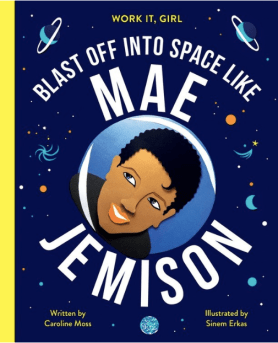
celebrate-picture-books-picture-book-review-blast-off-into-space-like-mae-jemison-cover

About the Holiday

Women have been inventing, discovering, questioning, challenging, and changing the world in the same ways and for just as long as men have—but often without recognition, the ability to take jobs in their fields of expertise, or equal (or even any) pay. This month’s observance serves to educate people on the amazing women who have blazed trails in the past and those who are continuing that tradition today. As we close out National Women’s History Month, we take a look at a book about one woman who has broken many barriers throughout her life and continues to inspire children and adults.

Blast off into Space Like Mae Jemison (Work It, Girl! series)

Written by Caroline Moss | Illustrated by Sinem Erkas

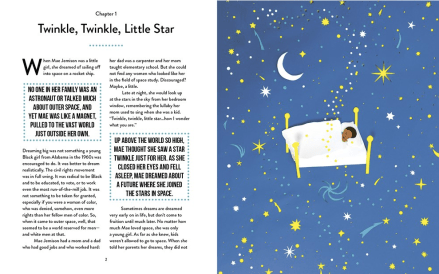
Focused, intelligent, courageous, and giving, astronaut Mae Jemison is an inspiration to millions of kids and adults around the world. Through her captivating biography, Caroline Moss introduces readers to this accomplished woman in ten engrossing chapters that, through pivotal events, dialogue, and thoughts, reveal Mae’s dreams, motivations, and triumphs. Paced in short, impactful chapters, this biography reads like a novel yet imparts factual information that will entice readers to learn more about Mae Jemison and careers in science.

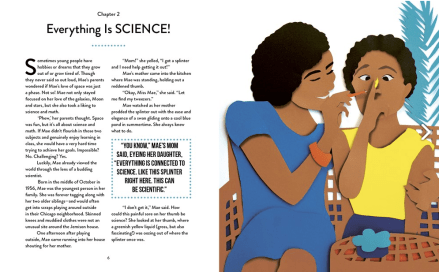
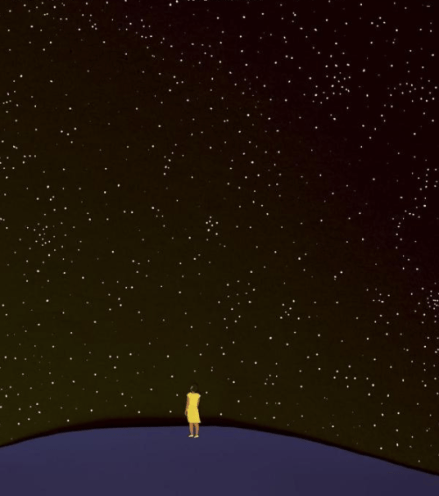
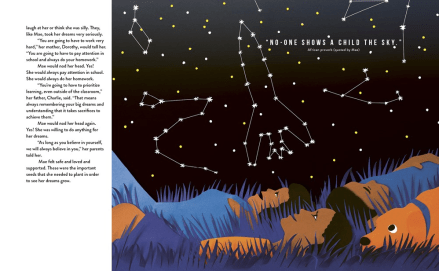
Sinem Erkas punctuates this personal narrative with her stirring 3-D cut paper artwork. Vivid colors and  action-packed imagery, take readers along on Mae’s journey from childhood dreams of “sailing off into space on a rocket ship” to the day she fulfills that dream and beyond. Images of Mae completing experiments in college and medical school as well as detailed depictions of Mae inside the space shuttle working and interacting with other astronauts will have children lingering over the pages.

celebrate-picture-books-picture-book-review-blast-off-into-space-like-mae-jemison-star

Image copyright Sinem Erkes, 2020, text copyright Caroline Moss, 2020. Courtesy of Frances Lincoln Children’s Books.

In the first chapter, children meet Mae as a young girl and her parents who took her dreams seriously, instilled in her a strong work ethic, and guided her on her way to the stars. Is a splinter science? In Chapter 2, readers learn how an infected injury led Mae and her mom to “do a science experiment with the infection” that taught her “so much about doctors and science and health…. Mae was also excited to realize this was something that truly interested her.” Excited to share her research and discovery at school, Mae instead felt those first feelings of doubt when her teacher discouraged her goal of becoming a scientist.

In Chapter 3, children sit in on this class, but also follow 9-year-old Mae home, where her mom tells her “‘It does not matter what anyone thinks…. What matters is that you work hard, set goals, and do your best to achieve them. What matters is that you believe in yourself.” It’s also at this time that Mae watched the Apollo moon landing and thought that maybe someday she go into space too.

When she was 11, Mae discovered dance. She not only discovered it, she discovered she loved it and was good at it. Would Mae decide to become a dancer instead of a scientist? Or, Mae wondered, could she do both? Her mom gave her a bit of perspective that made sense to Mae and “helped her to prioritize her goals and dreams.” What was that advice? You can read about it in Chapter 4.

celebrate-picture-books-picture-book-review-blast-off-into-space-like-mae-jemison-constellations

Image copyright Sinem Erkes, 2020, text copyright Caroline Moss, 2020. Courtesy of Frances Lincoln Children’s Books.

In Chapters 5 and 6, Mae is getting closer to her goal as she goes off to Stanford University at age 16 and then on to medical school at Cornell University, from which she graduated as a Doctor of Medicine in 1981. After grad school, Mae spent a few years in the Peace Corps overseas. When she came back, she learned that “NASA was accepting applications for astronauts. She thought of Sally Ride, a trailblazer; the first American woman in space. She was inspired.” The application was long, and so was the wait to hear back. When she finally got the letter and tore it open, she learned that “out of 2,000 people, she had been accepted to the NASA astronaut program!” She also “realized quickly that out of the fifteen people selected for the 1987 NASA program, she was both the only Black person and the only Black woman.” After her training, she was given a job in the Cape Canaveral, Florida, Kennedy Space Center, “using her math and science knowledge to work with software for shuttles.”

You know that Mae Jemison did go into space, so when does she blast off? In Chapter 7! Young future astronauts will discover what she did before that momentous trip, and in Chapter 8, they’ll read about microgravity, what experiments Mae worked on, how she slept strapped to the wall, what she ate, and other details of her eight days in space.

celebrate-picture-books-picture-book-review-blast-off-into-space-like-mae-jemison-science

Image copyright Sinem Erkes, 2020, text copyright Caroline Moss, 2020. Courtesy of Frances Lincoln Children’s Books.

Chapter 9 relates what Mae has done after leaving NASA. Her teaching career and the Dorothy Jemison Foundation she began were fostered by “a pull inside her to get in front of young people to impart this wisdom. She wanted to create a better world than the one she lived in as a little girl. She wanted kids, especially girls, to know that the world needed them, and the world of science definitely needed them.” As the leader of NASA’s 100 Year Starship Program, Mae’s doing just that. Read about it and be inspired to shoot for your own stars in Chapter 10.

Quotes by Mae Jemison and motivational snapshots are highlighted throughout the text. Back matter includes ten key lessons from Mae Jemison’s life on becoming a leader, questions to prompt kids to think about science, their passions, staying motivated, making a difference, and what they want their legacy to be. There is also a list of books, websites, and organizations for further reading and exploration.

celebrate-picture-books-picture-book-review-blast-off-into-space-like-mae-jemison-night-sky

Image copyright Sinem Erkes, 2020, text copyright Caroline Moss, 2020. Courtesy of Frances Lincoln Children’s Books.

Compelling and personal, Blast off into Space Like Mae Jemison is a biography young readers won’t be able to put down. The book is highly recommended for homeschooling and home libraries as well as for school and public library collections.

Ages 8 – 12

Frances Lincoln Children’s Books, 2020 | ISBN 978-0711245150

Discover more abouCaroline Moss and her books on her website.

To learn more about Sinem Erkas, her books, and her art, visit her website.

National Women’s History Month Activity

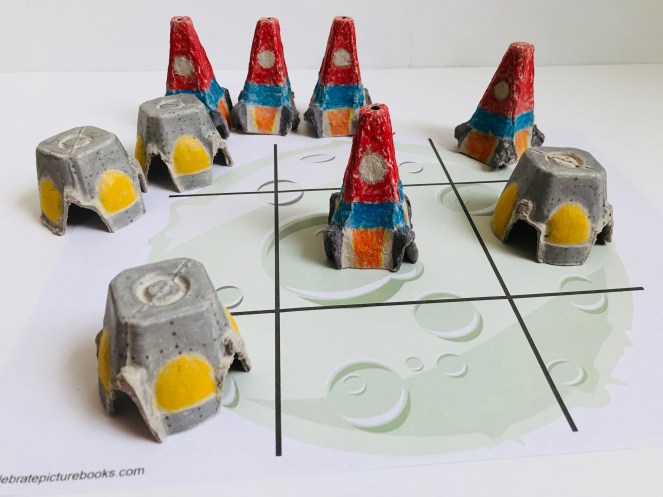
celebrate-picture-books-picture-book-review-rocket-to-the-moon-tic-tac-toe-game

Out-of-this-World Tic-Tac-Toe Game


You can launch your own Tic-Tac-Toe Game with this set you make yourself! With just a couple of egg cartons, some crayons, and a printable game board, you’ll be off to the moon for some fun! Opposing players can be designated by rockets and capsules. Each player will need 5 playing pieces. 

SUPPLIES

  • Printable Moon Tic-Tac-Toe Game Board
  • 2 cardboard egg cartons
  • Heavy stock paper or regular printer paper
  • Crayons
  • Black or gray fine-tip marker

DIRECTIONS

To Make the Rockets

  1. Cut the tall center cones from the egg carton
  2. Trim the bottoms of each form so they stand steadily, leaving the arched corners intact
  3. Pencil in a circular window on one side near the top of the cone
  4. Color the rocket body any colors you like, going around the window and stopping where the arched corners begin
  5. With the marker color the arched corners of the form to make legs
  6. On the cardboard between the legs, color flames for blast off

To Make the Capsule

  1. Cut the egg cups from an egg carton
  2. Color the sides silver, leaving the curved section uncolored. (If your egg cup has no pre-pressed curve on the sides of the cup, draw one on each side.)
  3. Color the curved section yellow to make windows
  4. With the marker, dot “rivets” across the capsule

Print the Moon Game Board and play!

celebrate-picture-books-picture-book-review-blast-off-into-space-like-mae-jemison-cover

You can find Blast off into Space Like Mae Jemison at these booksellers

Amazon | Barnes & Noble | Books-a-Million | IndieBound

Picture Book Review

March 16 – It’s Women’s History Month

celebrate-picture-books-picture-book-review-the-vote-that-won-the-vote-cover

About the Holiday

This year we celebrate the 100th anniversary of the ratification of the 19th amendment which gave women the right to vote. The theme of this year’s Women’s History Month celebration is “Valiant Women of the Vote” and commemorates not only the women who fought for voting equality in the past but also those who, during the 20th century and through today, fight against other forms of voter suppression. Today’s book honors one of those women. For more information and vast resources especially under Suffrage Centennial, visit the National Women’s History Alliance website.

The Voice that Won the Vote: How One Woman’s Words Made History

Written by Elisa Boxer | Illustrated by Vivien Mildenberger


The year was 1920 and women were demanding the right to vote, just as they had been for the last seventy-five years. But all of their meetings, shouting, and signs were silenced. Men called the women “troublemakers” and “uncivilized.” Some men said it would “cause chaos” if women could vote, and others said “‘the only vote a woman needs is the vote to choose her husband.” There were even other women who thought women shouldn’t vote.

celebrate-picture-books-picture-book-review-the-vote-that-won-the-vote-silenced

Image copyright Vivien Mildenberger, 2020, text copyright Elisa Boxer, 2020. Courtesy of Sleeping Bear Press.

But then there was Febb Burn from East Tennessee who had gone to college, become a teacher, and loved to keep learning. She was especially interested in laws and how they were made, and every year as she watched her farmhands head off to vote on election day, she wanted to be able to go too. Finally, she grew so tired of being “shut out of the process” that she wrote a letter to her son.

Who was her son? His name was Harry Burn, and he was the “youngest lawmaker in Tennessee.” As he read his mother’s letter, he watched out his window as people from across the country gathered to decide the fate of women’s suffrage. One round of voting had already taken place, and it had resulted in a tie. Thirty-five states had voted yes on the issue, but thirty-six were needed to make it a law. Harry Burn for Tennessee had been one of the “no” votes in the first round. Now in the second round, Harry Burn would be the deciding vote. A “no” would deny women the vote, while a “yes” would change elections forever.

celebrate-picture-books-picture-book-review-the-vote-that-won-the-vote-letter

Image copyright Vivien Mildenberger, 2020, text copyright Elisa Boxer, 2020. Courtesy of Sleeping Bear Press.

“He knew that most of the people who had elected him hated the idea of women voting.” Many of them were even in the audience and were counting on him. He was, after all, wearing a red rose—”the symbol of keeping women in the home, and out of the voting booth”—in his pocket. When it came time for Harry to vote, all eyes were on him as he said “‘Yes.’” The officials thought he’d “made a mistake” or “gotten confused,” but he hadn’t. The suffragettes cheered and hugged.

Everyone wanted to know why Harry Burn had changed his mind. In answer, he pulled from his pocket the letter his mother had written urging him to vote for suffrage. Harry constituents were shocked and angry. They vowed to vote against him in the next election. The headlines in the newspapers said that Harry had ruined his career. But Harry already knew that. He knew that his vote would mean “giving up his seat in the Tennessee House of Representatives.”

celebrate-picture-books-picture-book-review-the-vote-that-won-the-vote-Harry

Image copyright Vivien Mildenberger, 2020, text copyright Elisa Boxer, 2020. Courtesy of Sleeping Bear Press.

When interviewed for newspaper articles, Harry said that he had followed his conscience that all people should have the right to vote. At last the election was held, and Harry awaited his fate as all the votes were counted. Who would be the next Tennessee Representative? Harry Burn! “And no one was prouder than the woman who, without speaking a word, gave all women a vote.”

In an Author’s Note, Elisa Boxer talks more about the women’s suffrage movement, the courage to stand up for what you believe in, and the power of using the vote to voice your opinion. A timeline of significant events in the women’s suffrage movement is also included.

celebrate-picture-books-picture-book-review-the-vote-that-won-the-vote-Harry-Burn

Image copyright Vivien Mildenberger, 2020, text copyright Elisa Boxer, 2020. Courtesy of Sleeping Bear Press.

For anyone wondering about the power of one vote, Elisa Boxer puts all doubts to rest with her engaging recounting of this little-known true story. While Harry Burn’s vote took place 100 years ago, the courage he showed in standing up for his own conscience and in opposition to what was expected of him reverberates today. Boxer opens the story with a clear and meaningful definition of how a vote equals one’s voice, instilling in children who are learning to speak up for themselves in classrooms, on social media, and elsewhere the importance of voting when they come of age.

Her inclusion of quotes revealing the reasons behind opposition to women’s suffrage will be eye-opening. Her well-paced building of suspense going into the second vote and the aftermath will have kids on the edge of their seat and offers many opportunities to discuss the mechanisms of politics, expectations, and courage. Through her straightforward yet multilayered storytelling, Boxer presents two heroes for children to look up to: Harry, who put the good of the country and women ahead of his own career and Febb, who used her voice to make lasting change.

celebrate-picture-books-picture-book-review-the-vote-that-won-the-vote-suffragettes

Image copyright Vivien Mildenberger, 2020. Courtesy of Sleeping Bear Press.

Vivien Mildenberger’s lovely, textured illustrations take readers back to the pivotal year of 1920, when vocal suffragettes faced their equally vocal opposition and Febb Burn, sitting on her front porch decided to write her life-changing letter. Images of politicians sporting yellow and red roses reveal the long tradition of color as an identifying symbol. An especially powerful spread comes after Harry’s vote as he walks among his angry constituents, all of whom shun him behind newspapers full of articles about the historic vote. The inclusion of the actual Febb Burn’s letter to Harry and a photograph of Febb give readers see and hear from this influential woman.

A stirring true story about the power of one person to make a difference, The Voice that Won the Vote is highly recommended for home, school, and public library collections.

Ages 7 – 10

Sleeping Bear Press, 2020 | ISBN 978-1534110496

You can download a The Voice that Won the Vote Teaching Guide from Sleeping Bear Press here.

Discover more about Elisa Boxer, her book, journalism, and other work on her website.

To learn more about Vivien Mildenberger, her books, and her art on her website.

Women’s History Month Activity

celebrate-picture-books-picture-book-review-get-out-and-vote-maze

Get Out and Vote! Maze


Help the girl find her way through the maze to the ballot box so she can cast her vote in this printable maze.

Get Out and Vote! Maze | Get Out and Vote! Maze Solution

celebrate-picture-books-picture-book-review-the-vote-that-won-the-vote-cover

You can find The Voice the Won the Vote at these booksellers

Amazon | Barnes & Noble | Books-a-Million | IndieBound

Picture Book Review
 

March 12 – It’s Women’s History Month

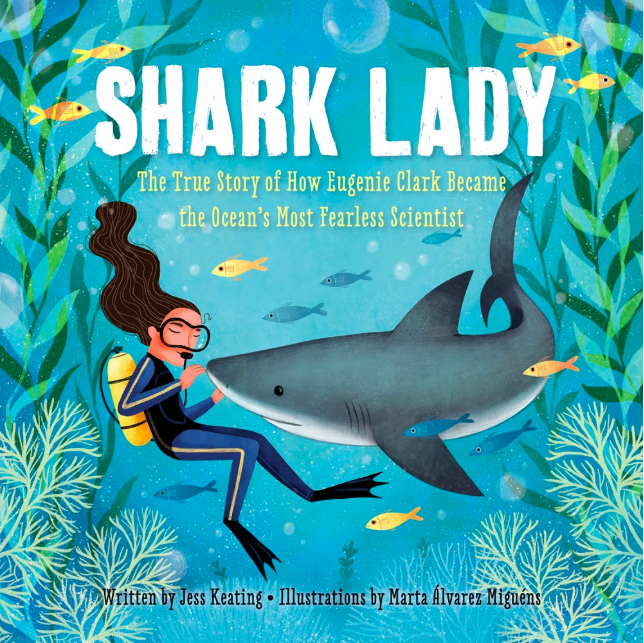
celebrate-picture-books-picture-book-review-shark-lady-cover

About the Holiday

National Women’s History Month is all about celebrating women who broke barriers with their intelligence, creativity, courage, persistence, and unwavering confidence in their abilities. In every discipline, women have brought and continue to bring new perspectives, experiences, and talents to make contributions toward a better world. Celebrate this month-long holiday by reading about some women pioneers in all areas. Today’s book is a great place to start!

By Jakki Licare

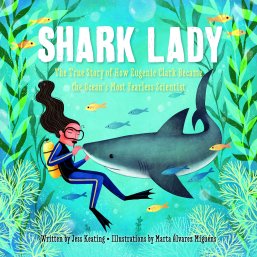
Shark Lady: The True Story of How Eugenie Clark Became the Ocean’s Most Fearless Scientist

Written by Jess Keating | Illustrated by Marta Álvarez Miguéns


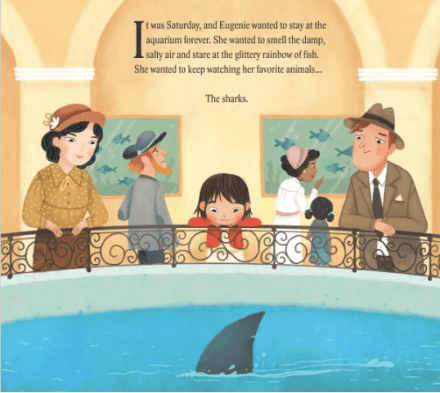
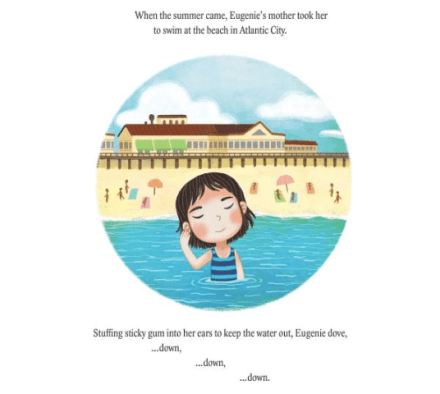
Eugenie’s favorite place was the aquarium. She loved the smell, the colors of the fish, but most of all she loved the sharks. Eugenie wondered what it would be like to live underwater and swim with the sharks. She had to find out. In the summer, Eugenie’s mother took her to Atlantic City. “Stuffing sticky gum into her ears to keep the water out, Eugenie dove, … down, …down, …down.” She pretended to be a shark swimming strong through water. 

celebrate-picture-books-picture-book-review-shark-lady-aquarium

Image copyright Marta Álvarez Miguéns, 2017, text copyright Jess Keating, 2017. Courtesy of Sourcebooks Explore.

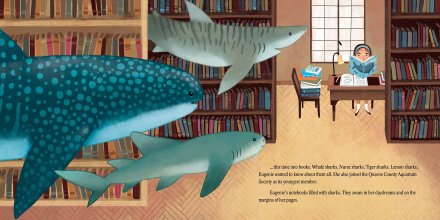
Most people were scared of sharks, but Eugenie thought they were magnificent.  She was determined to learn more about them. “So she dove…this time into books.” At the library she learned about every shark she could find. She also became Queens County Aquarium Society’s youngest member. While Eugenie’s mother couldn’t give her a pet shark, she did surprise Eugenie with a fifteen gallon fish tank. Eugenie bought guppies, clown fish and snails. 

As Eugenie grew older she decided to become a zoologist, but many professors didn’t encourage her. Most thought women couldn’t and shouldn’t be scientists. “Eugenie knew better. Her dream was as big as a whale shark. So again, Eugenie dove.” She studied hard and rose to the top of her field. 

celebrate-picture-books-picture-book-review-shark-lady-diving

Image copyright Marta Álvarez Miguéns, 2017, text copyright Jess Keating, 2017. Courtesy of Sourcebooks Explore.

Eugenie was ready to finally dive into the ocean. In the red sea, she discovered three new species. In the Palau Islands, Eugenie finally saw her first wild shark. It was beautiful. At the time many believed sharks had to always be moving to stay alive, but Eugenie discovered caves with sharks resting together. “Eugenie had proven she was smart enough to be a scientist and brave enough to explore the oceans.”

Still most of the world believed sharks to be dangerous and hunting sharks was very common. Eugenie wanted to prove to the world that sharks weren’t ‘mindless killers.’ Eugenie created an experiment where she would train a shark to push a target. It was a success! Sharks even remembered their training two months later. Eugenie proved that sharks were smart and deserved to be protected. 

Facts about sharks, a detailed timeline of Eugenie Clark’s life, and an Author’s Note follow the text.

celebrate-picture-books-picture-book-review-shark-lady-library

Image copyright Marta Álvarez Miguéns, 2017, text copyright Jess Keating, 2017. Courtesy of Sourcebooks Explore.

Jess Keating’s straightforward manner of writing really homes in on the  struggles and successes of Eugenie Clark. Keating adds in splashes of nautical language,  making this a fun and engaging read. Eugenie’s fight for gender equality was a strong theme that ties in nicely with the world’s misunderstanding of the sharks that Eugenie loved. In Eugenie’s college years, Keating writes how people tried to convince Clark to be a secretary or housewife and poignantly points out that even after she earned her degree many still doubted her ability. Young readers can see how Eugenie didn’t let that stop her from doing what she was meant to do.

Keating emphasizes not only Clark’s passion, but her hard work and courage in a variety of situations as well. The picture book begins with Clark’s passion for sharks and then transitions to the brave girl trying to deep dive with bubble gum in her ears. Later, Keating shows the reader how hard Eugenie worked to earn her degree and how brave she was to deep dive alone. The conclusion of the book  circles back to her passion to protect her beloved sharks’ through scientific experiments. Kids with any passion can see how hard work and perseverance can create a huge impact on the world.  

celebrate-picture-books-picture-book-review-shark-lady-ear-plugs

Image copyright Marta Álvarez Miguéns, 2017, text copyright Jess Keating, 2017. Courtesy of Sourcebooks Explore.

Marta Álvarez Miguéns’ illustrations are beautiful and whimsical. Bright blues and greens invite you to dive right in.  Sharks swim through the library aisles while Eugenie reads and tag along with her through her aquarium trip. The illustrations do a great job of reinforcing Clark’s determination and courage. In the college classrooms Miguéns depicts Eugenie as the only girl in the lecture hall. She depicts her with squinty eyed determination; taking notes while the rest of her classmates look bored. Eugenie is also illustrated bravely diving alone with sharks.

The sharks’ large eyes make the sharks feel friendly and encourages the readers to give them a chance as well. In the conclusion of the book, Miguéns shows Eugenie standing next to a little girl who looks happily at the sharks. This illustration emphasizes the fact that Clark’s scientific achievements have given younger generations the chance to enjoy sharks as well.  The end pages are covered with realistic depictions of different types of sharks and nautical sea creatures, allowing those less familiar with these animals to analyze and compare.

Shark Lady is not just for shark enthusiast. This wonderful book shows us  that any dream is possible with hard work and perseverance. It would make an inspiring addition to home, school, and public library collections.

 Ages 4 – 8 and up

Sourcebooks Explore, 2017 | ISBN 978-1492642046 (Hardcover) | Scholastic, 2018 ISBN 978-1338271478 (Paperback)

Discover more about Jess Keating and her books and illustrations on her website.

To learn more about Marta Álvarez Miguéns, her books, and her art, visit her website.

Women’s History Month Activity

celebrate-picture-books-picture-book-review-shark-fin-craft

Fintastic Shark Fun


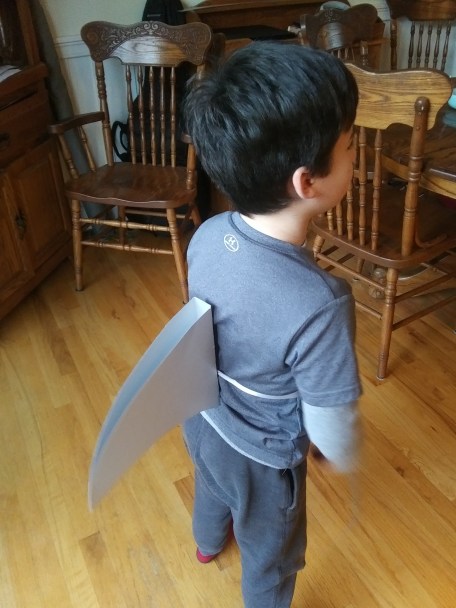
Eugenie wanted to swim with the sharks and now you can too! Follow the directions below and to make your own shark fin. 

Supplies

  • 2 pieces of 8.5 x 11 gray cardstock paper
  • Ribbon
  • Tape
  • Scissors
  • Pencil

fin outline white

celebrate-picture-books-picture-book-review-shark-fin

Directions

  1. Tape the top of the two pieces of paper together
  2. Fold them back together
  3. Measure an inch up from the bottom of the papers (the un-taped side) and trace a straight line across both papers
  4. Trace a shark fin outline onto your paper. The shark outline should stop an inch above the bottom
  5. Cut out the fin on both pieces of paper. If you should cut through the tape, re-tape the tops together
  6. Fold along the lines of both papers so the folds face towards each other.
  7. Tape the folds so the fin becomes a triangle
  8. Cut two slits parallel to the folded lines
  9. Thread ribbon through slits

celebrate-picture-books-picture-book-review-shark-lady-cover

You can find Shark Lady at these booksellers

Amazon | Barnes & Noble | Books-a-Million | IndieBound

Picture Book Review
 

March 10 – International Day of Awesomeness

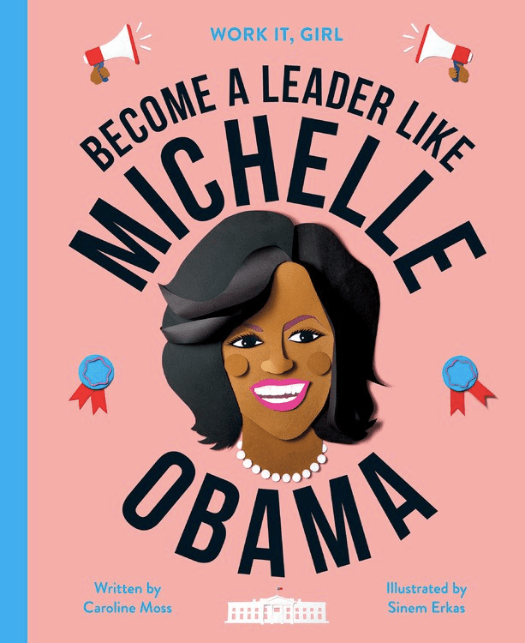
celebrate-picture-books-picture-book-review-become-a-leader-like-michelle-obama-cover

About the Holiday

Today we celebrate awesomeness, and in particular the fact that you are awesome! Begun as an inside joke among coworkers, International Day of Awesomeness continues to grow, attracting more and more awesome individuals around the world. To celebrate get creative and perform feats of awesomeness—whatever that might mean to you. You can also read about awesome people and their accomplishments to get you fired up to do awesome things of your own all through the year. Why not start with today’s book?!

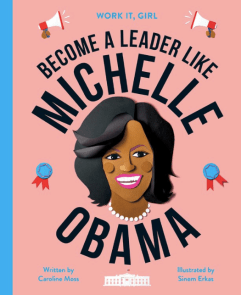
Become a Leader Like Michelle Obama (Work It, Girl Series)

Written by Caroline Moss | Illustrated by Sinem Erkas


Encouraging, supportive, and always smiling, Michelle Obama inspired millions of kids across the country during her eight years as First Lady and continues to motivate children to be and become the best version of themselves. Through her fast-paced, engrossing biography, Caroline Moss creates a reading experience that gives children the opportunity to get to know their idol the way friends do: by talking together. In ten short, but information-packed chapters, Moss captures Michelle’s voice and spirit through snapshots of formative events that influenced and changed her life, all told in a conversational style with plenty of dialogue and fascinating details.

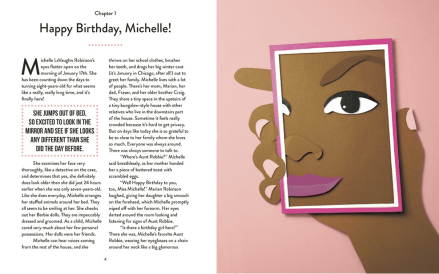
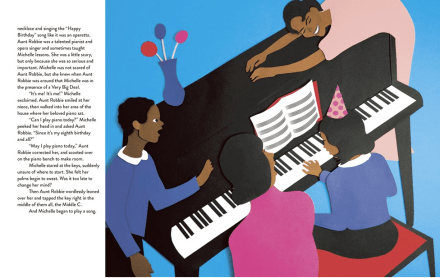
Accompanying this personal narrative are Sinem Erkas’s stunning 3-D cut paper artwork. Bold colors, stirring imagery, and portraits that follow Michelle through times of happiness, sadness, and change reveal to readers Michelle’s intelligence, spark, hard work, and enthusiasm for life that fuels her vision and success.

celebrate-picture-books-picture-book-review-become-a-leader-like-michelle-obama-chapter-1

Image copyright Sinem Erkas, 2020, text copyright Caroline Moss, 2020. Courtesy of Frances Lincoln Children’s Books.

In Chapter 1, readers are invited in to Michelle’s home on her 8th birthday. They learn about her family, the house they share with relatives, including her favorite aunt, Aunt Robbie, and the loving atmosphere that formed her values and sense of community that “would inspire her to go on and change communities across the US – and beyond.”

Chapter 2 takes readers into Michelle’s second-grade classroom, where “she loved reading, making up stories in her head and on the page, and creating art” and was frustrated by the inattention of the other kids who always seemed to be “bouncing off the walls.” Here they also discover certain events on her road from that classroom to high school graduation that helped Michelle develop her strength and self-confidence.

In Chapter 3 Michelle enters Princeton University, the college of her dreams. She makes friends, gets a job that “helped her think about a world outside her own,” and had a small, but life-changing experience that made her realize that “she did not have to blend into the background” or always “take the easy route. She started to imagine herself as a helper and an influential voice in her community, as a smart mind with ideas to share with the world.”

celebrate-picture-books-picture-book-review-become-a-leader-like-michelle-obama-piano

Image copyright Sinem Erkas, 2020, text copyright Caroline Moss, 2020. Courtesy of Frances Lincoln Children’s Books.

By Chapter 5 Michelle has graduated from Harvard Law School and taken a job at a Chicago law firm. But while she loved her job, she was struggling with medical challenges faced by her father and her best friend. “Michelle had a lot to juggle, but she was becoming pretty awesome at taking on lots of different tasks with a smile.” When does Michelle meet Barak? That comes in Chapter 6, when he got a job at the same law firm Michelle worked for. Readers get to hear about his first day on the job and the impression he made on her, how she came to think of him as her best friend at work, and about their first date.

Chapter 7 begins as Michelle is thinking about the course she wants her life to take. She realizes that she didn’t want to be a lawyer. “But what did she want to be; who did she want to be? Michelle had no idea, but she knew she wanted to change the world around her and leave it better than she found it.” She soon found herself working at Chicago City Hall. Her enthusiasm and success there led her to be hired by an organization that “found inspiring young people who showed promise in making a difference” and who would go on to “take leadership jobs in their communities.” It was also during this time that Barak proposed and took a new job helping to register first-time voters.

In Chapter 8, the Obamas’ lives take a big leap toward their future as Michelle gets a new job with the University of Chicago, where she was to “create a sustainable program that would help connect the university with its community.” During these years Malia and Sasha are born and Barack runs for and wins a seat in the US Senate, going on to become President. What did Michelle think about all of these changes? Young readers will discover her conflicting feelings: wariness, excitement, pride, and the belief that “one person could make a difference.”

celebrate-picture-books-picture-book-review-become-a-leader-like-michelle-obama-mountains

Image copyright Sinem Erkas, 2020, text copyright Caroline Moss, 2020. Courtesy of Frances Lincoln Children’s Books.

As Chapter 9 opens, Michelle and Barack and their family have moved into the White House. For Michelle that meant developing an “‘official initiative’ for her time in the White House.” Readers learn how she designed her ‘Let’s Move!’ program, aimed at keeping “kids healthy through education and learning good habits.” In Chapter 10, the Obamas leave the White House, “but Michelle knew her story had just begun.” She wrote a book sharing her stories and her life. Now new adventures await her and it will “only be a matter of time before she [sets] out to change the world once more.”

Sprinkled throughout the text are inspirational quotes from Michelle Obama that are called out in eye-catching blocks and soaring illustrations. Back matter includes ten key lessons from Michelle Obama’s life on how to become a leader, questions to prompt kids to think about what is important to them, and resources for further reading and exploration.

Emphasizing family, community, self-confidence, and the importance of seizing opportunities to make a difference, Become a Leader Like Michelle Obama is highly recommended for home, school, and public libraries to hearten and embolden young readers to listen to their inner voices and take action for what they believe in.

Ages 8 – 12 and up

Frances Lincoln Children’s Books, 2020 | ISBN 978-0711245181

Discover more about Caroline Moss and her books on her website.

To learn more about Sinem Erkas, her books, and her art, visit her website.

International Day of Awesomeness Activity

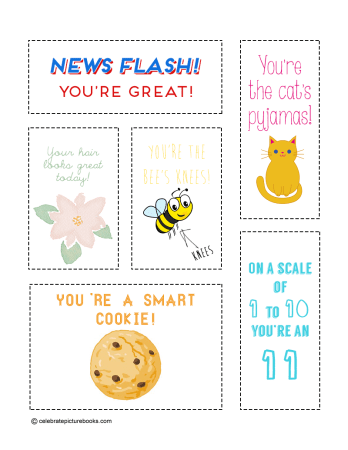
celebrate-picture-books-picture-book-review-awesomeness-cards

Awesomeness Cards


Do you have some awesome people in your life? Give them one of these printable Awesomeness Cards and watch them smile!

celebrate-picture-books-picture-book-review-become-a-leader-like-michelle-obama-cover

You can find Become a Leader Like Michelle Obama at these booksellers

Amazon | Barnes & Noble | Books-a-Million | IndieBound

Picture Book Review