September 15 – International Dot Day

celebrate-picture-books-picture-book-review-the-dot-cover

About the Holiday

Usually, I match books to existing holidays. Today, though, I have the pleasure of posting a review of a book that established a holiday. On September 15, 2009 teacher Terry Shay introduced his class to Peter H. Reynold’s The Dot. From that one event grew a national and then an international celebration of creativity and the freedom to make art with your heart. All around the world, school children and adults are inspired on this day to make their mark and celebrate creativity, courage, and collaboration.

The Dot

By Peter H. Reynolds


At the end of art class, Vashti looked at her paper. It was still as blank as it was at the beginning of art class. Her teacher came over and took a peek. She saw right away that Vashti had drawn “‘a polar bear in a snowstorm.’” Vashti wasn’t fooled by the joke. “‘I just CAN’T draw,’” she said. But her teacher had a suggestion. “‘Just make a mark and see where it takes you.’”

celebrate-picture-books-picture-book-review-the-dot-vashti-jabs-paper

Copyright Peter H. Reynolds, 2003, courtesy of Candlewick Press.

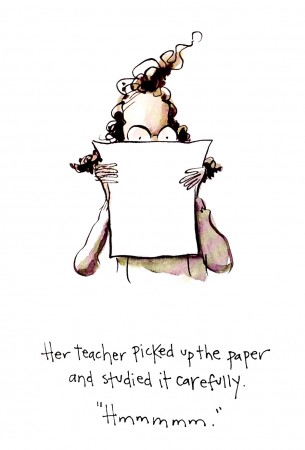
Vashti jabbed at the paper with a marker, making a dot right in the center. Her teacher studied her drawing carefully then told Vashti to sign it. That, at least, was something Vashti could do. She signed her name and gave the paper to her teacher. At the next week’s art class, Vashti was stunned to see her dot framed and hanging above the teacher’s desk. She looked at the tiny mark and decided that she could do better than that.

celebrate-picture-books-picture-book-review-the-dot-teacher

Copyright Peter H. Reynolds, 2003, courtesy of Candlewick Press.

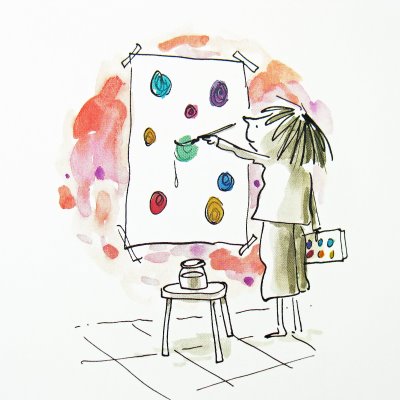
Vashti opened her watercolor set and began. She “painted and painted. A red dot. A purple dot. A yellow dot. A blue dot.” Then she discovered that blue mixed with yellow made a green dot. Vashti went to the easel and began painting lots of little dots in all sorts of colors. She realized if she could make little dots, she could make big dots. She knelt down on the floor with a big piece of paper and a big brush and created a huge dot.

celebrate-picture-books-picture-book-review-the-dot-experimenting-with-dots

Copyright Peter H. Reynolds, 2003, courtesy of Candlewick Press.

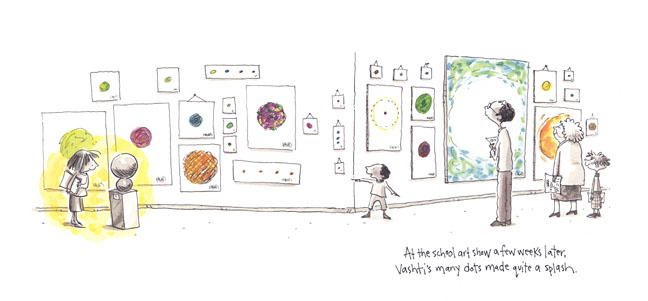
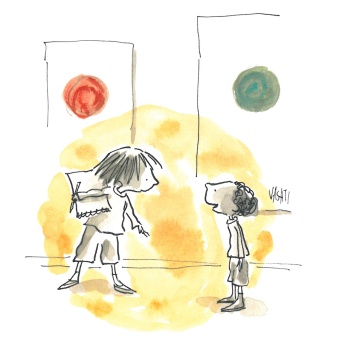
Then on an enormous canvas Vashti “made a dot by not making a dot.” At the school art show, Vashti’s dot paintings covered two walls and were quite a hit. Coming around the corner a little boy spied Vashti. He came close and told her, “‘You’re a really great artist. I wish I could draw.’” Vashti was encouraging, but the little boy said he couldn’t even “‘draw a straight line with a ruler.’”

Vashti wanted to see. She handed the boy a blank sheet of paper. With a quivering pencil, he drew a line and handed the paper back to her. Vashti studied the wavy line for a minute, and then gave the paper back. “‘Please…sign it,’” she said.

celebrate-picture-books-picture-book-review-the-dot-art-show-II

Copyright Peter H. Reynolds, 2003, courtesy of Candlewick Press.

Peter H. Reynold’s classic story of a little girl who believes she can’t draw is inspirational for anyone at any age who listens too closely to that voice in their head that stops them from letting go and doing. Whether it’s painting, writing, changing the décor of one’s house, updating a wardrobe, getting healthy, or even taking a class, the project often seems insurmountable. But what if you could start with a YouTube video, one step, a pair of earrings, a pillow, a word, or…a dot? Reynolds says you can! With his straightforward storytelling, Reynolds gives readers permission to play, experiment, and feel free.

celebrate-picture-books-picture-book-review-the-dot-little-boy

Copyright Peter H. Reynolds, 2003, courtesy of Candlewick Press.

Reynold’s familiar line drawings that sketch out adorable Vashti and her wise teacher are punctuated by the colorful dots that Vashti draws in profusion. Even Vashti, herself, is surrounded by circular auras of color throughout the story, reflecting her talent and creative spirit. The final scene of the art show gallery is a revelation, showing readers that one’s work or life work adds up to an impressive display of the self.

Through and through The Dot is charming, moving, and encouraging. It is a must addition to home libraries, public libraries, and classrooms.

Ages 5 and up

Candlewick Press, 2003 | 978-0763619619

Discover more about International Dot Day, download an Educator’s Guide, and see a gallery of projects on thedotclub.org.

You’ll learn more about Peter H, Reynolds, his books, and his art as well as find lots of inspiration and creative tips on his website!

International Dot Day Activity

celebrate-picture-books-picture-book-review-dots-coloring-page

Decorate the Dots Coloring Page


How would you color these dots? Grab your favorite paints, markers, or crayons and let your imagination fly with this printable Decorate the Dots Coloring Page.

Picture Book Review


August 29 – It’s American Artist Appreciation Month

celebrate-picture-books-picture-book-review-maya-lin-artist-architect-of-light-and-lines-cover

About the Holiday

This month we celebrate the artists who interpret the unique history, culture, and people of America in ways that bring new meaning and insight to those who interact with it. To celebrate, visit your local art museum or take a trip to another city to view pieces you’ve never seen before. The dynamics of seeing art up close provides new perspectives and appreciation.

Maya Lin: Artist-Architect of Light and Lines

Written by Jeanne Walker Harvey | Illustrated by Dow Phumiruk


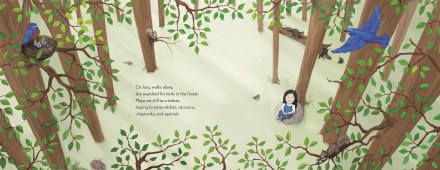
As a child, Maya Lin loved playing and interacting with nature near her home. She and her brother liked to run over what Maya had named “the Lizard’s Back”—a hill behind her house—and into the woods. Sometimes Maya went into the woods alone and “sat as still as a statue, hoping to tame rabbits, raccoons, chipmunks, and squirrels.” She liked to play chess with her brother and build towns from scraps of paper, boxes, books, and other things she found around the house.
celebrate-picture-books-picture-book-review-maya-lin-artist-architect-of-light-and-lines-in-forest

Image copyright Dow Phumiruk, 2017, text copyright Jeanne Walker Harvey, 2017. Courtesy of us.macmillan.com.

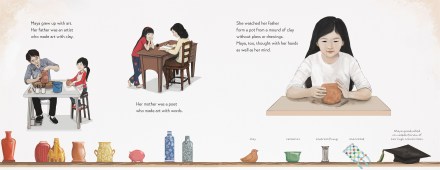
Maya’s “parents had fled China at a time when people were told what to be and how to think.” They did not want the same for their children and always encouraged Maya to be and think what she wanted. Maya grew up surrounded by art. Her father worked with clay, and her mother was a poet. Maya also liked to make things with her hands. The beautiful library where she went to college inspired Maya to become an architect.

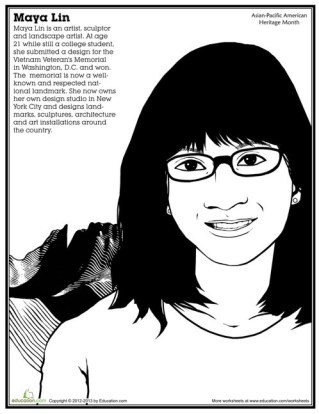
To learn about different buildings, Maya traveled all over the world. When she was only a senior in college, “Maya entered a contest to design a memorial to honor soldiers who died during the Vietnam War.” The contest stated two rules: the memorial had to fit in with a park-like setting, and it had to include the 58,000 names of the soldiers who had died in the war. These rules resonated with Maya. She “believed that a name brings back all the memories of a person, more than a photo of a moment in time.”

celebrate-picture-books-picture-book-review-maya-lin-artist-architect-of-light-and-lines-as-young-girl

Image copyright Dow Phumiruk, 2017, text copyright Jeanne Walker Harvey, 2017. Courtesy of us.macmillan.com.

Maya visited the site where the memorial would be built. As she looked at the gently rolling hill, she envisioned a simple cut in the earth that would support a polished wall covered in names. Not only would the wall reflect those who died, but also those who came to visit and the surrounding nature. At school, Maya worked with mashed potatoes and then with clay to help her create the perfect monument. When she had finished her drawings and plans, she wrote an essay to accompany them. She wrote that her monument would be “a place to be experienced by walking down, then up past names that seemed to go on forever.”
celebrate-picture-books-picture-book-review-maya-lin-artist-architect-of-light-and-lines-with-parents

Image copyright Dow Phumiruk, 2017, text copyright Jeanne Walker Harvey, 2017. Courtesy of us.macmillan.com.

More than 1,400 artists and architects—many of them famous—entered the contest. The designs were hung in an airplane hangar anonymously for judging. Finally, the day came for the announcement of the winner. When the judges called out Maya Lin’s name and she came forward, they were surprised to find that she was so young. Maya was excited to have won, but then some people began to object to her design. Some said her “design looked like a bat, a boomerang, a black gash of shame.”

celebrate-picture-books-picture-book-review-maya-lin-artist-architect-of-light-and-lines-library

Image copyright Dow Phumiruk, 2017, text copyright Jeanne Walker Harvey, 2017. Courtesy of us.macmillan.com.

Maya was hurt by these comments, but she defended her design and, finally, it was approved. Maya worked with the architects and engineers who excavated the land and built the wall. As each granite panel was polished, engraved with the soldiers’ names, and set in place, Maya looked on. The memorial opened on Veterans Day in 1982. Thousands of people came to see it and to find the names of loved ones they had lost. As Maya approached the wall, “she searched for the name of the father of a friend. When she touched the name, she cried, just as she knew others would.” Every day since then visitors come to the wall to remember.

Maya Lin has gone on to design many more works of art and architecture that can be seen inside and outside. Each piece has a name and a particular vision. Maya wants people to interact with her art—to touch it; read, walk, or sit near it; or think about it. After each piece is finished, Maya thinks about her next work and how she can inspire the people who will see it.

celebrate-picture-books-picture-book-review-maya-lin-artist-architect-of-light-and-lines-Vietnam-War-Memorial

Image copyright Dow Phumiruk, 2017, text copyright Jeanne Walker Harvey, 2017. Courtesy of us.macmillan.com.

An Author’s Note about Maya Lin and the Vietnam War Memorial follows the text.

Jeanne Walker Harvey has written an inspiring biography of Maya Lin that reveals not only her creativity but the importance of creative freedom for children. Lin’s confidence that led her to enter the contest and then defend her winning design will encourage readers to pursue their dreams. Harvey’s lyrical storytelling reflects Maya Lin’s quiet, introspective nature, the influences that nurtured her creative spirit, and her dedication to inviting others to be part of her art.

Dow Phumiruk’s graceful, soft-hued illustrations allow children to follow Maya Lin as she grows from a girl discovering nature, constructing cardboard cities, and learning the arts from her parents to a young woman who draws inspiration from the world’s buildings and relies on her own sensitivity to guide her. Back-to-back pages of the landscape of Vietnam and the site of the memorial connect the two places for children’s better understanding. Phumiruk’s depictions of the Vietnam War Memorial also give children an excellent view of this moving monument. Her images of Lin’s other architectural work will entice young readers to learn more about her and to explore where each of these pieces can be found.

Ages 4 – 8

Henry Holt & Company Books for Young Readers, 2017 | ISBN 978-1250112491

Discover more about Jeanne Walker Harvey and her books on her website!

Learn more about Dow Phumiruk, her art, and her books on her website!

American Artist Appreciation Month Activity

 celebrate-picture-books-picture-book-review-picture-frame

Fantastic Frame


Every great work of art deserves the perfect frame to display it. With a frame ready to decorate from a craft store and a few materials, you can create a Fantastic Frame for any of your drawings or photos!

Ideas for Decorating

  • Stickers
  • Decorative buttons
  • Small objects
  • Shells
  • Markers, crayons, or paint
  • Stencils
  • Washi Tape

Picture Book Review

August 25 – It’s American Artist Appreciation Month

celebrate-picture-books-picture-book-review-radiant-child-cover

About the Holiday

This month we honor the artists of the past and those currently creating work that represents, reflects, and translates the world we live in. There are as many ways of making art as there are artists, so take some time this month to visit an art museum or gallery, to look online or read a book and discover life in a whole new way.

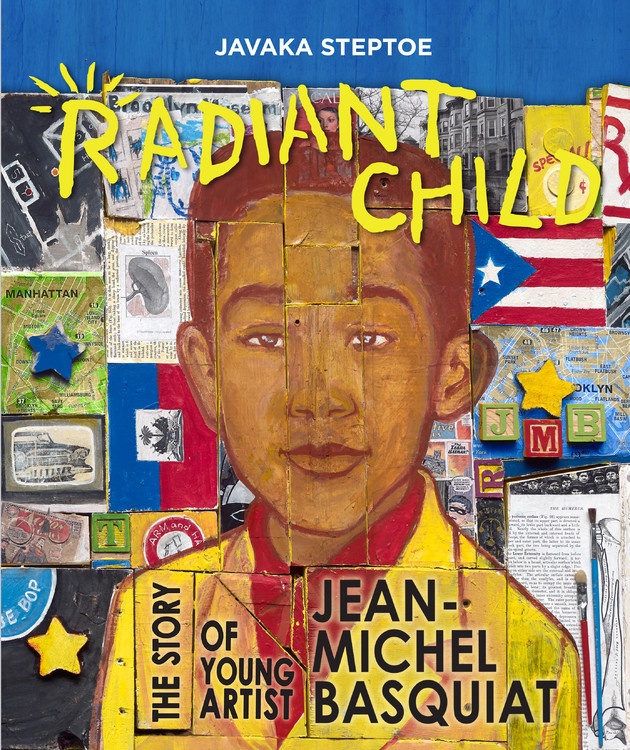
Radiant Child: The Story of Young Artist Jean-Michel Basquiat

By Javaka Steptoe


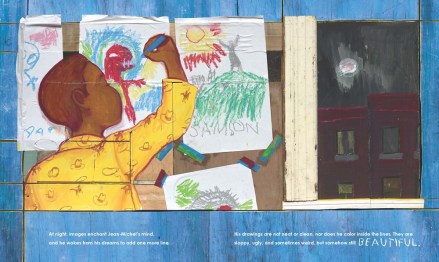
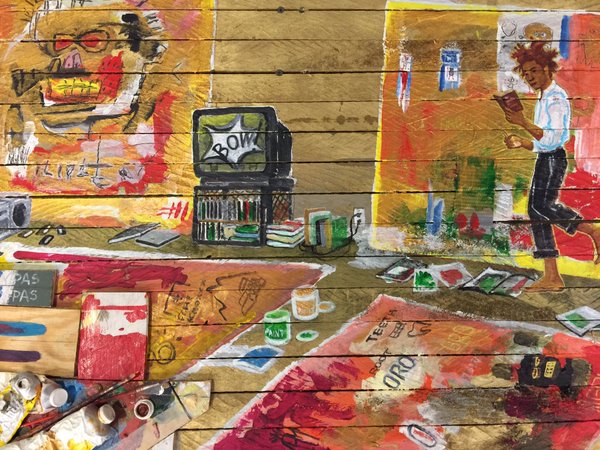
“Somewhere in Brooklyn, between hearts that thump, double Dutch, and hopscotch / and salty mouths that slurp sweet ice, a little boy dreams of being a famous artist.” All day Jean-Michel sits surrounded by colored pencils and “a storm of papers” and draws. As he sleeps his dreams swirl with images. When he wakes he adds to his drawings, scribbling away. What he creates is “sloppy, ugly, and sometimes weird, but somehow still beautiful.”

celebrate-picture-books-picture-book-review-radiant-child-beautiful-art

Image and text copyright Javaka Steptoe, courtesy of Little, Brown Books for Young People

Jean-Michel’s talent comes from his Puerto Rican mother, who has a natural sense of style and design and who always makes time to draw with her son, lying on the floor next to him. She takes Jean-Michel to art museums and theaters and reads poetry to him, but she also shows him the art of the city—its sounds, sights, style, and “patchwork” colors. Jean-Michel loves to visit the museum and read about the artwork and the artists. From these stories he “learns what it means to be a famous artist.”

When Jean-Michel is seriously injured in a car accident, his world seems scary and confusing. His mother gives him an anatomy book, which he memorizes. It erases his fears and becomes influential in his work. After returning home, his life changes when his mother suffers a breakdown and can no longer live at home. “He tries drawing the terrible out of his blues, but things are not the same.” Jean-Michel visits his mother when he can, “always bringing his artwork to show, telling her that one day it will be in a museum, ‘when I am a famous artist.’”

celebrate-picture-books-picture-book-review-radiant-child-drawing

Image and text copyright Javaka Steptoe, courtesy of Little, Brown Books for Young People

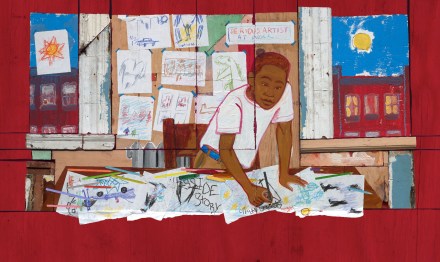
As a teenager, Jean-Michel follows his dream, moving from Brooklyn to New York City. There he stays with friends, painting, creating collages, and writing poems on paper strewn about him. At night he paints on city walls, trash cans, and other urban canvases. His art, signed ‘Samoo,’ attracts attention. People wonder: “‘Who is Samoo?’”

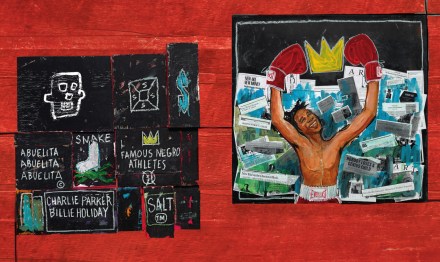
Soon his art can be found in art galleries and hanging in the homes of the people who buy his work. Jean-Michel continues to create, listening to “a sound track that is all his own.” Through talent, inspiration, and his mother’s loving influence, Jean-Michel Basquiat conquered the art world, becoming a king among artists, and fulfilling his desire to be a famous artist.

An extensive Author’s Note about Jean-Michel Basquait’s life, including his struggles with addiction and his death in 1988; the motifs and symbolism in his work; and a personal comment on the impact Basquait’s art had on the author, follow the text.

celebrate-picture-books-picture-book-review-radiant-child-studio

Image and text copyright Javaka Steptoe, courtesy of Little, Brown Books for Young People

Javaka Steptoe’s compelling biography of this complex, brilliant artist who people called “radiant, wild, a genius child” beautifully brings to life the inspirations and motivations that fueled his unique and intense talent. Steptoe delivers the story in staccato and flowing sentences, using consonance, assonance, and repetition—the rhythms of a poet. He shows how Basquiat maintained his focused determination, self-confidence, and persistence from childhood into adulthood. This perseverance reveals to readers that success is not a matter of luck, but of belief in oneself despite obstacles. Steptoe sensitively addresses the serious injury Basquiat suffered, his mother’s mental illness and Basquiat’s continued love for her, and his unsettled teenage years to complete this far-reaching life story.

celebrate-picture-books-picture-book-review-radiant-child-boxing-image

Image and text copyright Javaka Steptoe, courtesy of Little, Brown Books for Young People

Steptoe’s mixed-media paintings were created on found wood from neighborhoods across New York City. While Steptoe does not reproduce any of Basquiat’s work, he states that readers will find “original pieces that were inspired by him and my interpretations of his paintings and designs.” As befitting his subject, Steptoe offers pages that burst with vibrant color and intricate details and beat with the pulse of the city, the people, the dreams, and the imagination that Basquiat transcribed onto paper, walls, and canvas. Part collage, part fine art, Steptoe’s illustrations will fascinate children and entice them to linger and take in the emotion and meaning in each. The final spread, a crowd scene made up of photographs, sets Basquiat in the midst of people whom he and his art continue to inspire.

Radiant Child: The Story of Young Artist Jean-Michel Basquiat offers children an inspirational model of creativity, compassion, and confidence no matter where their talents lie. The book is an excellent choice for school, public, and home libraries.

Ages 6 – 10

Little, Brown Books for Young Readers, 2016 | ISBN 978-0316213882

Learn more about Javaka Steptoe, his books, art exhibitions, and life on his website!

American Artist Appreciation Day Activity

celebrate-picture-books-picture-book-review-motivation-and-inspiration-day-craft

Make Art from Found Objects


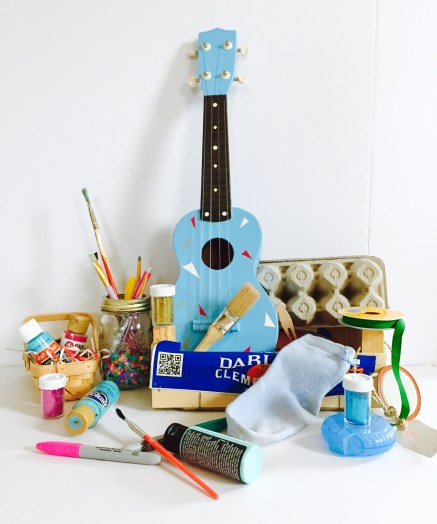
Each person finds inspiration in different things, places, and people. Today, try to create something new from the materials around you. Boxes, bottles, wire, magazines, cloth, wood, sponges—almost anything—can be transformed with some imagination. With those old socks, corks, flower pots, candle stubs, bits of ribbon, clementine crate, paint, glitter, beads, and more, you can make something useful, a decoration for your room, or even a gift for a friend!

Picture Book Review

August 5 – National Oyster Day

celebrate-picture-books-picture-book-review-the-book-of-mistakes-cover

About the Holiday

Today we celebrate the oyster—that mysterious ocean mollusk that many find delicious and that can hide a most precious gem. While some of you may honor the day with a plateful of fried or raw oysters, I’m choosing to highlight the bit of grit—that little mistake—that when it becomes embedded into the animal, creates a pearl of surprising value and uniqueness.

The Book of Mistakes

By Corinna Luyken


The whole thing started while drawing a picture. The head of the child looks good—nice little ear and nose, a dot for the left eye. The hair goes on pretty well—a swoop on the right side, straight on the left. The eyebrows are tiny dashes, and the mouth the size of a chocolate sprinkle. Just have to add the right eye…Oh, no! The right eye is too big!! Okay, okay, this mistake can be fixed. The left eye just needs to be a liiittle bigger…Oh, good grief! “Making the other eye even bigger was another mistake.”

celebrate-picture-books-picture-book-review-the-book-of-mistakes-splotch-on-head

Copyright Corinna Luyken, 2017, courtesy of Dial Books for Young Readers.

Maybe…the perspective might just be right for…Yes! “the glasses—they were a good idea.” Okay on to the body. Hmmm… “The elbows and the extra-long neck? Mistakes. But the collar—ruffled, with patterns of lace and stripes—that was a good idea.” And elbow patches make the arms look a little less pointy.

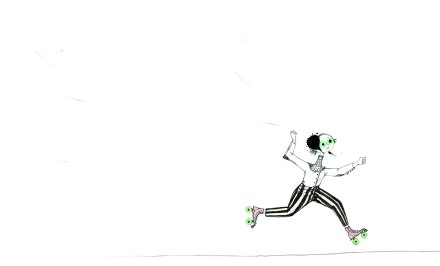
Moving on to the background, a thick and leafy bush is just the thing to hide the animal. Animals? It could be a cat, a cow, or a frog. “Another mistake.” And why is the ground so far below the girl’s feet anyway? Oh! Because she’s wearing roller skates. Nice save! “Those were definitely not a mistake.” Let’s see, the “second frog-cat-cow thing made a very nice rock.” Now, what about the other girl with long hair and one very long leg? Got it! She “looks like she always meant to be climbing that tree” on the side of the page.

celebrate-picture-books-picture-book-review-the-book-of-mistakes-leaves

Copyright Corinna Luyken, 2017, courtesy of Dial Books for Young Readers.

The ink smudges at the top of the paper can be leaves, but back to the roller-skating girl. What to do with those awkwardly positioned arms? Oh dear—the pen should not have been hovering over the page. How to fix the splotch on the side of her head? Ah-hah! An old-fashioned aviator’s helmet. Or is it a swimming cap? No matter…she’s now holding a yellow balloon in her left hand and lots of strings in her right. Wow, tons of yellow balloons are at the ends of those strings!

She’s skating toward the tree with the long-legged girl, and there are a bunch of other kids playing in it too. Cool! They’re all wearing aviator helmets/swimming caps too. Some are wearing roller skates—good—and they’re erecting some kind of tent over a big branch. Wow! Look at the pink balloons and the green ones! There’s a kid riding a hot-air unicycle through the sky and a skateboarder is floating down to a ramp supported by springs in the top of the tree. Someone’s even tatting a lace banner.

celebrate-picture-books-picture-book-review-the-book-of-mistakes-tree

Copyright Corinna Luyken, 2017, courtesy of Dial Books for Young Readers.

“Do you see?” They’re all waiting for the roller-skating girl to bring the yellow balloons. But let’s step back a little. “Do you see—how with each mistake she is becoming?” If we back up some more, she and the tree look so tiny and there’s a big, dark forest in the foreground. “Do you see—” Looking from way far away, doesn’t that forest look a bit like curly hair or…Oh! The top of the roller-skating girl’s cap! She’s so big now, and she’s gazing out of those green glasses at the white page where she’s drawing a small head with a nice little ear and nose and a dot for the left eye. “Do you see—who she could be?”

celebrate-picture-books-picture-book-review-the-book-of-mistakes-girl-as-artist

Copyright Corinna Luyken, 2017, courtesy of Dial Books for Young Readers.

Kids will be charmed by the start of the little head on the first page, begin giggling at the one too-big eye on the third page, and laugh out loud at the even bigger eye on the fifth in Corinna Luyken’s magically inventive The Book of Mistakes. As each mistake is adjusted for or inspires a new twist in the story, young readers will appreciate how creatively right the fix is and look forward to the next mistake and the next. The final pages presenting the tree full of children are so enticing that readers will want to linger over each one to find all the details. Luyken’s minimally colored drawings are funny and endearing and lead readers to question their own perspective and give free reign to their imagination.

The Book of Mistakes is a must for classrooms and highly recommended for home libraries for all those times when mistakes can be perfect conversation starters or the inspiration for…anything!

Ages 4 – 8 and up

Dial Books for Young Readers, 2017 | ISBN 978-0735227927

To find a portfolio of artwork and more information about Corinna Luyken and her books visit her website.

National Oyster Day Activity

celebrate-picture-books-picture-book-review-pearl-and-oyster-coloring-page

Secret Pearls Coloring Page


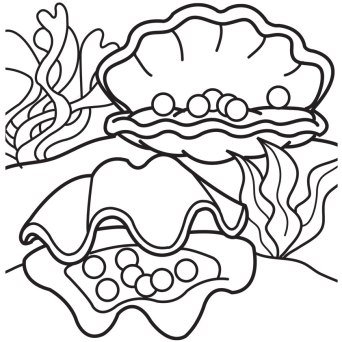
Finding a pearl in an oyster is a lucky thing! Here are two oysters brimming with shiny pearls. Grab your crayons, markers, or pencils—maybe even some glitter—and have fun with this printable Secret Pearls Coloring Page!

Picture Book Review

May 21 – “I Need A Patch for That” Day

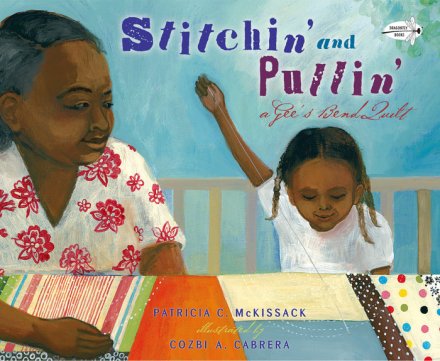
celebrate-picture-books-picture-book-review-stitchin'-and-pullin'-a-gee's-bend-quilt-cover

About the Holiday

Celebrated annually on May 21, “I Need a Patch for That” Day gives a little love to patches of all kinds. Have you been out working in your garden patch? Fabulous! Did you just finish all the requirements for a scouting patch? Good job! Waiting on a fix for the latest software kerfuffle? Who isn’t? Are you a pirate keeping one eye ready for the dark? Argghh! Do you need to patch up a misunderstanding? Good luck! Or maybe you’re a quilter like the amazing women in today’s book who create a patch to remember each of life’s important, inspirational, and formative events. 

Stitchin’ and Pullin’: A Gee’s Bend Quilt

Written by Patricia C. McKissack | Illustrated by Cozbi A. Cabrera


In this story told through poems, a little girl begins telling readers about her life, starting with a recitation on Gee’s Bend Women: “Gee’s Bend women are / Mothers and Grandmothers / Wives / Sisters and Daughters / Widows.” They are every kind of woman you know, doing every type of work and activity. “Gee’s Bend women are / Talented and Creative / Capable / Makers of artful quilts / Unmatched. / Gee’s Bend women are / Relatives / Neighbors / Friends— / Same as me.”

In Who Would Have Thought, the girl muses on how perceptions change. “For as long as anyone can remember,” she says, the women of Gee’s Bend, Alabama have created quilts that were slept under, sat on, and wrapped around the sick or cold. But now those same quilts are “…hanging on museum walls, / their makers famous….”

When she was just a tot “Baby Girl” reveals in Beneath the Quilting Frame, she played under the quilting frame, listening to her “mama, grandma, and great-gran / as they sewed, talked, sang, and laughed / above my tented playground.” She remembers the “steady fingers  /[that] pieced together colorful scraps of familiar cloth / into something / more lovely / than anything they had been before” as her mother sang her a lullaby.

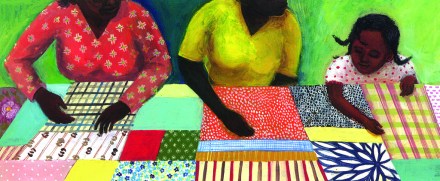
celebrate-picture-books-picture-book-review-stitchin'-and-pullin'-a-gee's-bend-quilt-puzzling-the-pieces

Image copyright Cozbi A. Cabrera, courtesy of Random House Books for Young Readers

In Something Else, “Baby Girl” is growing too big to play underneath the frame. Her legs are becoming longer and her mind is full of “recipes for eleven kinds of jelly…how to get rid of mold…and the words to a hundred hymns and gospel songs” while she waits for her turn at the frame. At last, her time does come, and in Where to Start?, the girl asks her mama how to begin. Her mother answers, “‘Look for the heart. / When you find the heart, / your work will leap to life… / strong, beautiful, and… / independent.’”

In Remembering, the girl thinks about how her mama has told her that “cloth has a memory.” As she chooses the cloth that will become her quilt she recounts the life and the history in each. 

Nothing Wasted sees Grandma pulling apart a red-and-white gingham dress stitch by stitch. Suddenly, the girl knows that this cloth will become the patch that “will be the heart of my quilt.” In Puzzling the Pieces the girl and her grandma stand over the quilting frame fitting the squares together in the perfect way to tell the girl’s story. Her quilt comes together piece by piece to tell the history of Gee’s Bend in The River Island. The brown strips along three sides mirror the muddy waters surrounding her town. The fourth side is a green strip—“a symbol of the fields where my ancestors / worked cotton from can to can’t— / can see in the morning until / can’t see at night.” Lined up next to the green strip are six squares representing the small communities “where families with / the same name / are not kin by blood / but by plantation.”

Being Discovered is portrayed with “a large smoke-gray square”—the color of the Great Depression and the 15 minutes of fame Gee’s Bend garnered when discovered “by sociologists, historians, / educators, and journalists” who came and went, leaving Gee’s Bend “the way it had been / before being discovered.”

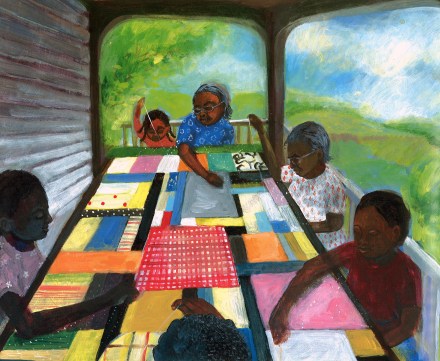
celebrate-picture-books-picture-book-review-stitchin'-and-pullin'-a-gee's-bend-quilt-understanding-comes-later

Image copyright Cozbi A. Cabrera, courtesy of Random House Books for Young Readers

In Colors, the girl’s grandma explains the meanings and feelings behind each colored cloth. “Blue cools. / Red is loud and hard to control, / like fire and a gossiping tongue.” Green, orange, yellow, white, pink, and all the others have their own personalities. “Grandma says, / ‘Colors show how you / feel deep down inside.’”

In Dr. King Brings Hope, the little girl adds “a spotless white patch for the hope Dr. Martin Luther King / brought to the Bend” and goes on to tell how her grandma saw Dr. King at Pleasant Grove Baptist Church and what it meant to her. By and By follows the girl as she adds “golden thank-yous, for James Reeb,” a “bright blue piece of velvet for Viola Liuzzo,” and a “big plaid people circle of white, black, brown, yellow, and red for Reverend Dr. King, all “killed for believing in justice.”

In the 1960s, The Sewing Bee tells, Gee’s Bend quilters were once again discovered. Joining the Bee provided buyers for the handmade quilts, but there were stipulations on the types of quilts that could be made and sold. The girl asks her grandma if she was part of the Bee, to which she replies, “‘more money. Less freedom. I chose to stay free.’”

At last all of the patches are laid out and the time comes to stitch the girl’s quilt. Five women stand at the frame “all stitchin’ and pullin.’” They work “in a slow and steady rhythm” relaxing and enjoying being together until the quilt is finished. In Finished, the last stitch is sewn, and the thread bitten and knotted. The girl has hundreds of ideas for future quilts. “Quilts that are about me, / the place where I live, / and the people / who have been here for generations.”

Further poems unite the history of “Baby Girl,” her family, and neighbors, and an Author’s Note about quilting and the women of Gee’s Bend follow the text.

Patricia McKessack’s free verse poems capture the close relationships and camaraderie of the generations of women who join around the quilting frame to share and pass down their art and their heart. McKessack’s conversational verses, connected page after page like the patches of a quilt, reveal the complexity of this handmade art form in the way intimate talks between friends unveil a life. Readers learn not only about the little girl and her own thoughts, but the history and influence of her immediate family, world events, inspirational figures, and deeply held beliefs that make her who she is and ties her to the other Gee’s Bend women.

Cozbi A. Cabrera’s stunning acrylic paintings take readers inside the heart of the Gee’s Bend women, depicting the girl’s home, the table-sized quilting frame where the women collectively work, the plantations, the protests, and the changes that came but did not unravel the convictions, values, and love of the little girl’s family. Readers can almost hear the talking and singing of the Gee’s Bend women as they stitch their quilts, and the comforting, embracing environment is evident on every page. Cabrera’s portraits of the little girl, her mama, and her grandma are particularly moving. For What Changed, Cabrera depicts a yellow school bus appearing on the dirt road from the right hand corner of the page. In the  driver’s side mirror, a dot of a house is reflected, reminding readers that no matter how far these women are from home, Gee’s Bend is always with them.

Children—and adults—will find Stitchin’ and Pullin’: A Gee’s Bend Quilt inspirational and uplifting. This volume of poetry can be read at one sitting or delved into again and again, making it a wonderful choice for home libraries and a must for school and public libraries.

Ages 5 – 12

Dragonfly Books, Random House, 2016 (paperback edition) | ISBN 978-0399549502

View a gallery  of fashion designs, dolls, and other handmade art work by Cozbi A. Cabrera on her website!

“I Need a Patch for That” Day Activity

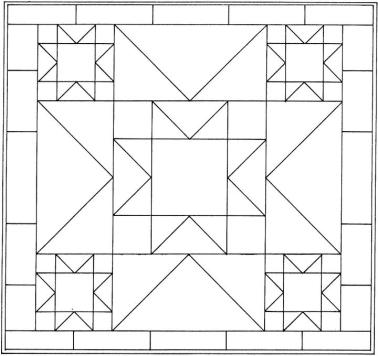
celebrate-picture-books-picture-book-review-stars-quilt-coloring-page

Design a Quilt Coloring Pages


Quilts are so much more than pieces of material sewn together—they’re life stories! Here are two quilt coloring pages for you to design and color. What does each piece mean to you? As you color each section, write a sentence about an event or thought that is important to you.

Quilt Template 1 | Quilt Template 2

Picture Book Review
April 8 – Draw a Picture of a Bird Day

celebrate-picture-books-picture-book-review-birds-&-other-animals-with-pablo-picasso-cover

About the Holiday

With the onset of spring, our feathered friends are busy building nests and hatching little ones. The return of birds to backyards, parks, and beaches as well as the increased activity gives budding nature artists the perfect opportunity to try their hand at sketching these favorite colorful creatures. Whether you prefer to make detailed renderings or simple line drawings, today’s holiday should inspire you to grab your pencil or paints and create!

Birds & Other Animals with Pablo Picasso

First Concepts with Fine Artists | Illustrations by Pablo Picasso


Pablo Picasso, “one of the most famous artists who ever lived,” was a prodigy who loved to draw animals of all kinds. Perhaps best known for his abstract portraits and his colorful canvases, Picasso also created line drawings, many of which were “inspired by poems about animals written by his friend Guillaume Apollinaire, a famous French poet.” The illustrations in Birds & Other Animals with Pablo Picasso come from Picasso’s notebooks and, combined, make a wonderfully conceived concept book for little ones.

Opening to the first page, readers meet three birds, one perhaps a little more steady on its feet than the others. Four more birds follow on the next page, a few gamely trying to stand on one leg like the regal flamingos behind them. From the tropical home of the flamingo, readers next travel to a snowy clime, where “penguins are birds who waddle over snow.”

celebrate-picture-books-picture-book-review-birds-&-other-animals-with-pablo-picasso-flamingo

All artworks by Pablo Picasso © Succession Picasso/DACS, London 2017. © 2017 Phaidon Press

“Cock-a-doodle-doo!” Don’t snooze! The rooster wants you to know that he is a bird too! Of course, “some birds fly,” and many insects have wings too. Flies fly and wasps fly. How about grasshoppers? They prefer to hop! Who else likes to hop? “Bunnies hop…especially to get away from hungry foxes. Does [the] fox look hungry to you?”

Some animals seem to be hungry all the time—like the squirrel on the next page (you know how squirrels are!) and the camel, whose “humps are small. When she eats, her humps will grow!” Do you like dogs? “This little dog has no humps—he’s long like a hot dog!” His friend is a big dog who can do tricks. Horses can learn tricks too and perform for people. They can even rear up and stand on two legs! You know who can’t stand on two legs? Right! Fish! “They swim! Turtles swim too.”

celebrate-picture-books-picture-book-review-birds-&-other-animals-with-pablo-picasso-dogs

All artworks by Pablo Picasso © Succession Picasso/DACS, London 2017. © 2017 Phaidon Press

But we were talking about birds, weren’t we? There are some birds that are like fish. The pelican is a bird who likes to swim—of course, it likes to eat fish too. The ostrich is too big for either flying or swimming, but it can run—really fast! There are so many kinds of birds, aren’t there? Peacocks have long, colorful tail feathers, and owls like the nighttime. Yes, there are so many birds, “beautiful birds.”

The First Concepts with Fine Artists series by Phaidon Press is one of my favorite new collections for babies, toddlers, and even older kids. As an art lover, I’m impressed with the variety of styles and artists introduced to young children who will be attracted to the colors, shapes, and movement in the chosen artwork. As someone who works with words, I love the way the art is tied together with engaging and conversational text.

celebrate-picture-books-picture-book-review-birds-&-other-animals-with-pablo-picasso-fox

All artworks by Pablo Picasso © Succession Picasso/DACS, London 2017. © 2017 Phaidon Press

Birds and Other Animals with Pablo Picasso will enchant little ones with whimsical line drawings of animals that embody charming poise and personality. Each page invites readers to create stories of their own about the characters they see, and both children and adults will enjoy running a finger along the line to discover that most of the animals in this sturdy board book are created from one smooth stroke. Along the way, kids learn facts about certain animals, discover how shapes work together, and find objects to count. 

Line it all up and Birds and Other Animals with Pablo Picasso rewards readers with sophisticated fun. The book would make a lovely new baby gift or a delightful addition to young children’s home libraries.

Ages 2 – 5

Phaidon Press, 2017 | ISBN 978-0714874180

Draw a Picture of a Bird Day Activity

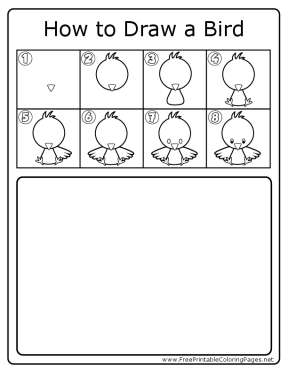
celebrate-picture-books-picture-book-review-how-to-draw-a-bird

Flight of Fancy Bird Drawings


Birds come in all shapes and sizes—which kind of bird is your favorite? With these two printables you can learn how to draw a bird and color a pair of birds who are busy collecting flowers!

Learn to Draw a Bird | Birds Carrying Flowers

Picture Book Review

January 19 – It’s Creativity Month

celebrate-picture-books-picture-book-review-painting-pepette

About the Holiday

As the cold and snowy weather keeps us inside more and more, what are we to do? Why not create?! Whether you like writing, drawing, cooking, woodworking, gardening, photography, dance, or other pursuits, January is the perfect time to begin a new project. Stock up on supplies, get those ideas going, and create!

Painting Pepette

Written by Linda Ravin Lodding | Illustrated by Claire Fletcher


If you were to peek in the great room window of the grand yellow house at #9 Rue Laffette in Paris, you would most likely see Josette Bobette and her beloved stuffed rabbit Pepette cuddled together on the comfortable seat. It was their favorite place. Looking past them you would see that on the walls hung portraits of the family—Josette’s mother was there as well as grand-mère and grand-père, the three Bobette sisters, and even their schnoodle Frizette.

celebrate-picture-books-picture-book-review-painting-pepette-great-room

Image copyright Claire Fletcher, text copyright Linda Ravin Lodding. Courtesy of simonandschuster.com

“One day Josette noticed something strange. There was no portrait of Pepette!” Josette at once determined to find an artist to paint a special portrait of her best friend. The pair head out to Montmartre, where all of the best artists set up their easels to paint and sell their work. It didn’t take long for a man in a striped shirt to stop them.

“‘Those ears!’” he cried. “‘Never have I seen such majestic ears. I must paint this rabbit’s portrait!’” Pepette blushed at such an effusive compliment, and Josette exclaimed, “‘Magnifique!’” It appeared that Josette had found just the artist to create Pepette’s portrait. The painter waved his brush with a flourish, “declared his painting a ‘masterpiece,’” and held it up for inspection. Josette gazed at a Pepette with two noses and three ears. Diplomatically, she proclaimed the picture “‘nice’” but not quite Pepette. Her best friend agreed.

celebrate-picture-books-picture-book-review-painting-pepette-pepette-with-bunny

Image copyright Claire Fletcher, text copyright Linda Ravin Lodding. Courtesy of simonandschuster.com

Just then a man with a thin, curved handlebar mustache spied the pair. Admiring Pepette’s whiskers, the artist begged to capture “‘the very essence of her rabbitness!’” He immediately set to work, and in no time a most unusual portrait emerged. Pepette seemed to melt from atop a tall red wall. Josette considered it—and her reaction—carefully. “‘It’s imaginative,’” she said. “‘But you’ve painted Pepette quite, well, droopy.’” Pepette agreed.

As Josette and Pepette enjoyed a Parisian snack on the curb of Montmartre, a rakish young man happened along. He was arrested by Pepette’s nose, which he likened to “‘a faint star twinkling in a misty, velvet night.’” Josette had a good feeling about this artist and followed him across the square to his easel. Pepette posed on a red tufted stool as the artist painted a rabbit soaring through the clouds. He proclaimed the finished portrait “‘one of my best works’” as he displayed it to the crowd. Josette liked the clouds but told the painter that Pepette is afraid of heights and not fond of flying. Pepette agreed.

celebrate-picture-books-picture-book-review-painting-pepette-pepette-at-home-and-in-paris

Image copyright Claire Fletcher, text copyright Linda Ravin Lodding. Courtesy of simonandschuster.com

By now Pepette was the most sought-after model in Paris, and another artist rushed up, captivated by her beauty. The balding man in a dapper suit and round spectacles peered at Pepette. “‘What a colorful lady—balloon blue, pansy pink, and radish red!’” Although a little suspicious of his vision, Josette allowed him to paint Pepette. “‘Ta da!’” the man exclaimed, revealing the magic of his brush. Josette studied the canvas with its vibrant dots, dashes, and splashes. While she admired the colors, she reminded the artist that Pepette isn’t pink.

“‘Ah, yes,’” nodded the painter. “‘But through art we can see the world any way we want.’”

With the sun setting low in the sky, Josette politely said thank-you and goodbye to the artists. She and Pepette had enjoyed their day, but it was time to go home. Curled up once more on the window seat, Josette sighed. She had so hoped to have the perfect portrait of Pepette—one that showed her velvety grey listening ears, her heart-shaped nose, and her soft arms that give tight hugs. Suddenly, Josette had an idea! After gathering all of her art supplies, she created the perfect likeness—one as special as Pepette herself!

celebrate-picture-books-picture-book-review-painting-pepette-pepette-at-montmartre

Image copyright Claire Fletcher, text copyright Linda Ravin Lodding. Courtesy of simonandschuster.com

An author’s note on the last page describes the creative atmosphere of 1920s Paris, home to writers, artists, musicians, and fashion designers, that gives a frame to her story. The artists that Josette meets are inspired by Pablo Picasso, Salvador Dalí, Marc Chagall, and Henri Matisse.

In Painting Pepette Linda Ravin Lodding has written a multi-layered story of love, friendship, and unique vision. Through the sweet relationship between Josette and Pepette and with a sprinkling of humorous self-congratulation by the artists, Lodding nudges readers to appreciate that while art can reveal and obscure, reflect or transcend reality, ultimately the success of a piece—complex or simple—lies within the viewer’s heart. Children will also see that their creative endeavors, undertaken with love, are just as meaningful and appreciated as those of professional artists. Lodding’s lyrical language trips off the tongue and is a joy to read—as if readers are following Josette as she skips happily through Paris.

Claire Fletcher’s striking pen-and-ink illustrations pay delicate homage to cityscapes of a bygone Paris. Adorable Josette and her enchanting rabbit are the perfect tour guides through crowded Montmartre and this introduction to art history. Soft tones of yellow, rose, and green illuminate the apartments and cafes of the square, where colorful shoppers and artists mingle. Fletcher’s renderings of Pepette’s various portraits will not only make kids giggle, but entice them to learn more about each artistic style. The final endpapers reveal that the four fine-art portraits now hang in the Muse of Paris, while readers already know that Josette’s perfectly perfect portrait of her well-loved friend has taken its rightful place on the wall in the Bobette’s great room!

Painting Pepette is a beautiful addition to any child’s bookshelf and a lovely way for teachers to initiate a discussion of art history and get kids excited about artists and different art styles.

Ages 4 – 9

little bee books, 2016 | ISBN 978-1499801361

Follow Josette through Paris as she searches for just the right artist to paint a portrait of her best friend Pepette and comes to a surprising discovery in this beautiful Painting Pepette book trailer:

Discover more books by author Linda Ravin Lodding on her website.

Illustrator Clair Fletcher invites you to find more of her artwork by visiting her online gallery.

Creativity Month Activities

celebrate-picture-books-picture-book-review-painting-pepette-activity-guide

Painting Pepette Reading and Activity Guide


little bee books has created an interactive activity so you can continue to explore Josette’s world and your own artistic talent! Just click here—Painting Pepette Reading and Activity Guide—to start having fun!

Stuck on You Magnets or Picture Hanger


Creativity is meant to be shared! Here’s an easy craft that you can make to give to your friends whether they live close by or far away. These magnets can used by themselves or to hold a picture-hanging wire. Use inside jokes, favorite characters, or shared experiences to make these  crafts personal!

celebrate-picture-books-picture-book-review-friends-magnets-craft

For Magnets

Supplies

  • To get you started, here are two printable Best Friends Templates! Template 1 Template 2
  • Poster board
  • Large, 1 ½-inch clear glass stones (decorative fillers), available in craft stores
  • Markers or colored pencils OR find images online to print out
  • Medium to large flexible magnets, available in craft stores
  • Super glue
  • Toothpicks
  • Scissors

Directions

  • Place the glass stone on the poster board and trace around it
  • Draw your design in the circle on the poster board
  • Cut out the circle
  • With the toothpick, apply glue around the very edge of the design side of the circle
  • Attach the circle to the flat side of the stone, let dry
  • Trim the cardboard circle if needed
  • Attach the magnet to the back of the cardboard with glue

celebrate-picture-books-picture-book-review-friends-picture-hanger-craft

For Map Picture Holder

Supplies

  • Use a mapping program to find a map of your town and your friend’s town
  • Poster board
  • Large, 1 ½-inch clear glass stones (decorative fillers), available in craft stores
  • Twine
  • Super Glue
  • Toothpicks
  • Scissors
  • Heavy duty mounting squares

Directions

  1. Find maps of your and your friend’s towns
  2. Zoom in so the name of your and your friend’s towns are displayed well. You will be using about a 1-inch area around the towns’ names.
  3. Take a screen shot of the maps
  4. Print the maps
  5. Place the glass stone on the map and trace around it
  6. Place the glass stone on the poster board and trace around it
  7. Cut out the circles on the map and poster board
  8. With the toothpick, glue the map to the poster board, let dry
  9. With the toothpick, apply glue around the very edge of the map side of the circle
  10. Attach the circle to the flat side of the glass stone, let dry
  11. Trim the cardboard circle if needed
  12. Repeat with the other map
  13. Attach a length of twine to the back of each glass stone
  14. Attach heavy duty mounting squares to the back of each glass stone
  15. Attach stones to the wall and hang pictures on the twine

Picture Book Review