October 20 – It’s the Spooky Season

celebrate-picture-books-picture-book-review-gustavo-the-shy-ghost-cover

About the Holiday

The month of October is a spooky season. There are monsters lurking in closets, witches stirring up brews, and evil screams in the night. But, not all spooky things turn out to be scary. Sometimes, it just takes a closer look to see that what once spooked you was actually a helper in disguise, perhaps even a friendly ghost. After all, ghosts like to have friends too.

Today, I’m happy to welcome writer and artist Amanda Leemis, who also loves sharing books and creating worksheets and crafts for young readers. Just in time for Halloween, Amanda’s stopped by with a review of a book that’s perfect for the holiday and all year around. You can read more about Amanda and find some of her fun activities for kids at the end of this post.

Review by Amanda Leemis

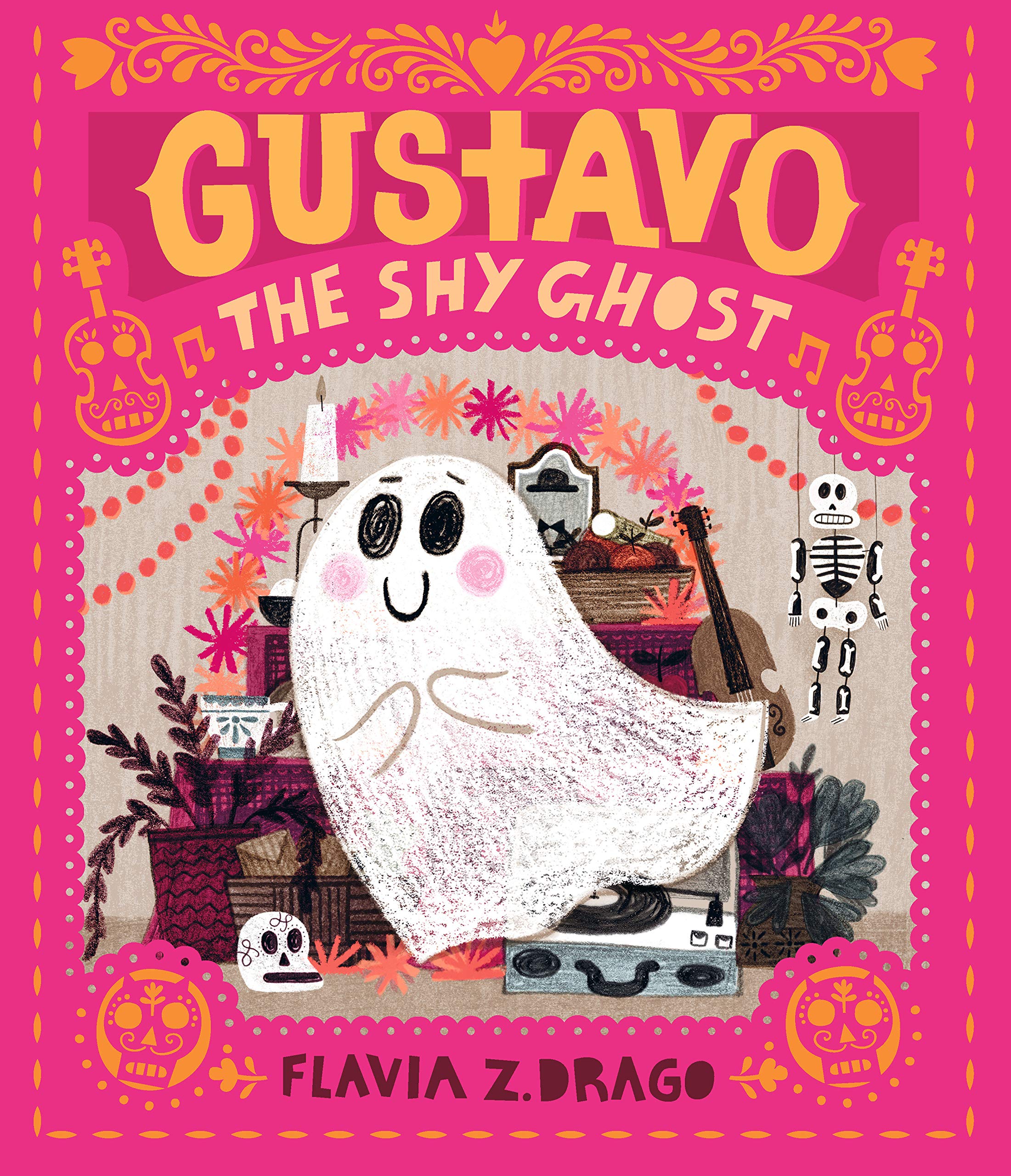
Gustavo The Shy Ghost

By Flavia Z. Drago


When it comes to making friends, it can be hard, especially if you’re a paranormal being who blends into the background. Gustavo is a very shy ghost who loves to play the violin more than anything in the world. He is so shy that he can never get the courage to talk to any of the monsters, so he tries to get close to them in other ways. Being a ghost has its perks, and Gustavo is able to morph his shape into any situation. He rounds up his sides into a balloon and hangs out for a celebration, but none of the monsters notice him. He tries everything from curling up into sports equipment to becoming a lampshade, he even becomes a blank canvas in the art classroom, but none of the monsters take any notice.
celebrate-picture-books-picture-book-review-gustavo-the-shy-ghost-invitation

Copyright Flavia Z. Drago, 2020, courtesy of Candlewick.

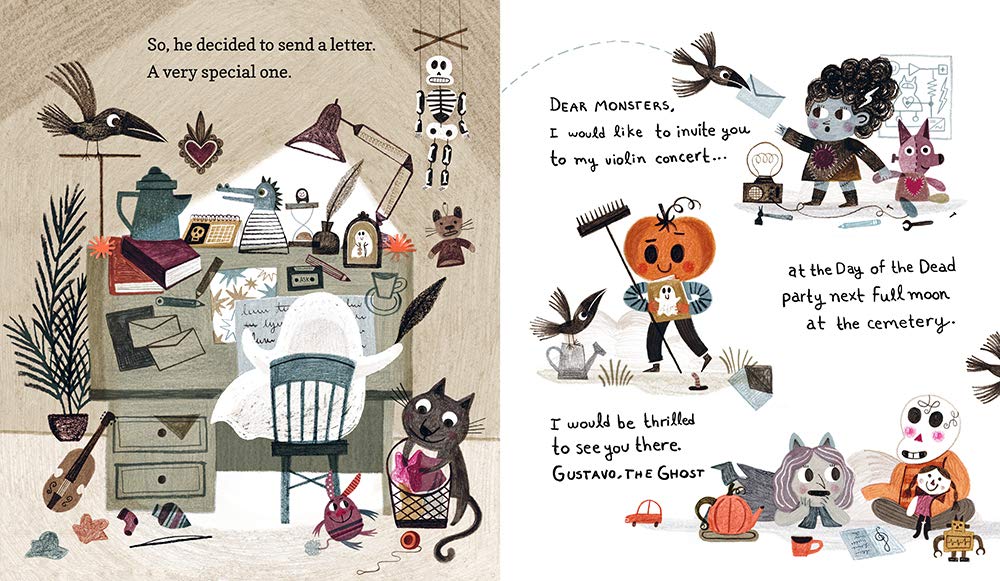
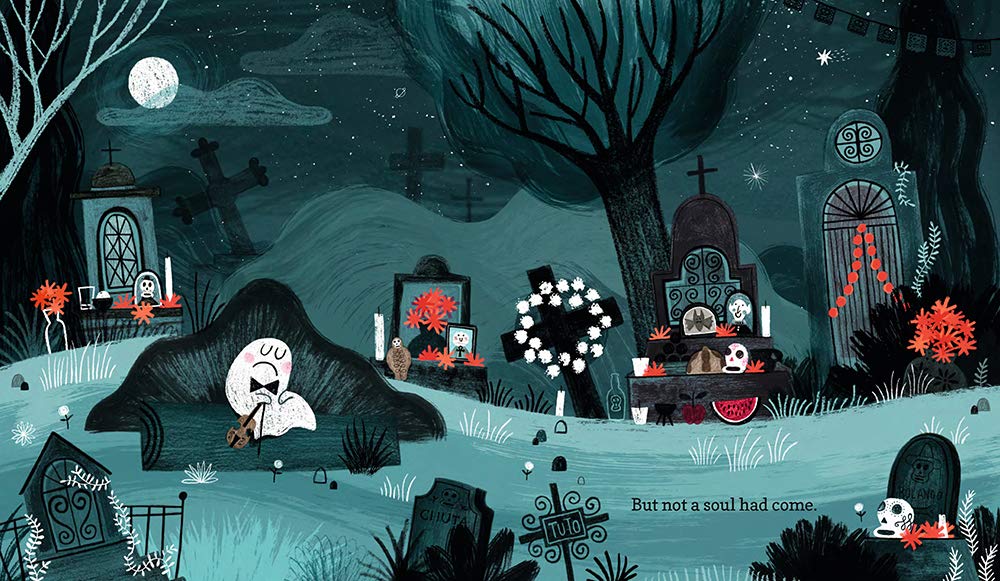
Gustavo’s sadness turns to determination as he sends out invitations to his very own violin concert. This is his chance to really be seen, face his fears, and make some new friends. He pushes his nervous thoughts – “What if no one shows up? What if they don’t like my music?” – away and invites all the monsters in the land! As the big night arrives, Gustavo’s worst fears come to life, not a soul had come to his party. Sitting all alone and mending his crushed heart, he picks up his violin and his music fills the air. Soon, he is glowing brightly with the music that fills his spirit!
celebrate-picture-books-picture-book-review-gustavo-the-shy-ghost-concert

Copyright Flavia Z. Drago, 2020, courtesy of Candlewick.

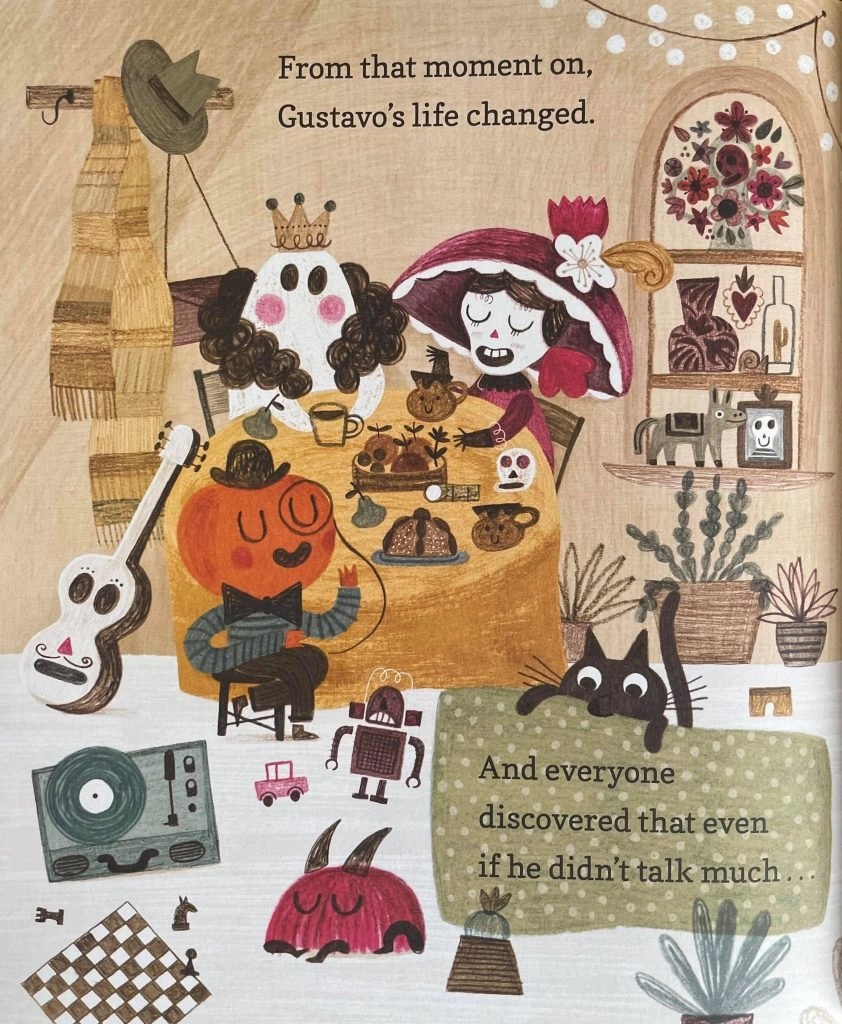
A voice calls “Gustavo!” from behind the bushes, and soon all kinds of monsters begin to emerge from the darkness. The monsters got lost on the way to the party, but found their way back by following the music in the air and spotting Gustavo’s luminous glow! After the brilliant violin performance, Gustavo’s life changes forever. Now, he has all kinds of monster friends in his neighborhood! His quiet nature is now filled with friendship, and he has lots of friends to spook and surprise. Instead of trying to blend into situations, he gets to stand out! Whether it’s becoming an umbrella to shield his friends from the rain or creating an amazing shadow show on the wall, Gustavo isn’t alone.
celebrate-picture-books-picture-book-review-gustavo-the-shy-ghost-party

Copyright Flavia Z. Drago, 2020, courtesy of Candlewick.

Flavia Z. Drago’s message of perseverance and courage will remind your little ones that it’s ok if making friends is hard. Drago reassures kids that the best way to introduce yourself to new people is to simply be yourself, just like Gustavo. While the October season can be a spooky time, this book is great chance to bring more fun and less unease about what’s lurking in the night. Not all spooks are scary, and in fact, some just want a friend.

Drago’s illustrations will have you captivated from the first moment you see Gustavo floating a teapot across the page. The vibrant, warm colors throw you into a new world full of monsters and spooks, and gets you in the mood to hear a tale of the lesser-known paranormal beings. The illustrative details – like Gustavo’s family portrait, his handcrafted invitations, and his kitty cat peeking around the door – give the reader so much to explore within each and every page!

Ages 3 – 7

Candlewick, 2020, | ISBN 978-1536211146

Discover more about Flavia Z. Drago, her books, and her art on her website.

The Spooky Season Activities
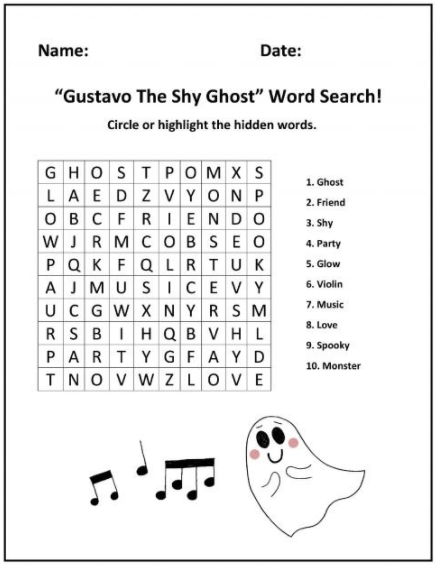
celebrate-picture-books-picture-book-review-gustavo-shape-sorting-activity  celebrate-picture-books-picture-book-review-gustavo-wordsearch

Gustavo the Ghost Puzzles and Craft


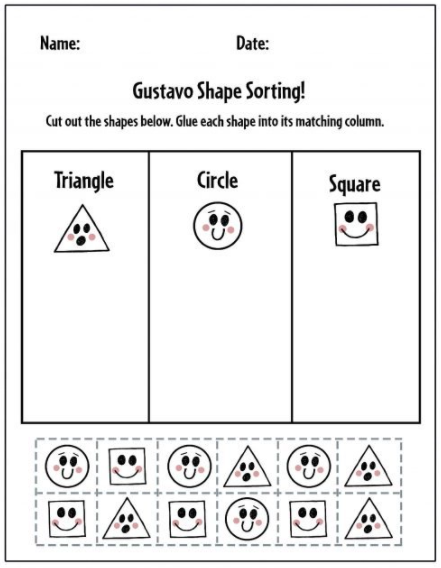
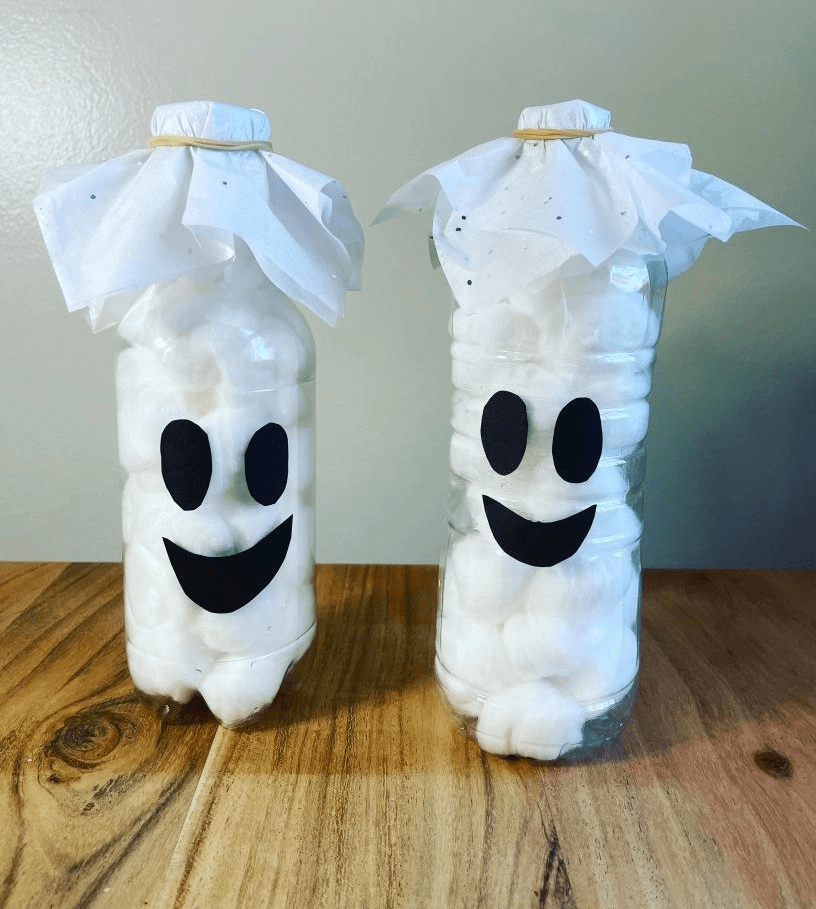
The fun with Gustavo doesn’t have to end! Be sure to print out an activity to accompany the story! Gustavo Shape Sorting” is great for little ones in preschool. Sort Gustavo’s shape into his same column. “‘Gustavo The Shy Ghost’ Word Search” is great for ages 5-7. Highlight all of the spooky words hidden in the mishmash of letters! And hey, while you’re at it, get creative with a fantastic make-your-own ghost water bottle craft!
celebrate-picture-books-picture-book-review-hollydog-blog-ghost-bottles

About Amanda Leemis

celebrate-picture-books-picture-book-review-amanda-leemis-headshot

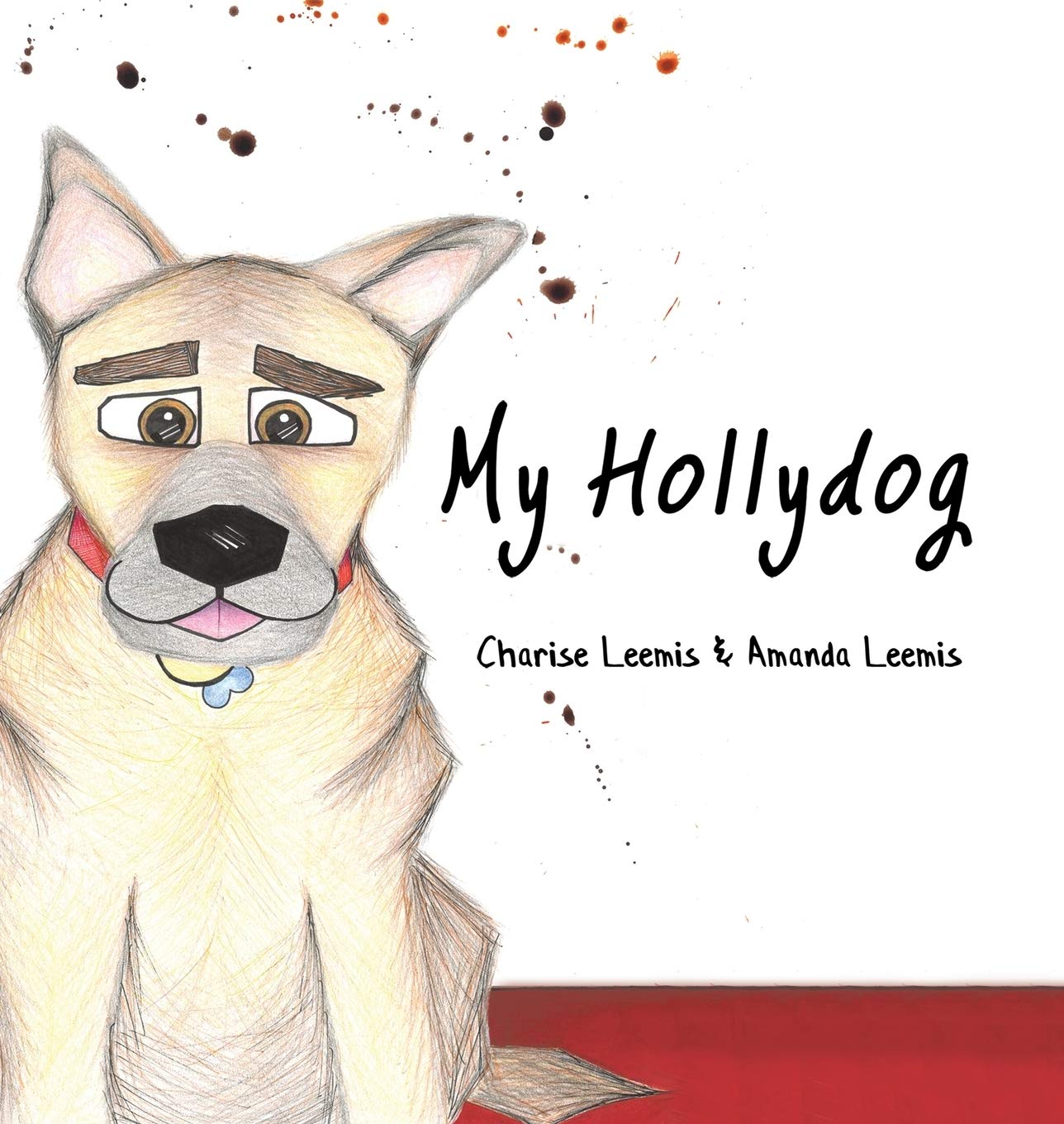
Amanda Leemis is a model, artist, and creator of The Hollydog Blog! She is passionate about encouraging our littlest humans to read! With two books published in the “My Hollydog” series, she loves illustration and uses her skills to create printable worksheets for ages 2-5. Creating resources that build fine motor skills and boost creativity is her passion.

Amanda Leemis is the illustrator of My Hollydog and My Hollydog Rides in the Car. Her mother Charise Leemis is the author! The “My Hollydog” series is written specifically for ages 2-3. With one sentence per page, little ones will stay engaged and keep focused on the vibrant illustrations. Come along with Hollydog on an adventure! Whether it’s hanging her head out the window or jumping into a pile of leaves, Hollydog loves her humans more than anything in the world!
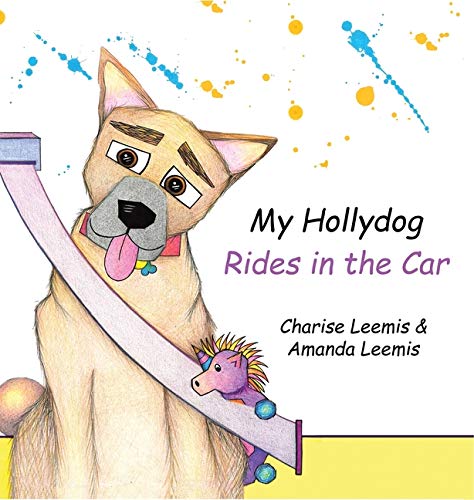
celebrate-picture-books-picture-book-review-my-hollydog-covercelebrate-picture-books-picture-book-review-my-hollydog-rides-in-the-car-cover

celebrate-picture-books-picture-book-review-gustavo-the-shy-ghost-cover

You’ll find Gustavo the Shy Ghost at these booksellers

Amazon | Barnes & Noble | Books-a-Million

To support your local independent bookstore, order from 

Bookshop | IndieBound

Picture Book Review
October 19 – Celebrating the Book Birthday of One Sheep, Two Sheep

celebrate-picture-books-picture-book-review-one-sheep-two-sheep-cover

About the Holiday

Is there anything better than celebrating the birthday of a book for the youngest readers? Little ones bring unbridled excitement to finding new stories to love for bedtime or anytime. Smiles, giggles, and requests for “again!” make family reading time the best time of the day! Today’s book addition to those sleepy time snuggles.

One Sheep, Two Sheep

Written by Tammi Sauer | Illustrated by Troy Cummings


The moon and stars are shining and it’s time for Rooster to go to sleep. As he climbs the ramp to his coop, he says goodnight to all of his “wonderful farm friends.” Snuggled under the covers, Rooster drowsily gazes out the window where he’s happy to see the flock of sheep gathering in a field on the other side of the fence. “I must count sheep,” he says.

celebrate-picture-books-picture-book-review-one-sheep-two-sheep-fence

Image copyright Troy Cummings, 2021, text copyright Tammi Sauer, 2021. Courtesy of Abrams Appleseed.

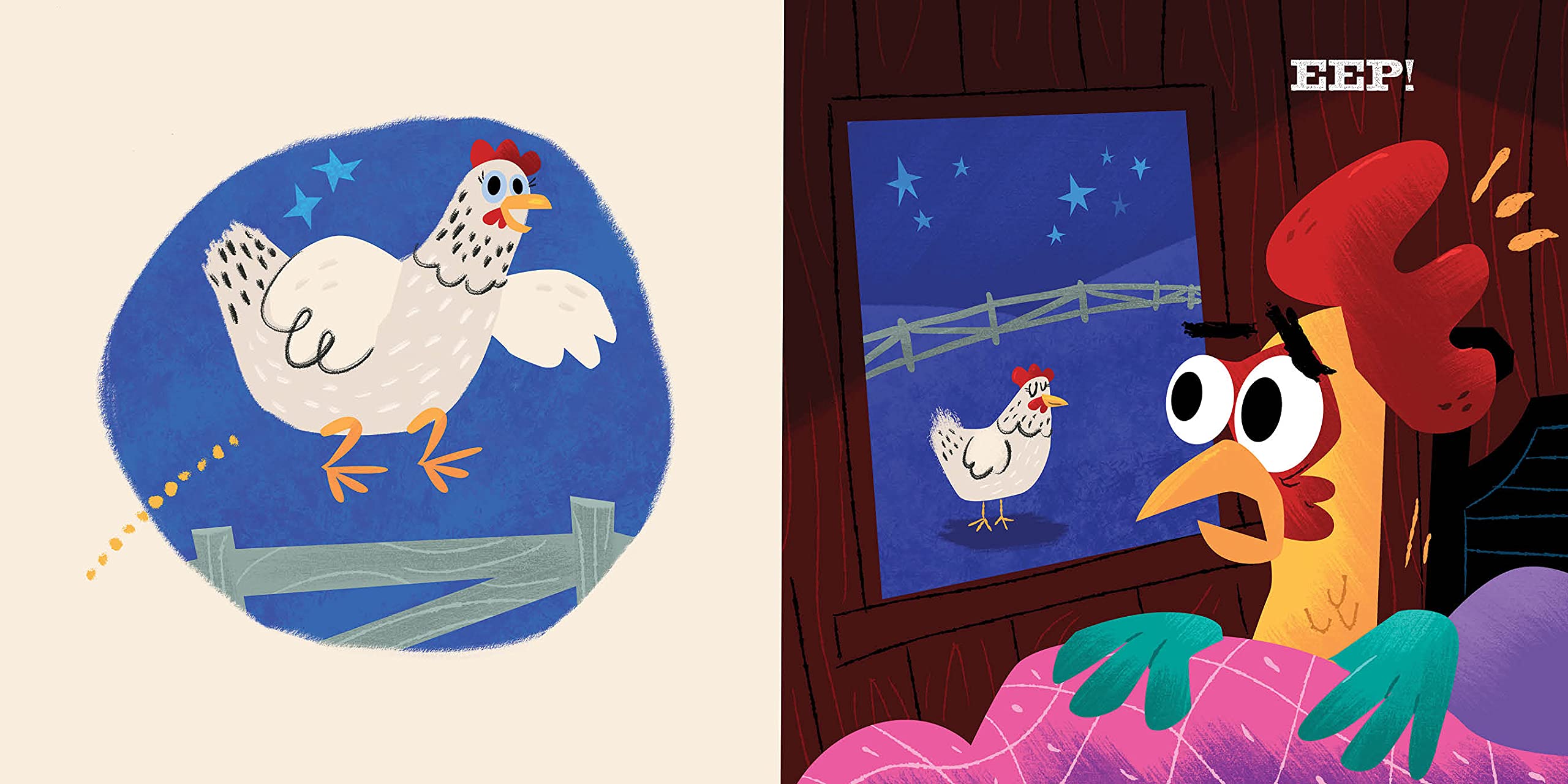
“One sheep. Two sheep. Three sheep.” The sheep are happy to oblige, each clearing the fence in their own creative way. But then… a chicken hops the fence. Rooster bolts upright in bed. “EEP!” He sticks his head out the window and gives the chicken a little piece of his mind. “Whoa! Whoa! Whoa! A CHICKEN?! I’m sorry, but this is a serious bedtime business.” Then he lets the chicken know that he is a sheep-exclusive counter.

Back in cozy sleep mode, with his stuffed corn cob toy in wing, Rooster goes back to counting three more sheep until… “EEP!” Pig leaps over the fence. This time Rooster’s a little more lenient, but he wants his sheep back. And so he gets them. Sheep seven, eight, and nine jump, soar, and dive over the fence. But… “EEP!” Who’s this? Cow? In a tutu? Doing a jeté?! “Cock-a-doodle-DO WE NEED TO REVIEW?” Rooster says. He reminds them that he needs to count SHEEP and they “don’t look the slightest bit sheepish.” (But of course they do after this scolding.)

celebrate-picture-books-picture-book-review-one-sheep-two-sheep-chicken

Image copyright Troy Cummings, 2021, text copyright Tammi Sauer, 2021. Courtesy of Abrams Appleseed.

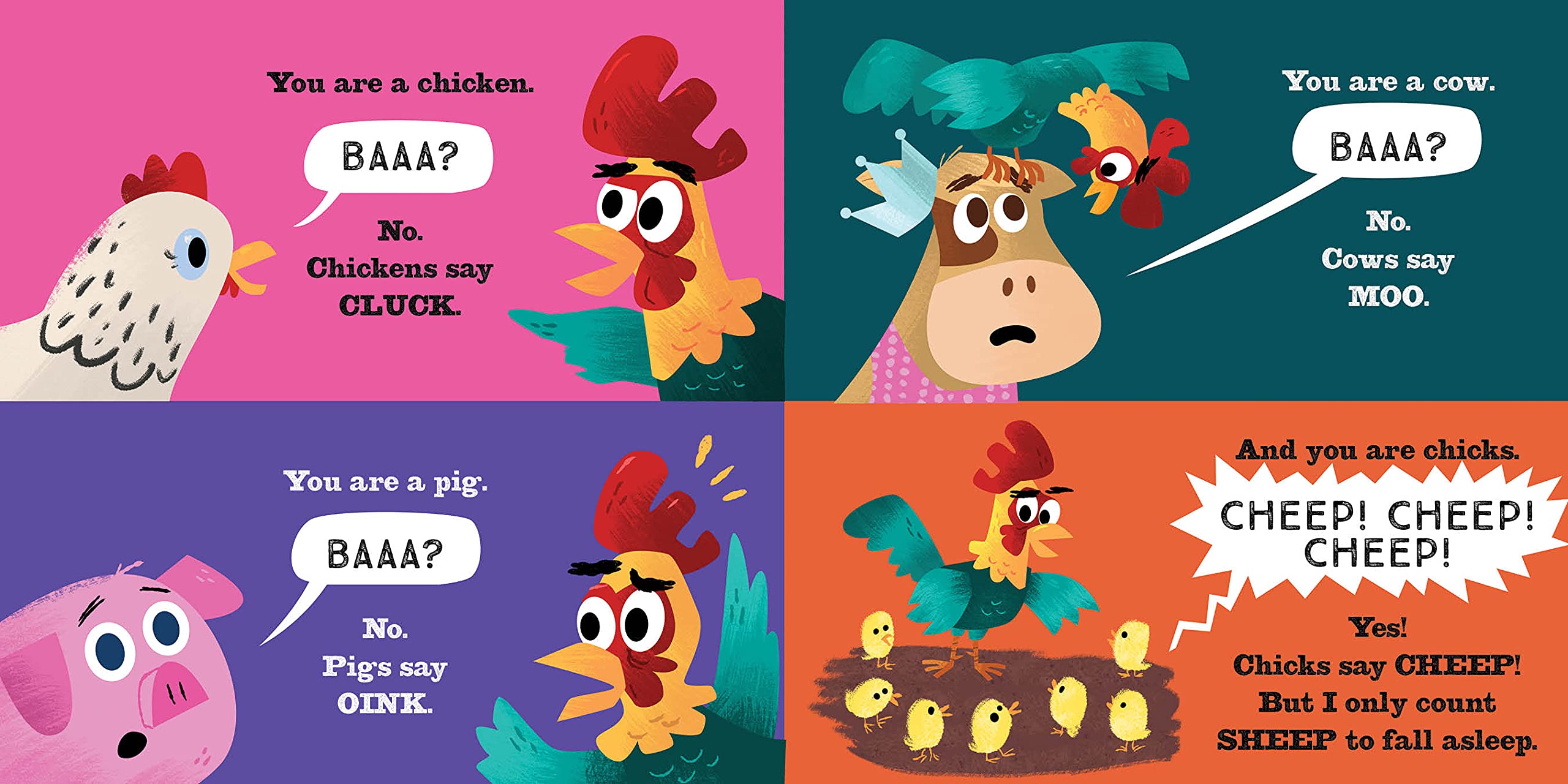
Back in bed, Rooster recaps where he is in the lineup. It’s time for number ten. Ahhh… can sleep be far behind? Well, the chicks want to have their turn too, so all seven let loose with “Cheep! Cheep! Cheep! Cheep! Cheep! Cheep! Cheep!” Rooster’s had enough. He comes to the door of his coop and tells each animal what they are. Each answers with a questioning “BAAA?” But Rooster sets them straight. Finally, Rooster is ready to roost, but the sheep—now all on this side of the fence—are ready to enjoy the pond, and with a leap and a “QUACK!” one cannonball’s in! What’s Rooster to do? He’s off to dreamland with his farmyard friends cloaked in fluffy white costumes.

Sure to make kids giggle, count along, and, especially, shout out “EEP!” Tammi Sauer’s One Sheep, Two Sheep is bedtime or story time fun at its best. For readers on the younger side of the target audience, it’s also an ingenious concept book that have little ones counting to ten and learning the names of farm animals in no time. Lots of puns, befuddled animals, and an unexpected ending all add up to a book kids will want to read again and again.

celebrate-picture-books-picture-book-review-one-sheep-two-sheep-baaa

Image copyright Troy Cummings, 2021, text copyright Tammi Sauer, 2021. Courtesy of Abrams Appleseed.

Troy Cummings can always be counted on to accentuate the humor in Sauer’s stories (see their Not Now, Cow!, Abrams Appleseed, 2021  and Caring For Your Lion, Sterling, 2017). Here, the nimble farm animals, Rooster’s frantic facial expressions, silly costumes, and clever coop details will have readers laughing from page to page. Cummings’ simple, bold images and typography invite kids to join in on reading and also work as prompts for little ones to proudly share their knowledge of counting one to ten and the sounds sheep, pigs, chickens, cows, and chicks make.

A terrific addition to any child’s home library, One Sheep, Two Sheep is also a winner for preschool and kindergarten classrooms as well as school and public libraries.

Ages 3 – 6

Abrams Appleseed, 2021 | ISBN 978-1419746307

Discover more about Tammi Sauer and her books on her website.

To learn more about Troy Cummings, his books, and his art, visit his website.

One Sheep, Two Sheep Book Birthday Activities

celebrate-picture-books-picture-book-review-two-sheep-coloring-page

Sheep Coloring Pages and Dot-to-Dot


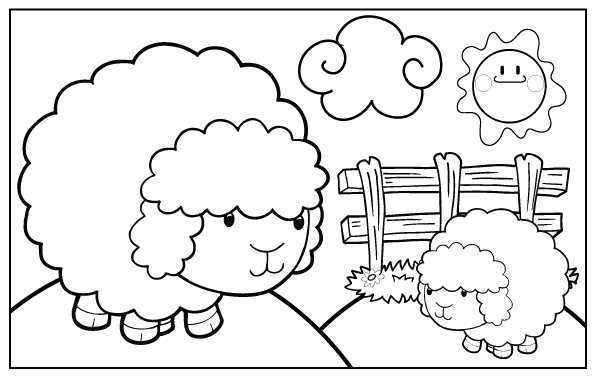
Little ones can enjoy coloring and counting with these three printable activity sheets.

Sheep Friends Coloring Page | Cute Ram Coloring Page | Sheep Dot-to-Dot

celebrate-picture-books-picture-book-review-one-sheep-two-sheep-cover

You can find One Sheep, Two Sheep at these booksellers

Amazon | Barnes & Noble | Books-a-Million

To support your local independent bookstore, order from

Bookshop | IndieBound

Picture Book Review

October 18 – National No Beard Day

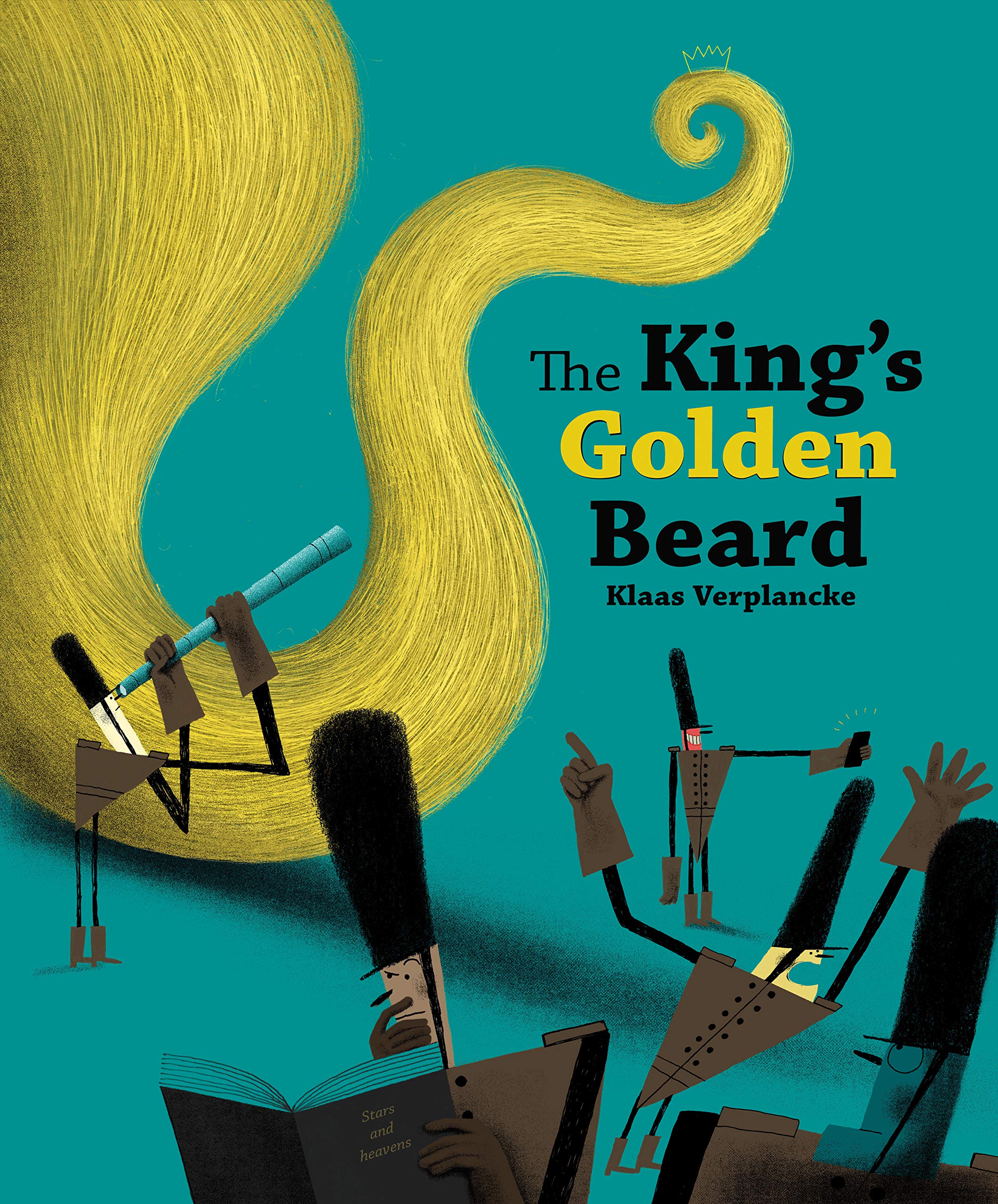
celebrate-picture-books-picture-book-review-the-king's-golden-beard-cover

About the Holiday

If you’re a fan of the bearded look – whether full or scruffy – today is a day to rethink your style and perhaps have a shave. If you’ve worn a beard for some time, do you remember what you looked like before your grew it? Does your family? Maybe you have kids who have never seen you without a beard! You may find you like a clean-shaven appearance. If not, of course, you can always regrow your beard – just like the townsfolk in today’s book! 

Thanks to minedition for sharing a copy of The King’s Golden Beard with me for review consideration. All opinions on the book are my own.

The King’s Golden Beard

By Klaas Verplancke


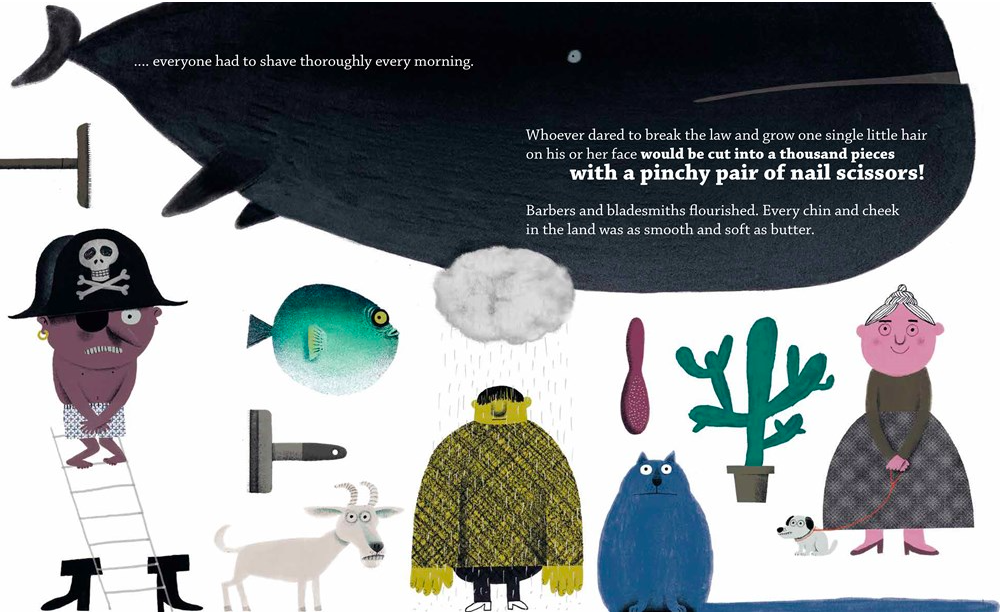
“A long long time ago, when most people still believed the world was flat as a pancake, there lived a king with a beautiful beard.” The king lived for his shiny beard, admiring it in the mirror all day long and creating “special laws to protect his beard and help it grow.” One law stated that his beard could never be trimmed, and another forbid anyone (or anything) else to grow a beard or moustache. Everyone (and everything) was forced to shave every morning—thus, pirates, billy goats, puffer fish, whales, cacti, cats, and even brooms and brushes had to go hairless.

celebrate-picture-books-picture-book-review-the-king's-golden-beard-mirror

Copyright Klaas Verplancke, 2021, courtesy of minedition.

If anyone grew even “one little hair,” they “would be cut into a thousand pieces with a pinchy pair of nail scissors!” Barbers suddenly had more customers than they could handle. In the king’s castle, all the portraits were stripped of beards as the king’s own facial hair, growing like a weed, “meandered through the vast corridors of the royal palace.” It even made its way out of a window, onto winding paths, and right across every Royal Beard Street in every village for miles around.

But it didn’t stop there. It snaked its way across the kingdom, and every “man, woman, child, and beast bowed down to the beard as it swished and swooshed past” them on its way to the deserts, forests, and mountains around the world. At last, the king’s beard reappeared at his own castle’s back door “because the earth, as you know, is round and not flat.”

celebrate-picture-books-picture-book-review-the-king's-golden-beard-townspeople

Copyright Klaas Verplancke, 2021, courtesy of minedition.

There a palace guard spotted this “‘strange beard’” and alerted the king. Outraged, the king ordered that the owner of this wayward beard “should be cut to pieces at once!” The guards began to follow the beard to its origin and carry out the king’s law. They traveled around the world right back to their castle—where the king sat admiring himself in many mirrors—and announced that they had found the beard’s owner. “‘Cut him into pieces,’ shouted the king.” And so they…. After all—”the law is the law.” The new king—as well as everyone in the kingdom—now understood that the world was round. And as for the old king’s law? With the new king, it didn’t stand a whisker of a chance.

celebrate-picture-books-picture-book-review-the-king's-golden-beard-penguins

Copyright Klaas Verplancke, 2021, courtesy of minedition.

Quirky, set in a time of willful ignorance and a self-glorifying leader, and ending with a well-deserved comeuppance, The King’s Golden Beard is a witty fable for our times. Klaas Verplancke’s humorous storytelling will appeal to kids with sly winks to their superior-to-the-king’s intelligence and laugh-inducing dialogue. As the king’s beard stretches its far-reaching influence around the world, lines of text invite kids to turn the book sideways and upside down on the journey to revealing the truth. Along with the laughs, Verplancke’s story provides a captivating way for adults and kids to discuss issues of fairness, vanity, justice, good leadership, and respect for science and scientists.

Verplancke’s eye-catching illustrations in teal, olive, brown, and plum accented with a yellowish gold, we’ve all seen before are fresh and funny. The king—never entirely seen except for a grinning mouth, red gloves, and black boots—is an outsized figure while the guards and townspeople charm with their abstract shapes and proportions.

Unique, timely, and multi-layered, The King’s Golden Beard would be a much-asked for favorite on any home, school, and library bookshelf.

Ages 4 – 8 (and up)

minedition, 2021 | ISBN 978-1662650390

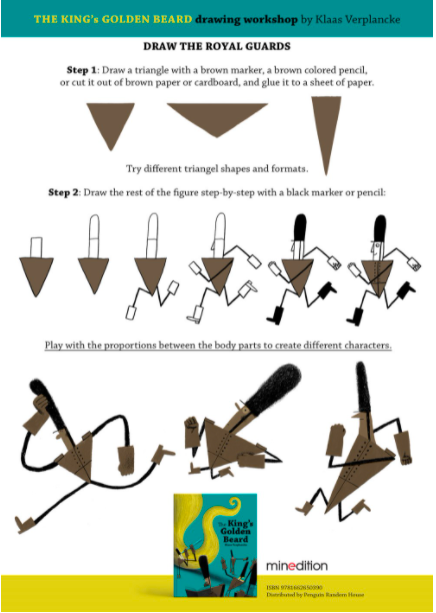
celebrate-picture-books-picture-book-review-the-king's-golden-beard-worksheet

Copyright Klaas Verplancke, 2021, courtesy of minedition.

To learn more about Klaas Verplancke, his books, and his art, visit his website. Kids can learn how to draw the king’s very distinctive guards here too!

National No Beard Day Activity

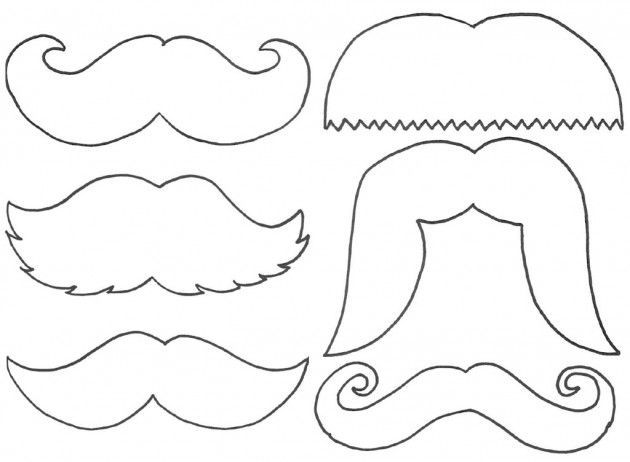
celebrate-picture-books-picture-book-review-moustache-template

Marvelous Moustaches


Moustaches can look distinguished or madcap! Here are some printable Marvelous Moustaches that you can use to make yourself look whacky, wild, and wonderful! Just color them, glue or tape each to a thin wooden craft stick or chop stick and hold them to your face for fun!

celebrate-picture-books-picture-book-review-the-king's-golden-beard-cover

You can find The King’s Golden Beard at these booksellers

Amazon | Barnes & Noble | Books-a-Million

To support your local independent bookstore, order from

Bookshop | IndieBound

Picture Book Review
October 15 – Celebrate Fall

celebrate-picture-books-picture-book-review-c-is-for-city-cover

About the Holiday

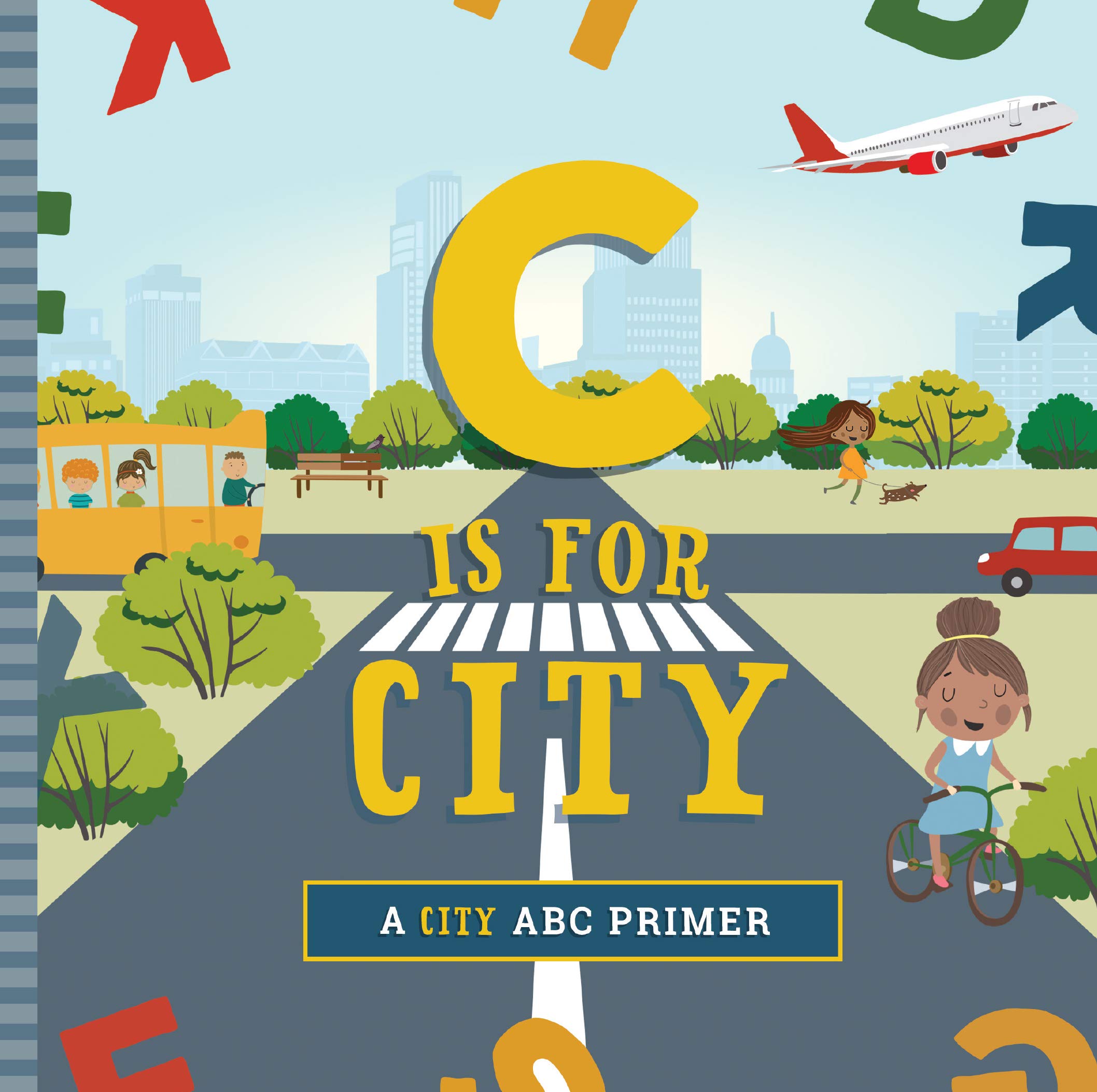
With the onset of autumn, people love to get outdoors to enjoy the beautiful weather, the colorful trees, empty beaches, and the wealth of fresh fruit and vegetables available at farmers markets. From corn mazes to arts-and-crafts shows, agricultural fairs to pick-your-own orchards, museums to favorite shops and cafes, there’s so much to do! With today’s books you and your little ones can enjoy exploring with the ABCs—why not turn your next outing into a game with these fun take-along board books?!

Thank you to Familius for sharing a copy of C Is for City and F Is for Farm with me for review consideration. All opinions on the books are my own.

C Is for City: A City ABC Primer

Written by Ashley Mireles | Illustrated by Volha Kaliaha


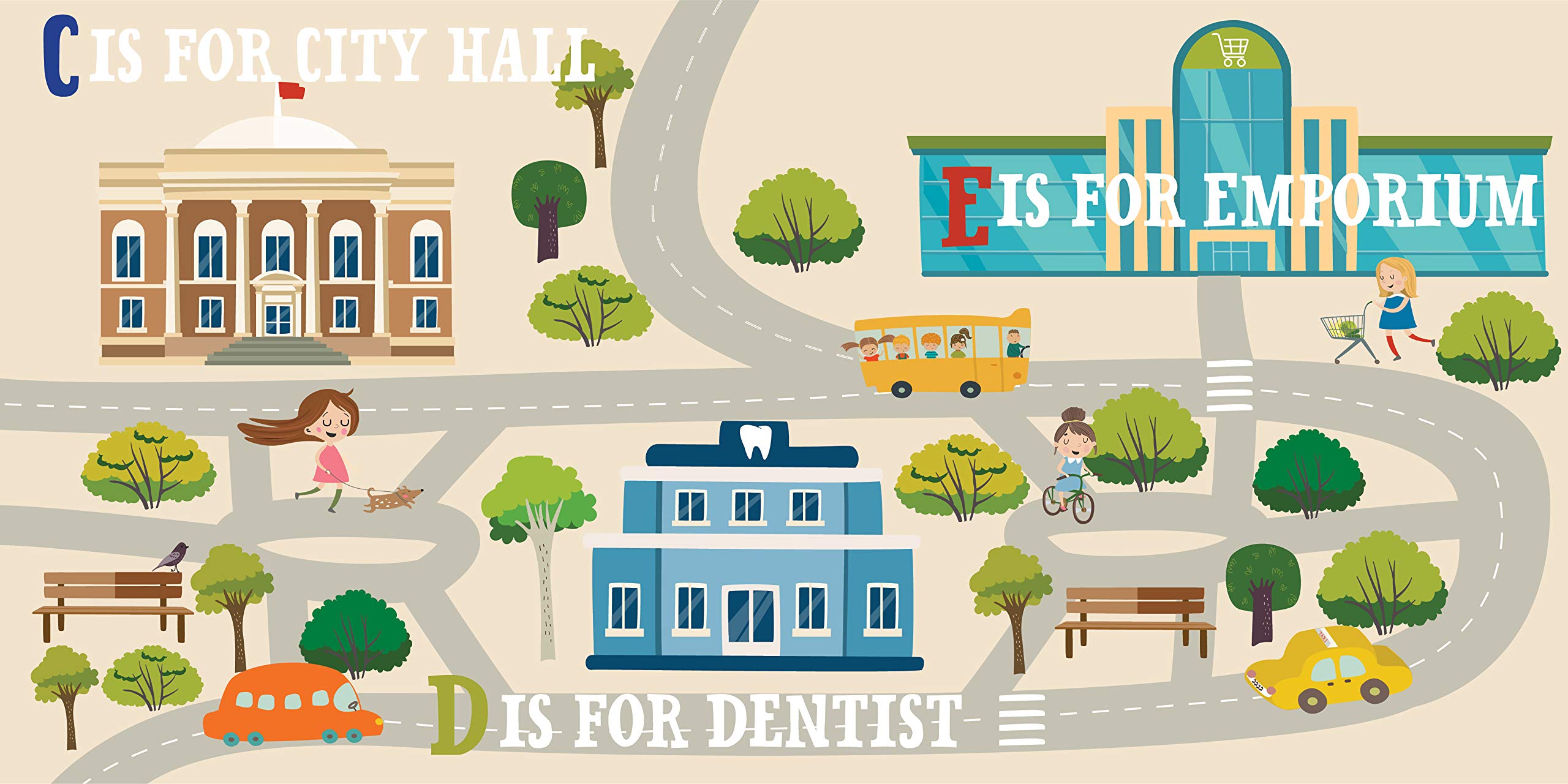
A walk through any city is full of new or favorite sights, sounds, tastes, and smells. Ashley Mireles has collected twenty-six of these to keep little ones looking and learning as they explore whether at home or while visiting. If you’re sharing this book with your little one, they’re probably well acquainted with the entry at B! For all book lovers “B is for bookstore,” of course! Kids fascinated with big trucks will want to take a drive or walk to find the building that represents F—the Fire Station. Everybody hungry? Offer kids a trip to G or I and see which they pick. Do they figure out that “G is for grocery store” and “I is for ice cream shop?” Some of the most charming architecture in a city come in small packages. That’s why “K is for kiosk.” Why not stop by and see what’s for sale?

celebrate-picture-books-picture-book-review-c-is-for-city-airport

Image copyright Volha Kaliaha, 2021, text copyright Ashley Mireles, 2021. Courtesy of Familius.

With all the exhibits, hands-on displays, and maybe even a dino or two, no child (or adult) wants to pass up a trip to M! That’s right! When you open the doors to the museum, you open your child’s imagination to all that’s possible! Perhaps, you just have to run some errands. Those are perfect for seeking out the alphabet too! Need to go to mail a package, get your car fixed, or get a haircut?  You’ll be visiting the places at P, R, and S! Ready for some more fun after all of those? You know where to head—the last page, because “Z is for Zoo.”

celebrate-picture-books-picture-book-review-c-is-for-city-emporium

Image copyright Volha Kaliaha, 2021, text copyright Ashley Mireles, 2021. Courtesy of Familius.

Ashley Mireles has chosen a wide range of familiar city landmarks, shops, and buildings that little ones will have fun pointing out as they walk, drive, or speed past on the subway. Each letter is represented with a simple sentence that invites adults and kids to examine Volha Kaliaha’s illustrations or use their memory to talk about other things the letter may stand for or other items, workers, or experiences associated with each place. The repeated phrasing makes this an excellent “read along” or primer for new readers.

Volha Kaliaha represents each letter with charming, colorful images that will get kids talking and searching their neighborhood and their home for examples of each alphabetic letter. Her clean lines and winsome details give adults plenty of opportunities to prompt children to find items that begin with letters other than the featured one, making this nicely sized board book perfect for growing vocabularies and language awareness.

Bright, engaging, and just right for little hands, C Is for City offers lots to love for young learners and is sure to become a favorite on home, classroom, and library bookshelves.

Ages Baby – 3

Familus, 2021 | ISBN 978-1641704533

You can connect with Volha Kaliaha on Instagram.

celebrate-picture-books-picture-book-review-c-is-for-city-cover

You can buy C Is for City on the Familius website.


celebrate-picture-books-picture-book-review-f-is-for-farm-cover

F Is for Farm: A Farming ABC Primer

Written by Ashley Mireles | Illustrated by Volha Kaliaha


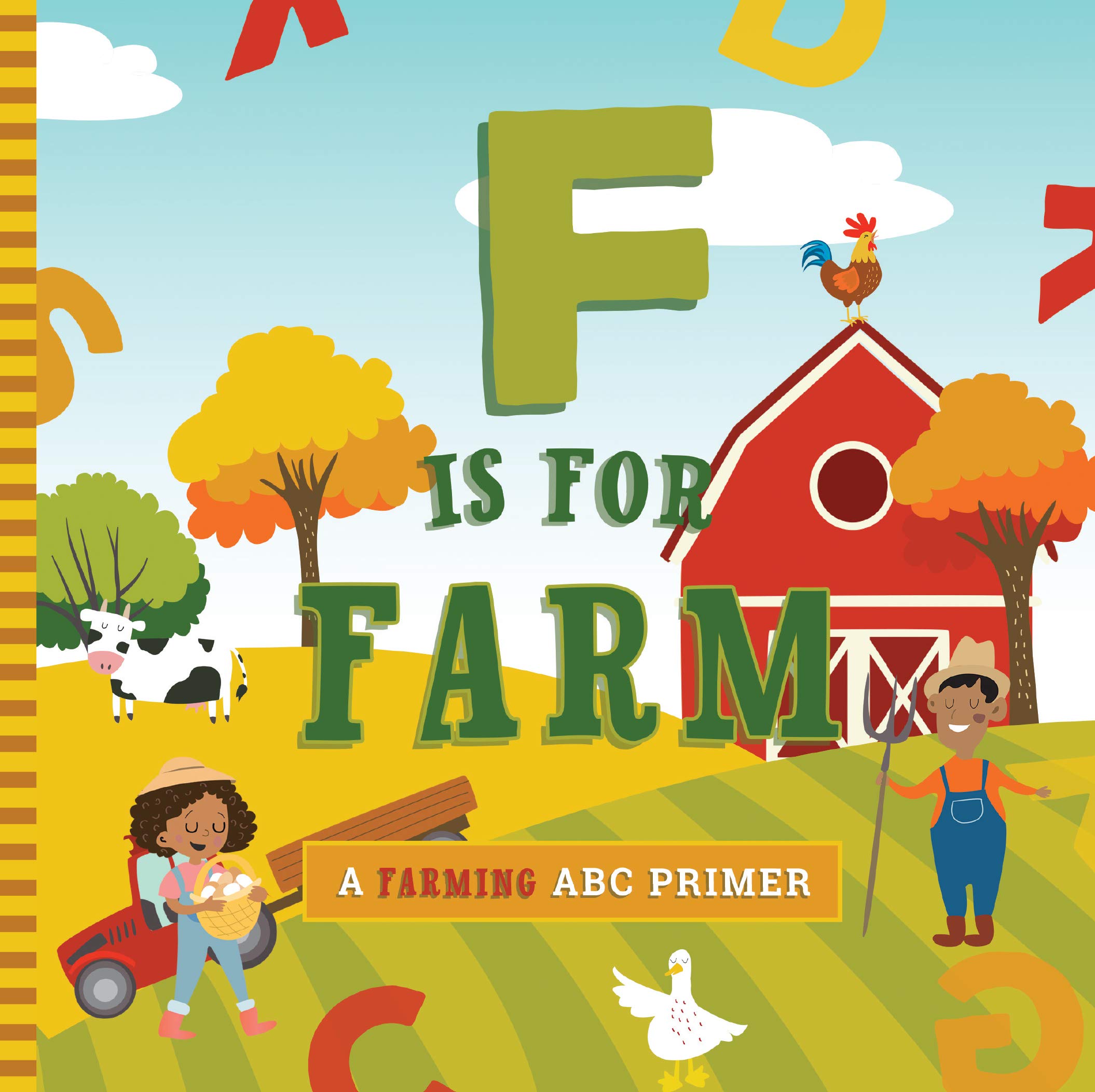
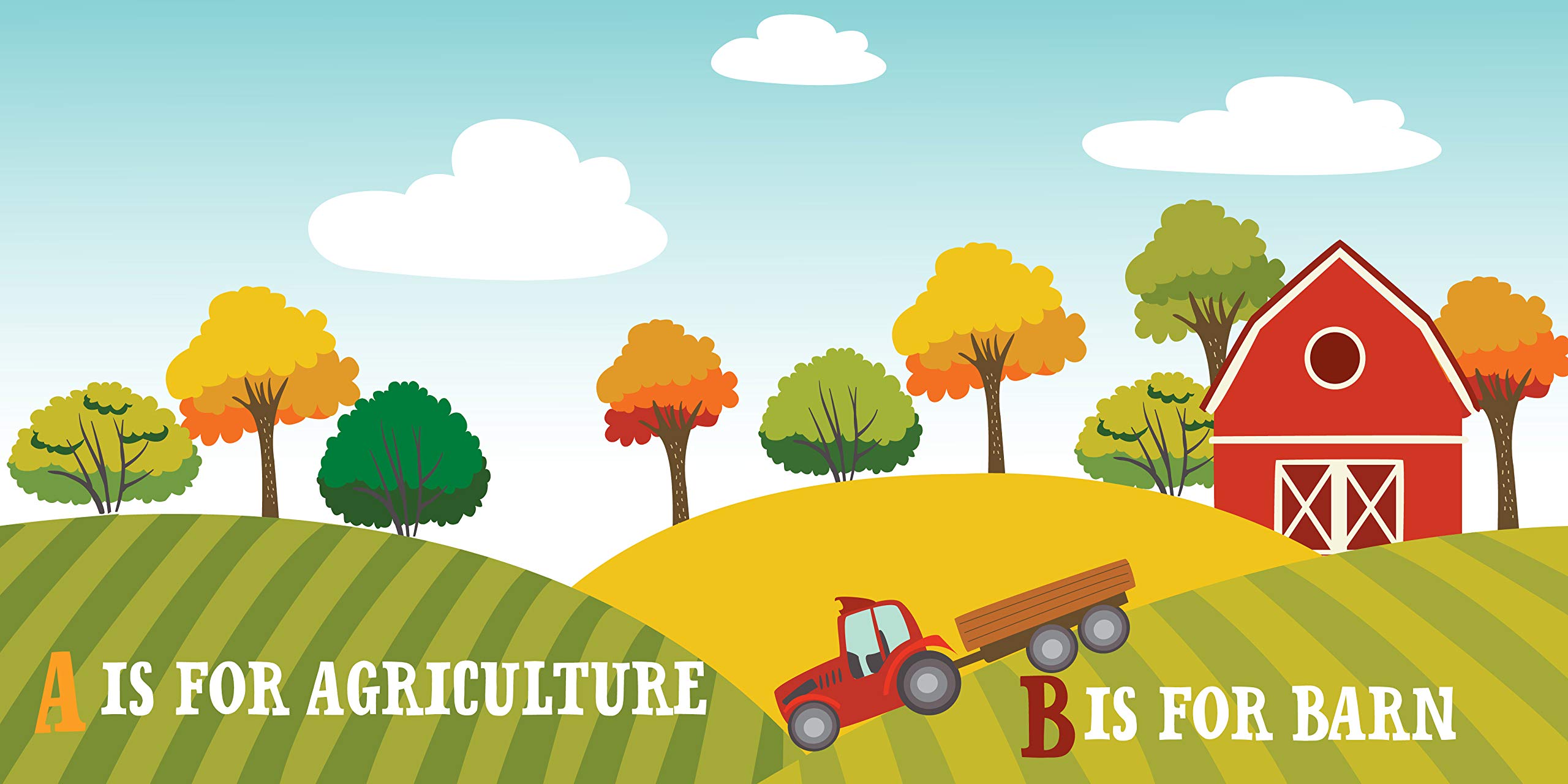
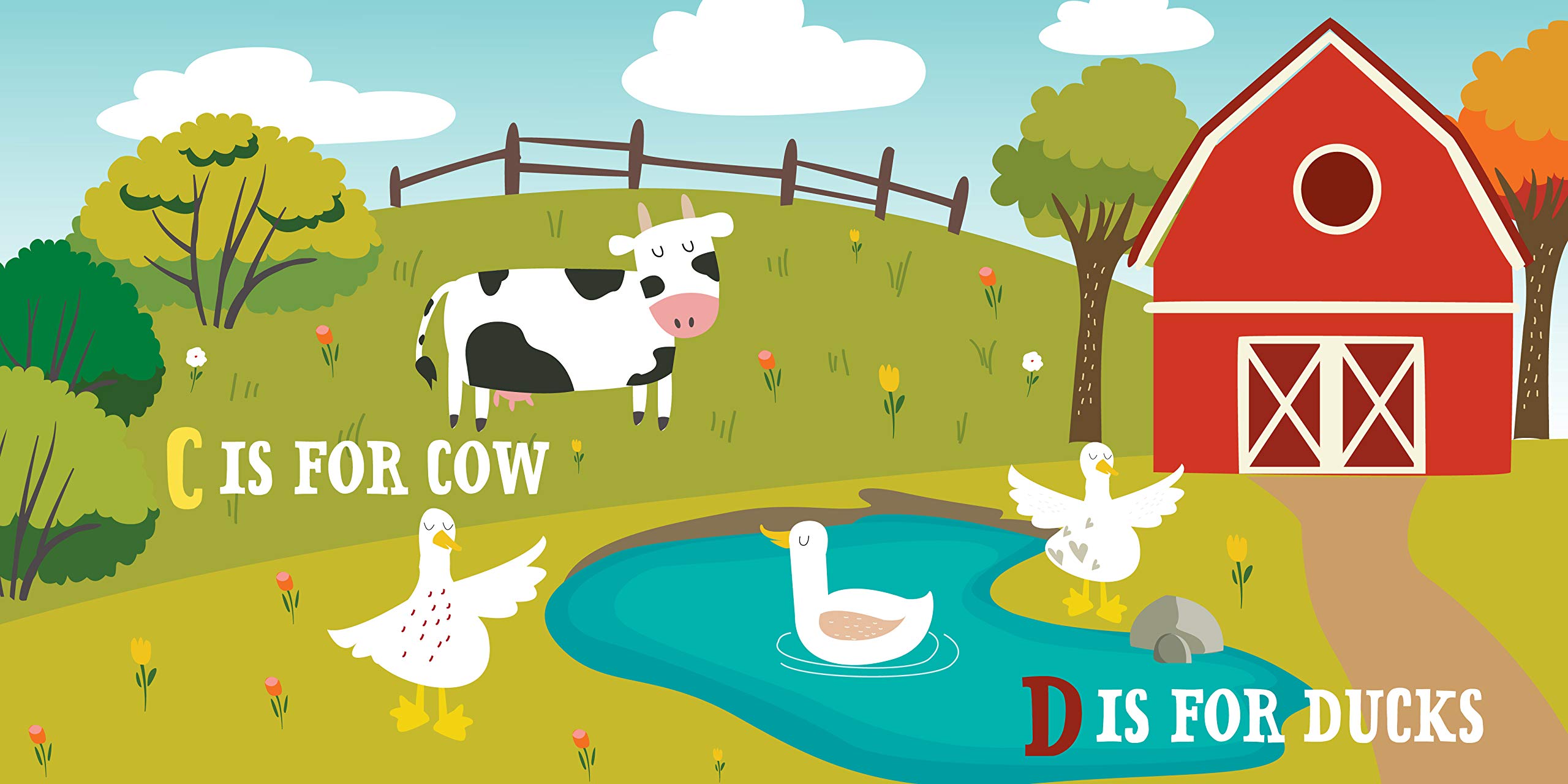
Yeehaw! Little ones are off to the farm in this alphabetic collection of animals, buildings, food, and equipment they’d find out in the country. Ask any child to name a farm animal or two, and they’re sure to shout out the favorites at C (cow), D (ducks), and R (rooster). And how about the delicious foods that farmers provide? Well, “J is for jam,” “M is for milk,” and “X is for ximenia.”

celebrate-picture-books-picture-book-review-f-is-for-farm-barn

Image copyright Volha Kaliaha, 2021, text copyright Ashley Mireles, 2021. Courtesy of Familius.

Big rig-loving kids will be looking for the plow and tractor, and they’re here too, as well as some modern farming methods that keep crops and farmers organized and environmentally savvy. Little ones with a thirst for knowledge will be proud to learn the “big words” scattered among the pages, such as “A is for agriculture” and “I is for Irrigation.”

celebrate-picture-books-picture-book-review-f-is-for-farm-cow

Image copyright Volha Kaliaha, 2021, text copyright Ashley Mireles, 2021. Courtesy of Familius.

Ashley Mireles brings the farm inside with her enchanting picks from the country that will please little ones. Her simple four-word sentences invite youngest readers to chime in on the repeated “is for” while emerging readers will gain confidence in recognizing these sight words and other familiar words and letter sounds.

Volha Kaliaha packs her delightful illustrations with lots of realistic images from a farm as well as sweet details that will make kids smile. Not only does each page introduce the alphabet and a crop of words, the vegetables growing in rows, apples on the trees, pumpkins in the cart, and more welcome kids who love to count. Little ones will be excited to find plenty of items to name, colors to point out, and new foods to try within Kaliaha’s pages.

Ages Baby – 3

Familius, 2021 | ISBN 978-1641704526

You can find more books from Familius that joyfully reflect the habits of happy families, including reading, talking, laughing, eating, working, loving, healing, learning, and playing together as well as the Familius blog The Habit Hub here.

You can connect with Volha Kaliaha on Instagram.

celebrate-picture-books-picture-book-review-f-is-for-farm-cover

You can buy F Is for Farm on the Familius website.


This post contains affiliate links. You can read my full disclosure statement here.

Picture Book Review
October 14 – It’s Hispanic Heritage Month

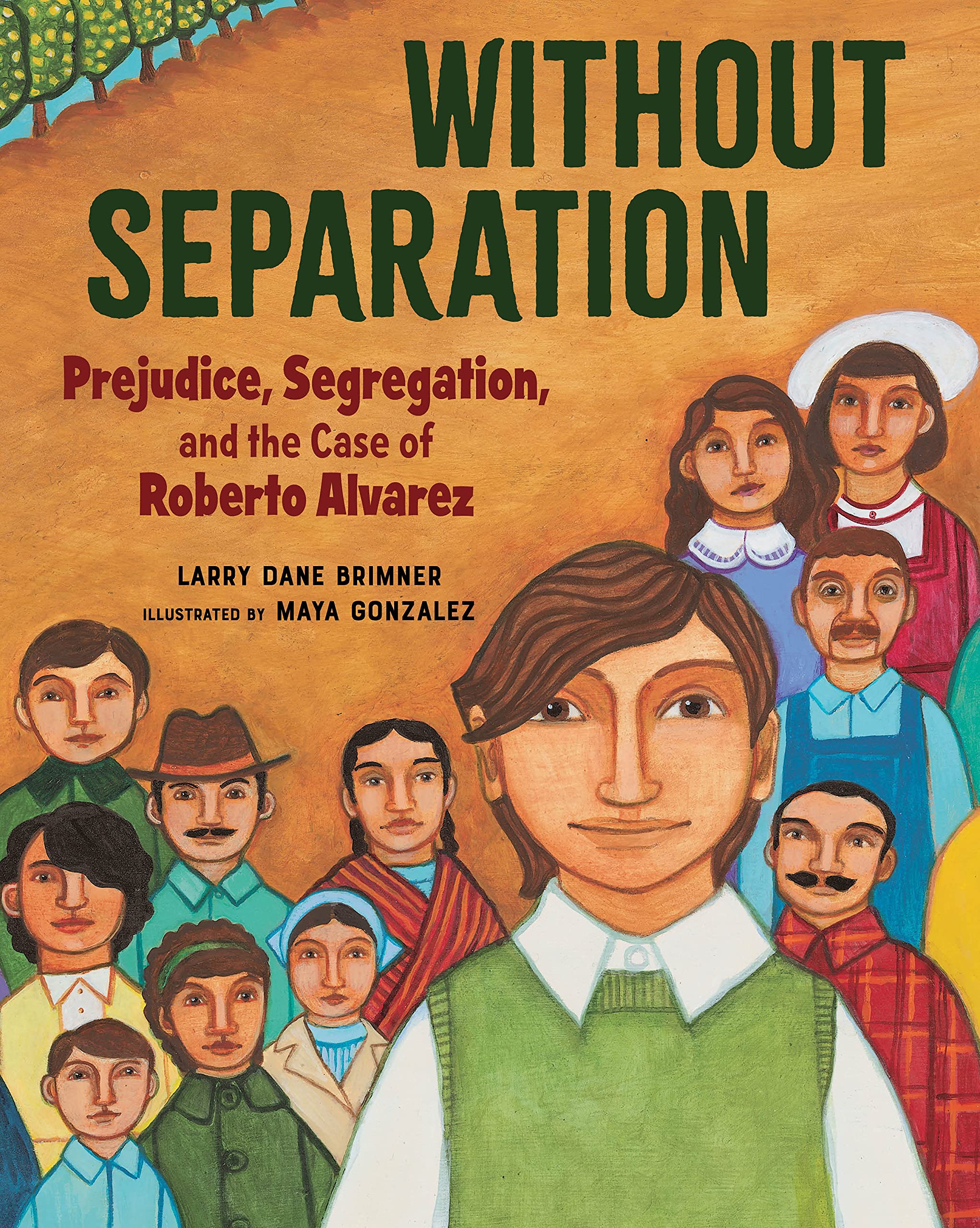
celebrate-picture-books-picture-book-review-without-separation-cover

About the Holiday

From September 15th through October 15th National Hispanic Heritage Month celebrates the contributions of those who come from or whose ancestors immigrated from Spain, Mexico, the Caribbean, Central America, and South America. Each year the holiday adopts a particular theme. This year’s theme is “Esperanza: A Celebration of Hispanic Heritage and Hope.” From business and industry to culture, sports, and entertainment, Hispanic and Latinx Americans have made an important and indelible imprint on our country. You can learn more about the holiday and find cross-curricular resources for classrooms and homeschooling, videos, exhibitions, and much more from the Smithsonian, the Library of Congress, the National Park Service, the National Gallery of Art, the Nationla Archives and more to use not only this month but throughout the year on the official Hispanic Heritage Month website.

Without Separation: Prejudice, Segregation, and the Case of Roberto Alvarez

Written by Larry Dane Brimmer | Illustrated by Maya Gonzalez

On January 5, 1931 twelve-year-old Roberto Alvarez was happy to be going back to Lemon Grove Grammar School after the Christmas vacation. But when he got there “the principal told Roberto and the other Mexican and Mexican American children that they did not belong there.” He told them to go to the new Mexican school on Olive Street, and when they arrived, their teachers and desks were already waiting for them.

This had all come about stealthily after the school district’s board of trustees received a letter from the parent-teacher association complaining that “the Mexican children didn’t understand English,” which “held back the white students.” The letter also said that the “Mexican children were unclean and endangered the health of every other student in the school.” The board decided to construct a separate school—but without telling the Mexican parents, fearing “trouble.”

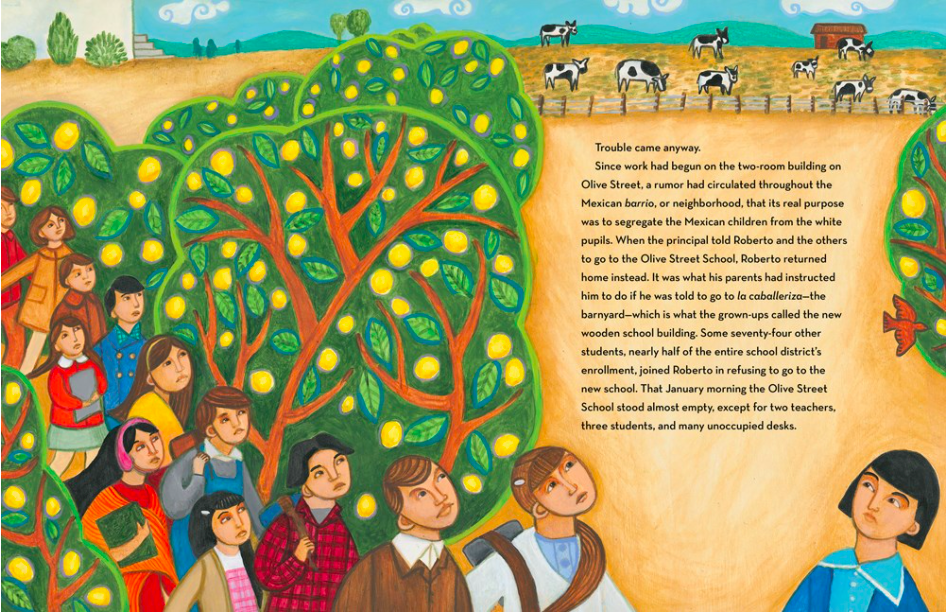
But as the Olive Street school was being built, Mexican parents understood it true purpose of segregation and instructed their children not to attend, but to come home. Most of the kids, including Roberto did as their parents told them. “That January morning the Olive Street School stood almost empty, except for two teachers, three students, and many unoccupied desks.” Roberto believed he didn’t need a different school. While his parents had come from Mexico, he had been born in California and spoke English as well as any of the white students.

celebrate-picture-books-picture-book-review-without-separation-trouble

Image copyright Maya Gonzalez, 2021, text copyright Larry Dane Brimmer, 2021. Courtesy of Calkins Creek.

The Mexican parents formed the “Comité de Vecinos de Lemon Grove—the Lemon Grove Neighbors Committee”—to talk about the situation. They knew the new school had not been built to “help their students learn the English language and American customs, as the school board and newspapers claimed.” The only deciding factor of which school a child attended was the color of their skin.

The Comité de Vecinos acquired two lawyers, and on February 13, 1931 “Roberto brought the situation in Lemon Grove to the attention of the California Superior Court in San Diego” by filing a law suit against the Lemon Grove School board of trustees. His lawsuit asked that the school district stop discriminating against the Mexican students and allow them to return to the Lemon Grove School. The school board falsely stated that the students’ strike was “organized by Mexico or by groups in Mexico,” and the president told a reporter he knew that the district attorney of San Diego was on the school’s side.

In fact the San Diego district attorney represented the school board in its dealings with the court, saying that the Olive Street School was for “‘better instruction,’” a claim that was different from the minutes from the school board’s summer meetings. He then went on to say that having a school in their own neighborhood was safer since they didn’t have to cross the railroad tracks. But Roberto wanted to go to school with all of his friends—”brown and white.”

celebrate-picture-books-picture-book-review-without-separation-roberto

Image copyright Maya Gonzalez, 2021, text copyright Larry Dane Brimmer, 2021. Courtesy of Calkins Creek.

The trial began on March 10, 1931 in San Diego. The lawyers for the school board insisted that the new school was to “benefit the Mexican pupils…not to separate” them. Roberto’s lawyers countered this with the minutes from the board’s summer meetings.

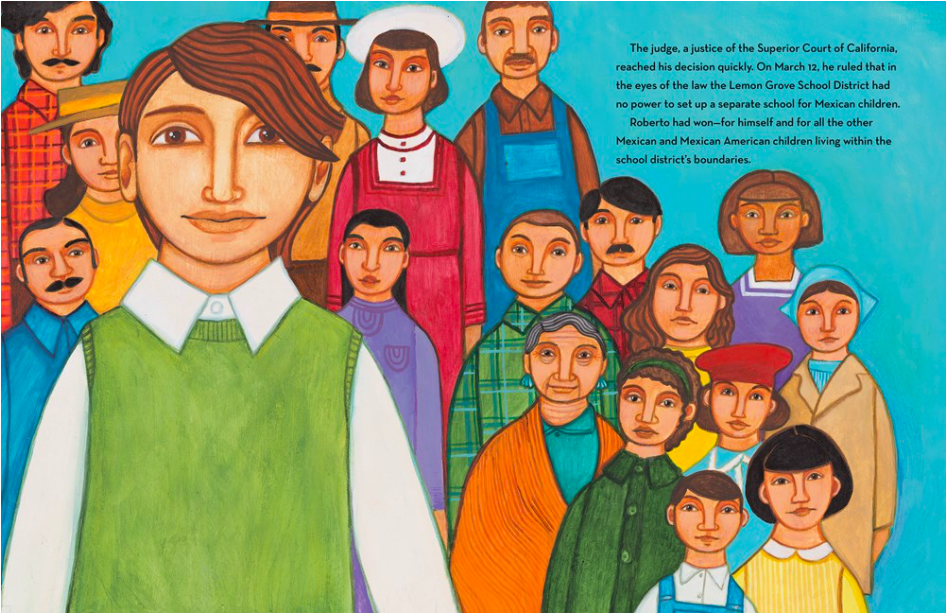
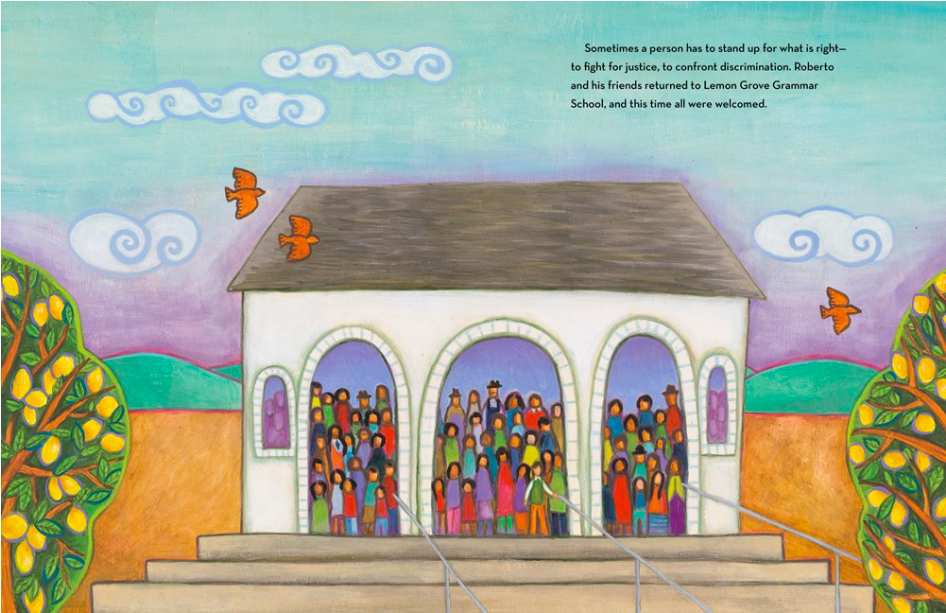
The trial ended the next day, and the decision was handed over to the judge. Two days later, the judge handed down his ruling. He stated that “in the eyes of the law the Lemon Grove School District had no power to set up a separate school for Mexican children.” On April 16, 1931, the judge’s ruling became official and the school board was ordered to immediately admit Roberto Alvarez and all of the other Mexican students “‘without separation or segregation.’” Roberto knew he had to stand up for what was right, and as he and the other Mexican students returned to school, “this time all were welcomed.”

An extensive Author’s Note, complete with photographs of Roberto Alvarez, his third- and fourth-grade classmates in 1928, Roberto’s mother, Lemon Grove Grammar School and its principal, and Roberto in 1999, reveals more about this historical event, the people involved, and the political and social atmosphere in the US at the time. Larry Dane Brimmer also discusses other cases of school segregation and follows up with the consequences for Lemon Grove principal Jerome Green and the successful career enjoyed by Roberto Alvarez as an entrepreneur. Resources used in researching the book are also included.

celebrate-picture-books-picture-book-review-without-separation-school

Image copyright Maya Gonzalez, 2021, text copyright Larry Dane Brimmer, 2021. Courtesy of Calkins Creek.

Larry Dane Brimmer’s compelling history of this landmark case and biography of Roberto Alvarez and all of the students and their parents who stood up for equal access to schooling is instructive and empowering. The fact that this issue and similar others continue to roil schools, workplaces, and communities, makes Without Separation a vital resource to educate children and adults on system racism and how it spreads.

Brimmer highlights the courage, intelligence, and acceptance that children display and inspires them to lend their voices to change injustice wherever they find it. Brimmer’s clear and precise storytelling allows children to understand the actions and discussions involved in the school board meetings, neighborhood committee meetings, and the trial without losing any of the story’s emotional impact.

Maya Gonzalez’s lovely folk-art illustrations present stylized-yet-realistic depictions of the citrus groves, the school, and the courtroom. Fashions and décor set the time period while also appearing appropriate today. Another portrayal of universality is accomplished in Gonzalez’s two-page spread of the board of trustees’ meeting, in which she pictures the members sitting at a table with only their feet and upper body showing. Not only is this group representative of the 1930 school board, but of the “faceless” masses and committees that often drive policy today. Many images of the Mexican community supporting each other shows readers what can be accomplished when people work together.

An important book that will resonate with its target audience, Without Separation: Prejudice, Segregation, and the Case of Roberto Alvarez is a must-addition to any home, classroom, school, and public library.

Ages 7 – 10 and up

Calkins Creek, 2021 | ISBN 978-1684371952

Discover more about Larry Dane Brimmer and his books on his website.

To learn more about Maya Gonzalez, her books, and her art, visit her website.

celebrate-picture-books-picture-book-review-without-separation-cover

You can find Without Separation: Prejudice, Segregation, and the Case of Roberto Alvarez at these booksellers

Amazon | Barnes & Noble | Books-a-Million

To support your local independent bookstore, order from

Bookshop | IndieBound

Picture Book Review
October 13 – National Fossil Day

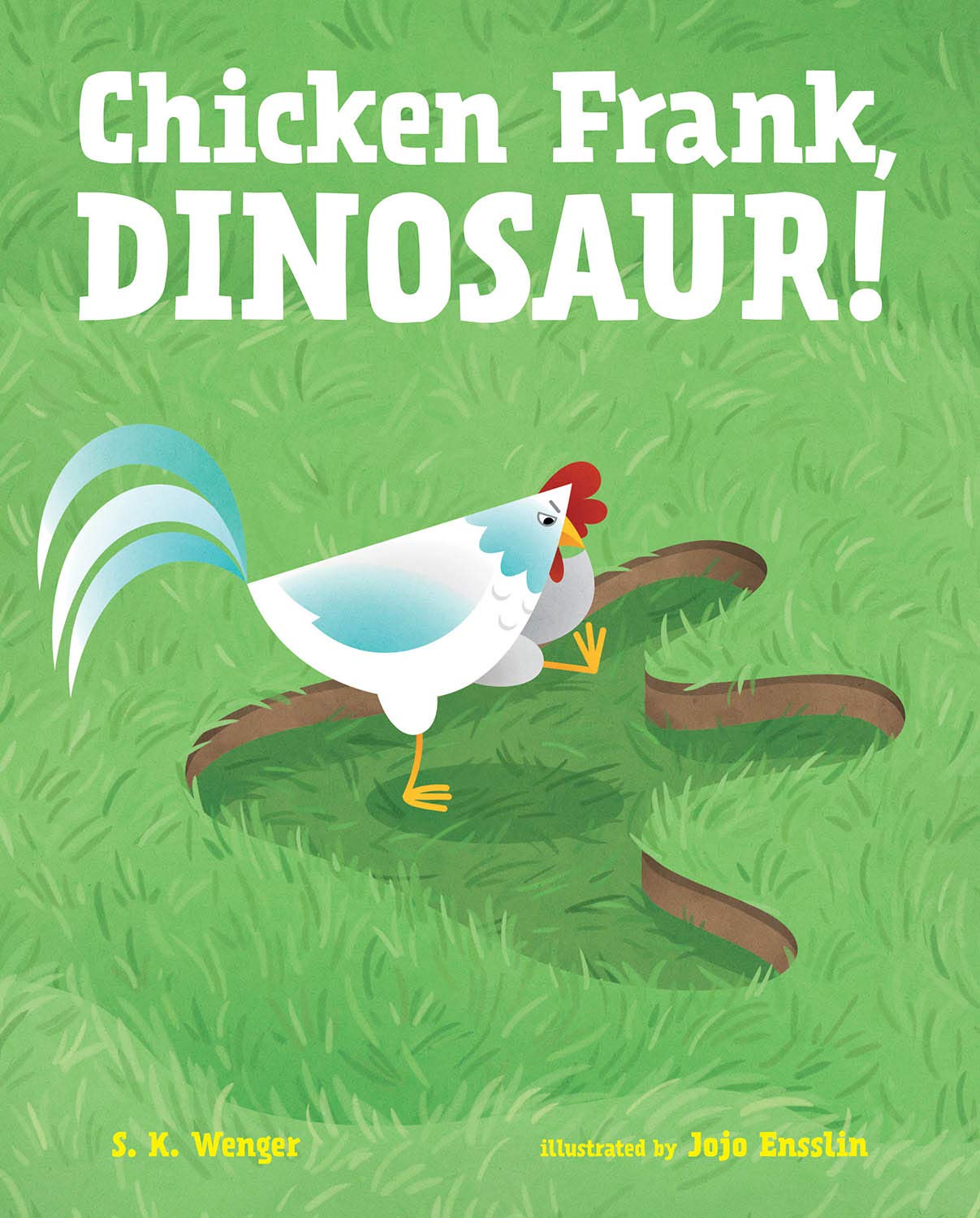
celebrate-picture-books-picture-book-review-chicken-frank-dinosaur-cover

About the Holiday

Did you know that some fossils date back to 4.1 BILLION years ago? Just think of that the next time you’re feeling a little bit old (or so recommends the website National Today). Today we celebrate National Fossil Day to recognize the importance (and, well, awesomeness) of paleontologists, geologists, and fossils in providing us with information on the history of our earth and those who have inhabited it before us. ​National Today provides some further information, with a timeline of fossil history, and fun facts like this one: The highest amount ever paid for a dinosaur fossil was $8.3 million (they named it “Sue”).

To celebrate National Fossil Day, check out National parks near you, learn more about fossils, do something to help protect the earth, read some books about evolution—like Chicken Frank, Dinosaur!—or visit the National Parks page for more information and resources on how to celebrate our geologic heritage.

Thanks to Albert Whitman & Company for sharing a copy of Chicken Frank, Dinosaur! with me for review consideration. All opinions on the book are my own.

Review by Dorothy Levine

Chicken Frank, Dinosaur!

Written by S.K. Wenger | Illustrated by Jojo Ensslin


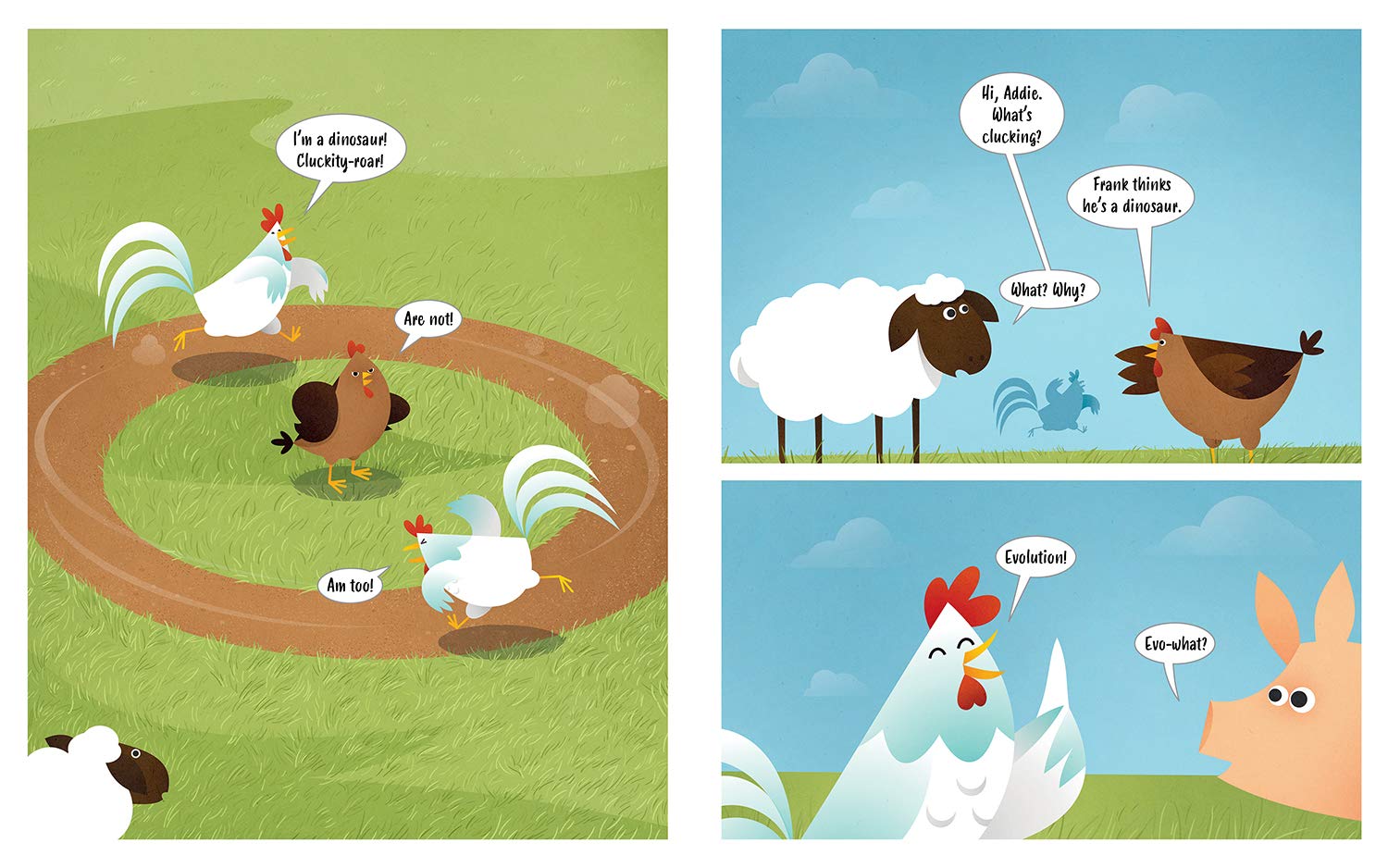
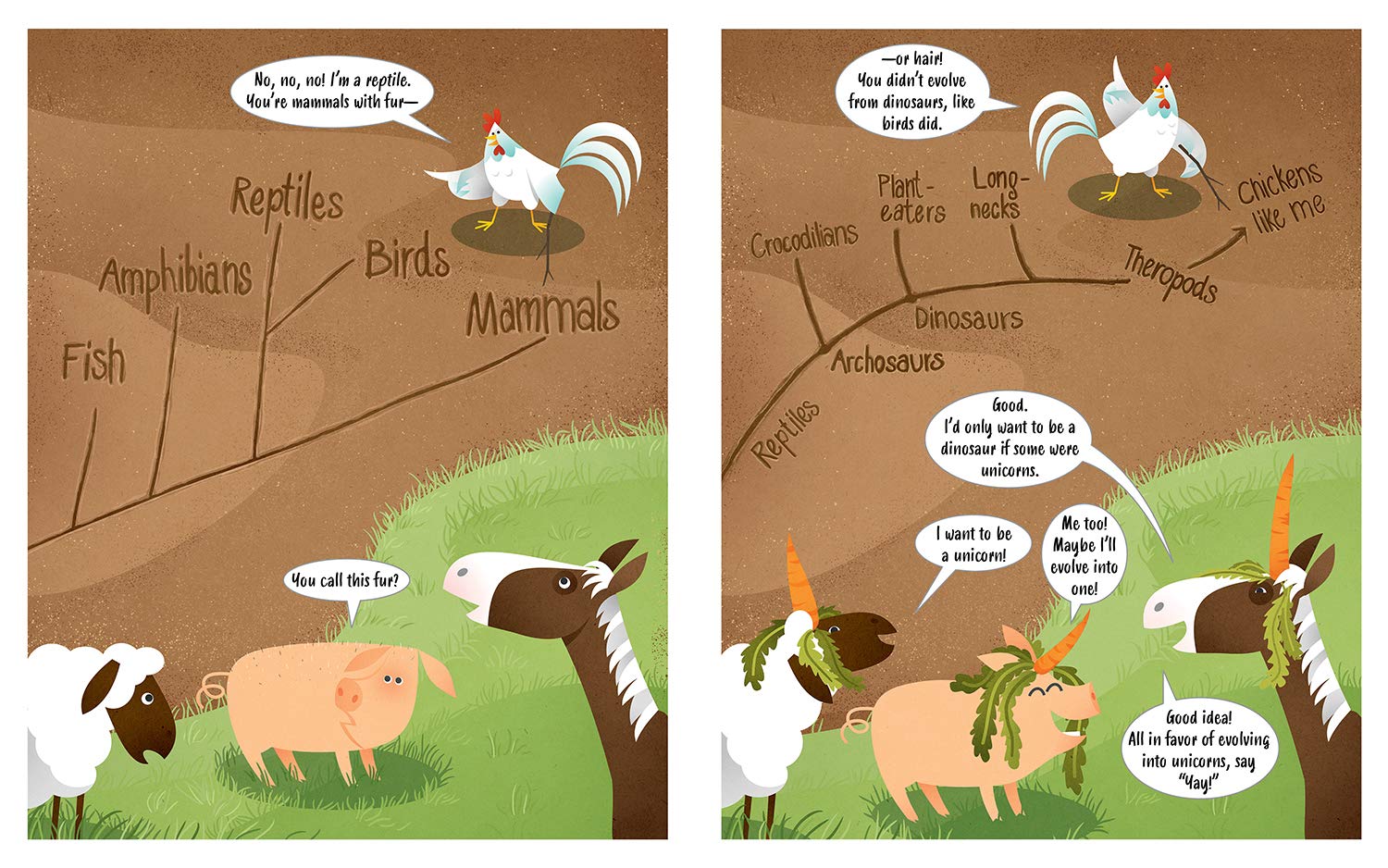
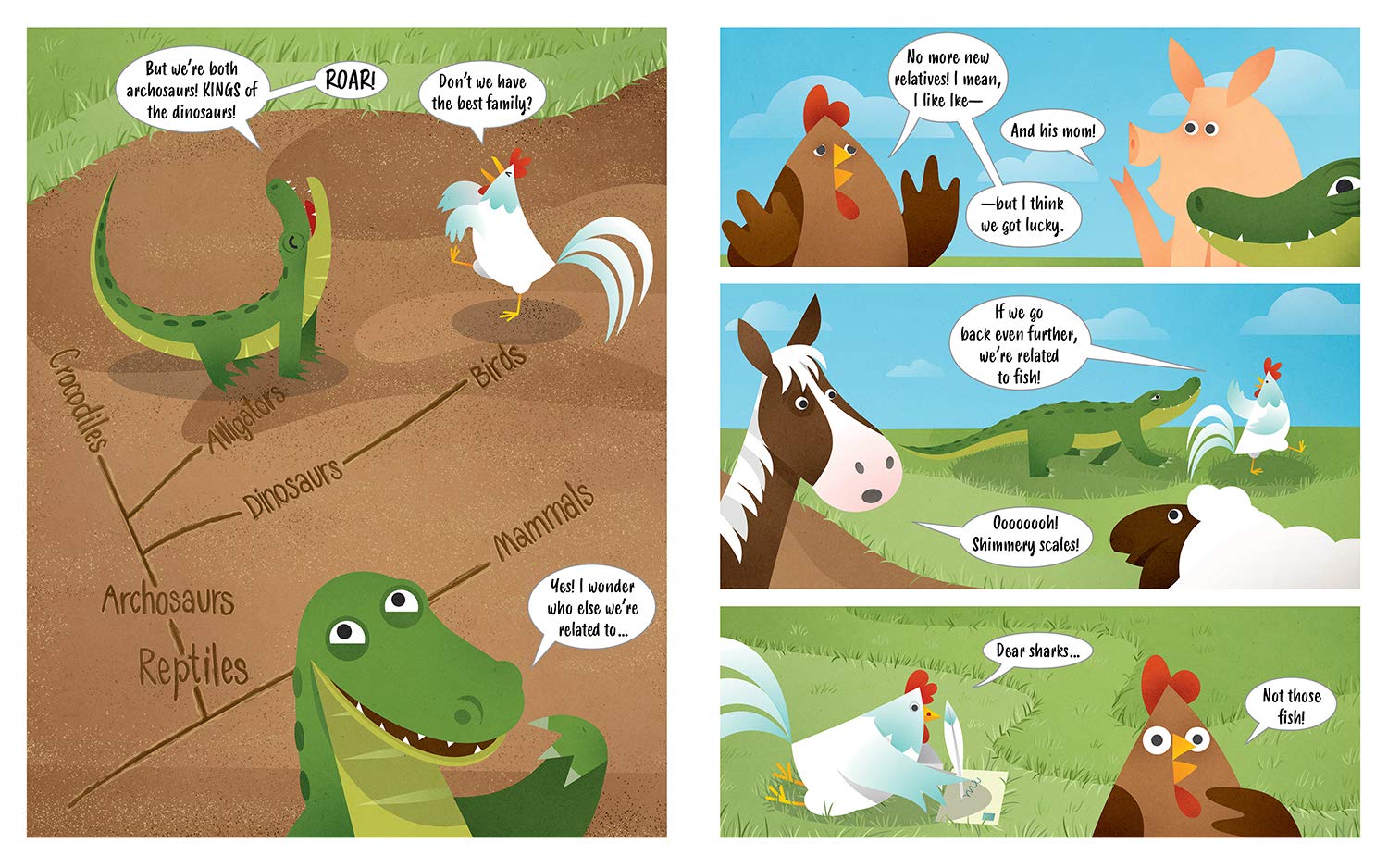
If you ask Chicken Frank he’ll tell you, “I’m a dinosaur! Cluckity-roar!” But the other barnyard animals aren’t so sure. Everyone is puzzled by this evolution thing Frank keeps talking about (“Evo-what?”). Chicken Frank tries to explain, “Evolution! Change! Change happens over time so we can survive.” He takes a stick and draws lines of lineage, connecting crocodiles to plant-eating dinosaurs and eventually birds. “From a dinosaur. See?” But the other animals don’t see it: “I see a chicken who was a chicken five minutes ago,” a sheep says. “I see a chicken who’s been a chicken since he hatched,” a pig chimes in.

celebrate-picture-books-picture-book-review-chicken-frank-dinosaur-evolution

Image copyright Jojo Ensslin, 2021, text copyright S. K. Wenger, 2021. Courtesy of Albert Whitman & Company.

Chicken Frank then presents different types of evidence to try to convince the farm that birds evolved from dinosaurs. He points out his feet look like those of T. rexes, to which another chicken looks at the readers and says, “More like T. crazy.” Frank explains that feathers evolved from dinosaur scales, and that both dinos and chickens had little tails when they were embryos. Other animals start wondering if they come from dinosaurs, since they have tails too. So, in a last straw attempt, Chicken Frank returns to his mud lineage map once more.

He shows how fish, amphibians, reptiles and mammals come from different branches in the evolutionary tree. Birds, however, branch off from reptiles. Nobody is convinced, and pig, sheep, and horse turn their attention to pretending to be unicorns with carrot horns instead. But then, the results from Frank’s DNA test arrive. The data shows Chicken Frank has a reptilian cousin: Crocodile Ike.

celebrate-picture-books-picture-book-review-chicken-frank-dinosaur-timeline

Image copyright Jojo Ensslin, 2021, text copyright S. K. Wenger, 2021. Courtesy of Albert Whitman & Company.

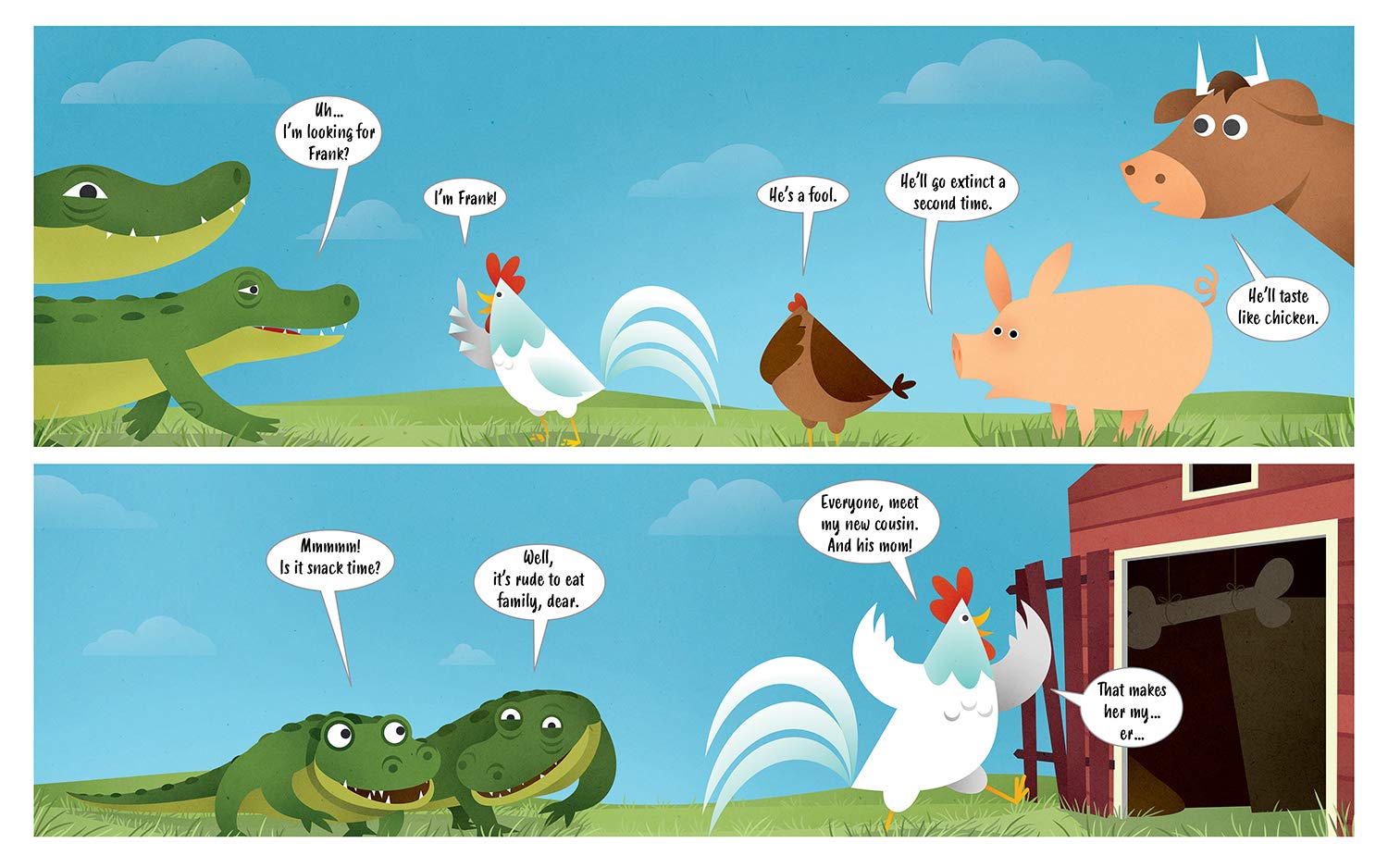
Chicken Frank decides to send a post card to his cousin Ike inviting him to come for a family reunion, much to the dismay of everyone. A crocodile and a chicken in the same place? Seems like a recipe for disaster…and maybe some chicken franks too. And while Crocodile Ike and his mom are first tempted to gobble Frank up, they take some time and study his charts. And, to everyone’s surprise, they get it! “One of us isn’t a dinosaur… But we’re both Archosaurs! KINGS of the dinosaurs! Roar!” Ike tells Frank. Ike’s mom wonders who else they may be related to, so Frank starts a letter to an even further distant cousin—the sharks!

celebrate-picture-books-picture-book-review-chicken-frank-dinosaur-ike

Image copyright Jojo Ensslin, 2021, text copyright S. K. Wenger, 2021. Courtesy of Albert Whitman & Company.

They all decide to take a trip to the aquarium, where the pig, sheep, and horse are delighted to find “a swimming unicorn!” (a narwhal), and Crocodile Ike exclaims, “family!” Chicken Frank happily agrees and adds, “Ours is the very best.”

The story is followed by five informational sections: “What Is DNA?”, “What Is Evolution?”, “Is Chicken Frank Really Related to T. rex?” “Similarities Between Dinosaurs, Chickens, and Alligators”, and “Frank’s Glossary of Favorite Animal Groups” Each of these sections provide in-depth scientific explanations for those who want to know a bit more about how it all works. S. K. Wenger masterfully explains each of these concepts at an advanced level that is clear to read and understand for readers of a wide range of age and abilities.

celebrate-picture-books-picture-book-review-chicken-frank-dinosaur-archosaurs

Image copyright Jojo Ensslin, 2021, text copyright S. K. Wenger, 2021. Courtesy of Albert Whitman & Company.

A joyous read, with important concepts about evolution scattered in with the fun. This comic-style picture book will have kids laughing out loud at the farm animals’ speech bubble puns and jokes. S. K. Wenger (and Chicken Frank) explain concepts of evolution in easily digestible terms for readers of all ages. The story is quick-paced and intriguing, with distinct characters and a quirky humor. A must-read for all kids, especially those with a fondness for dinosaurs.

The story would not be nearly as fun or educational without Jojo Ensslin’s colorful, cartoon-like drawings. As Chicken Frank explains his evolutionary reasoning, Ensslin depicts the ideas clearly and closely juxtaposed. For example, when Frank talks about how his feet match those of a T. rex, kids see both feet on the same page. Likewise, a scaled dinosaur and an ancient bird are portrayed on the same blackboard.

Later, when Ike receives the postcard from Frank in a muddy swamp, swarming with crocodiles, and calls out, “Does anyone know a cousin named Frank?” little speech bubbles with “Nope!” scatter the swamp, prompting kids to join in. In a carved-out corner, a close-up view of Ike and his mom show their evil plans to crash the reunion with some chompers. The facial expressions of each of the animals add to their characters and the humor of the story. Many carefully placed illustrative details add to the plot in meaningful and silly ways, such as, the DNA Test Kit shown the page before the story begins and the large bone Chicken Frank stores in his coop; the illustrations and text come together to create a read-aloud that is enjoyable to all.

Creative nonfiction at its best, Chicken Frank, Dinosaur! is both a hilarious story and a highly engaging way to explain evolutionary science in a way kids will respond to and remember. Sure to spark an interest in further science learning, the book is highly recommended for home bookshelves and a must for school and public library collections.

Ages 4 – 7

Albert Whitman & Company, 2021 | ISBN 978-0807511411

Discover more about S. K. Wenger and her books on her website.

To learn more about Jojo Ensslin and view a portfolio of his illustration, animation, and woodcout work, visit his website.

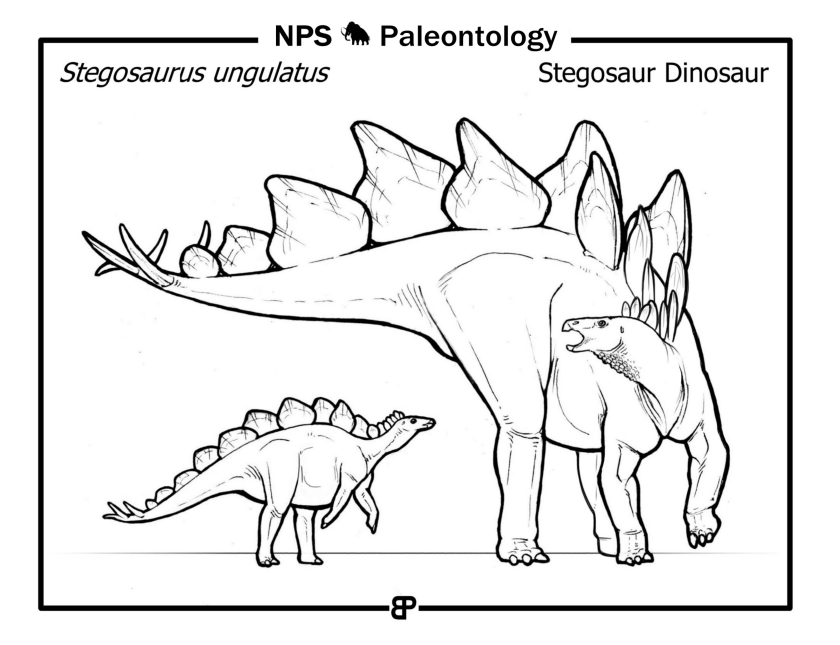
National Fossil Day Activitycelebrate-picture-books-picture-book-review-chicken-frank-dinosaur-national-park-service-dinosaur-coloring-pageDinosaur Coloring Pages


Enjoy these four dinosaur coloring pages from the National Park Service’s free prehistoric coloring book in honor of National Fossil Day!

Dinosaur Coloring Pages

For more, you can download the whole coloring book from the National Park Service here.

celebrate-picture-books-picture-book-review-chicken-frank-dinosaur-cover

You can find Chicken Frank, Dinosaur! at these booksellers

Amazon | Barnes & Noble | Books-a-Million

To support your local independent bookstore, order from

Bookshop | IndieBound

Picture Book Review
October 12 – National Savings Day

celebrate-picture-books-picture-book-review-she's-on-the-money-cover

About the Holiday

National Savings Day was established by Capitol One to educate people on saving money and taking control of their finances in ways that empower them now and in the future. Simple steps such as opening a savings account, saving a portion of each paycheck, and setting short-term and long-term goals can help people feel more confident about their relationship with money. Teaching children the value of money through their allowance or while shopping can help them learn important lessons they will take with them into adulthood.

She’s on the Money (She Made History series)

Written by Andrea Hall | Illustrated by Li Zhang


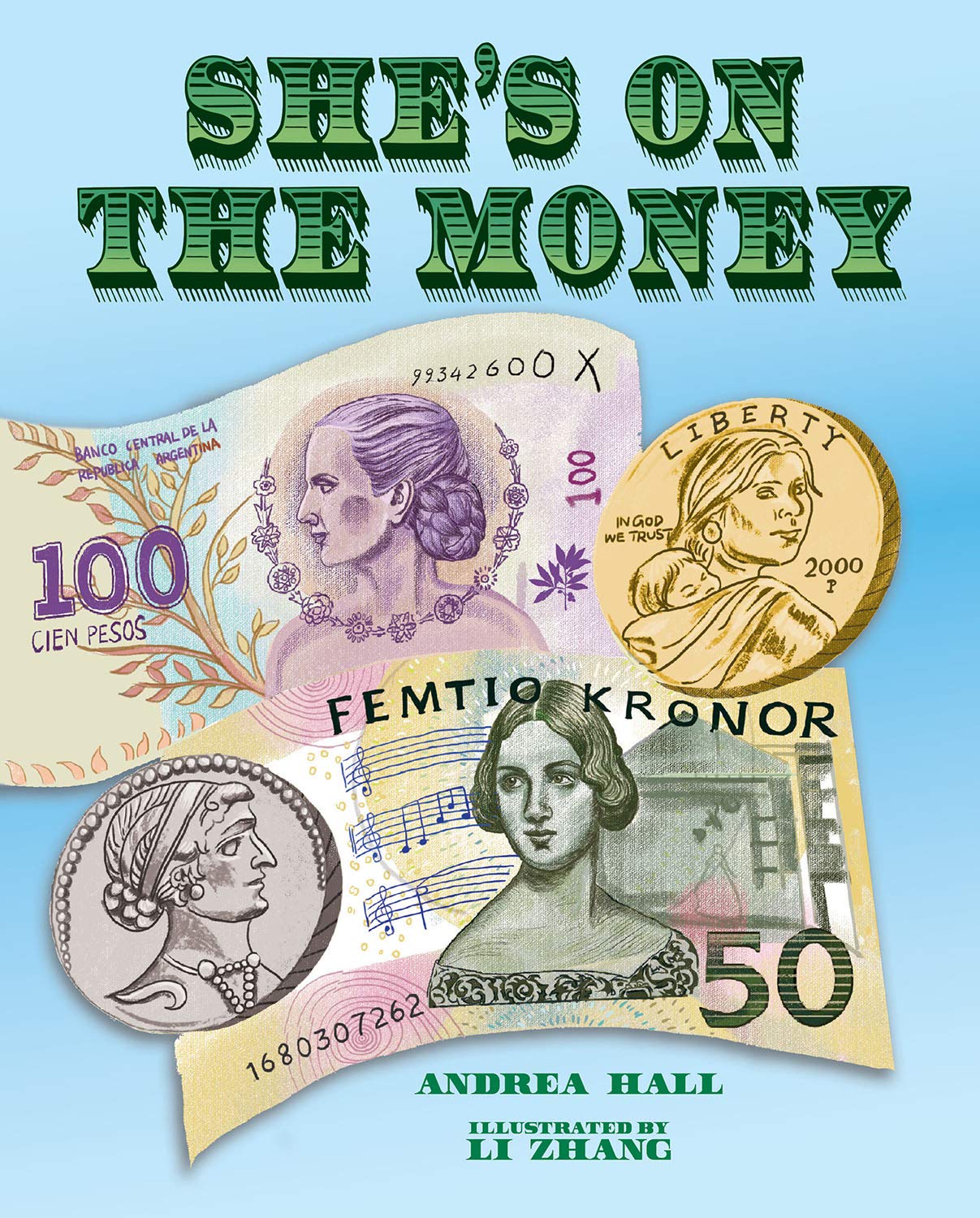
If you’re looking for a fascinating and inclusive way to introduce profiles of influential women from different cultures and time periods in your classroom, homeschool, or family reading time, you’ll find lots to love in She’s on the Money. The lives, work, and impact of thirteen woman involved in politics, science, the arts, education, and activism from ancient Egypt to modern times are presented in short biographies that include interesting facts about how the women changed their country, community, or the world and why each was chosen to represent her country on its currency. The beliefs, customs, atmosphere, and conditions of the historical periods are revealed in appealing captions that are accompanied by illustrations that help readers visualize the concepts. Beautifully detailed images of each country’s currency also graces the pages.

celebrate-picture-books-picture-book-review-she's-on-the-money-cleopatra

Image copyright Li Zhang, 2021, text copyright Andrea Hall, 2021. Courtesy of Albert Whitman & Company.

Cleopatra remains as intriguing today as she was centuries ago, so it’s fitting that she appears first in this book—just as she was the first woman to appear on currency. Why was her profile there? “Cleopatra appears on currency because she put herself on it. As ruler of Egypt, she had her own coins minted, or made.” In fact, “Unlike many women who came after them, Egyptian woman of Cleopatra’s time could buy property, divorce and remarry, and serve on juries. And like Cleopatra, they could be rulers.” Children will also learn how clever, fashionable, and “modern” Cleopatra really was. They’ll also discover facts about mummification.

Another leader represented is Queen Sālote Tupou III, the first queen of Tonga, who was the first Tongan chief to unite the 172 Pacific islands that make up the country. She appears on banknotes issued from 1967 – 1974. These intricately designed two-pa’anga bills feature Queen Tupou’s portrait on the front and an image of four women making tapa cloth on the back. Readers learn about and see an example of tapa cloth as well as information on the country’s produce and clothing.

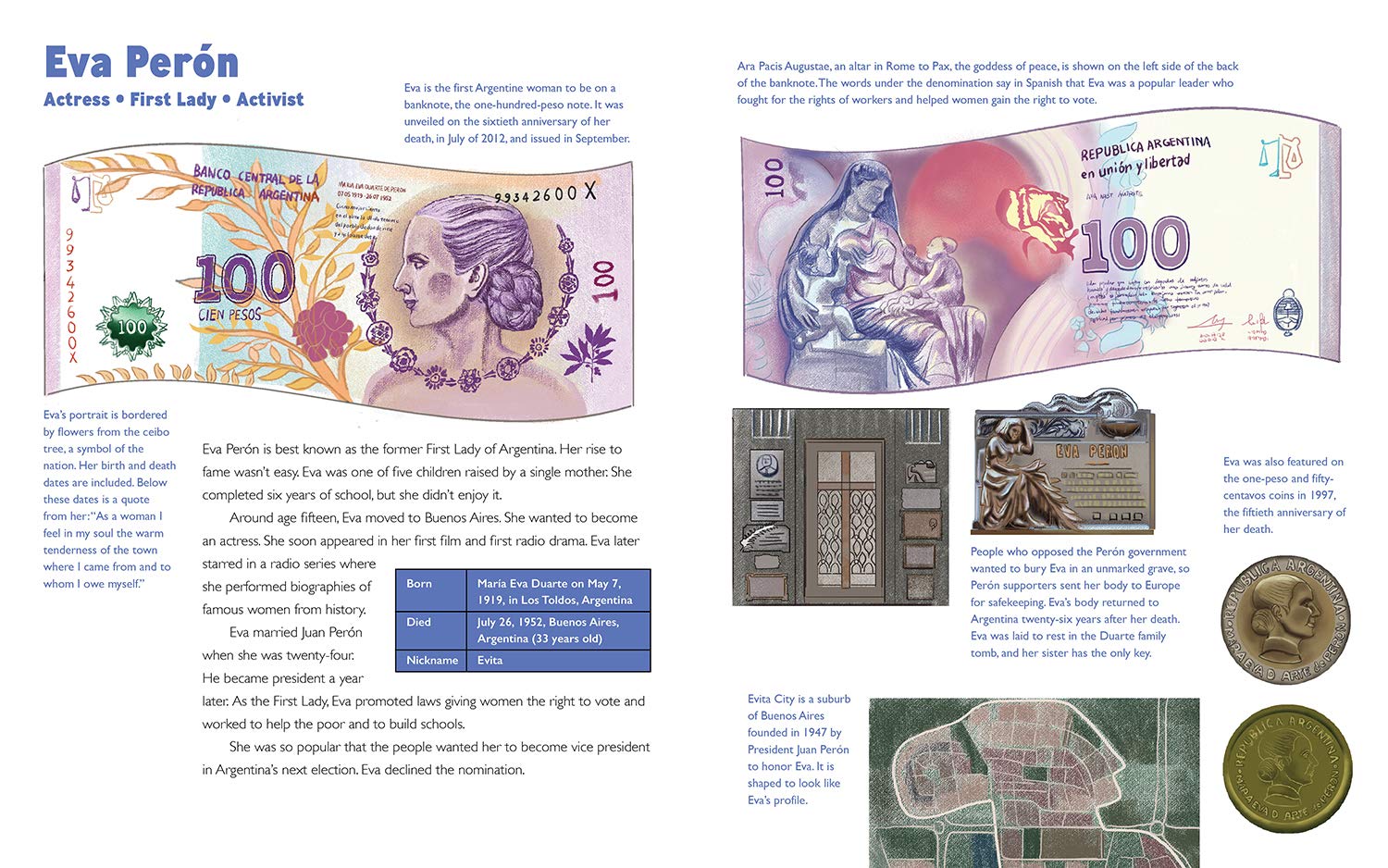
Other politicians include Indira Gandhi, the first—and so far only—female prime minister of India, who appears on a specially minted five-rupee coin that was issued in 1985 to commemorate of her birthday on November 19; and Eva Perón, the former first lady of Argentina, whose profile appears on a colorful one-hundred-peso banknote, “unveiled on the sixtieth anniversary of her death, in July of 2012.”

celebrate-picture-books-picture-book-review-she's-on-the-money-sacagawea

Image copyright Li Zhang, 2021, text copyright Andrea Hall, 2021. Courtesy of Albert Whitman & Company.

Kids will be inspired by entomologist Maria Sibylla Merian, who at a time when insects were believed to be “‘evil spirits’ because they came out of the ground, captured and studied insects in order to understand and draw them. She appears on the German “500-deutsche-mark banknote from October 27, 1992 to the end of 2001, when Germany began using he euro.”

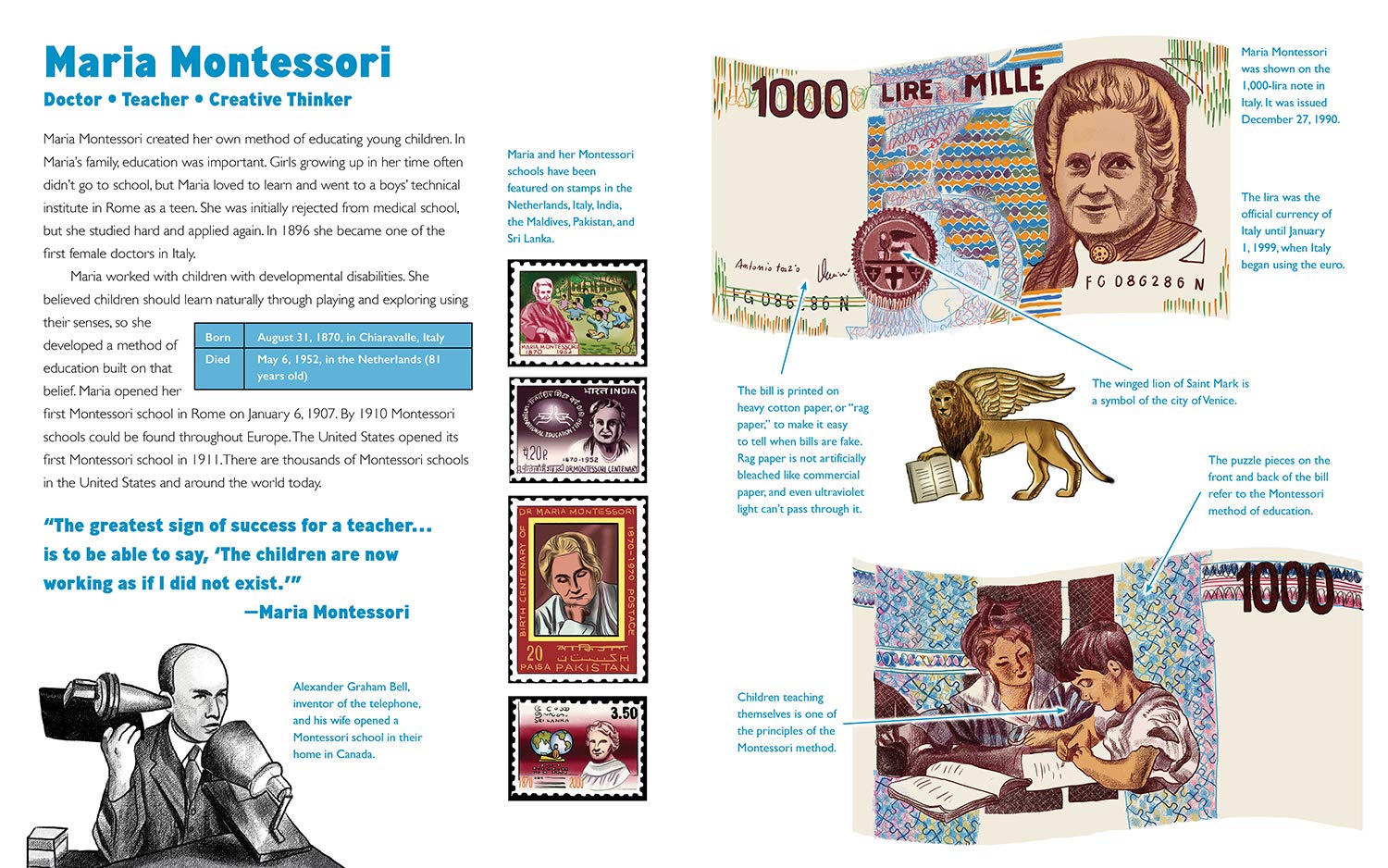
Educators include Maria Montessori, who developed Montessori schools and is featured on Italy’s elaborate 1,000-lira note, and Helen Keller, who is featured on the Alabama state quarter first released on March 17, 2003 as part of the program begun in 1999 to honor each American state. Her quarter also includes her name in both English and braille.

celebrate-picture-books-picture-book-review-she's-on-the-money-montessori

Image copyright Li Zhang, 2021, text copyright Andrea Hall, 2021. Courtesy of Albert Whitman & Company.

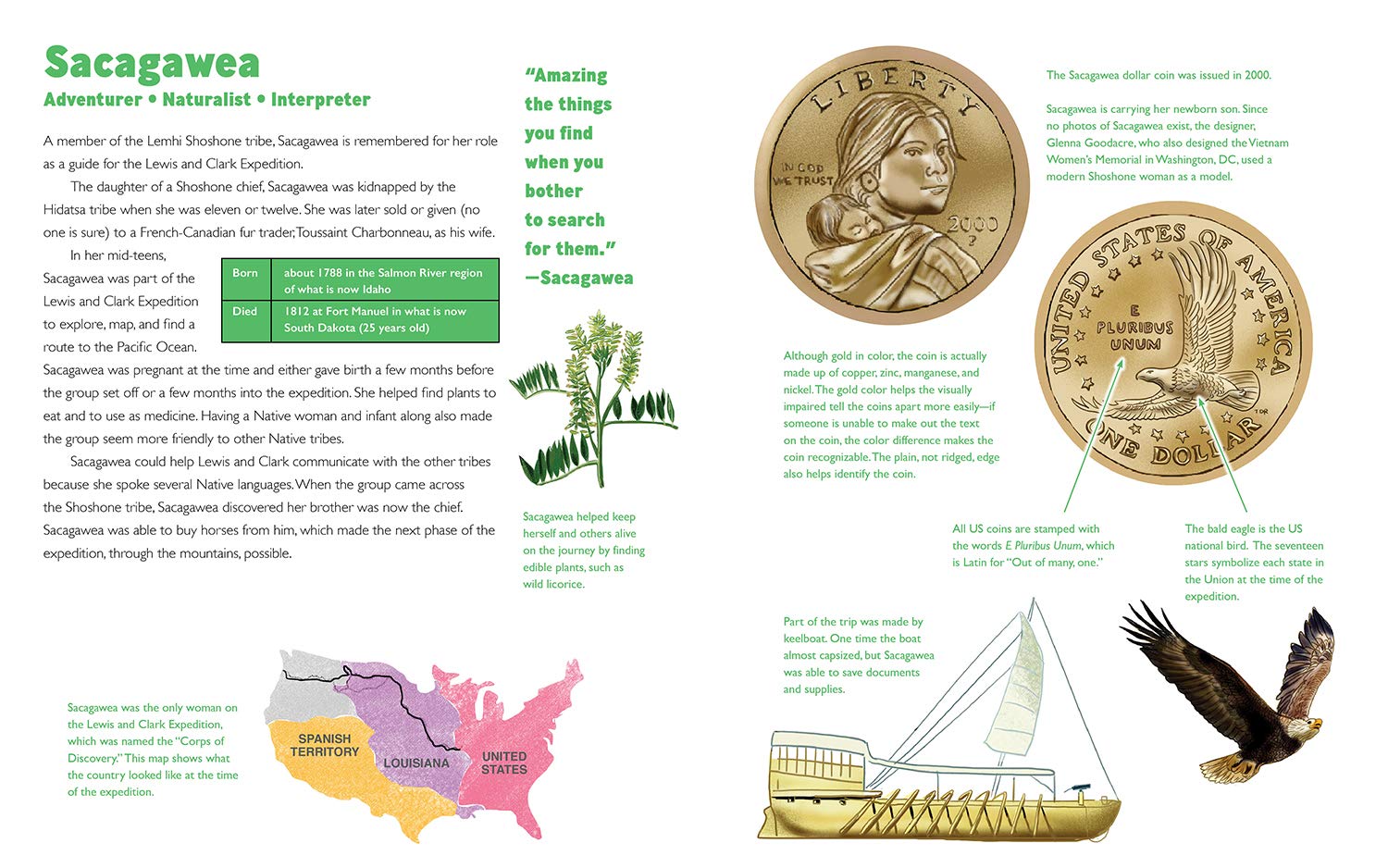
Readers also learn about the crucial role Sacagawea, a member of the Lemhi Shoshone tribe, played in the success of the Lewis and Clark’s expedition to explore and map the country from the Mississippi River to the Pacific Ocean. Sacagawea appears on the dollar coin, which was issued in 2000. The coin is also distinctive for its gold color and smooth edge, which make it easier for visually impaired people to identify.

Seamstress and revolutionary Catherine Flon of Haiti, opera singer Jenny Lind from Sweden, and revolutionaries and sisters Patria, Minerva, and María Teresa Mirabal of the Dominican Republic as well as writers Ichiyō Higuchi from Japan and Kate Shepard from New Zealand are also profiled.
An Introduction reveals information on the beginnings of the monetary system’s coins and paper bills and the choices governments make on who will appear on them. Discussions of the changing images of Britannia and Lady Liberty follow the biographies as well as an Author’s Note and a Glossary of words found in the text.
celebrate-picture-books-picture-book-review-she's-on-the-money-perón

Image copyright Li Zhang, 2021, text copyright Andrea Hall, 2021. Courtesy of Albert Whitman & Company.

Andrea Hall’s engaging, conversational style gives readers a wealth of knowledge on their way to learning about the money we use every day. Her well-chosen details provide kids with plenty of sparks for further research about the women and their work, how money is minted and protected from counterfeiters, and pivotal periods in world history.

Li Zhang’s textured and realistic reproductions of world currency are visually stunning, showing kids that much of the world’s coins and paper bills qualify as art in addition to their purchasing value. Her images of stamps, cultural fashions, iconic products, and more are equally beautiful, while her snapshots of insects, jewelry, flags, coats of arms, and other symbols provide readers with tangible views that set the women in their time period and further inform children’s reading.

Absorbing for anyone interested in money, history, art, and biographies, She’s on the Money is highly recommended as an addition to home, school, and public library collections.

Ages 4 – 9

Albert Whitman & Company, 2021 | ISBN 978-0807573426

Discover more about Andrea Hall and her books on her website.

To learn more about Li Zhang, her books, and her art, visit her website.

National Savings Day Activity

celebrate-picture-books-picture-book-review-penny-matching-puzzle

Count Your Pennies! Matching Game


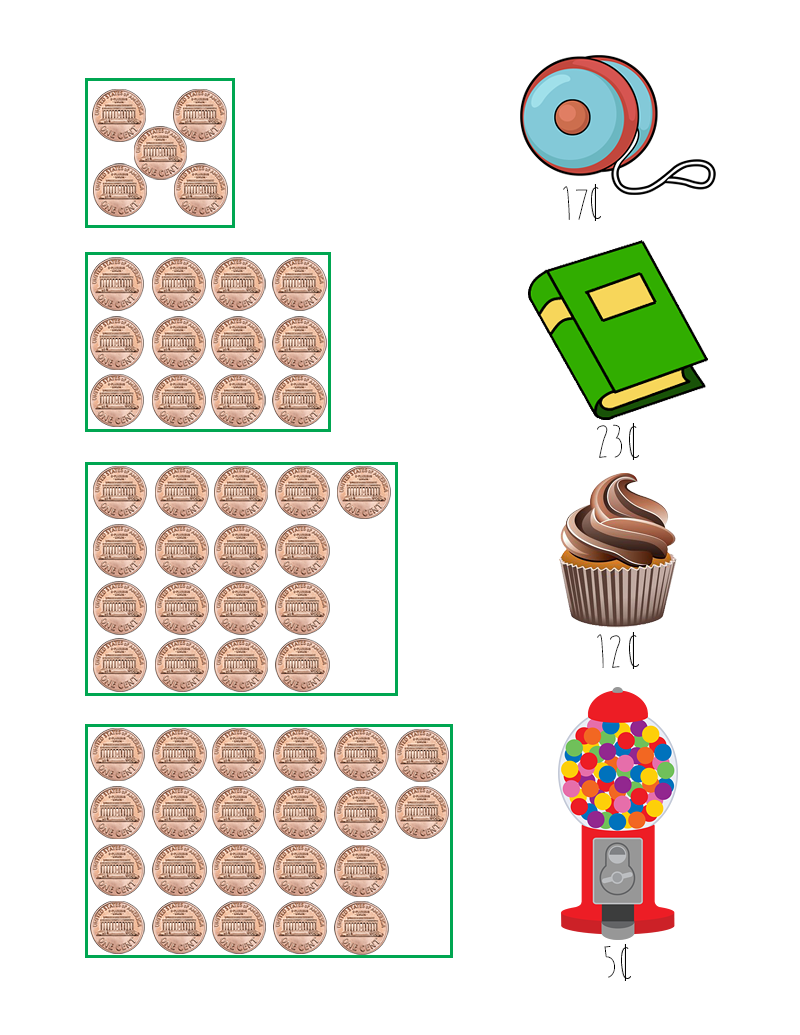
Counting pennies can be so much fun! Saving them can be even better! Collect enough pennies and you can buy something special or donate to your favorite cause! In this printable matching game, draw a line from the stack of pennies to the object they will buy.

Counting Your Pennies! Matching Game

celebrate-picture-books-picture-book-review-she's-on-the-money-cover

You can find She’s on the Money at these booksellers

Amazon | Barnes & Noble | Books-a-Million

To support your local independent bookstore, order from

Bookshop | IndieBound

Picture Book Review