International Ninja Day may have started out as an marketing idea by Ninja Burger in 2003 to celebrate their speedy delivery, but the day has grown to embrace all kinds of Ninja fun. If you love the stealthy cunning of these masters of martial arts warfare, then today’s for you! To celebrate, watch a favorite ninja movie or TV show, show off your nimble ninja moves, or perform an act of kindness while remaining “invisible.” Today’s also a great day to sneak in some ninja reading time with your kids!
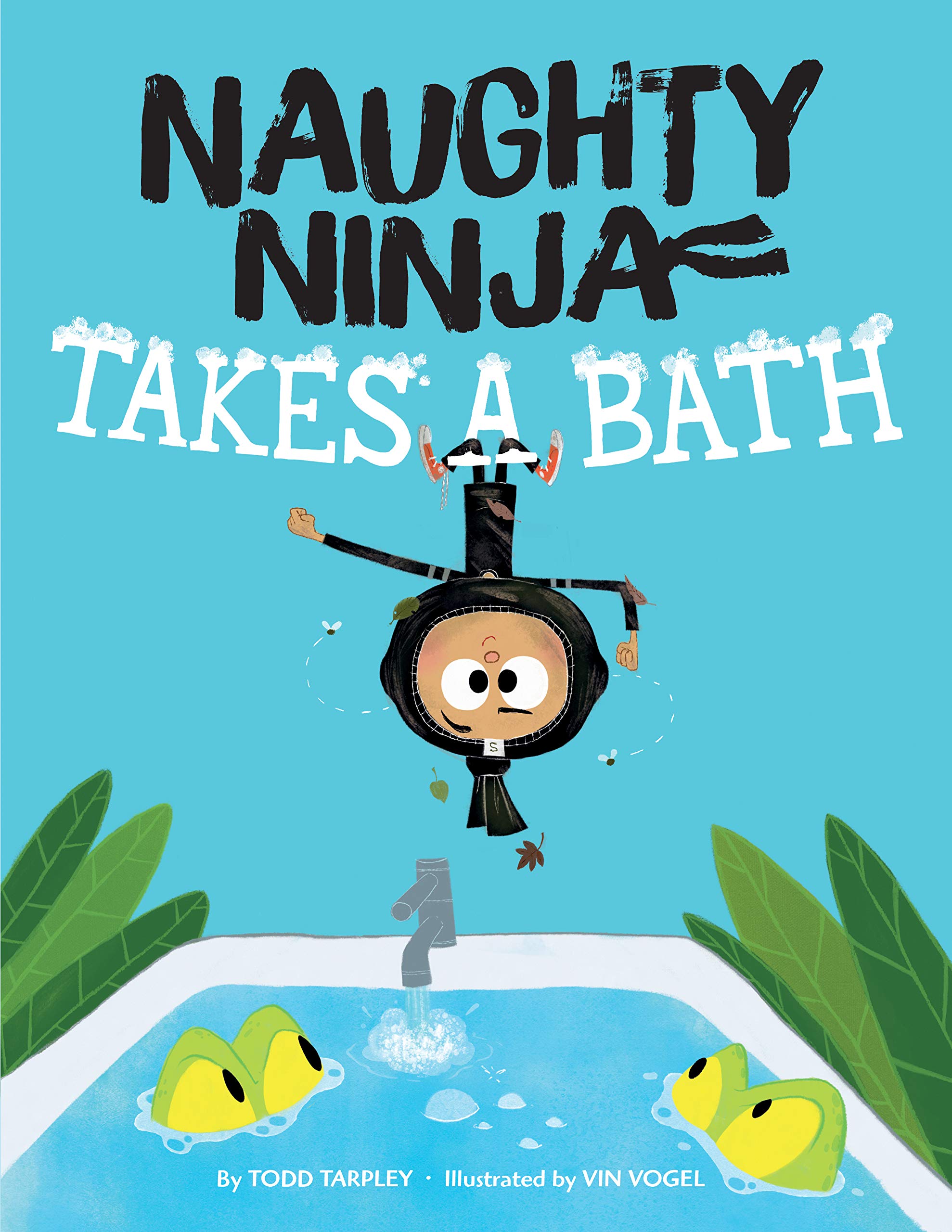
Naughty Ninja Takes a Bath
Written by Todd Tarpley | Illustrated by Vin Vogel
Naughty Ninja had been training in the jungle when his rumbling stomach told him it was time to go home. As he stepped in the door, he announced that he needed food. But Naughty Ninja aka Will “was covered with river mud, smelly leaves, and beetle dung. Flies buzzed around him.” His mom and dad told him he needed to take a bath before he had his “ninja nuggets.”
Image copyright Vin Vogel, 2019, text copyright Todd Tarpley. Courtesy of Two Lions.
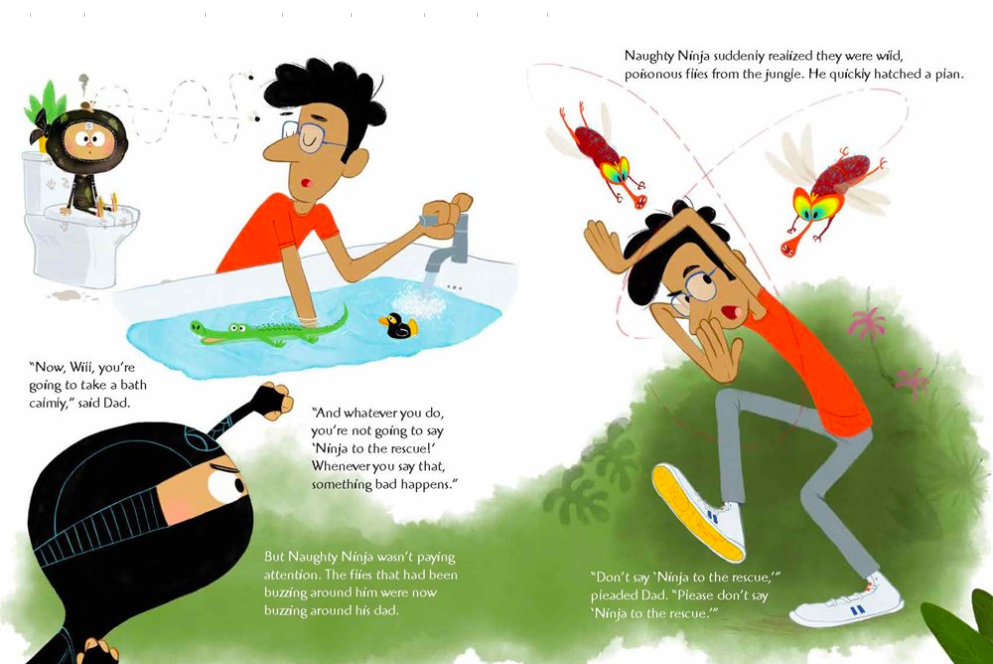
Will’s dad filled the tub and calmly reminded him not to say “‘Ninja to the rescue’” because whenever he did bad things happened. But Naughty didn’t hear. He was focused on the flies that were now swarming around his dad. He recognized them as “wild, poisonous flies from the jungle.” His dad saw the gleam in his eyes and begged him not to say those dreaded words.
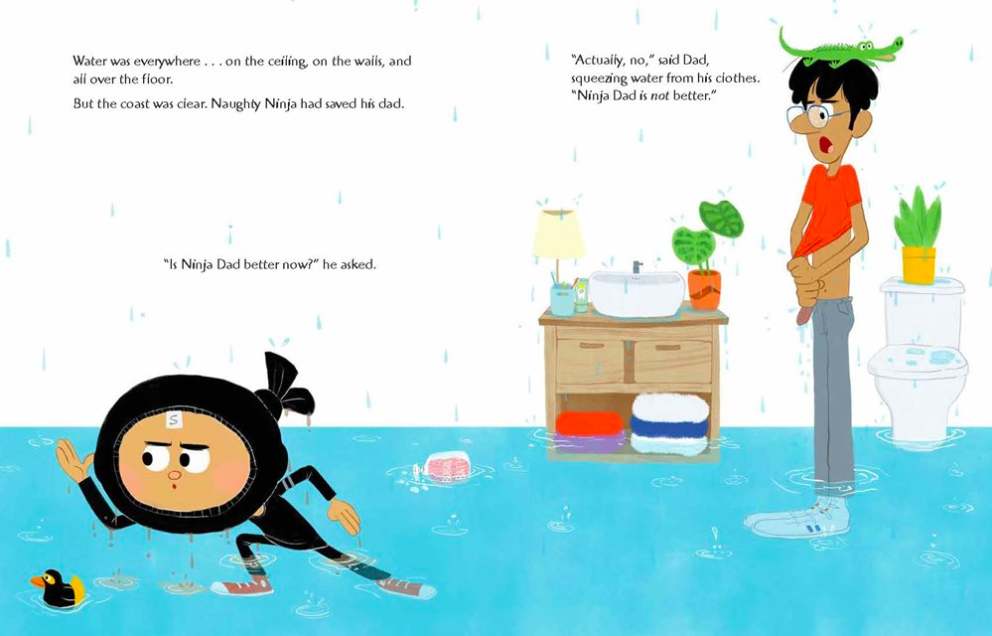
But they were already leaving Naughty Ninja’s mouth, and his foot was already coming up to kick those flies. Unfortunately, he kicked his dad instead. Dad fell backward into the tub of water. Naughty Ninja was sure a fierce alligator had dragged his dad into the tub. Calling out his signature phrase, Naughty Ninja leaped into the air and rescued his dad. Of course, he also caused a tidal wave of water to fill the bathroom. He was sure his dad was okay now, but Dad said he was ‘not better.’ Naughty Ninja thought about this. “It could only mean one thing…invading samurai warriors!” In on smooth move, Naughty Ninja picked up the bubble bath, soared into the air, and poured it into the tub. In a moment, clouds of bubbles filled the room. Naughty Ninja yelled for his dad to run.
Image copyright Vin Vogel, 2019, text copyright Todd Tarpley. Courtesy of Two Lions.
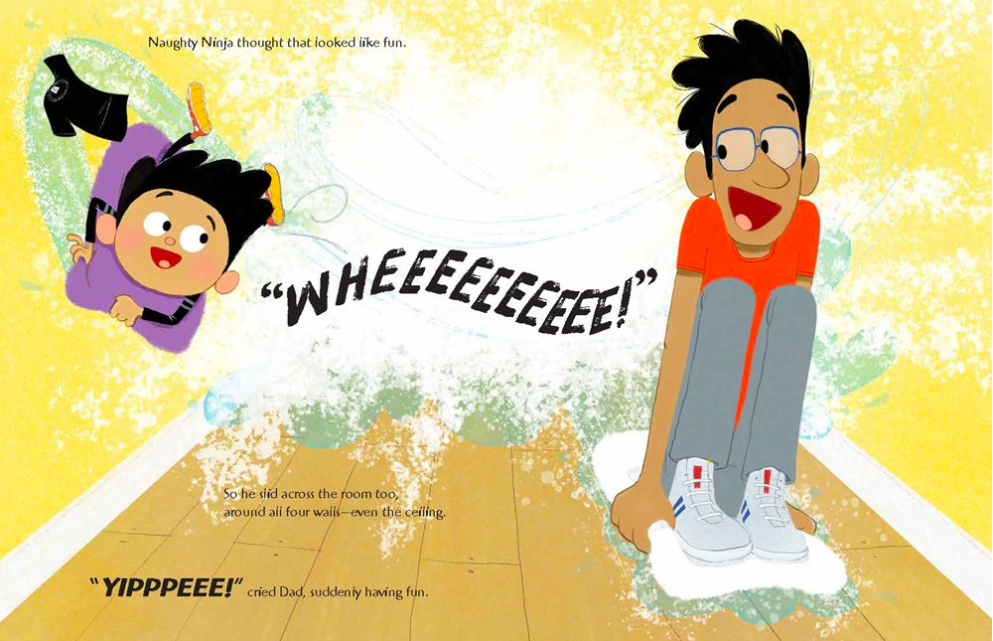
As water and bubbles, bath toys and toothbrushes flowed out of the bathroom, Naughty Ninja bounded across the bathroom and out the door. Ninja Dad gave chase with an armload of towels. But Dad slipped and slid on a towel across the room and back again. “Naughty Ninja thought that looked like fun.” He grabbed a towel and slid loop-de-loops around the floor, walls, and ceiling. By this time even Ninja Dad was having fun.
They came to a halt in front of Mom, who wanted to know what they were doing. “Naughty Ninja and Dad stopped and slowly pointed at each other.” Mom didn’t care who started it or how it had happened. She was just thrilled with how clean the house looked. Dad smiled at Will. It was just another successful Ninja rescue.
Image copyright Vin Vogel, 2019, text copyright Todd Tarpley. Courtesy of Two Lions.
Todd Tarpley’s madcap ninja adventure will thrill kids who play hard and have active imaginations. His funny description of Naughty Ninja’s dire need for a bath segues naturally into the slapstick comedy to come. Ninja Dad’s wary warning ramps up the suspense, and readers will be eagerly anticipating Naughty Ninja’s catch phrase to see what “bad things” happen. Tarpley’s disconnect between Naughty Ninja’s thought process and his dad’s desires to get him in the tub create moments that will have appreciative kids laughing out loud. As Dad embraces the slip-sliding fun and Mom thanks them for cleaning the house, readers will be happy to adventure with this Ninja Family again and again.
Vin Vogel’s humorous, action-packed illustrations depict all the fun of Naughty Ninja’s imagination with clever details and a deft eye for scenes that make kids giggle. Flailing arms, heroic leaps, and air-born kicks are all part of Naughty Ninja’s repertoire, and his ninja outfit (which includes a black hoodie with the size tag sticking out and one untied sneaker) is inspired. Readers will enjoy pointing out the flies, bath toys, and bath accessories that become unwitting stars of Naughty Ninja’s daring rescue.
Sure to be a favorite of Ninja-loving kids and fun-loving adults, Naughty Ninja Takes a Bath would be an often-asked-for addition to home, school, and public library collections.
Ages 3 – 7
Two Lions, 2019 | ISBN 978-1542094337
Discover more about Todd Tarpley and his books on his website.
To learn more about Vin Vogel, his books, and his art, visit his website.
International Ninja Day Activity
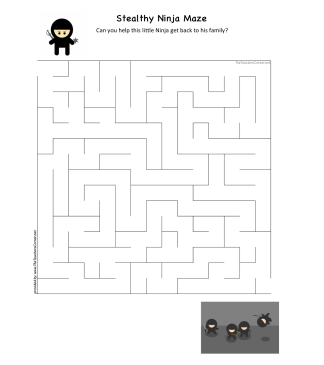
Stealthy Ninja Maze
One little Ninja has gotten separated from her group. Can you help her find her way back in this printable maze?
Established in 2012 by former Secretary of State Hillary Clinton, Wildlife Conservation Day aims to raise awareness of the importance of preserving and protecting the natural world and its inhabitants. The day also brings attention to the disastrous effects of wildlife crime – including illegal poaching and smuggling of animals or animal parts, such as tusks or horns – on animal populations. People are also asked to support the Endangered Species Act, which was signed into law in 1973 by President Richard Nixon. In 2019 the Act was substantially weakened when President Trump reduced regulations, putting many more animals at risk. Today, Wildlife Conservation Day is celebrated around the world by organizations and individuals dedicated to protecting and preserving our natural inheritance – unique places and creatures like those explored in today’s book.
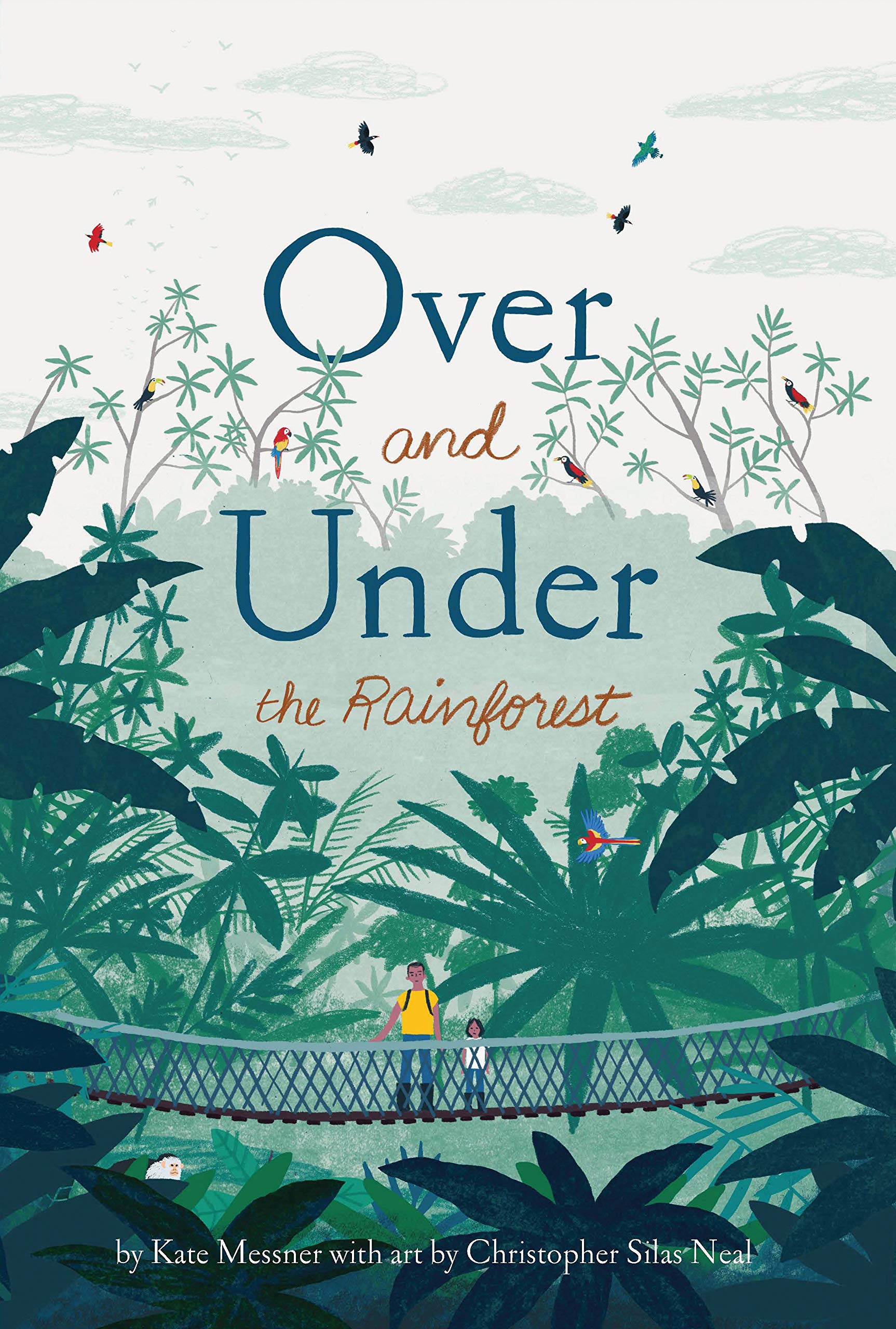
Over and Under the Rainforest
Written by Kate Messner | Illustrated by Christopher Silas Neal
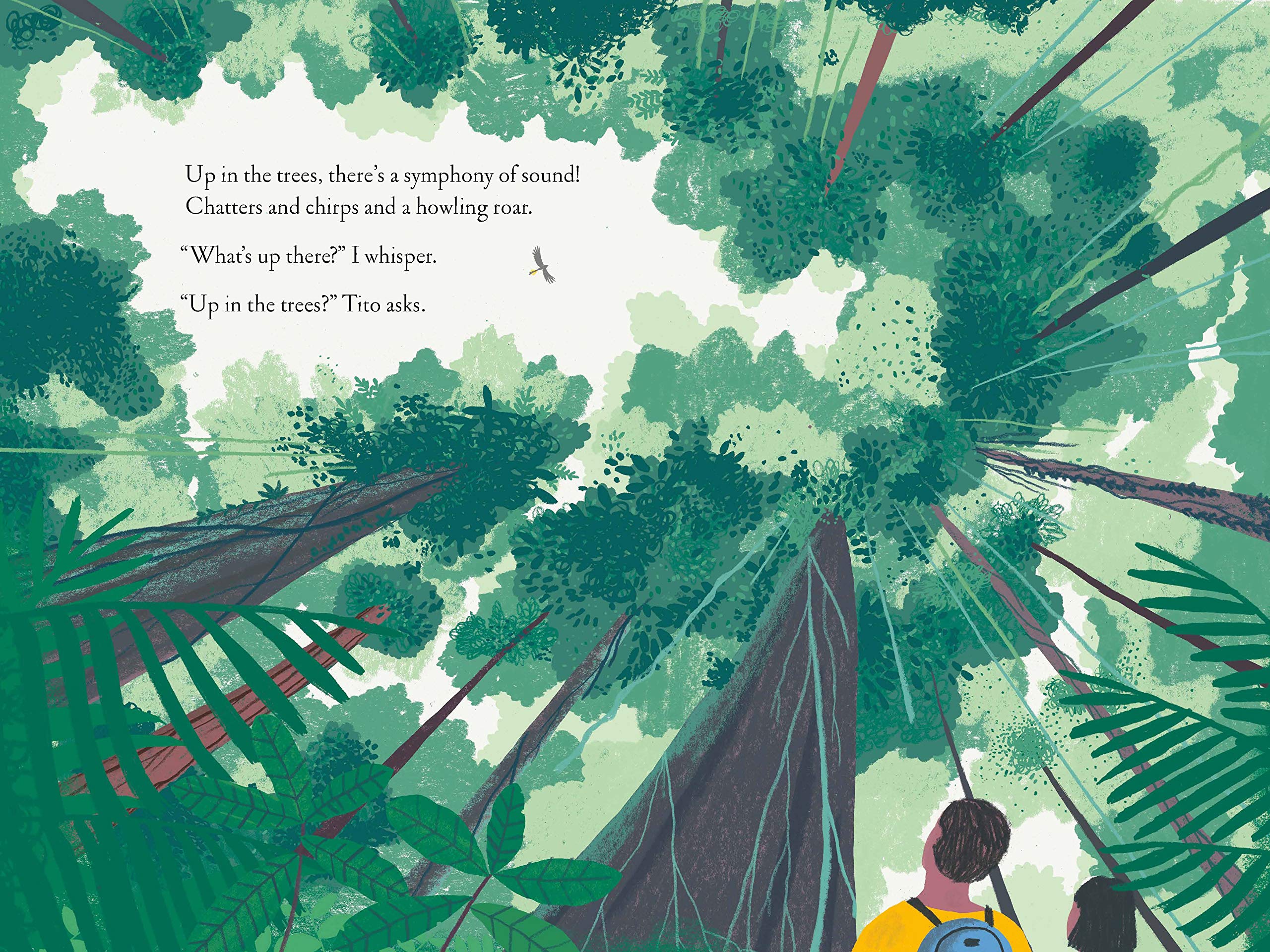
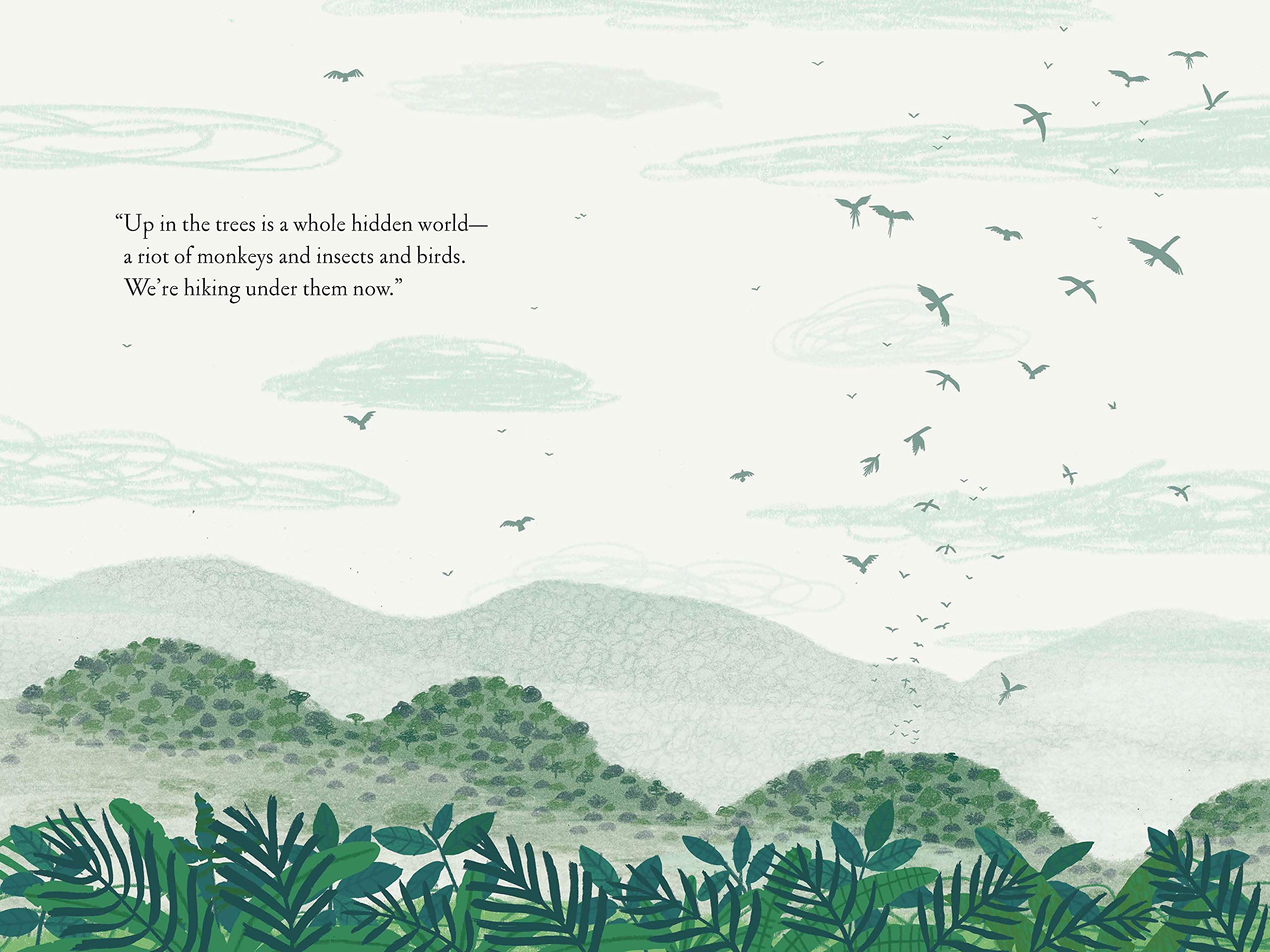
A child narrator enters the rainforest with Tito, who is, perhaps, an older brother, an uncle, or a cousin. The sun filters in, glistening on the raindrop-jeweled leaves. Looking up into the treetops and the clear sky from where “chatters and chirps and a howling roars.” The child wants to know what’s above them, and Tito answers that there is a “whole hidden world” that they are hiking under. They hear the “gurgle” of red, black, and yellow oropendolas in their bag-like nests and the “croak” of toucans.
Image copyright Christoper Silas Neal, 2020, text copyright Kate Messner, 2020. Courtesy of Chronicle Books.
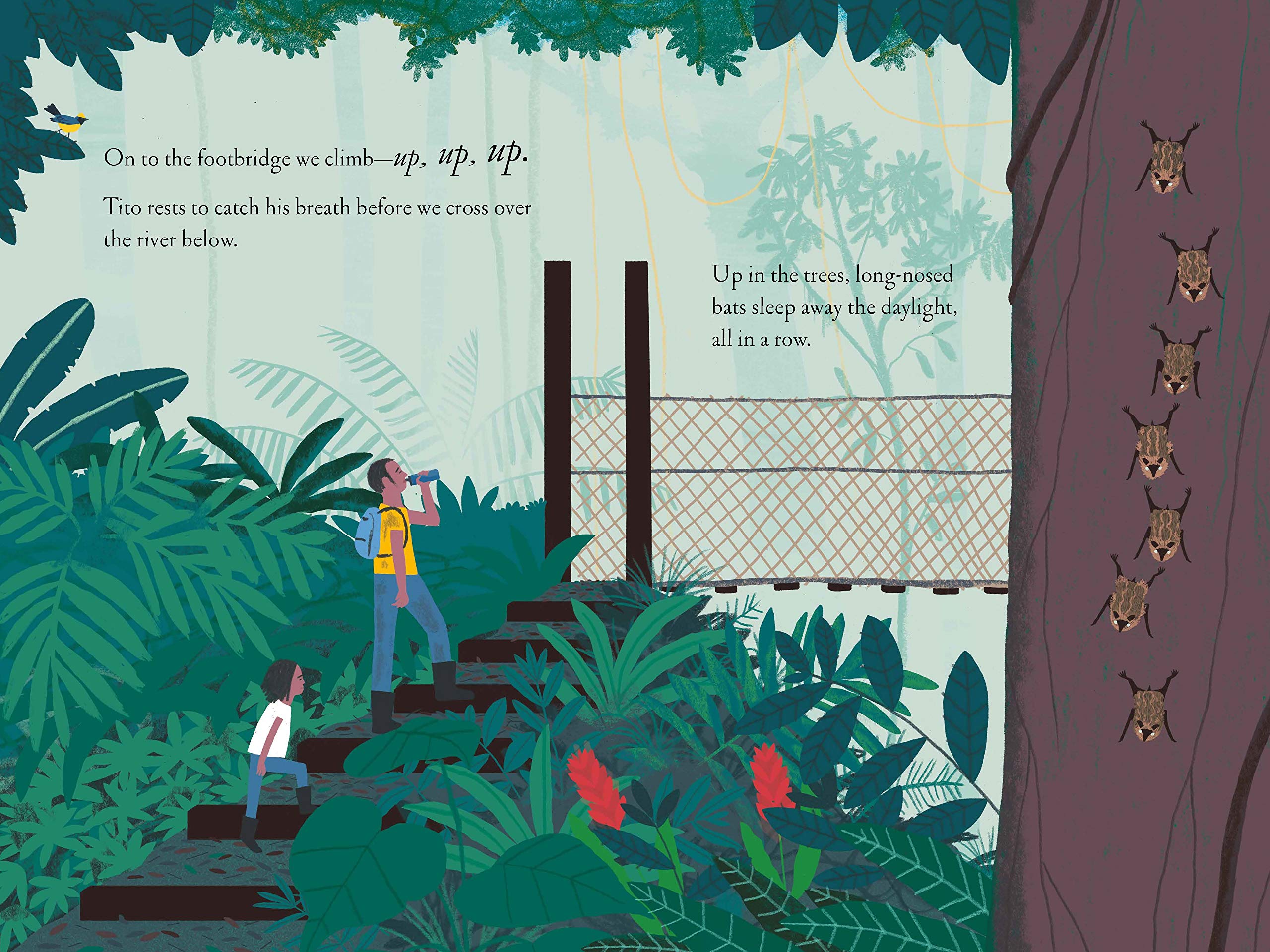
They stop on the bridge that crosses a river and look down at the crocodiles napping on the banks. An emerald basilisk has no time to rest, though, and runs across the river, his feet “barely skimming the river’s surface.” The bridge takes them up, into the trees, where capuchin monkeys swing from branch to branch. While having a snack, the child and Tito watch an anteater hunt for a snack of his own below among fallen leaves.
Image copyright Christoper Silas Neal, 2020, text copyright Kate Messner, 2020. Courtesy of Chronicle Books.
The afternoon brings expected rain, which begins as a “pitter-soft drumming on the leaves up above” but “swells to a strong, rushing pour” that soaks a “soggy mother sloth and her baby” while a blue morpho butterfly “folds up her wings and tucks away on a tree trunk.” They walk deeper into the forest, where silent snakes slither and curl around branches. Spying a dark shape in a treetop, Tito, with a roar, unleashes “a thunder of howler monkeys” concealed from sight.
Image copyright Christoper Silas Neal, 2020, text copyright Kate Messner, 2020. Courtesy of Chronicle Books.
Dusk comes and then the curtain of night. Tito and the child head for home, spying animals and insects who are just beginning their day along the way. But suddenly a “sharp snap” in the undergrowth stops the child. Could it be a jaguar? They hurry across the last bridge and see the lights from Abuelita’s house. They know a dinner of arroz con pollo is waiting as the birds return to their homes too and another chorus begins—“a night song of darkness and water and life—over us, under us, and all around.”
Exciting back matter includes an Author’s Note about the inspiration for this book as well as illustrated paragraphs about the twenty birds, animals, and insects mentioned in the story.
Image copyright Christoper Silas Neal, 2020, text copyright Kate Messner, 2020. Courtesy of Chronicle Books.
Lyrical and evocative, Kate Messener’s hike through a Costa Rican rainforest envelopes readers in the sights, sounds, and atmosphere of this mysterious ecosystem. Her well-loved Over and Under series serves as a perfect guide to a place where life in all its forms teems in the lush landscape. Messner’s tranquil and graceful storytelling makes for a lovely read aloud that will captivate readers, and her first-person point of view invites each listener to imagine themselves taking this transformative walk.
Christopher Silas Neal’s soft-yet-vivid matte illustrations capture the mystery and wonder of the rainforest from the first page, where Tito and the narrator head into the forest through a dark entryway that seems to slowly reveal itself as a series of steps leading into the trees. Just as kids would be prone to do, upon entering the forest, the narrator and Tito look up into the towering treetops, focusing the readers’ eyes there too. Neal’s use of a variety of perspectives gives readers an experience similar to the book’s characters and allows them to feel the vastness of the environment. The number of unusual animals, birds, and insects they encounter in this forest will wow kids, and they’ll enjoy searching the leaves, branches, and undergrowth to find what is hidden there. This nighttime scene provides a thrill as bright eyes shine from the trees—the only evidence of the shadowy creatures lurking there.
A beautiful book for any nature lover or child fascinated by the wonders of the world, Over and Under the Rainforest is a must. The book would be a treasured addition to home, school, and public library collections.
Ages 5 – 8
Chronicle Books, 2020 | ISBN 978-1452169408
Discover more about Kate Messner and her books on her website.
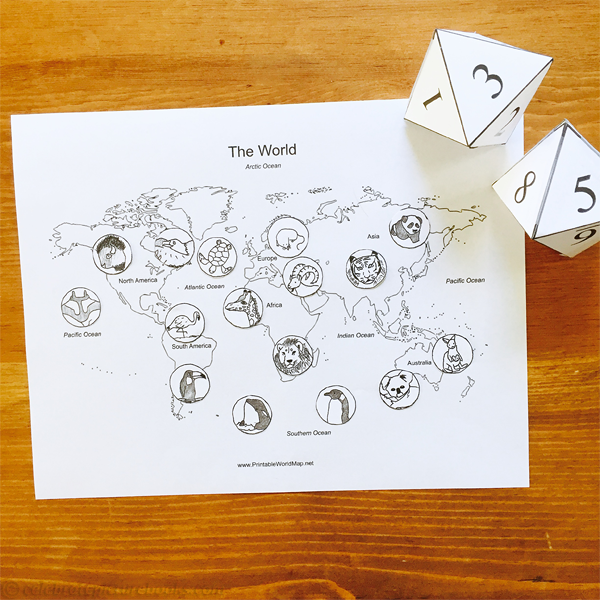
Fascinating animals are found in every part of the world. Play this fun printable Wonderful Wildlife Board Game to match each animal to the area where it lives.
Established in 2012, the National Day of Giving – also known as Giving Tuesday – is held on the Tuesday after Thanksgiving to celebrate generosity and giving to others. Commemorated around the world, the movement “unleashes the power of people and organizations to transform their communities and their world.” There are many ways to lend a hand and give back from donating money or goods to lending your voice in advocating for those in need to using your talents to make a difference. It’s hoped that this one day sparks a continued outpouring of giving throughout the year. the spirit of today’s holiday continues throughout the year. To learn more about how individuals or organizations can get involved in the US or globally, visit the Giving Tuesday website.
Little Mole’s Christmas Gift
Written by Glenys Nellist | Illustrated by Sally Garland
Little Mole was looking forward to Christmas like never before. Out in the woods he’d found “the biggest, the best, the most beautiful mushroom he had ever seen,” and he couldn’t wait to give it to Mama. He put on his warm clothes and boots and headed into the forest to pick it. As he pulled it along behind him, he imagined Mama’s surprise and delight when she saw it.
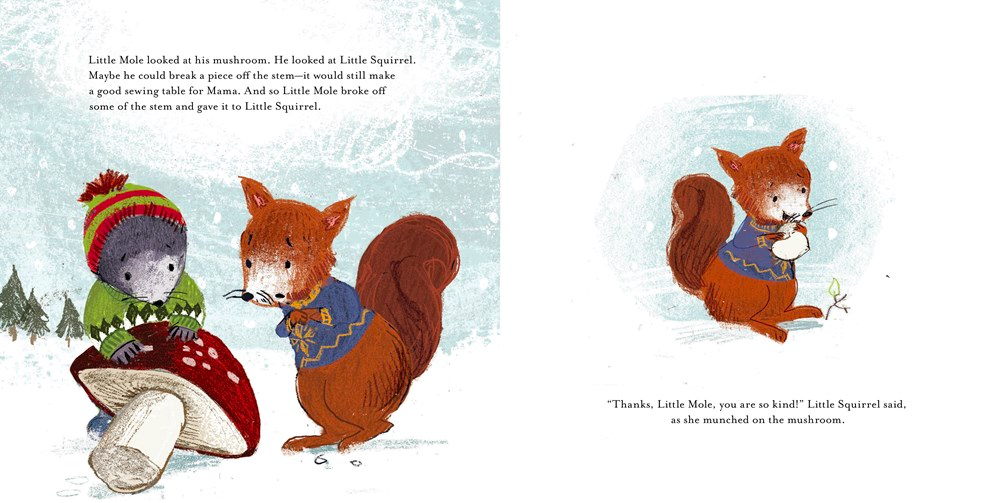
But as he was dragging it home, he heard someone crying. Curled up in the brambles was Little Squirrel. When Little Mole asked what was wrong, Little Squirrel said she hadn’t eaten all day. Little Mole thought that breaking a piece off the stem would still leave a nice gift for Mama while satisfying his friend. Little Squirrel was so thankful as she nibbled on her meal.
Image copyright Sally Garland, 2020, text copyright Glenys Nellist, 2020. Courtesy of Beaming Books.
Little Mole hoisted the mushroom onto his shoulder and went on his way. Soon he heard whimpering, and as he came closer he saw Little Mouse in distress. Little Weasel had taken his pillow and Little Mouse couldn’t get to sleep. There was still plenty of stem left, Little Mole decided, so he cut off a piece. Little Mouse laid down and under a blanket of leaves Little Mole pulled up, he fell asleep.
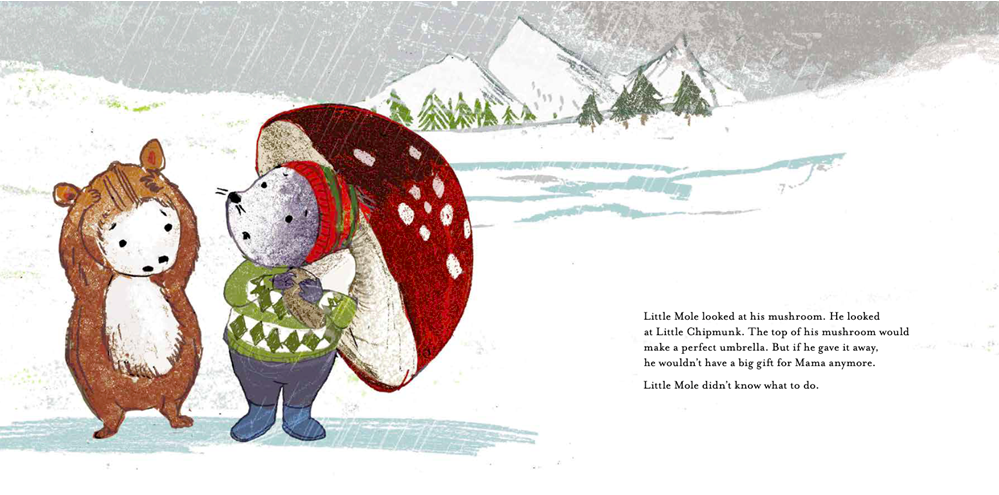
Little Mole was just about home when he ran into Little Chipmunk who was worried about getting caught in the coming winter storm without an umbrella. Little Mole knew his mushroom “would make a perfect umbrella. But if he gave it away, he wouldn’t have a big gift for Mama anymore.” He couldn’t decide what to do. Just then it started sleeting. Little Mole wasted no time. He snapped off the stem and gave the top to Little Chipmunk. “‘Thanks, Little Mole. You are so kind!’ Little Chipmunk said as she took shelter under the mushroom.”
Image copyright Sally Garland, 2020, text copyright Glenys Nellist, 2020. Courtesy of Beaming Books.
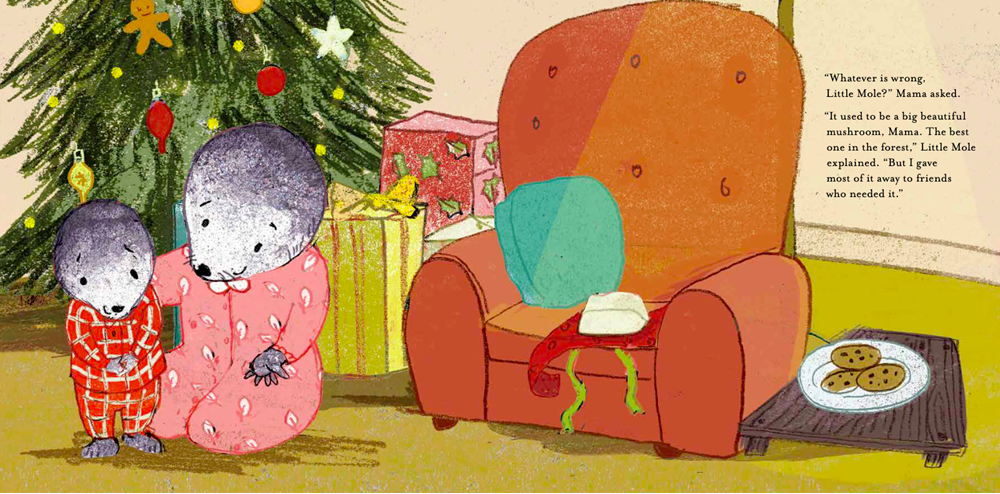
Little Mole wrapped up his gift for Mama. It was just a bit of stem, not the big gift he had envisioned. But when Mama opened it, she was delighted. It was just the thing to make a delicious soup for their Christmas dinner. Little Mole didn’t seem convinced, though. He told Mama that the mushroom used to be much larger, but that he had given “most of it away to friends who needed it.”
When she heard that, Mama gave her son a big hug and told him that his “‘kindness [was] the biggest, most perfect Christmas gift I have ever received.’” Little Mole smiled. Christmas had turned out just as he had hoped.
Image copyright Sally Garland, 2020, text copyright Glenys Nellist, 2020. Courtesy of Beaming Books.
With an endearing protagonist, Glenys Nellist’s story about the true meaning of giving from the heart will appeal to little ones’ natural sense of generosity while strengthening the joy they feel in helping out at home or helping those in need. The three friends Little Mole encounters give children an opportunity to talk about what they would do in each situation and for adults to discuss ideas of kindness as well as gratitude as this one gift becomes many. Mama’s reaction to Little Mole’s gift will show kids that it’s not the size of a present that counts but the love and thought that goes into it. They’ll also see that a person’s actions, compassion, and consideration for others are gifts that cannot be matched.
Sally Garland’s textured illustrations focus on adorable Little Mole and his dreams of the perfect Christmas, allowing the youngest readers to fully appreciate Little Mole’s decisions to give up parts of the present for Mama that means so much to him. As Little Mole encounters Little Squirrel, Little Mouse, and Little Chipmunk, readers can clearly see the sadness and need of each of these friends as well as the positive difference Little Mole’s kindness makes in their day. Garland’s lovely aqua sky swirled with white snow and gauzy wind makes for a shivery winter scene, while Little Mole’s home is cozy and warm with a glittering Christmas tree and homemade treats and decorations.
A charming companion to Little Mole Finds Hope, Little Mole’s Christmas Gift makes for cozy story times that will inspire love, compassion, and kindness at Christmas and throughout the year. The book would be a favorite addition to home, school, and public library bookshelves.
Ages 3 – 6
Beaming Books, 2020 | ISBN 978-1506448756
Discover more about Glenys Nellist and her books on her website.
Hanukkah, the Festival of Lights, is the Jewish wintertime celebration that commemorates the victory of the small Maccabean army over the much more powerful Greek/Syrian forces and the rededication of the Holy Temple during the second century BCE. Hanukkah is celebrated for eight days in remembrance of the miracle of the oil lamp, which at the time only held enough oil for one day yet burned for eight days. This year Hanukkah takes place from December 10 through 18.
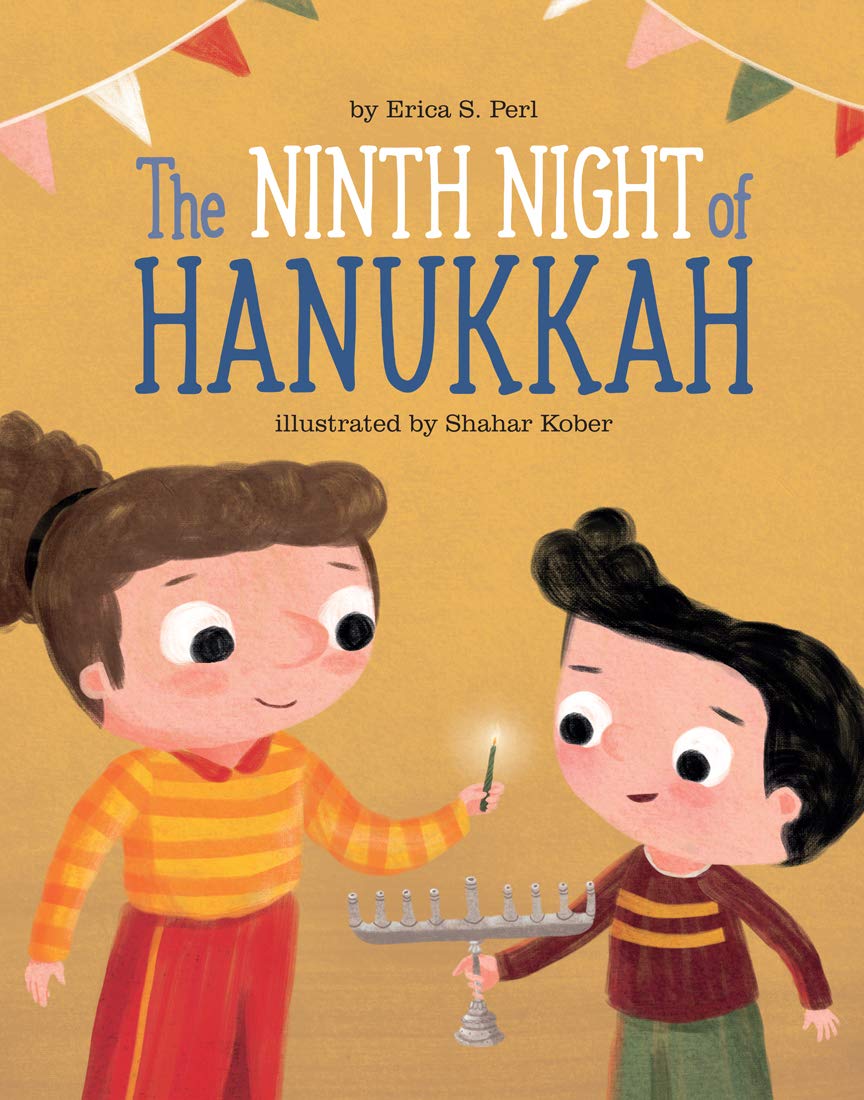
The Ninth Night of Hanukkah
Written by Erica S. Perl | Illustrated by Shahar Kober
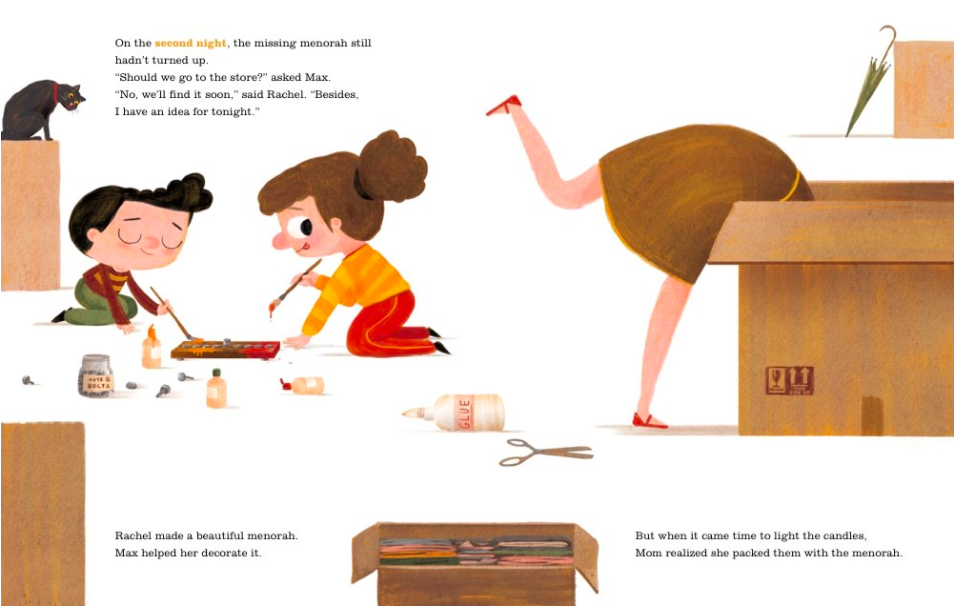
A family has just moved into their new apartment. It’s the first night of Hanukkah, but they can’t find their Hanukkah things amidst all the boxes. So, without the menorah or delicious latkes, Mom, Dad, Rachel, and Max sit on the floor eating pizza. “It was nice…but it didn’t feel quite like Hanukkah.” On the second night, they still hadn’t found the menorah, but Rachel and Max made one from a piece of wood, their jar of nuts and bolts, and some craft paint. It was all ready to light, when Mom discovered that they didn’t have the candles either.
Image copyright Shahar Kober, 2020, text copyright Erica S. Perl, 2020. Courtesy of Sterling Children’s Books.
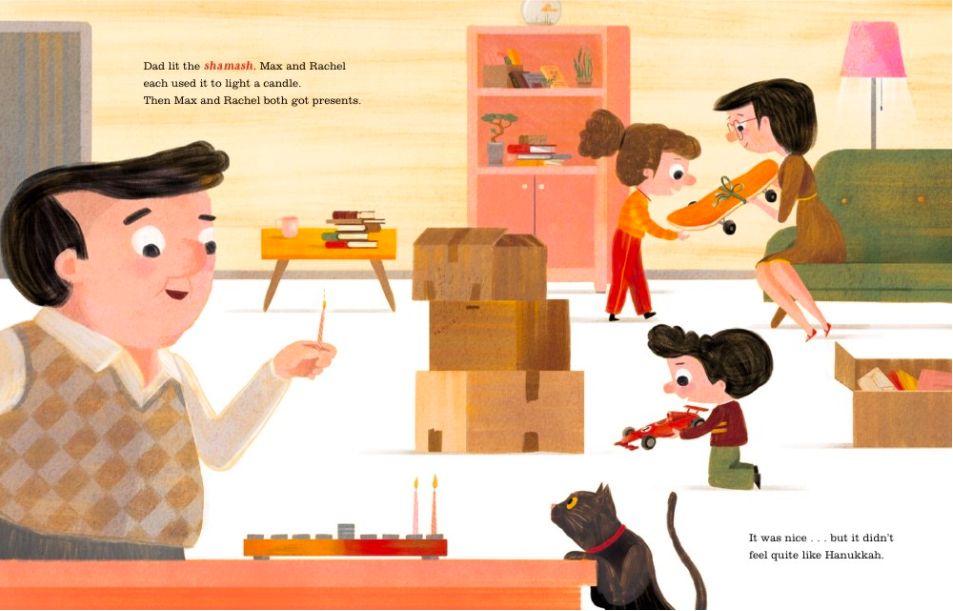
With the stores closed, Rachel and Max went next door to apartment 2C. They introduced themselves to Mrs. Mendez and explained their situation. She offered the only candles she had—a box of birthday candles. “Dad lit the shamash. Max and Rachel each used it to light a candle.” Then they opened presents. While it was nice, it still “didn’t feel quite like Hanukkah. On the third night, the “lucky latke pan” was nowhere to be found, but Max appeared with a steaming plate of French fries from Joe, the super, who lived downstairs.
By the fourth night of Hanukkah, Mom and Dad were beginning to think the box with their Hanukkah things had gotten lost. Max wanted to play dreidel, so while Mom called the moving company, Max and Rachel met the Watson twins, who didn’t have a dreidel, but they did have a toy that spun and spun. On the fifth night, Rachel and Max had made their own dreidel, “which meant they needed gelt.” On the fourth floor, Max and Rachel met Mr. Patel, who handed Max the only chocolate he had—a bag of chocolate chips. All of these substitutions were “nice…but it didn’t feel quite like Hanukkah.”
Image copyright Shahar Kober, 2020, text copyright Erica S. Perl, 2020. Courtesy of Sterling Children’s Books.
Each night of Hanukkah Max and Rachel missed a different part of their Hanukkah celebration, and each night a new neighbor did the best they could to supply it. On the morning after the eighth night of Hanukkah, a delivery person showed up at the door with Mom’s guitar. She suggested a sing-along, but Rachel reminded her that Hanukkah was over. Max, however, had another idea and pointed to the ninth candle on the menorah. This gave Rachel an idea too, and she and Max whispered and planned. Then they waited. Soon “there was a knock on the door. And another. And another.”
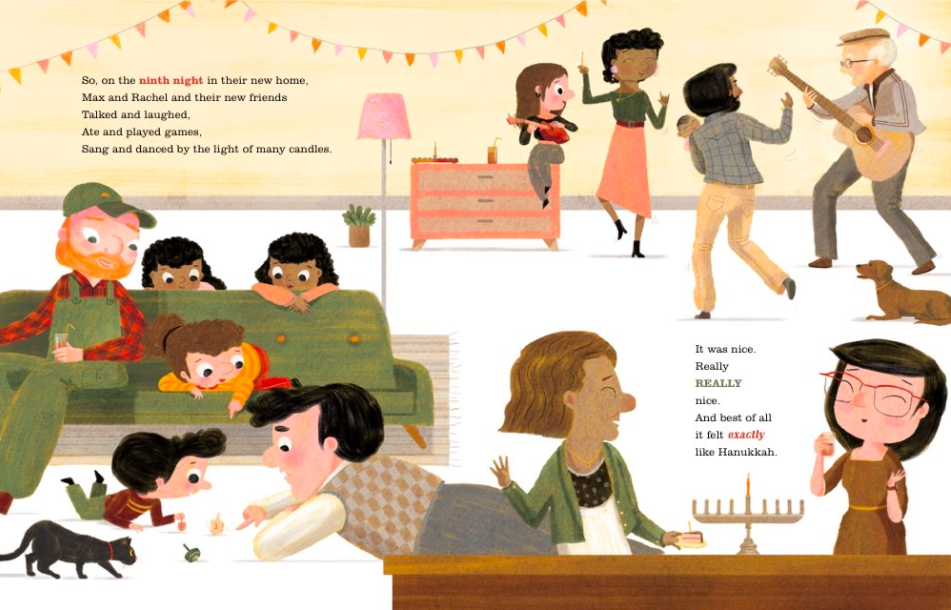
When all the neighbors had gathered, Max and Rachel explained their Shamash Night celebration. Like the Shamash candle “helps light all the other candles,” they said, their new neighbors had helped them celebrate Hanukkah. “‘So we wanted to say thanks—to the Shamash and to you,’” Rachel said. Just then the delivery person appeared with the long-lost box. On the ninth night in their new home, Mom and Dad, Rachel and Max ate, played, sang, and danced with all of their new friends, “and best of all, it felt exactly like Hanukkah.”
An Author’s Note following the story tells about the history and tradition of the shamash candle and the idea that sparked the writing of The Ninth Night of Hanukkah. Erica S. Perl also provides a guide on how families can hold their own “Shamash Night.”
Image copyright Shahar Kober, 2020, text copyright Erica S. Perl, 2020. Courtesy of Sterling Children’s Books.
Community, resilience, and children’s creativity infuse every page of Erica S. Perl’s story that’s a wonderful Hanukkah read as well as a story families will want to share all year around. The apartment-house setting and the family’s just-moved-in situation combine to create a charming microcosm of making friends, getting to know new neighbors, and discovering the generosity of strangers. Rachel and Max, creative, close-knit, and accommodating, will captivate kids as they go along on their scavenger hunts for the makings of a homey Hanukkah celebration.
Perl’s substitutions—from birthday candles to French fries to a ukulele will appeal to readers. The repeated phrase “It was nice, but it didn’t feel quite like Hanukkah” applies to many make-do conditions and will resonate with children. It also provides suspense and a nice counterpoint for when the night does finally fulfill the Hanukkah feeling. Max and Rachel’s “Shamash Night” offers a message of gratitude not only for things but for friendship.
Shahar Kober’s warm-toned illustrations mirror the heartfelt story and the kindness of the diverse group of neighbors as they provide workable solutions to Max and Rachel’s requests. Images of Rachel and Max creating a homemade menorah, dreidel, and wrapping paper may inspire kids to design their own Hanukkah or other holiday decorations and traditional items. Kober’s cartoon-style characters are expressive, demonstrating their disappointment in missing their well-loved Hanukkah things but more so their cheerful acceptance of what the neighbors can provide. Kids will enjoy watching the antics of the family’s cat, who likes to be in the middle of the action, but also is happy to make do with a moving box as a new napping spot.
A heartwarming and joyful Hanukkah story with messages of kindness, generosity, acceptance and a loving sibling relationship, The Ninth Night of Hanukkah is highly recommended for all home, school, and public library collections.
Ages 3 – 8 and up
Sterling Children’s Books, 2020 | ISBN 978-1454940883
Discover more about Erica S. Perl and her books on her website.
To learn more about Shahar Kober, his books, and his art, visit his website.
Get Ready for Hanukkah Activity
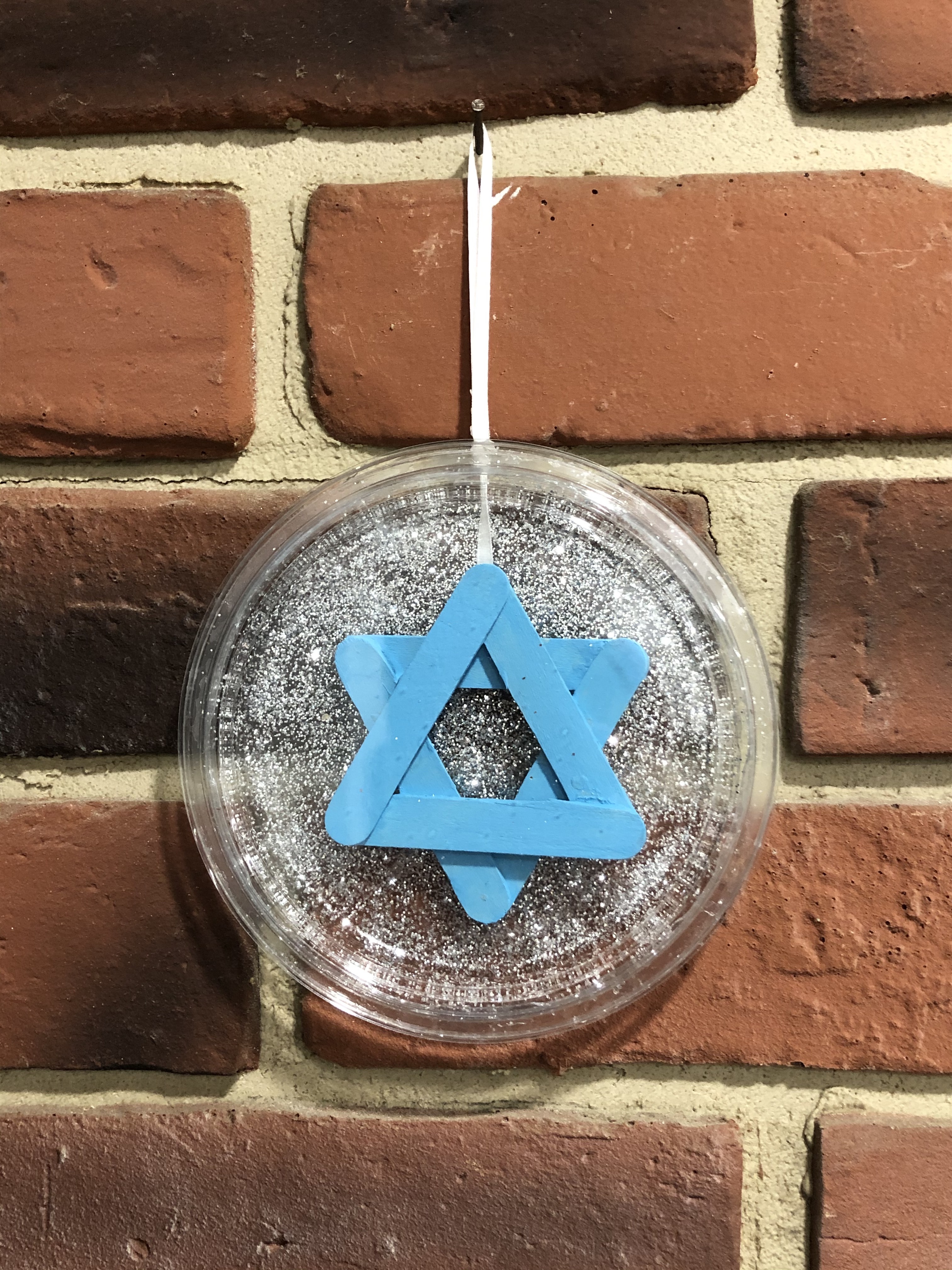
Star of David Decoration
Kids can add a bit of sparkle to their Hanukkah celebrations with this Star of David craft.
Supplies
6 mini craft sticks
2 round lids from clear plastic deli containers
Silver glitter
Blue craft paint
Clear-drying glue
Thin ribbon or string, 8 – 10 inches long
Directions
To Make the Star of David
Paint the craft sticks with the blue paint, let dry
Glue three of the craft sticks together to form a triangle; repeat with the other three sticks
Glue the two triangles together to create a Star of David
Glue a short length of ribbon to the top back of the Star of David
To Make the Case
Apply a thin layer of clear-drying glue to the top, indented side of one of the lids
Sprinkle the lid with the glitter, let dry
When the glue is dry, center the Star of David in the lid with the ribbon trailing over the rim of the lid. The Star of David will be free hanging inside the case from the ribbon.
Glue the rim of the indented side of the second lid to the rim of the first lid
When dry, tie the ribbon into a loop for hanging
You can find The Ninth Night of Hanukkah at these booksellers
Celebrate the history, meaning, and fun of Hanukkah with your family and these books that are funny, moving, and full of kindness. Click on the title to be taken to the full review of each book. There’s a printable word search puzzle to enjoy too!
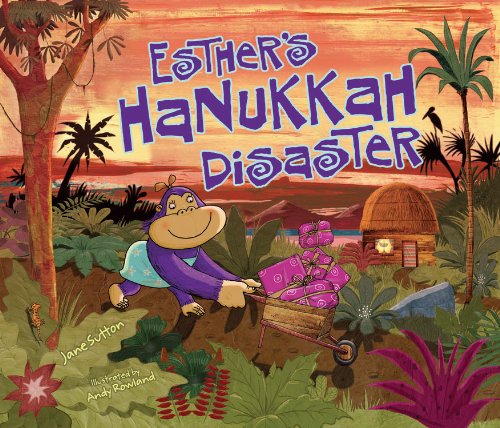
Written by Jane Sutton | Illustrated by Andy Rowland
Jane Sutton brings humor and meaning to her Hanukkah story that reveals the true nature of the holiday and friendship. With clever gift choices and a sweet plot twist, Sutton’s Esther’s Hanukkah Disaster will have kids giggling and empathizing as Esther’s plans go awry. Her easy-going delivery invites kids along on Esther’s shopping trip and sets up the jokes and final swap in a natural and engaging way. Sutton’s inclusion of Esther’s and her friend’s honest reactions to the gifts encourages discussion of how to choose gifts, how to make up for mistakes, how to graciously accept gifts, and more topics surrounding gift-giving.
Andy Rowland’s purple gorilla Esther is sweetly expressive even as she is a bit oblivious to the needs of her friends and clearly disgruntled when her gifts don’t work out. Kids will love the brightly colored illustrations loaded with details appropriate to Esther’s world, especially the bowls, drawers, and hangers of bananas, banana cookbooks, banana-decorated table cloth and even a banana-shaped teapot in her kitchen. The Jungle Store is a riff on big-box stores with multiple departments where shoppers finding everything from fish for a pelican to a book of Antelope Recipes for a lion to Ele-Wellie boots for an elephant.
Esther’s nighttime neighborhood is likewise beautifully drawn with lush foliage; hanging lanterns; wood, bamboo, and stone homes; and even a waterfall. The window of each friend’s home frames a menorah.
With its humorous take on a common mishap and loveable characters, Esther’s Hanukkah Disaster is a book kids will enjoy no matter what the gift-giving occasion is!
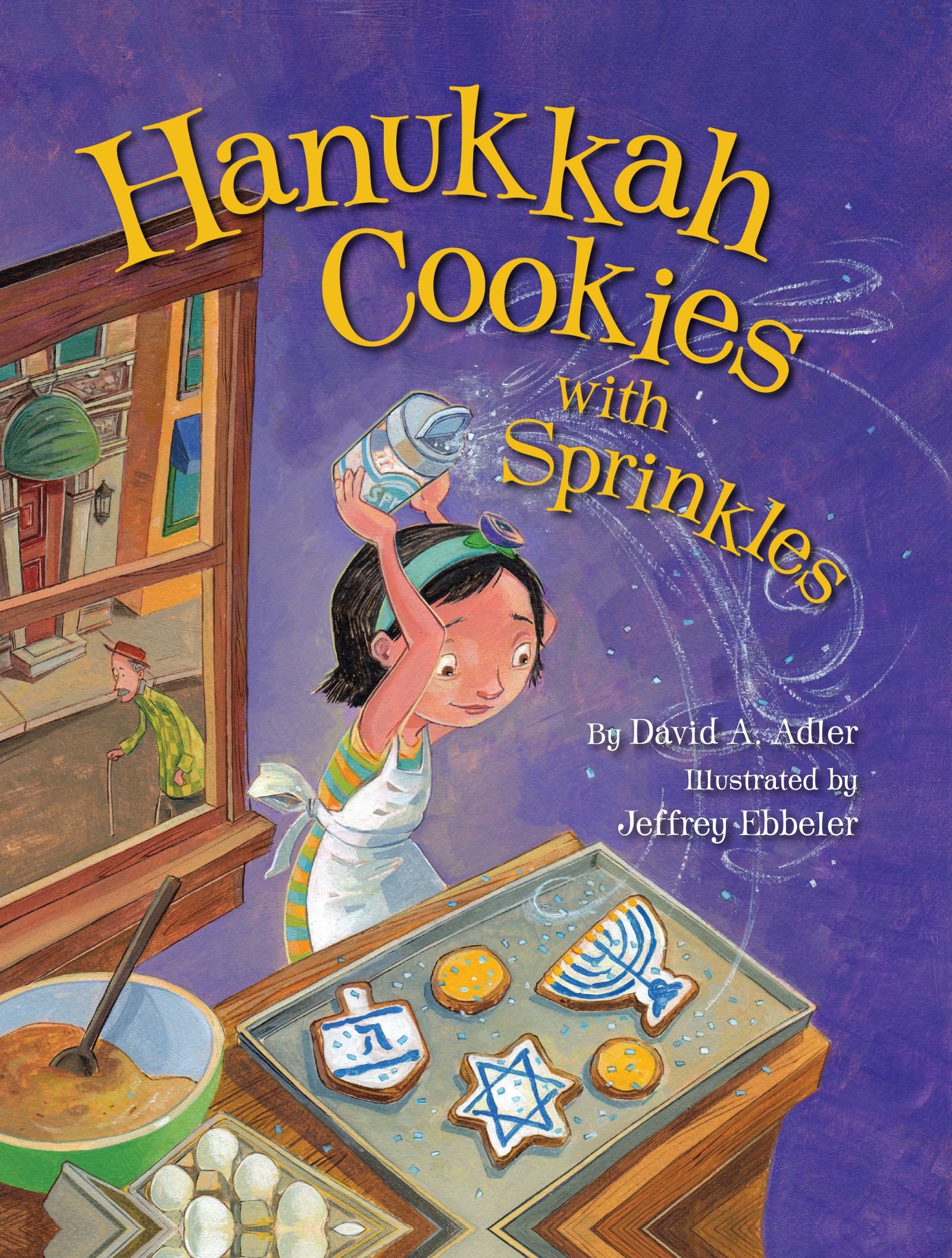
Written by David A. Adler | Illustrated by Jeffery Ebbeler
David A. Adler’s touching story about a little girl who sees someone in need and generously provides help is a heartening story for Hanukkah and any time of year. Adler’s straightforward storytelling, told from Sara’s first-person point of view, invites young readers to look out the window with her and join her as she saves a cookie for the old man and goes on to provide more food and finally companionship to him. The fact that Mr. Berger is a member of Sara’s synagogue reminds readers that people in need of help of all kinds are part of our community, are part of us. Readers will be charmed by Mr. Berger’s circus past and will learn from him that the gifts we have to share with others do not always need to be monetary to have value.
Jeffery Ebbeler’s enchanting illustrations of the city, complete with an adorably narrow Sol’s Market, take readers into Sara’s world, where she sees examples of people in need and those who have plenty. Sara’s contemplations about Mr. Berger and his plight are shown as she considers the full bowl of fruit on her kitchen table, watches someone ask for two hot dogs at the corner cart, and decides to save her cookie at school while the other kids eat theirs and reach for seconds. These same kids, however, happily give up their snack the next day to fill Sara’s bag for Mr. Berger. Classroom scenes and the image of Sara showering her cookies with sprinkles are familiar for all children celebrating holidays at school and at home. The family’s joyful Hanukkah dinner is doubly fun as Mr. Berger performs tricks that even the cat tries to do.
A moving story for Hanukkah and for sharing the spirit of giving all through the year, Hanukkah Cookies with Sprinkles is a fantastic addition to all home, school, and public library bookshelves.
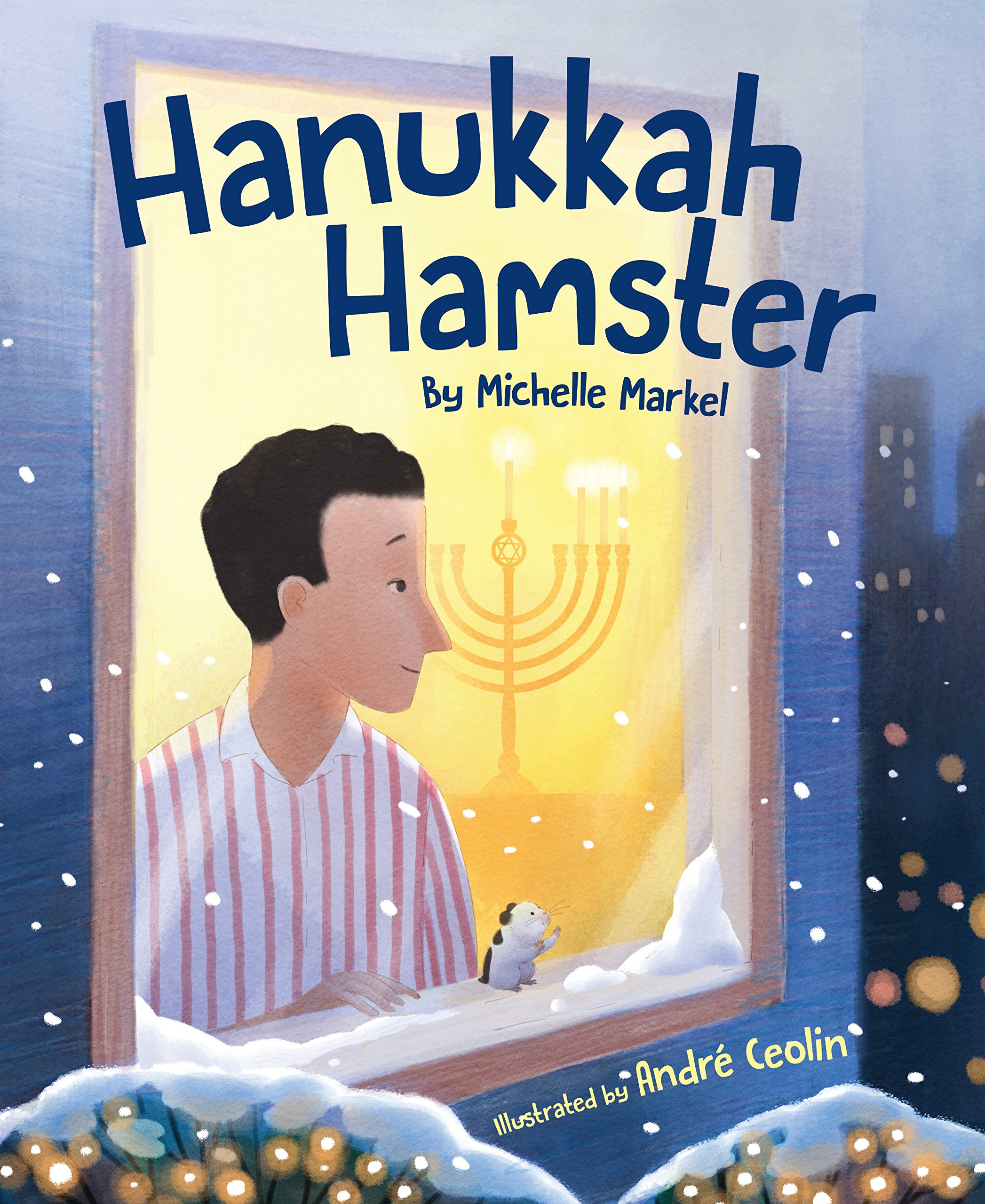
Written by Michelle Markel | Illustrated by André Ceolin
Immersed in the special yearning for family and togetherness the holidays bring, Michelle Markel’s touching story glows with kindness and empathy. The growing friendship between Edgar and Chickpea will tug at readers’ hearts just as it does for Edgar, who so hopes to keep the little hamster but also knows there may be someone in the city missing him. As the days pass, and Edgar, alone for Hanukkah, shares his traditions with the hamster, readers also become participants in the holiday. Children will be riveted to the increasing suspense, and the pitch-perfect solution is joyful and satisfying. Realistic dialogue and honestly portrayed emotions provides depth to this moving story.
From the tiny white lights lining main street to the first glimpse of the little hamster to Edgar’s cozy apartment with his menorah in the window, André Ceolin’s richly colored illustrations invite readers into Edgar’s life with his new friend, Chickpea. Chickpea is adorable as it nibbles on salad, poses for pictures, and curls up in its shredded paper bed. Images of Edgar lighting the menorah are luminous, and the Edgar and Chickpea’s smiles will spark happiness in readers’ hearts.
The portrayals of friendship, generosity, empathy, and family make Hanukkah Hamster a poignant story for all children to share not only at the holidays but all year around. The book would make a wonderful gift and much loved addition to home and school libraries.
Written by David A. Adler | Illustrated by Jill Weber
With his exceptional storytelling skills, David A. Adler reveals the history of Hanukkah to children. In simple, yet compelling sentences, Adler clearly depicts the faith of the Jews and the dangers they faced from Antiochus and his army. Children will marvel over the astounding defeat of Antiochus’s soldiers at the hands of the Maccabees and be filled with awe as the Temple is rebuilt and the small amount of oil sustains the flame in the ner tamid for eight days. Children unfamiliar with Hanukkah celebrations will discover the meanings behind the traditional foods, dreidel game, and lighting of the Menorah in clear language full of the pride and emotions Jewish families feel during the holiday.
In her bright acrylic paintings Jill Weber brings to life the story of the Jews and the Maccabees, allowing children to fully experience the environment and perils of the time period. Her patchwork fields tended by farmers and shepherds give way to the majesty of the Temple with its central altar and glowing eternal flame. Weber’s battle scenes are particularly effective in presenting the destruction, fear, and final victory experienced by the Jews. Readers will be cheered by the joy depicted in the faces of the people celebrating the restoration of the Temple and the excitement of families observing Hanukkah today.
A recipe for Latkes as well as instructions on how to play Dreidel follow the text
The Story of Hanukkah is a wonderful introduction to the holiday for children learning their own heritage or for children discovering the traditions of friends, family, and others.
Ages 5 – 8
Holiday House, 2012 | ISBN 978-0823425471 (Paperback) | ISBN 978-0823440320 (Board Book)
Today’s holiday is one of the first celebrated in America and dates back to 1621, when the pilgrims commemorated a year of survival in their new homeland. Typically a day when families gather with loved ones from around the country, this year’s holiday may be smaller for many, but no less meaningful. Today’s book can help readers find things to be thankful for today and ever day.
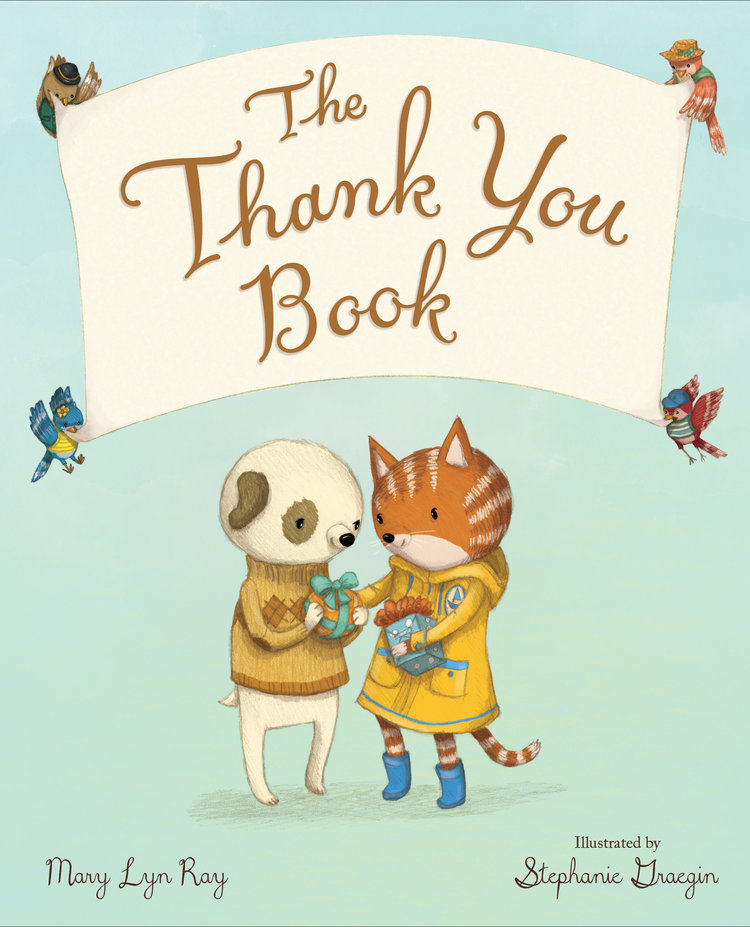
The Thank You Book
Written by Mary Lyn Ray | Illustrated by Stephanie Graegin
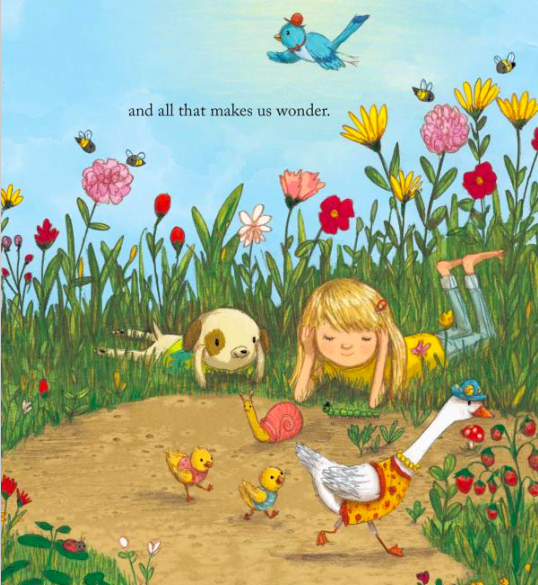
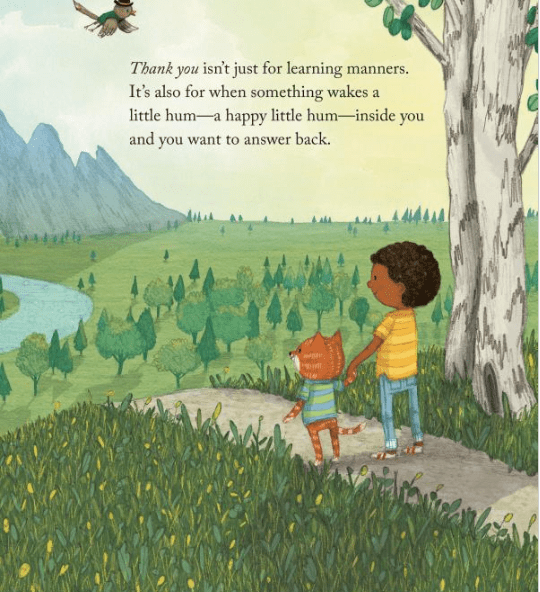
Saying “thank you” is good manners, of course, but “it’s also for when something wakes a little hum—a happy little hum—inside you and you want to answer back.” Each day begins with a thank you for the sunrise and for breakfast too. Outside, there’s a whole world of wonders to be thankful for, places to play, and crafts to make.
Image copyright Stephanie Graegin, 2018, text copyright Mary Lyn Ray. Courtesy of HMH Books for Young Readers.
“Thank you is for laps and books…. It’s also for when hurt or sad or not-so-good gets better.” Thank you is for the things that keep us warm and for holidays full of surprises. We give thanks for home and family as well as “for this earth we ride on, and for the stars beyond.” We’re thankful for the simple joys of bedtime—PJs, stories, and goodnight kisses.
Image copyright Stephanie Graegin, 2018, text copyright Mary Lyn Ray. Courtesy of HMH Books for Young Readers.
Thank you is for all the things we know and for those we don’t. It’s for what makes each one of us “glad that we are us.” And for everything both big and small, “we wrap a hug around each day—to say another thank you.”
Mary Lyn Ray’s tribute to the moments, things, and interactions that bring happiness to life is a thoughtful and joyful reminder of all the gifts we share with others. Her lyrical text takes a child’s view of the things both big and small that they can count on to fill a year with wonder.
Image copyright Stephanie Graegin, 2018, text copyright Mary Lyn Ray. Courtesy of HMH Books for Young Readers.
Stephanie Graegin populates this world with adorable animals and enthusiastic kids going about their days together at home and with their friends, enjoying celebrations and quiet times, waking up in the morning and going to sleep at night. Each charming image holds the comfort and delight of sharing our lives with others.
The Thank You Book is a gem that highlights companionship, friendship, and the wide range of relationships and things we have to give thanks for every day. It is an enchanting book to add to home, classroom, and public libraries.
Ages 4 – 7
HMH Books for Young Readers, 2018 | ISBN 978-0544791367 (Hardcover) | ISBN 978-0358362685 (Board Book, 2020)
Discover more about Mary Lyn Ray and her books on her website.
To learn about Stephanie Graegin, her books, and her art on her website.
Thanksgiving Day Activity
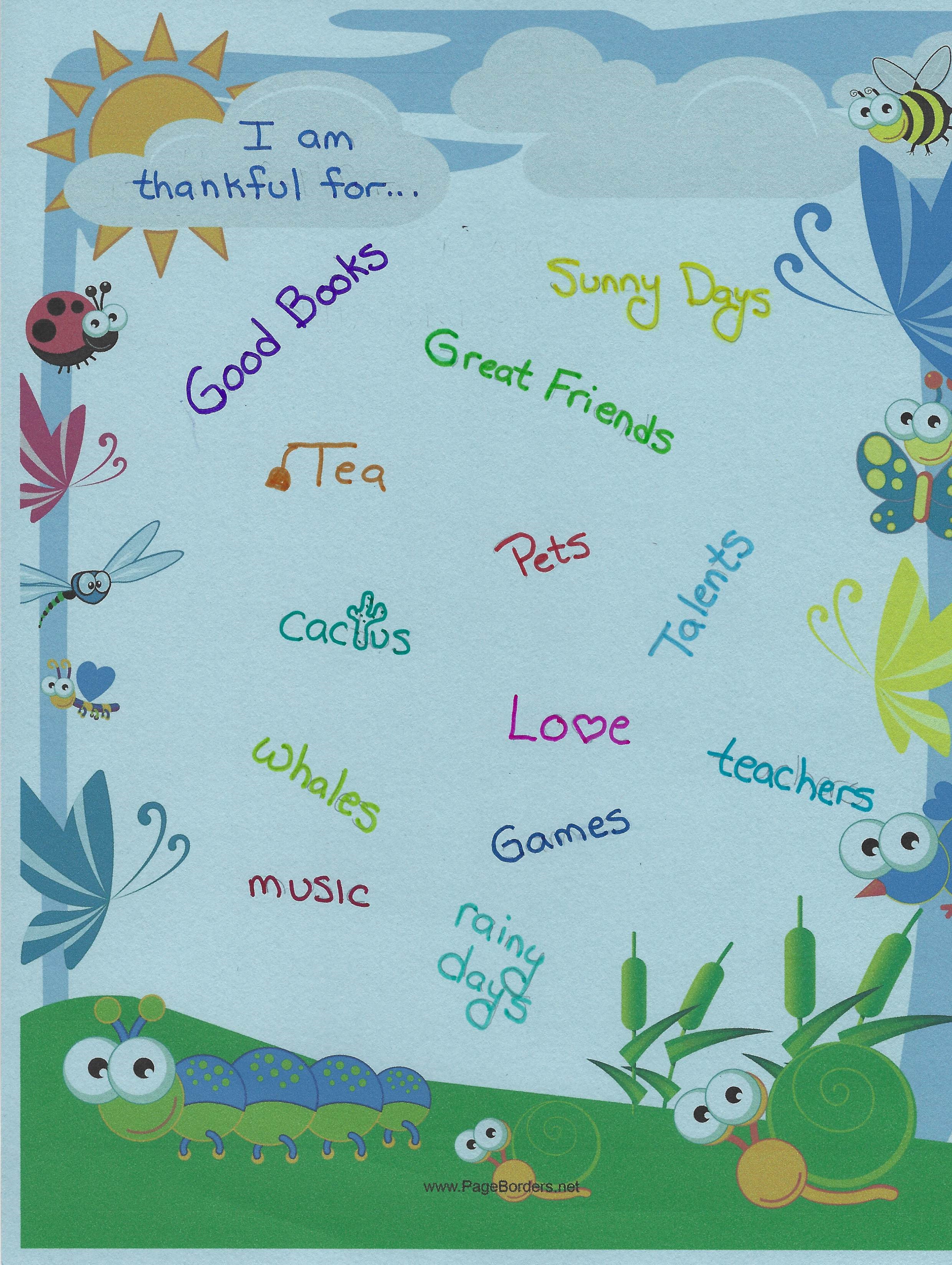
What Are You Thankful For? Poster
Write all of the amazing things in your life that make you happy on this colorful, printable What Are You Thankful For? Template! Then display it in your room to make you smile or remind you to thank everyone who is important to you!
You can find The Thank You Book at these booksellers
We all have unique talents and abilities. Today’s holiday was established for us to define our abilities and think about how we would like to use them for ourselves and others. Whether your talents lie in the arts; science, math, and technology; the humanities; teaching and leadership; or kindness, with courage, confidence, and practice you can accomplish amazing things. Today’s books feature two very different talents and are accompanied by videos that can teach you how to use your creativity to achieve success.
You Can Draw Comic Book Characters
By Spencer Brinkerhoff III
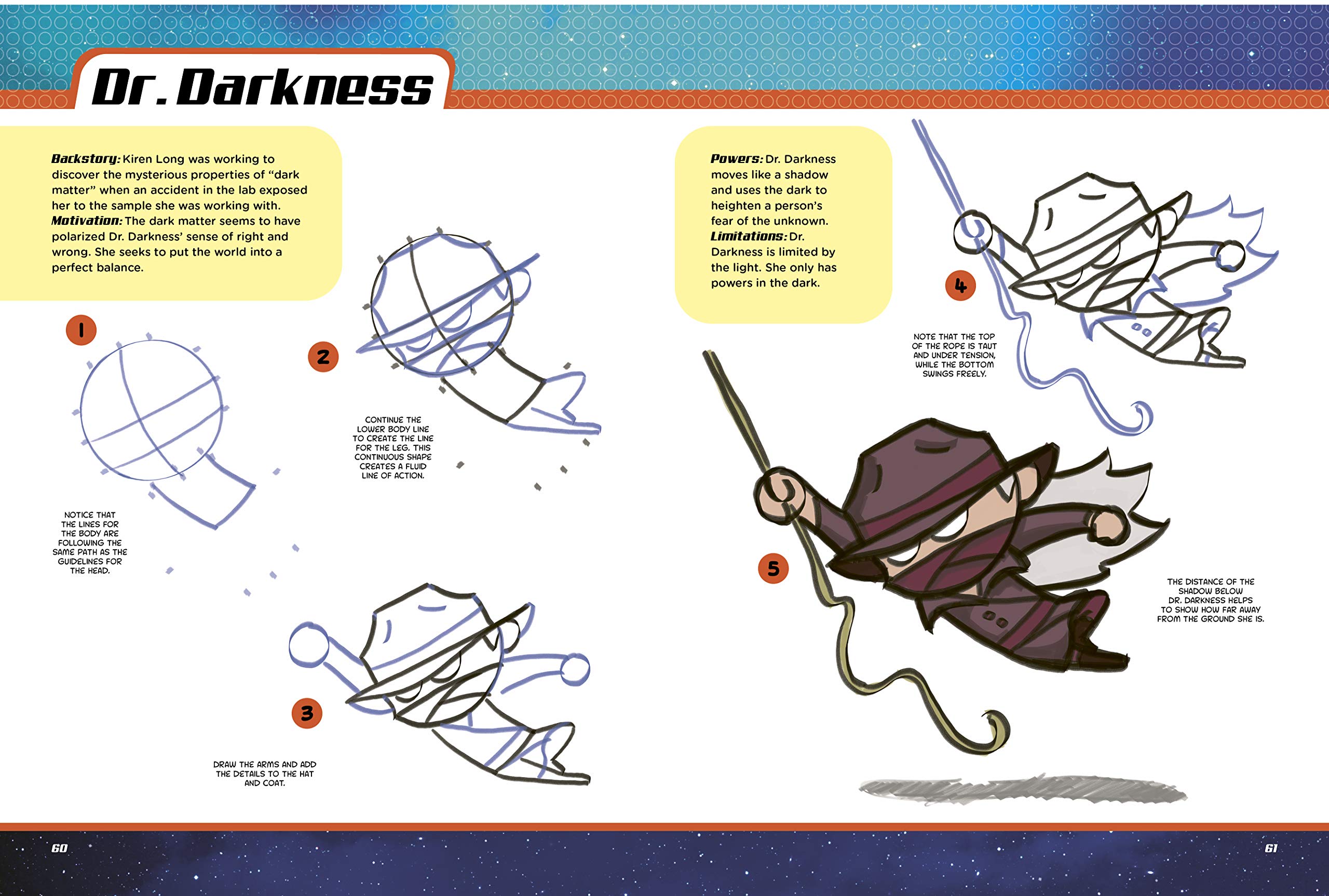
Do you have a comic book creator inside yearning to blast free? In this step-by-step guide, Spencer Brinkerhoff III shows you how to draw more than 25 original -comic book characters, draw with perspective and from different angles, and how to use simple shapes to create all of the characters running around in your imagination. To get started, Brinkerhoff introduces readers to the tools of the trade, especially one type of template that ensures that your characters are always in proportion whether they’re standing still, flying, climbing, running, or engaged in battle.
Whether you’re drawing a hero or a villain, Brinkerhoff presents illustrated steps for creating the head, complete with guidelines that tell you where to put the eyes, hair, and other facial features; how to add the body and sketch in arms and legs in active poses. Brinkerhoff then invites artists to make these prototype characters their own by showing how through hairstyles, clothing, and facial features you can add personality and individuality to your characters.
Copyright Spencer Brinkerhoff III, 2020, courtesy of Walter Foster, Jr.
But characters aren’t just created through their physical appearance—readers also want to know what makes them tick. Brinkerhoff adds specific and enlightening guidance on how to design a well-rounded character that readers will care about. He discusses general ideas on how heroes and villains come to be then gives specific examples of backstories, motivations, powers, and limitations for heroes, villains, and all the minions and sidekicks in between.
Once you’ve practiced drawing your character, it’s time to add some color, and Brinkerhoff has you covered there too with tips on choosing colors to make an effect, how to make it look as if a character is wearing a helmet with a face shield, and how to make Zaps and Zings really shine.
So, you have characters with histories—now what? They need a story to live in! Brinkerhoff reveals how to develop a strong story from beginning to end and create a script. Then he shows artists how to plan and draw panels that help tell the story, create good story flow, establish mood and location, include dialogue and sounds, and add the kind of suspense that keeps readers turning the pages. Finally, Brinkerhoff shows readers how to put it all together to make a complete comic book. He follows this up with larger templates for characters who are standing, flying, and fighting as well as a few in various action poses.
Copyright Spencer Brinkerhoff III, 2020, courtesy of Walter Foster, Jr.
Spencer Brinkerhoff presents an excellent guide for artists and would-be artists of all ages with specific help and plenty of opportunities to practice a variety of body styles, facial expressions, poses, and all accompanying accents. The diversity of examples and the emphasis on other aspects to creating successful characters and complete comics will spark children’s imagination and help them develop their talent for both drawing and writing, which are equally important in creating the kinds of comics that readers fall in love with and want to read again and again.
A superb drawing book for children, You Can Draw Comic Book Characters would make a much-appreciated gift for young artists and an often-used, go-to book as children or adults work on improving their drawing and visual storytelling abilities. The book is a must for home bookshelves for aspiring artists as well as for school and public library collections.
Ages 6 – 10 and up
Quarto Knows, Walter Foster Jr., 2020 | ISBN 978-1633228665
About Spencer Brinkerhoff
Spencer Brinkerhoff III started drawing and making art at an early age and has never stopped. Spencer’s professional work has included creating Star Wars art for Lucasfilm Ltd, animating an educational game for the World Health Organization, creating and starring in a video that won him Burt Reynolds’ Trans Am, and creating some of the horse sculptures for the PF Chang’s restaurants. In addition to working on these licensed projects, he has also created a glasses-less 3-D image platform called ShadowBox Comics, an in-camera special effect keychain called LightStickFX, and a drawing system called DrawingIsSimple. You can discover more about Spencer Brinkerhoff III, his art, and his work on his website.
Drawing Captain Jinx Tagget and Savage with Spencer Brinkerhoff III
In this video and two more videos from Quarto Classroom, children and adults can learn from Spencer Brinkerhoff III how to create two original characters from You Can Draw Comic Book Characters: Captain Jinx Tagget and Savage. In the first video Spencer Brinkerhoff demonstrates each step in drawing his hero Jinx, talking viewers through an easy method for creating the head and body, the whys and hows of facial-feature placement, and how to add accents to make each character distinctive. In his second video, Brinkerhoff uses a prop that gives new artists clear visual help in understanding how a face can be drawn when tilted and turned. He also demonstrates how to draw Jinx when flying.
In his third video Brinkerhoff shows kids how to draw the imposing Savage, a character that uses different proportions yet is still derived from basic shapes beginning with a circle. At the end of each twenty-five-minute session, he gives a lesson on adding color to the character. Brinkerhoff’s easy-going and encouraging delivery will instill confidence in artists and get them excited about designing their own characters.
You can find You Can Draw Comic Book Characters at these booksellers
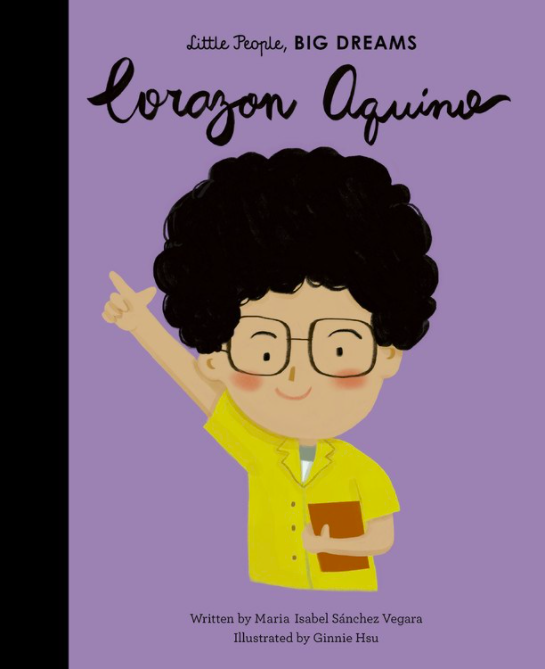
Written by Maria Isabel Sánchez Vegara | Illustrated by Ginnie Hsu
Maria Corazon—better known as Cory—was a little girl growing up in the Philippines, a country made up of thousands of islands. At school, she learned lessons on reading and writing and math and also “how to take a step forward.” For example, when one of her classmates was not able to make a speech in front of the school, Cory volunteered to give it.
Image copyright Ginnie Hsu, 2020, text copyright Maria Isabel Sánchez Vegara, 2020. Courtesy of Frances Lincoln Children’s Books.
When Cory was still a child, her parents send her to America to study. When she returned home after graduating from college, she was determined to become a lawyer. While in law school, “she became close with a student as honest and as bold as her.” His name was Benigno, but those who loved him called him Ninoy. Ninoy went on to become a politician. He wanted to help his fellow Filipinos and became an ardent critic of the country’s dishonest president. Because of his opposition to the president, he was arrested. Then Cory wrote speeches and became her husband’s voice for nearly eight years while he was in prison.
Declaring more and more unfair laws, the president became a dictator and forced Ninoy, Cory, and their family to leave the country. They moved to Boston, Massachusetts and were happy there, but after three years “Cory knew that Ninoy had to go home and try to restore democracy, giving power back to the people.” They returned to the Philippines, but the president’s men were waiting for them and Ninoy was killed.
Image copyright Ginnie Hsu, 2020, text copyright Maria Isabel Sánchez Vegara, 2020. Courtesy of Frances Lincoln Children’s Books.
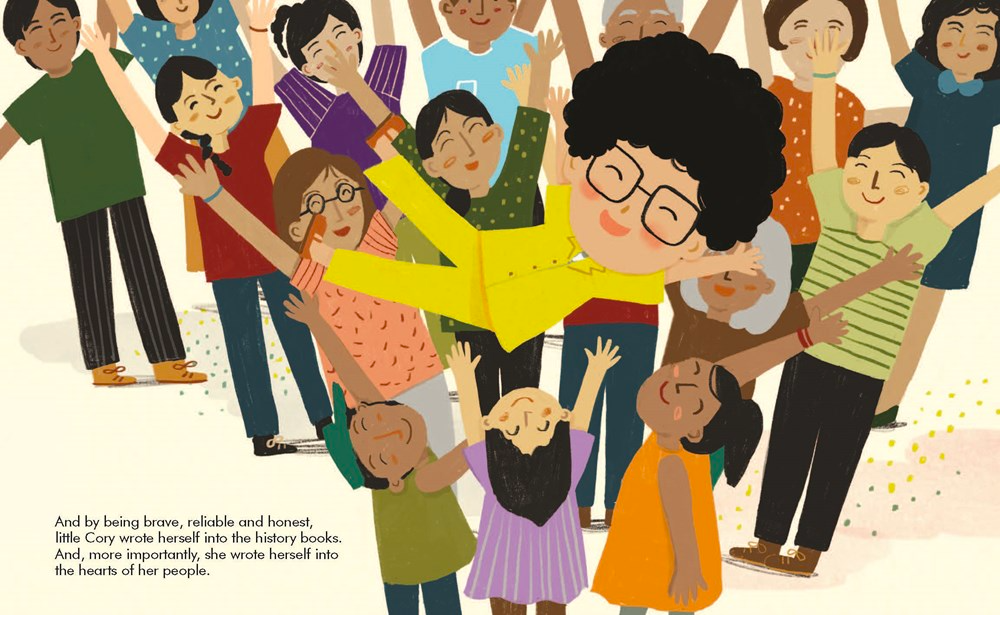
Cory felt alone, but at Ninoy’s funeral millions of people showed that they were with her, giving “her their love and support.” Cory decided it was up to her to continue Ninoy’s work. She ran for president and won, but the defeated president “faked the results of the election” and sparked a revolution. For four days “millions of people armed with courage took to the streets and proclaimed Cory president of the Philippines. The dictatorship crumbled and Cory became the first female President of the Philippines. Through her lifelong courage and honesty, little Cory grew up to save democracy for her people and change their lives forever.
A timeline of Corazon Aquino’s life follows the text.
Image copyright Ginnie Hsu, 2020, text copyright Maria Isabel Sánchez Vegara, 2020. Courtesy of Frances Lincoln Children’s Books.
Maria Isabel Sánchez Vegara’s excellent biography of Corazon Aquino for young readers introduces them to this amazing woman with well-chosen details about her life and the personality traits that made her singularly suited for her role in leading the Philippines out of the darkness of dictatorship. Vegara’s straightforward storytelling reveals her respect for the intelligence and social conscience of her readers as she relates hard facts about life in the Philippines at the time and its personal consequences for her family. Examples of Corazon’s courage, from giving a speech at school to giving voice to millions of people, will inspire readers to show bravery in their own pursuits, both big and small, and prompt them to look for ways that they can make a difference.
Through Ginnie Hsu’s captivating illustrations, readers are introduced to a brief view of the diversity of communities among the islands of the Philippines and the cities and schools that nurtured her while growing up. Children see the enthusiasm with which crowds met Cory and Ninoy on his political rise. In a clever two-page spread, a speech that Ninoy is writing spills from his typewriter, across the two pages and into Cory’s hands as she reads her husband’s words after his arrest. Images of people lining up to vote will be familiar from our own recent election and offer opportunities for adults to discuss the importance of voting. Adults may remember Corazon Aquino’s signature yellow outfits, which Hsu recreates here. Hsu’s vibrant illustrations, packed with the people that supported the Aquinos, demonstrate the change that, together, people of courage can affect.
An inspirational biography of an influential leader, Corazon Aquino is an excellent addition to the Little People, BIG DREAMS series and offers a meaningful way for adults to introduce young readers to political and social leaders and the ideas of responsibility and leadership. The book is highly recommended for home, school, and public library collections.
Ages 4 – 7
Frances Lincoln Children’s Books, 2020 | ISBN 978-0711246843
About Maria Isabel Sánchez Vegara
Maria Isabel Sánchez Vegara, born in Barcelona, Spain, is a writer and creative director in constant search of new concepts for children’s books and the author of the multimillion-copy best-selling Little People, BIG DREAMS series of picture books that explore the lives of outstanding people. Working for more than fifteen years for clients in top advertising agencies, her books combine creativity with learning, aiming to establish a new and fresh relationship between children and pop culture. You can connect with Maria Isabel Sánchez Vegara on Instagram.
About Ginnie Hsu
Ginnie Hsu is an illustrator, designer, and educator living in upstate New York. Her work is often inspired by everyday life, nature, human living, and well-being. Ginnie also enjoys foraging, yoga, and herbalism. To learn more about Ginnie Hsu, her books, and her art, visit her website.
Corazon Aquino: Little People, BIG DREAMS video with Ginnie Hsu
In this video from Quarto Classroom you can listen to Ginnie Hsu read Corazon Aquino: Little People, BIG DREAMS and learn about the importance of the color yellow throughout the story as well as how color has become associated with other revolutions around the world. Hsu also introduces viewers to the meanings behind eight colors and how using these colors adds depth and meaning to a picture book and other illustrations. For example, yellow carries with it the ideas of positivity and happiness. After learning about colors and their meanings, Hsu invites kids to gather supplies in a color of their choice and to create a project meaningful to them. In keeping with the yellow in her book, Hsu chooses to make a sunflower from felt and a digital sunflower collage. She demonstrates how she puts together her felt sunflower and then shows children the variety of ways a sunflower can be drawn.
You can find Corazon Aquino: Little People, BIG DREAMS at these booksellers
With this printable guide from Spencer Brinkerhoff III, you can learn to draw Captain Jinx Tagget standing and in action with detailed and specific steps from making your first circle for the head to completing her superhero suit. You’ll find another guide on how to draw Savage at Quarto Classroom


















 celebratepicturebooks.com