Kids are born creative, that’s for sure! With their huge imaginations and love for pretending, almost anything goes! Parents trying to keep up with their little charges need to stay on their toes and be inventive too. Answering all the “what,” “why,” and “how” questions takes some ingenuity, managing sibling rivalry takes finesse, and introducing new foods, getting a room cleaned, or making sure homework’s done? Well, “innovative” doesn’t begin to describe the brainstorms that (sometimes) lead to success. But at the end of the day (literally and figuratively) adults are inspired by their kids and wouldn’t trade their role for a minute. Yes, it’s great being a mom, grandmother, grandfather, teacher, dad—as you’ll see in today’s book!
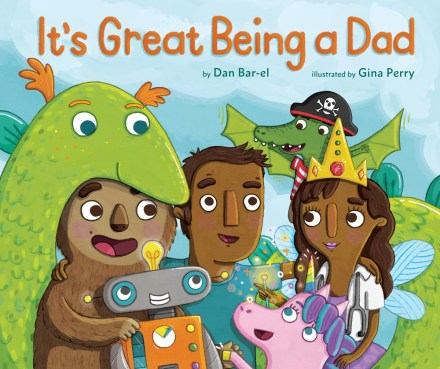
It’s Great Being a Dad
Written by Dan Bar-el | Illustrated by Gina Perry
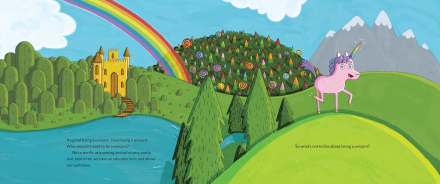
A lovely pink unicorn with a sparkling rainbow horn clip-clops over a grassy hill, a golden castle and a candy forest in the background. The playful animal believes it’s “great being a unicorn. Who wouldn’t want to be a unicorn?” What makes them so special? Well…as she says, “We’re terrific at prancing and we’re very pretty and, best of all, we have an adorable horn just above our eyebrows.” It’s hard to argue with those reasons!
Image copyright Gina Perry, 2017, text copyright Dan Bar-el, 2017. Courtesy of Tundra Books.
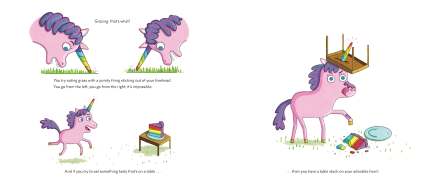
But it seems there are some downsides to this whole unicorn thing. Grazing might be at the top of the list. That shiny horn just always seems to get in the way. There’s no way for teeth to touch the ground, and trying to grab a snack off a table just results in the table being stuck on the “adorable horn.”
Image copyright Gina Perry, 2017, text copyright Dan Bar-el, 2017. Courtesy of Tundra Books.
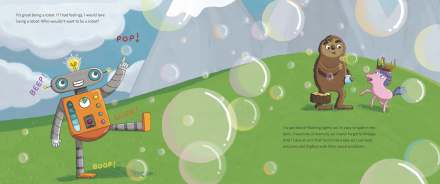
How about Bigfoot? What’s it like for him? Let’s ask—here comes Bigfoot now! “It’s great being Bigfoot. I love being Bigfoot. Who wouldn’t want to be Bigfoot?” What’s so great about being…you know…? Well…he’s warm in his furry coat, he’s well camouflaged among the trees, and his super strength “can help unicorns get tables off their heads.” Sounds great! What could go wrong? Hmmm…. It seems those big feet get themselves into some sticky situations—like ending up with a tree trunk lodged around your leg.
Image copyright Gina Perry, 2017, text copyright Dan Bar-el, 2017. Courtesy of Tundra Books.
Maybe being a Robot is better. Indeed! In fact, Robot says, “If I had feelings, I would love being a robot.” Pretty compelling stuff there. Robot is very flashy and has lots of memory and has an arm that can convert into a saw just in time to help “unicorns and Bigfoot with their wood problems.” So what’s not to like? Rain can really mess with the mo(tor)-jo.
Poor Loch Ness Monster! She’s not even going to try being positive. It kind of stinks being a monster—especially when you don’t feel like one. But maybe things aren’t all bad. Unicorn, Bigfoot, and Robot hitch a ride on Nessie’s back across the lake to the hospital. There they meet a “fairy queen ballerina doctor” who loves being a fairy queen ballerina doctor. Who wouldn’t?
Image copyright Gina Perry, 2017, text copyright Dan Bar-el, 2017. Courtesy of Tundra Books.
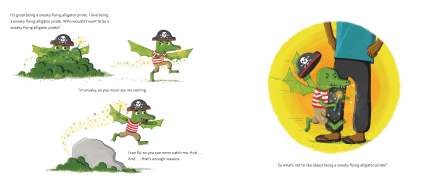
This Jill-of-all-trades can prescribe medicine for the sick, “perform a happy dance” for the sad, and wave her magic wand “if you have trouble with your saw arm…or your head horn or your big foot.” Sounds perfect…until a “sneaky flying alligator pirate” swoops in and swipes the magic wand just as the fairy queen ballerina doctor is about the save the day. “Dad!”
Ha! Ha! Here’s a little guy who’s super excited to be a sneaky flying alligator pirate. “I’m sneaky, so you never see me coming. I can fly, so you can never catch me. And… And…that’s enough reasons. So what’s not to like about being a sneaky flying alligator pirate?” Ooof! “Dads, that’s what!”
Image copyright Gina Perry, 2017, text copyright Dan Bar-el, 2017. Courtesy of Tundra Books.
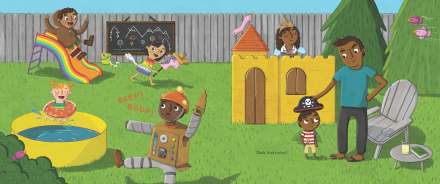
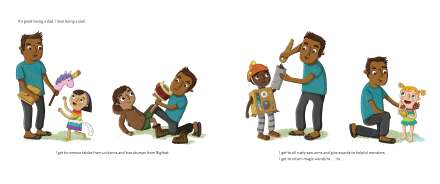
But how does Dad feel about being a dad? Let’s see: “It’s great being a dad. I love being a dad.” It does look pretty fun! Dad gets to remove pizza box “tables” from hobby horse unicorns; remove stepped-on drums from a brown-fuzzy-hoodied-and-hiking-booted Bigfoot; fix cardboard-saw arms; give medals to super swimmers; and “return magic wands to… to… ‘Fairy queen ballerina doctors. I told you a million times already.’ Right. What she said.” Plus Dad can help little brothers play nicely.
So you must be wondering… “what’s not to like about being a dad? Sudden makeovers, that’s what.”
Image copyright Gina Perry, 2017, text copyright Dan Bar-el, 2017. Courtesy of Tundra Books.
Dan Bar-el’s laugh-out-loud romp through an afternoon of play hits the perfect tone to entertain kids and adults as well. Bar-el’s wry delivery and repetition of the appealing—and not-so—traits of each fantasy character will have readers giggling and eagerly anticipating the next page. The revelation that the characters are kids with big imaginations offers multiple payouts in creativity, personalities, friendship, and family.
Gina Perry’s vibrant, whimsical illustrations riff on all the fantasy clichés to ramp up the humor in this vivacious story. When happily-ever-after turns into happily-never-after for each character, Perry amusingly depicts their dismay, but the next page finds them cheerfully adjusted to their new circumstance and weaving it into a revised storyline. As the story wraps up, readers will enjoy pointing out aspects of the kids’ interests and the parts of the backyard that spurred their imagination in earlier pages. The diverse group of friends is welcome, and good-natured Dad doesn’t really seem to mind his impromptu makeover.
It’s Great Being a Dad is a fantastically fun read-aloud that would be an often-asked-for addition to home and school bookshelves.
Ages 4 – 8
Tundra Books, 2017 | ISBN 978-1770496057
Discover more about Dan Bar-el and his books on his website!
You find a gallery of illustration work and books by Gina Perry on her website!
Creativity Month Activity
Family Charades
Getting together to play charades is a fun way to spend family time with a little bit of thought, a little bit of action, and lots of laughs. You can find lots of charades cards, ideas, and rules at funstufftodo.com.
Today’s holiday is all about celebrating the children and grandchildren in our lives and what makes each one truly unique. When you watch your own children or those in your care grow and develop their own personalities, talents, and dreams, you realize that each one is an individual with a bright future ahead of them. Take the opportunity of this special holiday to encourage your children, support them, and—most of all—tell them how much you love them every day.
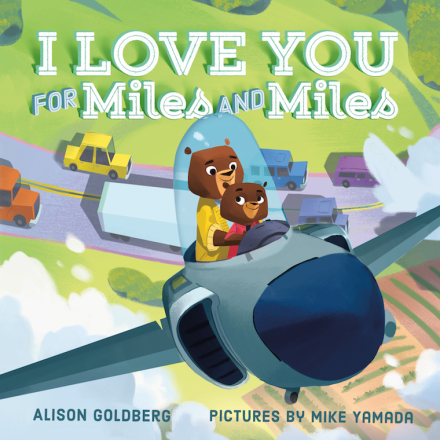
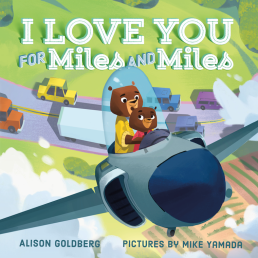
I Love You for Miles and Miles
Written by Alison Goldberg | Illustrated by Mike Yamada
Love—like air—is one of those things that everyone needs. People wonder about it, write about it, and talk about it. But, like air, love can’t been seen—how do you measure it? How do you weigh it? How do you let kids see it? I Love You for Miles and Miles shows you! Opening the cover, you read “My love for you is / Longer than the longest train / Linking engine to caboose, / Winding for miles and miles.”
Image copyright Mike Yamada, 2017, text copyright Alison Goldberg, 2017. Courtesy of us.macmillan.com.
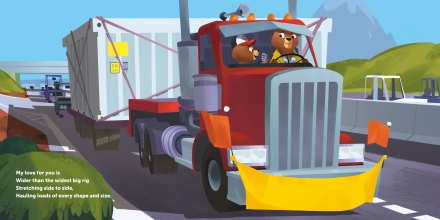
If love is long, can it be wide? Sure! How wide? “It is wider than the widest big rig” on the highway. When you hug your child with all your might, they know that your love for them is continuous and “stronger than the strongest excavator / Scooping heap after heap….” Such strong love runs “deeper than the deepest drill / digging down, down, down, uncovering mysteries.”
Image copyright Mike Yamada, 2017, text copyright Alison Goldberg, 2017. Courtesy of us.macmillan.com.
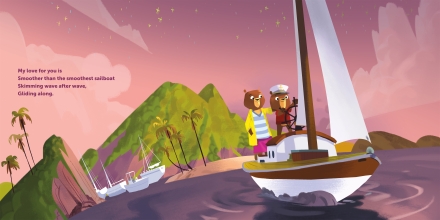
Since love burrows deep, it makes sense that it can soar as well. How high? Look up at cranes on a construction site and imagine a love that goes beyond higher, a love that “reaches toward the sun.” While some days may hold hardships, you can assure your child that your love always remains “smoother than the smoothest sailboat” navigating the waves and changing winds.
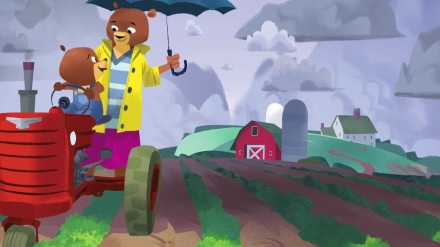
When your child needs a hug, a kiss, or some special attention now, you can reassure them that you will be there “faster than the fastest fire truck / Hurrying faster, faster, / Rushing to you, anywhere you are.” If your child wonders if love can handle anything that comes along, remind them of the tractor, “planting crop after crop, / Helping through mud and muck.”
Image copyright Mike Yamada, 2017, text copyright Alison Goldberg, 2017. Courtesy of us.macmillan.com.
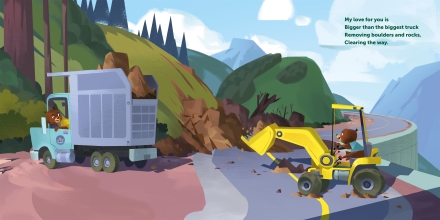
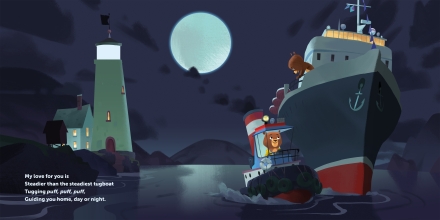
The obstacles that life throws our way are manageable, you can tell your child, because like the biggest dump truck, you can help remove them and fly “above all the rain” like an airplane. And at the end of the day, your love guides them “home, day or night” with the steadiness of a tugboat.
And for the days and years ahead, when your child sees that long, long train, they will understand when you say that is “my love for you… / Riding from station to station, / Traveling with you always.”
Image copyright Mike Yamada, 2017, text copyright Alison Goldberg, 2017. Courtesy of us.macmillan.com.
In her sweet tribute to a parent’s or caregiver’s love, Alison Goldberg gives concrete shape and weight to that feeling of love which can be so hard to describe. Little ones awed by the size and power of vehicles and machines, will readily recognize and understand the comparisons and be excited to share their own abundant love. Goldberg’s short verses are composed of words most young readers know, and by using comparative and superlative forms of the adjectives, she fosters a deeper comprehension of how love transcends even the biggest, longest, strongest, or toughest things a child can imagine. The first-person perspective allows not only the adults reading to express their love but also the children listening to say, “yes, I feel this way too.”
Image copyright Mike Yamada, 2017, text copyright Alison Goldberg, 2017. Courtesy of us.macmillan.com.
Mike Yamada’s stunning two-page spread illustrations, full of vivid color and dramatic perspectives, will delight little readers. A cub and adult are at the controls of each vehicle, the little one driving or guiding when possible, or being helped if needed. Young readers will love lingering over each page to view all of the realistic elements on every vehicle or machine. The sweet, happy looks between adult and cub reinforce the strong bond between them. Gender-neutral clothing and first-person point of view makes this a universal book.
I Love You for Miles and Miles is an adorable and meaningful book for adults and children to share and would make a great addition to home and classroom libraries. Besides fun at bedtime, it would make a terrific take-along book for car trips or waiting times, and the theme can easily be extended to an “I-Spy” type of activity while out driving or walking around the neighborhood and beyond.
Ages 2 – 6
Farrar, Straus and Giroux Books for Young Readers, 2017 | ISBN 978-0374304430
Discover more about Alison Goldberg and her work on her website
Learn more about Mike Yamada and view a gallery of his artwork on his website.
Enjoy this I Love You for Miles and Miles book trailer!
Celebration of Life Day Activity
Tugboat Bathtub Toy Craft
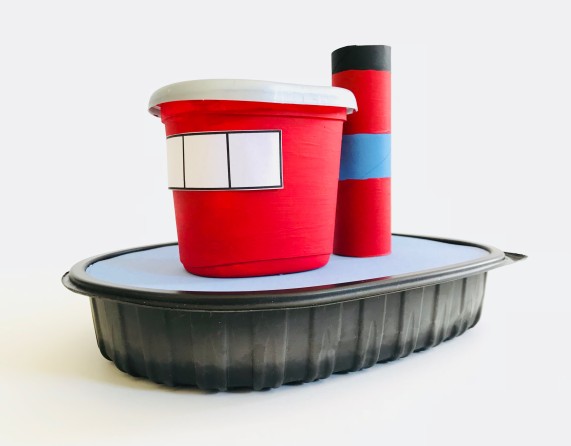
Tugboats are always there when a ship needs help or guidance—just like a parent or caregiver. With a few recycled materials, adults and children can have fun making this Tugboat Bathtub Toy that you’ll love to play with in the tub or pool.
One 16-ounce cream cheese container with lid (or other such container)
Paper towel tube
Cardboard (can use a cereal box)
Foam sheet in whatever color you would like the deck to be. (optional, see To Make the Deck options)
Two colors of paint in whatever colors you would like your cabin and deck (if painting it) to be
Paint brush
Glue gun
Tape
Directions
To Make the Deck
Trace the deck template on the cardboard, cut out and trim if necessary.
Trace the deck template on the foam sheet, cut out and trim if necessary. The foam sheet gives waterproofing to the cardboard deck.
To Make the Boat
Wash and dry rotisserie chicken container. The curved part of the container will be the front of the boat.
Set the cardboard into the rim of the rotisserie chicken container. If needed glue with hot glue gun.
Set the foam sheet on top of the cardboard
To Make the Cabin
Print and cut out the windows, life ring, and deck template
Wash and dry cream cheese container
Paint the cream cheese container in the color chosen, let dry
Put the lid on the cream cheese container to make the roof of the cabin
Glue or tape the windows to one curved side of the cream cheese container
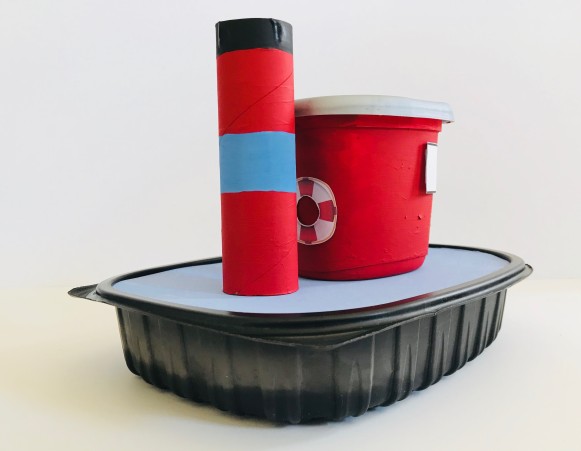
Glue or tape the life ring to the opposite side of the cream cheese container
With the glue gun attach the bottom of the cream cheese container to the deck, a little forward of half-way
To Make the Steam Pipe
Cut a 5-inch section from the paper towel tube
Paint alternating stripes of the deck color and the cabin color, let dry
With the glue gun, attach the steam pipe to the deck close behind, but not touching, the cabin
Enjoy floating your tugboat in the bathtub or pool!
Meet Alison Goldberg
Today, I’m excited to be talking with Alison Goldberg about how her children inspired her book, her collaborative blog M is for Movement, and what kind of vehicle she would most like to be.
What inspired you to write I Love You for Miles and Miles?
When my children were in preschool, they adored trucks and trains. In addition to setting up long and windy train tracks in our living room each day, we planned many family outings with vehicles in mind: train rides, a tractor parade, a visit to a friend’s construction business. My son was so obsessed with trucks that the teachers from an older classroom at his preschool invited him to present to their class as a “guest expert” on the topic.
At bedtime, the “How much do you love me?” game turned into a comparison of our love to the size, strength, length, and other characteristics of all things that go. After many nights of coming up with these examples for my own children, I thought this could be a fun take on a love book.
What was your favorite picture book when you were a child?
One of my favorite picture books as a child was Alexander and the Wind-Up Mouse by Leo Lionni. I’ve always been a rock collector and the magic in this story depends on Alexander finding a purple pebble. The collage is gorgeous—I love multimedia art. Rereading it as an adult, I’m still drawn to the story’s theme of empathy.
Before writing for children, your work centered on economic justice. You’ve lived on the Northern Cheyenne Reservation in Montana and the eastern region of Ghana, Can you talk a little about your work?
For several years I worked for non-profit organizations focused on social and economic justice. In the Northern Cheyenne Reservation, I learned from strong community leaders who expanded out-of-school-time opportunities for kids. In Ghana, I met remarkable organizers who built community infrastructure, improving access to clean water, nutrition, and schools. And in a variety of communities in the United States, I’ve been inspired by amazing activists who are challenging inequality through a variety of strategies.
Have these experiences influenced your writing for children?
When my daughter was born, I sought out books that would help to educate her about the problems of inequality and injustice. I knew I wanted to start early conversations about the history of social movements and the potential we all have to create change. Picture books felt like an important part of framing this. I found a small number of powerful books that helped guide our discussions and also inspired me to write manuscripts along these lines. So from the start, my work on social and economic justice issues has been at the center of my motivation for writing for children. And while I Love You for Miles and Miles is not focused on these issues, a portion of the proceeds from the book will support the Campaign to End Childhood Hunger.
You began blogging about activism in children’s literature in 2012 and in 2017 established M is for Movement, a website that presents authors and illustrators blogging about a variety of social issues. Can you talk about this work briefly? What kinds of changes have you seen in the years since you began and today?
In 2012 when I first started writing for kids, blogging about books with activism themes was a way to dive into the literature and interview like-minded children’s book creators. I learned so much from these conversations, and though I wasn’t able to blog consistently, I always hoped that someday it could grow into something more.
Then in 2017, through conversations with Innosanto Nagara (A is for Activist), Janine Macbeth (Oh, Oh, Baby Boy!), and other collaborators, together we decided it was time to start a group blog on this topic. Certainly the events of the past year underscored why it’s so important for kids to learn about social justice issues and how they have agency to create change. M is for Movement launched in October. We’ve been grateful to connect with a number of other children’s book creators and librarians who are creating content, and hope that the blog will be a space for a variety of articles, interviews, and reviews. We recently did a roundup of some recommended 2017 activist kids’ books and it was powerful to see how many books with this theme were published. I don’t know if there’s been an increase in recent years or not, but my hope is that those who want to explore these topics in their writing will find a community of children’s book creators to help support that work.
If you were one of the vehicles in I Love You for Miles and Miles, which one would you be and why?
If I could choose to be one of the vehicles, I think I’d go with the crane (“My love for you is/Taller than the tallest crane/Rising up, up, up,/Reaching toward the sun.”). I enjoy rock climbing and mountaintop views so I’d be curious to see things from the perspective of a crane.
Do you have a favorite place you like to write?
I usually write at home, but once in a while I travel about a half hour away to a magical library in Concord, Massachusetts for a mini writing retreat.
As a New England coastal resident, I couldn’t help but notice that you have an ocean theme to your website—a beautiful image of a whale on your Homepage and a collection of shells on your About page. Do you have a special affinity for the sea? If so, do you connect the sea to your work?
Thank you! I love the ocean, and in addition to rocks I’ve collected many shells and other found objects over the years. The ocean-related images are all connected to the middle grade novel I’m working on. Since I started that story I’ve photographed, drawn, and collaged my characters in a variety of materials.
What’s up next for you?
More picture manuscripts and draft #4 of my middle grade novel.
Since Celebrate Picture Books is a holiday-themed blog, I can’t let you go without asking a couple of holiday-related questions, so…
What is your favorite holiday?
A new favorite holiday of mine is Valentine’s Day. This is not only because I’m sharing my new picture book about a parent’s or grandparent’s love for a child, but also because my kids and I took part in an event last year that expanded my idea of the holiday. Students from a nearby school organized a Valentine’s Day “Love March” to take a public stand opposing discriminatory policies and express what love means to kids. They carried signs about inclusiveness, respect, kindness, and solidarity. I found this to be a meaningful way to celebrate the holiday and I hope to join their march again this year.
Thanks so much Alison! It’s been terrific getting to know more about you and your work. I wish you all the best with I Love You for Miles and Miles and your future projects!
You can find I Love You for Miles and Miles at these booksellers
Enjoying a good quality of life means being happy where you live and in your relationships, your job, and your situation in general. Finding the right balance can be hard, but with perseverance and support from friends and family, you can discover and attain the best lifestyle for you.
Cowboy Car
Written by Jeanie Franz Ransom | Illustrated by Ovi Nedelcu
“Ever since he was knee-high to his daddy’s hubcaps, Little Car wanted to be a cowboy.” He watched cowboy movies on the TV in his city garage and loved everything about cowboy life. Little Car lived in the city, squeezed in between lanes and lanes of cars and unable to see the sky for the soaring skyscrapers. He dreamed of sleeping under the stars and roaming the wide open plains. But everyone told Little Car, “‘Cars Can’t Be Cowboys.’”
Little Car’s dad wanted him to be a city taxi, like him; his mom hoped he’d be “a family car and settle down in a garage close to home.” Neither of those futures, however, offered the excitement of “herding cattle by day” and the camaraderie of “circling up around the campfire at night,” so when Little Car grew up he headed out West. First, he needed to look the part, but where would he find a hat big enough? He pulled up at a cowboy supply depot, and there on the roof sat the perfect 50-gallon hat!
Image copyright Ovi Nedelcu, text copyright Jeanie Franz Ransom. Courtesy of Two Lions.
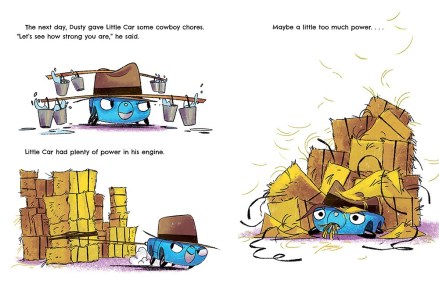
With the hat settled firmly on his roof, Little Car drove on to the Circle R. Ranch. There he met Dusty, who listened to Little Car’s dream of being a cowboy and gave him a bit of bad news: “‘Cars can’t be cowboys. They can’t ride horses!’” Little Car was disappointed, and so was Dusty—the ranch really needed extra help. Little Car wanted to prove his mettle, so Dusty agreed to let him try a few cowboy tests. The next morning, Little Car “zoomed around the barrels in no time. He was used to making quick turns around tight corners in the city.” He was also strong enough to carry heavy loads and move bales of hay. He could even round up li’l doggies in the dark in the beam of his headlights.
The next day Dusty promised to take Little Car to the rodeo. When they got there, though, Little Car was told he couldn’t participate because he didn’t ride a horse. Still, he was excited to watch Dusty ride Double Trouble, the biggest, meanest bull on the circuit. With Dusty hanging on tight, Double Trouble bucked and snorted and leaped. In a minute Dusty was thrown to the ground, and Double Trouble was headed straight toward him.
“With tires squealing, horn honking, and the radio blasting, Little Car got everyone’s attention—including the bulls.” He zipped right and left, “swerved, stopped, backed up, and drove around and around until the bull’s snorts turned into snores.” Afterward, a news reporter wanted to know if he was a cowboy at the Circle R. Ranch. “‘He sure is,’ Dusty said. ‘In fact, he’s my pardner!’”
Watching the report on the garage TV, Little Car’s mom and dad proudly exclaimed, “‘That’s our cowboy!’” And “Little Car drove off into the sunset, home on the range at last.”
Image copyright Ovi Nedelcu, text copyright Jeanie Franz Ransom. Courtesy of Two Lions.
Li’l pardners enamored of the cowboy life will be charmed by Little Car and his dreams to leave the big city for the freedom of cowboy life. With clever turns of phrase and a sprinkling of puns, Jeanie Franz Ransom takes readers on an endearing ride through the ups and downs, disappointments and successes of navigating life on one’s own. When Little Car uses his city experience, smarts, and courage to save Dusty and earn a spot at the ranch, despite not being able to ride a horse, kids will see that they too can overcome obstacles and accomplish their goals.
Children will love adorable Little Car as he snuggles next to his mom and taxicab dad in the garage. With wide headlight eyes and a grill with an ever-present grin, Little Car makes his way out West, where kids will giggle at the 50-gallon hat atop an old general store, whoop as Little Car completes his cowboy tests, and cheer when he outwits Double Trouble to save the day. As Little Car drives off into the sunset, readers will know that he—and they—have a bright future ahead.
Car and cowboy or cowgirl enthusiasts, as well as kids new to school and other activities will find a friend in Little Car and ask to hear his story again and again. Cowboy Car would make a sweet addition to story time and bedtime reading.
You’ll find a portfolio of books and illustration work byOvi Nedelcuon his website!
International Quality of Life Month Activity
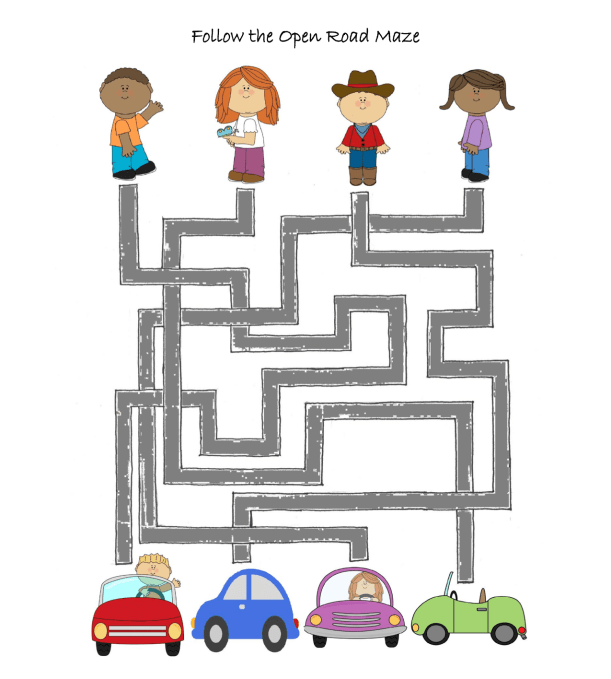
Follow the Open Road Maze
These four kids are ready to head out and enjoy the day! Match each child to the right car in this printable Follow the Open Road Maze to get them on their way!
Newspaper columnist Harold Coffin established Nothing Day in 1973 to satirize the proliferation of daily holidays. His purpose was to give people a day to do absolutely nothing. Sounds good to me! Still, does celebrating this holiday constitute doing something? This may be the most baffling holiday on the calendar! Why not find something—or nothing—to do with today’s book?
On a Magical Do-Nothing Day
By Beatrice Alemagna
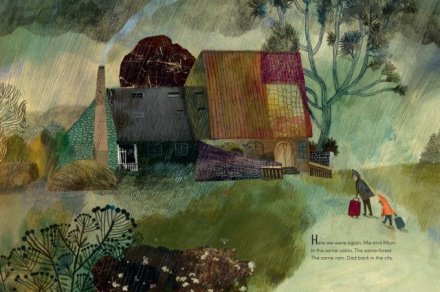
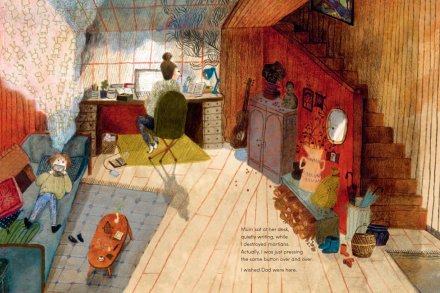
A little girl and her mom are “back again” at the cottage—even trudging up the walk in “the same rain”—while Dad is working back at home in the city. While Mom works at her computer, the girl destroys Martians, but she says, “Actually, I was just pressing the same button over and over.” She wishes that her dad were there.
Copyright Beatrice Alemanga, 2017, courtesy of HarperCollins.
Mom turns away from her writing and watches her daughter playing her video game. “Is this going to be another day of doing nothing?” she growls. Mom takes the device and hides it—“as usual”—and the little girl finds it—“as usual.” But this time she takes it outside. As the rain pelts down from gloomy skies it looked as if everything in the “garden was hiding from the sun.”
Copyright Beatrice Alemanga, 2017, courtesy of HarperCollins.
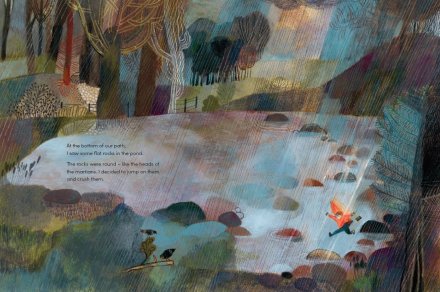
In the pond at the bottom of the hill she finds a line of flat stones. She hops from one to another, crushing them like the Martians in her game. While jumping, though, her game falls out of her pocket and into the pond. The water is so icy cold that she can’t grab it before it sinks out of sight. Oh no! she thinks, “Without my game, I have nothing to do.” The rain strikes her “like rocks,” and she feels “like a small tree trapped outside in a hurricane.”
Copyright Beatrice Alemanga, 2017, courtesy of HarperCollins.
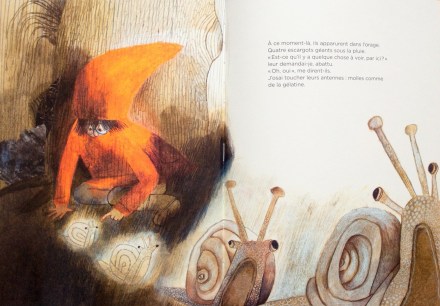
Just then she spies four giant snails slithering by. She asks them if there is anything to do around there, and they tell her yes. She gently feels one of the snail’s antennae. It is “as soft as jello” and makes her smile. She follows the snails and discovers a field filled with mushrooms. Their damp musky smell reminds her of her grandparents’ basement—her “cave of treasures.” She walks on and finds a spot in the earth where she digs her hand into the ground. She feels “thousands of seeds and pellets and kernals, grains and roots and berries touch “her fingers and hand.” When she looks up the sun is shining “through a giant strainer” and blinds her.
Copyright Beatrice Alemanga, 2017, courtesy of beatricealemanga.com.
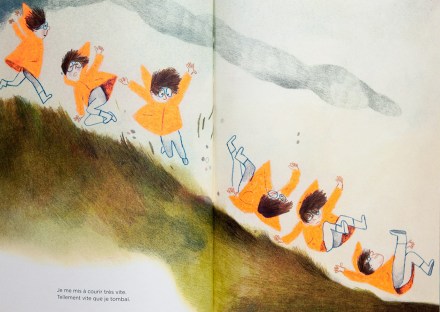
Her heart starts beating fast with energy. She takes off running and runs so quickly that she tumbles down the hill. She lands on her back with a flop, and when she opens her eyes, the world is topsy-turvy new. Energized, she climbs a tree and gazes out at the horizon, breaths deeply in the fresh air, drinks raindrops as they fall from a leaf, and notices bugs she’s never seen before. She talks to a bird, splashes in a puddle, and watches the world through stones as clear as glass.
Copyright Beatrice Alemanga, 2017, courtesy of beatricealemanga.com.
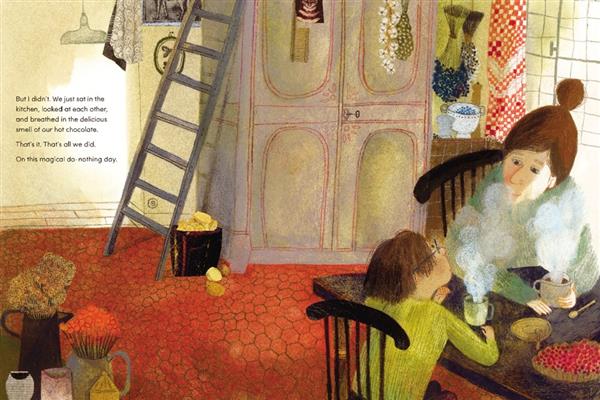
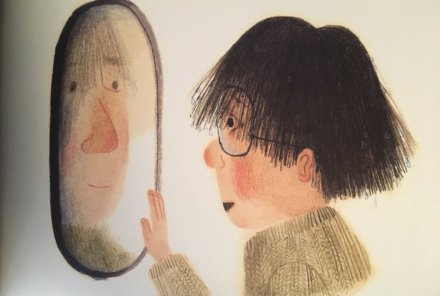
She hurries home and takes off her raincoat. When she glances in the mirror, for a moment she thinks she “sees her dad smiling at [her].” Her mom is still writing, but now she looks different to the little girl—“like one of the creatures outside.” Her mom notices how soaked she is and takes her to the kitchen to dry her off in a big, soft towel. The little girl feels like giving her mom a big hug. For a moment she wants to tell her about all the things she saw and did, but she doesn’t.
Instead, they enjoy their hot chocolate quietly together. “That’s it,” she says. “That’s all we did. On this magical do-nothing day.”
Copyright Beatrice Alemanga, 2017, courtesy of HarperCollins.
While the protagonist of A Magical Do-Nothing Day may never have looked at the world outside closely, Beatrice Alemagna certainly has. Alemagna’s exquisite illustrations portray the beauty of our environment—both indoors and out—and our connections to it with novel descriptions and stunning color and perspectives. As the girl ventures outside, video game clutched tightly, her face registers sadness and wariness. The Martians from the game crawl over and surround her, even when the game is off, seeming to fill any space that might be open to exploration, and, indeed, her first forays into the wild are taken game-style, hopping from platform to platform, rock to rock.
Copyright Beatrice Alemanga, 2017, courtesy of HarperCollins.
When the gaming device sinks into frigid water (as cold and impersonal as the gaming experience itself?), the child quickly comes out of her shell with the help of snails that lead her to greater discovery. The story gives readers much to ponder in the relationships between the child and parents and the child’s newfound appreciation for the natural world.
On a Magical Do-Nothing Day is a fantastic book to add to home and classroom libraries to spur children’s exploration—both in the natural world and within. While I used the feminine pronoun in my review, the story is told from the first person point of view and the child is drawn with gender neutral clothing and hairstyle, making this a book with universal appeal.
Ages 4 – 8
HarperCollins, 2017 | ISBN 978-0062657602
Discover more about Beatrice Alemanga, her books, and her art on her website.
Nothing Day Activity
Nothing To Do Coloring Pages
Rainy days are perfect “do-nothing” days. The next time you have an indoor day, grab your crayons or colored pencils and enjoy these printable coloring pages
Baking soda is one of those little chemical compounds that is indispensable in so many ways. First produced in 1791 by French chemist Nicolas Leblanc, it’s used for everything from cleaning solutions to health remedies to black snake fireworks to science fair volcanoes. In 1846 two New York bakers, John Dwight and Austin Church, established the first factory in the United States to produce baking soda from sodium carbonate and carbon dioxide. Of course, baking soda is also used to make treats of all kinds – even the ones featured in today’s book!
Baking Day at Grandma’s
Written by Anika Denise | Illustrated by Christopher Denise
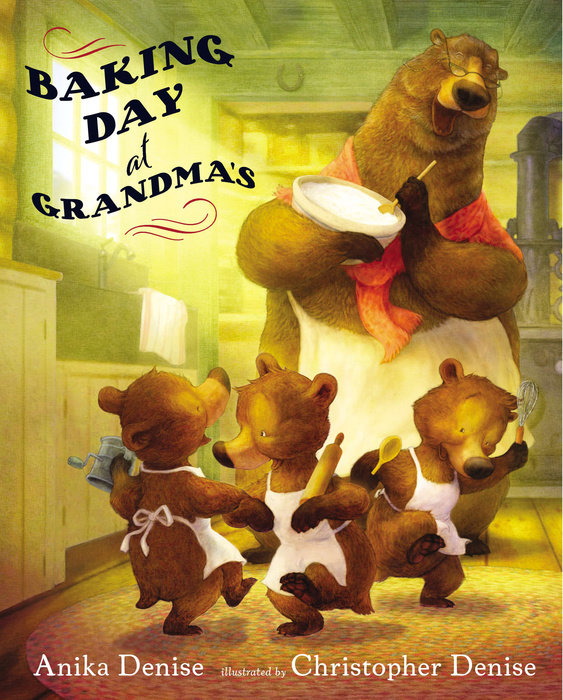
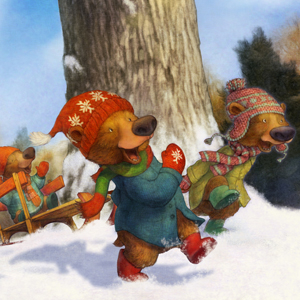
Three little cubs bundle up in their winter coats, hats, scarves, and mittens and head out over the snowy hills to Grandma’s for baking day. Soon they see “past the pond so smooth and clear / little cottage drawing near.” A knock on Grandma’s door brings her closer, and when she opens the door the trio give her a kiss before entering the snug home.
Image copyright Christopher Denise, courtesy of Philomel Books
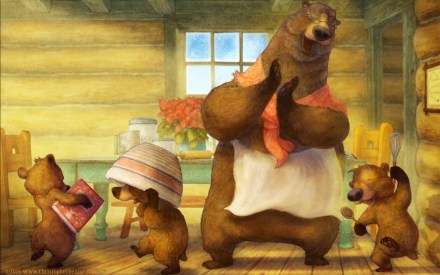
After warming their toes by the fire, the young bears grab the cookbook, a mixing bowl, a spoon, and a whisk because “It’s baking day! / It’s baking day! / It’s baking day! / at Grandma’s!” As her little bakers stand on chairs to reach the table, Grandma passes out aprons and reads the recipe. Happily crowded around the bowl, the cubs with “wooden spoon and measuring cup, / mix the batter; stir it up. / Fold it gently in the pan, / lick the spoon because we can.”
Image copyright Christopher Denise, courtesy of Philomel Books
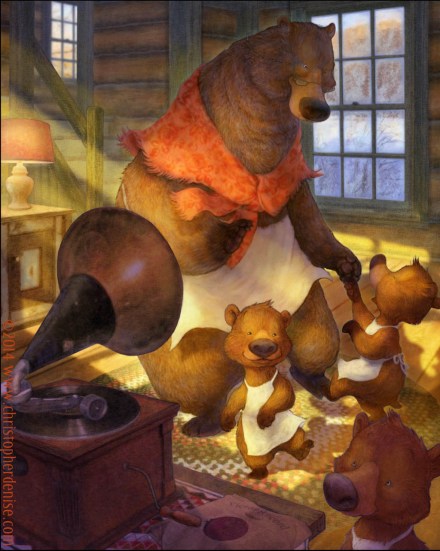
While they wait for their treats to bake, Grandma pours tummy-warming mugs of hot chocolate and one little bear draws a smiley face on the frosty window for a little chickadee to see. Grandma puts a record on her old Victrola, and as she sings the “soft and sweet skippy notes,” the cubs tap their feet. At last the kitchen timer rings, and the little bears dance arm in arm because “It’s baking day! / It’s baking day! / It’s baking day! / at Grandma’s!”
The chocolate goodies pop from the pan, and with icing and sprinkles are ready to be wrapped and tied with a red ribbon. Other treats get pretty bags, “each one marked with little tags.” The cubs are also bundled nice and warm, and with final hugs for Grandma, they are soon “Walking home under the moon. / Back to visit Grandma soon.”
Image copyright Christopher Denise, courtesy of Philomel Books
Anika Denise’s sweet, rhyming story is as heartwarming as a cozy kitchen on a cold day. The buoyant rhythm is a joy to read, and Denise’s infectious repeated verse, “It’s baking day! / It’s baking day! / It’s baking day! / at Grandma’s!” invites little ones to join in the story. The bond between the three cubs and their grandma is full of love and hugs, and just like the young bears, readers will want to return again and again to Grandma’s house.
Christopher Denise infuses his winter landscapes and Grandma’s house with rich, warm colors that welcome readers into this special family baking day. The three cubs, wrapped in green coats and red knit caps, march with their sled over brilliant white snowy hills between their house and Grandma’s tidy log cabin. Inside, the rooms glow with golden sunshine, and it’s easy to see why the cubs love their attentive grandma so as she gently guides them in baking.
Newly available as a board book, Baking Day at Grandma’s is a book that young children will love to hear over and over at story time, naptime, or bedtime. It would also make an appreciated gift to or from a grandmother.
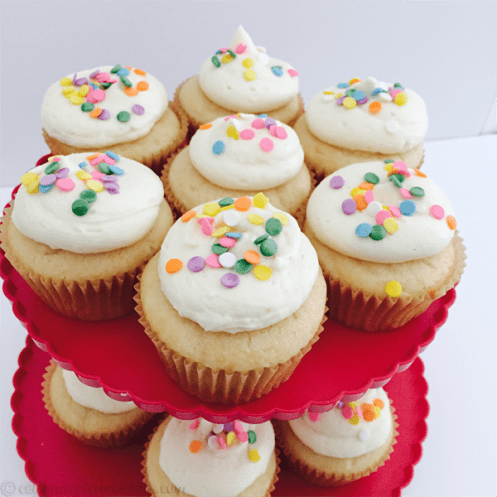
Preheat oven to 350F degrees. Line muffin tin with 12 cupcake liners. Set aside.
In a medium bowl, mix together flour, baking powder, baking soda, and salt. Set aside. In a large microwave-safe bowl, melt butter in the microwave. Whisk in sugar – mixture will be gritty. Whisk in egg whites, yogurt, milk, and vanilla extract until combined. Split 1 vanilla bean down the middle lengthwise. Scrape seeds from half of the vanilla bean into batter. Reserve other half.
Slowly mix dry ingredients into the wet ingredients until no lumps remain. Batter will be thick.
Divide batter among 12 cupcake liners (or 24 mini) and bake for 20 minutes or until a toothpick inserted in the center comes out clean. Bake for 8-9 minutes if making mini cupcakes. Allow to cool.
To make the frosting, beat softened butter on medium speed with an electric or stand mixer. Beat for about 3 minutes until smooth and creamy. Add confectioners’ sugar, cream, vanilla extract, and vanilla bean seeds with the mixer running. Increase to high speed and beat for 3 minutes. Add more powdered sugar if frosting is too thin or more cream if mixture is too thick. Add salt if frosting is too sweet (1/4 teaspoon). Frost cooled cupcakes (I used Wilton 1M piping tip). There may be leftover frosting depending how much you use on each cupcake.
Store cupcakes in an airtight container at room temperature for up to 3 days and in the refrigerator up to 7.
Additional Notes
If you can’t get your hands on vanilla beans, add an extra ½ teaspoon of pure vanilla extract instead.
Strongly urged to use heavy cream. You may use milk or half-and-half, but heavy cream will give the frosting a thicker texture. I recommend it!
For ways to adapt this recipe and more scrumptious recipes, visit Sally’s Baking Addiction. I guarantee you’ll go back again and again!
Today’s holiday actually got started with some monkeying around by art students at Michigan State University when Casey Sorrow wrote “Monkey Day” on this date on his roommate’s calendar. The idea sparked a real celebration with other art students and later became popularized through a comic strip that Sorrow and a friend published. Since then Monkey Day has become an international opportunity to raise awareness of primates and the dangers facing them. To celebrate today’s holiday, learn more about these mischievous animals, visit a zoo, or have a little fun in honor of these favorite animals!
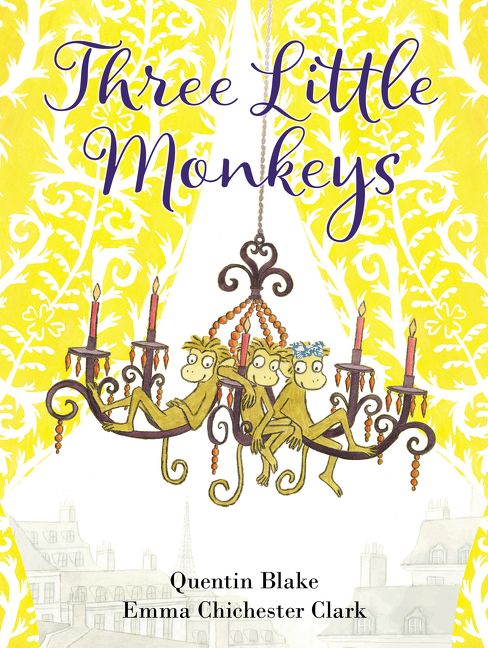
Three Little Monkeys
Written by Quentin Blake | Illustrated by Emma Chichester Clark
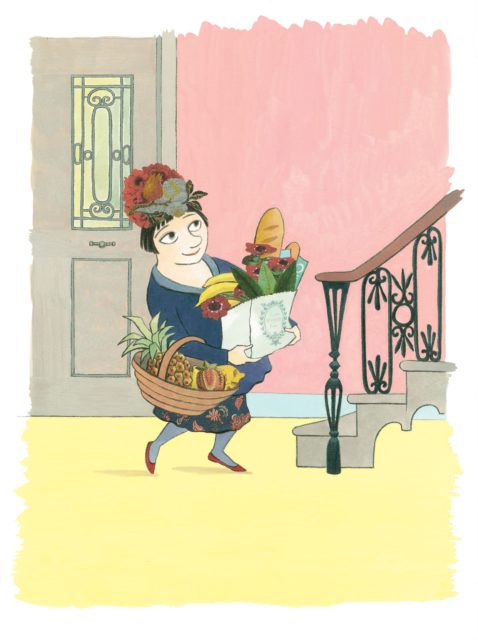
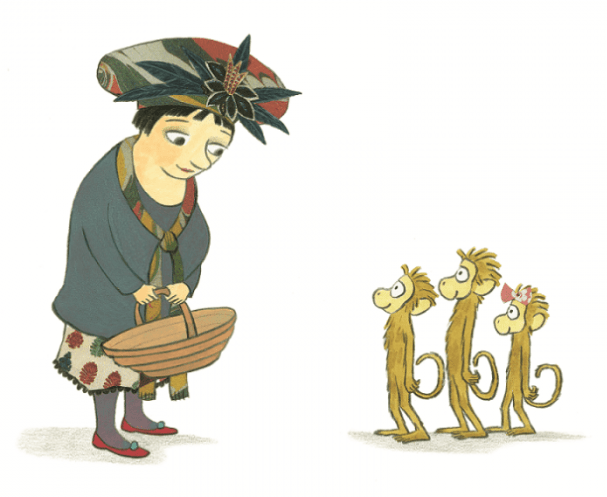
Whenever Hilda Snibbs came home, the first thing she did was call out “‘I’m home! Where are you?’” You might think she was talking to her kids, her dog, or her cat, but she was actually addressing her three little monkeys whose “names were Tim and Sam and Lulu.” Hilda was sure to give them healthy snacks because “they were very lively.”
Copyright Emma Chichester Clark, 2016, courtesy of HarperCollins.
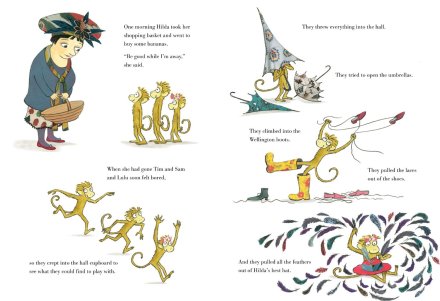
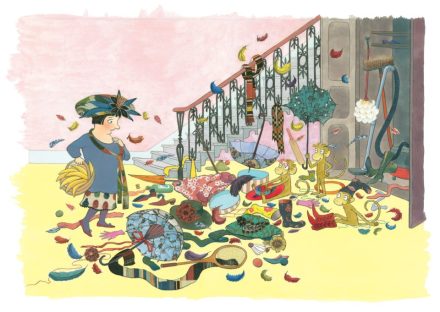
One day when Hilda went to the grocery store, the monkeys grew bored. They opened the hall closet and “threw everything into the hall.” They opened the umbrellas, tore the laces from all the shoes, and plucked all the feathers from Hilda’s favorite hat. When Hilda came home and saw the mess she had one thing to say: “‘I’m really very disappointed in such naughty little monkeys.” Tim, Sam, and Lulu just gazed at her silently.
Image copyright Emma Chichester Clark, 2016, text copyright Quentin Blake, 2016. Courtesy of HarperCollins.
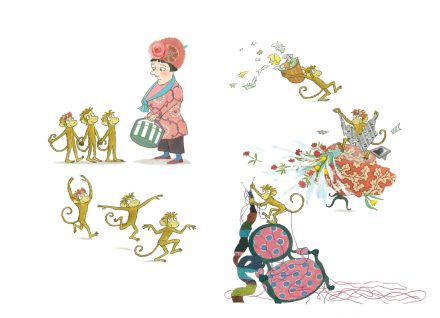
The next day Hilda went to the hat store. Before she left she told her little monkeys to be good. But as soon as she was out the door, they hurried to the living room to play. They upended the wastebasket, spilled the flower vase, tore the newspapers, and tangled Hilda’s knitting into knots. “When Hilda came home and went into the living room she found the most awful mess. There were flowers all over the place. And her poor knitting!” She admonished the little monkeys, but they just “looked at her with their big round eyes and said nothing.”
Copyright Emma Chichester Clark, 2016, courtesy of HarperCollins.
Needing more wool, Hilda headed into town the next day with a reminder to her monkeys to be good while she was away. But the kitchen was so enticing, and they tossed everything out of the cupboards, scattered the powdered soap, emptied the trashcan, and tipped the soup pan onto the floor. This time when Hilda got home, she became angry. “‘Great grief! How long can I put up with these terrible little monkeys?’” But Tim, Sam, and Lulu just smiled at her.
Copyright Emma Chichester Clark, 2016, courtesy of HarperCollins.
The next day was market day again and once again the monkeys grew bored as soon as Hilda was gone. The bathroom was a perfect playroom with its toilet paper to unroll, toothpaste tube to squeeze, and shampoo to splash around. Hilda nearly tore her hair out when she returned to this mayhem. As she stared at her monkeys wrapped in toilet paper and sporting sudsy costumes, she cried, “‘Oh, for a peaceful life without these wicked little monkeys!’”
Copyright Emma Chichester Clark, 2016, courtesy of HarperCollins.
Before going out the next morning, Hilda gave Tim, Sam, and Lulu a stern talking to. It was late when she returned and as she stepped through the door something seemed amiss. The living room was in perfect order, the kitchen was spotless, and the bathroom shone. Hilda broke down in tears. Something horrible must have happened to her three little monkeys. Her handkerchief was soaked through, and when she went to the closet to get a new one, she found Tim, Sam, and Lulu waiting quietly for her.
Hilda hugged them all and “that night…went up the stairs to bed with a happy heart.” As she got under the covers, she found herself lying on all her forks, spoons, and cans of sardines. “But that is the kind of thing you have to expect if you have three little monkeys.”
Copyright Emma Chichester Clark, 2016, courtesy of HarperCollins.
Quentin Blake’s hilarious tale of three little monkeys has all the charm and style of classic storytelling that will set young readers giggling and eagerly anticipating each of Hilda’s trips into town. Adults with “little monkeys” of their own will anticipate the tenderhearted ending, and children will be delighted with the assurance of enduring love Hilda’s tears provide. A dramatic reading of Hilda’s increasing frustration with her mischievous charges will enthrall listeners as they gaze at the reader with the same sweet expression as Tim, Sam, and Lulu.
Copyright Emma Chichester Clark, 2016, courtesy of HarperCollins.
Emma Chichester Clark’s sophistcated illustrations begin on the endpapers, where Hilda is leaving her elegant brownstone under the watchful gaze of her little monkeys. Tim, Sam, and Lulu are as cute as can be as they happily eat their snack and give a hint of the shenanigans to come. With each new day, the monkeys get into more and more trouble, leading to wonderful, fully detailed two-page masterpieces of the mayhem they cause. Hilda’s growing consternation is clear in her facial expressions and gestures. Kids will love Hilda’s collection of hats and matching outfits and scenes of her home. When Hilda comes home to a pristine house, the brightly colored pages turn as gray as a cloudy day. The sunny hues return with the discovery of her precious little ones, and the bedtime surprise is a delight.
Ages 4 – 8
HarperCollins, 2017 | ISBN 978-0062670670
Discover more about Quentin Blake, his books, and his illustration work on his website
To learn more about Emma Chichester Clark, her books, and her paintings, visit her website.
So, after a long winter of standing around in freezing temperatures, slipping on icy pavement, and not getting quite as much exercise as usual, your car could use some tender loving care. April is the perfect time to schedule a maintenance checkup, give your auto a bath, and take ‘er out on the open road for a nice, long run. You never know, your car may have dreams too—just like the cute coupe in today’s story.
Mosey on down below to find an chance to win a copy of Cowboy Car!
Cowboy Car
Written by Jeanie Franz Ransom | Illustrated by Ovi Nedelcu
“Ever since he was knee-high to his daddy’s hubcaps, Little Car wanted to be a cowboy.” He watched cowboy movies on the TV in his city garage and loved everything about cowboy life. Little Car lived in the city, squeezed in between lanes and lanes of cars and unable to see the sky for the soaring skyscrapers. He dreamed of sleeping under the stars and roaming the wide open plains. But everyone told Little Car, “‘Cars Can’t Be Cowboys.’”
Little Car’s dad wanted him to be a city taxi, like him; his mom hoped he’d be “a family car and settle down in a garage close to home.” Neither of those futures, however, offered the excitement of “herding cattle by day” and the camaraderie of “circling up around the campfire at night,” so when Little Car grew up he headed out West. First, he needed to look the part, but where would he find a hat big enough? He pulled up at a cowboy supply depot, and there on the roof sat the perfect 50-gallon hat!
Image copyright Ovi Nedelcu, text copyright Jeanie Franz Ransom. Courtesy of Two Lions.
With the hat settled firmly on his roof, Little Car drove on to the Circle R. Ranch. There he met Dusty, who listened to Little Car’s dream of being a cowboy and gave him a bit of bad news: “‘Cars can’t be cowboys. They can’t ride horses!’” Little Car was disappointed, and so was Dusty—the ranch really needed extra help. Little Car wanted to prove his mettle, so Dusty agreed to let him try a few cowboy tests. The next morning, Little Car “zoomed around the barrels in no time. He was used to making quick turns around tight corners in the city.” He was also strong enough to carry heavy loads and move bales of hay. He could even round up li’l doggies in the dark in the beam of his headlights.
The next day Dusty promised to take Little Car to the rodeo. When they got there, though, Little Car was told he couldn’t participate because he didn’t ride a horse. Still, he was excited to watch Dusty ride Double Trouble, the biggest, meanest bull on the circuit. With Dusty hanging on tight, Double Trouble bucked and snorted and leaped. In a minute Dusty was thrown to the ground, and Double Trouble was headed straight toward him.
“With tires squealing, horn honking, and the radio blasting, Little Car got everyone’s attention—including the bulls.” He zipped right and left, “swerved, stopped, backed up, and drove around and around until the bull’s snorts turned into snores.” Afterward, a news reporter wanted to know if he was a cowboy at the Circle R. Ranch. “‘He sure is,’ Dusty said. ‘In fact, he’s my pardner!’”
Watching the report on the garage TV, Little Car’s mom and dad proudly exclaimed, “‘That’s our cowboy!’” And “Little Car drove off into the sunset, home on the range at last.”
Image copyright Ovi Nedelcu, text copyright Jeanie Franz Ransom. Courtesy of Two Lions.
Li’l pardners enamored of the cowboy life will be charmed by Little Car and his dreams to leave the big city for the freedom of cowboy life. With clever turns of phrase and a sprinkling of puns, Jeanie Franz Ransom takes readers on an endearing ride through the ups and downs, disappointments and successes of navigating life on one’s own. When Little Car uses his city experience, smarts, and courage to save Dusty and earn a spot at the ranch, despite not being able to ride a horse, kids will see that they too can overcome obstacles and accomplish their goals.
Children will love adorable Little Car as he snuggles next to his mom and taxicab dad in the garage. With wide headlight eyes and a grill with an ever-present grin, Little Car makes his way out West, where kids will giggle at the 50-gallon hat atop an old general store, whoop as Little Car completes his cowboy tests, and cheer when he outwits Double Trouble to save the day. As Little Car drives off into the sunset, readers will know that he—and they—have a bright future ahead.
Car and cowboy or cowgirl enthusiasts, as well as kids new to school and other activities will find a friend in Little Car and ask to hear his story again and again. Cowboy Car would make a sweet addition to story time and bedtime reading.
You’ll find a portfolio of books and illustration work by Ovi Nedelcu on his website!
Car Care Month Activity
Follow the Open Road Maze
These four kids are ready to head out and enjoy the day! Match each child to the right car in this printable Follow the Open Road Maze to get them on their way!





 Follow the Open Road Maze