September 30 – National Pet Tricks Day

About the Holiday

National Pet Tricks Day was established in 2020 by professional dog trainer Joe Nutkins of Ardleigh, Essex, in the UK. Nutkins loves connecting with dogs and other animals by spending time with them teaching them tricks. Nutkins has enjoyed success and and even a bit of celebrity—appearing on Britain’s Got Talent in 2029 and 2023—with her expertly trained pets, including dogs, cats, hamsters, parrots, and even ducks and chickens. To celebrate today, why not begin spending some encouraging and fun one-on-one time each day to teach your pet a special art. And, of course, don’t forget the treats!

Thank you to Flamingo Books for sending me a copy of this book for review!

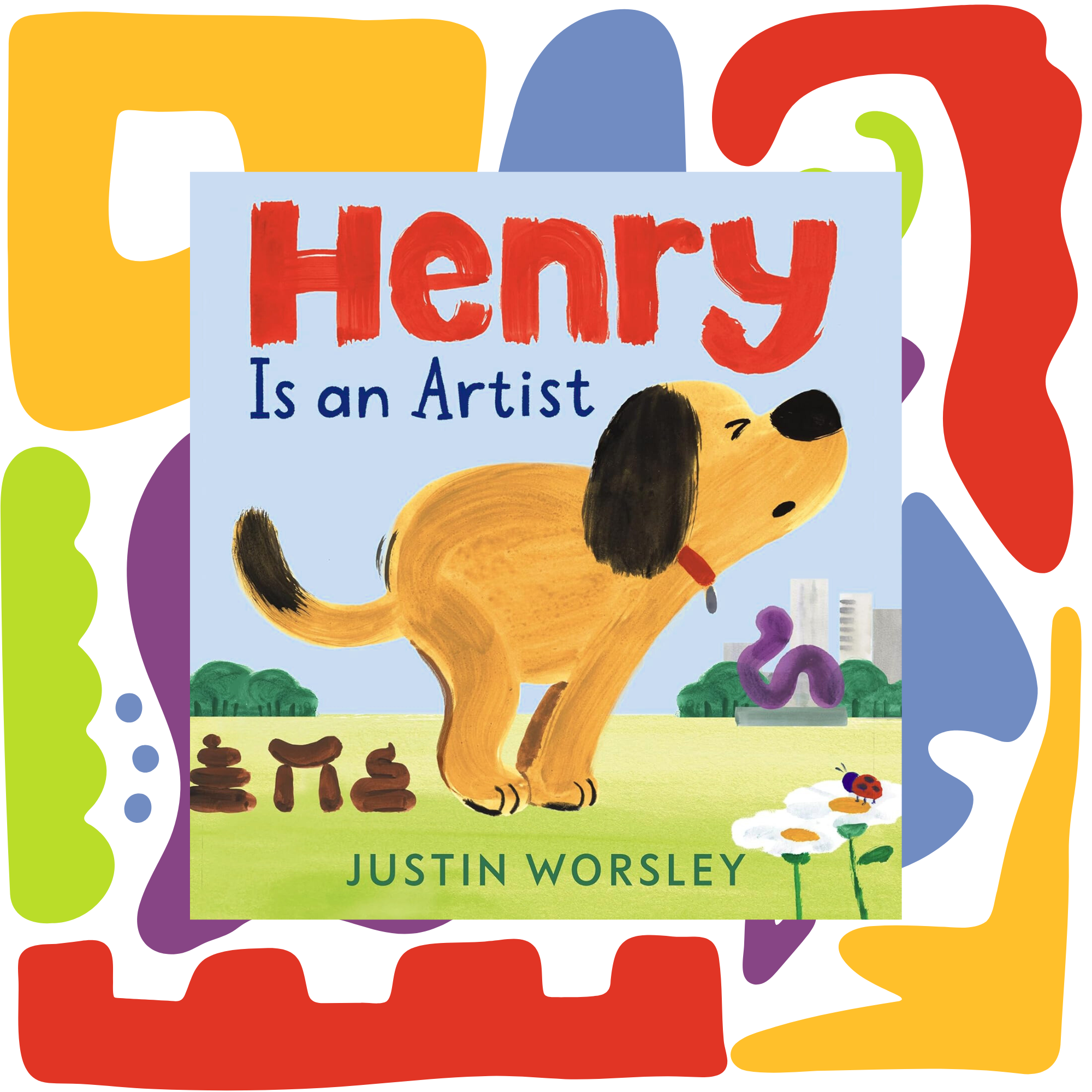
Henry Is an Artist

By Justin Worsley


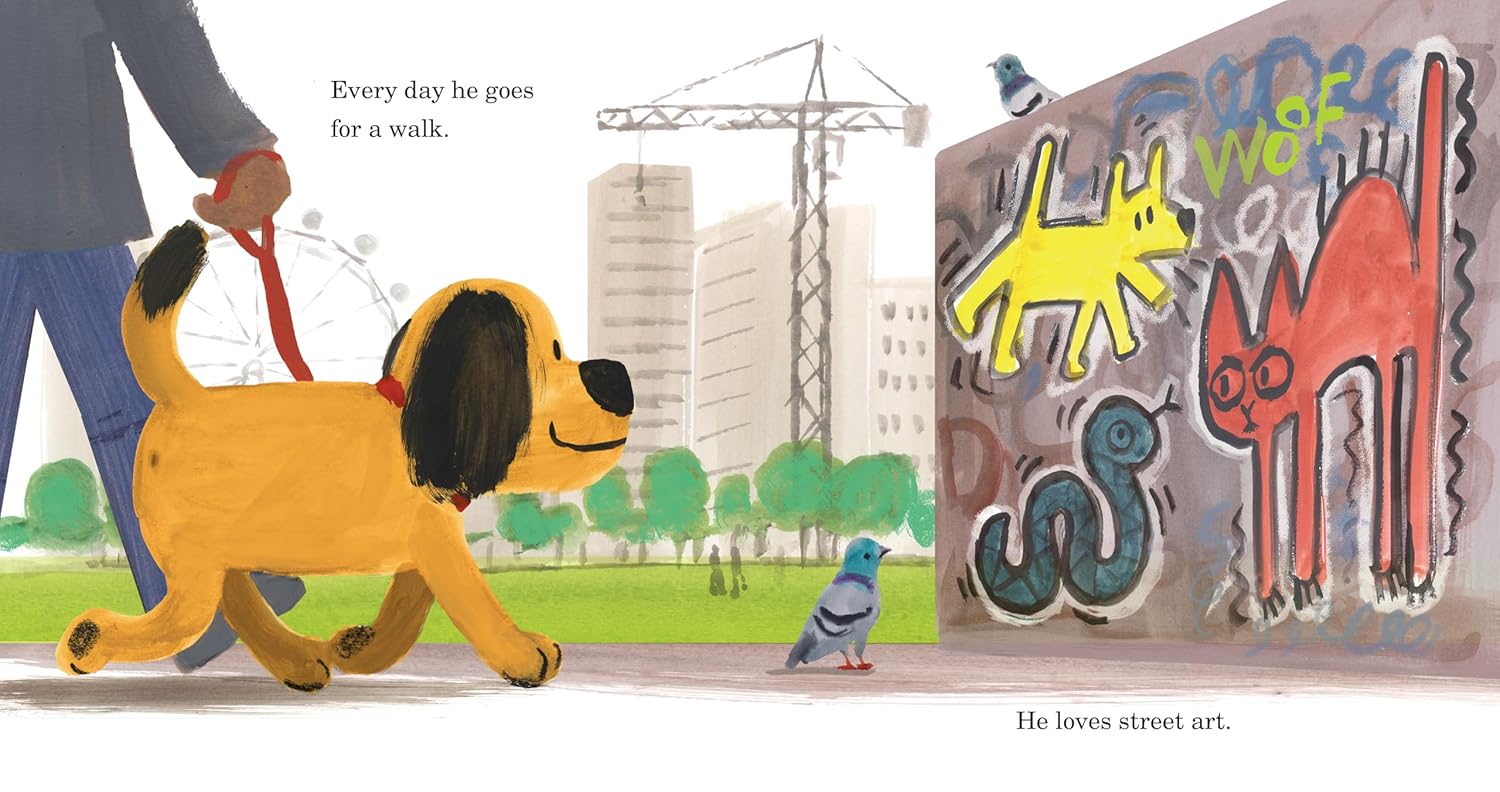
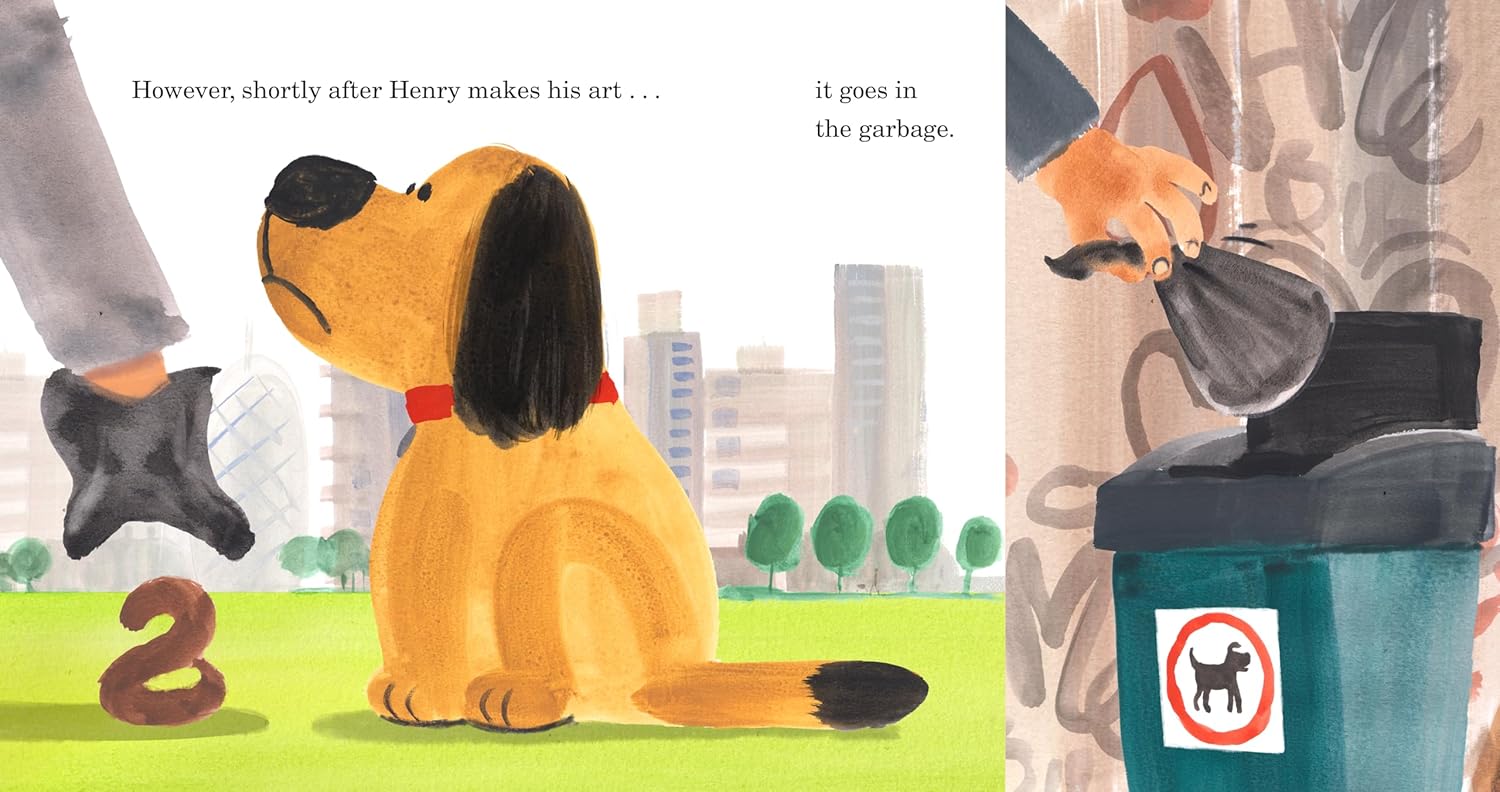
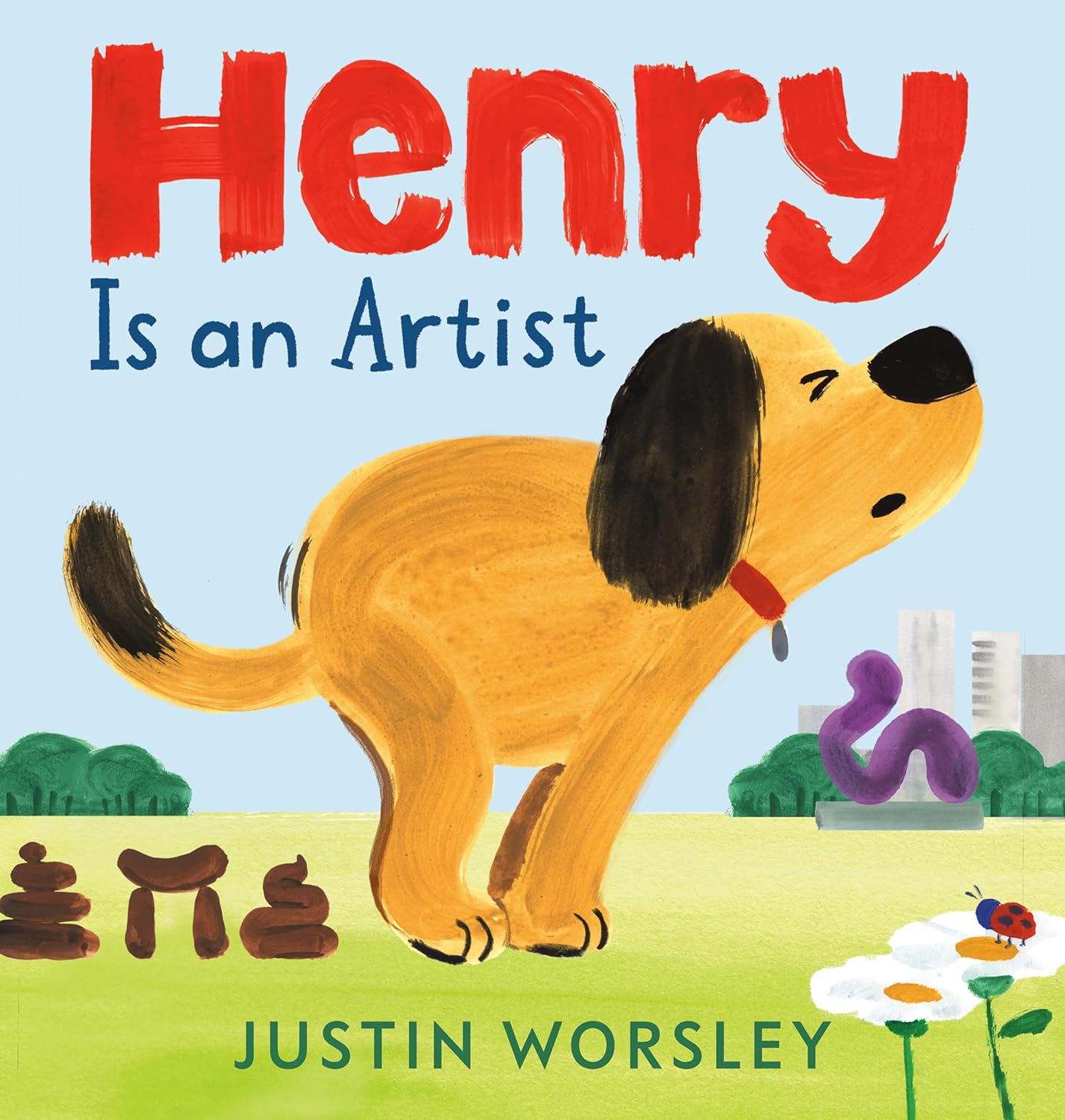
Many dogs know tricks, but Henry has a calling. “Henry is an artist.” Each day when he goes for a walk, Henry admires the street art he passes, “but sculpture is his real passion.” Henry is no stranger to the creative impulse, every day producing a new, unique sculpture of his own. Even though Henry “is proud of his work,” it is not universally embraced. In fact, its public impact is fleeting and usually trashed.

Text and Illustration © 2025 by Justin Worsley. Courtesy of Flamingo Books.

One day, however, in a moment of distraction, Henry’s creation is left behind. Left behind, but not disregarded. “Someone has fallen in love with his artwork.” The tiny bug flies off to “tell all their friends.” The news travels fast, and soon “Henry’s sculpture is a sensation!”

Henry’s sculpture is so valued, in fact, that the bugs carefully transport it to a place of honor. Henry is invited to view its new home: “the grand lobby of the Bug Hotel!” He’s hailed as a celebrity, and returns home a very happy pup, indeed.

Text and Illustration © 2025 by Justin Worsley. Courtesy of Flamingo Books.

Funny, thought-provoking, and an ode to all the unsung creatives among us, Justin Worsley’s story makes readers laugh while encouraging them to find inspiration in the most unlikely places.

Worsley’s delightfully smart and inventive illustrations endear Henry to kids as he walks through the park admiring the public sculptures and trying to install his own. Henry’s facial expressions as he interacts with his owner, the reactions of other dogs, and the appreciative reception of an observant toddler and bug community all add depth to the story.

Henry Is an Artist would be a fun and often-requested addition to home, classroom, and public libraries. Its short sentences make it a perfect choice for new and beginning readers to read or grow with on their own.

Ages 4 – 8

Flamingo Books, 2025 | ISBN 978-0593695043

About the Author/Illustrator

Justin Worsley is an illustrator, author, and toy designer. After nearly thirty years of designing toys, he decided it was time for a change and followed his long-held dream of becoming a children’s book illustrator and graduated from Cambridge School of Art in 2023. When he’s not working, he’s usually riding his bike or walking his dog, Percy.

National Pet Tricks Day Activity

celebrate-picture-books-picture-book-review-paw-print-magnet-smaller

Paw Print Magnet


Your pet’s paw print makes a cute magnet for your fridge or locker to give you a paw…I mean hand… holding those important messages and pictures. Here’s how to do this easy craft with your dog or cat.

Supplies

  • 1/2 cup flour
  • 1/2 cup salt
  • 1/4 cup water
  • Cookie cutter (optional)
  • Bowl
  • Wax paper
  • Strong multi-surface glue or hot glue gun
  • Strong magnet, available at craft stores
  • Paint (optional)

Directions

  1. Mix the flour and salt in the bowl
  2. Slowly add the water and mix the dough, kneading it until it is smooth and soft. Add more water if necessary.
  3. Roll out the dough until it is about 1/4 – 1/2 inch thick
  4. Place the dough on the wax paper
  5. Carefully press your pet’s paw into the dough. 
  6. Place the cookie cutter over the print and cut out 
  7. Bake the paw print at 250 degrees for 1 to 2 hours depending on thickness of dough
  8. If desired, paint the print, the background, or both
  9. Attach the magnet with the glue
  10. Display your magnet

You can purchase Henry Is an Artist from these booksellers

Amazon | Barnes & Noble | Bookshop (discounted books and support for your local independent bookstore)

Picture Book Review

August 29 – Happiness Happens Month

About the Holiday

Happiness Happens Month reminds us that happiness doesn’t have to be something we plan for or spend money on. In fact paying attention to those little moments during each day, going on spontaneous outings with friends or family, or taking time to do a favorite activity may be all you need to feel happier every day! With summer coming to a close and school starting again, it’s a great time to reflect on the fun you’ve had over the past months and all the memories that are about to be made as another year of activities, education, new friendships, and excitement unfolds. Happiness really does come to you if you look for it and let it happen!

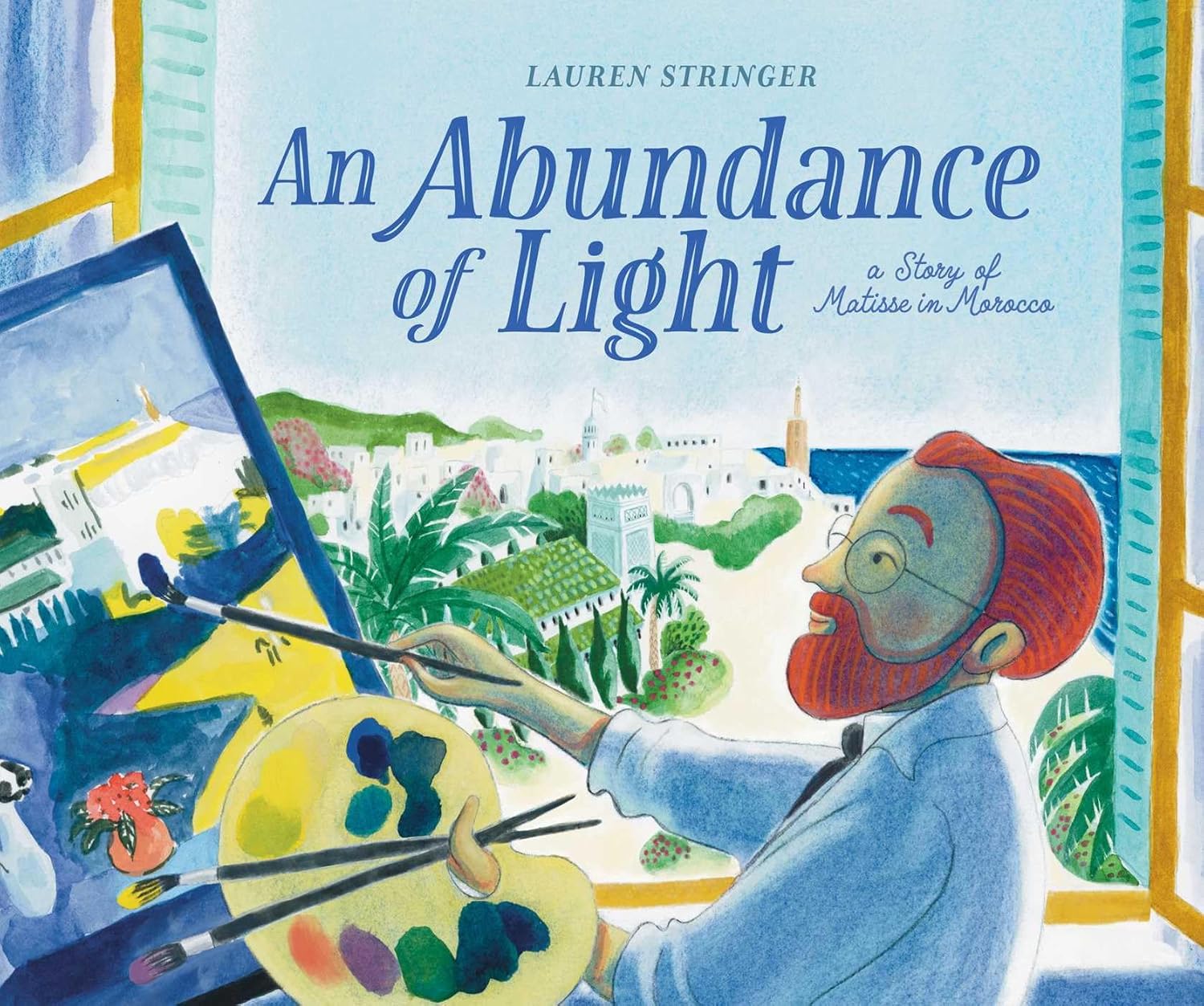
An Abundance of Light: a Story of Matisse in Morocco

By Lauren Stringer


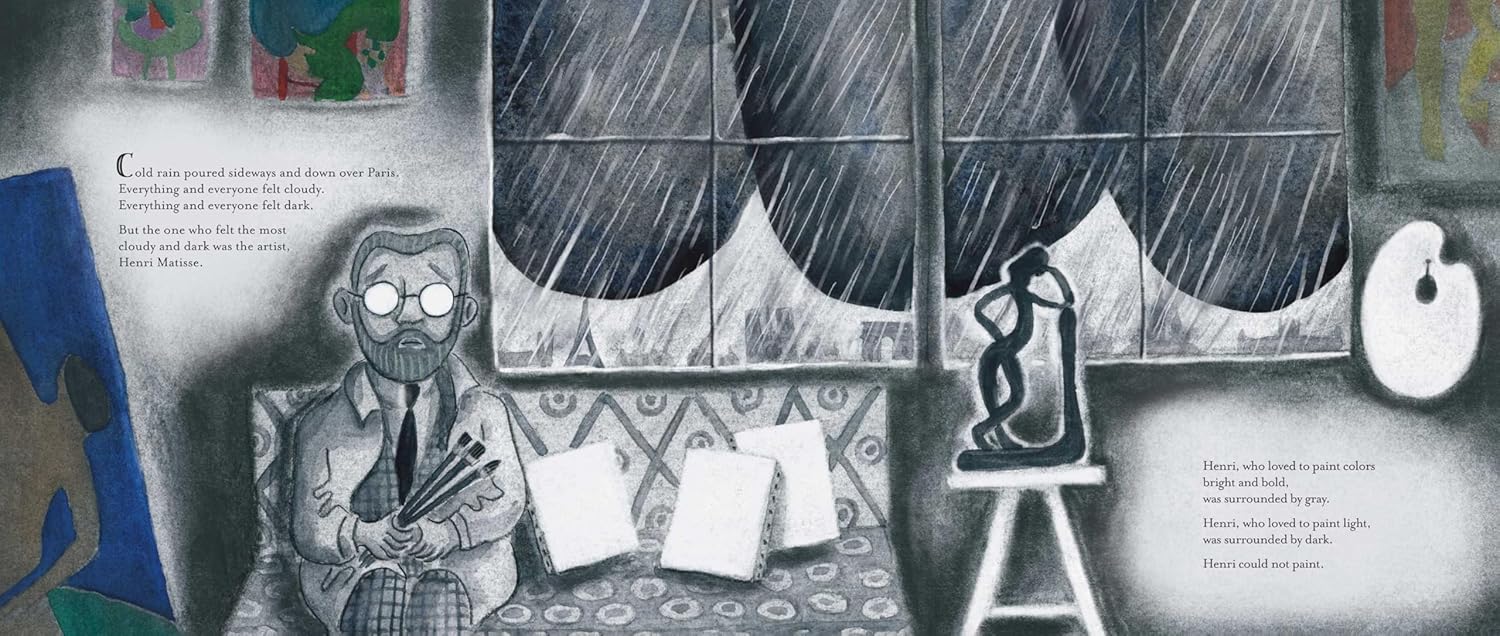
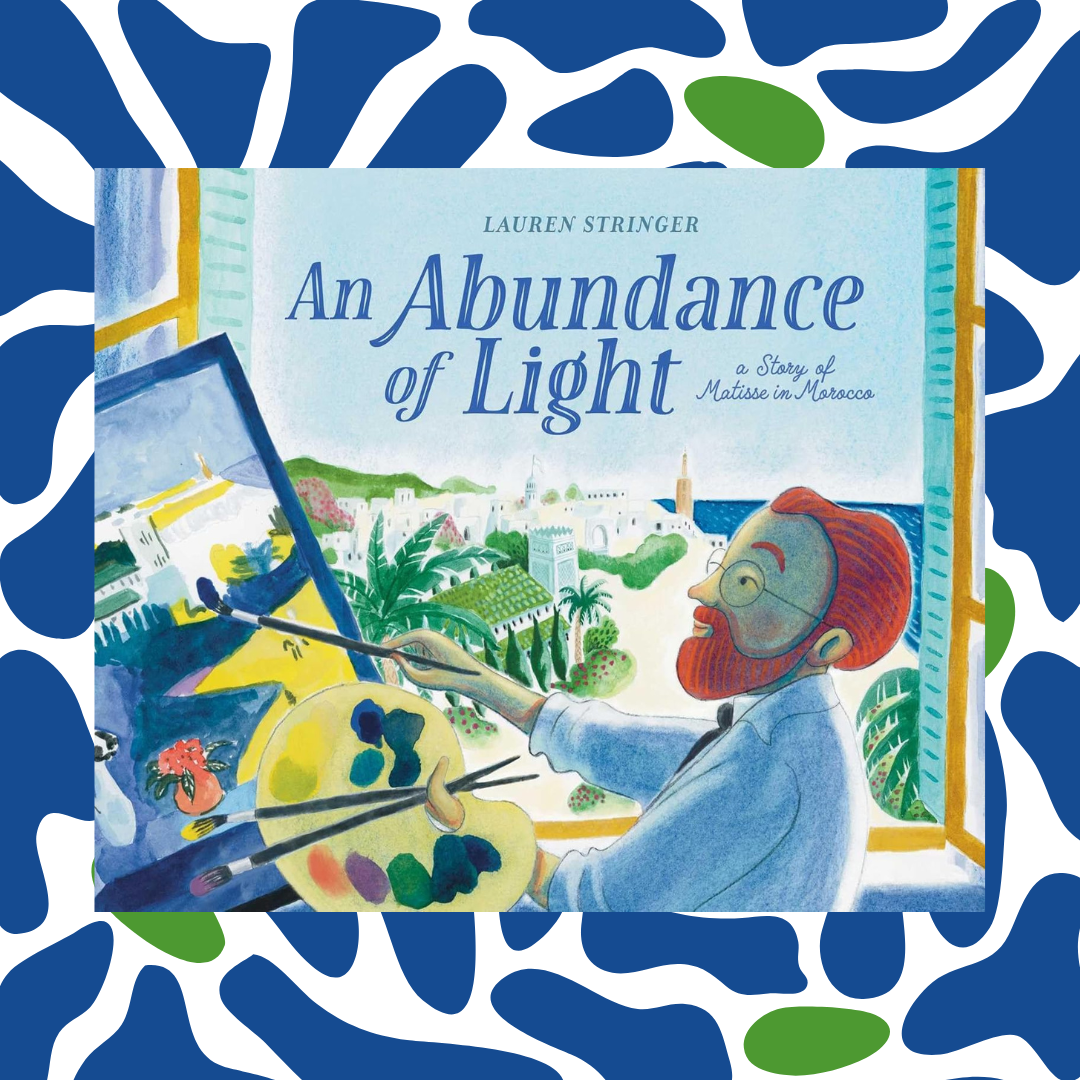
As Paris endured a cold and rainy season, Henri Matisse suffered. How could he paint light and colors when he was surrounded by gray? His friend Albert Marquet suggested he visit Tangier, Morocco, “where the Atlantic Ocean meets the Mediterranean Sea.” There, he said, “the sunlight was abundant!” Henri packed up all of his supplies and made the trip. But it seemed Henri had brought the rainy weather with him. He tried to paint colorful irises and a basket of oranges and lemons, but he still felt gloomy and trapped.

Text and illustration © 2025 by Lauren Stringer. Courtesy of Beach Lane Books.

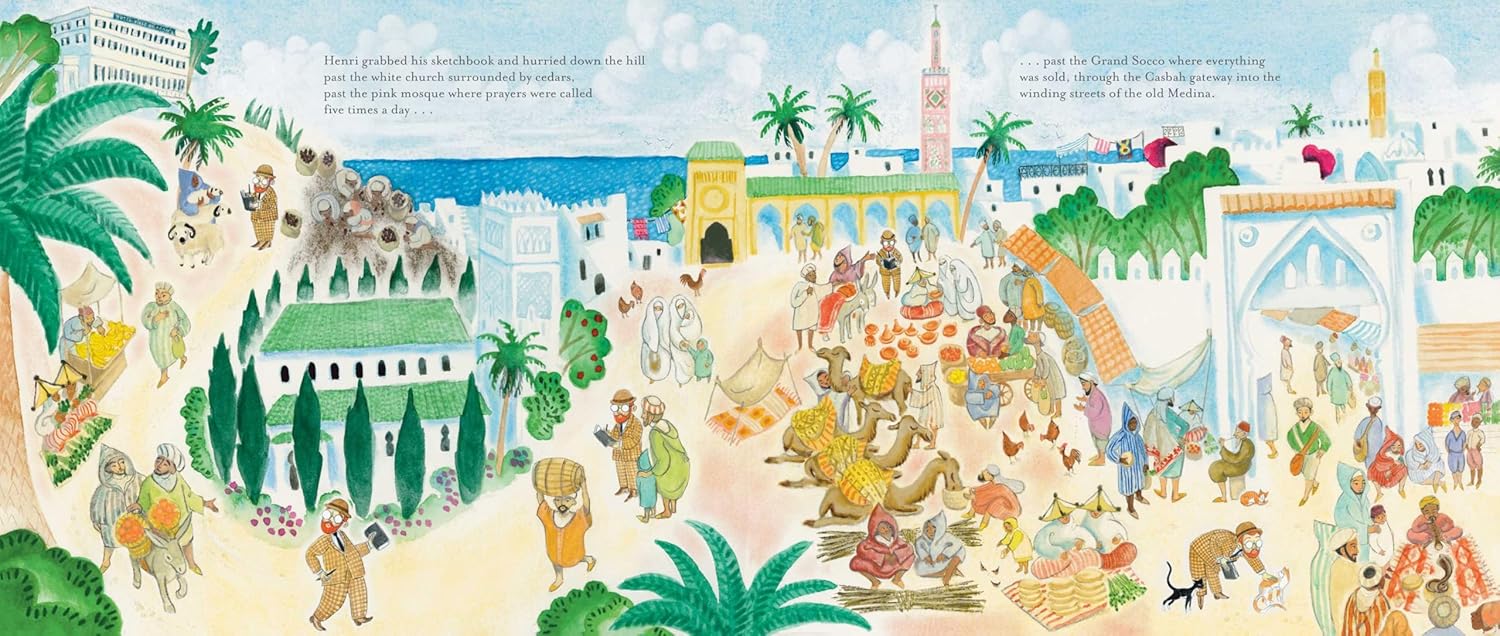
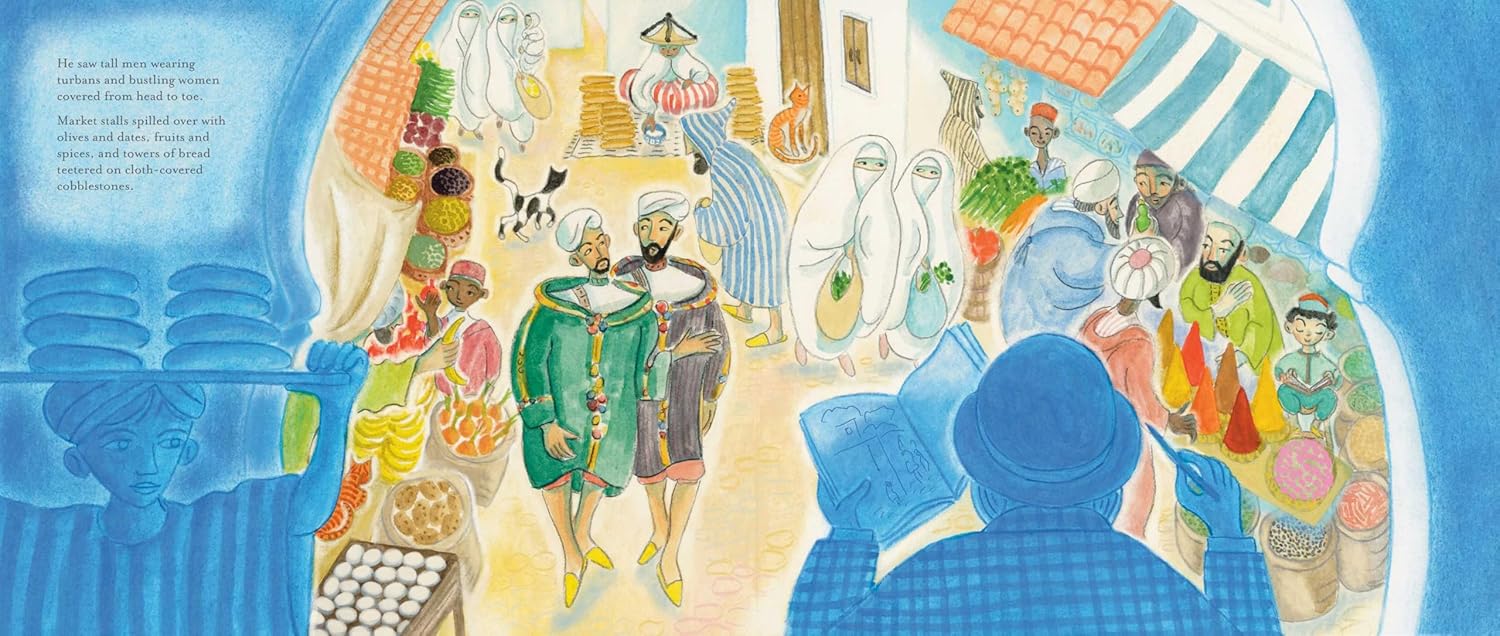
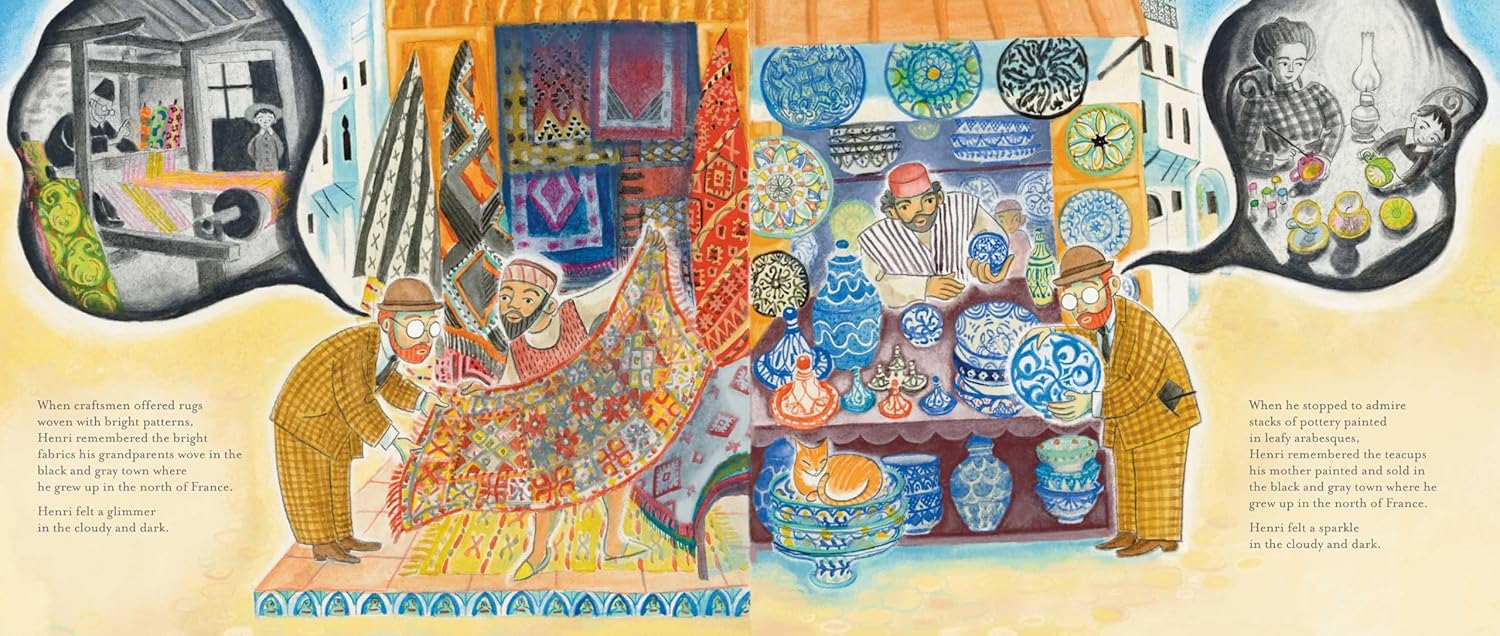
Then one night while Henri slept, the rain stopped. In the morning he woke to ” . . . an abundance of light. A luminous light. A dazzling light.” Henri took his sketchbook and hurried into town, where color shimmered from the pink mosque to the vibrant Grand Socco market to the Casbah gateway to old Medina. Everywhere he looked he saw the vividness of life. Brightly patterned rugs and painted pottery reminded him of the art his grandparents and mother created in their drab town. “Henri felt a glimmer in the cloudy and dark.”

Text and illustration © 2025 by Lauren Stringer. Courtesy of Beach Lane Books.

Henri found a large garden to paint in and began painting the lavender branches, green acanthus, blue periwinkles and “pink-tomato sky” he saw. Despite his “bright and bold” colors, he still felt something cloudy and dark. Then one day, following the music of fiddles, flutes, and drums that filled the air. Henri found a cafe, “where men in long robes gazed at goldfish in round bowls.” Henri was mesmerized by the reds and golds of the fish as well.

Text and illustration © 2025 by Lauren Stringer. Courtesy of Beach Lane Books.

When Henri left the cafe, “he saw an abundance of shadows.” In fact, the dark shadows accentuated the light. Finally, he understood that light and color and dark could work together. In his new paintings he surrounded his colorful subjects with colorful shadows. He interpreted light itself into brilliant color. And in a painting completed from his hotel window, Henri painted shadows of such a dark blue that he realized “he could paint light and color, even in the dark.” At home when Henri displayed his paintings in a gallery in Paris, they were a sensation. Now, whenever the skies turned gloomy and rainy, Henri remembered the abundance of light in Morocco and painted.

Back matter includes a short biography about Henri Matisse’s childhood, a discussion of Matisse and his time in Tangier, and a note from the Lauren Stringer about her trip to Tangier that inspired her story. She also includes an illustrated glossary of terms found in the book.

Text and illustration © 2025 by Lauren Stringer. Courtesy of Beach Lane Books.

Celebrated author, picture book illustrator, and painter Lauren Stringer immerses young children in a particular time in Henri Matisse’s life and reveals how he overcame obstacles to create some of this best-known paintings. His struggles and search for enlightenment are simply and honestly portrayed, lending to his eureka moment deep joy and surprise. The enthusiastic reception for these paintings, Matisse’s newly discovered ability to find light and color even during dark days, and the lessons his artistic parents demonstrated are all reminders that light shines from within.

Stringer’s striking pastel, charcoal, gouache, and digital media illustrations entice readers to join Henri Matisse on his journeys both internal and artistic. Her realistic depictions of Matisse’s circle of famous friends, and the sights of Tangier will entice readers to learn more. As Henri breaks out of his artist’s block, Stringer portrays him with a sprightliness of step, a perceptive eye, and a deft touch with the brush. Readers will be especially fascinated by the side-by-side models and paintings that reveal how Matisse transposed reality to canvas.

An Abundance of Light is a must addition to school and public libraries collections and is highly recommended for art-loving and artistic children. The book would also make an impactful resource for art classrooms and creative projects.

Ages 4 – 8 

Beach Lane Books, 2025 | ISBN 978-1534493629 

About the Author/Illustrator

Lauren Stringer has illustrated many celebrated picture books, including Deer Dancer by Mary Lyn Ray; The Princess and Her Panther by Wendy Orr; Scarecrow and Snow, both written by Cynthia Rylant; as well as her own Winter Is the Warmest Season, When Stravinsky Met NijinskyThe Dark Was Done, and An Abundance of Light. She lives with her family in Minneapolis, Minnesota. Visit her at LaurenStringer.com.

Happiness Happens Month Activity

CPB - Happiness typography

Happiness Is… Game


Happiness is all around you! Grab one or more friends to play a game that reveals what things make you happy. 

  1. Like the “Geography” game: the first player names something that makes them happy, the next player must think of something that starts with the last letter of the word the previous player said. The game continues with each player continuing the pattern. Players drop out as they cannot think of a word. The last player left is the winner.

You can purchase An Abundance of Light from these booksellers

Amazon | Barnes & Noble | Bookshop (discounted books and support for your local independent bookstore)

Picture Book Review

July 1 – National Watercolor Month

About the Holiday

Today, I’m celebrating World Watercolor Month with a biography of a woman artist born in 1861 who not only worked in watercolors but brought the delicately blended beauty of the art form to the solid medium of glass as the creator of iconic Tiffany designs. World Watercolor Month was begun in 2016 by Charlie O’Shields, the creator of Doodlewash®, host of the Sketching Stuff podcast, and founder of a social artist movement dedicated to promoting and connecting watercolor artists from all over the world. The holiday also raises awareness of the global importance of art and creativity. Everyone from amateurs to professionals are welcome to participate—and if you’ve never painted with watercolors before, now’s a great time to try! If you’d like prompts to inspire your work and other ways to enjoy the month and take your love of watercolor painting into next month and beyond, visit Doodlewash.

Thank you to Peachtree and Barbara Fisch of Blue Slip Media for sending me a copy of this book for review!

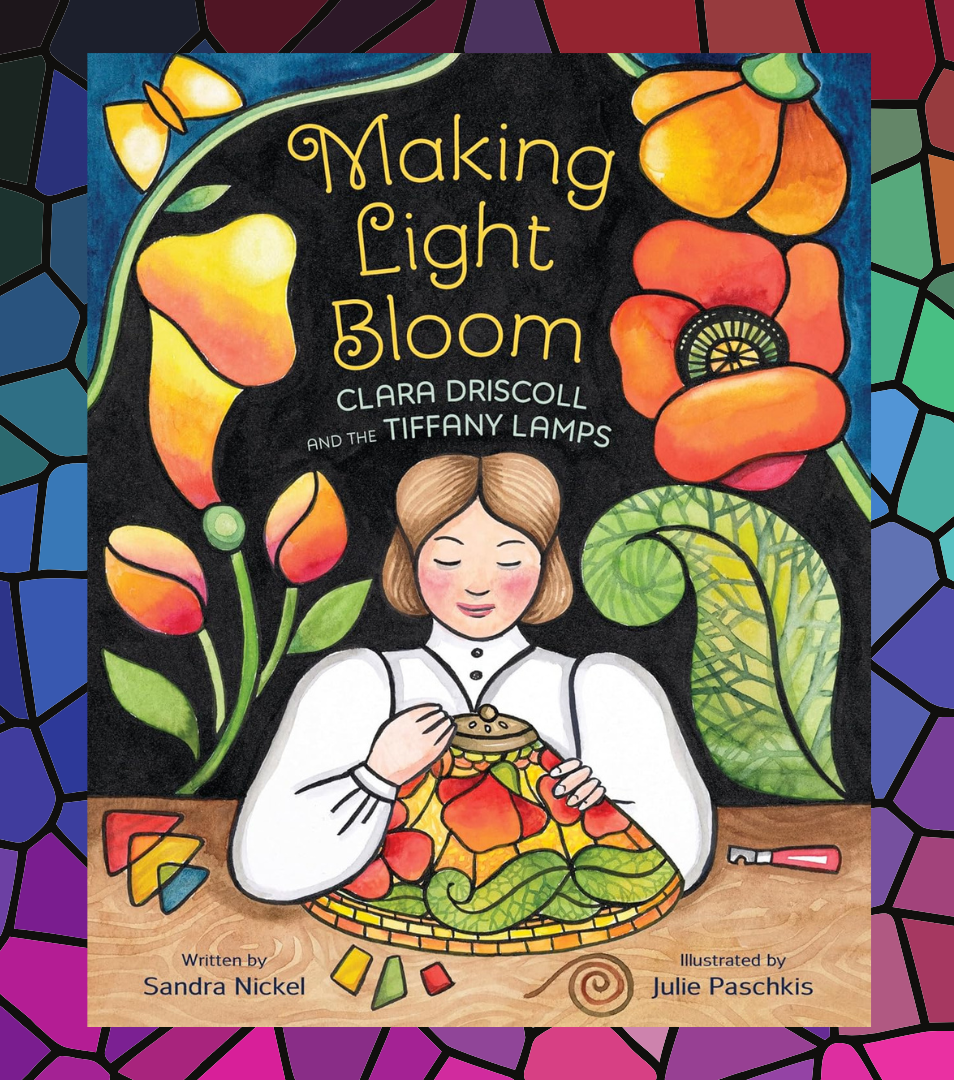
Making Light Bloom: Clara Driscoll and the Tiffany Lamps

Written by Sandra Nickel | Illustrated by Julie Paschkis


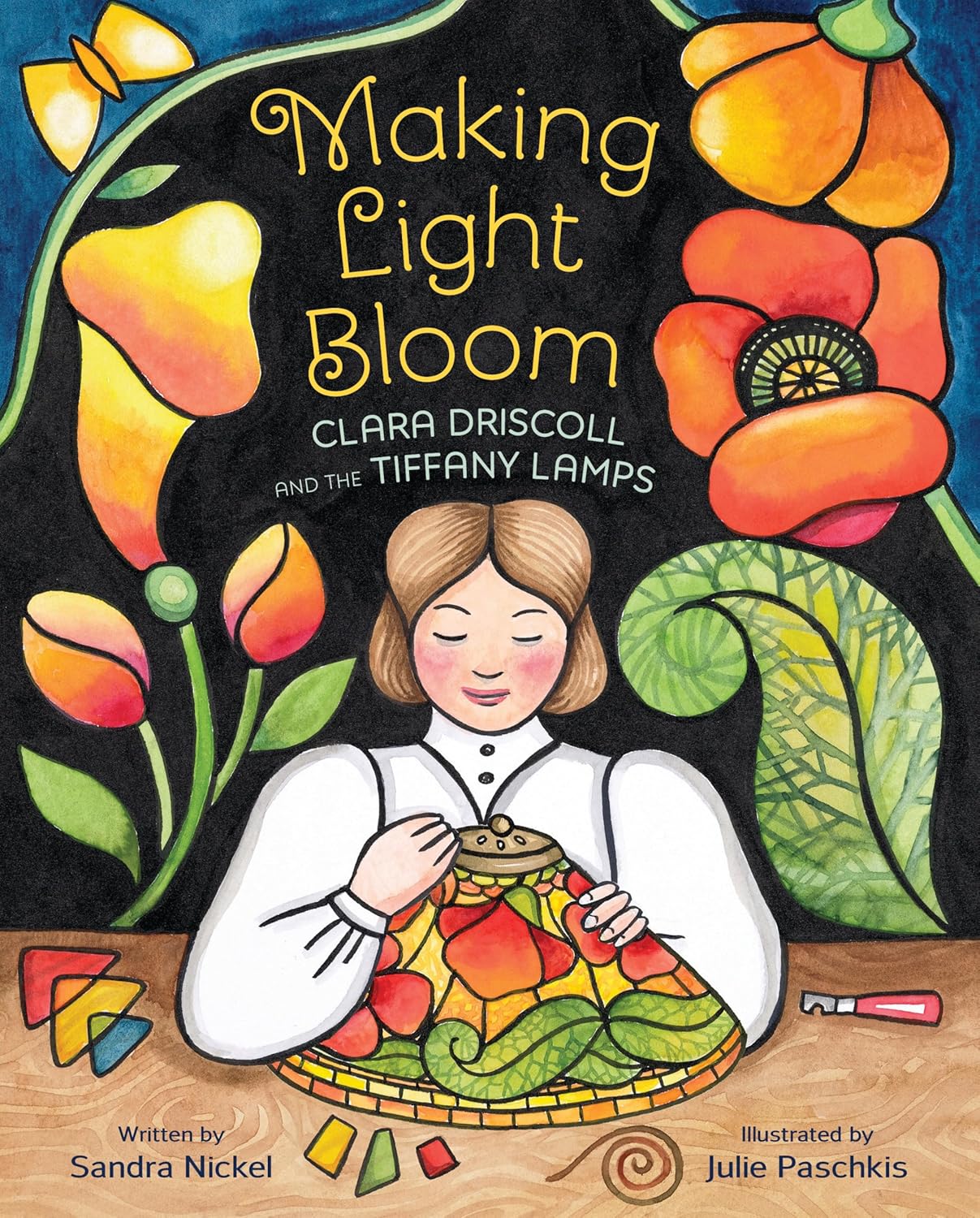
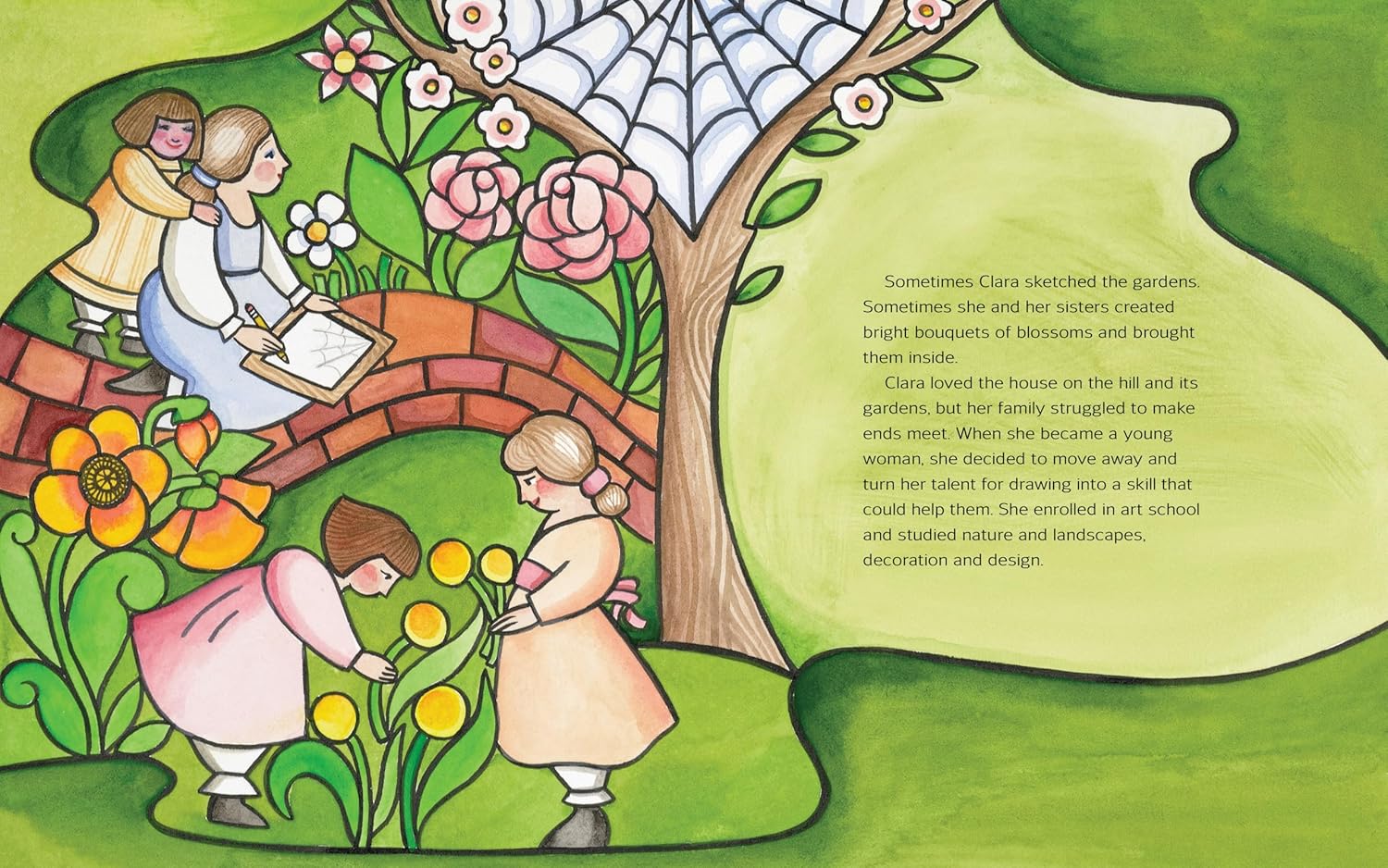
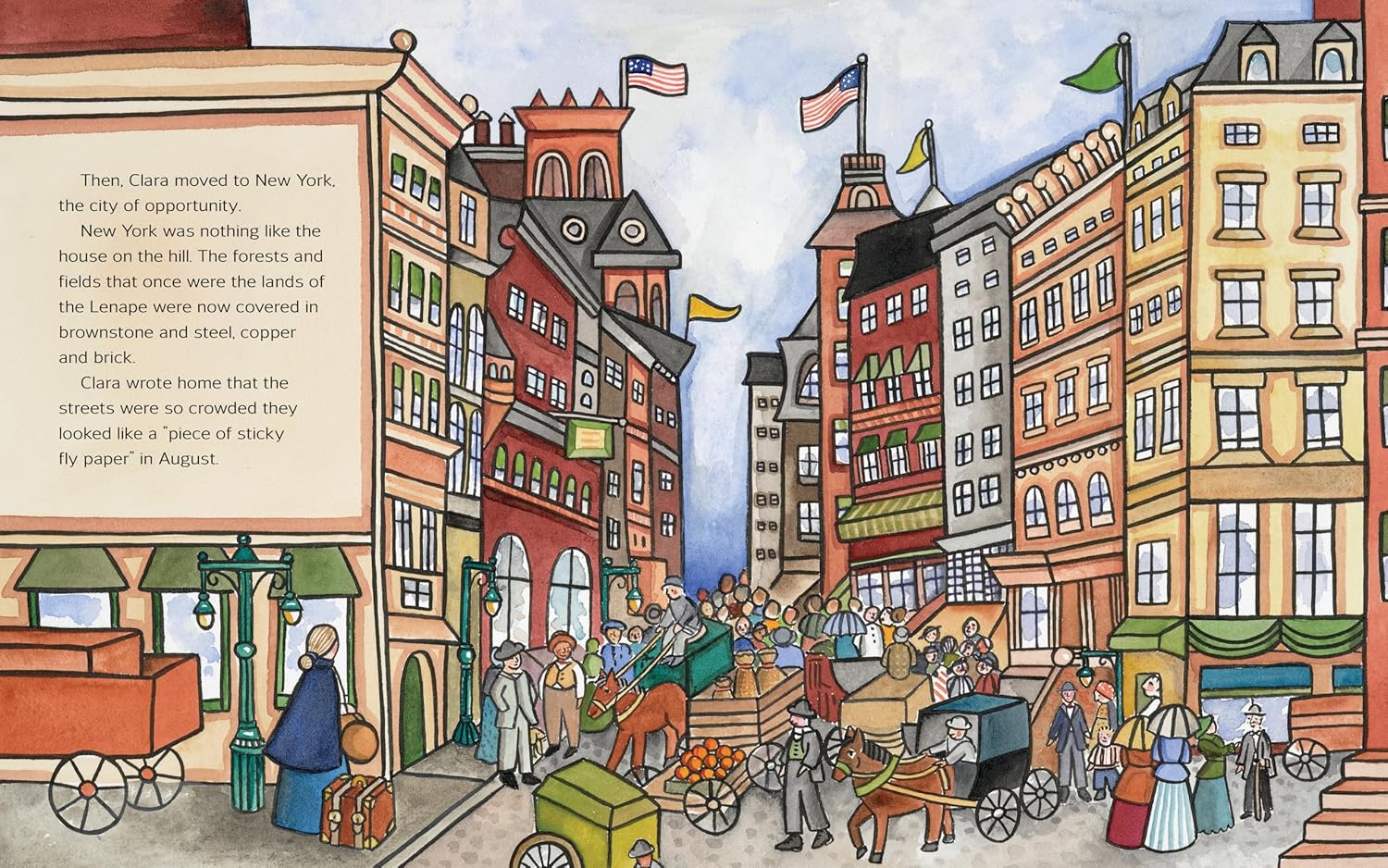
As a young girl, Clara Driscoll grew up surrounded by glorious gardens blooming with morning glories, apple blossoms, and wildflowers and shimmering with the dragon flies they attracted. Clara often sketched the gardens, and when she grew older, she enrolled in art school, hoping to turn her talent for drawing into a job that could help her financially struggling family. After graduation, Clara moved to New York City and took a job working for glassmaker Louis C. Tiffany.

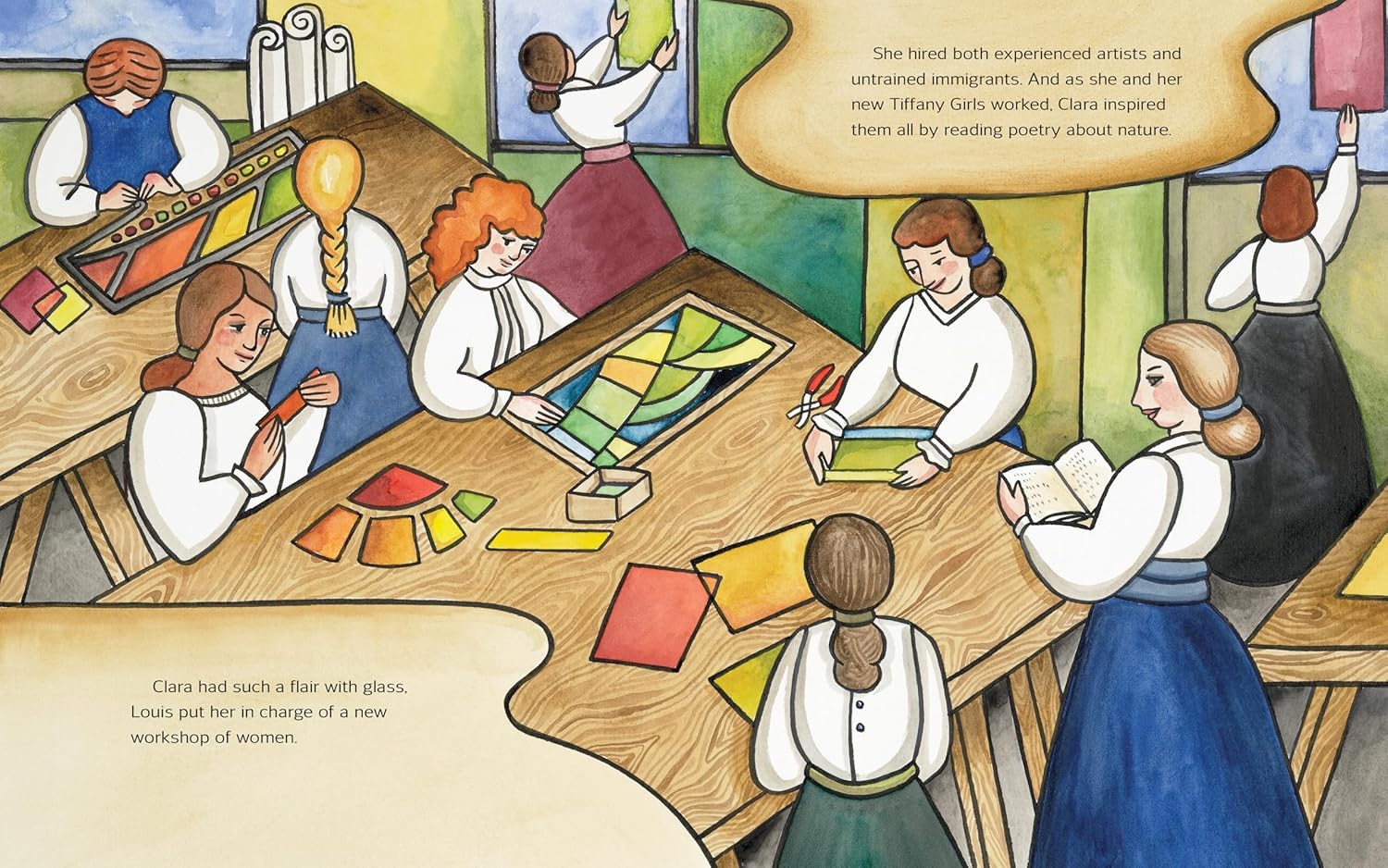
Clara’s task was to choose and cut pieces of glass for the craftsmen to join together with metal ridges to make beautiful stained glass windows. She used her creative eye to “‘paint’ robes, halos, and great wings of angels” with “dappled and streaked, shaded and shimmering” glass. It didn’t take long for Louis to recognize Clara’s talent, and soon she was overseeing her own group of women known as Tiffany Girls. Missing her gardens back home, Clara had the idea to make a lamp from the delicate glass that would bring the beauty of a garden inside.

Illustration © 2025 by Julie Paschkis, text © 2025 by Sandra Nickel. Courtesy of Peachtree.

She and the Tiffany Girls cut small pieces of glass to make butterfly wings, and then “together with the craftsmen, she formed the butterfly wings into a lampshade.” Once the kerosene wick was lit, “light bloomed as never before.” Next, Clara wanted to bring the brilliance of dragonflies to her new creation. But cutting and forming the glass into the intricate wings of a dragonfly was time consuming, and one of the managers said that “she could never make another.”

That, however, was before Louis Tiffany saw the lamp and asked Clara “to make another to display at the World’s Fair in Paris.” At the fair, Clara’s lamp won the bronze medal. The lamp’s success “astounded” Louis. He put Clara and the Tiffany Girls in charge of making lamps and windows representing the beauty of natural landscapes.

Feeling shut out, the craftsmen announced a strike unless Louis fired the women. But Louis knew the value of Clara’s imagination and work, so he compromised with the men: Clara’s workshop would not get bigger, but “Clara would be in charge of lamp-making from that day forward.”

Illustration © 2025 by Julie Paschkis, text © 2025 by Sandra Nickel. Courtesy of Peachtree.

Elated, Clara began creating new designs inspired by the gardens she’d sketched at home as well as  nature she found within the city, all informed by her meticulous research. In the basement storage room, she searched for pieces of glass that were just the right hues to bring to life each petal, flower, leaf, and stem. In one astonishing design, she recreated wisteria with 2,000 tiny petals.

While Clara’s work was recognized inside the studio, because her lamps were only known as “Tiffany lamps,” no one else knew they were Clara’s creation. It was only after both Louis and Clara passed away and Clara’s letters to her sisters were discovered that people learned the truth about how Clara made light bloom “throughout the world.”

Back matter includes an Author’s Note that goes into more detail about Clara’s letters home, Louis C. Tiffany’s reaction to her initial idea, and Clara’s long, intricate process for designing each lamp; a list of museums where you can see Tiffany Lamps; and the names of two archives where Clara’s letters can be read; a bibliography; and dates and quotes for references found in the book.

Illustration © 2025 by Julie Paschkis, text © 2025 by Sandra Nickel. Courtesy of Peachtree.

Sandra Nickel’s fascinating and eye-opening story about Clara Driscoll, one of the world’s most innovative artists, is both inspirational and uplifting. Nickel’s heartfelt, straightforward storytelling about Clara’s early years allows readers to see how youthful experiences and interests can influence their later endeavors—creative and otherwise. Nickel also emphasizes Clara’s remarkable vision for ways to expand the use of stained glass in the 1890s as well as her advocacy for herself and her ideas, making her an excellent role model for all children. And while Clara was not recognized for her work during her lifetime, art lovers can be grateful that Louis C. Tiffany knew brilliance when he saw it and valued her contributions—another aspect of Clara’s story to celebrate. 

Julie Paschkis’s dazzling, folk-style illustrations bring the intricate and delicate beauty of stained glass to the page, telling Clara’s story visually in a way similar to the windows she often worked on. Taking kids into the Tiffany studio, Paschkis demonstrates how Clara, the Tiffany Girls, and the craftsmen chose, cut, and pieced together to create complex scenes that glow with life still today. Paschkis faithfully recreates Clara’s iconic dragonfly lamp, an image that will wow kids. 

A vibrant biography of a visionary artist, Making Light Bloom: Clara Driscoll and the Tiffany Lamps is an inspiring book to share with creatives of all types at home, in the classroom, and for art and crafts programs. The book is a must addition to any library collection.

Ages 7 – 10

Peachtree, 2025 | ISBN 978-1682636091

About the Author

Sandra Nickel is an award-winning author of picture books and has two new books out this Spring: Seven, A Most Remarkable Pigeon, an uplifting tale that celebrates differences, and Making Light Bloom, Clara Driscoll and the Tiffany Lamps, in which Sandra continues her mission to celebrate extraordinary individuals who have been nearly forgotten by history. She is honored to be the winner of a Christopher Award, the winner of the Society of Children’s Book Writers & Illustrators Crystal Kite Award, a finalist for the Golden Kite Award for Nonfiction for Younger Readers, a Junior Library Guild Gold Selection honoree, and a Charlotte Huck Award Recommended author. She holds a Master of Fine Arts in Writing for Children and Young Adults and has presented workshops on writing for children and young adults throughout the United States and Europe. Visit her at sandranickel.com. You’ll also find her on Bluesky, Facebook, Instagram, and Twitter/X

About the Illustrator

Julie Paschkis is an award-winning illustrator of more than 25 books for children. A graduate of Cornell University and the School for American Craftsmen at Rochester Institute of Technology, she taught art to grade school children for a number of years before turning her full attention to painting, textile design, and creating illustrations for her books. Visit her at juliepaschkis.com to see more of her work and download whimsical and nature-inspired coloring pages for kids and adults. You’ll also find her on Facebook.

World Watercolor Month Activity

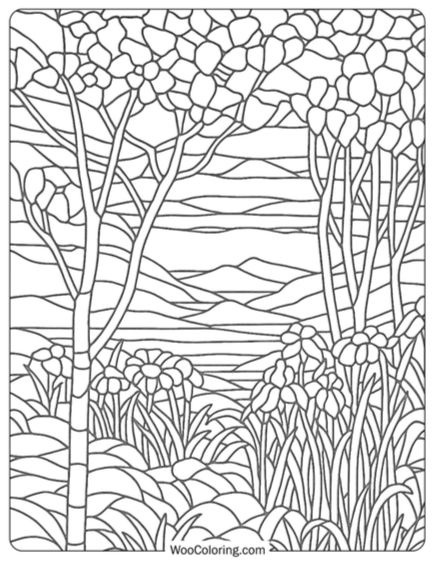
Tiffany Window Coloring Page


Create your own brilliant vision with this Tiffany Window Coloring Page!

You can purchase Making Light Bloom: Clara Driscoll and the Tiffany Lamps from these booksellers.

Amazon | Barnes & Noble | Bookshop

Picture Book Review

April 16 – National Stress Awareness Month

About the Holiday

Stress Awareness Month has been held every April since 1992, when it was founded by the Health Resource Network. The holiday aims to help people identify the stress factors in their own life as well as to assess how all members of their family are handling various pressures. The goal is for everyone—either individually or together—to look for ways to manage their feelings while adding positive changes to their life. Talking about pressures with kids and doing simple activities with them can often help lessen the load. Sharing today’s book is a wonderful place to start!

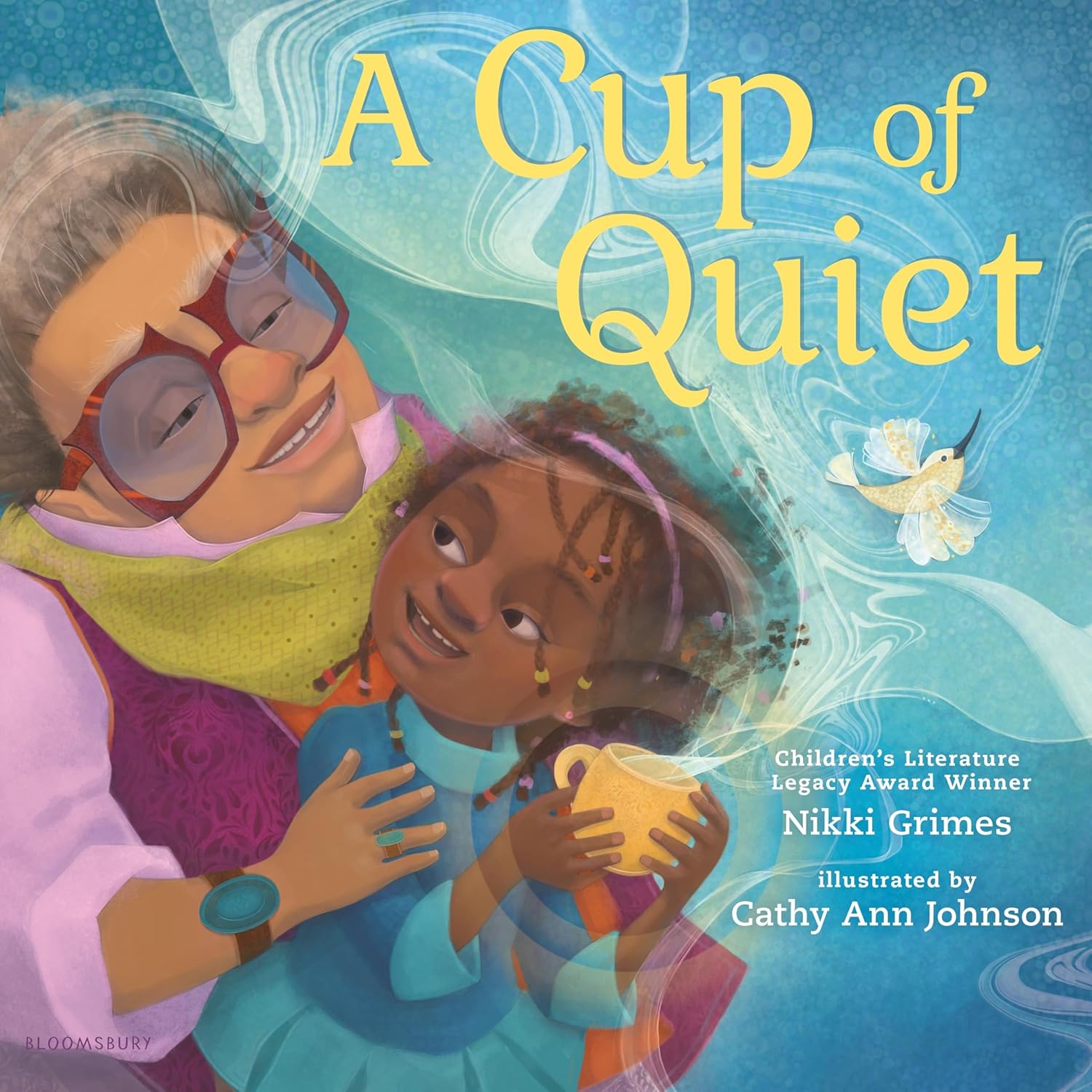
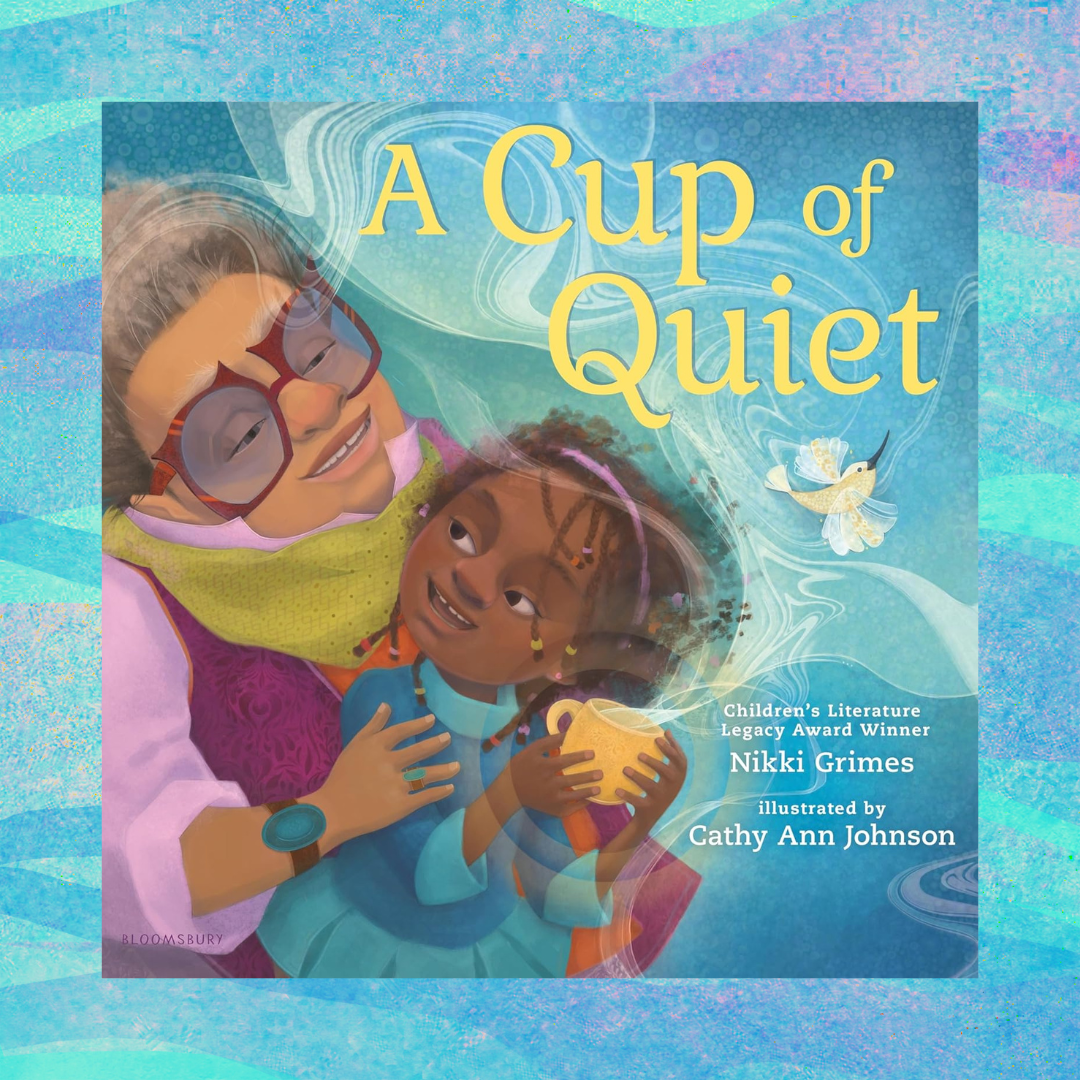
A Cup of Quiet

Written by Nikki Grimes | Illustrated by Cathy Ann Johnson

“You ever hear of smiles?” The young narrator’s talking about the two-week “summer camp” she gets to spend with her grandmother every June. In that breathless excitement of children, she reveals the visits give her and her Grandma time to “stitch sock puppets and put on shows, bake Martian Cake that tastes like banana bread and play tea party in the garden with my dolls.” But today, they’re acting out a story—that is until Grandpa’s hammering and loud music become just too much.
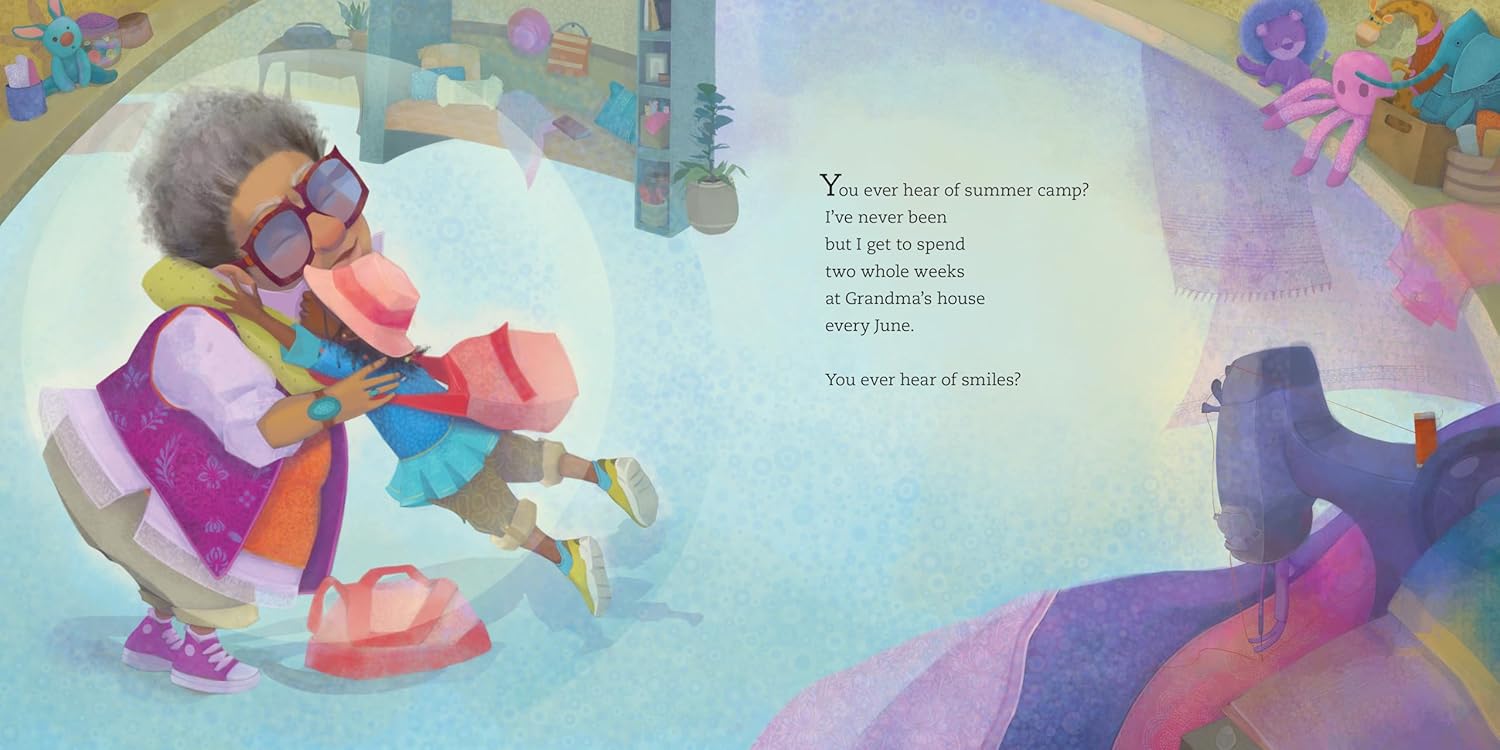
Illustration © 2025 by Cathy Ann Johnson, text © 2025 by Nikki Grimes. Courtesy of Bloomsbury Children’s Books.

Grandma flops into her chair with an “Ugh!” and tells her granddaughter she’s “thirsty for a cup of quiet.” This elicits a giggle and a bit of disbelief, but Grandma’s done with the noise and leads her granddaughter outside to the porch swing. But the city outside their house is just as noisy as Grandpa inside. A trip to the backyard garden is needed. Here, Grandma may be happy, but the narrator is getting fidgety.
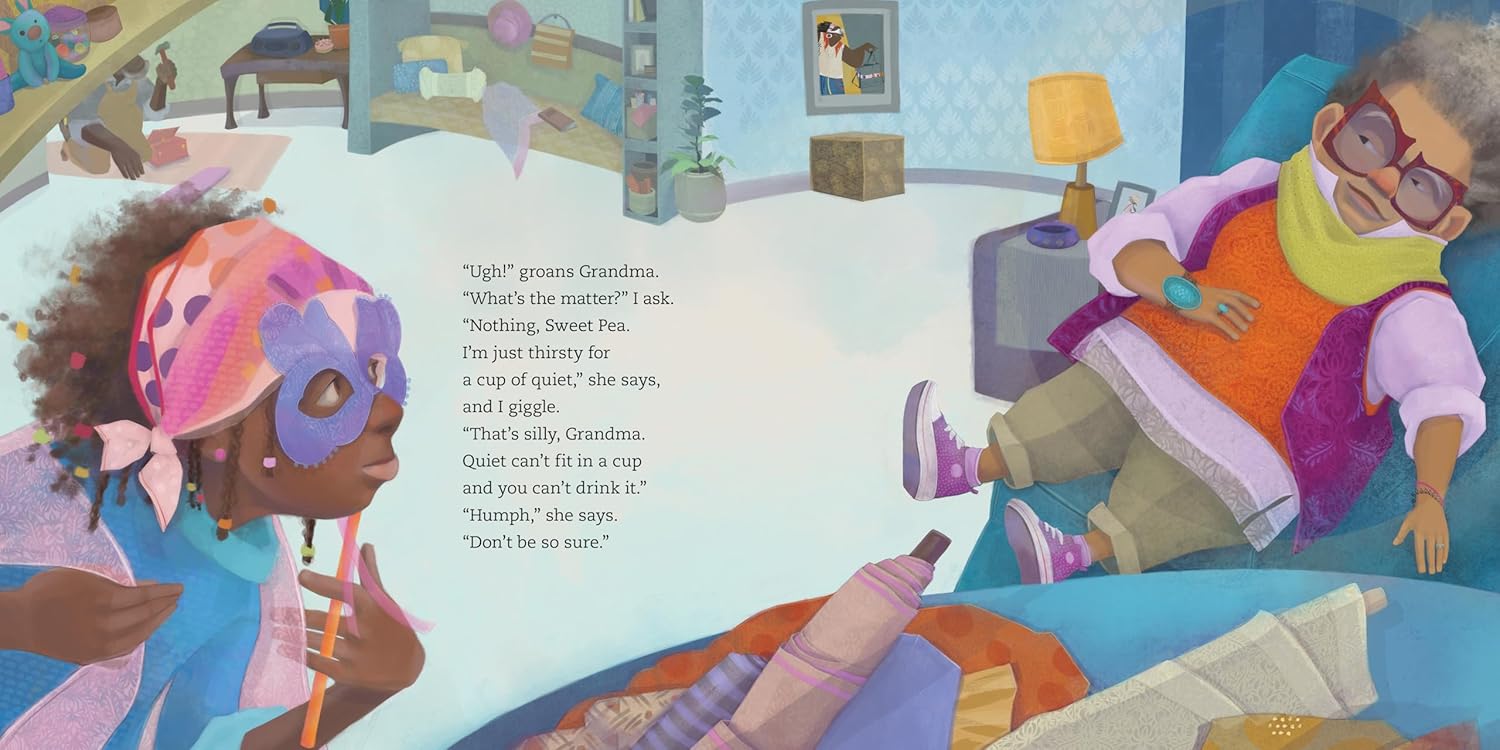
Illustration © 2025 by Cathy Ann Johnson, text © 2025 by Nikki Grimes. Courtesy of Bloomsbury Children’s Books.

Grandma gives her the side-eye and then hands her “an invisible cup” with instructions to “‘walk around the garden and fill this up with any sounds you hear.'” Up for this imaginative challenge, the girl first visits the rose bushes, where a bee is working and “snap[s] up a handful of his buzzing and drop[s] it in the cup.” On the ground below she sees a lizard and “spoon[s] up” the sound of its “scuttling across a dried leaf.” She begins paying more attention to the nature around her and listening harder to fill her cup.
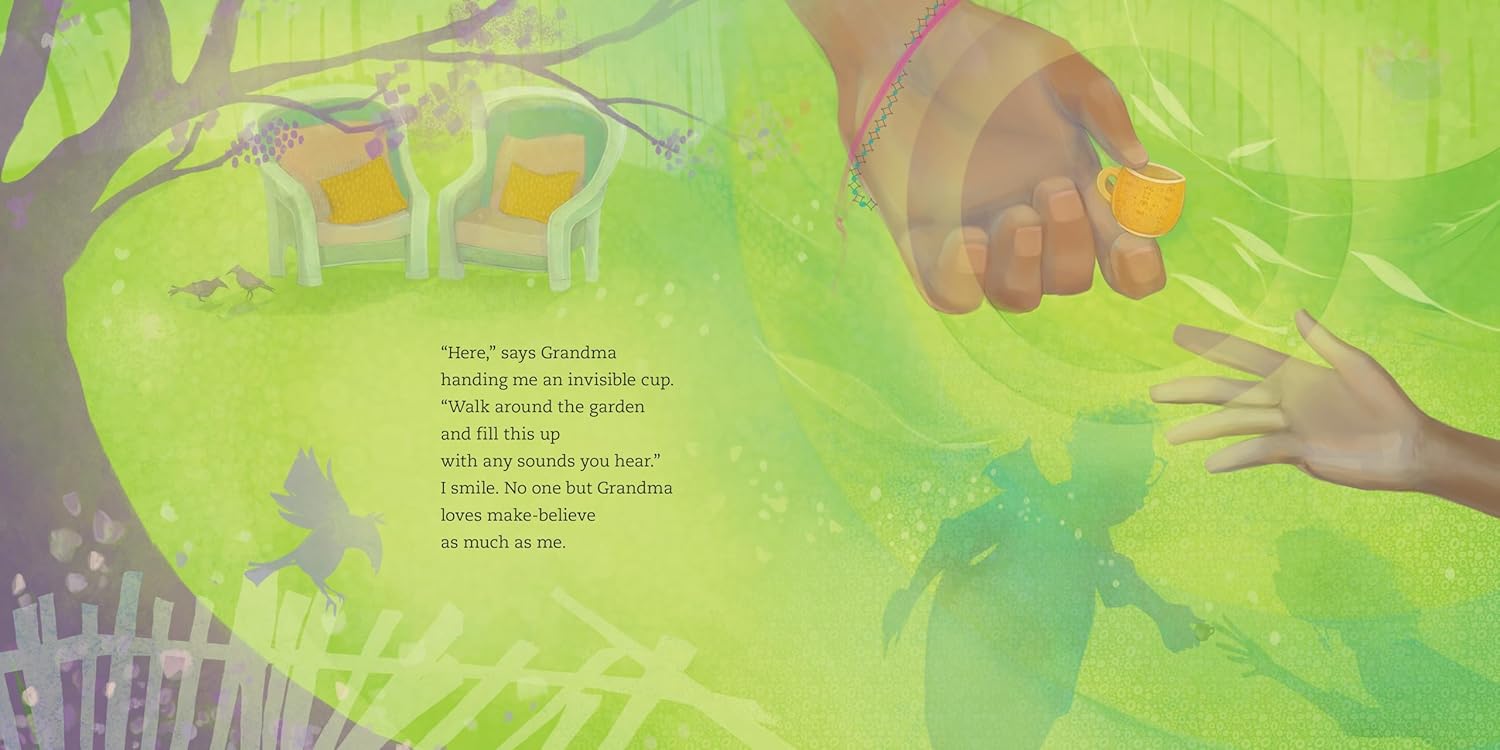
Illustration © 2025 by Cathy Ann Johnson, text © 2025 by Nikki Grimes. Courtesy of Bloomsbury Children’s Books.

A sudden thunderclap precipitates a downpour, but before she runs inside with Grandma, the narrator adds the first pings of raindrops on the roof to her nearly full cup. After drying off and changing, it’s finally time to enjoy a long sip from that make-believe cup. Ahhhh! So “‘refreshing!'” Her granddaughter thinks so too. Still, she has an observation: “‘… your quiet is awfully noisy!'” Grandma smiles and says, “‘I know, but Nature’s noise is peaceful, and I love that.'” Her granddaughter agrees—”You ever hear of perfect?”
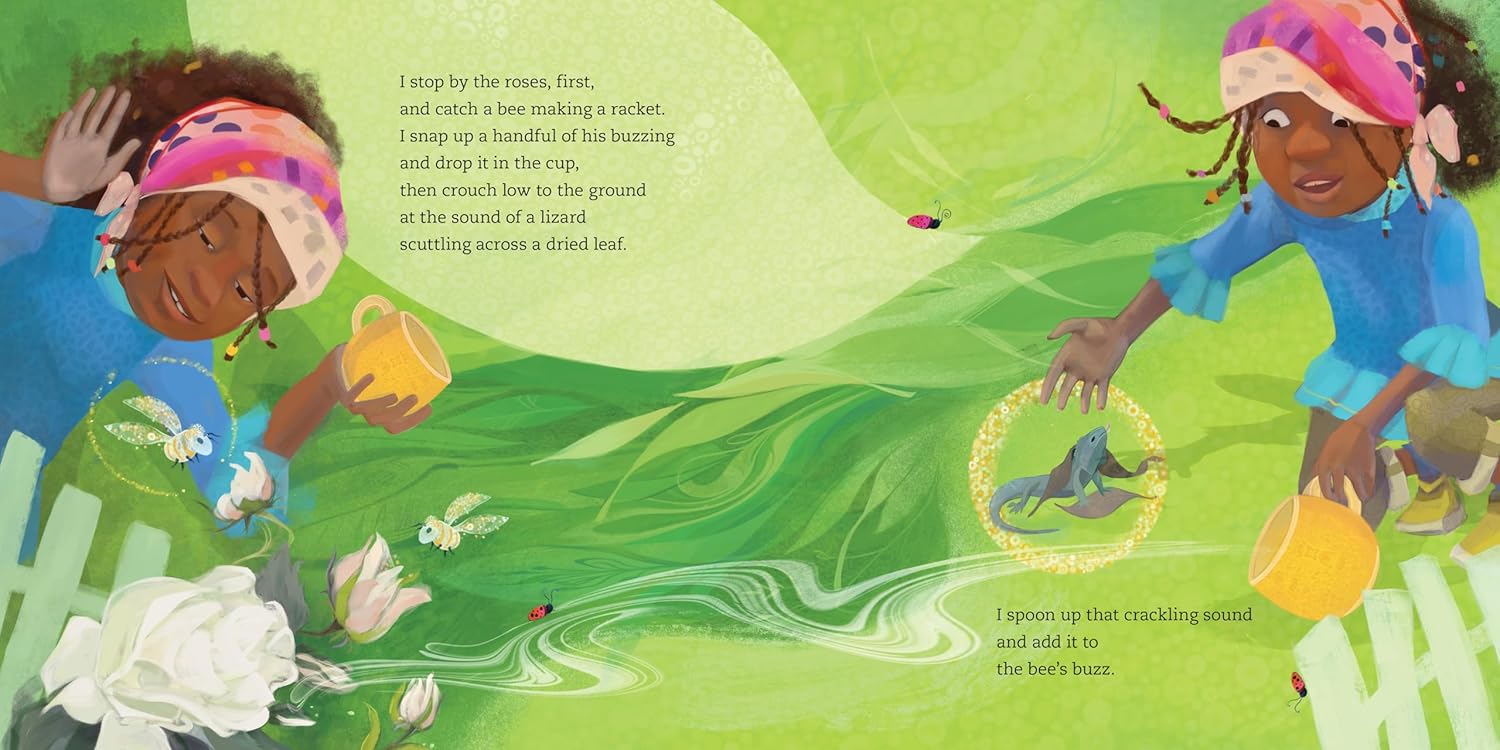
Illustration © 2025 by Cathy Ann Johnson, text © 2025 by Nikki Grimes. Courtesy of Bloomsbury Children’s Books.

Nikki Grimes invites readers to join in with a grandmother and granddaughter for a day of “summer camp” where love abounds. The easy banter between the two and affectionate gestures—such as Grandma’s playful tug on her granddaughter’s braid and the jump-into-her-arms hug the girl gives her grandma—immediately envelope both child and adult readers in this pair’s warm relationship. Grimes’ inventive call to interact with nature and find comfort there will have kids carrying their own imaginary cups to fill and spark other creative games and activities no matter where they live. 

Cathy Ann Johnson’s collage-style, mixed-media illustrations sweep readers into the creative and close-knit atmosphere of Grandma’s house during a week-long visit by her granddaughter. The vibrancy of the pair’s connection is shown through the colorful textures of the fabrics they use for crafting. The allure and importance of nature is likewise emphasized through the vivid greens and swirling motion in the grandmother’s back garden as well as the shimmering beauty of the creatures from which the girl collects sounds. The grandmother and granddaughter’s close bond is evident through their hugs, the way they sit close together (even touching hands while sitting in separate garden chairs), and the care Grandma provides after the rainstorm. The grandmother’s expressions are amusing in their honesty, and the look of wonder in the granddaughter’s eyes is inspirational.

Lyrical, playful, and full of love, A Cup of Quiet is a warm hug of a read aloud that adults and kids will love sharing again and again. The book is a must addition to school library, public library, and home collections.

Ages 3 – 7

Bloomsbury Children’s Books, 2025 | ISBN 978-1547610730

A Talk with Nikki Grimes
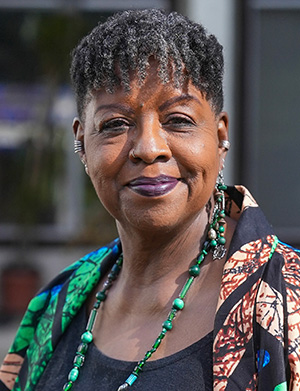
Photo Credit Marchel Hill

New York Times bestselling author Nikki Grimes was inducted into the Black Authors Hall of Fame in 2023. Her honors include the CSK Virginia Hamilton Lifetime Achievement Award, the ALAN Award for significant contributions to young adult literature, the Children’s Literature Legacy Medal, and the NCTE Award for Excellence in Poetry for Children. Author of the Coretta Scott King Award-winner Bronx Masquerade, and five Coretta Scott King Author Honors, she won the Printz Honor and Sibert Honofor her memoir Ordinary Hazards. Her latest titles include Garvey’s Choice:The Graphic Novel, a School Library Journal 2023 Best Book; Lullaby for the King, one of Book Riot’s 25 Best Christmas Books of All Time; and A Walk in the Woods, recipient of 8 starred reviews, and 11 Best Book listings for 2023, including the New York Times, NPR, and Smithsonian Magazine. Ms. Grimes lives in Corona, California. You can visit her at nikkigrimes.com.

Today, I’m honored to be talking with Nikki Grimes about the inspiration behind A Cup of Quiet, how she develops her characters, the joys and challenges of writing for multiple age groups, and much more!

A Cup of Quiet is a perfect book for adults and children to share, not only for outside noise but for times when life gets overwhelming.  Tell us about the inspiration for this story and a little about its journey to publication.

There’s a certain quality of quiet in nature that I’ve always found soothing. I need silence for my work because it allows me to concentrate fully when I write. But nature’s quiet is different. It’s rich with sound, but most of it requires you to pay close attention. To pick up the whir of a hummingbird’s wings, you have to be still, and you have to strain to hear it. The stillness that’s required is soothing, and the sounds you become attuned to are a healing balm. I wanted to write a story that celebrated those sounds, and the beauty of that kind of quiet.

In the early stages of the book, I’d go out to my garden and listen carefully, and I’d make mental notes of all that I heard that day. I’d jot everything down until I had a good list of sounds to play with.

My main character lived in the city and didn’t spend much time out in nature there, though she occasionally went to the park. But every summer, she’d travel out of the city for long visits with her grandmother who had a garden, and whose house was surrounded by trees, and greenery.

The story grew from there, and I knew immediately that I wanted Bloomsbury to publish the book, and I also knew intuitively who I wanted to illustrate—namely Cathy Ann Johnson. This teaming has proven to be perfect, all around.

If I had a cup to fill with quiet today, I’d add my cat’s little sleepy, dreamy purrs, the whoosh of cars passing my house, the rustle of squirrels in the trees, and a drop of water from my bubbling teapot. What would you put in your cup of quiet today?

I would put a bee’s buzz, the wind rustling leaves of a tree, the whir of a hummingbird’s wings—all the sounds I chose for A Cup of Quiet. Those are some of the sounds I listen for, and pay attention to, whenever I immerse myself in nature.

Cathy Ann Johnson’s mixed-media illustrations are a wonder of color, motion, humor, and the love between grandmother and granddaughter. What was your first impression when you saw her illustrations? Do you have a favorite spread?  Why is it a favorite?

First, I was over the moon for the grandmother! She had energy, and spunk, and style. I loved her!  And I loved her colors. Then, as I saw the book’s interiors, I was absolutely thrilled! Cathy Ann’s images, and their movements, were as lyrical as my own words. Our partnership on the page was the proverbial match made in heaven. I would be loath to choose a favorite spread.  Each one has its own magic.

A Cup of Quiet starts out “You ever hear of summer camp?”—a disarming introduction to the child narrator that’s so true to the way kids approach conversation. The dialogue in all of your work sings in this way with the kind of honesty, humor, emotion, and depth that makes your characters seem almost physically with the reader.  I’m curious about your process in developing your characters and stories.

My characters begin with a voice. I’ll hear a scrap of dialogue in my head—nothing extensive, just a few lines. The inspiration might come from the catalog of voices I’ve stored in memory over a lifetime of listening to people around me, or it might be the voice of a particular person in my life whose voice is special or one that has simply stayed with me for a long time. Either way, the voice feels familiar. I’ll jot down that scrap of dialogue as reference, then I’ll begin developing a character sketch and that character’s backstory. I never know how much or little of the backstory I’ll use, but that information guides me as I write. To nail the voice, I have to pay close attention. I climb into the character’s skin and look at the world from his or her perspective and write from that place, attuning myself to that character’s age, birth place, geographical region, quirks, fears—all of it guides me as I make decisions about what that character will say, how they’ll respond to various stimuli that shows up in the plot. If I step wrong, the character will bristle and call me out on it, almost audibly. “Do not put those words in my mouth! I would never say that!” or “I don’t speak like that!” It’s kind of eerie, actually. Characters can be very bossy!

You write books for all ages, from picture books to middle-grade to young adult. Can you talk a bit about the joys and challenges of each? What is one message you want readers in each age category to take away from your books? 

Each age format comes with its own set of limitations, constrictions, and also its own range of possibilities. I love mixing it up. Writing for different age groups keeps me on my toes. The picture book gives you very little room to develop character and plot, while, say, a young adult novel gives you so much unlimited space that you run the risk of overwriting, and of getting lost in the weeds of your plot, or tangled in the layers of your story. Being consistent with your tense or bookending your story in a way that is controlled and satisfying and that feels organic, is much more challenging in the long form of middle grade or YA storytelling.

Language choices are tricky, and different with each age group as well. You walk the line between accessibility and sophistication, between simplicity and complexity. The same variance is true of the emotional components appropriate for each age group as well. For those reasons, I think it’s wise to focus on one genre at a time until you work through the quirks of that genre and figure out a process that works for you. Then, by all means, go on and experiment with the next! It’s tough work, but I like that. For me, easy is boring!

As for your question about messages, I don’t write messages. I write stories. And a well-written story offers a number of ideas a reader might take away. It all depends on the particular reader. We bring ourselves to the page, as readers. Our own experiences, personalities, and what we need at a particular point in time, color what we see, what we notice, and what we ultimately take from a story. Of course, as the creator, I have a certain idea, or theme, I intend to weave into my story—and, by the way, it’s hard to know whether or not I’ve always succeeded—but I don’t worry about whether the reader will pick up on the specific note I had in mind. What matters to me is that, somewhere in the many layers of my story, readers find something valuable with which they resonate. Quite often, the things they find come as a surprise to me, but that’s okay. So long as they walk away with something of value to them, that’s all I can ask for.

While I read through your website, your generosity in sharing so much of your life really stood out.  I’m sure young readers and writers would love to know about when you first began writing and how you were recognized for your talent, having your first public reading when you were 13.  Could you share a little of our writing background with us?  What advice would you give to children and young adults who love to write and want to pursue it?

As I reference in my memoir Ordinary Hazards, and elsewhere, I started writing in earnest when I was six years old, and I did so because I would have burst, otherwise. I was so filled with the emotional and mental poison of anger, and pain, and confusion. I was desperate to get my feelings out, somehow. So, I began to pour those feelings onto a page. That’s how my writing began, but as I reached my teens, the idea of possibly pursuing writing as a career took root. I was encouraged by my father, by my sister, by the friends I dared share my poetry with, and later, by a couple of teachers.  At the same time, though, I also had peers who laughed me off the block for daring to dream of such a thing at all. But I decided early on to surround myself with other young people who nurtured dreams and goals of their own. Everyone else, I cut out of my circle. I refused to absorb the negativity of naysayers.

I encourage young people who have a heart for writing to read voraciously, and to read across genres.  Every genre has something to teach you, and the quality of your writing reflects the quality, variety, and breadth of your reading. So read, read, read.  

Next, write, write, write because writing is a muscle. You have to exercise that muscle if you want to become strong. There is no shortcut to excellence. And if you’re not going to pursue excellence, why even bother? Excellence is what your readers deserve. Remember: the world doesn’t need mediocrity, no matter what field you choose to pursue.

In addition to your many awards over the years, you received the Children’s Literature Legacy Award in 2017 and the Coretta Scott King-Virginia Hamilton Award for Lifetime Achievement Award in 2022. In 2023 you were inducted into the Black Authors Hall of Fame.  What does this recognition mean to you?

Recognition is affirmation, and who doesn’t appreciate that?  But an artist should never be satisfied to sit on their laurels. I use this recognition as fuel to keep pushing forward, to continue to stretch myself as an artist to try genres I’ve never attempted before, to explore forms of poetry I find challenging. Doing so keeps me alive, and grown, and excited about the work I’ve been doing professionally, now, for nearly 50 years. That way, even as I get old, my work never does!

What books of yours can readers look forward to next?

I have a new Dyamonde Daniel chapter book coming out in June.  It’s titled Loser, and it’s about healthy and unhealthy competition, and where to draw the line, especially when you’re competing with your best friend.

I also have a new picture book on the horizon, titled Stronger Than, a collaboration with Choctaw author, Stacy Wells and illustrated by E. B. Lewis, who I’ve worked with before. In this story, a Black Choctaw boy discovers the history of one ancestor who survived the Trail of Tears, and another ancestor who survived the Tulsa Race Massacre. Through their stories, he learns that he comes from stronger stock than he knew, and this knowledge helps him overcome one of his worst fears. I’m excited about both books, for very different reasons.

There are a few more books in production, as well, but it’s too soon to talk about those.

Is there a question I didn’t ask that you wish I had?  What would your answer be?

No. I think I’m about talked-out, for the moment!  This has been fun, though. And I hope you and the young readers in your life enjoy A Cup of Quiet.

Thank you so much, Nikki! It’s been terrific chatting with you! I wish you a wonderful spring and summer of nature’s refreshing quiet.
You can purchase A Cup of Quiet from these booksellers

Amazon | Barnes & Noble | Bookshop (discounted books and support for your local independent bookstore)

Picture Book Review

March 5 – It’s International Ideas Month

About the Holiday

This month we celebrate something that you can’t see or hold but which is real all the same. What is it? An idea! Ideas are amazing things. Sometimes seemingly conjured up out of thin air; sometimes borne out of necessity; and sometimes the “Eureka!” result of long, hard work, ideas fuel our arts, sciences, education, and home life. So today, write down those ideas you have while driving or commuting to work, while in the shower, when you’re daydreaming, or just as you turn off the light to go to sleep. You never know what they might become!

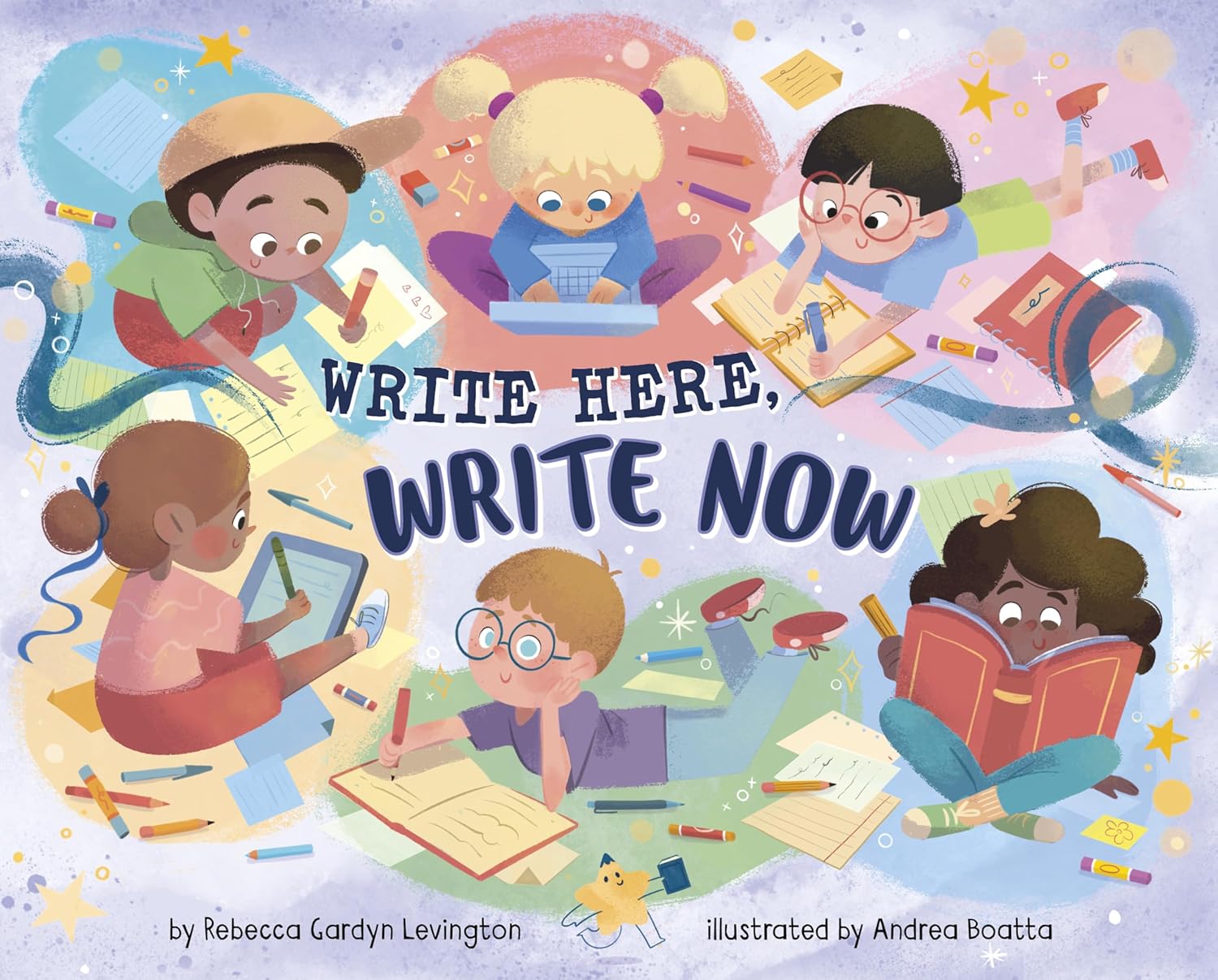
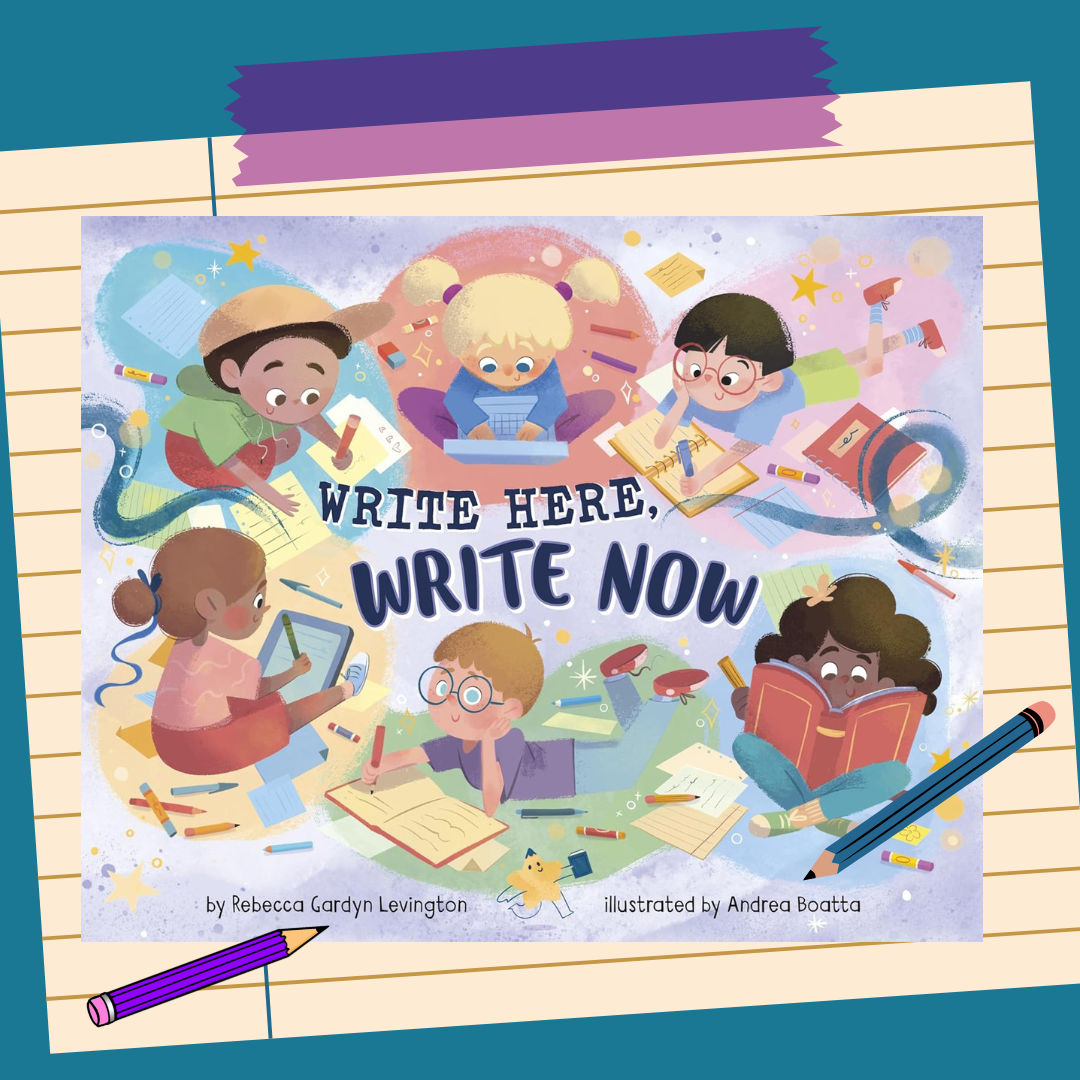
Write Here, Write Now

Written by Rebecca Gardyn Levington | Illustrated by Andrea Boatta

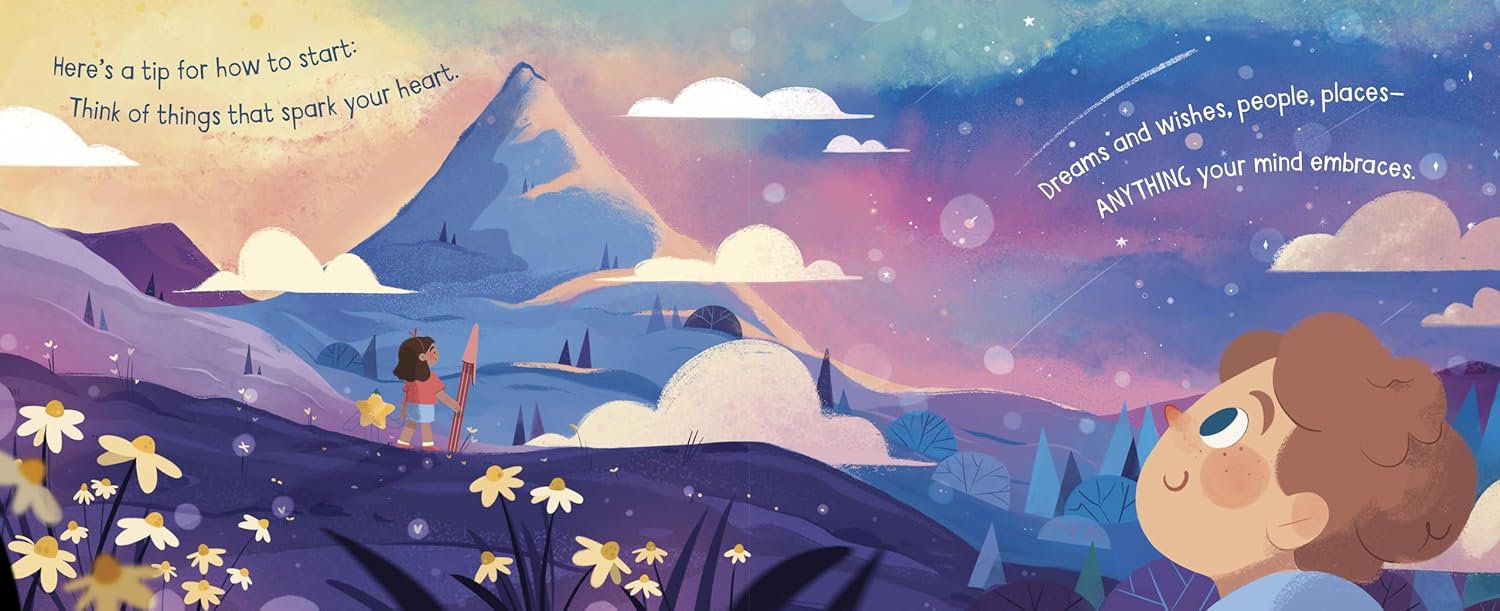
Opening the book, readers are met by a child who looks right at them and makes a very astute observation: “You’re a writer. Did you know?” And before the reader can think “Who, me? nah!” the boy has whisked them off for a trip through the amazing world of writing, offering “Here’s a tip for how to start. / Think of things that spark your heart. / Dreams and wishes, people, places—ANYTHING your mind embraces.”

Illustration © 2025 Andrea Boatta, text © 2025 Rebecca Gardyn Levington. Courtesy of Capstone Editions.

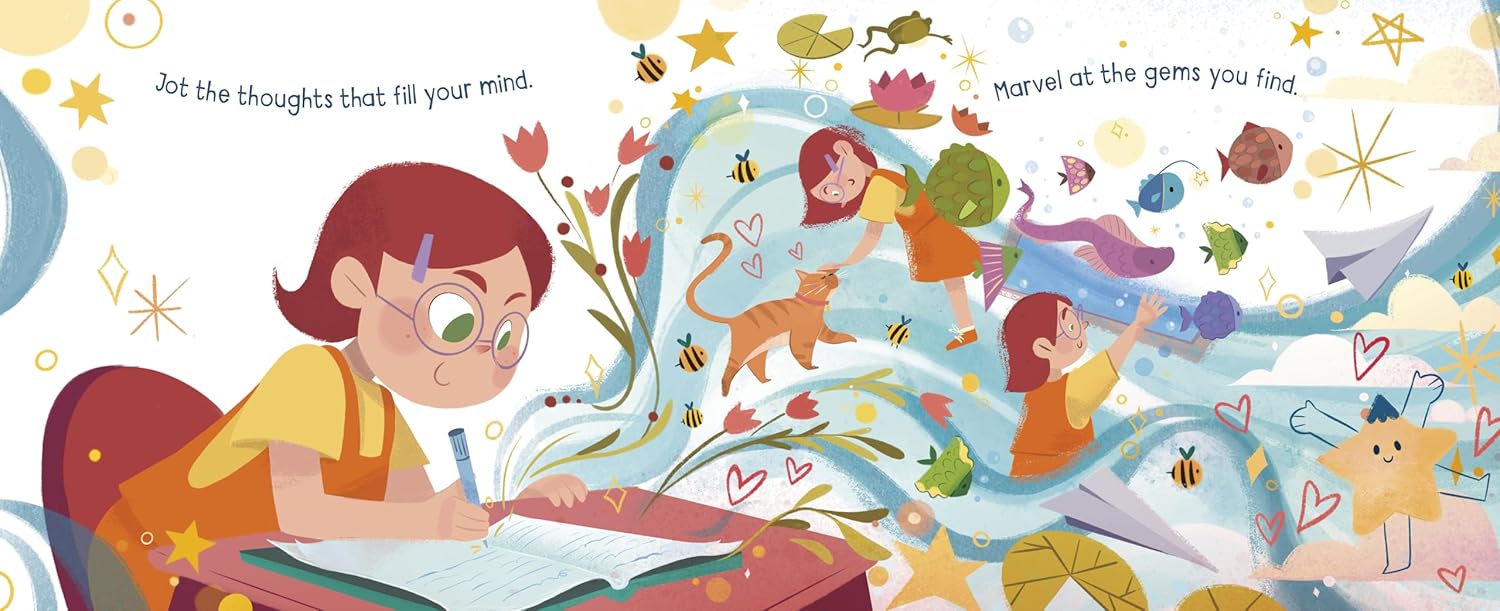
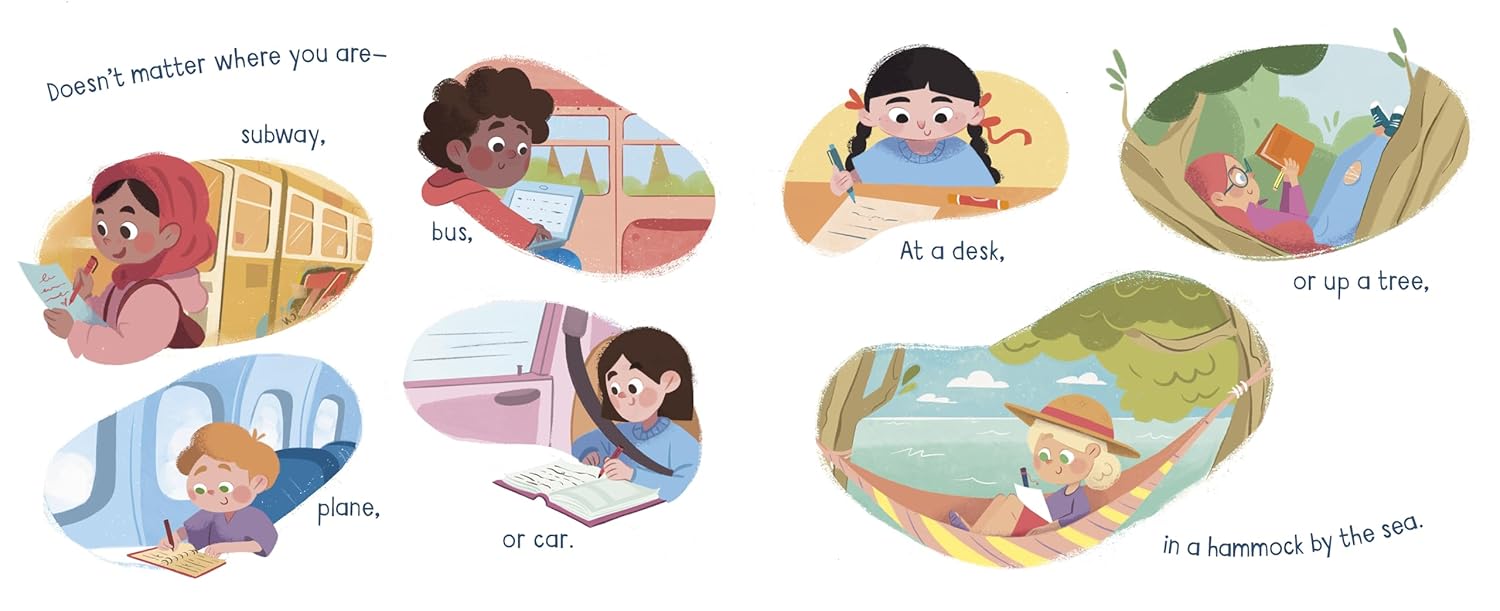
But there can be so many niggling questions that can make the idea of writing intimidating! Like where should I write? What should I write with? What if I like to draw or just tell my stories? The narrator puts all these doubts to rest with the simplest of answers: write wherever and however is best for you! The narrator even addresses the fear that what you write has to be perfect with the encouraging advice to “Scribble fast, or take it slow. / Play with words and let them flow.”

But, a would-be writer might think, is there a type of writing that’s better than others? Nope, the narrator assures. All writing is good writing. “Write a poem, play, or song / Write a note to right a wrong. / Write a joke, a script, a speech. Can’t decide? Write one of each.”

Illustration © 2025 Andrea Boatta, text © 2025 Rebecca Gardyn Levington. Courtesy of Capstone Editions.

So are there any rules to writing? Maybe just this one: to “let imagination lead!” The narrator leaves young writers with one more note of encouragement, reminding them that their writing is as unique as they are, and that their words or pictures or voice will find a place to flourish.

Following her story, Rebecca Gardyn Levington offers advice and encouragement to young writers in answers to those six proverbial writerly questions: Who? What? Where? Why? When? and How? 

Illustration © 2025 Andrea Boatta, text © 2025 Rebecca Gardyn Levington. Courtesy of Capstone Editions.

Rebecca Gardyn Levington’s enthusiastic ode to the wonders of writing is sure to spark any child to embrace their own personal method of creative expression. Her perfectly flowing, uplifting verses melt away any doubt or hesitance about putting pencil to paper or fingers to keyboard. Levington gives children freedom, inspiration, and encouragment. In short, she makes writing fun!

Andrea Boatta’s vivid, soft-hued illustrations sparkle with imagination and the flow of ideas as diverse children happily engage in writing wherever they are and whenever inspiration strikes. Children, whether new to writing or more experienced will find themselves right at home in Boatta’s dynamic imagery. Readers will also like following the little golden star that eagerly guides them from spread to spread. 

Write Here, Write Now is a joyful celebration of imagination and writing as well as a lively read aloud that kids will want to hear again and again. The book is highly recommended for classrooms, homeschoolers, school and public libraries, and family bookshelves. 

Ages 5 – 8

Capstone Publishing, 2025 | ISBN 978-1684469611

About the Author

Rebecca Gardyn Levington is a children’s book author, poet, and journalist with a particular penchant for penning both playful and poignant picture books and poems—primarily in rhyme. She is the author of BRAINSTORM!, WHATEVER COMES TOMORROW, and many other incredible picture books. Rebecca’s award-winning poems and articles have appeared in numerous anthologies, newspapers, and magazines. She lives in New Jersey with her family. Visit her at rebeccagardynlevington.com.

About the Illustrator

Andrea Boatta was born in a seaside town in southern Italy and grew up around vibrant colors and nature. After graduating from the Academy of Fine Arts, she came to love illustration and animation and continued her post-graduate studies at the National School of Cinema. Today she works in Naples, Italy, as a freelance illustrator and concept and background artist in the world of animation. You can follow Andrea on Instagram.

International Ideas Month Activity

CPB - Fairy Tale box

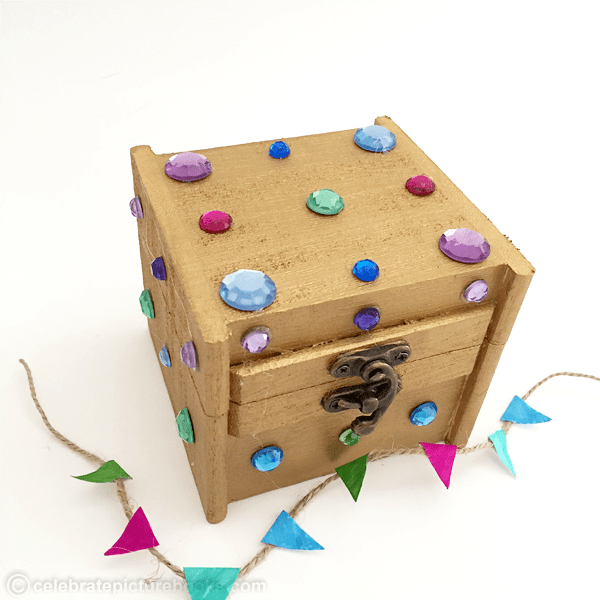
Treasure Box of Imagination

Writers often collect bits of imagination, wisps of dreams, snatches of memory, and treasures found along the way to use in their writing. With this craft, kids can make a treasure box to jot down and save ideas and tidbits to spark their own writing, drawing, and other creative endeavors.

Supplies

  • 1 small wooden box, available at craft stores
  • Acrylic craft paint – I used gold
  • Craft gems
  • Paint brush
  • Hot glue gun or strong glue

Directions

  1. Paint your wooden box 
  2. After the paint dries, decorate your Treasure Box of Imagination with gems

You can purchase Write Here, Write Now at these booksellers

Amazon | Barnes & Noble | Bookshop (to support your local independent bookstore.

Picture Book Review

February 11 – National Inventors’ Day

About the Holiday

Today’s holiday was established in 1983 and is celebrated on February 11 to honor the birthday of Thomas Edison. The day recognizes the spirit of inventors who look at life a little differently, let their imagination fly, and create a new . . . something! While we often think of inventions that change the world on a day like today, simple ideas implemented at home also make a big impact—or just lead to lots of fun. If you and/or your kids enjoy being creative, today’s the day to tinker around with your ideas. 

Thanks to Eerdman’s Books for Young Readers for sharing a digital copy of The Quiet One with me!

The Quiet One

By Yiting Lee


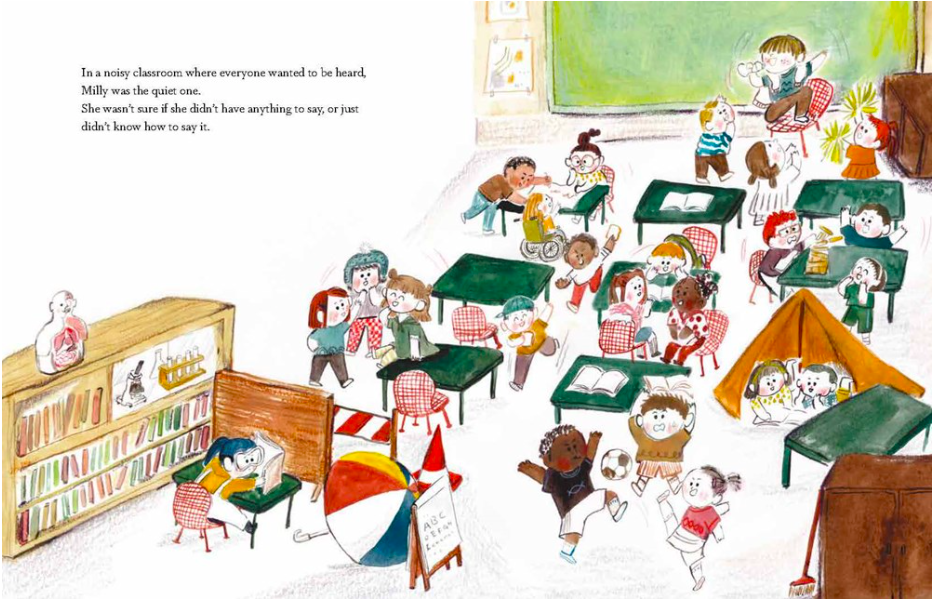
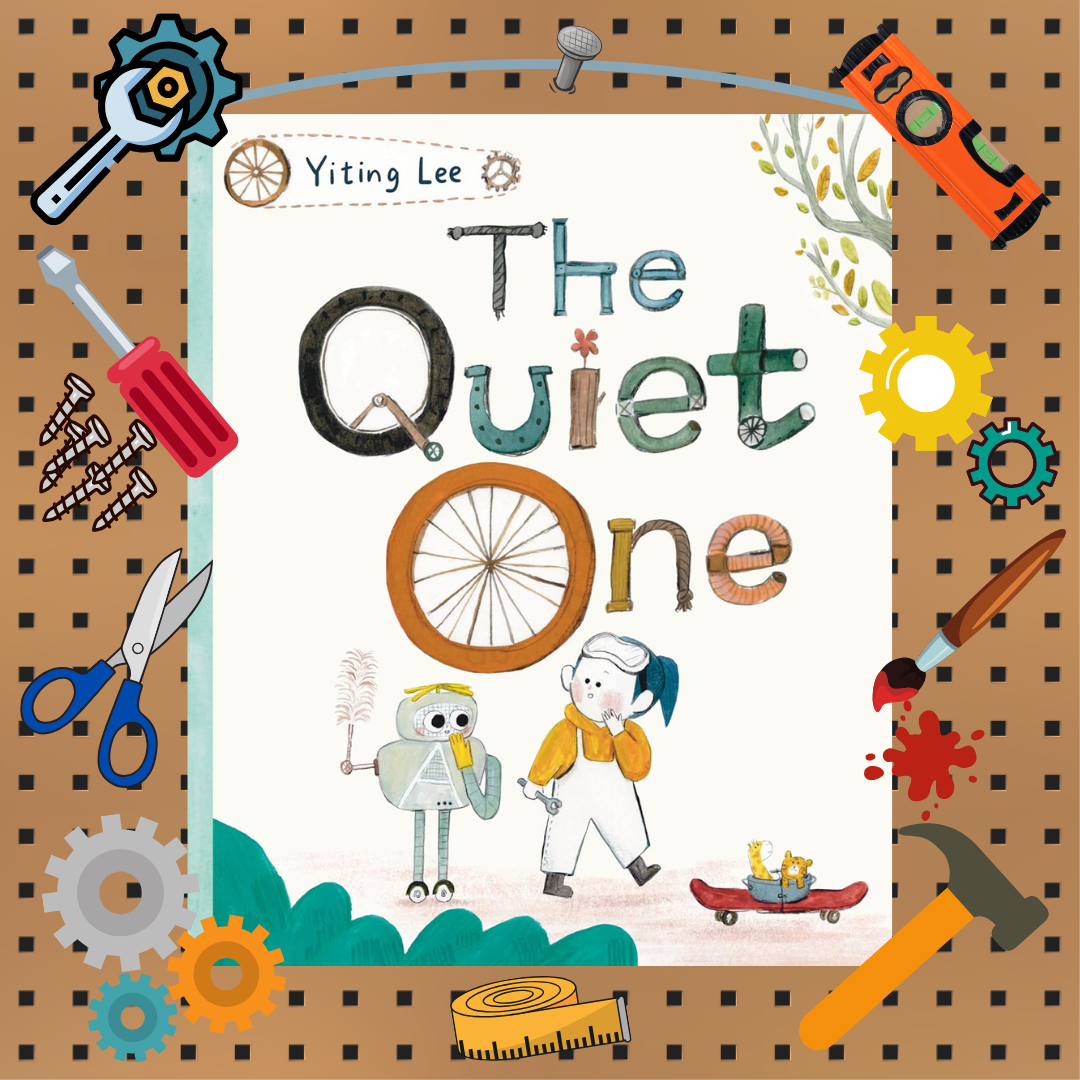
In her noisy classroom, Milly was the quiet one. She wasn’t exactly sure why she didn’t join in with her talkative classmates or why she especially dreaded Show and Tell, which was coming up on Friday. She most liked hanging out in her “secret place”—a shed filled with all sorts of things people didn’t need anymore or had forgotten. Milly was happy in her own company and liked to entertain herself by transforming other people’s old junk into amazing inventions like a running wheel for the shed’s mice and a working train from unused roller skates.

Copyright Yiting Lee, 2025. Courtesy of Eerdmans Books for Young Readers.

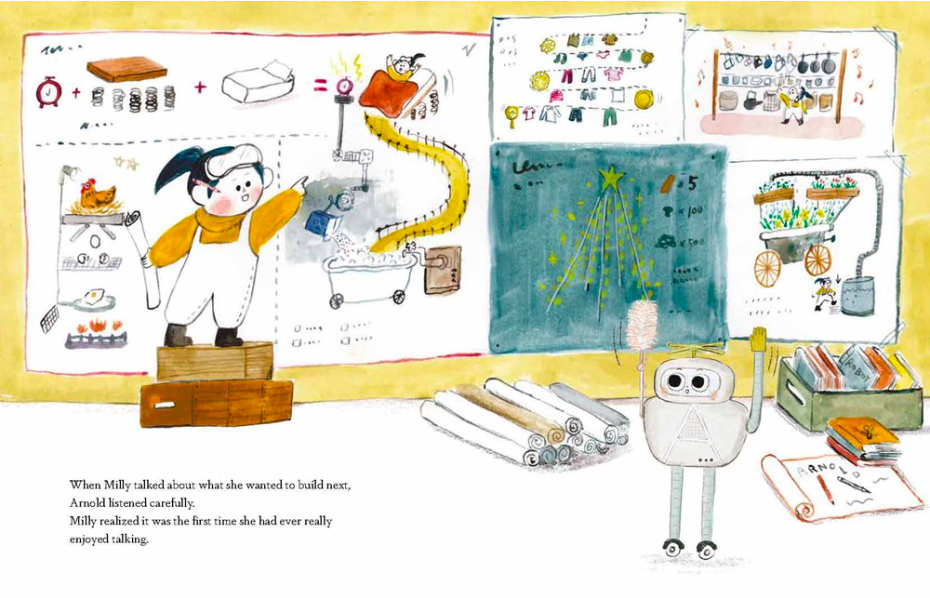
Then Milly found a broken cleaning robot. Getting out her toolbox, two caster wheels, and other supplies, Milly went to work. When she was finished and rebooted the robot, she was astonished to discover that it could talk—”Hi, I’m Arnold,” it said. Milly told Arnold her name. All afternoon Milly and Arnold worked to turn Milly’s secret place into a playground. Then as Milly explained what she wanted to build next, she “realized it was the first time she ever really enjoyed talking.”

Copyright Yiting Lee, 2025. Courtesy of Eerdmans Books for Young Readers.

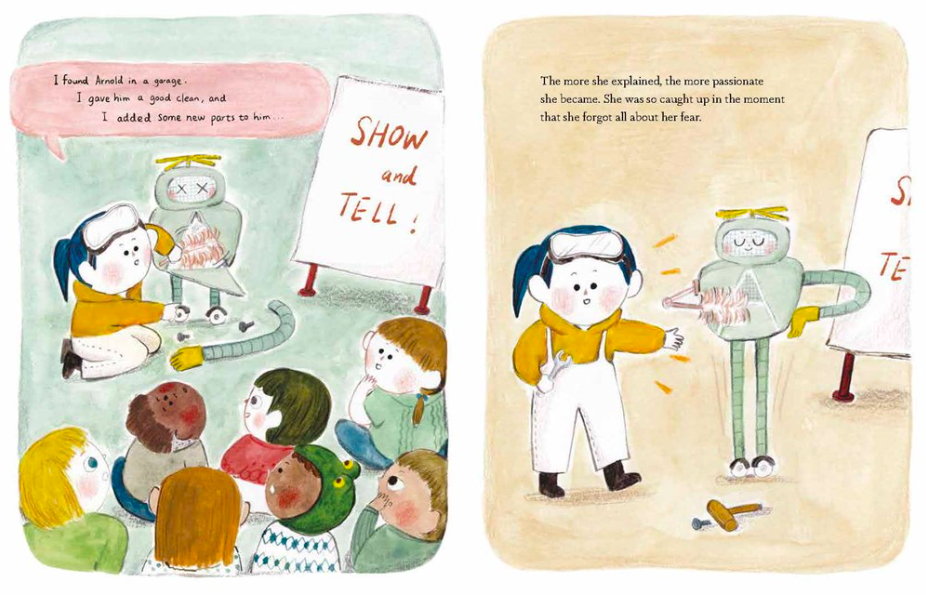
Milly was still nervous about Show and Tell, but Arnold told her he would go with her and she could talk about him. On Friday, under the gaze of her classmates who seemed to loom above her, Milly froze. Arnold came to the rescue. He introduced himself and began: “Milly made me out of . . . of . . .”. He stopped, not knowing what came next. But Milly found her voice and finished the story, becoming more passionate about her subject as she went along. In fact, “she was so caught up in the moment that she forgot all about her fear.” Her classmates thought Milly was amazing, and Milly, later playing with her new friends on the playground she and Arnold had built, “was happy that she had been heard.”

Copyright Yiting Lee, 2025. Courtesy of Eerdmans Books for Young Readers.

Yiting Lee’s story offers reassurance to quiet, introspective children as well as to those who feel anxious when talking in or to a group. Through Milly’s experience, such children may feel encouraged to talk about a special skill, experience, or talent or to share the “stage” with a supportive friend who can help them overcome their fear. Lee also reminds readers that—as a favorite teacher of mine liked to say—”still waters run deep”, and that beneath a quiet exterior often bubbles unique perspectives, creativity, and loyal friendship.

Lee’s charming, cartoon illustrations contrast how Milly shrinks in her raucous classroom with how she comes alive in the junk shed—for her, a lab full of exploration, inspiration, and energy. Readers will enjoy stopping to look over all the images of Milly’s inventions and be inspired to create a few themselves.

A fast-paced, multilayered and inspiring story to spark confidence, foster understanding, and build connections among kids of all talents, The Quiet One offers a valuable resource for classrooms and school libraries and is a heartening choice for home and library collections.

Ages 4 – 8

Eerdman’s Books for Young Readers, 2025 | ISBN 978-0802856418

About the Author/illustrator

Yiting Lee was once the quiet one in class, much like Milly. She followed her love of art to earn her MA in children’s book illustration at the University of Cambridge. Originally from Taiwan, Yiting currently lives in Surrey, England, where she has illustrated books like What’s the Rush? (Princeton Architectural) and Little Dinosaurs, Big Feelings (Magic Cat). Follow her on Instagram @yitinglee_art and visit her website at yitinglee.com.

National Inventors’ Day Activity

celebrate-picture-books-picture-book-review-inventor's-box

Inventor’s Box


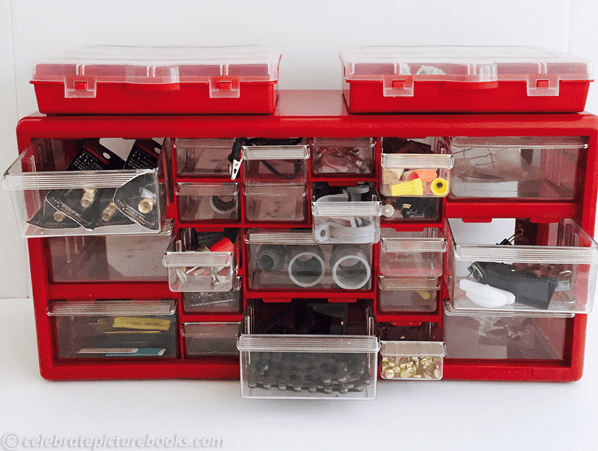
For young inventors or tinkerers, having bits and pieces of this and that as well as some tools to work with all stored in one place encourages creative thinking. Filling the drawers of a tool case, a tool box, or a tackle box with items like springs, brads, wheels, hinges, plastic piping, pieces of wood, glue, tape, and simple tools can spark a child’s imagination. Take your child along to the craft or hardware store and choose items together!

You can purchase The Quiet One at these booksellers

Amazon | Barnes & Noble | Bookshop (to support your local independent bookstore)

Picture Book Review
February 7 – National Send a Card to a Friend Day

About the Holiday

Today’s holiday is all about reaching out to a friend or family member with cheerful wishes or a reminder about how much they mean to you. Sure, texting is more immediate, but the sentiments get lost amid long scrolls of typed conversations, shared pictures, and links sent. A card or a letter is more permanent and easy to enjoy again and again without all the dizzying swiping, swiping, swiping to retrieve the message that meant so much to you. Sending cards is such a wonderful way for kids, especially, to keep in touch with friends, cousins, aunts and uncles, and grandparents. Today, encourage your children to share their feelings in a card or letter and get today’s book to read and inspire creative communication whenever your kids are missing a loved one.

Thanks to Tara Knudson for sharing a copy of Paper Wishes with me!

Paper Wishes

Written by Tara Knudson | Illustrated by Kirsti Beautyman

A child wistfully flies a paper airplane through their room, wishing they could fly, sail, take a train or drive to visit their grandparents and “bring a gift by hand.” Spying a piece of red paper on their desk, the child has an idea: Even though you’re far away, there’s one thing I can do. / Fold and crease . . . and fold again. / I made my gift for you!” With a few deft folds and tucks, the child creates an origami heart for their grandmother and grandfather.

Image copyright Kirstie Beautyman, 2024, text copyright Tara Knudson, 2024. Courtesy of Picture Window Books.
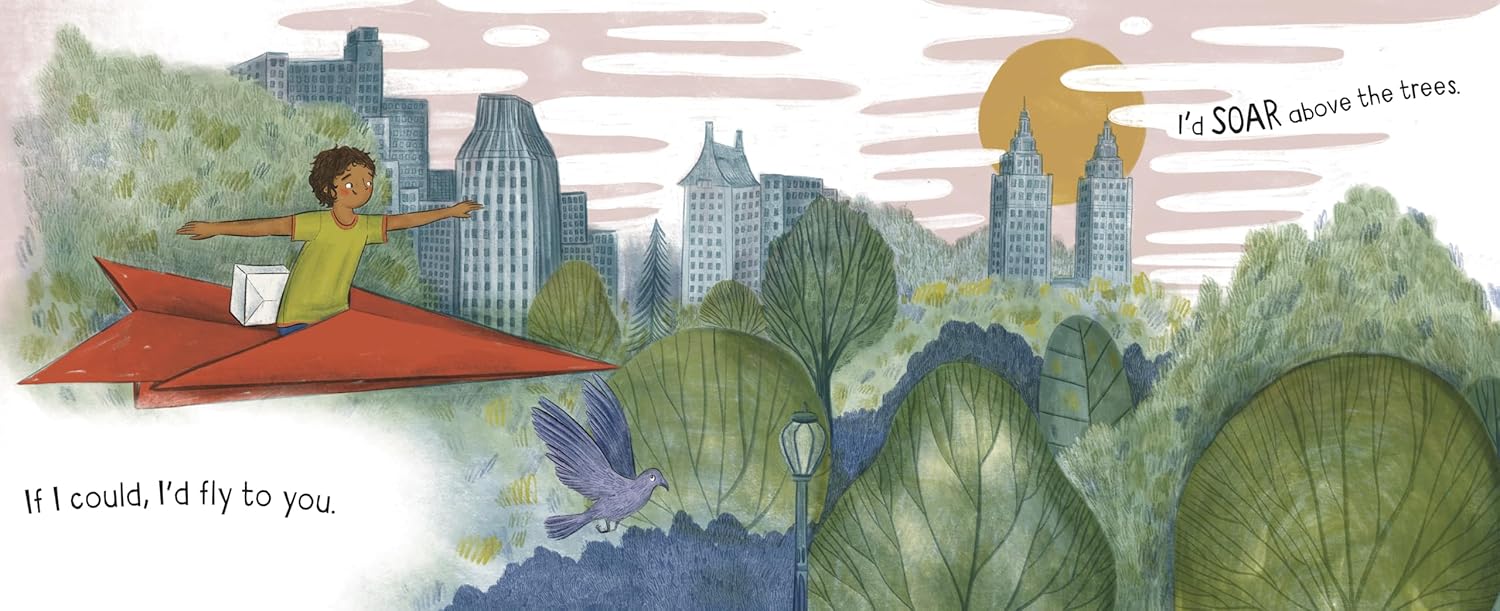
The child places the heart in an envelope and places it in the corner mailbox, sending “it on its way.” And then the waiting begins. Each day, they wonder “Is it on a truck? / Is it on a plane? / Is it on a boat? / Is it on a train?” and hope that their gift arrives safely. The child wishes they could see their grandparents’ reactions when they open the gift, and . . . through technology, the child and their grandparents get to share their smiles.

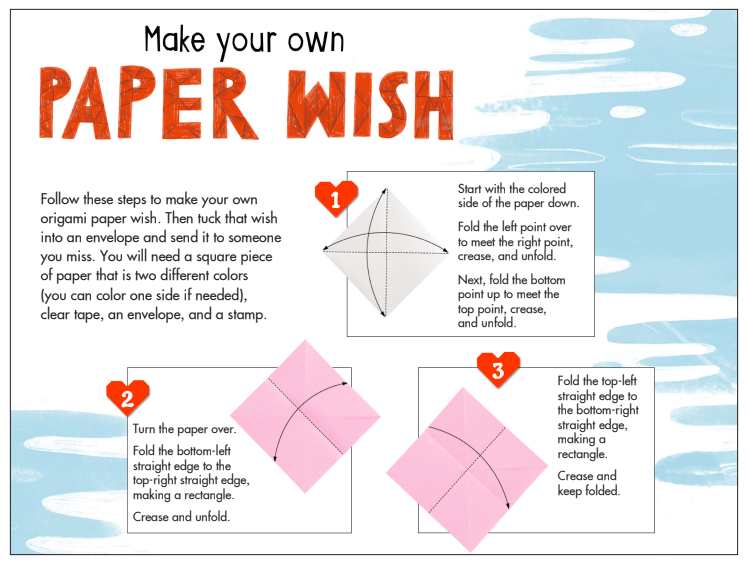
Easy-to-follow, illustrated instructions on how to make an origami heart follow the story.

Image copyright Kirstie Beautyman, 2024, text copyright Tara Knudson, 2024. Courtesy of Picture Window Books.

Tara Knudson’s touching and uplifting story will be treasured by children who miss seeing family members or friends and want to share stories, smiles, and love with them. Knudson’s lively rhymes and easy-flowing rhythms will captivate even the youngest children. Kids will enjoy reading along with the recurring phrasing and evocative vocabulary. Children who are eager gift-makers will love the inspiration in both the story and the included origami craft.

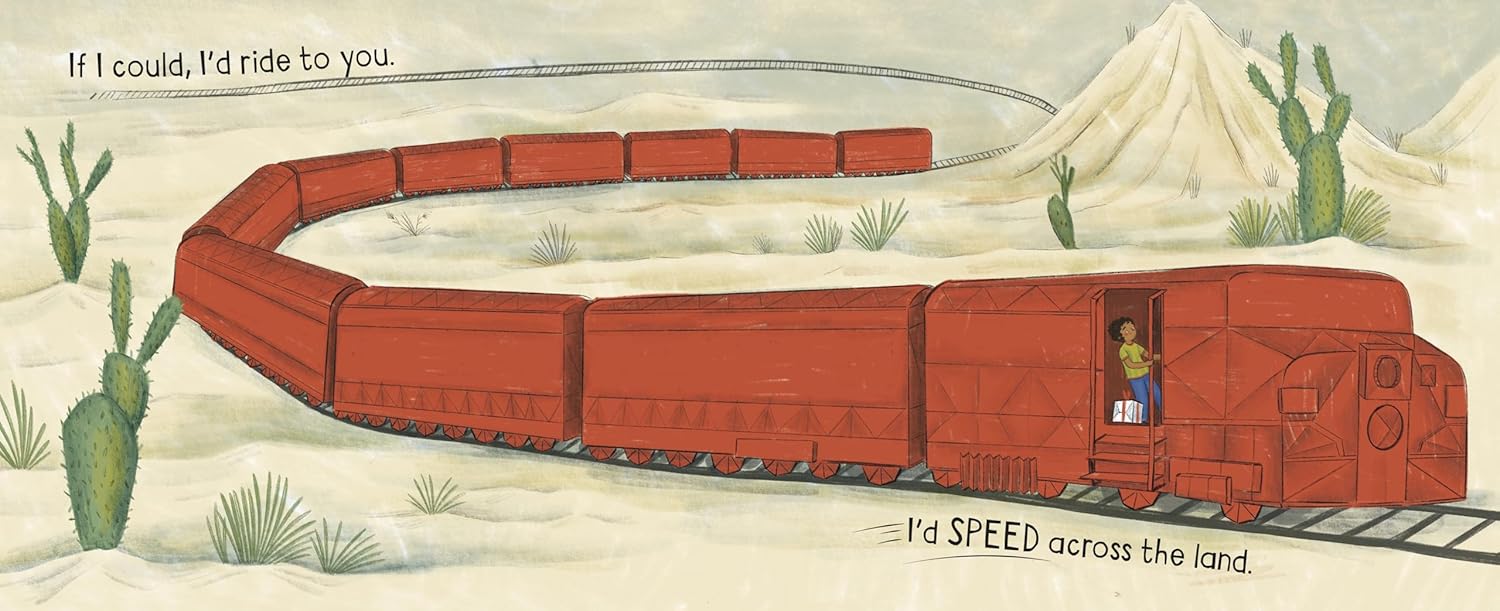
Kirsti Beautyman takes readers over a towering city, across choppy seas, winding past cacti in a sandy desert all the way to colorful townhouses on a shady street in a plane, boat, train, and truck cleverly drawn to mimic origami creations. Readers will immediately empathize with the child, whose expressions show a yearning to see grandparents again, happiness when close to them, pride in the gift they’ve made, and hopeful waiting to hear from family. Young readers are also reassured that family members or friends who are far away are thinking about and missing them too.

A tender, heartfelt, and inspiring read aloud that children will want to hear again and again, Paper Wishes would be an exceptional addition to home, library, and classroom collections.

Ages 4 – 8

Picture Window Books, Capstone Press, 2024 | ISBN 978-1684466184

About the Author

Tara Knudson is the author of multiple picture books, including Christmas Cookie Day, Fun Fall Day, and Valentine’s Day Treats. Tara is a former teacher who has been writing poetry since she was a young girl growing up in Chicago.

About the Illustrator

Kirsti Beautyman is an author and illustrator from the North East of England. After studying at Edinburgh College of Art and graduating in 2016, Kirsti turned her hand to illustrating children’s books and partook in the Picture Hooks Mentorship scheme in 2017. At the end of the scheme, Kirsti exhibited alongside her Mentor in the National Gallery of Scotland and was named “Picture Hooks Illustrator Of The Year”. Since then, she has continued to build on her career as a children’s book illustrator, and works from her studio, nestled away on the outskirts of Newcastle. Kirsti predominantly uses a culmination of digital, dry and wet media to create her illustrations… and is prone to leaving a vibrant jumbled mess in her wake.

National Send a Card to a Friend Day Activity

Paper Wishes Craft

Kids can make their own origami heart to give with the instructions in this Paper Wishes Instruction Sheet.

You can purchase Paper Wishes at these booksellers

Amazon | Barnes & Noble | Bookshop (to support your local independent bookstore)

Picture Book Review