June 11 – World Doll Day

celebrate-picture-books-picture-book-review-this-is-my-dollhouse

About the Holiday

World Doll Day came about through the efforts of Mildred Seeley, a doll collector and prolific author on doll-making and -collecting subjects and founder of Seeleys, the leading maker of porcelain dolls.Her collection of French dolls broke records when it sold in 2002. In 1986 she wrote an open letter to all media outlets and doll enthusiasts to join her in creating a special holiday about dolls on the second Saturday of June each year. Seeley envisioned World Doll Day as a time when dolls could be gifted to loved ones and strangers alike, promoting more universal understanding. She also hoped that museums, libraries, and stores would create interesting exhibits and that magazines and newspapers would run special editions. If you have a special doll collection, share it with others today, and if you know of a child or adult who would love a new or family heirloom doll, consider buying or giving them one!

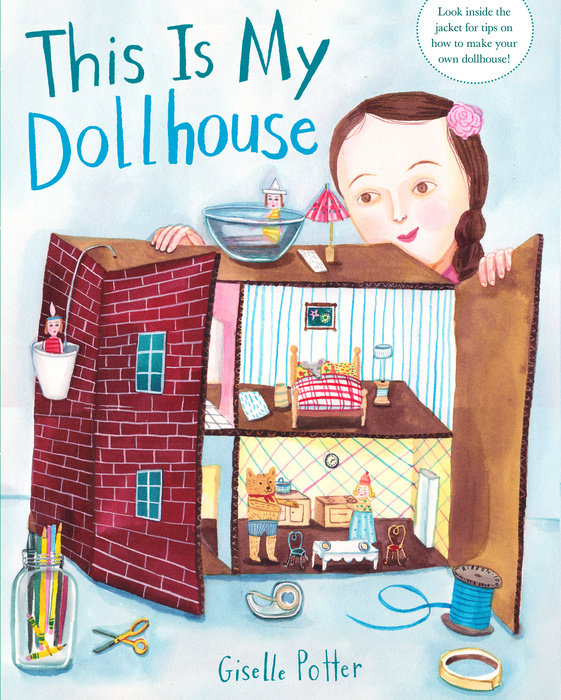
This Is My Dollhouse

By Giselle Potter


A little girl loves playing with her dollhouse every day. Her dollhouse began as a normal cardboard box, but the girl painted brick walls on the outside, divided the box into rooms, and drew wallpaper in each with her markers. Ingeniously, she filled the rooms with homemade furniture—a small box with a window cut out and a magazine picture placed inside became a TV; a wooden block decorated with burners and a door became an oven; a scrap of carpet became a rug, and the family eats pasta made from small bits of yarn served in a bottle cap.

Her diverse dollhouse family consists of Grandma Mousey, a toy mouse; Mommy, a doll with blond hair; Daddy, a stuffed teddy bear; and twins Lucy and Lola, two small dolls. Each morning Lucy and Lola dress in their fancy clothes made of ribbon. Mommy serves them fried eggs, which just moments ago were white circles of paper with colored yellow centers. After breakfast the twins ride the paper cup elevator to the cardboard box roof, where a bowl of water swimming pool awaits.

Later the pair relaxes in front of the TV while Daddy gives them tiny tissue-paper popcorn. When day fades into nighttime, the little girl tucks the whole family into the big bed and sings them a lullaby.

The girl has a friend named Sophie, who also has a dollhouse. Hers is store-bought and has perfect figures with painted on clothes, staring dot eyes, and plastic hair. All the furniture matches and the refrigerator comes stocked with plastic food. When the little girl visits Sophie they play with the dollhouse. The girl suggests various imaginative scenarios for the family—going on vacation, getting a new dog to walk, having the boy break his leg—but Sophie rejects her ideas. She doesn’t have an airplane for a vacation, the stuffed dog does not belong to the family, and the notion of a broken leg only elicits a look.

celebrate-picture-books-picture-book-review-this-is-my-dollhouse

The girls soon tire of their game and head outside. On the way home the little girl worries that if  Sophie came to play at her house she would hate the homemade dollhouse. Sophie does come over to play, however, and in preparation the girl hides her dollhouse under a pile of blankets. It doesn’t take Sophie long to uncover the dollhouse and want to play with it. The girl is so nervous about how Sophie will react to her “not perfect” toy that her knees begin to itch and a lump forms in her throat, but as they open the dollhouse, her fears are allayed.

The normal daily routine of the girl’s dollhouse family enchants Sophie, and she quickly takes up the whimsical scenarios she had rejected at her own house. All too soon Sophie’s mom arrives to pick her up. Given the promise that she can return tomorrow, Sophie heads home while the little girl makes plans for Lucy and Lola’s birthday party.

Doll and dollhouse lovers, crafters, artists, miniaturists and anyone with a fanciful bent will be charmed by Giselle Potter’s This Is My Dollhouse. The story of two friends from homes with different philosophies resonates beyond the subject of the two dollhouses. Being open to new experiences, allowing freedom of imagination, as well as having pride and confidence in one’s own talents and preferences are strong themes treated sensitively while set amid inspired creativity.

Potter’s folk-art-style illustrations are colorful and reinforce the homey appeal of handcrafted toys. Each page organically contains ideas for using recycled and common household items to make cute dollhouse furniture and objects. Inside the book jacket are more illustrated ideas for building a homemade dollhouse. Kids and adults will be inspired to save thread spools, corks, clothespins, ribbon, small bottles, and other items and will begin looking at common objects in a new light.

Ages 4 – 9

Schwartz & Wade Books, Random House, 2016 | ISBN 978-0553521535

World Doll Day Activity

celebrate-picture-books-picture-book-review-dollhouse-coloring-page


Dollhouse Coloring Page


Here’s a cute dollhouse that you can add to and color! So grab this printable Dollhouse Coloring Page and get creative!

Picture Book Review

June 10 – It’s Pet Appreciation Week

celebrate-picture-books-picture-book-review-excellent-ed

About the Holiday

Pets give us so much love and joy that we often want to do something special for our furry friends in return. The first full week of June gives us just that opportunity! Why not spend a little extra time walking or cuddling with your pet? Or maybe make them a favorite treat or get them a new toy. However you celebrate, you know your pet will appreciate it!

Excellent Ed

Written by Stacy McAnulty | Illustrated by Julia Sarcone-Roach


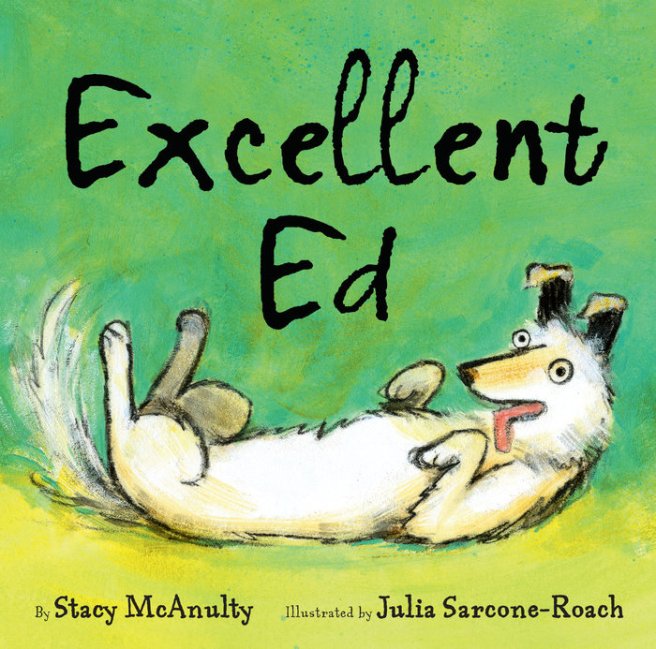
Ed, the Ellis family dog, is feeling a little left out. All five of the children are excellent at something, but not Ed. All the Ellis kids can eat at the table, ride in the car, sit on the couch, and use the indoor bathroom, but not Ed. Each kid has his or her own talent—playing soccer, calculating math, dancing, and baking cupcakes—and while Ed can carry a ball in his mouth, count to 4, spin after his tail, and eat cupcakes, it’s just not the same.

One day Ed wonders—if he was excellent at something could he have the same perks as the kids? He considers his talents and comes up with something. He knows he’s great at breaking stuff! Surely this will earn him a place at the dinner table. But even before he gets going, Elaine runs in with the news that she’s broken the record for most soccer goals in a season. Ed realizes that Elaine is better at breaking stuff than he is.

Again Ed thinks. Suddenly it dawns on him that he’s excellent at losing things—he even lost himself last week! This kind of ability was surely worth a ride in the van. But just as he’s about to jump in, the twins shout, “I’ve lost a tooth!” Foiled in this attempt, Ed goes back to the drawing board. Hmmm…it was just there…oh, yeah! Ed is fantastic at forgetting stuff! After proving to Dad that he doesn’t remember he ate a minute ago and ready to take his place on the couch, Ed is thwarted again by Edith, who forgot to be nervous during an audition and is now the lead ballerina.

Ed whimpers. Is there nothing he’s most excellent at? Maybe he doesn’t even belong in the Ellis family. Just then Ernie drops his sandwich and Ed gobbles it up, leaving no crumbs on the floor. “‘Wow, Ed! You are excellent at cleaning the floor,’” Earnie says. When Emily and Elmer come home, Ed runs to meet them and covers them in kisses. “‘Ed! You’re excellent at welcoming us home,’” the twins exclaim. Later, with the couch stuffed with Ellises, Ed lays across Edith’s and Elaine’s feet. “‘Ed is excellent at warming feet,’” Elaine and Edith agree.

Ed wags his tail—he is an excellent floor cleaner, welcomer, and feet warmer! Now he knows why he doesn’t sit at the table, stays home instead of riding in the van, and doesn’t join the family on the couch. He realizes that he is an important part of the Ellis family, and that he’s always loved and appreciated. Now, if only he could figure out that indoor bathroom thing….

There comes a time in everyone’s life when they doubt their place in the world. Stacy McAnulty explores that feeling through Ed, who worries, works the problem, and discovers that he is without a doubt excellent just the way he is. Giving the Ellis kids a variety of ages and talents makes this a great universal book for readers. McAnulty’s twist which turns “negative” gifts for breaking, losing, and forgetting things into triumphs for the Ellis kids is ingenious, adding humor, depth, and “ah-ha! moments” to the story. The mystery of Ed’s abilities is well-kept until the end, and the solution comes as a happy surprise.

Readers will wish they were part of the Ellis family, with their exuberant smiles, supportive cheers, snuggly, crowded couch, and, of course, adorable Ed. Julia Sarcone-Roach’s vivid illustrations are infectious as Ed perks up his ears, rolls his eyes skyward and with tongue out thinks about his situation. Scenes of his shenanigans will elicit giggles, and Ed’s sweet looks and wagging tale will win readers’ hearts.

Ages 4 – 8

Alfred A. Knopf Books for Young Readers, 2016 | ISBN 978-0553510232

Pet Appreciation Week Activity

celebrate-picture-books-picture-book-review-dog-maze

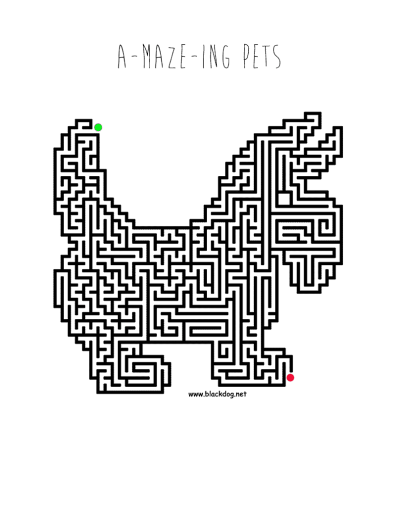
A-maze-ing Pets Maze


Dogs love to take circuitous routes as they pick up scents that are too enticing not to follow! Can you find your way through this printable A-maze-ing Pets Maze

Picture Book Review

June 9 – It’s National Fresh Fruit and Vegetables Month

celebrate-picture-books-picture-book-review-bananas-in-my-ears

About the Holiday

With all the scrumptious fresh fruit and vegetables available at your local farmers market or grocery store, how can you help but enjoy good nutrition? Those red, red strawberries and midnight blue blueberries make perfect smoothies, and the brilliant orange carrots and peppers look good enough to eat! Oh, wait! You can eat them! So grab your bag or basket and head to the store—or plant or pick your own!

Bananas in My Ears: A Collection of Nonsense Stories, Poems, Riddles, and Rhymes

Written by Michael Rosen | Illustrated by Quentin Blake


Things may go from the ridiculous to the sublime or from the sublime to the ridiculous, but the rhymes, stories, poems, and jokes in this collection are both ridiculous and sublime. Divided into four sections—The Breakfast Book, The Seaside Book, The Doctor Book, and The Bedtime Book—these bite-sized tales will nibble at your funny bone.

Each book includes six to seven short pieces that humorously reveal the inner workings of familial and community relationships. Recurring titles “What if…,” “Things We Say,” and “Nat and Anna” siblings stories tie the books together. The tone for Bananas in My Ears is set with aplomb in the very first offering, “Breakfast Time,” which reveals the chaos of early morning with its spilled milk, banging trash cans, pets on the table, school clothes ruined, and “I think I’m going crazy!” shenanigans. 

“What If…” (Breakfast Book) combines kids’ natural penchant for thyming with their unbounded imagination and a bit of stream-of-consciousness to boot. Just as a little boy is to bite into a piece of toast, he has this thought: “What if / a piece of toast turned into a piece of ghost / just as you were eating it / and you thought you were going to sink your / teeth into a lovely crunchy piece of hot toast / and butter and instead this cold wet feeling / jumps into your mouth / going, / ‘Whoooooooooooooooooooo!’ / right down into your stomach…”

celebrate-picture-books-picture-book-review-bananas-in-my-ears-internal-art-cave

Adding speech bubbles and expressive art to commonly used phrases in “Things We Say” transforms throw-off lines like “My hair’s a mess,” “Look what I found,” “You can’t lie there all morning,” and “Now what seems to be the trouble?” into self-deprecating humor all can relate to.

Four stories of Nat and his older sister Anna zero in on particular moments that illuminate the sibling relationship, At once opposed and in sync, Nat and Anna negotiate moments in which Anna is put in charge of watching Nat at breakfast with topsy-turvy results; a fearful story Anna tells Nat about jellyfish that somehow backfires; a trip to the doctor that turns into a competition about future professions; and a “who’s-on-first” type banter that allows Anna to enjoy some alone time.

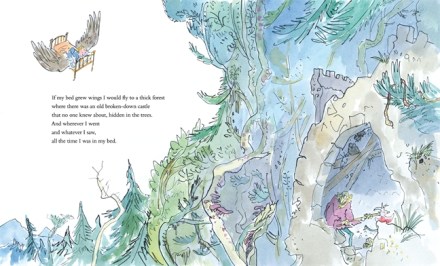
“Three Girls” is a clever take on outwitting-an-ogre tales. Three girls walking on the beach come across a cave. One girl goes in and “sees a pile of gold sitting on the rocks, so she thinks, ‘Yippee, gold, all for me!’ And she steps forward to pick it up and a great big voice booms out ‘I’m the ghost of Captain Cox. All that gold stays on the rocks.’” Afraid, she runs out of the cave. The second girl is braver. She enters the cave, sees the gold, hears the same booming voice and is also chased away. Undeterred, the third girl walks into the cave, sees the gold, and hears the booming voice of Captain Cox. Instead of running away, however, she says, “‘I don’t care. I’m the ghost of Davy Crocket, and all that gold goes in my pocket.’” With her treasure secured she hightails it out to join her friends.

Among other fun stories in this volume are: “These Two Children,” with a lively recitation of familiar bedtime routines; “Fooling Around,” that offers light rhymes on children’s names; and another “What If” (the Breakfast Book) that will have kids not only laughing, but cracking up at a sassy leg—“What if / hard-boiled eggs turned into hard-boiled legs / just when your dad was eating his egg / and he says, / ‘Hey, what’s this?’…”

celebrate-picture-books-picture-book-review-bananas-in-my-ears-internal-art-what-happens-next

Michael Rosen understands, as kids do, that sometimes nonsense makes perfect sense and that even the commonplace is quite absurd when you think about it. This collection of witticisms is sure to resonate with children. Just hand a child this book and get ready for giggles—and, oh yes, adults will chuckle too.

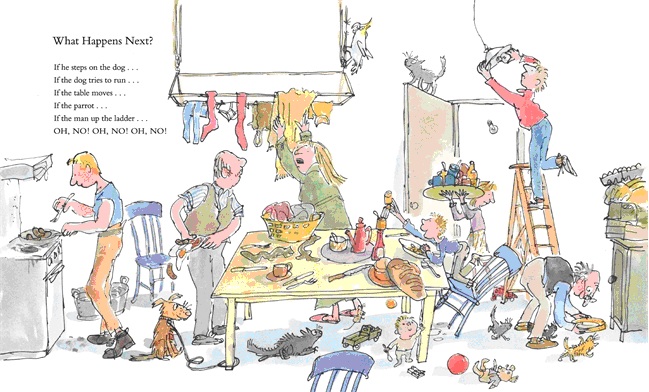
In his colorful pen and ink drawings the inimitable Quentin Blake enlivens each piece with rakish kids, wide-eyed parents, sloppy messes, bouncing, jumping joy, and all the silliness that contributes to having a great day. “An accident waiting to happen” doesn’t begin to describe the bedlam ensuing in “What Happens Next?” as each character and object is set up to play their part in an oh-so-human game of dominoes. Kids will love seeing themselves and the world around them so candidly drawn, and adults will appreciate the whimsical sophistication of the same.

Ages 5 and up

Candlewick Press, 2012 | ISBN 978-0763662486

National Fresh Fruit and Vegetables Month Activity

celebrate-picture-books-picture-book-review-fruit-bowl-coloring-page

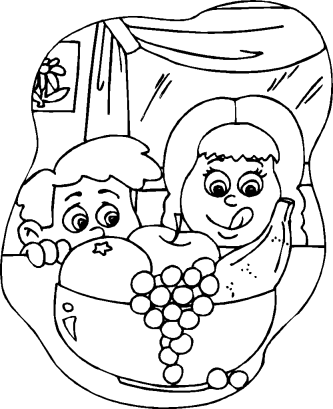
Fruit Snack Coloring Page


Grab a nutritious snack to munch on while you color this printable Fruit Snack Coloring Page that offers up all your favorites!

Picture Book Review
June 8 – National Best Friends Day

celebrate-picture-books-picture-book-review-painting-pepette

About the Holiday

What would we do without our best friends? They’re the ones we go on adventures with, laugh with, commiserate with, even cry with. And no matter what, we know they’ll always be there for us. Best friends can be people we’ve known all our lives or ones we’ve just met; they can live far away or in our own home. Best friends don’t even have to be people—beloved pets or favorite toys are sometimes just what we need. Today is the perfect time to celebrate your best buddy. Get together with them, call, or text. Relive some favorite memories or make some new ones!

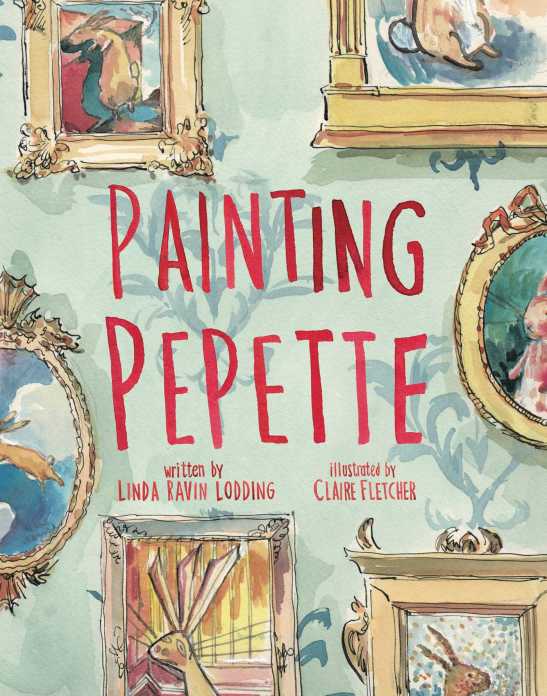
Painting Pepette

Written by Linda Ravin Lodding | Illustrated by Claire Fletcher


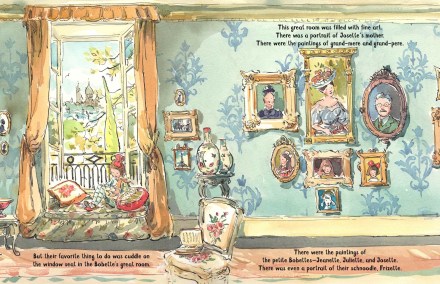
If you peek in the great room window of the grand yellow house at #9 Rue Laffette in Paris, you will most likely see cuddled on the comfortable seat Josette Bobette and her beloved stuffed rabbit Pepette. It’s their favorite place. Looking past them you will see that the great room is filled with fine art. On the walls hang portraits of the family—Josette’s mother is there as well as grand-mère and grand-père, the three Bobette sisters, and even their schnoodle Frizette.

celebrate-picture-books-picture-book-review-painting-pepette-great-room

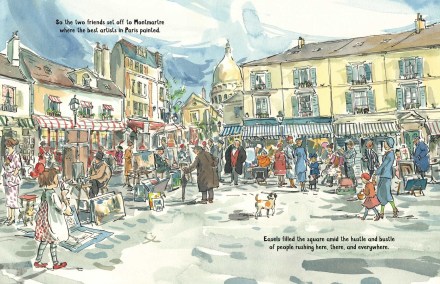
“One day Josette noticed something strange. There was no portrait of Pepette!” Josette determines to find an artist to paint a special portrait of her best friend. The pair heads out to Montmartre, where the all the best artists set up their easels to paint and sell their work. It doesn’t take long for a man in a striped shirt to stop them.

“‘Those ears!’” he cries. “‘Never have I seen such majestic ears. I must paint this rabbit’s portrait!’” Pepette blushes at such an effusive compliment, and Josette exclaims, “‘Magnifique!’” It appears Josette has found just the artist to create Pepette’s portrait. The painter waves his brush with a flourish, declares his painting a “masterpiece,” and holds it up for inspection. Josette gazes at a Pepette with two noses and three ears. Diplomatically, she proclaims the picture “nice” but not quite Pepette. Her best friend agrees.

Just then a man with a thin, curved handlebar mustache spies the pair. Admiring Pepette’s whiskers, the artist begs to capture “the very essence of her rabbitness!” He immediately sets to work, and in no time a most unusual portrait emerges. Pepette seems to melt from a tall red wall. Josette considers it and her reaction carefully. “‘It’s imaginative,’” she says. “‘But you’ve painted Pepette quite, well, droopy.’” Pepette agrees.

As Josette and Pepette enjoy a Parisian snack on the curb of Montmartre, a rakish young man happens along. He is arrested by Pepette’s nose, which he likens “‘a faint star twinkling in a misty, velvet night.’” Josette has a good feeling about this artist and follows him across the square to his easel. Pepette poses on a red tufted stool as the artist paints a rabbit soaring through the clouds. He proclaims the finished portrait “‘one of my best works’” as he displays it to the crowd. Josette likes the clouds but tells the painter that Pepette is afraid of heights and not fond of flying. Pepette agrees.

By now Pepette is the most sought-after model in Paris, and another artist rushes up, captivated by her beauty. The balding man in a dapper suit and round spectacles peers at Pepette. “‘What a colorful lady—balloon blue, pansy pink, and radish red!’” A little suspicious of his vision, Josette allows him to paint Pepette. “‘Ta da!’” the man exclaims, revealing the magic of his brush. Josette studies the canvas with its vibrant dots, dashes, and splashes. While she admires the colors, she reminds the artist that Pepette isn’t pink.

“‘Ah, yes,’” nods the painter. “‘But through art we can see the world any way we want.’”

celebrate-picture-books-picture-book-review-painting-pepette-montmartre

With the sun setting low in the sky, Josette politely says thank-you and goodbye to the artists. She and Pepette have enjoyed their day, but it’s time to go home. Curled up once more on the window seat, Josette sighs. She had so hoped to have the perfect portrait of Pepette—one that showed her velvety grey listening ears, her heart-shaped nose, and her soft arms that give tight hugs. Suddenly, Josette has an idea! Gathering all her art supplies, she creates the perfect likeness—as special as Pepette herself!

An author’s note on the last page describes the creative atmosphere of 1920s Paris, home to writers, artists, musicians, and fashion designers, that gives a frame to her story. The artists that Josette meets are inspired by Pablo Picasso, Salvador Dalí, Marc Chagall, and Henri Matisse.

In Painting Pepette Linda Ravin Lodding has written a multi-layered story of love, friendship, and unique vision. Through the sweet relationship between Josette and Pepette and with a sprinkling of humorous self-congratulation on the part of the artists, Lodding nudges readers to appreciate that while art can reveal and obscure, reflect and transcend reality, ultimately the success of a piece—complex or simple—lies within the viewer’s heart. Lodding’s lyrical language trips off the tongue and is a joy to read—it’s like following Josette as she skips happily through Paris.

Claire Fletcher’s striking pen and ink illustrations pay delicate homage to cityscapes of a bygone Paris. Adorable Josette in her white pinafore over red-dotted dress, red shoes, and big red bow along with her enchanting rabbit are the perfect tour guides through crowded Montmartre and an introduction of art history. Soft tones of yellow, rose, and green illuminate the apartments and cafes of the square where colorful shoppers and artists mingle. Fletcher’s renderings of Pepette’s various portraits will not only make kids giggle, but entice them to learn more about each artistic style. The final endpapers reveal that the four fine-art portraits now hang in the Muse of Paris, while readers already know that Josette’s perfectly perfect portrait of her well-loved friend has taken its rightful place on the wall in the Bobette great room!

Painting Pepette is a beautiful addition to any child’s bookshelf and a lovely way for teachers to initiate a discussion of art history and get kids excited about artists and different art styles.

Ages 4 – 9

little bee books, 2016 | ISBN 978-1499801361

Follow Josette through Paris as she searches for just the right artist to paint a portrait of her best friend Pepette and comes to a surprising discovery in this beautiful trailer:

Discover more books by author Linda Ravin Lodding on her website.

Illustrator Clair Fletcher invites you to find more of her artwork by visiting her online gallery.

Best Friends Day Activities

celebrate-picture-books-picture-book-review-painting-pepette-activity-guide

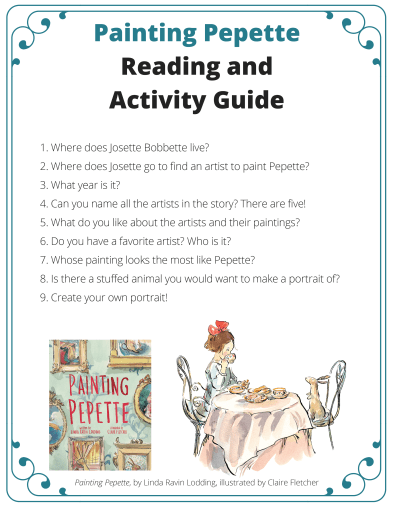
Painting Pepette Reading and Activity Guide


little bee books has created an interactive activity so you can continue exploring Josette’s world and your own artistic talent! Just click here—Painting Pepette Reading and Activity Guide—to start having fun!

Stuck on You Magnets or Picture Hanger


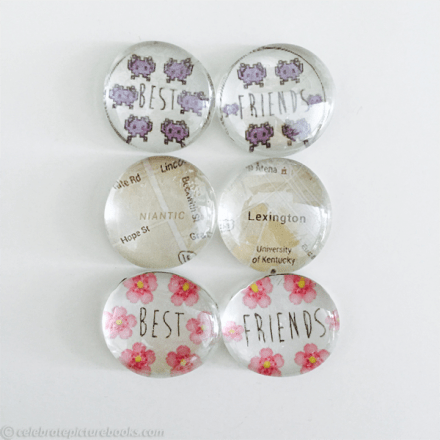
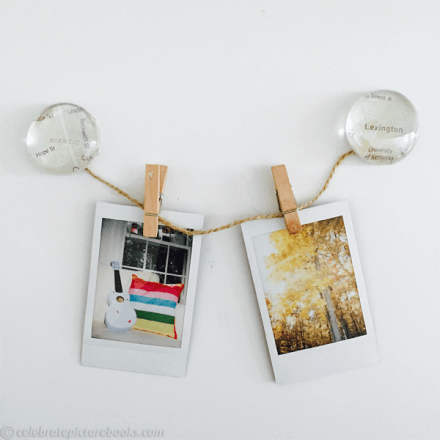
Best friends stick together whether they’re near or far, right? Here’s a fun craft that you and your friends can make to show how magnetic personalities attract each other! If your best friend or friends are far away, why not make them one too? Or make the alternate picture hanger! Be creative—use inside jokes, favorite characters, or shared experiences to make these  crafts personal!

celebrate-picture-books-picture-book-review-friends-magnets-craft

For Magnets

Supplies

  • To get you started, here are two printable Best Friends Templates! Template 1 Template 2
  • Poster board
  • Large, 1 ½-inch clear glass stones (decorative fillers), available in craft stores
  • Markers or colored pencils OR find images online to print out
  • Medium to large flexible magnets, available in craft stores
  • Super glue
  • Toothpicks
  • Scissors

Directions

  • Place the glass stone on the poster board and trace around it
  • Draw your design in the circle on the poster board
  • Cut out the circle
  • With the toothpick, apply glue around the very edge of the design side of the circle
  • Attach the circle to the flat side of the stone, let dry
  • Trim the cardboard circle if needed
  • Attach the magnet to the back of the cardboard with glue

celebrate-picture-books-picture-book-review-friends-picture-hanger-craft

For Map Picture Holder

Supplies

  • Use a mapping program to find a map of your town and your friend’s town
  • Poster board
  • Large, 1 ½-inch clear glass stones (decorative fillers), available in craft stores
  • Twine
  • Super Glue
  • Toothpicks
  • Scissors
  • Heavy duty mounting squares

Directions

  1. Find maps of your and your friend’s towns
  2. Zoom in so the name of your and your friend’s towns are displayed well. You will be using about a 1-inch area around the towns’ names.
  3. Take a screen shot of the maps
  4. Print the maps
  5. Place the glass stone on the map and trace around it
  6. Place the glass stone on the poster board and trace around it
  7. Cut out the circles on the map and poster board
  8. With the toothpick, glue the map to the poster board, let dry
  9. With the toothpick, apply glue around the very edge of the map side of the circle
  10. Attach the circle to the flat side of the glass stone, let dry
  11. Trim the cardboard circle if needed
  12. Repeat with the other map
  13. Attach a length of twine to the back of each glass stone
  14. Attach heavy duty mounting squares to the back of each glass stone
  15. Attach stones to the wall and hang pictures on the twine

June 7 – It’s National Fishing and Boating Week

celebrate-picture-books-picture-book-review-fish-liam-francis-walsh

About the Holiday

National Fishing and Boating Week promotes the fun of getting out on the water and enjoying time in the sun. Whether you glide in a sailboat, zip around in a motorboat, or leisurely row a kayak, dingy, or other craft, the freedom of the open ocean or river is enticing. Fishing is also a wonderful way to spend time together outdoors. To celebrate this week go boating or learn a new skill, grab your fishing pole and cast your line, or do both together!

Fish

By Liam Francis Walsh


A boy with fishing poles and tackle box in hand and faithful dog at his heals pass a runner as they sprint toward a rowboat. The boy takes the oars and is soon off shore. The pair cast their lines overboard, and soon the little boy brings up an F. Another try snags an I. The boy happily aims his line in another direction, but his dog sees danger on the horizon—a rising C. He tries to warn the boy, but when they turn around again, the waters are calm.

This is one successful fishing trip as the boy’s line again grows taut. He pulls up his catch. A Q—not a keeper. He unhooks it and throws it back as his dog pokes at him in alarm. Again, when the boy looks, the water is peaceful. The two fish in contented silence until the boy catches a big one. The beast runs with the boy’s line, even pulling him out of the boat.

The boy holds his breath as he’s pulled into the depths amid swirling schools of H, B, M, O, and V. Not deterred from his quest, the boy swims toward an H, but it slips from his grasp. The boy tumbles and sinks, but eventually grabs the H and zooms to the surface. He cheers! They’ve caught an F, I, S, and H!

His dog points—something’s coming for them! Suddenly, they’re surrounded by a swarm of Bs and the sharp fins of As. The C swells, swamps the small dingy, and the F, I, S, H are lost in it’s wake. The boy stares dejectedly into the water, but his dog taps him on the back. He has a surprise to share. When the boy turns around, his dog reveals that he’s been a successful fisherman too!

With their quarry safely stowed, the boy rows back toward shore. He leaps out and darts through a group of disoriented road racers toward a sign that reads N I. No one it seems knows what to do. The boy offers his string of letters, and with the FINISH marker complete, the racers cross the line in victory!

With a well-barbed hook, Liam Francis Walsh reels in readers with his fabulous, funny fish story. Wordlessly, but with plenty of visual wordplay, Walsh tells the tale of a boy with a great idea and his eagle-eyed companion with emotion, action, and lots of heart. The bold blue, black, white, and red illustrations have an engaging quality—at once loaded with old-fashioned charm and modern sophistication. Fish is a wonderful addition to anyone’s bookshelf or coffee table. This is one catch you don’t want to let get away.

Ages 5 – 9

Roaring Brook Press, 2016 | ISBN 978-1626723337

National Fishing and Boating Week Activity

celebrate-picture-books-picture-book-review-tackle-the-tackle-box-game-cards

Tackle the Tackle Box Game


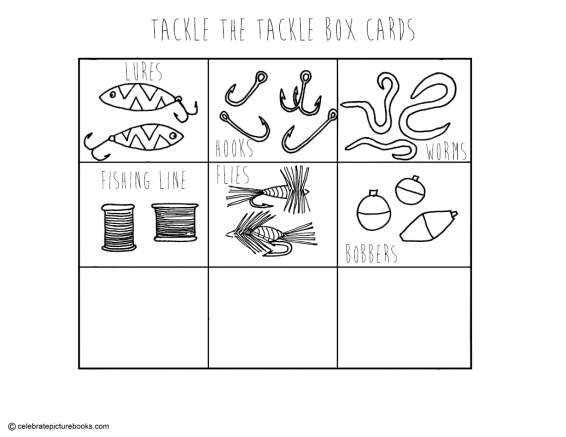
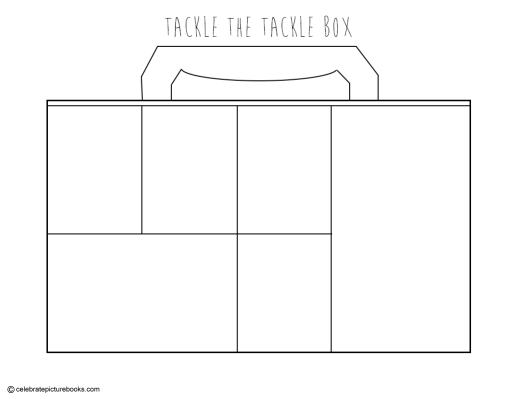
A good fisherman always needs a well-stocked tackle box. Play the Tackle the Tackle Box Game to earn lures, bobbers, hooks and more to fill your box. The first player to complete their set is the winner! for more fun you can color the tackle box items any way you like. There are even three extra cards per set for you to draw your own tackle box items!

Supplies

celebrate-picture-books-picture-book-review-tackle-the-tackle-box-game

Directions

  1. Print one Tackle the Tackle Box Game Board for every player
  2. Print one set of Tackle the Tackle Box Game Cards for every player
  3. Each player can color a set of playing cards
  4. Cut the cards apart
  5. Gather all the cards and set in separate piles
  6. Roll the die to determine who goes first, highest roll goes first
  7. The first player rolls the die, and adds the item that corresponds to the number on the die. The list is below.
  8. Play continues with each player rolling the die and collecting cards
  9. If the player rolls a number for a card that he or she already has, the die passes to the next player
  10. The first player to fix their tackle box is the winner!

Each number of dots on the die corresponds to these cards:

1: Fish Lures

2: Hooks

3: Worms

4: Fishing Line

5: Flies

6: Bobbers

Picture Book Review

Picture Book Review
June 6 – Russian Language Day

celebrate-picture-books-picture-book-review-mussorgsky's-pictures-at-an-exhibition

About the Holiday

Established in 2010 by the United Nations Educational, Scientific, and Cultural Organization, Russian Language Day honors the music, art, and other unique aspects of this intriguing country. The observance coincides with the 1799 birthday of Alexander Pushkin, a Russian poet who is considered the father of Russian literature. Celebrations include concerts, readings, and other cultural events. Today, listen to the music of a Russian composer, read a novel or short story, or learn a few Russian words!

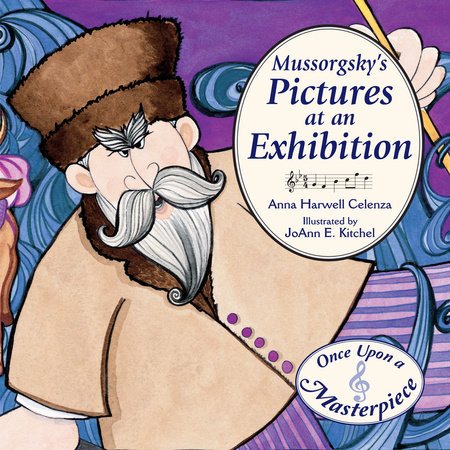
Mussorgsky’s Pictures at an Exhibition (Once Upon a Masterpiece Series)

Written by Anna Harwell Celenza | Illustrated by JoAnn E. Kitchel


It’s the 1870s and Russian culture is enjoying a resurgence. Young musicians and artists are excited to be recognized by the world. Three friends—Modest Mussorgsky, a musician; Victor Hartmann, an artist and architect; and Vladimir Stasov, an art critic—have big plans for their work. Victor, especially, has dreams of designing the new City Gate in Kiev. But on July 23, 1873 Victor suffers an aneurysm and dies. Modest is devastated. He feels that Victor’s death is his fault because he had dismissed Victor’s complaints about a headache only days before. Although Vladimir tries to comfort his friend, Modest pushes him away.

Modest stops going out, he stops being happy, and he stops writing music. Meanwhile Vladimir organizes an exhibition of Victor’s art so everyone will remember him. Vladimir and other friends think that seeing Victor’s work displayed will help Modest come to terms with his friend’s death. When the exhibit is ready, Vladimir visits Modest to invite him to come. When Modest refuses, Vladimir locks the door, puts the key in his pocket, and tells Modest he had two choices: either go to the exhibition or have a new roommate in Vladimir. Modest reluctantly agrees to go.

When they reach the gallery, Modest reluctantly enters. He is awestruck. “Every inch was filled with Victor’s hopes and dreams, his fears, and his greatest triumphs.” Slowly Modest wanders through each room, gazing at the paintings that bring back such vivid memories. He sees familiar faces, costume designs, children, couples, peasants, even Baba-Yaga, a witch from Victor’s favorite fairy tale.

Modest stops in front of Victor’s picture “The Great Gate of Kiev.” Tears fill his eyes and he thinks, “This was to be your greatest achievement…now it will never be more than a dream. If only I could build it for you.” He studies the picture for a long time, and suddenly an idea comes to him—“Maybe I can build it for you!” He dashes from the gallery straight to his piano.

As Modest thinks about Victor’s art, “one by one the spirit of each picture filled the room.” The images rise from the piano and Modest follows them from one theme to another, note by note. Some passages he plays are slow and sad, others clear and quick, while still others flutter or whisper. Even Baba-Yaga makes an appearance. With each chord special parts of Victor came to life until the last majestic strains built the Great Gate of Kiev in music. Modest calls his composition Pictures at an Exhibition.

With the spirit of his friend Victor in his heart. Modest Mussorgsky goes on to compose operas and visit with friends. Vladimir Stasov also follows his dreams to travel far and wide, and wherever he goes he tells people about Victor and Modest’s Pictures at an Exhibition

Anna Harmann Celenza relates the heartfelt story of the origins of Modest Mussorgsky’s great work with sensitivity and honors the emotional origins and effect of his Pictures at an Exhibition. The hopes of the three friends as well as the details of Victor’s artwork are evocatively described, allowing children to easily picture the feelings and objects that influenced Mussorgsky’s music.

Both the colorful architecture of Russia and the soaring notes of Mussorgsky’s music are beautifully depicted in JoAnn E Kitchel’s illustrations. Each one-and-a-half-page spread depicting scenes of St. Petersburg, Modest’s apartment, the art gallery, musical imagery, and the theater is framed in lovely floral borders, tying together the themes of art and music. Rich purples, regal blues, fiery reds, and glowing yellows makes this book a feast for the eye as well as the mind.

The book is accompanied by a CD of Mussorgsky’s work, making Pictures at an Exhibition a must have for music lovers of all ages.

Ages 6 – 10 and up

Charlesbridge, 2016 | ISBN 978-1580895286

Russian Language Day Activity

celebrate-picture-books-picture-book-review-russia-word-search

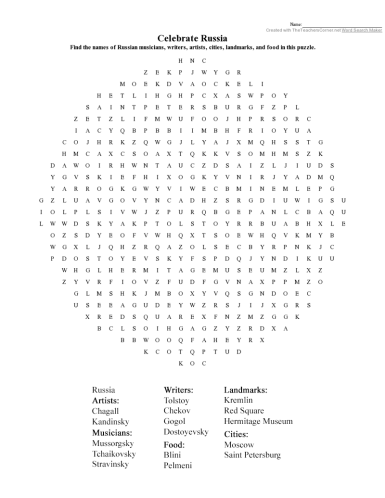
Celebrate Russia Word Search


Find the names of Russian musicians, artists, writers, cities, and more in this circular word search. Print your Celebrate Russia Word Search here! And here’s the Solution!

Picture Book Review
June 5 – Hot Air Balloon Day

celebrate-picture-books-picture-book-review-because-you-are-my-teacher

About the Holiday

People have always endeavored to create flying machines that give them a bird’s eye view, speed travel, and take them higher and farther from Earth. One of the earliest innovations was the hot air balloon, which offered the first manned flight in 1783. Today’s holiday celebrates the ingenuity and beauty of hot air balloons. Now that summer is here, taking in a balloon festival and going for a ride are fun ways to spend a day.

Because You Are My Teacher

Written by Sherry North | Illustrated by Marcellus Hall


Now that the school year is winding down, it’s a good time to remember everything teachers do inside and outside of the classroom to get kids excited about the world and its wonders. In Because You Are My Teacher a child narrator presents various scenarios and alternatives to the usual classroom: “If we had a schooner, we would have our class at sea / And study the Atlantic, where the great blue whales roam free.”

Other appealing rhymes follow the intrepid class as the kids try out different modes of transportation. They could study from camelback, traversing deserts and exploring the pyramids; peer from a whirling helicopter as it hovers over an erupting volcano; and ski past baby penguins gobbling down their first fish. From their river raft on the Amazon, the children could listen to howler monkeys “growl their spooky song.”

A submarine would be the perfect place to learn about the ocean depths and its unique creatures, while from an off-road truck the class “would ride savanna trails, / Where Africa’s young elephants hold on to mothers’ tails.” These adventurous kids would love having school in a kayak on a Grand Canyon river, soaring with hang gliders over the Australian outback, afloat on an airboat in the Everglades, polling through Venice on a gondola, and in a rocket ship for an out-of-this-world experience.

What about a hot-air balloon, you ask? It is hot-air balloon day, after all. That’s here too: “If we had hot-air balloons, we would set out on a quest / To study China’s Great Wall from the east end to the west.”

But the child narrator and the class are happy right where they are: “Our classroom is our vessel, / always headed someplace new. / Because you are our teacher, / We’ll explore the world with you.

Sherry North’s exuberant ride of discovery honors all teachers and their students who daily adventure into new worlds together. North’s clever rhymes and superb turns of phrase combine with uncommon experiences to entice readers to join these exciting field trips. The last pages are a nice reminder that teachers bring the universe into their classrooms no matter where they are.

Marcellus Hall brings readers up close to the world of the sea, the vast sands of the desert, a slippery ice floe, the lush rainforest, and more exotic environments with his bold, vibrant artwork. The denizens of these world landmarks nearly walk off the page into a child’s reading area, and kids will love searching for the little mouse that is the class’s constant companion on their journey.

This book would make a perfect gift for a teacher or education student.

Ages 5 – 8

Scholastic, 2014 | ISBN 978-0545768887

Hot Air Balloon Day Activity

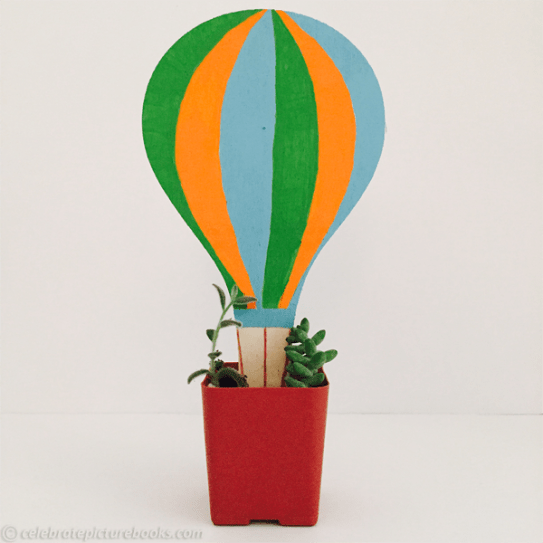
celebrate-picture-books-picture-book-review-hot-air-balloon-planter-craft

Hot Air Balloon Planter


Hot air balloons love to reach for the sky just as plant do! With this activity you can make a unique pot for your favorite plant.

Supplies

  • Plastic or terra cotta pot
  • Wooden paddle ball paddle, available at toy or craft stores
  • Paint or markers
  • Paint brush
  • Dirt
  • Clay (optional)
  • Plant or seeds

Directions

  1. Draw six crescent shapes on the globe part of the paddle
  2. Paint the crescent shapes in alternating colors, let dry
  3. Draw lines for the cables on the handle of the paddle
  4. Fill the pot with dirt (or if you don’t want to use this craft as a planter, you can add clay to the pot to hold the paddle upright)
  5. Add your plant or seeds
  6. Carefully push the paddle into the dirt or clay