June 19 – Father’s Day

celebrate-picture-books-picture-book-review-the-best-part-of-daddy's-day-cover

About the Holiday

While celebrations of Mother’s Day caught on very quickly after the first ceremony in 1908, proclaiming Father’s Day as a national institution took a little longer. On July 19, 1910 the governor of Washington State held the first Father’s Day event. In 1916 President Woodrow Wilson, trying to attract attention to the holiday with a little technology, unfurled a flag in Spokane, Washington by pushing a button in Washington DC. This clever ploy, however, did not convince the men of the time, who scoffed at a holiday dedicated to fathers as somehow too “domesticated” and “unmanly.” During World War II celebrating Father’s Day began to be seen as a way to honor American troops and to help the war effort. The holiday entered the mainstream, but it wasn’t until 1972, when President Richard Nixon signed a proclamation, that Father’s Day became a federal holiday.

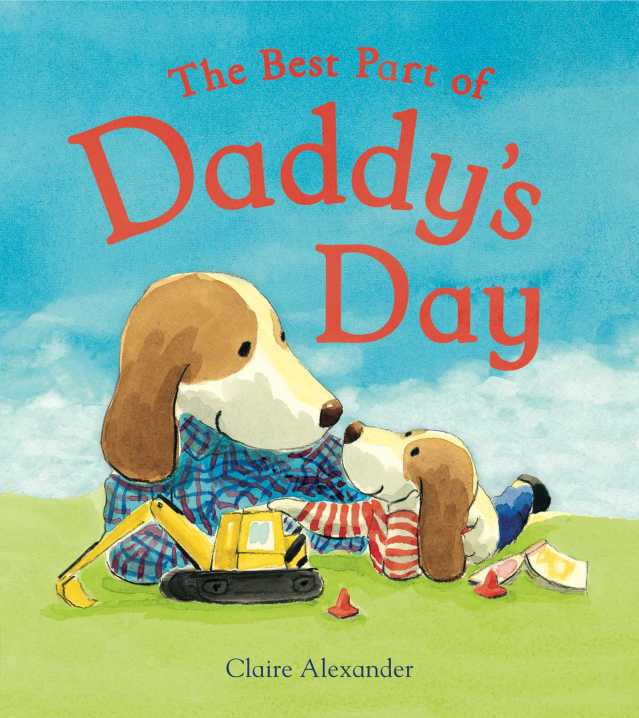
The Best Part of Daddy’s Day

By Claire Alexander


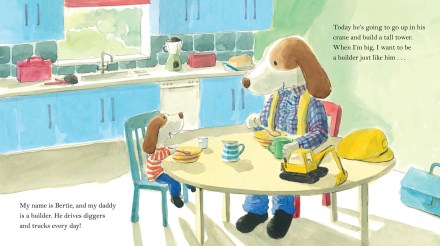
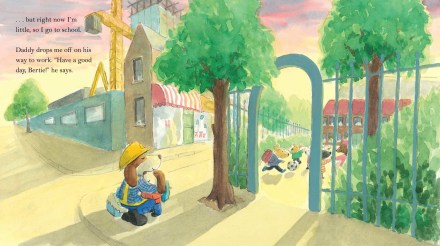
Little Bertie is proud to introduce his daddy to readers. His dad is a builder who drives diggers and trucks every day. Today he’s going to be in a crane high up in the sky working on a tall tower. “When I’m big,” Bertie says, “I want to be a builder just like him….” But right now Bertie’s dad is dropping him off at school. “‘Have a good day, Bertie!’” he says as he gives his son a hug.

With the BRRRIIING of the bell, Bertie runs into class, where he’s in for a surprise. “‘Today we’re going to be builders,’” his teacher tells her class, and Bertie knows it’s going to be a great day! First the teacher reads “an exciting story about a digger” then Bertie paints a picture of a crane like his daddy’s. But just as he’s finishing it, a classmate with paint on his shoes tracks green footprints across the paper.
celebrate-picture-books-picture-book-review-the-best-part-of-daddy's-day-interior-art

At lunchtime Bertie trips over his shoelace and spills his lunch. His great day is having some bumps along the way, and Bertie wishes he could see his daddy. He knows just what to do. He runs to the playground and climbs “up, up, UP…to the top of the jungle gym.” Bertie is so high up he “can see the top of Daddy’s tower!” Bertie can even see someone driving the crane and knows it must be his dad.

After lunch the class constructs an enormous tower. Bertie pretends to be a small crane, while his teacher, in her high-heeled shoes, is a big crane, able to place boxes higher and higher. The building they make is amazing! As the day progresses it begins to rain, but when Bertie’s dad picks him up he gives Bertie his hat to keep his ears dry. Bertie is excited to tell his dad about building the tower—it was the best part of his day, he says.

At home Bertie tells his dad “the not so good parts” of his day—about his spoiled painting and about tripping and falling. “‘I bet things like that never happen to you, Daddy,’” Bertie says. “‘Well, actually…they do sometimes!’” Bertie’s dad answers, and he tells his son about the bumps in his day—how someone walked across his new, wet cement floor and that he also tripped and fell over an untied shoelace, just like Bertie. But then, his dad says, he went back up in the crane and “‘finished my tower, and I think I saw you, Bertie, on the jungle gym!’”
celebrate-picture-books-picture-book-review-the-best-part-of-daddy's-day-interior-art

“‘It WAS me, Daddy!” Bertie exclaims. Then he asks his dad “if the best part of his day was finishing the tower.” His dad looks at his son, snuggled on his lap and answers, “‘Actually, the best part of my day is right now, being here with you, Bertie.” Bertie agrees. “‘I think this is the best part of my day, too.”

Claire Alexander hits all the right notes in her heartfelt tribute to loving father-son relationships. Brilliantly paced toward an emotional surprise twist, Alexander’s story is sweet and satisfying. The open communication between father and son adds poignancy, and the truth that while kids are inspired by their parents, parents are equally inspired by their kids may amaze children and will bring a lump to parents’ throats. This father and son aren’t just building towers, they’re building a life-long bond.

Alexander’s vivid, cheerful watercolor illustrations glow with the enthusiasm and love that Bertie and his dad feel for each other. Large two-page spreads invite kids into Bertie and his dad’s world as they eat breakfast together in the tidy kitchen, say goodbye outside the school gate, and read together in their comfy, overstuffed chair. Kids will love the view of Bertie’s playground with the gleaming glass tower and red crane rising above it and the sweeping vista of the city as seen by Bertie’s dad from atop the crane. A vertical spread of the tall tower Bertie’s class builds adds a fun element to the story and emphasizes the tower’s height for young children. 

The Best Part of Daddy’s Day  is an excellent addition to a child’s bookshelf and makes a wonderful gift. It will quickly become a favorite for bedtime or story time.

Ages 3 – 8

little bee books, 2016 | ISBN 978-1499801965

To see more of adorable books for children by Claire Alexander visit her website!

The Best Part of Daddy’s Day and more excellent books for children are available from little bee books!

Father’s Day Activity
celebrate-picture-books-picture-book-review-building-blocks-craft

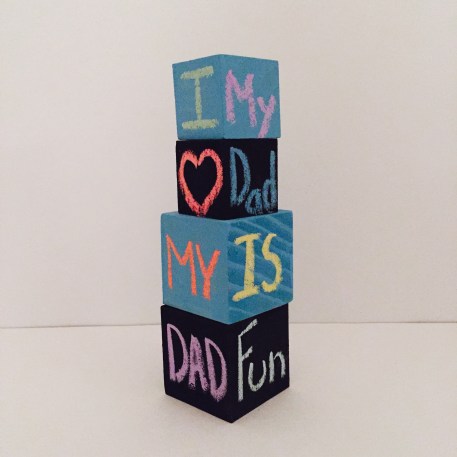
I Love Dad Building Blocks


This craft will stack up to be a favorite with kids! With wooden blocks and a little chalkboard paint, it’s easy to make unique building materials. They’re great for gifts, decorating, party favors, or when you just have a little time to play!

Supplies

  • Wooden blocks in various sizes, available from craft stores
  • Chalkboard paint in various colors
  • Paint brush
  • Chalk in various colors

Directions

  1. Paint the wooden blocks with the chalkboard paint, let dry
  2. Write words or draw pictures on the blocks
  3. Have fun!

June 18 – International Picnic Day

celebrate-picture-books-picture-book-review-picnic-john-burningham

About the Holiday

Somehow food always tastes better when eaten outdoors. Today’s holiday gives you a chance to test that theory, by packing a basket or cooler and heading out to a forest, beach, park, playground, or backyard picnic table near you! Whether your repast is simple peanut butter and jelly sandwiches or an elegant spread, you can enjoy the company of friends and family in the great outdoors!

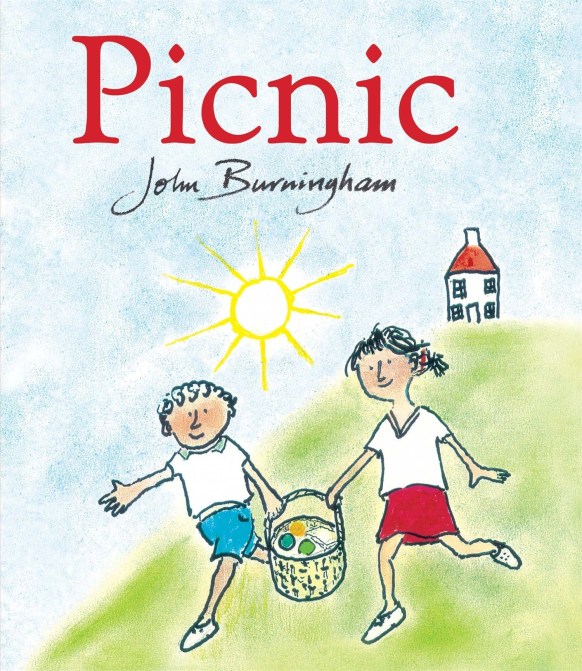
Picnic

By John Burningham


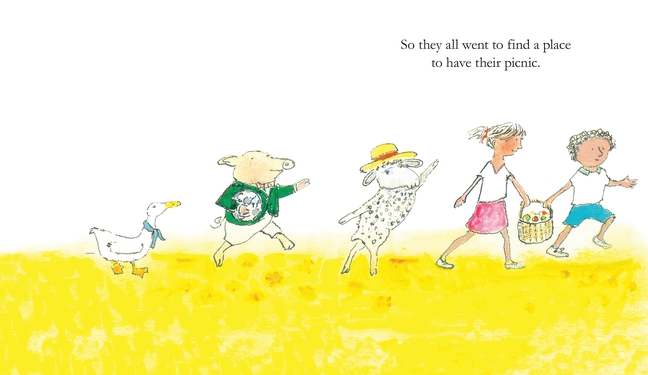
The curly-haired boy and pony-tailed girl who live in the house on the hill pack a picnic lunch and head out. At the bottom of the slope they meet three friends—Sheep, Pig, and Duck. Boy and Girl invite this dapper trio to join them, and they take off single-file to find a picnic spot. How could they have missed seeing Bull? Well, Bull sees them and begins a chase.

“Duck, Pig, Sheep, Boy, and Girl ran as fast as they could toward the woods to hide from Bull.” They successfully dodge him by hiding behind some trees. Do you see them? After Bull gives up the chase the five friends come out of the woods, hoping to begin their picnic. But the day is full of mishaps—first Sheep’s yellow hat blows away then Pig’s ball rolls down the hill. Can you help find them?

celebrate-picture-books-picture-book-review-picnic-john-burningham-interior-art

With their possessions are safely back where they belong, the little troop continues their search for the perfect spot but is delayed again when Duck loses his scarf. At last they find a place in the field to lay their blanket. They eat and play games until it’s time to go home. Exhausted, they trudge up the hill toward home. The friends aren’t quite ready to part yet, though, and Girl and Boy invite Sheep, Duck, and Pig for a sleepover. If you’d like to join them, there might just be room for you too!

John Burningham’s classic-style story of a simple outing turned day-long odyssey will delight small children. Incorporating suspense, “oh-no!” moments, and questions eliciting interaction, Picnic invites readers to join Boy, Girl, Duck, Sheep, and Pig on their excursion. The easy-to-find objects hidden in the illustrations will give even the youngest readers a sense of inclusion, camaraderie, and accomplishment. From page to page and event to event, kids will keep giggling and following these engaging characters.

Burningham’s familiar and beloved artwork lends a lighthearted, cheerful atmosphere to the friends’ day, and the colorful, oversized format is as open and welcoming as the airy field they picnic in. Girl, Boy, Duck, Sheep, and Pig frolic in lively scenes, and the hidden objects they search for take just a perfect moment’s scan of the page for young children to find.

Picnic is sure to be a favorite story-time request.

Ages 2 – 5

Candlewick, 2014 | ISBN 978-0763669454

International Picnic Day Activity

celebrate-picture-books-picture-book-review-picnic-basket-matching-puzzle

Match the Picnic Baskets Puzzle


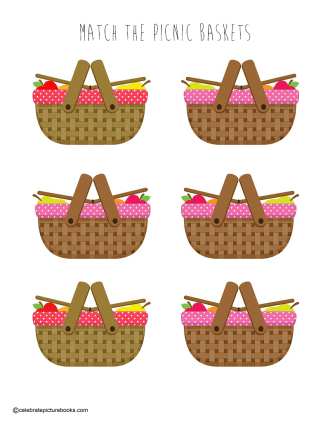
Six friends packed three identical picnic baskets, but somehow they were mixed up! Help the kids find the picnic baskets that are the same, so they can eat lunch. Print the Match the Picnic Baskets puzzle here!

June 17 – Flip-Flop Day

celebrate-picture-books-picture-book-review-at-the-beach-cover

About the Holiday

Nothing says “casual” like a pair of flip-flops! These open-toe, open-back, open-side (you can hardly call them shoes!) shoes have been trending since 4000 BC with no limits in sight! Flip-Flop Day was initiated by Tropical Smoothie Café. Customers wearing flip-flops receive a free smoothie and the Café also uses the day to raise money for Camp Sunshine, which offers respite and support to children with life-threatening illnesses and their families. Today if the weather’s warm slip on a pair of flip-flops and head out for a casual day at the beach or on the town!

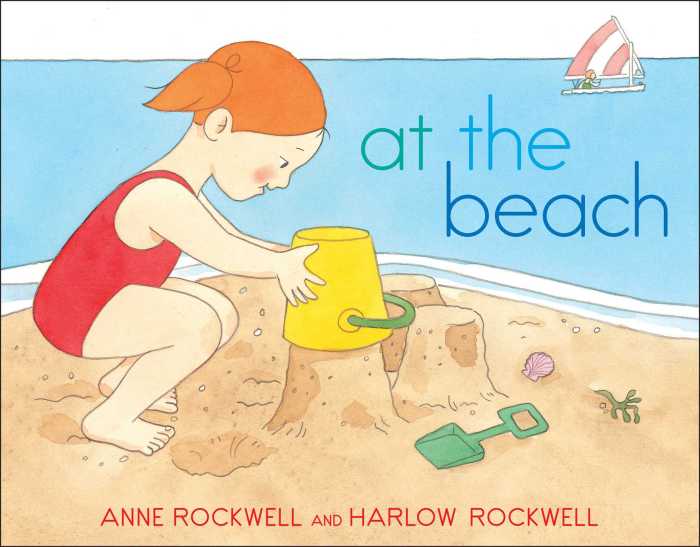
At the Beach

Written by Anne Rockwell | Illustrated by Harlow Rockwell


A little girl with a yellow pail and red swimsuit and her mom who’s carrying a tote and umbrella head out for a day at the beach. They find a spot to lay their striped and polka-dot towels and plant their blue-striped umbrella. Waiting in the tote is their lunch—two foil-wrapped sandwiches, two peaches, and a thermos of lemonade.

celebrate-picture-books-picture-book-review-at-the-beach-interior-art-sandpipers

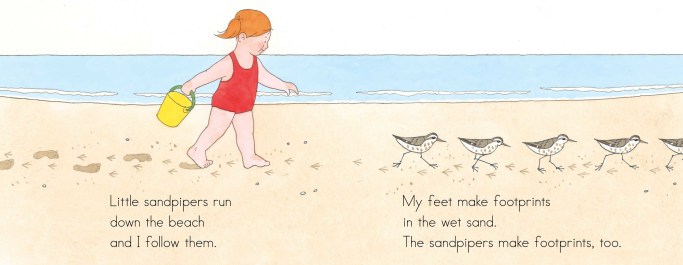
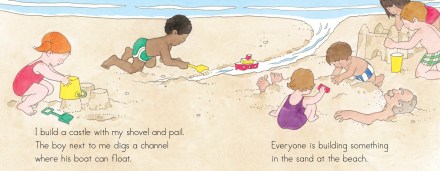
After the little girl is covered in nice-smelling sunscreen, she follows a line of sandpipers, adding her footprints to theirs in the wet sand. For her bucket she finds different types of seaweed and a variety of shells. She joins a group of kids playing among the dunes. “I build a castle with my shovel and pail. The boy next to me digs a channel where his boat can float,” the little girl says. The girl ventures out into the shallow water where “a little crab tweaks my toe” and “little silver fishes swim past me.”

The girl likes to “walk past the lifeguard station to the big brown rocks” to look for barnacles, snails, and muscles. She and her mom then swim in the waves near a drifting seagull. Back on land, the girl lies on her towel and lets the sunshine dry her off “until it is time for lunch.”

celebrate-picture-books-picture-book-review-at-the-beach-interior-art-kids-playing

Like the best laid-back days, Anne Rockwell’s classic At the Beach takes a tranquil, unhurried look at a mother-and-child seaside outing. For young children the straightforward, but lyrical text will evoke happy memories of their own beach experiences; for children who don’t live by the ocean the story will pique their interest in the shoreline environment.  This book, anchored in universal details yet inviting imagination, will soon become a favorite.

Harlow Rockwell’s sweet drawings of the little girl enjoying all a busy beach has to offer will captive young children. Scenes of a diverse group of children playing in the sand, a stalwart sea gull afloat on the current, a parade of scurrying sandpipers, and even the up- close look at scavenger hunt finds and the always welcome lunch engage all of a child’s senses. The clean lines and soft colors of the sand, sea, and sky contribute to a book as lovely as a sun-drenched beach.

Beach Day Scavenger Hunt Idea: At the Beach would be a wonderful take-along on any beach outing. Take a stroll along the shore and see if you and your child can find the shells, seaweed, sea creatures, and other seaside sights in the book.

Ages Birth – 8

Aladdin reissue edition, Simon & Schuster, 2016 | ISBN 978-1481411349

Flip-Flop Day Activity

celebrate-picture-books-picture-book-review-flip-flop-craft

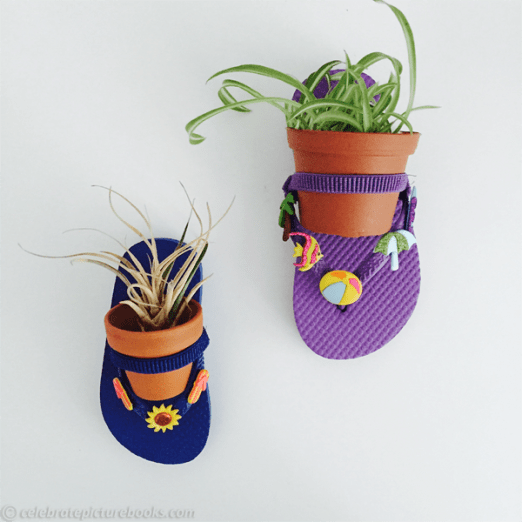
Flip-Flop Plant Holder


Flip-flops don’t only have to be for your feet! With this easy craft you can make a sandal-ightful way to hang succulents and other light plants on walls or even windows!

Supplies

  • Child’s flip-flops with elastic heel straps
  • Buttons or charms
  • Small plastic, terra cotta, or ceramic solid-bottom pot
  • Small plant
  • Dirt
  • Hot glue gun
  • Heavy duty mounting strips
  • Small shovel or spoon

Directions

  1. Place the flip-flop toe down on your work surface. With the hot glue gun, attach the buttons to the plastic toe straps of the flip-flops.
  2. Add dirt to the pot
  3. Add plant to the pot
  4. Slip the pot into the elastic strap and gently push down so it is also supported by the plastic toe straps
  5. To hang, use appropriate weight mountable strips.
  6. To make an interesting and attractive arrangement, use various sizes of flip-flops

June 16 – Dump the Pump Day

celebrate-picture-books-picture-book-review-good-trick-walking-stick-cover

About the Holiday

There’s no better time than early summer to consider “dumping the pump” and traveling by foot, bicycle, scooter, skates, skateboard…there are so many options! Leaving the car at home saves on gas costs, is better for the environment, and leads to a great exercise workout. Today, grab your walking or tennis shoes and with a friend or alone, take an example from the subject of today’s book and enjoy the pleasure of traversing the outside world!

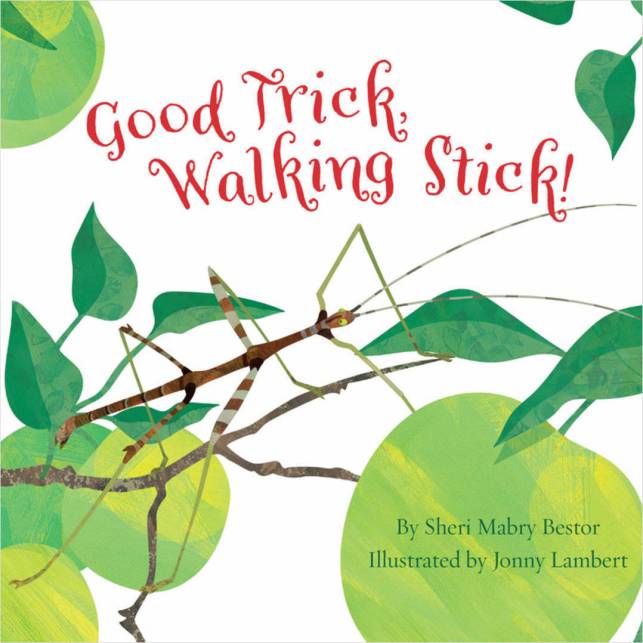
Good Trick, Walking Stick!

Written by Sheri Mabry Bestor | Illustrated by Jonny Lambert


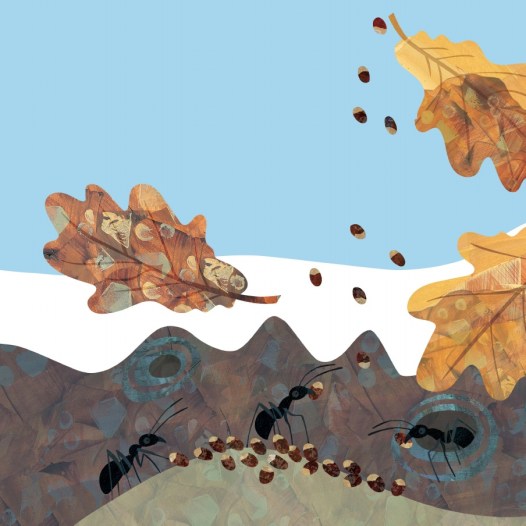
The walking stick is one insect that knows a thing or two about tricks. Even before it’s born wile plays a part in its survival. A mother walking stick drops her eggs where they will be buried by autumn leaves—and found by ants that think they are delicious seeds to eat. Why would a mother purposefully do this?! She knows that the ants will take the eggs to their colony, where they will eat only the tops leaving the baby walking sticks undisturbed. The ants will then drag the remains of the “seeds” to their garbage dump area, where they will spend a warm winter safe from predators until spring.

celebrate-picture-books-picture-book-review-good-trick-walking-stick-interior-art-eggs

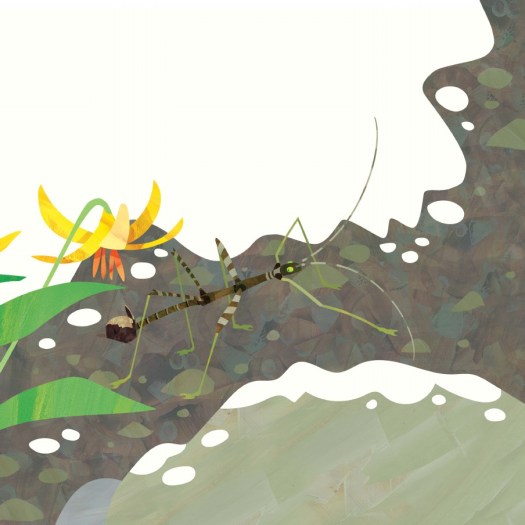
In the spring a baby hatches. It look like a tiny twig—a twig that can walk! The baby searches for food and munch, munch, munches the leaves it finds. As it becomes bigger it molts, shedding its old skin and growing a new one. The walking stick looks just like the branches that it lives on. It is perfectly camouflaged! “Good trick, walking stick!”

But a bird with keen eyesight swoops down and in an instant grabs the walking stick in its beak. Quickly, the walking stick squirts out a bad-smelling juice. The bird spits it out, but has gained a snack while the walking stick has lost a leg! It’s okay, though; the walking stick will just grow a new one! “Good trick, walking stick!”

The walking stick finds a tree with others of her kind hidden in its branches. The leaves make delicious meals. During the day the walking stick can change color to blend in with the sunlit bark of the tree and stay cooler. At night the walking stick becomes darker to hide in the shadows and stay warm. “Good trick, walking stick!”

When a squirrel brushes past, looking for a meal, the walking stick “pulls in her legs and drops to the forest floor, just like a stick falling off a larger branch. The stick insect is safe.” All day the insect lies on the ground, not moving, pretending to be just another cutting. At nightfall the walking stick climbs back into the tree. The squirrels and birds are resting now, so the stick insects “Munch munch. Crunch. Munch.”

celebrate-picture-books-picture-book-review-good-trick-walking-stick-interior-art-camouflage

With the onset of fall stick insects begin looking for mates. The females “spritz their perfume into the cooling air.” Males find them. Even if a walking stick does not have a mate, she can still produce eggs which will all develop into females. The eggs settle into the fallen leaves, ready to begin their unique life. “Good trick, walking stick!”

Stick insects are some of the most unusual creatures in the world. Measuring from an inch or two to 21 inches (53 centimeters), they can be found in forests, parks, even your own backyard! Sheri Mabry Bestor’s story of a year in a walking stick’s life is filled with action, suspense, and the clever ploys stick insects use to survive. Bestor’s enthusiastic, conversational tone and evocative language will engage kids over a wide range of ages. Each page also contains fascinating scientific sidebars that expand on the events in the story.

Jonny Lambert’s collage-style illustrations are a perfect match for the text. The mottled hues and textures of nature are beautifully represented in the vibrantly colored two-page spreads. The scientific details of the stick insect’s life are clearly and organically depicted, making it easy for kids to understand and enjoy the concepts: on one page ants carry away eggs with missing tops while on the next baby walking sticks emerge from the same images. Illustrations of the stick insect’s camouflage are particularly effective, and the cyclical quality of the story and the insect’s life are well portrayed.

For teachers and for kids who love the natural world and are curious about its unique creatures, Good Trick, Walking Stick is a wonderful addition to their school or personal library.

Ages 5 – 9

Sleeping Bear Press, 2016 | ISBN 978-1585369430

Dump the Pump Day Activity

celebrate-picture-books-picture-book-review-walking-find-the-differences-puzzle

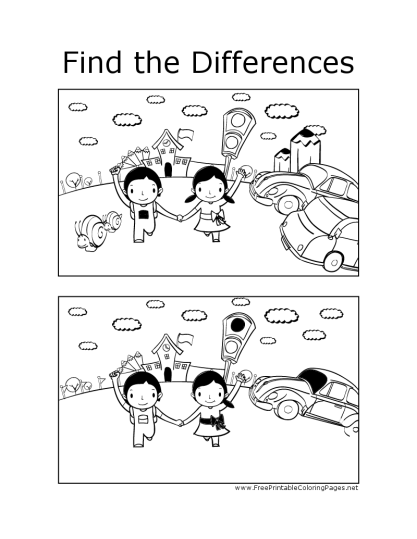
Take a Stroll Puzzle


You can see so many amazing things when you take a walk! But can you spot the 15 differences between the two pictures in this printable Take a Stroll puzzle?

June 15 – Smile Power Day

celebrate-picture-books-picture-book-review-happy-emma-dodd

About the Holiday

Where do you find enough smiles to fill twenty-four hours? Come on, you know! Friends, loved ones, books, movies, videos, jokes, and more funny stuff can instantly elicit that bright, shiny facial expression! Today is a day to share smiles with people you know and those you don’t. So get out there and be happy!

Happy

By Emma Dodd


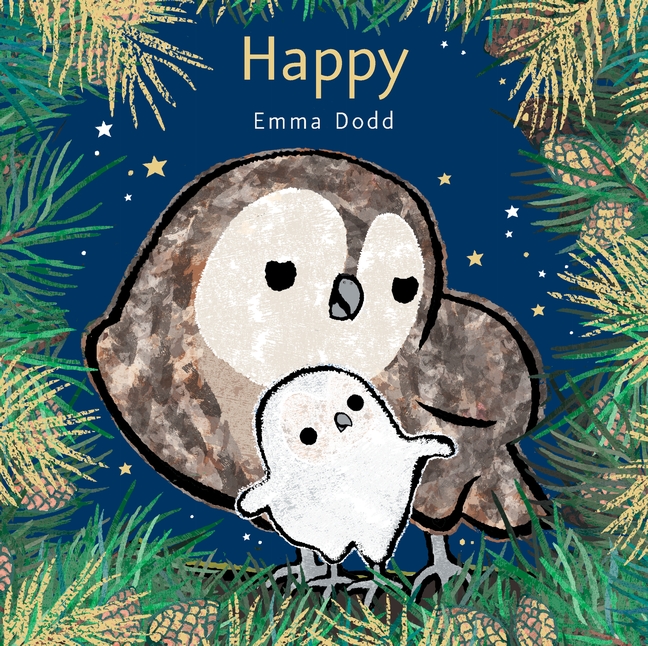
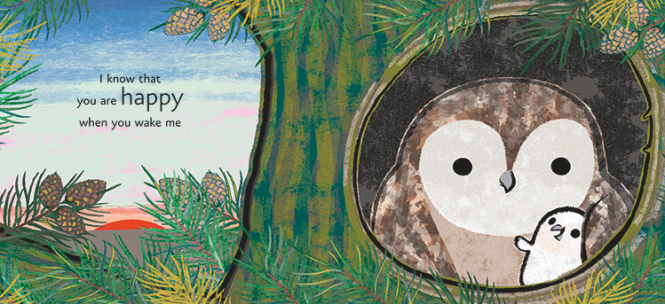
Nestled in a hole in a pine tree, an owl—who could be a mom, a dad, or any caregiver—cradles an adorable tiny owlet under its wing. “I know that / you are happy / when you wake me / with a song,” the owl says. As they venture out onto a limb, the owl adds, “I know that / you are happy / when you hop / and skip along.” With the repeated “I know that you are happy” the owl describes other ways the owlet shows her joy: giggling, rambling conversation, playing loudly, acting proud, and trying “something new…and / if you don’t succeed at first, I’ll help until you do,” the owl reassures the child.

celebrate-picture-books-picture-book-review-happy-emma-dodd

But every day cannot be happy, the owl concedes, and when “things are looking gray, / I’ll do my best to chase / the gloomy clouds away.” As the sun sets on the secluded home and the owl and owlet drift into sleep, the owl reveals: “I love it when you cuddle close / and whisper, ‘I love you.’ / And I am happiest / of all… / when you are happy too.”

Perfect for all parents and caregivers, Emma Dodd’s celebration of how a child’s joy resonates in others’ hearts makes shared reading time special. The lyrical rhythm of the repeated lines accompanied by the sentiments of encouragement and the transposition of point of view give this book impact and poignancy.

Dodd’s gorgeous illustrations of the endearing owl and owlet pair perfectly express the type of discovery that leads to joy on both a child’s and an adult’s part. With its little raised foot, extended tiny wings, and jubilant, smiling beak, the young owlet is both lovable and loved. Dodd’s beautiful muted, blue, green, brown and orange settings shimmer with gilded accents: delicate gold pine needles frame the owls’ home, the baby owl splashes in a glistening puddle under a gleaming moon, sparkling stars light the midnight blue sky, and rain showers fall in glinting streaks as the owls look on.

Simply put Happy will put a smile on your face and bring a tear to your eye. This lovely lullaby will quickly become a favorite for bedtime or cuddle time and is a must for young children’s bookshelves. Happy also makes a perfect gift for new parents or other caregivers. 

Take a peek:

Ages Birth – 5

Nosy Crow, Candlewick Press, 2015 | ISBN 978-0763680084

Smile Power Day Activity

celebrate-picture-books-picture-book-review-smile-cards

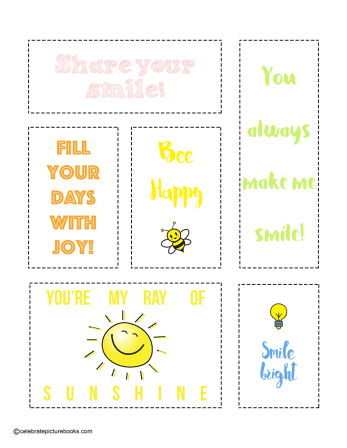
Make Someone Smile Cards


Sharing a smile can make someone’s day! With these printable Make Someone Smile Cards you can spread joy to people you know—and even to those you don’t! Give one to a family member, coworker, or friend. You can surprise your favorite barista, hair stylist, librarian, or shop owner by handing them a card or leaving it where they’ll find it. It’s even fun to tuck a card among the items on a shelf or in a book for someone to find later. Remember, the power of a smile is awesome!

June 14 – Flag Day

celebrate-picture-books-picture-book-review-why-are-there-stripes-on-the-american-flag

About the Holiday

Flag Day commemorates the day in 1777 when the “Stars and Stripes” designed by Besty Ross was adopted as the official flag of the United States by the Second Continental Congress. Through early efforts by BJ Cigrand, a school teacher in Fredonia, Wisconsin, in 1885 and George Balch, a kindergarten teacher in New York City in 1889, observances celebrating the flag’s birthday were initiated. Three decades of remembrances followed, and in 1916 President Woodrow Wilson officially established the holiday. It wasn’t until President Harry S Truman signed an Act of Congress on August 3, 1949 that June 14 was designated National Flag Day. Today, people are encouraged to display the American flag. Special events and ceremonies also take place on this day.

Why Are There Stripes on the American Flag?

Written by Martha E. H. Rustad | Illustrated by Kyle Poling


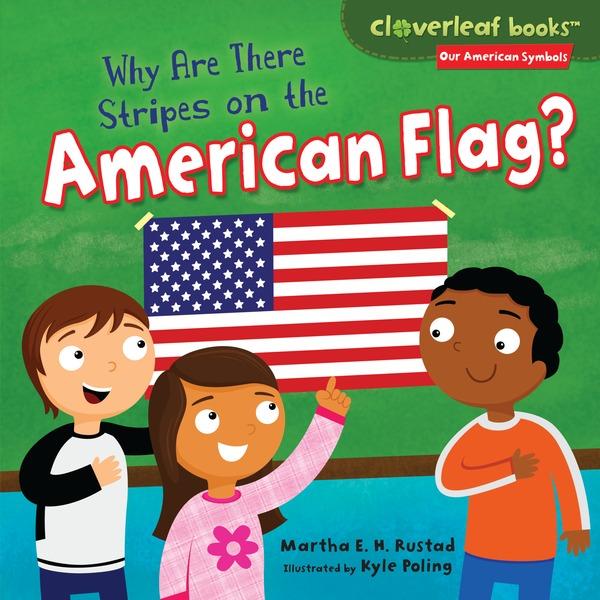
The school bell rings and the kids in Mr. Gomez’s class get ready to say the Pledge of Allegiance. Charles raises his hand with a question. Suddenly all the kids have questions about the flag and the words of the Pledge they say each morning. Mr. Gomez is enthusiastic about answering the kids, and the class starts a discussion that includes a bit about the Revolutionary War and how the original 13 colonies became the first states. The new government, Mr. Gomez says, wanted a symbol for the country.

In 1777, Mr. Gomez continues, the American leaders decided to use the colors red, white, and blue. The red stands for courage, the white for goodness, and the blue for fairness. The Flag Act of 1777 decreed that the flag have 13 stripes, alternating red and white, and 13 white stars on a blue field. Stars were chosen to represent the states because the founders believed America was “like a new group of stars shining in the night sky.” Mr. Gomez shows his class pictures of how the flag changed over the years as states were added to the union.

Next, the kids want to understand the wording of the Pledge of Allegiance better. Line by line, Mr. Gomez defines the more difficult words. Allegiance he explains means loyalty or friendship and that in the first line of the pledge we are promising to be loyal to and respect the flag. Respect is shown when we stand and place a hand over our heart while reciting the pledge, obey the rules of raising and lowering the flag, and other requirements. Mr. Gomez then explains what a Republic is and the idea that America is indivisible in that her people live and work as a team, staying together even when we disagree. The concepts of liberty and justice are also defined.

The class is excited with their new knowledge and before heading out for recess, they say the Pledge of Allegiance together.

A Make Your Own Flag activity follows the text along with a glossary of words used in the book and resources for further study.

Martha E. H. Rustad has written a primer about the American flag and the Pledge of Allegiance that will engage kids and teach them about these important patriotic concepts. Words such as symbol, justice, liberty, and more are described through the give and take between Mr. Gomez and his students, using familiar examples from the playground and classroom. Each page also includes facts about the US flag, the Flag Act, the design of early flags, flag etiquette, and more.

Kyle Poling’s friendly and colorful illustrations depict a diverse class where the concepts being discussed are clearly visible. Young readers will feel right at home in Poling’s classroom environment and be excited to learn about the origins of our most familiar symbol.

Ages 5 – 8

Millbrook Press, 2014 | ISBN 978-1467744652

Flag Day Activity

celebrate-picture-books-picture-book-review-flag-day-word-search

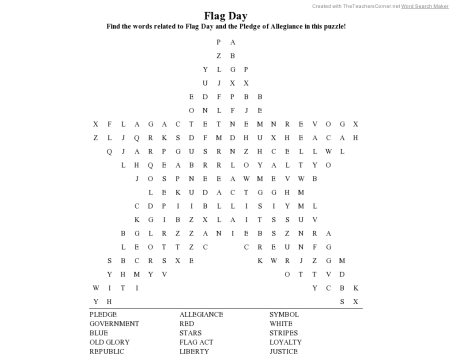
Star-Shaped Word Search


The stars on the American flag represent the country’s 50 states. In this printable Star-Shaped Word Search you’ll find words about the origins of the US flag and the Pledge of Allegiance. 

June 12 – National Rivers Month

celebrate-picture-books-picture-book-review-otters-love-to-play

About the Holiday

Rivers are beautiful, provide recreation, and are crucial to our water supply. Did you know that in the United States 65% of our drinking water comes from rivers and streams? This month environmentalists and others promote awareness of the importance of keeping the nation’s rivers pollution free to protect the fish and animals that call them home and increase enjoyment for all. To help the cause, join a volunteer river clean-up crew, help monitor water quality, or learn more about your local river system. Whether you like to fish, swim, boat, or just laze on the bank, June is the perfect month to get out on a river! You might even see some otters—the subject of today’s book!

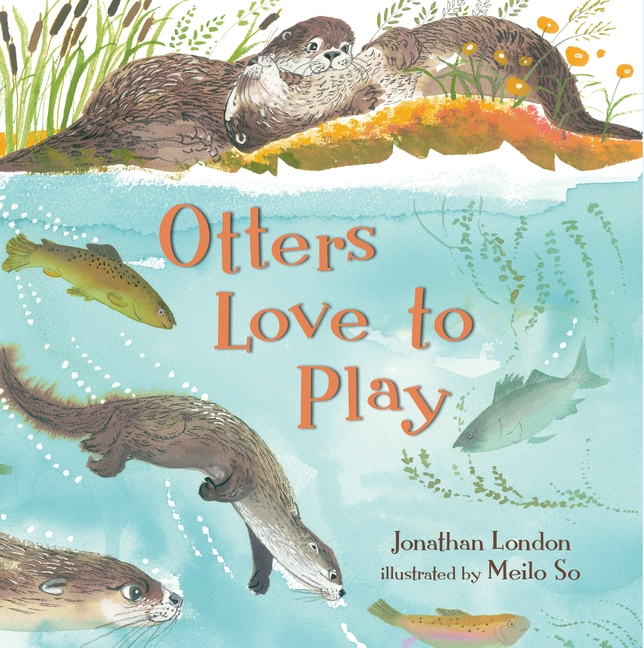
Otters Love to Play

Written by Jonathan London | Illustrated by Meilo So


It’s spring and two otters have moved into an abandoned beaver lodge to start a family. In a soft nest of moss, leaves, and grass the mother otter gives birth to three pups. The pups first open their eyes to the world when they are five weeks old. At two months old they’re ready to come out of the den to play. Playtime is fun, but for the baby otters it’s also work. Running, twisting, wrestling, and matches of tug-of-war teach valuable hunting skills and solidify family bonds.

As spring turns to summer, the pups’ thick waterproof coats grow in, and it’s time for swimming lessons to begin. There are no floaties here! The mother otter simply grabs her charges by the scruff of the neck and drops them into the river. Their mother shows them how to dive and glide and come to the surface as they follow her single file. “Within days, the otter pups gracefully spin and flip and swish like underwater acrobats.” Again and again “they scramble up a mud slide and SLIIIIIIIIIIIDE back down to the water—Ka-Spash!”

celebrate-picture-books-picture-book-review-otters-love-to-play-in-autumn

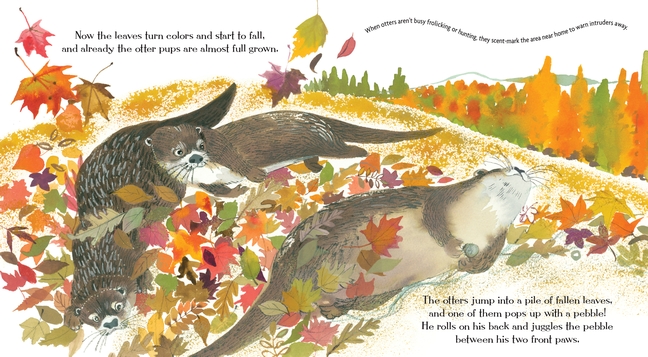
By the end of the summer the pups know how to catch small fish and how to nudge out frogs, crayfish, turtles, and snakes from their hiding places among the rocks. Autumn brings more opportunities for fun as the nearly full-grown pups tumble in the fallen leaves. Even winter’s blasts don’t deter the otters. With their thick fur they roll in the snow and catch fish in the icy river water.

But an ominous shadow appears on the fresh snow as the pups belly-slide down a snowbank. Something is waiting and watching…. So too is mother otter. Screaming and hunching she “slides across the snow and with a terrible GRRRROWL…scares the fox away!” Throughout the winter the otters snuggle in their den, and when the rainy spring makes muddy river banks, the otters come out and speed down the slippery slide “because otters love to play!”

You can’t help but love otters. Watching them dive, swim, and frolic just puts a smile on your face. And what’s more these sleek river creatures are fascinating animals! Jonathon London has written a story that captures the spirit and exuberance of one otter family while incorporating intriguing facts about their dens, birth statistics, purposeful play, hunting techniques, protective fur, predators, and defenses—did you know that otters can slide on snow at speeds up to 18 miles (29 kilometers) per hour?! London’s lyrical journey through the first year of an otter’s life makes captivating reading for young children just navigating the world themselves.

Meilo So’s enchanting otter family will delight readers. Images of the pups somersaulting, sliding, splashing, and swimming charmingly depict the sleek, supple movements of these frisky animals. Their smooth coats, rendered in soft browns with white and black accented texture, and their mischievous, ever-present smiles are realistically portrayed, inviting kids to reach out and pet them. So’s river scenes are beautiful—the pale blue water reflects deep gold and green trees, pink and yellow wildflowers and delicate green grasses flutter along the river bank, and the depths of the underwater world swirl with muted sage greens and blues as the otter pups frolic among gray- and olive-hued fish. Autumn comes with fiery orange and purple leaves, and winter falls shivery white as the russet fox is chased away.

Otters Love to Play would be a lovely gift for any child and a welcome addition to any classroom or school library.

Ages 4 – 8

Candlewick Press, 2016 | ISBN 978-0763669133

Visit Jonathan London’s website for more books by this prolific author.

View more books and art by Meilo So.

National Rivers Month Activity

celebrate-picture-books-picture-book-review-otter-coloring-page

Otter Coloring Page


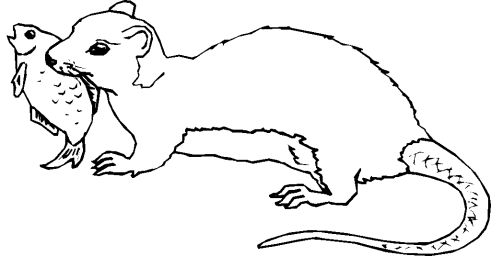
You “otter” love this coloring page, with its cute river creature who has just caught dinner! You can color it with pencils, crayons, or markers or consider making a collage with bits of paper, cloth, or leaves and sticks. Give the otter a den to snuggle in and a river for frolicking! Here’s your Otter Coloring Page!