June 26 – National Canoe Day

celebrate-picture-books-picture-book-review-can-you-canoe?

About the Holiday

June is the perfect month to explore the great outdoors up close through camping. Whether you enjoy pitching a tent or renting a cabin, all the enjoyment of hiking, fishing, swimming, and of course toasting marshmallows and singing around the campfire await!

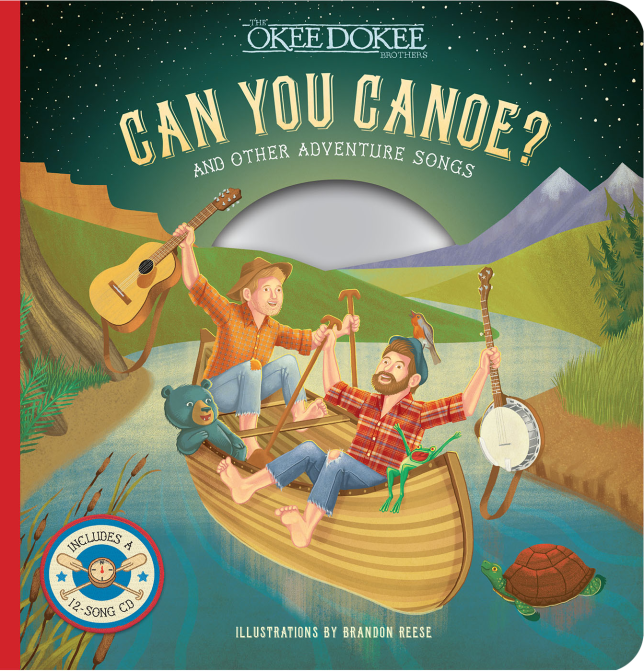
Can You Canoe? And Other Adventure Songs

Written by The Okee Dokee Brothers—Joe Mailander and Justin Lansing Illustrated by Brandon Reese


Is it possible to sing a picture book? It is when the book is Can You Canoe?! These twelve humorous, rip-roaring tunes take readers and singers deep into the fun of what it means to spend time enjoying nature. Wild animals, tall tales, legendary characters, and all the sounds and flavors of country livin’ are represented in these catchy original songs that will have you singing and laughing along in no time.

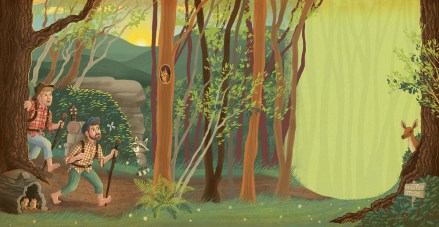
Through the Woods introduces the line-up with an apt question: “I’m wondering if you’d go wandering with me / Through the wilderness and woods / To where the winds are blowin’ free…” But even the speaker realizes there might be doubts—“You’re wondering if I go wandering with you / what kind of trouble we’ll get ourselves into. / Would it be wrong to tag along / With a band of vagabonds?”—and assuages them in the end.
celebrate-picture-books-picture-book-review-can-you-canoe?

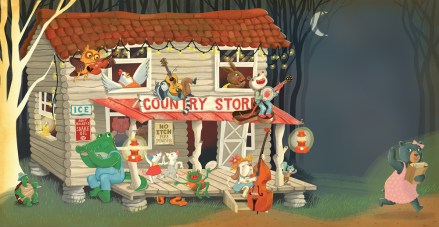
Jamboree takes readers to a country store where there’s dancing every Friday night to a song called “Jamboree” that’s played with abandon and just a little off key. But all you need is to “grab you a partner / And hold on tight / ‘Cause we ain’t stoppin’ / Until we see the light.”

In Black Bear Mama a couple learns there’s no arguing with a mother bear on the lookout for food for her cubs, and Echo Echoooo reassures that nothing, not even the widest valley, can keep true love apart. Can You Canoe? is a celebration of the simple life out on the water without distractions: “Can you canoe on a little boat built for two? Can You Canoe?…I wanna float down a river with you.”

Mr. & Mrs. Sippy can take you by surprise as this isn’t a tune about straws or baby cups. Instead, this is a rambling life story that starts like this: “Mr. and Mrs. Sippy / Got married in the fall. / They left the church that very same day / For their honeymoon in St. Paul, / Singin’ M-I-double-S-double-S-I-P-P-I / M-I-double-S-double-S-I-P-P-I. The couple roams on down to St. Louis to make themselves a home, then raises children in ‘good old Memphis Town.” When they have no place left to go, “they drift down past New Orleans / To the Gulf of Mexico.” Then you’re invited to sing the chorus backwards and forwards once again!

The Legend of Tall Talkin’ Sam echoes some of the great legends of the American West, such as Paul Bunyan and Babe the Blue Ox. Samantha Rosie-Anna, aka Sam, was “born to a pioneer woman and a Rocky Mountain mountain man” and “come out ridin’ a panther and ropin’ a twister outta the sky.” Sam’s so big that when she sleeps under a blanket of snow, she lays her “hat down in Montana and my boots in Colorado.” But even though this girl is “half horse, half mountain lion and half grizzly bear,” she admits there are things she doesn’t know—“like how some little stream / Carved out one big ol’ canyon, / Or how a fire’s angry flame / Can be your best companion.”
celebrate-picture-books-picture-book-review-can-you-canoe?

Can You Canoe? images courtesy of Brandon Reese (www.brandonreese.com)

Jackalope addresses one of the greatest American myths—that of a creature of mixed jack rabbit and antelope blood that roams the plains of the West. With tongue in cheek, the mysterious whereabouts of the Jackalope is exposed in the chorus: “Well I’ve seen ‘em in books and in taxidermy shops. / I’ve seen ‘em hangin’ on the wall. / But I ain’t never seen one in the livin’ light of day— / It’s almost like they don’t exist at all.” But the last verse reveals that perhaps this odd apparition has a purpose after all: “So when you’re searchin’ for the truth / And you’re at the end of your rope, / You might find you don’t need no proof / To believe in the thing that gives you hope— / And for me that’s the jackalope.”

These and a few other rollicking, gold-nugget songs will make any camp out—or even camp in—a knee-slappin’ good time. Can You Canoe comes with a CD so you can sing along to all your favorites—and I have no doubt each song will become a favorite in no time!

Joe Mailander and Justin Lansing have known each other all their lives and know a thing or two about adventures and how to make them more fun for friends and families. This Grammy-winning duo conjure up catchy tunes and compelling stories to make their songs unforgettable. These poems/songs have as much heart and wonder as a new frontier and invite readers and singers to explore!

Brandon Reese lends his distinctive talent to each song, creating animated scenes loaded with the kinds of details and drama kids love. Barefoot travelers with their packs on their backs and strong walking sticks in hand pad through woods populated with friendly wildlife. The country store is alive with animal musicians and dancers on the porch, on the roof, and hanging out every window while broadsides for Aunt Malady’s Snake Oil and No Itch Flea Powder hang on the walls. A cozier camping tent you’ll never find, and canoe paddlers are accompanied by a raccoon poling a crocodile boat while a rabbit floats along on the belly of a turtle. Each picture invokes the great outdoors in all its glory.

Can You Canoe is a must for any trip, whether you’re traveling far or just down the road!

Ages 4 and up

Sterling Children’s Books, 2016 | ISBN 978-1454918035

National Canoe Day Activity
celebrate-picture-books-picture-book-review-canoe-maze

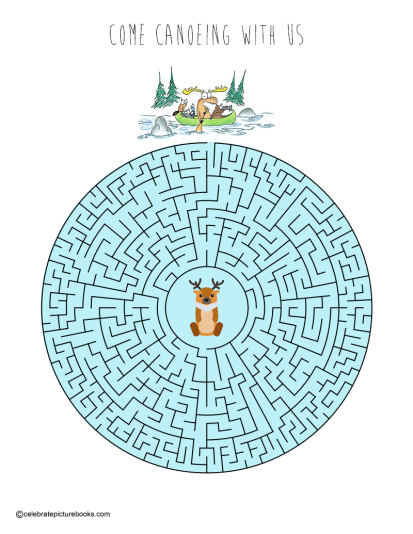
Come Canoeing With Us Maze


These friends want to canoe together but first they must pick up little deer at the center of the lake. They need your help navigating their way in this printable Come Canoeing With Us maze! Here’s the Solution!

June 25 – National Catfish Day

celebrate-picture-books-picture-book-review-a-catfish-tale

About the Holiday

National Catfish Day dates back to 1987 when President Ronald Reagan proclaimed this holiday to promote the importance of the catfish farming industry and the nutritional benefits of catfish. This delicious fish is found mostly in Mississippi, Arkansas, Alabama, and Louisiana and is one of the most sustainable species of fish. Fried or blackened with spicy Cajun or other spices, catfish makes for a scrumptious meal! Try some today!

A Catfish Tale: A Bayou Story of the Fisherman and His Wife

Written by Whitney Stewart | Illustrated by Gerald Guerlais


Down in the bayou, so the story goes, there lived two young sweethearts named Jacques and Jolie. Jacques liked to “pole his skiff through cypress knees to his favorite fishing hole,” and Jolie cooked up peppery hot gumbo and sang “so true even the cicadas hushed up to listen.” One day Jacques hooked a big one, and when he pulled up his line a catfish sprang from the water. But this was no ordinary catfish. The wily fellow explained that he was a magic catfish and not at all a catch for supper. Jacques was so frightened that he freed the “jabbering critter” and took off for home.

celebrate-picture-books-picture-book-review-a-catfish-tale-crocodile

Image copyright Gerald Guerlais, courtesy of Albert Whitman & Company

When Jolie learned Jacques had given up their chance for a wish that could replace their shack with “a proper house where she could sing for a crowd,” she was steamed. Jacques thought everything was all right the way things were, but he hightailed it back to the swamp and asked that catfish for a house. The catfish was obliging and with a grin said, “‘Ah, tooloulou—if that ain’t the easiest thing to do.’”

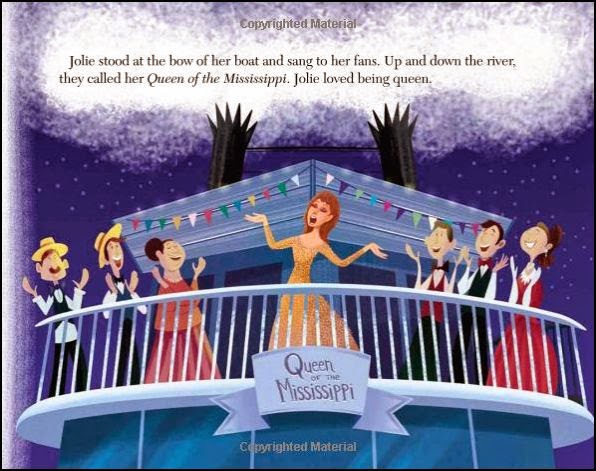
In her big, beautiful house, Jolie entertained loads of friends and decided to take her show to all the cities down the river. All she needed, she said, was a paddle wheel boat. The catfish smiled when he heard Jacques’ request and said, “‘Ah, tooloulou—if that ain’t the easiest thing to do.’” Singing from the bow of her grand paddle wheeler, Jolie’s fans called her the Queen of the Mississippi, and she ate it up.

celebrate-picture-books-picture-book-review-a-catfish-tale-catfish

Image copyright Gerald Guerlais, courtesy of Albert Whitman & Company

Jacques was miserable stuck in his stateroom with a pounding headache and no fishing pole, so he returned to the bayou to find his catfish friend. Meanwhile, Jolie took the New Orleans nightclubs by storm. With Mardi Gras approaching, Jolie had one more little favor to ask of the catfish, and with a “tooloulou” Jolie became Queen of Mardi Gras. She wore a diamond crown and a white satin gown. Even though things were a little rocky—the cheering crowds couldn’t hear her sing, and the Mardi Gras beads she tossed to her fans got tangled in her crown—she loved being queen.

Jolie wrote to Jacques and asked to become Queen of the Bayou. The catfish said his magic words and in no time Jolie was crowned Queen amid blaring musicians and applauding fans. Jolie smiled and began to sing. Suddenly, a fierce hurricane blew up, “snakes, alligators, and swamp creatures slithered up the riverbank. Ghosts, and goblins flew from the cemeteries and pirate skeletons escaped watery graves to dance in the streets.” And Jolie? She was swept up and unceremoniously dropped in a tree. From among the branches she called to a passing pelican, “‘Tell my husband to ask that catfish for one more little thing!’”

celebrate-picture-books-picture-book-review-a-catfish-tale-riverboat

Image copyright Gerald Guerlais, courtesy of Albert Whitman & Company

Jacques “paddled faster than an alligator could swish its tale” and asked that catfish for one last wish…, and what do you think he said? Well, he just slipped back beneath the water ‘cause he knew “Jolie didn’t need nothin’ more.”

A Catfish Tale includes a Bayou Glossary as well as a recipe for Seafood Gumbo by New Orleans native Hans Andersson.

Whitney Stewart’s tall tale of a magic catfish, the woman who learns enough is often enough, and the man who loves her will capture kids’ fancy. Jolie’s overreaching ambition and the catfish’s ready spell give children plenty of opportunity to join in with repeated phrases, and the well-paced suspense will keep kids engrossed in the action. The unique bayou setting and colloquial lilt sets A Catfish Tale apart as a rollicking story time romp with a bit of Cajun caution and a whole lot of magic.

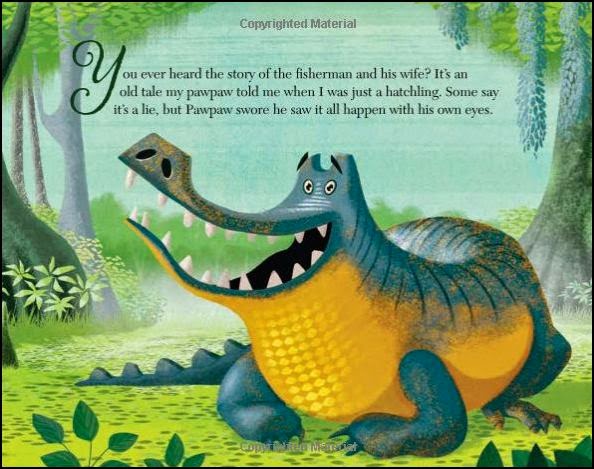
Gerald Guerlais brings the mystery and flavor of the deep south to A Catfish Tale with moss greens and shadowy blues that well depict the bayou’s natural environment. Twisty Cypress trees dip their roots in still, lily pad-filled waters, shimmering lights glow in the nighttime swamp, and spooky critters teem in the stormy sky. The magic catfish wears an ever-present, easy-going grin, and a crusty, good-ol’-boy alligator spins the tall tale just the way he’s heard it. Children will love the scenes of the paddle wheeler and the festive atmosphere of Mardi Gras.

Whitney Stewart’s  A Catfish Tale, a deft retelling of  Grimm’s A Fisherman and His Wife, is a fantastic introduction to the distinctive qualities of the southern Mississippi region, one which kids may want to explore further!

Ages 4 – 8

Albert Whitman & Company, 2014 | ISBN 978-0807510988

To learn more about Whitney Stewart and her work as well as discover activities for children and teachers, visit her website!

View a gallery of illustrations by Gerald Guerlais on his website!

National Catfish Day Activity

celebrate-picture-books-picture-book-review-bayou-coloring-page

Catfish Coloring Page


The catfish is a most unusual creature! Add your own swamp or river setting to this Printable Catfish Coloring Page!

June 24 – Take Your Dog to Work Day

celebrate-picture-books-picture-book-review-douglas-you-need-glasses

About the Holiday

In 1996 Pet Sitters International established Take Your Dog to Work Day as a time to raise awareness of the pets left home all day by themselves with no stimulation. The organization was also dedicated to promoting adoption from local and humane shelters. Over the years the idea of Take Your Dog to Work Day has grown in popularity. To celebrate talk to the people in your office or business about bringing in pets and find time during the day to spend more time with your faithful companion. Both you and your dog will enjoy it!

Douglas, You Need Glasses!

By Ged Adamson


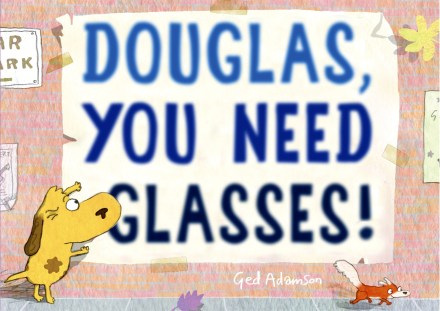
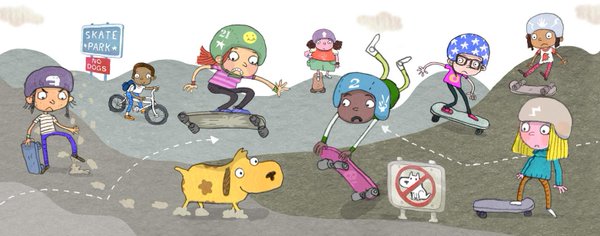
Something may be amiss with Douglas. When Nancy and her playful pooch go out to chase squirrels, Douglas takes after a falling leaf while the squirrel escapes up a tree. It’s not the first time this has happened. You see, Douglas is a bit nearsighted. Sometimes he mistakes the stair post for Nancy, and his difficulty gets in the way of things (well, mostly Douglas gets in the way of things). He misses important signs—like the one that would have prevented him from tracking wet cement all over the skate park, where there are NO DOGS allowed—and he’s always causing something of a ruckus. Sometimes he even enters the wrong house! But when a game of fetch nearly creates a buuzzzz of disaster, Nancy decides something must be done.

celebrate-picture-books-picture-book-review-douglas-you-need-glasses-skate-park-art

She takes Douglas to the eye doctor where he reads a most dog-friendly eye chart and discovers that he needs glasses. He peruses the shelves of Dog Glasses and puts some on. Each one makes him feel different. In one pair he’s a rock star; in another a scholar; and in yet another a hippy. He tries them all until he finds the perfect pair!

celebrate-picture-books-picture-book-review-douglas-you-need-glasses-interior-art

All images courtesy of Ged Adamson


On the way home he sees the world in a whole new way. “‘Wow! Everything looks amazing!’” Douglas says. And it is!

Ged Adamson’s funny look at a dog with an all-too-human malady will make kids laugh from the first page to the last. Earnest Douglas, going about his doggy days under a bit of a skewed perspective, is so endearing that readers will immediately take him to heart even as they giggle at his exploits. Adamson’s vibrant multi-hued trees, colorfully clothed kids, and vivid backgrounds with stylish, sketched-in details give the book a fresh, jaunty appeal for a lively, fun story time. Kids facing the prospect of wearing glasses will also find much to give them reassurance and confidence in this book. Douglas, You Need Glasses! is a great addition to any child’s bookshelf!

Ages 3 – 8

Schwartz & Wade, Random House Kids, 2016 | ISBN 978-0553522433

Visit Ged Adamson’s Website to see what other books and projects he’s working on!

Take Your Dog to Work Day Activity

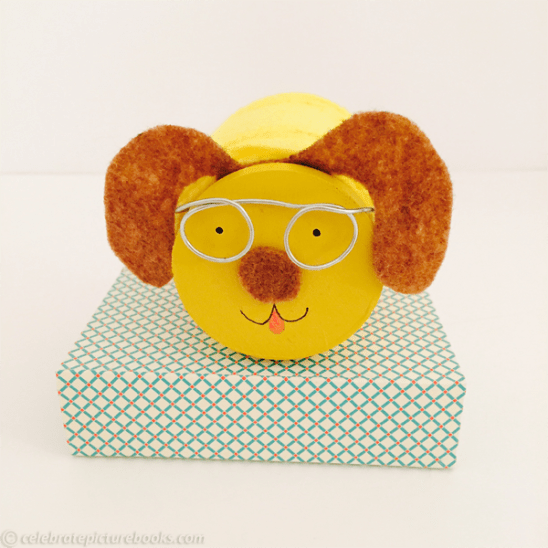
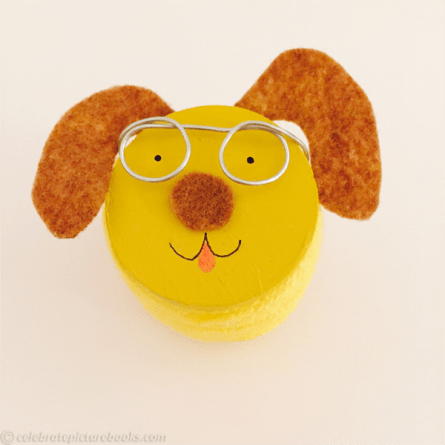
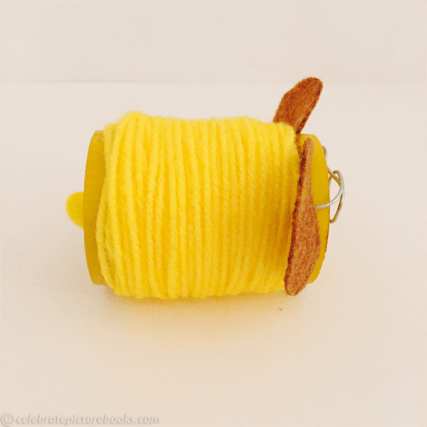
celebrate-picture-books-picture-book-review-spool-puppy-craft

Spool Puppy


No matter where you go and whether you have a real dog or not, you can take this little guy along with you. And just as you would pick out your favorite from an animal shelter, you can make this puppy look any way you’d like!

Supplies

  • Printable Ears and Nose Template
  • 2-inch round wooden spool, available at craft stores
  • 1 skein of yarn in the color you choose. Yardage needed will depend on the thickness of the yarn.
  • Felt
  • Thin gauge wire
  • Craft paint
  • Paint brush
  • Fabric or strong glue
  • Dowel or pencil to wrap wire around to make glasses

celebrate-picture-books-picture-book-review-spool-puppy-craft

Directions

  1. Paint the dowel the color you want your dog to be, let dry
  2. Trace the ears on the felt and cut out (or draw your own ears)
  3. Trace the nose on the felt and cut out
  4. When the spool is dry glue the ears to the body of the spool, allowing the ears to stick up from the top of the spool
  5. Wind the yarn around the spool back and forth until the dog’s body is the size you’d like
  6. Glue the yarn in place with fabric or strong glue

To make the face

  1. Glue the nose over the hole on one end of the spool
  2. Draw the mouth and tongue under the nose with a marker
  3. You will draw the eyes on after the glasses are in place

To make the glasses

  1. Wind the wire around a ½-inch dowel, thick pencil, or rounded handle to make two circles.
  2. Leave about two inches on either side of the circles for the ear pieces of the glasses.
  3. Adjust the size of the circles to fit the spool as glasses.
  4. Put the glasses on the face of the spool, tucking the ear pieces into the yarn on each side
  5. Draw eyes in the center of the glasses

To make the tail

  1. Cut a small square of felt and stuff the edges into the hole on the other end of the spool
  2. You can make the tail as long as you like

celebrate-picture-books-picture-book-review-spool-puppy-craft

Picture Book Review

June 23 – Let It Go Day

celebrate-picture-books-picture-book-review-it's-tough-to-lose-your-balloon

About the Holiday

No, this isn’t a day dedicated to re- re- re- re- re-watching that movie. It’s a day to take a step back and take stock of the feelings you’re keeping inside or the little irksome quirks that drive you crazy. Are they really worth all the stress? Today’s a day to find inner peace, make amends, or turn disadvantage into advantage.

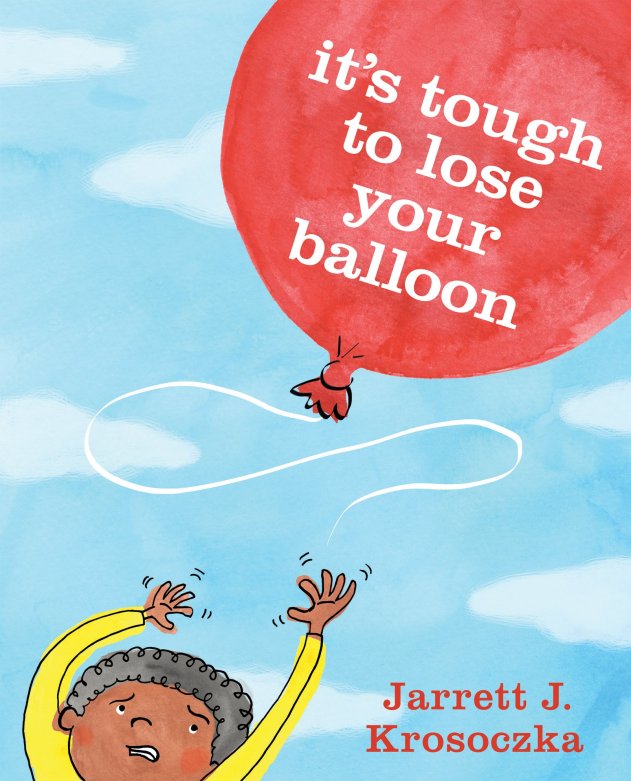
It’s Tough to Lose Your Balloon

By Jarrett J. Krosoczka


Most people wake up each morning with great ideas for a having good day, but sometimes things don’t work out the way they’re planned. For kids, small mistakes, accidental mishaps, and unexpected disappointments can loom large. Frustrations and perceived unfairness can elicit tears or anger, and it’s sometimes hard to know how to comfort an unhappy or upset child.

In It’s Tough to Lose Your Balloon Jarrett Krosoczka acknowledges that sometimes bad or sad things happen, but he reveals to kids how looking at the event from a different perspective or through someone else’s eyes can bring consolation and even happiness. As the title states, it’s hard for kids to watch a balloon suddenly slip through their fingers and float away, but imagining all the other people who will see it and smile can help. Having a picnic on the beach when the unthinkable happens? “It’s sad to drop your sandwich in the sand…but it’ll make some seagulls very happy.” And you know it will make you laugh to watch those crazy guys swooping, diving, and squawking over that now-crunchy snack.

The idea of sharing hurts with others to create a new scenario or a different kind of enjoyment while forming closer bonds is another positive way to turn disappointments into teachable moments that benefit all. As most kids know “it’s never fun when you break a toy…” but with a upbeat attitude they can have “fun fixing it with Grandpa.”

Wet shoes? Melting Ice-cream cone? Scraped knee or new baby sitter? In Jarrett Krosoczka’s hands these letdowns can lead to new freedom, innovation, distinction, and joyful experiences. It’s Tough to Lose Your Balloon can help anyone see “disaster” in a whole new light!

Krosoczka’s illustrations ingeniously depict the way an unexpected mishap or disappointing moment can make someone feel—alone, exposed, and vulnerable. Left-hand pages present the problem while the right-hand page shows the crestfallen child in full color on a black-and-white sketched background. The positive transformation becomes a two-spread, full-color of happy pride and fun abandon. Life can be full of little bumps in the road, keeping a copy of It’s Tough to Lose Your Balloon on the shelf can help smooth the way.

Ages 3 – 7

Knopf Books for Young Readers, 2015 | ISBN 978-0385754798

Visit Jarrett J. Krosoczka’s Website to see more of his books and discover fun activities!

Let It Go Day Activity

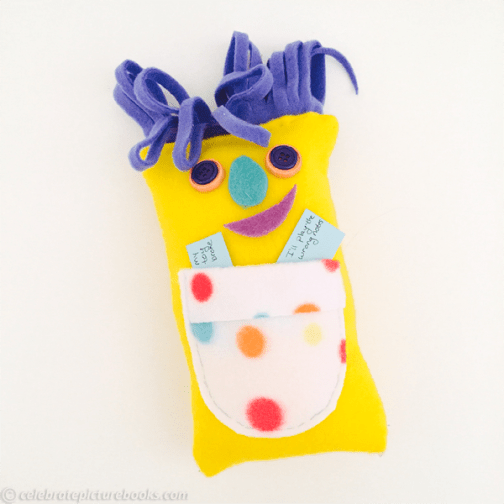
celebrate-picture-books-picture-book-review-worry-buddy-craft

Worry Buddy


Sometimes worries don’t seem as bad when they are shared with someone else or to at least set aside for awhile. With this craft you can make a friend to help lesson worries, disappointments, fears, and anxieties. And it’s pretty good at hugs too. Older children may like to create this as a sewing project, while younger kids can make it easily with fabric glue. Make your Worry Buddy as unique as you are!

Supplies

  • Fleece or felt in different colors
  • Buttons, two larger in the same color and two smaller in a different color
  • Fiber fill
  • Fabric glue or thread
  • Paper
  • Pen or pencil

Directions

To Make the Body

  1. Cut a 16-inch piece of fleece
  2. Fold the fleece in half
  3. Glue the sides together (older children may enjoy sewing the sides together with simple straight stitches)
  4. Leave the top open
  5. Turn the body inside out
  6. Fill the body with fiber fill

To Make the Hair

  1. Cut a 5-inch piece of fleece or felt
  2. Fold the fleece or felt in half
  3. Glue or sew the folded fleece into the opening in the body
  4. Cut the fleece or felt in ¼-inch strips across the top

To Make the Face

  1. Glue one set of larger and smaller buttons together, repeat with the other set
  2. Glue or sew the buttons to the top part of the body
  3. Cut a nose and mouth out of fleece or felt
  4. Glue or sew the nose and mouth to the face

To make the pocket

  1. Cut a 5-inch piece of felt in the shape of a square-bottom or rounded bottom pocket
  2. Fold down an inch of the top
  3. Glue or sew the pocket to the middle of the body

To share problems with the Worry Buddy, write worries or fears on a slip of paper and put them in the Worry Buddy’s pocket. Your Buddy will keep those problems so you don’t have to.

June 22 – It’s Great Outdoors Month

celebrate-picture-books-picture-book-review-bringing-the-outside-in

About the Holiday

June, with its lazy feel and longer days, is the perfect month to spend time outdoors. Great Outdoors Week was established in 1998, but it quickly became apparent that only seven days were not nearly enough to enjoy everything nature has to offer. In 2004 the holiday was expanded to encompass the entire 30 days of June. So whether you enjoy activities on land or water, pack a picnic, grab some toys or equipment, and get out to play! Or if you just like quiet time, take a book and find a shady spot to read! Or if you love discovering new places, slip on your walking shoes and explore! Or…well, there’s just so much to choose from…!

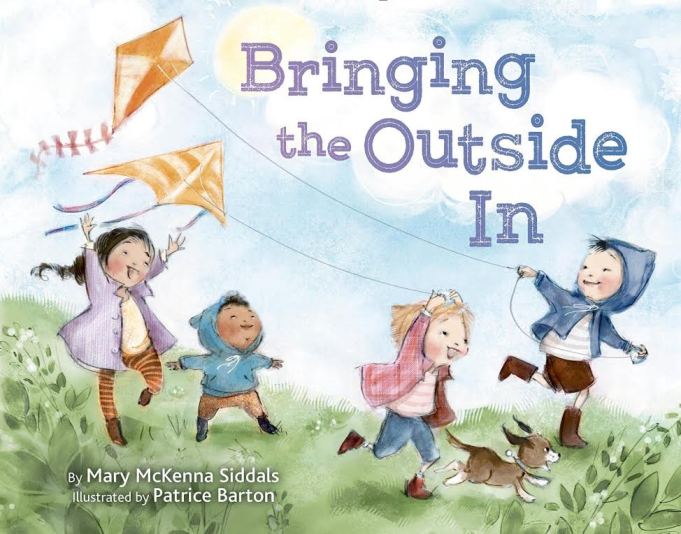
Bringing the Outside In

Written by Mary McKenna Siddals | Illustrated by Patrice Barton


For kids there’s something magical about an open door. Going out leads to unexpected adventures, blissful messiness, and astonishing discoveries. Coming in means comfort, encouragement, and that homey feeling of being wrapped in love. Bringing the Outside In is an exuberant celebration of this harmonious juxtaposition for every season of the year.

celebrate-picture-books-picture-book-review-bringing-the-outside-in-spring-art

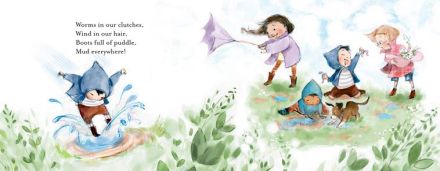
In springtime four children in jackets and boots and their adorable puppy race to play on a blue, blustering day. Under soft, billowing clouds they leap into puddles, dig in the dirt, pick wildflowers, and play tug-of-war with the wind. Happily sated and with “Worms in our clutches / Wind in our hair, / Boots full of puddle, / Mud everywhere!” the kids skip toward home. They are greeted with smiles, towels, hooks for their coats, and a mop for the drips. Even the puppy knows it’s time for “Wiping it off, / Mopping it up, / Dumping it / out again.”

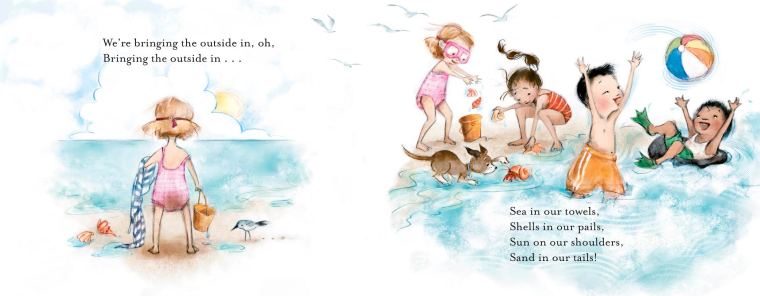
With the repeated chorus “We’re bringing the outside in, oh, / Bringing the outside in…” the spring turns to summer and the four kids are visiting the beach with pails, swim fins, goggles, float, and a ball to toss. With buoyant abandon they collect sea shells, meet hermit crabs, get properly soaked, and revel in the warm sunshine. The sun, sand, and sea follow them home, where they kick off their sandals, gather at the mudroom’s big double sink, and pin their suits on the clothes line while “Shaking it off, / Washing it up, / Drying it out again.”

celebrate-picture-books-picture-book-review-bringing-the-outside-in-summer-art

Autumn once again finds the kids outside amid its brilliant colors and “Bushels of apples, / Leaves stuck on clothes, / Acorns in pockets, / Smells in our nose!” Back inside the kids make art of some of the apples and leaves they’ve collected, untangle more leaves from hair, clothes, and the puppy’s ears, and sweep even more out the door. With the onset of winter the kids plop in the snow, build snowmen, sled, and eat icicles. After a fun-filled afternoon and with “Slush on our seats” and a “nip in our fingers,” they know it’s time for “Bringing the outside in, then…Brushing it off, / Warming it up, / Thawing out again.”

A full year has passed, but the enchantment of spring, summer, autumn, and winter have not been forgotten outside. As the kids, comfy in their matching pajamas, huddle on the round rug poring over a box of photographs and souvenirs of their escapades, they’re happily “…keeping the outside in, oh, / Keeping the outside in….” And whenever they want to relive the “Treasures collected, / Pictures in heaps, / Stories remembered, / Memories for keeps!” that box contains, all it takes is a quick “digging it up” and “dusting it off” and “bringing it out again!”

Mary McKenna Siddals’ effervescent tribute to the joy of outdoor play perfectly captures the bouncy wonder young children exhibit in the freedom of a natural environment. Using evocative, lyrical language, Siddals imbues simple childhood pleasures with poetic resonance. The repeated phrases make this a great read-along, read-aloud book, and the children’s actions could easily be turned into fun movement games for school or family story time.

Patrice Barton’s endearing illustrations of the adorable ethnically diverse children at play are inspired and inspiring. Vivid swirls and streaks create splashing water, wind-whipped hair, swinging tires, and plenty of drips, drops, and delight. Children will love seeing themselves so affectionately depicted and will want to linger over the details on every page. One wonderful aspect of Bringing the Outside In is that the children can represent friends or they could be siblings.

Bringing the Outside In is a must for school libraries and would be a wonderful, often-read addition to a family library.

Ages 3 – 8

Random House Books for Young Readers, 2016 | ISBN 978-0449814307

Visit Mary McKenna Siddals’ Website to discover more about her and her books! You’ll also find lots of hands-on and online activities for Bringing the Outside In and her other books as well as teachers’ resources, and lesson plans.

Join in the fun with Mary McKenna Siddals on the Bringing the Outside In Facebook Page!

Visit Patrice Barton’s Website to view more of her adorable artwork, books, and blog posts!

Great Outdoors Month Activity

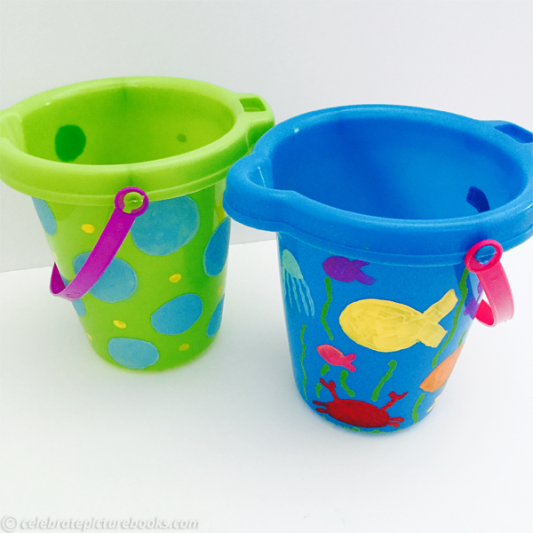
celebrate-picture-books-picture-book-review-bringing-the-outside-in-painted-pails-craft

Personalized Painted Pail


A trip to the beach or park isn’t complete without a pail to collect shells, seaweed, sea glass, pebbles, sticks, nuts, or other things in. But why should all the cool stuff be on the inside? With this craft you can decorate your pail to show your unique personality!

Supplies

  • Plastic or metal pail
  • Craft paint in various colors
  • Crystal Clear Acrylic Coating, for multi-surface use
  • Paint brush

Directions

  1. Paint designs on the pail
  2. When paint is dry spray with acrylic coating to set paint
  3. Let dry

June 21 – World Music Day

celebrate-picture-books-picture-book-review-hey-charleston

About the Holiday

Celebrated every year on the summer solstice, World Music Day, also known as the Fête de la Musique, brings together professional and amateur musicians to ply their trade and entertain audiences for a day full of sound. The day was first conceived in 1982 by French Minister of Culture Jack Lang, who elicited the help of Maurice Fleuret, the Director of Music and Dance. When Fleuret discovered that half of the nation’s children played a musical instrument, he devised a way to bring people out into the streets for a music festival. Since then, the event has become an international phenomenon, celebrated in more than 700 cities in 120 countries worldwide. To participate consider organizing or attending a  free concert or enjoying music in your favorite way.

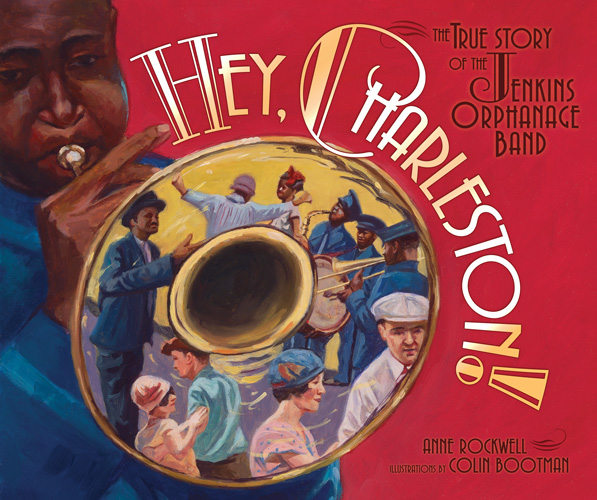
Hey, Charleston! The True Story of the Jenkins Orphanage Band

Written by Anne Rockwell | Illustrated by Colin Bootman


“Have you ever known someone who was always trying to turn bad into good, always seeing hope where others saw despair?” This question, which begins the biography of Reverend Daniel Joseph Jenkins and the orphans he loved is as relevant today as it was in the early 1900s, when this story takes place. Reverend Jenkins was the pastor of a small church in Charleston, South Carolina. One night while collecting scrap wood at a railroad yard, he discovered a group of boys huddled and sobbing inside a freight car. Reverend Jenkins took them to his church, fed them, and gave them a warm place to sleep. He knew what it was like to be an orphan because he had been one too.

Soon more orphans showed up at the church door, and Reverend Jenkins accepted them all. Room grew tight so he convinced the city officials to give him an abandoned warehouse for his orphanage. There was just one drawback: the warehouse was next to a prison, where less-than-desirable sounds emanated from the walls. Reverend Jenkins figured out a way to drown out the noise, however. He gathered the orphans and led them in song outside the orphanage door. The kids were good singers, and that gave the reverend an idea.

He had grown up during the Civil War and remembered the marching bands that led the soldiers into battle. He remembered the instruments these musicians carried and asked for any that were now unused to be donated to the children. Instruments poured in! They were polished and tuned and the children learned to play under the direction of the best teachers in Charleston. With the money Reverend Jenkins thought they could make entertaining people, he planned to buy a farm for the orphans.

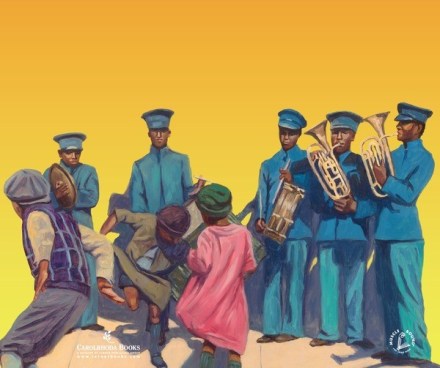
Soon the Jenkins Orphanage Band was playing on street corners and in other venues. Many of the kids were descended from the Geechee or Gullah people who lived on islands off the coast of South Carolina, and they played the old band music with their own special rhythm, called “rag.” “A couple of Geechee boys would lead the band by doing a dance—twisting and twirling and tapping their toes, knocking their knees, and flapping their arms.” People loved the music, but most South Carolinians were poor and couldn’t donate much to the orphans. Reverend Jenkins decided to take his band to New York City. The band took the city by storm! People loved when the kids played their raggedy music and soon were imitating the Geechee boys’ dance. “Hey, Charleston,” they’d shout, “Give us some rag!” They called the dance “the Charleston,” and soon everyone was doing it.

celebrate-picture-books-picture-book-review-hey-charleston-interior-art

The orphans made so much money they were able to buy a new house, and the music instruction became so renowned that families began paying to have their children taught along with the orphans. The band continued to travel around the United States, and they were even invited to perform in the inaugural parade for President Theodore Roosevelt. Finally, they were able to buy the farm Reverend Jenkins had dreamed of.

In 1914 the Jenkins Orphanage Band was even invited to play for Britain’s King George V at the Anglo-American Exposition in London. While they were there, however, Britain entered World War I. The British government ensured that the band had safe passage back home, but many other Americans were stranded in England. Reverend Jenkins offered to lend these citizens the money needed for them to return home as well.

The ship sailed silently through the dangerous Atlantic Ocean until it reached an American port. Once safe the passengers shouted, “‘Hey, Charleston! Give us some rag!’” Happy to be home, the band tuned up their instruments and played loudly and enthusiastically for the shipboard audience. As the passengers disembarked in New York Harbor, crowds greeted them with a hearty welcome. Back home “as they lay down to sleep that night, those band players knew they had done what Reverend Jenkins always taught them. They had turned bad into good.”

Anne Rockwell succinctly and clearly relays the story of the Jenkins Orphanage Band while also retaining all the heart and soul of this fascinating group of children and their dedicated caregiver. The true-life tale is mesmerizing, not only for the historical details of the growth of ragtime music and the Charleston dance but for the accomplishments of the orphans once given love, acceptance, and education. Rockwell’s conversational tone contributes to the story’s smooth, flowing pace, which will keep listeners or readers rapt from beginning to end.

Colin Bootman’s bold two-page spreads illuminate the sights and sounds of the early 1900s for readers. Emphasizing the personal connections between Reverend Jenkins and the orphans as well as the band and their audiences, Bootman’s vibrant paintings are full of people watching, dancing, marching, and celebrating these boys’ awesome gifts.

Ages 6 – 10

Carolrhoda Books, 2013 | ISBN 978-0761355656

World Music Day Activity

celebrate-picture-books-picture-book-review-musical-instruments-word-search


It’s Instrumental Word Search


Triangles may not get a lot of play in an orchestra, but there’s plenty of play in this printable It’s Instrumental Word Search that contains the names of 20 instruments! 

June 20 – American Eagle Day

celebrate-picture-books-picture-book-review-is-a-bald-eagle-really-bald

About the Holiday

The first American Eagle Day was proclaimed by President Bill Clinton and Tennessee Governor Don Sundquist in 1995 to commemorate and bring awareness to this most enduring American symbol. Chosen as the United States’ National Emblem by our Founding Fathers on June 20, 1782, the Bald Eagle represents the best of America: freedom, courage, strength, spirit, and excellence. Once threatened with extinction—only 400 nesting pairs existed in the early 1960s—the American Eagle has made a comeback, with 15,000 nesting pairs living in the lower 48 states. Besides celebrating what the American Eagle symbolizes, today’s holiday is used to raise awareness of conservation efforts for this most majestic bird.

Is a Bald Eagle Really Bald?

Written by Martha E. H. Rustad  | Illustrated by Holli Conger


“Our class is having a visitor today,” Ms. Patel tells her class. “Guess who it is,” she urges after giving the kids a hint that the visitor eats fish. Anabelle thinks it might be her dad, but Ms. Patel adds that the visitor has a sharp beak and feathers. Joshua guesses that it’s a duck. The kids are getting closer, and with one more hint—Ms. Patel holds up a one-dollar bill—Rose correctly shouts, “‘a bald eagle!’”

Natalie wants to know why there’s a bald eagle on the dollar, and Ms. Patel tells her that the eagle is a symbol of our country. When John asks what a symbol is, she compares the eagle to the school’s bear mascot and goes on to say that the eagle can also be found on the Great Seal. Luke is momentarily excited about the prospect of a seal also visiting the class, but Ms. Patel shows the class that the Great Seal is actually an image. This image demonstrates that something is officially American and appears on stamps, government buildings, important papers, and even the buttons on military uniforms.

The class takes a closer look at the Great Seal, with its eagle in the center. In one foot the eagle is holding a plant, says Karen. Right, Ms. Patel says. “‘It’s an olive branch. It stands for peace.’” Noah notices that in the other foot the eagle carries arrows. The arrows represent strength, Ms. Patel explains. The banner in the eagle’s beak reads E. Pluribus Unum, which is Latin for “one from many” and describes how the single country of America is made of many states. The thirteen stars above the eagle’s head reminds us of the 13 original colonies and states.

Dr. Kelly from the raptor center soon arrives with a bald eagle named Sam. Dr. Kelly puts on a protective glove and carefully takes Sam out of his carrier. Sam is huge! Kyra exclaims, and Jackson wants to know why he’s called “bald.” Dr. Kelly explains that the word bald actually comes from piebald, which means “‘having white marks.’” The class learns many facts about bald eagles, including that they have keen eyesight, can see their prey from high overhead, and can swallow a meal in mid-air.

Then the class talks about how the bald eagle became America’s mascot. Lily raises her hand and suggests it’s because eagles fly free and Americans are free. “‘Good answer,’” Ms. Patel says. She adds that bald eagles are native to North America, and shows the class a map of their summer and winter habitats.

All too soon class is over and it’s time for lunch. “Fish is on today’s menu,” Ms. Patel tells the kids, and they feel just like bald eagles. The children say “thank you” and “goodbye” to Dr. Kelly and Sam, and after lunch they draw their own mascots. You can do that too with the activity at the back of the book!

Scattered throughout the pages, sidebars expand on the facts delivered in the story. Readers learn that the Great Seal has been used since 1782, what raptors and raptor centers are, the weight and wingspan of an adult bald eagle, incredible statistics on eagle’s nests, and about conservation efforts to protect bald eagles.

A Draw-Your-Own Mascot activity follows the text along with a glossary and resources for further study, including free downloadable educational resources.

In her Our American Symbols books Martha E. H. Rustad does a wonderful job of explaining the importance of America’s emblems to children. Through classroom discussions between a teacher and her students, Is a Bald Eagle Really Bald? answers readers’ questions about how and why the bald eagle became a United States symbol. The natural give-and-take will resonated with kids, and Rustad’s clear and kid-friendly definitions of concepts will make an impact. The inclusion of a representative from a raptor center will also feel familiar to children experienced with these types of classroom visitors as well as similar field trips. Sidebars provide more scientific and historical facts.

Holli Conger’s bright, bold illustrations distinctly depict the concepts in the text through large, colorful, and easily understood images. A bulletin board holds pictures of a bald eagle and the American flag, while the teacher holds up a school mascot t-shirt to help relay the idea of a symbol; the Great Seal is shown with well-defined details as the teacher uses a pointer to indicate its various parts; and pages portraying the visit by the raptor center representative give kids a good idea of the size and grandeur of the bald eagle. The children portrayed in the classroom are enthusiastic and welcoming, and readers will feel right at home in their midst.

Ages 5 – 9

Millbrook Press, 2014 | ISBN 978-1467744669

American Eagle Day Activity

celebrate-picture-books-picture-book-review-american-eagle-coloring-page

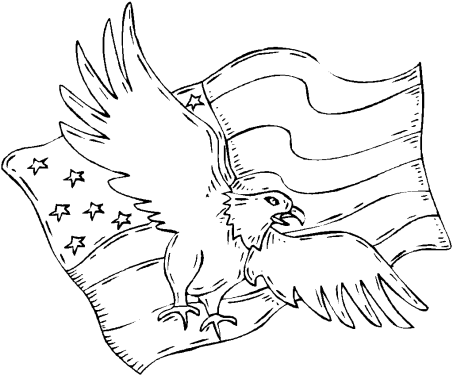
American Eagle and Flag Coloring Page


The majestic American Bald Eagle is a perfect symbol to represent the courage, freedom, and spirit of the USA. Here’s a printable American Eagle and Flag Coloring Page for you to enjoy!