September 7 – Buy a Book Day and Interview with Sara Levine

celebrate-picture-books-picture-book-review-bone-by-bone-cover

About the Holiday

Today is one of the best days of the year! Anyone who loves books will want to take the opportunity of the holiday to visit their favorite bookstore and buy one of those books you’ve been hearing and reading about. And why stop at just one? Winter is coming—that time when there’s nothing more cozy than snuggling in with a cup of tea or hot chocolate and reading late into the night. As the school year begins, children benefit from having new books in their home libraries that reflect their changing interests and maturing thoughts. Take a little time to look through the children’s or tween sections of the bookstore and let your kids pick out some new favorites! Yes, today is a wonderful day, no bones about it! 

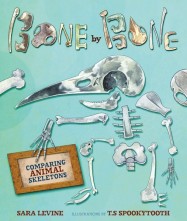
Bone by Bone: Comparing Animal Skeletons

Written by Sara Levine | Illustrated by T.S Spookytooth


Can you imagine if we sloshed through life like soup without a bowl? What would we set our hats on? Where would we carry our phones? How could we sit in class or the office or perform our favorite activities? And what would happen to our organs, our hair, our homes? It’s all a little disturbing! Fortunately, we don’t have to worry about that scenario because “we’re vertebrates, animals with bones. Our bones hold us up.” Phew!

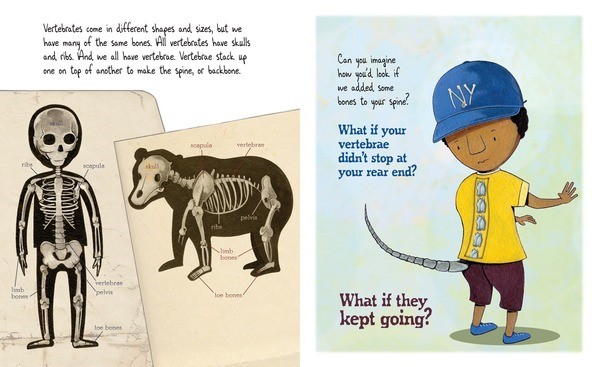
There are different kinds of vertebrates—mammals, reptiles, fish, and more—but many of our bones are similar. For example, “all vertebrates have skulls and ribs. And we all have vertebrae. Vertebrae stack up one on top of another to make the spine, or backbone.” Humans have vertebrae that end…well…you know where, but imagine for a minute if your vertebra kept on going. What if they poked a hole right through your shorts? Yes! You’re right—you’d have a tail. Tails are pretty helpful for some animals. They help them swim, communicate, even keep their balance.
celebrate-picture-books-picture-book-review-bone-by-bone-tailbone

Image copyright T. S Spookytooth, text copyright Sara Levine. Courtesy of Lerner Publishing

Good job! Let’s try again…how about if you only had a skull, vertebrae, and ribs. No arm bones; no leg bones. You’ve got it! A slithery snake! Nah…really…you’d look great! Okay, maybe you’d prefer if you had a skull, vertebrae, and arm bones—but no leg bones—and your nose was transferred to the top of your head. Sounds fishy? Maybe, but not quite. Oh! Did I give it away? Yep, you’d be a whale or a dolphin, and you’d use those powerful vertebrae to propel yourself to the ocean’s surface to grab a breath.

Imagine what kind of gloves and shoes you’d need if your “middle fingers and middle toes were so thick that they supported your whole body.” Hey, you’re good at this! It was a trick question. You wouldn’t need gloves, but you’d wear horse shoes (or no shoes if you’re a less domesticated animal like a zebra). Now, let’s take a trip through a room full of fun-house mirrors. What kind of animal would you be if your neck was reeeaally long and each vertebrae was “as big as your head?” Or if your legs were muuuuuch longer than your arms? Or your “finger bones grew so long that they reached your feet? Seeing those transformations is definitely worth the price of admission, right?

celebrate-picture-books-picture-book-review-bone-by-bone-bat

Image copyright T. S Spookytooth, text copyright Sara Levine. Courtesy of Lerner Publishing

But getting back to the bowl of soup: “Could you be an animal if you didn’t have any bones at all?” Sure! Some insects and sea creatures “have their hard parts on the outside,” and some are just “mushy.” Think of worms, slugs, and jellyfish, just to name a few. But bones make life more fun, don’t ya think? So if all vertebrates have bones, what makes humans different? Well, for one thing we (as well as some apes and monkeys) have opposable thumbs, which means that “we can move our thumbs in a special way that allows us to do many things, including turning the pages of a book,” using tools, and picking up objects. “Did you get that one? If so, give yourself a thumbs-up!”

An Author’s Note including more about bones, the types of vertebrates, a glossary, and resources for further reading follow the text.

With humor and a kid’s sensibility of the bizarre, Sara Levine presents an anatomy lesson that young readers will respond to. Juxtaposing individual bony features of humans and animals is a brilliant idea to give children perspective on the differences in animal skeletons and the uses of each unique trait. Levine’s quiz-like format engages readers, encouraging independent thought and active participation as well as building suspense for what transformation comes next. Kids will laugh and learn and be on the lookout for other ways human and animal skeletons differ as they become more aware of the natural world around them.

With illustrations of tailbones sticking out of pants, empty socks, two fingered hands and two toed feet, a neck that needs two scarves, and more, T. S Spookytooth illuminates what it means to be human in an animal world or an animal in a human world. Kids will laugh imagining themselves as Spookytooth depicts them with animal features and “Ewww” when their portrayal dissolves into a muddy mess. The accurate drawings of human and animal skeletons educate readers on the names and placement of particular bones.

The unique approach to the study of human and animal skeletons, the wide range of animals presented, and the enticing writing and illustrations make Bone by Bone: Comparing Animal Skeletons a wonderful choice for libraries and home bookshelves of budding scientists and nature lovers.

Ages 5 – 10

Millbrook Press, 2014 | ISBN 978-0761384649

To learn more about Sara Levine and her books, visit her website! You’ll also discover fun Bone by Bone activities to enhance your reading!

View a gallery of artwork by T. S Spookytooth, plus videos and more on his website!

Buy a Book Day Activity

celebrate-picture-books-picture-book-review-x-ray-craft-dog-paw

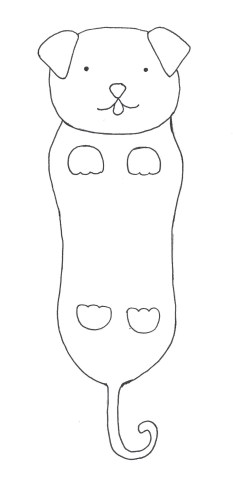
Dog Paw and Human Hand X-Ray Craft


X-rays are cool to look at, but they always stay at the doctor’s office! With this craft you can simulate an X-ray of a dog’s paw and a human hand!

Supplies

  • Printable skeleton templates: Human Hand Template | Dog Paw Template
  • Black chalkboard drawing paper, 8 ½ inches by 11 inches
  • White colored pencil
  • White chalk
  • Clear Plastic Report Sheet Protectors
  • Magnetic clip to hang your x-ray on the refrigerator or other metal surface (optional) OR
  • String or wire, adhesive squares, and clothes pins to hang x-ray on the wall (optional)
  • Scissors

Directions

  1. Print the Human Hand and Dog Paw Templates (you may want to print two—one to cut and one to follow when transferring the bones to the black paper)
  2. Cut the bones apart
  3. Lay the bones on the black chalkboard paper
  4. Trace the bones with the white colored pencil
  5. Color in the bones with the white chalk
  6. Slip the black paper into the plastic report sheet protector
  7. If desired, hang the x-ray on the refrigerator with the magnetic clip or on the wall using string, adhesive squares and clothespins


Q & A with Author Sara Levine

celebrate-picture-books-picture-book-review-author-sara-levine

Today, I’m thrilled to talk to Sara Levine about her writing as well as to learn about her early experiences with animals and to discover a kid’s-eye-view of women in science.

Your writing for kids is so infused with humor that really captures their attention. What were some of the books that you liked best as a child?

When I was younger, one of my favorite picture books was Katerine and the Box by Patricia Lee Gauch. I’ve noticed that this book has gone back into print; I was so happy to find it online. It’s basically about creativity. A girl and her friend keep finding new uses for a large cardboard box—a house, a car, a dance platform. I can still recall my feeling of excitement when hearing it read to me—it made me want to go make something. It’s actually a feeling very similar to what I have today when I think of a new idea for a book. There was also a book called Wisher, which was about difference—about a cat who dreamt he was really a fish. I remember that the illustrations were beautiful and somewhat scary—just done in blues, browns and yellows.  As an older child, I loved Charlotte’s Web by E.B White, Lizard Music by Daniel Pinkwater and pretty much everything by Judy Blume.

I don’t suppose any of these books are like the books I write. I used to tell people that I liked my science and my books separate. I just wanted to go outside to learn about science. But, I wanted stories in my books. I don’t think there were any of the sorts of books I write about science out for kids when I was young. At least I didn’t find them. But if I had, I think I would have enjoyed them—the fact that they were funny and interactive. But here’s a picture book I LOVE that I found as an adult that is certainly infused with humor and captures a kid’s (and a grown-up’s) attention: Bark, George, by Jules Feiffer. I think this is currently my favorite picture book.

You grew up on a farm in Guilford, Connecticut. Can you tell me a little about the farm and how or if it influenced your current work?

Calling it a “farm” might be a bit of a stretch. My parents were two kids who grew up in Brooklyn and then moved to CT and decided to get some animals, cheered on by their enthusiastic offspring. First there was a goat, who got lonely. So then there was another goat. And they had a baby. And there was a chicken at school who needed a place to go for the summer. And then never went back to school… And so on. We ended up having over 100 named animals—a horse, a cow, peacocks, geese, a donkey and more. I loved taking care of the animals, with my siblings. It was a wonderful experience, one that I’m very grateful for. But it wasn’t at all lucrative. I think the only money made was by my brother who would sell extra eggs to his teachers.

How did it influence my current work? I’m not sure. Certainly my interest in animals is a lifelong one. I think the stories about the animals actually show up more in my writing for adults than in my picture books. The ideas for the books for children come more from teaching ideas that I think will translate well into a picture book format.

You have a doctorate in veterinary medicine and a masters in fine art. When and how did the two merge into your work as an author?

What a great question. I have always had this science side and this humanities side. A lot of my life, I’ve been struggling with how to balance and feed both sides of myself. It’s taken me a long time to find a way to merge the two interests, and it’s been very satisfying to do so in writing about science, especially for kids.

You offer four different school and library programs, all of which sound fascinating. Do you have any anecdotes from a presentation you’d like to share?

In one of my workshops, the one for Bone by Bone: Comparing Animal Skeletons, I bring in an articulated skeleton for the kids to see and a disarticulated skeleton in a box. The kids learn the bones, and I then hand them each a bone which they take up to the standing skeleton to figure out which bone it is, and then work together to put together the second skeleton on the floor. Inevitably, someone asks if the skeletons are real. They are. I literally found them in the closets, when I started my teaching at Wheelock. There are all sorts of questions about that, generated by the kids, and then, often, someone will ask if the skeletons are “boys or girls.” Recently, at a school near Boston, I was explaining to a group of second graders that both were female, that we could tell by the shape of the hips, and I heard one girl, going, “YES!” and pumping her arm up and down, in victory. The boy next to her says, “Why are you so happy? That means a girl died.” To which she responds, “That’s true. But it also means one more girl in science!”

celebrate-picture-books-picture-book-review-bone-by-bone-workshop

Sara Levine leads a workshop at Cold Spring School

What’s the best thing about writing for kids?

I enjoy trying to think of engaging and interactive ways to teach something that hasn’t been taught before. I like the creativity involved. And, of course, reading it to the kids when I’m done and seeing them respond!

celebrate-picture-books-picture-book-review-bone-by-bone-students-at-al-hamra-school

Students at Al Hamra Academy examine a skeleton

You also write articles for adults and were nominated for a Pushcart Prize in 2007. Can you tell me more about your writing for adults?

I write science related essays for adults. The writing comes more from my own experiences.  I do have a handful of essays published. I think the one that was nominated for the Pushcart, “What Hands Can Do” is still available to read online. Here’s a link to it on Fictionaut. It’s about spaying a dog. And more, of course. I think my most successful essay is “The Body of a Cow” which originally appeared in the Massachusetts Review. It’s also on Fictionaut, if anyone wants to have a look. Eventually, I hope to work the essays into a memoir for adults.

What’s up next for you?

I have a book on dinosaur bones which will be published by Lerner next year. I also have three children’s books written which I’m trying to find homes for at the moment—one on animal classification (but interactive, written like a “do your own adventure” story), one on how plants communicate with animals, and one very funny one (if I can say so myself) called “Breakfast at the Omnivore Café,” which is about what animals eat. This one might never get published because it falls into the cracks between nonfiction and narrative fiction, but I haven’t given up on it yet. The book I’m currently working on is an attempt to explain climate change through stories of the carbon cycle. Doesn’t sound very interesting when put that way, but it’s written as an interactive story, and is also actually quite funny in parts, so I think kids will like it.

Since Celebrate Picture Books is a holiday-themed blog, I can’t let you get away without asking you what your favorite holiday is…

Passover. You get to tell a story to children in a way that is interactive and engaging for kids, AND it involves food. What could be better?

Thanks so much for chatting and sharing your unique perspective on the natural world, Sara! I, for one, would love to read Breakfast at the Omnivore Café—that would be one interesting menu, I bet! I wish you the best with all of your books!

You can connect with Sara Levine on:

Her Website | FacebookTwitter

celebrate-picture-books-picture-book-review-bone-by-bone-cover

Bone by Bone: Comparing Animal Skeletons and Sara’s other books can be found at:

Amazon | Barnes & Noble | Books-a-Million | Lerner Publishing

About Sara Levine

Sara Levine is an assistant professor of biology at Wheelock College and a veterinarian.  Her science books for children include Bone by Bone: Comparing Animal Skeletons (2013) and Tooth by Tooth: Comparing Fangs, Tusks and Chompers (2016).  Her third book, Fossil by Fossil: Comparing Dinosaur Bones will be published in 2018.  Bone by Bone: Comparing Animal Skeletons has received much recognition, including the Utah Beehive Book Award, selection as a Bank Street College Best Children’s Book of the Year, and finalist for the Cook Prize for best STEM picture book.

Sara also writes science-related essays for adults, one of which was nominated for a Pushcart Prize in 2007.  Her writing has appeared in the Boston Globe, the Massachusetts Review, Bayou, and in the anthology And Baby Makes More. In addition to teaching college students, she has taught children’s environmental education classes for the Massachusetts Audubon Society and other nature centers in Massachusetts and Connecticut for over 15 years. 

Sara holds a doctorate in veterinary medicine (DVM) from Tufts University, a master of fine arts degree (MFA) in creative nonfiction writing from Lesley University and a bachelor of arts degree (BA) in English from Haverford College.  She is a native New Englander and lives with her daughter and their dogs and cat in Cambridge, Massachusetts.  

Picture Book Review

September 6 – Read a Book Day

celebrate-picture-books-picture-book-review-we-forgot-brock

About the Holiday

No, I didn’t forget what holiday it is today—the day is I Forgot Day! Today is the day to make up for all those missed opportunities and make amends for forgetting special events. Of course it may also be the perfect day to trot out that most-used excuse for not doing something—and get away with it! One thing you should not forget is to read today’s book!

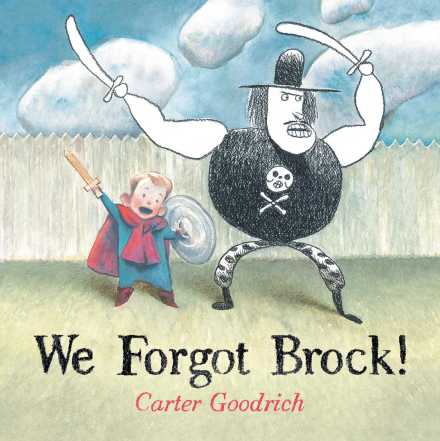
We Forgot Brock!

By Carter Goodrich


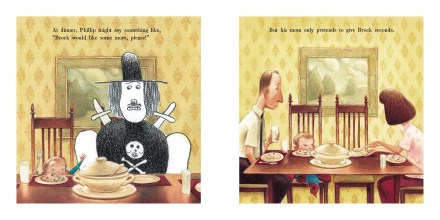
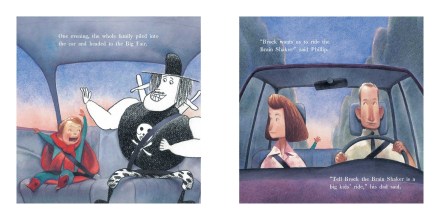
Phillip and Brock are best friends. They have a wonderful time goofing around together, but other people just can’t understand. They call Brock Phillip’s “imaginary friend.” As if!… For example, at dinner when Phillip says Brock wants seconds, Phillip’s mom only pretends to put food on Brock’s plate, and often Phillip’s dad almost backs over Brock’s motorcycle in the driveway. Philip’s parents also just don’t see how funny Brock can be.

celebrate-picture-books-picture-book-review-interior-art-dinner

Image copyright Carter Goodrich, 2015, courtesy of Simon & Schuster

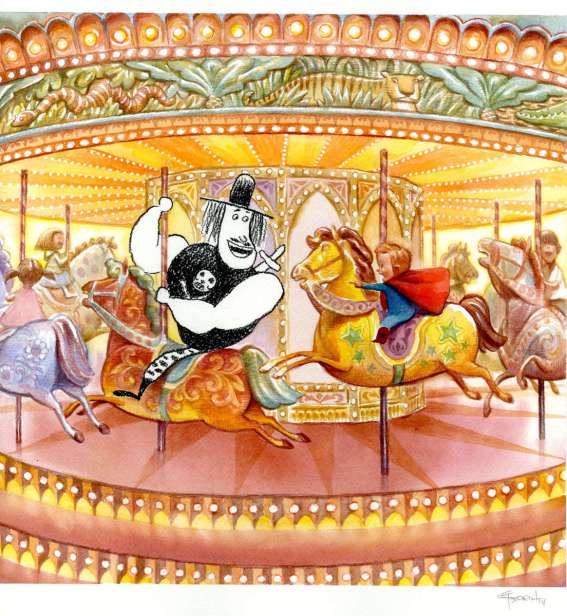
One evening the whole family goes to the Big Fair. “‘Brock wants us to ride the Brain Shaker!’” says Phillip. But his parents won’t listen. “‘Tell Brock the Brain Shaker is a big kids’ ride,’” his dad says. At the fair Phillip and Brock ride the merry-go-round, the bumper cars, and the Tilt-A-Whirl. Phillip has cotton candy, but there are no beans and spaghetti snacks for Brock. Finally, Phillip begins to feel sleepy. But Brock? He’s riding the Brain Shaker!

celebrate-picture-books-picture-book-review-we-forgot-brock-merry-go-round

Image copyright Carter Goodrich, 2015, courtesy of Simon & Schuster

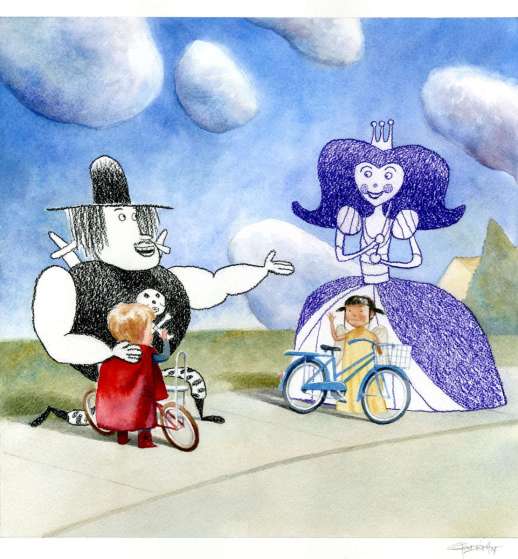
As the car pulls into the driveway, Phillip wakes up. “‘Where’s Brock?!’” he yells. Phillip runs into the house. No Brock. “‘We forgot Brock!’” Phillip sobs. “‘We Forgot Brock!’” Back at the fair Brock searches for Phillip from atop the Ferris wheel. Suddenly, a little girl asks him if he is okay. When Brock tells her he’s lost, she invites him to come home with her and her friend Princess Sparkle Dust.

Being at home with Anne and Princess Sparkle Dust is okay, but Brock misses Phillip. To cheer him up Anne and the Princess do magic tricks, and they all play games and tell each other stories. Meanwhile, Phillip is looking all over the neighborhood for Brock, but he’s nowhere to be found.

celebrate-picture-books-picture-book-review-interior-art-car

Image copyright Carter Goodrich, 2015, courtesy of Simon & Schuster

Both Brock and Phillip have almost given up hope of reuniting when… “‘BROCK!!!’” Phillip bumps into his friend on the street. Brock introduces Phillip to Anne and Princess Sparkle Dust and they all become fast friends. From then on “they spent all their time goofing around together. And everything was even better than before.”

Carter Goodrich’s story of friendship and imagination bursts with charm and heart and will enchant both kids and adults. Written in a conversational manner, Goodrich immediately engages with a child’s perspective while offering plenty for adults to appreciate in his adorable and hilarious illustrations. Brock, depicted as a black-and-white crayon drawing, is Phillip’s foil—tall, muscular, a little mysterious, a little fierce—while incorporating a child’s sweetness and silliness. Princess Sparkle Dust is similarly drawn in purple and white, complete with a heart-shaped face and a crown.

celebrate-picture-books-picture-book-review-we-forgot-brock-princess

Image copyright Carter Goodrich, 2015, courtesy of Simon & Schuster


Phillip, sporting a Superman costume and red cowboy boots, and Anne, wearing an angel dress complete with wings, everywhere they go are the embodiments of unselfconscious fantasy. Phillip’s parents share amused-but-loving glances even as they accept their son’s imaginary friend. Adults may laugh out loud at the illustration of Phillip rolling on the floor laughing at Brock’s funny antics while his parents watch the television news with a Keith Morrison look-alike anchorman. The softly lit and welcoming home environments as well as the vibrant, glowing Big Fair are everything a kid would dream them to be.

We Forgot Brock! is a book that will be remembered and asked for again and again, and is a must addition to any child’s library.

Ages 4 – 8

Simon & Schuster Books for Young Readers, 2015 | ISBN 978-1442480902

Visit Carter Goodrich’s Website to view a gallery of his work for other picture books and movies, such as Ratatouille, Despicable Me, and Brave, as well as cover art for “The New Yorker” and other publications.

Read a Book Day Activity

celebrate-picture-books-picture-book-review-dog-bookmark


Cute Puppy Bookmark


When you want to save your place or remember a favorite picture, it’s fun to have a friend to come back to. With this printable Cute Puppy Bookmark you’ll always have a 

September 5 – Cheese Pizza Day

celebrate-picture-books-picture-book-review-pizza!-an-interactive-recipe-book-cover

About the Holiday

If you’re wondering what you should have for dinner or lunch…or…heck—even breakfast!—ponder no longer. It’s Cheese Pizza Day, which gives you carte blanche to indulge in this hot, bubbly favorite any time today. And even though the official holiday only mentions cheese, I don’t think anyone will mind if you add a few toppings!

Pizza! An Interactive Recipe Book

Illistrated by Lotta Nieminen


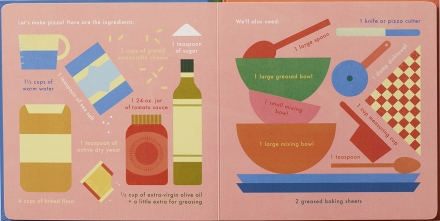
Out of the frying pan and into the oven, Lotta Nieminen cooks up another delicious “cook in a book” offering. This time kids are making pizza! The first two pages lay out all the ingredients and utensils they will need to create a scrumptious cheese pizza. Once the flour, yeast, sea salt, tomato sauce, mozzarella cheese, olive oil, sugar, and water are assembled, it’s time to get out the bowls, spoons, measuring cup, knife, and damp dishtowel.

celebrate-picture-books-picture-book-review-pizza!-an-interactive-recipe-book-ingredients

Copyright Lotta Nieminen, 2017, courtesy of Phaidon Press.

In Steps 1 and 2, little chefs combine the water, yeast, and sugar in a small bowl. As they “let it sit for a few minutes until bubbly,” they grab the large bowl. With the magic of a pull tab, the dusty flour and tiny salt crystals flow into the bowl. Next it’s time to “drizzle in the olive oil” and add the yeast mixture. The pull tab makes sure nothing spills! Now, push the spoon back and forth to mix it up into one “big clump of dough!”

Step 4 is even more fun! Kids get to knead the squishy dough before putting it in the bowl and covering it with the cloth. One to two hours later—or with the turn of the page!—the dough is ready to be placed on cooking sheets. Now, preheat the oven to 500 degrees! Just roll the wheel and watch the numbers rise. When you get to 500, you can stop! Open the oven door and pop those pans right inside.

celebrate-picture-books-picture-book-review-pizza!-an-interactive-recipe-book-adding-flour

Copyright Lotta Nieminen, 2017, courtesy of Phaidon Press.

When the crusts are ready, take them out of the oven and use the wooden spoon to swirl on the tomato sauce—Ooo! It’s kind of mesmerizing! Step 9 is where the toppings come in. Would you choose peppers, ham, pepperoni, mushrooms, garlic, basil, olives? Or maybe a bit of everything!? Now that all the toppings are…on top, it’s time for “Step 10: Bake for another 10 minutes, or until the crusts are golden brown.”

Hmmmm! The pizzas look sooo delicious! Quick, get the pizza cutter and cut a slice! Lift it out with your fingers…and eat! (Well, pretend to anyway!)

celebrate-picture-books-picture-book-review-pizza!-an-interactive-recipe-book-slice

Copyright Lotta Nieminen, 2017, courtesy of Phaidon Press.

Lotta Nieminen’s Cook in a Book board books for kids (and anyone who enjoys cooking and playing) are fun from yummy beginning to delectable end. The text of Pizza! is a recipe that young and adult readers will be tempted to try themselves, but the true joy resides in Nieminen’s smart, sophisticated illustrations. Each page entices readers to interact with the directions with delightfully sequenced actions that invite repeat play. The yellow kneadable “dough” is an ingenious inclusion, and is as much of a stress reliever as it is fun.

Throughout, Pizza! offers plenty of opportunities for children and adults to talk about cooking, utensils, ingredients, and even memories of times spent together. The wheel on the oven is a great way to teach kids about rising temperature and counting by twenty-five. The final page fulfills the promise of the book with a sturdy slice of pizza that can be removed and enjoyed.

Pizza! makes a wonderful gift for children and a unique hostess, new home, bridal shower or other gift for adults. It would be a welcome addition to home bookshelves.

Ages 2 – 6 and up

Phaidon Press, 2017 |ISBN 978-0714874098

Discover a gallery of graphic design and illustration work by Lotta Nieminen on her website!

Cheese Pizza Day Activity

celebrate-picture-books-picture-book-review-pizza-toppings-word-search

 What’s Your Favorite Topping? Word Search


Cheese pizza is great on its own! It also makes the perfect canvas for lots of toppings! Can you find eighteen delicious ingredients in this printable What’s Your Favorite Topping? Word Search? 


Picture Book Review

September 4 – National Wildlife Day

celebrate-picture-books-picture-book-review-swimming-with-sharks-cover

About the Holiday

National Wildlife Day, founded in 2005, serves to bring awareness to the number of endangered animals that need to be preserved and rescued each year. The holiday also acknowledges the zoos, outstanding animal sanctuaries, and other global organizations for everything they do to help preserve this planet’s animals and educate the public about conservation – especially the children, who are our future conservationists and animal’s caretakers.


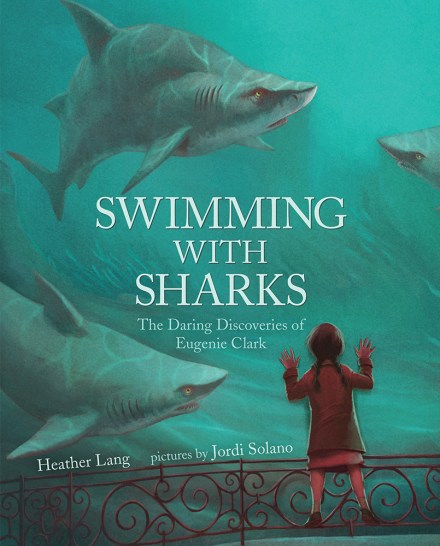
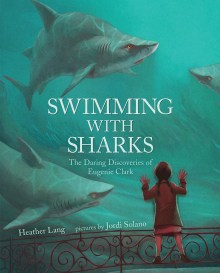
Swimming with Sharks: The Daring Discoveries of Eugenie Clark

Written by Heather Lang | Illustrated by Jordi Solano


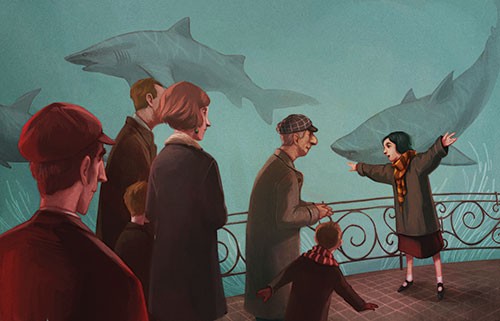
When young Eugenie Clark pressed her face against the aquarium window at the sharks swimming by, she did not see “piercing eyes…rows of sharp teeth…vicious, bloodthirsty killers.” Instead she saw “sleek, graceful fish” and dreamed of being inside the tank to swim among them. She loved to spend Saturdays at the New York Aquarium sharing her knowledge of fish with visitors. She wished there was more information available about sharks and hoped for a day when she could learn more about them.

celebrate-picture-books-picture-book-review-swimming-with-sharks-at-aquarium

Image copyright Jordi Solano, 2016, courtesy of plumpuddingillustration.com

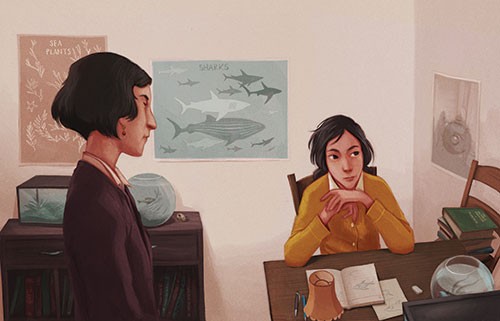
At home her mother bought Genie her own little fish tank, and soon the whole apartment was full of fish and reptiles. Genie kept careful notes on her pets as she tried to answer her many questions. William Beebe, a famous scientist who studied fish, was Genie’s hero. She too wished to explore the ocean like he did. But this was the 1930s and not many people “dared to study the depths of the sea, and none were women.” Eugenie’s mother suggested she study typing and try to become Beebe’s secretary. The life of a secretary was not what Genie had in mind.

Eugenie received a Master’s Degree in zoology, and when a well-known ichthyologist offered her a job as his research assistant and an opportunity to take oceanography classes, she moved to California. There she collected fish and water samples. The beauty of the underwater world astonished her. In the lab she was able to dissect a swell shark to learn “how and why it puffs up.” But Genie wanted to dive deeper—to swim with sharks.

celebrate-picture-books-picture-book-review-swimming-with-sharks-studying

Image copyright Jordi Solano, 2016, courtesy of plumpuddingillustration.com

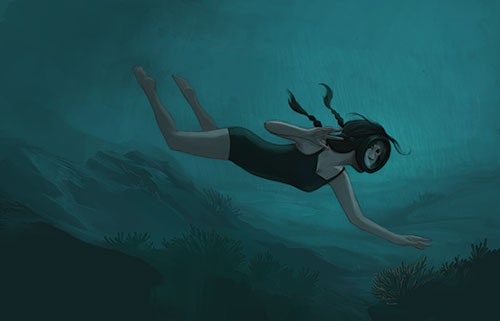
One day, Genie’s professor allowed her to try helmet diving. Wearing the heavy metal helmet, Genie was able to descend into the cold, murky deep where kelp forests waved with the current. “In 1949 the US Navy hired Genie to study poisonous fish in the South Seas. As she collected fish, she came face to face with a shark. The shark swam closer and closer then suddenly dove and disappeared out of sight. Genie was thrilled by the encounter.

In 1955 Eugenie moved to Florida and opened the Cape Haze Marine Laboratory, becoming the first to study sharks in their natural environment. The more she studied sharks, the more she realized that they were intelligent creatures, not stupid “eating machines” as most people thought. She wondered if sharks could be trained.

Eugenie set up an experiment in which a shark needed to press a white board to receive a reward a short swim away. Soon, the female shark of the pair realized that if the male shark pressed the board, she could swim to retrieve the reward. The pair remembered the exercise even after a ten-week break. Soon, scientists from around the world wanted to work with Genie. 

celebrate-picture-books-picture-book-review-swimming-with-sharks-swimming-under-water

Image copyright Jordi Solano, 2016, courtesy of plumpuddingillustration.com

Word reached her about “‘sleeping sharks,’” off the coast of Mexico. Instead of swimming around, these sharks stayed on the ocean floor. Eugenie was determined to learn how they breathed without moving. She dived deep into their territory, finding a requiem shark in an ocean cave. Here, she was face-to-face with one of the most feared fish in the sea. Genie swallowed any worry and watched as the fish opened and closed its mouth, providing itself with oxygen as a remora fish cleaned its gills.

Genie took water samples and completed other tests that revealed astonishing facts about the ocean caves and the habits of sharks. But while Genie was learning the facts about these mysterious sea creatures, most people still feared them and considered them with suspicion and superstition. As time went by, Genie began seeing fewer and fewer sharks on her dives. They were being killed out of fear, for their fins, and because people thought it would make beaches safer.

celebrate-picture-books-picture-book-review-swimming-with-sharks-sunset

Image copyright Jordi Solano, 2016, courtesy of plumpuddingillustration.com

Genie began talking about her research, and people listened. “Dr. Eugenie Clark had become one of the most respected fish scientists in the world.” She taught people that there is always more to learn and “always more surprises.”

An extensive Author’s Note about the life and work of Eugenie Clark as well as more information on sharks follows the text.

Heather Lang delves into the life’s work of a woman who fearlessly challenged herself and the prevailing science to increase our knowledge of sharks and change people’s perspective on these beautiful creatures. Readers will love Lang’s comprehensive storytelling—beginning with young Genie’s fascination with fish and the sea—that reveals the pivotal events which led to her discoveries. Fascinating anecdotes from Eugenie’s research and personal encounters with sharks will enthrall children, and the idea that there is much more to discover will resonated with young scientists in the making.

celebrate-picture-books-picture-book-review-swimming-with-sharks-looking-at-shark

Image copyright Jordi Solano, 2016, courtesy of plumpuddingillustration.com

Jordi Solano takes readers to the depths of the ocean in his sea-green, atmospheric illustrations that beautifully mirror the world of sharks. Textured and layered images of marine plants and a variety of creatures give children an up-close view of Eugenie Clark’s work and the fish she encountered on her dives. Each type of shark is magnificently and realistically drawn, giving kids an idea of coloring, size, movement, and more. Children will also see Eugenie’s research facilities and the equipment she used in her studies.

For anyone interested in marine science, history, biographies, or the environment in general, Swimming with Sharks: The Daring Discoveries of Eugenie Clark is a can’t-miss book.

Ages 5 – 9

Albert Whitman & Company, 2016 | ISBN 978-0807521878

Discover more about Heather Lang and her books on her website!

View a gallery of artwork by Jordi Solano on Plum Pudding Illustration!

National Wildlife Day Activity

celebrate-picture-books-picture-book-review-fascinating-sharks-word-scramble

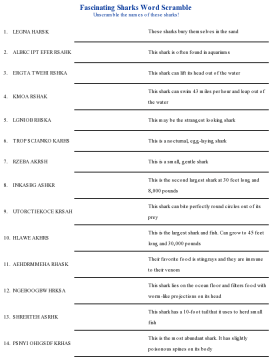
Fascinating Sharks Word Scramble


Read the clues and unscramble the names of 14 types of sharks in this printable Fascinating Sharks Word Scramble! Here’s the Solution!

celebrate-picture-books-picture-book-review-swimming-with-sharks-cover

You can find Swimming with Sharks at these booksellers

Amazon | Barnes & Noble | Books-a-Million | IndieBound

Picture Book Review
September 3 – It’s Happy Cat Month

celebrate-picture-books-picture-book-review-black-cat-white-cat-cover

About the Holiday

A happy cat is a joy forever! Today, we celebrate those feline pets who give their owners so much happiness. To honor the holiday, why not give your kitty a special treat. It’s also a great day to make sure that your cat or kitten is current on all medical appointments to keep your pet healthy and happy!

Black Cat, White Cat

By Silvia Borando


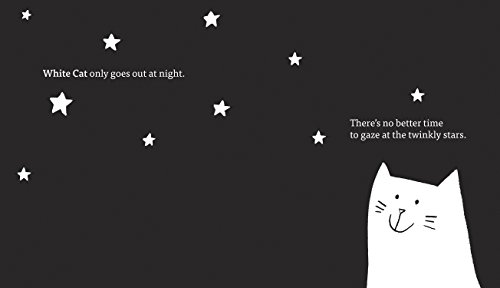
“Ever since he was a kitten, Black Cat has been entirely black….from the tip of his nose to the tip of his tail.” White cat is entirely white “from the tip of her nose to the tip of her tail.” Black Cat likes to roam during the day and watch the black swallows swoop through the sky. White Cat prefers nighttime when the twinkling stars gleam.

celebrate-picture-books-picture-book-review-black-cat-white-cat-dayt

Copyright Silvia Borando, courtesy of Candlewick Press

Black cat becomes curious about the night, though, and asks his friend Blackbird what he could see in the darkened sky. Blackbird doesn’t know because he is asleep in his nest during the night. Blackbird suggests that Black Cat go out when the sun goes down and “see what you can see.” At the same time White Cat wonders what the daytime holds. She asks her friend Snowy Owl, but Snowy Owl doesn’t know because she is always asleep by the time the sun comes up. Snowy Owl suggests White Cat go out during the day and “see what she can see.”

Copyright Silvia Borando, courtesy of Candlewick

Copyright Silvia Borando, courtesy of Candlewick Press

With good wishes from their friends, both Black Cat and White Cat head off on their new adventures, and somewhere between day and night, Black Cat meets White Cat. They tell each other where they are going and invite the other along with them. They agree, and so “White Cat takes Black Cat to discover the night.” Then Black Cat introduces White Cat to the day.

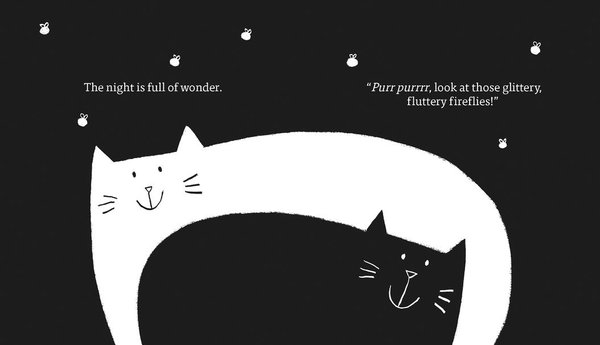
“The night is full of wonder. ‘Purr, purrrr, look at those glittery, fluttery fireflies,’” Black Cat says. “And the day is full of surprise. ‘Meow, look at those busy, buzzy bumblebees,’”  White Cat exclaims. Black Cat shows White Cat all of his favorite daytime things, such as “daisies, doves, and butterflies…” while White Cat dishes up the most delicious nighttime goodies—“snakes, bats, and mice.”

From then on Black Cat and White Cat are inseparable whether it’s daytime or nighttime. “So inseparable, in fact, that they have one, two, three, four, five, SIX… KITTENS! And can you guess what color they are? Orange!”

celebrate-picture-books-picture-book-review-black-cat-white-cat-together

Copyright Silvia Borando, courtesy of Candlewick Press

In her adorable book that proves opposites really do attract, Silvia Borando presents two cute cats that live in only half the world until their curiosity and friendship broaden their horizons. Borando’s gentle, lyrical language elevates this concept book to include the ideas that treasures can be found outside one’s comfort zone and that mutual sharing of one’s life and favorite things leads to strong relationships–even magic and sometimes the seemingly impossible! The soft curves of the figures and stark white-on-black and black-on-white pages make for striking illustrations that will delight even the youngest child.  The final spread of the six orange kittens will delight little readers.

Wonderful for story time or bedtime, Black Cat, White Cat is a sweet addition to home libraries for young readers.

Ages birth – 5

Candlewick, 2015 | ISBN 978-0763681067

Whether it’s day or night, watch this Black Cat, White Cat book trailer!

Happy Cat Month Activity

celebrate-picture-books-picture-book-reivew-cat-coloring-page


Cute Cat and Kittens Coloring Page


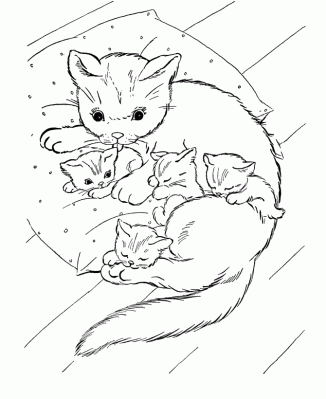
Here is a happy cat and her new little kittens! Enjoy coloring this printable Cute Cat and Kittens Coloring Page!

Picture Book Review
September 2 – It’s National Save a Tiger Month

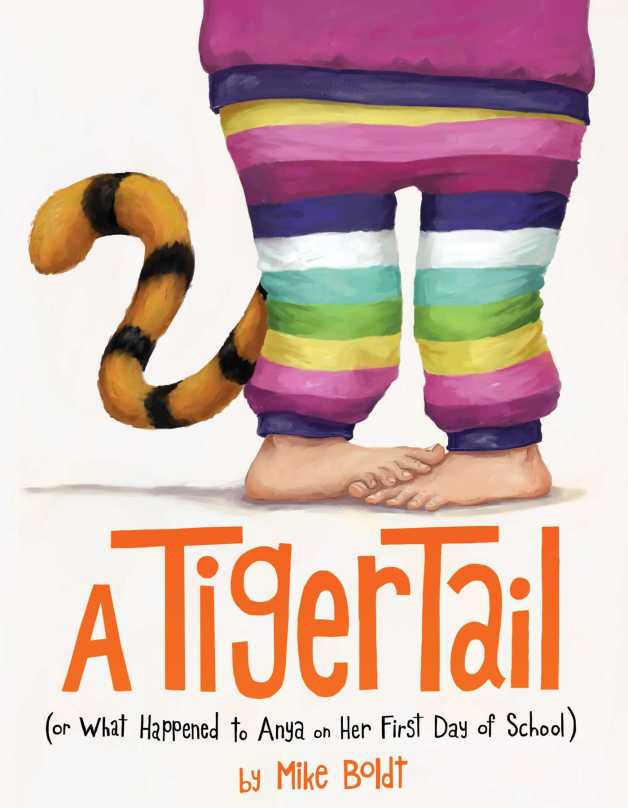
celebrate-picture-books-picture-book-review-a-tiger-tail-cover

About the Holiday

National Save a Tiger Month promotes awareness of the dangers facing the world’s wild tiger population. With only 4,000 still in existence, the tiger is threatened with extinction unless people work together to protect them. Many factors have led to the tiger’s decline, including habitat destruction, climate change, and poaching. Environmental and other groups, such as the World Wildlife Federation, the International Fund for Animal Welfare, and the Smithsonian Institution are working towards a solution.

A Tiger Tail (Or What Happened to Anya on Her First Day of School)

By Mike Boldt


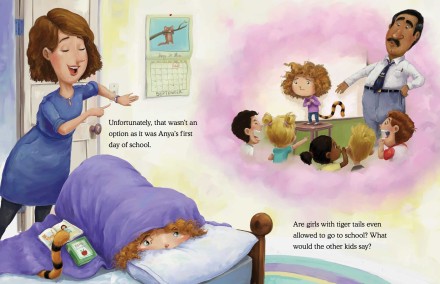
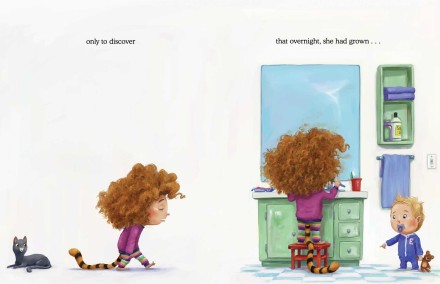
Even before the story properly begins, Anya discovers something incredible and incredibly disturbing. Overnight she has grown a tiger tail—not a pony tail or pigtails, but an honest-to-goodness black-and-orange-striped tiger tail! All she wants is to stay in bed, but unfortunately that’s not possible because it’s Anya’s first day of school.

celebrate-picture-books-picture-book-review-a-tiger-tail-interior-imagining-school

Image copyright Mike Boldt, courtesy of simonandschuster.com

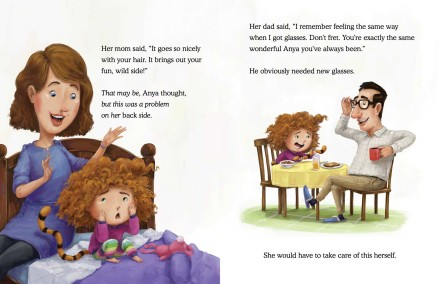
Anya wonders if “girls with tiger tails are even allowed to go to school” and what the other kids will say. Her mom thinks it’s wonderful. The tail goes so nicely with Anya’s red hair and brings out her “fun, wild side.” But Anya’s only worried about her back side! Her dad likens her predicament to when he got glasses and tells her she’s still “exactly the same wonderful Anya you’ve always been.”

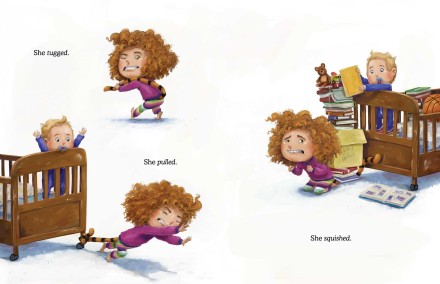
Anya figures she’s on her own with her problem. She tries tugging on her tail, pulling on it, and squishing it, but it remains firmly attached. Perhaps the right outfit from her closet—or all of them together—could hide her tail, but that solution had its own problems. There was just one last thing to do—panic! “‘Calm down,’” says her mom. “‘You’ll make yourself sick.’” Ah-ha! There’s a good idea! Anya thinks as she goes back to bed with tissues and feeling for a fever.

celebrate-picture-books-picture-book-review-a-tiger-tail-interior-parents

Image copyright Mike Boldt, courtesy of simonandschuster.com

Anya’s mom thinks her antics are so funny and that the kids will love her sense of humor, then she shoos her off so she doesn’t miss the bus. Ah-ha! There’s another good idea! Anya hides in the bushes, but her dad discovers her and considers it a “special treat” to drive her to school.

Walking up the sidewalk to the school’s front door, Anya realizes that she has only one option—running away to join the circus. How bad could that be? But as Anya daydreams about eating popcorn for dinner and swinging from a trapeze, she misses her chance to escape. The school bus pulls up to the door and all the kids pile out. “Anya was doomed.” But she watches all the kids race past her without a glance and doesn’t see the boy headed straight for her who also doesn’t see her. CRASH! Their impact sends them tumbling to the ground amid fluttering papers and flying books, shoes, and backpacks. Even the boy’s baseball cap pops off! Anya stares and then smiles. Standing straight up from the boy’s head are two long rabbit ears.

celebrate-picture-books-picture-book-review-a-tiger-tail-interior-art-grown-tail

Image copyright Mike Boldt, courtesy of simonandschuster.com

“‘Hi, my name is Ben,’” the boy says as he holds out Anya’s shoe. “‘I’m Anya,’” Anya replies. Joe takes his hat from Anya and bounds up the steps. “‘Come on, Anya! We don’t want to be late on the first day.’” Anya follows, and when she sees her class she knows she’ll fit right in.

Mike Boldt whimsically captures the first-day jitters—of school or any new experience—that can result in an explosion of self-consciousness, doubt, and fear. Boldt’s little girl with a wild cloud of red hair is a loveable, plucky heroine as she takes matters into her own hands when the adults around her seem oblivious to her plight. Boldt’s vivacious illustrations burst with energy and emotion that kids will recognize and respond to. Boldt depicts children so honestly, from their crinkled nose abhorrence to their enthusiastic smiles, and the adults, with their clueless dialogue and quirky expressions, are rendered through a child’s eyes.

celebrate-picture-books-picture-book-review-a-tiger-tail-interior-art-grown-tail

Image copyright Mike Boldt, courtesy of simonandschuster.com

Readers will laugh at Anya’s panicked face and her multi-layered getup designed to hide the tail that is still obvious through its ribbon wrapping. The crash meeting between Anya and Ben provides delightful surprise and insight, and the final spread of the classroom is inspired. Not only do most of the kids have unique traits, but the teacher also displays rabbit teeth as everyone poses for a class picture.

A Tiger Tail (Or What Happened to Anya on Her First Day of School) offers comfort and understanding as it reminds readers that everyone is an individual, and that one of humankind’s strongest and most common bonds is our diversity. A Tiger Tail should be embraced by every classroom and will make an often-asked-for addition to any child’s library.

Ages 4 – 8

Simon & Schuster Books for Young Readers, 2016 | ISBN 978-1481448857

Learn more about Mike Boldt and his books and view a portfolio of his artwork on his website!

Pounce on this awesome book trailer for A Tiger Tail!

National Save a Tiger Month Activity

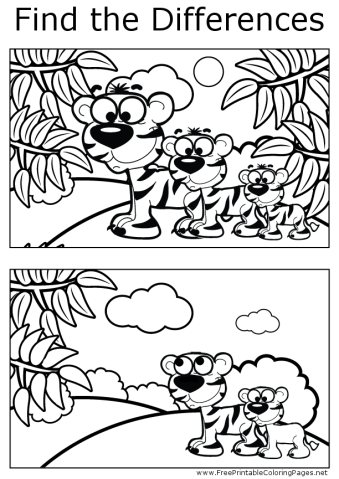
celebrate-picture-books-picture-book-review-tiger-find-the-differences

Tricky Tigers Find the Differences and Coloring Page


These two picture of tigers in the jungle have some differences—just like Anya and her classmates. Can you find all eleven changes? Have fun searching and coloring this printable Tricky Tigers Page!

Picture Book Review

September 1 – World Letter Writing Day

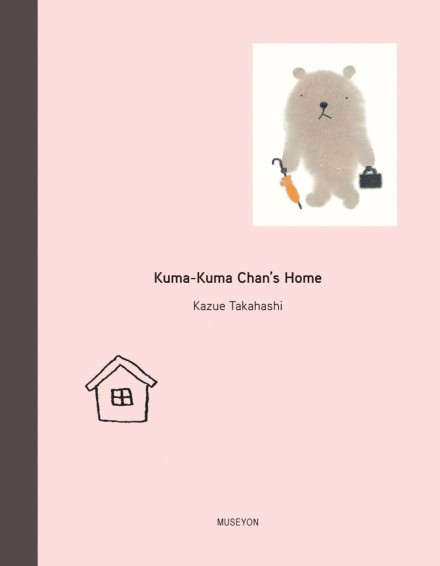
celebrate-picture-books-picture-book-review-kuma-kuma-chan's-home-cover

About the Holiday

Letters don’t have to be those long missives sent in envelopes with stamps affixed. A note to a friend, a message included in a child’s lunch sack, or a post-it stuck where a co-worker can see it are are all ways to write a few encouraging words to those you love. Today, why not put your thoughts on paper and send or give your letter to someone you’d like to connect with?
Kuma-Kuma Chan’s Home

By Kazue Takahashi


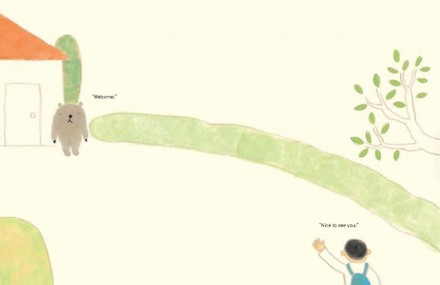
Framed by his window Kuma-Kuma Chan, the little bear, sits at his writing desk penning a letter. It says simply, “How are you? Come visit me soon.” When it is received, Kuma-Kuma Chan’s friend begins the long journey to see him. “I have to ride a train for an hour, take a bus for thirty minutes, then walk for fifteen minutes,” the boy states. From the bus stop, the boy can see the red roof of Kuma-Kuma Chan’s house in the distance, and as he approaches he sees hisfriend waiting outside to welcome him.
celebrate-picture-books-picture-book-review-kuma-kuma-chan's-home-welcome

Copyright Kazue Takahashi, 2016, courtesy of museyon.com

The boy has been here before and once more enjoys the routine as “Kuma-Kuma Chan serves bear tea. The first thing he always does is serve bear tea,” the boy explains. It seems that the time between visits has been long, and at first the silences are longer than the conversation. In the quiet the boy watches “the dust floating around in the afternoon sunbeams” and looks “at the books on the shelf,” reading “the titles one by one….” Meanwhile Kuma-Kuma Chan may be having second thoughts about his hospitality. He “gets up and opens the window to let in some fresh air” and checks the expiration date on the bear tea.

celebrate-picture-books-picture-book-review-kuma-kuma-chan's-home-dinner

Copyright Kazue Takahashi, 2016, courtesy of museyon.com

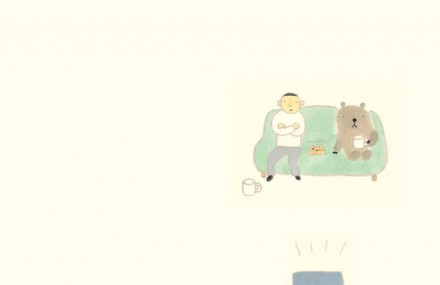
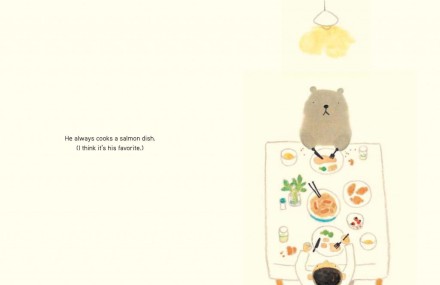
By the time Kuma-Kuma Chan serves the rice crackers conversation comes easier. For dinner Kuma-Kuma Chan prepares a salmon dish as always. It is, the boy thinks, his favorite and “perfect for a bear.” After dinner the two watch television and enjoy a mutually favorite snack of chocolate and hot milk. Soon all of the chocolates the boy brought are gone and it is time for him to catch the last bus home.

He slings his backpack over his shoulders and says goodbye to Kuma-Kuma Chan, who invites him to come back soon. Framed in the golden light of his doorway, the little bear waves farewell to his friend as he ventures out into the sapphire blue night.

celebrate-picture-books-picture-book-review-kuma-kuma-chan's-home-watching-tv

Copyright Kazue Takahashi, 2016, courtesy of museyon.com

Kazue Takahashi, a Japanese illustrator and children’s book author, employs kawaii—the quality of being cute and adorable—in creating her quiet, moment-in-time story that focuses on the essence of true friendship. The boy and the little bear are happy simply being together. The details of the day that Takahashi chooses to highlight are ones that we as adults might overlook, but which for children are still new and fascinating: the way Kuma-Kuma Chan’s house “smells slightly of bear,” a self-consciousness on the part of a host, the desire of each party to please the other.

celebrate-picture-books-picture-book-review-kuma-kuma-chan's-home-bear-tea

Copyright Kazue Takahashi, 2016, courtesy of museyon.com

Each right-hand page contains a central image that highlights the spare text presented on the left-hand page. The white space surrounding the illustrations, which are free of all extraneous details, echoes the openness of the storyline. The only two-page illustration spreads come at the beginning of the story, when Kuma-Kuma Chan stands at his door welcoming the boy, and at the end, when the two are saying goodbye, emphasizing the connection of their friendship and perhaps also the distance between them when they are apart. The muted colors and downy texture of the images enhances the sweet charm of Kuma-Kuma Chan, who is no bigger than a thumbprint.

Kuma-Kuma-Chan’s Home would appeal to a varying age-range of children—and even adults. Young children would enjoy discussing the story page-to-page, while older readers would like the quiet respite the book offers. It’s depiction of a one-on-one friendship would be welcomed by introverted children as well. Kuma-Kuma Chan’s Home is a perfect little book to keep on personal library shelves for those times when companionship—and cuteness—is needed.

Ages 3 and up

Museyon, 2016 | ISBN 978-1940842097

World Letter Writing Day Activity

celebrate-picture-books-picture-book-review-tea-party-template


Tea Time Stationery


Today, take a little tea time and write a short letter to a friend, a family member, or a coworker. Print out this Tea Time Stationery and get started!

Picture Book Review