November has been designated as a time for reflecting on our lives and being grateful for our family, friends, opportunities, and the things we have. To celebrate Gratitude Month, take time to count your blessings and thank those who are important in your life.
Thanks to Two Lions for sending me a copy of Duck and Hippo Give Thanks for review consideration. All opinions on the book are my own.
Duck and Hippo Give Thanks
Written by Jonathan London | Illustrated by Andrew Joyner
As Hippo raked leaves, he was “dreaming of a good, old-fashioned Thanksgiving,” but his reveries were interrupted by Duck, who landed with a plop right in the middle of Hippo’s leaf pile. When Hippo asked his friend what he was doing, Duck answered that she was having fun and invited Hippo to join her, but with a huff he said, “‘I’m trying to make the pile all nice and tidy!’” Just then, Hippo was bonked on the head by a falling apple. He handed it to Duck as a snack, who said, “‘Thanks, Hippo!’”
Image copyright Andrew Joyner, 2018, text copyright Jonathan London, 2018. Courtesy of Two Lions.
That reminded Hippo that tomorrow was Thanksgiving and he asked Duck to celebrate with him. Duck suggested they invite all of their friends. They went to the grocery store to buy supplies. The shopping went quickly as Hippo whooshed down the aisles with Duck in the cart grabbing food as they went. When Hippo wanted a ride in the cart, though, he got stuck. Elephant rushed over and got him out. To thank him, Duck and Hippo invited him to their Thanksgiving feast.
Image copyright Andrew Joyner, 2018, text copyright Jonathan London, 2018. Courtesy of Two Lions.
At the bakery, Turtle let them skip ahead of him in line, so he was invited too. For lunch, Duck and Hippo went to Pig’s Pizza. To thank her for the delicious slices, Duck invited her to their dinner the next day. “‘Yummy!’ cried Pig. ‘I can’t wait!’” Back home, they began preparations. They helped each other gather leaves, pumpkins, squash, and apples then decorated the table together. Duck even “did a dance on the tabletop and sang, ‘TA-DA!’” before going home with the promise of seeing Hippo tomorrow.
Image copyright Andrew Joyner, 2018, text copyright Jonathan London, 2018. Courtesy of Two Lions.
While Hippo was dreaming of his big old-fashioned Thanksgiving, Duck had called together Elephant, Pig, and Turtle. “‘Let’s make something special for Hippo!’” he told them. Thanksgiving morning Hippo was up early. He baked apple and pumpkin pie, acorn squash, and other goodies. Then he sat down to wait for his friends. He waited and waited. The sun went down and the moon rose. Still, Hippo’s friends hadn’t arrived. Finally, they burst through the door with a surprise for Hippo. Hippo eagerly wondered what it was.
Image copyright Andrew Joyner, 2018, courtesy of Two Lions.
One by one, they showed what they had brought. Turtle held a tray of Chinese egg rolls, Elephant had made sea-cucumber sushi, Pig had created one of her famous pizza napoletanas, and Duck offered a plate of peanut-butter-and-jelly tacos. “‘SURPRISE!’” they all cheered. Hippo frowned. This was not the Thanksgiving feast he had imagined.
But then he saw how happy all of his friends looked. “He spread his arms wide and said, ‘WELCOME!’ And thank you for being who you are!’” They all sat around the table, held hands, and gave thanks for “being together, and for sharing natures bounty.” Then they gobbled up the best Thanksgiving feast ever. And when they were done? They went outside and dove into the leaves!
Image copyright Andrew Joyner, 2018, courtesy of Two Lions.
In his warmhearted Thanksgiving story, Jonathan London presents gentle conflicts which are resolved with generosity, friendship, and understanding as Duck, Hippo, and their friends prepare what each considers the perfect Thanksgiving feast. The spirit of the story lies in Hippo’s quick realization that a “good old-fashioned Thanksgiving” doesn’t lie solely in one type of meal, but in including friends, new traditions, and togetherness. Other examples of acceptance, of thoughtfulness, and of shaking off trivial accidents and minor complaints between the characters show young readers that happiness can be achieved when one fully considers a situation from both sides.
Andrew Joyner’s bright, action-packed illustrations clearly show the fond friendship between Duck and Hippo as they plan Thanksgiving dinner together. Duck’s carefree personality contrasts and complement’s Hippo’s more fastidious nature. Through the wide smiles, playfulness, and generous acts of the supporting characters young readers will understand that instead of ruining Hippo’s feast, they are excited to participate and contribute to it. Clear facial expressions and highlighted text also spotlight the strong bonds among these friends.
A feel-good story with humor and a positive message about the true meaning of Thanksgiving, Duck and Hippo Give Thanks—the latest in the Duck and Hippo series, which includes Duck and Hippo in the Rain and Duck and Hippo Lost and Found—is a wonderful addition to the series for fans and a terrific holiday book for home and classroom libraries.
Ages 3 – 7
Two Lions, 2018 | ISBN 978-1503900806
To learn more about Andrew Joyner, his books, and his art, visit his website.
You’re invited to watch the Duck and Hippo Give Thanks book trailer!
National Gratitude Month Activity
Alphabet I Spy Gratitude Game
Things to be thankful for are all around you! What do you see? Find an entire alphabet of favorite things with this printable game!
Sponsored by Pizza Hut and the Center for the Book in the Library of Congress since 1989, Young Readers Week is celebrated during the second week of November to improve literacy and raise awareness of the benefits of reading. Schools participate in setting reading goals for their students who are then rewarded for meeting them. Adults are encouraged to provide a variety of reading materials for their kids – picture books, novels, graphic novels, magazines, newspapers, whatever will get them excited about reading.
Calvin Gets the Last Word
Written by Margo Sorenson | Illustrated by Mike Deas
The moment Calvin wakes up, he grabs his dictionary and heads to the kitchen for breakfast. While Calvin may be well-rested, his dictionary tells readers that it is tired. “Why? Because Calvin loves words—I mean REALLY loves words,” the dictionary says. Calvin won’t rest until he’s found the perfect “word for everything—especially his rascally brother.” At breakfast, Calvin has just taken a big gulp of milk. It’s just the moment his brother’s been waiting for to tell his super funny joke. You can imagine what happens—and that’s why the dictionary’s page that contains the word revenge is soaked.
Image copyright Mike Deas, 2020, text copyright Margo Sorenson, 2020. Courtesy of Tilbury House Publishers.
But is revenge the right word for Calvin’s brother? Not quite. On the school bus as the kids are tossing a backpack, talking, laughing, and hanging over the seats, Calvin’s dictionary offers up mayhem, but that doesn’t completely describe his brother either. As Calvin struggles in geography class and passes notes during library story time, his dictionary helps describe the mood, but those words don’t really apply to his brother. On the way home, though, Calvin does discover a good word for himself when he stands up to a bully and helps a kindergartener.
Image copyright Mike Deas, 2020, text copyright Margo Sorenson, 2020. Courtesy of Tilbury House Publishers.
At Little League practice, the dictionary reveals, Calvin “loves to crush the ball during batting practice, sending it over the fence. That’s why the page that reads pulverize has grass stains on it.” Could pulverize be the right word for his brother? While Calvin thinks it could be fun, it’s not exactly right.
Image copyright Mike Deas, 2020, text copyright Margo Sorenson, 2020. Courtesy of Tilbury House Publishers.
That night dinner turns into a repeat of breakfast—only in broccoli green. When Calvin goes to bed, he sits for a while, thinking. Then he grabs his exhausted dictionary and a glass of water and sneaks into his brother’s room. The dictionary thinks it knows what’s going to happen and riffles through its pages to find the right word, unconcerned whether it stays dry or not. And then, there on the page, is the perfect word! But wait, that doesn’t fit because now the brothers are laughing. The dictionary tries flipping to another page and a better word, but Calvin has it beat as he turns the pages and discovers the exact right word to describe his brother. What are all of these words? Come flip through Calvin Gets the Last Word yourself to find out!
Image copyright Mike Deas, 2020, text copyright Margo Sorenson, 2020. Courtesy of Tilbury House Publishers.
In her funny and unique mashup of sibling rivalry and vocabulary, Margo Sorenson offers kids an engaging story of the singular type of love brothers share uncovered little by little through word-building. Calvin’s dictionary makes a sincere and charming guide through high-interest words that lend panache and nuance to events throughout Calvin’s day even if they don’t quite describe his brother. Astute kids may notice that the words the dictionary chooses for Calvin’s brother proves his loyalty to his favorite reader. Calvin’s spewed milk, whispered secrets, and home run batting add up to a real kid that readers will love. The words that the dictionary finds are fun to learn and say and will spark an enthusiasm in readers to do their own flipping through the dictionary and thesaurus. Sorenson’s endearing ending rings true with a word kids are sure to embrace.
Mike Deas’ glasses-wearing and sweat suit-clad Calvin, whose dictionary is always at the ready to define his experiences, is a character readers will respond to. Images of the sprayed milk and broccoli, rockin’ school bus, library story rug, and baseball field are full of familiar details and plenty of action. As Calvin prepares to play his trick on his brother Deas gives kids a cutaway view of the house from above, letting them tiptoe through the maze of rooms with Calvin. The final scenes of the brothers checking out the dictionary together in the light of a bedside lamp is sibling devotion at its best.

A delightful family story that can stir a love of language, Calvin Gets the Last Word would be a favorite addition to home libraries. The book is highly recommended for school and classroom bookshelves to enhance language arts, writing, grammar, and vocabulary lessons and for public library collections as well.
Ages 6 – 8
Tilbury House Publishers, 2020 | ISBN 978-0884488224
Discover more about Margo Sorenson and her books on her website.
To learn more about Mike Deas, his books, and his art, visit his website.
Young Readers Day Activity
“Big Words” Word Search
Knowing and using a wide range of words allows you to express yourself in exact—and often—fun ways. Find the 26 “big” words—one for each letter of the alphabet—in this printable word search puzzle.
Celebrating a new book on its birthday is always exciting. Just like the kids they’re written for, each book has its own personality and take on the world. Today’s book is funny, smart, clever, and educational. Take a look!
This Is a Flying Rat
Written by Andrew Cangelose | Illustrated by Josh Shipley
As a narrator begins a recitation on pigeons, a very vocal pigeon breaks in to extoll the awesomeness of his breed, especially their flying power. “Everyone calls me Ace,” he says, “because I’m one of the best fliers around.” He can’t wait to prove it. “Pigeons are a member of the same bird family as doves. In fact, they are sometimes called ‘rock doves,’” the narrator intones.
Image copyright Josh Shipley, 2020, text copyright Andrew Cangelose, 2020. Courtesy of Oni Press.
Ace is wholeheartedly agreeing that he does, indeed, rock when a raccoon interrupts to point out a flying rat. Ace is offended, but it turns out that the raccoon doesn’t mean him, but the rat with a jet pack spewing pink and blue ink coming their way. Just as the narrator is getting to the good part: “Pigeons are considered some of the best fliers in the world,” the rat crosses out “Pigeons” and writes “Flying rats” in pink ink.
Image copyright Josh Shipley, 2020, text copyright Andrew Cangelose, 2020. Courtesy of Oni Press.
Again, Ace protests, so the rat decides he’ll just be a pigeon too. But Ace isn’t going to let him get away with that that easily. To be a pigeon, the rat has to do other pigeon stuff too. The narrator goes on to describe a pigeon’s eating habits, which can include garbage. The rat is happy to oblige this dietary quirk. Pigeons also have feathers and wings, the narrator reveals. Out of the trash come…you guessed it…check! and check!
Image copyright Josh Shipley, 2020, text copyright Andrew Cangelose, 2020. Courtesy of Oni Press.
Finally, the narrator gets to flying. But thanks to the jet pack, the rat is just as agile and persevering as Ace. The two are just in a race to the top of a skyscraper when the rat’s fuel burns out. Now he’s not so much a flying rat as a falling rat. Down he plummets just as the narrator reveals that pigeons are social flyers—never found alone. Ace gets it and rockets toward the ground, rescuing the rat just before….
The rat is grateful and apologetic for trying to take over the book, and he acknowledges that Ace is the real pigeon. On Ace’s side, he’s warmed up to having a friend while the narrator’s next chilling fact about pigeon predators has Ace considering joining the other side.
Image copyright Josh Shipley, 2020, text copyright Andrew Cangelose, 2020. Courtesy of Oni Press.
Andrew Cangelose’s pitch-perfect mashup of sedate nature programming and laugh-out-loud interruptions is education at its ingenious best. As the rat challenges Ace’s claims to flying glory, kids are the winners, learning facts about pigeons they won’t soon forget. Cangelose has given Ace and the rat distinct personalities and plenty of attitude to keep the giggle’s going. The combination of straightforward narration and dialogue makes the story a joy to read and would even lend itself to turning the text into a classroom play. The resulting friendship between Ace and the rat is a natural outgrowth of pigeons’ flocking behavior and makes a case for pigeons being a bit like humans too.
Josh Shipley feathers the story with urban details as the rat attempts to prove he’s really a pigeon. Ace, with his squared-off head and familiar multihued sheen, is a portrait of pride, indignation, and knowing looks that will delight kids. The rat, clinging to his jet pack, is sure to win over converts with his ever-present smile and bold self-assurance. The appearance of a pompadour-wearing squirrel clutching an armful of garbage will draw lots of laughs. Shipley depicts Ace’s change of heart about the rat with a sweetness that will charm kids.
Humorous creative nonfiction that kids will really respond to, This Is a Flying Rat would be a fun addition to home bookshelves and a high-interest accompaniment to classroom nature and science lessons, making it a great choice for school and public libraries as well.
Ages 4 – 8
Oni Press, 2020 | ISBN 978-1620107751
You can find This Is a Flying Rat at these booksellers
Wolves, with their gleaming eyes, sharp teeth, and eerie resonating howl, evoke strong emotions in many people. Playing the role of both hero and villain in mythological tales, feared by farmers and ranchers, and well known as “big and bad” to children everywhere, wolves are part of our lives whether we’ve ever seen or heard one or not. While many people may have a negative view of wolves, the founders of today’s holiday want to change that. They want people to see the beauty, power, and environmental benefits of these majestic animals. Wolves don’t actually howl at the moon; they howl to communicate with the rest of their pack, but the inspirational nature of an image of the full moon framing the upturned head of a wolf cannot be denied. To celebrate today? Sure! Go out and howl your loudest at the moon!
There’s Something about Sam
Written by Hannah Barnaby | Illustrated by Anne Wilsdorf
Max was inviting all the boys in his class to his sleepover birthday party. All except the new kid Sam, that is. “‘There’s something different about him,’” Max told his mom, but she said “‘I’m sure you’ll like him when you get to know him better,’” so Max wrote out the invitation. At school all the boys were excited to go. All except Sam, that is. He wasn’t sure because there was going to be “a full moon that night.”
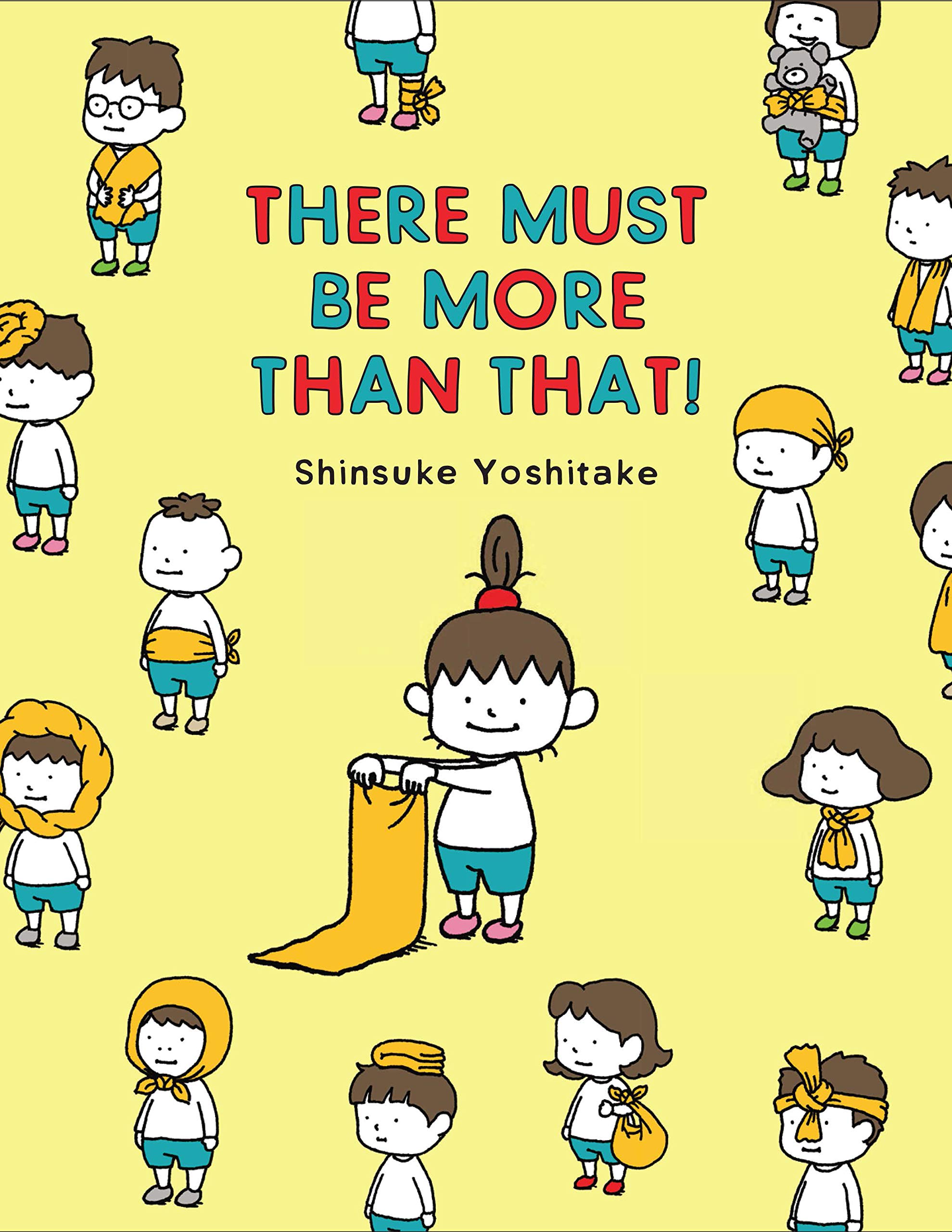
Image copyright Anne Wilsdorf, 2020, text copyright Hanna Barnaby, 2020. Courtesy of HMH Books for Young Readers.
The other boys thought Sam’s abilities to run really fast and know what the cafeteria would be serving for lunch were awesome. Still, Sam wanted to know what made him seem so different, and he was determined to figure it out at his party. At dinner, Max was mesmerized by Sam’s very rare burger. While they played games, Max thought it was amusing when Sam took a nip at Jeremy, and while all the other boys changed into their pajamas in the family room, Sam did it privately.
Image copyright Anne Wilsdorf, 2020, text copyright Hanna Barnaby, 2020. Courtesy of HMH Books for Young Readers.
When Max’s mom brought out cookies, all the boys grabbed for them. That’s when Max noticed Sam’s hairy hands and long, sharp claws. The other kids screamed and hid, but Max thought it was cool. Sam was just about to explain, when “the room was flooded with moonlight.” Sam ran out of the house, growling, with Max right behind him. The boys had wild fun in the backyard all night…until they fell asleep up in a big tree.
As Max and his mom watched the boys head home, Max’s mom had to agree that Sam was “an unusual boy.” “‘Yep,’ Max said, ‘he sure is something.’” Then he ran to his room to schedule monthly sleepovers with Sam.
Image copyright Anne Wilsdorf, 2020, text copyright Hanna Barnaby, 2020. Courtesy of HMH Books for Young Readers.
Hannah Barnaby’s unique tale of friendship and individuality will enchant rambunctious kids for whom the lure of all things wild is irresistible. Quickly paced, Barnaby’s story will entice readers to guess at Sam’s alternate personality and watch eagerly for his transformation. Along the way Barnaby tucks in plenty of traits—from athletic ability to liking the same things to just sharing unstructured play time—that draw friends together and reminds readers to give everyone a chance to show their true selves before making judgements.
Anne Wilsdorf’s delightfully freewheeling boys will charm kids from the first page. When readers first meet Sam, with his scruffy hair, they may begin to get an inkling of just how he is so different. Other hints add to the fun too. Details like monster backpacks, monster-themed toys, pajamas and sleeping bags, and a scary movie on TV leave it up to readers to decide whether Sam is really a werewolf or not.
Simply lots of fun with a welcome message, There’s Something about Sam will be an often-asked for addition to bedtime story times—full moon or not. The book would be an enchanting addition to home, school, and public library collections.
Ages 4 – 7
HMH Books for Young Readers, 2020 | ISBN 978-1328766809
Discover more about Hannah Barnaby and her books on her website.
Howl at the Moon Day Activity
Werewolf Coloring Page
You can have a howling good time with this printable coloring page, and you don’t even need to wait for the full moon!
National Photographer Appreciation Month is for all photographers, professional and amateur. The month-long holiday gives people an opportunity to really look at the photographs they see in newspapers, books, online, and even in their own home and truly appreciate the artistry that goes into capturing a moment, a place, or a personality to tell a bigger story. October is also a great month to go through your own family photographs and relive or rediscover favorite memories. To celebrate, consider having a professional portrait taken of yourself, your kids, or your whole family to decorate your home, give as gifts, or send as a holiday card. There are also many galleries displaying photographic work to explore.
Operation Photobomb
Written by Tara Luebbe and Becky Cattie | Illustrated by Matthew Rivera
Monkey and Chameleon loved scavenging stuff from tours that came through their neck of the jungle. One lucky day when they raided a backpack, Monkey discovered a polaroid camera while Chameleon came away with a roll of toilet paper. Monkey had a bit of a learning curve to get the hang of taking great shots, but soon he was snapping stylish pics of all his friends.
Monkey got so good that he started taking themed pictures. He took some that were “only for the birds” and others of “just animals with fur.” Chameleon was beginning to feel left out, so just as Monkey was going to click the button on a cute-as-a-button shot of two frogs on a branch, Chameleon swung in on a vine, shouting, “‘Photobomb!’”
Image copyright Matthew Rivera, 2019, text copyright Tara Luebbe and Becky Cattie, 2019. Courtesy of Albert Whitman & Company.
“‘Chameleon, please don’t do that!’” Monkey said. “But Chameleon was just getting started.” The Capybara family suddenly had a new member in their portrait; Sloth’s new baby was joined by a chameleon-y brother; and as Monkey was about to capture Grandma Macaw blowing out her 76th birthday candles, Chameleon photobombed in, sending the cake splat all over her and her guests.
“‘Help me stop him from wrecking all the pictures!’ Monkey howled.” Toucan did a song and dance routine to distract him, Jaguar tried to fling him away, and the tapirs attempted to form an impenetrable line, but he was always able to sneak in. Monkey shrieked at him, and the other animals complained that he had ruined their once-in-a lifetime pictures. Chameleon blushed pink and red and said, “‘Fine. You won’t see me in any more pictures.’”
Image copyright Matthew Rivera, 2019, text copyright Tara Luebbe and Becky Cattie, 2019. Courtesy of Albert Whitman & Company.
So Monkey went back to work. But the animals took a close look at their shots and noticed a phantom-like Chameleon blending in with them or their surroundings. “CHAMELEON!” they shouted. The animals huddled together to find a solution. Monkey had an idea, and they whispered and plotted until they had the perfect plan. “Operation Photobomb was a go.” Monkey called Chameleon over and arranged him in a perfect pose. Then he aimed his camera and counted down. When he reached “three” the Macaws yelled “‘Bombs away!’” and pelted him with juicy fruit. “Click!” Monkey took the shot.
Chameleon was covered in sticky pulp and juice. The animals laughed. But Chameleon didn’t think it was so funny. “‘You ruined my pic…Ohhhhh!’” he said. Monkey handed him the roll of toilet tissue and offered a truce. Chameleon agreed to both. Although it was hard, Chameleon stayed out of Monkey’s pictures from then on. But then he had an idea that was “picture-perfect.” He knew just the people who “loved a good photobomb.”
Image copyright Matthew Rivera, 2019, text copyright Tara Luebbe and Becky Cattie, 2019. Courtesy of Albert Whitman & Company.
Tara Luebbe and Becky Cattie’s funny take on the photobomb phenomenon will have kids laughing and joining in with shouts of “photobomb!” as Chameleon inserts himself into all of the animals’ precious shots. When Chameleon ignores the animals’ complaints and requests to stop and instead uses his camouflage to trick them (a shrewdly worded hints at this), Monkey’s idea to give him a bit of his own medicine teaches him a valuable lesson. Chameleon also discovers a clever, more productive, and welcome way to enjoy his favorite activity. Through their fast-paced and humorous storytelling sprinkled with puns, Luebbe and Cattie reveal several truths about friendship, respect for others, and appropriate timing. Their surprise ending will satisfy and delight kids. It offers opportunities for discussion on social skills, putting others first, and finding the right time and place to engage in certain activities and behaviors.
Matthew Rivera’s tropical, sun-kissed illustrations will enchant readers. Chameleon, a mottled vibrant blue in most spreads, shows his enthusiastic prankster side popping up at the last moment to join the animals’ photos. Readers will love pointing him out in the polaroid squares scattered throughout the book. They’ll especially enjoy finding him when he camouflages himself against various backdrops. As he discovers his “picture-perfect” audience, kids will see that here he can show all his colors.
Operation Photobomb is a lively and original way to introduce children to ideas of respect for others and proper conduct. The humor and familiar activity will resonate with kids and makes this a book that will be a favorite for thoughtful as well as spirited story times at home, in the classroom, and for public libraries.
Ages 3 – 5
Albert Whitman & Company, 2019 | ISBN 978-0807561300
Discover more about Tara Luebbe and Becky Cattie and their books on their website, BeckyTaraBooks.
To view a portfolio of work by Matthew Rivera and learn more about him, visit his website.
Photographer Appreciation Month Activity
Spool Photo Holder
With this easy craft you can make a personalized photo holder for your favorite pictures of friends and family!
Supplies
Wooden spool with hole through the middle, top to bottom. (A spool without a hole also works if you make a hole in the top with a hammer and nail), 1 ½ -inch or larger, available at craft stores
Colorful twine or light-gauge yarn, 3 to 4 yards
Alternatively: you can buy a wooden spool of colorful twine at some discount stores
3 pieces of light-gauge wire 12 to 15-inches long
Clay or play dough
Needle-nose pliers
Glue
Directions
Fill hole in spool with clay or play dough, pushing it well in to provide a base for the wire
Wrap the twine or yarn around the spool to desired thickness
Glue down the end of the twine to keep it from unraveling
With the needle-nose pliers, roll down one end of the wire to create a small coil
Repeat with two other lengths of wire
Cut the three wires to different lengths to provide room for all three photographs
Fit the three wires into the center hole on the top of the spool
Push the wires into the clay until they are held securely
Clip photographs into the coils
Display your pictures!
You can find Operation Photobomb at these booksellers
Squirrels elicit emotions on both sides of the spectrum. On one hand you can’t help but say “Awww!” when you see their tiny little paws and crafty antics. On the other hand their voracious appetites at bird feeders and penchant for darting into traffic is more likely to make you say “Arrgghhh!” This month is set aside, however, for enjoying the squirrels in your yard, park, or city. And really, don’t they make life just a little more fun?
Girl Versus Squirrel
Written by Hayley Barrett | Illustrated by Renée Andriani
Pearl built three birdhouses and put them in and near the tree in her backyard. One was shaped like a house, one was a tube, and the other was a tea cup atop a tall stand. After filling the house with suet, the tube with seeds, and the teacup with peanuts, Pearl settled in with her binoculars to wait. Soon cardinals, flickers, finches, and chickadees swooped in. But none of them wet for the peanuts.
Image copyright Renée Andriani, 2020, text copyright Hayley Barrett, 2020. Courtesy of Margaret Ferguson Books, Holiday House.
Happily sitting next to the teacup was a squirrel with a peanut in its paws. Pearl scared the squirrel away and then went to work to win this contest of wits. She used her hockey stick to raise the teacup’s stand higher and “watched, breathless with anticipated success, but was soon disappointed” as the squirrel easily climbed to the top. Pearl added a mop to make the pole even higher.
But still the squirrel had no trouble getting to the top. “The squirrel stared at Pearl and seized an especially plump peanut.” Just then the “pole began to teeter and totter until…It toppled to the ground,” breaking the handle off the teacup. As the squirrel dashed up a nearby oak tree, Pearl shouted, “‘You’re a bird-feeder-crashing, teacup-smashing, peanut-poaching pest!’” A pest Pearl was not about to lose out to.
Image copyright Renée Andriani, 2020, text copyright Hayley Barrett, 2020. Courtesy of Margaret Ferguson Books, Holiday House.
While Pearl fixed her teacup, she devised a plan. She gathered supplies and started creating. Soon, a “network of obstacles emerged, each more squirrel-challenging than the last.” The squirrel may have been fast and determined, but the course ensured that “teacup triumph will require nerves of squirrely steel,” Pearl fixed her binoculars on the squirrel and waited.
It didn’t take long before the squirrel was headed in the right direction. He scampered over the rope, spun around the big spool, leaped to the swing, and scrambled through the rest of the course. Until… “CRUNCH!” Pearl was astounded. Then she saw the squirrel head for a nest in the oak tree with three baby kits in it. That’s when Pearl realized the squirrel was a mother. “‘I proclaim your victory,’ cheered Pearl, ‘ and I salute you, fearless, fluffy sister!’” Immediately, Pearl wanted to help this family grow and learn. Now her backyard is a birds’… and squirrels’… and contraption-lovers’ paradise.
“Some Squirrely Facts” about our favorite nature nemesis follows the story.
Image copyright Renée Andriani, 2020, text copyright Hayley Barrett, 2020. Courtesy of Margaret Ferguson Books, Holiday House.
For anyone who has done battle with a squirrel at their birdfeeder, Hayley Barrett’s story is a delight. Her nimble alliterative phrasing and fun-to-read action verbs will make any story time a joy. Add in Pearl’s can-do attitude and the squirrel’s unstoppable energy and you have the makings of an epic battle—one that readers are sure to want to replicate in their own yards. Barrett nails the experimental nature of children’s building projects, a detail that kids will appreciate and that will endear Pearl to them. Barrett’s nod to girl power provides a strong, uplifting ending. Factual information about birds, bird food and squirrel behavior is interwoven organically throughout the story. That and the fascinating back matter make this a terrific book to pair with classroom lessons.
Renée Andriani’s vibrant, action-packed illustrations will wow kids and have them on the edge of their seats for each page turn. Realistic depictions of the cardinals, finches, chickadees, and flickers that swarm Pearl’s bird feeders will entice readers to learn more about these birds. When Pearl raises her teacup feeder higher and higher, Andriani presents clear images of how Pearl tapes the stand, stick, and mop together as well as the crashing result when the squirrel hops on. As Pearl gathers items from her garage and begins building her obstacle course, readers will be in suspense, waiting to see the final result.
Presented in a wild, two-page spread, Andriani’s portrayal of Pearl’s obstacle course rewards readers with bold, expressive typography and images of the squirrel making her way from station to station with style. The final two-page spread of Pearl’s backyard, is a riot of color as feeders, birds, and mama and baby squirrels nosh to their hearts’ content. Kids will want to linger to catch every detail.
Imaginative, humorous, and educational, Girl Versus Squirrel will become a favorite and will inspire kids to create their own obstacle course. The book would also be a high-interest accompaniment to STEM lessons in the classroom and at home. It would make a terrific addition to home, school, and public library collections.
Ages 4 – 8
Margaret Ferguson Books, Holiday House, 2020 | ISBN 978-0823442515
Discover more about Hayley Barrett and her books on her website.
To learn more about Renée Andriani, her books, and her art, visit her website.
Squirrel Awareness Month Activity
Squirrely Activity Pages
You can join a girl who’s watching squirrels, find a whole squirrel community to color, see a squirrel enjoying a snack, and follow the numbers to discover… with these printable Squirrely Activity Pages
Today I’m celebrating three books for the Halloween holiday and beyond that are rollicking reads with excitement and heart. These books from favorite authors and illustrators offer distinctly different stories that bring the magic, wonder, and fun of Halloween and lovable ghouls to life. They include a new adventure for a favorite Little Monster, a spooky neighborhood that’s getting a surprising new neighbor, and a construction crew that builds haunted houses at night.
Thanks go to Blue Slip Media and Two Lions Publishing for sending me the books for review consideration. All opinions on the books are my own. I’m thrilled to be teaming with Blue Slip Media and Two Lions in a giveaway of all three books. See details below.
It’s Halloween, Little Monster
Written by Helen Ketteman | Illustrated by Bonnie Leick
It’s Little Monster’s first Halloween and time to for him to put on his costume to go trick-or-treating. He looks out the window with a bit of trepidation at all of the other creatures on his block—a bunny, a bee, a unicorn, a witch, a tiger, and a penguin. Papa puts the finishing touches on Little Monster’s Martian costume and they head outside. Little Monster grabs Papa’s hand and he reassures his little one: “All set to go! / You see things that are scary? / A pirate, a witch, a creature that’s hairy? // Don’t fret, Little Monster. / See there in the street? / That’s not really a ghost— / it’s a kid in a sheet!”
Little Monster and Papa make the rounds of neighbor’s houses as kids howl into the dark night. Papa tells Little Monster there’s nothing to fear, but is there just the tiniest bit of wariness in his own eyes? At one house a witch is “offering cups / of warm, bubbly worm juice!” Papa says, “Yum! Drink it up!” They pass a vampire and get in the middle of a group of “zombies in chains,” but Papa has a plan to fool them and make their escape.
Image copyright Bonnie Leick, 2020, text copyright Helen Ketteman, 2020. Courtesy of Two Lions.
On one porch four ghosts are floating around, but Little Monster doesn’t seem scared. Papa asks, “No shivers and shakes? / Oh, I see why you’re brave— / spider cupcakes!” Trick-or-treat is almost done, but there’s one final house—the scariest one of all. Papa points out: “The yard’s full of graves. / This could be tough. / Shall we trick-or-treat here? / Will you be brave enough?” But Papa’s gung-ho and he marches right through the graveyard where fanged creatures lurk. Then “Boooooooooo!!!” a skeleton jumps with a shout. Who screams? Who laughs? Read and find out!
Helen Ketteman’s third book in the Little Monster series shines with bouncy rhymes that are full of spooky prowling and highlight the excitement of Halloween while reassuring kids that all the frights are just for fun. Little readers will find all of their favorite monsters here enjoying treats and only a few tricks, which will bring giggles instead of shivers. Ketteman’s perfect rhythm creates a story that’s perfect for dramatic read alouds, and the sweet relationship between Little Monster and Papa will have kids asking to hear the story again and again.
Kids will love spending Halloween with Little Monster and Bonnie Leick’s enchanting, not-too-scary illustrations where—among the witches, vampires, and ghosts—bunnies, chickens, fairies, and other cute-as-a-button characters trick-or-treat under a full moon. Little Monster’s street and the neighbor’s houses are cleverly decorated for the holiday, and readers will want to linger over each page to see all the fun. The spooky graveyard, especially, invites a careful look, as the inscriptions on the stones show that those who lie beneath were more monstrously kind than monstrous.
A sure hit for fans of Little Monster and any child looking forward to their first Halloween or who already know what this holiday is all about, it’s Halloween, Little Monster would be a lively addition to home and public library collections.
Discover more about Helen Ketteman and her books on her website.
To learn more about Bonnie Leick, her books, and her art, visit her website.
Ages 3 – 7
Two Lions, 2020 | ISBN 978-1542092081
You can find It’s Halloween Little Monster at these booksellers
Written by Sue Ganz-Schmitt | Illustrated by Luke Flowers
Someone was finally moving into Vampire’s old house. Monster, who lived next door wondered who it might be. He hoped it might be an ogre who would invite him “to swim in his mucky, murky swamp.” Or maybe it would be a “greedy goblin with piles of gold to jump into.” Perhaps it would be a dastardly dragon who would throw greasy barbecues. As Monster practiced how he would say hello to his new neighbor, he watched the movers carrying a trampoline, a unicycle, and lots of trunks.
At last his new neighbor emerged. He was wearing “big floppy shoes” and had “wild orange hair” and “a round, red nose. It was…a clown?” Monster couldn’t believe it. He immediately called the neighbors. “‘Unnnnnhhh, unnnnnhhh, unnnnnhhh,’” said Zombie when he heard the news. Mummy shrieked, and Yeti roared. They all agreed that the neighborhood would never be the same again. None of the neighbors welcomed Clown to their block, so he went around to each house to introduce himself. But no one answered the door. Clown left notes and surprises at each house and went back home. When monster found his gift gummy worms, he threw them in the trash. Clown, meanwhile, sat on his porch “and waited. And waited and sat. No one came around.”
But Clown was naturally happy, so he perked up his dreary house, played a happy tune, and erected a tent. “Monster called a neighborhood meeting. ‘This is out of control!’” he shouted. But Zombie was busy delighting some neighbors with the brain cake Clown had left him, and Mummy was having fun scaring up laughs with the mummy in the box she’d gotten. Yeti was enjoying tricking others into smelling her trick flowers and then spritzing them with water.
Image copyright Luke Flowers, 2020, text copyright Sue Ganz-Schmitt, 2020. Courtesy of Two Lions.
No one was listening to Monster, so he decided to do something about the interloper himself. At midnight, he rattled chains and banged on a garbage can lid. But Clown didn’t hear it. He was out doing good deeds to help his new neighbors. In the morning Monster was awakened by circus music. He immediately picked up the phone, but no one answered his calls. “‘It’s time for me to have a word with that bozo!’” he said. He stomped over, but on the way he couldn’t help but find the music catchy, the smell of popcorn enticing, and Clown’s invitation to cartwheeling class at his circus school at least a little intriguing.
Inside the tent, he discovered all of his friends having doing circus tricks. When he learned that Clown was “zero percent creepy” and lots of fun, he decided to him a chance. He enjoyed the day so much that Monster even invited him to tea on Sunday. As Monster poured out the tea and passed around sludgeberry swirl scones, a moving van rolled up the block. Out popped a…well, you’ll have to welcome them yourself, just like all the other neighbors!
Sue Ganz-Schmitt turns somersaults with the usual tropes involving diversity in her story as it honestly portrays truisms about prejudice and how both injustice on one hand and understanding on the other spreads through a community. While Monster’s reaction to immediately alert the neighbors and hold a meeting seems to get a big response, readers will see that by the time the meeting takes place, most of the neighbors welcome the newcomer and the positive changes he’s brought. Ganz-Schmitt’s well-paced and superb storytelling is loaded with personality, puns, and the perfect light touch that will have readers taking her story and lesson into their hearts.
Luke Flowers does wonders with larger-than-life characters, and his depictions of Monster, Clown, and all the neighbors are pitch-perfect. Flowers sets up his visual delights early with the image of Vampire’s old house, which is gray and foreboding with detailing that subtly turns the stone structure into a bat. Later Clown converts these same details into clown faces that will charm kids. Just as in the circus, Clown makes a surprise entrance, one that little readers will guess at with glee. Snapshots of Monster calling up his neighbors appear to show that Mummy, Zombie, and Yeti are on board with his dismay, but Ganz-Schmitt’s monster-sound reactions are cleverly noncommittal. Add in the neighbors’ obvious delight with the gifts Clown leaves (a full-page jack-in-the-box image will bring shrieks of laughter), and readers will happily be in on the vibe at the meeting-turned-party.
Contrasting illustrations of Monster trying to bully Clown into leaving and Clown helping out around the neighborhood give kids and adults opportunities to talk about important issues that arise at school and in the news. While images of Monster having fun at circus school show his changing attitude toward Clown, when his displeasure seems to rise again with the entry of another unexpected neighbor, readers will see that this time he has a different and more welcoming reaction. (Added note: Make sure to inspect each page carefully for added visual humor.)
A clever story that delivers important messages about preconceptions, discrimination and acceptance with humor and respect for the intelligence and awareness of children, That Monster on the Block is a must for home, school, and public library story times all through the year.
Ages 4 – 8
Two Lions, 2020 | ISBN 978-1542005333
Discover more about Sue Ganz-Schmitt and her books and find That Monster on the Block coloring pages on her website.
To learn more about Luke Flowers, his books, and his art on his website.
Scare up some fun with this book trailer!
You can find That Monster on the Block at these booksellers
Written by Frank Tupta | Illustrated by Kyle Beckett
Ghost town is getting a new family, and they need a house built lickety split. There’s just one catch—the house must be built before the sun comes up. The neighbors are game to get it done. The lot is cleared by “werewolf loggers on the prowl.” First, the foundation must be made, but how will it get done? “Over the hill, / a handy rig! / Frankenstein’s / here to dig.” Cyclops and witches help out to prepare the ground. Once it’s ready, Frankenstein’s bride pours concrete. When the concrete’s hard, the skeleton crew is called in to build the frame. Soon the “frame’s up— / it’s a brand-new house. / They’re almost done, but… / Eek! A mouse! The mouse chases round and round. “Hammer falls, nails splash. Bones crunch, toes smash.” The skeletons are scattered here and there—good thing the mummy doctor is on his way.
Image copyright Kyle Beckett, 2020, text copyright Frank Tupta, 2020. Courtesy of Two Lions.
The sun is peeking over the hill, but the house is not quite done. With a lightning strike, the power’s on, and the witches bring their magic spells to bring the house alive just in time for the vampire family to move in. The vampires love their spacious house “‘complete with dungeon!’ / ‘And trapdoors, too!’ / ‘The scariest place!’ / ‘With the spookiest view!’” The monsters are proud of the job they’ve done. Their “big trucks rumble off the site…and sleepy monsters say Good Night.”
Frank Tupta’s energetic story about building a haunted house for a very particular family will have kids in suspense as all their favorite monsters race the sun to construct the house in one night. Clever monster-talent match-ups, puns sprinkled throughout, and a mischievous mouse will have kids laughing as the monsters work together to build the house with all the trappings of a true haunted house.
With a palette of purples, greens, and golds, Kyle Beckett creates a ghost town where enthusiastic monsters get to work clearing and smoothing a graveyard by the light of a very large full moon. Kids will love the monster trucks these eager neighbors use to fell trees, dig the basement, and stir concrete. As Frankenstein digs a hole with the help of an enormous hand, the ground is appropriately filled with arms and legs and a few errant bones. While the mummy can’t put the skeletons back together, the witches chime in with a fiery bubbling brew that saves the night just in the nick of time. With a group hug, the monsters celebrate their success before driving their machines out of Vampire Valley and getting some much-needed sleep.
Kids who love construction, big machinery, and helpful monsters will be charmed by the jaunty rhymes of the exuberant How to Build a Haunted House that’s perfect for Halloween or any gently spooky story time.
Ages 3 – 7
Two Lions, 2020 | ISBN 978-1542005432
Discover more about Frank Tupta and his books on his website.
To learn more about Kyle Beckett, his books, and his art on his website.
You can find How to Build a Haunted House at these booksellers
Bonus: Reply with your favorite monster for extra entry. Each reply earns you one extra entry
This giveaway is open from October 16 to October 23 and ends at 8:00 p.m. EST.
A winner will be chosen on October 24.
Prizing provided by Two Lions and Blue Slip Media
Giveaway open to U.S. addresses only. | No Giveaway Accounts
Triple Treat Halloween Book Tour Activity
Vampire Goodie Box
Would you like your gift of homemade or store-bought cookies, candy, or other treats to have a little bite to it? Deliver them in this vampire box you can make yourself!
Supplies
Recycled pasta box (or any box with a cellophane window in it)
Black Paint
Silver Paint
Black felt, 8 ½ x 11 sheet or heavy stock paper
Red felt, 8 ½ x 11 sheet or heavy stock paper
Googly eyes
Black paper, heavy stock or construction paper
Fabric glue
Regular glue or double stick tape
Hot glue gun (optional)
Paint brush
Scissors
Directions
Paint the entire box silver, leaving the window unpainted, let dry
With the black paint create the pointy hairstyle, with the point descending about 1 inch from the top of the box and the curves ending about 1 ½ – 1 ¾ inches from the side of the box (see picture).
Paint around the sides and back of the box in line with the ends of the curves
From the black paper make eyebrows—these can be pointy or rounded
From the index card make the nose and teeth
I painted the nose darker silver by combining silver and a little black paint
With the glue or double stick tape, attach the eyebrows and nose to the box
With the glue or double stick tape, attach the teeth to the window, fitting them slightly up into the rim of the window.
Attach the googly eyes
To make the cape
Holding the black felt or paper horizontally, cut a piece about 4/5 as tall as the box
Holding the red felt or paper horizontally, cut a piece of red felt so that there will be a ½-inch border of black along the top and sides
With the fabric glue attach the red felt to the black felt. Use craft glue on paper. Let dry
With the hot glue gun, fabric glue, craft glue, or double stick tape, attach the felt or paper to the back of the box
Fold the felt or paper around the sides of the box and attach along the bottom edge with tape or glue
Fold the top of the felt or paper back to make the collar
Attach the bottom portion of the collar to the box near the front edge with the tape or glue.
Fill with your favorite treat!
Giveaway open to U.S. addresses only. | Prizing provided by Two Lions