October 23 – Mole Day

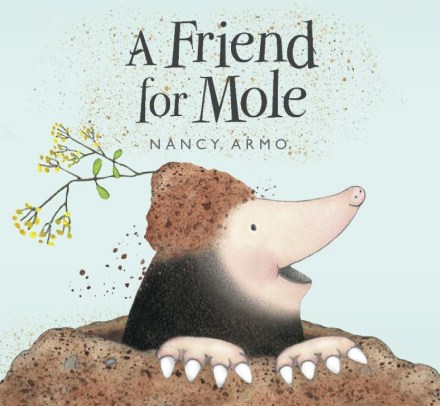
celebrate-picture-books-picture-book-review-a-friend-for-mole-cover

About the Holiday

From 6:02 a.m. to 6:02 p.m. on 10/23 chemists, scientists, students, and others who love numbers celebrate Mole Day to commemorate Avogadro’s Number, which is a basic weight measuring unit in chemistry. Defined by the equation 6.02 x 10²³, Avogadro’s number finds that for any given molecule one mole of that substance has a weight in grams equal to its atomic number. The name of this scientific constant naturally led to an association with the furry underground burrowers, and the mole and mascot moles can be found working in tandem to promote a better understanding and enjoyment of chemistry. As today’s book proves there is no better mixture than the chemistry between friends.

A Friend for Mole

By Nancy Armo

Mole loves his cozy burrow. “He liked his soft bed of leaves, the warm smell of the earth, and the quiet darkness all around.” He can imagine the world above him by all the distinct sounds he hears. But one day those sounds become louder. Instead of gentle tapping and buzzing, he hears stomping, shouting, and laughing. He decides to go up above and see what all the ruckus is about.

“The bright light, loud noises and new smells were overwhelming,” and Mole thinks it was a very bad idea to have left his burrow. He tries to find his way home, but he can no longer see the hole. In a panic he starts to run. He trips over a tree root and rolls under a bush. The soft leaves and darkness remind Mole of his burrow and soon he is fast asleep.

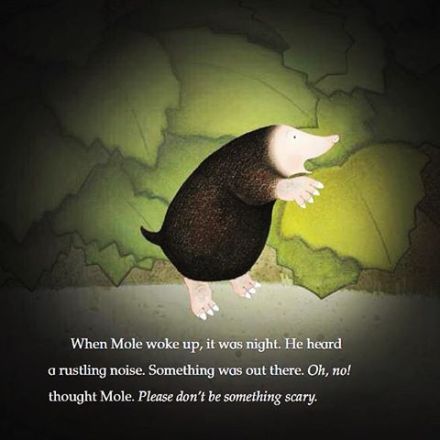
Mole wakes up during the night. He hears rustling and sees two shiny eyes staring at him. “‘Oh no!’” thinks Mole. “‘Please don’t be something scary.’” Mole closes his eyes, hoping to hide. But then he hears a small whimper. “‘Are you afraid of the dark too?’” When Mole takes a peek, he sees a wolf. “‘No,’” Mole answers. “‘I’m afraid of the light.’” Wolf tells Mole that he is lost after being chased by the other animals and that he is scared.

celebrate-picture-book-review-a-friend-for-mole-rustling-sound

Copyright Nancy Armo, courtesy of Peachtree Publshers

Mole and Wolf think about what they can do and devise a clever plan. Mole says he will stay with Wolf in the dark, and Wolf agrees to help Mole find his burrow when the sun comes up. To make the time go faster, Mole and Wolf play games, such as hunting “imaginary slithering creatures,” stomping on “pretend scampering bugs,” and “chasing away scary monsters. It was all so much fun they forgot about being lost and scared.”

As daylight breaks, Mole begins to think about home. Wolf also feels homesick. As they search for the entrance to Mole’s burrow, Wolf shields Mole’s eyes from the sun with his tail, and Mole giggles at the tickly softness of Wolf’s fur. Soon they discover Mole’s burrow, and Wolf realizes that he lives nearby. Although Mole is happy to be home, he also feels sad to say goodbye to Wolf.

He asks if Wolf would like to play again sometime. Wolf shouts, “Yes! That was so much fun! I was scared but having you there made everything okay.” As Mole settles back into his leafy bed, he knows “exactly what Wolf meant.”

In her sweet story of friendship found, Nancy Armo relates that most comforting feeling—the knowledge that friends always stand by you even when times are hard or scary. Her characters Mole and Wolf are perfectly chosen foils with opposite strengths that, combined, help solve their immediate problem and form a strong friendship. Armo’s straightforward storytelling is enriched by the endearing personalities of Mole and Wolf as well as their honest sharing of feelings.

In vivid two-page spreads Armo superbly depicts the daytime and nighttime scenes, transporting readers into the heart of her story. Above the “quiet darkness” of Mole’s burrow, cute mice scamper in the rain while an earthworm, a snail, and a bee take shelter. When his roof rings with noise and curiosity gets the better of Mole, he emerges into an open field, and his tumbling trip over the tree root is nimbly portrayed with a series of flips rendered with a filmy transparency. As nightime falls the Mole’s and Wolf’s adventure plays out on pages with a solid black background. Wolf’s eyes shining on a completely darkened page offers just the right amount of suspense for little readers, and a careful look at the expression in his eyes is reassuring. Kids will enjoy the games the two friends enjoy, and will cheer when the sun dawns on their new friendship.

A Friend for Mole is a great book for young readers navigating the world of meeting new classmates, teammates, and other children who may see the world differently but would make good friends.

Ages 3 – 7

Peachtree Publishers, 2016 | ISBN 978-1561458653

You’ll find fun A Friend for Mole activity sheets, a portfolio of artwork, and more on Nancy Armo’s website!

Mole Day Activity

celebrate-picture-books-picture-book-review-mole-mazeMole Tunnels Maze

Dig into this printable Mole Tunnels Maze that has as many twists and turns as a mole’s home!

Picture Book Review

October 20 – International Sloth Day

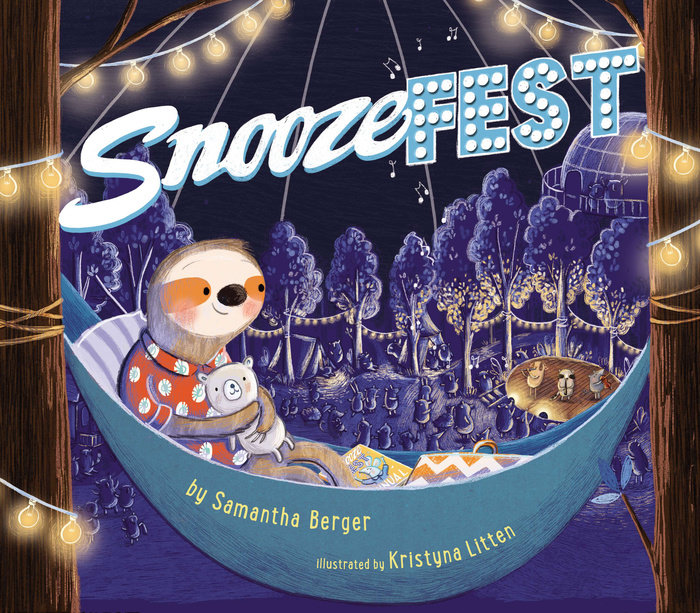
celebrate-picture-books-picture-book-review-snoozefest-cover-image

About the Holiday

The AIUNAU, a non-profit dedicated to protecting all wildlife, established International Sloth Day in 2010 to raise awareness of the dangers facing these seemingly always smiling, gentle animals. With three species already extinct, sloths need protection from power lines, cars, and those who would capture them as pets as well as from other environmental issues that decrease their habitats. While sloths may not be found in your neck of the woods, concern for all wildlife is an important part of being a global citizen.

SnoozeFest

Written by Samantha Berger | Illustrated by Kristyna Litten


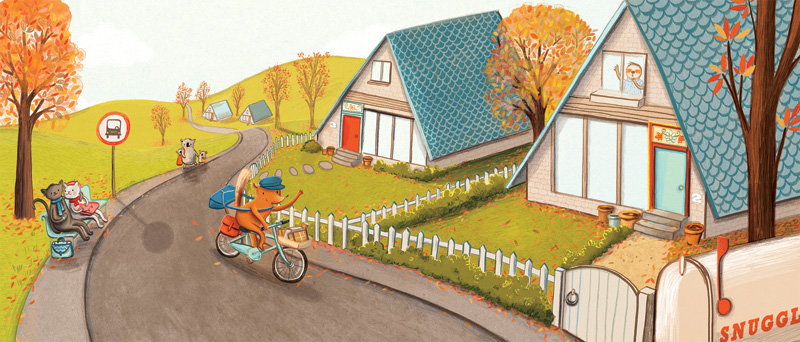
Snuggleford Cuddlebun is the sleepiest sloth in Snoozeville. “Now that sloth can sleep, for a month at a go. / The few time she rises, she moves in slo-mo.” But there is one annual event that sets her heart—and her feet—racing enough to leave her cozy bed—SnoozeFest. “This is the place where the best sleepers go to snore their way through this naptacular show.” So Snuggleford packs up her her jammies and teddy, her pillow and book and joins the other great sleepers on the bus that will take them to the NuzzleDome.

celebrate-picture-books-picture-book-review-snoozefest-snoozeville

Image copyright Kristyna Litten. courtesy of Dial Books for Young Readers, Penguin

As Snuggleford looks for the best place to camp, she sees that she’s in good company. The wildcats, wombats, koala bears, brown bats, squirrels, and armadillos are also setting up tents, laying down sleeping bags, and lounging in hammocks—which is Snuggleford’s favorite too. After finding her spot “she strolls through the stands / for posters and T-shirts / and swag from the bands.” Soon it’s time for the show to begin with the P.J. Parade, where sleepwear from such designers as Diane von FirstInBed and Louis Futon are on full display.

celebrate-picture-books-picture-book-review-snoozefest-sleeping-bags

Image copyright Kristyna Litten. courtesy of Dial Books for Young Readers, Penguin

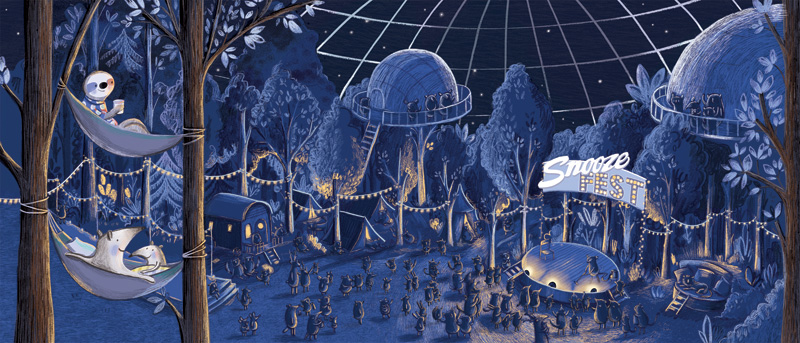
“Then all the big spotlights dim down in the Dome, / and everyone turns on their night-light from home.” The first band to perform is the “Chamomile Rage” and although the crowd is half asleep by the middle of the first song, “the snoozers yawn deeply, yet still clap for more. / The second act’s also a guaranteed snore.” Then “a poet named Burrows recites a haiku / and imitates rain with his didgeridoo.”  More acts take the stage—the Nocturnal Nesters and the Quiet Quartet, Tranquility Trio and the Drowsy Duet. Yes, “These are the best bands for deep relaxation, / followed by Sweet Dreams and Deep Hiber-Nation.”

For Snuggleford Cuddlebun the concert is all she could want. In fact, “Several days later the SnoozeFest is done. / And who’s still asleep? Why it’s Miss Cuddlebun.” She folds up her things, tosses away her trash, and rides the bus back home. There she climbs into bed and shuts her eyes and dreams of next year’s SnoozeFest.

celebrate-picture-books-picture-book-review-snoozefest-nighttime

Image copyright Kristyna Litten. courtesy of Dial Books for Young Readers, Penguin

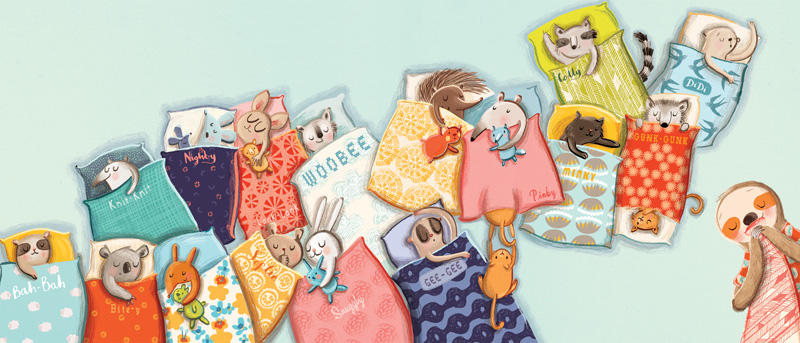
Samantha Berger’s SnoozeFest is one of the cutest, most original bedtime books around. With wit and charm Berger makes full use of the festival setting and experience. Her inspired rhymes, adorable band names, and atmosphere that combines just the right amount of excitement and slumber-inducing lilt, will delight kids of all ages and adults as well. From Snoozeville to the NuzzleDome to a full verse of blanket nicknames, Berger has come up with the “wumphiest, coziest, comfiest” words to send little ones off to dreamland.

celebrate-picture-books-picture-book-review-snoozefest-sleeping-suggleford

Image copyright Kristyna Litten. courtesy of Dial Books for Young Readers, Penguin

Krisyna Litten’s illustrations, designed with a vintage-yet-modern air and color palette, are the perfect accompaniment to Berger’s story. Anyone would love to join Litten’s sweet Snuggleford and the other “great sleepers” at SnoozeFest. Snuggleford’s endearing slothy smile as well as the joyful camaraderie of the other festival goers invite kids to explore every page. The crowd consists of loveable moles, koalas, raccoons, bears, foxes, porcupines, and more adult and baby animals enjoying the show.  Two-page spreads of the darkened festival grounds lit by nightlights and starlight are gorgeous, peaceful landscapes of blues and gold that set a sleepy tone for little readers.

SnoozeFest would be a very welcome addition to any child’s bookshelf for story times and bed times, and would make a perfect gift.

Ages 3 – 7

Dial Books for Young Readers, Penguin, 2015 | ISBN 978-0803740464

You’ll have plenty of fun discovering lots of books, videos, and more creative stuff by Samantha Berger on her website!

You can catch up with Krisyna Litten on her blog!

You won’t want to snooze through this book trailer!

International Sloth Day Activity

celebrate-picture-books-picture-book-review-sloth-coloring-page

Sweet Sloth Coloring Page


Sloths are sweet, gentle animals who love to hang out. Give the little one in this printable Sweet Sloth Activity Page a colorful world and put it up in your room!

You can find Snoozefest at these booksellers

Amazon | Barnes & Noble | IndieBound

Picture Book Review

October 19 – Global Dignity Day

celebrate-picture-books-picture-book-review-wherever-you-go-cover-image

About the Holiday

Established in 2008, Global Dignity Day aspires to inspire and educate young people to understand their self-worth and achieve their goals. Events take place in schools in the Americas, Europe, Asia, the Middle East, Africa, and Oceania. On this day speakers from all walks of life speak to children, revealing experiences from their life and work as it relates to dignity and a sense of self-respect, accomplishment, and interconnectedness.

Students then talk among themselves about what dignity means to them, and many speak their thoughts in front of the class. Following this they write letters to themselves outlining their feelings and aspirations. The letters are collected and handed back to them on the next Global Dignity Day so each child can assess how their life has changed and whether they have achieved their goals or are working toward them.

Today take some time to measure your own sense of dignity and to set goals. Discuss the issue with your child or children and make sure they know that whatever road they choose, they deserve dignity and the opportunities to achieve their full potential.

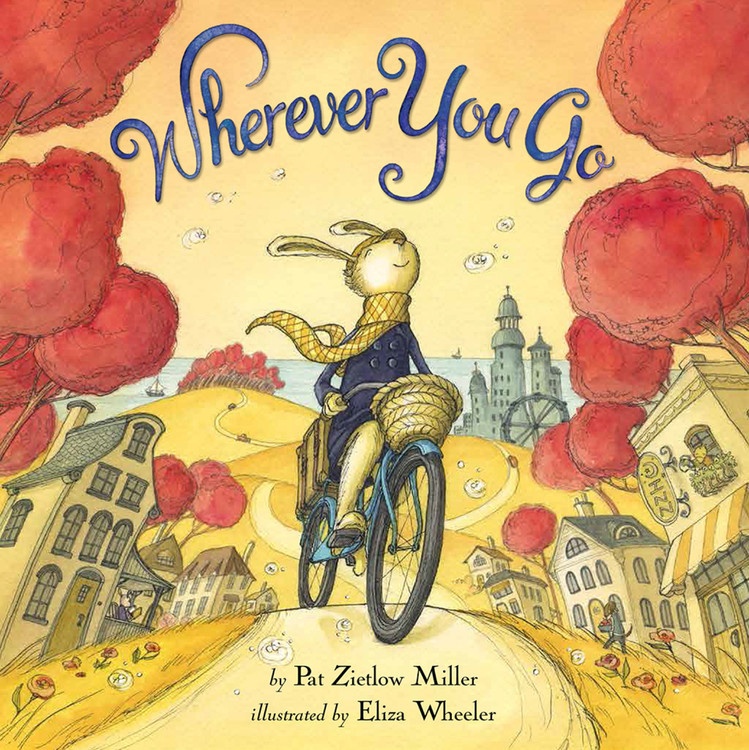
Wherever You Go

Written by Pat Zietlow Miller | Illustrated by Eliza Wheeler


“When it’s time for a journey, to learn and to grow, / roads guide your footsteps wherever you go. / Roads give you chances to seek and explore. / Want an adventure? / Just open your door.”

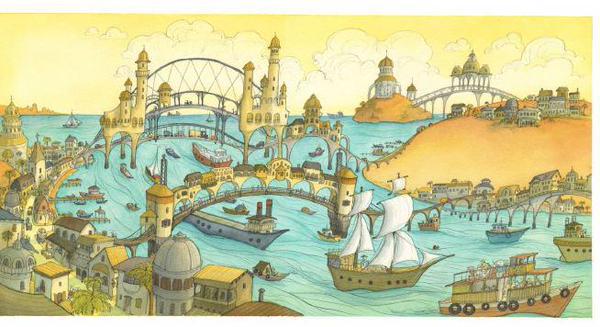
So opens this lovely, inspirational picture book that looks at life through the metaphor of those sometimes straightforward, sometime winding, but always intriguing roads. In these pages “Roads…go” over hills, under bridges, and through valleys. They can take you past vast seas and small streams. “Roads…zoom” through brightly lit cities, and “bend,” taking you on detours “you wouldn’t expect, / showing you various ways to connect.”

Roads can bring you closer to your dreams, but also veer away, giving you choices “To go? / Or to stay?” “Roads…reach” from shore to shore or mountain to mountain, “attaching two places that once were apart.” You can “choose to cross over. Follow your heart.” Some roads are small—only built with one lane, but they merge with another “and the two become one.”

celebrate-picture-books-picture-book-review-wherever-you-go-roads-reach

Image copyright Eliza Wheeler, courtesy of hachettebookgroup.com

With time and change “Roads…grow,” becoming longer and wider and more populated with people you know and those you don’t—yet. Often “Roads…wait. For click-clacking trains / and boats with tall sails. / Slow-going hay wagons carrying bales. / Stoplights and crosswalks, a deer with a friend. / Roads sometimes pause, or just come to an end.”

Roads also rise to dizzying heights and the sense of accomplishment is well worth the climb. From on top “Roads…remember. Every life landmark, the big and the small. / The moments you tripped, the times you stood tall.” At last when you’re ready there are roads that will help you find your way home. So… “Which path should you choose? / That’s easy to see. / The one that will take you / where you wish to be.”

Pat Zietlow Miller’s lyrical journey down the paths life presents is an enchanting quiet-time and story-time read. Wherever You Go also offers parents, caregivers, and teachers a wonderful opportunity to discuss the concepts of self-confidence and self-respect and also the idea that life is made up of many different experiences that can be accepted or rejected like alternate routes on a map. Miller’s rhymes flow as smoothly as an wide open country road, soaring and winding on her exquisite descriptions and word choice. Adult readers may well find a catch in their throat as they read the last line to their children.

Eliza Wheeler captures not only the literal meanings of the lines in Wherever You Go, but also the heart and thoughts of life’s travels. Her softly hued watercolor-and-ink illustrations glow with the promise and possibilities encountered on life’s roads. Intricate details fill every page to show readers that their journeys are shared. Children will enjoy following the main character, a rabbit who rides a bike along a chosen path, but they will also love keeping track of traveling companions met along the way.

Wherever You Go is a fabulous book for all children and makes a wonderful gift for baby showers, new babies, and graduations. The gender-neutral text offers inclusiveness for all.

Ages 4 – 9 (and up)

Little Brown and Company, 2015 | ISBN 978-0316400022

Discover more about Pat Zietlow Miller, her books, and her writing life on her website!

View a portfolio of artwork and a gallery of books by Eliza Wheeler on her website!

Before taking off on your journey, watch this Wherever You Go book trailer!

 Global Dignity Day Activity

celebrate-picture-books-picture-book-review-heart-shaped-letter-template

I Love Myself! Heart-Shaped Letter Tempate


Before you start life’s journey and while you travel the roads you choose, it’s important to believe and remember that you are unique, wonderful, talented, and valuable. Children and adults can use this printable heart-shaped I Love Myself! Letter Template to write a letter to themselves or their children about what makes them such a fantastic person and the goals they want to achieve.

Picture Book Review

October 18 – It’s Squirrel Awareness Month

celebrate-picture-books-picture-book-review-those-darn-squirrels-fly-south-cover-image

About the Holiday

Squirrels elicit emotions on both sides of the spectrum. On one hand you can’t help but say “Awww!” when you see their tiny little paws and crafty antics. On the other hand their voracious appetites at bird feeders and penchant for darting into traffic is more likely to make you say “Arrgghhh!” This month is set aside, however, for enjoying the squirrels in your yard, park, or city. And really, don’t they make life just a little more fun?

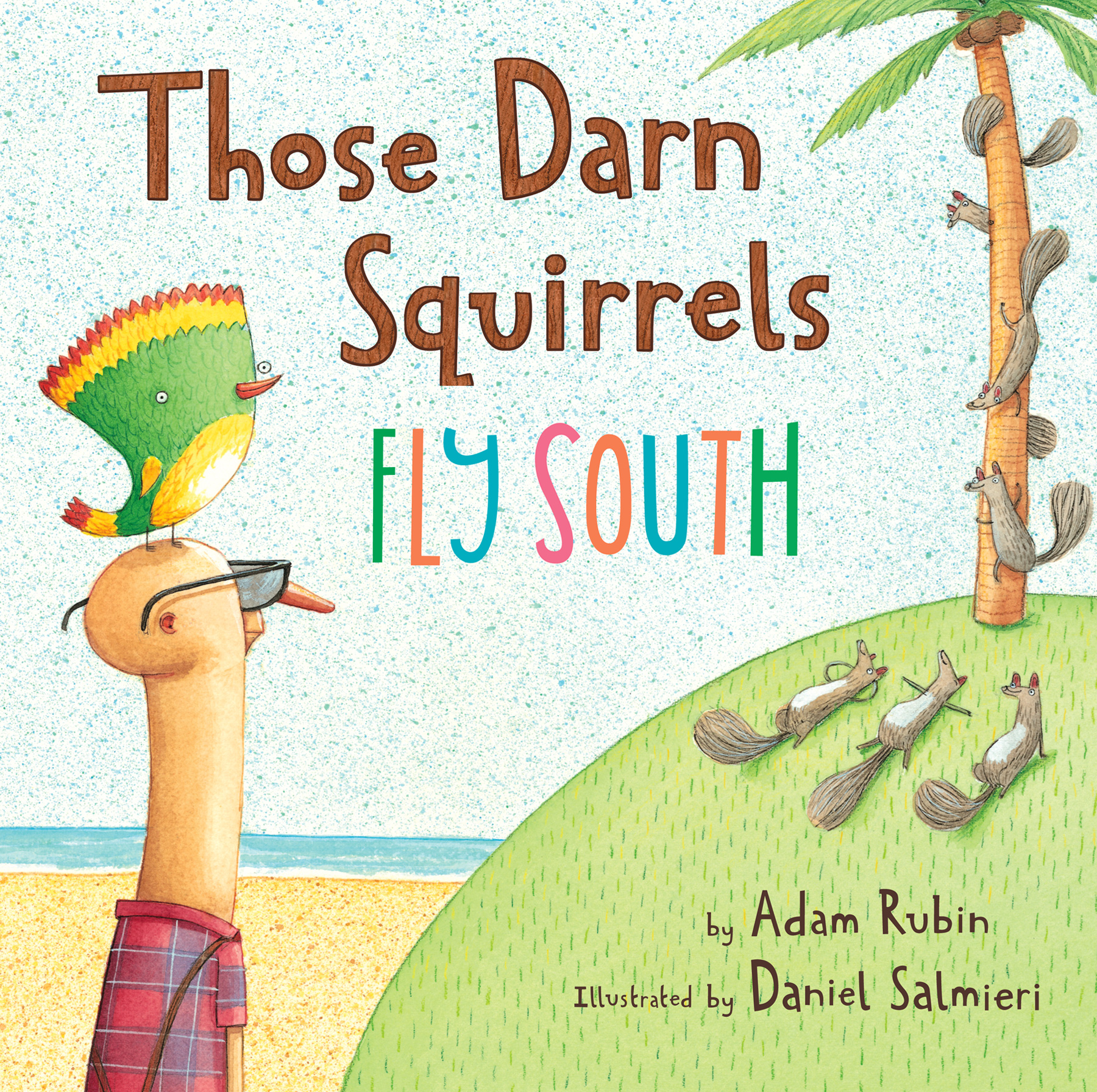
Those Darn Squirrels Fly South

Written by Adam Rubin | Illustrated by Daniel Salmieri


Everyone knows Mr. Fookwire is a grump whose grumpiness knows no bounds. “He scolded fireflies for being too bright…yelled at clouds for being too fluffy…and pinched his nose with a clothespin” so he doesn’t have to smell the lilacs. Despite these annoyances, though, he had a wonderful summer painting pictures of the birds in his yard even though “those darn squirrels” had set up an easel of their own nearby.

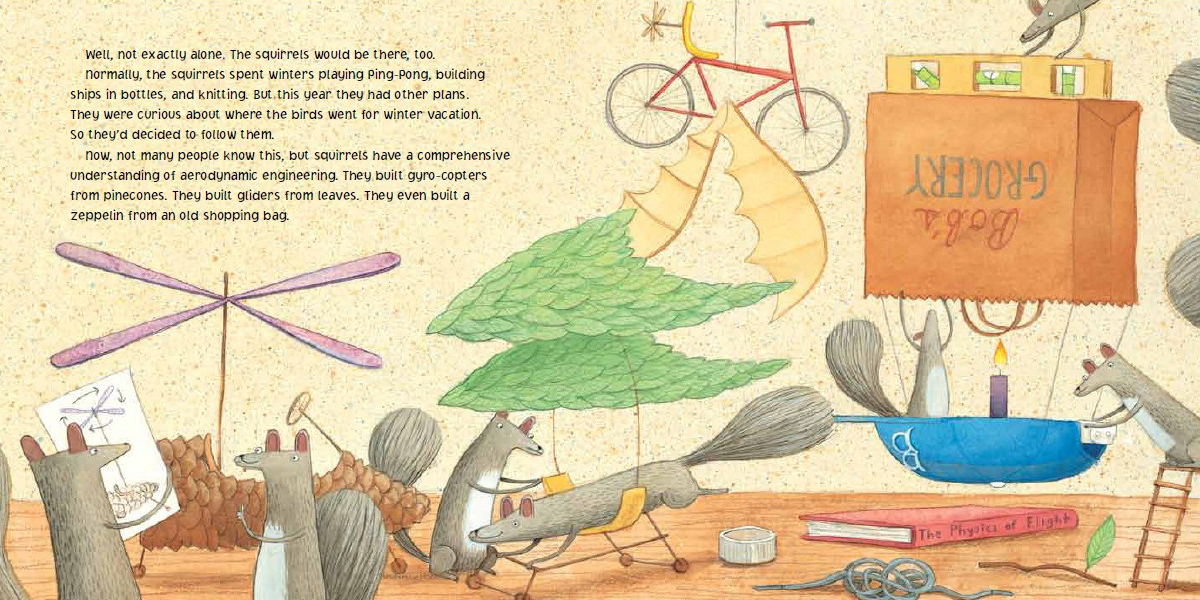
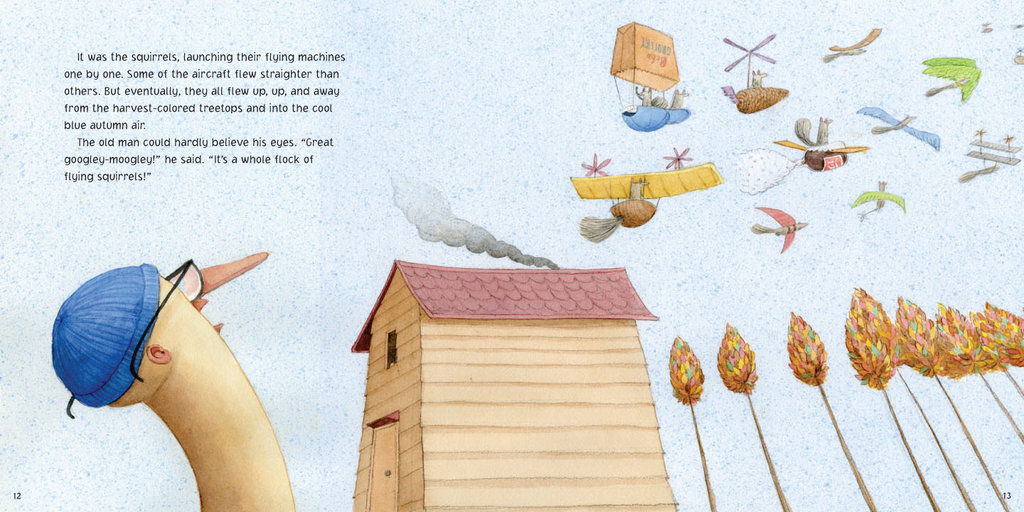
But now fall was here and that meant that all of Mr. Fookwire’s beloved birds would soon be flying south leaving him with only the squirrels for company. While the squirrels usually spent the winter months “playing ping pong, building ships in bottles, and knitting, this winter they had decided to follow the birds to warmer climes. With their expert knowledge in aerodynamic engineering, the squirrels had “built gyro-copters from pinecones…gliders from leaves…and even a zeppelin from an old shopping bag.”

celebrate-picture-books-picture-book-review-those-darn-squirrels-fly-south-squirrels-build-flying-macihines

Image copyright Daniel Salmieri, text copyright Adam Rubin. Courtesy of hmhbookscom

When the day came for the birds to take wing, Mr. Fookwire sadly waved goodbye. Just as he was about to return to the house, he heard a strange rustling, then a whir, and finally a buzz. It was the squirrels soaring away in their homemade aircraft. “‘Great googley-moogley’” Mr. Fookwire exclaimed.

The squirrels followed the birds for days until they landed on a beach. To celebrate the end of their journey and the welcome warmth, the squirrels held a fiesta, complete with mangoes, the marimba, and the merengue. Winter was wonderful here where there were new foods to eat and new birds to discover. One with a long neck, rings around its eyes, and red and blue feathers even looked a little familiar and left the squirrels feeling homesick. They decided to make a long-distance phone call, and chattered away to Mr. Fookwire.

Although he wouldn’t admit it, Mr. Fookwire was happy to receive the call. He decided to pack up his easels, paints, brushes, and cottage cheese with pepper and hit the road in his beautiful vintage car. Driving 12 miles an hour, Mr. Fookwire at last reached the beach, where the squirrels swarmed him in a big hug. “Maybe it was the nice weather. Maybe it was the beautiful scenery, Maybe it was the squirrels dancing in his pants. But for the first time in a very long time, the old man laughed.”

celebrate-picture-books-picture-book-review-those-darn-squirrels-fly-south-squirrels-fly-south

Image copyright Daniel Salmieri, text copyright Adam Rubin. Courtesy of hmhbookscom

Mr. Fookwire was delighted with the local birds and immediately began to paint them. “‘The birds here are even more amazing than the birds back home!’ he exclaimed. ‘Harrumph!’ muttered the floogle bird.” The hot sun took its toll on Mr. Fookwire, however, and he collapsed right into the middle of his painting. The squirrels dragged him into the shade and revived him. Maybe spending the winter at home was better. Mr. Fookwire decided to head back, and the squirrels accompanied him. They didn’t want to miss “the annual snow-fort building competition.”

They all jumped into the car and sped off. Really! After all, Mr. Fookwire was in no condition to drive.

Adam Rubin’s Those Darn Squirrels Fly South contains all the charm and squirrely shenanigans that make the other two books in the series such a hit with kids (and adults). Rubin’s snappy descriptions, silly scenarios, and loveably cantankerous protagonist make for a hilarious story time read that will delight his fans and captivate new readers.

Daniel Salmieri knows how to make kids giggle and laugh out loud with colorful illustrations that perfectly depict Mr. Fookwire’s world—both at home and away. Mr. Fookwire’s noodly arms, giraffe-long neck, and carrot-shaped nose coalesce into a character that is at once funny and endearing. Getting more beak time in this third outing, the familiar birds are joined by a crew of even more brilliant and exotic beach mates. The squirrels are up to their usual contraption-making tricks as they build flying machines from soda bottles, flashlights, baseball caps, and more around-the-house items. The squirrels know how to live wherever they are, and Salmieri’s depictions of them holding a fiesta, hugging Mr. Fookwire, and roaring down the highway is absurdity for the younger set at its best.

Ages 4 – 7

Houghton Mifflin Harcourt, 2012 | ISBN 978-0544555457

You can find out more about Adam Rubin, his books, and his dry sense of humor on his website!

View a gallery of illustration work and more books by Daniel Salmieri on his website!

Go nuts watching this Those Darn Squirrels Fly South book trailer!

Squirrel Awareness Month Activity

celebrate-picture-books-picture-book-review-squirrel-dot-to-dot

Celebrate Squirrels! Dot-to-Dot


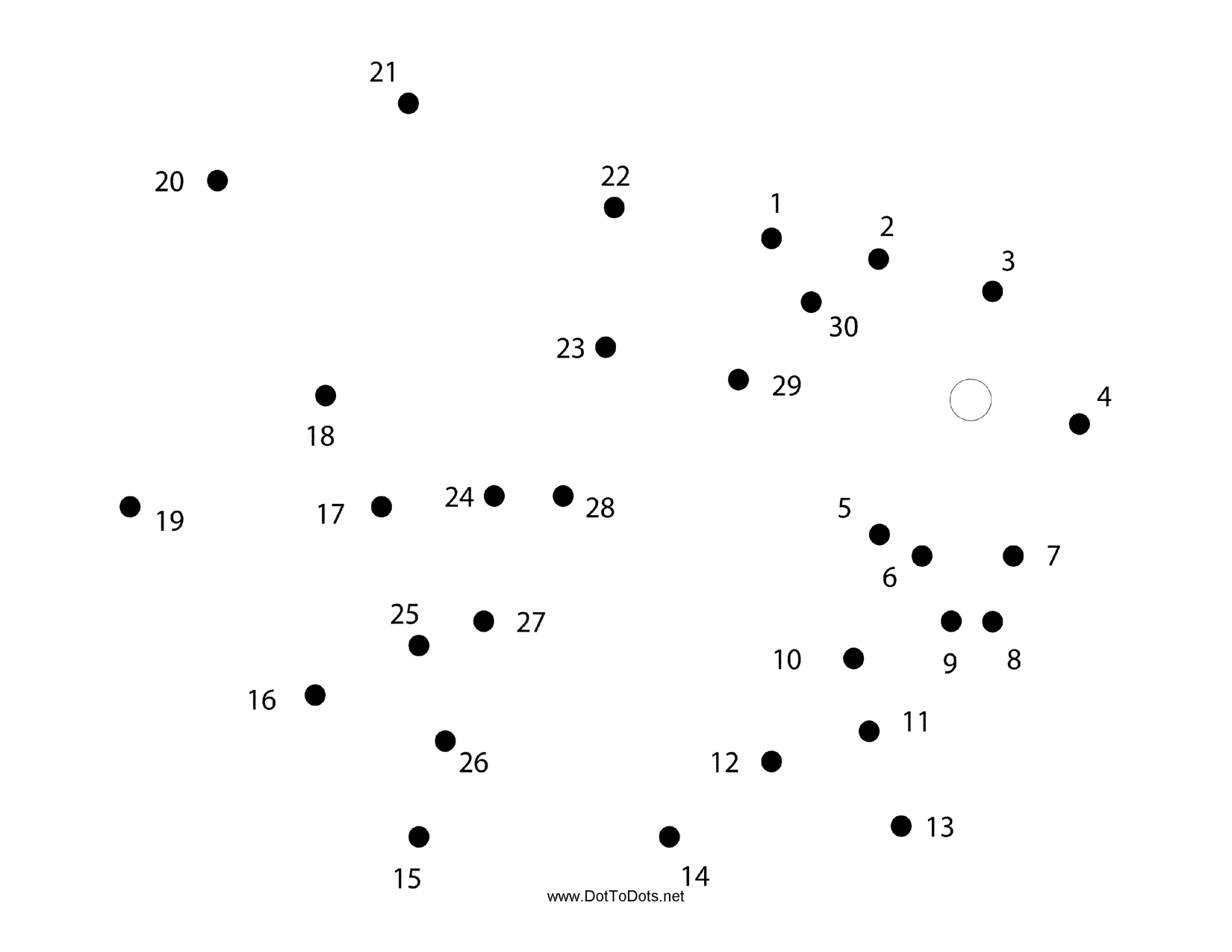
Enjoy following the dots to finish this printable Celebrate Squirrels! activity sheet and then color it in!

Picture Book Review

October 17 – Boss’s Day

celebrate-picture-books-picture-book-review-the-boss-baby-marla-frazee-cover-image

About the Holiday

Today’s holiday was established in 1958 by Patricia Bays Haroski, a secretary at State Farm Insurance. Typically held on October 16 unless that day falls on a weekend, the date honored her father’s birthday—a nice little present in a couple of ways as Patricia’s father was also her boss and the day was his birthday. By 1979 the observance had grown to greeting card status. The day gives employees an opportunity to appreciate the dedication of their bosses and allows bosses to foster a cohesive and equitable work environment.

The Boss Baby

By Marla Frazee


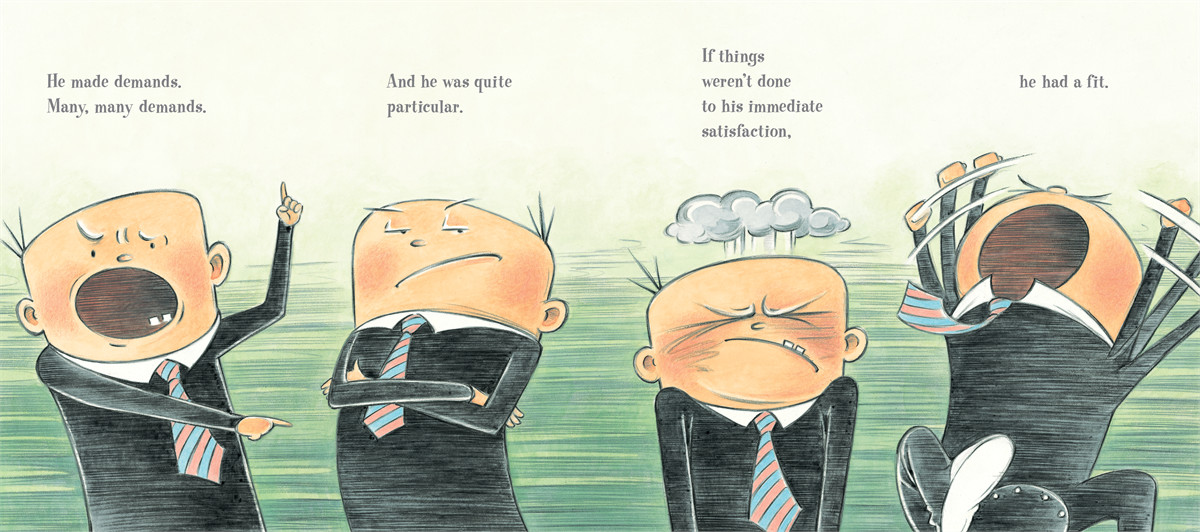
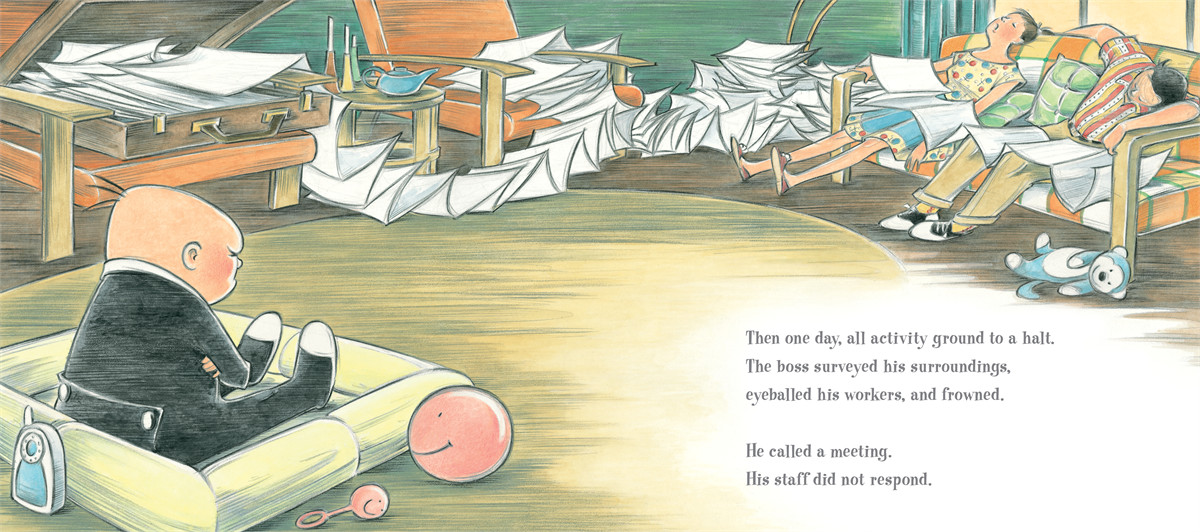
“From the moment the baby arrived, it was obvious he was the boss.” He was relentless—putting Mom and Dad on the clock 24/7. His office was right in the center of everything, the better to give his directives; he was a tyrant, making “many, many demands; and he was quite particular. If things weren’t done to his immediate satisfaction, he had a fit.”

celebrate-picture-books-picture-book-review-the-boss-baby-marla-frazee-throwing-a-tantrum

Image and text copyright Marla Frazee, courtesy of simonandschuster.com

Of course there were meetings, and lots of them—all during the day and especially at night. “The funky thing was, he never, ever said a single word that made any sense at all.” Still, his “employees” gave him lots of “perks.” But one day all work stopped cold. The boss called a meeting. He yelled louder, shouted, and wailed. There was no response. Finally, the boss decided to try a new tactic.

He left his circle of influence and actually asked for his workers by name. “Ma-ma? Da-da?” His employees came running, all smiles and attention. “For the first time since his arrival the boss baby was pleased.” He knew better, though, than to let this moment go to his workers’ heads. “There was still a business to run here. And make no mistake…he was the boss of it.”

celebrate-picture-books-picture-book-review-the-boss-baby-marla-frazee-sleeping-parents

Image and text copyright Marla Frazee, courtesy of simonandschuster.com

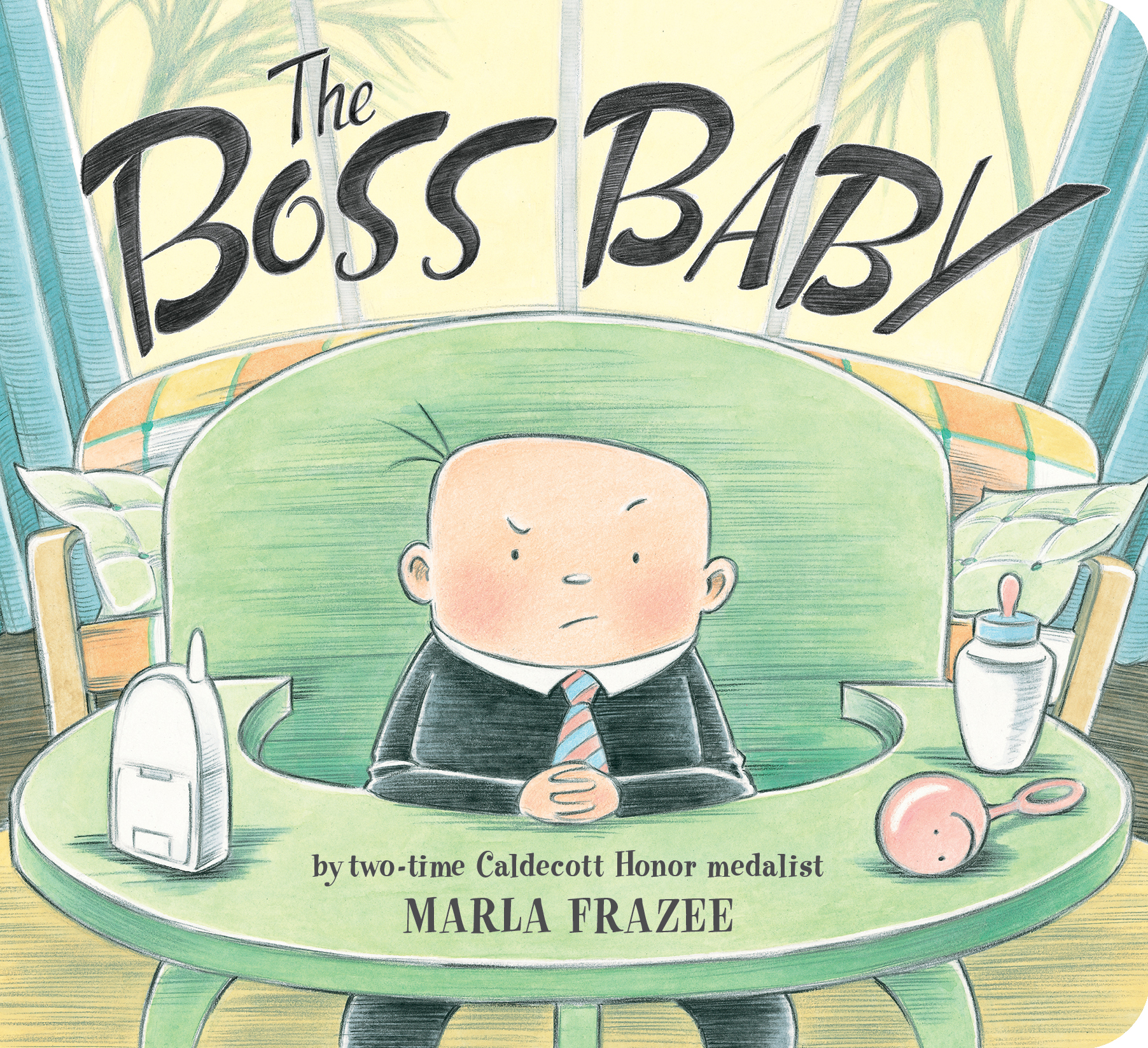
From the very first page when the determined baby in his business suit sleeper marches up the front walk with his oversized briefcase, Marla Frazee’s The Boss Baby is laugh-out-loud funny. The metaphor rings hilariously true in every detail, from the frequent tantrums and cries for meetings to the physical trappings of babyhood that directly correlate to executive benefits in Frazee’s inspired illustrations.

Anyone who is currently carrying or has ever carted around a diaper bag three times the size of their baby will immediately recognize the briefcase from which issues a ream of demands, and the baby’s toys are, well…executive toys too. Of course, the star of the show is the baby himself, and Frazee’s baby with his bald head, furrowed brow, and impatient posture is the epitome of the demanding boss. Parents and caregivers will recognize his overworked “employees” in the mirror, and while they smile at the sweet “first,” know that these moments are sometimes fleeting.

The Boss Baby is one of the funniest books I’ve read and would make an empathetic hug of a present for new parents as well as a wonderful addition for kids’ bookshelves for those times when Mom and/or Dad and child want to share a laugh. Look for Marla Frazee’s The Bossier Baby in bookstores on November 1!

Ages 2 and up

Simon & Schuster, 2010 (hardcover); 2013 (board book); 2016 (paperback) | ISBN 978-1481469814 (paperback)

Discover more books by Marla Frazee, plus videos, podcasts, artwork and more on her website!

Boss’s Day Activity

celebrate-picture-books-picture-book-review-archaeologist-coloring-page

Future Bosses Coloring Pages


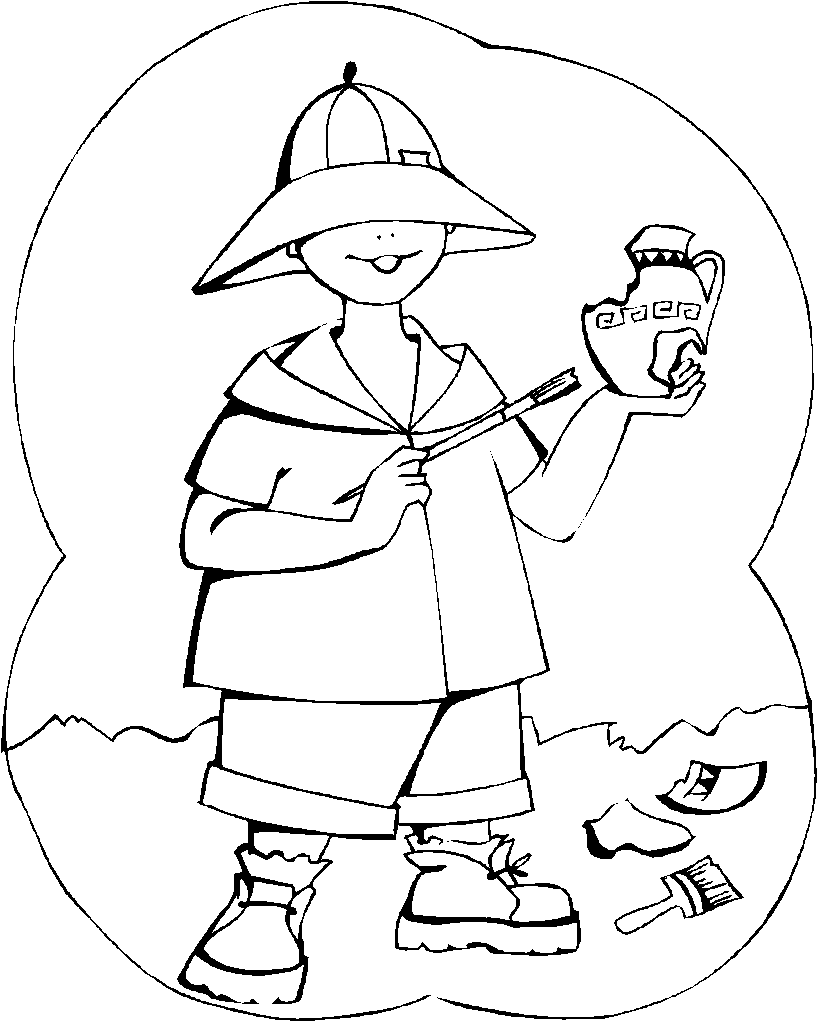
Many of today’s children will be bosses themselves in the future. These two printable Future Bosses coloring pages show just two of the interesting and challenging careers that kids may pursue.

Archeologist Coloring Page

Veterinarian Coloring Page

Picture Book Review

October 15 -Bridge Day

celebrate-picture-books-picture-book-review-this-bridge-will-not-be-gray-cover

About the Holiday

Today’s holiday hosts the largest formalized jumping event in the world and celebrates BASE jumpers, those intrepid souls who test their mettle against the highest points, including buildings, antennas, cliffs, and bridges. Recognized since 1980 Bridge Day is a world-wide event, and while it may not officially be about the bridges, it brings attention to these beautiful architectural marvels while extreme sports aficionados and their fans gather on spans across the globe to have fun.

This Bridge Will Not Be Gray

Written by Dave Eggers | Illustrated by Tucker Nichols


“In the beginning there was a bridge.” Well, to back up a bit there was a bay that led to the Pacific Ocean. The opening between the two shores that enclosed the bay was called the Golden Gate. “On one side of the Golden Gate was the Presidio, a military base at the top of the city of San Francisco. On the other side there were only hills, green and yellow, rising high above the sea.” Beyond these hills towns dotted the coastline.

People traveled between these shores by boat or by driving way out of their way. Many times people had thought about building a bridge across the bay, but they were afraid it would ruin the beauty of the land. At last it was decided that a bridge should be built. The year was 1928 and Joseph Strauss, an expert on bridges, was hired to design it. What he came up with looked more like the skeleton of a roller coaster, and while it would be strong, it would also be ugly.

celebrate-picture-books-picture-book-review-this-bridge-will-not-be-gray-people

Image copyright Tucker Nichols, courtesy of mcsweeneys.net

People agreed that for such a beautiful spot, a beautiful bridge was needed. Joseph Strauss then asked for help in developing a plan for the bridge. Leon Moisseiff, known for designing the Manhattan Bridge in New York, came on board. Leon’s idea was for “a suspension bridge, one with swooping lines and tall towers.” The drawings were light and airy and…beautiful. People liked it very much.

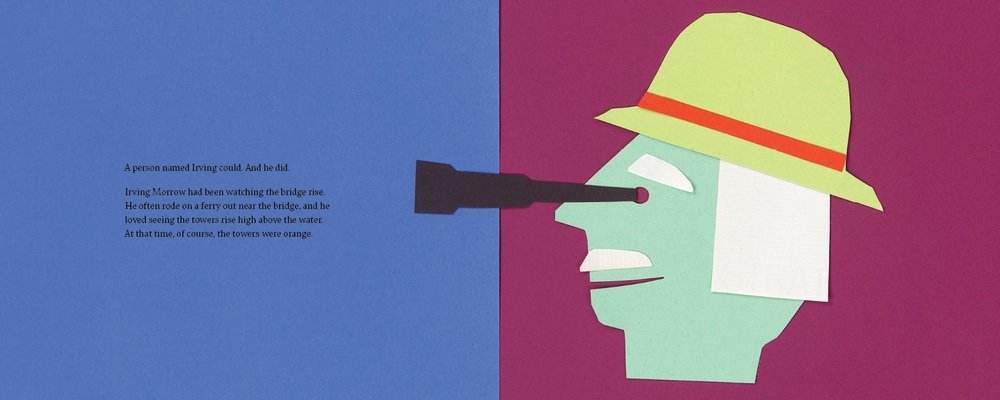
“But still the bridge appeared a bit stern in style. So Joseph and Leon asked another person, named Irving Morrow, to help out.” Irving and his wife Gertrude had a different idea about what the bridge could be. With vertical fluting, “art deco flourishes,” pedestrian walkways, and curved lamps lighting the way, “the bridge could be both a bridge and something like art.”

Steelworkers in Maryland, Pennsylvania, and New Jersey built the pieces of the bridge. They were shipped to California by train and by boat. Finally, it was time to construct the bridge. Men had to dive deep into the icy waters of the Pacific Ocean and climb high into the sky while constructing it. It was estimated that it would take 4 years and thousands of workers to finish it.

celebrate-picture-books-picture-book-review-this-bridge-will-not-be-gray-irving-morrow

Image copyright Tucker Nichols, courtesy of mcsweeneys.net

First the tall towers were constructed. The day they were finished was one of “jubilation” and awe as“sometimes the things humans make baffle even the humans who make them. One aspect of the bridge that had not been decided was the color, and many people had opinions on that. “The Navy thought it should be yellow and black so that ships and planes could easily see it.”

“The Army wanted it to look like a candy cane for the same reason the Navy wanted it to look like a tiger with jaundice: so that it would be easily seen by planes and ships.” Most people, though, thought the bridge should be painted black, white, or gray like most other monuments, towers, and buildings. Right now, the bridge was orange—coated with a special anti-rust paint. As Irving Morrow watched the bridge go up, he thought this orange was a beautiful color.

He suggested that the bridge be allowed to stay this color. Others thought he was “nuts.” Never had there been an orange bridge before, “and for a good portion of the human race, because something has not already been, that is a good reason to fear it coming to be.” But the people of San Francisco began to see things Irving’s way. Still, gray seemed to be the safe choice.

celebrate-picture-books-picture-book-review-this-bridge-will-not-be-gray-people-talking

Image copyright Tucker Nichols, courtesy of mcsweeneys.net

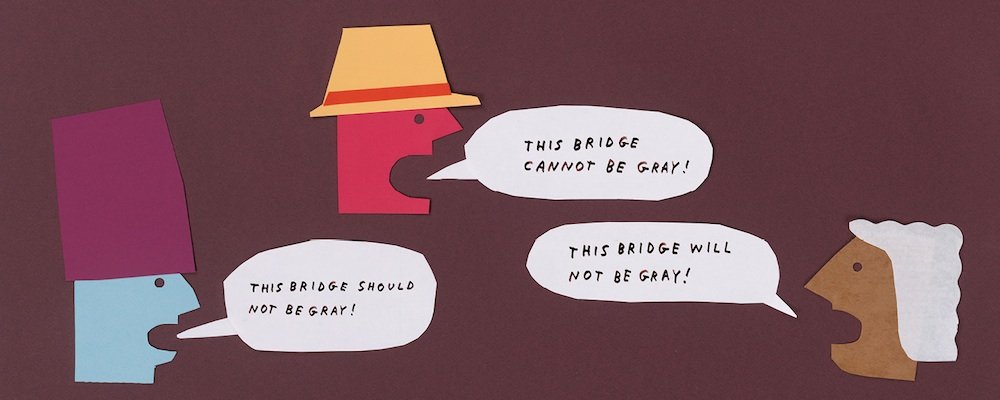
Irving, who was usually a shy and quiet sort, began to get vocal about his color preference as the completion date of the bridge came closer. Other’s began to echo his thoughts and arguments. “This bridge will not be gray!” they said. At last “the powers that be” agreed with Irving. The bridge remained orange: International Orange, in fact.

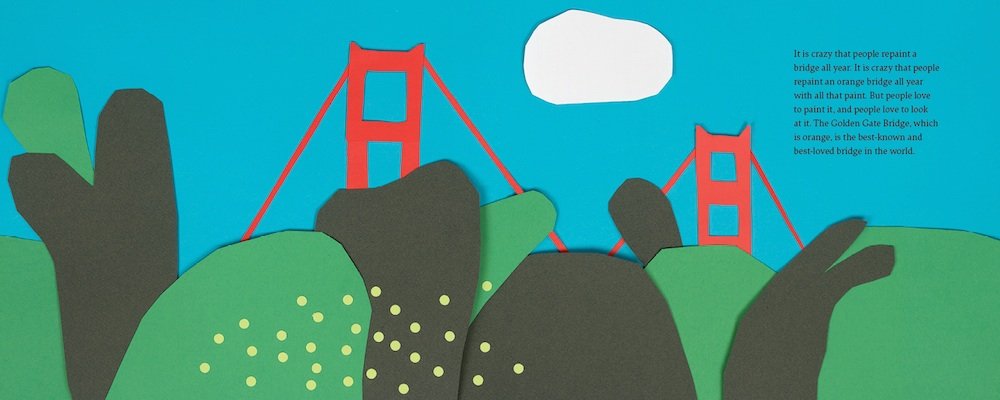
But because the wind, rain, and sun are harsh on the orange bridge, it needs to be repainted every year. Every day some part of it is being painted by dedicated workers. Is that crazy? Maybe, “But people love to paint it, and people love to look at it. The Golden Gate Bridge, which is orange, is the best-known and best-loved bridge in the world” because it is “bold and courageous and unusual and even strange.”

celebrate-picture-books-picture-book-review-this-bridge-will-not-be-gray-golden-gate-bridge

Image copyright Tucker Nichols, courtesy of mcsweeneys.net

San Francisco resident Dave Eggers has written a loving tribute not only about the very distinctive Golden Gate Bridge but to the equally distinctive, quirky, and even courageous Irving Morrow, other architects, and people of the Bay area who saw and championed art where others may only have seen function. Passages of straightforward narration are joined by rivets of whimsically inserted dialogue, soaring description, and moving insight to construct a lyrical story of vision and inspiration that both kids and adults will find fascinating.  

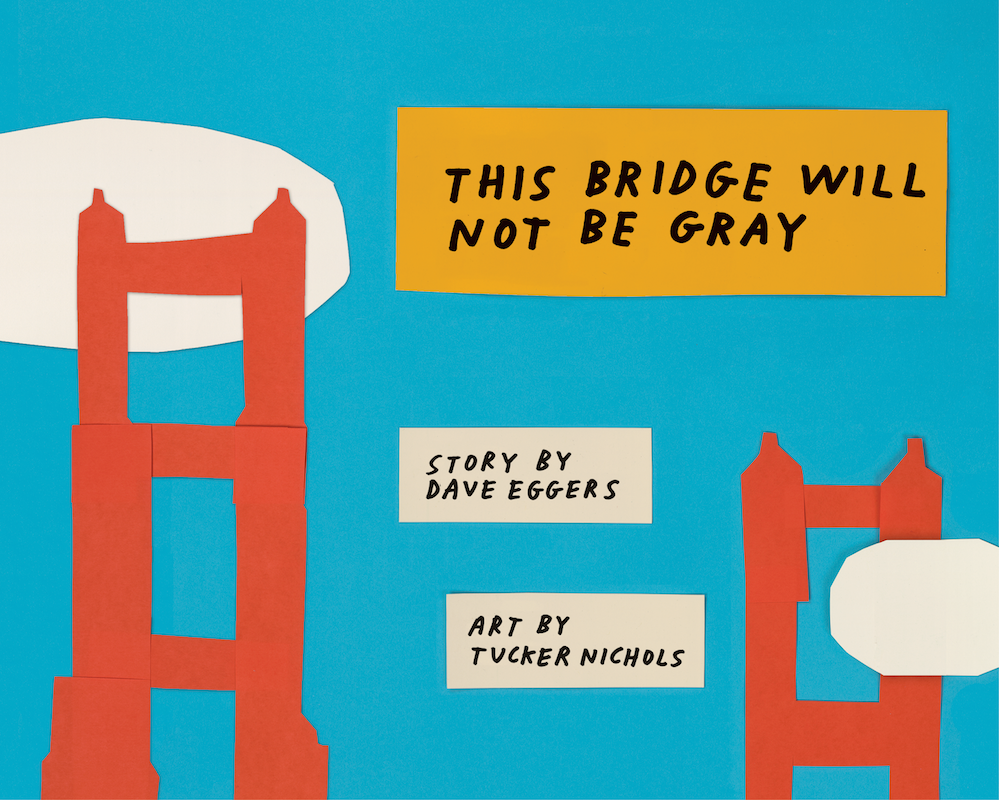
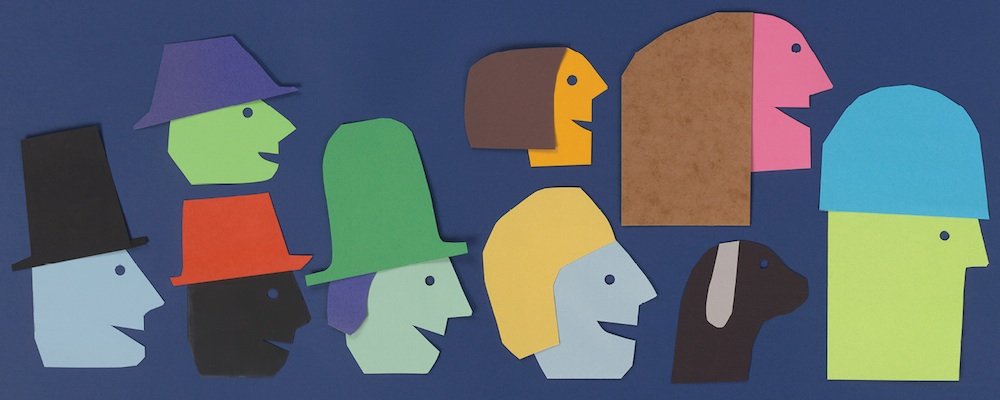
Tucker Nichols’ paper cut illustrations are as playful and full of imagination as a kindergarten classroom. Using simple shapes and a gorgeous palette Nichols crafts portraits, collages, and landscapes that are movingly effective in depicting the San Francisco Bay area, the rising Golden Gate Bridge, and the personalities involved in this fun history of a beloved monument.

This Bridge Will Not Be Gray is a must for school and public libraries, a wonderfully inspiring addition to children’s bookshelves, and a colorful coffee table book for any home.

Ages 4 – 10 and up

McSweeney’s, 2015 | ISBN 978-1940450476

Click here to learn more about Tucker Nichols and his work.

Bridge Day Activity

celebrate-picture-books-picture-book-review-golden-gate-bridge-coloring-page

Golden Gate Bridge Coloring Page


Get out your markers, colored pencils, or crayons and color this printable Golden Gate Bridge Coloring Page!

Picture Book Review

October 14 – World Egg Day

celebrate-picture-books-picture-book-review-what's-up-with-this-chicken-cover

About the Holiday

Marking its 21st birthday, World Egg Day celebrates the health benefits of the humble egg—which offers the highest quality of protein available. An important dietary component for fulfilling the nutritional requirements of people living in both developed and developing communities, the egg is a versatile food, able to be eaten on its own or as a necessary ingredient in many recipes. Eggs are essential for fetal development, healthy brain development, maintaining concentration, aiding the immune system, and more. Today, enjoy eggs your favorite way!

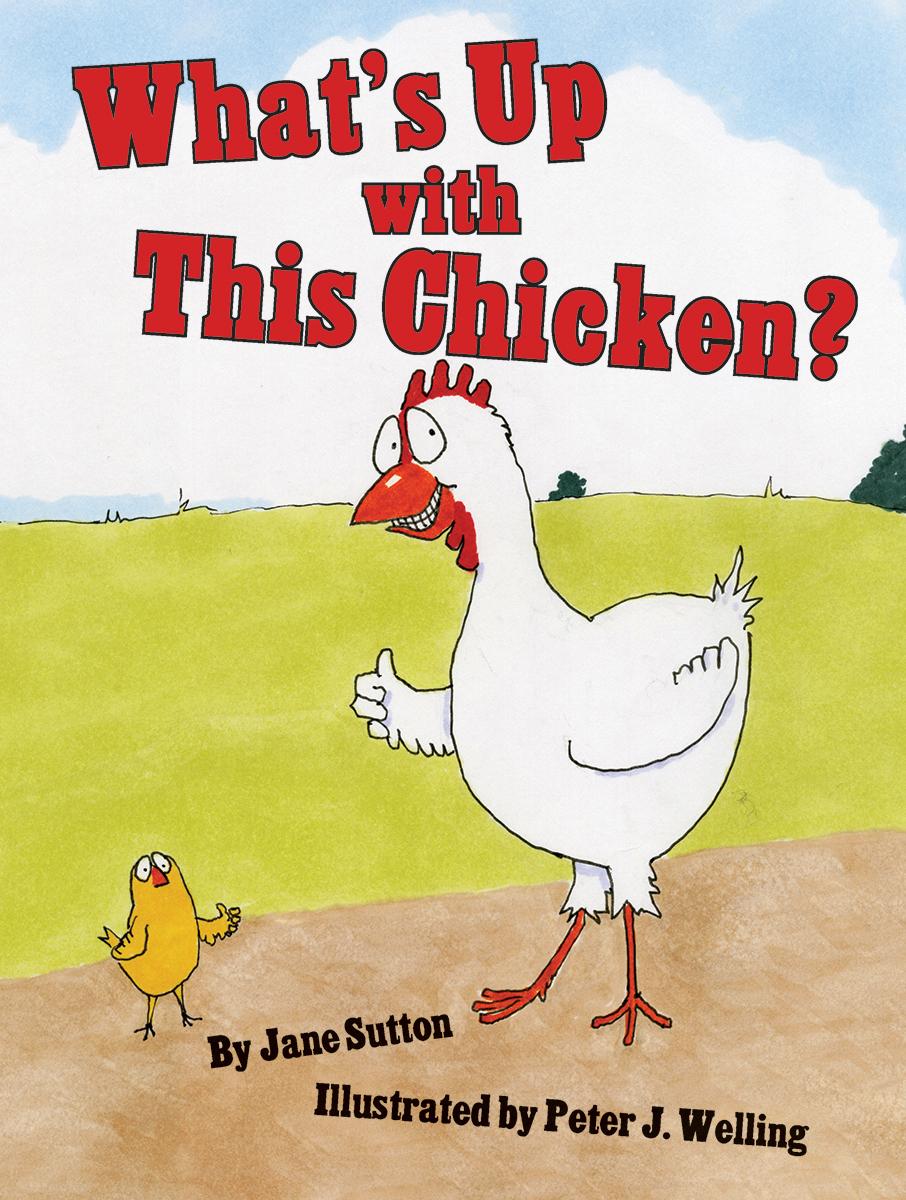
What’s Up with This Chicken?

Written by Jane Sutton | Illustrated by Peter J. Welling


When Sylvia goes out to the barn to collect the chicken’s eggs, something’s up with Trudy. She squawks and screeches when Sylvia tries to reach under her, but Sylvia takes it in stride and with humor: “‘Don’t get so egg-cited!’” she says “‘I’ll get your egg tomorrow.’” But the next day Sylvia is met with the same reaction. Trudy isn’t acting like the other chickens in Grandma’s backyard; if fact, she isn’t even acting like Trudy! “‘What’s up with this chicken?’” Sylvia wonders.

While she and Grandma enjoy “omelets with eggs from Sue, Clara, Doris, and Olga,” Sylvia tells her about “stubborn Trudy.” Grandma doesn’t know what’s wrong either. The next morning Trudy is even more obstinate. Not only does she make a racket, she tries to peck Sylvia, and she puffs “herself up to twice her size.” Sylvia also notices “that Trudy left her roost just once a day to eat, drink, and poop. She was getting skinny.”

Sylvia decides Trudy must be hungry and tries to lure her off her nest by offering chicken feed, but while all the other hens “wolfed it down like chocolate,” Trudy remains firmly on her roost. Sylvia tries everything she can think of to move Trudy, but nothing works. That night she and Grandma consult The Big Book About Chickens. Here they discover that “‘Trudy is broody!’” Grandma reads on: “‘Broody hens stay on their eggs so they will hatch into chicks.’” But Sylvia and Grandma know that Trudy’s eggs are not the kind that hatch.

Sylvia realizes that Trudy just wants to be a mother, and she wishes there were some way to help her. She thinks and thinks and finally comes up with an idea. She runs to Grandma who thinks Sylvia’s plan is “an egg-cellent idea.” A few days later a box arrives with four eggs that would hatch. With thick rubber gloves, a dose of determination, and two tries, Grandma is able to lift Trudy off her nest. Sylvia makes a quick switch of the eggs, and “Broody Trudy settled down on the new eggs.”

Trudy grows thinner every day but she stays on her roost, rolling the eggs to keep them uniformly warm and even blanketing them with her own feathers. One day Sylvia hears peeping! Grandma and she are even in time to watch the fourth little chick peck its way out of its shell. They name the new “little yellow fluff balls Sophie, Danielle, Mildred, and Judy.”

Trudy is a proud and protective mother, shielding them with her wings “like a feathery beach umbrella” and teaching them how to find food and water. Trudy goes back to her regular routine and begins gaining weight. As the chicks grow they get their own nests in Grandma’s coop. But one day Judy squawks and screeches. This time Sylvia knows exactly what’s up with this chicken!”

An Author’s Note about the real-life “Broody Trudy” that inspired the story follows the text.

With a deft and delightful understanding of the puns and humor that set kids to giggling, Jane Sutton has written a fun—and informative—story for animal lovers and anyone who loves a good, natural mystery. Through the well-paced plot and action-packed description, readers learn about a particular behavioral aspect of some chickens and the clever and sensitive way that Sylvia solves the problem. The close relationship between Sylvia and her grandmother adds charm and depth to the story, and their dialogue is spontaneous and playful.

Peter J. Welling’s bright, homey illustrations are the perfect accompaniment to the story. Animated Trudy shoos Sylvia away while the other chickens take dust baths, scratch for bugs, and look just as perplexed as Sylvia and Grandma. Humorous touches abound in Grandma’s choice of home décor and Sylvia’s printed T-shirts as well as in the facial expressions of the human and feathered characters. Trudy’s chicks are adorable, and readers will cheer to see Trudy fulfill her heart’s desire.

What’s Up with This Chicken is a wonderful read-aloud for younger kids’ story times and a fun romp that will keep older, independent readers guessing and wondering how it all comes out right up to the end. The likeable characters—both human and chicken—make this a book kids will like to hear again and again!

Ages 3 – 8

Pelican Publishing, 2015 | ISBN 978-1455620852

Discover more about Jane Sutton and her books on her website!

To view a gallery of artwork plus more books for readers of all ages by Peter J. Welling, visit his website!

World Egg Day Activity
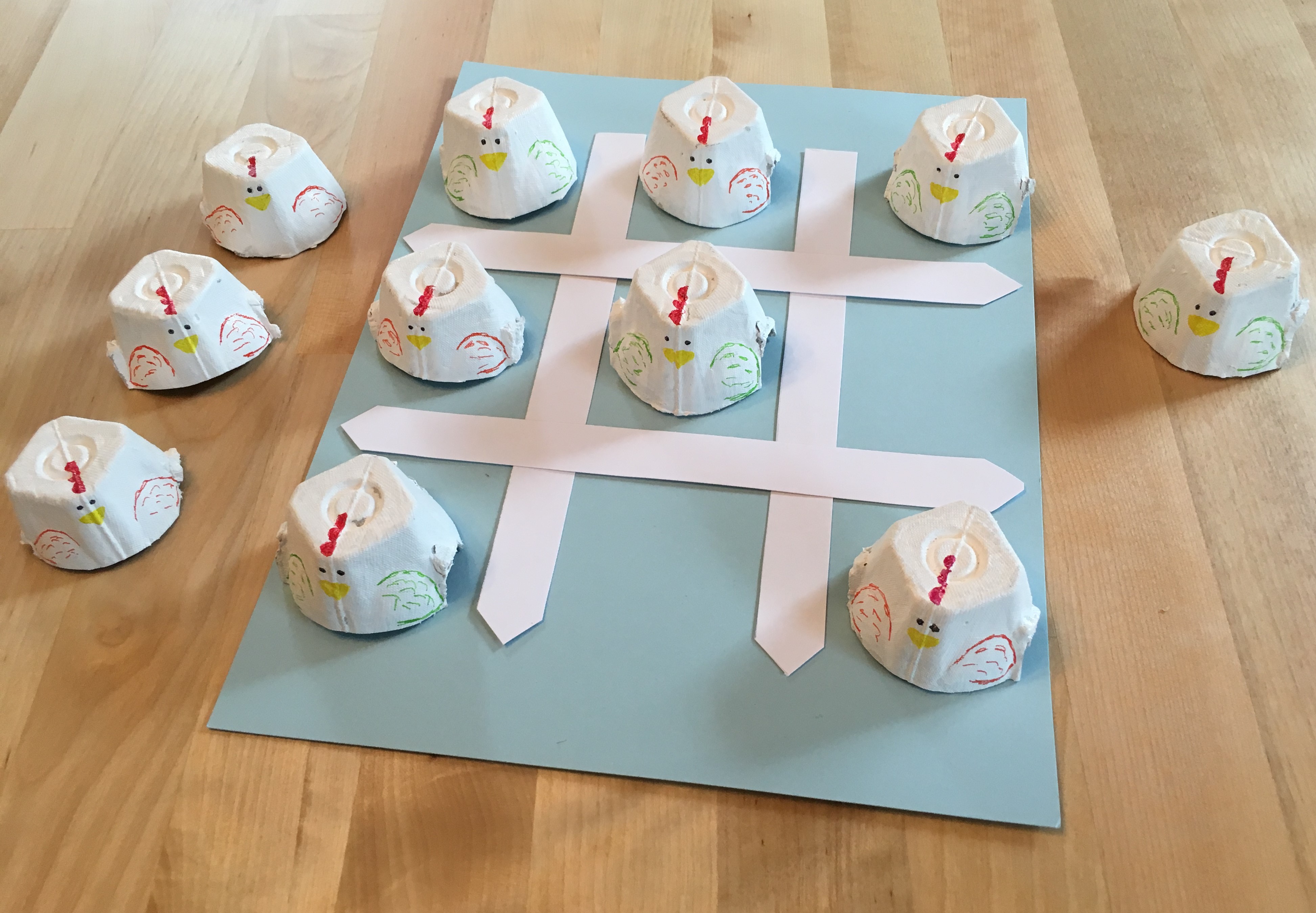
celebrate-picture-books-picture-book-review-egg-carton-chicken-double-chickens

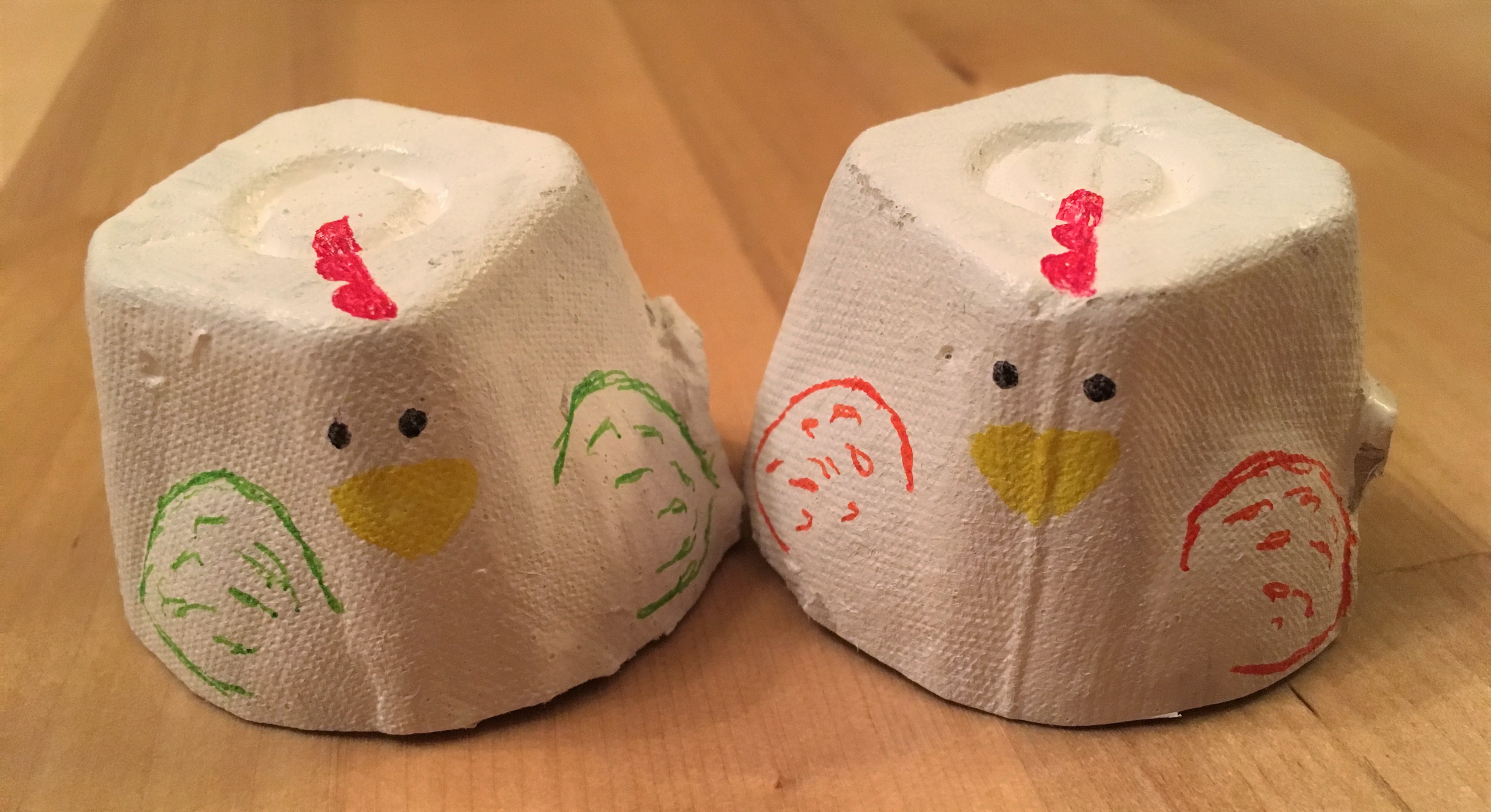
Egg Carton Chickens and a Basket Full of Games


With twelve little chickens you can come up with lots of games to play! This fun craft and game activity is eggs-actly what you need to start hatching some real fun!

Supplies

  • Cardboard egg carton
  • White craft paint
  • Markers: red, yellow, black for the face; any colors you’d like for wings and eggs
  • Paint brush
  • Scissors
  • Glue
  • Construction or craft paper in white and a color of your choice

Directions

  1. Cut the notched flap off the egg carton and set aside
  2. Cut the top off the egg carton
  3. Cut apart all the egg cups and trim slightly so they sit flat
  4. Paint the egg cups with the white paint, let dry
  5. Add the face, comb and wings to the chicken with the markers. Make six chickens with one color wings and six chickens with another color wings.
  6. From the egg carton flap cut thirteen small egg-shaped playing pieces
  7. With the markers, decorate twelve of the eggs in pairs—each egg in the pair with the same design
  8. Color one egg yellow and add a beak, eyes, and wings to make it a chick

Games to Play

Tic-Tac-Toe (2 players)

  1. On a 8 ½” x 11” piece of paper draw a regular tic-tac-toe board or make it fancy – like the picket fence-inspired board in the picture
  2. To make the fence-inspired board on a colored background, cut 2 9-inch-long x 3/4-inch wide strips of white paper, cutting a pointed tip at one or both ends. Cut 2 white  8-inch x 3/4-inch strips of paper with a pointed tip at one or both ends. Glue the strips to the background.
  3. Each player chooses a set of chickens with the same colored wings
  4. Play the game as you usually do

celebrate-picture-books-picture-book-review-egg-carton-chicken-tic-tac-toe

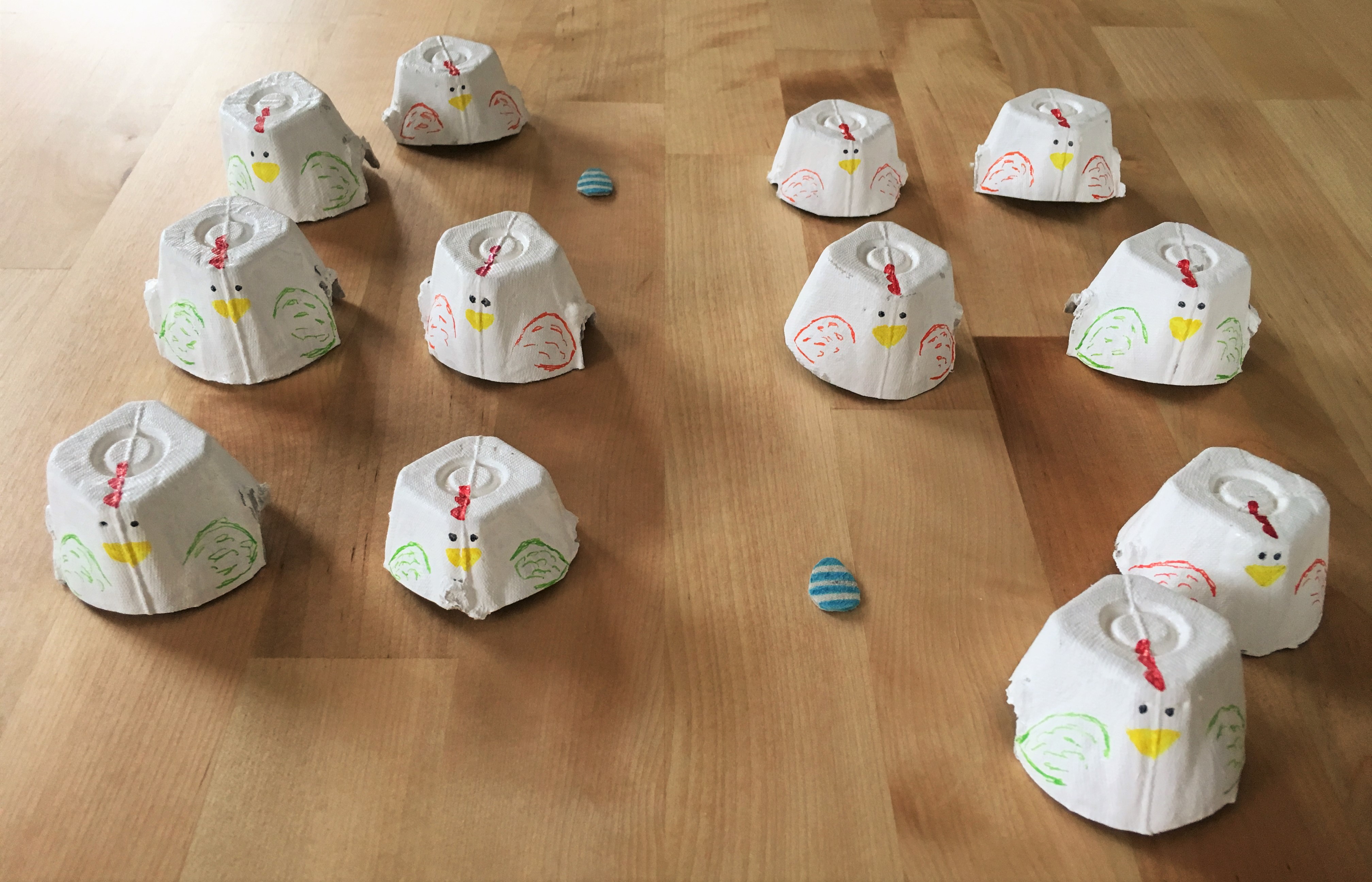
Find the Matching Eggs (2 or more players)

  1. Have one player hide one egg under each chicken
  2. Shuffle the eggs around and form them into three lines of 4 chickens each
  3. Another player lifts one chicken at a time to find matching eggs. If the eggs don’t match, put both chickens back and start again
celebrate-picture-books-picture-book-review-egg-carton-chicken-matching

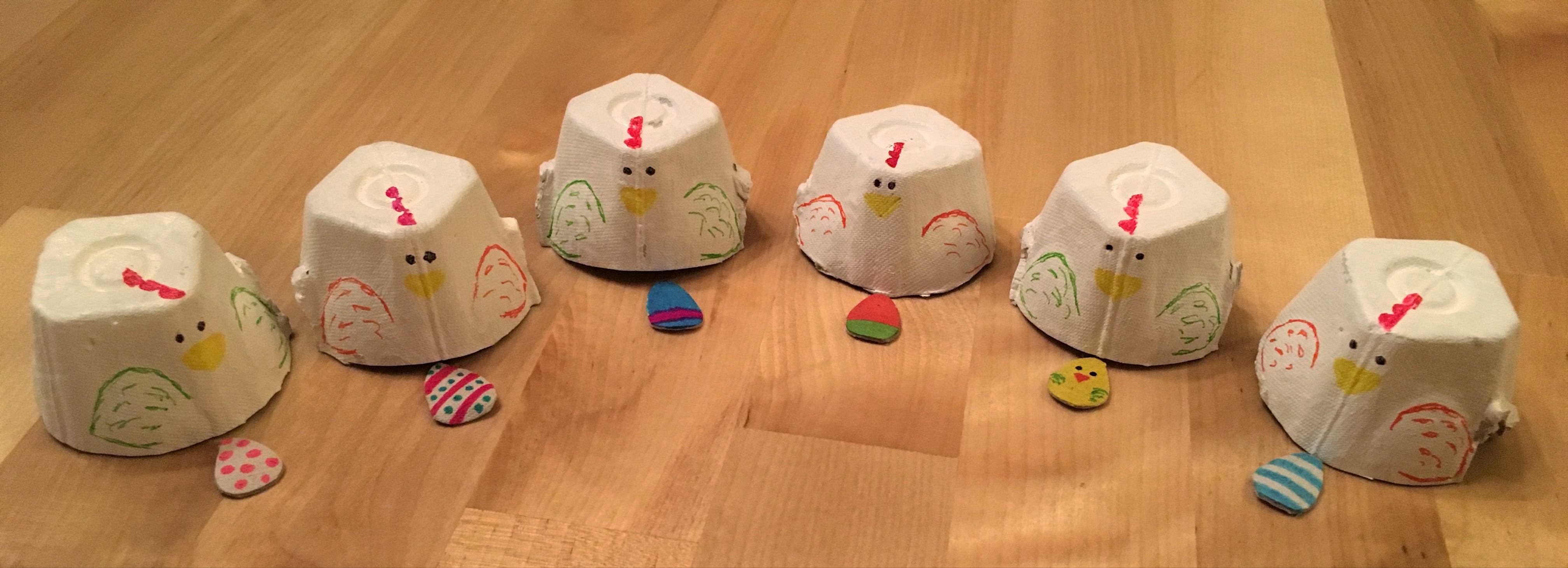
Where’s the Chick?

  1. Use as many chickens and eggs as you want (fewer for younger children, more for older)
  2. One player hides the chick under one of the chickens and eggs under the others.
  3. Another player has three chances to find the chick
celebrate-picture-books-picture-book-review-egg-carton-chicken-where's-the-chick

I’m sure you can also design your own games for your adorable chickens to play! With more chickens you can even make a checkers set or replicate another of your favorite board games!

Q & A with Author Jane Sutton

JanePhoto2013email.JPG

Today, I’m pleased to talk to Jane Sutton about her books, her journey as a writer, her family, and the joys and inspiration of being a new grandmother! 

As someone who loves humor and was voted class comedienne in high school, what were some of the books you most enjoyed as a child and young adult?

 Two of my childhood favorites were Dr. Seuss’s Horton Hatches an Egg and Robert Louis Stevenson’s A Child’s Garden of Verses. As a young adult, I was drawn to Virginia Woolf novels (I know–not exactly humorous, but most comedians are prone to depression).

You write both picture books and books for older children. What inspires or influences your stories?

My childhood memories have been the basis of many of my books—experiences and feelings. What’s Up with This Chicken? was inspired by a true story my friend-since-we-were-11 Fay told me about one of her backyard hens who refused to get off her eggs. I said, “This has to be a children’s book!” So I invented characters, had the child protagonist solve the problem, and snuck in a subtle message about the importance of empathy.
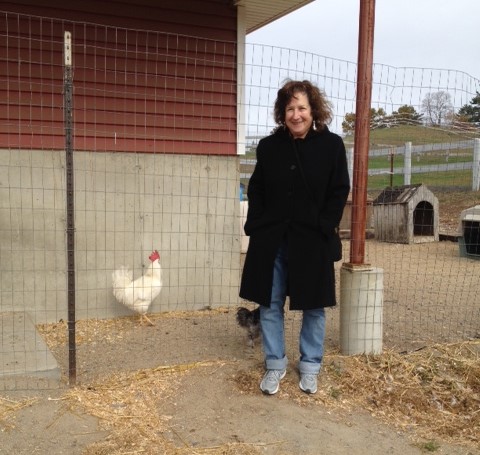
celebrate-picture-books-picture-book-review-jane-sutton-and-chicken

As someone who always wanted to write and who achieved the goal of becoming a published author, can you briefly describe your journey?

At a young age, I was encouraged by my teachers. They would be impressed by something I wrote and send me to show it to another teacher, which really pumped me up. I was an editor of my high school newspaper and after graduating from college had a job writing for a newspaper, wrote ads and press releases, and sold some stories for reading comprehension tests. My first book, What Should a Hippo Wear? was published when I was 29. I’ve had periods where everything I wrote was selling, and periods when nothing I wrote was selling. It’s a tough market!

What’s the best part about writing books for kids?

Well, I never wanted to grow up, and when I realized it was happening whether I liked it or not, I vowed to always remember what it felt like to be a child. Writing for kids helps me do that.

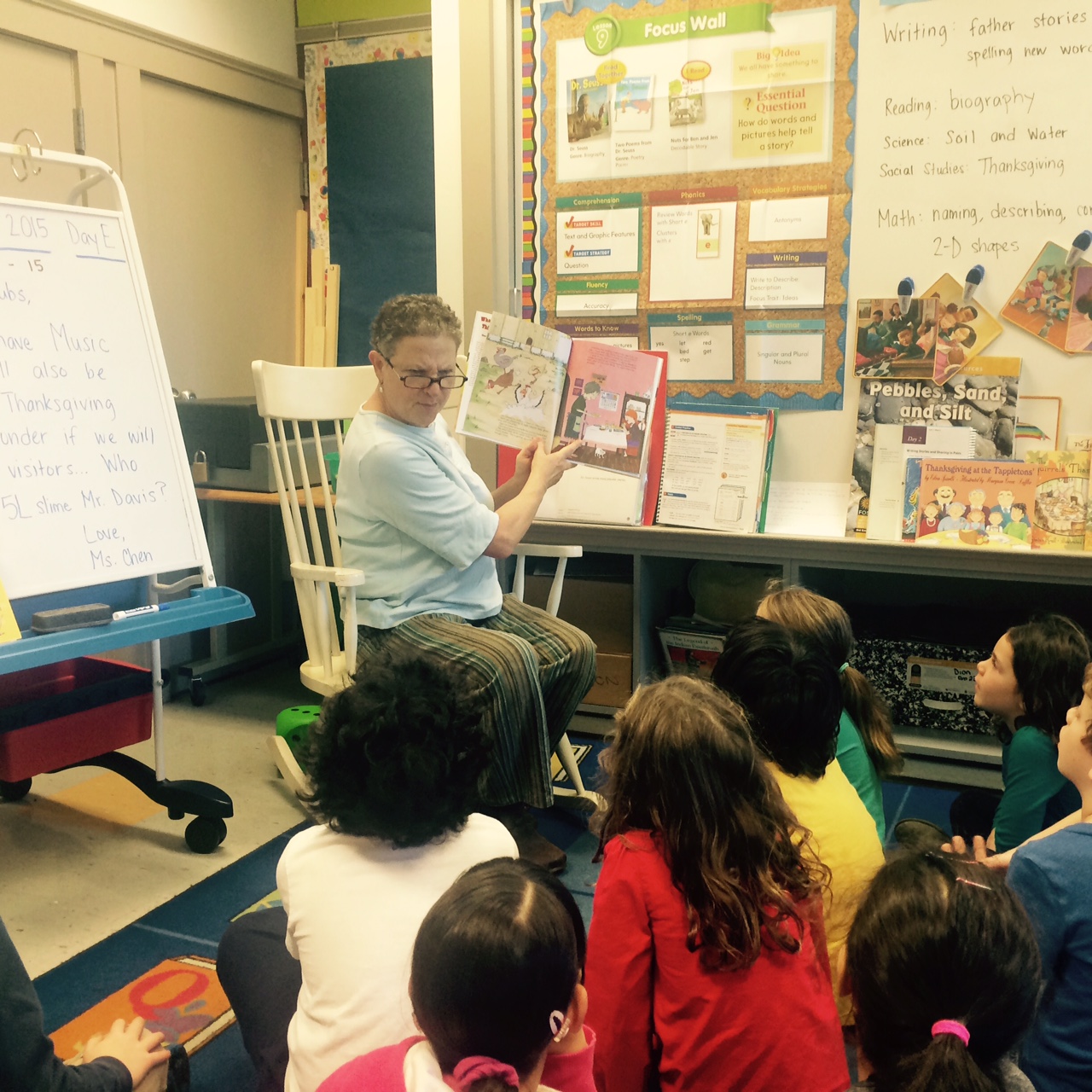
You conduct school presentations and workshops for kids from kindergarten age through grade 5, can you describe a funny or poignant anecdote from one of your events? 

One school had a wonderful program that paired parents and their children as writing partners. The culminating event was a presentation by me about how to make writing come alive. Then the parent-children pairs displayed their books, and it was so lovely to see how much the experience meant to the adults and the children. They also loved showing me—the big famous author—what they’d written and I could sincerely point out parts of their writing that were especially effective. The whole thing made me ferklempt.celebrate-picture-books-picture-book-review-jane-sutton-reading-to-kids
I read that you love elephants and collect elephant-inspired items. Can you tell me about one of your favorites?

One of my favorite elephants is gray and plastic (about the size of a toaster) and lives outside, in view of our kitchen window. My mother, who died in 2004, gave him to me and named him “Sabu.” He has survived about 18 New England winters so far, sometimes getting totally buried by snow and then poking out the tip of his trunk as the snow starts to melt. My mom asked me once if the elephant made me think of her, and yes, he surely does.

Talking about your mom makes me think of the strong relationship between Sylvia and her grandmother in What’s Up with This Chicken. Can you tell me about your own family?

My husband, Alan, taught a variety of grade levels spanning grades 1-6. He served as a science coordinator, curriculum developer, and teacher mentor. He’s written and co-authored six books for educators, four focused on science instruction and two about systems thinking. Currently, he coordinates the systems thinking program at a grades 5-12 public school and also presents workshops at meetings and conferences. We met in college and have been married for 41 years!

My son, Charlie, works for a coalition made up of organizations pushing for a better transportation system in Massachusetts. He’s worked in Massachusetts public policy since graduating from college in 2007. He married the wonderful Amberly, a nurse, in 2014, and they recently had a baby!

My daughter Becky is the director of an SAT tutoring program. Her company tries to make SAT tutoring as fun and effective as possible, so they try to match the kids with tutors who have the right personality for the student’s learning style. The SAT has completely changed in the last year, so they have had to retrain all of their tutors and rewrite all their curricula. For any tutoring program, building students’ confidence is key. So much of standardized testing is psychological.

I understand Becky also writes a blog for all of us grammarians who like a laugh once in awhile called Apostrophe Catastrophes: The Worlds’ Worst. Punctuation. Can you tell me a little about how she got started?

Yes, Becky does a great job with that blog. I love the examples she posts, and her comments are hilarious! She started Apostrophe Catastrophes almost 10 years ago after seeing an errant apostrophe on a giant cake at Governor Deval Patrick’s Inauguration. She pointed it out to the catering staff, and they had no idea what she was talking about, and then she started to notice misused apostrophes everywhere! Friends and family started taking pictures and sending them to her, and eventually, strangers from all over the world started sending in pictures! The Facebook group has almost 4,000 members now! Becky says, “I guess a lot of people share my love for proper punctuation.”

You’re a new grandmother! Can you tell me a little about your grandson?

That’s a dangerous question! How much time do you have? Caleb is an adorable, cuddly little person. And he’s now a month old!
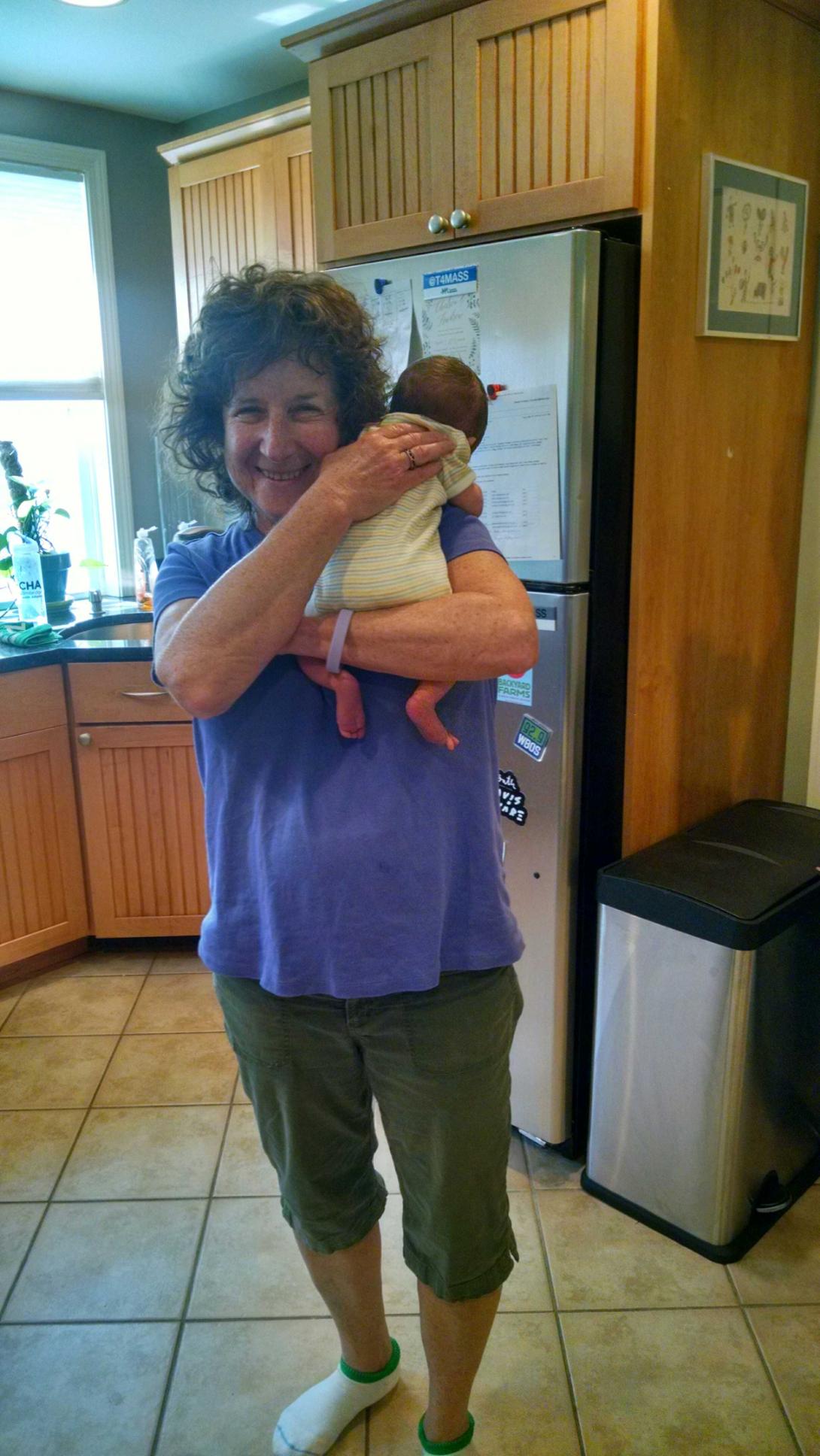
celebrate-picture-books-picture-book-review-jane-sutton-and-grandson

What is the best part about being a grandmother? 

 As a new mother, I was very anxious and questioned all my decisions. But as a grandma, there’s none of that anxiety. Being with my grandson is pure joy. And seeing how loving, confident, and tender my son and daughter-in-law are with the baby fills me even more love. And seeing him in my husband’s arms as he gazes down at him…I’m getting ferklempt again!

Have you thought about how being a grandmother might influence or inspire your future work? 

You betcha! Stay tuned.

What’s up next for you?

My next book, a Passover-themed picture book, is scheduled for publication by Kar-Ben in the spring of 2018.

Since Celebrate Picture Books is a holiday-themed blog, I can’t let you get away without asking you a few holiday-related questions! So…

 What is your favorite holiday?

I love Mother’s Day and Father’s Day because they are occasions for my husband and me to get together with our children. And there’s good eating involved.

Do you have an anecdote from any holiday that you’d like to share?

The first time I hosted Thanksgiving, rather than attending one at my parents’ house, my mother gave me very, very specific instructions about what to buy. For example, there had to be 2 Butterball frozen turkeys, both between 11 and 13 pounds. The reason for 2 is so that each of the 4 grandchildren could have a drumstick. My daughter and I were rummaging through the supermarket frozen case trying to find the exact acceptable weight for exacting Grandma. Our fingers were half frozen, and I admit that I kind of dropped a turkey on my daughter’s finger. The turkeys, by the way, were quite delicious.

How has a holiday influenced your work?

The festive, joyous celebration of Chanukah shows up in my 2 Chanukah picture books: Esther’s Hanukkah Disaster (Kar-Ben) and Aiden’s Magical Hanukkah (Hallmark).
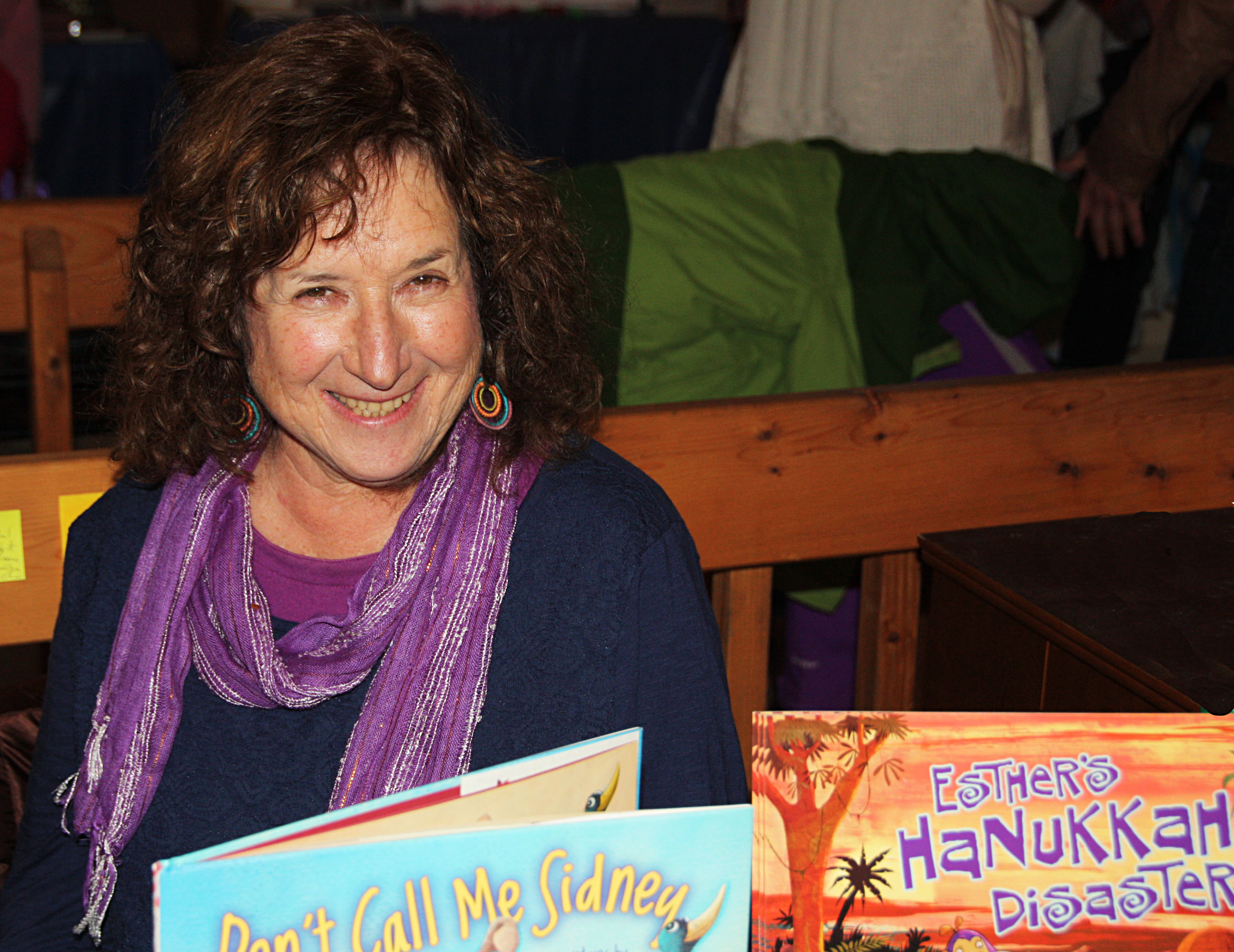
celebrate-picture-books-picture-book-review-jane-sutton-and-her books

Thanks so much for chatting, Jane! It’s been wonderful getting to know you. I wish you all the best with all of your books, and am looking forward to seeing your next book!

Connect with Jane Sutton on her website and catch up with her events and other fun activities on her blog!

What’s Up with This Chicken can be found at these booksellers:

Amazon | Barnes & Noble | Books-a-Million | IndieBound | Pelican Publishing Company

Picture Book Review