March 1 – National Pig Day

The Three Ninja Pigs Picture Book Review

About the Holiday

Pigs inspire us! Whether we see them on a farm, have them as pets, or enjoy them as part of our entertainment—who can forget Wilbur or Babe or even the little piggie who went wee, wee, wee, all the way home, after all?—pigs are part of our lives almost from the time we are born. How did they reach this lofty state? By being smart! Pigs are one of the most intellectual animals, capable of high-level learning. In 1972 sisters Ellen Stanley and Mary Lynne Rave decided pigs needed more acclaim, and so National Pig Day was established. On this day pigs are celebrated with special events, parades, and parties at zoos, farms, and schools.

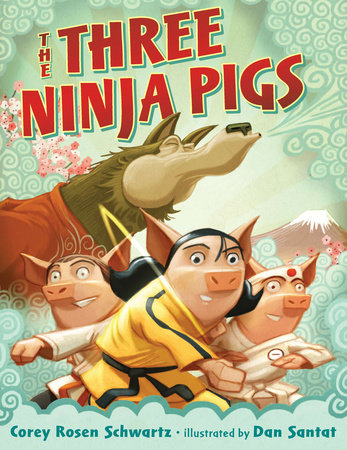
The Three Ninja Pigs

Written by Corey Rosen Schwartz | Illustrated by Dan Santat


The Big Bad Wolf has never encountered Three Little Pigs like these! When the sibling trio (two brothers and a sister) in this fractured fairy tale have had enough of the wolf’s bullying they take matters into their own trotters. Enrolling at the new Ninja school, Pig One begins to learn aikido, but with a “straw-house” attitude, he drops out before he acquires any useful skills. Pig Two has little more “stick”-to-itiveness with his Jujitsu training and quickly says “Sayonara” to his teacher. Thankfully, Pig Three has the steadfastness of a brick. She earns her black belt in Karate and is ready to rumble.

When the wolf comes huffing and puffing to the doors of Pig One and Pig Two, things go…well…you know…. The wolf chases the two brothers to their sister’s house, where this “certified weapon” stands prepared. She demonstrates her kicks and flips, which don’t scare the wolf. When he witnesses her mighty ability to split bricks with one chop, however, the wolf scrams.

How do these intrepid pigs top that? The brothers learn their lesson and—finally—their ninja moves. After graduation this fearless family makes sure that wolf will never return by opening a dojo of their own!

Corey Rosen Schwartz has created a rowdy, rambunctious triple-pig threat in this uproarious rendering of the three little pigs tale. With perfect rhythmic limericks that are a joy to read aloud, Schwartz cleverly uses puns, funny dialogue, and one feisty piglet to chop the wolf down to size. Dan Santat’s illustrations are full of angst, action, and attitude. Legs kick, hands chop, boards and bamboo fly as the three pigs and their nemesis wolf nearly leap from the page in their battle.

Ages 4 – 8

G. P. Putnam’s Sons Books for Young Readers, 2012 | ISBN978-0399255144

National Pig Day Activity
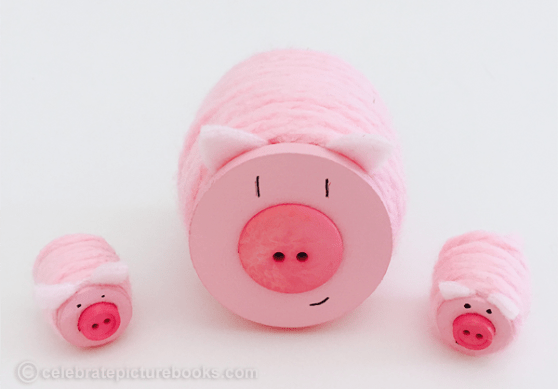
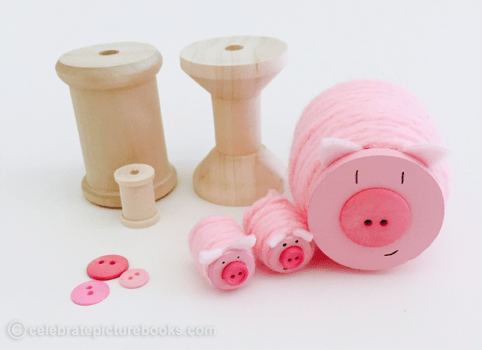
CPB - Pig Day pigs

Roly-Poly Pig and Piglets


Who doesn’t love hamming it up with a piglet? But let’s face it, having your own real pig just isn’t practical for everyone. Here’s a little piggie that you can make to keep you company on your desk or near your bed or anywhere it’s fun to play!

Supplies

  • Printable Pigs Ears Pattern
  • 2 ½-inch wooden spoon, available from craft stores
  • 1-inch wooden spool, available from craft stores
  • Pink yarn, I used a wide-strand yarn
  • Pink fleece or felt
  • Pink craft paint
  • Pink 5/8-inch or 1-inch flat button with two holes
  • Pink 3/8-inch flat button with two holes
  • Paint brush
  • Scissors
  • Glue
  • Black marker

CPB - Pig Day with spools (2)

Directions

  1. Print the Pigs Ears pattern
  2. Trace the ears onto the fleece or felt and cut them out.
  3. Paint the spool with the pink paint
  4. Let spool dry
  5. When the spool is dry, glue the ears to the spool, letting the ears stick up over the rim of the spool.
  6. Wrap yarn in straight layers around spool until the body of the pig is a little bigger than the end of the spool, which will be the face
  7. Cut yarn off skein and glue the end to the body
  8. To make the nose, glue the button over the hole in the middle of the spool
  9. Mark the eyes and mouth with a marker
  10. To make the tail for the large pig, cut a 4-inch long piece of yarn. Tie a triple knot in the yarn (or a knot big enough to fill the hole in the spool). Then tie a single knot below the first knot. Insert the large knot into the spool’s hole at the back of the pig. Trim the yarn in front of the second knot as needed.
  11. To make the tail for the piglets, tie a single knot in the yarn and another single know below the first. Insert one of the single knots into the hole. Trim yarn as needed.

February 29 – Haiku Writing Day

celebrate-picture-books-picture-book-review-guyku-cover

About the Holiday

In honor of the shortest form of poetry, February—the year’s shortest month—has been designated as haiku writing month. While it may be the shortest form of poetry, a good haiku creates feelings and recognition far beyond its tiny size. Through objective words and unique juxtapositions, a haiku can make a reader experience a common event or emotion in a new and surprising way. February is National Haiku Writing Month, but you can write and enjoy this beautiful form of poetry every day of the year!

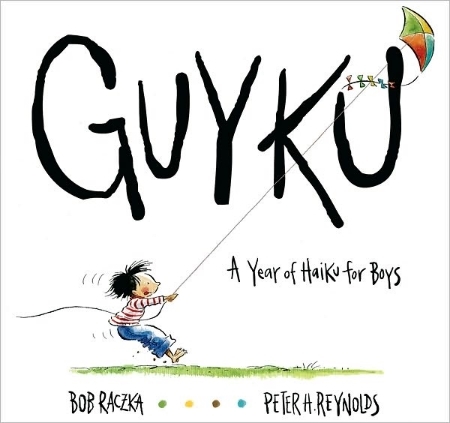
Guyku: A Year of Haiku for Boys

Written by Bob Raczka | Illustrated by Peter H. Reynolds


When you’re a guy sometimes the best moments in life are just that—moments. Observing insects or splashing in puddles doesn’t need pages of explanation. And feelings?—Yuck! But still, wouldn’t it be cool to describe these unforgettable moments creatively? Bob Raczka and Peter H. Reynolds have done just that in Guyku, which plucks the essence out of such seasonal activities as kite flying, raking leaves, swatting mosquitos, skipping stones, building snowmen, and more. Each haiku is a small gem that boys (and girls) will recognize and identify with.

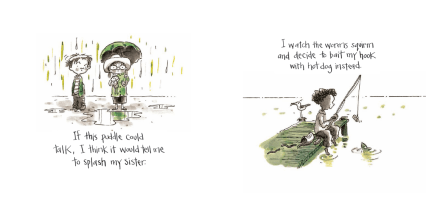
celebrate-picture-books-picture-book-review-guyku-fishing

Image copyright Peter H. Reynolds, text copyright Bob Raczka. Courtesy of bobraczka.com

Peter Reynolds’ minimalist pen, ink, and watercolor illustrations highlight the brief poetry while giving each haiku individual boys who are curious, mischievous, determined, happy, and full of fun.Guyku stands up to multiple readings and will spark an appreciation for the joy in life’s fleeting moments.

Ages 4 – 8

Houghton Mifflin Books for Children, New York, 2010 | ISBN 978-0547240039

Discover so many more books by Bob Raczka on his website!

Meet Peter H. Reynolds and view a gallery of art and books on his website!

Haiku Day Activity

CPB - Haiku Day Bookmark (2)

Cute-as-a-Button Bookmark


Sometimes you just can’t finish a book in one sitting, or you want to mark your favorite poem so you can go back and read it again and again. This bookmark is easy to make and will keep your page in style.

Supplies

  • Fleece or felt in your favorite color
  • Buttons of different colors and/or styles
  • Pony beads in various colors
  • Fabric or strong glue
  • Scissors

Directions

  1. Cut a strip of fleece or felt 1 – 1½ inches wide and 4 – 5 inches longer than the book you want to use it in.
  2. Glue the buttons onto the top of the bookmark
  3. Cut ¼ inch-wide by 1 inch-long fringe strips at the bottom of the fleece or felt.
  4. Slide pony beads onto the fringe strips (you may need to pull the fleece or felt through the bead with a tweezers)

February 28 – Tooth Fairy Day

Throw Your Tooth on the Roof picture book review

About the Holiday

For hundreds of years losing baby teeth has conjured up stories, legends, and superstitions. The idea of paying for teeth may have come from the Vikings, who reportedly believed the teeth could make them better warriors and so paid their children for their teeth, which they fashioned into necklaces to wear in battle. Some people buried the teeth, wanting to hide them from witches and evil spirits. The first immaginary creature to actively search for and take teeth was perhaps a mouse, which is still taught in many countries today. From the mouse came the Tooth Fairy, who is one of those mysteries of childhood in America and other English-speaking lands.

Throw Your Tooth on the Roof: Tooth Traditions from Around the World

Written by Selby B. Beeler | Illustrated by G. Brian Karas


When children lose a tooth, it’s so exciting! They know it means they’re growing up. It also means they can participate in a tradition that is fanciful and fun. American kids put the tooth under their pillow, believing that while they sleep the Tooth Fairy will visit them, take the tooth, and leave them money. But what do kids in other countries do with their baby teeth?

In Throw Your Tooth on the Roof, Selby Beeler reveals traditions from 65 countries around the world. In many countries children are rewarded with money but the deliverer differs. El Ratón, a magic mouse, visits children in Mexico, Guatemala, Dominican Republic, Columbia, and other countries. A rabbit sneaks into homes in El Salvador, and in India, Korea, and Brazil birds take the tooth.

In some places what children do with their teeth doesn’t bring monetary riches, but the value of a beautiful smile. In Yellowknife Déné putting a lost tooth in a tree and dancing around it ensures that the new tooth grows in as straight as a tree. In many Asian countries upper teeth are placed in the ground and lower teeth are thrown on the roof in the belief that the new tooth will grow straight toward the old one.

Selby B. Beeler’s book offers children a fascinating way to learn about their counterparts in other countries through a common experience and rite of passage. Each description is accompanied by Brian Karas’ appealing illustrations of children in their native environment happily performing their tradition.

Ages 4 – 8

Houghton Mifflin Company, 2001 | ISBN 978-0618152384

Tooth Fairy Day Activity

CPB - Tooth Fairy Maze finished

Help the Tooth Fairy Find the Tooth Maze


The Tooth Fairy has a job to do, but she doesn’t know which way to go! Can you show her the right path? Print out the Help the Tooth Fairy Find the Tooth Maze and lead her to the tooth! The Solution is included.

February 27 – International Polar Bear Day

Hush Little Polar Bear picture book review

About the Holiday

International Polar Bear Day was established as a day for people to learn more about these majestic animals and conservation efforts to protect them and their environment. You can celebrate by discovering ways to lessen global warming, which is believed to be a factor in the loss of polar bears’ natural habitats.

Hush Little Polar Bear

By Jeff Mack


A baby polar bear listens to the voice that tells him to “Hush, little polar bear. Sleep in the snow, and dream of the places where sleeping bears go.” The adorable polar bear, with its eyes shut tight, then dreams of sailing the seas while riding on the back of a whale, following a crab onto the beach, wading through a meadow and chasing butterflies, bounding after cows in a field, and having adventure after adventure. But who is the little girl on a sailboat, hiding behind a sandcastle, near the tree, and always popping up where the polar bear explores?

celebrate-picture-books-picture-book-review-hush-little-polar-bear-with-whale

Copyright Jeff Mack, courtesy of us.macmillan.com

At the end of the book as the polar bear drifts through a window, kids discover that the traveling polar bear has been heeding the wishes of that mysterious little girl. As the bear takes its place cuddled up beside the young sleeper, readers may wonder—who is really dreaming, the girl or the little polar bear?

celebrate-picture-books-picture-book-review-hush-little-polar-bear-on-beach

Copyright Jeff Mack, courtesy of us.macmillan.com

Jeff Mack has created a warm, fuzzy lullaby of a picture book, perfect for bedtime or any snuggle time. The lyrical text invites listeners to float along in the polar bear’s wake as it romps, swings, crawls, and flies through each two-page spread that presents the bear’s and the little girl’s dreamscapes as vividly as the best remembered dreams.

Ages 2 – 6

Roaring Brook Press, New York, 2008 | ISBN 978-1596433687

Discover more about Jeff Mack and his books on his website!

Polar Bear Week Activity

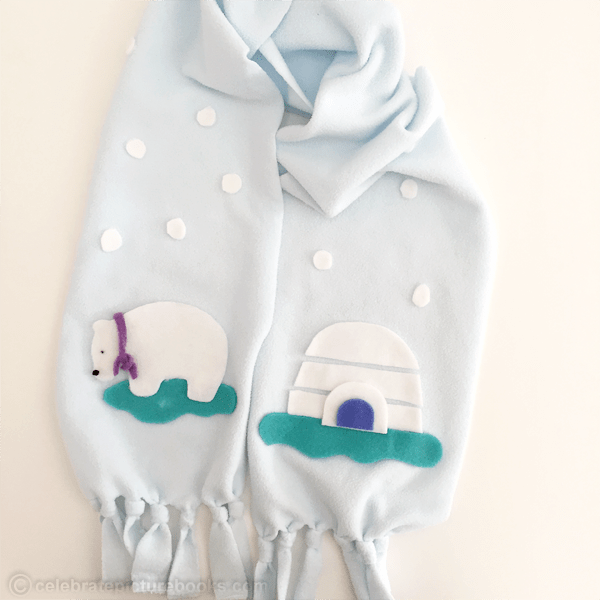
CPB - Polar Bear scarf

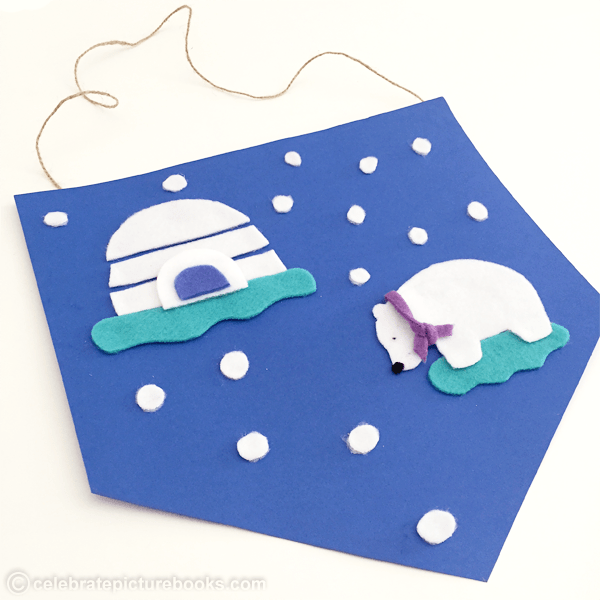
CPB - Polar Bear Banner

Polar Bear Scarf or Banner


Polar bears aren’t cold in the winter—and neither should you be! Here are directions and printable templates for making a cute scarf to keep you warm, or—if you’d rather—a banner to warm up your room.

Supplies

  • Printable Polar Bear and Igloo Template
  • 1 Strip of blue fleece 4 ½ feet long x 7 inches wide for the scarf
  • 1 Piece of blue scrapbooking paper for a banner
  • Pieces of white, black, blue, and purple fleece or scrapbooking paper to make the polar bear, igloo, snowflakes, and ice floes.
  • String or twine for banner
  • Scissors
  • Fabric or paper glue

Directions for Scarf

To make the fringe at each end of the scarf:

  1. Make 7 cuts about 4 inches long
  2. Tie a knot at the top of each fringe section

To make the pieces for the scarf or banner:

  1. Trace the polar bear and igloo sections from the Printable Template onto white fleece and cut out
  2. Trace the two ice floes onto blue fleece and cut out
  3. Trace the door of the igloo onto blue fleece and cut out
  4. Trace the polar bear’s scarf onto purple (or any color) fleece and cut out
  5. Cut out round snowflakes
  6. Cut out a small circle from black fleece for the Polar Bear’s nose

On one end of the scarf:

  1. Glue the smaller ice floe on one end of the scarf
  2. Tie the bear’s scarf around its neck before gluing the bear to the scarf
  3. Glue the polar bear onto the scarf with its feet on the ice floe
  4. Glue on the polar bear’s nose
  5. Make a small dot for the polar bear’s eye with a marker
  6. Glue snowflakes above polar bear

On the other end of the scarf:

  1. Glue the bigger ice floe to the scarf
  2. Glue the three pieces of the large igloo to the scarf, leaving a little space between sections
  3. Glue the small white door of the igloo on top of the last two igloo sections
  4. Glue the small blue door onto the white door
  5. Glue snowflakes above the igloo

Directions for Banner

  1. Cut a point at the bottom of your banner
  2. Follow the directions above to trace the pieces of the polar bear and igloo from the printable template onto scrapbooking paper
  3. Follow the directions above to glue the pieces of the polar bear and igloo to your banner
  4. Attach string or twine to back of banner to make a hanger

Picture Book Review

February 26 – National Tell a Fairy Tale Day

CPB - There's a Wolf at the Door

About the Holiday

Today we celebrate the long tradition of oral and written stories that have captivated both children and adults since earliest times. While many of the fairy tales we love began as lessons in good manners or avoiding danger, they have remained popular and a part of our culture that we pass down to children through the generations. These tales stand up to traditional treatments as well as variations that turn the familiar plots on their heads.

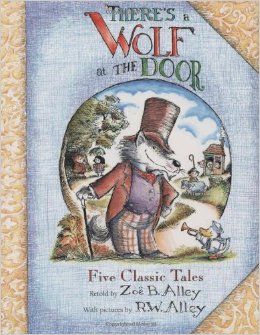
There’s a Wolf at the Door: Five Classic Tales

Retold by Zoë B. Alley | Illustrated by R.W. Alley


There are big books of fairy tales and then there’s There’s a Wolf at the Door! In this oversized graphic-novel style picture book, that big, bad wolf who is so familiar in children’s stories follows his nose and his hungry stomach through 5 classic tales.

In “The Three Little Pigs,” the wolf starts out with much confidence and bluster. He huffs and he puffs, but in the end he’s outsmarted by the third little pig. In quite a fright he follows the sign to “Greener Pastures” where he finds Barry, a shepherd boy with an unfortunate aversion to boredom. The wolf suddenly finds himself accused of eating sheep, but quickly realizes he can turn the boy’s foolish cries to his advantage. He doesn’t count on the crafty sheep, however, who thwart the wolf’s plans while their shepherd runs around in circles, screaming.

The wolf finds his escape on a path through the woods marked “To Granny’s House.” On the path he meets up with Rhonda, a fashionista who loves red clothing and appreciates her strange companion’s sense of style. While they walk toward Granny’s house together, discussing coats, hats, and flowers for Rhonda’s hair, the wolf gives Rhonda the slip and runs a frightened Granny out the back door. Rhonda scares him off with a well-aimed red shoe and a grab at Granny’s stolen nightgown. Not wanting to appear so naked, the wolf pulls the white wooly rug around his shoulders and hightails it to a peaceful meadow.

Here a family out for a picnic discovers him napping. The little girl mistakes him for a poodle, but her mother believes he is a sheep. When he tries to menace them with a display of fierceness, the unimpressed family simply calls him rude and wanders off to find another picnic spot. Who does he spy a short distance away, but Barry the shepherd and his sheep. Disguised under his rug, the wolf creeps up on the flock, who are not fooled. This time as Barry runs away, the sheep use his crook to toss the wolf around.

As the wolf catches his breath by the river, he receives a package from Rhonda, who has learned to be kind and considerate from her experience with the wolf. Inside, he discovers a new outfit, and he is once again restored to his dapper self. Hearing that the nearby house is full of unattended goslings, the wolf devises a plan to capture them and take them home for dinner. While these goslings may be rambunctious and disobedient to their brother Alphonse, when threatened they work together to foil their pesky visitor.

In the end the wolf decides that perhaps he’s better off as a vegetarian and readers leave him contemplating a shortcut through the woods to Farmer McGregor’s Garden.

Using clever inside jokes, humorous asides, sassy heroines and heroes, and a woebegone wolf out of his depth, the husband and wife team of Zoë B. Alley and R.W. Alley have transformed these well-known classics into unique, rib-tickling stories for a new generation. The comic strip style drawings fit the droll tone of the tales perfectly and are full of details kids will love to point out. While older children will enjoy reading this book on their own,There’s a Wolf at the Door also makes for an exciting read-aloud storytime.

Ages 4 – 8

Roaring Brook Press, 2008 | ISBN 978-1596432758

National Tell a Fairy Tale Day Activity

CPB - Fairy Tale box

Treasure Box of Imagination

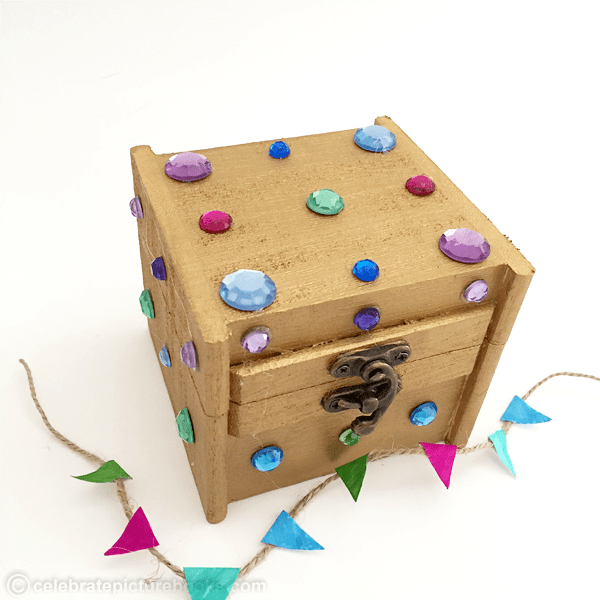
Whether it’s gold, silver, jewels, pirate loot, or just bits of nature or knick-knacks, our favorite things are our treasures and fuel our imaginations. For Fairy Tale Day make your own Treasure Box

Supplies

  • 1 small wooden box, available at craft stores
  • Gold acrylic craft paint
  • Craft gems
  • Paint brush
  • Hot glue gun or strong glue

Directions

  1. Paint your wooden box with the gold paint
  2. Let the box dry
  3. Decorate your Treasure Box of Imagination with gems

February 25 – National Chili Day

Armadilly Chili picture book review

About the Holiday

What could be more satisfying on a mid-winter day than a spicy bowl of chili?  Whether made with meat or veggies, combined with macaroni, or served in potato skins, the simmered flavors make for a scrumptious meal. Although the origins of chili are lost to history, it’s believed that the dish is a southwestern, specifically Texan, concoction. It began to attract attention in the early 1800s, and by the 1880s”Chili Queens” were selling “bowls o’red” at chili stands throughout San Antonio. In 1893 the San Antonio Chili Stand made an appearance at the Chicago World’s Fair. It’s popularity took off across Texas and throughout the west by the 1920s. When the Great Depression hit, chili became one of the only affordable meals for the hungry population.

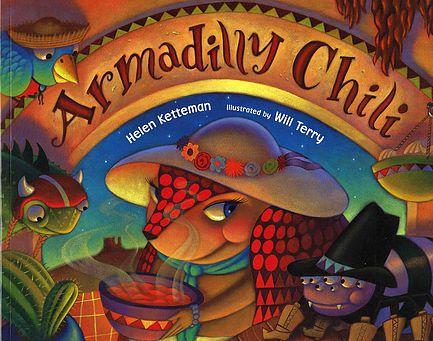
Armadilly Chili

Written by Helen Ketteman | Illustrated by Will Terry


What a hoot! The knee-slappin’, root-a-tootin’ phrasing in Hellen Ketteman’s Armadilly Chili is shor ‘nuf gonna make this a favorite on any child’s bookshelf. While the plot may be familiar, the southwest setting and Miss Billie Armadilly put a fresh, funny twist on it.

celebrate-picture-books-picture-book-review-armadilly-chili-gathering-ingredients

Image copyright Will Terry, courtesy of willterry.com

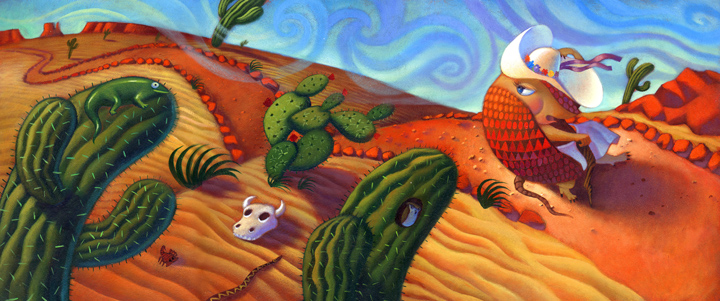
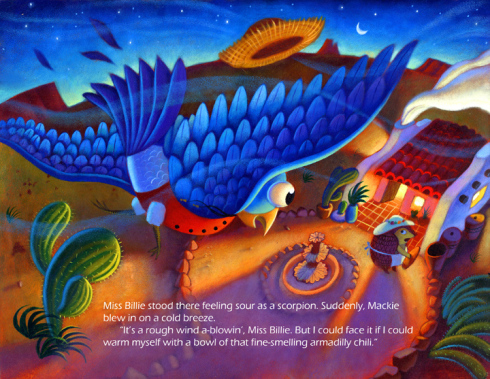
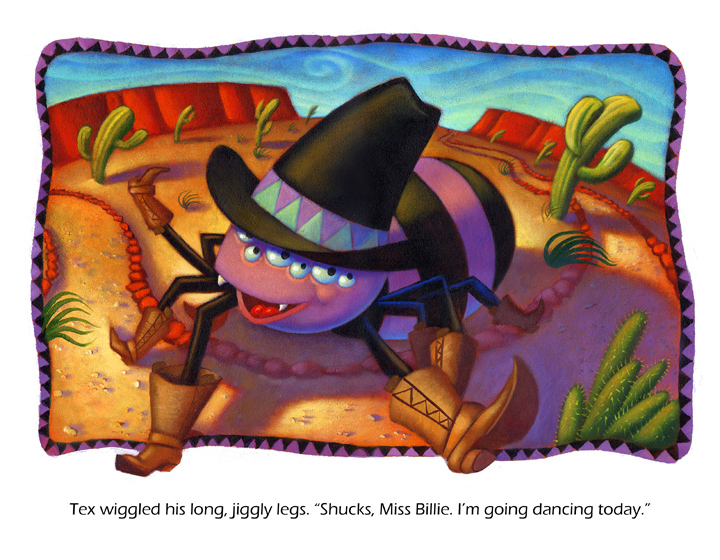
Miss Billie Armadilly is gathering ingredients for her hot armadilly chili as a blue norther blows in. She’s gathering beetles when her friend Tex, a many eyed tarantula tip taps by. When Billie asks him to help her collect beetles, he tells her he can’t because he’s going dancing. Miss Billie harrumphs and does it herself. Next Miss Billie is picking peppers, and when Mackie the bluebird flies in she thinks she has some help. Once again, though, she’s left on her own since Mackie is going to the movies. Her friend Taffy, the horned toad, begs off from chopping prickly pear, saying he’s got plans to go skating.

celebrate-picture-books-picture-book-review-armadilly-chili-Mackie-flies

Image copyright Will Terry, text copyright Helen Ketteman, courtesy of willterry.com

At home, Miss Billie stirs her chili to a scrumptious bubble. The aroma entices first Tex, then Mackie, and finally Taffy to come a’knockin’ at her door looking for a bowlful. Billie has something to say about that—specifically, “no workin’ with Billie, no sharin’ the chili!”

Billie’s friends hurry away, and Billie sits down to her feast. But after all that work, the chili tastes as “flat as a Texas prairie.” What’s wrong? She realizes what the missing ingredient is just as the doorbell rings. She opens the door to find her friends standing there with bags in their hands. What’s in those sacks? Apologies! And hot apple cider, jalapeno biscuits, and homemade chocolate fudge. Now that the friends are all together, the chili tastes just right, and they laugh and talk and eat throughout the blustery night.

celebrate-picture-books-picture-book-review-armadilly-chili-tex

Image copyright Will Terry, text copyright Helen Ketteman, courtesy of willterry.com

Helen Ketteman’s fast-paced Armadilly Chili is a welcome take on what it means to be a good friend. Her Western setting, lively language, and fast pacing will keep kids laughing and rooting for Billie and her pals. Will Terry’s bright illustrations washed with a palette of deep reds, oranges, greens, and yellows firmly sets the story in the Southwest. Billie’s facial expressions as each of her friends abandon her to her chores are priceless, and their final camaraderie is highly satisfying.

Ages 4 – 8

Albert Whitman & Company, 2008 | ISBN 978-0807504581

Discover more about Helen Ketteman and her books on her website!

View a gallery of illustration work, drawings, and picture books by Will Terry on his website!

National Chili Day Activity

CPB - Chili Pepper Game

Hot, Hot, Hot! Chili Pepper Chili Game


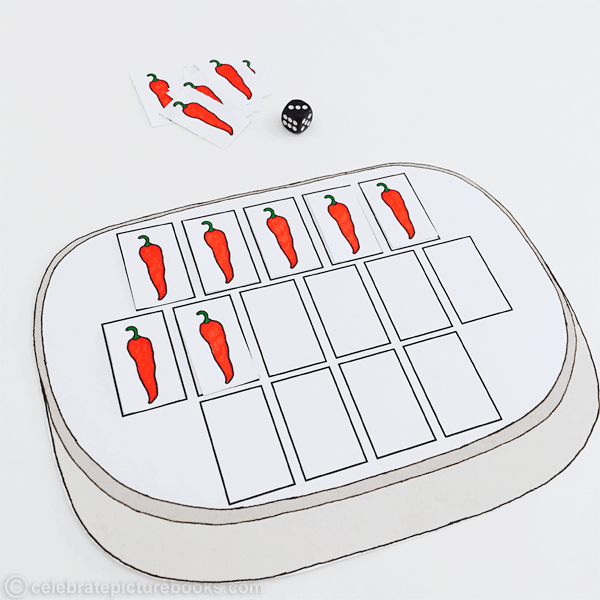
Chili just isn’t chili without a little heat! But can you take 15 chili peppers in your bowl? If you want to win the Hot, Hot, Hot! Chili Pepper Chili Game you’ll have to!

Object of the Game

The object of the game is to collect 15 chili peppers in your bowl before any other player.

Supplies

Rules

  1. Any number of players can play at one time. Print 1 Chili Bowl game board and 1 set of 15 Chili Pepper cards for each player
  2. Give 1 Chili Bowl Game Board to each player
  3. Place the Chili Pepper Cards in a pile or in a bowl
  4. Roll the die to see who goes first. The person with the highest roll goes first
  5. To begin play, the first player must roll a 1, 2, or 3. They should roll until they get one of these numbers.
  6. Players roll the die and collect or lose chili pepper cards by the number of dots on the die. If you roll a:
  • 1 – Pick up 1 chili pepper card and place it on your chili bowl game board
  • 2 – Pick up 2 chili pepper cards and place them on your chili bowl game board
  • 3 – Pick up 3 chili pepper cards and place them on your chili bowl game board
  • 4 – Get a chili pepper card from the player on your left
  • 5 – Give a chili pepper card to the player on your left
  • 6 – Lose a turn

     7. If a player does not have chili pepper cards to give to another player or if the player on           their left has no cards to give, the player rolls again.

    8. Continue play until one player has filled their Chili Bowl with chili peppers!

February 23 – National Dog Biscuit Day

CPB - Dog Biscuit

About the Holiday

People have holidays celebrating their favorite treats—like Cherry Pie Day and Chocolate Chip Cookie Day—so dogs should have a food holiday of their own, right? Well, today is it! Today we remember that our best furry friends like to be rewarded with a special treat or just shown a little extra love with a tasty morsel.

Before anyone thought about what dogs ate, dog “treats” included some pretty awful stuff—moldy bread, rotten leftovers…but an American named James Spratt was struck by an idea when he saw stray, hungry dogs looking for food on one of his travels in England in the 1800s. He created the first dog biscuit, which was more like cake, made of fresh ingredients such as meat, grain, and vegetables. The first commercial dog biscuit was developed in 1908 by the F. H. Bennett Biscuit Co. It was hard and made with meat products, milk, and important minerals.

Dog Biscuit

By Helen Cooper


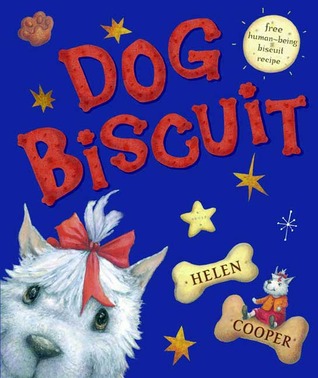
In Helen Cooper’s delightfully evocative Dog Biscuit, Bridget can’t resist eating a treat from the enticing bag she finds in Mrs. Blair’s shed. The biscuit looks like a people cookie; it even tastes good—salty and sweet—but really it’s meant for a dog, not a little girl! Mrs. Blair shakes her head when she recognizes the crumbs around Bridget’s mouth and teases that now Bridget will turn into a dog. As children often do with adults’ jokes, Bridget takes this notion literally, setting in motion a day-long flight of fancy—with a bit of trepidation.

Bridget’s imagination runs as wild as a pack of dogs—does that itch behind her ears mean they’re growing? How is it possible she’s wagging goodbye? And did Mrs. Blair’s dog really just say it used to be a real boy? She begins to regret eating that biscuit but is determined not to tell her mother, especially since she doesn’t seem to notice any difference in her daughter.

As she and her mother walk home from Mrs. Blair’s, Bridget suddenly finds herself awakened to a new world. She identifies with every dog she meets, savors the aroma of the butcher shop, and forgets her people manners at the dinner table. Still, her mother doesn’t notice. Before finally curling up and falling asleep, Bridget again wishes she hadn’t eaten that biscuit.

In sleep Bridget unleashes her full imagination, romping with a pack of new friends through familiar sites now transformed into a mystical doggy paradise that makes her very glad she ate that biscuit—that is until she thinks of her family and howls. At last her mom, who was indeed aware of her daughter’s turmoil, can comfort her. In her mother’s arms Bridget reveals her fears and allows herself to be reassured.

The next day Bridget visits Mrs. Blair, who explains that she was joking and apologizes for worrying her. Over tea and “human being treats” Bridget happily leaves puppyhood behind.

Author-illustrator Helen Cooper beautifully captures Bridget’s imagination, turmoil, and joyous abandon through her vibrant illustrations that are awash in color, swirling lines, clever details, and the use of various type sizes and fonts. Wide-eyed Bridget, her family, Mrs. Blair, and the many dogs that populate this book are exquisitely drawn. Kids will love sniffing out the hidden dogs on every page.

A recipe for Human-Being Treats is included.

Ages 4 – 8

Farrar Straus and Giroux, New York, 2009 | ISBN 978-0374318123

National Dog Biscuit Day Activity

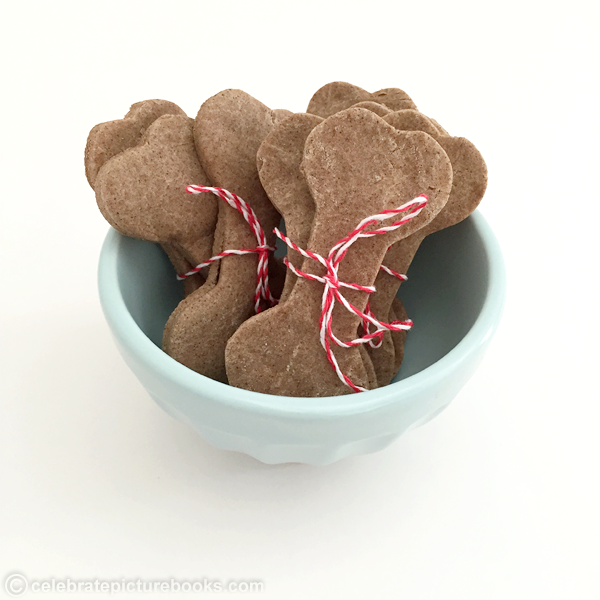
CPB - Dog Biscuits

Homemade Dog Treats

Making homemade dog biscuits is a fun way to spend time together and benefit furry friends. These biscuits make tasty treats for your own pet or consider making a batch to donate to your local animal shelter. This recipe is easy and proven to be a favorite.

Children should get help from an adult when using the oven.

Supplies:

  • 1 large bowl
  • Large spoon or whisk
  • Cookie cutters – shaped like traditional dog biscuits or any favorite shape

Ingredients

  • 3 cups Buckwheat flour
  • ½ cup powdered milk
  • 1 teaspoon salt
  • ¾ cup water
  • 1/3 cup margarine or butter, melted
  • 1 egg beaten

Directions

  1. Preheat oven to 325 degrees
  2. Add buckwheat flour to bowl
  3. Add powdered milk to bowl
  4. Add salt to bowl
  5. Stir to mix dry ingredients
  6. Add water
  7. Add melted margarine or butter
  8. Add egg
  9. Stir until liquid is absorbed
  10. Knead for a few minutes to form a dough
  11. If the dough is too dry, add a little more water, 1 Tablespoon at a time
  12. Place the dough on a board
  13. Roll dough to ½ inch thickness
  14. Cut into shapes with cookie cutters
  15. Bake at 325 degrees for 35 minutes
  16. Biscuits will be hard when cool.

Makes about 40 biscuits