September 10 – Swap Ideas Day

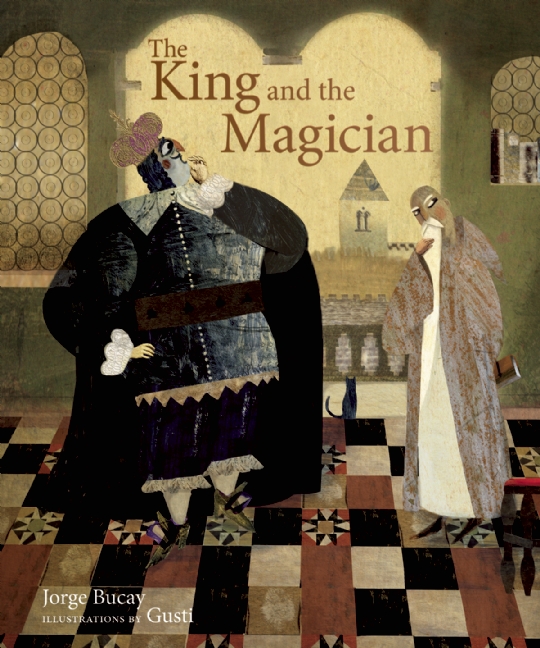
celebrate-picture-books-picture-book-review-the-king-and-the-magician-cover

About the Holiday

Today is a perfect day to get together with people you love, trust, and respect—and even some who challenge your thinking—to discuss matters large and small. Not only might you gain a different perspective on your pals, but you all may come up with the next Great Idea!

The King and the Magician

Written by Jorge Bucay | Illustrated by Gusti


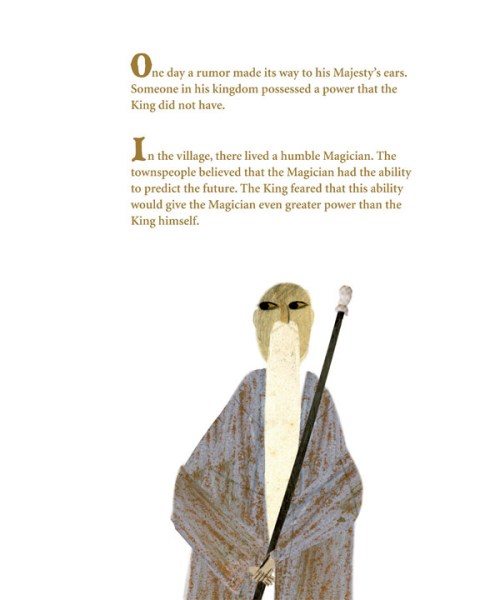
In a faraway land there once lived a King who was very powerful. Not only did he love power, he commanded that everyone in his kingdom obey and admire him. Tremblingly, his subjects reassure him every day that he is the most powerful man in the kingdom. One day, however, the King hears a rumor that down in the village lives a Magician who can predict the future. The King fears that this man will become more powerful than he, and he sends his spies to learn more. The spies return and reveal that not only can the Magician tell the future, he is loved and admired by everyone.
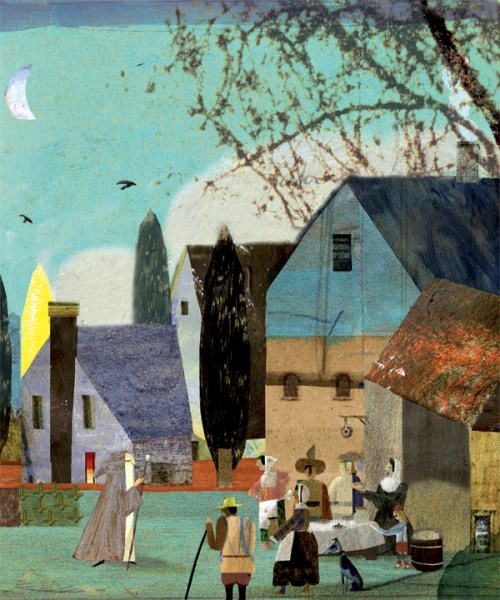
celebrate-picture-books-picture-book-review-the-king-and-the-magician-townspeople

Image copyright Gusti, courtesy of Abbeville Press

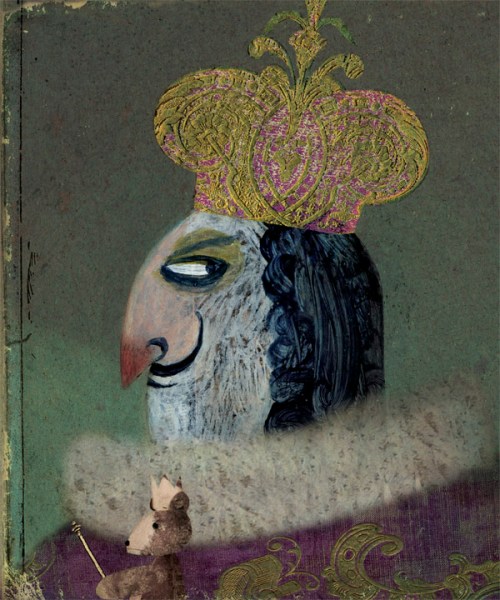
The King becomes terribly jealous and plots to do away with his most hated enemy. He devises a plot to trick the Magician. He will host a party, and at the end he will ask the Magician if he can truly predict the future. If the Magician says “No,” he will be exposed as a fraud, and the king will kill him. If the Magician answers “Yes,” the King will ask him to predict the date of the Magician’s death and would then kill him. The King is pleased with his scheme because either way, he will be rid of his rival.
celebrate-picture-books-picture-book-review-the-king-and-the-magician-king-has-evil-idea

Image copyright Gusti, courtesy of Abbeville Press

On the night of the party, the King summons the Magician and asks him the fatal question. The Magician is more than just a seer or a sorcerer—he is wise. He looks at the King and states, “the Magician of this kingdom will die the exact same day as his King.”

Now the King is in a terrible quandary. He does not want to risk the possibility that this old man’s prediction is true. He must now protect the Magician in order to save his own life. He quickly concocts a ruse and asks the Magician to stay the night in the castle, saying he wants to consult with him about some royal matters. In fact, he just wants to keep an eye on him.

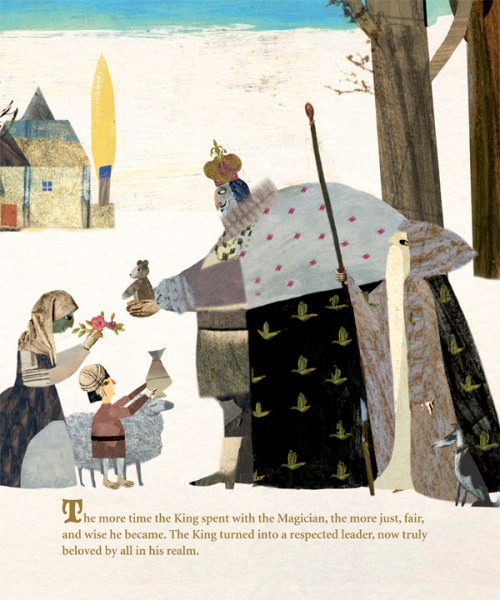
The Magician agrees. The next morning the King goes to the Magician and asks his advice on some kingly decisions. The Magician offers good suggestions, and the king accepts them. As the months go by, the King continues to rely on the Magician for guidance, and slowly the King learns to be fair and wise. He becomes the respected and admired ruler he always wanted to be.
celebrate-picture-books-picture-book-review-the-king-and-the-magician-old-magician

The King realizes that not only is the Magician a trusted advisor, he is a loyal and beloved friend. One day, wracked with guilt over his one-time plot to kill the Magician, the King reveals the story. The Magician listens to the King’s secret, and shares one of his own.

On the night of the party, the Magician says, I saw you reach for the hilt of your sword when you questioned me, and I knew your intentions. He then divulges that he made up the prediction of their shared death date to teach the King a lesson—one the King has learned. He says, “It is our lives that have become entwined, not our deaths.”

For many more years the King and the Magician live as friends and confidants. The kingdom grows stronger and the King kinder and more loved by his people. One day the Magician dies. The King is sad, and realizes he is no longer afraid of his own death. The King has learned the Magician’s lesson well, and even though his advisor is gone, he continues to make wise and beneficial decisions.
celebrate-picture-books-picture-book-review-the-king-and-the-magician-changed-king

Image copyright Gusti, text copyright Jorge Gusti, courtesy of Abbeville Press

Ten years later the King writes a letter to his son and heir. In his letter, the King cautions his son that at sometime in his life he may come across someone or something that “will arouse fear and jealousy in your soul.” He will want to destroy this person or thing to alleviate his fear, his father tells him. Instead, says his father, “open your heart or your home” because “what you thought was your most feared enemy, is really your most powerful friend.”

Jorge Bucay has written a classic tale of wisdom verses power wrapped around a clever trick. The story, full of intrigue and twists, initiates the kind of thought that leads to true enlightenment. The straightforward storytelling, beautifully paced over a lifetime of growth and change, builds suspense while lyrical descriptions create a beautiful flow that depicts both the quandary of the King and the kindness of the Magician.

Gusti’s lavish illustrations, reminiscent of hieroglyphics and Medieval tapestries, are rendered in dark, rich brown, rust, black, olive and blue hues that gorgeously depict the splendor of the King and his castle, but also signal the somber weight in his soul. The regal tone even extends to the gilded text. The King is drawn as an imposing figure, towering over everyone else in his kingdom, but his feet and hands are tiny, lending him a bit of a comical yet vulnerable air. The King’s eyes narrow with cunning as he plots his evil deed but widen in doubt and dispair as the Magician works his special brand of magic.

This lovely book—in both message and art—would be a wonderful addition to any child’s or fable-lover’s library.

Ages 4 – 8

Abbeville Kids, 2014 | ISBN 978-0789212047

While I take some personal days over the next couple of weeks, I am re-blogging some earlier posts with updated interior art, activities, and links, when available.

Swap Ideas Day Activity
celebrate-picture-books-picture-book-review-a-world-of-ideas-word-search

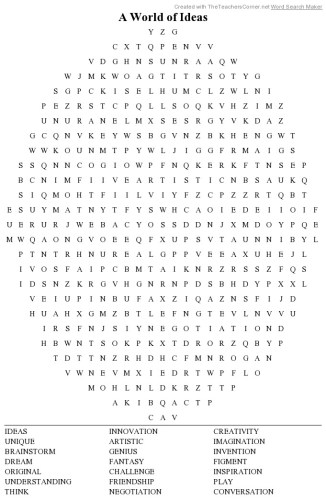
A World of Ideas Word Search


Creative ideas are a little like magic – sometimes seeming to come out of thin air – and can make the world a better place! Find the 21 words in this printable A World of Ideas Word Search about what swapping ideas can conjure up! Here’s the Solution!

Picture Book Review


August 27 – International Bat Night

celebrate-picture-books-picture-book-review-bats-in-the-band-cover

About the Holiday

From the time that darkness falls on August 27 until the sun rises on August 28, people in more than 30 countries organize walks, talks, and all kinds of educational and fun activities related to bats and their conservation. Why not find an event in your neck of the woods—or cave—and celebrate this most unusual and beneficial animal!

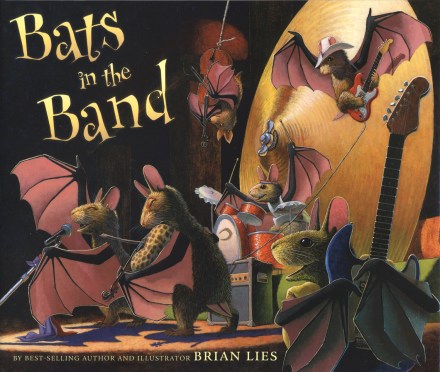
Bats in the Band

By Brian Lies


Huddled together a colony of bats sleeps through the winter, but as the icy weather warms they stretch their wings and take flight to find food. As they swoop through the air chasing the echoes they hear, these animals that live by echolocation sense “that something’s not right. / And then when a bugle blast shatters the night, / that one lonely note tells us just what is wrong: / We’re hungry for sound—we’ve been silent too long.”

The bats swarm to a summertime theater now quiet and dark except for a small glow that invites  them inside. They enter the building—passing hawkers of T-shirts, posters, and hats—and set up the stage and the lights. Some bats have brought their own instruments while others improvise with the leftovers of last season’s concertgoers. “Behind the stage curtain, they’re getting in tune, / making up things out of straws, out of spoons.”

celebrate-picture-books-picture-book-review-bats-in-the-band-one-bat-band

Image copyright Brian Lies, courtesy of Houghton Mifflin Harcourt (hmhco.com)

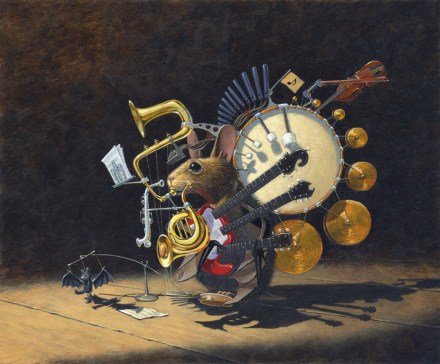
Finally, the conductor lifts his baton, and the concert begins. “We sing together as one voice. / It seems the very walls rejoice! / All together, rafters ringing… / it’s as though our souls are singing.”  Then the strings “change the mood to sweet and mellow” before a one-bat band takes over. “Next up, there’s a country song—/ some lonesome bat done someone wrong. / He’s  gone and broken someone’s heart. / Now everything has come apart.”

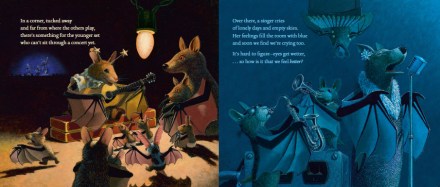
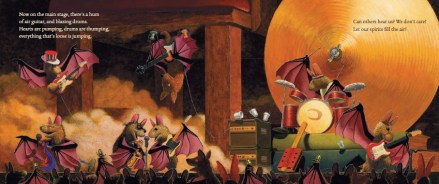
There’s even an entertainer for children far off in a corner where the pups can run and play. Now on stage a blues singer “cries of lonely days and empty skies” that make the bats cry. “It’s hard to figure—eyes get wetter, / …so how is it that we feel better?” There’s not much time for reflection though as a hard-rock band begins “blazing,” “pumping,” and “jumping.”

celebrate-picture-books-picture-book-review-bats-in-the-band-blues-singer

Image copyright Brian Lies, courtesy of Houghton Mifflin Harcourt (hmhco.com)

While everyone is dancing to the beat, the sun begins to rise signaling that it’s time for the bats to go. But in one last blast, all the musicians jam together. “The music soars. Finale’s here, the ending of the song. / It builds and builds—now here it comes! / It’s going…/ going…/ GONG!” With that last bang of the cymbal the bats, “worn out, wrung out, half asleep,” fly from the theater and out into the dawning day. In the air they discover the music in everything from “the roar of a car, or the bark of a pup—/ the sound of the rest of the world waking up.” As they fall into slumber up in their cozy rafters, the bats continue to sway unconsciously. “It’s not our intention, but you understand. / We’re dreaming of being the bats in the band.”

Brian Lies “Bat” books are well-known and well-loved. Bats in the Band continues the excellent storytelling and poetry of his other titles, this time to a rock-n’-roll beat. The idea of bats needing to hear sound after a long winter’s silence is brilliant, and these bats play almost as many different styles of music as there are species of bat. The rhyme scheme is true and musical, carrying the story well through its words and rhythm.

celebrate-picture-books-picture-book-review-bats-in-the-band-rock-n-roll-bats

Image copyright Brian Lies, courtesy of Houghton Mifflin Harcourt (hmhco.com)

Lies’ illustrations remain as clever as ever. The two-page spread of the bats choosing and tuning up their instruments is a joy. Bats make a xylophone from keys hanging on a peg board and two nails for mallets. Instead of a harp, a bat plucks the tines of a plastic comb, and a bendy straw serves as a fine wind instrument. The string section plays while hanging upside down (of course!). The pups’ entertainer will bring a smile to readers’ faces, and the blues singer performs under cool blue lights.

Kids and adults will love lingering over the detailed pages, where allusions to actual concert atmospheres abound. Look for the bats holding aloft lightning bugs in a tribute to a long-held tradition.

Bats in the Band is a rockin’ addition to Brian Lies collection and will be welcome on any child’s shelf—whether they are completing the set or just starting it!

Ages 4 – 8

Houghton Mifflin Harcourt, 2014 | ISBN 978-0544105690

Visit Brian Lies‘ website to learn more about him, view his many books, and see a gallery of his artwork.

International Bat Night Activity

celebrate-picture-books=picture-book-review-spiral-bat-words-word-search

Spiraling Bats Word Search


Find the bat related words in this printable Spiraling Bats Word Search that dips and soars like the flight of a bat! Here’s the Solution.

Picture Book Review
August 4 – Assistance Dog Day

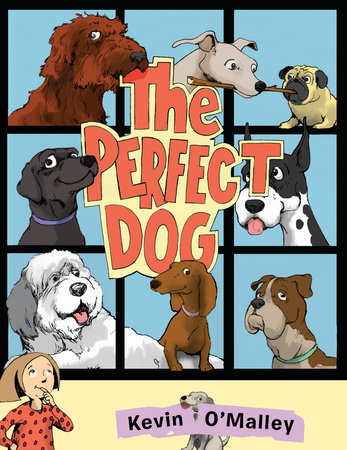
celebrate-picture-books-picture-book-review-the-perfect-dog-cover

About the Holiday

Today’s holiday comes during International Assistance Dog Week, a time to recognize the work and benefits of canine helpers of all types. Assistance dogs offer comfort, independence, and reassurance to people who have them as members of the family. Not only do dogs of various breeds help the vision and hearing challenged, but they are also trained to recognize the signs of medical emergencies, such as heart attacks, seizures, and epilepsy. Owners of these friends and helpers know that they have the perfect dog, just like the little girl in today’s book!

The Perfect Dog

By Keven O’Malley


Getting a dog is a major decision. Paramount, perhaps, is what type of dog is best, and with so many breeds, how do you break it down? When the little girl in The Perfect Dog receives permission to get a dog, she begins her list for just the right pet. “The perfect dog should be big” she says as she imagines holding a Chow Chow. Or maybe “bigger” like a German Shephard, or even “biggest” like a Saint Bernard that stands taller than she is. But a Great Dane? Maybe not that big.

celebrate-picture-books-picture-book-review-the-perfect-dog-smaller

Image copyright Kevin O’Malley, courtesy of pinterest.com/booksbyomalley/kevin-omalley


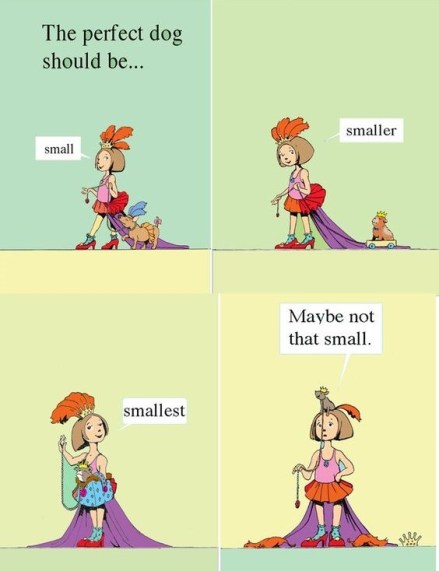
On the other hand maybe “the perfect dog should be small”—standing around knee height—or “smaller”—mid shin height—or “smallest”—able to fit in a purse. But small enough to sit on her head? Maybe not that small. Next she considers the length of the dog’s hair. “The perfect dog should have long hair,” she believes, already assembling her grooming supplies to plump a poodle’s coif. Or the “longer” hair of a Sheep Dog might be fun to comb and cut, and the “longest” hair of an Afghan Hound would be a dream to brush. But the locks of a Komondor? Maybe not that long.

The girl knows the dog should not be too loud or too slobbery, but it should definitely be “fancy.” Speed is also a consideration. “Fast” as a Beagle? Maybe “faster,” like a Dalmatian. But “fastest,” like a Greyhound, could make walking the dog a challenge. Snuggly is nice for quiet times, but a dog so snuggly it takes over the whole chair is not what the girl has in mind. The little girl does not want a pet that is too slow or too messy either.

celebrate-picture-books-picture-book-review-the-perfect-dog-choosing-a-dog

Image copyright Kevin O’Malley, courtesy of pinterest.com/booksbyomalley/kevin-omalley

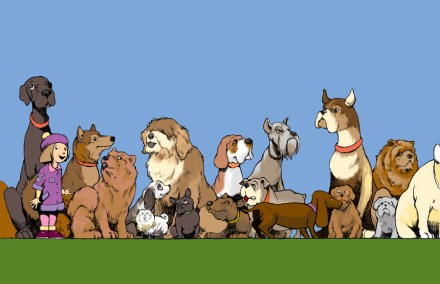
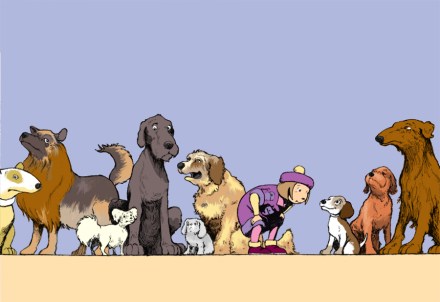
The day finally arrives for the girl and her family to pick out their new pet. There are so many to choose from! Looking into each face and taking each dog’s traits and qualities into consideration, the family decides that “the perfect dog should be happy…happier…happiest!” But there’s still one surprise waiting. Instead of the girl choosing the perfect dog, she reveals that “the perfect dog found me!” And it was a very happy ending!

Part concept book, part tribute to people’s “best friend,” Kevin O’Malley’s The Perfect Dog is a fun romp through different breeds and their unique qualities. If you’ve ever attended a dog show or watched one on TV, you know that there are as many types of canines as there are people. O’Malley applies the language concept of superlatives to describe big, bigger, biggest; long, longer, longest; and other shapes, sizes, and traits in a way that attracts kids’ attention and fosters understanding.

celebrate-picture-books-picture-book-review-the-perfect-dog-happy-dog

Image copyright Kevin O’Malley, courtesy of pinterest.com/booksbyomalley/kevin-omalley

As the little girl “tries out” various dogs, O’Malley’s bold, full-bleed illustrations proceed from funny to funnier to funniest, often to the little girl’s dismay. She gets knocked down by the biggest of biggest dogs, finds herself hidden in the longest of longest hair, and flies straight out from the end of the leash attached to the fastest of fastest dogs.

O’Malley knows, too, the real secret about choosing a new pet—one that kids will delight in, just as they do in this book. For any pet lover The Perfect Dog is…perfect!

Ages 3 – 8

Crown Books for Young Readers, Penguin, 2016 | ISBN 978-1101934418

Be sure to visit Kevin O’Malley’s website! You can learn more about his books, watch a video of one of his school visits, and even download free books!

Assistance Dog Day Activity

celebrate-picture-books-picture-book-review-dog-breeds-word-search

I (Heart) Dogs! Word Search


Assistance dogs come in all shapes, sizes, and breeds. Find the names of more than 25 types of dogs in this printable I (Heart) Dogs! Word Search

Picture Book Review
June 27 – National Sunglasses Day

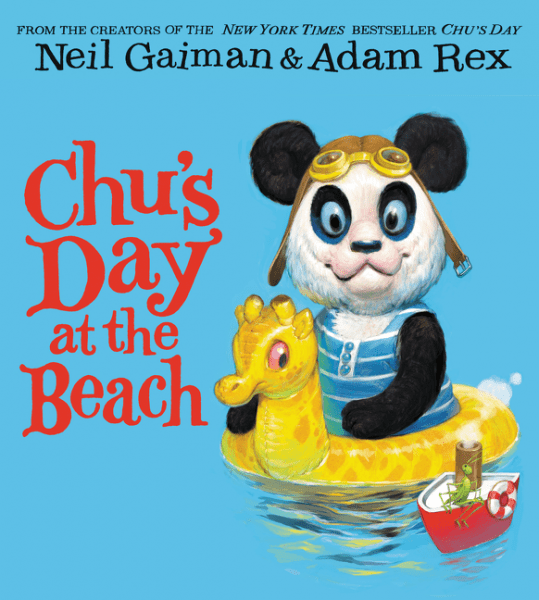
celebrate-picture-books-picture-book-review-chu's-day-at-the-beach

About the Holiday

Tinted glasses have been around since judges in ancient China used them to disguise their emotions. Modern sunglasses were first sold in 1929 by Sam Foster on the Atlantic City Boardwalk, and Bausch and Lomb was commissioned in the 1930s by the Army Air Corps to create glasses to ease the high-altitude glare pilots faced. In 1936 Polaroid filters were first used to protect eyes from  damaging UV rays in Ray Ban sunglasses.Since the 1970s movies have helped escalate the popularity of many styles of sunglasses as fans strive to look like their favorite actors and actresses. Today, grab your sunglasses or shop for new ones because—you know why…sing it with me… “The future’s so bright, I gotta have shades!”

Chu’s Day at the Beach

Written by Neil Gaiman | Illustrated by Adam Rex


As readers of this series know, “when Chu sneezed, big things happened.” With this tantalizing and slightly-ominous-in-a-way-kids-love statement, Chu’s latest adventure begins. Turning the page kids discover that Chu and his family have headed out to the beach. Chu is having a great time: the octopus selling ice-cream gives him an extra scoop of vanilla, and Chu meets a crab in a rock pool; even Chu’s mom is enjoying a book under the umbrella and his dad is wading in the ocean.

Chu takes his sunglasses off to better enjoy the bright, sunny day, but suddenly Chu’s nose tickles. The tickle grows until it fills his whole head and he can’t hold it in anymore—“AAH- AAAAH- AAAAAH- CHOoOoOoOO!” Chu looks out to sea. “‘Uh-oh,’” he says. Everyone on the beach comes down to the water’s edge to look at the huge suspended wave Chu has sneezed up.

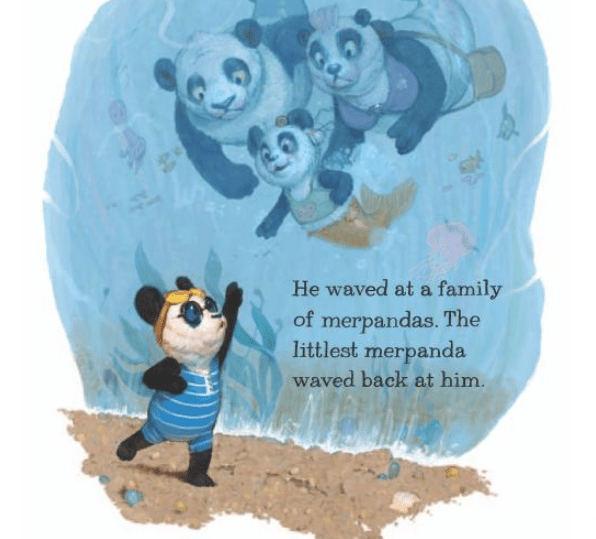
Like standing in front of an aquarium exhibit, the beachgoers find themselves eye-to-eye with sea creatures who are suddenly encased in the wall of water. The fish, turtles, whales, and merpandas are sad—“‘With the sea broken, I cannot go home,’” one whale explains. The ice-cream vender tells Chu to sneeze again and put the sea “‘back the way it was.’” But try as he might, Chu can’t sneeze. A seagull tickles Chu’s nose with a wing feather and the octopus offers Chu a fizzy drink with bubbles that go up his nose, but nothing elicits a sneeze.

celebrate-picture-books-picture-book-review-chu's-day-at-the-beach-merpandas

Interior illustration by Adam Rex, courtesy of Neil Gaiman’s Journal Archives, April 2015 (http://journal.neilgaiman.com/)

All seems lost until Tiny the snail reveals that sometimes he sneezes when he looks at the sun. Chu removes his sunglasses and gazes into the light. “AAAAACHOOOOO!” “‘There, said Chu. Everything is back just as it was before.’” The sea creatures are happy that they get to return to their homes, the ice-cream seller is so pleased that she scoops up another cone for Chu, and Chu? He declares that it was the best day at the beach ever.

With his singular style Neil Gaiman conjures up a story for kids that combines just the right amount of sweetness and absurdity to keep the giggles going from the first page to the last. We all experience those uncontrollable mishaps and “oh no!” moments where a little help and empathy is appreciated. And what child wouldn’t love to stop the ocean, even if only for a moment? Gaiman’s repeated sneezes will have kids “Aah-chooing” along, and an animated reading of the chorus “AAH. AAAAH. AAAAAH. NO.” is sure to bring laughs and requests for “Again! Again!”

If only the beach was as full of interesting creatures as Adam Rex portrays in his vivacious illustrations! Crossing the dunes Chu and his family encounter an intriguing array of animals stretched out on towels—from a tiny cricket to a pangolin to a hunky frog with his clever insect-snack-strip-adorned umbrella and more. Ice-cream vendors no doubt wish they had the eight arms of Rex’s frozen-treat seller, and there’s even an ostrich with his head in the sand. Chu’s tidal wave teems with surprised sea creatures, some stuck mid-way between their ocean world and the dry outside. Chu remains as cute as ever, inviting kids to join him on his latest adventure.

Chu’s well-loved character and repeat readability make Chu’s Day at the Beach a sunny addition to young children’s bookshelves.

Ages Birth – 7

HarperCollins, 2015 | ISBN 978-0062223999 ♦ HarperFestival Boardbook, 2016 | ISBN 978-0062381248

National Sunglasses Day Activity

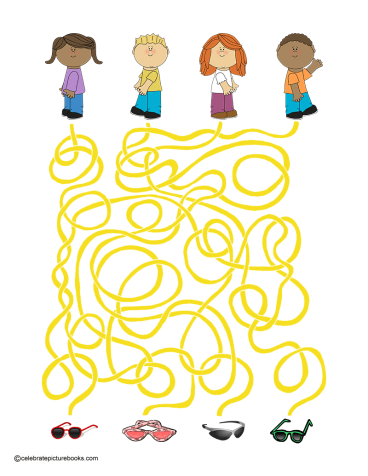
celebrate-picture-books-picture-book-review-sunglasses-matching-puzzle

Perfect Sunglasses Matching Puzzle


The summer sun is so bright that these friends need sunglasses before they go out to play! Can you follow the paths to match each child with the perfect pair? Get the printable Perfect Sunglasses Matching Puzzle and have fun!

June 26 – National Canoe Day

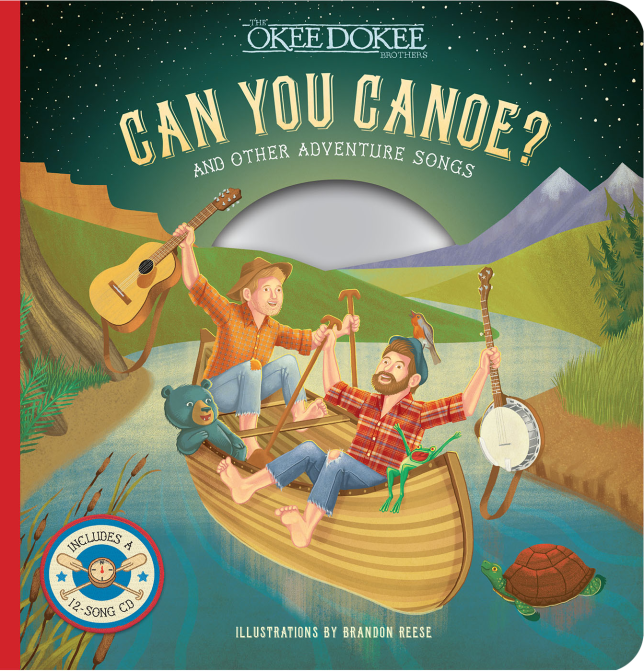
celebrate-picture-books-picture-book-review-can-you-canoe?

About the Holiday

June is the perfect month to explore the great outdoors up close through camping. Whether you enjoy pitching a tent or renting a cabin, all the enjoyment of hiking, fishing, swimming, and of course toasting marshmallows and singing around the campfire await!

Can You Canoe? And Other Adventure Songs

Written by The Okee Dokee Brothers—Joe Mailander and Justin Lansing Illustrated by Brandon Reese


Is it possible to sing a picture book? It is when the book is Can You Canoe?! These twelve humorous, rip-roaring tunes take readers and singers deep into the fun of what it means to spend time enjoying nature. Wild animals, tall tales, legendary characters, and all the sounds and flavors of country livin’ are represented in these catchy original songs that will have you singing and laughing along in no time.

Through the Woods introduces the line-up with an apt question: “I’m wondering if you’d go wandering with me / Through the wilderness and woods / To where the winds are blowin’ free…” But even the speaker realizes there might be doubts—“You’re wondering if I go wandering with you / what kind of trouble we’ll get ourselves into. / Would it be wrong to tag along / With a band of vagabonds?”—and assuages them in the end.

celebrate-picture-books-picture-book-review-can-you-canoe?

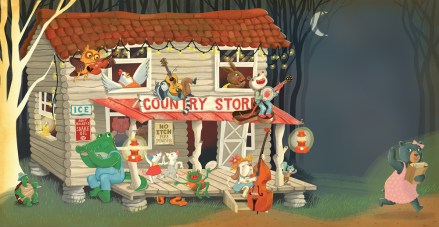
Jamboree takes readers to a country store where there’s dancing every Friday night to a song called “Jamboree” that’s played with abandon and just a little off key. But all you need is to “grab you a partner / And hold on tight / ‘Cause we ain’t stoppin’ / Until we see the light.”

In Black Bear Mama a couple learns there’s no arguing with a mother bear on the lookout for food for her cubs, and Echo Echoooo reassures that nothing, not even the widest valley, can keep true love apart. Can You Canoe? is a celebration of the simple life out on the water without distractions: “Can you canoe on a little boat built for two? Can You Canoe?…I wanna float down a river with you.”

Mr. & Mrs. Sippy can take you by surprise as this isn’t a tune about straws or baby cups. Instead, this is a rambling life story that starts like this: “Mr. and Mrs. Sippy / Got married in the fall. / They left the church that very same day / For their honeymoon in St. Paul, / Singin’ M-I-double-S-double-S-I-P-P-I / M-I-double-S-double-S-I-P-P-I. The couple roams on down to St. Louis to make themselves a home, then raises children in ‘good old Memphis Town.” When they have no place left to go, “they drift down past New Orleans / To the Gulf of Mexico.” Then you’re invited to sing the chorus backwards and forwards once again!

The Legend of Tall Talkin’ Sam echoes some of the great legends of the American West, such as Paul Bunyan and Babe the Blue Ox. Samantha Rosie-Anna, aka Sam, was “born to a pioneer woman and a Rocky Mountain mountain man” and “come out ridin’ a panther and ropin’ a twister outta the sky.” Sam’s so big that when she sleeps under a blanket of snow, she lays her “hat down in Montana and my boots in Colorado.” But even though this girl is “half horse, half mountain lion and half grizzly bear,” she admits there are things she doesn’t know—“like how some little stream / Carved out one big ol’ canyon, / Or how a fire’s angry flame / Can be your best companion.”

celebrate-picture-books-picture-book-review-can-you-canoe?

Can You Canoe? images courtesy of Brandon Reese (www.brandonreese.com)

Jackalope addresses one of the greatest American myths—that of a creature of mixed jack rabbit and antelope blood that roams the plains of the West. With tongue in cheek, the mysterious whereabouts of the Jackalope is exposed in the chorus: “Well I’ve seen ‘em in books and in taxidermy shops. / I’ve seen ‘em hangin’ on the wall. / But I ain’t never seen one in the livin’ light of day— / It’s almost like they don’t exist at all.” But the last verse reveals that perhaps this odd apparition has a purpose after all: “So when you’re searchin’ for the truth / And you’re at the end of your rope, / You might find you don’t need no proof / To believe in the thing that gives you hope— / And for me that’s the jackalope.”

These and a few other rollicking, gold-nugget songs will make any camp out—or even camp in—a knee-slappin’ good time. Can You Canoe comes with a CD so you can sing along to all your favorites—and I have no doubt each song will become a favorite in no time!

Joe Mailander and Justin Lansing have known each other all their lives and know a thing or two about adventures and how to make them more fun for friends and families. This Grammy-winning duo conjure up catchy tunes and compelling stories to make their songs unforgettable. These poems/songs have as much heart and wonder as a new frontier and invite readers and singers to explore!

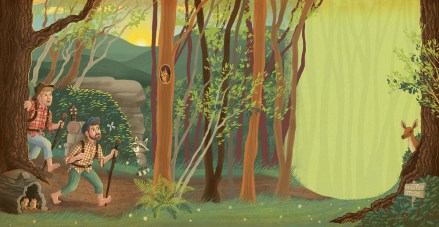
Brandon Reese lends his distinctive talent to each song, creating animated scenes loaded with the kinds of details and drama kids love. Barefoot travelers with their packs on their backs and strong walking sticks in hand pad through woods populated with friendly wildlife. The country store is alive with animal musicians and dancers on the porch, on the roof, and hanging out every window while broadsides for Aunt Malady’s Snake Oil and No Itch Flea Powder hang on the walls. A cozier camping tent you’ll never find, and canoe paddlers are accompanied by a raccoon poling a crocodile boat while a rabbit floats along on the belly of a turtle. Each picture invokes the great outdoors in all its glory.

Can You Canoe is a must for any trip, whether you’re traveling far or just down the road!

Ages 4 and up

Sterling Children’s Books, 2016 | ISBN 978-1454918035

National Canoe Day Activity

celebrate-picture-books-picture-book-review-canoe-maze

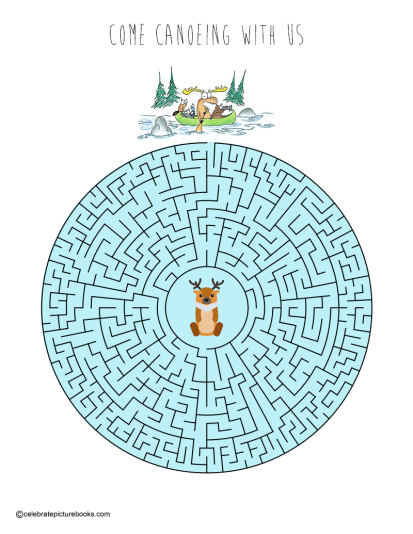
Come Canoeing With Us Maze


These friends want to canoe together but first they must pick up little deer at the center of the lake. They need your help navigating their way in this printable Come Canoeing With Us maze! Here’s the Solution!

June 21 – World Music Day

celebrate-picture-books-picture-book-review-hey-charleston

About the Holiday

Celebrated every year on the summer solstice, World Music Day, also known as the Fête de la Musique, brings together professional and amateur musicians to ply their trade and entertain audiences for a day full of sound. The day was first conceived in 1982 by French Minister of Culture Jack Lang, who elicited the help of Maurice Fleuret, the Director of Music and Dance. When Fleuret discovered that half of the nation’s children played a musical instrument, he devised a way to bring people out into the streets for a music festival. Since then, the event has become an international phenomenon, celebrated in more than 700 cities in 120 countries worldwide. To participate consider organizing or attending a  free concert or enjoying music in your favorite way.

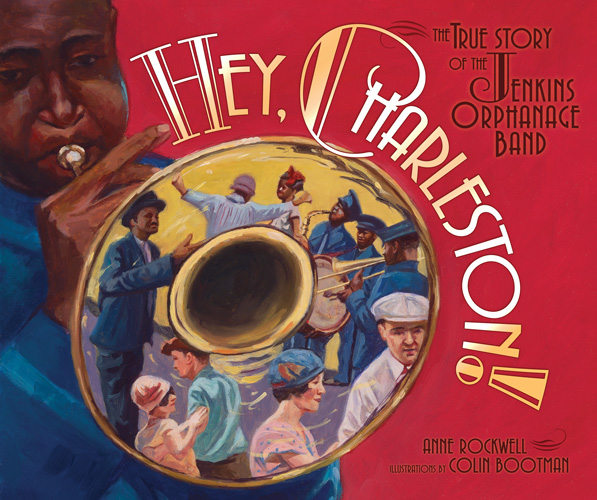
Hey, Charleston! The True Story of the Jenkins Orphanage Band

Written by Anne Rockwell | Illustrated by Colin Bootman


“Have you ever known someone who was always trying to turn bad into good, always seeing hope where others saw despair?” This question, which begins the biography of Reverend Daniel Joseph Jenkins and the orphans he loved is as relevant today as it was in the early 1900s, when this story takes place. Reverend Jenkins was the pastor of a small church in Charleston, South Carolina. One night while collecting scrap wood at a railroad yard, he discovered a group of boys huddled and sobbing inside a freight car. Reverend Jenkins took them to his church, fed them, and gave them a warm place to sleep. He knew what it was like to be an orphan because he had been one too.

Soon more orphans showed up at the church door, and Reverend Jenkins accepted them all. Room grew tight so he convinced the city officials to give him an abandoned warehouse for his orphanage. There was just one drawback: the warehouse was next to a prison, where less-than-desirable sounds emanated from the walls. Reverend Jenkins figured out a way to drown out the noise, however. He gathered the orphans and led them in song outside the orphanage door. The kids were good singers, and that gave the reverend an idea.

He had grown up during the Civil War and remembered the marching bands that led the soldiers into battle. He remembered the instruments these musicians carried and asked for any that were now unused to be donated to the children. Instruments poured in! They were polished and tuned and the children learned to play under the direction of the best teachers in Charleston. With the money Reverend Jenkins thought they could make entertaining people, he planned to buy a farm for the orphans.

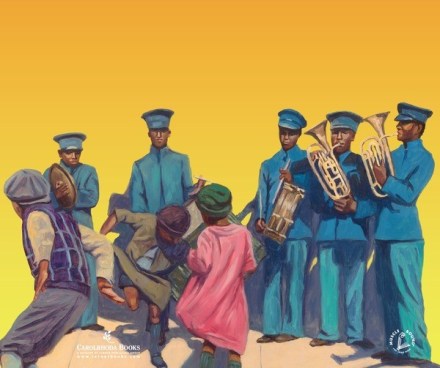
Soon the Jenkins Orphanage Band was playing on street corners and in other venues. Many of the kids were descended from the Geechee or Gullah people who lived on islands off the coast of South Carolina, and they played the old band music with their own special rhythm, called “rag.” “A couple of Geechee boys would lead the band by doing a dance—twisting and twirling and tapping their toes, knocking their knees, and flapping their arms.” People loved the music, but most South Carolinians were poor and couldn’t donate much to the orphans. Reverend Jenkins decided to take his band to New York City. The band took the city by storm! People loved when the kids played their raggedy music and soon were imitating the Geechee boys’ dance. “Hey, Charleston,” they’d shout, “Give us some rag!” They called the dance “the Charleston,” and soon everyone was doing it.

celebrate-picture-books-picture-book-review-hey-charleston-interior-art

The orphans made so much money they were able to buy a new house, and the music instruction became so renowned that families began paying to have their children taught along with the orphans. The band continued to travel around the United States, and they were even invited to perform in the inaugural parade for President Theodore Roosevelt. Finally, they were able to buy the farm Reverend Jenkins had dreamed of.

In 1914 the Jenkins Orphanage Band was even invited to play for Britain’s King George V at the Anglo-American Exposition in London. While they were there, however, Britain entered World War I. The British government ensured that the band had safe passage back home, but many other Americans were stranded in England. Reverend Jenkins offered to lend these citizens the money needed for them to return home as well.

The ship sailed silently through the dangerous Atlantic Ocean until it reached an American port. Once safe the passengers shouted, “‘Hey, Charleston! Give us some rag!’” Happy to be home, the band tuned up their instruments and played loudly and enthusiastically for the shipboard audience. As the passengers disembarked in New York Harbor, crowds greeted them with a hearty welcome. Back home “as they lay down to sleep that night, those band players knew they had done what Reverend Jenkins always taught them. They had turned bad into good.”

Anne Rockwell succinctly and clearly relays the story of the Jenkins Orphanage Band while also retaining all the heart and soul of this fascinating group of children and their dedicated caregiver. The true-life tale is mesmerizing, not only for the historical details of the growth of ragtime music and the Charleston dance but for the accomplishments of the orphans once given love, acceptance, and education. Rockwell’s conversational tone contributes to the story’s smooth, flowing pace, which will keep listeners or readers rapt from beginning to end.

Colin Bootman’s bold two-page spreads illuminate the sights and sounds of the early 1900s for readers. Emphasizing the personal connections between Reverend Jenkins and the orphans as well as the band and their audiences, Bootman’s vibrant paintings are full of people watching, dancing, marching, and celebrating these boys’ awesome gifts.

Ages 6 – 10

Carolrhoda Books, 2013 | ISBN 978-0761355656

World Music Day Activity

celebrate-picture-books-picture-book-review-musical-instruments-word-search


It’s Instrumental Word Search


Triangles may not get a lot of play in an orchestra, but there’s plenty of play in this printable It’s Instrumental Word Search that contains the names of 20 instruments! 

June 18 – International Picnic Day

celebrate-picture-books-picture-book-review-picnic-john-burningham

About the Holiday

Somehow food always tastes better when eaten outdoors. Today’s holiday gives you a chance to test that theory, by packing a basket or cooler and heading out to a forest, beach, park, playground, or backyard picnic table near you! Whether your repast is simple peanut butter and jelly sandwiches or an elegant spread, you can enjoy the company of friends and family in the great outdoors!

Picnic

By John Burningham


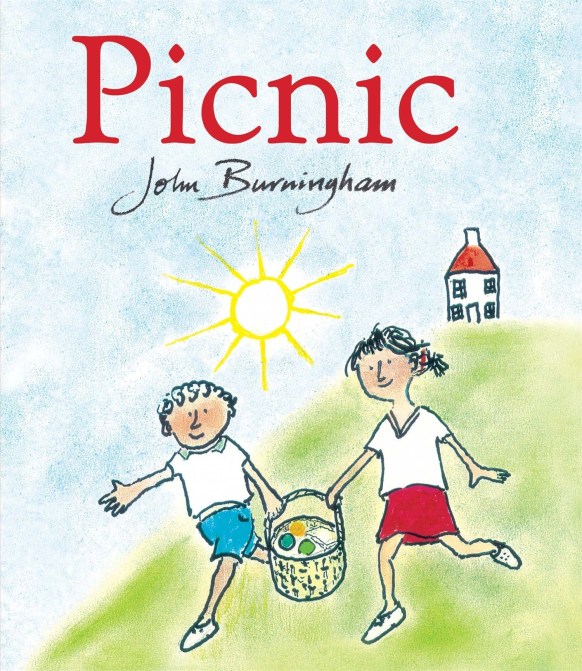
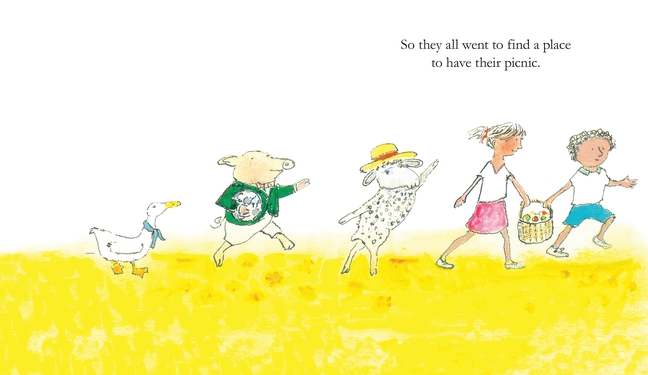
The curly-haired boy and pony-tailed girl who live in the house on the hill pack a picnic lunch and head out. At the bottom of the slope they meet three friends—Sheep, Pig, and Duck. Boy and Girl invite this dapper trio to join them, and they take off single-file to find a picnic spot. How could they have missed seeing Bull? Well, Bull sees them and begins a chase.

“Duck, Pig, Sheep, Boy, and Girl ran as fast as they could toward the woods to hide from Bull.” They successfully dodge him by hiding behind some trees. Do you see them? After Bull gives up the chase the five friends come out of the woods, hoping to begin their picnic. But the day is full of mishaps—first Sheep’s yellow hat blows away then Pig’s ball rolls down the hill. Can you help find them?

celebrate-picture-books-picture-book-review-picnic-john-burningham-interior-art

With their possessions are safely back where they belong, the little troop continues their search for the perfect spot but is delayed again when Duck loses his scarf. At last they find a place in the field to lay their blanket. They eat and play games until it’s time to go home. Exhausted, they trudge up the hill toward home. The friends aren’t quite ready to part yet, though, and Girl and Boy invite Sheep, Duck, and Pig for a sleepover. If you’d like to join them, there might just be room for you too!

John Burningham’s classic-style story of a simple outing turned day-long odyssey will delight small children. Incorporating suspense, “oh-no!” moments, and questions eliciting interaction, Picnic invites readers to join Boy, Girl, Duck, Sheep, and Pig on their excursion. The easy-to-find objects hidden in the illustrations will give even the youngest readers a sense of inclusion, camaraderie, and accomplishment. From page to page and event to event, kids will keep giggling and following these engaging characters.

Burningham’s familiar and beloved artwork lends a lighthearted, cheerful atmosphere to the friends’ day, and the colorful, oversized format is as open and welcoming as the airy field they picnic in. Girl, Boy, Duck, Sheep, and Pig frolic in lively scenes, and the hidden objects they search for take just a perfect moment’s scan of the page for young children to find.

Picnic is sure to be a favorite story-time request.

Ages 2 – 5

Candlewick, 2014 | ISBN 978-0763669454

International Picnic Day Activity

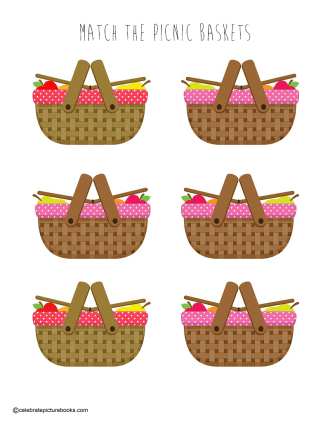
celebrate-picture-books-picture-book-review-picnic-basket-matching-puzzle

Match the Picnic Baskets Puzzle


Six friends packed three identical picnic baskets, but somehow they were mixed up! Help the kids find the picnic baskets that are the same, so they can eat lunch. Print the Match the Picnic Baskets puzzle here!