June 10 – It’s National Home Ownership Month

celebrate-picture-books-picture-book-review-sir-simon-super-scarer-cover

About the Holiday

Owning a home is a major goal for many people, and while home ownership provides security for individuals and families, it’s also good for cities and towns, offering stability, economic benefits, and community cohesion. To that end, today’s holiday was established in 2002 to help people negotiate the sometimes confusing elements of finding and purchasing a home. A home is so much more than just a building, and each person has their own idea about what makes a home perfect. Sometimes you can’t really put your finger on it—it’s just a feeling. And if—as in today’s book—you’re lucky enough to share your home with an unseen guest, that makes it all the better!

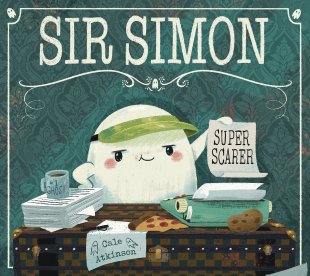
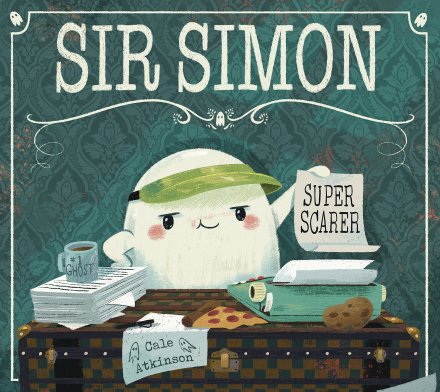
Sir Simon: Super Scarer

By Cale Atkinson


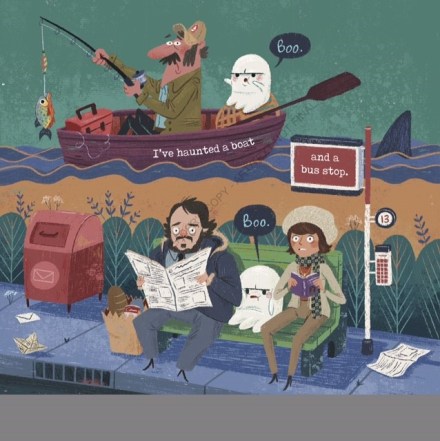
Be careful as you open the book because if you’ve never seen a ghost, you’re about to—“Boo!” It’s ok if you were scared, the ghost says as he displays his business card, which reads “Sir Simon / Super Scarer / Ghostest with the mostest.” This professional scarer has “haunted and scared all sorts of things” from a whole forest and an unimpressed bear to a boat and a bus stop to a pizza, a ukulele, and a potato.

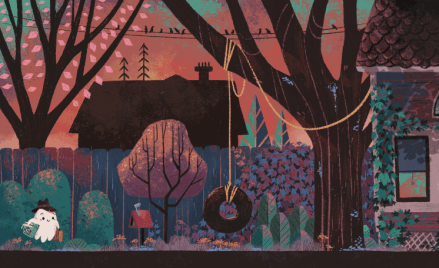
celebrate-picture-books-picture-book-review-sir-simon-super-scarer-house

Copyright Cale Atkinson, 2018, courtesy of Tundra Books.

Finally, though, Sir Simon is “being transferred to a house.” While Simon is happy about having a haunted house all to himself, he’s not so thrilled about all the Ghost chores a house requires. What kinds of chores? Well, all of those eerie sounds and creepy circumstances don’t happen by themselves. They’re all Simon “stomping in the attic” with an old shoe on each hand, “flushing the toilet” in the middle of the night, “hiding and moving stuff around,” and “standing creepy in the window wearing old-timey clothes.” And it’s only after these chores and more that Simon can do what he really likes to do.

celebrate-picture-books-picture-book-review-sir-simon-super-scarer-boat

Copyright Cale Atkinson, 2018, courtesy of Tundra Books.

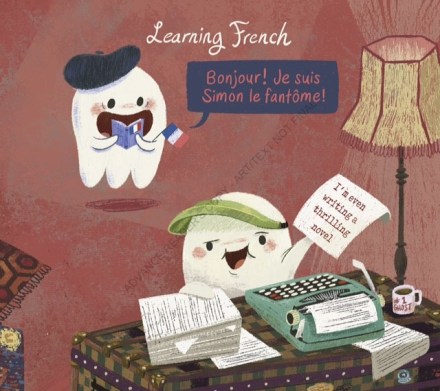
It seems in his afterlife Simon likes to dabble in the arts, learn French, and even write a thriller. Once Simon is ensconced in his new digs, he hears that grandparents are going to be moving in. He’s happy with this news because on “the pyramid of haunting,” old people are at the top since they sleep a lot, require fewer chores, and are oblivious to ghostly presences. But just as Simon is welcoming his new family home, he discovers that it includes a kid. A kid who sees him right away. A kid who has a lot of questions and a lot of comments. A kid who wants to be a Ghost too.

Simon is more than a bit miffed at this turn of events. It means more chores and less free time. Unless… Simon suddenly thinks Chester “would make a top-notch Ghost.” He takes Chester up to the attic, where he just can’t help looking through all of Simon’s stuff—much to Simon’s consternation. Simon gets Chester all suited up in the appropriate Ghost garb, gives him a list of “activities,” and sends him on his way. First up is making scary animal noises.

celebrate-picture-books-picture-book-review-sir-simon-super-scarer-french

Copyright Cale Atkinson, 2018, courtesy of Tundra Books.

As Simon happily types away on his novel, he hears Chester’s “Moo. Mooooooo. MOOOOOOOOO!” Incensed, Simon finds Chester at the heating vent and lets him know that “spooky and cow do not go together.” In fact, Chester does not seem to have a scary gene in his body. After trying and failing at every chore on the list, Chester is so exhausted he falls asleep with a thud.

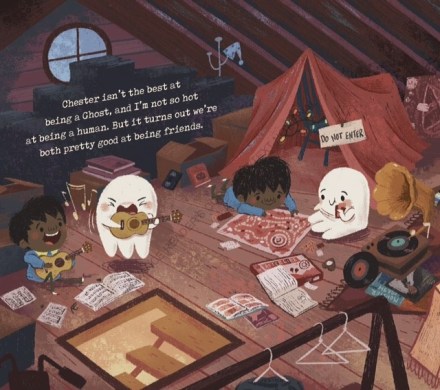
Simon puts Chester to bed and then looks around his room. He sees that he and Chester actually have a lot in common—from the ukulele to drawing and writing to moving a lot. But does Simon feel bad for tricking Chester into doing his chores? No! Well… yes. The next morning Simon comes to offer his help with Chester’s chores, but they’re not as easy as they look. Simon has to admit that while “Chester isn’t the best at being a Ghost,” he’s “not so hot at being a human.” But there is something that they are both good at and that’s being friends.

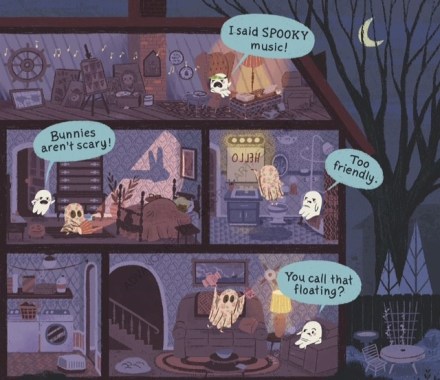
celebrate-picture-books-picture-book-review-sir-simon-super-scarer-chores

Copyright Cale Atkinson, 2018, courtesy of Tundra Books.

Cale Atkinson’s unique take on the ghostly life—or afterlife—is laugh-out-loud funny as Sir Simon Spookington goes about his spectral chores with pride tinged with exasperation at the time they take away from his preferred creative pursuits. When he discovers that a kid has moved into his house—and, what’s more, wants to be a ghost too—Atkinson’s apparition with attitude turns prickly with the disruption Chester causes and perfectionist when Chester’s haunting doesn’t live up to his standards. Simon’s strict chore schedule, his haunting pyramid, and his wisecracking responses to Chester are droll and hilarious, and Chester’s attempts at ghosting are silliness at their best.

celebrate-picture-books-picture-book-review-sir-simon-super-scarer-playing-together

Copyright Cale Atkinson, 2018, courtesy of Tundra Books.

Readers will fall in love with Simon from the moment they open the cover to find twenty-four snapshots of the little ghost doing his chores. Atkinson’s free-wheeling creativity makes each page a showstopper as this haunted house is packed full of clever details and allusions to favorite scary and adventure movies and books in every nook and cranny. Atkinson also uses juxtaposition to great effect in images of  Simon floating through his chores with a frown and furrowed brow followed by those of a happy and relaxed Simon as he paints, writes, and does cross-stitch as well as in two cutaways of the house—one at night while Chester does Simon’s chores and one during the day as Simon attempts to do Chester’s. The final spread of Simon and Chester hanging out as friends is endearing and heartwarming.

Sir Simon: Super Scarer is a must for fans of ghost stories, funny stories, and friendship stories and will be enjoyed by adults as much as by kids. This book will be asked for again and again, making it a spooktacular addition to home, school, and public libraries.

Ages 4 – 8 

Tundra, 2018 | ISBN 978-1101919095

To learn more about Cale Atkinson, his books, and his art, visit his website.

National Home Ownership Month Activity

celebrate-picture-books-picture-book-review-pop-up-houses-coloring-page

Pop Up Houses Play Set


You can own your own home with this printable Pop Up Play Set thanks to Education.com. It has a house for you and one for a friend! Give your houses some color, plant the trees and move in! Print on heavy paper to make the figures sturdier.

Pop Up Houses Play Set

celebrate-picture-books-picture-book-review-sir-simon-super-scarer-cover

You can find Sir Simon Super Scarer at these booksellers

Amazon | Barnes & Noble | Books-a-Million | IndieBound

Picture Book Review


June 7 – It’s Pet Appreciation Week

celebrate-picture-books-picture-book-review-lola-gets-a-cat-cover

About the Holiday

Pets give us so much love and joy that we often want to do something special for our furry friends in return. The first full week of June gives us the opportunity to show our pets how much we appreciate them! Why not spend a little extra time walking or cuddling with your pet? Or maybe make them a favorite treat or get them a new toy. Another way to show how much our pets mean to us is to schedule a regular check-up to make sure they’re healthy and up-to-date on vaccinations. However you celebrate, you know your pet will appreciate it!

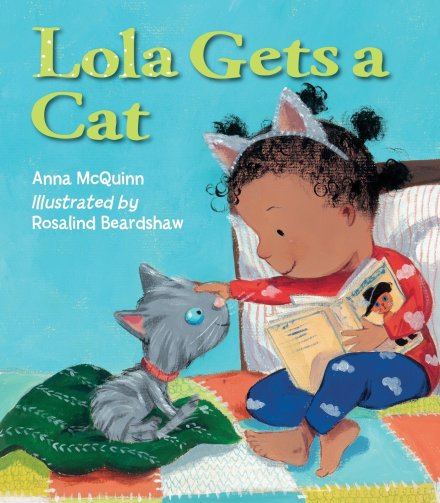
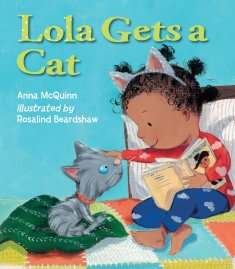
Lola Gets a Cat

Written by Anna McQuinn | illustrated by Rosalind Beardshaw


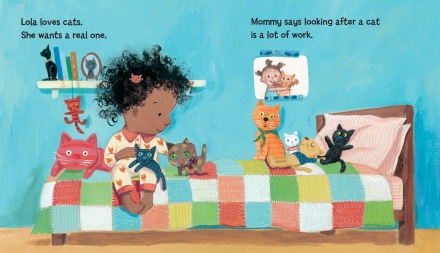
Lola loved cats, and while she had a room full of stuffed cats in all colors and sizes, she wanted a real kitten of her own. Her mother told her that “looking after a cat is a lot of work.” Lola wanted to learn more, so Mommy took her to the library to get a book about cats. Lola learned lots of interesting information about cats and how to take care of them.

celebrate-picture-books-picture-book-review-lola-gets-a-cat-loves-cats

Image copyright Rosalind Beardshaw, 2017, text copyright Anna McQuinn. Courtesy of Charlesbridge.

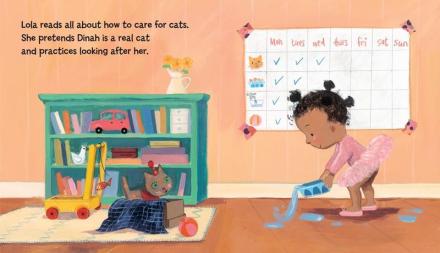
Lola decided to pretend that Dinah, one of her stuffed kitties, was real. She made a special bed for Dinah from a shoe box and blanket. She made a chart and checked off when she fed, bathed, and played with Dinah. Mommy saw what a good job Lola did with Dinah and agreed that Lola could have a cat. First, Lola and Mommy went to the computer to “find out how to adopt one.” Then they went to the animal shelter where Jeremy showed “them three perfect cats.”

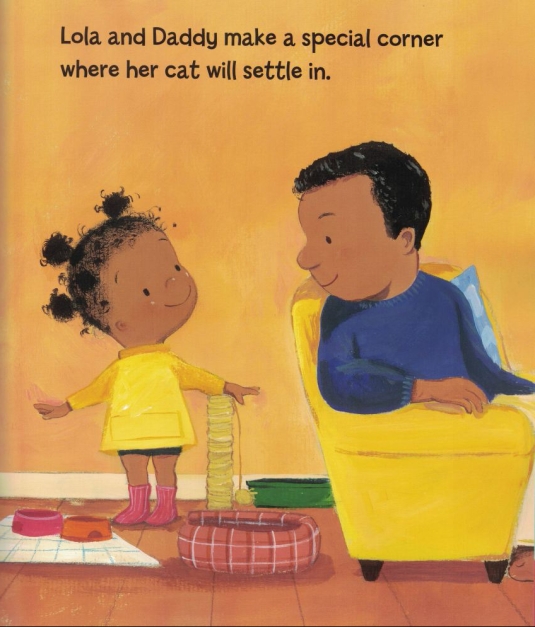
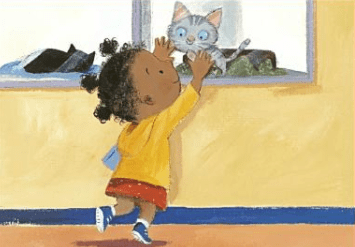
Lola looked at the orange tabby, the black cat who was napping, and the playful gray ball of fluff. Even before Lola made her choice, the little gray one chose her! Jeremy gave Lola a list of all the things she’d need at home to make the little kitten feel comfortable and happy. The next day, Lola and Mommy went shopping at the pet store, and Lola and Daddy set up a special corner in the house with the cat’s toys and bed.

celebrate-picture-books-picture-book-review-lola-gets-a-cat-feeds-dinah

Image copyright Rosalind Beardshaw, 2017, text copyright Anna McQuinn. Courtesy of Charlesbridge.

Finally, everything was ready. Lola and Mommy went back to the shelter. The kitten was afraid to go into the carrier at first, but including her own blanket made her feel safe. At home, Lola watched her new kitten explore her corner and new things. Lola named her cat Makeda, “the name of an African queen.” Every day, Lola took “excellent care of Makeda.”

Lola’s friend Ty was excited to meet Makeda and even brought her a present. Makeda now feels at home—especially when she’s cuddling with Lola! At night Lola reads a story to Makeda before bedtime. She loves Makeda, and reading to her “is the best of all.”

celebrate-picture-books-picture-book-review-lola-gets-a-cat-daddy

Image copyright Rosalind Beardshaw, 2017, text copyright Anna McQuinn. Courtesy of Charlesbridge.

Anna McQuinn’s little Lola is loved by young readers for her curiosity, gentle nature, and can-do spirit. Lola’s sweet personality overflows in this story as she decides that she’d like a pet and then demonstrates to her mommy and daddy that she understands the responsibility. Through her charming storytelling, McQuinn invites little readers to be part of Lola and Makeda’s journey and share in their warm friendship. Lola’s supportive parents offer guidance but allow Lola to thoughtfully make her own decisions and show what she can accomplish.

celebrate-picture-books-picture-book-review-lola-gets-a-cat-gray-cat

Throughout her colorful illustrations, Rosalind Beardshaw’s Lola shows intelligence, self-confidence, and pride as she practices tending for a cat, learns about cat behavior and care, listens to the animal shelter manager, and gets everything ready for her new cat. Detailed images realistically depict the items a cat requires, a bit of the procedure of adopting a shelter cat, how to give a new pet space to assimilate into their new environment, and a good example of a pet-care chart, giving those contemplating a new pet a good primer for children. The quiet joy that infuses each page, makes Lola and Makeda  perfect companions for little readers.

Whether new to the Lola series, adding to a collection, or looking for a character and story a little one will fall in love with, you’ll find that Lola Gets a Cat is perfectly at home on family and classroom bookshelves.

Ages 2 – 5

Charlesbridge, 2017 | ISBN 978-1580897365 (Hardcover) | ISBN 978-1580897365 (Paperback)

Discover more about Anna McQuinn and her books on her website.

To learn more about Rosalind Beardshaw, her books, and her art, visit her website.

Kids and Pets Day Activity

celebrate-picture-books-picture-book-review-match-the-kittens-puzzle

Match the Kittens Puzzle


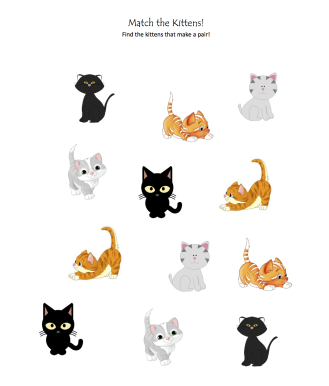
These kittens all have a twin, but they got mixed up while playing! Can you find the pairs again in this printable Match the Kittens Puzzle?

celebrate-picture-books-picture-book-review-lola-gets-a-cat-cover

You can find Lola Gets a Cat at these booksellers

Amazon | Barnes & Noble | Books-a-Million | IndieBound

Picture Book Review

Picture Book Review

June 6 – National Great Outdoors Month

celebrate-picture-books-picture-book-review-bear-out-there-cover

About the Holiday

Getting outside is one of the joys of summer, but with all the fun games to play and not-so-fun-but-necessary chores to do inside, sometimes a day, a week, or even the whole summer can go by without your ever really getting to enjoy the sunshine, fresh air, and outdoor activities As schools close, leaving more time for leisure pursuits, make sure to take the opportunity of this month-long holiday to plan some time to explore the great outdoors through hiking, biking, swimming, camping, and just plain playing. 

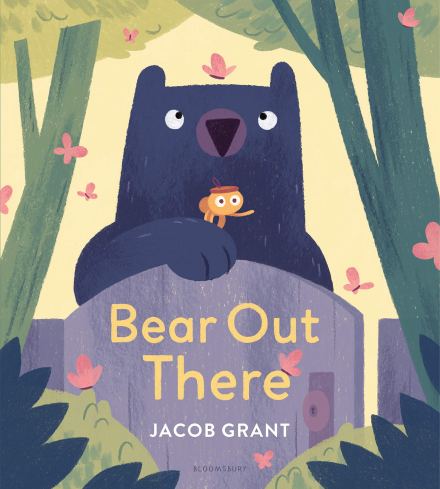
Bear Out There

By Jacob Grant


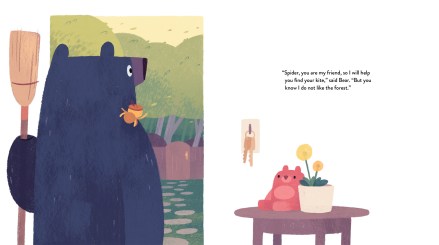
While Bear had tea, Spider was showing him the kite he had made. “He was very excited to fly it out in the yard.” Spider loved everything about the outdoors—the sun, the gentle breeze, the plants, and even the bugs. Bear loved everything about staying indoors. He was looking forward to cleaning up his house and having another cup of tea.

celebrate-picture-books-picture-book-review-bear-out-there-new-kite

Copyright Jacob Grant, 2019, courtesy of Bloomsbury Children’s Books.

But then Spider’s kite took off on its own and because Bear was a good friend, he said he would help look for it. But he reminded Spider: “…you know I do not like the forest.” In fact, Bear did not like anything about the forest—the “filthy ground…the itchy plants…the pesky bugs.” Spider, on the other hand, thought a search through the forest would be fun.

celebrate-picture-books-picture-book-review-bear-out-there-heading-out

Copyright Jacob Grant, 2019, courtesy of Bloomsbury Children’s Books.

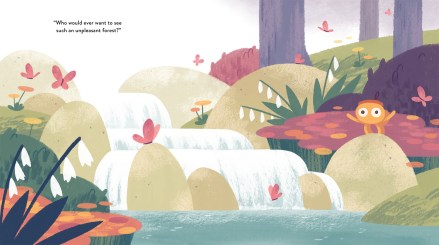
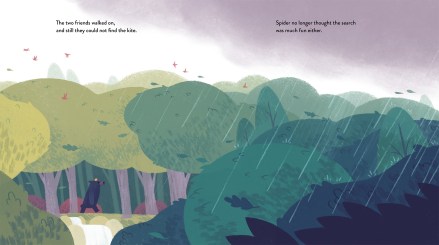
As they walked, Bear grumbled and complained about the fragrant weeds, the noisy owls, and all the other “unpleasant” things all around them. They had still not found the kite when it started to rain. Now, not even Spider was having a good time, and Bear was more miserable than before. “‘Surely this search cannot get any worse!’ he said. But it could.”

celebrate-picture-books-picture-book-review-bear-out-there-waterfall

Copyright Jacob Grant, 2019, courtesy of Bloomsbury Children’s Books.

Bear gave up. He was ready to go home and have a cup of tea in his comfy chair. But then he saw Spider sitting on a rock. Rain drops splashed off his tiny button hat and he looked bedraggled and disappointed. Bear relented. “‘Maybe we could look just a little farther,’” he said. Spider was happy just to be with Bear.

The rain lessened and Bear and Spider looked up at the clearing sky. There, stuck in the branch of a tree, was Spider’s kite. Back home, they soaked in a hot bath, patched the rips in Spider’s kite, made one for Bear, and, of course, had tea—which they enjoyed while flying their kites from Bear’s comfy chair out in the yard.

celebrate-picture-books-picture-book-review-bear-out-there-kite-found

Copyright Jacob Grant, 2019, courtesy of Bloomsbury Children’s Books.

Jacob Grant’s seemingly odd-couple friendship between a big black bear and an itty-bitty spider is as charming and comforting as it gets. While Spider loves the outdoors, Bear is a homebody; but when his friend needs help, Bear puts his own feelings aside to help. It doesn’t take long—only one page, in fact—for Bear to give up the tidy day he had planned for a tromp through the woods in search of Spider’s lost kite. As the hunt grows long and conditions worsen, Bear begins to grumble until he finally gives up. Again, though, one glance at disappointed Spider spurs him on to continue the search. And for Spider, just having Bear by his side makes things all right.

The dynamics between Bear and Spider are pitch perfect, mirroring the love and trust between parents and kids, best friends, teachers and students, and other adult-child pairs. A story isn’t a real story without change, and here, too, Grant offers an inspiring truism. The final scene in which Bear and Spider both enjoy flying kites while sipping tea and lounging in Bear’s chair shows the joy of sharing and embracing another’s favorite activity.

celebrate-picture-books-picture-book-review-bear-out-there-

Copyright Jacob Grant, 2019, courtesy of Bloomsbury Children’s Books.

Grant’s gentle, soft-hued illustrations are full of meaning and humor, of the forest’s allure that Bear doesn’t see, and of Spider’s feelings that he does. Although Bear is a neat-freak—scrubbing, dusting, and sweeping—he’s careful to leave Spider’s resting spots intact. In the woods, Bear grumbles about the smells, the noise, and the general unpleasantness while readers see a beautiful bouquet of flowers, a topsy-turvy turn of events in an owl’s nest, and a scenic panorama complete with waterfall and butterflies. Coming back to their home with its inviting pink teapot and orange chairs is the perfect antidote to any busy or stressful day.

Bear Out There is an endearing read and would be a welcome addition to home, classroom, and public library bookshelves for its sweet depiction of what true friendship between adults and kids or among children is all about. Readers won’t want to miss Jacob Grant’s first Bear and Spider adventure, Bear’s Scare.

Ages 3 – 6

Bloomsbury Children’s Books, 2019 | ISBN 978-1681197456

To learn more about Jacob Grant, his books, and his art, visit his website.

National Great Outdoors Month Activity

celebrate-picture-books-picture-book-review-let's-go-scooter-maze

Let’s Go! Maze


These four friends want to ride their scooters together. Can you help the girls find their way along the path to the boys?

Let’s Go! Maze | Let’s Go! Maze Solution

celebrate-picture-books-picture-book-review-bear-out-there-cover

You can find Bear Out There at these booksellers

Amazon | Barnes & Noble | Books-a-Million | IndieBound

Picture Book Review

June 5 – Global Running Day

celebrate-picture-books-picture-book-review-the-girl-who-ran-cover

About the Holiday

Global Running Day is all about living a healthy lifestyle! There are so many reasons to take up running, from keeping in shape to clearing one’s mind to competing against other runners. The evolution of National Running Day, which was established in 2009, Global Running Day allows serious runners to recommit to their sport and encourages those on the fence to jump down and join in. This year people from 156 countries have pledged to run short distances and longer routes in their quest for personal health. An accompanying Million Kid Run gets young people thinking about their own health while having fun. Participating is as easy as running in your neighborhood, gathering with friends to run, or even playing tag with your kids. To learn more about the day visit the Global Running Day website!  

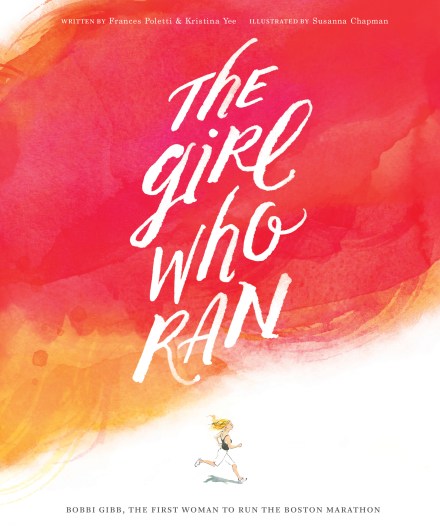
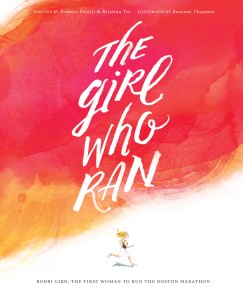
The Girl Who Ran: Bobbi Gibb, the First Woman to Run the Boston Marathon

Written by Frances Poletti and Kristina Yee | Illustrated by Susanna Chapman


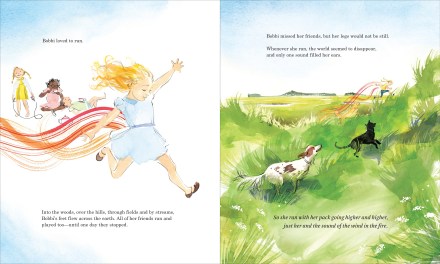
“Bobbi loved to run. Into the woods, over the hills, through fields and by streams, Bobbi’s feet flew across the earth.” When Bobbi was little, she and her friends ran and played together. But as they grew older, her friends found other pursuits while Bobbi still loved to run. She took to the fields with her dogs, “going higher and higher, / just her and the sound of the wind in the fire.”

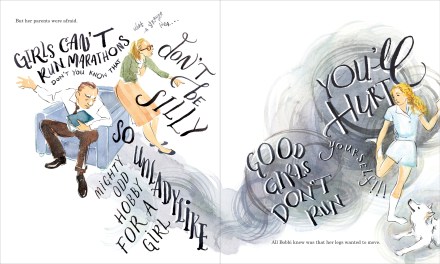
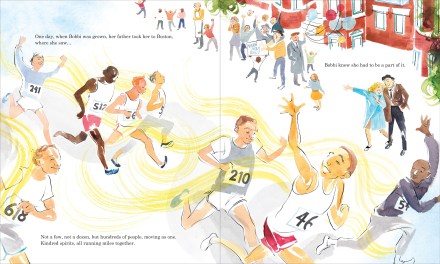
When Bobbi was grown, her father took her to watch the Boston Marathon. She loved the camaraderie of “hundreds of people moving as one. Kindred spirits, all running miles together.” Immediately, she wanted to participate too. When Bobbi told her parents that she wanted to run in the marathon, however, they thought her idea was strange. They told her she would hurt herself and that it was unladylike.

celebrate-picture-books-picture-book-review-the-girl-who-ran-young-bobbi

Image copyright Susanna Chapman, 2017, text copyright, Frances Poletti and Kristina Yee, 2017. Courtesy of Compendium.

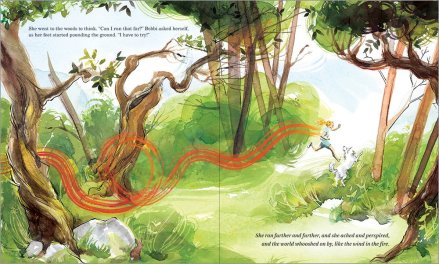
But Bobbie wanted to run. She didn’t know if she could run that far but was determined to try. She trained in the woods, running “further and further, and she ached and perspired, / and the world whooshed on by, like the wind in the fire.” Because she knew her parents disapproved, Bobbi set out on her own across country to train. Every day she ran in a new place—“lush forests in Ohio and Indiana, vast plains in Nebraska and Kansas, majestic mountains in Wyoming and Montana.” She even ran with wild horses out west and up steep Rocky Mountain trails. At night she camped, “tired and happy.”

All of her training seemed for nothing, however, when Bobbi received a letter rejecting her application for the Boston Marathon. The letter said that women were incapable of running marathons, that it was against the rules for a woman to run, and that the rules had been written to protect women from injury. Bobbi was not deterred, however. She went back home and told her parents what she wanted to do. Her father thought she was crazy to attempt it.

celebrate-picture-books-picture-book-review-the-girl-who-ran-woods

Image copyright Susanna Chapman, 2017, text copyright, Frances Poletti and Kristina Yee, 2017. Courtesy of Compendium.

Bobbi knew that the only way she could run would be “to blend in with the men.” Dressed in men’s shorts and a baggy hooded sweatshirt to hide her hair and wearing men’s running shoes (running shoes were not made for women), Bobbi was ready to go. Her father refused to drive her to the race, though. He stormed out of the house, and drove away. Bobbi thought her dream was dashed until her mom came to her room, car keys in hand, and said, “‘Let’s go.”

Hiding in the bushes at the starting line, she sprang out and joined the pack of runners with the bang of the starting pistol. “So she ran with the pack, going higher and higher, / the world whooshing by, like the wind in the fire.” As she ran, she realized that the men around her had seen through her disguise. Bobbi was worried, but the men were supportive. “‘Hey! Are you running the whole way?’ one asked.” She told him she hoped to, but in that sweatshirt, she was getting hotter and hotter. She was afraid that if she took it off, she’d be thrown out of the race.

celebrate-picture-books-picture-book-review-the-girl-who-ran-parents-afraid

Image copyright Susanna Chapman, 2017, text copyright, Frances Poletti and Kristina Yee, 2017. Courtesy of Compendium.

The men around her said they wouldn’t let that happen, so Bobbi took off the sweatshirt. “Word spread quickly throughout the course. A girl was running! They couldn’t believe it!” All along the route, the crowd cheered and encouraged her. Hearing the roar motivated Bobbi to ignore the hard ground and her stiff shoes and face the last steep hill. “Closing her eyes, she imagined she was back in Montana running up the mountains, the soft earth under her feet.”

Her feet were blistered and she was parched with thirst, but she crossed the finish line—ahead of nearly half of the men. Photographers, reporters, and radio presenters swarmed around her to hear her history-making story. From that day on “hearts and minds were forever changed.”

celebrate-picture-books-picture-book-review-the-girl-who-ran-young-Boston-marathon-all-men

Image copyright Susanna Chapman, 2017, text copyright, Frances Poletti and Kristina Yee, 2017. Courtesy of Compendium.

The story of Bobbi Gibb is one that every girl and boy should know, and Frances Poletti and Kristina Yee’s excellent biography will have readers awe-struck by how she changed the way the world viewed women and their capabilities. A pioneer for women’s rights in every way—from her traveling the country alone to rejecting the prevailing ideas to competing on her own terms—Bobbi Gibb is an inspiration for achievers everywhere. Poletti and Yee’s conversational storytelling is both lyrical and honest, not stinting on the obstacles Bobbi had to overcome, including race officials, her own parents, and even the fact that running shoes weren’t made for women.

As the marathon approaches, readers will be enthralled by the building suspense. They’ll feel Bobbi’s determination, her disappointment, and her fear that she will be discovered and thrown out of the race, and will cheer along with the crowd at her victory.

celebrate-picture-books-picture-book-review-the-girl-who-ran-crowds

Image copyright Susanna Chapman, 2017, text copyright, Frances Poletti and Kristina Yee, 2017. Courtesy of Compendium.

Susanna Chapman’s gorgeous illustrations are infused with Bobbi’s boundless energy and spirit as she soars over grassy dunes with her dogs at her heels, zips through shady woods, and runs alongside wild horses in the shadow of the Rockies all the while trailing a red swish, representative of the fire within her. The turmoil surrounding Bobbi’s desire to run the Boston Marathon is depicted in words of rebuke, recrimination, and rejection printed in large, emphatic typefaces that swirl around her like a tornado.

The inclusion of the image of Bobbi’s mother with the car keys in hand on the morning of the race is a welcome reminder of the many unknown women of earlier generations who  contributed to the fight for women’s equality. A beautiful double gate-fold illustration of Bobbi crossing the finish line to cheering crowds and the waiting media puts the focus fully on Bobbi and the fire that spurred her on.

An Afterword tells more about Bobbi Gibb, and a timeline of seminal events in the Boston Marathon from 1896 to today, is a fascinating must-read.

The Girl Who Ran is an inspirational biography and revealing history from the not-so-distant past that offers encouragement and triumph. It would be a wonderful addition to home, school, and public libraries.

Ages 8 – 12

Compendium, 2017 | ISBN 978-1943200474

Discover more about Kristina Yee, her books, and her films on her website

Learn more about Susanna Chapman, her books, and her art on her website

Global Running Day Activity

celebrate-picture-books-picture-book-review-pioneering-women-in-sports-puzzle

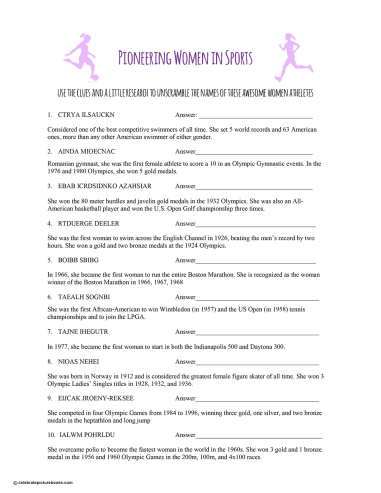
Pioneering Women in Sports Word Scramble Puzzle


In every sport there have been women who have overcome barriers, incredible odds, set records, and inspired others. Using the clues and a little research, can you unscramble the names of these twelve awesome athletes?

Pioneering Women in Sports Word ScramblePioneering Women in Sports Word Scramble Solution

celebrate-picture-books-picture-book-review-the-girl-who-ran-cover

You can find The Girl Who Ran at these booksellers

Amazon | Barnes & Noble | Books-a-Million | IndieBound

Picture Book Review

June 4 – It’s National Camping Month and Interview with Author/Illustrator Gina Perry

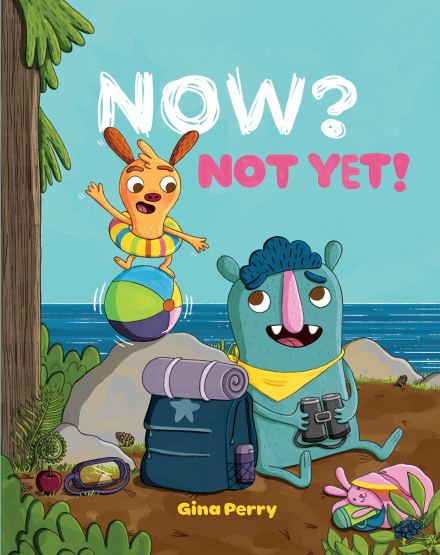
celebrate-picture-books-picture-book-review-now-not-yet-cover

About the Holiday

For some, camping is the best way to spend a vacation. This month’s holiday celebrates that love of adventure and encourages people to explore some of the gorgeous national parks, campsites, and trails all across the country. Of course, there’s giddy excitement for kids in just setting up a tent in the backyard too. So, whether you camp with an RV, pack up the car with tents and other gear, or just enjoy a different vista at home, enjoy camping this summer – and don’t forget the marshmallows!

Tundra Books sent me a copy of Now? Not Yet! for review consideration. All opinions are my own. I’m thrilled to be teaming with Tundra and Gina Perry in a giveaway of Now? Not Yet! See details below.

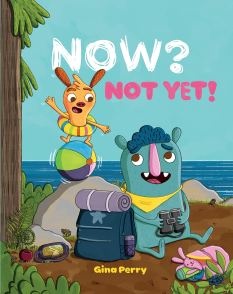
Now? Not Yet!

By Gina Perry


Geared up for camping, Moe and Peanut head down the path that leads into the woods. They’re still within sight of home (only a few steps away, in fact) when Peanut asks, “‘Can we go swimming now?’” But Moe, with his stout walking stick wants to hike a bit first and answers, “‘Not yet.’” Turn the page and Peanut has spied a glimpse of blue water. Now must be the time for swimming, but Moe has his binoculars trained on an owl, so “‘not yet.’”

When they stop for a snack, Peanut unpacks his swim fins, beach ball, floating ring, and bunny toy on the way to finding his apple and banana, while Moe neatly nibbles trail mix from a baggie. A little farther on, Peanut’s so antsy to swim that he’s doing handstands in his swim fins, but the time’s not right now either because Moe thinks they’re lost.
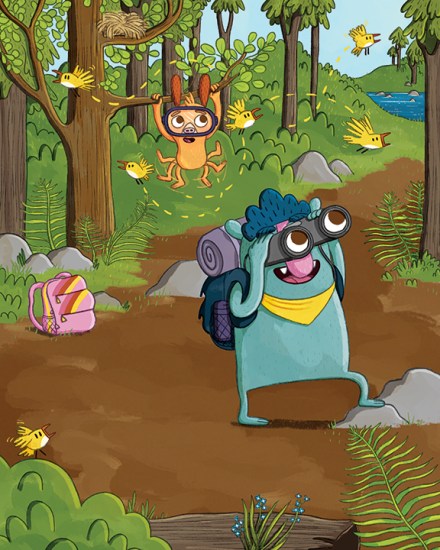
celebrate-picture-books-picture-book-review-now-not-yet-eating-bird-watching

Image copyright Gina Perry, 2019, courtesy of Tundra Books.

Poor Peanut, he falls and comes up covered in pinecones and prickly pine needles, which unfortunately get transferred to Moe. Phew! They’ve found their campsite by the lake, and Peanut begs on his knees to go swimming. “‘Now?’ said Peanut. ‘Not yet,’ said Moe. ‘It’s time to make camp.’” This camp-making is kind of fun, Peanut thinks as he hangs the tent poles between two trees and plays limbo, uses a tent pole to draw a picture of Moe in the dirt, and then toddles on tent-pole stilts. Certainly the campsite must be ready by now. Why can’t they just go swimming? Moe says they “need to set up the tent.”

Peanut is starting to lose his patience, and Moe is starting to lose his patience plus he’s being attacked by mosquitoes. There’s just so much to do before swimming. The backpacks need unpacking, the campfire needs to be built, and… “‘where are the tent poles?’” Peanut has a breakdown—“Now! Now! Now!” And Moe has a breakdown—“NOT YET!”

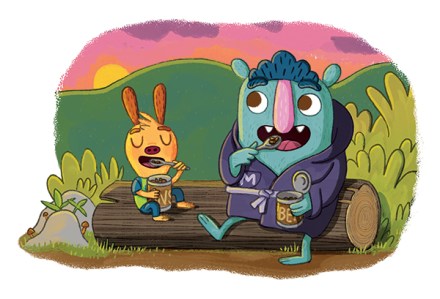
Moe walks off to cool down while Peanut looks around the toy-strewn campsite sadly. He knows what he has to do. He sets up the tent, hangs up the towels and sets out the teapot and mugs, gathers firewood, and misses Moe. But Moe isn’t far away. He peeks over the tent and stealthily puts on Peanut’s swim mask. “NOW!” he announces while running and leaping into the lake. Peanut cannonballs in after him. They play and splash and finally dry off. Warm and cozy in their PJs next to a crackling fire, they happily eat beans from a can. The sky grows dark and Peanut figures it’s time for bed. But “‘Not yet,’” Moe says. They have one s’more thing to do.
celebrate-picture-books-picture-book-review-now-not-yet-eating-beans

Image copyright Gina Perry, 2019, courtesy of Tundra Books.

In their second story, Moe and Peanut are heading out on an adventure, and like many kids, Peanut is focused on one thing, and one thing only, about the trip—swimming. Meanwhile, Moe is the keeper of all things practical and logistical. As we all know from our own kids or memories, a minute can feel like an hour, an hour like several, and a day like for…ev…er. Gina Perry taps into that feeling with verve and humor drawing out the trip to the campsite with such adult preoccupations as bird watching, map watching, splinter pulling, and the rigors of actually setting up camp. And it’s not that Peanut means to be a bother, he’s just brimming with excitement for fun, fun, fun!

Perry moves these two forces along at a brisk pace with her well-timed traded choruses of “Now?” and “Not yet.” When the clash comes in a two-page spread where each loses their cool in nearly mirror images, both kids and adults will laugh at the truth of it all. As Moe walks off and Peanut takes up the work of setting up camp, adults will understand that their kids are watching, learning, and empathetic, and kids will feel empowered to take control of their feelings and help out. The final pages showing Moe and Peanut swimming and enjoying the campfire offer reconciliation and that fun, fun, fun, Peanut (and Moe) were looking for.

Perry’s art is always bright and inviting and full of clever details. Kids will love Peanut’s antics, toy-laden backpack, and talent with tent poles, while adults will sympathize with Moe who suffers the slings and arrows of mosquitoes, sunburn, and passed-off splinters. The front endpaper depicts Moe and Peanut’s hike from home, through the woods, and to the campsite; the back endpaper portrays Peanut’s drawing of the same hike.

A funny, sweet-natured story that adults and kids will love to share, Now? Not Yet! is an endearing summer read and a must to join Too Much? Not Enough! on home, classroom, and library bookshelves.

Ages 3 – 7

Tundra Books, 2019 | ISBN 978-1101919521

To learn more about Gina Perry, her books, and her art, visit her website.

Meet Gina Perry

GPerry_HeadShotGREENsm

I’m so thrilled to be chatting with Gina Perry about her inspirations for Moe and Peanut, this duo’s inclusion in Dolly Parton’s Imagination Library, her early work in the scrapbooking market, and so much more!

Both Moe and Peanut are so sweet-natured. They just have different priorities sometimes. What or who inspired these characters and their particular adventures at home (Too Much! Not Enough!) and while camping (Now? Not Yet!)?

I think that is a lovely way to sum up Moe and Peanut. Their base personalities formed long ago from a lot of playing in my sketchbook. Moe is rooted in myself and other adults who do love play, but in a structured way. Peanut is rooted in all the little energetic kids I knew before having my own children, particularly my niece and nephew.  Their specific adventures are definitely inspired by my own kids. Indoor messes on rainy days, bubble faces, block towers—I had plenty of inspiration for that while raising my son and daughter. And I dedicated NOW? NOT YET! to Piper because of her super-charged love of play and swimming.

Are you a Moe, a Peanut or a little of both? In what way?

I am far more like Moe because I don’t leave home without the map, enjoy looking at birds, and also get a red face when dealing with mosquitos and stress. But the Peanut side of me also loves lakes and drawing in the dirt. I think because I was the youngest and my sisters were four and eight years older, I really remember feeling like a pesky little sister when I was the age of my readers.

In Now? Not Yet! Moe and Peanut go camping. Do you like camping? If so, are you a glamper or a traditional camper? What’s your favorite part of camping?

Camping confession: I have never slept outside! I found bear droppings in our backyard last month so I’m not sure I’ll check the box on backyard camping anytime soon, either. I do love going for day hikes and fondly remember lots of family vacations at rustic cabins on lakes in New Hampshire and Maine. I’ve definitely experienced all parts of Peanut and Moe’s adventure—note how we end the story before bedtime! My favorite part when I’m on a hike is spotting animals. I’m still waiting to see a moose in real life, but I snuck one in the book as an homage to a childhood dream.

Your artistic style is so distinctive—I immediately recognize an illustration as yours before I see your name on it. Can you talk a little about how you developed your style? What changes did Peanut and Moe go through as you worked on Too Much! Not Enough!?

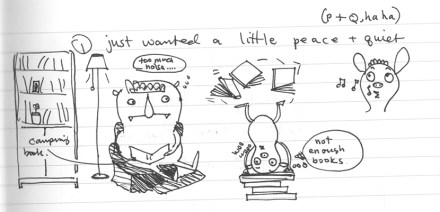
That is a lovely compliment – thank you! I’ve been through lots of experimenting with my illustration style. I think always being willing to try new approaches and following lots of other illustrators and artists has helped me land where I am now. I really enjoy creating very simple but distinct characters and then letting the colors take over. The basic character design for Peanut and Moe was pretty solid early on (and many years before they were published!) but I do appreciate that I had time and confidence to try some bolder color choices that I think made their story shine.
GPerry_oldsketch

My editor smartly suggested that we up the level of mess from my dummy. The addition of all those block, glitter, and car elements really improved the book, and the narrow color palette made it still feel friendly even at its messiest. In their first book, I wanted to maintain a cheerful, bold color palette despite the rainy day. In their second book I worried how I would continue that color story in the outdoors. I chose to keep their environment in bright, but natural colors and played up that first color palette in their gear and clothing. I loved designing their evening attire!

This year Too Much! Not Enough! was selected for Dolly Parton’s Imagination Library. Can you tell readers about this program and how your book was chosen? What does it mean for Moe and Peanut?
celebrate-picture-books-picture-book-review-too-much-not-enough-washing-dishes

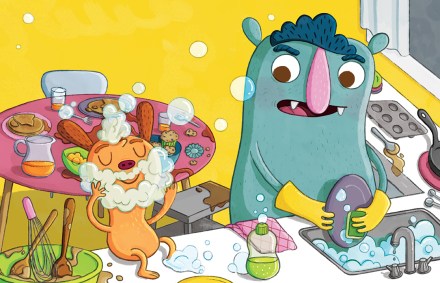
Moe and Peanut do the dishes in Too Much? Not Enough!

I am so thrilled that TOO MUCH! was chosen for this amazing book gifting program that delivers a new book each month for a child from birth to school age. Imagination Library now has programs across the US, UK, Canada, Australia, and Ireland and has mailed over 120 million books at no cost to families. Their Blue Ribbon Committees review and select titles based on their themes and concepts and aligned to one of five age groups. The website does an amazing job describing the program and how books are chosen and I hope all new or expecting parents look into this opportunity for their child. It means that this year, Peanut and Moe will be heading to thousands of young children (2-3 years of age) across Canada. Having so many new readers meet Moe and Peanut is exciting!

Before you concentrated on writing and illustrating books for children, you worked in animation and as an art director for the scrapbooking market. I’ve always wondered how some patterns of paper come to be. What is the process behind creating scrapbook paper and how certain subjects, colors, and designs are chosen.

When I started at that first scrapbooking company they were transitioning from a stencil-based business. The scrapbooking market was booming back then and it was a great opportunity for me to learn a totally new area and get experience as an illustrator. There was a lot of trial and error in figuring out how to make appealing and usable patterns that could be mixed and matched. We tracked fashion and illustration trends by going to trade shows and even shopping trips. Some collections were fashion based, others revolved around the events you would put in a scrapbook – birthdays, weddings, holidays, etc. It was a collaborative process involving designers, art directors, and the sales teams. My favorite job was finding new illustrators to work with, giving them a brief, then seeing the magic they sent back.

I saw on your blog that this year you participated in World Read Aloud Day by having Skype calls with students in New York, Connecticut, Texas, Florida, and Ukraine! That’s a lot of kids to reach! They must be thrilled! Can you talk a little about what you like about Skype calls, what you do during the calls, and how the kids react?
celebrate-picture-books-picture-book-review-too-much-not-enough-Gina-Perry-Skype-visit

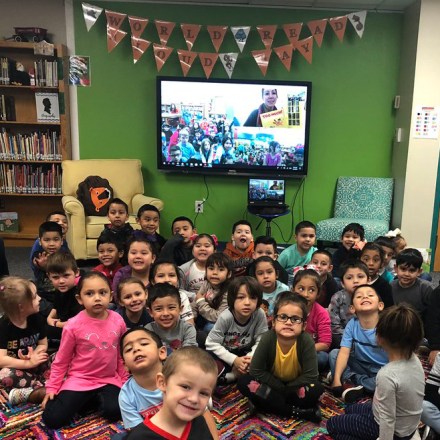
A class listens to Gina Perry on World Read Aloud Day.

World Read Aloud Day is amazing. I encourage all authors to participate. I spend so much time working alone (especially in the winter!), that it’s a real gift to open up Skype and connect to a classroom full of enthusiastic readers. It’s usually a 20-minute call and most authors follow this formula: read one of your books, take questions from students, then share a few favorite books by other authors. But the variation is in the kids! How do they react to my book and what interesting questions do they have? Kids are so creative and often think of things I haven’t or share personal connections to a character or even to my story about being an illustrator and author.

What’s up next for you?

I have been squirreling away on some fun new projects that I can’t say too much about at the moment. I will say that one book was very much inspired by my school visits and drawing with kids. Another is inspired by welcoming a new puppy into our home this year.

What’s your favorite holiday and why?

I don’t know how you can compete with Halloween. The candy, creative costumes, spooky decorations, all-are-welcome and low-pressure vibe really make it a winner. And did I mention candy?

Thanks, Gina for joining me today! Happy Book Birthday to Moe and Peanut and Now? Not Yet! I wish you all the best with this series and all of your books and can’t wait to see what comes next!

You can connect with Gina Perry on

Her website | Facebook | Instagram | PinterestTwitter

National Camping Month Activity
CPB - campfire craft 2

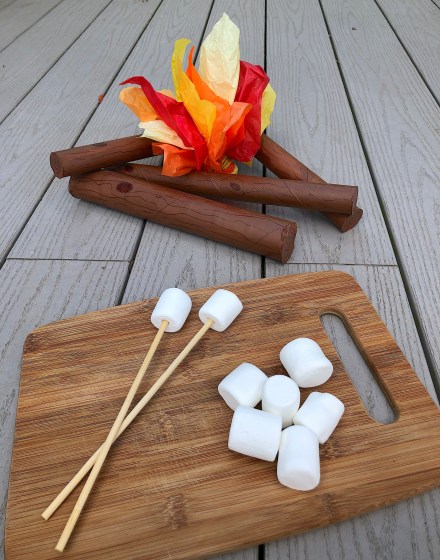
A Fun In-Home Campfire


Kids and their friends and family can enjoy the cozy fun of a campfire in their own family room with this craft that’s easy to make from recycled materials. While the supplies might make the campfire artificial, kids will love it if the marshmallows are the real thing!

Supplies

  • Three or four paper or cardboard tubes
  • Cylindrical bread crumbs or oatmeal container
  • Tissue paper in red, orange, and yellow
  • Brown craft paint
  • Brown marker
  • Brown construction paper or white paper
  • Strong glue or hot glue gun
  • Chopsticks (one for each person)
  • Marshmallows

CPB - campfire craft container

Directions

To Make the Logs

  1. Cover the ends of the tubes with circles of brown construction paper or white paper and glue into place
  2. Paint the tubes and the ends if needed, let dry
  3. Paint the sides of the cylindrical container with the brown paint, let dry
  4. With the marker draw tree rings on the ends of the tubes. Decorate the sides with wavy lines, adding a few knot holes and swirls.

To Make the Fire

  1. Cut 9 squares from the tissue paper (3 in each color, about 8 to 6-inch square)
  2. Layer the colors and gather them together at one tip. Fold over and hold them together with a rubber band.
  3. To Assemble the Campfire
  4. Stack the tube logs
  5. Put the tissue paper fire in the middle of the logs

To “Roast” Marshmallows

  1. Stick marshmallows on chopsticks for “roasting” and eating!

You can keep your logs and fire in the cylindrical log until the next time!
celebrate-picture-books-picture-book-review-now-not-yet-cover

You can find Now? Not Yet! at these booksellers

Amazon | Barnes & Noble | Books-a-Million | IndieBound

Picture Book Review

June 3 – It’s National Rose Month

celebrate-picture-books-picture-book-review-rose's-garden-cover

About the Holiday

Pop quiz! Do you know what the national flower is? If you took a clue from today’s holiday and said the rose, you’re right! The first National Rose Month was observed in 1959, but the rose was not named the national flower until 1986. Five states—Georgia, Iowa, New York, North Dakota, and Oklahoma—claim the rose as their state flower, although four of the more than 150 species are represented among them. To celebrate this month, visit a local botanical garden to enjoy the beautiful blossoms and aroma or add a rose bush to your landscaping. And of course, a gift of roses is always appreciated.

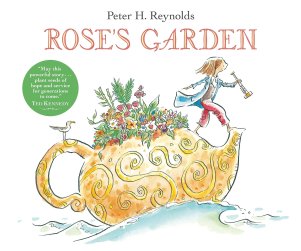
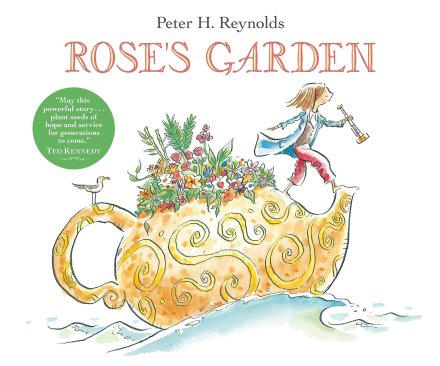
Rose’s Garden

By Peter H. Reynolds


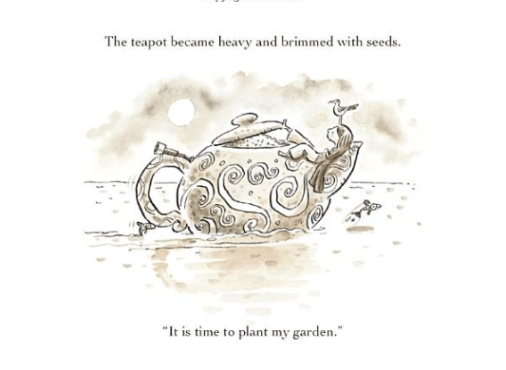
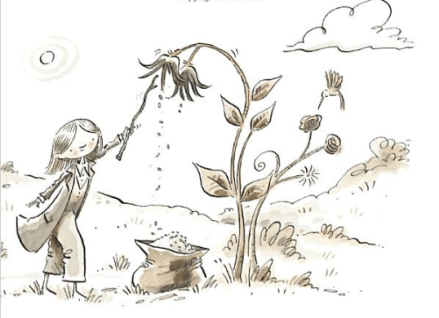
Rose was no ordinary adventurer. “She explored the world in her fantastic teapot,” and took home seeds from each place as souvenirs. When the teapot was overflowing with seeds, Rose knew it was time to plant her garden. Floating along in her teapot, Rose noticed a city on the horizon. When she got close the harbormaster told her about a lovely spot upriver, but Rose wanted to explore the city first.

celebrate-picture-books-picture-book-review-rose's-garden-gathering-seeds

Copyright Peter H. Reynolds, 2009, courtesy of Candlewick.

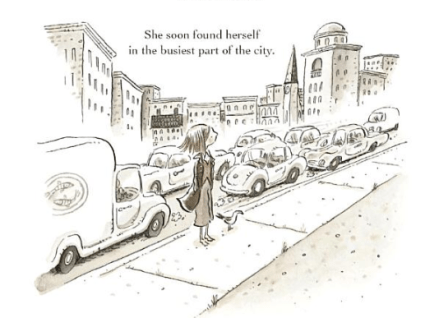
Rose wandered through the city and, in the midst of the busiest part, “she spotted a dusty, forgotten stretch of earth. Hmmm, Rose pondered. This little patch needs some color.” Rose cleaned it up and raked the soil, thinking of how wonderful this little spot could be. When she went back to her teapot to get her seeds, however, she discovered that a flock of birds had eaten them all.

te-picture-books-picture-book-review-rose's-garden-sailing

Copyright Peter H. Reynolds, 2009, courtesy of Candlewick.

There were only a few seeds remaining in the bottom of the teapot. Rose placed them in her pocket, returned to her patch, and planted them. She watched over them and waited…and waited. “But nothing seemed to happen.” The soil was either too wet or too dry. Then cold weather came too soon. Rose “waited through the snowy winter.”

When spring came, Rose was still there waiting. “Word spread of Rose’s faith in her garden.” One day, a girl stopped by with a gift for Rose. “It was a paper flower” that she had made for Rose’s garden. The next day, a boy came by with a paper flower he had made. Rose happily accepted it. “‘This well be in good company when my own flowers bloom!’” she told him.

celebrate-picture-books-picture-book-review-rose's-garden-gathering-city

Copyright Peter H. Reynolds, 2009, courtesy of Candlewick.

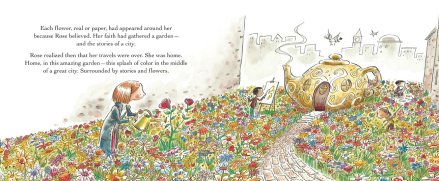
Every day, it seemed, children came with paper flowers they’d made for Rose’s garden. Each one told Rose a story about how they had come to live in the city, journeying “from all over the world, like seeds carried on a breeze.” Soon, Rose’s garden was filled edge to edge with colorful paper flowers. As Rose “waded among them, she heard a sound. A buzzing.” In front of her a bee landed on a flower—but this was no paper flower. Then Rose gazed across her garden and noticed real flowers all around her.

Rose’s “faith had gathered a garden—and the stories of a city.” Rose realized that this little patch was home. Her amazing teapot now sits in the middle, and everyone is invited to enjoy the quiet, colorful garden.

celebrate-picture-books-picture-book-review-rose's-garden-teapot

Copyright Peter H. Reynolds, 2009, courtesy of Candlewick.

With his well-known touch for turning the commonplace into magic, Peter Reynolds takes a teapot, seeds, and a forgotten city lot and creates a metaphorical microcosm of a more-perfect inclusive world. What could more welcoming than a cup of tea or more universal than a seed? As child after child offers Rose a flower of their own making and their stories, Reynolds reveals the openness of children to transform their world with hope, belief, and action. The blending of the paper flowers and the real ones (and perhaps they are the same?) show that roots develop in all sorts of ways and that we should not just find a home, but nurture one as well.

celebrate-picture-books-picture-book-review-rose's-garden-anchored

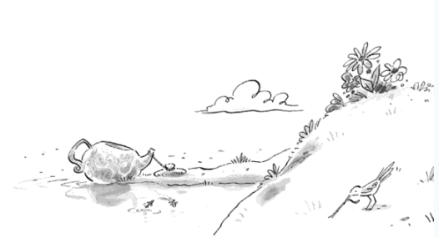
As Rose sails the world alone in her teapot, Reynolds washes the world with a soft mottled brown, suggesting that Rose lives in a perpetual autumn in which seeds are plentiful but the colors of spring and summer are past. It’s only when her teapot is full that Rose decides to plant her garden. As often happens with stored-up, unused potential, the seeds are lost to more mundane purposes when the seabirds eat them, leaving only a trace to fulfill Rose’s dreams. The strength of those dreams—and the help available to make them reality—however, is beautifully depicted as one bright flower and then another and another is planted, soon multiplying into a vibrant field of color.

Rose’s Garden makes a touching read aloud for story times about inclusiveness, belief in oneself and one’s convictions, hope, and the meaning of home. Pair it with a packet of wildflowers for a thought-provoking book extension.

Ages 5 and up

Candlewick, 2009 | ISBN 978-0763646417

Discover more about Peter H. Reynolds, his books, and his art on his website.

National Rose Month Activity

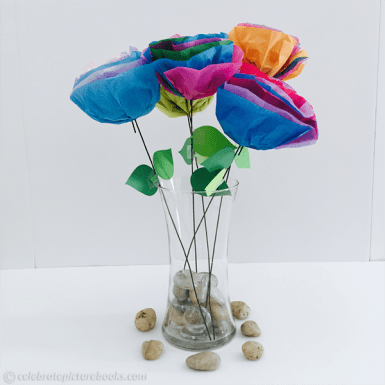
CPB - Paper Flowers

Paper Flower Bouquet


Just like the children in Rose’s Garden, your kids can make these paper flowers that will brighten anyone’s day. With all of the beautiful colors of tissue paper, they can create a whole bouquet or garden of flowers to share with friends or family. 

Supplies

  • Tissue paper in many colors
  • Green paper
  • Green wire for stems
  • Scissors
  • Tape or glue
  • Pliers

CPB - Paper Flowers II

Directions

To make the stem

  1. Bend a 1 ½ -inch loop in the top of the wire
  2. Squeeze the wire together so it will fit tightly over the tissue paper

To make a flower

  1. Cut 6 or more 7-inch squares from tissue paper, mixing colors (you can make various sizes of flowers by making the squares larger or smaller and adding more squares)
  2. Gather all the squares together and fold them together accordion-style in 1-inch folds
  3. Slide the folded tissue paper under the wire loop, and tighten the wire
  4. Gently fan the tissue paper out on each side
  5. Beginning on one side, gently pull each sheet of tissue paper up toward the center
  6. Repeat step 5 on the other side

To make leaves

  1. Cut leaves from green paper, leaving a stem to wrap around the wire flower stem
  2. Fold the leaf stem around the wire and tape or glue

celebrate-picture-books-picture-book-review-rose's-garden-cover

You can find Rose’s Garden at these booksellers

Amazon | Barnes & Noble | Blue Bunny BooksBooks-a-Million | IndieBound

Picture Book Review
May 31 – Web Designer Day

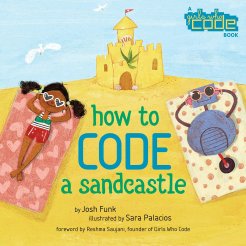
celebrate-picture-books-picture-book-review-how-to-code-a-sandcastle-cover

About the Holiday

With Memorial Day just past, it’s officially summer. Soon kids will be getting out of school and enjoying the beach and/or camp. A favorite summer past time is computer camp, which is a perfect mashup of fun and learning. Today’s holiday celebrates all of the inventive web designers who create clear, workable, and enjoyable sites where we can shop, get the latest news, watch videos, play games, and so much more. Our computers, phones, and tablets are so interwoven with our daily routine that we can’t even imagine life without them anymore. All that designing and coding takes specialized knowledge, education, and skill. If you know a web designer, thank them for their hard work—and if you know a child (or perhaps even yourself) who would like a career in coding or web design, get them started with a class or two—and today’s book!

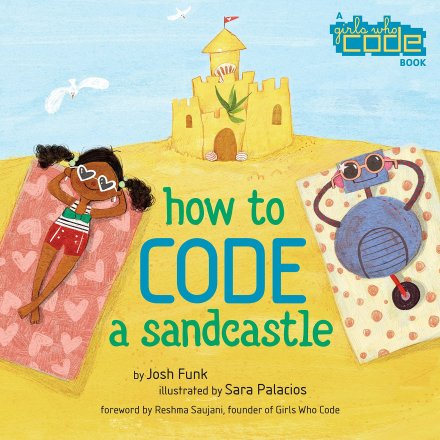
How to Code a Sandcastle

Written by Josh Funk | Illustrated by Sara Palacios


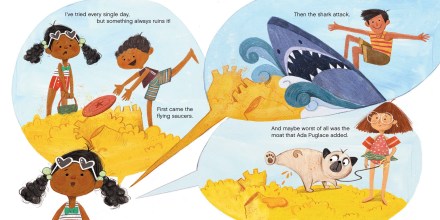
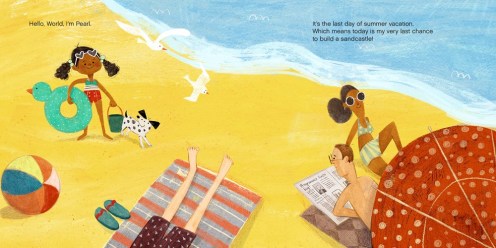
It’s the last day of Pearl’s summer vacation, and she’s hit the beach with her parents. Her goal is to build a sandcastle. It’s not like she hasn’t tried on other beach days, but there was always something that destroyed it. There was the frisbee that landed on top of it, then a surfer glided right into it, and another girl’s dog, Ada Puglace, thought it needed a moat. But today, Pearl brought her robot, Pascal, to build her sandcastle.

celebrate-picture-books-picture-book-review-how-to-code-a-sandcastle-ruined-sandcastles

Image copyright Sara Palacios, 2018, text copyright Josh Funk, 2018. Courtesy of Viking Books for Young Readers.

As Pearl explains, “He’ll do whatever I tell him—as long as I tell him in code. It’s not a secret code—it’s special instructions that computers understand.” Pearl points out the perfect spot on the beach for her sandcastle and tells Pascal to build it. But Pascal doesn’t move. Pearl realizes that she must break down the one big request into smaller problems for Pascal to solve. Easy-Peasy, Pearl thinks.

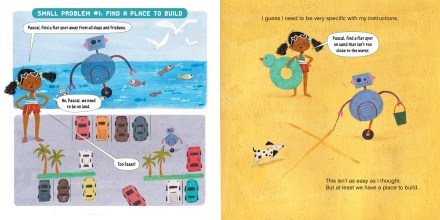
The first problem Pearl gives Pascal is: “find a place to build.” First Pascal travels out to sea, but Pearl tells him they must build on land. So Pascal rolls out into the parking lot. Hmmm…that’s not right either. Pearl decides she must be “very specific with my instructions.” When she tells Pascal to “find a flat spot on sand that isn’t too close to the water,” he marks an X on a perfect sandy spot. Great!

celebrate-picture-books-picture-book-review-how-to-code-a-sandcastle-small-problem-1

Image copyright Sara Palacios, 2018, text copyright Josh Funk, 2018. Courtesy of Viking Books for Young Readers.

The second problem Pearl gives Pascal is to “gather up sand.” She’s learned to be very particular in her instructions, so she gives her robot a three-step process: “Fill the pail with sand, dump the sand on our spot, pat the sand down.” This works just right, so Pearl continues telling Pascal the directions, until she grows tired of speaking.

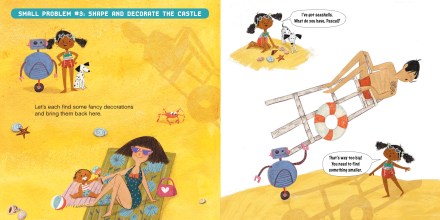
There must be a better way, Pearl thinks. How about a loop? Pearl directs Pascal to “loop through this sequence,” and just like that Pascal is off and rolling and Pearl gets to relax. A while later, Pearl discovers that Pascal had built a pyramid-high pile of sand, so Pearl tells him to stop. Next, they will “shape and decorate the castle.” Pearl comes back with pretty seashells to add to the castle, while Pascal brings back the lifeguard—in his chair. Pearl orders Pascal to bring back something smaller. When he comes back with a crab, she tells him it must be something that doesn’t move, and when he shows up with a baby’s pacifier, Pearl knows she must do a better job of explaining.

celebrate-picture-books-picture-book-review-how-to-code-a-sandcastle-small-problem-3

Image copyright Sara Palacios, 2018, text copyright Josh Funk, 2018. Courtesy of Viking Books for Young Readers.

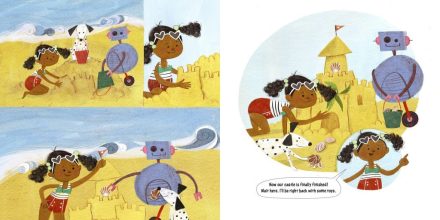
She decides to give him “if—then—else” instructions. With these detailed directions, Pascal returns with a shell and some seaweed. Finally, it’s time to shape the castle. They use their buckets and hands to build a beautiful castle that even has a turret. The shells, rocks, and seaweed are the perfect finishing touches. With the castle finally finished, Pearl runs off to get her toys.

But when she gets back, Pearl discovers that the rising tide has washed their sandcastle out to sea. And to make matters worse, Ada Puglace is back to add another moat. Hmmm… a moat? Pearl thinks. That’s what she needed the first time. Pearl really wants to rebuild, but it took her half a day to make the first one. Then she realizes that the code is already written. All she has to do is use it again. In no time a new sandcastle stands gleaming on the beach.
There’s just one more problem to solve. Quickly, Pearl gives Pascal a new looped sequence to dig the moat. Now it’s time to play—or “code an entire kingdom!”
celebrate-picture-books-picture-book-review-how-to-code-a-sandcastle-finished-castle

Image copyright Sara Palacios, 2018, text copyright Josh Funk, 2018. Courtesy of Viking Books for Young Readers.

A Foreward written by Reshma Saujani, the founder of Girls Who Code, introduces readers to this organization that is “working to close the gender gap in technology” and get girls of all ages excited about coding and future opportunities in science and technology. 

Pearl and Pascal’s Guide to Coding with brief discussions of Code, Sequence, Loops, and If-Then-Else follows the text.

With his infectious enthusiasm and talent to reach kids in new and innovative ways, Josh Funk, a computer programmer by day and super writer by night, is a perfect guide to the joys of coding for young learners. Taking kids out to the beach for a bit of sandcastle building—an endeavor that is often fraught with dangers—is a terrific way to show the procedures and power of coding. Pearl’s initial missteps in programming Pascal provide laugh-out-loud moments while also demonstrating that computer programs work with precise instructions. Her inexperience but quick learning will give readers confidence in their own abilities to code and where to look for problems if their program does not run as smoothly as they’d like. When high tide washes Pearl and Pascal’s sandcastle out to sea, readers may groan in empathy, but the opportunity to do it all again—only bigger and better—will make them cheer.

celebrate-picture-books-picture-book-review-how-to-code-a-sandcastle-last-day

Image copyright Sara Palacios, 2018, text copyright Josh Funk, 2018. Courtesy of Viking Books for Young Readers.

Sara Palacios’s golden beach is a wide-open and inviting platform to introduce the world of computer programming to young readers. Sunny and enthusiastic, Pearl, in her heart-shaped sunglasses, is persistent and smart in figuring out just how to make Pascal do what she wants. Pascal is a round, rolling cutie, perpetually happy to perform its duties. Series of panels and speech bubbles depict each instruction Pearl gives Pascal, clearly showing readers how coding and a computer’s response to its instructions work. Sequence loops are cleverly portrayed with typeface that creates a circle around Pearl’s floating ring and later around the trench that will surround the castle and become the moat. The final image of Pearl and Pascal celebrating their successful day together is powerful encouragement that a new day of girls and women in technology and science is on the horizon.

Coding a Sandcastle is a motivating combination of lighthearted fun and accessible education that will encourage girls—and boys—to get involved with computer coding just for their own enjoyment or as a future profession. It’s a must for school media and computer class libraries, and with this book on home bookshelves, kids won’t want to just play on the computer—they’ll be asking to program too.

Ages 4 – 8

Viking Books for Young Readers, 2018 | ISBN 978-0425291986

Discover more about Josh Funk and his books and find lots of fun activities to do too on his website.

To learn more about Sara Palacios, her books, and her art, visit her website.

Web Designer Day Activity

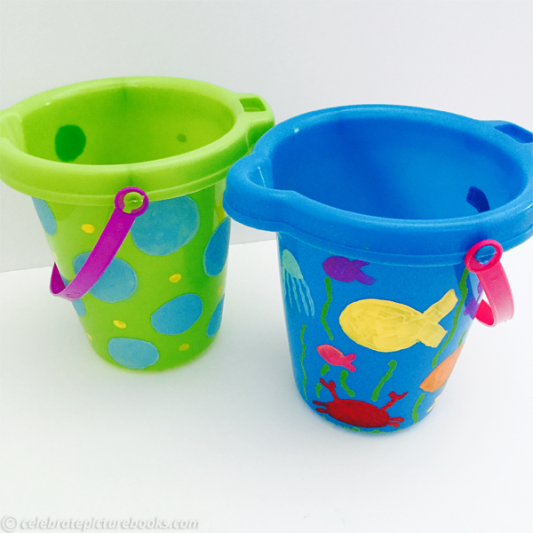
celebrate-picture-books-picture-book-review-bringing-the-outside-in-painted-pails-craft

Personalized Painted Pail


A trip to the beach or park isn’t complete without a pail to collect shells, seaweed, sea glass, pebbles, sticks, nuts, or other things in. But why should all the cool stuff be on the inside? With this craft you can decorate your pail to show your unique personality!

Supplies

  • Plastic or metal pail
  • Craft paint in various colors
  • Crystal Clear Acrylic Coating, for multi-surface use
  • Paint brush

Directions

  1. Paint designs on the pail
  2. When paint is dry spray with acrylic coating to set paint
  3. Let dry

celebrate-picture-books-picture-book-review-how-to-code-a-sandcastle-cover

You can find How to Code a Sandcastle at these booksellers

Amazon | Barnes & Noble | Books-a-Million | IndieBound

Picture Book Review