January 4 – World Hypnotism Day

celebrate-picture-books-picture-book-reviews-mesmerized-cover

About the Holiday

Today’s holiday was established in 2006 to honor Dr. Jack Gibson, an Irish hypnotherapist who used hypnosis extensively in his practice. Its purpose is to dispel the myths surrounding hypnosis as “mind control,” which is a popular misconception perpetuated by movies and other types of entertainment. To celebrate, learn more about hypnotism and check out local special events, including free hypnotherapy sessions.

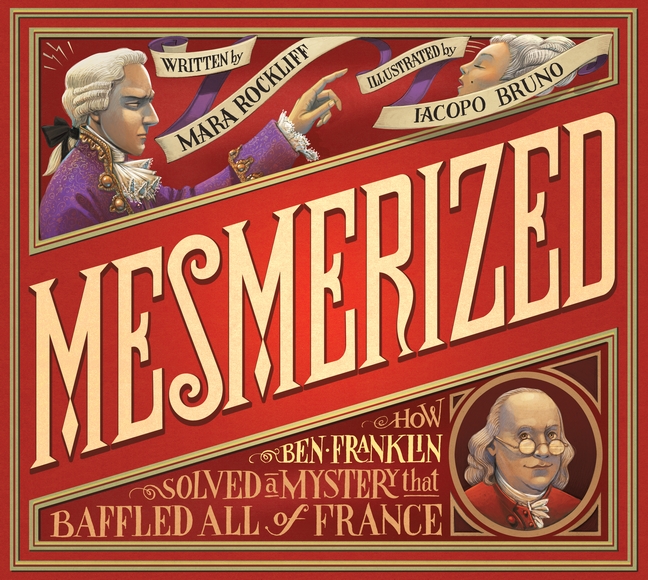
Mesmerized: How Ben Franklin Solved a Mystery that Baffled All of France

Written by Mara Rockliff | Illustrated by Iacopo Bruno


During the colonists’ war with England, the rag-tag American army needed France’s help. Who better to send than Benjamin Franklin, the charming and experienced statesman? Ben hoped to convince King Louis the Sixteenth and Queen Marie Antoinette to send money and soldiers to America, “but it turned out that they needed Ben’s help too….” At the time, Paris was enthralled by Science. This “new” discipline was introducing new materials, new inventions, and new ideas into society.

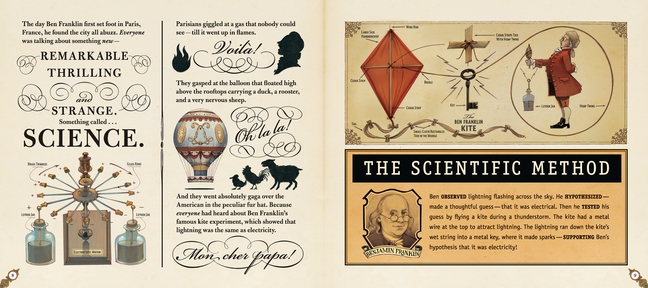
One of these notions was Ben Franklin’s own—and when the people of Paris saw him “they went absolutely gaga over the American in the peculiar fur hat. Because everyone had heard about Ben Franklin’s famous kite experiment, which showed that lightning was the same as electricity.” Soon, however, even Ben couldn’t hold a candle to Dr. Mesmer—the “elegant and mysterious” man who wielded “an astonishing new force.” “Dr. Mesmer said this force streamed from the stars and flowed into his wand. When he stared into his patients’ eyes and waved the wand, things happened. Women swooned. Men sobbed. Children fell down in fits.”

celebrate-picture-books-picture-book-reviews-mesmerized-science

Image copyright Iacopo Bruno, 2015, text copyright Mara Rockliff, 2015. Courtesy Candlewick Press

Dr. Mesmer seemed to do the impossible. He could make the same glass of water taste like strawberries or vinegar just by telling his patient what to taste. He said he could use this force to help people who were sick, and indeed, after a session with Dr. Mesmer “in a room hidden behind heavy drapes covered with signs and symbols” many people emerged saying they had been cured. Those rich enough paid 100 gold louis to learn his secrets, and everyone considered Dr. Mesmer’s force the “most remarkable thing that science had discovered yet!”

Everyone that is, except the city’s doctors, who “griped, and groused, and fussed, and fumed” because their patients only wanted to be treated by Dr. Mesmer. The doctors went to the King to complain. They even suggested that Dr. Mesmer’s force didn’t exist at all. Louis didn’t know what to think, but he did know who to consult—Ben Franklin! Ben wanted to observe this force in action for himself. As he watched, Dr. Mesmer’s helper, Charles, made a group of patients gasp, groan, twitch, and tremble. Some even fainted.

celebrate-picture-books-picture-book-reviews-mesmerized-ben-franklin

Image copyright Iacopo Bruno, 2015, text copyright Mara Rockliff, 2015. Courtesy Candlewick Press

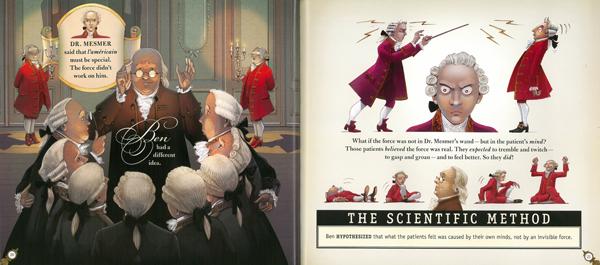
When it came time for Ben Franklin’s turn, “He didn’t gasp and groan or twitch and tremble. And he didn’t faint. In fact…he didn’t feel a thing.” Dr. Mesmer said that Ben must be “special” and that’s why the force didn’t work on him. Ben hypothesized a different reason. He said that instead of the force being “in Dr. Mesmer’s wand…it was in the patient’s mind.” They acted and felt the way they did because they expected to.

To test his theory, Ben had Charles wave his fingers near a woman’s face. She screamed and “said she felt a burning flame.” Next Ben told Charles to perform the same routine, but with the woman blindfolded. This time when Charles waved his fingers near her stomach, “she said she felt the heat—IN HER EAR. When he “moved behind her back, the woman shrieked that she felt burning—IN HER LEG!” Ben brought in another patient, blindfolded him, and told him he was being mesmerized. He said he could feel it—even though “Charles was not even in the room.” When Charles came back and waved his fingers and wand, the patient felt nothing.

“Ben tested patient after patient, but it was always the same. If the patient believed something would happen, something did—even without the force! If the patient did not expect anything to happen, nothing did—even with the force!” He revealed his observations to the king, and soon all of Paris was talking—and laughing. And Dr. Mesmer? He took his wand and ran. Ben Franklin soon returned to America—with the help from France he had sought and to his scientific work.

celebrate-picture-books-picture-book-reviews-mesmerized-blind-test

Image copyright Iacopo Bruno, 2015, text copyright Mara Rockliff, 2015. Courtesy Candlewick Press

The world benefited greatly from the meeting between Ben Franklin and Dr. Mesmer. Ben’s blind test is still used today when new medicines are being developed, and Dr. Mesmer’s force brought to light what we call the placebo effect and also the state of hypnosis, two powerful abilities of the brain that scientists are still studying.

Throughout Mesmerized Ben Franklin studies Dr. Mesmer and his force, using the scientific method. As Franklin observes, hypothesizes, tests, and finds his theory supported, each particular step of the scientific method applied appears highlighted and explained on the page. An extensive Author’s Note about the events of the story also follows the text

Mara Rockliff’s—dare I say it?—mesmerizing true tale of a meeting between two of the most fascinating figures of the late 1770s is the type of nonfiction that can get kids excited about science and history. Intrigue, mystery, charismatic personalities, wit, and a familiar topic are blended together to reveal the uses and steps of the scientific method and to highlight one event in time that still resonates today. Rockliff’s story crackles with fabulous vocbulary—doctors gripe, grouse, fume, are peeved; the king is in a quandary; patients twitch and tremble; plain Ben Franklin is an “apple pie” while elegant Dr. Mesmer a “layered torte.” Rockliff’s story flows at an enthralling pace, keeping readers riveted to discover Dr. Mesmer’s secret.

Iacopo Bruno’s sumptuous illustrations are nothing short of astounding. If the Oscars gave out awards to books, Bruno would certainly win for best costume and set. Every page is gilded with the opulence of the French court as gold buttons, collars, candle sticks, and drawing rooms glint with a polished sheen. Period dress is depicted in the women’s full flowing gowns of red, purple, and green, and in men’s top coats, breeches, lace cuffs, and high buckle shoes. Powdered wigs curl at men’s ears and climb high above women’s heads, festooned with flowers, ribbons, and pearls while Ben’s white, wavy locks fall naturally on his shoulders. In addition to setting the historical scene, Bruno depicts the effects of Dr. Mesmer’s force and the scientific methods Franklin used to debunk it with just the right amount of humor to entice kids and allow them to fully understand and appreciate Dr. Mesmer’s impact on society.

Ages 6 – 10

Candlewick, 2015 | ISBN 978-0763663513

To learn more about Mara Rockliff and her books, visit her website!

View a gallery of book jacket and other illustration work by Iacopo Bruno on his blog!

World Hypnotism Day Activity

celebrate-picture-books-picture-book-review-hypnosis-maze


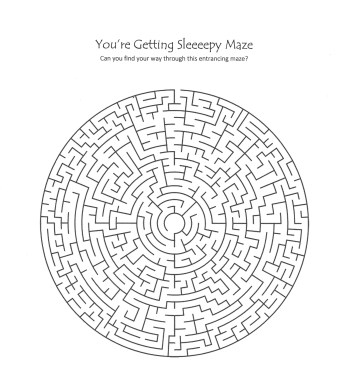
You Are Getting Sleeeepy Maze


The roundabout pattern of this printable You’re Getting Sleeeepy Maze may make you feel as if you’re in a trance, but don’t zone out before you solve it! Quick! Here’s the Solution!

celebrate-picture-books-picture-book-reviews-mesmerized-cover

You can find Mesmerized: How Ben Franklin Solved a Mystery that Baffled all of France at these booksellers

Amazon | Barnes & Noble | Books-a-Million | IndieBound

Picture Book Review

December 7 – It’s Computer Science Education Week

celebrate-picture-books-picture-book-review-doll-E-1.0-cover

About the Holiday

Computer Science Education Week was launched in 2009 to raise awareness of the importance of computer coding in all careers and to invite people to learn how to code. Students from kindergarten to grade 12 are especially encouraged to take an interest in computer science and learn coding skills and also to take part in Hour of Code programs at school and elsewhere. The holiday is celebrated in December to honor computing pioneer Admiral Grace Murray Hopper, who was born December 9, 1906 and went on to become a United States Navy rear admiral. Her work with machine-independent programming languages led to the development of COBOL, and she was instrumental in many other early computer-related advancements. To celebrate this week, check out the Computer Science Education Week website and Hour of Code and try coding for yourself!

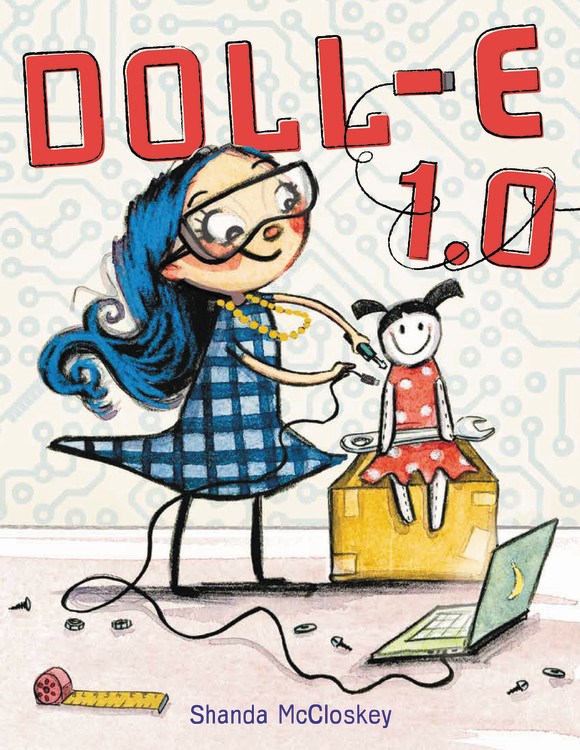
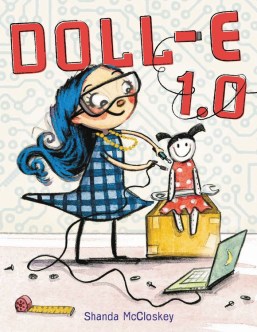
Doll-E 1.0

By Shanda McCloskey


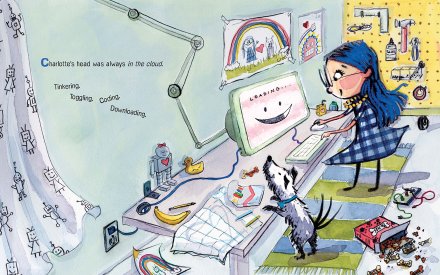
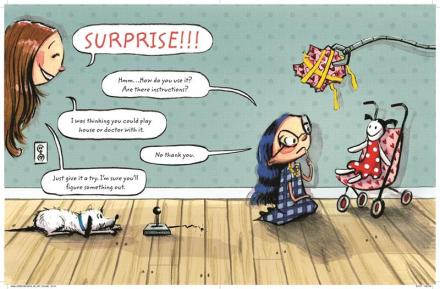
“Charlotte’s head was always in the cloud.” She knew everything about computers and was plugged in to the (virtual) realities of each day. One day her mother bought her a present. Charlotte wondered at what kind of electronic marvel might lie underneath the wrapping. When the robotic arm she’d build untied the bow and tore off the paper, Charlotte gazed at the cloth doll in the little stroller uncertainly.

celebrate-picture-books-picture-book-review-doll-E-1.0-lab

Copyright Shanda McCloskey, 2018, couirtesy of Little, Brown Books for Young Readers.

She wasn’t sure how to play with it; where was the instruction manual? Charlotte took the doll to her lab and tried to engage it in her favorite video game and to get it to dance under the revolving disco ball, but the doll just sat on the floor and stared at her. Suddenly, the doll said “Ma-ma.” Charlotte didn’t think she was Mama material, but then she had a thought: “If the doll could talk, then it must have a power supply.”

Sure enough when she opened the back, she found two batteries. This was more like it! Since the doll’s only word seemed to be “Ma-ma,” Charlotte ran an update on it to increase its vocabulary. But before she could finish, her dog grabbed the doll by the leg and ran off with it. Before Charlotte could stop him, Blutooth had ripped the doll apart.

celebrate-picture-books-picture-book-review-doll-E-1.0-virtual-games

Copyright Shanda McCloskey, 2018, couirtesy of Little, Brown Books for Young Readers.

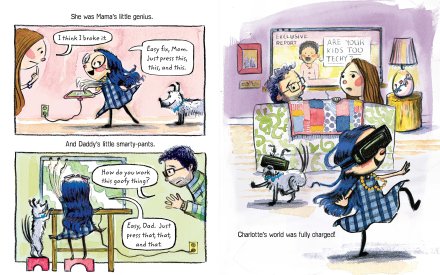
Charlotte collected the doll’s arms, legs, and head, gathered some more supplies, and went to work in her lab. “With a few spare parts and a bit of code, Charlotte changed the doll.” It looked at Charlotte with its bright eyes and smile and said, “H-e-l-l-o m-y n-a-m-e i-s D-o-l-l-E 1.0.” “And the doll changed Charlotte too.” Charlotte loved Doll-E. She read to it, and played with it, and took it outside, where its fast stroller and new remote-controlled robotic arms were perfect for walking Blutooth.

celebrate-picture-books-picture-book-review-doll-E-1.0-gift

Copyright Shanda McCloskey, 2018, couirtesy of Little, Brown Books for Young Readers.

Shanda McCloskey wonderfully inventive doll story for a new generation will delight children and remind adults that while toys may change, the feelings associated with them never do. Sprinkled with puns and led off with a just-right first line, McCloskey’s smart story shines. Charlotte shows heart and intelligence as she embraces her new doll and makes it a reflection of her own life—just as children have always done with their toys. Charlotte, as a computer whiz, makes a captivating role model for kids, especially girls who code or would like to.

There’s so much to admire in McKloskey’s illustrations, from Charlotte’s dedicated work space/lab outfitted with hand tools, spare parts, and craft supplies to her sweet determination to understand her new, simple doll. Clever details, such as a light bulb hanging over Charlotte’s head when she gets a brilliant idea and a Frankenstein-esque scene as Charlotte repairs her doll add depth and fun to the story’s theme.

A spirited story, Doll-E 1.0 clicks all the buttons as a must for home and classroom bookshelves.

Ages 4 – 7

Little, Brown Books for Young Readers, 2018 | ISBN 978-0316510318

Discover more about Shanda McCloskey, her books, and her art on her website.

Computer Science Education Week Activity

celebrate-picture-books-picture-book-review-internet word-based-word-search--puzzle

Trendy Trending Word Search Puzzle


The Internet has added many new words to our language as well as redefining old ones. Search for twenty-two Internet-based words in this printable word search puzzle.

 Trendy Trending Word Search Puzzle | Trendy Trending Word Search Solution!

celebrate-picture-books-picture-book-review-doll-E-1.0-cover

You can find Doll-E 1.0 at these booksellers

Amazon | Barnes & Noble | Books-a-Million | IndieBound

Picture Book Review

Picture Book Review

November 30 – It’s Picture Book Month

celebrate-picture-books-picture-book-review-seeing-stars-cover-2

About the Holiday

For little learners, picture books provide one of the best ways to interact with facts about all kinds of subjects. Loaded with illustrations or photographs that let kids see exciting and beautiful details, nonfiction picture books bring to life science, history, biographies, nature, and so much more of the world around us. This month, take a look for nonfiction picture books about your child’s passions to add to your home library.

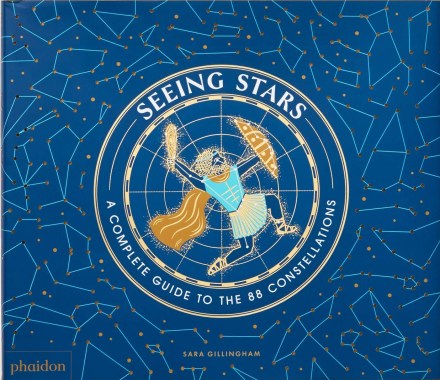
Seeing Stars: A Complete Guide to the 88 Constellations

By Sara Gillingham


If you have a young astronomer in the family and are looking for a book that will make their eyes twinkle like stars on a clear, dark night, Sara Gillingham’s magnificent guide to all eighty-eight internationally recognized constellations is a must. Combining information on how and where to find each constellation, the fascinating stories and/or myths surrounding them, and stylistically gorgeous illustrations, Seeing Stars offers children and adults not only a resource to use when stargazing, but a sit-down-and-explore beauty to enjoy any time.

celebrate-picture-books-picture-book-review-seeing-stars-pisces

Copyright Sara Gillingham, 2018, courtesy of Phaidon Press.

Seeing Stars opens with brief and illuminating discussions on what constellations are, who invented them, using asterisms and brightest stars to find a constellation, which constellations are visible when and where, and the art of stargazing.  A chapter on the ancient constellations takes in the signs of the zodiac (I’m an Aquarius and learned that the famous water carrier of the sign is none other than Ganymede, who in ancient Greece was “considered the most beautiful man alive…. One day, in the middle of a quiet life tending sheep, Ganymede was snatched by an eagle and taken to Zeus” who put him to work as “the official cup-bearer to the gods.”).

In this section, readers will also find the constellations created from “well-known stories, characters, animals, and sacred objects” as well as the  heroes and gods of Greek mythology. Here, readers learn about Hydra, the water snake. Hydra, the largest constellation, covers one fourth of the sky in a “twisting line” that at one end curves inward to make a “small irregular polygon” that serves as the serpent’s head. She was “so wretched that even her breath could kill someone,” and was vanquished by Hercules in the second of his labors. Pegasus, Persius, Ursa Major and Ursa Minor, and Orion are just a few of the other well-known figures from the ancient world.

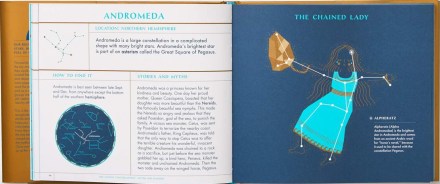
celebrate-picture-books-picture-book-review-seeing-stars-andromeda

Copyright Sara Gillingham, 2018, courtesy of Phaidon Press.

Next, come the modern constellations mapped by European explorers and named for exotic and even mythical creatures in the late 1500s and 1600s. One of these early astronomers was Elisabeth Hevelius, considered to be one of the first female astronomers. Colorful birds of paradise inspired these stargazers to name a small cluster of stars that “make a line with a narrow V on the end, much like the point of a beak” Apus (from the Greek word apous or “footless”), after some European navigators believed the birds had no feet.

What constellation outlines an animal with a “long neck like a camel and a body that is covered in ‘spots’”? Camelopardalis, of course! Or you may be more familiar with this animal’s more common name: giraffe. Chameleons, doves, dolphinfish, cranes, lizards, lions, and lynx also appear in our skies but there’s room, too, for the more whimsical, like Monoceros – or unicorn – and the phoenix.

Modern constellations also pay homage to invention and discovery. These include Caelum, the chisel, named for an engraver’s tool invented in the 1600s to “carve fine lines into printing plates” for book production; Circinus, the compass; Microscopium, the microscope; Telescopium, the telescope; and Pictor, the painter’s easel.

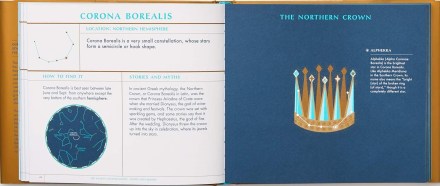
celebrate-picture-books-picture-book-review-seeing-stars-northern-crown

Copyright Sara Gillingham, 2018, courtesy of Phaidon Press.

A Resource section provides information on tools for stargazing, eight circular maps that chart the constellations seen from the northern and southern skies over three-month increments throughout the year, an illustrated guide to asterisms, resources for further reading, and an extensive glossary and index.

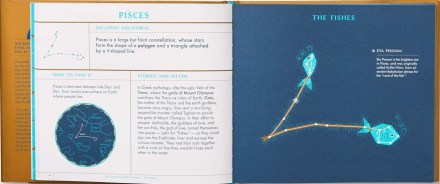
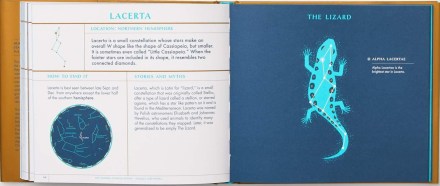
Each constellation is highlighted with a two-page spread. The left-hand page is attractively divided into four sections that provide an image of the constellation created from lines connecting stars in three different sizes that indicate their brightness, tell where the constellation is found and it’s proportion to other constellations, a circular map that spotlights the constellation among others nearby, and a paragraph on the story or myth surrounding the constellation. On the right, the image of the god, animal, or object that inspired the constellation floats on a midnight-blue background and contains within it the stars that make up the constellation connected to show its shape. The brightest star in the constellation is highlighted.

celebrate-picture-books-picture-book-review-seeing-stars-lacerta

Copyright Sara Gillingham, 2018, courtesy of Phaidon Press.

Sara Gillingham’s writing style is knowledgeable and entertaining, opening up the world of astronomy to experts and novices alike with the kind of storytelling that captivates while it teaches.

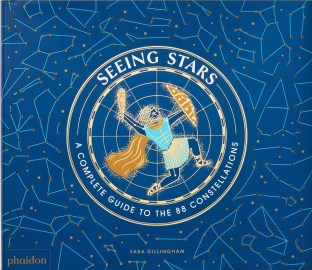
Special mention must be made of the dazzling cover and dust jacket, which together recreate the depth of the night sky. The shimmering gold cover, splashed with the image of the Milky Way, shines through the tiny laser-cut “stars” on the deep blue dust jacket, making a stunning and interactive introduction to this well-crafted book. Kids will love finding and naming the constellations they see on the cover after reading about them inside.

Perfectly conceived and executed, Seeing Stars is a book the whole family can enjoy and will spark many trips outside to gaze at the stars with new interest and understanding. The book would make a much-cherished gift for astronomers, armchair stargazers, space buffs, and those who love mythology and history. It’s a terrific addition to home, classroom, and public libraries and would be just as at home on the coffee table as on the bookshelf.

Ages 8 – 12 and up

Phaidon Press, 2018 | ISBN 978-0714877723

Discover more about Sara Gillingham, her books, and her art on her website.

Picture Book Month Activity

celebrate-picture-books-picture-book-review-read-the-stars-word-search

Read the Stars Word Search Puzzle


Sometimes the constellations can seem hidden among all the other stars. Can you find the names of eighteen constellations in this printable Read the Stars Word Search Puzzle?

Read the Stars Word Search Puzzle | Read the Stars Word Search Solution

celebrate-picture-books-picture-book-review-seeing-stars-cover-2

You can find Seeing Stars: A Complete Guide to the 88 Constellations at these booksellers

Amazon | Barnes & Noble | Books-a-Million | IndieBound

Picture Book Review
November 8 – Parents as Teachers Day

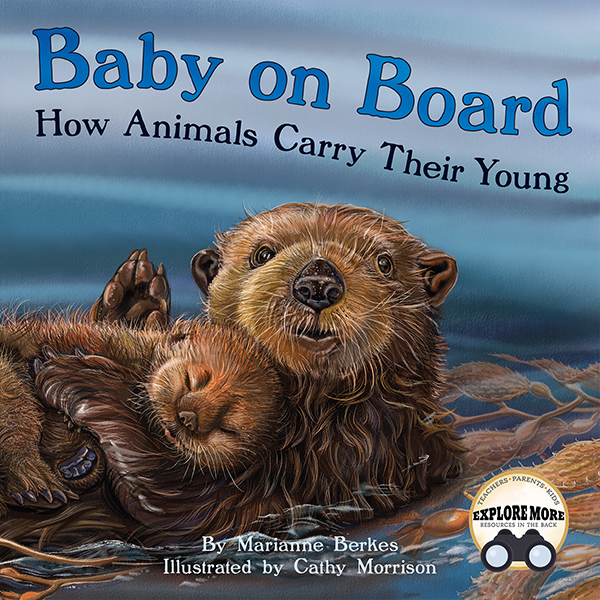
celebrate-picture-books-picture-book-review-baby-on-board-cover-2

About the Holiday

The idea for Parents as Teachers goes back to the 1970s when Missouri educators noticed that not all kindergarteners were beginning school with the same skill set. Research demonstrated the benefits of parental involvement in reading, writing, and math before children began school as well as early detection and intervention for children with delayed development and health issues. Support services and parental education aided an awareness of the importance of children’s earliest years. Parents as Teachers Day was officially instituted in 2001 by the Parents as Teachers National Center in St. Louis, Missouri. Community events and outreach to parents mark the day’s activities.

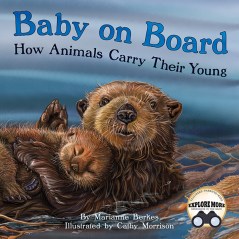
Baby on Board: How Animals Carry Their Young

Written by Marianne Berkes | Illustrated by Cathy Morrison


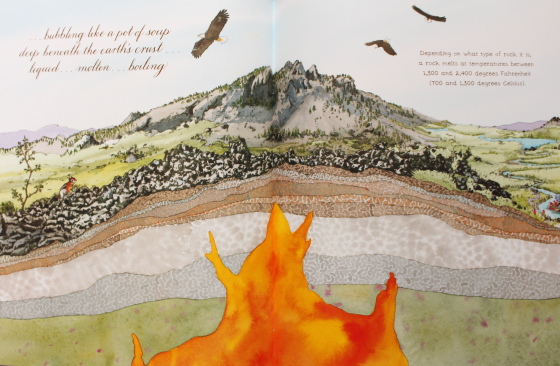
You may not remember, but when you were little your parents, grandparents, and others carried you – a lot! But what do animals do with their babies? “There are no baby backpacks, / no wraps or straps or slings, / no seats to buckle kids in, / or many other things.” Let’s take a look at some very different animals and see how they take care of their young.

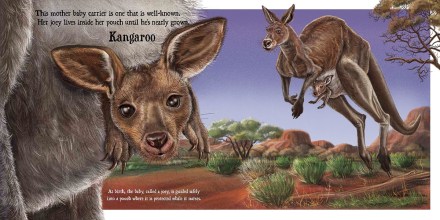
celebrate-picture-books-picture-book-review-baby-on-board-kangaroo

Image copyright Cathy Morrison, 2017, text copyright Marianne Berkes, 2017. Courtesy of Dawn Publications.

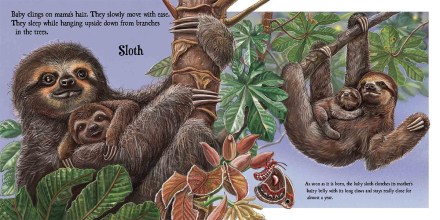
A sea otter pup rides on her mother’s belly as she floats along on her back. But what does the mother sea otter do when she needs to hunt for food? She “wraps her baby in long strands of kelp seaweed to keep her pup from floating away.” Hanging upside down high in a tree seems pretty dangerous for a baby, but a little sloth clings on tight to his mother’s fur and stays there “for almost a year.”

While mother animals do much of the rearing of their little ones, both moms and dads in common loon families are involved. They both give their chicks rides on their backs to keep them “safe from fish and turtle predators.” No person wants to get close to an alligator’s sharp teeth, but inside her wide jaws is just where baby alligators feel safest. When they want to leave their nest, the hatchlings call to their mother, who returns and “gently lifts them out, a few at a time, and carries them to the water for safety.”

celebrate-picture-books-picture-book-review-baby-on-board-sloth

Image copyright Cathy Morrison, 2017, text copyright Marianne Berkes, 2017. Courtesy of Dawn Publications.

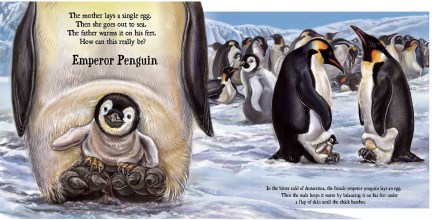
Do you see the baby anteater? She’s cleverly concealed! “Blending in with mama’s fur, you hardly see this pup. It rides upon her hairy back while she digs insects up.” What about kangaroos, opossums, manatees, chimpanzees, wolf spiders, emperor penguins, and lions? How do they carry their babies and protect them while they grow? You’ll find out all about what these animals do. Then it’s time for you to learn “how did someone carry you?”

Backmatter presents an illustrated matching game for kids as well as extensive resources, including more information about each animal, language arts, math, science, engineering, and movement lesson extentions, and suggestions for further reading for teachers and parents.

celebrate-picture-books-picture-book-review-baby-on-board-emperor-penguin

Image copyright Cathy Morrison, 2017, text copyright Marianne Berkes, 2017. Courtesy of Dawn Publications.

Marianne Berkes engages young readers in learning about twelve familiar and more unusual animals in two ways. First, a sweet rhyming couplet—which can be used as a fun guessing game—introduces each animal. Berkes then expands on the information with a brief and fascinating fact or two about how the animal’s method of holding her or his young protects them, feeds them, or moves them from place to place.

Little environmentalist in the making will be awed by Cathy Morrison’s realistic illustrations of each adult animal and baby in their natural habitat. Morrison’s images are so lifelike that readers can count individual hairs on the mother sloth’s arms and marvel at the sharpness of her claws as they wrap around a tree branch and almost feel the softness of the baby otter’s curly fur as she and her mother float in a bed of kelp. The animal’s facial expressions are likewise realistic while showing concern on the part of the adult and complete trust on the part of the babies.

There will be plenty of ewwws and ahhhs for the wolf spider and alligator, and as they watch the lion cup nearly bound off the page, kids will want to start all over and see these majestic wonders again. Morrison’s detailed backgrounds are no less fascinating as they contain clear images of the landscapes each animal calls home, complete with plants, trees, insects, waterways, and more.

Baby on Board: How Animals Carry Their Young provides nature and animal lovers much to learn and talk about. The extra resources also make this a valuable book to add to classroom, homeschool, and public libraries.

Ages 3 – 6

Dawn Publications, 2017 | ISBN 978-1584695936

Discover more about Marianne Berkes and her books on her website. 

To learn more about Cathy Morrison, her books, and her art, visit her website.

Parents as Teachers Day Activity

cute animal coloring pages Best of rhino and her baby free animal coloring pages kleurplaat

Animal Family Coloring Pages


Here are three animal families for you to enjoy coloring. Grab your crayons or pencils and have fun!

Lion and Baby | Zebra and Baby | Hippo and Baby

celebrate-picture-books-picture-book-review-baby-on-board-cover-2

You can find Baby on Board: How Animals Carry Their Young at these booksellers

Amazon | Barnes & Noble | Books-a-Million | Dawn Publications | IndieBound

Picture Book Review

October 12 – It’s National Book Month

celebrate-picture-books-picture-book-review-this-little-scientist-cover

About the Holiday

When children hear, see, and live what’s in the news, they want to know more about the whos, whys, and hows—and they want to know what they can do. Through picture books, middle grade novels, and young adult novels young readers and adults find ways to understand, interpret, and discuss issues in the world today. Many books from picture books on up inspire readers to stand up for others, be a friend, use their talents to help those in need, and make a difference in their own unique way. This month gives readers a great opportunity to discover books that can answer questions, empower children, and make the world a better place for them to grow up in.

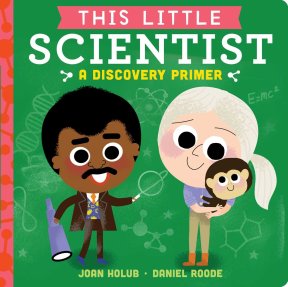
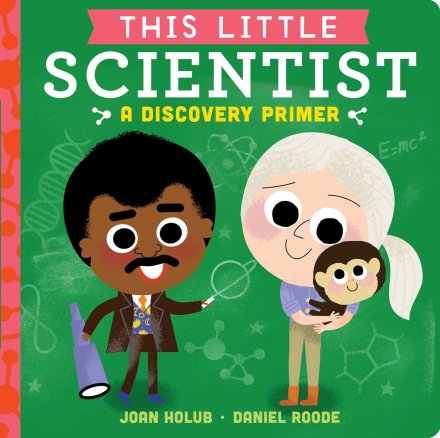
This Little Scientist: A Discovery Primer

Written by Joan Holub | Illustrated by Daniel Roode

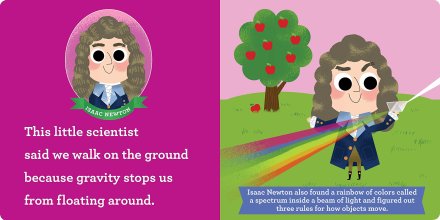
Like the best school career day ever, ten of history’s and today’s greatest scientists line up in front of the chalkboard to talk about their work. First they reveal that secret to their success—the scientific method: “Asking why. Then making a guess. Asking how. Then proving with tests.” First up is Sir Isaac Newton, who discovered gravity. Little ones will learn that he also found the color spectrum and “figured out three rules for how objects move.”

celebrate-picture-books-picture-book-review-this-little-scientist-isaac-newton

Image copyright Daniel Roode, 2018, text copyright Joan Holub, 2018. Courtesy of Little Simon, Simon & Schuster.

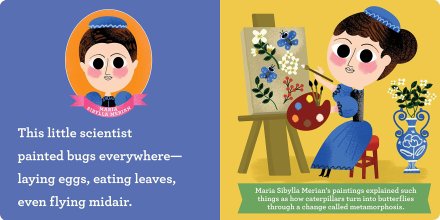
Next to take center stage is Maria Sibylla Merian, a painter who through her art explained wonders of the insect world, including “how caterpillars turn into butterflies through a change called metamorphosis.”

Even the youngest readers may recognize Albert Einstein with his disheveled white hair. They’ll be amazed to learn that he devised a formula to explain how “energy and mass are the same thing in different forms.” He also found that nothing is faster than the speed of light.

celebrate-picture-books-picture-book-review-this-little-scientist-maria-sibylla-merian

Image copyright Daniel Roode, 2018, text copyright Joan Holub, 2018. Courtesy of Little Simon, Simon & Schuster.

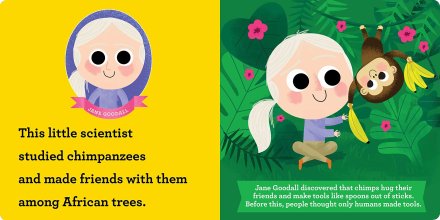
Katherine Johnson can look back on a stellar career as a mathematician who “solved hard math problems on paper” before computers were used “so that space heroes like John Glenn could safely orbit the Earth.” Kids who love animals will want to meet Jane Goodall who “studied chimpanzees / and made friends with them / among Africa’s trees.” And starry-eyed kids who look to the skies will want to hear about Neil deGrasse Tyson, the director of the Hayden Planetarium who “helps us understand / how our universe works / and how it began.”

Four more scientists step up to tell their stories. To close out the book, little readers will find a double-spread portrait gallery of seventeen more, complete with one-sentence descriptions for their contribution. Readers will find that the final frame has been left open for… them?

celebrate-picture-books-picture-book-review-this-little-scientist-Neil deGrasse-Tyson

Image copyright Daniel Roode, 2018, text copyright Joan Holub, 2018. Courtesy of Little Simon, Simon & Schuster.

Joan Holub distills the scientific method and the biographies of ten influential scientists into short, clear nuggets of information that even the youngest readers can appreciate. A four-line rhyming verse introduces the scientist on the lefthand side while one or two facts on the right-hand side expand on their work. The engaging tone and variety of sciences and scientists represented will entice discoverers-in-the-making to learn more.

celebrate-picture-books-picture-book-review-this-little-scientist-jane-goodall

Image copyright Daniel Roode, 2018, text copyright Joan Holub, 2018. Courtesy of Little Simon, Simon & Schuster.

Daniel Roode cartoon-inspired but readily recognizable portraits of each scientist will charm readers as each is portrayed working with the subject of their experiments or set on a backdrop of their specialty. Clothing and hairstyles give kids a sense of each scientist’s place in history. Roode’s vibrant colors and dynamic illustrations in addition to the bright smile each scientist wears celebrates the sciences while applauding the discoveries made by women and men dedicated to advancing knowledge and creating the future.

For little ones who are curious about the world around them and how it works, This Little Scientist: A Discovery Primer, part of the This Little series, which includes This Little Explorer, This Little President, and This Little Trailblazer, is a smart, innovative choice for home, classroom, and public library shelves.

Ages 3 – 5

Little Simon, Simon & Schuster, 2018 | ISBN 978-1534401082

Discover more about Joan Holub and her books on her website.

National Book Month Activity

celebrate-picture-books-picture-book-review-silly-balloons

Static Electricity Experiment!

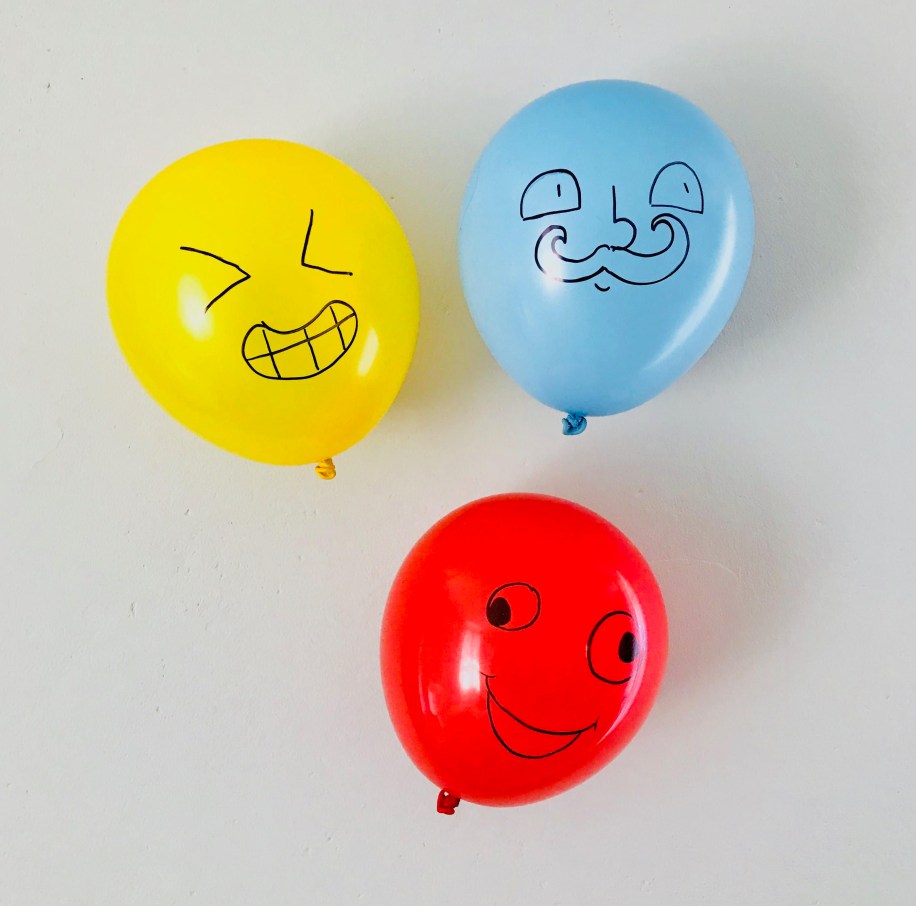
We all know that cooler weather means shock season will soon be here. But you don’t have to wait until the fuzzy socks and fleecy blankets come out to have some fun with static electricity. Using a blown-up balloon can be a dramatic way to show kids what’s going on with the electrons that are at the center of this phenomenon.

Babies and young children should be supervised by an adult while playing with balloons.

How does it work? Static electricity is generated when there is an excess of electrons on one object giving it an electric charge. These electrons are attracted to an object with fewer electrons and will jump to it when placed close by.

How do you produce static electricity? Just rub the blown-up balloon on your shirt, on your hair, on a blanket or other surface. Then try these experiments!

CRAZY HAIR

Generate static electricity on a blown-up balloon then hold it near your hair and watch it go a little crazy!

HANG A BALLOON

Generate static electricity on a blown-up balloon and gently place it on the wall and watch it hang all by itself.

BEND WATER

This bit of balloon magic will amaze you! Generate static electricity on a blown-up balloon. Turn on a faucet to a thin stream of water. Hold the balloon near the stream of water and watch it bend toward the balloon. 

celebrate-picture-books-picture-book-review-this-little-scientist-cover

You can find This Little Scientist: A Discovery Primer at these booksellers

Amazon | Barnes & Noble | Books-a-Million | IndieBound

Picture Book Review
August 27 – National Just Because Day

celebrate-picture-books-picture-book-review-junk-a-spectacular-tale-of-trash-cover

About the Holiday

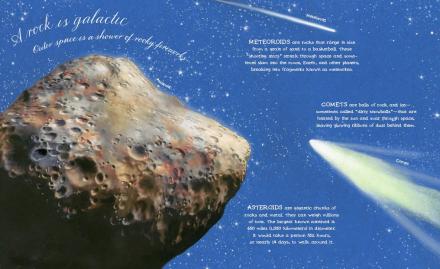
Doesn’t that sound refreshing? A whole day devoted to doing things “just because.” As the school year starts up again and the less structured days of summer fade, it’s fun to contemplate what you can do just because you feel like it, it makes you happy, or it’s something nice you want to do for someone else. With no expectations, no directions, and no nagging deadlines, today’s holiday lets you be the captain of your actions and fate! So get out there and do that thing! You might surprise yourself and others—just like the little girl in today’s book!

Sleeping Bear Press sent me a copy of Junk: A Spectacular Tale of Trash to check out. All opinions are my own. I’m excited to be partnering with Sleeping Bear Press in a giveaway of the book. See details below.

Junk: A Spectacular Tale of Trash

Written by Nicholas Day | Illustrated by Tom Disbury


Sylvia Samantha Wright was awesome at finding stuff. In fact, “on Monday, she found some leaky tires. And some tangled ropes that were underneath the leaky tires. And some old wood that was underneath the tangled ropes that were underneath the leaky tires.” She brought it all home in her wagon and stored it in the garage. When her father wanted to know “‘Why?,’” she told him that she had a plan.

celebrate-picture-books-picture-book-review-junk-a-spectacular-tale-of-trash-garage

Image copyright Tom Disbury, 2018, text copyright Nicholas Day, 2018. Courtesy of Sleeping Bear Press.

On Tuesday, Sylvia found a half-used pack of gum and added it to her stash. Her brother thought it was time for “‘another sister.’” On Wednesday, when Sylvia showed the Mayor the busted pipes, old motors, and empty paint cans she had collected, the Mayor was a bit skeptical about Sylvia’s project. Her next acquisition was a whole wagonload of “polka-dotted party hats from a store that was getting out of the polka-dotted party hat business.” On her way home, Sylvia ran into old Ezekiel Mather, who rarely spoke or smiled. Ezekiel appreciated the hats in Sylvia’s wagon, though, and wanted to know what she was working on.

celebrate-picture-books-picture-book-review-junk-a-spectacular-tale-of-trash-gum

Image copyright Tom Disbury, 2018, text copyright Nicholas Day, 2018. Courtesy of Sleeping Bear Press.

Sylvia had to admit that she didn’t quite know. That’s when Ezekiel smiled and said, “‘That’s the best part. The part before you know.’” On Friday, Sylvia and Ezekiel found a dumpster full of half-rotten bananas. Sylvia didn’t know what she’d do with them, but they excited her nonetheless.

On Saturday everything changed. “The water tower sprung a few leaks,” and while the Mayor was setting up buckets to catch the water, she was washed downstream sitting on the playground’s tire swing. Then the main power line crashed, cutting out the security system at the zoo’s “Larger-Sized Animal House.” Out walked an Asian elephant, three hippopotamuses, a group of orangutans, and some capybaras.” On their way through town the elephant pulled up the flag pole—with the Mayor attached.

celebrate-picture-books-picture-book-review-junk-a-spectacular-tale-of-trash-mayor

Image copyright Tom Disbury, 2018, text copyright Nicholas Day, 2018. Courtesy of Sleeping Bear Press.

On Sunday, Sylvia went to the Mayor with her wagons loaded with junk and offered her help. “‘I’ve got this,’” she said. And she did! She fixed the water tower, redesigned the power system, and built a new and improved playground. And what about the zoo animals? It seemed a dumpsterful of half-rotten bananas was just the thing to entice them back home. There was just one thing left in Sylvia Samantha Wright’s wagon: polka-dotted party hats. What were those for? “‘For the party, of course.’”

celebrate-picture-books-picture-book-review-junk-a-spectacular-tale-of-trash-watering-can

Image copyright Tom Disbury, 2018, text copyright Nicholas Day, 2018. Courtesy of Sleeping Bear Press.

Nicholas Day’s witty, sequential story is a spirited tribute to those who can see the potential in even discarded things. Sylvia’s confident answers to people’s questions of “why?” will cheer both those children and adult readers who have a secret (or not-so-secret) stash of objects waiting for just the right project. As Sylvia amasses a seemingly disparate array of junk, readers’ suspense will grow as they wonder just how she’s going to use it all. As the out-of-her-depth mayor relinquishes control to Sylvia, kids will cheer as Sylvia Samantha Wright knows all the right solutions.

celebrate-picture-books-picture-book-review-junk-a-spectacular-tale-of-trash-finding

Image copyright Tom Disbury, 2018, text copyright Nicholas Day, 2018. Courtesy of Sleeping Bear Press.

Tom Disbury’s charming cartoon-style line drawings instantly make Sylvia a heroine for her astute junk plucking and her plucky can-do attitude. Images of her growing piles of junk will intrigue children, and illustrations of the Mayor riding the rapids on a tire, flailing on a floating log, and clinging to the flag pole add classic slap-stick humor to the story. Those with an artistic and/or a scientific bent will be fascinated with depictions of Sylvia’s ingenious inventions and innovations.

Sure to spark an interest in creativity, experimentation, building, and inventing, Junk: A Spectacular Tale of Trash would be a lively addition to STEM lessons in the classroom as well as a humorous and inspiring read at home.

Ages 5 – 8

Sleeping Bear Press, 2018 | ISBN 978-1585364008

Discover more about Nicholas Day and his writing on his website.

To learn more about Tom Disbury, his books, and his art, visit his website.

Junk: A Spectacular Tale of Trash Giveaway

I’m excited to partner with Sleeping Bear Press in this giveaway of:

  • One (1) copy of Junk: A Spectacular Tale of Trash Giveaway written by Nicholas Day | illustrated by Tom Disbury

To be entered to win, just Follow me on Twitter @CelebratePicBks and Retweet a giveaway tweet during this week, August 27 – September 2. Already a follower? Thanks! Just retweet for a chance to win.

A winner will be chosen on September 3.

Giveaway open to US addresses only. | Prizing provided by Sleeping Bear Press.

National Just Because Day Activity

celebrate-picture-books-picture-book-review-motivation-and-inspiration-day-craft

Recycled Crafts & Inventions


Look around your house or classroom. Are there boxes, cups, bottles, and other doodads that could be repurposed or reimagined? You bet! Collect as many of these items as you want and put your imagination to work. You’ll be amazed at what you can create—just because!

celebrate-picture-books-picture-book-review-junk-a-spectacular-tale-of-trash-cover

You can find Junk: A Spectacular Tale of Trash at these booksellers

Amazon | Barnes & Noble | Books-a-Million | IndieBound

Picture Book Review

August 11 – Play in the Sand Day

celebrate-picture-books-picture-book-review-how-to-code-a-sandcastle-cover

About the Holiday

Is there any better way to spend a summer day than playing on a sandy beach? That wet, compact surface is perfect for running on, digging in, and of course building sandcastles with. And the soft, dry areas? They’re great for setting up chairs or blankets and wiggling toes in. Whether you head out to the ocean, a lake, or even a secluded river bank, don’t forget to pack a pail and shovel for some family fun!

How to Code a Sandcastle

Written by Josh Funk | Illustrated by Sara Palacios

It’s the last day of Pearl’s summer vacation, and she’s hit the beach with her parents. Her goal is to build a sandcastle. It’s not like she hasn’t tried on other beach days, but there was always something that destroyed it. There was the frisbee that landed on top of it, then a surfer glided right into it, and another girl’s dog, Ada Puglace, thought it needed a moat. But today, Pearl brought her robot, Pascal, to build her sandcastle.

celebrate-picture-books-picture-book-review-how-to-code-a-sandcastle-ruined-sandcastles

Image copyright Sara Palacios, 2018, text copyright Josh Funk, 2018. Courtesy of Viking Books for Young Readers.

As Pearl explains, “He’ll do whatever I tell him—as long as I tell him in code. It’s not a secret code—it’s special instructions that computers understand.” Pearl points out the perfect spot on the beach for her sandcastle and tells Pascal to build it. But Pascal doesn’t move. Pearl realizes that she must break down the one big request into smaller problems for Pascal to solve. Easy-Peasy, Pearl thinks.

The first problem Pearl gives Pascal is: “find a place to build.” First Pascal travels out to sea, but Pearl tells him they must build on land. So Pascal rolls out into the parking lot. Hmmm…that’s not right either. Pearl decides she must be “very specific with my instructions.” When she tells Pascal to “find a flat spot on sand that isn’t too close to the water,” he marks an X on a perfect sandy spot. Great!

celebrate-picture-books-picture-book-review-how-to-code-a-sandcastle-small-problem-1

Image copyright Sara Palacios, 2018, text copyright Josh Funk, 2018. Courtesy of Viking Books for Young Readers.

The second problem Pearl gives Pascal is to “gather up sand.” She’s learned to be very particular in her instructions, so she gives her robot a three-step process: “Fill the pail with sand, dump the sand on our spot, pat the sand down.” This works just right, so Pearl continues telling Pascal the directions, until she grows tired of speaking.

There must be a better way, Pearl thinks. How about a loop? Pearl directs Pascal to “loop through this sequence,” and just like that Pascal is off and rolling and Pearl gets to relax. A while later, Pearl discovers that Pascal had built a pyramid-high pile of sand, so Pearl tells him to stop. Next, they will “shape and decorate the castle.” Pearl comes back with pretty seashells to add to the castle, while Pascal brings back the lifeguard—in his chair. Pearl orders Pascal to bring back something smaller. When he comes back with a crab, she tells him it must be something that doesn’t move, and when he shows up with a baby’s pacifier, Pearl knows she must do a better job of explaining.

celebrate-picture-books-picture-book-review-how-to-code-a-sandcastle-small-problem-3

Image copyright Sara Palacios, 2018, text copyright Josh Funk, 2018. Courtesy of Viking Books for Young Readers.

She decides to give him “if—then—else” instructions. With these detailed directions, Pascal returns with a shell and some seaweed. Finally, it’s time to shape the castle. They use their buckets and hands to build a beautiful castle that even has a turret. The shells, rocks, and seaweed are the perfect finishing touches. With the castle finally finished, Pearl runs off to get her toys.

But when she gets back, Pearl discovers that the rising tide has washed their sandcastle out to sea. And to make matters worse, Ada Puglace is back to add another moat. Hmmm… a moat? Pearl thinks. That’s what she needed the first time. Pearl really wants to rebuild, but it took her half a day to make the first one. Then she realizes that the code is already written. All she has to do is use it again. In no time a new sandcastle stands gleaming on the beach.

There’s just one more problem to solve. Quickly, Pearl gives Pascal a new looped sequence to dig the moat. Now it’s time to play—or “code an entire kingdom!”
celebrate-picture-books-picture-book-review-how-to-code-a-sandcastle-finished-castle

Image copyright Sara Palacios, 2018, text copyright Josh Funk, 2018. Courtesy of Viking Books for Young Readers.

A Foreward written by Reshma Saujani, the founder of Girls Who Code, introduces readers to this organization that is “working to close the gender gap in technology” and get girls of all ages excited about coding and future opportunities in science and technology. 

Pearl and Pascal’s Guide to Coding with brief discussions of Code, Sequence, Loops, and If-Then-Else follows the text.

With his infectious enthusiasm and talent to reach kids in new and innovative ways, Josh Funk, a computer programmer by day and super writer by night, is a perfect guide to the joys of coding for young learners. Taking kids out to the beach for a bit of sandcastle building—an endeavor that is often fraught with dangers—is a terrific way to show the procedures and power of coding. Pearl’s initial missteps in programming Pascal provide laugh-out-loud moments while also demonstrating that computer programs work with precise instructions. Her inexperience but quick learning will give readers confidence in their own abilities to code and where to look for problems if their program does not run as smoothly as they’d like. When high tide washes Pearl and Pascal’s sandcastle out to sea, readers may groan in empathy, but the opportunity to do it all again—only bigger and better—will make them cheer.

celebrate-picture-books-picture-book-review-how-to-code-a-sandcastle-last-day

Image copyright Sara Palacios, 2018, text copyright Josh Funk, 2018. Courtesy of Viking Books for Young Readers.

Sara Palacios’s golden beach is a wide-open and inviting platform to introduce the world of computer programming to young readers. Sunny and enthusiastic, Pearl, in her heart-shaped sunglasses, is persistent and smart in figuring out just how to make Pascal do what she wants. Pascal is a round, rolling cutie, perpetually happy to perform its duties. Series of panels and speech bubbles depict each instruction Pearl gives Pascal, clearly showing readers how coding and a computer’s response to its instructions work. Sequence loops are cleverly portrayed with typeface that creates a circle around Pearl’s floating ring and later around the trench that will surround the castle and become the moat. The final image of Pearl and Pascal celebrating their successful day together is powerful encouragement that a new day of girls and women in technology and science is on the horizon.

Coding a Sandcastle is a motivating combination of lighthearted fun and accessible education that will encourage girls—and boys—to get involved with computer coding just for their own enjoyment or as a future profession. It’s a must for school media and computer class libraries, and with this book on home bookshelves, kids won’t want to just play on the computer—they’ll be asking to program too.

Ages 4 – 8

Viking Books for Young Readers, 2018 | ISBN 978-0425291986

Discover more about Josh Funk and his books and find lots of fun activities to do too on his website.

To learn more about Sara Palacios, her books, and her art, visit her website.

Play in the Sand Day Activity

celebrate-picture-books-picture-book-review-bringing-the-outside-in-painted-pails-craft

Personalized Painted Pail

A trip to the beach or park isn’t complete without a pail to collect shells, seaweed, sea glass, pebbles, sticks, nuts, or other things in. But why should all the cool stuff be on the inside? With this craft you can decorate your pail to show your unique personality!

Supplies

  • Plastic or metal pail
  • Craft paint in various colors
  • Crystal Clear Acrylic Coating, for multi-surface use
  • Paint brush

Directions

  1. Paint designs on the pail
  2. When paint is dry spray with acrylic coating to set paint
  3. Let dry

celebrate-picture-books-picture-book-review-how-to-code-a-sandcastle-cover

You can find How to Code a Sandcastle at these booksellers

Amazon | Barnes & Noble | Books-a-Million | IndieBound

Picture Book Review