November is Picture Book Month and Family Stories Month! Taken together, I couldn’t wish for a better time to introduce today’s sweet and uplifting book about a loving family to readers! So gather ’round – today may be A Sari for Ammi‘s book birthday, but this lovely story is a gift for you!
Thanks go to Amazon Crossing Books and Barbara Fisch at Blue Slip Media for sharing a copy of A Sari for Ammi with me for review consideration. All opinions of the book are my own.
A Sari for Ammi
Written by Mamta Nainy | Illustrated by Sandhya Prabhat
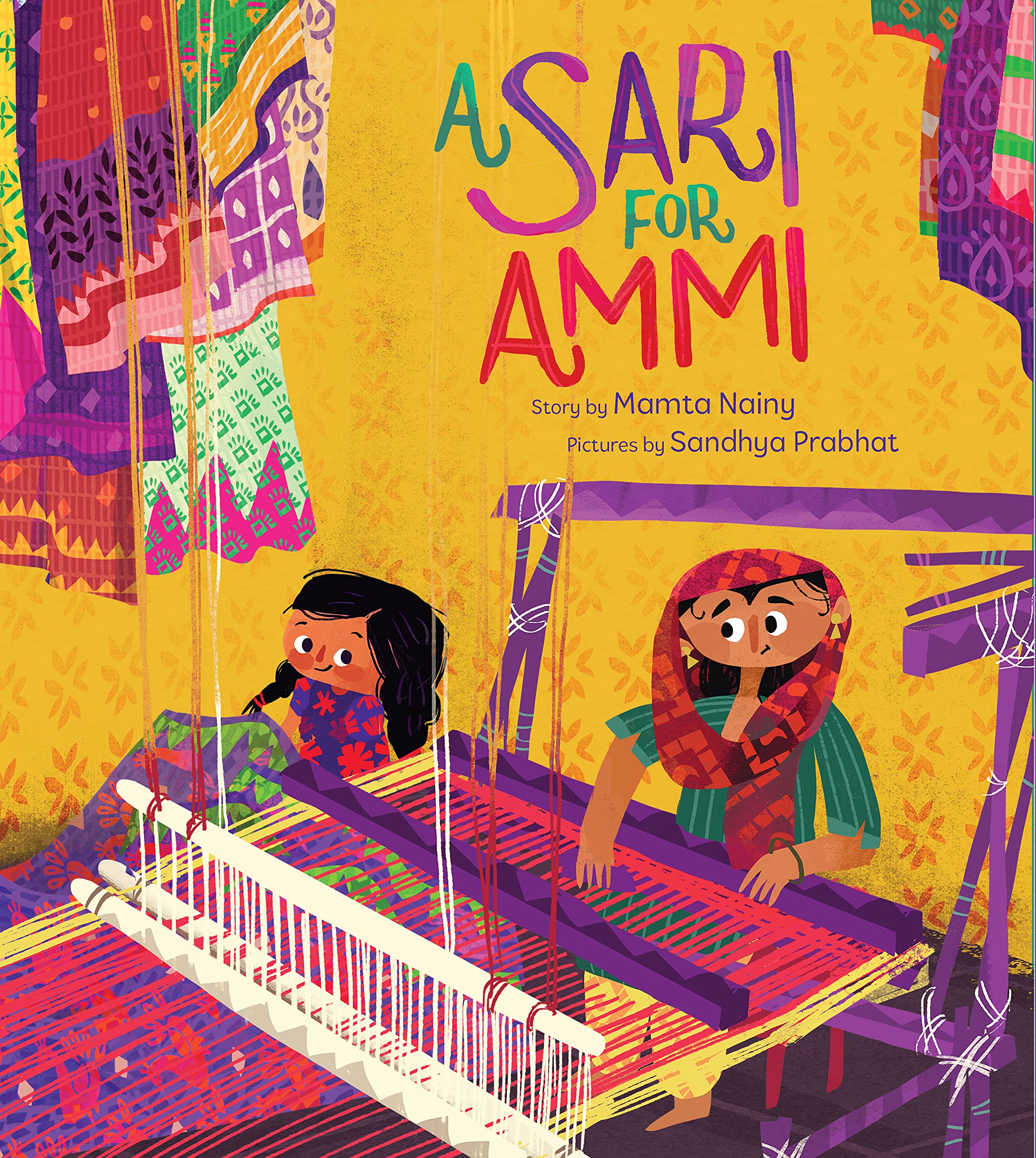
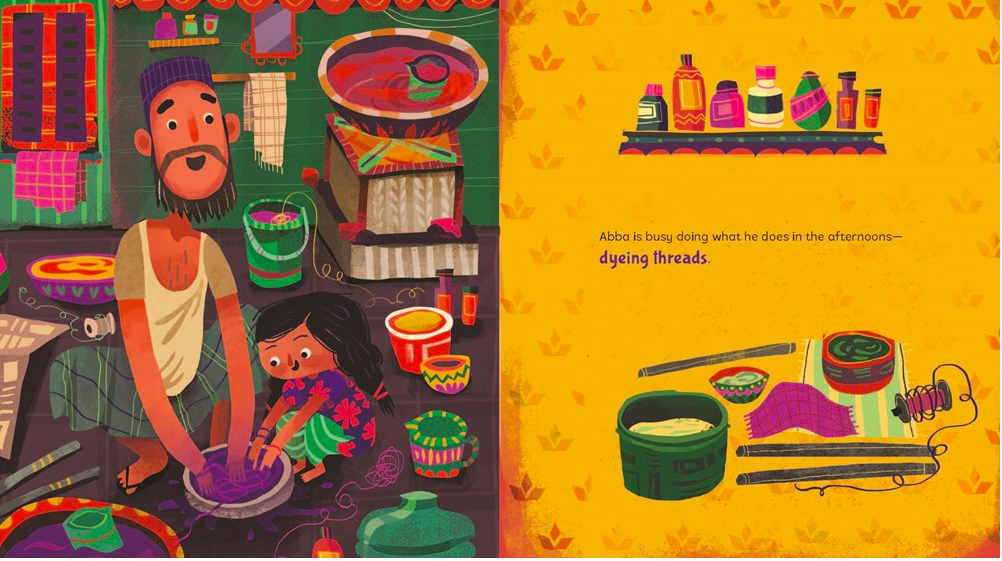
It’s afternoon and a little girl tiptoes past her sister, Sadaf, who’s dozing on the front porch, and the buffalo, who are napping after their “good wash in the village pond.” She’s on her way to help her dad, her Abba, dye threads for the saris that her Ammi, her mom, weaves. After the threads are dyed, the girl visits Ammi at her loom. “Ammi weaves the most wonderful saris in the world, in pinks and yellows and greens, with prints of mangoes, peacocks, birds, leaves, and flowers,” she says.
Image copyright Sandhya Prabhat, 2021, text copyright Mamta Nainy, 2021. Courtesy of Amazon Crossing Kids.
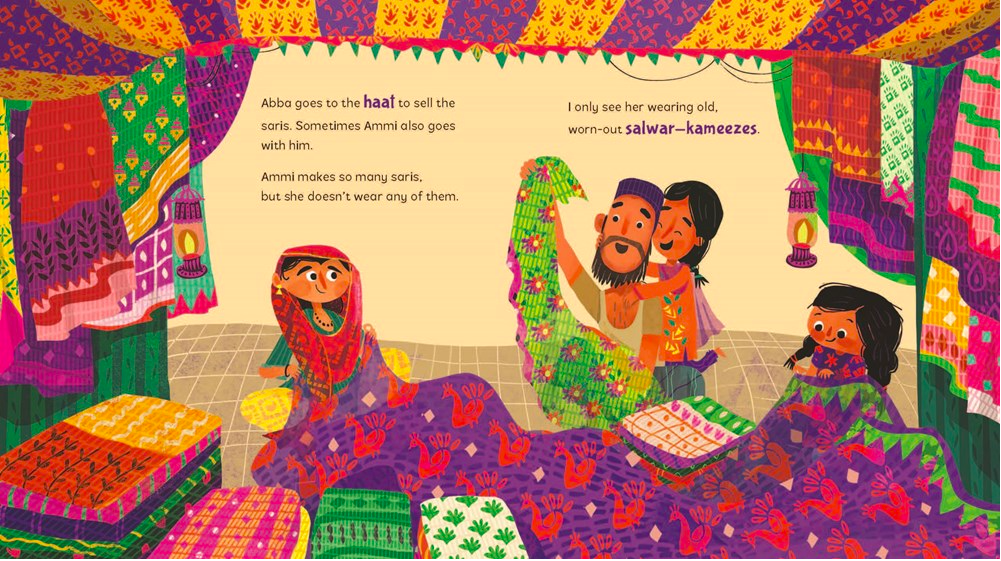
Making saris has been a family business going back to her great-great grandparents. Now, she and Sadaf, Abba and Ammi work on the saris – some even take months to create. Abba takes Ammi’s finished saris to the haat, the market, to sell. The little girl feels sad that Ammi never gets to wear one of the beautiful sari’s herself. Instead Ammi always wears “old, worn-out salwar-kameezes” – traditional pants and tunics.
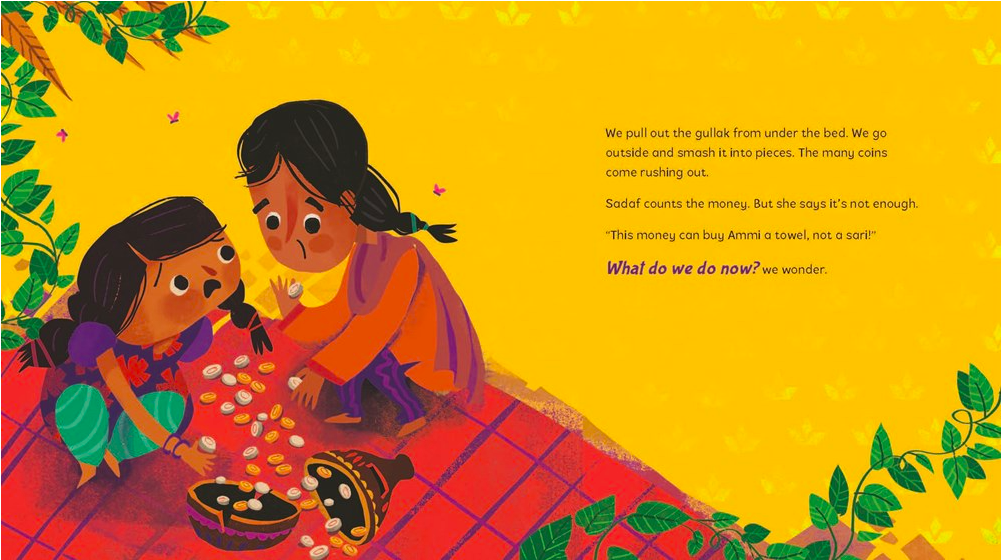
One day, the girl asks Ammi to keep a particularly beautiful sari for herself, but Ammi says it is to sell. “‘If we keep the saris, how will we eat?'” she says. The girl doesn’t quite understand, but she wants Ammi to be able to wear a sari that she makes, but to do that, she and Sadaf would have to buy her one. Then she thinks about her and Sadaf’s bank. “‘Let’s break our gullak!'” she tells Sadaf. “‘We can use the money to buy Ammi a sari.'”
Image copyright Sandhya Prabhat, 2021, text copyright Mamta Nainy, 2021. Courtesy of Amazon Crossing Kids.
Sadaf about the list of things she and her sister have been saving for, but her little sister asks “‘What matters more to you: Ammi or ‘the things’?…Sadaf makes a face and mumbles, ‘Ammi.'” But when they break the gullak and count their change, it’s only enough to buy a towel. What can they do? Sadaf has the idea to sell all of their old junk to Jhammu Kaka, who owns the scrap shop. When they do that they have more money, but only enough for a dupatta, a head scarf.
Image copyright Sandhya Prabhat, 2021, text copyright Mamta Nainy, 2021. Courtesy of Amazon Crossing Kids.
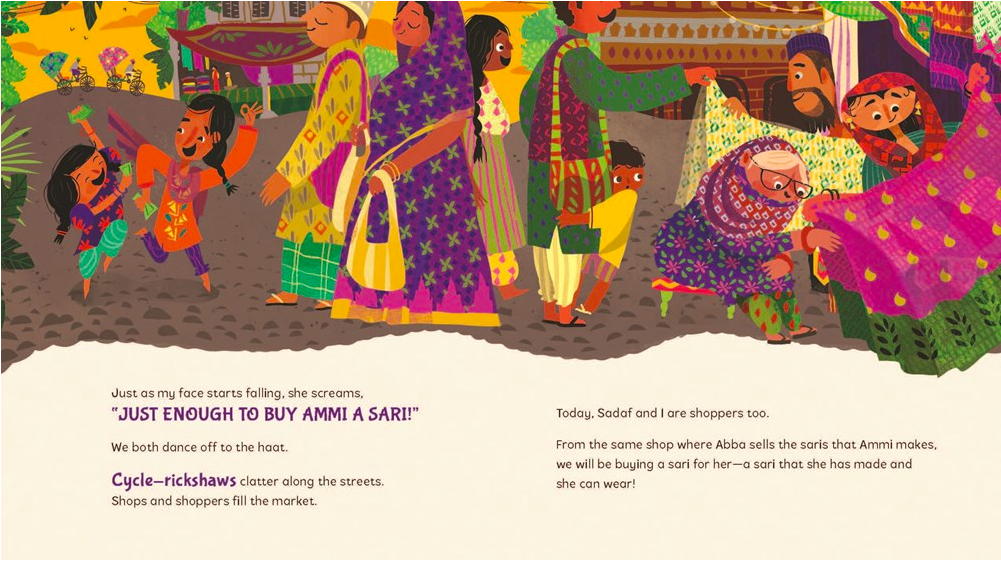
On the way home, the little girl thinks of another way to earn money. They go to their neighbor’s house and help her dye threads for the saris she makes. When she gives them money for their help, Sadaf counts it. Her sister is ready for disappointment, but instead she hears, “‘This money is… just enough to buy Ammi a sari!'” They run to the haat and look at all the saris before picking one. What, they wonder, will Ammi say when they give it to her. But they don’t have “to wait long to find out.” They rush home and with big hugs and the sari in hand, they “bring the biggest smile to Ammi’s face!”
Back matter includes a discussion about the saris of Kaithoon, where the story is set, the history of this town in India as a center for the weaving of saris made from a special fabric called “‘kota doria'” and the women of the Muslim Ansari community who create these works of art. A Glossary also defines words found throughout the story.
Image copyright Sandhya Prabhat, 2021, text copyright Mamta Nainy, 2021. Courtesy of Amazon Crossing Kids.
Mamta Nainy’s heartening story charms with a close-knit family and two sisters who want their mother to enjoy the saris she works so hard to create. As they pool their resources and think up other ways to make money to buy a sari, the girls show a kind of love for family and excitement for giving that will resonate with readers. Nainy’s flowing and detailed storytelling seamlessly educates and enchants with humor, emotion, and the tender enthusiasm of the young narrator’s voice. The final spread in which the two girls give Ammi the sari they’ve chosen is sure to bring a smile – and maybe a tear – to adults and kids alike.
Sandhya Prabhat fills her pages with glorious color and warm tones that bring the beauty of the kota doria saris alive for readers. Kids and adults will see traditional methods of dyeing threads, the setup of a loom on which these treasures are created, and the intricate patterns and vibrant hues that grace these sought-after saris. Just as compelling are images of the family happily working together to make the cloth and stock their market stall as well as illustrations of the narrator and her sister selflessly giving up their money and devising ways to make more. A two-page spread showing the haat is a showstopper that will entice readers to choose their own favorite sari.
A moving, feel-good family story with deep roots, both culturally and in the heart, A Sari for Ammi is a story that adults and kids will love sharing again and again. The book is highly recommended as a gift or an addition to home, school, and public library collections.
It’s apple season! Honeycrisp, Cortland, Gala, Fuji, Macintosh—there are so many delicious varieties to choose from and enjoy! The bounty of apples allows bakers and chefs to create scrumptious desserts and dishes, and for purists, there’s nothing better than biting into a crisp apple. Orchards are open for picking, and farmers markets and grocery stores are packed with these red, green, and yellow treats. To celebrate today and all month long, take the family apple picking, make your favorite apple recipes, or discover new taste sensations.
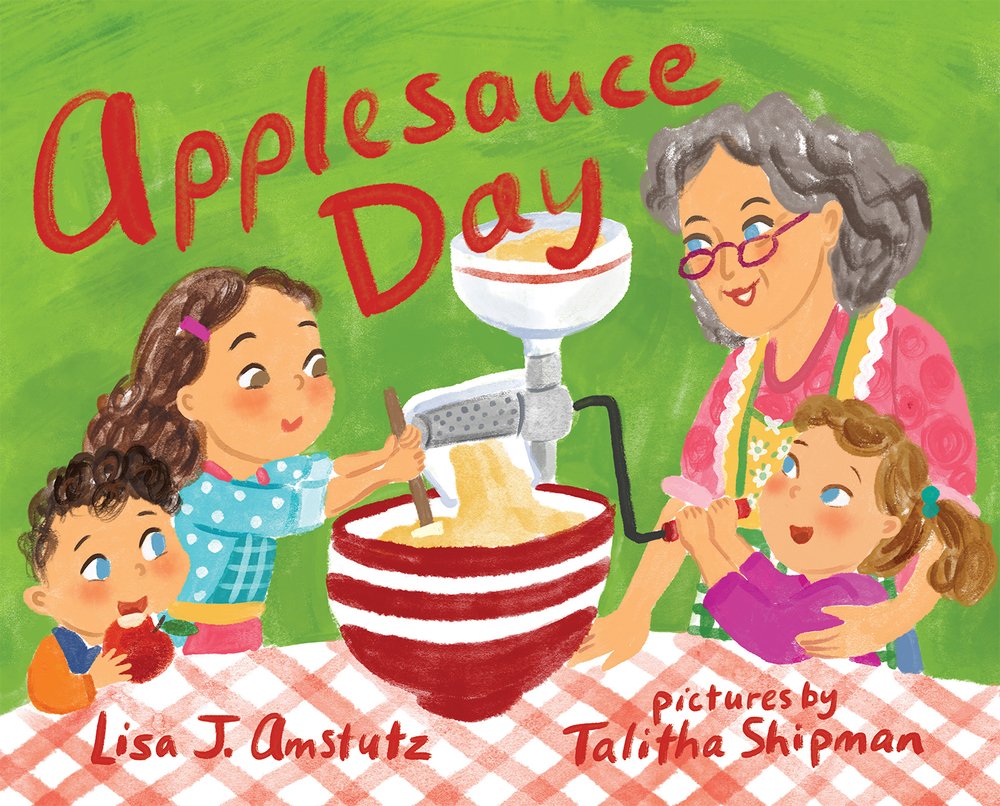
Applesauce Day
Written by Lisa J. Amstutz | Illustrated by Talitha Shipman
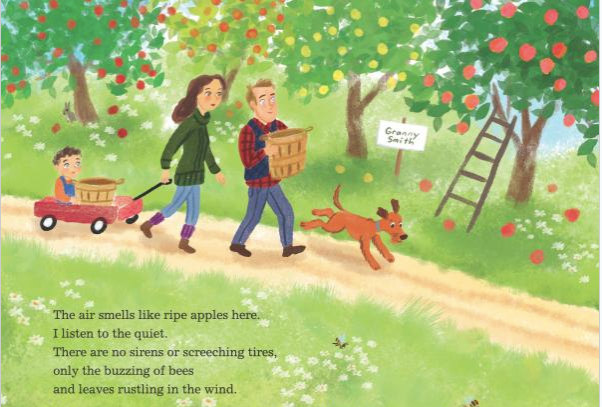
As a girl and her family have breakfast, she spies the tall pot that means it’s applesauce day. Her younger sister Hannah cheers, and her little brother “bangs his spoon.” After breakfast they head to the orchard outside the city. There, the air smells of ripe apples and it’s quiet. “There are no sirens or screeching tires. Only the buzzing of bees and the rustling of leaves in the wind.”
Image copyright Lisa J. Amstutz, 2017, text copyright Talitha Shipman, 2017. Courtesy of Albert Whitman & Company.
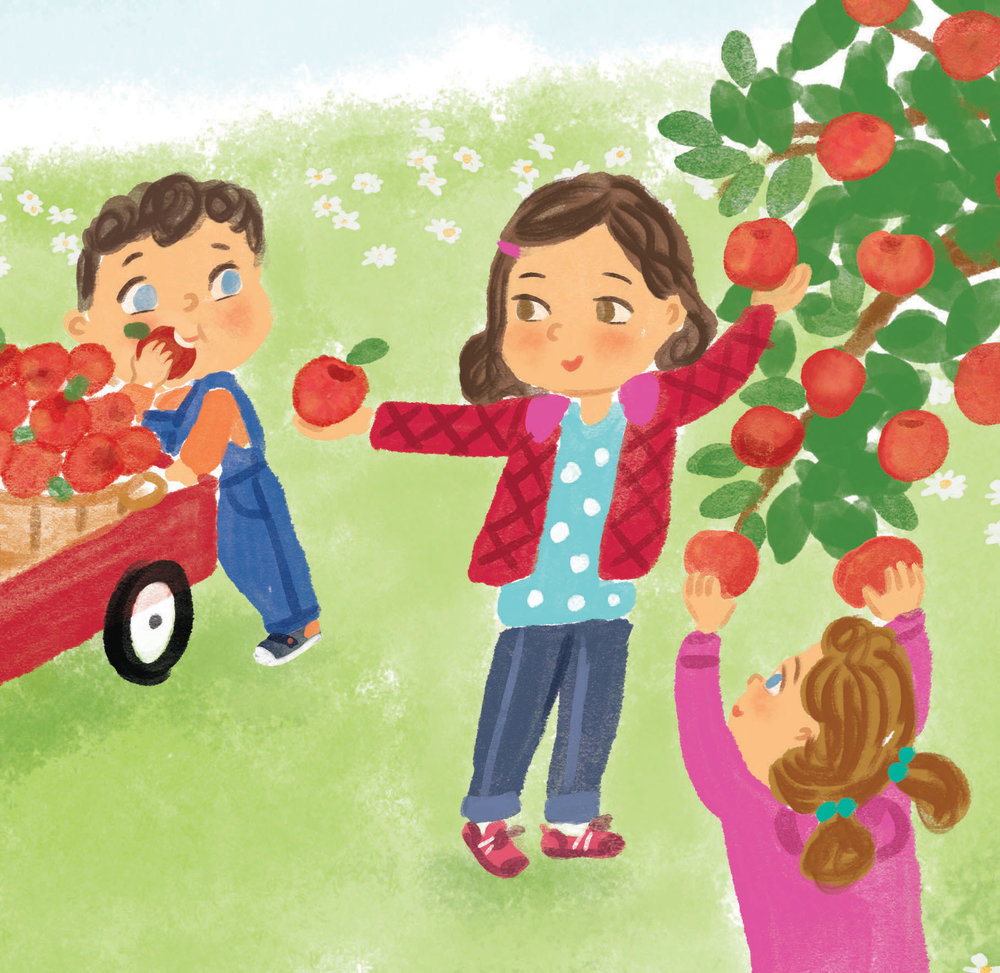
Hannah calls to her big sister for help. She shows Hannah how to twist and pull the apples from the tree. Mom and Dad pick the apples high in the trees while Hannah, her big sister pick low apples. Ezra helps by putting the apples in a basket. He can’t resist taking a bite of one.
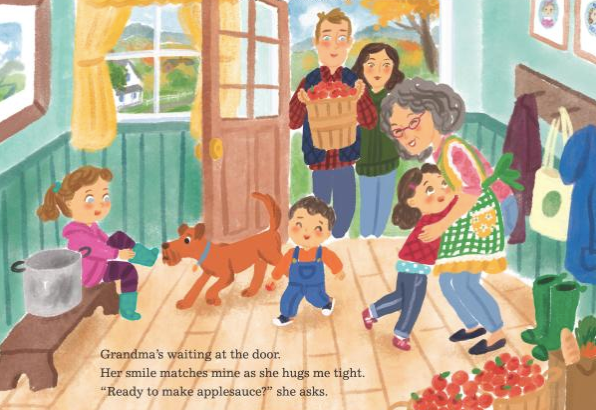
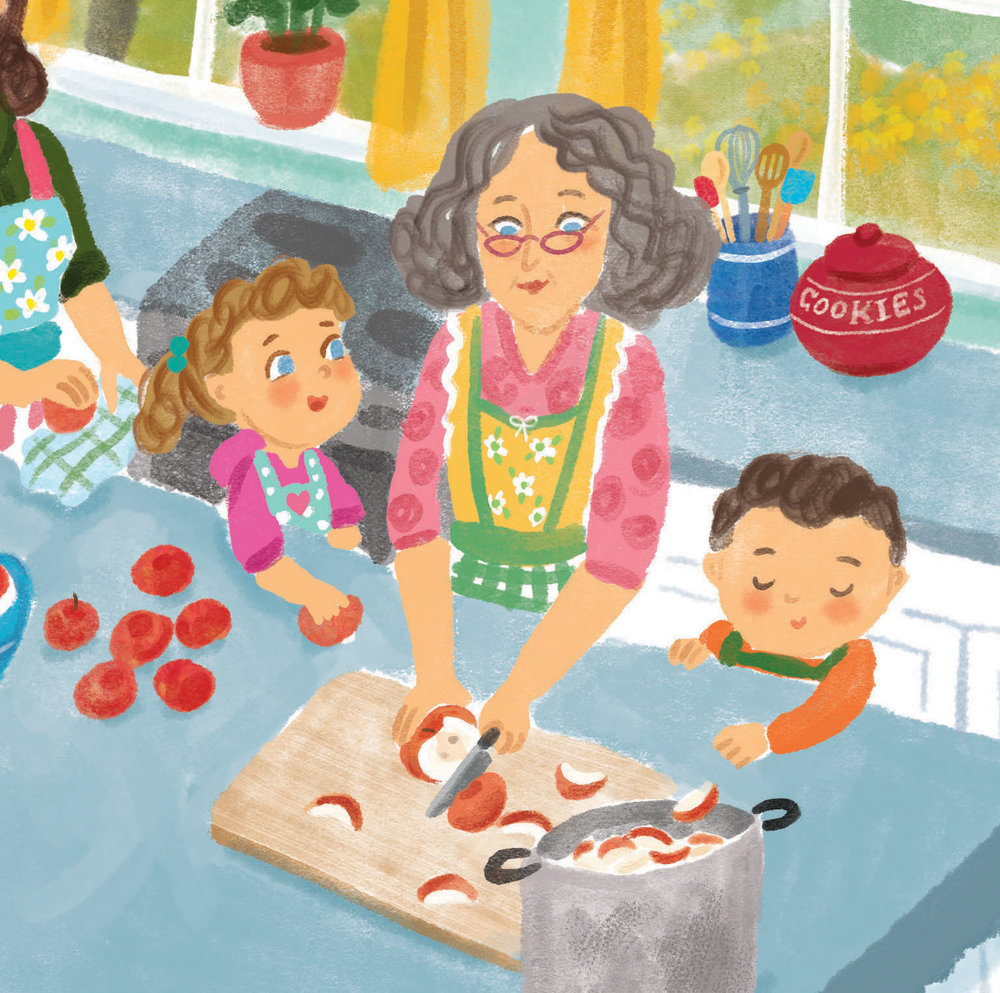
Soon all of the baskets are full of apples “ready to be smooshed into sweet, tangy applesauce.” After the car is loaded up, they drive to Grandma’s house. When they get there, Grandma’s waiting with a big smile and a hug. They “lug the apples into the kitchen” and each take their place. This year even Ezra gets a spot. After Dad washes the apples, Grandma cuts them up. Ezra gets to drop the apples into the tall pot. “Thunk, thunk, thunk.”
Image copyright Lisa J. Amstutz, 2017, text copyright Talitha Shipman, 2017. Courtesy of Albert Whitman & Company.
While they work, Mom talks about how she used to help Grandma bring home the apples and how “they cooked the apples in this very pot when she was a little girl” in Ohio. Then Grandma tells how “she helped her mother pick apples from the old apple tree behind their house on the windy Iowa prairie.” They also cooked the apples in this very same pot. The older girl looks at the pot and wonders what kinds of stories it could tell if it could talk.
Image copyright Lisa J. Amstutz, 2017, text copyright Talitha Shipman, 2017. Courtesy of Albert Whitman & Company.
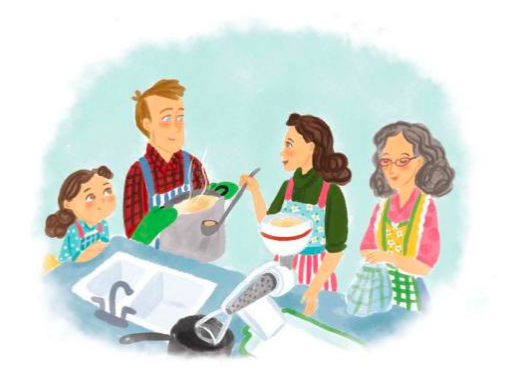
As the apples cook, they release a sweet scent into the air and the red peels turn pink. Then with a ladle, Mom pours the apples into the food grinder. Hannah and her sister take turns cranking the handle. “Crank! Squish. Crankity! Squish!” The applesauce squeezes through the strainer while the seeds and peels are left behind. They mix in a bit of sugar and put the applesauce in containers to store.
Image copyright Lisa J. Amstutz, 2017, text copyright Talitha Shipman, 2017. Courtesy of Albert Whitman & Company.
It’s lunchtime now and the family sits down to sandwiches and a bowl of warm applesauce with cinnamon sprinkled on top. They take big servings and then seconds. “Ezra licks the bowl.” After lunch there’s more peeling, cutting, and cooking until all the apples are gone. They put the containers in Grandma’s extra freezer and take some home for themselves.
It’s dark by the time they finish and head home, “sticky but full of stories and smiles and applesauce.” As they drive home the older sister thinks about their special pot and how when she grows up, she’ll cook in it on Applesauce Day.
Image copyright Lisa J. Amstutz, 2017, text copyright Talitha Shipman, 2017. Courtesy of Albert Whitman & Company.
If you’re looking for a heartwarming story that lovingly explores the continuity of family heritage, you’ll want to share Lisa J. Amstutz’s Applesauce Day with your kids. Told through the viewpoint of the oldest daughter, the story takes readers from that first spark of recognition of a tradition through the actions that make it so special to the knowledge that they will be the ones to carry it on in the future. Excitement and pride flow through Amstutz’s pages as the children eagerly help pack the car, pick apples, and take their usual positions in Grandma’s kitchen.
The passing on of the tradition and skills involved in Applesauce Day are depicted in ways that will delight kids as the oldest sister shows the younger how to twist the apples from the tree and the little brother gets to participate for the first time. When the children’s mother and then their grandmother both tell how they helped with Applesauce Day when they were young, readers get a sense of generations and how far back traditions extend. Amstutz’s storytelling is homey and detailed and brimming with family camaraderie. The Introspective ending with appeal to kids thinking about their own place in their family.
Talitha Shipman’s bright illustrations invite kids along for a day of apple picking and cooking. The siblings’ eyes shimmer with excitement as they partake in this favorite fall tradition. Like most kids on a day like this, Hannah, Ezra, and their older sister are in constant motion—picking apples, hugging Grandma, cranking the food mill—and working together. Shipman’s rich portrayals of these events will sweep readers into the action and inspire them to want to and learn more about their own family traditions or start new ones. Applesauce Day looks like so much fun that you can bet children will be eager to make a batch of this delicious fall treat themselves.
A perfect autumn (or anytime) read-aloud for families to share, especially as the holidays roll around or during intergenerational get-togethers, Applesauce Day would be a favorite on home bookshelves and in school and public libraries.
Ages 4 – 8
Albert Whitman & Company, 2017 | ISBN 978-0807503904
Discover more about Lisa J. Amstutz and her books on her website.
To learn more about Talitha Shipman, her books, and her art, visit her website/
Naitonal Applesauce Day Activity
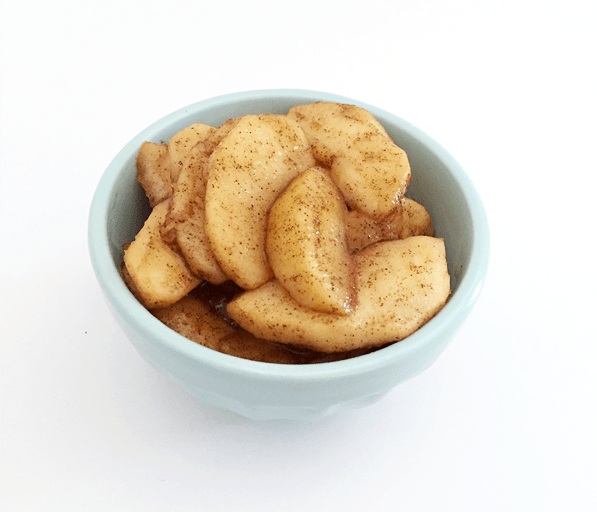
Cinnamon Apples Recipe
Cinnamon apples are a delicious side dish to any meal! This tasty recipe is fun for kids and adults to make together.
Ingredients
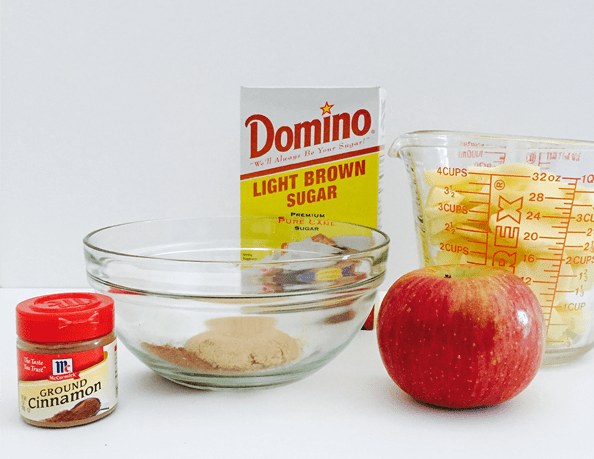
4 cups of apples, Macintosh or Granny Smith apples are good choices
2 tablespoons brown sugar
1 teaspoon cinnamon
1/4 teaspoon lemon juice
Directions
Mix brown sugar and cinnamon
Peel and core 2 large apples
Thinly slice apples
Combine apples and cinnamon sugar/brown sugar mixture
Stir until well combined
Drizzle with lemon juice and stir again
Cook apples on the stove at medium heat for 8 to 10 minutes or until desired texture
It’s safe to say that when kitty is happy, everyone’s happy. Cats have a particular way of tugging at your heart with their meows, yowls, and emotion-filled mews. Of course, we want to make sure they have everything they need to feel good. That’s what this month’s holiday is all about. To celebrate, spend some extra time with your furry friend, make sure they’re up-to-date on their vaccinations, and surprise them with a new toy or extra treat or two.
Thanks to West Margin Press for sharing a digital copy of Miss Meow with me for review consideration. All opinions on the book are my own.
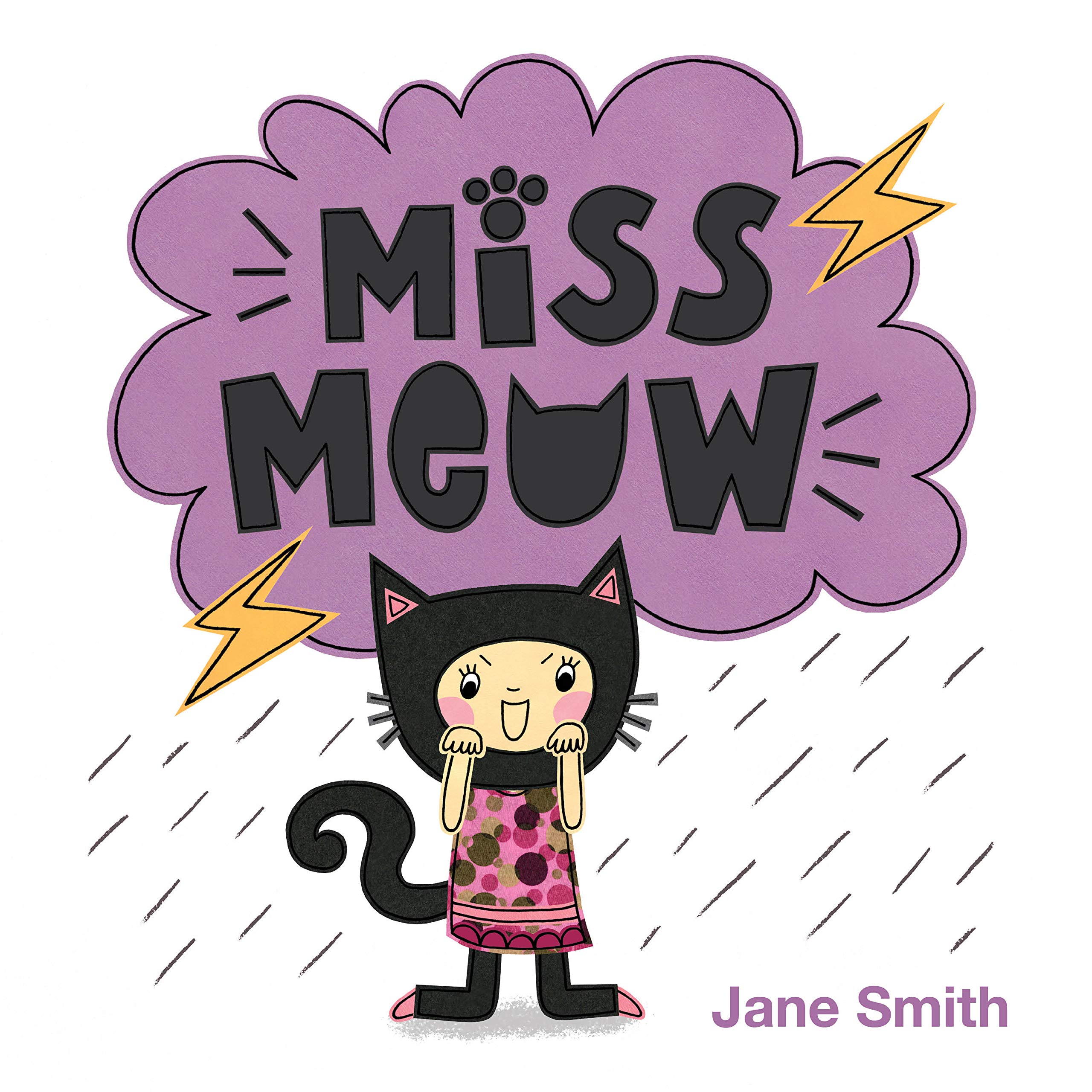
Miss Meow
By Jane Smith
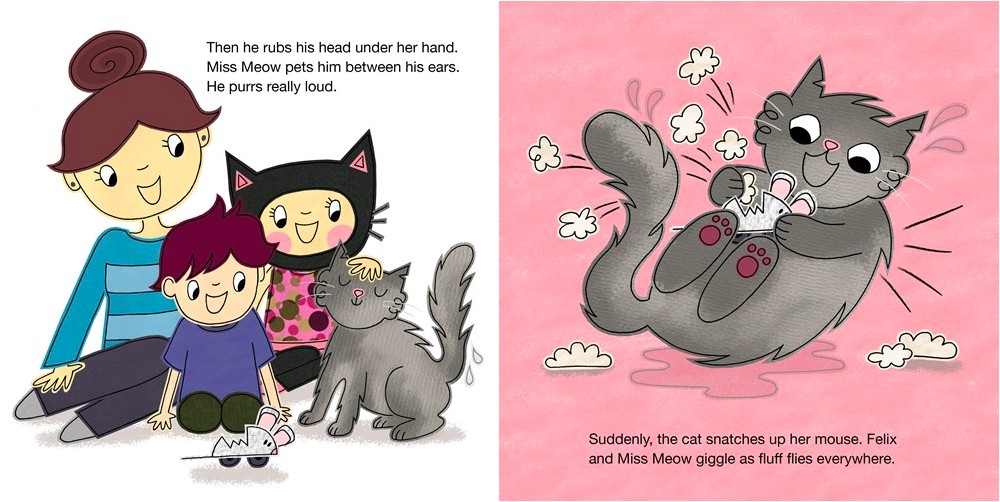
Miss Meow is a little girl who prefers being a cat. She has a soft head with two perky ears and a long tail. Things that make Miss Meow purr are getting scratched between the ears while reading with her mom and brother, Felix; chasing her toy mouse; napping in the sun; and lapping up water and snacks from her bowls. Things that make her hiss include taking a bath, having her snacks stolen, having her tail pulled, and having someone—like her little brother—intrude upon her territory.
Copyright Jane Smith, 2021, courtesy of West Margin Press.
One stormy night Miss Meow discovers her favorite mouse toy torn open in her room. The fluff inside was scattered across the floor. “Miss Meow’s fur stands straight up. Her ears flatten against her head. She knows who did this—who always does this!” She runs to her mom and complains about Felix. Then she “stalks toward her brother, pointing her claw.” Snack crackers crunch underfoot. Not only has Felix broken her toy, he’s upset her snack bowl.
Copyright Jane Smith, 2021, courtesy of West Margin Press.
Miss Meow is caterwauling and stomping around when she slips in a puddle of water and falls to all fours—“Meee-ow!” But then Felix notices a “mysterious trail of wet paw prints” leading from the kitchen. Miss Meow, Felix, and Mom follow them to Miss Meow’s room, where they find . . . “a sopping wet intruder” asleep on Miss Meow’s pillow. Felix is thrilled to see the kitty, but Miss Meow is not. She chases the interloper through the house until she has him trapped in the kitchen.
But when Miss Meow sees that the stray is cold, shivering, and scared, her heart melts. “‘Here, kitty. It’s okay,’ she coos softly.” As the cat approaches, Miss Meow apologizes to her brother. The cat purrs as Miss Meow pets him between the ears then all three curl up on the pillow for a warm afternoon nap.
Copyright Jane Smith, 2021, courtesy of West Margin Press.
Young feline fanatics will purr with delight at Jane Smith’s tale of a little girl with a big imagination and an all-in love for cats. The uncanny similarity in behavior between cats and kids gives Smith full range to shine a humorous spotlight on bath time, naptime, territorial disputes, and sibling rivalry. But, as part cat, part human, Miss Meow’s natural empathy for her fellow cat and for her brother takes over when she sees how miserable the stray is and realizes that she owes Felix an apology. Smith’s use of present tense puts kids in the middle of the action, while her vivid and evocative illustrations clearly depict the characters’ emotions. Readers will love spying the first glimpse of the hidden stray, and Miss Meow’s mad-dash chase through the house leads to a sweet resolution.
Both a captivating story and an engaging way to talk to kids about their emotions and family relationships, Miss Meow is a purr-fect read aloud for all kids.
This happy little kitten is easy to make and can keep you company on your desk or shelf! Since every kitten is different, you can make yours to look just the way you want. Here’s how I made mine:
Supplies
Wooden ball with a flat bottom, available in craft stores and in different sizes
Craft paint in any color kitten you’d like (I used red and yellow and mixed it to make a mottled orange)
Craft paint in pink or white for the inner ear
Scrap of fleece for the ears. Fleece is easily shaped to the rounded ball, and when it’s painted it’s stiff enough to stand up on its own.
Thin, colored wire in several colors for the tail (string or twine, wrapped wire, fleece, stiff paper, and other materials could also be used)
Paint brush
Permanent marker for making the face
Hot glue gun or strong glue
Directions
Paint the wooden ball and let dry
Paint the scrap of fleece to match the wooden ball, let dry
Cut out small triangular shapes for the ears. Round the bottom of the ears slightly so they fit the shape of the ball. Paint the inner ear.
If making a tail from several colors of thin wire, twist them together, leaving one end untwisted
With the glue gun or strong glue attach the ears to the top of the head
With the glue gun attach the tail to the back of the wooden ball in the center near the base
With the marker, draw eyes, nose, and mouth for the face and semicircles near the bottom for the paws
For centuries along rocky shores, lighthouses have stood as sturdy beacons warning ships at sea of dangerous waters. In 1789, the United States Congress approved an Act for “the establishment and support of lighthouses, beacons, buoys and public piers and the commission of the first Federal lighthouse, the Cape Henry Lighthouse at Cape May, Virginia Beach.” Two hundred years later, the anniversary of this historic event was celebrated with another Congressional resolution sponsored by Senator John H. Chafee of Rhode Island, which designated August 7 as National Lighthouse Day. On this day, where possible, the country’s lighthouses are open to the public for viewing and tours. To celebrate today, visit a lighthouse if you live close by or read up on lighthouses and the work of brave lighthouse keepers throughout history.
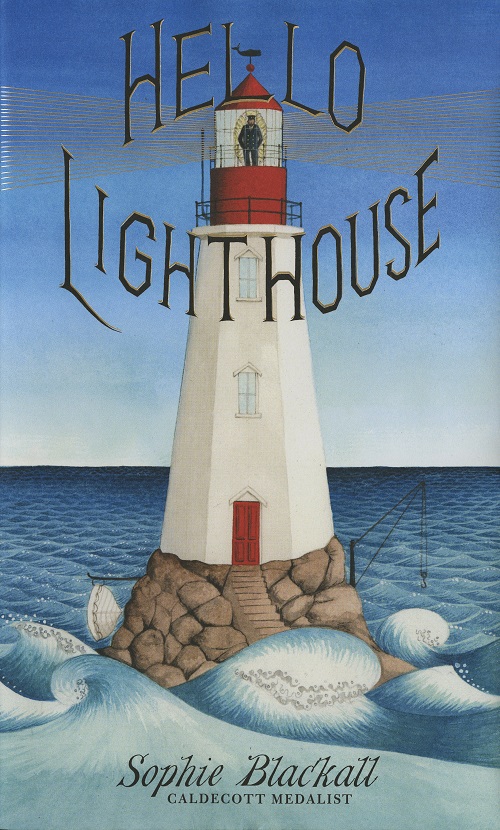
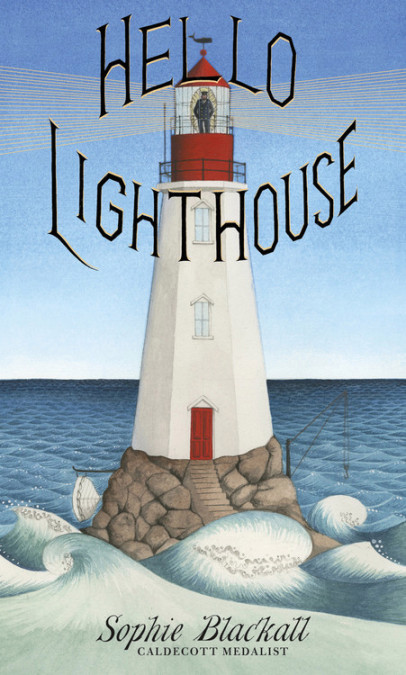
Hello Lighthouse
By Sophie Blackhall
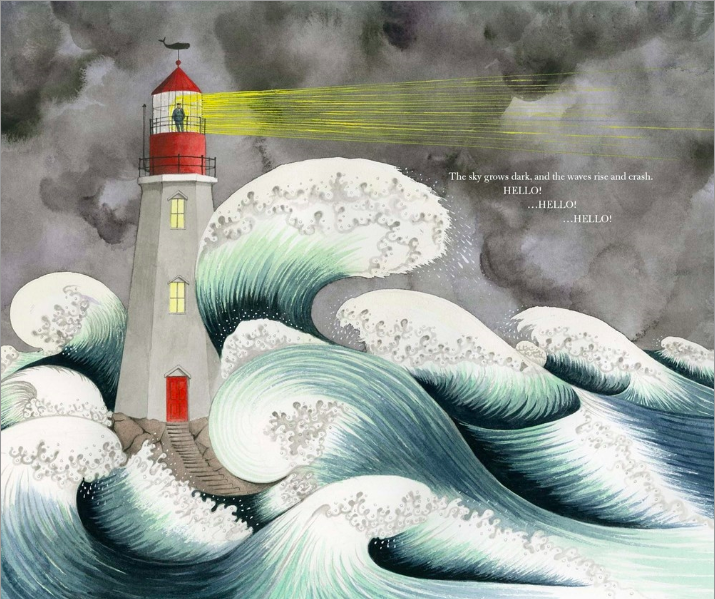
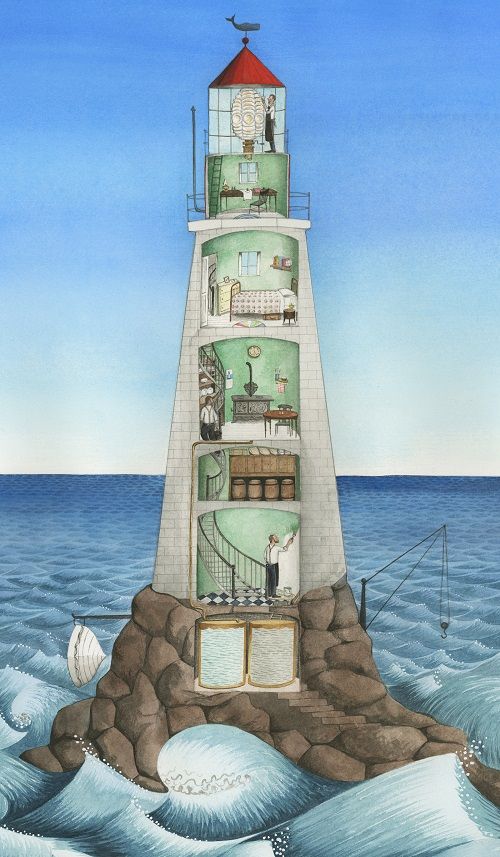
“On the highest rock of a tiny island at the edge of the world stands a lighthouse.” It is sturdy and shines its greeting far out to sea, “guiding the ships on their way.” “Hello! …Hello! …Hello!” The lighthouse has just gotten a new keeper. He begins his job by polishing the lens, refilling the oil, trimming the wick, and giving the “round rooms a fresh coat of sea-green paint.” He works at night too, making sure that the clockwork is wound to keep the lamp moving and writing in the logbook.
Copyright Sophie Blackall, 2018. Courtesy of Little Brown Books for Young Readers.
To have his tea, the keeper must boil his water and for lunch or dinner he fishes for cod right from the lighthouse window. He wishes for someone to talk to—the special someone he writes letters to. He puts these letter in bottles and throws them into the sea. Outside, the wind whips up the waves and they crash against the lighthouse.
One day, the keeper spies the tender ship that is bringing him “oil and flour and pork and beans…and his wife.” The next day fog descends, thick and gray. Instead of a beam of light, a bell clangs to warn the ships away. But, still, a ship founders and breaks apart on the rocks. “Not a moment to lose, the keeper rows out. He pulls three sailors from the deep, black sea. He and his wife wrap them in warm blankets and serve them hot tea. The keeper makes note of all this in his log.
Copyright Sophie Blackall, 2018. Courtesy of Little Brown Books for Young Readers.
In the winter, “the sea turns into a carpet of ice.” The keeper falls ill, and his wife tends to him as well as to the light. She runs up and down the spiral stairs to feed her husband broth and “chip ice off the lantern room windows.” At last his fever breaks. With warmer weather the ice melts, giving way to icebergs that float by going south. “Whales pass by on their journey north.”
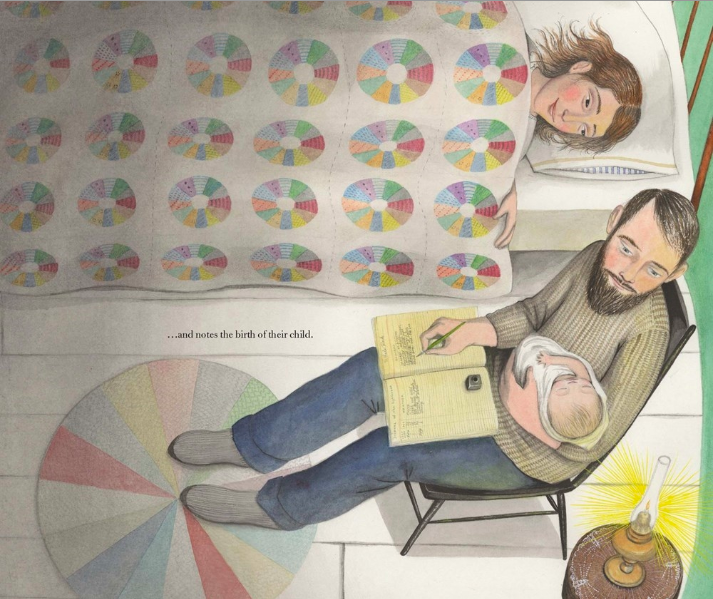
Inside the lighthouse, the keeper’s wife is about to have a baby. She walks around and around, while “her husband boils water and helps her breath in—and out.” When the baby is born, the keeper notes the time and date in the logbook. “The sky erupts in swirls of green. Hello! …Hello! …Hello!”
Copyright Sophie Blackall, 2018. Courtesy of Little Brown Books for Young Readers.
The baby is a toddler when the tender brings an unexpected letter with the coast guard seal along with its regular supplies. After reading it, the keeper tends to the light “just as he’s always done,” but he “knows it’s not for long.” Through the telescope, the keeper and his wife watch the horizon for the arrival of the coast guard. When they come, they install a new light—one that runs by machine. There is “no lamp to fill, no wick to trim. The keeper’s work is done.”
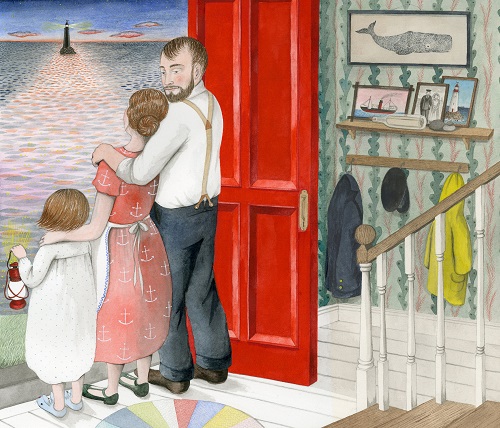
He and his wife and little girl “pack their belongings into the boat and wave farewell to the gulls.” As they sail away on the ship, they look back and say “Good-bye, Lighthouse! Good-bye! …Good-bye! …Good-bye!” From its perch on the tiny island, the lighthouse sends out its constant beam through crashing waves and enveloping fog—”Hello! …Hello! …Hello?” From across the bay, a light from a little house “beams back. Hello! …Hello! …Hello! Hello, Lighthouse!”
An expensive and fascinating Author’s Note about lighthouses, the life of a lighthouse keeper, and how Hello Lighthouse came to be follows the text.
Copyright Sophie Blackall, 2018. Courtesy of Little Brown Books for Young Readers.
As I read Hello Lighthouse, I saw myself as a child—a displaced New Englander growing up in Florida who loved everything about the craggy northern coastline and its history. I would have absolutely adored Sophie Blackall’s detailed and atmospheric book, and today’s young readers will too. The story of the light’s last keeper reveals the work and contemplations of the men and families dedicated to keeping shipping lanes safe. The weather and seasons—and ever-present logbook—are characters in their own right, just as they were for the conscientious and brave lighthouse keepers. Happy surprises—the arrival of the keeper’s wife and baby—will delight children as they add to the depth of the story.
Copyright Sophie Blackall, 2018. Courtesy of Little Brown Books for Young Readers.
Blackall’s stunning illustrations will swell readers’ hearts with the same intensity as the rolling seas. A cutaway image of the lighthouse offers a realistic view of the five levels of living space accessed by a winding staircase that ultimately leads to the lens. Thrilling portrayals of choppy seas, wind-whipped crashing waves, pea-soup-thick fog, and sailors thrown from their wrecked ship will rivet children to the story. The cyclical nature of a keeper’s work mirrors the round rooms of the lighthouse and is represented throughout the story with circular, porthole-like snapshots of the keeper at work and round accents in the home, such as rugs, tables, and the quilt pattern on the couple’s bed. The final image of the family—the baby now a little girl—communicating with their old home anchors the story in history, togetherness, and a love of the sea.
Hello Lighthouse is a gorgeous, enlightening, and cozy read-aloud for home and classroom libraries that will enthrall young readers again and again.
Ages 4 – 9
Little Brown Books for Young Readers, 2018 | ISBN 978-0316362382 (Hardcover) | ISBN 978-1408357392 (Paperback, Orchard Books, 2019)
To learn more about Sophie Blackall, her books, and her art, visit her website.
National Lighthouse Day Activities
Shining Lighthouse Maze
Lighthouses protect ships from rocks, fog, and other dangers. Can you help the beam from the lighthouse reach the tugboat that is approaching in this printable Shining Lighthouse Maze? Here’s the Solution.
National Archives Lighthouses from the Collection
If you’re fascinated by lighthouses, you’ll love exploring these drawings from the United States National Archives. Click below to download a pdf of lighthouses from around the country.
Shelley Johannes is the author-illustrator of the Beatrice Zinker, Upside Down Thinker chapter-book series. A former architectural designer, she has a fondness for tracing paper, process, and accidental discoveries. She and her family live in Michigan with two feathered friends, Max and Alex, who make every day sunny and birdy. More Than Sunny is her debut picture book.
Hi Shelley! I love how you describe all sorts of weather days in your new picture book More than Sunny, so I just couldn’t pass up a chance to share Rain Day with you! Rainy days have their own special fun, and you certainly celebrate that in your book! Of course, when the sun comes out, rainy days also bring rainbows – those beautiful symbols of optimism, something we can all use every day and which shines on every page ofMore than Sunny. Can you talk about what inspired the story?
Thank you, Kathy! And thank you so much for having me here today. Optimism is always in season, but metaphorical sunshine definitely feels even more precious these days.
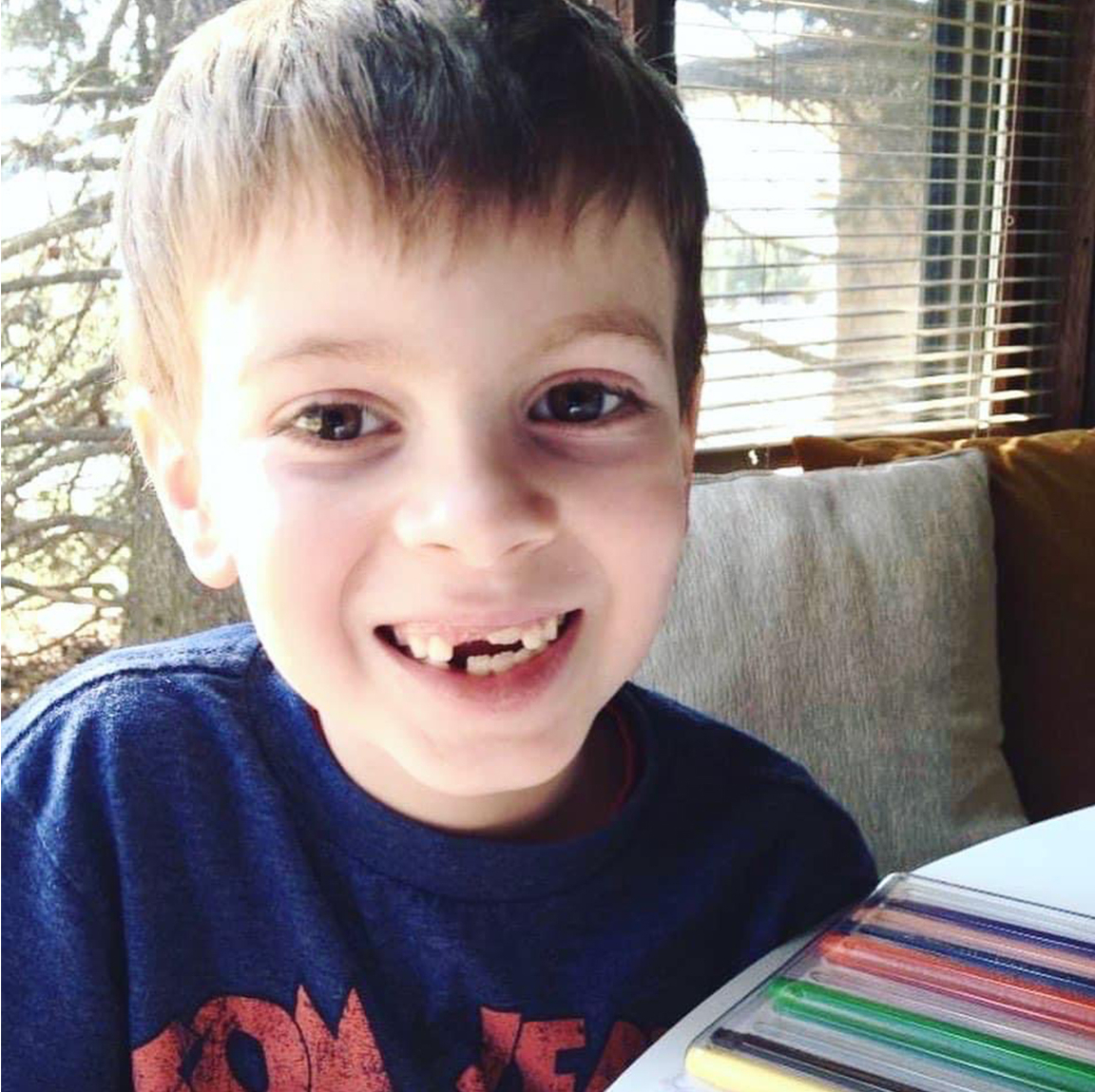
Matthew Johannes
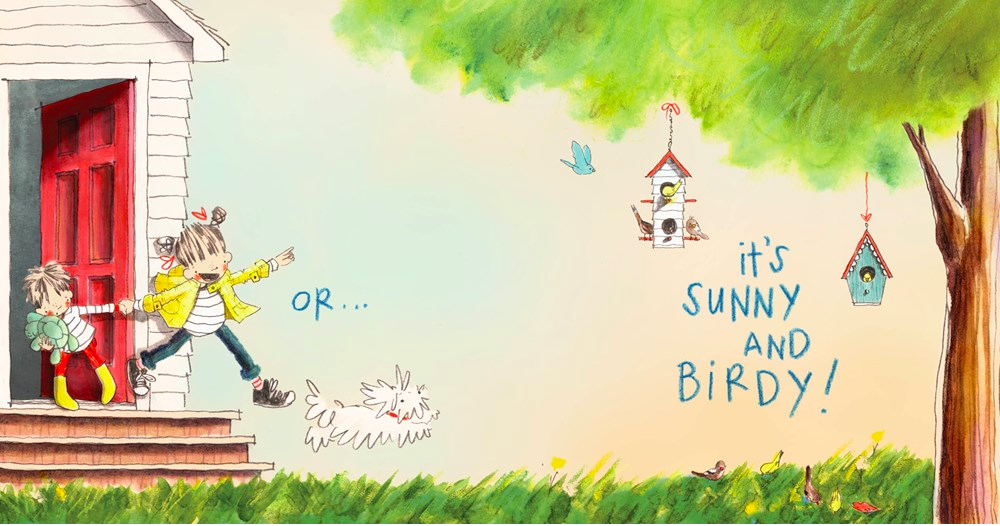
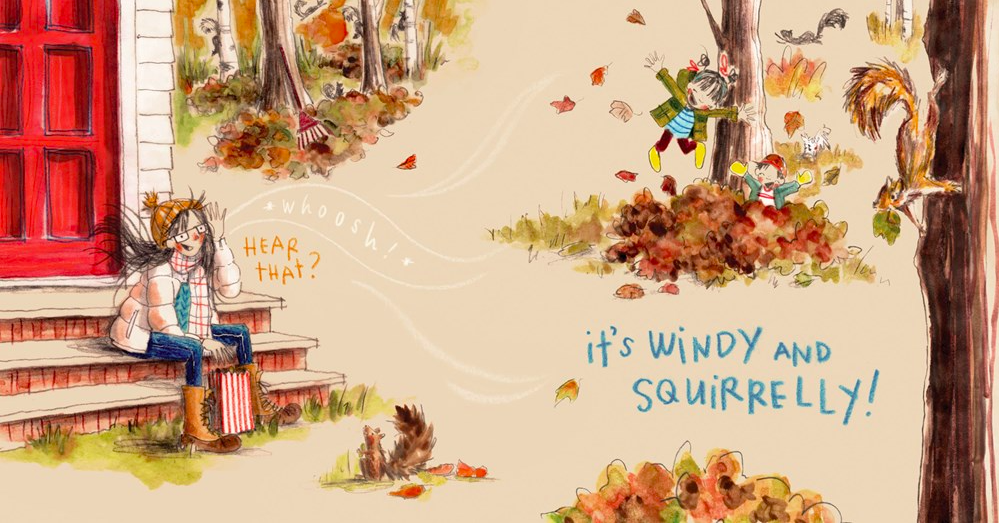
More Than Sunny was inspired by my son Matthew and a first-grade weather project. I’d viewed his daily weather chart—the kind with columns for sunny, cloudy, rainy, windy, snowy—as a mundane task to check off our list, but on the first day, he looked outside and enthusiastically declared, “It’s sunny and birdy today!” When he called the next day “windy and squirrelly”, I knew it had to become a book someday. He turned a routine assignment into something fresh and exciting, and made me pay attention to the beauty I’d forgotten to see. That’s always book-worthy.
In More than Sunny, you describe days with nuances that delight in everything a day can possess. Using your story structure, what would your favorite day have been as a child? How about now as an adult?
I love this question! As a kid, I loved rainy days, and any excuse to curl up with my dog and our special Rainy Day Art Book. So maybe I’d say . . . Dreary and Doggy were my favorite kind of days back then. Rain is so relaxing.
As an adult, it’s a tough call between Springy and Birdy (because May is the most cheerful month, and we are huge bird nerds around here) and Autumn and Squirrelly (because the crisp, colorfulness of fall makes me happy, and we’re huge squirrel nerds too!).
Before writing children’s books, you worked as an architect. Can you talk about that a little? Do you think being an architect influences your writing and art in any way? If so, how?
There was a time I felt bad about my winding path to making books. I felt bad that I didn’t have the guts to go after my dreams sooner. But these days, I’m so grateful for each part of my life and how it shaped me into the person I am today. My years in architecture helped me find my voice and gain the courage to use it. I also learned so much about my love for creative process and collaboration, and the type of people who inspire me. The desire to create, and to make something meaningful, is the motivational underpinning of both fields, so the transition to books felt very natural. The process of designing a building and building a story are surprisingly similar.
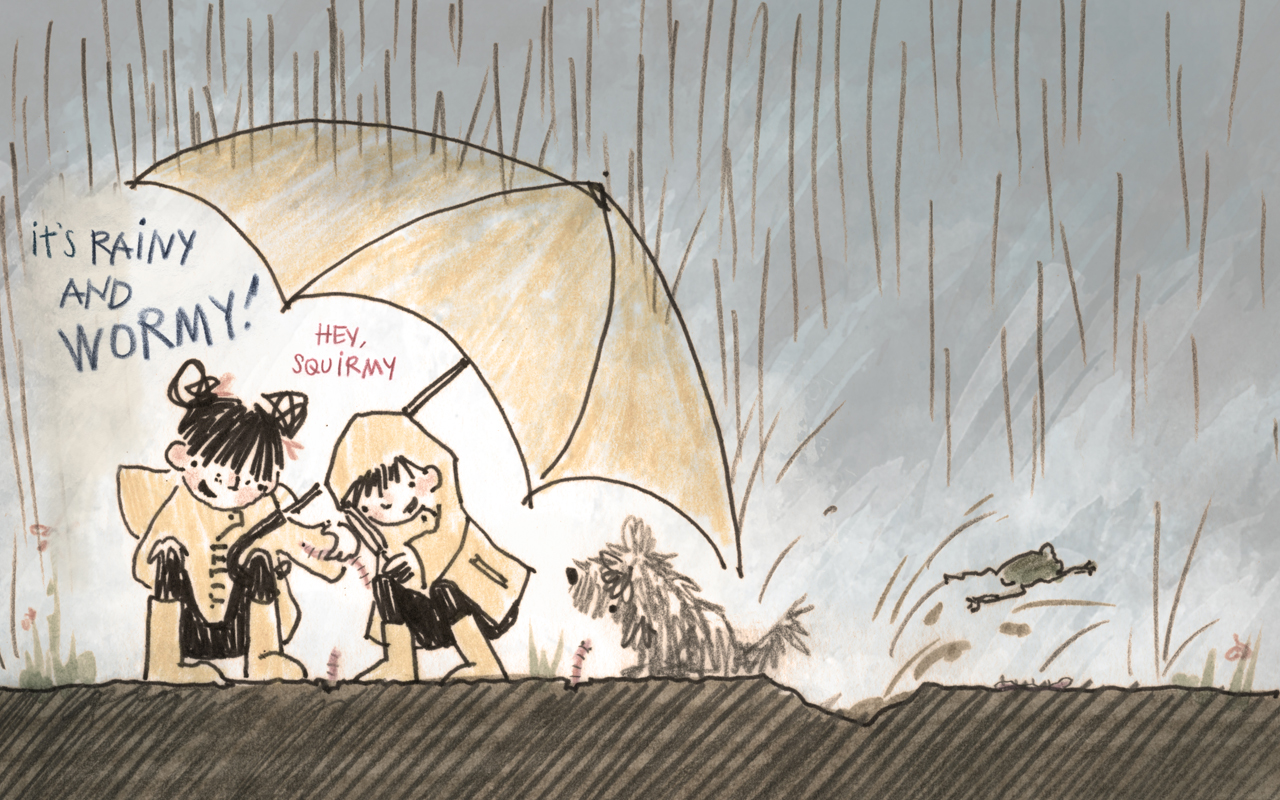
A rainy and wormy day from More than Sunny by Shelley Johannes, 2021, courtesy of Harry N. Abrams.
There’s also a direct connection in the way I work. I fell in love with tracing paper and felt-tip pens in my early days in architecture, and I’ve only fallen more in love as time passes. I’ve always loved how a loose sketch or a stray line can capture an idea on paper, and that wonder continues to bring me joy in new ways.
Your son Nolan narrates your wonderful book trailer and his pride and love for you and the More than Sunny really shine through. How great is it to share your writing journey with your kids?
Aw, thank you! We loved making that trailer together! And it was so special to capture his sweet voice just before it shifts into a grown-up one. It’s been so wonderful to share each step of the journey with my kids. I first realized I wanted to make picture books while reading to them as toddlers. They’ve been there for all the ups and downs and in-betweens of the creative process ever since, and enjoyed LOTS of celebratory pizza along the way! So much of each them—and they joy they bring into my life— is woven into everything I make. They inspire so many book moments, and are my most treasured critics and art buddies. I hope being part of this process empowers them to go after all the things they dream of doing, too!
What was your favorite place to read (or write or draw) as a child? What is your favorite place now and why?
As a kid, I loved to read and draw in the quiet privacy of my room, because it was personal and I was shy. These days, I like to mix things up. I write best in a crowded place, with headphones on and music blaring, because it’s easier for me to concentrate when I’m surrounded by stimuli and happy hustle-and-bustle. I also enjoy writing on the go as ideas randomly come to me, and use my Notes app like it’s another piece of my brain. I read anywhere and everywhere, and love listening to audiobooks while riding my bike around my neighborhood!
Though I doodle in sketchbooks all over my house, my studio is still my favorite place to make art. Having a place that’s dedicated to being creative, and filled with my favorite things, makes getting into the zone a bit easier.
What is your favorite season and seasonal activity?
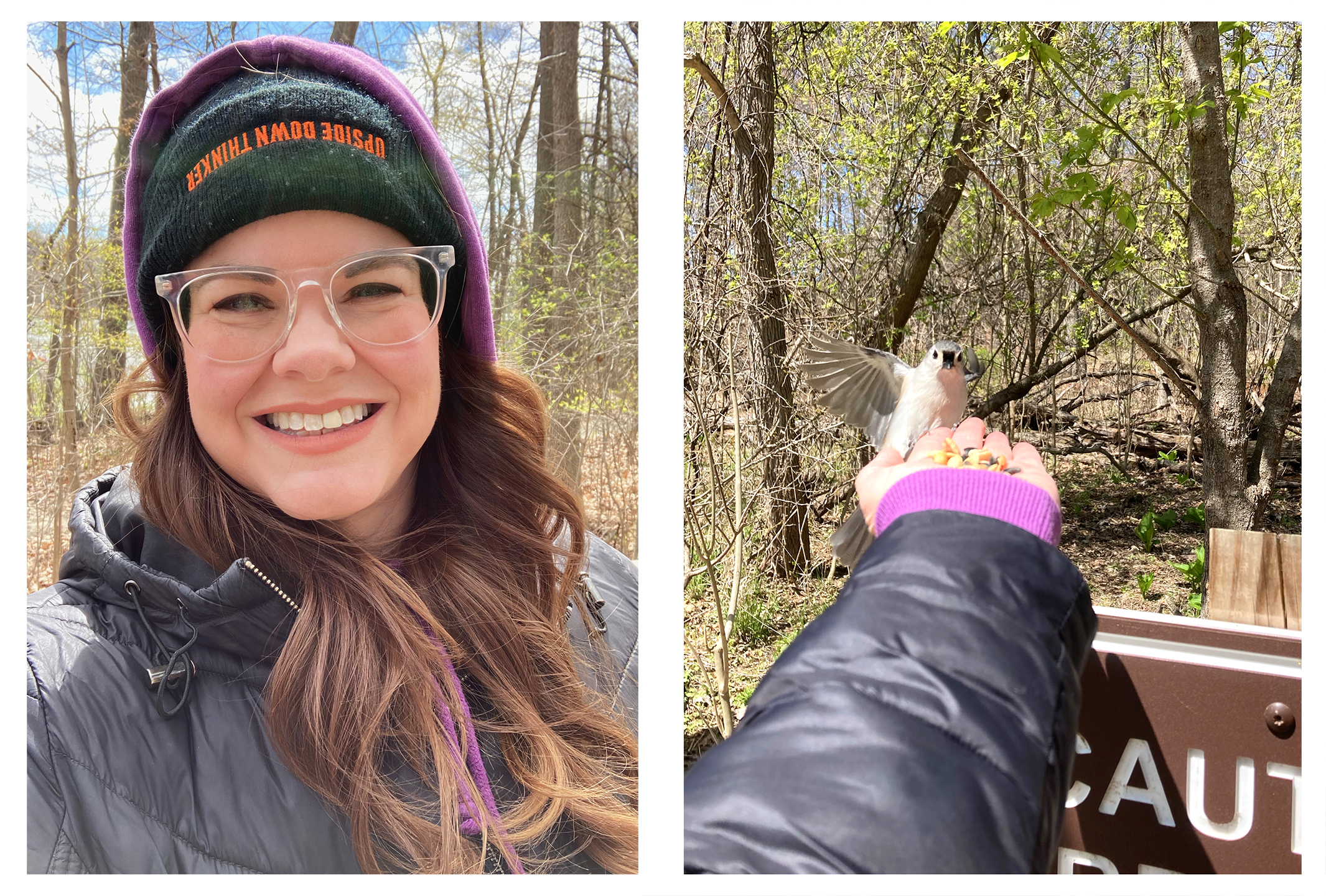
I’m torn between Fall and Spring. It’s hard to beat a cider mill on a crisp Autumn day, especially here in Michigan. Fresh donuts. Crisp apples. Bubbling steam running through the colorful trees. It’s pretty perfect. But then this Spring, we found a nature trail at a local park where wild birds fly down and eat out of your hands, and now we’re addicted to the wonder of that experience too.
Will you be doing any book events this summer that you’d like to tell readers about?
It’ll be a fairly quiet summer (see the answer to the next question!), but I’m doing a virtual event with wonderful Belmont Books on August 26th at 6:30pm ET, and I’d love for everyone to join us! We also had an amazing virtual launch event for More Than Sunny as part of Literati Bookstore’s At Home with Literati series. Jarrett Lerner and I talked about creative process, seeing the world with fresh eyes, and the making of the book. You can watch our conversation here anytime:
What’s up next for you?
This week I am starting the final artwork for my second picture book! I can’t wait to start experimenting with materials and see where it leads me!
Thanks for this wonderful chat and for sharing so many insights. I wish you all the best with More than Sunny and am really looking forward to your next book!
National Rain Day Review
About the Holiday
Today, we celebrate rainy days—but not just any rainy days. Rain Day commemorates an odds-busting record that began in 1874 in Waynesburg, Pennsylvania when one resident remarked to William Allison, the pharmacist at JT Rogers & Co drug store, that it always rained on his birthday—July 29. After that, Allison began keeping an annual record, and all eyes have been on Waynesburg to see if the remarkable run—115 years out of 147—continues. Now weather reporters around the country keep track of this remarkable statistic and broadcast “yes” or “no” to their audiences. As for the people of Waynesburg, they celebrate their notoriety with a huge festival that includes live musical entertainment, arts and crafts and food booths, kids’ games, and, of course, an umbrella-decorating contest. To learn more visit the Rain Day Website. And don’t forget to watch the skies!
More than Sunny
By Shelley Johannes
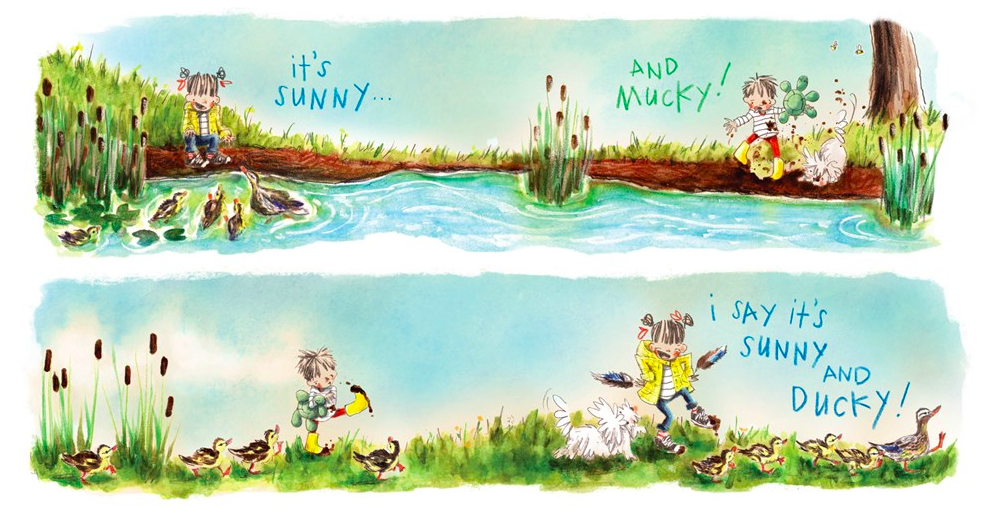
A girl knocks on her brother’s door and, before he’s even fully awake, she bursts in and announces with exuberance that this spring day is “sunny.” Yawning and rubbing his eyes, her brother adds “and early.” But his big sis pulls him outside to show him all the birds at the feeder and birdhouse. It’s not only sunny, she tells him “it’s sunny and birdy!” They head down to the pond, where the siblings have different ideas of what the day’s like. Little brother finds the day “sunny…and mucky!” But his sister, with feathers in her “wings,” states, “I say it’s sunny and ducky!”
Copyright by Shelley Johannes, 2021, courtesy of Harry N. Abrams.
On another day, these two compatible siblings head outside to discover what summer brings besides heat. The sunny day takes them to a field, a tree, and a dock, where they explore, relax, and use their imaginations. But not all summer days are sunny, and that’s okay because being inside when it’s “stormy” these kids make it cozy. And when the storm tapers off a bit, they grab their raincoats and big umbrella and go outdoors, where the girl exclaims, “it’s rainy and wormy!” and her brother inspects the mud and greets a small worm, “Hello squirmy.” The rainy day brings lots of fun with Mom and their dog too.
Copyright by Shelley Johannes, 2021, courtesy of Harry N. Abrams.
But summer days turn into autumn days with wind and squirrels and piles of leaves to jump in. The kids read and make paper snowflakes, waiting for winter to come. And, finally, the flakes fall. They taste so good. “Can we? Can we?” the siblings ask, eager to be out in the snow. “But I’m warm and socksy,” says Mom. But her kids, tiptoeing and playing, lure her out with “Let’s be snowy and foxy!”
Copyright by Shelley Johannes, 2021, courtesy of Harry N. Abrams.
They take a walk in the woods and, while sledding, see Daddy coming home. “Are you ready and sleddy?!” they ask, but there’s shoveling to be done. That’s all right; there are other ways to have fun in the snow. Tired out and chilly, the family goes inside for bedtime. Now there’s a knock at the sister’s door. Yawning and rubbing her eyes, she goes to see who it is. It’s her brother, and he has something magical to show her.
Copyright by Shelley Johannes, 2021, courtesy of Harry N. Abrams.
Shelley Johannes’s exuberant call to play and explore is a perfect jumping off place for kids to look at and interact with their surroundings with new eyes, imagination, and creativity. Hopping from season to season, Johannes touches on moments of freedom and wonder and those happy discoveries so formative in childhood. Her playful rhymes and bouncy rhythm echo kids’ delighted banter, and her sprightly adjectives invite readers to come up with their own descriptions of their day.
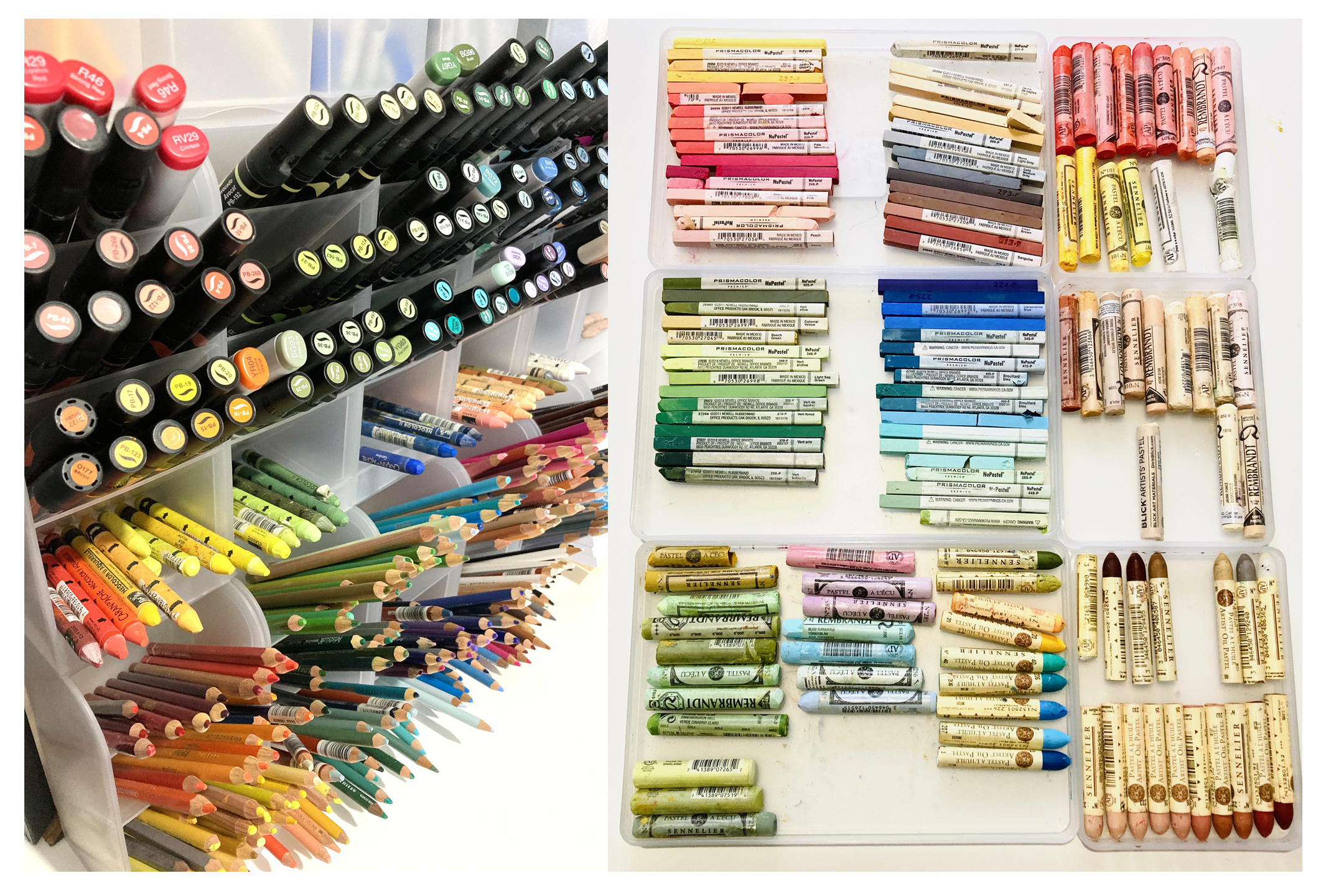
Johannes’s bright, energetic, and cheery illustrations dazzle with lively depictions of the siblings playing outside in all weather. Her smile-inducing portrayals of the siblings mirror real kids and each page is loaded with details readers will love lingering over. Mom and Dad make warm cameos to create a book the whole family will enjoy.
More than Sunny is a generously sized picture book that kids and adults will find themselves joyfully sharing throughout the year. For teachers and homeschoolers, Johannes’s storytelling provides a spark for writing prompts, grammar lessons, and observational skills. Sure to become a quick favorite, More than Sunny is highly recommended for home, classroom, and public library collections.
Ages 4 – 8
Harry N. Abrams, 2021 | ISBN 978-1419741814
Discover more about Shelley Johannes and her books on her website.
One of the best simple pleasures is looking up at the clouds and imagining what shapes you see. Bring those fluffy, white clouds into your room with this craft!
Supplies
White girls’ dress bobby socks in various sizes
Fiber fill, 20-ounce bag
Fishing line, different lengths
Needle
Clear adhesive mountable hooks or clips
Directions
Stuff the socks with fiber fill, pushing it far into the sock and adding more here and there to make various lumps and give it a rounded, cloud-like shape
When the sock is full, tuck the end of the sock in to close it
Cut lengths of fishing line. The lengths will depend on how and where you will hang the clouds
With the needle or by hand, feed one end of the fishing line into the top of the sock and out to attach the line for hanging.
Knot the fishing line
Attach the mountable hooks or clips to the ceiling
Today’s holiday honors transcendentalist Henry David Thoreau, who was born on this date in 1817 and who, along with his many other talents and interests, advocated for a simplified life. As summer heats up with a full calendar of activities, vacations, work, day trips, and more, take today “off” and just enjoy the simple pleasures around you. This is great advice throughout the year, too. Dedicating some time to fully appreciate the small things can be rejuvenating!
More than Sunny
By Shelley Johannes
A girl knocks on her brother’s door and, before he’s even fully awake, she bursts in and announces with exuberance that this spring day is “sunny.” Yawning and rubbing his eyes, her brother adds “and early.” But his big sis pulls him outside to show him all the birds at the feeder and birdhouse. It’s not only sunny, she tells him “it’s sunny and birdy!” They head down to the pond, where the siblings have different ideas of what the day’s like. Little brother finds the day “sunny…and mucky!” But his sister, with feathers in her “wings,” states, “I say it’s sunny and ducky!”
Copyright by Shelley Johannes, 2021, courtesy of Harry N. Abrams.
On another day, these two compatible siblings head outside to discover what summer brings besides heat. The sunny day takes them to a field, a tree, and a dock, where they explore, relax, and use their imaginations. But not all summer days are sunny, and that’s okay because being inside when it’s “stormy” these kids make it cozy. And when the storm tapers off a bit, they grab their raincoats and big umbrella and go outdoors, where the girl exclaims, “it’s rainy and wormy!” and her brother inspects the mud and greets a small worm, “Hello squirmy.” The rainy day brings lots of fun with Mom and their dog too.
Copyright by Shelley Johannes, 2021, courtesy of Harry N. Abrams.
But summer days turn into autumn days with wind and squirrels and piles of leaves to jump in. The kids read and make paper snowflakes, waiting for winter to come. And, finally, the flakes fall. They taste so good. “Can we? Can we?” the siblings ask, eager to be out in the snow. “But I’m warm and socksy,” says Mom. But her kids, tiptoeing and playing, lure her out with “Let’s be snowy and foxy!”
Copyright by Shelley Johannes, 2021, courtesy of Harry N. Abrams.
They take a walk in the woods and, while sledding, see Daddy coming home. “Are you ready and sleddy?!” they ask, but there’s shoveling to be done. That’s all right; there are other ways to have fun in the snow. Tired out and chilly, the family goes inside for bedtime. Now there’s a knock at the sister’s door. Yawning and rubbing her eyes, she goes to see who it is. It’s her brother, and he has something magical to show her.
Copyright by Shelley Johannes, 2021, courtesy of Harry N. Abrams.
Shelley Johannes’s exuberant call to play and explore is a perfect jumping off place for kids to look at and interact with their surroundings with new eyes, imagination, and creativity. Hopping from season to season, Johannes touches on moments of freedom and wonder and those happy discoveries so formative in childhood. Her playful rhymes and bouncy rhythm echo kids’ delighted banter, and her sprightly adjectives invite readers to come up with their own descriptions of their day.
Johannes’s bright, energetic, and cheery illustrations dazzle with lively depictions of the siblings playing outside in all weather. Her smile-inducing portrayals of the siblings mirror real kids and each page is loaded with details readers will love lingering over. Mom and Dad make warm cameos to create a book the whole family will enjoy.
More than Sunny is a generously sized picture book that kids and adults will find themselves joyfully sharing throughout the year. For teachers and homeschoolers, Johannes’s storytelling provides a spark for writing prompts, grammar lessons, and observational skills. Sure to become a quick favorite, More than Sunny is highly recommended for home, classroom, and public library collections.
Ages 4 – 8
Harry N. Abrams, 2021 | ISBN 978-1419741814
Discover more about Shelley Johannes and her books on her website.
Take a look at the More than Sunny book trailer!
National Simplicity Day Activity
Fluffy Clouds Craft
One of the best simple pleasures is looking up at the clouds and imagining what shapes you see. Bring those fluffy, white clouds into your room with this craft!
Supplies
White girls’ dress bobby socks in various sizes
Fiber fill, 20-ounce bag
Fishing line, different lengths
Needle
Clear adhesive mountable hooks or clips
Directions
Stuff the socks with fiber fill, pushing it far into the sock and adding more here and there to make various lumps and give it a rounded, cloud-like shape
When the sock is full, tuck the end of the sock in to close it
Cut lengths of fishing line. The lengths will depend on how and where you will hang the clouds
With the needle or by hand, feed one end of the fishing line into the top of the sock and out to attach the line for hanging.
Knot the fishing line
Attach the mountable hooks or clips to the ceiling
As May’s warm weather and rain creates a perfect environment for growing a garden, today’s month-long holiday, established by the National Wildlife Federation, encourages people to plant a garden that will benefit birds, butterflies, bees, and other insect pollinators. This is easier than it may sound and can be accomplished in a variety of ways and sizes from a single pot or container to a dedicated “meadow” plot. Planting native flowering species makes a positive impact on your local area. To watch a video with five tips to help you garden for wildlife, find plants native to your region, and learn how to have your space recognized as a Certified Wildlife Habitat, visit the National Wildlife Federation website and Garden for Wildlife. Sharing today’s reviewed book is another wonderful way to learn how to make their yards, front gardens, and even whole neighborhoods inviting to wildlife.
A Garden to Save the Birds
Written by Wendy McClure | Illustrated by Beatriz Mayumi
One day while Callum and his sister Emmy were eating breakfast, a bird hit their window. They and their mom rushed outside to check on bird. It was okay and flew away, but that’s when Callum noticed that the window glass reflected the sky, and the birds couldn’t tell the difference. Later, Callum, Emmy, and their mom read about birds and learned lots of things they didn’t know – like how there are fewer birds now and how lights at night affect their migration.
Image copyright Beatriz Mayumi, 2021, text copyright Wendy McClure. Courtesy of Albert Whitman & Company.
They decide to do things around their house to help the birds. They put out feeders and add decals to the windows. “But some of the things we do to help the birds,” Callum says, “are the things we don’t do.” In the fall, they’re mindful of where birds can find food. Even the Halloween Jack-o-lantern plays a part. And they plant bulbs to prepare for spring. It doesn’t take long before they attract a lot of different kinds of birds.
At night they take to turning off the porch lights and lowering the blinds so as not to confuse the birds. Callum looks up at the sky to see dark silhouettes flying by. “I never knew so many birds migrated at night,” he says. “I know now the moon helps them find their way.” He likes that now they and “the moon are working together.”
Image copyright Beatriz Mayumi, 2021, text copyright Wendy McClure. Courtesy of Albert Whitman & Company.
During the winter, Callum and Emmy make sure the birds have shelter and fresh water. They also talk to their neighbors about the birds and some of the changes they could make to help them. At first Callum thinks their next door neighbor isn’t interested in helping, but then they notice that he’s turned off his porch light too. It turns out that everyone on the block is making positive changes.
When spring and summer roll around again and all the flowers and grasses are blooming, Callum discovers that they’re not only helping the birds, but that bees, butterflies, and other pollinators are attracted to the neighborhood too. In fact, the neighborhood has made such an impact that it is recognized with a sign as a certified wildlife habitat. Callum is glad that they have all worked together to make their block a welcoming home for birds and other wildlife.
Backmatter includes a discussion on the decreasing bird population, how kids and their families can create welcoming environments around their homes, and online resources for more information.
Image copyright Beatriz Mayumi, 2021, text copyright Wendy McClure. Courtesy of Albert Whitman & Company.
In her charming and educational story, Wendy McClure strikes just the right tone to engage kids in learning about birds and how they can make changes around their homes to attract and help nurture birds and pollinators. Her storytelling is friendly and kid-centric, and readers will be drawn to Callum’s perspective and concern for wildlife and want to get involved in local environmental activism themselves. Adults will also find helpful and interesting tips on simple ways to make a yard or even a small area bird– and pollinator-friendly.
Beatriz Mayumi’s lovely and detailed illustrations depict the variety of backyard birds that visit inviting landscapes as well as the beauty of garden plantings. She also clearly and realistically portrays the kinds of feeders, water bowls, nesting boxes, and natural vegetation that attract birds year round. In her images, Mayumi also reminds readers about light pollution and where it comes from in a neighborhood setting. Her beautiful illustrations of the gardens created with such care as well as her depictions of Callum and his family and the whole neighborhood working together will inspire readers to get involved in helping to save the birds.
A charming and inspirational story as well as an excellent guide to turning any area into a sanctuary for birds and pollinators, A Garden to Save the Birds is a book that families and classrooms will turn to again and again. It is highly recommended for all kids and for public library collections.
Ages 4 – 8
Albert Whitman & Company, 2021 | ISBN 978-0807527535
Discover more about Wendy McClure and her books on her website.
To learn more about Beatriz Mayumi, her books, and her art, visit her website.
Garden for Wildlife Activity
Garden for Wildlife Board Game
Plant flowers, install a bird feeder and birdbath, build some birdhouses, and leave a layer of leaves then invite the birds, butterflies, and bees to your garden plot to win the game!
Printable Garden Plot or piece of paper or paper plate
Black or brown Crayon (optional)
Directions
Print one set of playing cards and garden plot (if using) for each player
Print playing die
Color garden plot, paper, or paper plate (optional)
Choose someone to go first.
Each player gets one roll of the die per turn.
Roll the die and place the face-up object in your garden plot. If the player rolls the bird, butterfly, and bee before they’ve added all the other elements, play passes to the next player
Players continue rolling the die and adding objects to their garden plots. After a player collects them all, they must roll the bird, butterfly, and bee to win.
You can find A Garden to Save the Birds at these booksellers