October 6 – It’s National Carry a Tune Week

celebrate-picture-books-picture-book-review-twinkle-twinkle-abc-cover

About the Holiday

Celebrating its 17th year, Carry a Tune Week, sponsored by the Center for American Music Preservation (CAMP), invites everyone to enjoy American music from the past. If you have a favorite tune, today’s the time to sing, hum, or whistle it! If can’t choose a favorite, CAMP has you covered. This year’s tune is the theme song from the movie Casablanca. You must remember that! Oh! I mean…You must remember this: “As Time Goes By.” If you’d like to check out tunes from previous celebrations, visit the American Music Preservation website.

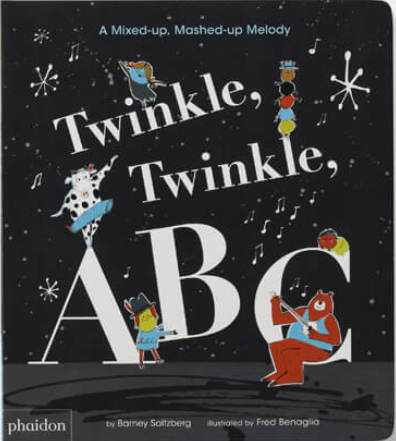
Twinkle, Twinkle, ABC

Written by Barney Saltzberg | Illustrated by Fred Benaglia


When you hear the words twinkle, twinkle, little star, it’s almost impossible not to think of the nursery song. When you hear the letters ABC, you might again think of a nursery song. In fact, you’re thinking of the same tune! And that tune? It sure is a catchy one! So catchy that once learned those songs, they stay with you forever. Barney Saltzberg has taken delightful advantage of this whimsy in Twinkle, Twinkle, ABC.
celebrate-picture-books-picture-book-review-twinkle-twinkle-abc-sliding-on-l

Image copyright Fred Benaglia, 2017, text copyright Barney Saltzberg, Courtesy of Phaidon Press.

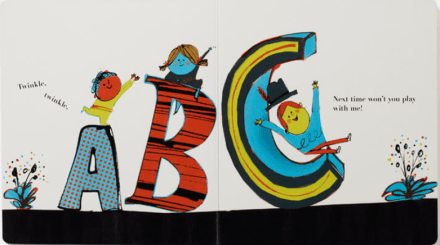
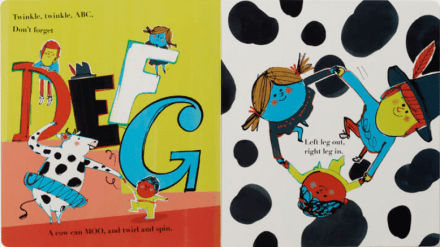
The sing-along, read-aloud starts like this: “Twinkle, twinkle, ABC, / A mixed-up, mashed-up melody. / A twinkly star, an alphabet, / Just how silly can we get? / Twinkle, twinkle, ABC. / Next time won’t you play with me?” From there the song takes flight with kids soaring over a city on the wings of birds. Next, the skyscrapers become multi-colored pillars for the kids to hop on and leap over. Coming back to the alphabet, readers are treated to: “Twinkle, twinkle, ABC, / Don’t forget D E F G. / A cow can MOO, and twirl and spin, / Left leg out, right leg in. / Twinkle, twinkle, ABC, A mixed-up, mashed –up jamboree!”

celebrate-picture-books-picture-book-review-twinkle-twinkle-abc-birds

Image copyright Fred Benaglia, 2017, text copyright Barney Saltzberg, Courtesy of Phaidon Press.

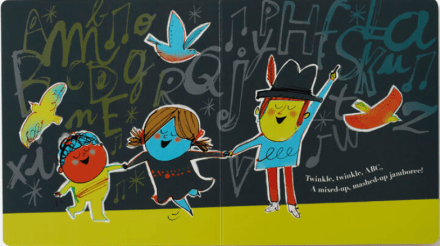
Now the children meet up with a bear, who leads them on a tightrope walk while they “Growl” and “GRRR.” That bear is pretty talented too, strumming a banjo on his knee to introduce H I J K L M N O P. Moving to the forest, the kids play a game of hide-and-seek with Q R S T U V and swing from branches like leaves blown in the wind. Just in the nick of time, a colorful caterpillar strolls by wearing sensible shoes, a jaunty hat, and the letters W X Y and Z. The jangly jingle begins again and the friends grasp hands and sing. But are they getting sleepy after their busy day? “We TWEET and MOO and GRRR and WHOOSH, / Singing, quietly, softly, shush. / Twinkle, twinkle, ABC. / A mixed-up, mashed-up, zzzzzz.”
celebrate-picture-books-picture-book-review-twinkle-twinkle-abc-dancing

Image copyright Fred Benaglia, 2017, text copyright Barney Saltzberg, Courtesy of Phaidon Press.

Barney Saltzberg’s exuberant combination of two favorite songs will have kids up and dancing on the first read and singing along on the second and all subsequent reads. Along the way Saltzberg uses familiar lines from both songs and even throws in a bit of direction from the Hokey-Pokey. Saltzberg’s perfect rhythm and rhymes make this book a joy to read or sing aloud. and his bouyant words will inspire plenty of action-packed story times.
celebrate-picture-books-picture-book-review-twinkle-twinkle-abc-holding-hands

Image copyright Fred Benaglia, 2017, text copyright Barney Saltzberg, Courtesy of Phaidon Press.

Adding to the fun are Fred Benaglia’s lively and fanciful illustrations in which three children ride birds, slide on the letters of the alphabet, and play on a tightrope. Along the way they meet an orange, banjo-playing bear, a tutu-wearing cow, and a snazzy caterpillar who also join in the fun. The rhythm of the song is even helped along with clever placement of the letters, as when Q R S are divided from T U V by a tree trunk, reminding singers and readers to pause for just a moment between the runs. Benaglia’s color palette is vibrant and his perspectives eye-catching, making this “mixed-up mash-up” a letter-perfect book.

Twinkle, Twinkle, ABC is a picture book kids will love to interact with. It would make a much-appreciated baby gift or birthday gift and an often-read or sung addition to classroom and home libraries.

Ages 1 – 4

Phaidon Press, 2017 | ISBN 978-0714875071

Discover more about Barney Saltzberg and his books on his website.

View a gallery of illustration and art work by Fred Banaglia on his website.

National Carry a Tune Week Activity
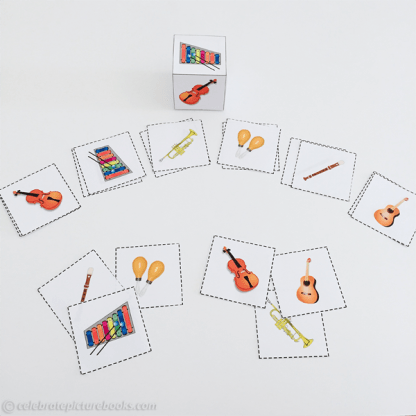
celebrate-picture-books-picture-book-review-it's-instrumental-game

It’s Instrumental! Game


Carrying a tune is easier when you’re accompanied by musical instruments. Play this game to acquire a full orchestra to back up your singing!

Supplies

Directions

  1. Print the Paper Cube Template, cut it out and assemble the cube die.
  2. Print the Musical Instruments cards, cut out cards, and separate the instruments into piles
  3. Players take turns rolling the die cube to collect musical instrument cards
  4. The first player to collect all 6 instrument cards is the winner

Picture Book Review

October 1 – World Vegetarian Day

celebrate-picture-books-picture-book-review-fresh-picked-poetry-cover

About the Holiday

World Vegetarian Day was established in 1977 by the North American Vegetarian Society to promote the vegetarian way of life and educate people on the health benefits of eliminating meat products from their diets. To celebrate, why not try being a vegetarian for a day or even all week? To help you along, visit a Farmers’ Market and view all of the vibrant, fresh produce on display!

Fresh-Picked Poetry: A Day at the Farmers’ Market

Written by Michelle Schaub | Illustrated by Amy Huntington


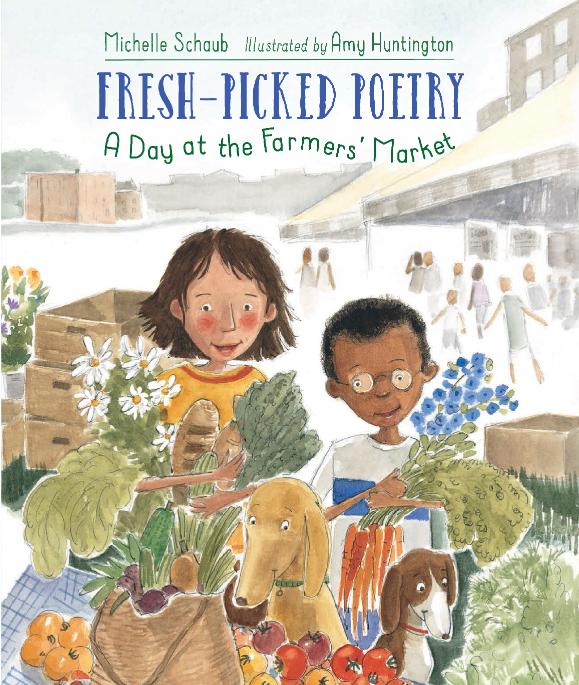
Come spend a day mingling with the farmers, crafters, musicians, kids, dogs, and customers who make shopping local a fun community event—after all, “It’s market day. / Hooray, hooray! / Spy the wonders / on display: / rainbow carrots, / herb bouquets, / heaps of berries, / sample trays.” So “join the party; / don’t delay! / Come celebrate; / it’s market day!”

celebrate-picture-books-picture-book-review-fresh-picked-poetry-pile-up

Image copyright Amy Huntington, 2017, text copyright Michelle Schaub, 2017. Courtesy of Charlesbridge Publishing.

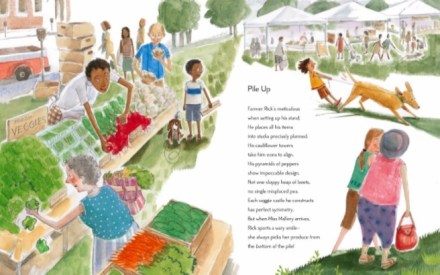
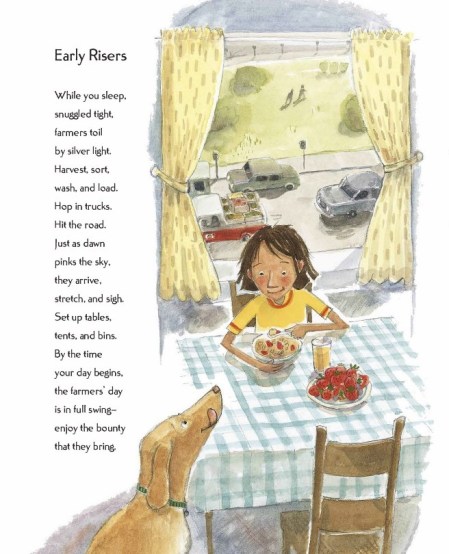
For the growers, the day starts before you are even awake. They are Early Risers who “toil by silver light. / Harvest, sort, / wash, and load. / Hop in trucks, / Hit the road. / Just as dawn / pinks the sky, / they arrive, stretch and sigh.” The farmers put up their booths and Pile Up their displays with meticulous care. Take Farmer Rick whose “cauliflower towers / take him eons to align. / His pyramids of peppers / show impeccable design….But when Miss Malory arrives, / Rick sports a wary smile— / she always picks her produce from / the bottom of the pile!”

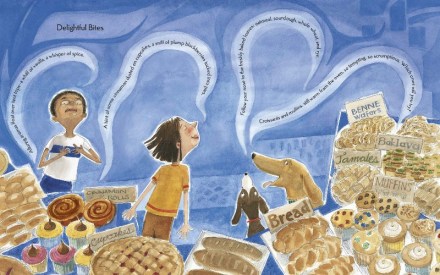
In addition to fruit and vegetables, there is often a booth that entices with homemade bread and Delightful Bites. “Alluring aromas float over tent tops—a whiff of vanilla, a whisper of spice. / A hint of some cinnamon dusted on cupcakes, a sniff of plump blackberries tucked into pies.” There are loaves and croissants and muffins and more all waiting for you to try.

celebrate-picture-books-picture-book-review-fresh-picked-poetry-delightful-bites

Image copyright Amy Huntington, 2017, text copyright Michelle Schaub, 2017. Courtesy of Charlesbridge Publishing.

Part of the fun of a farmers’ market is the Necessary Mess. “It clings to boots / and radish roots / and smudges mushroom caps. / It likes to hide / tucked deep inside / all crannies, grooves, and gaps….This film of dust, / a thin brown crust— / a mess you can’t avert. / But don’t you know? / No crops would grow / without a lot of dirt.”

Sometimes it’s just too hard to wait to eat the goodies at the market. One nibble…well…maybe two or three—no one will ever know. Except perhaps for those telltale Clues in Blue: “Blue splatters on our T-shirts. / Blue speckles on our shoes. / Blue splotches on our baskets. / Our footprints? They’re blue too…. ‘Who gobbled up the berries?’ / We both were reprimanded. / We tried to hide the evidence— / but we were caught… / BLUE-handed.”

celebrate-picture-books-picture-book-review-fresh-picked-poetry-local-loot

Image copyright Amy Huntington,  2017, text copyright Michelle Schaub, 2017. Courtesy of Charlesbridge Publishing.

With twilight the market closes. The farmers pack their trucks, the honey sellers say good-bye, and “the musician’s notes have hushed.” The shoppers have gone home where their “cupboards brim with bounty, / while families dream away, / imagining the wonders / to come / next market day.”

An Author’s Note on “Fresh-picked reasons to spend a day at the market” follows the text.

In eighteen humorous, insightful, and evocative poems, Michelle Schaub takes readers to a farmers’ market to experience the sights, sounds, aromas, and fun of a day spent with a community of people in the open air. From the transformation of a vacant lot to checking off the traits of summer to an imagined conversation between a Green Zebra Tomato and Dinosaur Kale, Straub’s light touch and jaunty rhythms will make readers smile from the first page to the last. Kids and adults alike will be inspired to visit their local market again and again—in person and through these delicious poems.

celebrate-picture-books-picture-book-review-fresh-picked-poetry-early-risers

Image copyright Amy Huntington, 2017, text copyright Michelle Schaub, 2017. Courtesy of Charlesbridge Publishing.

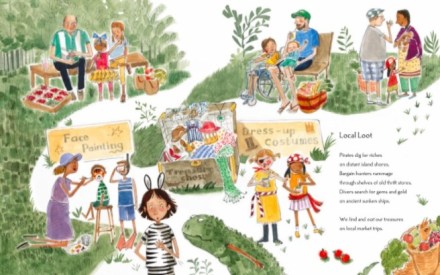
As envisioned by Amy Huntington, this farmers’ market is alive with gorgeous vibrant and subtle colors that invite readers to explore the crates of vegetables and fruit, drool over the home-baked pastries, dance along to the banjo and fiddle players, and follow the dogs who enjoy a day out as much as their humans. A diverse community of adults and children enjoy the fun in each illustration that will have readers lingering over every page.

A perfect take-along on a day’s outing to a farmers’ market, picnic, playground, or other jaunt, Fresh-Picket Poetry: A Day at the Farmers’ Market should find a welcome spot on any classroom, public library, and home bookshelf.

Ages 4 – 9

Charlesbridge Publishing, 2017 | ISBN 978-1580895477

Learn more about Michelle Schaub, her books, and her poetry on her website!

Discover more about Amy Huntington and her books on her website!

You’re going to dig this Fresh-Picked Poetry book trailer!

World Vegetarian Day Activity

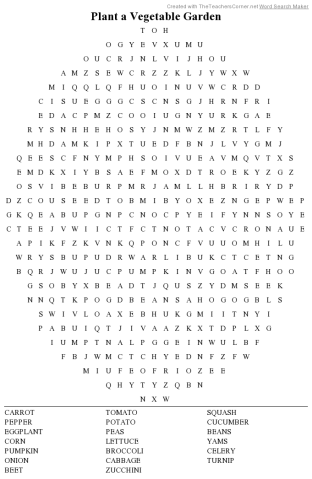
celebrate-picture-books-picture-book-review-vegetable-garden-word-search

Plant a Vegetable Garden Word Search


There are so many kinds of vegetables to plant in your garden and add to your diet! Can you pick out the names of twenty veggies in this printable Plant a Vegetable Garden Word Search? Here’s the Solution.

Picture Book Review
 

Picture Book Review
August 31 – We Love Memoirs Day

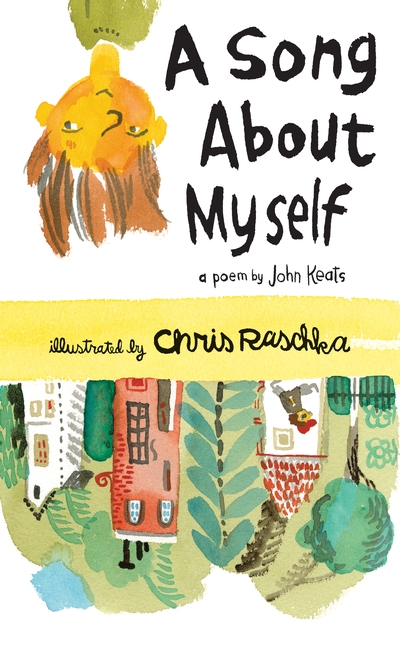
celebrate-picture-books-picture-book-review-a-song-about-myself-cover

About the Holiday

In 2013 two authors of memoirs, Victoria Twead and Alan Parks, established today’s holiday to foster a warm and welcoming community for readers and writers of memoirs. The idea took off and now We Love Memoirs Day brings the art and heart of this personal form of writing to people across the world. If you like to read memoirs, grab one from the shelf and enjoy! If you’ve ever thought of penning the story of your own life and/or family, today’s the perfect opportunity to start!

A Song About Myself: A Poem by John Keats

Written by John Keats | Illustrated by Chris Raschka


1

“There was a naughty Boy, / A naughty boy was he, / He would not stop at home, / He could not quiet be—” So this adventurous boy packed his knapsack with “a Book / Full of vowels / And a shirt / With some towels—” He added a comb and a brush, a cap to protect himself both day and night, and an extra pair of stockings for when the old ones got threadbare. With his knapsack buckled on tight, the little boy headed North

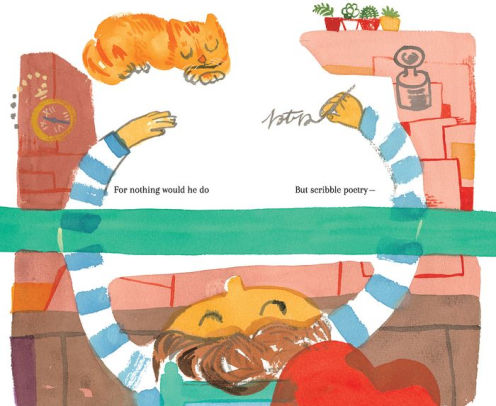
celebrate-picture-books-picture-book-review-a-song-about-myself-writing

Copyright Chris Raschka, courtesy of Candlewick, 2017

2

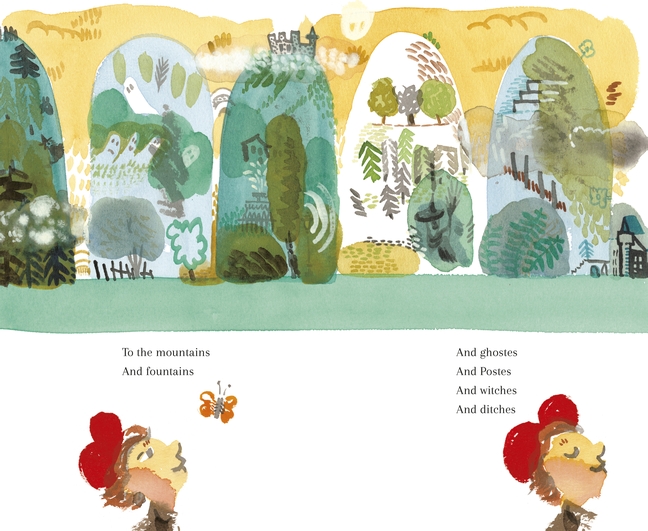
“There was a naughty Boy, / A naughty boy was he, / For nothing would he do / But scribble poetry—” With ink stand and pen he ran away “to the mountains / And fountains / And ghostes / And Postes / And witches / And ditches.” In the winter he wrote with his coat on, not fearing contracting gout; and when the weather was warm, he abandoned his coat while he captured the charm of the North.

3

“There was a naughty Boy, / A naughty boy was he, / He kept little fishes / In washing tubs three.” Not fearing the maid’s or his granny’s displeasure, this mischievous boy would rise with the sun and head for the brook to catch minnows that he liked to watch darting around in his bucket—“A Kettle / Of Fish a pretty Kettle / A Kettle!”

celebrate-picture-books-picture-book-review-a-song-about-myself-to-the-mountains

Copyright Chris Raschka, courtesy of Candlewick, 2017

4

“There was a naughty Boy, / A naughty boy was he, / He ran away to Scotland / The people for to see— .” But what he discovered was that the building, people, things and emotions were the same there as in England. This revelation make him think about his world, “so he stood in his shoes / And he wonder’d, / He wonder’d / He stood in his shoes / And he wonder’d.”

In an Illustrator’s Note, Chris Raschka reveals that John Keats—one of the greatest romantic poets—wrote this poem in a letter to his sister, Fanny, while he was walking through Scotland on a tour that he imagined would inspire “the grand poetry that he knew was inside him.”

This quirky poem that follows the travails and travels of a little boy filled with wanderlust, a gift for writing, and insight beyond his years is a perfect match for Chris Raschka’s art. Topsy-turvy perspectives, vivid colors, and evocative and action-packed vignettes beautifully represent the boy’s “naughtiness” and precocious imagination. As he dashes across the yard, his house—red capped and with a mustache-shaped lintel over the door—seems to watch through window eyes; the boy’s mighty pen stands taller than he is; and ghosts, witches, castles, and fountains are framed in the hills that he passes on his journey. Bold swatches of yellow, green, and red that split the pages in half serve as directional arrows, roads, and verse dividers while also leading readers to the book’s final wisdom.

Kids will find it fun to explore the endpapers that present a bird’s-eye-view of the expanse from Scotland to New York over “Much Water.”

A Song About Myself: A Poem by John Keats is a joyous treat that celebrates the whimsy of childhood and the wonders of the imagination. For poetry lovers or those who enjoy a good story, this book would make a charming gift or addition to home bookshelves.

Ages 6 – 10

Candlewick, 2017 | ISBN 978-0763650902

You can view a gallery of artwork by Chris Raschka on tumblr!

We Love Memoirs Day Activity

celebrate-picture-books-picture-book-review-reading-bug-bookmark

I Have the Reading Bug Bookmark


If you love reading, then print out this I Have the Reading Bug Bookmark that can mark your page with style! For a sturdier bookmark, print on card stock or heavy paper.

celebrate-picture-books-picture-book-review-a-song-about-myself-cover

You can find A Song About Myself at these booksellers

Amazon | Barnes & Noble | Books-a-Million | IndieBound

Picture Book Review
 

August 28 – National Bow Tie Day

celebrate-picture-books-picture-book-review-bow-tie-pasta-acrostic-poems-cover

About the Holiday

We’ve all learned about the 30-year war in school, but I bet your teacher never mentioned that world-side use of the bow tie was one of the results. It seems the Croatian soldiers used a bow tie to close the collars of their shirts. The idea caught on, and, later, French tobacco magnate Pierre Lorillard wore a bow tie to a Tuxedo Club event. The black-and-white fashion statement gained popularity, and bow ties took off in all kinds of colorful, wacky, and iconic ways.

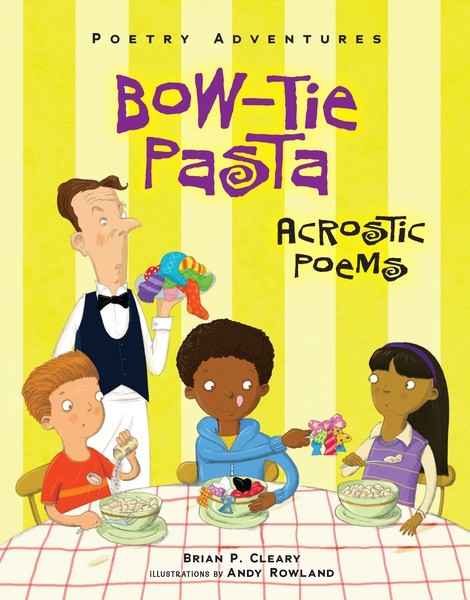
Bow-Tie Pasta: Acrostic Poems

Written by Brian P. Cleary | Illustrated by Andy Rowland


Acrostics are special nuggets of information or creativity formed by using the letters of a word to begin each new sentence. Writing poems in acrostic style takes thought and ingenuity—and that’s just what Brian P. Cleary offers in his twenty-seven poems that tackle all kinds of subjects, from pirates to spiders to sharks, from holidays to colors to food, and from people to places to things.

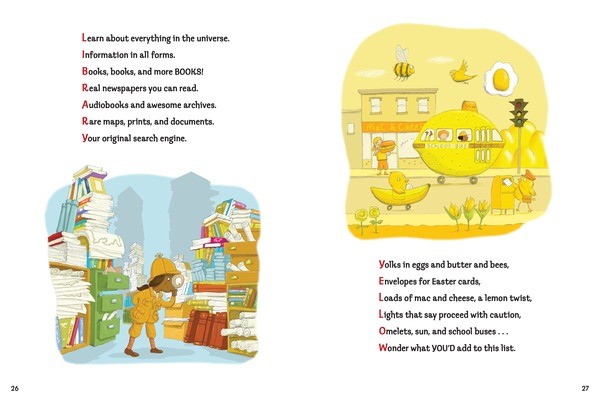
Bow-Tie Pasta riffs on the wearable and edible types of bow ties and comes to a conclusion we can all digest: “Blue gingham / Orange striped / White formal / Tartan plaid / Irish shamrocks / Embroidered stars / Polka dots / Argyle / Silky yellow / Tweed / Awful tasting.”

In Piano, a boy wistfully watches a parade go by: “Parading down Main Street / Is a sea of red-uniformed players of flute / And clarinet and drum / Navigating their way through confetti and applause / Only wish that I could march with my instrument.”

celebrate-picture-books-picture-book-review-bow-tie-pasta-acrostic-poems-library-yellow

Image copyright Andy Rowland, 2015, text copyright Brian P. Cleary, 2015. Courtesy of Millbrook Press.

A Rainy Day inspires another clever verse: Reading in a cozy nook / Asking for another book / I made cookies by the sheet / Next they cool. I dunk and eat. / Yo-yo, board games, watch the rain, / Draw a face inside each pane. / Afterwards I make s’mores. / Yes, I love the great indoors.”

Fish aficionados may want to heed the warning in Piranha: Peering into my aquarium, / I spy the fish with two rows of / Razor-sharp teeth. / As he swims towards my tapping finger / Near the top of the tank’s glass, / He serves as a reminder that there / Are some pets you should never pet.

For those who like their poems non-fiction, Triceratops reveals some fascinating facts about this prehistoric favorite: Two hard horns and a third soft one that’s / Really a snout made from soft proteins. / Inside its mouth: 200 to 800 teeth. / Can you imagine the dentist appointments? / Extinct, so none are living. / Rumored to be a slow walker. / Ate only plants. / T. rex wanted to have it for lunch. / Older than your parents and even your teacher! / Popular in dinosaur movies. / Seen last alive: 65 million years ago.

Just waiting for kids are more acrostics about some of their favorite things, such as fire trucks, snack time, lacrosse, Halloween, giggling, the library, and jokes. There’s even an acrostic poem explaining what acrostic poems are!

Brian P. Cleary’s supple wit and word play turn words into poems and poems into new ways of looking at his subjects. Young readers will laugh at his observations and juxtapositions and be tempted to try writing an acrostic poem of their own.

Andy Rowland accompanies each poem with bright, amusing illustrations that highlight the humor and “ah-ha!” moments of the verses. A boy tries to chew down the contents of a plate piled high with cloth bow ties of every color and pattern, a triceratops visits the dentist, kids go trick or treating with an green alien, the state of Kansas stretches out like a patchwork quilt, and a boy and girl toast marshmallows on a rainy day. Along the way readers also meet a wiener dog sporting a bun and ketchup, a toothy shark, and a rather sly spider.

For kids who love poetry and humor Bow-Tie Pasta: Acrostic Poems is a winner. The book is also perfect for classroom poetry units and fun library story times.

Ages 6 – 10

Millbrook Press, 2015 | ISBN 978-1467781077

Have a blast exploring all the nooks and crannies of Brian P. Cleary’s website!

Learn more about Andy Rowland on his website!

National Bow Tie Day Activity

celebrate-picture-books-pciture-book-review-bow-ties-coloring-page

Colorful Bow Ties


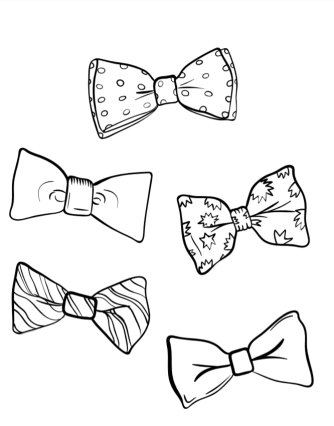
Bow ties come in all colors and patterns. Here is a printable Colorful Bow Ties page for you to decorate! You can then use your bow ties to play the game below!

Alternate Match the Bow Ties Game:

  1. Print two sheets of the Colorful Bow Ties page
  2. Color the bow ties to make matching pairs
  3. Cut the bow ties into separate cards
  4. Turn them face down and scramble them
  5. Turn one of the cards over and try to find its match. If the two ties are not the same, turn them face down and try again
  6. Keep playing until all the bow ties have been matched.

Picture Book Review

August 22 – Eat a Peach Day

celebrate-picture-books-picture-book-review-each-peach-pear-plum-cover

About the Holiday

Is there anything as delicious as a perfectly ripe peach? Native to China and classified with the almond, the peach is peachy in pies, tarts, fruit salads, and just on its own. To celebrate today pick some peaches from a local farm, farmer’s market, or grocery store and enjoy!

Each Peach Pear Plum

By Janet and Allan Ahlberg


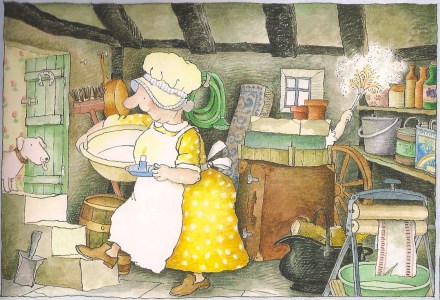
This perennial children’s favorite “I spy” nursery rhyme book is a perfect read any time, but especially during the summer when it can be tucked away in a travel bag or picnic basket and enjoyed on the go. After the first introduction of “Each peach pear plum / I spy Tom Thumb,” in which readers are invited to find Tom who is happily reading high in a peach tree nearly hidden by leaves and fruit, every page offers another double challenge.

Building on the discovery in the preceding page, kids are given a hint as to the current whereabouts of the previous character and are also urged to find another nursery rhyme or literary favorite: “Tom Thumb in the cupboard / I spy Mother Hubbard” followed by “Mother Hubbard down the cellar / I spy Cinderella.”  This structure creates anticipation in even the youngest readers as they begin to recognize the pattern and wonder who is coming next.

celebrate-picture-books-picture-book-review-each-peach-pear-plum-interior-art-mother-hubbard

Copyright Janet and Allan Ahlberg, 1999, courtesy of Viking Books for Young Readers

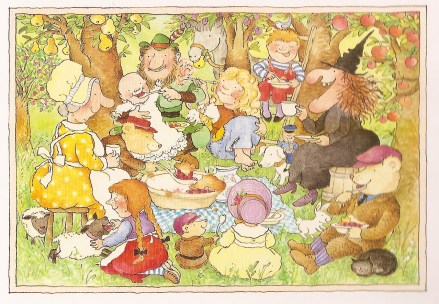
Besides Tom Thumb, Old Mother Hubbard, and Cinderella, the Three Bears, Baby Bunting, Little Bo-Peep, Jack and Jill, the Wicked Witch, Robin Hood, and a deliciously plump Plum Pie are hidden in the book. What makes Each Peach Pear Plum a classic is the Ahlberg’s artistic magic, which is on gorgeous display in every illustration. The vivid, fine-line drawings spare no details in bringing the short text fully to life.

Humor abounds, especially in the depiction of the “hidden” character or characters, whose only appearance is an arm dusting a shelf, faces at a window, feet sticking out of tall grass, a camouflaged archer, and more. And perhaps the clumsy baby bear could use a bit of assistance! Kids will love pointing out the birds and bunnies, dog, cat, and other animals that also follow from page to page.

celebrate-picture-books-picture-book-review-each-peach-pear-plum-interior-art-picnic

Copyright Janet and Allan Ahlberg, 1999, courtesy Viking Books for Young Readers

Each Peach Pear Plum is also a wonderful introduction to the literature alluded to and will entice kids to hear all the stories contained in this forever favorite. Each Peach Pear Plum makes a fantastic gift for new babies or young readers and belongs on every child’s bookshelf.

Ages Birth – 5 

Viking Books for Young Readers, Penguin, 1999 | ISBN 978-0670882786 (Board Book Edition)

Eat a Peach Day Activity

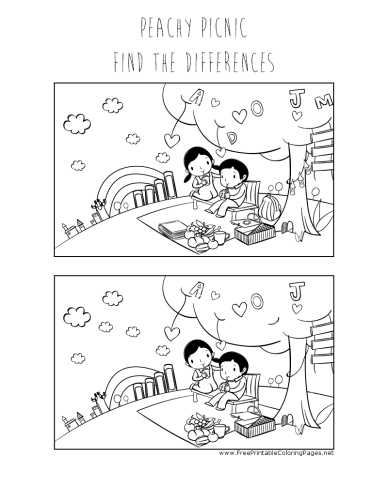
celebrate-picture-books-picture-book-review-picnic-find-the-differences

Peachy Picnic Find the Differences Puzzle


These two friends are enjoying a picnic and took two pictures. Can you spot the 12 differences between the two pictures in this printable Peachy Picnic Find the Differences Puzzle?

August 21 – Poet’s Day

celebrate-picture-books-picture-book-review-a-river-of-words-cover

About the Holiday

Today we celebrate poets—both those who are professionally published and those who compose poetry in their secret hearts. Poets bring clarity and new perspectives to life—like a little pinprick of light in a dark room. Whether you like long, epic poems, short, evocative verse, humorous poetry, or poetry set to music, take the opportunity today to enjoy some poetry—or write a bit of your own.

A River of Words: The Story of William Carlos Williams

Written by Jen Bryant | Illustrated by Melissa Sweet


Willie Williams was just like the other boys in his neighborhood—well, almost. When the other boys went home after a day of playing, Willie took off for the woods and fields behind his house. “As he walked through the high grasses and along the soft dirt paths, Willie watched everything.” He liked to sit next to the Passaic River and listen to the rhythm of the water as it “went slipping and sliding over the smooth rocks, then poured in a torrent over the falls, then quieted again below.”

celebrate-picture-books-picture-book-review-a-river-of-words-high-school

Image copyright Melissa Sweet, 2008, courtesy of Eerdmans Books for Young Readers.

But as Willie grew older, he didn’t have time for these leisurely pursuits. In high school, he was on the track team, attended lots of classes, and had even more homework. His was a rushed and hurried life. Except for in English class. There, when his teacher read poetry, he was taken back to the flow of the river. Each line created pictures in Willie’s mind.

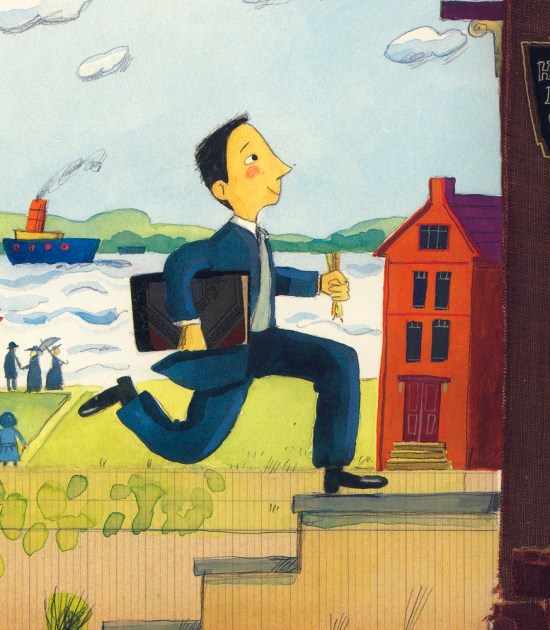
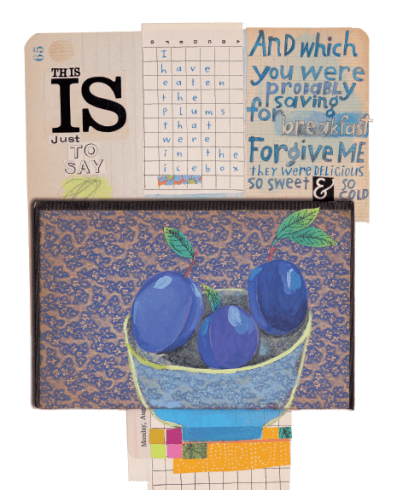
One night, Willie began writing his own poems. He copied the English poets he had learned about in school, using structured beats and rhyming endings. But soon these rules began to frustrate Willie; they didn’t give him the freedom to fully express his thoughts. He wanted to write about what he saw nearby, the things he was familiar with. Things, he said, like “plums, wheelbarrows, and weeds, / fire engines, children, and trees— / things I see when I walk down my street / or look out my window.”

celebrate-picture-books-picture-book-review-a-river-of-words-sparrows

Image copyright Melissa Sweet, 2008, courtesy of Eerdmans Books for Young Readers.

Willie began writing poems the way they came to him, with their own shape and sound. Writing this way made Willie feel free, and he filled notebook after notebook with poems. While Willie wished he could make a living as a poet, writing did not pay much, and he needed to be self-sufficient. Willie’s uncle had been a doctor, and Willie liked the idea of healing people. He wondered, though, if he could be a doctor and still write poetry.

When Willie graduated from high school, he went off to the university to study medicine. There he met the writers Ezra Pound and Hilda Doolittle and the artist Charles Demuth. Spending time with his new friends made his difficult studying easier. After college, Willie returned to his home town of Rutherford and opened his practice. He had so many patients that some people said he was “the busiest man in town.”

celebrate-picture-books-picture-book-review-a-river-of-words-attic-room

Image copyright Melissa Sweet, 2008, courtesy of Eerdmans Books for Young Readers.

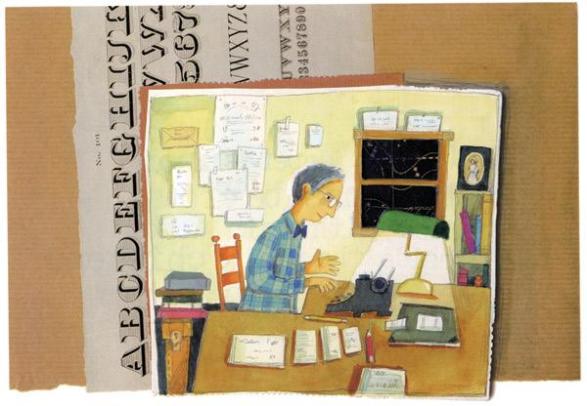
No matter how busy he was, however, he found time to write. Sometimes he jotted lines and ideas on his prescription pads. Then, after his long days at work, Willie climbed to his attic room where he studied the notes he’d made and wrote poems late into the night.

A Timeline, Author’s Note, and Illustrators Note about William Carlos Williams follow the text. The endpapers present a selection of Williams’ poetry.

A River of Words is an inspirational book for children who have creative ideas of their own and would make an excellent addition to classroom and home libraries.

From the title through to the end of her lyrical biography, Jen Bryant captures the flow of William Carlos Williams’ creative and scientific life, which was as purposeful and free as the river that inspired him. Young readers and would-be writers will find much encouragement and insight in Bryant’s story, which reveals that talent and day-to-day life not only can co-exist but can enrich each other. By showing how Williams broke free from the structures of the poetry he copied, Bryant also motivates children to find their own voice.

celebrate-picture-books-picture-book-review-a-river-of-words-plums

Image copyright Melissa Sweet, 2008, courtesy of Eerdmans Books for Young Readers.

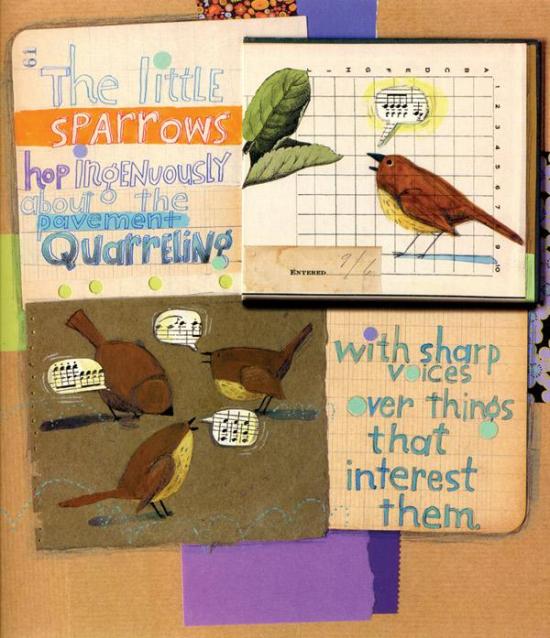
Melissa Sweet lends her distinctive collage style of illustration to this story, bringing to life the lines of and natural world reflected in Williams’ poetry. The busy-ness and business of Williams’ days are depicted in vibrant images of winding streets, classrooms, offices, and the outside world where he composed his uniquely revealing poems.

Ages 6 and up

Eerdmans Books for Young Readers, 2008 | ISBN 978-0802853028

Learn more about Jen Bryant and her books on her website!

Discover more about Melissa Sweet, her books, and her art on her website!

Poet’s Day Activity

celebrate-picture-books-picture-book-review-grow-a-poem-craft

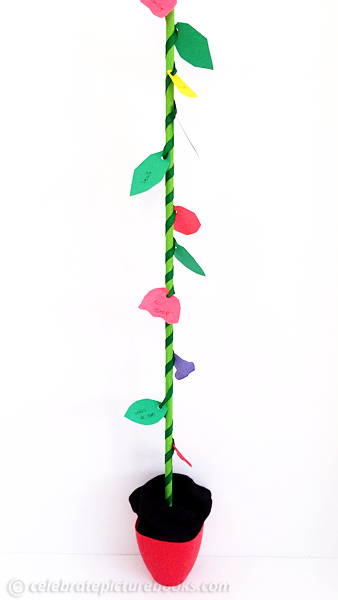
Grow Your Own Poem


A poem often grows in your imagination like a beautiful plant—starting from the seed of an idea, breaking through your consciousness, and growing and blooming into full form. With this craft you can create a unique poem that is also a piece of art!

Supplies

  • Printable Leaves Template
  • Printable Flower Template
  • Wooden dowel, 36-inch-long, ½-inch diameter, available in craft or hardware stores
  • Green ribbon, 48 inches long
  • Green craft paint
  • Green paper for printing leaves (white paper if children would like to color the leaves)
  • Colored paper for printing flowers (white paper if children would like to color the flowers)
  • Flower pot or box
  • Oasis, clay, or dirt
  • Hole punch
  • Glue
  • Markers or pens for writing words
  • Crayons or colored pencils if children are to color leaves and flowers

Directions

  1. Paint the dowel green, let dry
  2. Print the leaves and flower templates
  3. Cut out the leaves and flowers
  4. Punch a hole in the bottom of the leaves or flowers
  5. Write words, phrases, or full sentences of your poem on the leaf and flower templates
  6. String the leaves and flowers onto the green ribbon (if you want the poem to read from top to bottom string the words onto the ribbon in order from first to last)
  7. Attach the ribbon to the bottom of the pole with glue or tape
  8. Wrap the ribbon around the pole, leaving spaces between the ribbon
  9. Move the leaves and flowers so they stick out from the pole or look the way you want them to.
  10. Put oasis or clay in the flower pot or box
  11. Stick your poem pole in the pot
  12. Display your poem!

Picture Book Review

June 26 – It’s Adopt a Cat Month

celebrate-picture-books-picture-book-review-the-white-cat-and-the-monk

About the Holiday

Just as it sounds, this holiday celebrates all the benefits of owning cat. With so many beautiful breeds of cat to choose from, there’s a perfect pet waiting for you! If you’ve been considering adding a cat or kitten to your family, why not visit an animal shelter and give one – or even two – cats a purr-fect home?

The White Cat and the Monk

Retold by Jo Ellen Bogart | Illustrated by Sydney Smith


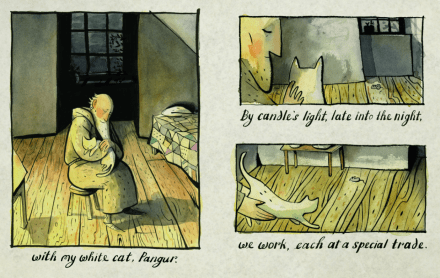
In the nighttime a white cat approaches a monastery. He slips through a window and pads along a darkened corridor and down stone steps. He creeps behind a barrel, a vase, and a pitcher standing in a row and adds his shadow to the black mosaic on the floor. He leaps the last few steps and hurries along to the doorway that is leaking a bit of light.

celebrate-picture-books-picture-book-review-the-white-cat-and-the-monk-candle-light

Image copyright Sydney Smith, text copyright Jo Ellen Bogart. Courtesy of Groundwood Books.

He slips his paw under the door. This a secret signal alerts the occupant of the room, who opens the door to this playful feline. “I, monk and scholar, share my room with my white cat, Pangur,” the old man explains. He lifts Pangur into his arms and strokes him before releasing him to pursue his “special trade.” The monk also returns to his trade—studying ancient manuscripts to understand their meaning.

celebrate-pciture-books-picture-book-review-The-White-Cat-and-the-Monk-books

celebrate-picture-books-picture-book-review-the-white-cat-and-the-monk-in-window

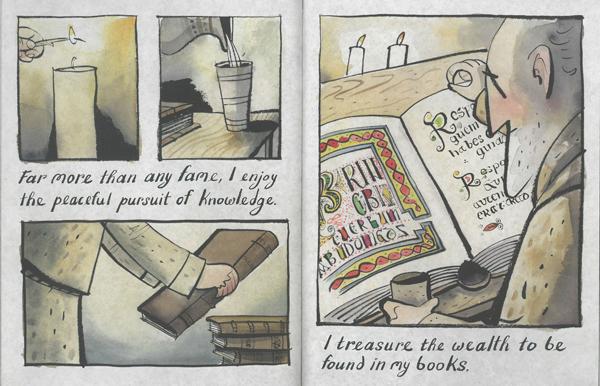
The  monk is a dedicated scholar, revealing, “Far more than any fame, I enjoy the peaceful pursuit of knowledge. I treasure the wealth to be found in my books.” Pangur is a dedicated scholar of another kind, studying “the hole that leads to the mouse’s home.” In that moment both man and cat become hunters—one for meaning and the other for prey.

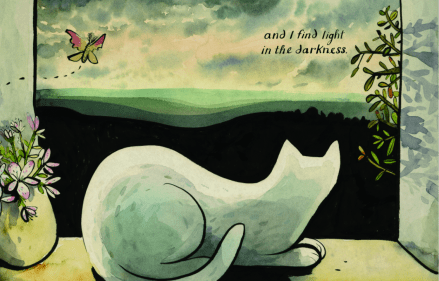
The two do not disturb each other for each is content in his pursuit. Pangur at last “finds his mouse” as the monk finds “light in the darkness.”

celebrate-picture-books-picture-book-review-the-white-cat-and-the-monk-in-window

Image copyright Sydney Smith, text copyright Jo Ellen Bogart. Courtesy of Groundwood Books.

Jo Ellen Bogart’s quiet and graceful retelling of Pangur Bán, a beloved Irish poem from the 9th century is a welcome respite in this age of multitasking and mega-activity. With sparse, but compelling and lyrical language, Bogart uncovers the companionable relationship between the monk and his cat as each follows their heart together.

The fine textured pages of Sydney Smith’s illustrations recall the beauty of parchment as the smooth gray-and-gold line drawings of the monastery’s architecture and characters give way to the vibrant colors of ancient manuscripts and the natural environment. The contentment and friendship of the monk and the cat are sweetly drawn in the characters’ mirrored actions as well as in the depictions of a long-held affection between man and beast in the panels of the manuscript the monk studies. As the monk states, “Ours is a happy tale.”

Reassuring and reaffirming, The White Cat and the Monk honors the individual challenges and quests that make us who we are and would be a wonderful addition to regular quiet-time reading.

Ages 4 and up (this book will be enjoyed by both children and adults)

Groundwood Books, House of Anansi Press, 2016 | ISBN 978-1554987801

You’ll find a gallery of artwork by Sydney Smith on his tumblr!

Adopt a Cat Month Activity

celebrate-picture-books-picture-book-review-cat-toy

Fishing for Playtime Cat Toy


Cats love to chase after bouncing, sliding objects, and they love fish. While this toy may not taste as good as fish, it sure smells better and doesn’t require worms or hooks to attain!

Supplies

  • Old or new child’s sock
  • Fiber Fill
  • Yarn or string
  • Fabric paint or markers
  • Small bell (optional)
  • Catnip (optional)

Directions

  1. Paint or draw fins and eyes on the sock
  2. Fill the sock with fiber fill
  3. Add a teaspoon of catnip (optional)
  4. Add a small bell (optional)
  5. Use the yarn or string to close the opening with a strong knot
  6. Leave a long section of yarn or string to pull or dangle the toy

Picture Book Review