April 30 – Arbor Day

celebrate-picture-books-picture-book-review-up-in-the-leaves-cover

About the Holiday

Today is Arbor Day, a national celebration of trees that began as a campaign by J. Morton Sterling and his wife after they moved from Michigan to Nebraska in 1854. Morton advocated for the planting of trees not only for their beauty but as windbreaks for crops on the state’s flat farmland, to keep soil from washing away, as building materials, and for shade. In 1872, Morton proposed a tree-planting day to take place on April 10. On that day nearly one million trees were planted in Nebraska. The idea was made official in 1874, and soon, other states joined in. In 1882 schools began taking part. Today, most states celebrate Arbor Day either today or on a day more suited for their growing season. To learn about events in your area, find activities to download, and more, visit the Arbor Day Foundation website.

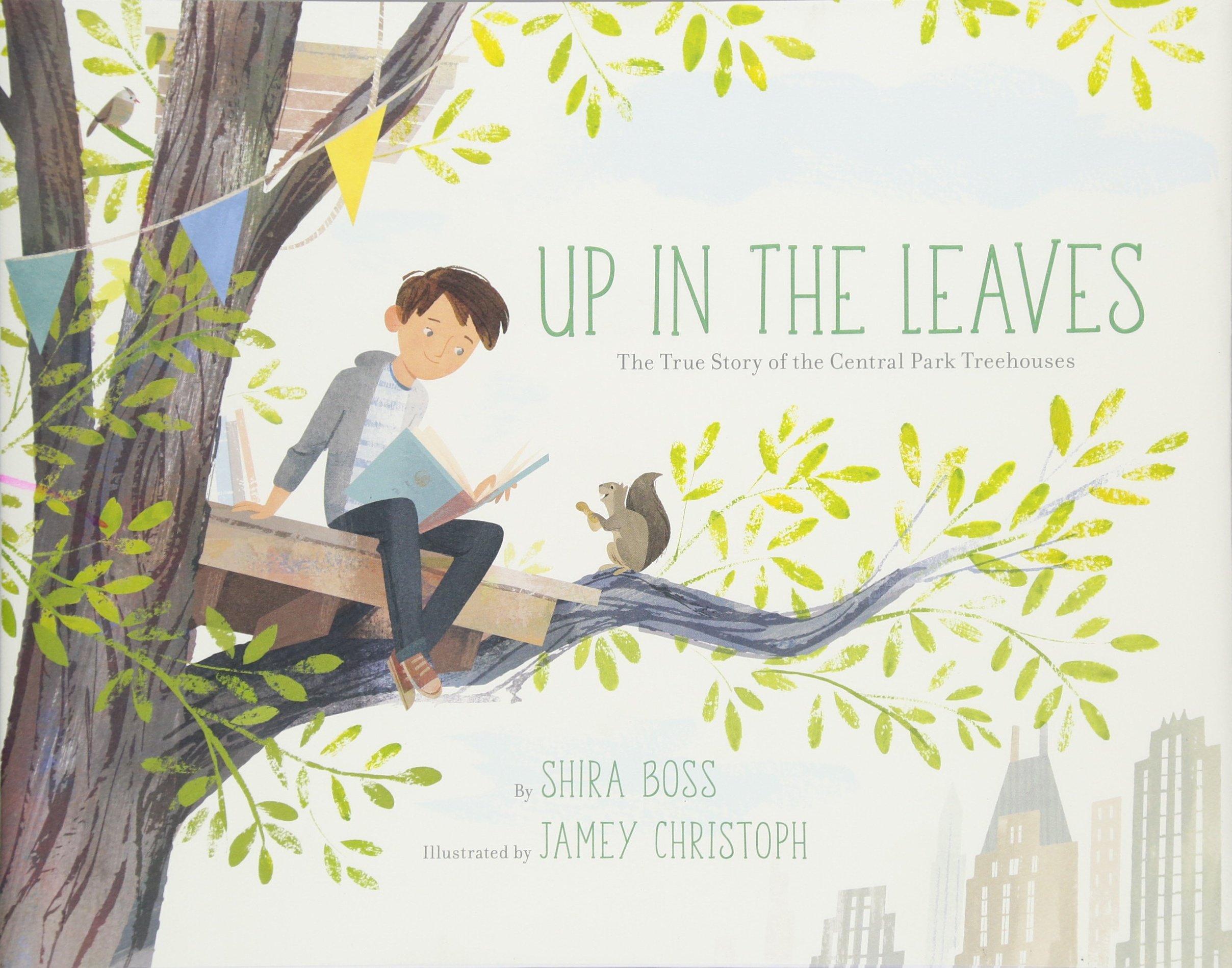
Up in the Leaves: The True Story of the Central Park Treehouses

Written by Shira Boss | Illustrated by Jamey Christoph


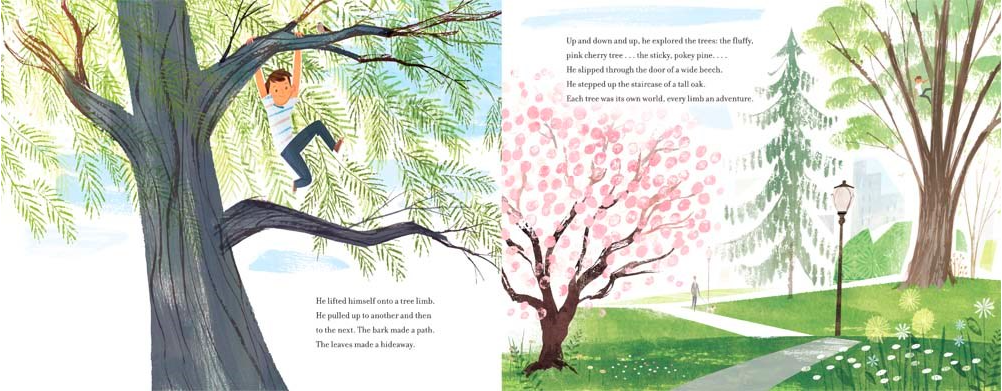
Bob lived in New York, a city crowded with buildings, people, and vehicles. Walking along on the sidewalk, “Bob didn’t like all that rushing around, the eyes of so many people, all those feet on the ground.” He climbed whatever he could find—onto lampposts, up to his apartment building’s roof, even the wall of the castle in Central Park. At school, Bob felt hemmed in by the desks, small classrooms, and packed hallways.

Every day as soon as school let out, Bob ran to Central Park, where it was cool, calm, and uncrowded. People moved slowly there or relaxed on the green grass. The “trees waved their branches in the air, inviting him to come up.” And so he did. Bob scampered up the path made by the bark and climbed higher and higher using the ladder the trees’ limbs provided. He explored cherry trees, pine trees, beech trees, and oak trees. “Each tree was its own world, every limb an adventure.”
celebrate-picture-books-picture-book-review-up-in-the-leaves-central-park

Image copyright Jamey Christoph, 2018, text copyright Shira Boss, 2018. Courtesy of Sterling Children’s Books.

Through the leaves that hid him, Bob could look out over the city. It was quieter and everything looked so small. Bob decided to build himself a treehouse. With scavenged wood and rope, he built a small platform and after school he climbed up to where he could read, think, and listen to the sounds of nature. He even brought peanuts for the squirrels. But one day when he came to the park, his treehouse was gone.

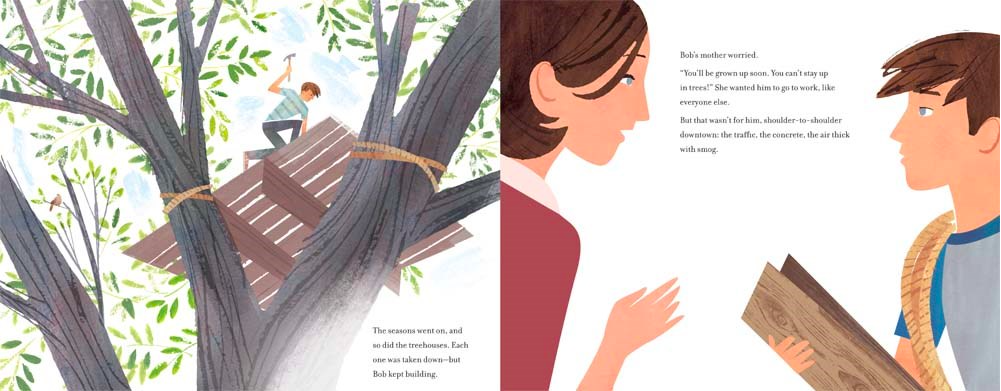
So Bob built another one. This one was bigger, better hidden in the leaves, and had shelter. When rain and wind came, “Bob’s treehouse rocked and swayed—he was a sailor on a ship at sea.” But when the leaves fell in the fall, Bob’s treehouse was discovered and taken down again. In the spring, Bob constructed another treehouse. This one had a long platform and a sturdy house with walls and a roof. Bob devised a rope-and-pulley “elevator” to bring up supplies like “milk crates for tables and chairs” books, snacks, and even his friends.

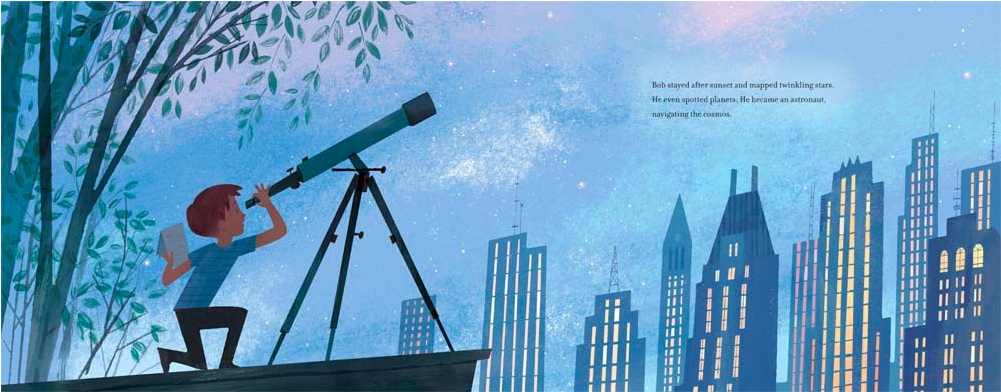
When the sun went down, Bob stayed and looked at the stars and planets with a telescope he’d set up on the platform. “He became an astronaut, navigating the cosmos.” Seasons came and went and Bob grew older. Each time a treehouse was taken down, he built a bigger and better one.
celebrate-picture-books-picture-book-review-up-in-the-leaves-stargazing

Image copyright Jamey Christoph, 2018, text copyright Shira Boss, 2018. Courtesy of Sterling Children’s Books.

Bob’s mom worried that he was spending too much time up in the trees. She wanted him to get a job like everyone else. But he didn’t want to spend his time commuting on a crowded train and moving along crowded sidewalks to work in a crowded office. He didn’t want to deal with the noise and smog-filled air. “Instead, he built the biggest treehouse of all. Five levels and a bridge! Bob was very proud.” He even slept there.

One morning he awoke to voices calling up to him. The park rangers were ordering him to come down. Sadly, he descended. But the man in charge wasn’t angry. He offered Bob a job taking care of the trees. Bob enthusiastically said, “‘I would love to work here!’” Even though he couldn’t build any more treehouses, he still spent his days in the canopy of the trees, climbing up, up, up with special ropes and saddle to trim branches and make sure the trees were healthy. Sometimes at night, though, Bob still found his way to a high, leafy perch to gaze at the stars.

An Epilogue, including a picture of Bob Redman sitting on a branch of one of his beloved trees, tells more about Bob Redman, his treehouses, and what he’s doing now.
celebrate-picture-books-picture-book-review-up-in-the-leaves-mom

Image copyright Jamey Christoph, 2018, text copyright Shira Boss, 2018. Courtesy of Sterling Children’s Books.

Shira Boss’s captivating true story of a boy who felt more at home in nature than in the city and grew up to care for the trees he loves is a unique story for all kids who love the adventure of their own treehouse or fort and spending time outdoors. With short staccato sentences Boss recreates the cramped in feeling Bob Redman experienced indoors and while moving through the crowded New York streets. As Bob climbs the trees, Boss’s longer, lyrical sentences echo the freedom of the peace, quiet, and slower pace of life Bob craved. His perseverance in building and rebuilding his treehouses, finally to be recognized for his special gifts will encourage kids who also forge their own path.

Jamey Christoph’s charming soft-hued illustrations take kids quickly from the tall skyscrapers and crowded sidewalks of New York City to the lovely green expanse of Central Park to watch Bob swing from the branches as he climbs higher and higher into the parks varied trees. Readers will envy his agility and view of the city. Readers can almost feel the cooler air and the warm sunshine filtered through the leaves as they turn from page to page. Christoph’s recreations of Bob’s platforms and increasingly complex treehouses will impress kids and adults alike. The final images of Bob working a job he was born to do while still enjoying the trees and the city in his own way will inspire children to stay true to what they love.

A lovely and inspiring book with a unique story that will appeal to all readers and especially those who prefer a life of quiet, thoughtful observation and creativity, Up in the Leaves is highly recommended for home, school, and public libraries.

Ages 5 – 8

Sterling Children’s Books, 2018 | ISBN 978-1454920717

Discover more about Shira Boss and her book, plus a discussion guide with activities on her website

To learn more about Jamey Christoph, his books, and his art, visit his website.

Arbor Day Activity

celebrate-picture-books-picture-book-review-Climb-a-Tree-Word-Search-Puzzle II

Climb a Tree! Word Search


There are so many kinds of trees that make our world beautiful. Can you find the names of twenty threes in this printable puzzle?

Climb a Tree! Word Search Puzzle | Climb a Tree! Word Search Solution

celebrate-picture-books-picture-book-review-up-in-the-leaves-cover

You can find Up In the Leaves: The True Story of the Central Park Treehouses at these booksellers

Amazon | Barnes & Noble | Books-a-Million

To support your local independent bookstore, order from

Bookshop | IndieBound

Picture Book Review
 

April 26 – National Audubon Day

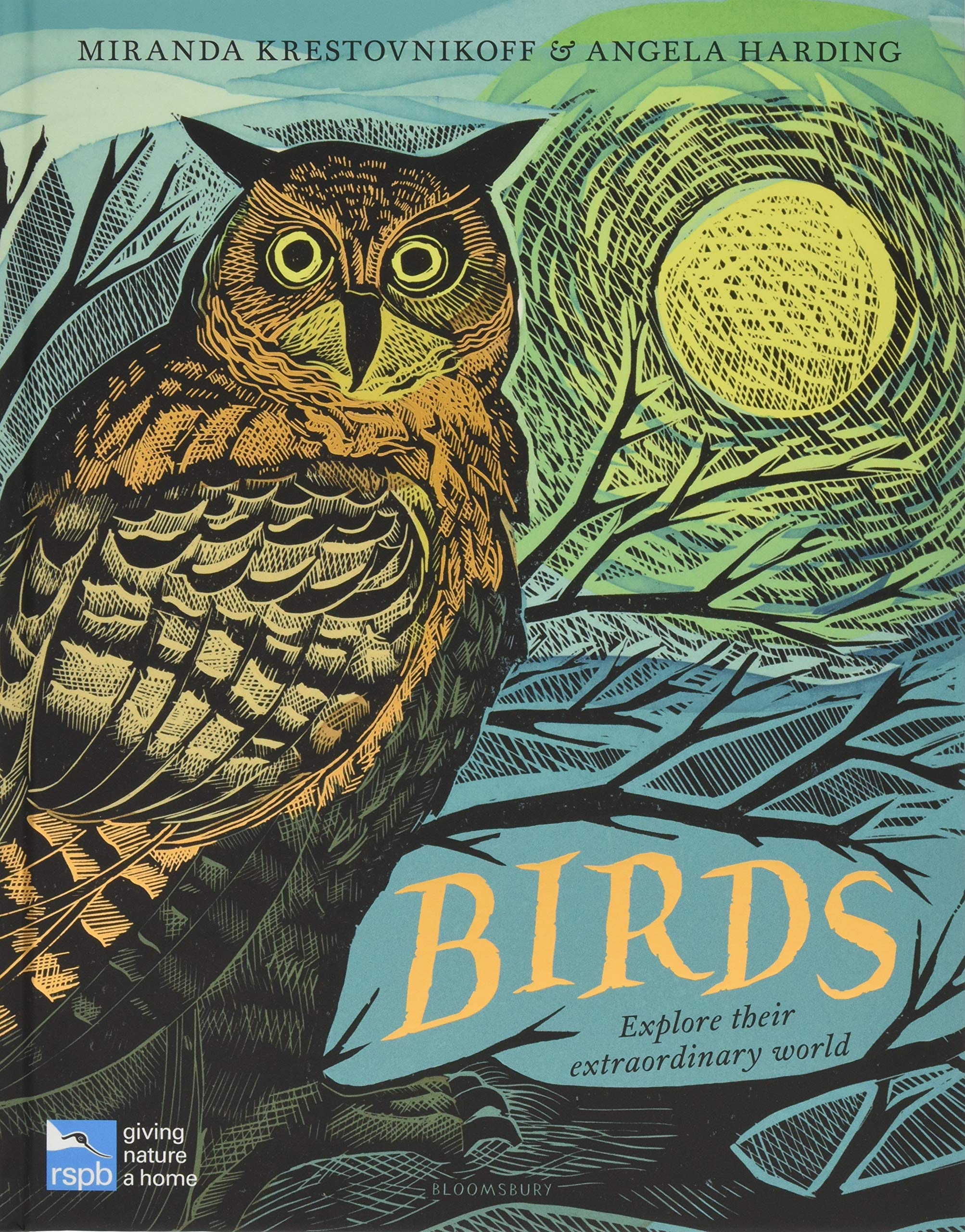
celebrate-picture-books-picture-book-review-birds-explore-their-extraordinary-world-cover

About the Holiday

Today’s holiday honors John James Audubon, who was born on this date in 1785. Audubon was a French-American ornithologist, naturalist, and painter who traveled across America, documenting the birds he found in his detailed illustrations of them in their natural habitats. Audubon’s greatest work was The Birds of America, which is considered one of the finest ornithological works ever completed. This book contains more than 700 North American bird species with 435 hand-colored, life-size prints of 497 bird species. The Audubon Society is a far-reaching organization dedicated to conservation and education and is actively involved in issues that threaten bird populations. To learn more about the Audubon Society and its work, visit the organization’s website.

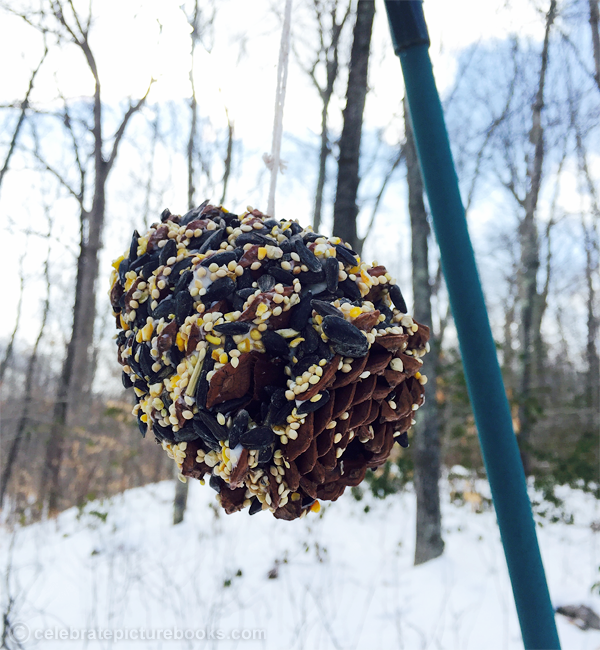
To celebrate today’s holiday, take a walk in your area or even your backyard and take special note of the birds you see. If you’d like to attract more birds to your backyard, consider hanging a bird feeder or making a temporary feeder from a pinecone, peanut butter, and seed as in the activity below. 

Thanks to Bloomsbury Children’s Books for sending me a copy of Birds: Explore their extraordinary world for review consideration. All opinions on the book are my own.

Birds: Explore their extraordinary world

Written by Miranda Krestovnikoff | Illustrated by Angela Harding


To love birds is to marvel over everything about them from their smooth gliding flight and beautiful songs to their colorful plumage and intricate nests that protect fragile eggs from the elements and predators. With a stunning number of species, birds are found around the world and living in every kind of climate. In Miranda Krestovnikoff and Angela Harding’s eye-catching compendium, readers learn about seven families of birds – birds of prey, seabirds, freshwater birds, flightless birds, tropical birds, tree dwellers, and passerines. 

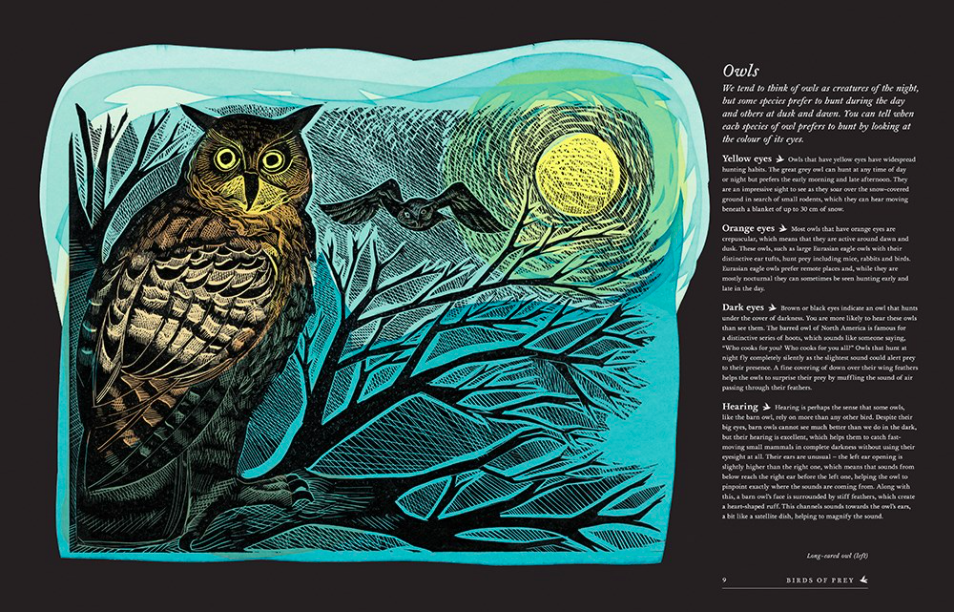
Each chapter opens with general facts on the behavior, anatomical features, and habitat that determine the order in which a bird is categorized. Integrated with this information are descriptions of specific birds within the order. In the section on Birds of Prey, for instance, readers learn about sparrowhawks; fish-eating ospreys; and golden eagles, which can “spot a rodent from over a mile away and a rabbit from nearly double that distance.” Children also learn about extreme birds of prey: the fastest, largest, smallest, tallest, and baldest and how their distinctive feature helps them thrive. Kids also discover how they “can tell when each species of owl prefers to hunt by looking at the color of its eyes.”

celebrate-picture-books-picture-book-review-birds-explore-their-extraordinary-world-owls

Image copyright Angela Harding, 2020, text copyright Miranda Krestovnikoff, 2020. Courtesy of Calkins Creek.

The next chapter takes readers to coastal areas to learn about the seabirds that scour the water from the sky, searching for food and waders, that are found along the water’s edge and “feed on the variety of high-protein invertebrates that lie hidden in the mud.” Children learn about the birds that populate warmer waters, such as blue-footed boobies, terns, and frigatebirds as well as those who survive in colder waters, such as gulls, and kittiwakes. Readers will also find a fascinating description of the gannet and learn how it can safely “dive into the sea at speeds of 60 miles an hour from an impressive height of up to 100 feet” to feed.

From sea birds, readers move on to freshwater birds like ducks, swans, grebes, and Canada geese. Even the bright flamingo is here with its distinctive scoop-shaped beak that is “uniquely designed to be used upside down and helps them to filter out tiny brine shrimps and blue-green algae from the water, which, when digested, give them their pink color.” The flamingo isn’t the only bird with an unusual way to acquire their prey, and kids will discover the clever ways pelicans, herons, and kingfishers (which use “objects such as sticks, feathers, and even discarded popcorn as lures”) find food.

And then there are the “more than 50 bird species across the world [that] stay firmly on the ground (or on water)” or just “choose not to fly very often.” These flightless birds include kiwis, kākāpōs, southern cassowaries, ostriches, and Penguins. Penguins vary in size, from the “little penguin (also known as the fairy or blue penguin)” which comes to shore to nest only at night and stave off predators with their oversized voices, to the emperor penguin. Occasional fliers include great bustards, domestic chickens, and tinamous.

celebrate-picture-books-picture-book-review-birds-explore-their-extraordinary-world-penguin

Image copyright Angela Harding, 2020, text copyright Miranda Krestovnikoff, 2020. Courtesy of Calkins Creek.

When you hear about extravagant birds, you most likely think of tropical birds. “Rainforests are packed with a range of incredible species with dazzling plumage and bizarre courtship displays.” Readers will learn about the appearance and mating rituals of scarlet macaws, Raggiana birds of paradise, and the Andean cock-of-the-rock. A detailed description of the bowerbird and the male bird’s careful and artistic nest (or bower) building is funny, poignant, and even a little bit human. Then readers are treated to some tropical bird extremes: smallest bird, longest bill, and smelliest as well as a poisonous species and one that makes its own musical instrument.

Of course, woodlands are the home of many bird species, and in the chapter on Tree Dwellers, readers learn about acorn woodpeckers and great hornbills that use trees for food and shelter; tawny frogmouths and potoos that use trees for camouflage; and nuthatches, greater honeyguides, and yellow-bellied sapsuckers, which find all the food they need among the bark, leaves, and branches of trees.

celebrate-picture-books-picture-book-review-birds-explore-their-extraordinary-world-chickens

Image copyright Angela Harding, 2020, text copyright Miranda Krestovnikoff, 2020. Courtesy of Calkins Creek.

Next up are passerines, or perching birds, which make up the “largest group of birds, with over half of all known species falling into this category.” Corvids, a group that includes the common raven, crows, magpies, and rooks, are considered to be the most intelligent birds. “These birds have a remarkable ability to solve problems in order to find food, in some cases performing better than young children or chimpanzees!” Readers will be impressed with their tricks and clever use of tools (that even include cars). Children learn about cooperative breeders, which rely on their extended family to help raise the young from year to year. Passerines also include many of the garden birds we find in our backyards and which fill the air with song. Readers discover facts about blue tits, robins, and finches in this section.

The next sections give detailed and interesting information on the features we most associate with birds: their feathers, beaks, eyes, nesting habits, eggs, migration patterns, and birdsong. The book ends with perhaps the most adaptable birds in the world: those that make their homes on glaciers, mountain tops, and in the Arctic snow as well as urban birds, which live among people in crowded cities, nesting on tall cathedrals and skyscrapers and foraging for food in garbage cans and on the street.

celebrate-picture-books-picture-book-review-birds-explore-their-extraordinary-world-woodpeckers

Image copyright Angela Harding, 2020, text copyright Miranda Krestovnikoff, 2020. Courtesy of Calkins Creek.

For young ornithologists, Miranda Krestovnikoff, a wildlife expert, offers a compelling, eye-opening, and accessible introduction to a wide variety of birds, placing them in their natural environments and revealing intriguing facts and tantalizing tidbits that inform and will spark a continued interest in learning more about the world’s feathered creatures. Krestovnikoff’s engaging writing style will captivate readers and keep them turning the pages to discover birds that are both familiar and new to them. The comprehensive nature of the book allows kids in all parts of the world to learn more about their native birds while creating a global connection with these most recognized and widely distributed creatures.

Accompanying Krestovnikoff’s text are Angela Harding’s beautiful linocuts that depict birds in mid-flight, capturing prey on land and water, engaging in mating rituals, and building and protecting their nests and young. Harding’s use of natural colors and exquisitely etched landscapes set off each bird in breathtaking illustrations that invite readers to linger to enjoy their full impact. Each illustration is captioned with the bird’s species.

A gorgeous and educational book that readers of all ages will love dipping into again and again, Birds: Explore their extraordinary world is a must for bird lovers and highly recommended for home, school, and public libraries.

Ages 7 and up

Bloomsbury Children’s Books, 2020 | ISBN 78-1408893913

Discover more about Miranda Krestovnikoff and her books on her website.

To learn more about Angela Harding, her books, and her art on her website.

National Audubon Day Activities

celebrate-picture-books-picture-book-review-beautiful-birds-word-search

Beautiful Birds Word Search Puzzle


It’s fun to watch for different kinds of birds when you take a walk or in your own backyard. Can you find the names of twenty types of birds in this printable Beautiful Birds Word Search Puzzle? Here’s the Solution!

cpb-bird-feeder-i

Pinecone Bird Feeder


Pinecone bird feeders are quick to make and great for your backyard fliers. The combination of peanut butter, lard, or vegetable shortening and a quality seed mixture provide birds with the fat and nutrition they need to stay warm and healthy during the winter.

Supplies

  • Pinecones
  • Peanut butter, vegetable shortening, or lard
  • Birdseed
  • String
  • Knife or wooden spreader
  • Spoon

Directions

  1. Tie a long length of string around the middle of the pinecone
  2. Spread the peanut butter, vegetable shortening, or lard on the pinecone
  3. Sprinkle a thick coating of birdseed on the pinecone, pressing it into the covering so it will stick
  4. Tie the pinecone feeder onto a tree branch or other structure
  5. Watch the birds enjoy their meal!

celebrate-picture-books-picture-book-review-birds-explore-their-extraordinary-world-cover

You can find Birds: Explore their extraordinary world at these booksellers

Amazon | Barnes & Noble | Books-a-Million

To support your local independent bookstore, order from

Bookshop | IndieBound

Picture Book Review

April 22 – Earth Day and National Poetry Month

celebrate-picture-books-picture-book-review-friends-and-anemones-cover

About the Holidays

Earth Day

Earth Day was created in 1970 by a US Senator, Gaylord Nelson. Nelson created the day because he was worried about how humans were harming the environment through their actions. Heard of this holiday before? We certainly hope so! In 1990, environmental leaders mobilized to make the holiday go global. And now, according to earthday.org, 1 BILLION people mobilize on Earth Day every year, to help save and celebrate our beloved planet. You can watch an educational animated video on Gaylord Nelson here. Learn more about Earth Day and how you can make a difference all year around at Earthday.org.

National Poetry Month

2021 marks the twenty-fifth anniversary of National Poetry Month. The holiday was launched by the Academy of American Poets to celebrate writers, poets, poetry lovers and the positive impact poetry has on our culture, literacy and lives. Check out the 2021 National Poetry Month Poster here. You can learn more about National Poetry Month at Poets.org.

Today’s book celebrates both of these holidays with a collection of ocean poems for children. Not a huge lover of poetry? Perhaps the following collection will sway you like an ocean tide. Crafted by The Writers’ Loft Authors and Illustrators, Friends and Anemones is truly as dazzling as a sea-floor pearl.

Thanks to The Writers’ Loft for sending me a copy of Friends and Anemones: Ocean Poems for Children for review consideration. All opinions on the book are my own. 

Reviewed by Dorothy Levine

Friends & Anemones: Ocean Poems for Children

By The Writers’ Loft Authors & Illustrators


Dive headfirst into poetry month by exploring “the very, very, bottom of the deep blue sea. With: Salty snails and tuna tails. Bottle caps and lobster traps. Popped balloons, Plastic spoons…” and everything in between! (The Bottom of the Ocean by Kristen Wixted.) In honor of Earth Day AND National Poetry month, Celebrate Picture Books presents a book that deserves to be celebrated twice over: Friends & Anemones: Ocean Poems for Children. Seventy New England authors and illustrators joined ship with the Rozalia Project to create a treasure-worthy collection of ocean-themed poems and illustrations.

As described in the title page, “Rozalia Project works to conserve a healthy and thriving marine ecosystem—the plants and animals need our help to keep human debris out of their homes.” Through this partnered anthology, children will learn about subject matter ranging from unique sea creatures and beach dwellers – like cuttlefish, vampire squids, red knots, and rainbow lobsters – to the habits of more well-known ocean dwellers, like whales taking off debris, sharks getting their teeth cleaned, and sea turtles hatching eggs.

They’ll also find poems about human additions to the ocean scene in odes to lighthouses, ships’ remnants, sea litter, and more. Each poem contains deep knowledge to share with readers about poetry, the ocean, and marine life. Little pieces of advice float in between hysterical ocean puns. This perfect concoction of sea-worthy information is also backed by all types of fin-tastic and crabulous art.

Some of the poems are sure to make you laugh out loud. Deep-Sea Jellyfish by Cindy Cornwall opens with: “Jelly of the sea, not jam for your toast. It’s deep in the water, a silky scarf ghost.” Seal of disApproval by Lynda Mullay Hunt fills a whole page with the rhyming, pun-y story of a seal who becomes a dentist and stands up to sharks.

Other poems are less humorous and more pensive; the last of the series, Sea Serenity by Luke Hargraver, holds an existential truth for readers to swim through: “The world is like water / Easily disturbed by ripples / But when still, / Beautiful.” Under a short and sweet poem called Minnow, by Brook Gideon, a message to ocean explorers reads: “It’s very important to release everything you catch back into the ocean right away!”

Each spread is distinctly created in the individual poets’ and artists’ styles. Yet, the whole compilation works together in perfect, charming harmony. Some poems mirror each other in content. Horseshoe Crabulous by Doreen Buchinski is followed by Red Knots by Jane Sutton, in which: “In the sand their goal is chiefly / To dart—and swerve —on twiggy legs / In mad search for horseshoe eggs.” The two beautifully crafted poems are followed by a third gem, Mollusk Mansions by Charlotte Sheer, and accompanied with an illustration featuring horseshoe crabs, red knots, and mollusk shells—all painted by Doreen Buchinski herself!

Children will explore the deep cerulean sea through a range of sincere rhyming couplets, honest haikus, positively silly prose, magical motifs, and everything in between. All poems and artwork share with readers a deep admiration for under the sea creatures, while spreading ocean knowledge, and a love for poetry and beauty.

The watercolors, collages, and digital art pieces mesh beautifully while each achieving a distinctly artistic picturesque scene. Some illustrations run horizontally across the spread to create poster-like, masterful images. On page 23 illustrator Julia Young Cuffe paints a long, horizontal lighthouse against a watery dark blue sky, littered with stars. A person stands at the top, waving a piece of cloth, illuminated by the lighthouse light. The poem, Boston Light by Heidi E.Y. Stemple, is artfully placed running vertically down the lighthouse.

Others run across the two-page spreads to create one image that ties together the poems featured on the separate pages into a collective unit. An example of this can be seen in Marlo Garnsworthy’s opening spread of deep ocean waves intermingling with whales, and Amanda Davis’s DEEP deep sea spread that features spookily realistic vampire squids, angler fish, and sea plumes. Each piece stands out as thoughtfully crafted to instill in readers a sense of awe for the beauty of marine life and ocean ecology.

Friends & Anemones: Ocean Poems for Children would make a wonderful addition to classroom science and language arts lessons as well as a fun collection to share at home, especially in conjunction with trips to the beach or aquariums. 

The Writers’ Loft is a community based in Sherborn, Massachusetts which helps local writers foster their creativity, strengthen their spirit, and grow professionally by providing them with quiet writing space, educational programs, opportunities to connect with supportive colleagues, and access to industry experts, as well as opportunities to give back to the greater writing community. To learn more about The Writers’ Loft, visit their website.

The Rozalia Project runs educational programs, ocean cleaning initiatives and research projects focused on how to aid ocean clean-up and maintain sustainability of ocean and shoreline ecosystems. The Rozalia Project, along with the “Writer-and-Artist-Ocean-Protectors from the Writers Loft” hopes to use this book to “foster an appreciation of the importance, beauty, and wonder of the ocean in the change-makers of tomorrow.”

To learn more about the Rozalia Project, or get involved with them on this Earth Day, check out their website. You can also watch this video on their Expedition CLEAN.

Earth Day and National Poetry Month Activities

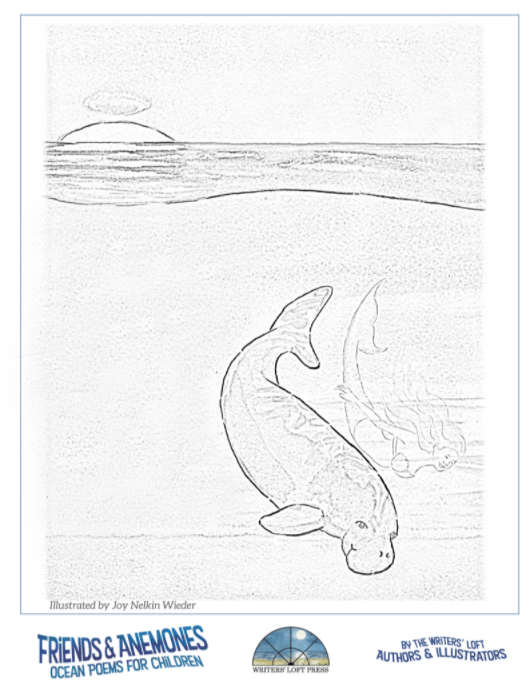
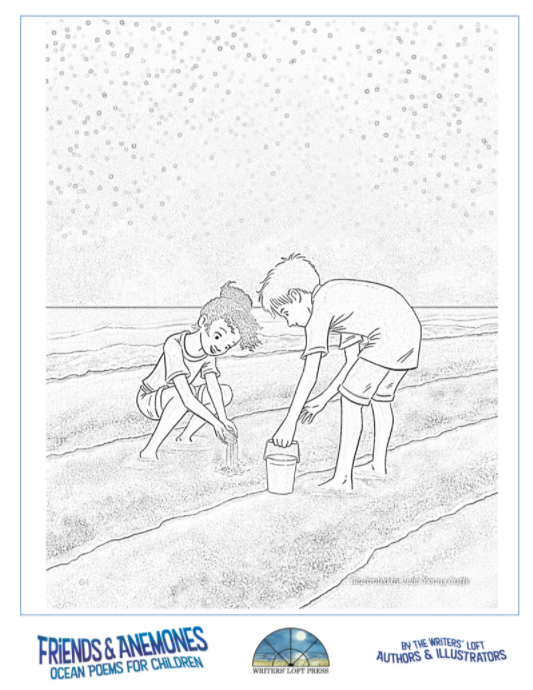
celebrate-picture-books-picture-book-review-friends-and-anemones-coloring-page  celebrate-picture-books-picture-book-review-friends-and-anemones-coloring-page

Color pages from Friends & Anemones in your OWN style with these black and white versions of the illustrations. You can find 18 more pages to print or download to your iPad to color on The Writers’ Loft website.

Manatee and Mermaid Coloring Page | Kids on the Beach Coloring Page

celebrate-picture-books-picture-book-review-under-the-sea-word-search

Find ten ocean critters’ names in this printable sea-star shaped word search.

Under the Sea Word Search Puzzle | Under the Sea Word Search Solution

Explore some poems specifically written for younger readers at Poets.org and write your own poetry if you feel inspired.

celebrate-picture-books-picture-book-review-friends-and-anemones-cover

To support The Writers’ Loft, you can order Friends & Anemones: Ocean Poems for Children from their website.

You can find Friends & Anemones at these booksellers

Amazon | Barnes & Noble | Books-a-Million

To support your local independent bookstore, order from

Bookshop | IndieBound

Picture Book Review

April 6 – It’s National Garden Month

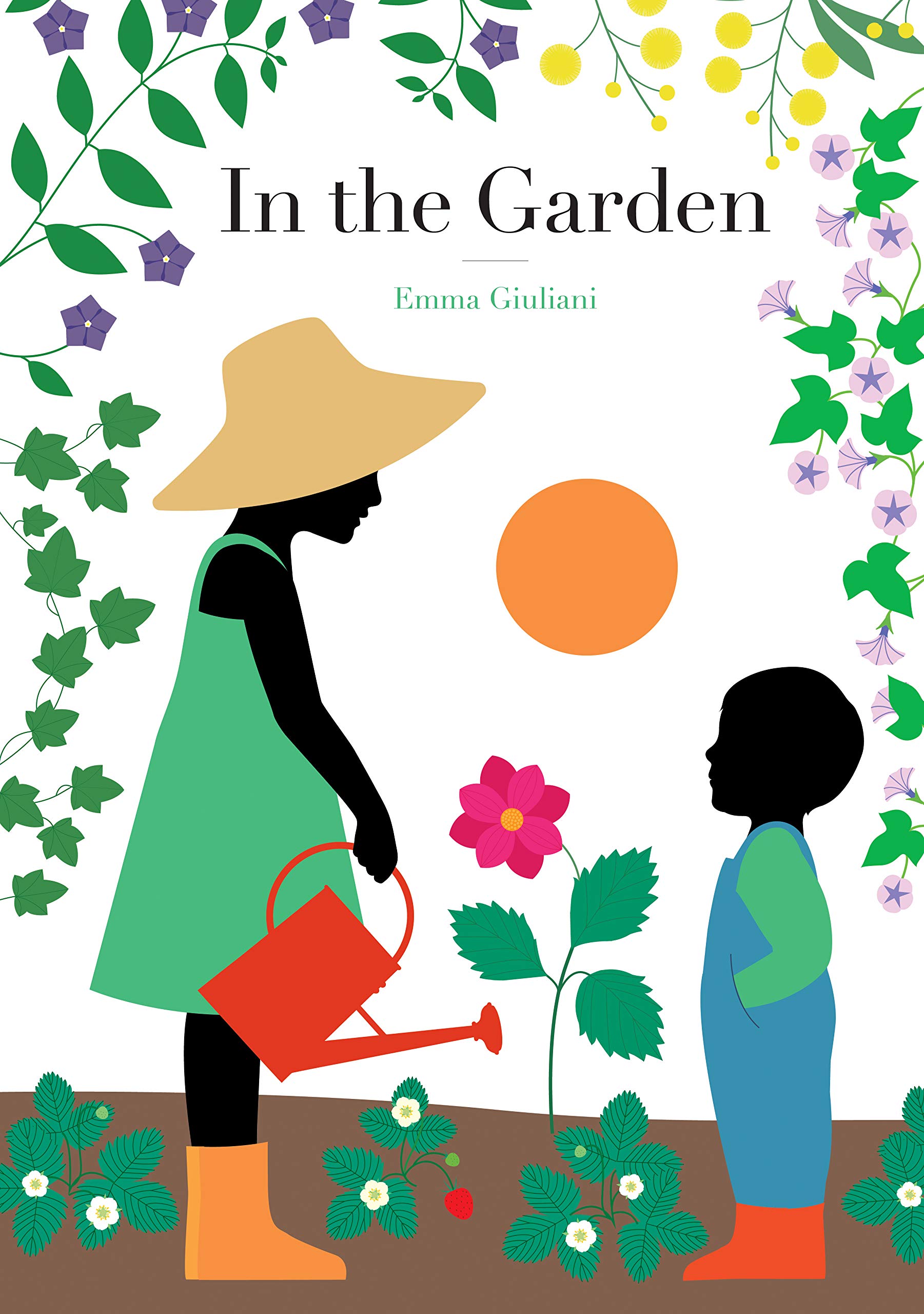
celebrate-picture-books-picture-book-review-in-the-garden-cover

About the Holiday

Expanded from National Garden Week in 2002, National Garden Month, encourages both avid gardeners and those new to this rewarding activity to turn over some dirt, plant seeds, and prepare to tend the little sprouts on their way through the season. A perfect activity for the whole family—even the youngest loves playing in the dirt and planting seeds!—gardening is a wonderful way to teach kids about the growth cycle, pollinators, nutrition, patience, and more! If it’s warm enough to start planting where you live, engage your kids in preparing and planting your garden. If it’s still a little chilly, gather the whole family and plan this year’s garden!

In the Garden

By Emma Giuliani


In her stunningly illustrated interactive guide through the seasons, Emma Giuliani introduces Plum and her little brother, Robin, and invites readers to join them as they tend to their garden and all the plants, animals, and birds that call it home. Plum and Robin begin at winter’s end. “This morning it’s cold. It’s not yet spring, but, in the garden, Plum and her brother Robin see the first catkins appearing on the branches of the willows and hazels. The blossoming mimosa makes the gardeners impatient for spring to come.” As Robin counts the long, drooping catkins, Plum rakes a layer of compost over the ground. On the facing page, readers get a close-up view of the fuzzy catkins, can peek inside a bud, burrow underground with earthworms just waking from hibernation, and view a few early bloomers. They also learn about what makes up the earth’s soil and get a recipe for compost.

celebrate-picture-books-picture-book-review-in-the-garden-shed

Copyright Emma Giuliani, 2020, courtesy of Princeton Architectural Press.

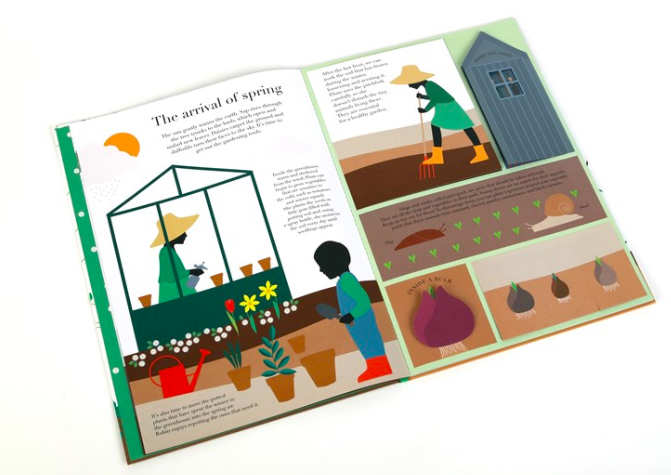
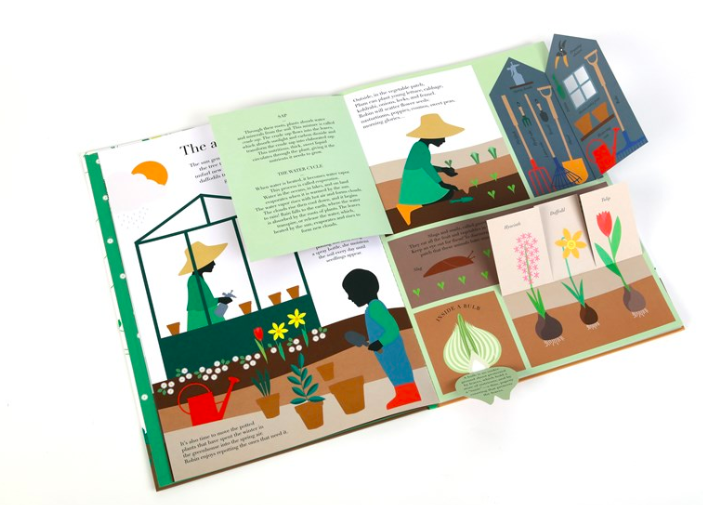
With the arrival of spring, Plum is in her little greenhouse, planting vegetable seeds and spritzing the soil with water to keep it moist while Robin repots some plants who have spent the winter in the greenhouse. Outside, Plum aerates the garden bed with a pitchfork, careful of any tiny creatures below. Children can open the door to Plum’s well-stocked shed to see all the tools tidily stored there and lift the flaps to look inside a bulb and help a hyacinth, a daffodil, and a tulip grow.

celebrate-picture-books-picture-book-review-in-the-garden-open-shed

Copyright Emma Giuliani, 2020, courtesy of Princeton Architectural Press.

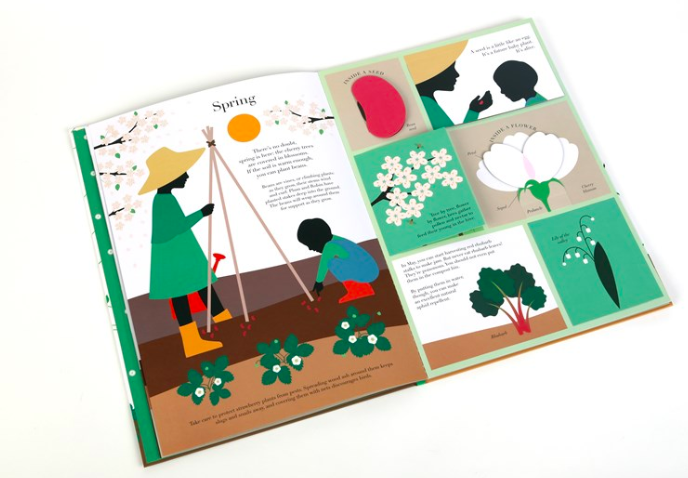
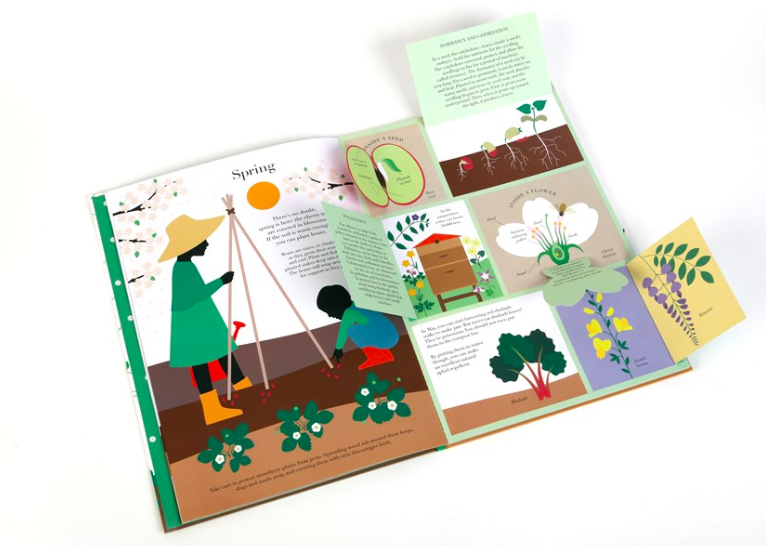
At last the warm weather of spring has arrived. The cherry trees are blossoming, and Plum and Robin are setting stakes and planting bean seeds. Next, they provide protection for the tender strawberry plants that are beginning to bloom. Young gardeners will enjoy opening a bean seed to learn what’s inside and then following its growing process. The bees are visiting the cherry blossoms, pollinating the flowers and making honey. What does a bee see as it hovers around the flower? Pull down the flap to see for yourself and learn all the parts of a flower. What other plants are flowering now? Open the flap to see!

celebrate-picture-books-picture-book-review-in-the-garden-spring

Copyright Emma Giuliani, 2020, courtesy of Princeton Architectural Press.

Summer begins and “what a joy to be in the garden in June! The gentle breeze, the smell of cut grass, and the tangy taste of strawberries and cherries make the gardeners smile.” While Plum waters the tomato plants, “Robin looks for ripe strawberries under the leaves.” Join him! Robin is also picking cherries before the birds eat them. How do those bright red, round fruits grow? Lift the flap to learn and see how they develop from flower to fruit. Plum is getting help with the aphids on the bean plants from industrious—and hungry—ladybugs. “Dragonfly larvae are transforming into graceful flying insects….Their presence is a sign of a healthy garden.”

celebrate-picture-books-picture-book-review-in-the-garden-open-spring

Copyright Emma Giuliani, 2020, courtesy of Princeton Architectural Press.

It’s high summer and the garden is glorious. Bean pods hang from the vines, and Plum contemplates whether they are ready to pick. She may leave some “husks dry out on the plant before picking them.” Dried completely indoors, they can be stored and eaten during the fall and winter. Take a look inside a pod to see the seven red beans there. Flowers greet you too: an orange marigold with petals like a pinwheel, a brilliant pink and purple fuchsia, and a perky mignon dahlia. Robin took cuttings of these plants and potted them to grow some more. Learn how you can do that with your plants too!

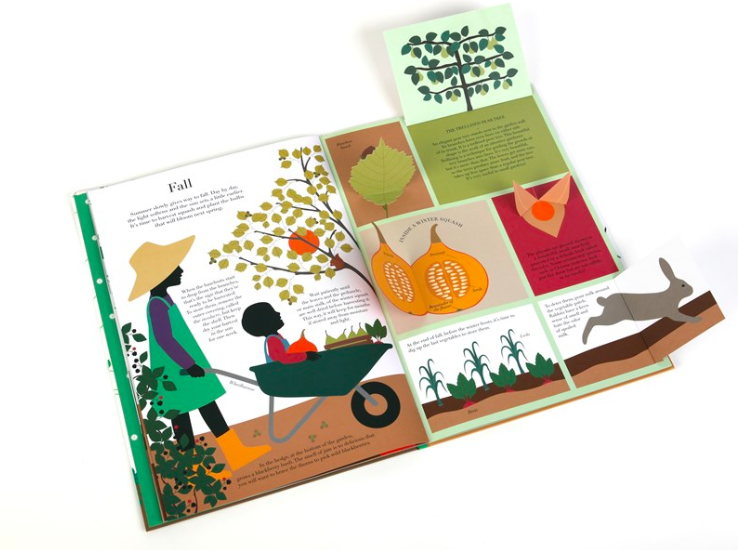
The summer heat is waning and the days are growing shorter. Fall is here. The catkins of early spring have become hazelnuts that are ready to be harvested. Even the squirrel approves! Plum and Robin teach you how to store them—and when to pick the winter squash and keep them for months as well. Can you count the number of seeds inside the winter squash? Plum’s beautiful trellised pear tree is bearing sweet fruit. Yum! But look out—a crafty rabbit is after the last leafy vegetables in the garden. 

celebrate-picture-books-picture-book-review-in-the-garden-open-fall

Copyright Emma Giuliani, 2020, courtesy of Princeton Architectural Press.

The air is chilly again and winter is on the horizon. “Plum and Robin have donned their warmest clothes and gone out to collect the dead leaves. Some leaves will feed the compost, others will become mulch to protect plants over the winter. The hedgehogs can use the rest of the leaves in making their homes.” Do you see the pile of crunchy leaves? Lift them gently…shhh! A hedgehog is snoozing underneath. Robin and Plum have built an insect hotel to keep the bugs cozy during the winter and have filled the greenhouse again. For the colorful birds who stay awhile or all winter, Robin and Plum put out a bird feeder and fill it with locally produced seeds.

After putting all of their tools back in the shed, Plum and Robin head indoors to plan next year’s garden and “watch eagerly for the very first signs of spring.”

celebrate-picture-books-picture-book-review-in-the-garden-open-winter

Copyright Emma Giuliani, 2020, courtesy of Princeton Architectural Press.

If your family tends a garden or is thinking of starting one, Emma Guiliani’s superb book is a must. At 16 inches tall, In the Garden provides fascinating facts about plants, insects, and animals; helpful tips on when and how to plant a variety of fruit, vegetables, and flowers, information on natural ways to ward off pests; and how to recognize when fruit and vegetables are ready for picking and how to store them. Through copious flaps, children get inside views of flowers, seeds, buds, and vegetables to learn the names of each part and how they contribute to the growth of the plant. Along the way, young and adult gardeners discover how early gardening can begin, directions on how to create and use compost, when bushes can be planted, information on pollination; and how to winter over the garden for the coming spring.

Giuliani’s crisp, lush illustrations are marvels, combining intricate paper cuts that replicate the shapes of delicate bulbs and buds, flowers and seeds, smooth and serrated leaves, the long bean pod, and even Plum’s garden shed with a window in the door. Her extraordinarily beautiful color palette immerses readers in the garden experience; you can almost smell the rich earth, hear the bees buzzing at the blossoms, and feel the air changing season to season.

A brilliant resource and a joy to peruse, In the Garden is a book that adults and children—both gardeners or nature lovers—will share throughout the seasons and from year to year. The book is most highly recommended for home, school, and public library collections.

Ages 7 – 12

Princeton Architectural Press, 2020 | ISBN 978-1616898939

You can connect with Emma Giuliani on Instagram.

National Garden Month Activity

celebrate-picture-books-picture-book-review-flower-garden-game

Plant a Flower Garden Game


With this fun game you and your family and friends can grow gardens inside! Roll the dice to see whose garden will fully blossom first!

Supplies

Directions

Object: The object of the game is for each player to fill their garden or garden rows with flowers. Depending on the ages of the players, the game can be adjusted to fill all of the rows, some or all rows, or just one.           

  1. Print one Game Board for each player
  2. Print one or more sets of Flower Playing Cards for each player, depending on how  (for sturdier playing items, print on card stock)
  3. Cut the flowers into their individual playing cards
  4. Print one Flower Playing Die and assemble it (for a sturdier die, print on card stock)
  5. Color the “dirt” on the Garden Plot with the crayon (optional)
  6. Choose a player to go first
  7. The player rolls the die and then “plants” the flower rolled in a row on the game board
  8. Play moves to the person on the right
  9. Players continue rolling the die and “planting” flowers until each of the number of determined rows have been filled with flowers or one row has been filled with all six flowers.
  10. The first person to “grow” all of their flowers wins!

To play a printable Vegetable Garden Board Game, click here.

celebrate-picture-books-picture-book-review-in-the-garden-cover

You can find In the Garden at these booksellers

Amazon | Barnes & Noble | Books-a-Million | Princeton Architectural Press

To support your local independent bookstore, order from

Bookshop | IndieBound 

April 5 – National Dandelion Day

celebrate-picture-books-picture-book-review-little-dandelion-seeds-the-world-cover

About the Holiday

As warm weather and spring rains begin preparing the ground for grass, flowers, and gardens, there’s another distinctive sprout that appears early – and often. Of course, it’s the dandelion! With its sunny flowers and fly-away seeds, this little plant is part of spring and summer landscapes around the world. The dandelion is far from just a weed, however. In fact, the dandelion is technically an herb and has many health benefits. Dandelion leaves can be used in salads, soups, and teas, and they provide aid with regulating blood sugar, wound healing, gastrointestinal problems, and even vision. Known for its healthy properties since 659 BCE, the dandelion is a staple for many global cultures. To celebrate, check in your favorite grocery store or farmers market for dandelion leaves and try a new recipe! Here are ten delicious-looking dishes from Kitchn!

Thanks to Sleeping Bear Press for sharing a copy of Little Dandelion Seeds the World for review consideration. All opinions on the book are my own.

Little Dandelion Seeds the World

Written by Julia Richardson | Illustrated by Kristen Howdeshell  and Kevin Howdeshell


A little girl in a South African city finds a dandelion growing in a crack in the sidewalk. She blows on the fluffy head and “swish, swirl, one hundred seeds fly.” One seed flies to an African plain, where it drops into the grass, roots, and grows. “The flower fades. Fluff puffs. POOF!” and a breeze carries one hundred seeds into the air past an elephant and her baby.

celebrate-picture-books-picture-book-review-little-dandelion-seeds-the-world-panda

Image copyright Kristen Howdeshell and Kevin Howdeshell, 2021, text copyright Julia Richardson. Courtesy of Sleeping Bear Press.

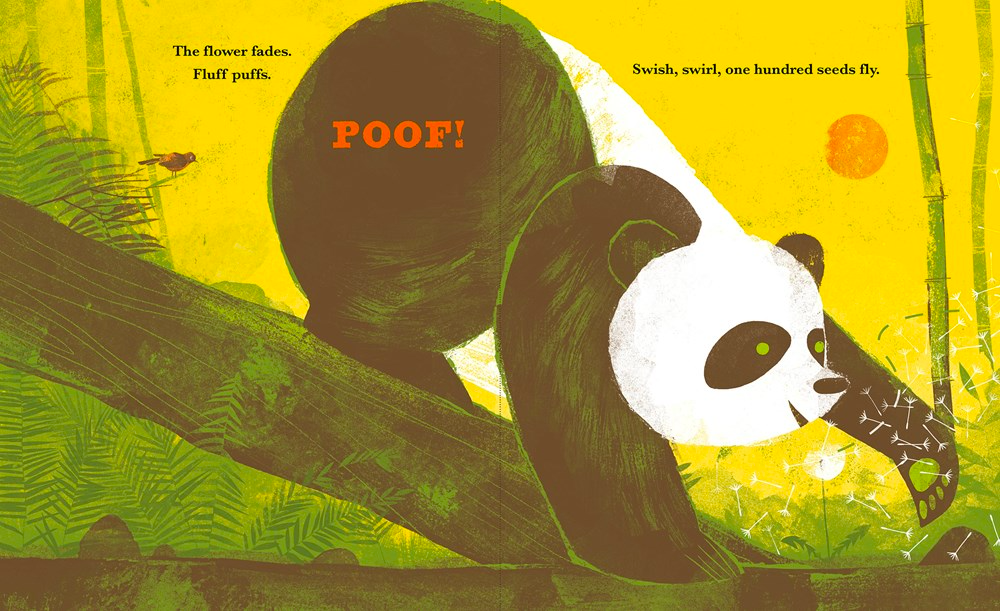
One seed takes a ride on a cheetah’s ear until it is caught by the wind again and finds itself in Asia. Here it roots and grows. When the flower turns to fluff, a curious panda gives it a swat and “swish, swirl, one hundred seeds fly.” One of the seeds gets lifted up in a cyclone and deposited “far, far away…in Australia.”

Here a kangaroo, hopping along, jumps on the plant, now just a fuzzy ball. Seeds take to the air, dancing on the breeze. One seed circles over a sailboat and latches onto the pantleg of a boy standing on the bow. When he disembarks, he takes the seed with him up, up into the hills. The seed jumps off and “a little dandelion blooms in North America.”

celebrate-picture-books-picture-book-review-little-dandelion-seeds-the-world-europe

Image copyright Kristen Howdeshell and Kevin Howdeshell, 2021, text copyright Julia Richardson. Courtesy of Sleeping Bear Press.

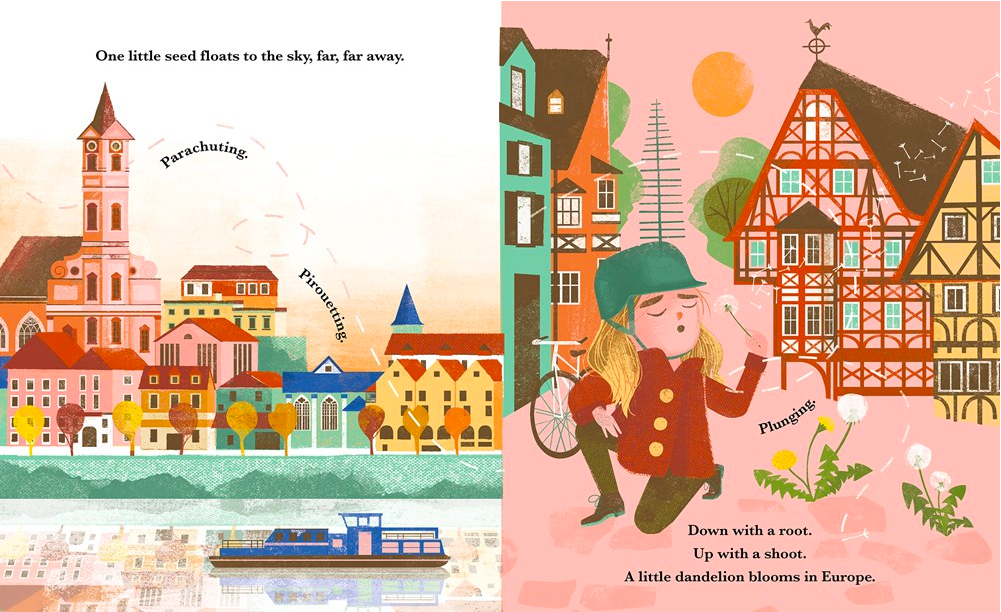
This little plant meets up with a skunk and a bird, and a seed wings its way to South America. Disturbed by a snake slithering by, the puff explodes, sending its seeds every which way. “One little seed slips into the sea, far, far away.” Riding on the current it finds a rock to cling too. “Down with a root. Up with a shoot. A little dandelion blooms in Antarctica.” Another dandelion’s life begins. Finally, with the flick of a seal’s tail, the seeds scatter, one “parachuting. Pirouetting” into Europe, where the familiar, graceful dance continues.

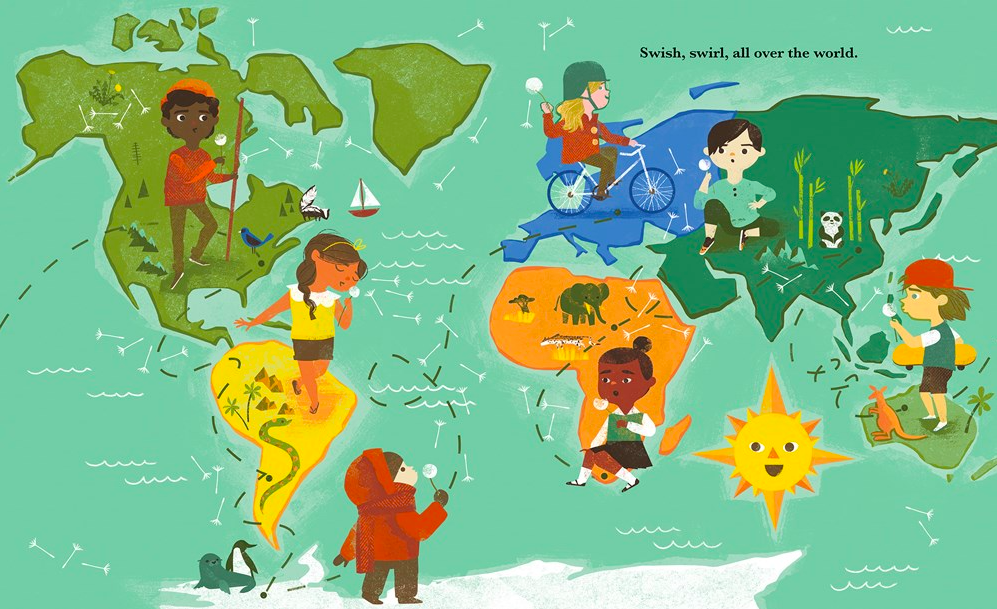
Backmatter includes an illustrated world map that shows the route of the dandelion seeds and approximate landing sites on each continent and an Author’s Note about how dandelions grow and reseed themselves as well as a question to spark discussion.

celebrate-picture-books-picture-book-review-little-dandelion-seeds-the-world-map

Image copyright Kristen Howdeshell and Kevin Howdeshell, 2021, text copyright Julia Richardson. Courtesy of Sleeping Bear Press.

Julia Richardson’s lyrical descriptions and repeated phrases invite kids to follow dandelion seeds as they travel the world. Richardson’s engaging storytelling will keep kids guessing as to where the seeds will travel next while teaching them about the ingenuity and resilience of nature. The global aspect of the story reminds readers that we are all connected through common experiences, the plants and animals with whom we share our planet, and our responsibilities for conservation.

Through Kristen and Kevin Howdeshell’s bold textured illustrations, readers travel the world with tiny dandelion seeds from the sunbaked African savanna, where cheetahs and elephants roam to a verdant bamboo forest, where a panda almost walks off the page to play with the dandelion, to the lush hills of a coastal town and beyond. In each place local children interact with their environment, giving readers a feeling of inclusion too.

An eye-catching and lyrical introduction to nature science that will spark enthusiasm for learning not only about dandelions but about how all plants grow and thrive, Little Dandelion Seeds the World would be a high-interest addition to science, geography, and social studies lessons for classrooms and homeschoolers as well as to public library collections.

Ages 5 – 8 

Sleeping Bear Press, 2021 | ISBN 978-1534110533

Discover more about Julia Richardson and her books on her website.

To learn more about Kristen Howdeshell and Kevin Howdeshell, their books, and their art, visit their website, The Brave Union.

National Dandelion Day Activity

celebrate-picture-books-picture-book-review-little-dandelion-seeds-the-world-coloring-page

Little Dandelion Seeds the World Activity Pages


Grab your crayons and pencils and have fun with this printable coloring page and word search puzzle from Sleeping Bear Press!

Little Dandelion Seeds the World Activity Pages

celebrate-picture-books-picture-book-review-little-dandelion-seeds-the-world-cover

You can find Little Dandelion Seeds the World at these booksellers

Amazon | Barnes & Noble | Books-a-Million

To support your local independent bookstore, order from

Bookshop | IndieBound

Picture Book Review

March 27 – Earth Hour

celebrate-picture-books-picture-book-review-Lights-Out-cover

About the Holiday

Earth Hour was organized by the World Wide Fund for Nature as a way to engage people in the discussion on climate change. First enacted in Australia in 2007, the observance has grown to include cities, businesses, corporations, and individuals world wide. For one hour – from 8:30 to 9:30 p.m. local time – participants will turn off all unnecessary lights in a show of solidarity and commitment to protecting our earth. Among the places going dark this year are the Empire State Building, the Space Needle, the Golden Gate Bridge, the Colosseum in Rome, the Pyramids of Egypt, the Sydney Opera House, and the Eiffel Tower. One action you can take is as easy as turning off a light – as today’s book shows. To read more about the holiday, find virtual events taking place around the world, and learn how you can participate, visit earthhour.org.

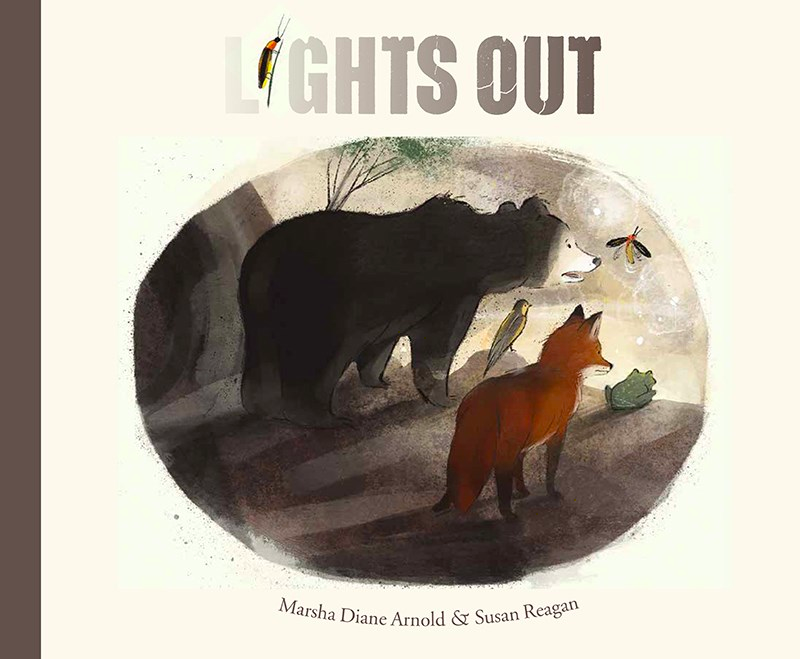
Lights Out

Written by Marsha Diane Arnold | Illustrated by Susan Reagan


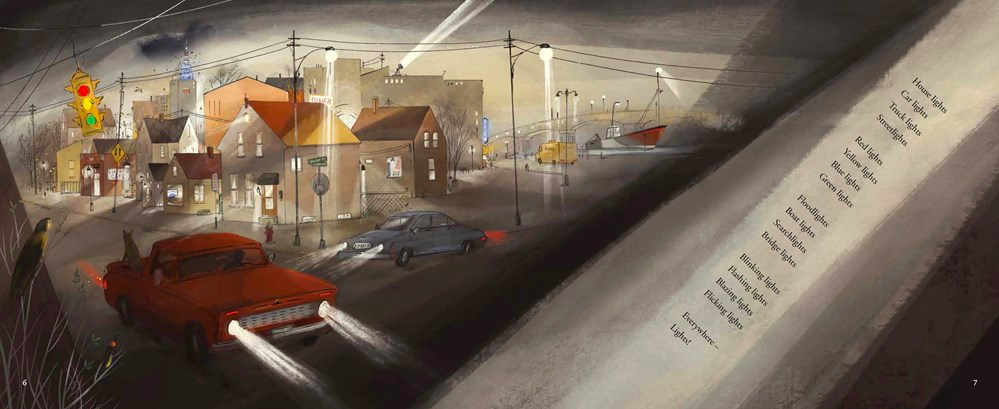
A little fox peeks out of her den. It’s night, but her surroundings are lit up as if it were noon. A Beetle hovers nearby taking in all the “House lights / Car lights / Truck lights / Street lights… / Blinking lights / Flashing lights / Blazing lights / Flickering lights.” There are lights in every color and on every structure. Fox and Beetle wonder where Darkness is—the dark of Night that invites coyotes to sing, owls to hunt, foxes to hunt, and beetles to become “more than beetles.” Perhaps, they think, Night is lost.

celebrate-picture-books-picture-book-review-Lights-Out-city

Image copyright Susan Reagan, 2020, text copyright Marsha Diane Arnold, 2020. Courtesy of Creative Editions.

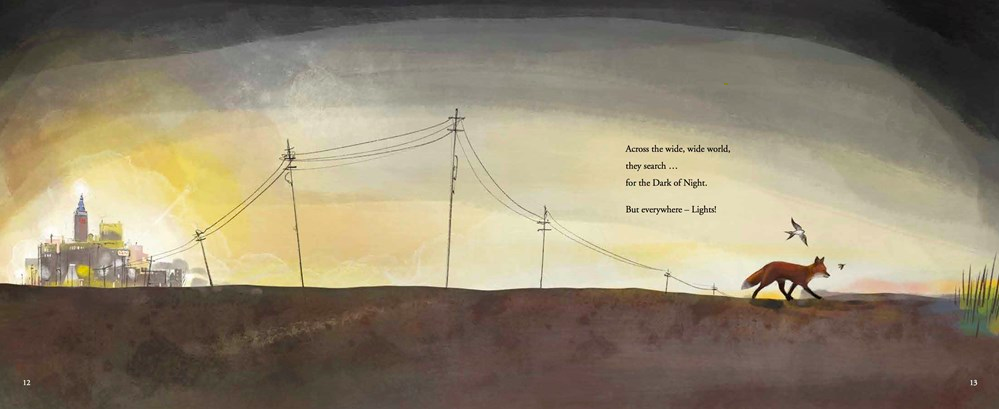
Fox and Beetle set out to find Night. They pass a wetlands, where Frog waits in vain for darkness to lend his voice to the nighttime chorus. “Across the wide, wide world, / they search… / for the Dark of Night. / But everywhere – Lights!” Up on the mountain, Bear is waiting for the signal to hibernate, but the brightness keeps him awake. Frog and Bear join in the search for Night.

celebrate-picture-books-picture-book-review-Lights-Out-wandering

Image copyright Susan Reagan, 2020, text copyright Marsha Diane Arnold, 2020. Courtesy of Creative Editions.

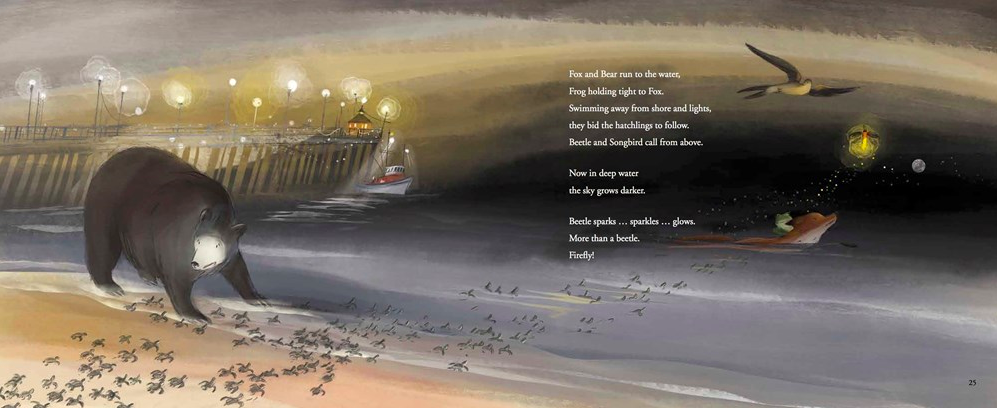
Fox and Beetle travel through forests and fields, over deserts and dunes, and across wide prairies, but don’t find Night. When they come to the seashore, they witness baby turtles hatching. Instead of scuttling toward the ocean, they’re running toward the lights of the boardwalk shops. Frog stops the little turtles then Bear, Fox, and Frog wade out into the waves and shows them the way.

celebrate-picture-books-picture-book-review-Lights-Out-turtles

Image copyright Susan Reagan, 2020, text copyright Marsha Diane Arnold, 2020. Courtesy of Creative Editions.

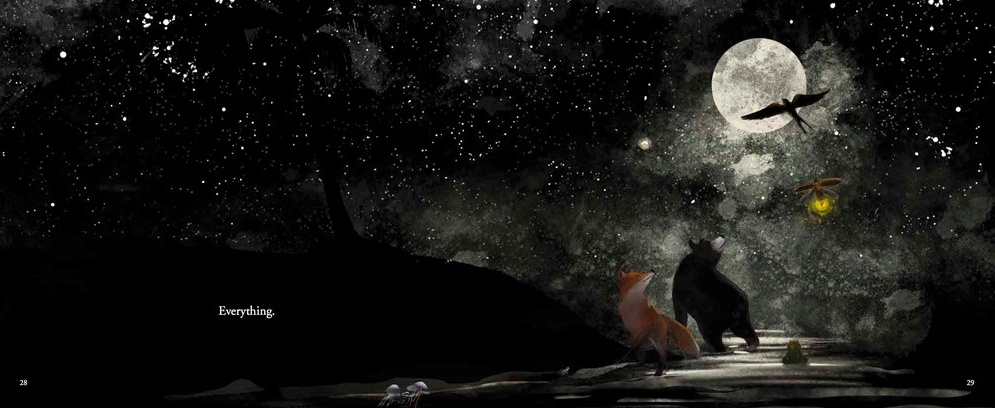
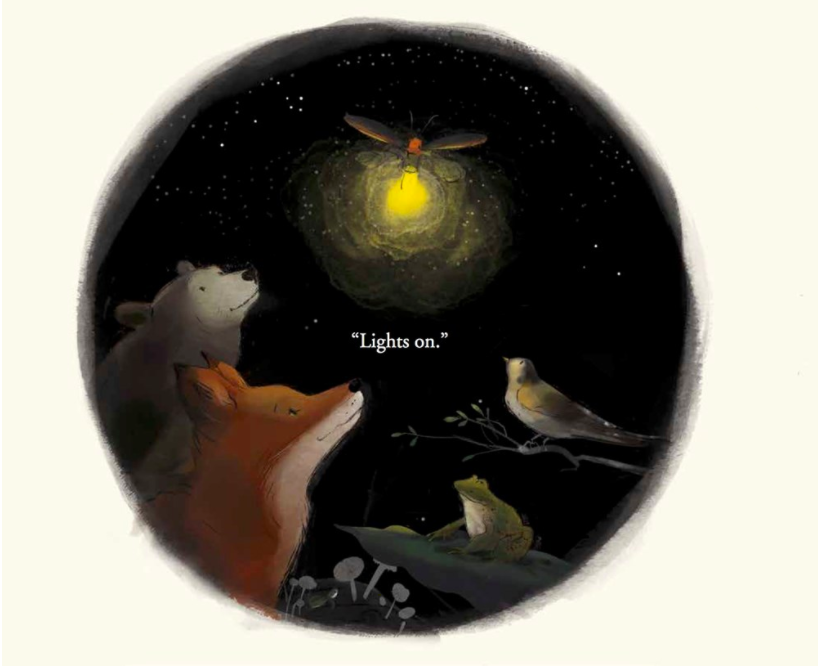
The three friends swim “away from shore and lights” while Beetle and Songbird fly above. Out here, where the sky is dark, Beetle at last sparks and glows. At last the friends reach a far-away island that’s cloaked in darkness. Here “they can see…Everything…. / Mushrooms glowing / Fireflies / Moonlit garden / Shining eyes / Nighttime weavers / Webs of stars / Constellations / Venus, Mars….” Here, they find Night.

An Author’s Note discussing light pollution and its effect on animals and humans and including a resource where readers can learn more about light pollution and what we can do to help precedes the story.

celebrate-picture-books-picture-book-review-Lights-Out-moon

Image copyright Susan Reagan, 2020, text copyright Marsha Diane Arnold, 2020. Courtesy of Creative Editions.

Marsha Diane Arnold’s affecting story about how light pollution changes animal behavior and confuses the natural order of life is a poignant appeal to today’s young environmentally conscious kids, sparking an awareness of the extent of the problem while inviting them to consider ways to restore the darkness of night so important to the health of our planet. Through non-rhyming, yet lyrical language, Arnold takes readers on a journey to find Night. As the friends search place after place, children come to understand that light pollution is a worldwide issue.

Arnold’s capitalization of Night and Darkness makes them characters in the story as well, imbued with living traits and purpose that are just as crucial to wildlife as food and shelter. In one powerful combination of text and illustration, a list of light sources streams from corner to corner in a beam of white light. The number of examples builds to create a glaring realization of all the types of lights that keep the world turned on twenty-four hours a day. After reading Lights Out, children and adults will find themselves paying attention to the lights around them and even in and near their own home.

celebrate-picture-books-picture-book-review-Lights-Out-lights-on

Image copyright Susan Reagan, 2020, text copyright Marsha Diane Arnold, 2020. Courtesy of Creative Editions.

Susan Reagan’s stunning illustrations of cities, waterways, and even out-of-the-way places bathed in a permanent twilight by street lamps, headlights, lighted windows, neon signs, and more are compelling reminders of just how pervasive light pollution is. As the animals wander from place to place looking for Night, their weary and distressed expressions reflect the loss of their natural nocturnal activities. When Beetle and Fox and their friends reach the distant island, Reagan’s gorgeous spreads of a star-and-moonlit sky and vegetation, in which nocturnal animals hunt, luminescent flowers glow, and spider webs glint will have readers taking a nighttime jaunt to discover what they can see in their surroundings.

A unique and important book that raises awareness not only about light pollution but about natural cycles of sleep and wakefulness, Lights Out would be an excellent addition to lessons in science and the environment and is highly recommended for home, school, and public library collections.

Ages 6 – 8

Creative Editions, 2020 | ISBN 978-1568463407

Discover more about Marsha Diane Arnold and her books on her website.

To learn more about Susan Reagan, her books, and her art, visit her website.

Earth Hour Activity

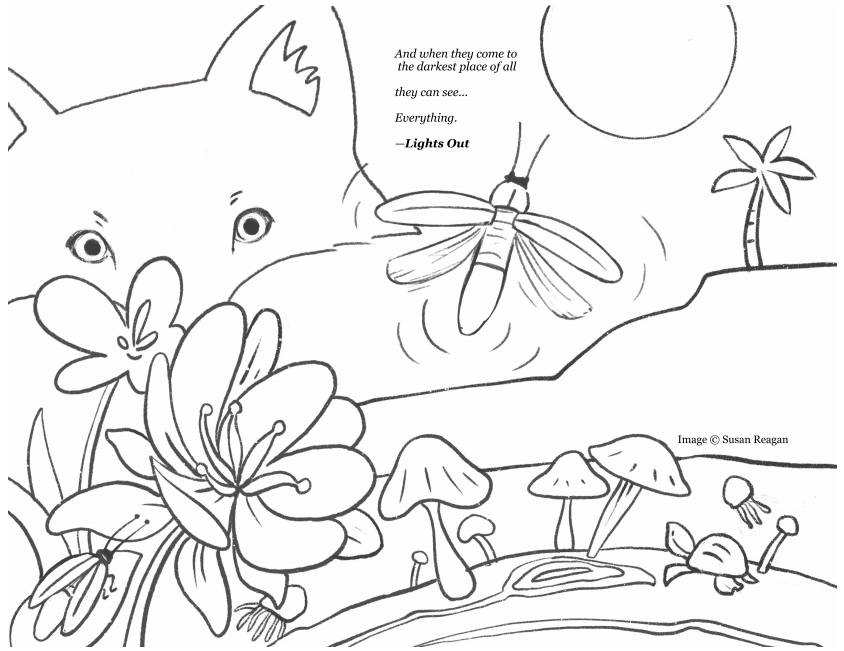
celebrate-picture-books-picture-book-review-Lights-Out-activity

Image copyright Susan Reagan, 2020, text copyright Marsha Diane Arnold, 2020. Courtesy of Creative Editions.

Lights Out Activity Kit


This extensive Activity Kit gives teachers, homeschoolers, and parents many ways to engage with Lights Out in the disciplines of science, language arts, art, and social action. Through the various activities, children will learn about light pollution and its effects as well as about the ways in which darkness benefits wildlife. You can download the kit from Marsha Diane Arnold’s website:

Lights Out Activity Kit

celebrate-picture-books-picture-book-review-Lights-Out-cover

You can find Lights Out at these booksellers

Amazon | Barnes & Noble | Books-a-Million

To support your local independent bookstore, order from

Bookshop | IndieBound

Picture Book Review

March 20 – It’s the Spring Equinox

celebrate-picture-books-picture-book-review-when-spring-comes-cover

About the Holiday

Today, we celebrate the first day of spring! What makes the equinox so special? On this date, day and night are equally long around the globe. With longer days and warmer weather, thoughts turn to nature and renewal. For many this means gardening for ourselves and for the returning bees and butterflies. Today’s book takes a look at one of nature’s most inspiring creatures – the monarch butterfly. 

When Spring Comes

Written by Kevin Henkes | Illustrated by Laura Dronzek


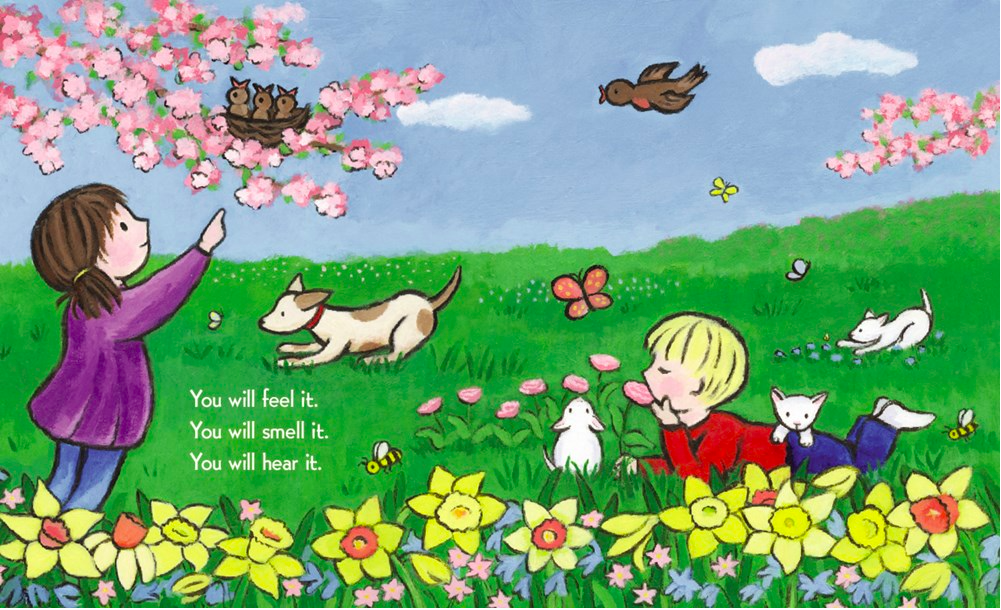
This beautiful tribute to spring is as surprising as new buds pushing through the earth or tiny hatching eggs. Using repeated phrasing, lyrically expressed facts, and poetic rhythms, When Spring Comes echoes the anticipation that sunnier days bring after a long winter. The book opens with a simple, evocative sentence: “Before Spring comes the trees look like black sticks against the sky.” Children will immediately agree—they see trees in this way out their windows and draw them like this in art class.

celebrate-picture-books-picture-book-review-when-spring-comes-robins

Image copyright Laura Dronzek, 2019, text copyright Kevin Henkes, 2019. Courtesy of Greenwillow Books.

The following sentence is equally as true: “But if you wait Spring will bring leaves and blossoms.” The book’s contrasting lines that explore conditions “before Spring comes” and “If you wait” gradually reveal more and more of springtime’s wonder, like the melting snows that usher in rainy days: “Spring comes with sun and it comes with rain and more rain and more rain. Do you like mud? Do you like puddles? I hope you like umbrellas.”

celebrate-picture-books-picture-book-review-when-spring-comes-spring

Image copyright Laura Dronzek, 2019, text copyright Kevin Henkes, 2019. Courtesy of Greenwillow Books.

As Spring wakes more fully, it takes on a personality of its own: “Spring will call out the pussy willows and new kittens too. Spring can come quickly or slowly. It changes its mind a lot. But when Spring is finally here to stay, you will know it…There will be buds and bees and boots and bubbles.”  And there is much more to discover about this season of rebirth as well as the future within these pages.

When Spring visits it brings many wonderful smells, sounds, activities, and creatures, all of which are gorgeously depicted in Laura Dronzek’s radiant illustrations. The early gardens, blooming cherry trees, frolicking kittens, and profusions of flowers are as bright and welcome as the springtime sun. As the sweet-faced boy and girl in the book play, they are surrounded by birds, bunnies, dogs and kittens, and even ponder a little worm poking its head from the garden. Brilliant blues, pinks, greens meld with lush browns to create a joyful celebration of the newness of the season.

When Spring Comes is not only a book about a particular season or even for a particular age. The book is a wonderfully gentile and uplifting way to introduce or discuss the idea of waiting for good things to happen. Everyone, even the smallest child, has “winter days” when life doesn’t look so bright. But if you wait, spring comes with new life and surprises. 

Ages 4 – 8

Greenwillow Books, HarperCollins, 2016 | ISBN 978-0062331397 (Hardcover, 2016) | ISBN 978-0062741677 (Paperback, 2019) | ISBN 978-0062741660 (Board Book, 2018)

Discover more about Kevin Henkes and his books on his website.

Spring Equinox Activity

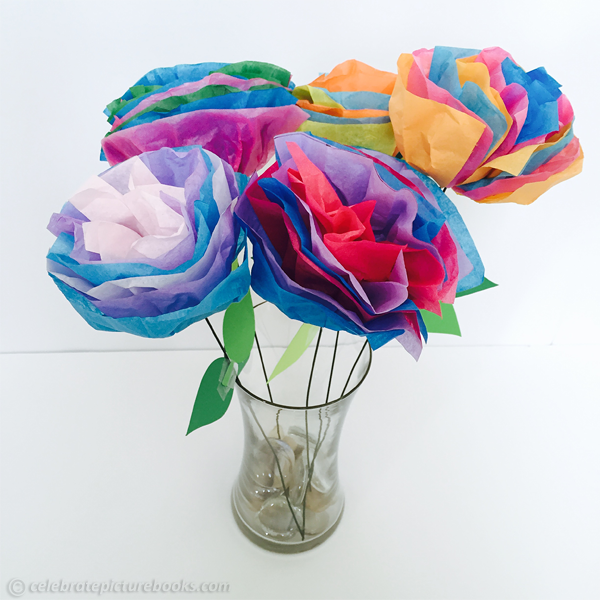
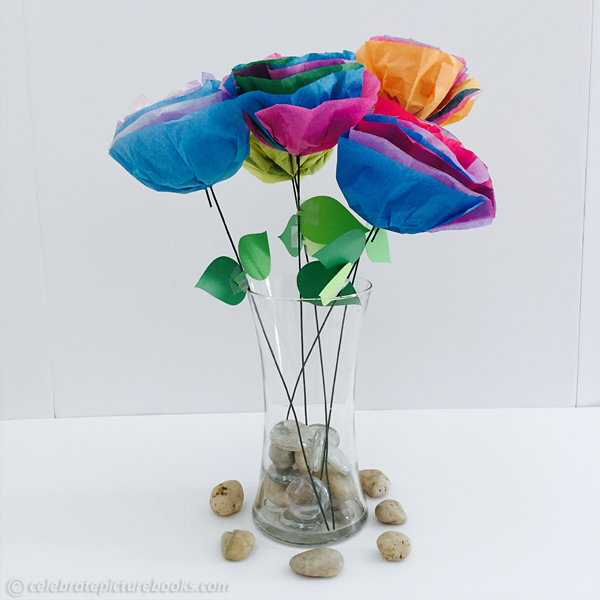
CPB - Paper Flowers

Paper Flowers


These paper flowers will brighten any room and come in a rainbow of colors. Make a bouquet for yourself or share them with a special friend.

Supplies

  • Tissue paper in many colors
  • Green paper
  • Green wire for stems
  • Scissors
  • Tape or glue
  • Pliers

CPB - Paper Flowers II

Directions

To make the stem

  1. Bend a 1 ½ -inch loop in the top of the wire
  2. Squeeze the wire together so it will fit tightly over the tissue paper

To make a flower

  1. Cut 6 or more 7-inch squares from tissue paper, mixing colors (you can make various sizes of flowers by making the squares larger or smaller and adding more squares)
  2. Gather all the squares together and fold them together accordion-style in 1-inch folds
  3. Slide the folded tissue paper under the wire loop, and tighten the wire
  4. Gently fan the tissue paper out on each side
  5. Beginning on one side, gently pull each sheet of tissue paper up toward the center
  6. Repeat step 5 on the other side

To make leaves

  1. Cut leaves from green paper, leaving a stem to wrap around the wire flower stem
  2. Fold the leaf stem around the wire and tape or glue

celebrate-picture-books-picture-book-review-when-spring-comes-cover

You can find When Spring Comes at these booksellers

Amazon | Barnes & Noble | Books-a-Million

To support your local independent bookstore, order from

Bookshop | IndieBound

Picture Book Review