September 11 – Grandparents Day and Q&A with Author Ellen Mayer

celebrate-picture-books-picture-book-review-rosa's-very-big-job-cover

About the Holiday

In the early 1970s Marion McQuade had the idea for a special day of the year when grandparents and grandchildren could show their love for one another. She further wanted it to be a day when grandparents could pass down the wisdom they had gained over their lifetime as well as share a bit of family history. Of course the same goes for grandparents learning the latest and greatest from the kids in their lives—from new technology to current fads. When all generations share their experiences, we’re all a lot smarter—and have closer relationships!

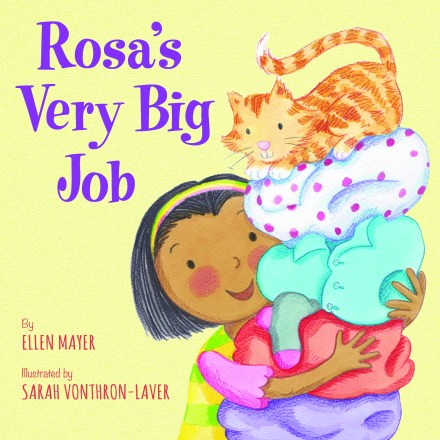
Rosa’s Very Big Job

Written by Ellen Mayer | Illustrated by Sarah Vonthron-Laver


Rosa may be little, but she has big ideas about how to help. While Mama is out shopping for groceries for that night’s dinner, Rosa decides to surprise her by folding and putting away the laundry. The basket is piled high with fluffy dry clothes, sheets, and towels. Rosa watches her grandpa reading the newspaper. “‘Please help me, Grandpa!’” she says. She tugs on her grandpa’s hands, trying to pull him out of his chair. “‘Come on, Grandpa! Get up.”
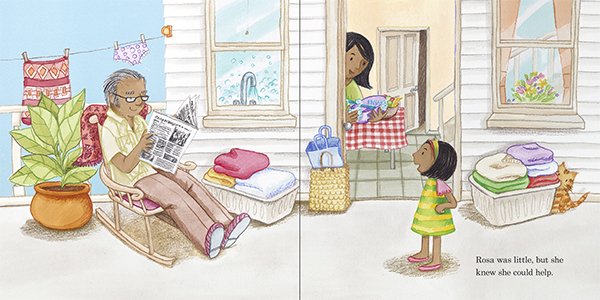
celebrate-picture-books-picture-book-review-rosa's-very-big-job-rosa-likes-to-help

Image copyright Sarah Vonthron-Laver, text copyright Ellen Mayer, courtesy of Star Bright Books, starbrightbooks.com

Grandpa seems to have a little trouble managing: “‘It’s difficult to carry these enormous piles,’” he sighs. But Rosa knows that smaller armloads work better. Grandpa’s clothes come unfolded as he puts them in the drawer. “‘Be neat. Like me,” Rosa says, showing him her tidy stack. Poor Grandpa! He has to keep hanging up the same jacket over and over. “‘It’s difficult to keep this jacket from sliding off the hanger,” he says. Rosa has the answer: “‘Zip it up,’” she explains. “‘Then it stays on.’”

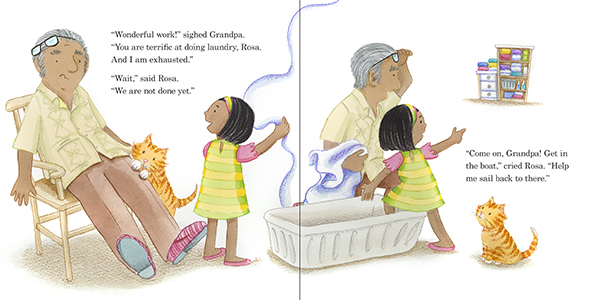
Grandpa sinks back into his chair. “‘You are terrific at doing laundry, Rosa. And I am exhausted,’” he says. But this is no time to quit—Rosa has big plans. As she steps into the now empty laundry basket, she exclaims, “‘Come on, Grandpa! Get in the boat. Help me sail back to there.’” Rosa points to the linen closet.
celebrate-picture-books-picture-book-review-rosa's-very-big-job-rosa-uses-basket-as-boat

Image copyright Sarah Vonthron-Laver, text copyright Ellen Mayer, courtesy of Star Bright Books, starbrightbooks.com

Suddenly, the floor swells with ocean waves teeming with fish. Grandpa channels his inner sailor as he holds aloft a sheet as a sail. As the wind billows and they come perilously close to the kitchen table, he says, “‘It’s difficult to sail around this enormous rock!’” Contemplating the rising sea, he exclaims, “‘It’s difficult to sail over this enormous wave!’”

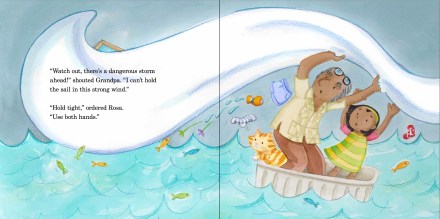
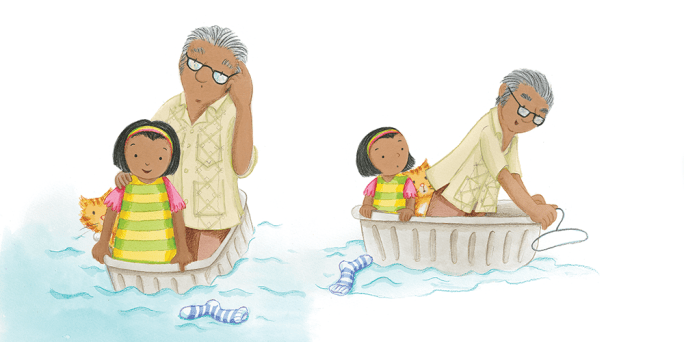
There’s a dangerous storm ahead, warns Grandpa, “‘I can’t hold the sail in this strong wind.’” Rosa is there to help and grabs one side of the sheet. “‘Hold tight,’” she orders. “‘Use both hands.’” At last the seas die down and Grandpa is ready to steer the laundry basket back to port, but Rosa has a more entertaining thought. Spying a sock on the floor, Rosa wants to catch the “enormous fish.” Grandpa obliges and picks up a hangar for a fishing pole. He holds Rosa as she stretches out over the edge of the laundry basket to land her fish.
celebrate-picture-books-picture-book-review-rosa's-very-big-job-sailing-with-sheet

Image copyright Sarah Vonthron-Laver, text copyright Ellen Mayer, courtesy of Star Bright Books, starbrightbooks.com

Just as Rosa nabs the fish, Mama comes home with her bags of groceries. She’s surprised to see that the laundry is not in the basket. Rosa runs to her and proudly explains, “‘We put all the laundry away. It was a very big job. We carried enormous piles. Grandpa dropped things. And I picked them up. It was very difficult for Grandpa. He got exhausted. But not me. I am terrific at laundry!’” Mama agrees that Rosa is a terrific helper. Then Rosa leads her mother to see the most surprising thing of all—the fish she has caught for dinner!
celebrate-picture-books-picture-book-review-rosas-very-big-job-rosa-and-grandpa-fishing

In her series of Small Talk Books® Ellen Mayer presents exciting stories for preschoolers full of imagination and rich language learning. Rosa’s Very Big Job introduces Rosa, a sweet girl bubbling with enthusiasm and the desire to help. The close relationships between Rosa, her mother, and her grandpa promote cooperation as well as effective modeling of speech patterns and a way to introduce larger words in an organic manner through play and common chores. Rosa’s inventive idea to turn the laundry basket into a boat is delightfully enhanced by her grandpa’s willingness to share in the story and expand on it. Humor, cheerful banter, and the easy camaraderie between Rosa and Grandpa invite young readers to join in the fun as they build confidence in their language learning.

Sarah Vonthron-Laver depicts Rosa’s afternoon with her Grandpa with joy and the spirited energy young children bring to everything they do. Grandpa is happy to spend time with his granddaughter, yet shows honest feelings of tiredness and frustration that spur on the plot. The transition from doing laundry to using the basket as a boat is as seamless as a child’s imagination, and the way Rosa and her grandpa use household items to create “sails,” “rocks,” “fish,” and “fishing poles” will give readers great ideas for post-reading play. Bright colors, an adorable kitten, and familiar surroundings welcome young children into the world of reading and expanded vocabulary.

Rosa’s Very Big Job would be a welcome addition to a young child’s bookshelf, not only for its fun story that kids will want to hear again and again, but for its leap into imagination that kids will want to replicate.

Dr. Betty Bardige, an expert on young children’s language and literacy development, provides tips for parents, grandparents, and caregivers following the text.

Ages 2 – 6

Star Bright Books, 2016 | ISBN 978-1595727497

Discover more about Ellen Mayer and her books as well as book-related activities and literacy initiatives she’s involved with on her website!

Find Sarah Vonthron-Laver on Facebook!

Grandparents Day Activity
celebrate-picture-books-picture-book-review-rosa's-big-job-paper-dolls-made

Original illustrations by Saran Vonthron-Laver, Copyrights © 2016 Star Bright Books. Paper dolls created by AislingArt and Celebrate Picture Books, copyrights © 2016

Rosa’s Very Big Job Paper Dolls

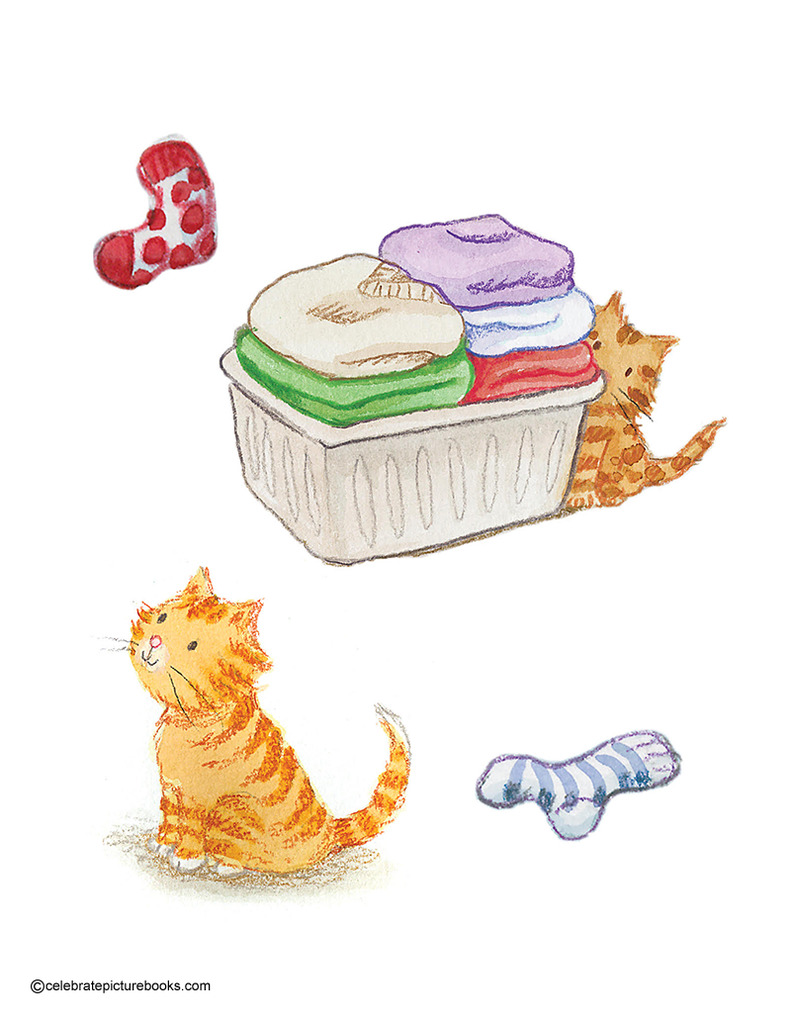
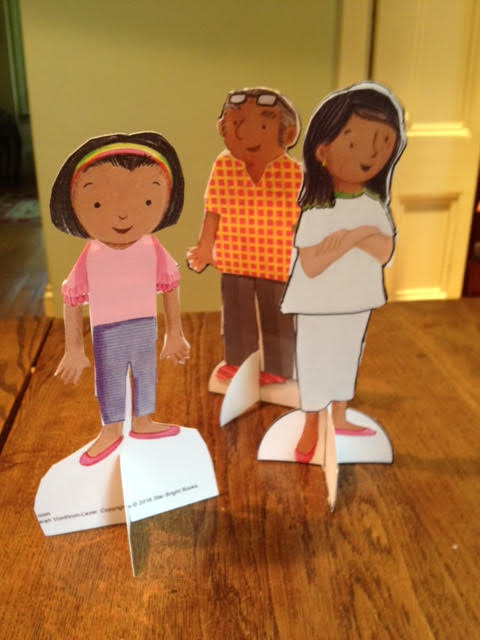
Rosa loves helping out at home. She’s terrific at doing laundry – folding and putting away the family’s clothes, socks, and linens. You are terrific at helping too! Can you help Rosa, Mama, and Grandpa get dressed and ready for the day with these printable paper dolls? You’ll even find a laundry basket, socks, and Rosa’s sweet kitty to play with! 

Supplies

Printable Paper Dolls, Clothes, and Extras

  • Heavy stock paper and/or poster board
  • Scissors
  • Glue

Directions

  1. Print dolls on regular paper or heavy stock paper. Dolls printed on heavy stock paper may stand on their own with the supplied stand cross piece. For dolls printed on regular paper, you can cut the supplied stand templates from poster board or card stock and glue the dolls to the backing.
  2. Rosa’s kitty and the laundry basket can also be attached to the supplied template if needed
  3. Print clothes for each figure
  4. Color the blank clothes templates any way you’d like
  5. Cut out clothes and extra items
  6. Fit outfits onto dolls
  7. Make up your own stories about Rosa, Mama, and Grandpa!

Interview with Author Ellen Mayer

celebrate-picture-books-picture-book-review-interview-with-Ellen-Mayer

Today, I’m happy to present a fascinating interview with Ellen Mayer, a writer and expert in early literacy, in which she discusses her involvement with various organizations and programs, her baby granddaughter, why Hug Your Cat Day is at the top of her list of holidays, and gives us a peek at a very special sugar egg.

I’m really interested in your work in the education and literacy fields. Could you talk a little bit about your job as an education researcher and an early literacy home visitor, and how you got into those fields?

I got into these fields after leaving a Sociology PhD program right near the end.  I didn’t want to be an academic and teach, I wanted to do applied research – to solve practical problems out in the world and to make a difference in the lives of those who were struggling. At the Harvard Family Research Project at Harvard’s Graduate School of Education, I studied the ways that families from underserved communities were engaged in supporting their children’s learning and education, and created research-based materials for families and schools to promote effective engagement. One of these was the Family Involvement Storybook Corner—curated picture book selections with family engagement themes. That got me interested in early literacy and picture books.

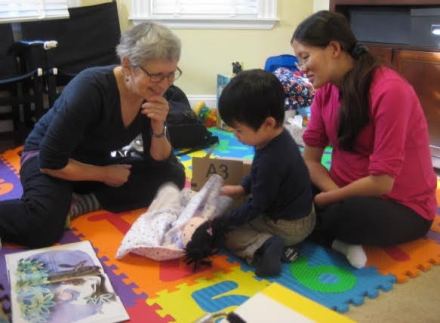
After researching family engagement in children’s learning for many years, I decided I wanted to go out into the field and be a practitioner and work directly with families on this topic. I worked as an early literacy home visitor with diverse families with the Parent-Child Home Program, modeling ways to share stories with little ones to build early language. I actually got paid to read picture books and play with families in their homes!
celebrate-picture-books-picture-book-review-interview-with-Ellen-Mayer-home-visit

At the same time, I was pitching my Small Talk Books®, a collection of playful stories about everyday activities that provide fun for kids and ideas for adults – Rosa’s Very Big Job is one. The adults in the stories are engaged with children’s learning, modeling conversational ways to build young children’s language.

I read that your book Red Socks, another of the Small Talk Books®, is being used in a program to turn wash time at Laundromats into talk time for literacy development. Could you discuss this early literacy initiative?

Yes! Wash Time/Talk Time is a terrific campaign led by Too Small To Fail, a joint initiative of the Clinton Foundation and the Opportunity Institute teaming up with a host of partners to turn Laundromats in underserved areas into venues for early literacy. This campaign distributes free books and information to families in Laundromats about building early language to help close what’s called the “word gap” by promoting parent conversation with babies and young children. Almost 60% of children in our country start kindergarten behind in their language development and this then sets them on a downward path and they get even further behind in school.

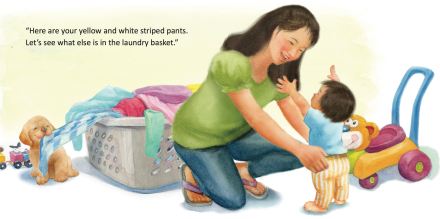
Red Socks was a natural fit for this program. In it a Mama narrates what she is doing for her little pre-verbal child as she folds the laundry and dresses the child—and as they search for a missing sock!
celebrate-picture-books-picture-book-review-interview-with-Ellen-Mayer-Red-Socks-book-interior-art

Illustration © 2015 by Ying-Hwa Hu, text © 2015 Ellen Mayer, courtesy of Star Bright Books

I have to say that it’s a dream come true that Too Small To Fail is using my book.

Wash Time/Talk Time is really reaching the families on the other side of the word gap who most need the ideas and inspiration in Red Socks. When I began writing the Small Talk Books® I wanted to include stories about doing laundry, as it’s something we all do as parents and provides lots of things to talk about with children. (Like the color of socks!) In fact, I used to sit in Laundromats and observe families when I was thinking up ideas for stories. I guess that’s the sociologist in me.
celebrate-picture-books-picture-book-review-interview-with-Ellen-Mayer-free-laundry-day

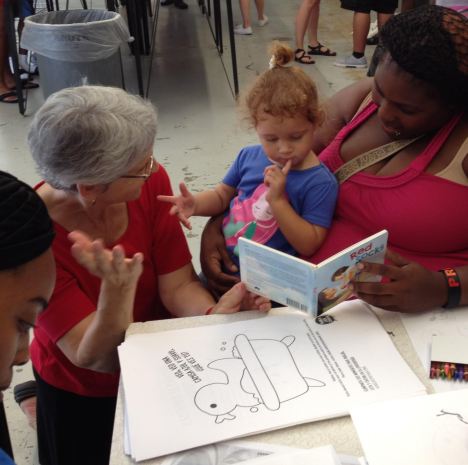
We just had the opportunity to visit one of the Laundromats in the campaign—at the Free Laundry Day in Tampa, FL hosted by The Laundry Project—and share Red Socks with families. You can see some of the fun illustrator Ying-Hwa Hu and I had here: 

What inspired you to begin writing picture books?

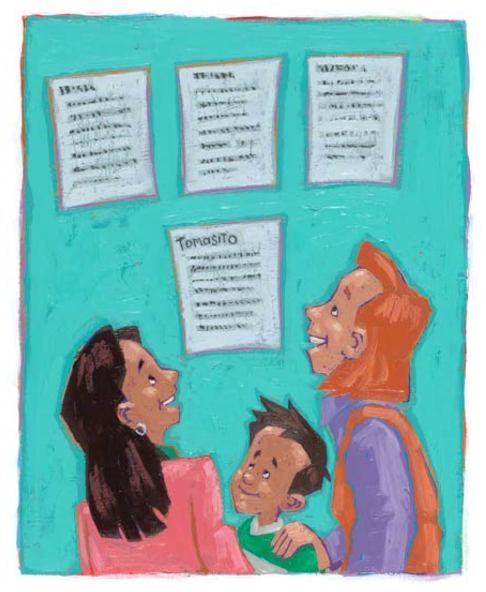
I came to picture book writing through a backdoor. When I was at Harvard Family Research Project, I was thinking about new ways to convey our ideas from research into practice for parents, and it occurred to me that a read-aloud picture book could address an audience of parents, as well as the primary one of children. My boss was enthusiastic about the idea, and so I enrolled in an adult ed class on writing for children. Then I turned one of our research case studies about challenges an immigrant Latino family had in communicating with their son’s teacher into a picture book, Tomasito’s Mother Comes to School/La mamá de Tomasito visita la escuela. Joe Cepeda did the art for it, and we made it downloadable for free.
celebrate-picture-books-picture-book-review-interview-with-ellen-mayer-tomasito

Illustration ©2007 Joe Cepeda

What’s up for you next?

Some new things! I have a fellowship with the Storytelling Math Project that’s funded by the Heising-Simons Foundation and coordinated by TERC, a not-for profit STEM research and development organization here in Cambridge, MA. I’ll be a member of a group that’s identifying, creating, and promoting math-infused storybooks for diverse young children and I hope to create a couple of Small Talk Books® along these lines—probably about supermarket shopping! I also was asked to help out the Highlights magazine editorial team that creates HELLO magazine for 0-2 years and be an outside reviewer for issues before they go to publication. And then I’ll be volunteering as a visiting children’s book author to the Somerville Family Learning Collaborative, the family engagement and early childhood hub of the Somerville, MA Public Schools, sharing my books with playgroups and new parent groups.  

But mostly, I plan to write! I have a bunch of picture book manuscripts in various states, and ideas for new ones. These manuscripts are different from the Small Talk Books®; they don’t have a deliberate educational underpinning to them. They are fun, and just fun. One, for example, is called What To Do With Ruby-Lou and it’s about a baby who doesn’t laugh, no matter what her family does. Who is going to be able to get a laugh out of Lou? Well, it’s a surprise and it just might require some audience participation. I’ve had an agent in the past and hope to find a new one to rep me with these picture books.

You recently became a grandmother. Can you tell me a little about your granddaughter?

I thought our granddaughter was the most wonderful and expressive baby in the world when was she born – of course! She and my advance copy of the new Rosa book arrived into the world at just about the same time.
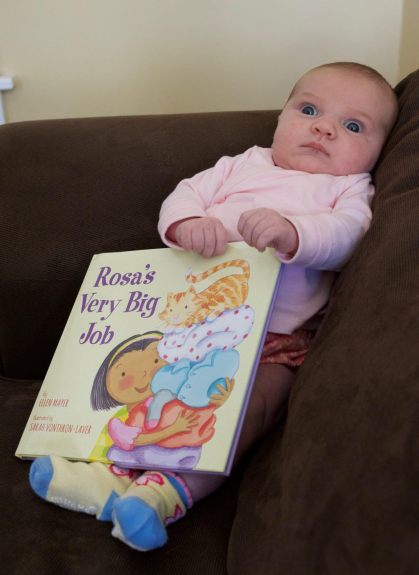
celebrate-picture-books-picture-book-review-interview-with-Ellen-Mayer-granddaughter-holding-book

At three months now my granddaughter is a big reader and is riveted on the B&W hi-contrast board book genre, especially one board book about cars and trucks. She moves her head back and forth, from one end of the spread to the other, scanning the images on the page like a studious scholar of some ancient text.

What is the best part about being a grandmother?

For me the best part about being a grandmother is being able to simply enjoy my granddaughter and play with her and watch her develop, and not have to worry about taking care of her daily needs. I didn’t have to stress when she refused to take the bottle before starting full-day childcare. That wasn’t my job. (She did take it – of course!) They live nearby, and seeing her once or twice a week, I love noticing small changes on each visit. I also love seeing our daughter and son-in-law parent.

Have you given thought to what you’d like your granddaughter to call you?

Our daughter asked us ahead of time what we’d like to be called when we became grandparents. I thought it was a wise idea to be proactive and select a name immediately, to avoid being named by the grandchild something like “Grandma GA-GOO-GA.” My great aunt Jane is called “Nini” as a grandmother, and I’ve always loved that, but I didn’t want to steal it. So I chose “Mimi.”
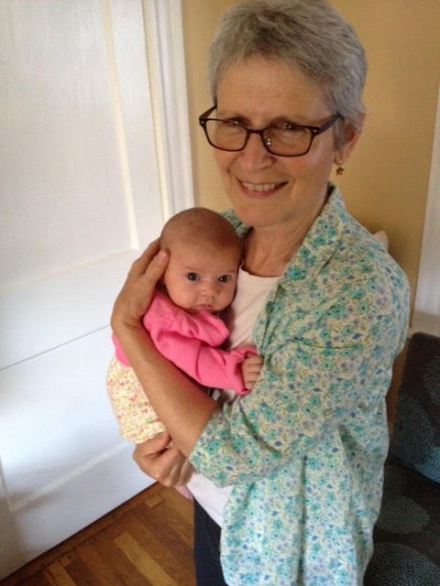
celebrate-picture-books-picture-book-review-interview-with-Ellen-Mayer-ellen-with-granddaughter

It sounds as if Grandparents Day may be one of your top holidays! Do you have another favorite?

When I was little, I liked Easter a lot because it combined a lot of my favorite things: crafts, springtime, running around outside, candy. Also, we didn’t dress up much as kids, but I do remember Easter bonnets!
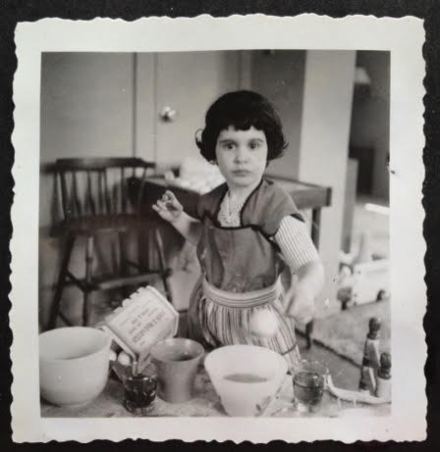
celebrate-picture-books-picture-book-review-interview-with-Ellen-Mayer-dying-easter-eggs

When our children were little, their birthdays became my favorite holiday celebrations. Now that they are grown, maybe I need to pick a new favorite holiday? I see that June 4th is Hug Your Cat Day. That might be just right: we have a rather large and ferocious cat and when she actually lets you hug her, well, it’s a cause for celebration.
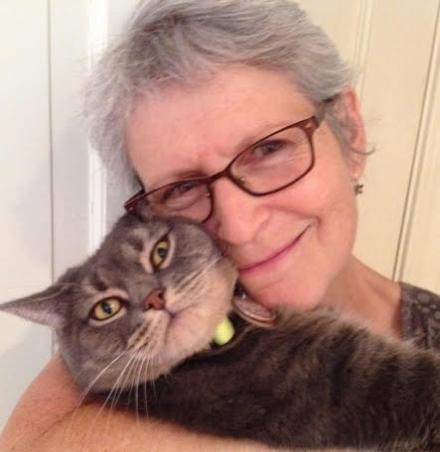
celebrate-picture-books-picture-book-review-interview-with-Ellen-Mayer-hugging-cat

Do you have an anecdote from any holiday that you’d like to share?

When I was six years old, I saw the Easter Bunny. I was staying at my Grandparents’ house, and I looked down the stairwell, and there he was, crossing the landing at the foot of the stairs. He was quite tall, wore a yellow slicker that was too small for him, and he was carrying a large Easter basket. I’m afraid I didn’t have my Brownie camera with me at the time to snap a photo.

But I do have an unwrapped sugar Easter egg that I’ve saved from that era.
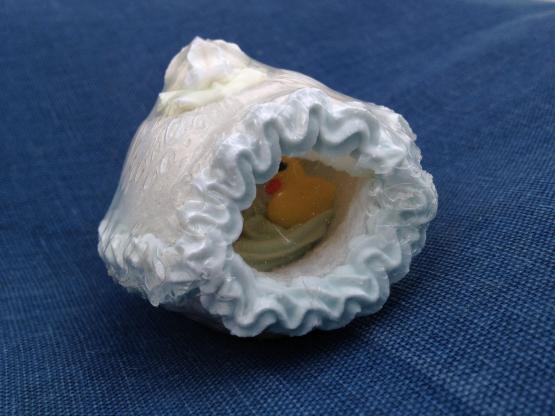
celebrate-picture-books-picture-book-review-interview-with-ellen-mayer-easter-egg

Thanks for sharing so much about your work and life, Ellen! I wish you all the best with Rosa’s Very Big Job, your other Small Talk Books®, and of all your other ventures!

You can also find Ellen Mayer on Facebook and Twitter

Rosa’s Very Big Job can be found at

Star Bright Books | Amazon | Barnes & Noble | Books-a-Million | IndieBound

Other Small Talk Books® available from Ellen Mayer and Star Bright Books include Cake Day, Red Socks, and A Fish to Feed and can also be found at the above booksellers.

Visit Ellen Mayer on her:

Website | Facebook | Twitter

Picture Book Review

July 28 – It’s Culinary Arts Month

celebrate-picture-books-picture-book-review-cake-day-cover

About the Holiday

The recipe—the step-by-step recitation of the ingredients and process for making any dish—is the heart of the culinary arts. Following along, improvising in just the right places, and inventing completely new tastes is its own special kind of literacy. Today we say goodbye to Culinary Arts Month, but hope that the joy of cooking delicious treats and reading fabulous books together remain common, fun activities with which to explore life and love—as shown with today’s book!

Cake Day

Written by Ellen Mayer | Illustrated by Estelle Corke


An adorable little boy runs to his grandma, excited that it’s “Cake Day!” “That’s right,” his grandma agrees, “Today we’re going to bake a cake!” The boy, hardly able to see over the counter, wants to be picked up and see what’s in the cabinet. His grandma happily obliges, and the pair carefully pick the ingredients for their cake.

“‘Hmmm…we need flour, salt, baking powder, and sugar to make a cake,’ says Grandma.” With all the ingredients set on the table, the two start measuring. The little chef is eager and curious: “Cake Day! How much, Grandma? As the flour pours into the cup, a soft, powdery cloud envelops them. “Too much, Grandma!” the delighted boy laughs. The two work side by side, Grandma adding the eggs while her grandson pours in the milk.

celebrate-picture-books-picture-book-review-cake-day-cover

Image copyright Estelle Corke, courtesy of Star Bright Books

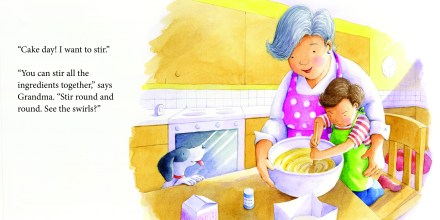
As the ingredients start to mesh, Grandma exclaims, “‘Look! What’s happening to the batter?’” The little boy wants to help it along and takes up the wooden spoon. Round and round he stirs, creating swirls in the yellow batter until it’s ready for the oven. “‘Bake day! Your turn, Grandma!” the boy stands wide-eyed as his grandma slides the deep pan into the oven.

The little boy and his dog settle in front of the oven to watch the cake bake. With eagerness the boy asks, “‘Cake day! Ready, Grandma?” Grandma encourages her grandson’s inquisitiveness and explains the process: “‘We have to wait until the cake rises. The heat makes it rise. When you hear the timer go BEEP BEEP it will be ready.’” At last the cake comes out of the oven, but it’s not ready to be decorated yet. First, they must wait for it to cool.

In a short time the high, golden cake can be iced and decorated. The little boy vigorously shakes a jar of sprinkles over the top, scattering a rainbow of colors across the white frosting. The cake is beautiful and just the right complement to the little boy’s Cake Day, Bake Day, Shake Day—Birthday!

Ellen Mayer’s language-rich and playful story of a small child and his grandmother baking together is a wonderful introduction not only to reading but to the type of full-sentence conversational modeling that improves and increases literacy. The steps to baking the birthday cake flow organically and lyrically through the loving relationship between the little boy and his grandma, enticing young readers to learn more about the world around them and how it works. The repeated phrases “Cake day! Bake day!,” and “Ready, Grandma?” as well as the boy’s short statements offer opportunities for kids to read along and learn new vocabulary as they develop important language skills.

Estelle Corke’s cheery illustrations glow with enthusiasm and the close bond between grandmother and grandson. The grandmother lifts, steadies, and holds the boy while still allowing him to perform all the tasks he can. The little boy, in his green apron, delights in every aspect of the baking process, his eagerness expressed in his animated smile and keen participation. The homey kitchen is awash in inviting colors and objects that children will recognize. The clearly drawn boxes and jars of ingredients, kitchen tools, and furnishings offer readers a chance to practice their vocabulary and learn new words.

Ages Birth – 5

Star Bright Books, 2016 | ISBN 978-1595727466

To see more books by Ellen Mayer as well as language development and reading strategies for young children, visit her website!

Visit Estelle Corke’s website to view a gallery of her artwork!

Star Bright Books publishes fiction nonfiction, and bilingual “great books for great kids” and provides literacy resources for readers.

Culinary Arts Month Activity

celebrate-picture-books-picture-book-review-cake-day-grandma's-cake

Image copyright Ellen Mayer

Grandma’s Cake


Grandma and her grandson baked a delicious, special cake—and now you can too! Here’s the full recipe that Grandma uses. Recipe courtesy of Ellen Mayer.

A Simple Sponge Cake Recipe

Ingredients

  • 1 stick unsalted butter, softened, plus a little to grease cake pan.
  • 1 1/2 cups sugar
  • 2 cups all-purpose flour
  • 1/4 teaspoon salt
  • 2 teaspoons baking powder
  • 3 large eggs at room temperature
  • 2 teaspoons vanilla extract
  • 3/4 cup milk
  • You will need: 3 mixing bowls:
  1. 1 to cream butter and sugar
  2. 1 to mix flour, baking powder and salt
  3. 1 in which to beat the eggs
  • A 7-inch diameter, deep cake pan

Directions

  1. Butter pan and dust with flour.
  2. Set the rack at the middle of the oven.
  3. Preheat oven to 350 degrees.
  4. Sift flour, baking powder, and salt into a bowl and set aside.
  5. In large mixing bowl, beat butter and sugar until light and fluffy. In the third bowl, beat the eggs and add milk.
  6. Add 1/3 of the flour mixture to butter mixture then alternate with the egg and milk mixture. Continue to alternate ending with flour mixture. Scrape bowl and beater often.
  7. Add vanilla and mix well.
  8. Pour batter into prepared pan and smooth top with a spatula.
  9. Bake cake about 45 minutes. Insert knife or wooden skewer into the center. If it emerges clean, the cake is done. If not, bake for 5 more minutes.
  10. Remove cake from oven and allow to set for 5 minutes.
  11. Turn cake out onto a cake rack and leave to cool.

Grandma’s Favorite Frosting

  • 8 oz cream cheese
  • 1 1⁄2 cups confectioners’ sugar
  • 1⁄4 stick butter
  • 1 teaspoon vanilla extract
  1. Blend all ingredients together with a mixer until smooth
  2. Spread on the top and sides of cake
  3. Decorate with sprinkles or your favorite topping

Picture Book Review
July 22 – National Hammock Day

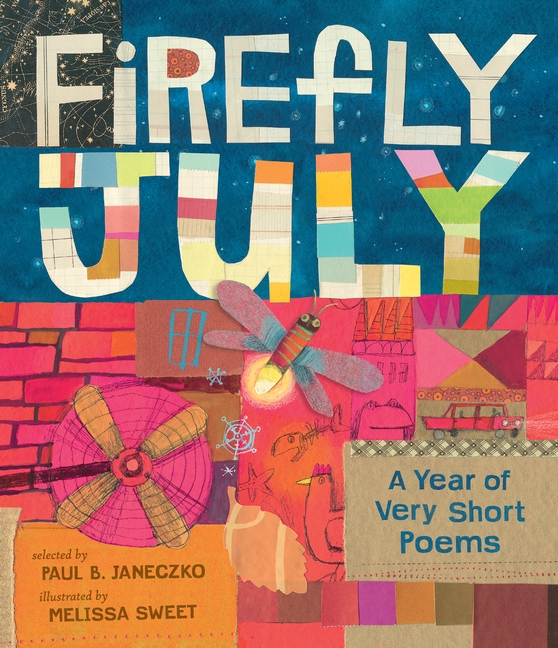
celebrate-picture-books-picture-book-review-firefly-july-cover

About the Holiday

Holidays don’t get more leisurely than this one! Perhaps invented by the Ancient Greeks, perhaps created by people in South America according to Christopher Columbus’s journals, hammocks are the epitome of relaxation. What better time is there to kick back and lounge than during the hot, hazy days of July? So enjoy—and read a book, like today’s collection of poetry!

Firefly July: A Year of Very Short Poems

Selected by Paul B. Janeczko | Illustrated by Melissa Sweet


Firefly July is perfect for lazy summer days when light, but still meaningful reading enjoyed in a hammock or under a shady tree is relaxation at its best. Paul B. Janeczko has collected 36 short (none are over eight lines long) poems from some of the best poets of today and yesterday. Haiku, free form, and rhyming verses illuminate the seasons of the year and encapsulate unforgettable sights, sounds, and feelings.

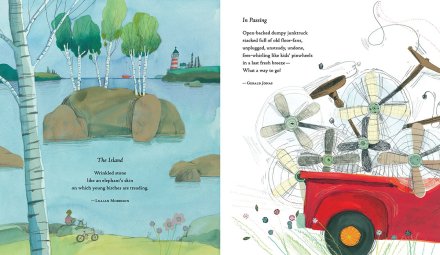
A girl’s spring’s respite spent gazing into the bay from shore is depicted in Lillian Morrison’s The Island:

“Wrinkled stone / like an elephant’s skin / on which young birches are treading.”

celebrate-picture-books-picture-book-review-firefly-july-interior-art

Image copyright Melissa Sweet, courtesy of amazon.com

A nighttime train trip provides mystery and ongoing changes in Carl Sandburg’s Window:

“Night from a railroad car window / Is a great, dark, soft thing / Broken across with slashes of light.”

Joyce Sidman’s A Happy Meeting likens a summer rain to romance and life:

“Rain meets dust: / soft, cinnamon kisses. / Quick noisy courtship, / then marriage: mud.”

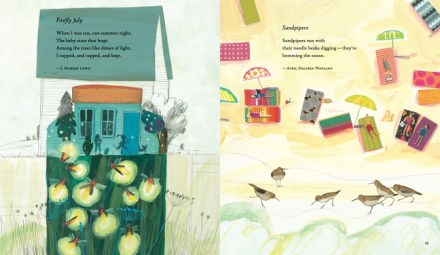
At the seashore, beach birds are industrious in April Halprin Wayland’s Sandpipers:

“Sandpipers run with / their needle beaks digging—they’re / hemming the ocean.”

celebrate-picture-books-picture-book-review-firefly-july-interior-art

Image copyright Melissa Sweet, courtesy of amazon.com

Jim Harrison and Ted Kooser ask such a beguiling question for autumn:

“What is it the wind has lost / that she keeps looking for / under each leaf?”

And the rising giants of city life inspired Susan Nichols Pulsifer in Tall City:

“Here houses rise so straight and tall / That I am not surprised at all / To see them simply walk away / Into the clouds—this misty day.”

Along the way readers will encounter a pickup truck loaded with old rotary fans and another rusting in a field; fog that decorates and creeps; animals and insects that share our space; our past, our present, and our future. And when it’s time to close the book, Jim Harrison and Ted Kooser reveal:

“A welcome mat of moonlight / on the floor. Wipe your feet / before getting into bed.”

celebrate-picture-books-picture-book-review-firefly-july-interior-art

image copyright Melissa Sweet, courtesy of melissasweet.net

I can only wish I’d been able to visit Melissa Sweet’s studio while she created the illustrations for this book! Each painting is as unique in style, beauty, and emotional effect as the poems they interpret. Her renditions of each poem help readers—especially children unfamiliar with metaphor and abstract imaging—to fully understand and appreciate each poem while also leaving room for personal reflection.

The first thing that strikes a reader when opening Firefly July is the gorgeous juxtaposition and mixture of vibrant color. Her illustrations take readers on a journey from an aqua farm house with a patchwork garden to a serene elephantine rock island to the deep turquoise ocean traversed by ships while the full moon beams down upon them. Readers ride crowded subways, gaze out moving train windows, and visit cities bright in daylight and glowing at night. They frolic through fields of delicate grasses and vibrant flowers, quietly walk snowy paths, and take their place among the stars.

Firefly July is as stunning as any coffee table book and is a must for a young reader’s—or any poetry lover’s—library.

Ages 4 and up

Candlewick Press, 2014 | ISBN 978-0763648428

Take a look at more books and artwork by Melissa Sweet on her website!

National Hammock Day Activity

celebrate-picture-books-picture-book-review-hammock-coloring-page

Lazy Days Coloring Page


Coloring can be so relaxing—perfect for a day dedicated to kicking back! Color this printable Lazy Days Coloring Page and dream of lounging beside the lake, with the gentle breeze gently rocking the hammock, while you drift off to sleee….zzzz…..

July 5 – It’s National Culinary Arts Month

celebrate-picture-books-picture-book-review-how-to-bake-a-book

About the Holiday

July is designated as a time to recognize the creativity and dedication of professional chefs and anyone who makes the world a more delicious place. The way to celebrate this month is a no-brainer! Visit your favorite restaurants, cafes, and bakeries—and discover new ones!

How to Bake a Book

By Ella Burfoot


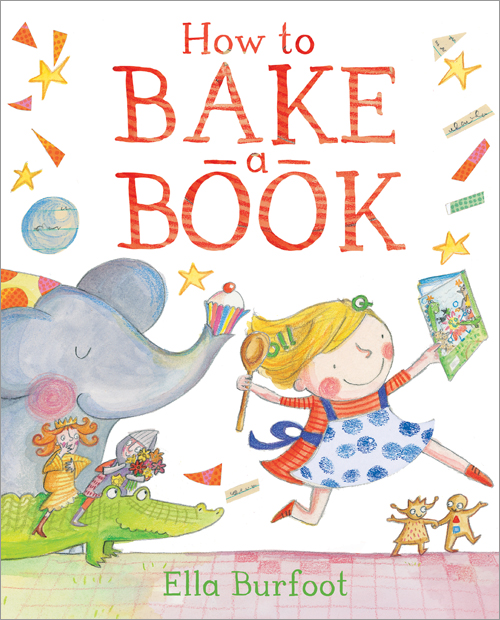
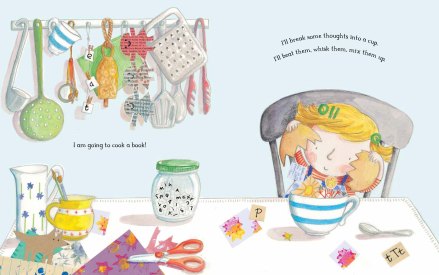
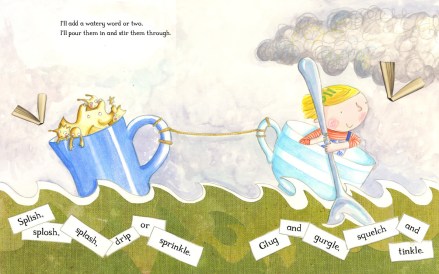
A little girl decides to bake a book. She gathers her ingredients and begins: “I’ll break some ideas into a cup. / I’ll beat them, whisk them, mix them up.” To the dough she adds words both small and big then feelings, colors, and pictures for flavor. To set the scene she drops in “watery words,” choosing from “splish, splosh, splash, or sprinkle”—or would “glug and gurgle” or “squelch and twinkle” be better? She cuts out characters of all kinds and sets them aside to play.

celebrate-picture-books-picture-book-review-how-to-bake-a-book

Image copyright Ella Burfoot, courtesy ellaburfoot.co.uk

With the dough set, the girl puts the lid on the bowl and waits while it rises. When it’s ready, she rolls it out, finding out what her story is all about. She lays the crust in the pan, letting her characters jump right in. Next she stirs up “the middle, the action, the filling” and adds a “spoonful of good and a pinch of bad” to get the pot bubbling and the plot to thicken.

A dash of good grammar finishes it up, and then the ending is pressed down tight. A cover design and a glaze of happiness are brushed on to make the book shine. Finally, the book is ready for baking. It comes out of the oven baked looking tasty. The little girl cuts a big slice and gets to reading her delicious book.

celebrate-picture-books-picture-book-review-interior-art-watery-words

Image copyright Ella Burfoot, courtesy ellaburfoot.co.uk

Ella Burfoot’s delightful recipe for writing a captivating book will enchant children who love to read and may spark an interest in writing a story themselves. The rhyme is as light and fun as chiffon and the homey ideas as satisfying as a warm chocolate cookie. Kids will love poring over Burfoot’s bright, colorful illustrations. The girl’s baked-up pages burst with dragons, knights, princesses, animals, kites, and more. There’s even a witch who’s having a tough time staying on her broom. The kitchen is a cook’s and crafter’s paradise with pantry shelves well stocked with jars of periods and capital letters among the monster flakes, alphabet spaghetti, porridge oats, and other writerly puns and ingredients.

A reading of How to Bake a Book would be a fun lead-in to getting out the pots, pans, and paper and creating an original recipe/story.

Ages 3 – 6

Sourcebooks Jabberwocky, 2014 | ISBN 978-1492606512

To discover more books by Ella Burfoot visit her website!

National Culinary Arts Month Activity

celebrate-picture-books-picture-book-review-whisk-bookmark

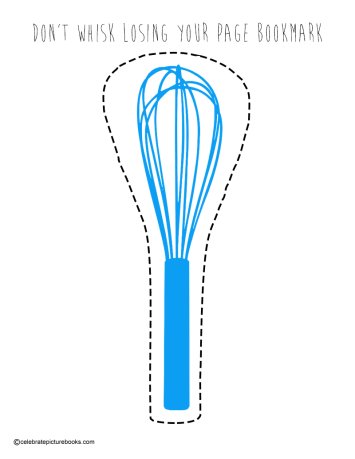
Don’t Whisk Losing Your Page Bookmark


The author’s of your favorite books have cooked up such fantastic stories that you don’t want to risk missing a word! To make sure that doesn’t happen, use this culinary-themed bookmark!

Supplies

Directions

  1. Print your bookmark
  2. Glue it to the poster board
  3. Cut out the bookmark
  4. Slip it into the book you’re reading now!

Picture Book Review

April 27 – Tell a Story Day

celebrate-picture-books-picture-book-review-one-day-the-end-cover

About the Holiday

Are you a raconteur? Do you love to weave a tale so intricate and intriguing that your listeners are on the edge of their seats? Or are you the one leaning forward, all ears, feeling the tingling thrill of that story? Either way—this day is for you! So take some time to tell or listen to a story—or even write your own!

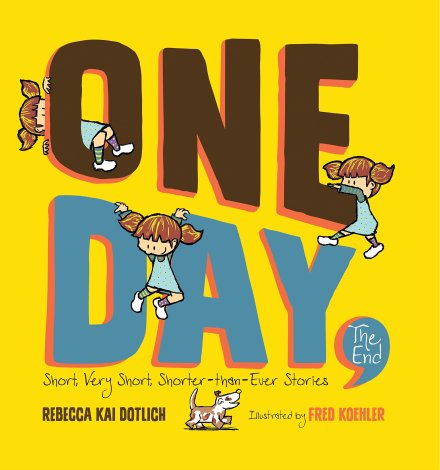
One Day, The End: Short, Very Short, Shorter-than-Ever Stories

Written by Rebecca Kai Dotlich | Illustrated by Fred Koehler


Hey! I have a fantastic story to tell you! Ya gotta minute? Ok! See… “One day I went to school. I came home. The End” What do you mean, “Is that it?” Don’t you get it?  So many things happened—funny, messy, worrisome, happy. It was an amazing day! I didn’t say that? But it’s all right there! Where? In the middle. In the pictures!

celebrate-picture-books-picture-book-review-one-day-the-end-tree

Image copyright Fred Koehler, 2015, text copyright Rebecca Kai Dotlich, 2015. Courtesy of Boyds Mills Press.

On other days the little girl who went to school in the story above becomes a detective to find her lost dog, invents ingenious ways to hide from her brother, and creates something awesome for her mom. She also runs away from home, but of course comes back, and shadows her cat to a surprising discovery. On yet another day she just feels like stomping. And on still another she  relents to a much-needed bath…and shares it with her dog!

And what does she want to do after all these adventures? She wants to write a book…and does!

celebrate-picture-books-picture-book-review-one-day-the-end-school

Image copyright Fred Koehler, 2015, text copyright Rebecca Kai Dotlich, 2015. Courtesy of Boyds Mills Press.

Rebecca Kai Dotlich’s One Day…The End is such an ingenious concept that readers will keep turning the pages just to see what clever idea comes next. Each story consists of a first sentence that introduces a plot and the last line that wraps it up. Sure Dotlich could have fleshed out the characters, detailed the setting, added dialogue, and symbolized a theme, but sometimes pictures are worth a thousand words, and this is where Fred Koehler comes in.

Koehler takes these kid-centric tales and fills in the exploding science experiments, ice-cream trucks, accidental oopsies, distractions, clues, and more that make up each day’s adventure. With humor and an eye for real-kid emotions and actions (the little girl pours glue from the bottle held above her head), Koehler creates a unique plot for each story.

celebrate-picture-books-picture-book-review-one-day-the-end-write

Image copyright Fred Koehler, 2015, text copyright Rebecca Kai Dotlich, 2015. Courtesy of Boyds Mills Press.

In “One day I felt like stomping” the little girl doesn’t stomp for no reason: her cat eats her pizza lunch, she splatters herself with purple paint, and her fishing pole breaks. She just feels like…! The word STOMP grows bigger across the page and even gets stomped on itself as the girl vents her frustration in a puddle, on a pile of leaves, and—almost—on a flower. But seeing the daisy saves her day and she saves the daisy. Haven’t we all been there?

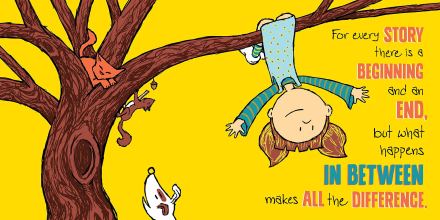
One Day…The End is a joy to share with kids. They’ll love to spend time pointing out the humorous details and depth of story each page holds, and may even like to “tell” the story as they read. This book would be a fantastic jumping off point for kids wanting to write their own stories or for teachers wanting to demonstrate the elements of active, detailed story writing. As Dotlich says on the first page: “For every story there is a beginning and an end, but what happens in between makes all the difference.”

Ages 4 – 8

Boyds Mills Press, 2015 | ISBN 978-1620914519

Discover more about Rebecca Kai Dotlich and her books on her website.

To learn more about Fred Koehler, his books, and his art, visit his website.

Tell a Story Day Activity

celebrate-picture-books-picture-book-review-tell-a-story-maze

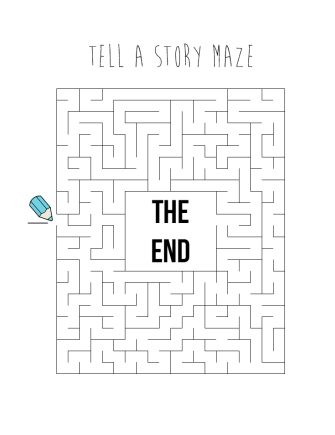
Tell a Story Maze


This puzzle may look like a regular maze, but there’s a secret to it! Within this maze is any story you’d like to make up. Why do you go left instead of right? Are you avoiding a zombie or a rain shower? Why do you go up instead of down? Is it because you can you float? What lurks in that dead end you’ve entered? There are as many cool stories as you can imagine right in those little pathways. And when you find your way to The End, you’ll have written a story with this printable puzzle!

Tell a Story Maze | Tell a Story Maze Solution 

picture book review

April 23 – Talk Like Shakespeare Day

picture-book-review-will's-words

About the Holiday

To read or not to read—is that even a question?! Of course “to read!” And who produced literature containing some of the most excitement ever? William Shakespeare! Not only did Shakespeare write astounding plays and poems, he coined words and phrases that are still part of our everyday speech 400 years after his death in 1616. In recognition, the Chicago Shakespeare Theater initiated Talk Like Shakespeare Day in 2009. To honor Shakespeare’s legacy today, read or reread one of his famous plays, attend a performance, or watch a film adaptation of his work, and for goodness sake – use some of the terms he so cleverly invented.

*Italicized words were invented by William Shakespeare

Will’s Words: How William Shakespeare Changed the Way You Talk

Written by Jane Sutcliffe | Illustrated by John Shelley


“In 1606 London was a bustling, jostling, clanging, singing, stinking, head-chopping, pickpocketing wonder of a city.” With that phenomenal sentence Jane Sutcliffe begins this fascinating and ingenious look at the Globe Theatre and the experience of attending a play in William Shakespeare’s time.

In addition to all the qualities of London mentioned above, the town was also a “play-going city.” Every day of the week except Sunday, a play—or maybe even two or three—was performed, and as many as 18,000 (!) people attended plays every week! They just couldn’t get too much of a good thing!” And everyone loved the plays written by William Shakespeare!

How did a day at the theater begin? Well, at 1:00 a banner was raised from the roof of the playhouse, and men, women, and children streamed through the streets toward the Globe. It cost a penny to get in, but if you paid more you got a chair, and if you paid a little more than that you were seated in the Lord’s Rooms. The Lord’s Rooms were actually for fashionable people who wanted to be seen but didn’t really care what they were seeing.

All the actors were…well…actors. There were no actresses in those days. Men played women’s parts as well as men’s. And if you think phones and talking are problematic in today’s theaters, you would have been aghast at the audiences back then! They were not well behaved at all!

There were plays to please all tastes—comedies, tragedies, histories, and romances—all full of complicated plots and plenty of twists and turns. While the stories may have been intricate, the sets were not. But the bare-bones sets were made up for in gorgeous costumes and even some special effects accomplished with trap doors and ceiling holes. Sounds full of amazement, right? Good thing too because these plays could go on for hours, and most people stood through the whole thing, rain or shine!

William Shakespeare’s plays didn’t end when the last line was spoken. In fact theatre-goers repeated the lines they’d heard long after they left the Globe. They used Will’s words so much that his new phrases became part of the common language, and we still use them today!

Jane Sutcliffe inserts a tongue-in-cheek apology before the main text, explaining how she wanted to tell the world about the Globe Theatre in her own words, but that William Shakespeare’s words kept getting in the way. Yes, using another writer’s words is a no-no—but if they’re Shakespeare’s words? Words we use every day? Hmmm…Sutcliff’s lively history of the Globe Theatre and Old London’s theater culture is conversational, humorous, and highly informative.

The left-hand page tells the story of the Globe with phrases and words coined by William Shakespeare sprinkled throughout and set in bold type. On the right-hand page readers learn the meaning of those words and phrases (some have changed a bit since Will’s time) and which play they come from. A final note from Sutcliffe at the end of the book reveals a bit more about the playwright. A timeline of Shakespeare’s life and a bibliography are also included.

John Shelley’s incredible illustrations of London and the Globe Theatre will take your breath away. The streets teem with vendors, knights, shoppers, kids, Ladies, and Lords. If you look closely at the intricate paintings you’ll also spy the seamier side of Old London—a pickpocket, a criminal in the stocks, a tavern brawl, a cat snatching a free meal, a woman about to empty a chamber pot on her unsuspecting downstairs neighbor’s head, and…could that be a dead rat?— and that’s only on the first page!!

Subsequent pages show the waterfront with its sailing vessels, a peek into Shakespeare’s study and a look at the printing press, an aerial view of London, the Globe Theatre with its thatched awning, the actors donning wigs and costumes, and the audiences enjoying the plays and the fun of a day out. Each illustration is alive with color and movement, texture and design, expressive faces, and all the sights, sounds, and aspects of Old London. Kids will love lingering over each page picking out the funny events going on in the lanes, in the theatre seats, and on stage.

So hurry to get your own copy of Will’s Words and enjoy it to your heart’s content! You will definitely get your money’s worth!

Ages 6 – 10 and up (Anglophiles and Shakespeare lovers will enjoy this book)

Charlesbridge, 2016 | ISBN 978-1580896382

Talk Like Shakespeare Day Activity

picture-book-reviews-quill-pen-craft

Fashion a Quill Pen


William Shakespeare didn’t have a laptop to compose his great plays; he didn’t even have a desktop or a typewriter or a ballpoint pen! Shakespeare wrote all of those intrigues, characters, settings, sonnets and words with a feather!! (Plus a little ink!) Try your hand at making a quill pen—you may not be able to write with it, but it sure will look cool on your desk!

Supplies

  • Medium to large size feather with quill, available at craft stores
  • Clay, oven-bake or air-dry, in various colors if desired
  • Wire, beads, paint, and/or markers for decorating     
  • Scissors
  • Baking pan for oven-bake clay

Directions

  1. Roll clay 2 ½ inches to 4 inches long 
  2. Push the quill end of the feather into the clay
  3. Add bits of clay or roll sections of the clay between your fingers to give the clay shape
  4. To make the twisted shape pen, twist the length of clay around itself before adding the feather
  5. Shape the end or cut it with scissors to make the pointed writing nib
  6. If using air-dry clay: Add beads and/or wire and let clay dry around feather
  7. If using oven-bake clay: Add beads and other layers of clay before baking then carefully remove feather. Bake clay according to package directions
  8. Add wire and other decorations after clay has baked and cooled
  9. Reinsert feather into clay

April 21 – Poem in Your Pocket Day

Wet Cement: A Mix of Concrete Poems by Bob Raczka picture book review

About the Holiday

Poem in Your Pocket Day has become one of the favorite events of National Poetry Month. Requiring nothing but a pocket and a treasured poem, the day is a perfect way for poets, non-poets, and poetry lovers of all types to interact with this beloved art form. Originally enacted in 2002 by the Office of the Mayor in conjunction with the New York City Departments of Cultural Affairs and Education, the holiday was embraced as a national observance by the Academy of American Poets in 2008.

Here are some suggestions from the Academy of American Poets on how to spend the day. So clean the lint, coupons, old receipts, tissues, and loose change out of your pockets and replace them with a poem! Those crumpled bits may even inspire your own poem—try it!

  • Post pocket-sized verses in public places
  • Create and distribute bookmarks with your favorite lines of poetry
  • Start a “poems for pockets” giveaway at school or work
  • Add a poem to your email footer
  • Post lines from your favorite poem on your Twitter, Tumblr, Instagram, Facebook, or Snapchat
  • Send a poem to a friend

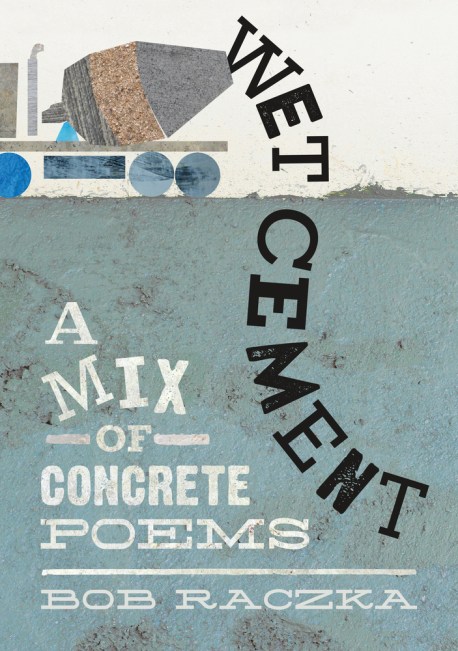
Wet Cement: A Mix of Concrete Poems

By Bob Raczka


When you envision a poem in your head, what do you see? A block of lines? A square or a rectangle? Well, sweep that image from your mind because in Bob Raczka’s Wet Cement: A Mix of Concrete Poems, verses become actions, objects, puzzles, and natural phenomena. Not only are the poems shaped to illustrate their theme, the titles use clever imagery as well.

As you encounter the poem hanger you’ll see that “han” has broken away and is dangling from the hook of g in “ger.” The words of the poem itself are shaped like a hanger and contain a giggle-invoking twist: “I hang out in blue jeans and comfy old shirts. I hang out in blouses and long frilly skirts. I hang out in sport coats and sweaters and shawls. I even hang out with no clothes on at all!”

You might want to get your baseball mitt out before you read homer, in which the first line zooms straight as a pitch and the second—written backwards and at an upward angle—soars like a homerun hit: “The pitcher hurls his hummer toward the slugger squeezing lumber CRA / CK! The slugger slams the hummer toward the bleachers for a homer.”

But don’t put that mitt away just yet! You may need to catch the o, which has escaped from the title p p-up. And if you’ve ever played t-ball, baseball, softball, or even wiffleball, you’ll cringe in recognition of this short but pointed poem.

The sky darkened by night in Dipper and by clouds in Lightning holds two poems expressing very different thoughts. In the title Dipper, the second p has floated to the top of the page where it hangs like a miniature reflection of the dipper-shaped poem, which reads: “Way down there on earth you hold firefly jars, filled up to their lids with light. Up here in the sky, I’m a vessel of stars, my brim overflowing with night.” In the title LIGHTNING, the L strikes the I to create the familiar jagged crack echoed in the shape of the verse: “from a bad mood sky, / tears, / then a jag- / ged slash- / ing flash of anger, / ear- / splitting, / obnoxious, / a cloud tantrum”

Any writer will love poeTRY which is such a clever take on the word as well as the revision and editing process:

“poetry is about taking away the words you don’t need

poetry is taking away words you don’t need

poetry is words you need

poetry is words

try”

Put simply, Bob Raczka’s concrete poems will make you smile. Even more than that, you’ll find yourself wanting to carry this book around, saying “Look at this!” to everyone you meet. Raczka calls these poems “word paintings”—because a poet “uses words like colors to paint pictures inside your head.” If creativity is the talent to present the world in new and surprising ways, making connections that enhance life, then Wet Cement is artistry at its best!

Ages 5 – 9 and up (adults will enjoy these poems as much as kids)

Roaring Brook Press, 2016 | ISBN 978-1626722361

Poem in Your Pocket Day Activity

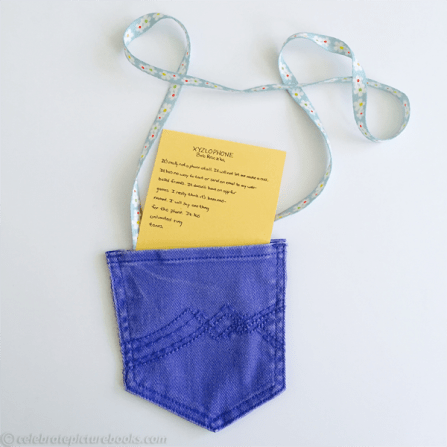
CPB - Pocket Poem Craft

Pocket Poem Carrier


Sometimes you just need a little more inspiration in your day. Here’s a cute way to carry your favorite poem—today and every day!

Supplies

  • An old pair of pants or shorts with back pockets
  • A decorative shoelace
  • Thread or fabric glue
  • Needle
  • Paper
  • Your favorite poem or a poem you write yourself
  • Pen

Directions

  1. Cut one back pocket off an old pair of pants or shorts
  2. Use the shoelace at its full length or cut to desired length
  3. Inside each edge of the pocket sew or glue the ends of the shoelace to make a strap
  4. Print your favorite poem on the paper
  5. Insert the poem into the pocket poem carrier
  6. Take your poem with you and share it with your friends!