October 27 – National Make a Difference Day

celebrate-picture-books-picture-book-review-may-i-come-in-cover

About the Holiday

Make a Difference Day was instituted in 1992 by USA Weekend, a newspaper magazine to encourage individuals and groups to find a way to help others. The idea took off and has become one of the largest single-day celebration of service nationwide. Thousands of people across the country use this day for projects big and small that change the world for the better. To celebrate today consider how you might make a positive change. As today’s book shows, just being a caring friend can go a long way in making someone’s life better.

Sleeping Bear Press sent me a copy of May I Come In? to check out. All opinions are my . own. 

May I Come In?

Written by Marsha Diane Arnold | Illustrated by Jennie Poh


Outside, the rain poured down, and “Raccoon shivered. When “thunder roared, Raccoon quivered.” And the flashes of lightening were just too scary to watch. Raccoon did not like being alone on such a stormy night, so he “grabbed his umbrella and hurried out the door.” Raccoon made his way through muddy Thistle Hollow to his old friend Possum’s tree-trunk den.

celebrate-picture-books-picture-book-review-may-i-come-in-going-out

Image copyright Jennie Pho, 2018, text copyright Marsha Diane Arnold, 2018. Courtesy of Sleeping Bear Press.

There he found Possum nice and dry under his canopy. Raccoon asked, “‘Possum old friend, may I come in?’ / ‘What bad luck,’ Possum replied. ‘My den’s too small for one your size.’” Raccoon climbed down and with a “swish, plish” walked “all the way to Quail’s brambles.” As the wind whipped Raccoon’s scarf, he asked Quail if he could come in. But Quail said her brambles were formed too tight, and Raccoon was too wide to fit inside.

celebrate-picture-books-picture-book-review-may-i-come-in-quail

Image copyright Jennie Pho, 2018, text copyright Marsha Diane Arnold, 2018. Courtesy of Sleeping Bear Press.

Next, Raccoon swish, plished to Woodchuck’s hole. Dug into a hill near an old broken tree and lit by a small candle lamp, Woodchuck’s hole looked cozy. But when Raccoon asked his old friend if he could come in, Woodchuck said, “‘What bad luck. I’ve only room for one to hide.’” Raccoon went away sadly and “stood shaking in the rain. His umbrella blew inside out, His fur felt wet and spongy.” He really did not want to spend the night alone.

celebrate-picture-books-picture-book-review-may-i-come-in-umbrella-inside-out

Image copyright Jennie Pho, 2018, text copyright Marsha Diane Arnold, 2018. Courtesy of Sleeping Bear Press.

There was one more house to try. Raccoon saw a light glowing in the distance. He hurried nearer and nearer and nearer. He knocked at the door and when Rabbit answered, Raccoon could see all of her little rabbits behind her as they “hopped and bopped to the raindrops.” Raccoon hesitantly asked his question then almost immediately took it back. After all, her house was so full. But Rabbit swung the door open wider. “‘What good luck,’ said Rabbit. ‘Come right in. There’s always room for a good friend.’” Rabbit gave Raccoon a comfortable chair to sit in and brought him a cup of tea.

celebrate-picture-books-picture-book-review-may-i-come-in-cozy-chair

Image copyright Jennie Pho, 2018, text copyright Marsha Diane Arnold, 2018. Courtesy of Sleeping Bear Press.

As the storm raged on, Raccoon hummed and smiled happily, smelling the aroma of carrot stew that filled Rabbit’s home. Soon, there was another knock on Rabbit’s door and three voices rang out: “‘being alone on a night like tonight is scary.’” When Rabbit opened the door this time, there stood Possum, Quail, and Woodchuck. The ten little rabbits just kept hopping and bobbing.

Rabbit and Raccoon gazed at each other knowingly. “‘What good luck,’ they said. ‘Come right in. There’s always room for all our friends.’”

celebrate-picture-books-picture-book-review-may-i-come-in-everyone

Image copyright Jennie Pho, 2018, text copyright Marsha Diane Arnold, 2018. Courtesy of Sleeping Bear Press.

From the very first page, young readers will be engrossed in Marsha Diane Arnold’s sweet story of a raccoon who’s looking for company and comfort on a stormy night. As Raccoon swish, plishes through his neighborhood, knocking on door after door only to be met by excuses for why he can’t come in, children will empathize with him and be cheered when Rabbit joyfully invites him in. Readers will understand that they are sometimes like Raccoon, needing a bit of help or support. They will also see that they can always be like Rabbit, offering kindness and inclusion. Arnold’s lyrical language and repeated phrases invite children to read along, offering another sense of camaraderie during story time.

celebrate-picture-books-picture-book-review-may-i-come-in-small-inset

Jennie Poh’s Thistle Hollow is as cute as its name with cozy dens, brambles, and homes carved into hills and trees and adorable woodland neighbors. The lovely smoky blue-grays and dusky greens enhance the beautiful scenery as raindrops plink, plonk and the wind whips Raccoon’s scarf and umbrella. Alert readers may notice that a single owl watches Raccoon as he makes his way from Possum’s den to Quail’s brambles, but as he approaches Rabbit’s inviting home, a pair of birds snuggle against the wind in a hollow tree. Rabbit’s home is warm, snug, and relaxed as the ten bunnies hop and bop, enjoying some fun with their siblings and guests.

May I Come In? would be a welcome addition to home, classroom, and school libraries to open discussions of kindness, inclusion, and helpfulness for children. The story could easily be adaptable to acting out for a classroom or children’s program to highlight the lesson of inclusion and make it more personal.

Ages 4 – 8

Sleeping Bear Press, 2018 | ISBN 978-1585363940

You’re invited to download the May I Come In? Activity Pages here or from Sleeping Bear Press.

May I Come In? Coloring Page May I Come In? Matching Page | May I Come In? Rhyming Page

Discover more about Marsha Diane Arnold and her books on her website.

To learn more about Jennie Poh, her books, and her art work, visit her blog.

National Make a Difference Day Activity

celebrate-picture-books-picture-book-review-random-acts-of-kindness-cards-feb-2018

Random Acts of Kindness Cards


Here are some cheery cards that are sure to make the recipient’s day happier! Give them to a friend, a family member, your teacher, or your bus driver to show them that you care and that they mean a lot to you!

Random Acts of Kindness Cards Sheet 1Random Acts of Kindness Cards Sheet 2

celebrate-picture-books-picture-book-review-may-i-come-in-cover

You can find May I Come In? at these booksellers:

Amazon | Barnes & Noble | Books-a-Million | IndieBound | MacIntosh Books of Sanibel Island, FL


Picture Book Review

October 17 – It’s National Bullying Prevention Month

celebrate-picture-books-picture-book-review-what-if-everybody-said-that-cover

About the Holiday

Every day bullying affects children and adults across this country and worldwide. Overt and subtle, in person and online, bullying destroys happiness, taints school and workplace environments, and sows an atmosphere of distrust and discord. Who can help? Each one of us! National Bullying Prevention Month reminds us that by treating others kindly and with empathy, our world can become a friendlier, more harmonious place. Instituted by PACER’s National Bullying Prevention Center in 2006, the holiday encourages people to think about how they treat others and provides assistance for schools and others to make positive change. To learn more about what you can do as well as to find classroom toolkits and other resources and information on Unity Day, celebrated on October 24, visit PACER’s website.

Two Lions sent me a copy of What If Everybody Said That? to check out. All opinions are my own. I’m also happy to be partnering with Two Lions in a giveaway of the book. See details below.

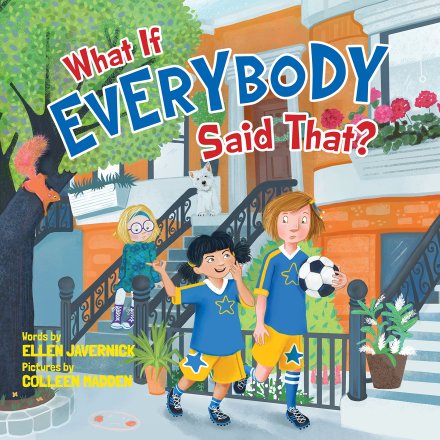
What If Everybody Said That?

Written by Ellen Javernick | Illustrated by Colleen Madden


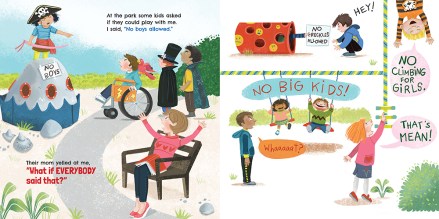
At the playground a little girl dressed as a pirate and standing on the prow of her sandbox ship greeted three boys wanting to play with, “‘No boys allowed.’” Their mom overheard her and yelled, “‘What if everybody said that?’” If everybody did say such things would the play tube be off-limits to kids with freckles or the swings forbidden to big kids or the ladder for boys to climb only? That would make some kids pretty mad.

celebrate-picture-books-picture-book-review-what-if-everybody-said-that-no-boys

Image copyright Colleen Madden, 2018, text copyright Ellen Javernick. Courtesy of Two Lions.

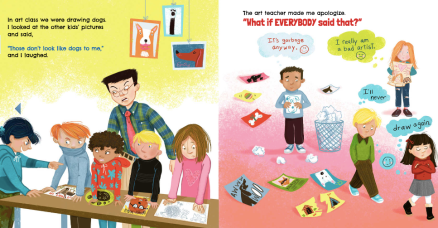
In art class the girl looked at the other kids’ drawings of dogs. She admits she said: “‘Those don’t look like dogs to me,’ and I laughed.”“‘What if EVERYBODY said that?’” her teacher asked. Then most kids would crumple up their work, throw it away, or even decided they would “never draw again.” At sharing time, this little girl threw a fit because she wanted to be first and talk about her new shoes. What happened? “Our teacher frowned at me and said, ‘What if EVERYBODY said that?’” What an uproar that would cause as all the kids clamored to show their special things.

celebrate-picture-books-picture-book-review-what-if-everybody-said-that-dogs

Image copyright Colleen Madden, 2018, text copyright Ellen Javernick. Courtesy of Two Lions.

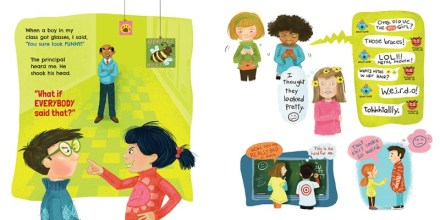
When the girl told a boy in her class that his new glasses made him look funny, the principal called her on it. Imagine how the new girl would feel if she saw the texts between two of her classmates, monstagurl15 and badfish8—“Those braces!” “LOL!!! Metal Mouth” “What’s w/the flowers in her hair?” “W.e.i.r.d.o!” “Tohhhtallly.”—when she thought the flowers looked pretty and there’s nothing you can do about braces.

celebrate-picture-books-picture-book-review-what-if-everybody-said-that-texting

Image copyright Colleen Madden, 2018, text copyright Ellen Javernick. Courtesy of Two Lions.

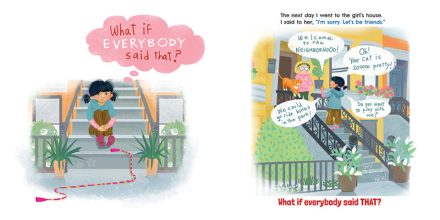
What if no one in the world would share or send others good wishes? What if everyone scared others for a laugh and quit as soon as things didn’t go their way? What kind of world would it be if no one became friends? Finally, the little girl reflects on her attitude toward others and realizes what her life would be like if she was all alone. She has a change of heart, apologizes to the new girl in the neighborhood that she ignored, and invites her to play.

Now she asks readers to imagine what life would be like if everybody said things like “‘Let’s be friends.” “Welcome to the neighborhood!” Oh! Your cat is sooooo pretty!” The world would be an awesome place if everyone invited others along on life’s journey.

celebrate-picture-books-picture-book-review-what-if-everybody-said-that-no-friends

Image copyright Colleen Madden, 2018, text copyright Ellen Javernick. Courtesy of Two Lions.

Through one girl’s self-described journey to enlightenment, Ellen Javernick powerfully engages readers in thinking about how what they say and do affects others. As the girl relates circumstances in which she snubbed others, put herself first, insulted other kids’ efforts, and was mean in many other ways on the left-hand page while on the right-hand side are several more examples of the results of bullying behavior. Javernick’s examples are realistic and span a wide range of types of bullying from hurtful comments to snarky texts to thinking only of oneself. Each page offers opportunities for discussion, reflection, and learning.

Colleen Madden’s emotion-filled illustrations show  what kind of world we would live in if everybody rejected, ignored, and bullied others. Faces of the children and adults clearly show emotions of smugness, anger, disappointment, and sadness. Sprinkled throughout in thought bubbles and as decorations are emojis that readers will recognize and understand. Madden’s images work hand-in-hand with Javernick’s story to give both kids and adult readers much to think about.

An excellent book to discuss how one person’s words and actions affect others, What If Everybody Said That would be a terrific addition to home, classroom, and library bookshelves.

Ages 3 – 8

Two Lions, 2018 | ISBN 978-1503948952

What If Everybody Said That? Giveaway

I’m excited to partner with Two Lions Publishing in this giveaway of

  • One (1) copy of What If Everybody Said That? written by Ellen Javernick | illustrated by Colleen Madden

To be entered to win, just Follow me on Twitter @CelebratePicBks and Retweet a giveaway tweet during this week, October 17 – 23. Already a follower? Thanks! Just  Retweet for a chance to win.

A winner will be chosen on October 24.

Giveaways open to US addresses only. | Prizing provided by Two Lions Publishing.

National Bullying Prevention Month Activity

celebrate-picture-books-picture-book-review-say-something-nice-cards

Say Something Nice! Cards


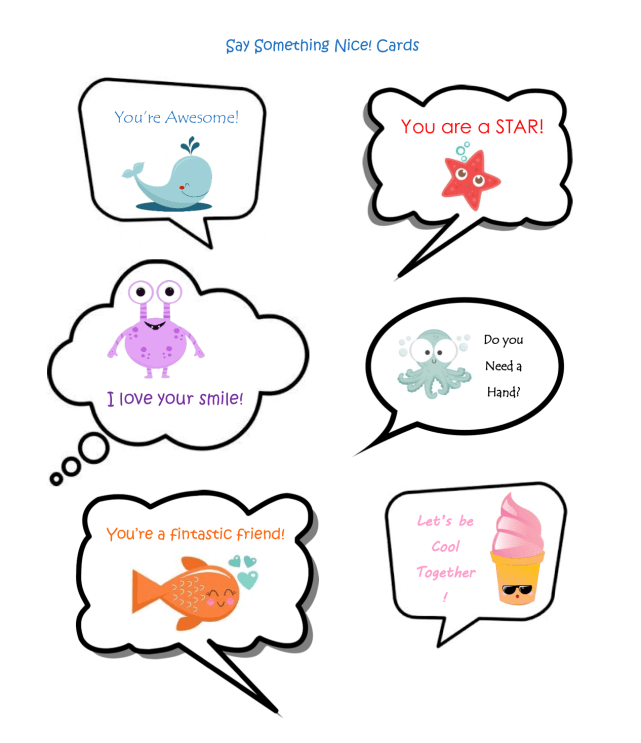
Do you want to give someone a nice surprise? Print out these cards and give one to a friend, to someone you’d like to know, or to anyone who looks like they need a pick-me-up! If you’d like to make your own cards, print out the blank template and write and/or draw your own message! You can also print these on adhesive paper and make your own stickers.

Say Something Nice! Cards | Say Something Nice! Cards Blank Template

celebrate-picture-books-picture-book-review-what-if-everybody-said-that-cover

You can find What If Everybody Said That? at these booksellers

Amazon | Barnes & Noble | Books-a-Million | IndieBound

Picture Book Review
 

September 22 – National Elephant Appreciation Day

celebrate-picture-books-picture-book-review-strictly-no-elephants-cover

About the Holiday

While today’s holiday was established in 1996 by Mission Media and its owner Wayne Hepburn because of Hepburn’s love for elephants, the day has garnered official recognition and deserves wide acknowledgement. These gentile, giant animals need our protection from environmental and human dangers. To celebrate today’s holiday visit a zoo or animal preserve, watch a documentary on elephants, or consider donating to their cause.

Strictly No Elephants

Written by Lisa Mantchev | Illustrated by Taeeun Yoo


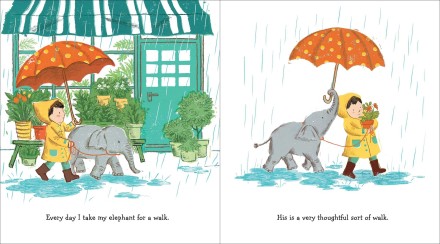
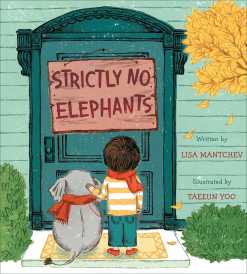
A little boy, his adorable pet elephant by his side, kneels on his bed and gazes out the window at the brownstones across the street. There he sees other kids with their—more conventional—pets: a bird, a cat, a fish, and dogs. “The trouble with having a tiny elephant for a pet is that you never quite fit in,” the boy reveals. Every day the boy takes his elephant for a walk, but even in this common pet-owner activity, the boy and the elephant show their special relationship. The elephant is thoughtful—protecting the boy with an umbrella on rainy days—and the boy is considerate—carrying his elephant over cracks in the sidewalk that frighten it. Why? Because “that’s what friends do: lift each other over the cracks.”

celebrate-picture-books-picture-book-review-strictly-no-elephants-thoughtful-pet

Image copyright Taeeun Yoo, courtesy of simonandschuster.com

On this particular day the boy winds a red scarf around his elephant’s neck and joins the parade of kids on their way to Number 17 where the Pet Club meets. The elephant is reluctant, but the boy is reassuring, even carrying his pet on his back the last few feet. “‘It’ll be fine,’” he says. But when they reach the apartment, there’s a sign on the door that reads “Strictly No Elephants.” There’s even a picture of a crossed out elephant on the sign.

The elephant understands all too well and leads the boy back onto the sidewalk, now ignoring the cracks. “‘That’s what friends do: brave the scary things for you,’” the boy says. The day has suddenly become rainy, and they are caught on the sidewalk without an umbrella. Taking shelter under an awning, the two find a little girl holding her pet skunk. “‘Did you try to go to the Pet Club meeting too?’” she asks. “‘Yes,’” the boy says, “‘But they don’t allow elephants.’”

celebrate-picture-books-picture-book-review-strictly-no-elephants-girl-with-skunk

Image copyright Taeeun Yoo, courtesy of simonandschuster.com

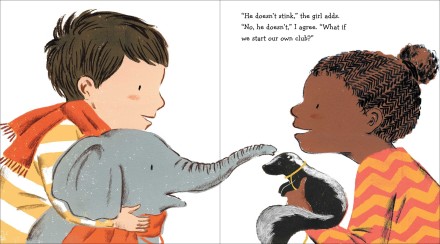
While the sign may not explicitly forbid skunks, the little girl says that the other members didn’t want to play with her and her skunk either. Wisely, the boy tells her “‘They don’t know any better.’” The elephant reaches out its trunk toward the skunk with the girl’s reassurance that he doesn’t stink. The two new friends decide to start their own pet club and head down the sidewalk to find a venue. The boy makes sure that his elephant follows because friends “‘never leave anyone behind.’”

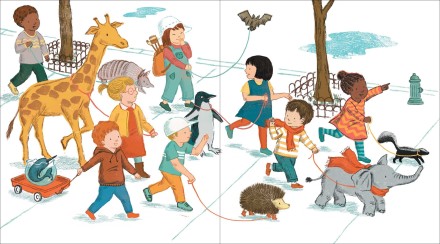
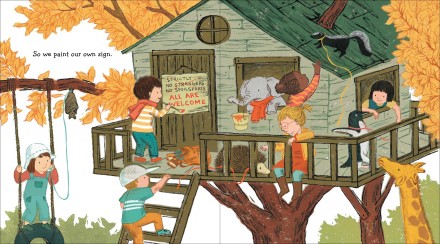
On the way the boy, girl, elephant, and skunk encounter a whole crowd of kids with unusual pets—a tiny giraffe, a mini narwhal, an armadillo, a bat, a hedgehog, and a penguin. They come to a park, complete with tree house, that is perfect for their club. The kids and pets eagerly adopt their new play space—swinging on the tire swing, waddling around the balcony, exploring the roof, playing tag, reading, and more. The boy quickly does the most important thing of all: he paints a new sign for the clubhouse door. “Strictly No Strangers, No Spoilsports ALL ARE WELCOME” it reads. And if you need directions to the club, the boy’s tiny elephant will give them to you “‘because that’s what friends do.’”

celebrate-picture-books-picture-book-review-strictly-no-elephants-new-friends

Image copyright Taeeun Yoo, courtesy of simonandschuster.com

Lisa Mantchev has written a story addressing the types of isolation and rejection that kids (and adults) can face—sometimes because of a single perceived difference—in an uplifting and productive way. With gentle honesty and thoughtfulness, Mantchev invites kids to consider their actions, attitudes, and responses to others. As Mantchev reveals, more inclusiveness leads to more understanding and better relationships. Her lyrical language and sweet reminders of “what friends do” elevate this tribute to camaraderie and companionship and make it a story kids will want to hear again and again.

celebrate-picture-books-picture-book-review-strictly-no-elephants-new-clubhouse

Image copyright Taeeun Yoo, courtesy of simonandschuster.com

Taeeun Yoo’s adorable illustrations of the boy, his tiny pet elephant, and the other animal-and-owner pairs are irresistible. Any reader would want a pet as cute and adaptable as these, which leads to a good opportunity for adults and children to discuss the ideas of and attitudes behind exclusion in this story and in real life. As the boy and his elephant are turned away from the Pet Club door, the day turns dark and stormy. The two-page spread is rendered in somber shades, except for the little boy with his yellow-striped shirt and red scarf, the elephant sporting a matching red scarf, and the soon-to-be-met brown-skinned girl who wears a red and yellow-striped dress, emphasizing the connections between these two children. The final pages in which the new friends meet and play together are joyful, inviting all readers to “join the club.”

Strictly No Elephants gives readers so much to see, think about, and discuss. The book is a must for school and classroom libraries and would be a very welcome addition to children’s home bookshelves.

Ages 4 – 8

Simon & Schuster, 2015 | ISBN 978-1481416474

Discover Lisa Mantchev’s books for children, young adults, and adults on her website.

See a gallery of books by Taeeun Yoo on her website!

Elephant Appreciation Day Activity

celebrate-picture-books-picture-book-review-Spool-Elephant-Craft

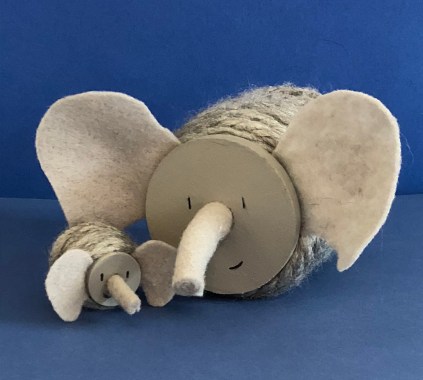
Spool Elephant and Baby


Who wouldn’t like a tiny elephant for a pet?! With this easy craft you can make your own little pal to keep you company.

Supplies

  • Printable Elephant Ears Template
  • 1¾-inch wooden spool with center hole, available at craft stores
  • ¾ -inch wooden spool with center hole, available at craft stores
  • Gray craft paint
  • Chunky gray yarn
  • Gray felt, 1 8 ½ x 11 piece
  • Paint brush
  • Black fine-tip marker
  • Hot glue gun or fabric glue

Directions

To Make the Ears

  1. Print the Elephant Ears Template
  2. Trace and cut out the large and small ears

To Make the Body

  1. Paint the spools with the gray paint, let dry
  2. Glue the tab on the ears to the body of the spool to secure, allowing the ears to stick out on either side of one flat end of the spools
  3. Wind the gray yarn back and forth around the spool, creating several layers of thickness
  4. When the body is as thick as you desire, cut the end and secure with glue

To Make the Trunk

  1. Cut a 2 x 4-inch piece of felt for the large elephant; 1/2 x 2-inch piece for small elephant
  2. Roll tightly and secure with glue
  3. Feed one end of the roll into the hole in the middle of the spool
  4. Cut to desired length

To Make the Tail

  1. Twist a small length of yarn and push it into the hole on the back of the spool
  2. With the marker draw eyes and a mouth on the face

celebrate-picture-books-picture-book-review-strictly-no-elephants-cover

You can find Strictly No Elephants at these booksellers

Amazon | Barnes & Noble | Books-a-Million | IndieBound

Picture Book Review

August 4 – National Friendship Day

celebrate-picture-books-picture-book-review-bear's-scare-cover

About the Holiday

Originally founded in 1919 by the Hallmark Card company to encourage people to celebrate their friends by sending cards, the holiday has transitioned into a worldwide event commemorated in multiple ways from sending an emoji-filled text to getting together to share favorite activities. However you choose to celebrate, be sure to let your friends know how much they mean to you!

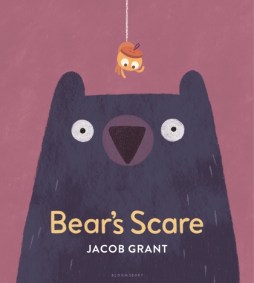
Bloomsbury Children’s Books sent me a copy of Bear’s Scare to check out. All opinions are my own. I’m excited to be partnering with Bloomsbury in a giveaway of a copy of Bear’s Scare. See details below.

Bear’s Scare

By Jacob Grant


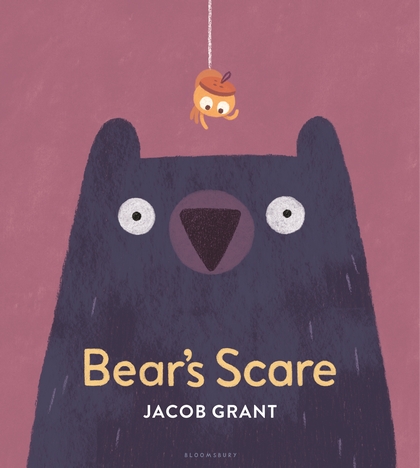
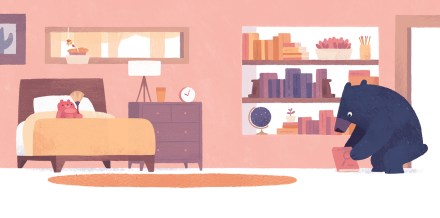
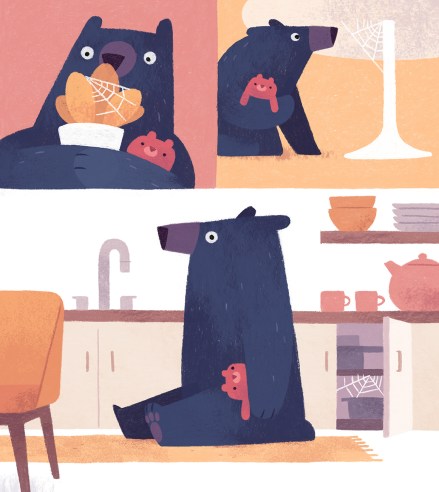
Bear was very tidy. Every day, he swept and dusted and took great care to make sure everything was put in its proper place. “There was one thing Bear loved to care for most of all. A small stuffed friend, named Ursa.” Bear and Ursa spent every minute of every day together, and each day they cleaned their house top to bottom.

celebrate-picture-books-picture-book-review-bear's-scare-cleaning

Copyright Jacob Grant, 2018, courtesy of Bloomsbury Children’s Books.

One day, Bear discovered a book lying on the floor. He was sure he hadn’t left it there, and when he picked it up, he found a sticky spider’s web attached to it. He was sure that the spider was making his neat house sticky and messy and that the spider was nothing like them at all. He looked the house over more carefully, and “the more he searched, the more messy webs he found. ‘Ursa, we have a spider problem,’ said Bear.”

As the spider knitted a scarf using two legs while pouring tea using two more and then painted a picture of one of Bear’s potted flowers, Bear fretted over the mess the spider was making. He was determined to find the spider. Bear and Ursa searched everywhere but did not find it. Bear even lifted up the sofa to peer underneath. When he lowered the sofa to the floor again, however, Bear did not see that Ursa’s arm became pinned under its leg.

celebrate-picture-books-picture-book-review-bear's-scare-webs

Copyright Jacob Grant, 2018, courtesy of Bloomsbury Children’s Books.

When Bear picked up Ursa, her arm ripped off. “Bear lay there for some time,” sad about what had happened to Ursa and about the mess he’d made. Then he ran to get supplies to “help his friend.” When he got back, though, the spider had already reattached Ursa’s arm with its sturdy web. Bear hugged Ursa tight.

Then, “among the books, Bear found something he never expected.” The bookshelf the spider called home was just as neat as Bear’s house. There were books, and a broom, and even a painting of Bear. “‘I certainly do not mind sharing my home with one more friend,’” Bear said. And Bear and Ursa were content—even when one new friend turned into many.

celebrate-picture-books-picture-book-review-bear's-scare-bear-finds-spider

Copyright Jacob Grant, 2018, courtesy of Bloomsbury Children’s Books.

For those who embrace the status quo and like things just so, Jacob Grant’s sweet story demonstrates that there’s always room for one—or many—more. While Bear initially thinks the spider is not like him and Ursa, his quiet appreciation for spider’s help as well as his realization that he and the spider do share many of the same attributes models the kind of thoughtful inclusion that builds strong friendships.

celebrate-picture-books-picture-book-review-bear's-scare-spider-painting

Copyright Jacob Grant, 2018, courtesy of Bloomsbury Children’s Books.

Grant’s endearing illustrations show Bear’s love for Ursa as he cradles the little stuffed bear while reading to her, carries her from room to room, appolgizes for the accident, and hugs her when she is fixed. The little round spider who sports a button with a loop of thread for a hat is adorable as it goes about its artistic pursuits. The final double-page spread of the spider lounging in a web hammock attached to Bear’s reading chair while fourteen other spiders play, work, and listen to Bear read to Ursa is heartwarming. Kids will love finding the little spider on each page as well as all the ways in which the spider’s shelf is similar to Bear’s house.

A touching tribute to friendship—old and new—as well as a thoughtful contemplation on preconceived notions for young readers, Bear’s Scare is a delightful book to share at home and in the classroom.

Ages 3 – 6

Bloomsbury Children’s Books, 2018 | ISBN 978-1681197203

Discover more about Jacob Grant, his books and his art on his website.

Get caught up in the Bear’s Scare book trailer!

National Friendship Day Activity

celebrate-picture-books-picture-book-review-bear-craft

Friendly Storytelling Bear Craft


Bear loved to read stories with Ursa and the spider! Now you can tell your own stories with this Friendly Storytelling Bear Craft! Use the templates and/or make your own expressions to make up great stories! You can also play a game to collect all the parts of the bears face to win.

Supplies

  • Printable Bear Head Template
  • Printable Eyes and Noses Template
  • Printable Eyebrows  and Ears Template
  • Light brown felt or fleece (or color of your choice), 8 ½ x 11 inch piece
  • Dark brown felt or fleece(or color of your choice), 8 ½ x 11 inch piece
  • White felt or fleece, 8 ½ x 11 inch piece
  • Black felt or fleece, for pupils
  • Scissors
  • Glue
  • 1 playing die (optional)

Directions

  1. Print templates
  2. Cut bear head from light felt or fleece
  3. Cut eyes from white felt or fleece
  4. Cut nose and inner ears from dark brown felt or fleece
  5. Cut pupils from black felt or fleece
  6. Glue pupils onto white eyes

Alternately: Color and play with the paper set

For a Fun Story Time

Give the bear different faces and make up stories of why he looks that way!

To Play a Game

Roll the die to collect parts of the bear’s face. The first player to create a full face is the winner.

  • Die dots correspond to:
  • 1—one eyebrow
  • 2—second eyebrow
  • 3—one eye
  • 4—second eye
  • 5—nose
  • 6—inner ears

celebrate-picture-books-picture-book-review-bear's-scare-cover

You can find Bear’s Scare at these booksellers

Amazon | Barnes & Noble | Books-a-Million | IndieBound

Picture Book Review
July 6 – It’s National Umbrella Cover Day

celebrate-picture-books-picture-book-review-the-green-umbrella-cover

About the Holiday

Okay, so this is one of those holidays that just make you say, “Hmmm….” But, really, you know…why not? Made of the same material as the umbrella, and either slippery enough to slide right off or maddeningly tight enough to require superhuman peeling abilities, the umbrella cover is apparently the subject of controversy: Is it useful or just a waste of material? One woman who is firmly on Team Useful is Nancy 3. (formerly Arlene) Hoffman, who–in 1996–founded the Umbrella Cover Museum. First displayed in Hoffman’s kitchen, her collection has grown from “seven or so” covers to more than 700–enough to warrant mention in The Guinness Book of World Records. The museum is now housed in  two rooms on Peaks Island, Maine. Today’s holiday was officially recognized in 2014. To learn more about Nancy Hoffman and her collection, visit the Umbrella Cover Museum’s website.

The Green Umbrella

Written by Jackie Azúa Kramer | Illustrated by Maral Sassouni


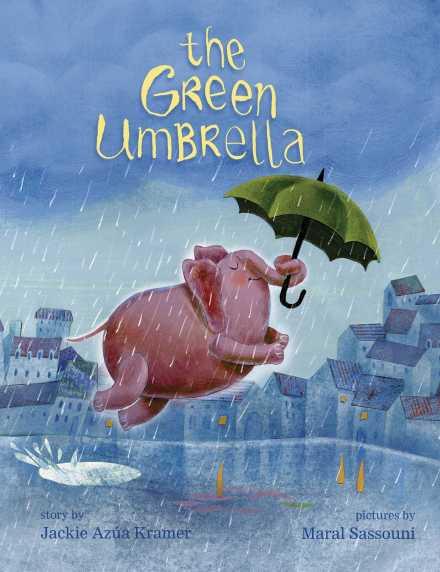
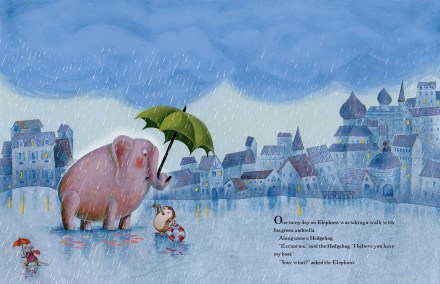
On a gray and rainy day, Elephant went out walking with his green umbrella. He met a hedgehog who hailed him and said, “‘Excuse me. I believe you have my boat.’” Elephant was perplexed, so Hedgehog expounded on his theory. “‘I crossed deep oceans on my boat and faced the crash of icy waves. I saw dolphins leap two by two and tasted the salty spray of whales. The stars were my guide and my boat a faithful friend.”

celebrate-picture-books-picture-book-review-the-green-umbrella-hedgehog

Copyright Maral Sassouni, 2017, text copyright Jackie Azúa Kramer, 2017. Courtesy of simonandschuster.com.

This poetic travelogue did not convince Elephant of the umbrella’s provenance, but he offered to let Hedgehog ride along and share in its protection. The two came upon a Cat, who took one look at the green umbrella and recognized it as her tent. Hmmm…said Elephant and Hedgehog. It was true replied Cat, and she related how when she visited the woods to study plants and flowers, she would rest in its shade and drink a cup of tea.

celebrate-picture-books-picture-book-review-the-green-umbrella-bear

Copyright Maral Sassouni, 2017, text copyright Jackie Azúa Kramer, 2017. Courtesy of simonandschuster.com.

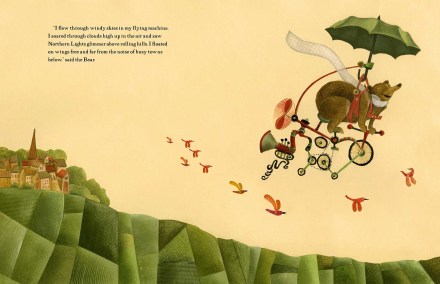
This story seemed no more plausible than Hedgehog’s, but Elephant invited Cat to ride along and share in the umbrella’s protection. As they continued on, the Bear approached, sure that they had his flying machine. “‘Your what?’ asked the Elephant, the Hedgehog, and the Cat.” The Bear got a faraway look in his eyes as he said, “‘I soared through clouds high up in the air and saw Northern Lights glimmer above rolling hills. I floated on wings free and far from the noise of busy towns below.’”

Well, Elephant could play this game too. The umbrella was his and his alone. When he was a child, Elephant said, the umbrella was his pirate sword, his tightrope balance, and his baseball bat. By this time the rain had stopped. Elephant rolled up his umbrella and said good-bye to the Hedgehog, the Cat, and the Bear. The three couldn’t stand to see their boat/tent/flying machine taken away, so they clung to the Elephant.

celebrate-picture-books-picture-book-review-the-green-umbrella-tea-party

Copyright Maral Sassouni, 2017, text copyright Jackie Azúa Kramer, 2017. Courtesy of simonandschuster.com.

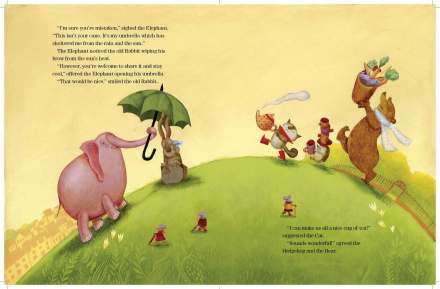
A moment later they met an old Rabbit. “‘I believe you have my cane,’” he said. The others thought he was wrong. But this handy stick, the Rabbit explained, had helped him climb pyramids, hike mountains to ancient ruins, and navigate dark caves full of treasure. Again the Elephant objected, but seeing the old Rabbit mopping his forehead, he opened it and shaded the Rabbit from the sun. The Cat offered to make a pot of tea, and the Bear and the Hedgehog helped lay out a picnic lunch.

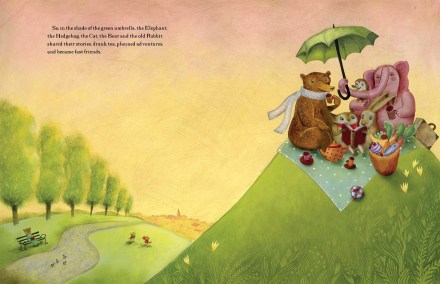
Under the cool umbrella, the five “shared their stories, drank tea, planned adventures, and became fast friends.” From then on when it was sunny, they went “Sailing, Camping, Flying, and Hiking” together. “And when it rained they stayed dry under the green umbrella.”

celebrate-picture-books-picture-book-review-the-green-umbrella-friends

Copyright Maral Sassouni, 2017, text copyright Jackie Azúa Kramer, 2017. Courtesy of simonandschuster.com.

Jackie Azúa Kramer’s multi-layered story delves into the large points and small nuances of relationships old and new. The Elephant’s green umbrella is both a subject of envy and a uniting object. It also serves to demonstrate Elephant’s ability to stick up for himself as well as his willingness to share. As each animal presents an imaginative and compelling reason why the green umbrella belongs to them, the Elephant rejects the story while accepting the friend. In each animal’s lushly described imagination, Kramer does a beautiful job of showing readers how each of these friends are similar. She reveals that while friends can have different opinions, they can still find common ground.

celebrate-picture-books-picture-book-review-the-green-umbrella-followers

Copyright Maral Sassouni, 2017, courtesy of simonandschuster.com

Maral Sassouni’s dream-like illustrations are both exotic and homey. Village houses give way to turreted and domed towers, and the imaginative stories the animals tell are accompanied by details as free, cozy, or eccentric as their tales. The Elephant’s account is cleverly rendered in sepia tones, showing the age of the memories and who the original owner of the coveted umbrella really is. The final images of the five new friends sharing adventures in the green umbrella are sure to delight little ones.

The Green Umbrella is a perfect book to share on rainy days or sunny days. With humor and creativity, the book provides an opportunity to talk about the nature of friendship and sharing with children. It would make an often-read addition to public, classroom, and home libraries.

Ages 4 – 8

NorthSouth Books, 2017 | ISBN 978-0735842182

Discover more about Jackie Azúa Kramer, her books, and a fun book-related activity on her website!

Learn more about Maral Sassouni and her artwork on her website!

Don’t wait for a rainy day to watch The Green Umbrella book trailer!

National Umbrella Cover Day Activity

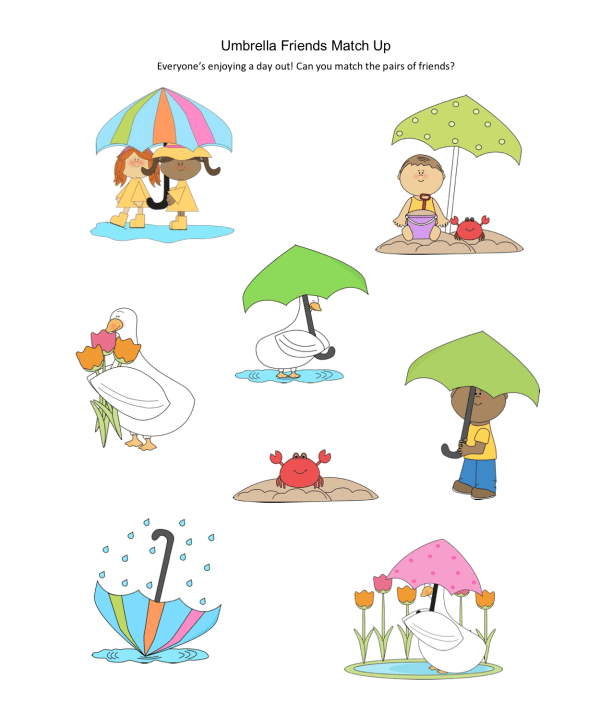
celebrate-picture-books-picture-book-review-umbrella -friends-match-upUmbrella Friends Match Up Puzzle


These friends are all enjoying a day out! Can you find the matching pairs in this printable Umbrella Friends Match Up Puzzle?

celebrate-picture-books-picture-book-review-the-green-umbrella-cover

You can find The Green Umbrella at these booksellers

Amazon | Barnes & Noble | Books-a-Million | IndieBound

Picture Book Review


June 5 – It’s Great Outdoors Month and Interview with Author/Illustrator Paul Owen Lewis

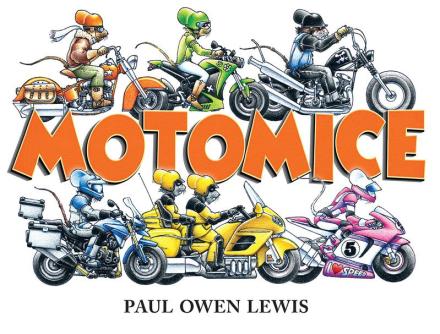
celebrate-picture-books-picture-book-review-motomice-cover

About the Holiday

Getting outside is one of the joys of summer! As schools close, leaving more time for leisure pursuits, it’s fun to explore the great outdoors through hiking, biking, swimming, camping, and just plain playing. Some people even give up their cold-weather vehicles and take to the open road on scooters and motorcycles. Having a variety of summer experiences gives you the opportunity to meet different people and make new friends—just like the mice in today’s book!

Motomice

By Paul Owen Lewis


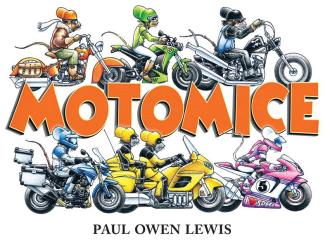
When you imagine a biker do you think of someone who wears black, looks tough, and roars through town on a loud motorcycle? Well, let’s take a ride and see what a colorful crew bikers really are! Did you know that some “bikers wear orange. They look like pilots” as they roll through the suburbs. Sometimes “their motorcycles are old.”

celebrate-picture-books-picture-book-review-motomice-roxie

Copyright Paul Owen Lewis, 2018, courtesy of Beyond Words Publishing.

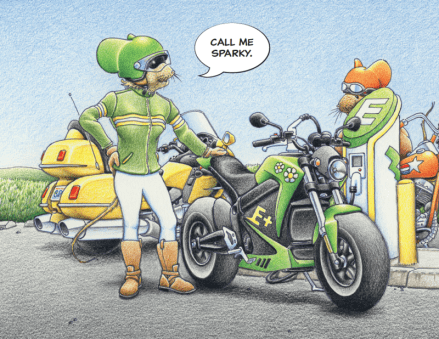
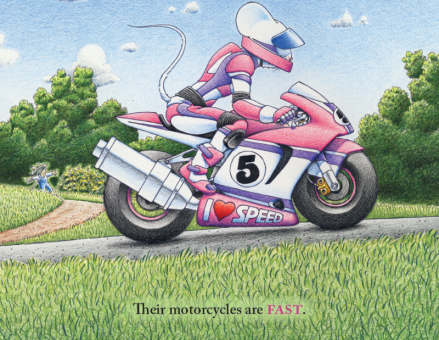
Some “bikers wear pink” like Roxie, who zooms around the track or heads out on a winding country lane on her sleek, fast motorcycle. There are even grandmas and grandpas who are bikers. They travel all over on big, sturdy motorcycles that can carry loads of stuff for camping with friends. Have you ever spied someone in silver and blue with a fancy helmet who looks a bit like an astronaut, it’s a good bet they’re a biker too! And—look!—there’s Sparky refueling her green motorcycle at the electric vehicle charging station. She “cares about the environment.” Her motorcycle is quiet. Then all gassed up and ready to go, the group is off again. But where to? It’s a Motomice Reunion Rally, where “everyone is welcome!”

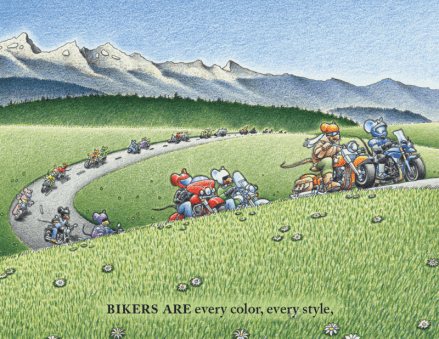
So whatever road you’re on, take a good look. “Bikers are every color, every style, and every kind of person. If fact, “they are just like you and me.”

celebrate-picture-books-picture-book-review-motomice-sparky

Copyright Paul Owen Lewis, 2018, courtesy of Beyond Words Publishing.

In his heartwarming story, Paul Owen Lewis introduces kids to the welcoming community of bikers, replacing the stereotype of the tough, leather-clad biker with the reality that bikers come from all walks of life. By using different colors, comparing the appearance of bikers and their motorcycles to other professions, and adding that even grandpas and grandmas are bikers, Lewis gives readers concrete ways to relate to bikers even if they’ve only seen bikers passing by on the street. Many kids, of course, have family members and friends who ride motorcycles. Motomice is a joyful book for them to share with their biker buddies.

celebrate-picture-books-picture-book-review-motomice-every-color-every-style

Copyright Paul Owen Lewis, 2018, courtesy of Beyond Words Publishing.

Lewis’s stunningly realistic depictions of a variety of motorcycles will thrill detail-oriented and vehicle-loving kids. As the mice roll through beautiful vistas—adding new friends along the way—each double-page spread mirrors the sweeping feeling of the open road. A clever image occurs when the biker dressed like an astronaut hails his friends from a rocky, lunar-esque mountain side. The image of the reunion rally, where motorcycles line both sides of the street as far as the eye can see, is full of cheer and camaraderie. On the final page, the crew welcomes a baby, happy and secure with Mom in her sidecar, to the Motomice family. Young readers will feel the warm embrace as well.

Ages 3 – 7

Beyond Words Publishing, 2018 | ISBN 978-1582706603

Discover more about Paul Owen Lewis, his books, and his art on his website.

Meet Paul Owen Lewis

celebrate-picture-books-picture-book-review-motomice-paul-owen-lewis

Today, I’m happy to be talking with Paul Owen Lewis, who always offers a unique perspective in his work, about being a biker, Northwest Coast Native carving, and how to answer the heart’s questions in a story.

What inspired you to write Motomice?

I was inspired when I discovered there were 25 million active riders in the US and their average age was 52, which means there are millions of grandparents riding out there. But there wasn’t a single quality kid’s book on the market anywhere to share with their grandkids about their passion for motorcycles, and the true nature of the community who ride them (as opposed to the negative stereotype in the media). And being both a biker and an author I thought I had just the credibility to create it.

For a more detailed account, go to http://www.paulowenlewis.com/motomice/behindthestory.html

In Motomice, the different bikers and their motorcycles are described by color. What color biker are you and why?

I suppose I’m a little of all of them. Most true motorcycle enthusiasts would say they would like to collect and ride almost every style or genre (I would!). But the colors in Motomice are more or less arbitrary with the possible exception of Rat’s black bike. I chose black for him since it’s the go-to color of those who want to strike the bad-biker-boy image. And perhaps Roxy’s pink bike is meant to express associations with femininity (FYI, there are lots of female professional racers out there proudly sporting pink gear), but as for me, I’ve worn at least four of them in my 40 years of riding. So far I’ve had red, green, black, and orange motorcycles, café racers, cruisers, and sports bikes, and I wouldn’t rule out something blue and/or yellow in my future. What can I say? It’s an addiction.

As a fine artist, what attracted you to become a picture book author?

Right after art school, when I was doing my student teaching, Chris Van Allsburg’s books started appearing (Jumanji, The Polar Express, etc.) and I was struck by how solid, opaque, and strong his images appeared. Not at all like the usual dreamy, tentatively pencil-drawn images washed with faint tints of watercolor I was used to seeing in children’s book illustrations in my youth. And I remember thinking, “Wow, that’s what picture book art is like now? Awesome stuff. Maybe that’s what I’ll do with my artistic skills at some point; illustrate picture books in that in-your-face solid style that argues for its own believable reality.”

You have a very interesting artistic career that includes carving chests and totem poles in the Northwest Coast Native style. Can you describe how you began carving and a bit about your work? Are any of your carvings on public display?

In the early 90s I started noticing Northwest Coast Native art in and around Seattle. It seemed to be everywhere. And, being someone who is fascinated by the origins of things, I realized this was the unique art that originated from this unique region (as say, Egyptian art emerged from Egypt), and, being a “native” of the Northwest myself, felt like it was something I should know more about. Well, one thing led to another and soon I was taking carving lessons from some of the finest artists of the region. Then I thought to ask myself, “Has anyone done a picture book with this amazing cultural art?” So with the help and guidance of my artist friends and scholars, Storm Boy was soon born. After its publication in 1995 I became quite well-known among these circles and was offered many more opportunities to further my carving and cultural experiences. It’s truly been one of the great privileges of my life.

Your earlier books, including Storm Boy, Frog Girl, and Davy’s Dream, as well as your fine art (some examples can be seen on Paul’s website) seem to blur the distinction between earth and universe, wakefulness and dreams, allowing reality to be defined by the reader or viewer. Can you talk about your perspective a little and also why children are attracted to this perception?

Well, “blurring distinctions” is pretty much what a lot of art is about, or existing in a place in between realities. At least much of my art and interests are. I don’t think you have to look further than my own childhood for possible clues to its genesis. Both my parents succumbed relatively early in their lives to catastrophic illnesses. So, unlike so many of my middle class, suburban peers with stable home lives, I grew up with absolute uncertainty at home. And now that I’m no longer a child, I can see that I wasn’t unusual. I know now that lots of children, perhaps a majority of them, are struggling with similar questions and circumstances. So stories and art that reflect this circumstance, their reality of blurred distinctions, are bound to be of interest.

You’re well known for your inspirational school visits. Can you talk a little about your presentations? Do you have an anecdote from any presentation you’d like to share? Do you ever hear later from any of the kids that heard you speak?

When I speak at a school it is not merely to entertain (though they get that, too). I’m speaking to that kid who was me, that kid who finds him or herself in a confusing, complicated, even dangerous place and dreams of something better, but who has no way to express or see their way to it. So I tell them that writers write stories to answer the questions of their hearts. I steer them there and urge them to write the kind of story they would like to live, the kind of story that would answer the questions of their hearts.

I also tell them that writing is first storytelling, and every human being tells stories. It’s who we are. It’s what makes us human. So if you can tell a story you can write a story – and so, yes, you too can be a writer if you really want. For those who are intimidated by the writing process (words first, in sequence, on paper) I say don’t write first but tell; tell your story any way you can—whether that’s talking, acting, singing, or drawing—and capture the main points with notes, sketches, recordings, whatever, and then apply the beginning-middle-ending form of standard narrative sequence to it later. To illustrate I share slide images of myself working on my books onscreen, from first inspiration to sketching the main events to arranging them in order and then to writing the words. Once they see me do it, they feel confident that they can do it.

I’ve been a popular speaker at schools for 30 years. Now I meet teachers at schools who were once students who saw me years ago, and they can repeat back what I said to them verbatim. It’s unnerving!

What’s up next for you?

I’m about to have surgery to reattach the bicep on my right arm—my writing and art making arm—and will be more or less out of action for six months. I’ve been meaning to take a break. I guess this is it.

What is your favorite holiday and why?

New Years. I like the idea of new beginnings. That maybe this year things will turn around, work out, etc.

Has a holiday ever inspired your writing or art?

Yes! See my counting book, P. Bear’s New Year’s Party.

Thanks, Paul! It’s been enlightening and inspirational chatting with you. I wish you all the best with Motomice and all of your work!

Great Outdoors Month Activity

celebrate-picture-books-picture-book-review-let's-go-scooter-maze

Let’s Go! Maze


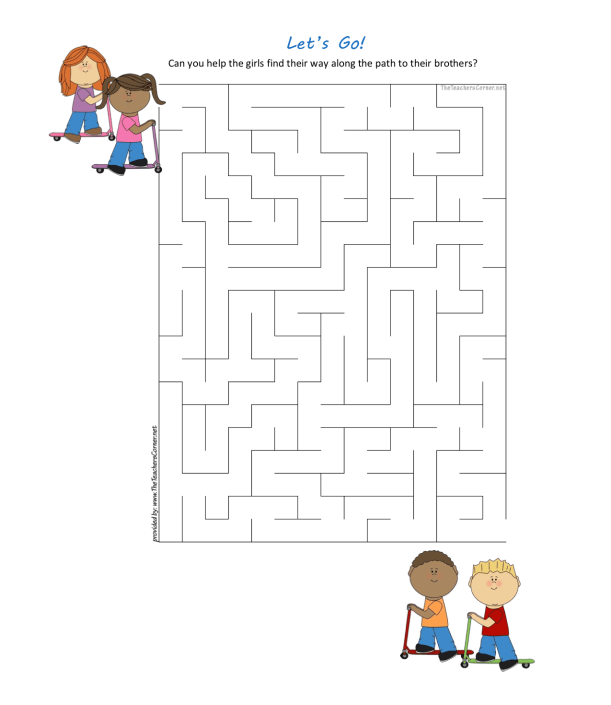
These four friends want to ride their scooters together. Can you help the girls find their way along the path to the boys?

Let’s Go! Maze | Let’s Go! Maze Solution

celebrate-picture-books-picture-book-review-motomice-cover

You can find Motomice at these booksellers 

Amazon | Beyond Words Publishing

Picture Book Review
May 30 – It’s Get Caught Reading Month

celebrate-picture-books-picture-book-review-albie-newton-cover

About the Holiday

Get Caught Reading Month was established in 1999 by the Association of American Publishers to encourage people of all ages to read more. Authors, illustrators, celebrities, athletes, and others participate by sharing pictures of themselves reading an old favorite or new book on social media. Schools, libraries, bookstores, and community venues hold special programs throughout the month. For more information and to find resources, visit the Get Caught Reading website.

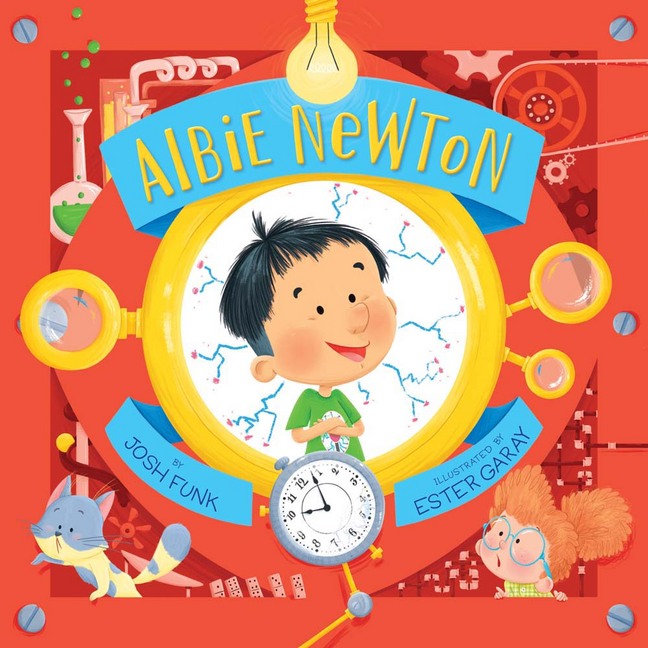
Albie Newton

Written by Josh Funk | Illustrated by Ester Garay


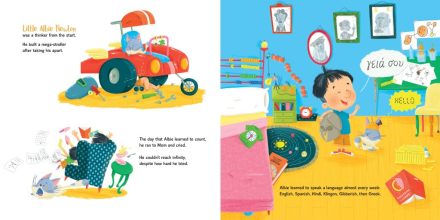
Albie Newton was something of a prodigy. As a tyke, he retrofitted his stroller into a racecar, tried counting to infinity, and “learned to speak a language almost every week: / English, Spanish, Hindi, Klingon, Gibberish, then Greek.” When he moves to a new town and a new school, his classmates are excited to meet him. Albie is also revved up to start making friends, and he has a plan he thinks the other kids will love.

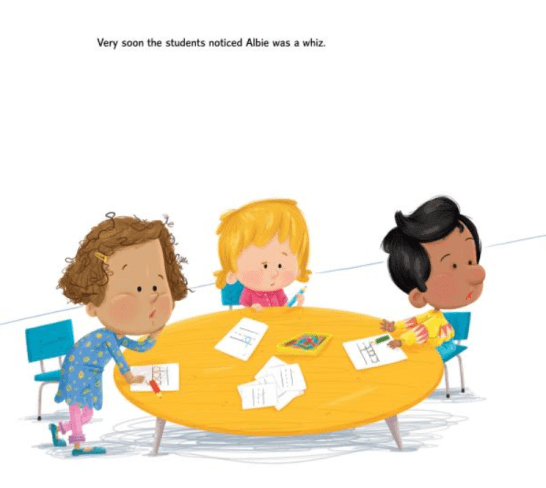
But as they all settle in to work, “the students noticed Albie was a whiz. / Albie wrote a sonnet while they took a spelling quiz.” During art class, the kids were likewise astounded (and a little dismayed) when, while they scribbled, drew swirls, and made handprints, Albie painted like Van Gogh. When free time rolled around, and some kids played dress up, Albie “sifted through the trash,” to build a science lab, leaving a mess for Arjun to clean up.

celebrate-picture-books-picture-book-review-albie-newton-toddler

Image copyright Ester Garay, 2018, text copyright Josh Funk, 2018. Courtesy of Sterling Children’s Books.

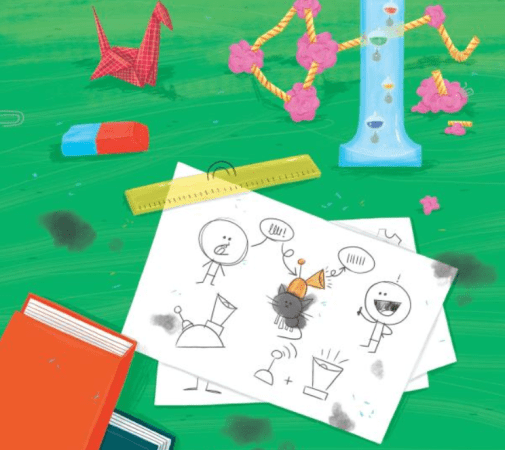
Then things began to disappear. “Hamilton the hamster tried to run but had no wheel. / Albie needed extra sprockets made of stainless steel.” While Sona and Shirley created paper masks, the glue went missing, and Albie “didn’t even ask.” The wings from Dave’s propeller plane were suddenly broken off, and reading time became impossible when “booming pandemonium descended on the school.” Albie, though, intent on his invention, didn’t notice the trouble he was causing or the crowd of angry kids rushing to complain.

Before they could reach Albie, though, Shirley stopped them, saying “‘maybe Albie didn’t know. Let’s look at what he made.’ Curious, the children headed straight to where he played.” When they say all the inventions Albie had made, they stopped and stared. Albie had made the class a gift—a spaceship, and with the push of a button, an amazing time machine!

celebrate-picture-books-picture-book-review-albie-newton-spelling

Image copyright Ester Garay, 2018, text copyright Josh Funk, 2018. Courtesy of Sterling Children’s Books.

With his inimitable style, Josh Funk creates a rambunctious tale of invention and creativity, but one that also has a deeper message about the way some kids see the world and communicate with peers and others. In the first pages, readers are introduced to the precocious Albie, who from birth has demonstrated a talent for learning and doing. When he enters a new school, however, his single focus doesn’t translate into the kinds of social interactions his classmates are used to. Albie gathers materials for his present unaware of the mayhem he’s causing, just as the other kids are unaware of Albie’s real goal. Only Shirley is sensitive to the idea that Albie may not be causing havoc on purpose but for a purpose. Her calming defense of Albie allows the other kids to see Albie in a new light and appreciate his gift—and his gifts.

While Funk’s rhyming verses are focusing on Albie and his actions, Ester Garay’s bright illustrations depict the other kids’ reactions to his talents and also his disruptions. A first hint at how Albie fits in with his new class comes as the kids welcome him with cheer and smiles. Instead of facing them to accept the welcome, Albie is faced away from them, happily imagining the gift he will make for them.

celebrate-picture-books-picture-book-review-albie-newton-drawings
Image copyright Ester Garay, 2018, text copyright Josh Funk, 2018. Courtesy of Sterling Children’s Books.

Throughout the day, Shirley follows Albie, and as she watches and wonders, her facial expressions demonstrate dismay at some of Albie’s antics but also a growing understanding and acceptance. Garay captures the close camaraderie of a preschool or kindergarten classroom, and her close-up view of Albie toiling away on his invention will have readers eager to see the result. The reveal of Albie’s spaceship time machine and the final spread of the kids frolicking on a distant planet with the likes of Freda Kahlo, William Shakespeare, Amelia Earhart, and a helpful dino, are sure to produce some oohs and ahhhs.
Albie Newton is a doubly impactful story that would be a welcome addition to home and, most especially, classroom bookshelves. It can be read as a boisterous story of innovation for lively story times, but it also provides adults and children an opportunity to discuss the ideas of social interaction and various personalities. Most children know someone like Albie who as naturally quiet, on the spectrum, or singularly focused on one area or another, communicates and socializes differently than others. Reading Albie Newton can help kids better understand different behaviors and, like Shirley, become more sensitive to all their classmates and friends.

Ages 5 – 9

Sterling Children’s Books, 2018 | ISBN 978-1454922582

Discover more about Josh Funk and his books as well as find fun activities and lots of resources on his website.

To learn more about Ester Garay, her books, and her art, visit her website.

Check out the Albie Newton book trailer!

Get Caught Reading Month Activity

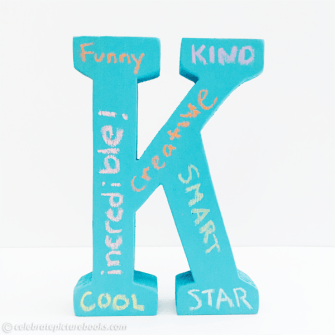
celebrate-picture-books-picture-book-review-initial-bookend

Initial Bookends


You can keep your books neat and tidy on the shelf with this easy-to-make bookend that displays your talents and personality!

Supplies

  • Wooden letter block in the child’s first initial or both initials
  • Chalkboard paint
  • Chalk
  • Paint brush

Directions

  1. Paint the wooden letter with the chalkboard paint, let dry
  2. With the chalk, write words that your think best describe you on the letter
  3. Display your letter on your bookshelf!