April 29 – It’s National Month of Hope

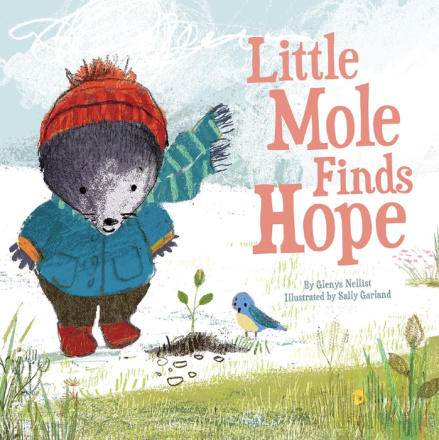
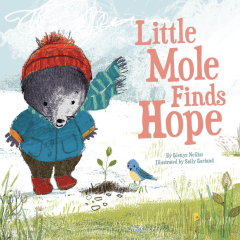
celebrate-picture-books-picture-book-review-little-mole-finds-hope-cover

About the Holiday

Founded in 1991, National Month of Hope encourages people to bring hope to those in need both emotionally and physically. Reaching out to let a friend know you’re there for them, volunteering to help out in the community or on a personal level, and simply sharing a smile with those around you are all ways to show others you care. These days, staying in touch online and checking up on family and friends spreads happiness and hope for when we can all be together again. 

Little Mole Finds Hope

Written by Glenys Nellist | Illustrated by Sally Garland


Little Mole felt sad. He didn’t know why he felt bad inside, he just did. His mama told him he needed to find hope. Little Mole wondered where. As she took his paw, Mama said, “‘Sometimes, hope is hiding in the darkness. Sometimes it’s hard to see. But it’s always there.'” Mama led her son out of the tunnel, but on the way she pointed out a “brown, wrinkled” bulb hanging from the ceiling. Little Mole thought it was dead.

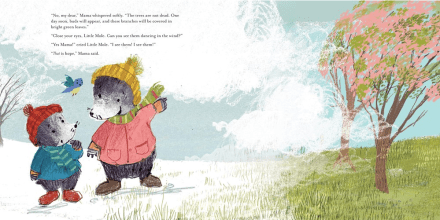
But Mama explained that that bulb would someday soon become a lovely daffodil. She asked her son to picture it swaying with the breeze, and when he said he could see it, she told him “That is hope.'” When they crawled out of the burrow, Little Mole saw trees without leaves. “They stretched out like skeleton bones silhouetted against the sky.” Little Mole thought they were dead. But Mama explained that buds and then leaves would soon appear. She asked Little Mole to imagine it. With excitement he told her he could see it. Again, Mama said, “‘That is hope.'”

celebrate-picture-books-picture-book-review-little-mole-finds-hope-trees

Image copyright Sally Garland, 2020, text copyright Glenys Nellist, 2020. Courtesy of Beaming Books.

Mama and her little one continued on past Mr. Rabbit’s garden, where they saw another example of hope hiding in an unexpected place. When they got home, Little Mole was happy.He said he’d had a wonderful day and understood that “there was always hope, even in the darkest places.” Mama tucked her son into bed with a kiss, and Little Mole fell asleep dreaming of the colorful spring to come.

Back matter includes a Discussion Guide for Caretakers that gives them tools for talking about the story, tips on helping a child who feels sad, and how to share their own experiences and where hope can be found.

Glenys Nellist’s uplifting story could not have come at a better time. With children at home and their normal lives disrupted, many may be feeling sad and unusually stressed. While many things have changed, there are still those aspects of life that remain constant. A parent or caregiver’s love is one; signs of spring and summer are another. Nellist’s honest and straightforward storytelling, acknowledges feelings of sadness and the fact that they are often unattributable to any concrete cause. Mama’s gentle acceptance of her son’s emotions and her actions in showing him signs of renewal will resonate with children familiar with the cycles of winter and spring and give adults models for conversations with their own children. Perfectly paced, Nellist’s book provides opportunities for adults and kids to look for other constants in their lives and to reaffirm their love for one another––now and always.

Sally Garland’s textured illustrations, rendered in warm tones that reveal the coziness of the Mole’s home and vibrant, sunny colors as Little Mole imagines springtime, will delight children and draw them into the meaning of the story. As Mama clearly points out the bulb, the bare trees, and a sleepy chrysalis, children will enjoy guessing what each will become and how they represent hope. Readers will also like finding other symbols of hope and signs of Mama’s and Little Mole’s love throughout the story.

Lovely in every way and highly recommended for talking with children about their feelings, Little Mole Finds Hope is a book kids will enjoy for its storytelling and its heart again and again.

Ages 3 – 6

Beaming Books, 2020 | ISBN 978-1506448749

Discover more about Glenys Nellist and her books on her website.

You can learn more about Sally Garland, her books, and her art here.

Month of Hope Activity

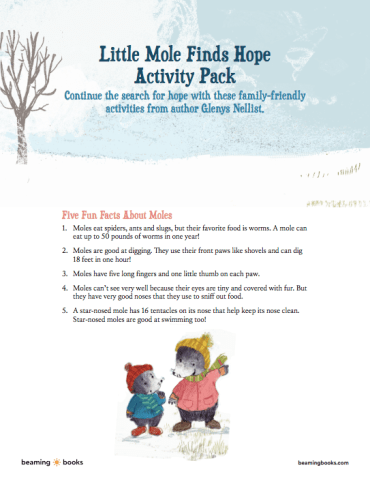
celebrate-picture-books-picture-book-review-little-mole-finds-hope-activity-kit-image

Little Mole Finds Hope Activity Pack


You can find lots of fun in this printable activity pack found on the Beaming Books website.

Little Mole Finds Hope Activity Pack

celebrate-picture-books-picture-book-review-little-mole-finds-hope-cover

You can find Little Mole Finds Hope at these booksellers

Amazon | Barnes & Noble | Books-a-Million | IndieBound


April 3 – National Find a Rainbow Day

celebrate-picture-books-picture-book-review-ava-and-the-rainbow-who-stayed-cover

About the Holiday

April brings plenty of showers and downright downpours that give rainbow lovers lots of opportunities to see this colorful phenomenon. Legend has it that at the end of every rainbow waits a pot of gold—but if you aim to find it, watch out! It’s guarded by a tricky Leprechaun. Rainbows result when light from the sun reflects and refracts through water droplets in the sky, creating a spectrum of colors. Whether people ooh and ahh over the luck, the science, or the beauty of rainbows, there’s no denying that they always attract attention and create smiles.

I received a copy of Ava and the Rainbow (Who Stayed) from HarperCollins for review consideration. All opinions about the book are my own.

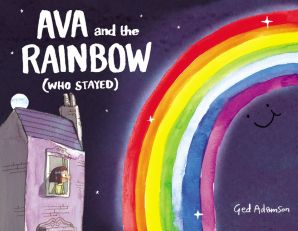
Ava and the Rainbow (Who Stayed)

By Ged Adamson


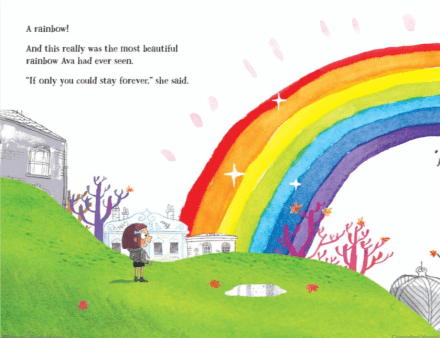
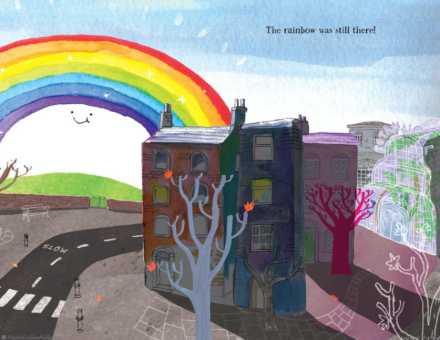
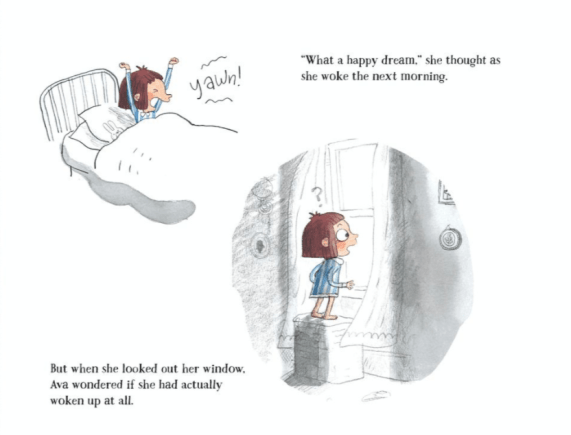
After the rain was over and the sun began to peek out from behind the clouds, Ava was excited because she knew she’d get to see a rainbow. When she reached the perfect rainbow-viewing spot, she was amazed. Up in the sky was “the most beautiful rainbow Ava had ever seen.” She wished it could stay forever. That wish even carried over into her dreams that night, and when she woke up Ava thought she might actually still be asleep. Why? Because when she looked out the window, “the rainbow was still there!”

celebrate-picture-books-picture-book-review-ava-and-the-rainbow-who-stayed-beautiful-rainbow

Copyright Ged Adamson, 2018, courtesy of HarperCollins.

It was even still glowing over the town that night. It didn’t take long for people to start coming from all over to see the famous “rainbow who had decided to stay.” The townspeople loved all the attention—and the customers. Shopkeepers held rainbow-inspired sales, rainbow souvenirs like T-shirts, snow globes, and toys flew off the shelves, rainbow science became one of the most popular lectures by university professors, and a rainbow even became the new town mascot. For weeks there were special events and festivities all centered around the rainbow.

celebrate-picture-books-picture-book-review-ava-and-the-rainbow-who-stayed-ava-wakes-up

Copyright Ged Adamson, 2018, courtesy of HarperCollins.

Ava loved to talk to the rainbow. “She introduced him to her friends…sang to him…and showed him all her favorite books and toys.” The rainbow even stayed throughout the winter, shivering in the cold. When spring rolled around, people seemed to have forgotten all about the rainbow. They didn’t look at him like they used to. In fact, they didn’t look at him at all.

As Ava walked around town, she saw rainbow souvenirs in the trash and graffiti covering signs advertising the rainbow. When she saw the rainbow, Ava was shocked to see him plastered with ads and sporting antennae of all kinds. The rainbow was sad. “‘How could they do this to something so special?’ Ava said in despair.” She cheered up when she saw a crowd of people with cameras rushing toward her and the rainbow, but they were only interested in a little bird in a nearby tree.

celebrate-picture-books-picture-book-review-ava-and-the-rainbow-who-stayed-rainbow-stayed

Copyright Ged Adamson, 2018, courtesy of HarperCollins.

It seemed that the bird was a Russian water sparrow and would only be there for a few hours before continuing its flight. “We’re so lucky!’” someone said. “‘Such a rare and precious sight!’” The rainbow overheard this exclamation and thought about it. The next morning when Ava went to visit the rainbow again, he was gone. Ava hoped that someday he’d return, and every time it rained she looked for him. One day he did come back, and was “a rare and precious sight indeed.”

celebrate-picture-books-picture-book-review-ava-and-the-rainbow-who-stayed-sweet-rainbow

Copyright Ged Adamson, 2018, courtesy of HarperCollins.

Seeing a rainbow after a storm never ceases to cause awe and amazement. Often we’re not finished following its arc before it vanishes from the sky. But is it just that quality that makes a rainbow so special? In his multi-layered story Ged Adamson explores a spectrum of ideas about the fleeting moments in life—from dreams to fads to fame—as well as about the dangers of going against ones true nature to please others. Through the townspeople’s rush to celebrate and then capitalize on the rainbow only to ignore and mar its beauty as its presence becomes commonplace, Adamson provides adults and children an opportunity to discuss the nature of celebrity, respect, and individual rights. Readers will learn along with Ava that truly appreciating ephemeral experiences as they happen and knowing when to let go goes a long way towards enjoying a happy life.

As enthusiastic Ava and the adorable rainbow forge their unique friendship, readers will be captivated by Adamson’s whimsical art. Scenes of the town’s celebration will cheer kids and savvy observers will recognize the implications of images depicting the proliferation of souvenirs and accolades. Children will empathize with the rainbow as it becomes covered in ads and its height is used as a support for antennae and be happy as the rainbow realizes its true value and once again becomes a rare and precious thing.

An enchanting story in itself and a wonderful way to engage children in discussions of true value and happiness, Ava and the Rainbow (Who Stayed) would make a terrific addition to home and classroom bookshelves.

Ages 4 – 8

HarperCollins, 2018 | ISBN 978-0062670809

Discover more about Ged Adamson, his books, and his art on his website.

National Find a Rainbow Day Activity

celebrate-picture-books-picture-book-review-rainbow-magnet-craft

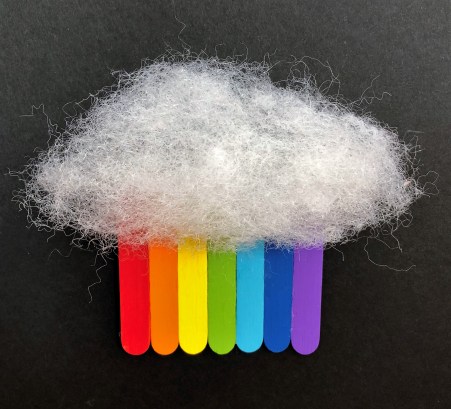
Mini Rainbow Magnet


If you’re stuck on rainbows, you can make this mini rainbow to stick on your fridge or locker!

Supplies

  • 7 mini popsicle sticks
  • Paint in red, orange, yellow, green, blue, Indigo, violet (ROYGBIV)
  • Adhesive magnet
  • A little bit of polyfill
  • Paint brush
  • Glue or hot glue gun

Directions

  1. Paint one popsicle stick in each color, let dry
  2. Glue the popsicle sticks together side by side in the ROYGBIV order, let dry
  3. Roll a bit of polyfill into a cloud shape and glue to the top of the row of popsicle sticks
  4. Attach the magnet to the back of the rainbow

celebrate-picture-books-picture-book-review-ava-and-the-rainbow-who-stayed-cover

You can find Ava and the Rainbow (Who Stayed) at these booksellers

Amazon | Barnes & Noble | Books-a-Million | IndieBound

Picture Book Review
 

Picture Book Review
February 3 – It’s Children’s Authors and Illustrators Week

celebrate-picture-books-picture-book-review-what's-up-maloo-cover

About the Holiday

This week was established to raise awareness and promote literacy and the joys and benefits of reading. During the week, children’s authors and illustrators attend special events at schools, bookstores, libraries, and other community centers to share their books and get kids excited about reading. To learn more about how you can instill a lifelong love of learning in your children, visit ChildrensAuthorsNetwork!

I received a copy of What’s Up, Maloo? from Tundra Books for review consideration. All opinions are my own. I’m excited to partner with Tundra in a giveaway of the book. See details below.

What’s Up, Maloo?

By Geneviève Godbout


Maloo is a little kangaroo with an especially hoppy spring in his step. But one day he feels grounded. Instead of hop, hop, hopping to see his friend, he takes “One step. Two steps, Three steps.” Wombat immediately notices that something’s amiss and asks, “What’s up, Maloo?” She brings him inside her cozy den and gives him a slice of pie. While she slides another treat into the oven, Maloo sits forlornly at the table, not touching his pie.

celebrate-picture-books-picture-book-review-what's-up-maloo-one-sad

Copyright by Geneviève Godbout, 2020, courtesy of Tundra Books.

They go down to the river—“Four steps. Five steps. Six steps”—where Crocodile sees it too and asks Maloo what’s wrong. Perhaps a swim will cheer Maloo up, but he sits dejectedly atop his ball and floats with the current. The three go to see Koala. They all want to help Maloo feel better. They try giving him a lift with an electric fan, but the wind just knocks Maloo head over heels.

celebrate-picture-books-picture-book-review-what's-up-maloo-den

Copyright by Geneviève Godbout, 2020, courtesy of Tundra Books.

Maloo’s friends stay with him, though––“ten steps…one hundred steps…one thousand steps.” They stretch out a blanket and fling Maloo into the air, giving him encouragement. Can he hop? Maloo falls…but springs up again. “Hop!” He floats down, but this time instead of feeling dejected, he’s looking up. Back into the air he goes. He descends, but something is rising up in him. Maloo jumps with a gigantic “Hop!” He smiles. Koala climbs on Maloo’s back while Wombat and Crocodile balance on pogo sticks, and they all “hop like Maloo!’”

celebrate-picture-books-picture-book-review-what's-up-maloo-one-hop

Copyright by Geneviève Godbout, 2020, courtesy of Tundra Books.

With her powerfully emotional images and spare text, Geneviève Godbout allows readers to identify with Maloo as he experiences a time of sadness and recovers happiness with the help of his friends. In her soft, earth-toned illustrations, Godbout provides many perspectives and good examples for children and adults to discuss. Having lost his hop, Maloo seeks out one friend, who engages another friend and yet another, showing children the reassurance and help available by reaching out and having a supportive network. Maloo’s friends are also sensitive to Maloo’s mood, encouraging readers to pay attention to and acknowledge changes they may see in their friends and family. As readers count Maloo’s steps, they’ll see that sometimes the road back to feeling happy can be long, but that good friends stick with you no matter what or how long it takes. They also learn that asking for help starts with one step.

A moving and accessible resource for parents and caregivers to talk with their children about the ups and downs of life and the emotions of sadness and depression, What’s Up, Maloo? is a valuable addition to home, school, and public library collections.

Ages 3 – 7

Tundra Books, 2020 | ISBN 978-0735266643

To learn more about Geneviève Godbout, her books, and her art, visit her website.

Meet Geneviève Godbout

Born and raised in Quebec, Geneviève Godbout studied traditional animation in Montreal and at the prestigious Gobelins school in Paris. She is the illustrator of a number of books for children, including The Pink Umbrella, When Santa Was a Baby, Kindergarten Luck (Chronicle), and Joseph Fipps (Enchanted Lion). Some of her clients include The Walt Disney Company, Chronicle, HMH, Flammarion, Bayard, Les éditions Milan and La Pastèque. She also works for clothing designers like Nadinoo and Mrs. Pomeranz, creating illustrations and prints for their collections. Connect with Geneviève on her website.

Congratulations on What’s Up, Maloo, your debut picture book as both author and illustrator! Can you talk a little about the journey you’ve taken with this book?

Thank you! I never expected to be an author, but one day I woke up with the feeling I should write my own story about depression. I pictured this little kangaroo that lost his hop and told my French publisher (La Pastèque) about it. The whole creative process was natural, yet I felt incredibly insecure about my own capacities. But once published, we had such a fantastic response that I’m now working on a sequel with the little crocodile! 

What was your inspiration for this story and why this subject is important to you? What do you hope children will take away from your story?

I was inspired by my own experience of depression. I wanted to say that it’s ok to go through tough times and emphasize the importance of being surrounded without judgement. We should feel safe to confess our feelings to a friend. We don’t have to go through this alone. 

Your illustrations of Maloo feeling sad and losing the spring in his step are touching and instantly recognizable for children. How can adults use the book to talk with their children about the strong feelings of sadness and depression from multiple viewpoints, including the sufferer themselves and their friends?

I chose not to mention why Maloo lost his hop so that kids and adults can fill the gap in the text with their own experience. Maloo’s friends are sweet and full of empathy. I pictured this book as a comforter rather than a sad story. 

You’ve brought iconic characters Anne of Green Gables and Mary Poppins to books for the youngest readers. What are the challenges and joys of working with these beloved characters?
It was quite an intimidating challenge. These characters are so loved by readers (and myself!) that everyone has their own expectations of what they should look like. For instance, Mary Poppins is dramatically different in the original books by P.L. Travers from the Disney movie. But when we think about Mary Poppins, most people picture Julie Andrews, not a severe looking lady with very tall feet. With that in mind, I tried to find my own way of drawing both Mary Poppins and Anne Shirley. It was such an exciting opportunity, I reminded myself to have fun during the creative process without anticipating the public response too much. 

From characters’ round, expressive eyes, rosy cheeks, and sweet grins to animated action punctuated with humor to your gorgeous colors, your picture book illustrations are truly distinctive. How did you develop your signature style?

A style is the expression of one’s sensitivity and creativity. Mine evolved throughout the years as I gained experience and technique. And for some reason, I chose the most time-consuming medium: color pencils! I have always loved them. They’re delicate and precise. My background in traditional animation also has a huge part in the way I draw today. Everything is about movement and expressive posing. 

What do you love best about creating books for children?

I love the idea of touching people and offering them a safe bubble where they can smile and relax. There is nothing better than hearing a child or an adult say they love to curl up in bed with one of my books. 

You went to school in Paris, you’ve worked in London, and now you live in Montreal. Could you name one of your favorite places in each city and tell why you love it?

I was lucky to live in such fabulous and inspiring cities. I loved to get lost in Paris and walk by the Thames river near Hammersmith in London. Each time I go back, it feels a bit like home. As for Montreal, I think it’s the best place in terms of quality of life and I love the contrast between the seasons!

What’s up next for you?

I’m working on a couple of exciting projects including a sequel for What’s up, Maloo? and a third book in the Anne series. I’m kind of booked for the next year or so with Harper Collins, Random House, Comme des Géants, and perhaps Houghton Mifflin Harcourt, but I’m not sure what I’m allowed to say at this stage! 

Thanks, Geneviève! It was wonderful chatting with you. I’m really looking forward to seeing the sequel to What’s Up, Maloo? and all of your upcoming books!

celebrate-picture-books-picture-book-review-what's-up-maloo-cover

You can find What’s Up, Maloo? at these booksellers

Amazon | Barnes & Noble | Books-a-Million | IndieBound

Picture Book Review


January 10 – Houseplant Appreciation Day

celebrate-picture-books-picture-book-review-nobody-hugs-a-cactus-cover

About the Holiday

Missing the green leaves and colorful flowers of spring and summer? Maybe it’s time to recreate the sights of warmer days inside with houseplants! Placed in a sunny window, some plants will continue blooming all winter long, making you feel happier. Houseplants also provide health benefits as they produce oxygen, release moisture into that dry winter air, and improve air quality. Add a few herb plants and even cooking will take on new life. Whether you add just one plant or create an indoor garden, today’s the perfect day to get started.

Nobody Hugs a Cactus

By Carter Goodrich


Hank, a little cactus, sat in his window and looked out with pleasure on the “empty…hot, dry, peaceful, and quiet” desert. Sometimes, though, visitors came by—like Rosie the Tumbleweed, who cheerfully greeted Hank and commented on the beautiful day. “Hank ignored her. He just wanted to be left alone.” Hank was happy when Rosie passed by without stopping.

celebrate-picture-books-picture-book-review-nobody-hugs-a-cactus-window

Copyright Carter Goodrich, 2019, courtesy of Simon & Schuster Books for Young Readers.

But then a tortoise ambled by to say hello. Hank shouted for him to get off his property. As he was yelling a jackrabbit bounded by. “‘Hiya, Prickles,’ she shouted,” and Hank turned his fury on her. It wasn’t long before a coyote appeared. Hank shooed him away, but not before the coyote commented, “‘You are as prickly on the inside as you are on the outside.’”

celebrate-picture-books-picture-book-review-nobody-hugs-a-cactus-rosie

Copyright Carter Goodrich, 2019, courtesy of Simon & Schuster Books for Young Readers.

When a passing cowboy was told to get off the grass, he countered that there was no grass and added that it seemed “‘somebody needed a hug. Too bad nobody hugs a cactus,’” he added. A lizard on the wall was quickly dispatched with a warning that Hank did not want a hug. That was just fine with the lizard, who didn’t want to give him one anyway.

By now, nighttime had fallen, and an owl landed on the roof of Hank’s house. Hank gazed at the owl, and the owl gazed back. Begrudgingly, Hank offered to give the owl a hug. But the owl flew off, and “for the first time, Hank began feeling a little lonely.” The next morning, Hank felt a little sad and had begun reconsidering that hug.

celebrate-picture-books-picture-book-review-nobody-hugs-a-cactus-jackrabbit

Copyright Carter Goodrich, 2019, courtesy of Simon & Schuster Books for Young Readers.

Just then the wind picked up, and a Styrofoam cup flying by stuck to Hank’s face. Rosie tumbled by and knocked it off before rolling on. Hank thought about Rosie’s kindness and felt bad about all the times he’d been mean to her. He decided he wanted to make amends. Over several days he grew a beautiful flower, and when Rosie passed by again, he called out and offered it to her with a big smile. “Rosie was so surprised, she jumped up and gave Hank a big hug. It felt so nice Hank didn’t want to let go.” Which was a good thing, because they were stuck together. But they don’t mind; they like being stuck together better than being alone.

celebrate-picture-books-picture-book-review-nobody-hugs-a-cactus-owl

Copyright Carter Goodrich, 2019, courtesy of Simon & Schuster Books for Young Readers.

Well-known for his talent for creating charming characters who steal your heart, Carter Goodrich takes on the cantankerous among us—or those cranky days—and shows that kindness does soften even the prickliest of shields. Carter’s diminutive grouch may be discourteous but he’s also adorable, hinting at the softie that lies below the prickles and turning those dissuasive phrases hurled at his neighbors into lines that will elicit giggles from kids and adults. Carter’s thin-limbed and elongated jackrabbit and cowboy are also stylishly humorous. The tortoise that sits in front of Hank’s house hiding in his shell throughout the story serves dual purposes, showing how rejection makes others feel while also demonstrating what it looks like to be truly isolated and alone. Hank’s slow change of heart rings true and the act of selflessness that brings him and Rosie together makes for another funny scene and a satisfying ending.

A story that is sure to be embraced for crabby days and cheerful days, Nobody Hugs a Cactus would be a favorite on home, classroom, and public library bookshelves.

Ages 4 – 8

Simon & Schuster Books for Young Readers | ISBN 978-1534400900

To learn more about Carter Goodrich and his books, film work, and art, visit his website.

Houseplant Appreciation Day Activity

celebrate-picture-books-picture-book-review-flip-flop-craft

Flip-Flop Plant Holder


Flip-flops aren’t only for your feet—or for summer! With this easy craft you can make a whimsical way to hang succulents and other light plants on walls or even windows!

Supplies

  • Child’s flip-flops with elastic heel straps
  • Buttons or charms
  • Small plastic solid-bottom pot
  • Small plant
  • Dirt
  • Hot glue gun
  • Heavy duty mounting strips
  • Small shovel or spoon

Directions

  1. Place the flip-flop toe down on your work surface. With the hot glue gun, attach the buttons to the plastic toe straps of the flip-flops.
  2. Add dirt to the pot
  3. Add plant to the pot
  4. Slip the pot into the elastic strap and gently push down so it is also supported by the plastic toe straps
  5. To hang, use appropriate-weight mountable strips.
  6. To make an interesting and attractive arrangement, use various sizes of flip-flops

Amazon | Barnes & Noble | Books-a-Million | IndieBound

Picture Book Review
December 21 – It’s Read a New Book Month

celebrate-picture-books-picture-book-review-odd-dog-out-cover

About the Holiday

There’s nothing better than spending the chilly days of winter snuggled up with a new or favorite book. If you’re still looking for gifts to give, it’s not too late to head to your local bookstore to find stories that will make kids (and adults) eyes light up. And if you’re a post-holiday shopper (and who isn’t?), make sure to check out those bookstores again. After all, it’s a loooong winter!

Odd Dog Out

By Rob Biddulph


Busy dogs all dressed in black and white make their way to work while dogs at play in identical stripes take to the soccer field. At the pool, swimmer dogs don yellow caps and yellow tubes while sailor dogs in their uniform uniforms pilot their yellow boats. In fact, “soldier…scout…. They all blend in. / No dog stands out. / But wait.” On a certain street, you’ll see “someone…is dancing to a different beat.”

celebrate-picture-books-picture-book-review-odd-dog-out-busy-day

Copyright Rob Biddulph, 2016, courtesy of HarperCollins.

Wrapped in a rainbow-colored scarf, “this dog flies low” when others fly high, and “when they say ‘Kick!’…this dog ways ‘Throw!’” It’s plain to see that this dog just “does not fit in.” Having tried her best to be like the others, this unique pup packs her bag and leaves town. As she walks, the seasons change from winter to spring to summer to fall. She traverses the sea and climbs mountains until she comes to Doggywood and wonders if this is the place for her.

celebrate-picture-books-picture-book-review-odd-dog-out-dancing

Copyright Rob Biddulph, 2016, courtesy of HarperCollins.

She takes a look and her eyes light up. “‘Well, bless my bow-wow, can it be? / A hundred others just like me!’” There are dogs playing guitar and riding bikes, gliding on the wind, and playing basketball. And coming and going on the street, dogs in rainbow-colored scarves stream by. “But wait.” Are they really all alike? Do you see? “Somebody this afternoon / is whistling a different tune.”

The newcomer thinks that she can help. She approaches this dog with his black cap and sweater to commiserate and tell him she knows how he feels being the “‘Odd Dog Out.’” But it turns out that this dog is proud of being unique and standing out. And he tells her that she should feel that way too. After a bit of thought, she has to agree “‘…there’s nothing wrong with being me.’”

celebrate-picture-books-picture-book-review-odd-dog-out-fly-high

Copyright Rob Biddulph, 2016, courtesy of HarperCollins.

Then she knows just what to do. She grabs her bag and takes a flight. And when she lands in her old hometown, all those busy dogs and playing dogs turn to look. “‘They cheer! They clap! They whoop! They shout! / ‘We’ve really missed our Odd Dog Out!’” It seems that while she was away, some of these “identical” dogs did some thinking. Now what do you see? “Each one a doggy superstar… So blaze a trail. / Be who you are.”

celebrate-picture-books-picture-book-review-odd-dog-out-seasons

Copyright Rob Biddulph, 2016, courtesy of HarperCollins.

Through his charming rhymes and bouncy rhythm, Rob Biddulph creates a surprising tale that highlights that well-known advice: “bloom where you are planted.” When a dog who does her own thing amidst a sea of uniformity leaves home and finds a place where she fits in, readers will notice that she just replaces one homogenous place for another. The dog may feel more “at home” surrounded by other dogs who wear colorful scarves, soar on wind gliders, play guitar, and ride bikes, but is she really stretching herself and building her self-esteem? It can be difficult for kids (and people of all ages) to display their full personality, but when that happens they can’t display their full potential either. Biddulph encourages kids to be proud to let their uniqueness show while demonstrating that differences are recognized and appreciated more than they might think.

Kids will love Biddulph’s enchanting dachshunds and especially the sweet “Odd Dog Out.” His vibrant digital illustrations are superb at showing the cookie-cutter sameness of all the other dogs in humorous two-page spreads and smaller snapshots that remind one of the patterns of wrapping paper. When our colorful heroine appears among a cadre of black-suited business dogs, her satisfied smile and dancing feet stand in stark contrast to the other, serious dogs that have their feet firmly planted on the ground. Many clever spreads that readers will want to linger over bring them to the final pages where they’ll have fun pointing out and talking about the dogs who have decided to embrace their true natures.

Under the book jacket, a delightful cityscape and a “Where’s Waldo?” type of challenge awaits.

A terrific book offering lots of opportunities to talk about self-acceptance, accepting others, and the value of being different (and showing it), Odd Dog Out is highly recommended for home, classroom, and public library collections.         

Ages 4 – 8

HarperCollins, 2019 | ISBN 978-0062367266

To learn more about Rob Biddulph, his books, and his art, visit his website.

celebrate-picture-books-picture-book-review-odd-dog-out-cover

You can find Odd Dog Out at these booksellers

Amazon | Barnes & Noble | Books-a-Million | IndieBound

Picture Book Review
November 22 – It’s Picture Book Month

celebrate-picture-books-picture-book-review-the-scarecrow-cover

About the Holiday

There’s still time to celebrate one of the best months of the year—Picture Book Month! If you’re in shopping mode, be sure to put plenty of picture books on your list for the kids in your life. You know what they say—and it’s really true: A book is a gift you can open again and again!

The Scarecrow

Written by Beth Ferry | Illustrated by The Fan Brothers


Golden autumn has quieted the fields. The hay is rolled and the scarecrow waits for spring. The animals and the crows stand at a distance, afraid of this figure that does his job so well. “He never rests. / He never bends. / He’s never had a single friend, / for all the woodland creatures know / not to mess with old Scarecrow.”

celebrate-picture-books-picture-book-review-the-scarecrow-autumn

Image copyright The Fan Brothers, 2019, text copyright Beth Ferry, 2019. Courtesy of HarperCollins.

Winter comes with gentle snow, and Scarecrow dreams of “spring…of buds and blooms and things that sing.” When spring dawns with warm sun and green grass, a tiny crow—with a “broken wing?”—“drops from midair” and attracts Scarecrow’s attention. Then Scarecrow does a most surprising thing: “He snaps his pole, / bends down low, / saves the tiny baby crow.” He tucks the baby in the straw near his heart, and as he sleeps and settles in, Scarecrow “sings the sweetest lullaby.”

celebrate-picture-books-picture-book-review-the-scarecrow-winter

Image copyright The Fan Brothers, 2019, text copyright Beth Ferry, 2019. Courtesy of HarperCollins.

The baby heals and the two become the best of friends. As the little crow grows, he and Scarecrow “will laugh and wish on stars, forgetting who they really are…” Spring turns to summer, and Scarecrow proudly watches as Crow learns to fly, but with the return of autumn, he knows that Crow must leave. Through late autumn and the frigid winter, Scarecrow slumps on his pole, alone—“Broken heart. Broken pole. Nothing fills the empty hole.” Then with the spring rains, the crow returns with wings wide open and Scarecrow welcomes him with a hug. The crow mends Scarecrow’s broken pole and refreshes his hay and then he says, “‘I’m here to say.’”

celebrate-picture-books-picture-book-review-the-scarecrow-flying

Image copyright The Fan Brothers, 2019, text copyright Beth Ferry, 2019. Courtesy of HarperCollins.

Crow and his mate build a nest in the spot where he grew up. Soon, “five small eggs are tucked unseen,” and Scarecrow watches over them for he knows that soon they will hatch baby crows. “And they will love him from the start, and they will grow up in his heart.” Throughout the year, these friends and more keep Scarecrow company and love him so.

celebrate-picture-books-picture-book-review-the-scarecrow-little-crows

Image copyright The Fan Brothers, 2019, text copyright Beth Ferry, 2019. Courtesy of HarperCollins.

In her story of a scarecrow and a baby crow who form a family, Beth Ferry’s gorgeous, lyrical language sweeps readers into Scarecrow’s world and lets them stand with him through the changing seasons and the progression of his transformation from a lonely existence as bleak as winter to a life as bountiful as summer. Ferry’s alternating short, staccato lines and longer, flowing rhythms create an emotional bond between the reader and Scarecrow. With a single sentence, in which Scarecrow and Crow forget “who they really are,” and through her periodic use of future tense, Ferry sparks hope and welcome reassurance for the future—not only for these two characters, but for us all. Crow’s return to raise his own family where he learned love and security and to help the aging Scarecrow is a moving portrayal of home, and the reciprocal devotion between Scarecrow and the crows will bring a tear to readers’ eyes.

Through their softly hued and textured mixed-media illustrations, The Fan Brothers create a tapestry of rural life, with its sometimes generous, sometimes harsh conditions.  As autumn turns to winter, Scarecrow is seen from a distance as animals look on, showing the divide in this natural landscape and the fear that rules it. But when a baby crow drops into the scarecrow’s life, he changes the dynamic, as children often do. With this life-changing event, The Fan Brother’s images become brighter, and the gauziness of the first spreads—so effective in depicting the barrier between Scarecrow and the rest of the world—clears. In turns Scarecrow is tender and proud, wistful and overjoyed—images that will tug at adults’ hearts. As Scarecrow once again stands tall and is surrounded by his crow family and the other animals on a sunny fall day, The Fan Brothers bring readers full circle in this story where the seasons of bounty and hardship mirror so well the cycles of life.

A thoughtful and beautifully conceived masterpiece, The Scarecrow is a must for home, classroom, and public libraries.

Ages 4 – 8

HarperCollins, 2019 | ISBN 978-0062475763

Discover more about Beth Ferry and her books on her website.

To learn more about The Fan Brothers, their books, and their art, visit their website.

Picture Book Month Activity

CPB - Bookmobile

Books on the Move!


Bookmobiles deliver books to people who are homebound or don’t live near a library. This month you can celebrate these little libraries on wheels by making this bookmobile from a recycled box. Make it with the open top up, and you can even use it as a desk organizer!

Supplies

  • Printable Book Shelves and Sign Template
  • Cardboard box, 16-oz pasta or other recyclable boxes work well (I used a 5” x 7 ¼ -inch pasta box)
  • Small wooden spools or wheels
  • Paint
  • Scissors
  • X-acto knife (optional)
  • Strong glue
  • Paint brush

Directions

1.Gently pull the box apart at the seam and lie flat with the unprinted side facing up

2. To Make the Awning:

  • On one of the wide sides of the box, measure a rectangle 1 inch from the top of the box, leaving at least 1 ¼ inches at the bottom of the box and 1 ¼ inches on both sides
  • With the x-acto knife or scissors cut the sides and bottom of the rectangle, leaving the top uncut
  • Paint the top and underside of the awning (if you want to make stripes on the awning lay strips of tape side by side across the awning. Remove every other strip of tape. Paint the open stripes one color of paint. When the paint dries replace the tape over the paint and remove the tape from the unpainted stripes. Paint those stripes a different color.)

3. Paint the rest of the box on the unprinted side any way you like, let dry

4. Cut the Printable Book Shelf template to fit the size of your window opening, leaving at least a ½ inch margin all around

5. Tape the book shelf to the inside of the window

6. Reconstruct the box, making the original seam an inside flap

7. Glue the flap and sides together

8. If using small spools for wheels, paint them black. Let dry

9. Glue the wheels to the bottom of the box

10, Attach the Bookmobile sign, found on the printable template, above the awning

** To Make a Desk Organizer from the Bookmobile

  • Cut an opening in the top of the bookmobile with the x-acto knife or a scissor

celebrate-picture-books-picture-book-review-the-scarecrow-cover

You can find The Scarecrow at these booksellers

Amazon | Barnes & Noble | Books-a-Million | IndieBound

Picture Book Review


November 19 – It’s Family Stories Month

`celebrate-picture-books-picture-book-review-one-more-hug-cover

About the Holiday

Familiar stories are part of the glue that keep families together. This month, when homes can be full of grandparents, aunts, uncles, and cousins for the Thanksgiving holiday, is a perfect time to share those stories once again with the youngest members in mind. Whether the events and anecdotes happened last week or long ago, each story brings family members closer and provides a bridge from generation to generation. 

One More Hug

Written by Megan Alexander | Illustrated by Hiroe Nakata


As the story opens, a mom looks back at a special night when while tucking her little one into bed he was frightened by a tree at the window and asked for “‘One more hug, Mama.’” One day, a broken toy brought tears and a request: “‘one more kiss, Mama.’” Mama remembers the first day of school and standing at the bus stop. She squeezed her little boy tight as the bus approached. When the bus stopped and the “doors opened with a loud SCREEEECH,” the boy “whispered, ‘One more squeeze, Mama.’”

celebrate-picture-books-picture-book-review-one-more-hug-leaf-dragon

Image copyright Hiroe Nakata, 2019, text copyright Megan Alexandra, 2019. Courtesy of Aladdin.

As her boy grew older, the tree that had once frightened him became a favorite to climb, the toys were replaced with a bicycle, and any reservations about the bus were long gone. But now there were new experiences, and her son asked for one more hug before going out on stage, “one more kiss after [he] slipped on the ice. One more song before bedtime.”
celebrate-picture-books-picture-book-review-one-more-hug-sword

Image copyright Hiroe Nakata, 2019, text copyright Megan Alexandra, 2019. Courtesy of Aladdin.

Years went by and climbing the backyard tree led to climbing a rock wall. The boy taught his little brother how to ride his bike while he “joined the track team, and ran all the way to school.” At last came the day when the boy was all grown up and drove away with a backward glance and a wave goodbye. Then his mother wondered if her son knew how proud she was of him and how much she loved him. She hoped he knew that he would always be her boy and that she “would always be there for [him].” And then came the day when her son surprised his mama with a visit, and they both got “one more hug.”

celebrate-picture-books-picture-book-review-one-more-hug-bus

Image copyright Hiroe Nakata, 2019, text copyright Megan Alexandra, 2019. Courtesy of Aladdin.

In her heart-swelling story, Megan Alexander, a national correspondent for Inside Edition, has written a love letter to children that perfectly expresses the emotions parents feel for their children as they grow from babyhood to adulthood. Based on her own experiences with her two young sons, Alexander’s story is a warm embrace of reassurance that lets little ones and those beginning to chart their own course know that parental love and support is always with them. Her focus is particularly on raising sons who understand that it’s okay to have fears and share their feelings with those they love.

Alexander’s lyrical storytelling with repeated phrasing builds a bridge between ages as the boy grows up while also cementing the bond between mother and son. As much as this story is for children, adults will feel a lump in their throat as the boy moves away and his mother wonders if he knows how much she loves him. Alexander’s honest depiction of that universal hope gives the story a multilayered depth that gives children insight into their parents’ feelings—another kind of bond that will resonate with repeated readings as the child grows older.

celebrate-picture-books-picture-book-review-one-more-hug-growing

Image copyright Hiroe Nakata, 2019, text copyright Megan Alexandra, 2019. Courtesy of Aladdin.

Hiroe Nakata’s lovely watercolor and ink illustrations shimmer with the rapport between mother and son. Nakata uses alternating wide-angle images and close-up views to emphasize the tender moments that “one more” hug or kiss provide. Snapshots of familiar, yet fresh-feeling activities undertaken during different seasons show the boy growing and becoming stronger and wiser at pivotal stages of his life. The mother expresses joy, sympathy, understanding, and always an abiding love. The final spreads where the now-adult son comes home with arms open for his mama, shows clearly that he, indeed, knows how much she loves him.

The family theme is carried out in animal pairs that populate Nakata’s beautiful nature settings. Among these, a snail and her baby crawl near the boy’s newspaper hat, a mother and baby squirrel scamper up the tree next to the bus stop, and ants parade into their hole carrying food for the nest. Children will enjoy finding these animals on nearly every page, and they will fall in love with the family’s adorable dog, who also grows up throughout the story.

A story parents or caregivers and their children will love to snuggle up with, One More Hug makes a wonderful gift and addition to home, school, and library bookshelves.

Ages 4 – 8

Aladdin, 2019 | ISBN 978-1534429710

Discover more about Megan Alexander, her work, and a song she wrote that was inspired by the story, von her website.

Family Stories Month Activity

celebrate-picture-books-picture-book-review-hug-coupons

Free Hug Coupons


Everyone needs a hug now and then! With these printable Free Hug Coupons you can be sure that all of your favorite people get a sweet hug when they need it most.

celebrate-picture-books-picture-book-review-one-more-hug-cover

You can find One More Hug at these booksellers

Amazon | Barnes & Noble | Books-a-Million | IndieBound

Picture Book Review