April 2 – Celebrating Hans Christian Andersen’s Birthday and International Children’s Book Day

About the Holiday

Since 1967, April 2—Hans Christian Andersen’s birthday—has served as the date for International Children’s Book Day. The International Board on Books for Young People (IBBY), a non-profit organization founded in Zurich, sponsors the day to promote a love of reading and call attention to children’s books. National Sections of IBBY around the world alternate in hosting the event. The host for 2026 is Cyprus, and this year’s theme is “plant stories and the world will bloom.” Each year a prominent author and illustrator from the sponsoring country prepare materials for the event. This year’s poster was designed by Sandra Elephteriou. Elena Perikleous wrote this year’s message, and Giorgos Hatzipieris wrote this year’s official song, “The Little Gardener.” To learn more about the initiative and download digital materials, visit the IBBY website

Thank you to Levine Querido and Barbara Fisch at Blue Slip Media for sending me this book for review!

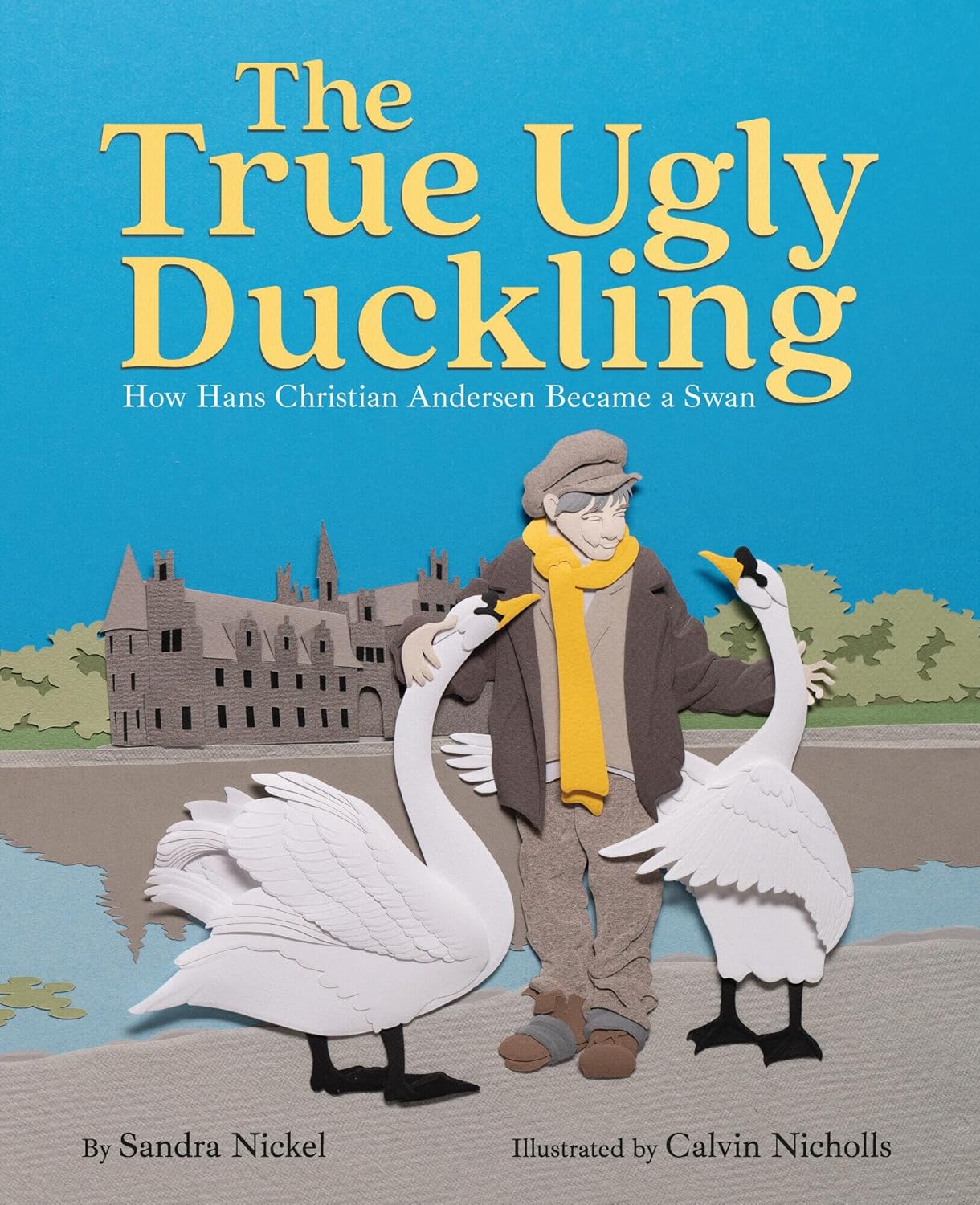
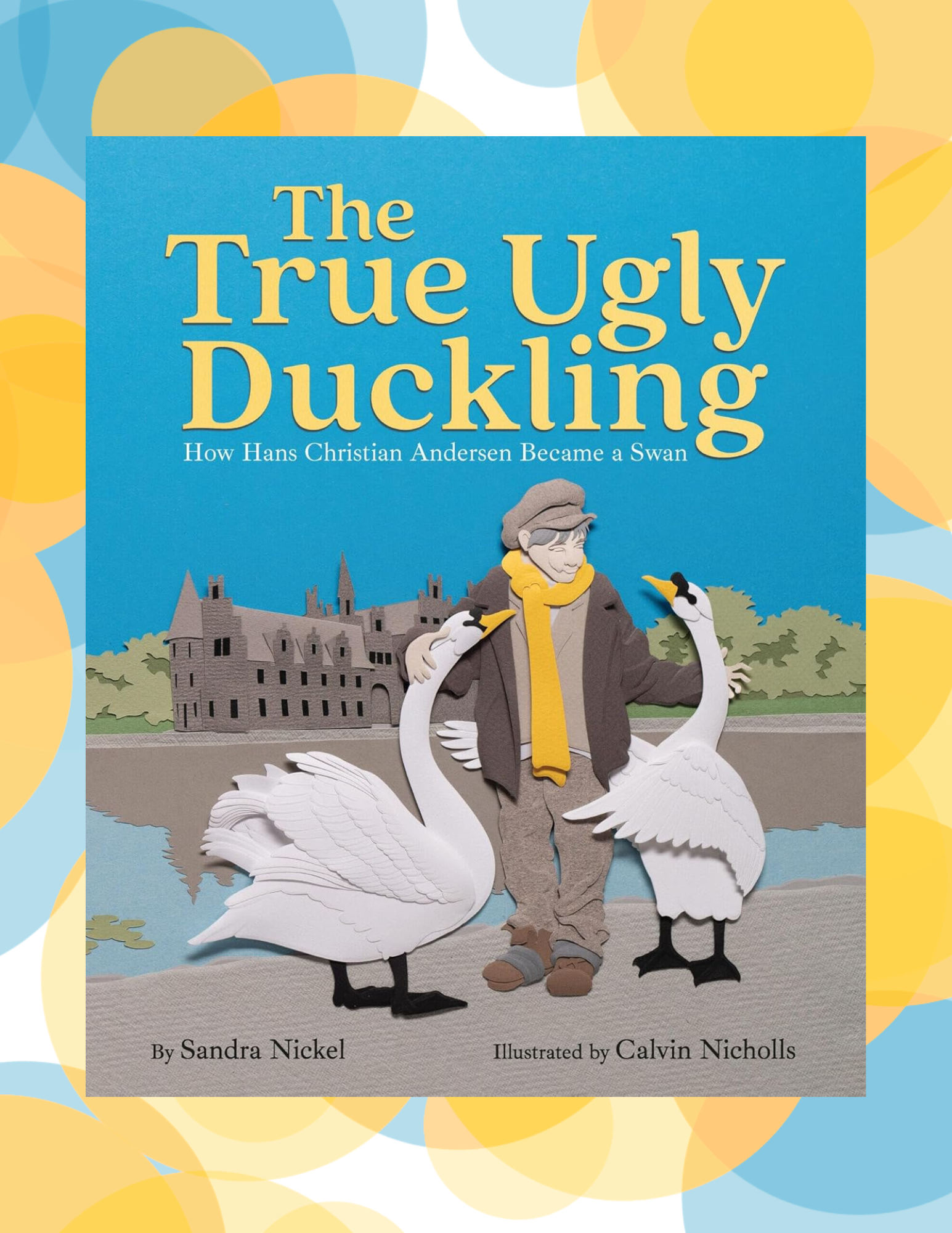
The True Ugly Duckling: How Hans Christian Andersen Became a Swan

Written by Sandra Nickel | Illustrated by Calvin Nicholls


“There once was a poor shoemaker’s son, who was tall and skinny. His nose was two times as long as everyone else’s and his heart two times as tender.” Thus begins not a fairy tale, but Sandra Nickel’s real life story of Hans Christian Anderson.

While most children spent their days working at the factory or going to school, Hans cut out costumes for his toys and invented stories that he performed for whomever would watch. Some neighbors gave him a few coins, but the factory workers and other children bullied and teased him. Hans “soothed his wounded heart by cutting out shapes from cloth.” At fourteen, knowing there was more for him in the world, Hans sailed alone for Copenhagen. There, he tried to find a place to express his talents, but each attempt ended in disappointment. Soon all his money was gone.

Illustration copyright © 2026 by Calvin Nicholls. Text copyright © 2026 by Sandra Nickel. Courtesy of Levine Querido.

When he sent a play to the Royal Theater, one director rejected it brutally, but another found a “few jewels” in it and arranged for him to go to school. At 17 Hans was taking classes for the first time. The other students laughed at him, and the headmaster dashed his dreams of becoming a storyteller, forbidding him to write. For six years Hans obeyed. “To comfort his heart, the boy cut out shapes from paper.”

Then one day when a girl asked him why her flowers had faded, Hans—now a young man—answered her by telling a story while cutting a scene in paper of hearts, dancers, flowers, and castles with working doors. The girl loved the story so much that Hans wrote it down and had it printed into a book. “The children of Copenhagen adored every word.” 
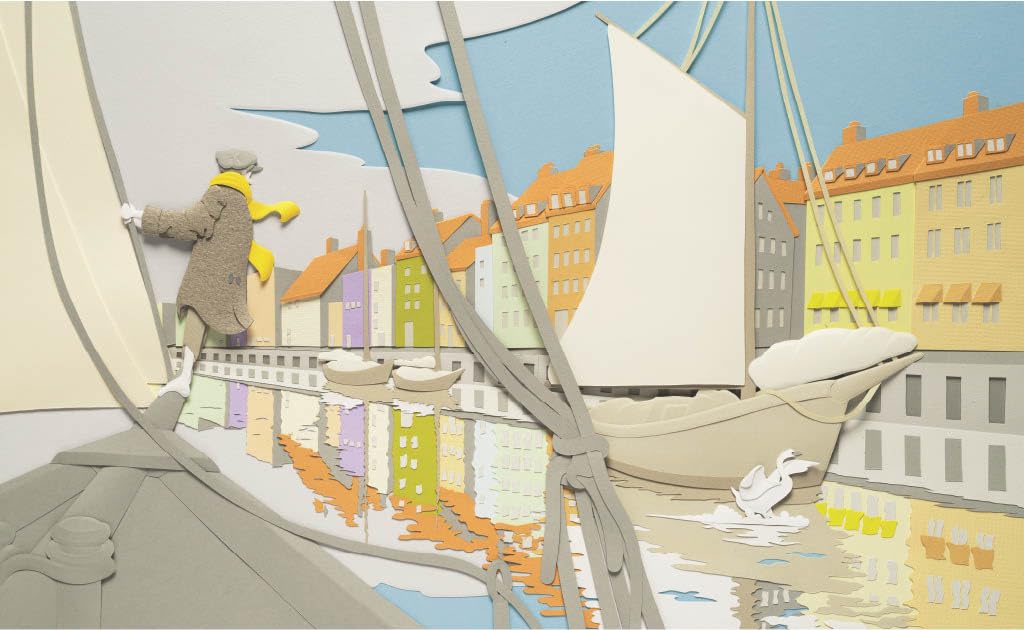
Illustration copyright © 2026 by Calvin Nicholls. Text copyright © 2026 by Sandra Nickel. Courtesy of Levine Querido.

Soon, Hans was telling and publishing more and more stories. Adults began reading them, and even Copenhagen royalty invited him to their castles for dinners and afterward to entertain the other guests by weaving “magic with his words and scissors.”

Back matter includes an Author’s Note recounting that experts now believe Hans Christian Andersen was likely on the autism spectrum and may also have had Marfan syndrome. She also discusses her choice to follow the story arc of The Ugly Duckling to depict Andersen’s life.
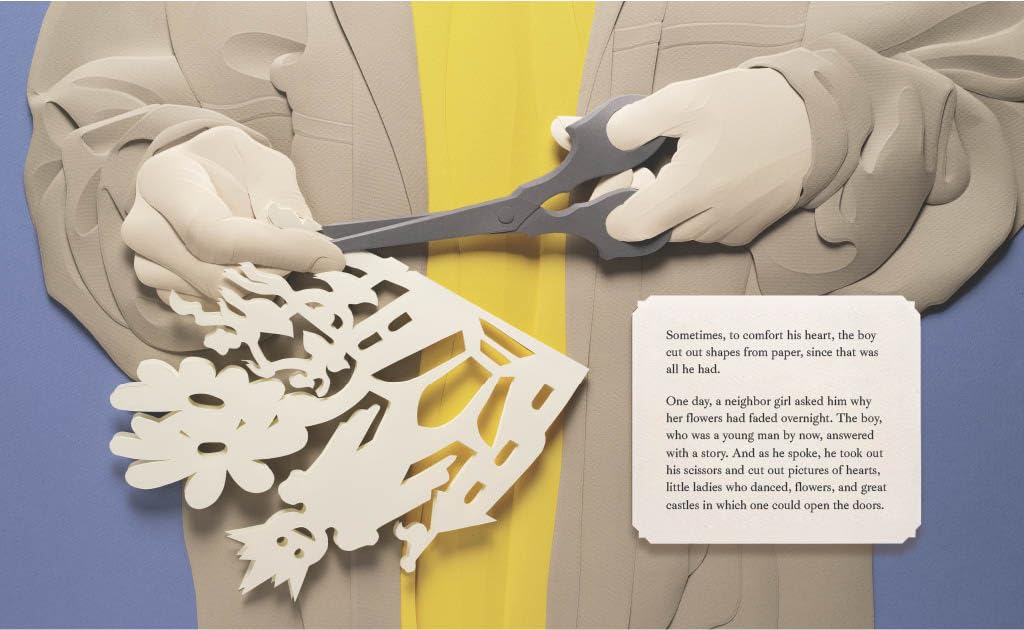
Illustration copyright © 2026 by Calvin Nicholls. Text copyright © 2026 by Sandra Nickel. Courtesy of Levine Querido.

Sandra Nickel’s mesmerizing and sensitive portrait of Hans Christian Andersen highlights his seemingly limitless creativity, imagination, and courage as he stays true to himself despite the treatment and rejections he endured. Her lyrical and moving biography is not only an inspiring tribute to this unique storyteller and artist, but a buoy for children struggling themselves and a reminder for all to embrace each person as a whole, recognizing and encouraging their talents, dreams, and contributions. Although his enduring popularity is already known to readers, her account of his ultimate triumph still has the power to astonish and prompt cheers.

Visually arresting, Calvin Nicholls’ extraordinary paper sculpture illustrations pop with action and emotion, immersing readers in the sights and sounds of Andersen’s factory hometown, his experiences in Copenhagen, and the joy of his long-dreamed-for success. The realism of Nicholls’ low-relief sculptures, assembled from various weight and textured papers then photographed, is astounding. Nicholls’ color scheme mirrors the theme of the “Ugly Duckling,” portraying Andersen in muted grays and browns until his full transformation when he dazzles Copenhagen royalty in a white tuxedo.

The True Ugly Duckling: How Hans Christian Andersen Became a Swan belongs in every classroom, school, and library collection to edify and inspire and would be an inspirational addition to home bookshelves, especially to pair with readings of his stories.

Ages 4 – 8

Levine Querido, 2026 | ISBN 978-1646146093

Hans Christian Andersen’s Birthday Activity

Easy Origami Swan


Kids can have fun on Hans Christian Andersen’s Birthday and International Children’s Book Day by making this easy origami swan to celebrate their unique personalities and talents! All you need is origami paper or you can cut your own 6-inch by 6-inch paper or any size square.
You can purchase The True Ugly Duckling: How Hans Christian Andersen Became a Swan from these booksellers

Amazon | Barnes & Noble | Bookshop

Picture Book Review

November 14 – Human-Animal Relationship Week

About the Holiday

Animals and humans coexist on Earth in so many amazing ways. Our pets are beloved family members, we interact and care for the birds, squirrels, chipmunks, and other backyard animals that we see every day, and we are mindful of and should be caretakers of the wild animals that inhabit the plains, mountains, and seas of our planet. Human-Animal Relationship Awareness Week was established by the Animals & Society Institute, which “helps improve and expand knowledge about human-animal relationships in order to create safer and more compassionate communities for all.” Over this week people are encouraged to think about companion animals, assistance animals, animals in shelters, and the safety and well-being of the animals in our care. To celebrate, spend more time with your pet and consider donating to your local animal shelter or wildlife organization. To read more about their work and their future, visit the Animals & Society Institute’s website.

Thank you to Rise x Penguin Workshop/Penguin Random House for sharing a copy of this book for review! All opinions are my own.

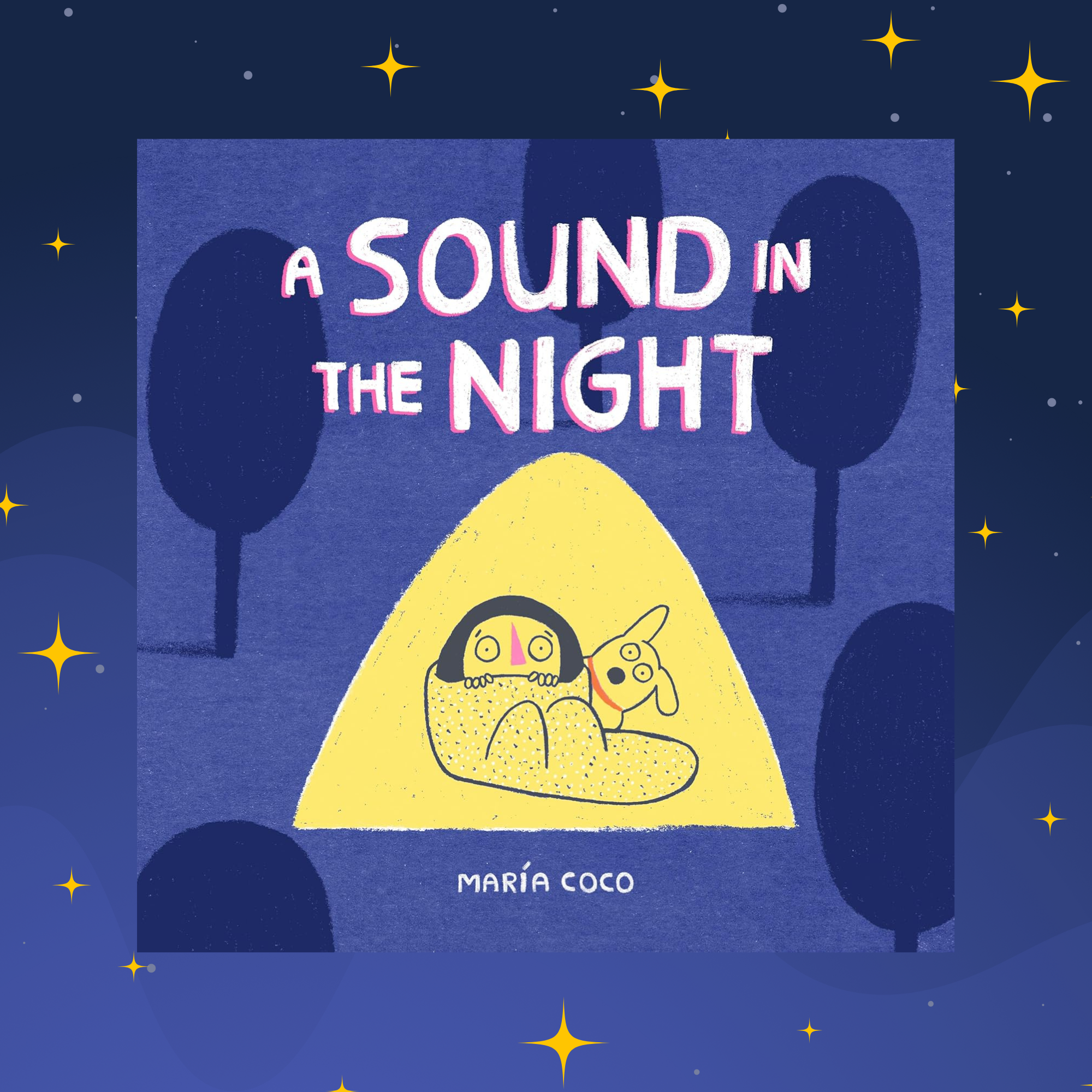
A Sound in the Night

By María Coco

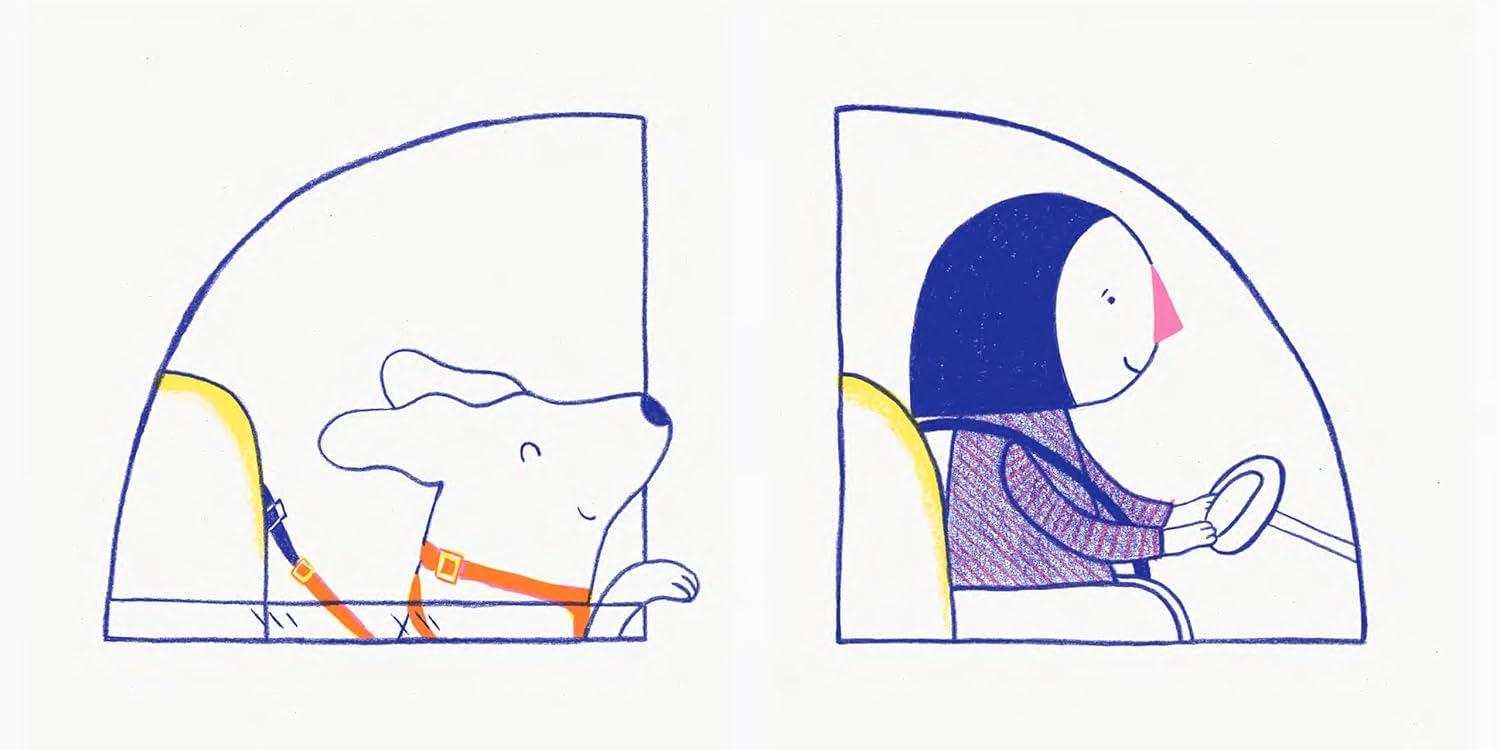
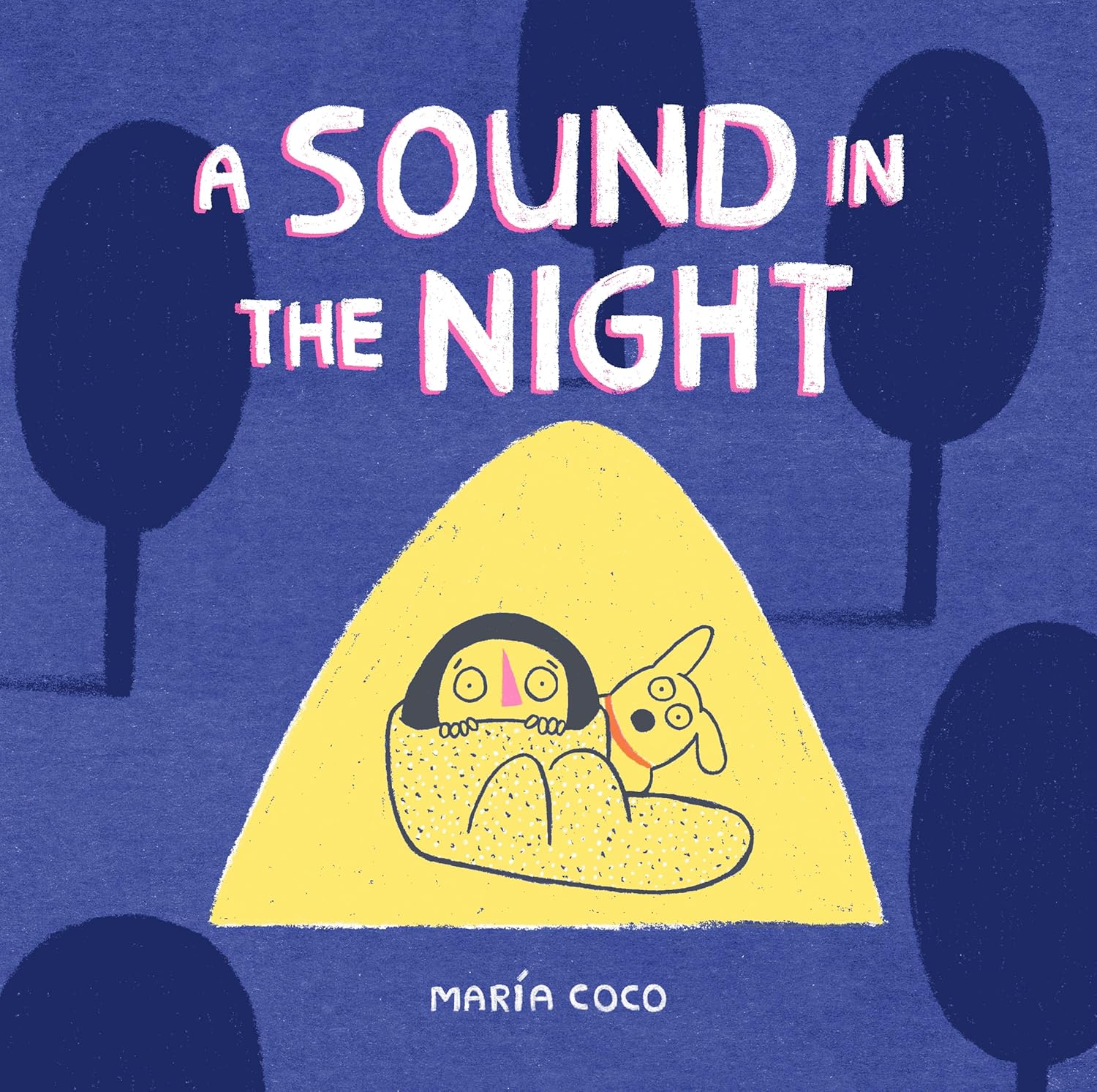
A dog snoozes in his favorite chair, his tennis ball passing the time nearby. An ear perks up, and then an eye opens to see his human stuffing a backpack. He rushes to the door, his tale thumps while he holds his tennis ball in his teeth. Soon they’re on the road passing cotton candy trees, the wind riffling the dog’s ears. His companion smiles as she drives.

Text and Illustration © 2025 María Coco. Courtesy of Rise x Penguin Workshop.

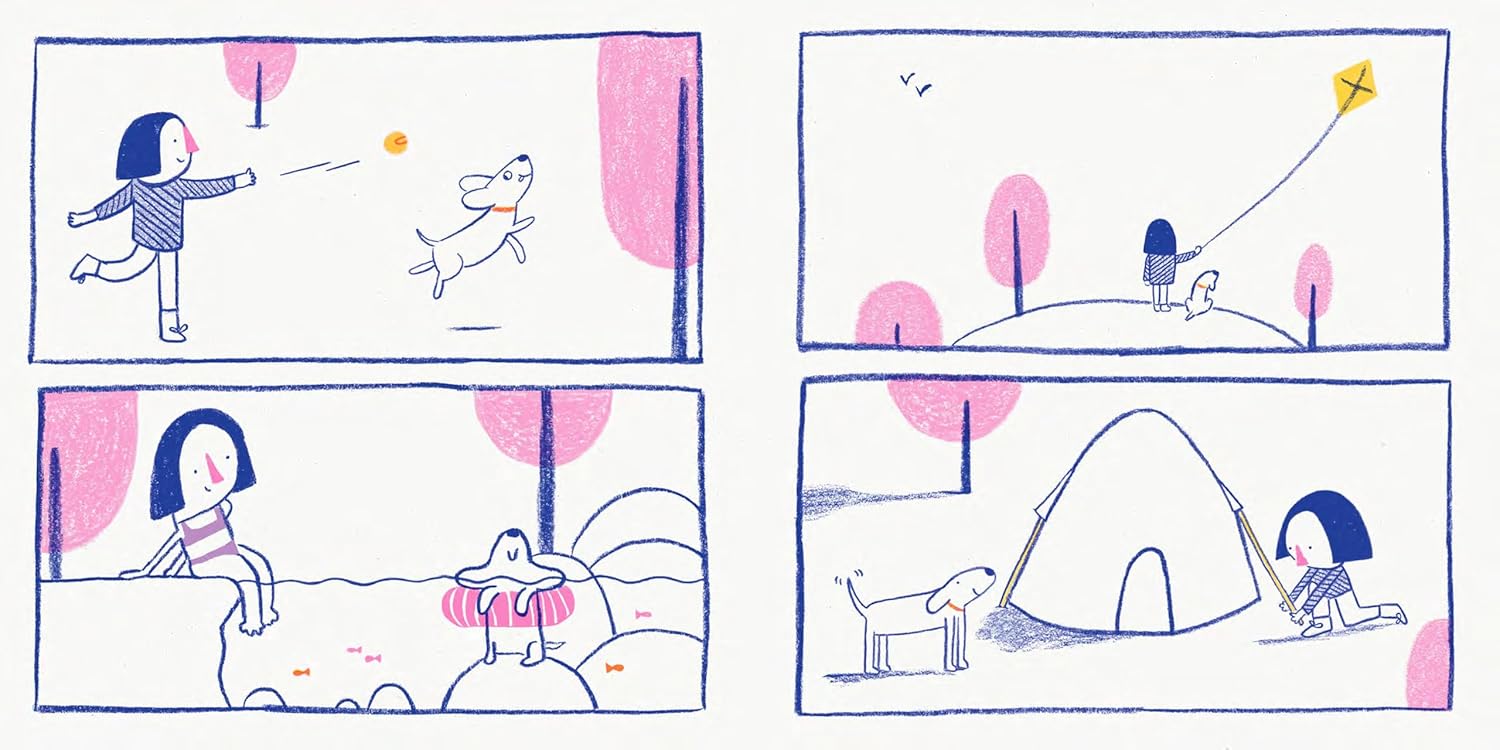
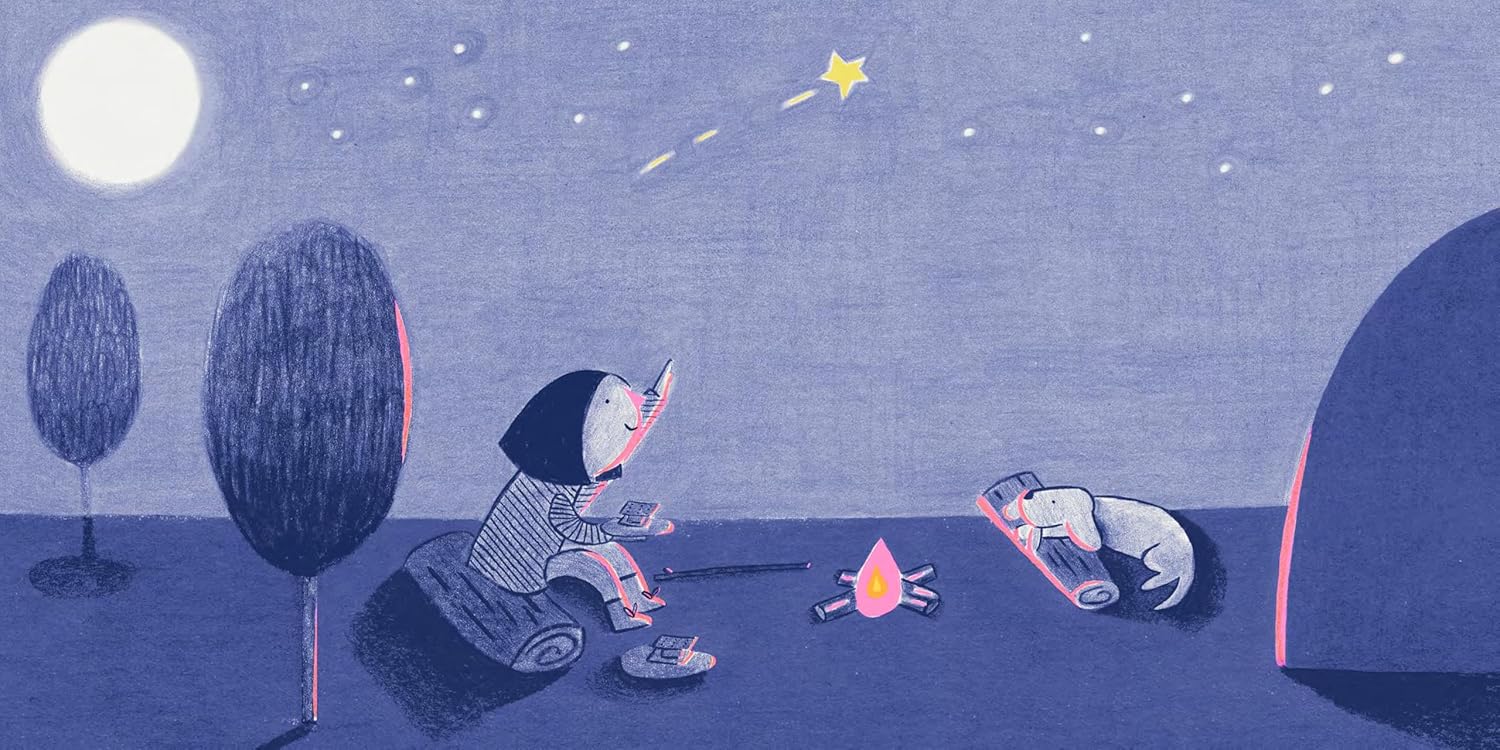
When they reach the campsite, they play fetch, swim, fly a kite, and finally set up their tent. In the light of a small campfire, they enjoy s’mores and watch a shooting star. Then it’s time for a book and bed. Sometime during the night, the two are awakened by a “CRACK.” And another, closer. And another, LOUDER.

Text and Illustration © 2025 María Coco. Courtesy of Rise x Penguin Workshop.

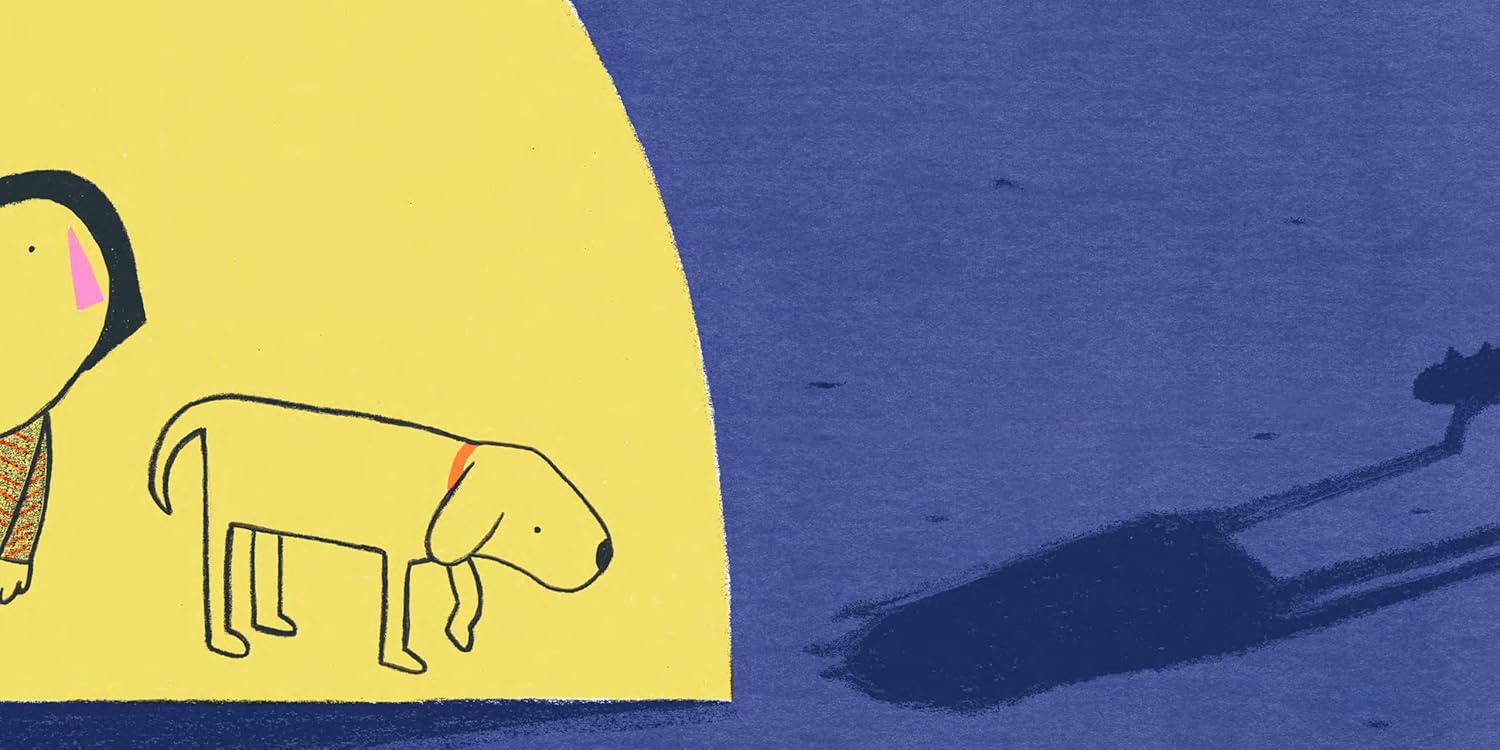
The human hides in the sleeping bag. The dog perches on top. The cracking continues while outside a long shadow appears. Soon, curiosity takes over, and the pair peek through the tent flap. Courageously, they walk out into the darkness and take a few steps toward the shadowy shape. In the cone of light from the flashlight they discover . . . a cat. 

Text and Illustration © 2025 María Coco. Courtesy of Rise x Penguin Workshop.

The cat happily accepts their pats and licks then joins them for breakfast and hiking the next day. The cat and the dog are sad to part as the human breaks down the tent and ties the bundle atop the car. Back on the road again, the little car passes by the cotton candy trees, the wind riffling the dog’s ears. But is that an extra tail we see through the window? Clever clues in the next few pages build excitement for the sweet and happy new family member reveal.

Text and Illustration © 2025 María Coco. Courtesy of Rise x Penguin Workshop.

María Coco’s nearly wordless story is as delightful as it is inviting. Coco’s simple line drawings, shapes, and whimsical touches on clean white or midnight-blue pages allow children’s imaginations free roam to lend details from their own experiences to this suspenseful friendship-building campout. Sweet, companionable smiles and even the shared terror between this pair show their devotion to each other as well as their willingness to include a surprise newcomer. Coco’s distinctive limited-color risograph-printed illustrations enchant with neon pink, yellow, and orange highlights and a touch of purple waiting to be discovered.

A charming choice for quiet reading or to invite imaginative participation, A Sound in the Night would make a perfect gift for any book or pet lover and is a must for library collections.

Ages 2 – 6+

Rise x Penguin Workshop, 2025 | ISBN 978-0593890608

María Coco is a children’s book author and illustrator from the north of Mexico. Although she graduated with a degree in graphic design and worked as a web designer for many years in Mexico City, New York, Santiago de Chile, and elsewhere, in 2017 she followed her heart and moved to England to focus on what she loves the most. In 2019 she graduated with distinction from the MA program in children’s book illustration at Cambridge School of Art. María likes using limited colors for her bold characters and compositions and enjoys the handmade textures and unexpected results of traditional techniques such as screen-printing. Her stories are perfectly paced page-turners. Her main sources of inspiration come from nature, music, and cycling around the world. When she’s not in her studio, she may be hiding in the forest in the company of her husband, daughter, and rescue dog. Visit her at maria-coco.com.

Human-Animal Relationship Week Activity

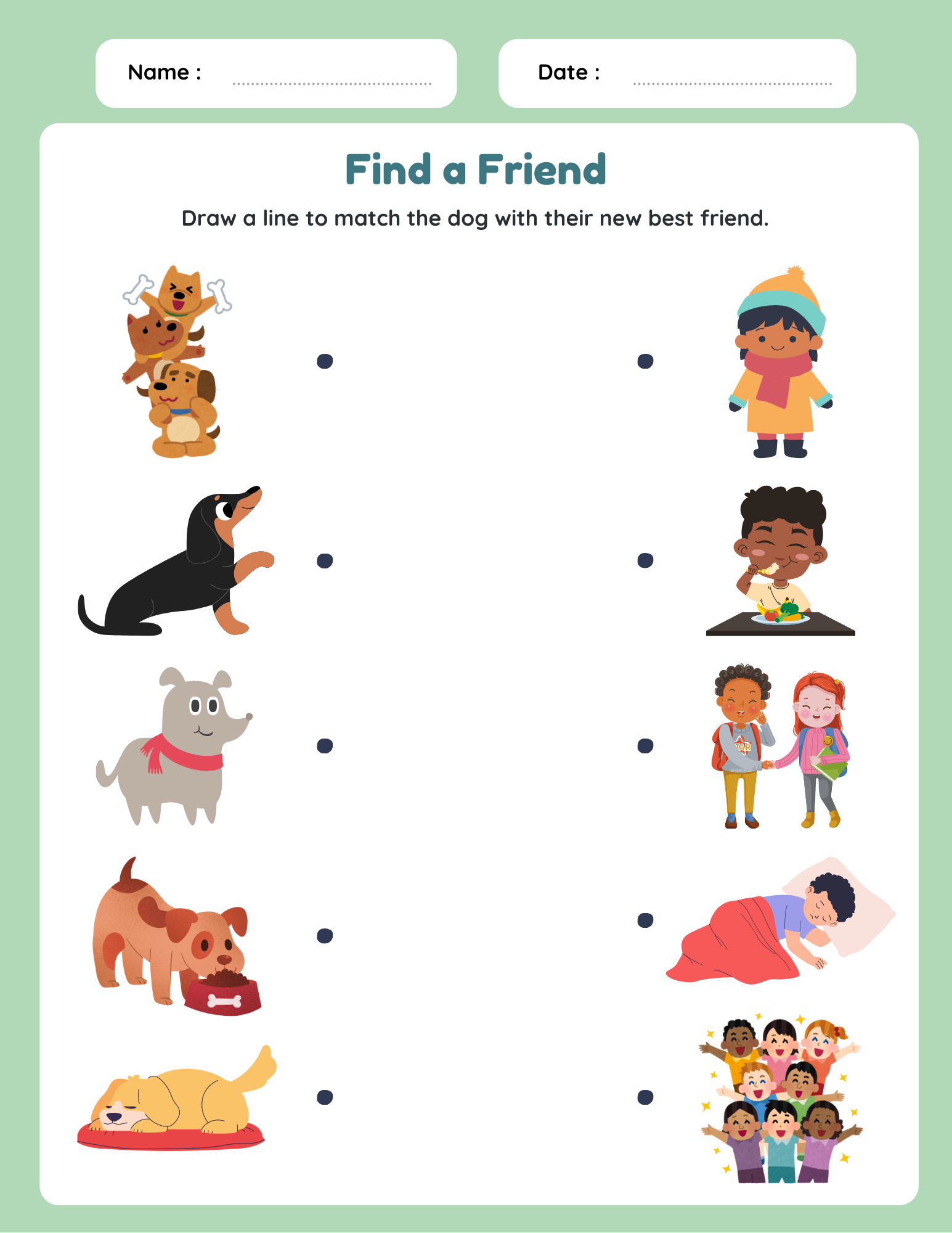
Find a Friend Matching Puzzle

Each of these humans and animals have a friend or friends. Can you pick up on the clues to match the pairs?

Find a Friend Matching Puzzle with Border | Find a Friend Matching Puzzle with No Border

You can purchase A Sound in the Night from these booksellers

Amazon | Barnes & Noble | Bookshop

Picture Book Review
February 14 – Read to Your Child Day

About the Holiday

Today’s holiday is one one of the best days of the year for kids and adults who love to read together. Reading to children has many benefits from helping with language development to instilling in children a love of books and learning to building bonds that last a lifetime. Today, as it happens, is also Valentine’s Day, and there’s no better way to say “I Love You” than by spending time together with a grrrreat book like today’s! For neat ideas on how to make the most of Read to Your Child Day, visit Days of the Year

Thanks to Bloomsbury Children’s Books for sharing a copy of Little Lion Girl with me!

Review by Dorothy Levine

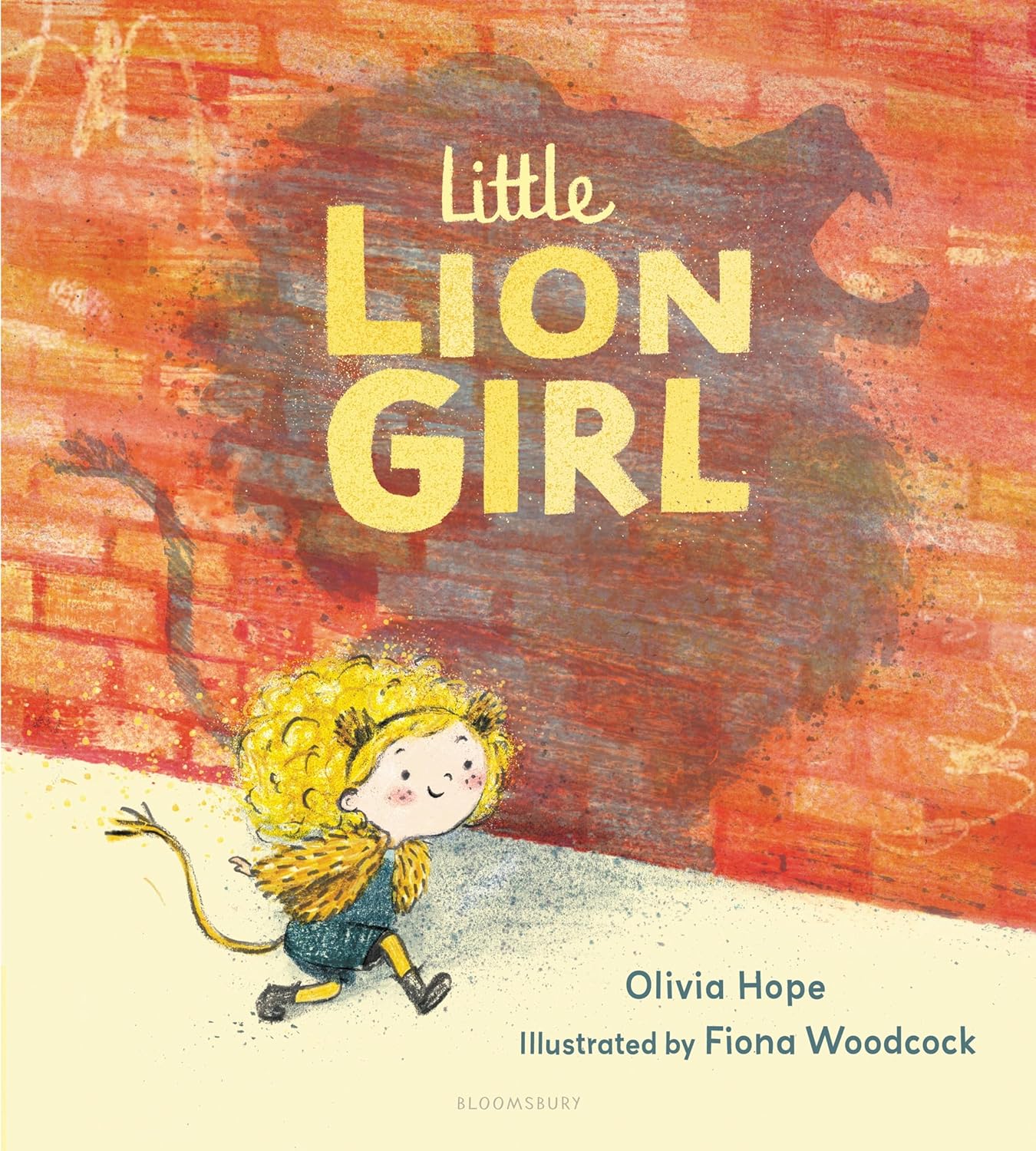
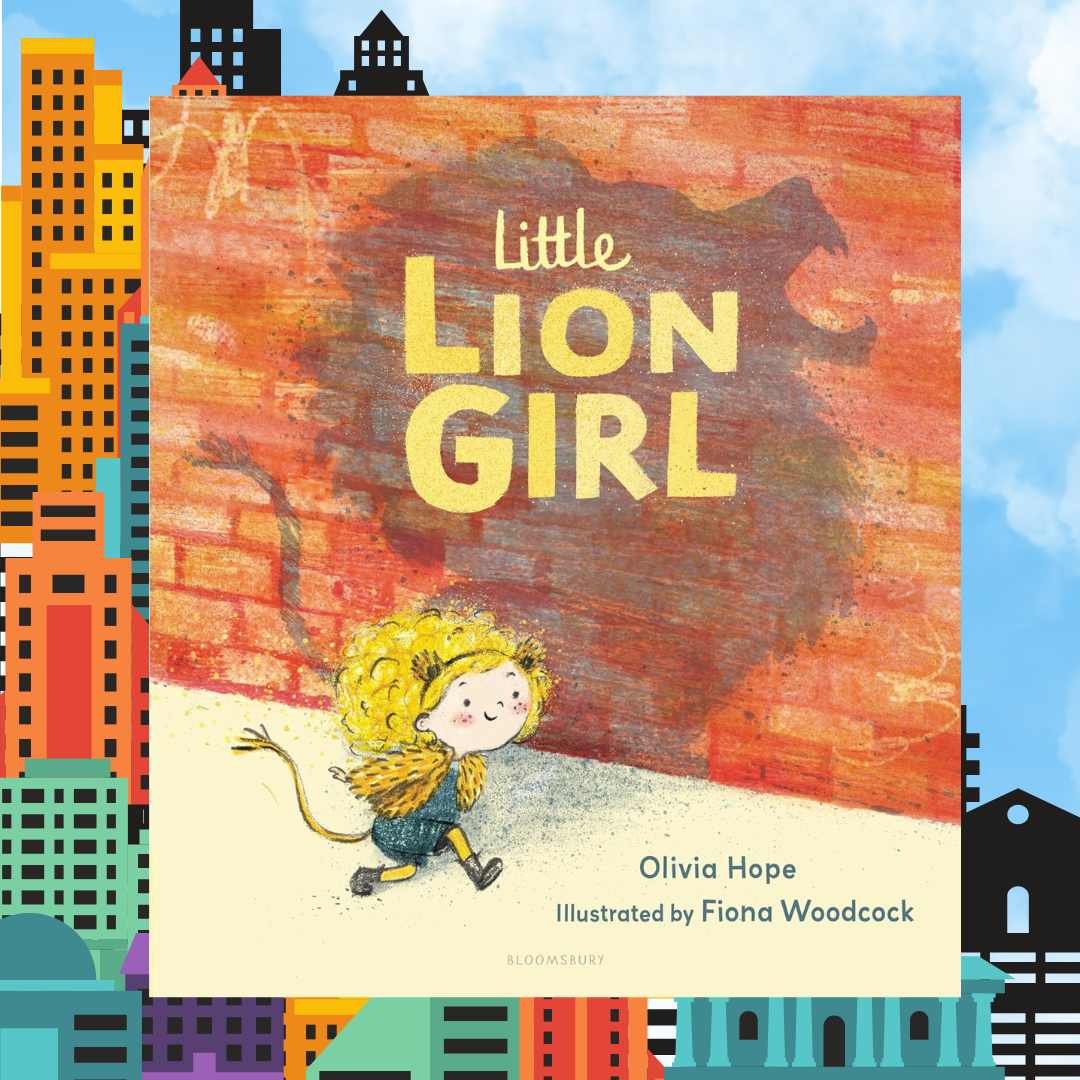
Little Lion Girl

Written by Olivia Hope | Illustrated by Fiona Woodcock

It’s time to line up for a copy of Little Lion Girl, a vibrant tale of mother and daughter taking on the roaring city.

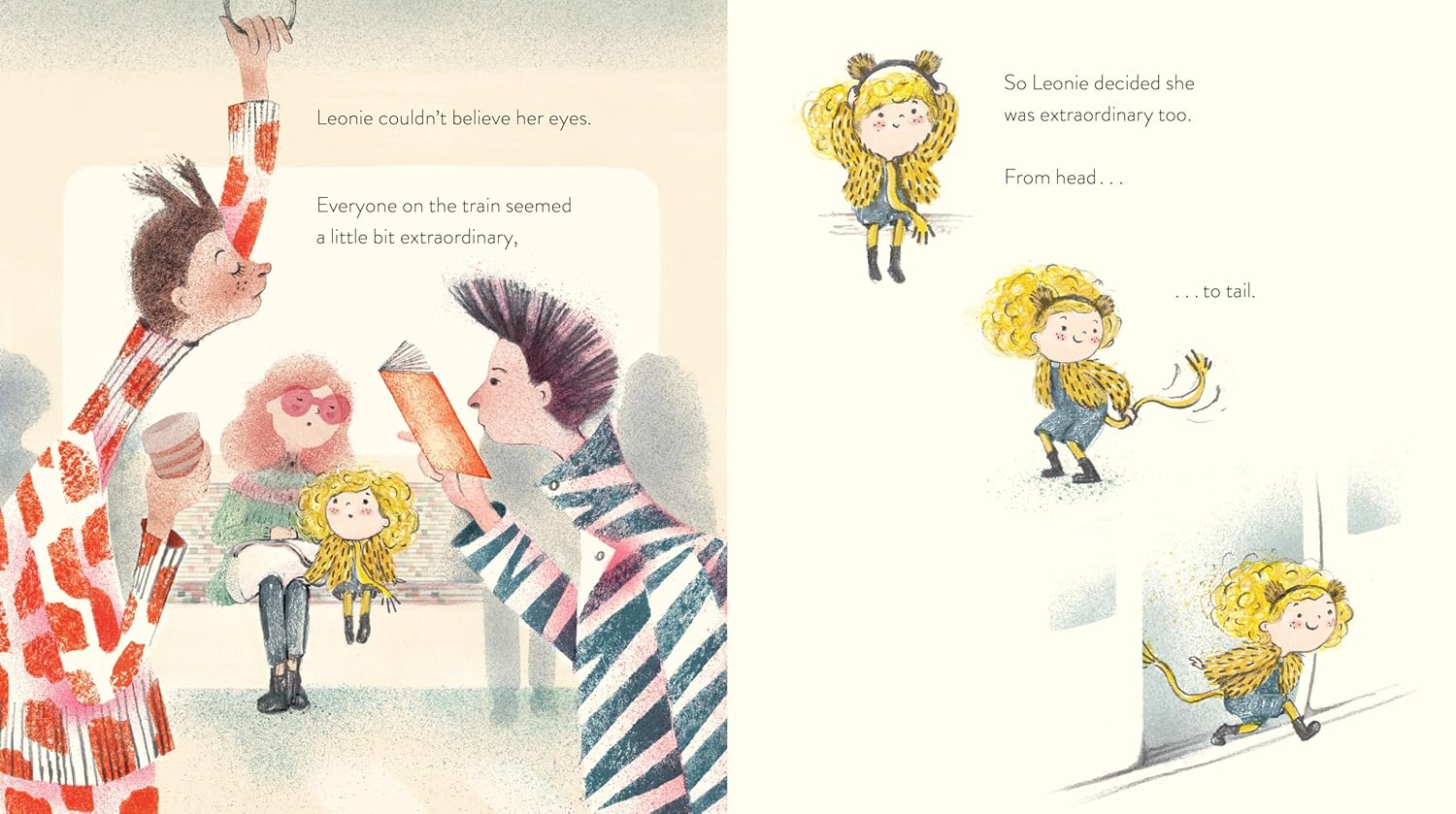
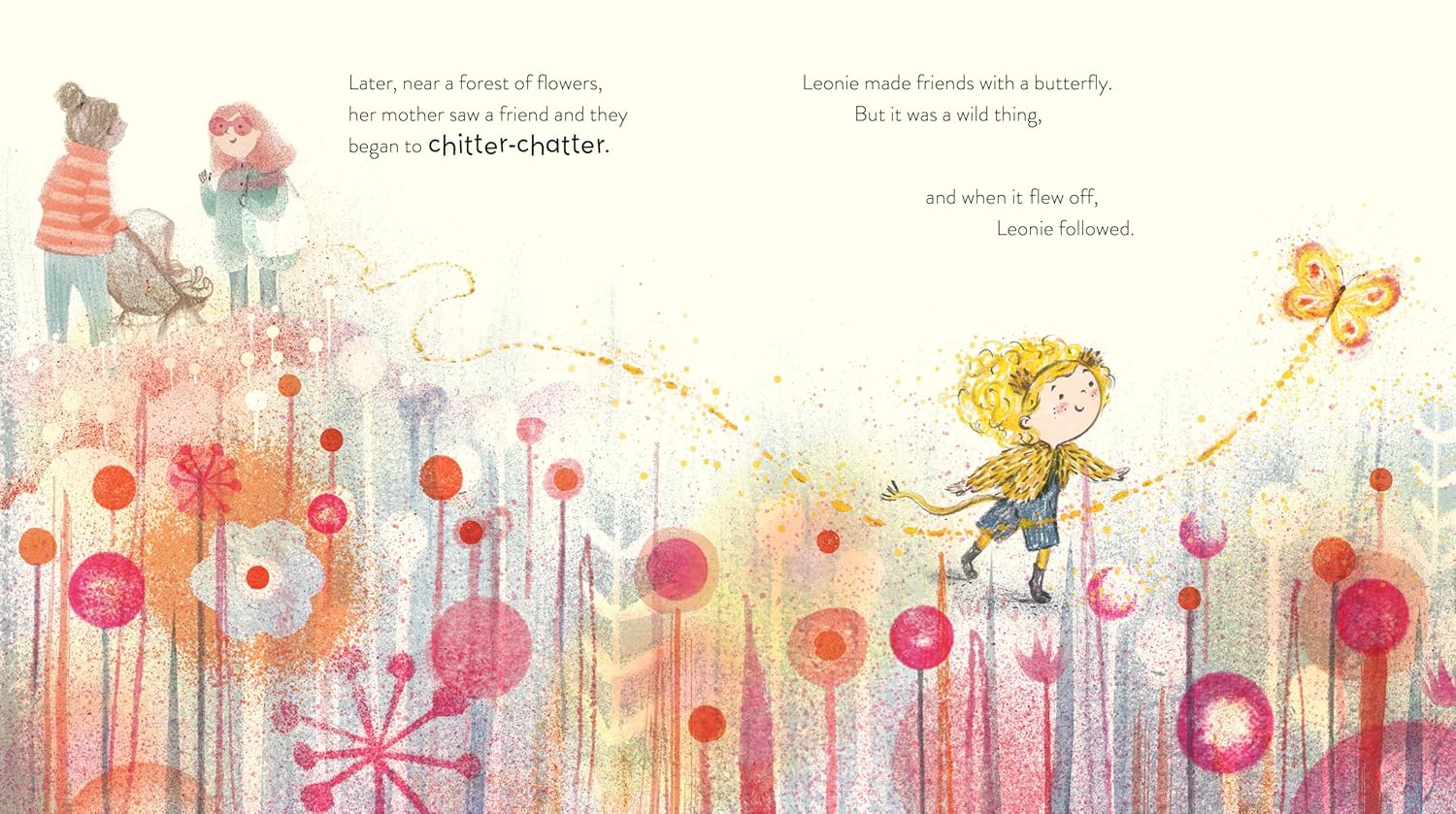
When Leonie spots the orange lights of the train coming to take her to the big city, she knows it’s time for an adventure. On the ride she notices unique characters around her and decides she too will meet the city with extravagance. With the help of a few accessories, Leonie cleverly transforms herself into a lion. When “the city roared like a jungle,” Leonie “roared back at the city. / She shook her mane and swished her tail. / She was lion girl.”

Illustration © 2025, Fiona Woodcook, text © 2025, Olivia Hope. Courtesy of Bloomsbury Children’s Books.

Lion girl spends the day stalking through bustling colorful streets, “through legs like trees between squawks, grunts, and shrieks” finding lions inside and out of a museum as she goes. In a cafe families sit in their “prides;” in the park she declares she is the king of the city.

All is going lion-tastically when a butterfly—a real wild thing—causes her to wander a bit further from her mother. Without her mama lion, the city jungle starts to feel bigger, and lion girl curls up in fear. Just as she starts to lose her roar, her mother calls to her, and they reunite with a hug and a purr.

Illustration © 2025, Fiona Woodcook, text © 2025, Olivia Hope. Courtesy of Bloomsbury Children’s Books.

Olivia Hope’s upbeat tale will excite wild children and their animal-loving hearts. From barking engines to city bustle grunts and shrieks, Hope’s story is jam-packed with animal-based vocabulary to set the scene. As Leonie and her mother explore the city, the reader’s confidence will grow along with lion girl as she explores the feelings that come with each step of her journey. A sweet story that inspires children to venture out with bravery, while also offering a gentle reminder that staying close to the pack is important too. Little Lion Girl shows kids that it’s okay to feel scared sometimes and to receive comfort from adults.

Fiona Woodcock’s illustrations light up the city in soft primary color hues. Leonie’s cat ears and scarf-tail form an exciting shadow of a real lion as she prowls through the streets. Woodcock illustrates a wonderfully diverse range of characters, including two train passengers dressed to resemble a zebra and giraffe—one of whom is spotted again later at the park. Leonie’s detailed facial expressions reflect her awe, excitement, fear and ultimately comfort when she snuggles up against her mom.

Little Lion Girl would make a lovely addition to home and library collections. It’s the perfect read-aloud to take with you on a train ride or to read while gearing up for an adventure!

Ages 3 – 6

Bloomsbury Children’s Books, 2025 | ISBN 978-1547616688

About the Author

Olivia Hope is an Irish writer with a special love for fiction about wild children. Before becoming an author, she was a teacher, creative arts facilitator and even an international athlete. She currently lives in the wilds of Southwest Ireland with her family.

About the Illustrator

Fiona Woodcock is an illustrator and picture book author. She studied Graphic Communication at Glasgow School of Art and for many years worked in animation. Her debut book Hiding Heidi was nominated for the 2017 Kate Greenaway award. Look was the winner of the AOI World Illustration Awards 2019, and A Dot In The Snow by Corrinne Averiss was selected as one of ‘The Times Children’s Books of the Year 2016’ and nominated for the Kate Greenaway Award 2018. Fiona lives in London.

Read to Your Child Day Activity

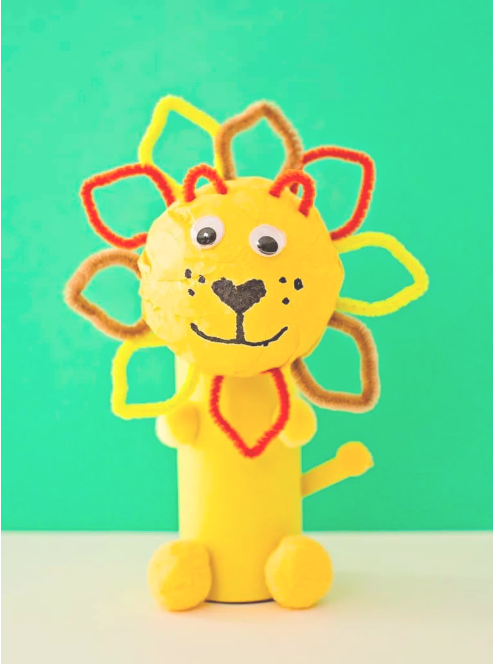
Image courtesy of Hello Wonderful

Paper Tube Lion

Kids can make and display this cute Paper Tube Lion from Hello Wonderful to remind themselves that they are as brave and confident as a lion.

You can purchase Little Lion Girl at these booksellers

Amazon | Barnes & Noble | Bookshop (to support your local independent bookstore)

Picture Book Review

November 16 – It’s Picture Book Month

celebrate-picture-books-picture-book-review-gift-and-box-cover

About the Holiday

If you love picture books, you know the thrill of holding a new or a new-to-you book in your hands and opening up to that very first page. The children’s sections of bookstores and libraries draw you in with humor, fairy tales, poetry, biographies, science, and so much more—a whole universe of creativity, thought, knowledge, and imagination—that enlightens and entertains. This month take time to indulge your passion for picture books!

I’d like to thank Knopf Books for Young Readers for sending me a copy of Gift & Box for review consideration. All opinions on the book are my own.

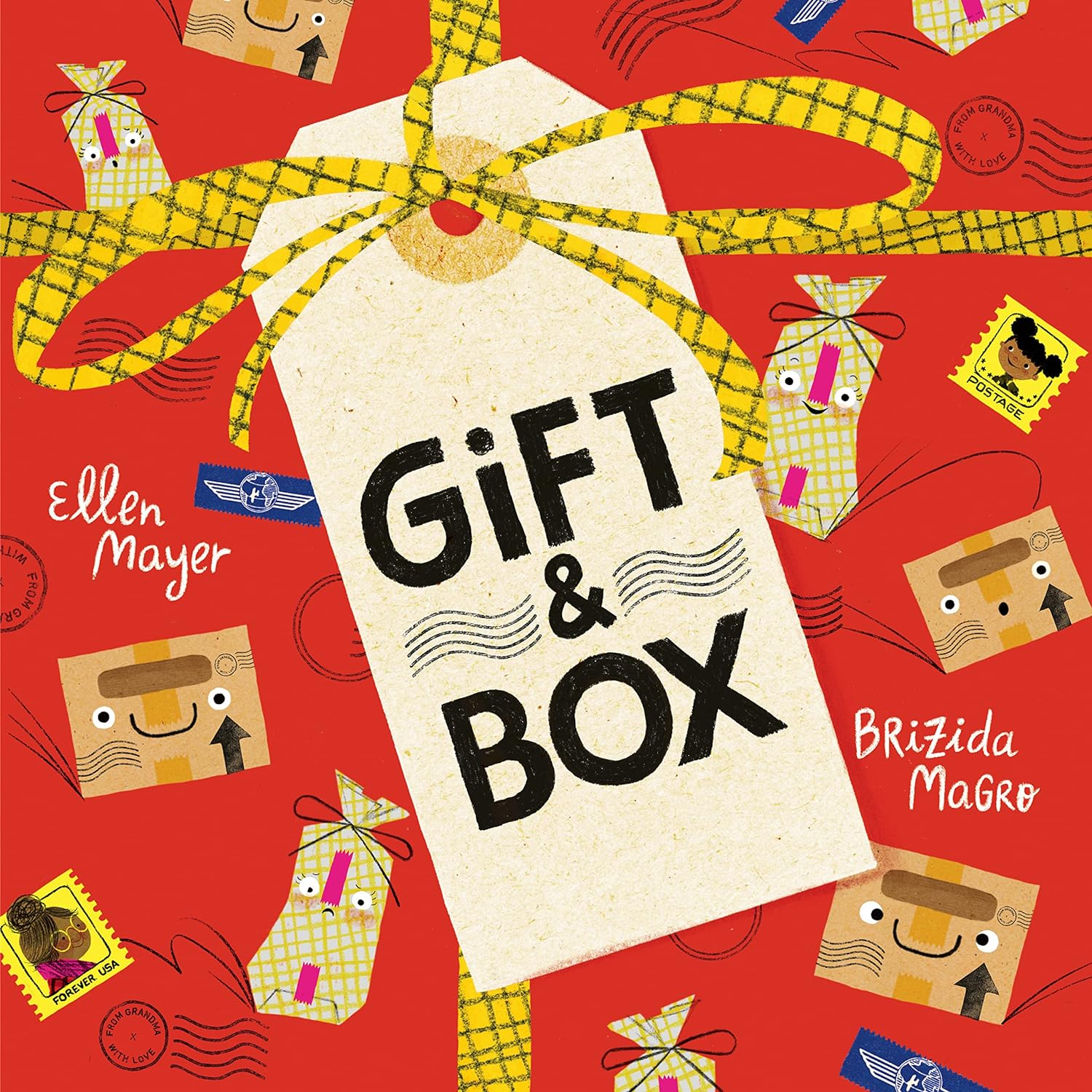
Gift & Box

Written by Ellen Mayer | Illustrated by Brizida Magro

“Gift was a gift. Box was a box,” and when Grandma lovingly placed Gift inside Box, they became “a package.” Gift couldn’t wait to delight. Box was ready to protect. Grandma took the package to the post office, and Gift and Box “were on their way.”

celebrate-picture-books-picture-book-review-gift-and-box-wrapping-gift

Illustration copyright Brizida Magro, 2023, text copyright Ellen Mayer, 2023. Courtesy of Knopf Books for Young Readers.

“They were not Priority Mail,” making the journey long and with many ups and downs. ‘”When will we be there?’ asked Gift.” Sometimes they waited and waited; sometimes they were tossed this way and that. Gift had lots of questions, a few complaints, and a moment of disappointment when the wrapping tore a bit. But Box always answered and comforted even though it could be “challenging.”

Being a package could be fun—like when they rode the conveyor belt. But the fun could turn scary, too—like when the big shipping container they were in was transferred to another ship. ‘”Don’t worry!'” shouted Box” when Gift was afraid. ‘”I’ve got you!'” As they got closer to their destination, each admitted they would miss one another. And then with a “Thunk!” they landed on a door step. Mama opened the door. Sofia rushed to see what had come.

celebrate-picture-books-picture-book-review-gift-and-box-conveyor-belt

Illustration copyright Brizida Magro, 2023, text copyright Ellen Mayer, 2023. Courtesy of Knopf Books for Young Readers.

Sofia opened Box and lovingly lifted Gift out. “Gift and Box were no longer a package.” Sofia unwrapped Gift and was delighted. Box was happy to have protected Gift, but now their time together had ended. Mama came over to flatten Box for recycling. Sofia, however, had other ideas—lots of ideas. Sofia got out tape and scissors; crayons, markers, and glue. When she was finished creating, Sofia and Gift and Box were ready for another adventure—together!

celebrate-picture-books-picture-book-review-gift-and-box-package-delivered

Illustration copyright Brizida Magro, 2023, text copyright Ellen Mayer, 2023. Courtesy of Knopf Books for Young Readers.

What child doesn’t love getting a package in the mail? But who is it come from? How does it get to them? And Oh, the joy when the gift is revealed! Rooted in objects, emotions, ideas, and questions familiar to kids, Ellen Mayer’s story will delight readers of all ages with its fresh and innovative twists and turns. Together Gift and Box mirror the most appealing kinds of relationships—best friends; parent or caregiver and child; teacher and student. Children will love learning how a package navigates its way through the postal system, and adults and kids may even like to speculate on where Grandma and Sofia live since Gift and Box cross an ocean.

Mayer’s realistic dialogue creates a wonderful read-aloud story that can give adults and kids a fun way to interact while reading. The story also could easily be staged as a play in classrooms or libraries. The details of their journey make perfect prompts to discuss patience, fear, anxiety, and disappointment as well as new experiences, teamwork, excitement, growing friendships, and imaginative, creative play. Young readers will be delighted by the sweet and surprising ending.

On the very first page, kids will fall in love with Brizida Magro’s adorable Gift and Box. Their bright eyes, sweet, simple smiles (which cleverly register a full range of emotions) and creatively placed tape make them expressive and beloved characters to root for. Magro’s vivid collage-style illustrations play with repeating patterns, colors, and textures to create a charming and cohesive sense of movement as Gift and Box (and readers) follow the story’s journey. Magro’s final illustration is sure to inspire a child’s own creativity.

A Special Note: Readers will be well-rewarded by unwrapping the book from it’s jacket to meet Gift and Box in person!

An exciting, multi-layered story that kids will ask for again and again, Gift & Box makes a perfect addition to anyone’s gift list for holidays, birthdays, and “just because” days. Public and school libraries can be sure Gift & Box, with it’s bright, enticing cover and “read again!” appeal, will be a welcome addition to their collection and enjoy continuous rotation.

Ages 3 – 7

Knopf Books for Young Readers, 2023 | ISBN 978-0593377611

About the Author

Ellen Mayer is an award-winning author of lively children’s books that help build language and math skills. She has a background in early childhood education, as a researcher and early literacy home visitor. Ellen lives with her husband in Cambridge, Massachusetts. And while her grandchildren all live close by, she still mails them gifts in boxes they can open with delight.

Visit Ellen on Her Website | Instagram | Twitter

About the Illustrator

Brizida Magro is an illustrator and educator based in Boulder, Colorado, who grew up in Portugal. She teaches illustration at Rocky Mountain College of Art and Design. Brizida is also the illustrator of Saturday at the Food Pantry by Diane O’Neill and Let Me Call You Sweetheart by Mary Lee Donovan. She is passionate about rock climbing and wandering the world. She enjoys simplicity, wee characters, collecting vintage papers, and bringing stories to life.

Visit Brizida on Her Website | Instagram

Picture Book Month Activity

celebrate-picture-books-picture-book-review-shaving-cream-wrapping-paper-newer-best-2

Shaving Cream Wrapping Paper

Kids will love wrapping any birthday, holiday, or even surprise gift in unique wrapping paper they’ve made themselves! This simple creative craft is fun for the whole family! 

Supplies

  • 1 can of shaving cream
  • Food coloring
  • Shallow baking tray
  • Frosting spatula or regular spatula
  • Toothpicks or skewer for swirling food coloring
  • White paper, computer paper works well

celebrate-picture-books-picture-book-review-shaving-cream

celebrate-picture-books-picture-book-review-shaving-cream-colors

celebrate-picture-books-picture-book-review-shaving-cream-wrapping-paper-drying

Directions

  1. Squirt the shaving cream onto the tray in small amounts and spread into a thin layer with the spatula
  2. Squeeze a few drops of different colored food coloring onto the shaving cream
  3. With the toothpick or skewer gently swirl the colors. Alternately, gently smooth the colors around and together with the icing spatula.
  4. Lay a piece of white paper on top of the shaving cream
  5. Gently pat the paper all over. Do not submerge the paper in the shaving cream.
  6. Lift the paper up and place on the table
  7. Let sit for a few minutes
  8. Scrape the shaving cream off the paper and let the paper dry

celebrate-picture-books-picture-book-review-gift-and-box-cover

Order from Bookshop to support your local independent bookstore.


You can also find Gift & Box at these booksellers

Amazon | Barnes & Noble | Books-a-Million

Picture Book Review

January 17 – Martin Luther King, Jr. Day

celebrate-picture-books-picture-book-review-memphis-martin-and-the-mountaintop-cover

About the Holiday

Martin Luther King Jr. Day celebrates the life and legacy of the man who dedicated his life and work to teaching—as Coretta Scott King stated—“the values of courage, truth, justice, compassion, dignity, humility and service” and led a non-violent Civil Rights movement to enact racial equality and justice throughout state and federal law. President Ronald Reagan signed the holiday into law in 1983, setting it on the third Monday of January to coincide with Martin Luther King, Jr.’s birthday on January 15. The holiday was officially observed in all 50 states in 2000. Today, learn more about the life and work of Martin Luther King and how you can help promote justice and equality for all. Consider volunteering in your community where help is needed

I’d like to sincerely thank Alice Faye Duncan for sharing a digital copy of Memphis, Martin, and the Mountaintop for review consideration. All opinions on the book are my own.

Memphis, Martin, and the Mountaintop: The Sanitation Strike of 1968

Written by Alice Faye Duncan | Illustrated by R. Gregory Christie


Informed by the memories of Dr. Almella Starks-Umoja, a teacher who as a child participated in the sanitation strike and told through the eyes of fictional nine-year-old Lorraine, Alice Faye Duncan relates the story of the 1968 sanitation strike in Memphis, Tennessee and the assassination of Dr. Martin Luther King just a day after giving his final sermon “I’ve Been to the Mountaintop” at Mason Temple Church in support of the strike.

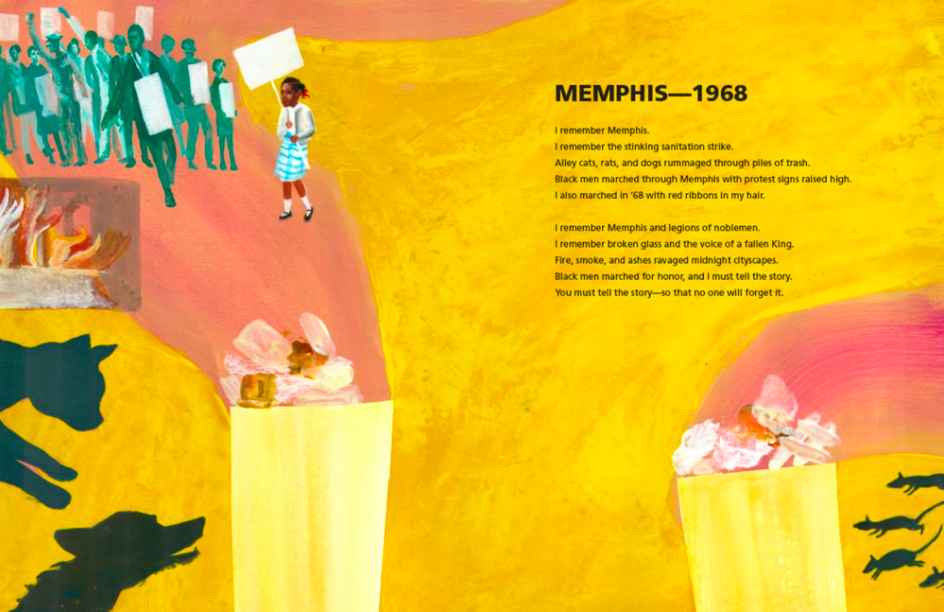
Through thirteen titled vignettes composed of lyrical and powerful language, Duncan reveals the detailed facts and emotions of those days that changed lives, altered the Civil Rights movement, and still resonate today. Duncan begins with “Memphis—1968” in which Lorraine describes a Memphis roiled by “the stinking sanitation strike” when “Black men marched for honor” and she also marched “with red ribbon in [her] hair.” She entreats the reader: “You must tell the story—so that no one will forget it.”

celebrate-picture-books-picture-book-review-memphis-martin-and-the-mountaintop-introduction

Image copyright R. Gregory Christie, 2018, text copyright Alice Faye Duncan, 2018. Courtesy of Calkins Creek.

“Mud Puddles” tells of the moment in January when Lorraine’s father comes home so “distressed and out of breath” that Lorraine’s muddy shoeprints are forgotten by her mama as he tells them about his two fellow sanitation workers and friends—Echol Cole and Robert Walker—who were killed when a truck’s packer blade malfunctioned. “Daddy told Mama, ‘It ain’t right to die like that.’ / Mama shook her head, and I saw a new storm rising up. / I saw it in their eyes.”

In “Marching Orders” Lorraine lays out the ugly conditions sanitation workers like her father toiled under and introduces readers to Mayor Loeb, who refused to increase their wages from $1.70 an hour. She states, “When they could take the abuse no more, 1,300 men deserted their garbage barrels. They organized a labor strike on February 12, 1968. In the morning and afternoon, for sixty-five days, sanitation workers marched fourteen blocks through the streets of downtown Memphis.”

celebrate-picture-books-picture-book-review-memphis-martin-and-the-mountaintop-memphis-1968

Image copyright R. Gregory Christie, 2018, text copyright Alice Faye Duncan, 2018. Courtesy of Calkins Creek.

As the strike continued through the winter, “[crippling] garbage collection with terrific success,” “Winter Blues” depicts the sacrifices Lorraine’s family made, from going without electricity to missing bill payments to skipping treats or getting anything new. But Lorraine also “learned what the grown folks knew. Trouble visits every life. But as strikers marched through sun and rain, help came in many forms.” Two of these were a group of Memphis preachers who helped strikers pay bills and the NAACP.

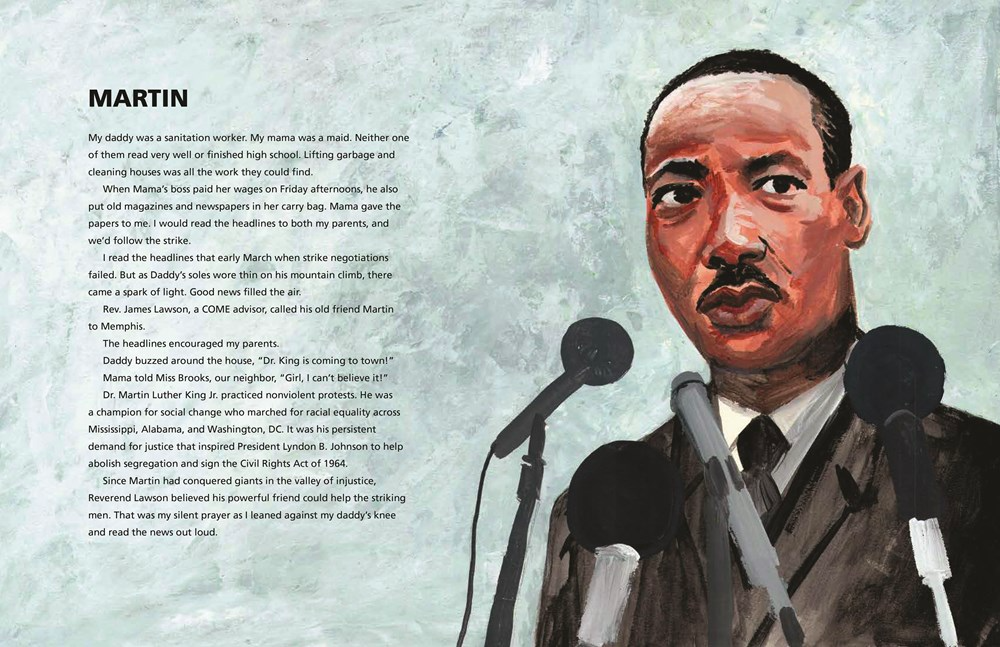
Winter turns to spring with no concessions from Mayor Loeb and no end to the strike in sight. But then in “Martin” Lorraine learns in the newspapers her mama’s boss gave her that Martin Luther King Jr. would be coming to support the striking workers. “Silver Rights” recounts Lorraine’s memories of listening to Dr. King, his voice “loud and stirring” when he said, “‘All labor has dignity.’” He set the date of March 22nd when he would march with the striking workers. Lorraine’s daddy and mama vowed to be there. And as she recalled, “then Mama patted my hand and said, ‘We will take Lorraine. She can march with us.’” A haiku “Omen” reveals the cancellation of the march.

celebrate-picture-books-picture-book-review-memphis-martin-and-the-mountaintop-mud-puddles

Image copyright R. Gregory Christie, 2018, text copyright Alice Faye Duncan, 2018. Courtesy of Calkins Creek.

In “Beale Street,” Lorraine explains more about Dr. King’s dreams and work and his crusade he named “the ‘Poor People’s Campaign.’” The march was rescheduled for March 28, and on that day “Six thousand people—blacks, whites, men, women, and children—gathered in downtown Memphis. / Police stood guard with tear gas, billy clubs, and guns.” When looters shattered storefront windows, the police moved in, spraying tear gas and beating people.” Lorraine became separated from her mother but was swept to safety by her father. Following the riot, the National Guard was called in and a curfew put in place.

In the aftermath of the riot, Dr. King left Memphis, Lorraine tells readers in “Dreamers.” But he had promised to return despite death threats, and on April 3 he flew from his home in Atlanta to Memphis. It was a stormy night, but Lorraine and her family along with many others packed Mason Temple Church to hear Dr. King preach. But when they got there, Dr. King’s friend Ralph Abernathy told the crowd that Dr. King was too sick to appear.

Other people gave speeches about the strike, and Lorraine had fallen asleep in her mother’s arms when “KABOOM! A voice like the evening thunder shook me from my sleep.” In his booming voice, Dr. King “charged men, women, and children to make the world a promised land flowing with freedom and justice” and “encouraged Memphis strikers and strike supporters to march, boycott, and raise their voices for worker rights until victory was won.”

celebrate-picture-books-picture-book-review-memphis-martin-and-the-mountaintop-marching-orders

Image copyright R. Gregory Christie, 2018, text copyright Alice Faye Duncan, 2018. Courtesy of Calkins Creek.

In “Lorraine” the narrator reveals that her name is the same as the Memphis motel where Dr. King lost his life. She recounts his last hour spent with friends and the moment when he steps out onto the balcony and James Earl Ray shot him from a boarding house nearby. In other cities across the country grief-fueled protests broke out, but Memphis was relatively quiet. As Lorraine listened to the radio that night, she wrote a poem “The King is Dead” that her mama hung on the wall of their rented house.

“Black Widow” relates the events of April 8, when Coretta Scott King fulfilled her husband’s promise to march for the Memphis sanitation workers. Along with 40,000 other people—“ministers, labor leaders, political figures, entertainers, and everyday people”—from Memphis and around the country, Lorraine and her parents marched. In “Victory on a Blue Note,” the Memphis Sanitation Strike comes to an end when president Lyndon B. Johnson sent a labor official to negotiate a settlement. The men received a pay increase and promotions based on merit, not race. As Lorraine’s daddy and mama celebrate, Lorraine reveals what she has learned: “So much was won. / So much was lost. / Freedom is never free.”

An inspirational poem for all readers, “Mountaintop” closes the book. Back matter includes an extensive and detailed timeline as well as information on the National Civil Rights Museum at the Lorraine Motel and a list of sources.

celebrate-picture-books-picture-book-review-memphis-martin-and-the-mountaintop-martin-luther-king-jr

Image copyright R. Gregory Christie, 2018, text copyright Alice Faye Duncan, 2018. Courtesy of Calkins Creek.

In Memphis, Martin, and the Mountaintop, Alice Faye Duncan’s use of a nine-year-old narrator makes her book even more powerful for today’s children in telling the story of the Memphis sanitation strike and the world-changing events surrounding it. Duncan intertwines conviction, pride, activism, and heartbreak together in her compelling and lyrical snapshots that reveal the facts and emotions behind this pivotal Civil Rights and economic rights protest for a living wage for all Americans. Children’s hearts will be filled with empathy for Lorraine as she supports her father, accepts the sacrifices her family must make during the strike, joins her mother in marches, and fears for the safety of the strikers and Martin Luther King Jr.

The life and work of Dr. King, his influence, and the hope he embodied as well as his shocking assassination are all encapsulated in Duncan’s concise paragraphs, allowing readers to understand his enduring inspiration to all who fight injustice. By overlaying the text with descriptions of the volatile weather experienced during the winter and spring of 1968, Duncan amplifies the fearful atmosphere of the times in a metaphorical way that will resonate with readers. Lorraine’s growth and insight gleaned from her experiences will stay with readers long after they read the story.

R. Gregory Christie’s dramatic collage-style gouache paintings set off Duncan’s vignettes with bold blocks of color while inviting readers to experience the determination, community, and dignity of the workers fighting for the universal desire for and right to recognition, safety, and a living wage. Christie’s illustrations are all the more evocative for their varied use of perspective, subtle glimpses of hope and support, and moving portraits of Lorraine’s father, strikers, Martin Luther King Jr., and Lorraine herself. The death of Dr. King is depicted in a tiny image of the Lorraine motel balcony on which three men pointing upward, a kneeling figure, and the fallen Dr. King are all portrayed in silhouette. The intense focus the reader puts on this image increases its effect on the heart and mind.

Compelling, moving, and inspirational, Memphis, Martin, and the Mountaintop: The Sanitation Strike of 1968 is a must-read for all children. The book is a first-rate choice for home libraries and belongs in every school and public library.

Ages 7 and up

Calkins Creek, 2018 | ISBN 978-1629797182

Discover more about Alice Faye Duncan and her books on her website.

To learn more about R. Gregory Christie, his books, and his art, visit his website.

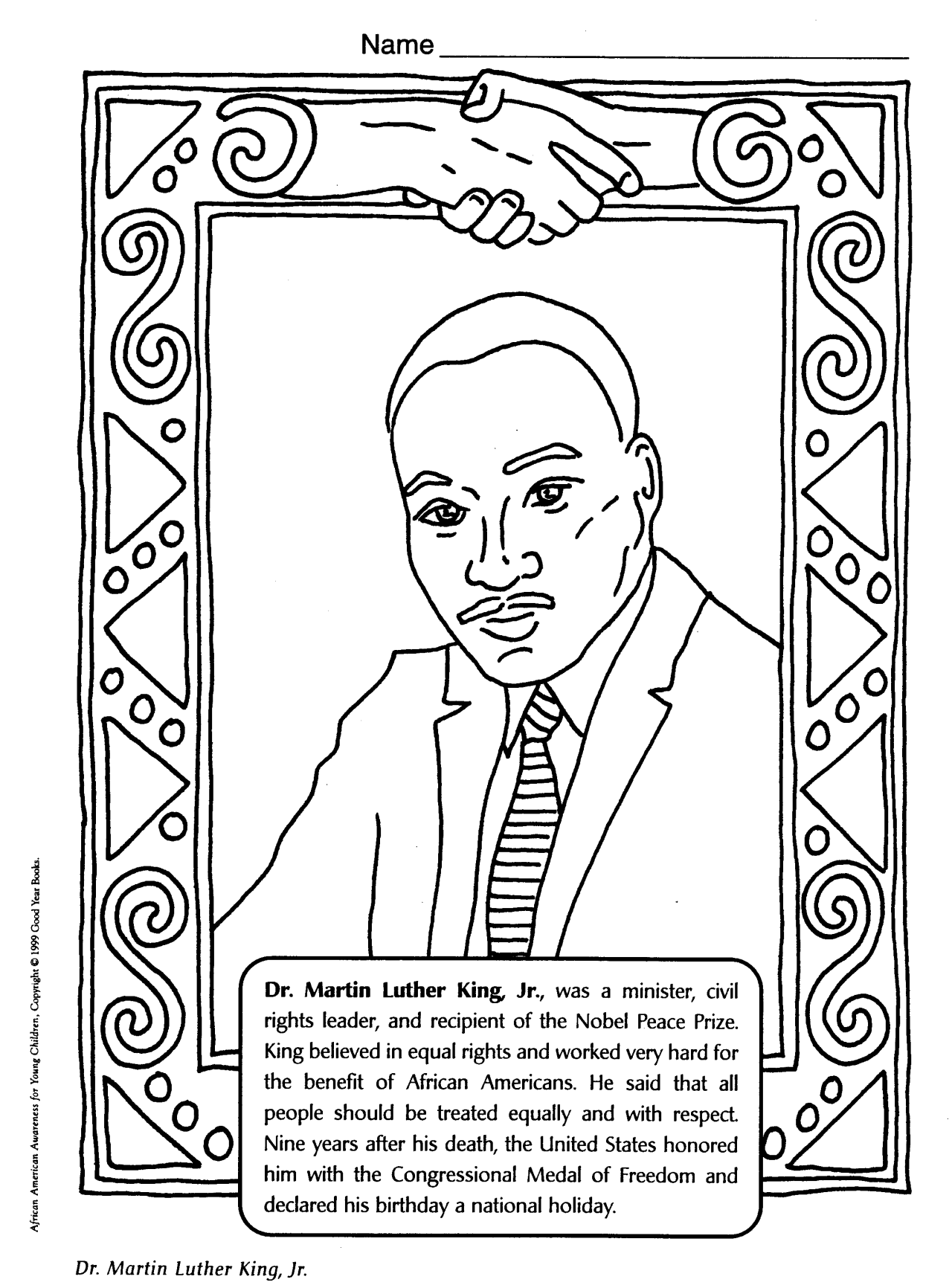
Martin Luther King, Jr. Day Activity

celebrate-picture-books-picture-book-review-martin-luther-king-jr-coloring-page

Martin Luther King Jr. Portrait


To inspire your dreams of a better future for all, color this printable page and hang it in your room!

Martin Luther King Jr. Portrait 

celebrate-picture-books-picture-book-review-memphis-martin-and-the-mountaintop-cover

You can find Memphis, Martin, and the Mountaintop: The Sanitation Strike of 1968 at these booksellers

Amazon | Barnes & Noble | Books-a-Million

To support your local independent bookstore, order from

Bookshop | IndieBound

Picture Book Review

December 7 – National Letter Writing Day

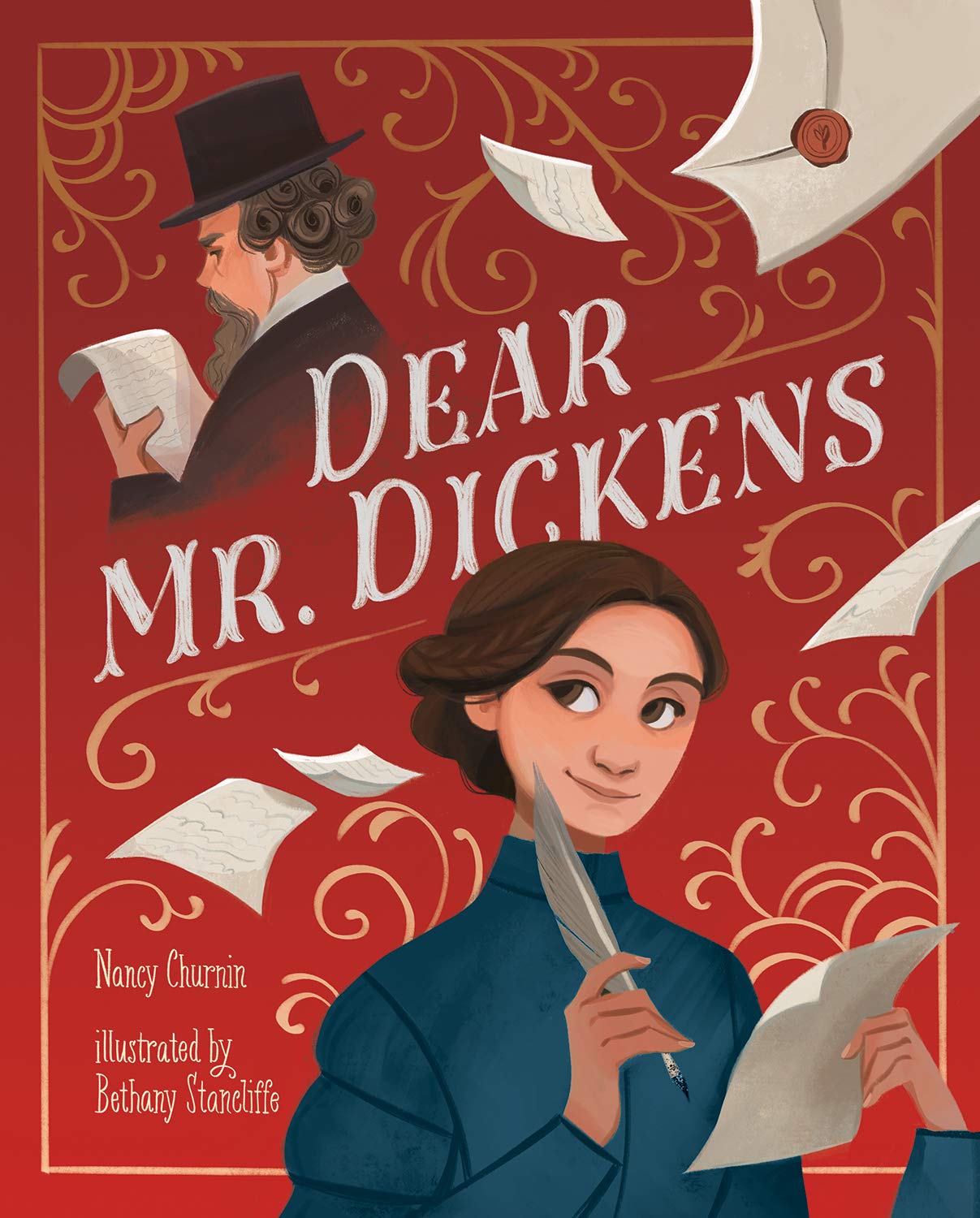
celebrate-picture-books-picture-book-review-dear-mr-dickens-cover

About the Holiday

Many young wishers know all about writing letters in December, so it should come as no surprise that a letter-writing day be included in this month’s calendar. Today’s holiday celebrates all forms of personal communication written by hand and remembers correspondences from the past that have given us such insight into our favorite poets, novelists, historical figures, and more. Sure, email might be faster, but there’s a certain luxury in taking the time to write your thoughts on paper as well as an palpable excitement in holding a heartfelt letter in your hands. Today’s book also reminds us that letters can often change minds, hearts, and actions.

Dear Mr. Dickens

Written by Nancy Churnin | Illustrated by Bethany Stancliffe


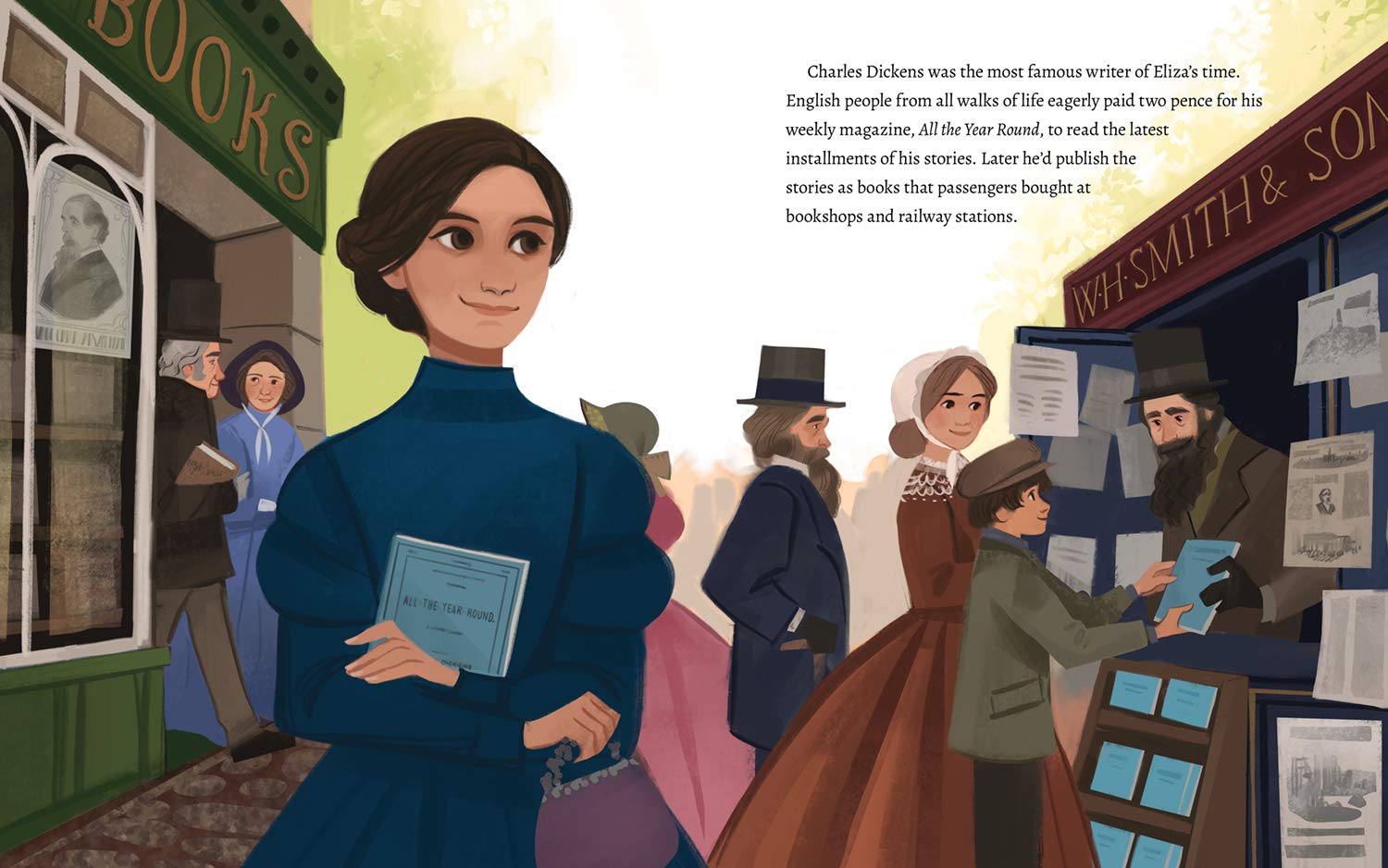
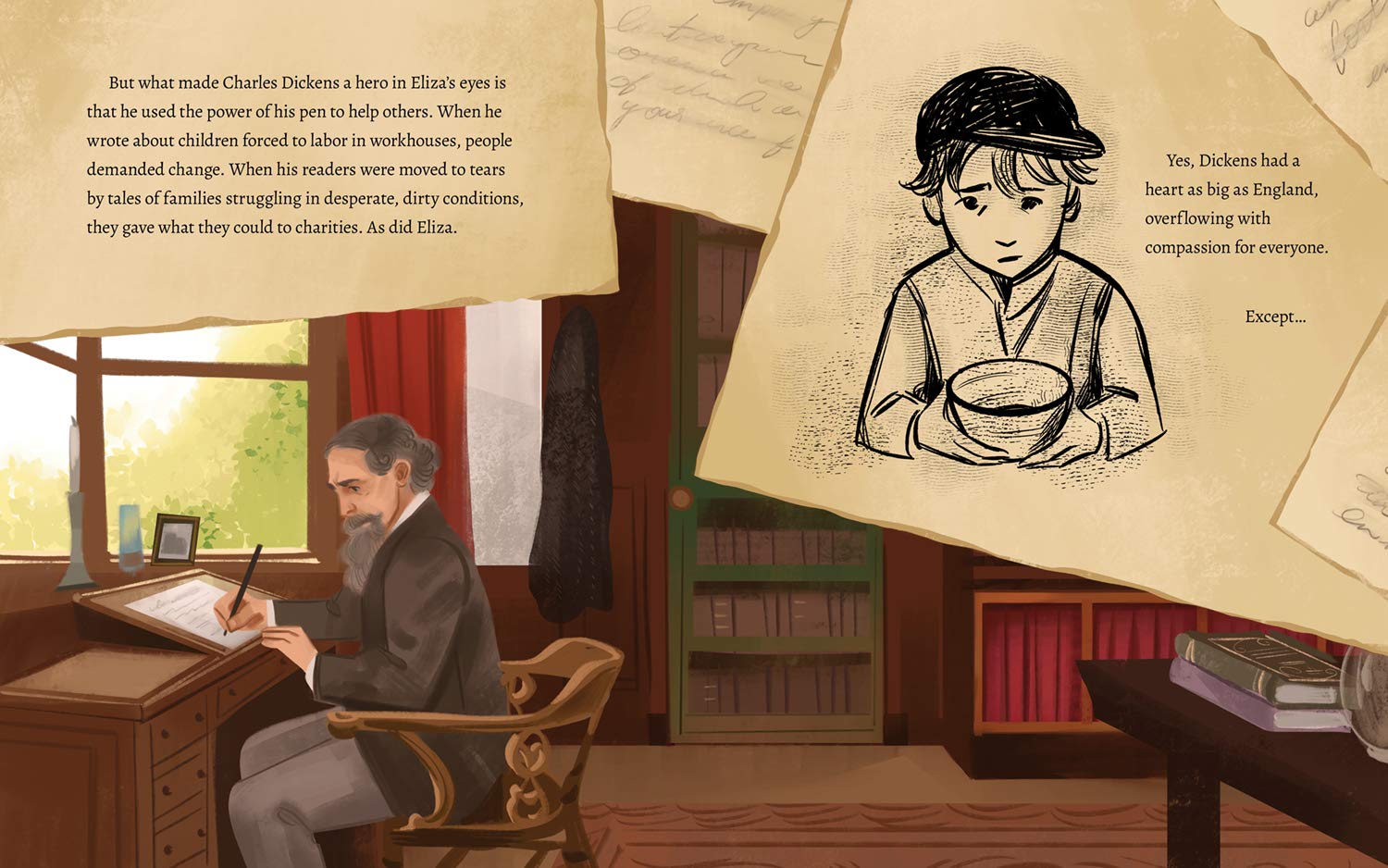
Like most people at the time, Eliza Davis looked forward to every new story Charles Dickens published in his weekly magazine, All the Year Round. And when he began publishing books, she eagerly read those too. “What made Charles Dickens a hero in Eliza’s eyes is that he used the power of his pen to help others.” After people read about the harsh conditions children faced at workhouses, they demanded change. And when they “were moved to tears by tales of families struggling in desperate, dirty conditions, they gave what they could to charities. As did Eliza.” 

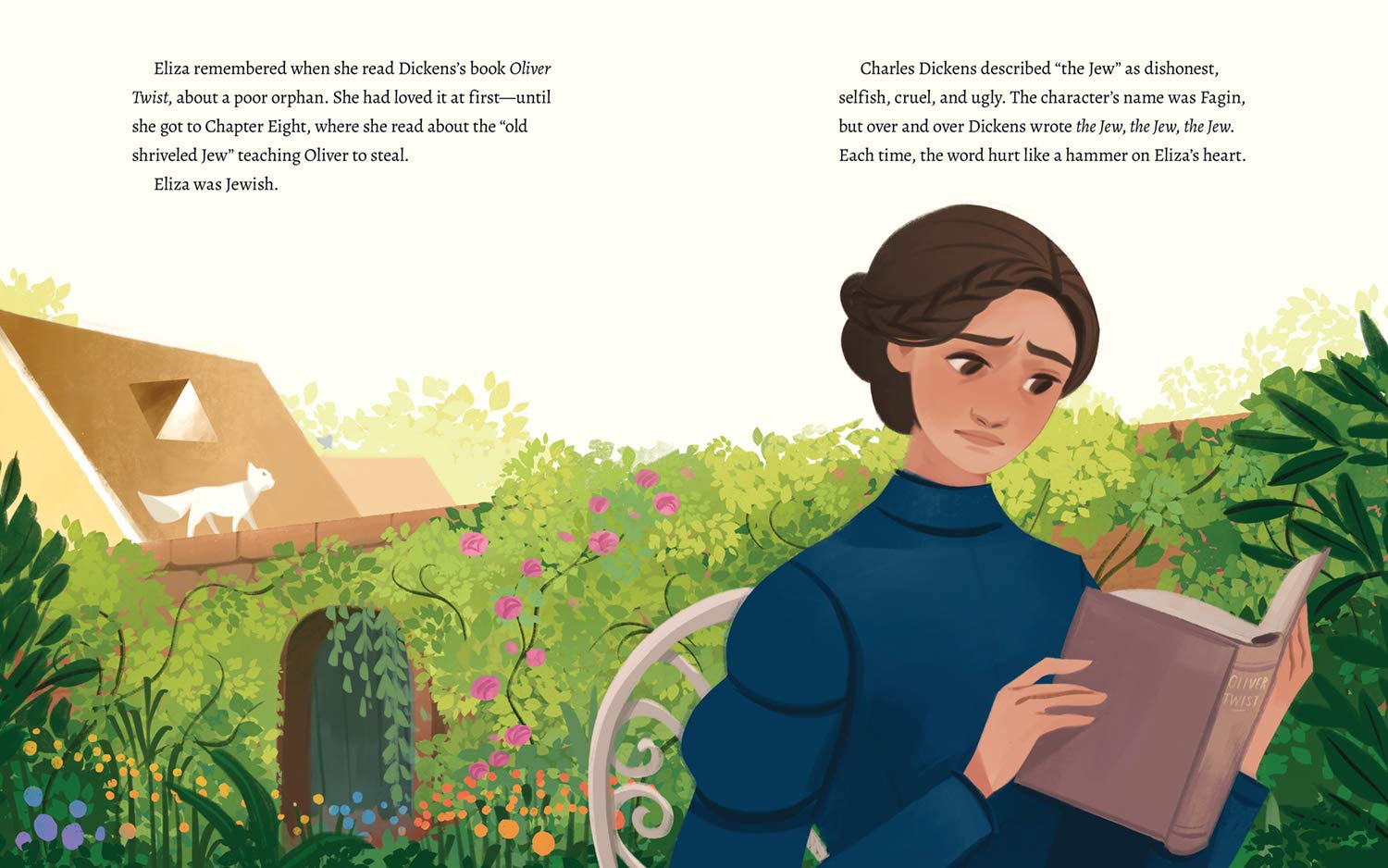
But while reading Oliver Twist, there was one aspect of the story that distressed Eliza. As a follower of the Jewish faith, she was disturbed by Dickens’ portrayal of Fagin as an “‘old shriveled Jew'” who taught Oliver how to steal. Fagin was “described…as dishonest, selfish, cruel, and ugly.” And each time she read “the Jew,…the word hurt like a hammer on Eliza’s heart.” Prejudice against Jews in England was already bad, and Eliza felt Dickens’ stories would made conditions worse.

celebrate-picture-books-picture-book-review-dear-mr-dickens-stories

Image copyright Bethany Stancliffe, 2021, text copyright Nancy Churnin, 2021. Courtesy of Albert Whitman & Company.

She decided to write a letter to Charles Dickens, but she worried about his reaction. In her letter she said that his “portrayal of Fagin encouraged ‘a vile prejudice.’ She asked him to ‘atone for a great wrong.'” As she posted her letter, she wondered if she would get a response. About two weeks later, Eliza did receive an answer to her letter. In it Dickens replied that Fagin was based on real criminals and that there there were “other bad people in the book who are not Jewish.” He took exception to her request to atone by saying that “any Jewish people who thought him unfair or unkind…were not ‘sensible’ or ‘just’ or ‘good tempered.'”

Eliza was disheartened as she read the letter, and she sat down and composed another letter in response. Thinking of Dickens’ story A Christmas Carol, Eliza reminded him of his past love for the novel Ivanhoe, which included positive, noble Jewish characters. She mentioned his present novel, in which while “some of his non-Jewish characters were criminals, all his Jewish characters were criminals.” Then she stated that future readers would “judge him by how he judged others.”

This time Eliza did not receive an answer. She knew that Dickens was working on a new novel, and when it began to appear serialized in monthly installments, she hurried to buy them, wondering if there would be other Jewish characters and how they would be depicted. When, as she read Our Mutual Friend, she realized Dickens had included another Jewish character, she trembled, wondering what they would be like. 

celebrate-picture-books-picture-book-review-dear-mr-dickens-change

Image copyright Bethany Stancliffe, 2021, text copyright Nancy Churnin, 2021. Courtesy of Albert Whitman & Company.

Eliza was elated to see that Mr. Riah – named after the Hebrew word for friend, re’a – was “generous and loyal” and that a young girl he helps remarks about the Jews, “‘I think there cannot be kinder people in the world.'” She immediately sat down to pen another letter to Charles Dickens. This one thanking him for his great compliment to her and the Jewish people. He wrote back with much pleasure and revealed that in the future he wanted his work to reflect his true friendship with Jewish people.

To show his sincerity, he published essays condemning prejudice and in the reprint of Oliver Twist, he replaced mentions of “the Jew” with Fagin’s name so as to “make it clear that Fagin didn’t represent all Jewish people.” Eliza sent Charles Dickens one more letter – this time with the gift of an English-Hebrew Bible – praising his ability to right a wrong, and Dickens responded with one more letter thanking Eliza for speaking up.

An extensive Author’s Note reveals more about the history of prejudice against Jewish people in England from the 1200s until 1846, when attitudes began to change and a repressive law was repealed. Nancy Churnin also includes more details about Eliza Davis the communications between her and Charles Dickens, and Dickens’ daughter upon his death. Source Notes and acknowledgments are also included.

celebrate-picture-books-picture-book-review-dear-mr-dickens-jewish-characters

Image copyright Bethany Stancliffe, 2021, text copyright Nancy Churnin, 2021. Courtesy of Albert Whitman & Company.

Nancy Churnin’s compelling story about the facts surrounding the correspondence between Eliza Davis and Charles Dickens shines a spotlight on a little-known, but important series of events in the life and inspiration behind Dickens’ growth and responsiveness as a writer. Eliza Davis, who acted on her convictions with confidence and courage, makes an inspiring role model for children who may want to voice their opinions on wrongs they see, read, or hear about.

Churnin’s introduction of A Christmas Carol, a novel that most children and adults know, allows readers to understand the important and influential connection between a person’s thoughts, words, and writing and their actions. It also provides a deeper resonance to Eliza Davis’s reminder to Dickens of his past, present, and future and to Dickens own change of heart from his first reply to Eliza to his portrayal of the Jewish character in Our Mutual Friend and his other actions.

Bethany Stancliffe takes readers back to the the 1800s in her rich illustrations full of details of the period. Kids will be interested to see how authors published their work at the time. Her faithful depictions of Eliza Davis and Charles Dickens informs readers on the influence that a young person had on such an established and lauded author. Eliza’s pleasure in Dickens’ stories and her pain on encountering the prejudicial portrayal of Jewish characters is clear, which makes her dilemma all the more meaningful. The final spread, in which Eliza Davis and Charles Dickens, facing each other, are connected by the letters they exchanged.

An important story about a beloved author and the woman who influenced his work and life, Dear Mr. Dickens will spark conversations on issues of prejudice, standing up for ones beliefs, personal change, courage to address wrongs, and many other topics. The book is highly recommended for home bookshelves and a must for school and public libraries.

Ages 4 – 8

Albert Whitman & Company, 2021 | ISBN 978-0807515303

Discover more about Nancy Churnin and her books on her website.

To learn more about Bethany Stancliffe, her books, and her art, visit her website.

National Letter Writing Day Activity

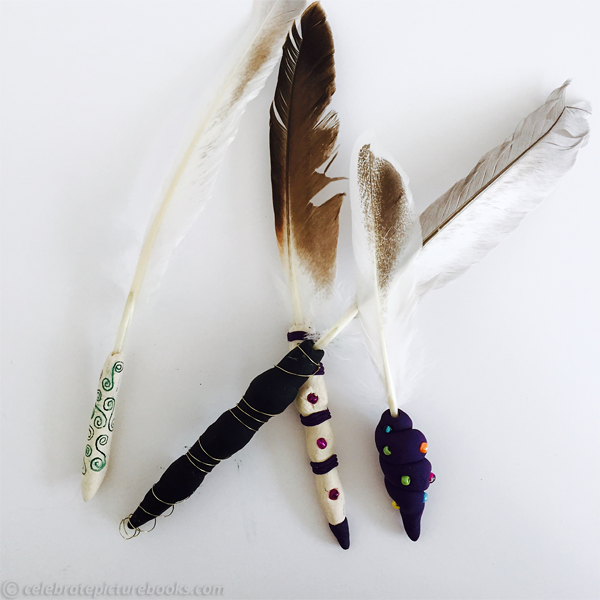
picture-book-reviews-quill-pen-craft

Fashion a Quill Pen


Writing a proper letter is more fun with a fancy pen! you can fashion your own quill pen or liven up a ballpoint pen or a marker with this craft!

Supplies

  • Medium to large size feather with quill, available at craft stores (optional)
  • Ballpoint pen or marker (optional)
  • Clay, oven-bake or air-dry, in various colors if desired
  • Wire, beads, paint, and/or markers for decorating     
  • Scissors
  • Baking pan for oven-bake clay

Directions

  1. Roll clay 2 ½ inches to 4 inches long 
  2. Push the quill end of the feather into the clay OR cover the ballpoint pen or marker in clay
  3. Add bits of clay or roll sections of the clay between your fingers to give the clay shape
  4. To make the twisted shape pen, twist the length of clay around itself before adding the feather
  5. Shape the end or cut it with scissors to make the pointed writing nib
  6. If using air-dry clay: Add beads and/or wire and let clay dry around feather
  7. If using oven-bake clay: Add beads and other layers of clay before baking then carefully remove feather. Bake clay according to package directions
  8. Add wire and other decorations after clay has baked and cooled
  9. Reinsert feather into clay

celebrate-picture-books-picture-book-review-dear-mr-dickens-cover

You can find Dear Mr. Dickens at these booksellers

Amazon | Barnes & Noble | Books-a-Million

To support your local independent bookstore, order from

Bookshop | IndieBound

Picture Book Review

September 15 – International Dot Day

celebrate-picture-books-picture-book-review-the-dot-cover

About the Holiday

Usually, I match books to existing holidays. Today, though, I have the pleasure of posting a review of a book that established a holiday. On September 15, 2009 teacher Terry Shay introduced his class to Peter H. Reynold’s The Dot. From that one event grew a national and then an international celebration of creativity and the freedom to make art with your heart. All around the world, school children and adults are inspired on this day to make their mark and celebrate creativity, courage, and collaboration. For more information, to download posters, coloring pages, postcards, badges, and other resources and to join in on a live event starting at 10:00 a.m. PT, visit the International Dot Day website.
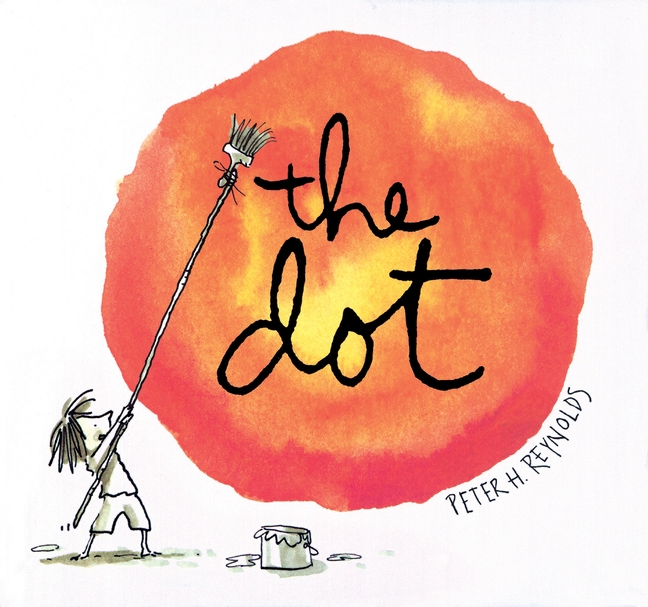
The Dot

By Peter H. Reynolds


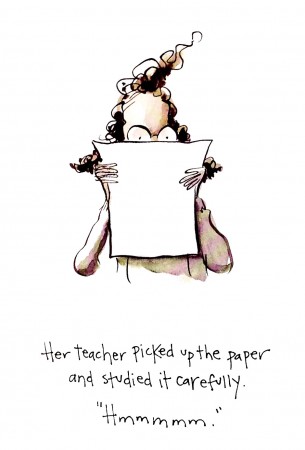
At the end of art class, Vashti looked at her paper. It was still as blank as it was at the beginning of art class. Her teacher came over and took a peek. She saw right away that Vashti had drawn “‘a polar bear in a snowstorm.’” Vashti wasn’t fooled by the joke. “‘I just CAN’T draw,’” she said. But her teacher had a suggestion. “‘Just make a mark and see where it takes you.’”
celebrate-picture-books-picture-book-review-the-dot-vashti-jabs-paper

Copyright Peter H. Reynolds, 2003, courtesy of Candlewick Press.

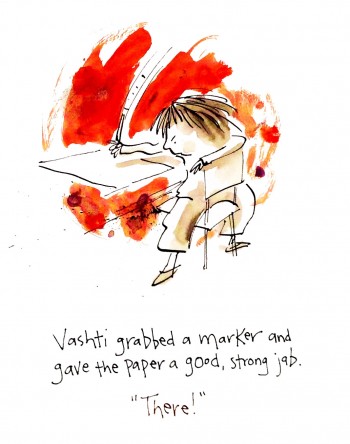
Vashti jabbed at the paper with a marker, making a dot right in the center. Her teacher studied her drawing carefully then told Vashti to sign it. That, at least, was something Vashti could do. She signed her name and gave the paper to her teacher. At the next week’s art class, Vashti was stunned to see her dot framed and hanging above the teacher’s desk. She looked at the tiny mark and decided that she could do better than that.

celebrate-picture-books-picture-book-review-the-dot-teacher

Copyright Peter H. Reynolds, 2003, courtesy of Candlewick Press.

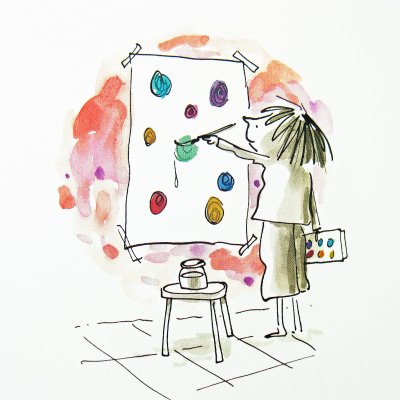
Vashti opened her watercolor set and began. She “painted and painted. A red dot. A purple dot. A yellow dot. A blue dot.” Then she discovered that blue mixed with yellow made a green dot. Vashti went to the easel and began painting lots of little dots in all sorts of colors. She realized if she could make little dots, she could make big dots. She knelt down on the floor with a big piece of paper and a big brush and created a huge dot.

celebrate-picture-books-picture-book-review-the-dot-experimenting-with-dots

Copyright Peter H. Reynolds, 2003, courtesy of Candlewick Press.

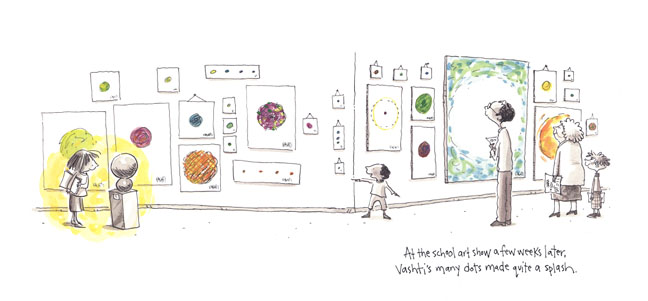
Then on an enormous canvas Vashti “made a dot by not making a dot.” At the school art show, Vashti’s dot paintings covered two walls and were quite a hit. Coming around the corner a little boy spied Vashti. He came close and told her, “‘You’re a really great artist. I wish I could draw.’” Vashti was encouraging, but the little boy said he couldn’t even “‘draw a straight line with a ruler.’”

Vashti wanted to see. She handed the boy a blank sheet of paper. With a quivering pencil, he drew a line and handed the paper back to her. Vashti studied the wavy line for a minute, and then gave the paper back. “‘Please…sign it,’” she said.

celebrate-picture-books-picture-book-review-the-dot-art-show-II

Copyright Peter H. Reynolds, 2003, courtesy of Candlewick Press.

Peter H. Reynold’s classic story of a little girl who believes she can’t draw is inspirational for anyone at any age who listens too closely to that voice in their head that stops them from letting go and doing. Whether it’s painting, writing, changing the décor of one’s house, updating a wardrobe, getting healthy, or even taking a class, the project often seems insurmountable. But what if you could start with a YouTube video, one step, a pair of earrings, a pillow, a word, or…a dot? Reynolds says you can! With his straightforward storytelling, Reynolds gives readers permission to play, experiment, and feel free.

celebrate-picture-books-picture-book-review-the-dot-little-boy

Copyright Peter H. Reynolds, 2003, courtesy of Candlewick Press.

Reynold’s familiar line drawings that sketch out adorable Vashti and her wise teacher are punctuated by the colorful dots that Vashti draws in profusion. Even Vashti, herself, is surrounded by circular auras of color throughout the story, reflecting her talent and creative spirit. The final scene of the art show gallery is a revelation, showing readers that one’s work or life work adds up to an impressive display of the self.

Through and through The Dot is charming, moving, and encouraging. It is a must addition to home libraries, public libraries, and classrooms.

Ages 5 and up

Candlewick Press, 2003 | 978-0763619619

To learn more about International Dot Day and find ideas and resources for classrooms, libraries, and booksellers, a variety of coloring pages to download, and a gallery of projects, visit the International Dot Day website

You’ll learn more about Peter H, Reynolds, his books, and his art as well as find lots of inspiration and creative tips on his website!

International Dot Day Activity

celebrate-picture-books-picture-book-review-dot-day-mini-poster

Make Your Mark! Mini-Poster Coloring Page


Grab your favorite paints, markers, crayons and Make Your Mark with this printable mini-poster from Peter Reynolds!

Make Your Mark! Mini-Poster

celebrate-picture-books-picture-book-review-the-dot-cover

You can find The Dot at these booksellers

Amazon | Barnes & Noble | Books-a-Million

To support your local independent bookstore, order from

Bookshop | IndieBound

Picture Book Review