June 5 – World Environment Day

celebrate-picture-books-picture-book-review-this-little-environmentalist-cover

About the Holiday

Sponsored by the United Nations, World Environment Day encourages worldwide awareness and action for the protection of the environment. Each year a different country hosts the day’s events. This year Pakistan has been chosen as the host country. Today’s holiday also launches the UN Decade on Ecosystem Restoration, which runs from 2021 to 2030 and “aims to prevent, halt, and reverse the degradation of ecosystems on every continent and in every ocean.” This work is crucial to the survival of our planet. The statistics are alarming. Studies have found that every three seconds the world loses enough forest to cover a soccer field and over the last century, half of our wetlands and as much as fifty per cent of our coral reefs have been destroyed. This year’s theme is “Reimagine. Recreate. Restore.” Everyone is needed to make a difference. You can learn more about World Environment Day, the UN Decade on Ecosystem Restoration, and how you can join the #GenerationRestoration movement on the UN World Environment Day website.

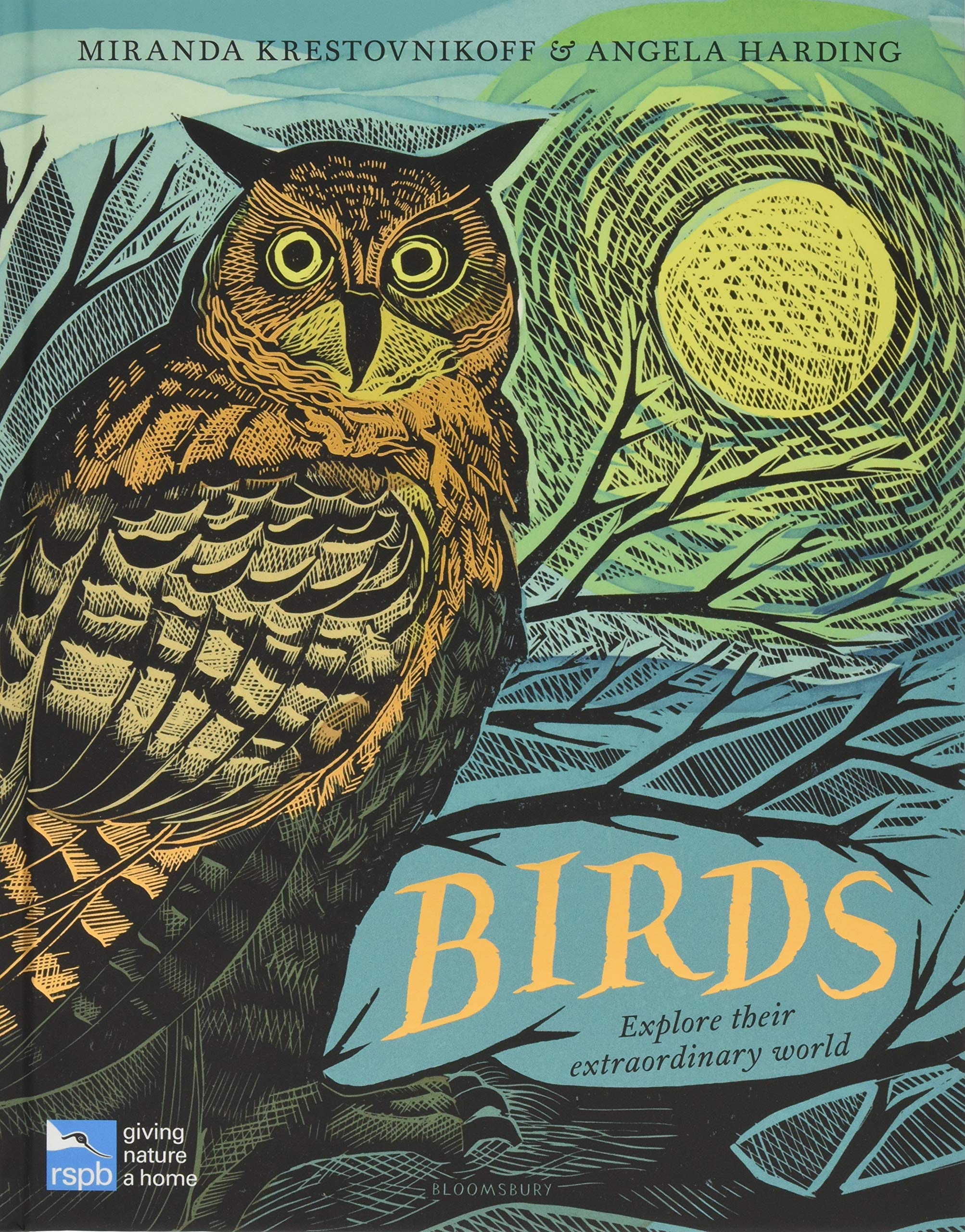
This Little Environmentalist: A Love-the-Earth Primer

Written by Joan Holub | Illustrated by Daniel Roode


Take any little one outside and they’re immediately fascinated with plants, animals, and bugs they see. They want to play in the water at the beach or lake. And who doesn’t like to take a boat ride on a river? When they look up, there are fluffy clouds and birds passing by, and, of course, the tall trees provide shade for outdoor play. Kids instinctively want to protect nature and seem to be born with compassion for animals – their pets and those that live in the wild. 

celebrate-picture-books-picture-book-review-this-little-environmentalist-sylvia-earle

Image copyright Daniel Roode, 2021, text copyright Joan Holub, 2021. Courtesy of Little Simon.

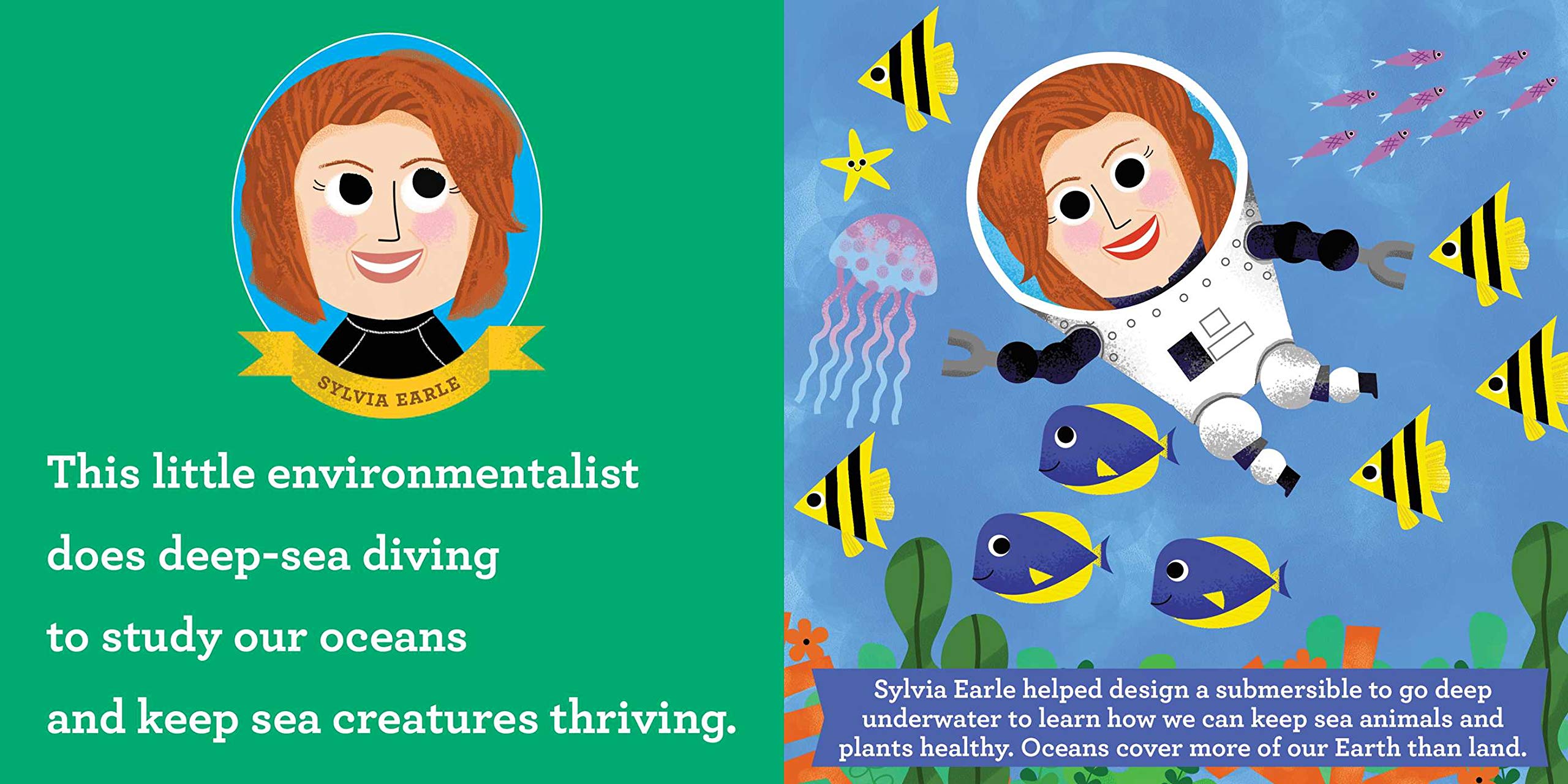
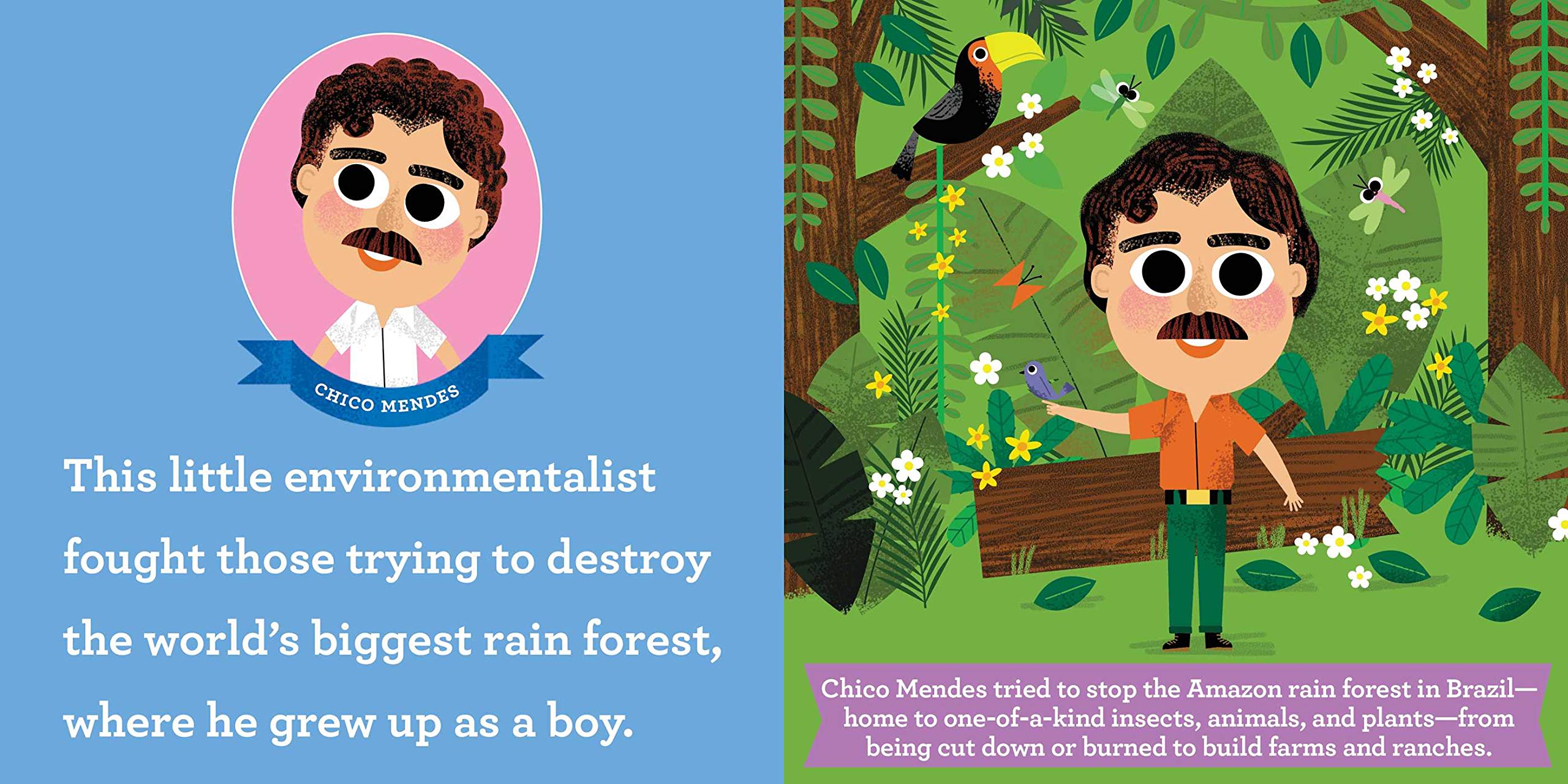
This Little Environmentalist: A Love-the-Earth Primer recognizes young children’s desire to help and learn more about nature with mini-biographies of ten people who have found distinct ways to preserve the environment today and for future generations. Each biography is introduced with a rhyming verse that makes it easy for little readers to understand and remember how each of these activists made an impact. They then learn more specifics about each person’s work to protect open land, inspire new environmental laws, save forests, support clean water, and fight against climate change.

celebrate-picture-books-picture-book-review-this-little-environmentalist-wangari-maathai

Image copyright Daniel Roode, 2021, text copyright Joan Holub, 2021. Courtesy of Little Simon.

Children learn about Edgar J. Helm, who created the Goodwill company that provided jobs and decreased trash; Wangari Maathai, who “got African women to plant millions of trees in Kenya to provide fruit, shade from the sun, wood for building , and firewood for cooking”; Vandana Shiva, who encourages farmers and communities to create seed banks for the future; Miranda Wang and Jeanny Yao who have devised a way to “break down hard-to-recycle plastic trash”; and six more influential environmentalists.

Following these ten biographies are one– or two-sentence profiles of seventeen other people, including writers, artists, politicians, scientists, and other visionaries who are involved in protecting our earth. The last frame is left blank for the next environmentalist on the scene – could it be you?

celebrate-picture-books-picture-book-review-this-little-environmentalist-chico-mendes

Image copyright Daniel Roode, 2021, text copyright Joan Holub, 2021. Courtesy of Little Simon.

With her straightforward and informative text, Joan Holub will inspire kids to follow in the footsteps of well-known personalities and community leaders and keep an eye out for ways they can make a difference at home, school, or in their neighborhood. Inclusion of environmentalists from around the world give readers knowledge about a wide range of environmental concerns and innovative ideas people have for addressing them.

Daniel Roode’s bright and engaging illustrations help kids visualize the place where each environmentalist lives and the type of work they do. Background details give kids and adults plenty to talk about as they read and as they take walks in the neighborhood, go to the park, visit the grocery story and farmers market, and notice more about their own area.

A smart, inclusive, and timely addition to the This Little series, This Little Environmentalist: A Love-the-Earth Primer is a must for fans of the series as well as for classroom and public library collections.

Ages 3 – 5

Little Simon, 2021 | ISBN 978-1534475588

World Environment Day Activity

celebrate-picture-books-picture-book-review-recycling-maze

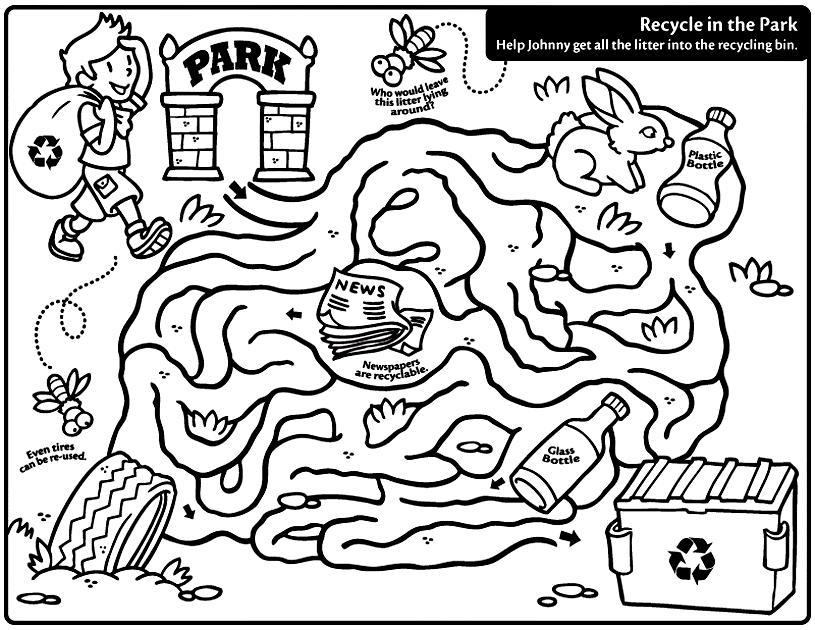
Recycling Maze


This little boy wants to help the environment! Can you help him pick up recyclable items in this printable maze?

Recycling Maze

celebrate-picture-books-picture-book-review-this-little-environmentalist-cover

You can find This Little Environmentalist at these booksellers

Amazon | Barnes & Noble | Books-a-Million

To support your local independent bookstore, order from

Bookshop | IndieBound

Picture Book Review

April 26 – National Audubon Day

celebrate-picture-books-picture-book-review-birds-explore-their-extraordinary-world-cover

About the Holiday

Today’s holiday honors John James Audubon, who was born on this date in 1785. Audubon was a French-American ornithologist, naturalist, and painter who traveled across America, documenting the birds he found in his detailed illustrations of them in their natural habitats. Audubon’s greatest work was The Birds of America, which is considered one of the finest ornithological works ever completed. This book contains more than 700 North American bird species with 435 hand-colored, life-size prints of 497 bird species. The Audubon Society is a far-reaching organization dedicated to conservation and education and is actively involved in issues that threaten bird populations. To learn more about the Audubon Society and its work, visit the organization’s website.

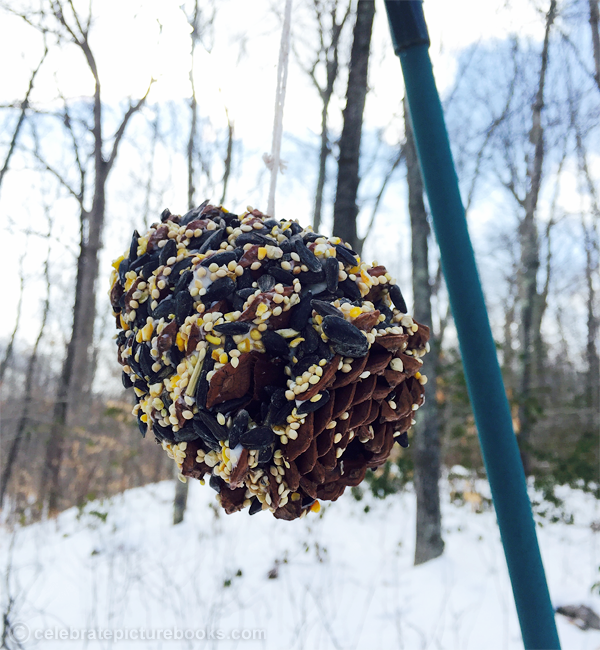
To celebrate today’s holiday, take a walk in your area or even your backyard and take special note of the birds you see. If you’d like to attract more birds to your backyard, consider hanging a bird feeder or making a temporary feeder from a pinecone, peanut butter, and seed as in the activity below. 

Thanks to Bloomsbury Children’s Books for sending me a copy of Birds: Explore their extraordinary world for review consideration. All opinions on the book are my own.

Birds: Explore their extraordinary world

Written by Miranda Krestovnikoff | Illustrated by Angela Harding


To love birds is to marvel over everything about them from their smooth gliding flight and beautiful songs to their colorful plumage and intricate nests that protect fragile eggs from the elements and predators. With a stunning number of species, birds are found around the world and living in every kind of climate. In Miranda Krestovnikoff and Angela Harding’s eye-catching compendium, readers learn about seven families of birds – birds of prey, seabirds, freshwater birds, flightless birds, tropical birds, tree dwellers, and passerines. 

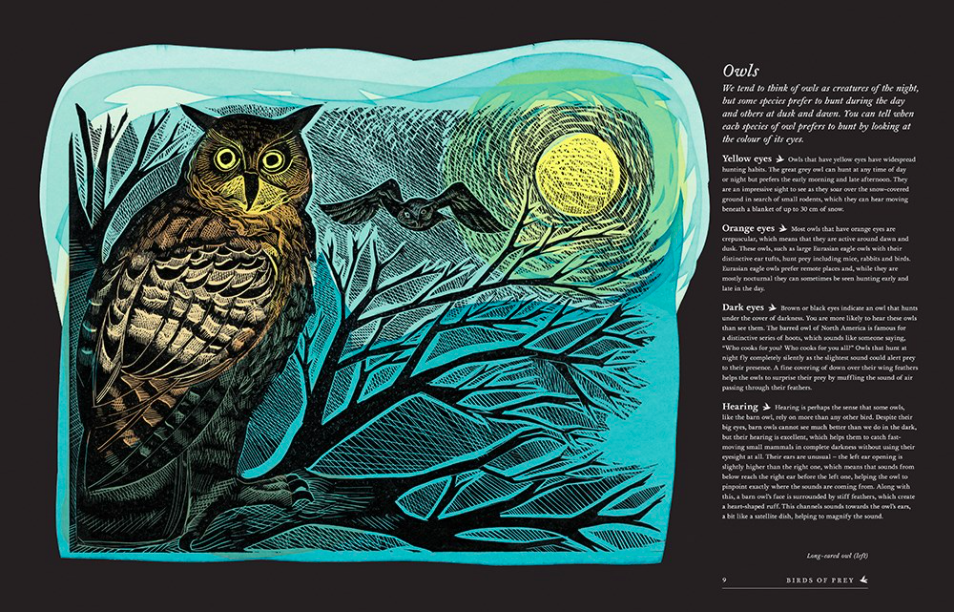
Each chapter opens with general facts on the behavior, anatomical features, and habitat that determine the order in which a bird is categorized. Integrated with this information are descriptions of specific birds within the order. In the section on Birds of Prey, for instance, readers learn about sparrowhawks; fish-eating ospreys; and golden eagles, which can “spot a rodent from over a mile away and a rabbit from nearly double that distance.” Children also learn about extreme birds of prey: the fastest, largest, smallest, tallest, and baldest and how their distinctive feature helps them thrive. Kids also discover how they “can tell when each species of owl prefers to hunt by looking at the color of its eyes.”
celebrate-picture-books-picture-book-review-birds-explore-their-extraordinary-world-owls

Image copyright Angela Harding, 2020, text copyright Miranda Krestovnikoff, 2020. Courtesy of Calkins Creek.

The next chapter takes readers to coastal areas to learn about the seabirds that scour the water from the sky, searching for food and waders, that are found along the water’s edge and “feed on the variety of high-protein invertebrates that lie hidden in the mud.” Children learn about the birds that populate warmer waters, such as blue-footed boobies, terns, and frigatebirds as well as those who survive in colder waters, such as gulls, and kittiwakes. Readers will also find a fascinating description of the gannet and learn how it can safely “dive into the sea at speeds of 60 miles an hour from an impressive height of up to 100 feet” to feed.

From sea birds, readers move on to freshwater birds like ducks, swans, grebes, and Canada geese. Even the bright flamingo is here with its distinctive scoop-shaped beak that is “uniquely designed to be used upside down and helps them to filter out tiny brine shrimps and blue-green algae from the water, which, when digested, give them their pink color.” The flamingo isn’t the only bird with an unusual way to acquire their prey, and kids will discover the clever ways pelicans, herons, and kingfishers (which use “objects such as sticks, feathers, and even discarded popcorn as lures”) find food.

And then there are the “more than 50 bird species across the world [that] stay firmly on the ground (or on water)” or just “choose not to fly very often.” These flightless birds include kiwis, kākāpōs, southern cassowaries, ostriches, and Penguins. Penguins vary in size, from the “little penguin (also known as the fairy or blue penguin)” which comes to shore to nest only at night and stave off predators with their oversized voices, to the emperor penguin. Occasional fliers include great bustards, domestic chickens, and tinamous.

celebrate-picture-books-picture-book-review-birds-explore-their-extraordinary-world-penguin

Image copyright Angela Harding, 2020, text copyright Miranda Krestovnikoff, 2020. Courtesy of Calkins Creek.

When you hear about extravagant birds, you most likely think of tropical birds. “Rainforests are packed with a range of incredible species with dazzling plumage and bizarre courtship displays.” Readers will learn about the appearance and mating rituals of scarlet macaws, Raggiana birds of paradise, and the Andean cock-of-the-rock. A detailed description of the bowerbird and the male bird’s careful and artistic nest (or bower) building is funny, poignant, and even a little bit human. Then readers are treated to some tropical bird extremes: smallest bird, longest bill, and smelliest as well as a poisonous species and one that makes its own musical instrument.

Of course, woodlands are the home of many bird species, and in the chapter on Tree Dwellers, readers learn about acorn woodpeckers and great hornbills that use trees for food and shelter; tawny frogmouths and potoos that use trees for camouflage; and nuthatches, greater honeyguides, and yellow-bellied sapsuckers, which find all the food they need among the bark, leaves, and branches of trees.

celebrate-picture-books-picture-book-review-birds-explore-their-extraordinary-world-chickens

Image copyright Angela Harding, 2020, text copyright Miranda Krestovnikoff, 2020. Courtesy of Calkins Creek.

Next up are passerines, or perching birds, which make up the “largest group of birds, with over half of all known species falling into this category.” Corvids, a group that includes the common raven, crows, magpies, and rooks, are considered to be the most intelligent birds. “These birds have a remarkable ability to solve problems in order to find food, in some cases performing better than young children or chimpanzees!” Readers will be impressed with their tricks and clever use of tools (that even include cars). Children learn about cooperative breeders, which rely on their extended family to help raise the young from year to year. Passerines also include many of the garden birds we find in our backyards and which fill the air with song. Readers discover facts about blue tits, robins, and finches in this section.

The next sections give detailed and interesting information on the features we most associate with birds: their feathers, beaks, eyes, nesting habits, eggs, migration patterns, and birdsong. The book ends with perhaps the most adaptable birds in the world: those that make their homes on glaciers, mountain tops, and in the Arctic snow as well as urban birds, which live among people in crowded cities, nesting on tall cathedrals and skyscrapers and foraging for food in garbage cans and on the street.

celebrate-picture-books-picture-book-review-birds-explore-their-extraordinary-world-woodpeckers

Image copyright Angela Harding, 2020, text copyright Miranda Krestovnikoff, 2020. Courtesy of Calkins Creek.

For young ornithologists, Miranda Krestovnikoff, a wildlife expert, offers a compelling, eye-opening, and accessible introduction to a wide variety of birds, placing them in their natural environments and revealing intriguing facts and tantalizing tidbits that inform and will spark a continued interest in learning more about the world’s feathered creatures. Krestovnikoff’s engaging writing style will captivate readers and keep them turning the pages to discover birds that are both familiar and new to them. The comprehensive nature of the book allows kids in all parts of the world to learn more about their native birds while creating a global connection with these most recognized and widely distributed creatures.

Accompanying Krestovnikoff’s text are Angela Harding’s beautiful linocuts that depict birds in mid-flight, capturing prey on land and water, engaging in mating rituals, and building and protecting their nests and young. Harding’s use of natural colors and exquisitely etched landscapes set off each bird in breathtaking illustrations that invite readers to linger to enjoy their full impact. Each illustration is captioned with the bird’s species.

A gorgeous and educational book that readers of all ages will love dipping into again and again, Birds: Explore their extraordinary world is a must for bird lovers and highly recommended for home, school, and public libraries.

Ages 7 and up

Bloomsbury Children’s Books, 2020 | ISBN 78-1408893913

Discover more about Miranda Krestovnikoff and her books on her website.

To learn more about Angela Harding, her books, and her art on her website.

National Audubon Day Activities

celebrate-picture-books-picture-book-review-beautiful-birds-word-search

Beautiful Birds Word Search Puzzle


It’s fun to watch for different kinds of birds when you take a walk or in your own backyard. Can you find the names of twenty types of birds in this printable Beautiful Birds Word Search Puzzle? Here’s the Solution!
cpb-bird-feeder-i

Pinecone Bird Feeder


Pinecone bird feeders are quick to make and great for your backyard fliers. The combination of peanut butter, lard, or vegetable shortening and a quality seed mixture provide birds with the fat and nutrition they need to stay warm and healthy during the winter.

Supplies

  • Pinecones
  • Peanut butter, vegetable shortening, or lard
  • Birdseed
  • String
  • Knife or wooden spreader
  • Spoon

Directions

  1. Tie a long length of string around the middle of the pinecone
  2. Spread the peanut butter, vegetable shortening, or lard on the pinecone
  3. Sprinkle a thick coating of birdseed on the pinecone, pressing it into the covering so it will stick
  4. Tie the pinecone feeder onto a tree branch or other structure
  5. Watch the birds enjoy their meal!

celebrate-picture-books-picture-book-review-birds-explore-their-extraordinary-world-cover

You can find Birds: Explore their extraordinary world at these booksellers

Amazon | Barnes & Noble | Books-a-Million

To support your local independent bookstore, order from

Bookshop | IndieBound

Picture Book Review

April 22 – Earth Day and National Poetry Month

celebrate-picture-books-picture-book-review-friends-and-anemones-cover

About the Holidays

Earth Day

Earth Day was created in 1970 by a US Senator, Gaylord Nelson. Nelson created the day because he was worried about how humans were harming the environment through their actions. Heard of this holiday before? We certainly hope so! In 1990, environmental leaders mobilized to make the holiday go global. And now, according to earthday.org, 1 BILLION people mobilize on Earth Day every year, to help save and celebrate our beloved planet. You can watch an educational animated video on Gaylord Nelson here. Learn more about Earth Day and how you can make a difference all year around at Earthday.org.

National Poetry Month

2021 marks the twenty-fifth anniversary of National Poetry Month. The holiday was launched by the Academy of American Poets to celebrate writers, poets, poetry lovers and the positive impact poetry has on our culture, literacy and lives. Check out the 2021 National Poetry Month Poster here. You can learn more about National Poetry Month at Poets.org.

Today’s book celebrates both of these holidays with a collection of ocean poems for children. Not a huge lover of poetry? Perhaps the following collection will sway you like an ocean tide. Crafted by The Writers’ Loft Authors and Illustrators, Friends and Anemones is truly as dazzling as a sea-floor pearl.

Thanks to The Writers’ Loft for sending me a copy of Friends and Anemones: Ocean Poems for Children for review consideration. All opinions on the book are my own. 

Reviewed by Dorothy Levine

Friends & Anemones: Ocean Poems for Children

By The Writers’ Loft Authors & Illustrators


Dive headfirst into poetry month by exploring “the very, very, bottom of the deep blue sea. With: Salty snails and tuna tails. Bottle caps and lobster traps. Popped balloons, Plastic spoons…” and everything in between! (The Bottom of the Ocean by Kristen Wixted.) In honor of Earth Day AND National Poetry month, Celebrate Picture Books presents a book that deserves to be celebrated twice over: Friends & Anemones: Ocean Poems for Children. Seventy New England authors and illustrators joined ship with the Rozalia Project to create a treasure-worthy collection of ocean-themed poems and illustrations.

As described in the title page, “Rozalia Project works to conserve a healthy and thriving marine ecosystem—the plants and animals need our help to keep human debris out of their homes.” Through this partnered anthology, children will learn about subject matter ranging from unique sea creatures and beach dwellers – like cuttlefish, vampire squids, red knots, and rainbow lobsters – to the habits of more well-known ocean dwellers, like whales taking off debris, sharks getting their teeth cleaned, and sea turtles hatching eggs.

They’ll also find poems about human additions to the ocean scene in odes to lighthouses, ships’ remnants, sea litter, and more. Each poem contains deep knowledge to share with readers about poetry, the ocean, and marine life. Little pieces of advice float in between hysterical ocean puns. This perfect concoction of sea-worthy information is also backed by all types of fin-tastic and crabulous art.

Some of the poems are sure to make you laugh out loud. Deep-Sea Jellyfish by Cindy Cornwall opens with: “Jelly of the sea, not jam for your toast. It’s deep in the water, a silky scarf ghost.” Seal of disApproval by Lynda Mullay Hunt fills a whole page with the rhyming, pun-y story of a seal who becomes a dentist and stands up to sharks.

Other poems are less humorous and more pensive; the last of the series, Sea Serenity by Luke Hargraver, holds an existential truth for readers to swim through: “The world is like water / Easily disturbed by ripples / But when still, / Beautiful.” Under a short and sweet poem called Minnow, by Brook Gideon, a message to ocean explorers reads: “It’s very important to release everything you catch back into the ocean right away!”

Each spread is distinctly created in the individual poets’ and artists’ styles. Yet, the whole compilation works together in perfect, charming harmony. Some poems mirror each other in content. Horseshoe Crabulous by Doreen Buchinski is followed by Red Knots by Jane Sutton, in which: “In the sand their goal is chiefly / To dart—and swerve —on twiggy legs / In mad search for horseshoe eggs.” The two beautifully crafted poems are followed by a third gem, Mollusk Mansions by Charlotte Sheer, and accompanied with an illustration featuring horseshoe crabs, red knots, and mollusk shells—all painted by Doreen Buchinski herself!

Children will explore the deep cerulean sea through a range of sincere rhyming couplets, honest haikus, positively silly prose, magical motifs, and everything in between. All poems and artwork share with readers a deep admiration for under the sea creatures, while spreading ocean knowledge, and a love for poetry and beauty.

The watercolors, collages, and digital art pieces mesh beautifully while each achieving a distinctly artistic picturesque scene. Some illustrations run horizontally across the spread to create poster-like, masterful images. On page 23 illustrator Julia Young Cuffe paints a long, horizontal lighthouse against a watery dark blue sky, littered with stars. A person stands at the top, waving a piece of cloth, illuminated by the lighthouse light. The poem, Boston Light by Heidi E.Y. Stemple, is artfully placed running vertically down the lighthouse.

Others run across the two-page spreads to create one image that ties together the poems featured on the separate pages into a collective unit. An example of this can be seen in Marlo Garnsworthy’s opening spread of deep ocean waves intermingling with whales, and Amanda Davis’s DEEP deep sea spread that features spookily realistic vampire squids, angler fish, and sea plumes. Each piece stands out as thoughtfully crafted to instill in readers a sense of awe for the beauty of marine life and ocean ecology.

Friends & Anemones: Ocean Poems for Children would make a wonderful addition to classroom science and language arts lessons as well as a fun collection to share at home, especially in conjunction with trips to the beach or aquariums. 

The Writers’ Loft is a community based in Sherborn, Massachusetts which helps local writers foster their creativity, strengthen their spirit, and grow professionally by providing them with quiet writing space, educational programs, opportunities to connect with supportive colleagues, and access to industry experts, as well as opportunities to give back to the greater writing community. To learn more about The Writers’ Loft, visit their website.

The Rozalia Project runs educational programs, ocean cleaning initiatives and research projects focused on how to aid ocean clean-up and maintain sustainability of ocean and shoreline ecosystems. The Rozalia Project, along with the “Writer-and-Artist-Ocean-Protectors from the Writers Loft” hopes to use this book to “foster an appreciation of the importance, beauty, and wonder of the ocean in the change-makers of tomorrow.”

To learn more about the Rozalia Project, or get involved with them on this Earth Day, check out their website. You can also watch this video on their Expedition CLEAN.

Earth Day and National Poetry Month Activities

celebrate-picture-books-picture-book-review-friends-and-anemones-coloring-page  celebrate-picture-books-picture-book-review-friends-and-anemones-coloring-page

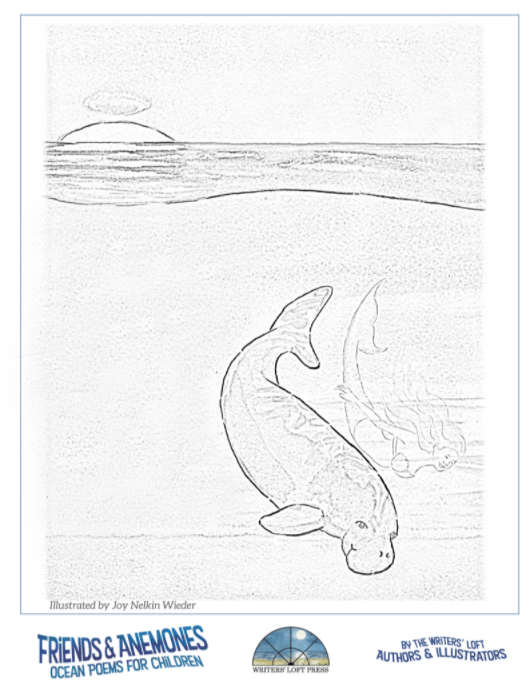
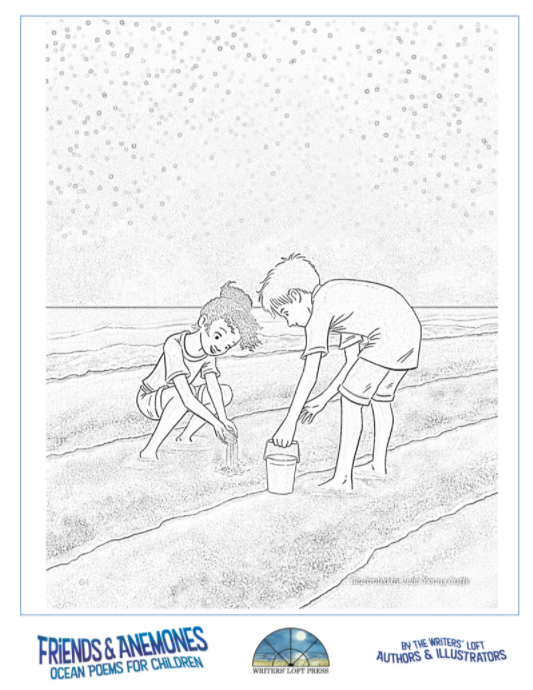
Color pages from Friends & Anemones in your OWN style with these black and white versions of the illustrations. You can find 18 more pages to print or download to your iPad to color on The Writers’ Loft website.

Manatee and Mermaid Coloring Page | Kids on the Beach Coloring Page

celebrate-picture-books-picture-book-review-under-the-sea-word-search

Find ten ocean critters’ names in this printable sea-star shaped word search.

Under the Sea Word Search Puzzle | Under the Sea Word Search Solution

Explore some poems specifically written for younger readers at Poets.org and write your own poetry if you feel inspired.

celebrate-picture-books-picture-book-review-friends-and-anemones-cover

To support The Writers’ Loft, you can order Friends & Anemones: Ocean Poems for Children from their website.

You can find Friends & Anemones at these booksellers

Amazon | Barnes & Noble | Books-a-Million

To support your local independent bookstore, order from

Bookshop | IndieBound

Picture Book Review
March 27 – Earth Hour

celebrate-picture-books-picture-book-review-Lights-Out-cover

About the Holiday

Earth Hour was organized by the World Wide Fund for Nature as a way to engage people in the discussion on climate change. First enacted in Australia in 2007, the observance has grown to include cities, businesses, corporations, and individuals world wide. For one hour – from 8:30 to 9:30 p.m. local time – participants will turn off all unnecessary lights in a show of solidarity and commitment to protecting our earth. Among the places going dark this year are the Empire State Building, the Space Needle, the Golden Gate Bridge, the Colosseum in Rome, the Pyramids of Egypt, the Sydney Opera House, and the Eiffel Tower. One action you can take is as easy as turning off a light – as today’s book shows. To read more about the holiday, find virtual events taking place around the world, and learn how you can participate, visit earthhour.org.

Lights Out

Written by Marsha Diane Arnold | Illustrated by Susan Reagan


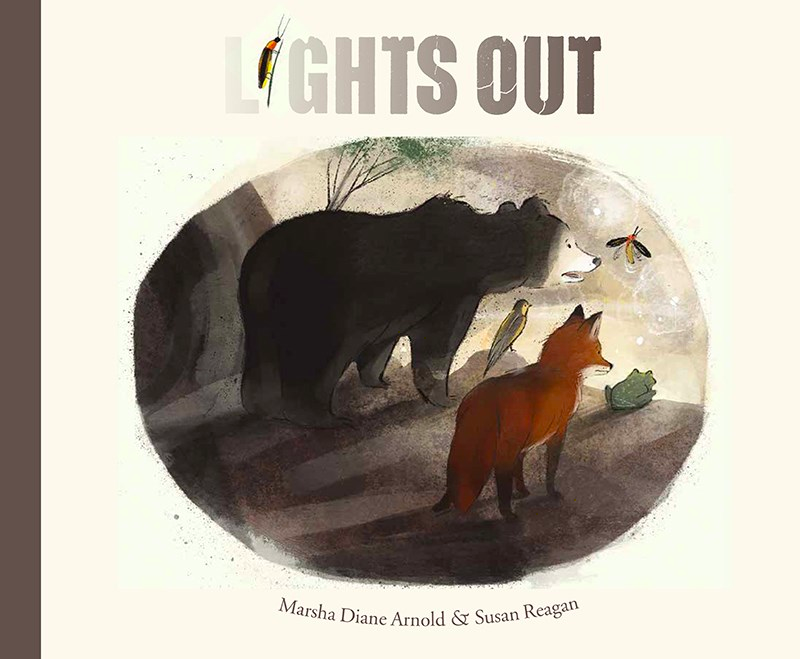
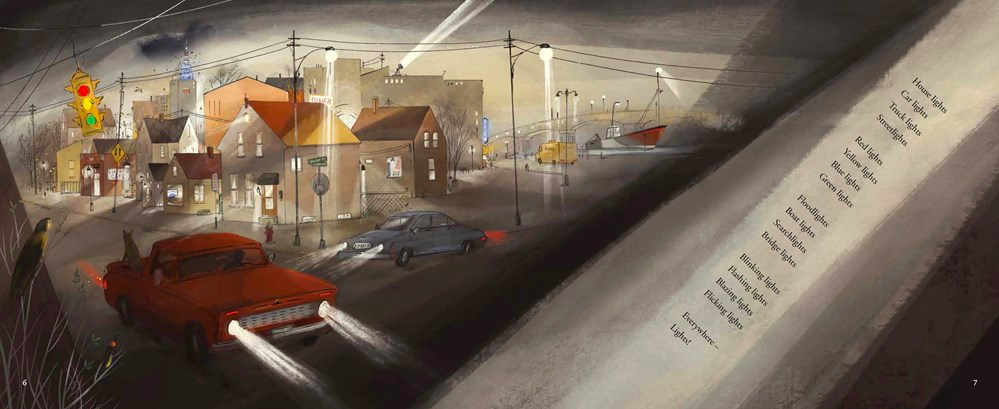
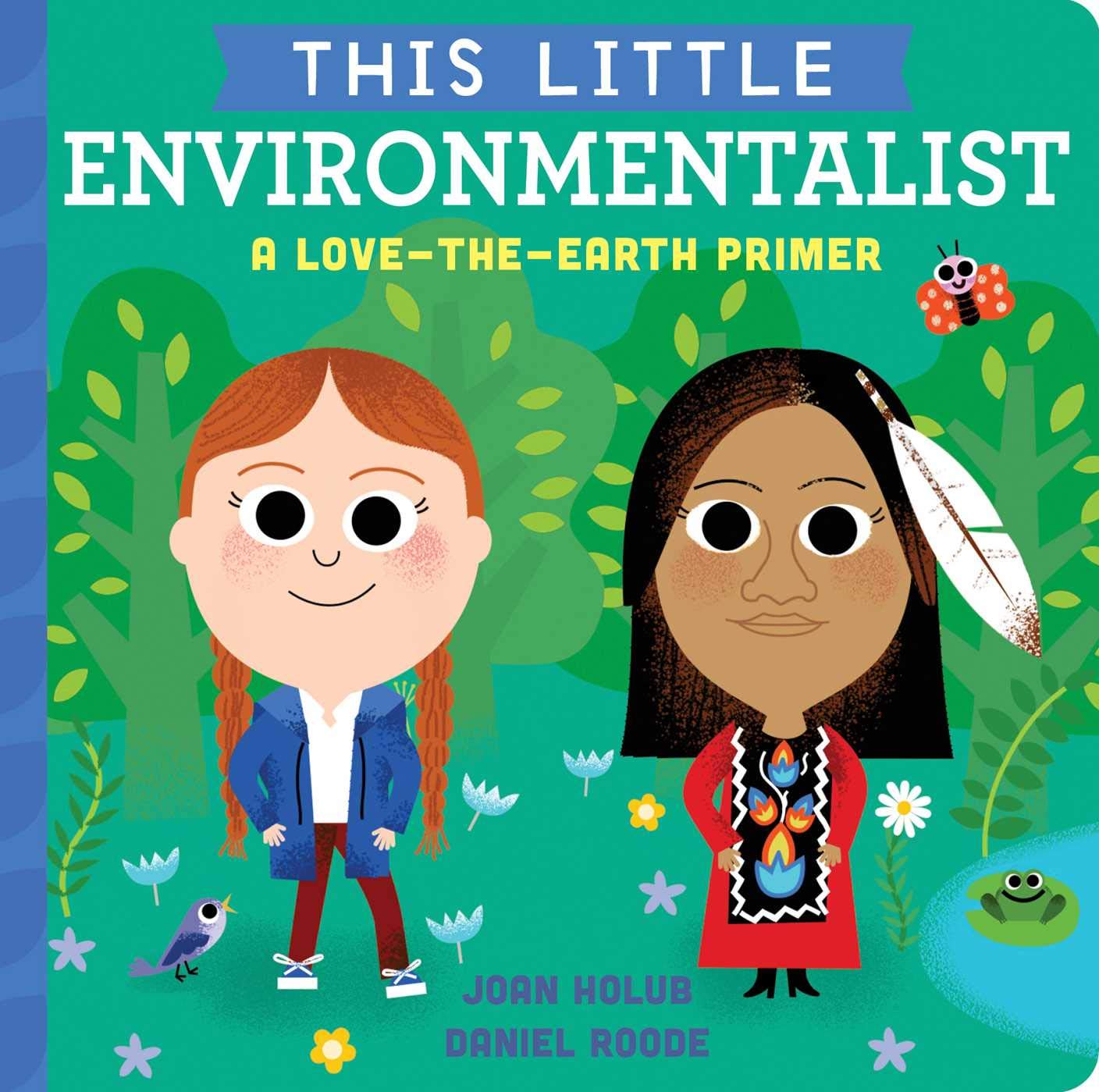
A little fox peeks out of her den. It’s night, but her surroundings are lit up as if it were noon. A Beetle hovers nearby taking in all the “House lights / Car lights / Truck lights / Street lights… / Blinking lights / Flashing lights / Blazing lights / Flickering lights.” There are lights in every color and on every structure. Fox and Beetle wonder where Darkness is—the dark of Night that invites coyotes to sing, owls to hunt, foxes to hunt, and beetles to become “more than beetles.” Perhaps, they think, Night is lost.

celebrate-picture-books-picture-book-review-Lights-Out-city

Image copyright Susan Reagan, 2020, text copyright Marsha Diane Arnold, 2020. Courtesy of Creative Editions.

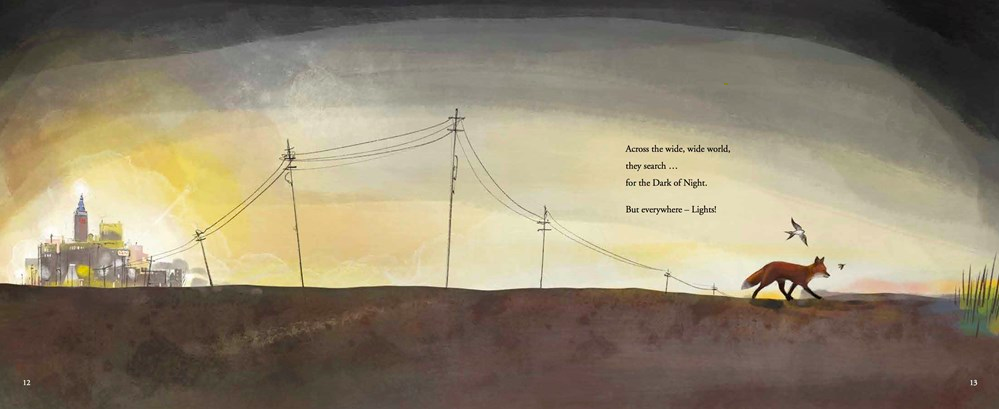
Fox and Beetle set out to find Night. They pass a wetlands, where Frog waits in vain for darkness to lend his voice to the nighttime chorus. “Across the wide, wide world, / they search… / for the Dark of Night. / But everywhere – Lights!” Up on the mountain, Bear is waiting for the signal to hibernate, but the brightness keeps him awake. Frog and Bear join in the search for Night.

celebrate-picture-books-picture-book-review-Lights-Out-wandering

Image copyright Susan Reagan, 2020, text copyright Marsha Diane Arnold, 2020. Courtesy of Creative Editions.

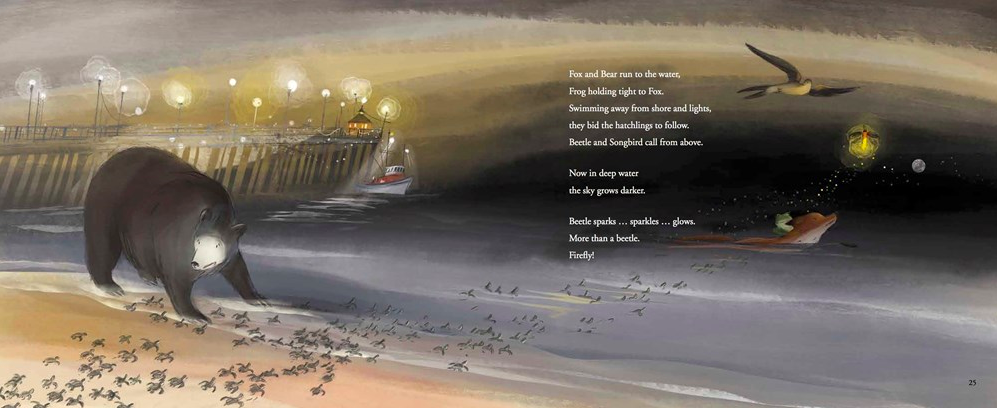
Fox and Beetle travel through forests and fields, over deserts and dunes, and across wide prairies, but don’t find Night. When they come to the seashore, they witness baby turtles hatching. Instead of scuttling toward the ocean, they’re running toward the lights of the boardwalk shops. Frog stops the little turtles then Bear, Fox, and Frog wade out into the waves and shows them the way.

celebrate-picture-books-picture-book-review-Lights-Out-turtles

Image copyright Susan Reagan, 2020, text copyright Marsha Diane Arnold, 2020. Courtesy of Creative Editions.

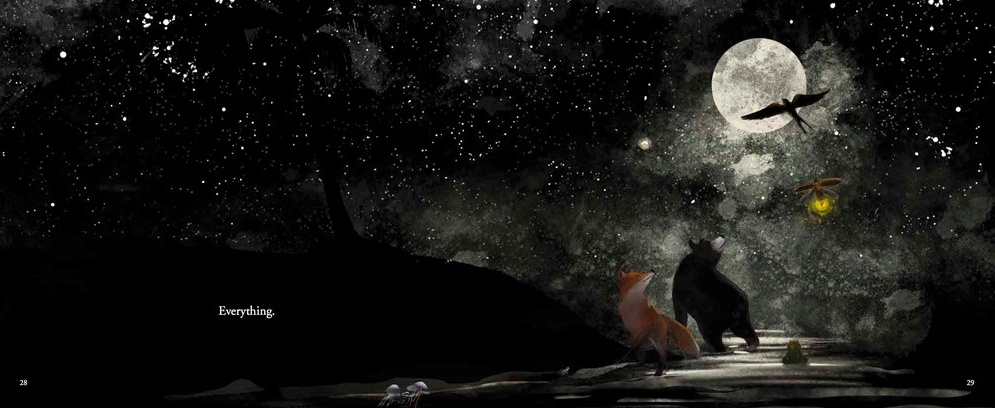
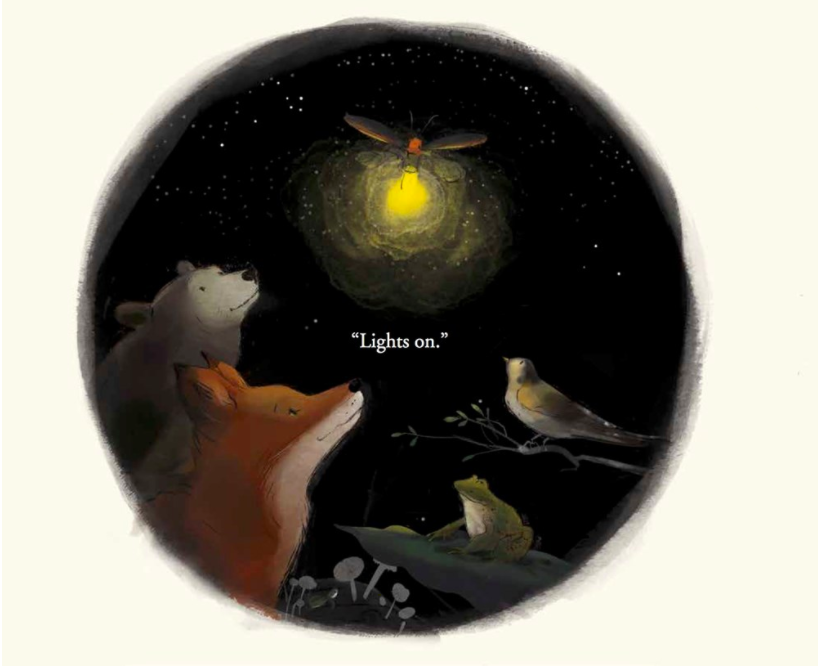
The three friends swim “away from shore and lights” while Beetle and Songbird fly above. Out here, where the sky is dark, Beetle at last sparks and glows. At last the friends reach a far-away island that’s cloaked in darkness. Here “they can see…Everything…. / Mushrooms glowing / Fireflies / Moonlit garden / Shining eyes / Nighttime weavers / Webs of stars / Constellations / Venus, Mars….” Here, they find Night.

An Author’s Note discussing light pollution and its effect on animals and humans and including a resource where readers can learn more about light pollution and what we can do to help precedes the story.

celebrate-picture-books-picture-book-review-Lights-Out-moon

Image copyright Susan Reagan, 2020, text copyright Marsha Diane Arnold, 2020. Courtesy of Creative Editions.

Marsha Diane Arnold’s affecting story about how light pollution changes animal behavior and confuses the natural order of life is a poignant appeal to today’s young environmentally conscious kids, sparking an awareness of the extent of the problem while inviting them to consider ways to restore the darkness of night so important to the health of our planet. Through non-rhyming, yet lyrical language, Arnold takes readers on a journey to find Night. As the friends search place after place, children come to understand that light pollution is a worldwide issue.

Arnold’s capitalization of Night and Darkness makes them characters in the story as well, imbued with living traits and purpose that are just as crucial to wildlife as food and shelter. In one powerful combination of text and illustration, a list of light sources streams from corner to corner in a beam of white light. The number of examples builds to create a glaring realization of all the types of lights that keep the world turned on twenty-four hours a day. After reading Lights Out, children and adults will find themselves paying attention to the lights around them and even in and near their own home.

celebrate-picture-books-picture-book-review-Lights-Out-lights-on

Image copyright Susan Reagan, 2020, text copyright Marsha Diane Arnold, 2020. Courtesy of Creative Editions.

Susan Reagan’s stunning illustrations of cities, waterways, and even out-of-the-way places bathed in a permanent twilight by street lamps, headlights, lighted windows, neon signs, and more are compelling reminders of just how pervasive light pollution is. As the animals wander from place to place looking for Night, their weary and distressed expressions reflect the loss of their natural nocturnal activities. When Beetle and Fox and their friends reach the distant island, Reagan’s gorgeous spreads of a star-and-moonlit sky and vegetation, in which nocturnal animals hunt, luminescent flowers glow, and spider webs glint will have readers taking a nighttime jaunt to discover what they can see in their surroundings.

A unique and important book that raises awareness not only about light pollution but about natural cycles of sleep and wakefulness, Lights Out would be an excellent addition to lessons in science and the environment and is highly recommended for home, school, and public library collections.

Ages 6 – 8

Creative Editions, 2020 | ISBN 978-1568463407

Discover more about Marsha Diane Arnold and her books on her website.

To learn more about Susan Reagan, her books, and her art, visit her website.

Earth Hour Activity

celebrate-picture-books-picture-book-review-Lights-Out-activity

Image copyright Susan Reagan, 2020, text copyright Marsha Diane Arnold, 2020. Courtesy of Creative Editions.

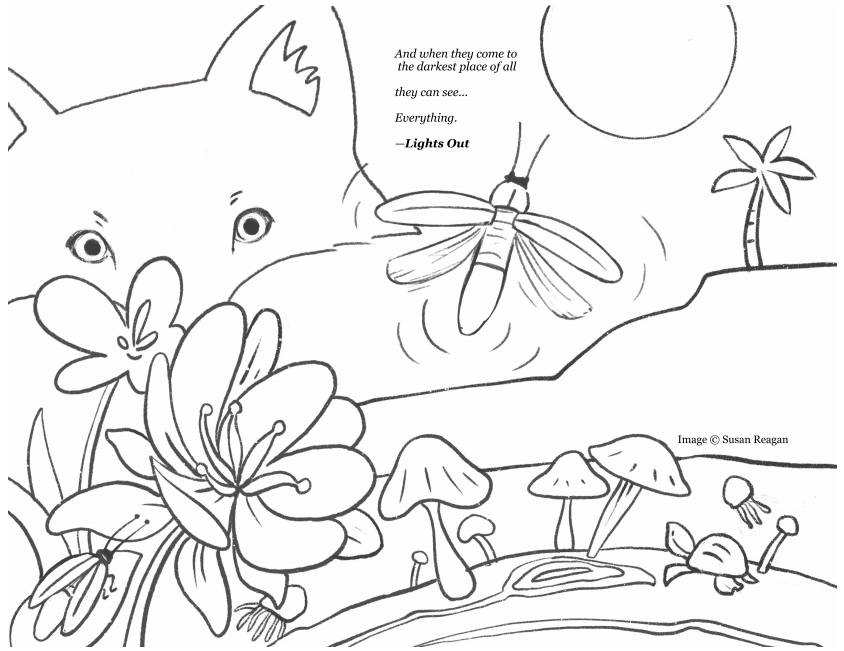
Lights Out Activity Kit


This extensive Activity Kit gives teachers, homeschoolers, and parents many ways to engage with Lights Out in the disciplines of science, language arts, art, and social action. Through the various activities, children will learn about light pollution and its effects as well as about the ways in which darkness benefits wildlife. You can download the kit from Marsha Diane Arnold’s website:

Lights Out Activity Kit

celebrate-picture-books-picture-book-review-Lights-Out-cover

You can find Lights Out at these booksellers

Amazon | Barnes & Noble | Books-a-Million

To support your local independent bookstore, order from

Bookshop | IndieBound

Picture Book Review
March 14 – National Learn about Butterflies Day

celebrate-picture-books-picture-book-review-butterflies-belong-here-cover

About the Holiday

Spring has sprung – or is right around the corner – so today’s holiday reminds us to watch out for the butterflies in your area. With more than 20,000 species of butterflies around the world, these delicate beauties are one of the most recognized and beloved natural wonders on earth. Butterflies are important to our ecosystem, too, but habitat destruction and climate change are decreasing their numbers by alarming amounts. You can help! By planting milkweed and other plants as well as nectar-producing flowers in your yard or community, you can create an area where butterflies can find shelter, food, and a place to lay their eggs. To learn more about saving monarch butterflies, visit Save Our Monarchs.

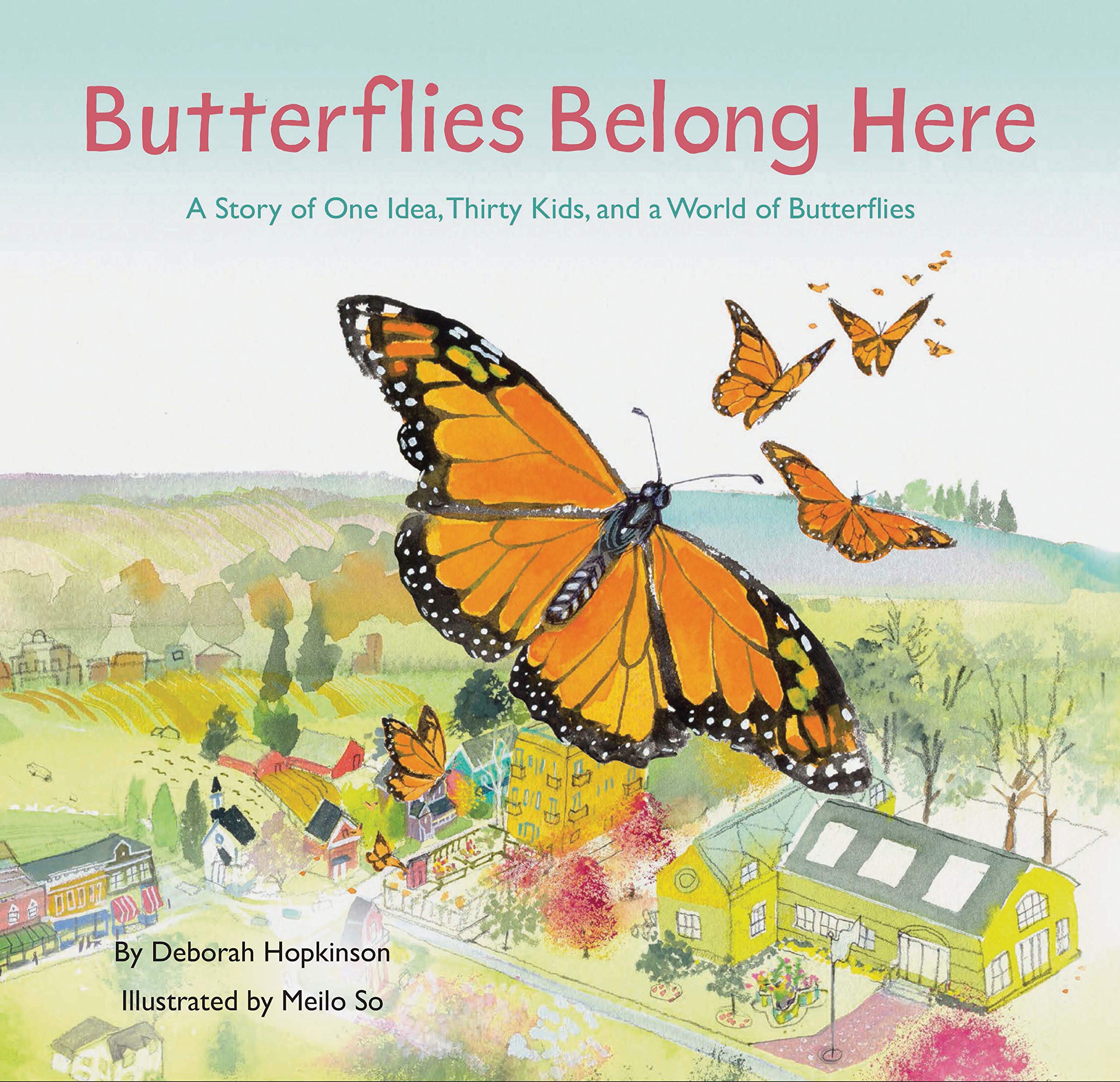
Butterflies Belong Here: A Story of One Idea, Thirty Kids, and a World of Butterflies

Written by Deborah Hopkinson | Illustrated by Meilo So


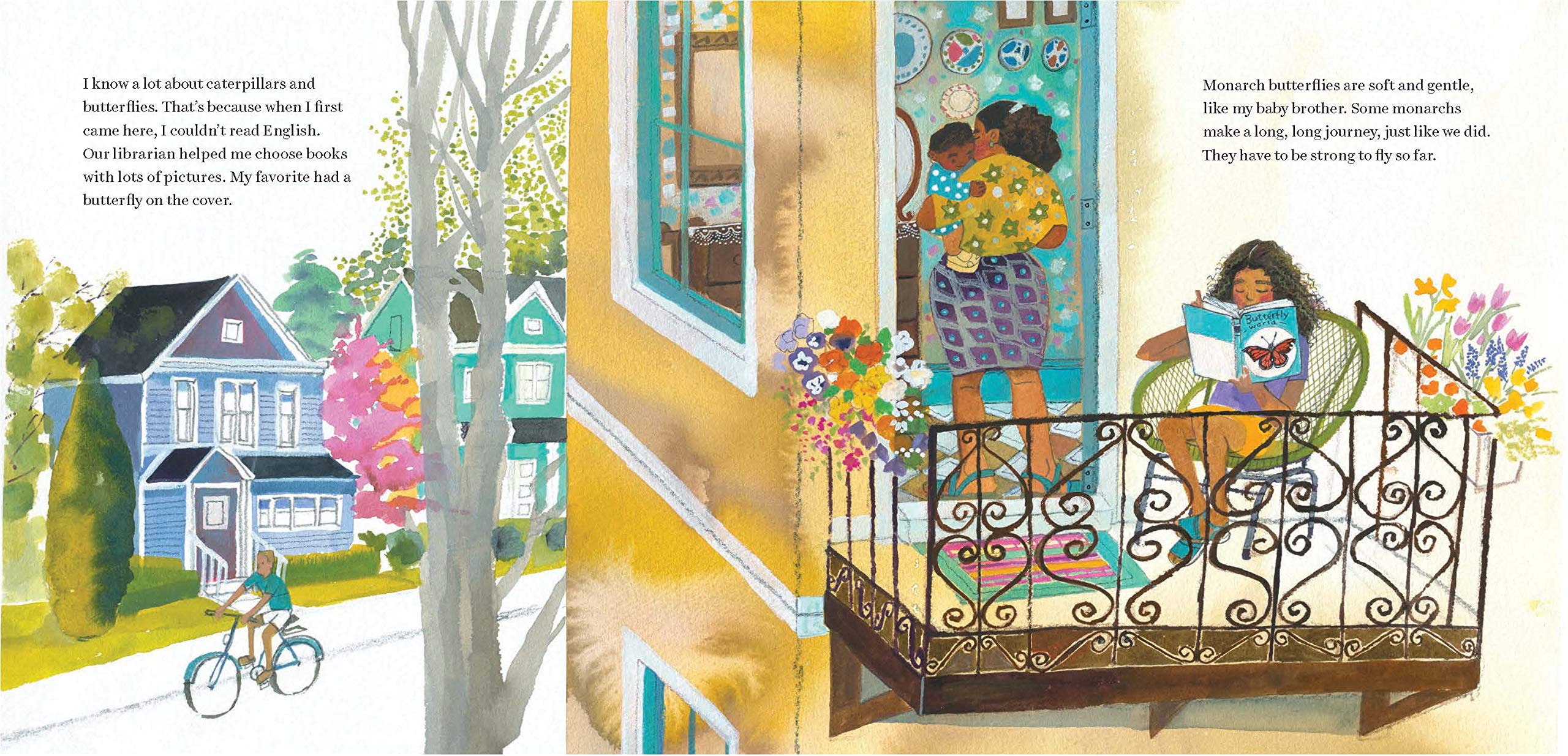
Last spring, the narrator of the story reveals, she was a “little like a caterpillar…quiet and almost invisible.” She had recently moved to the United States and couldn’t read English. The school librarian gave her books with a lot of pictures and her favorite was one about butterflies. Since then she has learned a lot about Monarch butterflies and how they “make a long, long journey” just like her family did. The frame of her story leads into a detailed discussion of the spring monarch migration and the life cycle of caterpillars.

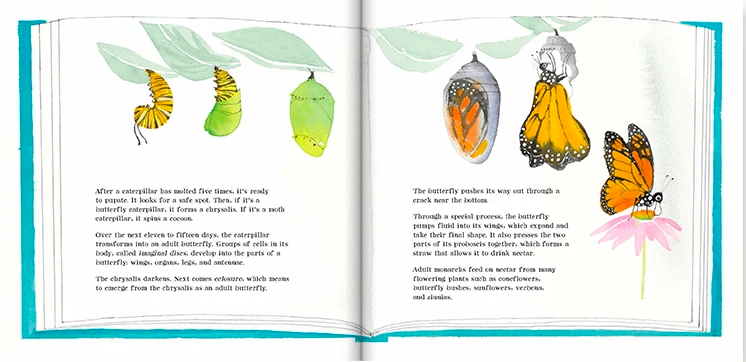
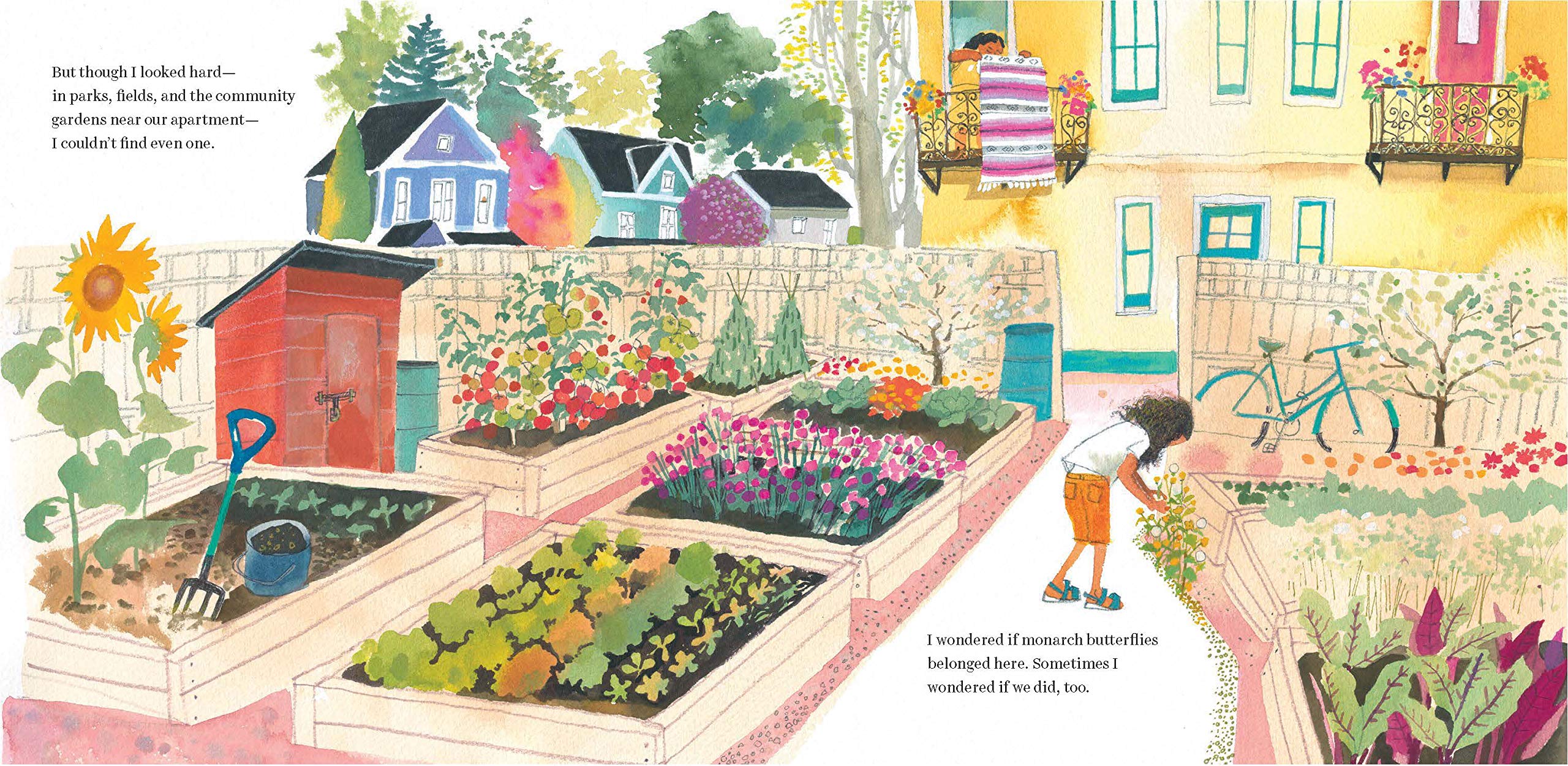
When summer came, the girl thought for sure she would see monarch butterflies. She “wanted to see them flit from flower to flower sipping nectar.” But no matter where she looked—the park, grassy fields, an even the community garden—she couldn’t find any. She began to wonder “if monarch butterflies belonged here.” Sometimes she wondered if her family did either. Turning the page, kids learn how a caterpillar transforms into a butterfly and how, once it emerges from its chrysalis, it “pumps fluid into its wings, which expand and take their final shape” and creates the “straw” it drinks nectar with.

celebrate-picture-books-picture-book-review-butterflies-belong-here-reading

Image copyright Meilo So, 2020, text copyright Deborah Hopkinson, 2020. Courtesy of Chronicle Books.

In the fall when school began, the girl rushed to find her favorite book. Now she could read it, and she discovered that butterflies need milkweed to multiply and thrive. She also learned that milkweed is sparse now, due to habitat destruction due to building, chemical use, and climate change. She also learned some shocking facts, such as “in 20 years, the number of monarchs has fallen by 90 percent.”

One day the librarian calls the girl over and tells her that she has ordered new butterfly books and offers them to her first. The librarian also explains that over the summer she created a monarch way station. The girl knows about these special butterfly gardens. She points out the library window at a place within the school yard that would make a perfect monarch way station. “‘It takes just one person to get things started,’” the librarian says. “‘I’m not that kind of person,’” the girl whispers. But the librarian is encouraging. She reminds the girl about the amazing trip monarchs take and says, “‘It’s surprising what such a tiny creature can do.’” Readers next learn about the generations of butterflies that are born during the summer and how the final generation is different from the rest.

celebrate-picture-books-picture-book-review-butterflies-belong-here-chrysalis

Image copyright Meilo So, 2020, text copyright Deborah Hopkinson, 2020. Courtesy of Chronicle Books.

During the winter, the girl remembers the monarchs who lived “high in the fir forests of Mexico, waiting out the cold to make their long journey north.” She thinks about what the librarian said, and wonders if she could “ever be brave enough to speak up, take charge, and be noticed.” But when she presents a research project on butterflies for her class, the kids loved it. At the end she tells the class how important butterflies are and that they need to help them.

She is surprised by how excited the class is to help and that they want to make a butterfly garden as the class project. The teacher turns to her and asks if she has any ideas on what they could do. The girl is prepared. She turns her poster around and shows them her “plan for a monarch way station, the beginning of a timeline, a list of supplies, and how much it might cost.” And so, they started on their garden. Over the next few weeks, the girl says “‘I could feel myself growing and changing, little by little.’”

celebrate-picture-books-picture-book-review-butterflies-belong-here-community-garden

Image copyright Meilo So, 2020, text copyright Deborah Hopkinson, 2020. Courtesy of Chronicle Books.

The class talked to the principal, made a presentation to parents, and invited gardeners and scientists to speak to the class. They also wrote letters to students in other places who were doing similar projects. Then they held an all-school assembly and asked for volunteers. Kids from all classes—even kindergarten—signed up. They even went to a town council meeting and explained how important milkweed was. They asked that it not be sprayed with poison but instead “be planted in every city park.” The mayor even shook the girl’s hand and told her the city needed citizens like her.

Finally, with a fence and garden plots built, it was planting day. When spring class picture time rolls around again, the girl can be found in the front row, right in the center and holding the class sign. The kids met students from another school who have been helping the butterflies for two years and now serve as monarch trackers, placing tags on their legs and following their migration routes. The class’s monarch way station is thriving, and while they don’t have monarchs yet, the girl is already thinking about how the class can become monarch trackers next year. Just like a caterpillar, the girl thinks again, she has grown and emerged “as something new, unexpected, surprising.”

Backmatter includes an Author’s Note about the story, a guide for making a school or home monarch way station, facts about monarchs, and books and internet resources for learning more about monarchs and how you can help.

celebrate-picture-books-picture-book-review-butterflies-belong-here-migration

Image copyright Meilo So, 2020, text copyright Deborah Hopkinson, 2020. Courtesy of Chronicle Books.

Deborah Hopkinson’s moving and educational story combines a fictional account of growing up with scientific information on butterflies. The structure is exceptionally effective in showing kids and adults that some children find their voice, discover a talent, or overcome hesitation or shyness when they become involved in a cause or activity they believe in. The school librarian and the teacher both model actions and words that can encourage children to express and extend themselves. The girl’s thoughts allow children to see that fears of speaking up or taking charge are not uncommon while also reassuring them that by taking even small actions one step at a time, their confidence will grow. The cyclical structure of the story enhances the idea that change is gradual—in nature and in people. Hopkinson’s text revolving around butterflies and making a butterfly garden way station will excite kids to do the same at their school, at home, or in their community.

Meilo So’s gorgeous and tender illustrations portray vibrant scenes of flower bedecked balconies, blooming community gardens, and a busy, colorful town. So cleverly depicts the library’s stacks of books in similar floral hues, connecting the nurturing of children and butterflies. The faces of all the children and the adults are thoughtful and enthusiastic. Readers can clearly see the protagonist’s physical growth throughout the seasons as well as her developing self-confidence and will want to watch for ways in which she mirrors a butterfly. The children in the classroom and the school are a diverse mix and demonstrate the enthusiasm and determination of kids who want to make a difference.

So is a master at illustrating butterflies, caterpillars, and other insects, and her realistic images will fascinate readers. Children get to see a caterpillar form a chrysalis, transform into a butterfly inside, and emerge. They also see the seeds inside a milkweed pod as well as the plants themselves, throngs of monarchs during migration, and maps of migration routes. 

Exhilarating, poignant, and inspirational on many levels, Butterflies Belong Here is highly recommended for home libraries and a must for school and public libraries.

Ages 5 – 8 and up

Chronicle Books, 2020 | ISBN 978-1452176802

Discover more about Deborah Hopkinson and her books on her website.

To learn more about Meilo So and view portfolios of her art, visit her website and heflinreps.

National Learn about Butterflies Day Activity

celebrate-picture-books-picture-book-review-beautiful-butterflies-maze

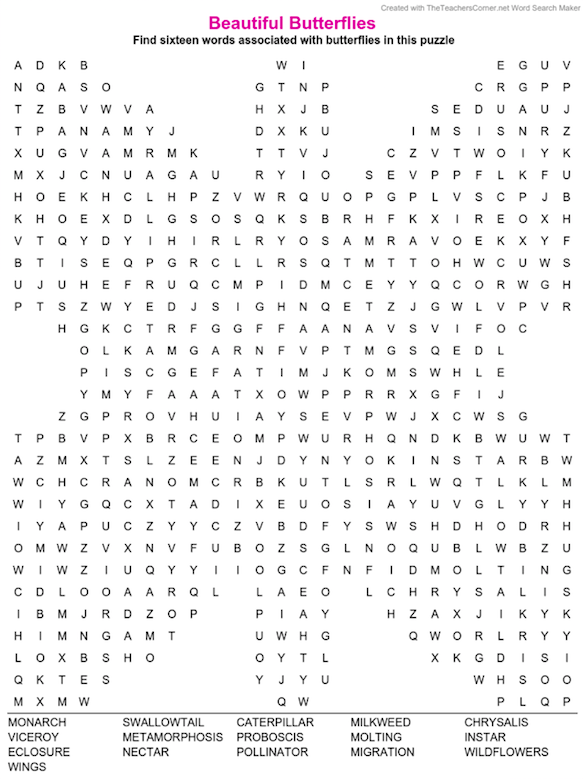
Beautiful Butterflies Maze


Can you find the sixteen words associated with butterflies in this printable puzzle?

Beautiful Butterflies Maze Puzzle | Beautiful Butterflies Maze Solution

celebrate-picture-books-picture-book-review-butterflies-belong-here-cover

You can find Butterflies Belong Here at these booksellers

Amazon | Barnes & Noble | Books-a-Million

To support your local independent bookstore, order from

Bookshop | IndieBound

Picture Book Review

September 4 – National Wildlife Day

celebrate-picture-books-picture-book-review-Lights-Out-cover

About the Holiday

National Wildlife Day was established in 2005 by author and pet lifestyle expert Colleen Paige to promote awareness of the importance of conservation of animals, habitats, and the environment worldwide as well as to acknowledge the education and conservation work of zoos and animal sanctuaries. To honor the memory and birthday of Steve Irwin, National Wildlife Day is also celebrated on February 2. To celebrate today’s holiday, take time to learn about what you can do to help protect the environment. One action might be as easy as turning off a light – as today’s book shows.

Lights Out

Written by Marsha Diane Arnold | Illustrated by Susan Reagan


A little fox peeks out of her den. It’s night, but her surroundings are lit up as if it were noon. A Beetle hovers nearby taking in all the “House lights / Car lights / Truck lights / Street lights… / Blinking lights / Flashing lights / Blazing lights / Flickering lights.” There are lights in every color and on every structure. Fox and Beetle wonder where Darkness is—the dark of Night that invites coyotes to sing, owls to hunt, foxes to hunt, and beetles to become “more than beetles.” Perhaps, they think, Night is lost.

celebrate-picture-books-picture-book-review-Lights-Out-city

Image copyright Susan Reagan, 2020, text copyright Marsha Diane Arnold, 2020. Courtesy of Creative Editions.

Fox and Beetle set out to find Night. They pass a wetlands, where Frog waits in vain for darkness to lend his voice to the nighttime chorus. “Across the wide, wide world, / they search… / for the Dark of Night. / But everywhere – Lights!” Up on the mountain, Bear is waiting for the signal to hibernate, but the brightness keeps him awake. Frog and Bear join in the search for Night.

celebrate-picture-books-picture-book-review-Lights-Out-wandering

Image copyright Susan Reagan, 2020, text copyright Marsha Diane Arnold, 2020. Courtesy of Creative Editions.

Fox and Beetle travel through forests and fields, over deserts and dunes, and across wide prairies, but don’t find Night. When they come to the seashore, they witness baby turtles hatching. Instead of scuttling toward the ocean, they’re running toward the lights of the boardwalk shops. Frog stops the little turtles then Bear, Fox, and Frog wade out into the waves and shows them the way.

celebrate-picture-books-picture-book-review-Lights-Out-turtles

Image copyright Susan Reagan, 2020, text copyright Marsha Diane Arnold, 2020. Courtesy of Creative Editions.

The three friends swim “away from shore and lights” while Beetle and Songbird fly above. Out here, where the sky is dark, Beetle at last sparks and glows. At last the friends reach a far-away island that’s cloaked in darkness. Here “they can see…Everything…. / Mushrooms glowing / Fireflies / Moonlit garden / Shining eyes / Nighttime weavers / Webs of stars / Constellations / Venus, Mars….” Here, they find Night.

An Author’s Note discussing light pollution and its effect on animals and humans and including a resource where readers can learn more about light pollution and what we can do to help precedes the story.

celebrate-picture-books-picture-book-review-Lights-Out-moon

Image copyright Susan Reagan, 2020, text copyright Marsha Diane Arnold, 2020. Courtesy of Creative Editions.

Marsha Diane Arnold’s affecting story about how light pollution changes animal behavior and confuses the natural order of life is a poignant appeal to today’s young environmentally conscious kids, sparking an awareness of the extent of the problem while inviting them to consider ways to restore the darkness of night so important to the health of our planet. Through non-rhyming, yet lyrical language, Arnold takes readers on a journey to find Night. As the friends search place after place, children come to understand that light pollution is a worldwide issue.

Arnold’s capitalization of Night and Darkness makes them characters in the story as well, imbued with living traits and purpose that are just as crucial to wildlife as food and shelter. In one powerful combination of text and illustration, a list of light sources streams from corner to corner in a beam of white light. The number of examples builds to create a glaring realization of all the types of lights that keep the world turned on twenty-four hours a day. After reading Lights Out, children and adults will find themselves paying attention to the lights around them and even in and near their own home.

celebrate-picture-books-picture-book-review-Lights-Out-lights-on

Image copyright Susan Reagan, 2020, text copyright Marsha Diane Arnold, 2020. Courtesy of Creative Editions.

Susan Reagan’s stunning illustrations of cities, waterways, and even out-of-the-way places bathed in a permanent twilight by street lamps, headlights, lighted windows, neon signs, and more are compelling reminders of just how pervasive light pollution is. As the animals wander from place to place looking for Night, their weary and distressed expressions reflect the loss of their natural nocturnal activities. When Beetle and Fox and their friends reach the distant island, Reagan’s gorgeous spreads of a star-and-moonlit sky and vegetation, in which nocturnal animals hunt, luminescent flowers glow, and spider webs glint will have readers taking a nighttime jaunt to discover what they can see in their surroundings.

A unique and important book that raises awareness not only about light pollution but about natural cycles of sleep and wakefulness, Lights Out would be an excellent addition to lessons in science and the environment and is highly recommended for home, school, and public library collections.

Ages 6 – 8

Creative Editions, 2020 | ISBN 978-1568463407

Discover more about Marsha Diane Arnold and her books on her website.

To learn more about Susan Reagan, her books, and her art, visit her website.

National Wildlife Day Activity

celebrate-picture-books-picture-book-review-Lights-Out-activity

Image copyright Susan Reagan, 2020, text copyright Marsha Diane Arnold, 2020. Courtesy of Creative Editions.

Lights Out Activity Kit


This extensive Activity Kit gives teachers, homeschoolers, and parents many ways to engage with Lights Out in the disciplines of science, language arts, art, and social action. Through the various activities, children will learn about light pollution and its effects as well as about the ways in which darkness benefits wildlife. You can download the kit from Marsha Diane Arnold’s website:

Lights Out Activity Kit

celebrate-picture-books-picture-book-review-Lights-Out-cover

You can find Lights Out at these booksellers

Amazon | Barnes & Noble | Books-a-Million

To support your local independent bookstore, order from

Bookshop | IndieBound

Picture Book Review
August 25 – National Park Service Founders Day

celebrate-picture-books-picture-book-review-if-I-were-a-park-ranger-cover

About the Holidays

On August 25, 1916, President Woodrow Willson signed what is now called the Organic Act, establishing the National Park Service. In the 104 years since that historic signing, 400 areas in each of the 50 states, U.S. territories, and the District of Columbia, totaling 84 million acres, have been designated as national parks. Today we honor the park rangers who conserve and preserve these natural wonders and educate visitors. To discover national parks near you and their stories as well as to learn more about the week and how to help out all year round, visit the National Park Foundation website and the National Park Service website.

Thanks to Albert Whitman for sending me a copy of If I Were a Park Ranger for review consideration. All opinions about the book are my own. 
If I Were a Park Ranger

Written by Catherine Stier | Illustrated by Patrick Corrigan

If you love trees, animals, and all the beauty of nature, you may think about being a park ranger in one of the United States national parks. How would you get there? By studying “wildlife biology, conservation, or education” in college. Historian William Stegner called national parks “America’s ‘best idea.’” Being a park ranger means you’d be part of a proud history of people who have cared for the “country’s most beautiful, historic, and unique areas.”

celebrate-picture-books-picture-book-review-if-I-were-a-park-ranger-redwood-national-park

Image copyright Patrick Corrigan, 2019, text copyright Catherine Stier, 2019. Courtesy of Albert Whitman & Company.

Who are some of these people? Stephen Mather and Horace Albright were the first directors of the National Park Service, Captain Charles Young was “the first African American superintendent of a national park,” and Gerard Baker “brought Native American heritage and perspectives to the parks.” There are also writers, like Marjory Stoneman Douglas ,and artists, like John Muir and Ansel Adams, who shared the grandeur of the parks.

Park rangers work in some of the most exciting places in the country—in caves, deserts, and mountains and near volcanos or the sea shore. And that’s just the beginning! Ships, homes, battlefields, and monuments are also part of the National Park System. As a park ranger, you would protect the animals, plants, and buildings, you might work with scientists, or archaeologists, and you would help visitors gain new perspectives. How would you do that?

You’d “be a great storyteller.” As part of your job, you’d “learn about the natural history, the human history, and the legends” of you park so you “could share those tales…” and maybe “a few spooky campfire stories too.” You’d also learn all about the animals and landmarks of your park so you could provide interesting tours.

celebrate-picture-books-picture-book-review-if-I-were-a-park-ranger-redwood-national-mesa-verde

Image copyright Patrick Corrigan, 2019, text copyright Catherine Stier, 2019. Courtesy of Albert Whitman & Company.

Rangers are always on the lookout for fires, bad weather, or visitors who require help and alert emergency services when they’re needed. But rangers don’t spend all of their time outdoors. Sometimes they spend time inside using “computers to design exhibits, make maps, write articles, and keep track of endangered animal populations” or keep the park’s website updated. Park rangers are also invited to talk to students in schools and for organizations.

If you were a park ranger, you would make a big impact. Your park would be “cleaner and safer,” the “animals living there would be stronger and healthier,” and visitors might “experience something astonishing…a moment that could happen nowhere else in the world. A moment they’d remember forever” all because of you!

An Author’s Note reveals other riches of the National Park System, including STEM research, creative programs, artifacts and primary source materials, and more as well as a discussion on the education and various roles of rangers and a link where kids can find out about becoming a junior ranger at many parks.

celebrate-picture-books-picture-book-review-if-I-were-a-park-ranger-redwood-national-cave

Image copyright Patrick Corrigan, 2019, text copyright Catherine Stier, 2019. Courtesy of Albert Whitman & Company.

Catherine Stier’s inspiring look at the role of a ranger in the National Park Service takes readers from shore to shore and shows them the exciting and diverse jobs that are part of a ranger’s day. Stier’s use of the first-person point of view empowers readers to see themselves as a ranger protecting the treasures of the park and sharing them with visitors. Her straightforward storytelling is full of details readers will love about the duties of a park ranger and the parks themselves. Her stirring ending swells the heart. It’s certain to plant the seed of interest in jobs within the National Park Service as well as in planning a vacation trip to one of these beautiful areas.

celebrate-picture-books-picture-book-review-if-i-were-a-park-ranger-portraits

Image copyright Patrick Corrigan, 2019, text copyright Catherine Stier, 2019. Courtesy of Albert Whitman & Company.

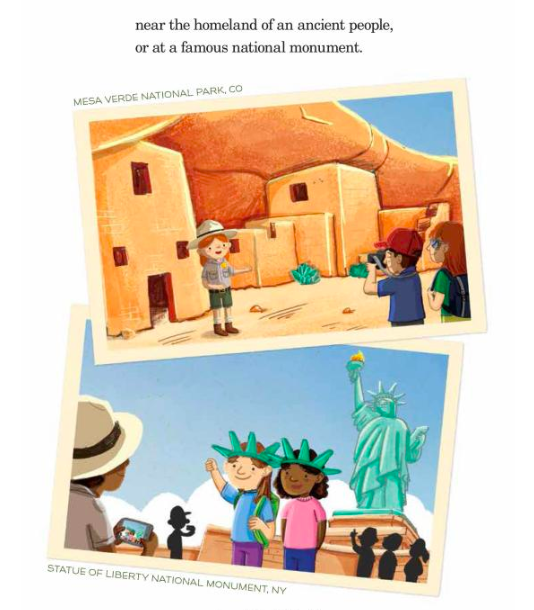
Through vibrant snapshots and two-page spreads, Patrick Corrigan transports readers to twenty-five national parks, including Redwood National Park, California; Hawai’i Volcanoes National Park; Petroglyph National Monument, New Mexico; Acadia National Park, Maine; and Great Smoky Mountains National Park. To immerse young readers in the story, the rangers are depicted as diverse children helping visitors, giving talks, protecting animals, translating petroglyphs, giving tours, calling firefighters, and even brushing dirt from an unearthed animal skull. In one image a ranger gives a flashlight tour of Mammoth Cave National Park to a girl who uses a wheelchair, and in another a ranger uses sign language to describe the beauty of her park. Children will want to linger over the pages to take in all the details and will be moved to learn more about each park.

Sure to spark expressions of “ooh,” “ahh,” and “I’d like to do that!,” If I Were a Park Ranger makes an inspiring addition to classroom geography and nature lessons and would be a terrific addition to home libraries for kids who love nature and travel and would like to explore future possibilities.

Ages 5 – 9

Albert Whitman and Company, 2019 | ISBN 978-0807535455

Discover more about Catherine Stier and her books on her website.

To learn more about Patrick Corrigan, his books, and his art, visit his website.

National Park Week Activity

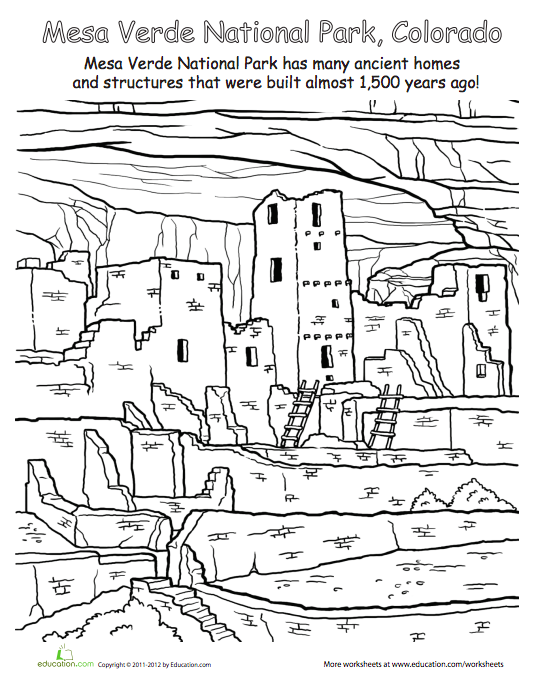
celebrate-picture-books-picture-book-review-if-I-were-a-park-ranger-mesa-verde-coloring-page

Majestic Parks Coloring Pages

You may not be able to visit all of these parks, but you can still enjoy their beauty with these printable coloring pages!

Mesa Verde National Park | Gates of the Arctic National Park | Hawaii Volcanoes National Park | Biscayne National Park

celebrate-picture-books-picture-book-review-if-I-were-a-park-ranger-cover

You can find If I Were a Park Ranger at these booksellers

Amazon | Barnes & Noble | Books-a-Million

To support your local independent bookstore, order from

Bookshop | IndieBound