July 24 – Amelia Earhart Day

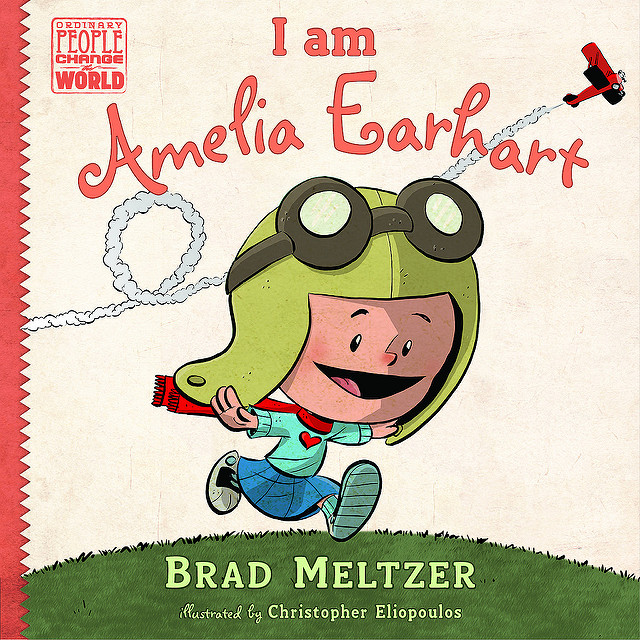
celebrate-picture-books-picture-book-review-i-am-amelia-earhart-cover

About the Holiday

On July 24, 1897 Amelia Mary Earhart was born. With astounding bravery and perseverance, Earhart became the first woman to fly solo across the Atlantic Ocean. She was an author; a founder of the Ninety-Nines, an organization for women pilots; an instructor and career counselor; and she broke many aviation records. Her disappearance over the Pacific Ocean in 1937 remains one of the most baffling historical mysteries.

I am Amelia Earhart

Written by Brad Meltzer | Illustrated by Christopher Eliopoulos


Even as a child Amelia Earhart chafed at the idea that girls could only wear dresses, play with dolls, and have “unladylike” adventures. At the age of seven Amelia and her sister built a roller coaster in their backyard by placing two planks against a shed and making a car from a packing crate with roller skate wheels on the bottom. They even greased the wood to make it “super-fast.”

Amelia took the first ride. With the wind in her face she launched off the end of the ramp, catching air and her first feeling of flight. She crash landed a minute later, but declared the experience, “awesome!”
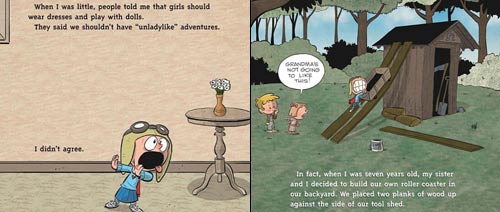
celebrate-picture-books-picture-book-review-i-am-amelia-earhart-interior-art-no-girl-stuff

Image copyright Christopher Eliopoulos

When Amelia was 23 she met Frank Hawks, who took her on her very first flight for ten dollars. It only took her ten minutes to realize that “she had to fly.” To save money for flying lessons Amelia took on many jobs. She worked as a truck driver, a stenographer, and a photographer. In time she learned to fly and within six months of becoming a pilot, she bought a bright yellow biplane that she named Canary.

Amelia admitted that she wasn’t a natural or even the best pilot, but she worked hard to learn the skills she needed. She also bravely dared to do what others wouldn’t or couldn’t. Because of her determination she became the first woman to fly across the Atlantic and then the first woman to fly solo across the Atlantic. At a time when people still traveled from America to Europe by boat, no one thought a woman would be able to fly that far.

To make the flight required the kind of grit that Amelia possessed. The trip took 14 hours and 56 minutes with no stops and no breaks, and when Amelia landed she broke the record for the fastest Atlantic flight ever. She broke other records too, including the woman’s altitude record and a speed record. Despite her success, whenever she set a new goal there were always people who told her she couldn’t do it. But she never let that stop her.
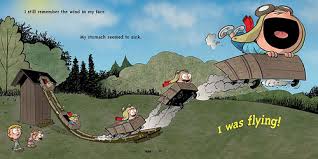
celebrate-picture-books-picture-book-review-i-am-amelia-earhart-interior-art-roller-coaster

Image copyright Christopher Eliopoulos

Her life and achievements serve as inspiration to all who aspire to great heights. Amelia’s advice? “Whatever your dream is, chase it. Work hard for it. You will find it. It is the best lesson I can give you.” And she added this reminder: “I hope you’ll remember that the greatest flight you’ll ever take, is the one no one has tried before.”

Part of Brad Meltzer’s I am… series of biographies, this portrait of Amelia Earhart highlights the traits of bravery and individualism—evident from her youngest years—that fueled her passion for adventure and breaking barriers. Perfectly suited for its audience, the text is conversational and includes funny asides from young Amelia to her readers. The repeated repartee between those who doubted her and Amelia (“you sure this is a good idea?” and “This isn’t a good idea. It’s the best idea!”) emphasizes Amelia’s determination and self-belief that will inspire kids to think likewise about their own dreams. The book follows Amelia from her childhood through her young adulthood and into her record-breaking years with well-chosen facts that illuminate but do not overwhelm. As this is a book to inspire children to reach for their dreams, the book makes no mention of Amelia’s eventual disappearance over the Pacific Ocean, instead leaving kids with wise words from this most iconic and fascinating adventurer.

Children love the accessibility of Christopher Eliopoulos’ I am… series illustrations! Enthusiasm and joy radiate from Amelia Earhart’s face as she races to meet the world head-on. Her dismay with typical “girl stuff” as well as her excitement when flying is evident in her very kid-like expressions. The scenes of Amelia building and riding her homemade roller coaster will make kids’ eyes widen in delight. Amelia’s various flights and planes are beautifully rendered in both up-close views of her aircraft as well as panoramic spreads showing her flying through clouds, over fields, and across the ocean. The full-bleed, vibrant and action-packed pictures will rivet kids’ attention to Amelia’s life and her inspiring message

Ages 5 – 9

Dial Books for Young Readers, 2014 | ISBN 978-0803740822

Keep up with what Brad Meltzer is writing and doing next by visiting his website!

Discover the cartoon world of Christopher Eliopoulos on his website!

Amelia Earhart Day Activity

celebrate-picture-books-picture-book-review-biplane-craft

Soar Toward Your Dreams Box Biplane


If you love airplanes and flying—or if you just have sky-high aspirations—you’ll have fun making your own plane from recycled materials! You can use your own creativity to decorate it or make Amelia Earhart’s Canary while you imagine yourself flying through the clouds on a beautiful day. This is a fun activity to share with an adult or older sibling too!

Supplies

  • Travel-size toothpaste box
  • 3 Long, wide craft sticks
  • 2 Short “popsicle” sticks
  • 5 Round toothpicks, with points cut off
  • Paint in whatever colors you like for your design
  • 4 small buttons or flat beads
  • Paint brushes
  • Strong glue or glue gun

Directions

  1. Empty toothpaste box
  2. Paint toothpaste box and decorate it
  3. Paint the craft sticks and 5 toothpicks
  4. Paint one small craft stick to be the propeller
  5. Let all objects dry

To assemble the biplane

  1. For the Bottom Wing – Glue one long, wide craft stick to the bottom of the plane about 1 inch from the end of the box that will be the front of the plane
  2. For the Top Wing – Glue the other long, wide craft stick to the top of the plane about 1 inch from the front of the plane
  3. For the Tail – Glue one short craft stick to the bottom of the box about ¾ inches from the end that is the back of the plane
  4. For the Vertical Rudder – Cut the end from one of the painted wide craft sticks, glue this to the back of the box, placing it half-way between each side

To assemble the wheels

  1. Cut 4 painted toothpicks ¾-inches long
  2. Cut one painted toothpick 1-inch long
  3. Glue 2 of the short toothpicks to the back of 1 button, the ends of the toothpicks on the button should be touching and the other end apart so the toothpicks form a V
  4. Repeat the above step for the other wheel
  5. Let the glue dry
  6. Glue the 1-inch long toothpick to the center of each wheel to keep them together and give them stability. Let dry

To make the back wheel

  1. Cut two ¼-inch lengths of painted toothpick and glue them together. Let dry
  2. Glue two mini buttons together to form the back wheel. Let dry
  3. Glue the ¼-inch toothpicks to the mini buttons. Let dry
  4. Glue these to the bottom of the plane in the center of the box directly in front of and touching the tail

July 21 – It’s National Culinary Arts Month

celebrate-picture-books-picture-book-review-kitchen-dance-cover

About the Holiday

Culinary arts from entrees to desserts and everything in between are celebrated during July. Whether you like going out to restaurants or staying in for a home-cooked meal remember to thank the chef for their time and talents!

Kitchen Dance

By Maurie J. Manning


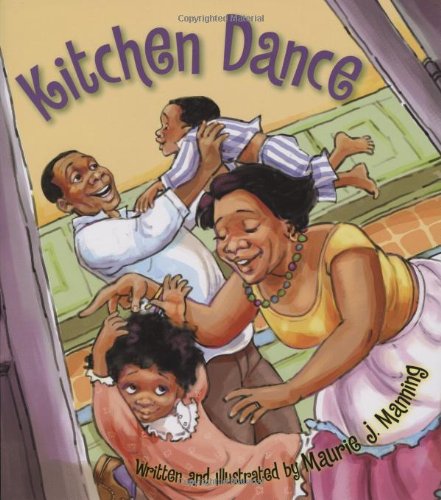
A little girl wakens to sounds coming from the kitchen—“Glasses clinking. Water swishing. Forks clattering.” Then more personal sounds—humming, laughing, and “hush!” The girl slips out of her blankets and climbs to the top bunk to wake her brother, Tito. Together they tiptoe downstairs and peek through the kitchen door. “A bright skirt flashes by! Four feet fly!”

With a wooden spoon microphone the kids’ father sings, “Cómo te quiero! Oh, how I love you. Umm, hmm.” Juggling stacked plates in one hand while using the other to dance hand-in-hand, the kids’ parents glide, slide, and twirl around the kitchen floor. Laughing, their mom closes cabinet doors with a bump of her hips as she spins into her husband’s arms “then out again, like a yo-yo on a string.”

celebrate-picture-books-picture-book-review-kitchen-dance-interior-art-dancing

Image copyright Maurie J. Manning

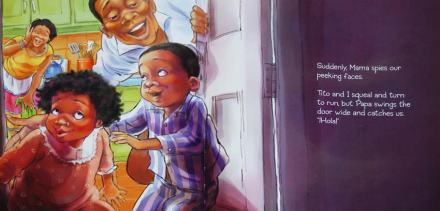
Pots and pans find their storage space with a swirl and a dip while another is dried with the swish of a towel. Around the kitchen the couple dances, “feet tapping, water dripping, sponge wiping, towel snapping.” While singing, “they tango across the room with the leftover tamales.” As they turn toward the door, Mama glimpses her little ones. The kids squeal and start to run, but Papa swings open the door—“Hola!” He pulls Tito into his arms, while Mama catches her tiny daughter.

As the four whirl around the kitchen, Tito and his sister sing into wooden spoons, “Cómo te quiero! Oh, how I love you!” They “twirl around and around in a circle of family.” The dance slows to a gentle swaying as Tito and his sister grow sleepy. Mama and Papa carry their drowsing children upstairs and cover them once more under their cozy blankets. “Cómo te quiero,” Papa whispers. “Besitos, mi’ja,” Mama says “Sweet dreams.”

celebrate-picture-books-picture-book-review-kitchen-dance-interior-art-kids-caught

Image copyright Maurie J. Manning

Maurie J. Manning’s sweet story of a private moment between parents that becomes a celebration of family love offers a fresh, fun, and lively glimpse of the small events that contribute to real connectedness. Telling the story from one of the children’s point of view adds a deeper level of understanding and recognition that of the strong bond between the parents. The repeated phrase, “Cómo te quiero! How I love you!” is reassuring and allows kids to read along with the book’s most important theme.

Manning’s vivacious and vibrant illustrations bring to life the swirling energy of the text. Tito and his sister creep downstairs in a house bathed in shadow only to open the door to flashing yellow, green, purple, and orange brilliance. The scenes of Mama and Papa dancing together, using a wooden spoon as a microphone and pot lids as cymbals as well as twirling hand in hand while balancing stacks of dishes are filled with happiness, and the  picture of the two tangoing with tamales will make kids giggle. Tito and his sister are adorable as they spy on their parents with astonished looks on their faces and then join the dance.

Kitchen Dance is a joy for story time or bedtime, and in these always busy days would be a welcome reminder that carefree moments carry their own special meaning.  Kitchen Dance is a great addition to a child’s bookshelf.

Ages 3 – 8

Clarion Books, 2008 | ISBN 978-0618991105

To learn more about Maurie J. Manning, her books, and her art, check out her website!

Take a look at the Kitchen Dance book trailer!


National Culinary Arts Month Activity

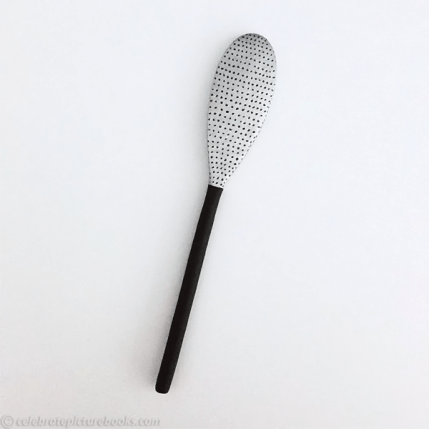
celebrate-picture-books-picture-book-review-wooden-spoon-microphone-craft

Wooden Spoon Microphone


With this easy craft you can turn a wooden cooking spoon into a fun microphone for playtime or in case you ever have to sing for your supper!

Supplies

  • Long-handled wooden spoon
  • Black craft paint
  • Silver craft paint
  • Black permanent marker

Directions

  1. Paint the handle of the spoon black, let dry
  2. Paint the head of the spoon silver, let dry
  3. After the paint is dry, make rows of small dots on the head of the spoon

July 18 – Get Out of the Doghouse Day

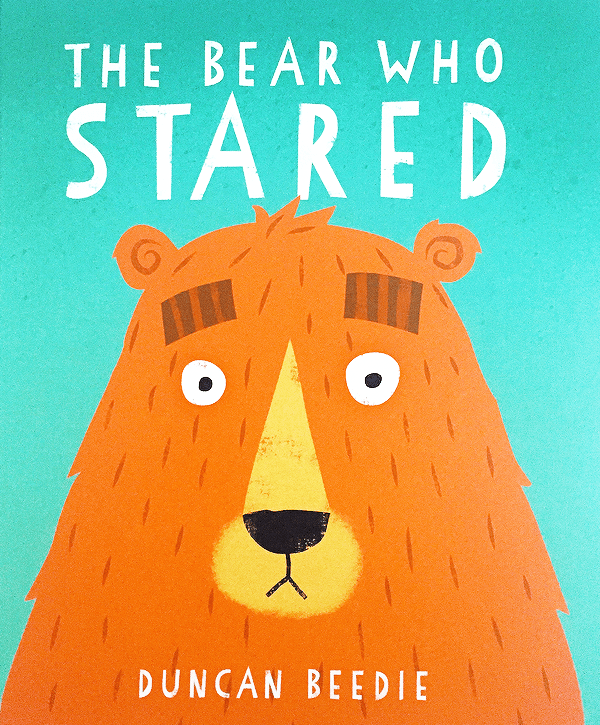
celebrate-picture-books-picture-book-review-the-bear-who-stared-cover

About the Holiday

Being “in the dog house” means that somehow you’ve upset someone, made them mad or in some other way fallen out of favor with them. Maybe you owe them an apology or at least an explanation. Today’s holiday gives people a chance to say “I’m sorry” and patch up any hurt feelings. Like the bear in today’s book, you may find yourself out of the doghouse and on the path to better friendships!

The Bear Who Stared

By Duncan Beedie


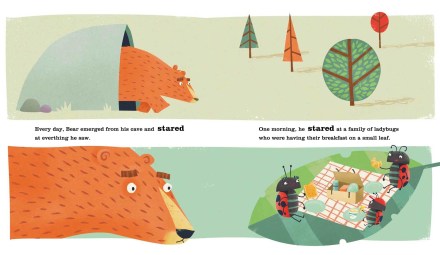
Bear loves to stare…and stare…and stare. One morning he emerges from his den to find a family of ladybugs having a picnic breakfast. He can’t help but gaze at them intently. “‘What are you staring at?’” the daddy ladybug demands before he and his family pack up to find a more private leaf. Bear continues on his way. In a bit he climbs a tree and stares at a bird feeding her chicks. “‘Can I help you?’” the mother bird asks, but Bear remains silent. The chicks don’t like Bear interfering with their meal, so the mother bird angrily tells him to “‘sshhhooooo!’”

celebrate-picture-books-picture-book-review-the-bear-who-stared-interior-art-ladybugs

Image copyright Duncan Beedie, courtesy of simonandschuster.com

At the bottom of the tree Bear spies a badger hole and sticks his head inside. The badger, particularly irritated at Bear’s badgering stare while he is shaving, bites poor bear on the nose. Sore and dejected, Bear wanders through the forest to a large pond. He sits down on a log to ponder his situation. He doesn’t mean to be annoying, he’s “just curious but too shy to say anything.”

A little frog floating on a lily pad in the middle of the pond pipes up, “‘I’ve seen that look before.’” Bear stares at the frog and the frog stares back. “‘Not much fun being stared at, is it?’” he says. Bear confesses that he just doesn’t know what to say to anyone. Just then Bear catches a glimpse of another bear staring back at him from the mossy water of the pond. This bear looks exactly like Bear, except that he is green and wavy. Suddenly, the green bear smiles. “‘You see?’” says the frog. “‘Sometimes a smile is all you need.’” The frog dives off his lily pad into the pond, and the green bear disappears too.

celebrate-picture-books-picture-book-review-the-bear-who-stared-interior-art-staring

Image copyright Duncan Beedie, courtesy of simonandschuster.com

The next day Bear leaves his den and discovers the ladybug family breakfasting again. As soon as they spot Bear, they begin to gather their things. “‘Hello!’” Bear says with a big smile on his face. The ladybugs are surprised and happy. “‘Oh, hello!’” replies the dad, smiling back. With renewed confidence Bear wanders into the forest. He smiles at the birds and smiles at the badger, and they smile at him in return. Bear makes a lot of new friends that day. And there’s even that friend down at the pond who likes to stare as much as he does!

Duncan Beedie highlights the awkward feeling many kids—and even adults—often feel in social situations. Nothing pops immediately to mind to say and yet there’s a desire for connection. As Bear discovers, staring is not the answer—so what is? In The Bear Who Stared Beedie offers a simple, but universal solution through an engaging and humorous story. Bear, sporting a bemused expression that aptly depicts his predicament, is such an endearing character that readers will wish they could give him a hug as he suffers slights from the woodland creatures.

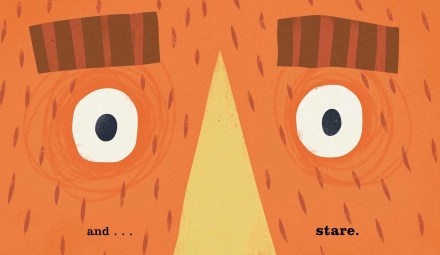
The full-bleed, oversized pages put readers at eye level with bear and his subjects, and the very up-close look into Bear’s staring eyes will make kids laugh. The green, rust, and blue palette on matte paper is bold, but muted, giving the pages an organic, environmental feel that is perfect to carry the story.

The Bear Who Stared is a funny story time read with a heart that kids will ask for again and again.

Ages 4 – 8

little bee books, 2016 | ISBN 978-1499802856

Check out more of Duncan Beedie’s illustration and animation work on his website!

Get Out of the Doghouse Day Activity

celebrate-picture-books-picture-book-review-bear-craft

Expressive Bear Craft


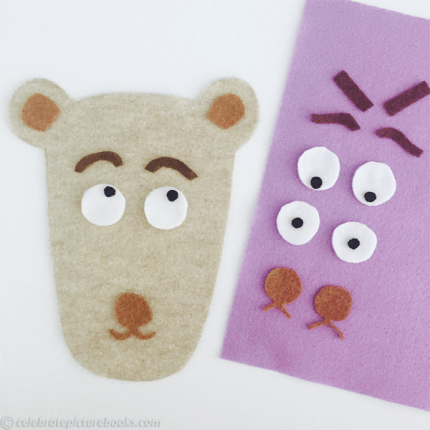
Sometimes it’s hard to manage or even recognize various emotions that land you in the doghouse. With this easy-to-make felt (or paper) set, you can try out different emotions and talk about them, make up stories to go with each facial expression, or play a fun game. Below, you’ll find a couple of ideas!

Supplies

  • Printable Bear Head Template
  • Printable Eyes and Noses Template
  • Printable Eyebrows Template
  • Light brown felt or fleece, 8 ½ x 11 inch piece
  • Dark brown felt or fleece, 8 ½ x 11 inch piece
  • White felt or fleece, 8 ½ x 11 inch piece
  • Black felt or fleece, for pupils
  • Scissors
  • Glue
  • 1 playing die (optional)

Directions

  1. Print templates
  2. Cut bear head from light felt or fleece
  3. Cut eyes from white felt or fleece
  4. Cut nose and inner ears from dark brown felt or fleece
  5. Cut pupils from black felt or fleece
  6. Glue pupils onto white eyes

Or: Color and play with the paper set

To Play a Game

Roll the die to collect parts of the bear’s face. The first player to create a full face is the winner.

  • Die dots correspond to:
  • 1—one eyebrow
  • 2—second eyebrow
  • 3—one eye
  • 4—second eye
  • 5—nose
  • 6—inner ears

For a Fun Story Time

Give the bear different faces and make up stories of why he looks that way!

Picture Book Review

July 13 – National Culinary Arts Month

celebrate-picture-books-picture-book-review-the-hole-story-of-the-doughnut-cover

About the Holiday

July is a great month for celebrating culinary arts. With kids home from school it’s fun to spend time together in the kitchen learning new skills and making experimental or favorite recipes. On-the-go meals or vacations can also take you to new and enticing restaurants, where you may try regional cuisine and discover exciting flavors.

The Hole Story of the Doughnut

Written by Pat Miller | Illustrated by Vincent X. Kirsch


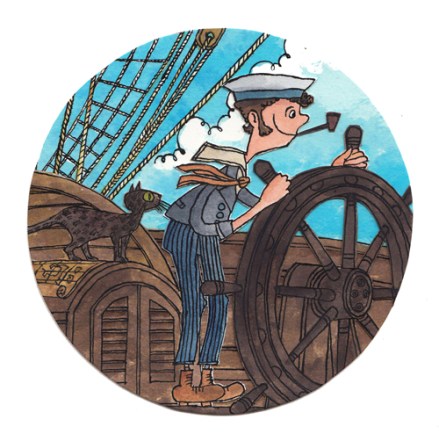
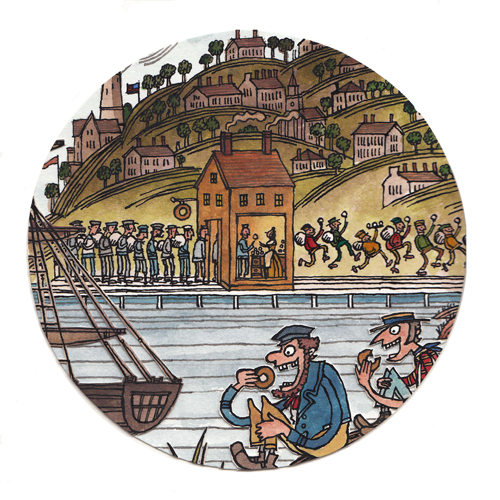
In 1844 at the tender age of 13, Hanson Gregory left the family farm and went to sea as a cabin boy on the schooner Isaac Achorn. He quickly became the cook’s assistant and also learned how to rig the sails and “steer a ship over trackless waves by sun and stars.” By the age of 19 Gregory had become the captain of the schooner Hardscrabble, and within a few more years was racing “his cargo from Maine to California as commander of a clipper, the fastest ship on any ocean.”

celebrate-picture-books-picture-book-review-hole-story-of-the-doughnut

Image copyright Vincent X. Kirsch, courtesy of vincentxkirsch.com

Hanson Gregory may have been one of the best captains to sail the seas—once awarded a medal for heroism for rescuing seven shipwrecked Spanish sailors even though his own ship and crew were endangered. But his greatest achievement was not attained because of his seafaring skills—it was his ingenuity in the galley that people remember.

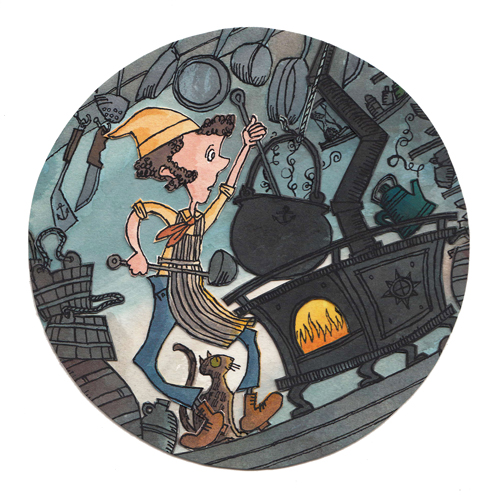
On June 22, 1847 as a 16-year-old cook’s assistant, Hanson was rustling up the crew’s breakfast—coffee and fried cakes, the same as every morning. While the pot of lard bubbled on the stove, Gregory formed balls of sweetened dough and dropped them in. They sizzled and crisped—at least around the edges. The centers were raw, heavy with grease, and they dropped like cannonballs in the stomach. “Sailors called them Sinkers.” But this morning Gregory had an idea. He removed the lid from the pepper can and cut out the center of the balls. “Then he tossed the rings into the bubbling lard.”

celebrate-picture-books-picture-book-review-hole-story-of-the-doughnut

Image copyright Vincent X. Kirsch, courtesy of vincentxkirsch.com

The cook and the sailors took one look at this odd concoction and…ate them up! “The cakes were brown, and sweet, and fully cooked. Sighs of delight rose above the noisy sea. A new breakfast tradition was born.” Gregory told his mom about his invention, and she fried up large batches of these ‘holey cakes’ that were a sensation at a friend’s store and on the docks.

You might think this is a pretty interesting tale in itself, “but sailors like their stories bold” and so they “spun legends worthy of such a delicious treat.” One tale had Captain Gregory inventing the doughnut while he saved his ship from disaster. Another told how Gregory, distraught over the drowning of five sailors pulled to the ocean floor by of their “sinker” breakfast, punched holes in every cake to make them look like life rings and vowed, “‘Never again!’”

Captain Gregory had a sense of humor about his accomplishment. During an interview he once stated that “he had invented ‘the first hole ever seen by mortal eyes.’” Gregory lived to be 89 and is buried “overlooking the sea where stormy weather can be spotted as readily as it once was from the quarterdeck of the Hardscrabble.”

An author’s note expanding on the story of Captain Gregory, the doughnut, doughnut shops, a timeline, and a selected bibliography follow the text.

celebrate-picture-books-picture-book-review-hole-story-of-the-doughnut

Image copyright Vincent X. Kirsch, courtesy of vincentxkirsch.com

Doughnuts have never been so evocative! In Pat Miller’s humorous, informative history of this favorite pastry treat, readers can smell the salt air, feel the ocean swell and roll under their feet, and even ache a little for those poor sailors forced to eat “sinkers.” Seamlessly interwoven into this foodography is a fascinating look at the early days of sail. Miller’s language is immediately stirring: the Ivanhoe bucks and plunges, the sea becomes a monster, and Captain Gregory spears a sinker on the wheel spoke. Kids will marvel at a 13-year-old going off to sea and becoming an inventor at 16.

Vincent X. Kirsch provides just the right touch to this captivating true story with his cartoon-inspired watercolor and cut paper artwork. Ingeniously incorporating Hanson Gregory’s innovation of removing the center of the fried cakes, Kirsch’s illustrations are “cored” to allow for text, while the extracted section appears on the facing page as a glimpse through a porthole. The maritime atmosphere—from ship to shore—of the mid-1800s is beautifully represented in the folk-style sketches, and the humor that is so intrinsic to this story is wonderfully embraced.

The Hole Story of the Doughnut will delight foodies and history buffs alike and would make a fun gift and a delectable addition to personal libraries for all ages.

Ages 5 – 12

Houghton Mifflin Harcourt, 2016 | ISBN 978-0544319615

Vincent X. Kirsch’s website is full of illustrations from his books for children—take a look at his portfolio!

Spend some time with Pat Miller on her website that offers activities, tips, resources and many more books!

Culinary Arts Month Activity

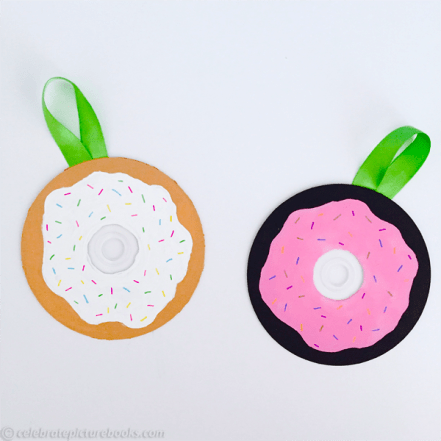
celebrate-picture-books-picture-book-review-cd-doughnut-craft

CD (Compact Doughnuts) Decoration


Are some of  your CDs a little passé? Not if you can turn them into cute décor like this doughnut hanging.

Supplies

  • Unused CDs
  • Craft paint in tan, black, pink, yellow, white (or any colors you want for the doughnut and the icing)
  • Ribbon, any color and length you want
  • Fine-tip markers in bright colors
  • Glue
  • Glue dots (optional)
  • Paint brush

Directions

  1. Paint a wavy edge around the CD, let dry
  2. Paint the center of the CD, leaving the clear circle unpainted
  3. When the icing paint is dry, draw sprinkles on the icing with the markers
  4. With the ribbon make a loop hanger and attach it to the back of the CD with glue or glue dots
  5. Hang your decoration

celebrate-picture-books-picture-book-review-the-hole-story-of-the-doughnut-cover

You can find The Hole Story of the Doughnut at these booksellers

Amazon | Barnes & Noble | Books-a-Million | IndieBound


July 6 – National Fried Chicken Day

celebrate-picture-books-picture-book-review-hensel-and-gretel-ninja-chicks-cover

About the Holiday

Fried chicken with its crispy outside and tender, juicy inside is the star of American Southern home style cooking. The tradition, brought to America by Scottish immigrants, is a favorite for summer picnics and has spawned many an on-the-go restaurant. There’s only one way to celebrate this holiday…well, maybe two—sink your teeth into some delicious fried chicken and devour today’s book!

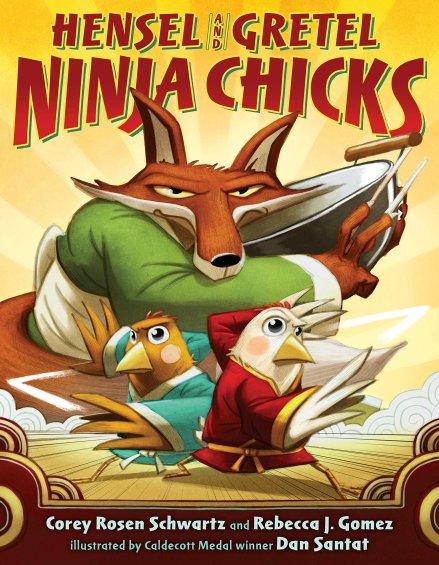
Hensel and Gretel Ninja Chicks

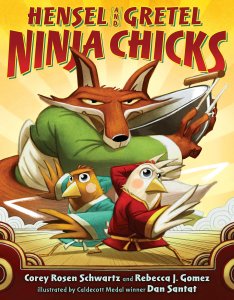
Written by Corey Rosen Schwartz and Rebecca J. Gomez | Illustrated by Dan Santat


The times, they are a’menacing. A fox is prowling and has already chicken napped Hensel and Gretel’s ma, shaking up their pa. Hensel and Gretel know just what to do—they enroll at the 3 Pigs Dojo and “they trained in the art of ninjutsu / and practiced their wing throws and blocks. / They learned how to creep / without making a peep / so they wouldn’t fall prey to that fox.” Their training proves advantageous as the day soon comes when Hensel and Gretel have to put their training into practice.

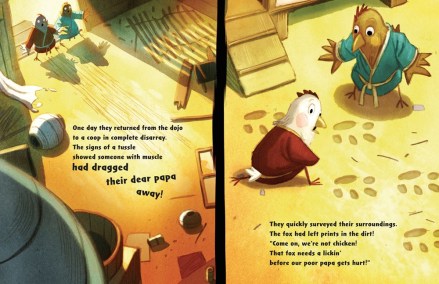
One day they return home to find that their pa has also been nabbed by the fox. While they may be chickens the sisters definitely aren’t chicken so they go in search of their pop. They drop crumbs on their trail to lead them back home, but the forest grows “twisted and tangled” and they soon discover that the breadcrumbs are gone. Bravely, they trek through the woods until they see a light. “It came from a cottage of corn bread! / ‘Let’s eat!’ Hensel clucked with delight. / She nibbled away till she heard someone say, / ‘My dear, come on in for a bite.’”

celebrate-picture-books-picture-book-review-hensel-and-gretel-ninja-chicks-menacing

Image copyright Dan Santat, 2016, text copyright Corey Rosen Schwartz and Rebecca J. Gomez, 2016. Courtesy of G. P. Putnam’s Sons.

Caught off guard, Hensel enters the house but quickly realizes her mistake when she sees a pan in the oven. In the corner she finds her pa locked away in a crate. The fox grabs her and adds her to the crate with her dad. While she is fattening up, the fox tells her, he’ll eat another hen from his stock. That hen turns out to be Hensel and Gretel’s mom! Meanwhile, Gretel has squeezed her way through the chimney “with ninja-like silence and speed.” She frees her ma and with “one feathered sweep” blocks the fox’s advance.

The fox fights back, but Mama comes to Gretel’s rescue with a well-aimed wok just as Hensel and Papa break free. But the crate doesn’t stay empty for long: “With one wicked spin, / Hensel kicked the fox in! / ‘You’re done with your chick-frying spree!’” Back home Hensel and Gretel are congratulated, and “from then on they made it their mission / to rescue, protect and defend. / They’d work night and day / to liberate prey / till bird-napping came to an end.”

celebrate-picture-books-picture-book-review-hensel-and-gretel-ninja-chicks-dojo

Image copyright Dan Santat, 2016, text copyright Corey Rosen Schwartz and Rebecca J. Gomez, 2016. Courtesy of G. P. Putnam’s Sons.

Ninja pandemonium is back! This time the martial arts are served up chicken style in Corey Rosen Schwartz and Rebecca J. Gomez’s take on Grimm’s Hansel and Gretel story. All the intrigue and suspense of the original is here, but blazingly spiced and fried up with delicious puns, sizzling verbs, and some of the most riotous rhymes you’ll ever read.

Dan Santat again lends his agile artwork to the springs, spins, and stealth of the world of the dojo. Feathers fly; the fox leaps, chops, and winces; and Hensel and Gretel perform some serious Kiya! Santat’s forest is gloomy and forbidding, the air shimmers with the force of well-placed kicks, and the large close-up images put readers in the middle of the action.

Everyone from small-fries to hens and roosters will flip over Hensel and Gretel Ninja Chicks. It’s a must addition to any child’s library.

Ages 4 – 9

G. P. Putnam’s Sons Books for Young Readers, 2016 | ISBN 978-0399176265 | ISBN 978-1338203868 (Paperback, 2017)

Watch Hensel and Gretel kick some tail feathers in the trailer for their book!

To discover more books by Corey Rosen Schwartz as well as fun activities and how to be a Book Ninja, visit her website.

Activities, tips, books, and more by Rebecca J. Gomez can be found on her website.

A gallery of art, list of books, and more information about Dan Santat is available on his website.

National Fried Chicken Day Activity

celebrate-picture-books-picture-book-review-chicken-craft

Turn Over a New Chicken


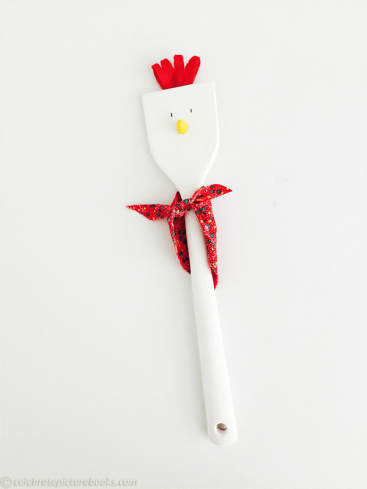
A long-handled wooden turner makes a plucky decoration for your room or kitchen! With a few simple additions, you’ll have a cute companion you’ll want to crow about!

Supplies

  • Printable Comb and Scarf Template
  • Long-handled wooded turner, available in kitchen supply stores
  • Red felt
  • Yellow bakable clay
  • Fabric, 12 inches square
  • A small piece of white felt or fleece (optional)
  • White paint (or any color you would like)
  • Black marker
  • Fabric glue
  • Glue gun
  • Paint brush

celebrate-picture-books-picture-book-review-chicken-craft

Directions

  1. Paint the wooden turner, let dry
  2. Cut the scarf from the piece of fabric
  3. Make a beak from the yellow clay and bake it according to package directions

To make the comb

  1. Cut out the comb from the red felt
  2. Fold the felt in half and glue the end together with the fabric glue
  3. Cut short strips from the folded top of the felt, about ½-inch to ¾ -inch in length
  4. Round the corners of the strips slightly

To make the scarf

  1. Fold the fabric in half
  2. With the long, straight edge of the scarf template along the fold, cut out the scarf
  3. With the fabric glue, glue the two sides of the scarf together so that you have two “right” sides
  4. Let dry

To assemble the chicken

  1. Pinch the bottom of the comb together so that the strips open and the felt pleats a little
  2. With the glue gun attach the comb to the back of the painted turner, keeping the bottom pinched together
  3. Attach the beak to the front of the turner
  4. Draw eyes on the chicken with the black marker
  5. Tie the scarf around the neck of the handle, hold in place with a drop of glue in the back if necessary
  6. To make tail feathers in a turner with a hole in the handle, pinch together a small folded piece of white felt or fleece and push it through the hole in the handle of the turner.
  7. Cut or arrange to look like feathers

celebrate-picture-books-picture-book-review-hensel-and-gretel-ninja-chicks-cover

You can find Hensel and Gretel: Ninja Chicks at these booksellers

Amazon | Barnes & Noble | Books-a-Million | IndieBound


July 5 – It’s National Culinary Arts Month

celebrate-picture-books-picture-book-review-how-to-bake-a-book

About the Holiday

July is designated as a time to recognize the creativity and dedication of professional chefs and anyone who makes the world a more delicious place. The way to celebrate this month is a no-brainer! Visit your favorite restaurants, cafes, and bakeries—and discover new ones!

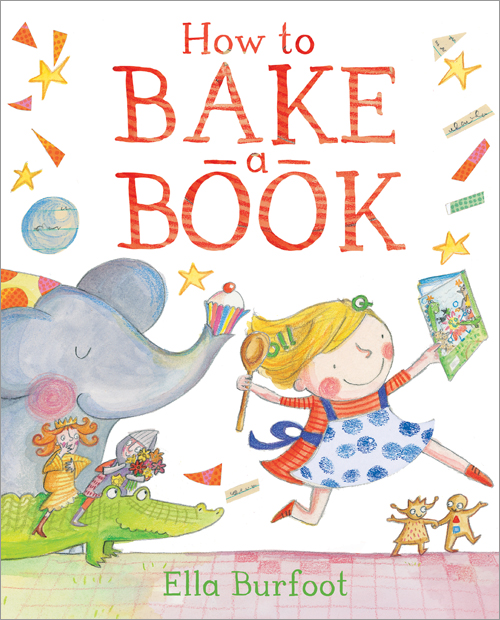
How to Bake a Book

By Ella Burfoot


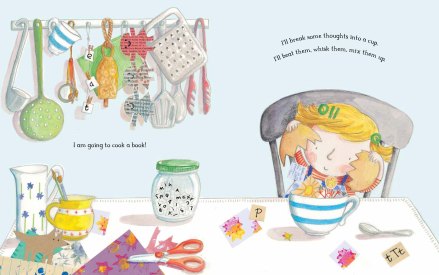
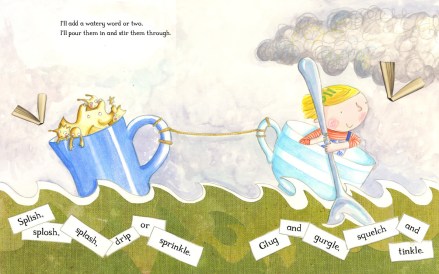
A little girl decides to bake a book. She gathers her ingredients and begins: “I’ll break some ideas into a cup. / I’ll beat them, whisk them, mix them up.” To the dough she adds words both small and big then feelings, colors, and pictures for flavor. To set the scene she drops in “watery words,” choosing from “splish, splosh, splash, or sprinkle”—or would “glug and gurgle” or “squelch and twinkle” be better? She cuts out characters of all kinds and sets them aside to play.

celebrate-picture-books-picture-book-review-how-to-bake-a-book

Image copyright Ella Burfoot, courtesy ellaburfoot.co.uk

With the dough set, the girl puts the lid on the bowl and waits while it rises. When it’s ready, she rolls it out, finding out what her story is all about. She lays the crust in the pan, letting her characters jump right in. Next she stirs up “the middle, the action, the filling” and adds a “spoonful of good and a pinch of bad” to get the pot bubbling and the plot to thicken.

A dash of good grammar finishes it up, and then the ending is pressed down tight. A cover design and a glaze of happiness are brushed on to make the book shine. Finally, the book is ready for baking. It comes out of the oven baked looking tasty. The little girl cuts a big slice and gets to reading her delicious book.

celebrate-picture-books-picture-book-review-interior-art-watery-words

Image copyright Ella Burfoot, courtesy ellaburfoot.co.uk

Ella Burfoot’s delightful recipe for writing a captivating book will enchant children who love to read and may spark an interest in writing a story themselves. The rhyme is as light and fun as chiffon and the homey ideas as satisfying as a warm chocolate cookie. Kids will love poring over Burfoot’s bright, colorful illustrations. The girl’s baked-up pages burst with dragons, knights, princesses, animals, kites, and more. There’s even a witch who’s having a tough time staying on her broom. The kitchen is a cook’s and crafter’s paradise with pantry shelves well stocked with jars of periods and capital letters among the monster flakes, alphabet spaghetti, porridge oats, and other writerly puns and ingredients.

A reading of How to Bake a Book would be a fun lead-in to getting out the pots, pans, and paper and creating an original recipe/story.

Ages 3 – 6

Sourcebooks Jabberwocky, 2014 | ISBN 978-1492606512

To discover more books by Ella Burfoot visit her website!

National Culinary Arts Month Activity

celebrate-picture-books-picture-book-review-whisk-bookmark

Don’t Whisk Losing Your Page Bookmark


The author’s of your favorite books have cooked up such fantastic stories that you don’t want to risk missing a word! To make sure that doesn’t happen, use this culinary-themed bookmark!

Supplies

Directions

  1. Print your bookmark
  2. Glue it to the poster board
  3. Cut out the bookmark
  4. Slip it into the book you’re reading now!

Picture Book Review

June 23 – Let It Go Day

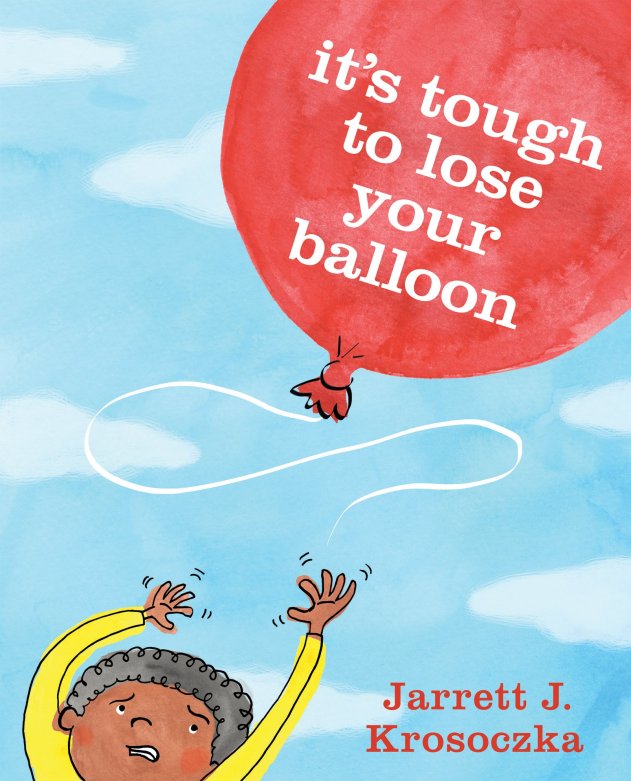
celebrate-picture-books-picture-book-review-it's-tough-to-lose-your-balloon

About the Holiday

No, this isn’t a day dedicated to re- re- re- re- re-watching that movie. It’s a day to take a step back and take stock of the feelings you’re keeping inside or the little irksome quirks that drive you crazy. Are they really worth all the stress? Today’s a day to find inner peace, make amends, or turn disadvantage into advantage.

It’s Tough to Lose Your Balloon

By Jarrett J. Krosoczka


Most people wake up each morning with great ideas for a having good day, but sometimes things don’t work out the way they’re planned. For kids, small mistakes, accidental mishaps, and unexpected disappointments can loom large. Frustrations and perceived unfairness can elicit tears or anger, and it’s sometimes hard to know how to comfort an unhappy or upset child.

In It’s Tough to Lose Your Balloon Jarrett Krosoczka acknowledges that sometimes bad or sad things happen, but he reveals to kids how looking at the event from a different perspective or through someone else’s eyes can bring consolation and even happiness. As the title states, it’s hard for kids to watch a balloon suddenly slip through their fingers and float away, but imagining all the other people who will see it and smile can help. Having a picnic on the beach when the unthinkable happens? “It’s sad to drop your sandwich in the sand…but it’ll make some seagulls very happy.” And you know it will make you laugh to watch those crazy guys swooping, diving, and squawking over that now-crunchy snack.

The idea of sharing hurts with others to create a new scenario or a different kind of enjoyment while forming closer bonds is another positive way to turn disappointments into teachable moments that benefit all. As most kids know “it’s never fun when you break a toy…” but with a upbeat attitude they can have “fun fixing it with Grandpa.”

Wet shoes? Melting Ice-cream cone? Scraped knee or new baby sitter? In Jarrett Krosoczka’s hands these letdowns can lead to new freedom, innovation, distinction, and joyful experiences. It’s Tough to Lose Your Balloon can help anyone see “disaster” in a whole new light!

Krosoczka’s illustrations ingeniously depict the way an unexpected mishap or disappointing moment can make someone feel—alone, exposed, and vulnerable. Left-hand pages present the problem while the right-hand page shows the crestfallen child in full color on a black-and-white sketched background. The positive transformation becomes a two-spread, full-color of happy pride and fun abandon. Life can be full of little bumps in the road, keeping a copy of It’s Tough to Lose Your Balloon on the shelf can help smooth the way.

Ages 3 – 7

Knopf Books for Young Readers, 2015 | ISBN 978-0385754798

Visit Jarrett J. Krosoczka’s Website to see more of his books and discover fun activities!

Let It Go Day Activity

celebrate-picture-books-picture-book-review-worry-buddy-craft

Worry Buddy


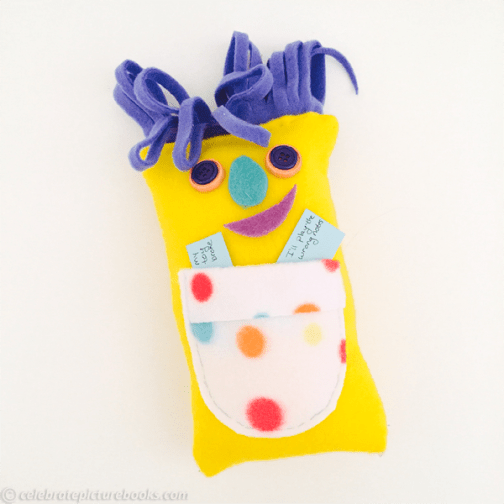
Sometimes worries don’t seem as bad when they are shared with someone else or to at least set aside for awhile. With this craft you can make a friend to help lesson worries, disappointments, fears, and anxieties. And it’s pretty good at hugs too. Older children may like to create this as a sewing project, while younger kids can make it easily with fabric glue. Make your Worry Buddy as unique as you are!

Supplies

  • Fleece or felt in different colors
  • Buttons, two larger in the same color and two smaller in a different color
  • Fiber fill
  • Fabric glue or thread
  • Paper
  • Pen or pencil

Directions

To Make the Body

  1. Cut a 16-inch piece of fleece
  2. Fold the fleece in half
  3. Glue the sides together (older children may enjoy sewing the sides together with simple straight stitches)
  4. Leave the top open
  5. Turn the body inside out
  6. Fill the body with fiber fill

To Make the Hair

  1. Cut a 5-inch piece of fleece or felt
  2. Fold the fleece or felt in half
  3. Glue or sew the folded fleece into the opening in the body
  4. Cut the fleece or felt in ¼-inch strips across the top

To Make the Face

  1. Glue one set of larger and smaller buttons together, repeat with the other set
  2. Glue or sew the buttons to the top part of the body
  3. Cut a nose and mouth out of fleece or felt
  4. Glue or sew the nose and mouth to the face

To make the pocket

  1. Cut a 5-inch piece of felt in the shape of a square-bottom or rounded bottom pocket
  2. Fold down an inch of the top
  3. Glue or sew the pocket to the middle of the body

To share problems with the Worry Buddy, write worries or fears on a slip of paper and put them in the Worry Buddy’s pocket. Your Buddy will keep those problems so you don’t have to.