May 6 – National Nurses Day

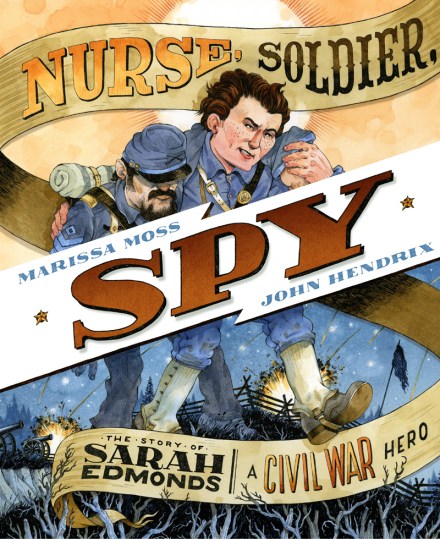
celebrate-picture-books-picture-book-review-nurse-soldier-spy-the-story-of-sarah-edmonds-cover

About the Holiday

Today’s holiday kicks off National Nurses Week, which runs until May 12, the birthday of Florence Nightingale. Nightingale, born in 1820, was an English social reformer and the founder of modern nursing. She was well-known for her work tending wounded soldiers during the Crimean War and was called “the lady with the lamp,” because of the rounds she made of her patients during the night.

During National Nurses Day and Week, we honor and thank all of the nurses working in hospitals, private practices, and with charitable organizations around the world for their dedication to and compassion for the patients under their care.

Nurse, Soldier, Spy: The Story of Sarah Edmonds, A Civil War Hero

Written by Marissa Moss | Illustrated by John Hendrix


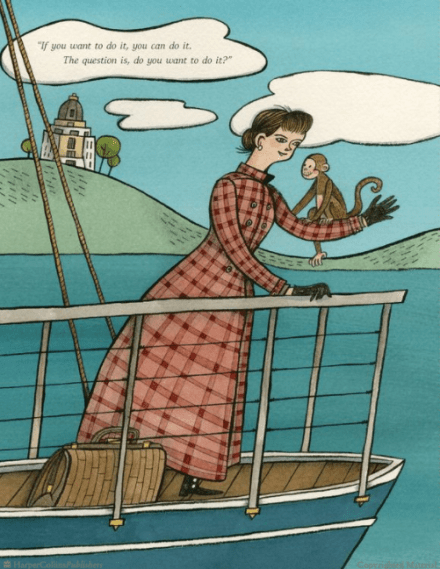
When President Abraham Lincoln called for young men to join the army fighting against the Southern states that wanted to secede from the Union, Frank Thompson signed up. One thing though, Frank wasn’t really a man but, instead, a 19-year-old woman named Sarah Edmonds. Sarah already knew the freedom that posing as a man could bring in her society. Three years earlier to escape a marriage arranged by her parents, Sarah cut her long hair, began wearing pants, and crossed “the border from Canada into the United States, trading a bridal gown for trousers, trading countries, without a single regret.”
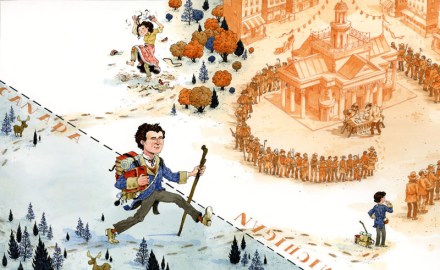
celebrate-picture-books-picture-book-review-nurse-soldier-spy-the-story-of-sarah-edmonds-becoming-frank

Image copyright John Hendrix, courtesy of johnhendrix.com

Now, outside the Michigan courthouse, Sarah slowly moved her way along the line to the table where she could sign up to join the troops. When she finally stood in front of the recruiter, however, he stopped her. Sarah was mystified. How did he know she wasn’t a man? She had grown up on a farm, learning the work, copying the gestures, and even wearing the clothes of her brother. But the recruiter took one look at “Frank Thompson” and told her…she was too young to join the army. “He looked at her peachy cheeks free of any sign of a whisker. ‘We aren’t taking any sixteen-year-olds,’” he told her.

A month later, however, more men were needed, and Sarah was allowed to join up. Now a soldier, Frank was a valuable member of the corps. She was an expert at riding and shooting, and she felt at home among the men, enjoying the jokes, stories, and letters. Keeping her identity a secret was made easier by the fact that soldiers did not change clothes to go to sleep. Her small feet led the other soldiers to give her a nickname: “Our little woman.” A name Frank enjoyed immensely.
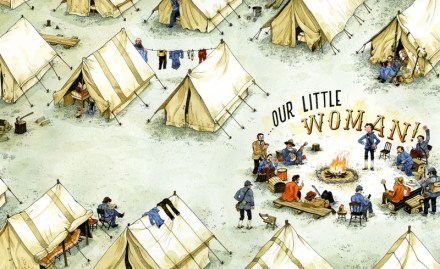
celebrate-picture-books-picture-book-review-nurse-soldier-spy-the-story-of-sarah-edmonds-union-camp

Image copyright John Hendrix, courtesy of johnhendrix.com

On the battlefield Frank trained to be a nurse, “which was something only men with the strongest stomachs did because of the long, draining hours and the horrors of surgery without anesthetic.” She fearlessly participated in the battles of Bull Run and Fair Oaks, risking her own life to rescue wounded soldiers. One night the regimental chaplain approached Frank. He wanted to recommend her for a very important—and very dangerous—job. The chaplain wanted to recommend to the generals that Frank become a spy for the North.

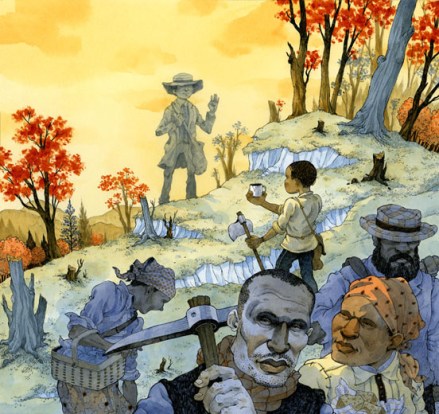
“Frank didn’t hesitate. ‘I’m your man!’” she said. Disguising herself as a freed slave, she infiltrated “a group of slaves bringing breakfast to the rebel pickets, the men who guarded the camp.” With so much work to do, the group quickly accepted her, but when the rest of the men, women, and children went off to their own assignments Frank hesitated, not knowing where to go next. Suddenly, a Confederate soldier caught Frank and ordered her to work on the fortifications. The work was backbreaking and left her hands blistered and bloody. The other workers helped when she had trouble.
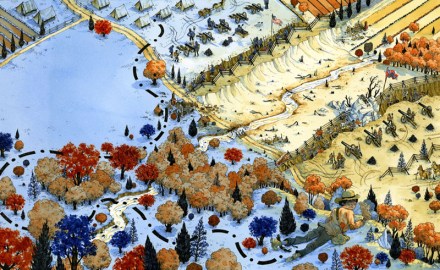
celebrate-picture-books-picture-book-review-nurse-soldier-spy-the-story-of-sarah-edmonds-battlefield

Image copyright John Hendrix, courtesy of johnhendrix.com

The work gave Frank an opportunity to count the number of guns the army had, sketch a layout of the fort, and notice that some cannons were fake—just logs painted to look like cannons. By switching jobs with the water boy, Frank was able to get closer to the troops, where she encountered another spy—one working for the Confederate army. When night fell, Frank returned to his Union battalion. Giving the password, Frank was let into camp and made her way to the general’s tent. “Freedom, she knew, wasn’t something to take for granted. It was something to fight for, to cherish. And so long as her heart was beating strong, that’s just what she would do.”

An extensive Author’s Note revealing more about Sarah Edmond’s life and an Artist’s Note on the creation of the illustrations follow the text.

Marissa Moss’s biography of Sarah Edmonds is a suspenseful, gripping, and enlightening story of a woman who broke molds, lived on her own terms, and paved the way for future generations of women. Her well-chosen vignettes from Edmonds’ time as a Union soldier demonstrate not only Edmonds’ bravery and abilities but also create a clear and exciting trajectory of her increasing responsibilities and the danger that went with them. Fascinating details of the Civil War period, the people and attitudes involved, and the duplicitous nature of warfare, add up to a rich account of Sarah Edmonds’ life as well as the Civil War era in general.
celebrate-picture-books-picture-book-review-nurse-soldier-spy-the-story-of-sarah-edmonds-as a spy

Image copyright John Hendrix, courtesy of johnhendrix.com

Meticulously researched and drawn, John Hendrix’s illustrations perfectly accompany and illuminate the text. Accurate depictions of Civil War-era buildings and clothing as well as Union and Confederate uniforms and weapons allow children to become fully immersed in the time period. Wide-view depictions of encampments and battlefields let readers peek into tents and scour trenches, and action abounds. In camp soldiers pick out tunes on banjos, write letters, and hang laundry; on the battlefield fires rage and ammunition explodes as soldiers follow the charge of their leaders; at the Confederate fortifications black workers steer wheelbarrows of rock; and in the medical tent Frank tends to wounded soldiers, the equipment used clearly visible. Scenes portrayed in both daylight and at night highlight the ongoing conflict and the dangerous, secretive work Sara Edmonds undertook.

Nurse, Soldier, Spy: the Story of Sarah Edmonds a Civil War Hero is historical and biographical work at its best. This fast-paced, fascinating look at one particular soldier informs readers about so many aspects of the Civil War era, including societal issues that shaped the United States and are still discussed today. The book is a must for school and public libraries and its in-depth, absorbing content makes it a welcome addition to home libraries for children who love history, art, biographies, and a well-told story.

Ages 5 – 12

Abrams Books for Young People, 2016 (Paperback edition) | ISBN 978-1419720659

Discover many more books, fun stuff, writing tips and more on Marissa Moss‘s website!

View a portfolio of picture book art, editorial illustration, a sketchbook, and more on John Hendrix‘s website!

National Nurses Day Activity
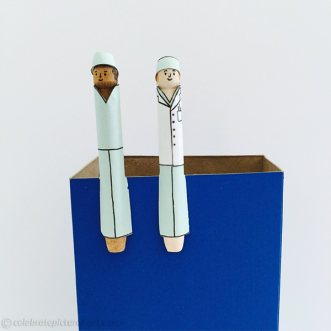
CPB - Doctors Clothespins

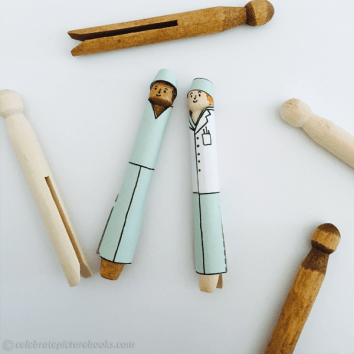
Nurse Clothespin Dolls


Make one of these clothespin figures that honors hard-working and compassionate emergency nurses!

Supplies

CPB - Doctors Clothespins on box

Directions

  1. Draw a face and hair on the clothespin
  2. Cut out the outfit you want your doctor to wear (color pants on your clothespin if you choose the lab coat)
  3. Wrap the coat or scrubs around the clothespin. The slit in the clothespin should be on the side.
  4. Tape the clothes together
  5. Wrap the cap around the head and tape it.
  6. If you’d like to display your clothespin doctor on a wire, string, or the edge of a box or other container, cut along the dotted lines of the clothes template.

Picture Book Review

April 27 – It’s National Park Week and Interview with Jennifer Thermes

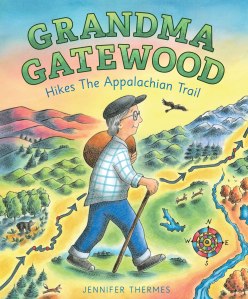
celebrate-picture-books-picture-book-review-grandma-gatewood-hikes-the-appalachian-trail-cover

About the Holiday

Don’t you feel it? That little nudge to leave home and enjoy the outdoors again? Spring is the perfect time to discover or rediscover the beauty all around by visiting a national park. Whether you like hiking, camping, fishing, swimming, or just the quiet pleasure of a picnic, there’s a national park near you to enjoy. This year’s theme for National Park Week, which runs from April 21 through April 29, is “Park Stars” and encompasses everything from the starry skies to those rock-star rangers and volunteers who maintain the system of parks across the country. This year, why not join them in protecting our national parks and the wildlife that call them home.

I’m thrilled to partner with Abrams Books for a giveaway of one copy of Grandma Gatewood Hikes the Appalachian Trail. See more details below.

Grandma Gatewood Hikes the Appalachian Trail

By Jennifer Thermes


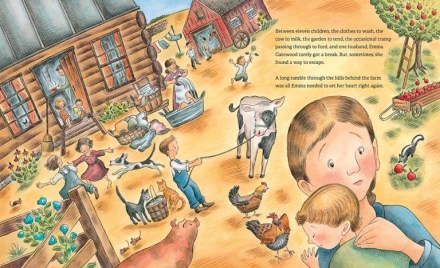
With eleven children, a farm to tend, and chores to do, Emma Gatewood’s days were plenty busy. When she needed a bit of escape, “a long ramble through the hills behind the farm was all Emma needed to set her heart right again.” So when her children had all left home and sparked by a magazine article about the Appalachian Trail, Emma put on her walking shoes and took to “‘the longest footpath in the world.’” The article had said that no woman had ever hiked the Trail from beginning to end, and Emma determined to change that.

celebrate-picture-books-picture-book-review-grandma-gatewood-hikes-the-appalachian-trail-kids

Copyright Jennifer Thermes, 2018, courtesy of Abrams Books for Young Readers.

On May 3, 1955, at the age of sixty seven, Emma left her home in Ohio and traveled to Mt. Oglethorpe in Georgia to begin her hike along the 2,190-mile-long Appalachian Trail. With just a light homemade sack and canvas shoes, Emma made her way up the trail, eating berries and drinking from streams as she went. When the trail took her through small towns and mountain farms, she got a real “supper and a cozy place to sleep.”

Word traveled about the older woman hiking the trail, and “Emma soon became known as ‘Grandma Gatewood.’” In June Emma crossed into Virginia and at the beginning of July took a quick jog through Maryland. The magazine article had said that hiking the trail was easy, but Emma had a different perspective. She once said the trail always seemed to “‘lead you right up over the biggest rock to the top of the biggest mountain they can find.’”

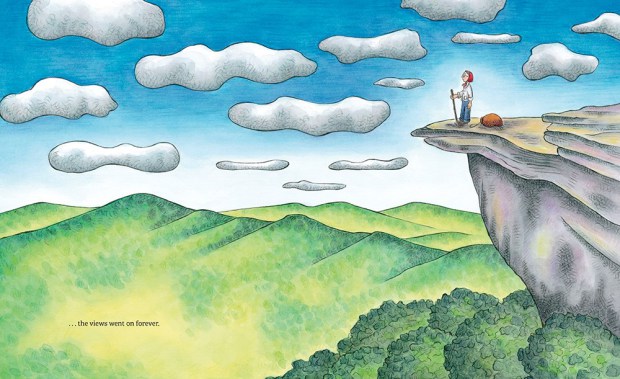
celebrate-picture-books-picture-book-review-grandma-gatewood-hikes-the-appalachian-trail-vista

Copyright Jennifer Thermes, 2018, courtesy of Abrams Books for Young Readers.

Grandma Gatewood walked in all weather and saw sights that were sometimes dull, but more often stunning. During July she crossed Pennsylvania, traced an edge of New Jersey, and hopped a corner of New York State. Pennsylvania’s sharp rocks “tore the soles of Emma’s shoes, so she held them together with tape.” By this time the newspapers had heard about Emma too, and “reporters met her at almost every stop.” Pretty soon, the whole country was talking about her! When people asked her why she was doing it, she answered, “‘Just for the heck of it.’”

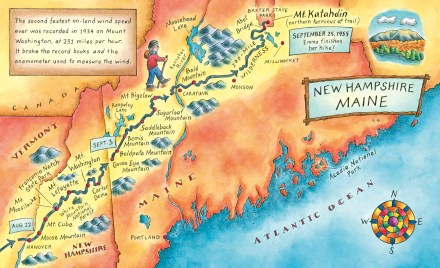
celebrate-picture-books-picture-book-review-grandma-gatewood-hikes-the-appalachian-trail-new-hampshire-map

Copyright Jennifer Thermes, 2018, courtesy of Abrams Books for Young Readers.

It was late summer and Emma was over halfway finished, but a bigger challenge was headed her way. A hurricane was swirling toward the East Coast. In early August, Emma hiked through Connecticut, Massachusetts, and Vermont. When the hurricane hit, she was soaked by rain, threatened by falling trees, and blown by the wind. She found shelter in a hut where a group of teenage boys were also waiting out the storm. They carried her across a swollen stream, and Emma continued her journey.

She met up with boy scouts and even went to tea with someone who had pinned an invitation to a tree along the trail. On September 3, she crossed from New Hampshire into Maine. Cold weather was coming, but the last mountain was in her sights. She bundled into every bit of clothes she had, and with torn shoes, cracked glasses, and aching muscles, Emma scrambled up the mountain all the way to the top. She had accomplished what she set out to do—and two years later, she did it again!

A timeline and an extensive author’s note about Emma Gatewood and the Trail follow the text.

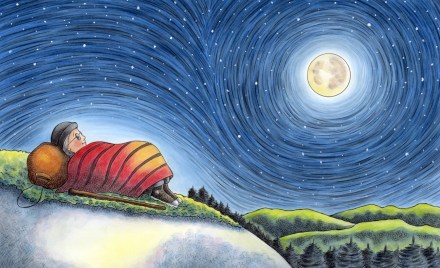
celebrate-picture-books-picture-book-review-grandma-gatewood-hikes-the-appalachian-trail-night-scene

Copyright Jennifer Thermes, 2018, courtesy of Abrams Books for Young Readers.

Inspiring from beginning to end, Jennifer Thermes’ story highlights a woman who lived life on her terms and accomplished a personal goal while, literally, blazing a trail for women and the elderly. The jaunty lilt of Thermes’ storytelling mirrors Emma’s brisk pace while giving readers an excellent sense of her personality and the twists, turns, and obstacles of the Appalachian Trail. Facts about landmarks along the trail are sprinkled throughout.

The story of Grandma Gatewood and the Appalachian Trail is a perfect match for Thermes’ superb artwork and map-making skills. Colorful and detailed two-page maps, set every three pages, keep readers apprised of the dates that Emma passed through each state on her trek north. In between, kids get to see Emma scaring off a bear, making friends with townspeople along the way, trudging up mountains, cooling her feet in rushing streams, climbing over rocks, and weathering the storm. Themes also includes some of the gorgeous vistas that have made the Appalachian Trail a must for hikers of all ages and experience.

Grandma Gatewood Hikes the Appalachian Trail  would make an inspiring addition to home libraries for children who love nature, history, and the outdoors. The book would also enhance many classroom discussions and lesson plans from language arts to social studies to science.

Ages 5 – 9

Abrams Books for Young Readers, 2018 | ISBN 978-1419728396

Discover more about Jennifer Thermes, her books, and her art on her website

Meet Jennifer Thermes

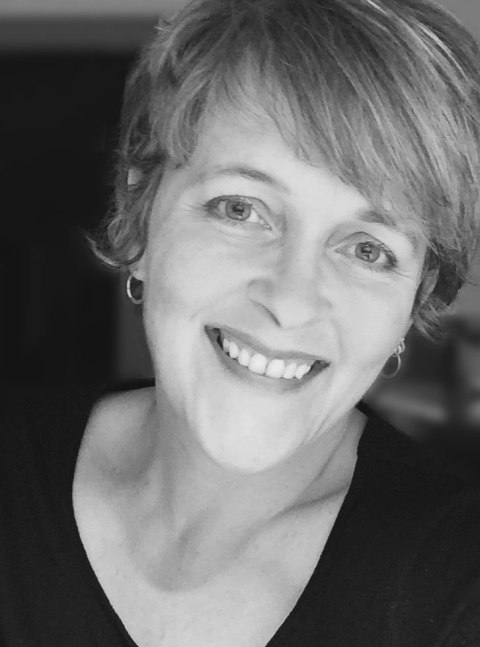
celebrate-picture-books-picture-book-review-jennifer-thermes

I’m excited to talk with Jennifer Thermes today about mapmaking, her love of history, and how her own house inspired a book.

What drew you to Emma Gatewood as a subject for your latest biography? Have you ever hiked any part of the Appalachian Trail?

I was inspired by Emma’s independence and determination to do something just because she wanted to, without even thinking she might be too old. A few people had solo hiked the entire trail before her, but she did it at a time when it had fallen into disrepair, and when women’s lives were much more constricted. I was also fascinated by the idea of the Appalachian Trail– a footpath that follows so many miles of changing landscape–and wanted to weave a map of it throughout a story.

In your writing and illustrating, you seem to have an affinity for history. Do historical subjects inspire you? What is your favorite time period?

They do! A love of history has led to the non-fiction books I write and illustrate today. Really, there’s something fascinating about all eras, so I can’t say I have just one favorite. I’m very happy to see how many stories about lesser-known people and periods of history are being published today.

You started out as a map designer for magazines and newspapers. How did you get started creating maps? What kind of research goes into that work? Can you talk a little about the aesthetics of a good map?

I was a design major in art school but always wanted to draw. Maps were a good combination of design and drawing. Research involves gathering information about geography, land shapes, picture reference, and figuring out what to include or not. (To be clear, I’m not a cartographer, much as I admire the work they do!) For me, a good map tells a tale of its own, while also inspiring a reader to want to learn more about the story. Clarity is important, but that doesn’t necessarily mean simple. Poring over details can be the best part of looking at a map.

celebrate-picture-books-picture-book-review-grandma-gatewood-hikes-the-appalachian-trail-map-sketch

Copyright Jennifer Thermes, 2018, courtesy of Abrams Books for Young Readers.

How did you transition from designing for magazines and newspapers into writing and illustrating for children?

My map work caught the eye of a children’s book editor who asked if I had any story ideas. (I did!) For a long time I thought of myself as more of an illustrator than a writer, but I’ve always been a big reader, so the writing part felt like a natural progression of storytelling.

I was intrigued to learn you own an 18th century farmhouse in Connecticut. I have an 1898 Connecticut farmhouse with many cool, tucked away features. What is one of your favorite things about your house? Was your first book When I Was Built inspired by your own home?

It was! Our kids were quite young when we bought our home, and we spent a lot of time fixing it up. As we uncovered clues about the house, they had questions about what life might have been like for the people who lived here over the years, which in turn inspired the book. Again, the theme circles back to a love of history.

What’s the best part of being a children’s author and illustrator?

I’m happiest when drawing, or puzzling over a new idea. The feeling of possibility is creatively fulfilling.

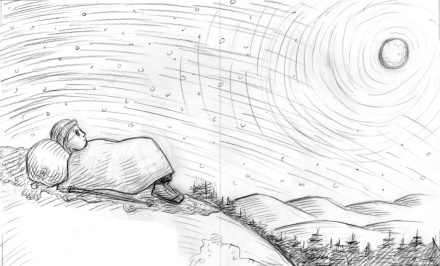
celebrate-picture-books-picture-book-review-grandma-gatewood-hikes-the-appalachian-trail-night-scene-sketch

Copyright Jennifer Thermes, 2018, courtesy of Abrams Books for Young Readers.

Do you have any anecdotes from an event with kids that you’d like to share?

“Are you as old as your house?” Kid’s questions are the best kind of unfiltered honesty.

What’s up next for you?

Not sure how much I can share yet, but I’ve recently finished black & white illustrations for a middle grade novel written by a super talented writer, coming out in early 2019. I’m very excited for that book. And currently, I’m immersed in writing and illustrating a picture book about the story of the island of Manhattan. (“Obsessed” is more like it—my history-geek self is on cloud nine!)

What’s your favorite holiday?

Darwin Day 

Thank you so much for inviting me to be a guest on your blog!

Thank you, Jennifer! I know we’ll all be on the lookout for that middle-grade novel, and I can’t wait to see your next picture book! I wish you all the best with Grandma Gatewood Hikes the Appalachian Trail!

celebrate-picture-books-picture-book-review-grandma-gatewood-hikes-the-appalachian-trail-cover

You can find Grandma Gatewood Hikes the Appalachian Trail at these booksellers:

Abrams BYR | Amazon | Barnes & Noble | Books-a-Million | IndieBound

You can connect with Jennifer Thermes on:

Facebook | InstagramTwitter | Pinterest

Grandma Gateway Hikes the Appalachian Trail Giveaway


I’m excited to partner with Abrams Books for Young Readers in this giveaway of

  • one copy of Grandma Gatewood Hikes the Appalachian Trail by Jennifer Thermes

To be entered to win, just Follow me on Twitter @CelebratePicBks and Retweet a giveaway tweet during this week, April 27 – May 4. Already a follower? Thanks! Just  Retweet for a chance to win.

A winner will be chosen on May 5.

Giveaways open to US addresses only. | Prizing provided by Abrams Books for Young Readers

National Park Week Activity

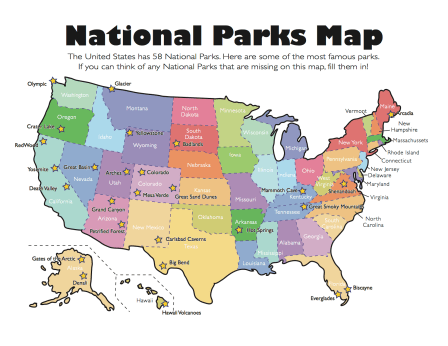
celebrate-picture-books-picture-book-review-National-Parks-Map

National Park Coloring Pages and Map


The National Parks are home to some of the most beautiful scenery in the country. Enjoy these coloring pages while you learn a little bit about four of them. Then check the map and see if there’s a National Park near you!

Acadia National Park | Everglades National Park | Mesa Verde National Park | Rocky Mountains National Park | National Parks Map

Picture Book Review

March 31 – Bunsen Burner Day

celebrate-picture-books-picture-book-review-Marie-Curie-little-people-big-dreams-cover

About the Holiday

Today we celebrate the birthday of German chemist Robert Wilhelm Eberhard von Bunsen who in 1854 was instrumental in developing the Bunsen burner in 1854. At the time, burners used in chemistry labs were fueled with coal gas, which did not burn hot enough, was expensive, and left the beakers sooty. Bunsen and Peter Desaga devised a cleaner and hotter burner that was also easier to use. Now, the Bunsen burner is standard equipment in labs around the world.

Marie Curie (Little People, Big Dreams)

Marie: My First Marie Curie Board Book

Written by Isabel Sánchez Vegara | Illustrated by Frau Isa


From the time when Marie was a little girl, she knew she wanted to be a scientist. Marie was very smart. “At school, she won a gold medal for her studies, which she kept in her drawer like a treasure.” Because women were not allowed to go to college in her country, she moved to France to go to the university there. Even though French was not her first language, Marie was soon the top math and science student in Paris.

celebrate-picture-books-picture-book-review-Marie-Curie-little-people-big-dreams-dreaming

Copyright Frau Isa, 2018, courtesy of Frances Lincoln Children’s Books.

One day Marie met Pierre, who loved science as much as she did. They got married and worked together in their own laboratory, where they discovered radium and polonium. “It was such a thrilling moment for science!” Marie and Pierre even won the Nobel Prize. Marie was the first woman ever to be awarded this honor. When Pierre later had an accident, Marie was left alone to continue their work.

celebrate-picture-books-picture-book-review-Marie-Curie-little-people-big-dreams-marie-and-pierre

Copyright Frau Isa, 2018, courtesy of Frances Lincoln Children’s Books.

All her research and experiments paid off when she was awarded her second Nobel Prize. When war broke out, “Marie’s discoveries were used by doctors to help injured soldiers.” Marie inspired many girls who studied science at her own institute in Paris. Besides science, Marie taught her students that there was nothing to fear, “many things to learn, and many ways to help those in need.”

A timeline and brief yet detailed biography of her life follows the story.

celebrate-picture-books-picture-book-review-Marie-Curie-little-people-big-dreams-marie-with-noble-prize

Copyright Frau Isa, 2018, courtesy of Frances Lincoln Children’s Books.

With thrilling recognition that even in the youngest hearts beat future writers, artists, adventurers, designers, and scientists, the Little People, Big Dreams series introduces preschoolers to inspiring women role models. In Marie Curie: Little People, Big Dreams, Isabel Sánchez Vegara reveals the life and work of Marie Curie with straightforward storytelling that illuminates while affirming the intelligence of her young audience. Uplifting, life-determining personality traits that carried Marie over obstacles and to the top of her profession—such as not taking no for an answer, treasuring your accomplishments, working hard, and helping others—are highlighted for little ones to learn from.

Frau Isa’s stylish illustrations in a striking, subdued color palette will entice the youngest readers to listen and learn. While the spotlight is always on Marie, each page also focuses on one or two main images, such as Marie and Pierre’s lab table, a wounded soldier’s X-ray, and Marie holding her Nobel Prize, that help little ones see and understand the important aspects of the story.

Encapsulating both history and the timeless persistence that drives people to achieve their full potential, Marie Curie—available in both picture book and board book editions—is a must for preschool classrooms and would be a rousing addition to home bookshelves.

Ages 3 – 5

Frances Lincoln Children’s Books, 2018 | ISBN 978-1847809629 (Picture Book); 978-1786032539 (Board Book)

You can check out more about Isabel Sánchez Vegara on Instagram.

Discover more about Frau Isa and her art on her website.

Bunsen Burner Day Activity

celebrate-picture-books-picture-book-review-green=pennies-experiment

Green Pennies Chemistry Experiment


You know what color pennies are! They’re those brownish coins amid all the silver. But what if you could turn those pennies green—like dollar bills? You can with this easy and way cool chemistry experiment!

Supplies

  • 10 – 12 dull pennies
  • Vinegar
  • Lemon juice
  • Salt
  • 2 small bowls
  • ¼ cup measuring cup
  • 1 teaspoon
  • Paper towels

Directions

IMG_6569

Experiment 1

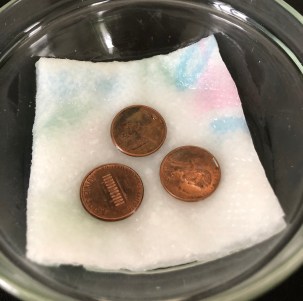
  1. Pour ¼ cup vinegar into a bowl
  2. Add 1 teaspoon salt
  3. Mix thoroughly until salt has dissolved
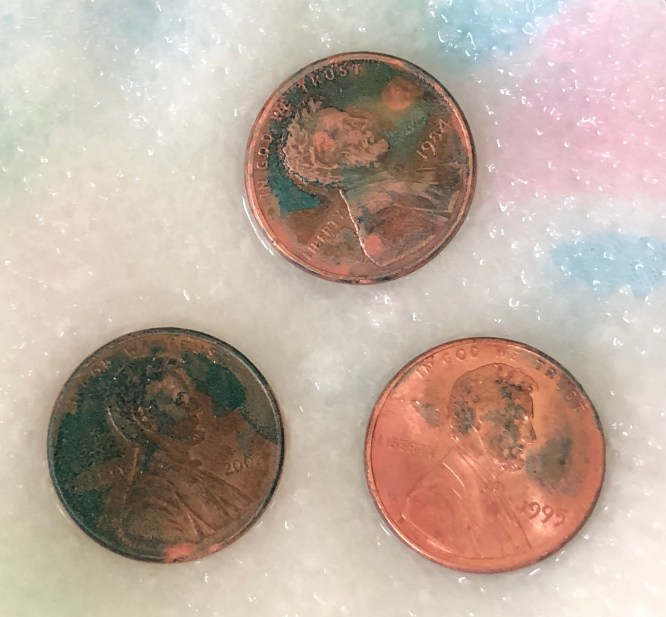
  4. Place a few pennies in the bowl and leave for five minutes.
  5. Take the pennies out and place them on the paper towel.
  6. Let the pennies dry and watch what happens. The reaction becomes more dramatic over time, so check on your pennies at different times throughout the day

Extra Observation:

  1. To see the chemical reaction at work, dip one penny half way into the vinegar/salt solution and wait a minute
  2. Lift the penny out of the solution and see the result

IMG_6588

Experiment 2

  1. Fold a paper towel to several thicknesses and place in bowl
  2. Place a few pennies on top of the paper towel
  3. Pour enough vinegar over the pennies to saturate the paper towel
  4. Wait two to three hours and see what happens
  5. You can leave the pennies in the bowl and continue to add vinegar as the paper towel dries. Flip the pennies over to create a chemical reaction on both sides

IMG_6590

Experiment with other acids, such as the lemon juice.

Why do the pennies turn green?

Pennies are made of copper. The vinegar and salt solution helps the copper react with oxygen in the air to form the blue-green patina of malachite on the surface of the penny. This chemical reaction is called oxidation. You can see the same green color on other things made of copper like plumbing pipes and many statues—even the Statue of Liberty!

If you’d like to record your observations of your pennies like a chemist does, download and print this lab sheet.

Picture Book Review
March 10 – It’s National Women’s History Month

celebrate-picture-books-picture-book-review-maya-lin-artist-architect-of-light-and-lines-cover

 About the Holiday

This month we celebrate the accomplishments of women in the past who have broken barriers and forged paths for today’s women and who still inspire the leaders of tomorrow. To honor women this month, learn more about the influential woman in your own field or in areas you enjoy as hobbies and teach your children about the women who made incredible contributions to the world long ago and those who are changing the way we live today.

Maya Lin: Artist-Architect of Light and Lines

Written by Jeanne Walker Harvey | Illustrated by Dow Phumiruk


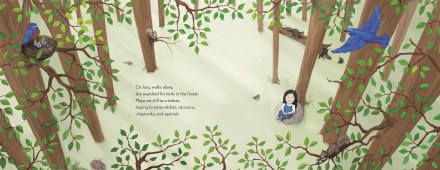
As a child, Maya Lin loved playing and interacting with nature near her home. She and her brother liked to run over what Maya had named “the Lizard’s Back”—a hill behind her house—and into the woods. Sometimes Maya went into the woods alone and “sat as still as a statue, hoping to tame rabbits, raccoons, chipmunks, and squirrels.” She liked to play chess with her brother and build towns from scraps of paper, boxes, books, and other things she found around the house.

celebrate-picture-books-picture-book-review-maya-lin-artist-architect-of-light-and-lines-in-forest

Image copyright Dow Phumiruk, 2017, text copyright Jeanne Walker Harvey, 2017. Courtesy of us.macmillan.com.

Maya’s “parents had fled China at a time when people were told what to be and how to think.” They did not want the same for their children and always encouraged Maya to be and think what she wanted. Maya grew up surrounded by art. Her father worked with clay, and her mother was a poet. Maya also liked to make things with her hands. The beautiful library where she went to college inspired Maya to become an architect.

To learn about different buildings, Maya traveled all over the world. When she was only a senior in college, “Maya entered a contest to design a memorial to honor soldiers who died during the Vietnam War.” The contest stated two rules: the memorial had to fit in with a park-like setting, and it had to include the 58,000 names of the soldiers who had died in the war. These rules resonated with Maya. She “believed that a name brings back all the memories of a person, more than a photo of a moment in time.”

celebrate-picture-books-picture-book-review-maya-lin-artist-architect-of-light-and-lines-as-young-girl

Image copyright Dow Phumiruk, 2017, text copyright Jeanne Walker Harvey, 2017. Courtesy of us.macmillan.com.

Maya visited the site where the memorial would be built. As she looked at the gently rolling hill, she envisioned a simple cut in the earth that would support a polished wall covered in names. Not only would the wall reflect those who died, but also those who came to visit and the surrounding nature. At school, Maya worked with mashed potatoes and then with clay to help her create the perfect monument. When she had finished her drawings and plans, she wrote an essay to accompany them. She wrote that her monument would be “a place to be experienced by walking down, then up past names that seemed to go on forever.”

celebrate-picture-books-picture-book-review-maya-lin-artist-architect-of-light-and-lines-with-parents

Image copyright Dow Phumiruk, 2017, text copyright Jeanne Walker Harvey, 2017. Courtesy of us.macmillan.com.

More than 1,400 artists and architects—many of them famous—entered the contest. The designs were hung in an airplane hangar anonymously for judging. Finally, the day came for the announcement of the winner. When the judges called out Maya Lin’s name and she came forward, they were surprised to find that she was so young. Maya was excited to have won, but then some people began to object to her design. Some said her “design looked like a bat, a boomerang, a black gash of shame.”

celebrate-picture-books-picture-book-review-maya-lin-artist-architect-of-light-and-lines-library

Image copyright Dow Phumiruk, 2017, text copyright Jeanne Walker Harvey, 2017. Courtesy of us.macmillan.com.

Maya was hurt by these comments, but she defended her design and, finally, it was approved. Maya worked with the architects and engineers who excavated the land and built the wall. As each granite panel was polished, engraved with the soldiers’ names, and set in place, Maya looked on. The memorial opened on Veterans Day in 1982. Thousands of people came to see it and to find the names of loved ones they had lost. As Maya approached the wall, “she searched for the name of the father of a friend. When she touched the name, she cried, just as she knew others would.” Every day since then visitors come to the wall to remember.

Maya Lin has gone on to design many more works of art and architecture that can be seen inside and outside. Each piece has a name and a particular vision. Maya wants people to interact with her art—to touch it; read, walk, or sit near it; or think about it. After each piece is finished, Maya thinks about her next work and how she can inspire the people who will see it.

celebrate-picture-books-picture-book-review-maya-lin-artist-architect-of-light-and-lines-Vietnam-War-Memorial

Image copyright Dow Phumiruk, 2017, text copyright Jeanne Walker Harvey, 2017. Courtesy of us.macmillan.com.

An Author’s Note about Maya Lin and the Vietnam War Memorial follows the text.

Jeanne Walker Harvey has written an inspiring biography of Maya Lin that reveals not only her creativity but the importance of creative freedom for children. Lin’s confidence that led her to enter the contest and then defend her winning design will encourage readers to pursue their dreams. Harvey’s lyrical storytelling reflects Maya Lin’s quiet, introspective nature, the influences that nurtured her creative spirit, and her dedication to inviting others to be part of her art.

Dow Phumiruk’s graceful, soft-hued illustrations allow children to follow Maya Lin as she grows from a girl discovering nature, constructing cardboard cities, and learning the arts from her parents to a young woman who draws inspiration from the world’s buildings and relies on her own sensitivity to guide her. Back-to-back pages of the landscape of Vietnam and the site of the memorial connect the two places for children’s better understanding. Phumiruk’s depictions of the Vietnam War Memorial also give children an excellent view of this moving monument. Her images of Lin’s other architectural work will entice young readers to learn more about her and to explore where each of these pieces can be found.

Ages 4 – 8

Henry Holt & Company Books for Young Readers, 2017 | ISBN 978-1250112491

Discover more about Jeanne Walker Harvey and her books on her website!

Learn more about Dow Phumiruk, her art, and her books on her website!

National Women’s History Month Activity

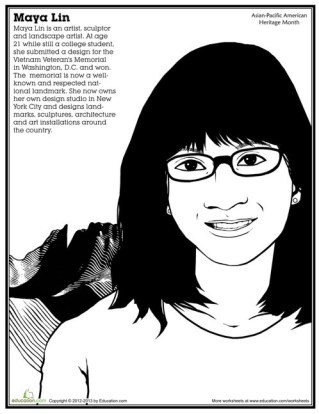
 celebrate-picture-books-picture-book-review-maya-lin-coloring-page

Maya Lin Coloring Page

Maya Lin’s accomplishments are inspirational for all children! Here’s a printable coloring page that you can personalize and hang in your room or locker to remind you that you can reach your goals too!

Maya Lin Coloring Page

Picture Book Review
March 8 – International Women’s Day

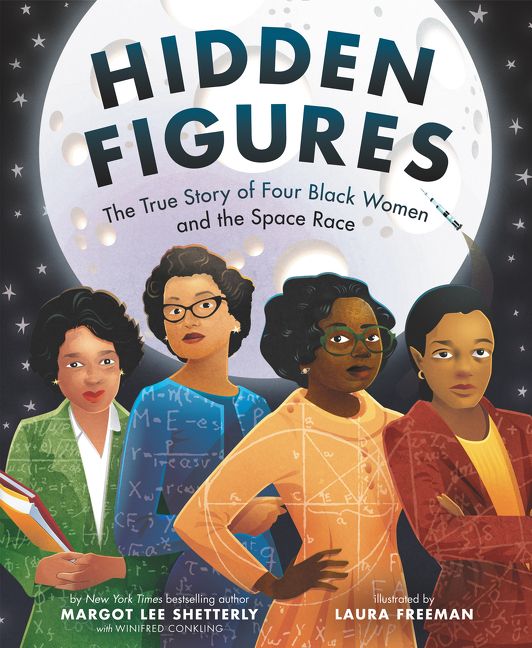
celebrate-picture-books-picture-book-review-hidden-figures-the-true-story-of-four-black-women-and-the-space-race-cover

About the Holiday

Today’s holiday is celebrated around the world and focuses on the social, economic, cultural, and political accomplishments of women. Spurred on by recent events and increased activism, this year’s theme is “Press for Progress: a Push for Gender Parity worldwide.” Rallies, performances, and discussions as well as special events and lessons in schools are just some of the ways that International Women’s Day is commemorated.

Hidden Figures: The True Story of Four Black Women and the Space Race

Written by Margot Lee Shetterly | Illustrated by Laura Freeman


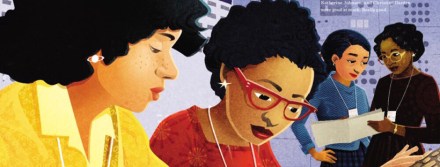
“Dorothy Vaughan, Mary Jackson, Katherine Johnson, and Christine Darden were good at math…really good.” The United States was involved in World War II, and Dorothy wanted to help the war effort by working for the National Advisory Committee for Aeronautics to make planes faster, stronger, and safer. Developing new airplanes required lots of tests at the Langley Laboratory in Virginia. Today, we use computers to do the kinds of math needed, “but in the 1940s computers were actual people like Dorothy, Mary, Katherine, and Christine.”

celebrate-picture-books-picture-book-review-hidden-figures-the-true-story-of-four-black-women-and-the-space-race-dorothy

Copyright Laura Freeman, 2018, courtesy of lfreemanart.com.

Even though Dorothy was a woman and an African-American in the segregated South, Dorothy did not think her dream of getting a job was impossible. After all, she was really good at math. She applied and was hired as a computer. At Langley, whites and blacks worked in different buildings and had separate facilities. After the United States won the war, Dorothy stayed on to create better aircraft.

Now America and Russia were in competition to build the best airplanes. This required more math, more tests, and more computers. Mary Jackson was hired at Langley to test model airplanes in wind tunnels. Mary had her sights set on becoming an engineer, but most of the engineers were men. To prepare, Mary needed to take advanced math classes, “but she was not allowed into the white high school where the classes were taught.” Mary didn’t take no for an answer. She got special permission to take classes, got good grades, and “became the first African-American female engineer at the laboratory.”

celebrate-picture-books-picture-book-review-hidden-figures-the-true-story-of-four-black-women-and-the-space-race-katherine

Copyright Laura Freeman, 2018, courtesy of HarperCollins.

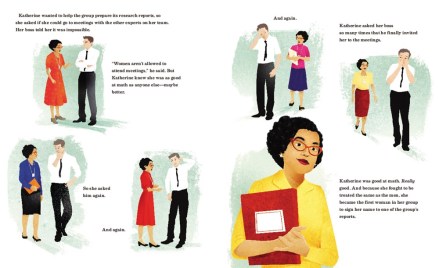
In 1953 Katherine Jackson was hired for a team who tested airplanes while they were in the air. Her work was to analyze turbulence to make planes safer in dangerous gusts of wind. She wanted to go to her team’s meetings, but she was told by her boss again and again that it was impossible; women were not allowed to attend meetings. At last her persistence paid off, and she became the first woman to sign one of the group’s reports.

When machine computers were installed at Langley in the 1950s, they were faster than the human computers but made many mistakes. “Dorothy learned how to program the computers so they got the right answers and taught the other women in her group how to program too.”

In 1957 Russia launched a satellite into space, ramping up the competition with the United States. Now “the United States started building satellites to explore space too,” and the name of the agency was changed to the National Aeronautics and Space Agency or NASA. Then President John F, Kennedy set a goal of sending a man to the moon. First, however, there would need to be many experiments, new space craft, and tests to send astronauts into orbit. This meant more people who were good at math would be needed.

celebrate-picture-books-picture-book-review-hidden-figures-the-true-story-of-four-black-women-and-the-space-race-separate-offices

Copyright Laura Freeman, 2018, courtesy of lfreemanart.com.

When the first manned space flight was planned, Katherine calculated the trajectory that would take John Glenn into space and bring him home again. In 1967 Dorothy Darden came to work at Langley. She loved electronic computers and wanted to become an engineer. “Her first job was to help with NASA’s mission to the moon.”

When Neal Armstrong stepped onto the moon’s surface for the first time on July 20, 1969, he said it was a giant leap for mankind. “It was also a giant leap for Dorothy, Mary, Katherine, Christine, and all of the other computers and engineers who had worked at the lab over the years.” The moon landing was just the beginning. NASA engineers were already dreaming of trips to other planets and super-fast spacecraft. And although it would be hard and require a lot of numbers, “Dorothy, Mary, Katherine, Christine knew one thing: with hard work, perseverance, and a love of math, anything was possible.”

celebrate-picture-books-picture-book-review-hidden-figures-the-true-story-of-four-black-women-and-the-space-race-four-women

Copyright Laura Freeman, 2018, courtesy of HarperCollins.

Margot Lee Shetterly brings her compelling story Hidden Figures to children in this exceptional picture book that skillfully reveals the talents and dreams of Dorothy, Mary, Katherine, Christine as well as the work atmosphere and social injustices of the time period. While acknowledging the struggles and obstacles the four women faced, Shetterly keeps her focus on the incredible achievements of these brilliant women and the positive changes and opportunities for others they created. Brief-yet-detailed descriptions and explanations of math, science, and computer terms flow smoothly in the text, allowing all readers to understand and appreciate the women’s work.

As Dorothy, Mary, Katherine, Christine each begin their work at Langley as young women, Laura Freeman establishes their dreams and their particular field of expertise through richly colorful illustrations that highlight the schematics, tools, equipment, and models they used. In one particularly affecting spread, Dorothy, Mary, Katherine, and Christine go off to their offices on the left-hand side, and their white counterparts head out to theirs on the right-hand side while the blueprint of their building lies under their feet. Dorothy, Mary, Katherine, and Christine’s clothing is also mirrored in color by the women on the other side of the fold. Period dress and electronics show progression through the years, and kids may marvel at the size of early computers. The final image of Dorothy, Mary, Katherine, and Christine as older women is moving and inspirational.

Hidden Figures: The True Story of Four Black Women and the Space Race is an outstanding biography of four women who contributed their gifts for math as well as their self-confidence not only to science but to dreamers in their own and future generations. The book would be a stirring choice for classroom and home libraries.

Ages 4 – 8

HarperCollins, 2018 | ISBN 978-0062742469

Discover more about Margot Lee Shetterly and her books on her website.

To learn more about Laura Freeman, her books, and her art, visit her website.

International Women’s Day Activity

celebrate-picture-books-picture-book-review-women-in-stem-coloring-book

Women in STEM Coloring Book


Discover five women who broke barriers  and made important contributions to the science, technology, engineering, and math fields in this printable  Women in STEM Coloring Book created by the United States Department of Energy.


Picture Book Review

March 5 – It’s National Women’s History Month

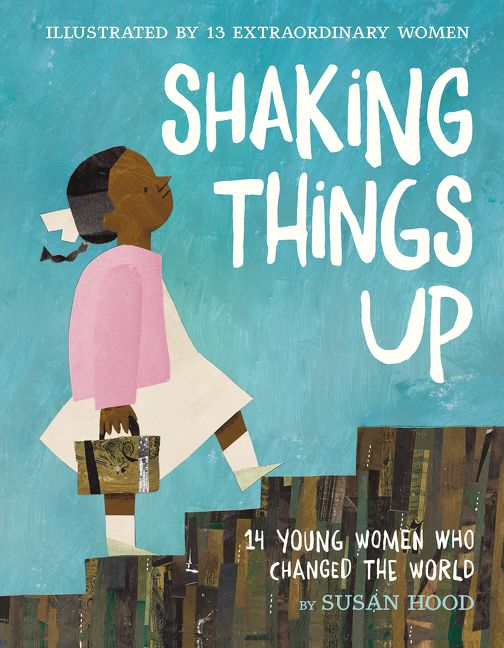
celebrate-picture-books-picture-book-review-shaking-things-up-cover

About the Holiday

National Woman’s History Month was established by the United States Congress in 1987 to recognize and celebrate the achievements of American women in the past and today. This year’s theme is “Nevertheless She Persisted: Honoring Women Who Fight All Forms of Discrimination against Women” which provides an opportunity to recognize the tireless efforts of women in all walks of life who fight against discrimination to be heard and to achieve their goals. There’s no better time than now to get involved to ensure that all women have equal rights and standing in all areas of their lives.

Shaking Things Up: 14 Young Women Who Changed the World

Written by Susan Hood 

Illustrated by Shadra Strickland, Hadley Hooper, Lisa Brown, Emily Winfield Martin, Sara Palacios, Erin K. Robinson, Sophie Blackall, Melissa Sweet, Oge Mora, Isabel Roxas, Julie Morstad, LeUyen Pham, and Selina Alko


This superb collection of biographies in verse highlights not only well-known pioneers but some delightfully fresh names and a few who are influencing the arts, science, and cause of human rights today. Each of the women profiled show the qualities of  bravery, persistence, intelligence, and ability over a vast spectrum of fields. Their success led the way for today’s women and will inspire tomorrow’s.

celebrate-picture-books-picture-book-review-shaking-things-up-Molly-Williams

Image copyright Shadra Strickland, 2018, text copyright Susan Hood, 2018. Courtesy of HarperCollins.

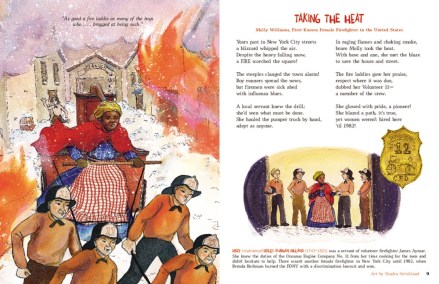
Organized on a timeline from the early 1780s to 2014, Shaking Things Up begins with Taking the Heat and Molly Williams, who was the first known female firefighter in America. When the flu knocked out all the members of the Oceanus Fire Department and a fire raged, Molly, the servant of James Aymar, a volunteer fireman, “… knew the drill; / she’d seen what must be done. / she hauled the pumper truck by hand, / adept as anyone.” For her work she was named Volunteer 11 and made part of the crew. It took about two-hundred years before another woman—Brenda Berkman—was added to the New York Fire Department.

celebrate-picture-books-picture-book-review-shaking-things-up-Mary-Anning

Copyright Hadley Hooper, 2018, courtesy of HarperCollins.

Young paleontologists-in-the-making will be amazed by the story of Mary Anning, who, while searching the British coast for fossils to sell to support her family, uncovered the skeleton of an ichthyosaur in 1812. In Buried Treasure, children learn how she went on to discover “the first two complete plesiosaurs and a pterosaur, laying the foundation for Charles Darwin’s theory of evolution.”

Children who love spies, news reporting, and uncovering the truth will want to know about Nellie Bly, who as an investigative journalist took on disguises to infiltrate institutions and write about “corruption and cruelty.” She was also widely admired for her around-the-world trip that beat Jules Verne’s “80 days” by eight days. As told in Woman of the World: “Bly hopped a ship and told her tale / of all she saw on Earth. / She wrote of camels, temples, jewels / with gutsy wit and mirth.” Nellie was only twenty-five when she undertook her travels in “a record-breaking race. / No soul on Earth had ever sped / the globe at such a pace!”

celebrate-picture-books-picture-book-review-shaking-things-up-Mary-Anning-poem

Image copyright Hadley Hooper, 2018, text copyright Susan Hood, 2018. Courtesy of HarperCollins.

If it weren’t for Annette Kellerman, women may never have made such a splash in swimming. Kellerman was a champion swimmer who began the sport to strengthen her legs after having rickets. Turning the Tide reveals that when she took to the water “without pantaloons—her swimsuit was deemed obscene!” After she was arrested she calmly stated, “who can swim fifty laps / wearing corsets and caps? / Her statement could not be contested,” and she went on to create the modern one-piece swimsuit, changing swimming for women forever.

In The Storyteller, a full alphabet of attributes describes Pura Belpré, a children’s librarian and the New York Public Library’s first Latina librarian. By offering—and often writing—Spanish books and creating programs for the Spanish-speaking community, Belpré revolutionized her library and touched many lives. 

celebrate-picture-books-picture-book-review-shaking-things-up-nellie-bly

Copyright Lisa Brown, 2018, courtesy of HarperCollins.

Children who reach for the stars will be transported by Lift-Off and the inspiration of Mae Jemison, the first female African-American astronaut. When young Mae gazes into the dark night sky, the “glittering stars, swirling galaxies / fill her, thrill her.” It doesn’t matter if she is afraid of the dark and afraid of heights, Mae looks and goes where she wants, where she needs to to learn and understand. And when she’s ready? “Ignition. / All systems are go. / Three / Two / One / Blast off!”

celebrate-picture-books-picture-book-review-shaking-things-up-secret-agents

Image copyright Sophie Blackall, 2018, text copyright Susan Hood, 2018. Courtesy of HarperCollins.

Break It Down reveals the way Angela Zhang attacks the questions she has about the way the world works, questions that lead her to answers and incredible achievements. From creating magic solutions with a Harry Potter potion kit at five years old to discovering answers to questions like why rainbows follow storms at seven years old to using a Stanford University lab at fifteen, Zhang has chipped away “at the ‘black boxes of life,’” including the “biggest black box of all– / a cure for cancer.” For Zhang science is “… both stone and chisel, / and I, your willing apprentice, / yearn to care away life’s mysteries / as a sculptor chisels marble / to find beauty inside.”

celebrate-picture-books-picture-book-review-shaking-things-up-Malala-Yousefzai

Image copyright Selina Alko, 2018, text copyright Susan Hood, 2018. Courtesy of HarperCollins.

Also included are poems about artist Frida Kahlo, World War II secret agents Jacqueline and Eileen Nearne, anti-hunger activist Frances Moore Lappé, civil rights pioneer Ruby Bridges, architect Maya Lin, and Noble Peace Prize winner Malala Yousafzai.

An illustrated timeline precedes the text, and suggested resources for further study on each woman follows the text.

Susan Hood has created fourteen poems that are as unique as the woman they describe. Some rhyming and some free verse, the poems include facts, quotes, intriguing details and the rhythms, sounds, and dreams of these young women. A paragraph following each poem reveals more about the woman and her work. Readers will be awe-struck by the enticing stories that inform each lyrical biography and will long to learn more about the women and their lives.

The theme of individuality is carried through in the illustrations, which are each created by a different illustrator. Colorful, whimsical, and realistic, the illustrations let children see the faces of the women presented, surrounded by their work and set within their time period. Readers will want to linger over the images and discuss the details included. A quotation from each woman accompanies her illustration.

Shaking Things Up offers an inviting way to introduce children to these amazing women and is an excellent reminder that they too can dream of what could be and make it happen. A must for classroom and school libraries, the book would be an inspirational addition to home bookshelves as well.

Ages 4 – 10

HarperCollins, 2018 | ISBN 978-0062699459

Discover more about Susan Hood and her books on her website.

You can learn more about these illustrators on their websites:

Shadra Strickland | Hadley Hooper | Lisa Brown | Emily Winfield Martin | Sara Palacios | Erin K. Robinson | Sophie Blackall | Melissa Sweet | Oge Mora | Isabel Roxas | Julie Morstad | LeUyen Pham | Selina Alko

Check out the Shaking Things Up book trailer!

Women’s History Month Activity

celebrate-picture-books-picture-book-review-freda-kahlo-coloring-page

Amazing Women Coloring Pages


There are so many incredible women to learn about during this month. Today, enjoy these coloring pages of inspiring women.

Mary Anning | Mae Jemison | Freda Kahlo 

Picture Book Review

February 23 – National Tile Day

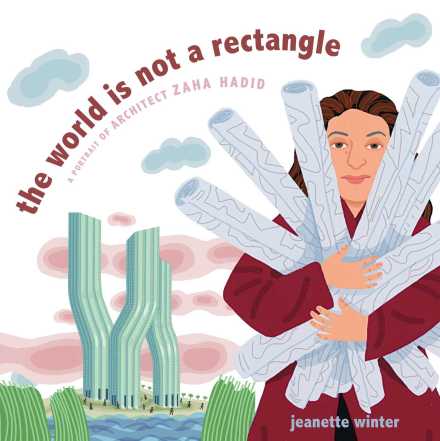
celebrate-picture-books-picture-book-review-the-world-is-not-a-rectangle-cover

About the Holiday

Today’s holiday was established just last year and celebrates that architectural accent that has given exteriors and interiors pizazz and individuality since ancient times. Made in nearly every color, pattern, and shape imaginable, tiles were once all handmade and available only to the wealthy few. Innovations during the Industrial Revolution allowed tile to be mass produced and, thus, affordable to many. Tile has become a favorite decoration in homes across the world—as any HGTV viewer knows!

The World Is Not a Rectangle: A Portrait of Architect Zaha Hadid

By Jeanette Winter


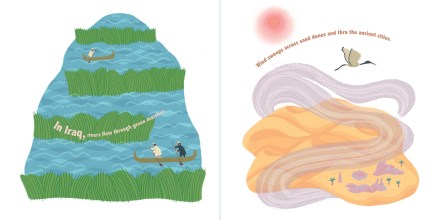
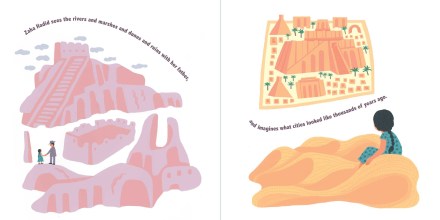
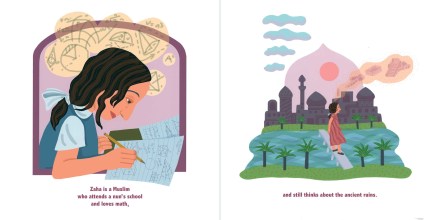
Growing up in Iraq, Zaha Hadid sees the way rivers brake up the marshland, watches when the wind sculpts sand dunes, and visits the ruins of ancient cities. At home in Baghdad, young Zaha studies the patterns of her Persian carpet, noticing “how the shapes and colors flow into each other, like the dunes and rivers and marshes” and dreaming of designing her own cities.

celebrate-picture-books-picture-book-review-the-world-is-not-a-rectangle-rivers

Copyright Jeanette Winter, 2017, courtesy of Beach Lane Books.

In her room, she arranges and rearranges the furniture, creates her own clothes, and comes up with ideas. When Zaha grows up, she moves to London to study to be an architect. After graduation, she opens an office in an old school building—Studio 9. Zaha is joined by some friends and they work tirelessly on their architectural drawings.

celebrate-picture-books-picture-book-review-the-world-is-not-a-rectangle-ruins

Copyright Jeanette Winter, 2017, courtesy of Beach Lane Books.

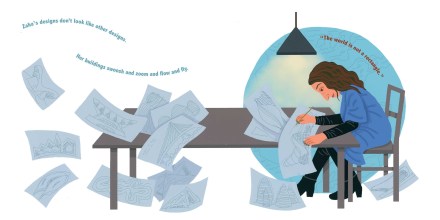
“Zaha’s designs don’t look like other designs. Her buildings swoosh and zoom and flow and fly. ‘The world is not a rectangle’” she says. But Zaha cannot find anyone to build her designs; everyone says they are impossible. Finally, one of Zaha’s designs is chosen from among all the others in a competition. When it is presented to the city’s committee, however, they reject it. Another competition is held, and Zaha’s design wins again. The city rejects it again. Zaha is as strong as her name Hadid, which means iron in Arabic, and she continues to design plan after plan.

celebrate-picture-books-picture-book-review-the-world-is-not-a-rectangle-school

Copyright Jeanette Winter, 2017, courtesy of Beach Lane Books.

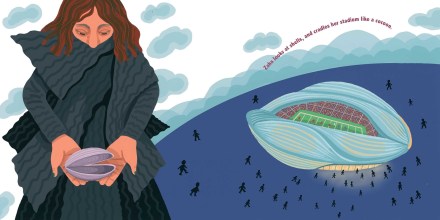
Then one by one her plans are accepted. She “remembers the grasses in the marshes swaying” and designs tall towers “dancing like grass.” In the desert, she creates a building that allows the wind to blow over and around and through it. The sports stadium she imagines has the beauty of a cocoon. Remembering the stones in a stream, Zaha “builds an opera house like the pebbles in the water. Inside the opera house, a singer is the pearl in the oyster shell.”

celebrate-picture-books-picture-book-review-the-world-is-not-a-rectangle-designs

Copyright Jeanette Winter, 2017, courtesy of Beach Lane Books.

The swirling stars in far-away galaxies inspire a complex of connected buildings, and the undulating waves become the model for a bridge that seems to move with the water. From looking at the Alps, Zaha fashions a museum built “inside a mountain peak with windows to see the sky and the valleys” and a ski jump that “reaches to the sky like the mountain.” From the “jungle and ancient wood temples,” Zaha draws inspiration for “a wooden building to remember a faraway war.”

celebrate-picture-books-picture-book-review-the-world-is-not-a-rectangle-stadium

Copyright Jeanette Winter, 2017, courtesy of Beach Lane Books.

With every building, Zaha gets busier and busier more than four hundred architects are working in that old school building, “designing, planning, engineering, and making models of Zaha’s visions.” But Zaha’s ideas don’t stop at buildings. She believes “you should do what you like,” so she designs doll houses, shoes, chairs, sculpture, and benches. No matter what she designs, Zaha’s early memories return. She thinks of “the beauty of the landscape—where sand, water, reeds, birds, buildings, and people all somehow flow together” and never loses her belief in the impossible.

Even though the light in Zaha’s office is now dark, “her architects keep their lights on—designing, planning, engineering, and making models of her visions, keeping her flame blazing bright.”

celebrate-picture-books-picture-book-review-the-world-is-not-a-rectangle-night

Copyright Jeanette Winter, 2017, courtesy of Beach Lane Books.

Following the text, readers can learn the name and location of each building, discover more information about Zaha Hadid’s life and awards, and read more of her own words about her work.

Jeanette Winter shines a light on an architect who will inspire children not only with her work but with her original ideas, self-confidence, and refusal to compromise on her beliefs. Winter combines straightforward passages of Zaha’s childhood and early professional struggles with lyrical phrasing that describes her influences in nature and her soaring buildings. Sprinkled throughout are Zaha’s own words that define her ideas and ideals.

In her dreamlike illustrations, Winter clearly depicts Zaha Hadid’s inspirations and the way in which she interpreted each natural motion, shape, or phenomenon in steel, glass, concrete, or wood. Winter’s pages swirl, shimmer, flow, and soar, and Zaha is always there, seeing, thinking, envisioning, and drawing.

An excellent biography of a strong and creative woman who has designed some of the world’s most beautiful and original buildings, The World Is Not a Rectangle: A Portrait of Architect Zaha Hadid would be a superb addition to classroom discussions and home story times.

Ages 5 – 10

Beach Lane Books, 2017 | ISBN 978-1481446693

National Tile Day Activity

celebrate-picture-books-picture-books-review-heart-mosaic-coloring-page

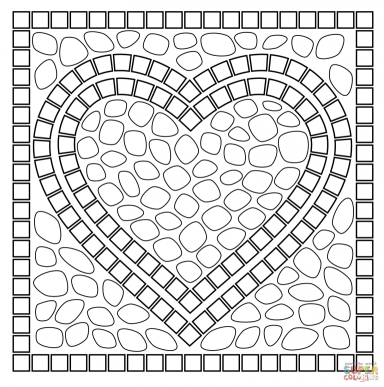
I (Heart) Tiles! Coloring Page


With colorful tiles you can make beautiful pictures. Put your imagination to work and color this I (Heart) Tiles! Coloring Page!

Picture Book Review