June 20 – International Tennis Day

celebrate-picture-books-picture-book-review-serena-the-littlest-sister-cover

About the Holiday

Established in 2014 and sponsored by the U.S. Court Tennis Preservation Foundation with support from world-wide national tennis governing bodies and associations, today’s holiday aims at raising interest in the game of tennis. One goal of the day’s celebrations is to have simultaneous matches, tournaments, and exhibitions at tennis clubs, schools, and universities around the world. Those who participate are encouraged to upload images to social media with the hashtag #itennisday. Why was June 20 chosen for this holiday? It commemorates the Tennis Court Oath of June 20, 1789, on which date nearly 600 people packed a tennis court near the Palace of Versailles during the French Revolution in a show of hope and solidarity. A painting of the event by Jacques-Louis David honors this pivotal protest. To celebrate, grab a racquet and head to a court near you. 

Thanks to Page Street Kids for sending me a copy of Serena: The Littlest Sister for review consideration. All opinions about the book are my own.

Serena: The Littlest Sister

Written by Karlin Gray | Illustrated by Monica Ahanonu


On that day when “Serena stood in Arthur Ashe Stadium and kissed the trophy,” her fans, sisters, and parents cheered. How had that day come about? It started thirteen years earlier when Serena, then four years old, joined her older sisters on the tennis court where their dad coached them. As he showed Serena how to swing, her sisters celebrated when she hit one and ran after the ones she didn’t. Mostly, the equipment they used was old and donated. Sometimes the balls had even lost their bounce, but “their father explained that it was good practice for Wimbledon—a Grand Slam tournament where the balls bounced lower because the tennis court was made of grass.”
celebrate-picture-books-picture-book-review-serena-the-littlest-sister-grand-Venus

Image copyright Monica Ahanonu, 2019, text copyright Karlin Gray, 2019. Courtesy of Page Street Kids.

When they weren’t on a real tennis court, the girls played a pretend game of tennis on the sidewalk. Serena loved when she won these games “because, well, Serena loved being the star.” As they grew older, their father never allowed them “to use the word can’t.” Their mom told them, “‘Whatever you become, you become in your head first.’ So the girls dreamed of what they could become.” While the other sisters became a nurse, a lawyer, and a singer, Venus and Serena became top tennis players.

Venus was taking the tennis world by storm with her hard hitting, speed, and 100-miles-per-hour serve. Serena wanted to play in tournaments too, but her father said she wasn’t ready. But one day, Serena noticed an application for a tournament Venus was playing in. Serena filled it out and sent it in. At the tournament, Serena snuck off to play on one court while her parents watched Venus on another. Serena ran her opponent ragged and won the match.

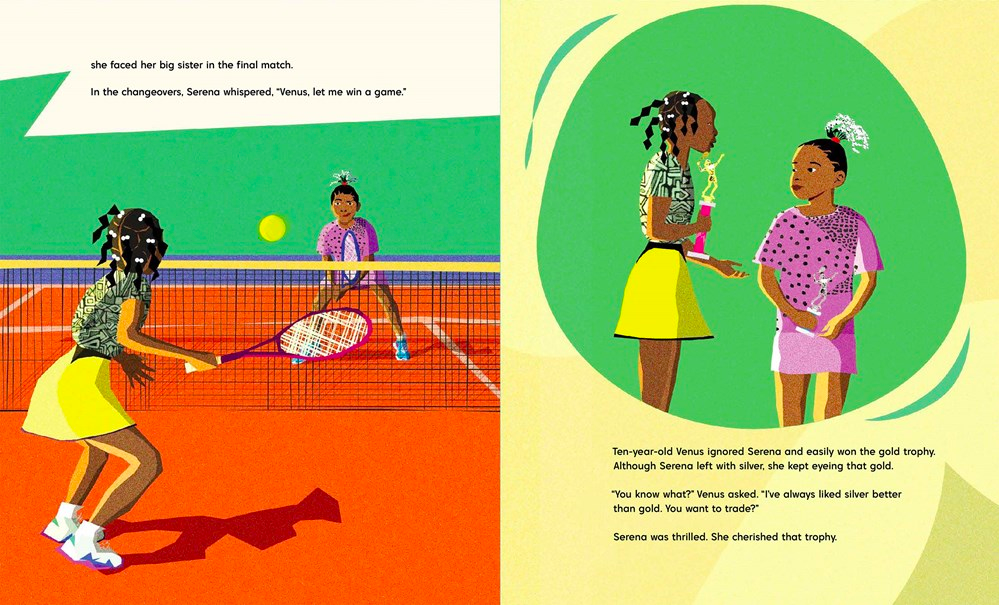
Serena thought her father might be angry, but instead he was proud and began teaching her how to play against her next opponent. “Serena won all her matches, moving up and up until…she faced her big sister in the final match.” During the match, Serena asked Venus to let her win one game, but Venus ignored her plea. Later at home, though, Venus traded her gold trophy for Serena’s silver one. “Serena cherished that trophy.” Serena idolized Venus and did everything she did until her father reminded her that she was her own person. Some people didn’t think Serena would have the success Venus did, but her oldest sister told her, “‘You’ll have your day. And it’s gonna be even bigger.’”

celebrate-picture-books-picture-book-review-serena-the-littlest-sister-grand-sixteen

Image copyright Monica Ahanonu, 2019, text copyright Karlin Gray, 2019. Courtesy of Page Street Kids.

After several years of winning, Serena, Venus, and her family moved to Florida for training. On those courts the girls stood out for their skin color, their beaded braids—and “their powerful strokes.” When Venus was fourteen, she was allowed to enter professional tournaments. She won her first match. When Serena turned pro, she didn’t win. The two teamed up as doubles partners, and by the time she was sixteen, Serena had grown in both height and confidence. She had her own style of play too.

The sisters continued to play as a doubles team, and in 1999 they won the French Open Doubles competition. Venus was eighteen and Serena was seventeen. That same year, the sisters entered the US Open, the tournament Serena had long dreamed of winning. Surprisingly, Venus was knocked out early, but Serena kept winning her matches. In the finals she met the player who had beaten Venus. Serena served eight aces and “her fierce forehand earned her point after point.” Serena won the match and became “the first black woman to win a Grand Slam singles tournament in more than forty years.” At the awards ceremony, Serena thanked her dad, her mom, and her sisters for all of their support. The crowd cheered as cameras flashed. “And one of the many headlines of the day read, Little Sister, BIG HIT!”

An Afterword highlights other victories Serena and Venus have enjoyed during their careers, follow-ups on their sisters, and quotes from each of the five sisters.

celebrate-picture-books-picture-book-review-serena-the-littlest-sister-grand-slam

Image copyright Monica Ahanonu, 2019, text copyright Karlin Gray, 2019. Courtesy of Page Street Kids.

Karlin Gray’s masterful biography of Serena Williams shows young readers the determination, confidence, and strong familial bond that followed Serena throughout her life and made her one of tennis’s most influential women players. The family’s remarkable life and focus on what one can achieve will inspire all kids, no matter what their dream is. Choosing seminal events in Serena’s and Venus’s life, Gray follows Serena’s reputation on the court as she loses and wins matches, building suspense until that day when she accomplishes her goal and wins the US Open. Her inclusion of articles and comments that cast doubt on Serena’s future success demonstrates that even the greats face opposition and naysaying, and Serena’s sister’s advice to ignore it is sound.

Monica Ahanonu’s textured, collage-style illustrations leap off the page with vibrant images full of action and the girls’ personalities. As the girls race onto a court for practice, their eager expressions show their love of the game and being together. Even as a four-year-old Serena has the steely-eyed gaze of a champion as she watches the bouncing ball and lines up for her swing. Ahanonu’s use of various perspectives and shadowing create dynamic scenes on the court, and tennis lovers will be thrilled at the many illustrations of Venus and Serena playing their sport. The bond between the sisters is evident in images of Serena interacting with one or more of her sisters. Those who remember Serena’s win at the 1999 US Open will recognize her joy.

Perfectly aimed at young readers who are the same age as Serena and Venus when they began developing their skills and sport, Serena: The Littlest Sister is an inspirational biography of a present-day role model that is sure to spark an “I can” attitude. Adults who have followed the Williams sisters’ rise to tennis stardom will be equally enthralled with this beautiful biography. The book would make a stirring addition to home, classroom, and library collections.

Ages 8 – 11

Page Street Kids, 2019 | ISBN 978-1624146947

Discover more about Karlin Gray and her books on her website.

To learn more about Monica Ahanonu and her work, visit her website.

International Tennis Day Activity

celebrate-picture-books-picture-book-review-tennis-word-search-puzzle

Tennis Love Word Search Puzzle


If you’re a tennis ace, you’ll enjoy finding the tennis-related words in this printable word search puzzle.

Tennis Love Word Search Puzzle | Tennis Love Word Search Solution

celebrate-picture-books-picture-book-review-serena-the-littlest-sister-cover

You can find Serena: The Littlest Sister at these booksellers

Amazon | Barnes & Noble | Books-a-Million

To support your local independent bookstore, order from

Bookshop | IndieBound

Picture Book Review

June 5 – Global Running Day

celebrate-picture-books-picture-book-review-the-girl-who-ran-cover

About the Holiday

Global Running Day is all about living a healthy lifestyle! There are so many reasons to take up running, from keeping in shape to clearing one’s mind to competing against other runners. The evolution of National Running Day, which was established in 2009, Global Running Day allows serious runners to recommit to their sport and encourages those on the fence to jump down and join in. This year people from 156 countries have pledged to run short distances and longer routes in their quest for personal health. An accompanying Million Kid Run gets young people thinking about their own health while having fun. Participating is as easy as running in your neighborhood, gathering with friends to run, or even playing tag with your kids. To learn more about the day visit the Global Running Day website!  

The Girl Who Ran: Bobbi Gibb, the First Woman to Run the Boston Marathon

Written by Frances Poletti and Kristina Yee | Illustrated by Susanna Chapman


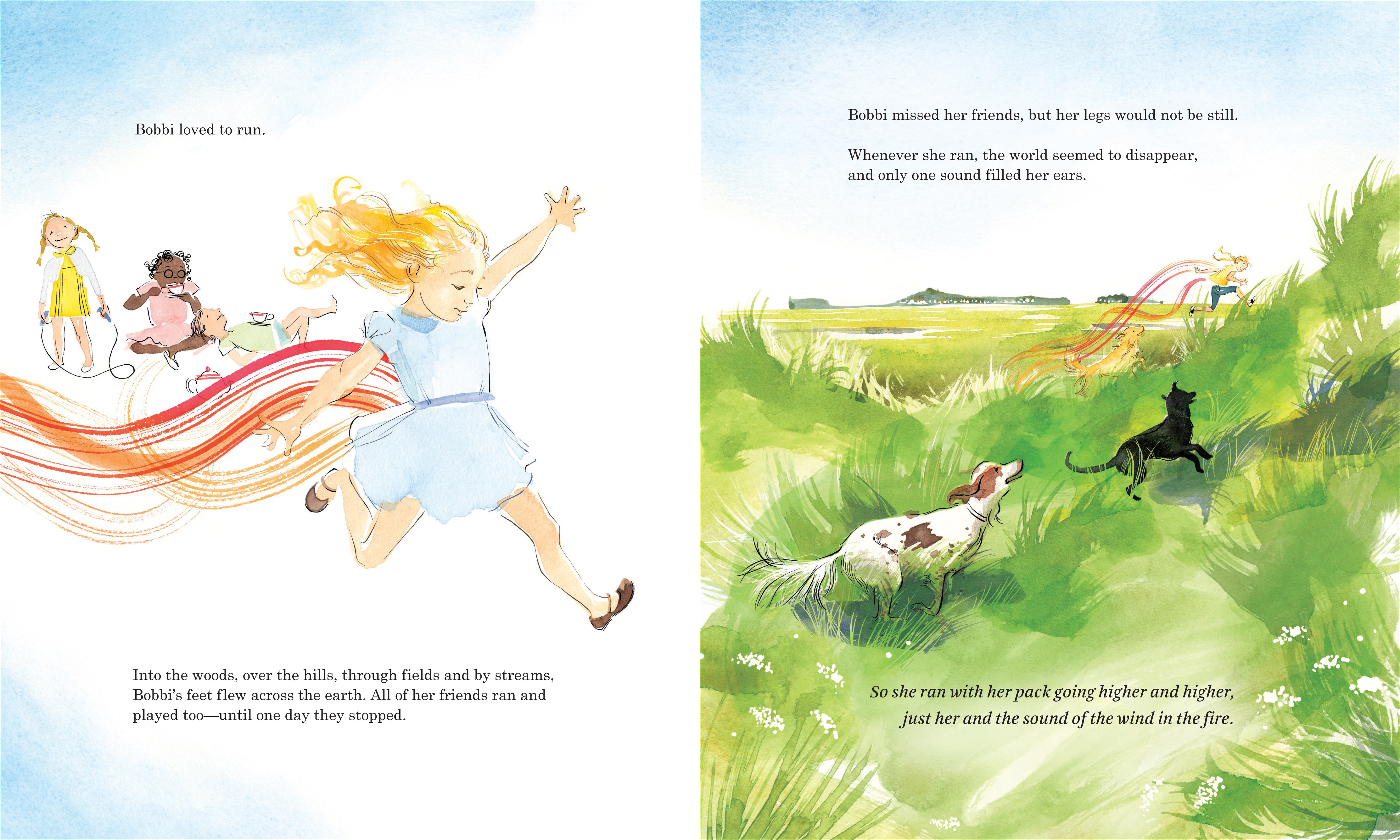
“Bobbi loved to run. Into the woods, over the hills, through fields and by streams, Bobbi’s feet flew across the earth.” When Bobbi was little, she and her friends ran and played together. But as they grew older, her friends found other pursuits while Bobbi still loved to run. She took to the fields with her dogs, “going higher and higher, / just her and the sound of the wind in the fire.”

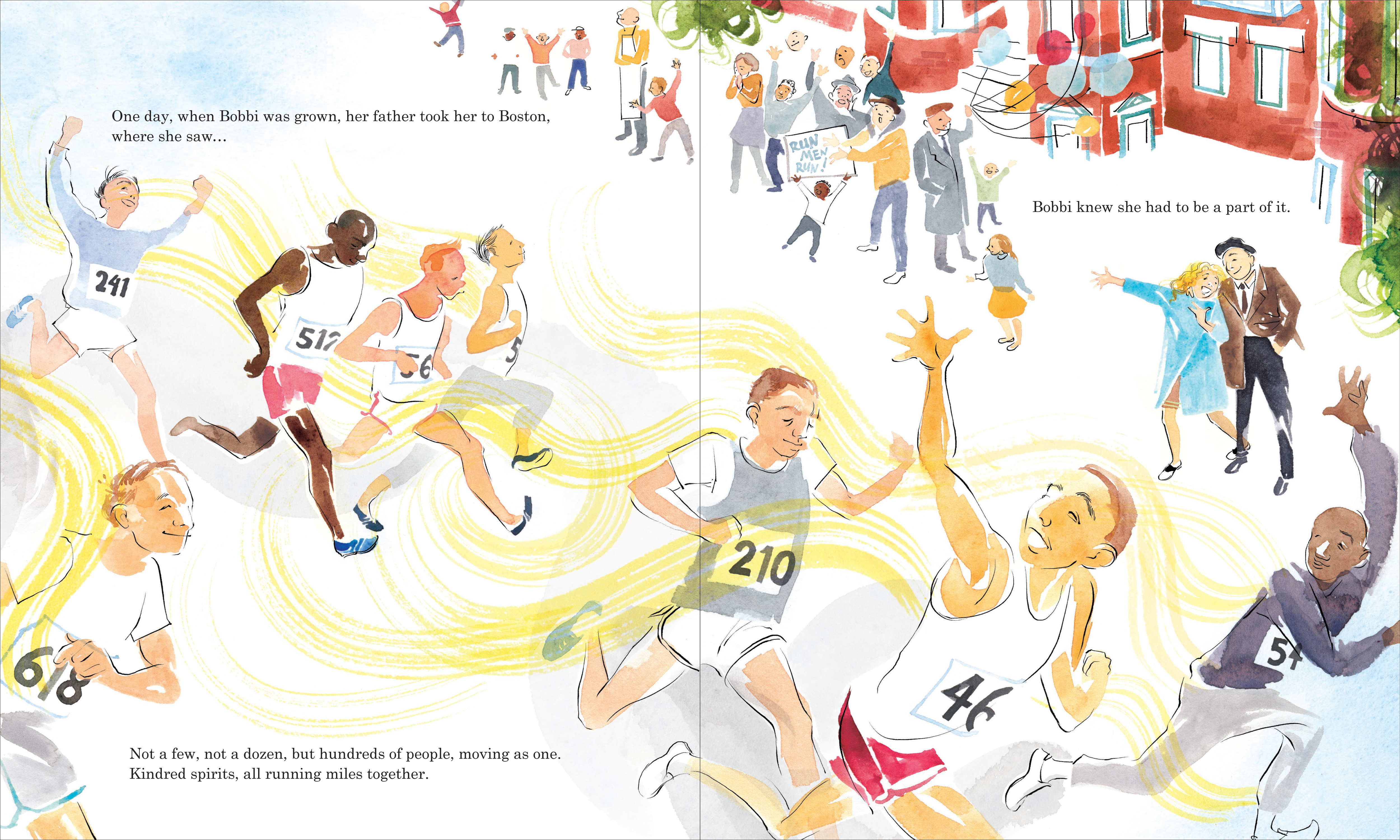
When Bobbi was grown, her father took her to watch the Boston Marathon. She loved the camaraderie of “hundreds of people moving as one. Kindred spirits, all running miles together.” Immediately, she wanted to participate too. When Bobbi told her parents that she wanted to run in the marathon, however, they thought her idea was strange. They told her she would hurt herself and that it was unladylike.

celebrate-picture-books-picture-book-review-the-girl-who-ran-young-bobbi

Image copyright Susanna Chapman, 2017, text copyright, Frances Poletti and Kristina Yee, 2017. Courtesy of Compendium.

But Bobbie wanted to run. She didn’t know if she could run that far but was determined to try. She trained in the woods, running “further and further, and she ached and perspired, / and the world whooshed on by, like the wind in the fire.” Because she knew her parents disapproved, Bobbi set out on her own across country to train. Every day she ran in a new place—“lush forests in Ohio and Indiana, vast plains in Nebraska and Kansas, majestic mountains in Wyoming and Montana.” She even ran with wild horses out west and up steep Rocky Mountain trails. At night she camped, “tired and happy.”

All of her training seemed for nothing, however, when Bobbi received a letter rejecting her application for the Boston Marathon. The letter said that women were incapable of running marathons, that it was against the rules for a woman to run, and that the rules had been written to protect women from injury. Bobbi was not deterred, however. She went back home and told her parents what she wanted to do. Her father thought she was crazy to attempt it.

celebrate-picture-books-picture-book-review-the-girl-who-ran-woods

Image copyright Susanna Chapman, 2017, text copyright, Frances Poletti and Kristina Yee, 2017. Courtesy of Compendium.

Bobbi knew that the only way she could run would be “to blend in with the men.” Dressed in men’s shorts and a baggy hooded sweatshirt to hide her hair and wearing men’s running shoes (running shoes were not made for women), Bobbi was ready to go. Her father refused to drive her to the race, though. He stormed out of the house, and drove away. Bobbi thought her dream was dashed until her mom came to her room, car keys in hand, and said, “‘Let’s go.”

Hiding in the bushes at the starting line, she sprang out and joined the pack of runners with the bang of the starting pistol. “So she ran with the pack, going higher and higher, / the world whooshing by, like the wind in the fire.” As she ran, she realized that the men around her had seen through her disguise. Bobbi was worried, but the men were supportive. “‘Hey! Are you running the whole way?’ one asked.” She told him she hoped to, but in that sweatshirt, she was getting hotter and hotter. She was afraid that if she took it off, she’d be thrown out of the race.

celebrate-picture-books-picture-book-review-the-girl-who-ran-parents-afraid

Image copyright Susanna Chapman, 2017, text copyright, Frances Poletti and Kristina Yee, 2017. Courtesy of Compendium.

The men around her said they wouldn’t let that happen, so Bobbi took off the sweatshirt. “Word spread quickly throughout the course. A girl was running! They couldn’t believe it!” All along the route, the crowd cheered and encouraged her. Hearing the roar motivated Bobbi to ignore the hard ground and her stiff shoes and face the last steep hill. “Closing her eyes, she imagined she was back in Montana running up the mountains, the soft earth under her feet.”

Her feet were blistered and she was parched with thirst, but she crossed the finish line—ahead of nearly half of the men. Photographers, reporters, and radio presenters swarmed around her to hear her history-making story. From that day on “hearts and minds were forever changed.”

celebrate-picture-books-picture-book-review-the-girl-who-ran-young-Boston-marathon-all-men

Image copyright Susanna Chapman, 2017, text copyright, Frances Poletti and Kristina Yee, 2017. Courtesy of Compendium.

The story of Bobbi Gibb is one that every girl and boy should know, and Frances Poletti and Kristina Yee’s excellent biography will have readers awe-struck by how she changed the way the world viewed women and their capabilities. A pioneer for women’s rights in every way—from her traveling the country alone to rejecting the prevailing ideas to competing on her own terms—Bobbi Gibb is an inspiration for achievers everywhere. Poletti and Yee’s conversational storytelling is both lyrical and honest, not stinting on the obstacles Bobbi had to overcome, including race officials, her own parents, and even the fact that running shoes weren’t made for women.

As the marathon approaches, readers will be enthralled by the building suspense. They’ll feel Bobbi’s determination, her disappointment, and her fear that she will be discovered and thrown out of the race, and will cheer along with the crowd at her victory.

celebrate-picture-books-picture-book-review-the-girl-who-ran-crowds

Image copyright Susanna Chapman, 2017, text copyright, Frances Poletti and Kristina Yee, 2017. Courtesy of Compendium.

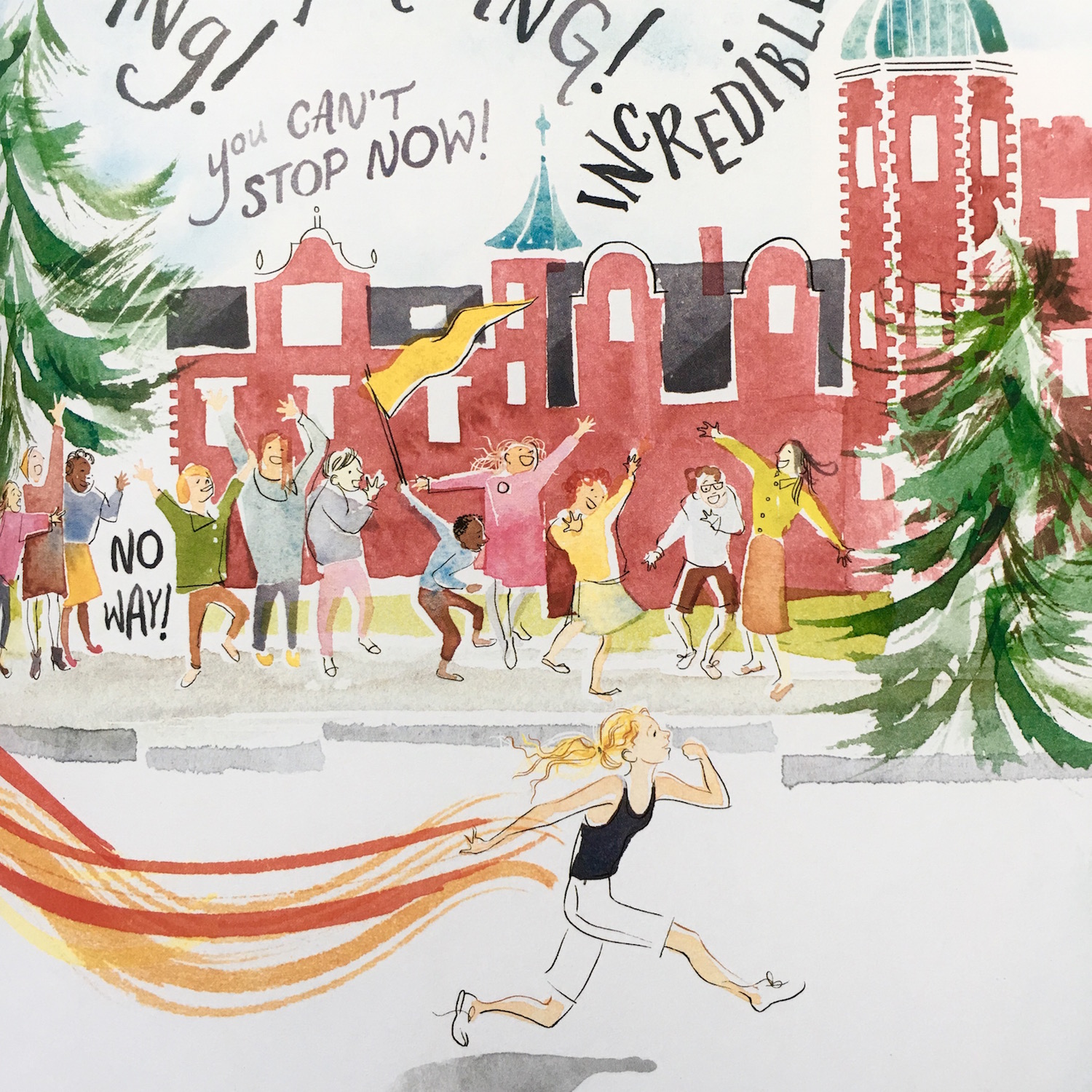
Susanna Chapman’s gorgeous illustrations are infused with Bobbi’s boundless energy and spirit as she soars over grassy dunes with her dogs at her heels, zips through shady woods, and runs alongside wild horses in the shadow of the Rockies all the while trailing a red swish, representative of the fire within her. The turmoil surrounding Bobbi’s desire to run the Boston Marathon is depicted in words of rebuke, recrimination, and rejection printed in large, emphatic typefaces that swirl around her like a tornado.

The inclusion of the image of Bobbi’s mother with the car keys in hand on the morning of the race is a welcome reminder of the many unknown women of earlier generations who  contributed to the fight for women’s equality. A beautiful double gate-fold illustration of Bobbi crossing the finish line to cheering crowds and the waiting media puts the focus fully on Bobbi and the fire that spurred her on.

An Afterword tells more about Bobbi Gibb, and a timeline of seminal events in the Boston Marathon from 1896 to today, is a fascinating must-read.

The Girl Who Ran is an inspirational biography and revealing history from the not-so-distant past that offers encouragement and triumph. It would be a wonderful addition to home, school, and public libraries.

Ages 8 – 12

Compendium, 2017 | ISBN 978-1943200474

Discover more about Kristina Yee, her books, and her films on her website

Learn more about Susanna Chapman, her books, and her art on her website

Global Running Day Activity

celebrate-picture-books-picture-book-review-pioneering-women-in-sports-puzzle

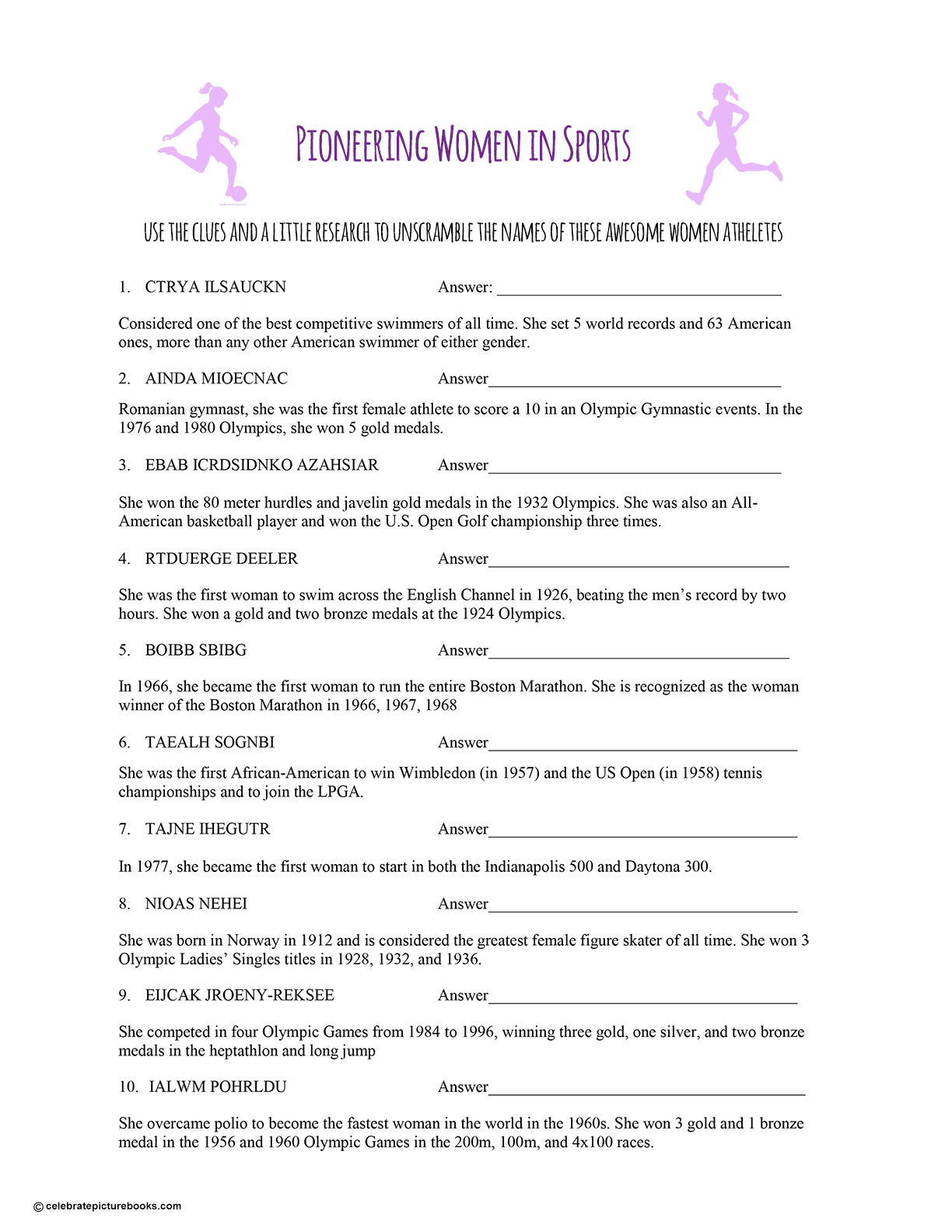
Pioneering Women in Sports Word Scramble Puzzle


In every sport there have been women who have overcome barriers, incredible odds, set records, and inspired others. Using the clues and a little research, can you unscramble the names of these twelve awesome athletes?

Pioneering Women in Sports Word ScramblePioneering Women in Sports Word Scramble Solution

celebrate-picture-books-picture-book-review-the-girl-who-ran-cover

You can find The Girl Who Ran at these booksellers

Amazon | Barnes & Noble | Books-a-Million | IndieBound

Picture Book Review

May 29 – It’s National Inventor’s Month

celebrate-picture-books-picture-book-review-just-like-rube-goldberg-cover

About the Holiday

Established in 1998 by the United Inventors Association of the USA, the Academy of Applied Science, and Inventors’ Digest magazine, this month-long holiday celebrates the imagination and talent of individuals who dare to think differently and create new products, services, and ways of doing things that make a positive contribution to the world. To join in, enjoy your favorite new inventions, and if you harbor dreams of being an inventor—on a large or small scale—look for opportunities to share your ideas.

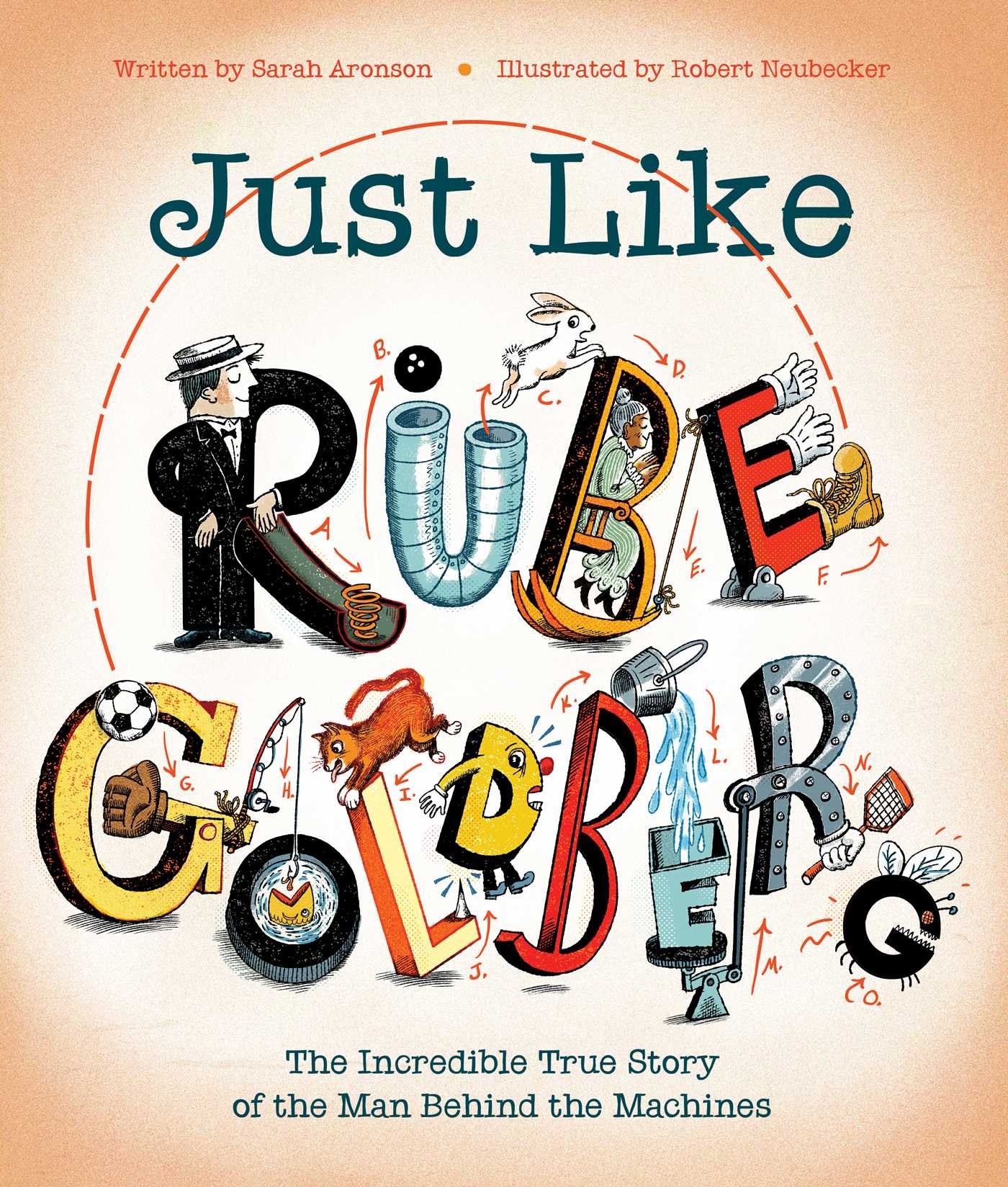
Just Like Rube Goldberg: The Incredible True Story of the Man Behind the Machines

Written by Sarah Aronson | Illustrated by Robert Neubecker


Famous inventors usually get that way by creating something new—something that people can’t live without, right? Well, it kind of was and wasn’t this way for Rube Goldberg—as you’ll see. Even as a very young boy, Rube Goldberg loved to draw. As a four-year-old he traced the cartoons in the newspaper and when he got older, he took art lessons. His dream was to be a cartoonist for a major newspaper.

celebrate-picture-books-picture-book-review-just-like-rube-goldberg-water-department

Image copyright Robert Neubecker, 2019, text Sarah Aronson, 2019. Courtesy of Beach Lane Books.

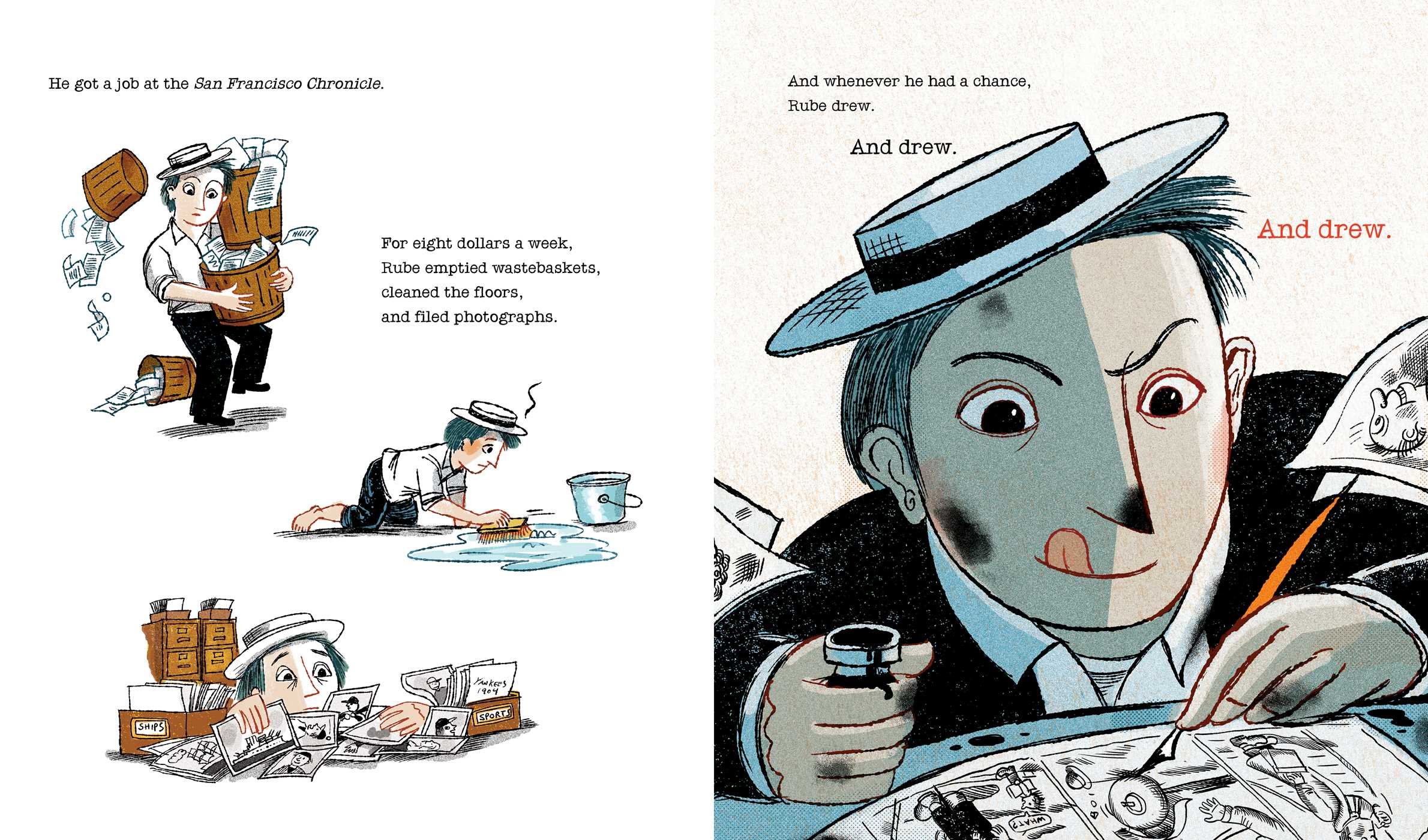
Rube’s family was not so supportive, though. His father—who had moved to America from Germany so that his family could have a better life—believed his son would end up as a beggar if he pursued his art. So, Rube went to college and became an engineer for the Department of Water and Sewers in San Francisco—for six months. He gave up his good-paying job for a job as an errand boy at the San Francisco Chronicle at eight dollars a week. In between cleaning, emptying trash cans, and filing photographs, “Rube drew. And drew. And drew.”

Rube submitted his cartoons to the editor and most of the time they were rejected. When the editor “said yes, Rube sometimes got paid, but other times he just got out of the office tasks he didn’t like to do.” A year went by, and finally Rube was hired by the San Francisco Bulletin sports department, where he drew cartoons and wrote a column too. Then in 1906, the great earthquake hit San Francisco. Homes were lost, as were jobs. In the broken city, people couldn’t focus on their future or even feel hopeful. Rube “did the only thing he could do: He drew comics to cheer people up.”

celebrate-picture-books-picture-book-review-just-like-rube-goldberg-errand-boy

Image copyright Robert Neubecker, 2019, text Sarah Aronson, 2019. Courtesy of Beach Lane Books.

Rube also decided to move to New York—the place he considered the “‘front row,’ the cartoon capital of the country.” For twelve days he showed his art to newspaper after newspaper and was finally hired by the New York Evening Mail as a cartoonist. “Right off the bat, Rube became a celebrity. People couldn’t wait to see what he had to say about all kinds of things.” He drew comics about sports, politics, and “the silliness of everyday life,” but the comics people loved the best were drawn by his alter ego, Professor Lucifer Gorgonzola Butts. The professor was known for his intricately complex inventions that made even the simplest action a “surreal and ridiculous” multi-step wonder that often defied physics.

celebrate-picture-books-picture-book-review-just-like-rube-goldberg-newsroom

Image copyright Robert Neubecker, 2019, text Sarah Aronson, 2019. Courtesy of Beach Lane Books.

He invented a machine that employed a carrot-eating goat, a ghost, an egg-laying chicken, an archer, a target with a mechanical hand, an upright-shooting canon, and dough that cooked in the smoke of the cannon as a cannonball shot through the middle of it. Turning off the light, might just require the pull of a cord, but in Professor Butts’ world, it also required a banana-laden fishing pole, a monkey bouncing on a balloon, a fan that turned a bicycle wheel, a jack-in-the-box, a bucket, a bowling ball, and seesaw. Perhaps one of the silliest was a contraption for cutting your own hair.

Of course, these gizmos weren’t designed to really work—only to make people “look closer. And question logic. And tickle the imagination.” At a time when new discoveries were being made all around, Rube Goldberg’s cartoons “challenged people to use the most amazing machine in the universe: the brain!” Do you have aspirations, thoughts, and dreams that seem out of the mainstream and wonder if this same kind of success is still possible? The answer is: “You bet it is.” So “figure out what you want” then work hard and “have a great time getting there…. Just like Rube Goldberg!”

celebrate-picture-books-picture-book-review-just-like-rube-goldberg-doughnuts

Image copyright Robert Neubecker, 2019, text Sarah Aronson, 2019. Courtesy of Beach Lane Books.

The book’s endpapers depict eight of Rube Goldberg’s original invention cartoons, and an Author’s Note following the text reveals more about Goldberg’s amazing life as a cartoonist, artist, and political observer. The awards he won and the children’s game inspired by his contraptions are also mentioned.

For Rube Goldberg fans, young inventors and artists, and anyone with a dream, Sarah Aronson’s story of this beloved cartoonist’s life is a fast-paced trip into the past and the fine tradition of lampoonery. Goldberg’s one-of-a-kind imagination and unstoppable confidence in his dream are on full display as he quits a lucrative job for the uncertainty of an artist’s life. His success and long career is a tribute not only to Goldberg himself, but to all the employers and consumers who recognize innovation and embrace it.

celebrate-picture-books-picture-book-review-just-like-rube-goldberg-brain

Image copyright Robert Neubecker, 2019, text Sarah Aronson, 2019. Courtesy of Beach Lane Books.

Robert Neubecker’s stylized and entertaining illustrations take inspiration from and honor Rube Goldberg while also transporting readers to the early 1900s. Kids will particularly enjoy the clever design that takes text through underground maze of the San Francisco Department of Water and Sewers and the busy newsroom—complete with carrier pigeon—where Goldberg found a home as a cartoonist. In two-page spreads, three of Goldberg’s cartoons are rendered in color, giving readers plenty to linger over and giggle at, and the final images are sure to spark a new appreciation for the imagination and its power.

Sure to create new fans of Rube Goldberg’s work, Just Like Rube Goldberg would be an exciting addition to home, school, and public libraries for all of those unique thinkers out there.

Ages 3 – 8

Beach Lane Books, 2019 | ISBN 978-1481476683

Discover more about Sarah Aronson and her books on her website.

To learn more about Robert Neubecker, his books, and his art on his website.

National Inventor’s Month Activity

CPB - Inventor's Tool Kit II (2)

Inventor’s Tool Kit


Every idea begins as a jumble of seemingly unrelated parts. Gathering whatever types of material inspires you and keeping it in a box ready to go when inspiration hits is a great way to support innovation and spark experimentation.

Supplies

  • Small parts organizer with drawers or compartments, available at hardware stores and craft stores
  • A variety of parts or craft materials that can be combined, built with, or built on
  • Some hardware ideas—pulleys, wheels, small to medium pieces of wood, wire, nuts, bolts, screws, hooks, knobs, hinges, recyclable materials
  • Some craft ideas—clay, beads, wooden pieces, sticks, paints, pipe cleaners, string, spools, buttons, glitter, scraps of material, recyclable materials

Directions

  1. Fill the organizer with the materials of your choice
  2. Let your imagination go to work! Build something cool, crazy, silly, useful—Amazing!

celebrate-picture-books-picture-book-review-just-like-rube-goldberg-cover

You can find Just Like Rube Goldberg at these booksellers

Amazon | Barnes & Noble | Books-a-Million | IndieBound

Picture Book Review

May 15 – National Dinosaur Day

celebrate-picture-books-picture-book-review-when-sue-found-sue-cover

About the Holiday

Today, we celebrate dinosaurs—those beasts that, although they are of a distant past, remain ever present in our hearts. Their size, diversity, and shear awesomeness make them a favorite of kids, and ongoing discoveries continue to fascinate adults as well. Dinosaurs, in fact, are so huge that Dinosaur Day takes place twice—today and on June 1. To celebrate, visit a national history museum, watch your favorite dinosaur movies or TV shows, join your kids in playing with their dinos (you know you want to!), and pick up today’s book!

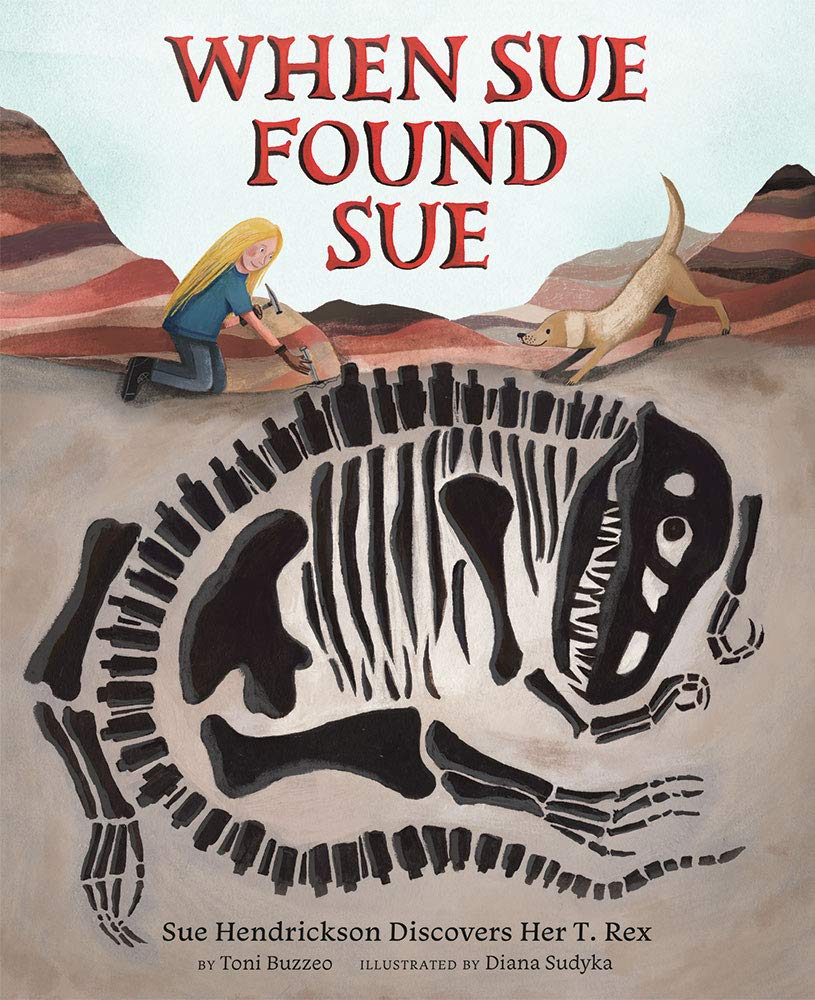
When Sue Found Sue: Sue Hendrickson Discovers Her T. Rex

Written by Toni Buzzeo | Illustrated by Diana Sudyka


Sue Hendrickson was an expert at finding things. The lure of buried or lost treasures kept her busy in her hometown of Munster, Indiana. “Born shy and incredibly smart,” Sue devoured books, discovering everything she could about the things that interested her. One of her favorite places was the Field Museum of Natural History in Chicago. There, she reveled in the treasures others had found and dreamed of the day when she could “search the wide world for hidden treasure on her own.”

celebrate-picture-books-picture-book-review-when-sue-found-sue-collection

Image copyright Diana Sudyka, 2019, text copyright Toni Buzzeo, 2019. Courtesy of Abrams Books for Young Readers.

When she was seventeen, Sue began her life of treasure hunting, joining teams that searched for sunken boats, airplanes, and even cars. She went to Dominican amber mines looking for prehistoric butterflies and deserts of Peru searching for whale fossils. Finally, she headed to South Dakota to dig for dinosaurs.

She spent four summers unearthing duck-billed dinosaurs, using more and more delicate tools to expose the bones. But near the end of her fourth summer, “Sue Hendrickson felt pulled to a sandstone cliff far off in the distance.” When she had the opportunity, she took her golden retriever and hiked the seven miles to the rock.

celebrate-picture-books-picture-book-review-when-sue-found-sue-alley

Image copyright Diana Sudyka, 2019, text copyright Toni Buzzeo, 2019. Courtesy of Abrams Books for Young Readers.

Walking around the perimeter, she noticed what looked like bones lying on the ground. When she looked up, she was astonished to see “three enormous backbones protruding from the cliff.” The size told her they must be from a Tyrannosaurus rex. Sue hurried back to her campsite and told her team the exciting news. They “immediately named the dinosaur Sue the T. rex.”

celebrate-picture-books-picture-book-review-when-sue-found-sue-ocean

Image copyright Diana Sudyka, 2019, text copyright Toni Buzzeo, 2019. Courtesy of Abrams Books for Young Readers.

It took five full days for the team to expose the skeleton. Then they mapped the location of each bone, photographing and drawing them. At last they began removing them, and after three weeks the bones were trucked to the Black Hills Institute. Eventually, Sue the T. rex was moved to the Field Museum in Chicago. If you visit the museum today, you will see Sue towering over you. “She is the world’s largest, most complete, best-preserved Tyrannosaurus rex fossil discovered so far”—discovered by a woman who was born to find things.

An Author’s Note about Sue Hendrickson and the battle over the T. rex skeleton as well as resources for further study and a photograph of Sue the T. rex follow the text.

celebrate-picture-books-picture-book-review-when-sue-found-sue-excavating

Image copyright Diana Sudyka, 2019, text copyright Toni Buzzeo, 2019. Courtesy of Abrams Books for Young Readers.

Toni Buzzeo’s inspiring story of how Sue Hendrickson discovered the most complete and best-preserved T. rex fossil delves into more than the finding and excavating of the skeleton. Buzzeo also emphasizes Hendrickson’s personality and long-held love of treasure hunting, qualities that informed and aided her career choice. Readers who also harbor dreams outside the mainstream and have a steady focus will find much to admire in Buzzeo’s storytelling and Sue’s example. Kids will be awed by Sue’s early treasure-hunting exploits and fascinated by the painstaking process of unearthing fossils. When Sue follows her intuition to the cliff—without explanation or facts—readers will be reminded that they can rely on their own curiosity, experience, and ideas to carry them forward. With nods toward the value of teamwork and sprinkled with Sue’s own words about her moment of discovery, the story exposes the bones of a life well-lived and points children in the right direction.

Screen Shot 2019-05-14 at 4.33.48 PM

Diana Sudyka opens the story of Sue Hendrickson with a lovely collage of the treasures she found and studied as a child and that led to her life-long love of discovery. As Sue grows, she visits the Field Museum, with its exhibits of a Triceratops and Hadrosaurus. Fast-forward several years and she’s swimming in a sea dotted with colorful coral toward an old sunken ship. But the centerpiece of the story takes place in the South Dakota hills, the layers of rock painted in stripes of earthy brown, rust, rose, and ivory. As the team works late nights to excavate the bones, a T. rex constellation appears above the team in the starry sky, urging them on. A two-page spread of how Sue the T. rex fossil appeared in its entirety in the ground is sure to elicit plenty of “Wows!,” and a rendition of Sue on exhibit in the Field Museum will no doubt inspire some travel wishes.

A book about a modern-day scientist that will engage and inspire children with scientific aspirations of their own as well as a celebration of individuality and big dreams and a must for dinosaur lovers, When Sue Found Sue would be a T. riffic addition to home, school, and public library collections.

Ages 4 – 8

Abrams Books for Young Readers, 2019 | ISBN 978-1419731631

Discover more about Toni Buzzeo and her books on her website.

To learn more about Diana Sudyka, her books, and her art, visit her website.

National Dinosaur Day Activity

celebrate-picture-books-picture-book-review-dinosaur-eggs-craft-nest

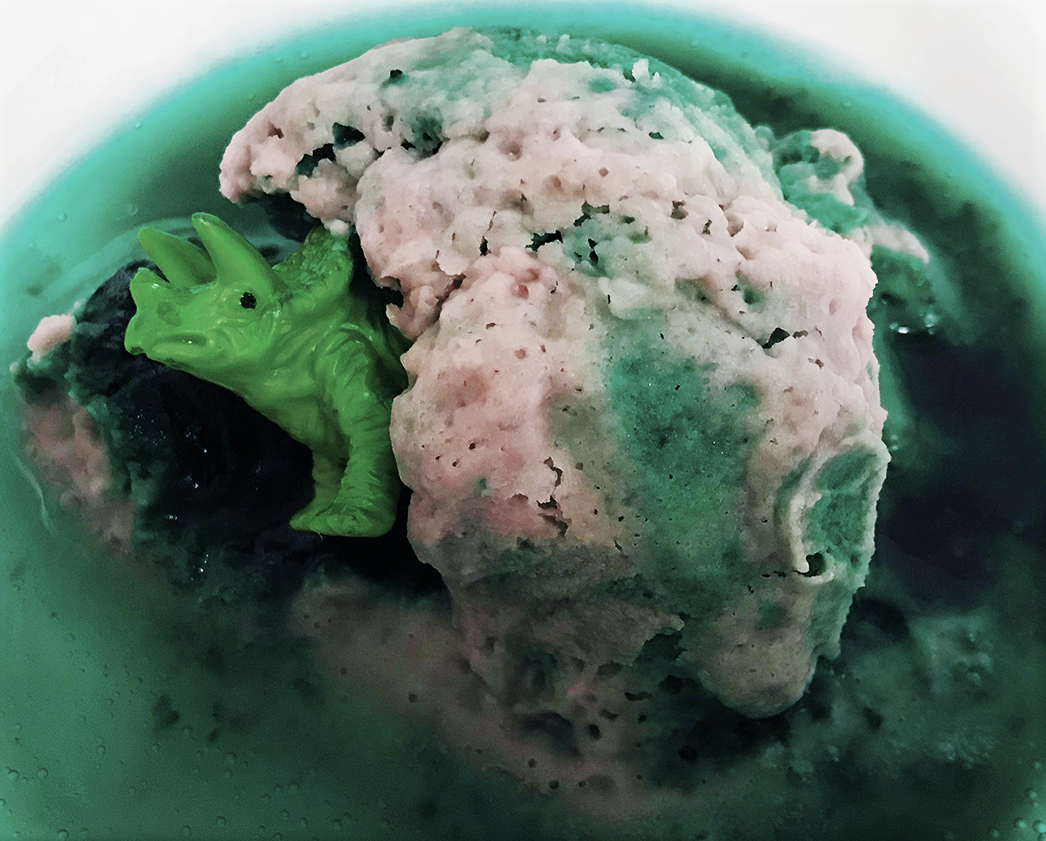
Hatch Your Own Dinosaur Eggs


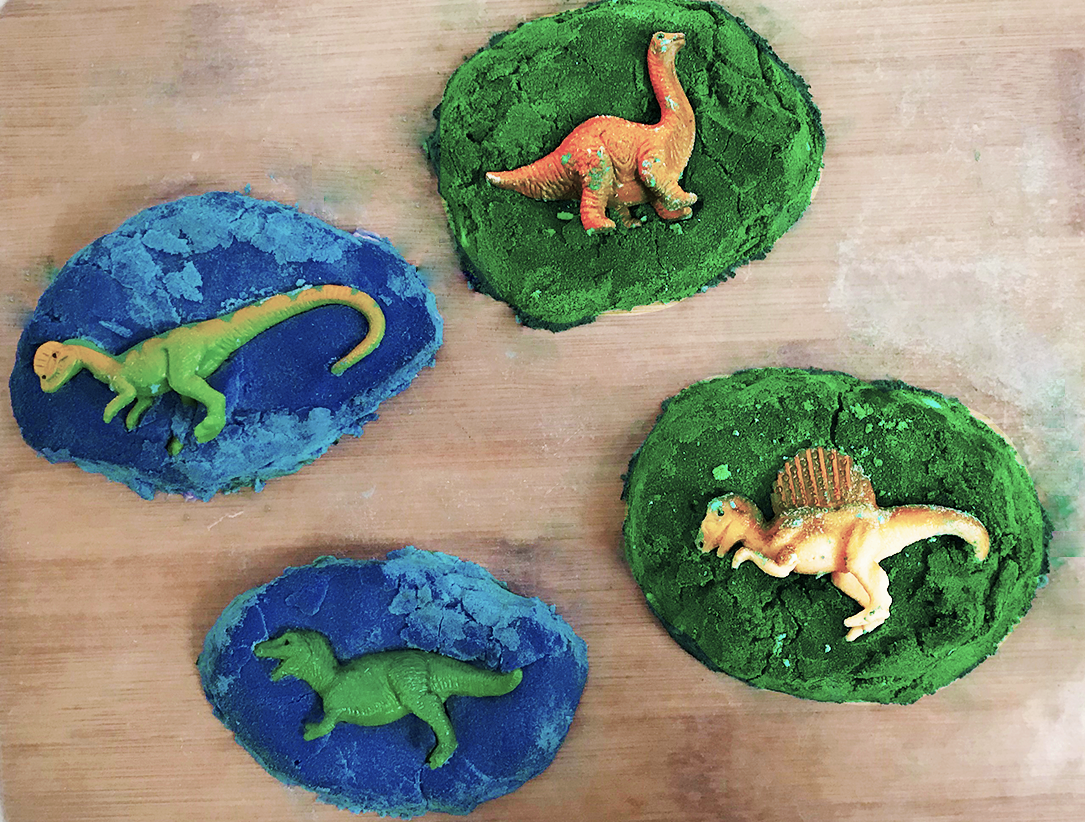
Think there are no more dinosaur eggs to be found? Think again! You can make your own with this easy craft that will have you hatching some T.-rex-size fun! All you need are a few simple ingredients!

celebrate-picture-books-picture-book-review-dinosaur-eggs-craft-open-eggs

Supplies

  • Old clothes or apron
  • Large box of baking soda (makes between 6 and 8 eggs)
  • Food coloring
  • Water
  • Plastic dinosaur toys
  • Bowl
  • Fork
  • Spoon
  • Wax paper
  • Baking sheet
  • Foil
  • Vinegar
  • Spray bottle (optional)
  • Plastic or metal spoon, stick, popsicle stick, or other implement to chisel with

celebrate-picture-books-picture-book-review-dinosaur-eggs-craft-vinegar-egg-open-darker

Spray the egg with vinegar to hatch your dinosaur

Directions

  1. Wear old clothes or an apron
  2. Cover work surface with wax paper, parchment paper, newspaper, or other protection. Food coloring can stain some surfaces
  3. Pour baking soda into the bowl
  4. Add drops of food coloring in whatever color you’d like your eggs to be. The eggs will darken when baked.
  5. Mix in the food coloring with the fork. You may want to use your hands, too
  6. When the baking soda is the color you want it, begin adding water a little at a time
  7. Add water until the baking soda holds together when you squeeze it in your hand
  8. When the baking soda is the right consistency, spoon some out into your hand or onto wax paper
  9. Push one plastic dinosaur into the middle
  10. Cover the dinosaur with more of the baking soda mixture
  11. Carefully form it into an egg shape
  12. Repeat with other dinosaurs

celebrate-picture-books-picture-book-review-dinosaur-eggs-craft-chiseled -darker

Chisel the egg open to hatch your dinosaur

To Bake the Eggs

  1. Set the oven or toaster oven to 200 to 225 degrees
  2. Set the eggs on a baking sheet lined with foil
  3. Bake the eggs for 15 minutes, check
  4. Turn the eggs over and bake for 10 to 15 more minutes
  5. Remove from oven and let cool

To Hatch the Eggs

  1. Eggs can be hatched by chiseling them with a spoon, stick, or other implement
  2. Eggs can also be hatched by spraying or sprinkling them with vinegar

celebrate-picture-books-picture-book-review-when-sue-found-sue-cover

You can find When Sue Found Sue: Sue Hendrickson Discovers Her T. Rex at these booksellers

Amazon | Barnes & Noble | Books-a-Million | IndieBound

Picture Book Review

April 30 – It’s Jazz Appreciation Month

celebrate-picture-books-picture-book-review-birth-of-the-cool-cover

About the Holiday

Jazz Appreciation Month got its start at the Smithsonian National Museum of American History in 2001. The aim was to celebrate and educate people on the history of and continuing love for jazz. The holiday encourages people of all ages to become familiar with jazz music and the musicians of the past who created this original sound and those today who keep innovating jazz for new audiences. This year’s theme is “jazz beyond borders” and looks at the “dynamic ways jazz can unite people across the culture and geography.” In connection with this initiative, the Smithsonian Masterworks Orchestra will travel to cities in North America, Europe, and Asia as a way to use music to open dialogue about “diversity, identity, diplomacy, and innovation.” To celebrate jazz not only this month but anytime, attend a concert, listen to recordings, and read up on your favorite musicians or a new one. And don’t forget to share your love of jazz with your kids! A great place to start is with today’s book!

Birth of the Cool: How Jazz Great Miles Davis Found His Sound

Written by Kathleen Cornell Berman | Illustrated by Keith Henry Brown


As a child, Miles Davis listens to the radio before school, clapping and swaying along to “Louis Armstrong’s soaring trumpet” and “Duke Ellington’s sensational big band.” The “swinging sounds of jazz / swirl together like / colors on a pinwheel.” When he’s older, Miles watches the riverboats on the Mississippi as they bring musicians from New Orleans to play in the East St. Louis clubs. At night he listens as “melodies drift down the street. / Some croon country, / some cry the blues. / Sassy saxophones wail / through the night.”

During the summer, Miles visits his grandfather’s farm in Arkansas. Here, he hears the music of horses’ hooves. On his walks through town, he listens to the sounds of guitars and singing, and at church he learns the notes of “soulful singing.” For his thirteenth birthday, Miles receives a trumpet. He takes lessons and practices again and again.

While he’s still in high school, Miles begins being paid to play at dance halls. His confidence grows and he begins to develop his own sound. A new form of jazz is attracting attention—Bebop: “far-out harmonies / with fast, flipping beats / that hop and bop.” He goes to clubsto listen to Charlie “Bird” Parker and Dizzy Gillespie play. He’s “blown away / by the energy of the music.”

Then one night, one of the band members doesn’t show up, and Miles—who always has his trumpet with him—is asked to fill the spot. In awe and a little intimidated in the presence of his idols, Miles’ playing “doesn’t shine.” But he knows that “jazz / is all he wants to play.” Miles moves to New York to go to school at Juilliard, but, really, to learn from Bird, Dizzy, and all of his idols. In the morning he goes to class, practicing between classes. At night he plays clubs throughout the city.

Soon, he leaves Juilliard to concentrate on playing and learning from the greats. His father advises him: “Don’t be like the mockingbird / that copies others. / Be your own man. / Be your own sound.” When Dizzy leaves Bird’s band, Miles takes his place. But he plays differently than Dizzy. “Some listeners put him down— / they want Dizzy’s rippling trumpet.” The criticism make Miles lose confidence and want to quit. But Bird encourages him.

With practice and patience, he discovers his own sound, holding and savoring perfect notes “just for the beauty of it.” He forms his own group with talented musicians who want to create new sounds. The nine musicians play “slowly and mysteriously…. Cool— / relaxed, / with a lighter, / lyrical feel.” Mile’s solos enchant audiences.

But the endless work takes its toll. He begins to lose gigs; his health declines. Miles doesn’t give up. “He climbs out / of his dark days / by playing his horn again.” Then in 1955 he takes the stage at the Newport Jazz Festival and begins to play. “…His mystical voice hangs / like a cloud, / leaving space / for each listener’s / imagination to wander.” The crowd cheers and applauds. Miles is back with his unmistakable sound and new ideas for the future of the music he loves.

Notes about Miles Davis from Wynton Marsalis, Kathleen Cornell Berman, and Keith Henry Brown as well as a selected discography and bibliography follow the text.

Kathleen Cornell Berman’s lyrical passages reveal a boy, a teenager, and a man who embodied music, listening to and absorbing the various sounds around him and incorporating them into his own, unique sound. Her evocative vocabulary (swirl, rollicking, croon, rumbling, far-out, rippling, blizzard of notes, itching to play) and phrasing that blends short staccato lines with longer sentences echoes the rhythm of jazz and will keep readers riveted to the story. Berman emphasizes the listening, practice, and experimentation that informed Miles Davis’s original sound, showing children that innovation is built on hard work, dedication, and even history. Her inclusion of Davis’s setbacks also demonstrates that perseverance is part of the success of any endeavor.

Keith Henry Brown’s gorgeous, detailed pen-and-ink and watercolor illustrations take readers from Miles Davis’s living room, where he listens to the radio as images of Louis Armstrong and Duke Ellington swirl through his imagination, to an overlook on the Mississippi River and its paddlewheel steam ships to the clubs and jam sessions of New York and finally, to the Newport Jazz Festival. Brown’s color palette of cool blues, greens, purples, and browns, punctuated with Davis’s ever-present gleaming brass trumpet, brings Davis’s country and city experiences to life while mirroring the tone and feel of his unique sound. Quotes from Miles Davis are sprinkled throughout the story and set apart with type that looks handwritten, giving his words a personal touch.

Sure to inspire readers to learn more about Miles Davis and listen to his music, Birth of the Cool: How Jazz Great Miles Davis Found His Sound would be an excellent accompaniment to school music programs, an inspiring book for biography lovers and young musicians of all types, and a beautiful addition to home, school, and public library collections.

Ages 8 – 12

Page Street Kids, 2019 | ISBN 978-1624146909

Discover more about Kathleen Cornell Berman and her books on her website.

To learn more about Keith Henry Brown, his books, and his art, visit his website.

Meet Kathleen Cornell Berman

celebrate-picture-books-picture-book-review-kathleen-cornell-berman-headshot

In your author’s bio you say that you fell in love with Mile’s Davis’ music when you were 10 years old. Was there a particular spark that made you love his music?

As a kid I loved all kinds of music. When I first heard Miles’ trumpet sound, I fell in love. His trumpet sound was different. It wasn’t flashy, it was slow, haunting and very beautiful. I longed to hear it again.

Can you take readers on your journey of writing Birth of the Cool and having it published? What kind of research did you do? What was the most surprising thing you learned about Miles Davis?

I was thrilled when I got the email from Charlotte Wenger from Page Street. It’s beyond exciting when you find someone who loves your story as much as you do. And Charlotte was a dream editor to work with.

I read Miles’ autobiography and many other books about him, as well as journal and magazine articles. I listened to countless interviews and researched players in his band. And I listened to his music a lot. He went through many changes in his musical career. I realized I had to keep my focus on his early career. 

I was surprised to learn he had slave ancestors who played music in the main house on a plantation. It was interesting to discover that Miles loved rural life (from his visits to his relatives’ farms). When he first moved to NYC, he visited the stables and asked to ride their horses. He had fond memories of riding them on his grandfather’s farm.

Keith Henry Brown’s pen-and-ink and watercolor illustrations are gorgeous and full of expression. Can you talk about your reaction to seeing the illustrations for the first time. Do you have a favorite spread?  

celebrate-picture-books-picture-book-review-kathleen-cornell-berman-and-keith-henry-brown

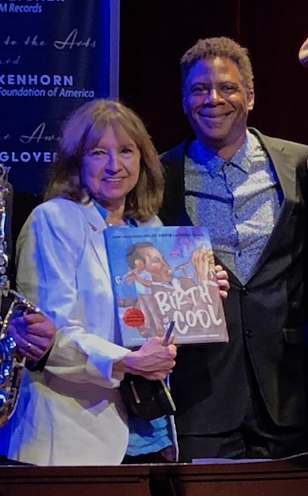
Kathleen Cornell Berman and Keith Henry Brown at the book launch for Birth of the Cool and the Jazz Gallery in New York City.

My first reaction to Keith’s illustrations was like an “out of the body” experience. To see my words come to life was a wonderful feeling. His art illuminated Miles’ journey in a jazz inspired way. I was very happy when he accepted the job. I already knew he was a jazz fan, so he was a good choice.

Keith’s goal was to create drawings that weren’t too tight or realistic. He wanted to create a loose, abstract feeling. I think Keith achieved that beautifully. Kudos to his courage in creating illustrations in watercolor, a very unpredictable medium. It’s difficult for me to pick a favorite illustration, I really love them all.

Your inspirational biography highlights the ups—and downs—of Miles Davis’ early career. What message would you like readers to take away from the story?

Miles is a great example of how hard work pays off. Some kids today think it’s easy to play an instrument. For some it might be, but inventing your own sound, is extremely difficult. It takes perseverance and dedication to create your own voice on the instrument. That goes for anything you attempt, whether you become an architect, a visual artist, writer, or a singer. Unfortunately, many jobs don’t allow individuality, but finding something, anything that you’re good at can boost happiness.

I hope this story inspires kids to reach for the stars, to find their own voice, and never give up. I also hope kids will take time to listen to jazz; it’s America’s classical music. Listening to music has so many benefits, intellectually as well as emotionally.

I saw on your website that you like to collect words. Can you tell me five of your favorites and what you love about them? Do you remember where they first caught your eye—or ear?

I’m usually attracted to words that tickle the tongue and have a unique sound, like mesmerizing, prickly, crumpled, nuzzle, etc. There are so many. I love alliteration. When words are paired with another, they sing and make the text come alive. I usually have my wordbook at my side as I read any kind of book. I also use my phone memo to jot words as I hear them in daily life.  

Besides writing, you paint, and create assemblages from found objects. Your sculptures are gorgeous and fun and have so much personality! Which came first—writing or art? When creating an assemblage, do you start with one object or do you see how several of the materials you have can fit together?

Thank you very much. Creating found art sculptures is like therapy. I’ve always been into creating something out of ordinary things. The art and writing coincided with a strong desire to break out of the box of being a teacher.

I collect a lot of wood as well as words. When I find a piece that inspires me, I visualize what it might become and I begin the search for a complimentary piece. It’s kind of like doing puzzles.

Is there a similarity for you in constructing a sculpture and creating text for a picture book?

Yes, there is. I look for a seed of an idea that touches my senses or emotions. And in art I choose a piece of wood that inspires me visually. Then it all comes down to layering and adding details that make the story or art shine in a new way. Finally, adding the “just right” color or details can be compared to the continual revisions to discover perfect words that fit my story.

Birth of the Cool is your debut picture book. What are you looking forward to most as a picture book author?

Reading the book to children and getting them to reflect about their feelings. And, of course, introducing them to jazz.

I love writing picture book biographies. I also enjoy writing books that will amuse kids, as well challenge their thoughts about nature.

What’s up next for you?

I have a new picture book bio about another musician that I just started submitting. And I’ve started research on another interesting, relatively unknown musician that had a big impact on many.                                  

What is your favorite holiday?

My favorite holiday is Thanksgiving. I love the traditions and the history. Holidays are so important in bringing busy families together. As a former teacher,             Thanksgiving gave me the opportunity to discuss the importance of the Native American people. They taught us so much. At the Thanksgiving table, we as a family celebrate the Native American contributions to our country. I wish more people did the same.

You can connect with Kathleen Cornell Berman on

Her website | Facebook | Instagram | Twitter

Jazz Appreciation Month Activity

celebrate-picture-books-picture-book-review-jazz-trumpet-word-search-puzzle

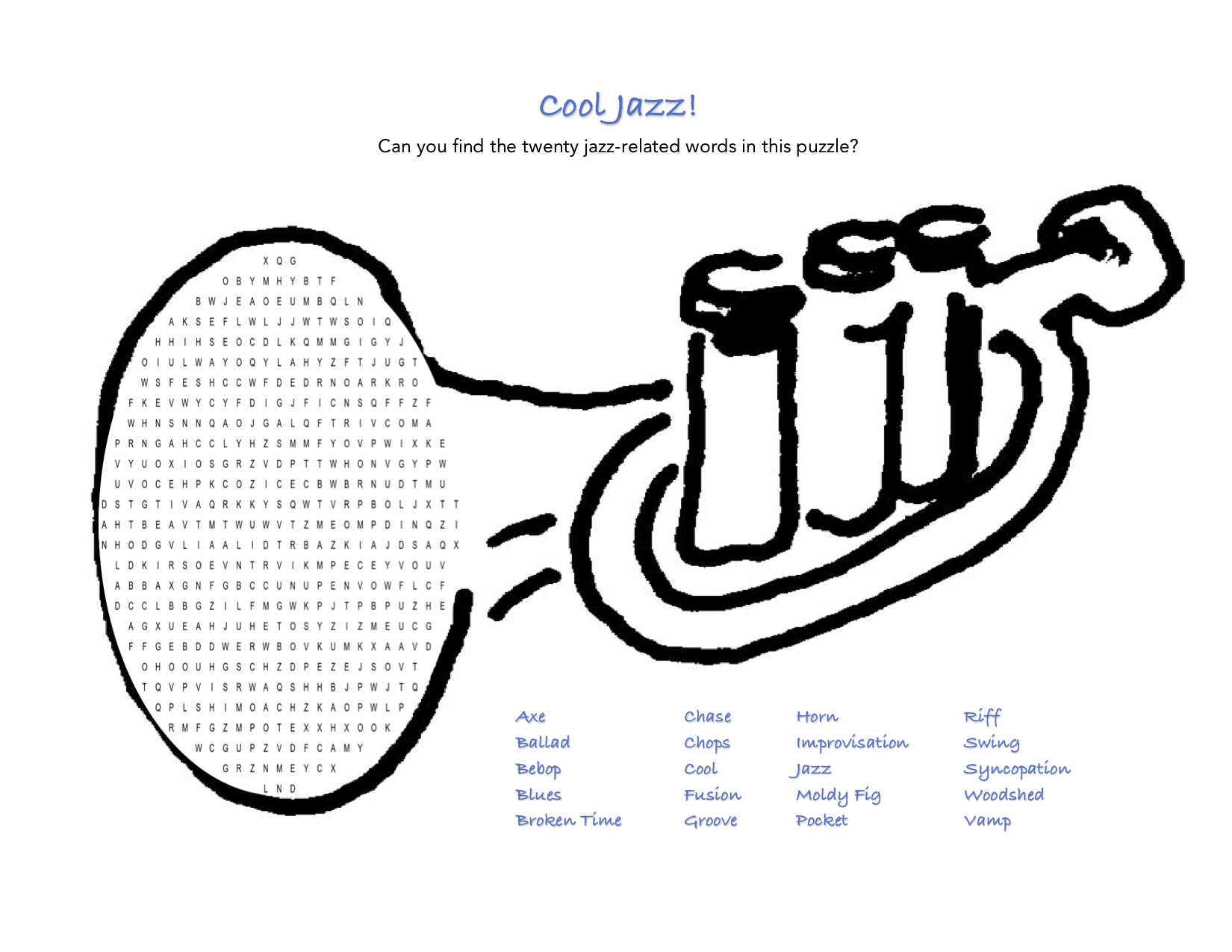
Cool Jazz! Word Search Puzzle


Jazz has a sound and vocabulary all it’s own! Can you find the twenty jazz-related words in this printable puzzle? Then have fun coloring it!

Cool Jazz! Word Search Puzzle | Cool Jazz! Word Search Solution

celebrate-picture-books-picture-book-review-birth-of-the-cool-cover

You can find Birth of the Cool: How Jazz Great Miles Davis Found His Sound at these booksellers

Amazon | Barnes & Noble | Books-a-Million | IndieBound

Picture Book Review

 

March 28 – Baseball Opening Day

celebrate-picture-books-picture-book-review-yogi-cover

About the Holiday

Today is what baseball fans wait for all fall and winter—Opening Day! This year is particularly exciting as it marks the 150th anniversary of America’s Pastime, commemorating the foundation of the Cincinnati Reds in 1869. So, get ready to cheer on your favorite team—and don’t forget the peanuts and cracker jacks, as the old song says!

Calkins Creek sent me a copy of Yogi for review consideration. All opinions are my own. I’m thrilled to be partnering with Calkins Creek in a giveaway of the book. See details below.

Yogi: The Life, Loves, and Language of Baseball Legend Yogi Berra

Written by Bard Rosenstock | Illustrated by Terry Widener


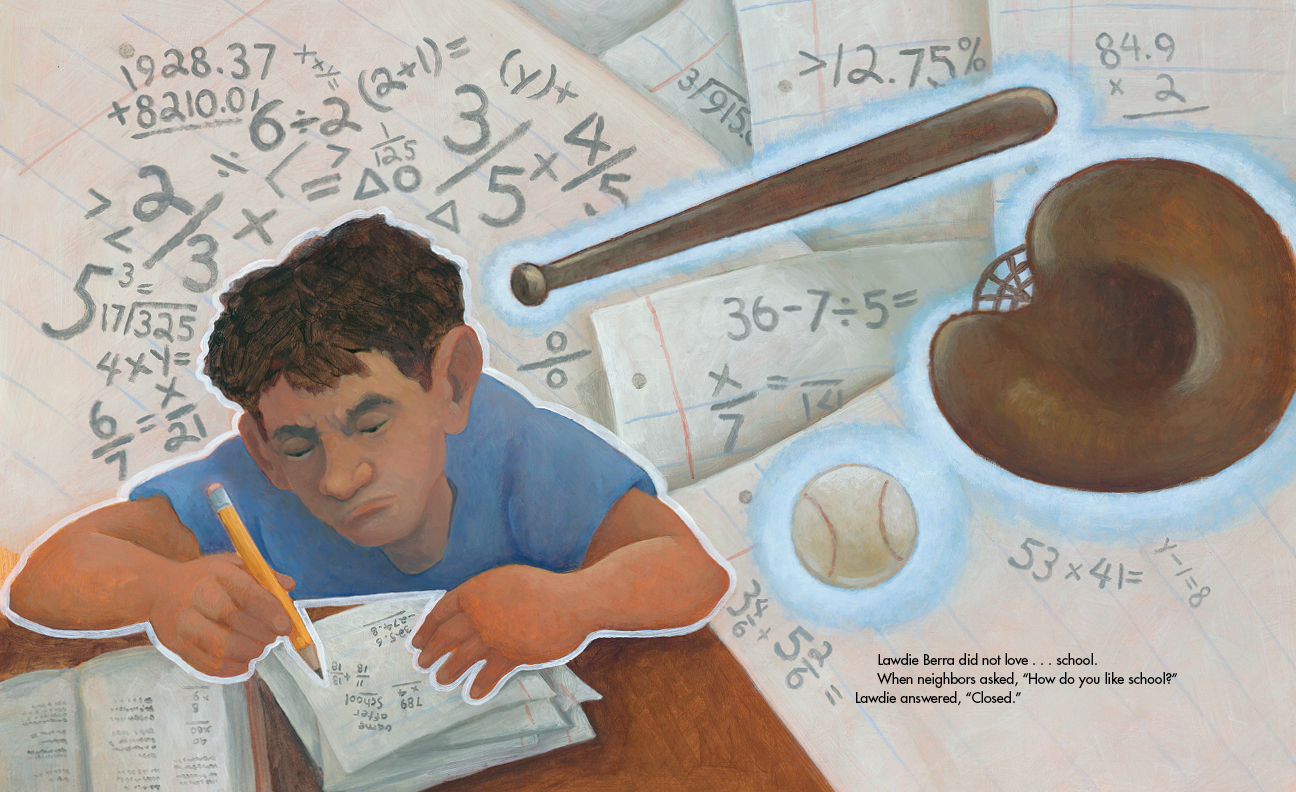
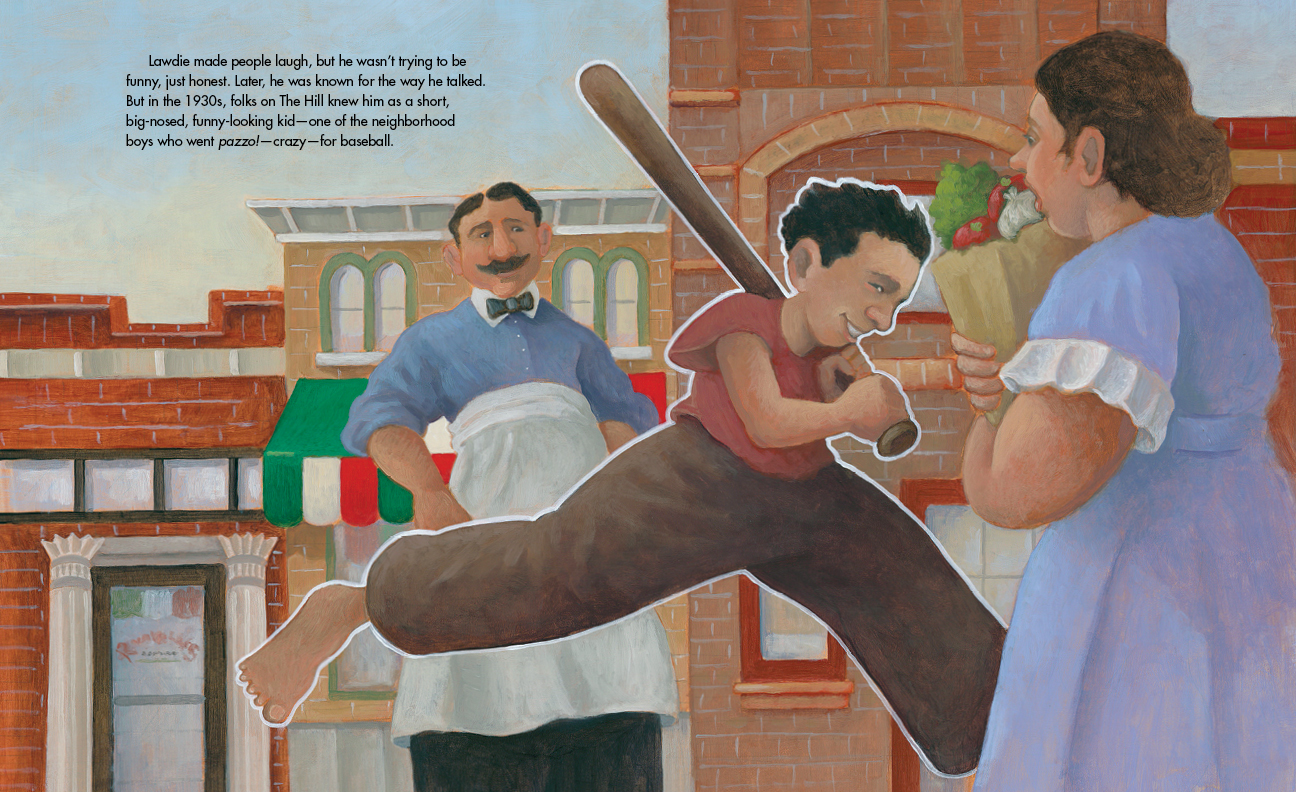
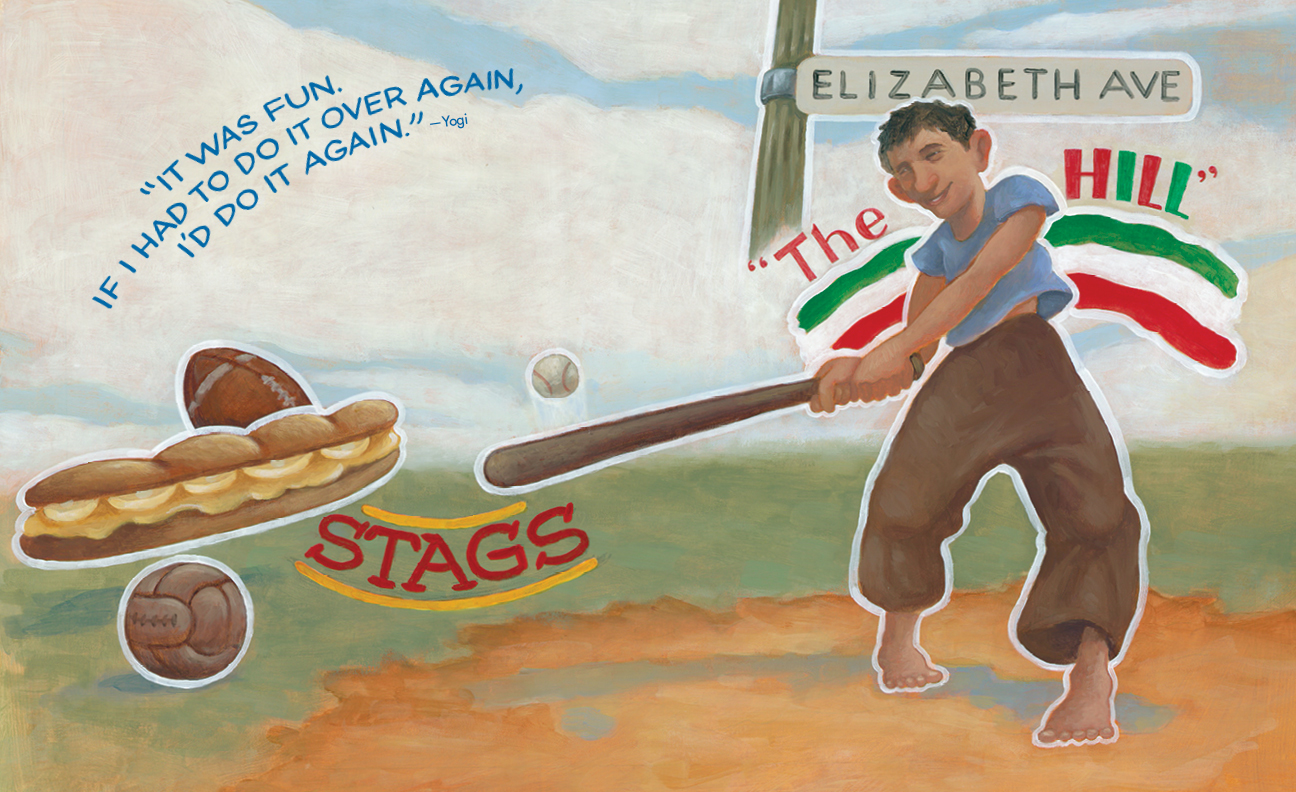
Even as a kid, Lawdie Berra had a way with words…and sports. While he loved his family, his Italian neighborhood in St. Louis, Missouri, and his friends, he was not fond of school. “When neighbors asked, ‘How do you like school?’ Lawdie answered, ‘Closed.’” Like other boys in “The Hill,” Lawdie had baseball fever. Using borrowed equipment, makeshift bats, and shin guards made from magazines, they played in “an abandoned clay-mine dump.” Their team name was the Stags, and they were one of the best teams in the local leagues.

celebrate-picture-books-picture-book-review-yogi-school

Image copyright Terry Widener, 2019, text copyright Barb Rosenstock, 2019. Courtesy of Calkins Creek.

When the Stags went asking for sponsorship for uniforms, storeowners told them “baseball was a ‘bum’s game’” and sent them on their way. Lawdie’s brothers were even asked to try out by major league teams, but their father insisted they get real jobs. When it was Lawdie’s turn to ask, they helped convince their father to let him have a chance. He finally said yes.

Lawdie joined an American Legion travel team with his friend Joey Garagiola. He had a lot to learn, and when he wasn’t playing he sat on the sidelines with his arms and legs crossed. A snake-charming yogi in a movie inspired his teammates to nickname Lawdie “Yogi,” and the name stuck. Even though his form was awkward, he was fast and helped his American Legion team to the national playoffs two years in a row. Then the St. Louis Cardinals came calling. They signed Joey, but not Yogi.

celebrate-picture-books-picture-book-review-yogi-stags

Image copyright Terry Widener, 2019, text copyright Barb Rosenstock, 2019. Courtesy of Calkins Creek.

In 1942, Yogi was given a shot on a New York Yankees’ minor league team. He played for one year before enlisting in the Navy to fight in World War II. When the war ended, Yogi went back to the minor leagues. His play captured attention, and on September 22, 1946, he joined the lineup in his first major league game. He hit two homers and continued hitting. But the newspapers and his New York Yankees teammates blasted him for his looks.

When the pitchers complained about his catching and signaling, he practiced until “home plate became like Yogi’s living room—he talked to everyone there and no one came in unless he let them.” At the plate, he psyched batters out with his chatter and disarmed players and fans with his baseball smarts and goofy grin. He went on to play for nineteen seasons and helped the Yankees win ten world series. When he retired from playing, he continued with baseball for twenty-nine more years as a coach and then a manager. “Yogi knew how to help young players. Believe in yourself. Ignore the chatter. Work hard. And never forget, ‘It ain’t over till it’s over.’” People loved Yogi and his unique way with words—a love that continues today.

celebrate-picture-books-picture-book-review-yogi-young-lawdy

Image copyright Terry Widener, 2019, text copyright Barb Rosenstock, 2019. Courtesy of Calkins Creek.

Back matter includes an Author’s Note about Yogi Berra’s life on and off the diamond, photographs, statistics of Yogi’s career, a note about Yogi-isms, quotes about Yogi Berra, an extensive bibliography and other resources, and a bit about the Yogi Berra Museum and Learning Center.

Barb Rosenstock’s thorough biography of Yogi Berra is a soaring tribute to this icon of baseball. His dedication and perseverance in the face of setbacks and derision is inspirational, and his good-natured, generous character makes him a role model for all. Rosenstock’s detailed storytelling is fast-paced and suspenseful and punctuated with repeated phrasing that will rivet readers to what comes next. Sprinkled throughout the pages are some of Yogi’s famous quotes that endeared him to the world.

Terry Widener knows how to take readers out to the ballgame. His bold, realistic paintings of Yogi scrapping together baseball equipment as a child, working up through the minor league ranks, and finding his groove as a hitter and catcher are loaded with action and up-close perspectives. You can almost hear the characters speak, smell the leather of the catcher’s mitt, and feel the camaraderie of the crowd. And if you instinctively reach for that baseball coming your way, no one can blame you. Throughout the pages, Yogi is outlined in white, emphasizing his standout qualities on the field and off. So, get ready to settle in for the game and one of its most beloved players—no tickets required.

Sure to encourage young readers to reach their full potential no matter their talent, Yogi: The Life, Loves, and Language of Baseball Legend Yogi Berra is a must for home, school, and public libraries.

Ages 7 – 10

Calkins Creek, 2019 | ISBN 978-1629798240

Discover more about Barb Rosenstock and her books on her website.

To learn more about Terry Widener, his books, and his art, visit his website.

Enjoy this Yogi book trailer—it’s a home run!

Yogi Giveaway

I’m excited to partner with Calkins Creek in a Twitter giveaway of:

  • One (1) copy of Yogi: The Life, Loves, and Language of Baseball Legend Yogi Berra written by Barb Rosenstock | illustrated by Terry Widener

To enter Follow me @CelebratePicBks on Twitter and Retweet a giveaway tweet.

This giveaway is open from March 28 through April 3 and ends at 8:00 p.m. EST.

A winner will be chosen on April 4.

Prizing provided by Calkins Creek

Giveaway open to U.S. addresses only. | No Giveaway Accounts 

Baseball Opening Day Activity

celebrate-picture-books-picture-book-review-baseball-word-search-puzzle

Take Me Out to the Ball Game! Word Search


Step up to the plate and find the 23 baseball-related words in this printable puzzle.

Take Me Out to the Ball Game! Puzzle | Take Me Out to the Ball Game! Solution

Check out these other amazing blogs along the tour!

YOGI blog tour graphic

celebrate-picture-books-picture-book-review-yogi-cover

You can find Yogi: The Life, Loves, and Language of Baseball Legend Yogi Berra at these booksellers

Amazon | Barnes & Noble | Books-a-Million | IndieBound

Picture Book Review


March 15 – It’s National Reading Month

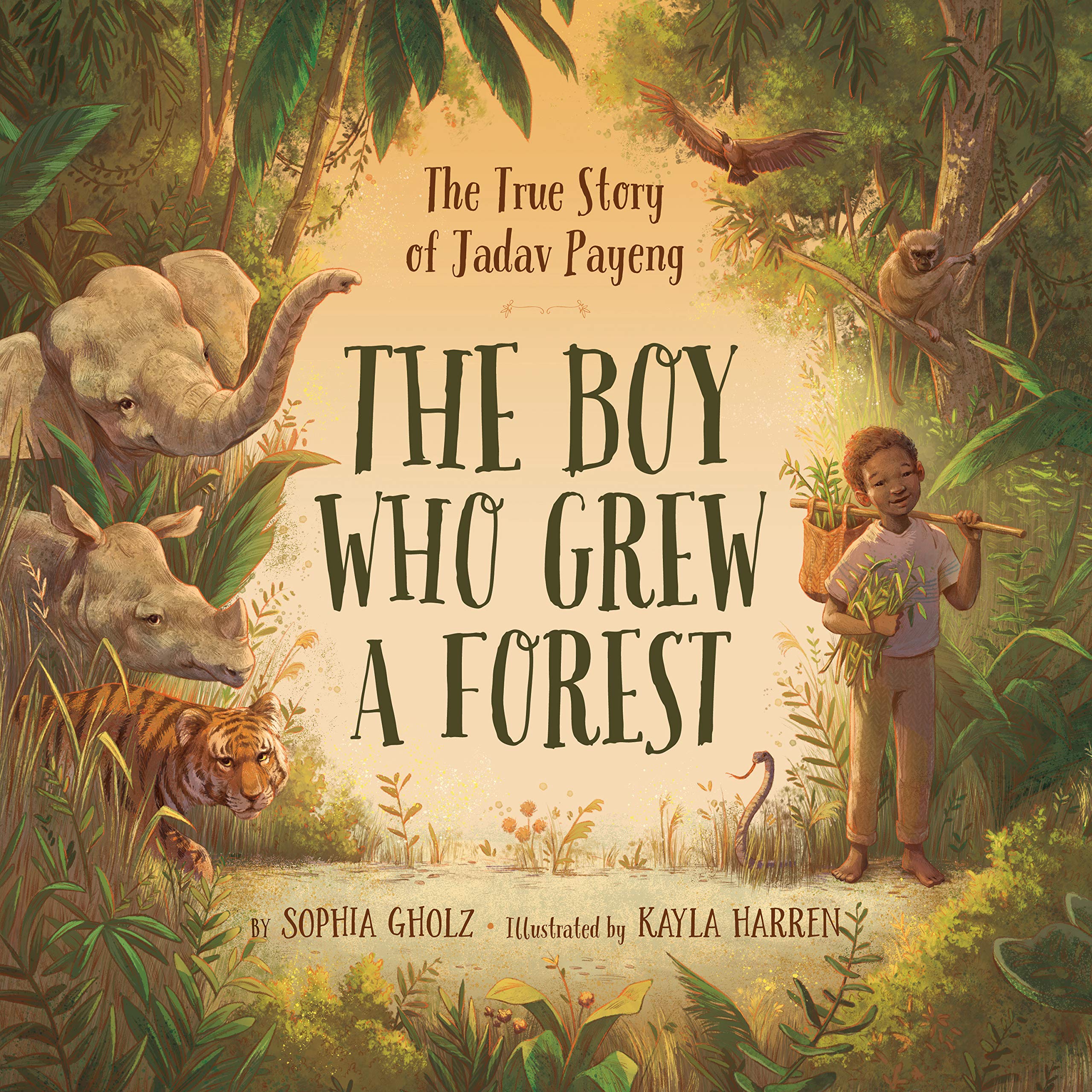
celebrate-picture-books-picture-book-review-the-boy-who-grew-a-forest-cover

About the Holiday

National Reading Month is a book-lover’s delight! With thirty-one whole days where taking extra time to read is not only allowed but encouraged can send one hurrying out to the bookstore or library to stock up! The month is only half over, so gather the kids and discover some new books to enjoy together–why not start with today’s book?!

The Boy Who Grew a Forest: The True Story of Jadav Payeng

Written by Sophia Gholz | Illustrated by Kayla Harren


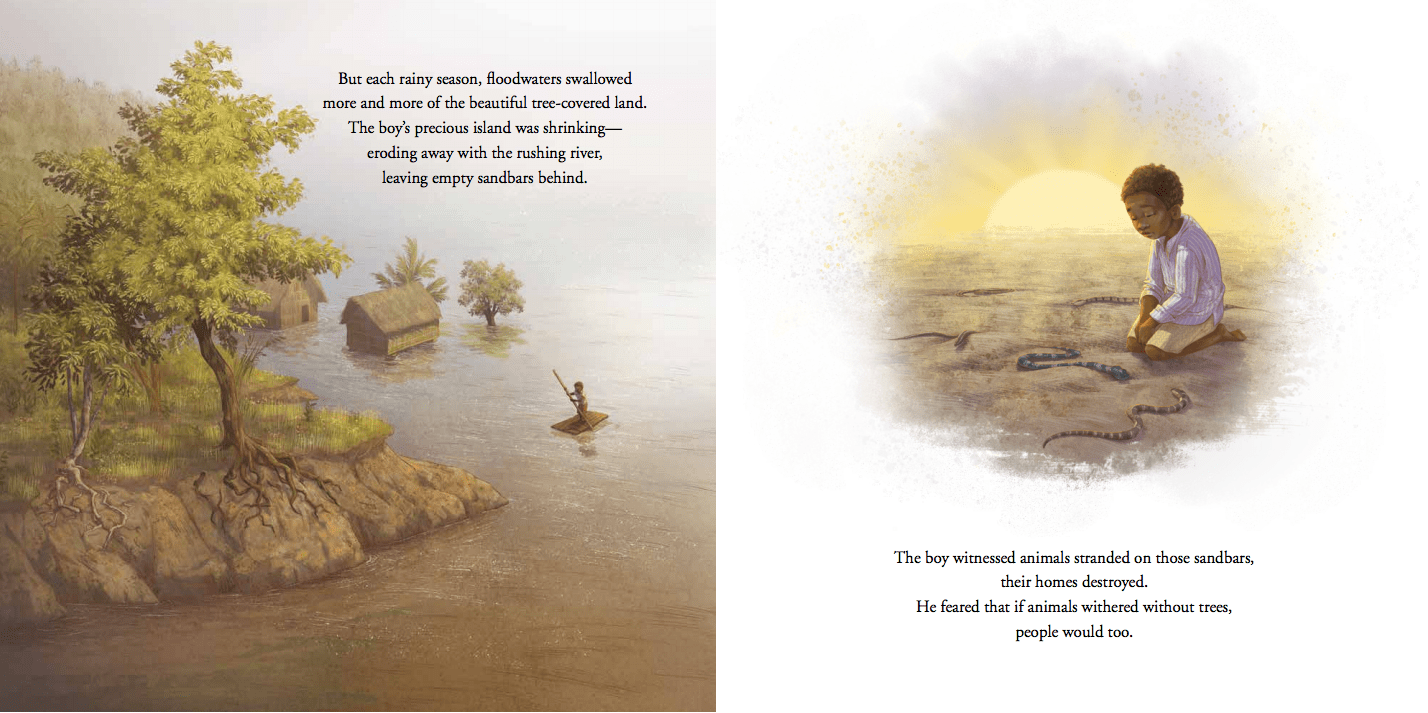
On a large river island in India, there lived a boy who loved the trees that provided food and shade for the people and shelter for the many native animals. But each year, the floods of the rainy season took more and more of the land. “The boy’s precious island was shrinking—eroding away with the rushing river, leaving empty sandbars behind.” Animals’ homes were destroyed and the animals died or didn’t come back. The boy was afraid this would happen to the people of the island too.

celebrate-picture-books-picture-book-review-the-boy-who-grew-a-forest-erosion

Image copyright Kayla Harren, 2019, text copyright Sophia Gholz, 2019. Courtesy of Sleeping Bear Press.

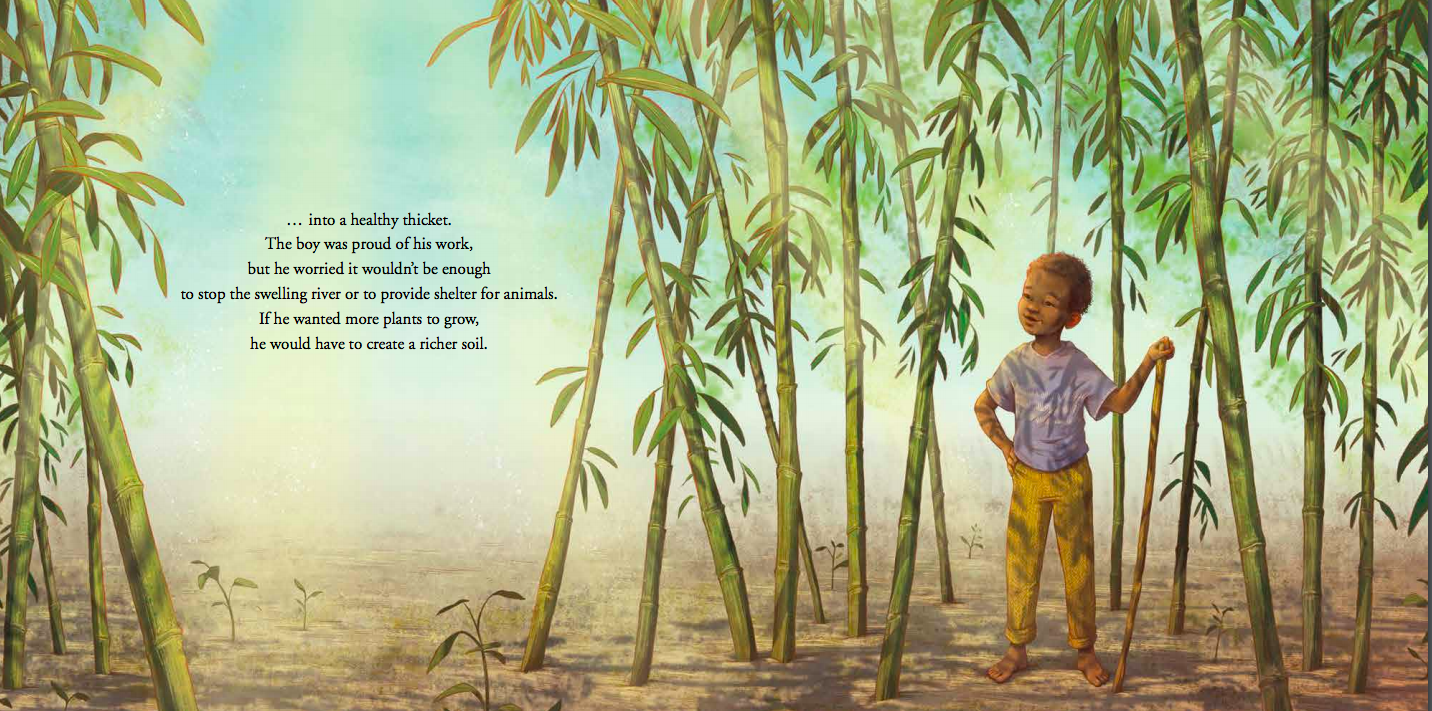
When he took his fears to the elders of his village, they gave him twenty bamboo saplings. He rowed over to one of the sandbars and began to plant the saplings. He came back every day to water the plants and then devised an easier way to water them. Under his care, the bamboo began to grow. In time they became “a healthy thicket.” But for the bamboo to spread further, the boy knew the soil needed to be richer.

He brought in “cow dung, earthworms, termites, and angry red ants that bit him on the journey to their new home.” From other villages, he got seeds of different trees and planted those too. Over the years, a forest grew, covering acres and acres of land. Animals like rhinos, elephants, birds, and monkeys began to return. But with these animals, dangerous predators also came. The villagers were afraid. To provide food for the tigers, the boy—now a man—sowed grasses to attract rabbits, mice, deer and other prey.

celebrate-picture-books-picture-book-review-the-boy-who-grew-a-forest-bamboo

Image copyright Kayla Harren, 2019, text copyright Sophia Gholz, 2019. Courtesy of Sleeping Bear Press.

To keep other animals fed, the boy planted fruit trees, and when the villagers cut down trees to build homes, the man sowed more seeds. Hunters came for the animals’ “horns and fur, but the man was there to protect.” Today, the forest is thriving and is called Molai for the man who planted and preserved it. His name is Jadav “Molai” Payeng.

More information about Jadav Payeng, an Author’s Note, and a seed-planting activity follow the text.

celebrate-picture-books-picture-book-review-the-boy-who-grew-a-forest-elephantscelebrate-picture-books-picture-book-review-the-boy-who-grew-a-forest-elephants

Image copyright Kayla Harren, 2019, text copyright Sophia Gholz, 2019. Courtesy of Sleeping Bear Press.

If anyone questions how much one person can do, Sophia Gholz puts these doubts to rest in her inspiring biography of a child who recognized a danger to the people and wildlife of his island and solved the problem for generations to come. Children will marvel at the story of Jadav Payeng’s dedication and lifelong perseverance told through Gholz’ lyrical text. As children learn about Jadav Payeng, they also discover the components of fertile soil and how a lush environment attracts the animals and other wildlife vital to a flourishing community.

Kayla Harren’s exquisite sundrenched illustrations transport readers to the Indian island where Jadav Payeng grew up and let them see the effects of eroded shorelines, stranded animals, and the overwhelming task Jadav took on. Harren’s realistic images show Jadav’s hard work and ingenuity as he cares for his first twenty plants and expand the forest little by little. With stunning texture and depth, Harren depicts the verdant foliage and diversity of wildlife Jadav recreated. The true-to-life illustrations will thrill nature and animal lovers and have them exploring each page to capture all the details.

A gorgeous and beautifully told story about the power of one, The Boy Who Grew a Forest: The True Story of Jadav Payeng will excite children to make a difference in their own way. The book is an excellent choice to add to home, classroom, and library collections for science, sustainability, and inspirational story times and discussions.

Ages 5 – 8

Sleeping Bear Press, 2019 | ISBN 978-1534110243

Discover more about Sophia Gholz and her books on her website.

To learn more about Kayla Harren, her books, and her art, visit her website.

Read an interview with Sophia and Kayla about their inspirations for this book and how it came to be!
The Boy Who Grew a Forest Giveaway

I’m excited to partner with Sleeping Bear Press in an Instagram giveaway of:

  • One (1) copy of The Boy Who Grew a Forest written by Sophia Gholz | illustrated by Kayla Harren

This giveaway is open from March 15 through March 21 and ends at 8:00 p.m. EST.

Just do these things to enter:

Giveaway open to U.S. addresses only. | Prizing provided by Sleeping Bear Press.

National Reading Month Activity

celebrate-picture-books-picture-book-review-the-boy-who-grew-a-forest-activity-sheet-2

The Boy Who Grew a Forest Activity Sheets


You can be an environmental crusader in your neighborhood too! Print these activity sheets and challenge yourself with the questions. Then think about what you can do to help plants and wildlife in your neighborhood or even your own backyard!

The Boy Who Grew a Forest Activity Sheets

celebrate-picture-books-picture-book-review-the-boy-who-grew-a-forest-cover

You can find The Boy Who Grew a Forest: The True Story of Jadav Payeng at these booksellers

Amazon | Barnes & Noble | Books-a-Million | IndieBound

Picture Book Review