April 8 – National All Is Ours Day

About the Holiday

National All is Ours Day is a joy-filled holiday that encourages us to pause, look around, and really think about the beauty and abundance in our lives and the world around us. Our family and friends, neighbors, teachers, and colleagues—and who can forget our pets?—add so much richness to every day. Exploring your immediate surroundings or taking a trip to new locales and taking pleasure in the beauty you see can open up new perspectives and gratitude for the gifts we all share in common. Today, celebrate our interconnectedness with others, extend kindness, and embrace the idea that the best experiences in life are shared​​.

Thank you to Ten Speed Young Readers for sending me a copy of this book to me for review!

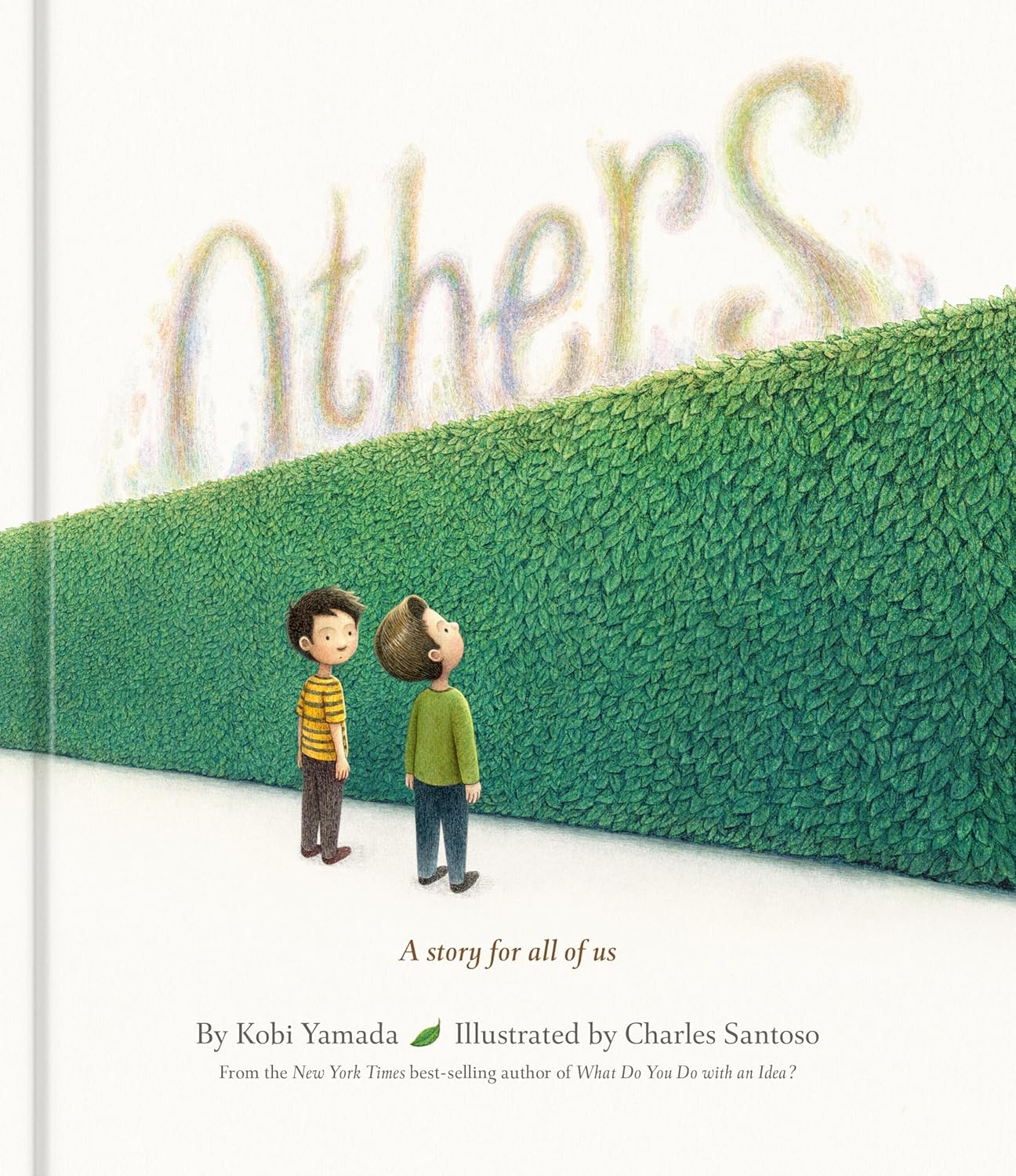
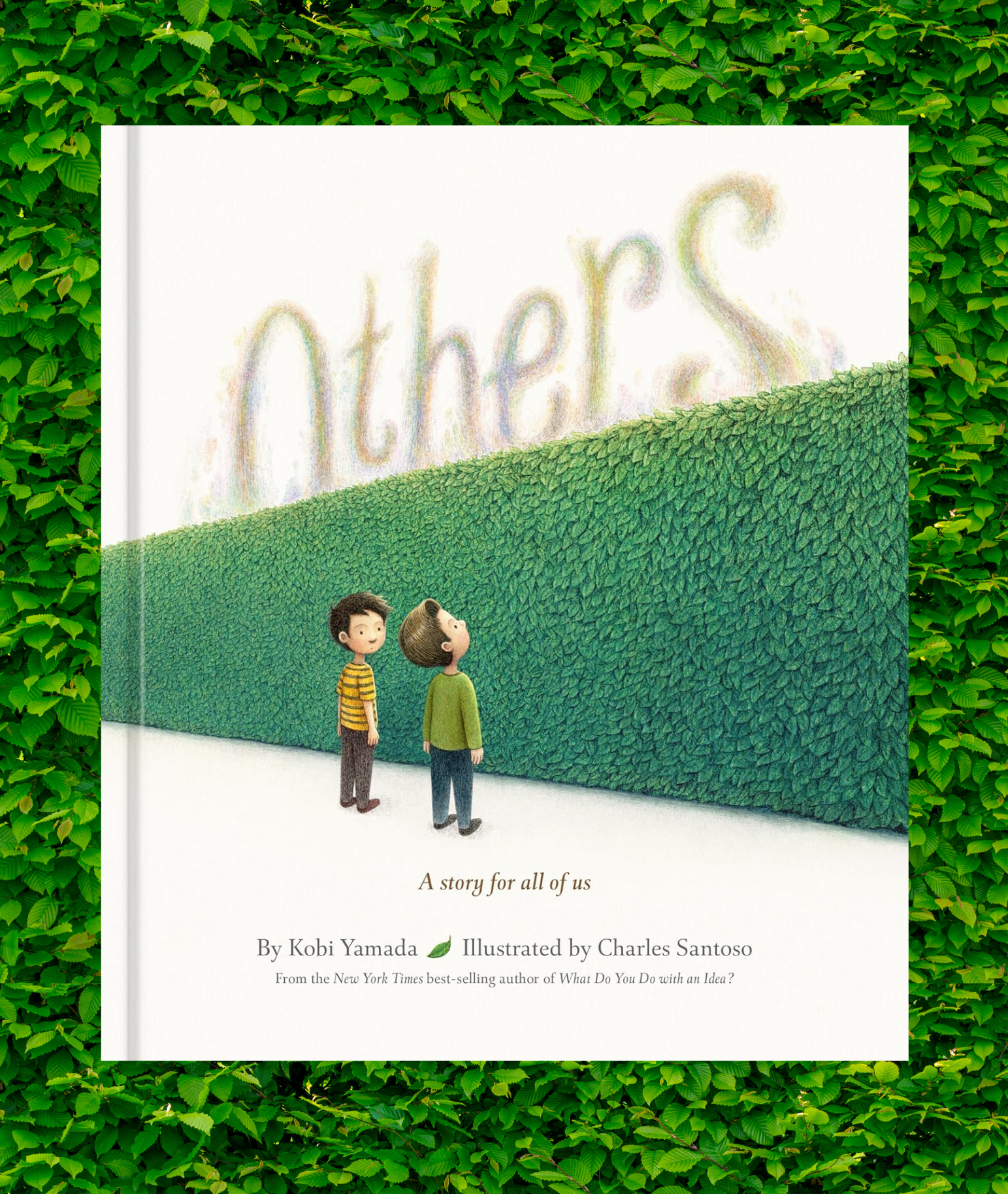
Others: A Story for All of Us

Written by Kobi Yamada | Illustrated by Charles Santoso


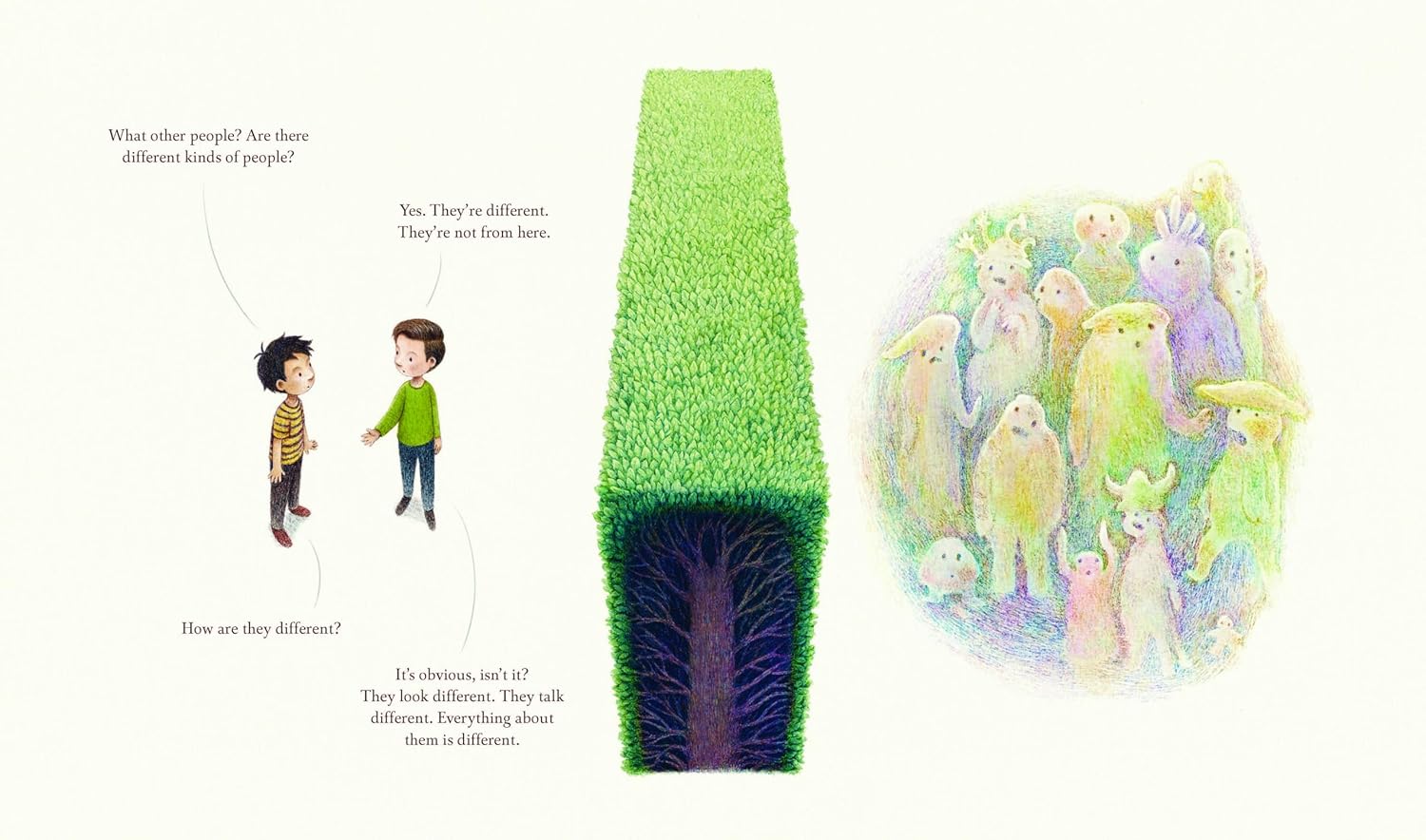
Kobi Yamada’s story starts simply enough. Two boys on one side of a hedge are having a discussion about the people on the other side of the hedge. One boy wonders what “the other people” are thinking about. The second boy is confused and asks, “Are there different kinds of people? How are they different?” His friend thinks it’s obvious: the way they look, talk, everything. The second boy then begins asking some pointed questions about exactly how they are different. “Do they have heads and bodies?” Of course. Do they have wings or tails or maybe “sticky tentacles” or even wheels? The boy thinks these attributes would be helpful, but “No” the first boy answers, the people “are humans.”

Illustration copyright © 2026 by Charles Santoso. Text copyright © 2026 by Kobi Yamada. Courtesy of Ten Speed Young Readers.

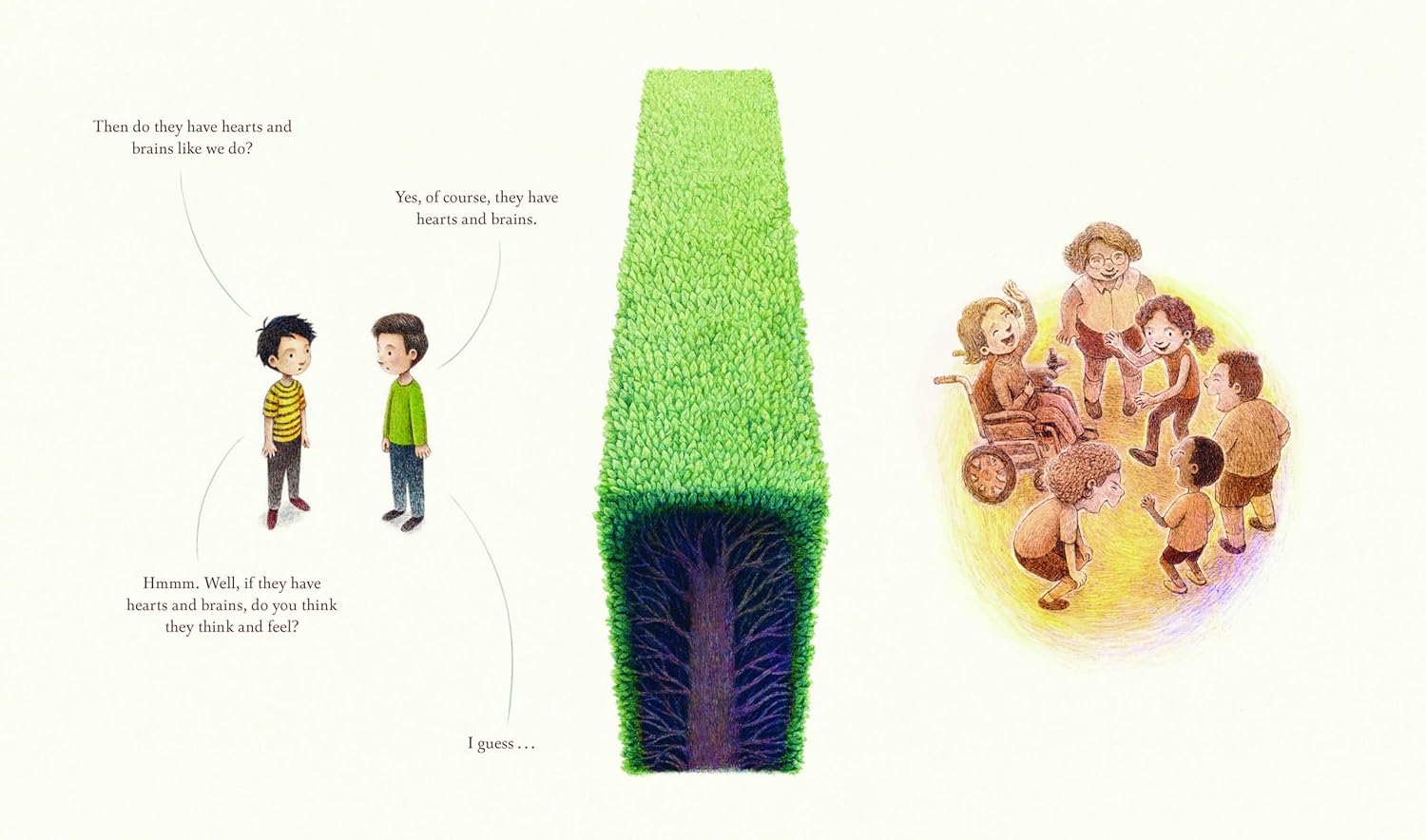
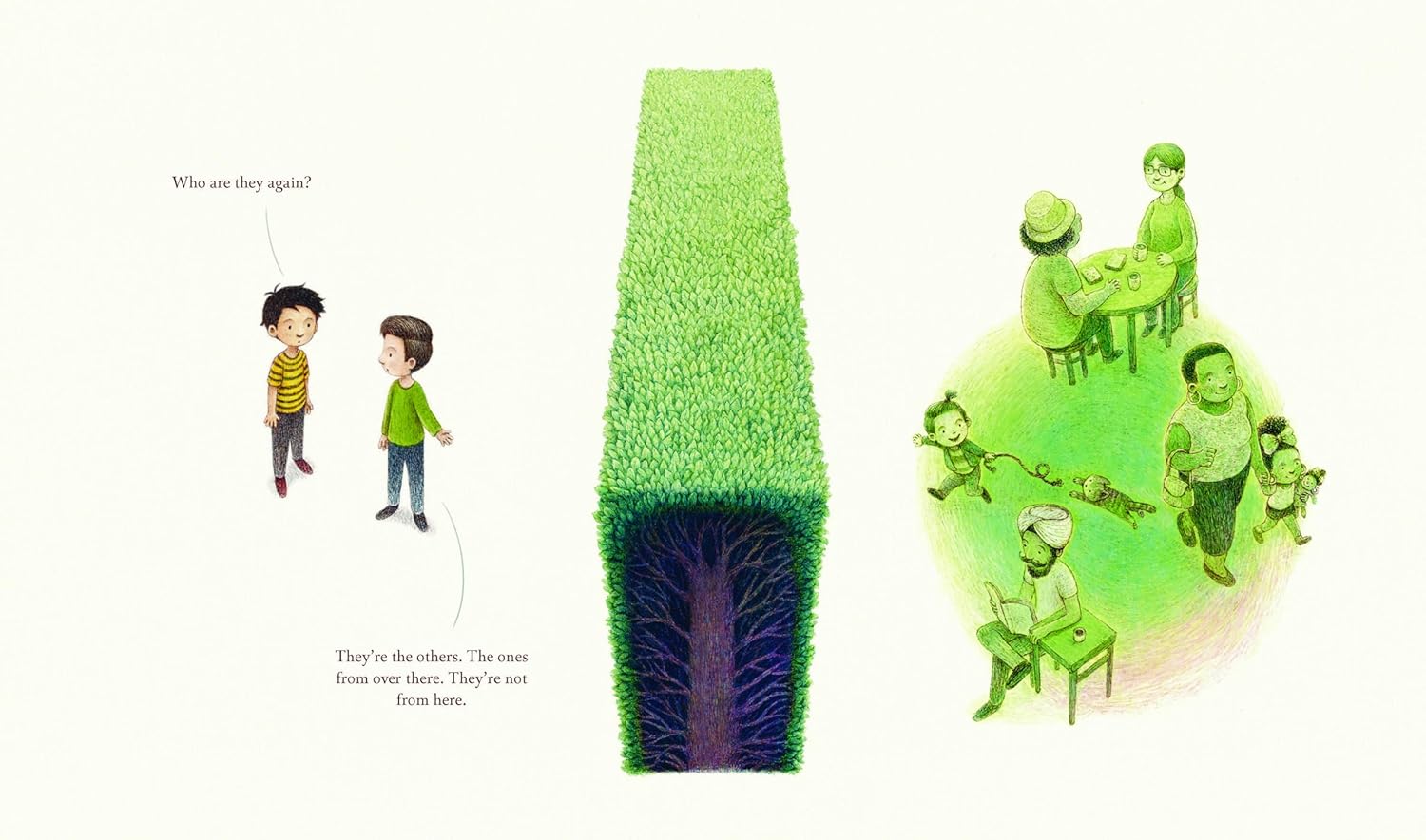
Once that’s established, Yamada’s story takes a deeper dive into the internal lives of these “other people.” The second boy is trying to wrap his head around the issue and inquires if the other people “have hearts and brains.” “Yes, of course,” comes the quick answer. Now the manner of the boy’s questions take a subtle change. He wonders if his friend thinks that these people “think and feel,” get lonely, scared, or hurt feelings. He confesses that he, himself, experiences these emotions. Does his friend think they love their family and do things together? His friend takes time to answer. He says he’s never really considered such things before, but imagines they do. Still, they are from “over there” and “not from here.”

Illustration copyright © 2026 by Charles Santoso. Text copyright © 2026 by Kobi Yamada. Courtesy of Ten Speed Young Readers.

The boys begin to debate the meaning of “here” and “there” as the one with all the questions climbs the hedge and drops into the yard on the other side, where’s he’s offered a glass of lemonade. The two get closer and closer to their respective sides of the hedge—one here, one there; or is it one there, one here? They climb, and when they meet at the top, they agree that wherever they are, they feel like they are “here.”

Turning the page, the boys are unseen, but somewhere within a panoramic view of a city, the ocean, and mountains in the distance. Turn the page again and the image pans out even further, their conversation about there and here, them and us loosed from their mooring to become universal. 

Illustration copyright © 2026 by Charles Santoso. Text copyright © 2026 by Kobi Yamada. Courtesy of Ten Speed Young Readers.

Others: A Story for All of Us is a perfect pairing of Kobi Yamada’s powerful text and Charles Santoso’s perceptive and layered illustrations. As the story opens, Santoso sets the scene with nuanced imagery: The hedge spans both pages, but is leafless on the facing end, showing the trunk and branches that give it structure—a reminder of family trees and the tree of mankind. On one side are the two boys—one in a striped shirt, the less open-minded child wearing a green shirt and dark pants that mirror the hedge. Rising from the other side is a blue and green cloud dotted with amorphous bodies that loosely create Earth’s continents.

Yamada then channels the literal-mindedness of children to challenge the idea of otherness. Santoso’s accompanying illustrations will bring giggles but also deep thinking. As the rest of the story plays out, Yamada engages readers’ hearts through the boy’s thought-provoking prompts that poignantly reveal the commonalities that connect us all while Santoso reinforces this message with vignettes of families, friends, children, neighbors and pets all playing, talking, celebrating, and relaxing together. 

Others: A Story for All of Us is a book with a light touch but a lasting impact to show us the way forward to a meeting of minds and hearts through understanding, kindness, and acceptance. Others is a must for all library and home collections.

Ages 4 – 8

Ten Speed Young Readers, 2026 | ISBN 978-0593839676

About the Author

Kobi Yamada is the #1 New York Times bestselling author of What Do You Do with an Idea?Finding Muchness, Because I Had a Teacher, and many other bestselling, award-winning books. In addition to being the creator of inspiring books and products, he is also the president of Compendium. He lives with his family in the Pacific Northwest. Follow him on Instagram.

About the Illustrator

Charles Santoso is the creator of Happy Hippo and has illustrated many books, including Finding Muchness by Kobi Yamada and the New York Times bestseller Odder. He lives in Singapore. Visit him at charlessantoso.com.

You can purchase Others: A Story for All of Us from these booksellers

Amazon | Barnes & Noble | Bookshop

Picture Book Review

April 7 – Week of the Young Child

About the Holiday

This year marks the 55th anniversary of Week of the Young Child, an annual initiative hosted by the National Association for the Education of Young Children (which itself is celebrating its 100th year!) to promote learning and spotlight young children, their families, and their teachers. Themes for each day of this week focus on ways that children learn. These included Music Monday, Tasty Tuesday, Work Together Wednesday, Artsy Thursday, and Family Friday. To get more information on this week-long celebration and discover extensive ideas and activities to make each day of the week fun for your family or students, visit the NAEYC website.

Thank you to Orchard Books/Scholastic for sending me a copy of this book for review!

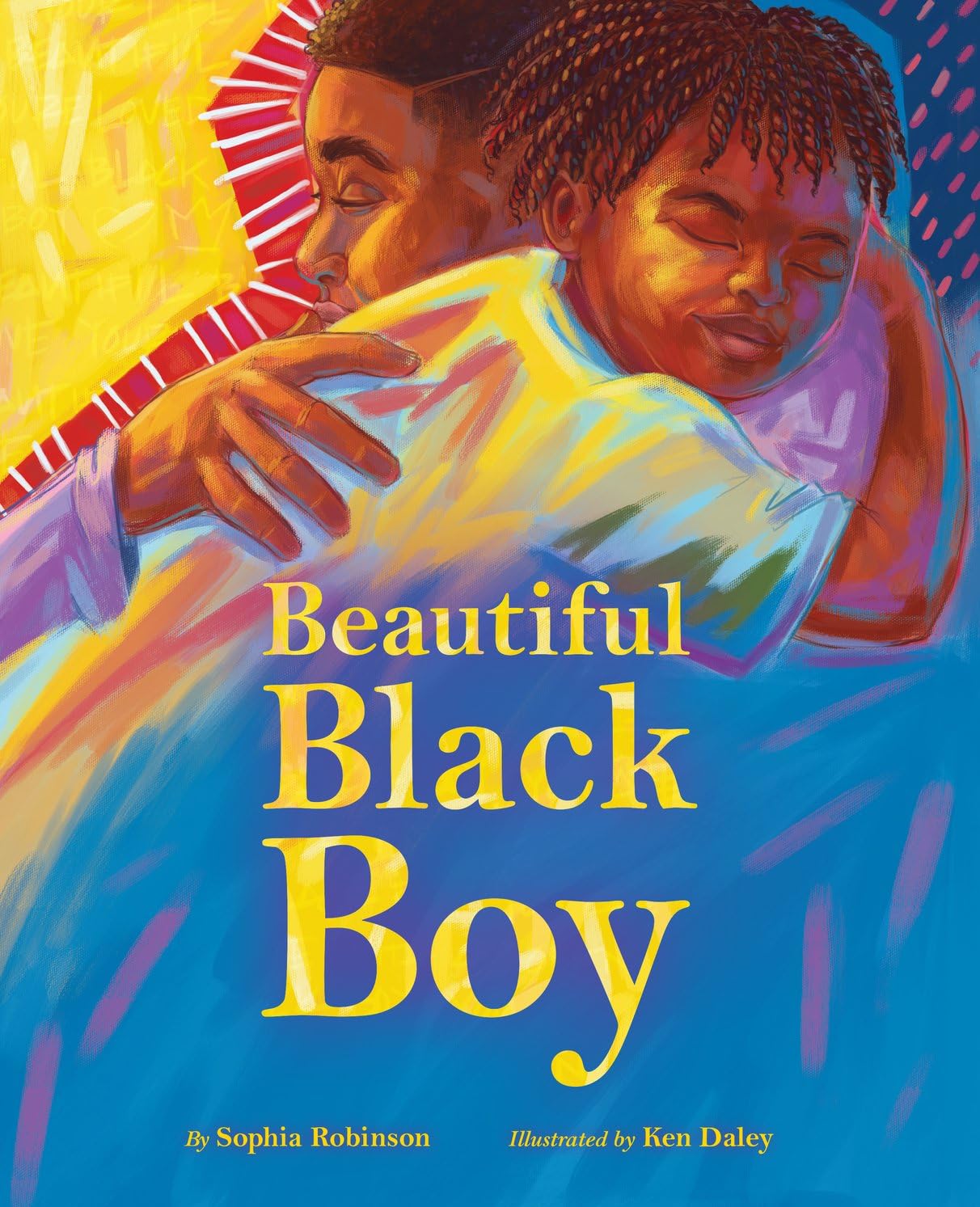
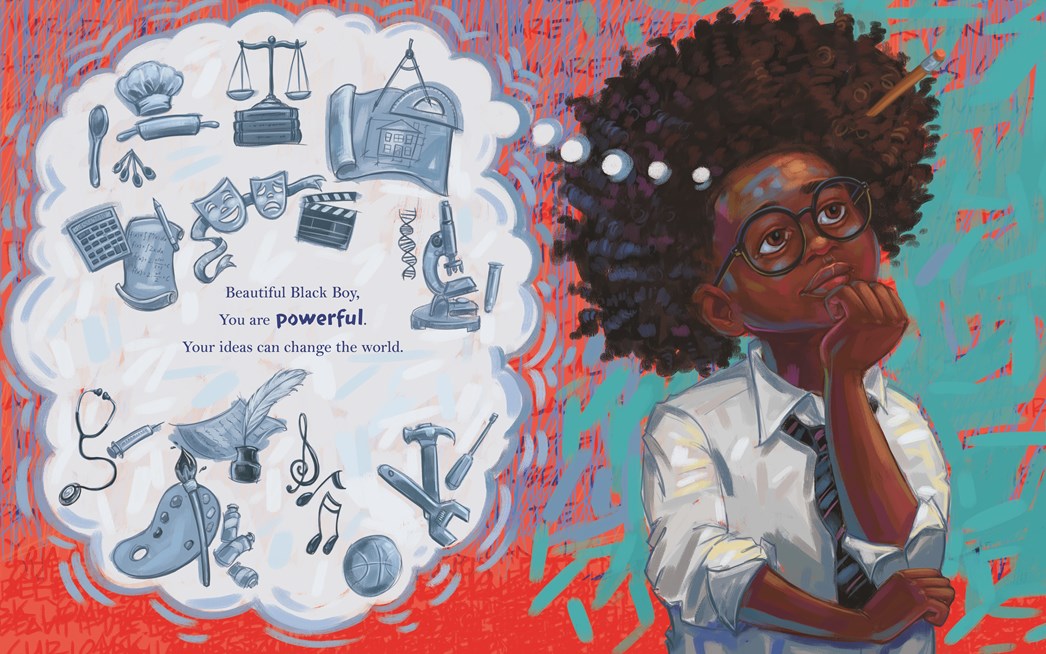
Beautiful Black Boy

Written by Sophia Robinson | Illustrated by Ken Daley


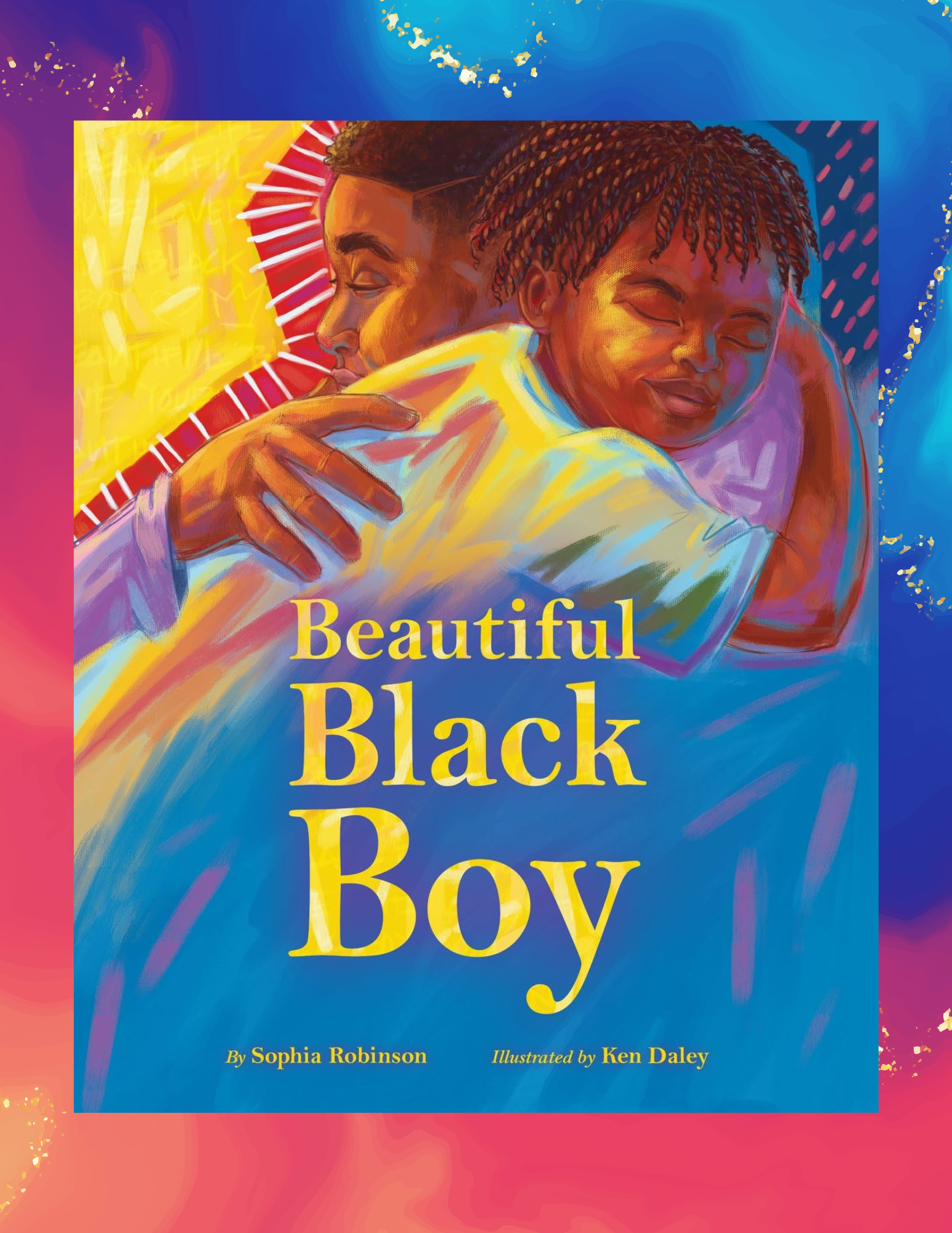
Parents, grandparents, aunts, uncles, godparents, teachers, and all of the important adults in a child’s life want them to grow up knowing how much they are loved and how special they are. Sophia Robinson’s lyrical ode to Black boys does just that with stirring, confidence- and esteem-building affirmations that celebrate Black joy while identifying and reinforcing qualities their children already possess and that will sustain them throughout their life.

Each of Robinson’s verses offer a poignant starting point for adults to share not only a specific characteristic—like resilience, leadership, courage, and curiosity—but to expand on it, sharing examples from the child’s own life. They also provide a spark for conversations between children and caregivers about their experiences as well as their hopes and dreams for the future.

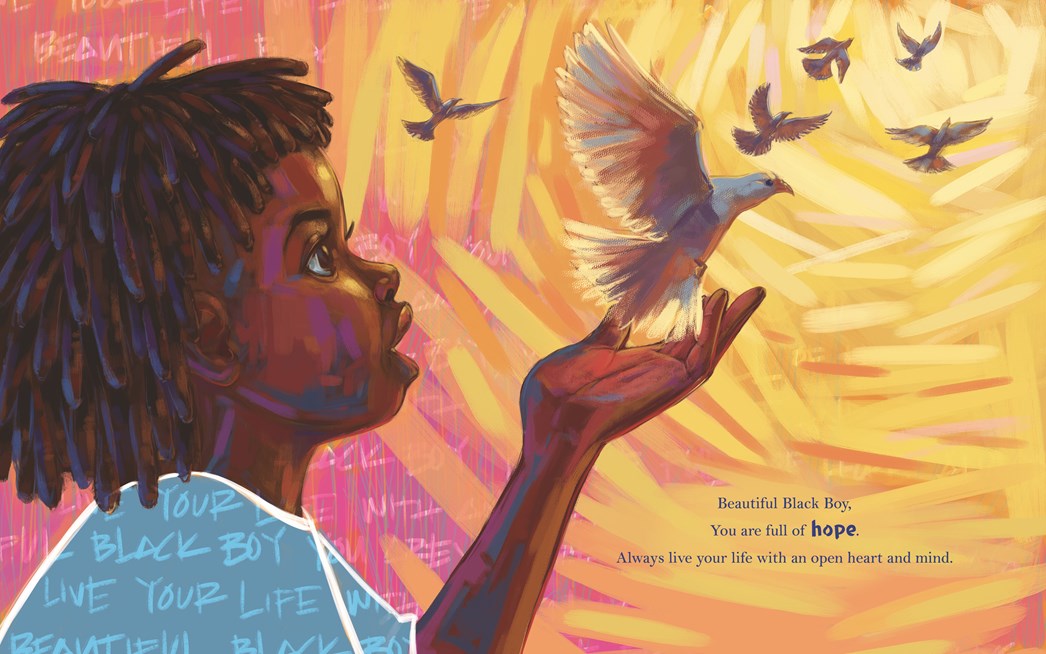
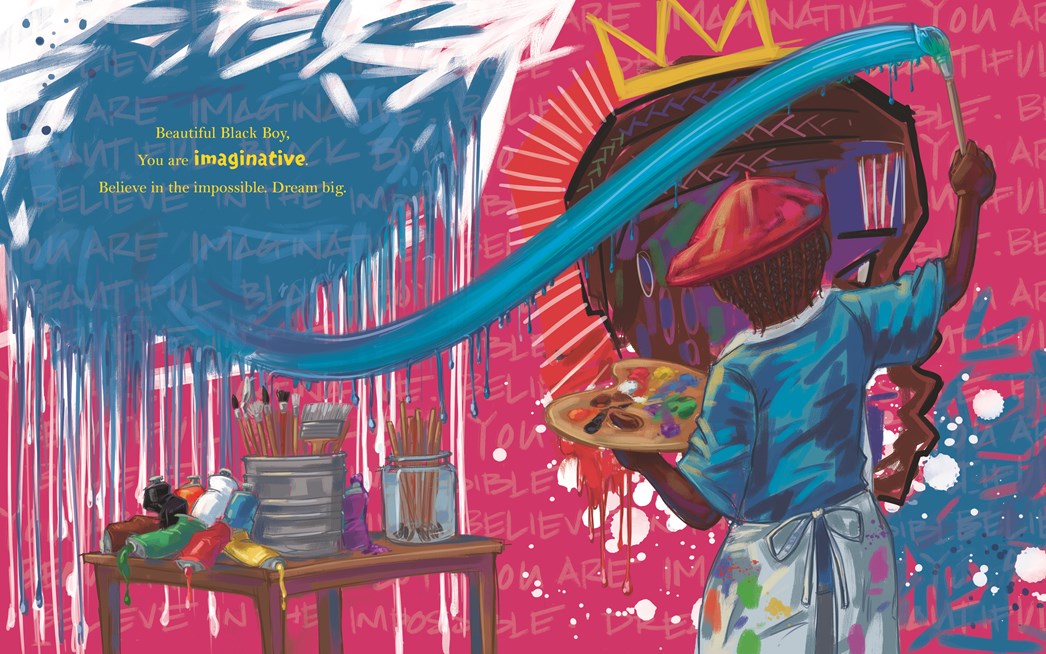
Ken Daley’s exhilarating illustrations portray Black boys full of wonder, intelligence, confidence, courage, and pride in their accomplishments. His kinetic backgrounds are subtly layered with words from the text, a poignant reminder that the praise children receive echoes like a song’s refrain in their hearts and minds into adulthood.

Notes from Sophia Robinson and Ken Daley about the creation of Beautiful Black Boy follow the text.

Inspiring, motivational, and full of love, Beautiful Black Boy is a book to cherish and share over and over again as a child grows. It is a must for any library and will be a favorite on home bookshelves. The book also makes a meaningful gift for Mother’s Day, Father’s Day, and end of year presents for teachers.

Ages 4 – 8

Orchard Books, 2026 | ISBN 978-1338864649

About the Author

Sophia Robinson was born and raised in Ontario, Canada. She has been an elementary school teacher for over 20 years, where she shares her love of picture books with her students. Visit her at sophiarobinsonauthor.com.

About the Illustrator

Ken Daley is an award-winning artist/illustrator who lives in Tillsonburg, Ontario. His art and illustrations are inspired by his African-Caribbean heritage, and he has exhibited his work in Canada, the United States, and the Caribbean. Ken has illustrated numerous children’s books, including Joseph’s Big RideJayden’s Impossible GardenA Feast for JosephBlack Boy, Black BoyThe Little Regent, and more, as well as received an Américas Award Honor Book and a Kirkus Best Picture Book for Auntie Luce’s Talking Paintings. Visit him at kendaleyart.com.

Week of the Young Child Activity

CPB - Heart Jar

Jar Full of Hearts


Whenever your child feels the need for more love or reassurance in their life, this jar full of hearts can be a visual reminder of the love that surrounds them, can be used to encourage discussions about experiences and feelings, or can provide meaningful tokens of their own love kids can give to family and friends.

Supplies

  • A clear jar with a lid
  • Red felt
  • Scissors

Directions

1. Cut red hearts from the felt

2. Add hearts to the jar. The jar can start out full or hearts can be added over time. Here are some ideas for using the jar with your child:

  • Add one heart for each thing you love about your child or that a child loves about their sibling or friend.
  • Give a new heart whenever the recipient of your jar does something nice for a sibling, friend, or someone else.
  • If talking about feelings is difficult for your child, encourage them to bring you a heart from the jar to start a conversation.
  • Encourage the recipient of your jar to pass the love along! Tell them they can give a heart from the jar to someone else.

You can purchase Beautiful Black Boy from these book sellers

Amazon | Barnes & Noble | Bookshop

Picture Book Review

April 6 – National Poetry Month

About the Holiday

The Academy of American Poets established National Poetry Month in April 1996, making this year the 30th anniversary of this event that has become the largest literary celebration in the world. The holiday highlights  the achievements of poets, past and present; to promote the reading and writing of poetry in schools and by individuals; and to encourage people to discover the joys poetry can bring all year round. To celebrate, check for events at libraries, bookstores, schools, and other venues in your area and enjoy reading the work of your favorite—or a new—poet. You might even try writing your own poetry! Get inspired all year long with today’s book! To learn more visit the Academy of American Poets and American Writers Museum.

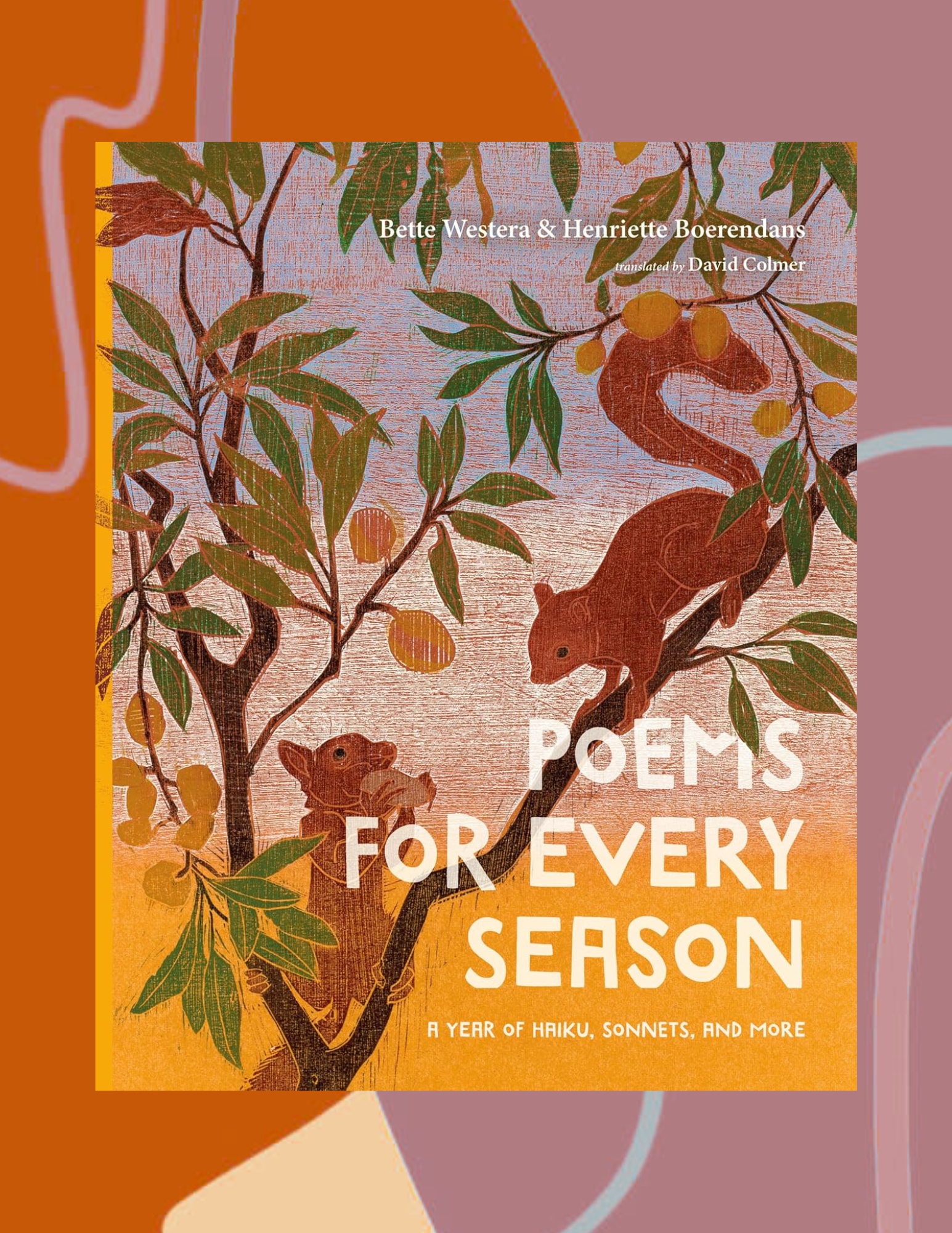
Poems for Every Season: A Year of Haiku, Sonnets, and More

Written by Bette Westera | Illustrated by Henriette Boerendans | Translated by David Colmer


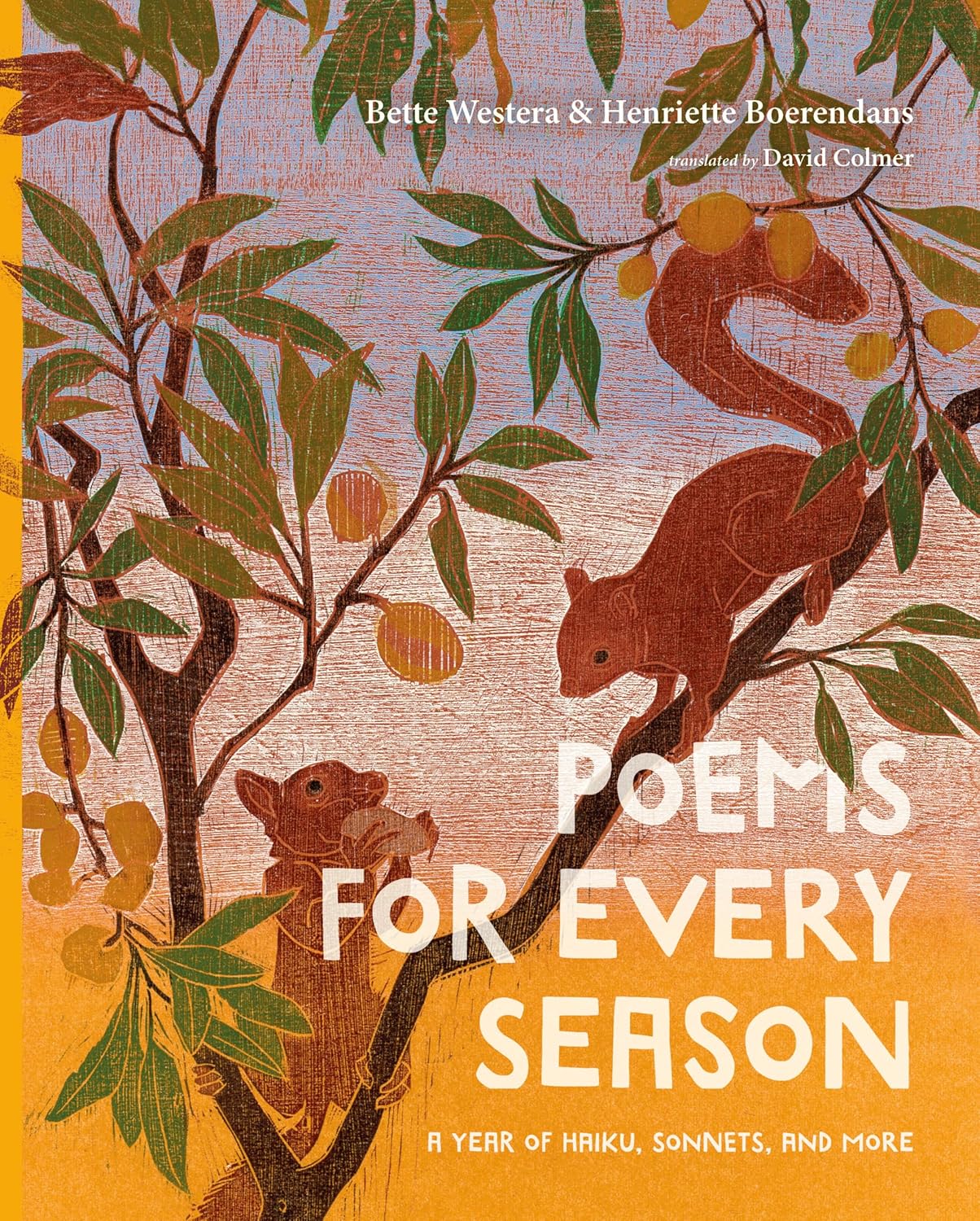
We may begin our year in January, but Poems for Every Season takes it’s cue from nature, which celebrates renewal in Spring. Bette Westera welcomes March and warming weather with her rondel “Spring Dance,” in which a newborn lamb “. . . wobbles through the field with knobbly knees” but soon “gambols, bucks, and bounces . . . with ease” as nearby the farmer plants corn and the mother sheep rests. By April we’re all feeling like gamboling, but Westera acknowledges such “Spring Fever” with the now busy bees and butterflies in her acrostic poem that is a homage to Vincent Van Gogh alongside Henriette Boerendans’ woodcut of almond branches—one of Van Gogh’s favorite subjects to paint.
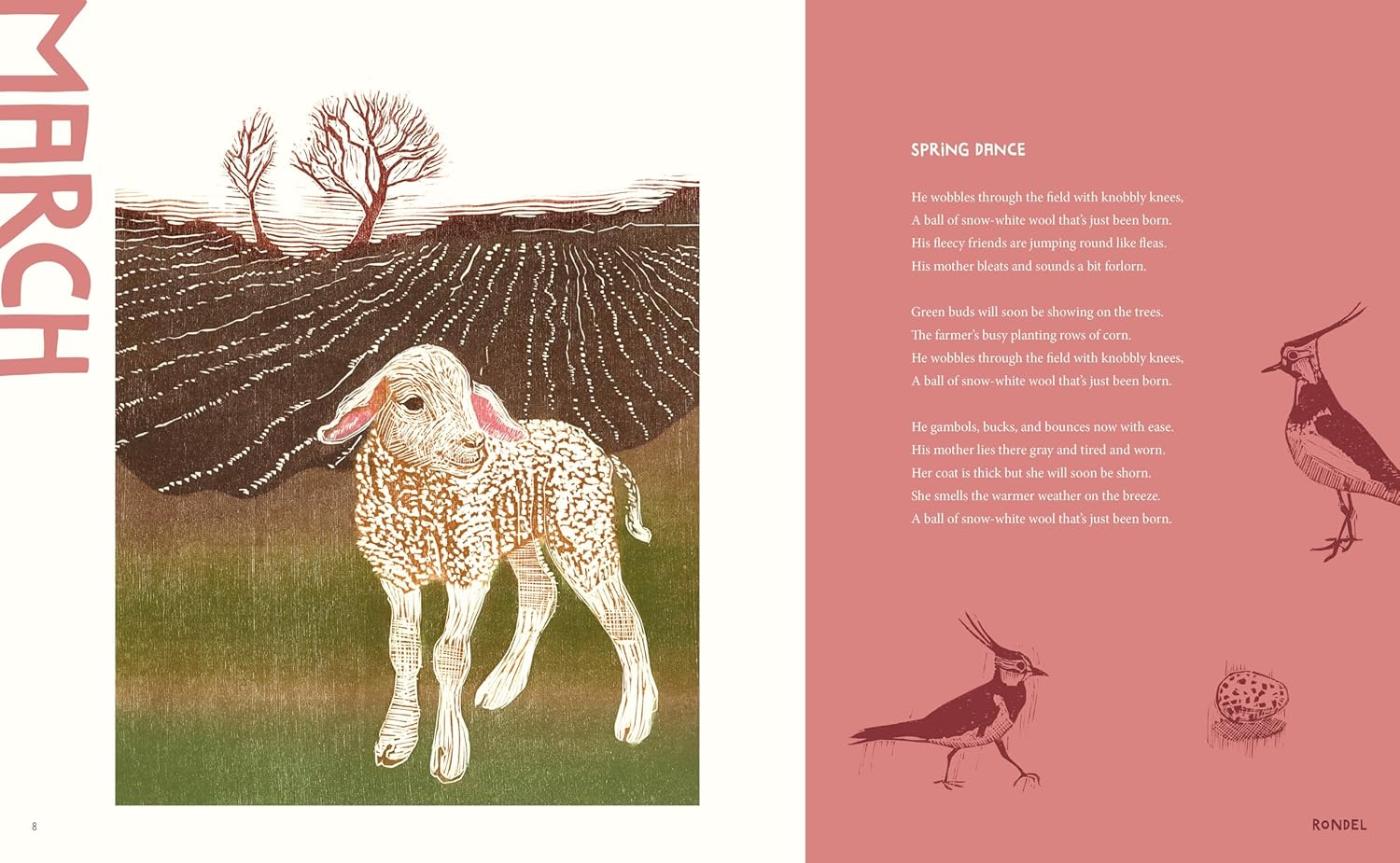
Illustration copyright © 2026 by Henriette Boerendans. Text copyright © 2026 by Bette Westera. Courtesy of Eerdmans Books for Young Readers.

In her summer haiku, Westera opens the warmest season with the steady and reassuring resolve of bees: “Bumblebees buzz by / Golden sunlight fills the sky / It must be summer.” Her pantoum poem for June, “The Longest Day”, takes place on the summer solstice—that day when “the sun’s refusing to go down” and “there’s much too much to see”—as a mother deer cautions her newborn fawn to lie low in the grass and be quiet while she grazes and a fox waits for darkness that will not come. August rings with a request from sunflowers to stormy clouds before autumn is upon them.
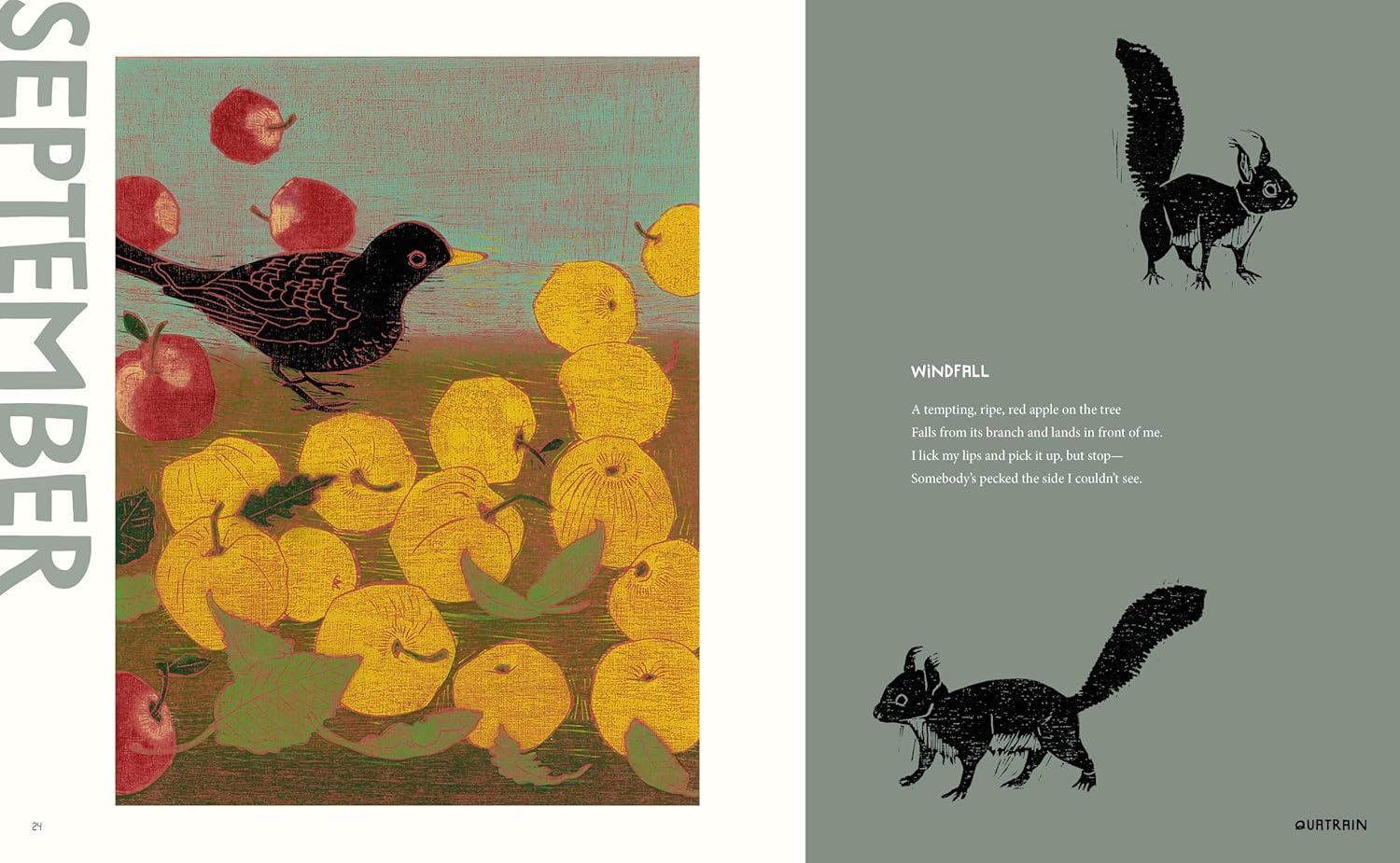
Illustration copyright © 2026 by Henriette Boerendans. Text copyright © 2026 by Bette Westera. Courtesy of Eerdmans Books for Young Readers.

The cooling temperatures of Fall bring “Windfall” apples in September, and a diamond-shaped diamante verse for October pays tribute to animals and plants that bravely face the shivery days of mid-autumn. A repeating line in Westera’s charming rondelet for November celebrates the snuggly warmth of the season before winter comes with it’s ice and snow. A playful December limerick eavesdrops on the “Stay-at-homes”—those birds who know the benefits of a free buffet. And suddenly we’re in the deepest part of winter, with January’s defining colors eloquently found in the feathers of a goose. January, however, soon gives way to a hopeful thaw in February and the whispers of a beckoning spring in Westera’s sonnet that reminds us of the character of this mercurial month.

The poems are followed by conversational discussions about each poetic form that will enlighten readers and prove instructional for writers and teachers. The poems include haiku, rondel, acrostic, double dactyl, pantoum, elevenie, tanka, quatrain, diamante, rondelet, limerick, stacking poem (an invention by Bette Westera), and sonnet.
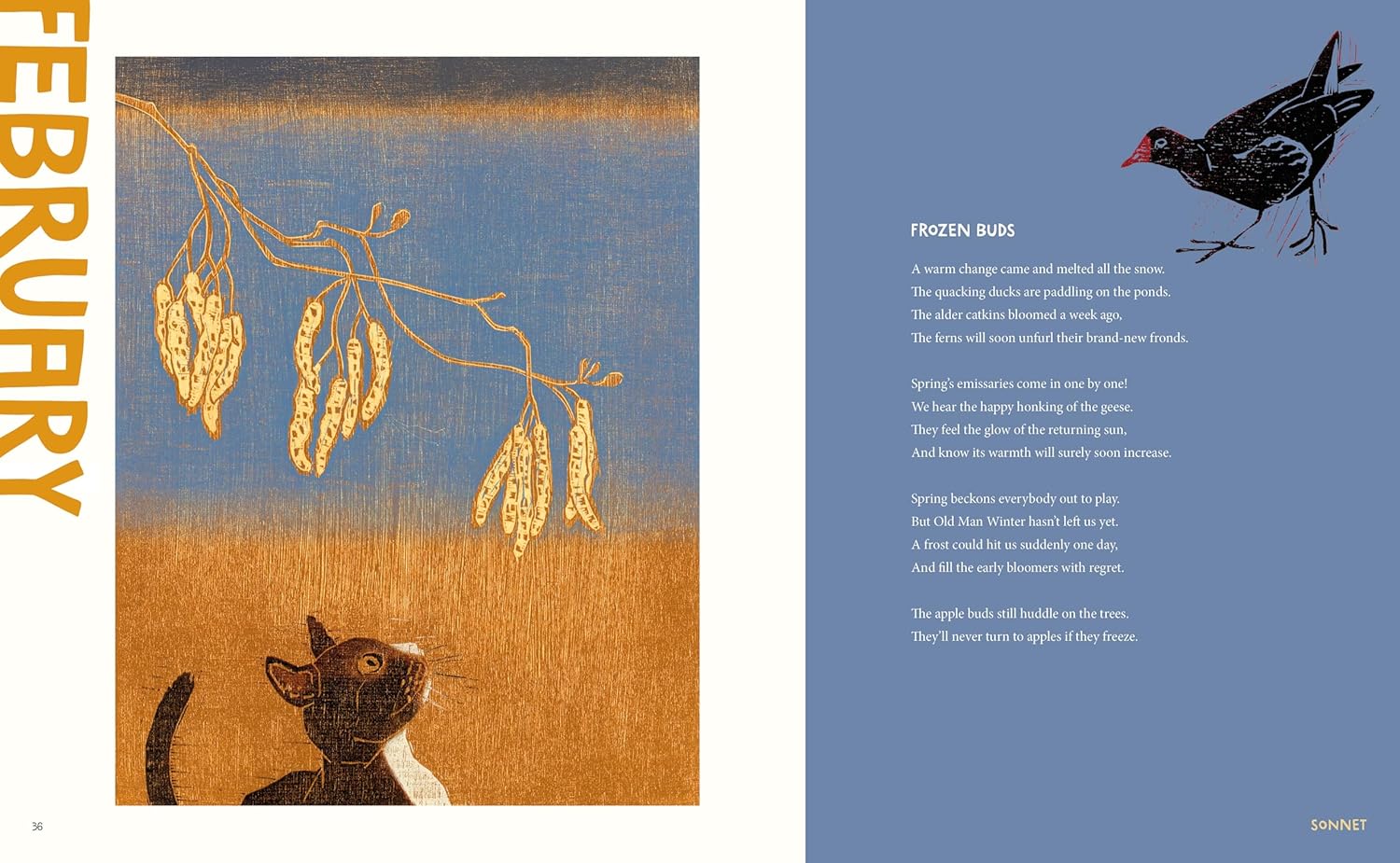
Illustration copyright © 2026 by Henriette Boerendans. Text copyright © 2026 by Bette Westera. Courtesy of Eerdmans Books for Young Readers.

Bette Westera opens a curtain on fleeting, heart-stirring moments in nature throughout the year with her poems that are as alluring as they are direct. Her lovely vignettes are layered with humorous similes, charming anthropomorphism, unexpected happenstance, and sometimes the hint of danger. Each varied verse offers a rich reading experience and beckons us to look closely and with appreciation at the world around us. 

Through her exquisite woodcut prints, Henriette Boerendansis allows young readers to join the lambs, deer, birds, and other wildlife on a farm as it hosts them and the changing seasons. Children will relish being within petting distance of a newborn lamb, concealed among buttercups with a fawn, curled up with a hedgehog preparing for hibernation, and the confidante of birds. Boerendansis’s breathtaking colors soothe with the tranquil greens and blues of spring, delight with the deep hues of summer, glow with autumn warmth, and shiver with winter’s icy cloak.

David Colmer’s translation is nimble and smart, illuminating Bette Westera’s combination of humor and insight with easy grace.

Poems for Every Season: A Year of Haiku, Sonnets, and More is a luminous poetry collection that grows more brilliant with every read. It is a book that will enhance any library collection, would make a wonderful gift, and which, at home, should be kept in a place of prominence to be enjoyed throughout the year.

Ages 5 – 9 

Eerdmans Books for Young Readers, 2026 | ISBN 978-0802856524

About the Author

Bette Westera has written over fifty books for children, including Fast Cheetah, Slow Tortoise and the Mildred L. Batchelder Honor Book Later, When I’m Big (both Eerdmans). She has also translated books by Dr. Seuss, Astrid Lindgren, and Julia Donaldson into the Dutch language. Bette lives in the Netherlands, where her books have received two Golden Pencil awards and six Silver Pencil honors. Visit her website at bettewestera.nl.

About the Illustrator

Henriette Boerendansis an Amsterdam-based printmaker and illustrator. Poems for All Seasons is her English-language debut. While walking in nature together one day, Bette and Henriette brainstormed new projects and came up with the idea for this book. Follow Henriette on Instagram @henriette.boerendans and visit her website at boerendans.com.

About the Translator

David Colmer is an Australian writer and translator of Dutch and Flemish literature. He has translated over eighty books throughout his career, including I’ll Root for You, A Pond Full of Ink, and Fast Cheetah, Slow Tortoise (all Eerdmans). His work has been honored with many awards, including the PEN Translation Prize and the Dutch Foundation for Literature’s James Brockway Prize, which recognizes a translator’s body of Dutch-language poetry. David lives in Amsterdam.

National Poetry Month Activity
CPB - Plant Poem

Grow a Poem Craft


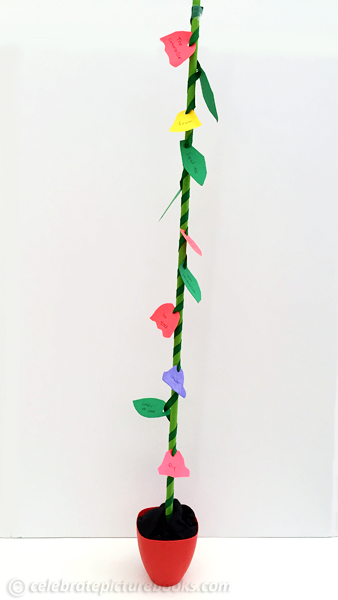
A poem often grows in your imagination like a beautiful plant—starting from the seed of an idea, breaking through your consciousness, and growing and blooming into full form. With this craft you can create a unique poem that is also an art piece!

Supplies

  • PrintablLeaves Template, available here and on the blog post — or draw your own
  • Printable Flower Template, available here and on the blog post — or draw your own
  • Wooden dowel, ½-inch diameter, available in craft or hardware stores — or green bamboo or plastic garden plant stakes
  • Green ribbon
  • Green craft paint
  • Colored paper for leaves and flowers
  • Flower pot or box
  • Oasis or clay
  • Hole punch
  • Glue

Directions

  1. Paint the dowel green, let dry
  2. Print the leaves and flower templates — or draw your own
  3. Cut out the leaves and flowers
  4. Punch a hole in the bottom of the leaves or flowers
  5. Write full poems or lines of poems on the leaves and flowers 
  6. String the leaves and flowers onto the green ribbon in the order you want your poem to be read 
  7. Attach the ribbon to the bottom of the pole with glue or tape
  8. Wrap the ribbon around the pole, leaving spaces between the ribbon
  9. Gently arrange the leaves and flowers so they stick out from the pole 
  10. Put oasis or clay in the flower pot or box
  11. Stick your poem pole in the pot
  12. Display your poem!

You can purchase Poems for Every Season: A Year of Haiku, Sonnets, and More from these booksellers

Amazon | Barnes & Noble | Bookshop

Picture Book Review

April 2 – Celebrating Hans Christian Andersen’s Birthday and International Children’s Book Day

About the Holiday

Since 1967, April 2—Hans Christian Andersen’s birthday—has served as the date for International Children’s Book Day. The International Board on Books for Young People (IBBY), a non-profit organization founded in Zurich, sponsors the day to promote a love of reading and call attention to children’s books. National Sections of IBBY around the world alternate in hosting the event. The host for 2026 is Cyprus, and this year’s theme is “plant stories and the world will bloom.” Each year a prominent author and illustrator from the sponsoring country prepare materials for the event. This year’s poster was designed by Sandra Elephteriou. Elena Perikleous wrote this year’s message, and Giorgos Hatzipieris wrote this year’s official song, “The Little Gardener.” To learn more about the initiative and download digital materials, visit the IBBY website

Thank you to Levine Querido and Barbara Fisch at Blue Slip Media for sending me this book for review!

The True Ugly Duckling: How Hans Christian Andersen Became a Swan

Written by Sandra Nickel | Illustrated by Calvin Nicholls


“There once was a poor shoemaker’s son, who was tall and skinny. His nose was two times as long as everyone else’s and his heart two times as tender.” Thus begins not a fairy tale, but Sandra Nickel’s real life story of Hans Christian Anderson.

While most children spent their days working at the factory or going to school, Hans cut out costumes for his toys and invented stories that he performed for whomever would watch. Some neighbors gave him a few coins, but the factory workers and other children bullied and teased him. Hans “soothed his wounded heart by cutting out shapes from cloth.” At fourteen, knowing there was more for him in the world, Hans sailed alone for Copenhagen. There, he tried to find a place to express his talents, but each attempt ended in disappointment. Soon all his money was gone.

Illustration copyright © 2026 by Calvin Nicholls. Text copyright © 2026 by Sandra Nickel. Courtesy of Levine Querido.

When he sent a play to the Royal Theater, one director rejected it brutally, but another found a “few jewels” in it and arranged for him to go to school. At 17 Hans was taking classes for the first time. The other students laughed at him, and the headmaster dashed his dreams of becoming a storyteller, forbidding him to write. For six years Hans obeyed. “To comfort his heart, the boy cut out shapes from paper.”
Then one day when a girl asked him why her flowers had faded, Hans—now a young man—answered her by telling a story while cutting a scene in paper of hearts, dancers, flowers, and castles with working doors. The girl loved the story so much that Hans wrote it down and had it printed into a book. “The children of Copenhagen adored every word.” 

Illustration copyright © 2026 by Calvin Nicholls. Text copyright © 2026 by Sandra Nickel. Courtesy of Levine Querido.

Soon, Hans was telling and publishing more and more stories. Adults began reading them, and even Copenhagen royalty invited him to their castles for dinners and afterward to entertain the other guests by weaving “magic with his words and scissors.”

Back matter includes an Author’s Note recounting that experts now believe Hans Christian Andersen was likely on the autism spectrum and may also have had Marfan syndrome. She also discusses her choice to follow the story arc of The Ugly Duckling to depict Andersen’s life.

Illustration copyright © 2026 by Calvin Nicholls. Text copyright © 2026 by Sandra Nickel. Courtesy of Levine Querido.

Sandra Nickel’s mesmerizing and sensitive portrait of Hans Christian Andersen highlights his seemingly limitless creativity, imagination, and courage as he stays true to himself despite the treatment and rejections he endured. Her lyrical and moving biography is not only an inspiring tribute to this unique storyteller and artist, but a buoy for children struggling themselves and a reminder for all to embrace each person as a whole, recognizing and encouraging their talents, dreams, and contributions. Although his enduring popularity is already known to readers, her account of his ultimate triumph still has the power to astonish and prompt cheers.

Visually arresting, Calvin Nicholls’ extraordinary paper sculpture illustrations pop with action and emotion, immersing readers in the sights and sounds of Andersen’s factory hometown, his experiences in Copenhagen, and the joy of his long-dreamed-for success. The realism of Nicholls’ low-relief sculptures, assembled from various weight and textured papers then photographed, is astounding. Nicholls’ color scheme mirrors the theme of the “Ugly Duckling,” portraying Andersen in muted grays and browns until his full transformation when he dazzles Copenhagen royalty in a white tuxedo.

The True Ugly Duckling: How Hans Christian Andersen Became a Swan belongs in every classroom, school, and library collection to edify and inspire and would be an inspirational addition to home bookshelves, especially to pair with readings of his stories.

Ages 4 – 8

Levine Querido, 2026 | ISBN 978-1646146093

Hans Christian Andersen’s Birthday Activity

Easy Origami Swan


Kids can have fun on Hans Christian Andersen’s Birthday and International Children’s Book Day by making this easy origami swan to celebrate their unique personalities and talents! All you need is origami paper or you can cut your own 6-inch by 6-inch paper or any size square.

You can purchase The True Ugly Duckling: How Hans Christian Andersen Became a Swan from these booksellers

Amazon | Barnes & Noble | Bookshop

Picture Book Review