November 5 – It’s Polar Bear Week and Interview with Paul Schmid

celebrate-picture-books-picture-book-review-little-bear-dreams-cover

About the Holiday

November means colder weather, snow, and – most importantly – ice. Ice means the fall polar bear migration to Churchill, Manitoba. Here, polar bears gather to wait for the sea ice to form on Hudson Bay so they can return to hunting seals. Polar Bear Week, sponsored by Polar Bears International, focuses on sea ice, the effects of climate change, and what we can do to ensure the polar bears’ survival. This year, people are encouraged to get involved from home. To learn more about the week’s activities and how you can help, visit Polar Bears International.

Thank you to Phaidon Press for sending me a copy of Little Bear Dreams for review consideration. All opinions about the book are my own.

Little Bear Dreams

By Paul Schmid


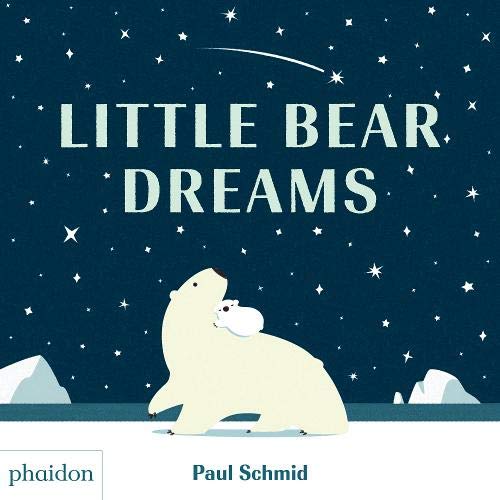
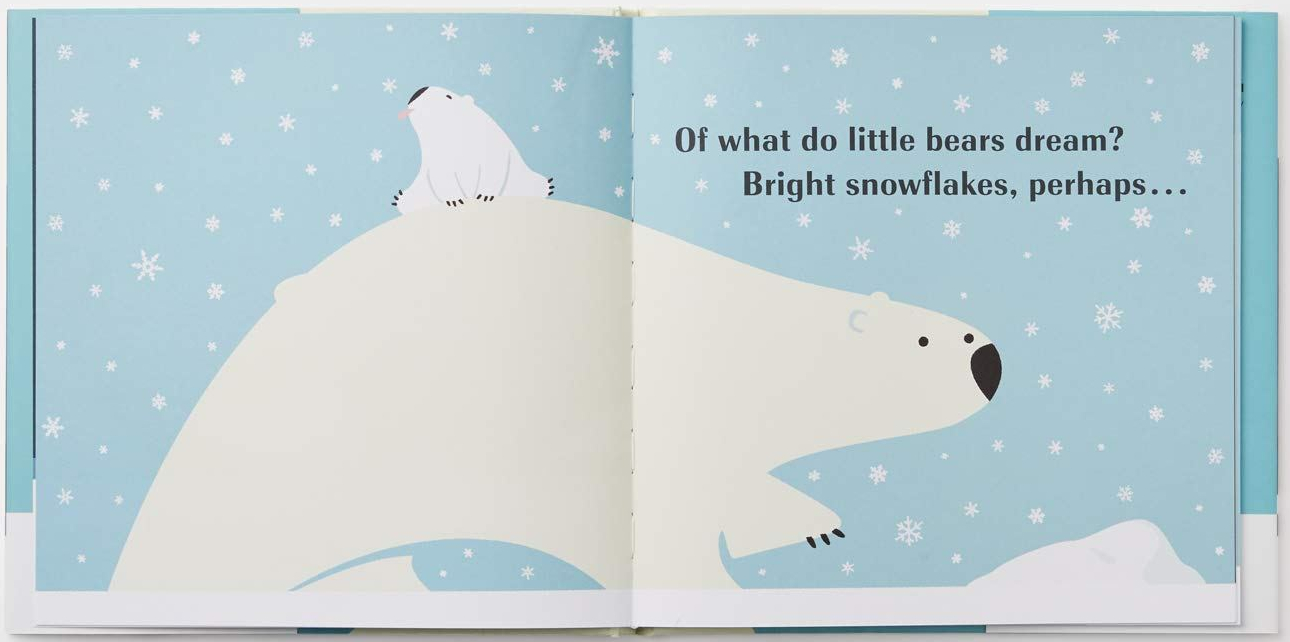
A baby polar bear rides atop Mom’s back, catching snowflakes on a little pink tongue. As the snowflakes change to twinkling stars in the dark night sky, a question hangs in the air—“Of what do little bears dream?” Perhaps it’s the frothy sweetness of “hot chocolate” or the delicious spiciness of “cold pizza.”
celebrate-picture-books-picture-book-review-little-bear-dreams-snowflakes

Copyright Paul Schmid, 2018, courtesy of Phaidon Press.

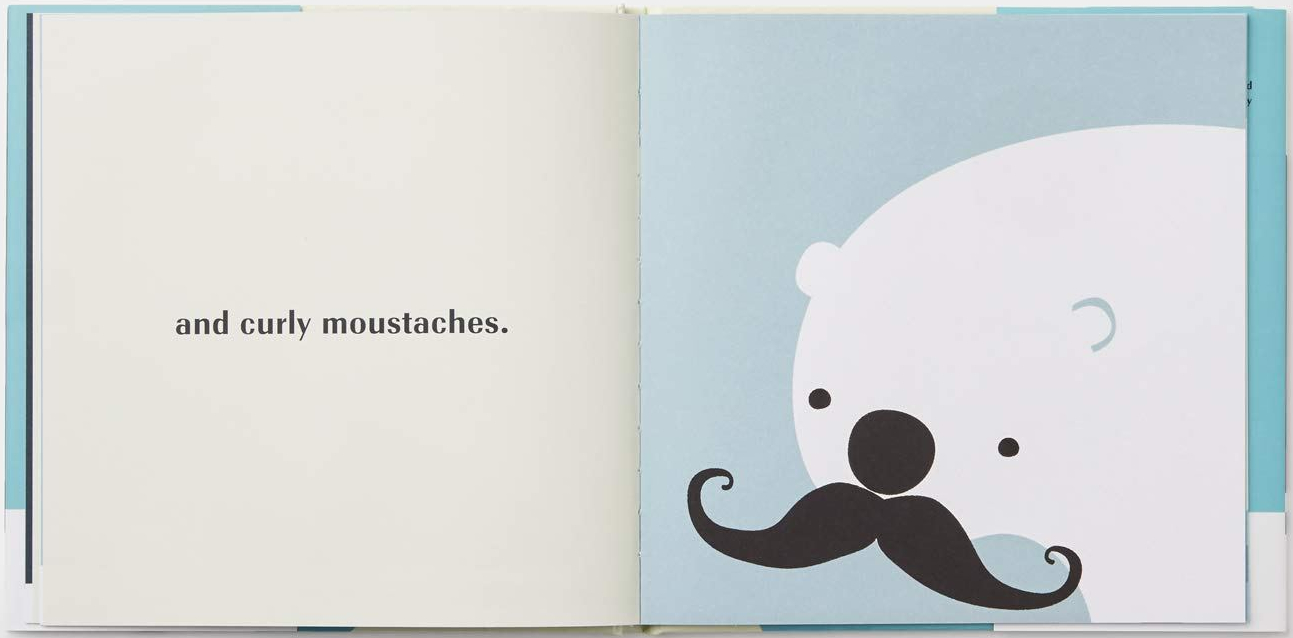
As the day brightens once more, maybe the baby imagines all kinds of things that lie beyond those “straight horizons” or giggles at wearing tickly, “curly moustaches.” There are so many things to discover, both big and small, short and tall, and blue—lots of blue in the frozen north. But night has come around again and it’s time for sleep. So, curl up with “soft, snowy beds. Warm fur…and frosty nights” and drift off to sleep.
celebrate-picture-books-picture-book-review-little-bear-dreams-moustaches

Copyright Paul Schmid, 2018, courtesy of Phaidon Press.

Paul Schmid’s snuggly story about an adorable polar bear pair rendered with soft curves, quiet blues, and sweet surprises is, simply, love in a book. The gentle text lulls little ones toward sleep while reminding them of the wonders of life. Images of opposites—hot and cold, straight and curly, big and small, and others—are full of charm and wit and give little readers lots to talk about or an invitation to fill in their own details.
celebrate-picture-books-picture-book-review-little-bear-dreams-hide-and-seek

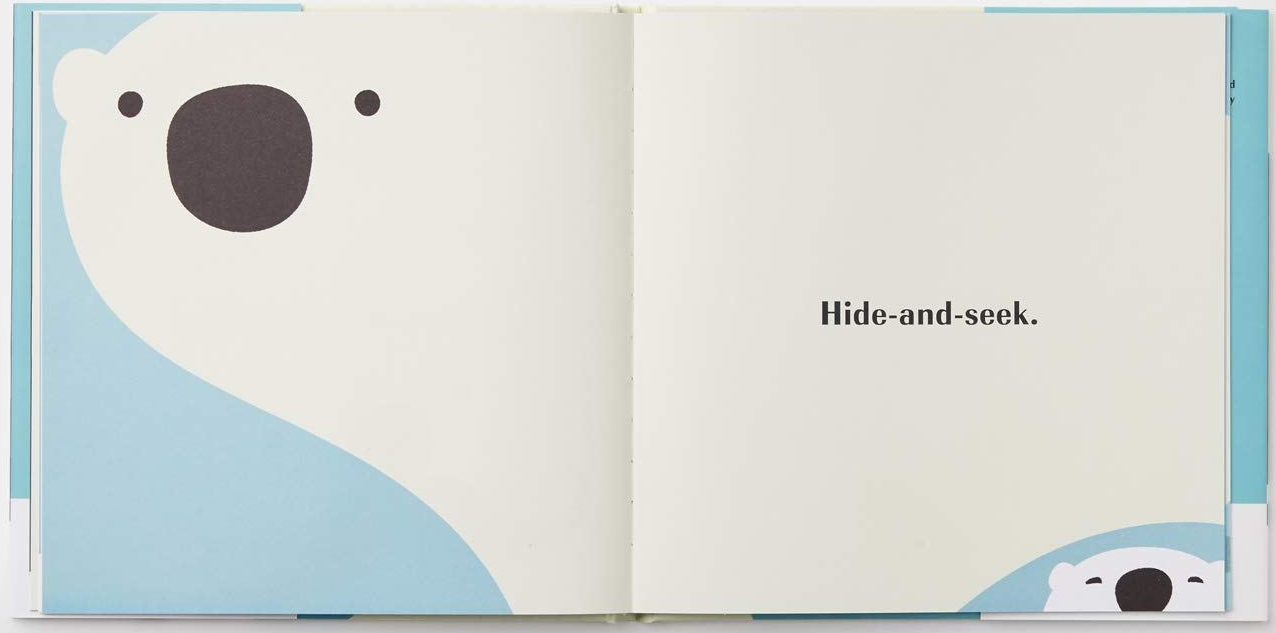
Copyright Paul Schmid, 2018, courtesy of Phaidon Press.

Schmid’s beautiful use of line, shape, and color expresses the loving relationship between baby and adult as the little one peeks from behind Mom, hides underneath her during a game of hide-and-seek, and nuzzles noses in a little bear kiss. Marshmallow-plump bunnies wait silently to play, and pudgy little polar bear twists to try and spy a stubby tail. Gorgeous perspectives show the magnitude of the night sky and the mother bear’s protective power. The moving image of the pair curled into a ball for sleep underneath a full moon and then risen to replace it as a little one’s shining light is the perfect ending to this story so rich in cuddles, caring, and comfort.

An excellent book for baby shower, birthday, and holiday gifts as well as an endearing addition to home libraries, Little Bear Dreams is a book you will find yourself reaching for again and again. It’s a sweet book for preschool classrooms and a must for public libraries.

Ages 2 – 5

Phaidon, 2018 | ISBN 978-0714877242

To learn more about Paul Schmid, his books, and his art, visit his website

Meet Paul Schmid

CPB - Paul Schmid Interview - head shot for Little Bear Dreams

I’m thrilled to be chatting with Paul Schmid today about his the inspirations of winter, following where ideas lead, and the role of that curly moustache in Little Bear Dreams.

Readers are always interested in the creative process that goes into a book. Can you talk us through how Little Bear Dreams came to be?

Little Bear Dreams started in a somewhat dreamlike way. I just began playing with the dramatic, graceful shapes of winter landscapes without knowing where I was going with it. I love winter, and since childhood have been fascinated by its stark simplicity and seeming contradiction of severity and softness.
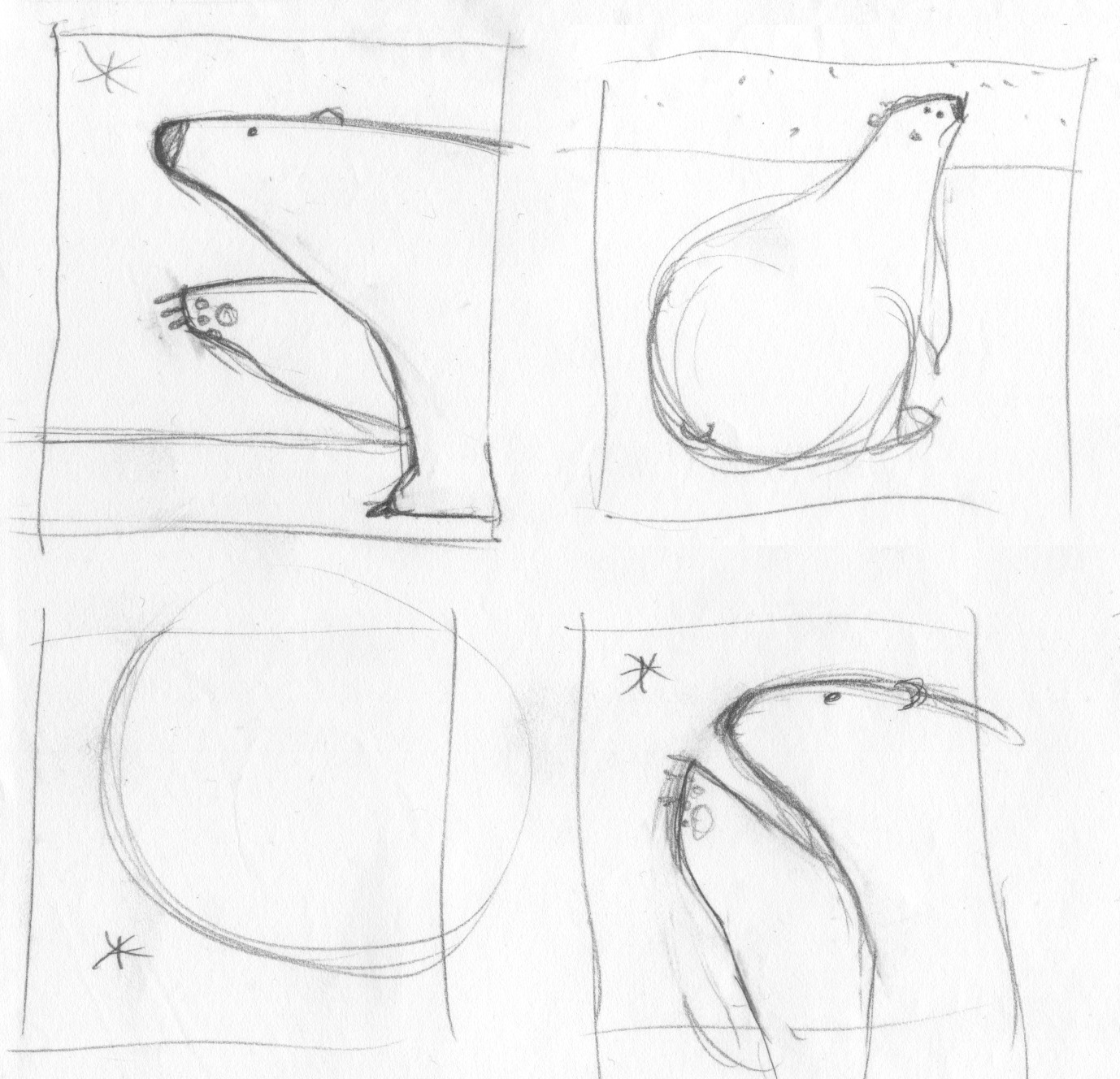
celebrate-picture-books-Paul-Schmid Interview-sketch-for-Little-Bear-Dreams

This was the start of it all. Roughly sketched musings on a bear in her environment.

As dreams will do, the book evolved as it progressed. It took hundreds of sketches to bring this book to life. At one early point it was called “Black and White and Blue.” The more I sketched my characters, though, the more they began to assert their personality. We all eventually settled into a gentle, loving mother bear and her rather impish and imaginative little bear.
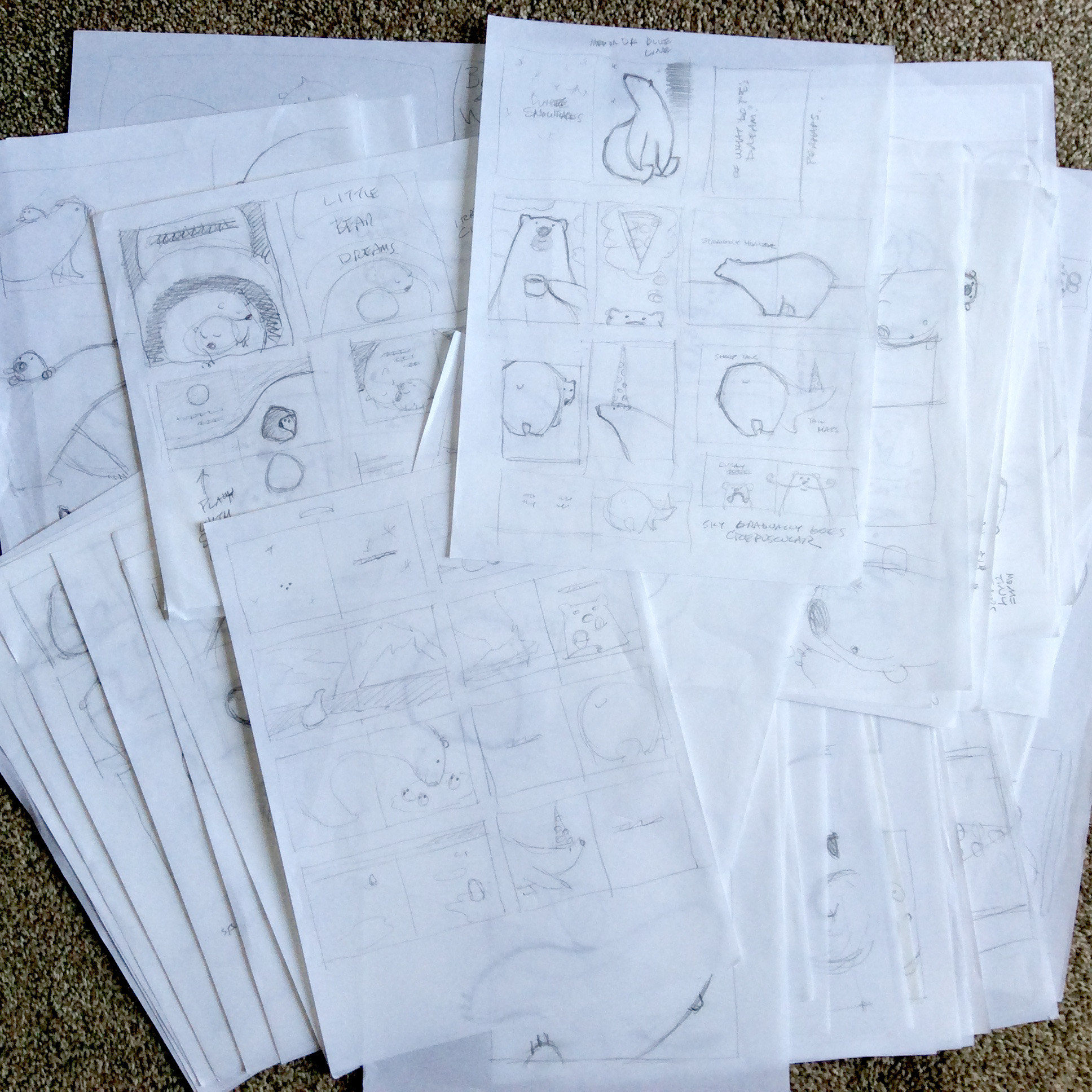
celebrate-picture-books-Paul-Schmid Interview-sketches-for-Little-Bear-Dreams

Sketches, sketches, sketches!

Ideas for stories can come from anywhere, but what for you makes an idea stick so that you develop it further?

DH Lawrence wrote: “If you try to nail anything down in the novel, either it kills the novel, or the novel gets up and walks away with the nail.”

I follow ideas perpetually. “Follow” being the operational word here. Many times I’ve tried to force an idea, and it generally ends up looking so. 

I follow until an idea becomes something or peters into nothing. Some ideas I’ve been following for years and haven’t arrived anywhere wonderful—yet. Some ideas drag me after them at a speed which shocks me. I guess the key is to always be receptive. Ideas will rudely wake me at 2 a.m., obliging me to creep into my studio and sketch or write.
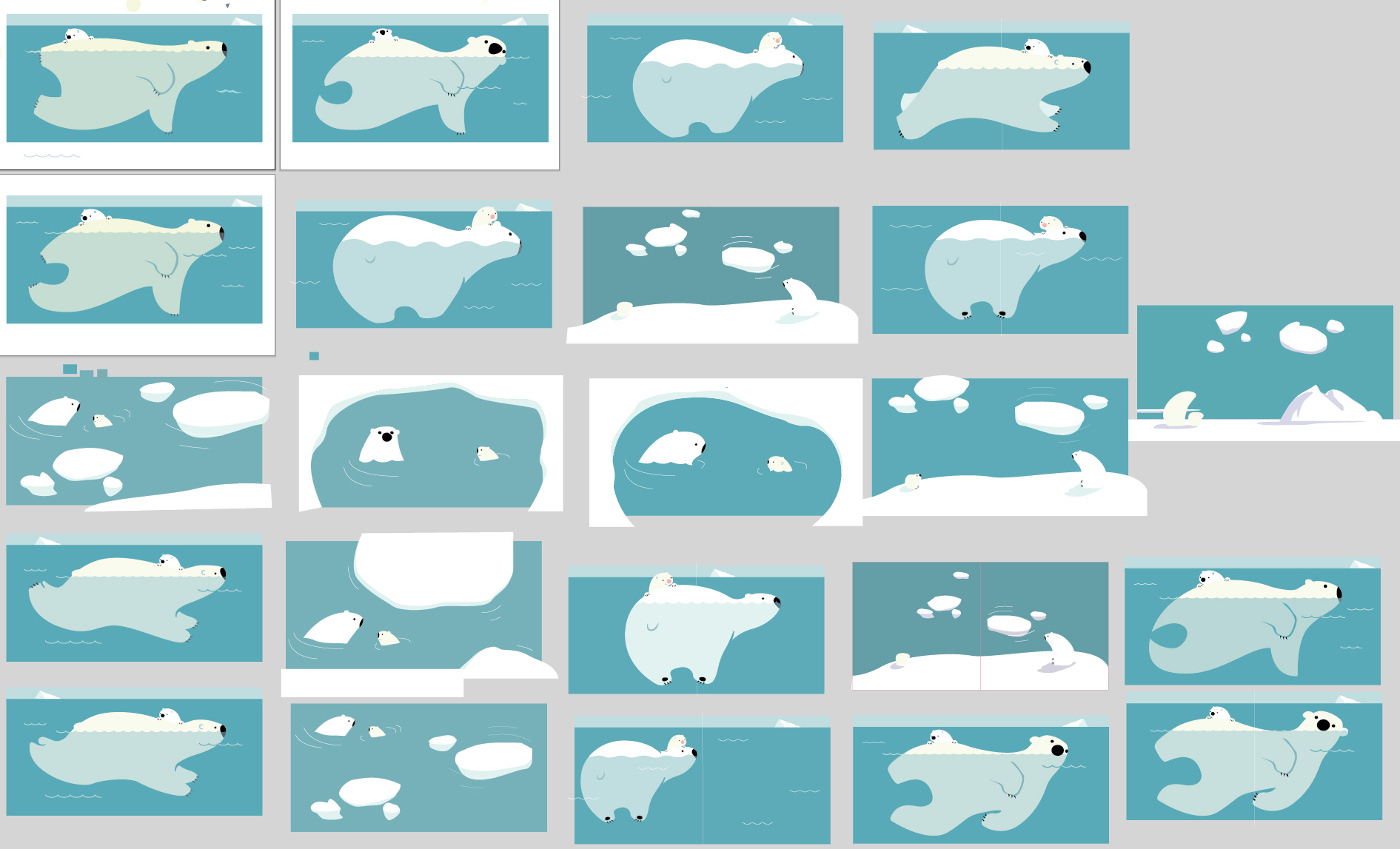
celebrate-picture-books-Paul-Schmid Interview-blue-water-for-Little-Bear-Dreams

There are so many ways to convey an idea! I jokingly call the first few months of developing a book “The Period of Ten Thousand Decisions.” Here are explorations on just one spread from Little Bear Dreams: “Blue water.”

Little Bear Dreams began as an indulgence to play with simplicity in color and shape, visual and verbal rhythms and contrasts, but evolved also into a story of love and connection. Of gentleness and playfulness.

The idea is the boss. Not me. I just obey.

Your illustration style is very distinctive, and your adorable characters immediately inspire readers to feel empathy for them. Can you talk a little about the role of different shapes, line, white space, and even the use of small features in your illustrations?

I have a compulsion to express as much as possible in the simplest manner possible. It is a great pleasure to me to strip an illustration or sentence of all that gets in the way of advancing the story or mood or character of the book.
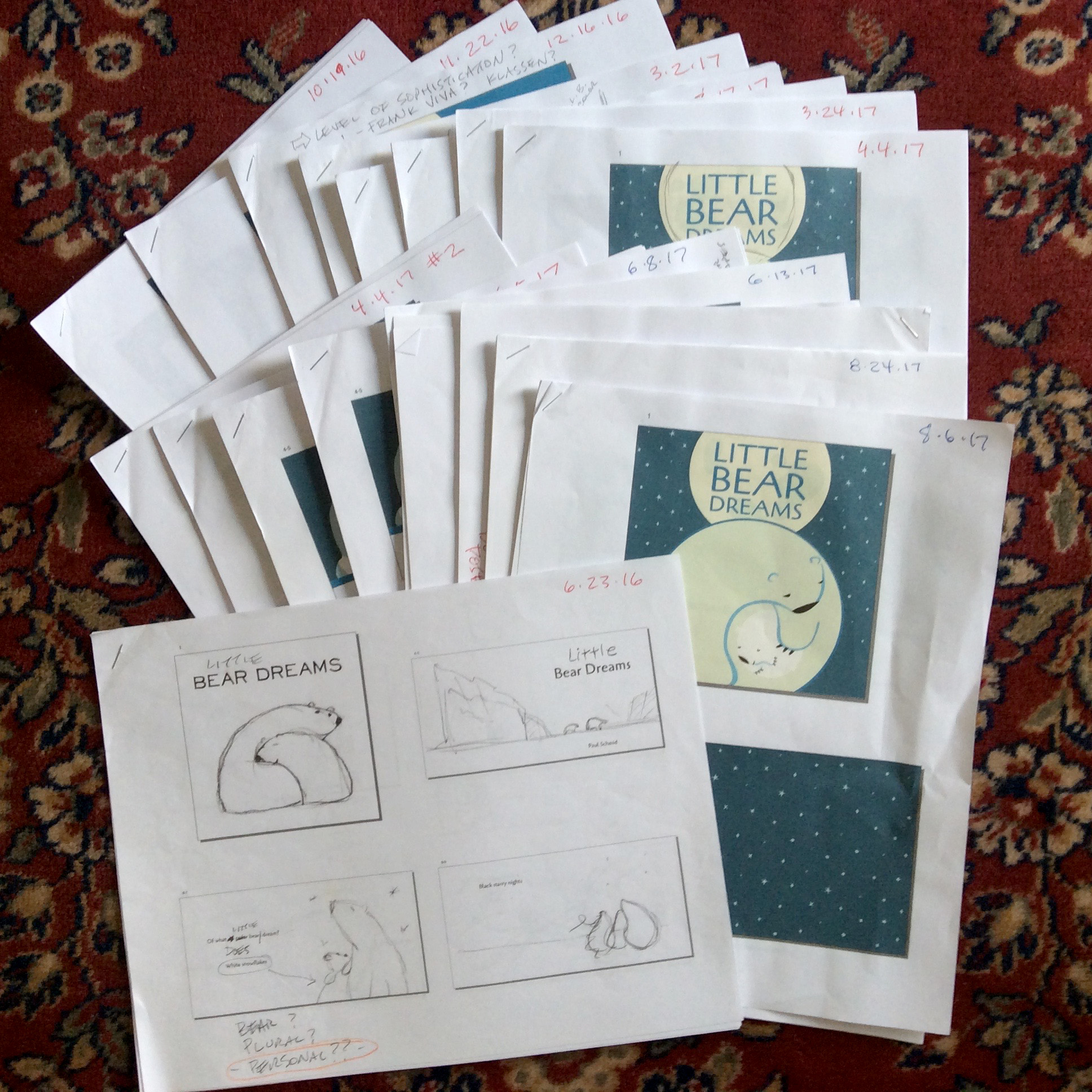
CPB - Paul Schmid Interview - more sketches for Little Bear Dreams

Although my illustrations seem simple, I’ve found simplicity a very complicated feat to achieve. With no busyness, what is there must be perfect. For me that requires a lot of drawing and redrawing.

But it must connect with a reader! Children live real, dramatic, joyous, painful, confused, confident, knowing, learning lives. I feel my job as a storyteller for children is to reflect and connect with the vitality of life they dwell in.

So when I draw a character in a situation or emotion I feel that emotion myself as I draw. The great illustrator Howard Pyle was quoted as saying: “Project your mind into your subject until you actually live in it.” 

In 2010 you were chosen as one of four illustrators to attend a fellowship with Maurice Sendak. What is the most memorable thing that he told you? What is your favorite memory from that experience?

Maurice was to me a shining example of emotional courage and depth and intelligence. I’ve never met anyone more brilliant and intuitive. He was unafraid of his feelings, of complexity, of embracing sadness and joy. 

For all he was a superstar, he was also amazingly generous and one of the most caring, attentive listeners I’ve ever known.

It is how he was as a person that has inspired me rather than any one thing he said.

My favorite memory of Maurice was a visit I paid to him about a year after the Fellowship. We took a walk and for hours discussed how elusive happiness is for an artist, the difficulty in waking our muses, the impossibility of not continuing to always create and express ourselves, the challenge and imperative of being truthful to kids, loss, death, life, beauty. The whole of our love for life and creating. 

As a speaker at  the 2015 Words, Writers, and West Seattle” series of the Southwest Seattle Historical Society, you talked about several of your books, including Oliver and His Alligator, which involves a surprising turn of events, and mention that kids love being shocked. In Little Bear Dreams, the baby polar dreams of things she would naturally see in her environment juxtaposed with things like cold pizza and curly mustaches. Can you discuss the benefits for young children of unexpected moments that cause surprise or giggles?

Kids are still putting the puzzle pieces together on their perceptions of “What is this thing called life?” Incongruities help reinforce our understanding of reality. As a little girl my own daughter enjoyed pointing out when something was not right. It is a source of humor for children and adults.

As I write I imagine a parent reading the book with their child and discussing it together. “Do polar bears eat pizza?” “No, that’s silly!” I endeavor to create those moments for a parent and child. My books such as A Pet for Petunia and Oliver and his Alligator are full of such opportunities. Surprise, along with the comfort of seeing true familiar things is the balance I sought for Little Bear Dreams.

Putting the child in the position of knowing something the book affects not to know is great fun for a young reader too.

As I watched the Word, Writers, and West Seattle event, I was thrilled to see you present The Story of Ferdinand as one of your childhood favorites. That book was also one of my favorites—the first one I remember truly loving. For me, as a quiet child, it was the story that was so validating, and for you, you said that even as a child you appreciated the perfection of the illustrations. Could you talk a bit about that relationship between a child and a book that is a beloved “first” in some way. Is that an idea you are aware of when creating a book?

One of the most gratifying results of creating books for kids is getting a note from a parent telling me it is their child’s favorite book; that they have to sleep with it under their pillow, or they’ve memorized the whole book. I love knowing I made something that touched a child so deeply.

I believe this profound connection is because a child reads so much more intensely than an adult. They seek in books information and affirmation of what they are feeling or thinking. They find adventure and discover possibility. Reading for kids is not just a distraction, it is an important part of their world.

Oh, and because of this I have a small personal conviction that the only reviewers of kid’s books should be kids. Ha!

What’s up next for you?

I am always working on new manuscripts! I’m having a great time this week with a particularly fun story I am sketching up. Not a bad way to spend my days.

A new endeavor I am also enjoying is designing images for greeting cards. One company, Great Arrow Graphics, has picked up about a dozen or so of my designs which are available in select stores or on line here: https://www.greatarrow.com/cards/cardlist/did/494

I have also set up a shop at society6, where you can buy quality prints of images from my books and some other fun stuff I’ve illustrated.

The shop lives here: https://society6.com/paulschmid

New designs are always on the way.

What’s your favorite holiday? Do you have an anecdote from any holiday that you’d like to share?

I find Winter Solstice particularly appealing, since for me it represents the paradox of life. Solstice marks the end of the shortening days, the return of light and warmth, of renewal. At the same time it also means the beginning of Winter, of coldness, hardship and patience. This is not a conflict to me but a lovely insight. Up cannot exist without down, it is its opposite that makes a thing itself be. 

celebrate-picture-books-Paul -Schmid-Interview-Little Bear Dreams-paul-at-mt-rainier

Paul hiking with Mount Rainier in the distance.

So at the moment of Winter Solstice we are able to feel simultaneously both joy and sadness, hope and fear. That is a concept I find strangely satisfying.

Thanks, Paul, for such an insightful talk! I wish you all the best with Little Bear Dreams and all of your books!

National Polar Bear Week Activity
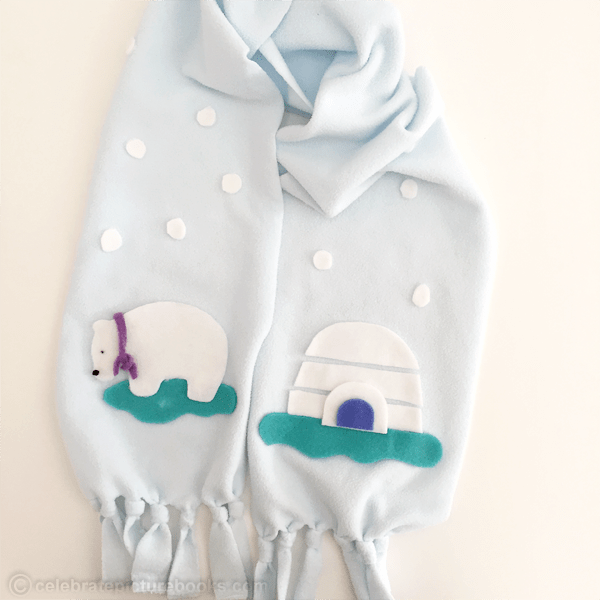
CPB - Polar Bear scarf

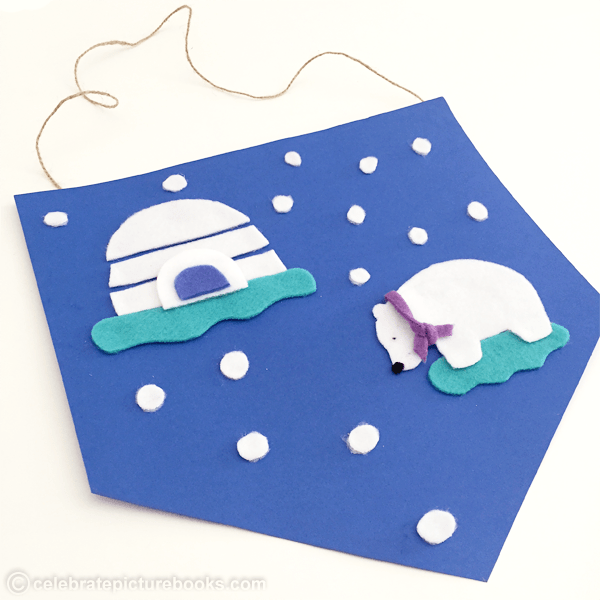
CPB - Polar Bear Banner

Polar Bear Scarf or Banner


Polar bears aren’t cold in the winter—and neither should you be! Here are directions and printable templates for making a cute scarf to keep you warm, or—if you’d rather—a banner to warm up your room.

Supplies

  • Printable Polar Bear and Igloo Template
  • 1 Strip of blue fleece 4 ½ feet long x 7 inches wide for the scarf
  • 1 Piece of blue scrapbooking paper for a banner
  • Pieces of white, black, blue, and purple fleece or scrapbooking paper to make the polar bear, igloo, snowflakes, and ice floes.
  • String or twine for banner
  • Scissors
  • Fabric or paper glue

Directions for Scarf

To make the fringe at each end of the scarf:

  1. Make 7 cuts about 4 inches long
  2. Tie a knot at the top of each fringe section

To make the pieces for the scarf or banner:

  1. Trace the polar bear and igloo sections from the Printable Template onto white fleece and cut out
  2. Trace the two ice floes onto blue fleece and cut out
  3. Trace the door of the igloo onto blue fleece and cut out
  4. Trace the polar bear’s scarf onto purple (or any color) fleece and cut out
  5. Cut out round snowflakes
  6. Cut out a small circle from black fleece for the Polar Bear’s nose

On one end of the scarf:

  1. Glue the smaller ice floe on one end of the scarf
  2. Tie the bear’s scarf around its neck before gluing the bear to the scarf
  3. Glue the polar bear onto the scarf with its feet on the ice floe
  4. Glue on the polar bear’s nose
  5. Make a small dot for the polar bear’s eye with a marker
  6. Glue snowflakes above polar bear

On the other end of the scarf:

  1. Glue the bigger ice floe to the scarf
  2. Glue the three pieces of the large igloo to the scarf, leaving a little space between sections
  3. Glue the small white door of the igloo on top of the last two igloo sections
  4. Glue the small blue door onto the white door
  5. Glue snowflakes above the igloo

Directions for Banner

  1. Cut a point at the bottom of your banner
  2. Follow the directions above to trace the pieces of the polar bear and igloo from the printable template onto scrapbooking paper
  3. Follow the directions above to glue the pieces of the polar bear and igloo to your banner
  4. Attach string or twine to back of banner to make a hanger

celebrate-picture-books-picture-book-review-little-bear-dreams-cover

You can find Little Bear Dreams at these booksellers

Amazon | Barnes & Noble | Books-a-Million

To support your local independent bookstore, order from

Bookshop | IndieBound

Picture Book Review

November 4 – National Stress Awareness Day

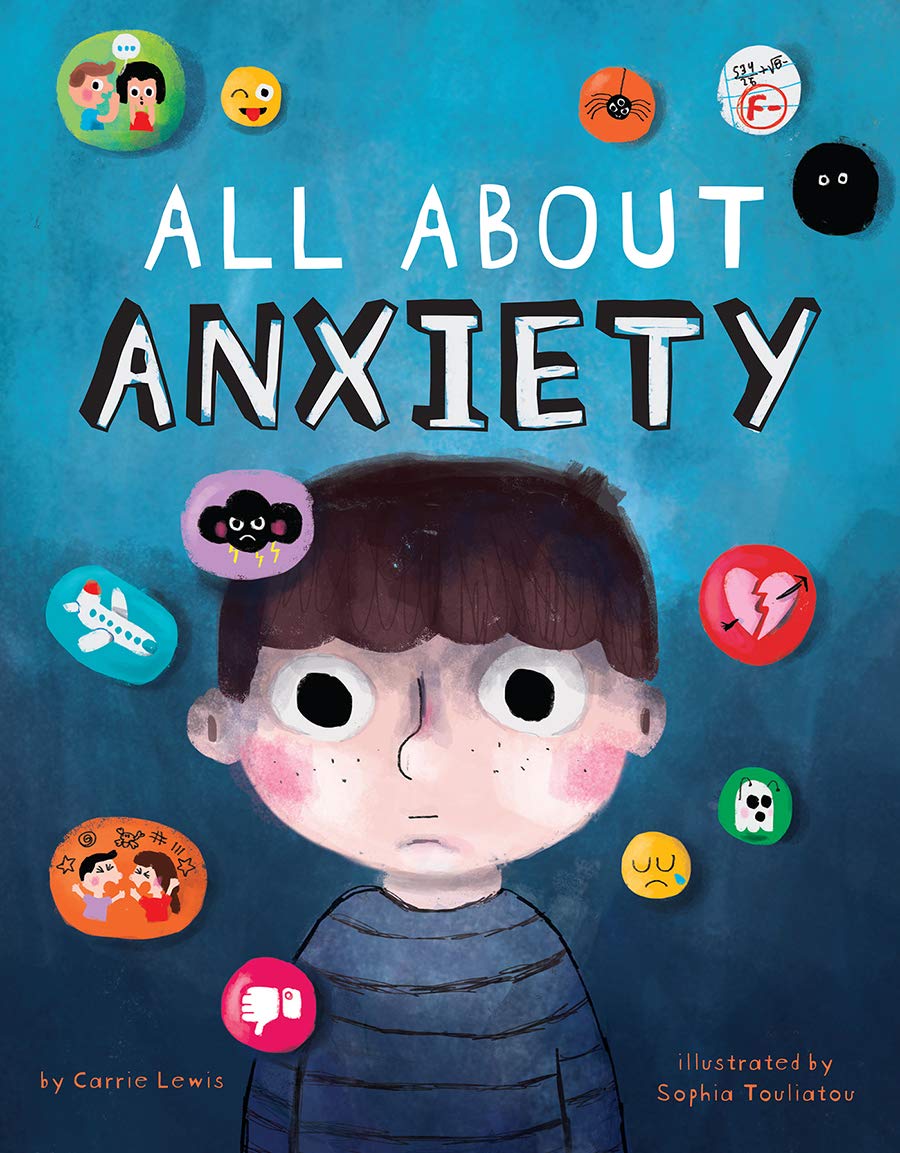
celebrate-picture-books-picture-book-review-all-about-anxiety-cover

About the Holiday

National Stress Awareness Day was established by Carole Spiers, Chair of the International Stress Management Association, which provides employers with guidance on establishing company stress reduction programs and individuals with methods for looking after their health every day. The holiday aims to help people identify the stress factors in their life and learn how to reduce them. This year, of course, stress is high. Today’s holiday gives people an opportunity to assess how they and their family are handling stress and look for ways to manage it while adding positive changes to their life.

Thank you to Beaming Books for sending me copies of All About Anxiety and Crafting Calm: Art and Activities for Mindful Kids for review consideration. All opinions about the books are my own.

All About Anxiety

Written by Carrie Lewis | Illustrated by Sophia Touliatou


As you pick up this book, the first thing you notice is its comforting, velvety-soft cover. Upon opening it, the second thing young readers will see are illustrations of kids just like them engaged in familiar situations that can cause stress and anxiety and expressing their feelings in ways kids will recognize and understand. And then comes the third, most reassuring thing of all—discussions about anxiety: the different types, how it can manifest itself, and how it can be managed, written in kid-friendly, clear, and detailed ways by an author who really knows how to communicate with children.

In five chapters, this 89-page book covers a wide range of topics that answer the questions children may have about the feelings they experience every day or only in certain situations and give them encouragement and workable solutions to try. Chapter 1 introduces a definition of anxiety, describes six of the most commonly felt types of anxiety, and, through a relatable story of two sisters grappling with different anxieties, demonstrates how a fear can grow and how it can be lessened.

Chapter 2 talks about some of the things that can cause anxiety—from memories of frightening experiences and seeing others’ reactions to certain things to parents and brain chemical imbalances to growing up in difficult circumstances. Each of these, as well as a description of how the body reacts to anxiety, is treated with detailed and easy-to-understand paragraphs that contain examples kids will appreciate.

Chapter 3 likens anxiety to the various types of animals in a zoo and the child as the zookeeper. This chapter is especially effective in directly addressing some of the most common anxiety triggers and providing practical steps that will help. These include the news; stories, TV shows, and movies; hormones; changes within the family; money worries; moving; the pressure to succeed; comparing oneself to others; the way one looks; other people; peer pressure; and social media.

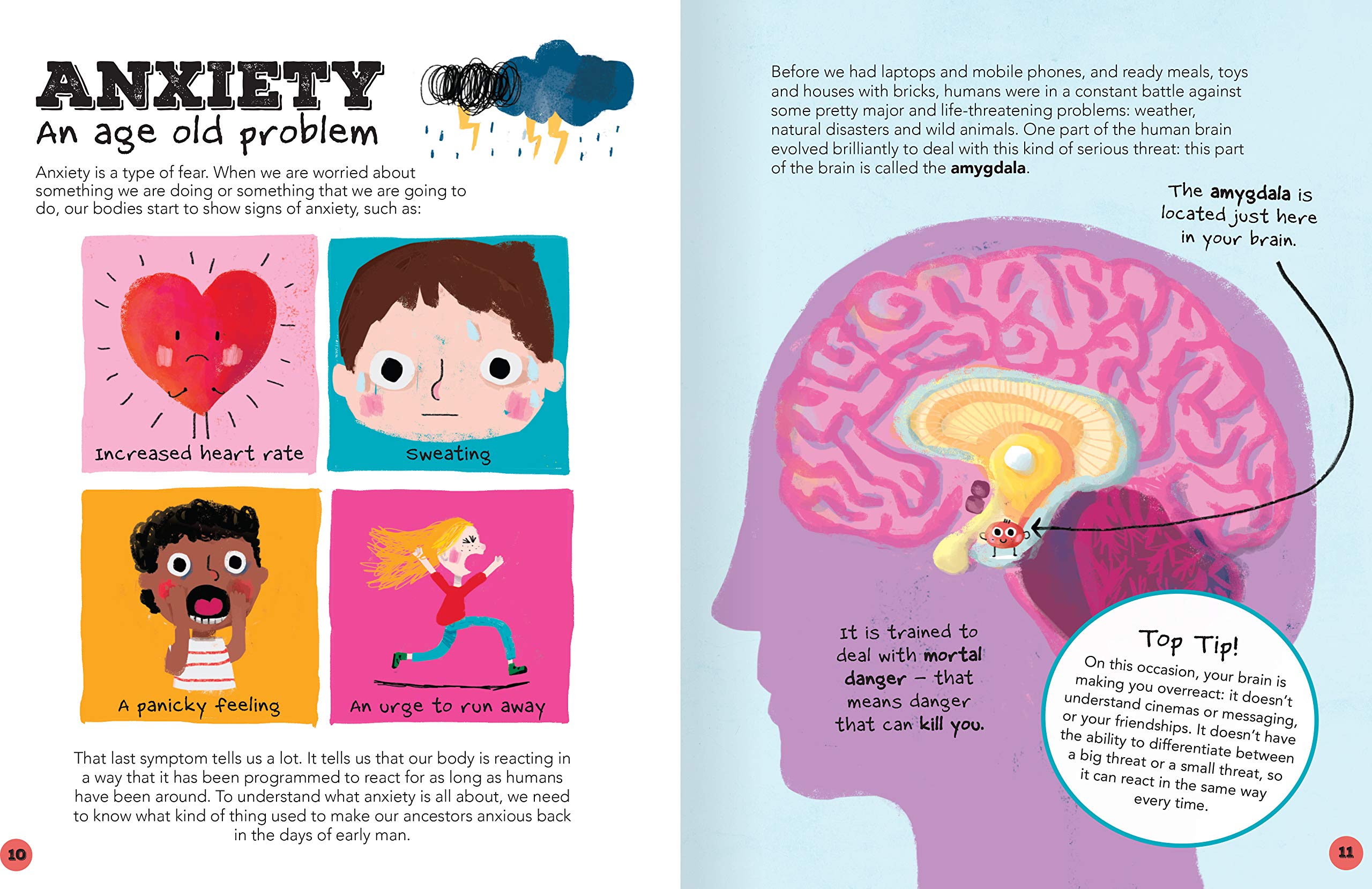
celebrate-picture-books-picture-book-review-all-about-anxiety-brain

Image copyright Sophia Touliatou, 2020, text copyright Carrie Lewis. Courtesy of Beaming Books.

In Chapter 4, children are encouraged to answer several questions that can determine if they actually have anxiety or not. In the next step, readers learn how anxiety can affect the quality of their life and relationships with family and friends. Here Carrie Lewis presents discussions on social anxiety, family relationships, school and studying, sports and hobbies, and overall health. Speaking directly to the reader, Lewis uses specific examples of ways anxiety may affect them. Moreover, with each topic, Lewis provides bulleted suggestions for activities that can boost self-esteem, release healthy endorphins, and change their focus.

Chapter 5 is a “taking-control toolkit” where Lewis explores “different ways to make life less anxious and to keep serious anxiety away.” These include deep breathing, visualization, body relaxation exercises, talking with a trusted adult or doctor, how to talk about anxiety, using mild anxiety as a superpower, and ways to stay positive. Lewis closes her book with six resources, complete with contact information, where young readers and adults can find help and more information.

Reading through this book by Carrie Lewis is like sitting down with a sympathetic, knowledgeable friend who can put you at ease and give you the help you’re looking for. That sense of being understood is just one of the many strengths of this book. Conversational text and an unflinching look at the real-world issues that can cause anxiety will resonate with children, tweens, and even teens and put them on the road to managing their feelings.

On every page the text wraps around Sophia Touliatou’s vibrant and evocative illustrations that let kids know they’re not alone. Images mirror feelings of fear and anxiety, depict brain activity related to feelings of anxiety, and show difficult situations all children deal with at one time or another. But Touliatou also includes many images of children finding ways to manage and overcome their anxiety that offer hope and happiness. In design, the book makes excellent use of typography and other elements to make topics easy to find and appeal to the targeted audience.

A superb book for helping children and tweens with anxiety or just navigating day-to-day feelings, All About Anxiety is a must for home, school, and public libraries.

Ages 8 – 13

Beaming Books, 2020 | ISBN 978-1506463209

You can find All About Anxiety at these booksellers

Amazon | Barnes & Noble | Books-a-Million

To support your local independent bookstore, order from

Bookshop | IndieBound

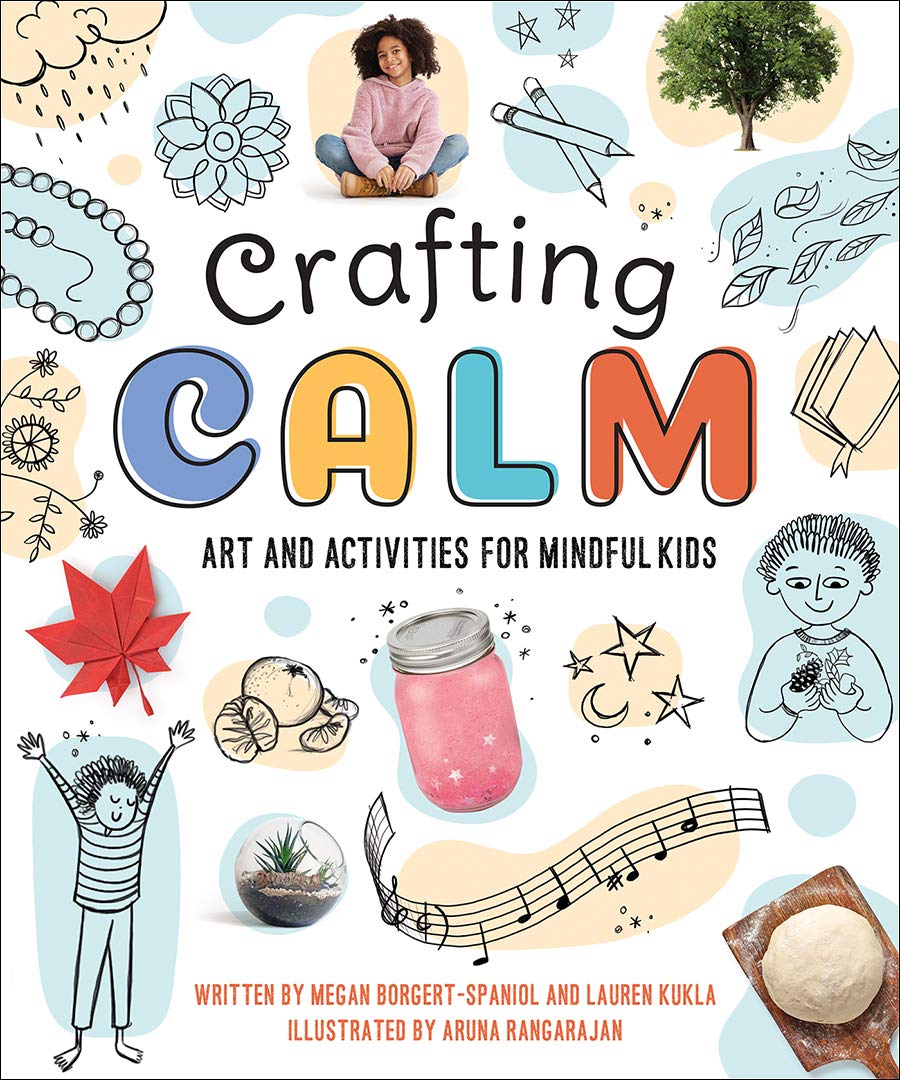
celebrate-picture-books-picture-book-review-crafting-calm-cover

Crafting Calm: Art and Activities for Mindful Kids

Written by Megan Borgert-Spaniol and Lauren Kukla | Illustrated by Aruna Rangarajan


One way to take control of your feelings is by finding an activity that calms the mind, changes your focus, uses your talents, or helps you reach out to others. That’s what Crafting Calm is all about. Through five chapters Megan Borgert-Spaniol and Lauren Kukla show readers how they can use various arts, movement, breathing, their senses, and their sense of self to be calmer and happier.

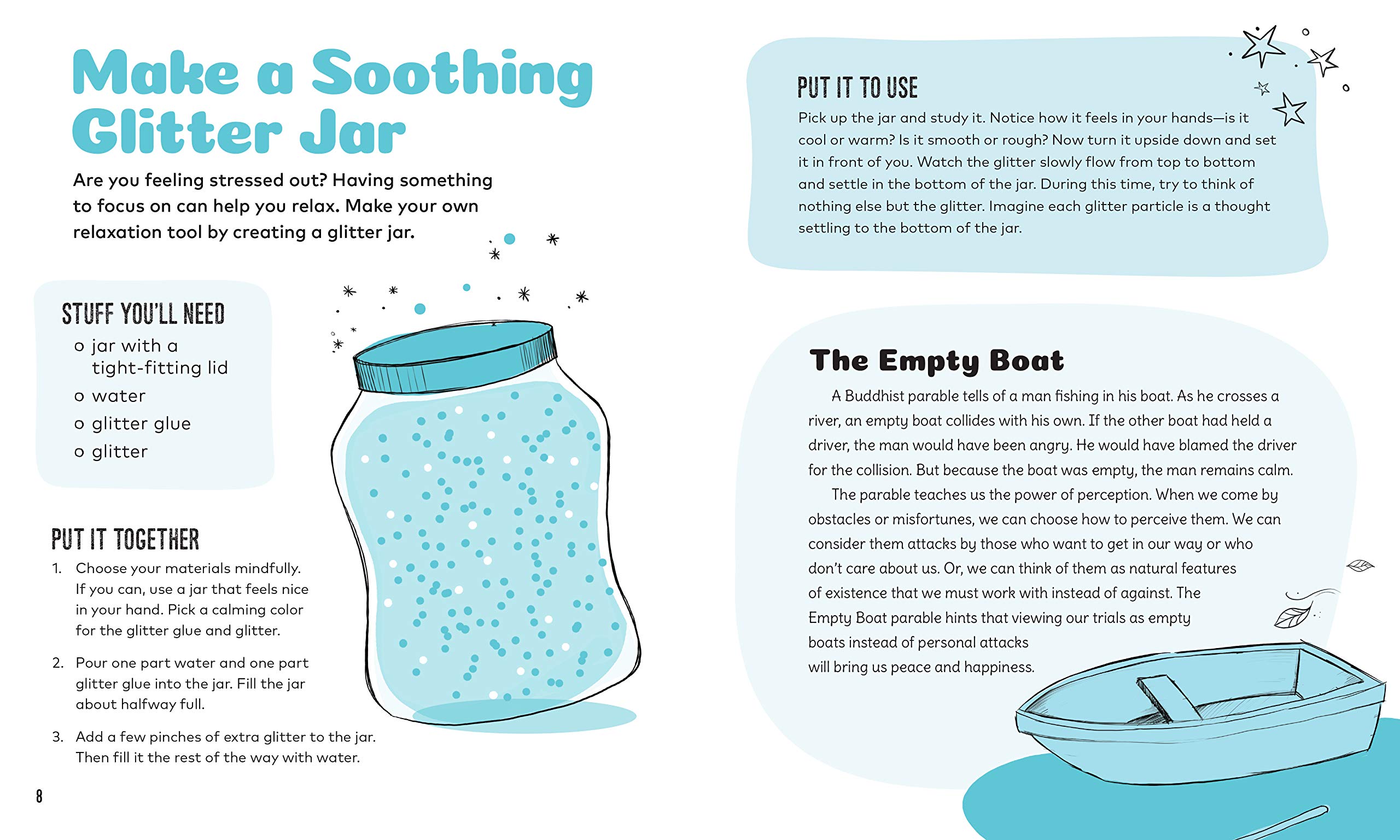
Each chapter focuses on a particular topic. Chapter 1: Catch Your Calm helps children gain control of their thoughts or behavior with crafts such as making a glitter jar and a Zen garden, kneading homemade bread, and doing an easy yoga exercise. A short parable demonstrates the power of perspective, and other activities give readers a variety of options. Chapter 2: Examining Emotions contains activities that allow a child to better understand their emotions and how they physically react to them. Doing a body scan, making mood art, learning to walk with confidence, and creating an emotional support plant are just a few of the activities presented.

Chapter 3: Being Here and Experiencing Now provides methods to support the important idea of staying present in every moment. Mindful walking, engaging all your senses, slowing down to fully enjoy a snack, making a terrarium, learning how to neutralize noise, are some of the activities described here. Chapter 4 is designed to help readers observe their thoughts and “gain skills to better control what goes on in your mind while still allowing space for it to wander and dream.” A “mind dump” can help you get your thoughts and emotions out of your head and onto paper without judgement. Daily affirmations can help readers to embrace their good qualities and become the person they want to be. These and the other provided activities can bring much-needed peace.

celebrate-picture-books-picture-book-review-crafting-calm-glitter-jar

Image copyright Aruna Rangarajan, 2020, text copyright Megan Borgert-Spaniol and Lauren Kukla, 2020. Courtesy of Beaming Books.

Chapter 5: Capturing Joy and Growing Gratitude gives readers the tools to find “inner joy during tough times and appreciate things [they] may have taken for granted.” These emotional resources can help readers “navigate life’s ups and downs with positivity.” Origami can help turn paper into a colorful gratitude garden of flowers that each represent something you’re thankful for. If you’re feeling alone, you can use the instructions here to create a Tree of Belonging to show you how many people love and care for you. Bringing joy and sharing gratitude with others takes the focus off of yourself and gives you purpose. Here you’ll find ideas for doing both of these things.

In a casual, light, and conversational style Megan Borgert-Spaniol and Lauren Kukla address many of the feelings and intrusive thoughts that can roil the mind and make inner peace hard to find. Readers will recognize and appreciate the straightforward examples and reassurance presented in the introduction to each chapter. Along with directions on how to complete the activities, Borgert-Spaniol and Kukla include how each activity can help bring about a more calm and positive attitude. The activities included are easy to do and don’t require special supplies, making them excellent go-tos for times when tranquility is needed.

Accompanying each activity are Aruna Rangarajan’s engaging illustrations, rendered in soothing colors, that demonstrate techniques and instructions while also adding whimsical touches that make every page inviting.

A wonderful, comprehensive guide not only to activities that can really make a difference in the life of any child, especially those disruptive feelings, but to the hows and whys inherent in them, Crafting Calm: Art and Activities for Mindful Kids is highly recommended for family, school, and public library bookshelves.

Ages 8 – 12

Beaming Books, 2020 | ISBN 978-1506465265

You can find Crafting Calm: Art and Activities for Mindful Kids at these booksellers

Amazon | Books-a-Million

To support your local independent bookstore, order from

Bookshop | IndieBound

National Stress Awareness Day Activity

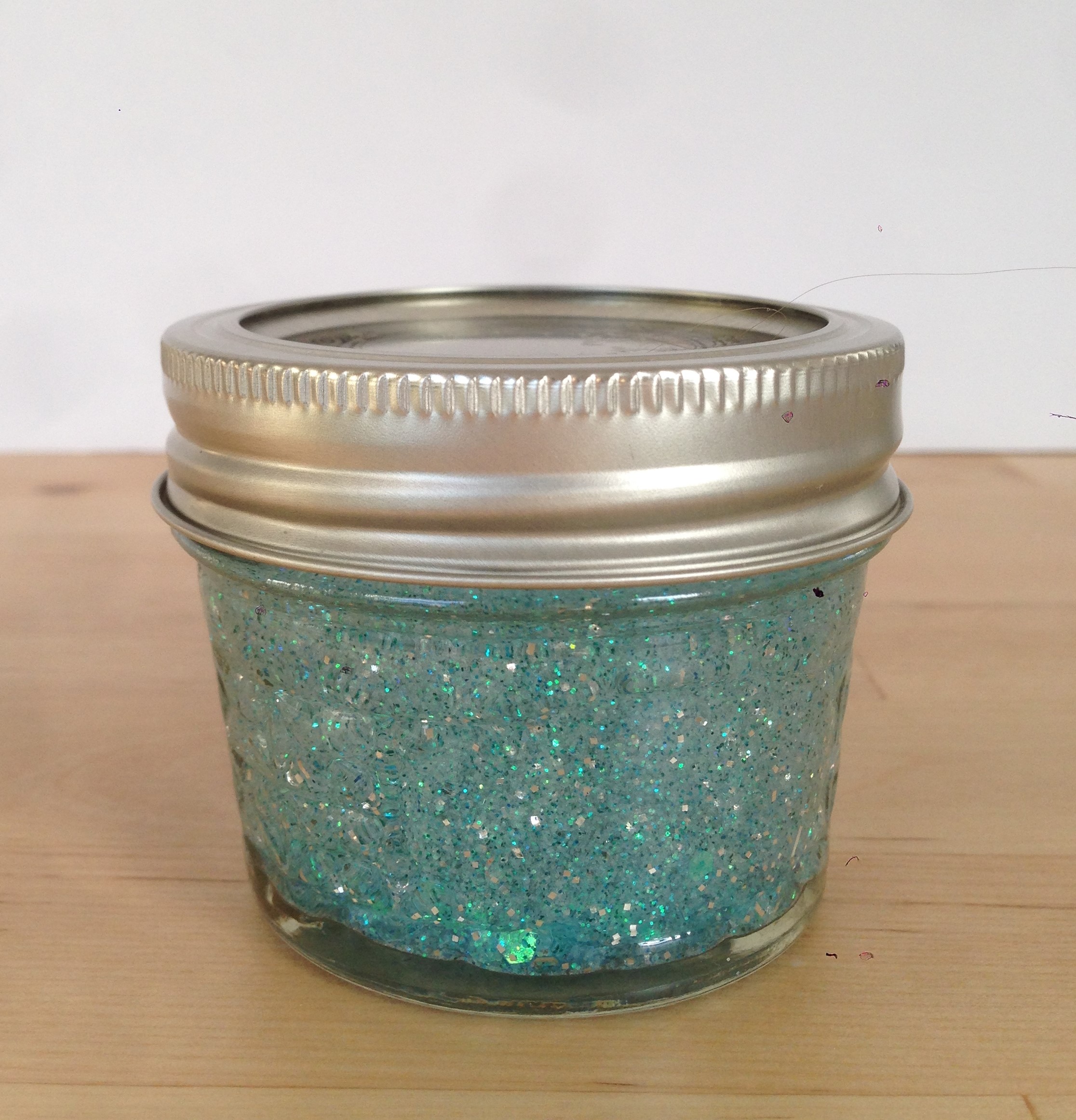
celebrate-picture-books-picture-book-review-mind-jar

Snowy Day Mind Jar


You can capture the beauty of a glittering snowfall in this easy craft—that also makes a special gift for a friend!

Supplies

  • Small to medium mason jar or other decorative jar with a tight lid
  • White glitter glue,
  • Light blue glitter glue,
  • Fine white and/or blue glitter
  • Large white and/or blue glitter
  • Warm water

Directions

1.For every 1/2 cup of warm water add:

  • 1 1/2 teaspoons white glitter glue
  • 1/2 teaspoon blue glitter glue
  • 2 teaspoons fine glitter glue
  • 1/2 teaspoon large glitter

2. Close lid tight

3. Shake

4. As glue dissolves, the liquid will become clearer and the glitter will remain suspended in it

celebrate-picture-books-picture-book-review-all-about-anxiety-cover

November 3 – It’s Family Literacy Month

celebrate-picture-books-picture-book-review-sharing-cover

About the Holiday

Today’s observance was established in 1994 to promote family and community involvement in teaching and supporting children to read more. Literacy really does begin at home during those cuddly moments when you and your child share a book. Reading with kids from birth helps them develop the skills to become proficient readers and instills a life-long love for books of all kinds. Even before babies can talk, they’re listening and learning, and as they grow children continue to love spending special times with parents and grandparents hearing stories and discovering the world through books. Interactive board books like the three I’m reviewing today are a great place to start!

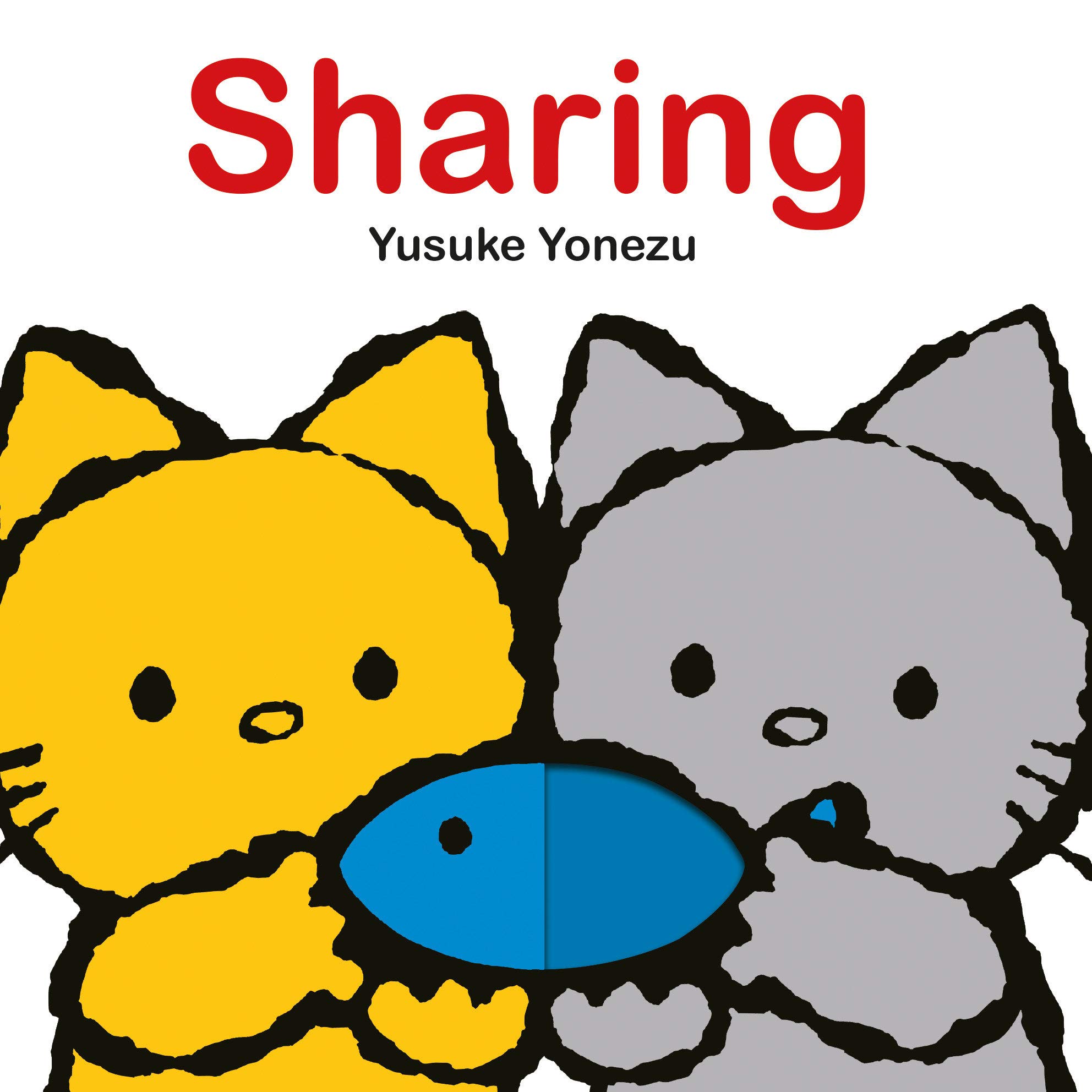
Sharing

By Yusuke Yonezu


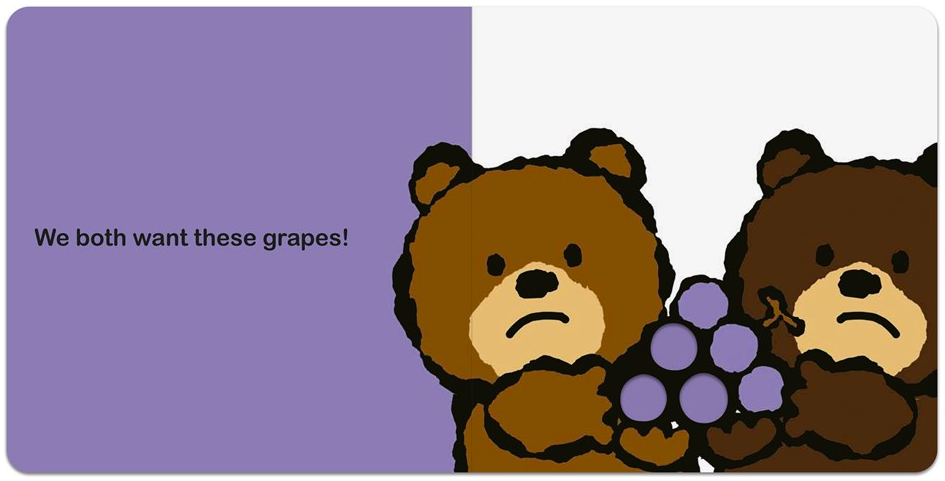
Pairs of adorable animals engage little readers in helping them with a big problem. They only have one piece of food but they’re both so hungry! How can the two kittens eat one fish? Turn the page and a cleverly placed die cut allows the one fish to be shared between the kittens. “Now we each get some,” they say with wide smiles. Two bunnies… one carrot? What to do? Kids will love turning the page so that each bunny can take half.

celebrate-picture-books-picture-book-review-sharing-one-bunch

Copyright Yusuke Yonezu, 2020, courtesy of minedition.

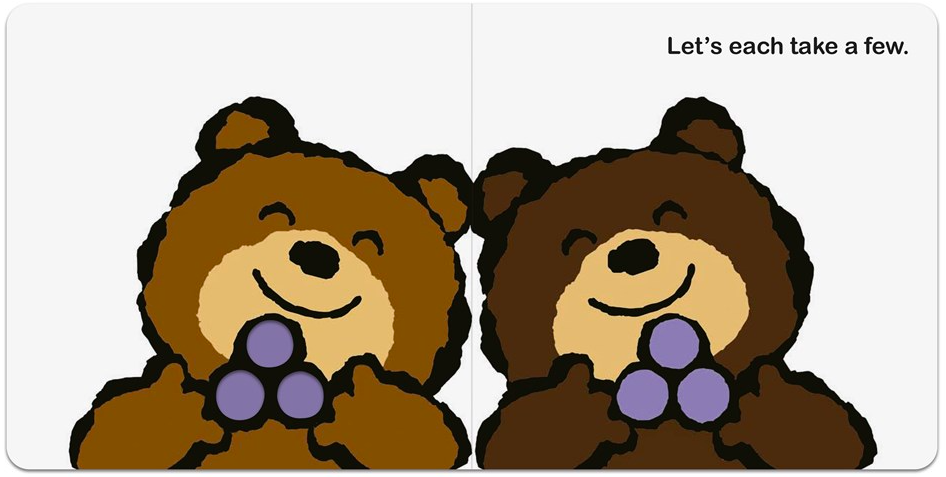
Instead of squabbling over one banana or one apple, the monkeys and the piglets are happy to discover that they can “split it instead.” After all, “half is better than none.” But what if two siblings both “want Mommy?” No worries! Just flip that page! “Now we can all share a hug!”

Yusuke Yonezu’s sweet interactive board book presents a gentle message about sharing that little ones will have fun participating in. Ingeniously designed two-page spreads create a rich learning experience. Yonezu’s storytelling provides a different vocabulary to express the idea of sharing on each page spread. Being introduced to these words here invites kids to listen and understand when adults use them.

celebrate-picture-books-picture-book-review-sharing-grapes-shared

Copyright Yusuke Yonezu, 2020, courtesy of minedition.

Visually, Sharing is fun and exciting for young readers. On the left, the text appears on a vivid solid background which matches the color of the food item on the facing page. When children turn the page, each animal now has their own page and half of the food item, thanks to a specifically shaped die cut. Yonezu’s animals are adorable, and their simply drawn faces clearly express the emotions of sadness, puzzlement, and happiness, which allows adults to talk about these feelings with children. The final example addresses another common family conundrum and shows that there is always enough love to go around.

A delightful way to introduce the joy of sharing with family and friends, Sharing would make a go-to book for teaching this important skill to preschoolers in home, school, and public library collections.

Ages 2 – 4

minedition, 2020 | ISBN 978-1662650000

You can find Sharing at these booksellers

Amazon | Barnes & Noble | Books-a-Million

To support your local independent bookstore, order from

Bookshop | IndieBound

celebrate-picture-books-picture-book-review-a-very-hungry-wolf-cover

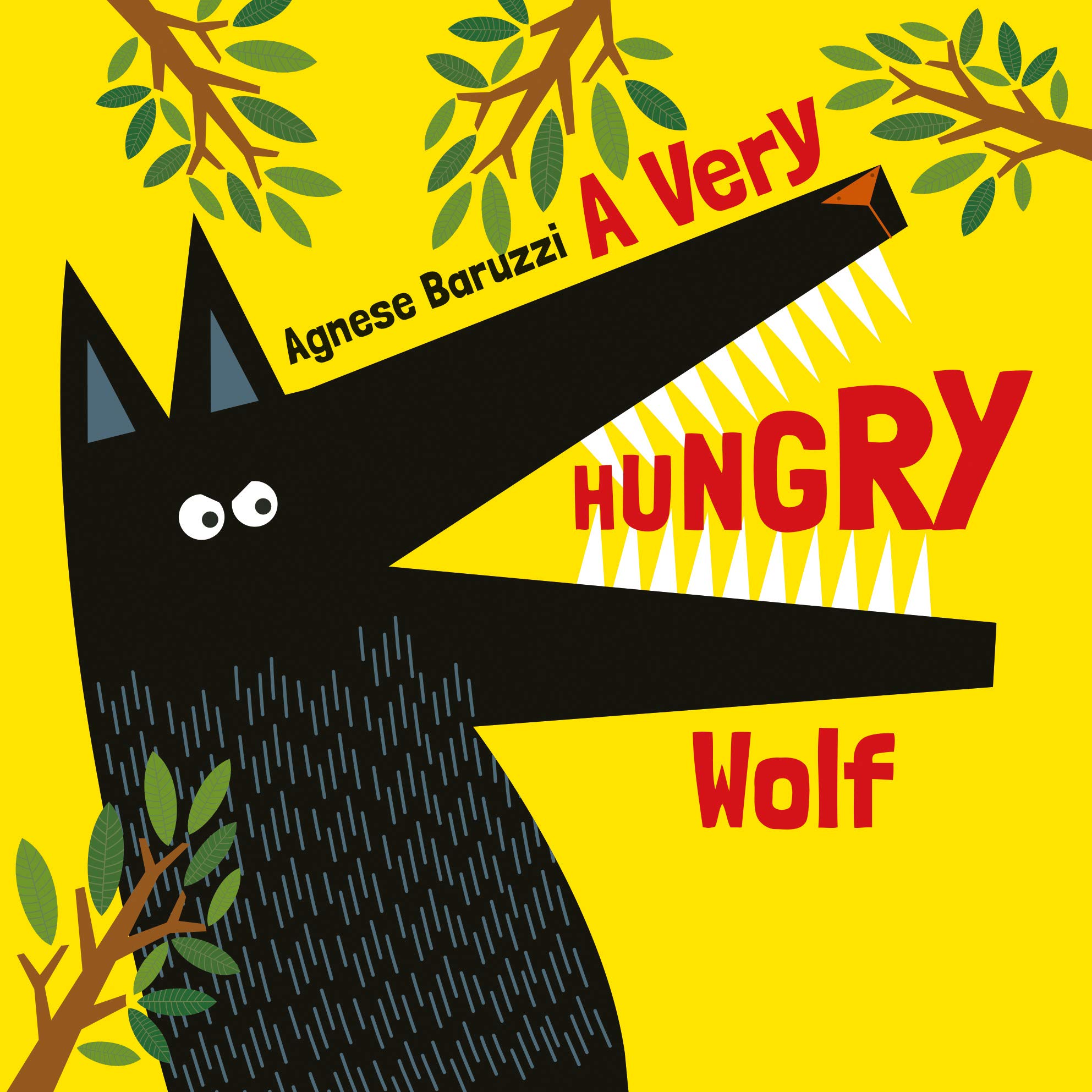
A Very HUNGRY Wolf

By Agnese Baruzzi


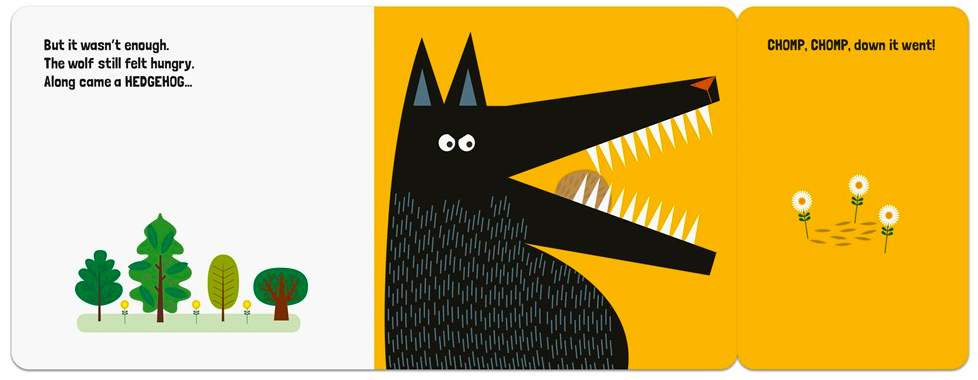
Looking for a way to get your little one (and maybe even older kids) to eat their fruit and vegetables? Open up Agnese Baruzzi’s story wide and watch the laughs tumble out of readers as they also begin to think that maybe those carrots, peas, bananas, plums, and—yes—even broccoli aren’t so bad. How does Baruzzi accomplish this feat? With a long-snouted, insatiably hungry wolf that eats every animal that comes near with a “CHOMP, CHOMP, down it went!”

celebrate-picture-books-picture-book-review-a-very-hungry-wolf-chomp

Copyright Agnese Baruzzi, 2020, courtesy of minedition.

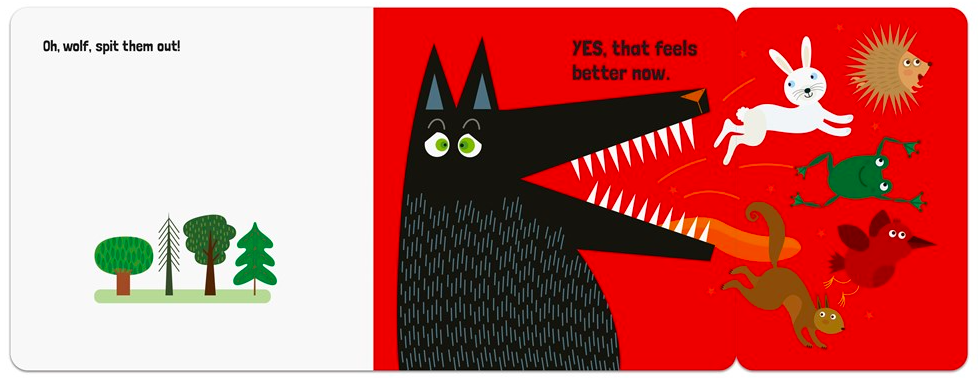
When that innocent red bird hops the wolf’s way, with the lift of a flap the wolf opens his jaws, bares his sharp, white teeth and… “CHOMP, CHOMP, down it went!” Squirrel? Yep! Swallowed right down. A couple more unsuspecting meals come by, “but it wasn’t enough. The wolf still felt hungry.” Then the wolf meets a morsel that turns out not to be so tasty. The wolf turns queasy, but kids know what he should do. “Oh wolf, spit them out!” With nothing now in his belly, the wolf needs something… anything… to satisfy him. “What do you think he should eat?” Those fruits and vegetables are looking mighty delicious….

celebrate-picture-books-picture-book-review-a-very-hungry-wolf-spit-out

Copyright Agnese Baruzzi, 2020, courtesy of minedition.

Agnese Baruzzi will make kids laugh all the way to the healthy food with her witty repetition that will have them reading along with verve and plenty of dramatic Chomp, Chomping. Vibrant colors, smiling animals, and a determined, beady-eyed wolf add up to full engagement. And when the wolf realizes he’s made a mistake, kids will giggle at his distressed expression and answer the call for help coming from the wolf’s tummy.

Definitely a book to add to your shelf at home, school, or public library, A Very HUNGRY Wolf will be an often-asked for favorite.

Ages 2 – 4

Minedition, 2020 | ISBN 978-9888342051

You can find A Very Hungry Wolf at these booksellers

Amazon | Barnes & Noble | Books-a-Million

To support your local independent bookstore, order from

Bookshop | IndieBound

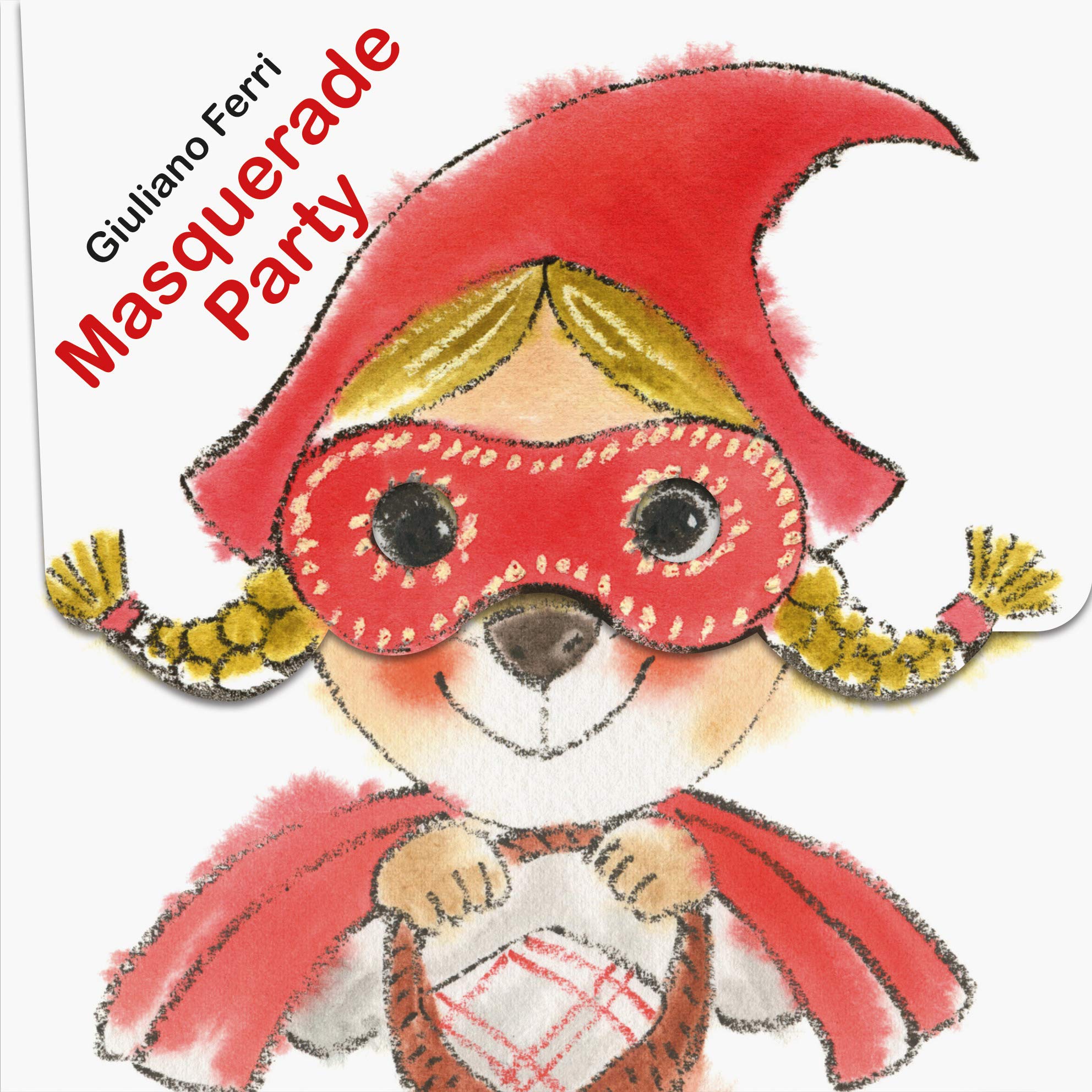
celebrate-picture-books-picture-book-review-masquerade-party-cover

Masquerade Party

By Giuliano Ferri


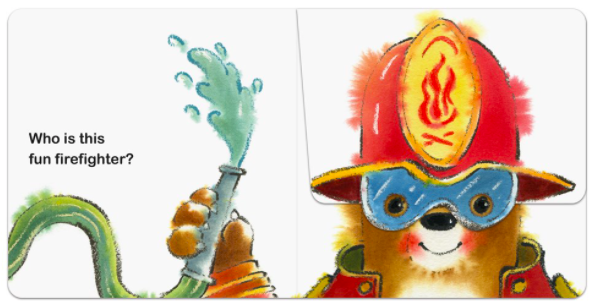
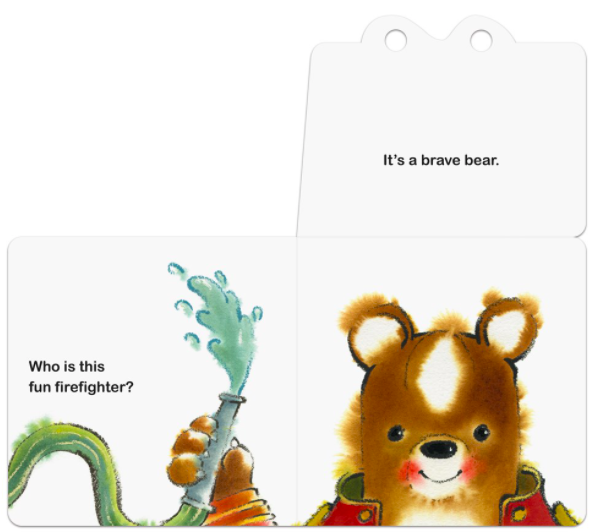
The fun starts on the front cover when little readers are met by Little Red Ridinghood… or is it? When they lift the flap, They discover “Oh no, it’s the wicked wolf!” Well… this wolf looks too cute to be bad. Let’s see who else is inside. Yo ho ho! There’s a pirate brandishing a sword.  “Who is this plucky pirate? / It’s a playful pig.” Watch out for the “cuddly cowboy” who’s about to lasso you with this rope. Wait! It’s just “a brilliant bunny playing dress up.

Screen Shot 2020-11-01 at 10.10.48 PM

Copyright Giuliano Ferri, 2020, courtesy of minedition.

Have a wish? You need a “sly sorcerer.” Check under the turban to see who will grant your wish. Little ones will also discover who is dressed up as a handsome hero, wondrous wizard, and noble knight. Which brings us round again to a wily wolf…with a basket and red collar? Who is that really?

Screen Shot 2020-11-01 at 10.11.08 PM

Copyright Giuliano Ferri, 2020, courtesy of minedition.

Giuliano Ferri infuses his lift-the-flap board book with playfulness and strong literacy-building vocabulary and alliteration that will enchant young readers and make them proud to know fun-to-say words like “plucky,” “sly,” and “wondrous.” Ferri’s soft, smudgy illustrations are cuddliness at its best. While each animal’s face is partially hidden by a fancy, well-embellished hat and mask, clues to their real identity are found in their paws or feet, noses, and face shape, and little ones will love guessing who’s playing firefighter, cowboy, and all the rest. The circular storytelling that brings kids back to Little Red Riding Hood will delight kids.

A fun book to share with kids, especially babies, Masquerade Party would make a great take-along book for outings or anywhere waiting is expected.

Ages 2 – 4

Minedition, 2020 | ISBN 978-9888342068

You can find Masquerade Party at these booksellers

Amazon | Barnes & Noble | Books-a-Million

To support your local independent bookstore, order from

Bookshop | IndieBound


Picture Book Review
November 2 – It’s Picture Book Month

celebrate-picture-books-picture-book-review-the-song-for-everyone-cover

About the Holiday

November is all about picture books thanks to Picture Book Month founder author and storyteller Dianne de Las Casas and co-founders author/illustrators Katie Davis, Elizabeth O. Dulemba, Wendy Martin, and author Tara Lazar. This month-long international literacy initiative celebrates print picture books and all that they offer to young (and even older) readers. With gorgeous artwork and compelling stories, picture books open the world to children in surprising ways. They entertain, explain, excite, and help children learn empathy and understanding. If you want to learn more about the holiday and read engaging daily posts about why picture books are important by your favorite authors, illustrators, and others in the children’s publishing industry, visit picturebookmonth.com

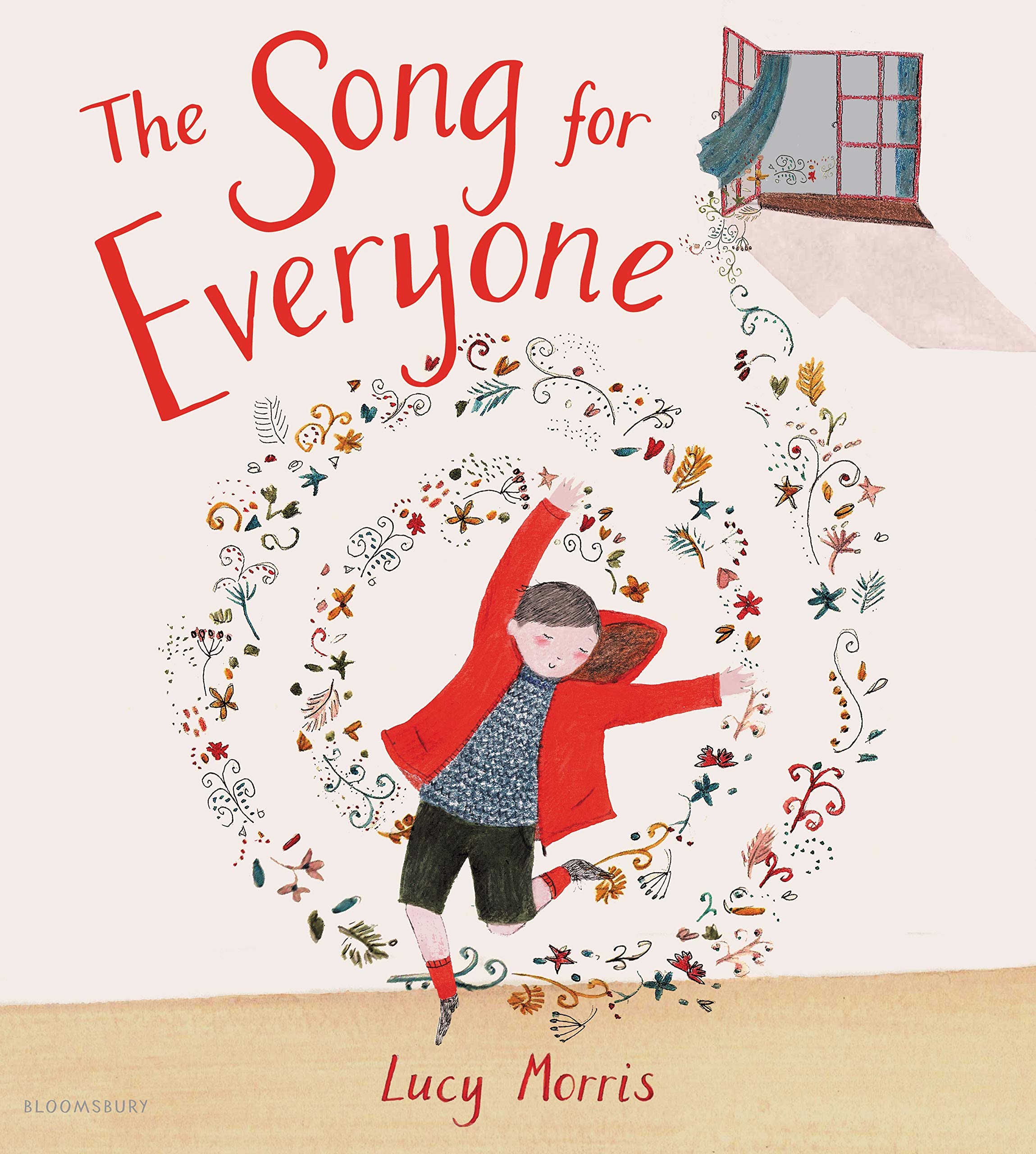
The Song for Everyone

By Lucy Morris


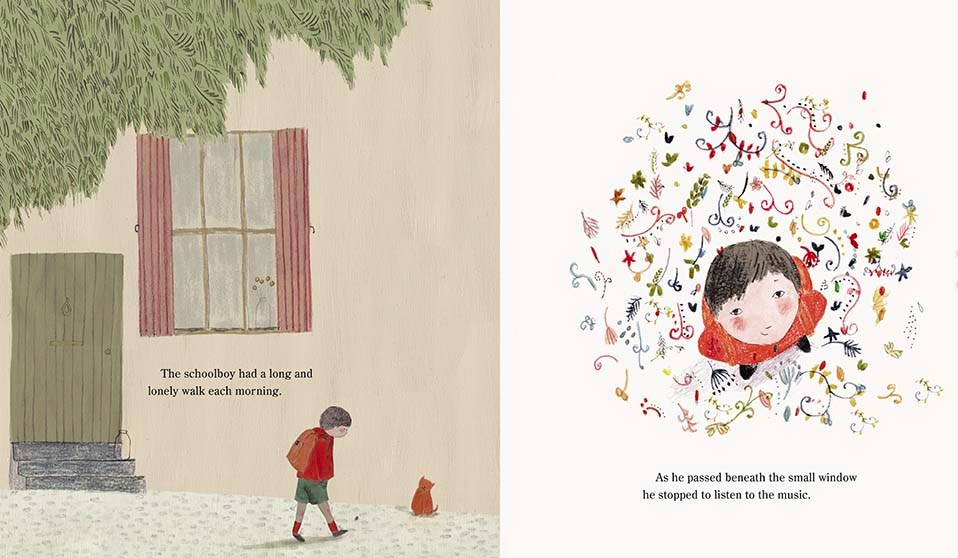
There was a tiny window “too high in the eaves to be noticed from below and too small to let in much daylight.” But one day a “delicate tune” wafted from it’s open panes and floated along the street. A boy trudging to school alone heard it and stopped to listen. As the music swirled around him, he felt happy and he skipped along on his way. Soon an old woman, slow and bent with age, walked by on her way to the market. As she passed under the window, “the sound flowed down and wrapped itself around her weary body.” Suddenly, she felt strong and joyful. A homeless cat followed stray notes from this tantalizing music and was led to two children “who longed for a cat of their own.”

celebrate-picture-books-picture-book-review-the-song-for-everyone-schoolboy

Copyright Lucy Morris, 2020, courtesy of Bloomsbury Children’s Books.

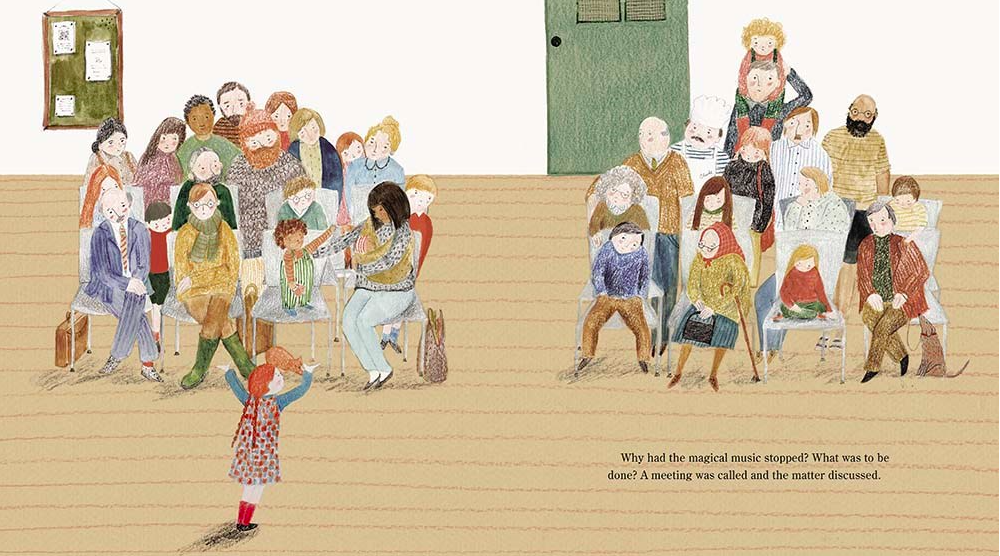
The music continued to float from the open window, always seeming to know who needed to hear it and making the townspeople begin to care for and connect with each other in new ways. The town grew content and peaceful. But then one morning, the music stopped. The town seemed gray and lifeless, and the people felt sad, lonely, and weary. The people held a meeting and decided to see what was behind the open window. The little boy who’d first heard the music climbed up the ladder of townspeople and clambered inside.

celebrate-picture-books-picture-book-review-the-song-for-everyone-happy

Copyright Lucy Morris, 2020, courtesy of Bloomsbury Children’s Books.

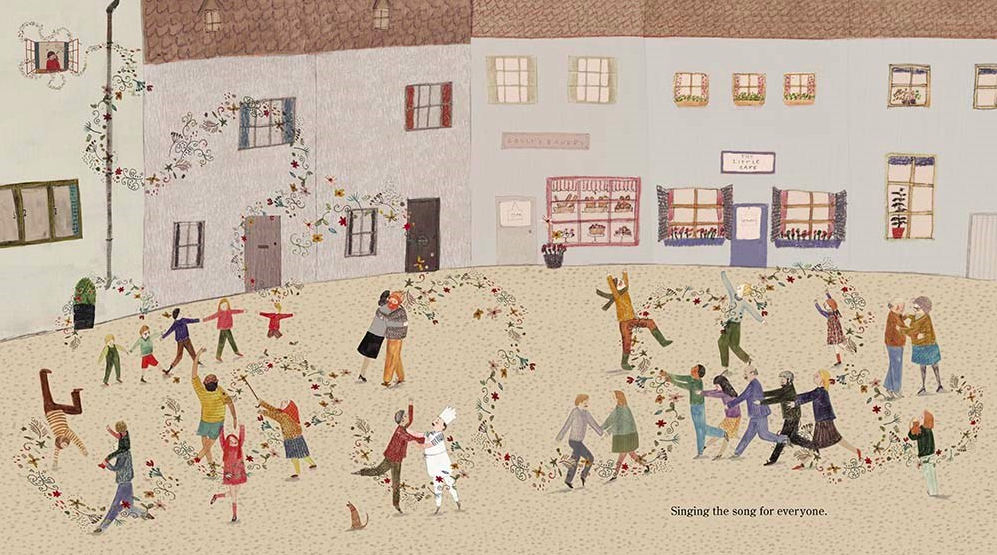
There he found a little wren. She was tired and hungry and her song had left her. The boy promised to help her and he yelled down to the people gathered below. They gathered food and provisions and sent them up to the window in a basket. Two days passed, but the wren stayed silent. But then early one morning…! “A melody, a song. A sound so sweet” once again floated into the air and through the streets. Everyone rushed from their homes and crowded together under the window. There they saw “the boy and the wren making music together. Singing the song for everyone.” A they listened, the central square came alive with dancing, twirling, and playing.

celebrate-picture-books-picture-book-review-the-song-for-everyone-meeting

Copyright Lucy Morris, 2020, courtesy of Bloomsbury Children’s Books.

Lucy Morris’s lovely story—in both words and pictures—reveals the power of one person’s voice and/or actions to transform lives. The wren, singing from a darkened window offers her song, a melody that brings happiness and makes passersby realize they are not alone. Readers can imagine the cheered schoolboy, old woman, and new cat owners sharing their new-found joy with classmates, store clerks, other shoppers, parents, and friends, who also pass their sudden optimism to others until this small community embraces each other as never before. But one wren (or person) cannot sustain it alone. As the townspeople in Morris’s story discovers, it takes a group effort, and it is that coming together that truly creates change.

Morris’s beautiful, lyrical language is as light and buoyant as the wren’s song. Her word choices evocatively describe both the angst, weariness, and world view of the townspeople before the wren’s appearance and the joy, peace, and hopefulness they acquire after accepting her song.

celebrate-picture-books-picture-book-review-the-song-for-everyone-dancing

Copyright Lucy Morris, 2020, courtesy of Bloomsbury Children’s Books.

Morris’s charming illustrations, rendered in a serene color palette portrays a town where, despite the close proximity of the homes and buildings, the people are apparently distanced from each other. The wren’s music is depicted as a garland of flowers that once released into the air do not scatter, but remain strongly together to fill the streets, wrap around the needy, lead the lost, shelter the cold, and lift up those who need a boost.

While the loss of the wren’s song brings sadness, readers will also see that the wren has already accomplished much. Instead of returning to their solitary lives, the townspeople now gather together to discuss a solution. As a little girl addresses the group, kids will understand that their voice is important too. Images of the townspeople each contributing to the wellbeing of the wren and then celebrating her recovery reinforces Morris’ message of community.

A moving and triumphant story that will touch all readers and encourage them to use their individual talents to benefit others, The Song for Everyone will become a thoughtful favorite and is highly recommended for home, school, and public library collections.

Ages 3 – 8

Bloomsbury Children’s Books, 2020 | ISBN 978-1547602865

To learn more about Lucy Morris, her books, and her art, visit her website

Picture Book Month Activity

celebrate-picture-books-picture-book-review-books-to-read-bag-empty

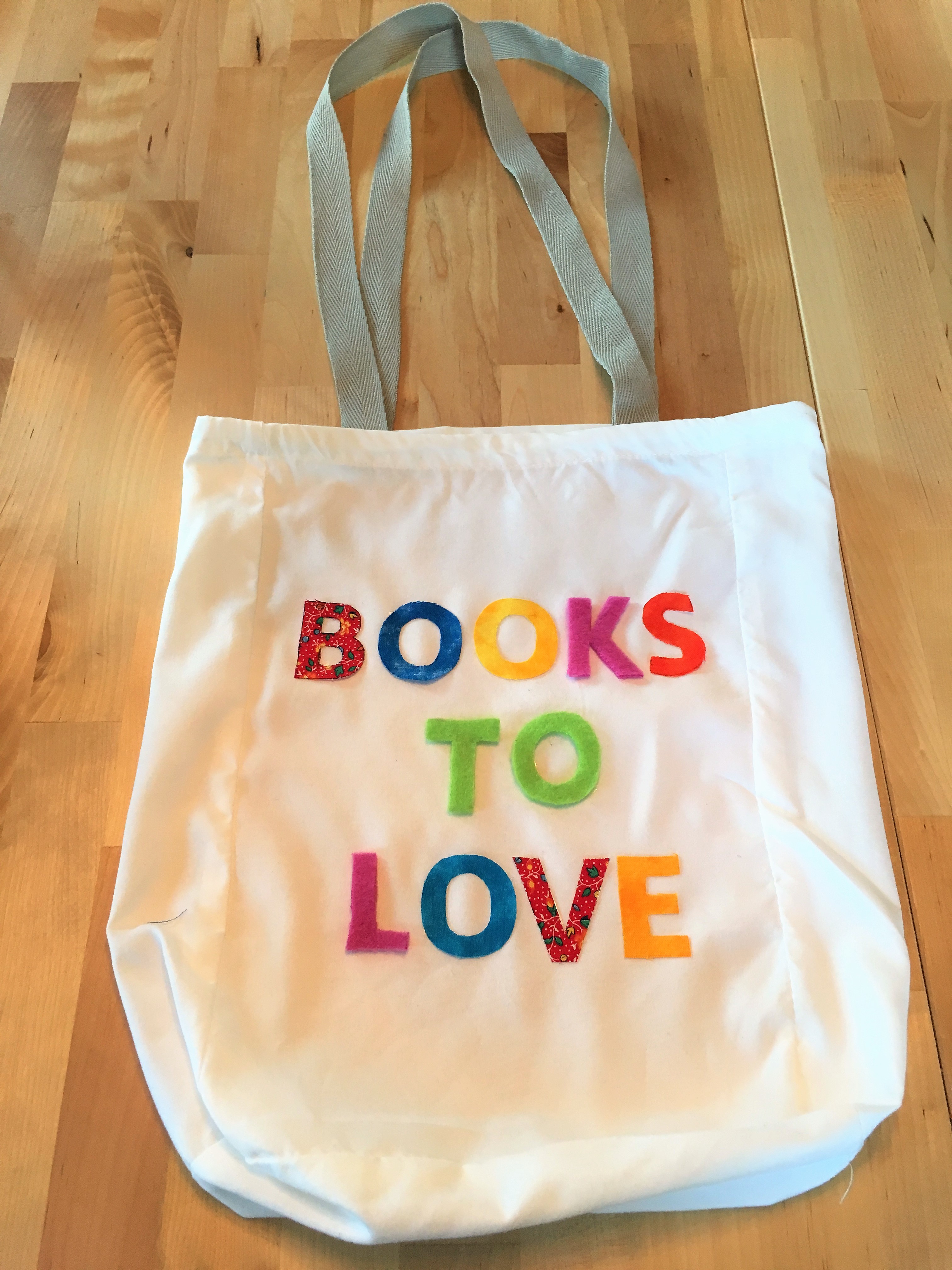
Books to Love, Books to Read Book Bag


True book lovers can’t go anywhere without a book (or two or three) to read along the way. With this easy craft you can turn a cloth bag into a kid-size book bag!


Supplies

  • Printable Templates: Books to Read Template | Books to Love Template
  • Small cloth bag, available from craft or sewing stores—Recyclable Idea: I used the bag that sheet sets now come in
  • Cloth trim or strong ribbon, available from craft or sewing stores—Recyclable Idea: I used the cloth handles from shopping bags provided from some clothing stores
  • Scraps of different colored and patterned cloth. Or use quilting squares, available at craft and sewing stores
  • Pen or pencil for tracing letters onto cloth
  • Scissors
  • Small sharp scissors (or cuticle scissors) for cutting out the center of the letters
  • Fabric glue
  • Thread (optional)
  • Needle (optional)

celebrate-picture-books-picture-book-review-books-to-love-bag-empty

Directions

  1. Print the sayings and cut out the letters
  2. Trace letters onto different kinds of cloth
  3. Cut out cloth letters
  4. Iron cloth bag if necessary
  5. Attach words “Books to Read” to one side of bag with fabric glue
  6. Attach words “Books to Love” to other side of bag with fabric glue
  7. Cut cloth trim or ribbon to desired length to create handles
  8. Glue (or sew) handles onto the inside edge of bag

celebrate-picture-books-picture-book-review-the-song-for-everyone-cover

You can find The Song for Everyone at these booksellers

Amazon | Barnes & Noble | Books-a-Million

To support your local independent bookstore, order from

Bookshop | IndieBound

Picture Book Review
 

November 1 – Zero Tasking Day

celebrate-picture-books-picture-book-review-now-antoinette-portis-cover

About the Holiday

It’s time to change the clocks, but this time it’s the good one – the one where we gain an extra hour of sleep. Does the extra time leave you restless, feeling like you should get more done during the day? Nancy Christie, a self-help coach and better-life blogger founded Zero Tasking Day to encourage people to relax, take care of themselves, and live their best life. So today take some time to really appreciate all the favorite things in your life—like the girl in today’s book. 

Now

By Antoinette Portis

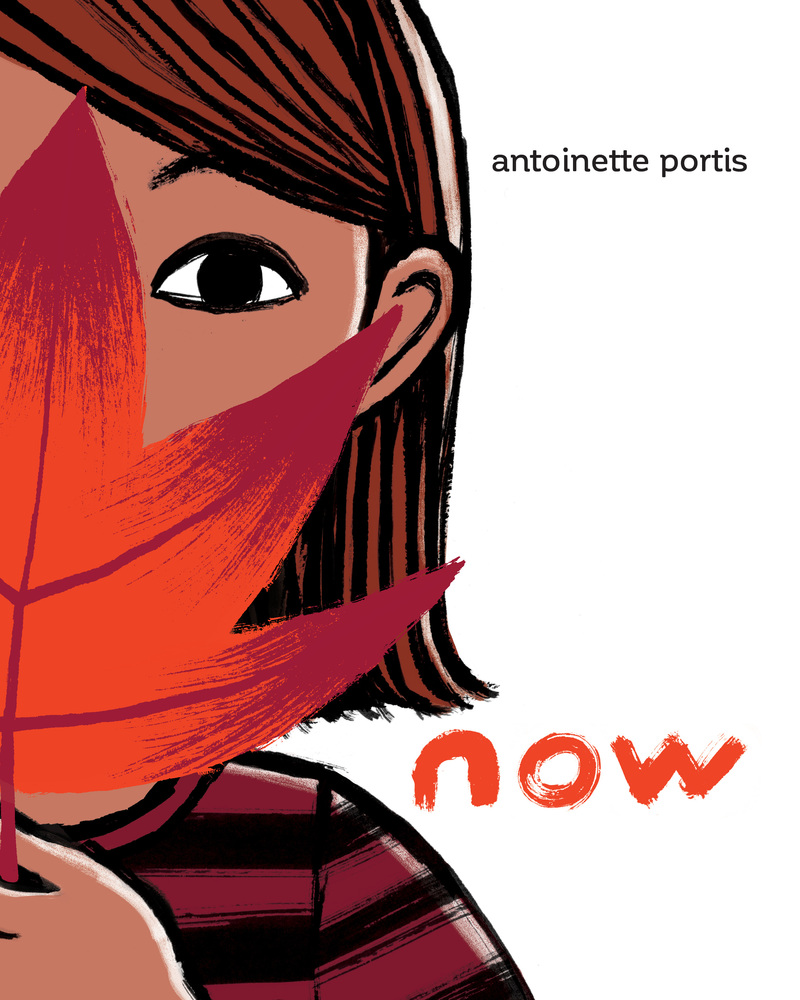
A girl, barefoot and with her arms raised high, runs through a field, feeling the exhilaration of the wind on her face. “This is my favorite breeze,” she says. She finds an apple-red maple leaf, which, at this moment, is her favorite. At the beach, she has dug hole after hole, but her favorite is the one she is making right now.

celebrate-picture-books-picture-book-review-now-antoinette-portis-cloud

Copyright Antoinette Portis, 2017, courtesy of us.macmillan.com.

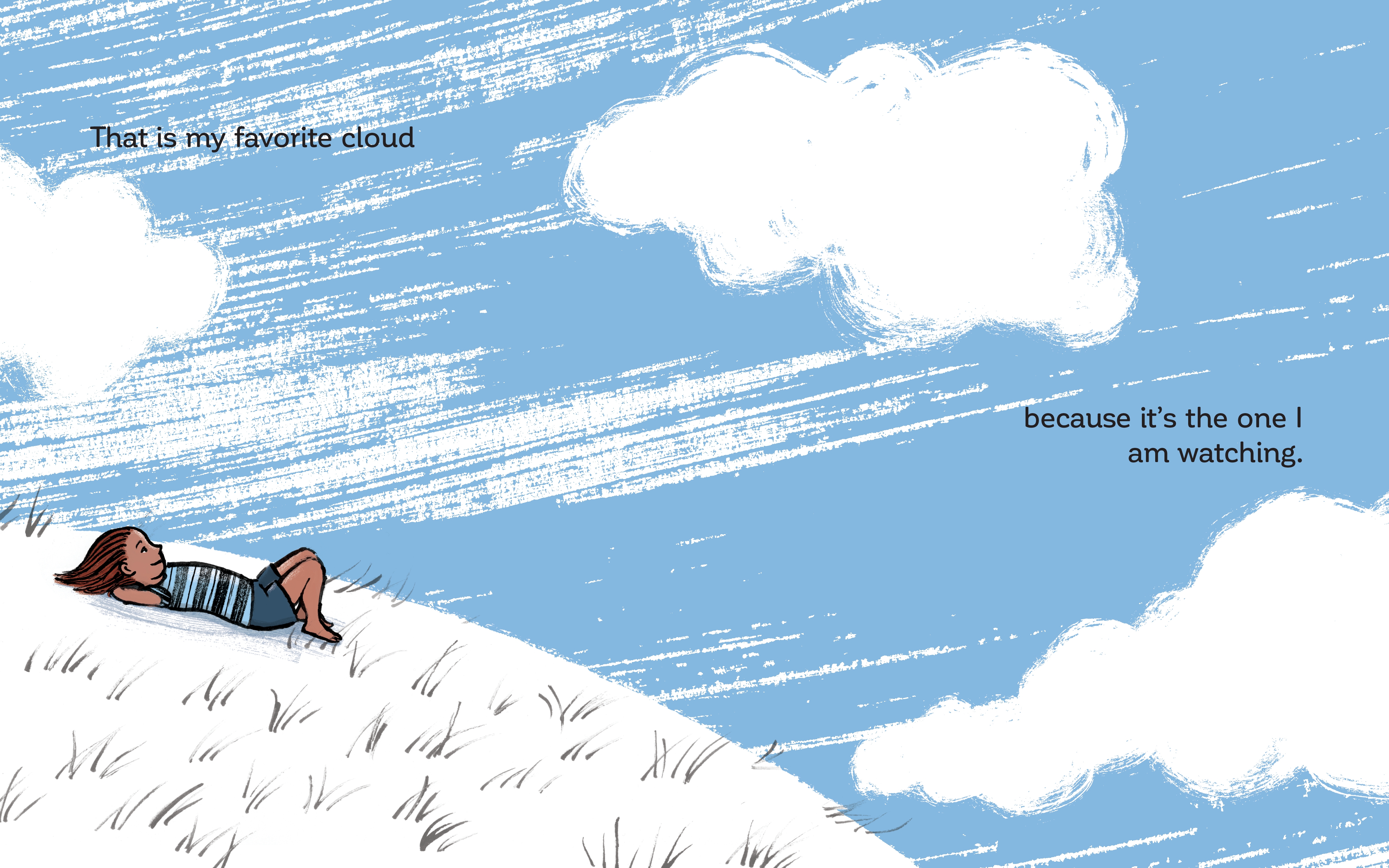
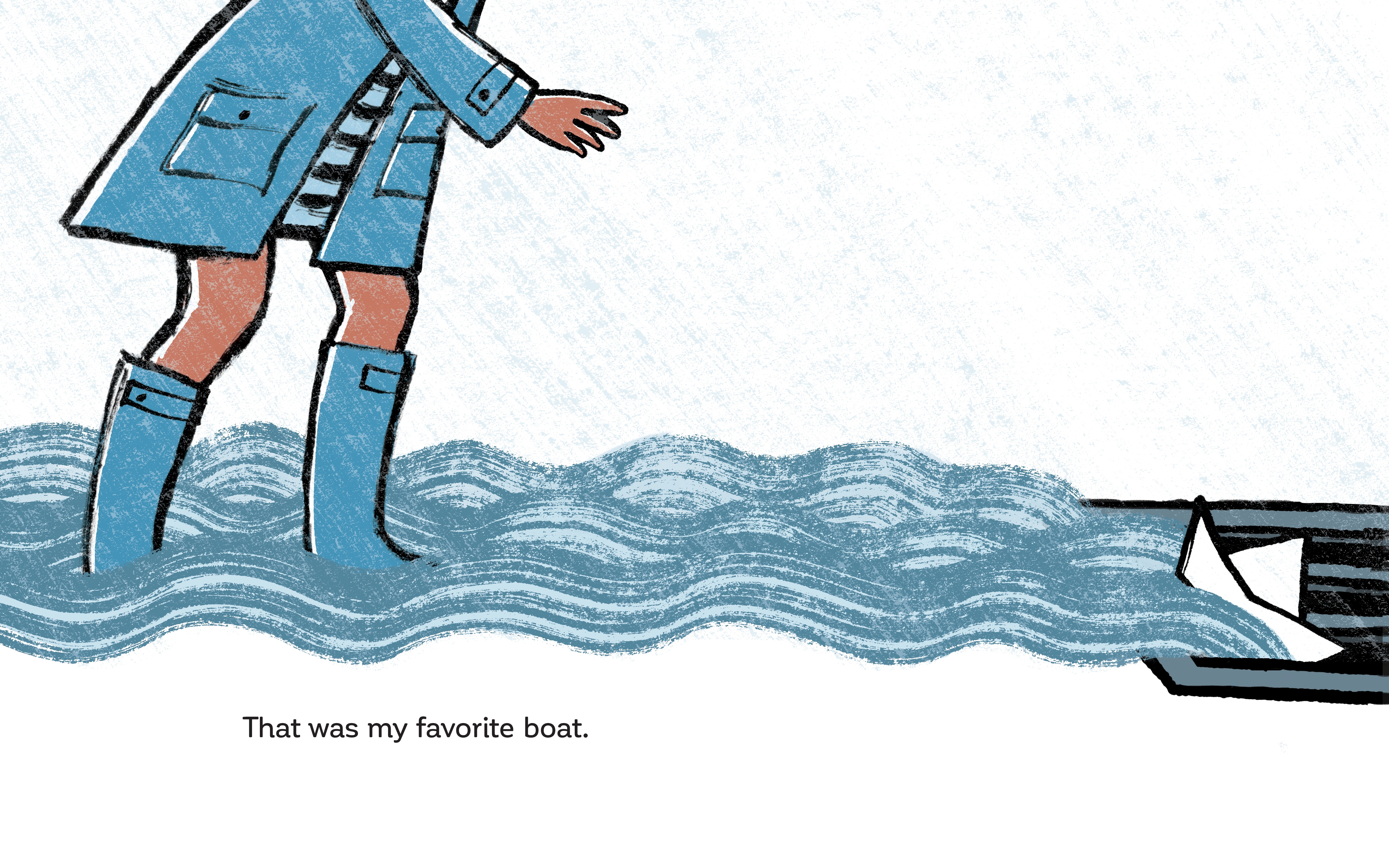
In the mud that has splattered her ankles, she finds a pink, wriggly worm that tickles her palms when she picks it up. As the girl stretches out on a hill to watch the clouds float by, she decides that her favorite is “the one I am watching.” The best rain is one that creates a river in the street for her paper boat—the one that was her favorite until it sailed into the grate

celebrate-picture-books-picture-book-review-now-antoinette-portis-tree

Copyright Antoinette Portis, 2017, courtesy of us.macmillan.com.

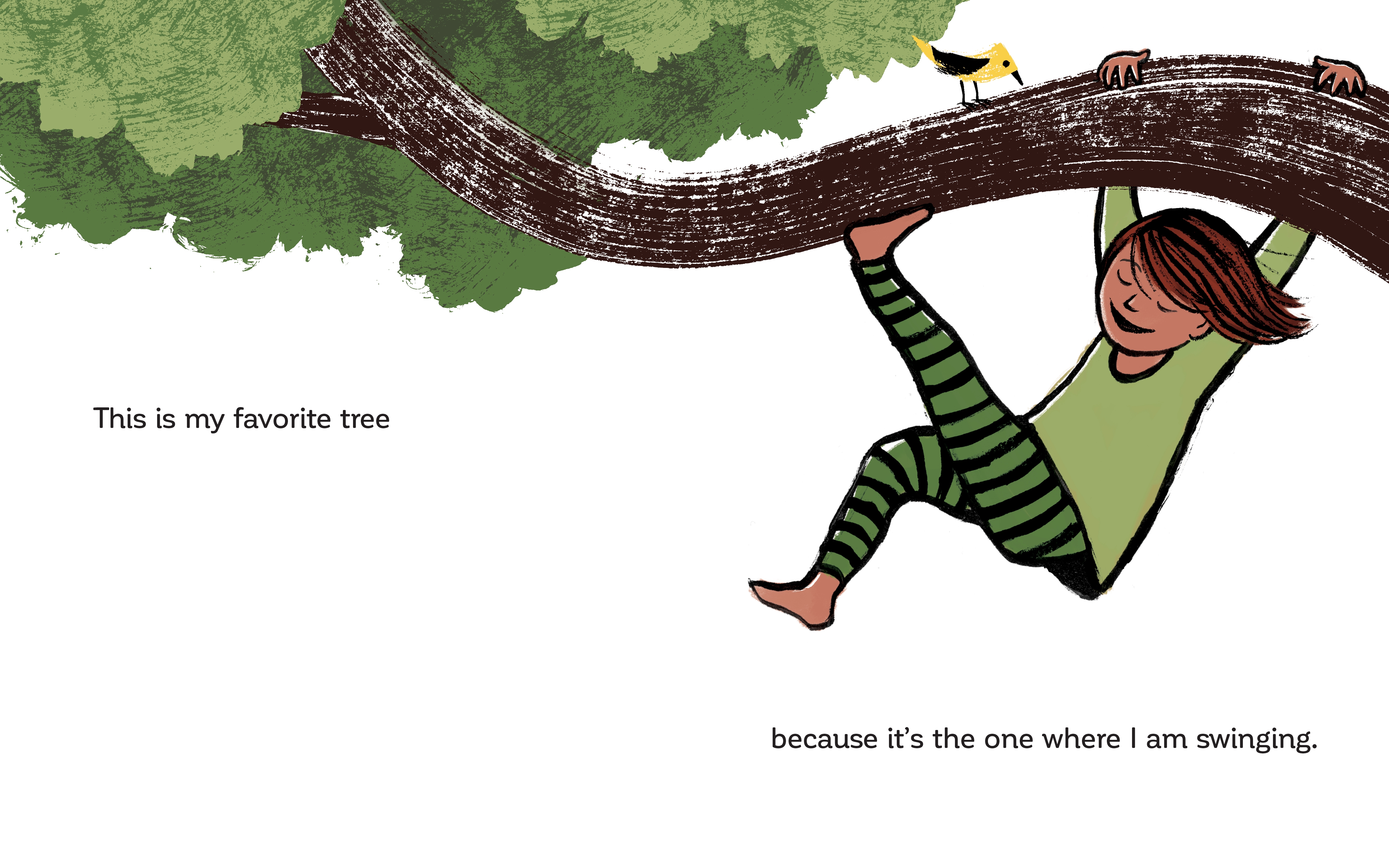
The most marvelous tree has sturdy branches for the girl to swing from, and a delicate, bell-shaped flower produces her “favorite smell.” There are many birds to feed at the park, but the one she likes the best is the one that comes close enough to eat out of her hand. Her favorite song is the one that swells inside her heart and bursts out with joy, and the most delicious gulp and bite are those that quench her thirst and calm her hunger.

Her favorite tooth leaves a gap in her smile “because it’s the one that is missing.” She and her squeezed-tight cat may differ on the best hug, but they probably agree that their favorite moon is the crescent outside the window tonight. But what is her favorite “Now?” It is this moment, because she is having it with you.”

celebrate-picture-books-picture-book-review-now-antoinette-portis-boat

Copyright Antoinette Portis, 2017, courtesy of us.macmillan.com.

Antoinette Portis lends her unique perspective to this uplifting book that encourages kids—and, as readers see in the final image, adults—to live in the moment and become fully conscious of the present object, feeling, experience, or sensation. As the little girl’s favorites build on each other, readers become aware of a growing appreciation for all the small joys that make up a day. The theme of the book is revealed on the first page as the girl welcomes the refreshing breeze. The simply drawn, unencumbered illustrations mirror the simple pleasures that she finds everywhere. But look closer and there is more profound meaning in each.

celebrate-picture-books-picture-book-review-now-antoinette-portis-elephants

Copyright Antoinette Portis, 2017, courtesy of us.macmillan.com.

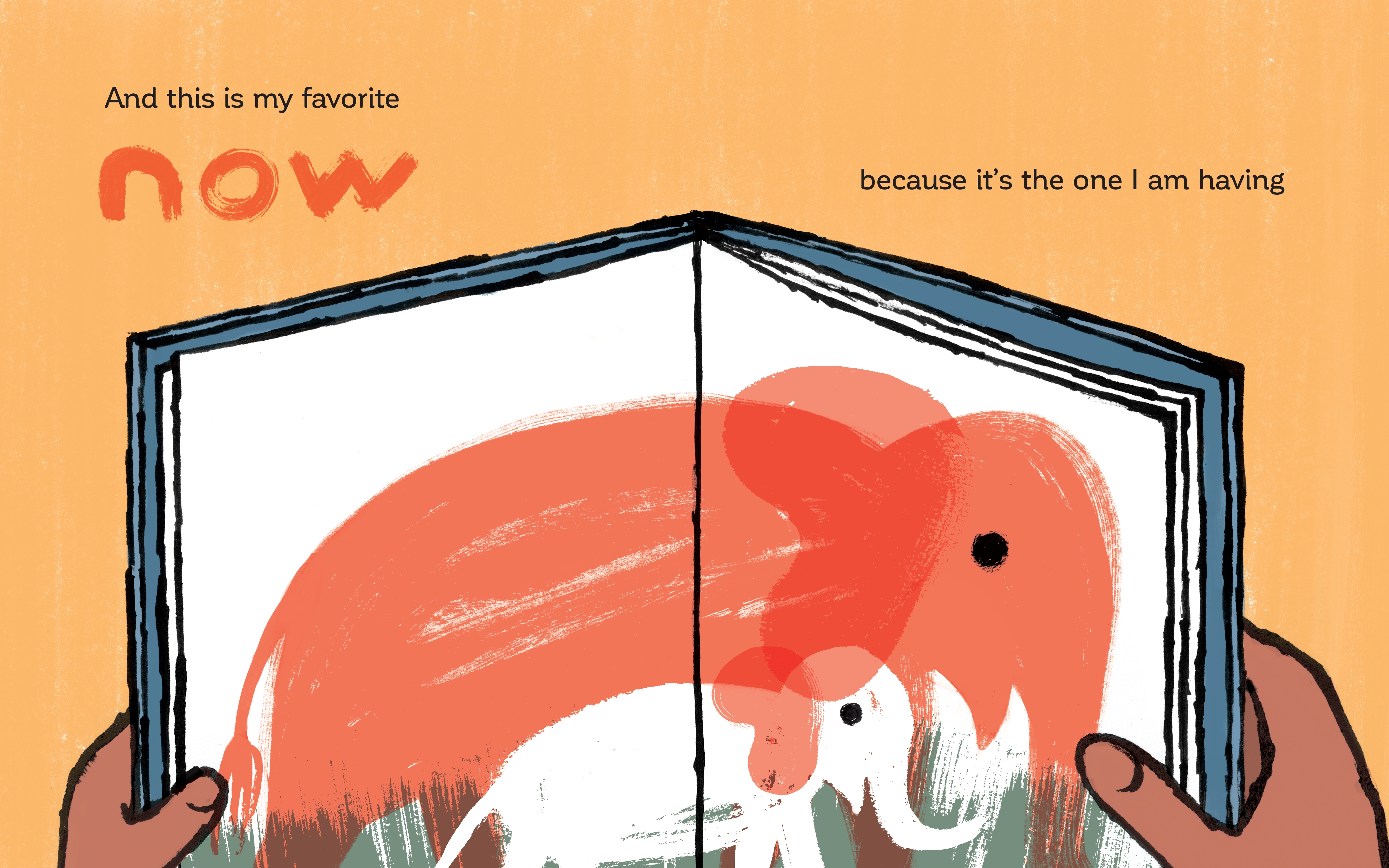
The veins in the maple leaf become the girl’s smile as she holds it to her face; her song radiates from her in a golden sun-shaped swirl; and the girl’s clothing changes through a year’s worth of experiences as it also matches the color of her feeling or activity, allowing her to become one with it. As readers reach the end of Now, they see two hands holding a book open to an image of an elephant and her calf, animals known for their strong family ties. This illustration leads into and strengthens the final page, where the girl and her mother sit reading that book together. The text and picture work in tandem to embrace the reader while letting both children and adults interpret the previous images in their own way.

Now is a beautiful, quiet book that reminds children and adults to slow down and truly enjoy the fleeting moments of life. It is a wonderful book to share and will open discussions of “favorite things” for home, classroom, and library story times.

Ages 3 – 6

Roaring Brook Press, 2017 | ISBN 978-1626721371

To learn more about Antoinette Portis and her books, visit her website.

Zero Tasking Day Activity

celebrate-picture-books-picture-book-review-sleepy-owls-maze

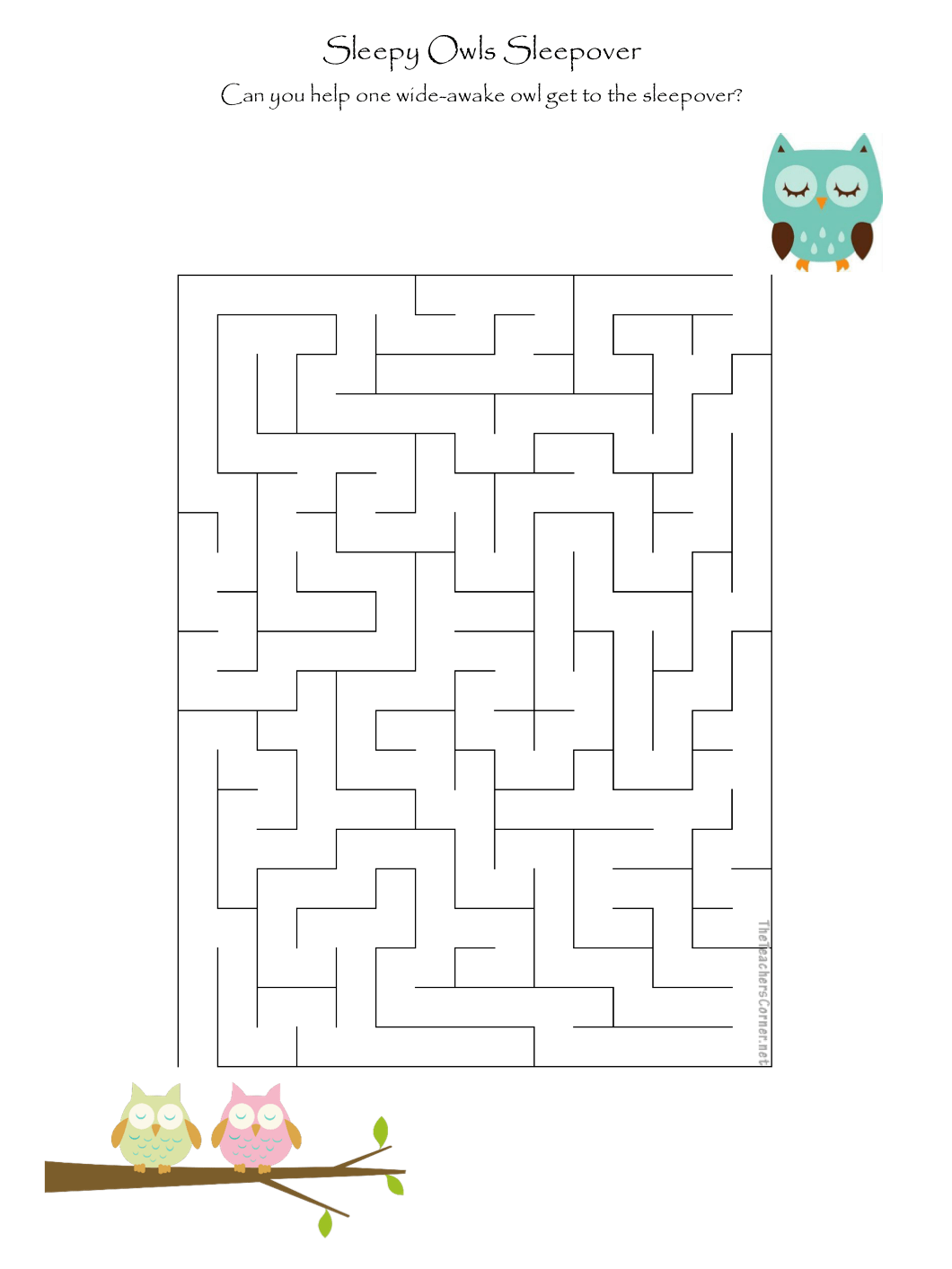
Sleepy Owls Sleepover Maze

One wide-awake owl wants to join friends as a sleepover. Can you help bring them together in this printable Sleepy Owls Sleepover Maze. Here’s the Solution!

celebrate-picture-books-picture-book-review-now-antoinette-portis-cover

You can find Now at these booksellers

Amazon | Barnes & Noble | Books-a-Million |

To support your local independent bookstore, order from

Bookshop IndieBound