April 9 – National Inventor’s Month

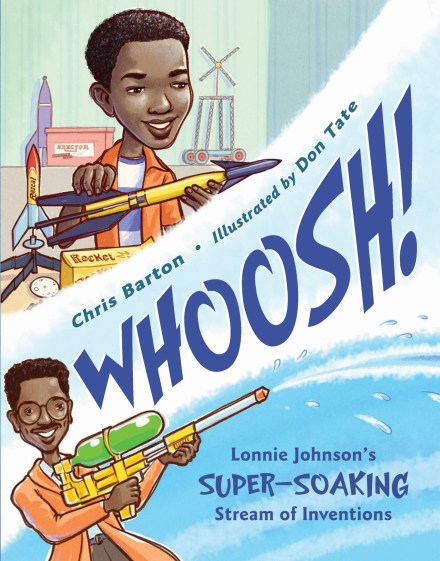
celebrate-picture-books-picture-book-review-whoosh!-lonnie-johnson's-super-soaking-stream-of-inventions-cover

About the Holiday

Today’s holiday was established by the United Inventors Association of the USA, the Academy of Applied Science, and Inventor’s Digest Magazine to promote awareness of and celebrate the achievements of those creative individuals who make our lives better—or, in some cases, at least interesting. Every day there are kids and adults, professionals and amateurs pondering solutions to problems and just “what ifs?” Would you like to join them? You can celebrate this month by acting on one of your great ideas and by learning more about inventors like the subject of today’s book!

WHOOSH! Lonnie Johnson’s Super-Soaking Stream of Inventions

Written by Chris Barton | Illustrated by Don Tate


Lonnie Johnson had a way with stuff. In his hands bolts and screws, gears and springs, spools, clothespins, “spare parts his dad let him bring in from the shed, and various other things he’d hauled back from the junkyard” fueled Lonnie’s ideas for inventions and rocket ships. The kids at school loved to watch him launch the rockets he’d devised on the playground. Lonnie wanted to have a career as an engineer. Getting there took a lot of determination and courage. Once, the results of a standardized test said that he would not make a good engineer. Lonnie felt discouraged, but he knew that the person who had graded his test didn’t know him—or Linex.
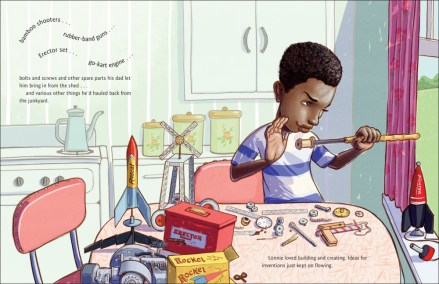
celebrate-picture-books-picture-book-review-whoosh!-lonnie-johnson's-super-soaking-stream-of-inventions-young-lonnie-inventing

Image copyright Don Tate, courtesy of charlesbridge.com

Linex was the robot Lonnie had built from scrap metal. “Compressed–air cylinders and valves allowed Linex’s body to turn and its arms to move. The switches came from an old, broken jukebox. Lonnie used a tape recorder to program Linex, and as a bonus the reels looked like eyes.” Lonnie’s goal was to enter Linex in a science fair, but first he wanted to be able to program it. It took several years before he discovered how. Using his little sister’s walkie-talkie, Lonnie solved the problem and took Linex to the “1968 science fair at the University of Alabama—where only five years earlier, African American students hadn’t even been allowed.” Lonnie’s team won first place.

Lonnie went to college at Tuskegee Institute, where he realized his dream of becoming an engineer. His career “took him beyond Alabama—way beyond.”  He went to work for NASA. Before the orbiter Galileo could be sent to Jupiter, Lonnie developed a system that would ensure the craft would have a constant supply of power for its computer memory in case the main power was lost. Some fellow scientists doubted his idea would work, but it did. “As it photographed Jupiter and its moons, Galileo was supported by the power package that Lonnie designed.”

celebrate-picture-books-picture-book-review-whoosh!-lonnie-johnson's-super-soaking-stream-of-inventions-linex

Image copyright Don Tate, courtesy of charlesbridge.com

Even though Lonnie worked for NASA, he continued tinkering with his own ideas—in his own workshop. One problem he was trying to solve involved the need for the world’s refrigerators and air conditioners to have a cooling system that didn’t use the damaging chemical R-12. “He had an idea for using water and air pressure instead.” He built a prototype and experimented with it in his bathroom sink. When he turned his pump and nozzle on, though, he got a surprise as a stream of water blasted across the room.

Suddenly, Lonnie saw another use for his invention—as a water gun. He created a design small enough for children’s hands, and tested it at a picnic, where it was a hit. Lonnie took his idea to a toy company…and another…and another. Finally one company agreed to make his water gun. Spurred on by this success, Lonnie found investors to help him build other original inventions: “a water-propelled toy airplane, two kinds of engines, and his cooling system” that had led to the water gun. He even quit his day job to devote his time to inventing.

But things don’t always work out. Each project fell through—even the water gun. It was a scary time as he and his family had to move out of their house and into an apartment. But Lonnie believed in himself. He took his water gun to another toy company. In 1989 he found a toy company willing to take a look. Lonnie made the trip to Philadelphia and wowed the executives with his invention.
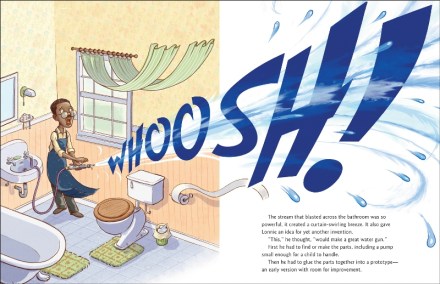
celebrate-picture-books-picture-book-review-whoosh!-lonnie-johnson's-super-soaking-stream-of-inventions-water-powered-nozzle

Image copyright Don Tate, courtesy of charlesbridge.com

Now kids everywhere enjoy the fun of the Super Soaker. Today, Lonnie can be found in his workshop doing what he loves: “facing challenges, solving problems and building things” because “his ideas just keep on flowing.”

Chris Barton’s biography of Lonnie Johnson is a fascinating look at a man who succeeds in turning “No” into “Yes” by the power of his intelligence, ideas, and determination. Kids will love hearing about how one of their favorite toys came to be and will be inspired to chase their own dreams despite challenges and setbacks. Barton’s detailed narration provides a full picture of Lonnie Johnson and his times, specifics that attract and inform like-minded kids. Including the results of Lonnie’s exam should encourage kids who think differently. The story is enhanced by the conversational tone that makes it accessible to kids of all ages.

Don Tate illuminates Lonnie Johnson’s life story with his bold, full-bleed paintings that follow Lonnie from his being a child with big ideas to becoming a man who has seen these ideas through to success. With an eyebrow raised in concentration, young Lonnie demonstrates confidence and skill as he works on an invention, and kids will love seeing the tools of his trade laid out on the kitchen table. With his eyes narrowed in frustration and disappointment, Lonnie reads the results of his childhood exam. As Lonnie grows older and designs systems for NASA, the illustrations depict the schematics of the Galileo power package and Lonnie’s surprise at the strength of the water stream in his prototype cooling design. As all kids know, the spurt of a Super Soaker is awesome, and this fact is demonstrated in a “Wowing” fold-out page.

WHOOSH! Lonnie Johnson’s Super-Soaking Stream of Inventions is a welcome biography of the man who designs systems for the greater world but has never lost his youthful enthusiasm to invent.

Ages 5 – 10

Charlesbridge, 2016 | ISBN 978-1580892971

Check out more fiction and nonfiction books by Chris Barton on his website!

Discover more books written and illustrated by Don Tate as well as a portfolio of his work and book-related activity guides on his website!

National Inventor’s Month Activity
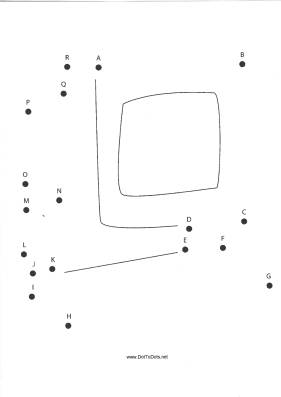
celebrate-picture-books-picture-book-review-movie-computer-dot-to-dot

Invention Dot-to-Dot Puzzles


Many inventions have changed the world and continue to be used long after they were first created. Connect the dots on these printable puzzles to discover three remarkable inventions!

Invention Dot-to-Dot 1 | Invention Dot-to-Dot 2 | Invention Dot-to-Dot 3

Picture Book Review

April 8 – Draw a Picture of a Bird Day

celebrate-picture-books-picture-book-review-birds-&-other-animals-with-pablo-picasso-cover

About the Holiday

With the onset of spring, our feathered friends are busy building nests and hatching little ones. The return of birds to backyards, parks, and beaches as well as the increased activity gives budding nature artists the perfect opportunity to try their hand at sketching these favorite colorful creatures. Whether you prefer to make detailed renderings or simple line drawings, today’s holiday should inspire you to grab your pencil or paints and create!

Birds & Other Animals with Pablo Picasso

First Concepts with Fine Artists | Illustrations by Pablo Picasso


Pablo Picasso, “one of the most famous artists who ever lived,” was a prodigy who loved to draw animals of all kinds. Perhaps best known for his abstract portraits and his colorful canvases, Picasso also created line drawings, many of which were “inspired by poems about animals written by his friend Guillaume Apollinaire, a famous French poet.” The illustrations in Birds & Other Animals with Pablo Picasso come from Picasso’s notebooks and, combined, make a wonderfully conceived concept book for little ones.

Opening to the first page, readers meet three birds, one perhaps a little more steady on its feet than the others. Four more birds follow on the next page, a few gamely trying to stand on one leg like the regal flamingos behind them. From the tropical home of the flamingo, readers next travel to a snowy clime, where “penguins are birds who waddle over snow.”

celebrate-picture-books-picture-book-review-birds-&-other-animals-with-pablo-picasso-flamingo

All artworks by Pablo Picasso © Succession Picasso/DACS, London 2017. © 2017 Phaidon Press

“Cock-a-doodle-doo!” Don’t snooze! The rooster wants you to know that he is a bird too! Of course, “some birds fly,” and many insects have wings too. Flies fly and wasps fly. How about grasshoppers? They prefer to hop! Who else likes to hop? “Bunnies hop…especially to get away from hungry foxes. Does [the] fox look hungry to you?”

Some animals seem to be hungry all the time—like the squirrel on the next page (you know how squirrels are!) and the camel, whose “humps are small. When she eats, her humps will grow!” Do you like dogs? “This little dog has no humps—he’s long like a hot dog!” His friend is a big dog who can do tricks. Horses can learn tricks too and perform for people. They can even rear up and stand on two legs! You know who can’t stand on two legs? Right! Fish! “They swim! Turtles swim too.”

celebrate-picture-books-picture-book-review-birds-&-other-animals-with-pablo-picasso-dogs

All artworks by Pablo Picasso © Succession Picasso/DACS, London 2017. © 2017 Phaidon Press

But we were talking about birds, weren’t we? There are some birds that are like fish. The pelican is a bird who likes to swim—of course, it likes to eat fish too. The ostrich is too big for either flying or swimming, but it can run—really fast! There are so many kinds of birds, aren’t there? Peacocks have long, colorful tail feathers, and owls like the nighttime. Yes, there are so many birds, “beautiful birds.”

The First Concepts with Fine Artists series by Phaidon Press is one of my favorite new collections for babies, toddlers, and even older kids. As an art lover, I’m impressed with the variety of styles and artists introduced to young children who will be attracted to the colors, shapes, and movement in the chosen artwork. As someone who works with words, I love the way the art is tied together with engaging and conversational text.

celebrate-picture-books-picture-book-review-birds-&-other-animals-with-pablo-picasso-fox

All artworks by Pablo Picasso © Succession Picasso/DACS, London 2017. © 2017 Phaidon Press

Birds and Other Animals with Pablo Picasso will enchant little ones with whimsical line drawings of animals that embody charming poise and personality. Each page invites readers to create stories of their own about the characters they see, and both children and adults will enjoy running a finger along the line to discover that most of the animals in this sturdy board book are created from one smooth stroke. Along the way, kids learn facts about certain animals, discover how shapes work together, and find objects to count. 

Line it all up and Birds and Other Animals with Pablo Picasso rewards readers with sophisticated fun. The book would make a lovely new baby gift or a delightful addition to young children’s home libraries.

Ages 2 – 5

Phaidon Press, 2017 | ISBN 978-0714874180

Draw a Picture of a Bird Day Activity

celebrate-picture-books-picture-book-review-how-to-draw-a-bird

Flight of Fancy Bird Drawings


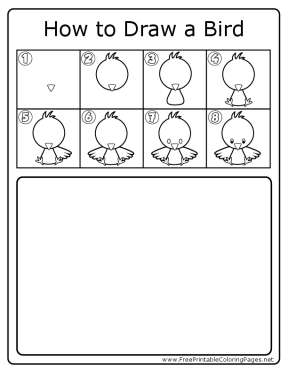
Birds come in all shapes and sizes—which kind of bird is your favorite? With these two printables you can learn how to draw a bird and color a pair of birds who are busy collecting flowers!

Learn to Draw a Bird | Birds Carrying Flowers

Picture Book Review

April 7 – International Beaver Day

celebrate-picture-books-picture-book-review-the-skydiving-beavers-cover

About the Holiday

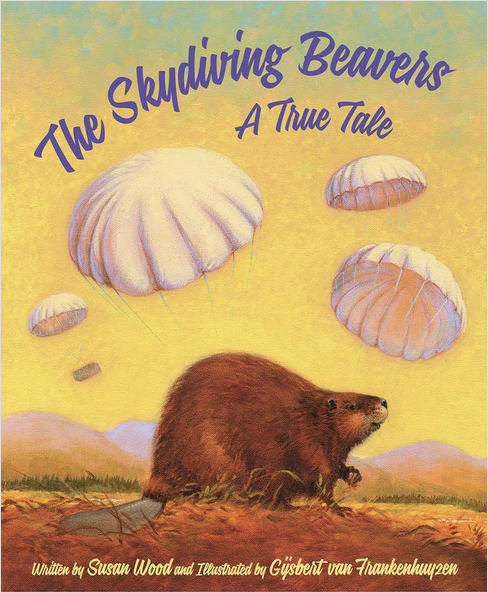
Two species of today’s honored animal are found across America, Canada, and Eurasia. Known primarily for building dams in rivers and streams, the beaver is a fascinating animal in many ways. Perhaps one of the greatest natural conservationists, beavers use all parts of the trees they fell. The buds, bark, and leaves are consumed as food, and the rest is gnawed into smaller bits to be used as building materials. The dams, themselves, are helpful in preventing droughts and floods, restoring wetlands, and keeping the water clean. The beaver population has seen a decline for several decades, and today’s holiday aims to promote awareness of this beneficial animal in order to protect it.

The Skydiving Beavers: A True Tale

Written by Susan Wood | Illustrated by Gijsbert van Frankenhuyzen


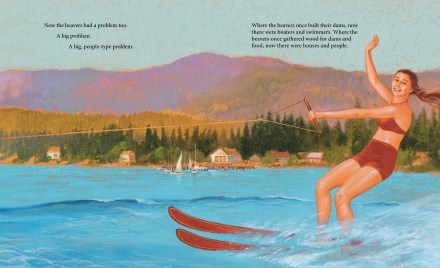
The time was post-World War II and families were eager to build homes and enjoy life again. In McCall, Idaho this meant that people moved to the shore of the beautiful lake, where they could fish, sail, waterski, and have fun. So roads were constructed, docks built, and land cleared. “Trouble was, that lakeside land had already been claimed. For decades—centuries, even—beavers had been the only ones doing the building there.”

Now, though, there was a turf war, of sorts. “Where the beavers once gathered wood for dams and food, now there were houses and people. And where the people tried to drive their cars, now water flooded the roads because of the dams.” Trees were also being “toppled left and right” by those busy beavers. Something needed to be done.

celebrate-picture-books-picture-book-review-the-skydiving-beavers-a-true-tale-water-skiing

Image copyright Gijsbert van Frankenhuyzen, text copyright Susan Wood. Courtesy of Sleeping Bear Press

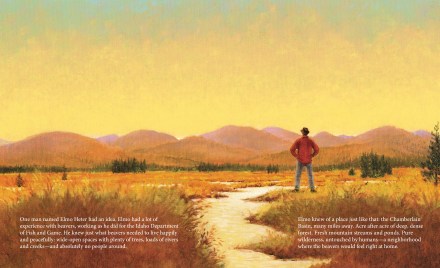
Elmo Heter had an idea. Elmo had experience with beavers from his job with the Idaho Department of Fish and Game. He knew that beavers needed open areas with lots of trees, rivers, and creeks—and no people. There was a place just like this many miles away. The Chamberlain Basin would be perfect for the beavers, but there was a problem—how could he move all those beavers “to a place with no roads, no railway, no airport, and no bus station?”

Elmo thought about loading them into boxes carried by horses or mules, but the rough trip would be too hard on both the beavers and the pack animals. Then Elmo remembered that there were piles of parachutes left over from the war going unused. “What if he dropped the beavers from a plane? Skydiving beavers? Well, why not?” Elmo decided.

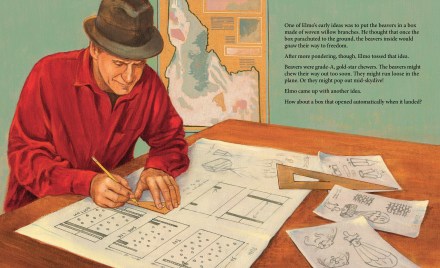
Elmo went to work to design a crate that could hold the beavers safely. His first idea was to build a box of woven willow branches. Once the boxes hit the ground, the beavers could gnaw their way out. But then Elmo feared that those champion chewers might escape before the box touched down. Next, he came up with the idea for a box that opened automatically when it hit the ground. After he created his box, Elmo found a beaver to test it.

celebrate-picture-books-picture-book-review-the-skydiving-beavers-a-true-tale-sunset

Image copyright Gijsbert van Frankenhuyzen, text copyright Susan Wood. Courtesy of Sleeping Bear Press

He found his daredevil and named him Geronimo. Geronimo, cozy in his box, was loaded onto a plane, and as the plane flew low over the test field the box was dropped. “The chute bloomed like a buttercup, then caught the breeze….The box fell as gently as a mountain snowflake, landing softly on the grass.” Just as it was designed to do, the box opened and Geronimo scrambled out.

Elmo wanted to make sure his invention would work every time, so he tested it again and again.  All this flying and skydiving seemed to agree with Geronimo. He soon began to treat it like a game, shuffling out of the box when the door opened and then crawling “right back in for another go.” Now that Elmo knew the plan would work, he gathered the beavers from McCall, put them in their special traveling crates, and headed for the Chamberlain Basin.

When they found the perfect spot, Elmo and his team prepared the chutes and let the beavers go. One by one the parachutes opened, and the beavers “wafted like falling leaves on the autumn wind to their new woodsy patch of paradise.” And who was the first pioneer? Why Geronimo, of course!

celebrate-picture-books-picture-book-review-the-skydiving-beavers-a-true-tale-plans

Image copyright Gijsbert van Frankenhuyzen, text copyright Susan Wood. Courtesy of Sleeping Bear Press

An Author’s Note following the text reveals more about this true story. It also discusses what scientists have since learned about the benefits of beavers to the environment and how communities now work with and around them. A list of interesting facts about beavers is also included.

Susan Wood’s story of a little-known event is a thought-provoking glimpse into early conservation efforts. Her conversational tone and lyrical phrasing enhance the tale, lending it suspense and personality that will draw readers in. Wood’s detailed descriptions allow children to understand the problems for the community as well as the concern for the animals that led to this historical event. 

Gorgeous paintings by Gijsbert van Frankenhuyzen uncover the beauty of Idaho’s backcountry with its sparkling lakes and tree-covered mountains. Glorious sunsets fill the two-page spreads, turning the rolling hills pink and gold as beavers scurry near the shore building their dams. Readers will be intrigued by the clear and close-up views of Elmo Heter as he works on his plans to relocate the beavers. A table strewn with publications and photographs from World War II, set children in the time period, and his schematics of the box he designs as well as his workshop are plainly displayed. Kids can ride along with Geronimo as he climbs into his crate, travels by plane over wide-open vistas, and floats into the Chamberlain Basin at the end of a parachute.

The Skydiving Beavers would be a fresh addition to classroom environmental units to spur discussions on past, present, and future conservation science and will delight young readers interested in the natural sciences.

Ages 6 – 9

Sleeping Bear Press, 2017 | ISBN 978-1585369942

Learn more about Susan Wood and her books on her website!

View a portfolio of artwork by Gijsbert van Frankenhuyzen on his website!

International Beaver Day Activity

CPB - Beaver craft picture (2)

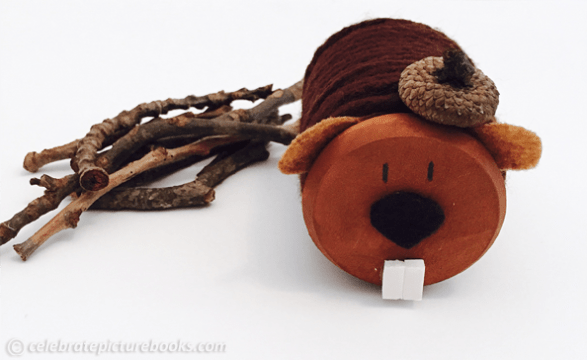
Make a Spool Beaver


Do you have a gnawing need to have a beaver of your own? Make one with this Spool Beaver craft!

Supplies

  • Printable Ears and Nose Template
  • 2-inch wooden spool, available at craft stores
  • 1 6-inch long x ¾ inch wide craft stick
  • Small piece of foam board
  • Brown “chunky” yarn
  • Brown felt, small piece for ears and tail
  • Black felt, small piece for nose
  • Acorn top for hat (optional)
  • Brown craft paint
  • Black craft paint
  • Black marker
  • Strong glue
  • Paint brush
  • Scissors

CPB - Beaver craft picture with tail

Directions

  1. Print the Ears and Nose template
  2. Paint the spool with the brown paint, let dry
  3. Cut the ears from the brown felt
  4. Cut the nose from the black felt
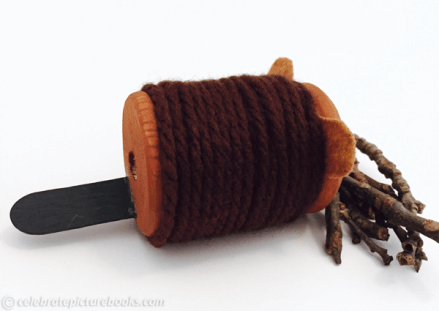
  5. Cut a piece from the end of the craft stick
  6. Paint the craft stick brown or black, let dry
  7. Cut two small pieces from the foam board, ½-inch long x 3/8 inch wide
  8. When the spool is dry, glue the ears to the spool, leaving the ears sticking up over the rim of the spool
  9. Glue one end of the yarn to the spool
  10. Holding the spool horizontally, wind the rest of the yarn around the spool back and forth from front to back. Glue the end to the body of yarn. This will be the bottom of the beaver.
  11. Glue the nose over the hole in the spool
  12. Glue the teeth below the nose
  13. Glue the flat edge of the craft stick to the back of the spool to make the tail

Picture Book Review

April 6 – It’s National Poetry Month

celebrate-picture-books-picture-book-review-a-song-about-myself-cover

About the Holiday

National Poetry Month was established in 1996 by the Academy of American Poets to highlight the achievements of poets, past and present; to promote the reading and writing of poetry in schools and by individuals; and to encourage people to discover the joys poetry can bring all year round. Poetry Month is now celebrated in April in the United States, Canada, and Great Britain, with other countries holding their own events during other times of the year.

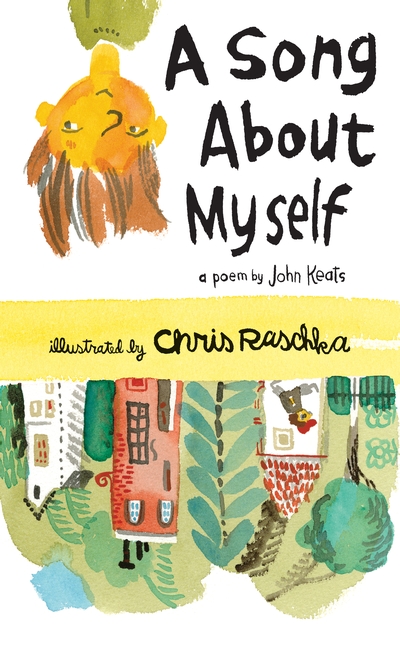
A Song About Myself: A Poem by John Keats

Written by John Keats | Illustrated by Chris Raschka


1

“There was a naughty Boy, / A naughty boy was he, / He would not stop at home, / He could  not quiet be—” So this adventurous boy packed his knapsack with “a Book / Full of vowels / And a shirt / With some towels—” He added a comb and a brush, a cap to protect himself both day and night, and an extra pair of stockings for when the old ones got threadbare. With his knapsack buckled on tight, the little boy headed North

2

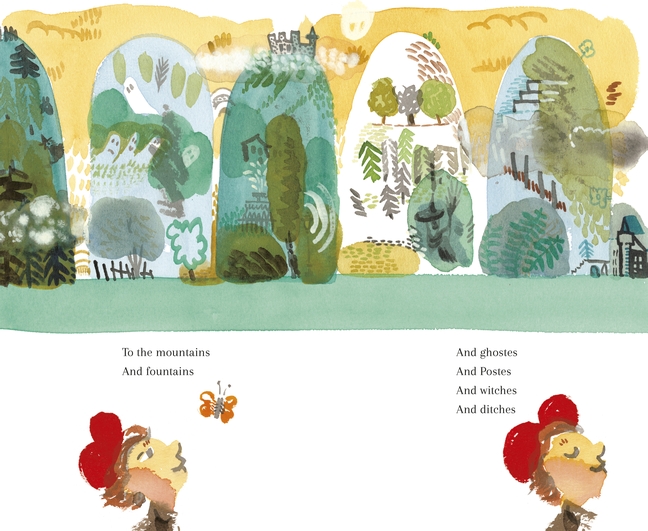
“There was a naughty Boy, / A naughty boy was he, / For nothing would he do / But scribble poetry—” With ink stand and pen he ran away “to the mountains / And fountains / And ghostes / And Postes / And witches / And ditches.” In the winter he wrote with his coat on, not fearing contracting gout; and when the weather was warm, he abandoned his coat while he captured the charm of the North.

3

“There was a naughty Boy, / A naughty boy was he, / He kept little fishes / In washing tubs three.” Not fearing the maid’s or his granny’s displeasure, this mischievous boy would rise with the sun “And go / By hook or crook / To the brook” to catch minnows “The size / of a nice / Little Baby’s / Little fingers—” These tiny darters swam in his bucket—“A Kettle / Of Fish a pretty Kettle / A Kettle!”

celebrate-picture-books-picture-book-review-a-song-about-myself-to-the-mountains

Copyright Chris Raschka, courtesy of Candlewick, 2017

4

“There was a naughty Boy, / A naughty boy was he, / He ran away to Scotland / The people for to see— / Then he found / That the ground / Was as hard, / That a yard / Was as long, / That a song / Was as merry,… /…That a door / Was as wooden / As in England—” Which made him think. “So he stood in his shoes / And he wonder’d, / He wonder’d / He stood in his shoes / And he wonder’d.”

In an Illustrator’s Note, Chris Raschka reveals that John Keats—one of the greatest romantic poets—wrote this poem in a letter to his sister, Fanny, while he was walking through Scotland on a tour that he imagined would inspire “the grand poetry that he knew was inside him.”

This quirky poem that follows the travails and travels of a little boy filled with wanderlust, a gift for writing, and insight beyond his years is a perfect match for Chris Raschka’s art. Topsy-turvy perspectives, vivid colors, and evocative and action-packed vignettes beautifully represent the boy’s “naughtiness” and precocious imagination. As he dashes across the yard, his house—red capped and with a mustache-shaped lintel over the door—seems to watch through window eyes; the boy’s mighty pen stands taller than he is; and ghosts, witches, castles, and fountains are framed in the hills that he passes on his journey. Bold swatches of yellow, green, and red that split the pages in half serve as directional arrows, roads, and verse dividers while also leading readers to the book’s final wisdom.

Kids will find it fun to explore the endpapers that present a bird’s-eye-view of the expanse from Scotland to New York over “Much Water.”

A Song About Myself: A Poem by John Keats is a joyous treat that celebrates the whimsy of childhood and the wonders of the imagination. For poetry lovers or those who enjoy a good story, this book would make a charming gift or addition to home bookshelves.

Ages 6 – 10

Candlewick, 2017 | ISBN 978-0763650902

You can view a gallery of artwork by Chris Raschka on tumblr!

National Poetry Month Activity

celebrate-picture-books-picture-book-review-reading-bug-bookmark

I Have the Reading Bug Bookmark


If you love reading, then print out this I Have the Reading Bug Bookmark that can mark your page with style! For a sturdier bookmark, print on card stock or heavy paper.

Picture Book Review

April 5 – National Read a Road Map Day

celebrate-picture-books-picture-book-review-the-50-states-fun-facts-cover

About the Holiday

Today’s holiday is all about those paper maps that have guided travelers along the trails, roads, highways, and biways as they search for adventure or just need to get from here to there. While the little window of GPS may be more prominent now, there’s nothing like opening the wide vista of a paper map and letting your mind wander to far-off places. Old maps are fascinating too, as they reveal the changes in road systems and population over time. Today, rediscover your local area or take an armchair trip to a new locale through a paper map.

The 50 States: Fun Facts

Written by Gabrielle Balkan | Illustrated by Sol Linero

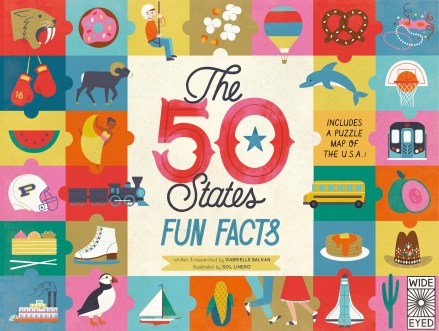
America is one vast country made up of 50 states that are each unique and fascinating in their own way. The history, people, topography, and even weather of each region has resulted in an incredible diversity of animal life, cuisine, transportation, leisure activities, and celebrations across the nation. The 50 States: Fun Facts offers up a patchwork of engaging and enlightening information about each state that will entice kids to learn more about their own home as well as other areas.

celebrate-picture-books-picture-book-review-the-50-states-fun-facts-things-that-go

Image copyright Sol Linero, text copyright Gabrielle Balkan. Courtesy of Eyes Wide Editions, Aurum Press.

The large-format board book is divided into five two-page spreads, each dedicated to a particular topic. In 50 Animals readers discover that the first Seeing Eye dogs were trained in Nashville, Tennessee; that “the colors of Maryland’s state cat—the Calico Cat—match the state flag”; and that there are so many moose in Wyoming that there’s even a town named Moose! From state to state kids will also learn about the Chinook Dog of New Hampshire, meet white buffalo that roam North Dakota, and view the state insect of Connecticut—the praying mantis, which can turn its head 360 degrees—among many, many more.

Each state is also known for its own, particular mode of transportation. In Alaska the Tlingit Nation builds beautiful canoes, which the people believe are inhabited by their own spirit. If you’re interested in scanning the skies for alien lifeforms, you may want to head to the San Luis Valley of Colorado, which is considered to be prime UFO-spotting territory! If boats are more your thing, you might want to take a houseboat vacation in the lakes around Jamestown, Kentucky, or see a Navy Destroyer at the shipyard in Bath, Maine. Carousel lovers will want to take the road to Rhode Island, where they can catch the gold ring on the Flying Horse Carousel that has been going round and round for nearly 150 years! There are so many more Things That Go on these pages, including trains, trucks, trolleys, and a 16-story electric shovel!

celebrate-picture-books-picture-book-review-the-50-states-fun-facts-things-to-eat

Image copyright Sol Linero, text copyright Gabrielle Balkan. Courtesy of Eyes Wide Editions, Aurum Press.

After all that activity, readers may be a bit hungry. All they need to do is flip the page to find 50 Things to Eat—specialties from around the nation. Whether you call them blackberries or brambleberries, these sweet nuggets—Kentucky’s state fruit—are great alone or in special treats. If you love pretzels, then the pretzel festival in Germantown, Ohio is for you! Spicy foods more your style? Then you’ll want to check out Hatch, New Mexico—the chili capital of the world! After having Delaware’s chicken specialty, catfish from Mississippi, or potatoes from Idaho, you may just want to try a banana split—first served in Latrobe Pennsylvania in 1904—or even nosh on a few roasted Joshua Tree flower buds that are said to taste like candy.

Ready to work off that meal? The next page provides 50 Ways to Get Moving, including archery in California, rafting in West Virginia, base jumping in Utah, snowshoeing in Minnesota, and snorkeling in Hawaii. 

celebrate-picture-books-picture-book-review-the-50-states-fun-facs-celebrations

Image copyright Sol Linero, text copyright Gabrielle Balkan. Courtesy of Eyes Wide Editions, Aurum Press.

Celebrations have been part of America since the first Thanksgiving, and each state has a entertaining—often quirky—spectacular to highlight their history or specialty. In Nebraska the old Pony Express mail system is reenacted every June; The Heart of the Ozarks Bluegrass Festival brings musicians and fans to West Plains, Missouri each year; and Honobia, Oklahoma’s Bigfoot Festival makes believers of us all—well, almost.

In Florida, you can learn how to wrestle an alligator with the Miccosukee tribe on American Indian Day; you can test your mettle on 98 flights of stairs during Washington’s Space Needle Base 2 Space Race for charity; and “you can cheer on bronc riders at the ‘Daddy of All Rodeos’” during Cheyenne Frontier Days in Wyoming. Perhaps  the oddest celebration is Mike the Headless Chicken Festival held every May in Fruita, Colorado that commemorates “a rooster that lived for 18 months…with no head!”

celebrate-picture-books-picture-book-review-the-50-states-fun-facts-puzzle

Image copyright Sol Linero, text copyright Gabrielle Balkan. Courtesy of Eyes Wide Editions, Aurum Press.

Each spread also offers a sidebar scavenger hunt of sorts as it asks readers to see if they can find four different categories of items among the rest. After kids have soaked up all the facts about the 50 states, they can test their knowledge of American geography by completing the included jigsaw puzzle map.

Gabrielle Balkan has collected tons of engaging facts about the United States that are sure to delight and amaze children. Each category would be a wonderful starting point for learning about any or all of the states and gives kids an idea of the variety found across America. Sol Linero’s striking category “quilts,” composed of colorful patches decorated with clear, engaging illustrations, draw readers in to discover the fascinating facts presented about each state.

Ages 4 – 10

Wide Eyes Editions, Aurum Press, 2016 | ISBN 978-1847808691

Discover more about Gabrielle Balkan and her books on her website!

View a gallery of illustration work by Sol Linero on her website!

National Read a Road Map Day Activity

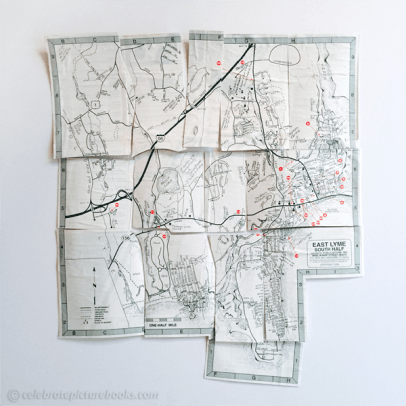
celebrate-picture-books-picture-book-review-road-map-puzzle

Make a Road Map Jigsaw Puzzle

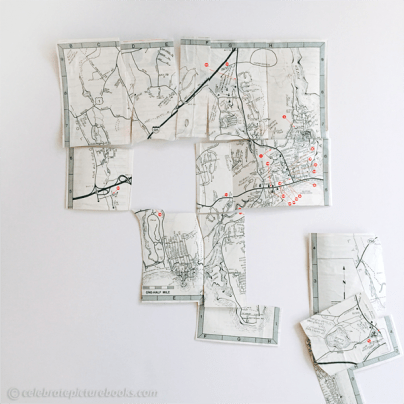
It’s fun and easy to make your own jigsaw puzzle from a map of your local town or a place you’d like to visit!

Supplies

  • A paper map
  • Poster board
  • Glue or spray glue
  • Scissors

celebrate-picture-books-picture-book-review-road-map-puzzle

Directions

  1. Smooth out the paper map
  2. Glue the map to the poster board
  3. Cut the poster board into interlocking or adjoining pieces (the number of pieces can depend on the child’s age)

Picture Book Review

April 4 – It’s National Humor Month

celebrate-picture-books-picture-book-review-life-on-mars-boy-cover

About the Holiday

Humor month was established to promote all things funny and to raise awareness of the benefits of laughter and joy. The health benefits of an optimistic outlook are well documented. Lightheartedness also improves communication skills and boosts morale. Reading funny books is a fantastic way to find the humor in life—for kids and adults—and to encourage a love of literature. In fact, there’s even a Funny Literacy Program that can get you started! Click here to learn more and to find a list of funny books to celebrate with. You’ll notice that the Jon Agee—the author of today’s reviewed book—is at the top of the list.

Life on Mars

By Jon Agee

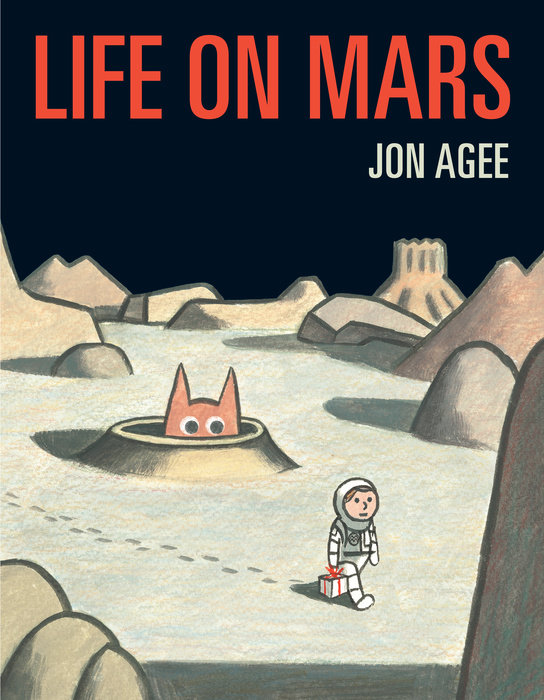
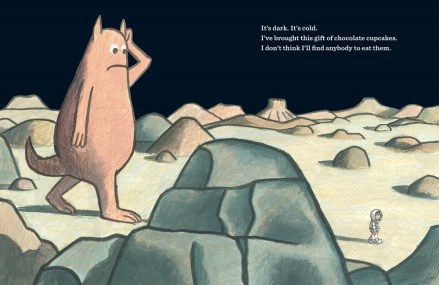
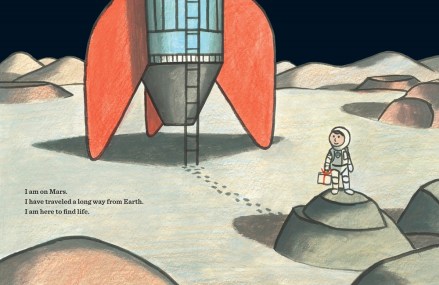
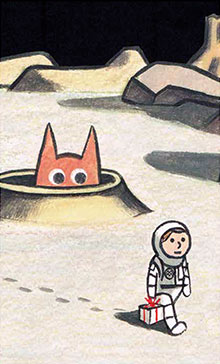
A little boy travels in a rocket all the way to Mars to find life on this mysterious planet. He strolls confidently away from his ship, past craters and mountains, singularly focused on his mission even though he knows that everyone thinks he’s crazy and “nobody believes there is life on Mars.” The boy is so focused, in fact, that he doesn’t notice a head pop up from inside a crater.

As he weaves his way around the planet, the boy decides that Mars is “pretty gloomy,” and begins to doubt that anything could live there. He’s disappointed, too, because he brought chocolate cupcakes, and now it seems he’ll never get to share them. By now the pink creature is is following along behind, completely intrigued. 

celebrate-picture-books-picture-book-review-life-on-mars-boy-followed-by-martian

Copyright Jon Agee, courtesy of Dial Books for Young Readers

The boy stops with the Martian only a half step away. I was wrong,” the boy thinks. “Mars is nothing but miles and miles of rocks and dirt! It’s obvious. Nothing could possibly live here!” Disillusioned, the boy drops his bakery box and heads back to his rocket ship, determined to return to Earth. The Martian picks up the box, the size of a chocolate chip in his four-fingered hand.

The boy wanders and wanders, but can’t find his ship. Suddenly, as the Extraterrestrial looks on, the awful truth hits him—he’s lost! “Lost on Mars, where there is no life.” In that moment, though, something catches his eye. High up in the crag of a cliff, the boy spies a yellow flower. He climbs to the top and gazes at his “amazing discovery.” As he picks the flower and turns to go, he sees his cupcake box sitting on a nearby ledge.

celebrate-picture-books-picture-book-review-life-on-mars-boy-with-box

Copyright Jon Agee, courtesy of Dial Books for Young Readers

He picks up the box, ignoring the fleeting conundrum of how it got there, and resumes the search for his space ship. He climbs higher onto the cliff, where an even taller rock juts skyward. “I bet I’ll get a good view from the top of that mountain,” he tells himself. He steps up onto the Martian’s backside, and happily locates his ship.

With his flower and box in hand, the boy settles into the rocket. As it roars off into space, he unties the string, thinking that he “deserves a treat” after his adventure. But where did the cupcakes go?!

celebrate-picture-books-picture-book-review-life-on-mars-martian-in-crater

Copyright Jon Agee, courtesy of Dial Books for Young Readers

Jon Agee has such a wonderful way with quiet books in which the humor sneaks up on readers much like the alien in Life on Mars. Kids will love being in on the joke as the little astronaut wanders around the dark, lonely planet unaware that the very thing he seeks is right behind him. His discovery of the yellow flower and the moved cupcake box add suspense, and the final scene of the box full of crumbs is deliciously surprising.

The barren Martian landscape, set against the blackness of space, provides the perfect setting for the simple comic touches that propel the story. The first glimpse of the pink creature’s head in the crater sets the stage for the giggles to come, as single objects lead to the final joke. Readers will feel for the adorable creature as it copies the little astronaut’s expressions, scratches its head in bewilderment, and unwittingly becomes the stepping stone to the resolution of the boy’s search.

Ages 4 – 8

Dial Books for Young Readers, 2017 | ISBN 978-0399538520

Check out more books and illustrations by Jon Agee on his website!

Begin the humorous adventure of Life on Mars in this book trailer!

Humor Month Activity

celebrate-picture-books-picture-book-alien-coloring-page

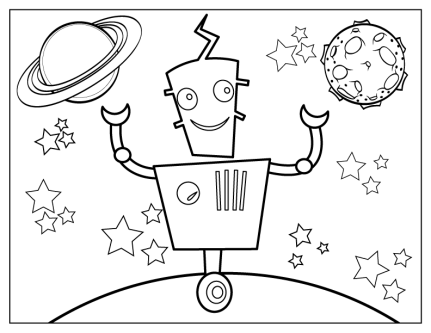
Happy Alien Coloring Page


This alien is enjoying a funny joke, and you’ll enjoy coloring this printable Happy Alien Page!

Picture Book Review
April 3 – National Tweed Day

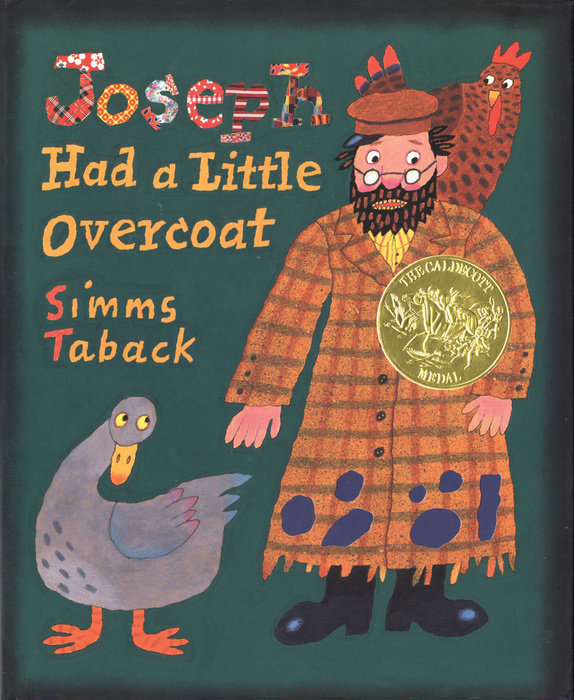
celebrate-picture-books-picture-book-review-joseph-had-a-little-overcoat-cover

About the Holiday

Today is one of those holidays that is up to interpretation. While April 3, 1823 was the birthday of notoriously corrupt politician William M. (“Boss”) Tweed, it’s not clear why commemorating that date would be desirable—expect perhaps as a timely cautionary tale. Instead most like to celebrate the natty, multi-hewed fabric embraced by professors and other fashionable folk world-wide. Tweed originated as a hand-woven fabric in Scotland. The earthy tones mirrored the Scottish landscape, and, like tartans, could distinguish a particular estate or family based on the sheep providing the wool and the pattern.

Joseph Had a Little Overcoat

By Simms Taback


Joseph’s coat was old and worn with patches overlapping patches all along the bottom. It was time to do something about it, so Joseph, “made a jacket out of it and went to the fair.” Time went by and that sporty jacket also “got old and worn.” The hem was frayed, the cuffs were torn, and patches overlapped patches all up and down the sleeves, so Joseph “made a vest out of it and danced at his nephew’s wedding.”

celebrate-picture-books-picture-book-review-joseph-had-a-little-overcoat-men's-chorus

Image and text copyright, Simms Tayback, courtesy of simmstaback.com

Years past, and that little vest suffered the same fate as the coat and the jacket. But Joseph was clever. The vest became a scarf that he wore to sing in the men’s chorus. Wicked weather took its toll, and eventually the scarf  had more holes than material. With careful cutting, the scarf made a jaunty tie to wear when visiting his sister.

You know how it goes with ties. The edges grew threadbare and stains marred the pattern. Joseph’s animals considered it a goner, but Joseph had another idea. He made a handkerchief to accessorize his favorite shirt and enjoyed a “glass of hot tea with lemon.” That same handkerchief also helped Joseph whenever he had a cold, and in time it “got old and worn.”

celebrate-picture-books-picture-book-review-joseph-had-a-little-overcoat-handkerchief

Image and text copyright, Simms Tayback, courtesy of simmstaback.com

Joseph had one more idea. “He made a button out of it and used it to fasten his suspenders.” One day, Joseph lost his button, and even though he searched everywhere, he couldn’t find it. “Now he had nothing. So Joseph made a book about it. Which shows…you can always make something out of nothing.”

Classic tweed calls for a classic book, and Simms Taback’s tale of a master recycler will have kids in stitches. Not only is the story clever, but ingeniously hidden die-cut holes in the pages let readers guess—and then follow—each iteration as the original coat gets smaller and smaller. The bold, multimedia illustrations are full of humor, history, and tradition and give kids and adults lots to look at and talk about. Children will love helping Joseph look for his button under the watchful gaze of Sigmund Freud, whose wide-eyed portrait seems to be taking in all the action. The final “moral to the story” is inspired and inspiring.

Originally published in 1999, Joseph Had a Little Overcoat remains fresh and innovative for today’s young readers. The book was a favorite of my own kids, and would be a much-asked-for addition to home libraries.

Ages 3 – 7

Viking Books for Young Readers, 1999 (hardcover) | ISBN 978-0670878550

Scholastic, 2003 (paperback) | ISBN 978-0439217316

National Tweed Day Activity

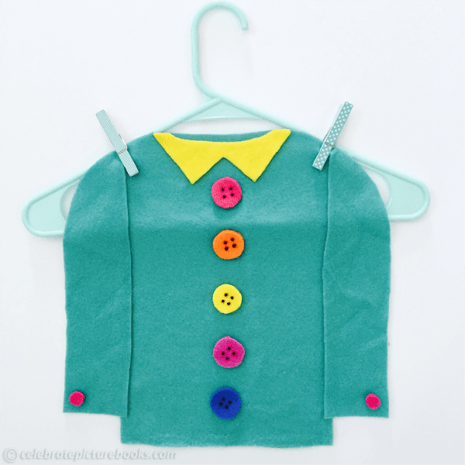
CPB - Button Coat

Pin the Button on the Coat Game


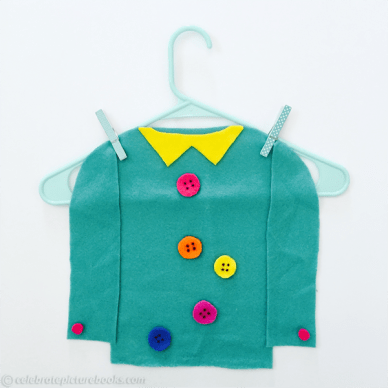
Pin the Button on the Coat is a fun game you can make yourself and play anytime! It’s great for a button-themed party or on any day that you’re holed up and wanting something to do! The game is played like “Pin the Tail on the Donkey,” and the object is to get the buttons lined up as close to the center of the coat as possible. Have fun!

Supplies

  • Fleece or felt inyour choice of colors, 2 pieces of 8 ½” x 11” to make the coat and smaller pieces or scraps to make buttons
  • Fabric glue
  • Scissors
  • Black marker
  • Clothes hanger
  • Clothes pins

CPB - Button Coat II

Directions

  1. Cut out the body of the coat, sleeves, and collar
  2. With the fabric glue, attach the sleeves to the edge of the coat, and the collar to the top of the coat.
  3. Let dry
  4. Cut circles for buttons from the other colors of fleece or felt, as many as you need
  5. With the marker make dots to represent holes in the buttons
  6. When the glue on the coat is dry, attach it to the clothes hanger with the clothespins

Picture Book Review