February 14 – International Book Giving Day

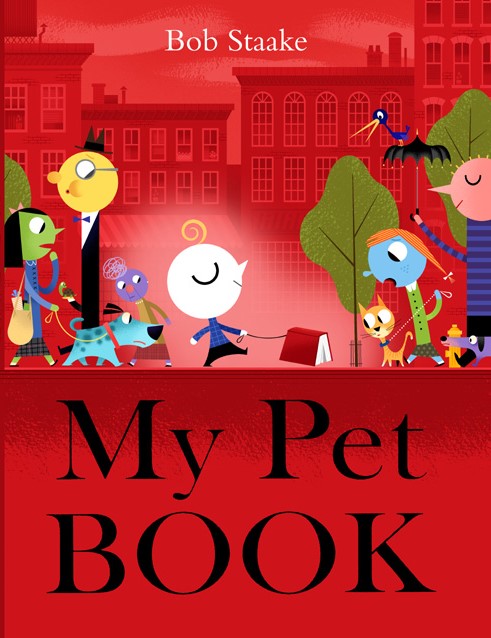
celebrate-picture-books-picture-book-review-my-pet-book-cover

About the Holiday

International Book Giving Day can be celebrated in so many ways. Do you know an adult or child who would love a new book? Why not surprise them with a special gift? Or perhaps you have books you’re ready to pass on to others. There are many organizations ready to give those books new life with new owners. Check whether you have a chapter of Reach Out and Read or another literacy organization in your community and donate what you can to this very worthy cause. Your local library can help too!

My Pet Book

By Bob Staake


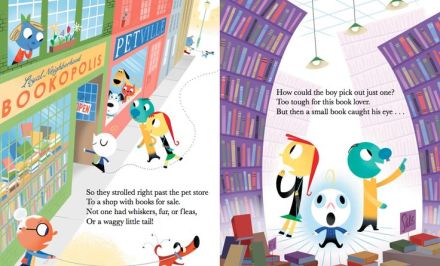
In a town named Smartytown a little boy has a most unusual pet—a book! Not one for puppies and allergic to kittens, he wants a pet that’s “easy.” His mom and dad suggest a book, and the family heads to the bookstore to adopt one. The shelves are so full of appealing potential pets that it’s hard to choose. But then the little boy spies a small “frisky red hardcover,” and it’s love at first sight.

celebrate-picture-books-picture-book-review-my-pet-book-choosing-pet

Copyright Bob Staake, courtesy of Random House Books for Young Readers.

The tiny book turns out to be the perfect pet—it doesn’t need food or water, its cover never sheds or hides fleas, it never needs a bath, and best of all there’s no housebreaking required. The boy takes his pet for walks in the evening, finding it superior to dogs that yap and run away and cats that constantly purr and lick their fur.

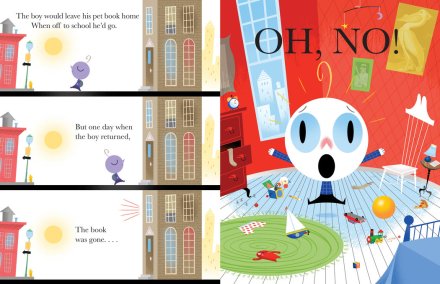
With his new pet, the boy’s days are full of adventure, fun, and excitement. He can’t wait to get home from school and spend time with the little book. But one day when he walks into his house, the boy discovers that his best friend is gone. “‘He ran away! He ran away!’ / The boy began to bleat. / ‘How could a pet book run away / Without a pair of feet?’”

celebrate-picture-books-picture-book-review-my-pet-book-book-gone

Copyright Bob Staake, courtesy of Random House Books for Young Readers.

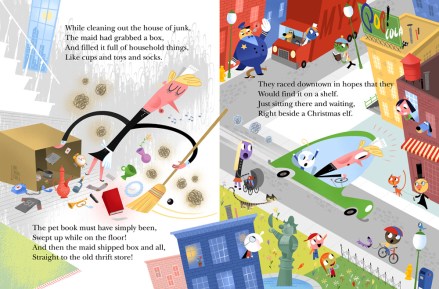
Soon the answer comes: “The maid could hear the crying boy. / (That sound was such a rarity.) / ‘I think I know what happened…’ (gulp) / ‘I gave your book to…charity.’” The boy and the maid race downtown to the thrift store, hoping to find the beloved book. They search through clothes, and furniture, through toys and shelves of books, but the little pet is nowhere to be found. There is only one conclusion—the book has just been sold!

The boy and maid sit down to cry, but then the maid has an idea. Maybe their pet is only hiding, Suddenly the boy remembers something that caught his eye in the dog-and-cat-stuff aisle. They race over to where a lone dog house sits. The boy says, “‘If I were just a scared pet book, / I’d likely sneak in here. / Perhaps the dark would help me hide, / And make me disappear!’”

celebrate-picture-books-picture-book-review-my-pet-book-searching-for-book

Copyright Bob Staake, courtesy of Random House Books for Young Readers.

He reaches in and discovers his pet book just waiting for him. The boy checks his pet over carefully and finds him well from cover to cover. The boy and the maid drive home relieved. Although they are tired, this crazy day has a happy ending, and now the boy and his pet have their own special story to share.

Perhaps Bob Staake is onto something in this humorous page-turner. Don’t we love our favorite books just like pets? And when they’re mysteriously missing, don’t we search and search for them? Through fast-paced and cleverly worded verses, Staake leads his readers on a jaunt of book love that includes love, excitement, companionship, suspense, and a happy ending. What more can you ask for from a book—or a pet?

Staake’s vibrant and whimsical illustrations create a world all its own yet rooted in the here and now. A bit surreal, a bit silly, the action-packed scenes will have kids giggling and searching for every detail.

For book lovers, pet lovers, and those who love a good story, My Pet Book is perfect for snuggling up with.

Ages 3 – 7

Random House Books for Young Readers, 2014 | ISBN 978-0385373128

To learn more about Bob Staake and his writing as well as to view some pretty fantastic art, visit his website!

International Book Giving Day Activity

celebrate-picture-books-picture-book-review-dog-bookmark-craft


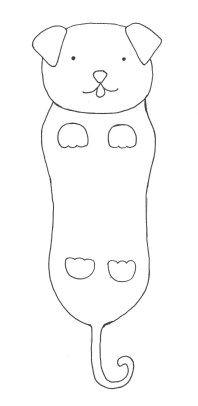
Peppy Puppy Bookmark


This printable Peppy Puppy Bookmark is happy to hold your place while you’re away from your book! Grab some crayons or colored pencils and make your puppy your own. To let your puppy hang onto the page, cut around the toes of the top paws, leaving the top of the paws attached.

Picture Book Review

February 13 – World Radio Day

celebrate-picture-books-picture-book-review-radio-man-arthur-dorros-cover

About the Holiday

The radio has provided entertainment, news, comfort, and information and has united people both near and far ever since Guglielmo Marconi invented  it in 1895. Today, radio continues to be an important part of people’s lives around the world. The United Nations Educational, Scientific, and Cultural Organization established February 13 as World Radio Day “to celebrate radio as a medium, to improve international cooperation among broadcasters, and to encourage both major networks and community radio to promote access to information, freedom of expression and gender equality across the airwaves.” This year’s UNESCO theme is “Radio is You” and focuses on ensuring that all radio stations from personal to commercial have the tools they need to provide the best service they can.

Radio Man/Don Radio

By Arthur Dorros | Translated by Sandra Marulanda Dorros


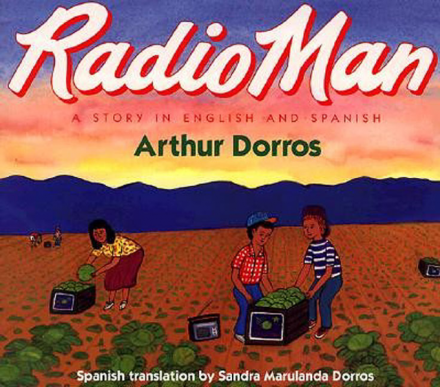
“Radio man” is Diego, a boy in a family of migrant workers who pick fruit and vegetables from the Southwest to as far north as Washington state. Although his family moves frequently, Diego has close relationships with his parents, sister, grandparents, cousins, and especially a friend named David.

As his family moves from town to town searching for work, Diego listens to the radio. Stations broadcasting in both English and Spanish keep the family company, and Diego measures the distance of upcoming towns along their route by the clarity of the DJs’ voices. The radio also provides entertainment for end-of-picking season parties among the workers and serves as a catalyst for the grandfather’s stories of growing up in Mexico.

celebrate-picture-books-picture-book-review-radio-man-arthur-dorros-cover

Image copyright Arthur Dorros, courtesy of Penguin Books

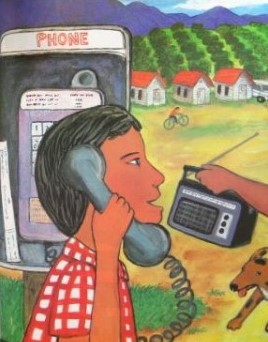
While Diego’s family is close-knit, their nomadic lifestyle separates Diego from his best friend, David, who is also the son of migrant workers. As the story begins Diego and David are leaving Texas and know they won’t see each other for a while. Traveling north, Diego’s family stops in different towns. In each Diego goes to school during the day and picks crops in the afternoon. He meets up with his cousins and other friends, along the way, but never finds David. When the family reaches Sunnyside, Washington, Diego discovers that radio station KMPO allows people to send messages to others. Diego calls the station and sends a message: “Hello, David! This is Diego. Are you here?”

David, missing Diego and listening to his own radio, is there! David smiles, happy to be reconnected with his best friend.

Arthur Dorros’s story reflects not only the life of migrant workers but also the universal feelings of children separated from friends. Through Dorros’s honest and moving descriptions, readers discover the importance of communication, whether it be through shared history and stories or through technology, in keeping relationships strong. When Diego and David finally find each other again, children will identify with their happiness.

Through vivid illustrations, Dorros depicts the landscape and farms of the American southwest, the festive celebrations held by workers at the end of picking seasons, the reality of driving from town to town, and the tight relationships among family members, giving children a glimpse into the life of migrant workers as well as the heart of friendship.

Each page of Radio Man is presented in English and Spanish, with translation by Sandra Marulanda Dorros. It has become a classic multicultural story, and one that is a wonderful read for all kids.

Ages 4 – 8

Trophy Picture Books, HarperCollins, 1997 | ISBN 978-0064434829

Discover more about Arthur Dorros and his books as well as fun activities on his website!

World Radio Day Activity

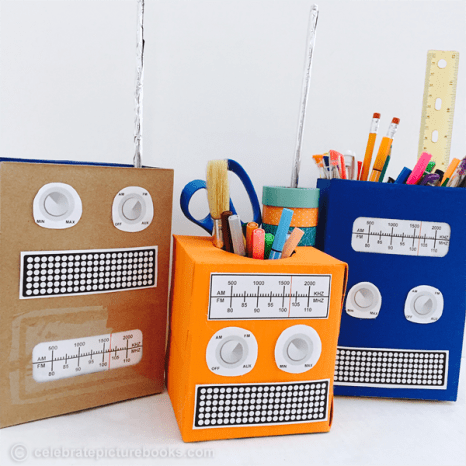
CPB - Radio Man box radios from side

Box Radio Desk OrganizerMau


With a recycled box and the provided printable templates  you can make a desk organizer that looks like a radio with this fun craft!

Supplies

  • Cardboard box – Use an empty cube-shaped tissue box, pasta box, or any small box
  • Wooden chopstick
  • Printable Radio Face Template
  • Aluminum foil
  • Glue – a hot-glue gun works well on the cardboard; regular glue for the buttons and tape for the station tuner window
  • Paint – any color you like
  • Paint brush
  • Scissors

Directions

1. Prepare the box:

  • Choose a box to be your radio. In the pictures I used a cube-shaped tissue box and a penne pasta box with a cellophane window in it.
  • If you are using a box without an opening in the top, cut the top or bottom flaps off of one end of the box, depending on where you want the station tuner window to go.

2. Paint the box:

  • You can paint the printed front, back and sides of the box.
  • OR if you want a plain box to use “as-is” or to paint: take the recycled box apart at the seams and turn it “inside out.”
  • If you are using a pasta box with a window in it, tape the stations tuner template to the cellophane window before gluing the seams
  • Glue the original seam and flaps (a hot-glue gun works well). Let the glue dry. Then paint.

3. Let the box dry

4. Cut out the radio dials, speaker, and stations tuner window

5. Glue the parts of the radio to the box 

6. To make the antenna, wrap the wooden chopstick in a strip of aluminum foil: lay the stick on the foil and fold a foil flap (about 1 inch long) over each end of the stick. Roll the foil around the stick and press gently to close seam.

7. Attach the antenna to your box:

  • For pasta boxes tape the antenna to the inside corner of the box
  • For cube tissue boxes, make a hole in the right hand corner and push antenna in

8. Use your Radio Desk Organizer to hold pencils, rulers, bookmarks, anything!

Picture Book Review


February 12 – It’s Black History Month

celebrate-picture-books-picture-book-review-words-set-me-free-cover

About the Holiday

Black History Month, also known as National African American History Month celebrates the achievements and contributions of African Americans in United States History. Originally a week-long observance commemorating the birthdays of Abraham Lincoln on February 12 and Frederick Douglass on February 14,  Black History Month was officially established in 1976 by then president Gerald Ford.

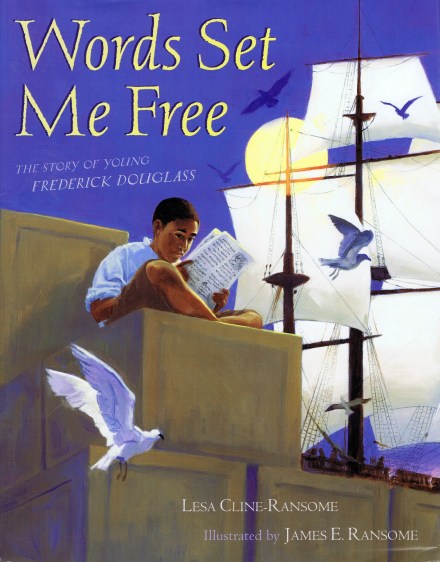
Words Set Me Free

Written by Lesa Cline-Ransome | Illustrated by James E. Ransome


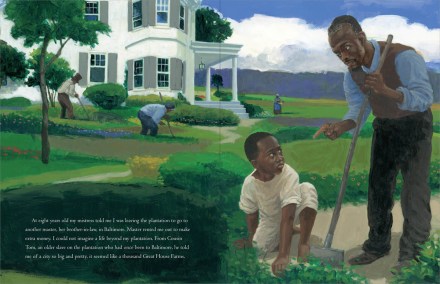
Born into slavery and separated from his mother in infancy, Frederick Bailey is raised by his Grandmama while his mother works on a separate plantation. When she is able Harriet Bailey walks the 12 miles between plantations to spend a few short hours with her son, watching him sleep before making the long journey back. While Frederick is still a very young child, his mother falls ill and dies. Douglass recalls never seeing his mother’s face in daylight.

celebrate-picture-books-picture-book-review-words-set-me-free-the-story-of-young-frederick-douglas-plantation

Image copyright James E. Ransome, text copyright Carole Boston Weatherford. Courtesy of Simon & Schuster.

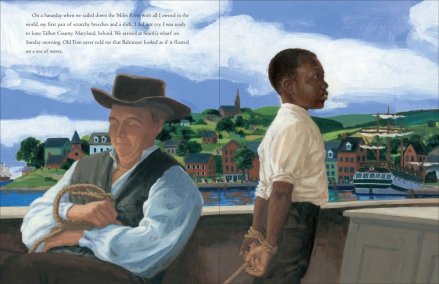
At the age of six, Frederick is moved from his Grandmama’s cabin to the plantation house. At eight, he is sent to the master’s brother in Baltimore, Maryland. Here, the master’s wife, Sophia Auld, treats Frederick more like a paid servant then as a slave. When Frederick says he wants to learn how to read and write, she immediately begins teaching him the alphabet. Frederick is always mindful, however, that he may be punished for these lessons, and he has only memorized the letters and a few words before his master puts an end to his education. Angrily, the master explains to his wife, “If you teach him how to read…it would forever unfit him to be a slave.”

celebrate-picture-books-picture-book-review-words-set-me-free-the-story-of-young-frederick-douglas-smith's-wharf

These words are perhaps Frederick’s greatest lesson. He never forgets them, and they fuel his resolve to pursue an education. He makes clever use of the few resources he has and slowly learns to read and write. From the newspapers he discovers that the North offers freedom, and Frederick decides to escape. It’s many long years, however, before he can fulfill his dreams. At last, he sees an opportunity to leave the South behind, and using his talent for writing makes his escape a reality.

celebrate-picture-books-picture-book-review-words-set-me-free-the-story-of-young-frederick-douglas-tall-ship

Image copyright James E. Ransome, courtesy of Simon & Schuster.

Lesa Cline-Ransome has written a compelling biography of Frederick Douglass for children in Words Set Me Free. In straightforward language and through first-person point of view, Cline-Ransome reveals the brutal truth of Douglass’s life as a slave and his fight against injustice. As the title suggests, the book focuses on Frederick’s desire to become educated and the obstacles he overcame to succeed. This universally important message continues the work Douglass engaged in long ago.

James Ransome’s stirring paintings realistically highlight pivotal scenes of Frederick’s life, beginning with the tender moments he spends with his mother as a very young child. With an unstinting eye Ransome reveals the hardship and cruelty Frederick endured as a slave. His moving illustrations also demonstrate hope as Frederick, with blossoming intellect, resolves to educate himself and find a means of escape.

Ages 5 and up                                                                                                            

Simon & Schuster, New York, 2012 | ISBN 978-1416959038

Learn more about Lesa Cline-Ransome and her books on her website!

Find a gallery of illustration, paintings, drawings, videos, and more on James E. Ransome‘s website!

Black History Month Activity

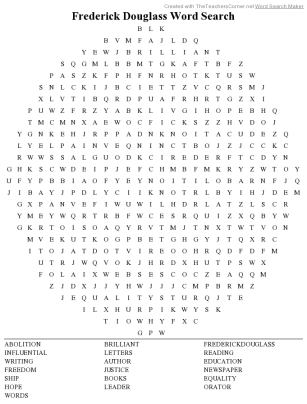
celebrate-picture-books-picture-book-review-frederick-douglass-word-search-puzzle


Frederick Douglass Word Search


Words were so important to Frederick Douglass that he risked everything to learn how to read and write. In this printable Frederick Douglass Word Search Puzzle you will find words about the subject of today’s book. Here’s the Solution

February 11 – It’s Bake for Family Fun Month

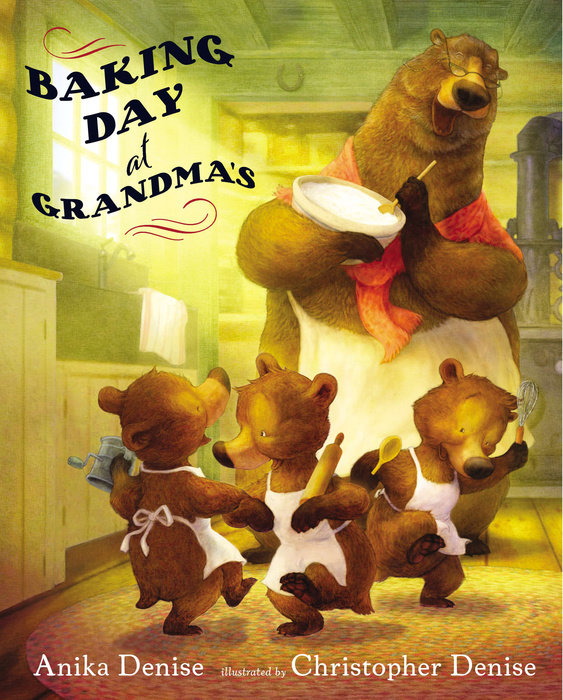
celebrate-picture-book-picture-book-review-baking-day-at-grandma's-cover

About the Holiday

Mid-winter is a perfect time to get out your favorite recipes, gather yummy ingredients, and bake with your kids! Not only does baking together teach valuable cooking skills, but it can bring a family closer. Talk about old family recipes and find new favorites. Of course the best part of baking together is eating the delicious treats afterward!

Baking Day at Grandma’s

Written by Anika Denise | Illustrated by Christopher Denise


Three little cubs bundle up in their winter coats, hats, scarves, and mittens and head out over the snowy hills to Grandma’s for baking day. Soon they see “past the pond so smooth and clear / little cottage drawing near.” A knock on Grandma’s door brings her closer, and when she opens the door the trio give her a kiss before entering the snug home.

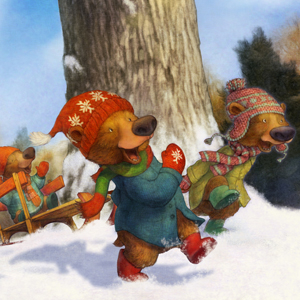
celebrate-picture-book-picture-book-review-baking-day-at-grandma's-in-the-snow

Image copyright Christopher Denise, courtesy of Philomel Books

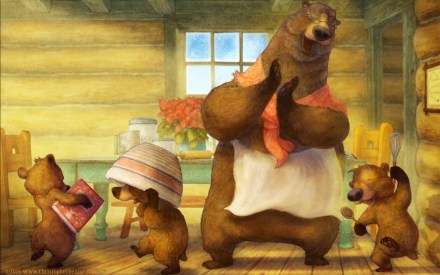
After warming their toes by the fire, the young bears grab the cookbook, a mixing bowl, a spoon, and a whisk because “It’s baking day! / It’s baking day! / It’s baking day! / at Grandma’s!” As her little bakers stand on chairs to reach the table, Grandma passes out aprons and reads the recipe. Happily crowded around the bowl, the cubs with “wooden spoon and measuring cup, / mix the batter; stir it up. / Fold it gently in the pan, / lick the spoon because we can.”

celebrate-picture-book-picture-book-review-baking-day-at-grandma's-marching-around

Image copyright Christopher Denise, courtesy of Philomel Books

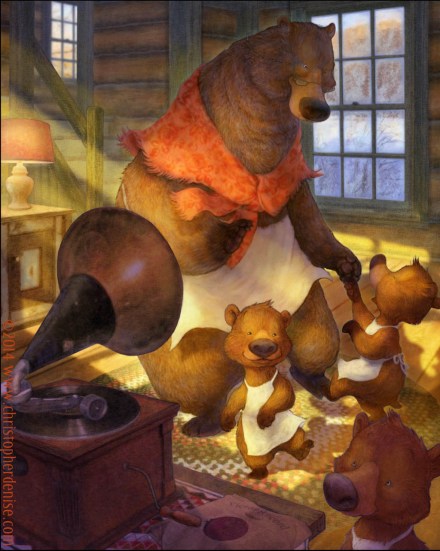
While they wait for their treats to bake, Grandma pours tummy-warming mugs of hot chocolate and one little bear draws a smiley face on the frosty window for a little chickadee to see. Grandma puts a record on her old Victrola, and as she sings the “soft and sweet skippy notes,” the cubs tap their feet. At last the kitchen timer rings, and the little bears dance arm in arm because “It’s baking day! / It’s baking day! / It’s baking day! / at Grandma’s!”

The chocolate goodies pop from the pan, and with icing and sprinkles are ready to be wrapped and tied with a red ribbon. Other treats get pretty bags, “each one marked with little tags.” The cubs are also bundled nice and warm, and with final hugs for Grandma, they are soon “Walking home under the moon. / Back to visit Grandma soon.”

celebrate-picture-book-picture-book-review-baking-day-at-grandma's-music

Image copyright Christopher Denise, courtesy of Philomel Books

Anika Denise’s sweet, rhyming story is as heartwarming as a cozy kitchen on a cold day. The buoyant rhythm is a joy to read, and Denise’s infectious repeated verse, “It’s baking day! / It’s baking day! / It’s baking day! / at Grandma’s!” invites little ones to join in the story. The bond between the three cubs and their grandma is full of love and hugs, and just like the young bears, readers will want to return again and again to Grandma’s house.

Christopher Denise infuses his winter landscapes and Grandma’s house with rich, warm colors that welcome readers into this special family baking day. The three cubs, wrapped in green coats and red knit caps, march with their sled over brilliant white snowy hills between their house and Grandma’s tidy log cabin. Inside, the rooms glow with golden sunshine, and it’s easy to see why the cubs love their attentive grandma so as she gently guides them in baking.

Newly available as a board book, Baking Day at Grandma’s is a book that young children will love to hear over and over at story time, naptime, or bedtime. It would also make an appreciated gift to or from a grandmother.

Ages 2 – 5

Philomel Books, 2016 | ISBN 978-0399171574 (board book) / 978-0399242441 (hardcover)

Learn more about Anika Denise and her books and find Reader Engagement and Activity Kits on her website!

Discover the illustrated world of Christopher Denise on his website!

Spend time baking with Grandma with this sweet book trailer!

https://www.youtube.com/watch?v=aZTRFELt9-0

Bake for Family Fun Month Activity

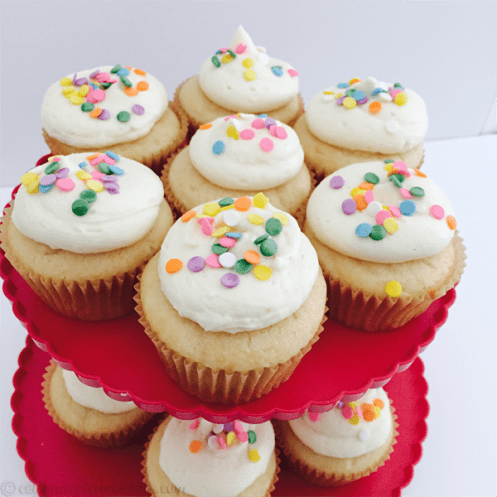
celebrate-picture-books-picture-book-review-cupcakes

Very Vanilla Cupcakes


This delicious vanilla cupcake recipe from Sally’s Baking Addiction would definitely please Grandma—and they’ll become your favorite confection too!

Vanilla Cupcakes

  • 1 and 2/3 cup (210g) all-purpose flour (spoon & leveled)
  • 1/2 teaspoon baking powder
  • 1/4 teaspoon baking soda
  • 1/2 teaspoon salt
  • 1 cup (200g) granulated sugar
  • 1/2 cup (115g) unsalted butter, melted and slightly cooled
  • 2 large egg whites
  • 1/4 cup (60g) vanilla Greek yogurt (or plain; or regular yogurt; or even sour cream)
  • 3/4 cup (180ml) vanilla almond milk (or cow’s milk; or soy milk; or plain almond milk)
  • 2 teaspoons pure vanilla extract seeds scraped from 1/2 split vanilla bean1

Vanilla Bean Frosting

  • 1 cup (230g) unsalted butter, softened to room temperature
  • 4-5 cups (480-600g) confectioners’ sugar
  • 1/4 cup (60ml) heavy cream2
  • 1 teaspoon vanilla extract seeds scraped from 1/2 split vanilla bean1
  • Salt, to taste

Directions

  1. Preheat oven to 350F degrees. Line muffin tin with 12 cupcake liners. Set aside.
  2. In a medium bowl, mix together flour, baking powder, baking soda, and salt. Set aside. In a large microwave-safe bowl, melt butter in the microwave. Whisk in sugar – mixture will be gritty. Whisk in egg whites, yogurt, milk, and vanilla extract until combined. Split 1 vanilla bean down the middle lengthwise. Scrape seeds from half of the vanilla bean into batter. Reserve other half.
  3. Slowly mix dry ingredients into the wet ingredients until no lumps remain. Batter will be thick.
  4. Divide batter among 12 cupcake liners (or 24 mini) and bake for 20 minutes or until a toothpick inserted in the center comes out clean. Bake for 8-9 minutes if making mini cupcakes. Allow to cool.
  5. To make the frosting, beat softened butter on medium speed with an electric or stand mixer. Beat for about 3 minutes until smooth and creamy. Add confectioners’ sugar, cream, vanilla extract, and vanilla bean seeds with the mixer running. Increase to high speed and beat for 3 minutes. Add more powdered sugar if frosting is too thin or more cream if mixture is too thick. Add salt if frosting is too sweet (1/4 teaspoon). Frost cooled cupcakes (I used Wilton 1M piping tip). There may be leftover frosting depending how much you use on each cupcake.
  6. Store cupcakes in an airtight container at room temperature for up to 3 days and in the refrigerator up to 7.

Additional Notes

  1. If you can’t get your hands on vanilla beans, add an extra ½ teaspoon of pure vanilla extract instead.
  2. Strongly urged to use heavy cream. You may use milk or half-and-half, but heavy cream will give the frosting a thicker texture. I recommend it!

For ways to adapt this recipe and more scrumptious recipes, visit Sally’s Baking Addiction. I guarantee you’ll go back again and again!

Picture Book Review

February 10 – It’s Children’s Authors & Illustrators Week

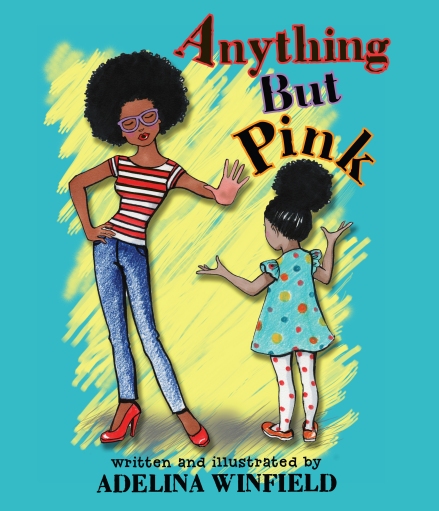
celebrate-picture-books-picture-book-review-anything-but-pink-cover

About the Holiday

Today I’m celebrating Children’s Authors and Illustrators Week with a humorous book by a debut author whose story embodies the universal themes of Multicultural Children’s Book Day. Her story is a bright reminder that life is better when we embrace the wonderful diversity all around us.

Anything But Pink

By Adelina Winfield


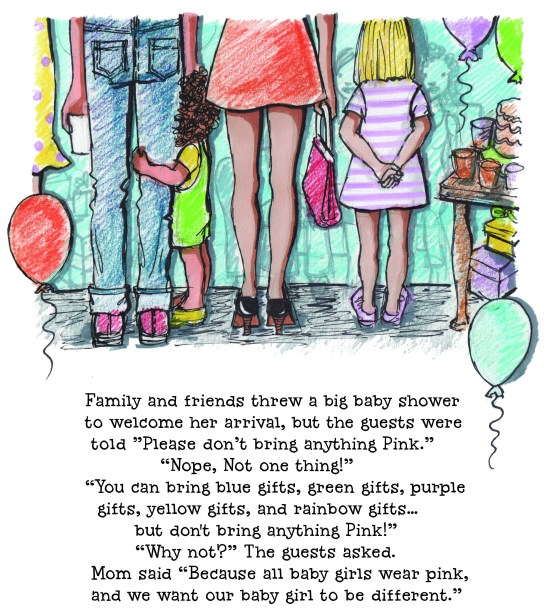
Not long ago in a nearby city—it might even have been yours—a couple was waiting for their little girl to be born. One night under a starlit sky, her mommy and daddy were inspired to call their precious one Starri. Starri’s “parents had big dreams about what she would be like,” but none of those things involved the color pink. In fact, when guests were invited to Starri’s baby shower they were told, “‘Please don’t bring anything Pink. Nope, Not one thing!’”  
celebrate-picture-books-picture-book-review-anything-but-pink-baby-shower

Image and text copyright Adelina Winfield, courtesy of Adelina Winfield

They were encouraged to bring “‘blue gifts, green gifts, purple gifts, yellow gifts, and rainbow gifts,’” but nothing pink. Why? Starri’s mom said, “‘all baby girls wear pink, and we want our baby girl to be different.’” So the decorations and cupcakes were “red, green, purple, and aqua, and friends and family brought a rainbow of blankets, bouncers, bassinets, toys, clothes, and diapers. But there was not one dot of pink. “Nope. No pink at all.”

Mommy and Daddy took all those presents home and decorated their baby girl’s nursery in “yellow, grey, aqua, and orange.” Pretty soon Starri was born, and she was “as bright as her name.” As an infant Starri was wrapped in green and yellow; she crawled in lavender onesies; she took her first steps in peach and blue; and she greeted the world in a bold red dress. But she never, ever wore anything pink. “Nope. Not one thing.”
celebrate-picture-books-picture-book-review-anything-but-pink-starri

Image and text copyright Adelina Winfield, courtesy of Adelina Winfield

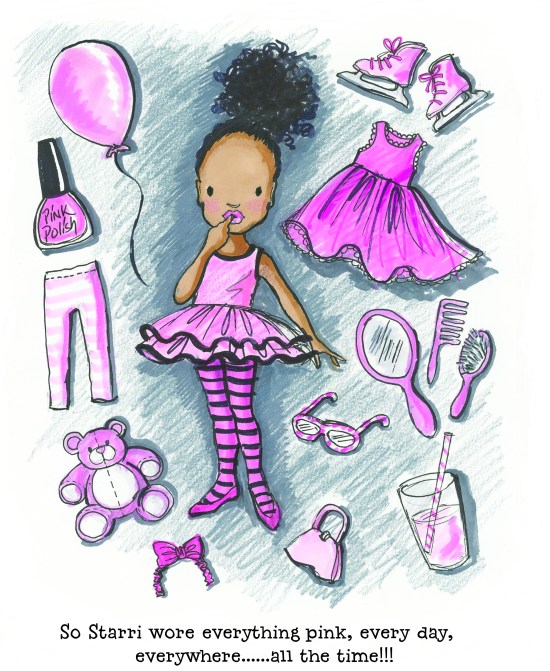
But one day Starri told her mom and dad that she wanted to wear a pink dress. Their astonished faces said it all. And Starri didn’t want just one pink dress, she wanted a pink tutu, “pink nail polish, pink shoes, pink ice cream, pink cake, pink leggings, and pink sunglasses. A pink room with pink walls, and a pink dresser with a pink lamp on a pink night table.” Yep, she wanted everything pink. And so it happened.

celebrate-picture-books-picture-book-review-anything-but-pink-starri's-pink-bedroom

Image and text copyright Adelina Winfield, courtesy of Adelina Winfield

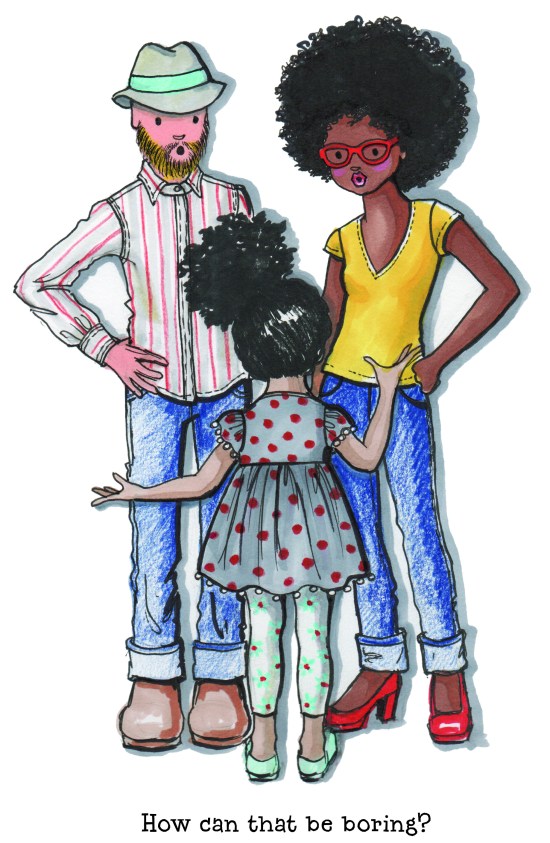
There was not one inch of Starri’s life that was not pink. She wore pink at playtime, somersaulted in pink, sat on the pink spot on the classroom reading rug, and “of course had a pink birthday party.” One day as Starri once again clothed herself head to toe in pink, her mom stopped her. “‘Wearing all pink is boring,’” she said. But Starri didn’t believe it. How could pink be boring when there was “bubble gum pink, candy pink, magenta, rose, fuchsia, flamingo pink, watermelon pink, and hot pink?” Pink was not boring. “Nope, not one bit!”

“‘But honey,’” her mom and dad said, “‘variety is the spice of life,’” and they showed her how all the beautiful colors of the rainbow could “live together with pink.” Starri loved this idea, and so now when you see her, she’s still wearing pink, but she’s welcomed other colors into her life as well!
celebrate-picture-books-picture-book-review-anything-but-pink-starri's parents

Image and text copyright Adelina Winfield, courtesy of Adelina Winfield

If you have ever been a little girl, had a little girl, or even just known a little girl, Adelina Winfield’s Anything But Pink will resonate and make you smile. Despite parent’s preferences, protestations, and prohibitions, pink creeps then gallops into girls’ lives in a million different ways. Winfield’s repetition of a rainbow of colors and the fervently hopeful “Nope, no pink at all. Not one thing” makes her story all the funnier as adults surely know what’s coming and young readers will cheer when Pink finally makes its appearance. I laughed out loud when I turned to the pages after Starri embraces pink as it took me back to when my own daughter, who having earlier rejected pink for green, suddenly wanted a pink room, pink lamp, pink clothes, and even wall stickers exactly like the colorful circles that dot Winfield’s endpapers.

There is a joyous quality to Winfield’s stylish illustrations as Starri’s parents prepare for their baby amid vibrant images that express the dreams they share for their child. When adorable, curly-haired Starri comes along, she happily wears what her parents give her until the moment when she asserts her independence and with personality and flair enters the monochromatic world of pink. The story is infused with a sweet tone shown in the loving relationship between Starri’s parents as they stand close together, walk with their arms around each other, and even have priceless matching expressions the first time the dreaded P word is uttered. Their relationship with Starri is likewise affectionate. When their daughter does discover pink, they support her, only later guiding her to consider a more global perspective.

Anything But Pink is a cute story for all lovers of the color pink and would make an appreciated baby shower or birthday gift and a much-asked-for story time or bedtime read.

Ages 3 – 8

CreateSpace Independent Publishing, 2016 | ISBN 978-1541103672

Anything But Pink is available on Amazon

You can follow Anything But Pink on Instagram

About Adelina Winfield

celebrate-picture-books-picture-book-review-Adelina-Winfield-picture

Adelina is an all around artist and an eternally creative spirit. She spent several years as a Fashion Designer in New York’s garment district, designing children’s clothing for labels such as Guess Jeans, JayZ’s Rocawear brand, and Tina Knowles’ Dereon line. This design experience allowed her to globe trot, where she spotted the latest trends throughout Europe and Asia. Her eclectic upbringing in Brooklyn, NY, worldwide travel, and many years in the fashion business has served as a canvas for her current creative expression: writing. Now living in another creative city, Austin, Texas, Adelina has married her artistic and writing talents in her first children’s book, Anything But Pink

Children’s Authors & Illustrators Week Activity
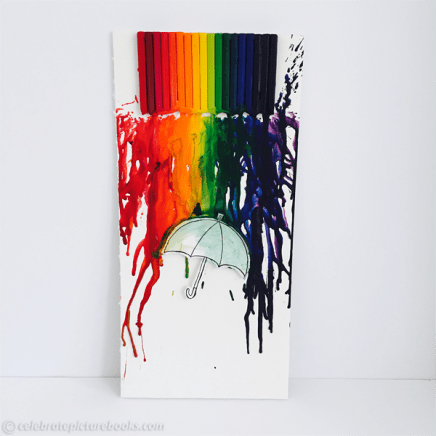
CPB - Rainbow Crayon Art 3

Crayon Rainbow Art


With this cool project you can create an art piece that’s as colorful as a rainbow and as unique as you are! Adult help is needed for children.

Supplies

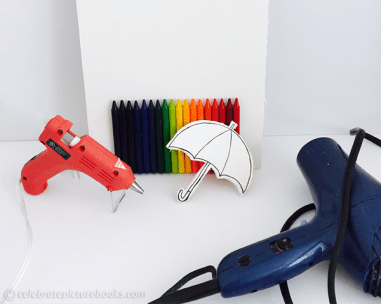
  • Box of 24 crayons
  • White foam board or thick poster board, 8 inches by 17 inches
  • A small piece of corrugated cardboard, about 5 inches by 5 inches (a piece of the foam board can also be used for this step)
  • A small piece of poster board, about 5 inches by 5 inches
  • Scissors
  • X-acto knife (optional)
  • Hot glue gun
  • Hair dryer
  • Old sheets or towels, newspapers, a large box, or a trifold display board

CPB - Rainbow Crayon Art 2

CPB - Rainbow Crayon Art 1 (2)

Directions

  1. Remove the various red, orange, yellow, blue, indigo, and violet hued crayons from the box of crayons
  2. Strip the paper from the crayons by slicing the paper with the x-acto knife, or removing it by hand
  3. Line them up in order at the top of the white foam board
  4. Glue the crayons with their tips facing down to the board with the hot glue gun
  5. Cut an umbrella or other shape of your choice from the poster board
  6. Trace the umbrella or other shape onto the corrugated cardboard or a piece of the foam board and cut out
  7. Glue the poster board shape onto the corrugated cardboard, let dry
  8. Glue the umbrella or other shape to the foam board, about 4 ½ inches below the crayons
  9. Set up a space to melt the crayons. The wax will fly, so protect the floor and walls by placing the art piece in a large box or hanging newspapers, old sheets or towels on the walls and placing newspapers on the floor. A trifold display board and newspapers works well.
  10. Stand the art piece upright with the crayons at the top
  11. With the hot setting of the hair dryer, blow air at the crayons until they start to melt
  12. Move the hair dryer gently back and forth across the line of crayons from a distance of about 6 to 12 inches away. The closer you are to the crayons, the more they will splatter
  13. The crayons will begin to melt and drip downward
  14. You can experiment with aiming the hair dryer straight on or at an angle to mix colors
  15. Wax that drips onto the umbrella or other shape can be chipped off after it dries or wiped off to create a “watercolor” effect on the shape
  16. Once the hair dryer is turned off, the wax cools and dries quickly
  17. Hang or display your art!

About Multicultural Children’s Book Day

Multicultural Children’s Book Day 2017 (1/27/17) is its fourth year and was founded by Valarie Budayr from Jump Into A Book and Mia Wenjen from PragmaticMom. Our mission is to raise awareness on the ongoing need to include kid’s books that celebrate diversity in home and school bookshelves while also working diligently to get more of these types of books into the hands of young readers, parents and educators. 

Despite census data that shows 37% of the US population consists of people of color, only 10% of children’s books published have diversity content. Using the Multicultural Children’s Book Day holiday, the MCBD Team are on a mission to change all of that.

Current Sponsors:  MCBD 2017 is honored to have some amazing Sponsors on board. Platinum Sponsors include ScholasticBarefoot Books and Broccoli. Other Medallion Level Sponsors include heavy-hitters like Author Carole P. RomanAudrey Press, Candlewick Press,  Fathers Incorporated, KidLitTVCapstone Young Readers, ChildsPlayUsa, Author Gayle SwiftWisdom Tales PressLee& Low BooksThe Pack-n-Go GirlsLive Oak MediaAuthor Charlotte Riggle, Chronicle Books and Pomelo Books

Author Sponsors include: Karen Leggett AbourayaVeronica AppletonSusan Bernardo, Kathleen BurkinshawDelores Connors, Maria DismondyD.G. DriverGeoff Griffin Savannah HendricksStephen HodgesCarmen Bernier-Grand,Vahid ImaniGwen Jackson,  Hena, Kahn, David Kelly, Mariana LlanosNatasha Moulton-LevyTeddy O’MalleyStacy McAnulty,  Cerece MurphyMiranda PaulAnnette PimentelGreg RansomSandra Richards, Elsa TakaokaGraciela Tiscareño-Sato,  Sarah Stevenson, Monica Mathis-Stowe SmartChoiceNation, Andrea Y. Wang

We’d like to also give a shout-out to MCBD’s impressive CoHost Team who not only hosts the book review link-up on celebration day, but who also work tirelessly to spread the word of this event. View our CoHosts HERE.

MCBD Links to remember:

MCBD site: http://multiculturalchildrensbookday.com/

Free Multicultural Books for Teachers: http://bit.ly/1kGZrta

Free Kindness Classroom Kit for Homeschoolers, Organizations, Librarians and Educators: http://multiculturalchildrensbookday.com/teachers-classroom-kindness-kit/

Free Diversity Book Lists and Activities for Teachers and Parents: http://bit.ly/1sZ5s8i

Picture Book Review

February 9 – It’s Library Lovers Month

The Midnight Library by Kazuno Kohara Picture Book Review
About the Holiday

For bibliophiles, this may be the best month of the year! Not only does your local library have shelves stacked with books, magazines, movies, and tapes of every kind, it offers comfy chairs, fascinating lectures, kids programs, and more! This month be sure to take part in some of the activities librarians have planned for you!

The Midnight Library

By Kazuno Kohara


A little librarian opens the doors to her library only as the sun goes down. Working with her three assistant owls, she helps the forest animals find the perfect book. The animals read quietly and the library is peaceful until one night when a band of squirrels begins playing their instruments in the reading room. The little librarian shushes the squirrels and they apologize, saying they’re just working on a new song. The librarian has the perfect solution! She shows the band to the upstairs activity room, and peace reigns once more in the library.

celebrate-picture-books-picture-book-review-the-midnight-library-squirrels-play-music

Image copyright Kozuno Kohara, courtesy of us.macmillan.com

Later that night it begins to rain—inside! The little librarian climbs the ladder to look at the roof, but instead of a leak she finds a wolf sobbing away. Her book is so sad, the wolf says, that she can’t read on. Gently, the librarian takes her to the storytelling corner where she, the owls, and Miss Wolf read the story together. The wolf discovers the book has a happy ending, something the library workers knew all along.

celebrate-picture-books-picture-book-review-the-midnight-library-wolf-cries

Image copyright Kozuno Kohara, courtesy of us.macmillan.com

All too soon the sun peeks over the horizon, and it’s time for the library to close. The patrons file out one by one, but who is left leisurely reading his book in the corner? It’s a tortoise who says he is not leaving until he finishes his book—only 500 pages to go! Once again the little librarian has the answer! She gives the tortoise a library card and reveals that he can take the book home with him and finish it there. The tortoise heads home feeling happy and lucky with the book strapped to his shell.

celebrate-picture-books-picture-book-review-the-midnight-library-saying-goodbye

Image copyright Kozuno Kohara, courtesy of us.macmillan.com

With the library to themselves, the owls and librarian tidy up the shelves and snuggle in with one last book—bedtime stories for the sleepy owls.

The Midnight Library is a perfect bedtime—or daytime—book for budding bibliophiles and library lovers. With its dreamy quality, Kazuno Kohara’s story is as inviting and comforting as a favorite reading nook, and the little librarian of this nighttime treasure trove is sweetly reassuring as she quickly and calmly resolves the issues that arise in her domain. 

celebrate-picture-books-picture-book-review-the-midnight-library-at-night

Image copyright Kozuno Kohara, courtesy of us.macmillan.com

Kohara’s characters are adorable, smiling with pleasure at gathering in their favorite place. An image of the owls holding Miss Wolf’s hands as they read her book together is particularly touching. Kids will love the tricolor pages that masterfully capture both the mystery and radiance of this welcoming after dark meeting place. As readers reach the end of the story, they will look forward to the next night when they can visit The Midnight Library again.

Ages 3 – 6

Roaring Brook Press, 2014 | ISBN 978-1596439856

Library Lover’s Month Activity

CPB - Librarian Thank You card

Design a Thank You Card


During this month make a card to tell your librarians why you love them and what you like best about the programs they create for you! Print the Thank You! card and then draw a picture and/or write a message and sign your name. Then fold it and give it to your favorite librarian. Get the Thank You! card here.

Picture Book Review
February 8 – Kite Flying Day

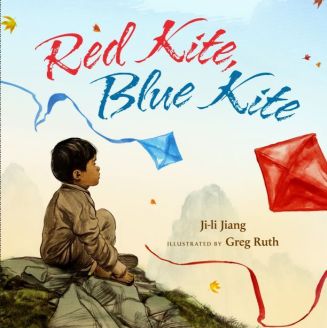
celebrate-picture-books-picture-book-review-red-kite-blue-kite-cover

About the Holiday

If you live in a cold climate and cabin fever has set in or if you live in a warm climate and want to get out and enjoy the day, why not take the opportunity of today’s holiday and go fly a kite? Whether you’re steering a simple diamond or a fancy dragon, watching a kite dip and soar through the sky is an exhilarating experience!

Red Kite, Blue Kite

Written by Ji-li Jiang | Illustrated by Greg Ruth


“I love to fly kites,” young Tai Shan relates, but not he’s while standing on the ground. Instead, because his city is so crowded, his Baba and he climb to the peak of their triangular roof where they are “above but still under, neither here nor there. We are free, like the kites.” While they fly their kites—red for Tai Shan and blue for Baba—Baba tells stories, and Tai Shan feels as if he is soaring through the clouds, “looking down at the dotted houses” and wanting to stay up there forever.

celebrate-picture-books-picture-book-review-red-kite-blue-kite-Tai-Shan-and-Baba-fly-kites

copyright Greg Ruth, courtesy of Disney-Hyperion

But one day dark times descend. Tai Shan’s school and many others are shuttered. Baba is taken away by men in red arm bands and sent to work in a labor camp. Tai Shan is sent to live with Granny Wang, a farmer who lives in a village next to the labor camp. A thick forest separates Tai Shan and Baba. During the day Granny Wang teaches Tai Shan how to make straw grasshoppers and spin cotton and lets him ride her buffalo. At night Tai Shan dreams of flying kites from the rooftop with his father.

On Sundays Baba walks for hours to visit Tai Shan. He spends time telling stories and playing with his son and his friends. Then they climb the hill and fly kites, Tai Shan’s red one following Baba’s blue. “The kites hop and giggle as they rise and dive, soaring and lunging together.” At the end of the day, Baba returns to the labor camp for another week. In the autumn Baba tells Tai Shan that he won’t be able to visit for a long time. But he has a clever plan—a way that he and Tai Shan can see each other.

Baba gives his son a new red kite and tells him to fly it from the hill each morning. He will see it from his camp. In the evening Baba will fly his blue kite so that Tai Shan can see it. Tai Shan likes the idea of this “secret signal.” The next morning Tai Shan runs to the hill and launches his kite, knowing that “Baba is smiling as he watches the red kite dancing.” In the evening he returns to the hill, and after a long wait “Baba’s blue kite sways into the white clouds.”

celebrate-picture-books-picture-book-review-red-kite-blue-kite-Baba-taken

copyright Greg Ruth, courtesy of Disney-Hyperion

Every day Tai Shan sends his father a silent message—“‘How are you, Baba? I miss you.’” and “Baba’s blue kite swirls and circles, replying, ‘I miss you, too, little Tai Shan.’” Autumn is coming to a close, but still Baba does not visit. One day no blue kite appears in the sky. The next day and the next no kite appears either. Tai Shan asks Granny Wang to take him to the camp to see Baba. If there is no kite on the fourth day they will go, Granny Wang promises.

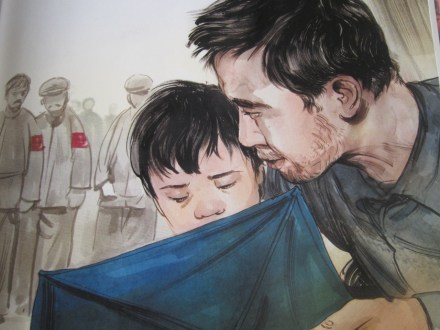
That night Tai Shan dreams about the thick forest and hears Baba whisper, “‘Tai Shan, I saw your red kite fly so high.’” But these words are not in a dream, Baba is there. But Baba is not home to stay. Hurriedly, he gives Tai Shan his blue kite, telling him that he will not be able to fly it for a while. He asks Tai Shan to fly both kites and know that he is looking up and thinking about his son. Suddenly, men with red armbands rush in and take Baba away. Tai Shan tries to run after him, but Granny Wang holds him back.

Tai Shan cries and does not understand. Granny Wang explains that Baba is being sent to another labor camp far away because the authorities don’t agree with his ideas. During the three days when he didn’t fly his blue kite, Granny Wang says, Baba had been imprisoned. He had escaped and run all the way to see Tai Shan before he was taken away. Now Tai Shan flies the two kites every day and thinks of being together with Baba.

celebrate-picture-books-picture-book-review-red-kite-blue-kite-Baba-gives-kite

copyright Greg Ruth, courtesy of Disney-Hyperion

One summer afternoon, Tai Shan dozes while he allows his red kite to dip and soar in the clouds. When he opens his eyes, he sees dozens of red and blue kites in the sky. Tai Shan jumps up. He sees Baba smiling at him and “holding the string of a huge blue kite dancing in the sky.” Tai Shan’s friends are also smiling and flying their new kites. Tai Shan runs to Baba, and Baba runs toward Tai Shan. The sky “is filled with kites—red and blue. They hop and giggle and cheer as they rise and dive, soaring and lunging together. They are free, flying everywhere.”

An Author’s Note about the Chinese Cultural Revolution follows the text.

Inspired by the story of a family friend whose father was sent to a labor camp during the Chinese Cultural Revolution between 1966 and 1976, Ji-li Jiang wrote Red Kite, Blue Kite “for the many fathers and sons who suffered during that turmoil.” Jiang’s story is a universal and relevant reminder of the precious freedoms of thought and speech that need constant and vigilant protection. Through her sensitive storytelling and lyrical language, Jiang offers a story of understanding, hope, and infinite love that will fill readers’ hearts.

Greg Ruth’s stunning paintings show all the emotion of Jiang’s story through exquisite, realistic portraits of Tai Shan, Baba, and Granny Wang. The distinctive landscapes of China are rendered in colorful foregrounds set on gauzy backgrounds of rising hills. Smoky images of the followers of the Cultural Revolution mirrors the darkness and destruction of the time in a way that is understandable for the young audience. The final two-page spread of Tai Shan and Baba’s reunion amid dozens of red and blue kites is inspiring and full of the strength of the human spirit.

Red Kite, Blue Kite is a must for school and public libraries and makes an excellent addition to home libraries as well.

Ages 5 – 9

Disney-Hyperion, 2013 | ISBN 978-1423127536

For a downloadable Educator’s Guide click here.

Learn more about Ji-li Jiang and her books on her website!

Find galleries of books and illustration for children and adults plus lots more on Greg Ruth’s website!

Kite Flying Day Activity

celebrate-picture-books-picture-book-review-kite-maze

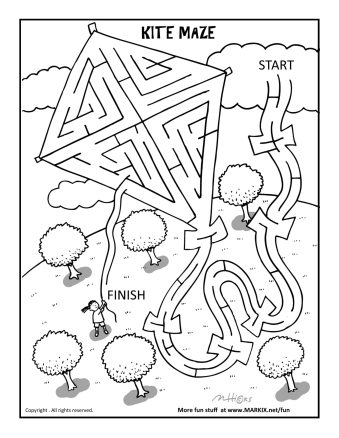
Soaring Kite Maze


The dips and rises your pencil takes through this maze is a little like the way a kite flies through the sky! Print your Soaring Kite Maze and enjoy!

Picture Book Review