November 23 – Fibonacci Day

celebrate-picture-books-picture-book-review-blockhead-the-life-of-fibonacci-cover

About the Holiday

Today’s holiday is dedicated to the man—Leonardo of Pisa, today known as Fibonacci—who promoted awareness throughtout Europe of the number sequence that now bears his name. First appearing in Indian mathematics and linked to the golden triangle and the golden ratio, the number pattern states that each consecutive number in the series is the sum of the two preceding numbers: 1, 2, 3, 5, 8, 13, 21, 34…. This sequence is found again and again in nature in such arrangements as leaves on a flower stem, seeds in a sunflower, the tapering of a pinecone, the swirl of a seashell, and manys. These precise compositions allow each leaf to get enough sunlight, make room for the correct number of petals, or squeeze in as many seeds as possible. To celebrate, learn more about this sequence and then observe patterns in nature. A good place to start is with today’s book!

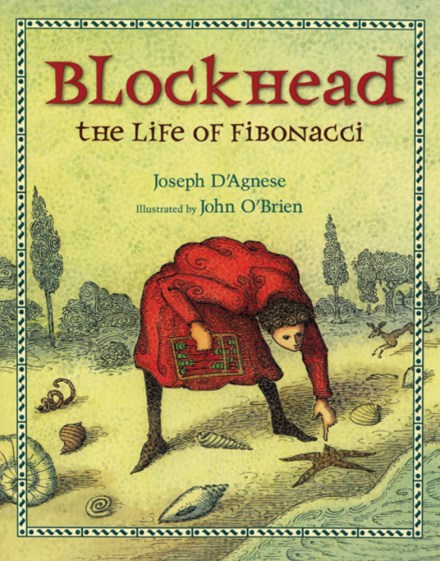
Blockhead: The Life of Fibonacci

Written by Joseph D’Agnese | Illustrated by John O’Brien


Leonardo Fibonacci introduces himself this way: “You can call be blockhead. Everyone else does.” He goes on to reveal that he acquired that nickname because he loved to think about numbers. Once when his teacher gave the class ten minutes to solve a math problem, he knew the answer in two seconds. At home he counted everything he saw. When he was bored his mind pondered the patterns he saw. For instance, on that school day while his classmates worked on the problem, Leonardo spent the time gazing out the window. H e noticed 12 birds sitting in a tree. How many eyes was that? How many legs? “And if each bird sang for two seconds, one bird after the other, how long would it take all of them to sing?” He was counting these answers in his head when his teacher yelled, “‘How dare you daydream in my class!’” He told Leonardo there would “‘be no thinking in this classroom—only working! You’re nothing but an absent-minded, lazy dreamer, you…you BLOCKHEAD!’”

celebrate-picture-books-picture-book-review-blockhead-the-life-of-fibonacci-story-starts

Image copyright John O’Brien, courtesy of Henry Holt and Company

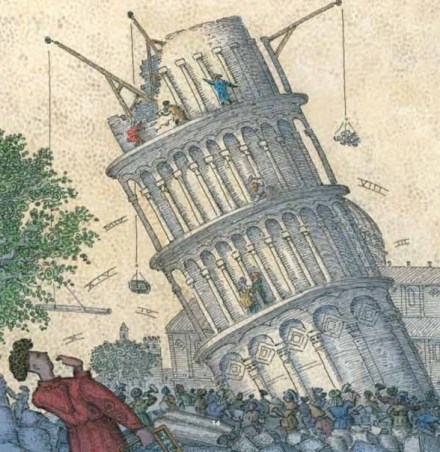
Leonardo ran from the room into the city he loved—Pisa, one of the greatest cities in 1178 Italy. A new tower was being constructed—although the builders were having trouble with their math and the tower stood at an angle. He was so enthralled with the math he saw all around him that he nearly walked into danger. “‘What are you, a blockhead?’” a woman shouted. Leonardo’s father was angry and embarrassed by his son’s reputation in town. He wanted Leonardo to become a merchant, and took him to northern Africa to learn the business.
celebrate-picture-books-picture-book-review-blockhead-the-life-of-fibonacci-tower-of-pisa

Image copyright John O’Brien, courtesy of Henry Holt and Company

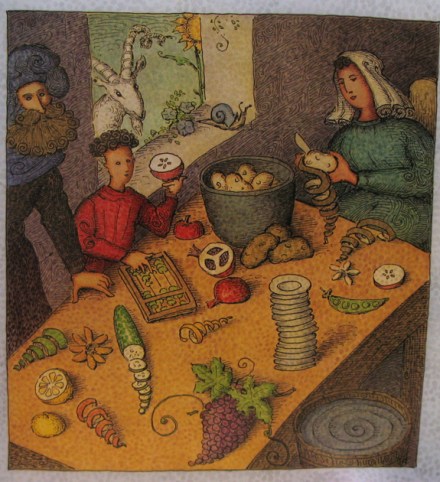
In Africa Leonardo learned a new number system. Instead of Roman numerals, the people used numbers “they had borrowed from the Hindu people of India.” In this system XVIII became the much easier 18. During the day Leonardo handled his father’s business accounts, but at night Alfredo, his father’s advisor and Leonardo’s champion, accompanied him as he learned the new number system. As Leonardo grew older, his father sent him on trips to other countries to conduct business. In each Leonardo learned new mathematics concepts. In Egypt he learned about fractions. In Turkey and Syria he discovered methods of measurement. In Greece he learned geometry, and in Sicily he used division and subtraction.
celebrate-picture-books-picture-book-review-blockhead-the-life-of-fibonacci-kitchen

Image copyright John O’Brien, courtesy of Henry Holt and Company

One day Leonardo “began to write a book about Hindu-Arabic numerals” and included riddles to demonstrate the ideas. One was about a pair of rabbits. Leonardo asked Alfredo to tell him how many baby rabbits would be born within one year if it took a baby one month to grow old enough to have babies of its own and one more month to have a pair of babies. Alfredo tried to solve it but couldn’t. As Leonardo explained the sequence of adult pairs and baby pairs of rabbits to Alfredo, he noticed a pattern. At the end of month two, there would be 1 grown-up pair of rabbits and 1 baby pair; at the end of month three there would be 2 grown-up pairs and 1 baby pair; at the end of month 4 there would be 3 grown-up pairs and 2 baby pairs…. Leonardo saw that by adding “any two consecutive numbers in the pattern,” you’d get the next correct number. This discovery made solving the problem even easier.
celebrate-picture-books-picture-book-review-blockhead-the-life-of-fibonacci-sea-shells

Image copyright John O’Brien, courtesy of Henry Holt and Company

Leonardo’s work with math soon spread across Europe. Frederick II, the ruler of the Holy Roman Empire invited Leonardo to visit. There Frederick’s wise men challenged him with math problems that were no match for Leonardo’s quick brain. Frederick II didn’t call Leonardo a blockhead, instead he said he was “‘one smart cookie.’” When Leonardo went home, however, the people of Pisa grumbled and complained. They thought the old Roman numerals were good enough.

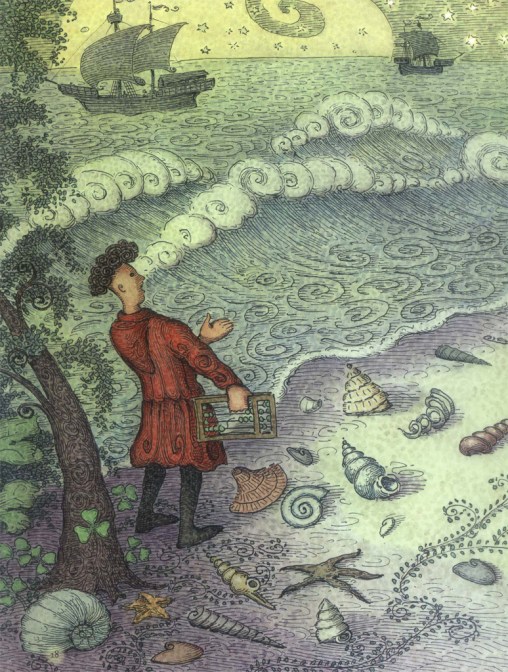
Leonardo set out to prove how valuable Hindu-Arabic numerals were. He began observing nature, and everywhere, from the petals of a flower to the arms of a starfish to the seeds in an apple, Leonardo discovered the same numbers—the sequence he had discovered in the rabbit riddle. He realized that these numbers could be used in different ways—to draw a spiral; the same type of spiral found within pinecones and the center of a sunflower.
celebrate-picture-books-picture-book-review-blockhead-the-life-of-fibonacci-old-man

Image copyright John O’Brien, courtesy of Henry Holt and Company

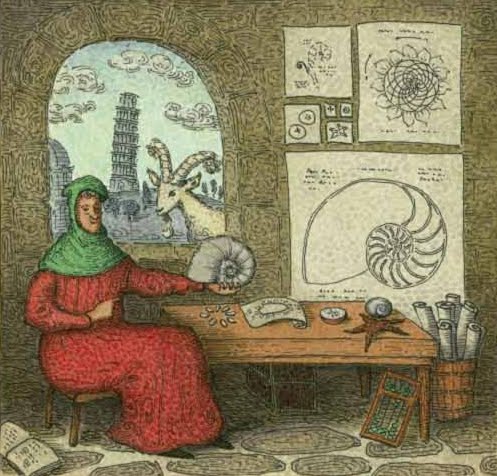
Leonardo finishes his story by relating that even though he is now old, numbers still delight him, as does the secret Mother Nature cleverly uses to organize the world and even the universe. He invites readers to look again through his story and find the places where his Fibonacci sequence appears.

More biographical information about Leonardo of Pisa plus a discussion of where readers can find Fibonacci number patterns in nature and a scavenger hunt through the book follow the text.

Blockhead: The Life of Fibonacci is an engaging, accessible biography that describes this mathematical scholar’s life and theory in a clear and entertaining way, whether their thing is math and science or English, history, and art. Joseph D’Agnese immediately entices kids into the story with the revelation of how Leonardo acquired the nickname that gives the book its title. Using anecdotes such as the birds in the trees and the rabbit riddle, he invites readers to think like Fibonacci, leading to a better understanding and enjoyment of his life story and the mathematical concept. The idea of using your talents and passions wherever you are—as Leonardo does in his work for his father—is a valuable lesson on its own.

John O’Brien’s wonderfully detailed illustrations take children back to early Italy and the Mediterranean with his depictions of Leonardo’s school and town, as well as the under-construction Tower of Pisa and the influential cultures of other countries he visited. Cleverly inserted into each page are examples of the Fibonacci sequence at work—in whorls of wood grain, the spirals of women’s hats, the web of a spider and horns on a passing goat, and so many more. The rabbit riddle is neatly portrayed for a visual representation of the math involved, and the way nature uses the pattern is also organically portrayed. Children will love searching for and counting the various ways Fibonacci’s seuqence is used throughout the illustrations.

Blockhead: The Life of Fibonacci is a fantastic book to share with all children, especially as they begin to learn mathematical problem solving, the value of math, how it is used, and how it occurs naturally in the world. The book makes a marvelous teaching resource and addition to classroom libraries and also a great addition to home bookshelves.

Ages 5 – 9

Henry Holt and Company, 2010 | ISBN 978-0805063059

To discover more books by Joseph D’Agnese for children and adults visit his website!

Find a vast portfolio of cartoon and illustration work by John O’Brien for kids and adults on his website!

Watch the Blockhead: The Life of Fibonacci book trailer!

Fibonacci Day Activity

celebrate-picture-books-picture-book-review-spiral-coloring-page

Spiral Coloring Page


Have fun coloring this printable Spiral Coloring Page that is inspired by Leonardo Fibonacci’s work.

Picture Book Review

November 22 – It’s Picture Book Month

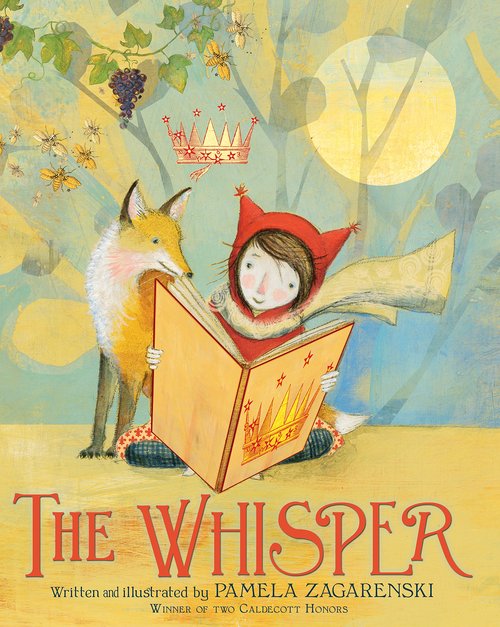
celebrate-picture-books-picture-book-review-the-whisper

About the Holiday

Picture Book Month is an international literacy inititive put together by a group of authors and illustrators to raise awareness of the importance of print picture books. Througout the world libraries, schools, booksellers, authors, illustrators, and those who love picture books celebrate the wonder of this art form enjoyed by children and adults. The complexity of picture books is astounding. They contain some of the most beautiful art and compelling stories being created today. To learn more about the importance of the picture book visit Picture Book Month: A Celebration! to find daily posts by authors, illustrators, and experts in the field as well as fun activities!

The Whisper

By Pamela Zagarenski


A little girl loves stories and the magical realms they can take her to. One day while waiting for school to be dismissed, she spies a book on a shelf. Her teacher allows her to take it home with her, and the little girl happily runs off with it when the clock strikes 3:00. On the way home, she doesn’t notice that all the letters are escaping from the book or that a wily fox is catching them in a net.

At home she secludes herself in her room, excited to read the mysterious book. She turns the pages, awed by the beautiful pictures. But by the time she has finished, she has tears in her eyes. “Where were the words? Where were the stories?” The girl flips through the book again, but this time she hears a small whisper: “Dear little girl, don’t be disappointed. You can imagine the words. You can imagine the stories.”

celebrate-picture-books-picture-book-review-words-escape-the-book

Copyright Pamela Zagarenski, courtesy of Houghton Mifflin Harcourt

The whisper seems so knowing that the girl does at it suggests. She turns to the first page where a blue bear followed by a beekeeper walks under a honeycomb sun toward a brown bear. The girl stares at the picture and thinks of a title: Blue Bear’s Visit. Her story begins: “Blue Bear arrived on the first day of spring. He promised…”

Warming to the idea of creating stories, the girl examines the second picture. She notices the same white rabbit that was in the first picture. In the foreground a “magnificent ox” is listening to a man whispering into its large, soft ear. The Secret, the little girl titles this story, which starts: “Mr. Ox, you must please promise not to tell anyone, but we need your help. Last week…”

celebrate-picture-books-picture-book-review-no-words-in-book

Copyright Pamela Zagarenski, courtesy of Houghton Mifflin Harcourt

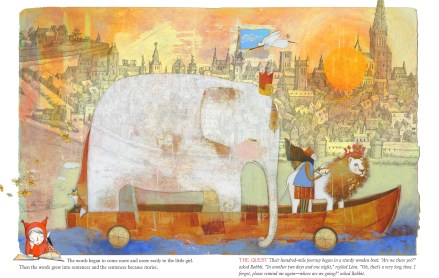
With the third picture the words tumble out more easily, forming sentences that give life to the massive white elephant, regal lion, and that rabbit again who are traveling the sea in a long, open boat. The Quest, she calls it. In Tigers Prayer, preparations are being made: tea is brewing, a clown with a pointed hat plays his accordion, a windhorse jumps through hoops, and the rabbit rides a golden ring as a lion hears what Tiger has to say. A Birthday Party comes next, and it seems Pan has planned a very secret party. An owl perches in the crook of a tree asking for the password with a “Hoo, Who?” which is answered quickly because the vanilla cake with raspberry filling and vanilla cream frosting holding 6 candles must be delivered.

celebrate-picture-books-picture-book-review-the-whisper-elephant

Copyright Pamela Zagarenski, courtesy of Houghton Mifflin Harcourt

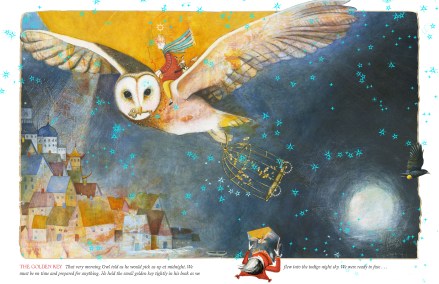
The Magical Cloak sees the little girl’s imagination truly take flight as she decides the man in the “elaborate coat” is a wizard or magician whose bubbles come to life once released from the blower. Enormous whales now fill the harbor. They are beautiful, but something must be done….Next, hurry to meet the owl! He is picking up passengers at midnight. But what does the golden key in his beak open? Only the story The Golden Key locked in the little girl’s mind will tell.

Hours go by as the little girl creates tales for each picture in the book. As the night grows late, she sleeps, carried into slumber on dreams woven from the pictures and stories she imagined. When she wakes up, the girl wishes to spend more time with her new friends, but it’s time for school so she gathers up the book and hurries away.

On the path to school she meets a fox who is carrying a bag. “Excuse me, little girl,” says the fox. “I believe I have the words to your book.” The fox then explains how he caught the words as they spilled from the pages the day before. The fox gives her his parcel, but asks for a favor. The girl is happy to oblige and lets the fox stand on her shoulders to reach a bunch of grapes dangling from a nearby vine.

celebrate-picture-books-picture-book-review-the-whisper-owl

Copyright Pamela Zagarenski, courtesy of Houghton Mifflin Harcourt

The girl rushes into school and apologizes for being late. She relates the story of the fox and the words and the magical night she has spent making up tales for the pictures in the book. “I have so many stories to tell you,” says the girl to her teacher. “‘I can’t want to hear,’” the teacher replies with a smile.”

Opening a book by Pamela Zagarenski is to fall into an alternate realm of such beauty and imagination that you forget the real world exists.  Her paintings are composed of rich, regal hues swirling with images and designs that overlap and float to create the kind of experience only the deepest, most complex dreams allow. The characters and details follow page to page uniting the pictures and, subtly, the stories the little girl discovers in them: The teapot, once introduced, waits under a tree on the next page and rides the waves of the whale-filled sea in the next. The bees and the rabbit are constant companions on each spread, and the animals will fill the reader with awe.

The little girl’s imagined stories are tantalizing with just the right mix of the mysterious and the tangible to entice readers to add more. The frame of the Aesop Fable The Fox and the Grapes is inspired and could lead to a conversation about how “life is what you make it.”

The Whisper is a book readers will want to linger over and dip into again and again, and would be especially fun on those days when there’s “nothing” to do. It makes a beautiful gift for any occasion and would be a welcome addition to any home library.

Ages 4 – 9 (this book would also appeal to adults)

Houghton Mifflin Harcourt, 2015 | ISBN 978-0544416864

Picture Book Month Activity

celebrate-picture-books-picture-book-review-I-have-the-reading-bug-bookplate

I Have the Reading Bug Book Plate


Do you want to let everyone know which books are yours? Or just declare your love of books? Then display this printable I Have the Reading Bug Book Plate in your books. on your wall, or in your locker!

Picture Book Review

November 21 – False Confession Day

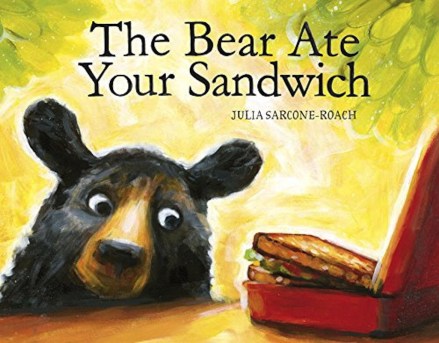
celebrate=picture-books=picture-book-review-the-bear-ate-your-sandwich-cover

About the Holiday

I have to confess that the origins of this holiday are unknown, but the purpose is just to have a little fun. Sure, for 24 hours confusion may reign supreme, but today can give you good practice in learning not to believe everything you hear. If you’re going to participate, keep your confessions light and “jokey.”  Maybe play the game Three Truths and a Lie with friends or coworkers. Just remember there are certain things you should never falsely confess—a crime, something that may result in injury, or false claims that hurt feelings. It may also be a day to help someone out. Instead of playing the “blame game,” accept a little responsibility—even if it’s not yours. But making a false confession for someone else? Hmmm…let’s see what happens in today’s book!

The Bear Ate Your Sandwich

By Julia Sarcone-Roach


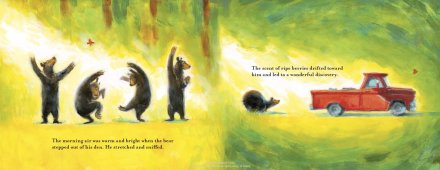
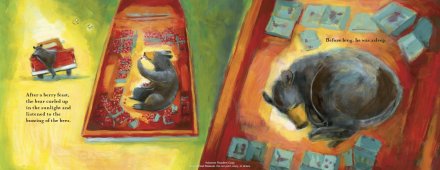
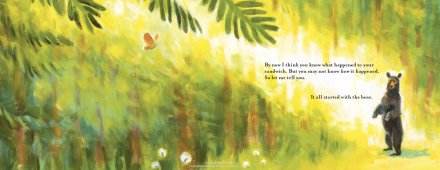
So, something happened to your sandwich? Well… “it all started with the bear. When the bear woke up and left his den for his morning exercises, he caught a whiff of ripe berries in the back of a pickup truck. After eating his fill, he fell asleep in the bed of the truck. He woke once again to find himself “being quickly swept along like a leaf in a great river. The forest disappeared in the distance and high cliffs rose up around him.” The city was a forest like he had never seen before.

celebrate=picture-books=picture-book-review-the-bear-ate-your-sandwich-morning-exercises

Copyright Julia Sarcone-Roach, courtesy of jsarconeroach.com

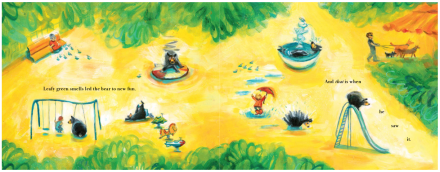
Still, he found many similarities to home. The fire escapes, clothes lines, and roofs offered challenging places to climb, the lamp posts scratched his back just fine, and there was a new sidewalk that was just as squishy as the mud in the forest. This forest also had many intriguing smells, but each time the bear explored one he found someone else had gotten there first. He continued to follow his nose and discovered a playground full of fun things to do. He was at the top of the slide “when he saw it.”

celebrate=picture-books=picture-book-review-the-bear-ate-your-sandwich-eating-berries

Copyright Julia Sarcone-Roach, courtesy of jsarconeroach.com

“There it was. Your beautiful and delicious sandwich. All alone.” The bear was wily, though. “He waited to make sure no one saw him (not even the sandwich) before he made his move.” Feeling safe the bear grabbed that sandwich and gobbled it all up. But he was just licking his lips when he heard a “sniff, snuffle, slobber, snort behind him.” He turned around to find four canine witnesses to his misdeed.

He fled the scene, loping down the street to the nearest tall tree and escape. From the top of this telephone pole, he could see way down the river to his own forest. He stowed away on a boat and fell asleep to its gentle rocking. “When he opened his eyes, he heard the breeze in familiar branches and the birds’ and bugs’ evening song.” He was home.

celebrate=picture-books=picture-book-review-the-bear-ate-your-sandwich-at-the-playground

Copyright Julia Sarcone-Roach, courtesy of jsarconeroach.com

“So. That’s what happened to your sandwich.” Really! I was there—“I saw it all.” I even tried to save your sandwich, but all I could retrieve was this tiny piece of lettuce. I know you’re disappointed, and “I’m sorry to have to tell you about your sandwich this way, but now you know….” Would your own puppy pal lie to you?

Julia Sarcone-Roach knows how to spin a yarn. Her clever and funny confessional story will have kids’ glued to the eye-witness testimony of a bear who is both sympathetic and a scoundrel according to the report. The surprise ending will make readers laugh—especially if they have mischievous siblings, friends, or pets. Sarcone-Roach’s vibrant, gauzy illustrations echo the fantastical imagination of the sly Scottie while giving vibrant life to the forest and city. Her depictions of the bear performing his morning exercise ritual, clambering across apartment buildings, encountering his competition for scraps, and attempting the playground equipment are endearing, and his utter astonishment at being caught is a comical joy.

celebrate=picture-books=picture-book-review-the-bear-ate-your-sandwich-beginning

Copyright Julia Sarcone-Roach, courtesy of jsarconeroach.com

Ingenious clues sprinkled throughout the pages may lead some skeptical readers to doubt the veracity of the story, but the ending is delightfully satisfying and unexpected to all—except, perhaps, for the pup’s owner.

The Bear Ate Your Sandwich is a fun, charming, (mis?)adventure that kids will giggle through and ask for over and over. It would make a favorite addition to home libraries.

Ages 3 – 8

Knopf Book for Young Readers, 2015 | ISBN 978-0375858604

Discover so much more by Julia Sarcone-Roach on her website—including books, illustration, film, and more!

False Confession Day Activity

celebrate-picture-books-picture-book-review-find-the-truth-maze

Find the Truth Maze


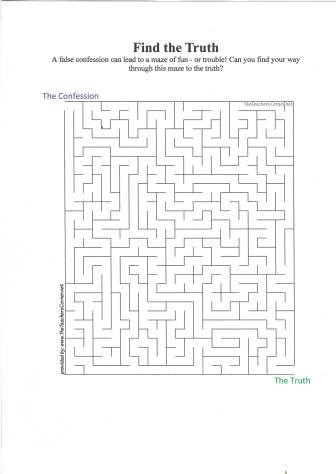
A false confession can lead you to a maze of fun—or trouble! Can you make your way through this printable Find the Truth Maze?

Picture Book Review
November 20 – National Absurdity Day

celebrate-picture-books-picture-book-review-strange-mr-satie-cover

About the Holiday

Absurdity is all around us. It can make us laugh, make us mad, and make us see people and events with a new perspective. Today’s holiday gives us the opportunity to embrace absurdity in all its forms. You can spend the day doing something ridiculous, reading absurdist literature, or maybe listening to the music composed by the subject of today’s book!

Strange Mr. Satie: Composer of the Absurd

Written by M. T. Anderson | Illustrated by Petra Mathers


Born in 1866 in France, Erik Satie was a man of contradictions. “‘I was born very young in a very old world,’” he once remarked, and some thought that he never really grew up but always remained “a child with an old man’s smile.” This dichotomy even influenced the kind of music he liked to compose. Even as a child Satie loved music, and as he grew older he wanted to create music that was “both very young and very old, very bold and very shy, that followed no rules but its own.”

Satie liked to combine dissonant styles, such as chants and chorus line tunes. His listeners, with their fancy clothes, impeccable manners, and preconceived notions didn’t understand or like Satie’s “strange” music. On his part Satie found most people frightening and confusing. As a young man he moved to Paris where he made friends. One of his friends took him to a café called Le Chat Noir or The Black Cat. The café, with its resident cat, upstairs theater, and hidden poet’s skeleton attracted poets, artists, dancers, “wizards, and wisecrackers,” who would gather to share their work. Some had invented “luminous hats” while others had “schemes to cover the oceans with cork so they could travel from New York to France.”

celebrate-picture-books-picture-book-review-strange-mr-satie-listeners

Image copyright Petra Mathers, text copyright M. T. Anderson. Courtesy of Candlewick Press

Satie liked Le Chat Noir. He played the piano and people listened—without laughing, without even moving, just allowing themselves to feel happy or sad or as if they were in a dream. Feeling accepted in this atmosphere, Satie wrote his most famous pieces for the piano—the Gymnopédies. His unusual songs for parties, puppet shows, and other occasions had equally unusual titles: one was called “The Dreamy Fish,” another “In a Horse Costume,” and still another “Real Flabby Preludes (for a Dog).” Instead of the usual instructions composers wrote for musicians, Satie included instructions like “‘On yellowing velvet’ and ‘I want a hat of solid mahogany.’”

One day at Le Chat Noir, Erik Satie “met an artist and model Suzanne Valadon and fell in love with her.” The only problem was that she already had a boyfriend—a wealthy lawyer. Satie simply invited himself along on their dates. Satie made friends, but he also lost them easily due to his terrible temper. He yelled at his friends when they didn’t like his music, when they did like his music, and for many small perceived grievances in between. He and Suzanne fought frequently until she left him forever.

Erik Satie seemed more “like a visitor” on Earth than one of its citizens. His wardrobe consisted of “seven identical grey velvet suits and that was all.” Instead of washing with soap, he used a stone, and his room was so small he had to climb on the bed just to get in the door. By this time Satie was in his late 30s and had never learned the rules of music. He realized that he needed to go back to school. After graduating he took to wearing suits and carrying an umbrella. He looked “normal” on the outside, but his eyes still gleamed with the unique creativity inside him.

celebrate-picture-books-picture-book-review-strange-mr-satie-parade-ballet

Image copyright Petra Mathers, text copyright M. T. Anderson. Courtesy of Candlewick Press

In 1917 Satie and his friends wrote and performed a ballet called Parade with sets designed by Pablo Picasso. The story of the ballet was dramatic and the music was peculiar—played on xylophones, typewriters, and sirens. The audiences and critics disliked it intensely; it caused fights and insults. Satie even came close to going to jail over his rude response to a critic.

In 1924 Satie wrote another ballet called Cancelled, which featured a movie and a real camel, and became a self-fulfilling prophesy when on opening night the lead dancer actually worried himself sick and the ballet was cancelled. When the ballet opened a few nights later, however, the audience loved it and, finally, Satie heard long-sought applause. Soon afterward Satie became sick and was taken to the hospital. He died on July 1.

Poets, artists, and musicians came from all over to attend Erik Satie’s funeral. They wanted to honor this most unique man who lived life on his own terms and whose music influenced famous composers in the future.

T. Anderson’s honest and entertaining biography of Erik Satie depicts the quirkiness of the composer’s life through well-chosen anecdotes that will have readers laughing, shaking their heads, and empathizing with this man of extraordinary brilliance. While Satie’s personality and creativity made for a topsy-turvy existence, Anderson combines lyrical passages with those of straight narration sprinkled with expressive adjectives and verbs to clearly paint a portrait of this most unusual and influential composer.

Petra Mathers brings to life late 1800s and early 1900s France as well as the unusual music Erik Satie composes. In vivid illustrations Satie is seen mingling with the patrons of Le Chat Noir, joining Suzanne Valadon on her dates, sitting in his small room and classroom, and giving vent to his argumentative nature. As Satie cannot be separated from his music, his pieces are depicted here. Disparate objects—candles, balls, bells, dice, question marks, dominoes, and more—burst out of a piano and into and out of listeners’ ears; a performer in the ballet Parade cross the stage wearing a costume of skyscrapers; and the ballet Cancelled with its smoking canon and live camel results in flower-strewn acclaim.

Ages 6 – 10

Candlewick Press, 2016 (reprint edition) | ISNB 978-0763687755

Visit M. T. Anderson‘s website to learn more about his books for children, teens, and adults. Plus you’ll find videos, interviews, wallpapers, and more gimmicks!

National Absurdity Day Activity

celebrate-picture-books-picture-book-review-dancing-alligator-coloring-page

Really Ridiculous Coloring Pages


Have you every seen a frog in a suit or a dancing alligator? Absurd, right? Have fun with these printable Really Ridiculous Coloring Pages!

Frog Coloring Page | Alligator Coloring Page

November 19 – National Adoption Day

celebrate-picture-books-picture-book-review-the-story-I'll-tell-cover

About the Holiday

National Adoption Day is a national collective initiative to raise awareness of the more than 100,000 children in foster care who are waiting to find permanent families. Sponsored by the Dave Thomas Foundation for Adoption, Congressional Coalition on Adoption Institute, The Alliance for Children’s Rights, and Children’s Action Network, National Adoption Day was instituted in 2000, and since then has made the wishes of nearly 58,000 children come true. Last year 4,000 children in foster care found forever families on this day.

The Story I’ll Tell

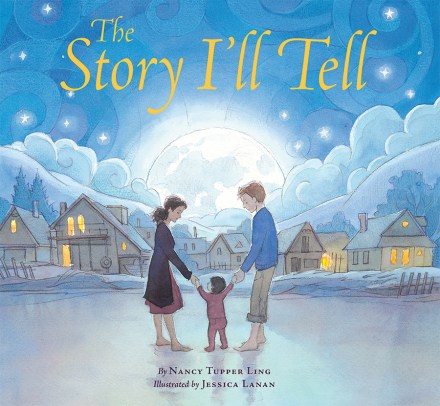
Written by Nancy Tupper Ling | Illustrated by Jessica Lanan


A mom and her child snuggle in a big comfy chair reading a book together. “Someday,” the mom thinks, “when you ask where you came from, I’ll tell you a story.” She considers telling her child that they came from a faraway land, carried in a hot-air balloon that gently drifted down “like a feather” into the backyard. “‘You’re home now,’ I said. Then I wrapped you in a blanket as red and silky as the balloon’s sails.”

celebrate-picture-books-picture-book-review-the-story-I'll-tell-someday

Image copyright Jessica Lanan, text copyright Nancy Tupper-Ling. Courtesy of Lee & Low

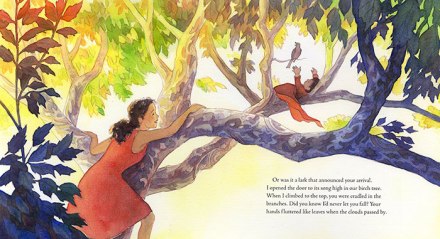
Or perhaps she will remember it differently: the blanket was fashioned from the silver cape worn by a mysterious horseman who rode into town with the baby in his saddle bag. Maybe, instead, it was an angel: “Wrapped in her arms, you followed a trail of lanterns around the world until you reached our doorstep. How your eyes sparkled when I first saw you.” But, no. She thinks back over the years and once again hears a lark singing high in the birch tree. “When I climbed to the top,” the mom will say, “you were cradled in the branches. Did you know I’d never let you fall? Your hands fluttered like leaves when the clouds passed by.”

celebrate-picture-books-picture-book-review-the-story-I'll-tell-balloon

Image copyright Jessica Lanan, text copyright Nancy Tupper-Ling. Courtesy of Lee & Low

The child’s mom might use her own grandmother’s tale of how she, herself, was found in the cabbage patch. But she would alter the setting slightly to a riot of tiger lilies that peppered her baby’s cheeks with pollen-like freckles. Or the child may have arrived in town with the August moon, the illustrious honoree riding on the dragon float as musicians played and lion dancers performed. “Your smile was as wide as the ocean when I cradled you.”

celebrate-picture-books-picture-book-review-the-story-I'll-tell-wave

Image copyright Jessica Lanan, text copyright Nancy Tupper-Ling. Courtesy of Lee & Low

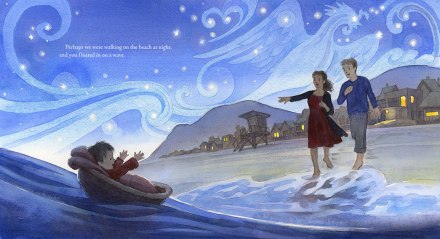
Maybe the baby’s parents weren’t at a parade, but walking along the seashore when their child “floated in on a wave. No, not a wave! I’d say there was a dragon queen who kept you by the sea to raise you as her own….I waited inside until the dragon queen fell asleep. Then I tiptoed inside and rescued you from her dark cave.” Even as she imagines all these stories, however, the child’s mother knows they will not be believed, “because it will be hard to fool the brightest child in the world.”

The true story, however, is just as marvelous and magical as any invention. So when the child is old enough to wonder, the mother says, “I will tell you how we gathered you in a silk blanket and flew on wings through the sky. Your eyes sparkled like the ocean below, and your hands fluttered as clouds passed by.”

celebrate-picture-books-picture-book-review-the-story-I'll-tell-birch-tree

Image copyright Jessica Lanan, text copyright Nancy Tupper-Ling. Courtesy of Lee & Low

Bringing a child into a family is always an awe-inspiring experience, almost inexplicable in the changes it creates in the heart. Sometimes the true story doesn’t seem to begin to accurately reflect the wonder of it all. Nancy Tupper Ling plumbs the depth of these feelings in The Story I’ll Tell, offering lyrical imaginings drawn from the fairytales, myths, and legends that are part of our global inheritance and enlighten our lives.

As a mother plans what she will someday tell her adopted child, readers learn that each of her various scenarios contain aspects of the actual story. Throughout, Tupper Ling offers assurances of the anticipated and enduring love the parents have for their child. While the ethnicity of the adopted child is not stated, images suggest that the baby was born in China. The book is also written without gender pronouns and illustrated with gender-neutral clothing and the short hair of most babies, making this a universal book.

Jessica Lanan’s gorgeous, ethereal paintings perfectly reflect the emotional power of Tupper Ling’s text. With each page the baby comes to the mother and father anew, highlighting not only the moment that the child became theirs but also the waiting that took place beforehand. Each two-page spread glows with sunlight, lantern light, or starlight and is connected by a swooping ribbon of imagination that carries aspects of the child’s heritage in its wake. Lanan’s vibrant palette of reds, blues, yellows, and greens depicts the joy of both parents and their child. Every page is infused with exquisite beauty and invites readers to linger to appreciate the full impact of this story.

The Story I’ll Tell makes a wonderful gift and is a must for all adoptive parents and their children. It is also an exceptional book to be shared with all children.

Ages 2 – 8

Lee & Low Books, 2015 | ISBN

Discover more books for children and adults by Nancy Tupper Ling on her website!

View a gallery of Jessica Lanan‘s illustration work for children’s and middle grade books

National Adoption Day Activity

celebrate-picture-books-picture-book-review-heart-framed-drawing-page

I Love My Family! Portrait


Use this printable heart-framed I Love My Family! Page to draw a portrait of your family!

Picture Book Review

November 18 – It’s National Pet Awareness Month and Q & A with Author Vikki VanSickle

celebrate-picture-books-picture-book-review-if-I-had-a-gryphon-cover

About the Holiday

Pets give us unconditional love, provide companionship, and add entertainment and fun to our lives. This month is set aside to focus on our pets. To celebrate spend extra time with your furry friend, make sure they have everything they need to stay healthy, and give them a little extra treat. If you don’t have a pet, consider adopting a dog, cat, bird, or small animal from your local animal shelter. You’ll both benefit!

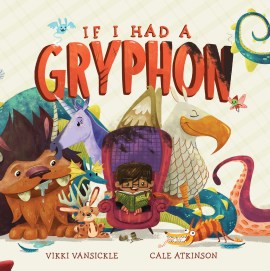
If I Had a Gryphon

Written by Vikki VanSickle | Illustrated by Cale Atkinson


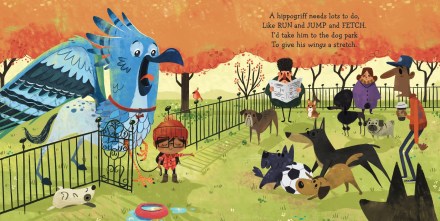
Sam gazes at her first pet—a hamster—as he slumbers on his bed of shavings. She’s a little disappointed because mostly all he does is eat, sleep, and hide. She snuggles into her reading chair with a cup of tea and a book of mythical creatures and thinks: “If only I could have a pet / With strange, exotic powers, / I know that I’d find lots to do / To while away the hours.” She considers having a unicorn whose mane she could braid and who she could ride through fields of posies, then remembers that “Unicorns are pretty, / but they’re also very shy. / On second thought, I’d like to give a hippogriff a try.”

celebrate-picture-books-picture-book-review-if-I-had-a-gryphon-hippogriff

Image copyright Cale Atkinson, text copyright Vikki VanSickle. Courtesy of Tundra Books

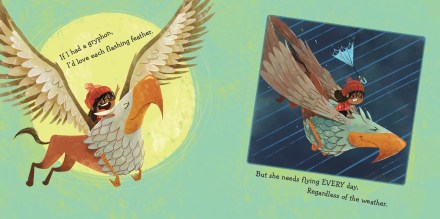
Sam plans to take her hippogriff to the dog park to “run and jump and fetch” and “to give his wings a stretch.” Considering it again, though, she realizes that the dogs may find a hippogriff scary and that “when it comes to playing ball, / Well, things could get quite hairy.” Instead, she decides to get a sasquatch “with burly, curly fur,” but then she remembers all the time she’d spend brushing out the tangles. A gryphon with “flashing feathers” sounds better until she thinks how she’d have to fly it every day “regardless of the weather.”

celebrate-picture-books-picture-book-review-if-I-had-a-gryphon-gryphon

Image copyright Cale Atkinson, text copyright Vikki VanSickle. Courtesy of Tundra Books

A kraken would be an unique pet, but to survive the cold, wet depths while playing with it she’d need a scuba suit. A warmer companion might be a dragon, although she thinks with its “temperamental snout / I’d need a fire extinguisher / to put her sneezes out.” A kirin could be a possibility, although it needs an ocean of grass to keep it happy; and a jackalope, while cute, is much, much, much too hoppy.

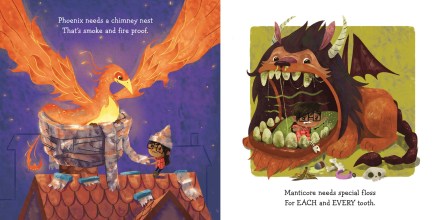
A phoenix might be an enduring pet, but it “needs a chimney nest / That’s smoke and fire proof” while a “Manticore needs special floss / For EACH and EVERY tooth.” There are oh so many creatures to contemplate—from harpies and chupacabras to fairies and kelpies to basilisks and sprites—but each is problematic in its own way.

celebrate-picture-books-picture-book-review-if-I-had-a-gryphon-phoenix

Image copyright Cale Atkinson, text copyright Vikki VanSickle. Courtesy of Tundra Books

Sam takes another look at the adorable hamster in its cage and reconsiders: “He may not be a gryphon, / Or a creature from the sea, / But I am his and he is mine / And that’s enough for me.”

Vikki VanSickle’s entertaining rhymes frolic, gallop, and prance through her encyclopedic array of fantastic beasts. Her young readers will be delighted that the fun of an imaginary menagerie is not just for the older set and will eagerly await each newly considered pet. VanSickle includes all the favorite mystical creatures, plus fascinating new ones that will spark kids’ imaginations and have them scrambling to find out more about them. The juxtaposition of attractive and less so traits of each possible pet adds a nip of humor to the verses that will make kids giggle. Sam’s ultimate realization that her hamster is the perfect companion is a sweet ending that reaffirms readers’ own relationship with their pets.

Cale Atkinson’s Sam is already a dreamer when she acquires her hamster. Her mug of tea sports a picture of a narwhal, her bookmark is a paper-thin dragon, and the book of Mythological Creatures that she consults is already well-thumbed. As the little girl with the square-rimmed glasses contemplates each creature as pet, Atkinson presents an illustration that is both humorous and beautiful. The hippogriff with its bird legs in front and horse legs in back is a gorgeous hue of blue, but it’s expressive reaction to seeing the dogs at the park as well as its enthusiasm to play along also causes the dogs to hide behind a tree; the sasquatch is a cutie, but he also snarls her bike, her bed, trees, and road signs in its thick brown hair; and a turquoise dragon may shimmer with lovely scales, but it also chars walls and furniture. Despite its apparent sloth, Sam’s hamster actually is the perfect pet—besides, he might have a secret of his own!

If I Had a Griffin is a fun romp through a mystical realm of pets that kids will love to hear again and again. The book would be a welcome addition to kids’ bookshelves, especially if they have older siblings enjoying that other series that features magical creatures!

Ages 3 – 7

Tundra Books, 2016 | ISBN 978-1770498099

To learn more about Vikki VanSickle and her books as well as to download an If I Had a Gryphon Activity Guide and coloring page, visit her website!

National Pet Awareness Month Activity

CPB - Dog Biscuits

Homemade Dog Treats


Pets love it when you do something special for them! Here’s a recipe for homemade dog biscuits that will taste even better than store-bought because they’re made with love! Making dog biscuits is a fun way to spend time together and benefit furry friends. These biscuits make tasty treats for your own pet, or consider making a batch to donate to your local animal shelter. This recipe is easy and proven to be a favorite.

Children should get help from an adult when using the oven.

Supplies

  • 1 large bowl
  • Large spoon or whisk
  • Cookie cutters – shaped like traditional dog biscuits or any favorite shape

Ingredients

  • 3 cups Buckwheat flour
  • ½ cup powdered milk
  • 1 teaspoon salt
  • ¾ cup water
  • 1/3 cup margarine or butter, melted
  • 1 egg beaten

Directions

  1. Preheat oven to 325 degrees
  2. Add buckwheat flour to bowl
  3. Add powdered milk to bowl
  4. Add salt to bowl
  5. Stir to mix dry ingredients
  6. Add water
  7. Add melted margarine or butter
  8. Add egg
  9. Stir until liquid is absorbed
  10. Knead for a few minutes to form a dough
  11. If the dough is too dry, add a little more water, 1 Tablespoon at a time
  12. Place the dough on a board
  13. Roll dough to ½ inch thickness
  14. Cut into shapes with cookie cutters
  15. Bake at 325 degrees for 35 minutes
  16. Biscuits will be hard when cool.

Makes about 40 biscuits

Q & A with Author Vikki VanSickle

celebrate-picture-books-picture-book-review-vikki-vansickle-head-shot

Today I’m pleased to talk with Vikki VanSickle about her books for kids and tweens, her influences, and the unique place she draws inspiration from.

What were your favorite picture books growing up?

My mind was absolutely blown by Miss Nelson Is Missing by Harry Allard and James Marshall. It was likely the first mystery I was exposed to and I have loved mysteries ever since. This is a perfect example of text and illustration working together. Nothing in the text explains the true identity of Viola Swamp (what a name!), but there are hints in the illustration. It takes a certain kind of genius to make readers side with the adult—a beleaguered teacher—instead of the children in the book

Teddy Rabbit by Kathy Stinson and Stephane Poulin really spoke to me because like the main character, I had a teddy rabbit instead of a teddy bear. It also spoke to my deep fear of the subway. Growing up in a small town I was equally fascinated and terrified by the big city. I found Toronto loud, overwhelming, and very fast-paced. The subway in particular was frightening, and the idea of dropping my beloved Bunny on the tracks was as high stakes as it gets. If little Vikki knew that she would grow up to take the subway every day (without fear or incident, in fact I look forward to the extra reading time) she would not believe it.

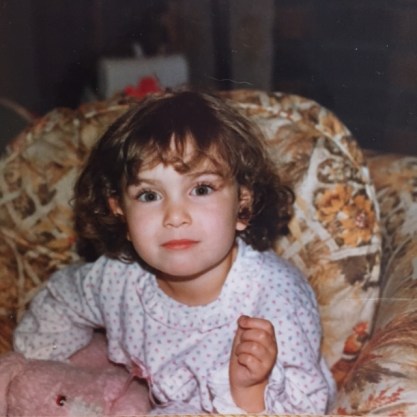
celebrate-picture-books-picture-book-review-vikki-vansickle-as-child

Lastly, Steven Kellogg’s Pinkerton books, Pinkerton, Behave and A Rose for Pinkerton were also favourites of mine. I have always loved pet stories, and the giant, clumsy Great Dane with a heart of gold totally captivated me. Especially when he meets his match in tiny but fierce Rose, a kitten after my own heart.

You’ve said that the idea for If I Had a Gryphon grew out of an observation at a bookshop story time. Can you tell me a little about that?

I used to watch my colleague Elaine create actual magic during story time. I was fascinated with which books resonated with the kids. It wasn’t always the ones that I expected. You don’t know how a book will land until you see it read aloud to children. Two things became clear: rhyme was always a hit (plus it was so fun to read) and pet stories were perennial favourites.

At the same time, I had a lot of little customers with older siblings who were obsessed with Harry Potter. They wanted to share in their older siblings’ love of the series, but when I went looking for good storybooks featuring similar creatures I came up short. There were lots of stories about dragons and unicorns, and some beautiful anthologies about mythological creatures, but no storybooks for the youngest readers. I’m a Harry Potter and mythology fan myself, and decided to write a sort of primer to magical pets.

Which of the mythical creatures that you mention in your book do you like best? Why?

This is a tricky one! Before I saw Cale’s illustrations I would have said a phoenix or gryphon, because I think they’re such majestic and fiercely beautiful creatures. But then the art came in and I found myself totally charmed by the enthusiasm of poor hippogriff, who just wants to play ball. I also love that cuddly-looking sasquatch, I think he’d make a great reading buddy.

You mention in your bio that you liked to go to flea markets when you were growing up. Do you have a favorite item that you found at one? Why is it special?

I am like a kid in a candy store at a flea market—I hardly know where to start and I could spend all day browsing through tables and shelves of random objects. It is such a rich source of story ideas that it’s almost overwhelming. Did that trunk come from overseas? Why? When? Who did it belong to? What does the inscription in this book mean? Who wore that wedding dress, and what happened at the party? How did that teddy bear rip its jacket? The possibilities are endless.

I didn’t bring the treasures home very often, it was enough to ponder the ideas they inspired. The one thing I did buy was Nancy Drew books. I completed my entire collection by searching garage sales, flea markets and antique stores.

You interact with your readers through school visits, library presentations, and at festivals. What do you like best about meeting your readers in person? Do you have a fun or interesting anecdote to share from any of your appearances?

Now that I no longer work in a bookstore, I don’t have as much kid-contact as I would like. Visiting schools and libraries gives me a chance to chat with kids, find out what’s important to them, what books they love, what makes them laugh, and just generally be reminded of what a privilege it is to write for this audience.

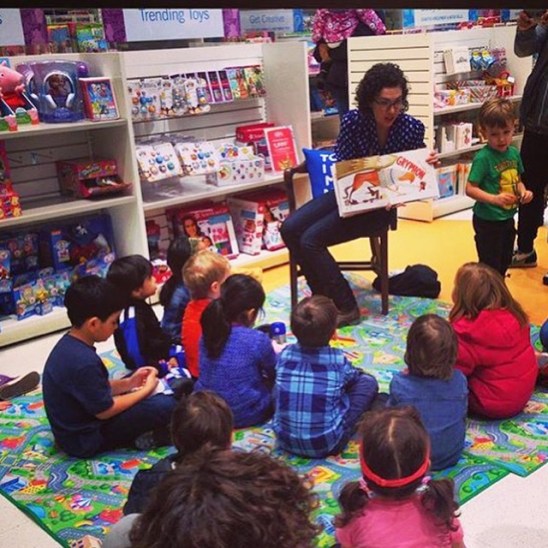
celebrate-picture-books-picture-book-review-vikki-vansickle-reading-to-kids

In terms of presentations, the students keep me on my toes with insightful questions, comments, and by pushing me to be flexible when an activity doesn’t work or they are more interested in process rather than plot. It sounds obvious, but you need to be very present when you’re working with children. I appreciate the opportunity to be in the moment, connect with readers, and talk about stories.

Earlier this fall during the question period a little boy asked me if I knew how many species of dragon there were in the world. When I told him I did not, he replied “That was a trick question. Nobody knows.”

Besides If I Had a Gryphon you’ve written a series of three middle grade novels (Words That Start with B, Love is a Four-Letter Word, and Days That End in Y) and a coming of age novel (Summer Days, Starry Nights). Can you tell me a little about how you approach the different genres and what you enjoy most about each?

I find them to be entirely different experiences. Picture books to me are about structure, space, and beats. It’s very much like writing a play. As the playwright, you do not cast, direct, or design the costumes, set, or lighting for your show. Your task is to create the bones of a project that many other people will then flesh out. With a picture book, the illustrator takes on role of casting director, costume, set and lighting designer. I believe in the interplay between text and pictures, and as the writer I need to leave the space for an illustrator to do so in the narrative.

Novel writing is a messy, chaotic, immersive process, at least for me. It’s very instinctual. I write in first person, trying to understand the voice of the narrator and her motivations, and the plot is often secondary. I’ll jump all over the place, sometimes writing the same scene in many different ways, occasionally working backwards from what I think might be the end, or switching narrators. I get to a certain point (usually between 60-80 pages) when I stop writing to seriously consider what I have done. I read, take notes, reorder, cut, refine, and then I have the beginning of a structured draft.

What’s up next for you?

I’m in the final throes of a middle grade novel which I’ve been describing as “Stranger Things” for tweens and I have a picture book I’ve been muddling over for awhile now that’s starting to come together.

Since Celebrate Picture Books is a holiday-themed blog, I can’t let you get away without asking you a few questions about holidays, so…

What is your favorite holiday?

Definitely Halloween—costumes, black cats, AND candy? What’s not to love?

Do you have a funny or interesting holiday anecdote you’d like to share?

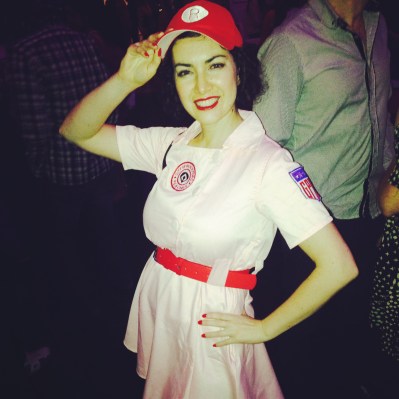
Here I am dressed as a Rockford Peach, my all-time favourite Halloween costume.

celebrate-picture-books-picture-book-review-vikki-vansickle-halloween-costume

Has a holiday ever influenced your work?

Not yet, but I would love to write something with a Halloween theme eventually. I have a few ideas rolling around in my head but I haven’t settled on the perfect one yet.

Thanks so much for spending time with me, Vikki! I wish you the best with all of your books!

celebrate-picture-books-picture-book-review-if-I-had-a-gryphon-cover

You can find If I Had a Gryphon at these booksellers:

Amazon | Barnes & Noble | Books-a-Million | IndieBound | Tundra Books

You can connect with Vikki on:

Her Website | Facebook | Twitter

Picture Book Review

November 17 – Take a Hike Day

celebrate-picture-books-picture-book-review-harriet-can-carry-it-cover

About the Holiday

The American Hiking Society established today’s holiday to encourage families, friends, groups, and individuals to get outside and experience the fun and relaxation of discovering new paths and new places. Even if you’re only able to take a short walk during lunchtime or after work, getting out in nature gives you new perspectives and clears the mind—it’s great exercise too! So gather some friends or your family and head out the door for a short (or a long) hike today!
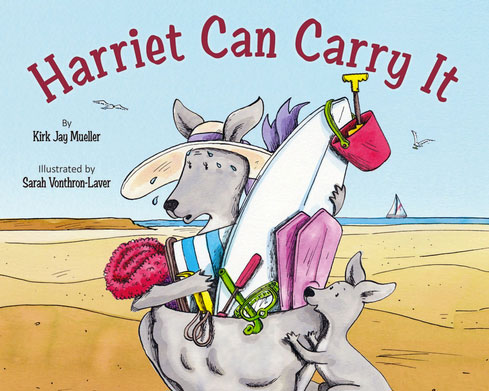
Harriet Can Carry It

Written by Kirk Jay Mueller | Illustrated by Sarah Vonthron-Laver


Harriet Huff is a kangaroo who every day carries the mail in her pouch, delivering it all over town. Her job has left her “feeling quite frail,” She decides to take a day off and hike to the beach with her Joey where they can “relax and be free.” The next morning they wake up and prepare for a fun day. Harriet gathers their beach towels, Joey, and his favorite toy and tucks them gently into her pouch. She gets no further than the bottom of her porch, however, before she hears “someone yell, ‘HEY!’”

celebrate-picture-books-picture-book-review-harriet-can-carry-it-wanda-comes-along

Image copyright Sarah Vonthron-Laver, text copyright Kirk Jay Mueller. Courtesy of starbrightbooks.com

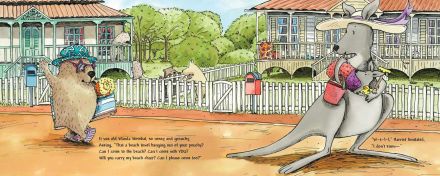
“It was old Wanda Wombat, so nosey and grouchy, / Asking, ‘That a beach towel hanging out of your pouchy? / Can I come to the beach? Can I come with YOU? / Will you carry my beach chair? Can I please come too?’” Harriet stammers, “W-e-l-l…” as she considers her plans to relax, but before she can properly answer, Wanda invites herself along, telling Harriet that she has room in her pouch “for tons of stuff.” “‘YOU CAN CARRY IT, HARRIET, so I can come too.’”

They walk up a hill together, Harriet sweating a bit with the effort of carrying the beach chair that has replaced Joey in her pouch. Suddenly, they hear someone shout, “‘STOP!’” It’s Wallaby Wendy who is also on her way to the beach. She asks Harriet if she will carry her swim fins.  Harriet hesitates. “‘W-e-l-l, I’m not sure…’” she says. But Wanda is there with the answer. “‘She has lots of room. She has loads of space / For tones of stuff in her big pouchy place. She is an incredibly kind kangaroo. HARRIET CAN CARRY IT, so you can come too.’”

celebrate-picture-books-picture-book-review-harriet-can-carry-it-kenny-koala

Image copyright Sarah Vonthron-Laver, text copyright Kirk Jay Mueller. Courtesy of starbrightbooks.com

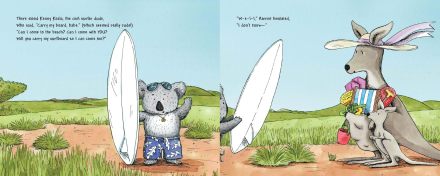
They start up again all in a row and it isn’t too long before someone says “‘WHOA!’” It was Kenny Koala, who in his own surfer-dude way asks Harriet if she can carry his board so he can come with them too. Harriet takes a moment to think—but it’s a moment Wanda has no problem filling, and so Harriet acquires Kenny’s surfboard too. “AHOY!” beckons Marcie, a marsupial mouse, “Who’d made the mistake of leaving her house / With a huge heavy kayak strapped to her back. / Her long plastic paddle poked out of its sack.” Wanda assures her, too, that Harriet can carry it, and with the kayak stowed in front, the group takes off again.

celebrate-picture-books-picture-book-review-harriet-can-carry-it-bill-bandicoot

Image copyright Sarah Vonthron-Laver, text copyright Kirk Jay Mueller. Courtesy of starbrightbooks.com

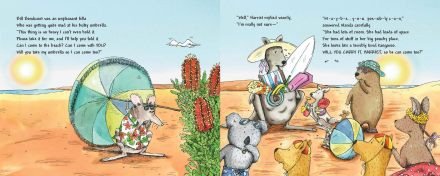
Next they happen upon the Dingo twins who need help with their flying ring—an easy addition to Harriet’s pouch according to Wanda. A little farther down the path they encounter Bill Bandicoot who can no longer hold his beach umbrella. Wanda takes a look at Harriet and for the first time sees that she looks tired and that her pouch is nearly bursting. This time Wanda asks, “‘WILL YOU CARRY IT, HARRIET, so he can come too?”

The usual hesitant Harriet has had enough, and she answers “‘NO!’” In fact, she removes everyone’s equipment and tosses it on the sand. “‘I won’t carry your stuff,’” she says. “‘I just QUIT!’” Just then Paddy O’Possum comes along in his pickup truck and offers to take everyone and their gear to the beach. “Now Harriet felt cheerful, thankful, and calm, / And Joey was happy that she was his mom.” With her baby snuggled into her pouch, Harriet finds a perfect spot where they can unwind and “relax by the sea.”

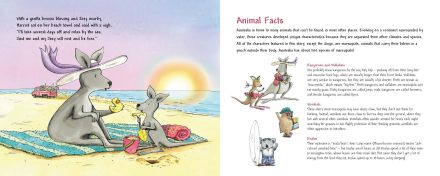
Following the story are two pages of intriguing facts on the various Australian animals depicted in Harriet Can Carry It.

celebrate-picture-books-picture-book-review-harriet-can-carry-it-animal-facts

Kirk Jay Mueller’s funny story of a too-nice kangaroo whose relaxing beach vacation is hijacked by a meddlesome neighbor will have kids laughing out loud as Harriet acquires more and bigger belongings on her hike to the shore. Mueller’s rhymed verses wonderfully escalate the plot just as Harriet’s pouch grows as the requests mushroom. As each beach-goer hails Harriet in a new way, kids will wonder what could possibly come next and will delight in the repeated phrases that invite participation on their part. The story can also lead to discussions on how to say “No” when needed and also how to resolve issues before they may cause hurt feelings.

Sarah Vonthron-Laver’s vibrant illustrations of Harriet’s neighborhood and the Australian landscape put the focus on kind-hearted Harriet and the animals she meets and enhances the story’s humor. Wanda the Wombat in her star-shaped sunglasses and flowery flip-flops marches ahead, pointing the way, oblivious to Harriet’s woes. The other animals—accurate cartoon representations of their real counterparts—are equally unaware as they hand Harriet their gear. Harriet’s pouch bulges with the beach items as Harriet finds clever ways to accommodate it all.

Harriet Can Carry It makes for a fun story time read and a perfect take-along book for beach outings or any hike.

Ages 4 – 7

Star Bright Books, 2014 | ISBN 978-1595726766

To learn more about Kirk Jay Mueller, his books, and his music—plus to listen to a song about Harriet—visit his website!

You can connect with Sarah Vonthron-Laver on Facebook!

Take a Hike Day Activity

celebrate-picture-books-picture-book-review-book-bag-craft

You Can Carry It! Book Bag


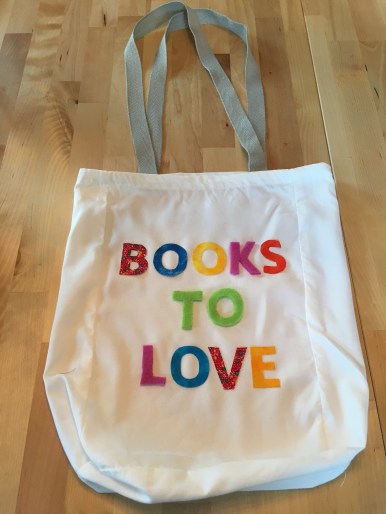
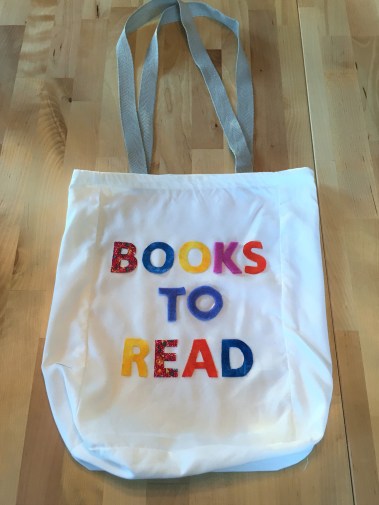
True booklovers can’t go anywhere without a book (or two or three) to read along the way. With this easy craft you can turn a cloth bag into a kid-size book bag!

Supplies

  • Printable Templates: Books to Read Template | Books to Love Template
  • Small cloth bag, available from craft or sewing stores—Recyclable Idea: I used the bag that sheet sets now come in
  • Cloth trim or strong ribbon, available from craft or sewing stores—Recyclable Idea: I used the cloth handles from shopping bags provided from some clothing stores
  • Scraps of different colored and patterned cloth. Or use quilting squares, available at craft and sewing stores
  • Pen or pencil for tracing letters onto cloth
  • Scissors
  • Small sharp scissors (or cuticle scissors) for cutting out the center of the letters
  • Fabric glue
  • Thread (optional)
  • Needle (optional)

celebrate-picture-books-picture-book-review-books-bag-craft

Directions

  1. Print the sayings and cut out the letters
  2. Trace letters onto different kinds of cloth
  3. Cut out cloth letters
  4. Iron cloth bag if necessary
  5. Attach words “Books to Read” to one side of bag with fabric glue
  6. Attach words “Books to Love” to other side of bag with fabric glue
  7. Cut cloth trim or ribbon to desired length to create handles
  8. Glue (or sew) handles onto the inside edge of bag

Picture Book Review