June 13 – National Pigeon Day

About the Holiday

When you see pigeons gathering around park benches or scuttling along urban outdoor areas looking for crumbs or lining up on electrical wires, you may not think much about them. They just seem part of the landscape. Learning more about National Pigeon Day, however, may change your ideas about these unassuming birds forever. The holiday was established by President Woodrow Wilson in acknowledgement of the historical and cultural significance of pigeons, particularly their contributions during World War I. Today, the holiday celebrates the important role they played in both world wars.

As the website BirdTipper explains, pigeons were used during both World Wars as “reliable and efficient messengers, providing a vital link between troops on the front lines and command centers. Their speed and homing ability made them indispensable for conveying important messages, often flying through dangerous conditions to deliver vital information. Numerous pigeons were awarded medals and honors for their service, highlighting their bravery and significance in wartime efforts.”

Today’s date was selected as National Pigeon Day to commemorate the death of one of the most famous World War I pigeons, Cher Ami. To read more about this incredible bird, including its role in saving nearly 200 soldiers despite being grievously injured, and more about how pigeons helped the war efforts, visit BirdTipper.

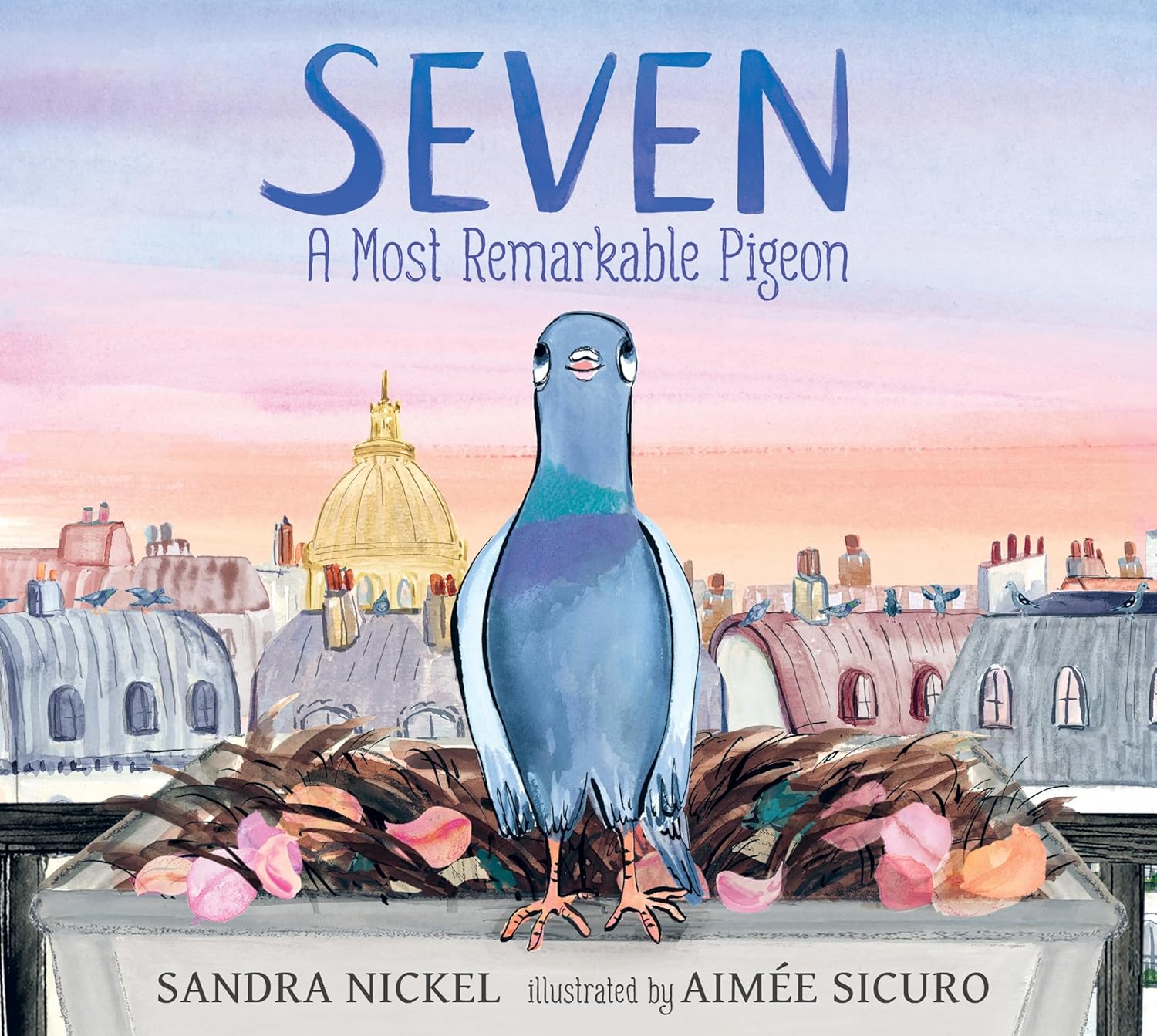
Thanks to Candlewick and Barbara Fisch at Blue Slip Media for sending me a copy of Seven: A Most Remarkable Pigeon!

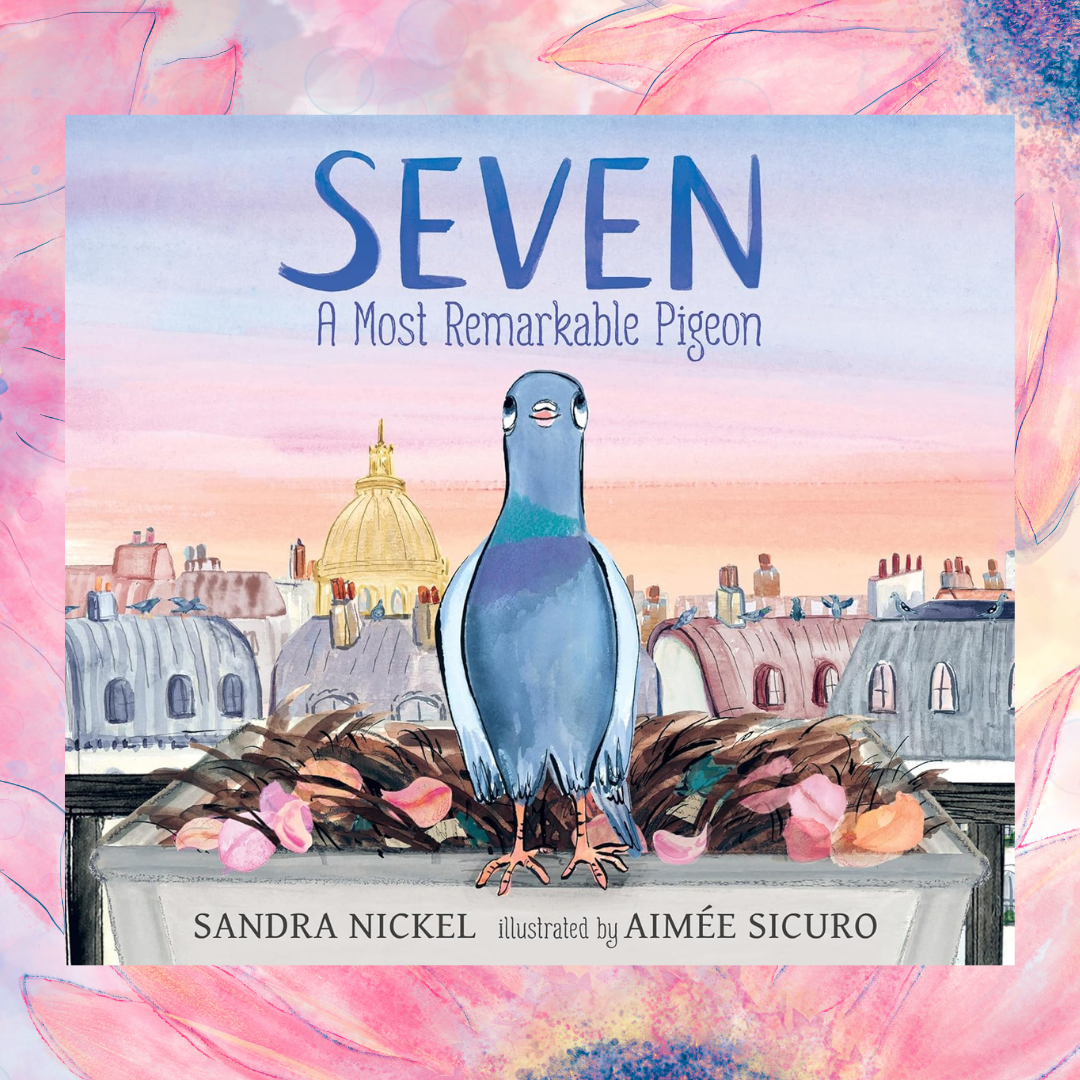
Seven: A Most Remarkable Pigeon

Written by Sandra Nickel | Illustrated by Aimée Sicuro


The little pigeon was different right from the start—when he was still in the egg, even. Usually “pigeons arrive in twos . . . . But this time, there was only one.” The flock whispered and whispered. When the tiny bird hatched, his parents named him Seven in honor of “seven thousand miles . . . the farthest any pigeon has flown to get back home.” It “is considered a very lucky name.”
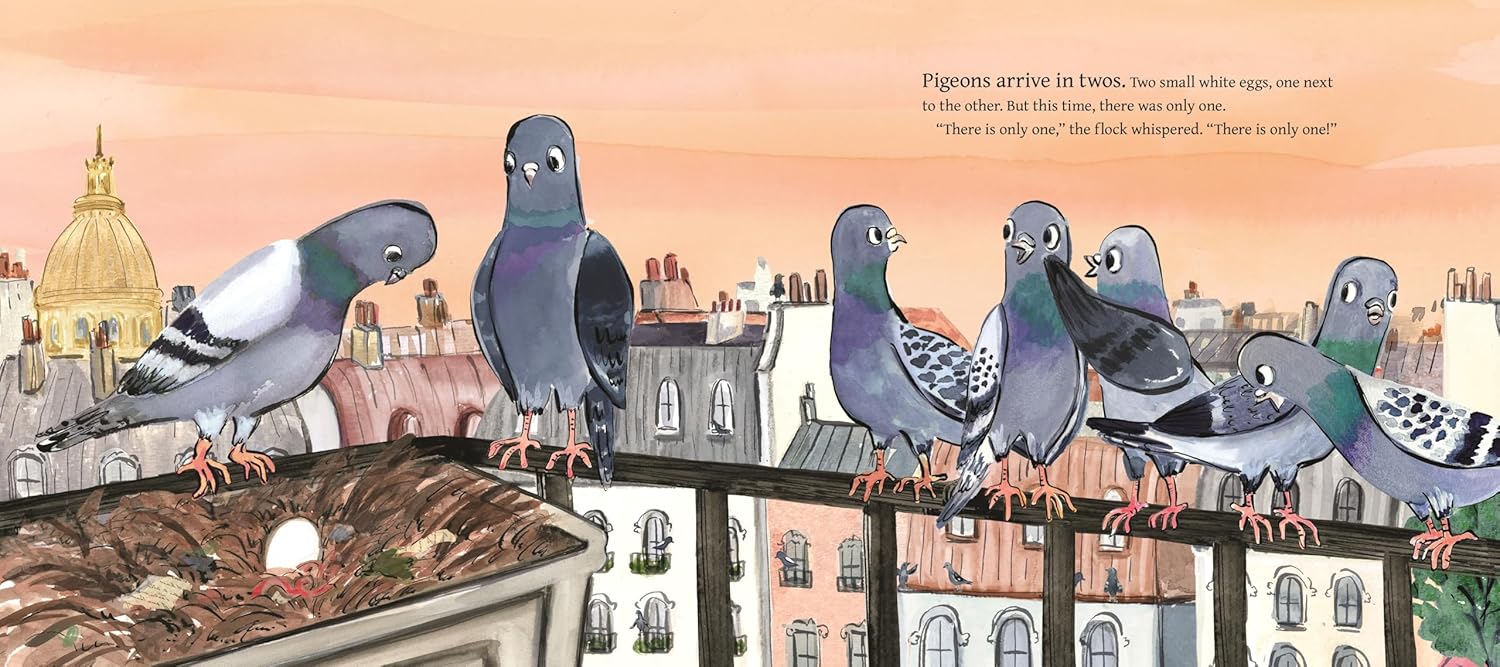
Illustration © 2025 by Aimée Sicuro, text © 2025 by Sandra Nickel. Used with permission of Candlewick Press. All rights reserved.

As Seven waited for his eyes to open and his feathers to sprout, he relished all the lovely scents that wafted to his nest. When he could finally fly, Seven soared to the flower shop to enjoy the aromas, and he picked up petals to fill his nest instead of twigs. On the way to the park with the flock, he veered off, distracted by the fragrant smell of rice. His mother scolded: “‘We stay with the flock. We stay with the flock.'” The flock whispered.

Seven’s father decided it was time to teach his son how to “home.” They left the city and headed into the country. Here, Seven was so captivated by all of the new scents that he didn’t listen to his father’s lesson to memorize the roads below. The flock was scandalized; his mother gave him another scolding. So Seven began toeing the line, but now he “didn’t feel dreamy or cozy or light as a feather.” And the flock? They continued to whisper.
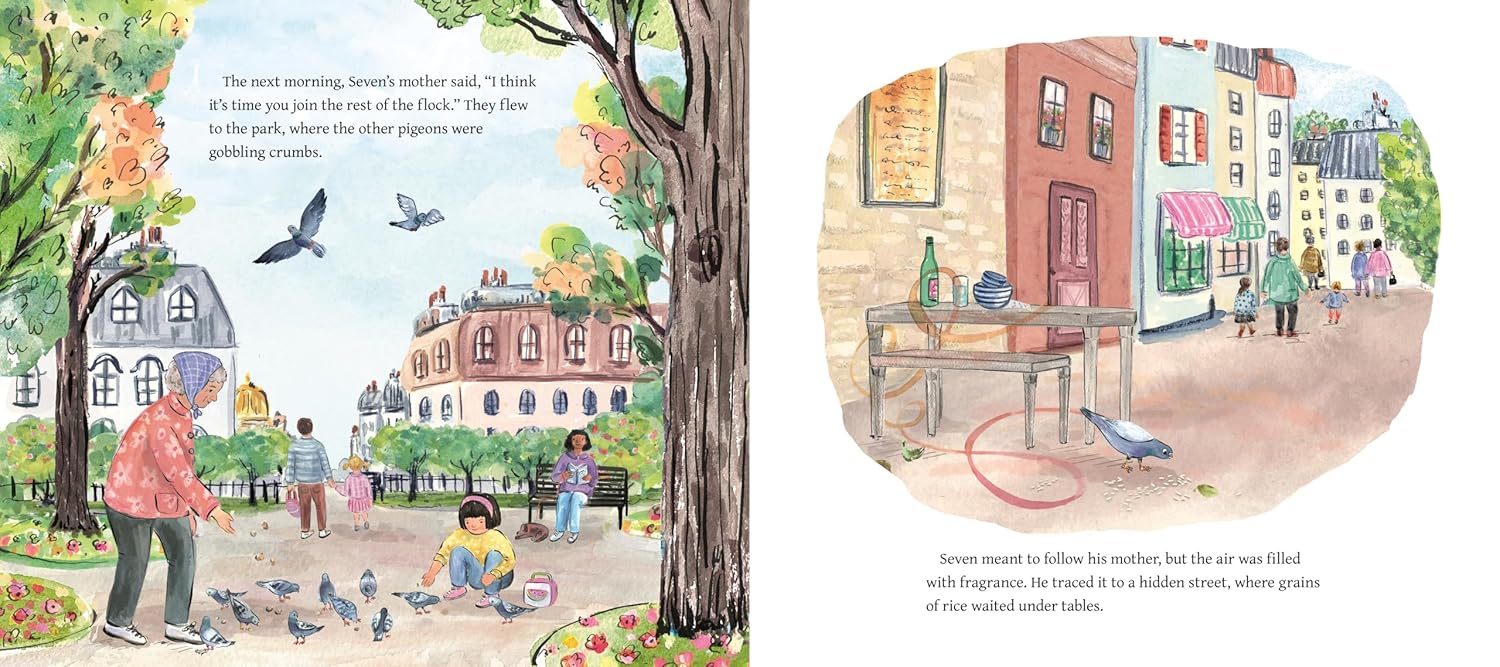
Illustration © 2025 by Aimée Sicuro, text © 2025 by Sandra Nickel. Used with permission of Candlewick Press. All rights reserved.

Finally, it came time for The Big Flight, the annual commemoration of the famous 7,000-mile journey. Instead of 7,000 miles, though, the flock rode the train 700 miles away and would fly home. But soon the fog rolled in, thick and impenetrable. Without being able to see the road map below, the pigeons all flew in different directions. How would they find their way home?

But Seven knew just where to go, led on by the scents he loved so well. The flock fell into formation behind him and followed him home. There “Seven’s parents puffed out their feathers and added rose petals to their nest.” The rest of the flock added 700 more in celebration, and Seven’s parents wrapped their wings around him and held him close.

A discussion about pigeons, their behaviors, the different (and similar) ways the mother and father care for their young, and various theories on how pigeons home follows the story.
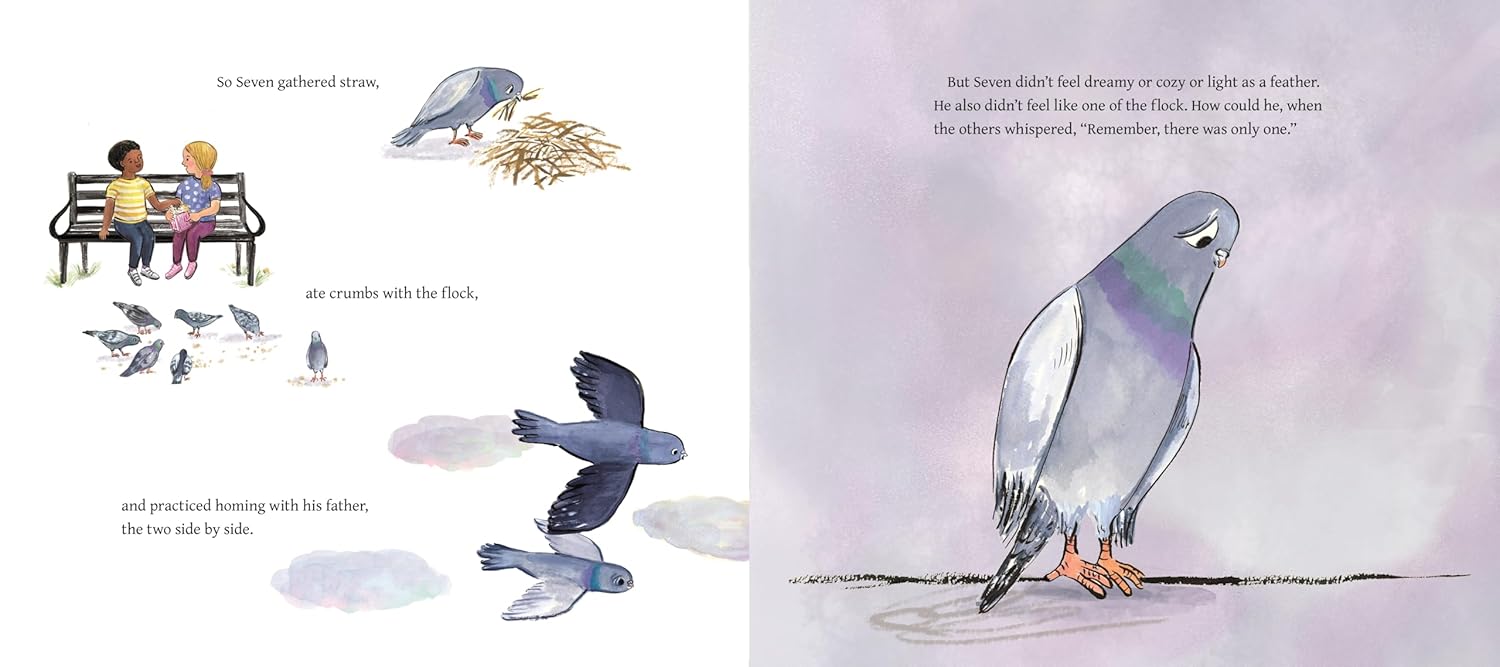
Illustration © 2025 by Aimée Sicuro, text © 2025 by Sandra Nickel. Used with permission of Candlewick Press. All rights reserved.

You will absolutely fall in love with Seven as he stays true to his distinct and savvy preference for scents despite the speculations of his flock in Sandra Nickel’s heartwarming tale. Nickel blends her talent for fiction and nonfiction in her depiction of pigeons’ nesting, flocking, and homing behaviors as well as highlighting the 7,000-mile flight undertaken by one adventurous pigeon. Nickel’s story is built on deeper underpinnings that these, however, as she spotlights the joy and comfort to be found in celebrating individual differences that make each person’s unique contributions to their family, friends, and community invaluable. Kids will cheer Seven on as he forges his own way.

Aimée Sicuro’s watercolor, gouache, and ink illustrations transport readers to lovely French cityscapes and countryside while embedding them with a lively flock of pigeons all aflutter over their newest member. Amplifying Nickel’s focus on individuality, Sicuro has given each pigeon its own markings and coloring, and their facial expressions leave no doubt about their feelings. Seven is especially expressive, from basking in delectable scents to dejectedly enduring scoldings and doubtful glances to leading the flock home with happy certainty and finally soaking up cozy hugs from his parents. 

Seven: A Remarkable Pigeon is a gently told story full of love that celebrates individuality and builds self-esteem. The book is one that kids will want to hear again and again and is a must for home, classroom, and all library collections. 

Ages 4 – 8

Candlewick, 2025 | ISBN 978-1536235197

Connect with Candlewick on Facebook | Instagram | Twitter/X

About the Author

Sandra Nickel is a former lawyer who is now a dedicated children’s book author with many picture books under her belt, including The Stuff Between the Stars, Nacho’s Nachos, Big Bear and Little Fish, and Making Light Bloom. She is honored to be the winner of a Christopher Award, the winner of the Society of Children’s Book Writers & Illustrators Crystal Kite Award, a finalist for the Golden Kite Award for Nonfiction for Younger Readers, a Junior Library Guild Gold Selection honoree, and a Charlotte Huck Award Recommended author. She has presented workshops on writing for children and young adults throughout Europe and the United States. She lives with her family in Switzerland. Visit her at sandranickel.com and on Bluesky | Facebook | Instagram | Twitter/X.

About the Illustrator

Aimée Sicuro is a creator of many picture books for kids. She is the author and illustrator of If You Spot a Shell, and If You Find a Leaf, which was nominated for the Ezra Jacks Keats Award.. Her work has appeared in the New York TimesParents magazine, and many other publications. She lives in Brooklyn with her husband and two children. Visit her at aimeesicuro.com and on Instagram.

You can learn more about Blue Slip Media on Bluesky | Facebook | Instagram  and on Twitter/X here and here.

National Pigeon Day Activity
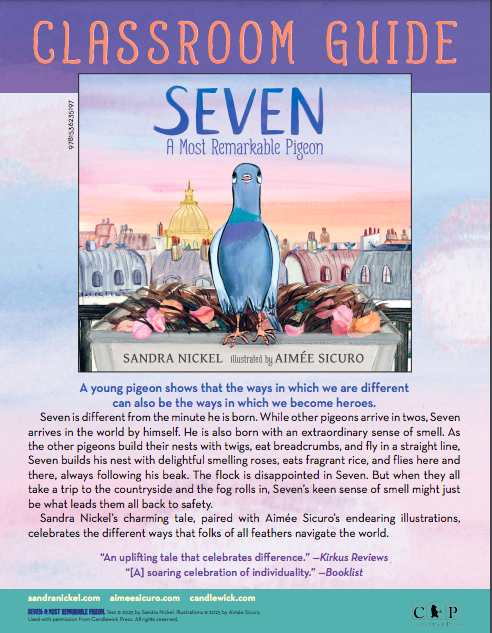
Illustration © 2025 by Aimée Sicuro, text © 2025 by Sandra Nickel. Used with permission of Candlewick Press. All rights reserved.


Seven: A Most Remarkable Pigeon Activity Pages


Download a fun and thoughtful Seven: A Most Remarkable Pigeon Classroom Guide with discussion questions and activities for use by educators as well as readers at home.
You can purchase Seven: A Most Remarkable Pigeon from these booksellers

Amazon | Barnes & Noble | Bookshop

Picture Book Review

February 21 – It’s National Nest Box Week

About the Holiday

National Nest Box Week was established in the United Kingdom in 1997 to highlight how birds are often displaced from their natural nesting places with the destruction of the woodlands and fields birds call home. The holiday encourages people to pay attention to their local nesting birds and put up nest boxes to support the conservation of breeding birds. No matter where you live, birds’ ecosystems are fragile. You can make a big difference in the survival of your local bird population by building and maintaining nesting boxes for the spring and summer months. To learn how more about the holiday and how you can help, visit nestboxweek.com.

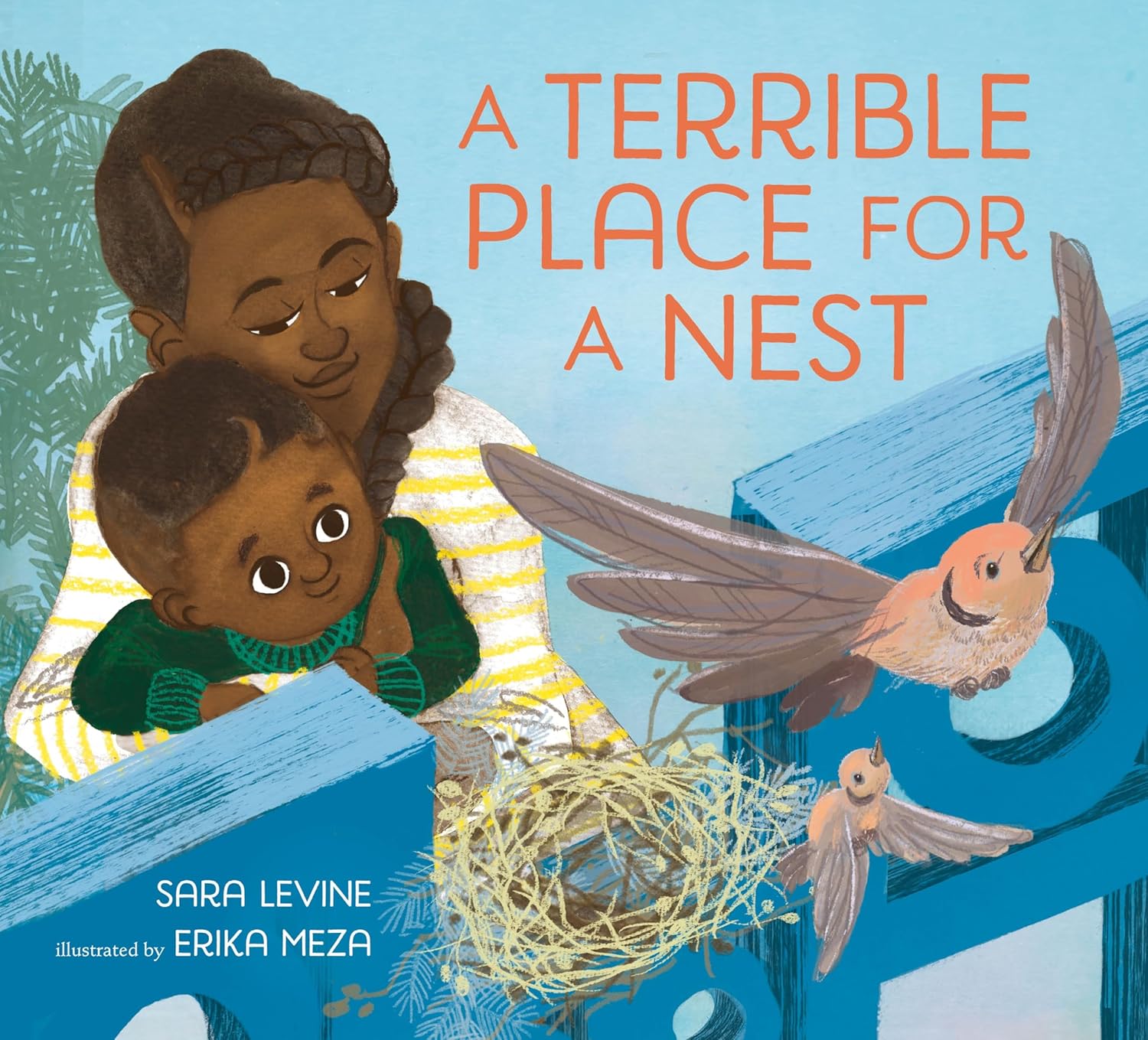
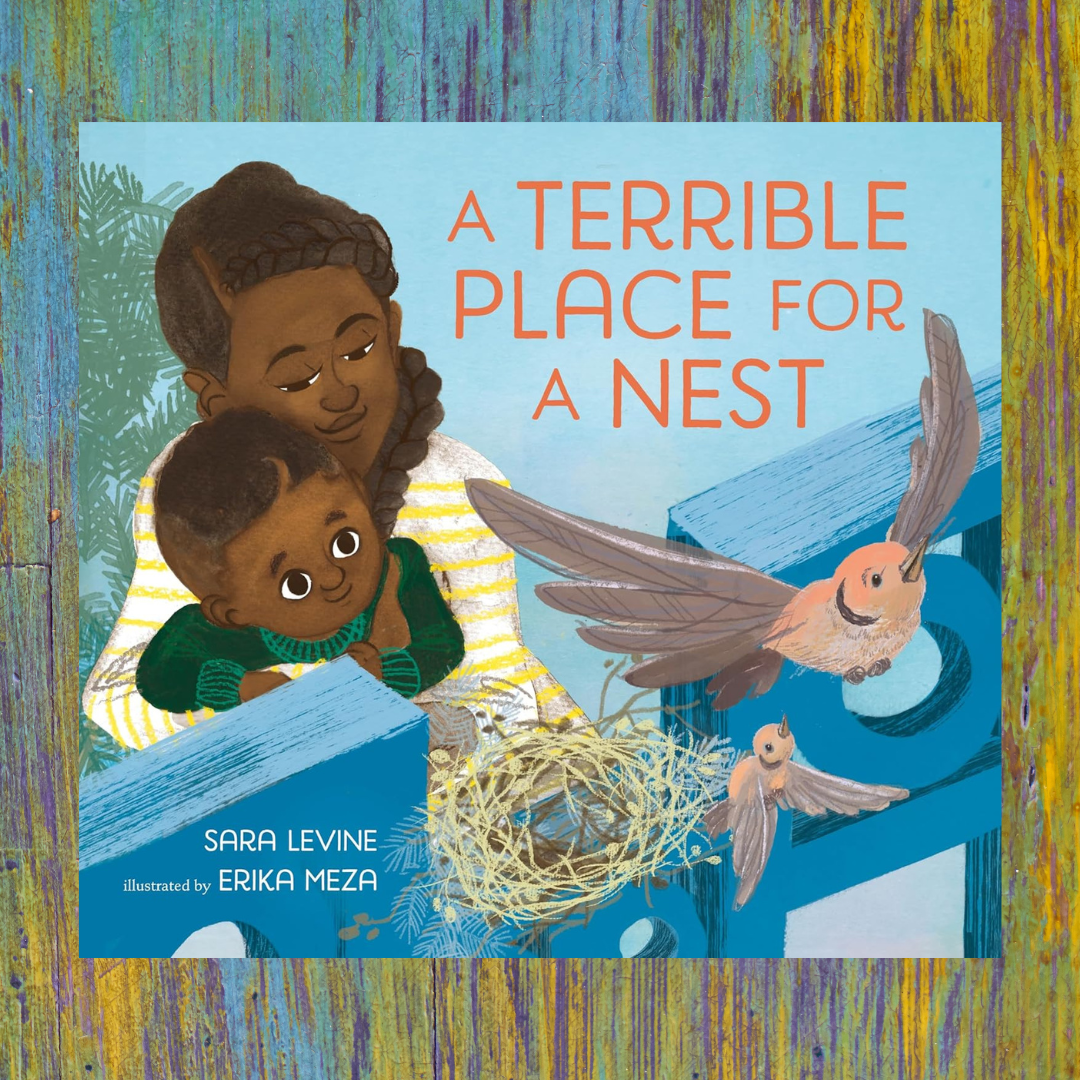
A Terrible Place for a Nest

Written by Sara Levine | Illustrated by Erika Meza


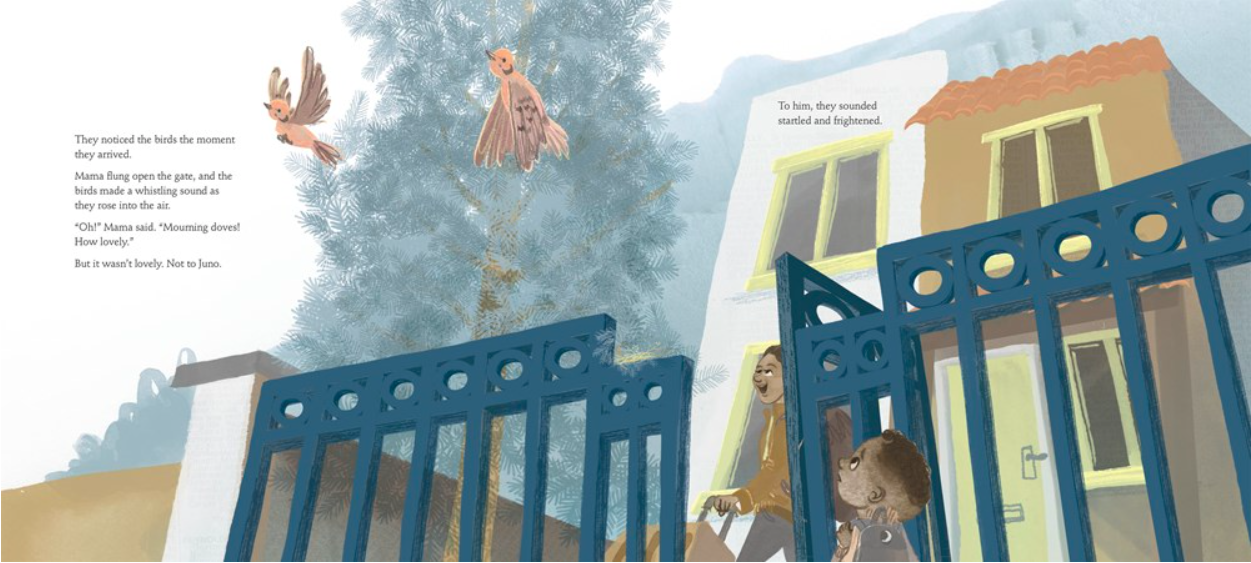
Displaced from their home, a mother and her son, Juno, move to a new place in a new neighborhood. Juno’s mother takes solace in the mourning doves that greet them, but Juno hears sadness and fear in their whistling coos. Nothing about the move feels right to Juno. He can’t get his favorite cereal at the grocery store, and he tells his mama that he’s “‘never going to fall asleep'” in his new room. 

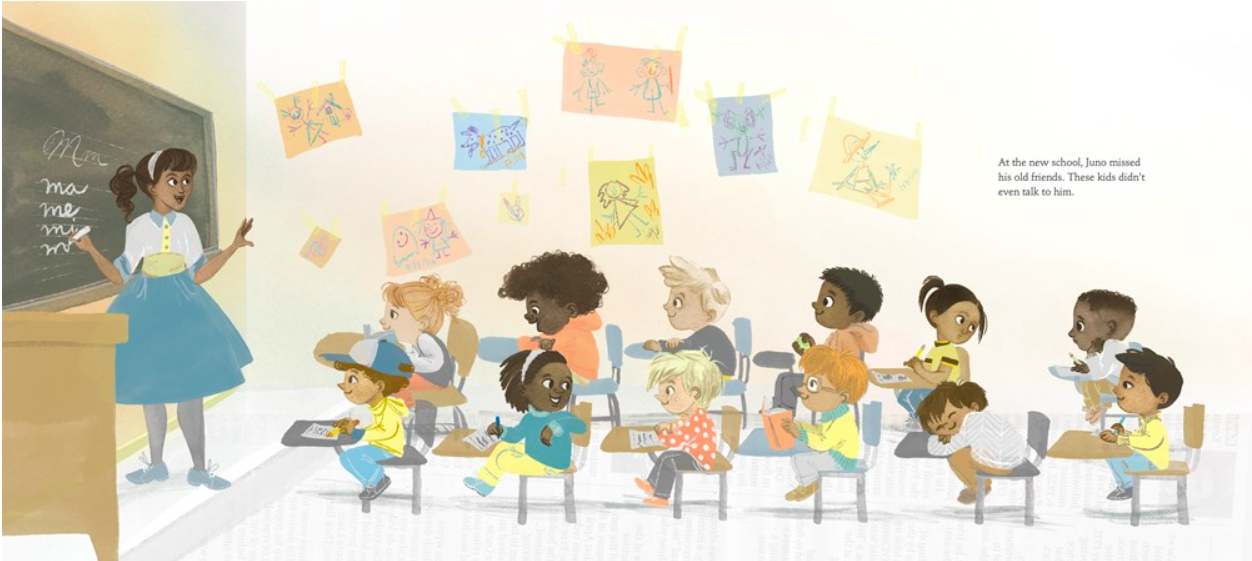
At school he sits alone with no one to talk to. When he gets home he yells, “‘This is a terrible place!,'” frightening the mourning doves from their nest on the gate. The next day, when the movers come, they knock the nest from its perch, breaking the eggs and confirming to Juno his feelings about their new home.

Illustration © 2024, Erika Meza; text © 2024 Sara Levine. Courtesy of Roaring Brook Press.

Later, Juno tries to rebuild the nest, and he and his mom buy millet seed to feed them. They’re happy to see the birds return to the yard—although the nest sits empty for days and weeks. Meanwhile, at school, Juno makes a friend of the girl who sits in front of him, talking and drawing and making paper birds together.

Still, no birds occupy the nest. At night in his unfamiliar room, where unpacked boxes of books and art supplies stand stacked against the wall, Juno thinks “maybe it didn’t feel safe to them.” But then one day, Juno notices with excitement that, just as he and his mom are settling into their new home, a dove is snugged into the nest. “Mama said this meant there were eggs.”

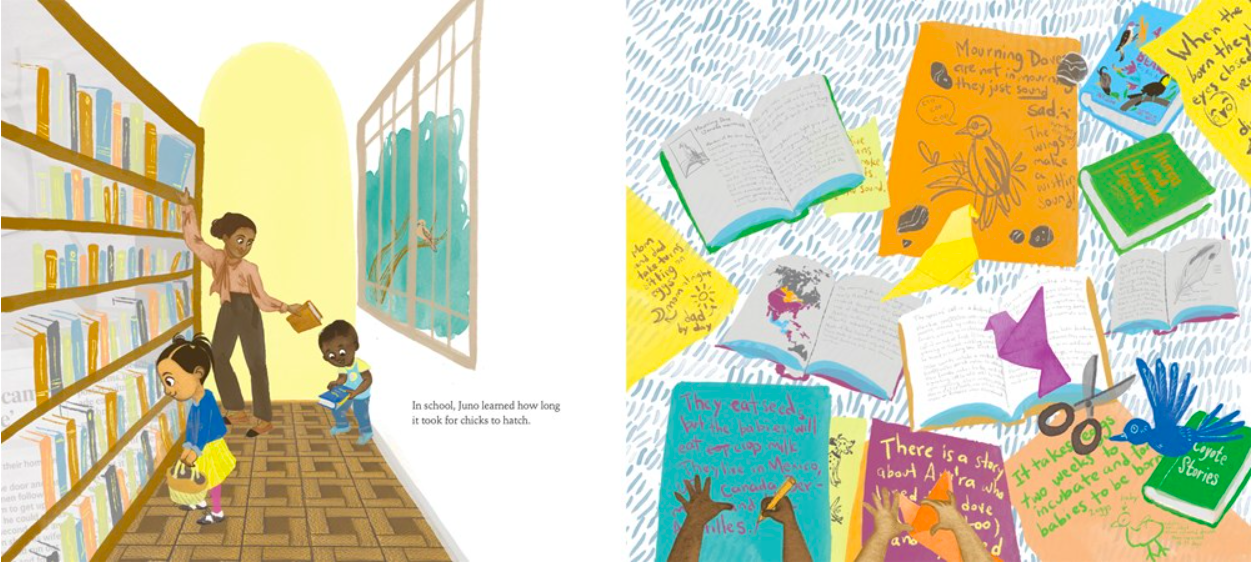
Illustration © 2024, Erika Meza; text © 2024 Sara Levine. Courtesy of Roaring Brook Press.

Juno and his new friend go to the school library to learn everything they can about mourning doves. On colored paper they write facts and draw pictures of adult and baby birds. And most importantly they make signs for the fence and gate, alerting people to the fragile nest and baby doves.

Then one bright, sunny morning, Juno looks out his window and sees babies! In their protected nest, the small mourning doves grow until one afternoon as Juno, his friend, and his mom enjoy a picnic in the yard, he watches as the fledglings fly from their nest. “‘I told them it wasn’t a great place for a nest,'” Juno says, but later that night, happily cuddled up with his mom, they agree, “But we made it work.”

Illustration © 2024, Erika Meza; text © 2024 Sara Levine. Courtesy of Roaring Brook Press.

In her honest and poignant story, Sara Levine allows her young protagonist to give vent to his true feelings. While he first reproaches the mourning doves for their poor choice of nesting place, his own deep disappointment, sorrow, and loneliness spill out when the eggs break. As weeks pass, however, Levine shows that just as Juno repairs the nest and makes his yard inviting for the doves again, he also makes a new friend, assimilates into school, and finds comfort in books and creating once more. Levine’s child-centered story is all the stronger for the quiet support Juno’s mother gives him, allowing him the space, time, and freedom to feel his emotions and work them out in his own way. Her final line, “‘But we made it work,'” offers optimism, camaraderie, and confidence in the face of change—the type of powerful spirit that can sustain us all.

In her affecting illustrations, Erika Meza uses color, facial expressions, and visual metaphors to compellingly show readers Juno’s transition as he navigates his way to acceptance of his new home. As the story begins, Meza uses darker and muted colors on the house and gate. As the doves accept Juno’s help, the colors brighten. Likewise, in the beginning, Juno and his mother appear sad and at a loss. Meza portrays Juno’s brown-painted room from above, as if readers are peering into a cardboard moving box. But as Juno makes friends, regains his love of learning, and the doves return, Meza’s color palette turns vivid, smiles return to Juno’s and Mama’s faces, and even the dark of night is dispelled by the dazzling light of the bedroom lamp as Juno and his mom snuggle together.

A candid story about moving away from home that is also applicable for other types of unexpected changes, A Terrible Place for a Nest validates the emotions children can experience when adjusting to new surroundings. For children struggling with change, especially, the story’s focus on taking time to adapt offers comfort and reassurance.

A Terrible Place for a Nest is highly recommended for families with a child or children who have difficulty with change and a must for school and public library collections.

Ages 4 – 8

Roaring Brook Press, 2024 | ISBN 978-1250861221

About the Author

Sara Levine is an award-winning picture book author, veterinarian and science educator. Her books, which include Bone by BoneTooth by ToothFlower TalkSensitive, and The Animals Would Not Sleep!, have received the AAAS/Subaru SB&F Prize, Bank Street College Best Book of the Year, Beehive Book Award, Cook Prize and the Mathical Book Prize. She loves doing school and library programs. Visit Sara at saralevinebooks.com.

About the Illustrator

Erika Meza grew up in Mexico and moved houses more often than she had birthdays. Having studied illustration in Paris, she now lives in London―her thirty-sixth address―where she paints, writes her own stories, and practices her uncanny ability to pack efficiently. Erika loves exploring, learning about many different places and cultures, and finding joy in the people who allow you to be yourself. Visit Erica at ericameza.com.

National Nest Box Week Activity

Watch a pair of mourning doves raise their nestlings from hatching to leaving the nest in this sweet video from Gary’s Backyard.

You can purchase A Terrible Place for a Nest at these booksellers

Amazon | Barnes & Noble | Bookshop (to support your local independent bookstore)

March 7 – It’s National Reading Month

celebrate-picture-books-picture-book-review-lovebird-lou-cover

About the Holiday

In February we show our love with valentines, candy, and flowers. How can we continue to prove our love through the month of March? With books! National Reading Month is the perfect time to say “I love you,” by buying your family members and/or friends a special book they’ll cherish. Reading with your kids also gives you time to relax, giggle, talk, and enjoy some precious moments together. Why not start with today’s book, which is all about family love! 

I’d like to thank Tammi Sauer for sharing a copy of Lovebird Lou with me for review consideration. All opinions about the book are my own.

Lovebird Lou

Written by Tammi Sauer | Illustrated by Stephanie Laberis


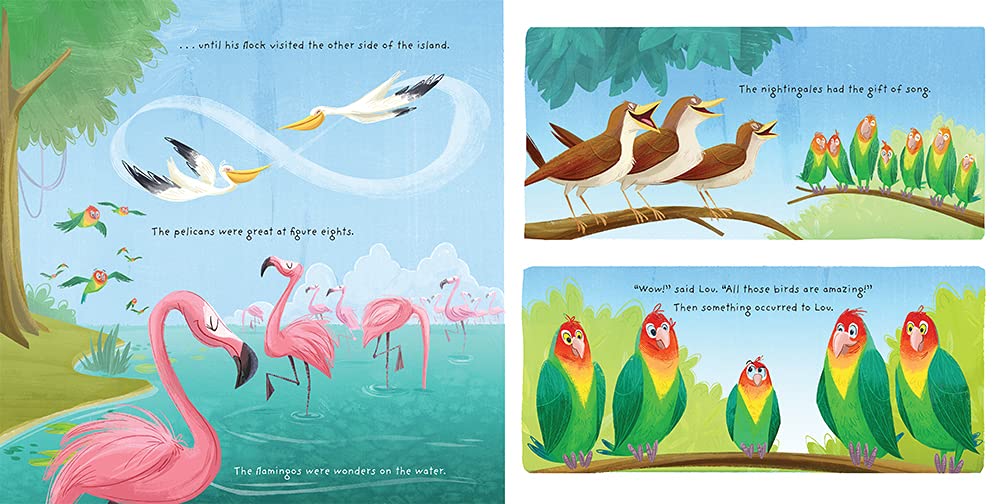
“Lou came from a long line of lovebirds.” His relatives all loved sharing the love, and Lou loved being a lovebird “until his flock visited the other side of the island.” There he saw pelicans who could fly in figure eights, flamingos who could stand on one leg, and nightingales who sang beautiful songs. Lou looked at his ordinary family and decided he wanted to be a pelican.

celebrate-picture-books-picture-book-review-lovebird-lou-family

Image copyright Stephanie Laberis, 2022, text copyright Tammi Sauer, 2022. Courtesy of Union Square Kids.

Not wanting to quash his dreams, his mom said, “‘Okay, cupcake.'” Lou took off from the branch and flew through the air, doing intricate patterns just like the pelicans. His family members were all supportive. “‘We love you, Lou!'” they shouted, and when Lou bonked into a tree, his mom and dad caught him before he fell.

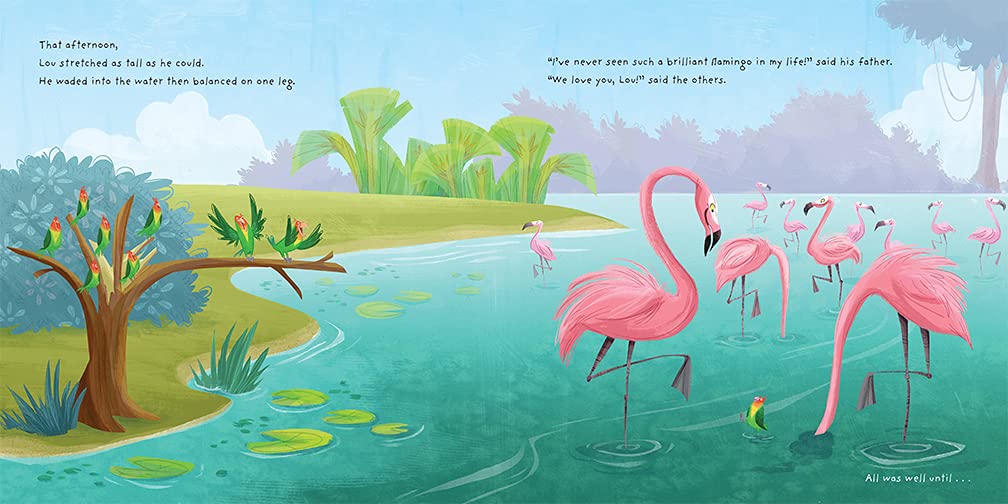
Lou thought maybe he’d make a better flamingo, so he joined the big pink birds in the shallow water and adopted the pose while his family cheered him on. “‘We love you, Lou!'” they all squawked. He was doing great until he lost his footing and splashed down. His parents were right there to dry him off and encourage his next dream to become a nightingale.

celebrate-picture-books-picture-book-review-lovebird-lou-pelicans

Image copyright Stephanie Laberis, 2022, text copyright Tammi Sauer, 2022. Courtesy of Union Square Kids.

When Lou joined the ethereal chorus, he opened his beak and… well… his family members were his only fans. Back with his parents, Lou was disappointed that he couldn’t be a pelican, flamingo, or nightingale. “‘Maybe I’ll just be a rock.'” Lou said. His parents were all in and they even found a perfect place for him to sit and made him a “#1 Rock” sign to accompany him.

All day, Lou excelled at sitting in his spot until darkness and then rain fell. Lou was downhearted, wet, and scared. Lou knew the pelicans, flamingos, and nightingales couldn’t help him. He hurried his tail feathers back to his lovebird family, who welcomed him with lots of reassurances and “‘We love you, Lou!'” “‘I love you too!’ said Lou.”

The pelicans, flamingos, and nightingales thought that was so sweet. In fact, the next day they all shared their love in their own way too. As for Lou, he now understood that “lovebirds were good at the most important thing of all.”

celebrate-picture-books-picture-book-review-lovebird-lou-flamingos

Image copyright Stephanie Laberis, 2022, text copyright Tammi Sauer, 2022. Courtesy of Union Square Kids.

Tammi Sauer’s sweet story shows kids that every family has their own traditions and talents that are just right for them. When Lou is dazzled by the pelicans, flamingos, and nightingales – who all seem more exciting than his one-note family – and wants to emulate them, his parents’ hilarious support of his endeavors are spot on and will make both kids and adults laugh with recognition. Sauer’s quick pace, silly endearments, and frequent choruses of “‘We love you, Lou!'” will have kids wanting to hear the story over and over to chime in on each expression of love.

Stephanie Laberis’s vibrant lovebirds – first introduced in pairs of cuddly closeness and with Lou sandwiched between mom and dad – are charming and, in one funny image, look comically clueless as they watch the other birds demonstrate their special abilities. Little Lou is adorable as he tries his best to keep up with the other birds, tumbling with the pelicans, balancing with the much bigger flamingos, and scaring the nightingales with his raucous squawk. Despite his setbacks, Lou is always ready to try again, which makes both his dejected and his hopeful expressions touching. And hearts will be full when Lou – and the other birds – learn that all-important lesson about love.

A humorous and moving book about family togetherness, Lovebird Lou will be a well-loved addition to home, school, and public library collections.

Ages 3 – 8

Union Square Kids, 2022 | ISBN 978-1454941880

Discover more about Tammi Sauer and her books on her website.

To learn more about Stephanie Laberis, her books, and her art, visit her website.

National Reading Month Activity

celebrate-picture-books-picture-book-review-lovebirds-coloring-page

Lovebirds Coloring Page


Get cozy with your loved ones and color these adorable lovebirds!

Lovebirds Coloring Page

celebrate-picture-books-picture-book-review-lovebird-lou-cover

You can find Lovebird Lou at these booksellers

Amazon | Barnes & Noble | Books-a-Million

To support your local independent bookstore, order from

Bookshop | IndieBound

Picture Book Review
January 5 – National Bird Day

celebrate-picture-books-picture-book-review-birds-explore-their-extraordinary-world-cover

About the Holiday

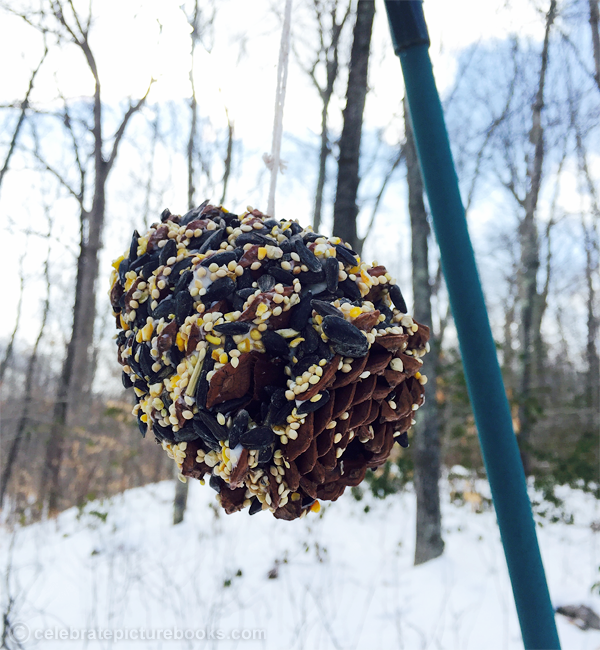
Coming at the end of the annual Christmas Bird Count conducted in conjunction with the Audubon Society, National Bird Day turns the focus on the special behavioral and physical needs of birds and works to ensure that all birds—whether kept as pets or living on farms or in their natural environments—are treated compassionately. The day also raises awareness of the dangers that threaten many species of birds with extinction. To celebrate today’s holiday, take a walk in your area or even just in your backyard and take special note of the birds you see. Now that winter has set in making food scarce for wild birds, consider hanging a bird feeder or making one from a pinecone, peanut butter, and seed as in the activity below. 

Thanks to Bloomsbury Children’s Books for sending me a copy of Birds: Explore their extraordinary world for review consideration. All opinions on the book are my own.

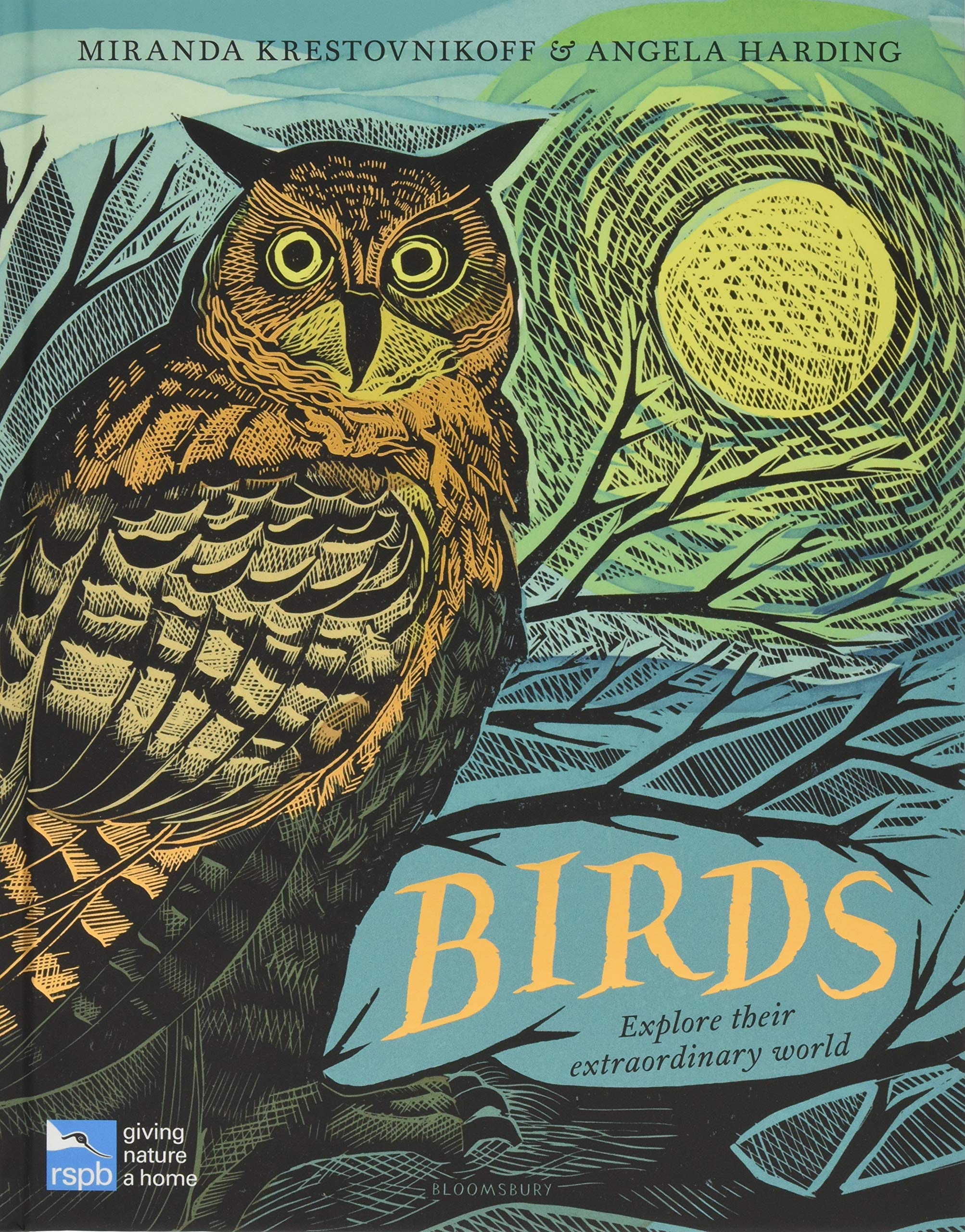
Birds: Explore their extraordinary world

Written by Miranda Krestovnikoff | Illustrated by Angela Harding


To love birds is to marvel over everything about them from their smooth gliding flight and beautiful songs to their colorful plumage and intricate nests that protect fragile eggs from the elements and predators. With a stunning number of species, birds are found around the world and living in every kind of climate. In Miranda Krestovnikoff and Angela Harding’s eye-catching compendium, readers learn about seven families of birds – birds of prey, seabirds, freshwater birds, flightless birds, tropical birds, tree dwellers, and passerines. 

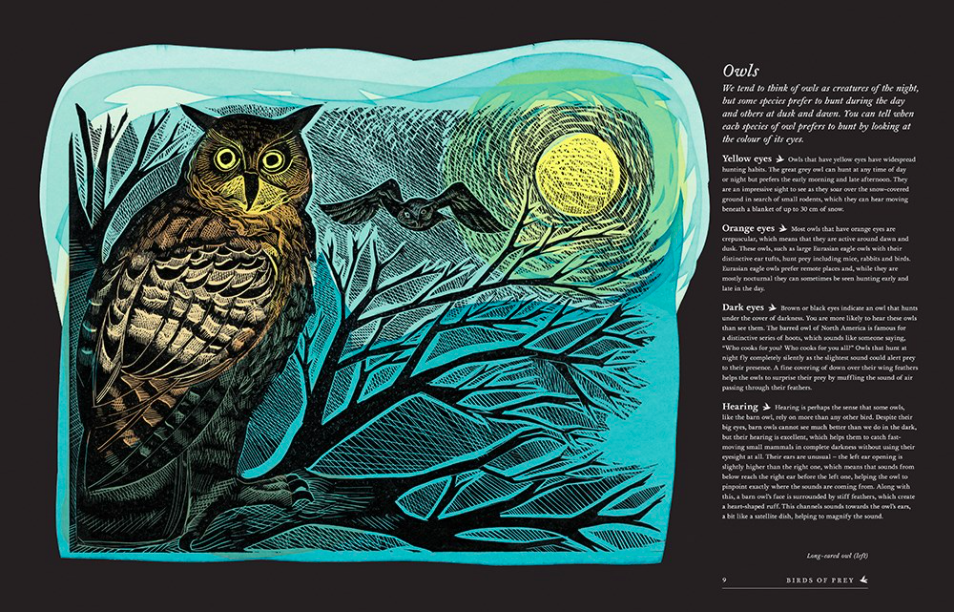
Each chapter opens with general facts on the behavior, anatomical features, and habitat that determine the order in which a bird is categorized. Integrated with this information are descriptions of specific birds within the order. In the section on Birds of Prey, for instance, readers learn about sparrowhawks; fish-eating ospreys; and golden eagles, which can “spot a rodent from over a mile away and a rabbit from nearly double that distance.” Children also learn about extreme birds of prey: the fastest, largest, smallest, tallest, and baldest and how their distinctive feature helps them thrive. Kids also discover how they “can tell when each species of owl prefers to hunt by looking at the color of its eyes.”

celebrate-picture-books-picture-book-review-birds-explore-their-extraordinary-world-owls

Image copyright Angela Harding, 2020, text copyright Miranda Krestovnikoff, 2020. Courtesy of Calkins Creek.

The next chapter takes readers to coastal areas to learn about the seabirds that scour the water from the sky, searching for food and waders, that are found along the water’s edge and “feed on the variety of high-protein invertebrates that lie hidden in the mud.” Children learn about the birds that populate warmer waters, such as blue-footed boobies, terns, and frigatebirds as well as those who survive in colder waters, such as gulls, and kittiwakes. Readers will also find a fascinating description of the gannet and learn how it can safely “dive into the sea at speeds of 60 miles an hour from an impressive height of up to 100 feet” to feed.

From sea birds, readers move on to freshwater birds like ducks, swans, grebes, and Canada geese. Even the bright flamingo is here with its distinctive scoop-shaped beak that is “uniquely designed to be used upside down and helps them to filter out tiny brine shrimps and blue-green algae from the water, which, when digested, give them their pink color.” The flamingo isn’t the only bird with an unusual way to acquire their prey, and kids will discover the clever ways pelicans, herons, and kingfishers (which use “objects such as sticks, feathers, and even discarded popcorn as lures”) find food.

And then there are the “more than 50 bird species across the world [that] stay firmly on the ground (or on water)” or just “choose not to fly very often.” These flightless birds include kiwis, kākāpōs, southern cassowaries, ostriches, and Penguins. Penguins vary in size, from the “little penguin (also known as the fairy or blue penguin)” which comes to shore to nest only at night and stave off predators with their oversized voices, to the emperor penguin. Occasional fliers include great bustards, domestic chickens, and tinamous.

celebrate-picture-books-picture-book-review-birds-explore-their-extraordinary-world-penguin

Image copyright Angela Harding, 2020, text copyright Miranda Krestovnikoff, 2020. Courtesy of Calkins Creek.

When you hear about extravagant birds, you most likely think of tropical birds. “Rainforests are packed with a range of incredible species with dazzling plumage and bizarre courtship displays.” Readers will learn about the appearance and mating rituals of scarlet macaws, Raggiana birds of paradise, and the Andean cock-of-the-rock. A detailed description of the bowerbird and the male bird’s careful and artistic nest (or bower) building is funny, poignant, and even a little bit human. Then readers are treated to some tropical bird extremes: smallest bird, longest bill, and smelliest as well as a poisonous species and one that makes its own musical instrument.

Of course, woodlands are the home of many bird species, and in the chapter on Tree Dwellers, readers learn about acorn woodpeckers and great hornbills that use trees for food and shelter; tawny frogmouths and potoos that use trees for camouflage; and nuthatches, greater honeyguides, and yellow-bellied sapsuckers, which find all the food they need among the bark, leaves, and branches of trees.

celebrate-picture-books-picture-book-review-birds-explore-their-extraordinary-world-chickens

Image copyright Angela Harding, 2020, text copyright Miranda Krestovnikoff, 2020. Courtesy of Calkins Creek.

Next up are passerines, or perching birds, which make up the “largest group of birds, with over half of all known species falling into this category.” Corvids, a group that includes the common raven, crows, magpies, and rooks, are considered to be the most intelligent birds. “These birds have a remarkable ability to solve problems in order to find food, in some cases performing better than young children or chimpanzees!” Readers will be impressed with their tricks and clever use of tools (that even include cars). Children learn about cooperative breeders, which rely on their extended family to help raise the young from year to year. Passerines also include many of the garden birds we find in our backyards and which fill the air with song. Readers discover facts about blue tits, robins, and finches in this section.

The next sections give detailed and interesting information on the features we most associate with birds: their feathers, beaks, eyes, nesting habits, eggs, migration patterns, and birdsong. The book ends with perhaps the most adaptable birds in the world: those that make their homes on glaciers, mountain tops, and in the Arctic snow as well as urban birds, which live among people in crowded cities, nesting on tall cathedrals and skyscrapers and foraging for food in garbage cans and on the street.

celebrate-picture-books-picture-book-review-birds-explore-their-extraordinary-world-woodpeckers

Image copyright Angela Harding, 2020, text copyright Miranda Krestovnikoff, 2020. Courtesy of Calkins Creek.

For young ornithologists, Miranda Krestovnikoff, a wildlife expert, offers a compelling, eye-opening, and accessible introduction to a wide variety of birds, placing them in their natural environments and revealing intriguing facts and tantalizing tidbits that inform and will spark a continued interest in learning more about the world’s feathered creatures. Krestovnikoff’s engaging writing style will captivate readers and keep them turning the pages to discover birds that are both familiar and new to them. The comprehensive nature of the book allows kids in all parts of the world to learn more about their native birds while creating a global connection with these most recognized and widely distributed creatures.

Accompanying Krestovnikoff’s text are Angela Harding’s beautiful linocuts that depict birds in mid-flight, capturing prey on land and water, engaging in mating rituals, and building and protecting their nests and young. Harding’s use of natural colors and exquisitely etched landscapes set off each bird in breathtaking illustrations that invite readers to linger to enjoy their full impact. Each illustration is captioned with the bird’s species.

A gorgeous and educational book that readers of all ages will love dipping into again and again, Birds: Explore their extraordinary world is a must for bird lovers and highly recommended for home, school, and public libraries.

Ages 7 and up

Bloomsbury Children’s Books, 2020 | ISBN 78-1408893913

Discover more about Miranda Krestovnikoff and her books on her website.

To learn more about Angela Harding, her books, and her art on her website.

National Bird Day Activities

celebrate-picture-books-picture-book-review-beautiful-birds-word-search

Beautiful Birds Word Search Puzzle


It’s fun to watch for different kinds of birds when you take a walk or in your own backyard. Can you find the names of twenty types of birds in this printable Beautiful Birds Word Search Puzzle? Here’s the Solution!

cpb-bird-feeder-i

Pinecone Bird Feeder


Pinecone bird feeders are quick to make and great for your backyard fliers. The combination of peanut butter, lard, or vegetable shortening and a quality seed mixture provide birds with the fat and nutrition they need to stay warm and healthy during the winter.

Supplies

  • Pinecones
  • Peanut butter, vegetable shortening, or lard
  • Birdseed
  • String
  • Knife or wooden spreader
  • Spoon

Directions

  1. Tie a long length of string around the middle of the pinecone
  2. Spread the peanut butter, vegetable shortening, or lard on the pinecone
  3. Sprinkle a thick coating of birdseed on the pinecone, pressing it into the covering so it will stick
  4. Tie the pinecone feeder onto a tree branch or other structure
  5. Watch the birds enjoy their meal!

celebrate-picture-books-picture-book-review-birds-explore-their-extraordinary-world-cover

You can find Birds: Explore their extraordinary world at these booksellers

Amazon | Barnes & Noble | Books-a-Million

To support your local independent bookstore, order from

Bookshop | IndieBound

Picture Book Review

December 10 – It’s Read a New Book Month

celebrate-picture-books-picture-book-review-a-peek-at-beaks-cover

About the Holiday

The month of December is a gift-giver’s delight and looking at the long winter ahead there’s no better gift for everyone on your list than a book (or two or…). With so many new books hitting bookstore shelves, there really is a perfect book to fit everyone’s taste. Young children, especially, benefit from reading a wide range of picture books from laugh-out-loud or touching stories to nonfiction that introduces them to influential people, science, history, and nature. If you’re looking for gifts to give, it’s not too late to head to your local bookstore or their online shop to find books that will make your child’s eyes light up.

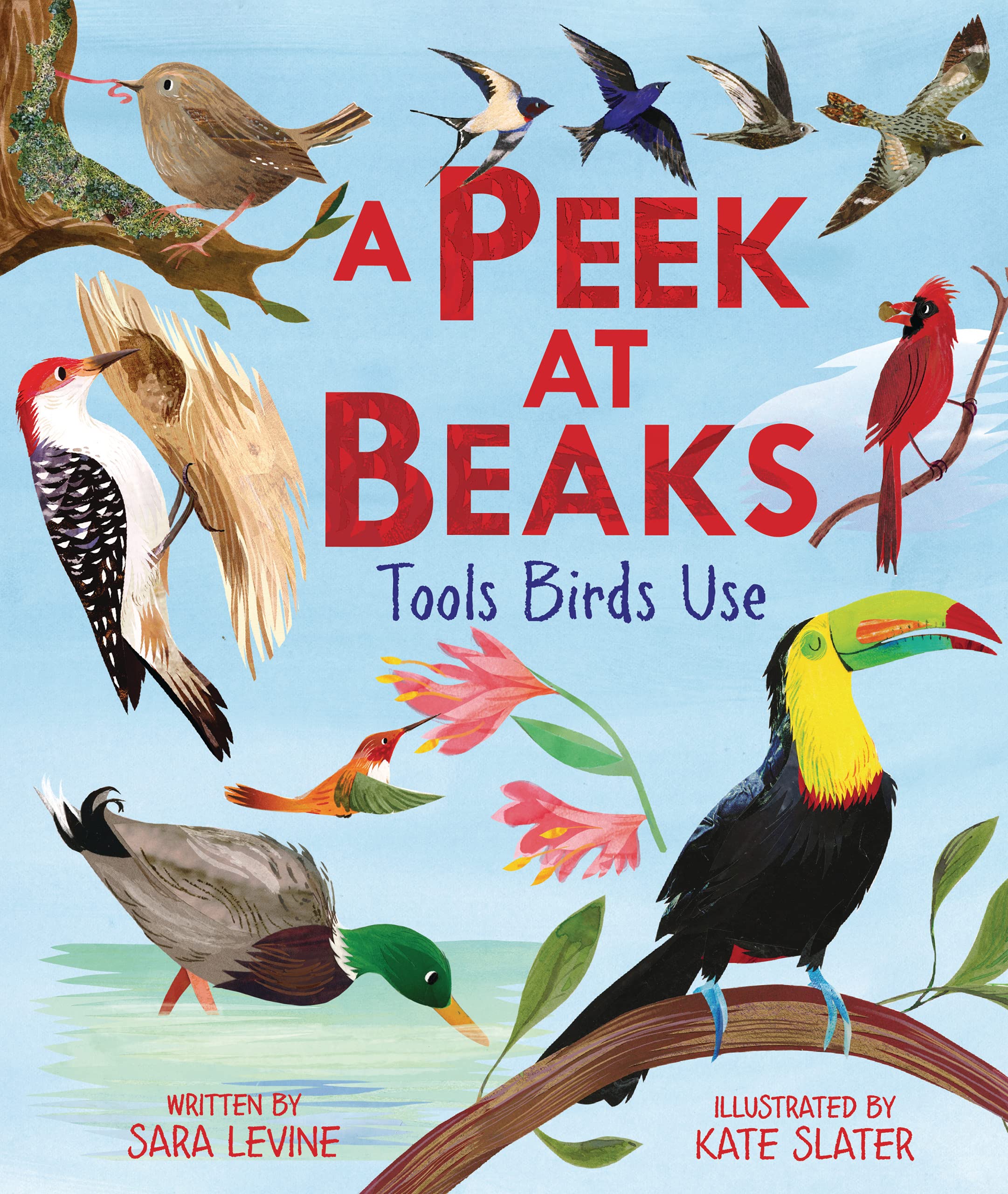
A Peek at Beaks: Tools Birds Use

Written by Sara Levine | Illustrated by Kate Slater


When you “slurp up your milkshake” or cut up your meat or even cool down with an air conditioner, do you ever wonder how birds accomplish these things? They don’t have hands to hold tools, but that’s okay because each type of bird has just the tool they need to survive handily attached right to its face – its beak! How does each bird use its beak to find food? Sara Levine and Kate Slater let you take a peek at how birds’ beaks are uniquely suited for the foods they eat and the places where they find it as well as for grooming and nest-building.

celebrate-picture-books-picture-book-review-a-peek-at-beaks-birdwatching

Image copyright Kate Slater, 2021, text copyright Sara Levine, 2021. Courtesy of Millbrook Press.

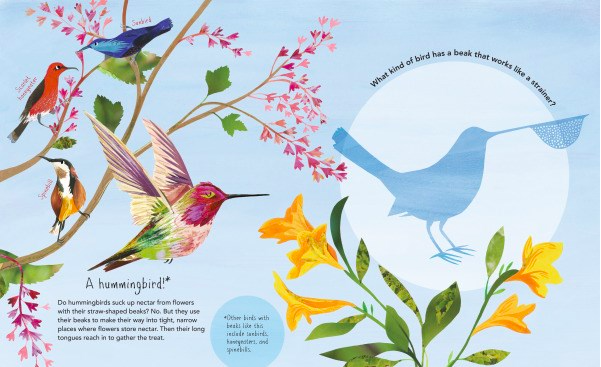
Take that straw we people use to sip up every last drop of a delicious milkshake or glass of lemonade, for instance. Which bird “has a beak shaped like a straw? A hummingbird!” And while hummingbirds don’t “suck up nectar from flowers” through their beaks, “they use their beaks to make their way into tight, narrow places where flowers store nectar. Then their long tongues reach in to gather the treat.” 

If you look into the family toolbox, you’ll probably find a hammer and a needle-nosed pliers. Are there birds whose beaks do similar jobs as these? You bet! The rat-a-tat-tat of a woodpecker searching for grubs or insects in a tree trunk sounds just about the same as the tap-tap-tap or bang-bang-bang of a hammer, and there are shoreline birds that use their long, thin beaks to “probe deep into the mud to find crustaceans, insects, and worms. A special sensory organ at the beak’s tip lets the bird feel when a meal is nearby.” Can you guess which ones they are?

celebrate-picture-books-picture-book-review-a-peek-at-beaks-straw

Image copyright Kate Slater, 2021, text copyright Sara Levine, 2021. Courtesy of Millbrook Press.

Kids who love helping out in the kitchen will be fascinated to learn that there are birds with beaks that act as strainers, nutcrackers, knives, and tongs. And if you think we’re sophisticated with our central air-conditioning one very distinct bird is born with this capability, while a more common bird has one-upped our technological advances by offering it’s chicks a one-touch “take-out” button long before the smartphone was ever developed. 

celebrate-picture-books-picture-book-review-a-peek-at-beaks-hummingbird

Image copyright Kate Slater, 2021, text copyright Sara Levine, 2021. Courtesy of Millbrook Press.

Sure, you might think – birds can find food and build nests with their beaks, but can they show love? The answer is… Yes! The gannet is especially adept at demonstrating their feelings, and they don’t care who hears it. While “many birds show affection with their beaks,… gannets particularly stand out. These birds raise their beaks in the air and clatter them together to show how much they like each other.” After you’ve learned about all of these amazing birds and their beaks, maybe you’d like to raise a ruckus to show your appreciation too! 

Back matter includes a discussion on the evolution of bird beaks and how they change over time and a list of other books for further reading.

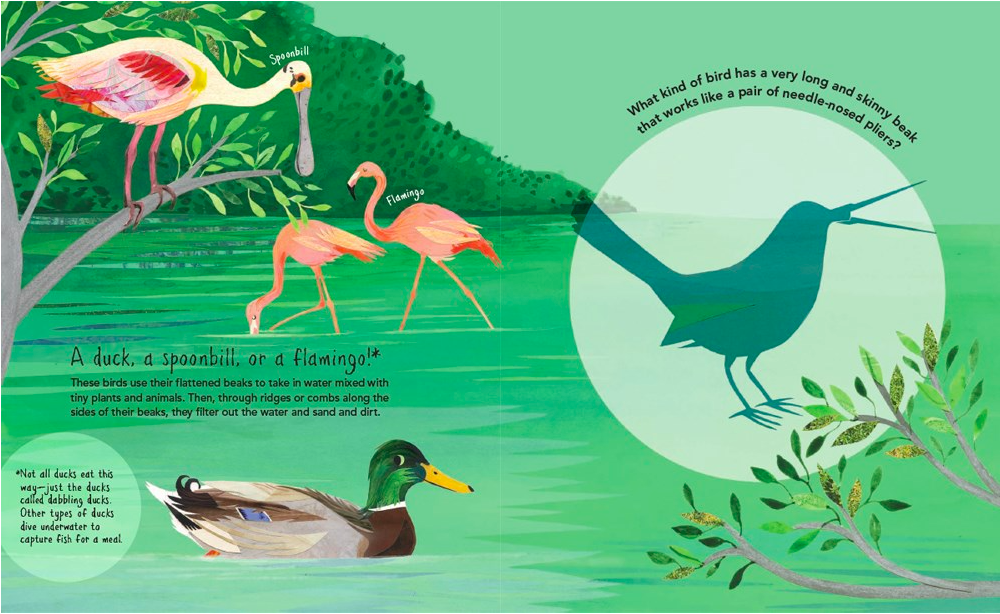
celebrate-picture-books-picture-book-review-a-peek-at-beaks-needle-nosed-pliers

Image copyright Kate Slater, 2021, text copyright Sara Levine, 2021. Courtesy of Millbrook Press.

Bird, nature, and science lovers as well as teachers and homeschoolers will be fascinated with Sara Levine’s clever way to engage kids in learning about birds by comparing their beaks to well-known tools children and adults use every day. Especially interesting are descriptions of the birds whose beaks’ special abilities are hidden, such as water birds that use their beaks as strainers to filter out water, sand and dirt before swallowing the nutritious plants and animals left behind. Along with information on the construction of birds’ beaks and how, exactly, birds use them, readers learn about the diet of various species and where they hunt for food.

Levine is always an insightful and captivating educator who sparks kids’ interest in nature-science learning and spurs them to further research. Her question-and-answer format gets kids thinking, observing, and theorizing in a way that increases understanding and resonates across subject matter. At-home birdwatchers will also enjoy watching out for the birds depicted in this book and their behavior.

Kate Slater’s mixed-media collage illustrations are vibrant and textured, adding lovely depth to each page. Her silhouettes of birds sporting tool where it’s beak should be are intriguing invitations for kids to ponder and guess at the answers to Levine’s questions before turning the page to discover the answer. Slater populates the pages with a wide variety of birds, realistically depicted, that will kindle an interest in readers and adults to delve into further research on these fascinating and charming creatures.

A unique and high-interest way to engage kids in learning about birds and nature, A Peek at Beaks: Tools Birds Use is highly recommended for bird-lovers at home as well as for science, environment, and nature learning collections in schools and public libraries. 

Ages 5 – 9

Millbrook Press, 2021 | ISBN 978-1541587342

Discover more about Sara Levine and her books on her website.

To learn more about Kate Slater, her books, and her art, visit her website.

Read a New Book Month Activity

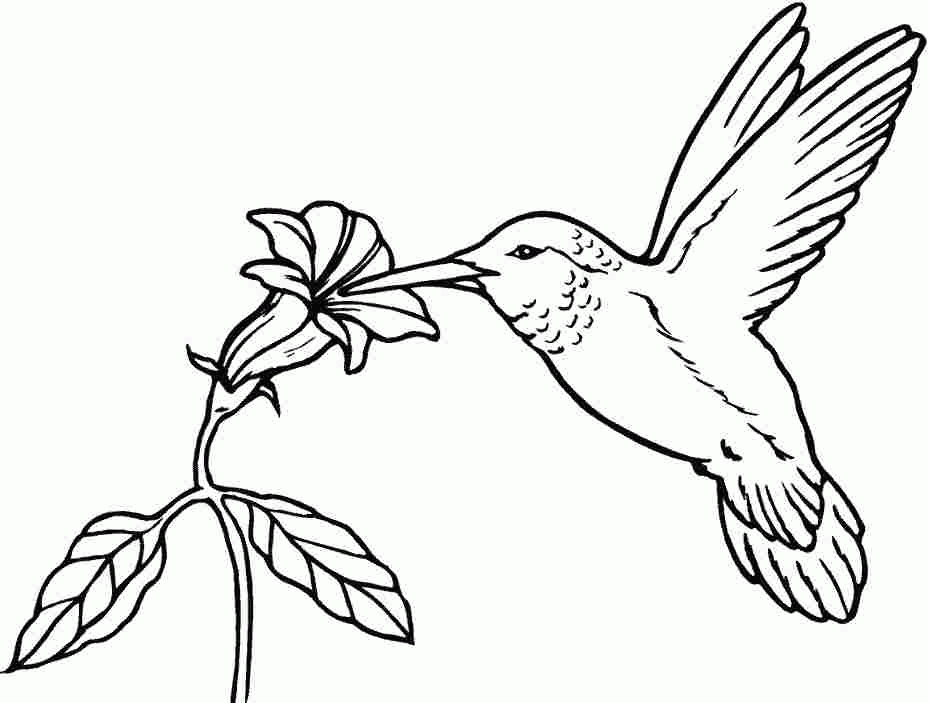
celebrate-picture-books-picture-book-review-bird-coloring-page-2

Busy Birds Coloring Pages


These birds are busy looking for and gathering food to eat! Grab your crayons, pencils, or markers, print the pages, and give the birds and their surroundings some color!

Hummingbird at Flower | Robin Grabbing a Worm | Bird on Branch

celebrate-picture-books-picture-book-review-a-peek-at-beaks-cover

You can find A Peek at Beaks: Tools Birds Use at these booksellers

Amazon | Barnes & Noble | Books-a-Million

To support your local independent bookstore, order from

Bookshop | IndieBound

Picture Book Review
October 13 – National Fossil Day

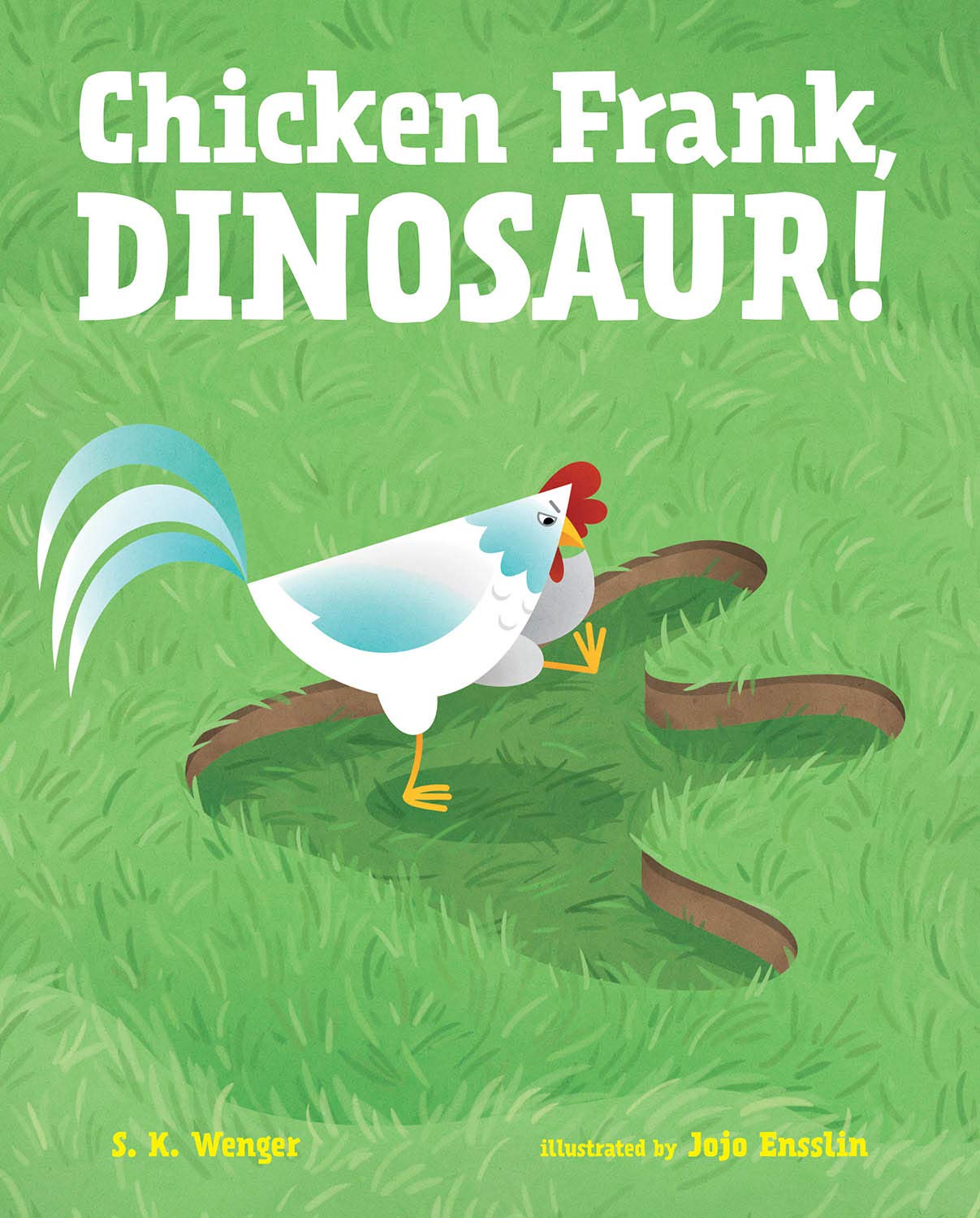
celebrate-picture-books-picture-book-review-chicken-frank-dinosaur-cover

About the Holiday

Did you know that some fossils date back to 4.1 BILLION years ago? Just think of that the next time you’re feeling a little bit old (or so recommends the website National Today). Today we celebrate National Fossil Day to recognize the importance (and, well, awesomeness) of paleontologists, geologists, and fossils in providing us with information on the history of our earth and those who have inhabited it before us. ​National Today provides some further information, with a timeline of fossil history, and fun facts like this one: The highest amount ever paid for a dinosaur fossil was $8.3 million (they named it “Sue”).

To celebrate National Fossil Day, check out National parks near you, learn more about fossils, do something to help protect the earth, read some books about evolution—like Chicken Frank, Dinosaur!—or visit the National Parks page for more information and resources on how to celebrate our geologic heritage.

Thanks to Albert Whitman & Company for sharing a copy of Chicken Frank, Dinosaur! with me for review consideration. All opinions on the book are my own.

Review by Dorothy Levine

Chicken Frank, Dinosaur!

Written by S.K. Wenger | Illustrated by Jojo Ensslin


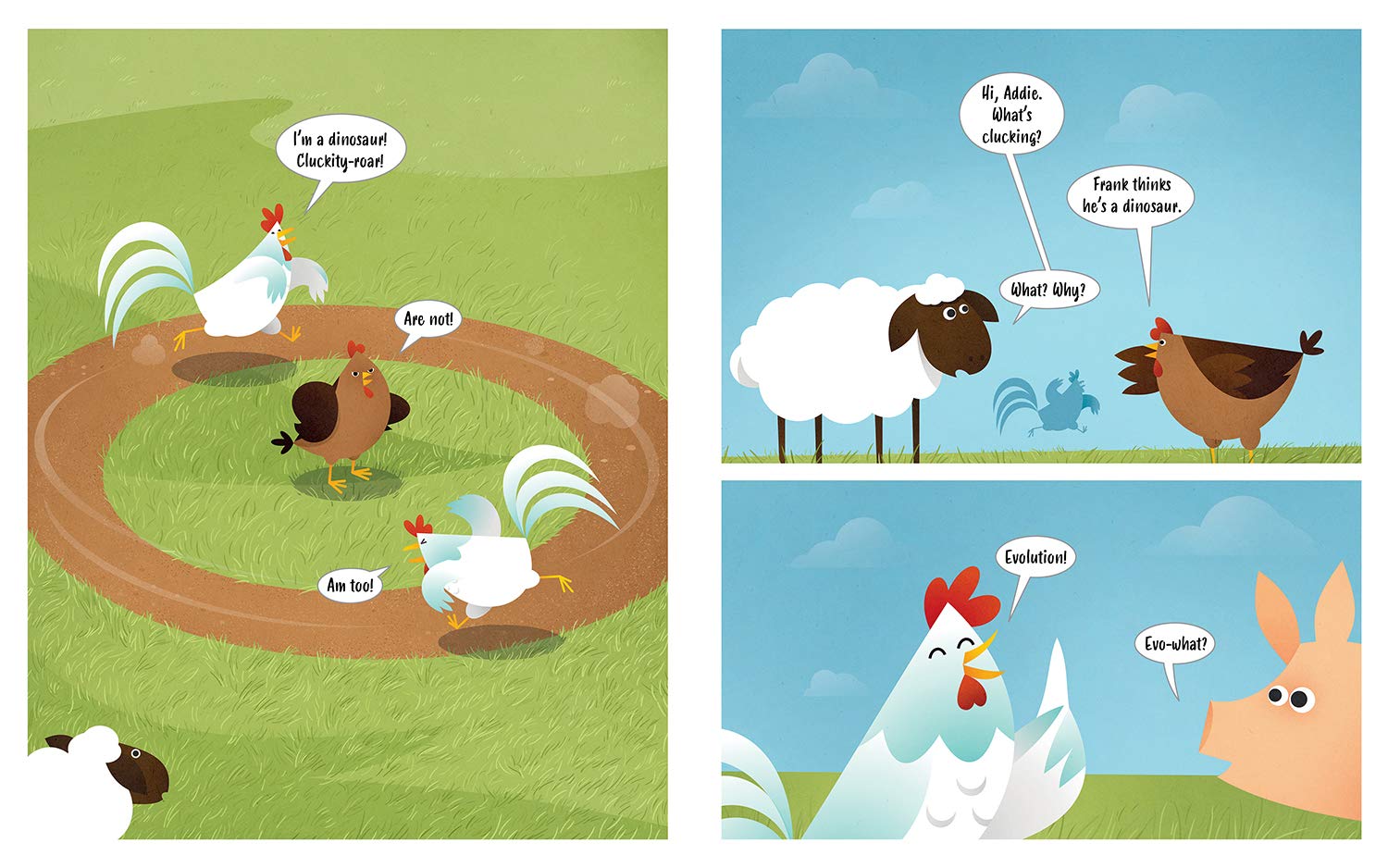
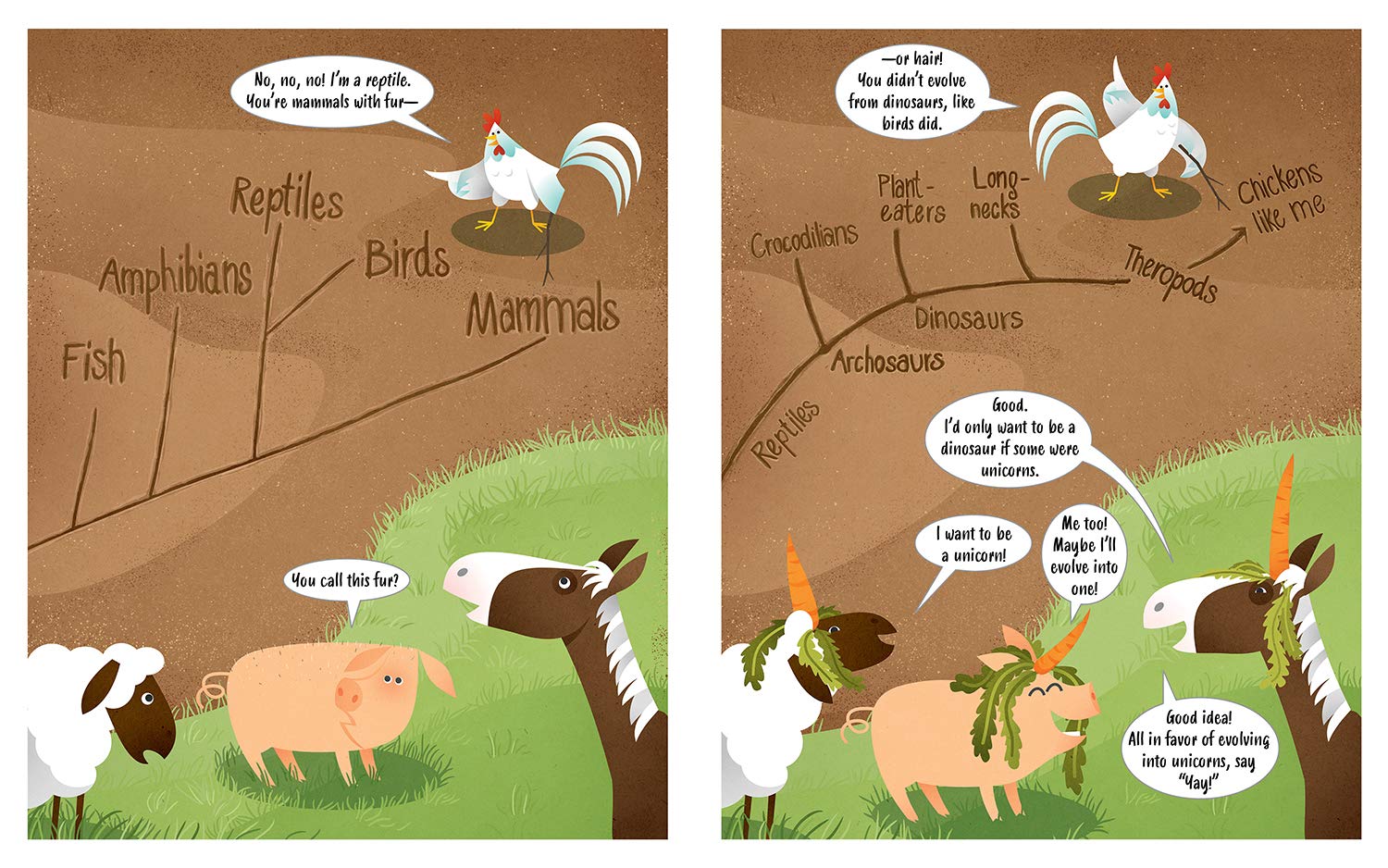
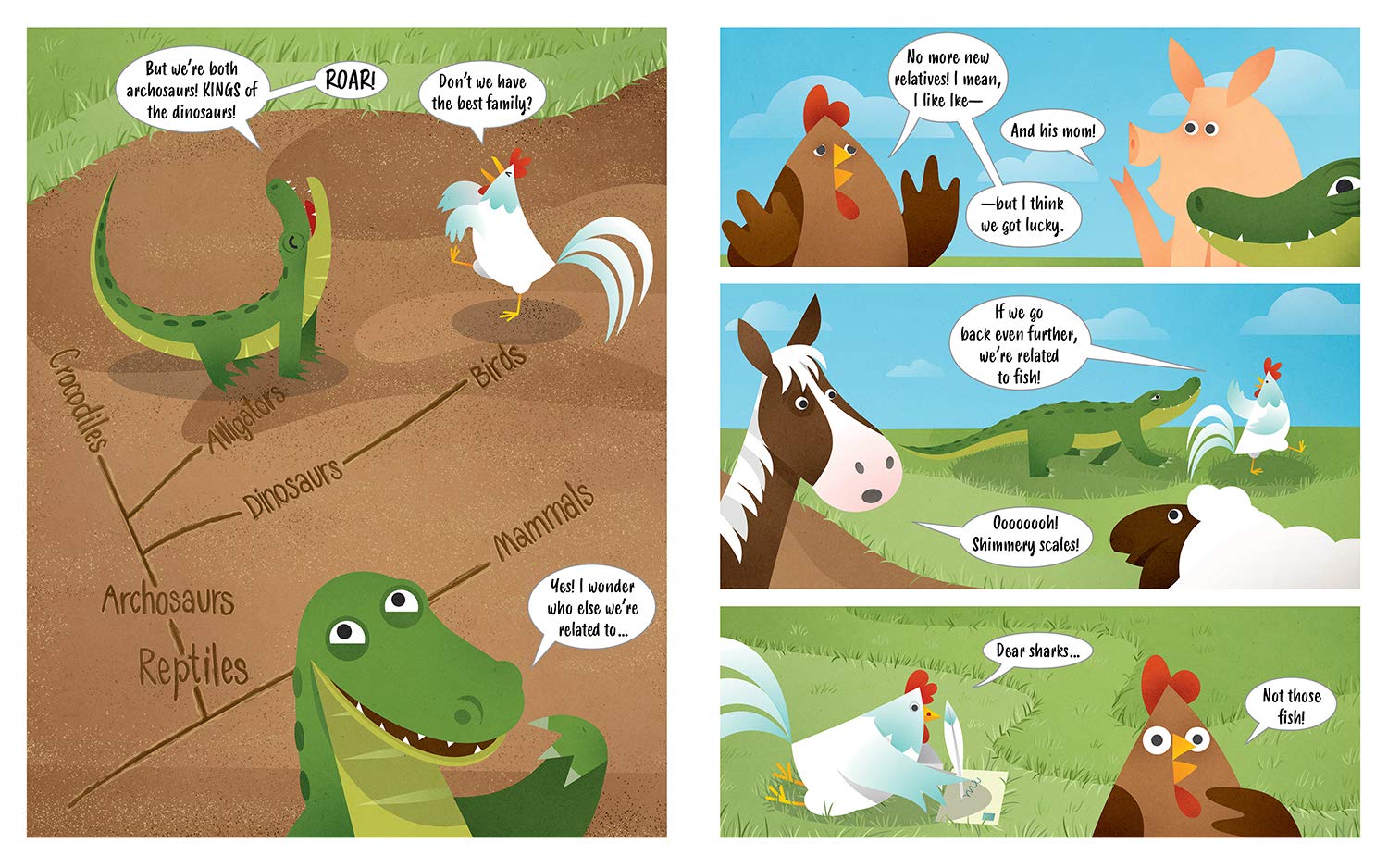
If you ask Chicken Frank he’ll tell you, “I’m a dinosaur! Cluckity-roar!” But the other barnyard animals aren’t so sure. Everyone is puzzled by this evolution thing Frank keeps talking about (“Evo-what?”). Chicken Frank tries to explain, “Evolution! Change! Change happens over time so we can survive.” He takes a stick and draws lines of lineage, connecting crocodiles to plant-eating dinosaurs and eventually birds. “From a dinosaur. See?” But the other animals don’t see it: “I see a chicken who was a chicken five minutes ago,” a sheep says. “I see a chicken who’s been a chicken since he hatched,” a pig chimes in.

celebrate-picture-books-picture-book-review-chicken-frank-dinosaur-evolution

Image copyright Jojo Ensslin, 2021, text copyright S. K. Wenger, 2021. Courtesy of Albert Whitman & Company.

Chicken Frank then presents different types of evidence to try to convince the farm that birds evolved from dinosaurs. He points out his feet look like those of T. rexes, to which another chicken looks at the readers and says, “More like T. crazy.” Frank explains that feathers evolved from dinosaur scales, and that both dinos and chickens had little tails when they were embryos. Other animals start wondering if they come from dinosaurs, since they have tails too. So, in a last straw attempt, Chicken Frank returns to his mud lineage map once more.

He shows how fish, amphibians, reptiles and mammals come from different branches in the evolutionary tree. Birds, however, branch off from reptiles. Nobody is convinced, and pig, sheep, and horse turn their attention to pretending to be unicorns with carrot horns instead. But then, the results from Frank’s DNA test arrive. The data shows Chicken Frank has a reptilian cousin: Crocodile Ike.

celebrate-picture-books-picture-book-review-chicken-frank-dinosaur-timeline

Image copyright Jojo Ensslin, 2021, text copyright S. K. Wenger, 2021. Courtesy of Albert Whitman & Company.

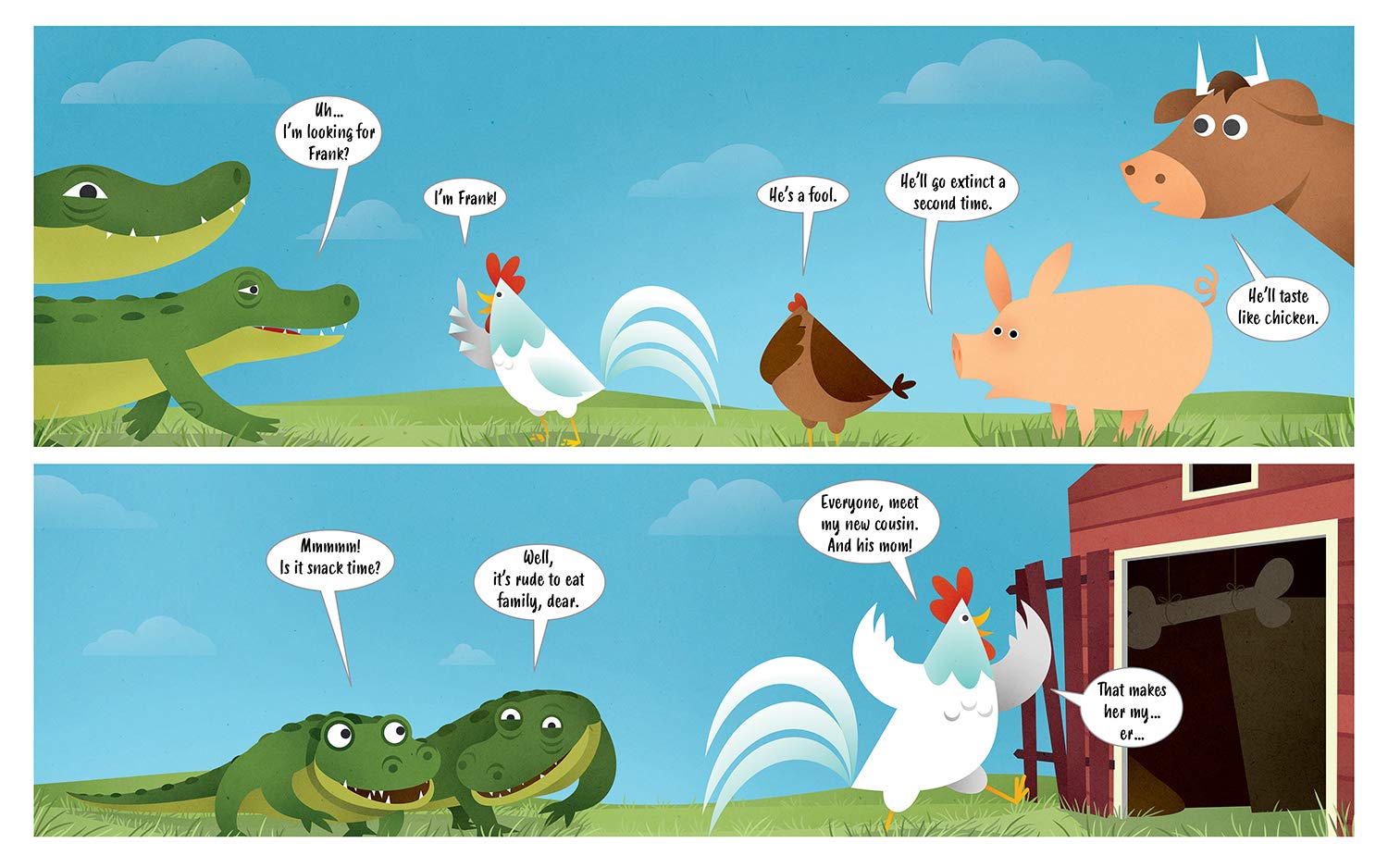
Chicken Frank decides to send a post card to his cousin Ike inviting him to come for a family reunion, much to the dismay of everyone. A crocodile and a chicken in the same place? Seems like a recipe for disaster…and maybe some chicken franks too. And while Crocodile Ike and his mom are first tempted to gobble Frank up, they take some time and study his charts. And, to everyone’s surprise, they get it! “One of us isn’t a dinosaur… But we’re both Archosaurs! KINGS of the dinosaurs! Roar!” Ike tells Frank. Ike’s mom wonders who else they may be related to, so Frank starts a letter to an even further distant cousin—the sharks!

celebrate-picture-books-picture-book-review-chicken-frank-dinosaur-ike

Image copyright Jojo Ensslin, 2021, text copyright S. K. Wenger, 2021. Courtesy of Albert Whitman & Company.

They all decide to take a trip to the aquarium, where the pig, sheep, and horse are delighted to find “a swimming unicorn!” (a narwhal), and Crocodile Ike exclaims, “family!” Chicken Frank happily agrees and adds, “Ours is the very best.”

The story is followed by five informational sections: “What Is DNA?”, “What Is Evolution?”, “Is Chicken Frank Really Related to T. rex?” “Similarities Between Dinosaurs, Chickens, and Alligators”, and “Frank’s Glossary of Favorite Animal Groups” Each of these sections provide in-depth scientific explanations for those who want to know a bit more about how it all works. S. K. Wenger masterfully explains each of these concepts at an advanced level that is clear to read and understand for readers of a wide range of age and abilities.

celebrate-picture-books-picture-book-review-chicken-frank-dinosaur-archosaurs

Image copyright Jojo Ensslin, 2021, text copyright S. K. Wenger, 2021. Courtesy of Albert Whitman & Company.

A joyous read, with important concepts about evolution scattered in with the fun. This comic-style picture book will have kids laughing out loud at the farm animals’ speech bubble puns and jokes. S. K. Wenger (and Chicken Frank) explain concepts of evolution in easily digestible terms for readers of all ages. The story is quick-paced and intriguing, with distinct characters and a quirky humor. A must-read for all kids, especially those with a fondness for dinosaurs.

The story would not be nearly as fun or educational without Jojo Ensslin’s colorful, cartoon-like drawings. As Chicken Frank explains his evolutionary reasoning, Ensslin depicts the ideas clearly and closely juxtaposed. For example, when Frank talks about how his feet match those of a T. rex, kids see both feet on the same page. Likewise, a scaled dinosaur and an ancient bird are portrayed on the same blackboard.

Later, when Ike receives the postcard from Frank in a muddy swamp, swarming with crocodiles, and calls out, “Does anyone know a cousin named Frank?” little speech bubbles with “Nope!” scatter the swamp, prompting kids to join in. In a carved-out corner, a close-up view of Ike and his mom show their evil plans to crash the reunion with some chompers. The facial expressions of each of the animals add to their characters and the humor of the story. Many carefully placed illustrative details add to the plot in meaningful and silly ways, such as, the DNA Test Kit shown the page before the story begins and the large bone Chicken Frank stores in his coop; the illustrations and text come together to create a read-aloud that is enjoyable to all.

Creative nonfiction at its best, Chicken Frank, Dinosaur! is both a hilarious story and a highly engaging way to explain evolutionary science in a way kids will respond to and remember. Sure to spark an interest in further science learning, the book is highly recommended for home bookshelves and a must for school and public library collections.

Ages 4 – 7

Albert Whitman & Company, 2021 | ISBN 978-0807511411

Discover more about S. K. Wenger and her books on her website.

To learn more about Jojo Ensslin and view a portfolio of his illustration, animation, and woodcout work, visit his website.

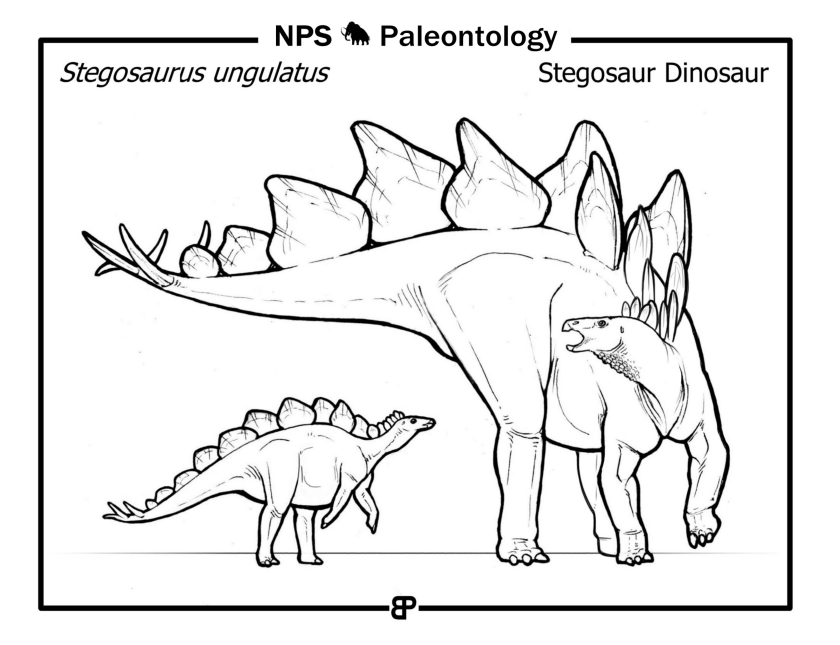
National Fossil Day Activitycelebrate-picture-books-picture-book-review-chicken-frank-dinosaur-national-park-service-dinosaur-coloring-pageDinosaur Coloring Pages


Enjoy these four dinosaur coloring pages from the National Park Service’s free prehistoric coloring book in honor of National Fossil Day!

Dinosaur Coloring Pages

For more, you can download the whole coloring book from the National Park Service here.

celebrate-picture-books-picture-book-review-chicken-frank-dinosaur-cover

You can find Chicken Frank, Dinosaur! at these booksellers

Amazon | Barnes & Noble | Books-a-Million

To support your local independent bookstore, order from

Bookshop | IndieBound

Picture Book Review

September 16 – Read a New Book Month
celebrate-picture-books-picture-book-review-pablo-cover

About the Holiday

There’s nothing better than spending the time snuggled up with a new book. Kids love cuddling and sharing laughs, poignant moments, fascinating facts, and the changes life brings through books. If you’re looking for a way to celebrate Read A New Book Month, check out today’s sweet and surprising book for the youngest readers.
Pablo

By Rascal | Translated by Antony Shugaar

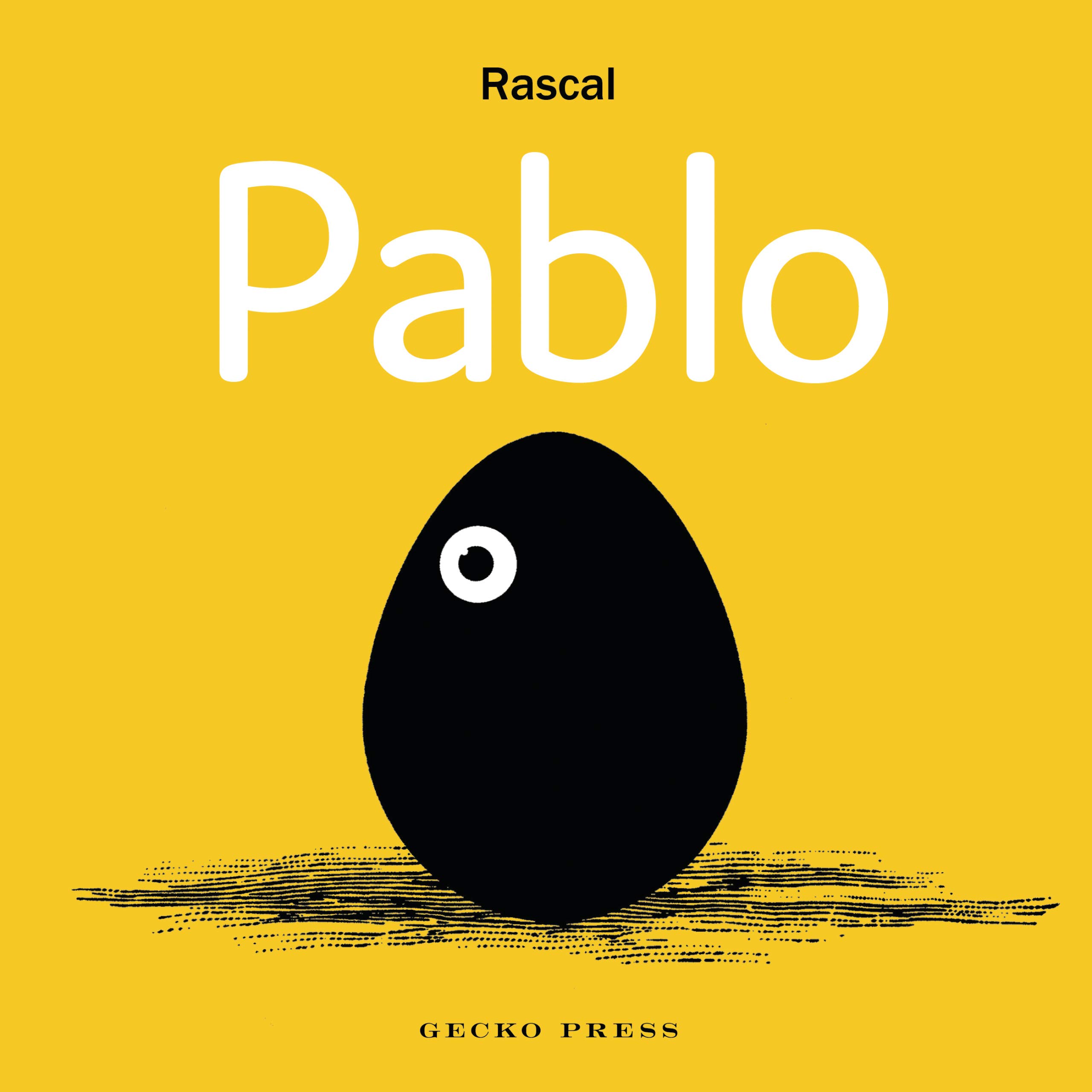
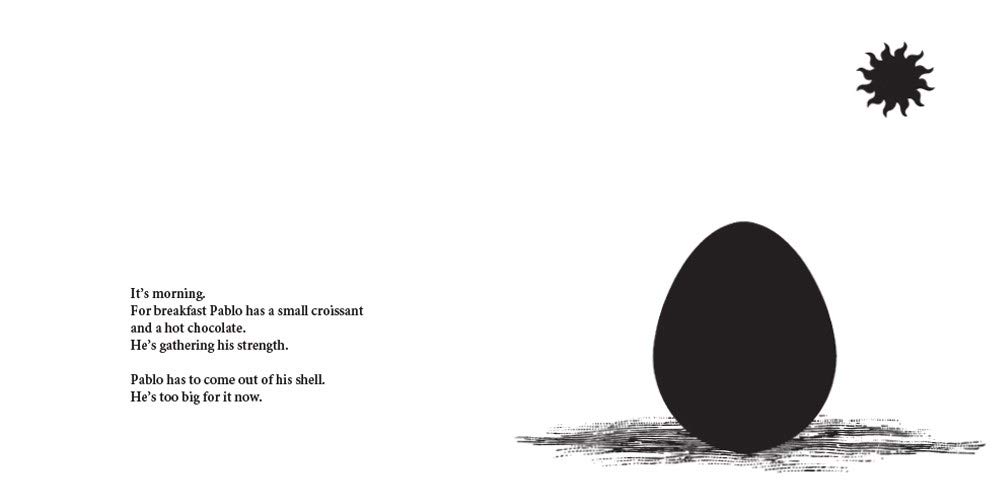
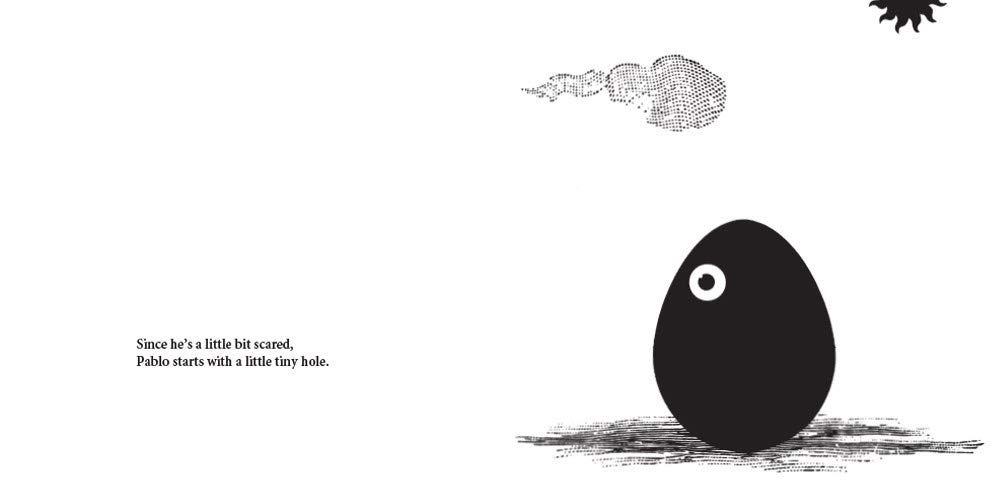
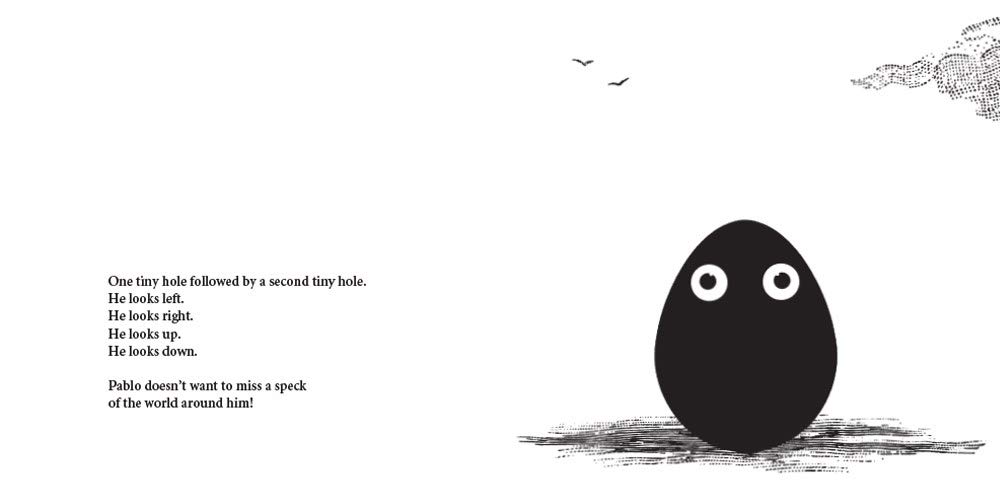
Do you see Pablo? No? He’s in the egg, and he’s sleeping. “Ssshhhhh! (This is the last night he’ll be in his shell.)” In the morning Pablo gathers his strength with a “small croissant and a hot chocolate.” Pablo is a little nervous to meet the world, so at first he pecks out only a tiny eyehole. Then a second one! He looks all around him at what awaits.

celebrate-picture-books-picture-book-review-pablo-morning

Copyright Rascal, 2021, translation copyright Antony Shugaar, 2021. Courtesy of Gecko Press.

He wants to learn more so he pecks two ear holes, first on one side and then on the other. He hears bees, birds, and the wind. These things make him think he’d like to smell the world too. He “pecks a fifth tiny hole for his beak. He discovers the smell of the soil and the perfume of the flowers.”

Pablo thinks “he’d like to wander around.” First one leg and then the other pop out. Pablo can’t wait to discover the world “on his own two feet.” But he doesn’t have to rely only on his feet. He pecks two more holes—his eighth and ninth—for his wings. Pablo is all set to conquer the world. Except, he’s still in his shell. He cracks it open and discards it. Well, the bottom half at least. The top, Pablo thinks, will make a perfect umbrella “for a rainy day.”

celebrate-picture-books-picture-book-review-pablo-eye

Copyright Rascal, 2021, translation copyright Antony Shugaar, 2021. Courtesy of Gecko Press.

Charming from the first peck to the last, Rascal’s sweet story, translated in a voice that fully retains the surprise, wonder, and inclusive narration of the original, offers enchanting opportunities for little ones to interact with the book by guessing what comes next, counting the holes Pablo makes, and even adding their own ideas about what Pablo sees, hears, smells, and discovers with each new experience of the world around him. The thought of Pablo having breakfast in his shell before he makes his appearance instantly endears him to readers—who are also just making their entrance into the world of school or activities—and will spark giggles.

celebrate-picture-books-picture-book-review-pablo-eyes

Copyright Rascal, 2021, translation copyright Antony Shugaar, 2021. Courtesy of Gecko Press.

The striking black-and-white illustrations of Pablo sitting in place as the sun, birds, and dotted clouds pass by will captivate both babies and young readers. A second look at those ingenious clouds reveals that the sky above Pablo is home to various shapes and creatures—just as it is for them. Kids will love turning the book sideways and upside down to use their imaginations and discover what’s there. When adorable Pablo finally emerges from his shell, the pop of yellow is sure to bring “Awww!”s and requests to read the book again.

A smart, clever, and immersive story for little ones that adults will enjoy reading over and over, Pablo is highly recommended for home, preschool, school, and public library collections. The book would make a much-loved gift for baby showers, new babies, and any gift-giving occasion.

Read a New Book Month Activity

CPB - Chick single

Hatch a Chick! Craft

Chicks are so cute and fluffy—you just wish you could have one of your very own! Now you can! Hatch your own chick with this craft.

Supplies

  • Cotton balls, or use large pom-poms
  • Yellow chalk
  • Orange paper
  • Black paper
  • Egg shell
  • Paper grass
  • Cardboard or poster board
  • Cheese grater
  • Green paint, marker, or crayon
  • Glue
  • Scissors

Directions

To make the shell

  1. Crack an egg and save the two halves
  2. Soak the eggshells in soapy water or wash gently with soap
  3. Dry eggshell

To make the chick

  1. Use the cheese grater to grate the chalk into a bowl
  2. Roll the cotton balls in the chalk dust until they are covered
  3. Make the beak from the orange paper by folding the paper and cutting a small triangle
  4. Cut two small eyes from the black paper
  5. Glue the beak and eyes to one of the cotton balls
  6. Glue the head to the second cotton ball
  7. Set the chick into one of the eggshells, glue if desired

To make the stand

  1. Cut a 3-inch by 3-inch square from the cardboard or poster board
  2. If you wish, paint or color the square green
  3. Glue green paper grass to the square
  4. Glue the eggshell to the stand.

celebrate-picture-books-picture-book-review-pablo-cover

You can find Pablo at these booksellers

Amazon | Barnes & Noble | Books-a-Million

To support your local independent bookstore, order from

Bookshop | IndieBound

Picture Book Review