September 14 – Live Creative Day

celebrate-picture-books-picture-book-review-crocodali-cover

About the Holiday

Today, let your inner artist out! There are as many ways to be creative as there are people—that’s what makes today such a special event! Everyone sees, hears, and experiences the world in a different way. How do you? Grab the creative tool or instrument of your choice and let your friends, family, and even strangers see the creative genius inside you!

Crocodali

By Lucy Volpin


You open the book, expecting to be welcomed with open arms by the characters inside. Instead, who do you meet but a very busy crocodile. With not a little braggadocio he reveals that he is “Crocodali, the most talented painter in the whole wide world.” It seems you’ve stumbled into his studio, and he’s setting up to create a new masterpiece, leaving him no time to stop for a chat or even to give you an autograph.

celebrate-picture-books-picture-book-review-crocodali-in-the-studio

Copyright Lucy Volpin, 2017, courtesy of simonandschuster.com

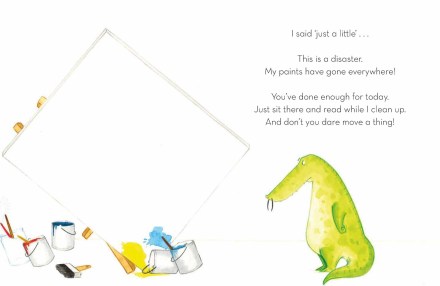
But after he’s given you the brush off, so to speak, he suddenly needs your help. Crocodali just can’t get the canvas to sit straight on the easel. He asks if you wouldn’t mind tilting the book just a little to the right. Oh, no! Now it needs to go a little to the left. Can you tilt it back just a wee bit? Oh dear! Now the canvas and the easel have toppled over! Even the paint cans tipped on their sides, and some blue and yellow has splashed onto the clean, white canvas.

celebrate-picture-books-picture-book-review-crocodali-tilt

Copyright Lucy Volpin, 2017, courtesy of simonandschuster.com

Well! Crocodali is a little miffed! He wants you to just go on reading and leave the cleaning up to him. Wait, wait, wait! Did you turn the page? (Isn’t that part of reading, though?) Now the canvas is completely on its side and there are some splotches of red on it too. Crocodali is in a huff because now he’ll have to start all over. But he takes a second look and in the next moment has had a change of heart. Now he thinks “that looks quite nice. Maybe you’re onto something.”

celebrate-picture-books-picture-book-review-crocodali-tilt-the-other-way

Copyright Lucy Volpin, 2017, courtesy of simonandschuster.com

He even invites you to “give the book a shake and see what happens.” What happens is that the paints, brushes, canvas, and even Crocodali himself are now rattling around the pages all topsy-turvy. When things settle down, the room and the great artist are covered in paint. Crocodali sets the painting back on the easel and steps back to take a look. Hmmmm…. He likes it! But maybe it’s upside down? He’s going to turn it over and add a few more details.
celebrate-picture-books-picture-book-review-crocodali-tipped-over

Copyright Lucy Volpin, 2017, courtesy of simonandschuster.com

With a very dexterous tail and his right hand, he dabs on purple, brushes on yellow and red, and is then ready to “mix it all up.” Here’s where you come in again. Can you give the canvas a good rub? Wow! The painting looks amazing! Crocodali exclaims, “It’s a masterpiece! I really am the greatest painter in the world.” He’s the greatest painter in the world? Who did all the work? Whatever…. The painting now needs to dry, and Crocodali wants you to blow on it to speed up the process.

One…two…three…Blow! Huh! You have some power! You blew all the paint off the canvas and onto the wall! It looks incredible, through—and leaves the canvas blank to start all over again!

celebrate-picture-books-picture-book-review-crocodali-on-its-side

Copyright Lucy Volpin, 2017, courtesy of simonandschuster.com

Kids will love Lucy Volpin’s feisty, boastful crocodile who comes to see that even mishaps can spark creativity. The giggles will begin on the first page as Crocodali (an inspired character and name) strolls into the studio sporting a Salvador Dali mustache and dismissing readers away with a wave of his hand. As children begin interacting with the pages, they’ll look forward to what comes next. Large images of the canvas allow children to really see the effects of their actions, and the two-page “shaken” spread is a delight of mayhem and color.

Kids will also enjoy turning the book around to see the various perspectives of the painting they’re creating throughout the story. Volpin gives readers lots of opportunities to discuss art, color, painting, and even teamwork, making Crocodali a joyful and inviting introduction to the creative process.

Crocodali would be a lively, playful opening to arts and crafts sessions in schools, libraries, and at home. For art lovers or energetic kids who like interaction with their reading, Crocodali is a wonderful choice.

Ages 3 – 8

little bee books, 2017 | ISBN 978-1499806335

Live Creative Day Activity

celebrate-picture-books-picture-book-review-supply-jar-craft

Make Your Own Creative Supply Jars


When inspiration hits, you want to have all of your supplies close at hand! With this easy craft you can use your creativity to make a one-of-a-kind jar to keep all of your favorite things neat, tidy, and within reach! These make great gifts for friends too!

Supplies

  • A wide-mouth plastic jar, such as a peanut butter jar
  • Paint or markers for plastic
  • Multi-surface chalkboard paint (optional)
  • Paint brush
  • Chalk (optional)

Directions

  1. Design your jar
  2. If you are planning to use chalkboard paint, paint that section first
  3. Paint or decorate with markers
  4. Let dry
  5. Fill with your art of other creative supplies

Picture Book Review

June 27 – It’s Effective Communications Month

celebrate-picture-books-picture-book-review-the-bear-who-stared-cover

About the Holiday

Sure, body language can say a lot, but effectively expressing yourself in words and writing helps decrease misunderstandings, misinterpretations, hurt feelings, and conflict. Learning to handle important relationships and work obligations with thoughtful care, consideration, and empathy can take patience and practice. This month people are invited to work on their communications skills to enhance their life with family, friends, co-workers, and others.

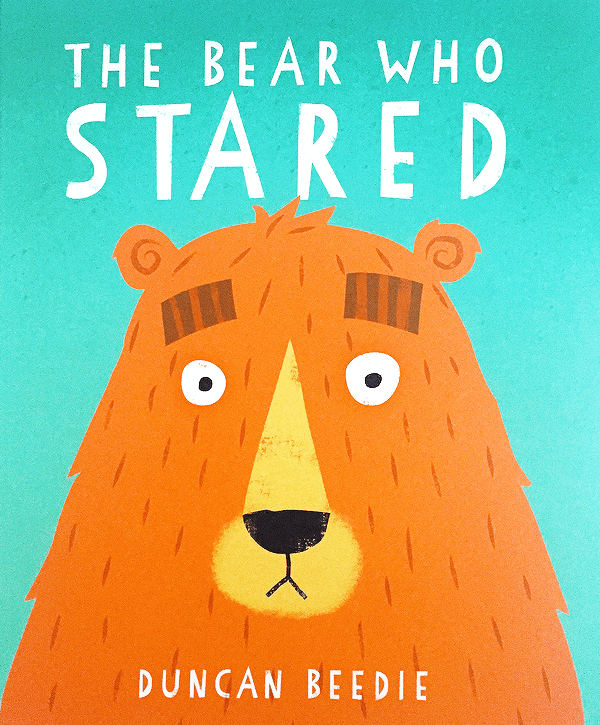
The Bear Who Stared

By Duncan Beedie


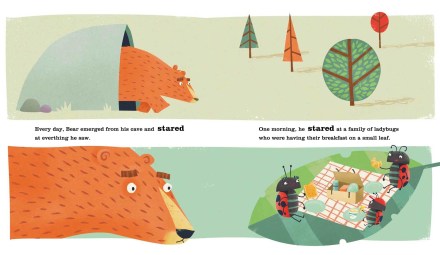
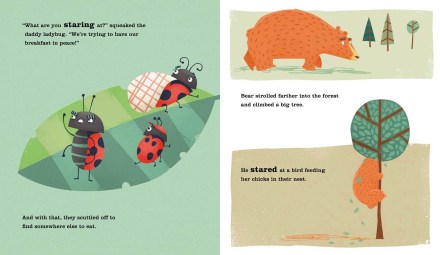
Bear loves to stare…and stare…and stare. One morning he emerges from his den to find a family of ladybugs having a picnic breakfast. He can’t help but gaze at them intently. “‘What are you staring at?’” the daddy ladybug demands before he and his family pack up to find a more private leaf. Bear continues on his way. In a bit he climbs a tree and stares at a bird feeding her chicks. “‘Can I help you?’” the mother bird asks, but Bear remains silent. The chicks don’t like Bear interfering with their meal, so the mother bird angrily tells him to “‘sshhhooooo!’”

celebrate-picture-books-picture-book-review-the-bear-who-stared-interior-art-ladybugs

Copyright Duncan Beedie, courtesy of simonandschuster.com

At the bottom of the tree Bear spies a badger hole and sticks his head inside. The badger, particularly irritated at Bear’s badgering stare while he is shaving, bites poor bear on the nose. Sore and dejected, Bear wanders through the forest to a large pond. He sits down on a log to ponder his situation. He doesn’t mean to be annoying, he’s “just curious but too shy to say anything.”

celebrate-picture-books-picture-book-review-the-bear-who-stared-ladybugs-yelling

Copyright Duncan Beedie, courtesy of simonandschuster.com

A little frog floating on a lily pad in the middle of the pond pipes up, “‘I’ve seen that look before.’” Bear stares at the frog and the frog stares back. “‘Not much fun being stared at, is it?’” he says. Bear confesses that he just doesn’t know what to say to anyone. Just then Bear catches a glimpse of another bear staring back at him from the mossy water of the pond. This bear looks exactly like Bear, except that he is green and wavy. Suddenly, the green bear smiles. “‘You see?’” says the frog. “‘Sometimes a smile is all you need.’” The frog dives off his lily pad into the pond, and the green bear disappears too.

celebrate-picture-books-picture-book-review-the-bear-who-stared-interior-art-staring

Copyright Duncan Beedie, courtesy of simonandschuster.com

The next day Bear leaves his den and discovers the ladybug family breakfasting again. As soon as they spot Bear, they begin to gather their things. “‘Hello!’” Bear says with a big smile on his face. The ladybugs are surprised and happy. “‘Oh, hello!’” replies the dad, smiling back. With renewed confidence Bear wanders into the forest. He smiles at the birds and smiles at the badger, and they smile at him in return. Bear makes a lot of new friends that day. And there’s even that friend down at the pond who likes to stare as much as he does!

celebrate-picture-books-picture-book-review-the-bear-who-stared-frog

Copyright Duncan Beedie, courtesy of simonandschuster.com

Duncan Beedie highlights the awkward feeling many kids—and even adults—often feel in social situations. Nothing pops immediately to mind to say and yet there’s a desire for connection. As Bear discovers, staring is not the answer—so what is? In The Bear Who Stared, Beedie offers a simple, but universal solution through an engaging and humorous story. Bear, sporting a bemused expression that aptly depicts his predicament, is such an endearing character that readers will wish they could give him a hug as he suffers slights from the woodland creatures.

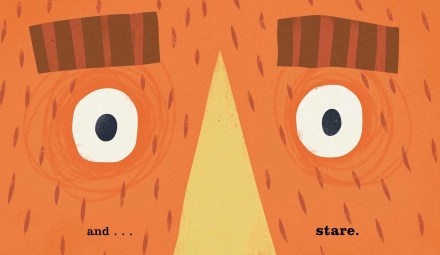
The full-bleed, oversized pages put readers at eye level with bear and his subjects, and the very up-close look into Bear’s staring eyes will make kids laugh. The green, rust, and blue palette on matte paper is bold, but muted, giving the pages an organic, environmental feel that is perfect to carry the story.

The Bear Who Stared is a funny story time read with a heart that kids will ask for again and again.

Ages 4 – 8

little bee books, 2016 | ISBN 978-1499802856

Check out more of Duncan Beedie’s illustration and animation work on his website!

Take a good looong look at this The Bear Who Stared book trailer!

Effective Communications Month Activity

celebrate-picture-books-picture-book-review-bear-craft

Expressive Bear Craft


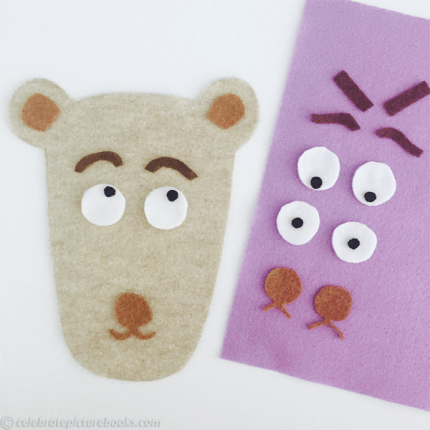
Sometimes it’s hard to know what to say or how to express your emotions and thoughts. With this easy-to-make felt (or paper) set, you can give the bear different emotions and talk about them, make up stories to go with each facial expression, or play a fun game. Below, you’ll find a couple of ideas!

Supplies

Directions

  1. Print templates
  2. Cut bear head from light felt or fleece
  3. Cut eyes from white felt or fleece
  4. Cut nose and inner ears from dark brown felt or fleece
  5. Cut pupils from black felt or fleece
  6. Glue pupils onto white eyes

Alternately: Color and play with the paper set

To Play a Game

Roll the die to collect parts of the bear’s face. The first player to create a full face is the winner.

  • Die dots correspond to:
  • 1—one eyebrow
  • 2—second eyebrow
  • 3—one eye
  • 4—second eye
  • 5—nose
  • 6—inner ears

For a Fun Story Time

Give the bear different faces and make up stories of why he looks that way!

Picture Book Review
June 18 – Father’s Day

celebrate-picture-books-picture-book-review-the-best-part-of-daddy's-day-cover

About the Holiday

While celebrations of Mother’s Day caught on very quickly after the first ceremony in 1908, proclaiming Father’s Day as a national institution took a little longer. On July 19, 1910 the governor of Washington State held the first Father’s Day event. In 1916 President Woodrow Wilson, trying to attract attention to the holiday with a little technology, unfurled a flag in Spokane, Washington by pushing a button in Washington DC. This clever ploy, however, did not convince the men of the time, who scoffed at a holiday dedicated to fathers as somehow too “domesticated” and “unmanly.” During World War II celebrating Father’s Day began to be seen as a way to honor American troops and to help the war effort. The holiday then entered the mainstream, but it wasn’t until 1972, when President Richard Nixon signed a proclamation, that Father’s Day became a federal holiday.

The Best Part of Daddy’s Day

By Claire Alexander


Little Bertie is proud to introduce his daddy to readers. His dad is a builder who drives diggers and trucks every day. Today he’s going to be in a crane high up in the sky working on a tall tower. “When I’m big,” Bertie says, “I want to be a builder just like him….” But right now Bertie’s dad is dropping him off at school. “‘Have a good day, Bertie!’” he says as he gives his son a hug.

celebrate-picture-books-picture-book-review-the-best-part-of-daddy's-day-breakfast

Image copyright Claire Alexander, 2016, courtesy of simonandschuster.com

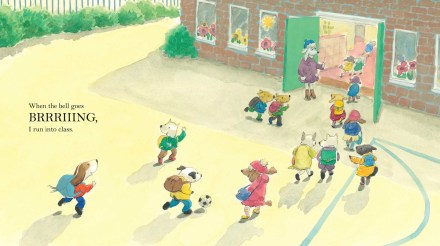
With the BRRRIIING of the bell, Bertie runs into class, where he’s in for a surprise. “‘Today we’re going to be builders,’” his teacher tells her class, and Bertie knows it’s going to be a great day! First the teacher reads “an exciting story about a digger” then Bertie paints a picture of a crane like his daddy’s. But just as he’s finishing it, a classmate with paint on his shoes tracks green footprints across the paper.

celebrate-picture-books-picture-book-review-the-best-part-of-daddy's-day-school

Image copyright Claire Alexander, 2016, courtesy of simonandschuster.com

At lunchtime Bertie trips over his shoelace and spills his lunch. His great day is having some bumps along the way, and Bertie wishes he could see his daddy. Bertie knows just what to do. He runs to the playground and climbs “up, up, UP…to the top of the jungle gym.” Bertie is so high up he “can see the top of Daddy’s tower!” Bertie can even see someone driving the crane and knows it must be his dad.

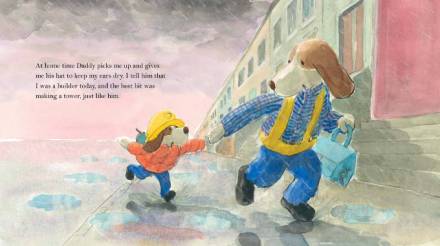
After lunch the class constructs an enormous tower. Bertie pretends to be a small crane, while his teacher, in her high-heeled shoes, is a big crane, able to place boxes higher and higher. The building they make is amazing! As the day progresses it begins to rain, but when Bertie’s dad picks him up he gives Bertie his hat to keep his ears dry. Bertie is excited to tell his dad about building the tower—it was the best part of his day, he says.

celebrate-picture-books-picture-book-review-the-best-part-of-daddy's-day-going-into-school

Image copyright Claire Alexander, 2016, courtesy of simonandschuster.com

At home Bertie tells his dad “the not so good parts” of his day—about his spoiled painting and about tripping and falling. “‘I bet things like that never happen to you, Daddy,’” Bertie says. “‘Well, actually…they do sometimes!’” Bertie’s dad answers, and he tells his son about the bumps in his day—how someone walked across his new, wet cement floor and that he also tripped and fell over an untied shoelace, just like Bertie. But then, his dad says, he went back up in the crane and “‘finished my tower, and I think I saw you, Bertie, on the jungle gym!’”

celebrate-picture-books-picture-book-review-the-best-part-of-daddy's-day-running-home

Image copyright Claire Alexander, 2016, courtesy of clairealexander.com

“‘It WAS me, Daddy!” Bertie exclaims. Then he asks his dad “if the best part of his day was finishing the tower.” His dad looks at his son snuggled on his lap and answers, “‘Actually, the best part of my day is right now, being here with you, Bertie.” Bertie agrees. “‘I think this is the best part of my day, too.”

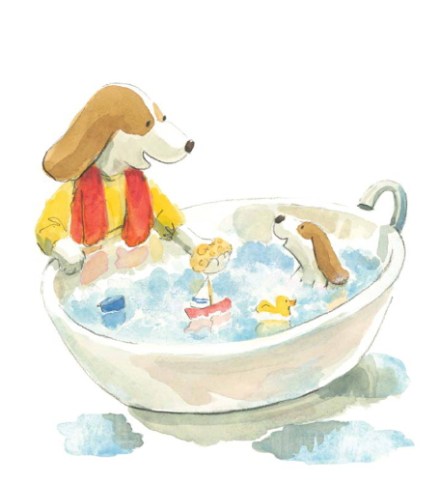
Claire Alexander hits all the right notes in her heartfelt tribute to loving father-son relationships. Perfectly paced toward an emotional surprise twist, Alexander’s story is sweet and satisfying. The open communication between father and son adds poignancy, and the truth that while kids are inspired by their parents, parents are equally inspired by their kids may amaze children and will bring a lump to parents’ throats. This father and son aren’t just building towers, they’re building a life-long bond.

celebrate-picture-books-picture-book-review-the-best-part-of-daddy's-day-bath

Image copyright Claire Alexander, 2016, courtesy of clairealexander.com

Alexander’s vivid, cheerful watercolor illustrations glow with the enthusiasm and love that Bertie and his dad feel for each other. Large two-page spreads invite kids into Bertie and his dad’s world as they eat breakfast together in the tidy kitchen, say goodbye outside the school gate, and read together in their comfy, overstuffed chair. Kids will love the view of Bertie’s playground with the gleaming glass tower and red crane rising above it and the sweeping vista of the city as seen by Bertie’s dad from atop the crane. A vertical spread of the tall tower Bertie’s class builds adds a fun element to the story and emphasizes the tower’s height for young children. 

The Best Part of Daddy’s Day  is an excellent addition to a child’s bookshelf and makes a wonderful gift. It will quickly become a favorite for bedtime or story time.

Ages 3 – 8

little bee books, 2016 | ISBN 978-1499801965

To see more of adorable books for children by Claire Alexander visit her website!

Father’s Day Activity

celebrate-picture-books-picture-book-review-building-blocks-craft

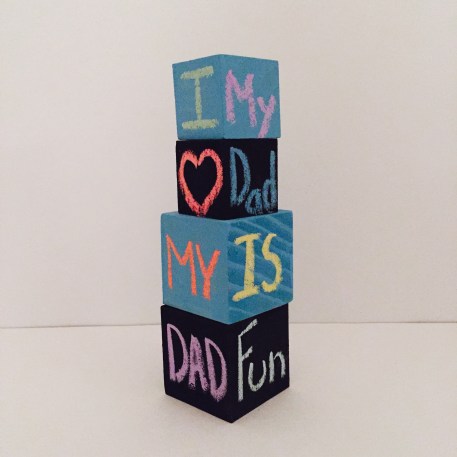
I Love Dad Building Blocks


This craft will stack up to be a favorite with kids! With wooden blocks and a little chalkboard paint, it’s easy to make unique building materials. They’re great for gifts, decorating, party favors, or when you just have a little time to play!

Supplies

  • Wooden blocks in various sizes, available from craft stores
  • Chalkboard paint in various colors
  • Paint brush
  • Chalk in various colors

Directions

  1. Paint the wooden blocks with the chalkboard paint, let dry
  2. Write words or draw pictures on the blocks
  3. Have fun!

Picture Book Review
June 15 – Smile Power Day

celebrate-picture-books-picture-book-review-welcome-barroux-cover

About the Holiday

We smile at people all day long, don’t we? I mean there’s 🙂  😀  🙂  😉  and so many more! But how about the real kind? Giving a warm smile to a friend, a stranger, or—especially—someone who looks as if they need one, makes everyone feel better! Today, be happy and welcome all with a smile!

Welcome

By Barroux


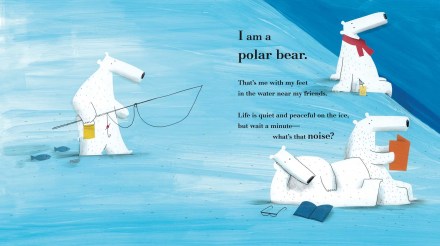
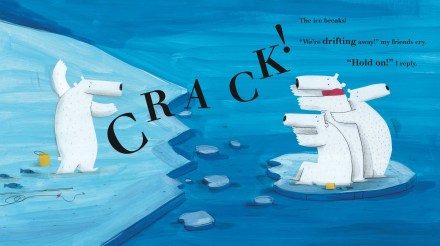
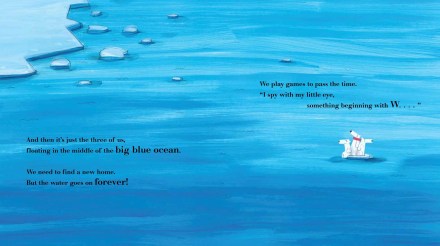
A polar bear is sitting on the edge of an ice floe enjoying some relaxing time with his friends when he hears an ominous noise. “CRACK! The ice breaks! ‘We’re drifting away!’” his friends cry. In no time at all the three polar bears are adrift in the middle of the sea in need of a new home. They float and float, but “the water goes on forever!” To pass the time the friends play games: “‘I spy with my little eye, something beginning with W…’”

celebrate-picture-books-picture-book-review-welcome-barroux-polar-bears-relaxing

Copyright Barroux, courtesy of little bee books and simonandschuster.com

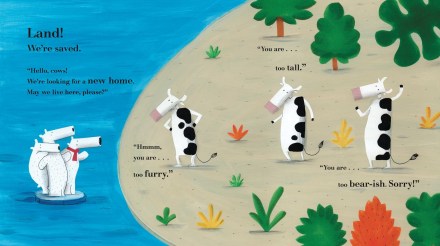
Perhaps days go by. The bears ride out a storm with dark skies and huge waves that threaten to sink them. It’s scary and the trio wants “to find a new home right now!” At last, their ice floe—smaller now—approaches a sandy shore. “Land! We’re saved,” cheer the polar bears. They ask the cows on the beach if they can live there, but the cows take exception. The bears are “too furry…too tall…and too bear-ish.” And with a “Sorry!” the cows turn the weary travelers away.

celebrate-picture-books-picture-book-review-welcome-barroux-ice-breaks-away

Copyright Barroux, courtesy of little bee books and simonandschuster.com

Once again on their own, the bears have no choice but to let the current steer them. With standing room for only one on their icy raft, they near another beach where a single panda relaxes on pillows in the midst of expansive land. “Yes! This could be our new home,” the polar bears shout. The panda ponders the situation for only a moment before stating, “‘…you are too many. Look around, there’s just not enough room! You can’t live here.’”

celebrate-picture-books-picture-book-review-welcome-barroux-polar-bears-meet-cows

Copyright Barroux, courtesy of little bee books and simonandschuster.com

As the polar bears continue on their journey, their “little ice boat has almost melted,” and they are running out of time. They bob next to a tall sea wall. “‘Help us!’” they plead. Behind the wall two giraffes lounge on the beach, too lazy to investigate the noise they hear. The ice floe has melted to a thin disk. The bears are hanging on and about to give up hope when they find an empty island. They jump to shore just in the nick of time and begin enjoying their new home.

celebrate-picture-books-picture-book-review-welcome-barroux-polar-bears-adrift

Copyright Barroux, courtesy of little bee books and simonandschuster.com

It’s not long before a dinghy floats into view with three monkeys on board. “‘Excuse me, we’re looking for a new home. Can you help us please?’” they ask. The polar bears stop their game of badminton and step forward. “‘Hmmm,’” they think. “‘You are…

Welcome!’”

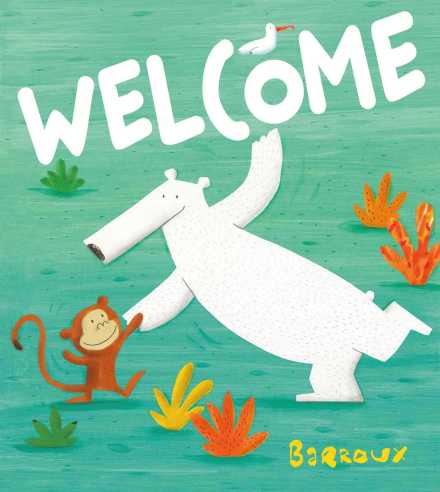
With vibrant blue, full-bleed pages as wide open as the sea itself and three endearing long-nosed polar bears, Barroux has crafted a poignant tale with depth and far-reaching applications for readers of all ages. Inspired by the Syrian refugee crisis, Welcome stands on its own as an uplifting story of friendship and inclusiveness, but also offers an excellent means for beginning a discussion on the world events that children see and have questions about. Employing a bear’s first person point of view and incorporating a child-centric perspective on travel—from the humor of the I Spy game to the perseverance of the bears—Barroux sets just the right tone for his audience.

With sparse text and repetition of the bears’ simple request, the subject matter is handled with sensitivity, not fright, which allows children to understand that the theme of the story is relevant on many levels. Whether the “traveler” comes from near or far, is a classmate, teammate or neighbor, or is even the reader or someone else feeling adrift in a certain situation, children will see that all deserve welcome.

Ages 4 – 8

little bee books, 2016 | ISBN 978-1499804447

You can view a gallery of illustration work for children, adults, and more by Barroux on his website!

Smile Power Day Activity

celebrate-picture-books-picture-book-review-give-me-your-hand-puzzle

Give Me Your Hand! Puzzle


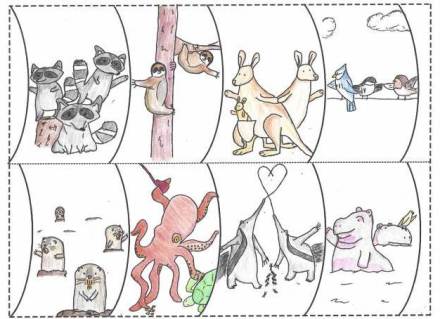
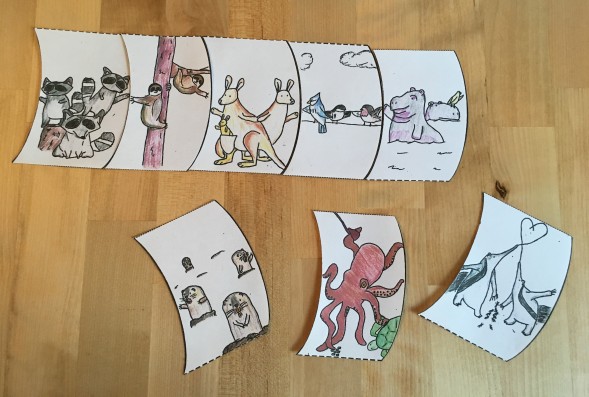
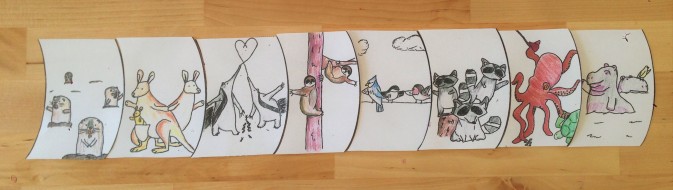
In this printable Give Me Your Hand! Puzzle, everyone is welcomed with a handshake. Offering friendship to all, the interchangeable pieces can be mixed and matched as the animals become buddies with one another.

Supplies

celebrate-picture-books-picture-book-review-UN-day-puzzle

Directions

  1. Print the puzzle: to make the puzzle sturdier: Print on heavy stock paper or glue the page to poster board
  2. Color the pictures with colored pencils or crayons
  3. Cut the pieces apart
  4. Switch the pieces around to make many alternate pictures

celebrate-picture-books-picture-book-review-UN-day-puzzle

Picture Book Review
February 16 – International Month of Black Women in the Arts

celebrate-picture-books-picture-book-review-fancy-party-gowns-cover

About the Holiday

During this month we recognize the contributions of black women across the fields of literature, fine, performing, culinary, and healing arts. To celebrate, research black women artists and attend exhibits, readings, or other events that showcase these talented women.

Fancy Party Gowns: The Story of Fashion Designer Ann Cole Lowe

Written by Deborah Blumenthal | Illustrated by Laura Freeman


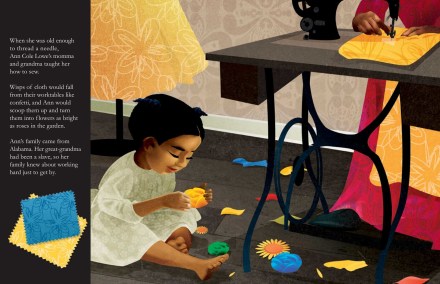
From the time that Ann Cole Lowe was old enough to thread a needle, she loved to sew. While her momma and grandma worked at their sewing machines, making dresses for the socialites of Alabama, Ann sat nearby turning “the wisps of cloth” that fell to the floor into “flowers as bright as roses in the garden.” Even at a young age Ann understood that “doing what you love could set your spirit soaring.”

celebrate-picture-books-picture-book-review-fancy-party-gowns-ann-as-child

Image copyright Laura Freeman, text copyright Deborah Blumenthal, courtesy of simonandschuster.com

When Ann was only sixteen years old, her momma died. Not only did her mother’s death leave Ann bereft, it left her in charge of the business, and many women were waiting for gowns, most importantly the Alabama governor’s wife. “Ann thought about what she could do, not what she couldn’t change.” She sat down and finished the dresses. “Then she stood up and ran the business.”

celebrate-picture-books-picture-book-review-fancy-party-gowns-design-school

Image copyright Laura Freeman, text copyright Deborah Blumenthal, courtesy of simonandschuster.com

In 1916 a woman in Florida hired her to sew dresses. She also sent Ann to design school in New York. Because she was African American, however, Ann was required to study in a separate classroom by herself. Ann was not deterred. She continued to make unique gowns and dresses, and her client list grew. Finally, Ann had saved enough money to open a salon of her own in Manhattan. Sometimes she didn’t have enough money to pay all the bills, but she persisted. Her life was about “what she could do, not what she couldn’t change.”

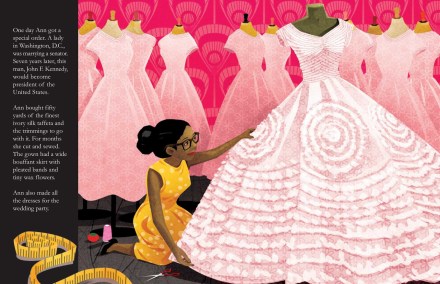
One day Ann received an order for a wedding dress from a woman who was marrying a United States senator. The woman’s name was Jacqueline Bouvier and the man was John F. Kennedy, a future president of the U.S. Ann bought 50 yards of ivory silk taffeta and designed a beautiful dress with a bouffant skirt and pleated bands decorated with tiny wax flowers. She also made the dresses for Jacqueline’s attendants.

celebrate-picture-books-picture-book-review-fancy-party-gowns-wedding-dress

Image copyright Laura Freeman, text copyright Deborah Blumenthal, courtesy of simonandschuster.com

Then ten days before the wedding, Ann walked into her workroom and discovered that a water pipe had burst, flooding the dresses, material, everything. Ten of the sixteen gowns Ann had sewn were destroyed. “Ann though about what she could do, not what she couldn’t change.” She ordered new fabric, hired more seamstresses, and went to work. On this job she lost money instead of making it, but none of that mattered. In eight days all of the dresses were ready.

When Ann delivered the gowns to the mansion in Newport, Rhode Island, the butler who answered the door told her workers needed to use the back entrance. Ann replied that “if she had to enter through the back door, the bride and bridesmaids wouldn’t be wearing her dresses for the wedding.” The front door swung open. On the day of the wedding—September 12, 1953—the whole world oohed and aahed over Jacqueline Bouvier Kennedy’s gorgeous gown and her bridesmaids’ dresses, but not many people thought about or knew the name of the woman who had created them. “Why? Because Ann Cole Lowe was African American. And life wasn’t fair.”

celebrate-picture-books-picture-book-review-fancy-party-gowns-sewing

Image copyright Laura Freeman, text copyright Deborah Blumenthal, courtesy of simonandschuster.com

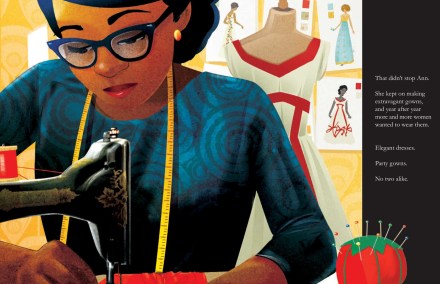
Ann continued to design and sew party dresses and evening gowns for the women of high society. She “didn’t make fine clothes to get rich or famous,” however, but, as she once said, “‘To prove that a Negro can become a major dress designer.’” In 1961 Ann finally gained public recognition for her work when she was named “Official Couturiere” in honor of the 33 ball gowns she created for an elegant ball in Omaha, Nebraska. She proudly accepted her award as the fashion world applauded.

An Author’s Note explaining more about Ann Cole Lowe’s life and work follows the text.

celebrate-picture-books-picture-book-review-fancy-party-gowns-recognized

Image copyright Laura Freeman, text copyright Deborah Blumenthal, courtesy of simonandschuster.com

With straightforward storytelling adorned with lyrical passages, Deborah Blumenthal reveals Ann Cole Lowe’s lifelong love of fashion design, her struggles, and her ultimate acclaim. Lowe’s natural talent, single focus, self-confidence, courage, and persistence come through as she overcomes obstacles and prejudice to become the first African American couture designer. Children interested in fashion and history will find much to spark their curiosity and desire to know more about the woman and her times. Blumenthal’s repetition of Lowe’s philosophy to think about what she could do instead of what she couldn’t change will inspire readers to push past difficulties and find solutions.

Laura Freeman’s full-bleed illustrations are as bold and vivacious as Ann Cole Lowe herself. Beginning with the endpapers, which are scattered with drawings of Lowe’s one-of-a-kind gowns, Freeman takes readers on a tour of the workrooms and salons stocked with the fabrics that gave form to Lowe’s creativity. While the backgrounds are typically brilliantly colored and patterned, twice Freeman places Lowe on a completely white page—after her mother has recently died and she is left alone to finish dresses and when she is segregated from the other students in design school. These pages make a moving and effective statement. Children fascinated by fashion will love seeing the beautifully depicted gowns, and may be stirred to create styles of their own.

Ages 4 – 8

little bee books, 2017 | ISBN 978-1499802399

To learn more about Deborah Blumenthal and her books for children, young adults, and adults, visit her website!

Discover a gallery of illustration work by Laura Freeman on her website!

International Month of Black Women in the Arts Activity

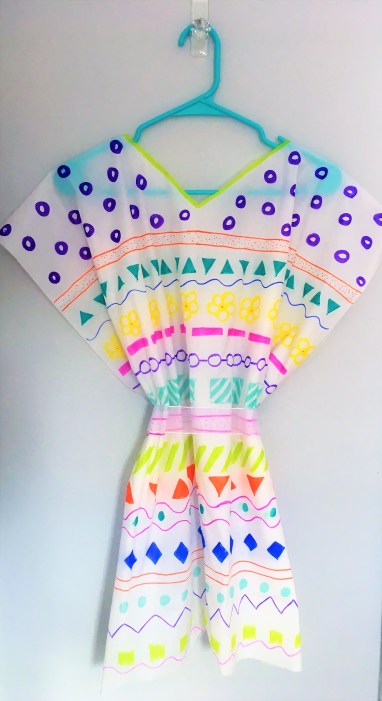
celebrate-picture-books-picture-book-review-tablecloth-dress


Create Your Own Party Dress 


With this easy craft you can make a  fun sheath dress for playing dress-up. It’s also a great party activity! All you need is a plastic or paper party table cloth, Sharpies, and your imagination!

Supplies

  • 1 plastic party tablecloth (1 cloth will most likely make 4 dresses)
  • Sharpies or other permanent markers
  • Ribbon, scarf, crepe paper garland, or other material for a belt
  • Scissor
  • Newspaper, old sheeting or other material to protect the floor

Directions

  1. With the table cloth folded along one edge, cut a rectangle the appropriate size for the child
  2. In the middle of the folded edge cut a V-shaped or rounded opening for the child’s head. Begin with a small opening and enlarge it as needed
  3. Lay the dress on newspaper or other material to protect the floor
  4. Draw and color shapes, lines, figures, or other designs on the dress
  5. Slip on over a shirt and pants or leggings
  6.  Add a belt with a ribbon, scarf, piece of crepe paper garland, or other material

Picture Book Review
February 1 – National Freedom Day

celebrate-picture-books-picture-book-review-freedom-in-congo-square-cover

About the Holiday

National Freedom Day commemorates the February 1, 1865 signing by President Abraham Lincoln of a joint United States House of Representatives and Senate resolution that outlawed slavery and later became the 13th Amendment to the Constitution. Major Richard Robert Wright Sr., a former slave, called on local and national leaders to meet in Philadelphia and formalize a national day of remembrance. In 1947, a year after Wright’s death, the U.S. Congress passed a bill marking February 1 as National Freedom Day. The proclamation was signed into law on June 30, 1948 by President Harry S Truman. The holiday led to Black History Day, which was later expanded to Black History Month.

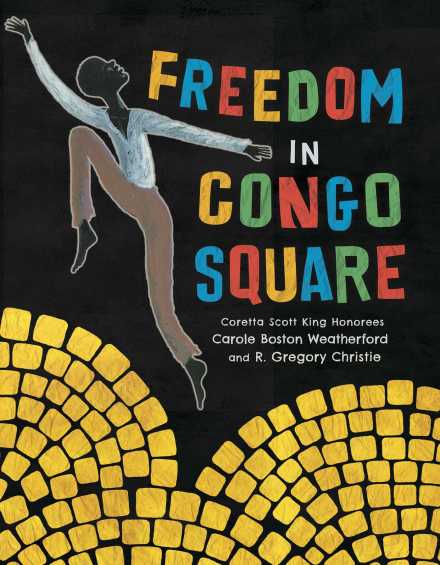
Freedom in Congo Square

Written by Carole Boston Weatherford | Illustrated by R. Gregory Christie


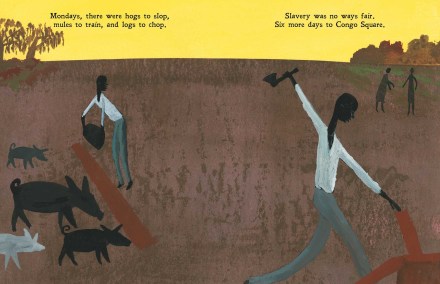
From sunup to sundown slaves brought to the state of Louisiana from their homelands in Africa and the West Indies toiled on plantations six days a week. The seventh day, Sunday, was set aside as a day of rest and worship, and in the afternoon people of African descent gathered in Congo Square in the heart of New Orleans to dance, play instruments, and talk. On Monday morning the long week began anew, but the rhythms of Congo Square sustained the men, women, and children through “hogs to slop, / mules to train, and logs to chop. / Slavery was no ways fair. / Six more days to Congo Square.

celebrate-picture-books-picture-book-review-freedom-in-congo-square-monday

Image copyright R. Gregory Christie, text Carole Boston Weatherford. Courtesy simonandschuster.com

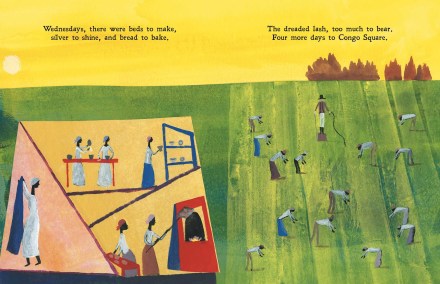
On Tuesdays, with “cows to feed, / fields to plow, and rows to seed,” five more days stretched out in endless labor. “Wednesdays, there were beds to make, / silver to shine, and bread to bake. / The dreaded lash, too much to bear. / Four more days to Congo Square.” Thursdays came with wash tubs and drying lines, scrub brushes, and brooms. “Spirituals rose from the despair. / Three more days to Congo Square.”

celebrate-picture-books-picture-book-review-freedom-in-congo-square-wednesday

Image copyright R. Gregory Christie, text Carole Boston Weatherford. Courtesy simonandschuster.com

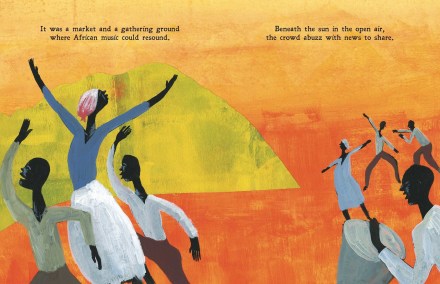
Fridays were spent in back-breaking work and though some brave souls dared to run, most were counting “Two more days to Congo Square.” Saturdays brought no more relief, but the days had whittled down to hours and “Freedom was slaves’ ardent prayer. / One more day to Congo Square.” At last came Sunday afternoon, and slaves and free rushed to Congo Square—“…a market and a gathering ground / where African music could resound.”

They met their kinsmen by nation, tribe, or language and revived their own stories and music played on drums, fiddles, shells, flutes, gourds, and bells that led to chants and dancing. “This piece of earth was a world apart. / Congo Square was freedom’s heart.”

celebrate-picture-books-picture-book-review-freedom-in-congo-square-sunday

Image copyright R. Gregory Christie, text Carole Boston Weatherford. Courtesy simonandschuster.com

Through powerful rhythmic couplets, as spare and austere as the work they describe yet ending in a focal point of hope, Carole Boston Weatherford recreates the steady thrum that resonated in the hearts of slave and free men and women as they anticipated each afternoon in Congo Square.  As the days remaining until Congo Square are counted off, Weatherford’s predominantly one-syllable words form a staccato beat, the pounding of hard, physical work. When Sunday comes and people find joy in their shared music and dance, Weatherford’s phrasing within the same structured couplets rises, employing multi-syllable words that give the verses a pulsing flow that echoes the freedom they find in Congo Square.

celebrate-picture-books-picture-book-review-freedom-in-congo-square-music-resounded

Image copyright R. Gregory Christie, text Carole Boston Weatherford. Courtesy simonandschuster.com

Gregory Christie’s vivid folk-art illustrations are a perfect complement to Weatherford’s verses. The elongated figures stand tall and proud amidst the fields and workrooms of the plantation. In some scenes the slaves’ angled bodies, leaning over to pick cotton, wash floors, or lift baskets may be bent, but they are not broken, and while two men work on building a wall, they seem to kneel prayerfully as they add another brick. In a moving two-page spread set at night, brown wood-grain houses superimposed with rows of sleeping slaves float on a blue-toned ground below a red sky, reminiscent of ships laden with Africans sailing the Middle Passage of the Atlantic slave trade. As the men and women congregate in Congo Square, Christie’s lithe figures raise their arms and kick their legs in dance. The fiery backgrounds swirl with color as the celebrants jump, stretch, play instruments and move with exultation.

A detailed Forward by historian and Congo Square scholar, Freddi Williams Evans and an Author’s Note following the text reveal more information on the history of Congo Square and its significance to Jazz music.

Freedom in Congo Square is both a heartrending and jubilant book that would make a wonderful and meaningful addition to any child’s home library.

Ages 4 – 8

little bee books, 2016 | ISBN 978-1499801033

Learn more about Carole Boston Weatherford and her books and discover book-related resources on her website!

If you’re lucky enough to live in Decatur, Illinois, you can visit R. Gregory Christie’s unique art studio, art school, and bookstore Gas-Art Gifts Autographed Children’s Bookstore. If you don’t live near Decatur, you can check out all the books, art, and items for sale on the website!

National Freedom Day Activity

celebrate-picture-books-picture-book-review-chalk-garden-st

Freedom Stone


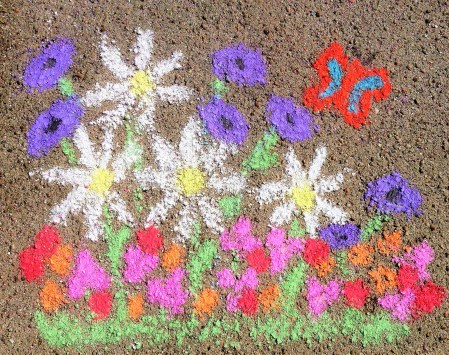
Freedom is a precious right—one that can be represented in different ways by each person. For today’s activity use a brick, paving stone, large stone, or molded plaster of Paris and decorate it with a picture or design that means freedom to you. Then put it in a special place—in a garden, near your front or back door, in your room, or in another spot—where it will remind you of freedom’s gifts.

Supplies

  • Brick, paving stone, large stone, plaster of Paris
  • Paint
  • Plastic gems, bead, or other small objects
  • Strong glue or other adhesive
  • Paint brush

Directions

  1. Create a design that shows what freedom means to you or an object that represents freedom to you
  2. Paint your stone with the design, let dry
  3. Add gems, beads, or other objects
  4. Display your Freedom Stone

Picture Book Review
January 19 – It’s Creativity Month

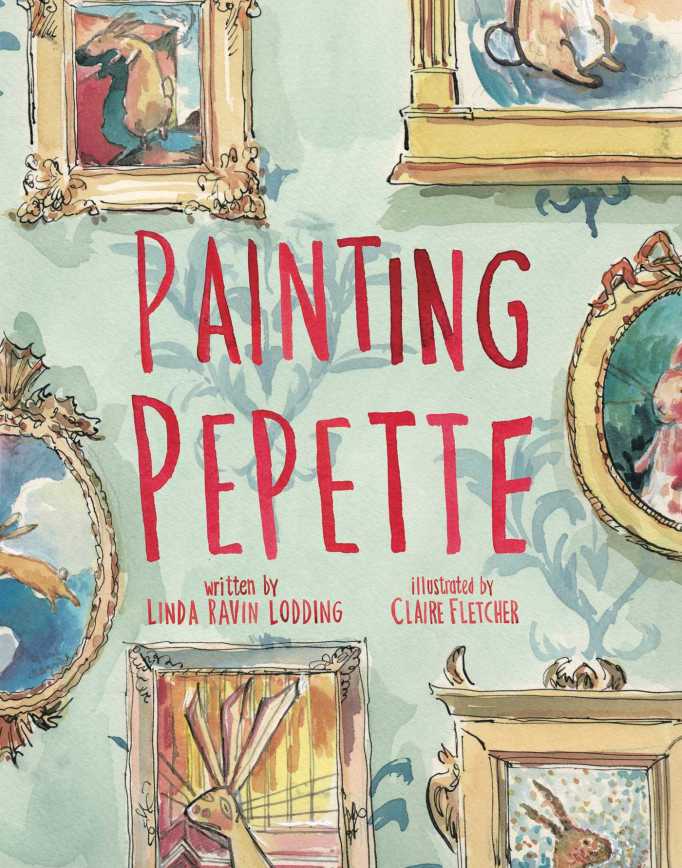
celebrate-picture-books-picture-book-review-painting-pepette

About the Holiday

As the cold and snowy weather keeps us inside more and more, what are we to do? Why not create?! Whether you like writing, drawing, cooking, woodworking, gardening, photography, dance, or other pursuits, January is the perfect time to begin a new project. Stock up on supplies, get those ideas going, and create!
Painting Pepette

Written by Linda Ravin Lodding | Illustrated by Claire Fletcher


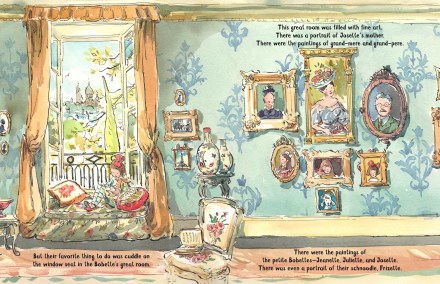
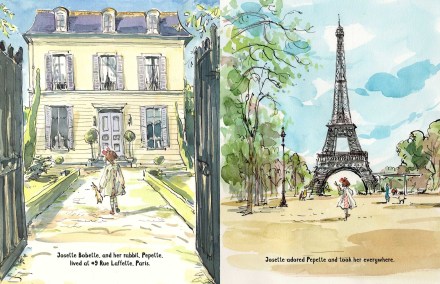
If you were to peek in the great room window of the grand yellow house at #9 Rue Laffette in Paris, you would most likely see Josette Bobette and her beloved stuffed rabbit Pepette cuddled together on the comfortable seat. It was their favorite place. Looking past them you would see that on the walls hung portraits of the family—Josette’s mother was there as well as grand-mère and grand-père, the three Bobette sisters, and even their schnoodle Frizette.
celebrate-picture-books-picture-book-review-painting-pepette-great-room

Image copyright Claire Fletcher, text copyright Linda Ravin Lodding. Courtesy of simonandschuster.com

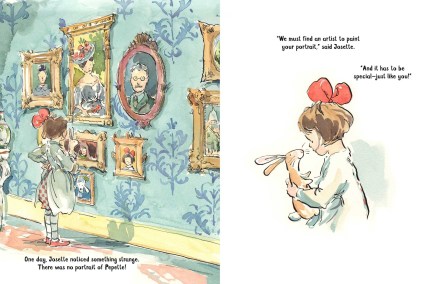
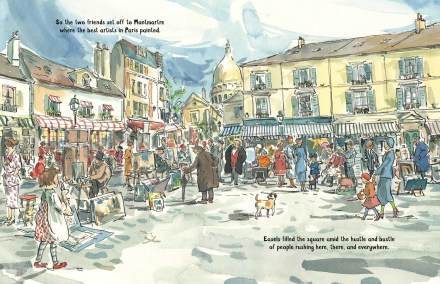
“One day Josette noticed something strange. There was no portrait of Pepette!” Josette at once determined to find an artist to paint a special portrait of her best friend. The pair head out to Montmartre, where all of the best artists set up their easels to paint and sell their work. It didn’t take long for a man in a striped shirt to stop them.

“‘Those ears!’” he cried. “‘Never have I seen such majestic ears. I must paint this rabbit’s portrait!’” Pepette blushed at such an effusive compliment, and Josette exclaimed, “‘Magnifique!’” It appeared that Josette had found just the artist to create Pepette’s portrait. The painter waved his brush with a flourish, “declared his painting a ‘masterpiece,’” and held it up for inspection. Josette gazed at a Pepette with two noses and three ears. Diplomatically, she proclaimed the picture “‘nice’” but not quite Pepette. Her best friend agreed.

celebrate-picture-books-picture-book-review-painting-pepette-pepette-with-bunny

Image copyright Claire Fletcher, text copyright Linda Ravin Lodding. Courtesy of simonandschuster.com

Just then a man with a thin, curved handlebar mustache spied the pair. Admiring Pepette’s whiskers, the artist begged to capture “‘the very essence of her rabbitness!’” He immediately set to work, and in no time a most unusual portrait emerged. Pepette seemed to melt from atop a tall red wall. Josette considered it—and her reaction—carefully. “‘It’s imaginative,’” she said. “‘But you’ve painted Pepette quite, well, droopy.’” Pepette agreed.

As Josette and Pepette enjoyed a Parisian snack on the curb of Montmartre, a rakish young man happened along. He was arrested by Pepette’s nose, which he likened to “‘a faint star twinkling in a misty, velvet night.’” Josette had a good feeling about this artist and followed him across the square to his easel. Pepette posed on a red tufted stool as the artist painted a rabbit soaring through the clouds. He proclaimed the finished portrait “‘one of my best works’” as he displayed it to the crowd. Josette liked the clouds but told the painter that Pepette is afraid of heights and not fond of flying. Pepette agreed.

celebrate-picture-books-picture-book-review-painting-pepette-pepette-at-home-and-in-paris

Image copyright Claire Fletcher, text copyright Linda Ravin Lodding. Courtesy of simonandschuster.com

By now Pepette was the most sought-after model in Paris, and another artist rushed up, captivated by her beauty. The balding man in a dapper suit and round spectacles peered at Pepette. “‘What a colorful lady—balloon blue, pansy pink, and radish red!’” Although a little suspicious of his vision, Josette allowed him to paint Pepette. “‘Ta da!’” the man exclaimed, revealing the magic of his brush. Josette studied the canvas with its vibrant dots, dashes, and splashes. While she admired the colors, she reminded the artist that Pepette isn’t pink.

“‘Ah, yes,’” nodded the painter. “‘But through art we can see the world any way we want.’”

With the sun setting low in the sky, Josette politely said thank-you and goodbye to the artists. She and Pepette had enjoyed their day, but it was time to go home. Curled up once more on the window seat, Josette sighed. She had so hoped to have the perfect portrait of Pepette—one that showed her velvety grey listening ears, her heart-shaped nose, and her soft arms that give tight hugs. Suddenly, Josette had an idea! After gathering all of her art supplies, she created the perfect likeness—one as special as Pepette herself!

celebrate-picture-books-picture-book-review-painting-pepette-pepette-at-montmartre

Image copyright Claire Fletcher, text copyright Linda Ravin Lodding. Courtesy of simonandschuster.com

An author’s note on the last page describes the creative atmosphere of 1920s Paris, home to writers, artists, musicians, and fashion designers, that gives a frame to her story. The artists that Josette meets are inspired by Pablo Picasso, Salvador Dalí, Marc Chagall, and Henri Matisse.

In Painting Pepette Linda Ravin Lodding has written a multi-layered story of love, friendship, and unique vision. Through the sweet relationship between Josette and Pepette and with a sprinkling of humorous self-congratulation by the artists, Lodding nudges readers to appreciate that while art can reveal and obscure, reflect or transcend reality, ultimately the success of a piece—complex or simple—lies within the viewer’s heart. Children will also see that their creative endeavors, undertaken with love, are just as meaningful and appreciated as those of professional artists. Lodding’s lyrical language trips off the tongue and is a joy to read—as if readers are following Josette as she skips happily through Paris.

Claire Fletcher’s striking pen-and-ink illustrations pay delicate homage to cityscapes of a bygone Paris. Adorable Josette and her enchanting rabbit are the perfect tour guides through crowded Montmartre and this introduction to art history. Soft tones of yellow, rose, and green illuminate the apartments and cafes of the square, where colorful shoppers and artists mingle. Fletcher’s renderings of Pepette’s various portraits will not only make kids giggle, but entice them to learn more about each artistic style. The final endpapers reveal that the four fine-art portraits now hang in the Muse of Paris, while readers already know that Josette’s perfectly perfect portrait of her well-loved friend has taken its rightful place on the wall in the Bobette’s great room!

Painting Pepette is a beautiful addition to any child’s bookshelf and a lovely way for teachers to initiate a discussion of art history and get kids excited about artists and different art styles.

Ages 4 – 9

little bee books, 2016 | ISBN 978-1499801361

Follow Josette through Paris as she searches for just the right artist to paint a portrait of her best friend Pepette and comes to a surprising discovery in this beautiful Painting Pepette book trailer:

Discover more books by author Linda Ravin Lodding on her website.

Illustrator Clair Fletcher invites you to find more of her artwork by visiting her online gallery.

Creativity Month Activities

celebrate-picture-books-picture-book-review-painting-pepette-activity-guide

Painting Pepette Reading and Activity Guide


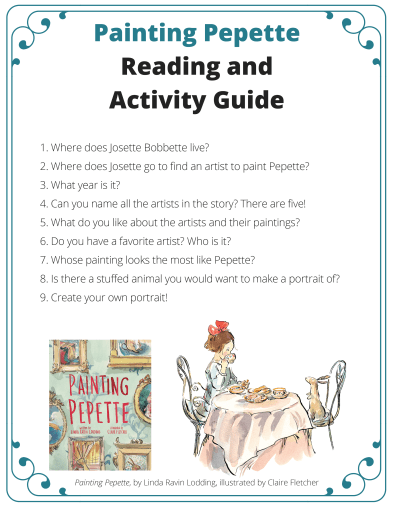
little bee books has created an interactive activity so you can continue to explore Josette’s world and your own artistic talent! Just click here—Painting Pepette Reading and Activity Guide—to start having fun!

Stuck on You Magnets or Picture Hanger


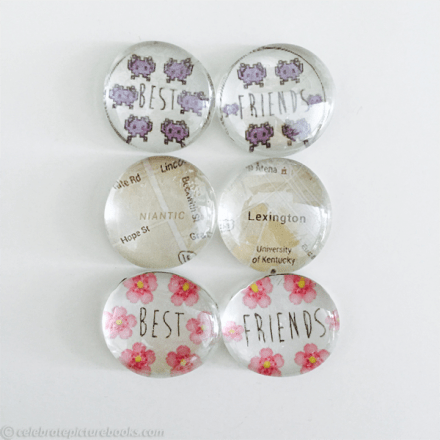
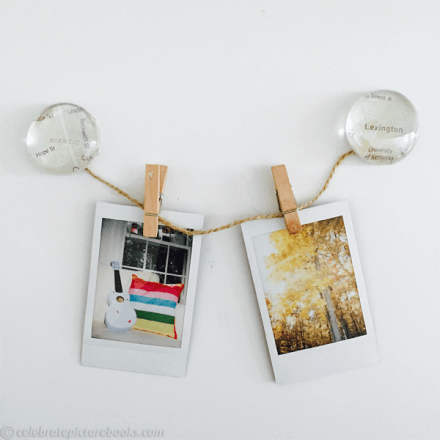
Creativity is meant to be shared! Here’s an easy craft that you can make to give to your friends whether they live close by or far away. These magnets can used by themselves or to hold a picture-hanging wire. Use inside jokes, favorite characters, or shared experiences to make these  crafts personal!

celebrate-picture-books-picture-book-review-friends-magnets-craft

For Magnets

Supplies

  • To get you started, here are two printable Best Friends Templates! Template 1 Template 2
  • Poster board
  • Large, 1 ½-inch clear glass stones (decorative fillers), available in craft stores
  • Markers or colored pencils OR find images online to print out
  • Medium to large flexible magnets, available in craft stores
  • Super glue
  • Toothpicks
  • Scissors

Directions

  • Place the glass stone on the poster board and trace around it
  • Draw your design in the circle on the poster board
  • Cut out the circle
  • With the toothpick, apply glue around the very edge of the design side of the circle
  • Attach the circle to the flat side of the stone, let dry
  • Trim the cardboard circle if needed
  • Attach the magnet to the back of the cardboard with glue

celebrate-picture-books-picture-book-review-friends-picture-hanger-craft

For Map Picture Holder

Supplies

  • Use a mapping program to find a map of your town and your friend’s town
  • Poster board
  • Large, 1 ½-inch clear glass stones (decorative fillers), available in craft stores
  • Twine
  • Super Glue
  • Toothpicks
  • Scissors
  • Heavy duty mounting squares

Directions

  1. Find maps of your and your friend’s towns
  2. Zoom in so the name of your and your friend’s towns are displayed well. You will be using about a 1-inch area around the towns’ names.
  3. Take a screen shot of the maps
  4. Print the maps
  5. Place the glass stone on the map and trace around it
  6. Place the glass stone on the poster board and trace around it
  7. Cut out the circles on the map and poster board
  8. With the toothpick, glue the map to the poster board, let dry
  9. With the toothpick, apply glue around the very edge of the map side of the circle
  10. Attach the circle to the flat side of the glass stone, let dry
  11. Trim the cardboard circle if needed
  12. Repeat with the other map
  13. Attach a length of twine to the back of each glass stone
  14. Attach heavy duty mounting squares to the back of each glass stone
  15. Attach stones to the wall and hang pictures on the twine

Picture Book Review