June 27 – It’s Effective Communications Month

celebrate-picture-books-picture-book-review-the-bear-who-stared-cover

About the Holiday

Sure, body language can say a lot, but effectively expressing yourself in words and writing helps decrease misunderstandings, misinterpretations, hurt feelings, and conflict. Learning to handle important relationships and work obligations with thoughtful care, consideration, and empathy can take patience and practice. This month people are invited to work on their communications skills to enhance their life with family, friends, co-workers, and others.

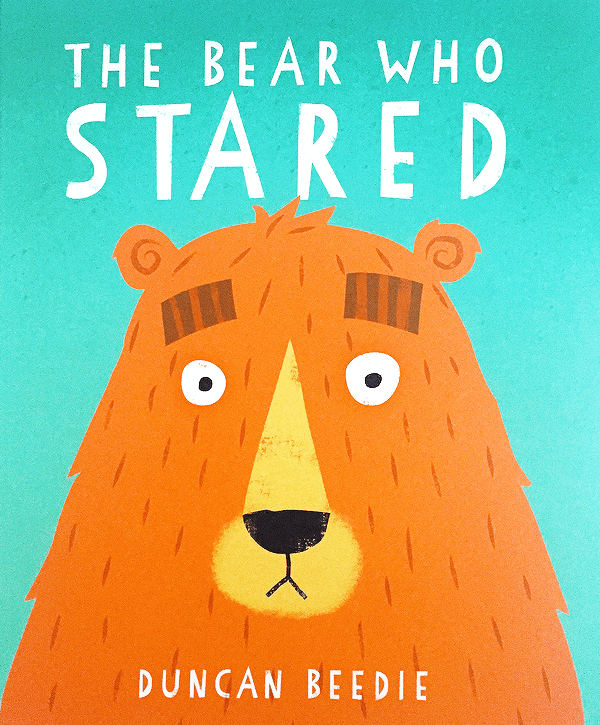
The Bear Who Stared

By Duncan Beedie


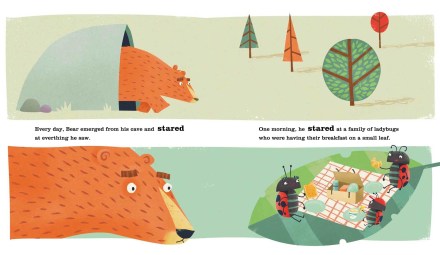
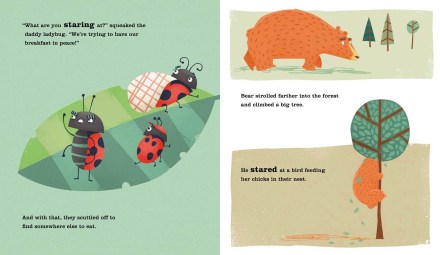
Bear loves to stare…and stare…and stare. One morning he emerges from his den to find a family of ladybugs having a picnic breakfast. He can’t help but gaze at them intently. “‘What are you staring at?’” the daddy ladybug demands before he and his family pack up to find a more private leaf. Bear continues on his way. In a bit he climbs a tree and stares at a bird feeding her chicks. “‘Can I help you?’” the mother bird asks, but Bear remains silent. The chicks don’t like Bear interfering with their meal, so the mother bird angrily tells him to “‘sshhhooooo!’”
celebrate-picture-books-picture-book-review-the-bear-who-stared-interior-art-ladybugs

Copyright Duncan Beedie, courtesy of simonandschuster.com

At the bottom of the tree Bear spies a badger hole and sticks his head inside. The badger, particularly irritated at Bear’s badgering stare while he is shaving, bites poor bear on the nose. Sore and dejected, Bear wanders through the forest to a large pond. He sits down on a log to ponder his situation. He doesn’t mean to be annoying, he’s “just curious but too shy to say anything.”
celebrate-picture-books-picture-book-review-the-bear-who-stared-ladybugs-yelling

Copyright Duncan Beedie, courtesy of simonandschuster.com

A little frog floating on a lily pad in the middle of the pond pipes up, “‘I’ve seen that look before.’” Bear stares at the frog and the frog stares back. “‘Not much fun being stared at, is it?’” he says. Bear confesses that he just doesn’t know what to say to anyone. Just then Bear catches a glimpse of another bear staring back at him from the mossy water of the pond. This bear looks exactly like Bear, except that he is green and wavy. Suddenly, the green bear smiles. “‘You see?’” says the frog. “‘Sometimes a smile is all you need.’” The frog dives off his lily pad into the pond, and the green bear disappears too.
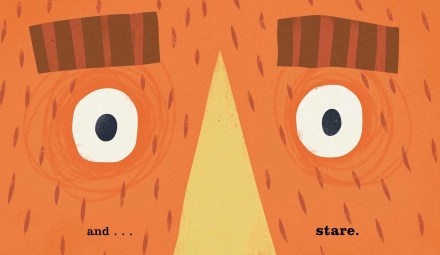
celebrate-picture-books-picture-book-review-the-bear-who-stared-interior-art-staring

Copyright Duncan Beedie, courtesy of simonandschuster.com

The next day Bear leaves his den and discovers the ladybug family breakfasting again. As soon as they spot Bear, they begin to gather their things. “‘Hello!’” Bear says with a big smile on his face. The ladybugs are surprised and happy. “‘Oh, hello!’” replies the dad, smiling back. With renewed confidence Bear wanders into the forest. He smiles at the birds and smiles at the badger, and they smile at him in return. Bear makes a lot of new friends that day. And there’s even that friend down at the pond who likes to stare as much as he does!
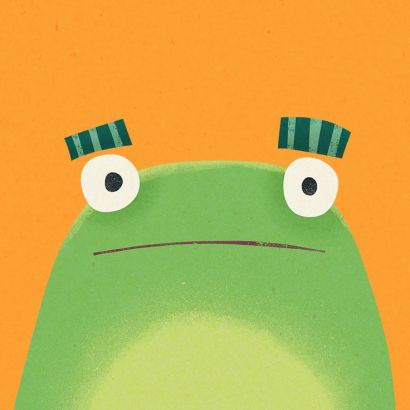
celebrate-picture-books-picture-book-review-the-bear-who-stared-frog

Copyright Duncan Beedie, courtesy of simonandschuster.com

Duncan Beedie highlights the awkward feeling many kids—and even adults—often feel in social situations. Nothing pops immediately to mind to say and yet there’s a desire for connection. As Bear discovers, staring is not the answer—so what is? In The Bear Who Stared, Beedie offers a simple, but universal solution through an engaging and humorous story. Bear, sporting a bemused expression that aptly depicts his predicament, is such an endearing character that readers will wish they could give him a hug as he suffers slights from the woodland creatures.

The full-bleed, oversized pages put readers at eye level with bear and his subjects, and the very up-close look into Bear’s staring eyes will make kids laugh. The green, rust, and blue palette on matte paper is bold, but muted, giving the pages an organic, environmental feel that is perfect to carry the story.

The Bear Who Stared is a funny story time read with a heart that kids will ask for again and again.

Ages 4 – 8

little bee books, 2016 | ISBN 978-1499802856

Check out more of Duncan Beedie’s illustration and animation work on his website!

Take a good looong look at this The Bear Who Stared book trailer!

Effective Communications Month Activity
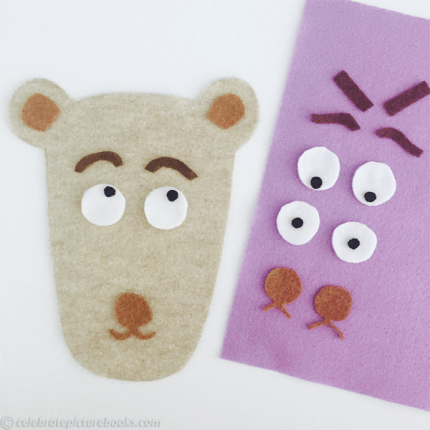
celebrate-picture-books-picture-book-review-bear-craft

Expressive Bear Craft


Sometimes it’s hard to know what to say or how to express your emotions and thoughts. With this easy-to-make felt (or paper) set, you can give the bear different emotions and talk about them, make up stories to go with each facial expression, or play a fun game. Below, you’ll find a couple of ideas!

Supplies

Directions

  1. Print templates
  2. Cut bear head from light felt or fleece
  3. Cut eyes from white felt or fleece
  4. Cut nose and inner ears from dark brown felt or fleece
  5. Cut pupils from black felt or fleece
  6. Glue pupils onto white eyes

Alternately: Color and play with the paper set

To Play a Game

Roll the die to collect parts of the bear’s face. The first player to create a full face is the winner.

  • Die dots correspond to:
  • 1—one eyebrow
  • 2—second eyebrow
  • 3—one eye
  • 4—second eye
  • 5—nose
  • 6—inner ears

For a Fun Story Time

Give the bear different faces and make up stories of why he looks that way!

Picture Book Review

June 26 – It’s Adopt a Cat Month

celebrate-picture-books-picture-book-review-the-white-cat-and-the-monk

About the Holiday

Just as it sounds, this holiday celebrates all the benefits of owning cat. With so many beautiful breeds of cat to choose from, there’s a perfect pet waiting for you! If you’ve been considering adding a cat or kitten to your family, why not visit an animal shelter and give one – or even two – cats a purr-fect home?

The White Cat and the Monk

Retold by Jo Ellen Bogart | Illustrated by Sydney Smith


In the nighttime a white cat approaches a monastery. He slips through a window and pads along a darkened corridor and down stone steps. He creeps behind a barrel, a vase, and a pitcher standing in a row and adds his shadow to the black mosaic on the floor. He leaps the last few steps and hurries along to the doorway that is leaking a bit of light.

celebrate-picture-books-picture-book-review-the-white-cat-and-the-monk-candle-light

Image copyright Sydney Smith, text copyright Jo Ellen Bogart. Courtesy of Groundwood Books.

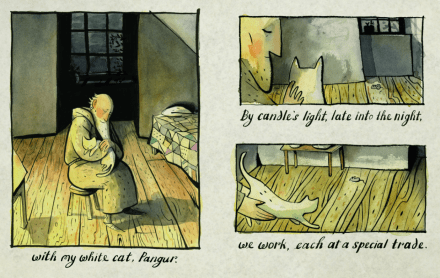
He slips his paw under the door. This a secret signal alerts the occupant of the room, who opens the door to this playful feline. “I, monk and scholar, share my room with my white cat, Pangur,” the old man explains. He lifts Pangur into his arms and strokes him before releasing him to pursue his “special trade.” The monk also returns to his trade—studying ancient manuscripts to understand their meaning.

celebrate-pciture-books-picture-book-review-The-White-Cat-and-the-Monk-books

celebrate-picture-books-picture-book-review-the-white-cat-and-the-monk-in-window

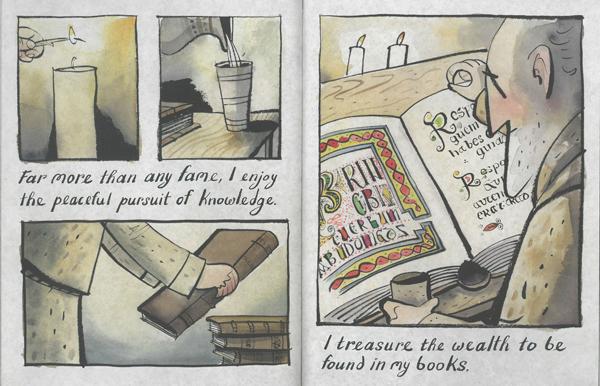
The  monk is a dedicated scholar, revealing, “Far more than any fame, I enjoy the peaceful pursuit of knowledge. I treasure the wealth to be found in my books.” Pangur is a dedicated scholar of another kind, studying “the hole that leads to the mouse’s home.” In that moment both man and cat become hunters—one for meaning and the other for prey.

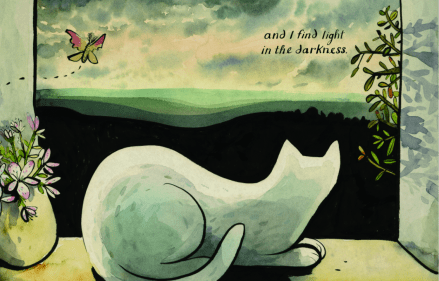
The two do not disturb each other for each is content in his pursuit. Pangur at last “finds his mouse” as the monk finds “light in the darkness.”

celebrate-picture-books-picture-book-review-the-white-cat-and-the-monk-in-window

Image copyright Sydney Smith, text copyright Jo Ellen Bogart. Courtesy of Groundwood Books.

Jo Ellen Bogart’s quiet and graceful retelling of Pangur Bán, a beloved Irish poem from the 9th century is a welcome respite in this age of multitasking and mega-activity. With sparse, but compelling and lyrical language, Bogart uncovers the companionable relationship between the monk and his cat as each follows their heart together.

The fine textured pages of Sydney Smith’s illustrations recall the beauty of parchment as the smooth gray-and-gold line drawings of the monastery’s architecture and characters give way to the vibrant colors of ancient manuscripts and the natural environment. The contentment and friendship of the monk and the cat are sweetly drawn in the characters’ mirrored actions as well as in the depictions of a long-held affection between man and beast in the panels of the manuscript the monk studies. As the monk states, “Ours is a happy tale.”

Reassuring and reaffirming, The White Cat and the Monk honors the individual challenges and quests that make us who we are and would be a wonderful addition to regular quiet-time reading.

Ages 4 and up (this book will be enjoyed by both children and adults)

Groundwood Books, House of Anansi Press, 2016 | ISBN 978-1554987801

You’ll find a gallery of artwork by Sydney Smith on his tumblr!

Adopt a Cat Month Activity

celebrate-picture-books-picture-book-review-cat-toy

Fishing for Playtime Cat Toy


Cats love to chase after bouncing, sliding objects, and they love fish. While this toy may not taste as good as fish, it sure smells better and doesn’t require worms or hooks to attain!

Supplies

  • Old or new child’s sock
  • Fiber Fill
  • Yarn or string
  • Fabric paint or markers
  • Small bell (optional)
  • Catnip (optional)

Directions

  1. Paint or draw fins and eyes on the sock
  2. Fill the sock with fiber fill
  3. Add a teaspoon of catnip (optional)
  4. Add a small bell (optional)
  5. Use the yarn or string to close the opening with a strong knot
  6. Leave a long section of yarn or string to pull or dangle the toy

Picture Book Review

June 22 – It’s World Oceans Month

celebrate-picture-books-picture-book-review-super-narwhal-and-jelly-jolt

About the Holiday

This month we celebrate the wondrously diverse life in the sea. A majority of the earth’s surface is covered in water and yet we know only a fraction of what the oceans have to show us. With new technology scientists are diving deeper and deeper, where some of the most unique creatures in the world are waiting to be discovered. To join in on this month’s holiday, visit a beach or aquarium, learn more about the animals and resources of the sea, and consider donating to the preservation of the world’s oceans.

Super Narwhal and Jelly Jolt

By Ben Clanton


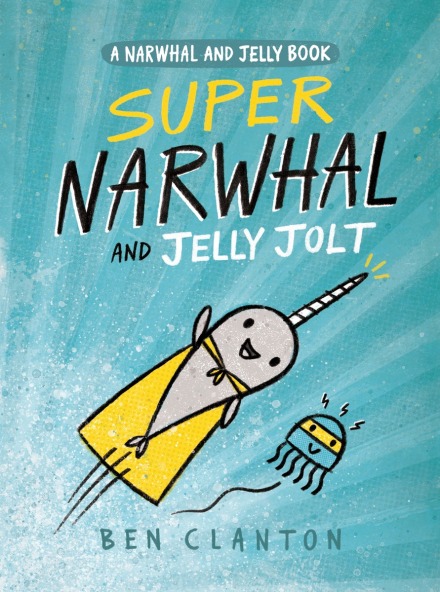
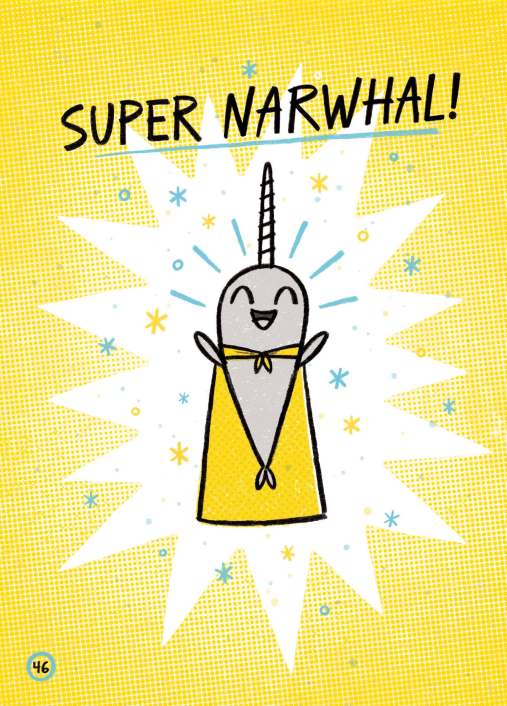
In A Super Start, Narwhal and Jelly are hanging out. Narwhal’s excited because after a swim and a waffle he’s “going to become a superhero!” Jelly is surprised that Narwhal thinks it would be so easy, after all there are the “super outfits” (Narwhal’s got that covered with a snazzy yellow cape); the “super names” (“Super Narwhal” sounds pretty super to Narwhal): and the secret identities (let me introduce you to the dapper mustachioed and bespectacled Clark Parker Wayne, wealthy and eccentric trillionaire).

celebrate-picture-books-picture-book-review-super-narwhal-and-jelly-jolt-cape

Excerpted from Super Narwhal and Jelly Jolt by Ben Clanton. Text and Illustrations Copyright © 2017 Ben Clanton. Published by Tundra Books, a division of Penguin Random House Canada Limited. Reproduced by arrangement with the Publisher. All rights reserved.

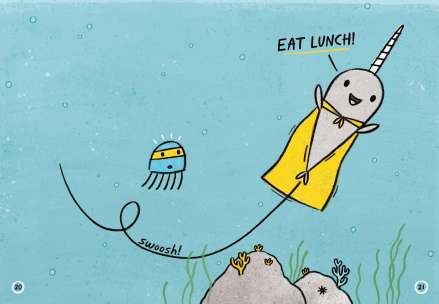
Super Narwhal is also going to need a sidekick. Jelly kicks around a few names—Shark, Octopus, and Turtle—but Narwhal has someone else in mind. Jelly, of course! Jelly’s eyes widen with the possibilities. Sting or Blue Lightening might be cool monikers, but no!— “Jelly Jolt the Super Sidekick” has an electrifying ring to it. Suddenly, Jelly remembers they’ll need superpowers. Narwhal has trouble being invisible or strong, flying or breathing fire, but there’s something even more important than powers—lunch! Yum, yum! Jelly says, “I think waffles are my super weakness.”

celebrate-picture-books-picture-book-review-super-narwhal-and-jelly-jolt-super-sidekick

Excerpted from Super Narwhal and Jelly Jolt by Ben Clanton. Text and Illustrations Copyright © 2017 Ben Clanton. Published by Tundra Books, a division of Penguin Random House Canada Limited. Reproduced by arrangement with the Publisher. All rights reserved.

In Narwhal, You’re a Superstar, Super Narwhal has come to the rescue of Star. While Star likes the ocean she thinks that maybe she belongs in the sky. “Maybe I am a real star, but I fell to earth and hit my head or something and now I don’t remember!” she says. Narwhal’s up for helping out, but without super strength he can only toss Star back into the sea. Even with Octopus’s cannon, Narwhal is no more successful. They think about building a rocket ship, but neither is exactly a rocket scientist. Then Narwhal has a super idea. Star wishes on…herself…and “Poof!” Star is back where she belongs.

celebrate-picture-books-picture-book-review-super-narwhal-and-jelly-jolt-eat-lunch

Excerpted from Super Narwhal and Jelly Jolt by Ben Clanton. Text and Illustrations Copyright © 2017 Ben Clanton. Published by Tundra Books, a division of Penguin Random House Canada Limited. Reproduced by arrangement with the Publisher. All rights reserved.

Super Narwhal vs Blue Jelly a.k.a. the Super Superpower finds Clark Parker Wayne, wealthy and eccentric trillionaire discovering a very blue (as in sad) Jelly. In a jiff Super Narwhal appears to save the day! He asks Jelly “What’s wrong? Did someone steal your mustache?” But Jelly’s too blue to join in the repartee. Then Super Narwhal wonders if Jelly’s upset because he set his hair on fire. Jelly seems a bit perturbed at that suggestion—they are underwater, after all. But maybe Super Narwhal is onto something.

Maybe, just maybe, Jelly’s down because a bubble called him “a blue-footed booby,” or because a pirate pig poked him, or because he “got stuck in a tuba!” With a “hee” and a “heehee!” and a “heeheehee!” Jelly is beginning to smile. And when Super Narwhal puts them all together, Jelly can’t help but jiggle with a laugh at how ridiculous the whole thing is. But Super Narwhal is there to help—right? So he somberly asks “what is wrong?” By now, though, Jelly can’t remember.

celebrate-picture-books-picture-book-review-super-narwhal-and-jelly-jolt-kapow

Excerpted from Super Narwhal and Jelly Jolt by Ben Clanton. Text and Illustrations Copyright © 2017 Ben Clanton. Published by Tundra Books, a division of Penguin Random House Canada Limited. Reproduced by arrangement with the Publisher. All rights reserved.

Jelly gives his Super Friend a super hug. But then he does recall the problem. It seems crab was dissing his superhero outfit and calling him “Jelly Dolt.” “This is a job for Jelly Jolt and Super Narwhal!”, exclaims Narwhal. Jelly’s intrigued, but thinks they ought to leave crab alone. Guided by advice from his “great, great, great, great grandpa Nautilus,” which went something like “Do unto otters,” however, Narwhal reveals that they are off to make crab a superhero.

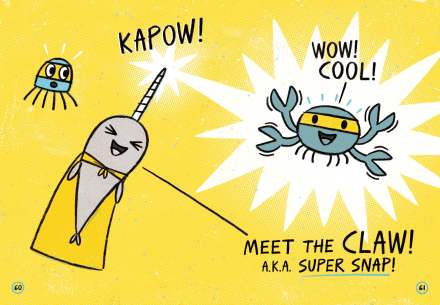
When they get their, though, Crab isn’t feeling it and lets off some steam, but Super Narwhal is undeterred. “Ahoy Crab! Prepare to be super-fied!” he announces. And with a KAPOW! Crab has become “The Claw! a.k.a. Super Snap!” At last, Super Narwhal has discovered his superpower—the ability to “bring out the super in others.” And with that, Super Narwhal, Jelly Jolt, and Super Snap swim off to Superfy the ocean.

celebrate-picture-books-picture-book-review-super-narwhal-and-jelly-jolt-superfy

Excerpted from Super Narwhal and Jelly Jolt by Ben Clanton. Text and Illustrations Copyright © 2017 Ben Clanton. Published by Tundra Books, a division of Penguin Random House Canada Limited. Reproduced by arrangement with the Publisher. All rights reserved.

Two more short and funny stories make an appearance between the continuing saga of Super Narwhal and Jelly Jolt. Super Sea Creatures is loaded with facts on several types of ocean creatures, and Super Waffle and Strawberry Sidekick is a delectable comic written by Narwhal and Jelly that’s full danger, heroics, and puns.

Ben Clanton’s adorable Super Narwhal and Jelly Jolt, the second in the Narwhal and Jelly series, is a sweet, laugh-inducing romp that is a marvelous take-off on the superhero genre and a perfect way to spend free time with two worthy ocean friends. Clanton fills his comics-style story with plenty of suspense, witty repartee, good advice, and even a bit of science to satisfy any young reader. Narwhal and Jelly, with their eager, inviting smiles, enthusiasm to tackle whatever obstacles get in their way and their ready inclusiveness, are truly superheroes to applauded

Super Narwhal and Jelly Jolt would make a sunny addition to summer reading and a splash on any child’s home bookshelf.

Ages 6 – 9

Tundra Books, 2017 | ISBN 978-1101918296

Discover more about Ben Clanton, his books, and his artwork on his website!

Play along with Narwhal and Jelly on their own website!

National Oceans Month Activity

celebrate-picture-books-picture-book-review-painted-pails

Playful Plastic Pail


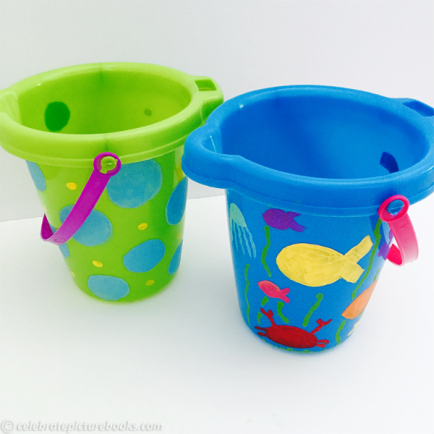
With a colorful plastic pail, some paint, and a little sealant, you can make a pail for the beach or sandbox that is as unique as you are!

Supplies

  • Plastic Pail
  • Paint that will adhere to plastic
  • Sealant for plastics
  • Paint brushes

Directions

  1. Create your design
  2. Paint your pail, let dry
  3. When the paint is dry, spray with sealant. Apply sealant in a well-ventilated place
  4. Let sealant dry
  5. Enjoy your pail!

Picture Book Review

June 12 – It’s Adopt a Cat Month

celebrate-picture-books-picture-book-review-lily's-cat-mask-cover

About the Holiday

Cats make wonderful pets! They can be cuddly or completely independent, but their playful personalities make for lots of laughs and love. If you own a cat, spend some extra time with your pet and ensure that all of your feline friend’s health needs are being met and are up-to-date. If you think you might like to adopt a cat into your family, visit your local animal shelter for cats and kittens who are looking for a forever home.

Lily’s Cat Mask

By Julie Fortenberry


Lily was starting school so her dad took her shopping. “Lily wasn’t sure she wanted to get new things for school, but her father said it would be fun.” After buying some clothes and meeting a woman they knew who gushed at how much Lily had grown, Lily was tired and wanted to go home. “But then she saw the cat mask.” It was the only one on the shelf, and Lily’s dad surprised her by buying it for her.

celebrate-picture-books-picture-book-review-lily's-cat-mask-shopping-with-dad

Copyright Julie Fortenberry, 2017, courtesy of Viking Books for Young Readers.

Lily put it on immediately and wore it on the way home. She wore it to tea parties with her toys, to family parties “when she wanted to be invisible. And when she wanted to be noticed.” When she wore it to her doctor’s appointment, the doctor spoke in meows. One day she lost her mask. Her dad made her a rabbit costume, and while that was fun for a while, Lily was happy to finally find her cat mask.

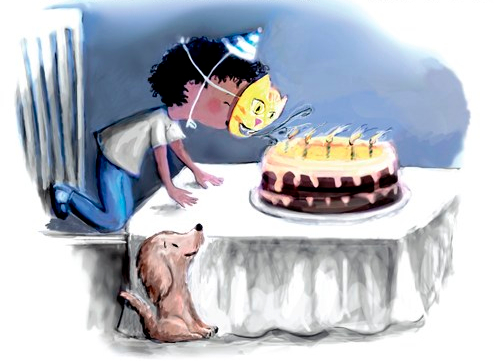
Lily wore her cat mask for many occasions. She wore it when she didn’t want to talk—like when she met her new teacher. “She liked to hide her face when she felt mean and couldn’t get nice.” She even blew out her birthday candles and made a wish wearing the mask. When school started, Lily was only allowed to wear her mask on the playground, but once in a while she put it on, hoping no one would notice. Then it was sometimes put in the teacher’s desk drawer.

celebrate-picture-books-picture-book-review-lily's-cat-mask-making-a-wish

Copyright Julie Fortenberry, 2017, courtesy of Viking Books for Young Readers.

One day, the teacher made a very exciting announcement. The class was going to have a costume party, and everyone could wear a mask or dress up however they wanted. On the day of the party, there were characters, animals, and bugs of all kinds. But then Lily looked across the room and saw the best costume of all—another cat! During recess the new friends played on the swings and meowed happily together.

celebrate-picture-books-picture-book-review-lily's-cat-mask-lily-at-school

Copyright Julie Fortenberry, 2017, courtesy of Viking Books for Young Readers.

Julie Fortenberry’s story of a quiet, hesitant child who discovers a unique way of interacting with the world around her offers openhearted acceptance and understanding for children who are observant and thoughtful integrators. The reaction of Lily’s father, teacher, doctor, and family members to her cat mask is uplifting and provides excellent modeling. The straightforward storytelling highlights Lily’s sweet personality as well as the empathetic responses her costume elicits.

Fotenberry’s illustrations of adorable Lily and her experiences at home, at school, at the doctor’s office, and at the mall are full of joy. The colors are fresh and vibrant, but also calm and peaceful, mirroring Lily’s feelings when wearing her cat mask. The images demonstrate and validate Lily’s preference to watch and participate in events from her own distance.

Lily’s Cat Mask provides the opportunity for much discussion with children, especially about meeting people, Lily’s birthday wish, where Lily sits and plays at parties and at school, and when Lily makes a friend. The book is highly recommended for classroom and school libraries and would make a welcome addition to home bookshelves as well.

Ages 4 – 7

Viking Books for Young Readers, 2017 | ISBN 978-0425287996

Discover more about Julie Fortenberry and view a gallery of her books and artwork on her website!

Adopt a Cat Month Activity

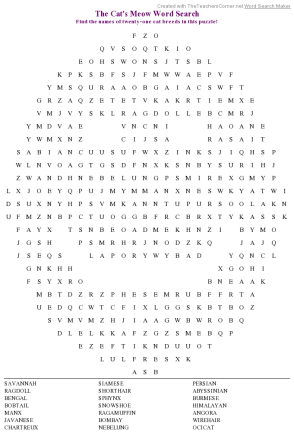
celebrate-picture-books-picture-book-review-The-Cat's-Meow-Word-Search

The Cat’s Meow Word Search


There are so many beautiful types of cats! Can you find the names of twenty-one breeds in this printable The Cat’s Meow Word Search puzzle? Here’s the Solution!

Picture Book Review
June 7 – Global Running Day

 celebrate-picture-books-picture-book-review-groundhog's-runaway-shadow-cover

About the Holiday

Global Running Day is all about living a healthy lifestyle! There are so many reasons to take up running, from keeping in shape to clearing one’s mind to competing against other runners. So far 839,167 people from 171 countries have pledged to run short distances and longer routes in their quest for personal health. Nearly 300,000 kids have also pledge to join the Million Kid Run that gets young people thinking about their own health while having fun.

Groundhog’s Runaway Shadow

By David Biedrzycki


Phil Groundhog was a pretty quick little dude. In fact, the only thing that could keep up with him was his shadow. You might say that Phil’s shadow was his best friend. It was always there following his every move, and “even when Phil felt small…his shadow could make him feel bigger.” But then Phil grew up. While Phil went off to work the way adult groundhogs were supposed to do, his “shadow had other plans.”

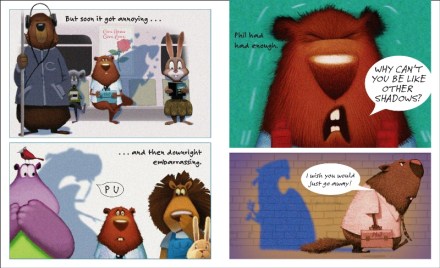
celebrate-picture-books-picture-book-review-groundhog's-runaway-shadow-shadow-annoying

Copyright David Biedrzycki, courtesy of Charlesbridge Publishing

Phil liked to go to the local beach on vacation; “Shadow dreamed of visiting faraway places.” While Phil enjoyed scary movies, Shadow was…well…scared. Phil was perfectly happy with a diet of “dandelions, clover, and tree bark,” but Shadow was more a taco kinda guy. Phil was always watching his watch; Shadow was always stopping to smell the roses.

At first Phil thought Shadow was funny, and his friends likes Shadow’s wild side (except for the burping). But then Shadow began doing things Phil would never do and his behavior soon “got annoying…and then downright embarrassing.” Finally, Phil was fed up and said, “Why can’t you be like other shadows? I wish you would just go away!” At first Shadow was hurt and angry. But then he remembered his dream of traveling, so he packed his suitcase and booked passage on the USS Punxsutawney. He sailed through New York Harbor and saw the Statue of Liberty. He took a train through Paris and viewed the Eiffel Tower, and the week after that he was gazing at the pyramids in Egypt.

celebrate-picture-books-picture-book-review-groundhog's-runaway-shadow-shadow-leaves

Copyright David Biedrzycki, courtesy of Charlesbridge Publishing

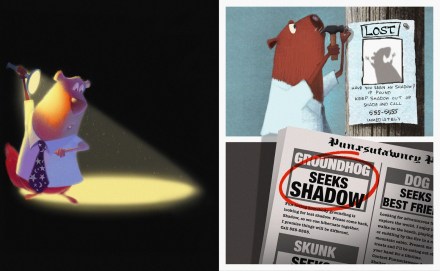
Back home, though, Phil was missing his shadow. He looked everywhere for it. He posted Lost Shadow posters on telephone poles and put notices in the newspaper. Then Phil saw something shocking. He opened the newspaper one day to see an article about Shadow. And not just one story—dozens! Shadow had met the Queen of England, played guitar at the White House, gotten a role in a movie….

celebrate-picture-books-picture-book-review-groundhog's-runaway-shadow-shadow-leaves

Copyright David Biedrzycki, courtesy of Charlesbridge Publishing

“Suddenly Phil’s life seemed pretty dull. He longed to be exploring with Shadow.” Just as Phil was making this realization, Shadow discovered something too. He missed sharing his adventures with Phil. That night, Phil couldn’t sleep. “The thought of searching for Shadow scared Phil silly.” It would mean traveling the globe, but the next morning he began. He took a plane, a boat, a train, and even a gondola. He stood atop a skyscraper, on the edge of a cliff, and next to the Leaning Tower of Pisa, but never glimpsed Shadow.

Finally, Phil had an idea. He opened his suitcase and took out his accordion. As he played “he heard someone gently accompanying him…on the trumpet. He had found Shadow and Shadow had found him. “The two friends played together, this time in perfect harmony….and forever after, that’s exactly what they did.” Except sometimes…

celebrate-picture-books-picture-book-review-groundhog's-runaway-shadow-lonely

Copyright David Biedrzycki, courtesy of Charlesbridge Publishing

David Biedrzycki’s ingenious tale of friendship, duel (and sometimes dueling) personalities, loss, recovery, and bravery is presented in a hilarious pairing of text and illustration that kids will immediately respond to. As in many friendships, Phil and Shadow develop different ideas that seem insurmountable. When Phil realizes that Shadow has gone off without him and that he misses his companion, however, young readers will empathize with his courage in overcoming his fears to reunite with his best friend. The idea that love spurs great action and can best all obstacles is a reassuring truism that will cheer young readers.

Part traditional picture book, part graphic novel, Biedrzycki’s bold and vibrant illustrations will captivate kids. Readers will laugh at Shadow’s shenanigans and enjoy pointing him out on the world stage. The final page which offers a tribute to that most famous of groundhogs and presents a scavenger hunt will have kids begging to read the book again.

Groundhog’s Runaway Shadow is an original tale that kids will want to hear over and over. For fun story times or for when friendships are a little harder to negotiate, the book would make a fine addition to home bookshelves.

Ages 4 – 8

Charlesbridge, 2016 | ISBN 978-1580897341

Discover more about David Biedrzycki and his books on his website!

Global Running Day Activity

celebrate-picture-books-picture-book-review-shoe-laces

One-of-Your-Kind Shoe Laces


You can travel a few feet or a few miles in style with these easy-to-make shoe laces in your running shoes.

Supplies

  • White or colored shoe laces
  • Fabric markers or fabric paint
  • Paintbrush

Directions

  1. Create a pattern or design for your shoe laces
  2. With the fabric markers or paint decorate your shoe laces
  3. Let dry
  4. Lace up and run!

Picture Book Review

May 20 – Learn to Swim Day

celebrate-picture-books-picture-book-review-splatypus-coverAbout the Holiday

Established by Swimways in 2012, today’s holiday is dedicated to educating parents, caregivers, and children about water safety and the importance of learning to swim. With summer officially beginning this weekend, kids will be soon be cooling off at beaches, lakes, rivers, and pools. Knowing how to swim and learning to recognize dangers and water hazards are crucial skills for swimmers of all ages. To learn more about education programs and fun ways to celebrate Learn to Swim Day, visit the Swimways website!

SPLATypus

Written by Sudipta Bardhan-Quallen | Illustrated by Jackie Urbanovic


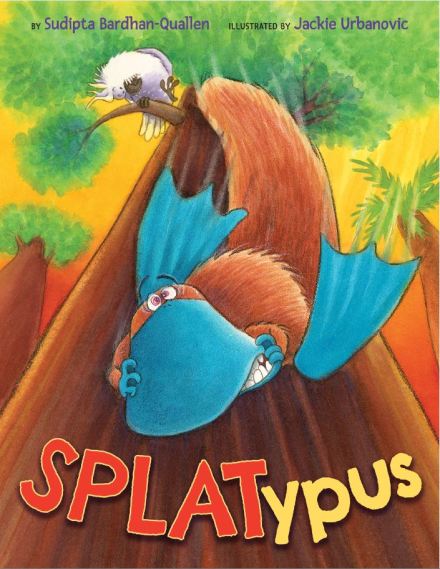
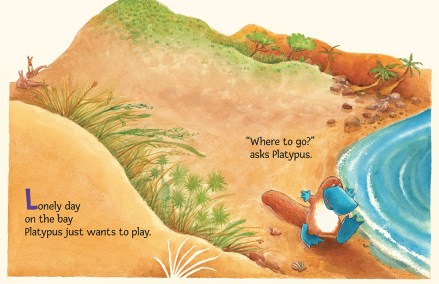
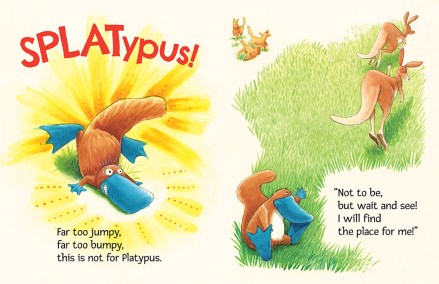
Platypus is feeling lonely as he walks along the shore looking for someone to play with. When a couple of kangaroos hop by, Platypus is happy to see them. “‘I’ll jump too!’” he shouts. He takes off on his blue, webbed feet “skipping, hopping, dipping, dropping.” But he loses control and falls flat on his bill—“Splatypus!” Platypus waves goodbye to the kangaroos, sure that he’ll soon find his place.

Next, two dingoes chase / and run with grace. / Platypus says, ‘I’ll go race!’” But where the dogs leap easily over a fallen log, Platypus struggles and strains to pull himself on top. Then—whoa!—he wobbles and teeters and tumbles and rolls—“Splatypus!” Although trying to be as agile as a dingo didn’t work out, Playpus isn’t giving up on finding where he belongs.

celebrate-picture-books-picture-book-review-splatypus-by-the-bay

Image copyright Jackie Urbanovic, text copyright Sudipta Bardhan-Quallen. Courtesy of Two Lions

Up in a tree, Platypus watches a group of possums playing in the branches. He scrambles to join them, but his hands and feet slip and slide on the smooth trunk and he lands bonk on his head. Suddenly, he sees “fruit bats fly / across the sky. / Platypus says, / ‘I’ll soar high!’” He runs up a cliff to launch himself into the air, but the rocky path trips him up. When he finally reaches the edge, he leaps, flapping his arms and legs. But instead of soaring he goes “Splatypus!”

Poor Platypus! “Nothing’s easy. / Tummy’s queasy. / So discouraged, / lost his courage.” He decides to give up on flying, climbing, and jumping. The day is almost over and still Platypus hasn’t found any friends. He goes to sleep in the shade of a palm tree. The next morning, still feeling dejected, Platypus worries that the day will be no fun. As he strolls near the edge of the bay, however, he spots some swans swimming by and then two “penguins cry / a soggy ‘Hi!’”

celebrate-picture-books-picture-book-review-splatypus-kangaroos

Image copyright Jackie Urbanovic, text copyright Sudipta Bardhan-Quallen. Courtesy of Two Lions

They look as if they are having so much fun that Platypus decides to try one more time to join in. He wades into the water and dives in. With a “ker-sploosh, ker-splash!” Platypus finds that he’s a natural! Now, “water wiggling, all are giggling.” As he floats and paddles with the penguins, swans, fish, and turtles, he “looks around, / at last he’s found / the perfect place for Splatypus.”

Little ones will giggle from beginning to end of this funny story that shows that sometimes you have to try a lot of different things before you find your perfect niche. Platypus’s can-do attitude and perseverance are great lessons for children beginning to navigate school, activities, and friendships. Sudipta Bardhan-Quallen’s rollicking rhythm and easy-to-repeat rhymes will have kids reading—and most likely moving—along with the story.

Jackie Urbanovic takes kids to the coast of Australia to meet kangaroos, dingoes, possums, fruit bats, and even a sea dragon in her sunny illustrations. Little Platypus, with his blue feet, hands, and bill, is adorable as he tries activity after activity with little success. When he finally finds some swimming buddies, kids will cheer to see the satisfied smile on his face.  The large type face will invite beginning readers to try reading for themselves—and persistent Platypus is a good role model along the journey.

Ages 3 – 7

Two Lions, 2017 | ISBN 978-1503939202

Discover more about Sudipta Bardhan-Quallen and her books as well as downloadable teacher’s guides on her website!

You’ll find books, a portfolio of art, coloring pages and more by Jackie Urbanovic on her website!

Learn to Swim Day Activity

celebrate-picture-books-picture-book-review-in-the-swim-maze

In the Swim! Maze


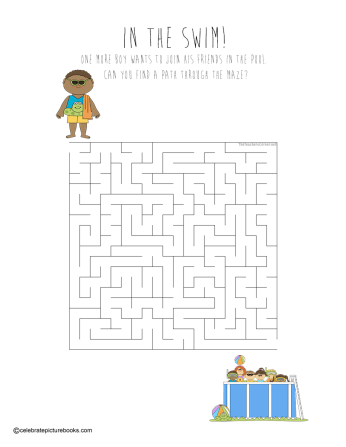
One little boy would like to join his friends in the pool. Can you help him by finding a path through this printable In the Swim maze? Here’s the Solution!

Picture Book Review

May 11 – It’s Get Caught Reading Month

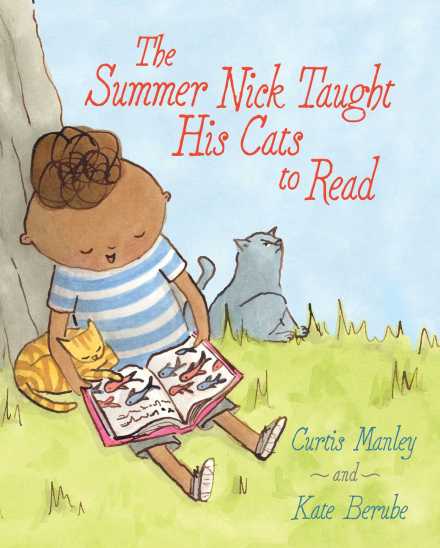
celebrate-picture-books-picture-book-review-the-summer-nick-taught-his-cats-to-read-cover

About the Holiday

When you love to read, you want to share the excitement that books hold. Get Caught Reading Month encourages people to pass along their love of all things written by asking folks to take pictures of themselves reading their favorite book and uploading those images to social media. Movie and TV celebrities, sports figures, authors, illustrators, teachers, mom, dads, grandmas and grandpas, and kids of all ages take part in this favorite annual event. Why don’t you?!

The Summer Nick Taught His Cats to Read

Written by Curtis Manley | Illustrated by Kate Berube


One summer Nick, Verne, and Stevenson did everything together. Nick is a little boy and Verne and Stevenson are two very different cats. Nick and Verne loved to spend time near the water—Stevenson tolerated it. Nick and Verne slept happily in a tent under the stars—Stevenson barely shut his eyes. While Nick rode his bike Verne eagerly sat in the front basket—Stevenson hunkered down in a box on the back. But when Nick sat down to read, both cats had similar ideas of fun—like lying on top of the book—and Nick could hardly read a sentence.

celebrate-picture-books-picture-book-review-the-summer-nick-taught-his-cats-to-read-ball

Image copyright Kate Berube, text copyright Curtis Manley, courtesy of simonandschuster.com

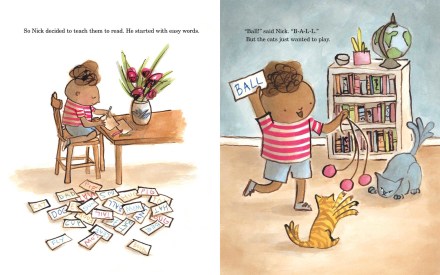
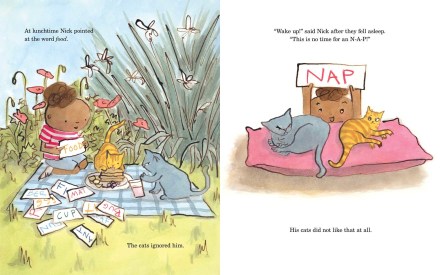
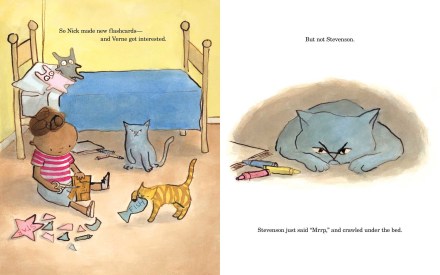
“So Nick decided to teach them how to read. He made flash cards and started with easy words” like “ball,” but Verne and Stevenson just wanted to play with the ball. While the three had a picnic on the lawn, Nick brought out his flashcards and “pointed to the word food. The cats ignored him.” When the cats snoozed Nick woke them with a sign. “‘This is no time for an N-A-P!’” he said. Neither cat responded well, so Nick tried a new tactic. He made word-shaped flash cards. Verne took a nibble of “F-I-S-H,” but Stevenson hid under the bed.

celebrate-picture-books-picture-book-review-the-summer-nick-taught-his-cats-to-read-food-flash-cards

Image copyright Kate Berube, text copyright Curtis Manley, courtesy of simonandschuster.com

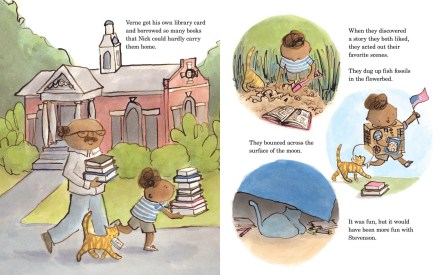
Nick began to see that Verne liked stories about cats and fish. “Verne loved fish. He followed along as Nick read, learning the sounds of the letters.” He even read by himself, discovering new stories, especially 2,000 Leagues Under the Sea. But Stevenson? When Nick spelled words for him, he merely ran under the porch, hissing. By this time Verne was reading so many books that he got his own library card and Nick needed help carrying all of his books home. Nick and Verne had fun acting out their favorite stories, but they missed Stevenson.

One day “Verne discovered a treasure under the bed—a great stack of Stevenson’s pirate drawings. “‘Wow!’” Nick whispered. “‘Stevenson drew a story.’” Nick and Verne put the pages together and began to write words to go with them. When the story was finished, Nick, Verne, and Stevenson “squeezed under the porch, gave Stevenson an eye patch, and read The Tale of One-Eyed Stevenson and the Pirate Gold. Stevenson listened and followed along. He didn’t run away. Or hiss. Not even once.”

celebrate-picture-books-picture-book-review-the-summer-nick-taught-his-cats-to-read-library

Image copyright Kate Berube, text copyright Curtis Manley, courtesy of simonandschuster.com

Suddenly, Stevenson couldn’t get enough of books.  Even before Nick woke up, Stevenson could be found with his nose in Treasure Island or another adventure book, and whenever Nick and Verne played pirates, Stevenson joined in. He helped bring down “scurvy mutineers” and found buried treasure. Now the three readers do everything together. They “hunt for dinosaurs in the lost world behind the garden…race around the yard in eighty seconds…and journey to the center of the basement.” And while they all like to read on their own, they also like it when someone reads to them. “Hmmm…,” Nick thinks, maybe next he could teach his cats to talk. “‘Meow,’ says Stevenson.”

celebrate-picture-books-picture-book-review-the-summer-nick-taught-his-cats-to-read-grumpy-stevenson

Image copyright Kate Berube, text copyright Curtis Manley, courtesy of simonandschuster.com

Curtis Manley’s adorable tribute to reading and learning to read, using cats with very different personalities, is inspired. Just as some people respond more to the words while others are attracted by the pictures, Verne and Stevenson have their own relationships with books. The names of the cats and their preferred reading material are also reminders that books are personal, and disinterest in one type of story does not reflect disinterest in all stories. Manley’s text makes for a joyful read-aloud as his language and phrasing is evocative, lyrical, and imaginative.

In perfect accompaniment, Kate Berube brings this creative story to life, illustrating the tender relationship between Nick and his pets as well as emphasizing the humor and distinct personalities inherent in orange-striped Verne and smoky-gray Stevenson that influence their journeys to literacy. Depictions of the various books Verne and Stevenson are drawn to highlight the literary references in the trio’s further play. Readers will want to stop and peruse the page of library shelves, where such books as “Harry Picaroon and the Swashbuckler’s Stone”, “Harold and the Purple Canon”, “Millions of Rats”, and “Where the Wild Pirates Are” wait to be checked out in the Pirates section.

Kids will eagerly want to adopt The Summer Nick Taught His Cats to Read, and it will snuggle in nicely on children’s bookshelves.

Ages 4 – 8

Simon & Schuster Books for Young Readers, 2016 | ISBN 978-1481435697

Discover “the facts, fictions, poems, and numbers” of Curtis Manley on his website!

View a gallery of Kate Berube‘s art on her website!

Get Caught Reading Month Activity

CPB - Cat Bookmark (2)

Feline Fine about Reading Bookmark


This want-to-be literary lion feels fine about reading! Let it hold your page while you’re away! Print your Feline Fine about Reading Bookmark and color it!

Picture Book Review