February 18 – Pluto Day

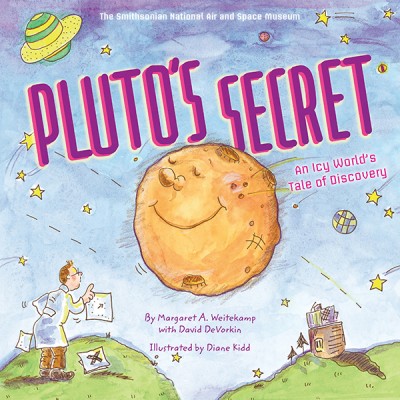
celebrate-picture-books-picture-book-review-pluto's-secret-cover

About the Holiday

Whether you believe Pluto should be considered a planet or not, it’s hard not to love that little celestial body. Today’s holiday celebrates the discovery of Pluto in 1930 and our continued fascination with this outlying neighbor.

Pluto’s Secret: An Icy World’s Tale of Discovery

Written by Margaret A. Weitekamp with David DeVorkin | Illustrated by Diane Kidd


From the beginning of the solar system, a little icy world circled the sun, far away from the other planets, and held “a secret—a clue about something that exists in the solar system and the universe.” It was a long time before science was able to see this little world, and so it’s secret remained…well…secret. That was okay with the celestial body because “it was busy dancing with its moons.” In the early 1900’s, though, Percival Lowell, thought that there must be another body pulling on the orbits of Uranus and Neptune. Astronomers used the Lowell Observatory that he had built in Arizona to search for a new planet.
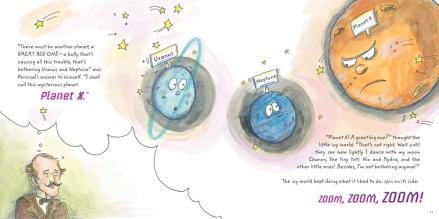
celebrate-picture-books-picture-book-review-pluto's-secret-big-planet

Image copyright Diane Kidd, text copyright Margaret A. Weitekamp with David DeVorkin. Courtesy of Abrams Books for Young Readers

Lowell believed that scientists would find a giant planet disrupting the paths of the two planets. He decided to call it Planet X. But the icy world thought, “‘That’s not right. Wait until they see how lightly I dance with my moon Charon, the tiny tots Nix and Hydra, and the other little ones! Besides, I’m not bothering anyone!’” Astronomers looked and looked for Planet X. Even after Percival Lowell died in 1916, they kept on searching. Finally, in 1930 Clyde Tombaugh discovered what they had all been looking for with a powerful telescopic camera.

celebrate-picture-books-picture-book-review-pluto's-secret-names

Image copyright Diane Kidd, text copyright Margaret A. Weitekamp with David DeVorkin. Courtesy of Abrams Books for Young Readers

People from all over the world offered names to replace Planet X. Someone thought Minerva would be good. Others came up with Cronus, Zeus, Atlas, even Lowell. “‘Yuck, thought the little world.’” Yuck, thought the astronomers. Finally, an 11-year-old girl from England suggested the planet be named Pluto after the Roman god of the dark underworld because it was so far away from the sun. Everyone liked that idea.

But right from the start, Pluto was different from the other planets. As more powerful telescopes were invented, scientists could see that Pluto had friends that were more like it than were the other 8 planets. What’s more, these icy-world friends occupied the same area, which came to be called the Kuiper belt. Many astronomers began to talk among themselves and even wondered if Pluto “should even be called a planet.”
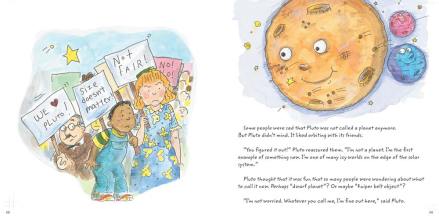
celebrate-picture-books-picture-book-review-pluto's-secret-pluto-demoted

Image copyright Diane Kidd, text copyright Margaret A. Weitekamp with David DeVorkin. Courtesy of Abrams Books for Young Readers

But what was a planet, really? “Amazingly, no one had ever set up rules about what a planet was—or was not.” The astronomers then decided on several criteria. Pluto met most of them—but it did not meet a very important one. Since Pluto did not fulfill all the requirements, the astronomers proclaimed that it was not a planet after all. Kids and people who had grown up thinking of Pluto as a planet were sad and protested this change. But Pluto didn’t mind. It thought, “‘I’m not a planet. I’m the first example of something new. I’m one of many icy worlds on the edge of the solar system.’”

Now that astronomers have gotten to know Pluto in a new way, they’ve found that other icy worlds exist around other stars. The discovery has opened up new possibilities for the future of space exploration.
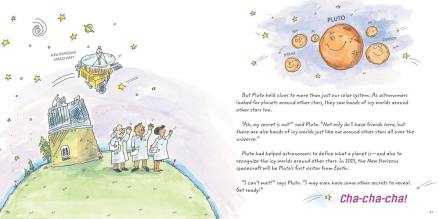
celebrate-picture-books-picture-book-review-pluto's-secret-future

Image copyright Diane Kidd, text copyright Margaret A. Weitekamp with David DeVorkin. Courtesy of Abrams Books for Young Readers

Extensive back matter includes a discussion of the people and telescopes behind the discovery of Pluto, a who’s who of planets and astronomers, a glossary of terms, suggested resources for readers, and a note from the Smithsonian Museum.

Pluto, it seems, is a very garrulous little planet, and Margaret A. Weitekamp and David DeVorkin are privy to its thoughts, much to the benefit of young readers. In this delightful, conversational history of Pluto, kids learn about the people, ideas, and facts surrounding the icy world in language they understand peppered with humor and suspense. Pluto’s reactions to what it “sees” going on down on Earth is sure to make little scientists giggle and pique their interest in future space discoveries.

Diane Kidd’s bright, cartoon-inspired illustrations immediately form a bond with the book’s young audience. Little Pluto, dancing with its moons, giving raspberries to names it doesn’t like, and playing along a different orbit, is just one of the kids—happy to hang out with its other icy worlds instead of being a full-grown planet. Lots of action, clear portrayals of scientific concepts, and accessible layouts and typography, make this a book kids will love to learn from.

Ages 6 – 10

Harry N. Abrams, 2013 | ISBN 978-1419704239

Learn more about Margaret A. Weitekamp, her work for the Smithsonian’s National Air and Space Museum, and her books here!

Find out more about David DeVorkin and his work at the Smithsonian’s National Air and Space Museum here!

Discover more about Diane Kidd, her books, and her illustration work on her website!

Pluto Day Activity
celebrate-picture-books-picture-book-review-space-coloring-page

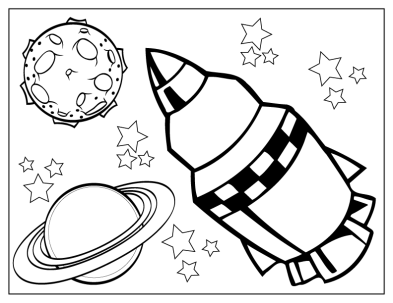
Out of This World Spaceship Coloring Page


Zoom across this printable Out of This World Spaceship Coloring Page and create the colors of space as you imagine them.

Picture Book Review

February 17 – International Friendship Month

celebrate-picture-books-picture-book-review-here-to-there-and-me-to-you-cover

About the Holiday

Our love for friends near and far radiates across the month of February, bringing us closer. To celebrate International Friendship Month get together with old friends and reach out to others you’d like to get to know better. This month would also be a perfect time to find a penpal, write to a member of the military, or send a card to an old friend you haven’t seen lately. As today’s book shows, friendship is the world’s strongest bridge.

Here to There and Me to You

Written by Cheryl Keely | Illustrated by Celia Krampien


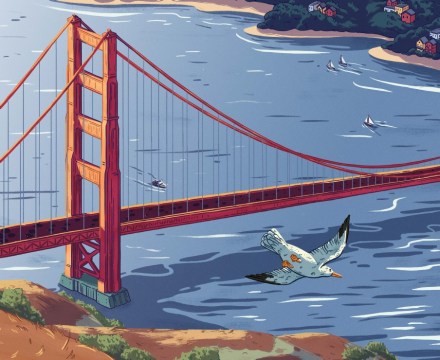
“Bridges do more than connect one place to another. They bring the whole world together.” There are so many types of bridges—each just right for their place or function. Some of the most charming bridges are wooden-covered, like Canada’s Hartland-to-Somerville span in New Brunswick, which is the longest covered bridge in the world at 1282 feet (as long as 32 school buses end to end). Some are colorful like the Golden Gate Bridge in San Francisco, California, which is distinctively orange, a beautiful beacon against the blue sky and sea.

celebrate-picture-books-picture-book-review-here-to-there-and-me-to-you-bridges-connect

Image copyright Celia Krampien, courtesy of sleepingbearpress.com

In London the bridge isn’t really falling down even though that makes for a fun game! The London Bridge, which crosses the River Thames, was the first stone multi-arch bridge built in Britain.” Over the years the bridge has been renovated many times, and it’s now made of concrete and steel. Drawbridges might be the coolest kind of bridge! It’s fun to watch them split in the middle and rise up, up, up before coming back down after a ship passes. These bridges “date to medieval times when knights in armor—and dragons?!—fought for their castles.”

celebrate-picture-books-picture-book-review-here-to-there-and-me-to-you-golden-gate-bridge

Image copyright Celia Krampien, courtesy of sleepingbearpress.com

Sometimes bridges don’t have to be fancy to work. Some “bridges can be as simple as a few stones placed across a shallow stream” that give crossers a place to step all along the way. This is known as a clapper bridge. People aren’t the only ones who use bridges either. Places that are home to roaming wildlife—like Banff National Park in Canada—build bridges so animals “such as bears, wolves, moose, and lynx” can cross roads and highways safely.

Trains can also “use bridges to clickity-clack along, carrying people to people. Family together again.” But what if you want to travel from country to country? There are even bridges for that, and they make “a big world seem smaller.” While these types of bridges are strong and sturdy, there are other spans made only of rope and boards that are “rickety, ratchety, swinging and swaying their way to beautiful hid away places.”

celebrate-picture-books-picture-book-review-here-to-there-and-me-to-you-covered-bridge

Image copyright Celia Krampien, courtesy of sleepingbearpress.com

People can become bridges too! Just try bending backward to touch the ground. Or if you don’t like feeling upside down, there is a simple way that “isn’t so grand. It connects me to you and you to me…through the simple holding of hands.”

Cheryl Keely’s enchanting tour of some of the world’s most beautiful and unusual bridges is sure to engage readers who love architecture, travel, and transportation—or who just have the wanderlust. Keely’s story, punctuated with facts and trivia about different types of bridges, is a lyrical frame for her theme of interconnectedness and friendship, making this a book that resonates on many levels and is a treat to dip into again and again.

celebrate-picture-books-picture-book-review-here-to-there-and-me-to-you-edge-of-golden-gate-bridge

Image copyright Celia Krampien, courtesy of sleepingbearpress.com

Celia Krampien’s charming artwork takes readers to the towns and cities, the shores and cliffs that host the world’s bridges. Her realistic depictions show the grandeur of the majestic spans millions of people use every day as well as the rustic simplicity of rope and clapper bridges. Kids will love picking out details of the scenery surrounding each structure as well as recognizing familiar settings they have learned about or, perhaps, traveled to.

Here to There and Me to You is a fresh, uplifting story that will appeal to fiction as well as nonfiction lovers. In addition to being a great addition to any story time, the book has many cross-curricular applications for classrooms and libraries, and would be a welcome find on any bookshelf.

Ages 5 – 8

Sleeping Bear Press, 2017 | ISBN 978-1585369966

To learn more about Cheryl Keely and her work as well as to find a fun bridge game, visit her website!

Find a portfolio of illustration by Celia Krampien on her website!

International Friendship Month Activity

celebrate-picture-books-picture-book-review-holding-hands-puzzle

Holding Hands Interchangeable Puzzle


Reaching out to others is a wonderful way to bridge distances and make friends. In this printable puzzle,  all the animals are ready to connect with others—no matter how you put the pieces together! Here is a colored version of the puzzle and one you can color yourself!

Supplies

Directions

  1. Print the puzzle
  2. Cut the pieces apart
  3. Reassemble the pieces in any order to have the animals make new friends

Picture Book Review
February 15 -National Flag Day of Canada

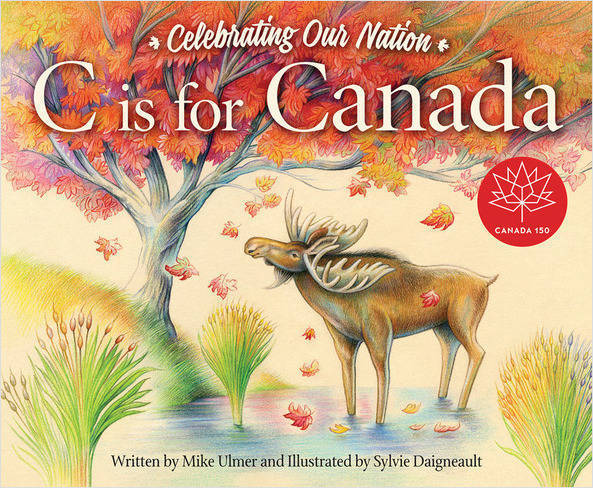
celebrate-picture-books-picture-book-review-c-is-for-canada-cover

About the Holiday

2017 is a big year for the nation of Canada! Not only are this country’s people celebrating the 150th anniversary of its confederation, but today marks the 52nd anniversary of the raising of the Canadian flag. On February 15, 1965, the familiar red-and-white Canadian flag, with its central maple leaf, flew over Parliament Hill for the first time. National Flag of Canada Day was officially proclaimed in 1996. The distinctive design of the flag is often cited by Vexillologists, or flag experts, as one of the world’s most beautiful.

C is for Canada

Written by Mike Ulmer | Illustrated by Sylvie Daigneault


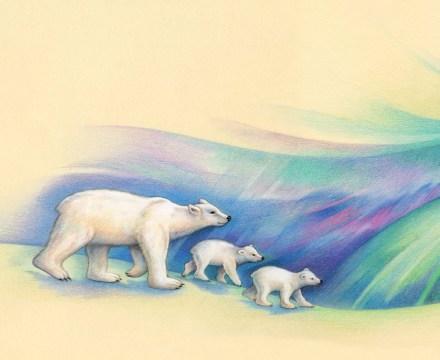
What would you see if you decided to take an alphabet-inspired trip across the vast expanse that is the gorgeous country of Canada? Dip into this special ABC travel guide and find out! A great place to start is with the letter A, which stands for Aurora Borealis: “Look up into the nighttime sky / and see the colours dance on by. / The show takes place on cloudless nights; / Aurora Borealis means Northern Lights.” B happens to be for Beaver, Canada’s national symbol. This little animal is a perfect match for the country’s people because “…his heart is big; he’s always eager— / Canada is like that busy beaver.”

celebrate-picture-books-picture-book-review-c-is-for-canada-aurora-borealis

Image copyright Sylvie Daigneault, courtesy of sleepingbearpress.com

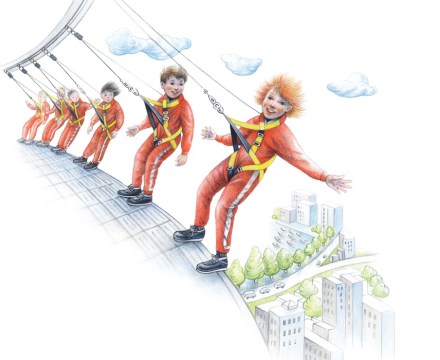
Dino lovers (and, really, who isn’t?) will want to head for the Badlands of Alberta, where the letter D awaits in Drumheller, the Dinosaur capital of the world and home to the biggest dinosaur skeleton. If those beasts are too tame for you, you might like to try the open-air thrill of E at Edgewalk at the CN Tower. Can’t get enough of the outside? Then take in K for Klondike Days, a 10-day festival commemorating Edmonton’s role in the Klondike Gold Rush with food, music, rides, and booths.

celebrate-picture-books-picture-book-review-c-is-for-canada-edgewalk

Image copyright Sylvie Daigneault, courtesy of sleepingbearpress.com

While you’re here, you’ll use Canada’s beautifully designed money engraved with polar bears and the loons that give the coins their L nickname, Loonies: “The sound of it gives me a smile / when I add a coin every once in a while. / A loonie makes a lovely ‘clank’ / when dropped inside my piggy bank.” Of course no Canadian excursion is complete without M for Maple Leaf: “Our country’s like a maple tree— / we know the strongest limbs / are those with roots that reach around / the world and back again.”

If winter sports are your thing, then you’ll love N, which is for the National Hockey League. As hockey players well know, “To play in the NHL would be a thrill / but first I have to learn one skill. / I can skate very fast, I’m off like a shot— / I just need to learn the best way to stop.” Maybe you like to spend more time outdoors than at the rink. If so you might just see R for Rock Rabbits on a hike: “When a rock rabbit lets out a squeak, / it means it’s playing hide-and-seek. / And when it gives another cry, / it means it’s safe to go outside.”

celebrate-picture-books-picture-book-review-c-is-for-canada-beaver

Image copyright Sylvie Daigneault, courtesy of sleepingbearpress.com

Two distinct areas are worth a peek at U and V. U is for Underwear—the special warm kind made in Truro: “We treasure pretty Truro, / I think we always will. / That’s where they make the long johns / that protect us from the chill.” V is for Victoria and all its grandeur: “There’s an ocean complete with oceanside / and carousels for kids to ride. / And a great hotel for weeklong stays / and bike trails you can ride for days.” And now we’ve come to the end of our alphabetic tour where Z is for Zero—or is it? “Zero isn’t zero; it tells you quite a lot. / Below is fairly chilly, above is really not. / Zero isn’t zero; it’s more vital than you think. / You need less than zero degrees to have yourself a rink.”

celebrate-picture-books-picture-book-review-c-is-for-canada-loon

Image copyright Sylvie Daigneault, courtesy of sleepingbearpress.com

These are just a few of the highlights among the 26 letters and bright spots C is for Canada has to offer. Mike Ulmer’s verses provide tantalizing tidbits of descriptive and action-packed information for readers who want to learn more about this fascinating northern country. A glossary following the text gives more intriguing details about each letter’s subject.

Sylvie Daigneault’s vibrant illustrations are lovely companions for Ulmer’s verses and give young readers clear, up-close views of the people, places, animals, and history of Canada. Huskies frolic in the snow, caribou trot along a rocky lakeside while majestic mountains rise behind them, two science centre visitors have a hair-raising experience, and an old prospector pans for gold in the Yukon. Each snapshot will engage little armchair travelers and make their imaginations roam far from home.

Ages 6 – 8

Sleeping Bear Press, 2017 | ISBN 978-1585369737

You can connect with Mike Ulmer on his blog!

View a gallery of illustration work by Sylvie Daigneault on her website!

National Flag of Canada Day Activity

celebrate-picture-books-picture-book-review-canada-coloring-page-canadian-flag

Canada Coloring Pages


From its vivid red-and-white flag to its purple mountains, Canada is a colorful country! Here are three printable Canada Coloring Pages for you to enjoy!

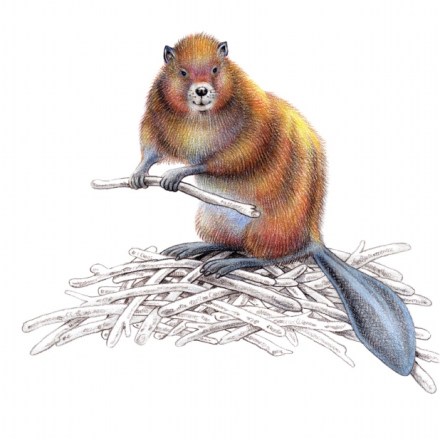
Canadian Flag | Canadian Animals Coloring Page | Beaver Carrying Canadian Flag

Picture Book Review

February 12 – It’s Black History Month

celebrate-picture-books-picture-book-review-words-set-me-free-cover

About the Holiday

Black History Month, also known as National African American History Month celebrates the achievements and contributions of African Americans in United States History. Originally a week-long observance commemorating the birthdays of Abraham Lincoln on February 12 and Frederick Douglass on February 14,  Black History Month was officially established in 1976 by then president Gerald Ford.

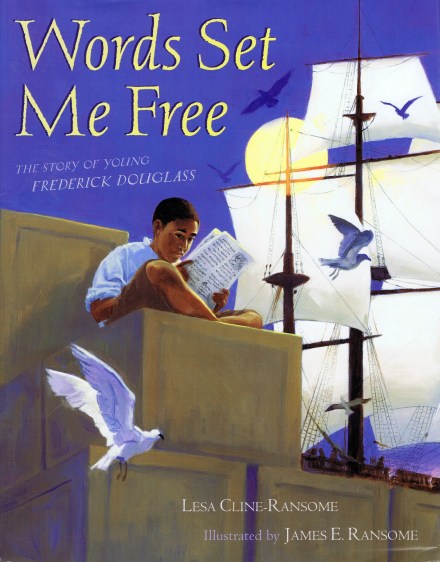
Words Set Me Free

Written by Lesa Cline-Ransome | Illustrated by James E. Ransome


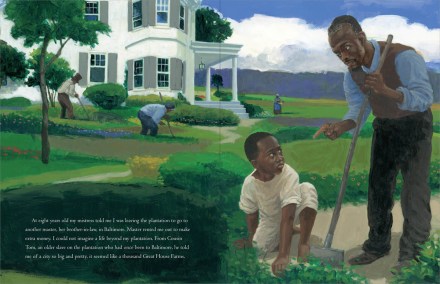
Born into slavery and separated from his mother in infancy, Frederick Bailey is raised by his Grandmama while his mother works on a separate plantation. When she is able Harriet Bailey walks the 12 miles between plantations to spend a few short hours with her son, watching him sleep before making the long journey back. While Frederick is still a very young child, his mother falls ill and dies. Douglass recalls never seeing his mother’s face in daylight.

celebrate-picture-books-picture-book-review-words-set-me-free-the-story-of-young-frederick-douglas-plantation

Image copyright James E. Ransome, text copyright Carole Boston Weatherford. Courtesy of Simon & Schuster.

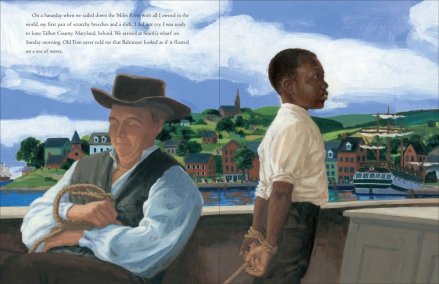
At the age of six, Frederick is moved from his Grandmama’s cabin to the plantation house. At eight, he is sent to the master’s brother in Baltimore, Maryland. Here, the master’s wife, Sophia Auld, treats Frederick more like a paid servant then as a slave. When Frederick says he wants to learn how to read and write, she immediately begins teaching him the alphabet. Frederick is always mindful, however, that he may be punished for these lessons, and he has only memorized the letters and a few words before his master puts an end to his education. Angrily, the master explains to his wife, “If you teach him how to read…it would forever unfit him to be a slave.”

celebrate-picture-books-picture-book-review-words-set-me-free-the-story-of-young-frederick-douglas-smith's-wharf

These words are perhaps Frederick’s greatest lesson. He never forgets them, and they fuel his resolve to pursue an education. He makes clever use of the few resources he has and slowly learns to read and write. From the newspapers he discovers that the North offers freedom, and Frederick decides to escape. It’s many long years, however, before he can fulfill his dreams. At last, he sees an opportunity to leave the South behind, and using his talent for writing makes his escape a reality.

celebrate-picture-books-picture-book-review-words-set-me-free-the-story-of-young-frederick-douglas-tall-ship

Image copyright James E. Ransome, courtesy of Simon & Schuster.

Lesa Cline-Ransome has written a compelling biography of Frederick Douglass for children in Words Set Me Free. In straightforward language and through first-person point of view, Cline-Ransome reveals the brutal truth of Douglass’s life as a slave and his fight against injustice. As the title suggests, the book focuses on Frederick’s desire to become educated and the obstacles he overcame to succeed. This universally important message continues the work Douglass engaged in long ago.

James Ransome’s stirring paintings realistically highlight pivotal scenes of Frederick’s life, beginning with the tender moments he spends with his mother as a very young child. With an unstinting eye Ransome reveals the hardship and cruelty Frederick endured as a slave. His moving illustrations also demonstrate hope as Frederick, with blossoming intellect, resolves to educate himself and find a means of escape.

Ages 5 and up                                                                                                            

Simon & Schuster, New York, 2012 | ISBN 978-1416959038

Learn more about Lesa Cline-Ransome and her books on her website!

Find a gallery of illustration, paintings, drawings, videos, and more on James E. Ransome‘s website!

Black History Month Activity

celebrate-picture-books-picture-book-review-frederick-douglass-word-search-puzzle


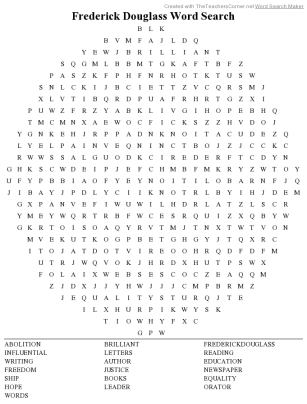
Frederick Douglass Word Search


Words were so important to Frederick Douglass that he risked everything to learn how to read and write. In this printable Frederick Douglass Word Search Puzzle you will find words about the subject of today’s book. Here’s the Solution

February 8 – Kite Flying Day

celebrate-picture-books-picture-book-review-red-kite-blue-kite-cover

About the Holiday

If you live in a cold climate and cabin fever has set in or if you live in a warm climate and want to get out and enjoy the day, why not take the opportunity of today’s holiday and go fly a kite? Whether you’re steering a simple diamond or a fancy dragon, watching a kite dip and soar through the sky is an exhilarating experience!

Red Kite, Blue Kite

Written by Ji-li Jiang | Illustrated by Greg Ruth


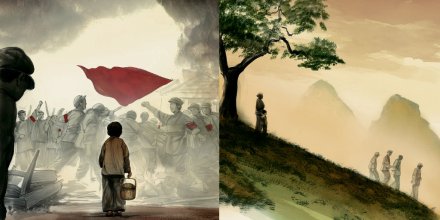
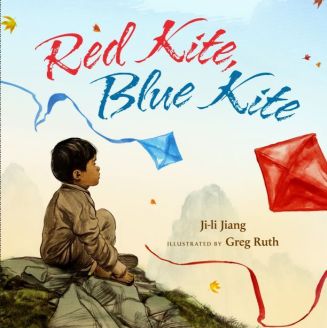
“I love to fly kites,” young Tai Shan relates, but not he’s while standing on the ground. Instead, because his city is so crowded, his Baba and he climb to the peak of their triangular roof where they are “above but still under, neither here nor there. We are free, like the kites.” While they fly their kites—red for Tai Shan and blue for Baba—Baba tells stories, and Tai Shan feels as if he is soaring through the clouds, “looking down at the dotted houses” and wanting to stay up there forever.

celebrate-picture-books-picture-book-review-red-kite-blue-kite-Tai-Shan-and-Baba-fly-kites

copyright Greg Ruth, courtesy of Disney-Hyperion

But one day dark times descend. Tai Shan’s school and many others are shuttered. Baba is taken away by men in red arm bands and sent to work in a labor camp. Tai Shan is sent to live with Granny Wang, a farmer who lives in a village next to the labor camp. A thick forest separates Tai Shan and Baba. During the day Granny Wang teaches Tai Shan how to make straw grasshoppers and spin cotton and lets him ride her buffalo. At night Tai Shan dreams of flying kites from the rooftop with his father.

On Sundays Baba walks for hours to visit Tai Shan. He spends time telling stories and playing with his son and his friends. Then they climb the hill and fly kites, Tai Shan’s red one following Baba’s blue. “The kites hop and giggle as they rise and dive, soaring and lunging together.” At the end of the day, Baba returns to the labor camp for another week. In the autumn Baba tells Tai Shan that he won’t be able to visit for a long time. But he has a clever plan—a way that he and Tai Shan can see each other.

Baba gives his son a new red kite and tells him to fly it from the hill each morning. He will see it from his camp. In the evening Baba will fly his blue kite so that Tai Shan can see it. Tai Shan likes the idea of this “secret signal.” The next morning Tai Shan runs to the hill and launches his kite, knowing that “Baba is smiling as he watches the red kite dancing.” In the evening he returns to the hill, and after a long wait “Baba’s blue kite sways into the white clouds.”

celebrate-picture-books-picture-book-review-red-kite-blue-kite-Baba-taken

copyright Greg Ruth, courtesy of Disney-Hyperion

Every day Tai Shan sends his father a silent message—“‘How are you, Baba? I miss you.’” and “Baba’s blue kite swirls and circles, replying, ‘I miss you, too, little Tai Shan.’” Autumn is coming to a close, but still Baba does not visit. One day no blue kite appears in the sky. The next day and the next no kite appears either. Tai Shan asks Granny Wang to take him to the camp to see Baba. If there is no kite on the fourth day they will go, Granny Wang promises.

That night Tai Shan dreams about the thick forest and hears Baba whisper, “‘Tai Shan, I saw your red kite fly so high.’” But these words are not in a dream, Baba is there. But Baba is not home to stay. Hurriedly, he gives Tai Shan his blue kite, telling him that he will not be able to fly it for a while. He asks Tai Shan to fly both kites and know that he is looking up and thinking about his son. Suddenly, men with red armbands rush in and take Baba away. Tai Shan tries to run after him, but Granny Wang holds him back.

Tai Shan cries and does not understand. Granny Wang explains that Baba is being sent to another labor camp far away because the authorities don’t agree with his ideas. During the three days when he didn’t fly his blue kite, Granny Wang says, Baba had been imprisoned. He had escaped and run all the way to see Tai Shan before he was taken away. Now Tai Shan flies the two kites every day and thinks of being together with Baba.

celebrate-picture-books-picture-book-review-red-kite-blue-kite-Baba-gives-kite

copyright Greg Ruth, courtesy of Disney-Hyperion

One summer afternoon, Tai Shan dozes while he allows his red kite to dip and soar in the clouds. When he opens his eyes, he sees dozens of red and blue kites in the sky. Tai Shan jumps up. He sees Baba smiling at him and “holding the string of a huge blue kite dancing in the sky.” Tai Shan’s friends are also smiling and flying their new kites. Tai Shan runs to Baba, and Baba runs toward Tai Shan. The sky “is filled with kites—red and blue. They hop and giggle and cheer as they rise and dive, soaring and lunging together. They are free, flying everywhere.”

An Author’s Note about the Chinese Cultural Revolution follows the text.

Inspired by the story of a family friend whose father was sent to a labor camp during the Chinese Cultural Revolution between 1966 and 1976, Ji-li Jiang wrote Red Kite, Blue Kite “for the many fathers and sons who suffered during that turmoil.” Jiang’s story is a universal and relevant reminder of the precious freedoms of thought and speech that need constant and vigilant protection. Through her sensitive storytelling and lyrical language, Jiang offers a story of understanding, hope, and infinite love that will fill readers’ hearts.

Greg Ruth’s stunning paintings show all the emotion of Jiang’s story through exquisite, realistic portraits of Tai Shan, Baba, and Granny Wang. The distinctive landscapes of China are rendered in colorful foregrounds set on gauzy backgrounds of rising hills. Smoky images of the followers of the Cultural Revolution mirrors the darkness and destruction of the time in a way that is understandable for the young audience. The final two-page spread of Tai Shan and Baba’s reunion amid dozens of red and blue kites is inspiring and full of the strength of the human spirit.

Red Kite, Blue Kite is a must for school and public libraries and makes an excellent addition to home libraries as well.

Ages 5 – 9

Disney-Hyperion, 2013 | ISBN 978-1423127536

For a downloadable Educator’s Guide click here.

Learn more about Ji-li Jiang and her books on her website!

Find galleries of books and illustration for children and adults plus lots more on Greg Ruth’s website!

Kite Flying Day Activity

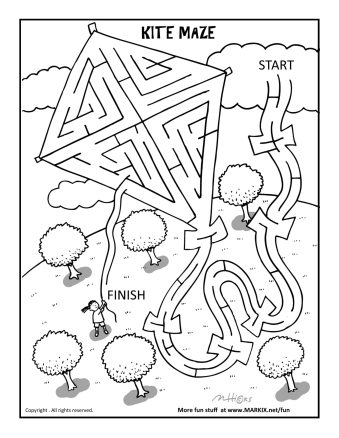
celebrate-picture-books-picture-book-review-kite-maze

Soaring Kite Maze


The dips and rises your pencil takes through this maze is a little like the way a kite flies through the sky! Print your Soaring Kite Maze and enjoy!

Picture Book Review
January 23 – National Pie Day

celebrate-picture-books-picture-book-review-edgar-allan-poe's-apple-pie-cover

About the Holiday

National Pie day is perfect for…well…pie! Whether you love fruity pies or meat pies, pies with lattice tops or crumble crusts this day is for you! There’s only one true way to celebrate—make or buy your favorite kind of pie and enjoy! 

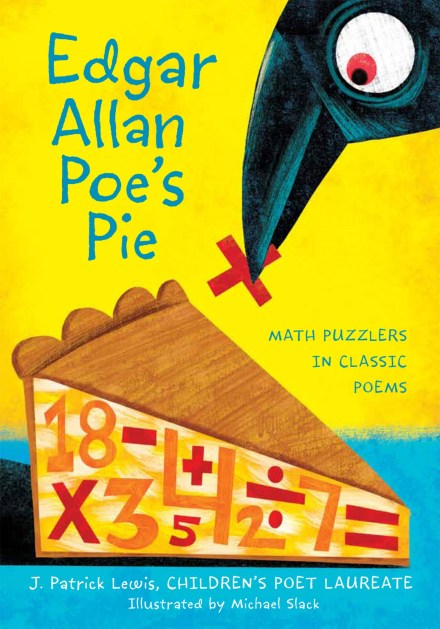
Edgar Allan Poe’s Pie: Math Puzzlers in Classic Poems

Written by J. Patrick Lewis | Illustrated by Michael Slack


There’s something about poetry with its iambic pentameters, feet, meter, sonnets, couplets, and more countable qualities that just seems to lend itself to math. J. Patrick Lewis must have thought so too because he penned a clever volume of poems inspired by well-known verses. First up is Edgar Allan Poe’s Apple Pie, which is inspired by “The Raven” and begins: “Once upon a midnight rotten, / Cold, and rainy, I’d forgotten / All about the apple pie / Still cooling from the hour before.” But now, even though there is a “knocking, knocking…” at the door, the narrator takes up a knife and slices the night with a cutting question, only to hear the stranger’s mysterious clue “‘Never four!’”

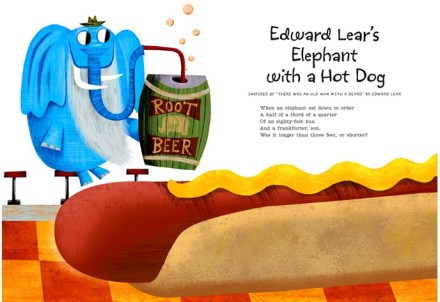
celebrate-picture-books-picture-book-review-edgar-allan-poe's-apple-pie-hotdog

Image copyright Michael Slack, text copyright J. Patrick Lewis. Courtesty slackart.com

All the narrator of Emily Dickenson’s Telephone Book, inspired by “My Life Closed Twice Before its Close,” wants to do after napping is to find a certain phone number in her directory, but where is it? She knew where it was before she went to bed—in fact its “two opposing pages / that added up to 113— / Were smudged around the edges—” but now she’s so confused…. Can you help?

Those who think that “Stopping by Woods on a Snowy Evening” has no link to underwear possibly are not aware of Robert Frost’s Boxer Shorts, in which the lilt and the rhythm of the original are perfectly matched in a priceless, pricey puzzle that ends “My tightie whities look so sad. / My tightie whities look so sad.” How can you resist?

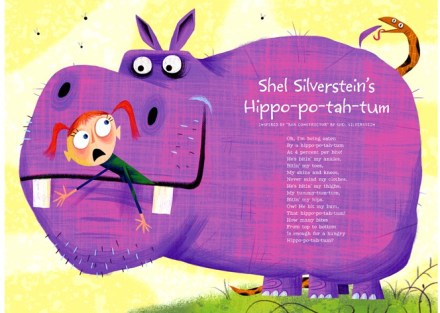
celebrate-picture-books-picture-book-review-edgar-allan-poe's-apple-pie-hippo

Image copyright Michael Slack, text copyright J. Patrick Lewis. Courtesty slackart.com

You may know about William Carlos Williams’s red wheelbarrow and where it stood, but what if that handy implement was replaced by a… “fifteen-inch square pizza” that is missing “nineteen and a half pieces”?! Well, there may not be any rainwater glaze, but it sure does make for a delicious arithmetic conundrum in William Carlos Williams’s Pizza.

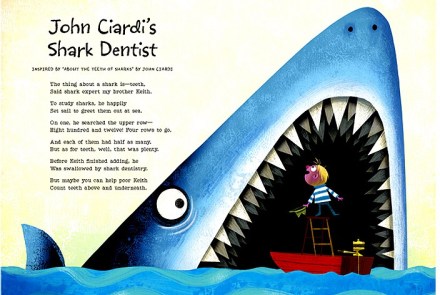
You’re eating up these poems, aren’t you? Well, next come three poems in which termites, sharks, and a “hippo-po-tah-tum” do a bit of nibbling of their own. The fun multiplies in Ogden Nash’s Buggy Rugs, where 313 little wood chompers hide; in John Ciardi’s Shark Dentist, in which you’ll want to brace yourself for the ending; and in Shel Silverstein’s Hippo-po-tah-tum, which is fractionally frightening.

These seven poems are added to seven more, plus two pages full of “prose about the poets,” to equal one smart, tantalizing poetic brainteaser of a book!

celebrate-picture-books-picture-book-review-edgar-allan-poe's-apple-pie-shark

Image copyright Michael Slack, text copyright J. Patrick Lewis. Courtesty slackart.com

Patrick Lewis, who served as the US Children’s Poet Lauriat from 2011 to 2013, has honored 16 of the world’s most beloved poets the way kids love best—with humor. Adapting the original poem’s rhythm, rhyme scheme, and length with a dash of the ridiculous and a dose of numerical heft, Lewis has created poems that will have kids giggling while they ponder the answers to the lyrical math problems the verses pose. While arithmetic aficionados will gobble these poems up, there’s plenty for language arts lovers to sink their teeth into too. Each witty poem just begs to be compared to the original, which would make for a fun afternoon at home or lesson in the classroom. Admit it—aren’t you just the tiniest bit curious what Edward Lear’s “There was an Old Man with a Beard” has to do with an 80-foot hotdog?

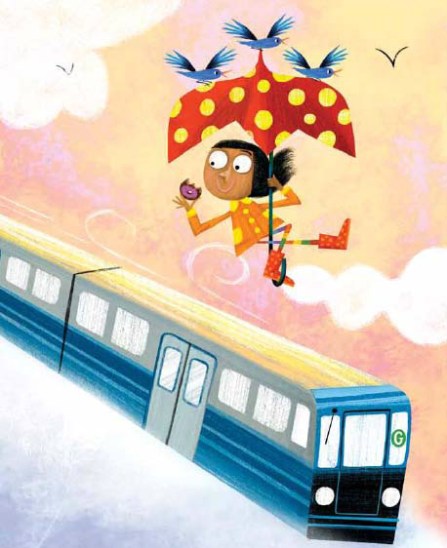
celebrate-picture-books-picture-book-review-edgar-allan-poe's-pie-train

Image copyright Michael Slack Lewis, courtesty slackart.com

Michael Slack gets things off and running on the first spread, where a sharp-taloned blackbird stands over a knife that’s plunged into the center of a pie. While readers of Walt Whitman’s Web-Covered Shoe may wonder exactly how long the boot has been untouched, they’ll be more distracted by the number of eyes on two very fierce-looking spiders. And there may be nothing more diverting than the potbellied cowboy wearing only his tightie whities as he waits for his snowflake, flame, spaceship, and other uniquely decorated boxers to dry. Slack illustrates each poem with distinctive, vibrant images that ramp up the humor and give every page an individual look.

Answers to the math problems proposed are included with every poem, and brief biographies accompanied by tiny portraits, reveal information about the poets represented and their work.

Edgar Allan Poe’s Pie is a fantastic way to get kids interested in math and poetry. The brain ticklers, as well as the wonderful wordplay and illustrations, make this a book that should be on classroom shelves and would be welcome in home libraries too.

Ages 6 – 9

Houghton Mifflin Harcourt Books for Young Readers, 2015 (paperback) | ISBN 978-0544456129

To learn more about J. Patrick Lewis, his books, and resources for kids and teachers, visit his website!

View a gallery of books, illustration, and other art by Michael Slack on his website!

National Pie Day Activity

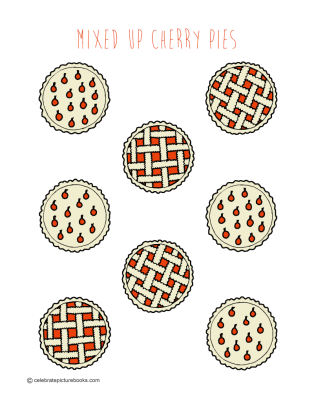
celebrate-picture-books-picture-book-review-cherry-pie-match

Mixed Up Cherry Pies Puzzle


Each winner of a poetry contest were supposed to get two identical pies, but they got mixed up! Can you find the matching pies in this printable Mixed Up Cherry Pies Puzzle and save the day?

Picture Book Review

January 18 – Thesaurus Day

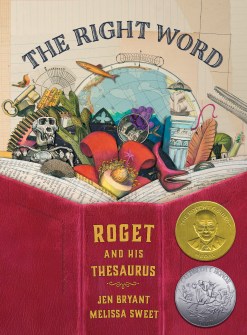
celebrate-picture-books-picture-book-review-the-right-word-roget-cover

About the Holiday

Today we celebrate that most marvelous, stupendous, spectacular, cool, awe-inspiring, remarkableand—one from my early youth—groovy book, the thesaurus! Without its incredible cross-referenced lists of synonyms and antonyms, the world would be much more boring, dull, lackluster, monotonous place. Today, spice up your speech and writing with the perfect word to express all the nuances of life!

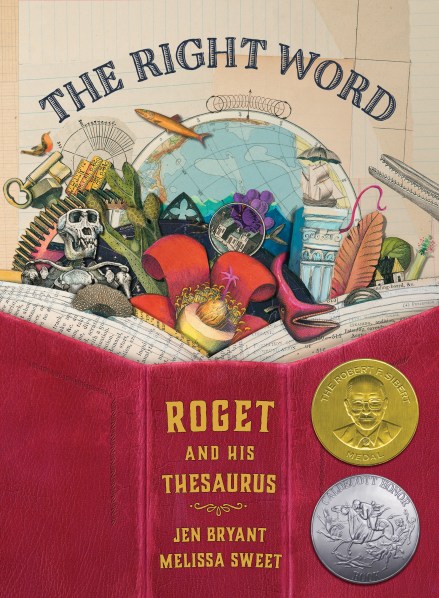
The Right Word: Roget and His Thesaurus

Written by Jen Bryant | Illustrated by Melissa Sweet


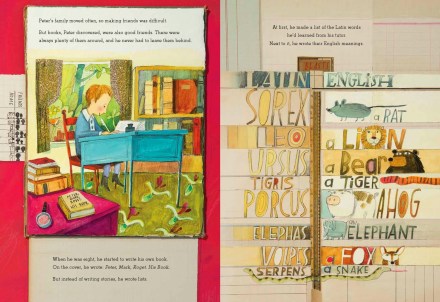
While just a young child, Peter, along with his mother, his uncle, and his baby sister Annette, travel to their new home following the death of his father. It would not be his first move, and in the absence of long-time friends, Peter found companionship in books. When he was eight years old, he began writing his own book titled: Peter, Mark, Roget. His Book. But this was not a book of stories or even one story; it was a book of lists. The first list was divided in two. On one side were the Latin words he knew; on the other were their definitions.
celebrate-picture-books-picture-book-review-the-right-word-roget-peter-starts-his-book

Image copyright Melissa Sweet, 2014, text copyright Jen Bryant, 2014. Courtesy of Eerdmans Books for Young Readers.

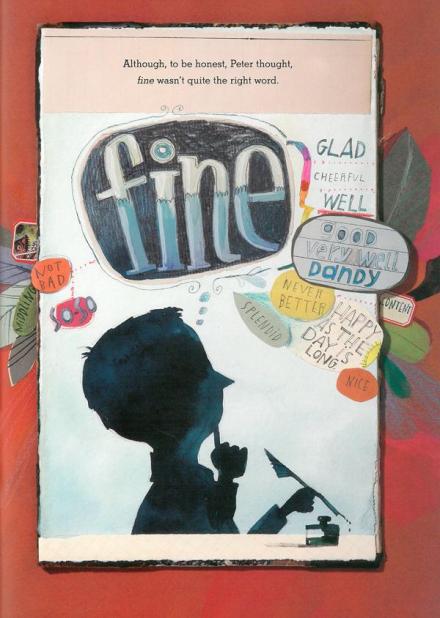
Peter’s mother hovered and worried over her son, and he always told her he was “fine.” “Although, to be honest, Peter thought, fine wasn’t quite the right word.” As the years went by, Peter added lists to his book, prompting his mother to complain about his constant “scribbling.” But Peter looked at his lists differently. “Words, Peter learned, were powerful things. And when he put them in long, neat rows, he felt as if the world itself clicked into order.”

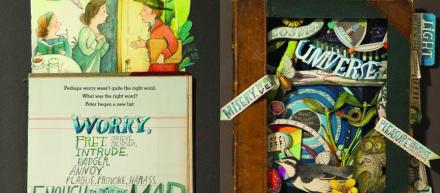
As a teenager Peter was shy, preferring to wander the London gardens alone, “making lists of all the plants and insects,” as in one of his favorite science books by Linnaeus. His “mother didn’t approve, and Peter told her not to worry—but “perhaps worry wasn’t quite the right word. What was the right word? Peter began a new list: Worry, fret, grieve, despair, intrude, badger, annoy, plague, provoke, harass. Enough to drive one mad. How wonderful it felt to find just the right word.”
celebrate-picture-books-picture-book-review-the-right-word-roget-fine

Image copyright Melissa Sweet, 2014, text copyright Jen Bryant, 2014. Courtesy of Eerdmans Books for Young Readers.

An idea crept into Peter’s mind for a book where “all the ideas in the world could be found in one place,” and people could “find the best word, the one that really fit.” When Peter was 14 he entered medical school in Edinburgh, Scotland. Upon graduation at 19, his uncle told him that patients would be wary of a doctor so young. To gain a bit of experience and maturity, Peter became a tutor to two teenage boys.

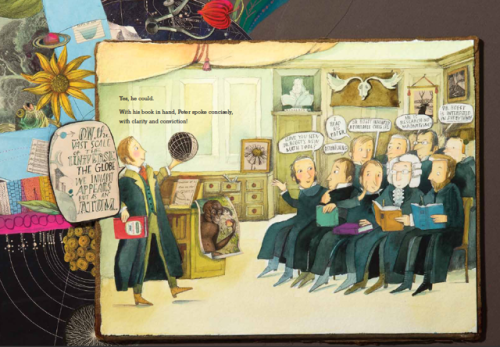
At last Peter set up his medical practice in Manchester, England, where he took care of the factory workers, who “were poor and often sick.” At night Peter worked on his book of lists, and in 1805 he declared it finished. “It had about one hundred pages, one thousand ideas, and listed more than fifteen thousand words!” Eventually, Peter moved back to London where he joined science societies and attended lectures. “Before long, he was asked to give lectures too,” and once-shy Peter astonished his audiences with his knowledge of math, magnetism, and other scientific subjects. He even invented a portable chess set.

celebrate-picture-books-picture-book-review-the-right-word-mother-worries

Image copyright Melissa Sweet, 2014, text copyright Jen Bryant, 2014. Courtesy of Eerdmans Books for Young Readers.

When Peter was 45 years old, he married Mary Hobson, and they had two children, Kate and John. As he grew older, he visited fewer patients, but he continued to take walks and work on his lists. While some other writers had published their own word lists to help people “to speak and to write more politely,” Kate and John “thought their father’s book was much better. Peter agreed.” For three years he rewrote his book. “He made it larger, more organized, and easier to use. Long ago Peter had discovered the power of words. Now he believed that everyone should have this power—everyone should be able to find the right word whenever they needed it.”

celebrate-picture-books-picture-book-review-the-right-word-roget-lecturing

Image copyright Melissa Sweet, 2014, text copyright Jen Bryant, 2014. Courtesy of Eerdmans Books for Young Readers.

“In 1852, Roget published his Thesaurus, a word that means ‘treasure house’ in Greek.” It was an instant best seller, and Peter became a popular author. But he never stopped making lists.

Following the text, a timeline of principal events in Peter’s life as well as world events allow readers to better understand the historical period in which Peter worked. Extensive Author’s and Illustrator’ Notes also expand on Roget’s biography, and resources for further reading and research are included.

Jen Bryant’s biography of a brilliant boy who grew up to give the world its most fascinating and comprehensive collection of word lists, is a spritely telling of Roget’s life and revelation into his personality, which was perfectly suited to his scientific and written accomplishments. Children will appreciate Roget’s reactions to his mother’s worries as well as the message in his well-rounded pursuit of science and writing. Through Bryant’s captivating and lyrical storytelling, children will be inspired by Roget’s journey from shy child to much-accomplished adult.

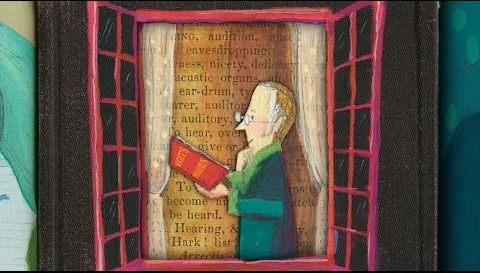
celebrate-picture-books-picture-book-review-the-right-word-roget-at-home

Image copyright Melissa Sweet, 2014, courtesy of Eerdmans Books for Young Readers.

Melissa Sweet beguiles readers with her mixed media, collage, and watercolor illustrations that are as jam-packed with ideas, images, portraits, and typography as Roget’s thesaurus is full of words. In the early pages describing Peter’s childhood, the pages contain simple framed pictures of Roget and his family. As he grows, however, his lists of words are transformed into vibrant artwork that jostles for position from corner to corner of the pages. In the midst of these, delicate watercolors portray Peter as he strolls through a garden, takes his young charges to Paris, treats his patients, lectures, marries, and finally publishes his thesaurus. A special mention must be made of the typography, which at times in the text runs down the center of the page in one- or two-word lines, mirroring Roget’s love of lists, and in the illustrations presents the myriad synonyms in a mixture of colorful block letters, fine print, and calligraphy.

For bibliophiles, wordsmiths, scientists, and history buffs, The Right Word: Roget and His Thesaurus is just the right book for home libraries.

Ages 6 – 18

Eerdmans Books for Young Readers, 2014 | ISBN 978-0802853851

Discover more about Jen Bryant and her books as well as news, contests, and events, visit her website!

Learn more about Melissa Sweet and her books and have fun with the downloadable activities you’ll find on her website!

Watch this The Right Word: Roget and His Thesaurus book trailer!

Thesaurus Day Activity

celebrate-picture-books-picture-book-review-synonyms-word-search

Word Words Word Search Puzzle


When you’re looking for just the right word, where do you go? To the thesaurus of course! Can you find the 25 synonyms for “Word” in this printable Word Words Word Search Puzzle? Here’s the Solution!

celebrate-picture-books-picture-book-review-the-right-word-roget-cover

You can find The Right Word: Roget and His Thesaurus at these booksellers

Amazon | Barnes & Noble | Books-a-Million | IndieBound

Picture Book Review