March 22 – It’s Women’s History Month

celebrate-picture-books-picture-book-review-cactus-queen-cover

About the Holiday

National Women’s History Month is all about celebrating women who broke barriers with their intelligence, creativity, courage, persistence, and unwavering confidence in their abilities. In every discipline, women have brought and continue to bring new perspectives, experiences, and talents to make contributions toward a better world. The theme for Women’s History Month 2024 celebrates “’Women Who Advocate for Equity, Diversity and Inclusion.’ This theme recognizes women who understand the need to eliminate bias and discrimination from individuals’ lives and institutions.”

Today’s book celebrates a visionary woman who made it her life’s work to protect a unique ecosystem, educate people on the importance of the environment and conservation, and provide the US with one of its most stunning national parks. 

I’d like to thank Calkins Creek/Astra Books for sharing a copy of Cactus Queen” Minerva Hoyt Establishes Joshua Tree National Park with me for review consideration. All opinions on the book are mt own.

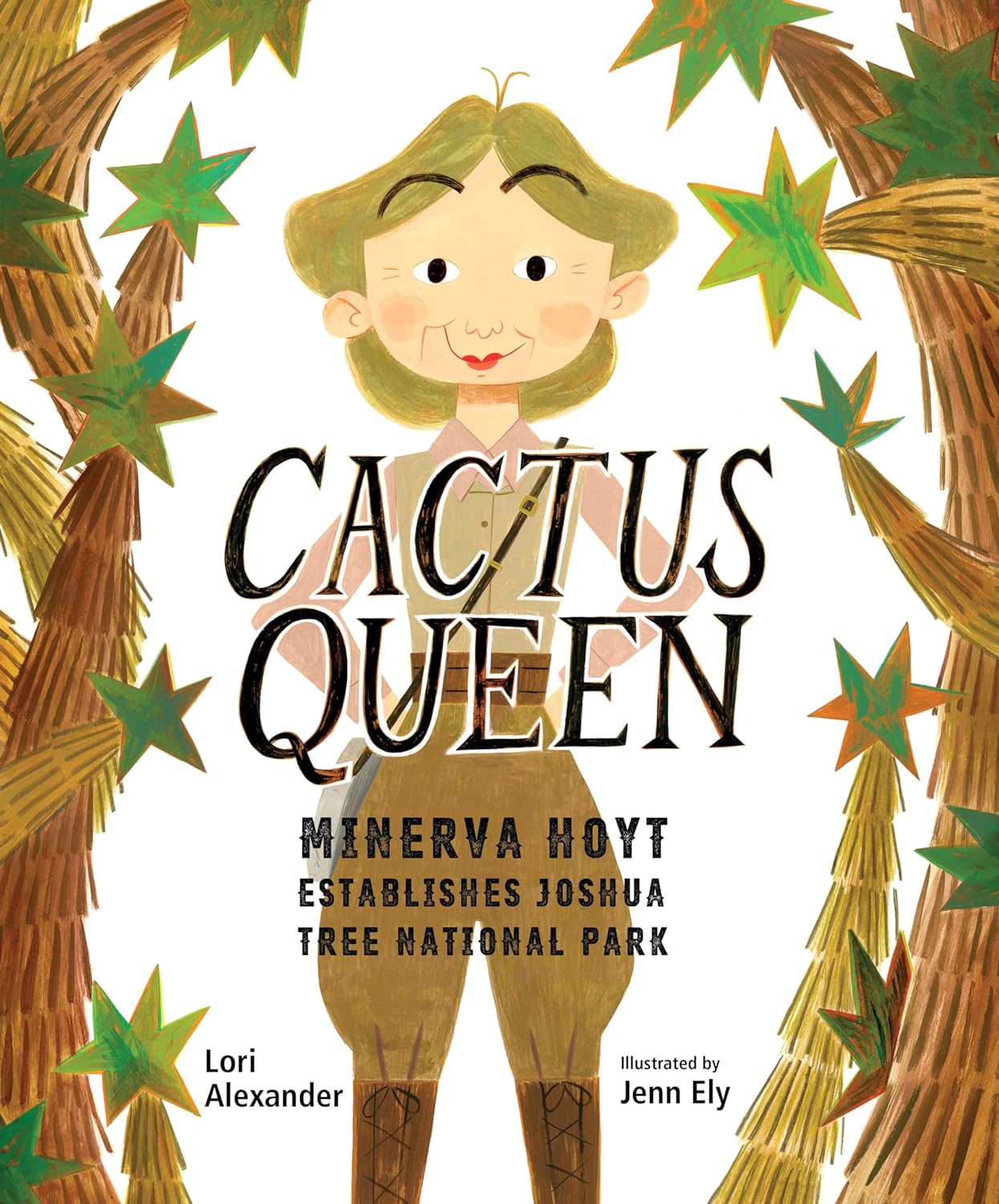
Cactus Queen: Minerva Hoyt Establishes Joshua Tree National Park

Written by Lori Alexander | Illustrated by Jenn Ely


Even as a child, Minerva loved the outdoors, was eager to share her thoughts and opinions, and enjoyed “long chats with friends.” When she grew up she married Dr. Albert Hoyt. In 1897 Minerva and her husband moved from Mississippi to Pasadena, California, close to Los Angeles. To meet new friends, Minerva hosted a backyard party, complete with games, food, and, of course, long chats.

Settled into her new city, Minerva took to making trips to the Mojave Desert. She was awed by the Joshua trees, which grew nowhere else but here. After the death of her husband in 1918, Minerva spent more time in the desert, even camping out while “the wind whistled through the Joshua trees,” and “bright constellations swirled overhead.”

celebrate-picture-books-picture-book-review-cactus-queen-garden-party

Illustration copyright Jenn Ely, 2024, text copyright Lori Alexander, 2024. Courtesy of Calkins Creek, Astra Books for Young Readers.

As Los Angeles grew and grew, with more buildings, more cars, and more noise, people began to visit the desert frequently. They didn’t just visit, though, they wanted to take it home. People dug up the “… fuzzy cholla, spiky yucca, and barrel cacti to keep in their backyards.” They even dug up Joshua trees and carted them away. Many of these desert plants didn’t survive their new city surroundings. The Joshua trees were also cut down for construction materials, and motorists lost in the desert set them afire to communicate with other drivers.

By the late 1920s little remained of Minerva’s beloved desert. She wanted to save it . . . but how? Suddenly, “Minerva had a wild idea.” She would show the rest of the country just how special the desert was. With help from garden clubs, artists, taxidermists, and friends, she gathered samples of desert flora and fauna and took them east—by train.

celebrate-picture-books-picture-book-review-cactus-queen-camping

Illustration copyright Jenn Ely, 2024, text copyright Lori Alexander, 2024. Courtesy of Calkins Creek, Astra Books for Young Readers.

At the 1928 International Flower Show in New York City, Minerva erected a display of the desert. Crowds were thrilled to discover this “strange landscape,” and reporters took pictures for magazines and newspapers. Minerva won a gold medal for her exhibit, The Spirit of the Desert. Minerva also won awards in Boston and London for exhibits there. But more important than these accolades was that people were really listening to her and beginning to love the desert. When she donated her exhibits to museums, more people became interested in the desert.

By 1933, Minerva was ready to move on to the next stage in her plan. She wanted 1,000,000 acres of the desert to be declared a national park, protected by federal laws. Minerva garnered an audience with President Franklin D. Roosevelt and brought photographs to show him. She convinced the President—now it was up to Roger W. Toll, superintendent of Yellowstone National Park, to inspect Minerva’s desert and agree.

celebrate-picture-books-picture-book-review-cactus-queen-museum-exhibit

Illustration copyright Jenn Ely, 2024. Courtesy of Calkins Creek, Astra Books for Young Readers.

As Roger Toll stood in the middle of the desert on a rainswept day, he asked, “where are the lush trees, the waterfalls, and lakes?” When he later filed his report, he rejected the desert for National Park status. Minerva was disappointed but did not give up. She began a letter-writing campaign, convincing “scientists, teachers, politicians, and friends” to write to the National Park Service. Letters poured in—enough to convince the Service to send out a new inspector.

This time Assistant Director Harold C. Bryant, who lived in California, was sent. “He knew all about desert plants and animals.” When he arrived, Minerva and more than one hundred supporters greeted him. After touring the desert for three days, Bryant announced his decision: Yes! “Minerva’s desert was worth saving.”

celebrate-picture-books-picture-book-review-cactus-queen-park

Illustration copyright Jenn Ely, 2024, text copyright Lori Alexander, 2024. Courtesy of Calkins Creek, Astra Books for Young Readers.

Extensive backmatter, accompanied by photographs, offers more biographical information about Minerva, points about wildlife in Joshua Tree National Park, facts about other national parks in the United States, tips for how young people can help the environment through easy-to-implement actions, and a bibliography. In Lori Alexander’s Author’s Note, she relates the dangers and destruction that the fragile environment of Joshua Tree National Park and the surrounding desert continues to suffer from “vandalism, urban development, and the effects of climate change,” a report that demonstrates the need for continued education and care taking of our natural resources.

In Cactus Queen, Lori Alexander has created a compelling biography of a remarkable woman as well as a call to action for readers to stand up for the environmental or other causes that are important to them. Alexander highlights Minerva Hoyt’s love of the desert, her dedication, and her unflagging determination to overcome setbacks. Hoyt’s creativity, pragmatism, and lifelong focus serves as an inspirational roadmap for accomplishing goals for children, teens, and even the adults who read with them.

The first thing readers may notice upon opening Cactus Queen is Jenn Ely’s beautiful color palette that mirrors the unique hues of the desert. Her stunning images of the desert and Minerva’s ingenious ways of rallying the country and the President to her cause transport children from Hoyt’s earliest days through her long-fought success. Ely’s charming illustrations reveal not only the special plants and creatures of the Mojave Desert but Minerva’s distress at its destruction and her tenacity to enact change to protect it. 

Both a fascinating biography of Minerva Hoyt and an in-depth look at the multifaceted workings of conservation efforts, Cactus Queen: Minerva Hoyt Establishes Joshua Tree National Park will inspire readers to advocate for causes that are important to them. For educators the book would make an excellent addition to science and language arts curriculum. Cactus Queen would also be an engaging accompaniment to museum visits or field trips for families and teachers.

Cactus Queen is a top pick for classrooms, public and school libraries, museum shops, and families.

Ages 7 – 10

Calkins Creek, 2024 | ISBN 978-1662680212

About the Author

Lori Alexander is the award-winning author of several children’s books, including All in a Drop: How Antony van Leeuwenhoek Discovered an Invisible World, which won a Robert F. Sibert Honor, and A Sporting Chance: How Ludwig Guttmann Created the Paralympic Games, an NCSS Notable Book. Her work has received several starred reviews from KirkusSchool Library Journal, and Horn Book Magazine, has made the NSTA Outstanding Science Trade Book list, and has been selected by the Junior Library Guild. Visit Lori Alexander at lorialexanderbooks.com.

About the Illustrator

Jenn Ely is an artist and animator, who has worked on the movies The Boxtrolls and Guillermo Del Toro’s Pinocchio. In her recent foray into children’s books, she illustrated The Gardener of Alcatraz and If You Were a Kid Building a Pyramid. Visit Jenn Ely at jennely.com.

Women’s History Month Activity

celebrate-picture-books-picture-book-review-joshua-tree-national-park-wildlife

Become a Joshua Tree National Park Junior Ranger

How would you like to become a Joshua Tree National Park Junior Ranger? You can your badge with this online program full of fun and educational activities for all ages! You can learn how to draw a Joshua Tree, create your own constellation, learn all about desert tortoises, create your own rock formation, learn about adaptable plants and design your own, and more.

To earn your badge kids ages 5 – 7 are asked to complete 2 activities; kids ages 8 – 10 are asked to complete 3 activities; and kids ages 10 and above are asked to complete 4 or more. After finishing projects, you just need to send images of your work to receive your badge in the mail!

Simply visit the official Joshua Tree National Park website and learn more about their Junior Ranger program! Learn more about the park and view lots of pictures and videos here.

Joshua Tree National Park Coloring Page

celebrate-picture-books-picure-book-review-joshua-tree-national-park-coloring-page

Enjoy this activity page by filling it with all the colors of the desert.

Joshua Tree National Park Coloring Page

celebrate-picture-books-picture-book-review-cactus-queen-cover

Order from Bookshop to support your local independent bookstore.

You can also find Cactus Queen: Minerva Hoyt Establishes Joshua Tree National Park at these booksellers

Amazon | Barnes & Noble | Books-a-Million

Picture Book Review

December 9 – It’s Read a New Book Month

celebrate-picture-books-picture-book-review-octopuses-have-zero-bones-cover

About the Holiday

The month of December is a gift-giver’s delight, and there’s no better gift for everyone on your list than a book (or two or…). With so many new books hitting bookstore shelves, there really is a perfect one to fit everyone’s taste. Young children, especially, benefit from reading a wide range of picture books from laugh-out-loud or touching stories to nonfiction that introduces them to influential people, science, history, nature, math—like today’s book. If you’re looking for gifts to give, it’s not too late to head to your local bookstore to find books that will make your child’s eyes light up.

I’d like to thank Tra Publishing for sending me a copy of Octopuses Have Zero Bones for review consideration. All opinions on the book are my own.

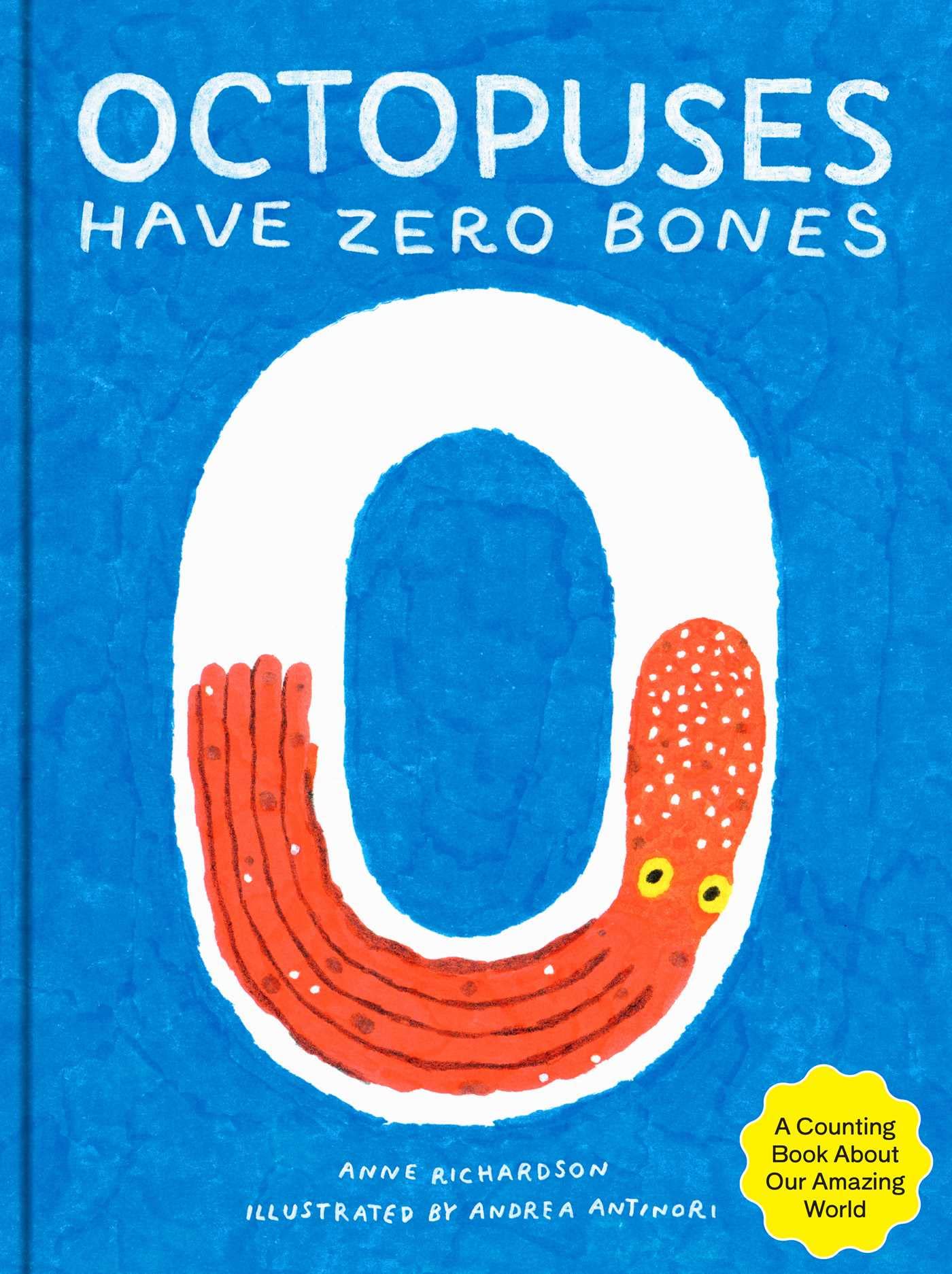
Octopuses Have Zero Bones: A Counting Book about Our Amazing World

Written by Anne Richardson | Illustrated by Andrea Antinori


If you’re looking for a book that opens kids’ eyes and mind to new ways to interact with numbers and fall in love with everything they have to tell about us and the world around us, then you’ll want to wrap your arms around Octopuses Have Zero Bones. This multilayered and eye-opening romp through the ability of numbers to describe, explain, provide perspective, and amaze celebrates the numbers from zero to nine and the power of numbers ten to nine billion.

Kids at all levels will find accessible ways to explore the math concepts that enliven every page, from basic counting to higher-level ideas that include measurement, extrapolation, and estimation as well as complex scientific facts. And how does all of this learning begin? With 0 and simple statement and probing question: “ZERO, all by itself, is nothing. Can you imagine nothing?” It might be hard for kids to think about how “nothing” can be important or have an effect. But Anne Richardson, with illustrative help from Andrea Antinori, reveals that because “octopuses have ZERO bones…” they “can squeeze through very small places.” And, if that doesn’t surprise you, she also presents this fascinating tidbit: “Dry Valleys, Antarctica, gets ZERO rain or snow.” In fact “there’s been no precipitation for two million years.” Two million! That’s nearly as impressive as zero!

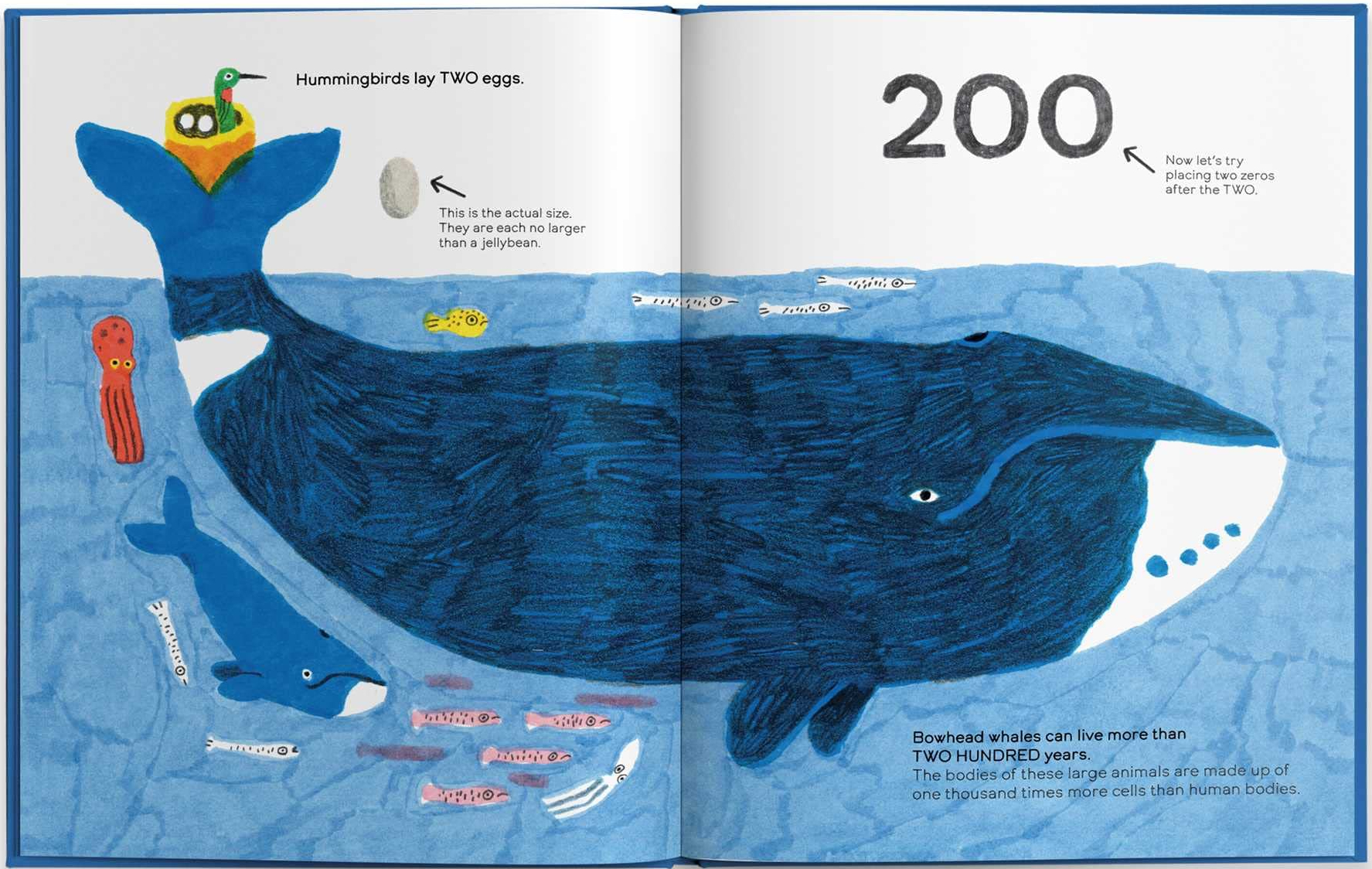
celebrate-picture-books-picture-book-review-octopuses-have-zero-bones-whale

Image copyright Andrea Antinori, 2022, text copyright Anne Richardson, 2022. Courtesy of Tra Publishing.

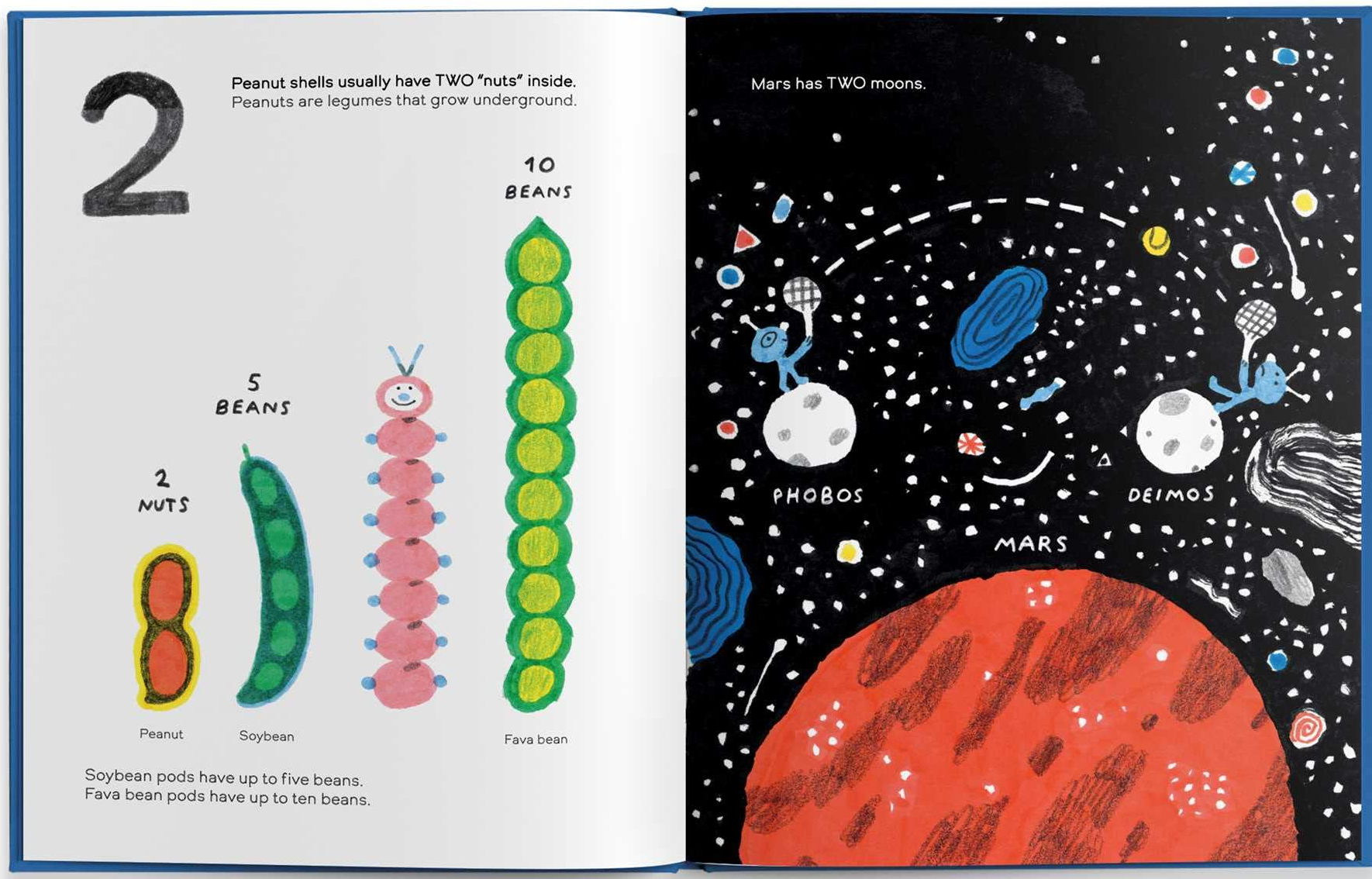
But that’s not all! There are more examples, and then Richardson shows how that simple digit 0 can make a single whole number explode into 100, 1,000, 100,000 and so on. She moves from there to tackle the numbers 1 through 9, by themselves and then attached to one 0. Readers next learn about 10—10 decibels, a creature with 10 legs, 10 fingers, and 10 toes. Those familiar with counting know that 2 comes after 1, and Richardson and Antinori help kids visualize this number with peanut shells that contain two individual nuts, the 2 moons of Mars, and more. Here, readers are shown what happens when two zeros are attached to the number two, and, of course, they’re given a few intriguing examples of 200.

This pattern is continued throughout the pages from 3 and 3,000 to 9 and 9,000,000,000. Along the way, children learn about the different types of clouds, how many times a bear’s heart beats per hour, how many chambers the human heart has, how many grains are in a two-pound bag of rice, and the astounding number of leaves you’d find on a typical mature oak tree. Ever wonder how many gallons of water flow over Niagara Falls every ninety seconds? You’ll find out here—along with the ph of water (7), what that means, and the ph number of other common liquids.

celebrate-picture-books-picture-book-review-octopuses-have-zero-bones-two

Image copyright Andrea Antinori, 2022, text copyright Anne Richardson, 2022. Courtesy of Tra Publishing.

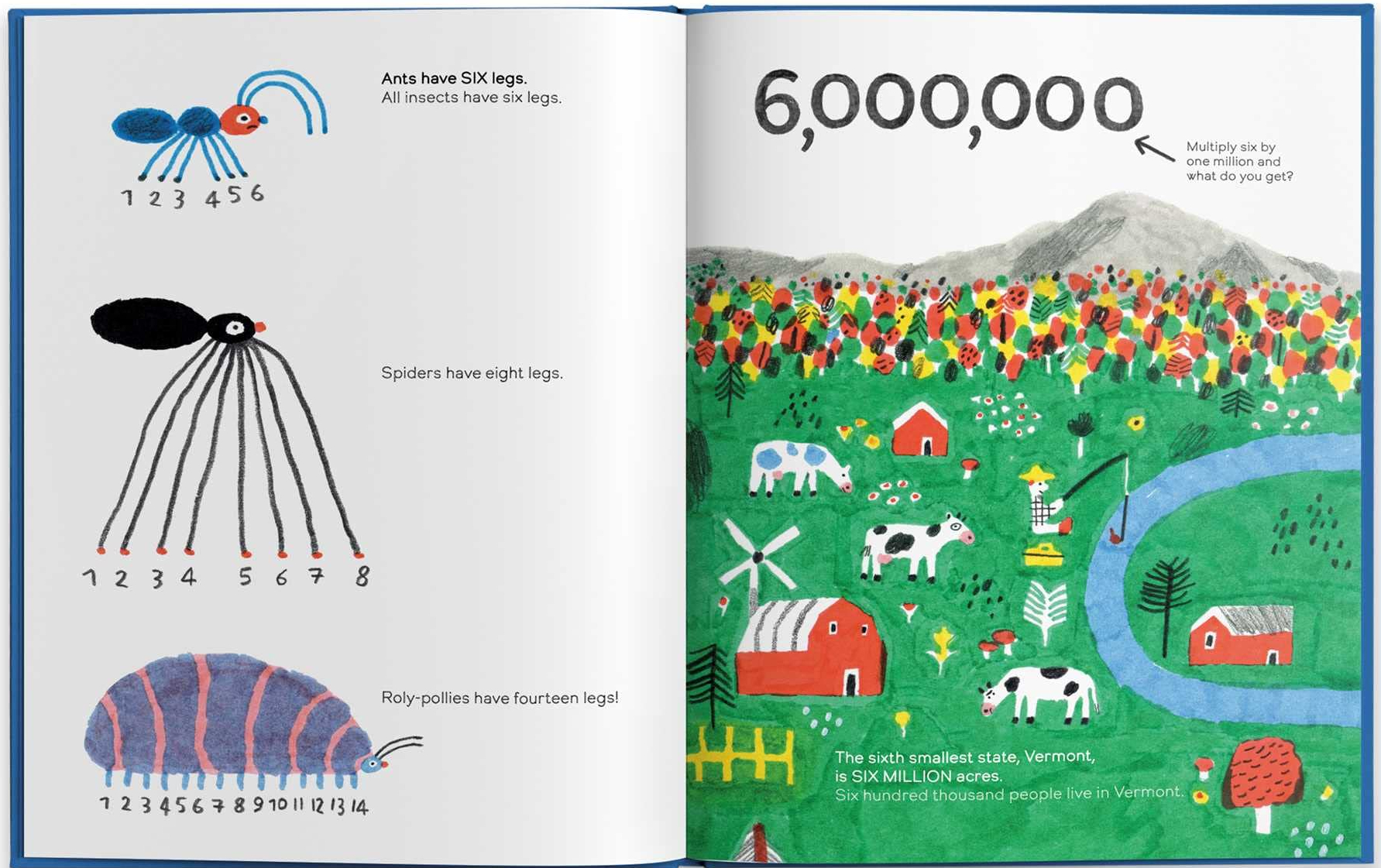
Have you ever tried to measure a raindrop? It’s okay! Richardson shows kids just how big the biggest raindrop can be and reveals what happens if one happens to exceed this limit. Kids fascinated by space will want to check out the pages about the number 8, and future biologists will find interesting facts there too. Entomologists may want to flip to the discussions of the numbers 4, 6, and 9 before settling in to start again at the beginning. The number 9 is pretty awesome, especially if you like narwhals and bananas, and you’ll discover that no matter how antsy you might get while waiting for what seems like for. ev. er, you’ll never, ever be able to jiggle as many times as a cesium atom.

While Octopuses Have Zero Bones ends at nine billion, Richardson reminds readers that while “NINE BILLION is a big number…it’s not the biggest. You can keep counting forever.” Even into the trillions and beyond. In her Author’s Note that follows the text, she reveals the event that sparked the idea for this book and encourages children to “go out into the world and count or measure something, anything”; to do this short-term and long-term; to “be astonished, take a closer look” and “discover many wonderful things.”

celebrate-picture-books-picture-book-review-octopuses-have-zero-bones-six-million

Image copyright Andrea Antinori, 2022, text copyright Anne Richardson, 2022. Courtesy of Tra Publishing.

Andrea Antinori depicts each concept with whimsical illustrations that exude humor and personality while pointing readers to examples of the featured number or numbers. But her pages do much, much more as well. Take two page spreads that portray the number 1 for example. There is an image of our one sun as is mentioned in the text, and there is an image of a man with one heart as mentioned in the text. But this heart is a tattoo, which leads kids to notice that the man has other tattoos—all single images.

He is raising one arm, but at the end of that arm is a hand with five fingers just waiting to be counted. And—oh yeah—next to him is the adorable red octopus from the page about zero, who is also waving at the reader with one arm, but there’s a line of suckers on it (some singular, some in pairs) that also invite counting. And that’s just to get kids started. There are clouds, birds, and a sea full of dots to check out too. Now multiply that kind of clever detail and recurring characters by 30 pages and kids have almost innumerable ways to learn from and engage with this book.

Octopuses Have Zero Bones is a book that readers can page through from beginning to end or dip into whenever curiosity hits. It’s the perfect boredom buster because, as Anne Richardson notes, kids can jump off from any randomly chosen page into their own discovery and research at home, in their neighborhood, or on the Internet.

This book would be a much-used reference on home and bookshelves and is a must for classroom, school, and library collections.

Ages 5 – 9 and up

Tra Publishing, 2022 | ISBN 978-1735311524

You can find a Kids Activity Guide, Teacher’s Guide, and Posters for Octopuses Have Zero Bones to download on the Tra Publishing website.

About the Author

Anne Richardson is an author of experiences that kindle your curiosity. In her work, everything in the world is astonishing and worthy of our attention, from a drop of rain to the way we figure things out together. She is the senior director of Global Collaborations at the Exploratorium, San Francisco, where she works with partners worldwide to imagine and create new science centers and other extraordinary learning experiences. Richardson holds a PhD and an MS in environmental studies from Antioch University New England, and a BA in art history from Northwestern University. She lives in the San Francisco Bay Area with her family, including two little explorers. Visit her at her website.

About the Illustrator

Andrea Antinori is an award-winning illustrator based in Bologna, Italy. Since he was a child, he has loved animals and he has loved to draw them. His favorite animal changes all the time. He likes octopuses very much, but right now, lemurs are the creatures he loves most. He wrote and illustrated the book On the Lives of Lemurs: A Short Treatise on Natural History. Other books he has illustrated include A Book about Whales and The Great Battle, the latter of which has received major international awards including: Best International Illustrated Book — China Shanghai International Children’s Book Fair, Premio Andersen — Best book 6-9 years olds, Selected illustrator for exhibition of Bologna Children’s Book Fair 2017, Italian illustrator in IBBY Honor List 2016. You can learn more about her books and her art on her website and connect with her on Instagram.

Read a New Book Month Activity

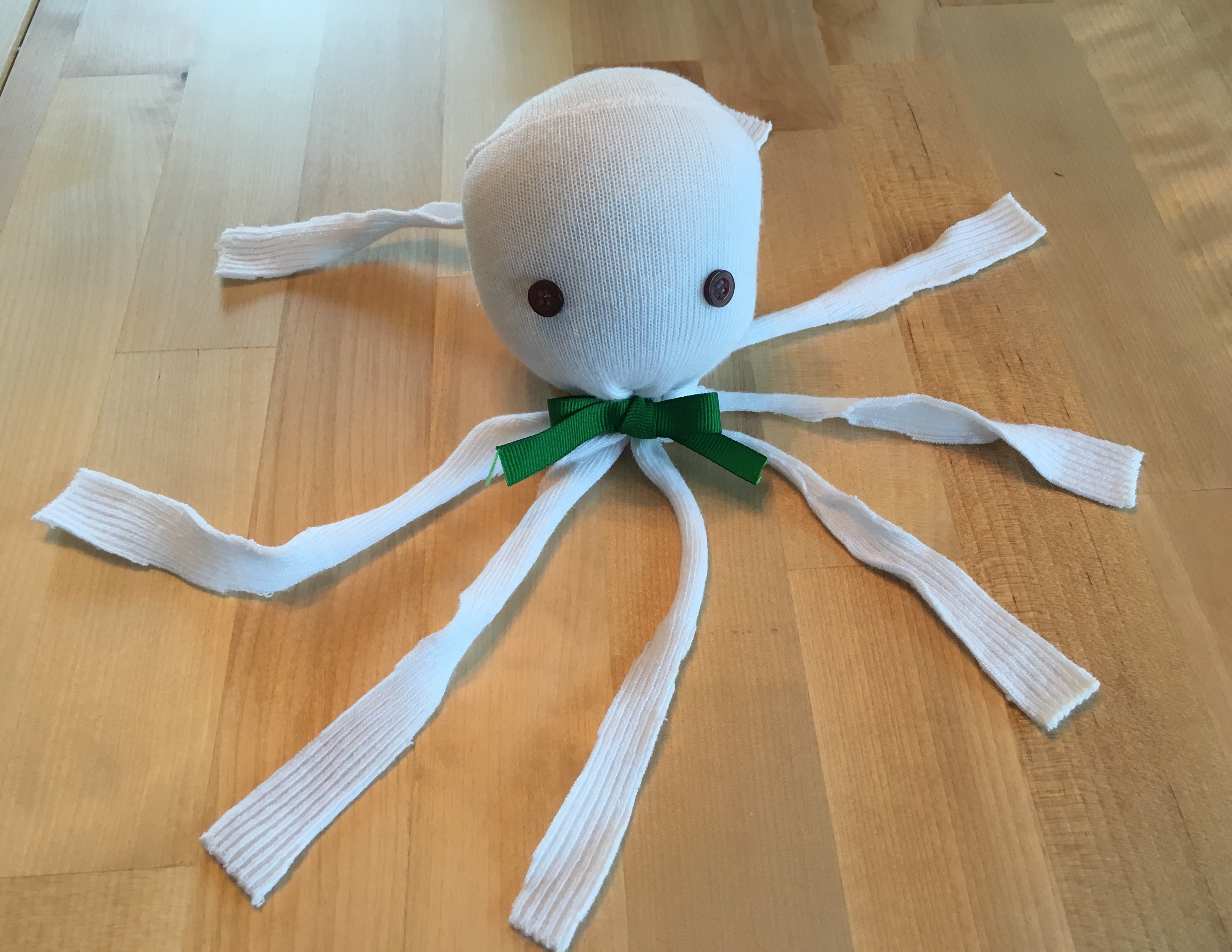
celebrate-picture-books-picture-book-review-sock-octopus-craft

Cute Sock Octopus Craft


Octopuses may have zero bones but they sure do have a lot of arms! With this fast and easy craft you can make your own little octopus to count on to keep you company on your bed, your shelves, or on your desk!

Supplies

  • Child’s medium or large size sock, in any color
  • Polyfill, available at craft and sewing stores
  • Ribbon
  • 2 Small buttons
  • Scissors
  • Hot glue or strong glue

Directions

  1. Fill the toe of the sock with a handful of polyfiber fill
  2. Tie the ribbon tightly around the sock underneath the fiber fill to separate the head from the legs
  3. Tie the ribbon into a bow tie
  4. With the scissor cut up both sides of the sock almost to the ribbon
  5. Cut these two sections in half almost to the ribbon
  6. Cut the four sections in half almost to the ribbon
  7. Glue the eyes to the lower part of the head

celebrate-picture-books-picture-book-review-octopuses-have-zero-bones-cover

Buy a Book, Plant a Tree

If you purchase Octopuses Have Zero Bones from the Tra Publishing website, they, in partnership with One Tree Planted, plant one tree for every book purchased. At checkout, you have the opportunity to make an additional donation.

Purchase from the Tra Publishing website

You can find Octopuses Have Zero Bones at these booksellers

Amazon | Barnes & Noble | Books-a-Million

To support your local independent bookstore, order from

Bookshop | IndieBound

Picture Book Review

October – It’s National Book Month

celebrate-picture-books-picture-book-review-professor-wooford-mcpaw's-history-of-astronomy-cover

About the Holiday

Readers might say that every month is National Book Month, but October is especially set aside to highlight books and the love of reading. Fall is a book bonanza as publishers release new books in all categories, and the holiday gift-giving season beckons. Books, of course, make superb gifts for all ages! So whether you’re looking for a new or new-to-you book to read right now or new titles to give to the family and friends who will be on your list, this month is a perfect time to check out your local bookstore to see what wonderful books are on the shelves! This month is also a great time to discover books that get kids excited about history, science, and technology in a whole new way – like today’s book!

Thanks to Cicada Books for sharing a digital copy of Professor Wooford McPaw’s History of Astonomy with me for review consideration. All opinions on the book are my own.

Professor Wooford McPaw’s History of Astronomy

By Elliot Kruszynski


The study of astronomy harkens back to the earliest days of scientific discovery, when “civilizations in Mesopotamia, Persia, China, India and Greece all examined the night sky. With only the naked eye, they mapped out the stars and used the information they gathered to create calendars, navigate great distances and keep time.” So begins this comprehensive, detailed, and even humorous compendium of our skies, scientists and thinkers, equipment, and a look to the future.

Professor Wooford McPaw and his telescope sidekick, Teley, takes kids back to 3000 BC, when religious leaders determined the longest day of the year by tracking the sun’s progress through the arches and columns erected at Stonehenge, and speeds forward to 1000 BC, when people connected the stars, creating the constellations and stories about them.

celebrate-picture-books-picture-book-review-professor-wooford-mcpaw's-history-of-astronomy-aristotle

Copyright Elliot Kruszynski, 2022, courtesy of Cicada Books.

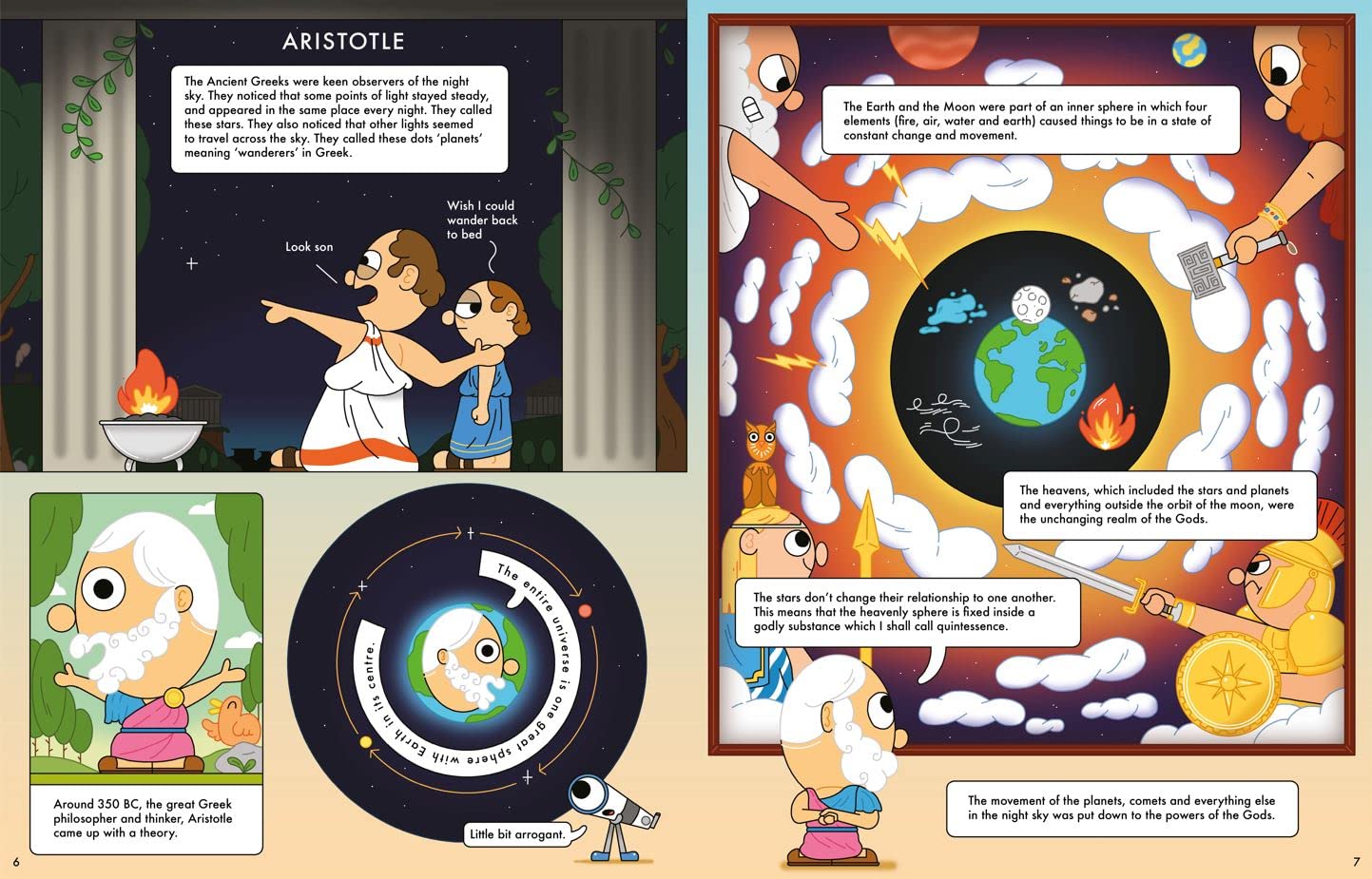
Kids then meet Aristotle and learn about his theories on the placement of the earth, the four elements, and the role of the gods in the universe. Then they discover the conflict between the teachings of Claudius Ptolemy around 140 AD and the discoveries of Nicolaus Copernicus in the 16th century, who left it to future scientists to explore his theory that that the earth revolved around the sun (and not the other way around). And what happened to those scientists? Well, children learn about Galileo Galilei, who, in addition to inventing the telescope, spent a good part of his life under house arrest for saying the earth and the planets did indeed revolve around the sun.

celebrate-picture-books-picture-book-review-professor-wooford-mcpaw's-history-of-astronomy-telescopic-history

Copyright Elliot Kruszynski, 2022, courtesy of Cicada Books.

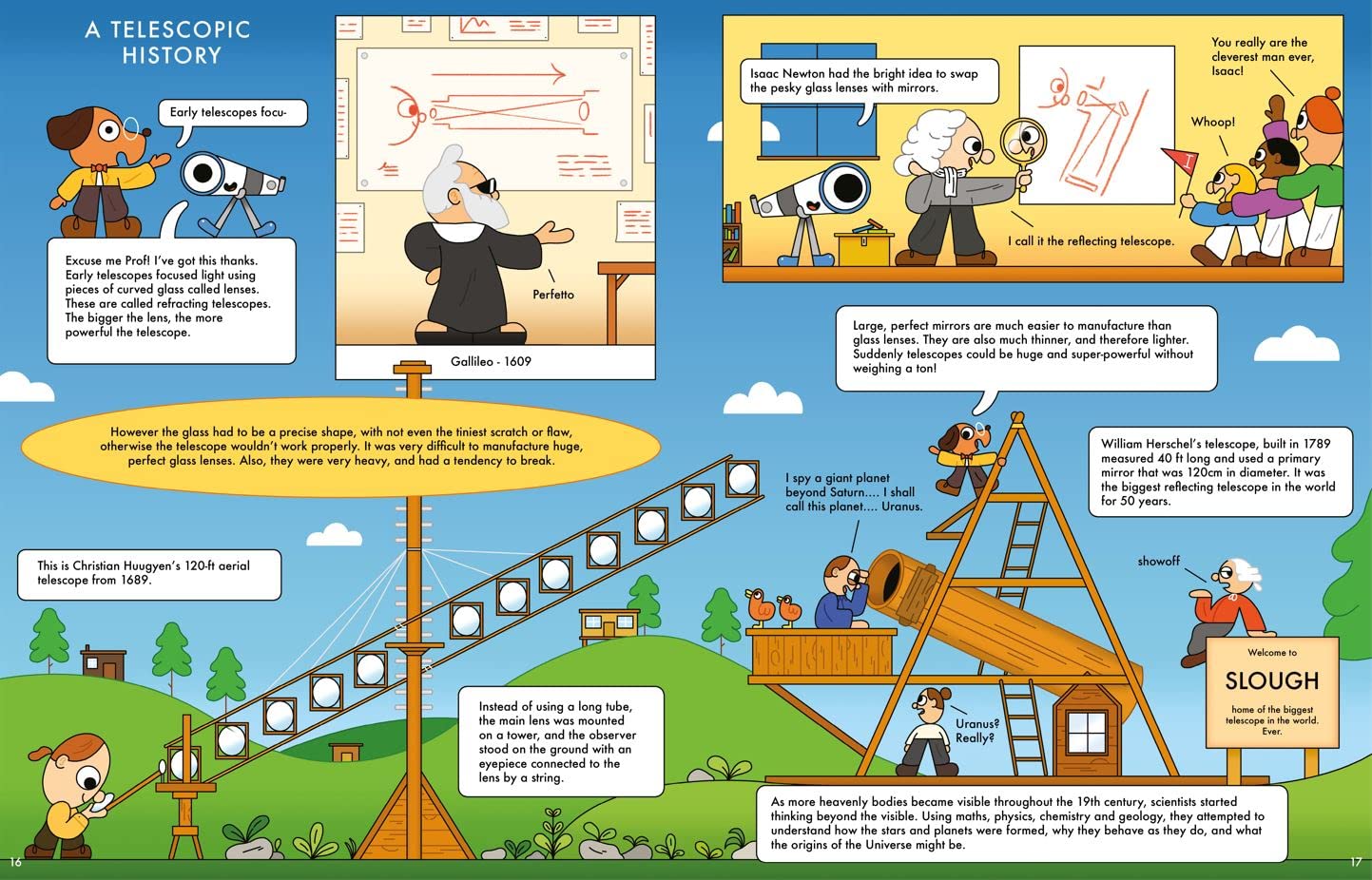
Professor Wooford introduces readers to Isaac Newton, whose “findings, along with the improvement of telescope technology, changed the way that humans (and for some dogs) looked at our planet.” What kind of telescope technology is the Prof talking about? He gives kids a run down from Galileo’s invention in 1609 to a switch from glass lenses to mirrors in the 1700s to today’s Hubble Space Telescope and James Webb Space Telescope. Here’s Teley explaining about lenses:

“Early telescopes, like the one Galileo invented, focused light using pieces of curved glass called lenses. The bigger the lens, the more powerful the telescope. They were called refracting telescopes. However the glass had to be a precise shape, with not even the tiniest scratch or flaw, otherwise the telescope wouldn’t work properly. It was very difficult to manufacture huge, perfect glass lenses. Also, they were very heavy and had a tendency to break.” Teley goes on to explain that it was Isaac Newton who “had the bright idea to swap the pesky glass lenses with mirrors,” which are much easier to make and are thinner and lighter, allowing telescopes to “be huge and super-powerful without weighing a ton.”

celebrate-picture-books-picture-book-review-professor-wooford-mcpaw's-history-of-astronomy-einstein

Copyright Elliot Kruszynski, 2022, courtesy of Cicada Books.

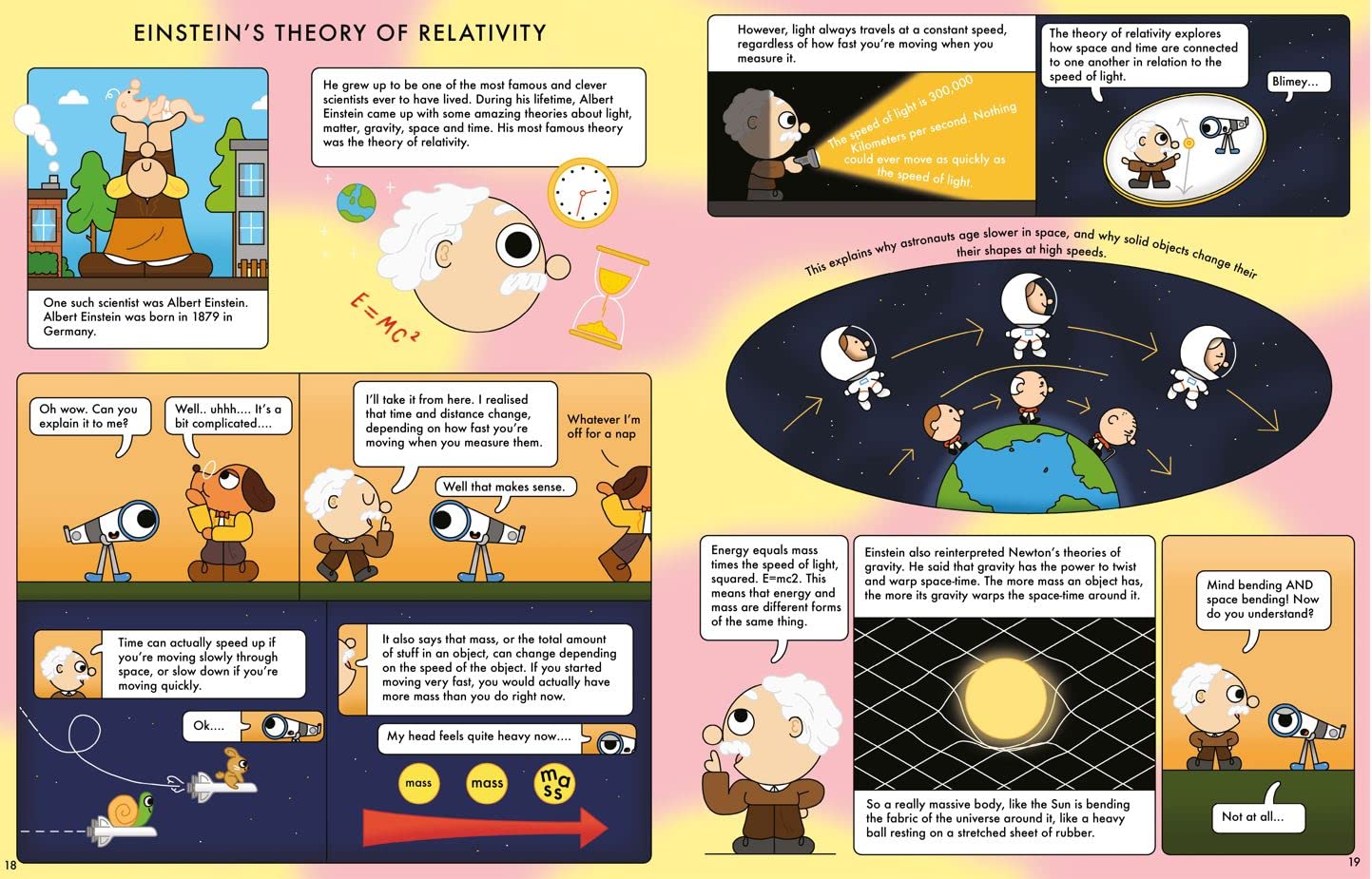
Albert Einstein travels back through time to explain his “mind bending and space bending” Theory of Relativity in terms that readers can understand. Then kids are launched into space—the space race, that is—where they learn about the advancements and setbacks of the Russian and American from 1957 to 1969, when the first moon walk occurred, as well as a weely … I mean … really unusual tradition among space-going astronauts.

celebrate-picture-books-picture-book-review-professor-wooford-mcpaw's-history-of-astronomy-space-probes

Copyright Elliot Kruszynski, 2022, courtesy of Cicada Books.

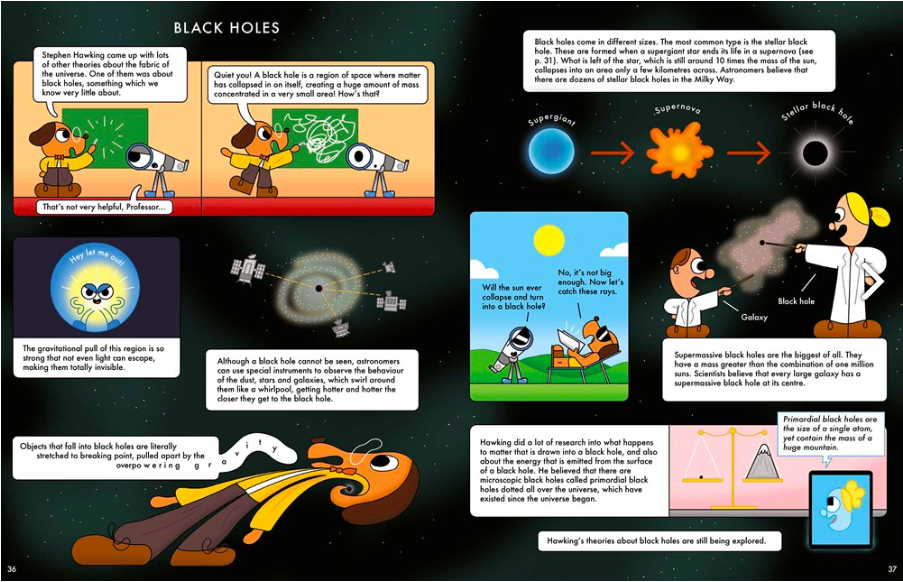
Children get info on different kinds of space probes from rovers to orbiters to interplanetary probes before blasting off into our solar system to find out about the planets (even little Pluto gets a cameo. But where is Earth and all of our other planets located? Professor McPaw explains: “Earth is located in a galaxy called the Milky Way. At its center is a supermassive black hole called Sagittarius A*, which contains as much mass as four million suns.” The prof goes on to teach kids about the three different shapes of galaxies, what dwarf galaxies are, how bigger galaxies cannibalize smaller galaxies, and where the term galaxy comes from.

celebrate-picture-books-picture-book-review-professor-wooford-mcpaw's-history-of-astronomy-black-holes

Copyright Elliot Kruszynski, 2022, courtesy of Cicada Books.

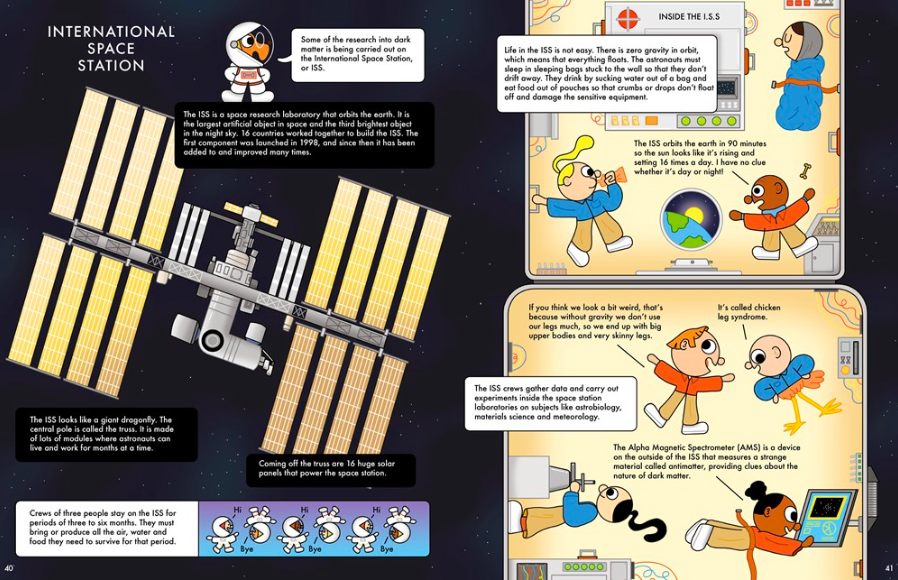
Professor Wooford McPaw and Teley also impart the same fascinating in-depth facts about stars, black holes, and dark matter. And what’s a trip into space without a ride on the International Space Station? Well, readers won’t find out because they get to explore the ISS and learn how the astronauts experience 16 sunrises and sunsets a day, sleep strapped to a wall, and develop “chicken leg syndrome” from not using their legs as much as their upper body in the no-gravity conditions.

By this time, kids are probably wondering about whether there’s life in other parts of the solar system or beyond as well as what the future might hold for astronomers, astrophysicists, other scientists, and even themselves. But are readers going to be abandoned in space? Not at all! Professor Wooford has thoughtfully included a Race to Earth “board game” on the last two-page spread that will get all astronauts … I mean readers … back home in time for dinner.

celebrate-picture-books-picture-book-review-professor-wooford-mcpaw's-history-of-astronomy-international-space-station

Copyright Elliot Kruszynski, 2022, courtesy of Cicada Books.

Elliot Kruszynski’s Professor Wooford McPaw’s History of Astonomy is just the kind of book that both kids who already love space and those who don’t yet know they do will devour, either bit-by-bit or all in one sitting. With affable hosts who give excellent easy-to-understand explanations, historical characters who add funny asides, and a quick-paced graphic-novel format, (title) will spark readers’ interest in learning all about the past, present, and future of astronomy. The book would make a perfect gift and very welcome addition to any home library. Educators and homeschoolers will find it a go-to text for introducing many scientific topics and an engaging way to heighten student’s eagerness for further research. School and public library librarians will find Professor Wooford McPaw’s History of Astonomy to be a favorite to recommend and to have on their shelves.
Ages 6 – 10 and up

Cicada Books, 2022 | ISBN 978-1800660236

To view a portfolio of work by Elliot Kruszynski and connect with him on Instagram, visit his website. 

National Book Month Activity

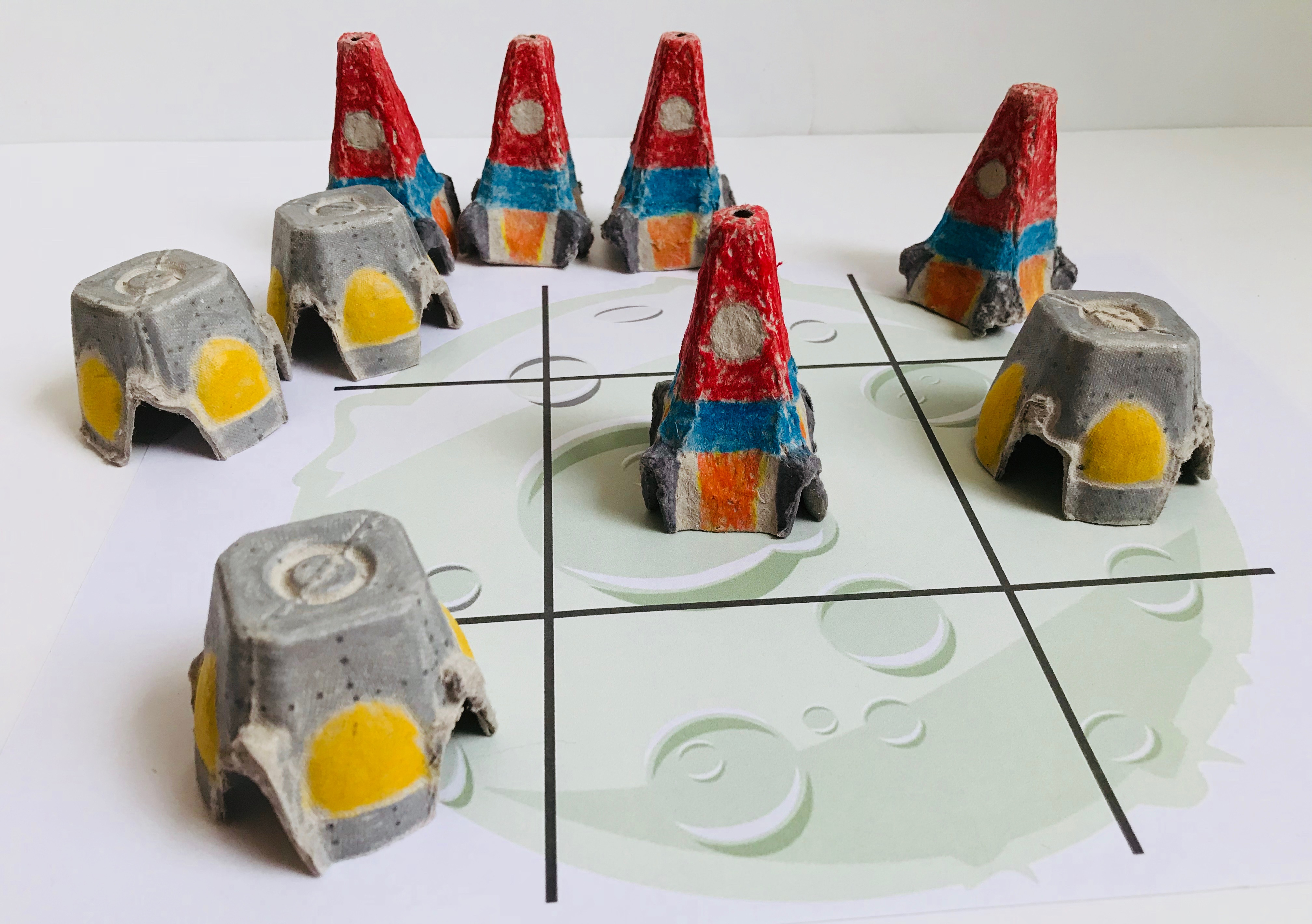
celebrate-picture-books-picture-book-review-rocket-to-the-moon-tic-tac-toe-game

Out of This World Tic-Tac-Toe Game

You can launch your own Tic-Tac-Toe Game with this set you make yourself! With just a couple of egg cartons, some crayons, and a printable game board, you’ll be off to the moon for some space-age fun! Opposing players can be designated by rockets and capsules. Each player will need 5 playing pieces. 

SUPPLIES

  • Printable Moon Tic-Tac-Toe Game Board
  • 2 cardboard egg cartons
  • Heavy stock paper or regular printer paper
  • Crayons
  • Black or gray fine-tip marker

DIRECTIONS

To Make the Rockets

  1. Cut the tall center cones from the egg carton
  2. Trim the bottoms of each form so they stand steadily, leaving the arched corners intact
  3. Pencil in a circular window on one side near the top of the cone
  4. Color the rocket body any colors you like, going around the window and stopping where the arched corners begin
  5. With the marker color the arched corners of the form to make legs
  6. On the cardboard between the legs, color flames for blast off

To Make the Capsule

  1. Cut the egg cups from an egg carton
  2. Color the sides silver, leaving the curved section uncolored. (If your egg cup has no pre-pressed curve on the sides of the cup, draw one on each side.)
  3. Color the curved section yellow to make windows
  4. With the marker, dot “rivets” across the capsule

Print the Moon Game Board and play!

celebrate-picture-books-picture-book-review-professor-wooford-mcpaw's-history-of-astronomy-cover

You can find Professor Wooford McPaw’s History of Astronomy at these booksellers

Amazon | Barnes & Noble | Books-a-Million

To support your local independent bookstore, order from

Bookshop | IndieBound

Picture Book Review

August 12 – Cover Reveal of Leaves to My Knees plus Interview with Ellen Mayer and Nicole Tadgell

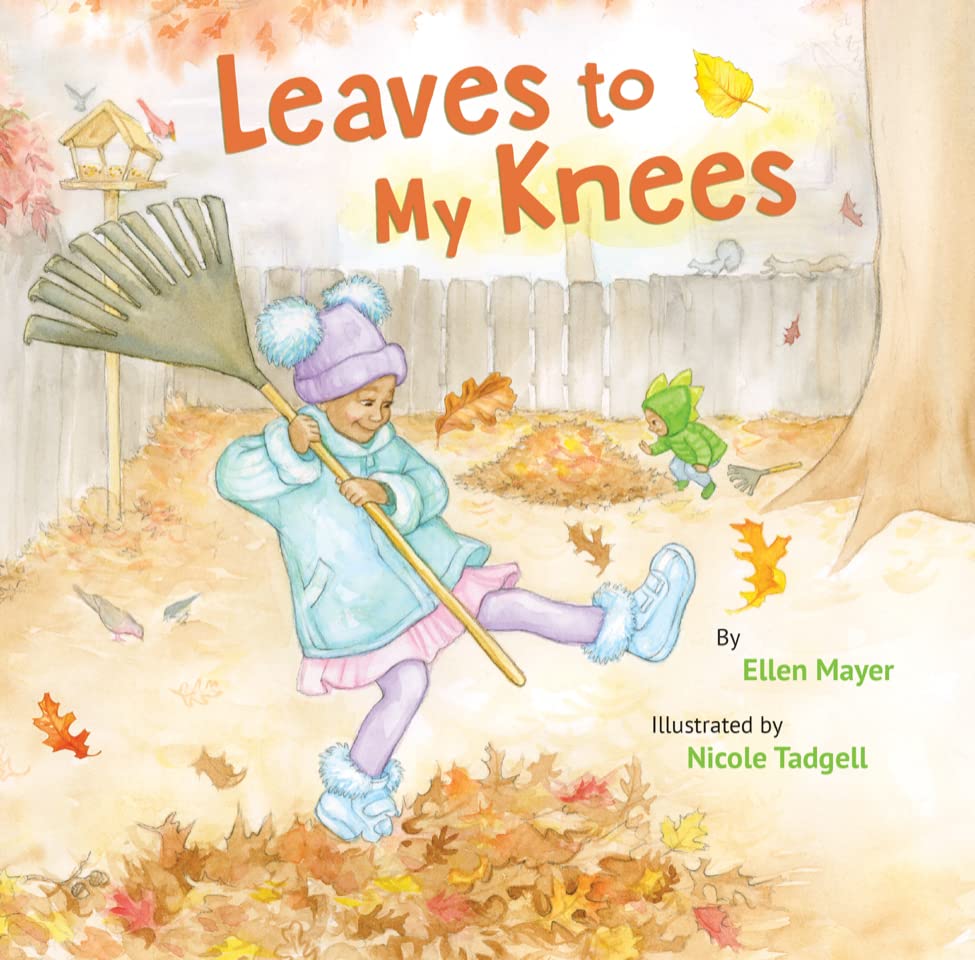
  • celebrate-picture-books-picture-book-review-leaves-to-my-knees-cover
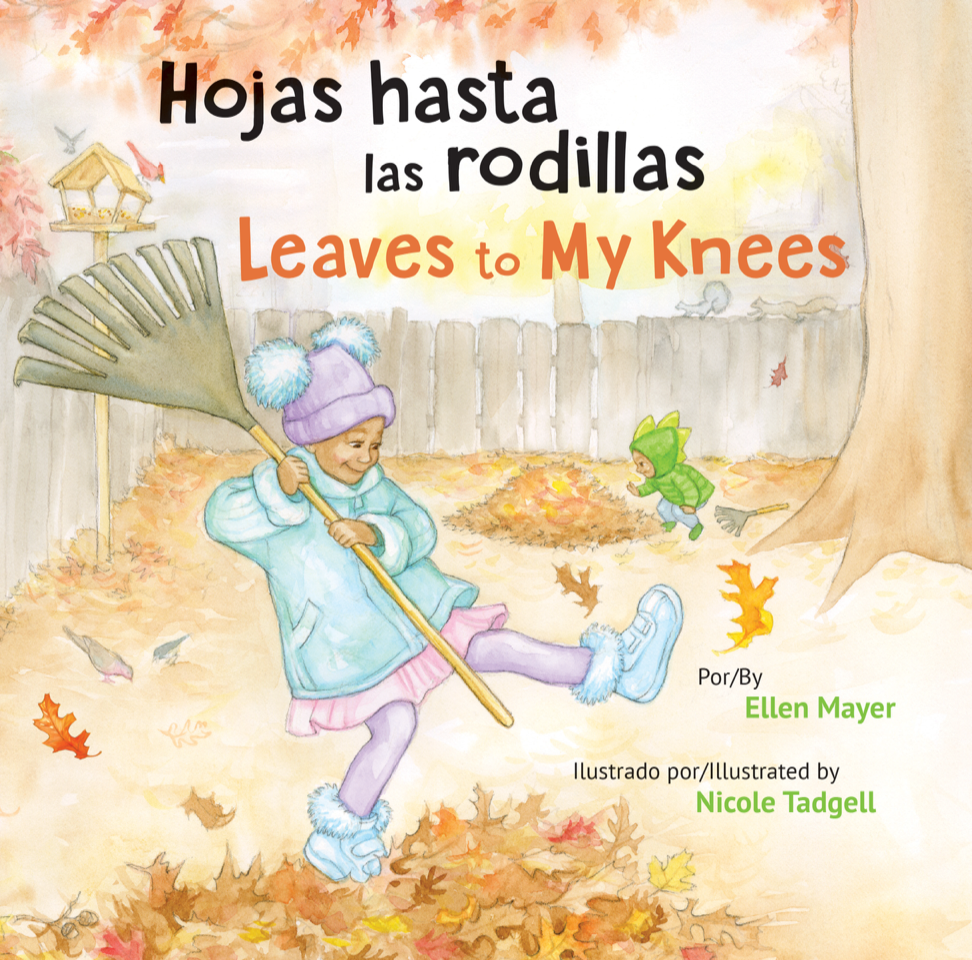
  • celebrate-picture-books-picture-book-review-leaves-to-my-knees-spanish-english-cover

Leaves to My Knees 

Hojas hasta las rodillas/Leaves to My Knees

Written by Ellen Mayer | Illustrated by Nicole Tadgell


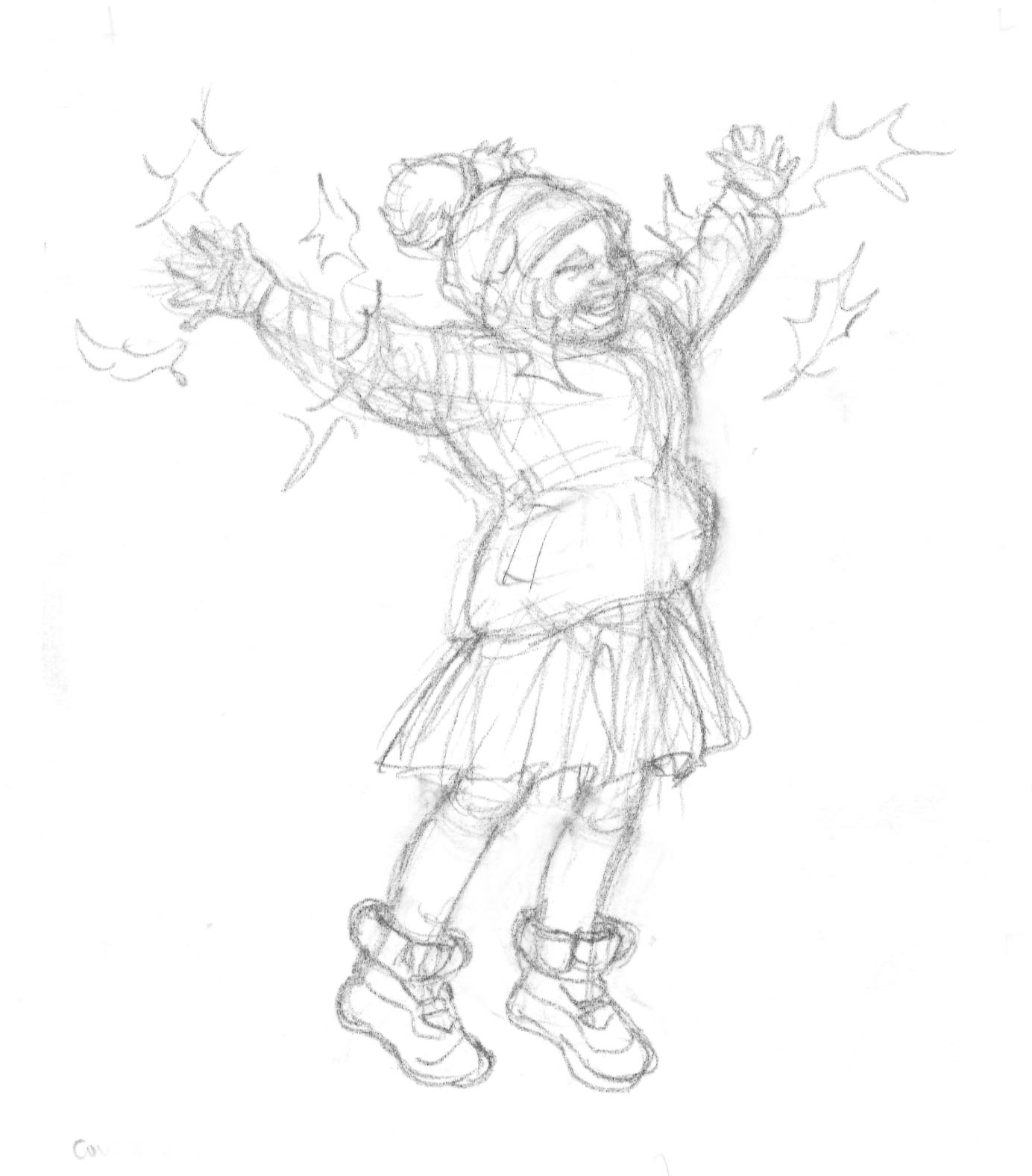
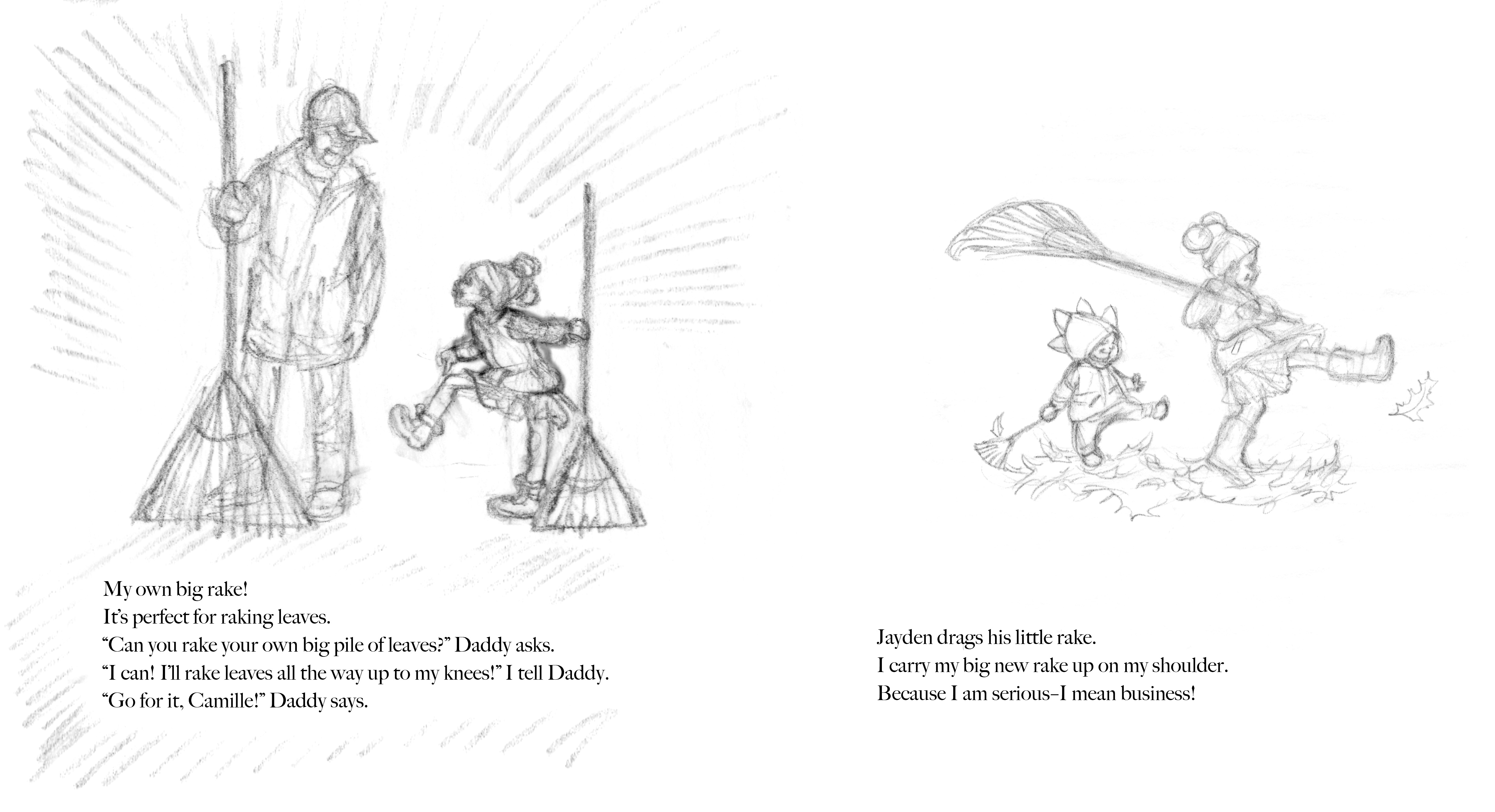
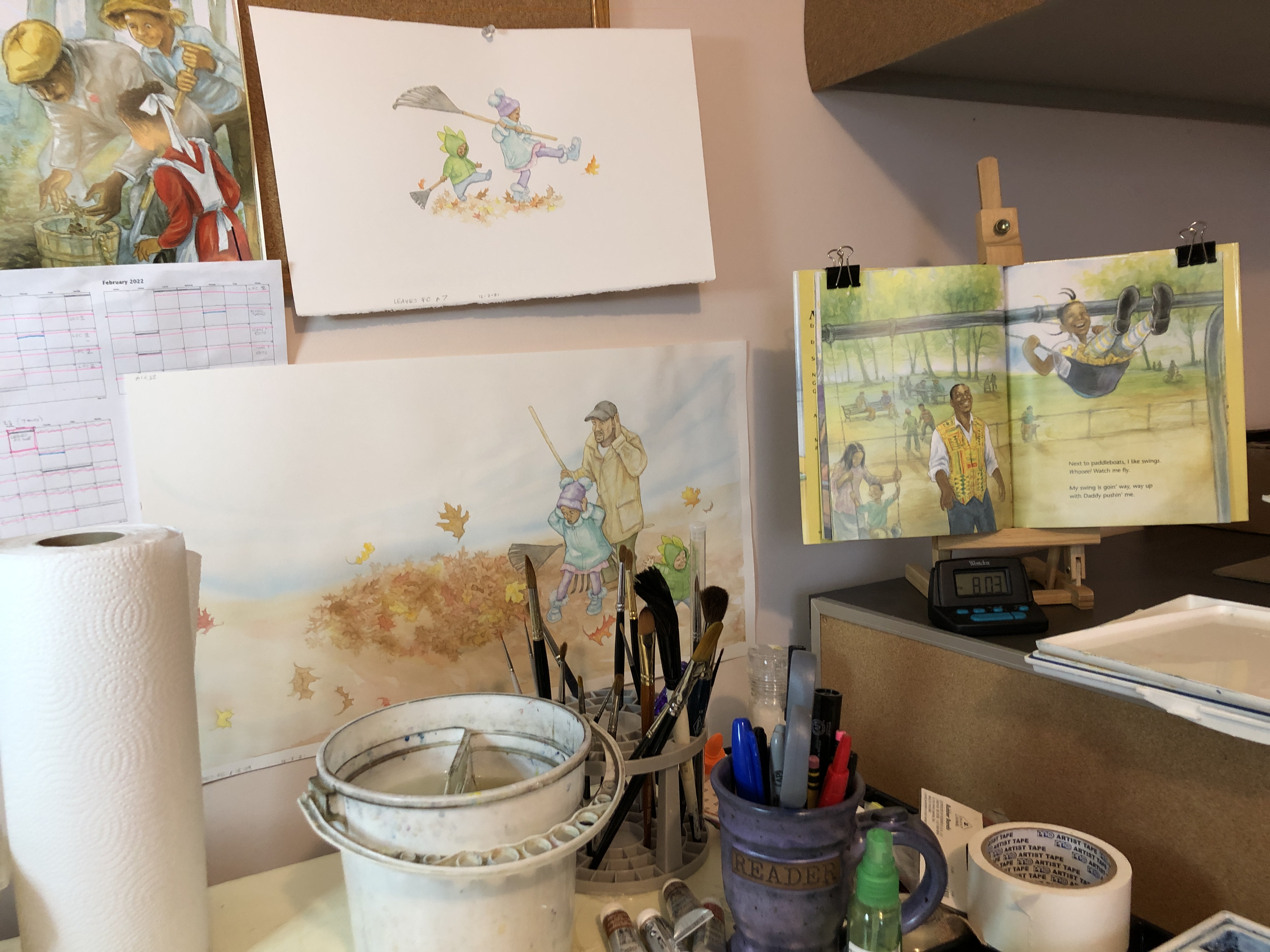
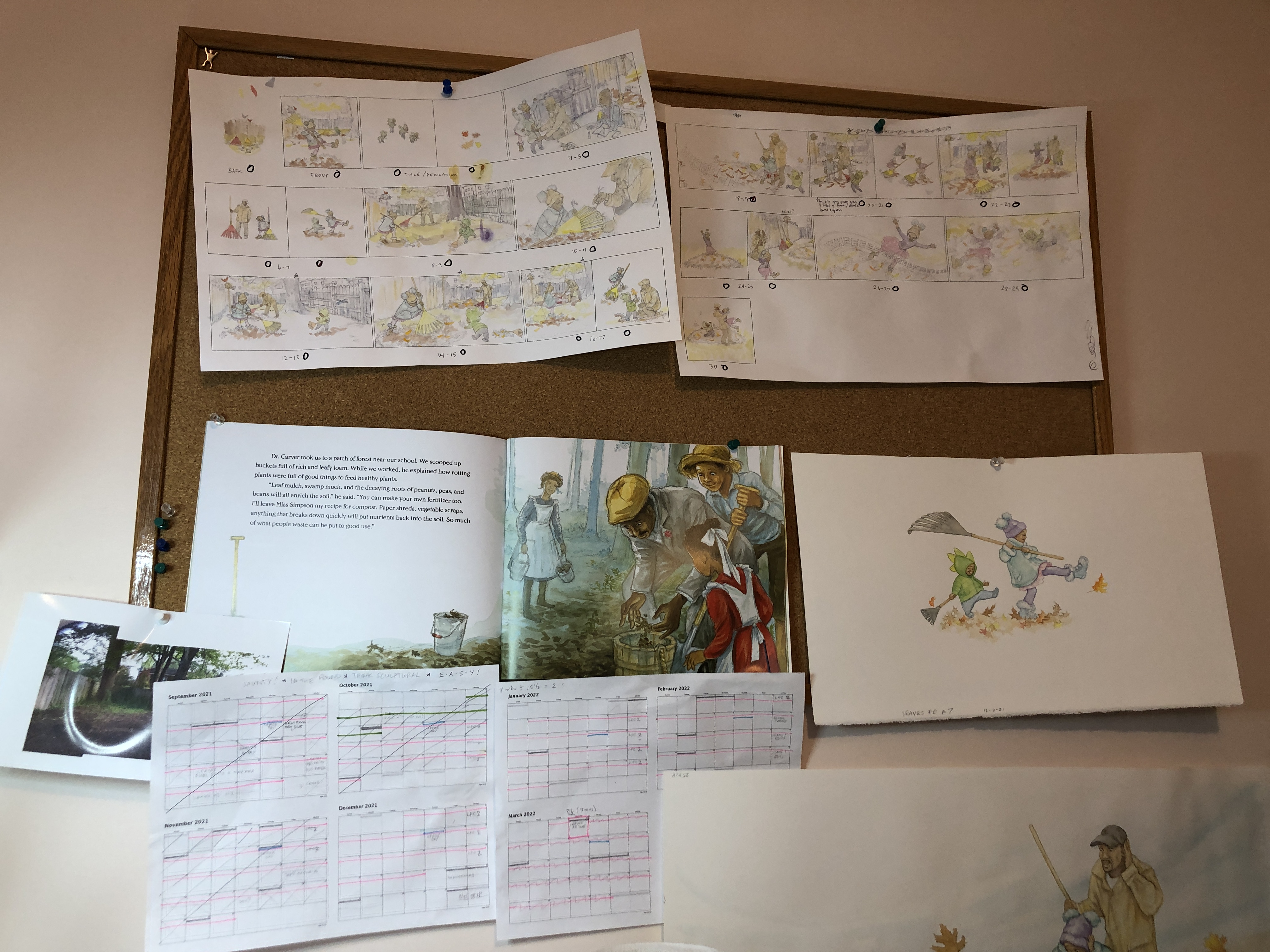
Camille is determined to rake her own pile of leaves―all the way up to her knees! She swishes leaves to and fro, watching her pile grow bigger alongside the piles made by Daddy and her little brother, Jayden. WHOOSH! After raking leaves to the top of her boots, a giant breeze blows the pile back down to her ankles. But Camille won’t be stopped until she gets the job done––a knee-high pile, the perfect size for… jumping in!

Leaves to My Knees and Spanish/English bilingual Hojas hasta las rodillas/Leaves to My Knees are playful introductions to the early math concepts of size comparison and measurement. A note by researcher and mathematics learning expert Marlene Kliman explains how parents and caregivers can use the book to help young children explore different sizes and measurement in everyday environments.

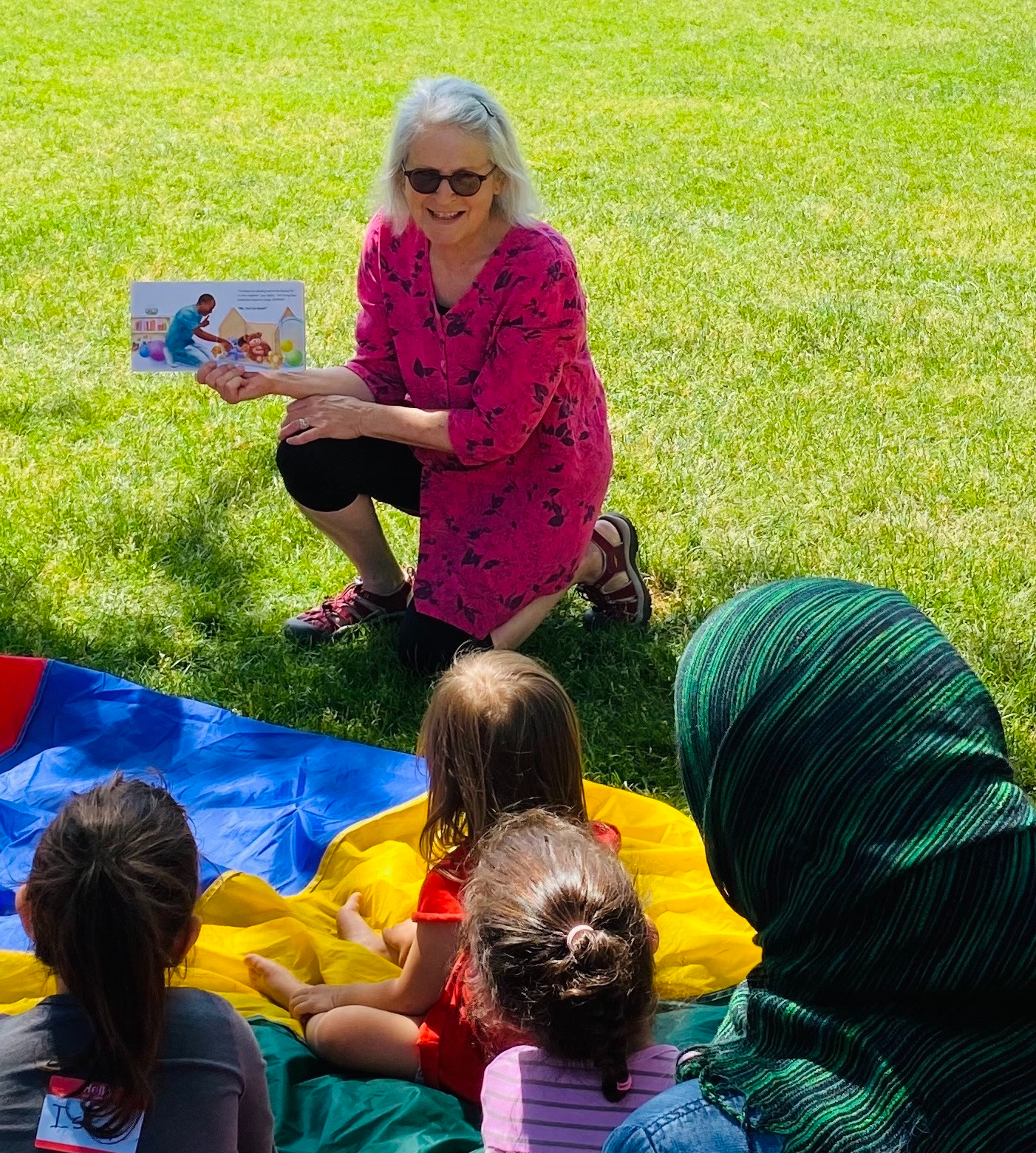
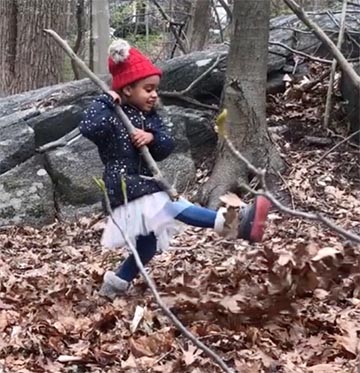
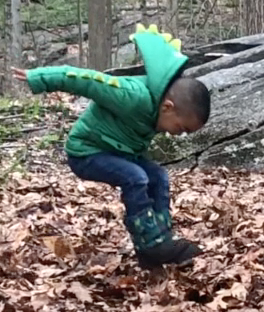
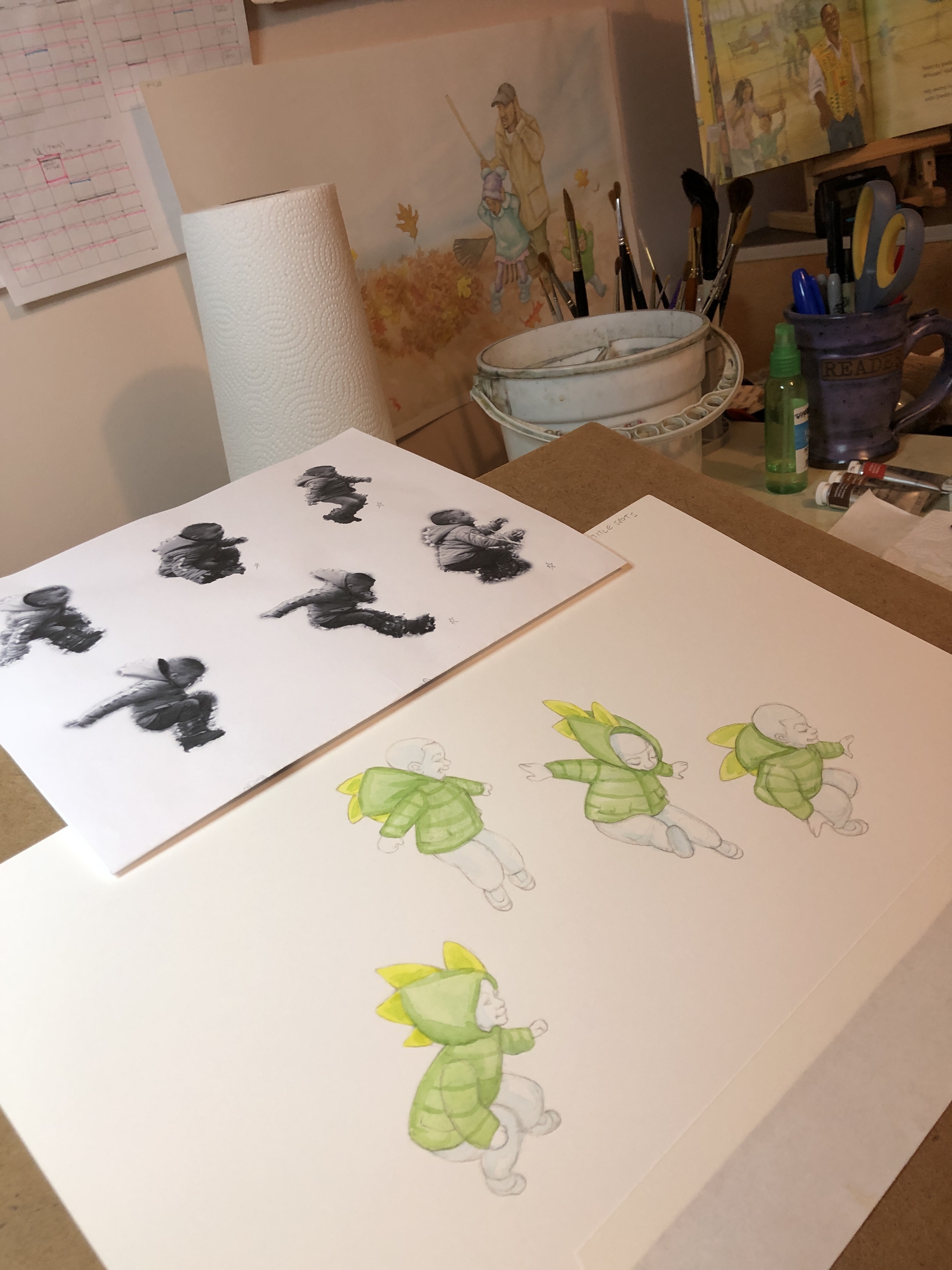
I’m thrilled to be talking with Ellen Mayer and Nicole Tadgell today about this gorgeous cover and their adorable—and educational—book that will be available this fall, just in time for leaf-raking season!

Meet Ellen Mayer

celebrate-picture-books-picture-book-review-ellen-mayer-reading-headshot

To preorder from Amazon

Leaves to My Knees: Hardcover | Paperback

 Hojas hasta las rodillas/Leaves to My Knees

To order from Star Bright Books and be notified when the books become available click here: 

Leaves to My Knees: Hardcover | Paperback

Hojas hasta las rodillas/Leaves to My Knees 

Picture Book Review

January 7 – Old Rock Day

celebrate-picture-books-picture-book-review-old-rock-is-not-boring-cover

About the Holiday

Do you love rocks—the history they tell, their versatility, intricate patterns, and glorious colors? Today’s holiday celebrates these wonders of nature and encourages geologists—both professionals and amateurs—to indulge their passion. You can learn a bit more about the history of the study of rocks, the first use of the term “geology,” and on to more modern times at NationalToday. To celebrate today’s holiday, take a walk in your backyard or neighborhood, pick up a few rocks, and research a little more about them. Then have fun with today’s craft.

Thank you to G. P. Putnam’s Sons for sharing a copy of Old Rock (is not boring) with me for review consideration. All opinions on the book are my own.

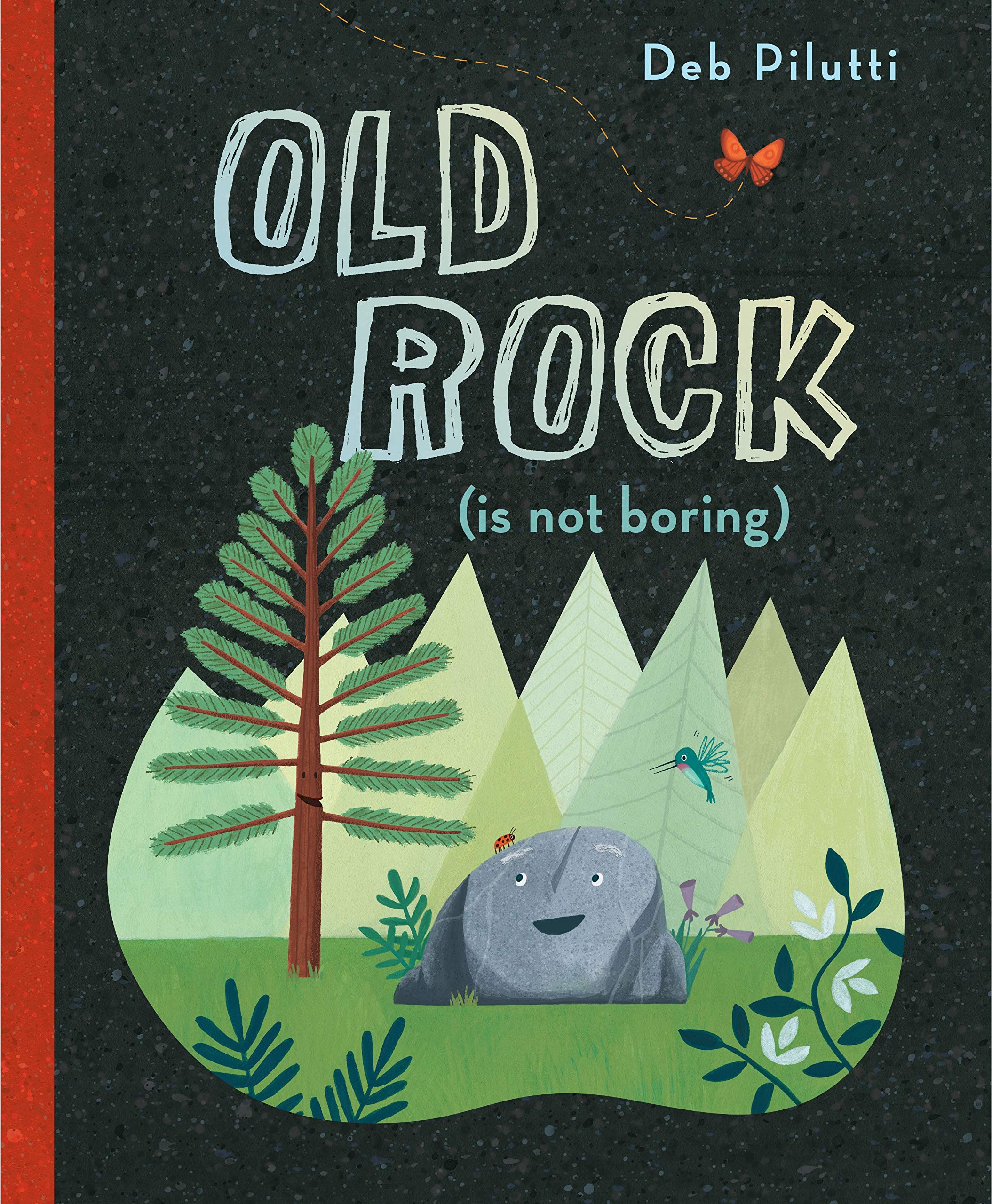
Old Rock (is not boring)

By Deb Pilutti


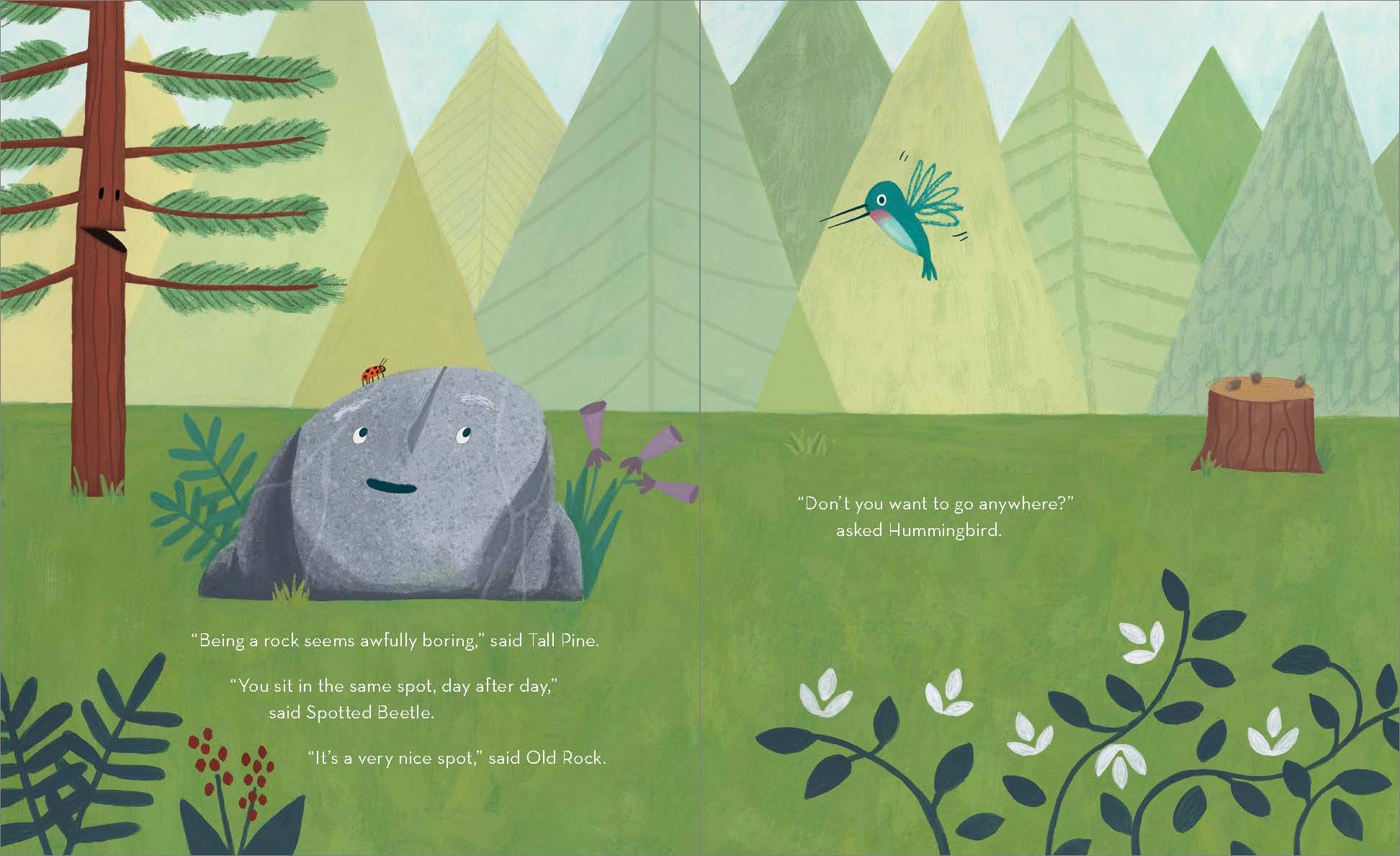
It seemed that Old Rock had been sitting in the same spot forever. Tall Pine and Spotted Beetle thought being a rock must be pretty boring. Hummingbird wondered, “‘Don’t you ever want to go anywhere?’” She knew she would be if she couldn’t fly all over the world and taste exotic nectars. But Old Rock had flown once, and he began to tell his story.

celebrate-picture-books-picture-book-review-old-rock-is-not-boring-hummingbird

Copyright Deb Pilutti, 2020, courtesy of G. P. Putnam’s Sons Books for Young Readers.

It was during the time when he was surrounded by darkness, but then the volcano erupted and Old Rock “‘soared through a fiery sky into the bright light of a new world.’” Tall Pine, Spotted Beetle, and Hummingbird weren’t very impressed. They still thought Old Rock must be bored. Spotted Beetle told him how much he might see if he climbed to Tall Pine’s very highest branch.

celebrate-picture-books-picture-book-review-old-rock-is-not-boring-volcano

Copyright Deb Pilutti, 2020, courtesy of G. P. Putnam’s Sons Books for Young Readers.

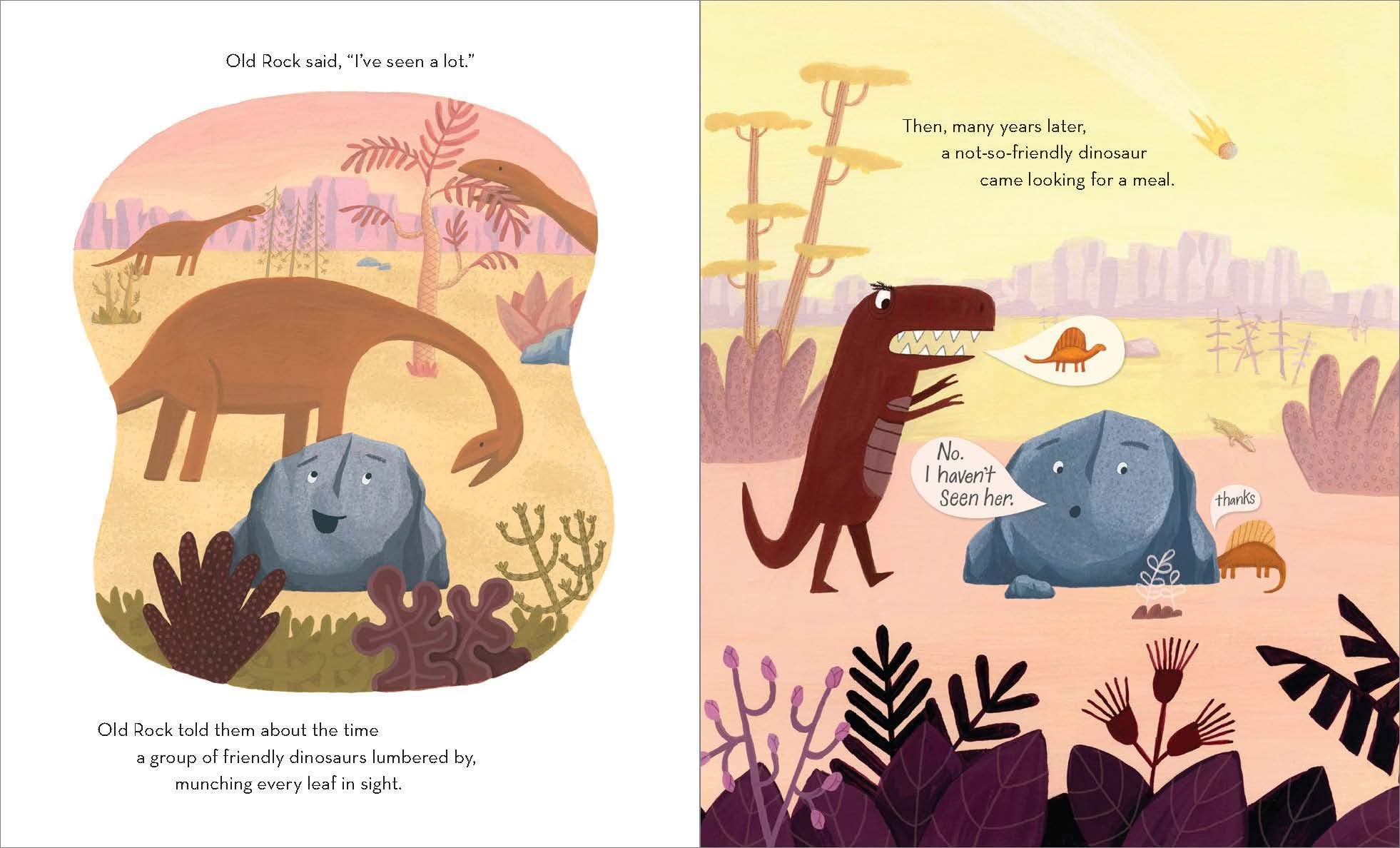
Old Rock countered that he had seen a lot. He’d watched dinosaurs pass by and had even hidden a spinosaurus from a hungry T. rex. He’d traveled in a glacier and been left teetering on a ridge overlooking a vast desert, where he “could see the place where the sky touches the earth.” Spotted Beetle and Hummingbird were intrigued, but Tall Pine dismissed these experiences as “ages ago.” He wanted to know about now. Didn’t Old Rock feel like moving? Tall Pine showed Old Rock how his limbs could dance in the wind.

celebrate-picture-books-picture-book-review-old-rock-is-not-boring-dinosaurs

Copyright Deb Pilutti, 2020, courtesy of G. P. Putnam’s Sons Books for Young Readers.

While Old Rock couldn’t dance, he did recall how he’d turned somersaults off the ridge, landing in a prairie where mastodons grazed near a lake. Tall Pine, Spotted Beetle, and Hummingbird were mesmerized by Old Rock’s story and wanted to know what had happened next. Out of the prairie, sprang a pine forest, Old Rock revealed. And from one of the pine trees a pinecone fell and a seed was released. That seed grew “to be the tall pine who dances in the wind and keeps me company.” Sometimes, he continued, a spotted beetle and a hummingbird meander by. Old Rock was very pleased with his spot, and the others had to agree that it was “very nice” and “not boring at all.”

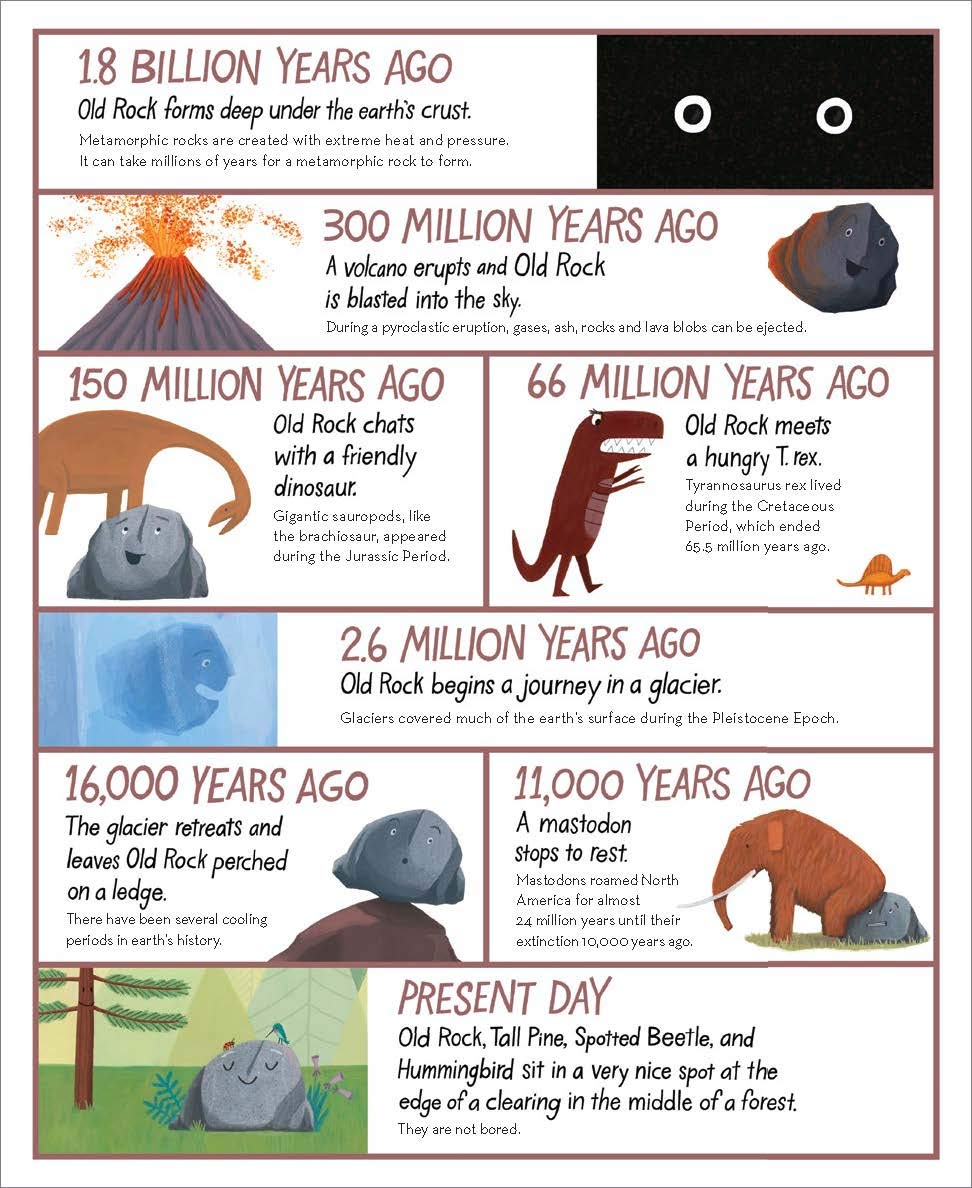
An illustrated timeline of Old Rock’s life from 18 billion years ago to the present day follows the text.

celebrate-picture-books-picture-book-review-old-rock-is-not-boring-time-line

Copyright Deb Pilutti, 2020, courtesy of G. P. Putnam’s Sons Books for Young Readers.

So much clever thought went into Deb Pilutti’s Old Rock as she reveals to kids what a fascinating and active life the rocks and boulders we see every day have had. Tall Pine, Spotted Beetle, and Hummingbird’s skepticism keeps the suspense building as Old Rock rolls out stories of his various travels and talents. Once he has them hooked, they—like young readers—want to hear more, leading to the just-right ending that sweetly encompasses shared history, happiness with one’s place in life, and friendship. The trio’s questions to Old Rock and their related experiences also engage children to think about issues and opinions from a variety of perspectives.

Pilutti’s mixed-media illustrations are nicely textured to bring out Old Rock’s grainy surface while highlighting nature’s vivid colors. Her vignettes from the dinosaur eras, the ice age (where the skeletons of dinosaurs are also swept up and away in the same glacier as Old Rock), and beyond impress upon readers the long time-frame involved, how the earth has changed, and even the fascinating science of the fossil record.

A multi-layered story, perfect for general story times or as a lead in to science lessons and to promote discussion and research in the classroom, Old Rock (is not boring) would be an original and exciting addition to home, classroom, and public library collections.

Ages 4 – 8

G. P. Putnam’s Sons Books for Young Readers, 2020 | ISBN 978-0525518181

To learn more about Deb Pilutti, her books, and her art, visit her website.

Old Rock Day Activity

CPB - Nasty Bugs magnet II (2)

Rock This Craft!


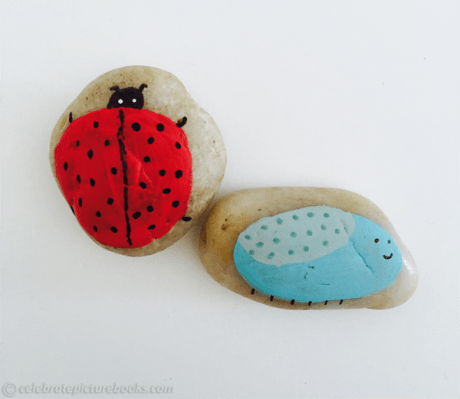
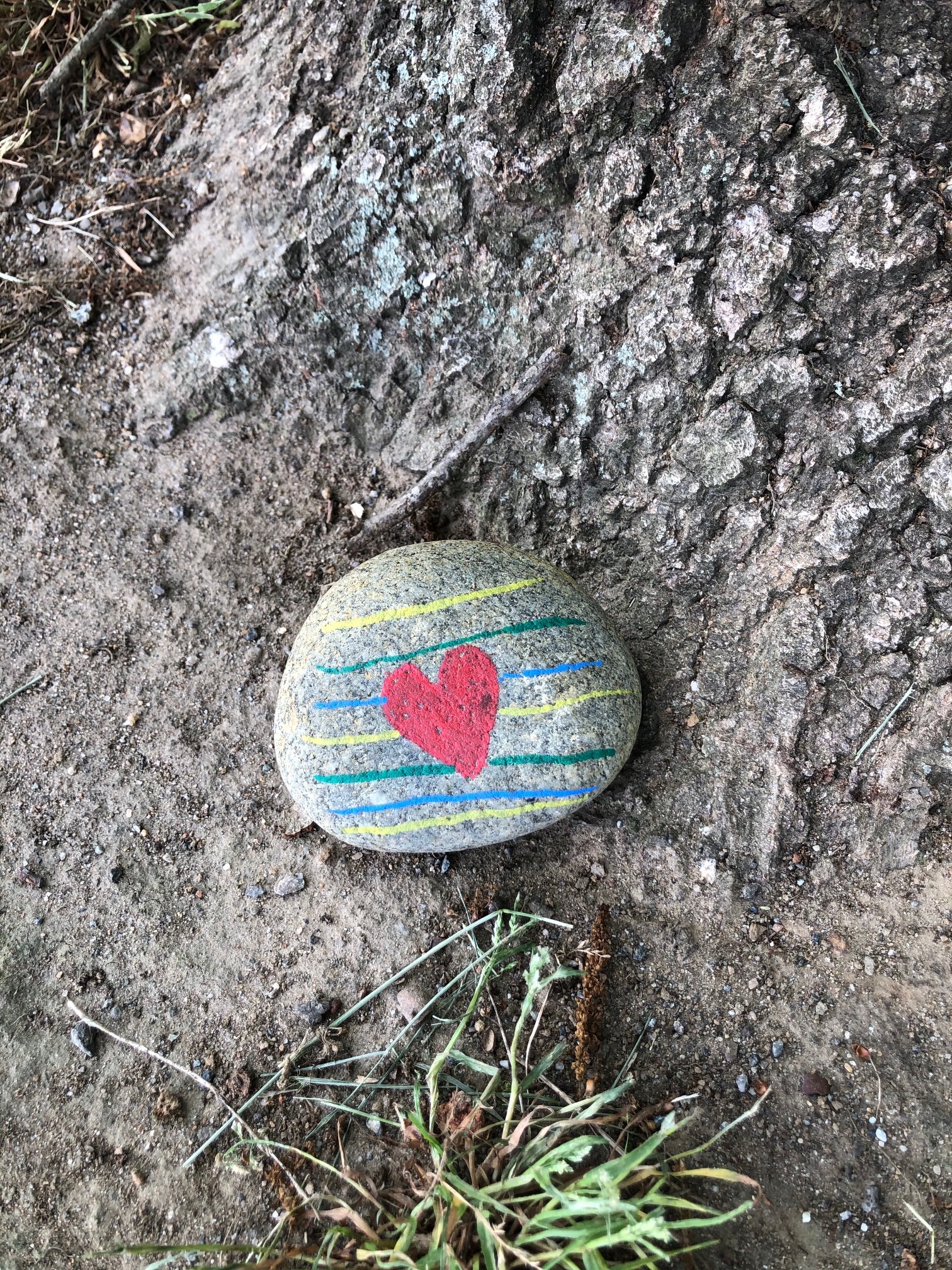
Smooth stones can give you a natural canvas for your creativity! With a little bit of paint, pins or magnets, and some imagination, you can make refrigerator magnets, jewelry, paper weights, and more!

Supplies

  • Smooth stones in various sizes
  • Paint or markers
  • Small magnets, available at craft stores
  • Jewelry pins, available at craft stores
  • Paint brush
  • Strong glue

Directions

To make magnets

  1. Design and paint an image on a light-weight stone
  2. Attach a magnet to the back with strong glue, let dry
  3. Use to hang pictures, notes, or other bits of important stuff on your refrigerator or magnetic board

To make jewelry

  1. Using a smaller, flatter stone, design and paint an image on the stone
  2. Attach a jewelry pin to the back with the strong glue, let dry
  3. Wear your pin proudly

CPB - rock painting craft

To make a paper weight or kindness stone

  1. Using a large stone, design and paint an image on the stone, let dry
  2. Display and use on your desk to keep those papers in place or find a spot around town to leave your rock for someone to find and enjoy

celebrate-picture-books-picture-book-review-old-rock-is-not-boring-cover

You can find Old Rock (is not boring) at these booksellers

Amazon | Barnes & Noble | Books-a-Million

To support your local independent bookstore, order from

BookshopIndieBound

Picture Book Review


December 10 – It’s Read a New Book Month

celebrate-picture-books-picture-book-review-a-peek-at-beaks-cover

About the Holiday

The month of December is a gift-giver’s delight and looking at the long winter ahead there’s no better gift for everyone on your list than a book (or two or…). With so many new books hitting bookstore shelves, there really is a perfect book to fit everyone’s taste. Young children, especially, benefit from reading a wide range of picture books from laugh-out-loud or touching stories to nonfiction that introduces them to influential people, science, history, and nature. If you’re looking for gifts to give, it’s not too late to head to your local bookstore or their online shop to find books that will make your child’s eyes light up.

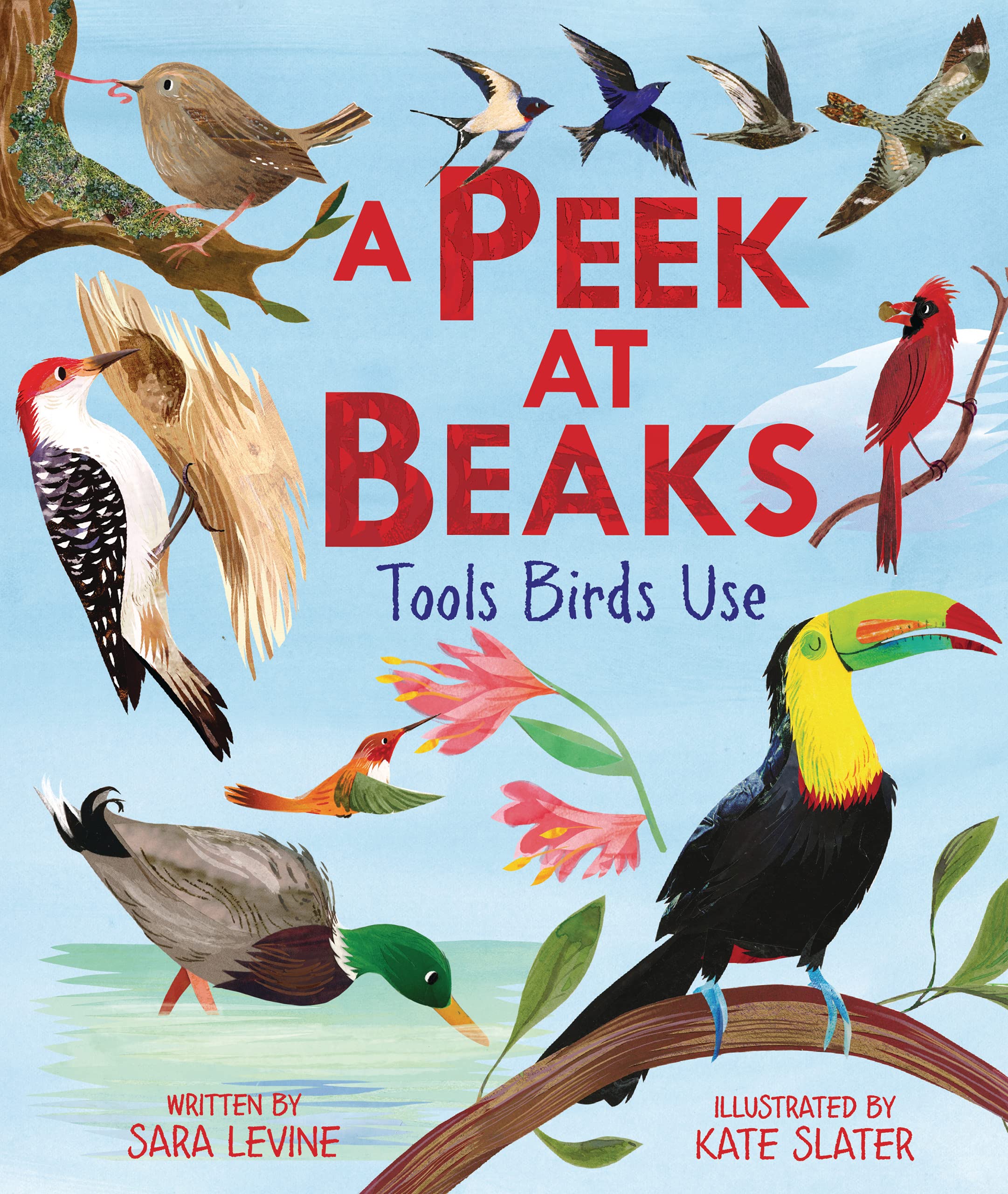
A Peek at Beaks: Tools Birds Use

Written by Sara Levine | Illustrated by Kate Slater


When you “slurp up your milkshake” or cut up your meat or even cool down with an air conditioner, do you ever wonder how birds accomplish these things? They don’t have hands to hold tools, but that’s okay because each type of bird has just the tool they need to survive handily attached right to its face – its beak! How does each bird use its beak to find food? Sara Levine and Kate Slater let you take a peek at how birds’ beaks are uniquely suited for the foods they eat and the places where they find it as well as for grooming and nest-building.

celebrate-picture-books-picture-book-review-a-peek-at-beaks-birdwatching

Image copyright Kate Slater, 2021, text copyright Sara Levine, 2021. Courtesy of Millbrook Press.

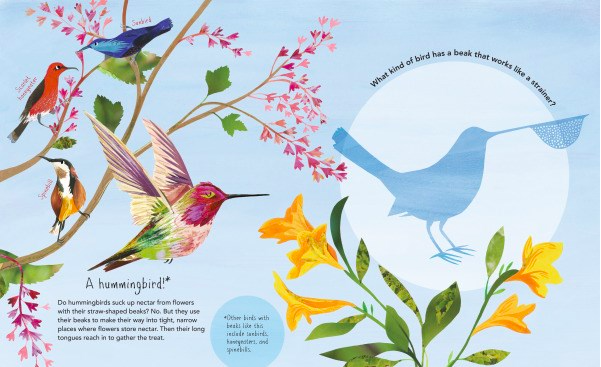
Take that straw we people use to sip up every last drop of a delicious milkshake or glass of lemonade, for instance. Which bird “has a beak shaped like a straw? A hummingbird!” And while hummingbirds don’t “suck up nectar from flowers” through their beaks, “they use their beaks to make their way into tight, narrow places where flowers store nectar. Then their long tongues reach in to gather the treat.” 

If you look into the family toolbox, you’ll probably find a hammer and a needle-nosed pliers. Are there birds whose beaks do similar jobs as these? You bet! The rat-a-tat-tat of a woodpecker searching for grubs or insects in a tree trunk sounds just about the same as the tap-tap-tap or bang-bang-bang of a hammer, and there are shoreline birds that use their long, thin beaks to “probe deep into the mud to find crustaceans, insects, and worms. A special sensory organ at the beak’s tip lets the bird feel when a meal is nearby.” Can you guess which ones they are?

celebrate-picture-books-picture-book-review-a-peek-at-beaks-straw

Image copyright Kate Slater, 2021, text copyright Sara Levine, 2021. Courtesy of Millbrook Press.

Kids who love helping out in the kitchen will be fascinated to learn that there are birds with beaks that act as strainers, nutcrackers, knives, and tongs. And if you think we’re sophisticated with our central air-conditioning one very distinct bird is born with this capability, while a more common bird has one-upped our technological advances by offering it’s chicks a one-touch “take-out” button long before the smartphone was ever developed. 

celebrate-picture-books-picture-book-review-a-peek-at-beaks-hummingbird

Image copyright Kate Slater, 2021, text copyright Sara Levine, 2021. Courtesy of Millbrook Press.

Sure, you might think – birds can find food and build nests with their beaks, but can they show love? The answer is… Yes! The gannet is especially adept at demonstrating their feelings, and they don’t care who hears it. While “many birds show affection with their beaks,… gannets particularly stand out. These birds raise their beaks in the air and clatter them together to show how much they like each other.” After you’ve learned about all of these amazing birds and their beaks, maybe you’d like to raise a ruckus to show your appreciation too! 

Back matter includes a discussion on the evolution of bird beaks and how they change over time and a list of other books for further reading.

celebrate-picture-books-picture-book-review-a-peek-at-beaks-needle-nosed-pliers

Image copyright Kate Slater, 2021, text copyright Sara Levine, 2021. Courtesy of Millbrook Press.

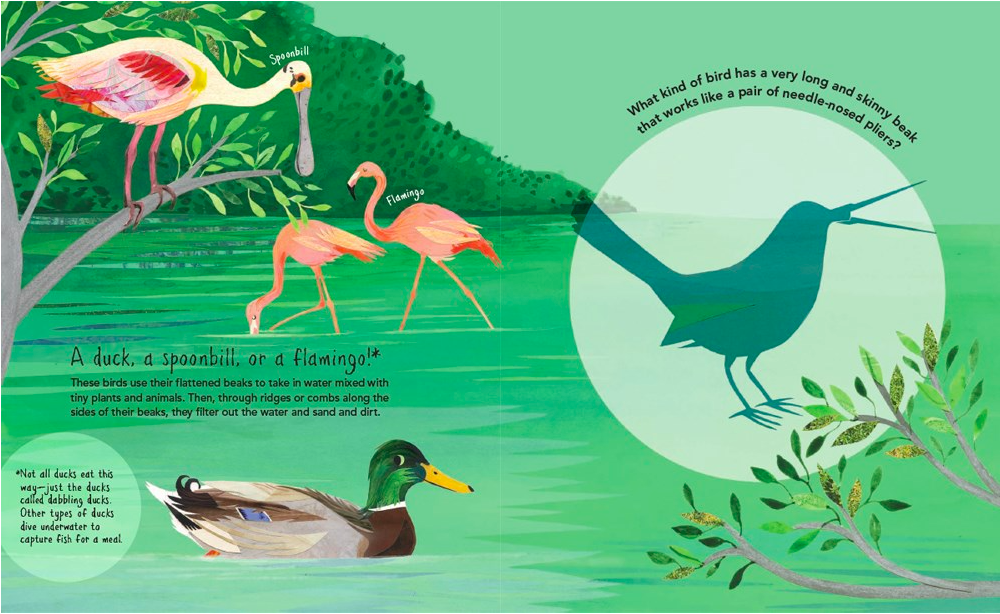
Bird, nature, and science lovers as well as teachers and homeschoolers will be fascinated with Sara Levine’s clever way to engage kids in learning about birds by comparing their beaks to well-known tools children and adults use every day. Especially interesting are descriptions of the birds whose beaks’ special abilities are hidden, such as water birds that use their beaks as strainers to filter out water, sand and dirt before swallowing the nutritious plants and animals left behind. Along with information on the construction of birds’ beaks and how, exactly, birds use them, readers learn about the diet of various species and where they hunt for food.

Levine is always an insightful and captivating educator who sparks kids’ interest in nature-science learning and spurs them to further research. Her question-and-answer format gets kids thinking, observing, and theorizing in a way that increases understanding and resonates across subject matter. At-home birdwatchers will also enjoy watching out for the birds depicted in this book and their behavior.

Kate Slater’s mixed-media collage illustrations are vibrant and textured, adding lovely depth to each page. Her silhouettes of birds sporting tool where it’s beak should be are intriguing invitations for kids to ponder and guess at the answers to Levine’s questions before turning the page to discover the answer. Slater populates the pages with a wide variety of birds, realistically depicted, that will kindle an interest in readers and adults to delve into further research on these fascinating and charming creatures.

A unique and high-interest way to engage kids in learning about birds and nature, A Peek at Beaks: Tools Birds Use is highly recommended for bird-lovers at home as well as for science, environment, and nature learning collections in schools and public libraries. 

Ages 5 – 9

Millbrook Press, 2021 | ISBN 978-1541587342

Discover more about Sara Levine and her books on her website.

To learn more about Kate Slater, her books, and her art, visit her website.

Read a New Book Month Activity

celebrate-picture-books-picture-book-review-bird-coloring-page-2

Busy Birds Coloring Pages


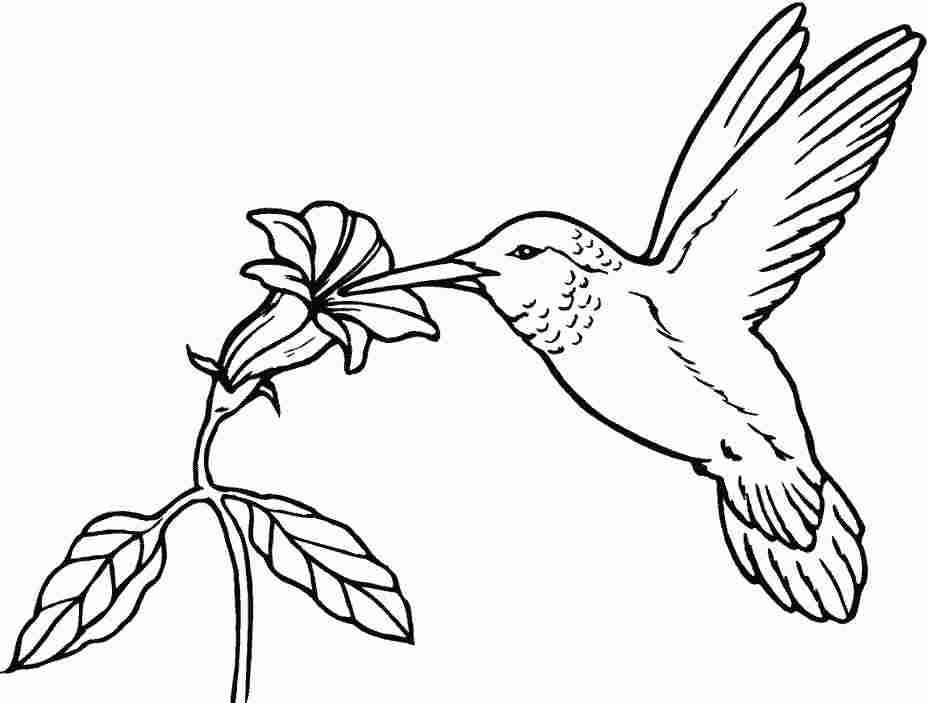
These birds are busy looking for and gathering food to eat! Grab your crayons, pencils, or markers, print the pages, and give the birds and their surroundings some color!

Hummingbird at Flower | Robin Grabbing a Worm | Bird on Branch

celebrate-picture-books-picture-book-review-a-peek-at-beaks-cover

You can find A Peek at Beaks: Tools Birds Use at these booksellers

Amazon | Barnes & Noble | Books-a-Million

To support your local independent bookstore, order from

Bookshop | IndieBound

Picture Book Review

November 17 – It’s Inspirational Role Models Month

celebrate-picture-books-picture-book-review-who-is-a-scientist-cover

About the Holiday

In 2005 Detroit native Darlene House, who made her mark in communications jobs held by few minorities or women, created National Inspirational Role Models Month to encourage people, and especially young people, to look for those who inspire them to be the best they can be. By identifying role models within their community, in the world at large, or at some time in history and studying their character, motivations, actions, House believed that people would find the inspiration that leads to success. Darlene House was motivated by her two strong women: the trailblazing journalist and editor Ida B. Wells Barnett and her own maternal grandmother, entrepreneur and motivational speaker Louisiana Hines (who lived to be “a still vibrant” 114). This month, talk with your kids about their role models, the qualities that make them so, and how they may want to emulate their hero. Today’s book offers biographies of scientists who are changing the world to get you started! To learn more about today’s holiday, visit the NIRMM website.

Thanks to Millbrook Press and Barbara Fisch at Blue Slip Media for sharing a copy of Who Is a Scientist? for review consideration. All opinions on the book are my own. I’m excited to be featuring this book again with a giveway sponsored by Millbrook Press and Blue Slip Media. See the details below.

Who Is a Scientist?

By Laura Gehl


Do you love science and think that maybe you’d like to be a scientist when you grow up? But do you also love to dance or surf to paint or bake? Maybe you like to play soccer or ride a motorcycle or you’re considering getting a tattoo like your mom or dad and you think that none of those are things a scientist would do. Maybe you think of scientists as a little bit stuffy with their white coats and endless graphs. Well, think again!

In Who Is a Scientist? Laura Gehl introduces you to fourteen scientists who smash those ideas. And what’s more they’re involved in some pretty fascinating and life-changing sciences and projects that you may never have heard about before but that may inspire you. For example, you’ll meet Isha M. Renata López who works as a meteorologist but “also loves to dance, play volleyball, and eat chocolate.” What’s great about her job? She alerts people to changes in the weather, and when a big storm, blizzard, hurricane, or tornado is coming, she works with emergency crews, the media, and the local government to make sure everyone knows so they can stay safe.

celebrate-picture-books-picture-book-review-who-is-a-scientist-meteorologist

Copyright Laura Gehl, 2021, courtesy of Millbrook Press.

“Jagmeet Kanwal studies bats and zebrafish to help figure out how the human brain makes decisions.” He’s also working to discover “how our brains allow us to hear different types of sounds.” He’s hoping to be able to “help people with depression, Parkinson’s disease, and memory loss.” What else does Jagmeet like to do? He’s also a painter and nature photographer.

If you like math, you may want to become a mathematician like Mark Lewis, who studies operations research during work hours and enjoys playing basketball in his off time. This kind of science “uses math to help business make good decisions” that affect consumer, such as how long people wait in line, how much items cost, and how transportation can move faster.

celebrate-picture-books-picture-book-review-who-is-a-scientist-environmental-scientist

Copyright Laura Gehl, 2021, courtesy of Millbrook Press.

Perhaps you’re interested in health and medical research like Tishina Okegbe whose work makes sure that mothers, babies, and children in Africa and Asia “have access to high-quality health-care services. In her free time, Tishina likes “visiting new places, belly dancing, and eating pizza and ice cream.”

Whether you’re interested in food systems and farming, how the brain works, the environment, space, dinosaurs, or computers, the scientists will inspire you to enjoy all of your passions. In fact, the extracurricular activities you enjoy the most may just lead you to a career you’ll love. The definition of who and what a scientist is broad and exciting as you’ll see when you meet these men and women who are changing the world while being themselves.

Back matter includes a QR code that readers can scan to view a video in which each profiled scientist introduces themselves. There’s also a flow chart that can lead kids to the type of scientist they might want to be or at least research further based on their interests.

celebrate-picture-books-picture-book-review-who-is-a-scientist-environmental-engineer

Copyright Laura Gehl, 2021, courtesy of Millbrook Press.

Laura Gehl’s engaging and inspiring look at a variety of scientists and their disciplines will get all kids excited about the wide range of work going on around them and the people who make it happen. Her profiles of these thinkers, activists, and active members of their communities show kids that they don’t need to be defined only by their career and that scientists—who are needed now more than ever—are a diverse group and welcoming to all. Each profile is accompanied by photographs of the scientist in their lab or other work environment as well as action shots of them enjoying their off time in their favorite pursuits.

A smart, inviting, and educational introduction to the people who are helping to make the world a better place through science and other STEM-related fields, Who Is a Scientist? is sure to inform readers on the wide-range of specialized work that falls under the umbrella of science and spark their interest in learning where they may fit in. The book is highly recommended for home bookshelves and is a must for classroom, school, and public libraries.

Ages 4 – 9

Millbrook Press, 2021 | ISBN 978-1728441085

Meet the scientists in this Who Is a Scientist? Book Trailer!

One Question with Laura Gehl

celebrate-picture-books-picture-book-review-laura-gehl-headshot

Laura Gehl is the author of more than a dozen books for children, including One Big Pair of Underwear, Except When They Don’t, the Peep and Egg series, and the Baby Scientist and Brilliant Baby board books. In addition to being an author, Dr. Gehl has a PhD in neuroscience and is the mother of four children. She lives with her family in Maryland. 

You can connect with Laura on her Website | Facebook | Instagram | Twitter

Hi Laura! I loved reading your book and getting to know some of the scientists working today. I also enjoyed seeing how some of their other interests are reflected in their work while others are great ways to relax and play—definitely something kids can relate to!

I was wondering if or how a previous job (or jobs) has influenced your writing and the kinds of books you write. 

I used to work in a neurobiology lab, and I also used to teach science. Both of those jobs made me want to write books about science and scientists! When I taught science, I realized that very few kids had met a real scientist or had read about any scientists more recent than Albert Einstein or Marie Curie. Flash forward twenty years and my new photo-illustrated picture book Who Is a Scientist? features fourteen real scientists working today in different fields from astronomy to entomology to paleontology. While the book talks about the fascinating work these scientists are doing, it also talks about the other things the scientists love…like dancing, soccer, junk food, watching movies, and playing with their pets. I hope this book helps kids realize that scientists are just like them—curious people with lots of different passions who like to ask and answer interesting questions.

Thanks, Laura! Through your books you’ve found a perfect way to share your love and knowledge of science with kids! I wish you all the best with Who Is a Scientist?!

You can find a Teacher’s Guide to Who Is a Scientist? and her other books on Laura Gehl’s website here.

Who Is a Scientist? Giveaway

I’m happy to be teaming with Millbrook Press and Blue Slip Media in a giveaway of:

  • One (1) copy of Who Is a Scientist? by Laura Gehl 

To enter:

  • Follow Celebrate Picture Books
  • Retweet a giveaway tweet
  • Bonus: Reply with your favorite scientist for extra entry

This giveaway is open from November 17 to November 22 and ends at 8:00 p.m. EST.

A winner will be chosen on November 23. 

Prizing provided by Millbrook Press and Blue Slip Media

Giveaway open to U.S. addresses only. | No Giveaway Accounts 

Inspirational Role Models Month Activity

celebrate-picture-books-picture-book-review-scientists-word-search-puzzle

Be a Scientist!


If you’re dreaming of being a scientist, you could grow up to be one of the scientists in this printable word search puzzle. Which would you choose?

What Kind of Scientist Would You Be? Puzzle | What Kind of Scientist Would You Be? Solution

celebrate-picture-books-picture-book-review-who-is-a-scientist-cover

You can find Who Is a Scientist? at these booksellers. Due to shipping delays, preorders are now being taken.

Amazon | Barnes & Noble | Books-a-Million

To support your local independent bookstore, order from

BookshopIndieBound

Picture Book Review