December 7 – It’s Computer Science Education Week

celebrate-picture-books-picture-book-review-doll-E-1.0-cover

About the Holiday

Computer Science Education Week was launched in 2009 to raise awareness of the importance of computer coding in all careers and to invite people to learn how to code. Students from kindergarten to grade 12 are especially encouraged to take an interest in computer science and learn coding skills and also to take part in Hour of Code programs at school and elsewhere. The holiday is celebrated in December to honor computing pioneer Admiral Grace Murray Hopper, who was born December 9, 1906 and went on to become a United States Navy rear admiral. Her work with machine-independent programming languages led to the development of COBOL, and she was instrumental in many other early computer-related advancements. To celebrate this week, check out the Computer Science Education Week website and Hour of Code and try coding for yourself!

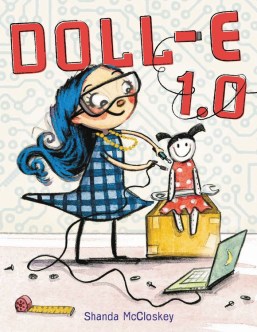
Doll-E 1.0

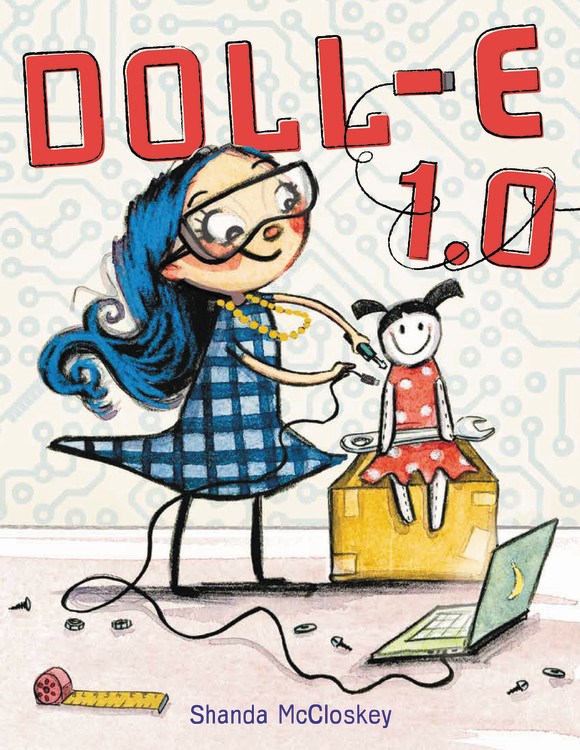
By Shanda McCloskey


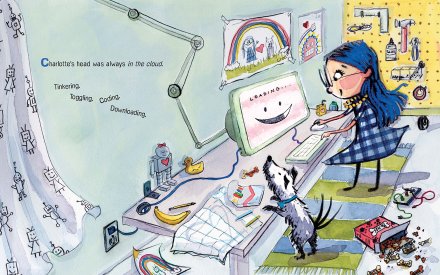
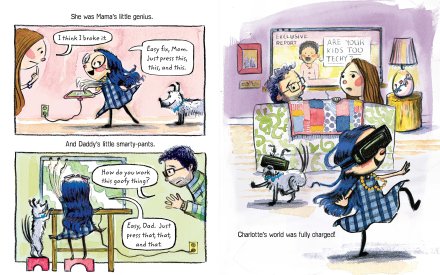
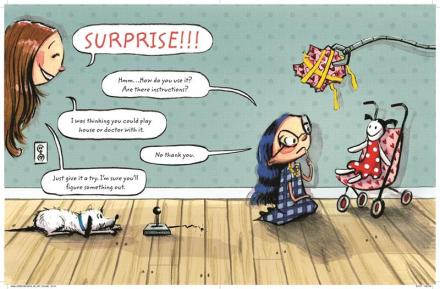
“Charlotte’s head was always in the cloud.” She knew everything about computers and was plugged in to the (virtual) realities of each day. One day her mother bought her a present. Charlotte wondered at what kind of electronic marvel might lie underneath the wrapping. When the robotic arm she’d build untied the bow and tore off the paper, Charlotte gazed at the cloth doll in the little stroller uncertainly.

celebrate-picture-books-picture-book-review-doll-E-1.0-lab

Copyright Shanda McCloskey, 2018, couirtesy of Little, Brown Books for Young Readers.

She wasn’t sure how to play with it; where was the instruction manual? Charlotte took the doll to her lab and tried to engage it in her favorite video game and to get it to dance under the revolving disco ball, but the doll just sat on the floor and stared at her. Suddenly, the doll said “Ma-ma.” Charlotte didn’t think she was Mama material, but then she had a thought: “If the doll could talk, then it must have a power supply.”

Sure enough when she opened the back, she found two batteries. This was more like it! Since the doll’s only word seemed to be “Ma-ma,” Charlotte ran an update on it to increase its vocabulary. But before she could finish, her dog grabbed the doll by the leg and ran off with it. Before Charlotte could stop him, Blutooth had ripped the doll apart.

celebrate-picture-books-picture-book-review-doll-E-1.0-virtual-games

Copyright Shanda McCloskey, 2018, couirtesy of Little, Brown Books for Young Readers.

Charlotte collected the doll’s arms, legs, and head, gathered some more supplies, and went to work in her lab. “With a few spare parts and a bit of code, Charlotte changed the doll.” It looked at Charlotte with its bright eyes and smile and said, “H-e-l-l-o m-y n-a-m-e i-s D-o-l-l-E 1.0.” “And the doll changed Charlotte too.” Charlotte loved Doll-E. She read to it, and played with it, and took it outside, where its fast stroller and new remote-controlled robotic arms were perfect for walking Blutooth.

celebrate-picture-books-picture-book-review-doll-E-1.0-gift

Copyright Shanda McCloskey, 2018, couirtesy of Little, Brown Books for Young Readers.

Shanda McCloskey wonderfully inventive doll story for a new generation will delight children and remind adults that while toys may change, the feelings associated with them never do. Sprinkled with puns and led off with a just-right first line, McCloskey’s smart story shines. Charlotte shows heart and intelligence as she embraces her new doll and makes it a reflection of her own life—just as children have always done with their toys. Charlotte, as a computer whiz, makes a captivating role model for kids, especially girls who code or would like to.

There’s so much to admire in McKloskey’s illustrations, from Charlotte’s dedicated work space/lab outfitted with hand tools, spare parts, and craft supplies to her sweet determination to understand her new, simple doll. Clever details, such as a light bulb hanging over Charlotte’s head when she gets a brilliant idea and a Frankenstein-esque scene as Charlotte repairs her doll add depth and fun to the story’s theme.

A spirited story, Doll-E 1.0 clicks all the buttons as a must for home and classroom bookshelves.

Ages 4 – 7

Little, Brown Books for Young Readers, 2018 | ISBN 978-0316510318

Discover more about Shanda McCloskey, her books, and her art on her website.

Computer Science Education Week Activity

celebrate-picture-books-picture-book-review-internet word-based-word-search--puzzle

Trendy Trending Word Search Puzzle


The Internet has added many new words to our language as well as redefining old ones. Search for twenty-two Internet-based words in this printable word search puzzle.

 Trendy Trending Word Search Puzzle | Trendy Trending Word Search Solution!

celebrate-picture-books-picture-book-review-doll-E-1.0-cover

You can find Doll-E 1.0 at these booksellers

Amazon | Barnes & Noble | Books-a-Million | IndieBound

Picture Book Review

Picture Book Review

November 30 – It’s Picture Book Month

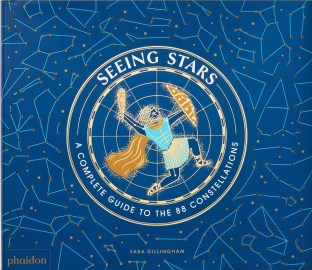
celebrate-picture-books-picture-book-review-seeing-stars-cover-2

About the Holiday

For little learners, picture books provide one of the best ways to interact with facts about all kinds of subjects. Loaded with illustrations or photographs that let kids see exciting and beautiful details, nonfiction picture books bring to life science, history, biographies, nature, and so much more of the world around us. This month, take a look for nonfiction picture books about your child’s passions to add to your home library.

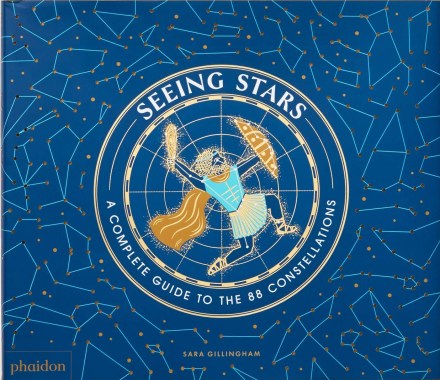
Seeing Stars: A Complete Guide to the 88 Constellations

By Sara Gillingham


If you have a young astronomer in the family and are looking for a book that will make their eyes twinkle like stars on a clear, dark night, Sara Gillingham’s magnificent guide to all eighty-eight internationally recognized constellations is a must. Combining information on how and where to find each constellation, the fascinating stories and/or myths surrounding them, and stylistically gorgeous illustrations, Seeing Stars offers children and adults not only a resource to use when stargazing, but a sit-down-and-explore beauty to enjoy any time.

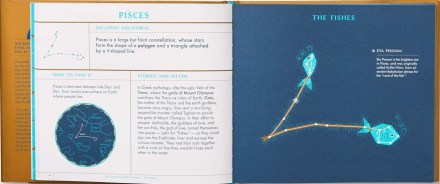
celebrate-picture-books-picture-book-review-seeing-stars-pisces

Copyright Sara Gillingham, 2018, courtesy of Phaidon Press.

Seeing Stars opens with brief and illuminating discussions on what constellations are, who invented them, using asterisms and brightest stars to find a constellation, which constellations are visible when and where, and the art of stargazing.  A chapter on the ancient constellations takes in the signs of the zodiac (I’m an Aquarius and learned that the famous water carrier of the sign is none other than Ganymede, who in ancient Greece was “considered the most beautiful man alive…. One day, in the middle of a quiet life tending sheep, Ganymede was snatched by an eagle and taken to Zeus” who put him to work as “the official cup-bearer to the gods.”).

In this section, readers will also find the constellations created from “well-known stories, characters, animals, and sacred objects” as well as the  heroes and gods of Greek mythology. Here, readers learn about Hydra, the water snake. Hydra, the largest constellation, covers one fourth of the sky in a “twisting line” that at one end curves inward to make a “small irregular polygon” that serves as the serpent’s head. She was “so wretched that even her breath could kill someone,” and was vanquished by Hercules in the second of his labors. Pegasus, Persius, Ursa Major and Ursa Minor, and Orion are just a few of the other well-known figures from the ancient world.

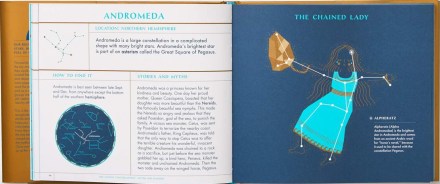
celebrate-picture-books-picture-book-review-seeing-stars-andromeda

Copyright Sara Gillingham, 2018, courtesy of Phaidon Press.

Next, come the modern constellations mapped by European explorers and named for exotic and even mythical creatures in the late 1500s and 1600s. One of these early astronomers was Elisabeth Hevelius, considered to be one of the first female astronomers. Colorful birds of paradise inspired these stargazers to name a small cluster of stars that “make a line with a narrow V on the end, much like the point of a beak” Apus (from the Greek word apous or “footless”), after some European navigators believed the birds had no feet.

What constellation outlines an animal with a “long neck like a camel and a body that is covered in ‘spots’”? Camelopardalis, of course! Or you may be more familiar with this animal’s more common name: giraffe. Chameleons, doves, dolphinfish, cranes, lizards, lions, and lynx also appear in our skies but there’s room, too, for the more whimsical, like Monoceros – or unicorn – and the phoenix.

Modern constellations also pay homage to invention and discovery. These include Caelum, the chisel, named for an engraver’s tool invented in the 1600s to “carve fine lines into printing plates” for book production; Circinus, the compass; Microscopium, the microscope; Telescopium, the telescope; and Pictor, the painter’s easel.

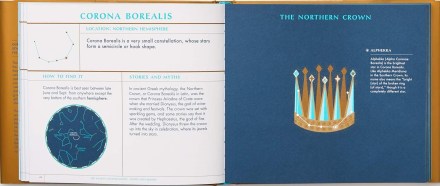
celebrate-picture-books-picture-book-review-seeing-stars-northern-crown

Copyright Sara Gillingham, 2018, courtesy of Phaidon Press.

A Resource section provides information on tools for stargazing, eight circular maps that chart the constellations seen from the northern and southern skies over three-month increments throughout the year, an illustrated guide to asterisms, resources for further reading, and an extensive glossary and index.

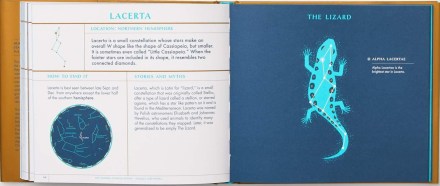
Each constellation is highlighted with a two-page spread. The left-hand page is attractively divided into four sections that provide an image of the constellation created from lines connecting stars in three different sizes that indicate their brightness, tell where the constellation is found and it’s proportion to other constellations, a circular map that spotlights the constellation among others nearby, and a paragraph on the story or myth surrounding the constellation. On the right, the image of the god, animal, or object that inspired the constellation floats on a midnight-blue background and contains within it the stars that make up the constellation connected to show its shape. The brightest star in the constellation is highlighted.

celebrate-picture-books-picture-book-review-seeing-stars-lacerta

Copyright Sara Gillingham, 2018, courtesy of Phaidon Press.

Sara Gillingham’s writing style is knowledgeable and entertaining, opening up the world of astronomy to experts and novices alike with the kind of storytelling that captivates while it teaches.

Special mention must be made of the dazzling cover and dust jacket, which together recreate the depth of the night sky. The shimmering gold cover, splashed with the image of the Milky Way, shines through the tiny laser-cut “stars” on the deep blue dust jacket, making a stunning and interactive introduction to this well-crafted book. Kids will love finding and naming the constellations they see on the cover after reading about them inside.

Perfectly conceived and executed, Seeing Stars is a book the whole family can enjoy and will spark many trips outside to gaze at the stars with new interest and understanding. The book would make a much-cherished gift for astronomers, armchair stargazers, space buffs, and those who love mythology and history. It’s a terrific addition to home, classroom, and public libraries and would be just as at home on the coffee table as on the bookshelf.

Ages 8 – 12 and up

Phaidon Press, 2018 | ISBN 978-0714877723

Discover more about Sara Gillingham, her books, and her art on her website.

Picture Book Month Activity

celebrate-picture-books-picture-book-review-read-the-stars-word-search

Read the Stars Word Search Puzzle


Sometimes the constellations can seem hidden among all the other stars. Can you find the names of eighteen constellations in this printable Read the Stars Word Search Puzzle?

Read the Stars Word Search Puzzle | Read the Stars Word Search Solution

celebrate-picture-books-picture-book-review-seeing-stars-cover-2

You can find Seeing Stars: A Complete Guide to the 88 Constellations at these booksellers

Amazon | Barnes & Noble | Books-a-Million | IndieBound

Picture Book Review
November 8 – Parents as Teachers Day

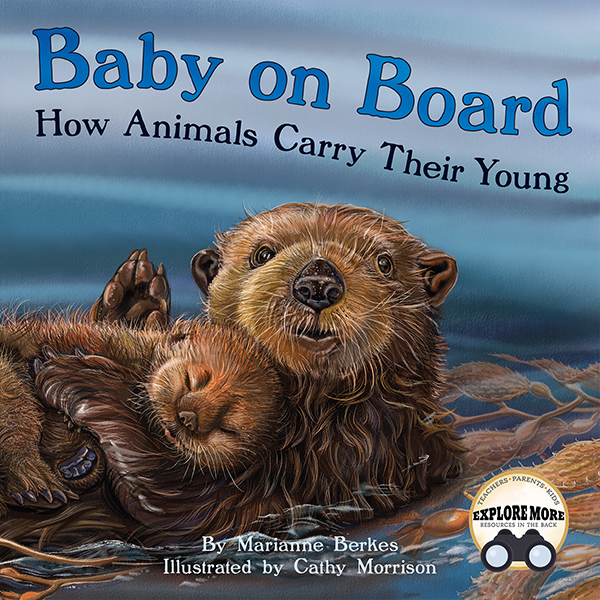
celebrate-picture-books-picture-book-review-baby-on-board-cover-2

About the Holiday

The idea for Parents as Teachers goes back to the 1970s when Missouri educators noticed that not all kindergarteners were beginning school with the same skill set. Research demonstrated the benefits of parental involvement in reading, writing, and math before children began school as well as early detection and intervention for children with delayed development and health issues. Support services and parental education aided an awareness of the importance of children’s earliest years. Parents as Teachers Day was officially instituted in 2001 by the Parents as Teachers National Center in St. Louis, Missouri. Community events and outreach to parents mark the day’s activities.

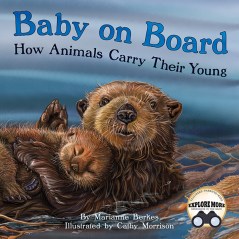
Baby on Board: How Animals Carry Their Young

Written by Marianne Berkes | Illustrated by Cathy Morrison


You may not remember, but when you were little your parents, grandparents, and others carried you – a lot! But what do animals do with their babies? “There are no baby backpacks, / no wraps or straps or slings, / no seats to buckle kids in, / or many other things.” Let’s take a look at some very different animals and see how they take care of their young.

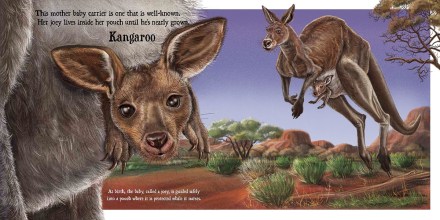
celebrate-picture-books-picture-book-review-baby-on-board-kangaroo

Image copyright Cathy Morrison, 2017, text copyright Marianne Berkes, 2017. Courtesy of Dawn Publications.

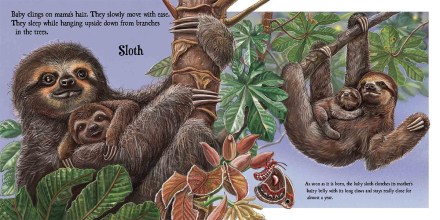
A sea otter pup rides on her mother’s belly as she floats along on her back. But what does the mother sea otter do when she needs to hunt for food? She “wraps her baby in long strands of kelp seaweed to keep her pup from floating away.” Hanging upside down high in a tree seems pretty dangerous for a baby, but a little sloth clings on tight to his mother’s fur and stays there “for almost a year.”

While mother animals do much of the rearing of their little ones, both moms and dads in common loon families are involved. They both give their chicks rides on their backs to keep them “safe from fish and turtle predators.” No person wants to get close to an alligator’s sharp teeth, but inside her wide jaws is just where baby alligators feel safest. When they want to leave their nest, the hatchlings call to their mother, who returns and “gently lifts them out, a few at a time, and carries them to the water for safety.”

celebrate-picture-books-picture-book-review-baby-on-board-sloth

Image copyright Cathy Morrison, 2017, text copyright Marianne Berkes, 2017. Courtesy of Dawn Publications.

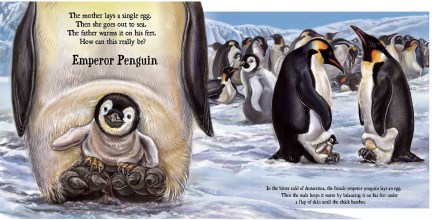
Do you see the baby anteater? She’s cleverly concealed! “Blending in with mama’s fur, you hardly see this pup. It rides upon her hairy back while she digs insects up.” What about kangaroos, opossums, manatees, chimpanzees, wolf spiders, emperor penguins, and lions? How do they carry their babies and protect them while they grow? You’ll find out all about what these animals do. Then it’s time for you to learn “how did someone carry you?”

Backmatter presents an illustrated matching game for kids as well as extensive resources, including more information about each animal, language arts, math, science, engineering, and movement lesson extentions, and suggestions for further reading for teachers and parents.

celebrate-picture-books-picture-book-review-baby-on-board-emperor-penguin

Image copyright Cathy Morrison, 2017, text copyright Marianne Berkes, 2017. Courtesy of Dawn Publications.

Marianne Berkes engages young readers in learning about twelve familiar and more unusual animals in two ways. First, a sweet rhyming couplet—which can be used as a fun guessing game—introduces each animal. Berkes then expands on the information with a brief and fascinating fact or two about how the animal’s method of holding her or his young protects them, feeds them, or moves them from place to place.

Little environmentalist in the making will be awed by Cathy Morrison’s realistic illustrations of each adult animal and baby in their natural habitat. Morrison’s images are so lifelike that readers can count individual hairs on the mother sloth’s arms and marvel at the sharpness of her claws as they wrap around a tree branch and almost feel the softness of the baby otter’s curly fur as she and her mother float in a bed of kelp. The animal’s facial expressions are likewise realistic while showing concern on the part of the adult and complete trust on the part of the babies.

There will be plenty of ewwws and ahhhs for the wolf spider and alligator, and as they watch the lion cup nearly bound off the page, kids will want to start all over and see these majestic wonders again. Morrison’s detailed backgrounds are no less fascinating as they contain clear images of the landscapes each animal calls home, complete with plants, trees, insects, waterways, and more.

Baby on Board: How Animals Carry Their Young provides nature and animal lovers much to learn and talk about. The extra resources also make this a valuable book to add to classroom, homeschool, and public libraries.

Ages 3 – 6

Dawn Publications, 2017 | ISBN 978-1584695936

Discover more about Marianne Berkes and her books on her website. 

To learn more about Cathy Morrison, her books, and her art, visit her website.

Parents as Teachers Day Activity

cute animal coloring pages Best of rhino and her baby free animal coloring pages kleurplaat

Animal Family Coloring Pages


Here are three animal families for you to enjoy coloring. Grab your crayons or pencils and have fun!

Lion and Baby | Zebra and Baby | Hippo and Baby

celebrate-picture-books-picture-book-review-baby-on-board-cover-2

You can find Baby on Board: How Animals Carry Their Young at these booksellers

Amazon | Barnes & Noble | Books-a-Million | Dawn Publications | IndieBound

Picture Book Review

October 12 – It’s National Book Month

celebrate-picture-books-picture-book-review-this-little-scientist-cover

About the Holiday

When children hear, see, and live what’s in the news, they want to know more about the whos, whys, and hows—and they want to know what they can do. Through picture books, middle grade novels, and young adult novels young readers and adults find ways to understand, interpret, and discuss issues in the world today. Many books from picture books on up inspire readers to stand up for others, be a friend, use their talents to help those in need, and make a difference in their own unique way. This month gives readers a great opportunity to discover books that can answer questions, empower children, and make the world a better place for them to grow up in.

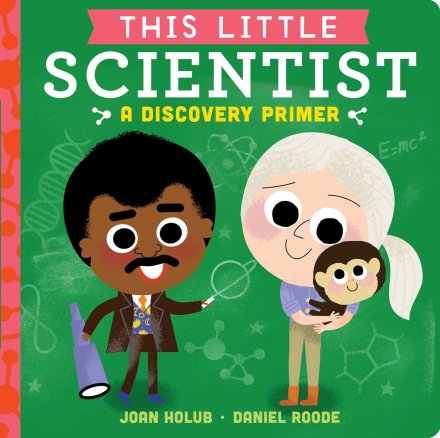
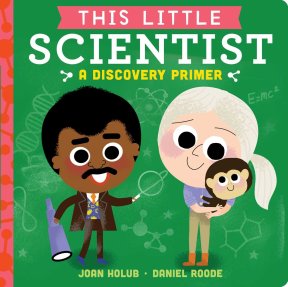
This Little Scientist: A Discovery Primer

Written by Joan Holub | Illustrated by Daniel Roode

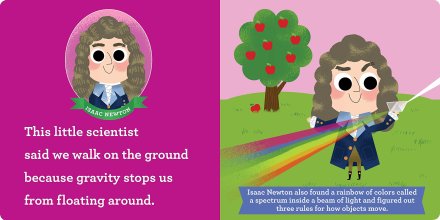
Like the best school career day ever, ten of history’s and today’s greatest scientists line up in front of the chalkboard to talk about their work. First they reveal that secret to their success—the scientific method: “Asking why. Then making a guess. Asking how. Then proving with tests.” First up is Sir Isaac Newton, who discovered gravity. Little ones will learn that he also found the color spectrum and “figured out three rules for how objects move.”

celebrate-picture-books-picture-book-review-this-little-scientist-isaac-newton

Image copyright Daniel Roode, 2018, text copyright Joan Holub, 2018. Courtesy of Little Simon, Simon & Schuster.

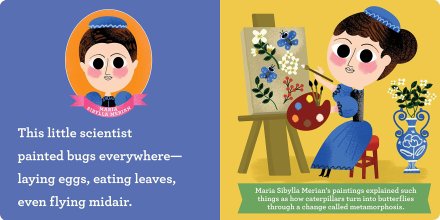
Next to take center stage is Maria Sibylla Merian, a painter who through her art explained wonders of the insect world, including “how caterpillars turn into butterflies through a change called metamorphosis.”

Even the youngest readers may recognize Albert Einstein with his disheveled white hair. They’ll be amazed to learn that he devised a formula to explain how “energy and mass are the same thing in different forms.” He also found that nothing is faster than the speed of light.

celebrate-picture-books-picture-book-review-this-little-scientist-maria-sibylla-merian

Image copyright Daniel Roode, 2018, text copyright Joan Holub, 2018. Courtesy of Little Simon, Simon & Schuster.

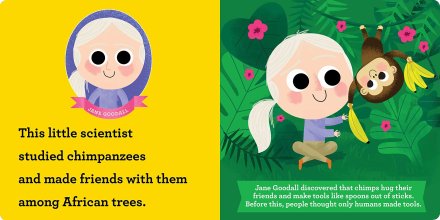
Katherine Johnson can look back on a stellar career as a mathematician who “solved hard math problems on paper” before computers were used “so that space heroes like John Glenn could safely orbit the Earth.” Kids who love animals will want to meet Jane Goodall who “studied chimpanzees / and made friends with them / among Africa’s trees.” And starry-eyed kids who look to the skies will want to hear about Neil deGrasse Tyson, the director of the Hayden Planetarium who “helps us understand / how our universe works / and how it began.”

Four more scientists step up to tell their stories. To close out the book, little readers will find a double-spread portrait gallery of seventeen more, complete with one-sentence descriptions for their contribution. Readers will find that the final frame has been left open for… them?

celebrate-picture-books-picture-book-review-this-little-scientist-Neil deGrasse-Tyson

Image copyright Daniel Roode, 2018, text copyright Joan Holub, 2018. Courtesy of Little Simon, Simon & Schuster.

Joan Holub distills the scientific method and the biographies of ten influential scientists into short, clear nuggets of information that even the youngest readers can appreciate. A four-line rhyming verse introduces the scientist on the lefthand side while one or two facts on the right-hand side expand on their work. The engaging tone and variety of sciences and scientists represented will entice discoverers-in-the-making to learn more.

celebrate-picture-books-picture-book-review-this-little-scientist-jane-goodall

Image copyright Daniel Roode, 2018, text copyright Joan Holub, 2018. Courtesy of Little Simon, Simon & Schuster.

Daniel Roode cartoon-inspired but readily recognizable portraits of each scientist will charm readers as each is portrayed working with the subject of their experiments or set on a backdrop of their specialty. Clothing and hairstyles give kids a sense of each scientist’s place in history. Roode’s vibrant colors and dynamic illustrations in addition to the bright smile each scientist wears celebrates the sciences while applauding the discoveries made by women and men dedicated to advancing knowledge and creating the future.

For little ones who are curious about the world around them and how it works, This Little Scientist: A Discovery Primer, part of the This Little series, which includes This Little Explorer, This Little President, and This Little Trailblazer, is a smart, innovative choice for home, classroom, and public library shelves.

Ages 3 – 5

Little Simon, Simon & Schuster, 2018 | ISBN 978-1534401082

Discover more about Joan Holub and her books on her website.

National Book Month Activity

celebrate-picture-books-picture-book-review-silly-balloons

Static Electricity Experiment!

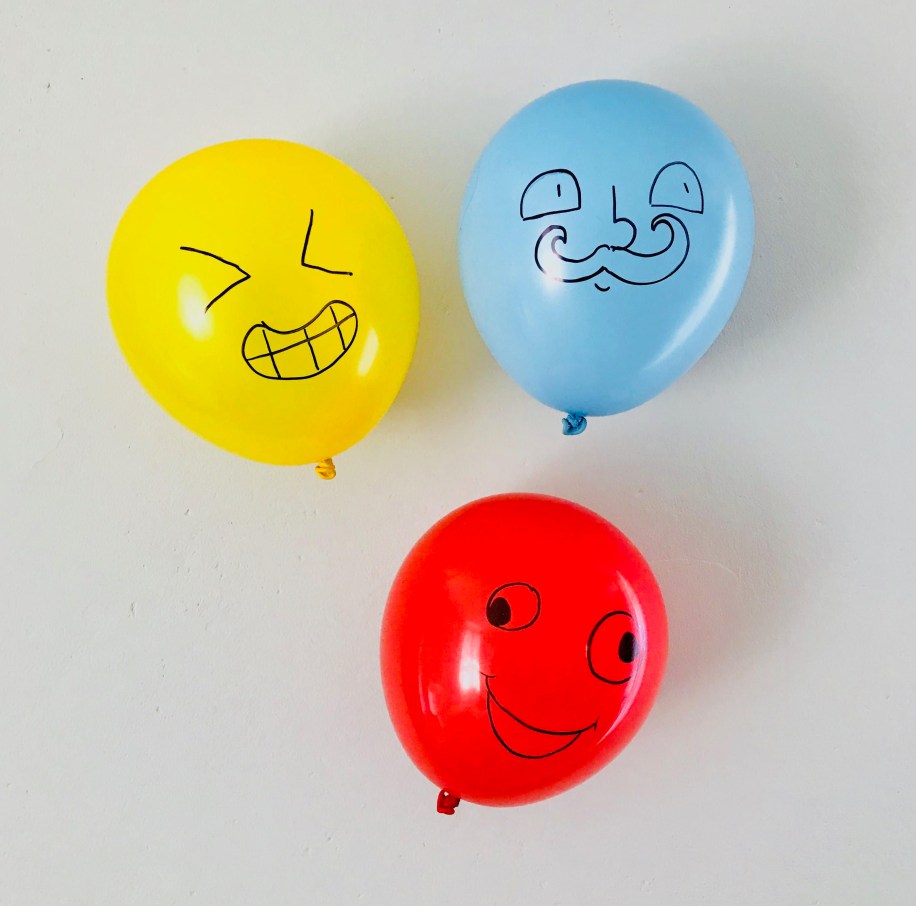
We all know that cooler weather means shock season will soon be here. But you don’t have to wait until the fuzzy socks and fleecy blankets come out to have some fun with static electricity. Using a blown-up balloon can be a dramatic way to show kids what’s going on with the electrons that are at the center of this phenomenon.

Babies and young children should be supervised by an adult while playing with balloons.

How does it work? Static electricity is generated when there is an excess of electrons on one object giving it an electric charge. These electrons are attracted to an object with fewer electrons and will jump to it when placed close by.

How do you produce static electricity? Just rub the blown-up balloon on your shirt, on your hair, on a blanket or other surface. Then try these experiments!

CRAZY HAIR

Generate static electricity on a blown-up balloon then hold it near your hair and watch it go a little crazy!

HANG A BALLOON

Generate static electricity on a blown-up balloon and gently place it on the wall and watch it hang all by itself.

BEND WATER

This bit of balloon magic will amaze you! Generate static electricity on a blown-up balloon. Turn on a faucet to a thin stream of water. Hold the balloon near the stream of water and watch it bend toward the balloon. 

celebrate-picture-books-picture-book-review-this-little-scientist-cover

You can find This Little Scientist: A Discovery Primer at these booksellers

Amazon | Barnes & Noble | Books-a-Million | IndieBound

Picture Book Review
August 25 – It’s National Water Quality Month

celebrate-picture-books-picture-book-review-water-is-water-cover

About the Holiday

The Clean Water Act was passed in 1972, and the years from 2005 to 2015 were declared an International Decade for Action: Water is Life by the United Nations to focus on the necessity of clean water around the world. Today, the work continues. The importance of clean water cannot be understated. The quality of life and the survival of all ecosystems depends on the availability of good quality water. The fact that the water systems and the water cycle are intrinsically linked not only to bodies of water but to what occurs on land, makes it critical that we treat all parts of the environment with care. Runoff from businesses, industries, and homes can quickly pollute local and remote water system. National Water Quality Month encourages people to be mindful of the amount of water and the household products they use, and it advocates for responsible and environmentally protective policies on the part of industry and governments. To honor this month’s holiday, learn more about what you can do to protect the world’s water supply.

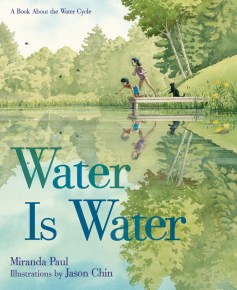
Water Is Water: A Book About the Water Cycle

Written by Miranda Paul | Illustrated by Jason Chin


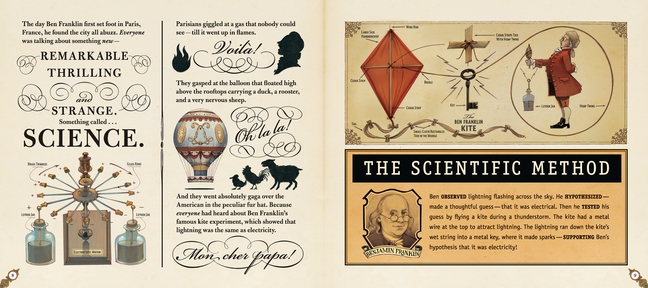
On a soaking rainy day a sister and brother run up to the house with a turtle they’ve caught in the pond out back. They drink glasses of water and offer a bowlful for the turtle too. “Drip. Sip. Pour me a cup.” Out on the porch Dad is ready with warm mugs of hot chocolate. The ghostly steam tickles their noses. “Whirl. Swirl. Watch it curl by. Steam is steam unless…it cools high.” As the kids return the turtle to the pond they watch a dragon and an eagle play across the sky. “Clouds are clouds unless…they form low.”

celebrate-picture-books-picture-book-review-water-is-water-rain-at-school

Image copyright Jason Chin, text copyright Miranda Paul. Courtesy of us.macmillan.com

Through the misty fog the school bus rumbles up the hill as a little garter snake wriggles in the fallen leaves at the end of the children’s driveway. By the time the bus drops the kids off at school the fog has turned to rain. It plinks on the sidewalks and pounds the earth, creating puddles just in time for recess. “Slosh in galoshes. Splash to your knees! Puddles are puddles unless…puddles freeze.”

celebrate-picture-books-picture-book-review-water-is-water-snowman

Image copyright Jason Chin, text copyright Miranda Paul. Courtesy of us.macmillan.com

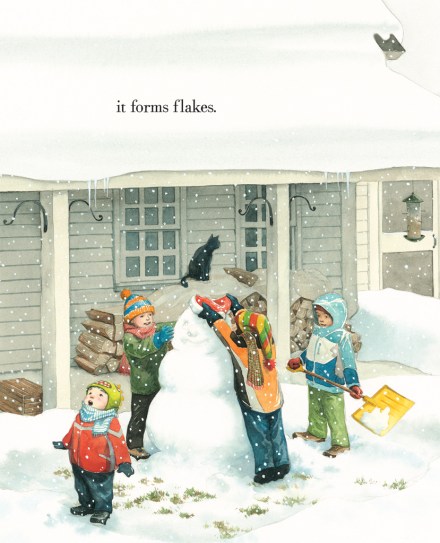
The turtle is hiding now that winter’s come, and a group of friends slip and speed across the pond, some playing hockey, some figure skating, and a couple just learning the ropes. Then suddenly it’s snowing! A brilliant red cardinal watches from the birdfeeder as three sneaky kids with snowballs spy on their friends who are building a snowman. With a “smack!” the snowball fight begins. Soon, however, spring is back with rushing streams and “Creep. Seep. Squish in your boots” mud. And that “mud is mud unless…there are roots.”

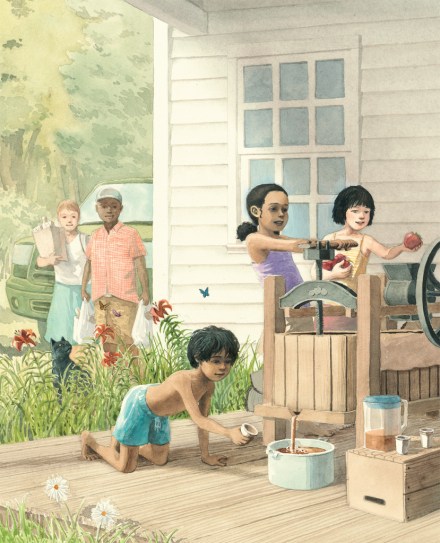
The apple trees in the backyard soak up the spring rains that feed the red, plump apples that are apples “unless…they get pressed. Drip. Sip. Pour me a cup. Cider is cider…until we drink it up!”

More information about water, including illustrated definitions of water-related terms, percentages of water in a variety of plants and creatures, and its importance to the world as well as suggestions for further reading, follow the text.

celebrate-picture-books-picture-book-review-water-is-water-making cider

Image copyright Jason Chin, courtesy of us.macmillan.com

Miranda Paul’s lyrical journey through a year of our interactions with water is a beautiful reminder of all the forms water takes. From life-filled ponds to pouring rains to glasses of refreshment, water sustains every creature and plant on earth. Paul’s transitional “unless…” elegantly introduces each transformation in the natural water cycle in a way that children recognize and appreciate. Her rich rhyming and rhythmical language is a joy to read and makes Water an active character in the story.

celebrate-picture-books-picture-book-review-water-is-water-drinking-cider

Image copyright Jason Chin, courtesy of us.macmillan.com

Jason Chin’s superb artwork is as lush and dynamic as the world around us. Each two-page spread is a masterpiece of atmosphere and details that bring not only water’s cycle to life but also that of the children, growing and playing in and around water throughout the year. As the children shelter from the rain at the beginning of the book, a bushel of apples sits snug against the cider press in the corner of the porch foreshadowing the final pages where fresh cider fuels summer fun. Chin’s children are real kids—joyful and playful, enthusiastically and humorously interacting with nature and each other with the kind of abandon that makes hearts sing. Young readers and adults will love lingering over each page.

Water is Water: A Story of the Water Cycle is the kind of book that can get kids excited about one of the quieter aspects of science—but one that is so important to our daily lives. It would make a wonderful accompaniment to elementary school lesson plans and a gorgeous addition to library and home bookshelves.

Ages 5 – 10

Roaring Brook Press, 2015 | ISBN 978-1596439849

Discover more about Miranda Paul and her books plus resources for teachers and writers on her website!

View a portfolio of artwork by Jason Chin and learn more about him and his books on his website!

National Water Quality Month Activity

celebrate-picture-books-picture-book-review-water-words-word-search

A Sprinkling of Water Words Word Search


This tree grew tall and strong by soaking up water through its roots. Can you find the 20 water-related words that are hidden inside this printable tree-shaped A Sprinkling of Water Word Word Search Puzzle? Here’s the Solution.

celebrate-picture-books-picture-book-review-water-is-water-cover

You can find Water is Water: A Book about the Water Cycle at these booksellers

Amazon | Barnes & Noble | Books-a-Million | IndieBound

Picture Book Review

August 20 – It’s Family Fun Month

celebrate-picture-books-picture-book-review-fiona-the-hippo-cover

About the Holiday

August is one of those transitional months—hot and humid, but with a touch of fall in the evening and early morning air. It’s also the month when most kids go back to school or are preparing for another year of learning. August is also a wonderful month to spend extra time with family. There are lots of things you can do with kids from planning special events at home to taking a family trip to a local or nearby park, zoo, or aquarium. This time spent together makes memories for a lifetime!

Zonderkidz sent me a copy of Fiona the Hippo to check out. All opinions are my own. I’m thrilled to be partnering with Zonderkidz in a Fabulous Fiona! Giveaway that’s perfect for Family Fun Month! See details below.

Fiona the Hippo

By Richard Cowdrey


When a baby hippopotamus was born on a winter night at the Cincinnati Zoo in Ohio, all the other animals were excited. They were surprised that she was part of their family so soon and were eager to see her. In fact, the whole world was excited to see her as word got out on news outlets and the Internet about Fiona—the baby hippo who had “arrived earlier than expected.” As she slept in a room just for her and was cared for by the zookeepers, the other animals peeked in. They thought she was cute and tiny, and Ostrich added, “kind of slimy!”

The zookeepers fed Fiona from a bottle and pretty soon she was big enough to learn how to walk. “And when she was ready, she let out a snort, wiggled her ears, and said, ‘I’ve got this!’ And wobble-wobble-plop! She tried over and over, until she did.” Little Fiona grew quickly, and soon it was time for swimming lessons. With a little practice and a little help, Fiona became confident, until one day, she said “‘I’ve got this!’” and splashed right into the pool.

celebrate-picture-books-picture-book-review-fiona-the-hippo-zoo-animals

Copyright Richard Cowdrey, 2018, courtesy of Zonderkidz.

While Fiona was growing and learning, she made the other animals proud. They couldn’t wait until she could “come out to play.” But Fiona was still busy growing and discovering new things. People who watched Fiona’s progress online sent fan mail. Soon, she had piles of letters and gifts congratulating her. They said “‘You are amazing! We love you, little baby hippo!’”

One day, Fiona looked out the window from her special enclosure and saw her mama and daddy swimming nearby. She wanted to be with them. The zookeepers agreed that Fiona was big enough and strong enough to be in the pool with her parents. As “she swam with her mama for the first time,” she “let out a snort, wiggled her ears, and said, ‘I’ve got this!’”

She loved swimming with her mama and daddy, but she also wished for some friends to play with. The other zoo animals were thrilled to hear this. At last they would get their chance to have fun with Fiona too. Ostrich and turtle, elephant and otter, penguin and bear, and all the rest dove right in for “the biggest pool party the zoo had ever seen!” That night, Fiona snuggled with her mama and daddy and dreamed of all the adventures to come, telling herself, “‘I’ve got this!’”

celebrate-picture-books-picture-book-review-fiona-the-hippo-zoo-bottle-fed

Copyright Richard Cowdrey, 2018, courtesy of Zonderkidz.

With enthusiasm and humor, Richard Cowdrey tells the story of Fiona, a hippo born prematurely who overcame the odds of survival to become a favorite of people everywhere. By following Fiona’s progress and telling the story from her point of view, Cowdrey reaches out and embraces young readers, reassuring them that, like Fiona, they’ve “got this!”—no matter what new skill, adventure, or activity they face. Readers will eagerly read along with Fiona’s signature expression. The attentiveness of the other zoo animals also reminds kids that they aren’t alone, but have family and friends who love them.

Children will be charmed by Cowdrey’s realistic illustrations of the adorable Fiona. Images of her swaddled in a blanket by the zookeepers, wiggling her ears and smiling confidently as she learns skill after skill, and reuniting with her parents and other zoo animals are enchanting. Humorous pictures of Fiona snugged into a life vest, swimming tube, and pool noodles will make kids giggle with recognition. Animal lovers will want to linger over each page to enjoy the beautiful depictions of a wide range of their favorites.

A photograph of the real Fiona on the back cover will make readers smile, and an Author’s Note on the back of the book jacket relates the facts of Fiona’s birth, growth, and well-deserved fame.

An inspiring tale of perseverance, self-confidence, and friendship, Fiona the Hippo is an aww-inspiring delight that will capture young readers’ hearts at home and would spark excitement for science and social learning in the classroom.

Ages 4 – 8

Zonderkidz, 2018 | ISBN 978-0310766391 (Hardcover) | ISBN 978-0310766360 (Board Book)

Discover more about Richard Cowdrey, his books, and his art on his website.

Fabulous Fiona! Giveaway

celebrate-picture-books-picture-book-review-Fiona-the-Hippo_Fabulous-Fiona-Prize

I’m thrilled to be partnering with Zonderkidz in this fabulous giveaway of

  • One (1) copy of Fiona the Hippo, by Richard Cowdrey
  • Plus a $50 Visa gift card to take your family out on the town.

To be entered to win, just Follow me on Twitter @CelebratePicBks and Retweet one of my giveaway tweets during this week, August 20-26. 

A winner will be chosen on August 27.

Giveaway open to US addresses only. | Prizing and samples provided by Zonderkidz.

About Fiona the Hippo

Fiona the Hippo, by New York Times bestselling artist Richard Cowdrey of Bad Dog, Marley fame, tells the story of Fiona, the adorable internet sensation from the Cincinnati Zoo who captured hearts around the world with her inspiring story and plucky personality.

Born prematurely, at only 29 pounds, Fiona was not expected to live. But her spunk and determination helped her thrive and become a happy, healthy hippopotamus. With every challenge she faced, Fiona let out a snort, wiggled her ears, and said “I’ve got this.” And she did! Through this whimsical and inspiring tale of perseverance and friendship, inspired by the real adventure of this heroic hippo, kids join Fiona and her lovable animal friends at the zoo as she is introduced to the world.

 celebrate-picture-books-picture-book-review-author-richard-cowdrey-headshot

About the Author

Richard Cowdrey’s favorite things to draw and paint are the common things seen everywhere in nature. He especially enjoys capturing the expressions, eyes, and gestures of both humans and animals. Drawing and painting Fiona was challenging as the hippopotamus is a very unique yet beautiful creature! Richard’s bestselling children’s books include Legend of the Candy CaneBad DogMarley, and A Very Marley Christmas.

Family Fun Month Activity

celebrate-picture-books-picture-book-review-zoo-friends-maze

Playful Zoo Friends! Maze


These baby animals want to play together! Can you help the hippo round up his friends in this printable Zoo Friends Maze?

Playful Zoo Friends! Maze Puzzle | Playful Zoo Friends! Maze Solution

celebrate-picture-books-picture-book-review-fiona-the-hippo-cover

You can find Fiona the Hippo at these booksellers

Amazon | Barnes & Noble | Books-a-Million | IndieBound

Picture Book Review

August 11 – Play in the Sand Day

celebrate-picture-books-picture-book-review-how-to-code-a-sandcastle-cover

About the Holiday

Is there any better way to spend a summer day than playing on a sandy beach? That wet, compact surface is perfect for running on, digging in, and of course building sandcastles with. And the soft, dry areas? They’re great for setting up chairs or blankets and wiggling toes in. Whether you head out to the ocean, a lake, or even a secluded river bank, don’t forget to pack a pail and shovel for some family fun!

How to Code a Sandcastle

Written by Josh Funk | Illustrated by Sara Palacios

It’s the last day of Pearl’s summer vacation, and she’s hit the beach with her parents. Her goal is to build a sandcastle. It’s not like she hasn’t tried on other beach days, but there was always something that destroyed it. There was the frisbee that landed on top of it, then a surfer glided right into it, and another girl’s dog, Ada Puglace, thought it needed a moat. But today, Pearl brought her robot, Pascal, to build her sandcastle.

celebrate-picture-books-picture-book-review-how-to-code-a-sandcastle-ruined-sandcastles

Image copyright Sara Palacios, 2018, text copyright Josh Funk, 2018. Courtesy of Viking Books for Young Readers.

As Pearl explains, “He’ll do whatever I tell him—as long as I tell him in code. It’s not a secret code—it’s special instructions that computers understand.” Pearl points out the perfect spot on the beach for her sandcastle and tells Pascal to build it. But Pascal doesn’t move. Pearl realizes that she must break down the one big request into smaller problems for Pascal to solve. Easy-Peasy, Pearl thinks.

The first problem Pearl gives Pascal is: “find a place to build.” First Pascal travels out to sea, but Pearl tells him they must build on land. So Pascal rolls out into the parking lot. Hmmm…that’s not right either. Pearl decides she must be “very specific with my instructions.” When she tells Pascal to “find a flat spot on sand that isn’t too close to the water,” he marks an X on a perfect sandy spot. Great!

celebrate-picture-books-picture-book-review-how-to-code-a-sandcastle-small-problem-1

Image copyright Sara Palacios, 2018, text copyright Josh Funk, 2018. Courtesy of Viking Books for Young Readers.

The second problem Pearl gives Pascal is to “gather up sand.” She’s learned to be very particular in her instructions, so she gives her robot a three-step process: “Fill the pail with sand, dump the sand on our spot, pat the sand down.” This works just right, so Pearl continues telling Pascal the directions, until she grows tired of speaking.

There must be a better way, Pearl thinks. How about a loop? Pearl directs Pascal to “loop through this sequence,” and just like that Pascal is off and rolling and Pearl gets to relax. A while later, Pearl discovers that Pascal had built a pyramid-high pile of sand, so Pearl tells him to stop. Next, they will “shape and decorate the castle.” Pearl comes back with pretty seashells to add to the castle, while Pascal brings back the lifeguard—in his chair. Pearl orders Pascal to bring back something smaller. When he comes back with a crab, she tells him it must be something that doesn’t move, and when he shows up with a baby’s pacifier, Pearl knows she must do a better job of explaining.

celebrate-picture-books-picture-book-review-how-to-code-a-sandcastle-small-problem-3

Image copyright Sara Palacios, 2018, text copyright Josh Funk, 2018. Courtesy of Viking Books for Young Readers.

She decides to give him “if—then—else” instructions. With these detailed directions, Pascal returns with a shell and some seaweed. Finally, it’s time to shape the castle. They use their buckets and hands to build a beautiful castle that even has a turret. The shells, rocks, and seaweed are the perfect finishing touches. With the castle finally finished, Pearl runs off to get her toys.

But when she gets back, Pearl discovers that the rising tide has washed their sandcastle out to sea. And to make matters worse, Ada Puglace is back to add another moat. Hmmm… a moat? Pearl thinks. That’s what she needed the first time. Pearl really wants to rebuild, but it took her half a day to make the first one. Then she realizes that the code is already written. All she has to do is use it again. In no time a new sandcastle stands gleaming on the beach.

There’s just one more problem to solve. Quickly, Pearl gives Pascal a new looped sequence to dig the moat. Now it’s time to play—or “code an entire kingdom!”
celebrate-picture-books-picture-book-review-how-to-code-a-sandcastle-finished-castle

Image copyright Sara Palacios, 2018, text copyright Josh Funk, 2018. Courtesy of Viking Books for Young Readers.

A Foreward written by Reshma Saujani, the founder of Girls Who Code, introduces readers to this organization that is “working to close the gender gap in technology” and get girls of all ages excited about coding and future opportunities in science and technology. 

Pearl and Pascal’s Guide to Coding with brief discussions of Code, Sequence, Loops, and If-Then-Else follows the text.

With his infectious enthusiasm and talent to reach kids in new and innovative ways, Josh Funk, a computer programmer by day and super writer by night, is a perfect guide to the joys of coding for young learners. Taking kids out to the beach for a bit of sandcastle building—an endeavor that is often fraught with dangers—is a terrific way to show the procedures and power of coding. Pearl’s initial missteps in programming Pascal provide laugh-out-loud moments while also demonstrating that computer programs work with precise instructions. Her inexperience but quick learning will give readers confidence in their own abilities to code and where to look for problems if their program does not run as smoothly as they’d like. When high tide washes Pearl and Pascal’s sandcastle out to sea, readers may groan in empathy, but the opportunity to do it all again—only bigger and better—will make them cheer.

celebrate-picture-books-picture-book-review-how-to-code-a-sandcastle-last-day

Image copyright Sara Palacios, 2018, text copyright Josh Funk, 2018. Courtesy of Viking Books for Young Readers.

Sara Palacios’s golden beach is a wide-open and inviting platform to introduce the world of computer programming to young readers. Sunny and enthusiastic, Pearl, in her heart-shaped sunglasses, is persistent and smart in figuring out just how to make Pascal do what she wants. Pascal is a round, rolling cutie, perpetually happy to perform its duties. Series of panels and speech bubbles depict each instruction Pearl gives Pascal, clearly showing readers how coding and a computer’s response to its instructions work. Sequence loops are cleverly portrayed with typeface that creates a circle around Pearl’s floating ring and later around the trench that will surround the castle and become the moat. The final image of Pearl and Pascal celebrating their successful day together is powerful encouragement that a new day of girls and women in technology and science is on the horizon.

Coding a Sandcastle is a motivating combination of lighthearted fun and accessible education that will encourage girls—and boys—to get involved with computer coding just for their own enjoyment or as a future profession. It’s a must for school media and computer class libraries, and with this book on home bookshelves, kids won’t want to just play on the computer—they’ll be asking to program too.

Ages 4 – 8

Viking Books for Young Readers, 2018 | ISBN 978-0425291986

Discover more about Josh Funk and his books and find lots of fun activities to do too on his website.

To learn more about Sara Palacios, her books, and her art, visit her website.

Play in the Sand Day Activity

celebrate-picture-books-picture-book-review-bringing-the-outside-in-painted-pails-craft

Personalized Painted Pail

A trip to the beach or park isn’t complete without a pail to collect shells, seaweed, sea glass, pebbles, sticks, nuts, or other things in. But why should all the cool stuff be on the inside? With this craft you can decorate your pail to show your unique personality!

Supplies

  • Plastic or metal pail
  • Craft paint in various colors
  • Crystal Clear Acrylic Coating, for multi-surface use
  • Paint brush

Directions

  1. Paint designs on the pail
  2. When paint is dry spray with acrylic coating to set paint
  3. Let dry

celebrate-picture-books-picture-book-review-how-to-code-a-sandcastle-cover

You can find How to Code a Sandcastle at these booksellers

Amazon | Barnes & Noble | Books-a-Million | IndieBound

Picture Book Review