October 10 – World Space Week


About the Holiday

First declared by the United Nations in 1999, World Space Week has grown to be the largest public space-related event in the world. The week is an international celebration of science and technology, and their contribution to the betterment of the human condition. This year’s theme is “Living in Space” and “explores humanity’s journey toward making space a habitat, emphasizing the innovative technologies, challenges, and collaborative efforts that make this vision a reality.” Looking to celebrate this initiative with more than 15,000 events in more than 90 countries, the week sponsors space education and outreach events held by space agencies, aerospace companies, schools, planetaria, museums, and astronomy clubs around the world. To learn more about the week, visit worldspaceweek.org.

Thank you to Simon & Schuster/Paula Wiseman Books and Barbara Fisch at Blue Slip Media for sending me a copy of this book for review.

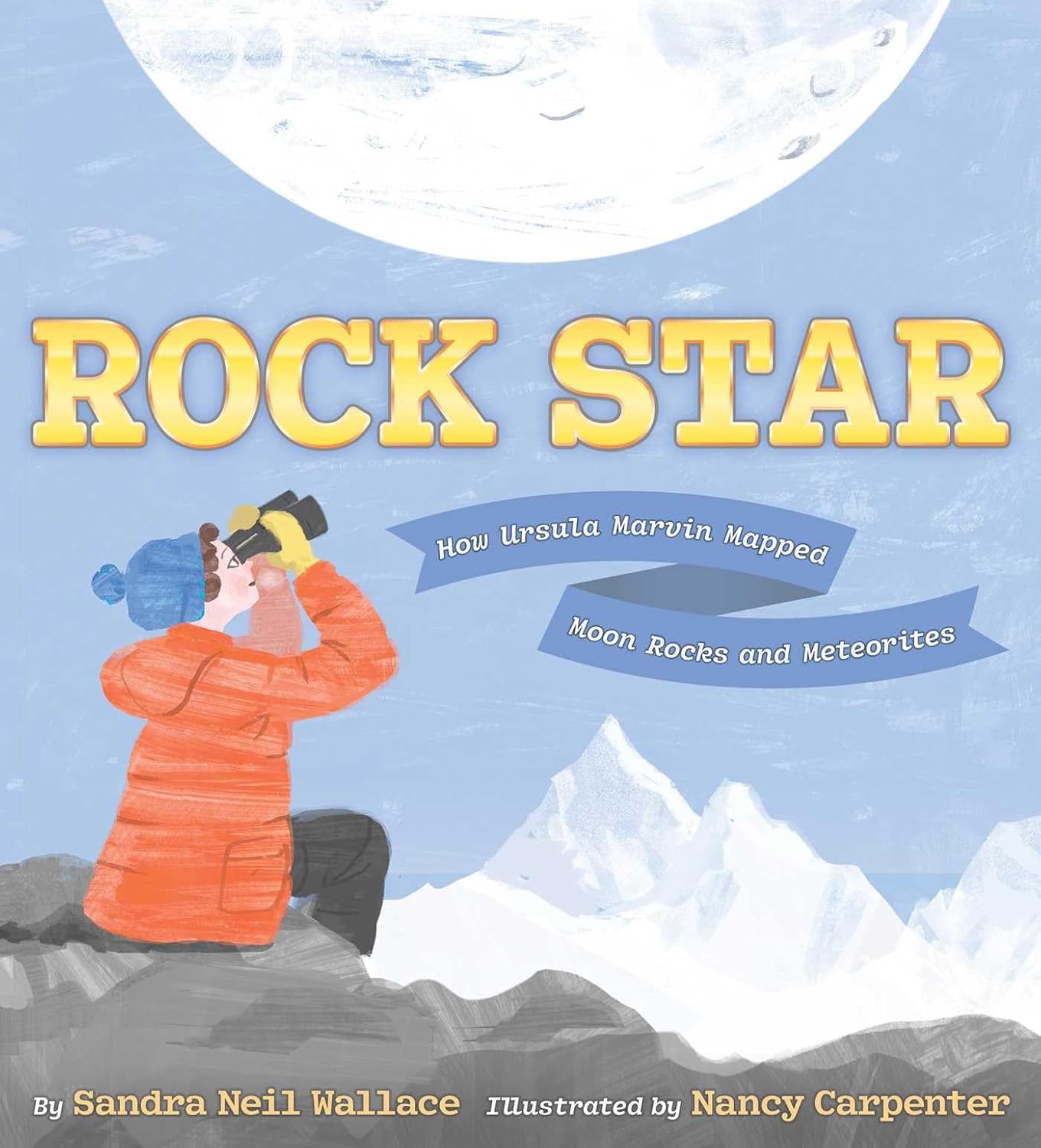
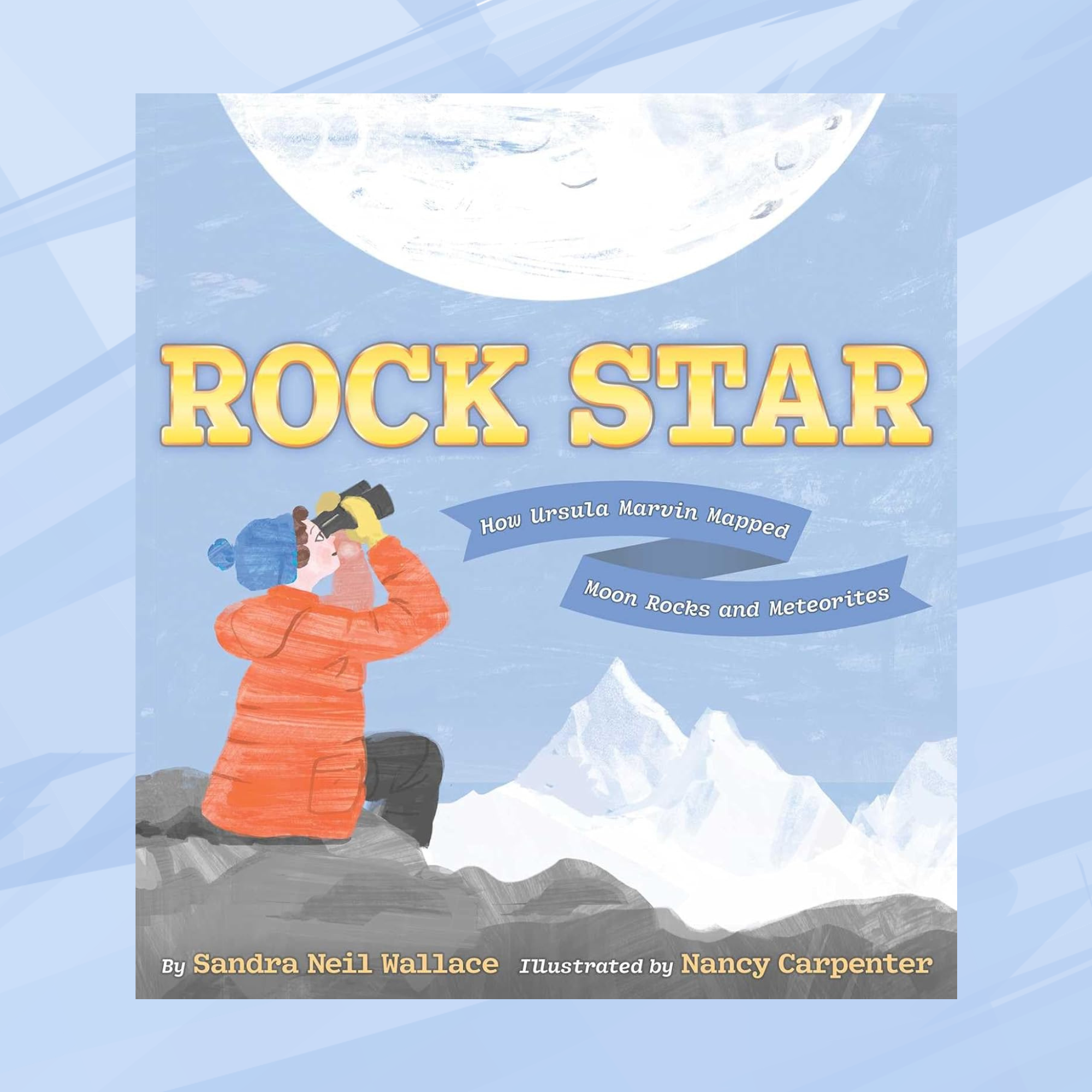
Rock Star: How Ursula Marvin Mapped Moon Rocks and Meteorites

Written by Sandra Neil Wallace | Illustrated by Nancy Carpenter

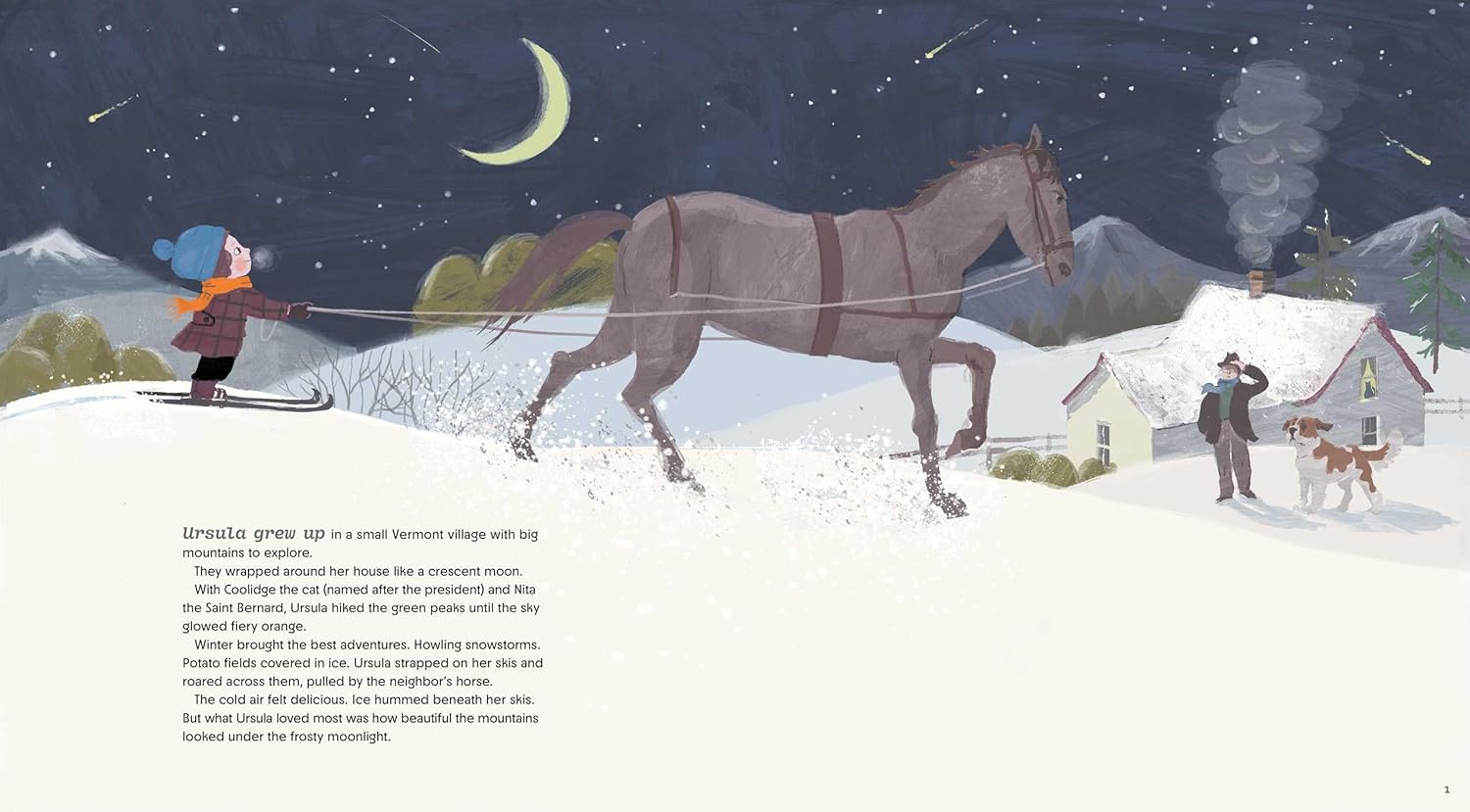
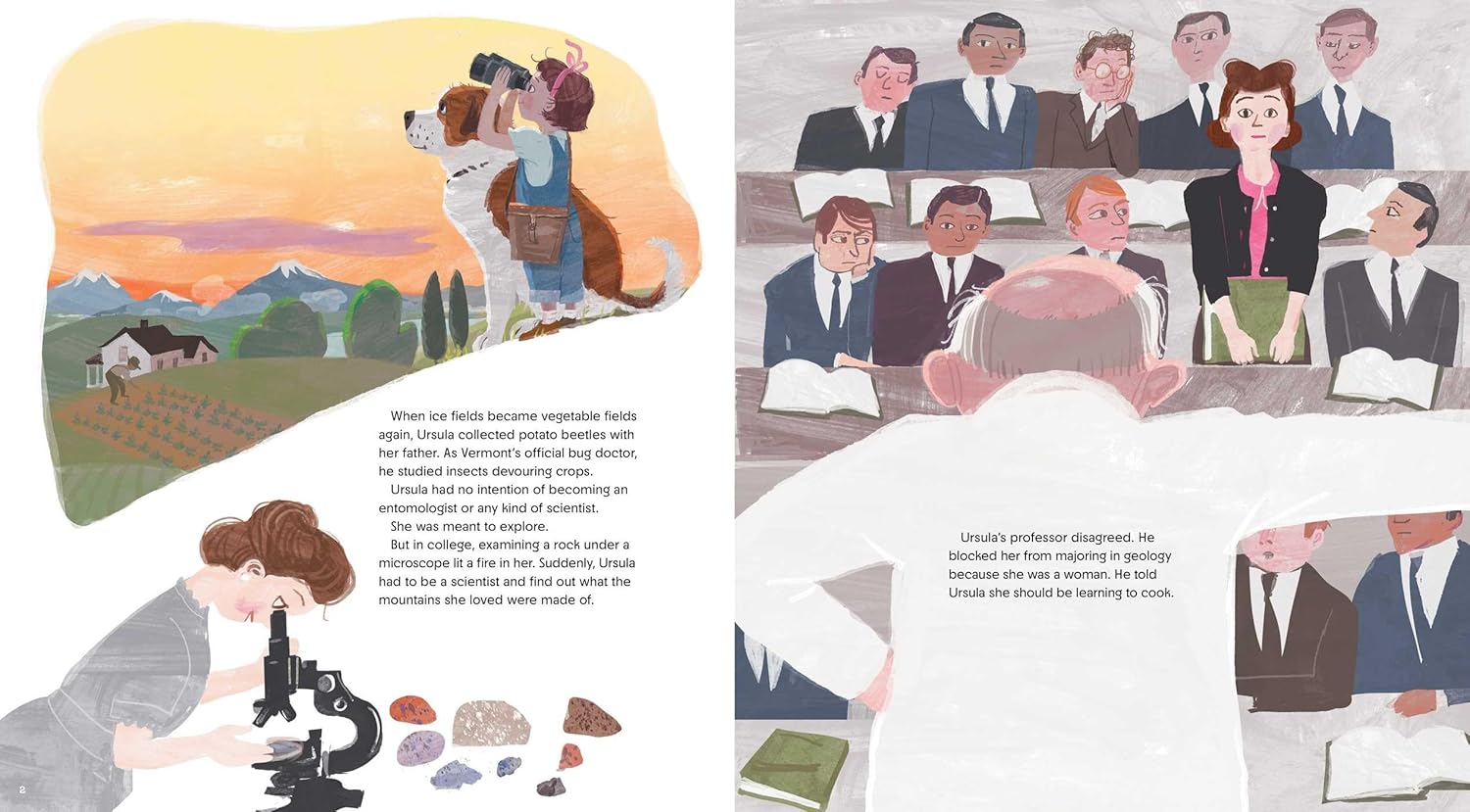
As a child growing up in Vermont, Ursula Marvin was captivated by the adventures winter brought. She was especially awed by the snowy mountains illuminated by “the frosty moonlight.” Her father was Vermont’s official entomologist, but Ursula had no intention of following in his footsteps or becoming any kind of scientist. She had her sights set on being an explorer. That was until she examined a rock under the microscope in college and decided to become a geologist. Her professor, however, denied her new major “because she was a woman.”

Illustration © 2025 Nancy Carpenter. Text © 2025 Sandra Neil Wallace. Courtesy of Simon & Schuster/Paula Wiseman Books.

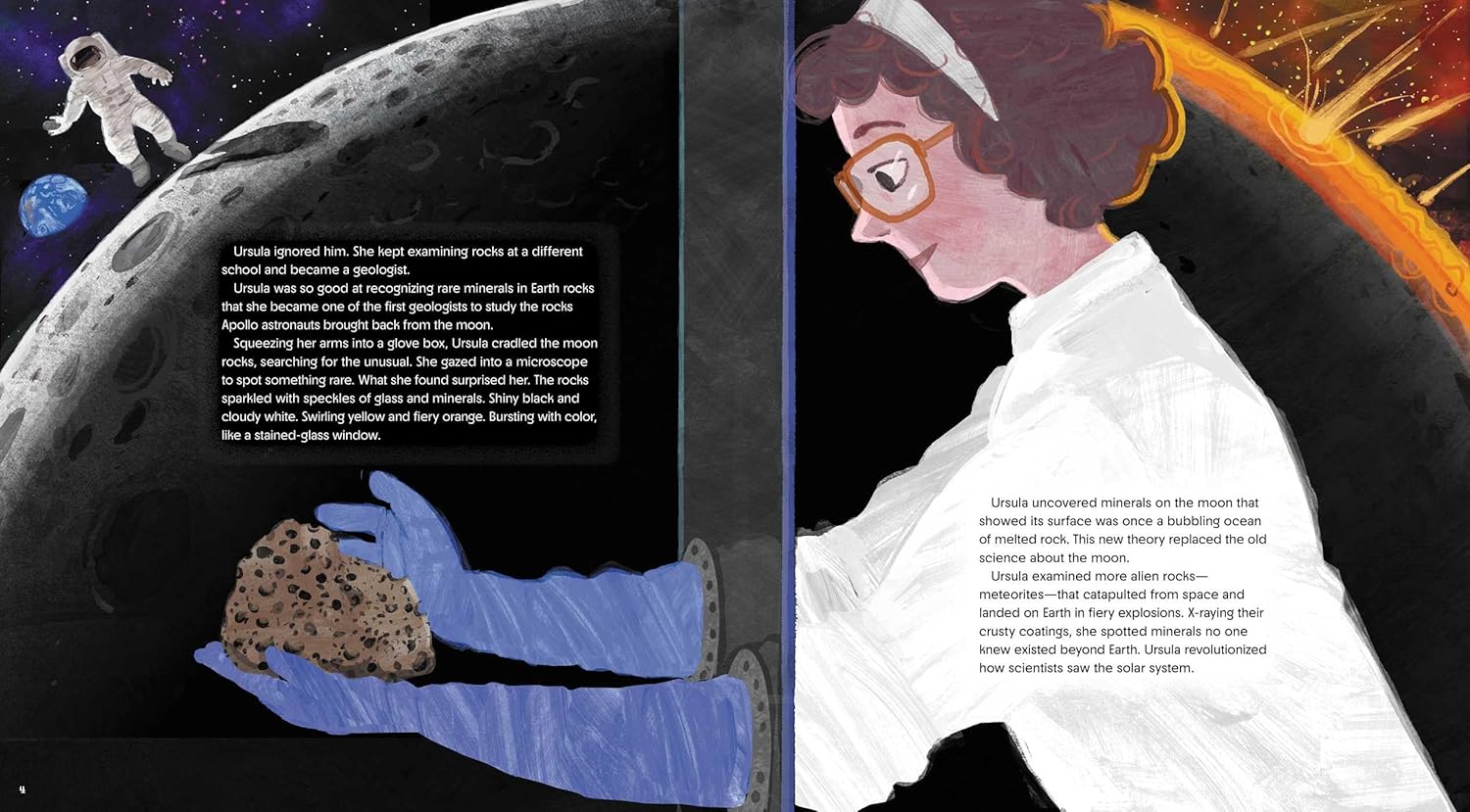
Ursula took her talents to another university and earned a geology degree. She was an expert in recognizing rare minerals in Earth rocks and was tapped to be one of the first geologists to study rocks brought back from the moon. What she found was a world of color, minerals that proved “its surface was once a bubbling ocean of melted rock.” Ursula also studied meteorites, finding “minerals no one knew existed beyond Earth.” Her work revolutionized scientists’ views of the solar system.

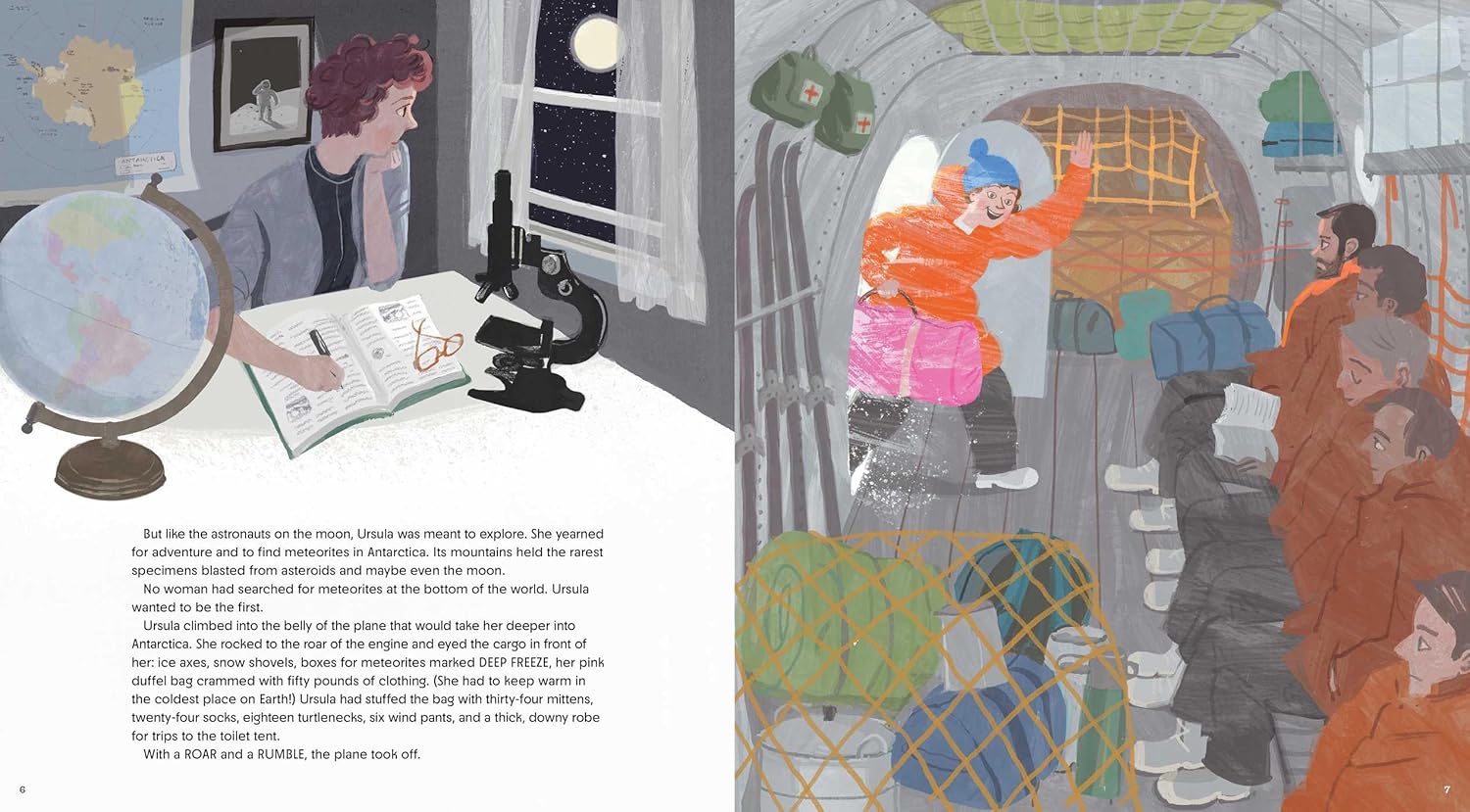
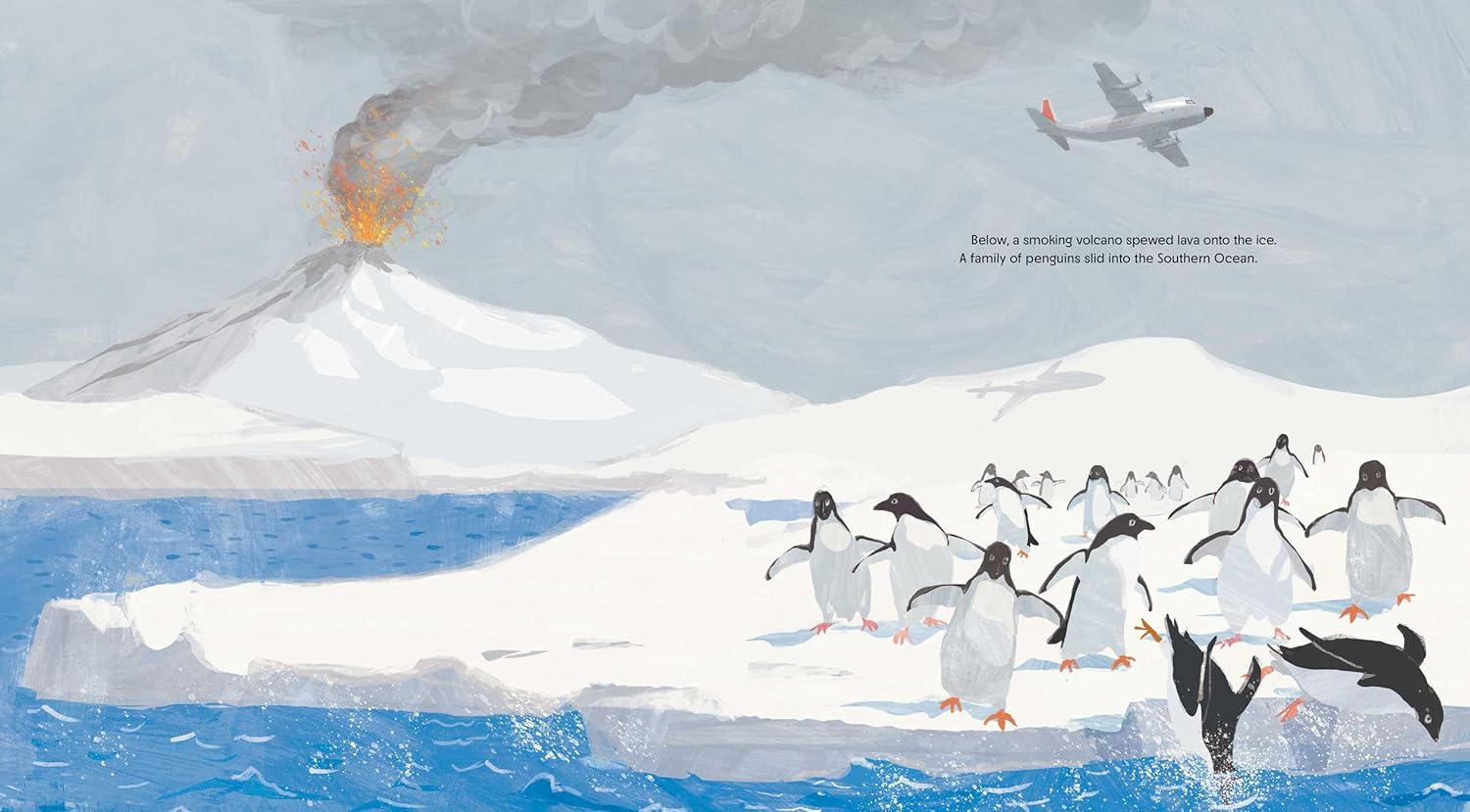
But Ursula still yearned to explore, in particular she wanted to be the first woman to find meteorites in Antarctica—the coldest place on Earth. She loaded up a bag with frigid-cold-weather gear and joined an expedition. When Ursula and her male teammates landed, they set up camp. They had to work fast because winter was on its way, threatening to bury any meteorites under ice and snow for another year.

Illustration © 2025 Nancy Carpenter. Text © 2025 Sandra Neil Wallace. Courtesy of Simon & Schuster/Paula Wiseman Books.

Ursula wondered if she’d be able to recognize meteorites under these conditions, but she needn’t have worried. On her first day, a rock caught her eye. Examining it, she discovered distinctive traits—she’d discovered her first meteorite! Ursula was in her element, thriving in the harsh weather and “collecting meteorites more than four billion years old.”

But not every day was a success. Ursula struggled to climb a mountain-like nunatak in her too-big boots, she mistook an ordinary Earth rock for a meteorite, and on the worst day, with one snowmobile broken, the team went exploring without her. Ursula vowed never to be left behind again.

Illustration © 2025 Nancy Carpenter. Text © 2025 Sandra Neil Wallace. Courtesy of Simon & Schuster/Paula Wiseman Books.

With only one week left in the expedition, Ursula rode across the ice to “unexplored places where the meteorites were bigger and rarer.” She wanted to be the one to find the last meteorite of the trip, to be the one to discover a meteorite from the moon. But a fall dashed those dreams as she was airlifted to the hospital, leaving her teammates to collect the final meteorite.

Illustration © 2025 Nancy Carpenter. Text © 2025 Sandra Neil Wallace. Courtesy of Simon & Schuster/Paula Wiseman Books.

Back at home, Ursula was excited to examine this small meteorite, which looked so different from the others. She recognized the world of color from her earlier studies. “Ursula’s teammates had discovered the first lunar meteorite on Earth without her.” Instead of feeling disappointed, she was “jubilant.” She went on to become a preeminent expert on this moon meteorite and others and to inspire women to become scientists, many exploring Antarctica, where they found more moon meteorites and even some from Mars more than four billion years old. Ursula’s influence can still be seen today in her work as well as in the Marvin Asteroid and Moon’s Marvin Crater named for her.

Extensive back matter following the story includes an Author’s Note about the astonishing life and influence of Ursula Marvin; quotations from Ursula’s Antarctica journals; facts about Antarctica; dated milestones of Ursula’s life, education, and work; resources; and two photographs.

Illustration © 2025 Nancy Carpenter. Text © 2025 Sandra Neil Wallace. Courtesy of Simon & Schuster/Paula Wiseman Books.

Sandra Neil Wallace’s exhilarating biography of Ursula Marvin transports readers to the snow and ice of Antarctica, where they get to ride along with this extraordinary woman as she fulfills childhood goals while changing the face of science and forging new opportunities for women. Wallace’s storytelling is fast-paced and evocative and infused with emotion, suspense, and scintillating details that will captivate readers no matter what their interests.

Nancy Carpenter’s beautiful mixed media illustrations allow children to see early influences and experiences that spurred Ursula Marvin to pursue geology and the study of meteorites in particular. Her images of Antarctica bring chills and thrills as Ursula sets up her tent, speeds over icy fields in the swirling snow on her snowmobile, and flops on the ground to inspect rocks up close. Carpenter also depicts Ursula’s victories and disappointments, giving children a well-rounded view of this remarkable woman. Rock hounds will be wowed by Carpenter’s drawings of moon rocks and meteorites.

With much to impart not only on the life of Ursula Marvin but on believing in yourself, overcoming disappointments, and chasing your goals with gusto, Rock Star: How Ursula Marvin Mapped Moon Rocks and Meteorites is a top pick for home, school, and public library collections.

Ages 4 – 8

Simon & Schuster/Paula Wiseman Books, 2025 | ISBN 978-1534493339

Sandra Neil Wallace writes about people who break barriers and change the world. She is the author of several award-winning books for children, including Love Is Loud: How Diane Nash Led the Civil Rights Movement, illustrated by Bryan Collier; Marjory Saves the Everglades: The Story of Marjory Stoneman Douglas, illustrated by Rebecca Gibbon; and Between the Lines: How Ernie Barnes Went from the Football Field to the Art Gallery, illustrated by Bryan Collier, which received the Orbis Pictus Book Award and was an ALA Notable Book. A former ESPN reporter and the first woman to host an NHL broadcast, she is the recipient of the Outstanding Women of New Hampshire Award and creates change as cofounder of The Daily Good, a nonprofit bringing twenty thousand free, culturally diverse foods to college students each year through its Global Foods Pantries. Visit Sandra at sandraneilwallace.com.

Nancy Carpenter is the acclaimed illustrator of Thomas Jefferson and the Mammoth HuntQueen Victoria’s Bathing MachineFannie in the Kitchen, and Loud Emily, among other books. Her works have garnered many honors, including two Christopher Awards and the Jane Addams Children’s Book Award. She lives in Brooklyn, New York. Visit her at nancycarpenter.website.

World Space Week Activity

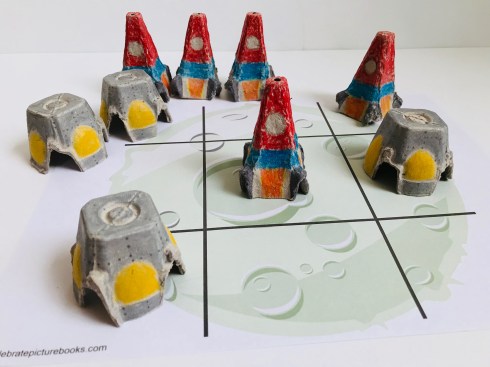
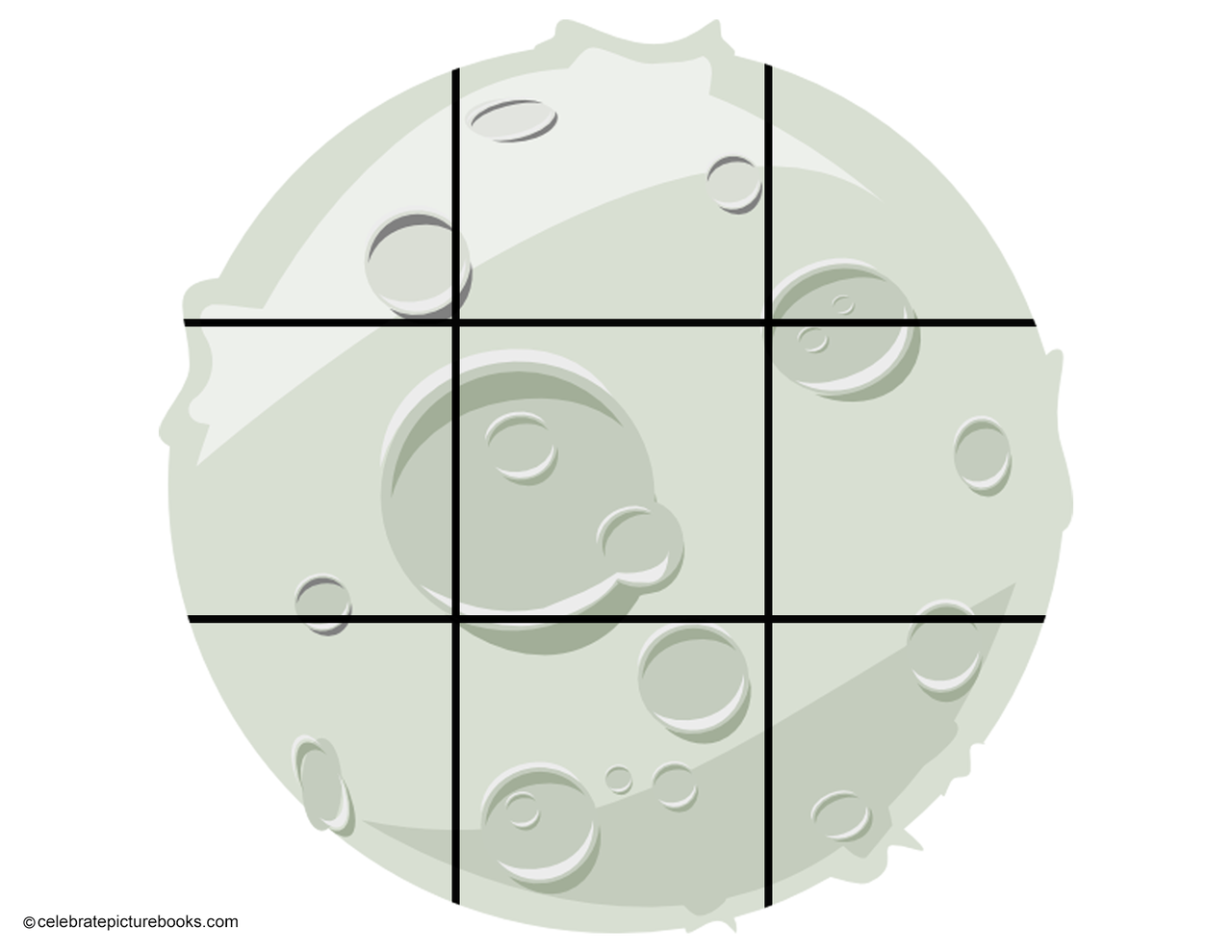
celebrate-picture-books-picture-book-review-rocket-to-the-moon-tic-tac-toe-game

Out-of-this-World Tic-Tac-Toe Game

If you’re kids are fascinated by the moon, moon rocks, and meteors, they’ll enjoy making this tic-tac-toe game from simple materials you have at home!

Supplies

  • Printable Moon Tic-Tac-Toe Game Board
  • 2 cardboard egg cartons
  • Heavy stock paper or regular printer paper
  • Crayons
  • Black or gray fine-tip marker

Directions

To Make the Rockets

  1. Cut the tall center cones from the egg carton
  2. Trim the bottoms of each form so they stand steadily, leaving the arched corners intact
  3. Pencil in a circular window on one side near the top of the cone
  4. Color the rocket body any colors you like, going around the window and stopping where the arched corners begin
  5. With the marker color the arched corners of the form to make legs
  6. On the cardboard between the legs, color flames for blast off

To Make the Capsule

  1. Cut the egg cups from an egg carton
  2. Color the sides silver, leaving the curved section uncolored. (If your egg cup has no pre-pressed curve on the sides of the cup, draw one on each side.)
  3. Color the curved section yellow to make windows
  4. With the marker, dot “rivets” across the capsule

Print the Moon Game Board and play!

You can purchase Rock Star: How Ursula Marvin Mapped Moon Rocks and Meteorites from these booksellers

Amazon | Barnes & Noble | Bookshop

Picture Book Review

September 16 – Collect Rocks Day

About the Holiday

You can find rocks almost everywhere you go—from tiny pebbles to imposing boulders. Most of the time we may not pay much attention to the pebbles under our feet or the rock formations we pass frequently, but today’s holiday encourages people to really take a look at the variety of sizes and colors that make each rock unique. Rock collecting can be a fun and educational hobby as each type of stone has its own fascinating history and science to learn about. Why not get outside, do a bit of rock hunting, and start your collections today?!

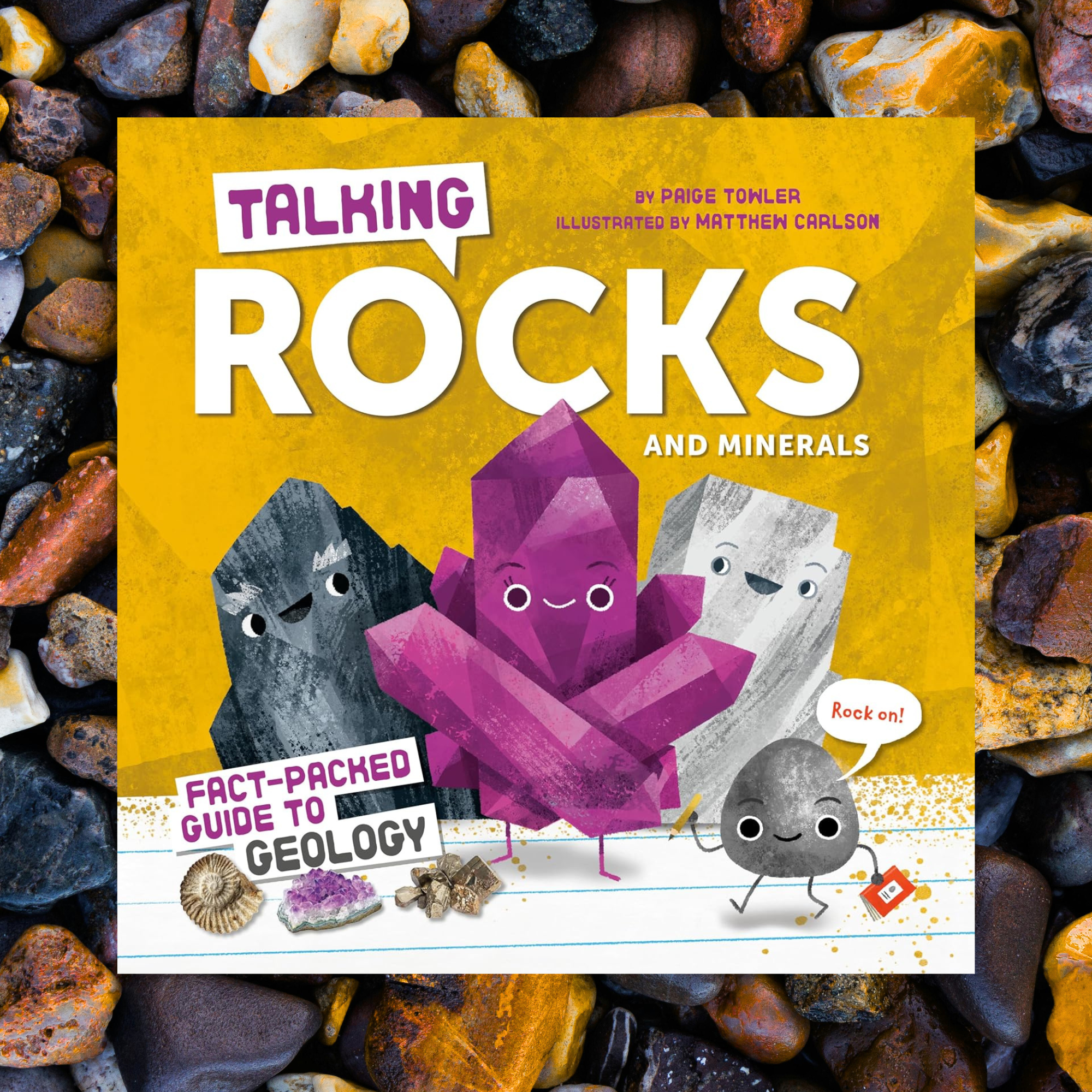
Talking Rocks and Minerals: Fact-Packed Guide to Geology

Written by Paige Towler | Illustrated by Matthew Carlson


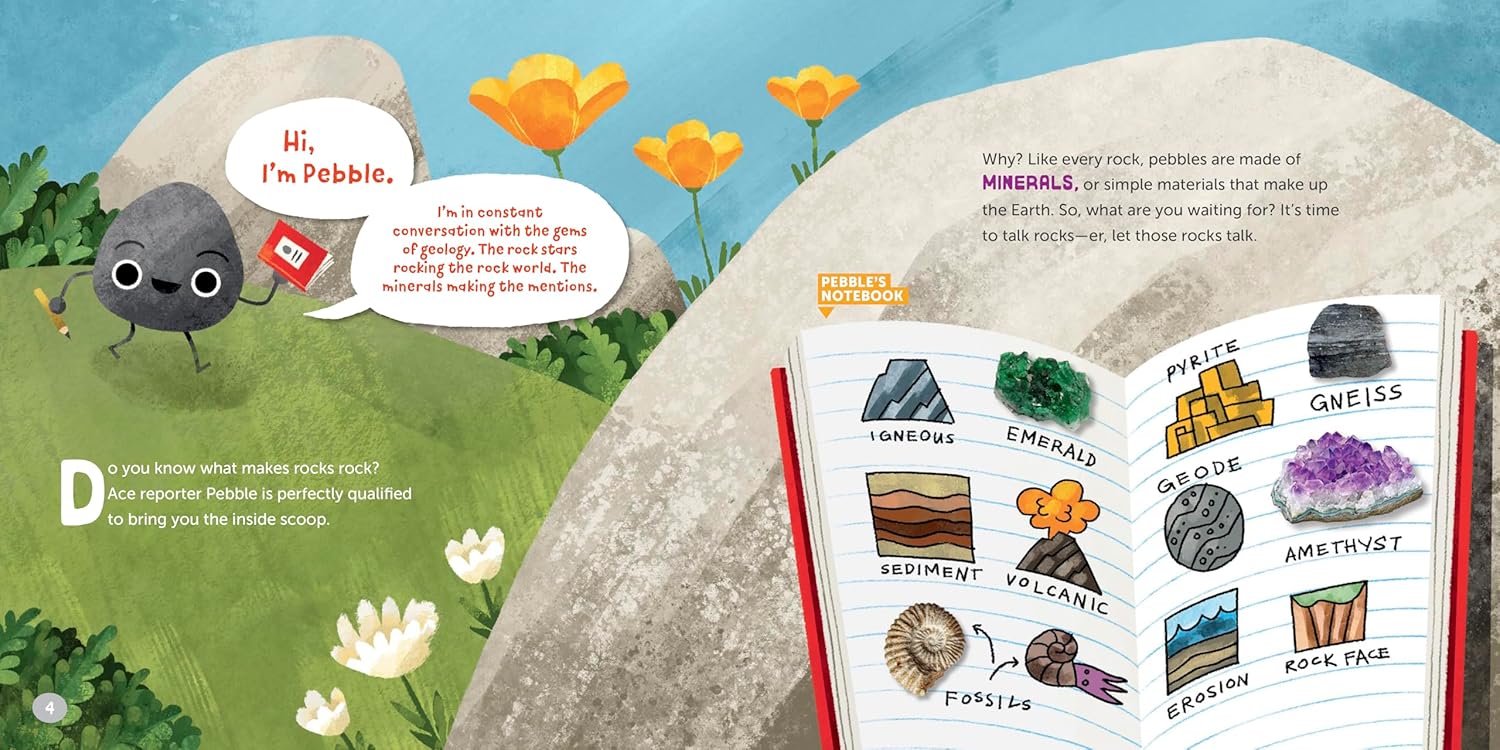
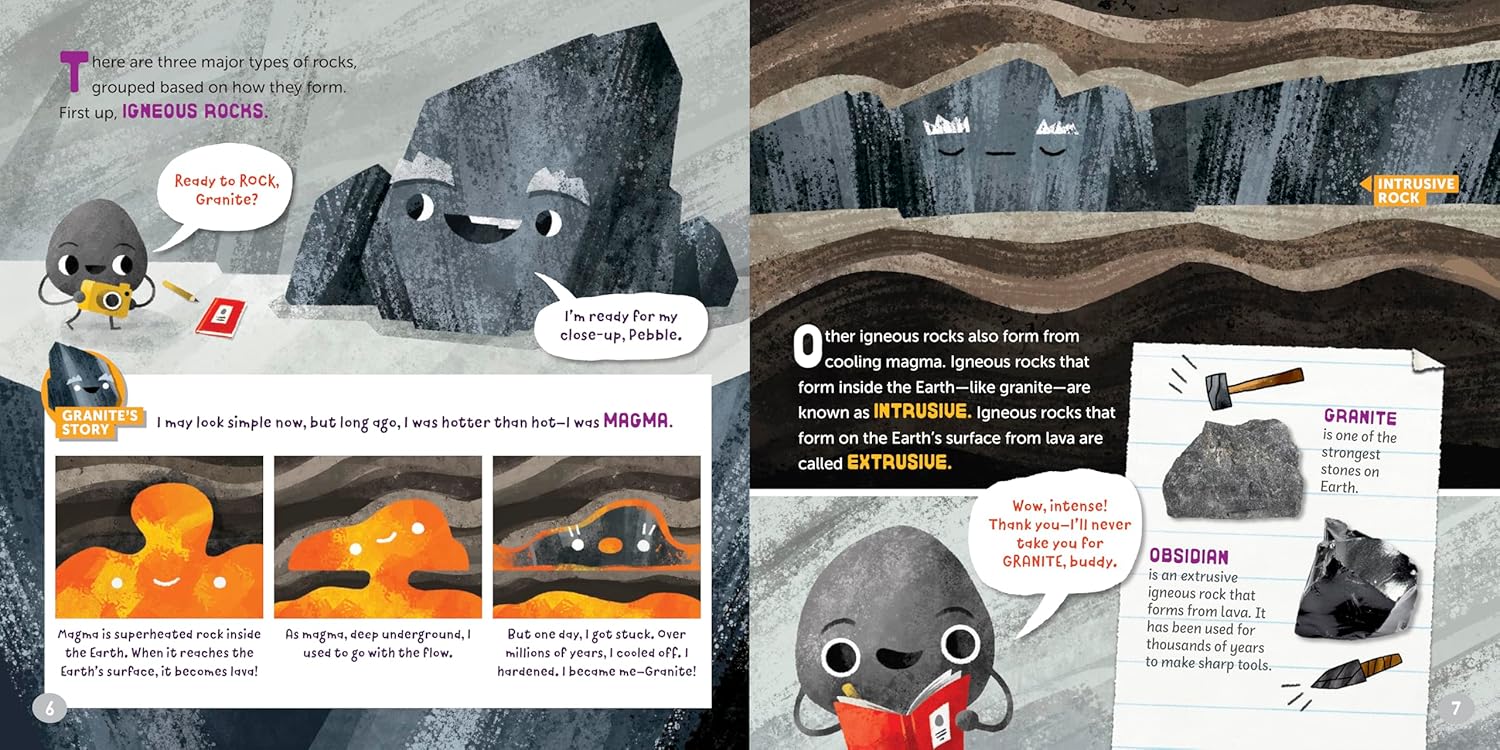
In Talking Rocks and Minerals, readers meet ace reporter Pebble, whose resume boasts, “I’m in constant conversation with the gems of geology. The rock stars of rocking the rock world. The minerals making the mentions.” And he’s not kidding! A quick scan of his notebook reveals interviews scheduled with all the big names in rock, and he’s sent an open invitation for kids to come along and hear what they have to say. First up, readers meet an igneous rock, who regales them with memories of long, long, long ago when he started out as magma then cooled to become granite, “one of the strongest stones on earth.”

Illustration © 2025 by Matthew Carlson. Text © 2025 by Paige Towler. Courtesy of Grosset & Dunlap.

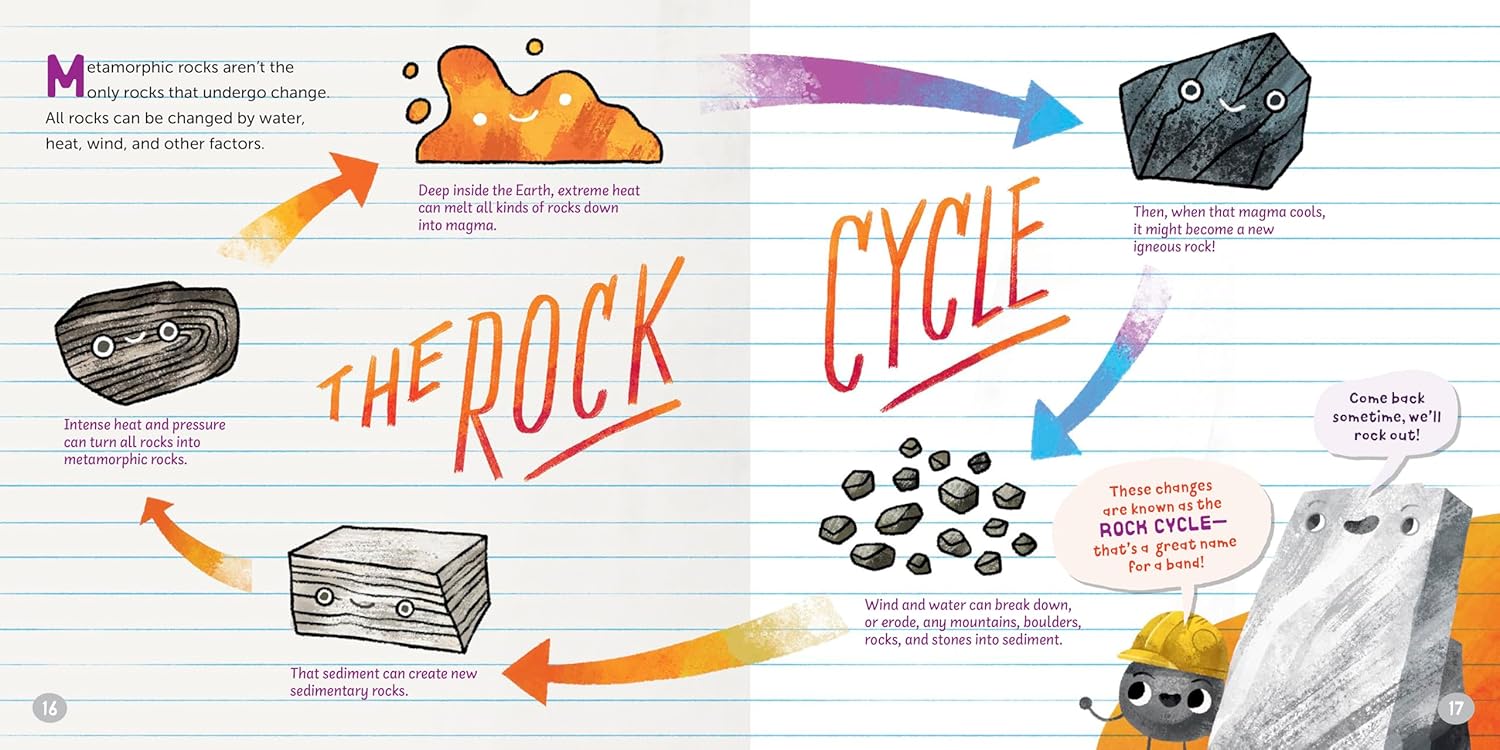
From there, Pebble moves on to talk to Coal and Limestone and discovers the layered story of what it’s like being a sedimentary rock. A couple of geodes then roll by to give kids a peek of the secrets they hold inside and make their story “crystal clear.” Amethyst gives an exclusive, showing how this royal gem developed, from when “a volcano blew its top” to the gamma rays that turned it purple. Pebble then introduces kids to two types of metamorphic rock—Marble and Gneiss—that start out as one kind of stone but under pressure and heat become another.

Illustration © 2025 by Matthew Carlson. Text © 2025 by Paige Towler. Courtesy of Grosset & Dunlap.

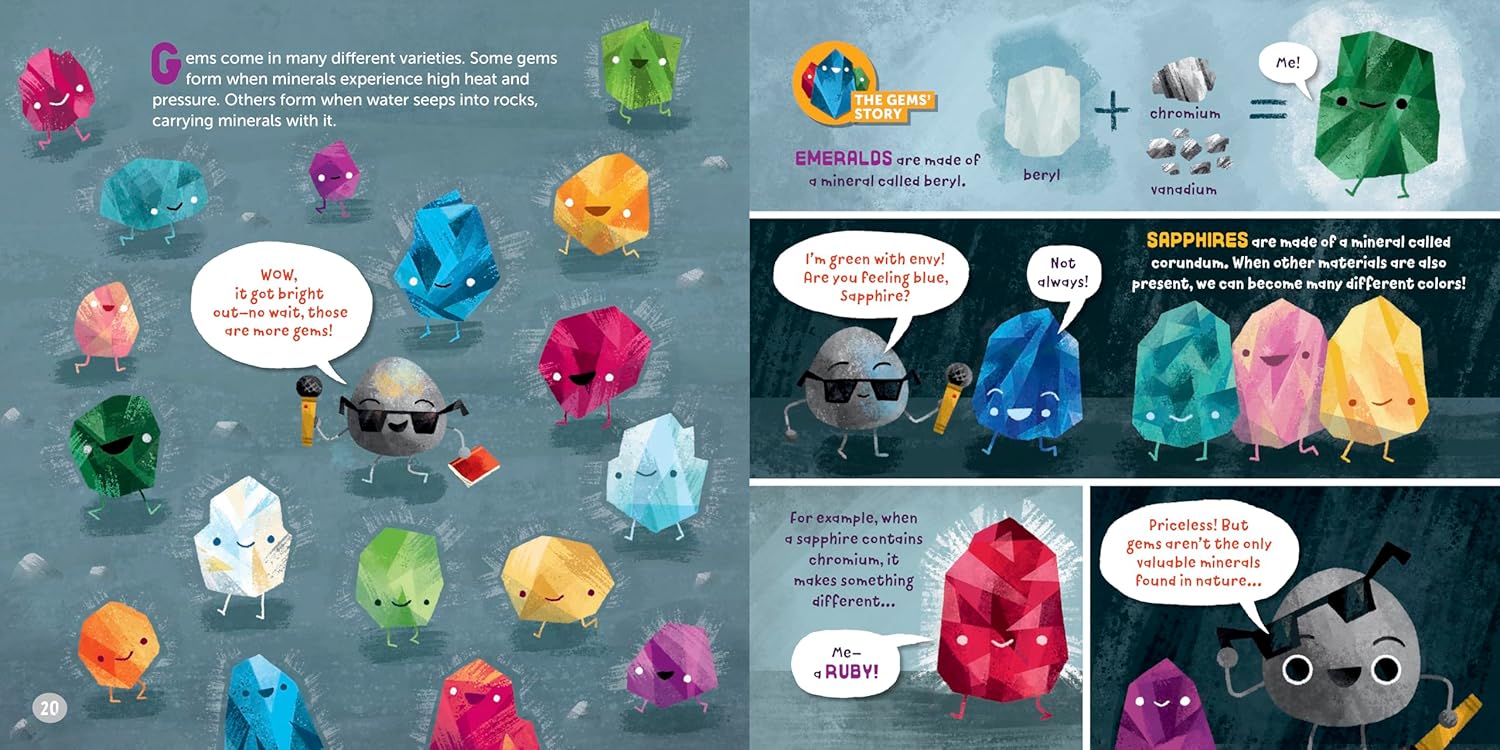
After learning the steps to the rock cycle, kids go deep underground to meet Diamond and learn how diamonds are formed from carbon and how they appear before they’re polished to a shine. Pebble interviews other gems too, like Emerald, Sapphire, and Ruby, who shine a light on how different minerals create such a variety of colorful and valuable stones.

Illustration © 2025 by Matthew Carlson. Text © 2025 by Paige Towler. Courtesy of Grosset & Dunlap.

Emerging from underground, Pebble talks with pyrite, a shiny, golden mineral that often fooled prospectors during California’s gold rush, who has a surprising revelation to share. Continuing his walk, Pebble encounters a dinosaur fossil, who recounts how bones, leaves, and footprints become fossilized, leaving evidence of creatures and plants from eons ago. Speaking of eons ago, a trio of space rocks drop in—assuring Pebble “We come in pieces.”—to contrast asteroids from meteorites and tell how meteorites come to Earth.

Surrounded by all of his new friends, Pebbles signs off, but the learning continues. Back matter includes a glossary, a note from a geologist, a list of ideas on how kids can become rock hounds, and a bibliography of more books to check out.

Illustration © 2025 by Matthew Carlson. Text © 2025 by Paige Towler. Courtesy of Grosset & Dunlap.

Gem-packed with puns, jokes, and hard-core facts, Paige Towler’s Talking Rocks and Minerals will excite kids already enthralled with geology and spark enthusiasm in those unfamiliar with the science, variety, and history of rocks we see every day as well as the stones we prize as valuable. Towler’s accessible text will appeal to all learners, making the book an excellent resource for educators. Her conversational delivery draws children in, creating a personal connection between them and the subject that will continue as they grow in their scientific studies.

Matthew Carlson’s eye-catching pages reflect how children learn today, offering adorable interacting characters, separate panels or full-page spreads that illustrate particular facts or scientific processes, and a wealth of detail that allows children to see the layers in sedimentary rock, look inside a geode, follow the rock cycle and the preservation of prehistoric creatures in fossils, and watch an asteroid plummet through Earth’s atmosphere to become a meteorite, among so many other elements.

A brilliant teaming of author and illustrator, Talking Rocks and Minerals: Fact-Packed Guide to Geology is an enriching and enlightening STEM book that is a must for all elementary classrooms, geology-loving children, science educators, and library collections.

Ages 6 – 9

Grosset & Dunlap, 2025 | ISBN 978-0593890950

About the Author

Paige Towler is a children’s book author and poet living in Washington, DC. She loves writing scary stories, tales about animals, and nonfiction facts about the weird and wonderful world around us. Her previous picture books include Mysterious, Marvelous Octopus! (National Geographic Kids), Baby Bat Bedtime (Smithsonian Institution/Sleeping Bear Press), Yoga Animals (National Geographic Kids), and more. Visit her at paigetowler.com.

About the Illustrator

Matthew Carlson is an illustrator, game designer, and graphic designer in Northern California. He studied art and English literature at the University of California, Berkeley. He’s illustrated projects for Robert Mondavi Wines, Facebook, and Twitter, and is currently the director of UX Design for Education, Fonts, and Drawing & Painting at Adobe. Originally from Seattle, Washington, Matthew now lives in Marin, California, with his partner, two kids, two dogs, and a growing collection of rocks.

You can purchase Talking Rocks and Minerals: Fact-Packed Guide to Geology from these booksellers:

Amazon | Barnes & Noble | Bookshop

Picture Book Review
April 3 – Find a Rainbow Day

About the Holiday

As the old proverb goes, “April showers bring May flowers,” but all that rain brings something else—rainbows! The science behind rainbows was first discovered in 1693, when scientists realized that this phenomenon is caused by light from the sun being refracted through raindrops and causing a dazzling show. Today, I wish you a rainy day and happy rainbow hunting! A perfect place to find rainbows every day and in amazing places beyond the sky is in today’s book!

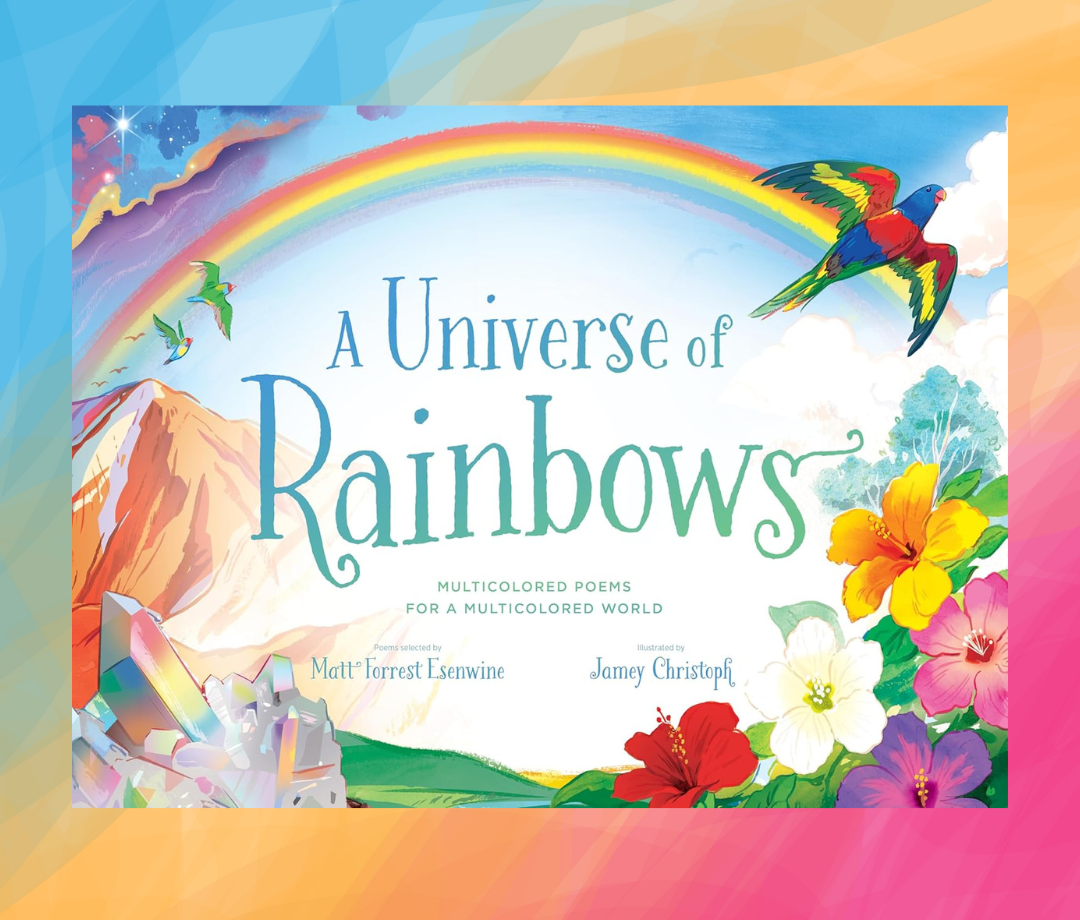
A Universe of Rainbows: Multicolored Poems for a Multicolored World


By Matt Forrest Esenwine | Illustrated by Jamey Christoph


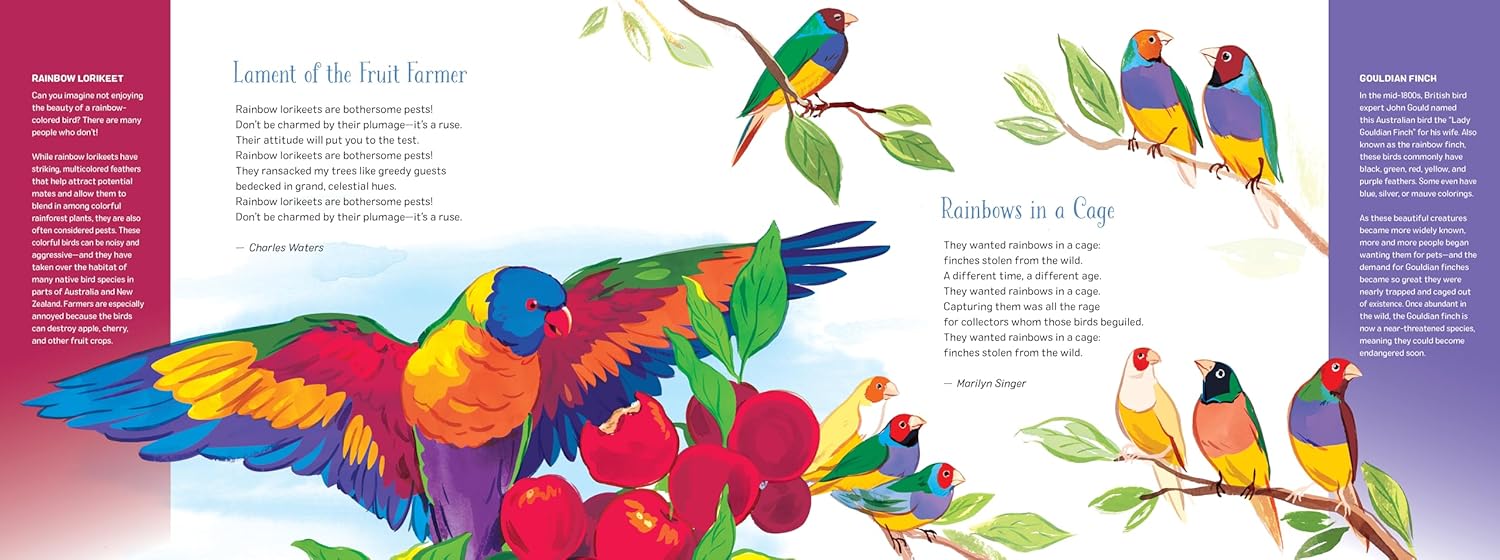
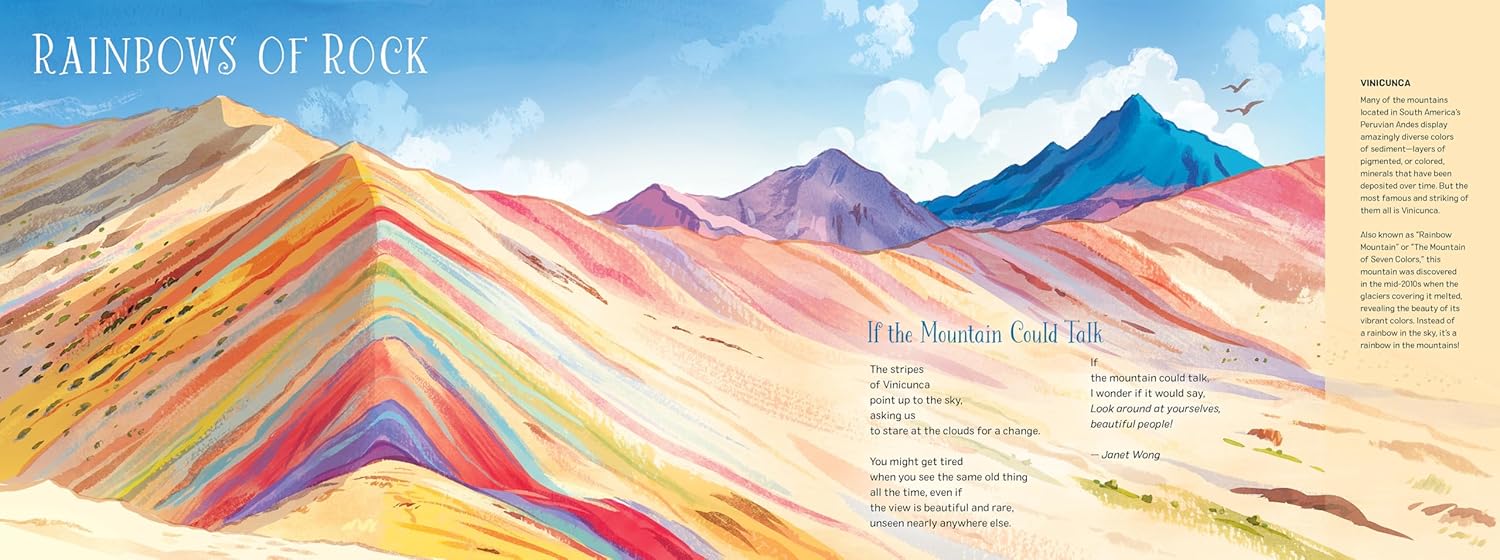
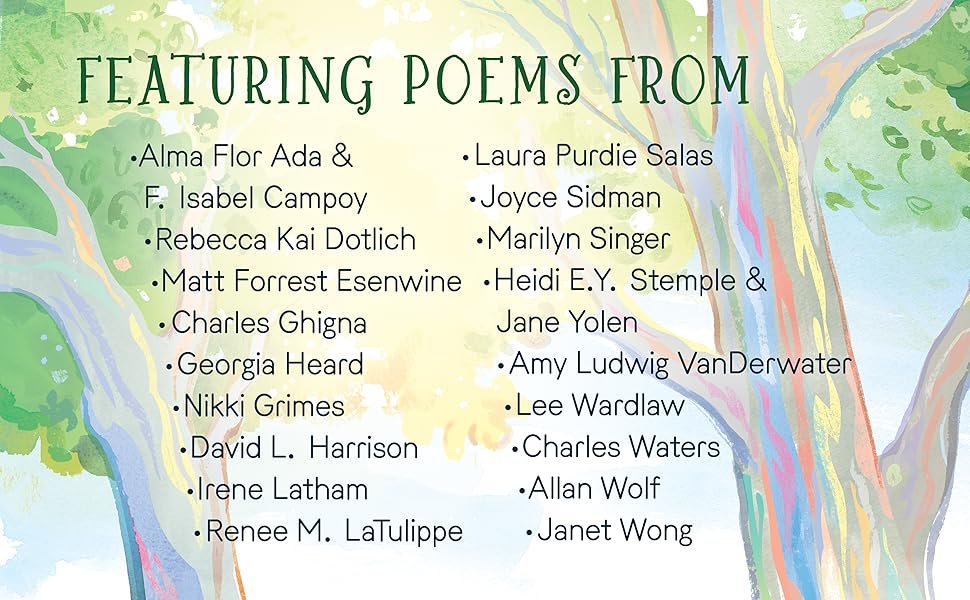
Rainbows are a universally loved natural phenomenon. The excitement of seeing a rainbow arcing across the sky never goes away no matter how old you get. And a double rainbow? For some people, seeing one of those can be like glimpsing a celebrity. In the 22 poems that make up A Universe of Rainbows, Matt Forrest Esenwine and 19 other poets reveal that you don’t always have to wait for rain to be awed by the brilliance of this spectrum of colors as they abound in nature: on land, in waters, on plants and animals, and even in the depths of space.

Illustration © 2025 by Jamey Christoph, text © 2025 by NIkki Grimes. Courtesy of Eerdmans Books for Young Readers.

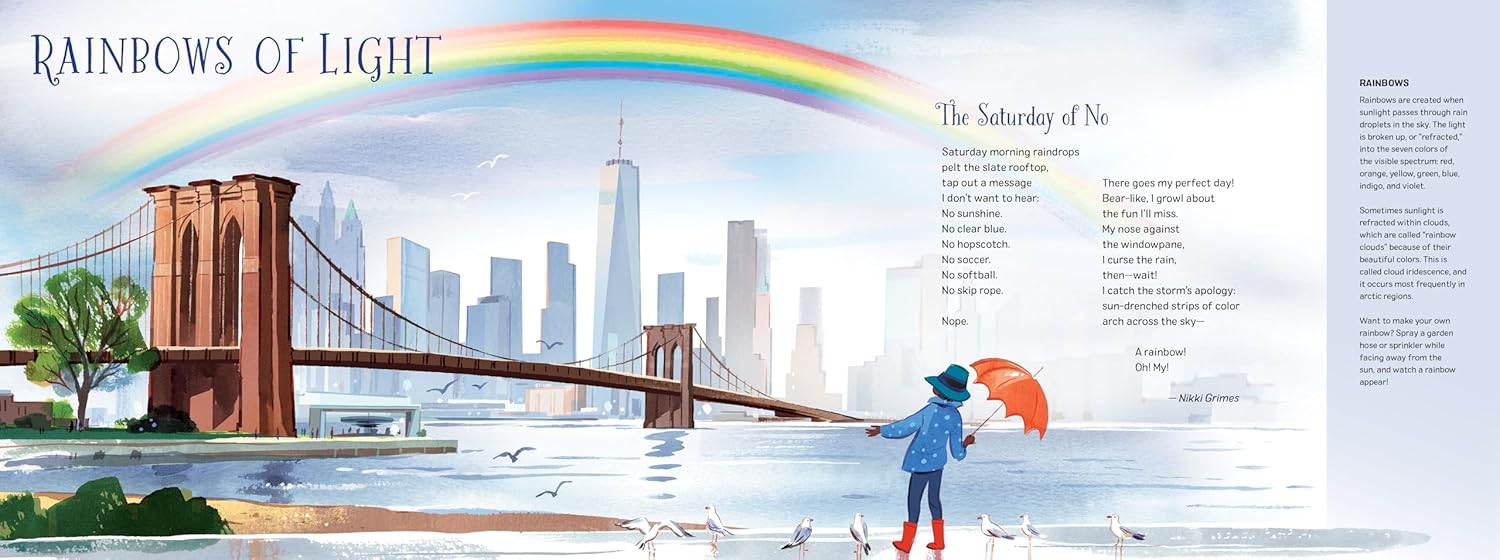
Nikki Grimes leads off this lyrical odyssey that invites readers to travel around the world and beyond to discover rainbows in many forms. In Grimes’ “Rainbows of Light,” she channels the disappointment of a child facing a rainy day with “. . . No hopscotch. / No soccer. / No softball / no skip rope. . . .” The child “. . . curse[s] the rain” until they “catch the storm’s apology: / sun-drenched strips of color / arch across the sky— / A rainbow! / Oh! My!” 

You might think that rainbows occur in nature only during the day, but Joyce Sidman, reveals otherwise in her intricate and arresting pantoum “Along the Zambezi.” Sidman animates a moonbow, entreating readers to take a moment to look as “This dancer will not leap for long / over the span of Victoria Falls,” where “. . . a full moon crowns the darkened hill” while “. . . Mist swirls up in silver shawls, / bending moonlight’s slanting spill.” 

Illustration © 2025 by Jamey Christoph, text © 2025 by David L. Harrison. Courtesy of Eerdmans Books for Young Readers.

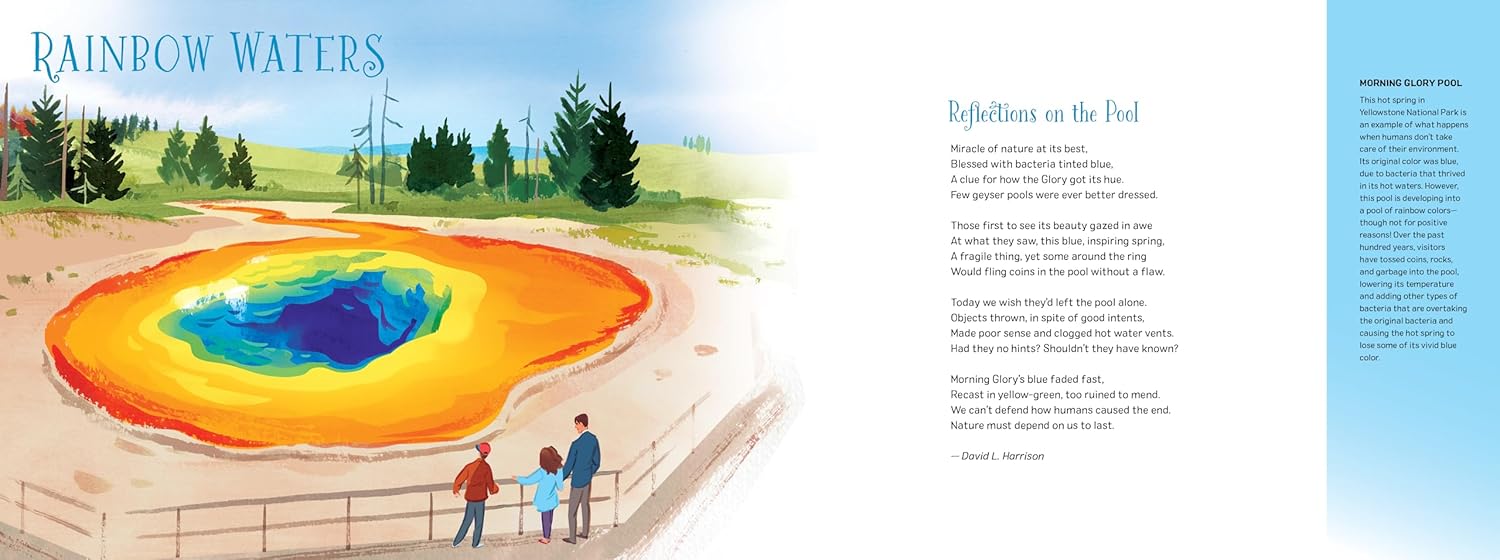
Rainbow seekers do not always need to look toward the sky to find the glorious hues of rainbows. In his rhythmic “Reflections on the Pool,” David L. Harrison nimbly combines assonance and consonance to introduce kids to the surprising Morning Glory Pool in Yellowstone National Park. Harrison describes how this hot spring—a “miracle of nature . . . / Blessed with bacteria tinted blue”—once appeared as vividly blue, but now, because of human interference, is developing a “rainbow of colors” as other types of bacteria take over. Together the poem and sidebar provide a concrete example of the value of conservation and a gripping entry into further study or research. 

Readers also learn about a uniquely dressed tree, Rebecca Kai Dotlich’s “skirted pinwheel” of a flower, two varieties of birds, and incredible creatures of the sea and land that shimmer and glimmer with the colors of a rainbow. In “Elegant Danger,” Matt Forrest Esenwine exposes the “captivating beauty / with radiant appeal” of the peacock mantis shrimp that has “An appetite of titans. / Attitude of steel.”  into space to float within the Rainbow Nebula with poet Georgia Heard. 

Each poem is accompanied by a short and fascinating side bar offering more information about the natural phenomena that inspired the work.

Back matter includes a list of recommended books and websites where readers can find more information about the rainbows described in each poem as well as a glossary.

Illustration © 2025 by Jamey Christoph, text © 2025 by Janet Wong. Courtesy of Eerdmans Books for Young Readers.

For the twenty award-winning writers who’ve contributed to Matt Forrest Esenwine’s debut poetry anthology, unique rainbows occurring in nature have inspired a wide range of contemplation and poetic form. Some are awe-struck, others hold a touch of humor, and still others are conversational. One thing they all have in common is an ability to transport readers to another place or just the right moment to witness one of life’s most astonishing sights. Through each poem, readers learn facts but they also discover how to observe with curiosity, appreciate the miraculous, and commit to preserving our natural wonders. 

Jamey Christoph’s multi-media illustrations mesmerize with brilliant color that tantalizes like a magic spell, slipping through ice crystals, hiding in plain sight, turning pools of water and majestic trees into artists’ palettes, and clothing creatures of the air, sea, and land. You might be tempted to think that these natural phenomenon can’t possibly be so vivid in real life, but take a look (these poems encourage further research) and you’ll find that Christoph’s full-spread images mirror their inspirations. Beautiful and stirring, each page welcomes you to linger awhile.

Encompassing riveting writing by award-winning poets, spellbinding illustrations of natural phenomena, and nearly endless applications for science, writing, and art study and discovery, A Universe of Rainbows: Multicolored Poems for a Multicolored World is a must for school and public library collections as well as for any reader who loves inspired writing and nature.  

Ages 6 – 10

Eerdmans Books for Young Readers, 2025 | ISBN 978-0802855718

About the Author

Matt Forrest Esenwine is a children’s author and poet whose books include The Thing to Remember about Stargazing (Tilbury House), Once Upon Another Time (Beaming), and A Beginner’s Guide to Being Human (Beaming). His work has been nominated for a Pushcart Prize and featured in numerous anthologies. Also a voiceover actor and commercial copywriter, Matt lives in Warner, New Hampshire, with his family. Visit his website at mattforrest.com.

About the Illustrator

Jamey Christoph has illustrated over twenty books, including The Great Lakes (Knopf), Stonewall (Random House), and Outside My Window (Eerdmans). His books have been named to many best-of-the-year list, including from the CBC and NYPL. Jamey lives in New Hampshire with his husband and their crazy dogs. Visit Jamey’s website at jameychristoph.com and follow him on Instagram @jameychristoph.

National Find a Rainbow Day Activity

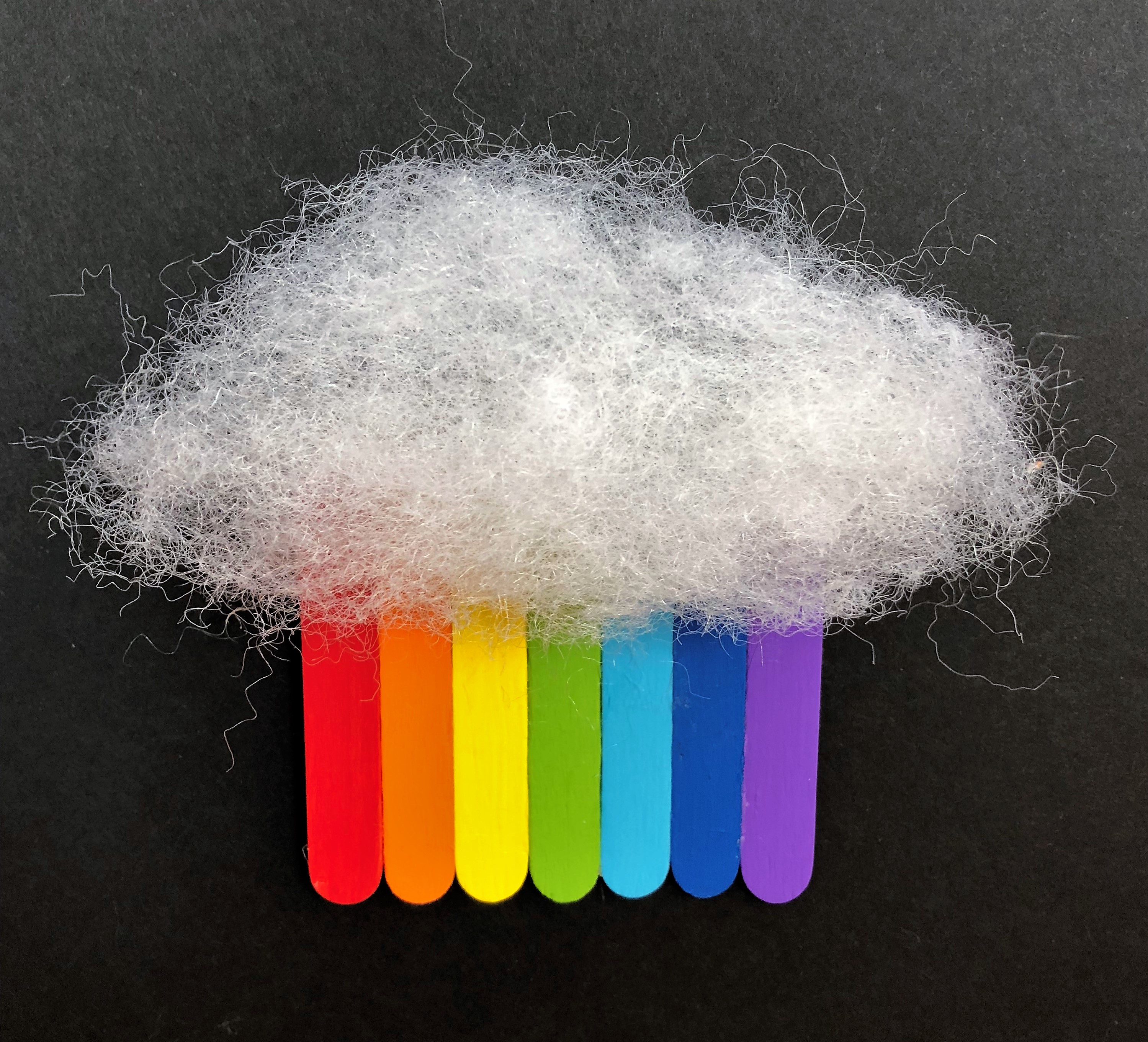
celebrate-picture-books-picture-book-review-rainbow-magnet-craft

Mini Rainbow Magnet


If you’re stuck on rainbows, you can make this mini rainbow to stick on your fridge or locker!

Supplies

  • 7 mini popsicle sticks (or cut regular popsicle sticks in half)
  • Paint in red, orange, yellow, green, blue, Indigo, violet (ROYGBIV)
  • Adhesive magnet
  • A little bit of polyfill
  • Paint brush
  • Glue or hot glue gun

Directions

  1. Paint one popsicle stick in each color, let dry
  2. Glue the popsicle sticks together side by side in the ROYGBIV order, let dry
  3. Roll a bit of polyfill into a cloud shape and glue to the top of the row of popsicle sticks
  4. Attach the magnet to the back of the rainbow

You can purchase A Universe of Rainbows from these booksellers

Amazon | Barnes & Noble | Bookshop (discounted books and support for your local independent bookstore)

Picture Book Review 

March 27 – It’s International Ideas Month

About the Holiday

This month we celebrate Ideas! Ideas are amazing things, appearing in your mind seemingly out of nowhere, but really, they’re often fueled by curiosity, by something you’ve seen, or by something you think could be better or done differently. Innovations in science, technology, engineering, art, and math are like that. Ideas can even transform home life too. The spark behind this month’s holiday is to encourage adults and kids alike to write down the ideas they have and explore making them work. You never know what a good idea might lead to! 

The Little Lab: Fantastic Science for Kids

Margie Markarian (Text and Editing) | Rachel Rothman (Editing) | Ashley Prine (Design)


Whether you have kids who can’t get enough of hands-on learning, are exploring science with your children or students, or looking ahead to all those summer days to fill, The Little Lab: Fantastic Science for Kids has you covered! Inside, this go-to resource, you’ll find 22 exciting experiments accompanied by

  • Informative photographs
  • Detailed supply lists of items you probably already have at home
  • A “Make a Prediction” prompt
  • Step-by-step instructions that are simple to follow
  • A “What Happened?” explanation of the science behind the results

Photo courtesy of Hearst Home Kids.

Chosen and tested by nine scientists, engineers, and other experts at the Good Housekeeping Institute, these fantastically fun experiments encourage kids to think like a scientist while following the scientific method of observing, asking questions, and making predictions before doing the experiment and then evaluating what they see happen. The experiments also address core scientific concepts, such as the states of matter, energy, motion and force, and simple machines.

If your kids are anything like mine were while growing up, your kitchen is their favorite room in the house. Why not transform this gathering space into a little laboratory where food chemistry and creativity really cook?! With ingredients from your fridge and cupboards, kids can make an abstract masterpiece while learning about liquids; test the pH scale of various foods; experiment with puffed up marshmallows; challenge their nose to a taste test; and explore more with a “gadgets and gizmos” matching puzzle.

Photo © 2023 Michael Sapryhin. Courtesy of Hearst Home Kids.

Curious kids will really make a splash with the experiments in Chapter 2: Water Works as they get in the swim of discovering why certain objects float while others sink; blow rainbow-colored bubbles; test the strength and absorbency of various paper products; and—get this!—create a drawing that floats in water, without any paper or other medium.

Powerful learning comes in Chapter 3, where young scientists work with energy to make their own rainbows; bake up solar s’mores—yummy!; light a florescent bulb just by rubbing a balloon on their hair; put Newton’s three Laws of Motion to the test by launching pom poms and/or marshmallows; and play around with sound. The Explore More! exercises in this chapter spark kids’ interest in listening for high and low pitches in their environment and investigating the force of friction.

Chapter 4 sends kids outside, where they’ll try balancing like a flamingo; discover what makes balls bounce high, higher, and highest; get the dirt on what’s in dirt; give white carnations a bit of color; and— in a creative way to bring weather science down to earth—get to make “rain clouds” from shaving cream. The Explore More! section teaches kids how to read clouds—from wispy Cirrus to cotton ball-like Stratus—as well as the favorite flower colors of bats, bees, butterflies, and hummingbirds.

Photo © 2023 Carol Yepes. Courtesy of Hearst Home Kids.

In Chapter 5, the scientists at Good Housekeeping present experiments that are not only hands-on, but hands-all-in! Here kids get to clean old pennies to try and reclaim their original shine; discover the most reliable way to un-stink smelly sneakers; make slime; find out how long it takes to really wash away germs on your hands; and learn about the viscosity of various liquids.

Throughout the book, experiments are also accompanied by quick “Fun Fact” and “Did You Know?” information related to each section’s topic, and here and there the Good Housekeeping scientists pop up to impart interesting tidbits that will get kids thinking. There are even funny puns to get them laughing. Each experiment also includes a Time, Difficulty, and Mess-o-meter indicator.

Following the chapters are a glossary, a STEAM index that ticks off which disciplines (science, technology, engineering, art, and math) each experiment embodies, and an in-depth index.

Photo © 2023 Jeffery Coolidge. Courtesy of Hearst Home Kids.

Good Housekeeping’s The Little Lab: Fantastic Science for Kids is a treasure trove of intrigue, excitement, and discovery. Offering so many opportunities for fun learning, the book would be a favorite addition to any home library for rainy days, empty weekends, science-themed parties, playdates, or any time you hear “There’s nothing to do!” Teachers, child-centered organizations, libraries, and anyone involved in elementary age science education will also find this book a valuable resource.

Ages 4 – 8

Hearst Home Kids, 2023 | ISBN 978-1950785926

International Ideas Month Activity

celebrate-picture-books-picture-book-review-kinetic-sand-craft

Kinetic Sand


Sand is so much fun to play with at the beach that you just wish you could bring it home. With this recipe for kinetic sand, you can use science to make dry sand just the right consistency to form and play with. Kinetic sand makes a great stress reliever too!

Supplies

  • 1 cup sand
  • ½ tablespoon cornstarch
  • 1 teaspoon dish soap
  • Water as needed – about ¾ cup
  • Bin or bowl for mixing dry ingredients
  • Bowl for mixing dish soap and water

Directions

  1. In the bin combine the sand and cornstarch and mix well
  2. In the bowl combine the dish soap and water until the water is bubbly
  3. Slowly add the water mixture to the dry ingredients, mixing and adding water little-by-little until the desired consistency is reached. The grain of the sand will determine how much water is needed.
  4. The sand can be formed with cookie cutters, molds, hands, etc. and is strong enough to stack. Or just let it drip and ooze through your fingers.

You can purchase Good Housekeeping’s The Little Lab: Fantastic Science for Kids from these booksellers

Amazon | Barnes & Noble | Bookshop (discounted books and support for your local independent bookstore)

Picture Book Review

March 3 – World Wildlife Day

About the Holiday

In December of 2013 the United Nations General Assembly proclaimed March 3rd as World Wildlife Day to promote awareness of our environment and the dangers to it. Every year a different theme is chosen to spotlight an area of the world, a particular species, or a group of activists. This year’s theme is “Wildlife Conservation Finance: Investing in People and Planet” and focuses on innovative ideas for financing can contribute to halting biodiversity loss, raising the interest of private sector stakeholders to invest in wildlife conservation, and creating a sustainable future. The day also celebrates successful conservation and sustainability initiatives. To learn more about the day, special events, and how you and your kids can get involved today and throughout the year, visit the World Wildlife Day website.

Thanks to Eerdman’s Books for Young Readers for gifting us a copy of Kingdoms of Life for review.

Reviewed by Dorothy Levine

Kingdoms of Life

By Carly Allen-Fletcher


“Life is all around us…In the sky, the sea, and the soil, life exists in millions of different incredible ways.” 

Jump into Carly Allen-Fletcher’s vibrant fact-filled guidebook for kids for a deep-dive exploration of the kingdoms of life. Each Kingdom rules over its own color-coded section, jam-packed with information on how the classified organisms feed, grow, and reproduce. Information also includes the ways in which the organisms across Kingdoms are related or work together with other lifeforms. The pages are royally packed with vibrant illustrations that appear to burst out from the very edges of the book. 

Allen-Fletcher begins with an explanation of how all life is formed—from tiny building blocks called cells. These cells can join to create complex multicellular life forms or just exist on their own as unicellular forms of life. She then zooms out to examine the six biggest categories of life. Allen-Fletcher makes sure to note that these categories are not fixed; they change as scientists learn more and arrange beings in different ways. 

Illustration and text © 2025 Carly Allen-Fletcher. Courtesy of Eerdmans Books for Young Readers.

The first category investigated in depth is the most complex of the life-form groups—animals. The animal pages are filled with a diverse range of species, each numerated to a corresponding key at the back. Allen-Fletcher shows the wide range of animals by comparing the smallest species (fairy wasps) to the largest (blue whales), while also explaining how even within one species (dogs) there can be glorious variety. Examples of animals that don’t quite fit in the animal category, such as a sea slug that can make energy from the sun, as well as animals that can survive extreme conditions or are thought to be practically immortal, are also discussed.

In addition to the animals, plants, fungi, protists, bacteria, and archaea are each given equal attention in their respective kingdom sections. From protists like giant kelp and slime mold to bacteria in our gut and bioluminescent bacteria found in squid, each kingdom is filled with fascinating examples of life and interesting facts on specific organisms. 

Illustration and text © 2025 Carly Allen-Fletcher. Courtesy of Eerdmans Books for Young Readers.

Kingdoms, Allen-Fletcher explains, can also be broken down further, into smaller and smaller groups such as family, genus, and species. A few taxonomists (scientists who study and sort lifeforms into categories) from around the world and throughout many different centuries are highlighted for their contributions to the field.

The book ends with a last dose of wonder: “We know more about the moon than we do about the deepest parts of our oceans. / Every year, we learn more about our home and the incredible life-forms we share it with. / What will we discover next?” The inclusion of “we” in this ending invites readers to feel welcome in this process of study and discovery. Taxonomy need not be only for adult scientists, but anyone who shares a passion for nature and careful observation. 

Back matter features each of the categories taxonomists use to sort life into groups as well as all the names of the featured life-forms throughout the book. The science is detailed while also distributed into easy-to-read bite-sized chunks.

Illustration and text © 2025 Carly Allen-Fletcher. Courtesy of Eerdmans Books for Young Readers.

Carly Allen-Fletcher illuminates a topic that is usually reserved for upper-level biology courses making it accessible and intriguing for young learners. The facts from her book will inspire a passion for all species—large or small, animal or bacteria—and help children to understand where in this big wide world we as humans stand and the symbiotic relationships that exist between creatures. Mini scientists dot the lusciously illustrated pages, comically examining life-forms in all the kingdoms up close.

Kingdoms of Life would make a valuable addition to home, school and library collections.

Ages 6 – 10

Eerdmans Books for Young Readers, 2025 | ISBN 978-0802855916

About the Author/Illustrator

Carly Allen-Fletcher is a British illustrator and author whose books include Goodnight Forest (Muddy Boots), Beastly Biomes (Creston), and Animal Antipodes (Creston). Inspired by nature and science, she creates her art by combining hand-drawn elements, painted textures, and graphic shapes. Carly loves reading about the latest biological discoveries, and if she hadn’t become a professional illustrator, she would have become a scientist instead. Follow Carly on Instagram or visit her website at carlydraws.com.

World Wildlife Day Activity

It Takes All Kinds game illustration courtesy of Science Trek.


Kingdoms of Life Fun

Watch a Kingdoms of Life Classification Video with Science Trek

  • As Allen-Fletcher notes in Kingdoms of Life, scientists are constantly evolving the categories for living organisms as they learn more. Do you notice any differences between the book and video kingdom categories? Since this video was published, scientists have started using the kingdom names bacteria and archaea instead of the previously used term, monera!

You can also explore their Online Games on kingdoms of life and animal classification, and practice sorting with Generation Genius’s Candy Classification Activity

You can purchase Kingdoms of Life at these booksellers

Amazon | Barnes & Noble | Bookshop (to support your local independent bookstore)

Picture Book Revie

February 10 – National Poop Day

celebrate-picture-books-picture-book-review-poop-for-breakfast-cover

About the Holiday

Who knew poop could inspire such a thoughtful and health-conscious holiday? But it has! Initiated in 2016 by the Madison Children’s Museum in Wisconsin to celebrate and educate the public on digestion and excretion, the day has become a fun, educational way to encourage people to be more aware of their digestive health and hygiene as well as that of their pets. By normalizing conversations about poop, the holiday aims to improve overall health practices and increase understanding of how our bodies work. The topic is no less fascinating in the world of wildlife, as today’s book shows.

Thank you to Sara Levine and Millbrook Press for sharing a copy of Poop for Breakfast: Why Some Animals Eat It with me!

Poop for Breakfast: Why Some Animals Eat It 

Written by Sara Levine | Illustrated by Florence Weiser


So, you wake up starving for a delicious meal. You’ve been dreaming of pancakes, maybe, or a plate of eggs and bacon. But when you get to the table, there’s a bowl of poop waiting for you?! What’s going on?! While you might sulk (and probably hold your nose), there are plenty of creatures who’d be thinking “Bring it on!” Who are these critters? They’re animals that practice coprophagy, and they do it “for a number of surprisingly good reasons,” as Sara Levine reveals.

celebrate-picture-books-picture-book-review-poop-for-breakfast-coprophagy

Image copyright Florence Weiser, 2023, text copyright Sara Levine, 2023. Courtesy of Millbrook Press.

For some animals eating poop is just part of being a Number 1 (or maybe Number 2 is better in this case) parent. Butterflies, cats, and dogs as well as robins and other birds all have specific reasons for dining on doo-doo, from making eggs strong to protecting their babies from predators to keeping “a nest clean and tidy.” 

While these animals eat poop for external or aesthetic reasons, others engage in coprophagy to keep their digestive system working well. Still others, because of the length or shape of their digestive tract, require that food travels through their body twice to extract all of the nutrients. If you have a rabbit, hamster, guinea pig, or other small rodent as a pet, you know that their poop looks like little round balls or small pellets. As Levine tells readers, “this is the poop that has been through their digestive tract a second time. These animals’ first poop comes out soft, sticky, and full of nutrients. It’s called a cecotrope (SEE-ca-trope).” They then “gobble it up at night when it comes out. That’s why you don’t see it” in the cage.

celebrate-picture-books-picture-book-review-poop-for-breakfast-butterflies

Image copyright Florence Weiser, 2023, text copyright Sara Levine, 2023. Courtesy of Millbrook Press.

Since there are so many creatures who do eat poop, why don’t humans? Levine has included a whole list of reasons for why we don’t—and don’t need to. She also provides back matter that includes “The Scoop on Poop”—an explanation of what poop and pee are, how they’re created in the body, and how they’re eliminated. Kids will also have fun becoming “poop detectives” with the help of the illustrated poop identification guide for common pets and wildlife and also by playing a synonym game.

celebrate-picture-books-picture-book-review-poop-for-breakfast-robins

Image copyright Florence Weiser, 2023, text copyright Sara Levine, 2023. Courtesy of Millbrook Press.

Sara Levine is exceptional at presenting fascinating nature science topics in humorous and accessible ways for young audiences, and her latest book is no exception, Leaning into the “Ewww!” factor, Levine dishes up short, take-away reasons certain animals, birds, and insects practice coprophagy followed up with longer passages that explain the science and/or behavior behind them in easy-to-understand language sprinkled with humor that will keep readers riveted to this already high-interest subject.

Florence Weiser’s colorful illustrations perfectly bridge the humorous and the scientific nature of Levine’s text. Readers’ skeptical view of this “gross” habit is amusingly juxtaposed with creatures’ excited anticipation of a delicious meal through the characters’ facial expressions while the anatomical reasons for or against coprophagy are clearly depicted in images of human and various animals’ digestive systems.

Anatomy and nature science education at its best, Poop for Breakfast: Why Some Animals Eat It will keep kids enthralled as each page turn brings on a new round of giggles and avid learning. The book would enhance any home STEM collection and is a must for classroom, school, and public library bookshelves.

Ages 5 – 10

Millbrook Press, 2023 | ISBN 978-1728457963

About the Author

Sara Levine is an author, educator, and veterinarian. Her science books for children include the Animal by Animal series, Germs Up Close, and A Peek at Beaks: Tools Birds Use. Her books have received a number of awards including AAAS/Subaru SB&F Prize, Utah Beehive Book Award, Cook Prize finalist, Monarch Award master list, and Bank Street College Best Children’s Book of the Year. Visit her at saralevine.com and on Instagram at saralevinebooks.

About the Illustrator

Florence Weiser is a French illustrator currently based in beautiful, rainy Belgium. While growing up in Luxembourg, she always knew she wanted to draw and draw. She lives and works surrounded by nature, from which she gathers most of her inspiration. Visit her at florenceweiser.com and on Instagram at florence_weiser_illustration

You can find Poop for Breakfast: Why Some Animals Eat It at these booksellers

Amazon | Barnes & Noble | Bookshop (to support your local independent bookstore)

Picture Book Review

January 31 – It’s National Mentoring Month

celebrate-picture-books-picture-book-review-professor-goose-debunks-the-three-little-pigs-cover

About the Holiday

Learning—and the success that comes with it—can be easier and more fun when it’s shared with a mentor. Teachers, instructors, coaches, crafters, family members, and other adults like passing on their knowledge to younger generations, and while kids gain valuable skills, they also benefit from the bonds that form between them and their mentor. If you’re interested in becoming a mentor check out the resources at mentoring.org. National Mentoring Month is also a terrific time to thank a mentor in your life and tell them what a difference they made. 

Thanks to Tundra Books for sharing a copy of Professor Goose Debunks the Three Little Pigs with me for review consideration. All opinions on the book are my own.
Professor Goose Debunks the Three Little Pigs

Written by Paulette Bourgeoise | Illustrated by Alex G. Griffiths 

Professor Marie Curious Goose—”renowned and distinguished scientist”—is on a mission to correct the science in her great-aunt Mother Goose’s stories. This time, she’s tackling The Three Little Pigs. The story starts off in the familiar way: “Once upon a time, there were three little pigs.” The first pig liked to eat and play. The second little pig liked to laze in the mud. And the third little pig worked hard and sweated every day. One day their mother sends them off into the world with the admonition to “‘Save your own bacon!'” Sounds about right, right?

Image copyright Alex G. Griffiths, 2024, text copyright Paulette Bourgeois, 2024. Courtesy of Tundra Books.

But wait! Before you move on in the story, Professor Goose reveals that even these brief profiles are full of erroneous myths! To clear things up, the professor imparts zoologist-approved information, including such facts as pigs don’t gorge themselves, they lay in mud to lower “their body temperature on hot days,” and, because pigs have few sweat glands, they always stay fresh and dry. 
Finally on their own, the siblings get down to the business of living their best lives. The first little pig builds himself a house of straw then goes off to play basketball. Here, Professor Goose takes a moment to imaprt a lesson on the states of Matter and what Matter is made of. By now the wolf has caught up with the first little pig, who rebuffs him with the familiar “‘Not by the hair of my chinny-chin-chin.'” Despite this the wolf does his huffing and puffing—you know the drill—and the pig runs off to his sister’s house. But waaaiit . . .. The prof takes exception to a few tidbits here, too, such as the chinny-chin-chin line and the house destruction method.

Image copyright Alex G. Griffiths, 2024, text copyright Paulette Bourgeois, 2024. Courtesy of Tundra Books.

Soon, while the wolf is menacing the second little pig, Professor Goose works herself into a lather over the “lone wolf” attack and the story’s depiction of wolves in general. To calm herself down, she instructs readers in details about structures and construction. 

Undeterred, the wolf high tails it to the third little pig’s house of bricks, where she and her siblings are cozily ensconced. The wolf huffs and puffs, can’t blow the brick house down, and the pigs are triumphant. But is this where the story ends? No! The prof explains how many fairy tales—just like this one—use a pattern of three and that patterns are found in everything, including nature, music, and math. Finally, Professor Goose concludes with her own version of what became of these three pig siblings—and the story even turns out well for the wolf!

Image copyright Alex G. Griffiths, 2024, text copyright Paulette Bourgeois, 2024. Courtesy of Tundra Books.

Paulette Bourgeouis’s clever take on the familiar tale of The Three Little Pigs will have kids captivated and laughing from beginning to end as Professor Goose points out foibles in the story and connects the setting, the wolf’s powerful breath, the pigs’ houses, the pigs themselves, and the story’s structure to a wide range of scientific principles. Through Professor Goose’s Fact Checks, kids learn surprising and educational facts about zoology, matter, weather, architecture, patterns, and even coding. 

Alex G. Griffith’s engaging illustrations make for a fun and funny learning experience that will have kids in stitches and their eyes glued to every page. Griffith’s tiny details, facial expressions, and slap-stick humor give a fresh, comic-style look to this well-known story and enhance the science-based facts this fractured fairytale is built on for today’s kids.

A unique retelling of a favorite classic that takes superb advantage of all a fractured fairy tale can offer, Professor Goose Debunks The Three Little Pigs is sure to be asked for again and again…and again. The STEM-related connections make this book a terrific and educational introduction to a variety of units for science educators.

Ages 3 – 8 and up

Tundra Books, 2024 | ISBN 978-0735267329

About the Author

Paulette Bourgeouis is best known for creating Franklin the Turtle, the character who appears in the bestselling picture books illustrated by Brenda Clark. The series has been translated into thirty-eight languages and adapted into an animated television series, merchandise, and feature-length films. She is also the author of award-winning books for children including Oma’s Quilt, which was developed as a short film by the National Film Board of Canada, and more than two dozen non-fiction science books. She is a member of the Order of Canada, received an honorary doctorate degree from Western University, an award of merit from the Canadian Association of Occupational Therapists and most recently graduated with an M.F.A. in Creative Writing from the University of British Columbia. Paulette frequently teaches and she has been the writer-in-residence at UBC, Whistler, BC, and Terra Nova National Park, Newfoundland.

About the Illustrator

Alex G. Griffiths is a children’s book illustrator originally from London, UK. The majority of his work is done by hand, using a combination of pen and ink line work and brush textures in a messy way to create an unusual illustration style. He now lives in Canada with his wife and two children. Visit him at alexgfriffiths.com.

National Mentoring Month Activity

CPB - Playhouse craft

Cardboard Playhouse

Kids love pretending with their toys and playhouses. With this craft you and your child can make a playhouse with recycled items and lots of imagination. While you and your child make the house, talk about the building process and ask questions that get them thinking about how various parts of a house work. Once the house is finished, kids can make up their own stories with it—or create their own fractured tale of The Three Little Pigs

Supplies

  1. Cardboard box

     2. Recycled items, such as:

  • Bottle caps for door knobs,
  • Small boxes for a chimney
  • Use the cardboard cut from the windows to make shutters
  • Scraps of cloth for curtains

    3. Craft paint

    4. Markers

    5. Glue

You can purchase Professor Goose Debunks the Three Little Pigs at these booksellers

Amazon | Barnes & NobleBookshop (to support your local independent bookstore)

Picture Book Review