About the Holiday
Today’s holiday has a pretty simple goal—to encourage people to appreciate all the colors that make up our world and to use color to express their feelings, their personality, and their creativity. The stunning beauty of changing leaves makes fall the perfect time for celebrating color, and October is usually when this gorgeous natural phenomenon is at its peak. To have fun with today’s holiday, experiment with color—you may find color where you never thought to look and see the world in a whole new way!
Thank you to Charlesbridge for sending me this book for review!
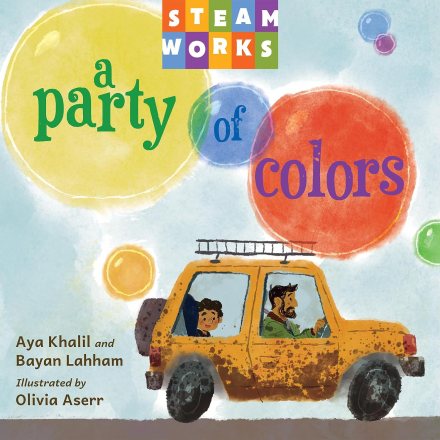
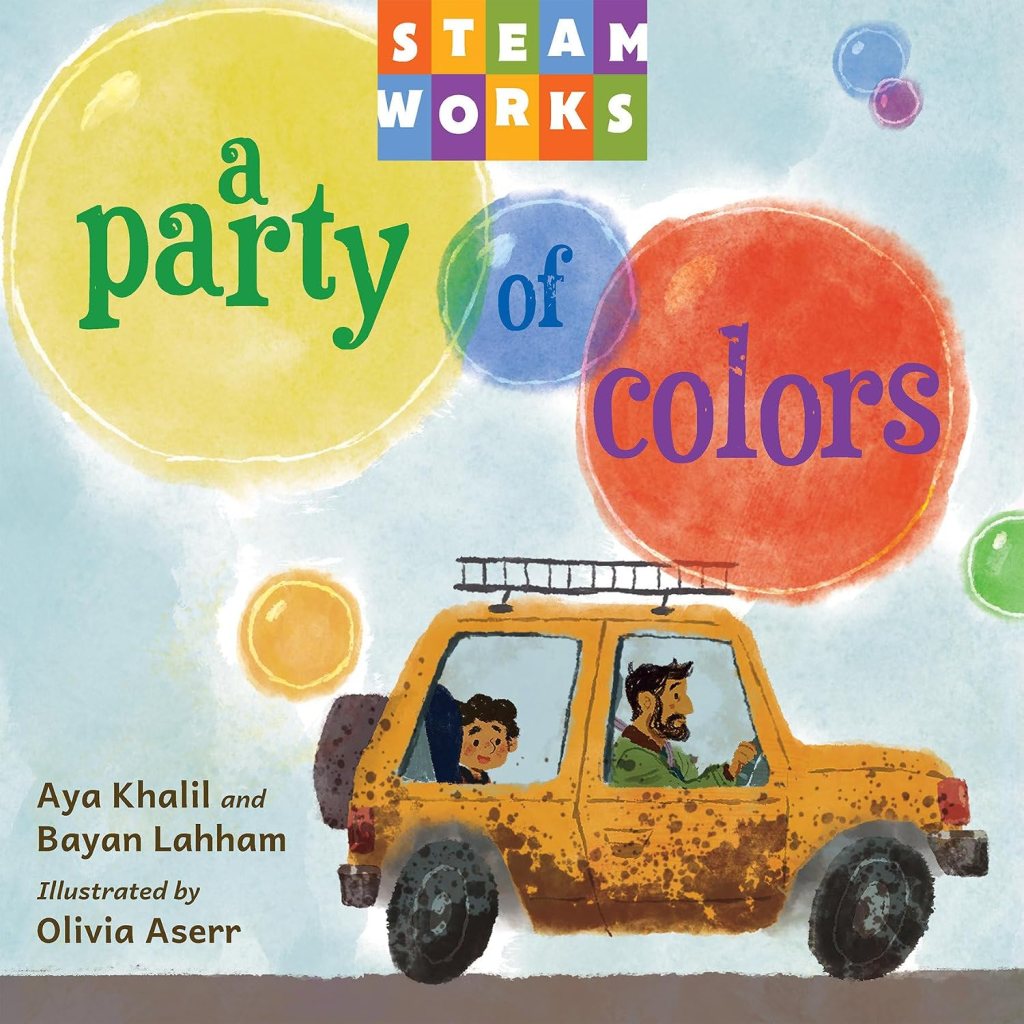
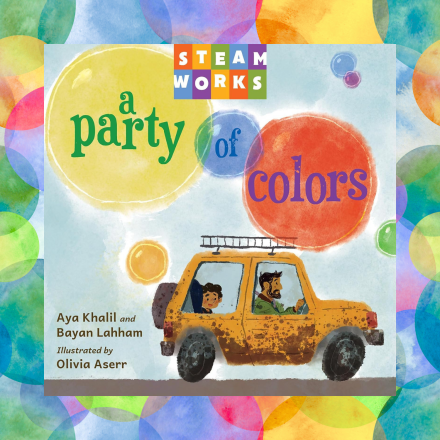
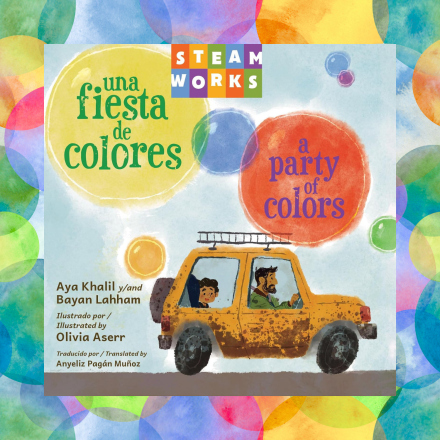
A Party of Colors (Steamworks)
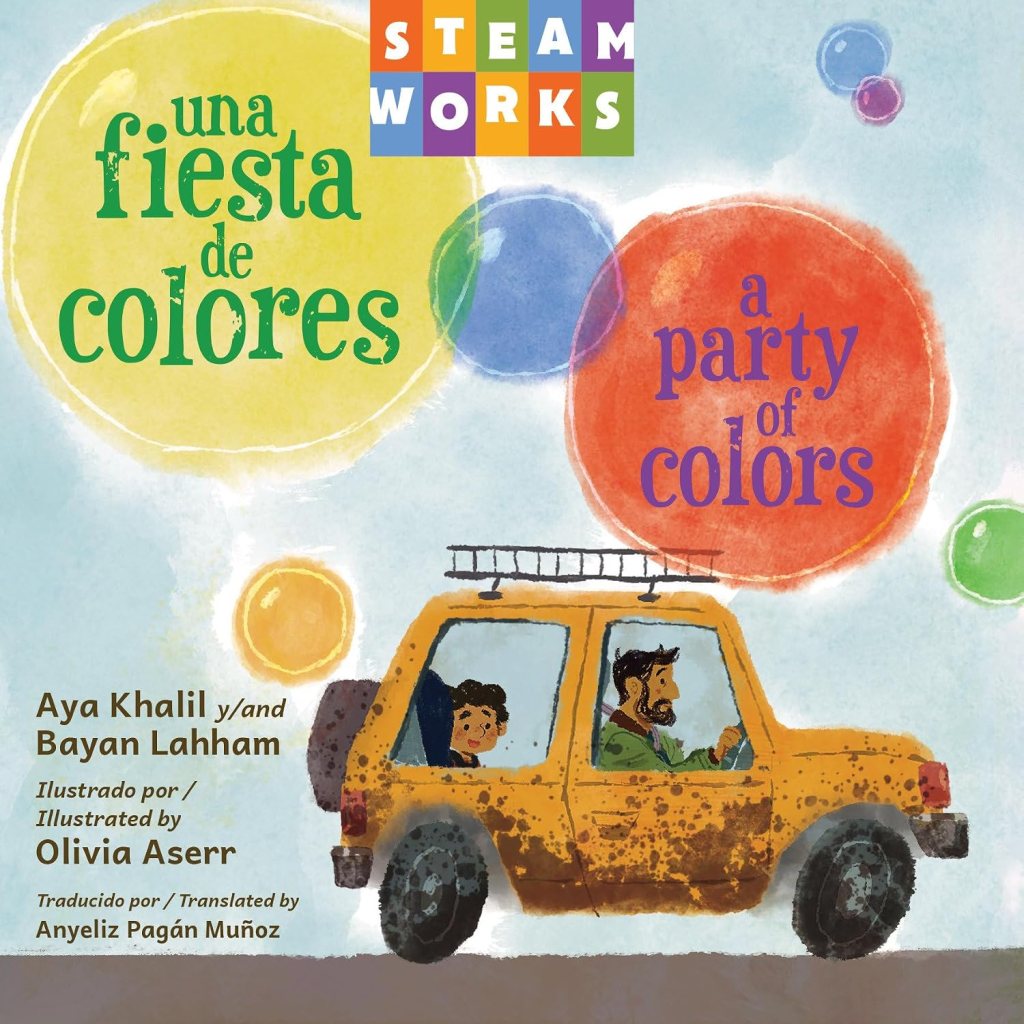
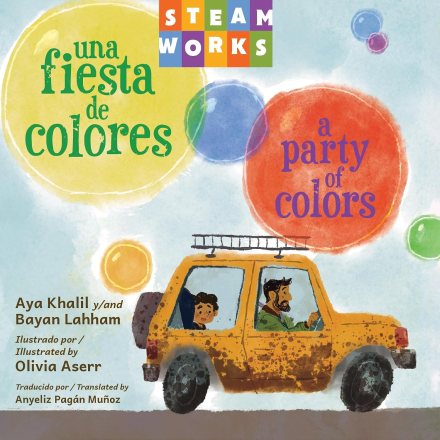
Una fiesta de colores | A Party of Colors (Steamworks) Spanish Edition
Written by Aya Khalil and Bayan Lahham | Illustrated by Olivia Aserr | Translated by Anyeliz Pagán Muñoz
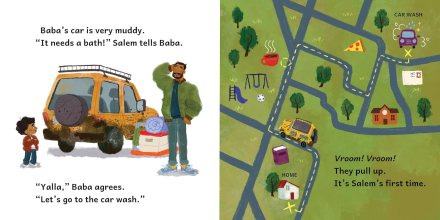
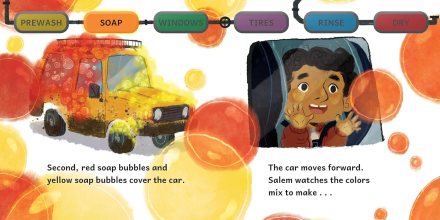
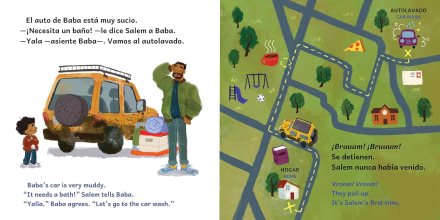
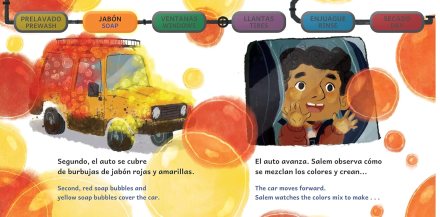
After a camping trip with Baba, Salem tells his dad that the car “needs a bath.” Baba agrees, and off they go to the car wash. This is Salem’s first visit to the car wash, and he eagerly watches out the window, then he “opens his window to get a better view. Water spray sprinkles Salem, and he quickly rolls up the window. Then comes the soap. “Red soap bubbles and yellow soap bubbles cover the car.” As the car moves ahead, the red and yellow bubbles mix to create orange suds swirled by a spinning brush that cleans away the dirt.
Moving on, the windows become canvases of blue and yellow foam. Salem excitedly watches the two colors mix into one as it makes the windows shiny again. The tires also get a colorful cleaning treatment, and Salem sees big brushes swirl two more colors together. With all of the washing finished, a rainbow of bubbly colors stream behind them. It’s time for a rinse—”. . . just like I do! Salem says.”
But how will the car get dry? The “Whooosh! Whooosh! of a big fan shakes the car, making Salem and Baba laugh and cover their ears. Just one more quick towel dry, and the car is as good as new! Salem had so much fun, he wants to go through again!
Back matter gives readers and adults aspects of the story to think and talk about, including cause and effect relationships, sequencing, and colors and color mixing as well as four fun hands-on “Count, Play, and Explore Together” activities to reinforce the science included in and suggested by the story.
Little ones will be excited to take this realistic trip through the car wash with Salem and watch pairs of colors change to create another. Aya Khalil and Bayan Lahham’s playful and sequential language moves the story along quickly, leading every couple of pages to a new suspenseful reveal of a newly created color. Children will be charmed by Salem and Baba’s close relationship and the fun they have together. Salem’s connecting the steps of the car wash to his own bathing at one point invites kids to experiment with colors in the bathtub or sink, extending (along with the back matter) the enjoyment of and lessons in the story.
Olivia Aserr’s delightful illustrations mix sweet, realistic interactions between father and son with kaleidoscopic images from inside the car wash. Salem—with his wide eyes and awed expression—is as bubbly as the soap they drive through, instantly connecting him with young readers. Asser’s depictions of the cleaning stations as well as a cleverly conceived header graphic that calls out the various washing stages as the pages are turned give children much to watch for and interact with.
A mesmerizing and immersive board book, A Party of Colors and A Party of Colors/Una fiesta de colores offer broad repeat readability and inspiration for extension activities. The book is a must for all public and preschool libraries and would be an often asked for read aloud at home.
Ages Baby – 3
Charlesbridge, 2026 | ISBN 978-1623546892
About the Authors
Aya Khalil is an award-winning author, librarian, and freelance journalist. Her titles for children include The Night Before Eid, The Arabic Quilt, and The Great Banned-Books Bake Sale. Aya’s books have won numerous awards and honors including The Arab American Book Award and NCTE’s Charlotte Huck Award. Visit her at ayakhalil.com.
Bayan Lahham is a math and science teacher. She has been a tutor and homeschooler over the years. Bayan grew up on the East Coast and currently resides in Ohio with her family. A Party of Colors is her debut. Visit her at bayanlahham.com.
About the Illustrator
Olivia Aserr is a half Egyptian, half Irish American artist who currently works as a children’s illustrator and a background painter at Disney Television Animation. Olivia is passionate about telling stories that are fantastical and diverse. Visit her at oliviaaserr.com.
You can purchase A Party of Colors from these booksellers
Amazon | Barnes & Noble | Bookshop
Una fiesta de colores | A Party of Colors (Steamworks) Spanish Edition
Acompaña a Salem y Baba a explorar las secuencias, la mezcla de colores y el autolavado, ¡porque el STEAM está en todas partes y es para todos!
Parte de STEAMWORKS, una serie de libros de cartón de ficción para niños de 0 a 3 años que relacionan la ciencia, la tecnología, la ingeniería, las artes y las matemáticas (STEAM, por sus siglas en inglés) con la vida diaria de los niños.
Ages Baby – 3
Charlesbridge, 2026 | ISBN 978-1623546908
About the Authors
Aya Khalil es autora, bibliotecaria y periodista independiente galardonada. Entre sus títulos para niños figuran The Night Before Eid, The Arabic Quilt y The Great Banned-Books Bake Sale. Los libros de Aya han recibido múltiples premios y distinciones, entre ellos el Arab American Book Award y el Charlotte Huck Award de la National Council of Teachers of English (NCTE, por sus siglas en inglés). ayakhalil.com.
Bayan Lahham es maestra de matemáticas y ciencias. A lo largo de los años, también ha trabajado como tutora y educadora a domicilio. Bayan se crio en la costa este y hoy día vive en Ohio con su familia. Una fiesta de colores / A Party of Colors es su debut literario. bayanlahham.com.
About the Illustrator
Olivia Aserr es una artista mitad egipcia, mitad irlandesa-estadounidense que trabaja como ilustradora para niños y artista de fondos para Disney Television Animation. A Olivia le apasiona contar historias fantásticas y diversas. oliviaaserr.com.
You can purchase Una fiesta de colores / A Party of Colors from these booksellers
Amazon | Barnes & Noble | Bookshop