September 1 – National No Rhyme (nor Reason) Day

celebrate-picture-books-picture-book-review-nothing-rhymes-with-orange-cover

About the Holiday

Today we celebrate a group of unsung members of the English vocabulary world—those words that are so unique in sound that they’ll never be invited to join a rhyming poem or be chosen to play in a rhyming picture book. Since these words may never find themselves in a funny birthday or holiday card or rounding out the lines of a celebratory song, someone thought they needed a day of their own, and today is it! Today, have fun with words, and remember that being last in line isn’t really the most important thing!

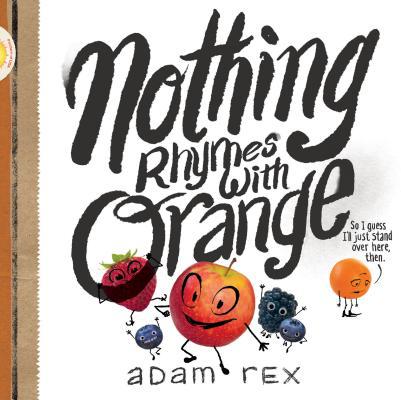
Nothing Rhymes with Orange

By Adam Rex


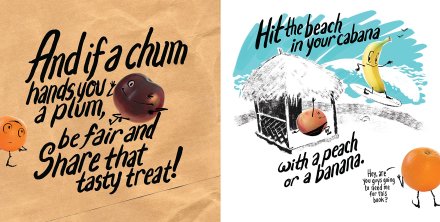
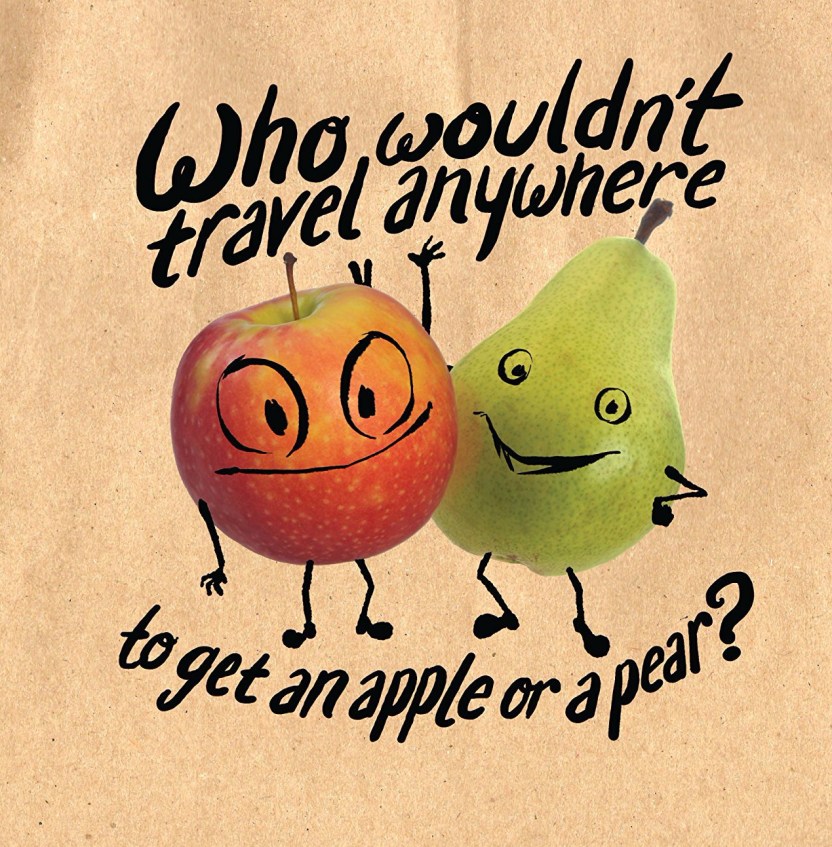
As the book opens, readers meet two smiling friends—an apple and a pear who ask the jaunty and rhyming question: “Who wouldn’t travel anywhere to get an apple or a pear?” A little purple fruit joins the fun with “And if a chum hands you a plum, be fair and share that tasty treat!” From the sidelines an orange watches in anticipation like a child waiting to leap into a twirling jump rope. When the banana and peach arrive, enjoying a beachside cabana, the orange takes the initiative and calls out, “Hey, are you guys going to need me for this book?”

celebrate-picture-books-picture-book-review-nothing-rhymes-with-orange-plum

Copyright Adam Rex, 2017, courtesy of Chronicle Books

But the action continues with caped grapes and a kind of high-fiving dance party where all the cute fruit are cheering themselves on. The persistent orange peeks out from the background just to remind them that he’s there. As the fig admits that she’s not very big, the orange begins to catch on to the pattern of invitations, and his once-present grin begins to fade. With a shrug he acknowledges that “nothing rhymes with me, but…” he’d still like to be included.

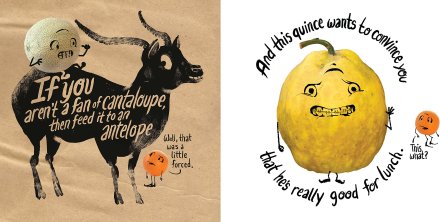
If nearly getting sucker punched by a “peewee” kiwi’s “pucker punch” counts as being included, then the orange is front and center. But then a cantaloupe riding an antelope enters the scene with a dietary suggestion.”If you aren’t a fan of cantaloupe, then feed it to an antelope.” Not a fan of that rhyme? Well…the orange agrees with you, and he’s a little unsure about the quince on the next page too. But…back to the dance party, where all the newly introduced “cute fruit” are now cutting the rug.

celebrate-picture-books-picture-book-review-nothing-rhymes-with-orange-cantaloupe

Copyright Adam Rex, 2017, courtesy of Chronicle Books

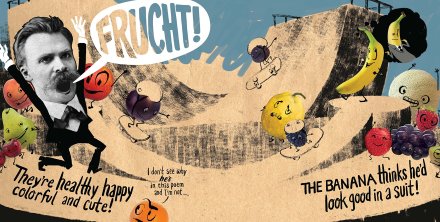
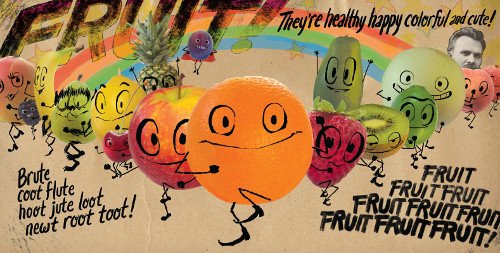
The produce seem to be losing control as they reach for rhymes. I mean, “you can keep them in a bowl or in a boot—fruit!” Really? Is it actually a good idea to eat out of a shoe? Poor Orange doesn’t “even know what that is.” Want a little philosophy with your fruit? Then try this on for size: “I think cherries are ‘the berries’ and a lychee is just peachy. Thus Spoke Zarathustra is a book by Friedrich Nietzsche.” Impressive!

That bit of nonsense just makes Orange mad, though. As Nietzsche throws his hands in the air and joins the festivities, Orange is nonplussed: “I don’t see why he’s in this poem and I’m not.” Good question! And now the banana again?! Didn’t he already have his turn? And the pear? Didn’t she get to lead the whole thing off? Maybe this is one of those circular plots…. Whoa! Here’s a twist—a wolf wants to take a bite of Pear. 

celebrate-picture-books-picture-book-review-nothing-rhymes-with-orange-frucht

Copyright Adam Rex, 2017, courtesy of Chronicle Books

But suddenly a transformation takes place that brings up some pretty deep questions: “then does that pear become a pearwolf when the moon is full and bright? Will the apple have to grapple with this pear with fangs and hair?” Now that the story has gone to the dark side, the orange decides he’s “glad he’s not part of it.” Yet, wait! A caped grape comes to the rescue, and Orange realizes that “this book is amazing.”

The cute fruit party is in full swing with a band, a singer, and a whole lot of dancing. The rhymes are coming fast and furious—some a bit better than others, according to Orange—and he decides to just hang out on the next page. There, though, as he stands alone and dejected and surrounded by lots of white space, Orange hears a cheery sound. It’s Apple with a welcoming rhyme: “But the fruit are feeling rotten, ‘cause there’s someone they’ve forgotten.” And while what Apple says next might not technically be a real word, it does the job with a little hip-hop beat: “It’s the orange. He’s really smorange. There’s no one quite as smorange as orange.”

This, of course, could go either way, so Orange asks for a little clarification and discovers that “smorange” means “totally awesome in every way.” And with that, the jam continues, with Smorange Orange out in front.

celebrate-picture-books-picture-book-review-nothing-rhymes-with-orange-smorange

Copyright Adam Rex, 2017, courtesy of Chronicle Books

Adam Rex’s cool, funny, and sophisticated riff uses the fact that the word orange has no rhyme to explore the ideas of exclusion and inclusion and show readers that there’s always a way to embrace others and make them feel good and part of the group. 

Rex has created very appealing characters in Orange and the others. Without a mean seed in their bodies, they’re just having fun and being a bit silly. In a very welcome plot turn, Apple and the other fruit recognize that Orange feels left out and come to him with a solution. Rex’s vivacious fruit are as cute as they think they are, and little Orange is endearing with his alternately easy smile and sad eyes. The addition of a dancing Friedrich Nietzsche is genius and will have both kids and adults laughing.

celebrate-picture-books-picture-book-review-nothing-rhymes-with-orange-apple-and-pear

Copyright Adam Rex, 2017, courtesy of Chronicle Books

Nothing Rhymes with Orange is a fantastic read-aloud for home and classroom story times. The book would be a much-asked-for favorite and would make a perfect gift or addition to home libraries.

Ages 5 – 8

Chronicle Books, 2017 | ISBN 978-1452154435

You’ll have a blast exploring the world of Adam Rex on his website!

National No Rhyme (nor Rhyme) Day Activity

celebrate-picture-books-picture-book-review-nothing-rhymes-with-word-search

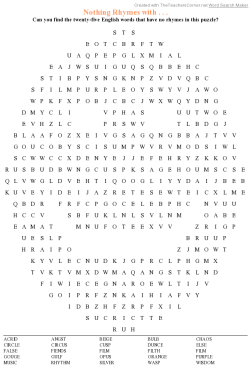
Nothing Rhymes with . . . Word Search


Can you find the twenty-five English words that have no rhyme in this printable word search puzzle?

Nothing Rhymes with . . . Word Search PuzzleNothing Rhymes with . . . Word Search Solution

celebrate-picture-books-picture-book-review-nothing-rhymes-with-orange-cover

You can find Nothing Rhymes with Orange at these booksellers

Amazon | Barnes & Noble | Books-a-Million | IndieBound

Picture Book Review

August 28 – National Bow Tie Day

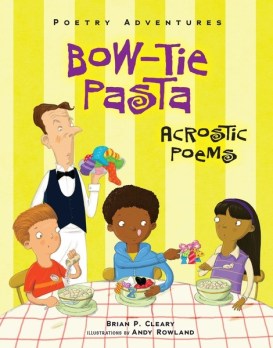
celebrate-picture-books-picture-book-review-bow-tie-pasta-acrostic-poems-cover

About the Holiday

We’ve all learned about the 30-year war in school, but I bet your teacher never mentioned that world-side use of the bow tie was one of the results. It seems the Croatian soldiers used a bow tie to close the collars of their shirts. The idea caught on, and, later, French tobacco magnate Pierre Lorillard wore a bow tie to a Tuxedo Club event. The black-and-white fashion statement gained popularity, and bow ties took off in all kinds of colorful, wacky, and iconic ways.

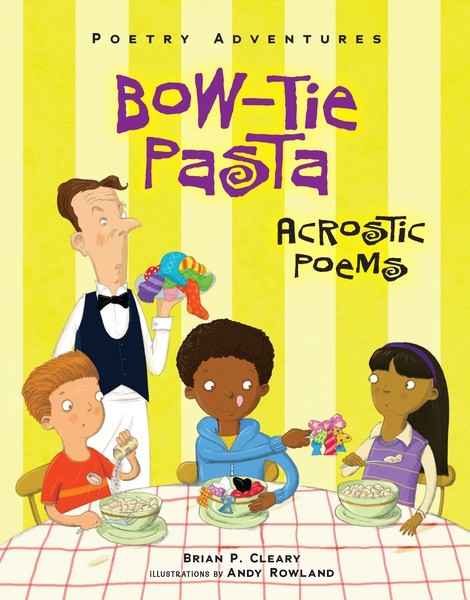
Bow-Tie Pasta: Acrostic Poems

Written by Brian P. Cleary | Illustrated by Andy Rowland


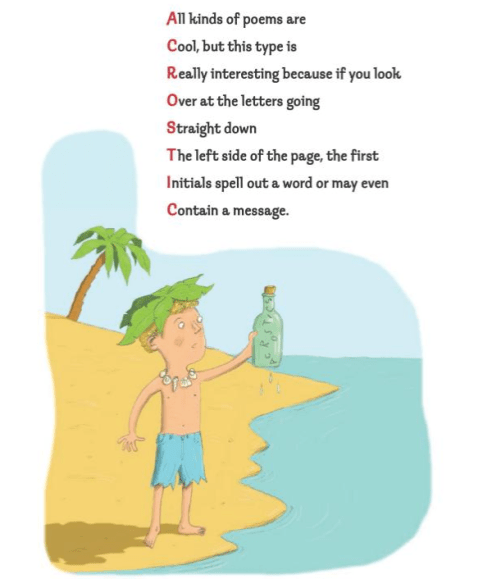
Acrostics are special nuggets of information or creativity formed by using the letters of a word to begin each new sentence. Writing poems in acrostic style takes thought and ingenuity—and that’s just what Brian P. Cleary offers in his twenty-seven poems that tackle all kinds of subjects, from pirates to spiders to sharks, from holidays to colors to food, and from people to places to things.

celebrate-picture-books-picture-book-review-bow-tie-pasta-acrostic-poetry-acrostic

Image copyright Andy Rowland, 2015, text copyright Brian P. Cleary, 2015. Courtesy of Millbrook Press.

Bow-Tie Pasta riffs on the wearable and edible types of bow ties and comes to a conclusion we can all digest: “Blue gingham / Orange striped / White formal / Tartan plaid / Irish shamrocks / Embroidered stars / Polka dots / Argyle / Silky yellow / Tweed / Awful tasting.”

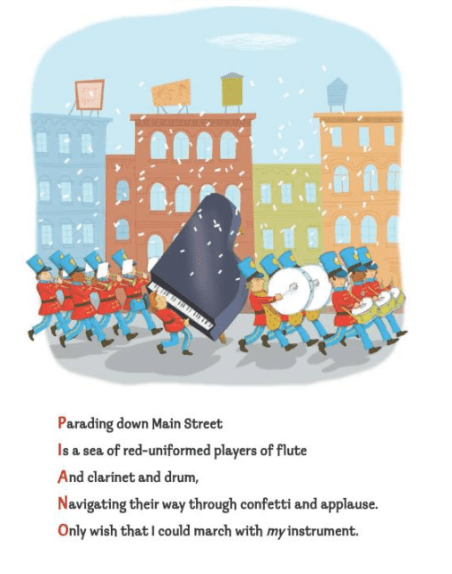
In Piano, a boy wistfully watches a parade go by: “Parading down Main Street / Is a sea of red-uniformed players of flute / And clarinet and drum / Navigating their way through confetti and applause / Only wish that I could march with my instrument.”

celebrate-picture-books-picture-book-review-bow-tie-pasta-acrostic-poems-library-yellow

Image copyright Andy Rowland, 2015, text copyright Brian P. Cleary, 2015. Courtesy of Millbrook Press.

A Rainy Day inspires another clever verse: Reading in a cozy nook / Asking for another book / I made cookies by the sheet / Next they cool. I dunk and eat. / Yo-yo, board games, watch the rain, / Draw a face inside each pane. / Afterwards I make s’mores. / Yes, I love the great indoors.”

Fish aficionados may want to heed the warning in Piranha: Peering into my aquarium, / I spy the fish with two rows of / Razor-sharp teeth. / As he swims towards my tapping finger / Near the top of the tank’s glass, / He serves as a reminder that there / Are some pets you should never pet.

celebrate-picture-books-picture-book-review-bow-tie-pasta-acrostic-poetry-halloween

Image copyright Andy Rowland, 2015, text copyright Brian P. Cleary, 2015. Courtesy of Millbrook Press.

For those who like their poems non-fiction, Triceratops reveals some fascinating facts about this prehistoric favorite: Two hard horns and a third soft one that’s / Really a snout made from soft proteins. / Inside its mouth: 200 to 800 teeth. / Can you imagine the dentist appointments? / Extinct, so none are living. / Rumored to be a slow walker. / Ate only plants. / T. rex wanted to have it for lunch. / Older than your parents and even your teacher! / Popular in dinosaur movies. / Seen last alive: 65 million years ago.

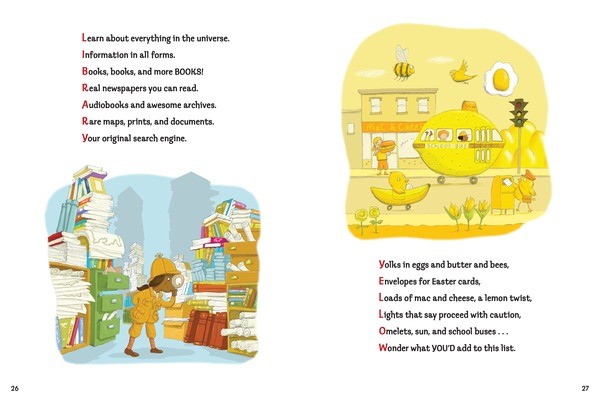
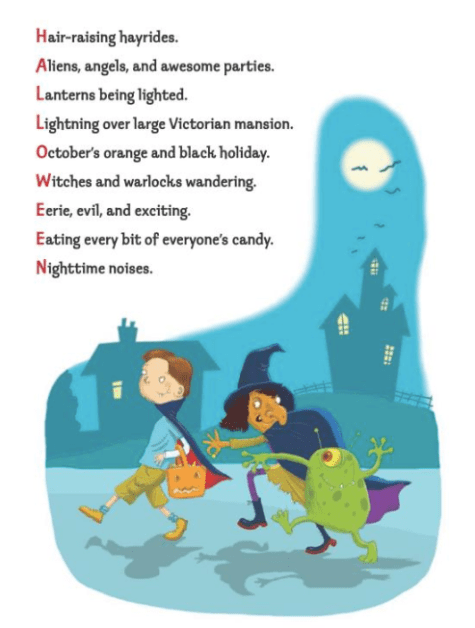
Just waiting for kids are more acrostics about some of their favorite things, such as fire trucks, snack time, lacrosse, Halloween, giggling, the library, and jokes. There’s even an acrostic poem explaining what acrostic poems are!

celebrate-picture-books-picture-book-review-bow-tie-pasta-acrostic-poetry-piano

Image copyright Andy Rowland, 2015, text copyright Brian P. Cleary, 2015. Courtesy of Millbrook Press.

Brian P. Cleary’s supple wit and word play turn words into poems and poems into new ways of looking at his subjects. Young readers will laugh at his observations and juxtapositions and be tempted to try writing an acrostic poem of their own.

Andy Rowland accompanies each poem with bright, amusing illustrations that highlight the humor and “ah-ha!” moments of the verses. A boy tries to chew down the contents of a plate piled high with cloth bow ties of every color and pattern, a triceratops visits the dentist, kids go trick or treating with an green alien, the state of Kansas stretches out like a patchwork quilt, and a boy and girl toast marshmallows on a rainy day. Along the way readers also meet a wiener dog sporting a bun and ketchup, a toothy shark, and a rather sly spider.

For kids who love poetry and humor Bow-Tie Pasta: Acrostic Poems is a winner. The book is also perfect for classroom poetry units and fun library story times.

Ages 6 – 10

Millbrook Press, 2015 | ISBN 978-1467781077

Have a blast exploring all the nooks and crannies of Brian P. Cleary’s website!

Learn more about Andy Rowland on his website!

National Bow Tie Day Activity

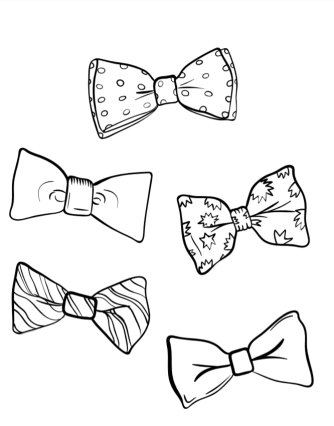
celebrate-picture-books-pciture-book-review-bow-ties-coloring-page

Colorful Bow Ties


Bow ties come in all colors and patterns. Here is a printable Colorful Bow Ties page for you to decorate! You can then use your bow ties to play the game below!

Alternate Match the Bow Ties Game:

  1. Print two sheets of the Colorful Bow Ties page
  2. Color the bow ties to make matching pairs
  3. Cut the bow ties into separate cards
  4. Turn them face down and scramble them
  5. Turn one of the cards over and try to find its match. If the two ties are not the same, turn them face down and try again
  6. Keep playing until all the bow ties have been matched.

celebrate-picture-books-picture-book-review-bow-tie-pasta-acrostic-poems-cover

You can find Bow-Tie Pasta: Acrostic Poetry at these booksellers

Amazon | Barnes & Noble | Books-a-Million | IndieBound

Picture Book Review

July 22 – National Hammock Day

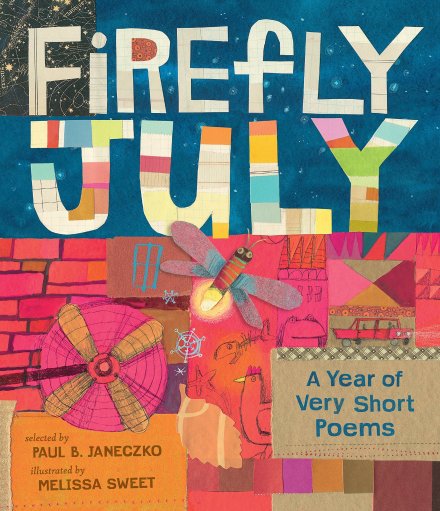
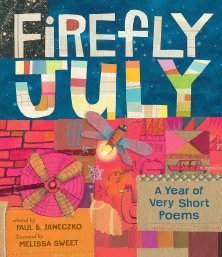
celebrate-picture-books-picture-book-review-firefly-july-a-year-of-very-short-poems-cover

About the Holiday

Holidays don’t get more leisurely than this one! Perhaps invented by the Ancient Greeks, perhaps created by people in South America according to Christopher Columbus’s journals, hammocks are the epitome of relaxation. What better time is there to kick back and lounge than during the hot, hazy days of July? So enjoy—and read a book, like today’s collection of poetry!

Firefly July: A Year of Very Short Poems

Selected by Paul B. Janeczko | Illustrated by Melissa Sweet


Firefly July is perfect for lazy summer days when light, but still meaningful reading enjoyed in a hammock or under a shady tree is relaxation at its best. Paul B. Janeczko has collected 36 short (none are over eight lines long) poems from some of the best poets of today and yesterday. Haiku, free form, and rhyming verses illuminate the seasons of the year and encapsulate unforgettable sights, sounds, and feelings.

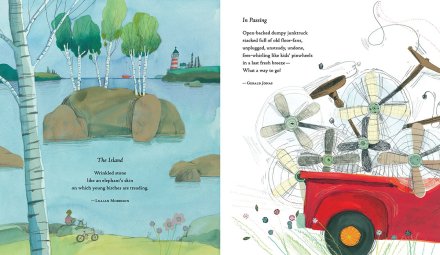
A girl’s spring’s respite spent gazing into the bay from shore is depicted in Lillian Morrison’s The Island:

“Wrinkled stone / like an elephant’s skin / on which young birches are treading.”

celebrate-picture-books-picture-book-review-firefly-july-interior-art

Image copyright Melissa Sweet, 2014, text copyright Lillian Morrison, 2014; Gerald Jonas, 2014.  Courtesy of Candlewick Press.

A nighttime train trip provides mystery and ongoing changes in Carl Sandburg’s Window:

“Night from a railroad car window / Is a great, dark, soft thing / Broken across with slashes of light.”

Joyce Sidman’s A Happy Meeting likens a summer rain to romance and life:

“Rain meets dust: / soft, cinnamon kisses. / Quick noisy courtship, / then marriage: mud.”

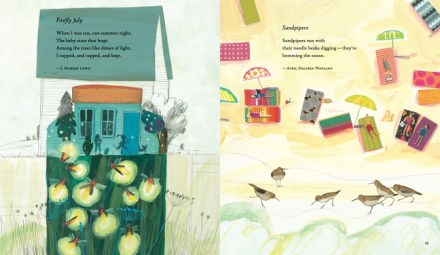
At the seashore, beach birds are industrious in April Halprin Wayland’s Sandpipers:

“Sandpipers run with / their needle beaks digging—they’re / hemming the ocean.”

celebrate-picture-books-picture-book-review-firefly-july-interior-art

Image copyright Melissa Sweet, 2014, text copyright J. Patrick Lewis, 2014; April Halprin Wayland, 2014. Courtesy of Candlewick Press.

Jim Harrison and Ted Kooser ask such a beguiling question for autumn:

“What is it the wind has lost / that she keeps looking for / under each leaf?”

And the rising giants of city life inspired Susan Nichols Pulsifer in Tall City:

“Here houses rise so straight and tall / That I am not surprised at all / To see them simply walk away / Into the clouds—this misty day.”

Along the way readers will encounter a pickup truck loaded with old rotary fans and another rusting in a field; fog that decorates and creeps; animals and insects that share our space; our past, our present, and our future. And when it’s time to close the book, Jim Harrison and Ted Kooser reveal:

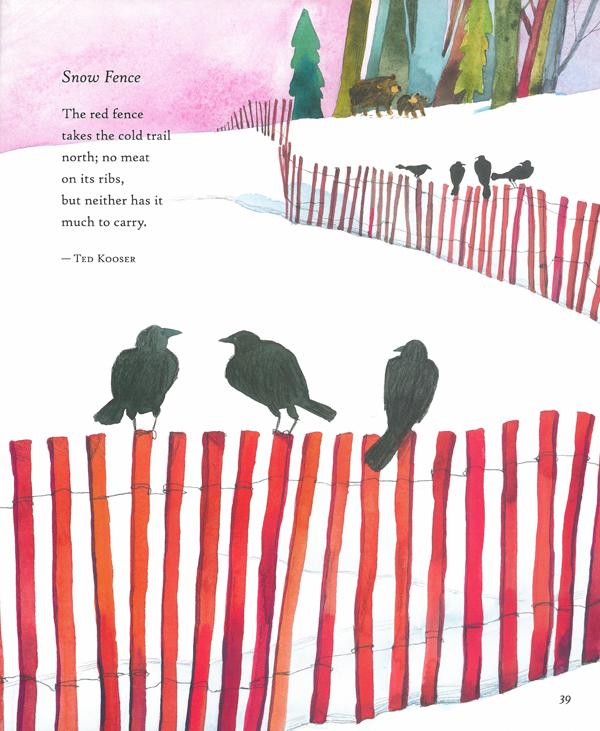
“A welcome mat of moonlight / on the floor. Wipe your feet / before getting into bed.”

celebrate-picture-books-picture-book-review-firefly-july-a-year-of-very-short-poems-snow-fence

Image copyright Melissa Sweet, 2014, text copyright Ted Kooser, 2014. Courtesy of Candlewick Press.

I can only wish I’d been able to visit Melissa Sweet’s studio while she created the illustrations for this book! Each painting is as unique in style, beauty, and emotional effect as the poems they interpret. Her renditions of each poem help readers—especially children unfamiliar with metaphor and abstract imaging—to fully understand and appreciate each poem while also leaving room for personal reflection.

The first thing that strikes a reader when opening Firefly July is the gorgeous juxtaposition and mixture of vibrant color. Her illustrations take readers on a journey from an aqua farm house with a patchwork garden to a serene elephantine rock island to the deep turquoise ocean traversed by ships while the full moon beams down upon them. Readers ride crowded subways, gaze out moving train windows, and visit cities bright in daylight and glowing at night. They frolic through fields of delicate grasses and vibrant flowers, quietly walk snowy paths, and take their place among the stars.

Firefly July is as stunning as any coffee table book and is a must for a young reader’s—or any poetry lover’s—library.

Ages 4 and up

Candlewick Press, 2014 Hardcover ISBN 978-0763648428 | Paperback, 2018 ISBN 978-0763699710

Take a look at more books and artwork by Melissa Sweet on her website!

National Hammock Day Activity

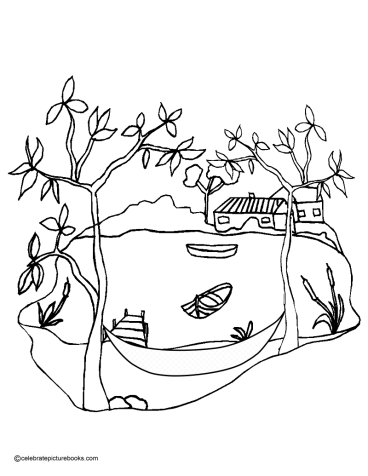
celebrate-picture-books-picture-book-review-hammock-coloring-page

Lazy Days Coloring Page


Coloring can be so relaxing—perfect for a day dedicated to kicking back! Color this printable Lazy Days Coloring Page and dream of lounging beside the lake, with the gentle breeze gently rocking the hammock, while you drift off to sleee….zzzz…..

celebrate-picture-books-picture-book-review-firefly-july-a-year-of-very-short-poems-cover

You can find Firefly July: A Year of Very Short Poems at these booksellers

Amazon | Barnes & Noble | Books-a-Million | IndieBound

May 1 – National Purebred Dog Day

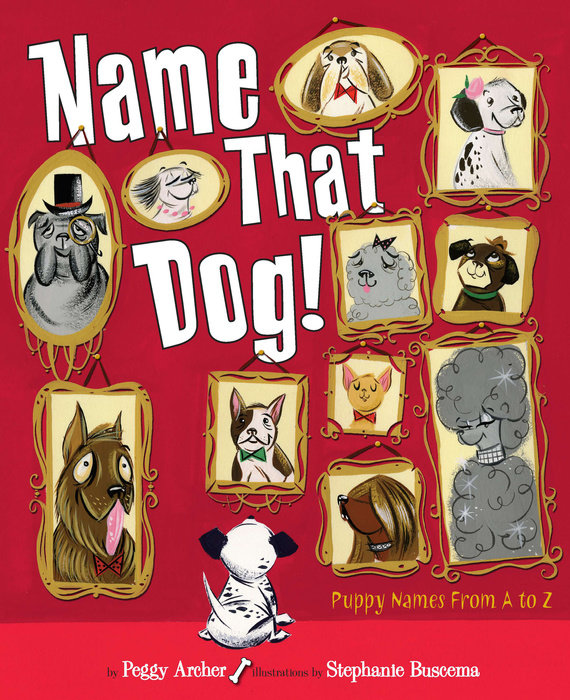
celebrate-picture-books-picture-book-review-name-that-dog-puppy-poems-from-a-to-z-cover

About the Holiday

Established in 2014, today’s holiday honors purebred dogs and their unique traits. Each breed has particular skills that make them suited to a wide variety of jobs as companions, herders, and helpers. Unscrupulous breeders and puppy mills have diminished the reputation of purebred dogs, but that’s the fault of the people, not the dogs. Today, celebrate the beauty and personalities of purebred dogs by learning a little about your favorite breed or contact a shelter and see how you could help out! Today’s book gives kids another fun way to learn about twenty-six different breeds.

As it’s also Poetry on Your Pillow Day, which encourages people to enjoy a poem in the morning when they wake up and another poem before they go to sleep at night by placing a poem on a child’s, friend’s, or partner’s pillow why not combine the two and pick a poem from today’s book!

Name That Dog! Puppy Poems from A to Z

Written by Peggy Archer | Illustrated by Stephanie Buscema


So, you have a new puppy! The first thing you probably want to do it give your new friend a big hug. The second thing you probably want to do is give your new friend a name! But what? Do you name your pup for the socks on her feet? Or maybe for the way he wags his tail? Or maybe a favorite book character would inspire a good name. Name that Dog! understands the dilemma and gives readers a full alphabet of poetic names to think about. So let’s get started!

celebrate-picture-books-picture-book-review-name-that-dog-puppy-poems-from-a-to-z-aspen

Image copyright Stephanie Buscema, 2010, text copyright Peggy Archer, 2010. Courtesy of Dial Books for Young Readers.

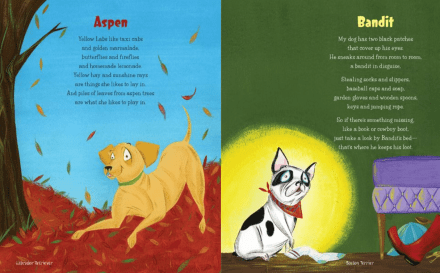
At A meet Aspen, who’s a Yellow Labrador Retriever. How did he get his name? You can see that “yellow hay and sunshine rays / are things she likes to lay in. / And piles of leaves from aspen trees / are what she likes to play in.” Bandit is a Boston Terrier and with two black patches around his eyes, “he sneaks around from room to room, / a bandit in disguise, / Stealing socks and slippers, / baseball caps and soap. / garden gloves and wooden spoons, / keys and jumping rope.”

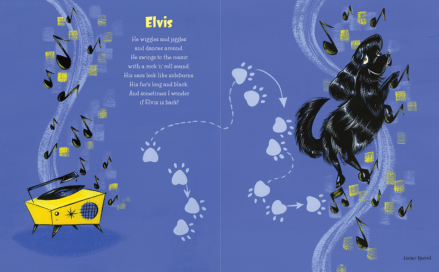
The way Cocker Spaniel, Elvis, “dances around…” to “music with a rock ‘n’ roll sound” this pup whose “fur’s long and black” may just make you “…wonder / if Elvis is back!” The fancy Poodle, Noodles, isn’t named for the food. Instead, “All over my puppy / are oodles and oodles / of swirls of fat curls that / remind me of noodles.”

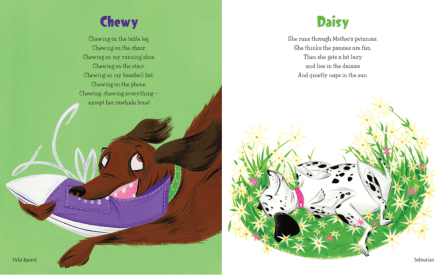
celebrate-picture-books-picture-book-review-name-that-dog-puppy-poems-from-a-to-z-chewy

Image copyright Stephanie Buscema, 2010, text copyright Peggy Archer, 2010. Courtesy of Dial Books for Young Readers.

At R you’ll find a Saint Bernard. What name might fit him best? Well, “he’s grown quite big so far. / He’s bigger than his doghouse / And he won’t fit in the car!… / Beef stew and juicy soup bones / Are foods he likes the best. / I have the perfect name for him— / Tyrannosaurus Rex.” From R we race to the last letter: Z, where a Dutch Smoushond is “faster than a mustang. / Faster than a train. / Zip! he’s here. ? Zip! he’s there. / Zipper is his name!”

Along the way, readers meet a host of dogs, including a Dalmatian, Westie, Dachshund, Basset Fauve De Bretagne, Portuguese Water Dog, Rhodesian Ridgeback, Niederlaufhund, Scottie, Chihuahua, and more. Two poems about naming a dog bookend the alphabetic verses, creating a tidy package of puppy love.

celebrate-picture-books-picture-book-review-name-that-dog-puppy-poems-from-a-to-z-elvis

Image copyright Stephanie Buscema, 2010, text copyright Peggy Archer, 2010. Courtesy of Dial Books for Young Readers.

Kids who love dogs will eagerly listen to this collection of poems featuring well-known and more unusual breeds. As each dog’s personality is revealed, readers will giggle at their special talents or the shenanigans they get into. Children with dogs will enjoy recognizing some of their own pet’s traits among the poems, and adults will have fun reading Peggy Archer’s charming rhymes and jaunty rhythms. 

Stephanie Buscema accompanies Archer’s poems with sweet, funny, and feisty portraits of each breed of dog showing off their lovable natures. Her vibrant backdrops showcase each dog while also highlighting the humor, mischief, and character expressed in each poem.

Ages 3 – 6 

Dial Books for Young Readers, 2010 | ISBN 978-0803733220 (Hardcover) / Scholastic, 2013 | ISBN 978-0545609098 (Paperback)

Discover more about Peggie Archer and her books on her website.

To learn more about Stephanie Buscema and view a gallery of her work, visit her website.

National Purebred Dog Day Activity

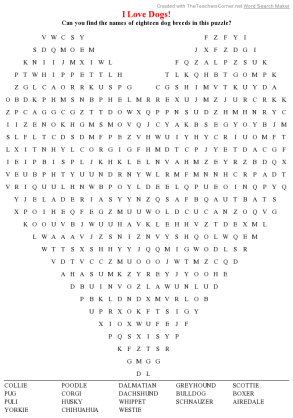
celebrate-picture-books-picture-book-review-i-love-dogs-wordsearch-puzzle-shorter-size

I Love Dogs! Word Search Puzzle


Discover the names of eighteen dog breeds in this printable word search puzzle!

I Love Dogs! Word Search Puzzle | I Love Dogs! Word Search Solution

Picture Book Review

April 29 – International Dance Day

celebrate-picture-books-picture-book-review-feel-the-beat-cover

About the Holiday

International Dance Day was founded in 1982 by the Dance Committee of the International Theater Institute. This date was chosen to commemorate the birthday of Jean-Georges Noverre, who was born in 1727 and is credited with creating modern ballet. Today’s holiday encourages people to celebrate dance and “revel in the universality of this art form.” There are so many styles of dance to watch and participate in. Today, enjoy a performance or find a venue where you can kick up your heals in your favorite kind of dance!

Feel the Beat: Dance Poems that Zing from Salsa to Swing

Written by Marilyn Singer | Illustrated by Kristi Valiant


The rhythms of dance and the cadence of poetry create a natural pairing as these seventeen poems that celebrate the moves, music, and thrill of dances from around the world demonstrate with toe-tapping joy.

In Cha-Cha a boy attending his Uncle Nate’s birthday party learns the cha-cha from his grandma. At first he says “I don’t / know these moves. / My fee / feel like hooves.” But then “something clicks! / Okay, it’s old school. / I say, / cha-cha’s cool!”

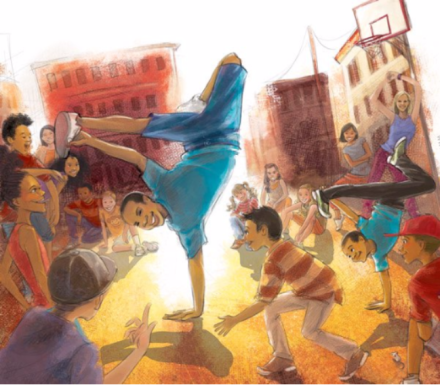
celebrate-picture-books-picture-book-review-feel-the-beat-hip-hop

Image copyright Kristi Valiant, 2017, courtesy of kristivaliant.com

While the kids at school brag about their parents’ jobs, one boy has them beat in Hip-Hop: “No fumbling, no bumbling, / my pops is tops at tumbling. / He’s elastic, so fantastic. / Papa’s so gymnastic!” But while Dad “will swipe and windmill” and “slide on his knees, / do lots of flares and coin-drops” and “boomerang and freeze,” the boy adds “…wait / until you see my mom!”

Is it meringue or Merengue? Maybe a bit of both…because doing it right means “Moving sideways, / turning wrists, / while we do / our pretzel twists. / We sway our hips, we shift our legs, like we’re whipping / lots of eggs.”

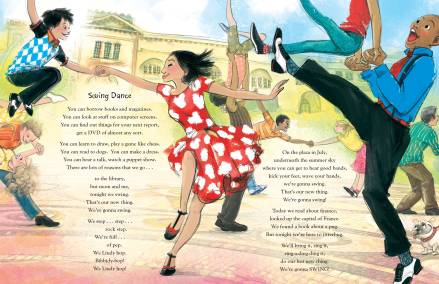
celebrate-picture-books-picture-book-review-feel-the-beat-swing-dance

Image copyright Kristi Valiant, 2017, text courtesy of Marilyn Singer. Courtesy of kristivaliant.com

It’s fun to let go when learning the Salsa. All you need is to “Feel the beat / in your feet, / in your heart. / Then you start.” So “Don’t be shy. / Come on try. / In this class, / show some sass.” If only shopping could be so entertaining…. But, wait! Maybe Conga is the solution. “We’re at the MALL. / I’m very BORED. / I hate the STORES, / I hate the HORDE…. / ‘Just one more SHOP’ / turns into FOUR. / I’m gonna SCREAM, / I’m gonna ROAR.” Then music starts and a line grows long—“Uh uh uh, KICK! / You cannot WHINE / when you are ON / a conga LINE! / Uh uh uh, KICK! / A flash mob BALL! / Keep shopping, MOM! / I love the MALL!”

celebrate-picture-books-picture-book-review-feel-the-beat-hora

Image copyright Kristi Valiant, 2017, courtesy of kristivaliant.com

The library may be a quiet, staid place most of the time, but Swing Dance takes over one special library. “On the plaza in July, / underneath the summer sky / where you can get to hear good bands, / kick your feet, wave your hands, / we’re gonna swing. / That’s our new thing / We’re gonna swing!” A boy and his mom have joined lots of other dancers having fun on the square— “We step…step… / rock step. / we’re full… / of pep. / We Lindy hop. / Bibbidy-bop! / We Lindy hop!”

And for those kids who look at the Square Dance unit in PE with trepidation, this girl feels the same: “Got a partner, lost my shoe. / Allemande left? I haven’t a clue….Did that caller give a cue? / Don’t promenade me. Shoo, boy, shoo!…Bow to Francisco, bow to Sue. / One more swing. It’s over! Whew! / I tried real hard, but alas, it’s true. / I’m flunking out of square dance!”

celebrate-picture-books-picture-book-review-feel-the-beat-wedding

Image copyright Kristi Valiant, 2017, courtesy of kristivaliant.com

Other poems introduce the Foxtrot, Hora, Samba, Two-Step, Argentine Tango, Waltz, Bhangra, and Polka. Notes about each dance, giving a description, a bit of history, and basic rhythms and steps, follow the text. A CD of dance music is also included.

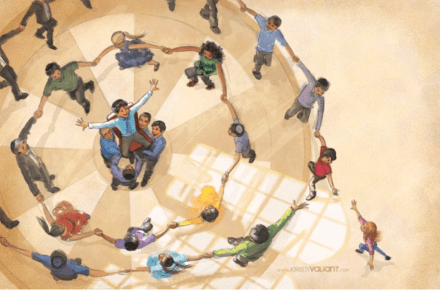
Marilyn Singer begins her exuberant celebration of dances from around the world with a pair of the reverso poems for which she is well known: All Over the World, Dancing is Joy and Joy is Dancing All Over the World. With this start, Singer invites readers to put on their dancing shoes and enter ballrooms, classrooms, and outdoor spaces filled with music. From birthdays to bar mitzvahs to weddings to spontaneous parties, Singer imbues each experience with the beats, steps, and sometimes missteps of dance with expressive vocabulary and humorous asides. Reading the poems aloud offers its own special treat as the meter of each poem reflects the rhythm of the dance described.

Kristi Valiant’s vibrant two-page spreads put kids in the center of the action where individuals, couples, and groups enjoy groovin’ to the music in their own style. Dancers swirl, stomp, hop, twirl, sway, dip, and kick up their heels on sunny days and under glowing nighttime light. So join in—no experience or partner necessary!

For kids who love music and dance and for those who love poetry of all kinds, Feel the Beat; Dance Poems that Zing from Salsa to Swing is a fun addition to home libraries—and may spark an interest in learning how to perform these dances.

Ages 5 – 9

Dial Books for Young Readers, 2017 | ISBN 978-0803740211

Discover more about Marilyn Singer and her books on her website!

View a portfolio of artwork by Kristi Valiant on her website!

International Dance Day Activity

celebrate-picture-books-picture-book-review-dance-word-search

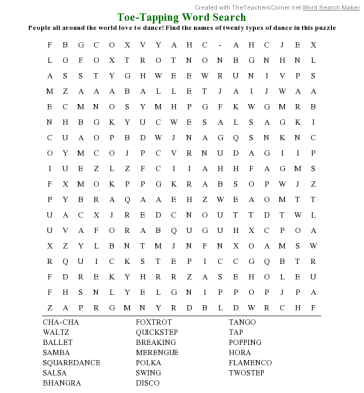
Toe-Tapping Word Search Puzzle


People all around the world love to dance! Can you find the names of twenty types of dances in this printable Toe-Tapping Word Search Puzzle? Here’s the Solution!

Picture Book Review


April 17 – National Haiku Poetry Day and Interview with Amy Losak

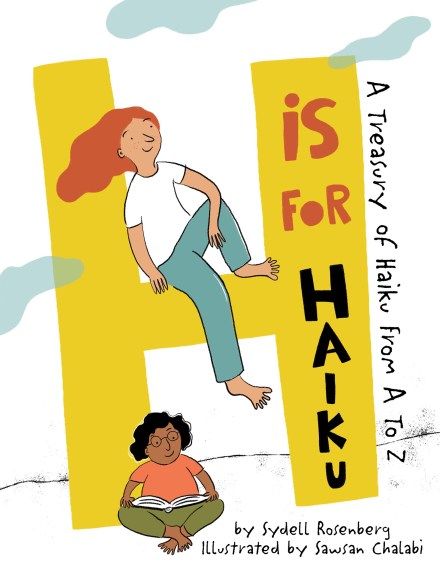
celebrate-picture-books-picture-book-review-h-is-for-haiku-cover

About the Holiday

Small things are amazing—and surprising! We all know good things come in small packages, and just look at the wisdom, humor, and capacity for love of children. The same goes for haiku—the smallest form of poetry in size but never in impact. During National Poetry Month, today is set aside to especially celebrate the haiku. The simple 5-7-5 rule that we all learn in school doesn’t begin to define the complexity of these three-line beauties that distill the world into little nuggets that make readers see life in amazing and surprising ways.

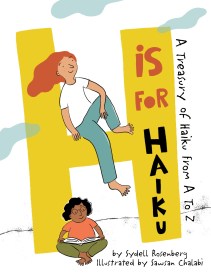
H is for Haiku: A Treasury of Haiku from A to Z

Written by Sydell Rosenberg | Illustrated by Sawsan Chalabi


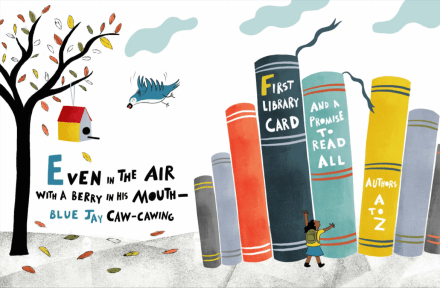
In her lovely and delightfully whimsical poems, Sydell Rosenberg holds moments in the palms of her hands, letting readers immerse themselves in the tender, humorous, and wistful flashes of a day before they shift, evolve, or fade away. H is for Haiku begins, appropriately, with Adventure and its dreamy memory for a worn-out kitten as he slumbers.
celebrate-picture-books-picture-book-review-h-is-for-haiku-blue-jay

Image copyright Sawsan Chalabi, 2018, text copyright Sydell Rosenberg, 2018. Courtesy of Penny Candy Books.

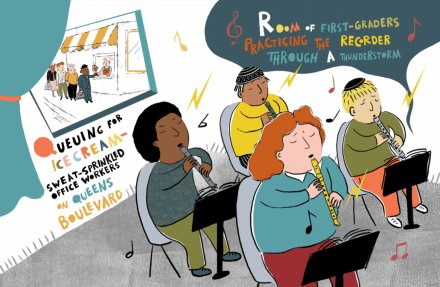
The journey continues as readers meander along a city sidewalk and see a “Boy on a mailbox / perched like a solitary bird / watching the sunset.” Walking on, readers peek into car backseats, queue for ice-cream on a sweaty summer day, and visit a barbershop where you always ask for Xavier. Down country lanes, you’ll spy a pale moon, turn the heads of sunflowers, share bike rides and car rides, and watch as “Munching on acorns / a squirrel sweeps up sunbeams / with her transparent tail.”

Rosenberg’s studied eye for connections makes her poems especially enchanting. Leaves and flowers, birds and insects, rain and thunder interact with those in their midst, adorning hair, scurrying away, playing musical backup, meeting danger, and creating transformations like the one at Y: “Yesterday’s cool rain / left this flat puddle smoothing / the wrinkled leaves.” A trip to the fish market is infused with humor, and an optical illusion makes you look twice at the flamingos in a pond.

Even in her observations of the routine, Rosenberg remind readers that there is music and poetry in common actions. For example, at U we hear: “Up and down the block / homeowners mate the covers / of gusted trash cans.” As a teacher sits grading papers to close out the book, readers can’t be faulted for wishing our alphabet had a few more letters.
celebrate-picture-books-picture-book-review-h-is-for-haiku-recorders

Image copyright Sawsan Chalabi, 2018, text copyright Sydell Rosenberg, 2018. Courtesy of Penny Candy Books.

As a teacher Sydell Rosenberg was attuned to the spirit of children, and her sophisticated and fun haiku are particularly accessible for young readers. Touching on a wide range of subjects, Rosenberg invites kids to look and look again. Her keen observations and lilting imagery will inspire them to do just that.

Sawsan Chalabi’s charmingly quirky illustrations and stylized lettering present each poem with dash and personality that will enchant kids. Her delicately lined drawings are infused with vibrancy from a gorgeous color palette. Just like Rosenberg’s haiku, Chalabi’s pages are animated with a love for life that will resonate with kids—and adults.

H is for Haiku would make a terrific gift for poetry lovers and a wonderful addition to home, school, and public library collections.

Ages 5 – 11 (and up)

Penny Candy Books, 2018 | ISBN 978-0998799971

Discover more about Sawsan Chalabi and view a portfolio of her work on her website.

Meet Sydell Rosenberg and her daughter, Amy Losak
celebrate-picture-books-picture-book-review-h-is-for-haiku-sydell-rosenberg-and-amy

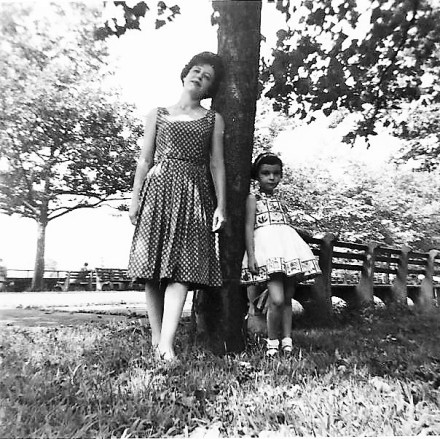
Sydell Rosenberg and her daughter Amy enjoying the park n 1961.

SYDELL ROSENBERG (1929-1996) lived, wrote and taught in New York City. Syd was a charter member of the Haiku Society of America in 1968 and served as HSA’s Secretary in 1975. Her short poems – notably haiku and senryu – as well as other poetry, were published in various magazines and anthologies. Syd received her M.A. in English as a Second Language from Hunter College in 1972. It was Syd’s dream to publish a book of haiku for children.

Compiled by her daughter, Amy Losak, H is for Haiku is the fulfilment of the late poet Sydell Rosenberg’s dream to write a book of poetry for children. I was excited to talk with Amy about her mother, her journey with H is for Haiku, and her own poetry.

Can you talk a little about your mother and her love for haiku and senryu?

Sydell Rosenberg was a New York City teacher (various grades; substitute, English, literacy; and also adult ESL). I think Syd Rosenberg “discovered” haiku and senryu in the early-to-mid 1960s. How she may have stumbled upon these poetic forms, I wish I knew. Mom always was a writer – short stories, poetry, literary and word puzzles, and more. Syd wrote in English and in Spanish and translated literature from and into Spanish too. In her early 20s, she published a racy novel, “Strange Circle,” under a male pseudonym, Gale Sydney (a reversal of the initials of her maiden name, Sydell Gasnick). This was in the early 1950s! This potboiler sold a respectable number of copies. In fact, “Strange Circle” is still floating around online.

In the 1960s, as a still-young wife and mother, perhaps she was restless and searching for a challenging format to test her talents and reflect, or give credence to, her singular way of viewing the world around her. Syd was a native New Yorker who loved nature and found marvels in mundane moments. Perhaps the lucid qualities of haiku and senryu, with their concise yet intense focus on such things, gave her—paradoxically—the amplitude she wanted to express her vision and ideas.

What is the difference between the two forms?

I’m no expert on haiku and senryu. Poets spend years studying and they labor over their work. These are difficult forms to write well. Like any creative art, it takes practice. It seems as though the definitions can get “in the weeds”—and then there are some poets who don’t get too “hung up” on the distinctions. Here are topline definitions from the Haiku Society of America, and readers can go to this Haiku Society of America page for more details:

The Haiku Foundation also is a great source of information, and there are many other fine resources in books, online and in social media.

HAIKU: A haiku is a short poem that uses imagistic language to convey the essence of an experience of nature or the season intuitively linked to the human condition.

SENRYU: A senryu is a poem, structurally similar to haiku, that highlights the foibles of human nature, usually in a humorous or satiric way.

Were the poems in H is for Haiku originally written as an alphabet-inspired collection?

Yes, some of the poems in H Is for Haiku were in one (or more, possibly) alphabet-themed manuscripts I located among mom’s many materials. And some were previously published in journals decades ago.

It was Syd’s lifelong dream to publish a book of haiku for children. Can you talk about the journey you’ve taken with H Is for Haiku?

Mom was submitting at least one of her kids’ poetry manuscripts (I’m not sure how many she created, and I don’t think they were all haiku) to publishers since the 1980s. My fuzzy memory tells me she may have submitted as far back as the 1970s. This has been a long and zigzagging timeline, by any measure.

Mom’s poetry was well-anthologized in a variety of media over several decades (including classic texts such as The Haiku Anthology, The Haiku Handbook, The Teachers & Writers Handbook of Poetic Forms, among others). Syd was a teacher, and she had this desire to publish a poetry picture book, preferably a haiku A-B-C reader. I think she wanted kids to illustrate it, although she also had illustrators she liked in mind (in one old cover letter I found, she mentions Arnold Lobel).

After her sudden death in October of 1996, her family promised to try and publish her dream book. But it wasn’t until around 2011 that I knuckled down—and even then, the process of collecting and organizing some of her work was, to be frank, tortuous. But I managed to curate a good compilation.

In the meantime, I spearheaded other projects to revive some of her work for today’s audiences, especially children. For example, I’ve been in a partnership for several years with a terrific nonprofit arts education organization in NY, Arts for All which brings a variety of arts programs into public schools. Teaching artists have used mom’s “word-picture” haiku to convey the basics of painting, drawing and collage; music; and theater to young students.

In 2015, I finally started to send out her manuscript to publishers that didn’t require agents. In 2016, I connected with the wonderful Penny Candy Books, thanks to a poet and teacher, Aubrie Cox Warner. Penny Candy’s Chad Reynolds and Alexis Orgera have been such a joy; and Sawsan Chalabi’s dynamic illustrations vividly augment the gentle playfulness in mom’s poems.

celebrate-picture-books-picture-book-review-h-is-for-haiku-sydell-rosenberg

Syd was a charter member of the Haiku Society of America. Can you talk about her work with the HSA?

 HSA celebrates its 50th anniversary this year. Syd attended the founding meeting in October of 1968. She also served as HSA secretary in 1975 and twice on committees for HSA’s Merit Book Awards “for excellence in published haiku, translation and criticism.” Of course, mom’s work was published in HSA’s beautiful journal, Frogpond, and a good number of other journals and publications, including (but not limited to) Modern Haiku, Wind Chimes, and Haiku West. HSA memorialized Syd by reading some of her work shortly after her death in 1996. In addition, Frogpond published a lovely memorial page in its December 1996 issue. It also published one of her posthumous haiku in a 1997 issue. Her first published haiku in a journal was in 1967 in American Haiku (although I believe she may have published haiku even earlier, in the poetry column of a now-defunct newspaper).

HSA and all things haiku—and writing overall—were important, even essential, components of her life. Creative expression was aa important to her as breathing.

The haiku in H Is for Haiku have such a wonderful sense of active observation and eye for personality and fun. Do you remember this as a quality of your mom while you were growing up?

Yes! Mom had a playful, offbeat, and I think an innate optimistic spirit. Mom was a “knowledge-adventurer.” Her intellect sometimes had an almost childlike quality. She tried to instill this expansive sense of curiosity in my brother Nathan and me. I have come to realize that mom looked forward to each new day as jam-packed with the possibilities for new experiences. And she sought them out for herself and her family.

I read that you also write poetry. Can you share a little about your work?

I’m a beginner as a poet. I think I always will be, and I’m fine with this. There’s a lot to learn.

I especially enjoy the process of trying to write haiku and senryu. It allows me to “be in the moment” and dial down distracting “chatter” that can bombard and dull my senses. Some of my work has been published. I’m slowly improving.

Thanks to social media, I find inspiration in the work of other poets today, especially haiku and senryu poets (and others, as well). There’s so much great poetry out there! I also have learned to find “bits” of inspiration in my daily life. Our pixilated cats, for example, were a wellspring of inspiration! And New York City, of course, offers an inexhaustible supply of both small and big moments. Even something as routine as my bus commute can sometimes trigger “slices” of awareness that lead to a short poem. Or I will be walking to the bagel shop for an iced coffee, and something out of nowhere—the peep of a sparrow in a forsythia bush, a squashed pine cone on the pavement—will draw my attention. Maybe this “haiku moment” will result in a poem. Or maybe not, but I’m still richer because of these “slivers” of experience.

And mom, it turns out, has had more of an influence on me that either one of us could have imagined. Syd’s spirit resonates today. I like to think she would be pleased with this book. And of course, kids and their parents!

The poetry and kidlit communities are caring and supportive. I’m grateful for all their encouragement over the years. And I’m grateful to my husband, Cliff, brother, Nathan; sister-in-law, Debbie; other loving family members; friends; colleagues, etc. So many terrific people! They’ve kept me going, and I can’t thank them enough.
celebrate-picture-books-picture-book-review-h-is-for-haiku-cover

You can find H is for Haiku at these booksellers:

Amazon | Barnes & Noble | Books-a-Million | IndieBound | Penny Candy Books

Haiku Poetry Day Activity
celebrate-picture-books-picture-book-review-haiku-art-craft-2

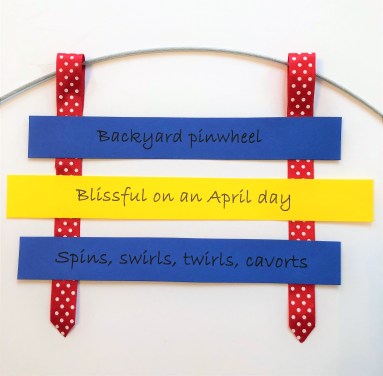
Haiku Wall Art


The haiku you write deserves to be shared with others! With this easy craft you can display your poem in style.

Supplies

  • Colorful heavy stock paper, 2 or three colors
  • Ribbon
  • Glue or glue dots, or double-sided tape
  • Dowel or wire for hanging
  • Paint to paint the dowel (optional)

Directions

  1. Write a haiku and print the lines on colored paper
  2. Cut the lines apart, making the first and third line shorter than the second line
  3. Glue or tape the lines to the ribbon, leaving about a half inch between them
  4. To make the hangers, fold the tops of the ribbon over and glue or tape it closed
  5. If using a dowel to hold the poem, you can paint it to match or contrast with the paper
  6. Hang the poem from a dowel or wire

Picture Book Review


view

April 7 – It’s National Poetry Month

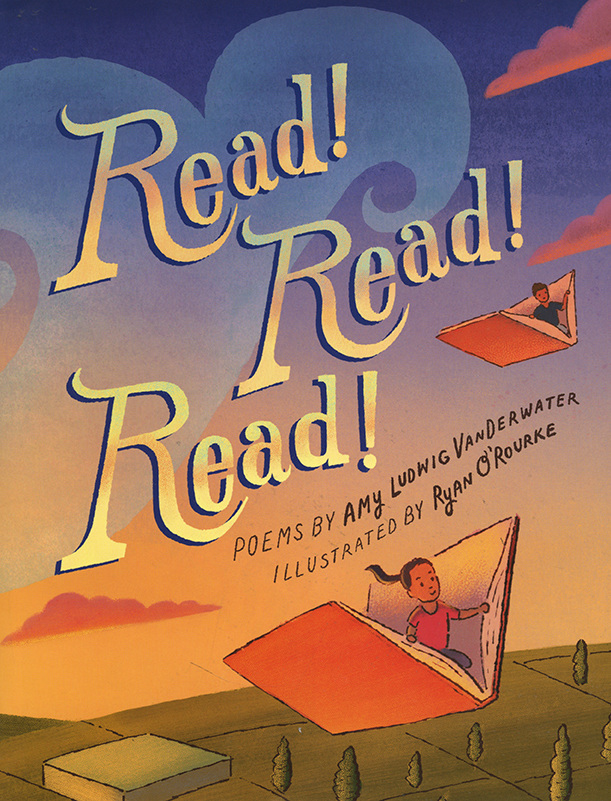
celebrate-picture-books-picture-book-review-read!-read!-read!-cover

About the Holiday

This month we celebrate poets and the poetry they create to illuminate our lives in new and often surprising ways. National Poetry Month is a world-wide event, bringing together tens of millions of poets, readers, teachers, librarians, booksellers, publishers, and other poetry lovers in readings, school visits, and special events. To celebrate, check out some events in your area and enjoy reading the work of your favorite—or a new—poet. You might even try writing your own poetry!

Read! Read! Read!

Written by Amy Ludwig Vanderwater | Illustrated by Ryan O’Rourke


In twenty-three poems Amy Ludwig Vanderwater takes readers on a journey of…Reading, from when a child first recognizes that those “squiggles / make letters. / Letters / make words. / Words / make stories / that fly like birds…” through the world they discover as they take in the printed word in all its forms.

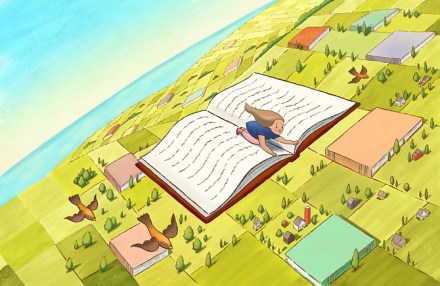
In Pretending, a little girl remembers “tracing my fingers / under each letter/ I used to pretend / I could read to myself.” At the library she would “pull from the shelf– / a rainbow of rectangles.” For days, weeks, months, she practiced. “Learning to read / felt like / learning to fly. / And one day / I took off. / I was swooping / alone / over words / once confusing / but now / all my own.”

celebrate-picture-books-picture-book-review-read!-read!-read!-fields

Image copyright Ryan O’Rourke, 2017. Courtesy of WordSong Publishing.

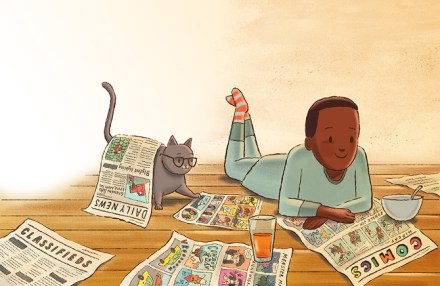
Cereal Box and Sports Page are placed side by side like the brother and sister eating breakfast together. But which sibling is reading “Recipes. / Stories. / Jokes. / Weird facts….the box” and which is “Scanning scores / studying stats / …checking on my team?”  Children will discover that there aren’t many things the little boy in I Explore has not done as he reveals, “I have stood upon a moonscape. / I have witnessed peace and war. / I have ridden a wild horse. / I’m a reader. / I explore.”

celebrate-picture-books-picture-book-review-read!-read!-read!-forever

Image copyright Ryan O’Rourke, 2017. Courtesy of WordSong Publishing.

Reading doesn’t just inform you, it reforms you, as An Open Book explains: “An open book / will help you find / an open heart / an open mind / inside yourself / if you’re inclined. / An open book / will make you kind.” Or maybe all that reading can give a younger brother a moment of power when he uses new-found information. “At dinner I ask— / Do you know / how many pounds of skin / a person sheds by age seventy? / My sister puts down her fork. / No. / One hundred five. / Oh. / She will not look at me. / She will not pick up her fork. / I keep eating. / I love reading.”

celebrate-picture-books-picture-book-review-read!-read!-read!-sunday-comics

Image copyright Ryan O’Rourke, 2017. Courtesy of WordSong Publishing.

Reading comes in many forms, from Maps, which “…fold / into themselves / like perfect beetle wings.” to Road Signs, in which the alphabet was once “like a secret code / for grown-ups / splashed / on every sign.” There’s also the Internet for Googling Guinea Pigs, where an eager pet sitter can “read about treats. / Read about exercise. / Read about safe holding” before the class pet comes home for the weekend. A Birthday Card with a poem from Grandpa, a Magazine that “…comes / by mail / twelve times / each year,” and Sunday Morning with the comics, where a loyal fan can “know every character / know every name” all bring joy to avid readers.

celebrate-picture-books-picture-book-review-read!-read!-read!-word-collection

Image copyright Ryan O’Rourke, 2017, text copyright Amy Ludwig Vanderwater, 2017. Courtesy of WordSong Publishing.

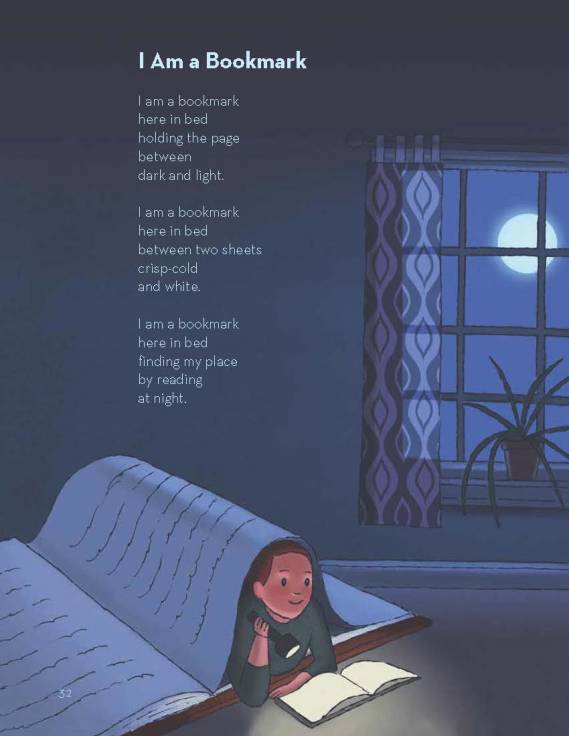
For readers there may be no more exciting time than Late at Night when a little lie—“I cannot sleep”—is exposed as Mom “…reaches out to touch my lamp. / The bulb is warm. / My mom knows why” and a special bond is formed with a mom who can empathize. A final cozy image closes the book in I Am a Bookmark, where a nighttime reader compares himself to a bookmark “holding the page between dark and light.”

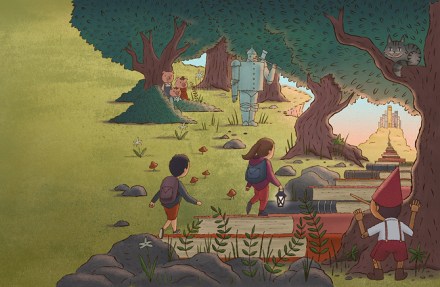
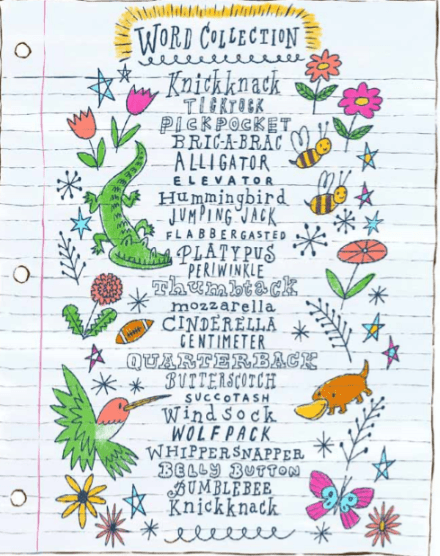
Along the way Amy Ludwig Vanderwater also explores Reading Time, a lyrical Word Collection, a Field Guide, the emotional effect of Stories, how reading can be like leading a Double Life, the benefits of a Book Dog, and the Forever connection between real people and characters in books.

celebrate-picture-books-picture-book-review-read!-read!-read!-bookmark

Image copyright Ryan O’Rourke, 2017, text copyright Amy Ludwig Vanderwater, 2017. Courtesy of WordSong Publishing.

Amy Ludwig Vanderwater’s charming poems on the joys of a reading life will engage children just starting out on their own journeys or those who are better versed in this exceptional art. At once inspiring and homey, these poems open the vast world and the private pleasures of the written word. Vanderwater’s verses are in turn smooth, conversational, reflective, humorous, and fun to read aloud.

Ryan O’Rourke opens Read! Read! Read! with a beautiful image of squiggles turned letters turned words turned books that soar like birds over a young reader’s head. The image wonderfully carries readers into the rest of the book where fancies and facts enlighten young minds. O’Rourke’s imaginative interpretations of each poem enhance their effect and cleverly convey extended meanings and visual humor. 

For children who love poetry, reading, writing, and seeing the world through a lyrical lens, Read! Read! Read! would be a terrific choice for any story time or bedtime. The book would also be welcome in classrooms for teachers to dip into again and again.

Ages 5 – 10

WordSong, 2017 | ISBN 978-1590789759

Discover more about Amy Ludwig Vanderwater, her books, articles, and poetry on her website.

View a gallery of book, map, and editorial illustration by Ryan O’Rourke on his website.
National Poetry Month Activity


celebrate-picture-books-picture-book-review-grow-a-poem-craft

Grow a Poem Craft


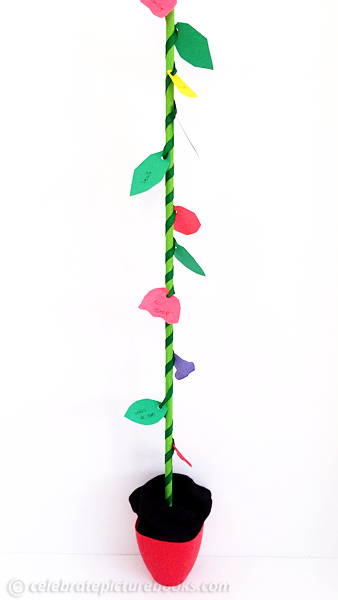
A poem often grows in your imagination like a beautiful plant—starting from the seed of an idea, breaking through your consciousness, and growing and blooming into full form. With this craft you can create a unique poem that is also an art piece!

Supplies

  • Printable Leaves Template
  • Printable Flower Template
  • Wooden dowel, 36-inch-long, ½-inch diameter, available in craft or hardware stores
  • Green ribbon, 48 inches long
  • Green craft paint
  • Green paper for printing leaves (white paper if children would like to color the leaves)
  • Colored paper for printing flowers (white paper if children would like to color the flowers)
  • Flower pot or box
  • Oasis, clay, or dirt
  • Hole punch
  • Glue
  • Markers or pens for writing words
  • Crayons or colored pencils if children are to color leaves and flowers

Directions

  1. Paint the dowel green, let dry
  2. Print the leaves and flower templates
  3. Cut out the leaves and flowers
  4. Punch a hole in the bottom of the leaves or flowers
  5. Write words, phrases, or full sentences of your poem on the leaf and flower templates
  6. String the leaves and flowers onto the green ribbon (if you want the poem to read from top to bottom string the words onto the ribbon in order from first to last)
  7. Attach the ribbon to the bottom of the pole with glue or tape
  8. Wrap the ribbon around the pole, leaving spaces between the ribbon
  9. Move the leaves and flowers so they stick out from the pole or look the way you want them to.
  10. Put oasis or clay in the flower pot or box
  11. Stick your poem pole in the pot
  12. Display your poem!

Picture Book Review