December 22 – Hanukkah Begins

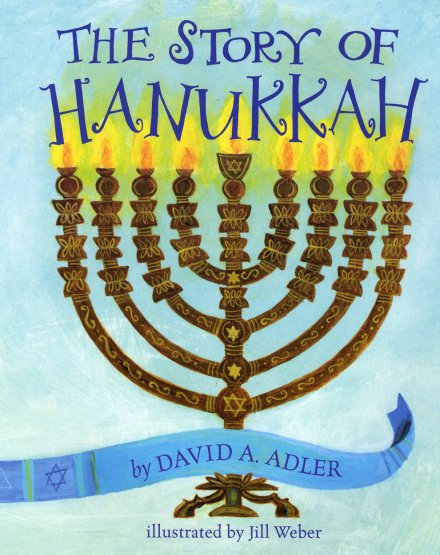
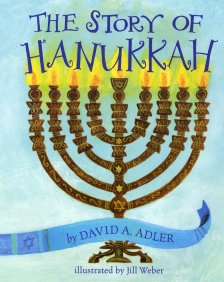
celebrate-picture-books-picture-book-review-story-of-hanukkah-cover

About the Holiday

Hanukkah is the eight-day Jewish wintertime “festival of lights” that commemorates the rededication of the Holy Temple in Jerusalem in the 2nd century BCE. Special prayers, oil-based foods, and gifts are also part of this looked-forward to holiday. Today’s reviewed book reveals the history and traditions of Hanukkah. If you are celebrating Hanukkah this week—many wishes for a meaningful and enjoyable holiday!

The Story of Hanukkah

Written by David A. Adler | Illustrated by Jill Weber


The story of Hanukkah began many centuries ago when Israel was known as Judea and the Jews living there worked as farmers and shepherds. Holidays were spent at the beautiful Temple, where the gates were covered in gold and silver. and a light—the ner tamid—always burned. While the Jews did not rule their land, they lived in peace. “Then a Greek, Antiochus IV became king. He tore down the walls of Jerusalem. Thousands were killed. Anyone who lit Sabbath candles, studied Jewish law, or refused to bow to Greek idols was put to death.”

When Antiochus’s army came to the town of Modiin, “they demanded that Mattathias, an old priest, worship one of their gods.” He refused and with his five sons and other followers ran into the hills. The soldiers chased them, but were attacked by “brave Jews hiding behind large rocks and inside caves….” When Mattathias died his son Judah became the group’s leader. He was known as the Maccabee, or “the hammer,” and the people who fought with him were called Maccabees.

celebrate-picture-books-picture-book-review-the-story-of-hanukkah-battle

Image copyright Jill Weber, courtesy of Holiday House Publishing

Antiochus did not give up easily. He sent his soldiers back on horses and even armored elephants. They carried swords and bows and arrows and were well-trained fighters. But despite the fact that there were 600 soldiers for every one Maccabee, the Maccabees defeated the mighty army. “Judah then led the Maccabees to Jerusalem. The Maccabees cried when they saw the Temple ruined and filled with garbage.” They went to work to restore the Temple to its former beauty.

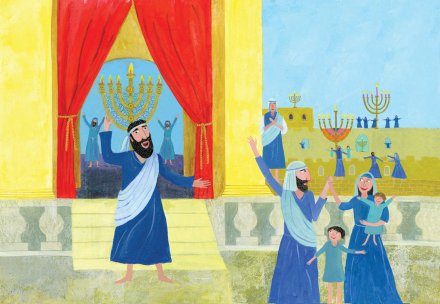
Finally, the Temple was rebuilt and it came time to light the ner tamid. When the people looked for oil to fuel the light, however, all they found was a single jar with only enough oil to burn for one day. They lit the ner tamidm and although supplied with only a meager amount of oil, it burned for eight days—enough time for more oil to be prepared. “On the twenty-fifth day of the Hebrew month of Kislev, the Temple again became the ‘House of God.’”
celebrate-picture-books-picture-book-review-the-story-of-hanukkah-celebrating-restored-temple

Image copyright Jill Weber, courtesy of Holiday House Publishing

Judah told his people that “every year on that date an eight-day holiday would begin.” The holiday would be called Hanukkah, meaning “dedication.” Today, Jews all over the world celebrate Hanukkah. Every night they light one more candle on the menorah. They sing special songs, eat latkes (potato pancakes) and sufganiyot (jelly doughnuts), and exchange gifts. Children also enjoy playing a game with a four-sided top called a dreidel. On each side of the dreidel “is a different Hebrew letter—the first letters of the Hebrew sentence Nes gadol hayah sham, which means ‘A great miracle happened there.’” “Hanukkah celebrates one of the first fights for religious freedom.”

With his exceptional storytelling skills, David A. Adler reveals the history of Hanukkah to children. In simple, yet compelling sentences, Adler clearly depicts the faith of the Jews and the dangers they faced from Antiochus and his army. Children will marvel over the astounding defeat of Antiochus’s soldiers at the hands of the Maccabees and be filled with awe as the Temple is rebuilt and the small amount of oil sustains the flame in the ner tamid for eight days. Children unfamiliar with Hanukkah celebrations will discover the meanings behind the traditional foods, dreidel game, and lighting of the Menorah in clear language full of the pride and emotions Jewish families feel during the holiday.

In her bright acrylic paintings Jill Weber brings to life the story of the Jews and the Maccabees, allowing children to fully experience the environment and perils of the time period. Her patchwork fields tended by farmers and shepherds give way to the majesty of the Temple with its central altar and glowing eternal flame. Weber’s battle scenes are particularly effective in presenting the destruction, fear, and final victory experienced by the Jews. Readers will be cheered by the joy depicted in the faces of the people celebrating the restoration of the Temple and the excitement of families observing Hanukkah today.

A recipe for Latkes as well as instructions on how to play Dreidel follow the text

The Story of Hanukkah is a wonderful introduction to the holiday for children learning their own heritage or for children discovering the traditions of friends, family, and others.

Ages 5 – 8

Holiday House, 2012 | ISBN 978-0823425471 (Paperback) | ISBN 978-0823440320 (Board Book)

To view more of the many, many books by David A. Adler, visit his website!

Discover a gallery of book illustration and other design work by Jill Weber on her website!

Hanukkah Activity
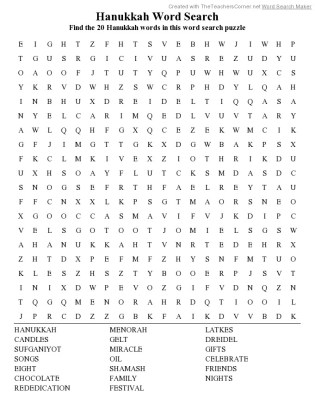
celebrate-picture-books-picture-book-hanukkah-word-search

Festival of Lights Word Search


Find 20 words related to Hanukkah celebrations in this printable Festival of Lights Word Search puzzle. Here’s the Solution.
celebrate-picture-books-picture-book-review-story-of-hanukkah-cover

You can find The Story of Hanukkah at these booksellers

Amazon | Barnes & Noble | Books-a-Million | IndieBound


Picture Book Review

December 17 – Celebrating Read a New Book Month with Art

celebrate-picture-books-picture-book-review-frank-lloyd-wright-cover

About the Holiday

Today, I’m featuring another interactive book that will get young readers excited about learning more about art—or in this case—architecture. A great book can help kids find role models from the past or today that they can connect with philosophically and creatively. A book that touches on, validates, and encourages a child’s talent or dream is a gift that lasts a lifetime.

Meet the Architect! Frank Lloyd Wright

By Patricia Geis


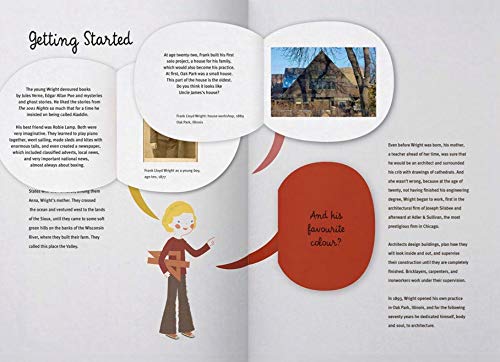
Artists can be endlessly fascinating not only for their work but for their lives, which influence where they get their ideas, how they create each piece, and what made them an artist in the first place. In Meet the Architect! Frank Lloyd Wright, readers get an opportunity to discover the backstory, the influences, the three architectural rules, the clients, and, of course, the buildings of this master architect, whose mother predicted his profession before he was even born and “surrounded his crib with drawings of cathedrals.” This deep dive into Frank Lloyd Wright’s life is accomplished not only through text, but with little fold-outs that are themselves illustrated booklets, 3D popups, illustrated panels that extent the pages, tabs, a portfolio of postcards, and more.

celebrate-picture-books-picture-book-review-frank-lloyd-wright-getting-started

Copyright Patricia Geis, 2019, courtesy of Princeton Architectural Press.

But let’s get started! Young readers may wonder what Frank was like as a kid. Learning that his grandfather, Richard Lloyd Jones, a Welsh milliner who made “‘black cone-shaped hats that ended in a point, worn as much by witches when they flew on their broomsticks as by other Welshmen,” will only whet their appetite to know more, and they won’t be disappointed. In addition to the text that briefly outlines Wright’s ancestry and earliest work experiences and defines what an architect is, a child asks a few questions.

celebrate-picture-books-picture-book-review-frank-lloyd-wright-getting-started-2

Copyright Patricia Geis, 2019, courtesy of Princeton Architectural Press.

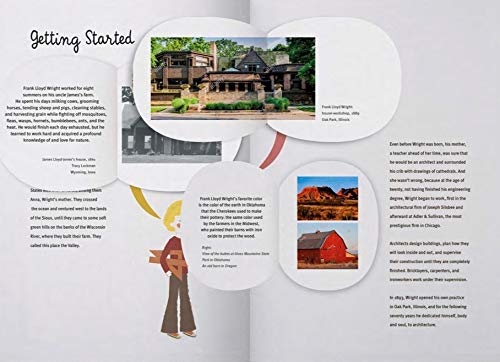
The first speech bubble asks, “How was he as a kid?” Readers open it up to see a photograph of Frank at age 10 accompanying a description of the books he read, the activities he and his best friend did, the newspaper he created, and even why “he called himself Aladdin” for a while. Readers next meet him at 16 in a photo of his very large extended family, and they also get to see his Uncle James’ house where he spent eight summers working on the farm. The exterior photo of the house Wright made for his family. Two other speech bubbles introduce children to the house Wright designed and built for his family and a discussion of his favorite color, complete with full-color photographs.

celebrate-picture-books-picture-book-review-frank-lloyd-wright-getting-started-3

Copyright Patricia Geis, 2019, courtesy of Princeton Architectural Press.

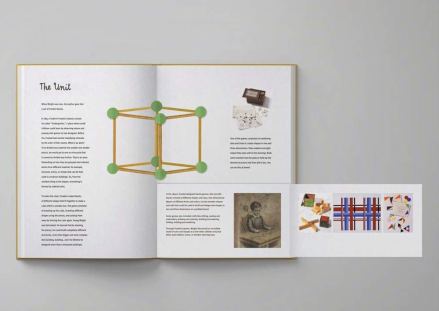
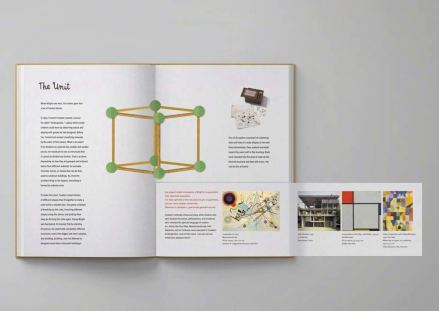
No artist is created in a vacuum, so author Patricia Geis includes a discussion of Friedrich Froebel, the creator of kindergarten and designer of twenty games that engaged children in geometry, creating dimensional shapes, building, and crafts and were influential in Wright’s development as well as in that of many well-known “artists, philosophers, and architects who would invent the abstract language of modern art.” A popup on the page replicates one of Froebel’s games.

celebrate-picture-books-picture-book-review-frank-lloyd-wright-the-unit-2

Copyright Patricia Geis, 2019, courtesy of Princeton Architectural Press.

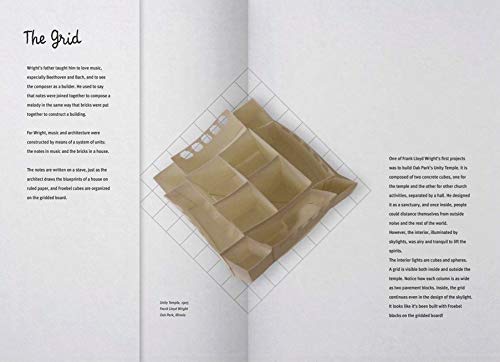
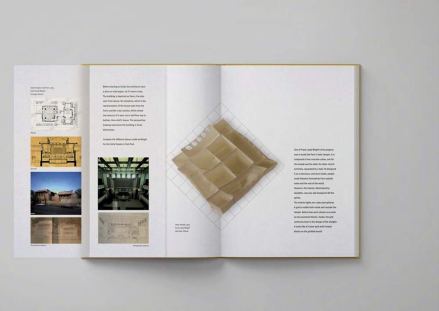
Wright’s father was also influential in his son’s education. He taught him to love music and “see the composer as a builder. For Wright, music and architecture were constructed by means of a system of units: the notes in music and the bricks in a house.” Just as notes are written on a staff, an architectural drawing is created on a grid. A detailed popup of Unity Temple built in 1908 in Oak Park, Illinois demonstrates how the building is positioned on a grid while a fold-out panel presents images of a floor plan, a cross section, a perspective drawing, and two photographs—one of the exterior and one of the interior of this beautiful temple.

celebrate-picture-books-picture-book-review-frank-lloyd-wright-the-unit

Copyright Patricia Geis, 2019, courtesy of Princeton Architectural Press.

Wright is well-known for setting his buildings in harmony with their surroundings. In her chapter “The Landscape,” Geis explains that Wright believed all buildings should adhere to “‘organic architecture,’” which meant they should “be in harmony with the landscape, respect the materials of construction, and respond to the need of the client.” She goes on to talk about Taliesin, the house, studio, and farm where he opened a school of architecture in 1932,, and Taliesin West in Arizona. These two landmarks are presented first with small framed photos (which cleverly mirror pictures on an art gallery wall) that open up to show how the buildings blend in with the environment and second with foldouts that include interior and exterior photographs as well as accompanying text.

celebrate-picture-books-picture-book-review-frank-lloyd-wright-the-grid

Copyright Patricia Geis, 2019, courtesy of Princeton Architectural Press.

Fallingwater, built in 1936, is one of Wright’s most famous designs, and with the pull of a tab, readers can transform the waterfall that hosts this house into the showstopper it became. More photographs and text present Wright’s philosophy about the house and land as well as the level of detail that went into building it—even to his choice to paint “the upper part the same color as the underside of a rhododendron leaf.”

celebrate-picture-books-picture-book-review-frank-lloyd-wright-the-grid-2

Copyright Patricia Geis, 2019, courtesy of Princeton Architectural Press.

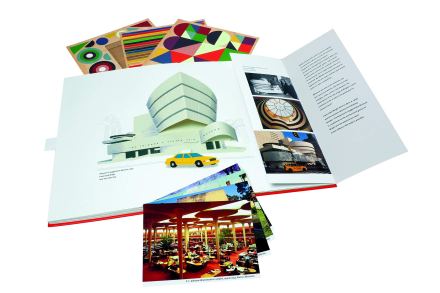
“Wright believed that every house should fit its inhabitants, like a made-to-measure suit.” To see just how he accomplished creating one-of-a-kind houses, readers can flip through a portfolio of five postcards, each of which presents a color photograph of the exterior of the house on the front and a description and interior photographs on the back. Visitors to the Guggenheim Museum in New York have experienced how Wright brought “the forms of nature to the city.” Shaped with the spiral of a snail’s shell, the museum showcases the art collection of Solomon r. Guggenheim, who bought “the works of such avant-garde artists as Kandinsky, Klee, Picasso, and Mondrian. Perhaps Wright’s connection with some of these artists through their common adoption of Froebel’s games early in their development is one reason the museum and the art work so well together.

A natural teacher, Wright would no doubt invite readers of this book to do some architectural exploration of their own, and so Geis has included sheets of card stock blocks, shapes, cubes to build, and other elements as well as a grid for children to play with.

celebrate-picture-books-picture-book-review-frank-lloyd-wright-postcards

Copyright Patricia Geis, 2019, courtesy of Princeton Architectural Press.

Patricia Geis is an engaging and compelling tour guide on this absorbing survey of Frank Lloyd Wright’s life that spanned from 1867 to 1959 taking in Reconstruction, “the Industrial Revolution, the coming of electricity, two world wars, and the invention of television.” Her clear and straightforward storytelling draws readers in with intriguing details, information about his childhood, and sprinkled-in direct appeals for them to look closer at or notice something in the photographs. Geis does an excellent job of connecting Wright’s early influences to his later work and his architectural philosophies to his finished projects. Each two-page spread creates a chapter of sorts, making it easy for kids and adults to dip into the book as they wish or to read it all in one sitting. Charming illustrations of wanna-be architects on various pages invite kids along on this beautiful and beautifully done journey of discovery.

A stunning book that any child—or adult—would cherish, Meet the Architect! Frank Lloyd Wright is highly recommended for anyone interested in architecture or any of the arts. I would also encourage readers to check out the other books in this series, including Meet the Artist! books about Henri Matisse, Pablo Picasso, Alexander Calder, Vincent van Gogh, and Leonardo da Vinci. If you are looking for a unique gift for a teacher or someone on your list, you can’t go wrong with this book.

Ages 7 – 12 and up

Princeton Architectural Press, 2019 | ISBN 978-1616895938

You can learn more about Patricia Geis, her books, and her art here.

celebrate-picture-books-picture-book-review-frank-lloyd-wright-cover

You can find Meet the Architect! Frank Lloyd Wright at these booksellers

Amazon | Barnes & Noble | Books-a-Million | IndieBound

Picture Book Review

December 16 – Celebrating Read a New Book Month with Art

celebrate-picture-books-picture-book-review-art-this-way-cover

About the Holiday

Discovering new books about a favorite subject or one that presents a topic in a new and interactive way is one of the joys of reading. Today and tomorrow, I am featuring two new books that engage kids in the study of art in interactive and exciting ways. Getting to see the world in unique and creative ways is one of the purposes of art, and these books get readers thinking about the whys and hows of some of the world’s influential artists.

Art this Way

By Tamara Shopsin and Jason Fulford


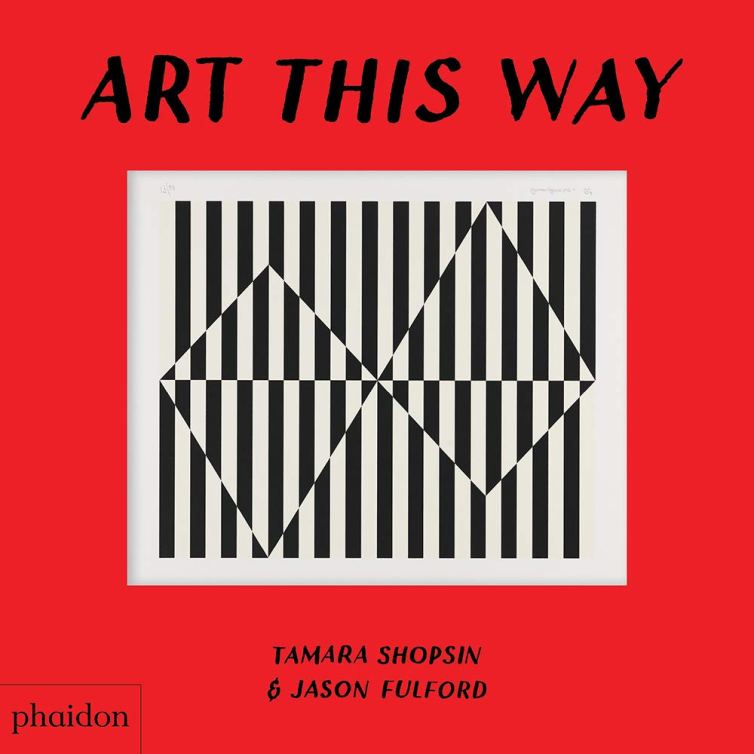
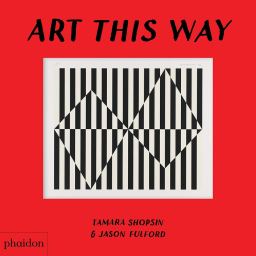
As children—who are naturally creative—know, art is not static but interactive and thought-producing. In Art This Way, author-artists Tamara Shopsin and Jason Fulford invite readers to “see like artists” by introducing them to twelve works of art in the collection of the Whitney Museum of American Art. The eye-catching cover with a cut-out window that frames Carmen Herrera’s Black and White screen print—a black-and-white-striped optical illusion—that, as children discover when they open the cover, looks the same upside down.

celebrate-picture-books-picture-book-review-art-this-way-women-and-dog

Copyright Tamara Shopsin and Jason Fulford, 2019. Courtesy of Phaidon.

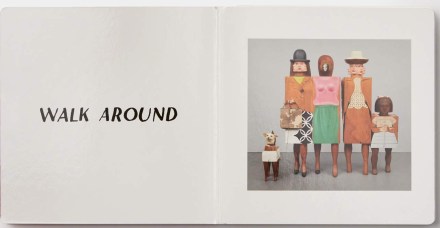
One photograph of Marisol’s sculpture Women and Dog—in which “each of the women is a self-portrait of the artist—can’t fully represent this piece, so readers are presented with three. These fold-out images allow children to “walk around” the sculpture to see the intriguing (and humorous) back and get an up-close view of one of the women’s head, which appears to be looking in all directions.

celebrate-picture-books-picture-book-review-art-this-way-look-up-open

Copyright Tamara Shopsin and Jason Fulford, 2019. Courtesy of Phaidon.

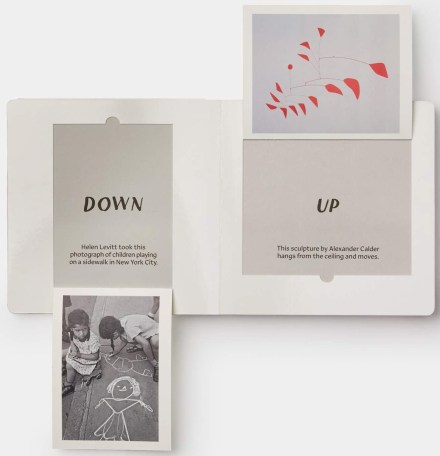
Five screen prints from Andy Warhol’s portfolio Flowers demonstrate the impact of identical images of flowers rendered in different colors. Folding out the pages puts these paintings side-by-side so that kids can choose their favorite or discuss the differences. Sometimes art isn’t at eye level, but below our feet or above our heads. Two doors—one that opens down and one that opens up—reveal two such examples. A photograph by Helen Levitt of children creating chalk drawings on a sidewalk and a whimsical mobile by Alexander Calder will captivate readers.

celebrate-picture-books-picture-book-review-art-this-way-look-close

Copyright Tamara Shopsin and Jason Fulford, 2019. Courtesy of Phaidon.

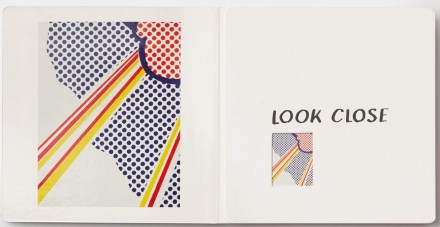
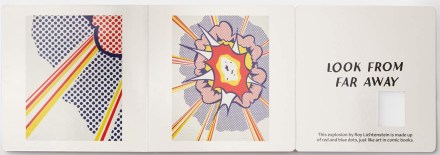
Lovers of comics and graphic novels will be drawn to the close-up and far-away views of an explosion by Roy Lichtenstein, which is composed of solid-color blasts and rays amidst clouds of red and blue dots. Cindy Sherman showed the personal side of art with photographs of “herself pretending to be different characters.” Kids get to try out their own artistic side with the mirror that beckons them to “look in” and try on the round glasses for size. Finally, one of the wrapped objects that have made Christo well-known around the world awaits readers, enticing them to guess what might be inside.

celebrate-picture-books-picture-book-review-art-this-way-look-far-away

Copyright Tamara Shopsin and Jason Fulford, 2019. Courtesy of Phaidon.

Each of the works of art presented here have been well-chosen by Tamar Shopsin and Jason Fulford to encourage young readers to discover art not only in museums but all around them and to explore their own creativity. Each page invites readers to talk about the piece and to try their hand at using it to inspire a piece of their own.

A wonderful and fun way to introduce youngest readers to the joys of creativity, Art This Way makes a unique addition to home, classroom, and public library board book collections.

Ages 2 – 4

Phaidon, 2019 | ISBN 978-071487721

To find a portfolio of work by Tamara Shopsin and in collaboration with her husband Jason Fulford, visit her website.

Celebrating New Book Month with Art Activity

celebrate-picture-books-picture-book-review-motivation-and-inspiration-day-craft

Make Art from Found Objects


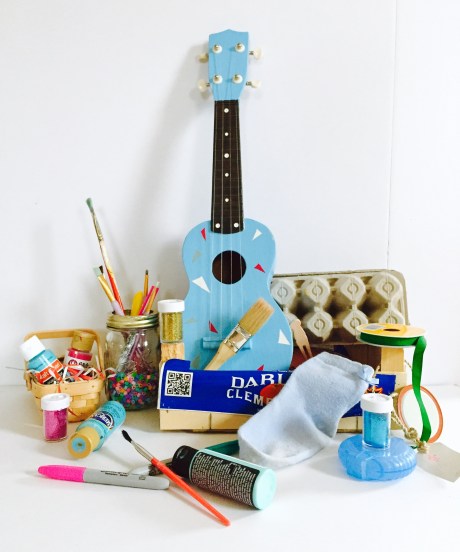
Each person finds inspiration in different things, places, and people. Today, try to create something new from the materials around you. Boxes, bottles, wire, magazines, cloth, wood, sponges—almost anything—can be transformed with some imagination. With those old socks, corks, flower pots, candle stubs, bits of ribbon, clementine crate, paint, glitter, beads, and more, you can make something useful, a decoration for your room, or even a gift for a friend!

celebrate-picture-books-picture-book-review-art-this-way-cover

You can find Art This Way at these booksellers

Amazon | Barnes & Noble | Books-a-Million | IndieBound

Picture Book Review
December 12 – Celebrating Read a New Book Month with STEM

celebrate-picture-books-picture-book-review-phyics-animated-cover

About the Holiday

Today and tomorrow I will be celebrating Read a New Book Month with books that present the excitement and wonder of science through familiar activities and objects. Introducing young children to the way things work in nature and through engineering helps them make sense of what they see and experience in their everyday life. Books like these make great gifts not only for science buffs but for all kids!

Physics Animated

Written by Tyler Jorden | Illustrated by Elsa Martins


From that moment when Isaac Newton was hit on the head by a falling apple, people have been fascinated with physics. In this clever and interactive board book, young readers can learn about Newton’s three laws of physics through wheels to spin, tabs to pull, and elements to push that introduce “big words” and other vocabulary that budding scientists will be proud to learn. Examples for each law come straight from a child’s day of play or experience to make them easily understood. Children will also be able to apply the knowledge they gain within these pages to other activities they perform every day.

Readers meet Isaac Newton as “a man who liked to watch the world around him. He noticed that everything could be explained by three simple laws.” While Newton ponders, he gazes out of a window where children can move a wheel to make birds fly in the air and fish swim in a lake. Newton’s first law—inertia—is introduced with a simple sentence that “an object will stay still unless something pushes or pulls on it.” Accompanying this explanation is an image of a boy kicking a ball to his dog. A wheel allows children to move the ball from the boy to the dog.

celebrate-picture-books-picture-book-review-physics-animated-centrifugal-force

Image copyright Elsa Martins, 2019, text copyright Tyler Jorden, 2019. Courtesy of Familius.

The second part of the law of inertia, which states that an object in motion will keep moving until something stops it, is demonstrated through a tab that moves a sliding sled with two little girls aboard into a fluffy snowbank. For Newton’s second law—force = mass x acceleration—kids help out a bicycle rider, and the force of gravity is accomplished as kids pull a dropped ice-cream scoop toward the ground.

How can we stand firmly on the floor or ground? That question is answered by Newton’s third law that states “when you push on something, it pushes back just as much.” So when we stand on the floor, “our feet push on the floor, and the floor pushes back on us.” Examples of this law are buoyancy, centrifugal force (for which readers push the wheel to send two roller coaster riders around the loop-de-loop), centripetal force (demonstrated with a swing that kids can push back and forth), lift, and thrust. Thrust is depicted with a rocket ship blasting off into space. As readers pull up on the tab to launch the rocket, they’re sure to feel their own scientific understanding soar.

celebrate-picture-books-picture-book-review-physics-animated-centripetal-force

Image copyright Elsa Martins, 2019, text copyright Tyler Jorden, 2019. Courtesy of Familius.

Tyler Jorden’s easy-to-understand definitions of Newton’s laws are just right for readers learning vocabulary that will help them to recognize their own activities as they play and work around the house as well as to comprehend these scientific concepts when they get to school. When terms and ideas like these are introduced at an early age, they can become as familiar as actions, such as push, pull, drop, and slide, that they describe. Jorden’s pages give adults excellent examples to begin discussions and of these concepts that can lead to fun, hands-on learning.

Elsa Martins’ colorful interactive illustrations take kids out to the park, a snow-covered hill, a bike trail, a schoolyard, a lake, an amusement park, and into the sky where they can make the natural forces and Newton’s laws work for themselves. Martins’ choices of images allow for in-depth discussions as readers pull and push the wheels and tabs. For instance, the biker who accompanies Newton’s second law can “pedal” faster or slower depending on how quickly the tab is pulled, letting kids and adults talk about things such as the rate of pedaling, if the rider was carrying a heavy backpack, and if the biker was going up or down a hill. The adorable children on each page make for fun friends to join on this scientific exploration.

As enjoyable and entertaining as it is educational, Physics Animated will get young readers excited about learning and make them proud to know about such “grown-up” topics. (They even get to drop that apple on Isaac Newton’s head!) Sure to spark lots of experiments, the book would be a wonderful addition to home, classroom, and public library collections. 

Ages 4 – 7

Familius, 2019 | ISBN 978-1641701327

To learn more about Elsa Martins and view a portfolio of her art, visit her website.

Read a New Book Month with STEM Activity

celebrate-picture-books-picture-book-review-newton's-laws-word-search-puzzle

Get Moving with Newton’s Laws! Word Search Puzzle


Find the seventeen words associated with Isaac Newton’s Three Laws of Motion in this printable word search puzzle.

Get Moving with Newton’s Laws! Puzzle | Get Moving with Newton’s Laws! Solution

celebrate-picture-books-picture-book-review-phyics-animated-cover

You can find Physics Animated at these booksellers

Amazon | Barnes & Noble | Books-a-Million | IndieBound

Picture Book Review

December 6 – Mitten Tree Day

celebrate-picture-books-picture-book-review-the-mitten-tree-cover

About the Holiday

It’s a tradition here at Celebrate Picture Books to commemorate the holiday with the book that started it all. Originally published in 1997, The Mitten Tree has endured and continues to spark programs in schools, libraries, and communities around the country. The feel of a cozy mitten on freezing fingers is one of the luxuries of wintertime. But where did mittens come from? You might be surprised to discover that the word “mitten” comes from the French word mitaine, which was an old nickname for a cat, because early mittens were typically made of animal fur. The earliest mittens, dating to around 1000 AD, were used as sheaths for gloves, adding extra protection for cold hands. So now that it’s time to get out favorite mittens or buy (or knit) a new pair, enjoy the season with today’s book!

The Mitten Tree

Written by Candace Christiansen | Illustrated by Elaine Greenstein


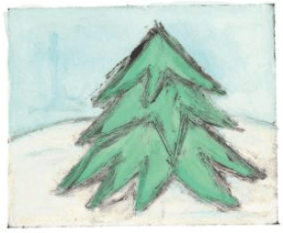
In a small house at the end of a lane Sarah lives all alone. Her own children have grown and moved away, but as she watches the kids gather at the blue spruce tree to wait for the school bus she remembers all the years that she walked her son and daughter to this same spot. As she makes her way down the lane to her mailbox, she wishes the children will wave and smile, but they never seem to notice her. Still, it makes Sarah smile to see them.

celebrate-picture-books-picture-book-review-the-mitten-tree-sarah

Image copyright Elaine Greenstein, 2009, courtesy of Fulcrum Publishing.

One winter morning Sarah notices all the kids throwing snowballs and making snowmen—all except one little boy dressed all in blue who lacks the mittens needed to join his friends. All day Sarah worries about the boy with no mittens. As the sun goes down Sarah digs “through the basket of yarn scraps she had saved for many years.” She finds her needles and four shades of blue wool. Then Sarah begins to knit.

With the rising sun Sarah hurries to the bus stop and hangs the new blue mittens on the spruce tree. Then she hides behind a hedge to watch. The little boy in blue is the first to arrive at the bus stop. When he sees the mittens hanging there, he tries them on and finds that they fit perfectly. With a big smile he makes “a perfect snowball” and throws “it high into the winter sky.” Soon Sarah sees a little girl with mismatched mittens. That night she finds the perfect color of wool and knits a pair to match the girl’s red coat.

celebrate-picture-books-picture-book-review-the-mitten-tree-blue-sprce

Image copyright Elaine Greenstein, 2009, text copyright Candace Christiansen, 2009. Courtesy of Fulcrum Publishing.

Every morning Sarah watches the children, looking for any who have no mittens. During the day her needles are busy making gifts for these children. The next morning before anyone else is up she rushes to the spruce tree and adorns it with the mittens she has knitted. The children have warmed to the “game,” and each day search “under every branch and bough for another pair of mittens.” Once or twice Sarah thinks the boy with her blue mittens sees her, but his eyes don’t linger.

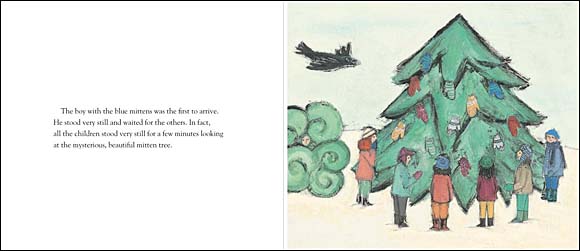
On the day before the school’s winter break Sarah fills her knitting basket with the latest mittens she’s knit. She heads out the door and down the lane. When she reaches the blue spruce, she hangs “mittens on every branch.” When the children arrive, they stand “very still for a few minutes looking at the mysterious, beautiful mitten tree.” As they board the bus, each child is wearing a new pair of mittens. Sarah sees them appear one by one in the bus windows, but none see Sarah.

celebrate-picture-books-picture-book-review-the-mitten-tree-basket

Image copyright Elaine Greenstein, 2009, text copyright Candace Christiansen, 2009. Courtesy of Fulcrum Publishing.

Sarah goes home feeling happy and with her heart as full as it was “when the sounds of her own children had filled her house.” But what awaits Sarah? As she climbs the stairs to her porch, she notices a “basket woven with thick brown vines and decorated with a large white bow.” She’s surprised to see that it is filled to the brim with balls of colorful yarn. Even today Sarah knits new mittens for all the children in town, and “every time her basket is empty, a new full one appears.” Sarah doesn’t know who brings the basket, just as the children don’t know who supplies the mittens. “But someone must….”

Screen Shot 2018-12-05 at 5.01.00 PM

Candace Christiansen’s heartwarming story of kindness given and reciprocated will inspire kids to see that anyone can make a difference in the lives of others by using their talents to fill a need. This gentle, quiet tale offers suspense that will pique readers’ curiosity from page to page, and the mystery surrounding the never-empty basket of wool provides a satisfying and moving ending that also reassures kids that deeds of thoughtfulness and compassion are noticed. The grandmotherly Sarah and familiar school bus stop setting and winter activities will resonate with readers.

Elaine Greenstein’s softly colored, folk-style illustrations give the story a cozy feeling—perfect for cold-weather reading, The variety of intricately knitted mittens, with their hearts, stripes, snowflakes and cables, are charming, and the enchanting image of the blue spruce decorated with mittens makes it easy to see how The Mitten Tree continues to inspire so many acts of kindness and charity.

Ages 3 – 7

Fulcrum Publishing, 2009 (paperback) | ISBN 978-1555917333

Mitten Tree Day Activity

celebrate-picture-books-picture-book-review-mitten-match

Mitten Match & Coloring Page


Mittens often get lost or mismatched in the fun of winter activities. Find the pairs in this printable Mitten Match & Coloring Page and then decorate them!

celebrate-picture-books-picture-book-review-the-mitten-tree-cover

You can find The Mitten Tree at these booksellers

Amazon | Barnes & Noble | Books-a-Million | IndieBound

Celebrate Picture Books

December 4 – National Cookie Day

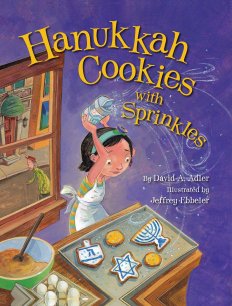
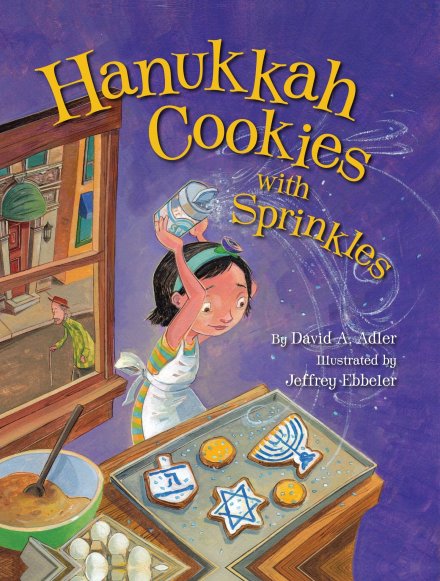
celebrate-picture-books-picture-book-review-hanukkah-cookies-with-sprinkles-cover

About the Holiday

Whether you call them cookies or biscuits, these yummy treats have been around for quite a long time. Originating in Persia in the 7th century, cookies conquered Europe by the 14th century and came to America with the earliest settlers. Of course cookies are great any time of the year, but the holidays just wouldn’t be the same without the delicious snap or soft melt-in-your-mouth goodness of favorite cookies. Baking together is one of the joys of the season for adults and kids, and you can bet that with each batch, good memories are being created too.

Hanukkah Cookies with Sprinkles

Written by David A. Adler | Illustrated by Jeffrey Ebbeler


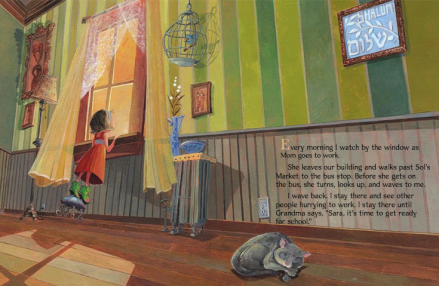
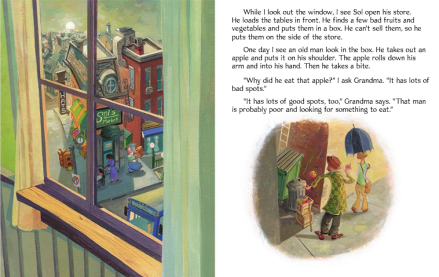
A little girl watches out the window every morning as her mother goes to work, seeing other people hurrying along too. Across the street is Sol’s Market, and every morning Sol puts out a box of bruised fruit and vegetables for anyone to take. One day, an old man “takes out an apple and puts it on his shoulder. The apple rolls down his arm and into his hand. Then he takes a bite.” Sara wonders why he ate an apple with bad spots, and her grandmother tells her that the man is “probably poor and looking for something to eat.”

celebrate-picture-books-picture-book-review-hanukkah-cookies-with-sprinkles-window

Image copyright Jeffrey Ebbeler, 2015, text copyright David A. Adler, 2015. Courtesy of Apples & Honey Press.

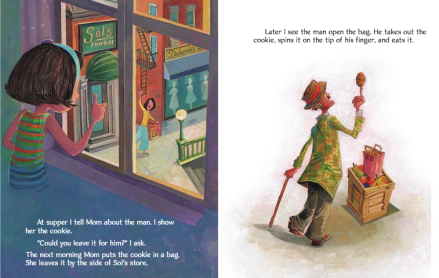
Sara thinks about the man all day at school. When snack time comes, she wraps the cookie her teacher gave her in her napkin and puts it in her pocket. The next morning, she asks her mom to leave it in the box at Sol’s Market. Later, she sees the man find the cookie and eat it. The next day at school, Sara tells her friends about the man, and they wrap up more cookies and their teacher gives them a container of juice to add to the bag. At home, Sara helps her mom make the man a sandwich to go with the cookies.

On Friday, Sara and her family go to synagogue and stay for the oneg Shabbat get together afterward. There, she sees the old man enjoying challah and grape juice. “After that, every day, when the man comes by Sol’s there is something for him to eat.” At school the kids are getting ready for Hanukkah. Their teacher talks about the origins and meaning of Hanukkah then the children make menorahs with “tiles, bottle cap, paint, and glue.” Sara brings her menorah home. Her grandmother says that it’s beautiful and puts it in the window. Before Sara’s mother comes home, she and her grandmother make latkes and Hanukkah cookies shaped like menorahs and dreidels with extras to spare.

celebrate-picture-books-picture-book-review-hanukkah-cookies-with-sprinkles-market

Image copyright Jeffrey Ebbeler, 2015, text copyright David A. Adler, 2015. Courtesy of Apples & Honey Press.

Later, Sara shows her mother her new menorah and asks her to put the one she made last year in the box at Sol’s. At first her grandmother is afraid she is throwing it out, but Sara tells her she is “‘giving tzedakah. I’m giving it to someone who has less than we have,’” she says. The bag also contains “latkes, cookies with sprinkles, and Hanukkah candles.” The next morning, she sees the old man find her gift and wipe away tears that she hopes are happy ones.

On Friday, Sara helps her mom and grandma fix a Shabbat and Hanukkah dinner, and at synagogue she asks if they can invite the old man to their house to join them. After speaking to the rabbi and learning that the man’s name is Morris Berger and that he helps at the synagogue, Sara and her mom ask if he’d like to join them.

celebrate-picture-books-picture-book-review-hanukkah-cookies-with-sprinkles-school

Image copyright Jeffrey Ebbeler, 2015, text copyright David A. Adler, 2015. Courtesy of Apples & Honey Press.

Mr. Berger says yes. During dinner he talked about the days when he worked in a circus. He shows Sara some tricks and juggles small pieces of challah, which he then catches one-by-one in his mouth. After dinner, Sara’s mom brings out a plate of the Hanukkah cookies she made. “Now Mr. Berger knows who has been leaving cookies, sandwiches, and milk for him. He knows who left the menorah and candles.” Quietly, he says thank you.

Mr. Berger shows Sara a magic trick by pulling a cookie from behind her ear and making it disappear in one bite. “‘That’s okay,’” she says. “‘We have lots to share.’” Morris says he has things to share too and offers to teach Sara magic tricks and tell circus stories. Sara wants to learn how to juggle, but juggling, Mr. Berger says, “takes lots of practice.” Sara’s mom agrees that she will need many lessons. “Morris smiles. He knows that lots of lessons mean lots more Shabbat dinners with us.”

An Author’s Note about the meaning and traditions of Hanukkah, the game of dreidel, and thinking about giving tzedakah follows the story.

celebrate-picture-books-picture-book-review-hanukkah-cookies-with-sprinkles-cookie

Image copyright Jeffrey Ebbeler, 2015, text copyright David A. Adler, 2015. Courtesy of Apples & Honey Press.

David A. Adler’s touching story about a little girl who sees someone in need and generously provides help is a heartening story for Hanukkah and any time of year. Adler’s straightforward storytelling, told from Sara’s first-person point of view, invites young readers to look out the window with her and join her as she saves a cookie for the old man and goes on to provide more food and finally companionship to him. The fact that Mr. Berger is a member of Sara’s synagogue reminds readers that people in need of help of all kinds are part of our community, are part of us. Readers will be charmed by Mr. Berger’s circus past and will learn from him that the gifts we have to share with others do not always need to be monetary to have value.

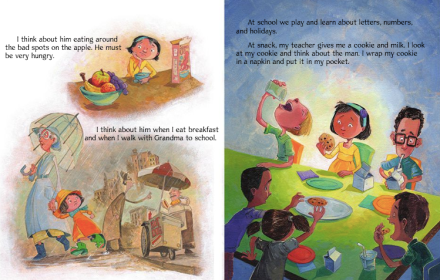
Jeffery Ebbeler’s enchanting illustrations of the city, complete with an adorably narrow Sol’s Market, take readers into Sara’s world, where she sees examples of people in need and those who have plenty. Sara’s contemplations about Mr. Berger and his plight are shown as she considers the full bowl of fruit on her kitchen table, watches someone ask for two hot dogs at the corner cart, and decides to save her cookie at school while the other kids eat theirs and reach for seconds. These same kids, however, happily give up their snack the next day to fill Sara’s bag for Mr. Berger. Classroom scenes and the image of Sara showering her cookies with sprinkles are familiar for all children celebrating holidays at school and at home. The family’s joyful Hanukkah dinner is doubly fun as Mr. Berger performs tricks that even the cat tries to do.

A moving story for Hanukkah and for sharing the spirit of giving all through the year, Hanukkah Cookies with Sprinkles is a fantastic addition to all home, school, and public library bookshelves.

Ages 4 – 8

Apples & Honey Press, 2015 | ISBN 978-1681155005

Discover more about David A. Adler and his books on his website.

To learn more about Jeffrey Ebbeler, his books, and his art, visit his website.

National Cookie Day Activity

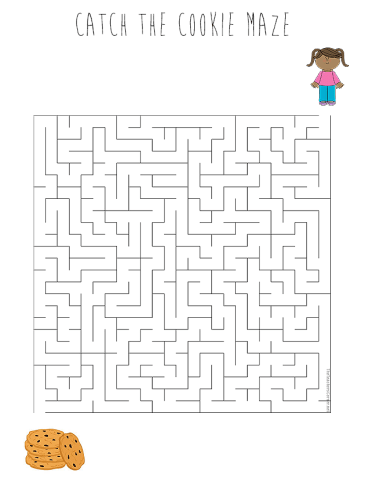
celebrate-picture-books-picture-book-review-cookie-maze

Catch the Cookie! Maze


Sometimes you just need a cookie! Help the little girl find her way to her favorite cookies with this printable Catch the Cookie! Maze and Solution.

celebrate-picture-books-picture-book-review-hanukkah-cookies-with-sprinkles-cover

You can find Hanukkah Cookies with Sprinkles at these booksellers

Amazon | Barnes & Noble | Books-a-Million | IndieBound

Picture Book Review
 

December 2 – Get Ready for Christmas

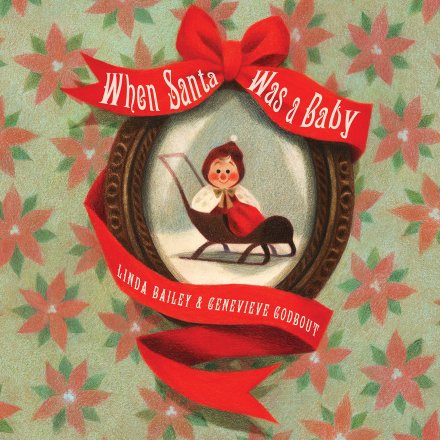
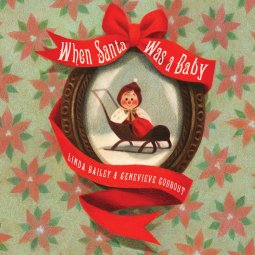
celebrate-picture-books-picture-book-review-when-santa-was-a-baby-cover

About the Holiday

For those who celebrate Christmas, Santa Claus’s visit is eagerly anticipated. Kids and adults alike all know about Santa’s workshop at the North Pole, his stable of magic reindeer, and his nighttime ride, but how did Santa become…well…Santa? You’ll find out in today’s book!

Tundra Books sent me a copy of When Santa was a Baby for review consideration. All opinions are my own.
When Santa Was a Baby

Written by Linda Bailey | Illustrated by Geneviève Godbout


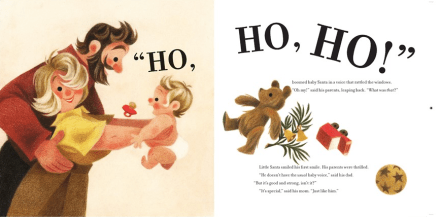
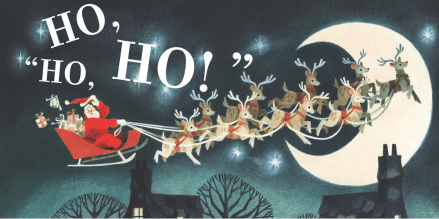
When Santa was a baby his parents loved his merry dimples and his “‘little nose…like a cherry,’” and when they tickled his tiny toes, expecting a gurgle or coo, they heard a booming “‘HO, HO, HO!’” As he grew older and learned his colors, Santa developed a distinct preference for red, so the “‘dandy blue pajamas from Aunt Mable’” went back in the drawer. “‘Maybe he’ll be a firefighter,’” said his mom.
celebrate-picture-books-picture-book-review-when-santa-was-a-baby-laugh

Image copyright Geneviève Godbout, 2015, text copyright Linda Bailey, 2015. Courtesy of Tundra Books.

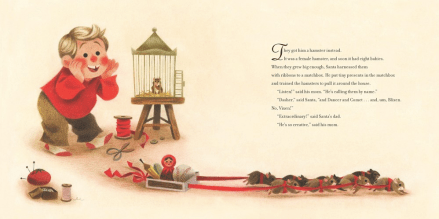
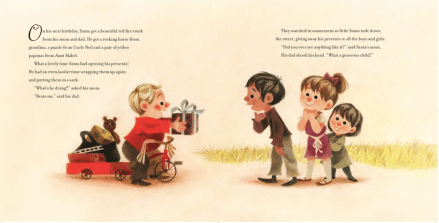
On his birthday, Santa had fun opening a passel of presents, including a toy firetruck from mom and dad, toys from Grandma and Uncle Ned, and “yellow pajamas from Aunt Mable.” But after he’d opened them, he wrapped them up again and gave them away to other children. On his next birthday, Santa asked for a pet that looked like a horse “that had horns and could pull a flying sled.” His parents weren’t sure about all this, so they got Santa a hamster, who soon had eight babies that loved pulling the matchbox full of little toys that Santa hitched them to. Santa’s dad though it was “‘extraordinary,’” and his mom said, “‘He’s so creative!’”
celebrate-picture-books-picture-book-review-when-santa-was-a-baby-hamster

Image copyright Geneviève Godbout, 2015, text copyright Linda Bailey, 2015. Courtesy of Tundra Books.

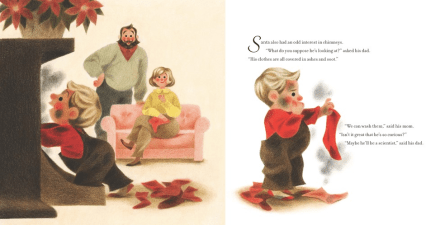
Santa was extraordinary in lots of other ways too. His curiosity for the cold blast from the refrigerator and the sooty chimney led his proud parents to think he might grow up to be a scientist. Santa had a best friend named Eldred, and together they loved to make toys and other things. As a teenager, he “knew his own mind” and even though “he didn’t always fit in with the crowd,” the other kids liked him, and, of course, “his parents thought he was wonderful.”

celebrate-picture-books-picture-book-review-when-santa-was-a-baby-chimney

Image copyright Geneviève Godbout, 2015, text copyright Linda Bailey, 2015. Courtesy of Tundra Books.

Now Santa is all grown up and has “followed his childhood dreams.” He has a crew of elves, led by Eldred, to make toys and he finally has the reindeer he always wanted. On Christmas Eve as he flies around the world, his parents “listen for his sleigh bells. They wave and blow kisses as Santa dips low over their house.” It’s just what they “always thought he’d do.”

Screen Shot 2019-11-28 at 2.22.33 PM

Image copyright Geneviève Godbout, 2015, text copyright Linda Bailey, 2015. Courtesy of Tundra Books.

Linda Bailey’s gentle, humorous tale of Santa Claus’ origins in a little boy who always knew who he was and followed his heart will delight children of all ages. With a sprinkling of descriptions about Santa that echo Clement Clarke Moore’s A Visit from St. Nicholas, Bailey’s storytelling fits nicely into the traditional image of Santa while revealing while answering kids’ questions about his generosity, the elves, his reindeer, and his North Pole home. Adults will appreciate the support Santa’s bemused parents show as their child grows up and their pride in the man their son is. Underlying Bailey’s story about Santa is an uplifting reminder for all kids to embrace who they are and to follow their dreams.

celebrate-picture-books-picture-book-review-when-santa-was-a-baby-gifts

Image copyright Geneviève Godbout, 2015, text copyright Linda Bailey, 2015. Courtesy of Tundra Books.

Geneviève Godbout’s slightly gauzy illustrations rendered in muted browns, greens, and golds punctuated with red bridge the past and the present with rustic details and universal hair and clothing styles, adorable hamster pets, and Christmas traditions. Children will giggle at the booming “Ho, Ho, Ho!” that erupts from baby Santa and the image of him standing naked (except for one red sock) in front of the open refrigerator with a fan blowing and a popsicle waiting on the table. Little readers will be happy to see that young Santa had an elf friend, who was equally comfortable being himself while wearing green and long, pointy-toed socks. Godbout’s images of the grown Santa at the North Pole and flying in his sleigh on Christmas Eve close out the story in a cheery and satisfying way.

Charming from beginning to end, When Santa Was a Baby would be an often-asked-for addition to Christmas story times from year to year and is highly recommended for home and library collections.

Ages Preschool and Up

Tundra Books, 2015 | ISBN 978-1770495562 (Hardcover) | ISBN 978-1101919163 (Board Book)

Discover more about Linda Bailey and her books on her website.

To learn more about Geneviève Godbout, her books, and her art, visit her website.

Get Ready for Christmas Activity

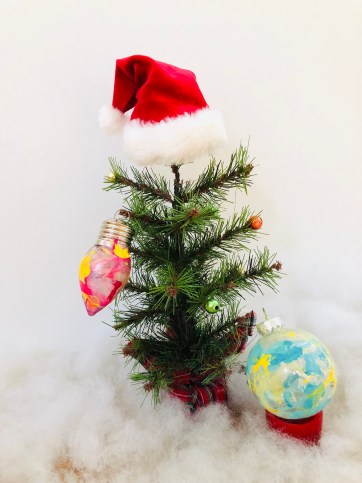
celebrate-picture-books-picture-book-review-christmas-ornaments-craft

Polish-Dipped Ornaments


These plastic ornaments swirled with colorful nail polish make eye-catching decorations for your tree. Make some to give to friends too!

Supplies

  • Plastic ornaments, available at craft stores
  • Nail polish in various colors
  • Plastic bowl or container, deep enough to dip the ornament into the water
  • Drying stand – I used a clear, plastic egg carton, or string for hanging ornaments to dry

Directions

Fill the plastic container with warm to hot water

  1. Using two or three colors, gently “paint” the water with the nail polish, using the brush or a toothpick in dots and swirls
  2. Slowly dip the plastic ornament into the water and turn it to pick up the nail polish floating on the top of the water
  3. To dry, place the ornament on a stand or hang with a paper plate, wax paper, or other paper to catch drips

celebrate-picture-books-picture-book-review-when-santa-was-a-baby-cover

You can find When Santa Was a Baby at these booksellers

Amazon| Barnes & Noble | Books-a-Million | IndieBound

Picture Book Review