March 12 – National Plant a Flower Day

About the Holiday

Spring is right around the corner and with it the beautiful blooms that color our yards, neighborhoods, and communities. In some places the flowers are already blossoming, while in others, people are eagerly waiting for the snow to melt. Whether you’re already planting or still looking forward to gardening, today’s book puts a creative and clever spin on nature that everyone in your family (or classroom) will really dig! 

Thank you to Twirl Books and Barbara Fisch at Blue Slip Media for sending me this book!

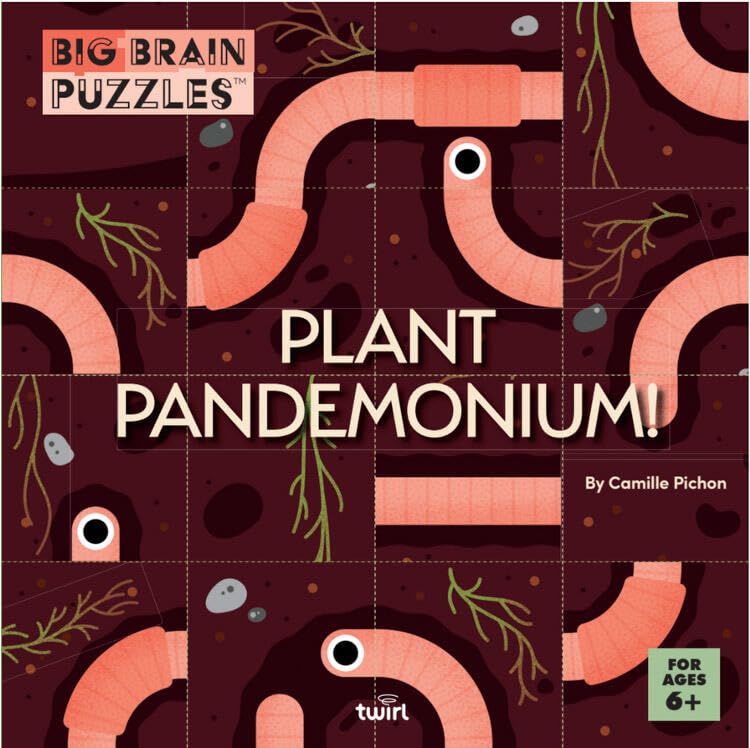
Big Brain Puzzles: Plant Pandemonium

By Camille Pichon


Kids can grow potted flowers, plant a garden, help worms wiggle and hide, and engage with other colorful flora and fauna with this one-0f-a-kind puzzle book! Children who love brain teasers, mazes, creating patterns, manipulating objects, and feeling the pride and satisfaction of completing a challenge will be awed by this beautifully illustrated book.

Each of the five plant-themed puzzles (Water Lily Carousel; Flutter, Flutter, Butterfly; Underground Paths; Plant Pandemonium; and Vegetable Jumble) are divided into three levels of difficulty and nine illustrated challenges to follow, resulting in 45 total games. Beyond these, kids can even devise new challenges for themselves or their friends to complete.

These hands-on puzzles will wow kids with their interactive elements that include wheels, moveable strips, sliding tiles, flaps that lift in multiple directions, and tokens that slide up, down, left, and right. While children work away on the possibilities, they’re continuously charmed by Camille Pichon’s bright, surprising, and quirky illustrations, in which adorable insects, snails, worms, and other creatures also appear to say “hi” along the way.

Far removed from one-and-done puzzles, Plant Pandemonium is a marvel of art and engineering that offers plenty of repeat play while immersing children in a rich environment that exercises their critical thinking and problem-solving skills, observation skills, fine motor dexterity, patience, and even memory.

Big Brain Puzzles: Plant Pandemonium will captivate puzzle lovers of all ages and would be a favorite go-to book on any home or classroom bookshelf. It would make a fantastic take-along book for car trips, outings, or anywhere waiting is expected. The book also makes a perfect gift for any puzzle lover.

Ages 6+

Twirl, 2026 | ISBN 978-2408061814

Camille Pichon is a graphic designer and paper engineer who specializes in children’s books. She lives in Paris, France. Visit her at camillepichon.com.

National Plant a Flower Day Activity

celebrate-picture-books-picture-book-review-flower-pot-stake-craft

Flower Garden Stakes


It’s fun to start a garden from seeds, but how do you remember what you’ve planted where? With these easy to make garden stakes, you can mark your pots with style! 

Supplies

  • Wide craft sticks
  • Chalkboard paint in various colors
  • Colorful chalk
  • Paint brush

Directions

  1. Paint the stakes with the chalkboard paint, let dry
  2. With the chalk, write the name of the different flowers or plants
  3. After planting your seeds, stick the stake in the pot 
  4. Wait for your seeds to grow!

You can purchase Big Brain Puzzles: Plant Pandemonium from these booksellers

Amazon | Barnes & Noble | Bookshop

Picture Book Review


August 21 – It’s Family Fun Month

celebrate-picture-books-picture-book-review-the-quest-for-a tangram-dragon-cover

About the Holiday

As summer activities transition into going-back-to-school prep and starting a new year of learning, there’s still time to enjoy fun with the family. Whether you plan special events at home, take trips to local attractions, or take a faraway excursion, your shared experiences as a family will make lifelong memories!

Thanks to Bloomsbury Children’s Books for sharing a copy of The Quest for a Tangram Dragon with me for review consideration.

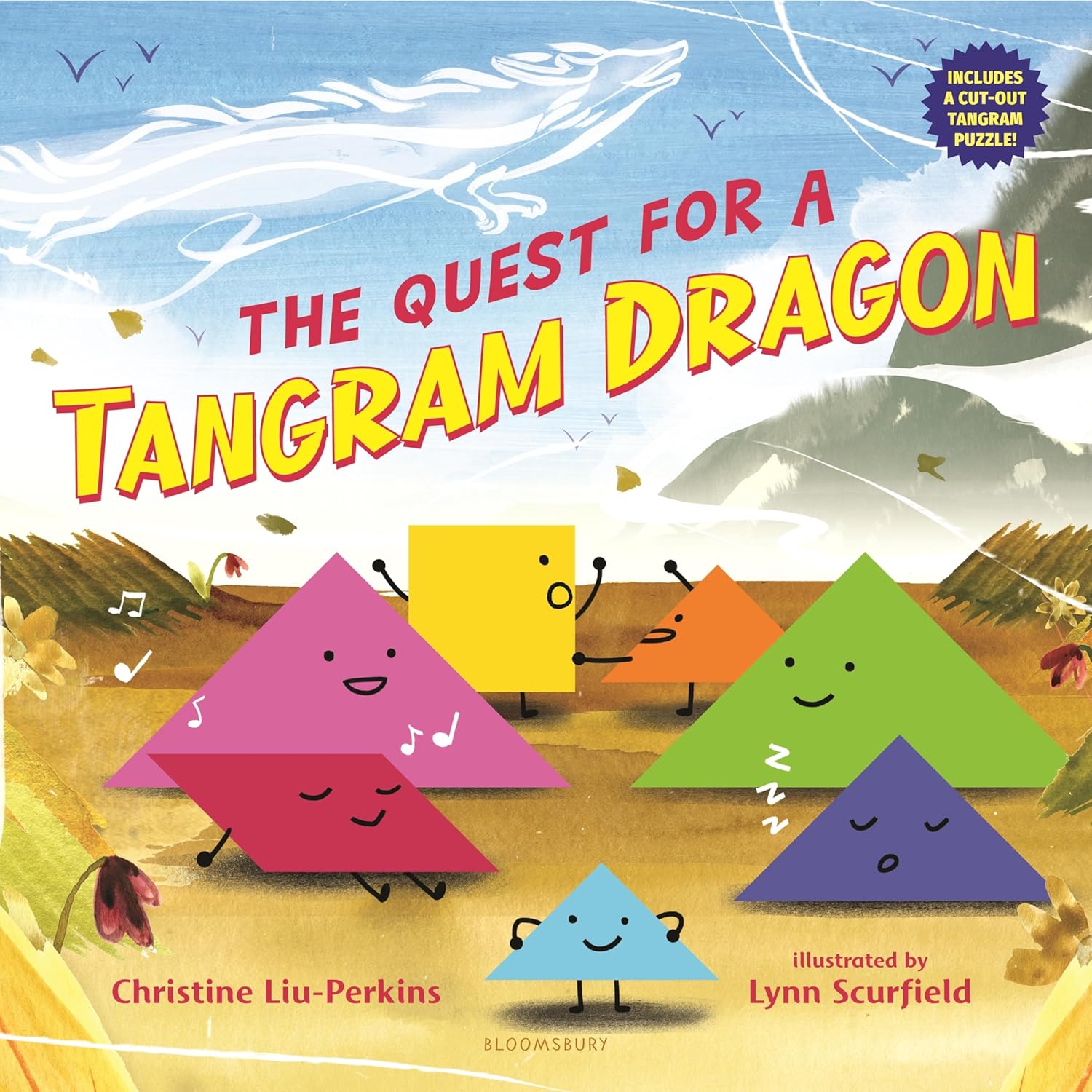
The Quest for a Tangram Dragon

Written by Christine Liu-Perkins | Illustrated by Lynn Scurfield

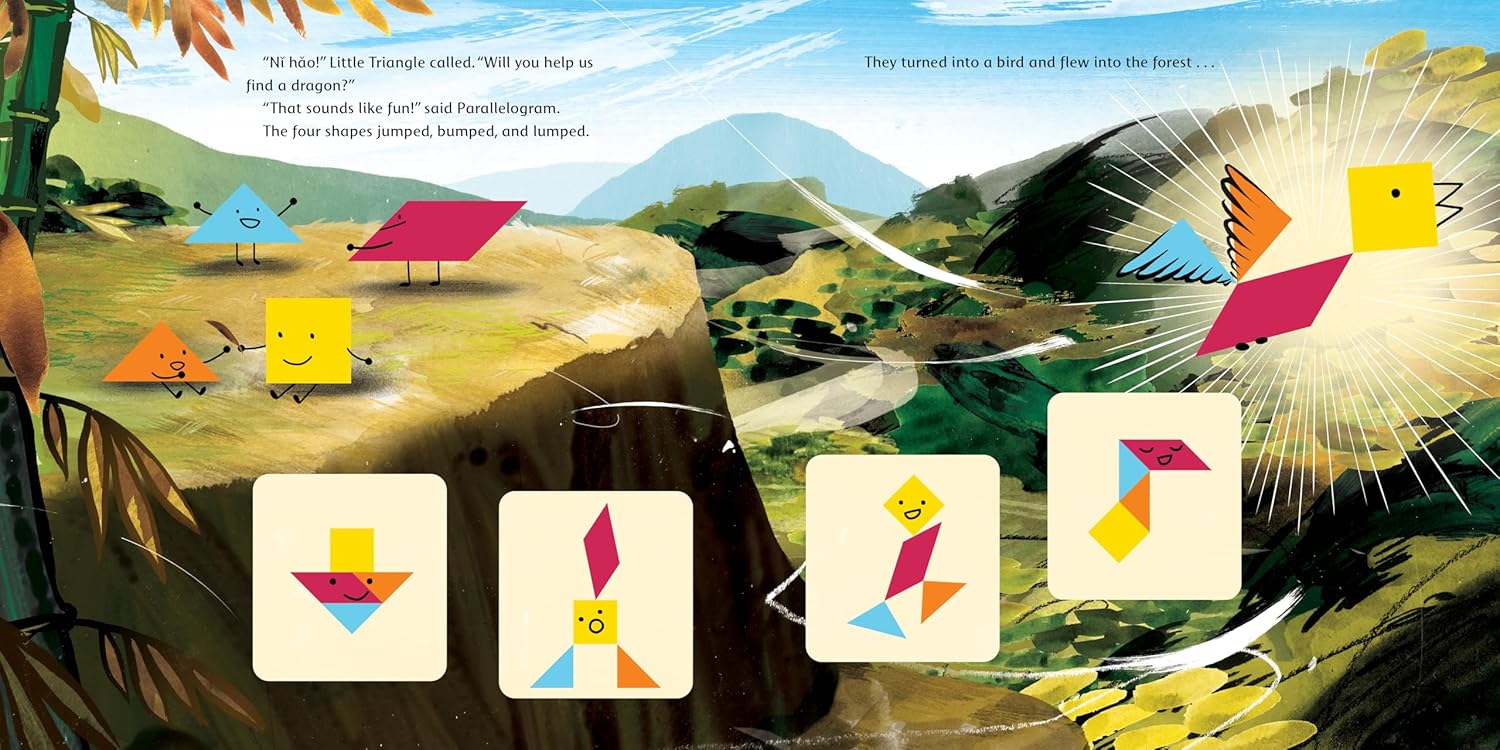
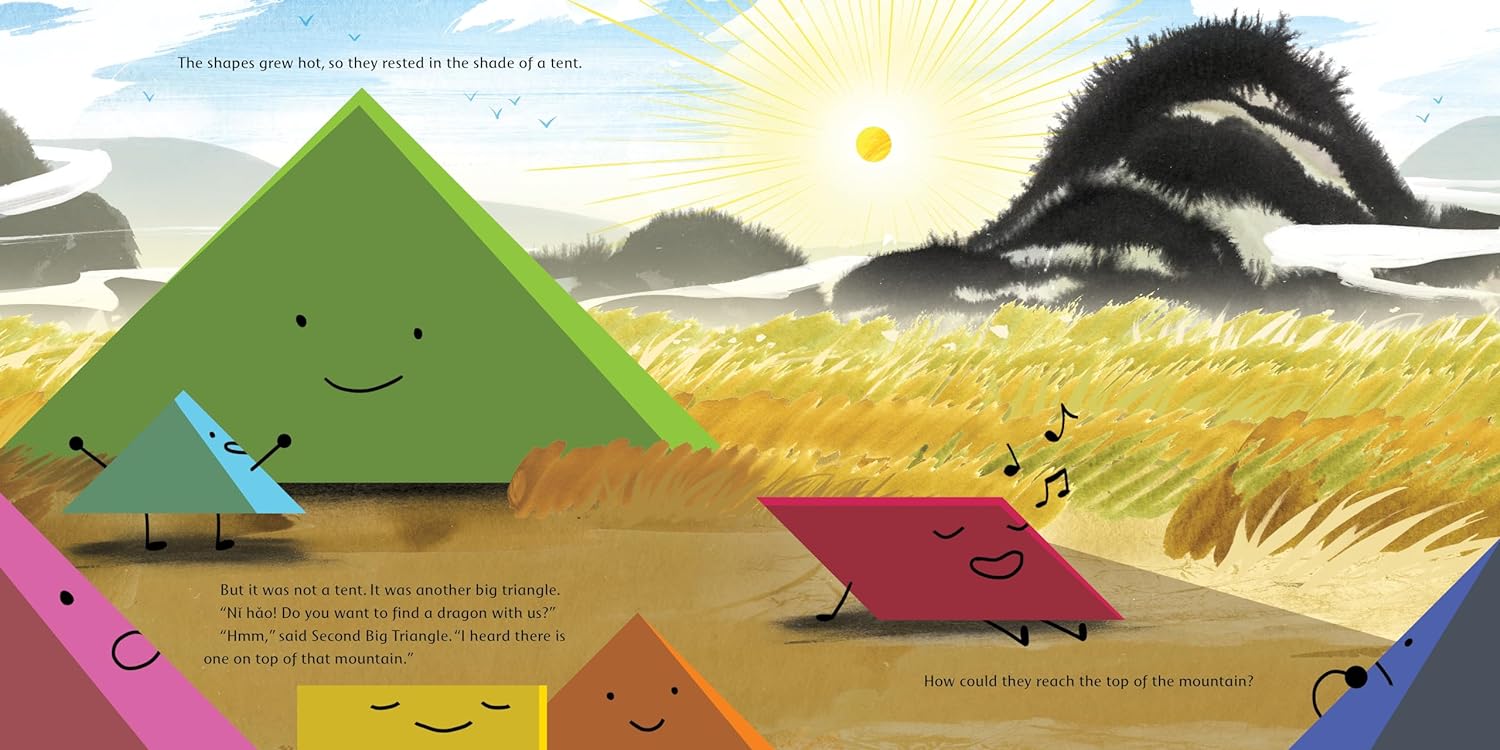
Little Triangle, tired of waiting for rain to quench the thirst of the brown grass and wilted leaves of the countryside, “decided to search for a good, kind dragon.” Along the way, it played around with all of the things it could make and do, but then it fell point over point down a hill and right into another small triangle. “Nǐ hǎo! Hello!” Little Triangle said in greeting. They talked like old friends, and Second Little Triangle agreed to join Little Triangle’s search for a dragon. They needed to cross a vast meadow, so they flipped and flopped and made three shapes: a bigger triangle, a square, and a parallelogram. None of these shapes would help them, though.  But when they “bumped heads, they turned into a butterfly” and soared into the sky. 

celebrate-picture-books-picture-book-review-the-quest-for-a tangram-dragon-bird

Illustration copyright Lynn Scurfield, 2024. Text copyright Christine Liu-Perkins, 2024. Courtesy of Bloomsbury Children’s Books.

They didn’t find a dragon, but they did see a square. Square was happy to help them on their quest, but how? The three new friends “switched, swapped, and swiveled. Soon they hit on just the right configuration and “turned into a bat.” They listened carefully, but instead of a dragon, they heard another shape singing and dancing and found Parallelogram. It didn’t take long for the four shapes to be off again on their adventure.

celebrate-picture-books-picture-book-review-the-quest-for-a tangram-dragon-tent

Illustration copyright Lynn Scurfield, 2024. Text copyright Christine Liu-Perkins, 2024. Courtesy of Bloomsbury Children’s Books.

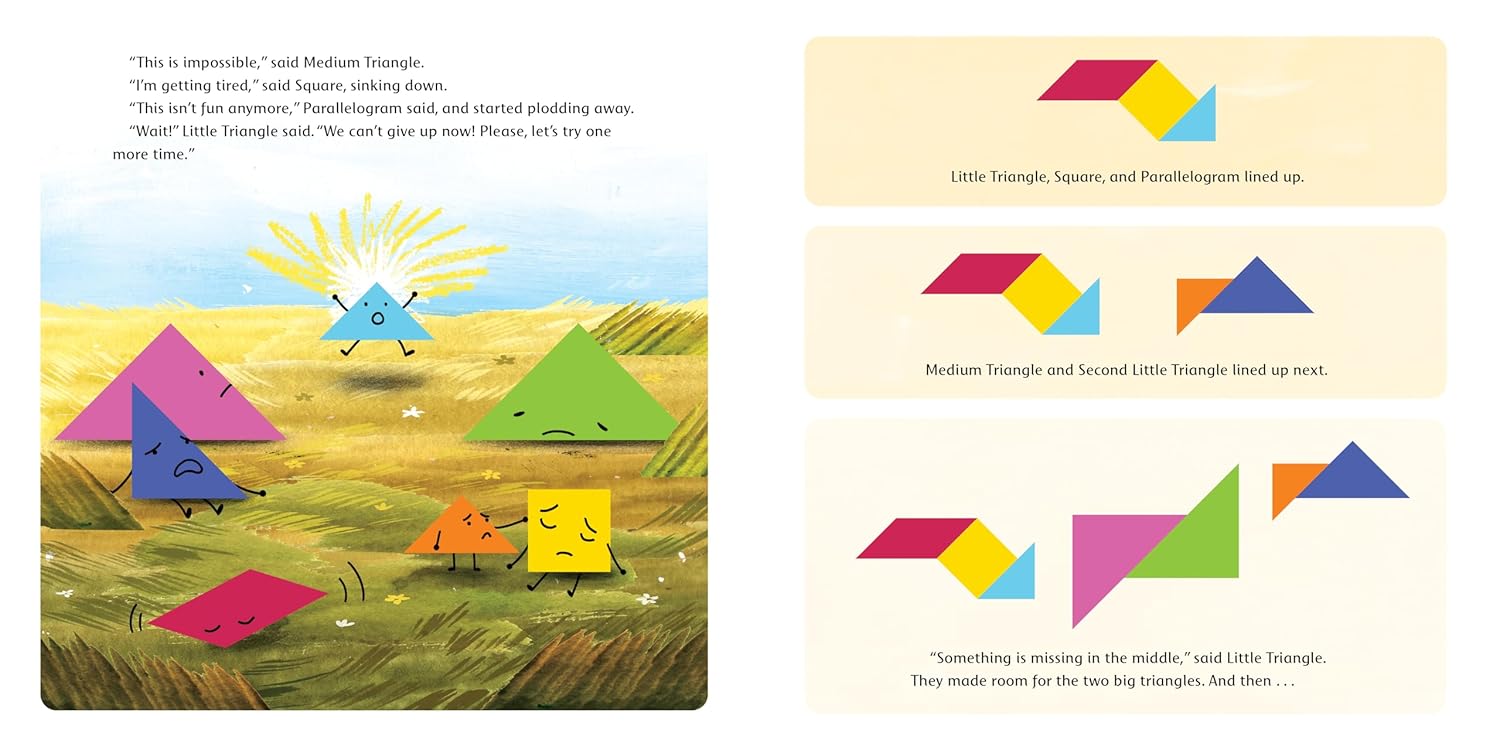
While their search resulted in no dragon sightings, they did meet Medium Triangle, Big Triangle and Second Big Triangle. The group continued shape shifting and looked high and low, but they never spotted a dragon. At last, weary and dejected, the shapes were ready to give up their quest, but Little Triangle convinced them to try one more time.

celebrate-picture-books-picture-book-review-the-quest-for-a tangram-dragon-getting-tired

Illustration copyright Lynn Scurfield, 2024. Text copyright Christine Liu-Perkins, 2024. Courtesy of Bloomsbury Children’s Books.

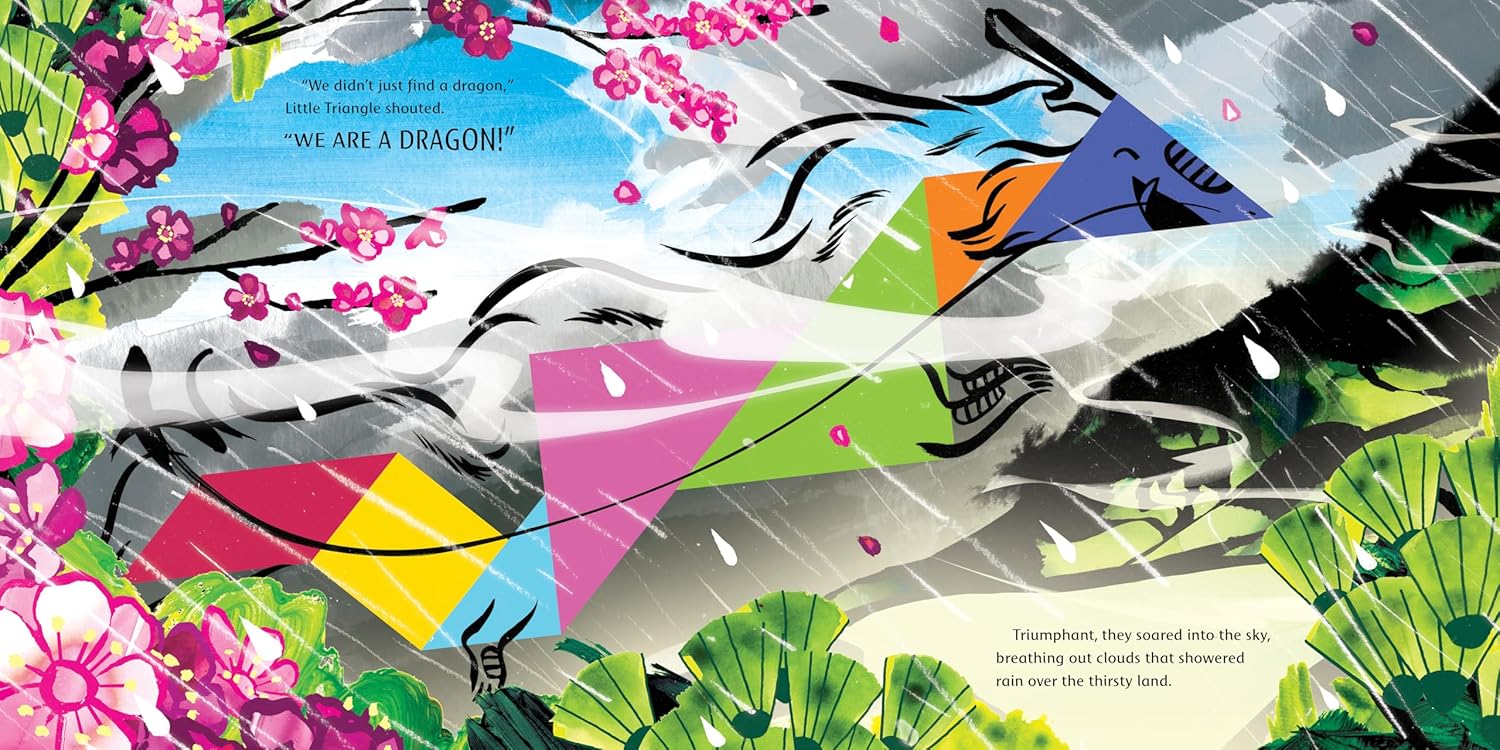
The shapes chose partners and lined up: Little Triangle, Square, and Parallelogram; Medium Triangle and Second Little Triangle; and Big Triangle and Second Big Triangle. Then they got in position and . . . discovered something amazing! They didn’t need to search for a dragon any longer—they were a dragon! “Triumphant, they soared into the sky, breathing out clouds that showered rain over the thirsty land.”

In an Author’s Note following the story, Christine Liu-Perkins explains how to use tans to create geographical configurations, noting that while traditionally all seven tans are used to make a tangram, with her book she wants to encourage young beginners to experiment with fewer tans while building skills. She also reveals the positive meanings of the animals created throughout her story in Chinese culture. She goes on to explain the history of tangrams as well as their value in teaching problem-solving skills, logical thinking, and a vast array of mathematical concepts.

A colorful set of the seven tans found in the story are included for readers to cut out from a flap on the book’s jacket.

celebrate-picture-books-picture-book-review-the-quest-for-a tangram-dragon-make-a-dragon

Illustration copyright Lynn Scurfield, 2024. Text copyright Christine Liu-Perkins, 2024. Courtesy of Bloomsbury Children’s Books.

Christine Liu-Perkins’ story will excite kids with an engaging and friendship-filled adventure while introducing them to the fun and creative power of tangrams. As the group grows with the addition of tans, Liu-Perkins uses consonance and rhyming to mirror the way tans can be flipped and swiveled to fit together to create different shapes. The mystery of which creatures or objects the friends will experiment with while seeking just the right one to extend their search will keep readers eagerly turning the pages.

Liu-Perkins layers her story with a series of obstacles the tans need to overcome in order to reach their goal. These include physical barriers, accidental mishaps, and even their own disappointment and exhaustion. As the tans work through these obstacles, kids see how cooperation, understanding, and communication build friendships and contribute to the success of any undertaking. Their final discovery of the dragon is a pleasure.

Set against lush natural backgrounds in Lynn Scurfield’s mixed-media illustrations, the colorful tans create a vivid focal point for kids to easily see what shapes they will make next. Simple lines and brushstrokes added to the tans convey emotion and flesh out distinguishing features of wings, ears, tails, and more for each animal created. The end papers and a two-page spread within the story provide plenty more tangram fun and inspiration.

The Quest for a Tangram Dragon offers simple, creative, and challenging fun that families can enjoy on a game night, relaxing afternoon, or even during a spontaneous break between chores or other activities. The book also makes a terrific addition to classrooms across grade levels to enhance math, problem solving, art, and social studies lessons. School and public libraries will also want to add The Quest for a Tangram Dragon to their collections. The book is especially suited for library interactive story times, combined with magnetic tangram tiles in play areas, and for circulating book and toy kits. For gift-giving occasions, you can’t go wrong coupling this book with a set of tangram tiles. 

Ages 5 – 8

Bloomsbury Children’s Books, 2024 | ISBN 978-1547608058

About the Author

Christine Liu-Perkins is a writer and researcher who specializes in Chinese history and culture. Her book At Home in Her Tomb: Lady Dai and the Ancient Chinese Treasures of Mawangdui unearths one of China’s top archaeological finds of the last century. She has a Ph.D. in educational psychology. Born in Boston and raised near Kansas City, Christine now lives in Colorado. Visit her at christineliuperkins.com.

About the Illustrator

Lynn Scurfield is a mixed media illustrator based just outside of Toronto, Canada, who has worked on a variety of projects in newspapers, magazines, comics, and children’s publishing. Her books include Friends Are Friends, Forever and Hold That Thought! Visit her at lynnscurfield.com.

Family Fun Month Activity

celebrate-picture-books-picture-book-review-dragon-pencil-case-front-eyes-down

Dependable Dragon Pencil Case

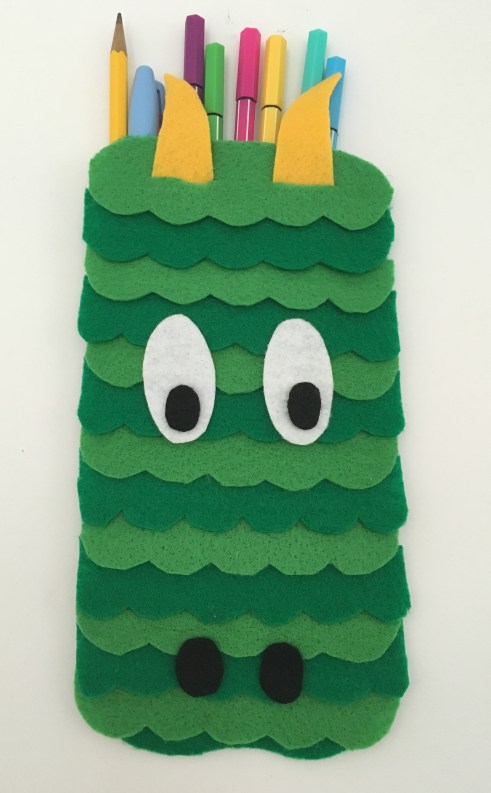
You can always depend on a dragon to help out when needed! With this Dependable Dragon Pencil Case you’ll know just where your pencils, pens, markers, and other creative tools are when inspiration hits!

Supplies      

  • Printable Dragon Pencil Case Templates – Wings | Face
  • Sheets of felt, 8 ½-inch by 11-inch (foam & heavy stock paper could work too)
    • 2 Dark green (or color of your choice)
    • 1 Light green (or color of your choice)
    • 1 white
    • 1 black
    • 1 yellow (or color of your choice)
    • 1 purple (or color of your choice)
  • Fabric Glue
  • Scissors
  • Velcro (optional)
  • Green Thread and needle (if you would like to sew instead of glue your case)
  • Glitter glue (optional)

Directions

  1. Print the Dragon Templates
  2. Cut out alternating 7 rows of scales from the dark green felt and 7 rows of light green felt (One row of the template scales is longer so you can tile them as shown on double row of scales the template. You will trim them later.)
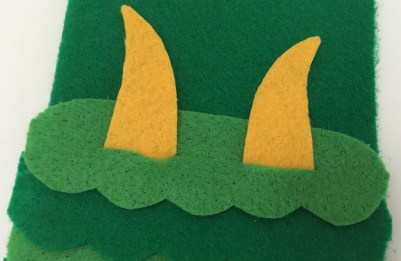
  3. To make the top of the head, cut a rounded top (instead of straight across—see picture).
  4. Cut the eyes from the white felt, pupils and nostrils from the black felt, horns from the yellow felt, and wings from the purple felt. Set aside.

celebrate-picture-books-picture-book-review-dragon-pencil-case-top-of-head

To make the head

  1. Fold one dark piece of felt in half lengthwise to make the pocket for your supplies
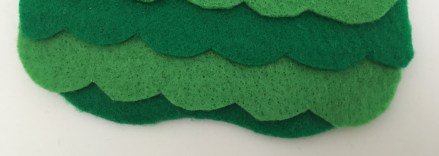
  2. Cut a wavy line along the bottom of the felt to make lips (see picture)
  3. Glue or sew the open side and bottom together, leaving the top open

celebrate-picture-books-picture-book-review-dragon-pencil-case-bottom-snout

To add the scales

  1. Starting at the bottom, lay one row of scales a little above the wavy bottom. Glue the top of the row to the folded pocket base.
  2. Overlap an alternating green row of scales on the first row, glue the top to the folded pocket base
  3. Continue alternating dark and light green scales until you reach 9 inches on the folded pocked base
  4. Use the rounded row of scales for the top of the head. See how to insert horns below before attaching the top of head.

To insert the horns

  1. On the rounded row of scales, mark where you want the horns to be
  2. Cut two small slits in the felt where the horns will go
  3. Insert the bottoms of the horns into the slits

To finish the head

  1. Glue the top of the head with horns to the folded pocket base
  2. Trim any longer rows of scales to meet the edges of the folded pocket base
  3. Add the eyes and nostrils to the face

To make a Velcro closure for the case

  1. Cut the base following the line of the rounded row of scales
  2. Glue or sew strips of Velcro along the inside edges

To attach the wings

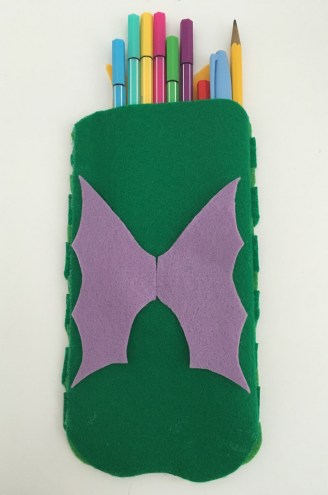
  1. Turn the dragon case to the back
  2. Glue or sew the wings to the center of the back, attaching them at the center edge
  3. Outline or sprinkle the wings with glitter glue (optional)

celebrate-picture-books-picture-book-review-dragon-pencil-case-back


celebrate-picture-books-picture-book-review-the-quest-for-a tangram-dragon-cover

You can purchase The Quest for a Tangram Dragon at these booksellers

Amazon | Barnes & Noble | Bookshop (to support your local independent bookstore)

Picture Book Review

October 2 – It’s National Chili Month

Armadilly Chili picture book review

About the Holiday

What could be more satisfying during a cool autumn month than a spicy bowl of chili?  Whether made with meat or veggies, combined with macaroni, or served in potato skins, the simmered flavors make for a scrumptious meal. Although the origins of chili are lost to history, it’s believed that the dish is a southwestern, specifically Texan, concoction. It began to attract attention in the early 1800s, and by the 1880s”Chili Queens” were selling “bowls o’red” at chili stands throughout San Antonio. In 1893 the San Antonio Chili Stand made an appearance at the Chicago World’s Fair. It’s popularity took off across Texas and throughout the west by the 1920s. When the Great Depression hit, chili became one of the only affordable meals for the hungry population. Today chili is a favorite dish of people all over the world. To celebrate this month’s observation why not whip up a batch of your favorite chili or discover some new recipes!

Armadilly Chili

Written by Helen Ketteman | Illustrated by Will Terry

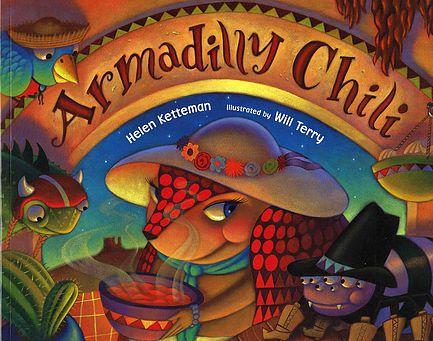
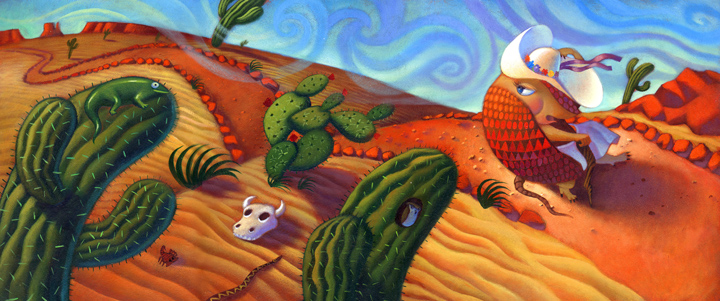
What a hoot! The knee-slappin’, root-a-tootin’ phrasing in Hellen Ketteman’s Armadilly Chili is shor ‘nuf gonna make this a favorite on any child’s bookshelf. While the plot may be familiar, the southwest setting and Miss Billie Armadilly put a fresh, funny twist on it.

“Miss Billie Armadilly skit-skat-skittered down the lane. A blue-norther’s a-blowin’ and my old, cold bones are rattling for a pot of hot armadilly chili,” she says. She’s gathering ingredients when her friend Tex, a many eyed tarantula, tip taps by. Hey, Tex, she calls, how about tapping your toes this way and helping me gather a boxful of beetles?” But Tex just “wiggles his long jiggly legs and says, ‘Shucks, Miss Billie, I’m going dancing today.’” Miss Billie harrumphs and collects the beetles herself.

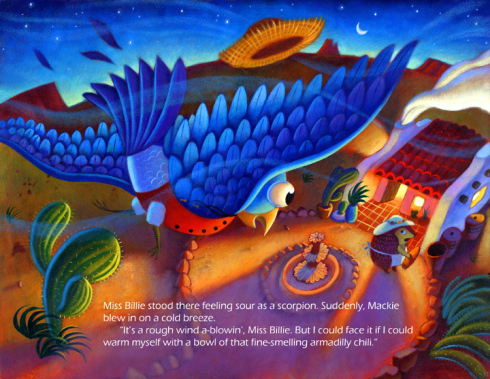
Next Miss Billie is picking peppers, and when Mackie the bluebird flies in she thinks she has an assistant. “‘How ‘bout whistlin’ up a tune and helping me pick a peck o’ peppers for my armadilly chili?’” Once again, though, she’s left on her own since Mackie says he is “‘shakin’ my tail feathers to the movies.’” When Miss Billie “scurries to the prickly pear cactus and begins chippity-chop-chopin,’” her friend Taffy, the horned toad, complains about the noise and then begs off from helping, saying she’s got plans to go skating.

celebrate-picture-books-picture-book-review-armadilly-chili

Image copyright Will Terry, courtesy of Albert Whitman & Company

At home, Miss Billie stirs her chili to a scrumptious bubble. The aroma entices first Tex, then Mackie, and finally Taffy to come a’knockin’ at her door looking for a bowlful, but Billie has something to say about that—specifically, “no workin’ with Billie, no sharin’ the chili!”

Billie’s friends hurry away sorry that she feels that way, and Billie sits down to her feast. But after all that work, the chili tastes as “flat as a Texas prairie.” What’s wrong? She realizes what the missing ingredient is just as the doorbell rings. She opens the door to find her friends standing there with bags in their hands. What’s in those sacks? Apologies! As well as hot apple cider, jalapeno biscuits, and homemade chocolate fudge. Now that the friends are all together, the chili tastes just right, and “they talked and laughed into the cold, blustery night.”

celebrate-picture-books-picture-book-review-armadilly-chili-mackie-visits

Image copyright Will Terry, text copyright Helen Ketteman, courtesy of Albert Whitman & Company

What a hoot! Helen Ketteman’s fast-paced Armadilly Chili is a spicy take on the little red hen story  and what it means to be a good friend. Miss Billie is a sassy, no-nonsense heroine who values her work and talents and makes sure others do too. When anger and frustration bubble over, however, the four friends find a way to apologize and make up. The lesson, humorously conveyed as well as Ketteman’s knee-slappin’, root-a-tootin’ phrasing is shor ‘nuf gonna make this a favorite on any child’s bookshelf. 

Will Terry’s vivid illustrations washed with a palette of deep reds, oranges, greens, and yellows bring the Southwest setting to life. Miss Billie and her friends are enchanting versions of their natural counterparts, and kids will love the environmental and homey details on each page, where even the cacti display personalities. Billie’s facial expressions as each of her friends abandon her to her chores are priceless, and their final camaraderie is highly satisfying.

Ages 4 – 8

Albert Whitman & Company, Illinois, 2008 | ISBN 978-0807504581

Discover more about Helen Kellerman and her books plus fun accompanying activities on her website!

View a portfolio of Will Terry‘s books and artwork on his website!

While I take a few personal days, I am reposting earlier reviews updated with new links and interior art.

National Chili Month Activity

CPB - Chili Pepper Game

Hot, Hot, Hot! Chili Pepper Chili Game

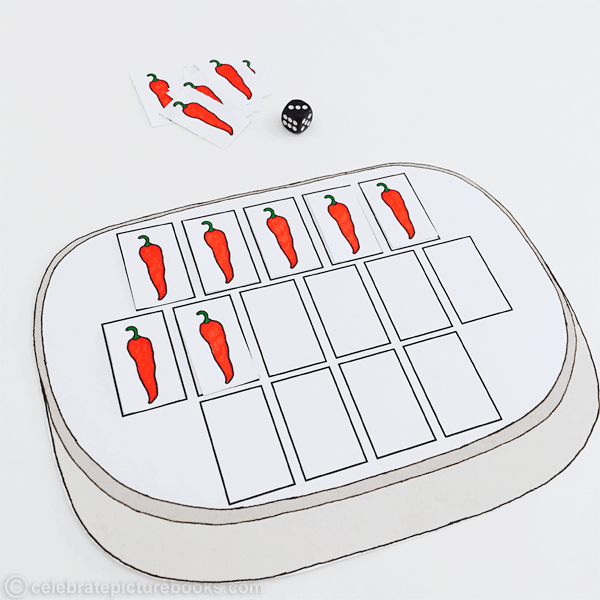
Chili just isn’t chili without a little heat! But can you take 15 chili peppers in your bowl? If you want to win the Hot, Hot, Hot! Chili Pepper Chili Game you’ll have to!

Object of the Game

The object of the game is to collect 15 chili peppers in your bowl before any other player.

Supplies

Rules

  1. Any number of players can play at one time. Print 1 Chili Bowl game board and 1 set of 15 Chili Pepper cards for each player
  2. Give 1 Chili Bowl Game Board to each player
  3. Place the Chili Pepper Cards in a pile or in a bowl
  4. Roll the die to see who goes first. The person with the highest roll goes first
  5. To begin play, the first player must roll a 1, 2, or 3. They should roll until they get one of these numbers.
  6. Players roll the die and collect or lose chili pepper cards by the number of dots on the die. If you roll a:
  • 1 – Pick up 1 chili pepper card and place it on your chili bowl game board
  • 2 – Pick up 2 chili pepper cards and place them on your chili bowl game board
  • 3 – Pick up 3 chili pepper cards and place them on your chili bowl game board
  • 4 – Get a chili pepper card from the player on your left
  • 5 – Give a chili pepper card to the player on your left
  • 6 – Lose a turn

     7. If a player does not have chili pepper cards to give to another player or if the player on           their left has no cards to give, the player rolls again.

    8. Continue play until one player has filled their Chili Bowl with chili peppers!

Picture Book Review

October 1 – International Coffee Day

celebrate-picture-books-picture-book-review-undercover-one-of-these-things-is-almost-like-the-others-cover

About the Holiday

Is there anything better than sitting down with a steaming cup of coffee for a little break during the day? Today’s holiday lets people all over the world do just that. Whether you like your coffee strong and hot, with lots of milk, or flavored with tastes of the season, there are versions of this delicious drink just for you. With an ancient and storied history, coffee is one food that unites us all. To celebrate why not grab a cup of joe for yourself, stir up a foamy hot chocolate for your kids, and sit down with a good book – like today’s brain teaser!

Undercover: One of These Things Is Almost Like the Others

By Bastien Contraire


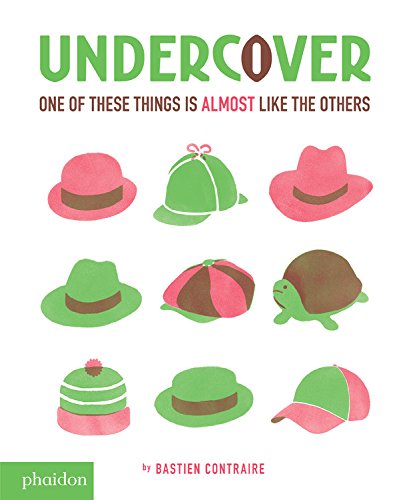
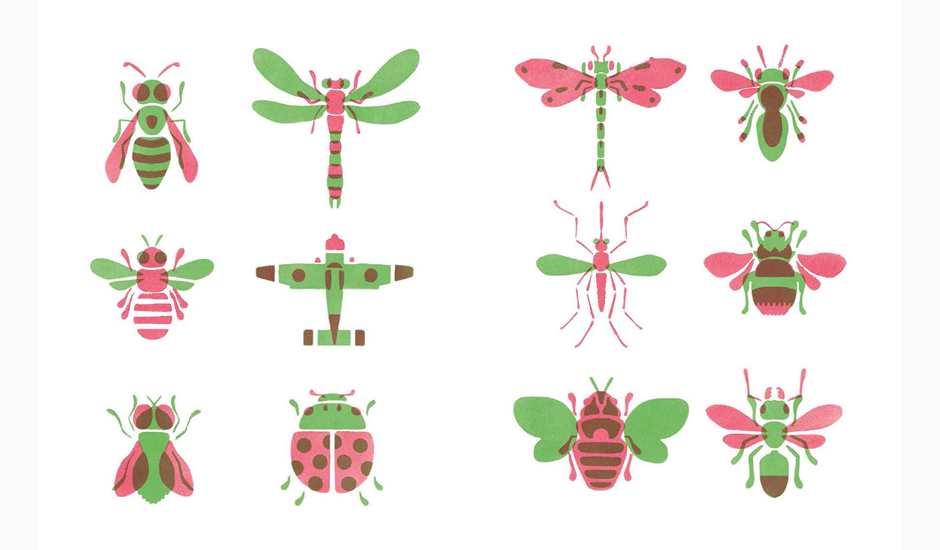
Undercover agents complete successful missions by blending in with their surroundings and the people they encounter, but’s impossible for them to actually become the people they are investigating. In the same vein Undercover: One of These Things Is Almost Like the Others cleverly inserts a closely shaped item onto a two page spread that contains a family of objects (for instance a soccer ball among fruit).

celebrate-picture-books-picture-book-review-undercover-one-of-these-things-is-almost-like-the-others-beetles

Image copyright Bastien Contraire, courtesy of phaidon.com

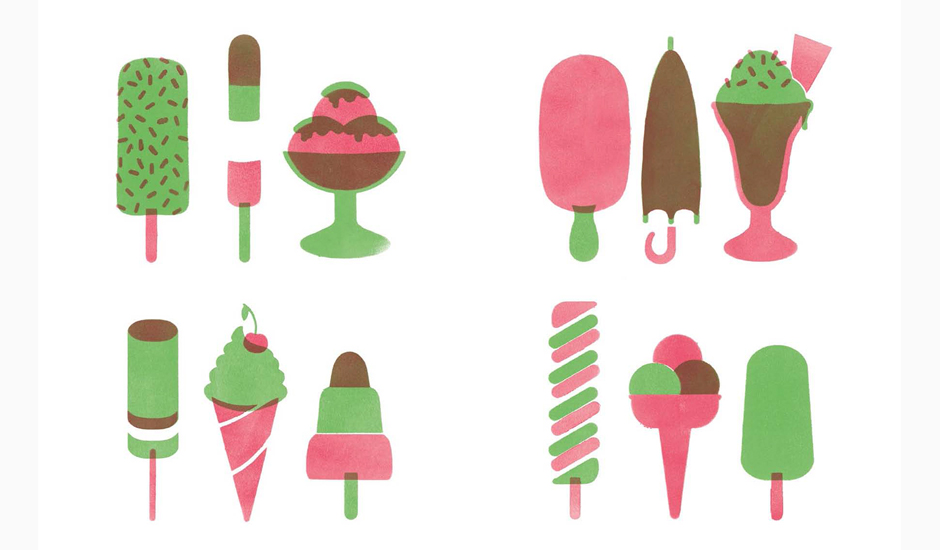
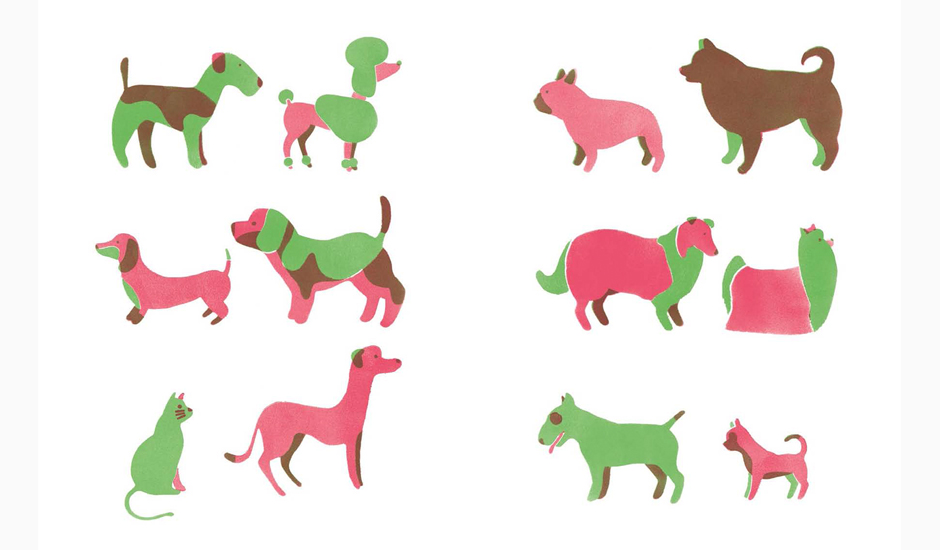
The pink, green, and brown stenciled illustrations boldly placed on a white background offer stimulating visuals while also making the task of discovering the interloper surprisingly tricky as out perceptions and even preconceived notions are tested. Many of the match-ups provide not only a challenge but sly humor as well, riffing on the shapes, purpose, relationship, and even history of the items on the page. 

Picking out the imposter is only the beginning of the fun readers can have with Undercover. Each page can start a discussion of how the odd item is different and how it is similar to the others; the similar objects can be categorized into smaller sets; industrious kids may like to design their own pages giving the “almost” image some companions; and wordsmiths may want to invent stories involving the groupings and how they came to be.

celebrate-picture-books-picture-book-review-undercover-one-of-these-things-is-almost-like-the-others-ice-cream

Image copyright Bastien Contraire, courtesy of phaidon.com

Fans of “I Spy” types of books and games will love testing their knowledge and observational skills against the pod of whales, city modes of transportation, insects and fish, sea-worthy craft, various types of food, office equipment, and a host of birds and animals in this 64-page wordless picture book. Perfect for classrooms and home bookshelves, Undercover: One of These Things is Almost Like the Others is sure to be asked for again and again on any day when fun, quiet entertainment is just what’s called for.

celebrate-picture-books-picture-book-review-undercover-one-of-these-things-is-almost-like-the-others-dogs

Image copyright Bastien Contraire, courtesy of phaidon.com

Bastien Contraire’s stylized stencil-print illustrations of long-antennae beetles; flat and spiny fish; friendly dinos; ice cream treats; farm, forest and antlered animals; musical instruments; and more will delight kids and spur them to discover the names of each. The rounded edges, sleek lines, and delineated details of the images may even inspire budding artists to try their own hand at stenciling.

Ages 4 and up

Phaidon Press, 2016 | ISBN 978-0714872506

International Coffee Day Activity

celebrate-picture-books-picture-book-review-ceramic-mug-craft

Mug Masterpiece


Somehow drinks taste better in a mug you’ve decorated yourself! With this easy craft you can design a mug for your hot chocolate, tea, juice, or any favorite drink!

Supplies

  • Ceramic mug, available at craft stores
  • Paint included with mug decorating kit
  • OR
  • Bakeable ceramic markers
  • Paint brush

Directions

  1. Design and decorate your mug
  2. Follow the directions on the mug kit to bake on the paint OR
  3. Follow the directions of the ceramic markers to finish your mug


September 8 – International Literacy Day

celebrate-picture-books-picture-book-review-the-summer-nick-taught-his-cats-to-read-cover

About the Holiday

In 1966 UNESCO (United Nations Organization for Education, Science and Culture) established International Literacy Day on this date to “actively mobilize the international community to promote literacy as an instrument to empower individuals, communities, and societies.” Marking its 50th anniversary, International Literacy Day is this year celebrating the theme “Reading the Past, Writing the Future” to commemorate five decades of efforts to increase in literacy rates around the world and the progress made. “It also looks to innovative solutions to further boost literacy in the future.” With a focus on innovation, International Literacy Prizes are also awarded to people with outstanding solutions that can drive literacy towards achieving future goals.

The World Literacy Foundation also celebrates today’s holiday with the 2016 campaign “The Sky’s the Limit,” which aims to eliminate the digital divide for students in the developing world.

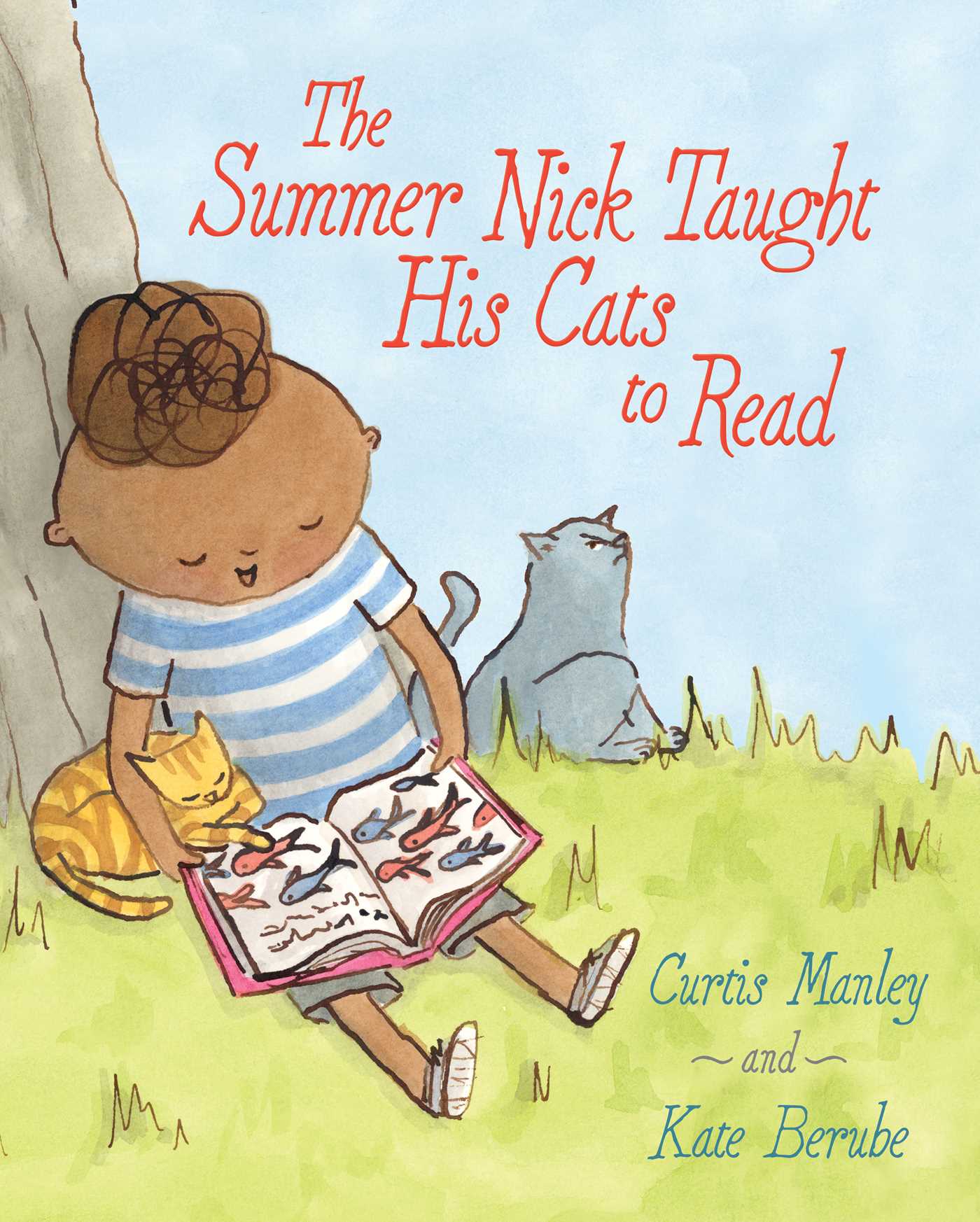
The Summer Nick Taught His Cats to Read

Written by Curtis Manley | Illustrated by Kate Berube


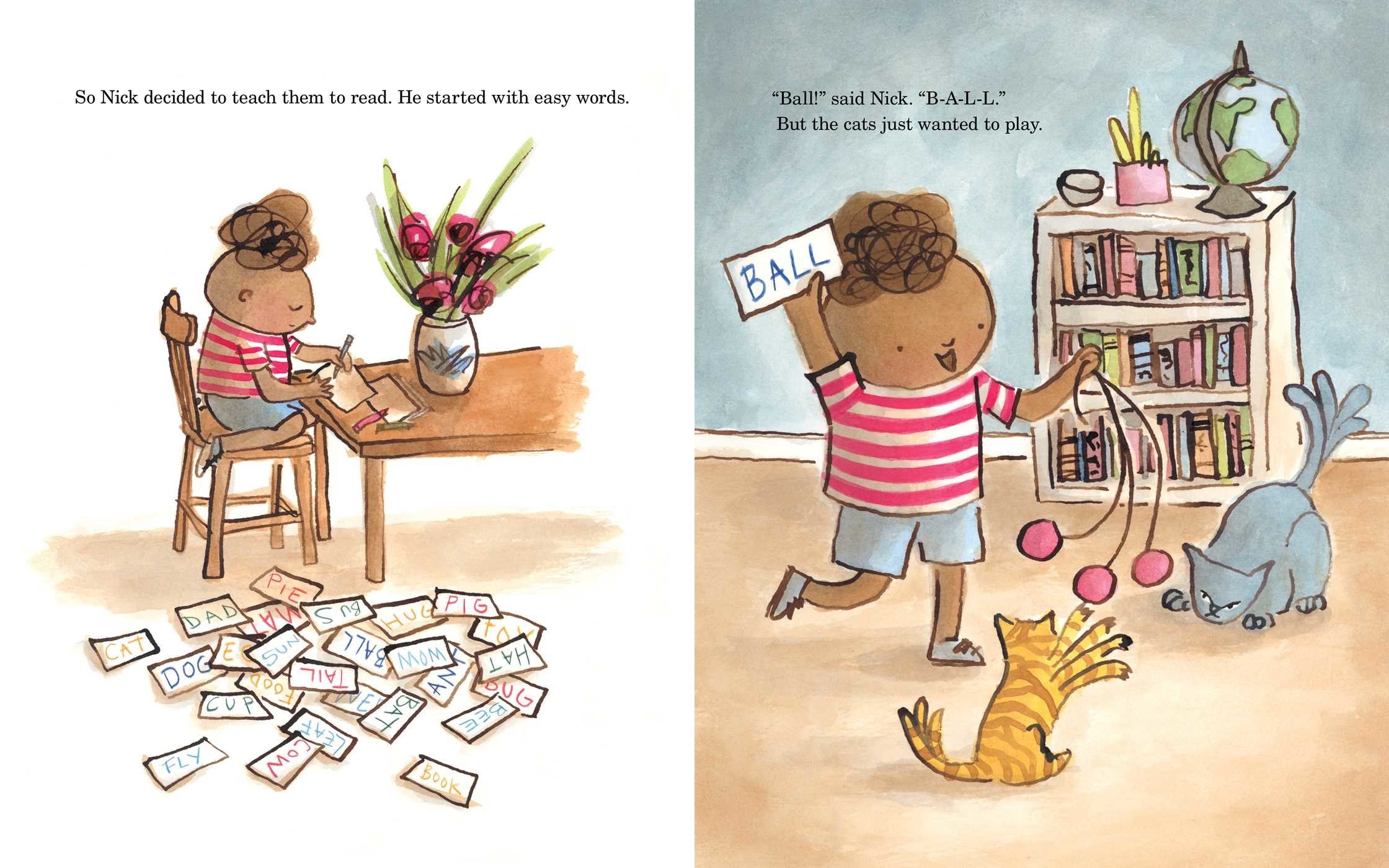
One summer Nick, Verne, and Stevenson did everything together. Nick is a little boy and Verne and Stevenson are two very different cats. Nick and Verne loved to spend time near the water—Stevenson tolerated it. Nick and Verne slept happily in a tent under the stars—Stevenson barely shut his eyes. While Nick rode his bike Verne eagerly sat in the front basket—Stevenson hunkered down in a box on the back. But when Nick sat down to read, both cats had their own ideas of fun—like lying on top of the book—and Nick could hardly read a sentence.

celebrate-picture-books-picture-book-review-the-summer-nick-taught-his-cats-to-read-ball

Image copyright Kate Berube, text copyright Curtis Manley, courtesy of simonandschuster.com

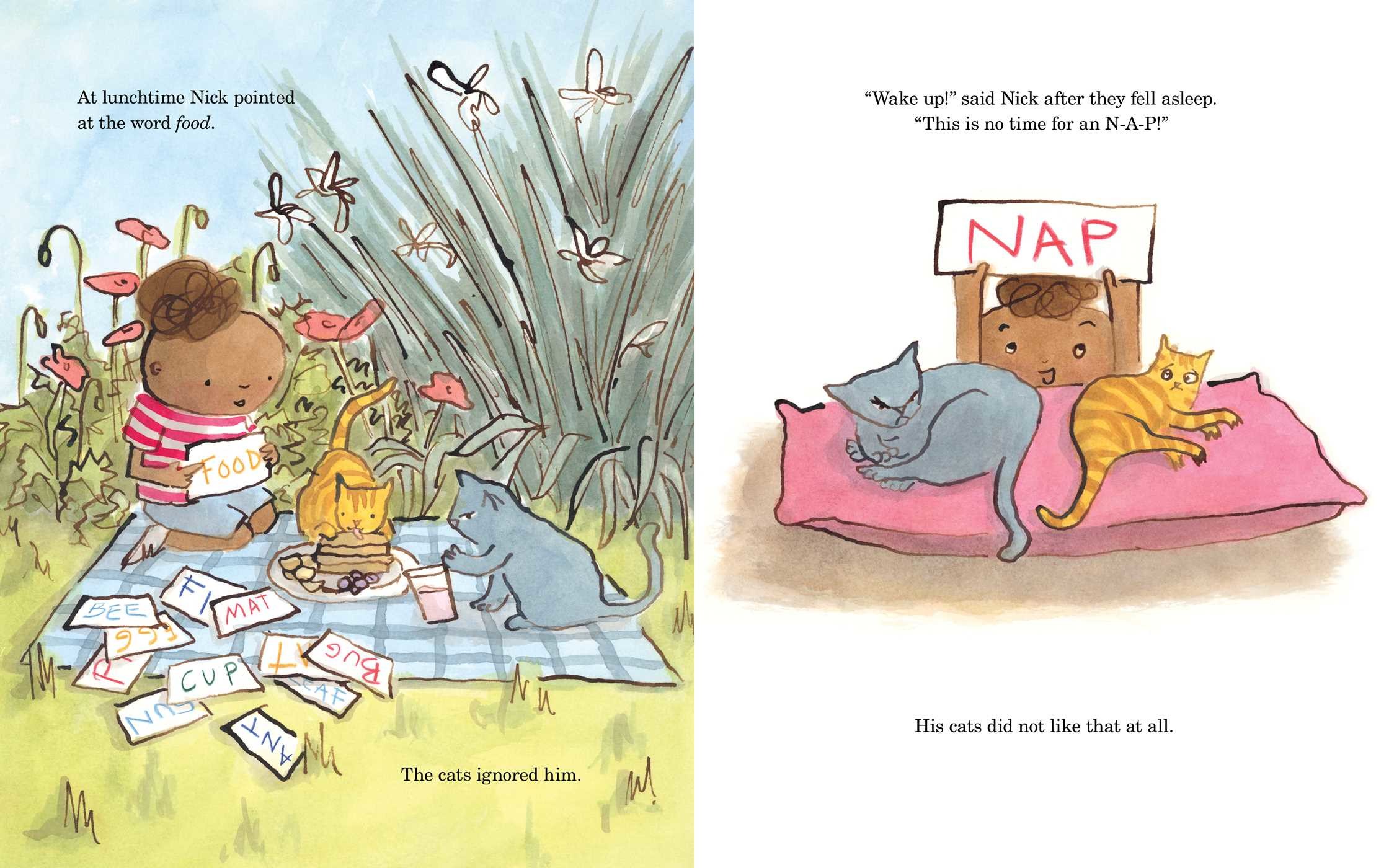
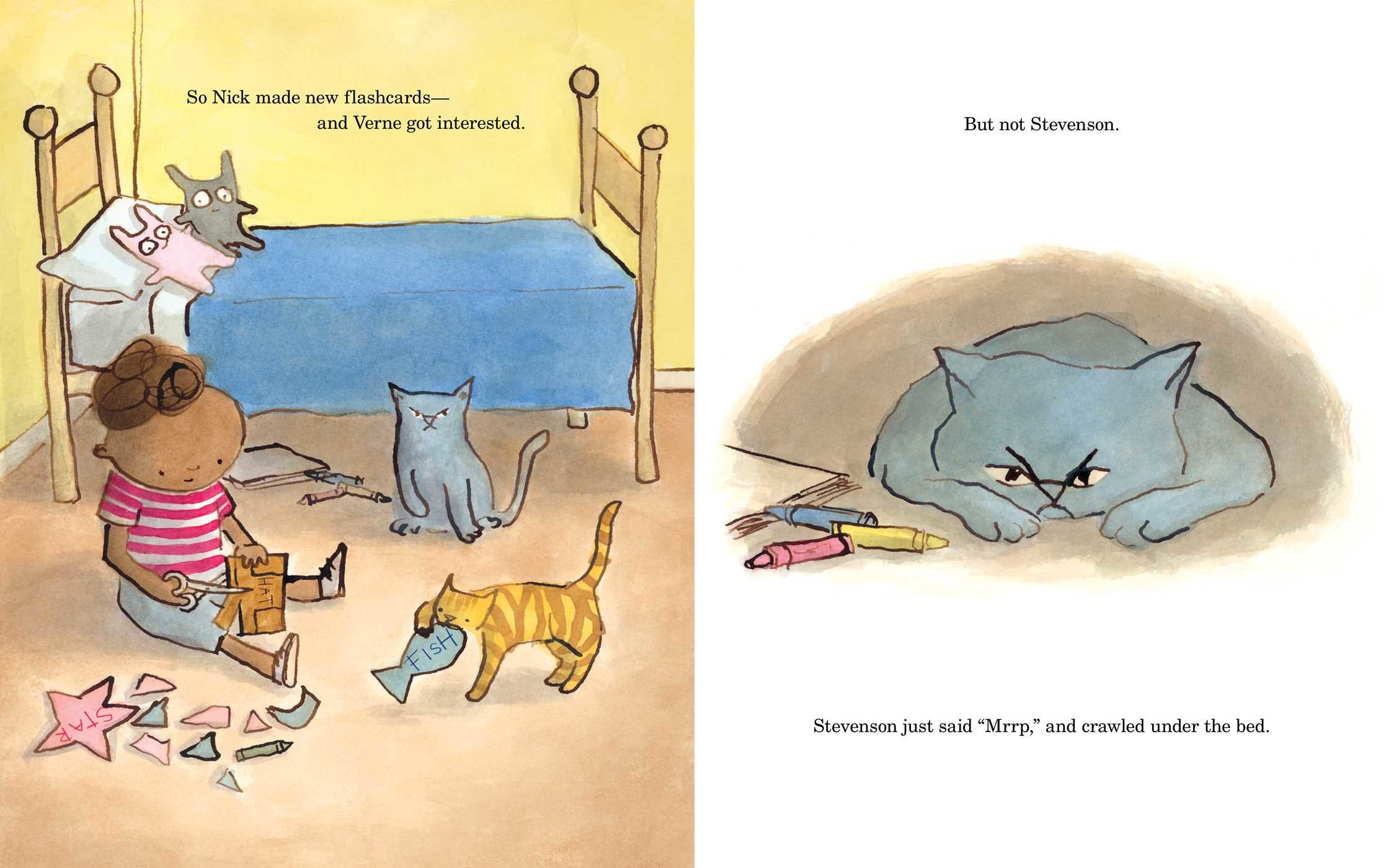
“So Nick decided to teach them how to read. He made flash cards and started with easy words” like “ball,” but Verne and Stevenson just wanted to play with the ball. While the three had a picnic on the lawn, “Nick pointed to the word food. The cats ignored him.” When the cats snoozed Nick woke them with a sign. “‘This is no time for an N-A-P!’” he said. Neither cat responded well, so Nick tried a new tactic. He made word-shaped flash cards. Verne took a nibble of “F-I-S-H,” but Stevenson hid under the bed.

celebrate-picture-books-picture-book-review-the-summer-nick-taught-his-cats-to-read-food-flash-cards

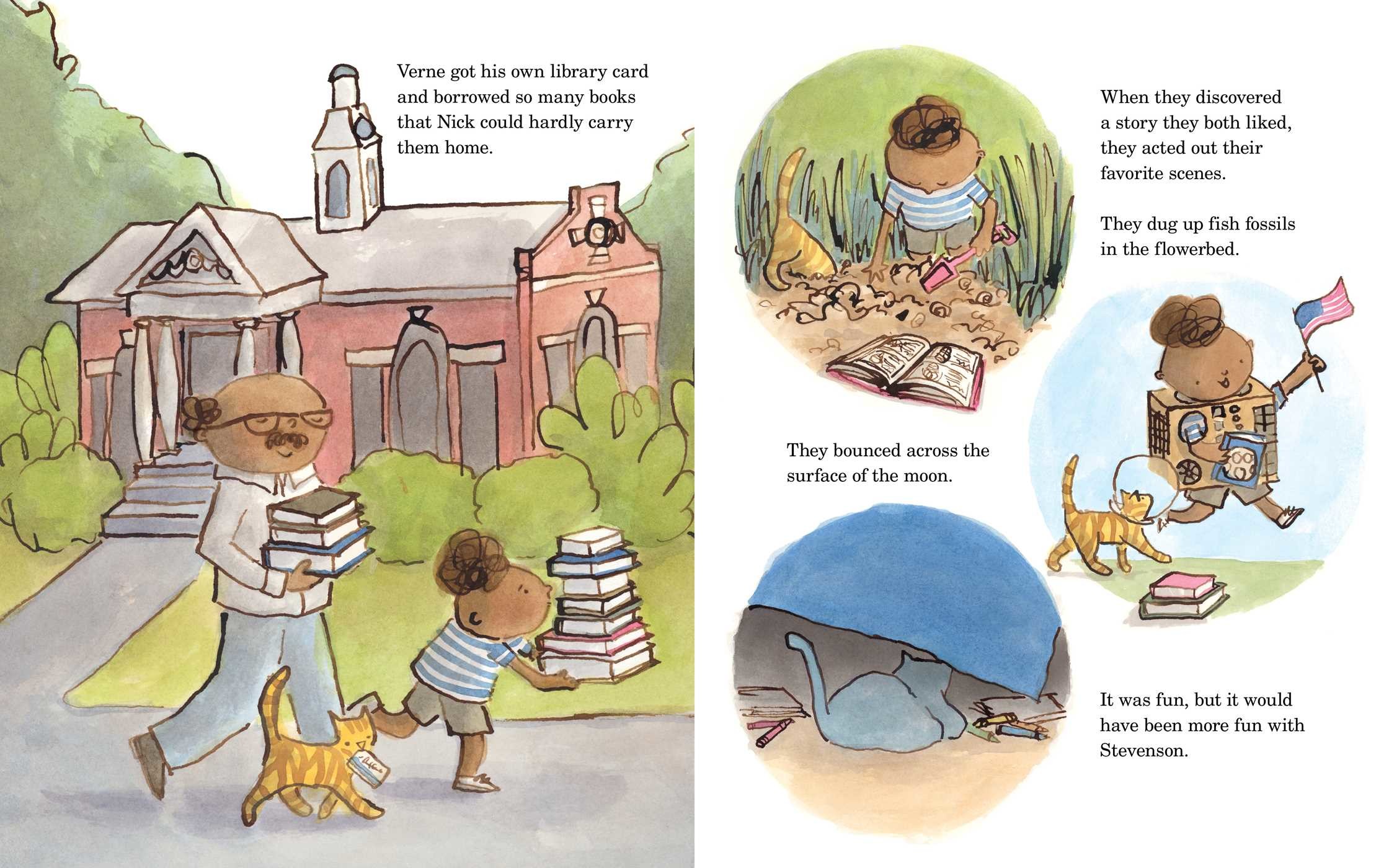
Nick began to see that Verne liked stories about cats and fish. “Verne loved fish. He followed along as Nick read, learning the sounds of the letters.” He even read by himself, discovering new stories, especially 2,000 Leagues Under the Sea. But Stevenson? When Nick spelled words for him, he merely ran under the porch, hissing. By this time Verne was reading so many books that he got his own library card and Nick needed help carrying all of his books home. Nick and Verne had fun acting out their favorite stories, but they missed Stevenson.

One day “Verne discovered a treasure under the bed—a great stack of Stevenson’s pirate drawings. “‘Wow!’” Nick whispered. “‘Stevenson drew a story.’” Nick and Verne put the pages together and began to write words to go with them. When the story was finished, Nick, Verne, and Stevenson “squeezed under the porch, gave Stevenson an eye patch, and read The Tale of One-Eyed Stevenson and the Pirate Gold. Stevenson listened and followed along. He didn’t run away. Or hiss. Not even once.”

celebrate-picture-books-picture-book-review-the-summer-nick-taught-his-cats-to-read-library

Image copyright Kate Berube, text copyright Curtis Manley, courtesy of simonandschuster.com


Suddenly, Stevenson couldn’t get enough of books.  Even before Nick woke up, Stevenson could be found with his nose in Treasure Island or another adventure book, and whenever Nick and Verne played pirates, Stevenson joined in. He helped bring down “scurvy mutineers” and found buried treasure. Now the three readers do everything together. They “hunt for dinosaurs in the lost world behind the garden…race around the yard in eighty seconds…and journey to the center of the basement.” And while they all like to read on their own, they also like it when someone reads to them. “Hmmm…,” Nick thinks, maybe next he could teach his cats to talk. “‘Meow,’ says Stevenson.”

celebrate-picture-books-picture-book-review-the-summer-nick-taught-his-cats-to-read-grumpy-stevenson

Image copyright Kate Berube, text copyright Curtis Manley, courtesy of simonandschuster.com

Curtis Manley’s adorable tribute to reading and learning to read using cats, with their variety of personalities, is inspired. Just as some people respond more to the words while others are attracted by the pictures, Verne and Stevenson have their own relationships with books. The names of the cats and their preferred reading material are also reminders that books are personal, and disinterest in one type of story does not reflect disinterest in all stories. Manley’s text makes for a joyful read-aloud as his language and phrasing is evocative, lyrical, and imaginative.

In perfect accompaniment, Kate Berube brings this creative story to life, illustrating the tender relationship between Nick and his pets as well as emphasizing the humor and distinct personalities inherent in orange striped Verne and smoky gray Stevenson that influence their journeys to literacy. Depictions of the various books Verne and Stevenson are drawn to highlight the literary references in the trio’s further play. Readers will want to stop and peruse the page of library shelves, where such books as “Harry Picaroon and the Swashbuckler’s Stone”, “Harold and the Purple Canon”, “Millions of Rats”, and “Where the Wild Pirates Are” wait to be checked out in the Pirates section.

Kids will eagerly want to adopt The Summer Nick Taught His Cats to Read, and it will snuggle in nicely on children’s bookshelves.

Ages 4 – 8

Simon & Schuster Books for Young Readers, 2016 | ISBN 978-1481435697

Discover “the facts, fictions, poems, and numbers” of Curtis Manley on his website!

View a gallery of Kate Berube‘s art on her website!

International Literacy Day Activity

CPB - Cat Bookmark (2)

Feline Fine about Reading Bookmark


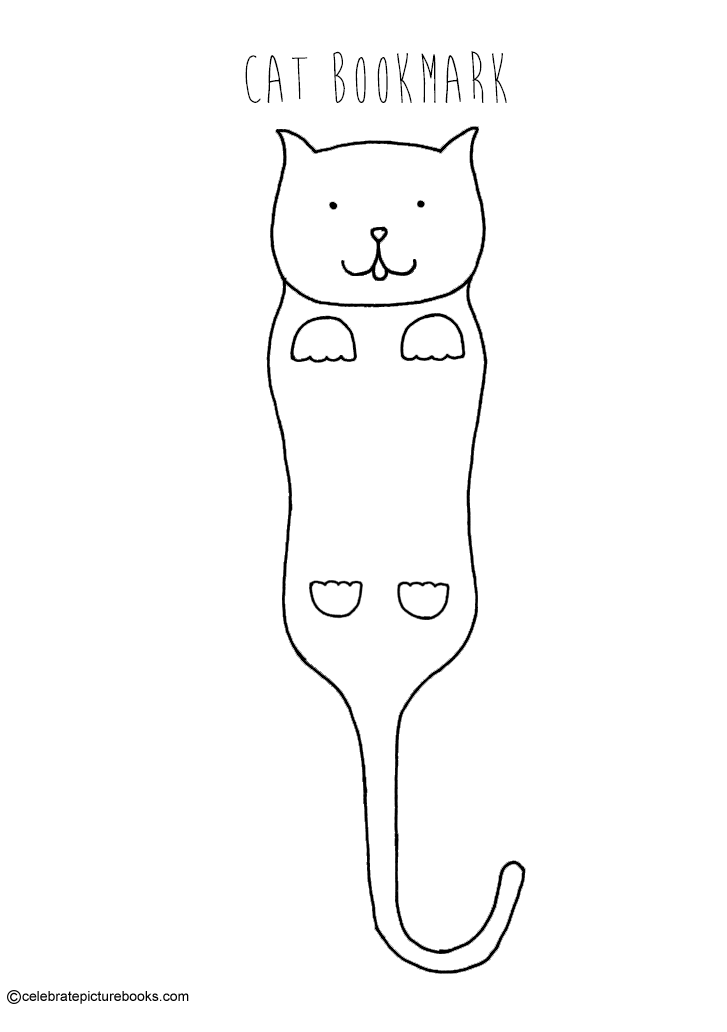
This want-to-be literary lion feels fine about reading! Let it hold your page while you’re away! Print your Feline Fine about Reading Bookmark and color it!

Picture Book Review

September 7 – Buy a Book Day

celebrate-picture-books-picture-book-review-a-child-of-books-cover

About the Holiday

Established in 2012 Buy a Book Day promotes an appreciation for physical paperback and hardbound books. Whether you’re cracking open a brand new release or gently turning the pages in a well-worn volume, holding an actual book in your hands is an unforgettable connection between you, the author, and another world—real or imaginary. Today, drop into your local bookstore and peruse the shelves—you’ll be sure to find a fascinating book to buy.

A Child of Books

By Oliver Jeffers and Sam Winston


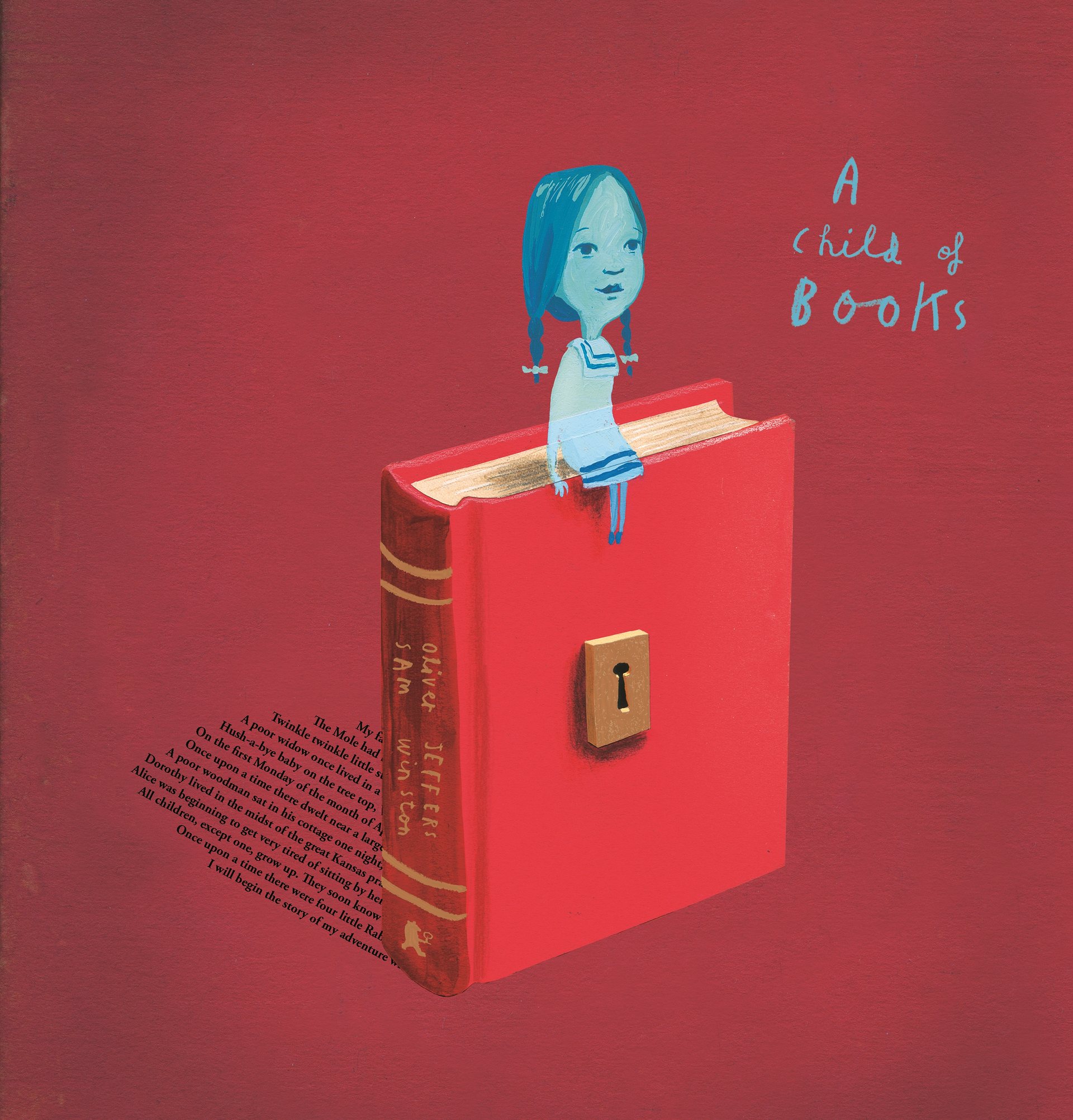
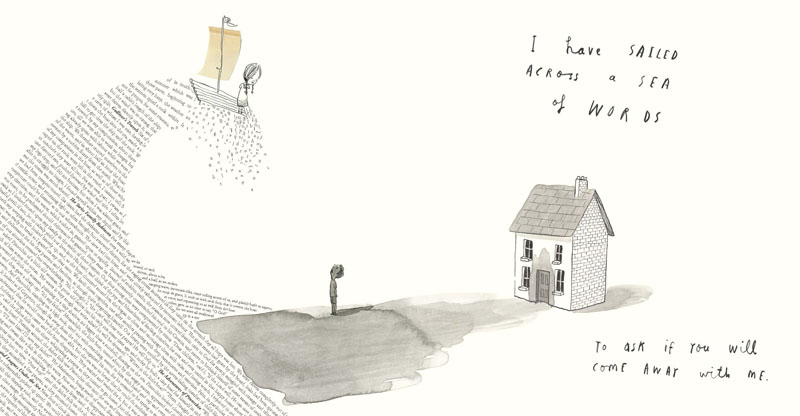
A little girl sits on a log raft with a parchment sail, dangling her feet into the water that swirls around her legs in an eddy made of words that read: “Once upon a time there was a child who loved to read…,” while the rest of the words disperse and float away. In fact, the girl is reading now—a book with a keyhole in the middle. “I am a child of books,” she reveals. “I come from a world of stories.” The wind catches the sail of her raft and the girl is off on an adventure, rising and dipping with the cresting letters that make up waves coming from the deeper sea of straight lines of excerpted text from classics including The Voyages of Doctor Doolittle, Robinson Crusoe, The Swiss Family Robinson, and Kidnapped.

celebrate-picture-books-picture-book-review-a-child-of-books-wave

Image copyrights Oliver Jeffers and Sam Winston, courtesy of oliverjeffers.com

The waves bring her to shore, where riding atop one she towers over a small boy. The girl asks if he will sail away with her. He peers into the window of his house where his father sits reading the newspaper. Headlines announce “Serious Stuff,” “Facts,” “Important Things,” and “Business.” And indeed just a glance at the articles will inform readers that “A group of serious people passed on concerns about a serious document that has been lost by a serious organization….”; that “Scientists have discovered a new fact. In one test, nearly half the subjects proved the fact, it was revealed….”; and that “an important company is to stop producing some important stuff by later this year. It said no one wanted this particular bit of important stuff.” The father’s glasses glint with numbers that rim the frames like tears.

The girl says that “some people have forgotten” where she lives, but that she can lead him on the way. The two follow a path of words from Alice in Wonderland, and the boy watches worriedly as the girl confidently climbs down a hole in the lines. There is more climbing to be done, however, and the girl, in her blue and white sailor dress, holds the boys hand as they traverse mountains made of Peter Pan that reach into the sky. By the time the friends row their dinghy into a dark cave created from the story of Treasure Island and discover a wooden chest, the boy is eager and excited for the journey.

celebrate-picture-books-picture-book-review-a-child-of-books-colorful-book-forest

Image copyrights Oliver Jeffers and Sam Winston, courtesy of oliverjeffers.com

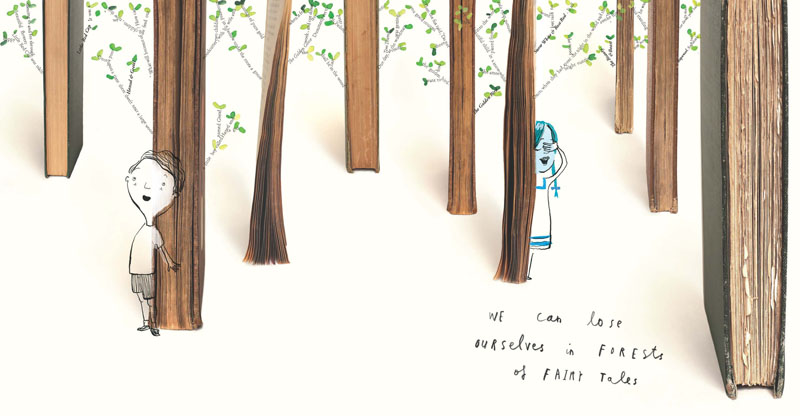
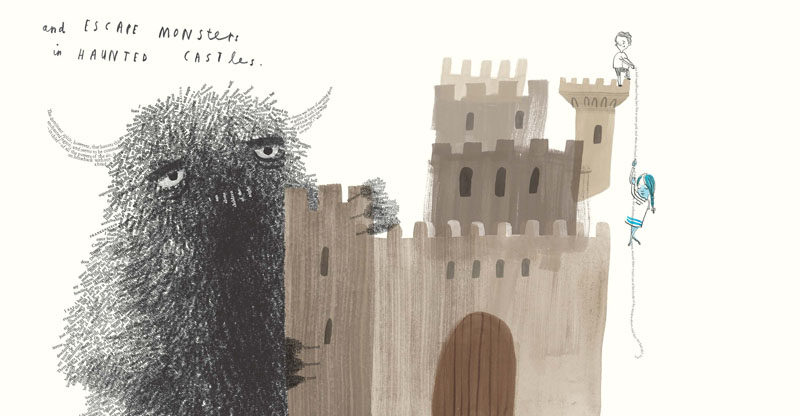
The girl and boy play hide-and-seek among tall trees made of books, where titles and lines of Hansel and Gretel, Little Red-Cap, The Golden Goose, Tom Thumb, and more jut out as leaf-covered branches. They leave the woods and come to a haunted castle that is being attacked by a monster made dark and hairy with the words of Frankenstein and Dracula. This time the boy holds a line of Rapunzel as the girl deftly shimmies to the top of a turret.

Tuckered out, the pair of friends ascend ladders to clouds of lullabies and drift into dreamland where they stand on the moon so they can “shout as loud as we like in space.” But perhaps it is not the moon but, instead, their own imaginary world made of color and characters, palaces and possibilities where stories may end but creativity lives on because “we’re made from stories…” and “our house is a home of invention.”

celebrate-picture-books-picture-book-review-a-child-of-books-colorful-monster

Image copyrights Oliver Jeffers and Sam Winston, courtesy of oliverjeffers.com

If any book invites readers to linger over the intricacies of its pages, A Child of Books is it. A perfect combination of Oliver Jeffers’ homage to the power of storytelling and Sam Winston’s artistry with typography, A Child of Books summons readers of all ages to leave the weariness of the “serious” world and enter the realm of the imagination.

The lilting lines of Oliver Jeffers’ prose poem flow with the stream of consciousness that allows thinkers to journey to nooks and crannies, participate in majestic vistas, and create the unknown of their own fancies. In Sam Winston’s hands sentences and paragraphs describing classic sea voyages swell into waves; lines from other classics crowd in upon each other, solidifying into a hidden inlet or forming a horned creature; and soft yellowed pages return to replicate the trees they once were. In the end a rainbow of characters spin out from a revolving globe, depicting our full color world.

Maps laid out by the storytellers of the past may show us routes to take but as A Child of Books reveals, there is so much white space yet to be discovered. For bibliophiles young and old, A Child of Books makes a beautiful gift and will be a welcome addition to personal library shelves.

Ages 4 and up

Candlewick Press, 2016 | ISBN 978-0763690779

Visit Oliver Jeffers’ website to view his wide-ranging work in picture books, paintings, film, and more. You can follow a paper airplane to fun games based on his picture books in Oliver Jeffers’ World.

To see the unique perspective of Sam Winston, view his books, projects, and archives on his website!

Watch the Child of Books book trailer!


Buy a Book Day Activity

celebrate-picture-books-picture-book-review-i've-got-the-reading-bug-books-to-read-list

I’ve Got the Reading Bug! Books to Buy List


Do you love to read? Do you have a wish list of books you want to read next? Me too! Use this printable I’ve Got the Reading Bug! Books to Buy sheet to keep track of those great book ideas.

September 6 – Read a Book Day

celebrate-picture-books-picture-book-review-six-dots-a-story-of-young-louis-braille-cover

About the Holiday

Avid readers, rejoice! Today is your day – a whole 24 hours dedicated to the fine pursuit of perusing an old favorite or a newly discovered book! To celebrate visit a local bookstore or library then find a cozy nook or shady spot and settle in for a good, long read.

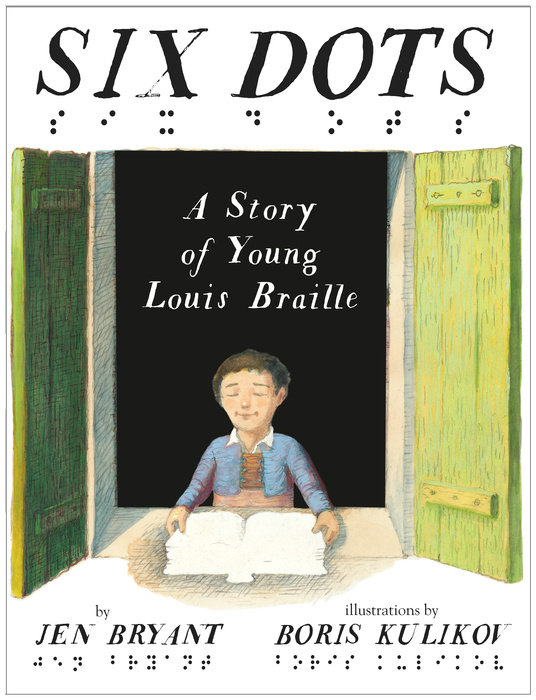
Six Dots: A Story of Young Louis Braille

Written by Jen Bryant | Illustrated by Boris Kulikov


When Louis Braille was born he was so small that no one in town expected him to live. But he did! Louis thrived and with his curious eyes took in everything around him. Louis was smart, too, with a prodigious memory for names and stories. His father worked with leather, making harnesses and bridles. Louis wanted to be just like him and often reached for the sharp tools on the workbench, but his father always warned him away.

One terrible day, however, when Louis’ father glanced away, Louis grabbed an awl and tried to work it into the smooth leather, but it slipped. Louis’ damaged eye was bandaged and he was told not to touch it. But when the bandage began to itch, young Louis couldn’t help himself and spread the infection to his other eye. By the age of five, Louis was left in darkness, unable to see the faces of those he loved or the attractions of home.
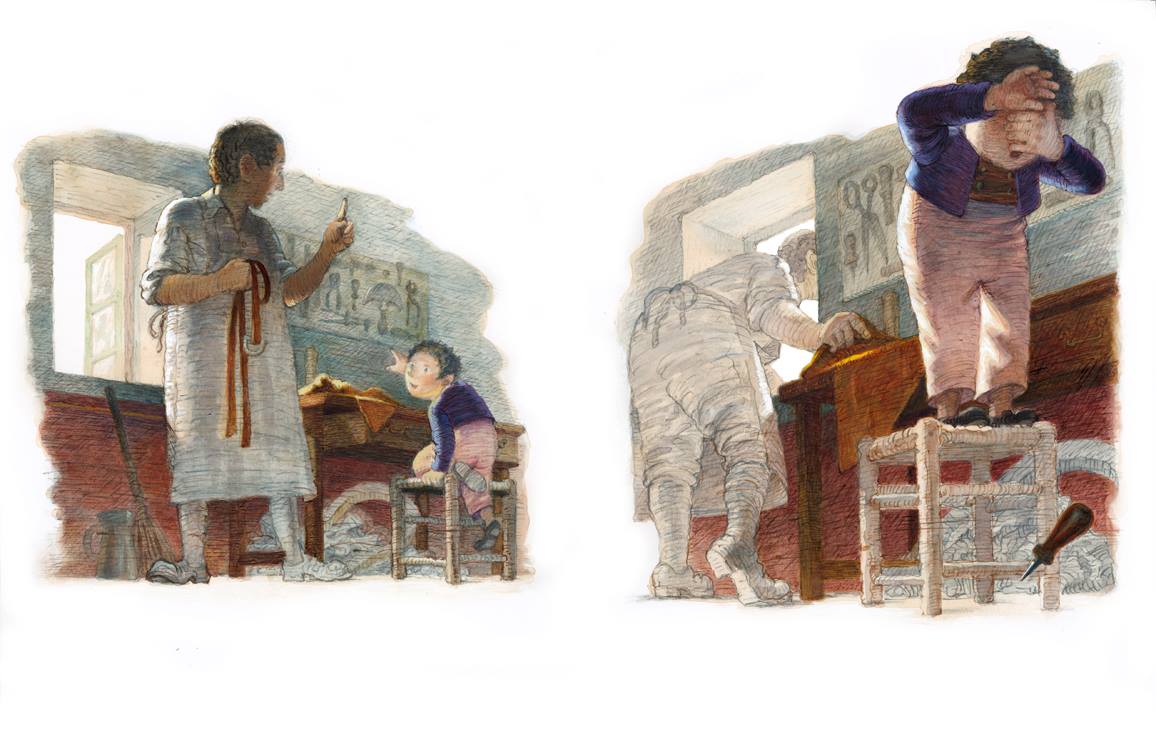
celebrate-picture-books-picture-book-review-six-dots-a-story-of-young-louis-braille-accident

Image copyright Boris Kulikov, courtesy Alfred A. Knopf

Louis learned the sounds of the world. He discovered the number of steps around his house, to the outbuildings, and eventually to the shops and businesses in town. His brother taught him how to whistle and use the reverberations to avoid obstacles. He also learned to feel the shapes of letters made of straw, leather, or nailed replicas made by his family. He played dominoes by feeling the dots with his fingers.

While Louis listened to others read to him, he longed to be able to read on his own. Whenever he asked if there were books for blind people, however, the answer was always, “No.” A noblewoman who lived nearby heard of Louis and invited him to study at the Royal School for the Blind in Paris. At the age of 10 he moved to the boarding school.

The Royal School was anything but sumptuous. Louis’ room was crowded, damp, and dark. His uniform itched, and meals were meager and cold. He so wanted to return home, but the promise of books for the blind kept him there. Those books were reserved for the best students, and Louis vowed to be one. Finally, Louis was led to the library. A book thudded onto the table in front of him. “‘Voila! There it is,’” the guide said.

Louis opened the book. To read it he had to feel the raised letters, but the letters were huge and a page only held a few sentences. To make matters worse, the book consisted of only a few pages. “‘Is that all?’” Louis asked. The guide told him there were others but that they were all the same. More than ever Louis wanted to go home.
celebrate-picture-books-picture-book-review-six-dots-a-story-of-young-louis-braille-dreams

Image copyright Boris Kulikov, courtesy Alfred A. Knopf

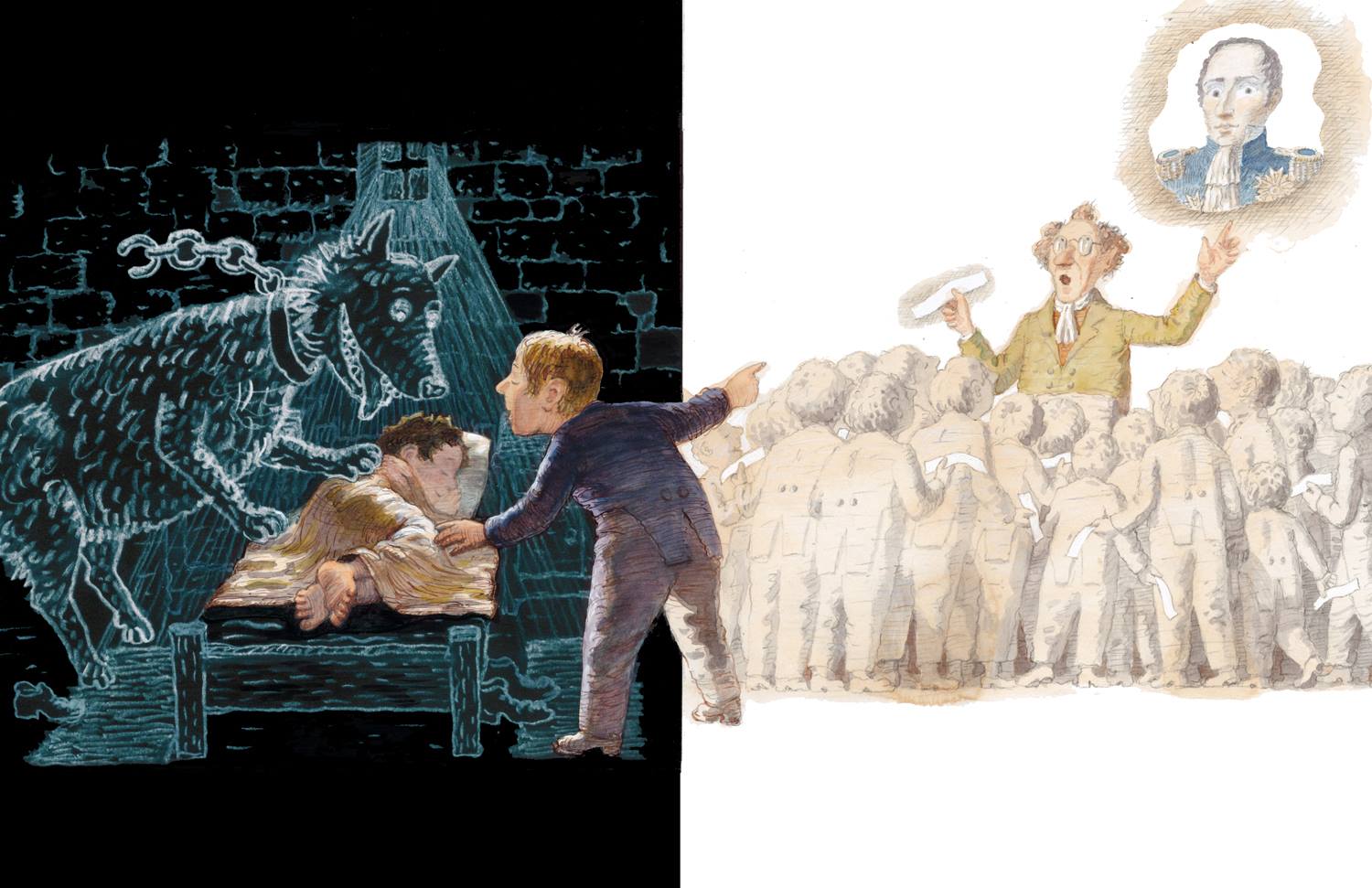
In the morning Louis was shaken awake; the headmaster had an important announcement.  It seemed that a French army captain had devised a secret code read by touch instead of sight. This code could be used at the school, the headmaster said. The code consisted of raised dots set in patterns that represented various sounds. The boys learned the new code then learned how to write it, using an awl-like implement that punched dots into paper.

While the code was a breakthrough, it was hard to learn and all the other boys in the school had given up—but not Louis. Still, reading the code was not like reading a book with letters, words, and sentences. Louis asked the headmaster if the army captain would work with him to improve the code, but when the headmaster asked, the answer was “No.”

Louis knew what he had to do. Night after night he punched dots into paper with the awl-like tool—just as he had watched his father do with leather. He tried “hundreds of ways to simplify the captain’s code.” Three years passed, and Louis turned 15. Finally, he had a workable solution. He asked the headmaster to read to him a book he had never heard. As the headmaster read, Louis copied his words, punching letters onto paper. Louis’ “new code used just six dots, arranged in two columns, like dominoes. Each dot pattern stood for a letter of the alphabet.”
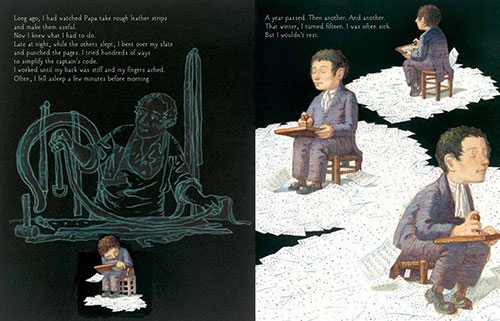
celebrate-picture-books-picture-book-review-six-dots-a-story-of-young-louis-braille-inventing

Image copyright Boris Kulikov, courtesy Alfred A. Knopf

When the headmaster finished reading chapter 1, Louis turned his pages over and “reading by touch, recited the entire chapter.” After that “word spread quickly. The other students rushed to try it. Si facile! ‘So easy!’ Et si vite! ‘And so fast!’ ‘We can read words and write letters like everyone else,’” the other boys exclaimed.

As Louis watched his friends read he remembered watching his “Papa in his shop, bent over rough strips of leather, making them useful. I had become like him, after all,” Louis thought.

An Author’s Note, more fascinating biographical information about Louis Braille’s life and other inventions, resources, and the Braille alphabet follow the text.

In her Author’s Note Jen Bryant says she wanted to express what it felt like to be Louis Braille. In Six Dots she succeeds in bringing the story of this very young inventor and genius to life with details of his accidental blindness, family support, school experiences, and ultimate victory. Told from Louis Braille’s point of view, the story has an immediacy that presents Braille’s frustrations, challenges, and achievements sensitively and honestly. His perseverance against all odds will inspire readers and give them a new perspective on the unique person Braille was, the importance of books for all, and what children not much older than the readers of Six Dots can accomplish.

Boris Kulikov’s mixed media illustrations take readers back to the France of the early 1800s, depicting with soft colors and period details the town, people, and influences in Louis Braille’s life. Braille’s initial accident is treated with thoughtful consideration of the book’s audience, and his blindness and dreams are portrayed with transparent outlines on a black background. Readers will be interested to see how Louis’s family and friends supported and helped him (an unusual occurrence of the time). As Louis grows, readers discover his other talents for music and sewing, and the tools Louis used to produce his Braille pages are clearly shown.

Ages 4 – 9

Alfred A. Knopf, 2016 | ISBN 978-0449813379

View Jen Bryant’s website for activities, videos, and links related to Six Dots—you’ll also discover more of her books too!

To see a gallery of images by Boris Kulikov for books and other illustration work, visit his website!

Read a Book Day Activity

celebrate-picture-books-picture-book-review-library-coloring-page

I Love the Library! Coloring Page


Today is a perfect day to visit your library and check out some awesome books! Here’s a printable I Love the Library! Coloring Page for you to enjoy too!