March 12 – National Plant a Flower Day

celebrate-picture-books-picture-book-review-flower-talk-cover

About the Holiday

Spring is right around the corner and with it the beautiful blooms that color our yards, neighborhoods, and communities. In some places the flowers are already blossoming, while in others, people are eagerly waiting for the snow to melt so seeds and plants can grow again. If you’re looking forward to flower gardening—indoors or out—today’s the perfect day to start planning. Why not take a trip to your local nursery or garden supply store and stock up?

I received a copy of Flower Talk: How Plants Use Color to Communicate from Millbrook Press to check out. All opinions are my own. I’m happy to be partnering with Millbrook Press in a giveaway of the book. See details below.

Flower Talk: How Plants Use Color to Communicate

Written by Sara Levine | Illustrated by Masha D’yans


Do you hear something? Yeah, me too. Oh! It’s the little purple prickly pear down there with all the other cacti. It seems it has something to say about plants. Okay, we’re listening.

“I want to clear up some of your crazy ideas about what the colors of our flowers mean.” You’ve got it all wrong if you think “red roses stand for love and white ones are good for weddings.” While that may be how you interpret the colors, that’s not what they’re really for.

celebrate-picture-books-picture-book-review-flower-talk-cactu

Image copyright Masha D’yans, 2019, text copyright Sara Levine, 2019. Courtesy of Millbrook Press.

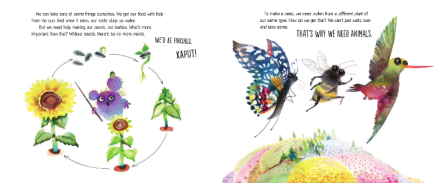
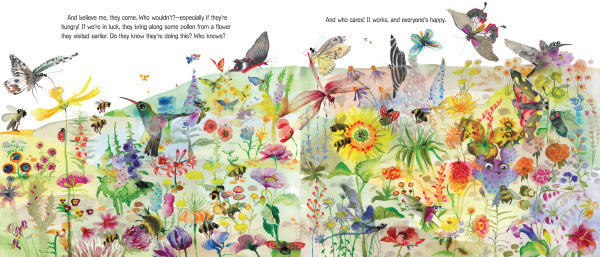
“We use our flowers to talk to the animals” so that we can make seeds and more plants. To do that each plant needs pollen from another plant that’s the same kind. Our flowers are like big ads that attract just the right birds, bees, or butterflies to help us out. Lots of times if they’re hungry they fly from flower to flower and bring pollen along with them.

How does each bird or butterfly or bee know which flowers to visit? That’s where our colors come in! And it’s pretty fascinating. Birds can see a color that insects can’t, and they don’t have a good sense of smell. Can you guess which flowers they’re attracted to? How about bees? Which colors do you think they like the best? I’ll give you a hint: “scientists just figured out that bees have three favorite colors.” Of course, we flowers “have known this for ages. That’s why so many of us make flowers in these colors. We like the reliable help.” This is fun, right?
celebrate-picture-books-picture-book-review-flower-talk-insects

Image copyright Masha D’yans, 2019, text copyright Sara Levine, 2019. Courtesy of Millbrook Press.

How about moths and bats—which flowers do you think they visit? The flowers even assist them in finding their way by putting “out perfume as an extra guide.” You may not like flies buzzing around you, but these color flowers love it. They put out a smell too, but I wouldn’t call it perfume—I don’t think you would either. There’s even a certain color flower that doesn’t talk to animals or insects at all. Go on, try to guess….

Colors aren’t the only trick flowers have either. Some are just the right shape—like mine. In fact, I’ve got to get going. “I’m making a new flower” and “I’m just about done with it.” Oh—what are the answers to the game we were playing? You’ll have to read my book and see!

Back matter includes an illustrated discussion about pollination, information on how to protect pollinators, and a list of other books for further reading.
celebrate-picture-books-picture-book-review-flower-talk-field

Image copyright Masha D’yans, 2019, text copyright Sara Levine, 2019. Courtesy of Millbrook Press.

With appropriate attitude, Sara Levine’s hilarious and knowledgeable prickly pear narrator engages kids in witty banter while taking them on a colorful garden tour. As the cactus explains a plant’s growing cycle and the need for pollinators, the information it imparts is eye-opening for children and adults. Why and how each flower’s color and scent attract just the right pollinator is clearly described in conversational language that kids will laugh along with and learn from. Every page contains an “ah-ha” moment that will spark discussion and an excitement to plant a garden and watch nature at work.

Like a riotous field of wildflowers, Masha D’yan’s dazzling illustrations put colors on glorious display as the flowers lure insects and animals to them. D’yan’s detailed images provide a great place for young naturalists to start researching the various plants introduced. Depictions of the prickly pear, birds, and bees match the humor of Levine’s text . Kids will love lingering over the two-page spreads to point out the various animals and insects and how they interact with the plants. They’ll also like following the growth of the prickly pear’s bud as it grows bigger and blossoms.

A superb book for teaching children about this fascinating feature of flowers and plants as well as providing a guide for gardeners interested in attracting a variety of pollinators, Flower Talk: How Plants Use Color to Communicate would be an outstanding addition to home, classroom, and public libraries.

Ages 7 – 11

Millbrook Press, 2019 | ISBN 978-1541519282

Discover more about Sara Levine and her books on her website.

To learn more about Masha D’yans, her books, and her art, visit her website.

National Plant a Flower Day Activity

celebrate-picture-books-picture-book-review-flower-pot-stake-craft

Flower Garden Stakes


It’s fun to start a garden from seeds, but how do you remember what you’ve planted where? With these easy to make garden stakes, you can mark your pots with style! 

Supplies

  • Wide craft sticks
  • Chalkboard paint in various colors
  • Colorful chalk
  • Paint brush

Directions

  1. Paint the stakes with the chalkboard paint, let dry
  2. With the chalk, write the name of the different flowers or plants
  3. After planting your seeds, stick the stake in the pot 
  4. Wait for your seeds to grow!

celebrate-picture-books-picture-book-review-flower-talk-cover

You can find Flower Talk: How Plants Use Color to Communicate at these booksellers

Amazon | Barnes & Noble | Books-a-Million | IndieBound

Picture Book Review

March 3 – World Wildlife Day

celebrate-picture-books-picture-book-review-galapagos-girl-cover

About the Holiday

In December of 2013 the United Nations General Assembly proclaimed March 3rd as World Wildlife Day to promote awareness of our environment and the dangers to it. Every year a different theme is chosen to spotlight an area of the world, a particular species, or a group of activists. This year’s theme is “life below water for people and planet” and focuses on marine species, the importance of marine wildlife, and the issues affecting the health and survival of the ocean and ocean creatures. The day also celebrates successful conservation and sustainability initiatives. To learn more about the day, special events, and how you and your kids can get involved today and throughout the year, visit the World Wildlife Day website.

Galápagos Girl / Galapagueña

Written by Marsha Diane Arnold | Illustrated by Angela Dominguez | Translated by Adriana Dominguez


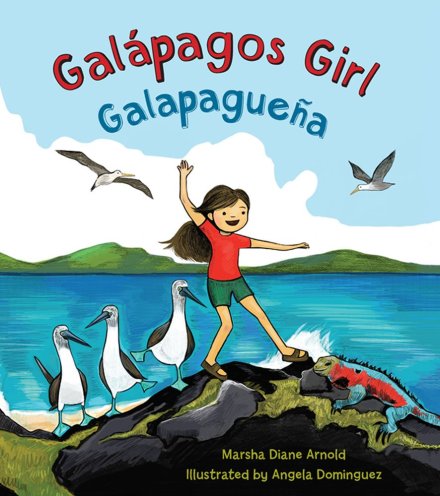
On the day when baby Valentina joined Mamá, Papá, and eleven brothers and sisters, even the sea lions, blue-footed boobies, and iguanas seemed to welcome her to the “island formed by fire.” Valentina loved growing up on the Galápagos Island of Floreana. She explored the lava rocks, where Sally Lightfoot crabs scuttled back and forth. She swam with dolphins and manta rays, and even played with penguins.

celebrate-picture-books-picture-book-review-Galápagos-Girl-crabscelebrate-picture-books-picture-book-review-Galápagos-Girl-crabs

Image copyright Angela Dominguez, 2018, text copyright Marsha Diane Arnold, 2018. Courtesy of Lee & Low Books.

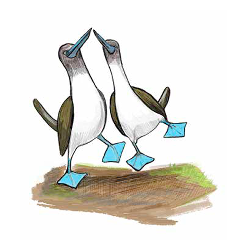
“Valentina watched pink flamingoes wading near mangroves. Blue butterflies fluttering on the breeze. Red-and-green iguanas sneezing salt like tiny geysers.” The crashing waves, albatross, and finches created a symphony as Valentina stopped to rest on a grassy cliff overlooking the ocean. The lava lizards, blue-footed boobies, and twirling sea lions provided young Valentina with a variety of dance partners.

celebrate-picture-books-picture-book-review-Galápagos-Girl-iguana

Image copyright Angela Dominguez, 2018, text copyright Marsha Diane Arnold, 2018. Courtesy of Lee & Low Books.

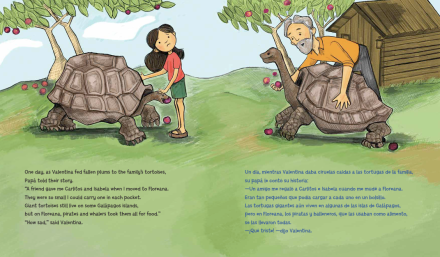
At home, Valentina’s family shared their home with two giant tortoises—Carlitos and Isabella. One day Papá told Valentina their story as they fed the tortoises plums that had fallen from their backyard trees. Papá had gotten Carlitos and Isabella from a friend when he first moved to Floreana. Although it was nearly impossible to imagine now that the tortoises were grown, at the time they were so small that they fit into Papá’s pockets.

celebrate-picture-books-picture-book-review-Galápagos-Girl-tortoises

Image copyright Angela Dominguez, 2018, text copyright Marsha Diane Arnold, 2018. Courtesy of Lee & Low Books.

There was also a sad note to Papá’s story. He said that while giant tortoises still lived on other Galápagos islands, pirates and whalers had wiped out the population on Floreana. Papá went on to tell Valentina that many Galápagos animals were in danger. They were “threatened by other animals that don’t belong here. Threatened by people who don’t understand how to care for our islands.” Valentina promised that she would always protect them.

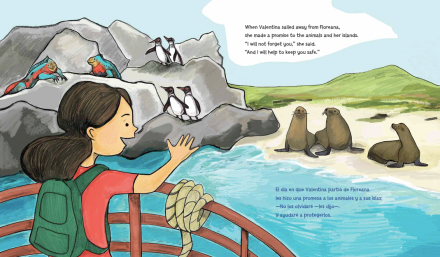
When she was older, Valentina left the island to go to school. She didn’t want to leave her beautiful home, but Mamá told her that she was “ready to learn about the world beyond.” And Papá reminded her that “like our islands, you have a heart full of fire.” On school vacations, Valentina always came back to study the wildlife on the Galápagos islands. She had not forgotten her promise to keep them safe.

celebrate-picture-books-picture-book-review-Galápagos-Girl-going-to-school

Image copyright Angela Dominguez, 2018, text copyright Marsha Diane Arnold, 2018. Courtesy of Lee & Low Books.

After she graduated with a degree in biology, Valentina returned to the islands as a nature guide to teach visitors about the beauty and uniqueness of the Galápagos. Some visitors were even lucky enough to meet Carlitos and Isabella when the plums dropped from the trees and the two old tortoises returned from exploring Floreana to eat them. Because of Valentina’s commitment to the Galápagos, her visitors also made a promise to always remember and protect them.

Extensive backmatter includes an Author’s Note about Valentina Cruz, the tortoises Carlitos and Isabella, and the history of tortoises on Floreana. There is also information on the Galápagos as well as fun facts about all of the animals in the story. A bibliography of sources invites readers to learn more.

Each two-page spread presents the text in English and translated into Spanish by Adriana Dominguez.

celebrate-picture-books-picture-book-review-Galápagos-Girl-guiding-visitors

Image copyright Angela Dominguez, 2018, text copyright Marsha Diane Arnold, 2018. Courtesy of Lee & Low Books.

Marsha Diane Arnold’s lyrical and buoyant passages sing with the carefree joy Valentina felt as a girl exploring her beloved Galápagos and which brought her back home as a biologist to protect them. After seeing Valentina playing and swimming with the native animals and feeding Carlitos and Isabella, readers will also feel Valentina’s sadness at the dangers they face and want to make a positive difference to the environment and the world around them. Arnold’s dialogue-rich storytelling highlights the personal nature of the subject and will draw children into Valentina’s world.celebrate-picture-books-picture-book-review-Galápagos-Girl-blue-footed-booby

Saturated with glorious color, each of Angela Dominguez’s illustrations is a celebration of the splendor of the Galápagos. Playful sea lions, high-stepping blue-footed boobies, scampering crabs, and even a sneezing iguana will captivate young readers and inspire them to learn more about these creatures and the islands. Images of Valentina camping out to study the animals during school breaks will excite environmentally conscious kids, and pictures of Carlitos and Isabella happily munching on plums will generate smiles and “awwws.”

Galápagos Girl / Galapagueña will excite kids to learn more not only about the Galápagos region but about their own local environment, and the call to action will spark an enthusiasm for protecting the earth’s animals. The book would make an inspiring addition to home bookshelves and an excellent way to begin classroom discussions on environmental issues and science lessons. The engaging Spanish translation will delight Spanish-speaking and bilingual families.

Ages 4 – 8

Lee & Low Books, 2018 | ISBN 978-0892394135

Discover more about Marsha Diane Arnold and her books on her website.

Read an interview with Marsha Diane Arnold here.

To learn more about Angela Dominguez, her books, and her art, visit her website.

World Wildlife Day Activity

celebrate-picture-books-picture-book-review-animals-of-the-galapagos-match-up-puzzle

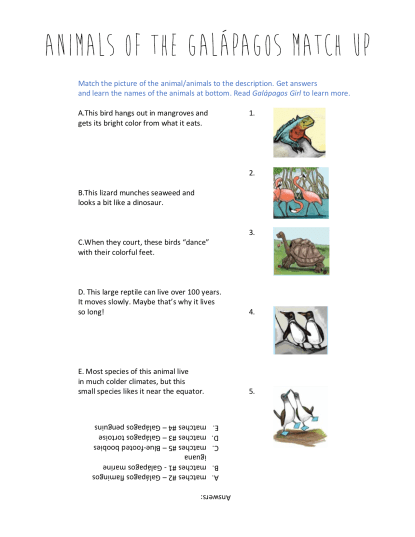
Animals of the Galápagos Match Up Puzzle


There are so many fascinating animals that live in the Galápagos! Can you match the picture of each animal to its description in this printable Animals of the Galápagos Match Up Puzzle? You can find and download the activity sheet from the Lee & Low Books website:

Animals of the Galápagos Match Up Puzzle

celebrate-picture-books-picture-book-review-galapagos-girl-cover

You can find Galápagos Girl / Galapagueña at these booksellers

Amazon | Barnes & Noble | Books-a-Million | IndieBound

Picture Book Review


February 27 – International Polar Bear Day

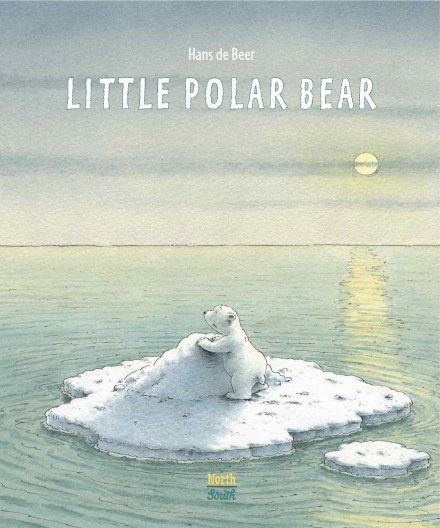
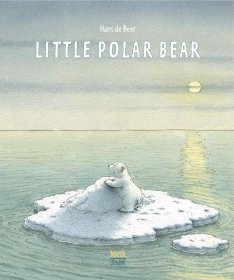
celebrate-picture-books-picture-book-review-the-little-polar-bear-cover

About the Holiday

Today we celebrate polar bears, the largest member of the bear family and a critical part of the Arctic ecosystem. These beautiful creatures spend much of their time at the edge of ice packs, from which they hunt for food. Their excellent sense of smell allows them to sense food up to a mile (1.6 km) away. Increasingly polar bears are under threat from changes in climate which are shrinking their habitat and affecting their quality of life. In honor of today’s holiday take time to research polar bears and consider donating to a cause for their protection.

Little Polar Bear

By Hans de Beer


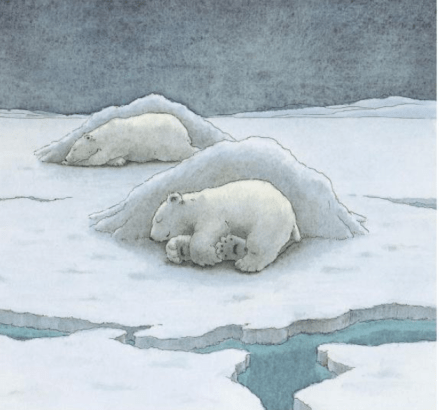
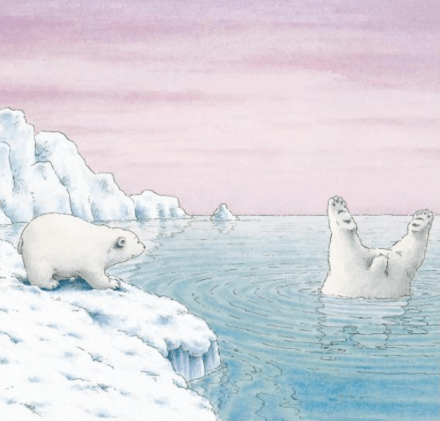
At last little Lars is old enough to go hunting with his father, and they head out into the white, frozen expanse to find the perfect fishing spot. While Lars watched from the edge of an ice pack, his dad disappeared underwater for so long that Lars began to worry. When he finally surfaced, however, he brought with him a large fish for dinner. After dinner it was time to sleep. Lars’ father showed him how to build a wall of snow to lie behind that would protect him from the wind.

celebrate-picture-books-picture-book-review-little-polar-bear-lars-and-father

Copyright Hans de Beer, 2016, courtesy of NorthSouth Books.

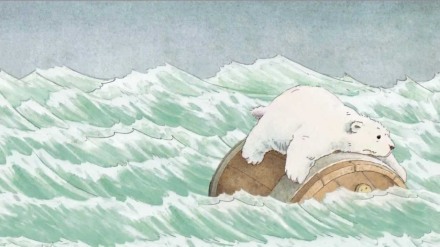
During the night as Lars and his father slept, the ice cracked between them, sending Lars floating away by himself. When Lars woke in the morning, he discovered that he was alone and that the warm sun was melting his ice floe little by little. Just as the ice threatened to disappear entirely, a barrel floated by and Lars crawled on top of it. “Then a storm began to rage. As Lars clung to his bobbing barrel he missed his father and his pile of snow more and more.”

celebrate-picture-books-picture-book-review-the-little-polar-bear-sleeping

Copyright Hans de Beer, 2016, courtesy of NorthSouth Books.

By the time the storm subsided Lars was far from home. He found himself in a place with no snow or ice; instead “almost everything was green and the sun was very warm.” Lars left the barrel and padded onto the sandy beach. The hot sand burned Lars’ paws, and he ran to the nearby river to cool them. “But just as he was about to plunge in, a very big, tan animal sprung out of the water.” Frightened, Lars ran away, but the hippopotamus followed him and introduced himself. Henry had never seen a white bear, and Lars had never seen a tan animal.

Lars told Henry about his trip and how he wanted to find father. Henry didn’t know how to help, but he figured that Marcus the eagle would know what to do. With Lars on his back Henry started the long journey across the river, through the jungle, and over the mountains. On the way, Lars loved seeing all the different colors, creatures, and vegetation. He climbed trees, met a chameleon, and sniffed at a butterfly. When they came to the mountains, Henry had trouble climbing, but Lars scampered ahead and showed him where to step.

celebrate-picture-books-picture-book-review-little-polar-bear-lars-on-barrel

Image copyright Hans de Beer, 2016, courtesy of NorthSouth Books.

Finally, Henry couldn’t go any farther. He and Lars found a place to rest for the night. The view of the water made Lars homesick, but Henry reassured him. The next day, high on the mountain, Lars and Henry found Marcus. “The eagle looked at Lars and then said, ‘Well, well, a polar bear in the tropics! You’re a long way from home aren’t you, young man?’”

Marcus explained that he could indeed help Lars get home, but they would need the assistance of Samson. In the morning a gray whale swam near shore, and Lars climbed on his back. While Henry was happy that Lars could find his way home, he was also sad to see him go. He and Lars said goodbye to each other. As Henry looked on, Samson and Lars swam out into the open ocean with Marcus flying “along a bit to set them on their way.”

celebrate-picture-books-picture-book-review-little-polar-bear-lars-and-henry

Image copyright Hans de Beer, 2016, courtesy of NorthSouth Books.

After Samson had swum a long distance, icy cliffs once again appeared on the horizon. As they drew closer, Lars spotted his father standing at the edge of the ice scanning the sea. Lars called out to him, and Lars’ father couldn’t believe his eyes. In thanks for bringing back his son, Lars’s father caught a big fish and gave it to Samson. Lars and his father started toward home, and as they walked “Lars talked about all of the amazing things he had seen.” His father was astonished. “‘You didn’t meet anyone who was white?’” he asked. “‘Nobody, except a chameleon,’ said Lars, ‘but that doesn’t count.’” Lars laughed, but his dad couldn’t understand the joke.

celebrate-picture-books-picture-book-review-the-little-polar-bear-diving

Copyright Hans de Beer, 2016, courtesy of NorthSouth Books.

Hans de Beer’s sweet, adventurous little polar bear has been long beloved by young readers who have followed his journeys and escapades through many books. This favorite introduction to Lars, his father, and the North Pole was reissued in 2016 and is as timely now as when it was first published. De Beer’s straightforward story of a young bear suddenly taken away from home, surviving by instinct, and discovering new places, friends, and ideas, is at once exciting and comforting. As Lars finds himself in unfamiliar territory populated with animals and creatures he’s never seen before, he doesn’t shy away from the experience, but embraces the diversity of what he sees just as the tropical animals accept him. The kindness and camaraderie shared among the animals is a universal lesson for all.

Little ones love de Beer’s expressive animals and the caring interactions between them. Kids will laugh when Henry pops out of the river to say “boo!” and giggle to see Lars and the chameleon sticking out their tongues together. The soft pastel palette invites kids to linger over the pages and experience both the frozen tundra and lush jungle with the same awe as Lars. Readers will cheer when Lars is reunited with his father, but will also look forward to traveling with their new friend again in his other adventures.

Ages 3 – 8

NorthSouth Books, 2016 (Hardcover) | ISBN 978-0735842649

International Polar Bear Day Activity

CPB - Polar Bear scarf

CPB - Polar Bear Banner

Polar Bear Scarf or Banner

Polar bears aren’t cold in the winter—and neither should you be! Here are directions and printable templates for making a cute scarf to keep you warm, or—if you’d rather—a banner to warm up your room.

Supplies

  • Printable Polar Bear and Igloo Template
  • 1 Strip of blue fleece 4 ½ feet long x 7 inches wide for the scarf
  • 1 Piece of blue scrapbooking paper for a banner
  • Pieces of white, black, blue, and purple fleece or scrapbooking paper to make the polar bear, igloo, snowflakes, and ice floes.
  • String or twine for banner
  • Scissors
  • Fabric or paper glue

Directions for Scarf

To make the fringe at each end of the scarf

  1. Make 7 cuts about 4 inches long
  2. Tie a knot at the top of each fringe section

To make the pieces for the scarf or banner

  1. Trace the polar bear and igloo sections from the Printable Template onto white fleece and cut out
  2. Trace the two ice floes onto blue fleece and cut out
  3. Trace the door of the igloo onto blue fleece and cut out
  4. Trace the polar bear’s scarf onto purple (or any color) fleece and cut out
  5. Cut out round snowflakes
  6. Cut out a small circle from black fleece for the Polar Bear’s nose

On one end of the scarf

  1. Glue the smaller ice floe on one end of the scarf
  2. Tie the bear’s scarf around its neck before gluing the bear to the scarf
  3. Glue the polar bear onto the scarf with its feet on the ice floe
  4. Glue on the polar bear’s nose
  5. Make a small dot for the polar bear’s eye with a marker
  6. Glue snowflakes above polar bear

On the other end of the scarf

  1. Glue the bigger ice floe to the scarf
  2. Glue the three pieces of the large igloo to the scarf, leaving a little space between sections
  3. Glue the small white door of the igloo on top of the last two igloo sections
  4. Glue the small blue door onto the white door
  5. Glue snowflakes above the igloo

Directions for Banner

  1. Cut a point at the bottom of your banner
  2. Follow the directions above to trace the pieces of the polar bear and igloo from the printable template onto scrapbooking paper
  3. Follow the directions above to glue the pieces of the polar bear and igloo to your banner
  4. Attach string or twine to back of banner to make a hanger

celebrate-picture-books-picture-book-review-the-little-polar-bear-cover

You can find The Little Polar Bear at these booksellers

Amazon | Barnes & Noble | Books-a-Million | IndieBound

Picture Book Review

February 22 – National Wildlife Day

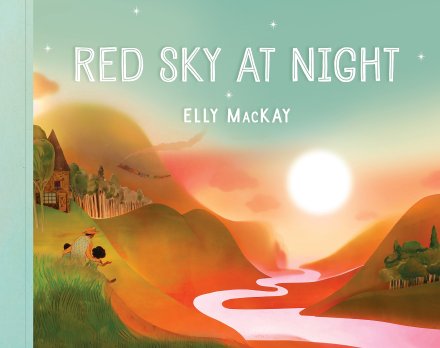
celebrate-picture-books-picture-book-review-red-sky-at-night-cover

About the Holiday

Founded in 2005 by animal behaviorist and philanthropist Colleen Paige, National Wildlife Day was traditionally held on September 4. Today’s date was added to the calendar recently in honor and memory of wildlife activist Steve Irwin’s birthday. The holiday was established to celebrate the diversity of nature and promote the awareness of endangered species worldwide. The day also acknowledges the work of zoos, outstanding animal sanctuaries, and other global organizations in helping to preserve this planet’s animals and educate the public about conservation – especially the children, who are our future conservationists and animal’s caretakers. To celebrate visit an animal sanctuary, zoo, or aquarium—or think about donating your time to a worthy animal cause.

Red Sky at Night

By Elly MacKay


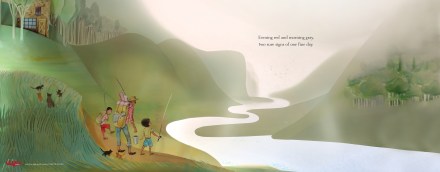
The weather is a powerful force of nature, affecting animals, vegetation, and people in beneficial and detrimental ways. Watching and reacting to weather patterns is a specialty of animals as they prepare for long, cold winters, protect themselves from storms, and take advantage of food grown during fair, sunny days. People, too, have paid attention to the weather since earliest times, devising instruments that continue to improve as technology advances to measure rainfall, air pressure, and wind. Long before mechanical instruments took over the forecasting duties, however, sailors, farmers, and others “learned from experience by watching the shapes of clouds or noticing the behavior of animals.”

celebrate-picture-books-picture-book-review-red-sky-at-night-evening-red-morning-gray

Copyright Elly MacKay, 2018, courtesy of Tundra Books.

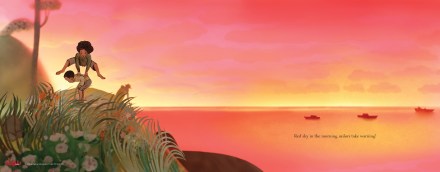
They looked to the sky, the ground, and other elements of nature and came up with catchy phrases that reflected cause and effect weather changes. “This wisdom was passed down through sayings like the ones in this book,” which Elly MacKay pairs with her resplendent mixed media illustrations. Perhaps the most well-known saying is “Red sky at night, sailor’s delight,” and as two children and their grandpa look out their window at the glorious setting sun, readers will be happy to see—along with the little boy who is eagerly holding his fishing pole—that they won’t need the umbrellas in the stand next to the shelf that contains a book on the weather.

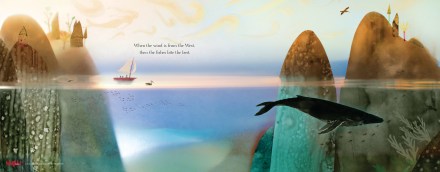
Out in their sailboat, Cloud Nine, the grandpa reveals another truism that promises a nice day for fishing on the lake: “When the mist creeps up the hill, fishers, it’s time to try your skill.” As they steer their little boat away from the shore, they can be sure that the sun will smile on them as they see the tiny red insects flying behind them that confirm: “When ladybugs swarm, expect a day that’s warm.”

celebrate-picture-books-picture-book-review-red-sky-at-night-wind-from-west

Copyright Elly MacKay, 2018, courtesy of Tundra Books.

But if “ring around the moon, rain will come soon” is true, their calm overnight camping trip, may end in a shower. As the children play leapfrog on a grassy hill early in the morning, the sky dawns pink and red—a sure warning! And if the sky isn’t warning enough, the fish leaping to capture a moth for breakfast shows just how true “trout jump high when rain is nigh” is.

The little boat begins to make its way back home, but the wind whips up, and as “seabirds fly to land, / there truly is a storm at hand.” Just as the winds begin to roar, Grandpa and the kids dash for home carrying a net full of the fish they caught. Safe and cozy inside, they sit down to a steaming dinner and smile at each other, happy to be home because they know “the more rain, the more rest. / Fair weather’s not always best.”

Following the story, Elly MacKay offers a fascinating explanation of each of the twenty-three sayings in the book. There is also a short discussion on how MacKay creates her distinctive illustrations created through intricate photographed dioramas.

celebrate-picture-books-picture-book-review-red-sky-in-the-morning

Copyright Elly MacKay, 2018, courtesy of Tundra Books.

Readers will love following this family as they go about a fishing trip in tranquil weather and come back home just in time to enjoy a hearty meal as the rain pelts down outside. The Mama cat and her five little kittens are also adorable as they pop up here and there throughout the pages and play a part in one particularly interesting saying. Various perspectives and charming details (look for the nod to the picture book This Is Sadie, the pelican motif, and mystical cloud shapes) makes Red Sky at Night a book to dip into whatever the weather at home and in the classroom.

Ages 3 – 7

Tundra Books, 2018 | ISBN 978-1101917831

To learn more about Elly MacKay, her books, and her art, visit her website.

National Wildlife Day Activity

celebrate-picture-books-picture-book-review-wonderful-wildlife-board-game

Wonderful Wildlife Board Game


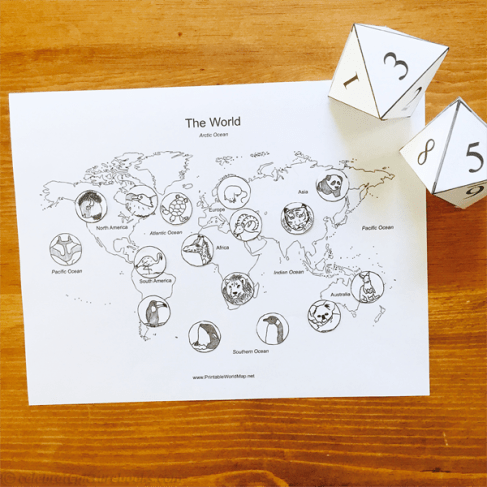
Fascinating animals are found in every part of the world. Play this fun printable Wonderful Wildlife Board Game to match each animal to the area where it lives.

Supplies

Directions

  1. Print a World Map for each player
  2. Print one set of 16 Wildlife Tokens for each player
  3. Print two copies of the 8-sided die, fold, and tape together
  4. If you would like, color the map and tokens
  5. Choose a player to go first
  6. Each player rolls both dice and places an animal on their map according to these corresponding sums of the dice below
  7. The first player to fill their map is the winner!
  • 1 = Flamingo – South America
  • 2 = Emperor Penguin – Antarctica (Southern Ocean)
  • 3 = Giraffe – Africa
  • 4 = Bald Eagle – North America
  • 5 = Ibex – Europe
  • 6 = Kangaroo – Australia
  • 7 = Panda – Asia
  • 8 = Orca – Antarctica (Southern Ocean)
  • 9 = Toucan – South America
  • 10 = Buffalo – North America
  • 11 = Koala – Australia
  • 12 = Lion – Africa
  • 13 = Etruscan Shrew – Europe
  • 14 = Manta Ray – Pacific Ocean
  • 15 = Sea Turtle – Atlantic Ocean
  • 16 = Tiger – Asia

celebrate-picture-books-picture-book-review-red-sky-at-night-cover

You can find Red Sky at Night at these booksellers

Amazon | Barnes & Noble | Books-a-Million | IndieBound

Picture Book Review

February 19 – It’s Bird-Feeding Month

celebrate-picture-books-picture-book-review-paddle-perch-climb-cover

About the Holiday

Have you been noticing more bird activity in your yard or neighborhood? Maybe you’ve been awakened by birdsong that you haven’t heard in many months. During February, as temperatures creep up, birds begin returning to their homes to nest and mate. But the effects of the long winter still make it hard for these little creatures to find enough to eat. Recognizing a need, John Porter created a Congressional resolution in 1994 recognizing February as National Bird-Feeding Month. One-third of Americans have backyard feeders that provide the sustenance birds need to survive when natural resources are scarce. To celebrate this month, if you have feeders make sure they are well stocked. If you don’t have a feeder in your yard, consider hanging one and enjoy the beauty and songs of the birds in your area. 

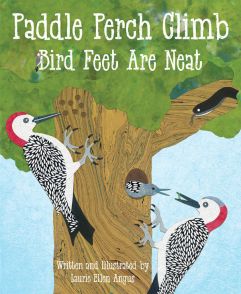
Paddle Perch Climb: Bird Feet Are Neat

By Laurie Ellen Angus


All birds get hungry, but not all birds eat the same thing, of course. Did you know that a bird’s feet are important in determining what they eat? Let’s find out how different kinds of feet help birds find the right food for them. “If you had webbing between your toes, you could… Paddle like a swan to dabble for pond plants.” Long legs and toes could help you “wade like a heron to sneak up on a school of fish.”

celebrate-picture-books-picture-book-review-paddle-perch-climb-heron

Copyright Laurie Ellen Angus, 2018, courtesy of Dawn Publications.

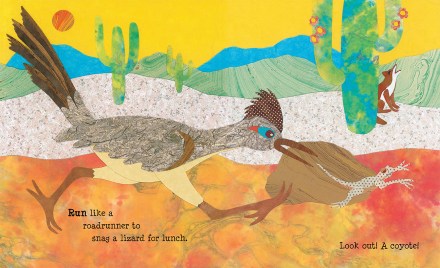
Birds who have long, strong legs can run and catch their dinner, and birds whose feet have sharp claws can climb tree trunks and hunt for insects in the bark. Birds with “small flexible toes” find their feet handy for perching on branches of trees and bushes to pick berries or—like towhees—to scratch in the dirt for bugs. There are also those birds that have “powerful feet with sharp talons” to snatch a meaty meal for themselves or their babies.

celebrate-picture-books-picture-book-review-paddle-perch-climb-roadrunner

Copyright Laurie Ellen Angus, 2018, courtesy of Dawn Publications.

There are many kinds of birds in the world, and each one has just the right kind of feet that help them move through their environment, find or catch food, and survive.

Extensive back matter that offers many opportunities to extend STEM learning in the classroom or at home includes

  • a detailed and illustrated exploration of each bird mentioned in the text, complete with a description of their feet and how they help the bird procure food. Kids will also enjoy learning the fun fact about each
  • A description of the bird that inspired the book
  • A discussion of adaptations, with a chart categorized with facts on habitat, feet, and beaks for seven birds and suggestions for a creative activity 
  • Common characteristics of birds
  • A discussion on predators
  • Bird-watching tips
  • More resources for further learning
celebrate-picture-books-picture-book-review-paddle-perch-climb-back-matter

Copyright Laurie Ellen Angus, 2018, courtesy of Dawn Publications.

In her engaging text, Laurie Ellen Angus takes kids out to the pond, desert, forest, and backyard to watch as a variety of birds catch or gather their dinner. Using evocative verbs, Angus reveals not only the action of getting a meal, but the way each bird goes about it—through stealth, quick motion, pecking, scratching, and more. Specific examples of bird/feet combinations give readers a starting point for further exploration. Each category also includes a partially hidden predator, such as a fox, bobcat, snake, and hawk, that the particular bird is warned about and which readers will want to join in pointing out.

celebrate-picture-books-picture-book-review-paddle-perch-climb-cardinals

Copyright Laurie Ellen Angus, 2018, courtesy of Dawn Publications.

Angus beautifully employs collage-style illustrations to give her birds and environments texture, color, and movement. Her use of various perspectives, lets readers wade into the pond with the heron, chase after the roadrunner that is trotting off the edge of page, cling to a tree trunk with a woodpecker, and come in for a landing with an owl. 

A visually stunning book, Paddle Perch Climb: Bird Feet Are Neat is a science book that will attract the attention of young learners and excite them to learn more about the wonders of the natural world.

Ages 4 – 8

Dawn Publications, 2018 | | ISBN 978-1584696131 (Hardcover) | ISBN 978-1584696148 (Paperback) 

To learn more about Laurie Ellen Angus, her books, and her art on her website.

Wild Bird Feeding Month Activity

celebrate-picture-books-picture-book-review-let's-go-birding-word-search

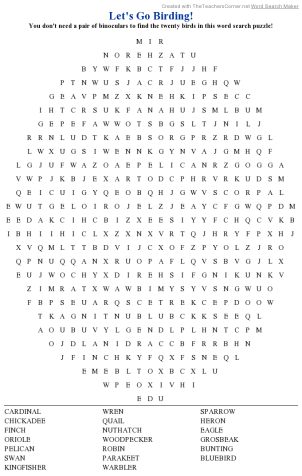
When you put up a bird feeder in your yard, you’ll see so many different types of birds come to visit! Find the names of twenty types of birds in this printable Let’s Go Birding! Word Search Puzzle.

Let’s Go Birding! Word Search Puzzle | Let’s Go Birding! Word Search Solution

celebrate-picture-books-picture-book-review-paddle-perch-climb-cover

You can find Paddle Perch Climb: Bird Feet Are Neat at these booksellers

Amazon | Barnes & Noble | Books-a-Million | IndieBound

Picture Book Review

January 22 – Celebration of Life Day

celebrate-picture-books-picture-book-review-you-belong-here-cover

About the Holiday

Today’s holiday is all about celebrating the children and grandchildren in our lives and what makes each one truly unique. When you watch your own children or those in your care grow and develop their own personalities, talents, and dreams, you realize that each one is an individual with a bright future ahead of them. Today, honor each child’s exceptional character! Ask your children what they want from life, what their opinions are, and what is important to them. Then incorporate some of those things into your daily life. Take the opportunity also to encourage your children, support them, and—most of all—tell them how much you love them every day.

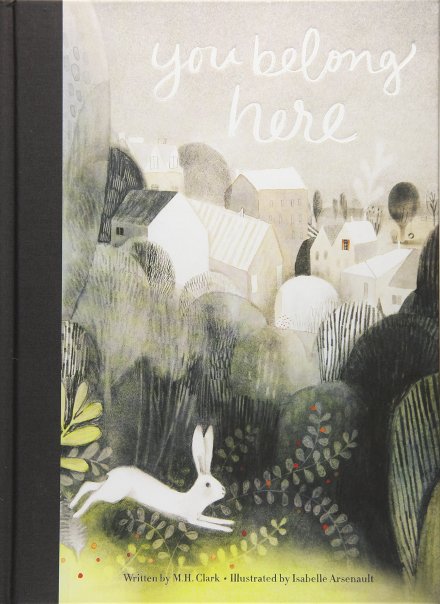
You Belong Here

Written by M.H. Clark | Illustrated by Isabelle Arsenault


“The stars belong in the deep night sky / and the moon belongs there too, / and the winds belong in each place they blow by / and I belong here with you.” This beautiful opening verse embraces readers and carries them on a journey to the sea, where whales and fish, waves and the shore, dunes and grasses all live in harmony the way they are meant to. In the forest, trees, animals, and birds have their own places, and, likewise, a child is reassured that “you belong where you love to be” and that at home they will always find the companionship of someone who loves them.

celebrate-picture-books-picture-book-review-you-belong-here-hare

Copyright Isabelle Aresenault, 2016, text copyright M.H. Clark, 2016. Courtesy of Compendium.

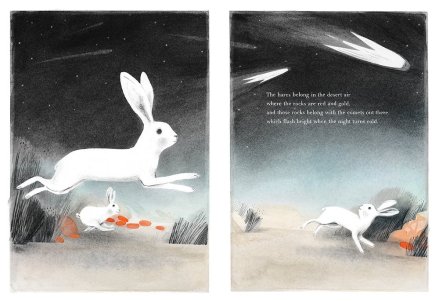
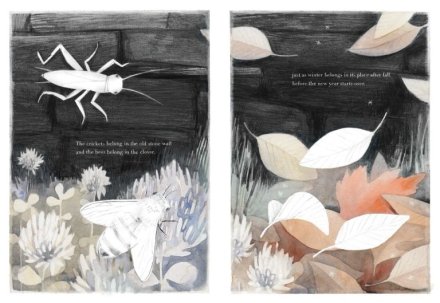
Just as frogs and turtles, otters and carp find homes in lakes, ponds, and streams where the water is right for them, and hares, foxes, and lizards belong on their own bits of land, “the crickets belong in the old stone wall / and the bees belong in the clover.” And what about the child snuggling in loving arms? “You are a dream that the world once dreamt / and now you are part of its song. / That’s why you are here, in the place where you’re meant, / for this is right where you belong.”

celebrate-picture-books-picture-book-review-you-belong-here-cricket

Copyright Isabelle Aresenault, 2016, text copyright M.H. Clark, 2016. Courtesy of Compendium.

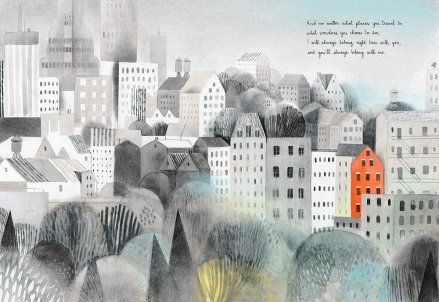
So, the pine trees and bears and each creature of the air, land, and sea “is perfectly home right there / in the place where it belongs to be.” And the child can know that wherever they go and whatever they choose to see, “I will always belong right here with you, / and you’ll always belong with me.”

celebrate-picture-books-picture-book-review-you-belong-here-city

Copyright Isabelle Aresenault, 2016, text copyright M.H. Clark, 2016. Courtesy of Compendium.

M.H. Clark’s lyrical love letter to a child is a warm hug that clasps the little listener close to the adult reader’s heart. Clark’s gorgeous examples of perfect pairings in nature encompass not only animals that children will be familiar with but also the flowers and trees, rocks and caves, waterways and weather that are also woven into the formation and patterns of life, giving the story a feeling of the cyclical and constant that echoes love itself. The rhythm of the story floats like a dreamy lullaby, making this a wonderful book to share at bedtime for even the youngest children. It’s message is one that all children can appreciate no matter how old they are.

Isabelle Arsenault accompanies each verse with striking, softly hued illustrations that place whales, deer, otters, foxes, and all the other animals and their young in their particular environment. Her gorgeously blended images enhance the reader’s appreciation for the perfection of nature’s construction and reinforces the assurance that each child and adult belong together now and always. Interspersing the natural settings are views of various types of homes from city apartments to small towns to a secluded home in the woods. A whimsical spread in which a child’s hand can be seen placing wooden puzzle pieces of a hare, whale, bear, carp, and turtle into their appropriate slot adds another layer of understanding for young children and may cause them to think about their own place of belonging when playing on their own.

A touching gift for Valentine’s Day, baby showers, new babies, new siblings, and any child, You Belong Here belongs on every child’s home bookshelf as well as in classroom and public libraries.

Ages Birth and up

Compendium, 2016 | ISBN 978-1938298998

To learn more about Isabelle Arsenault, her books, and her art, visit her website

Celebration of Life Day Activity

celebrate-picture-books-picture-book-review-threads-of-friendship-photo-holder

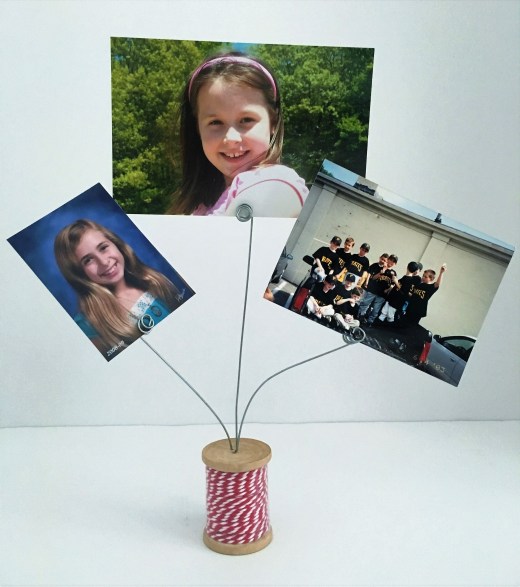
Spool Photo Holder


With this easy craft you can make a personalized photo holder for a child’s room that holds pictures of family and friends to show children who they “belong with.”

Supplies

  • Wooden spool with hole through the middle, top to bottom. (A spool without a hole also works if you make a hole in the top with a hammer and nail), 1½ -inch or larger, available at craft stores
  • Colorful twine or light-gauge yarn, 3 to 4 yards
  • Alternatively: you can buy a wooden spool of colorful twine at some craft and discount stores
  • 3 pieces of light-gauge wire 12 to 15-inches long
  • Clay or play dough
  • Needle-nose pliers
  • Glue

Directions

  1. Fill hole in spool with clay or play dough, pushing it well in to provide a base for the wire
  2. Wrap the twine or yarn around the spool to desired thickness
  3. Glue down the end of the twine to keep it from unraveling
  4. With the needle-nose pliers, roll down one end of the wire to create a small coil
  5. Repeat with two other lengths of wire
  6. Cut the three wires to different lengths to provide room for all three photographs
  7. Fit the three wires into the center hole on the top of the spool
  8. Push the wires into the clay until they are held securely
  9. Clip photographs into the coils
  10. Display your pictures!

celebrate-picture-books-picture-book-review-you-belong-here-cover

You can find You Belong Here at these booksellers

Amazon | Barnes & Noble | Books-a-Million | IndieBound

Picture Book Review


January 7 – Old Rock Day

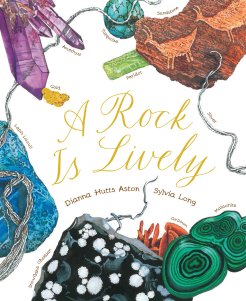
celebrate-picture-books-picture-book-review-a-rock-is-lively-cover

About the Holiday

Do you love rocks? Are your eyes captured by the colors and patterns on the stones you see while out walking? Today’s holiday celebrates these wonders of nature and encourages geologists—both professionals and amateurs—to indulge their passion and maybe even teach others about the history and formation of rocks. To celebrate, take a walk in your area or even in your own backyard, pick up a few rocks, and research a little more about them.
A Rock is Lively

Written by Dianna Hutts Aston | Illustrated by Sylvia Long


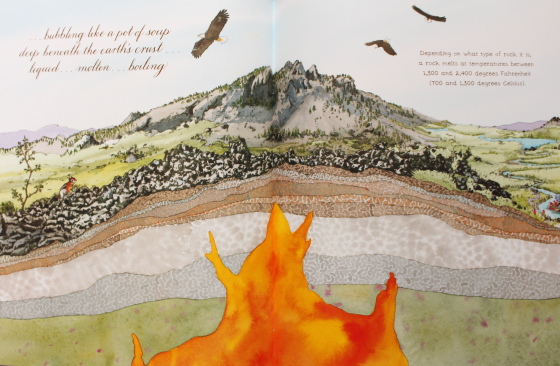
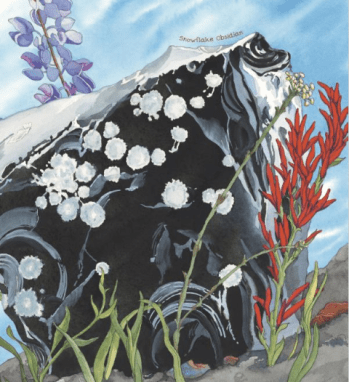
Open the cover of A Rock is Lively and before the text—even before the title—readers are treated to an array of fifty-one gemstones that dazzle the eyes. How enticing to learn about all of these natural works of art! “A rock is lively…” the text begins, arching over a shining piece of snowflake obsidian—an ebony-colored rock dotted with lacy blots. These lively rocks bubble “like a pot of soup deep beneath the earth’s crust…liquid…molten…boiling.” How hot does it need to be to melt a rock? Anywhere “between 1,300 and 2,400 degrees Fahrenheit (700 and 1,300 degrees Celsius).”
celebrate-picture-books-picture-book-review-a-rock-is-lively-lava

Image copyright Sylvia Long, 2012, text copyright Dianna Hutts Aston, 2012. Courtesy of Chronicle Books.

What happens at these temperatures? Well, like your favorite cookie recipe, “a rock is mixed up. All rocks are made of a mix of ingredients called minerals.” Take the recipe for Lapis Lazuli, for instance: “Mix the mineral lazurite with a dash of sodalite and a pinch of both calcite and pyrite. Heat within the earth until a brilliant blue.”

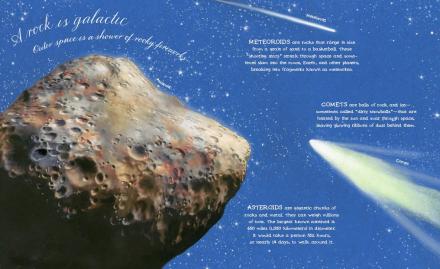
Rocks don’t exist just here on earth. Rocks are also galactic. “Outer space is a shower of rocky fireworks” made of meteoroids, comets, and asteroids. You’ll learn the differences among them here too. You probably already know that rocks are old, but how old? Billions of years old! “The oldest rocks ever found are nearly 4.5 billion years old.” Rocks are “huge…and tiny.” They are as big as a mountain reaching for the sky and as small as the grains underneath your feet.

“A rock is helpful.” Animals use rocks in many amazing ways. Some birds swallow stones to help with digestion, and some sea creatures ingest them to help keep them balanced in the water. Other animals use rocks to crack open shellfish and nuts so they can get to the goodness inside. Some rocks look plain on the outside but hold a beautiful surprise inside. Some rocks are full of colorful rainbows, others look like a starry night sky, while still others look like a white chrysanthemum or a red-and-green watermelon.

celebrate-picture-books-picture-book-review-a-rock-is-lively-galactic

Image copyright Sylvia Long, 2012, text copyright Dianna Hutts Aston, 2012. Courtesy of Chronicle Books.

From humans’ earliest days rocks have been chiseled into arrow heads and spear points, axe blades, and hammers. They’ve become mortars and pestles and are ground up today to “make cement and bricks, paper and pencils, glass, and toothpaste.” But rocks aren’t only useful, they’re creative too. Ancient peoples made paints from minerals and created colorful “pictographs on cave walls, rock shelters, and ledges.” Petroglyphs were made by chipping and pecking away at rock surfaces. As civilizations developed, so did their buildings and artwork made from stone. The pyramids were made from limestone, Stonehenge is formed from “sandstone, dolerite, and others,” the Taj Mahal and Michelangelo’s “David” are marble marvels, and Mt. Rushmore was carved from Granite.

“A rock is recycled.” Formed in three different ways, rocks are categorized as sedimentary, metamorphic, or igneous. “Over thousands of millions of years, [a rock] changes from one form to another. This is called the rock cycle,” and it keeps rocks very lively!

celebrate-picture-books-picture-book-review-a-rock-is-lively-surprising

Image copyright Sylvia Long, 2012, text copyright Dianna Hutts Aston, 2012. Courtesy of Chronicle Books.

Dianna Hutts Aston’s inventively and conversationally accessible discussion of the rocks that make up our earth and universe will enthrall any rock hound or entice the curious. Aston’s lead-in heads make for clear classification of and intriguing introductions to the various types of rocks, how they’re formed, what they look like, and how they’ve been used through history.  Her pages contain short, but very informative paragraphs that teach children about rocks through time and size comparisons they’ll understand, descriptions with familiar references, and evocative verbs and adjectives. Aston’s dynamic look at this subject will excite kids to learn more.

celebrate-picture-books-picture-book-review-a-rock-is-lively-snowflake-obsidian

Image copyright Sylvia Long, 2012, text copyright Dianna Hutts Aston, 2012. Courtesy of Chronicle Books.

Accompanying Aston’s text are Sylvia Long’s stunning illustrations that open readers eyes to the incredible beauty of each type of rock. To begin, young readers see a cut away of the rock layers beneath earth’s crust as well as the rocks that shoot across the sky. Aston shows animals using rocks in a myriad of ways as well as the tools, art, and buildings created by humans throughout history. The showstoppers are her depictions of the interior of different types of geodes, with their electric blues, reds, purples, and oranges and figures that lend the rocks their names. The double-spread pages containing fifty-one rocks with their name that introduce and end the book are a young geologist’s dream come true and will send them scurrying to discover and collect them all.

A fantastic reference, A Rock is Lively makes a terrific addition to home and classroom libraries  or a gift (pair it with a geode or small boxed rock collection) for young nature lovers and scientists.

Ages 7 – 12

Chronicle Books, 2012 (Hardcover; 2015 Paperback) | ISBN 978-1452106458

Discover more about Dianna Hutts Aston and her books on her website.

To learn more about Sylvia Long, her books, and her art, visit her website.

Old Rock Day Activity

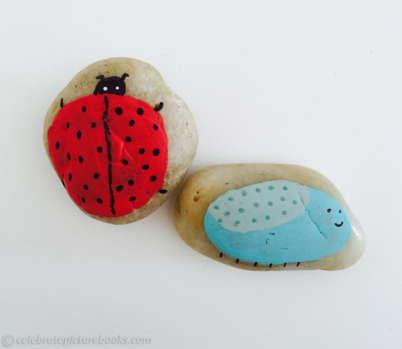
CPB - Nasty Bugs magnet II (2)

Rock This Craft!


Smooth stones can give you a natural canvas for your creativity! With a little bit of paint, pins or magnets, and some imagination, you can make refrigerator magnets, jewelry, paper weights, and more!

Supplies

  • Smooth stones in various sizes
  • Paint or markers
  • Small magnets, available at craft stores
  • Jewelry pins, available at craft stores
  • Paint brush
  • Strong glue

Directions

To make magnets

  1. Design and paint an image on the stone
  2. Attach a magnet to the back with strong glue, let dry
  3. Use to hang pictures, notes, or other bits of important stuff on your refrigerator or magnetic board

To make jewelry

  1. Using a smaller, flatter stone, design and paint an image on the stone
  2. Attach a jewelry pin to the back with the strong glue, let dry
  3. Wear your pin proudly

To make a paper weight

  1. Using a large stone, design and paint an image on the stone
  2. Let dry
  3. Display and use on your desk to keep those papers in place

celebrate-picture-books-picture-book-review-a-rock-is-lively-cover

You can find A Rock is Lively at these booksellers

Amazon | Barnes & Noble | Books-a-Million | IndieBound

Picture Book Review